A small-group counseling session focused on peer conflict resolution, teaching students how to construct sincere apologies and actively repair damaged friendships using a concrete 4-step tool kit.
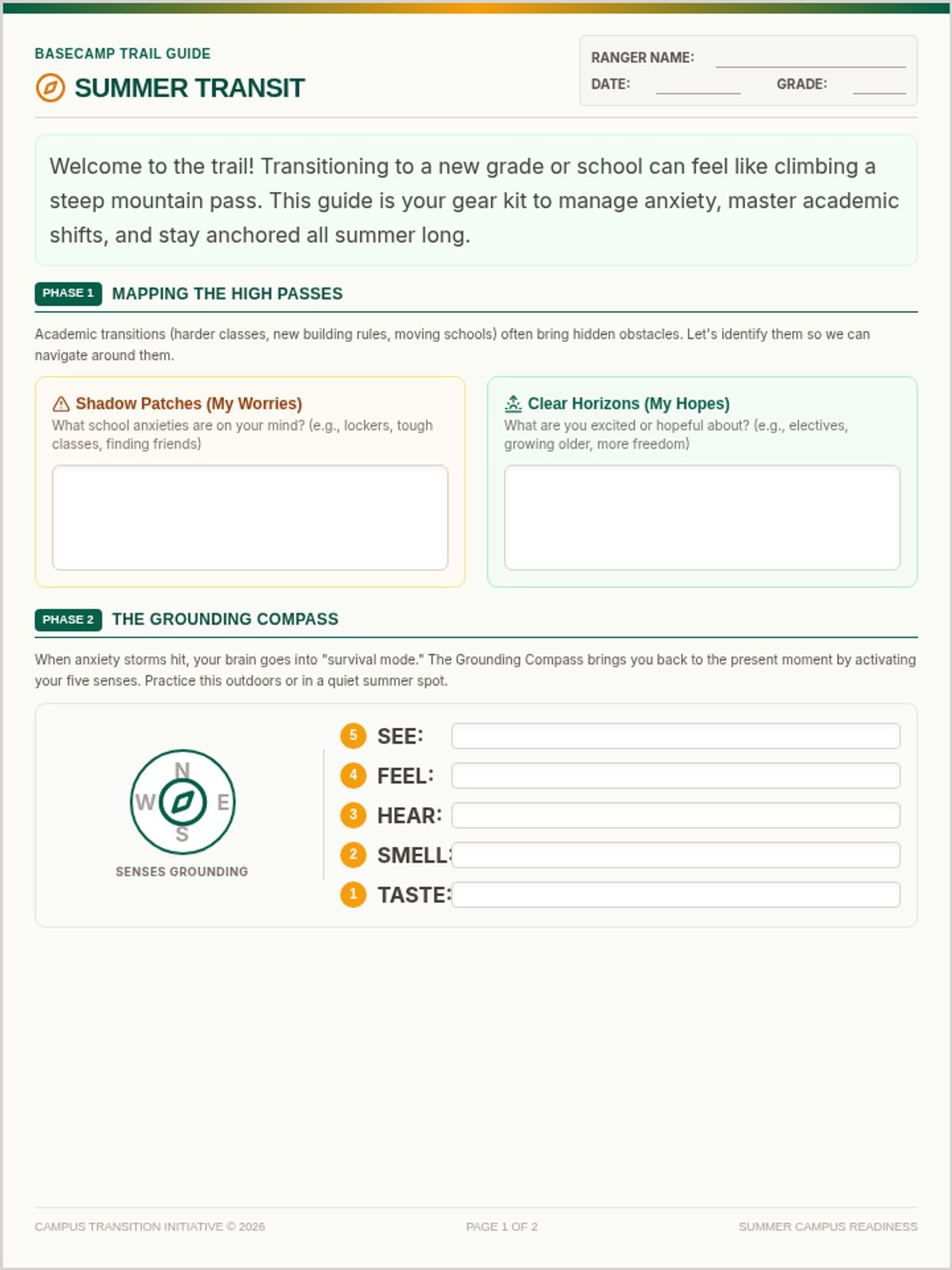
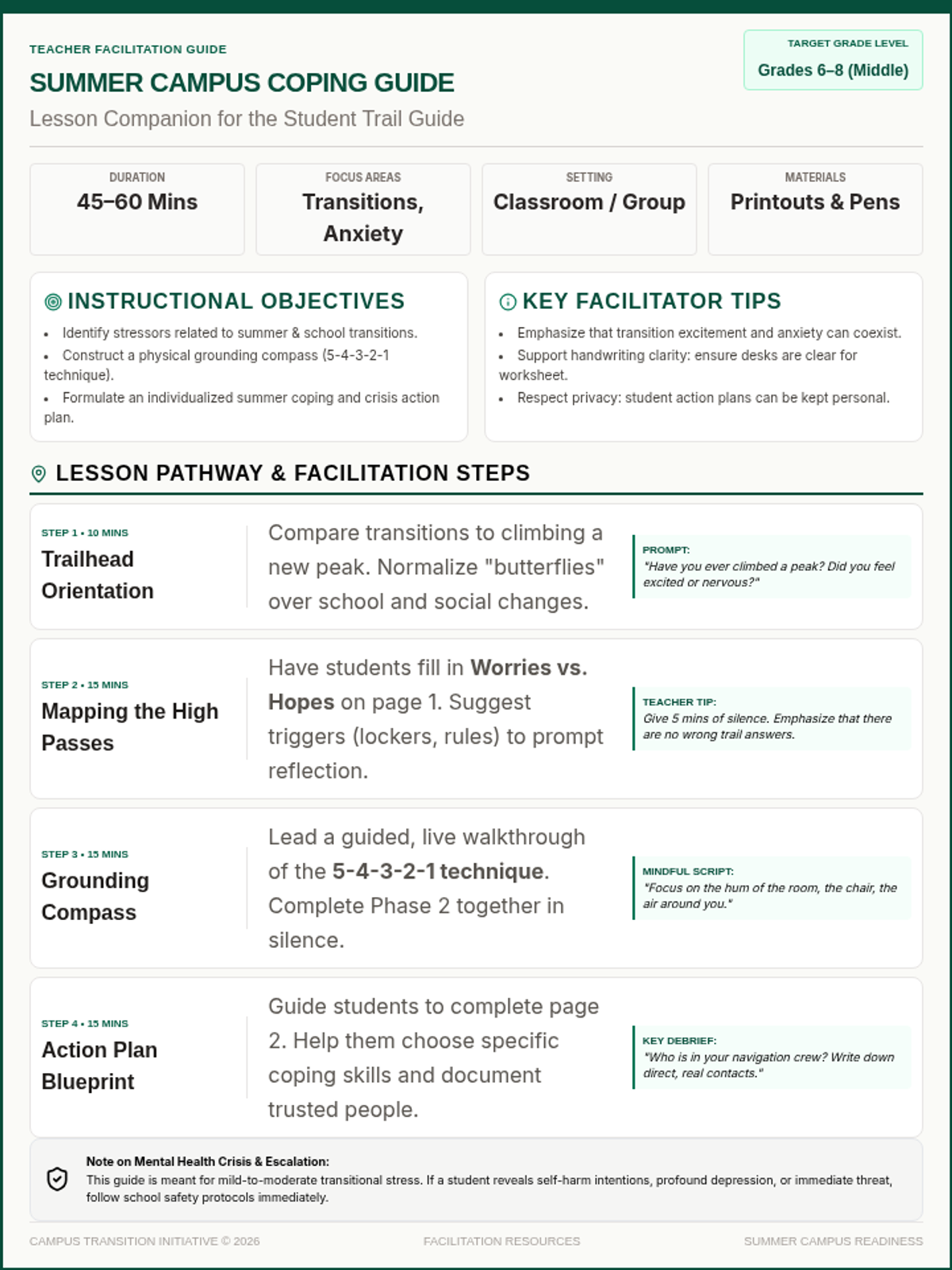
A transition-focused emotional regulation lesson designed to equip middle school students with mindfulness tools and coping mechanisms to handle academic anxiety and school transitions over the summer.
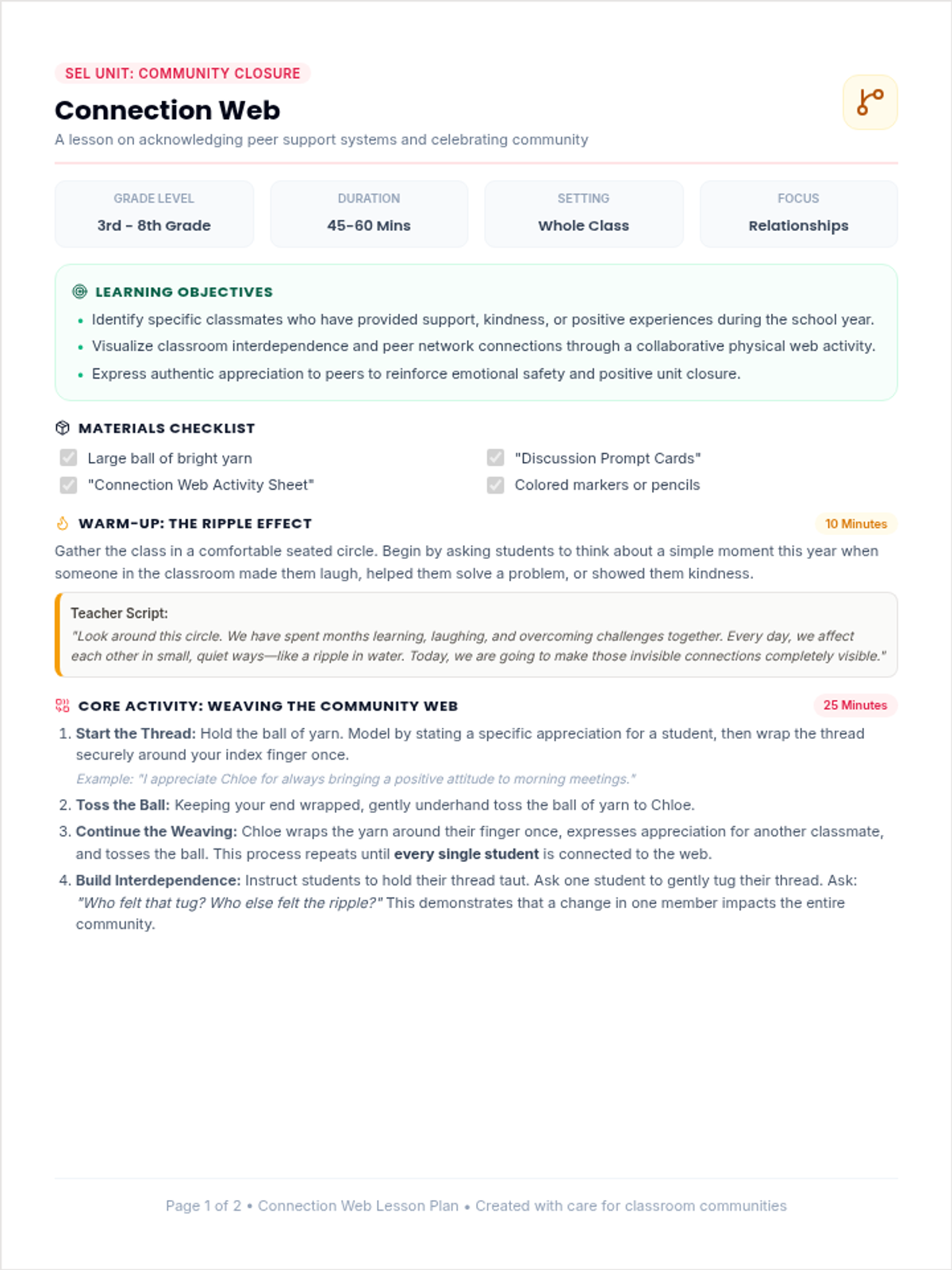
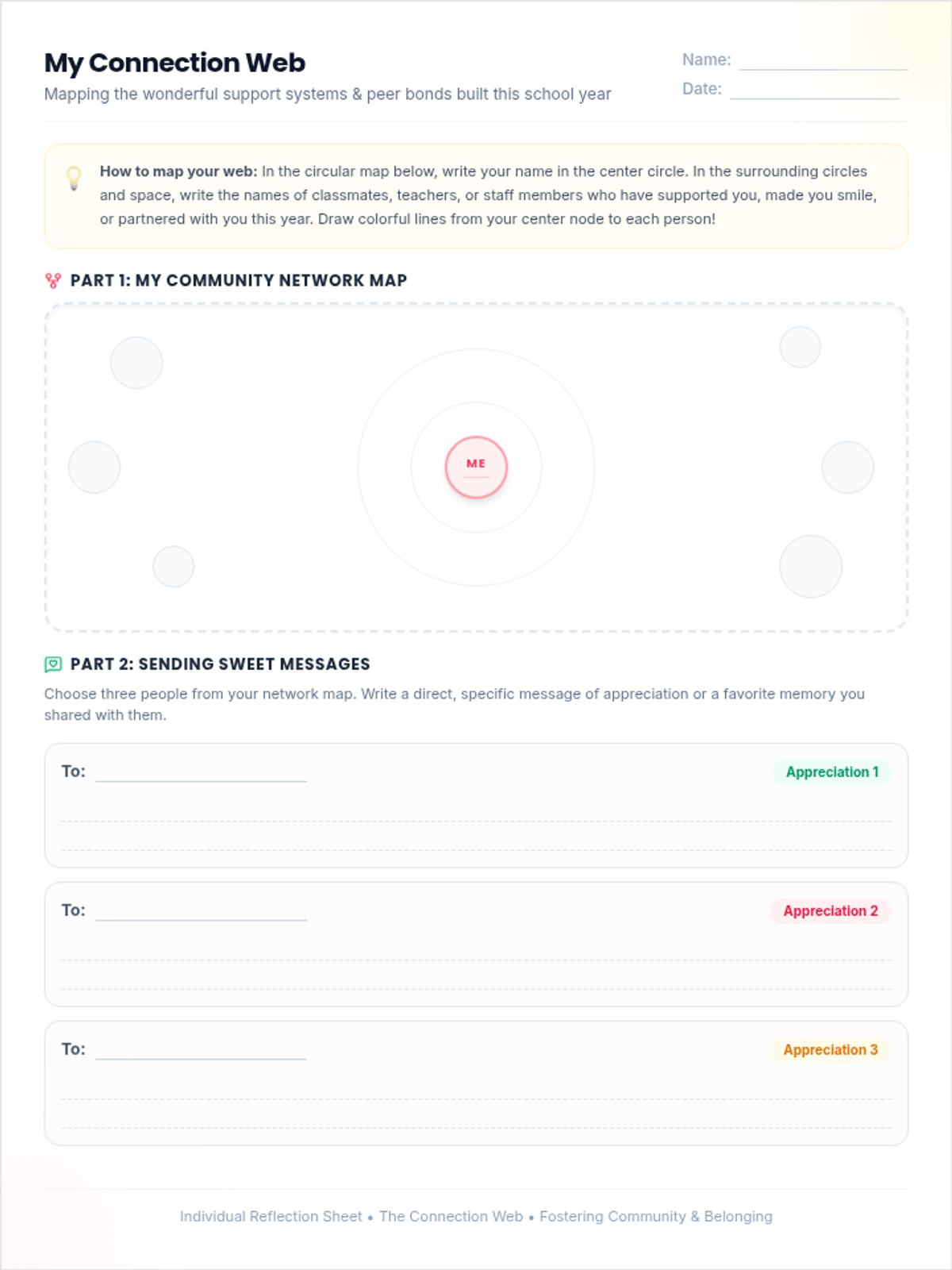
A warm, reflective social-emotional learning lesson designed to help students celebrate their classroom community, map their peer support networks, and experience positive closure as the school year ends.
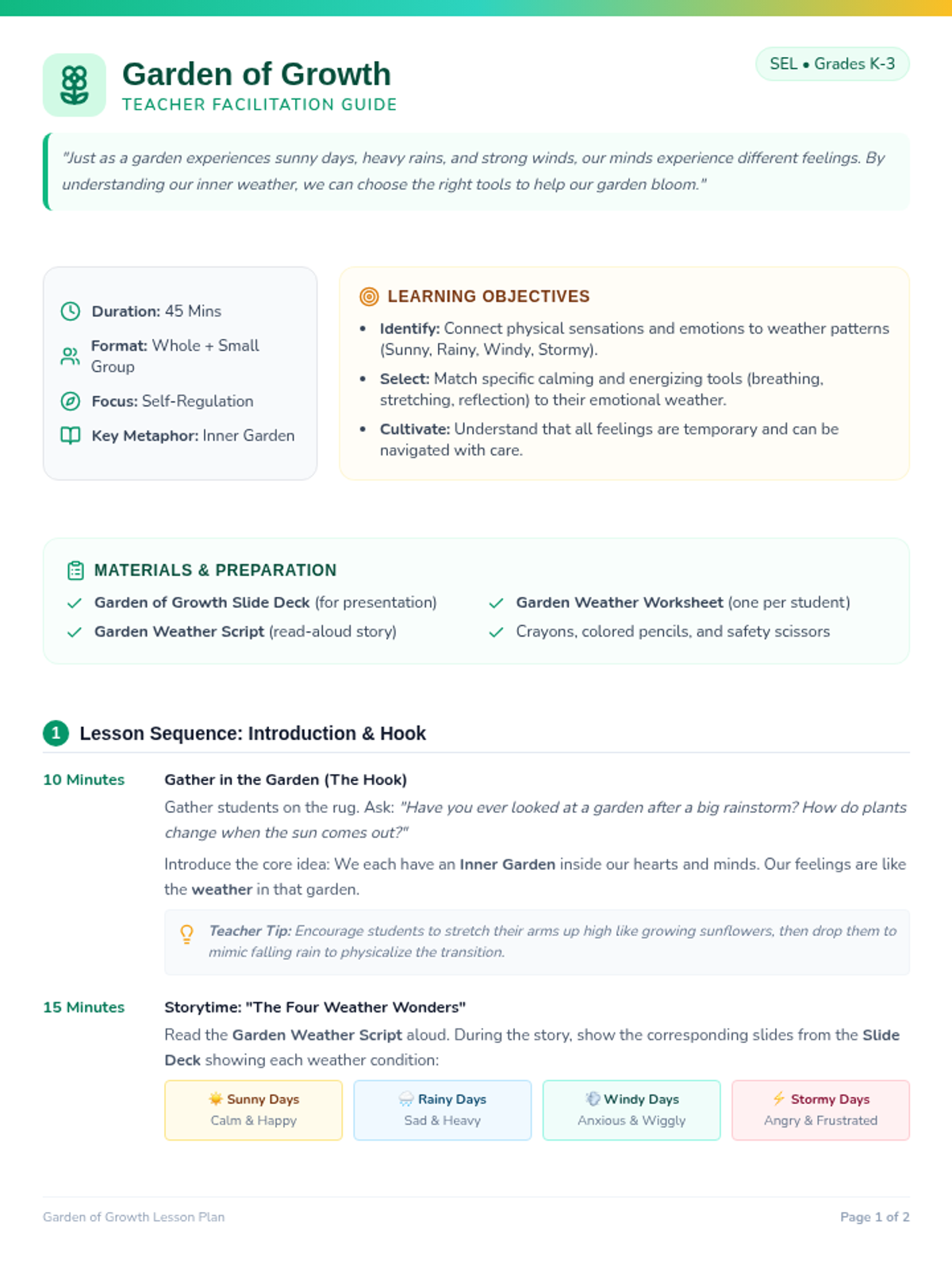
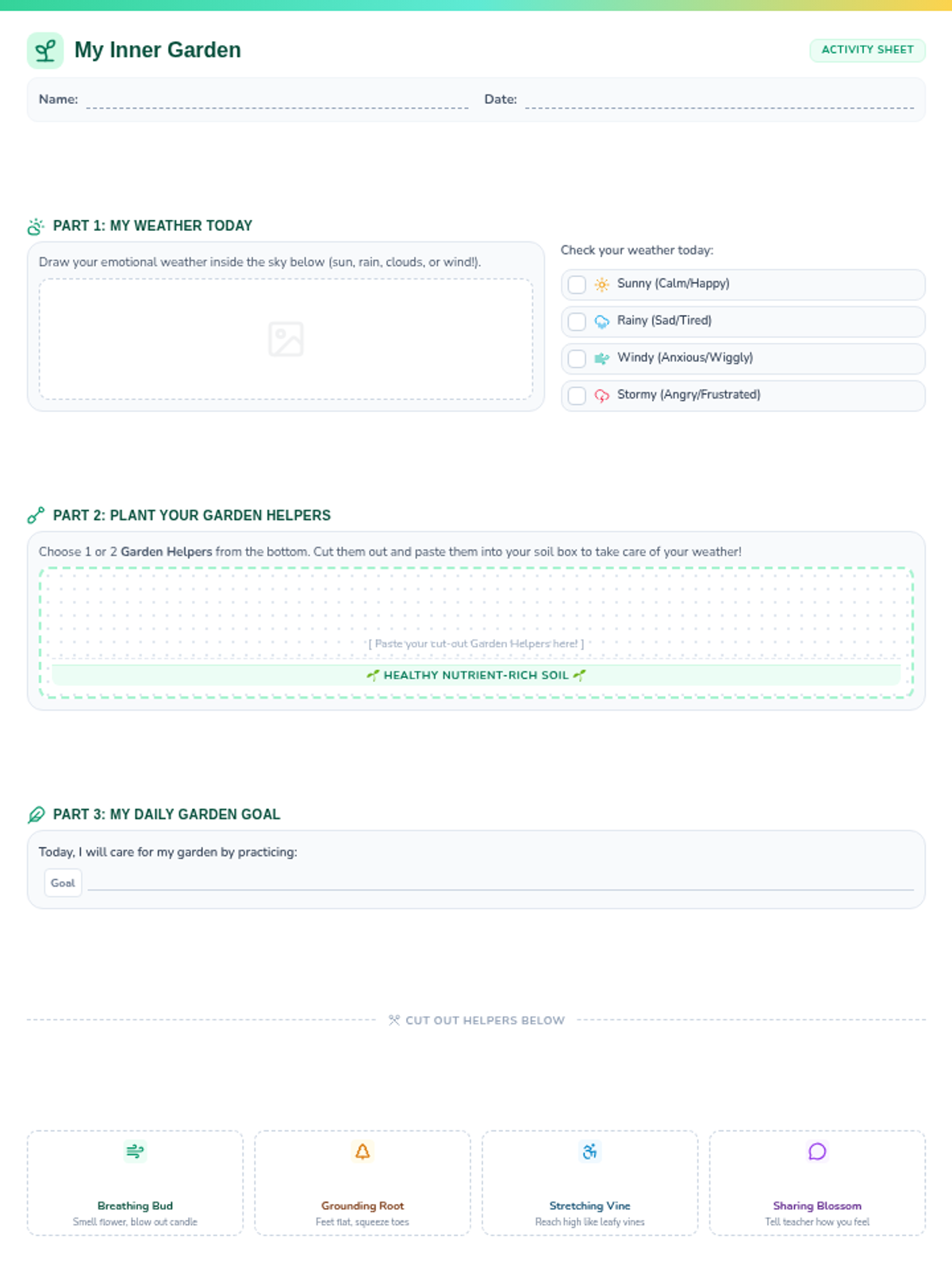
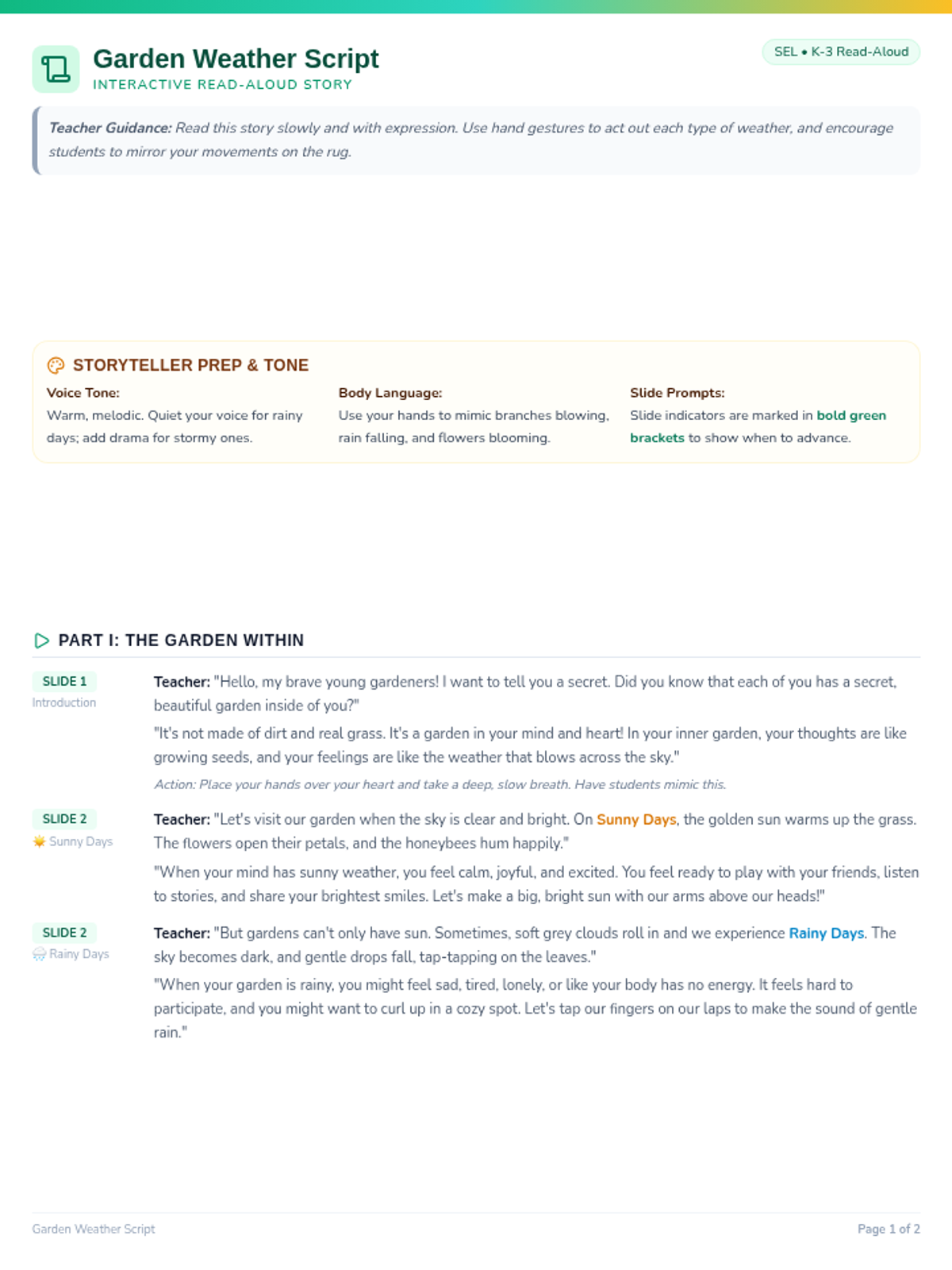
A nature-themed lesson for K-3 students using a garden metaphor to understand self-regulation, identify emotional 'weather', and cultivate healthy coping strategies.
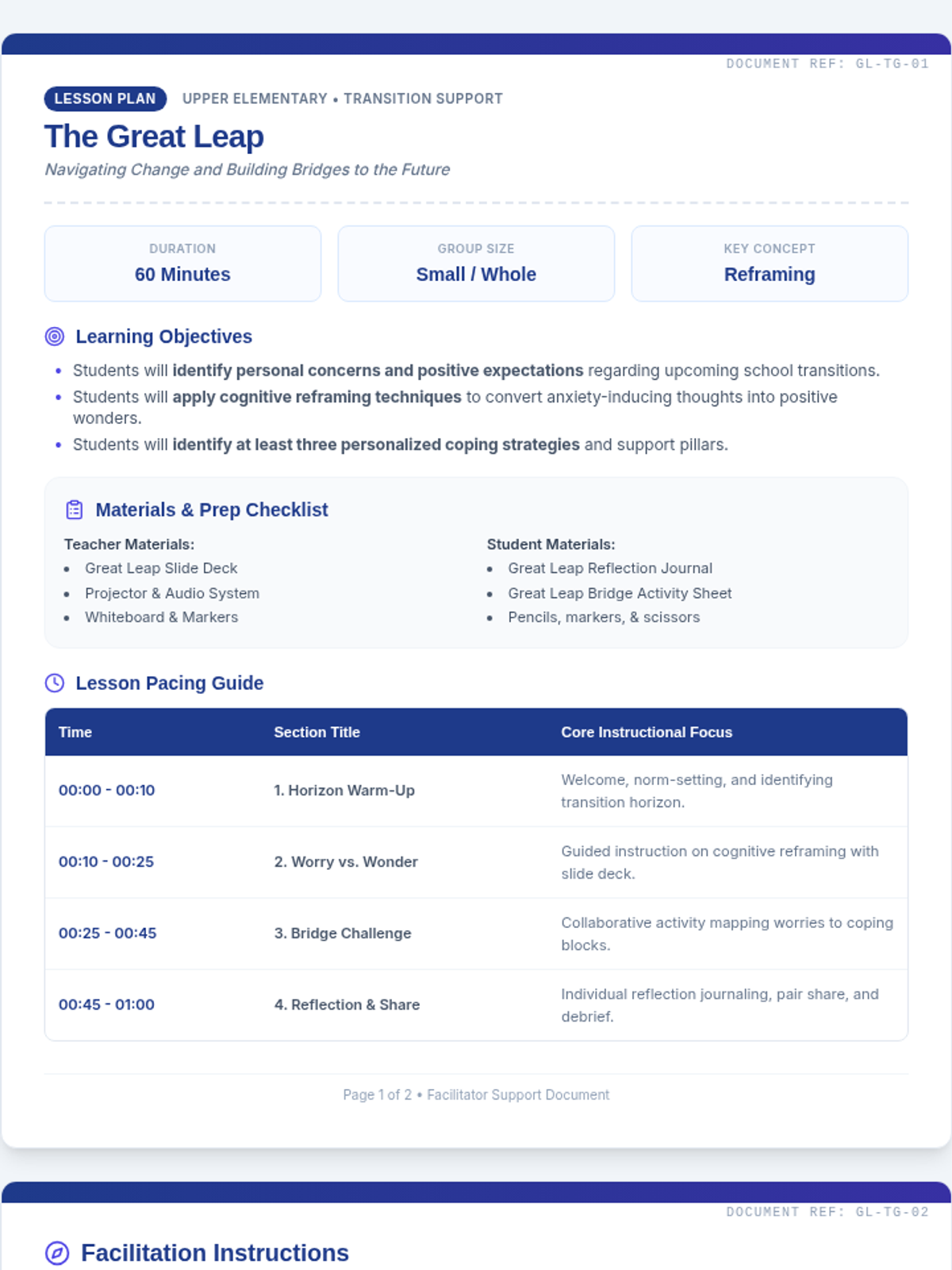
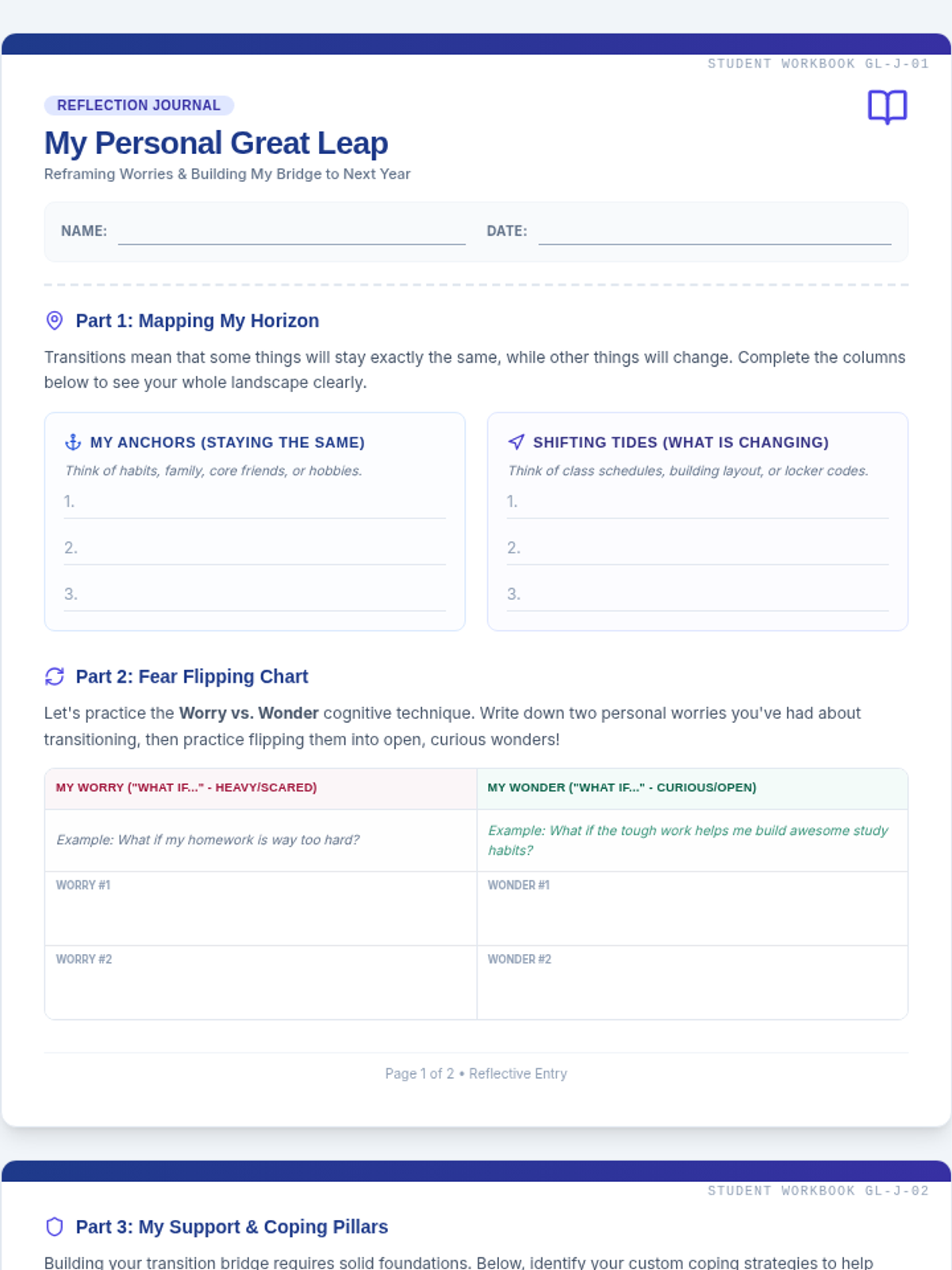
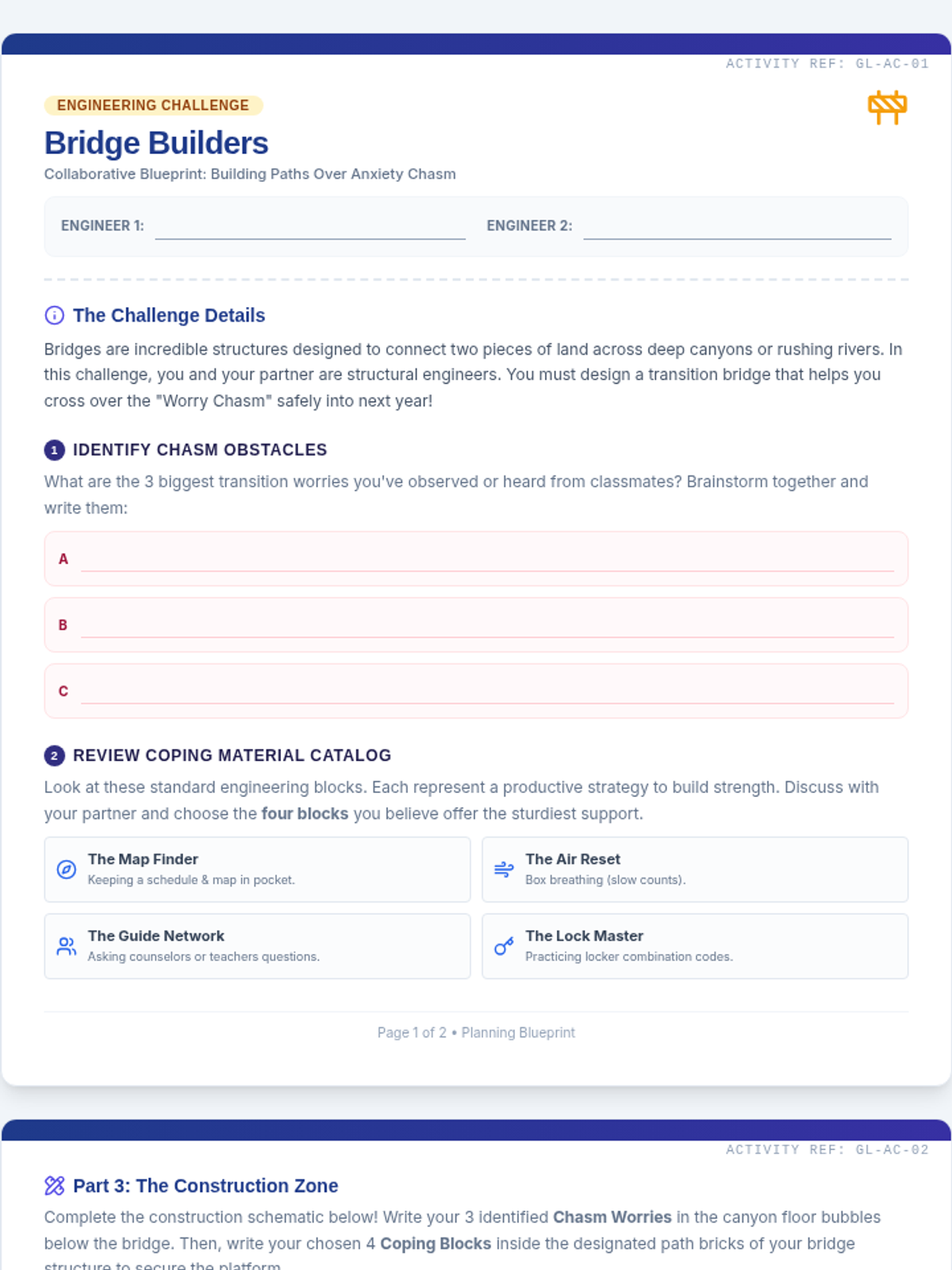
A transformative lesson designed to help upper elementary students navigate transition anxiety using cognitive reframing and practical coping strategies. Through interactive slides, reflection journals, and a collaborative bridge-building activity, students learn to flip their worries into actionable strengths.
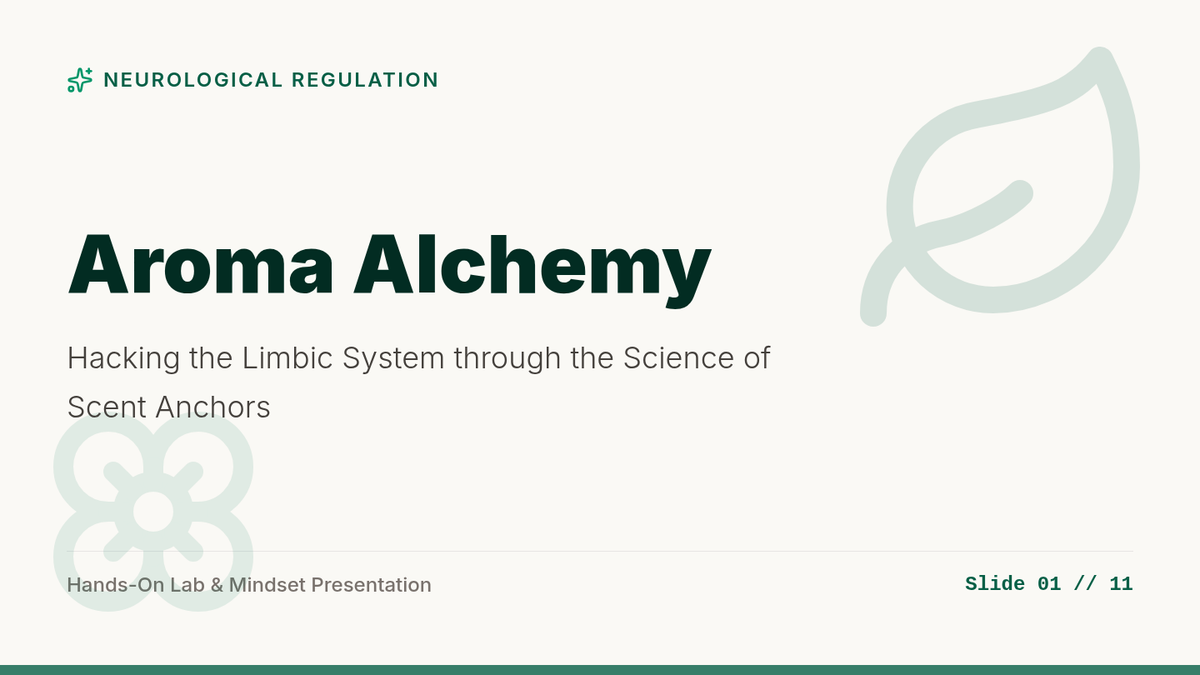
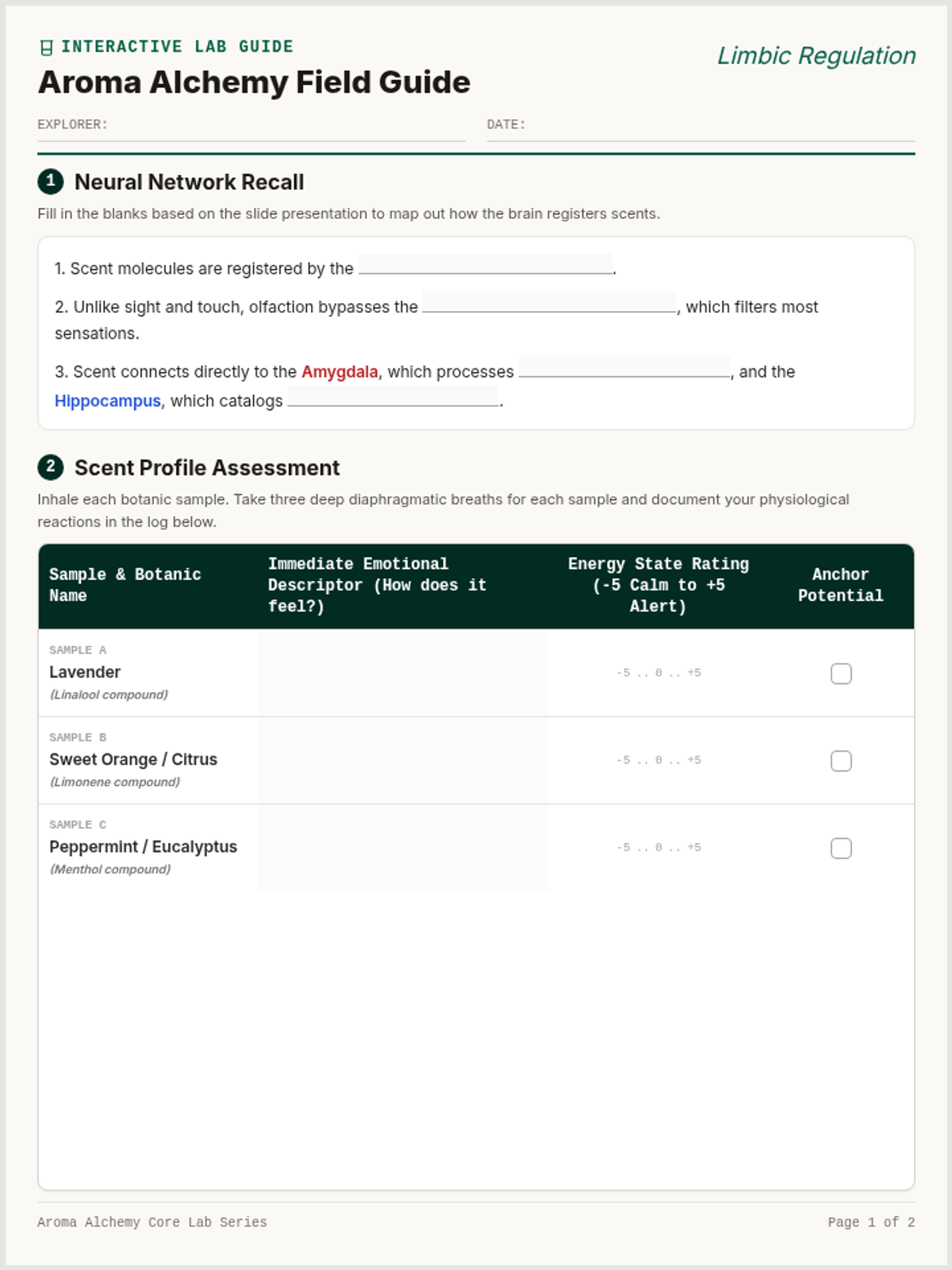
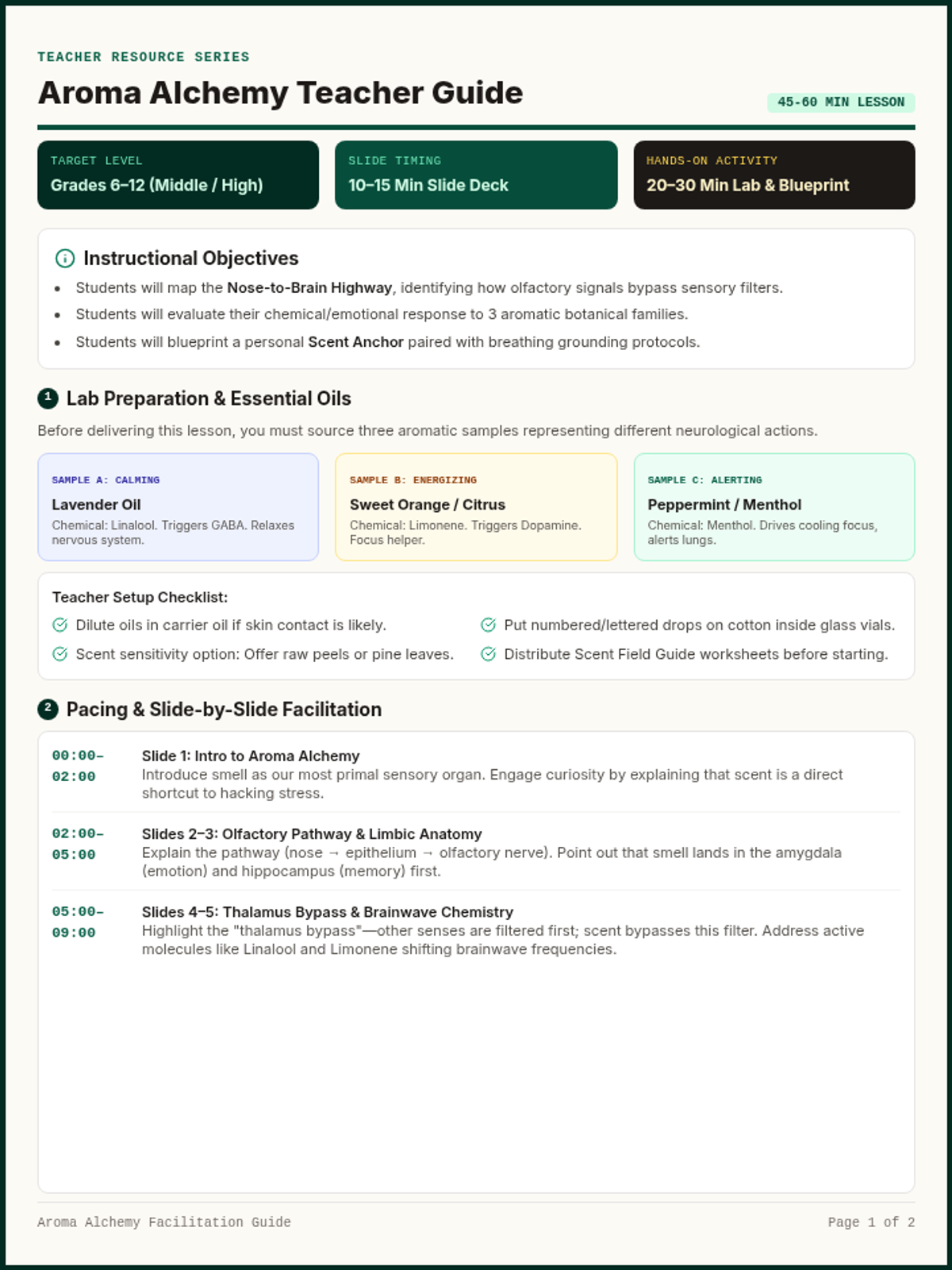
A lesson exploring the neurological science of olfactory regulation, the anatomy of the limbic system, and the practical application of scent anchoring for emotional grounding. Includes a 11-slide presentation, a student-facing field guide for hands-on activities, and a teacher facilitation guide.
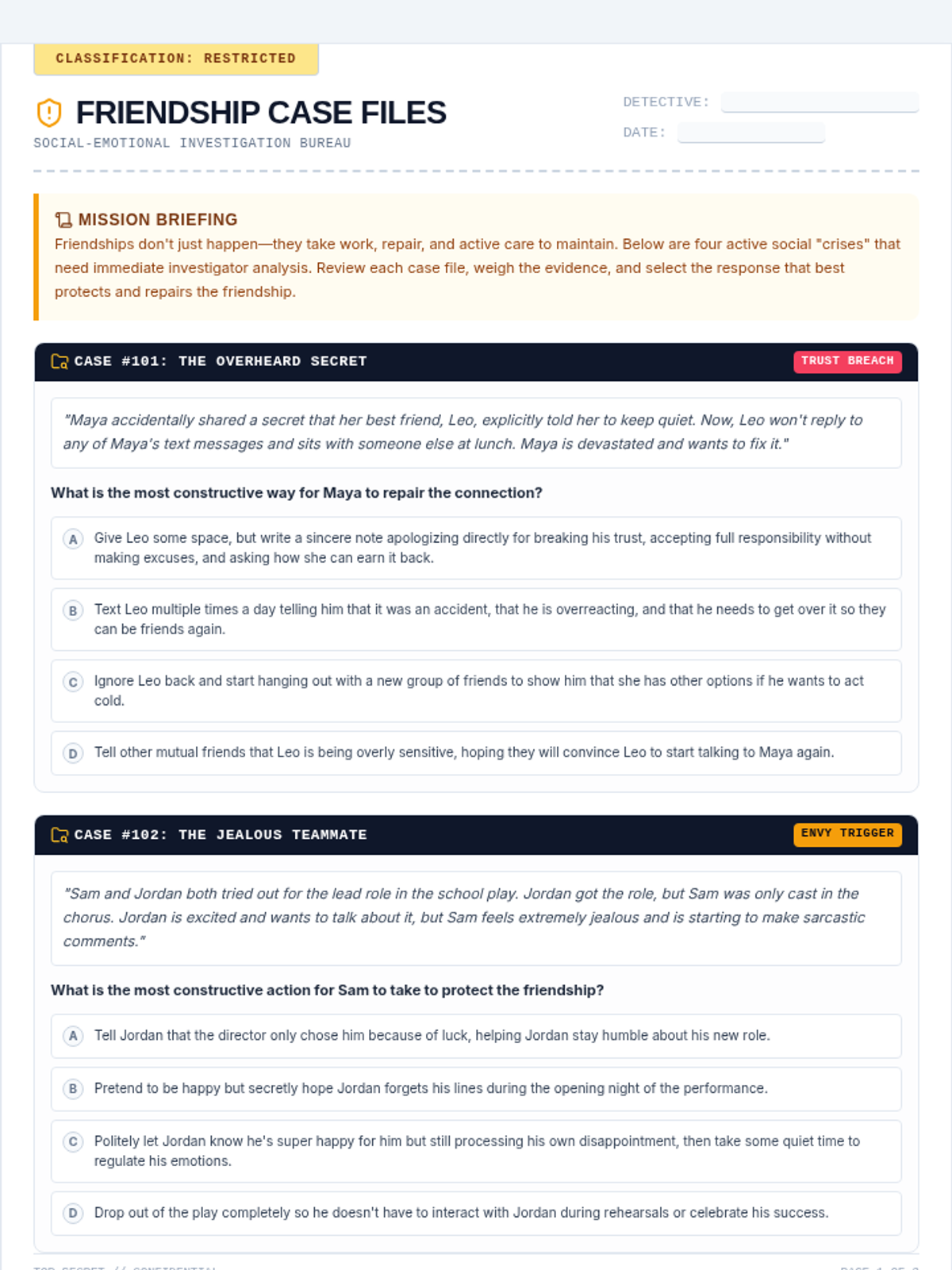
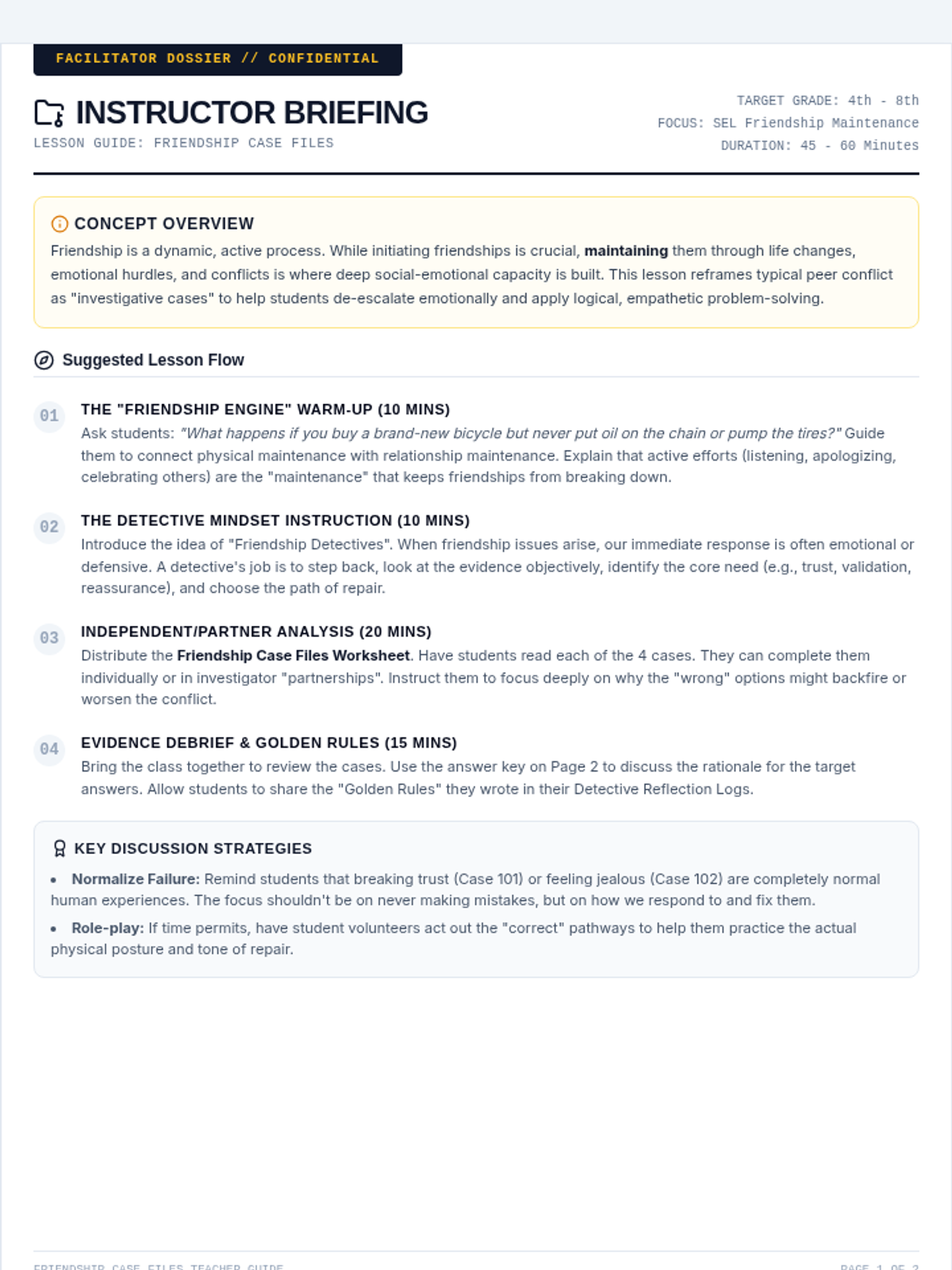
A social-emotional learning lesson focusing on critical skills for maintaining friendships, such as active listening, resolving conflicts, showing empathy, and repairing mistakes. Students act as "Friendship Detectives" to analyze realistic social scenarios styled as detective case files.
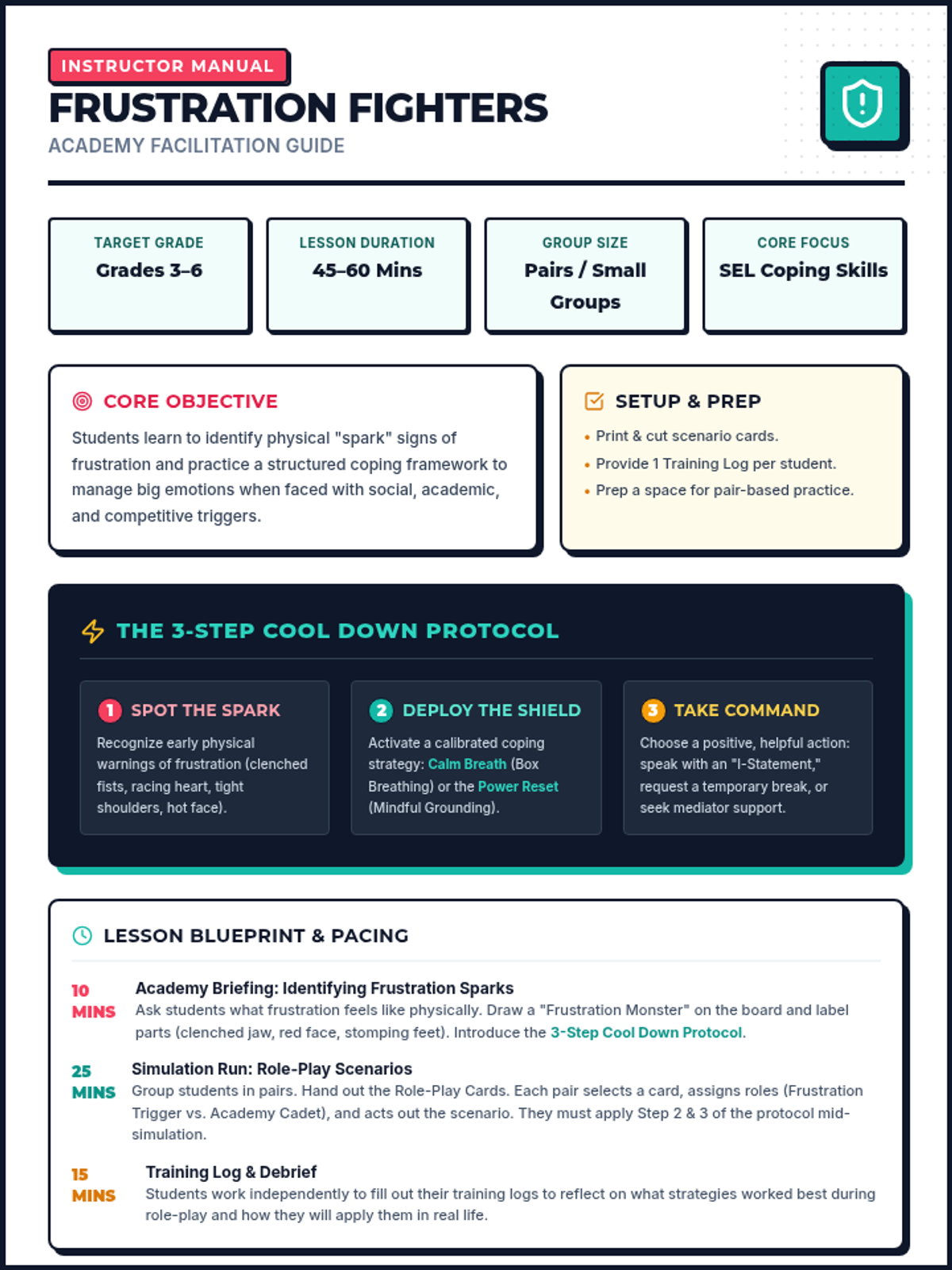
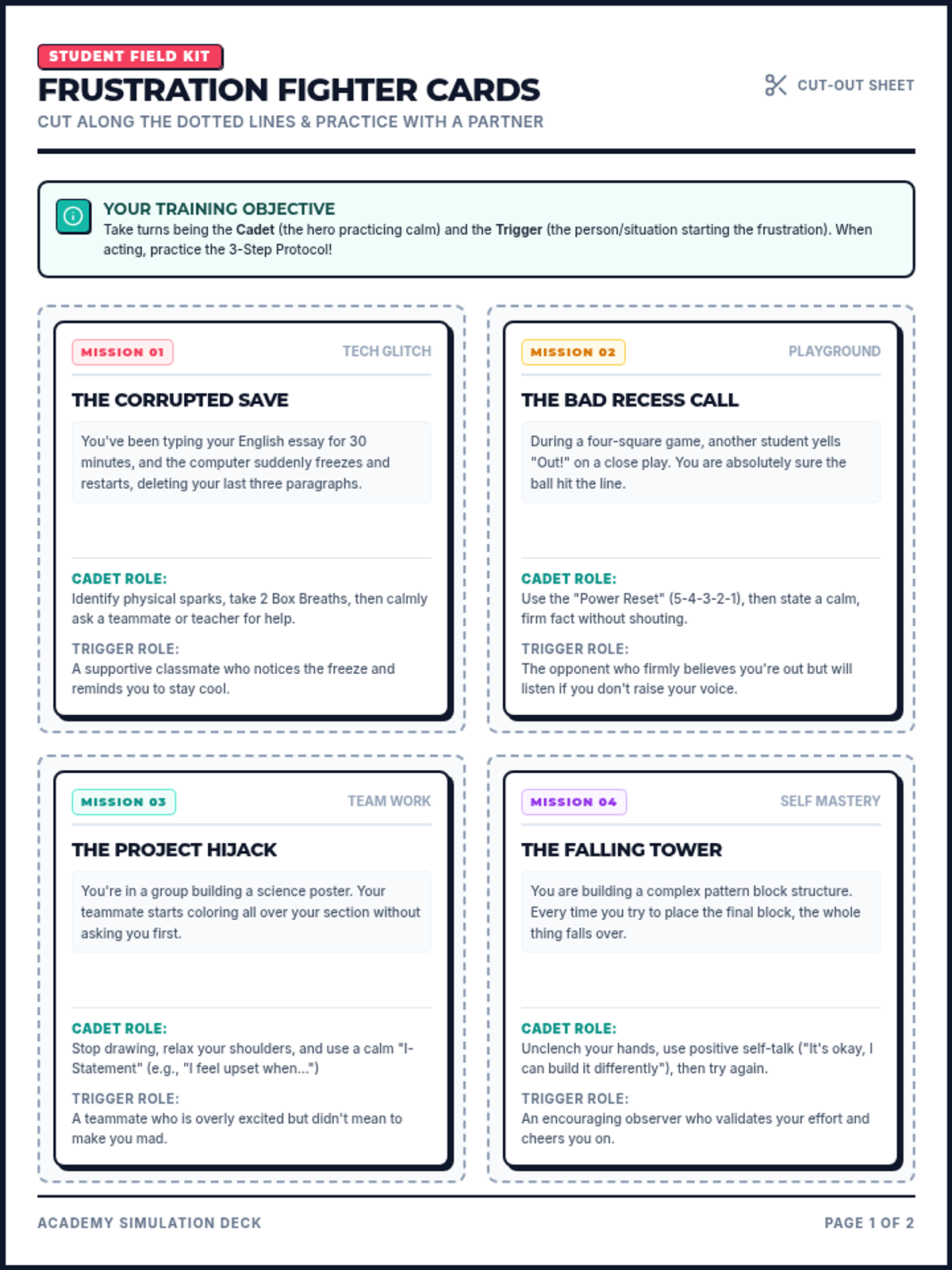
An interactive, superhero-themed lesson designed to help elementary and middle school students recognize frustration triggers and practice evidence-based coping skills. Through structured role-play and a reflective training log, students practice calming strategies in relatable social scenarios.
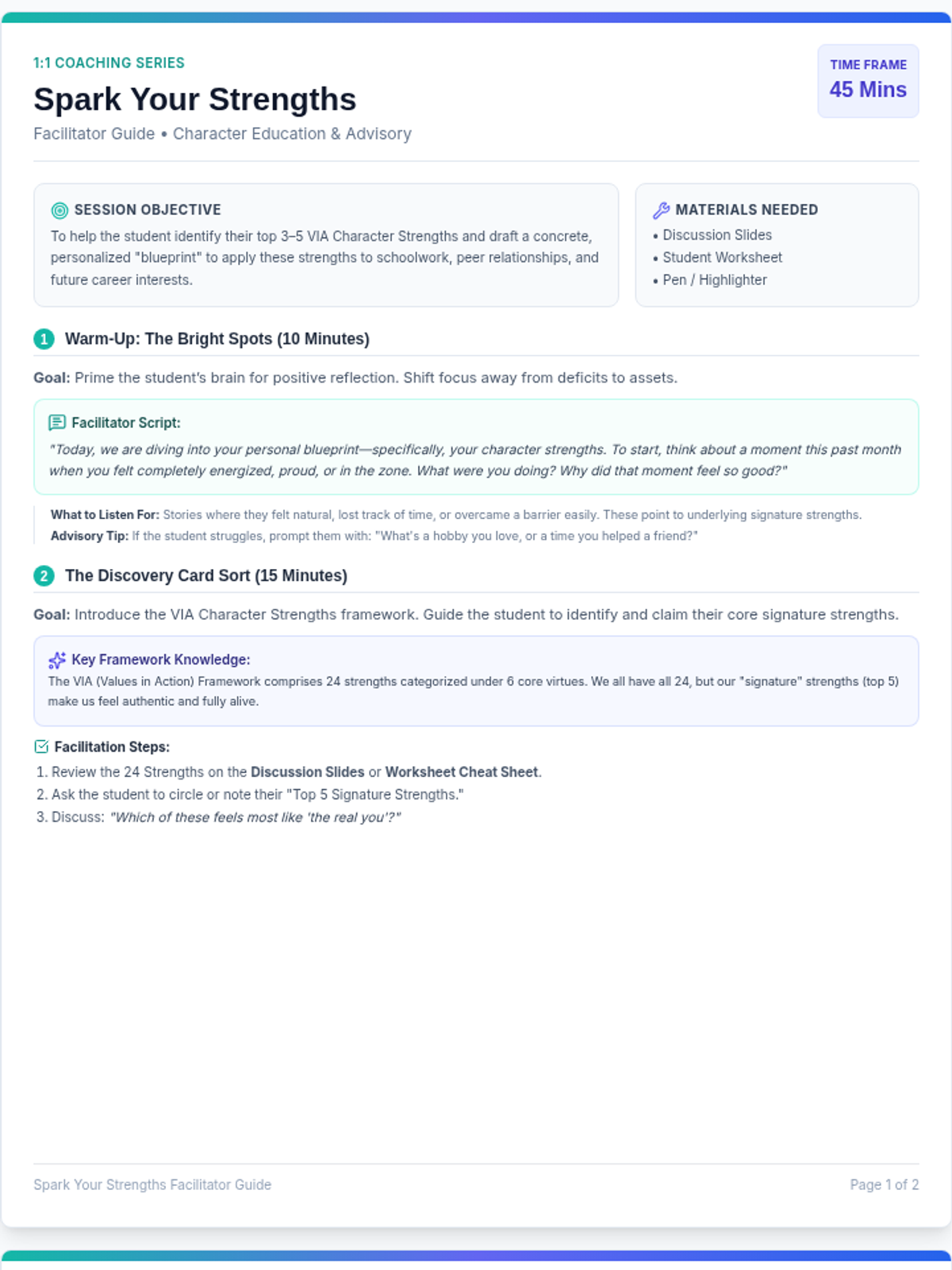
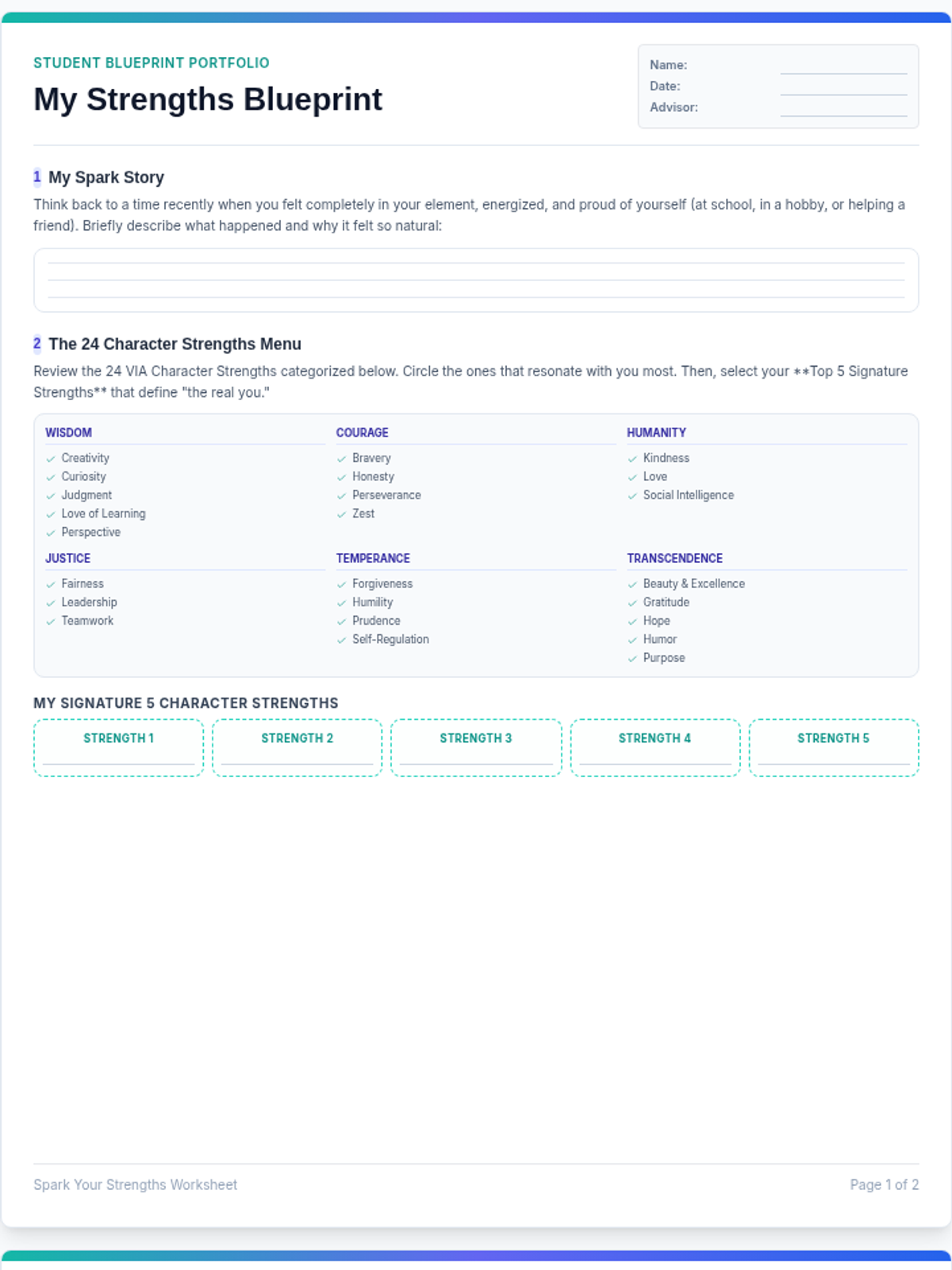
A highly personalized 1:1 advisory or counseling lesson designed to help middle or high school students discover their VIA Character Strengths, map them to current school challenges, and project them into future life and career opportunities.
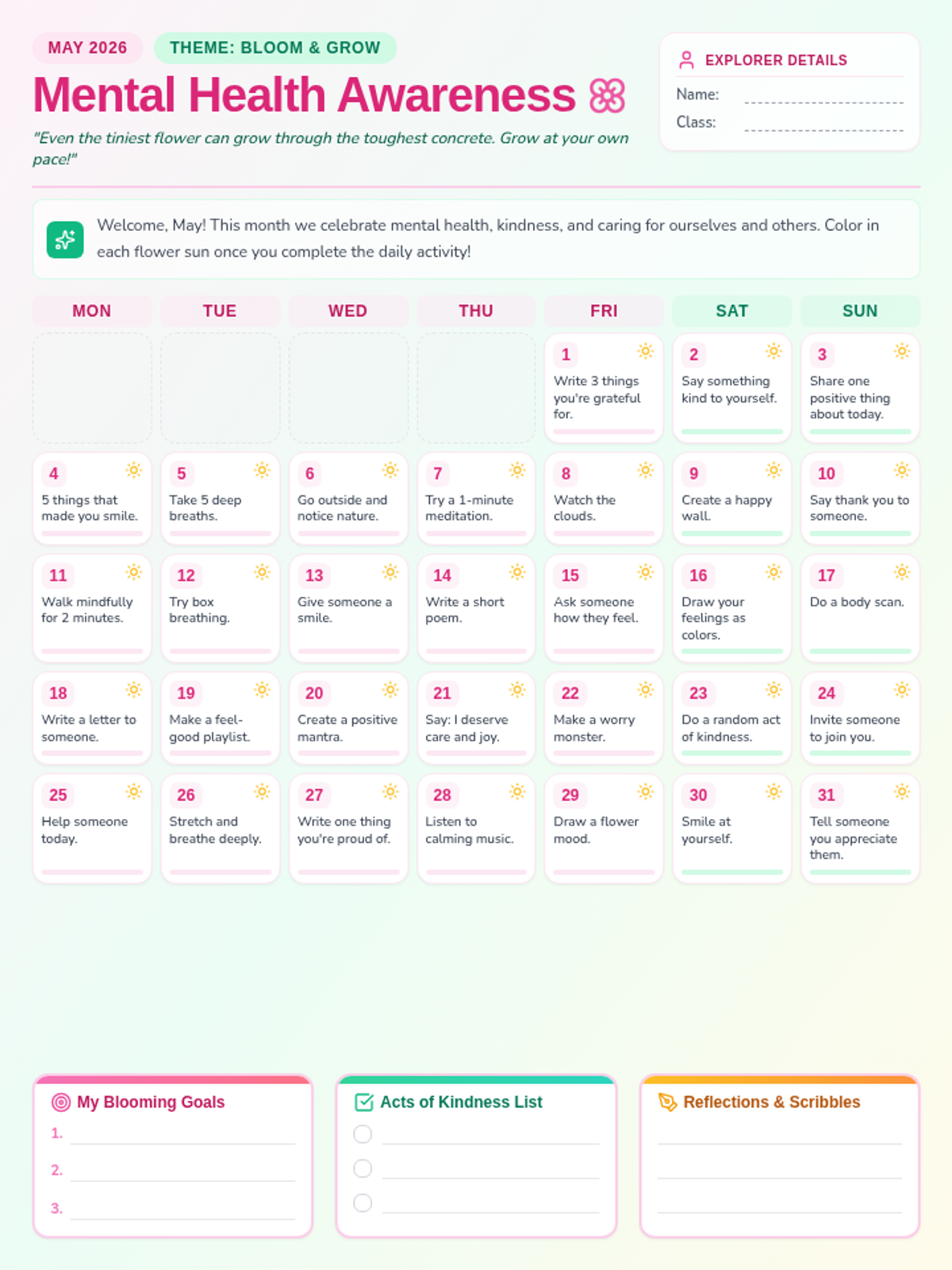
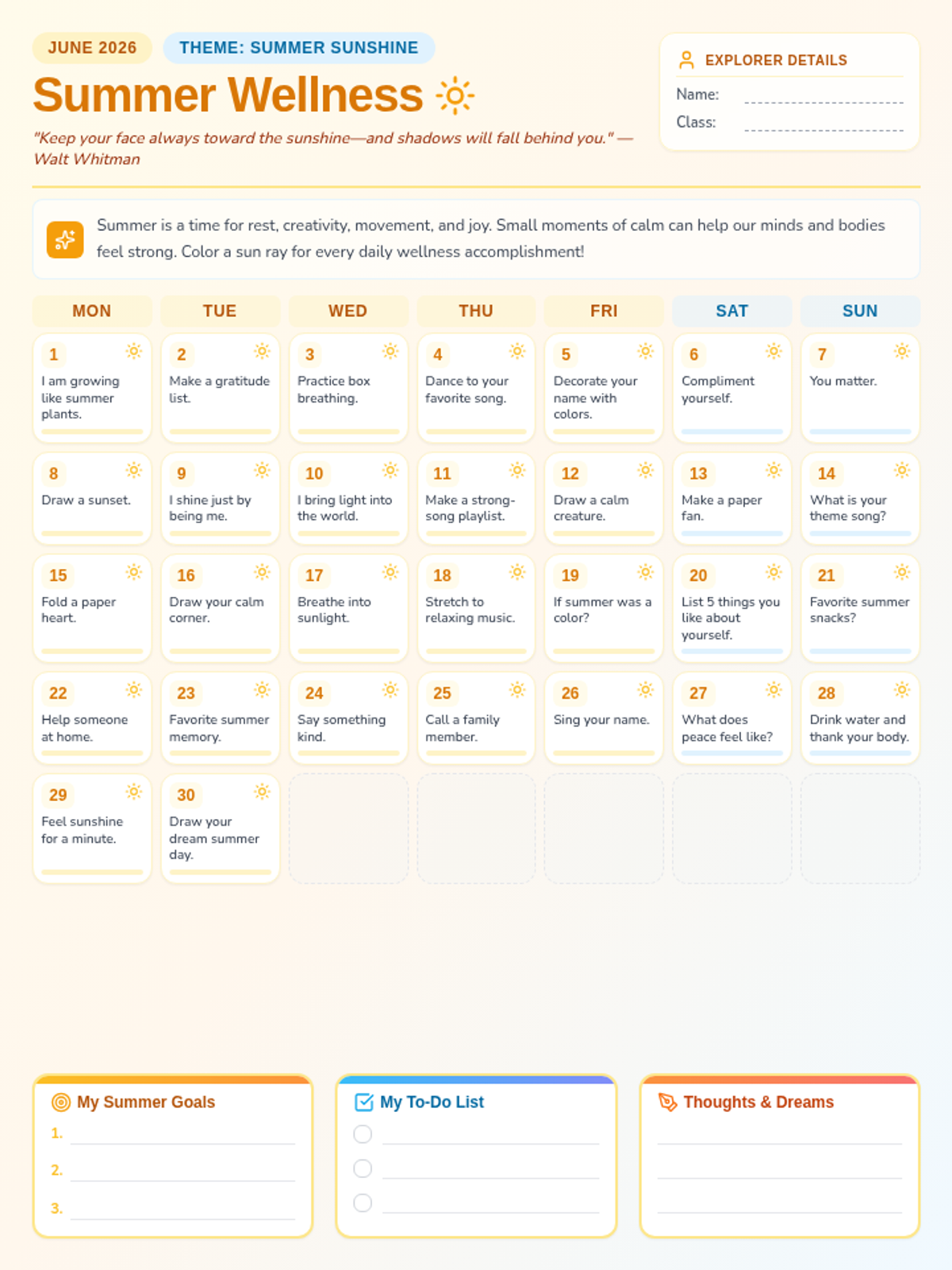
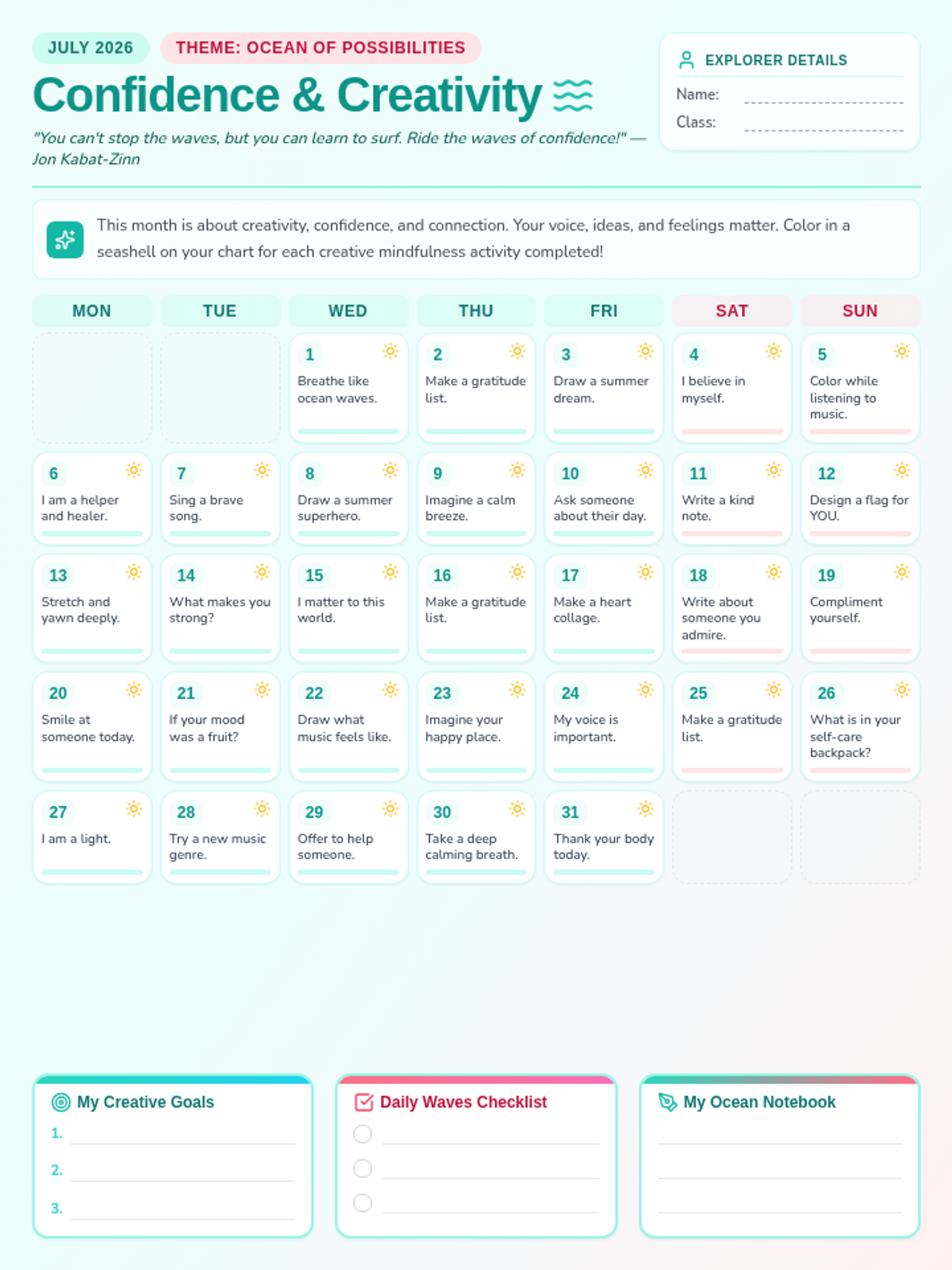
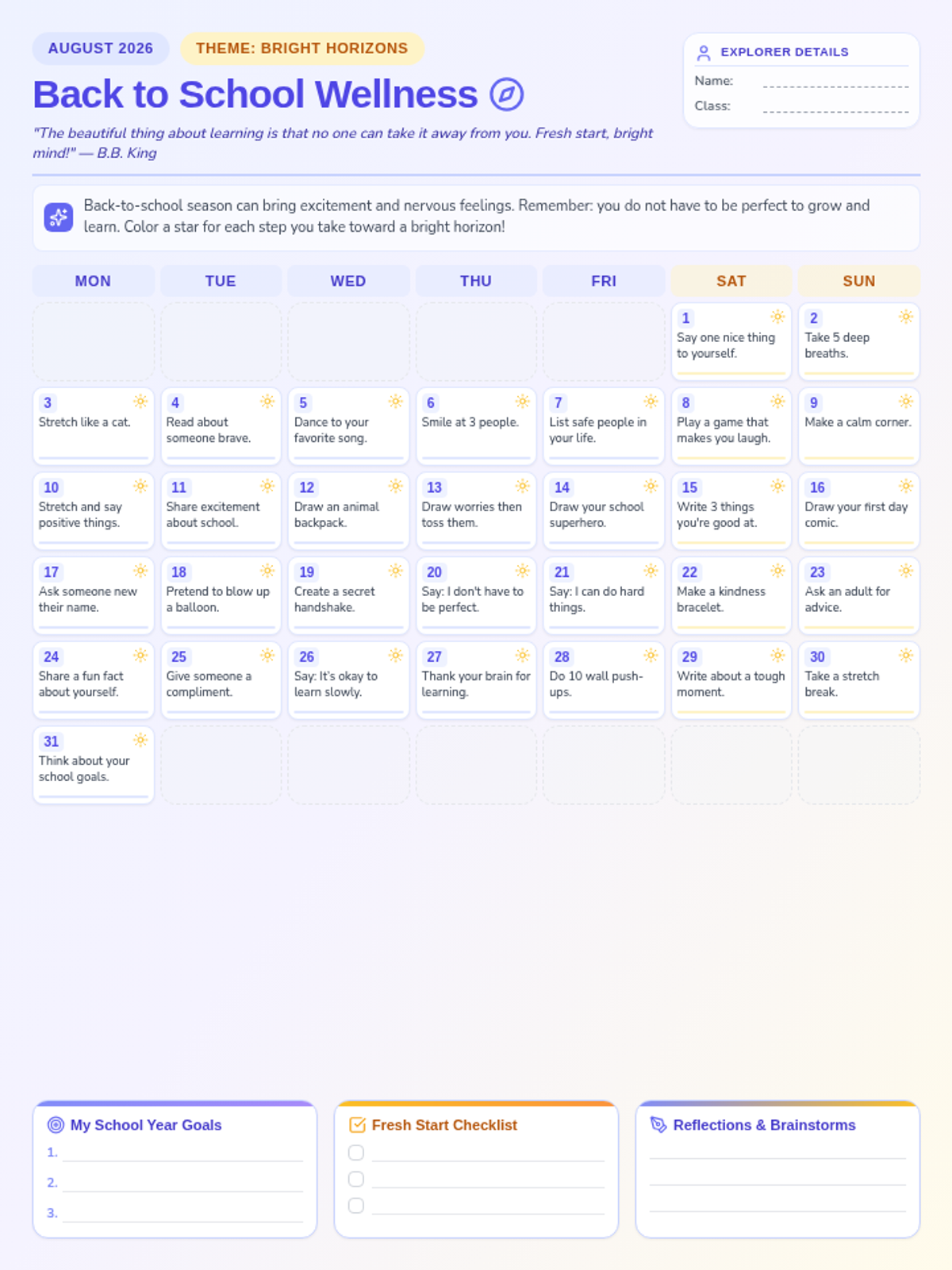
A vibrant series of four monthly mental health and wellness calendars for May through August 2026. Designed with playful bright colors, a distinct growth mindset theme for each month, and inspirational quotes, these calendars offer daily mindfulness activities suitable for K-12 students and their families.
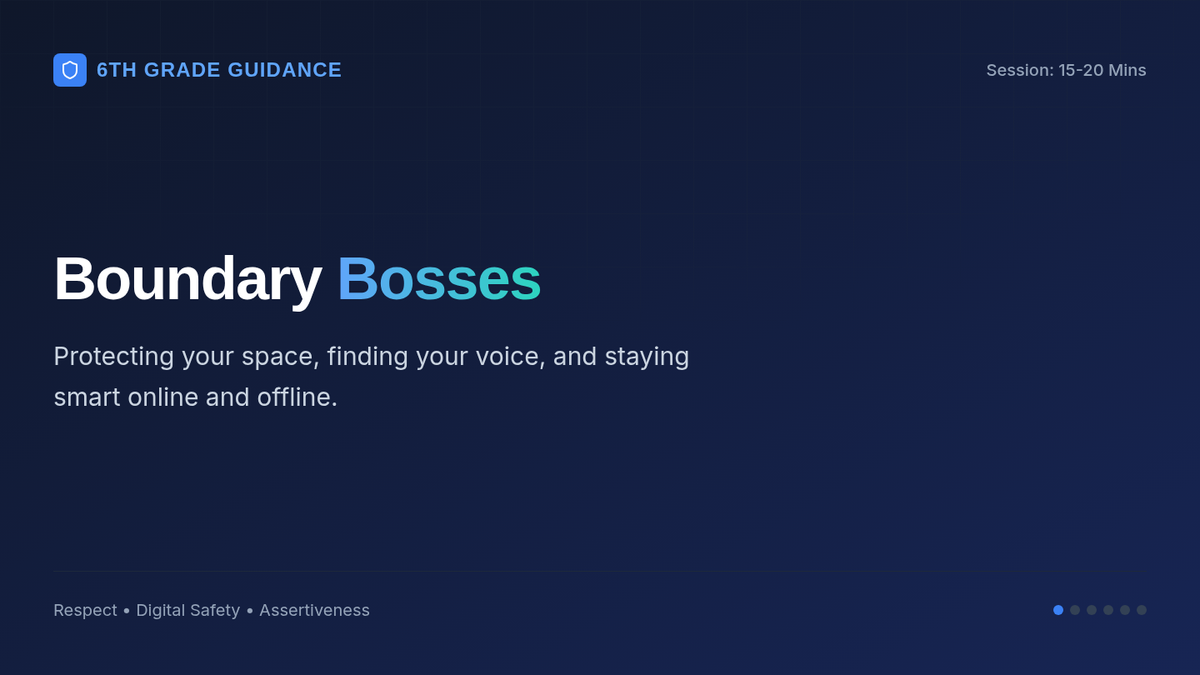
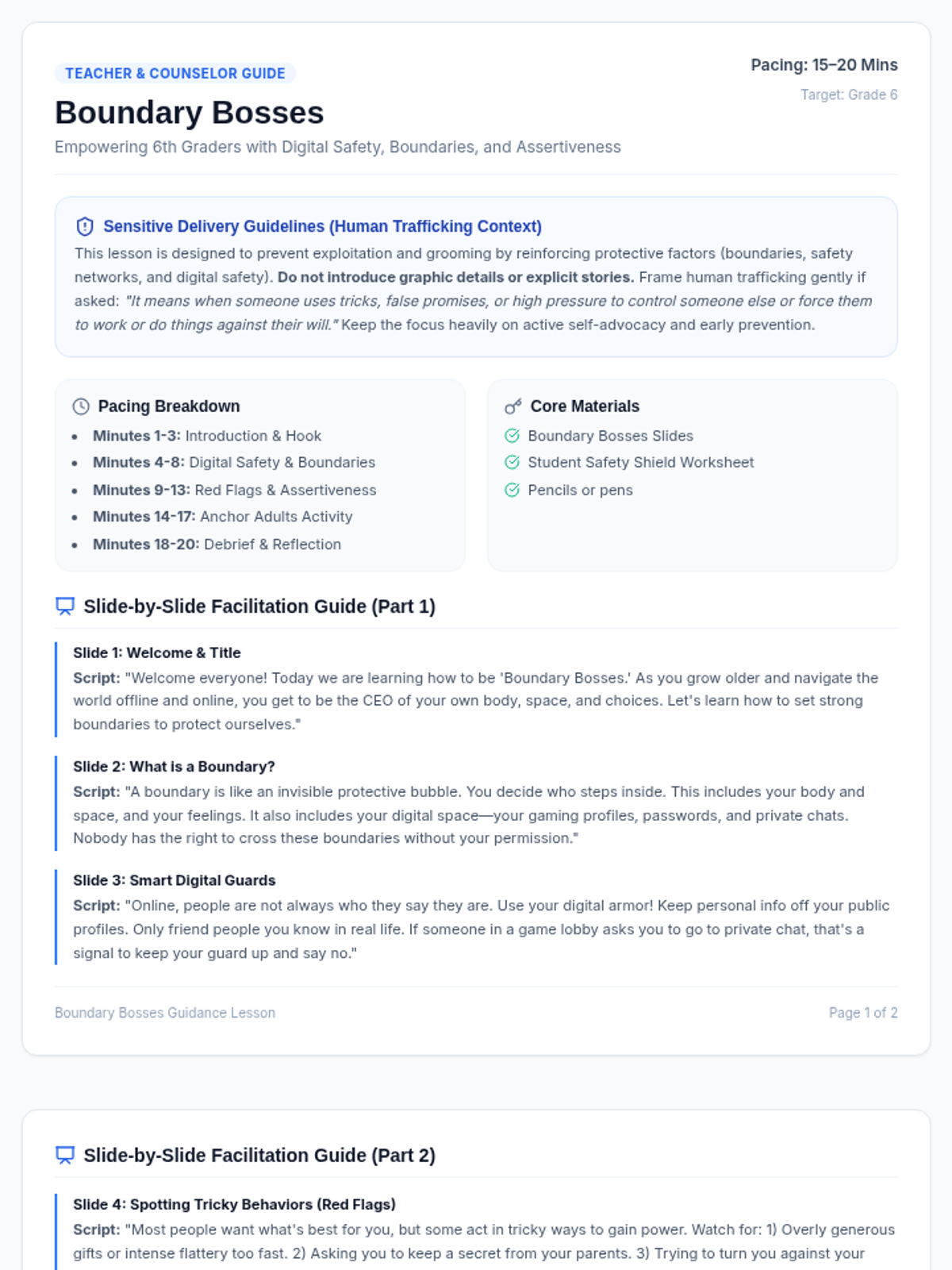
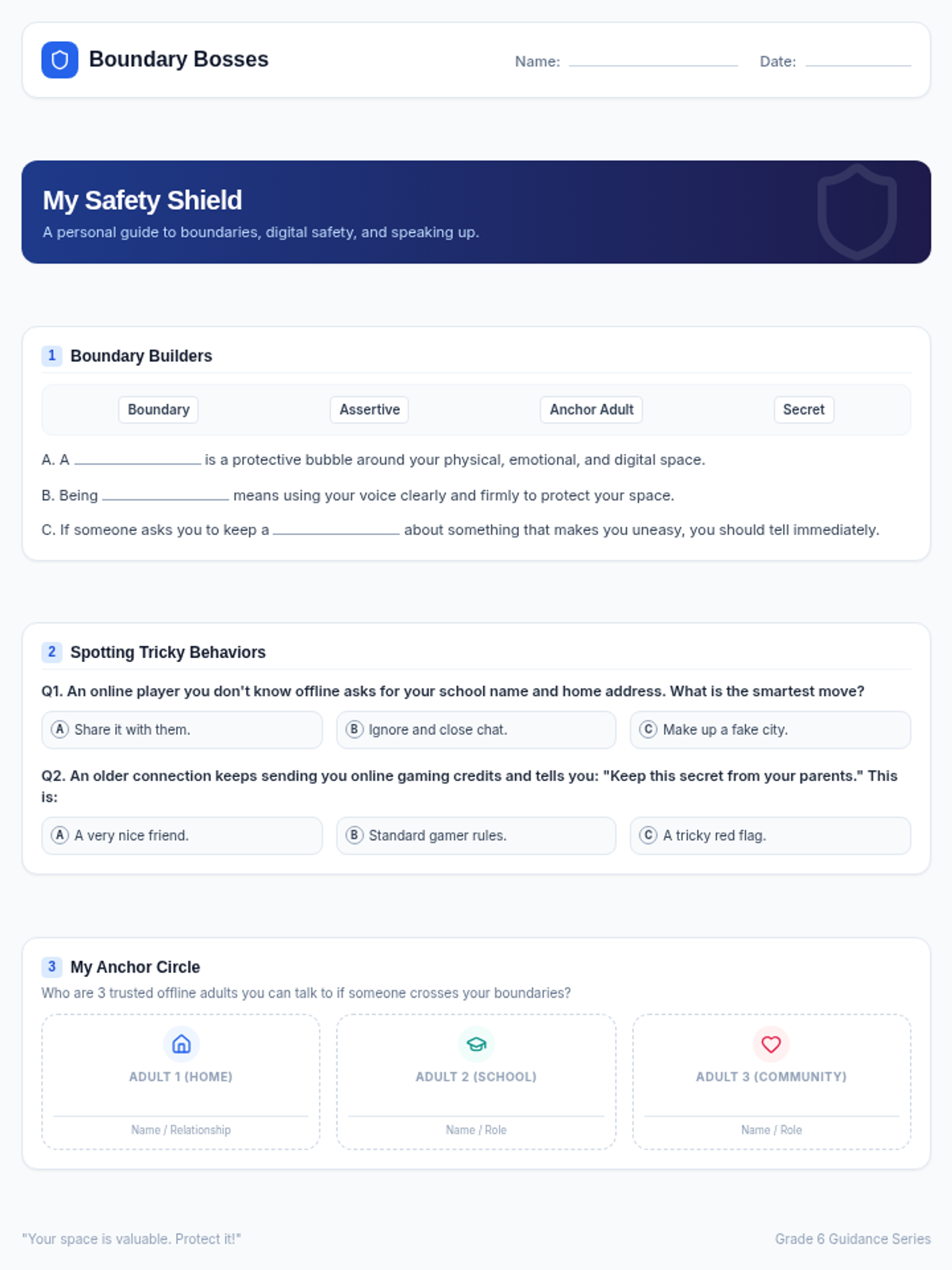
A 15-20 minute empowering guidance lesson for 6th graders that focuses on digital safety, setting and respecting boundaries, healthy assertiveness, and identifying tricky or predatory behaviors with gentle, age-appropriate language.
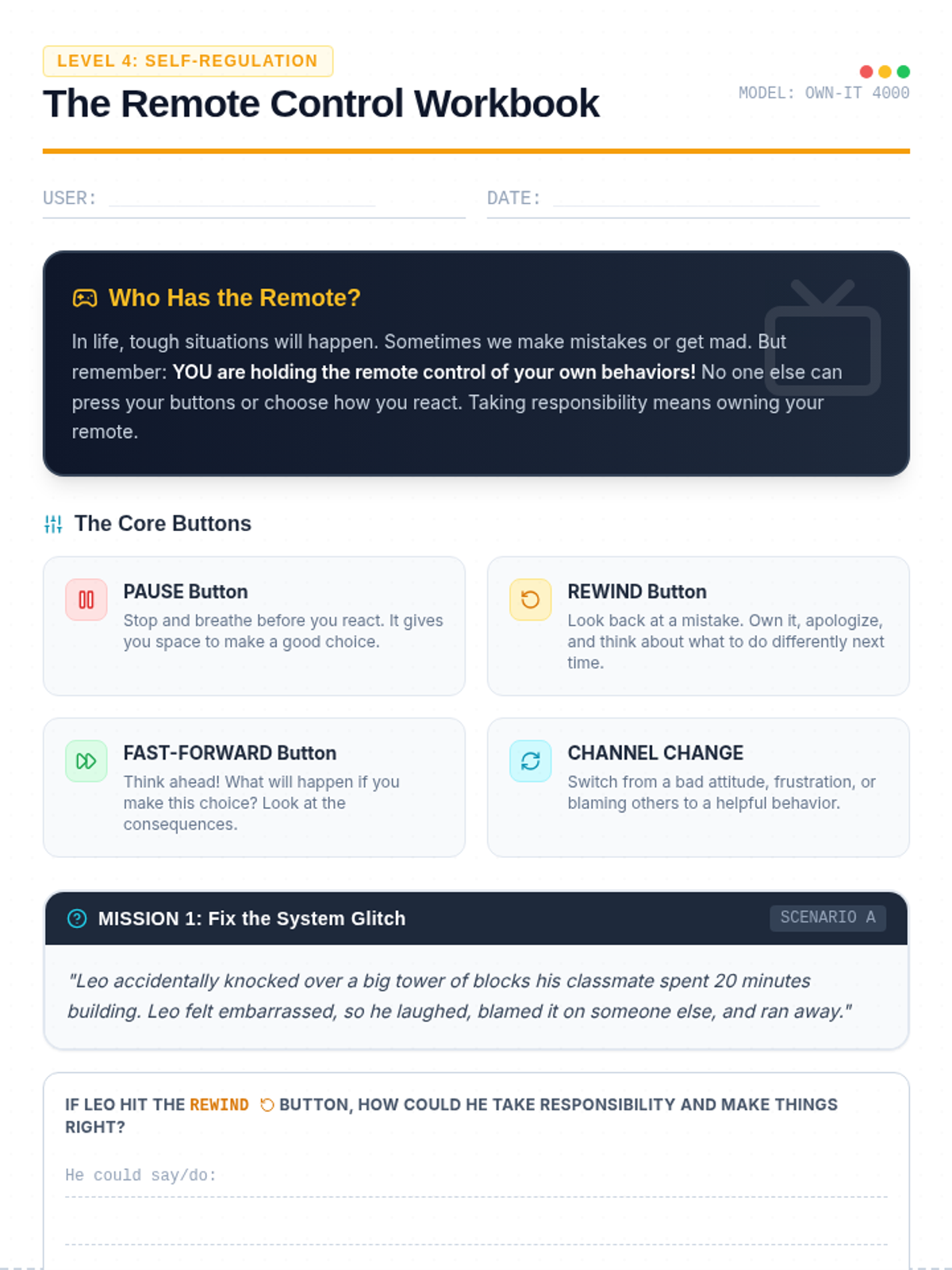
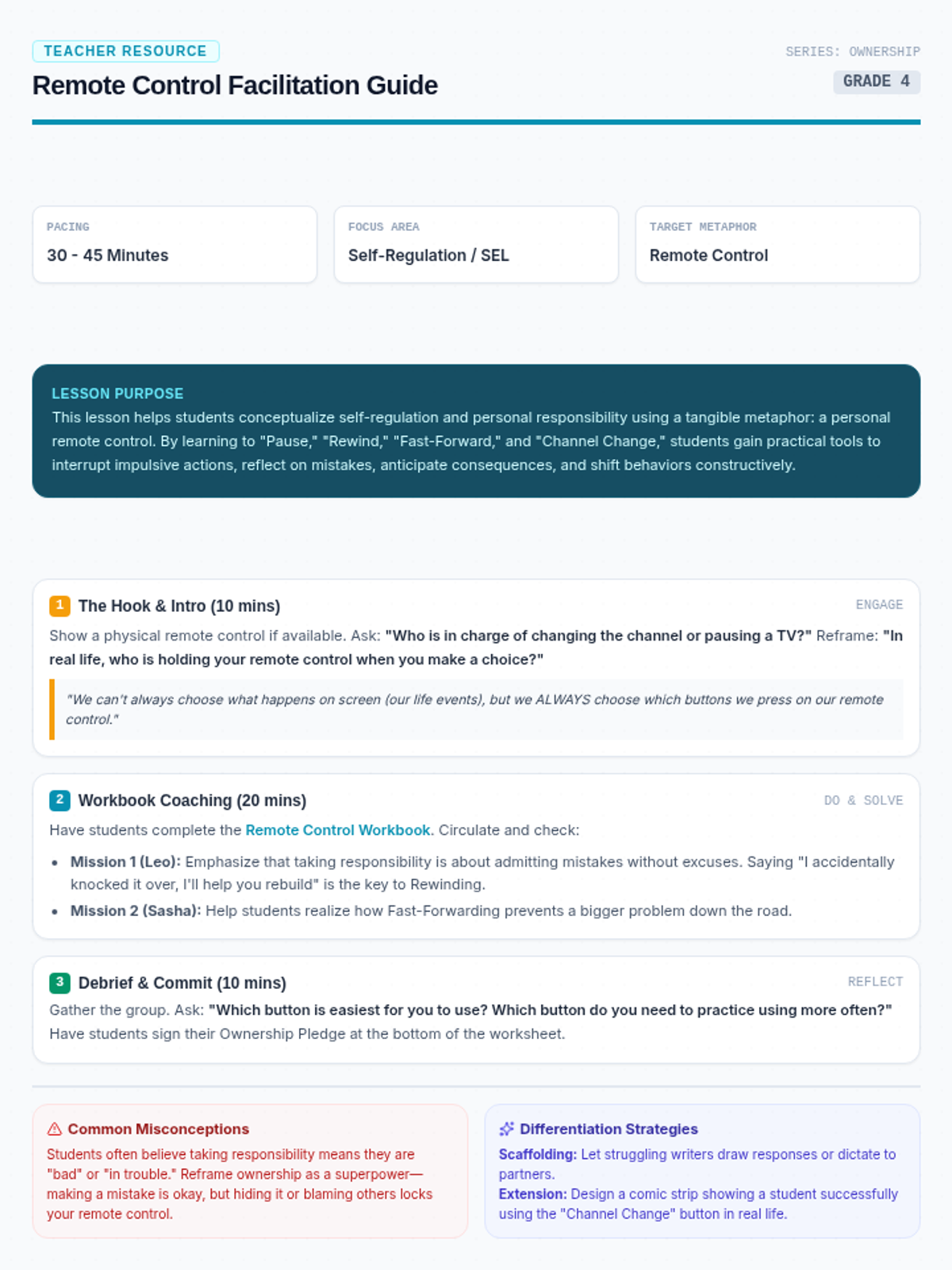
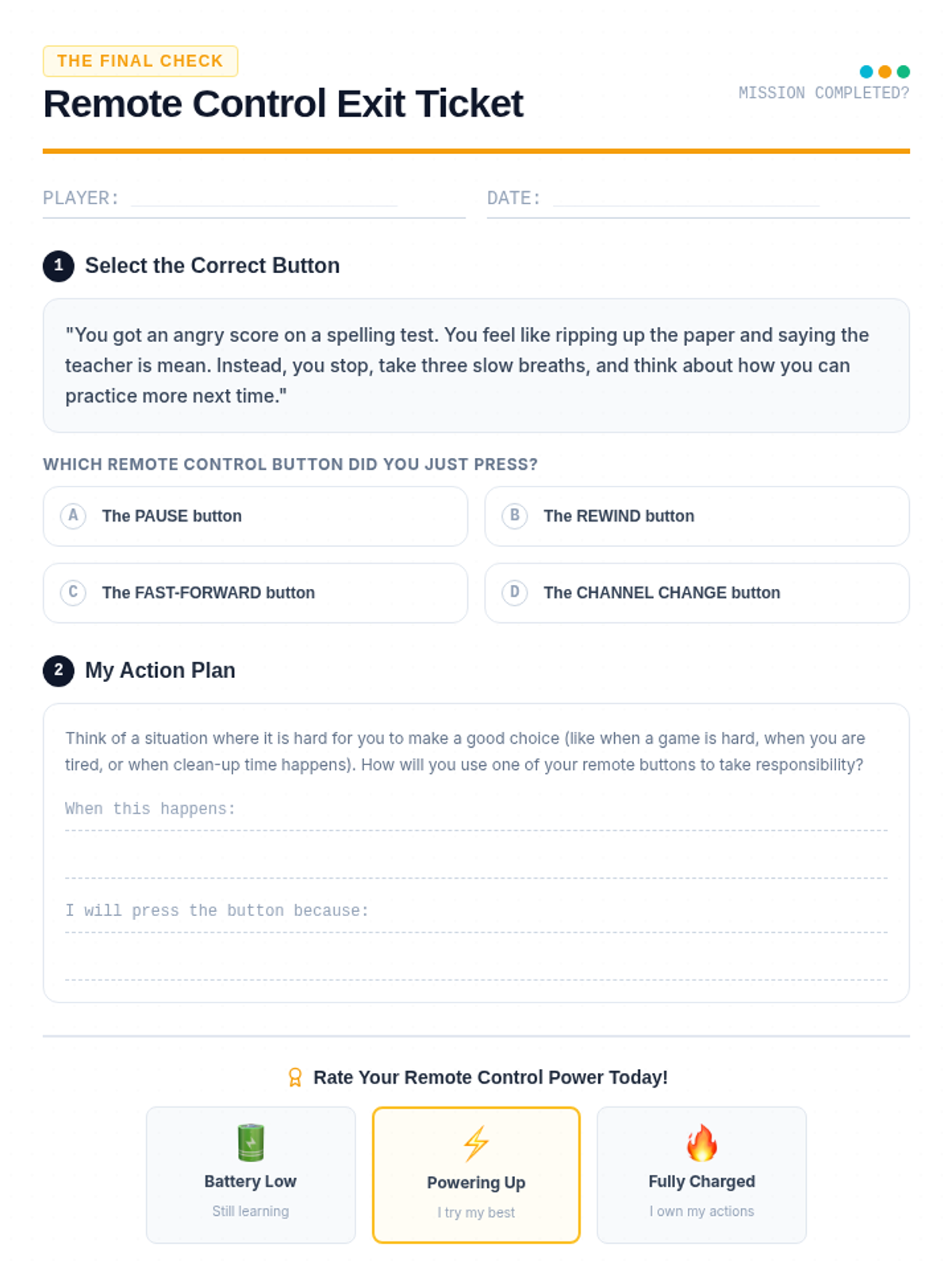
A self-guided, highly engaging social-emotional learning lesson for 4th graders that uses a retro 'remote control' metaphor to teach self-regulation and taking ownership of actions. Includes a student workbook, a teacher facilitation guide, and a reflective exit ticket.
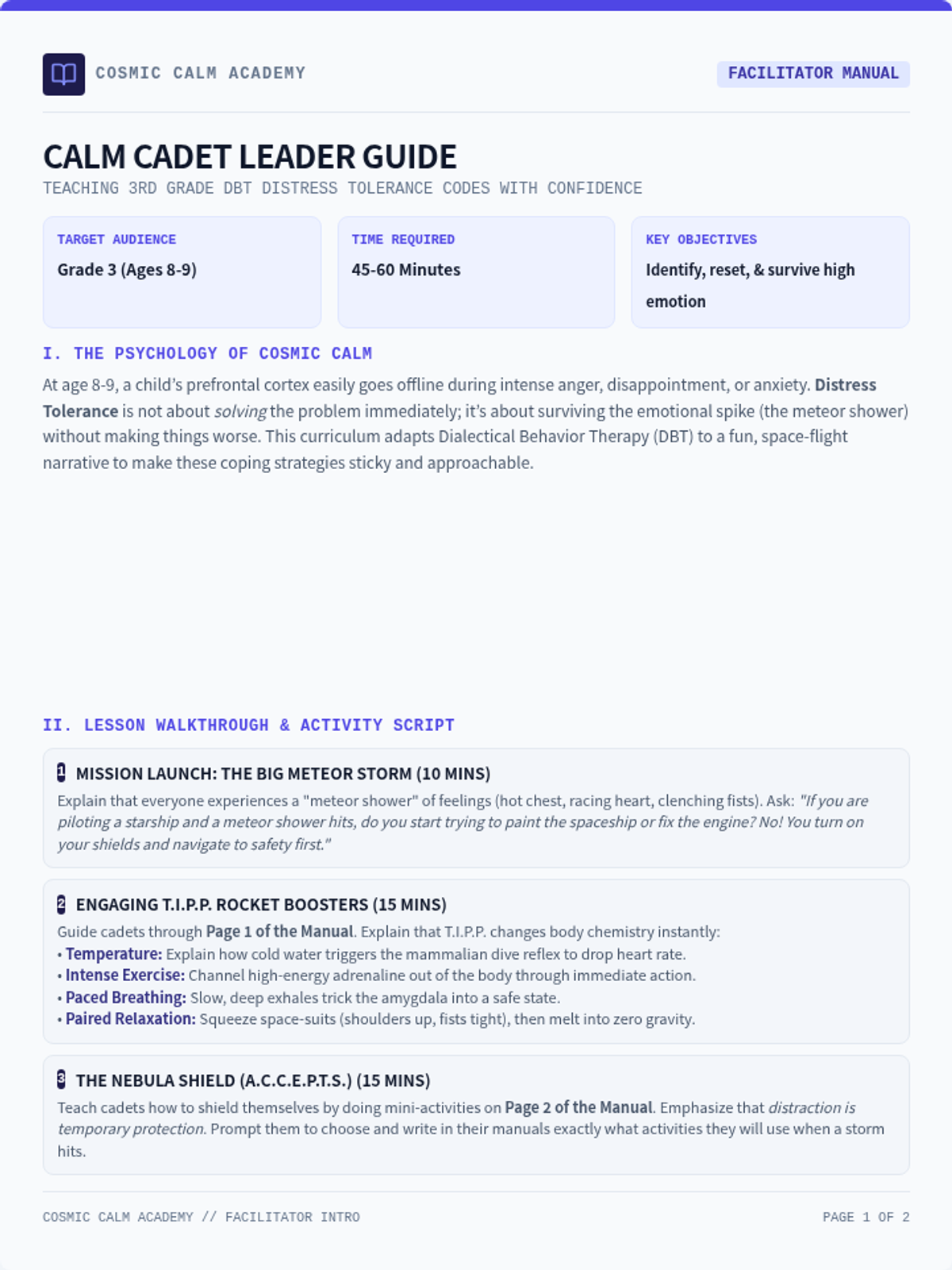
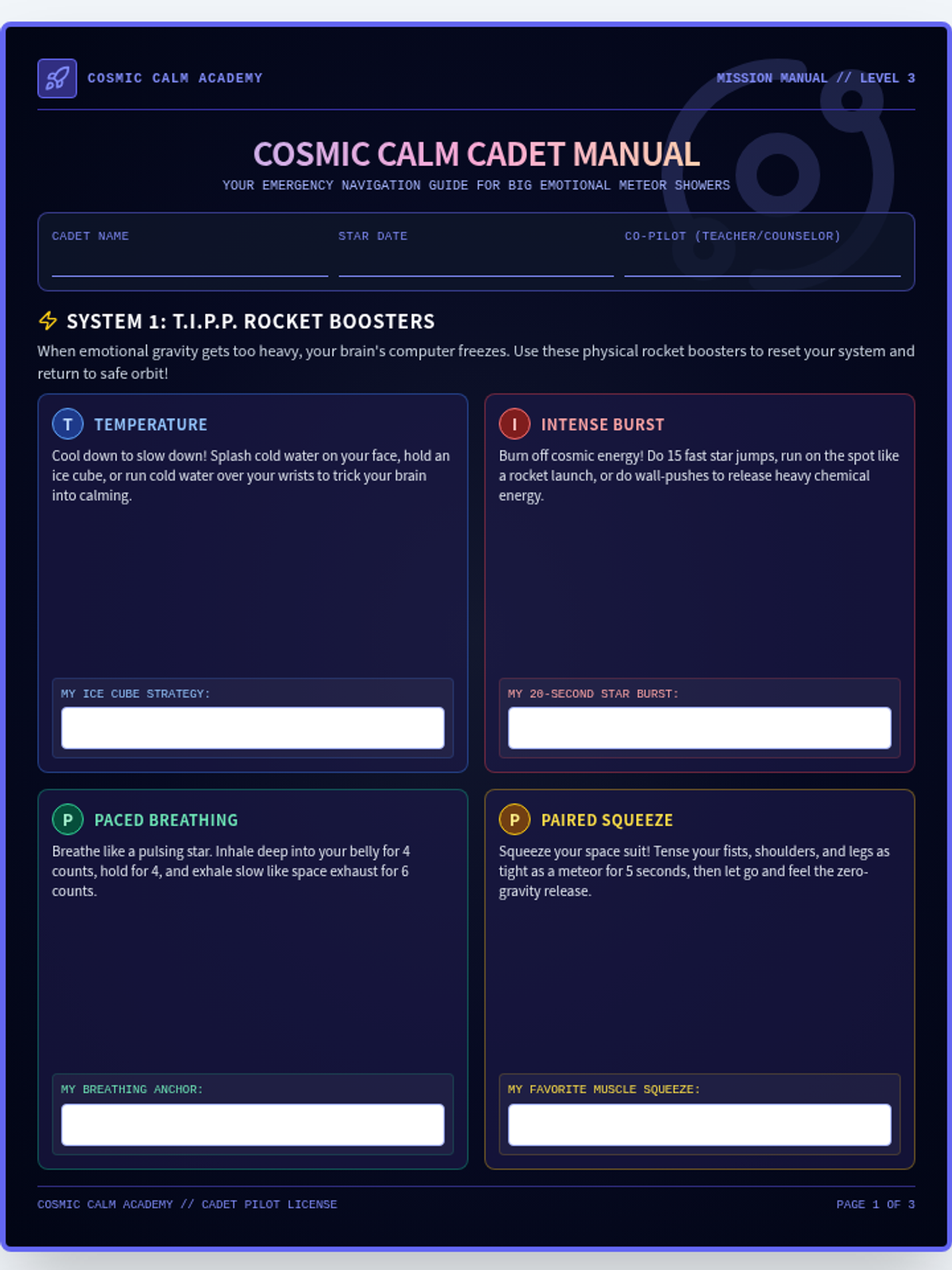
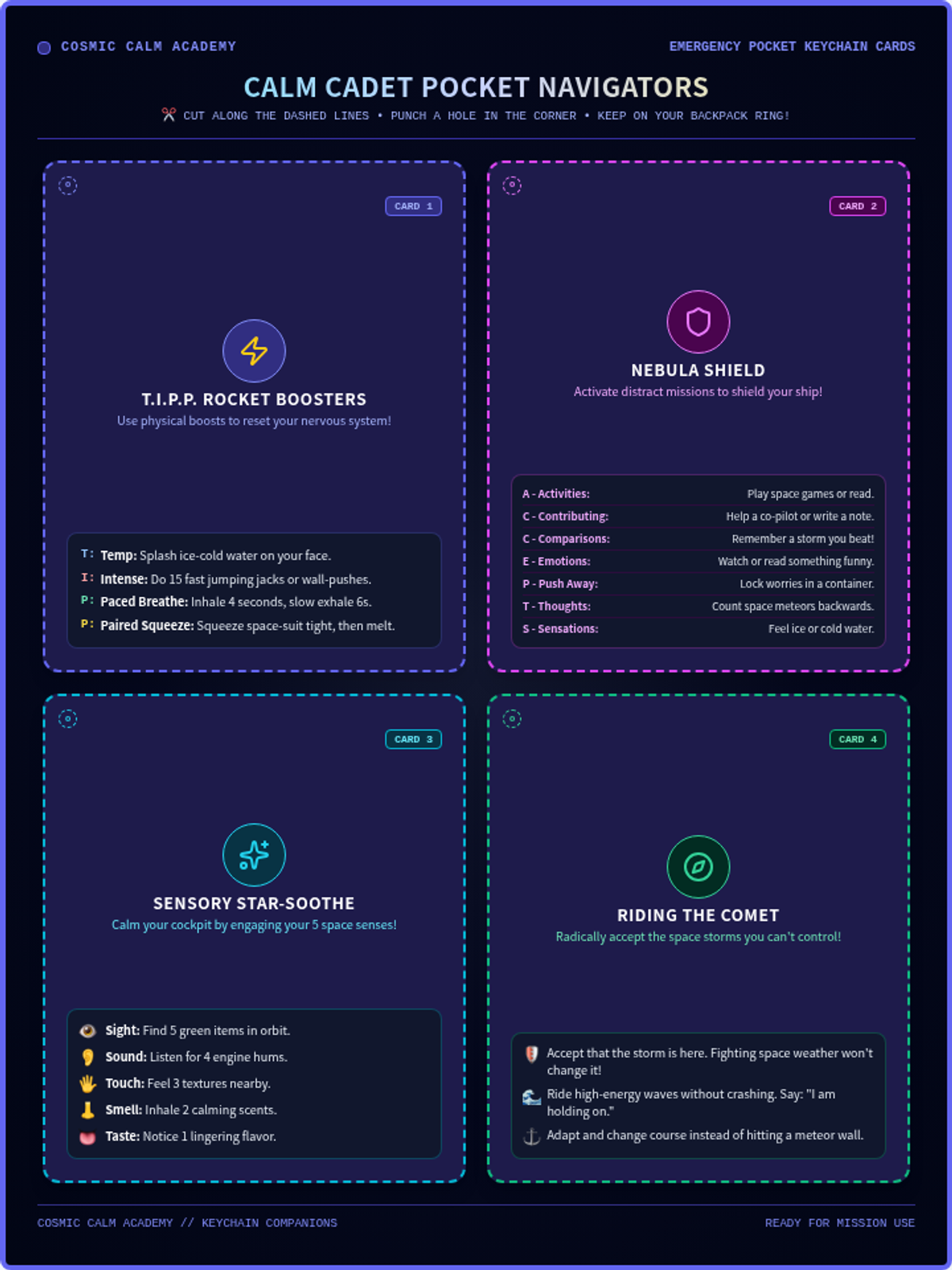
A complete curriculum teaching distress tolerance skills to 3rd graders through a fun space explorer theme, introducing child-friendly versions of DBT TIPP, ACCEPTS, Self-Soothe, and Radical Acceptance.
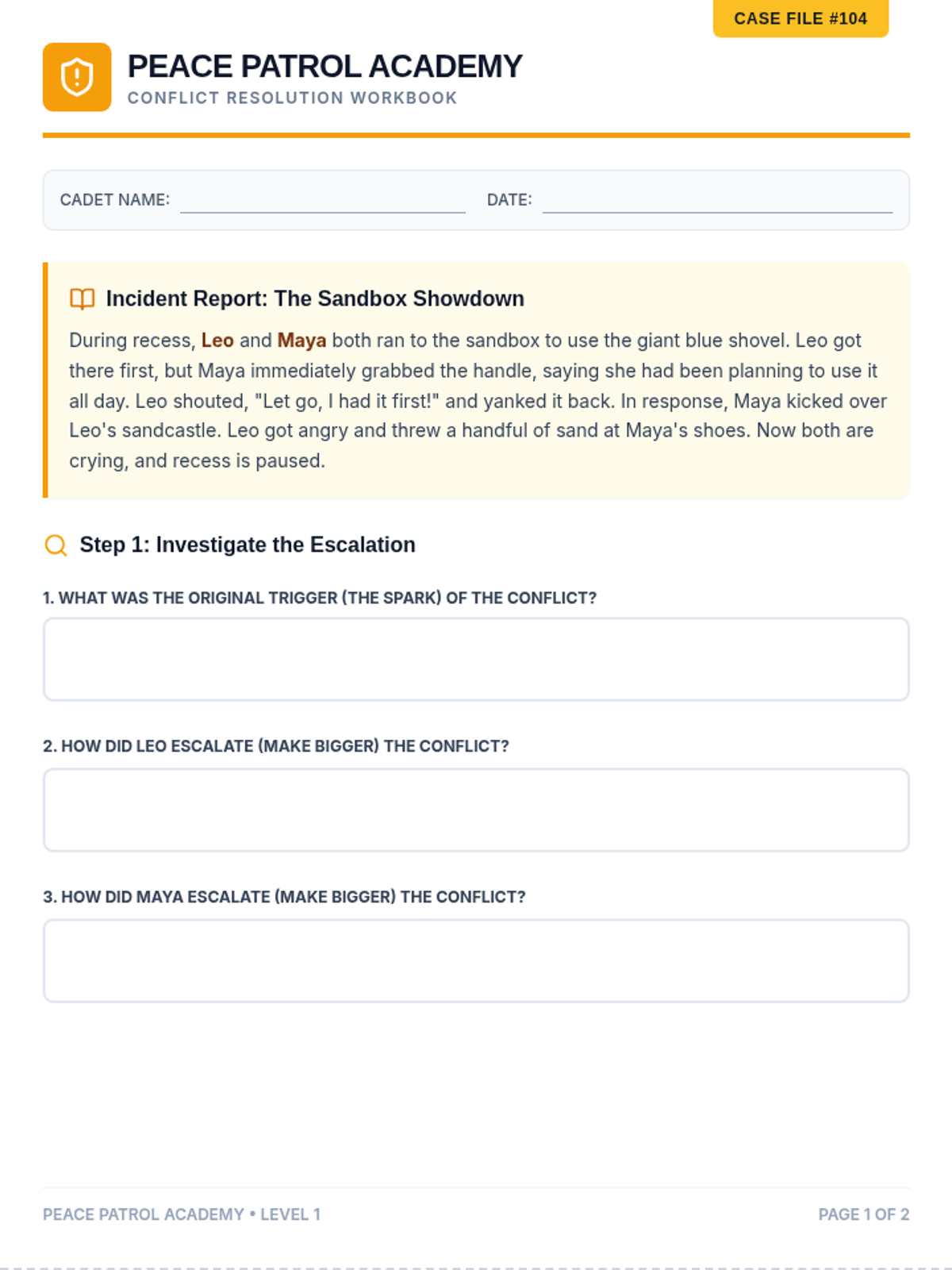
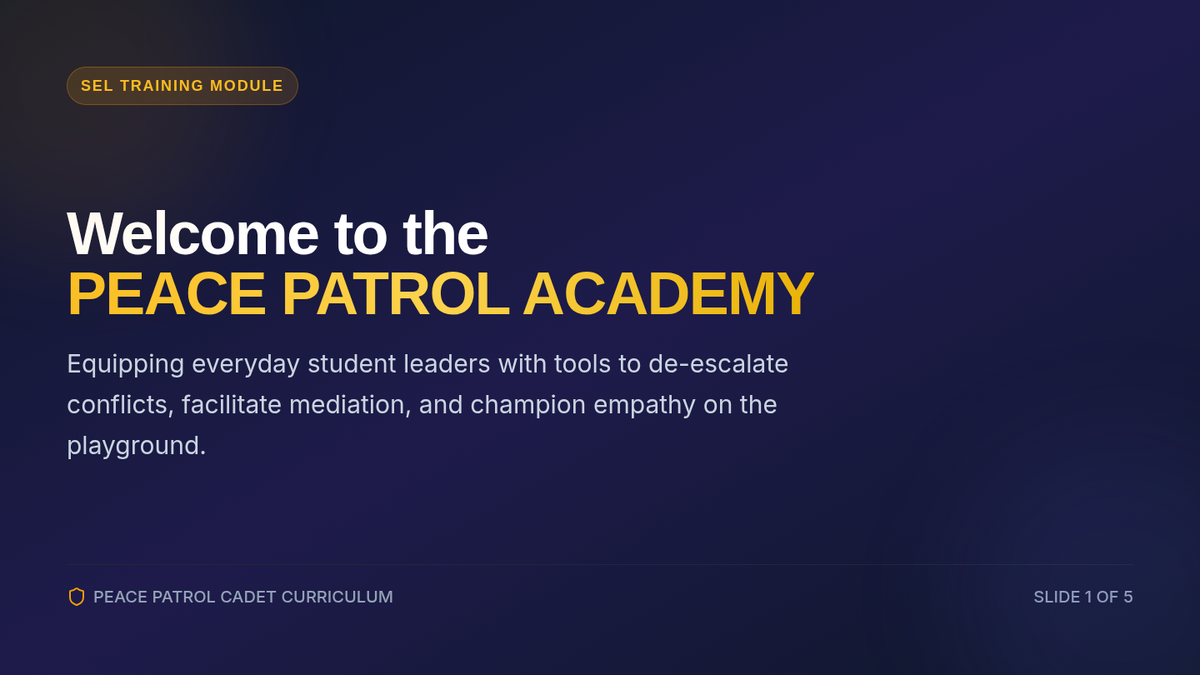
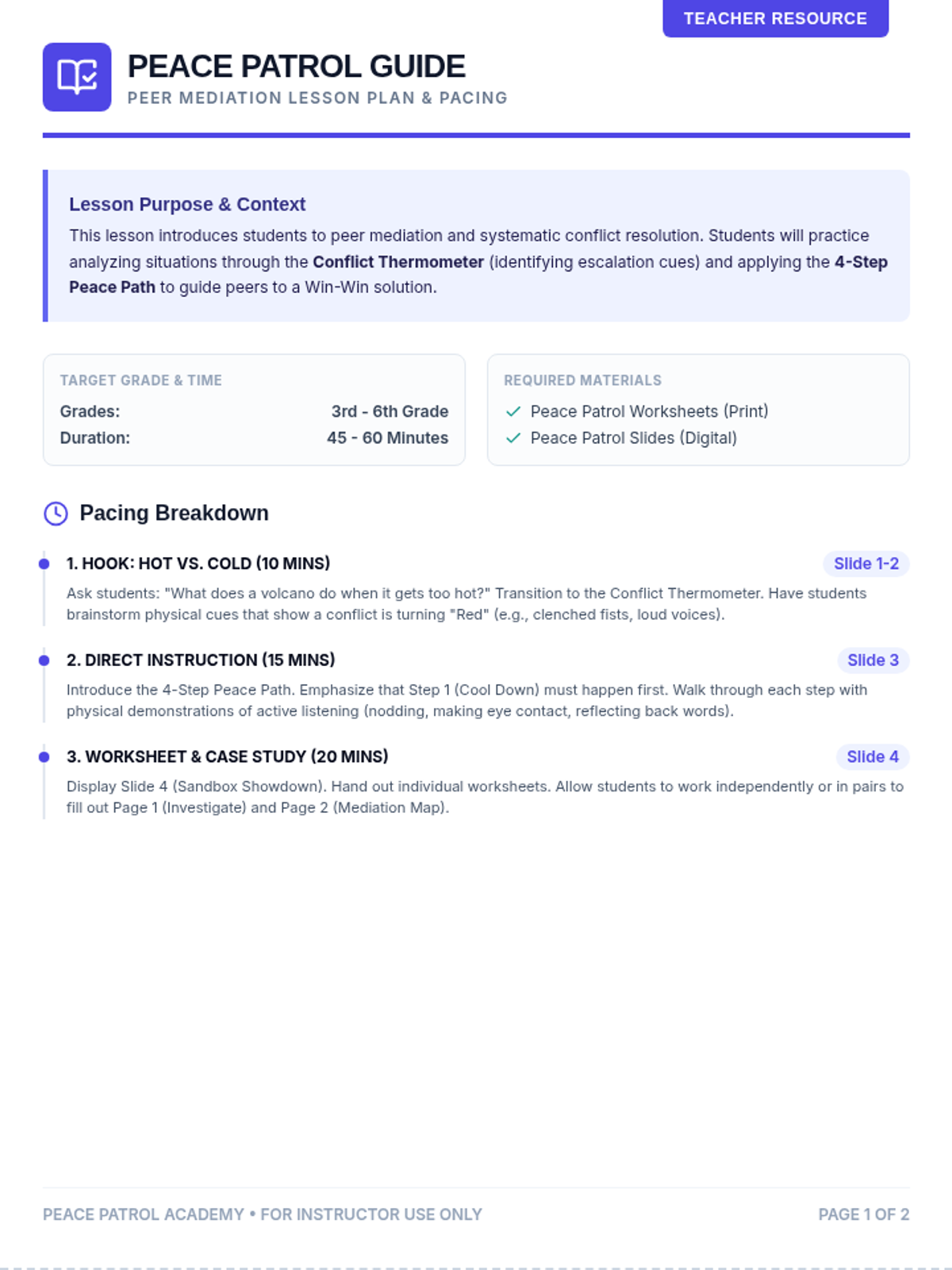
An interactive social-emotional learning lesson focusing on peer mediation, de-escalation, and conflict resolution using real-world social stories and active student practice.
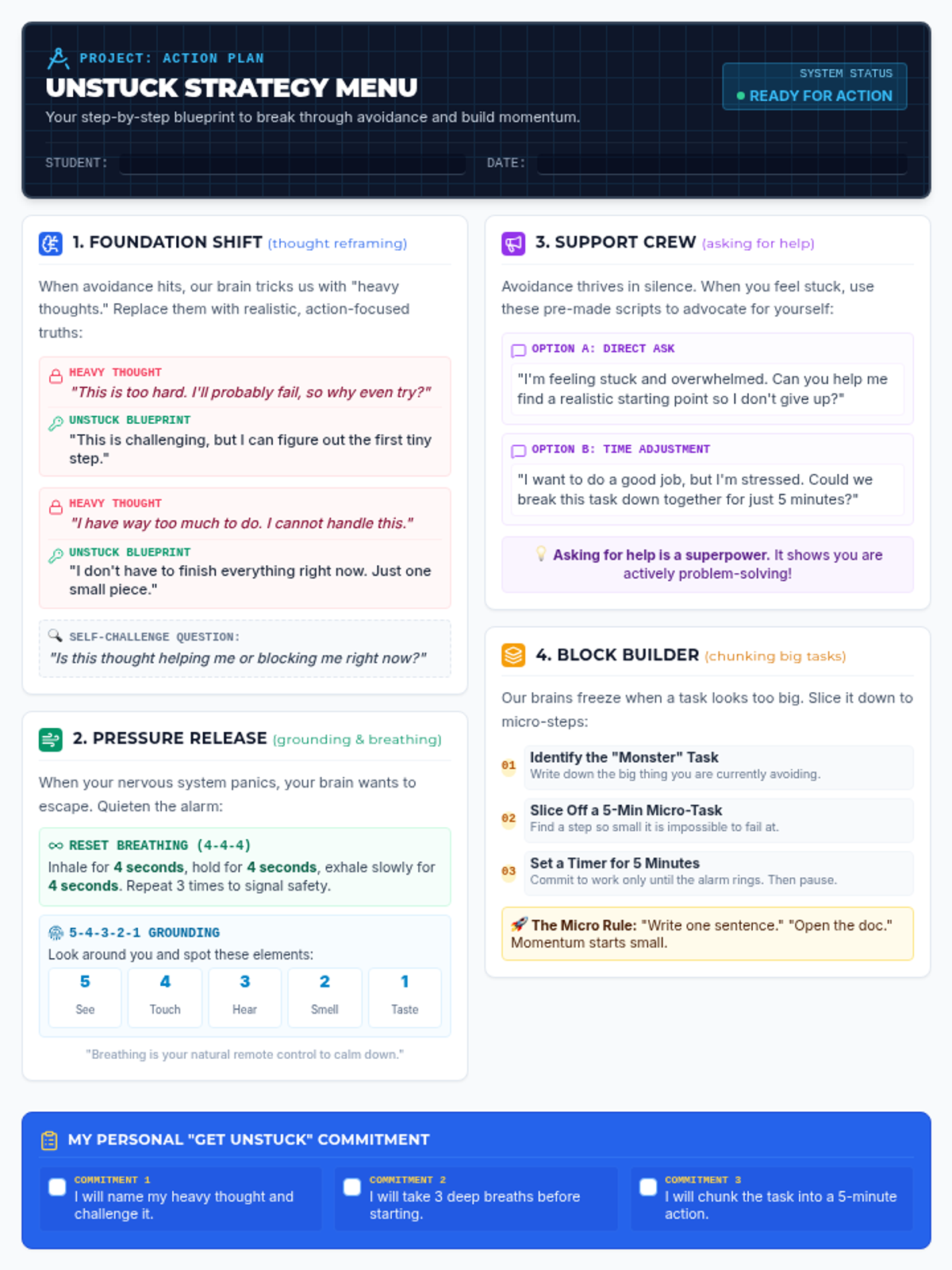
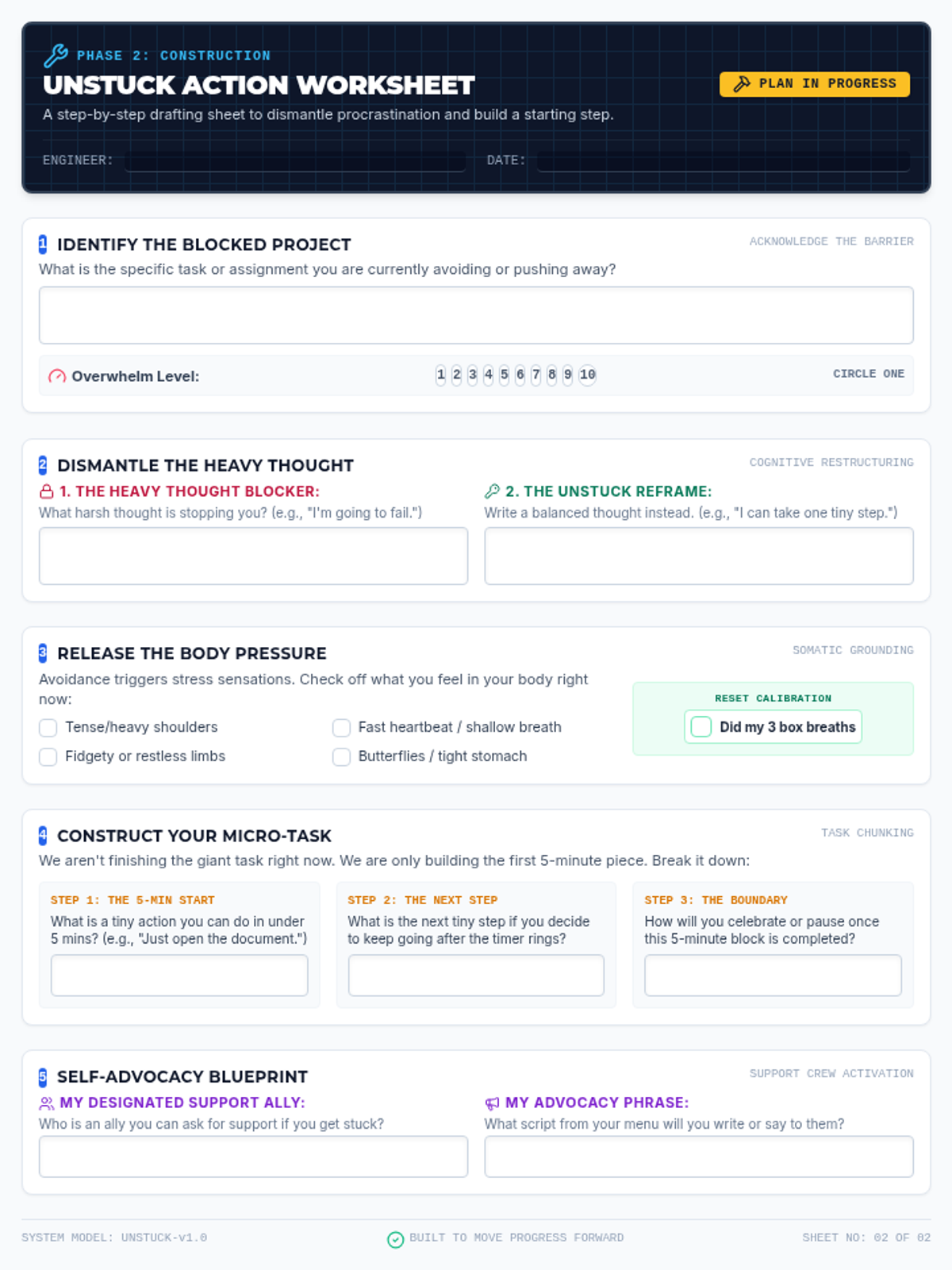
A structured problem-solving framework designed for students who use avoidance as a coping mechanism. This lesson provides practical tools for cognitive reframing, sensory grounding, self-advocacy, and task-chunking to help students move from avoidance to action.
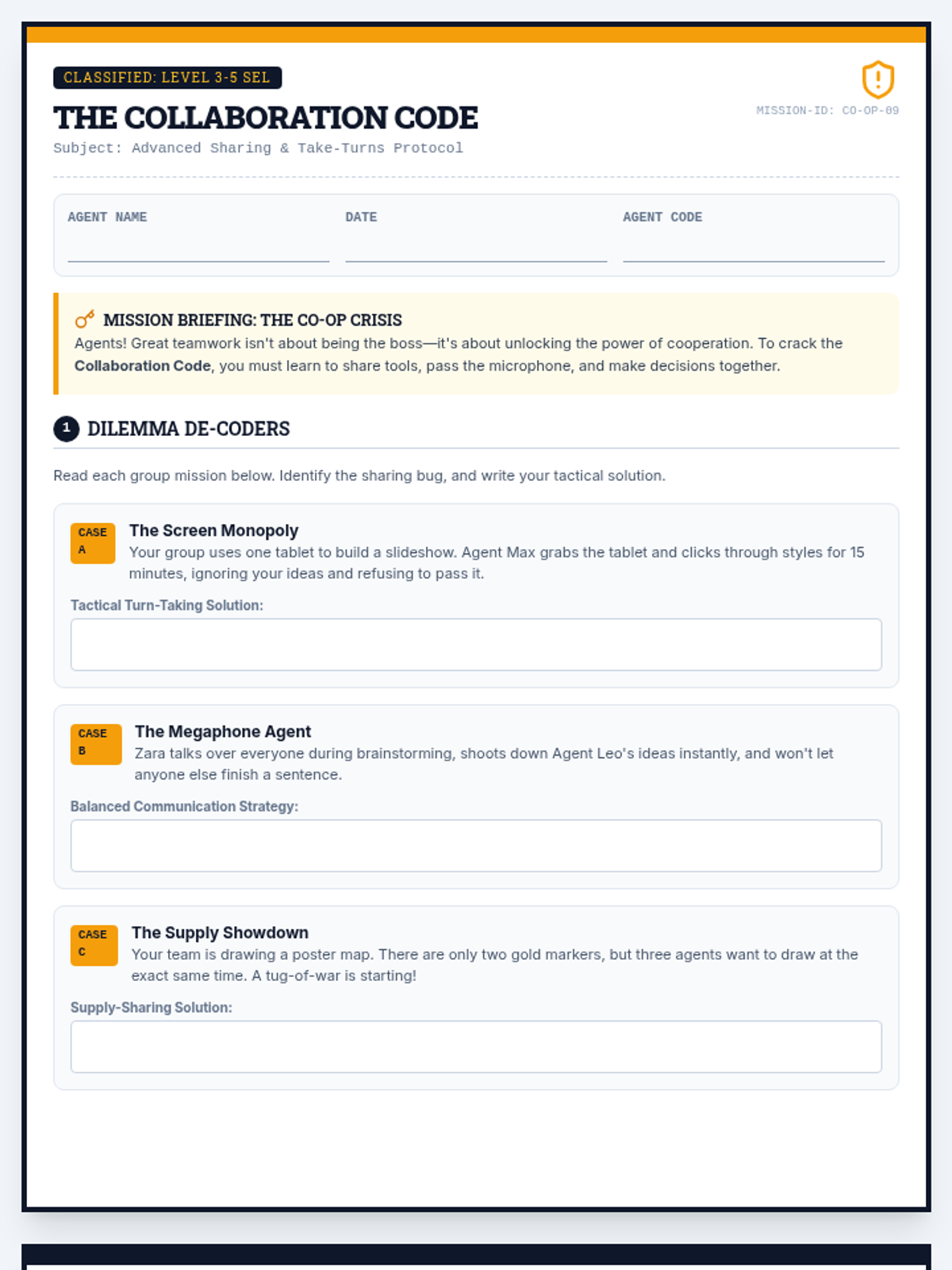
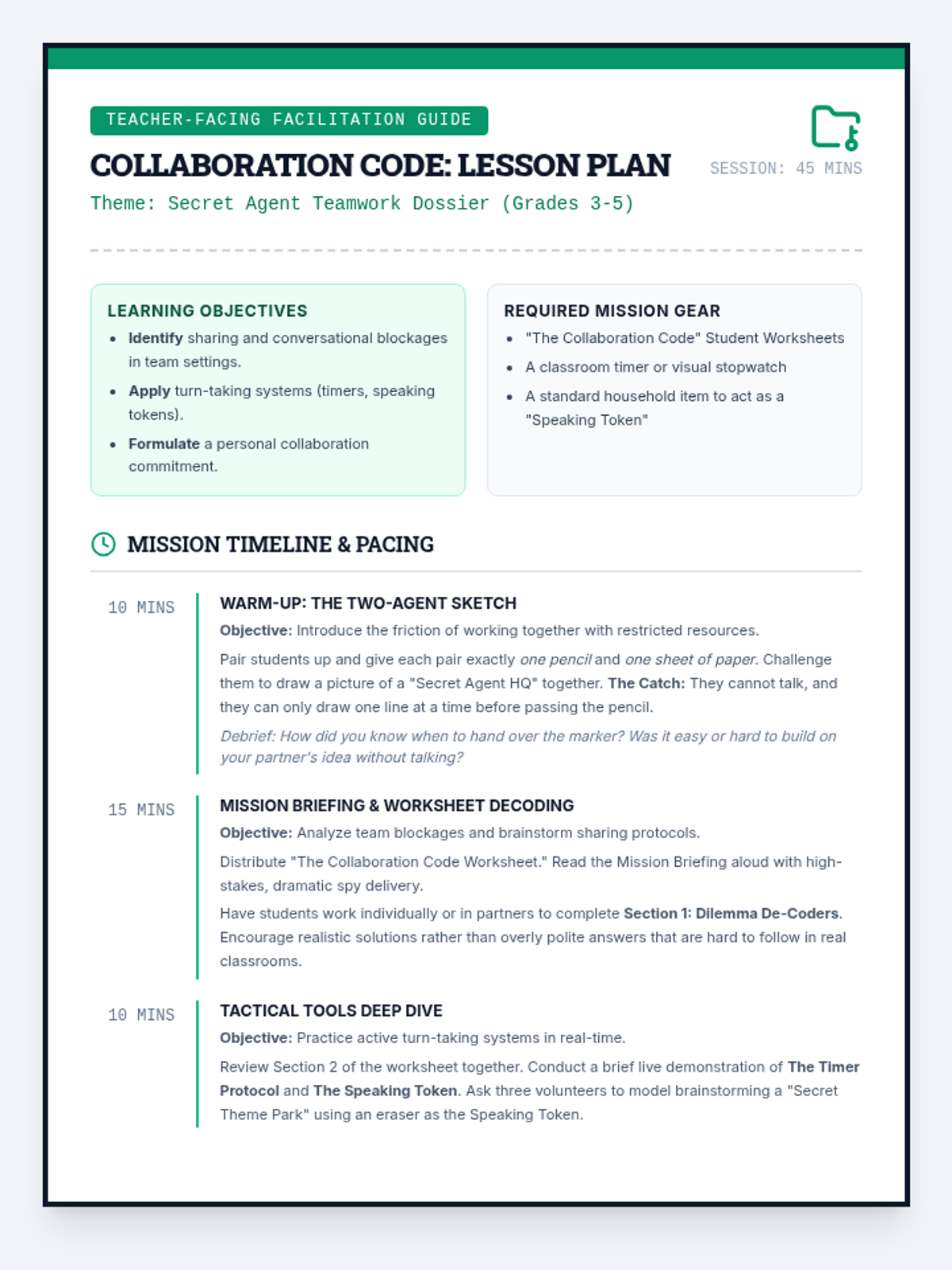
A spy-themed social-emotional learning lesson for grades 3-5 that teaches the mechanics of sharing resources, taking turns during group work, and active listening.
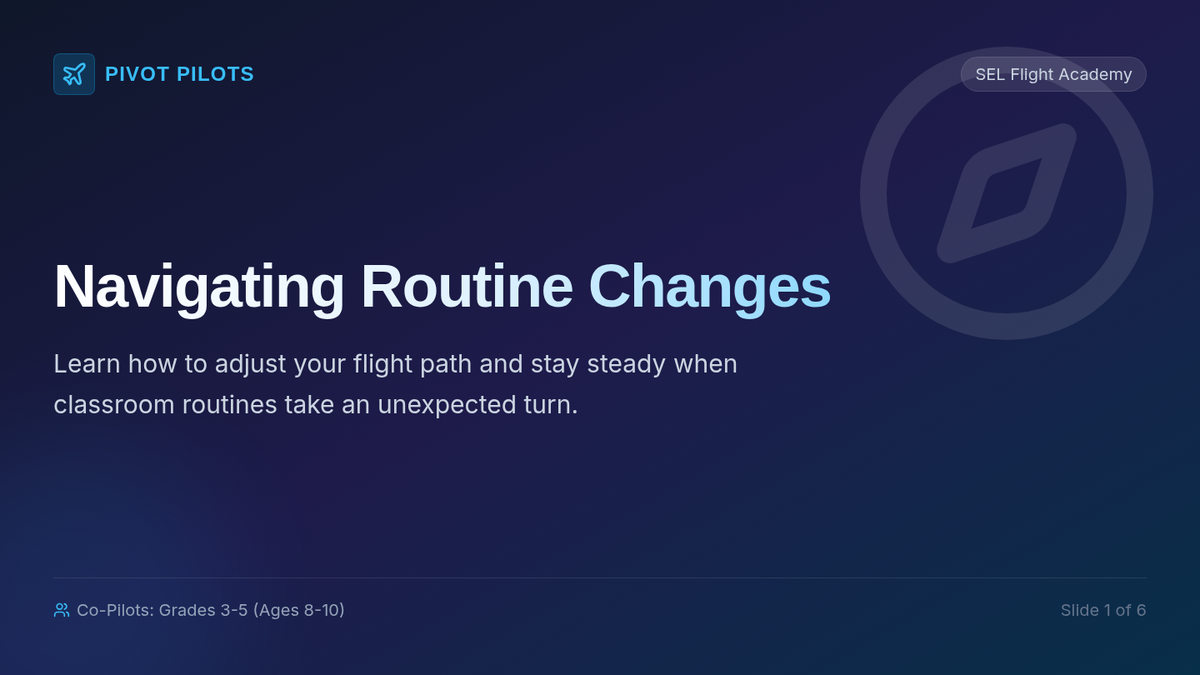
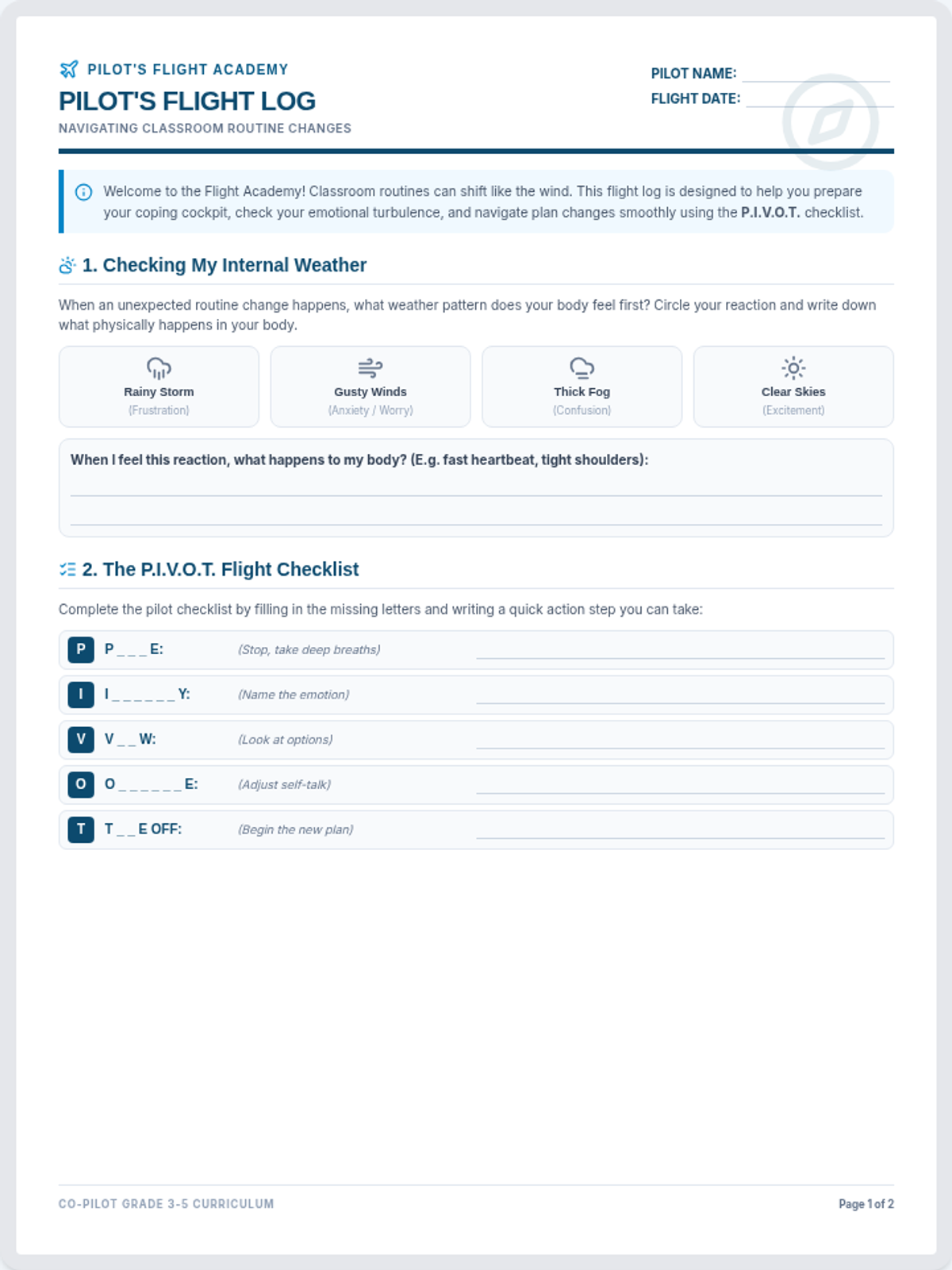
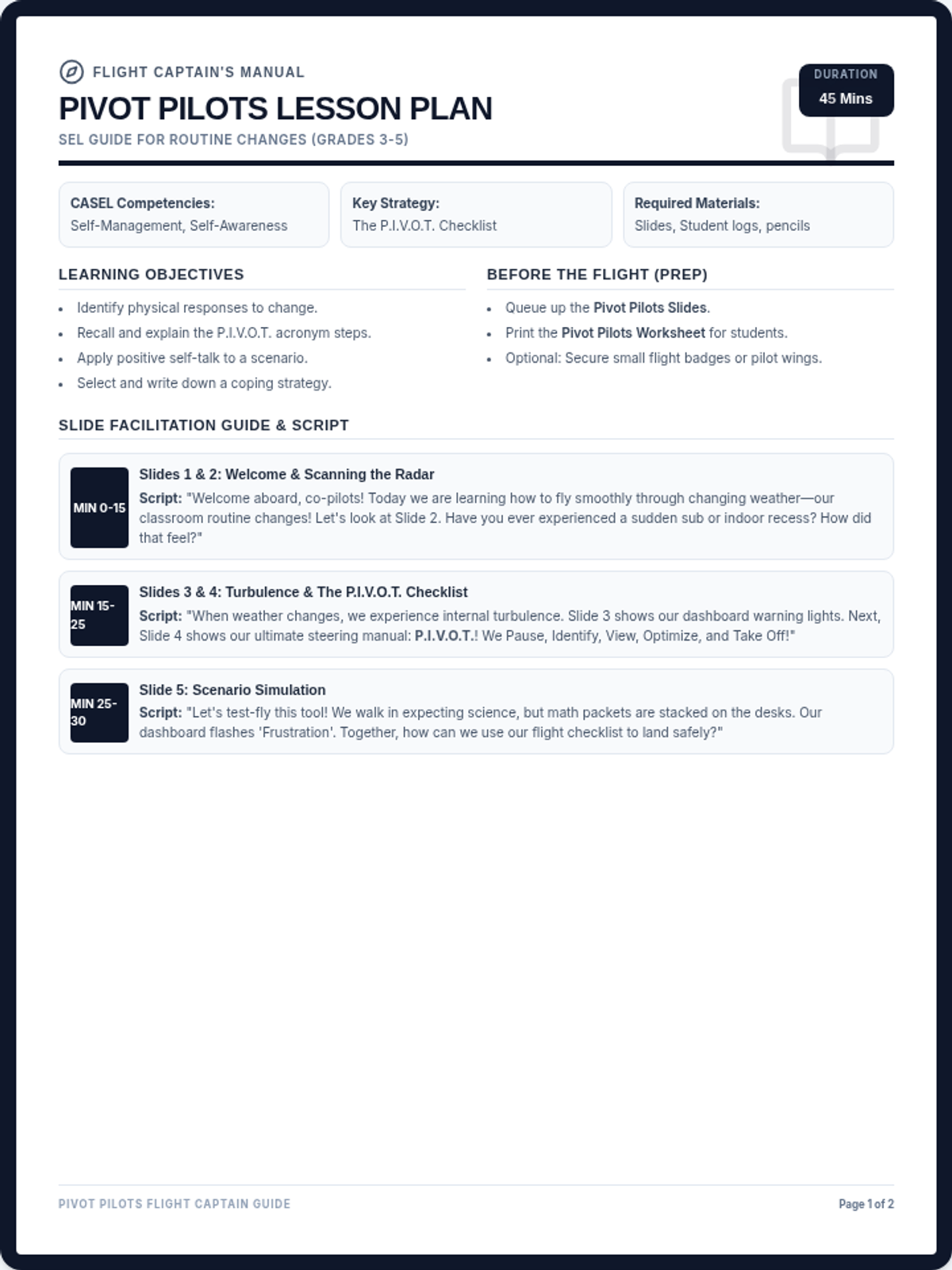
An SEL lesson for elementary students (ages 8-10) to help them navigate daily classroom routine changes. Students learn the "P.I.V.O.T." strategy to handle transitions with ease, flexibility, and emotional regulation.
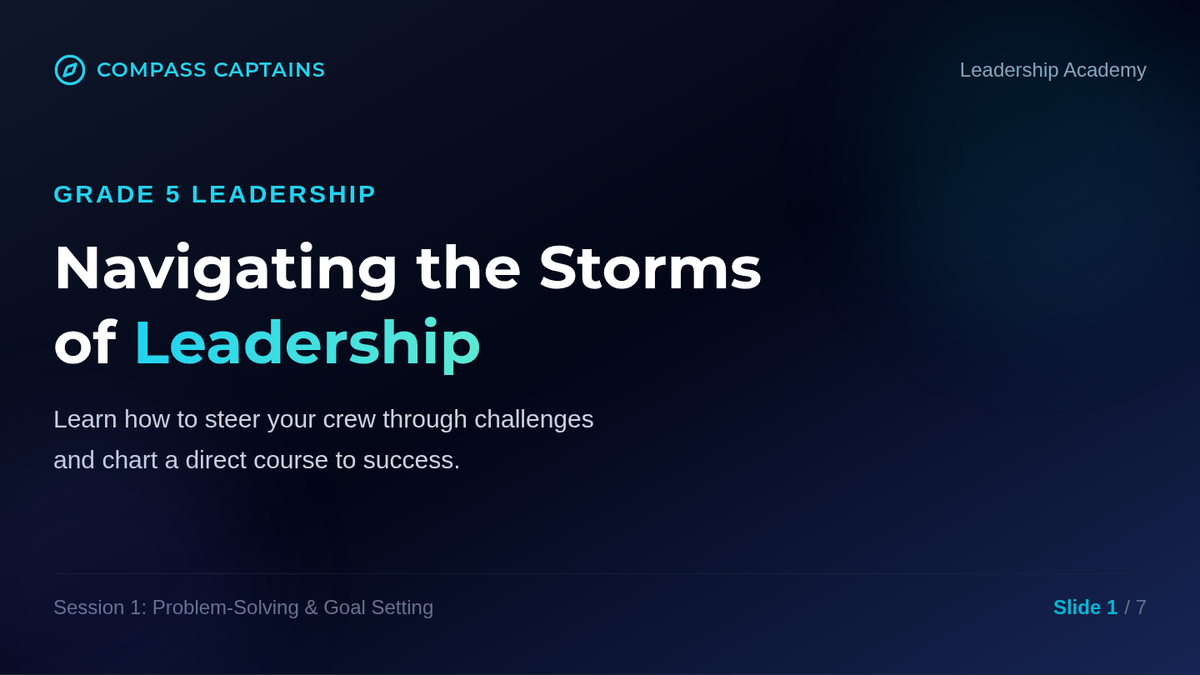
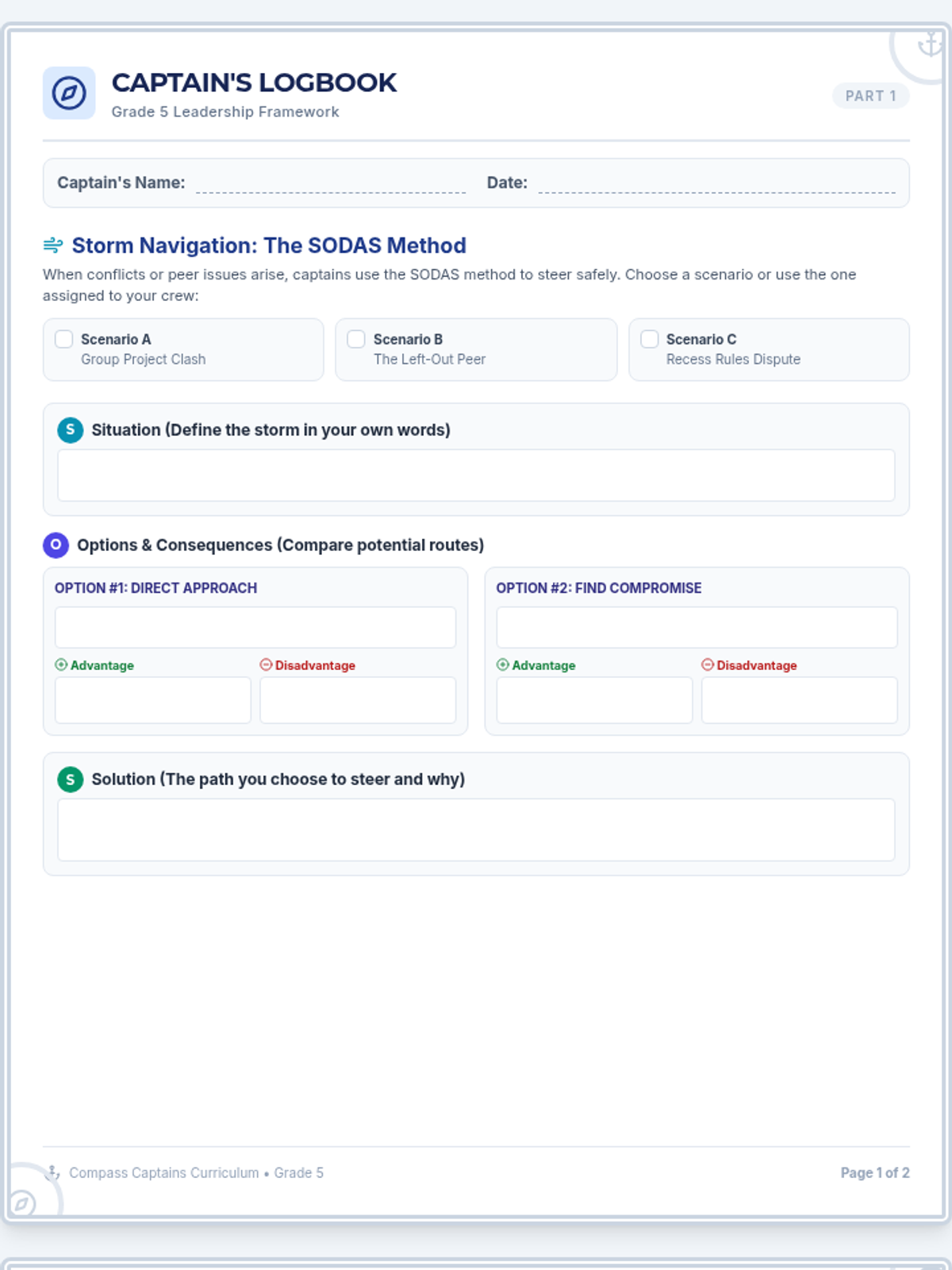
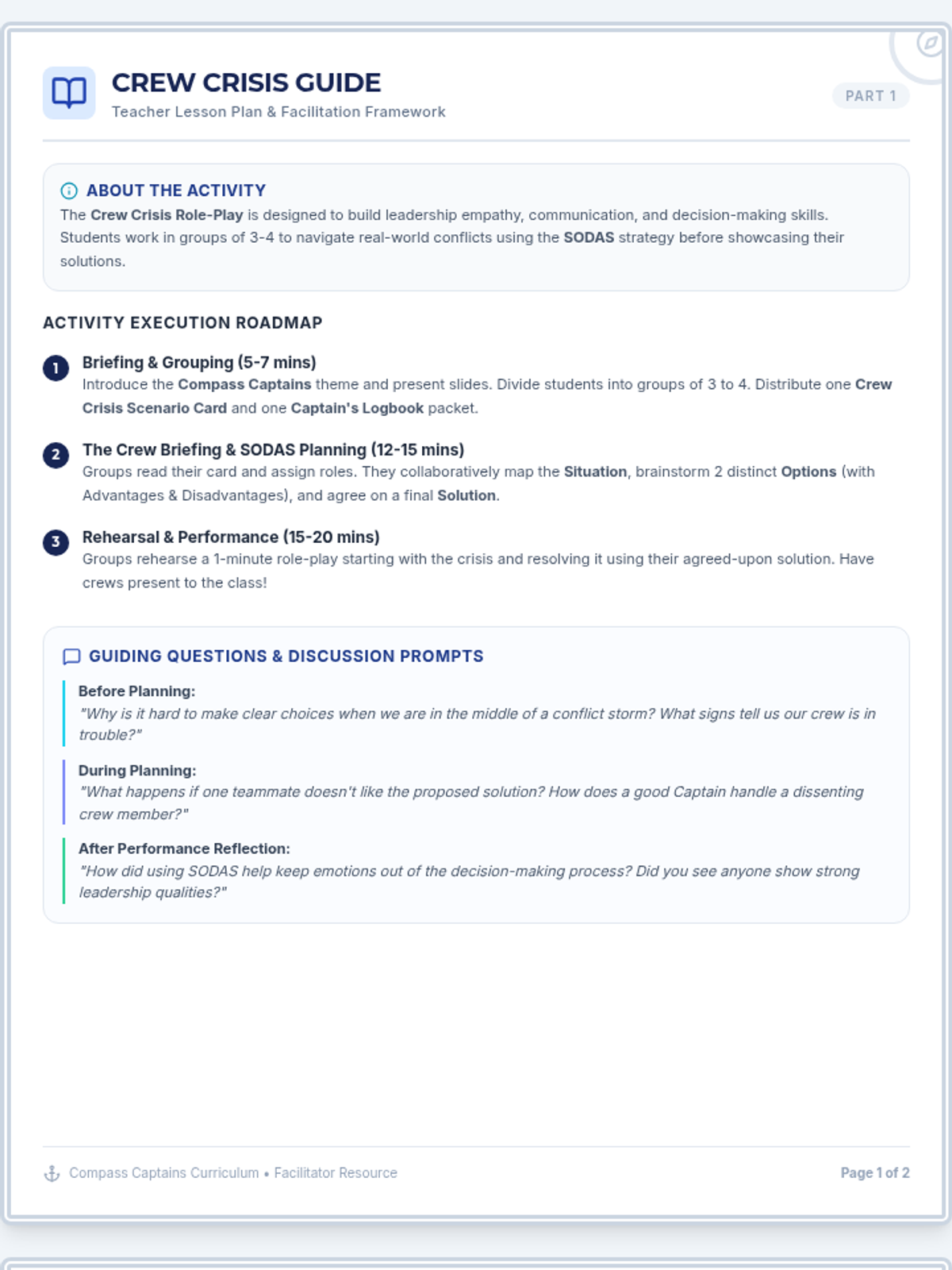
A dynamic and engaging leadership lesson for 5th graders that teaches critical problem-solving and goal-setting skills. Using a nautical 'Compass Captains' theme, students learn how to navigate peer conflicts, brainstorm solutions, and chart their own action plans.
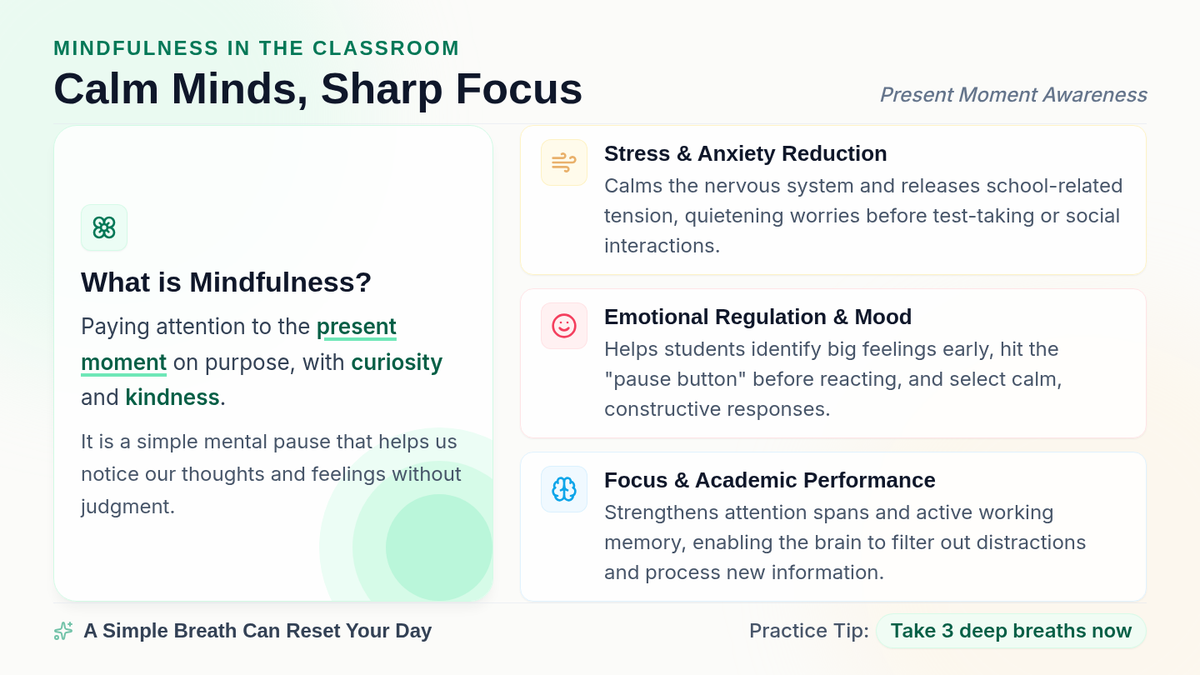
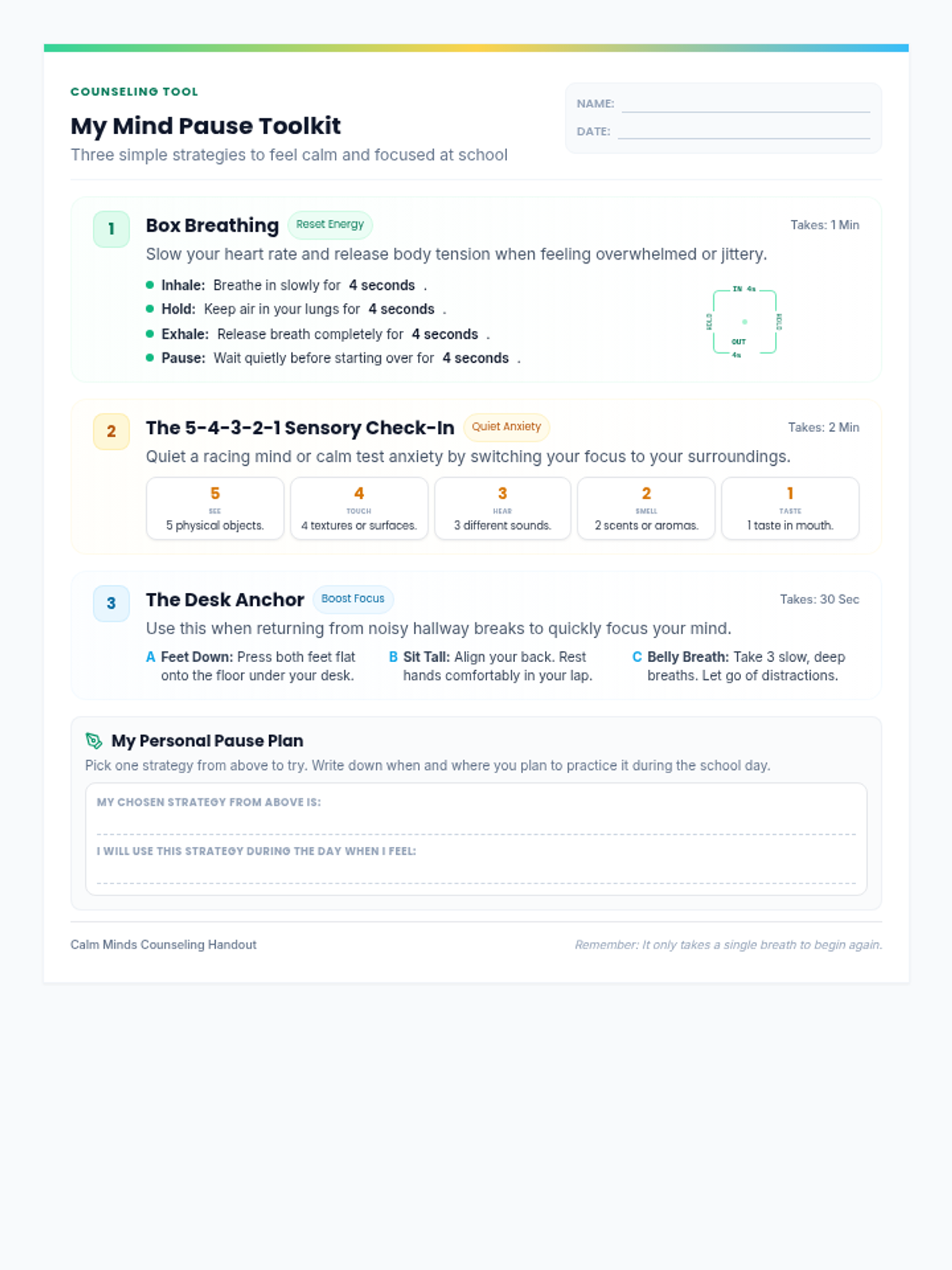
An introductory lesson on mindfulness for students, exploring what mindfulness is, its scientific benefits in a classroom setting, and practical applications for focus and emotional regulation.
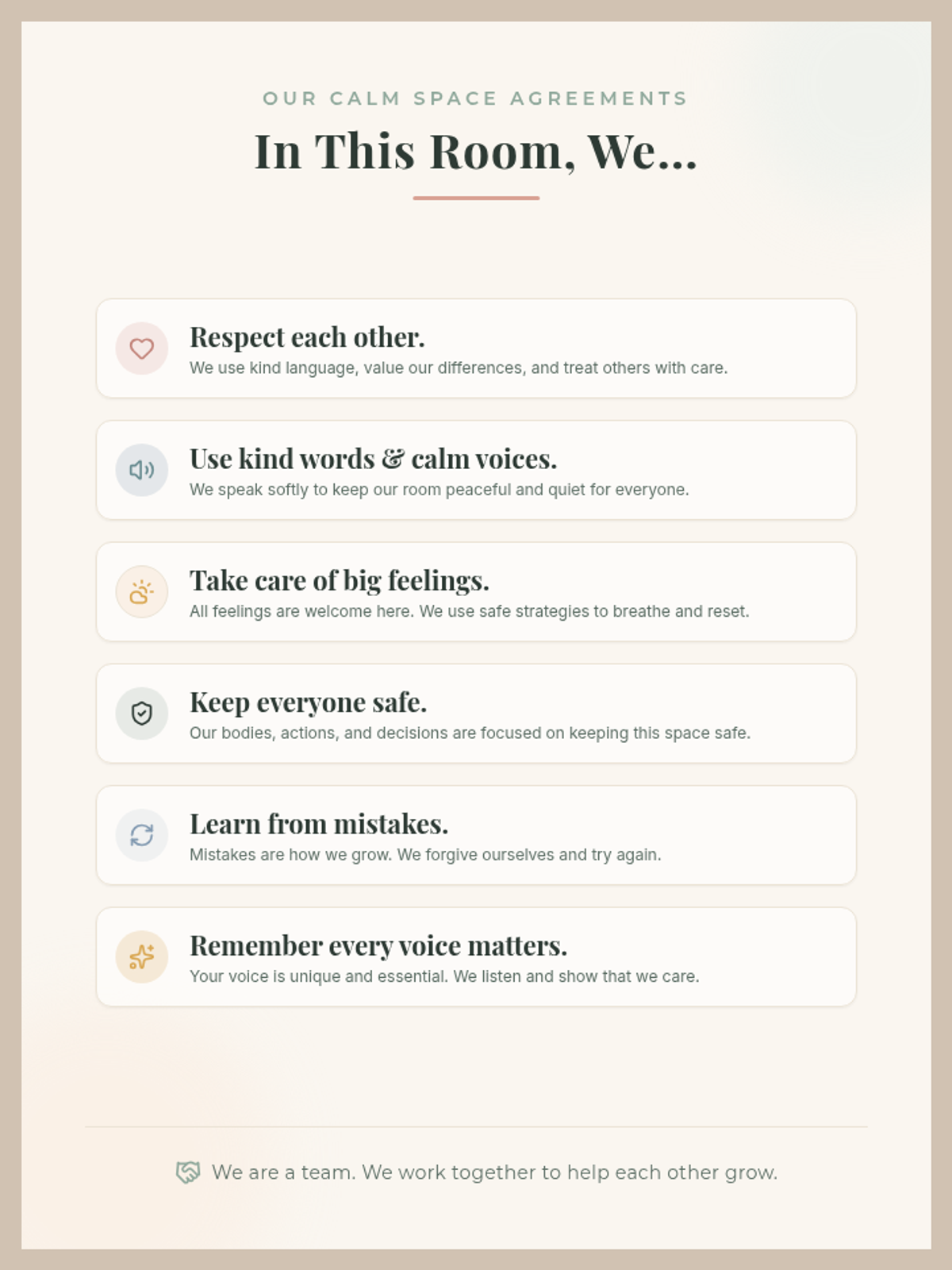
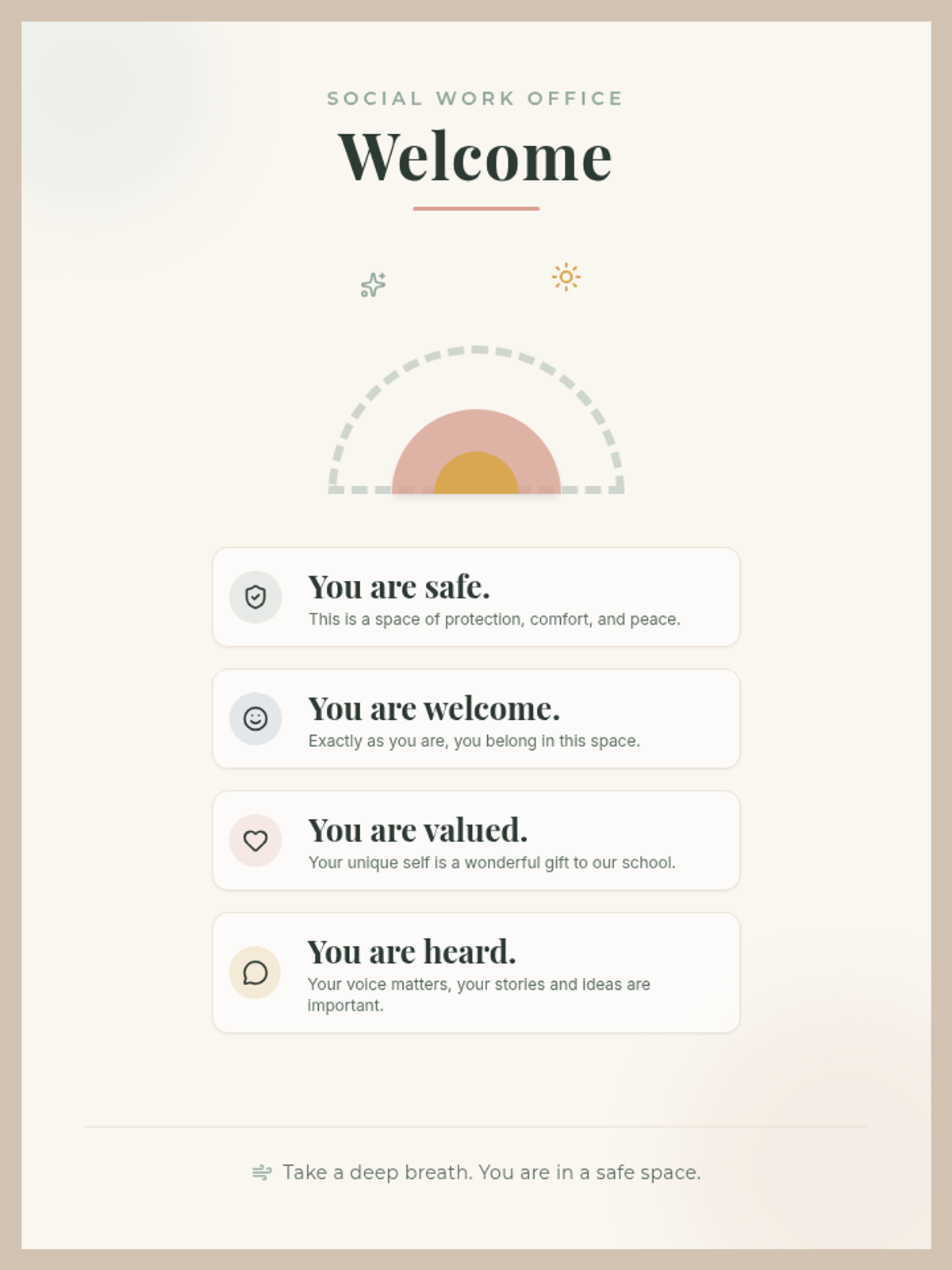
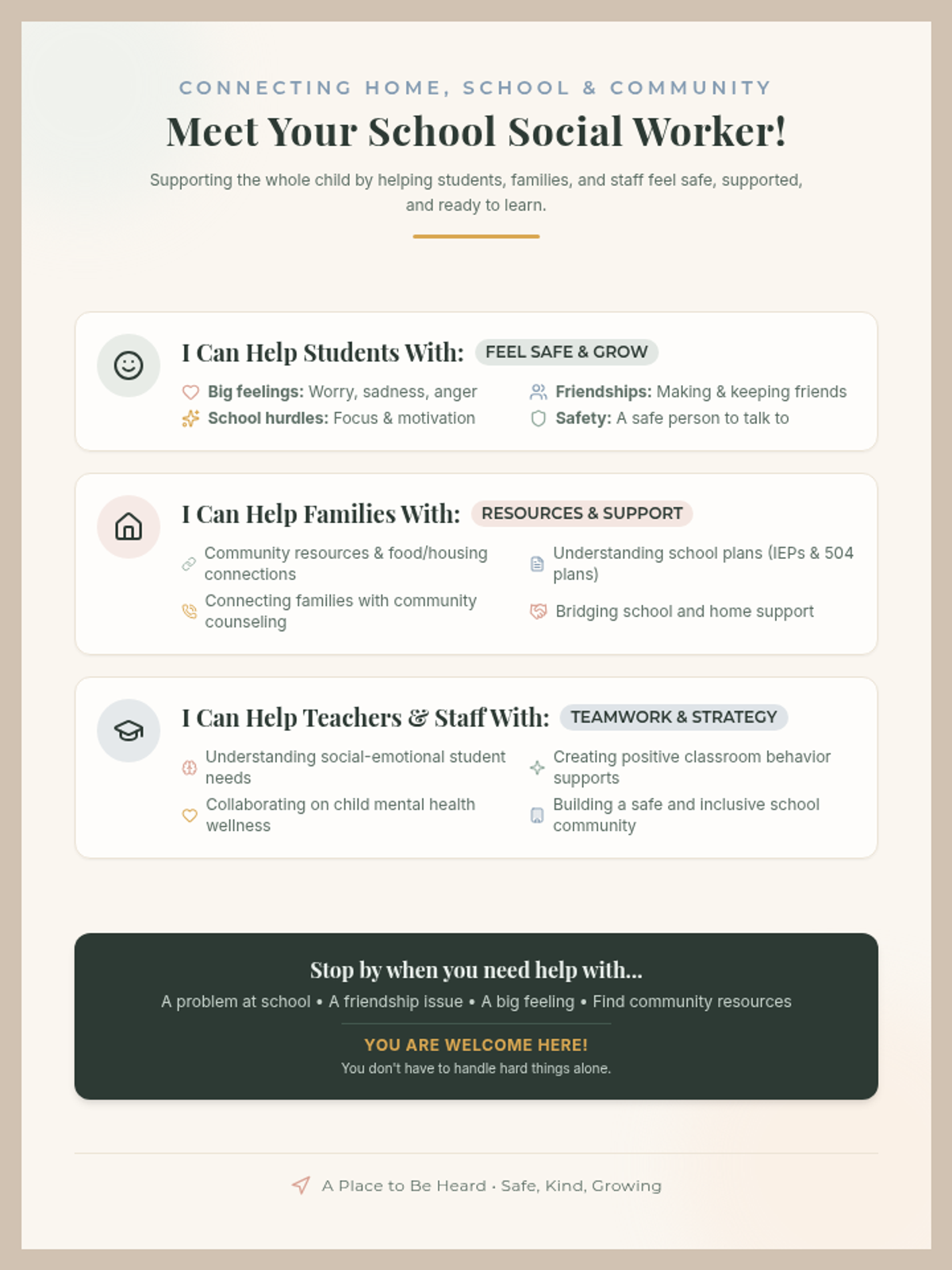
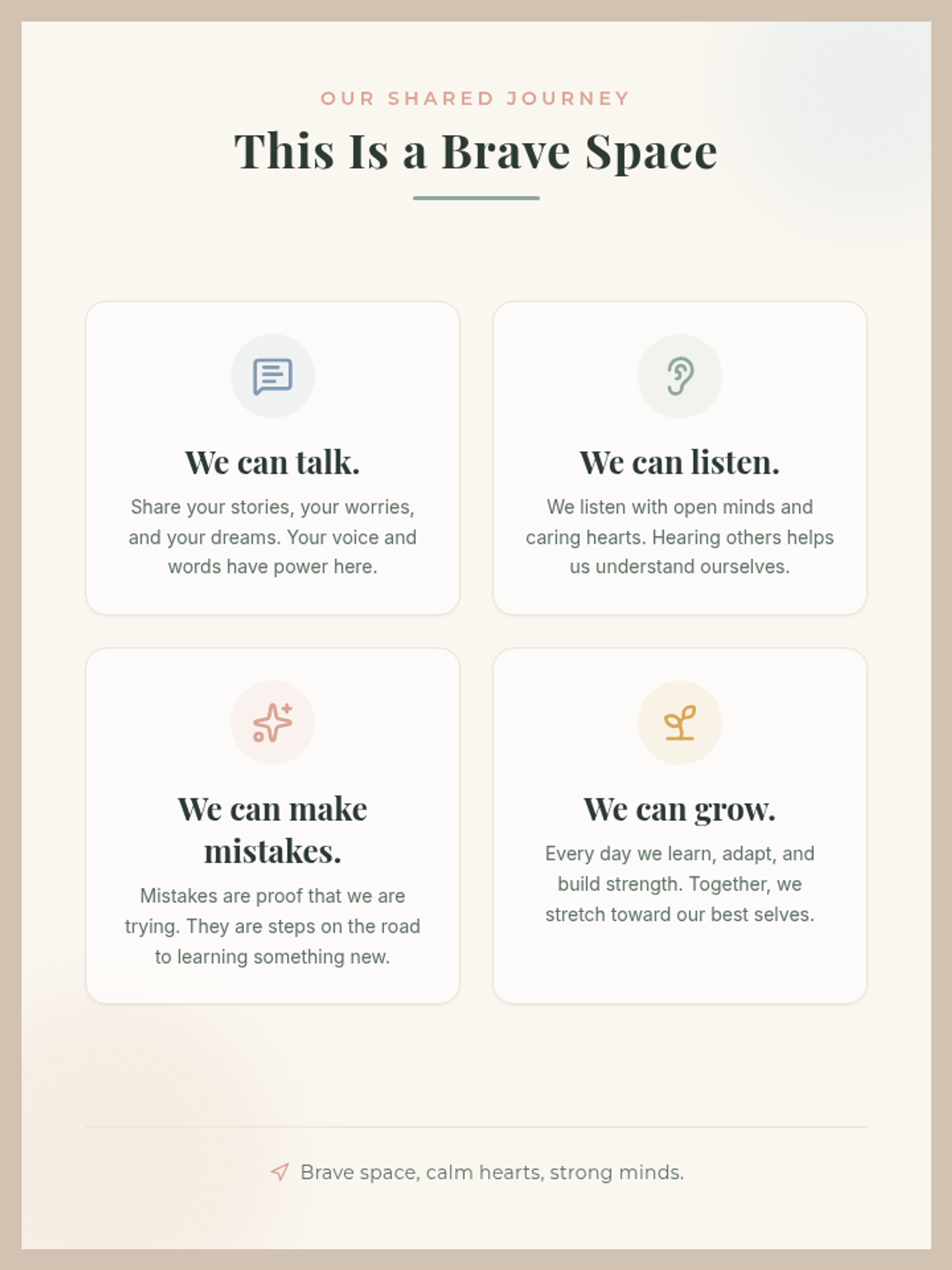
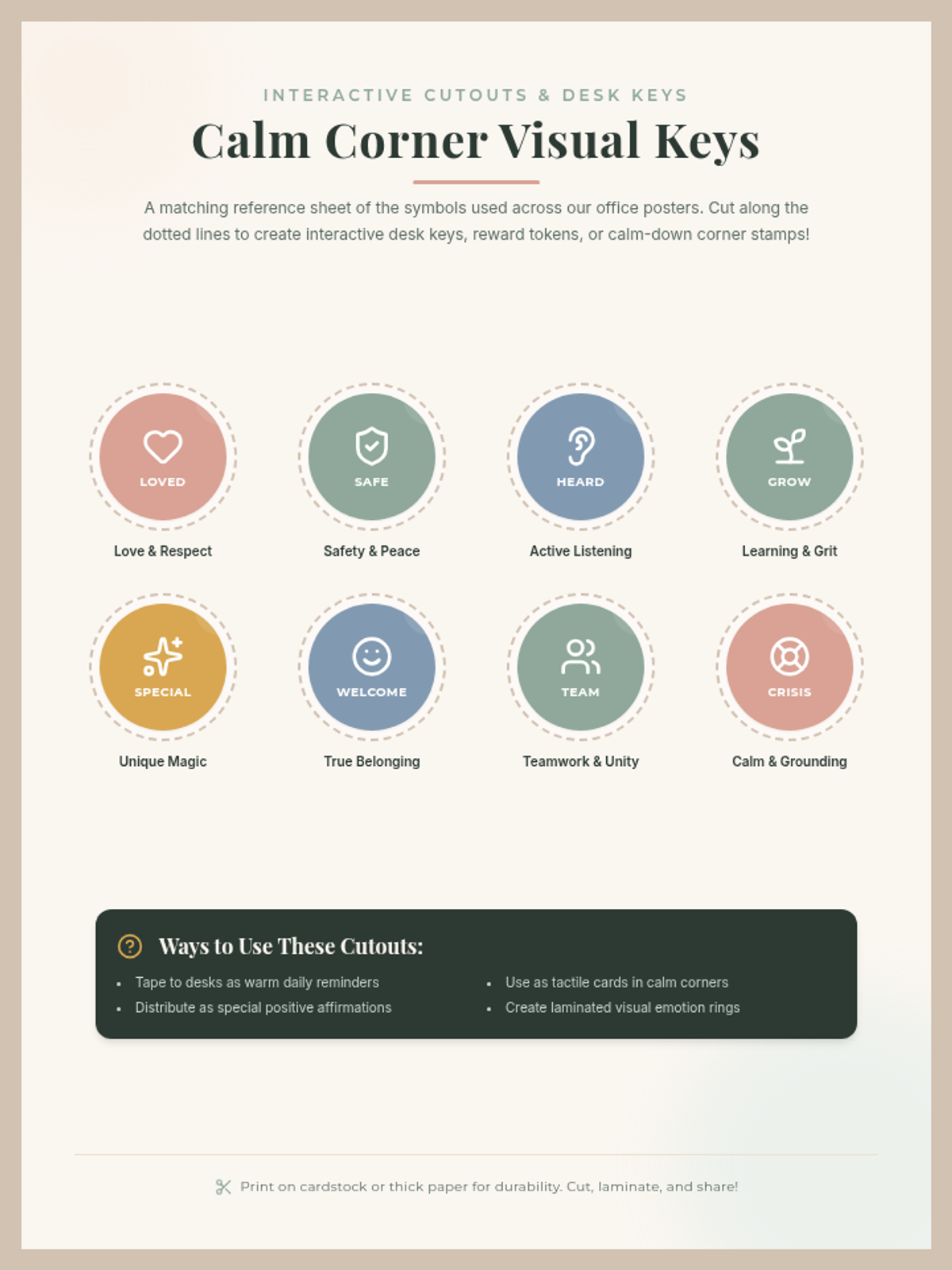
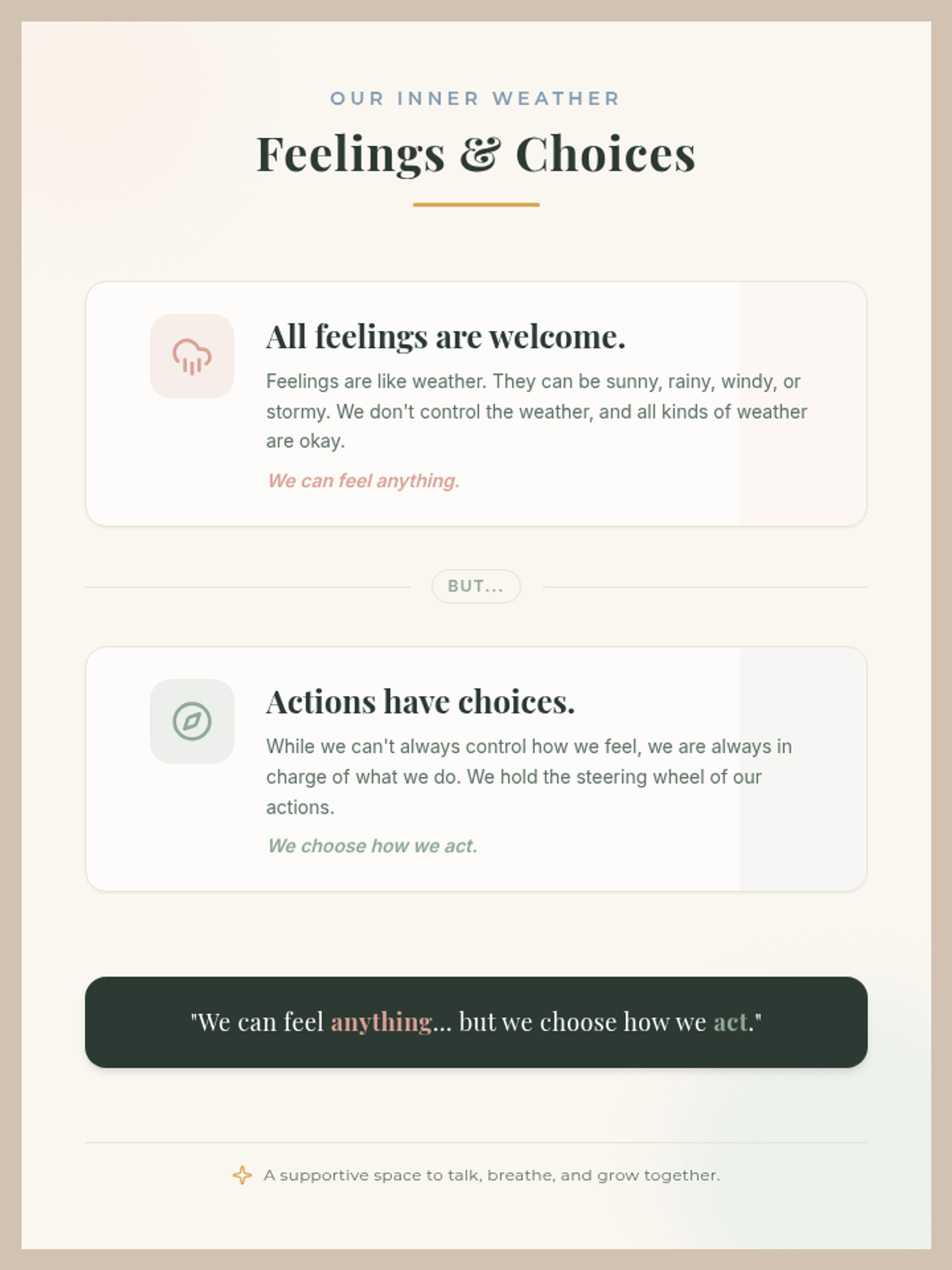
A cohesive suite of beautifully designed printable posters for an elementary school social work office or calm corner, utilizing soft earth tones, gentle affirmations, and clear supportive structures.
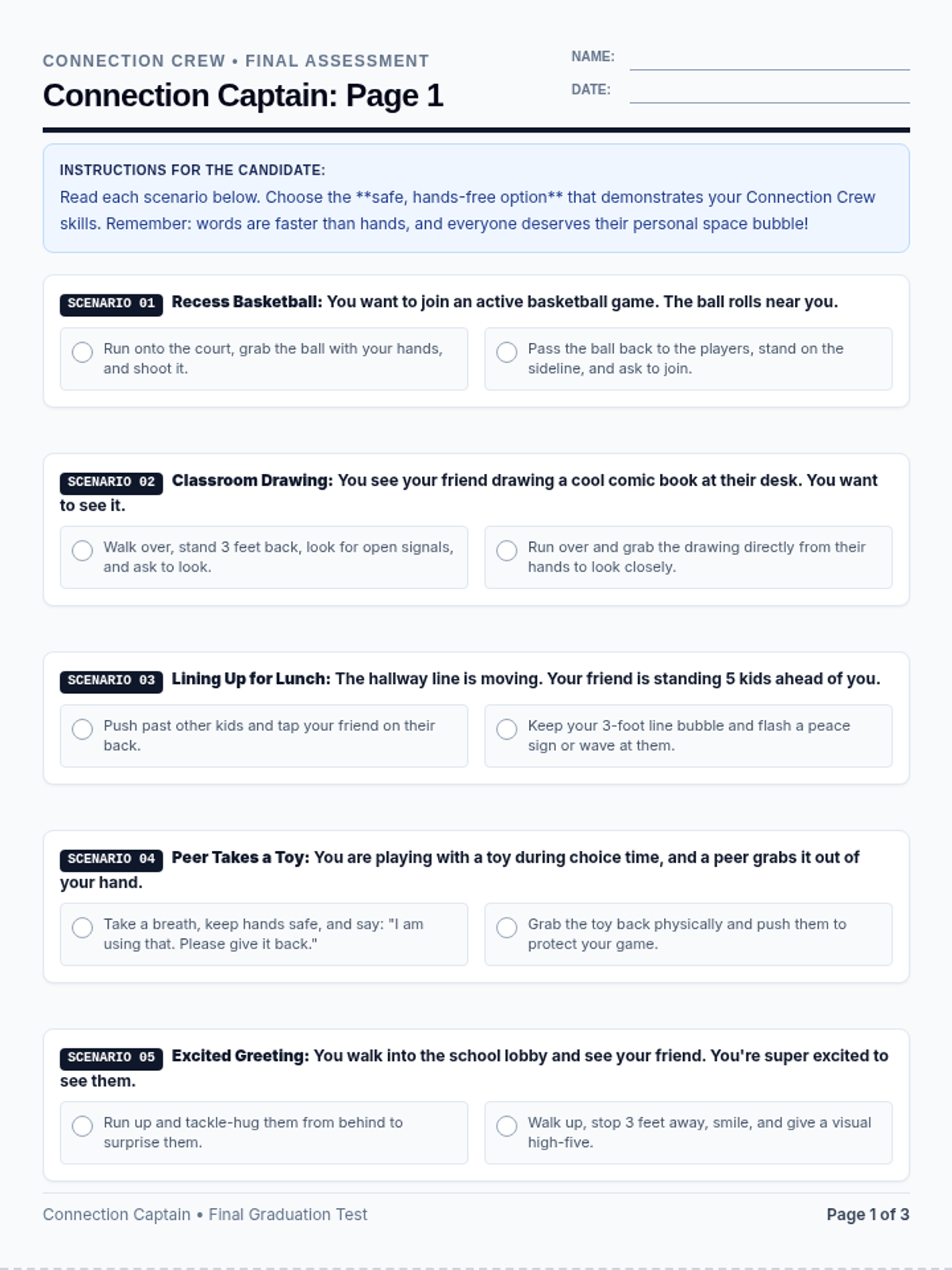
The final graduation assessment where students complete a comprehensive 15-scenario social situation test to prove mastery of safe play initiations, reading cues, keeping physical boundaries, and handling unexpected outcomes.
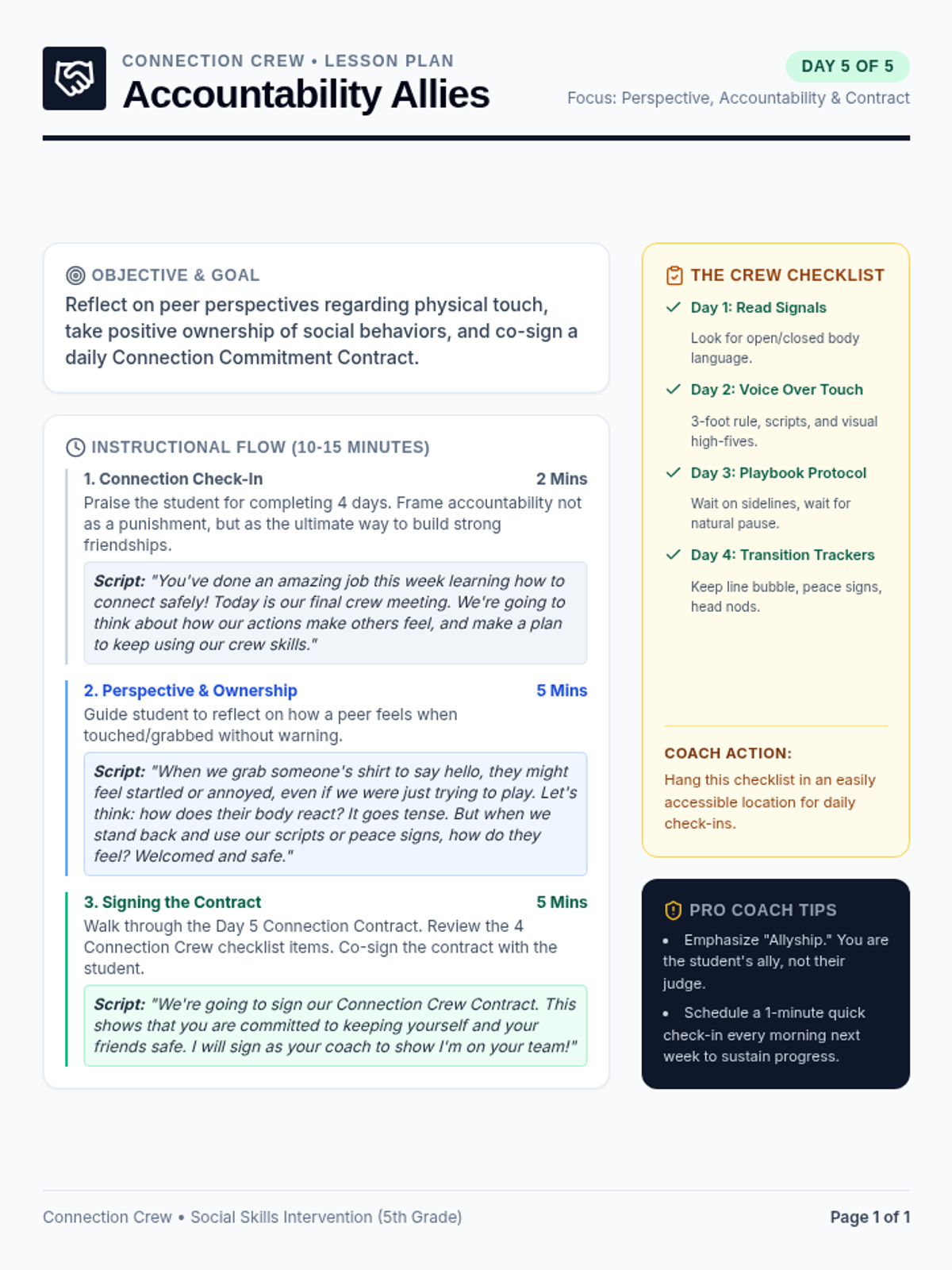
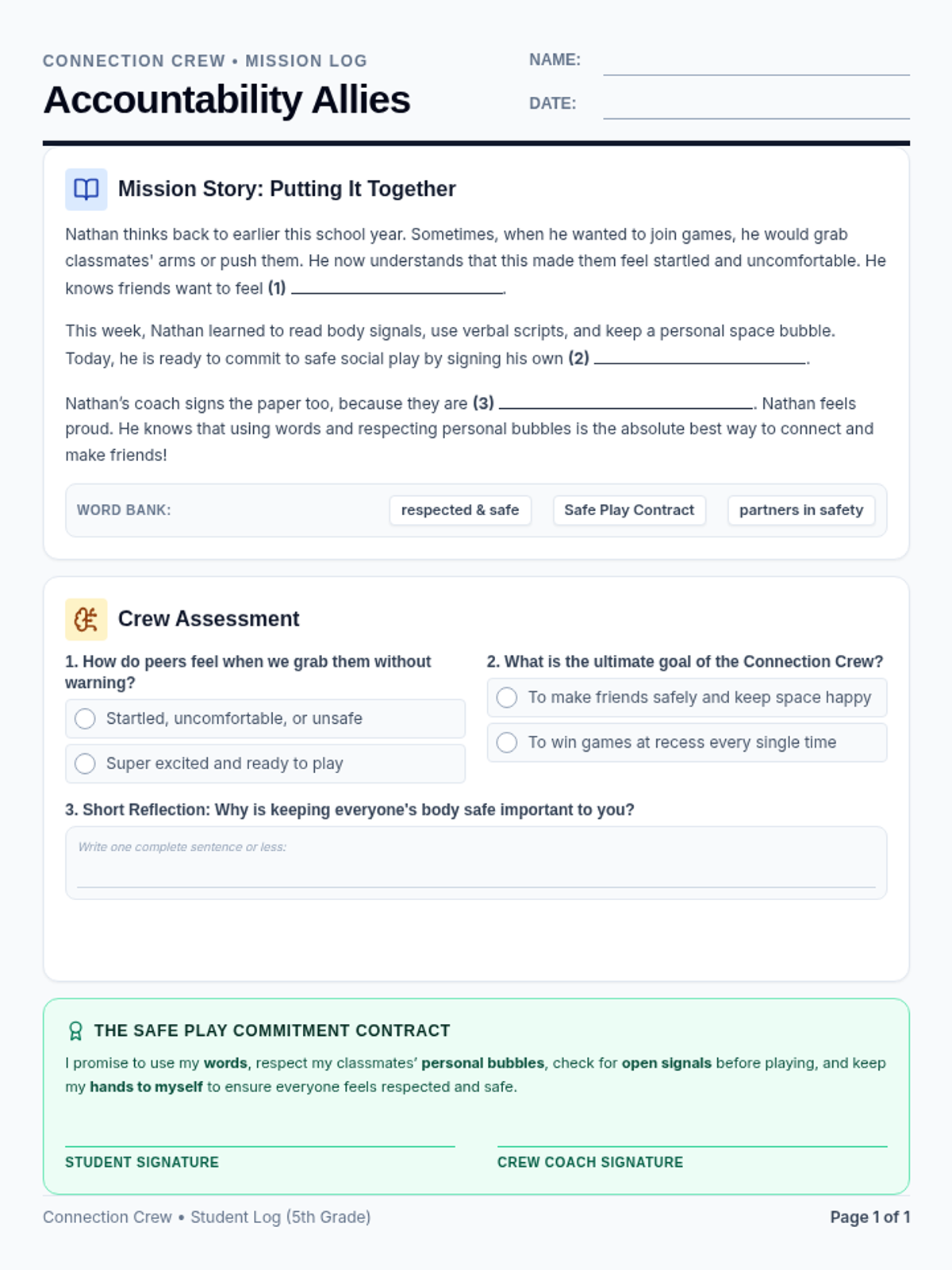
Students synthesize their skills, practice perspective-taking regarding past physical behaviors, and co-create an accountability checklist and safe play commitment contract.
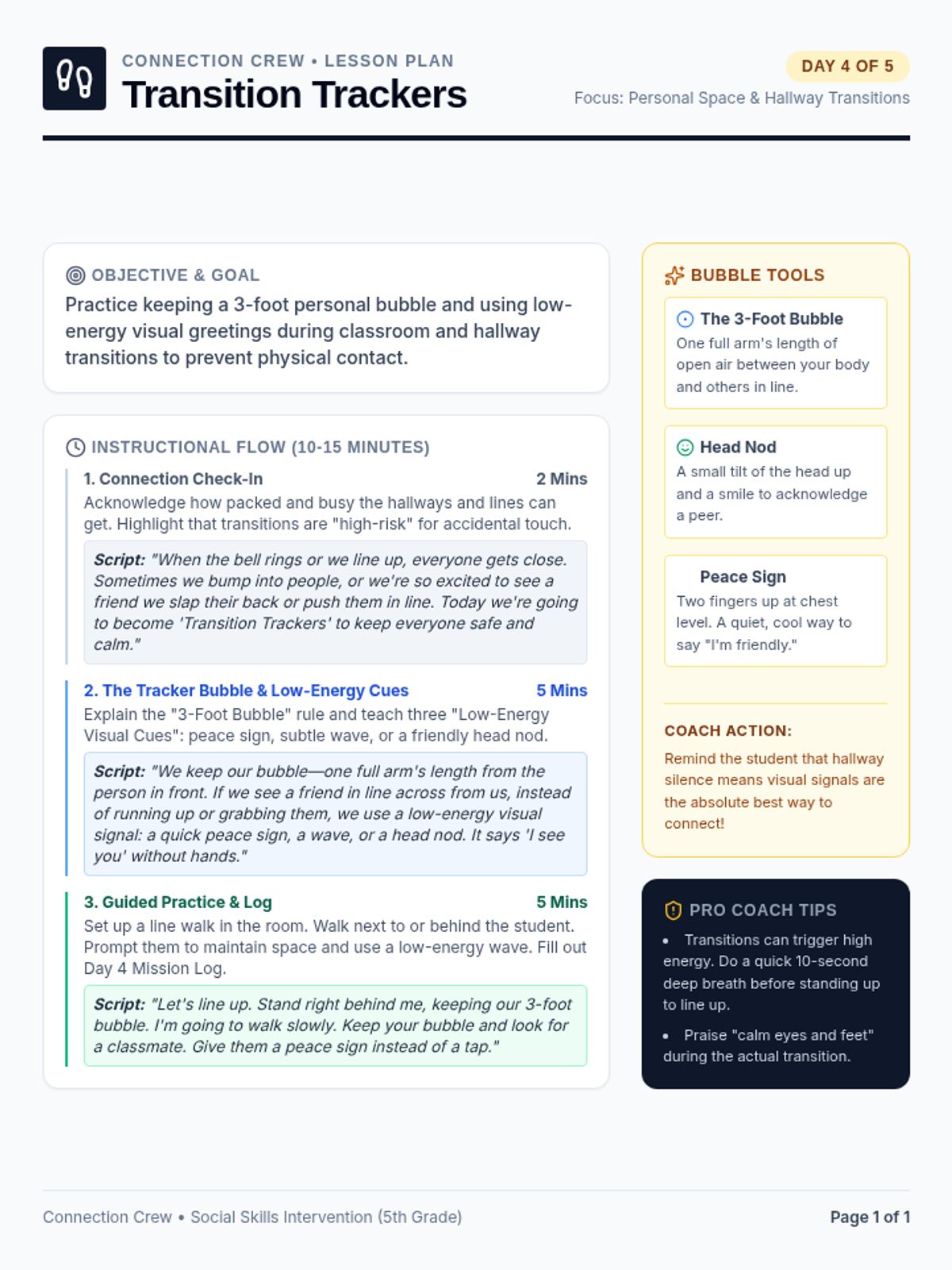
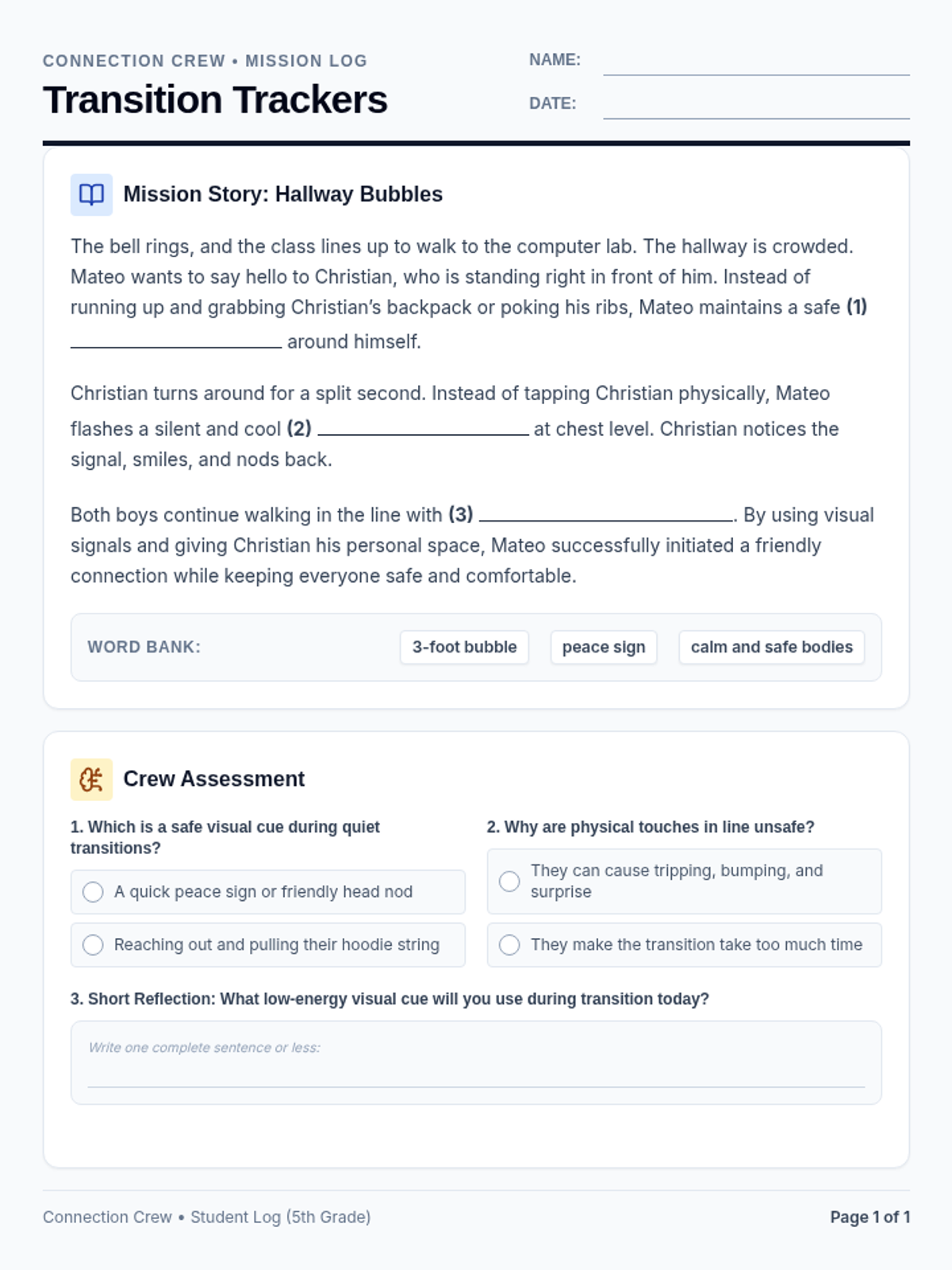
Students practice keeping physical boundaries and using low-energy visual greetings during classroom transitions to maintain safety and respect personal space.
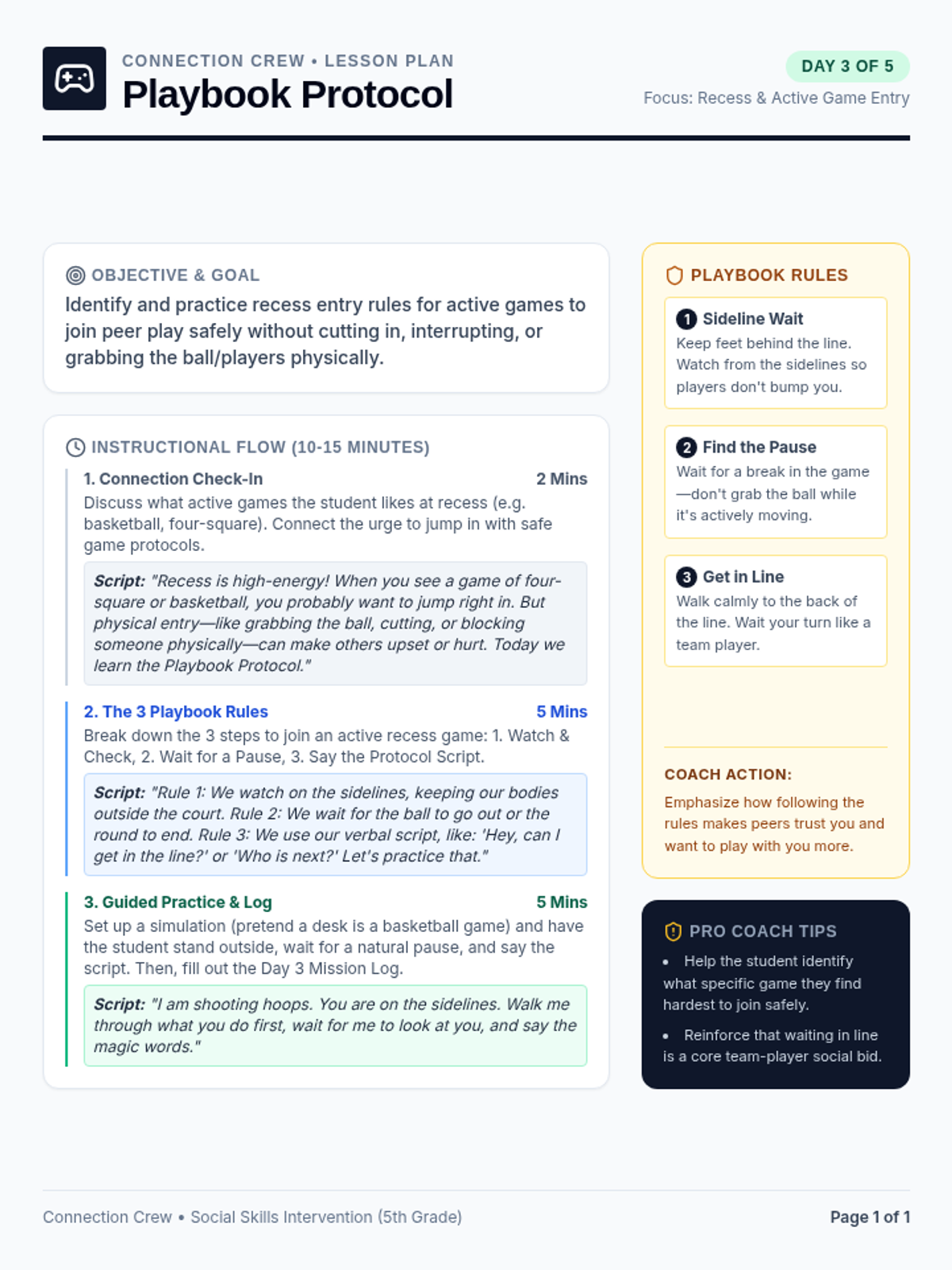
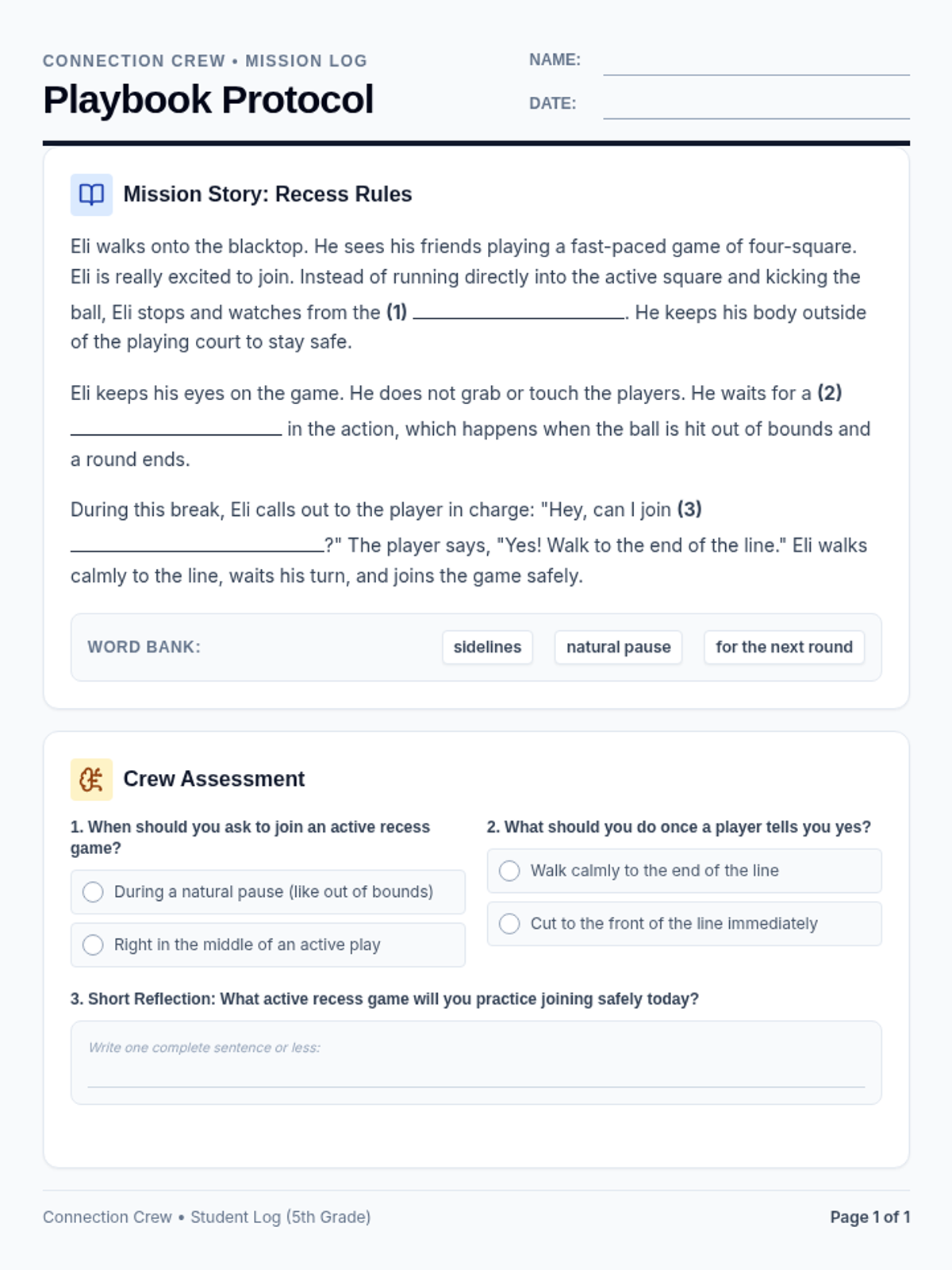
Students focus on the rules for joining active games during unstructured times (like recess), learning safe social entry techniques without physical interruption.
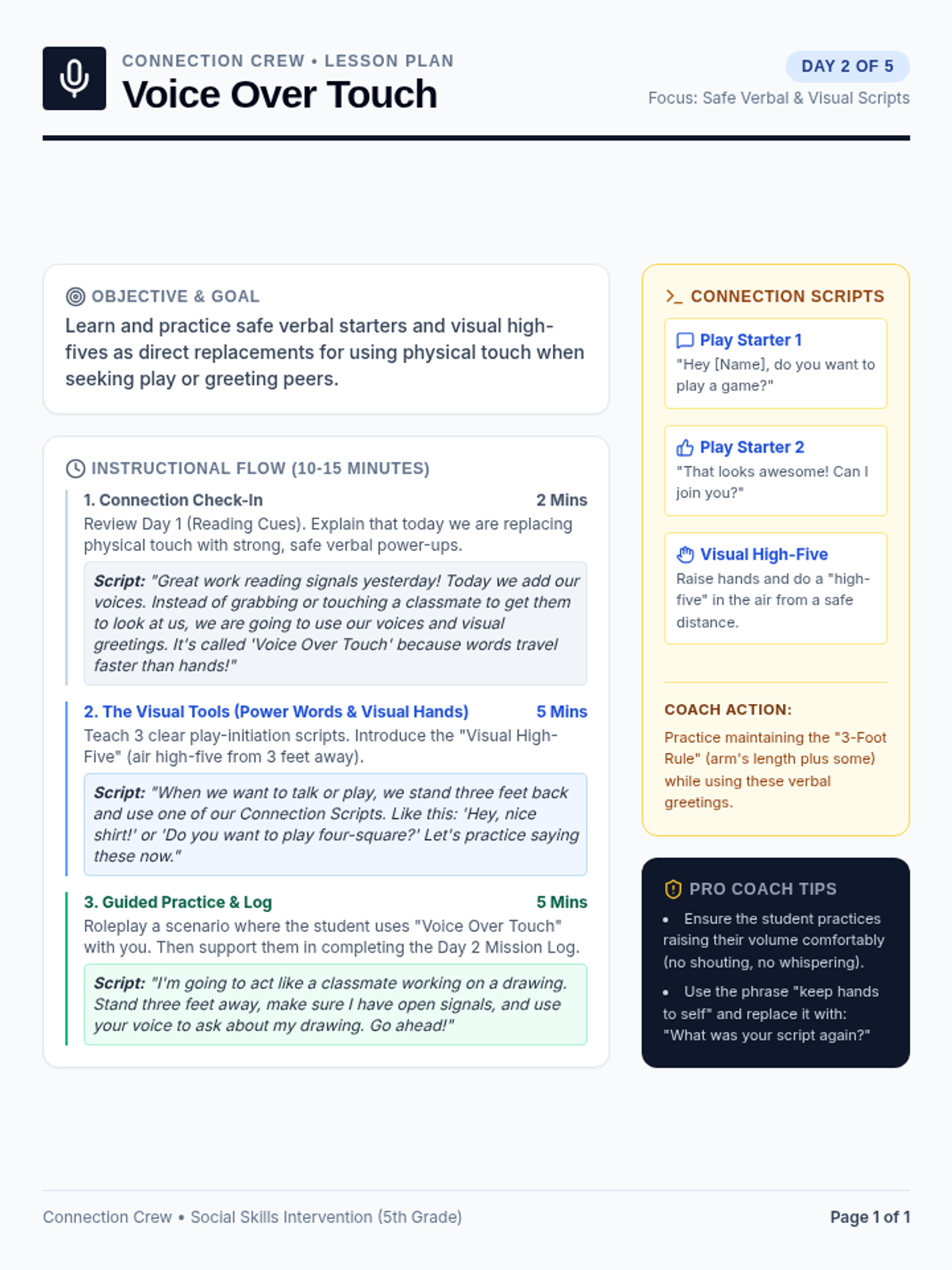
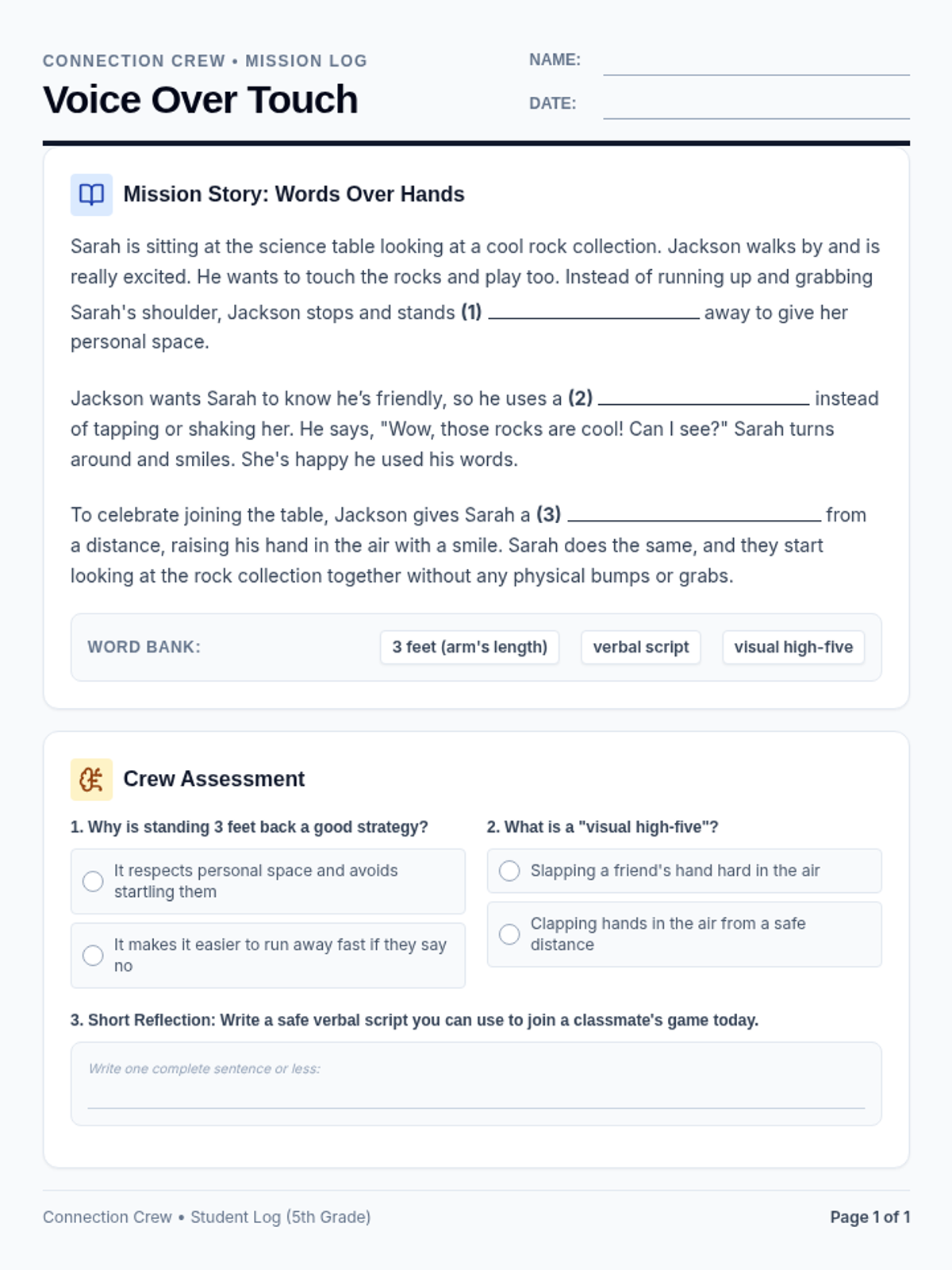
Students learn safe, verbal play-initiation scripts and non-physical greetings to seek social engagement without using physical contact.