A lesson focused on identifying and practicing healthy friendship behaviors and personal boundaries across different school environments. Students use a bingo-style tracker to recognize positive social interactions.
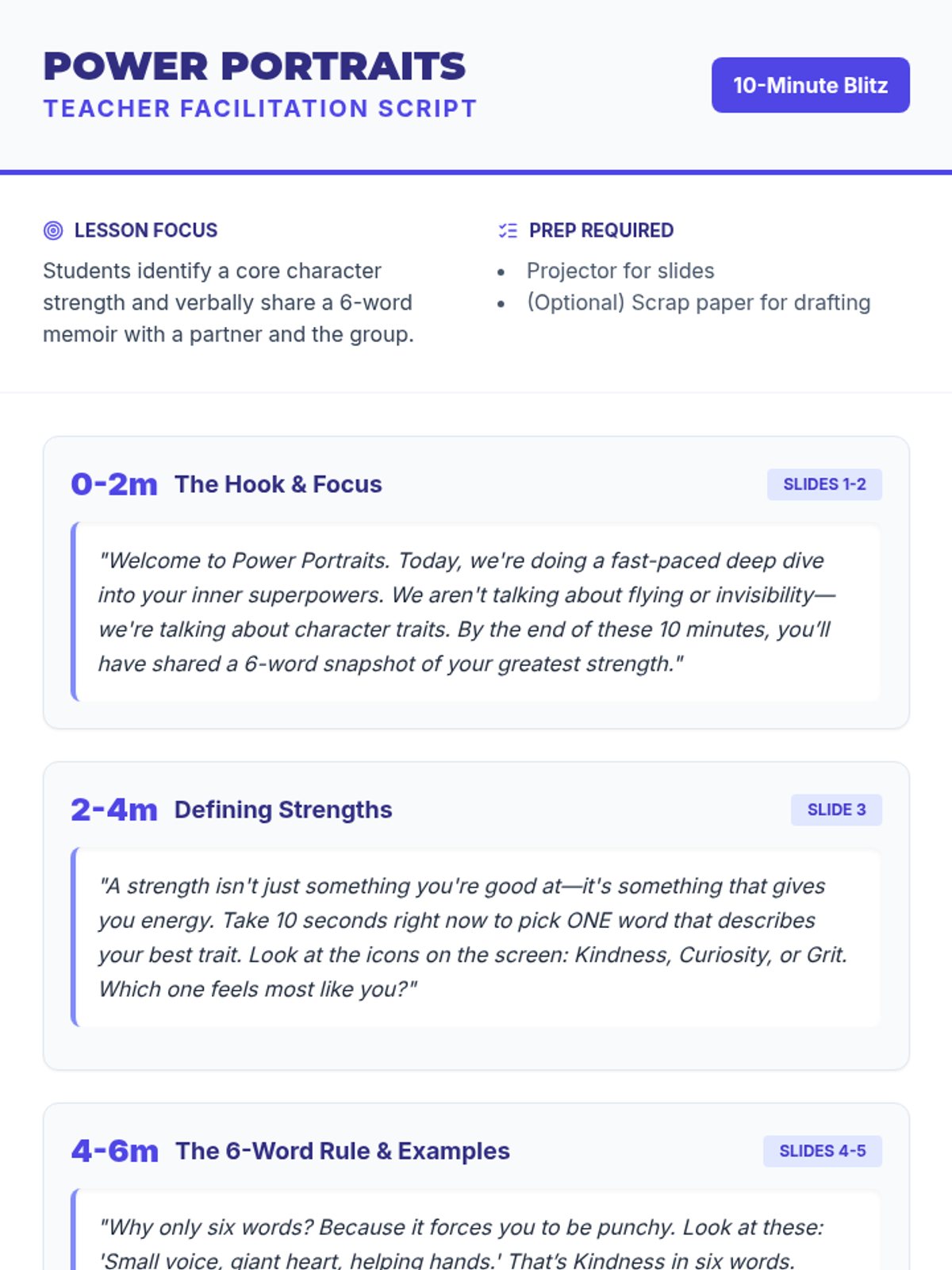
A quick 10-minute session focused on identifying personal character strengths and crafting a concise 6-word memoir to celebrate them.
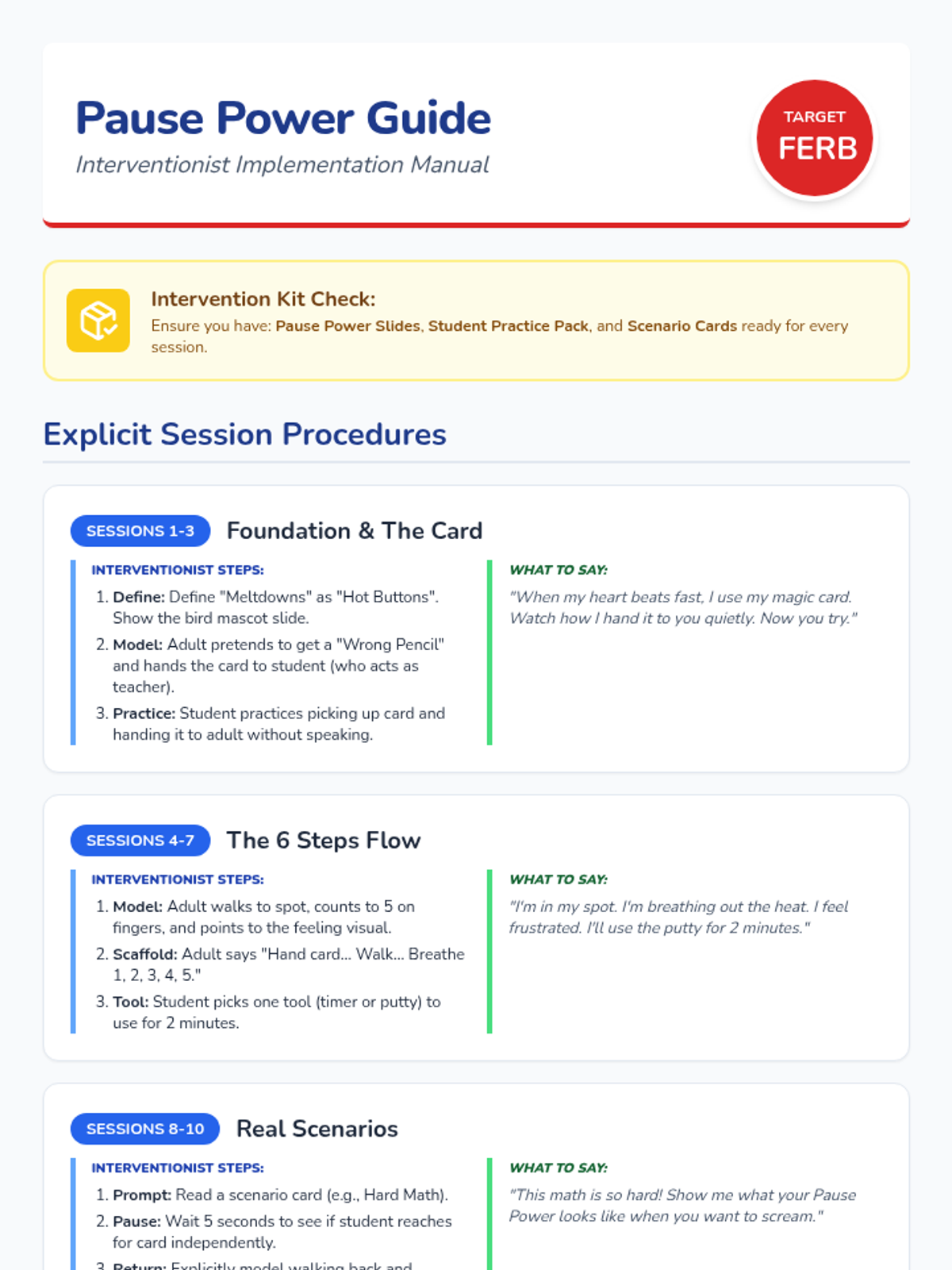
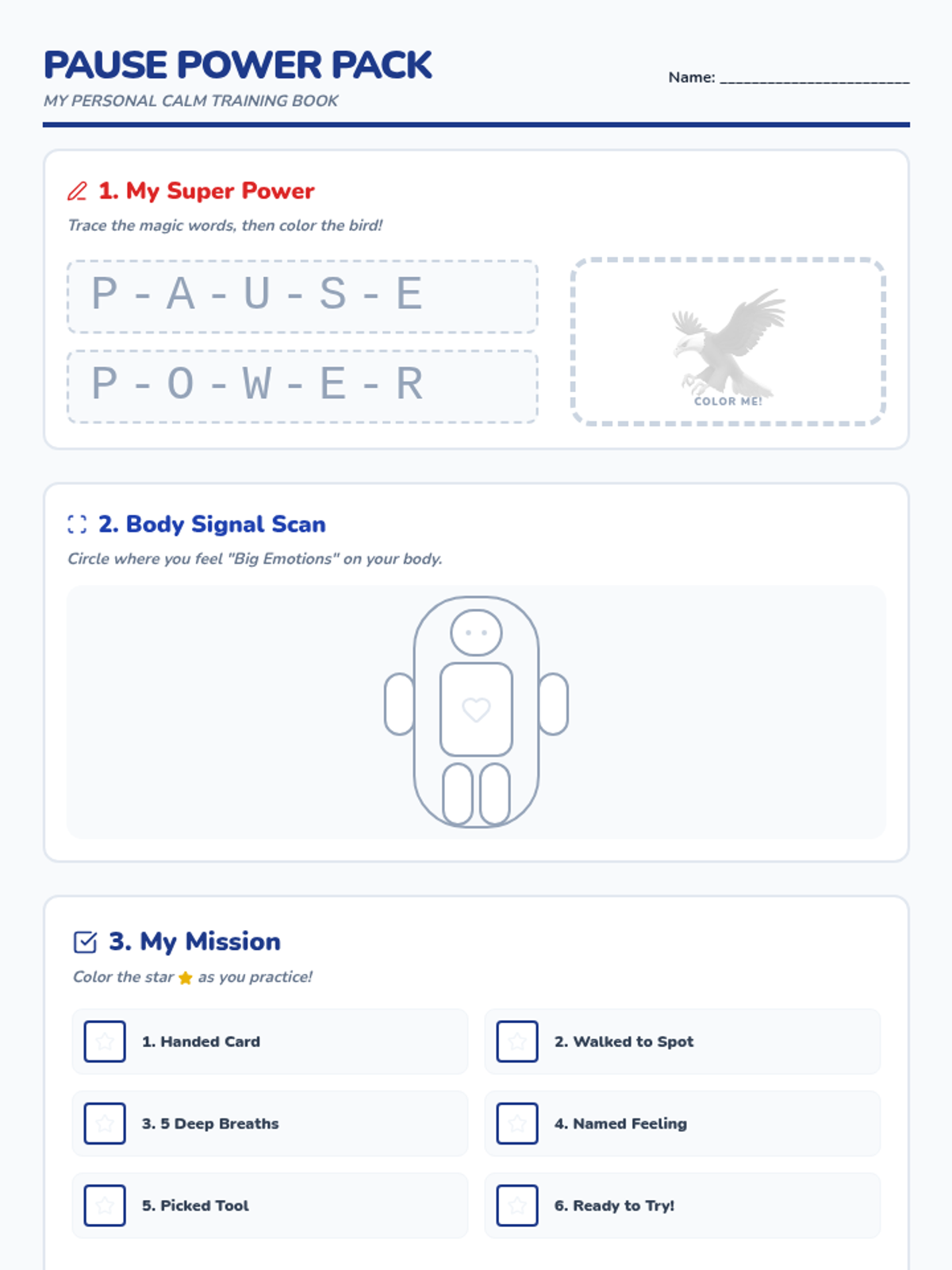
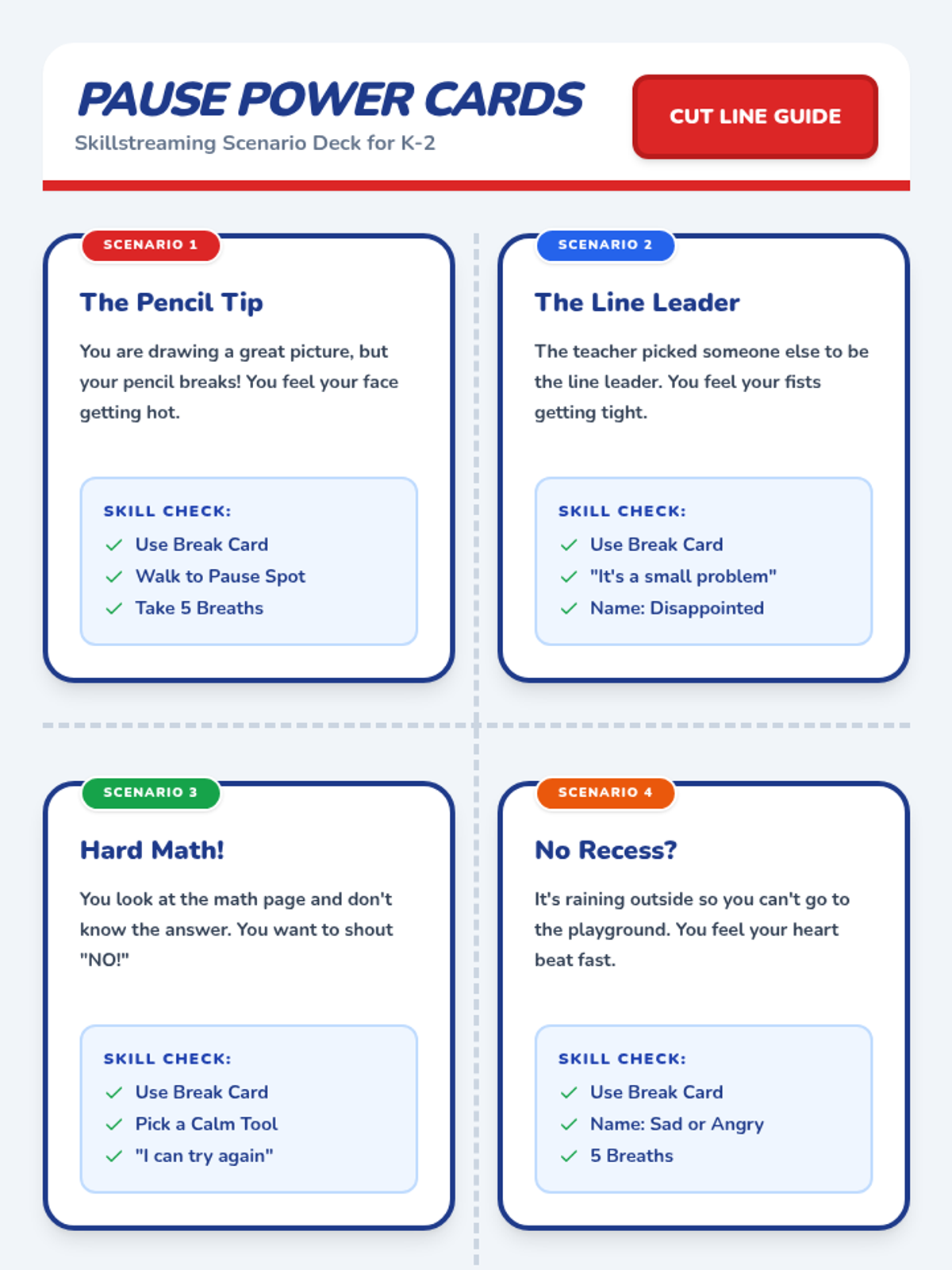
A 10-session intensive intervention sequence designed to teach K-2 students how to use a break card and Pause Power steps to regulate emotions and prevent meltdowns.
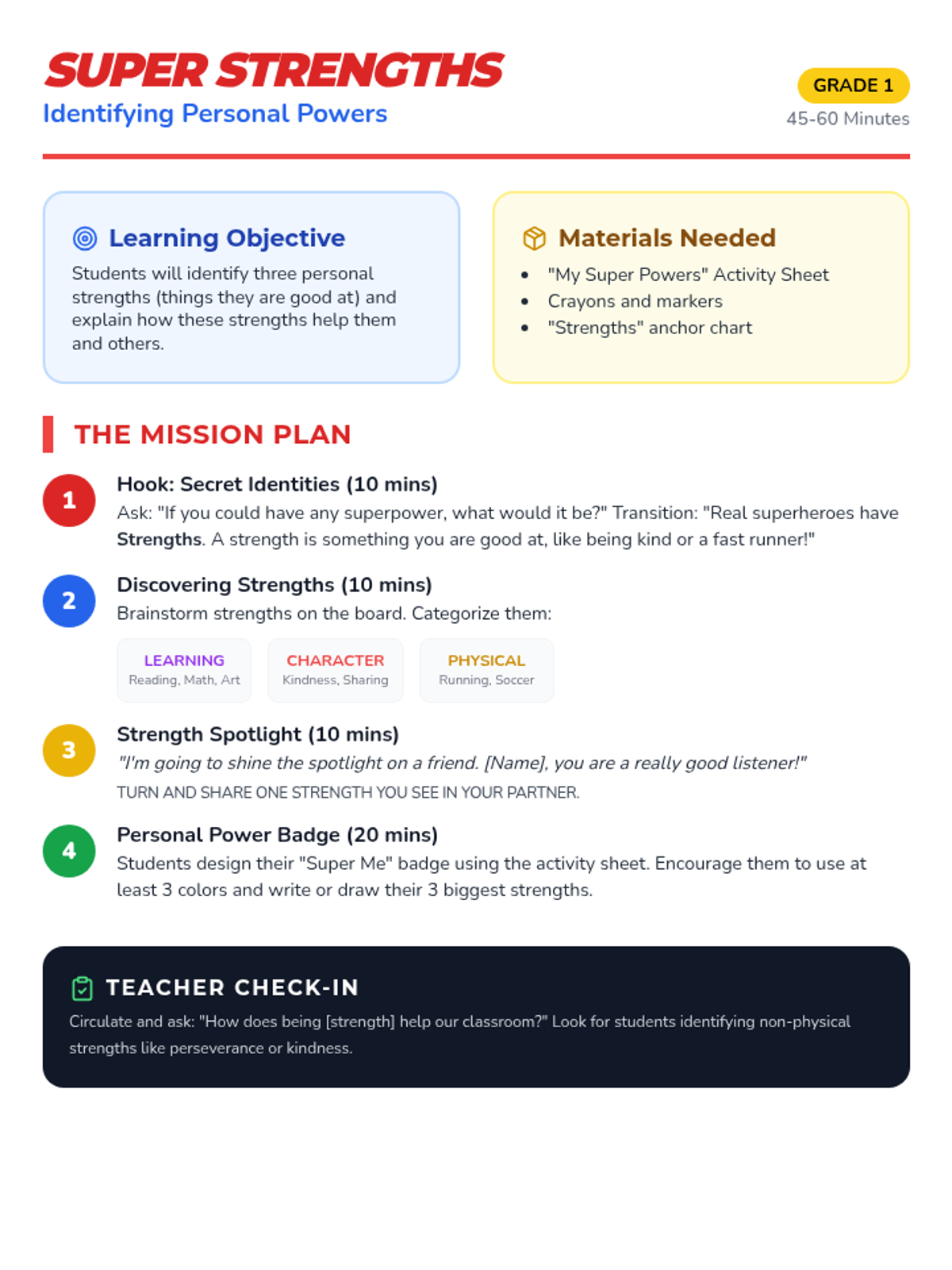
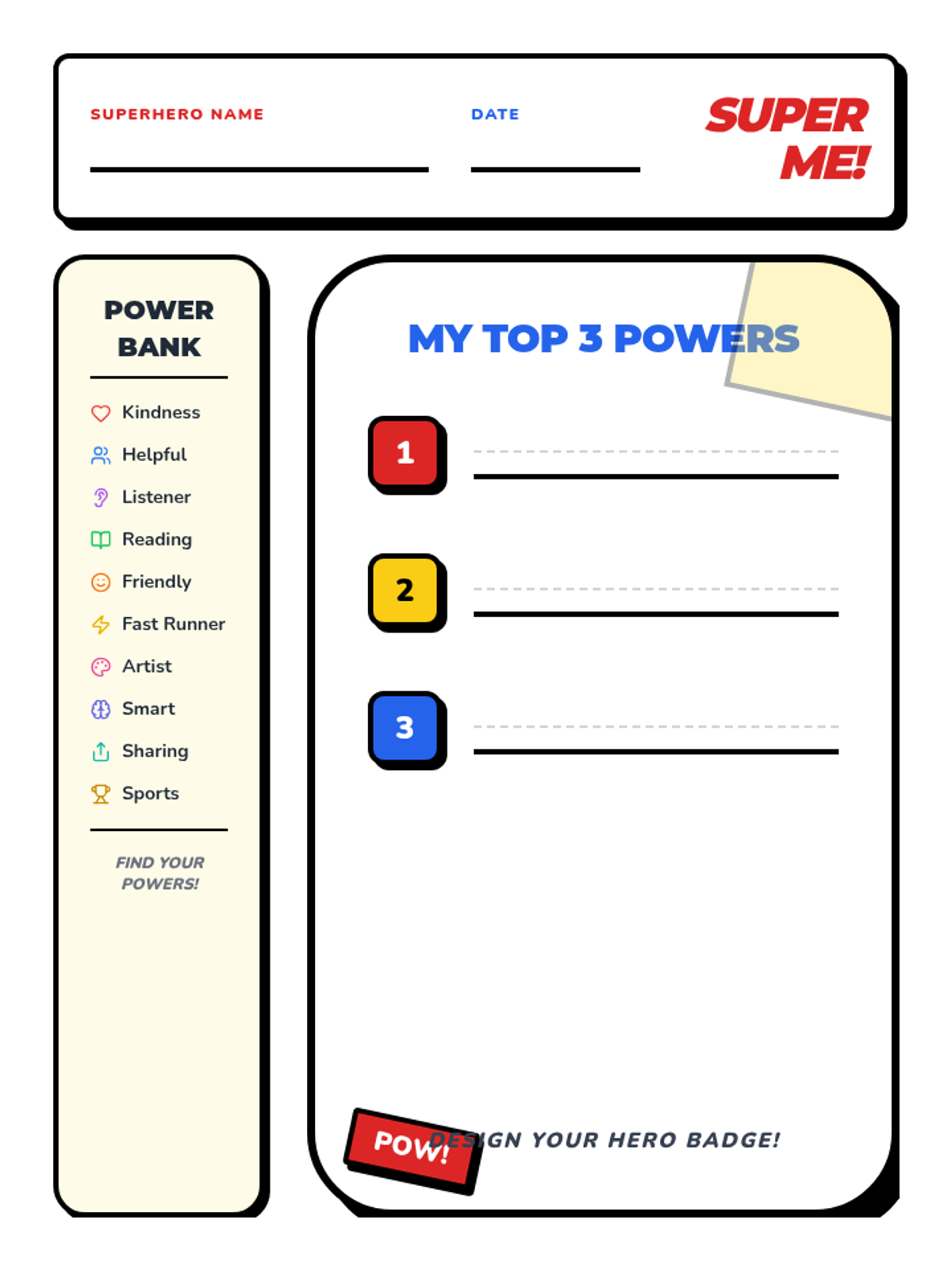
A lesson helping first graders identify and celebrate their unique personal strengths and talents through a superhero-themed exploration.
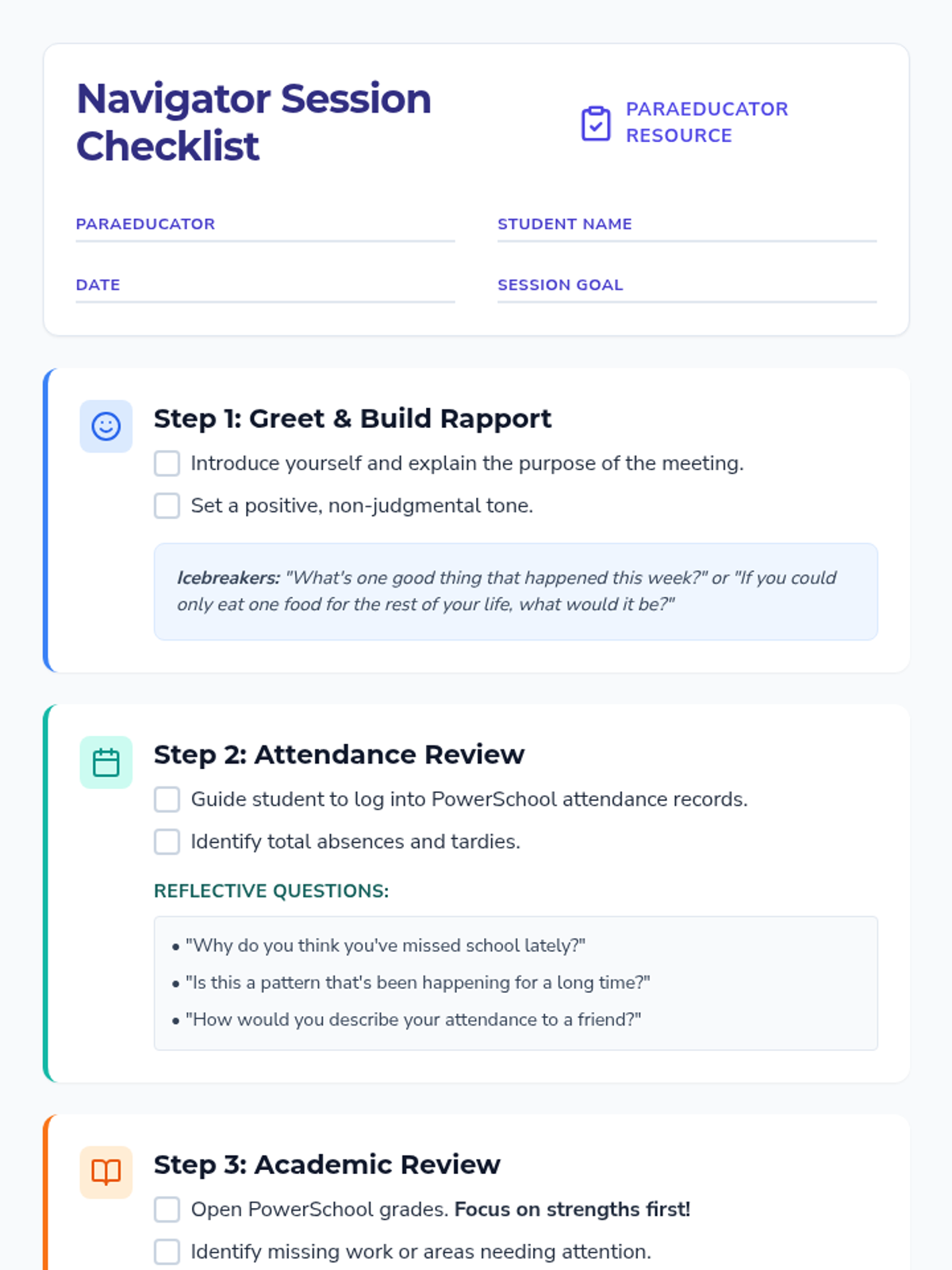
A structured check-in process for paraeducators to support 5th and 6th grade students with attendance and academic goal-setting. Includes a facilitation guide for the educator and a visual presentation for the student.
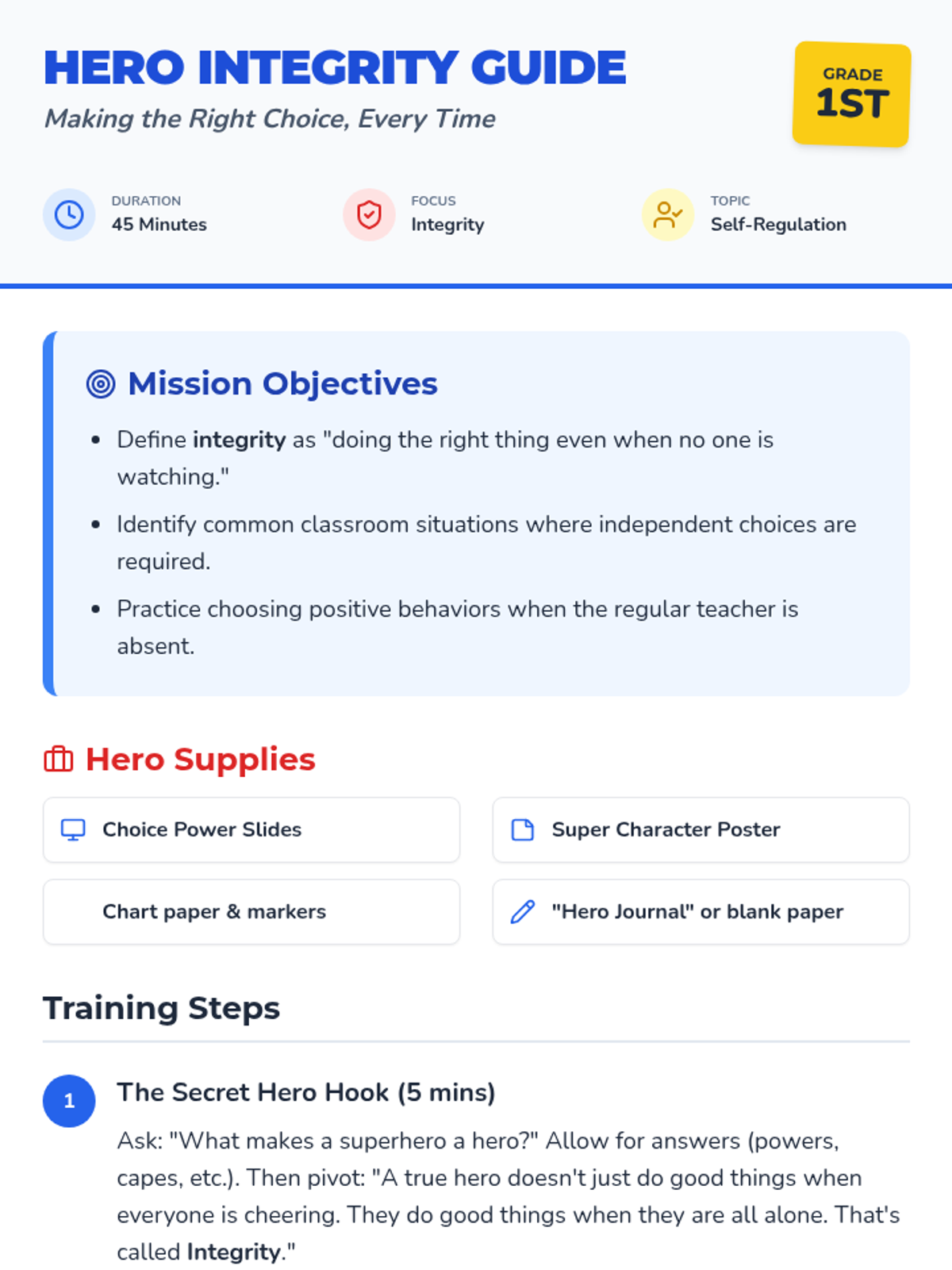
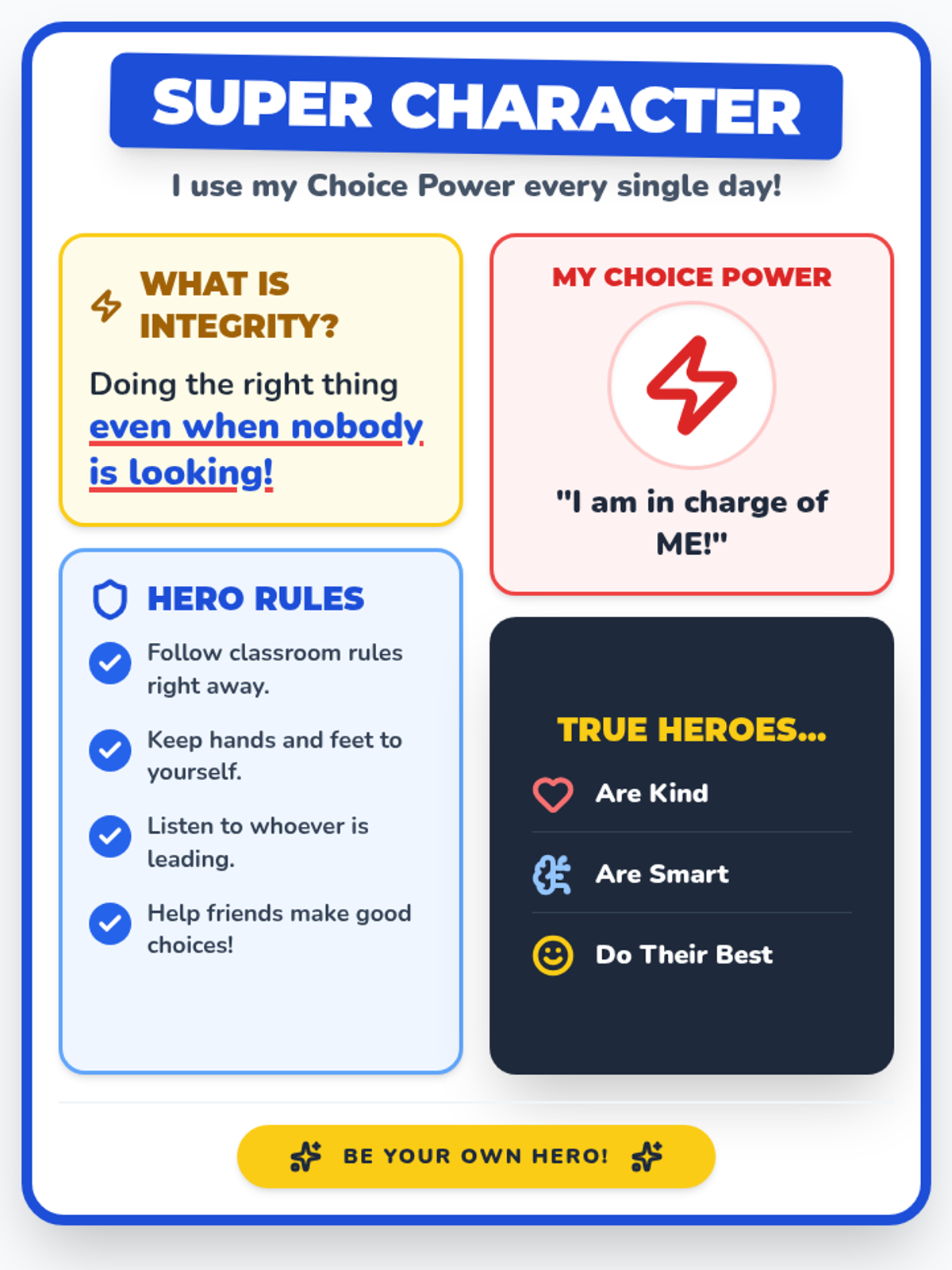
A character education lesson for first graders focused on integrity and making positive choices independently, especially when a teacher or authority figure is not present.
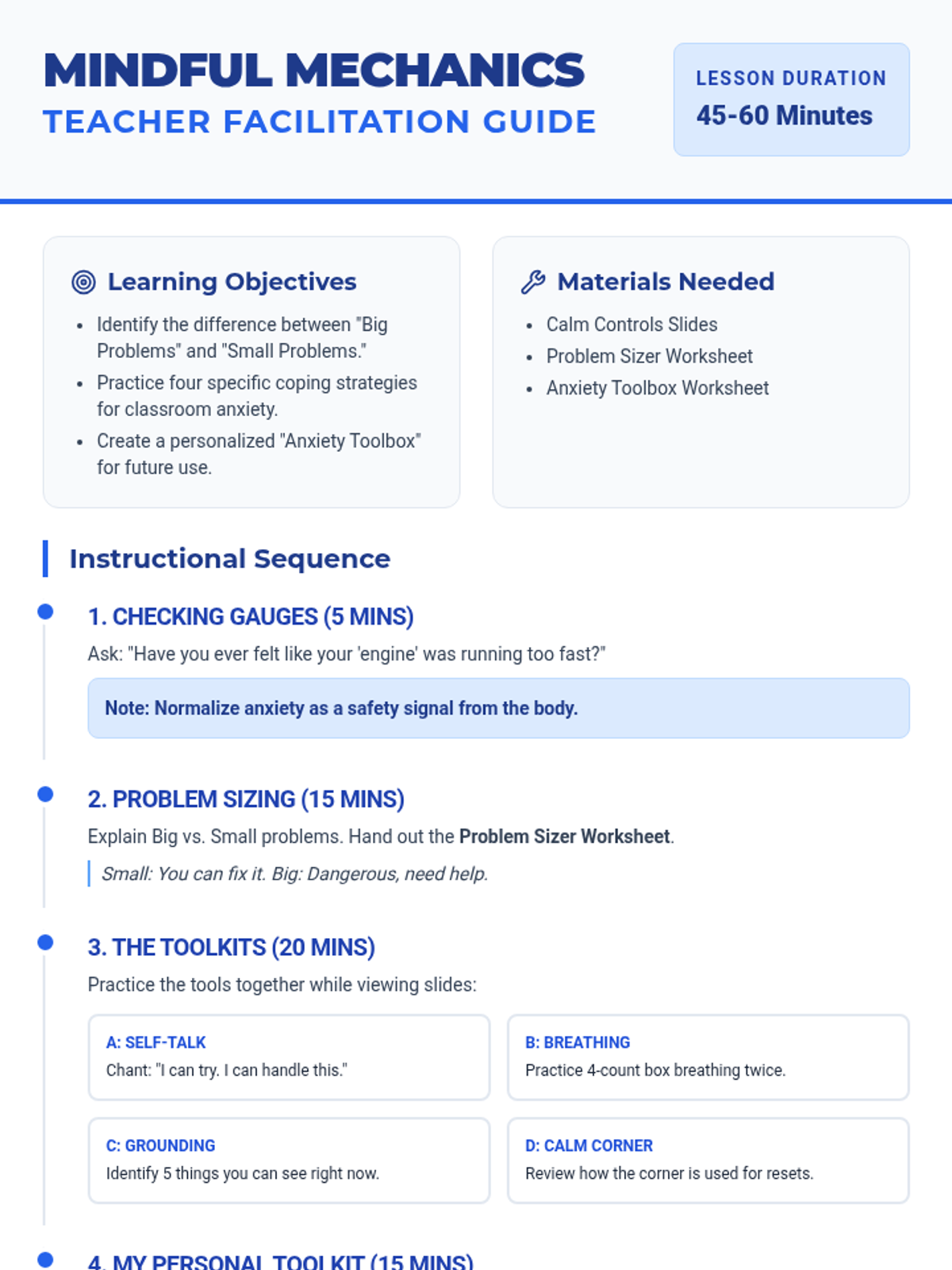
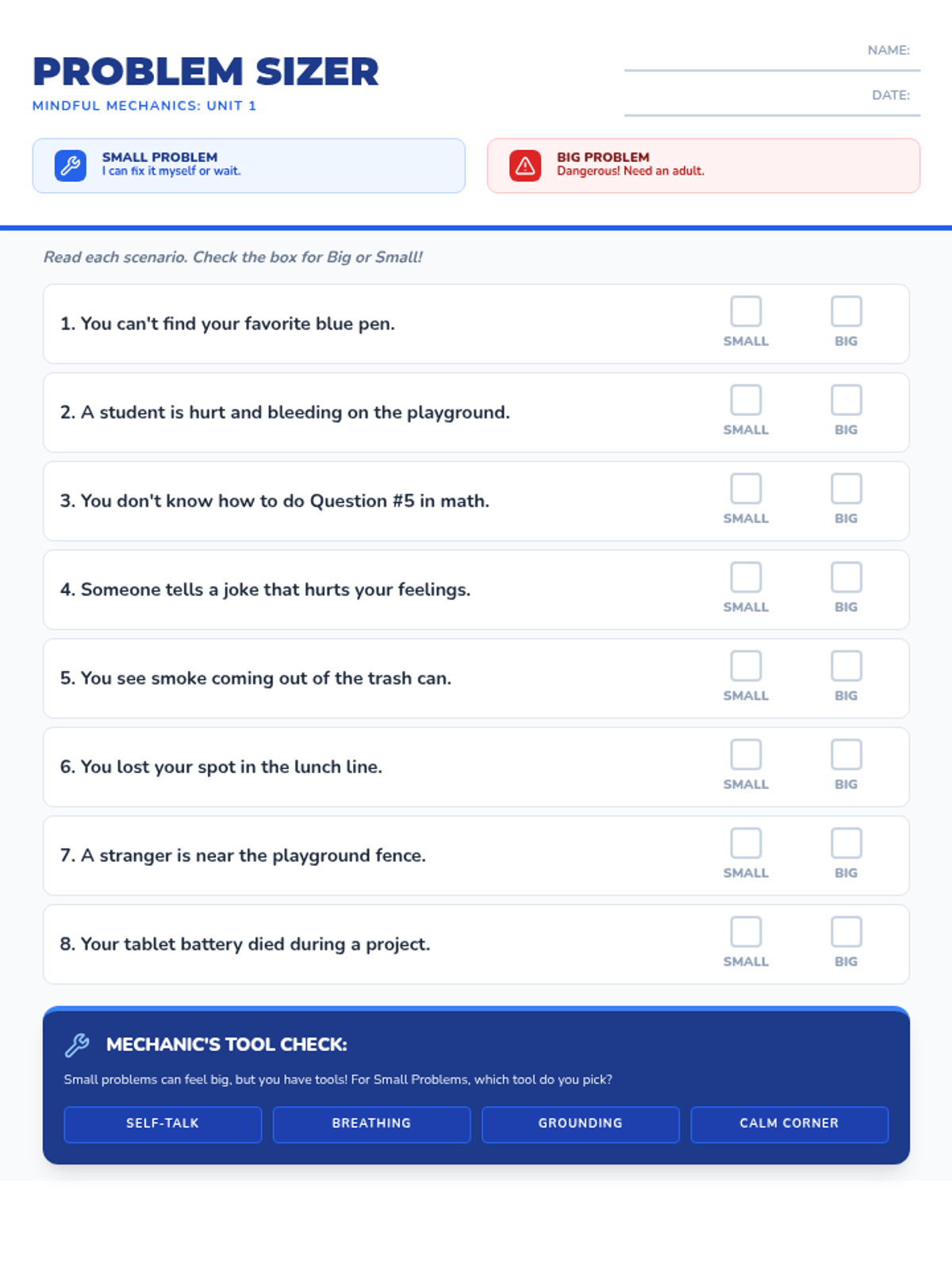
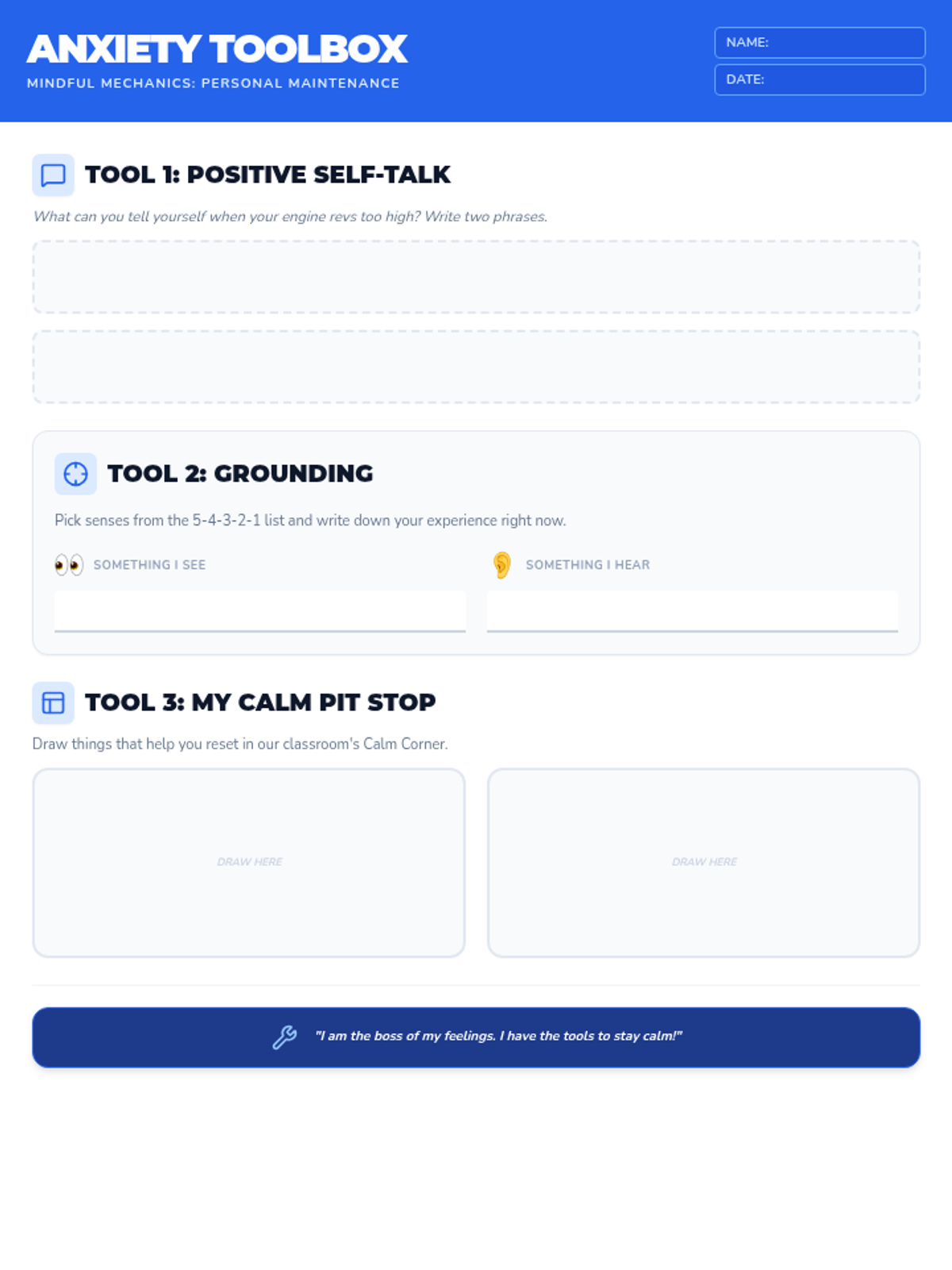
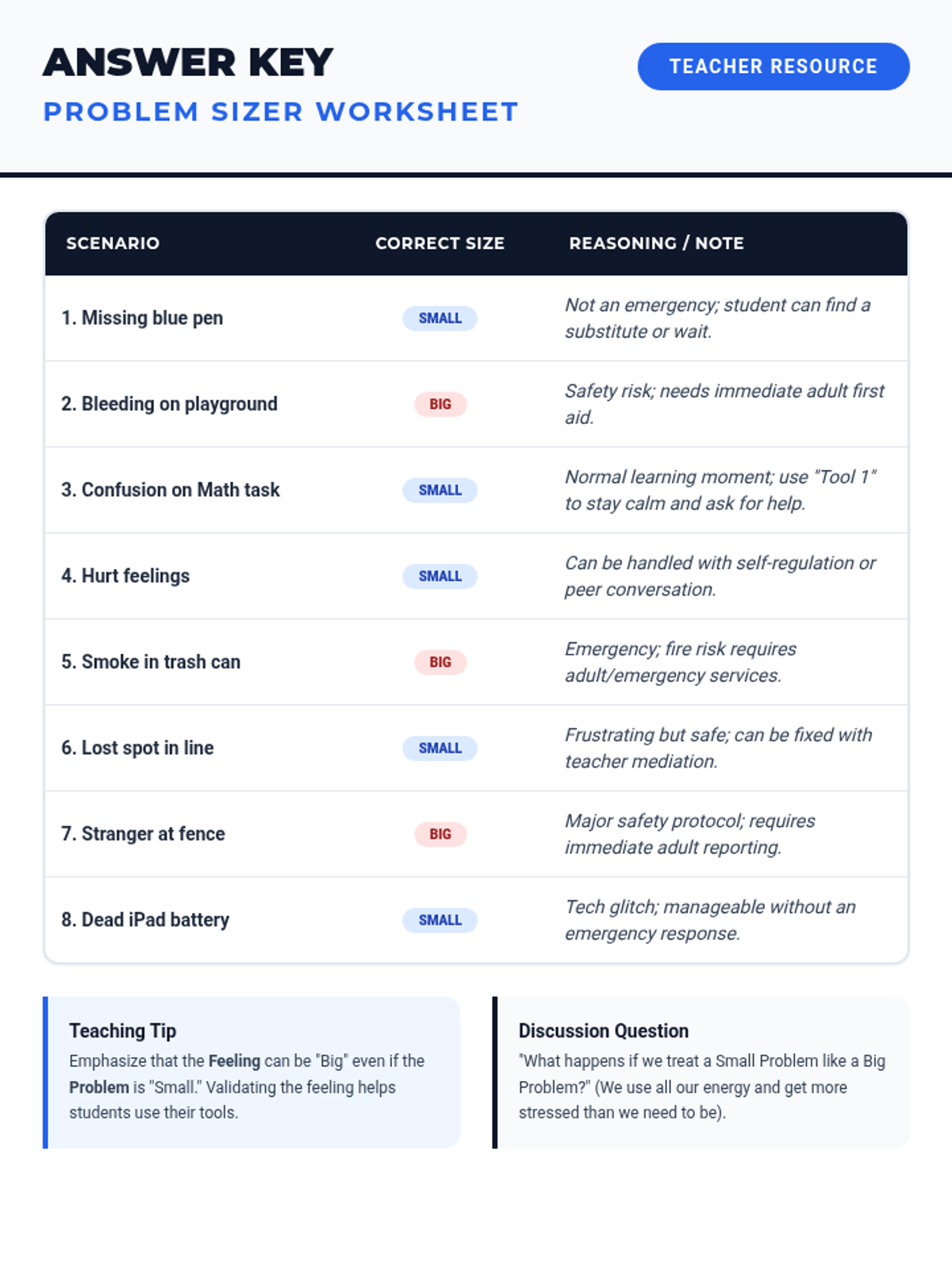
A lesson focused on equipping students with practical coping strategies for classroom anxiety and developing the skill to distinguish between big and small problems.
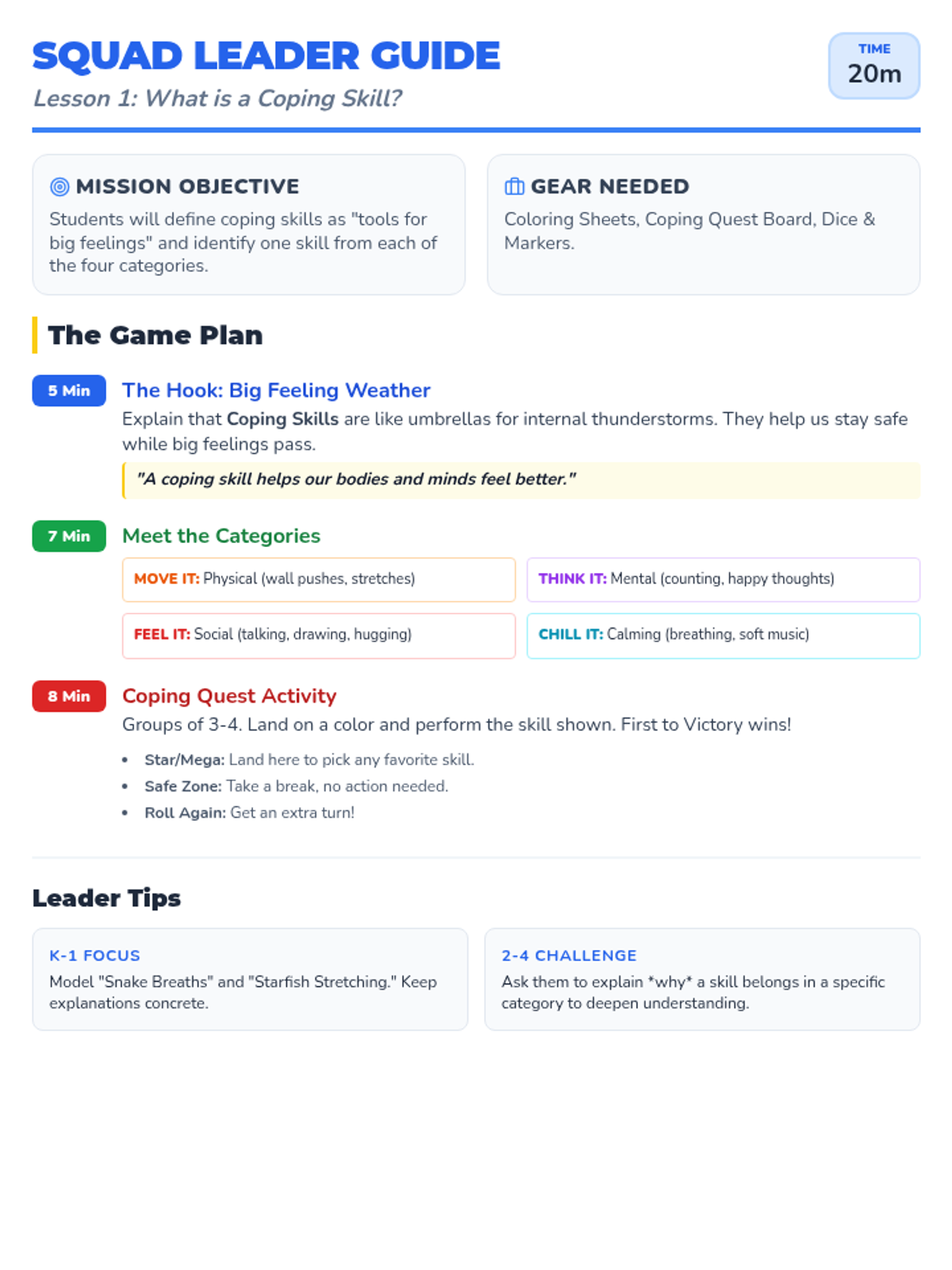
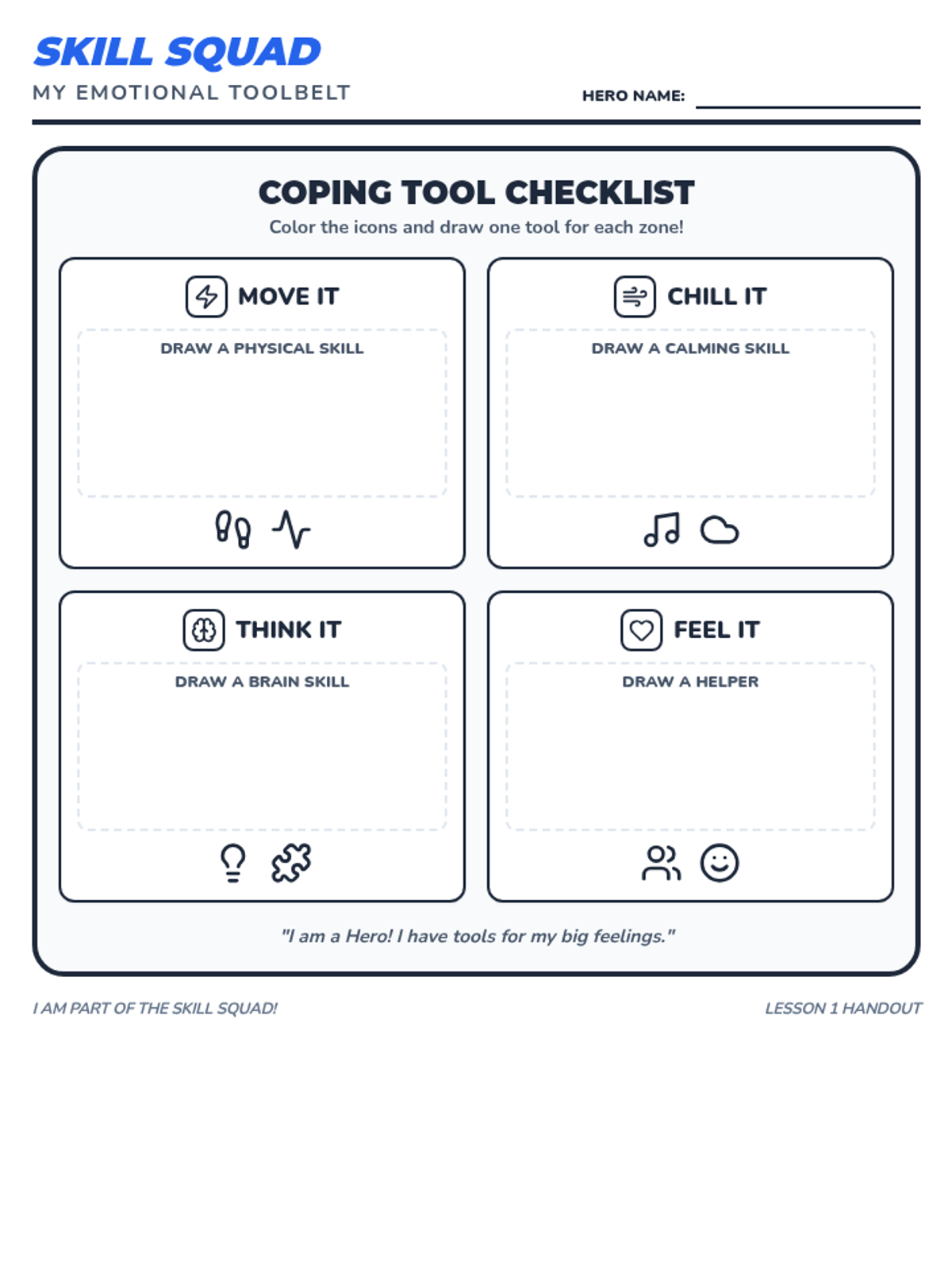
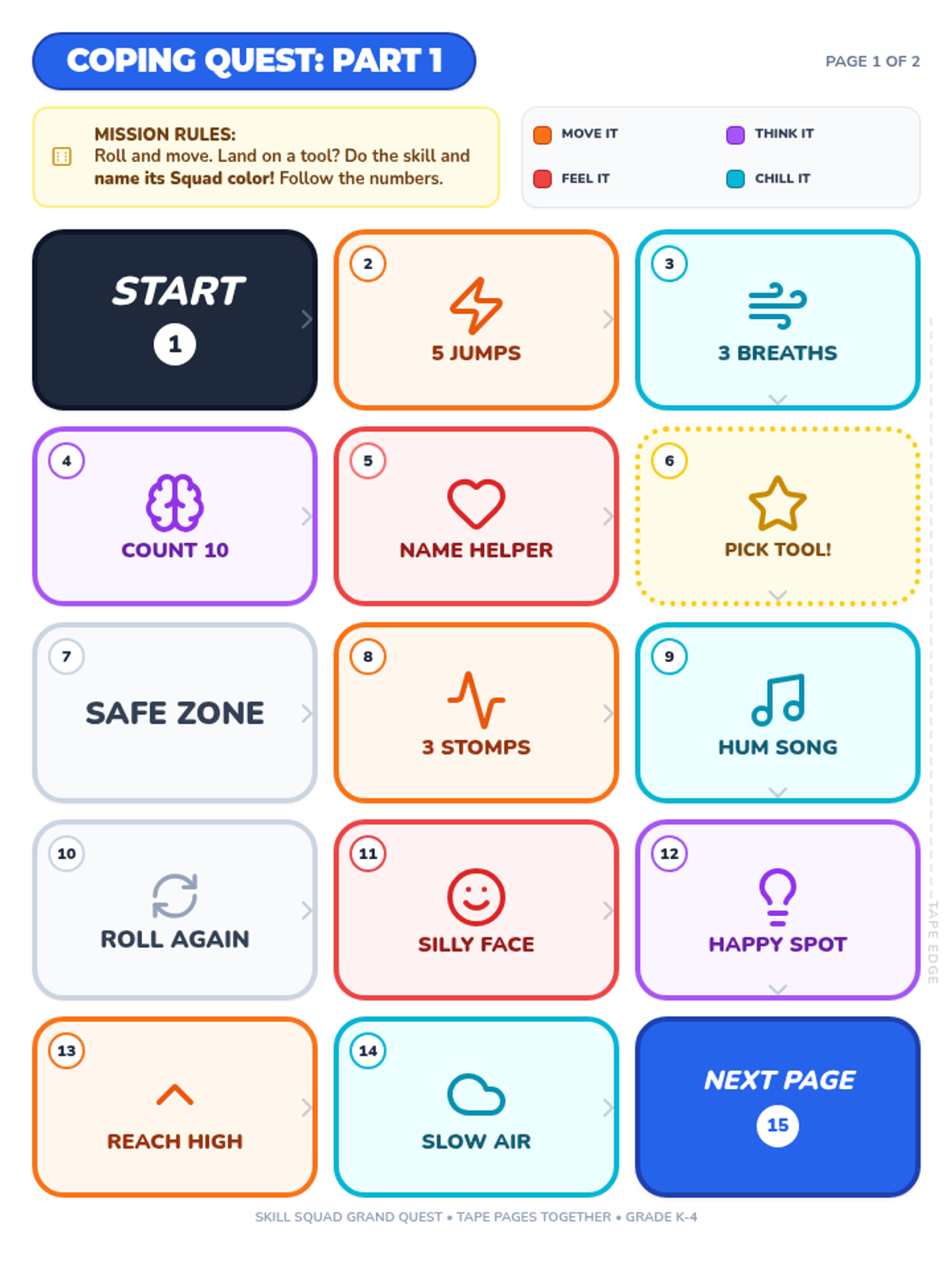
An introductory lesson for grades K-4 that defines coping skills and introduces the four main categories of self-regulation through a 'Skill Squad' theme. Students learn to identify tools for their emotional toolbelt to handle big feelings.
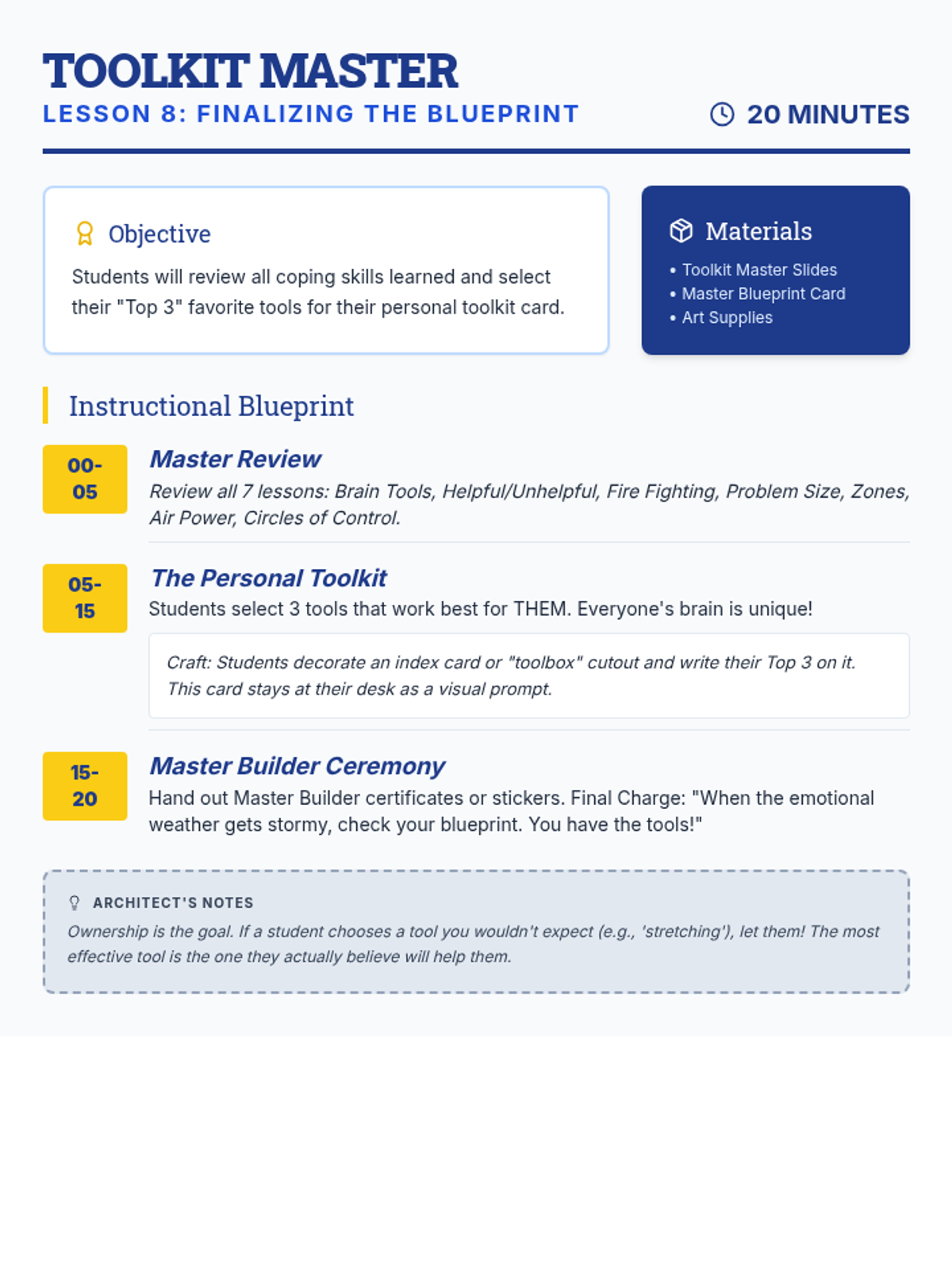
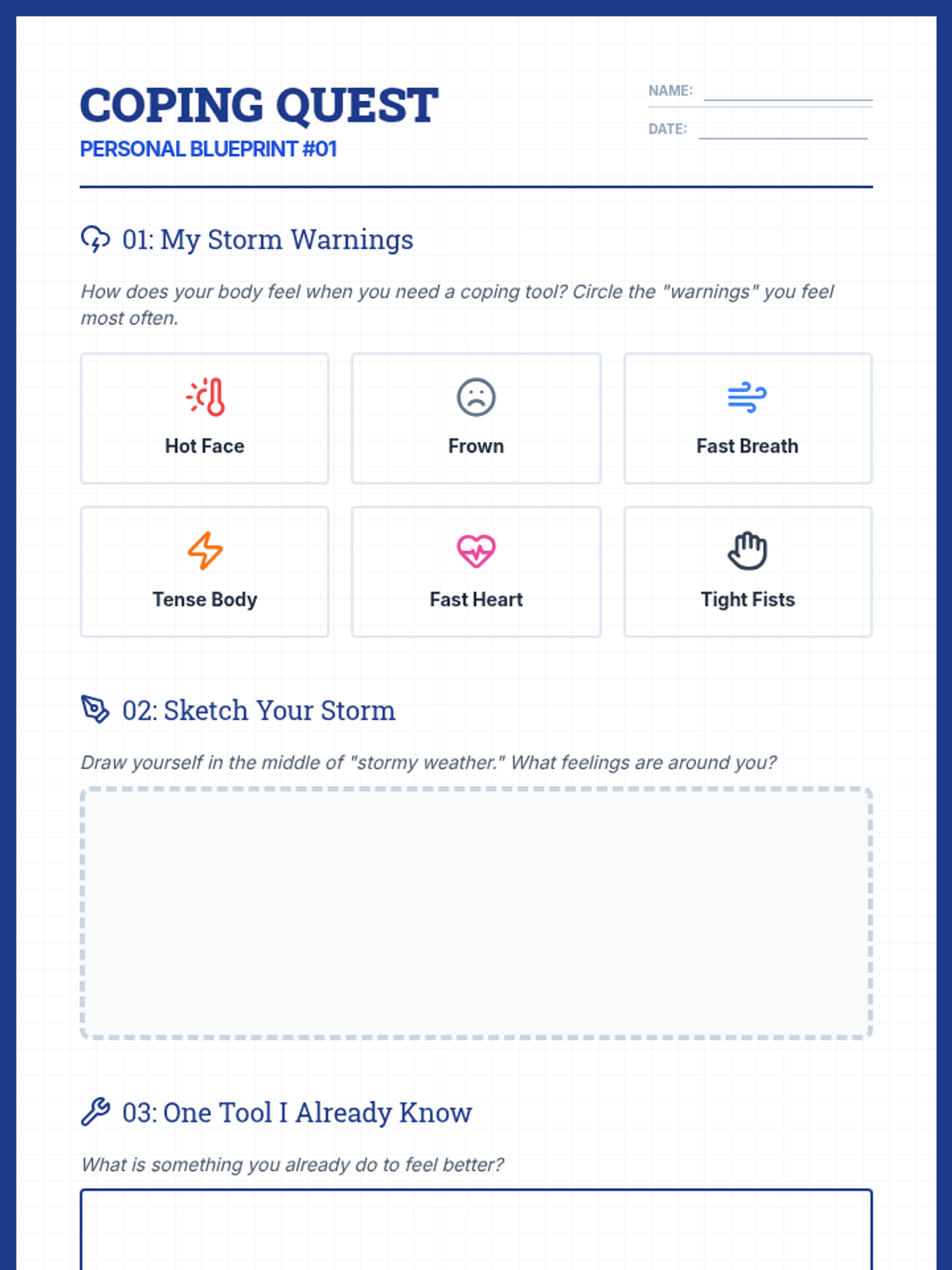
A cumulative review where students assemble their personal "Coping Blueprint" for future use.
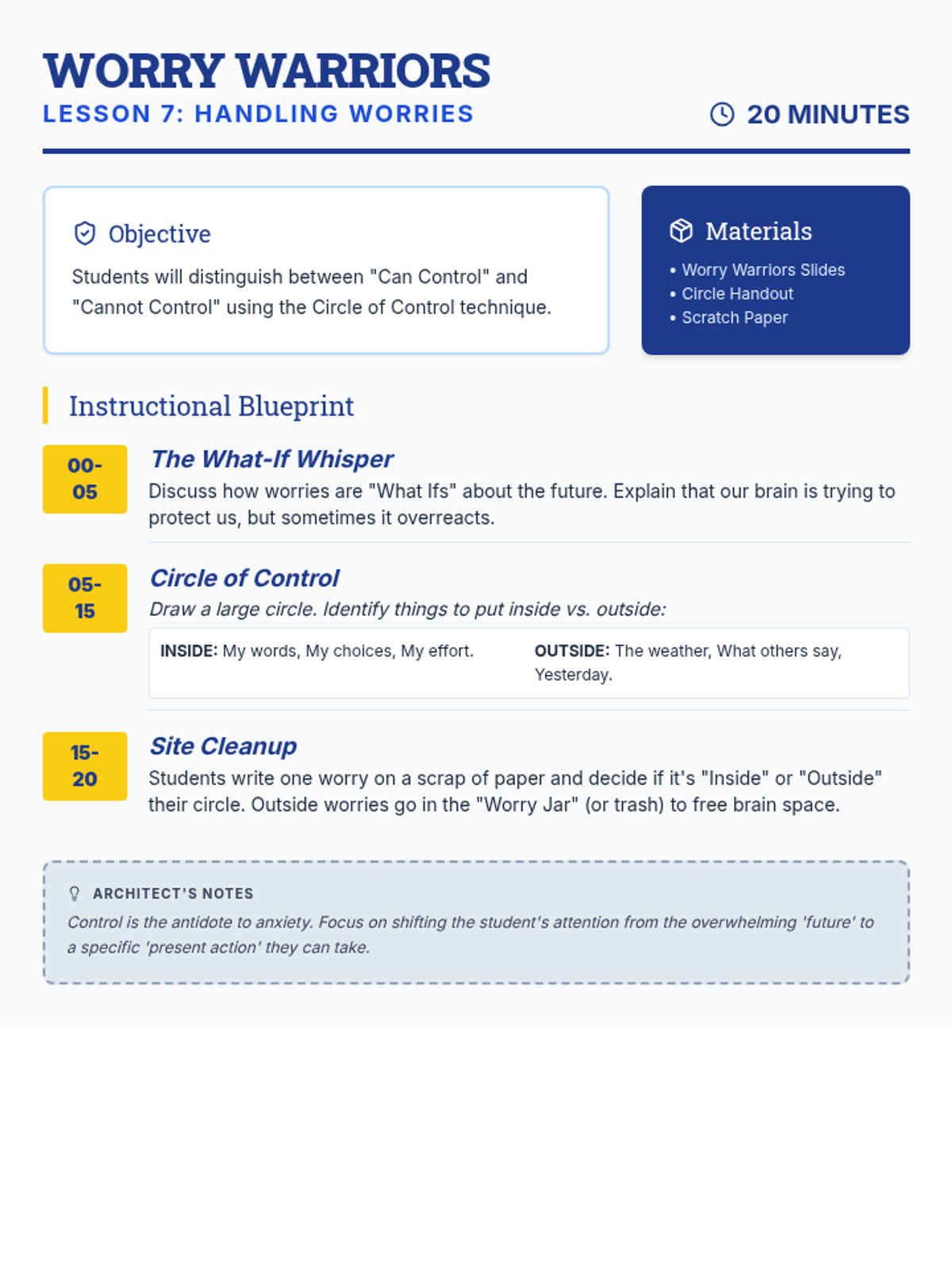
Students learn strategies to "tame" worries and distinguish between things they can and cannot control.
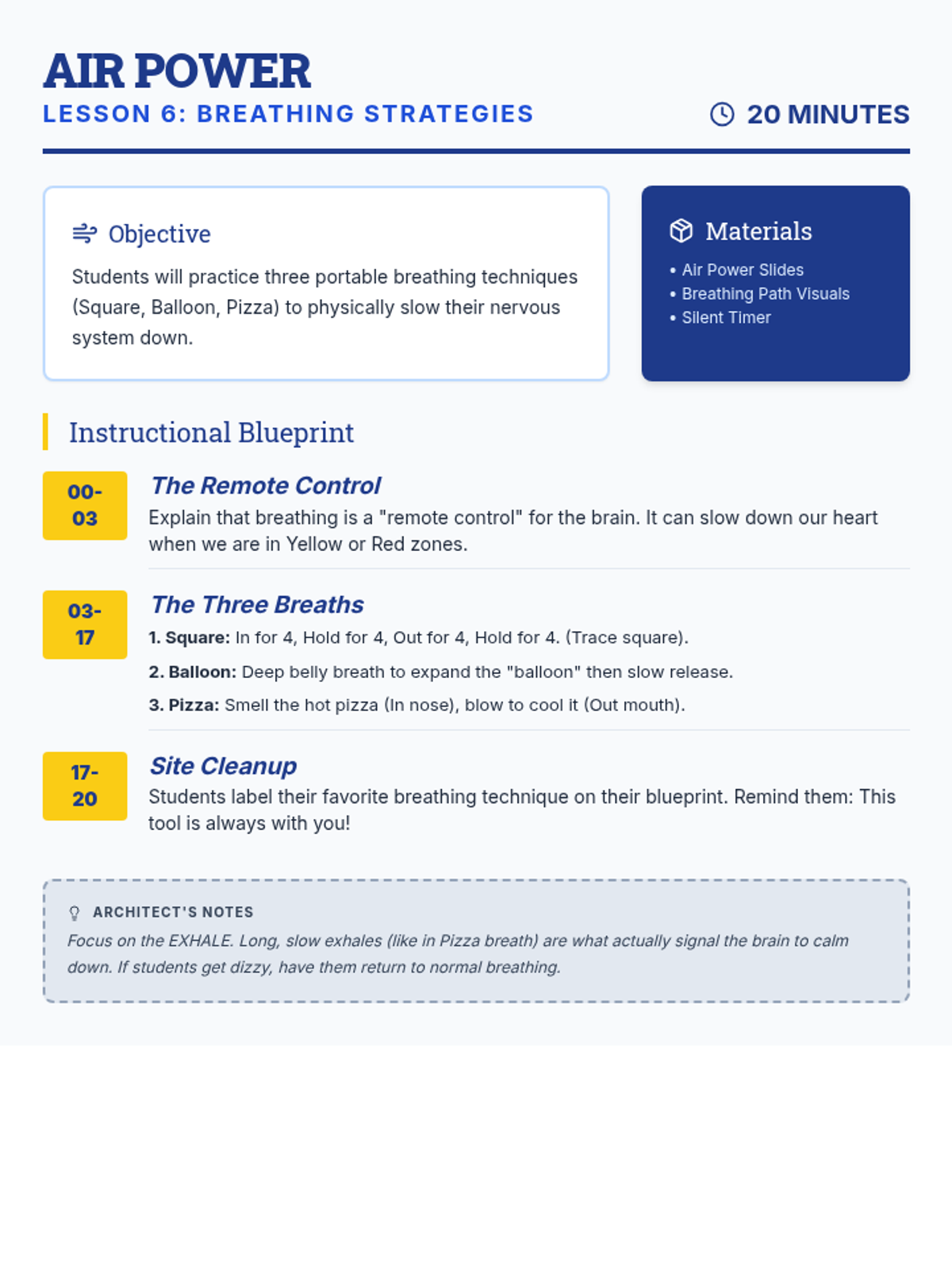
Practical instruction on various breathing techniques as portable, immediate coping tools for high-energy emotions.
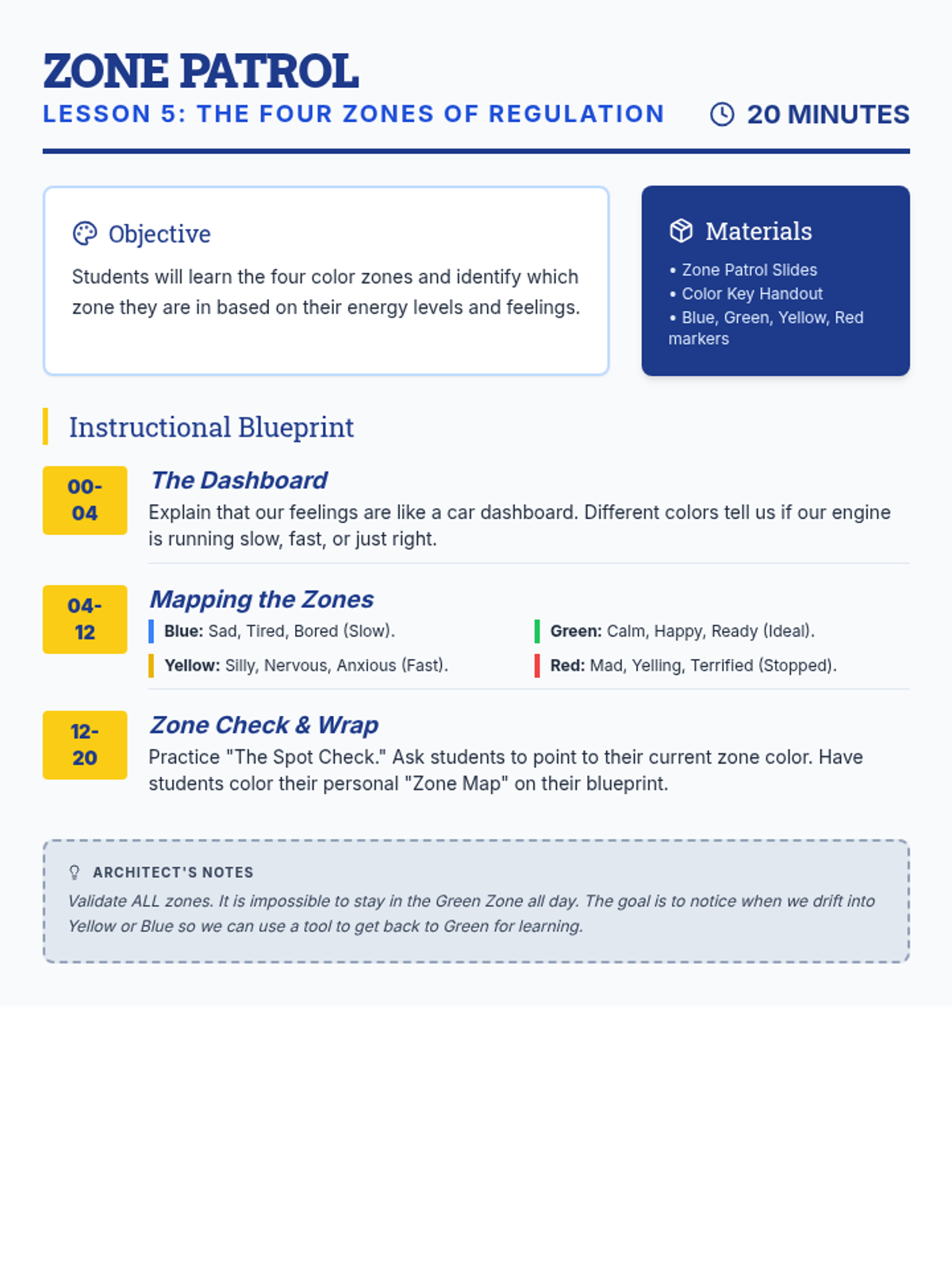
Introduction to the Four Zones of Regulation, helping students categorize their energy levels and emotional states.
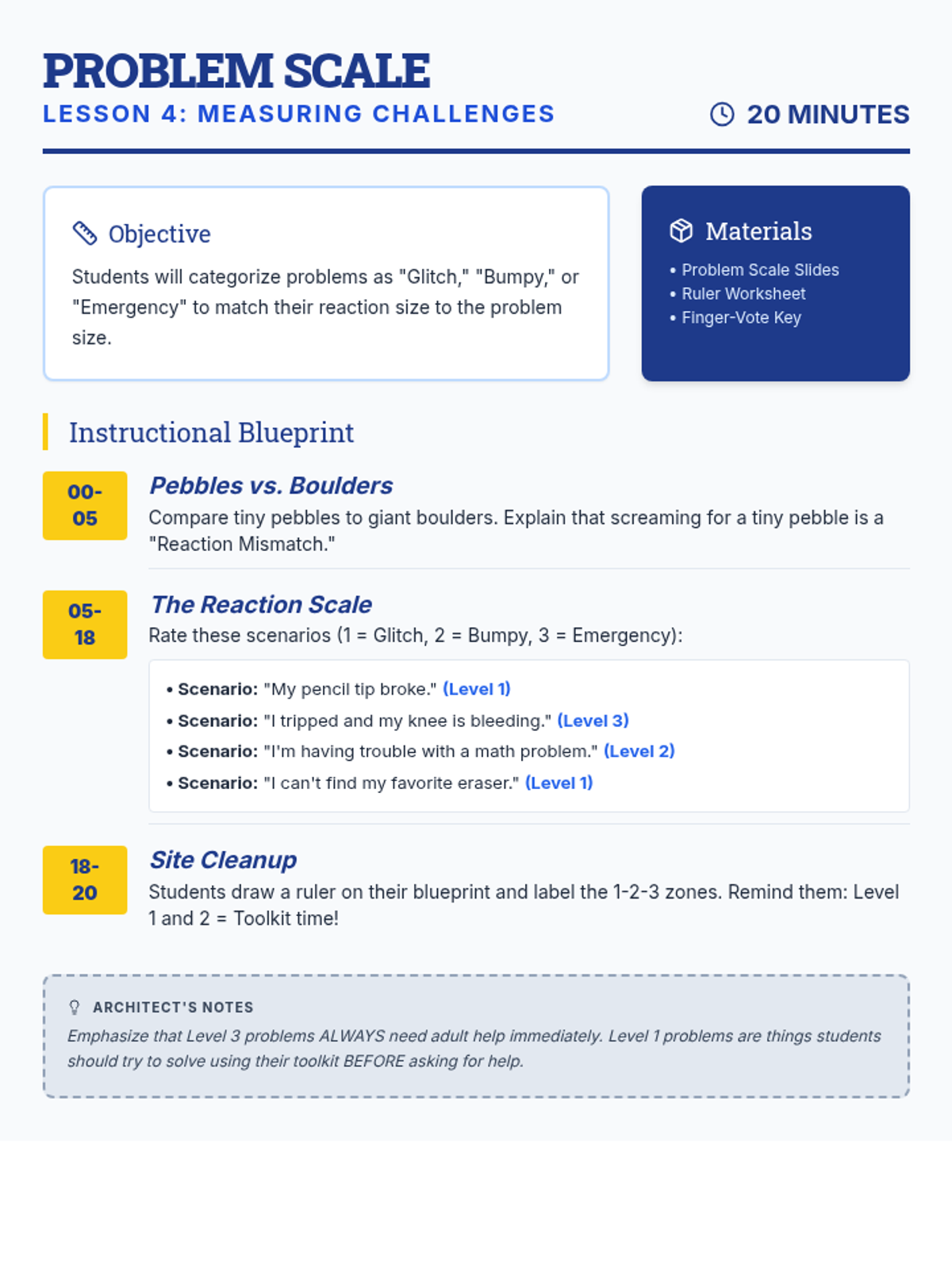
Students categorize challenges into big and small problems to determine the appropriate level of reaction and support needed.
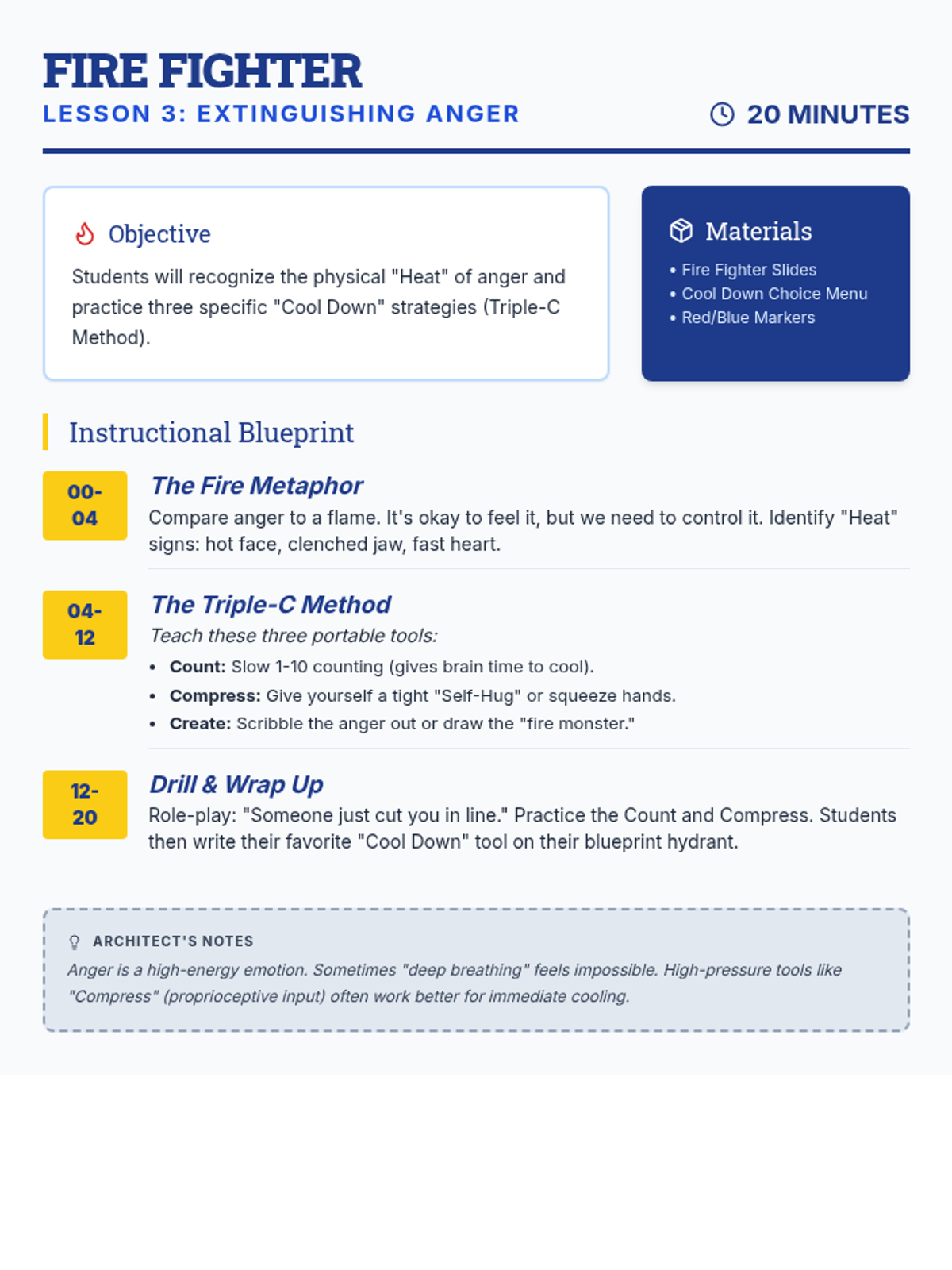
Students learn to identify the physical signs of anger and practice "cool down" strategies to stay in control.
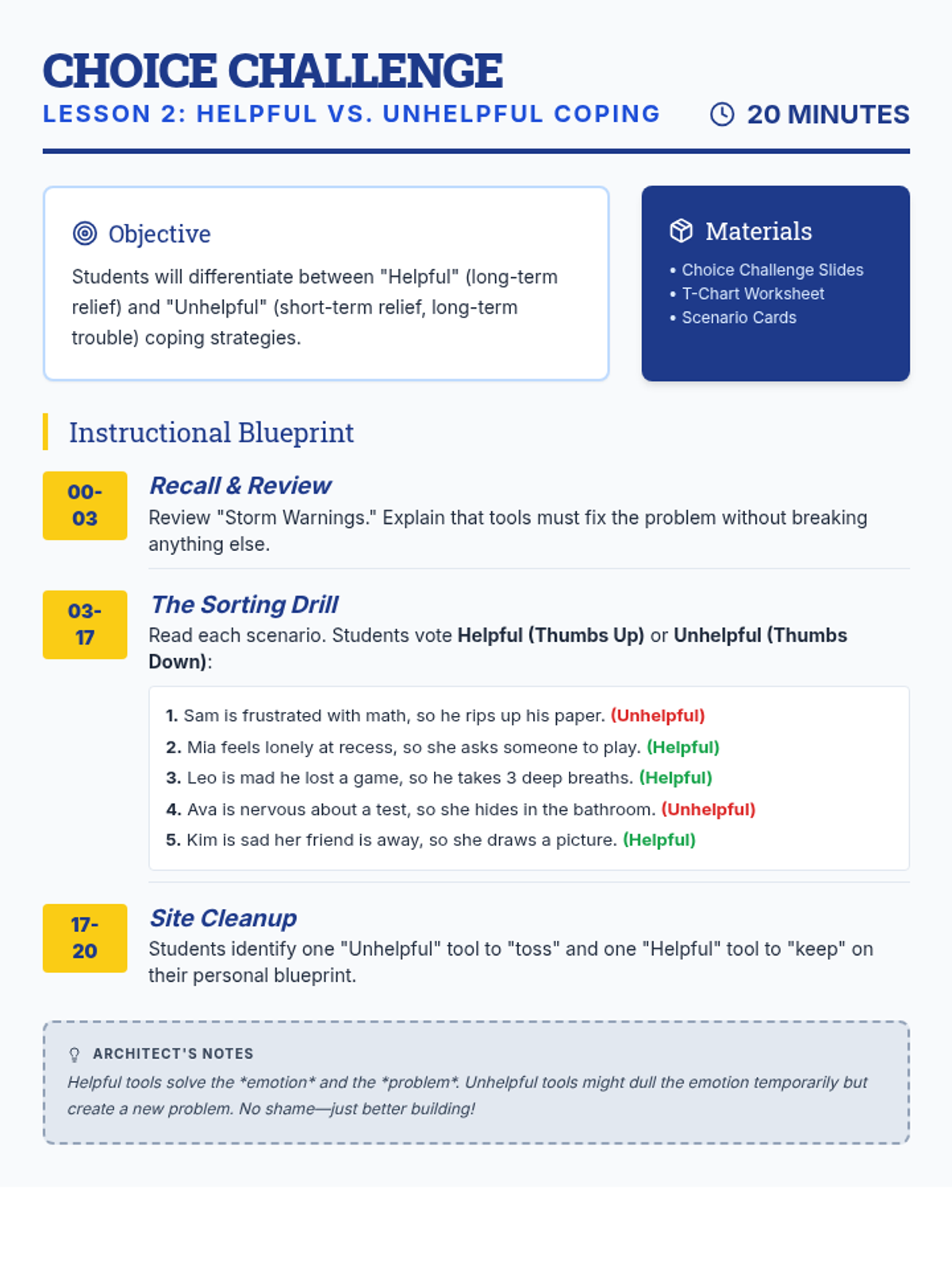
Students distinguish between helpful (good) and unhelpful (bad) coping strategies for long-term emotional health.
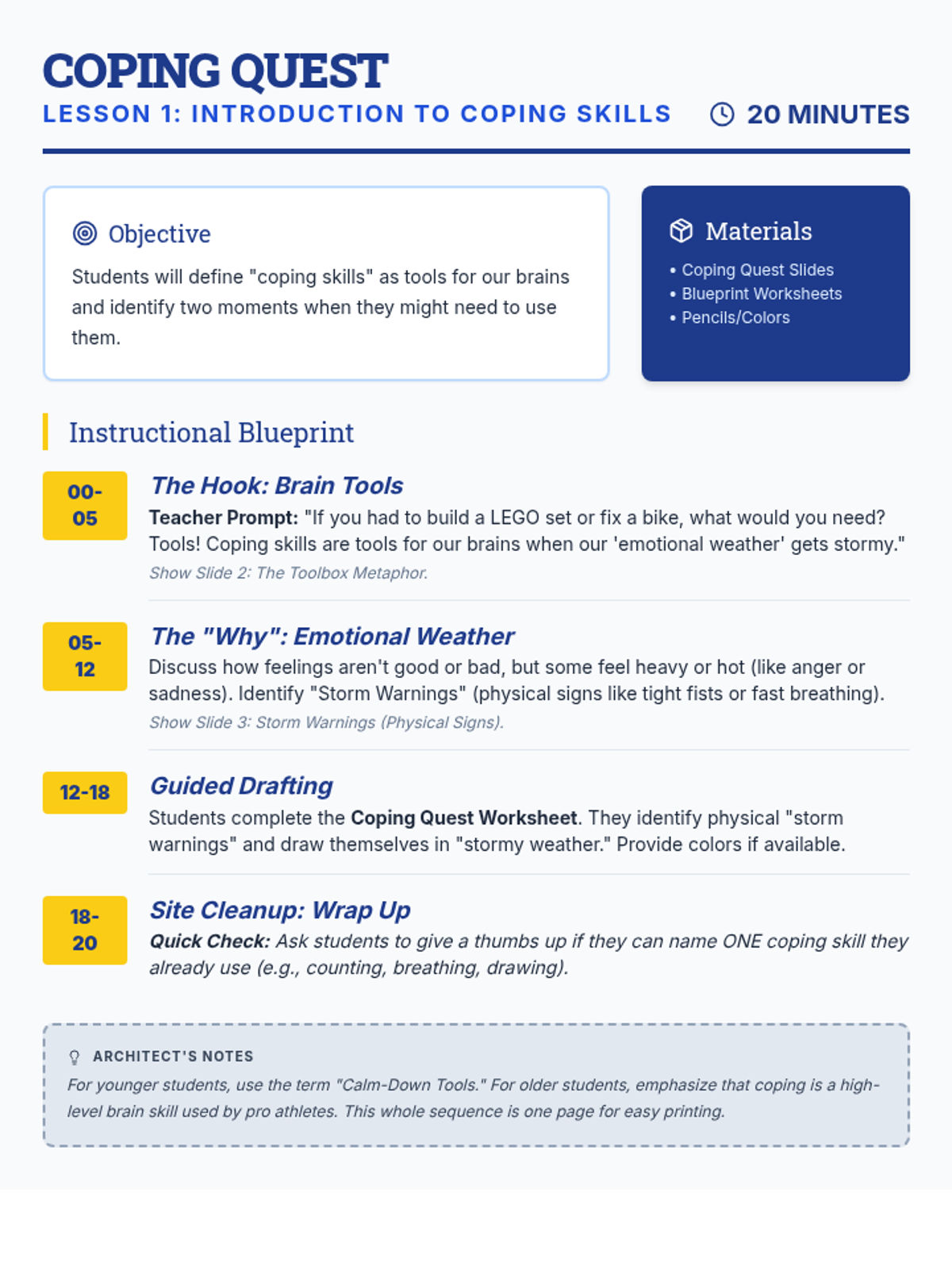
Students define coping skills and identify their own "emotional weather" to understand when they need tools.