An introductory lesson for grades K-4 that defines coping skills and introduces the four main categories of self-regulation through a 'Skill Squad' theme. Students learn to identify tools for their emotional toolbelt to handle big feelings.
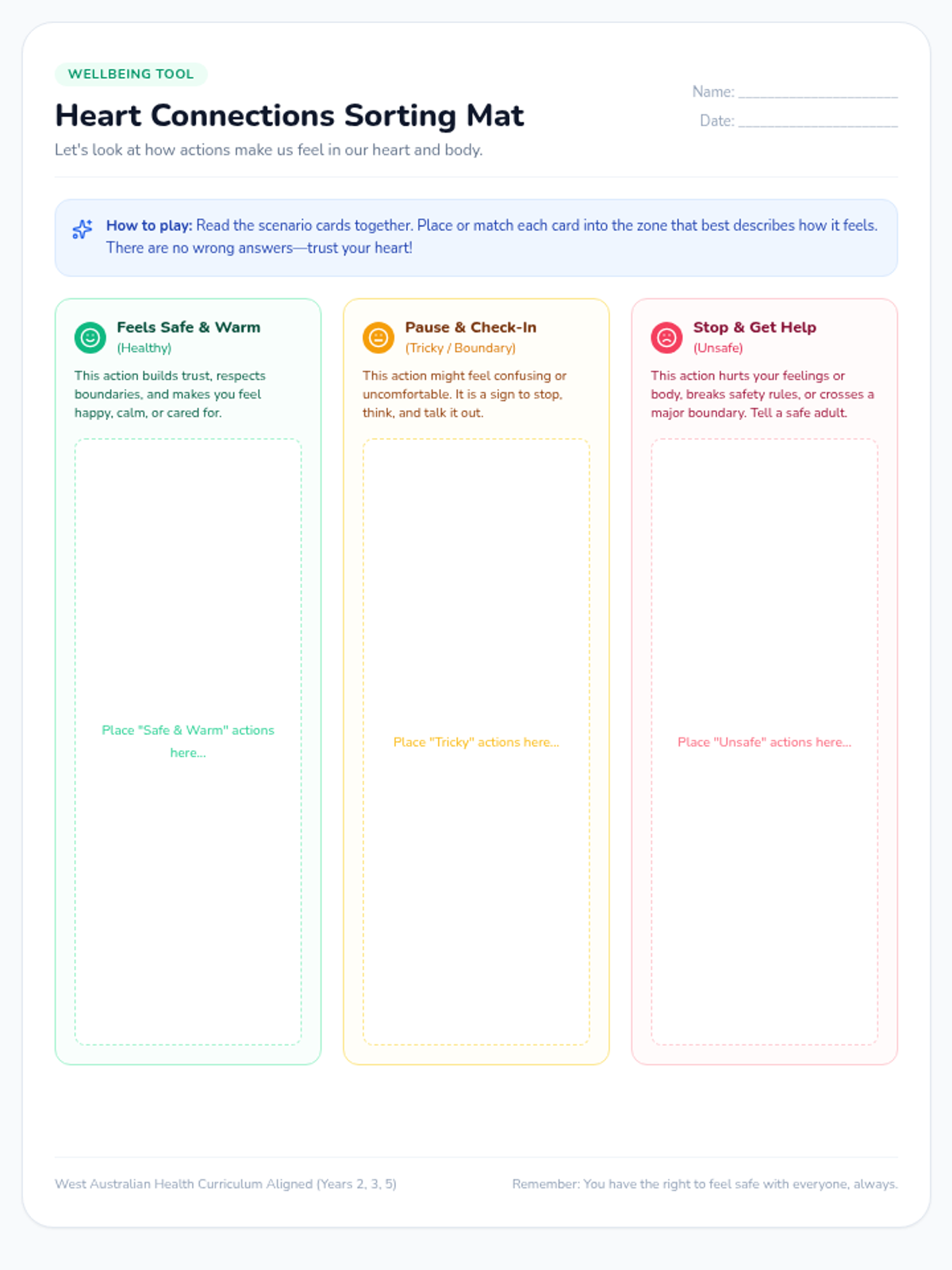
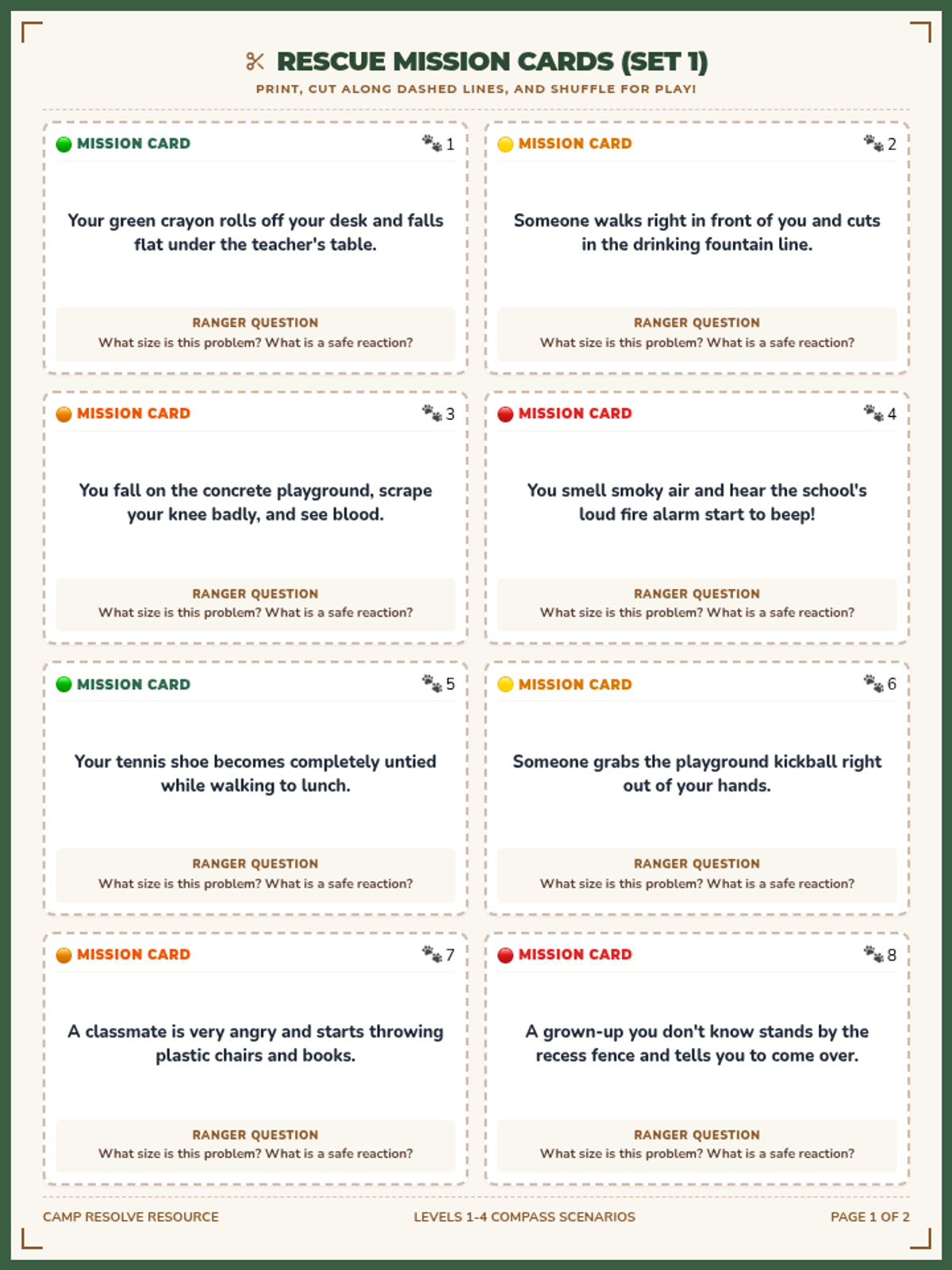
A 30-minute lesson where students learn to distinguish between conflict, rudeness, meanness, and bullying through a 'Behavior Detective' framework. Includes definitions, interactive scenarios, and a reference guide for appropriate responses.
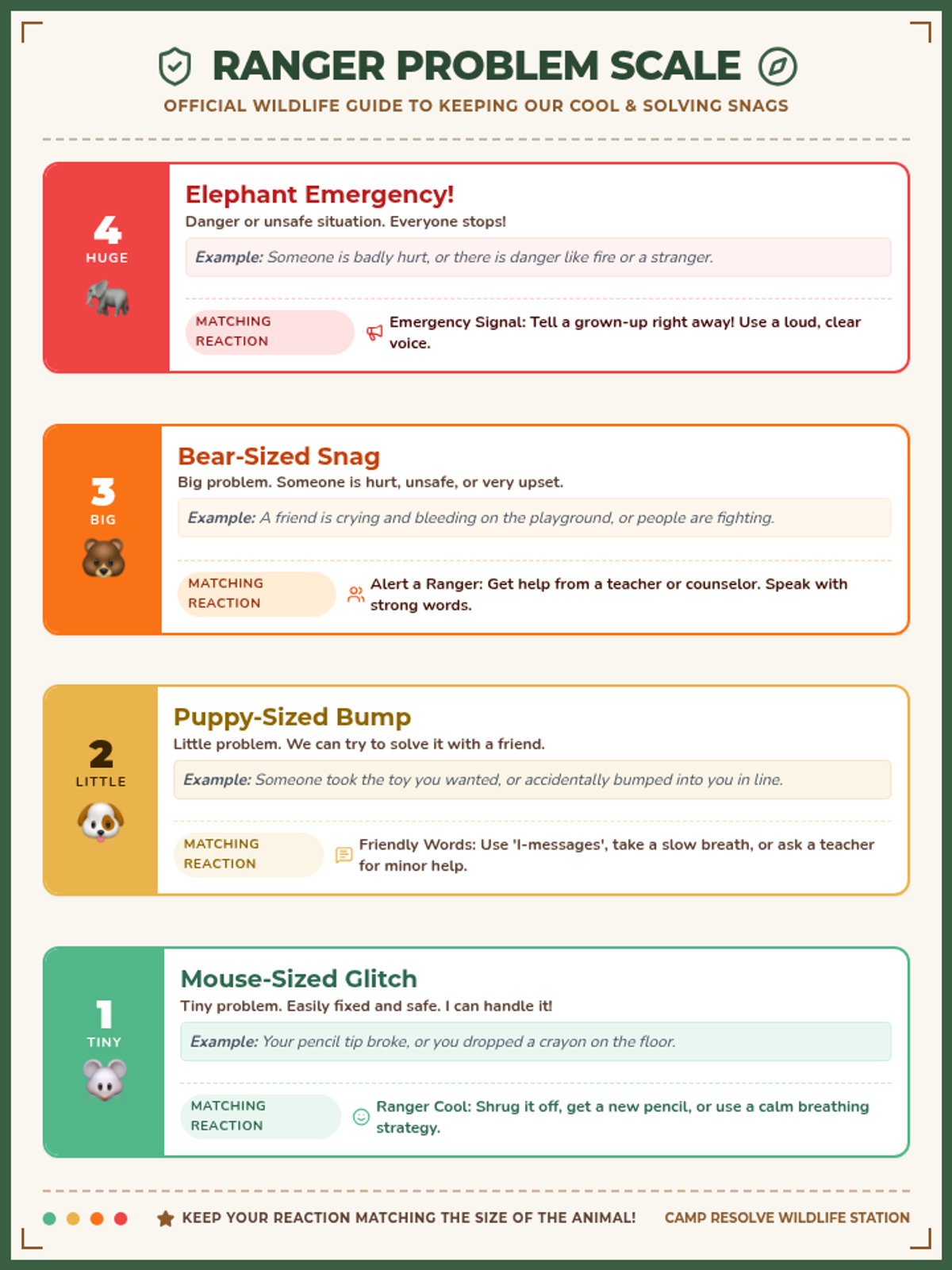
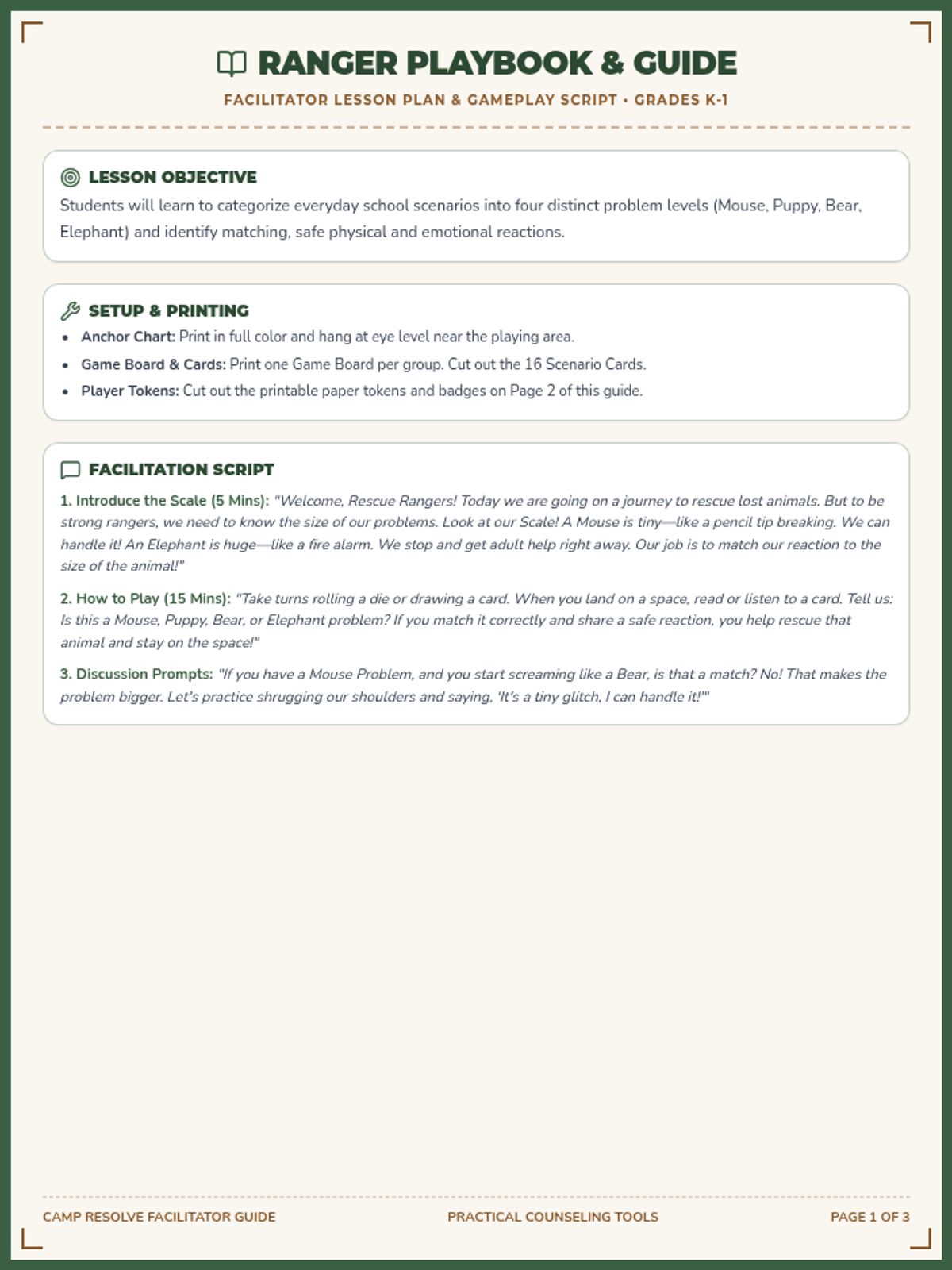
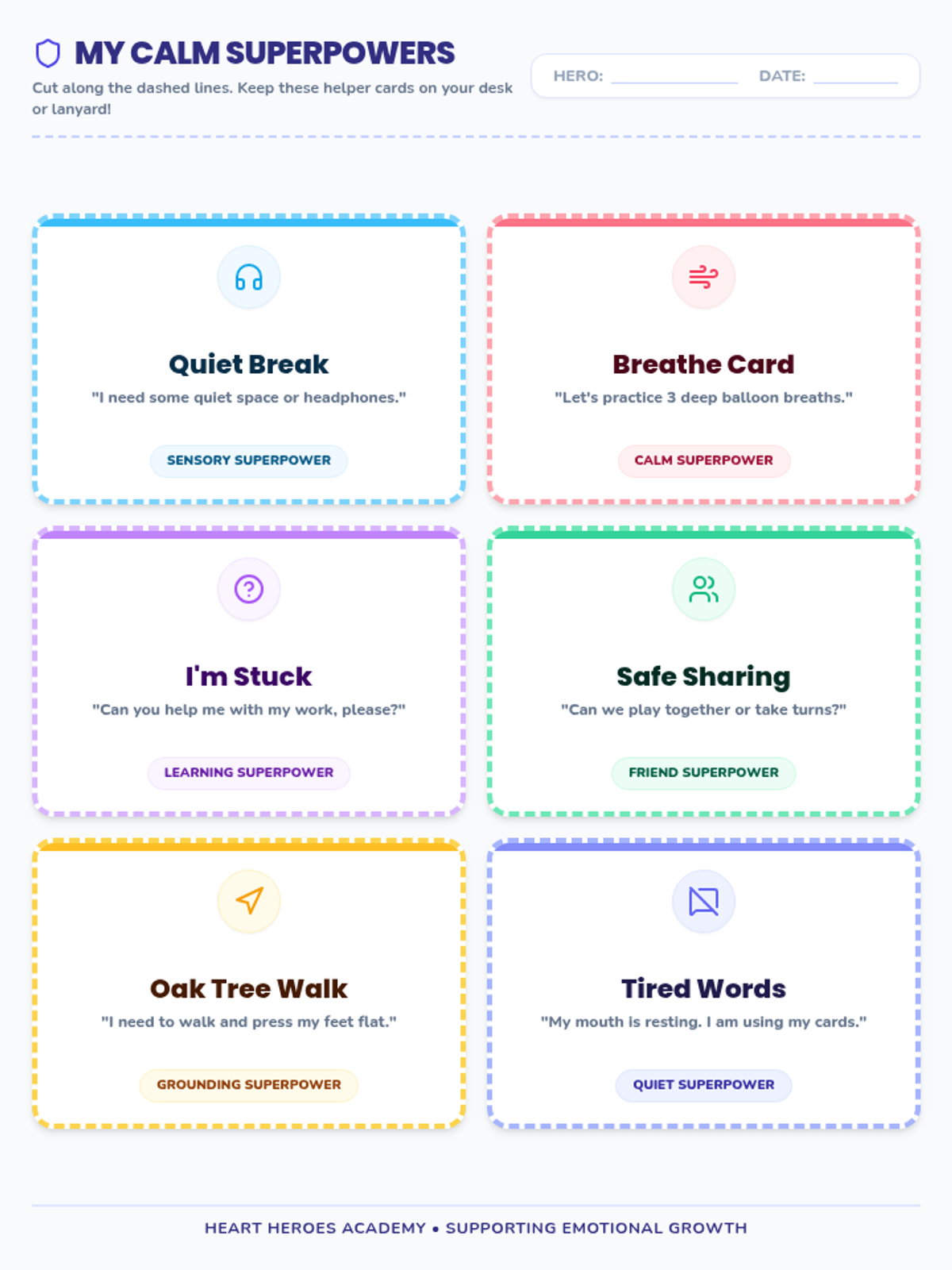
A 10-session intensive intervention sequence designed to teach K-2 students how to use a break card and Pause Power steps to regulate emotions and prevent meltdowns.
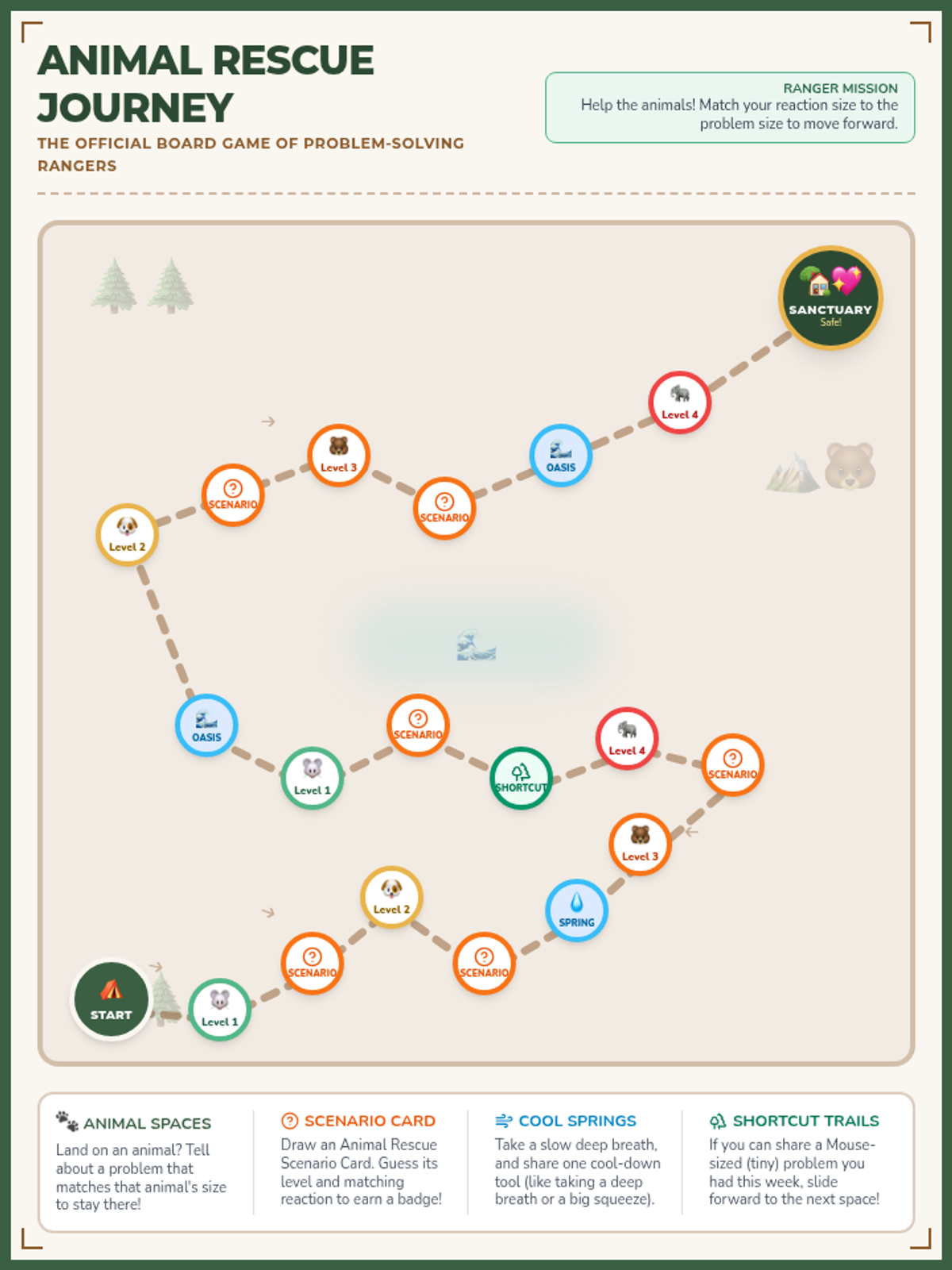
A 30-minute Pre-K lesson focused on identifying friendly behaviors, practicing personal space, and using kind words to build a positive classroom environment.
A comprehensive lesson on inclusive play and sportsmanship designed specifically for a 2nd grade girls social group. Students will learn how to invite others to join, use respectful communication during disagreements, share resources, and maintain a positive attitude regardless of a game's outcome.
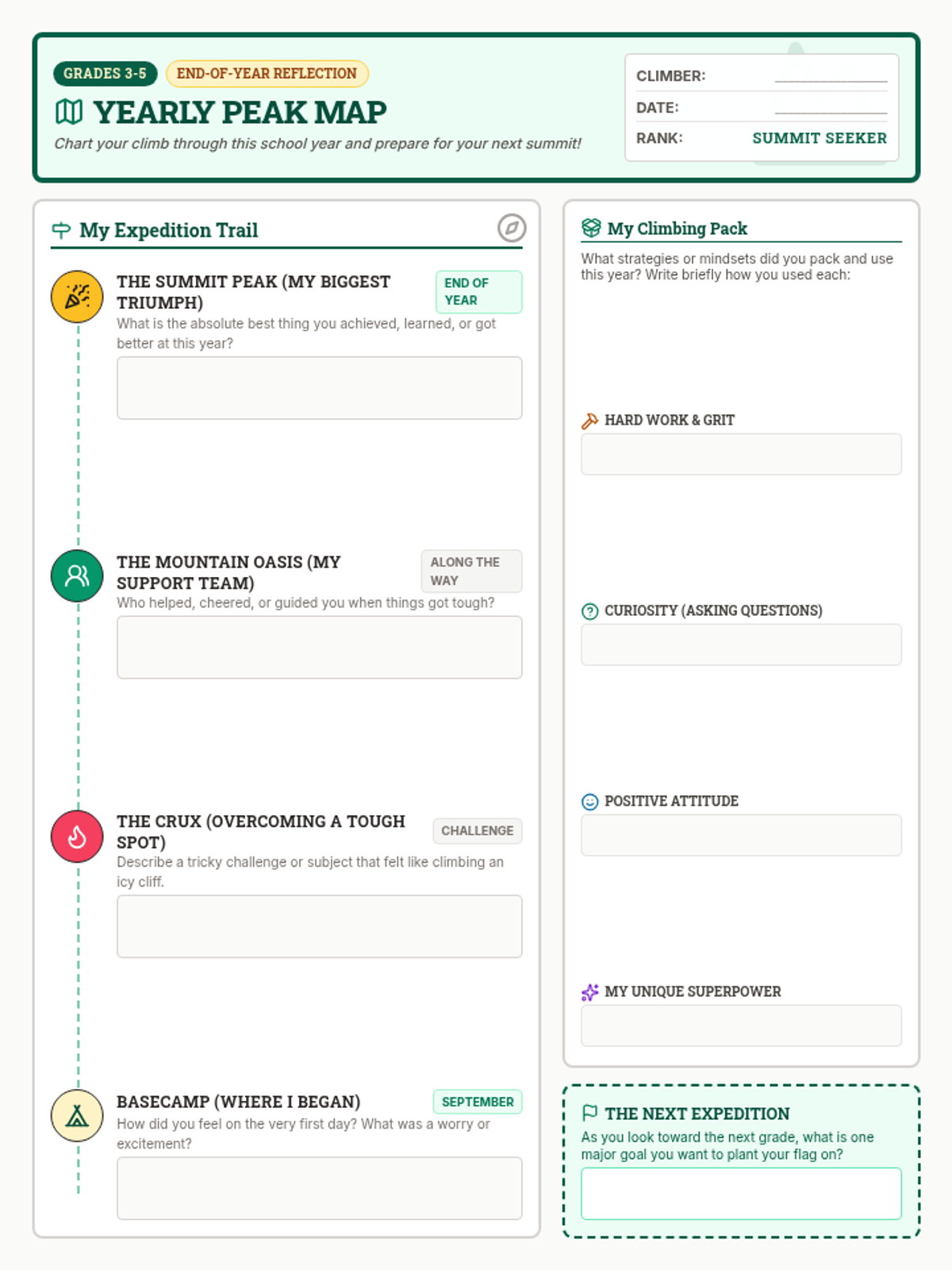
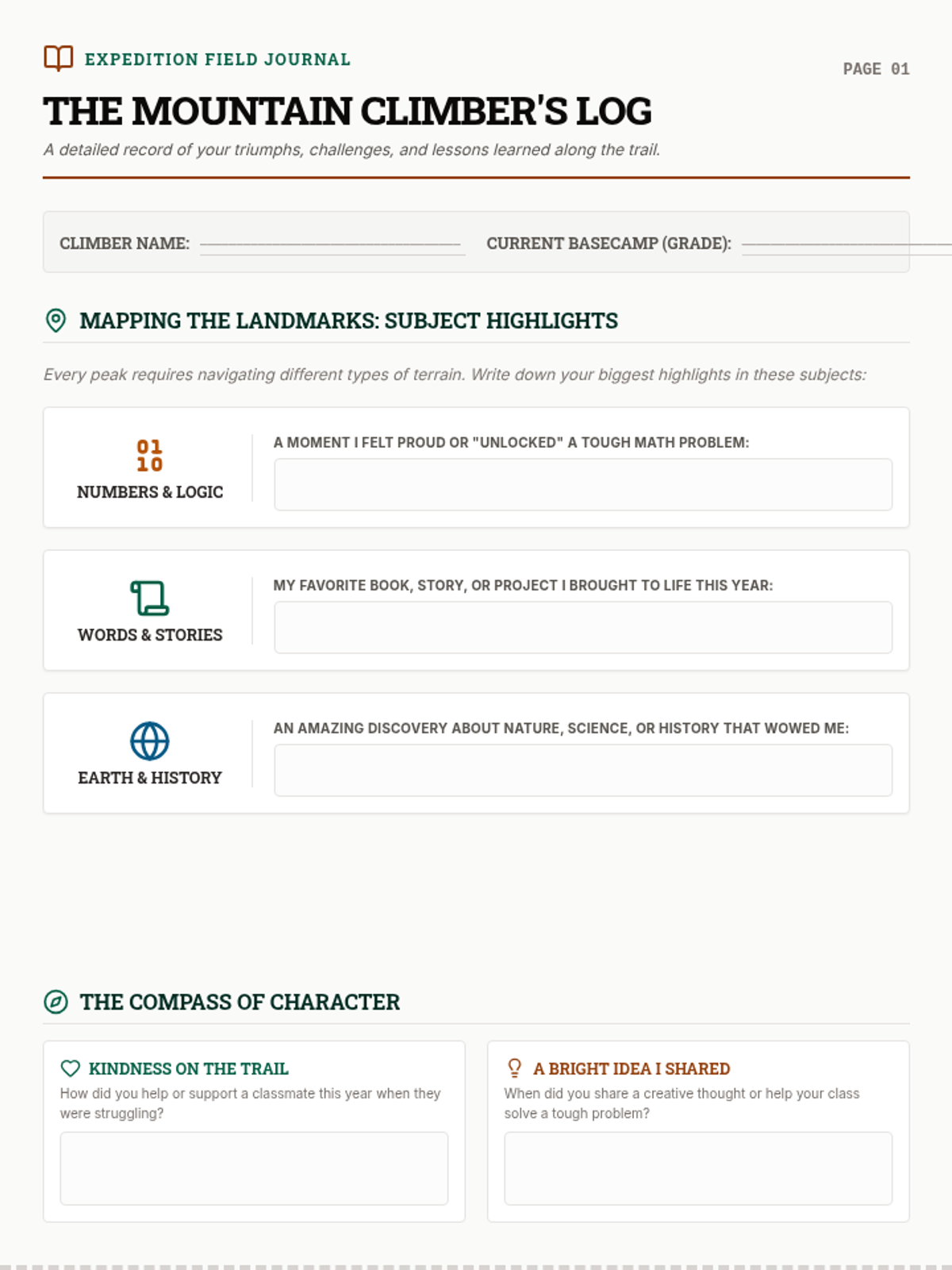
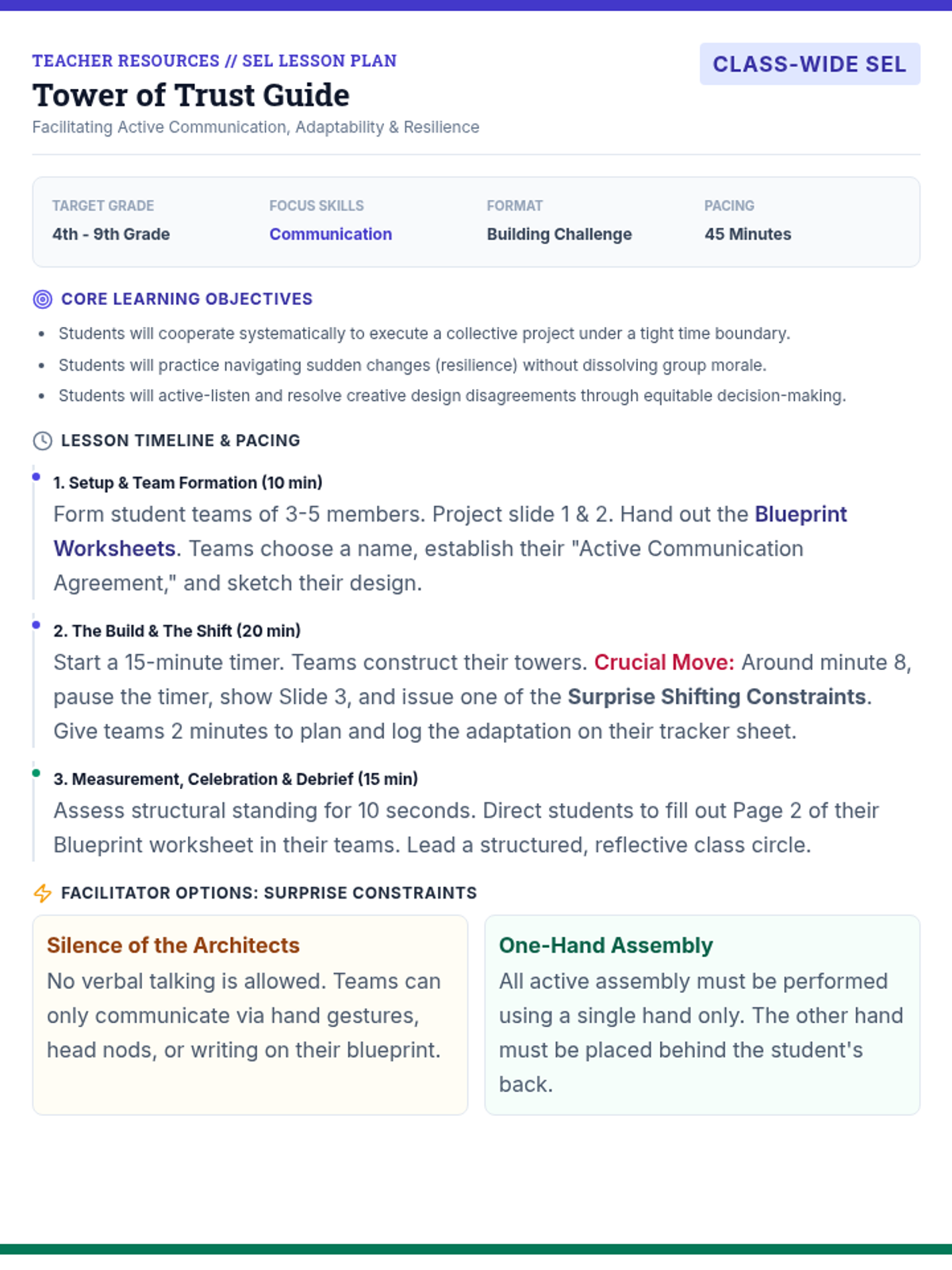
A mountain-climbing themed lesson for 3rd graders on Growth Mindset, focusing on overcoming mistakes and the difference between fixed and growth mindsets. Students explore how to reframe challenges as steps toward the summit.
A lesson helping first graders identify and celebrate their unique personal strengths and talents through a superhero-themed exploration.
A lesson focused on identifying and practicing healthy friendship behaviors and personal boundaries across different school environments. Students use a bingo-style tracker to recognize positive social interactions.
Students identify ways to improve school culture and execute a week-long kindness initiative.
Students learn about animal shelter needs and create a guide for making enrichment items for local pets.
Students explore the impact of food banks and design a step-by-step plan for a successful community food drive.
Reviewing progress, practicing skills in role-play, and creating a long-term regulation plan.
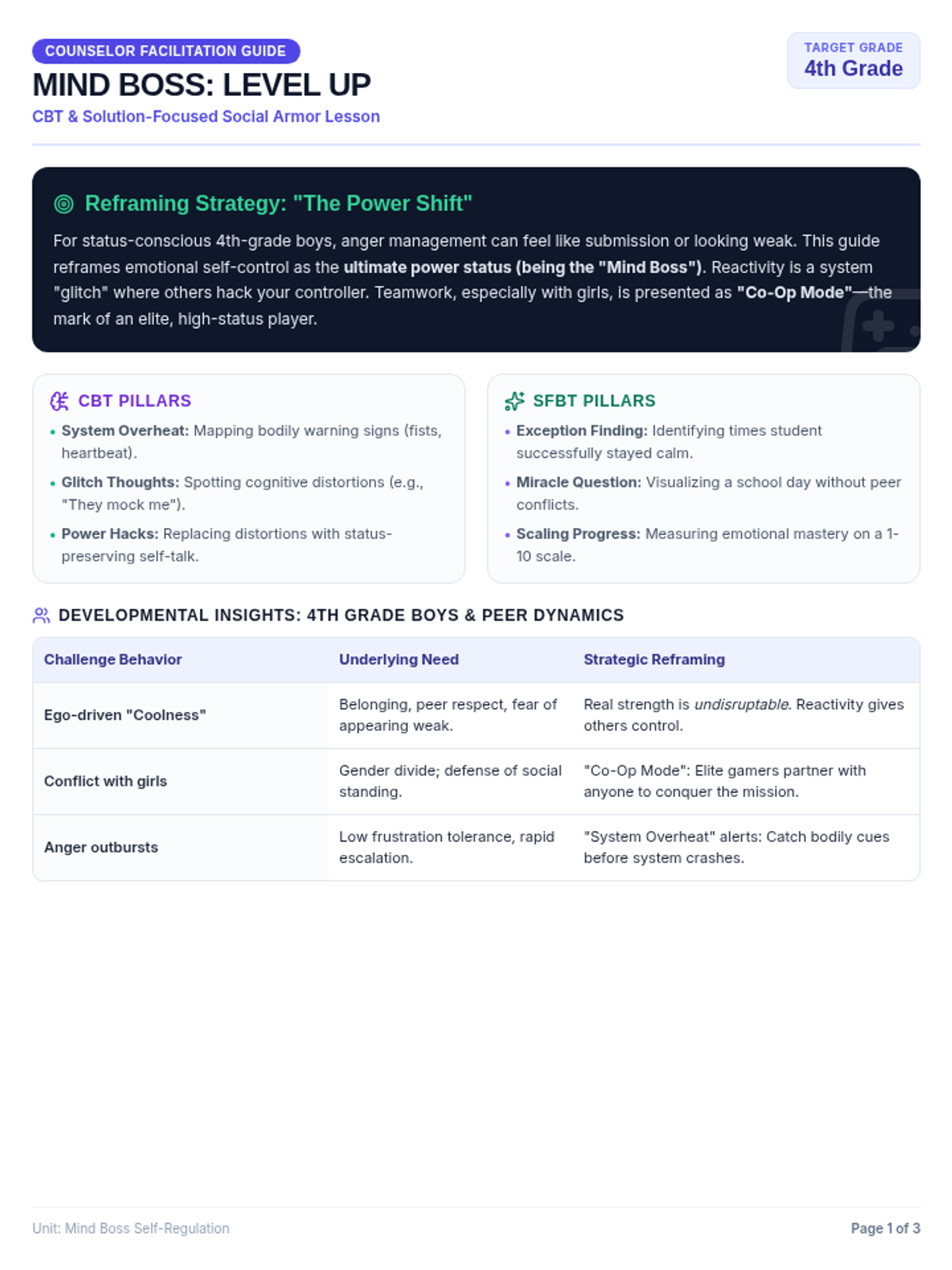
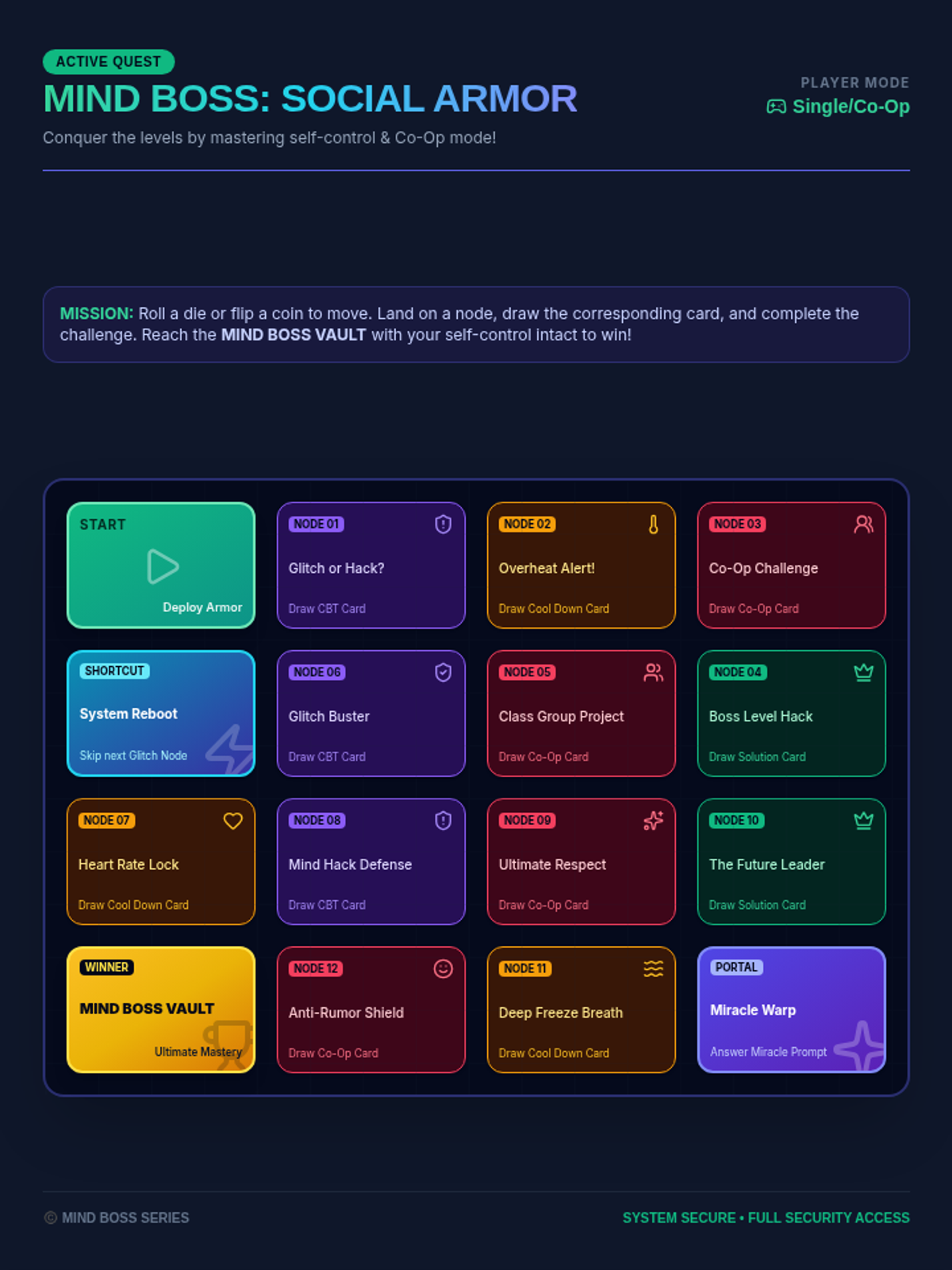
Developing cognitive reframing techniques to change the way we think about frustrating situations.
Building a toolkit of physical and mental strategies to lower emotional temperature.