This lesson explains the specific purpose of FICA taxes. Students explore the concept of intergenerational support, understanding that these deductions fund healthcare and retirement for current seniors.
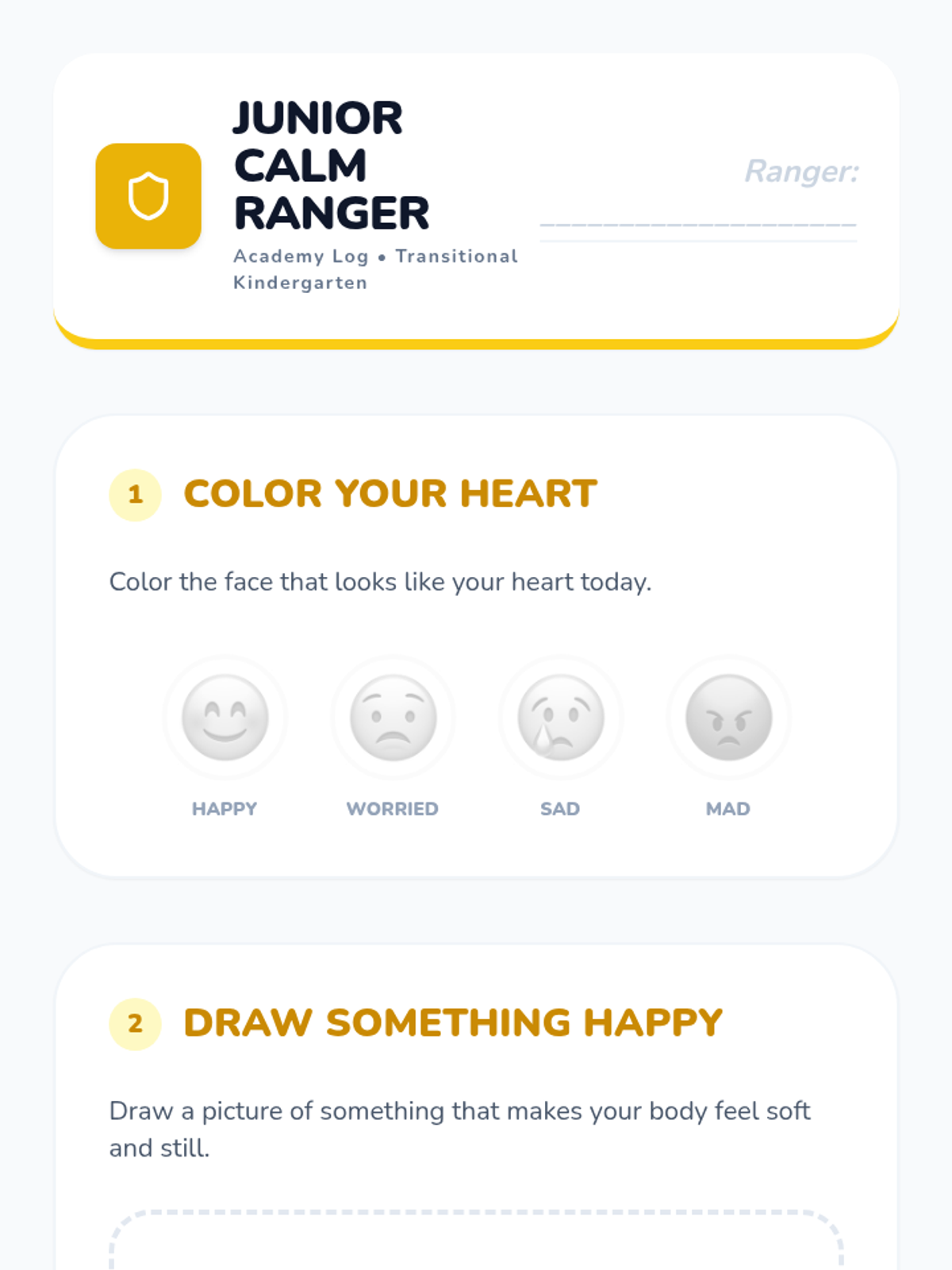
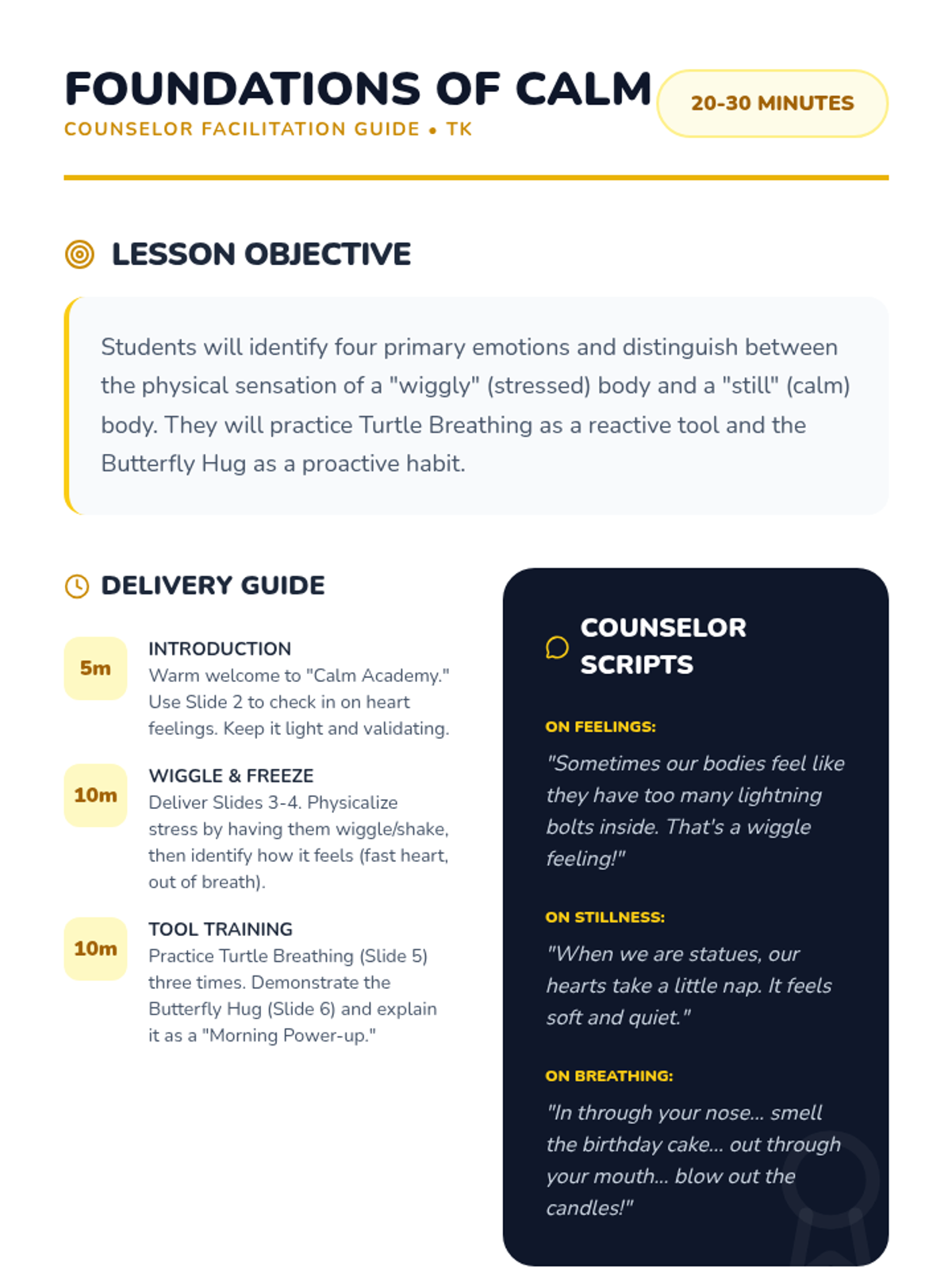
A foundational lesson for Transitional Kindergarten students focused on identifying basic emotions and the physical sensation of being 'wiggly' (stressed) vs. 'still' (calm). Introduces 'Turtle Breathing' as a primary regulation tool.
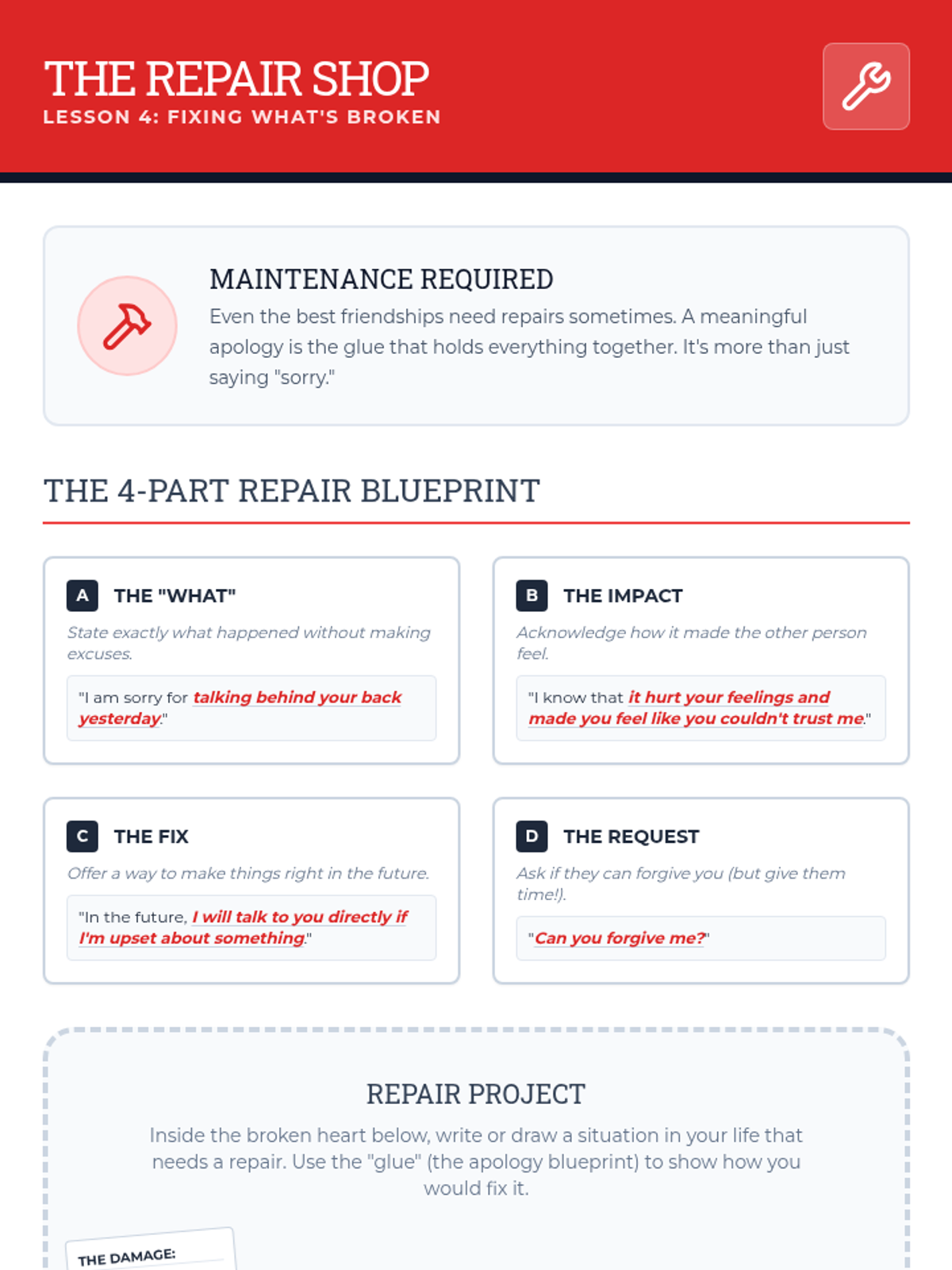
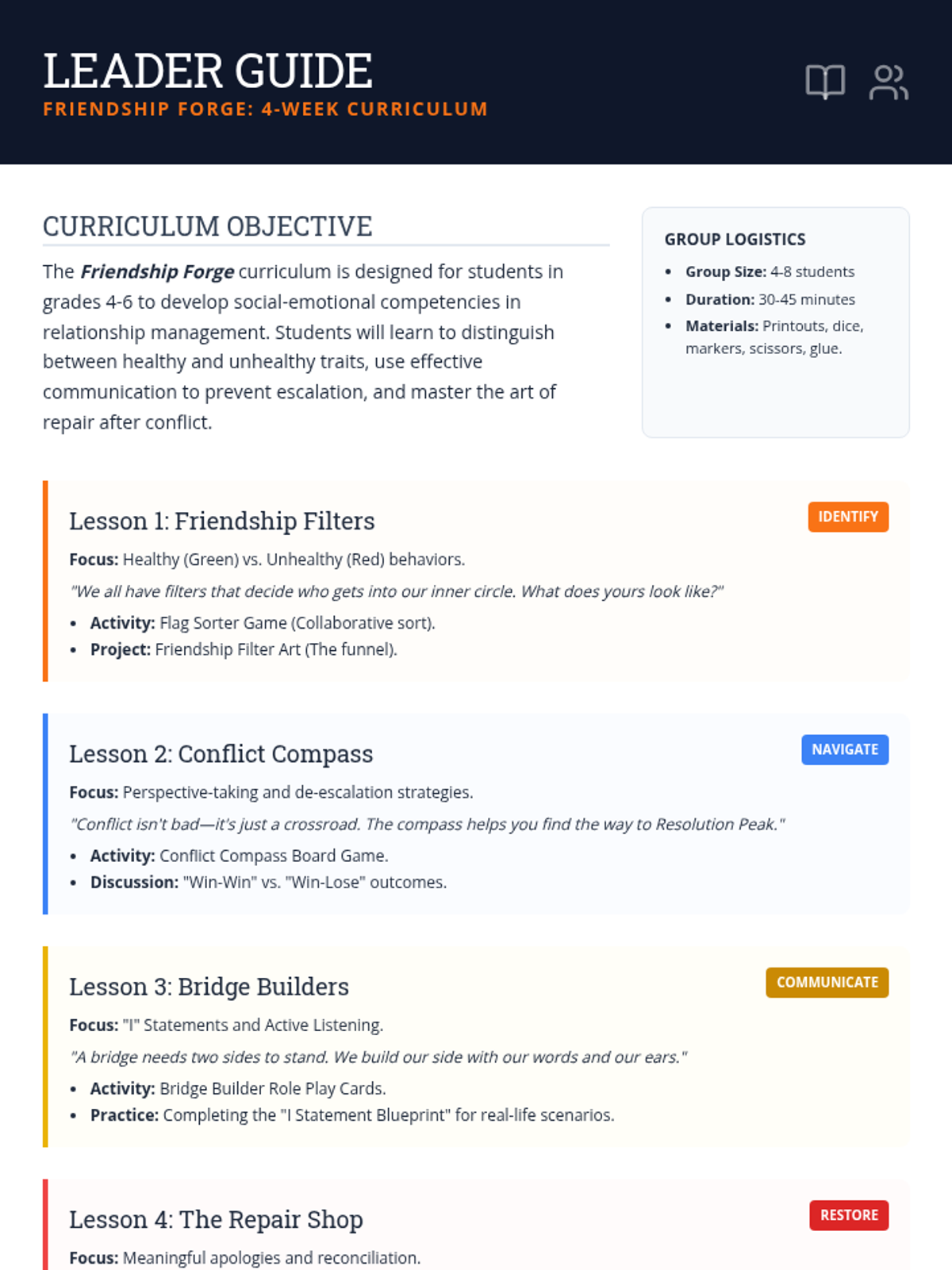
Students will learn how to make meaningful apologies and use art to explore the concept of repairing damaged relationships.
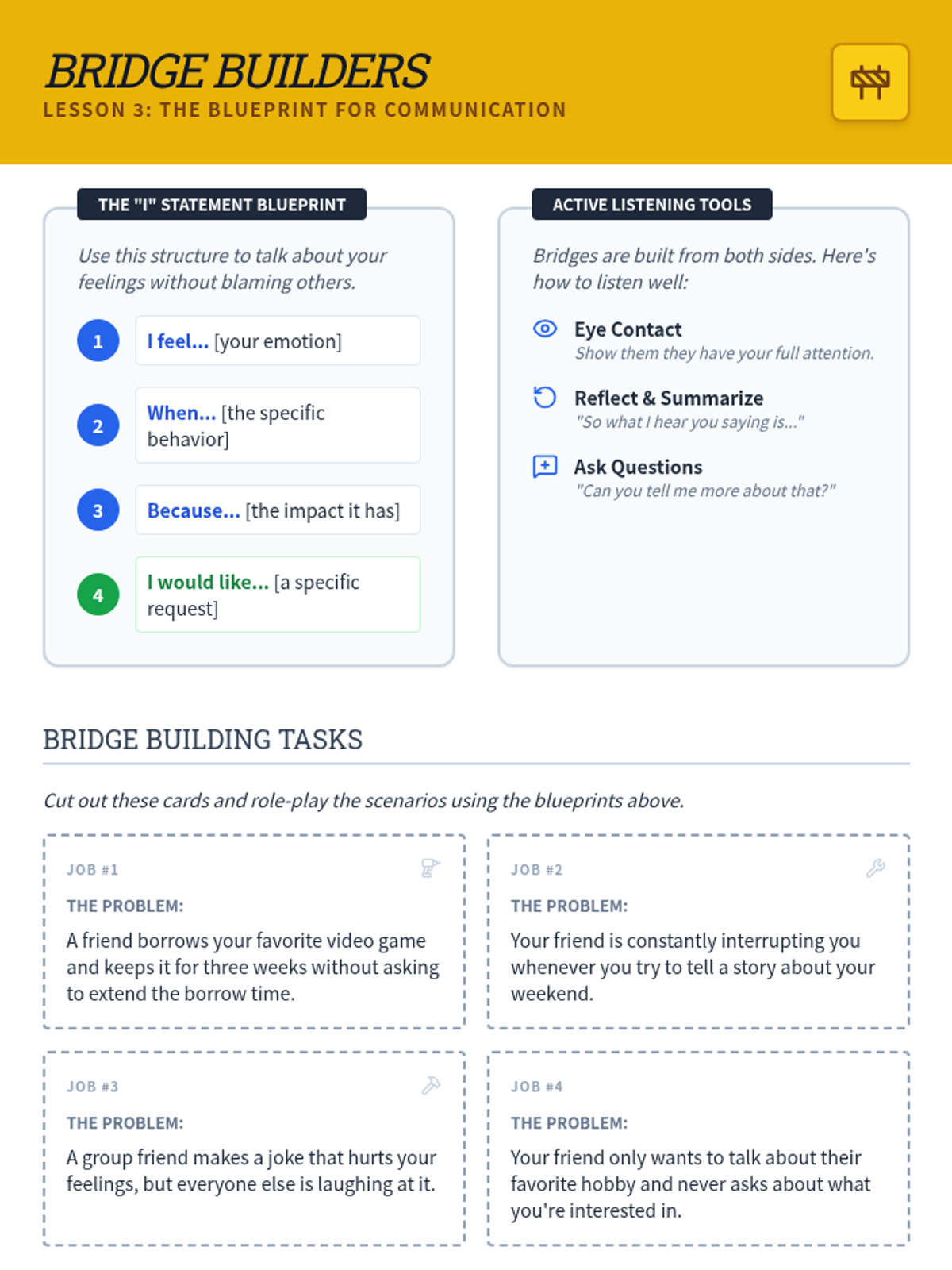
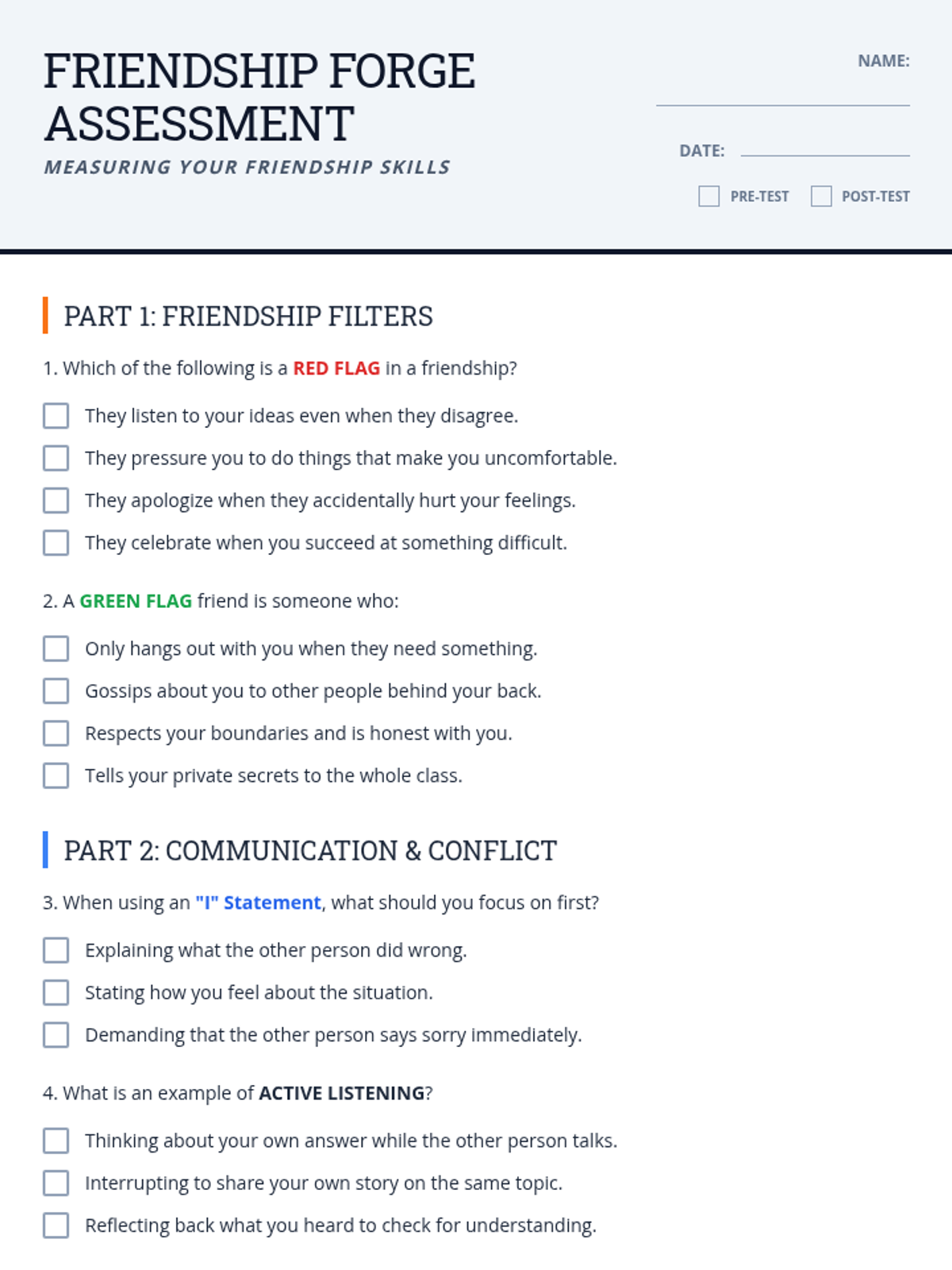
Students will practice effective communication techniques using role-play scenarios focused on active listening and "I" statements.
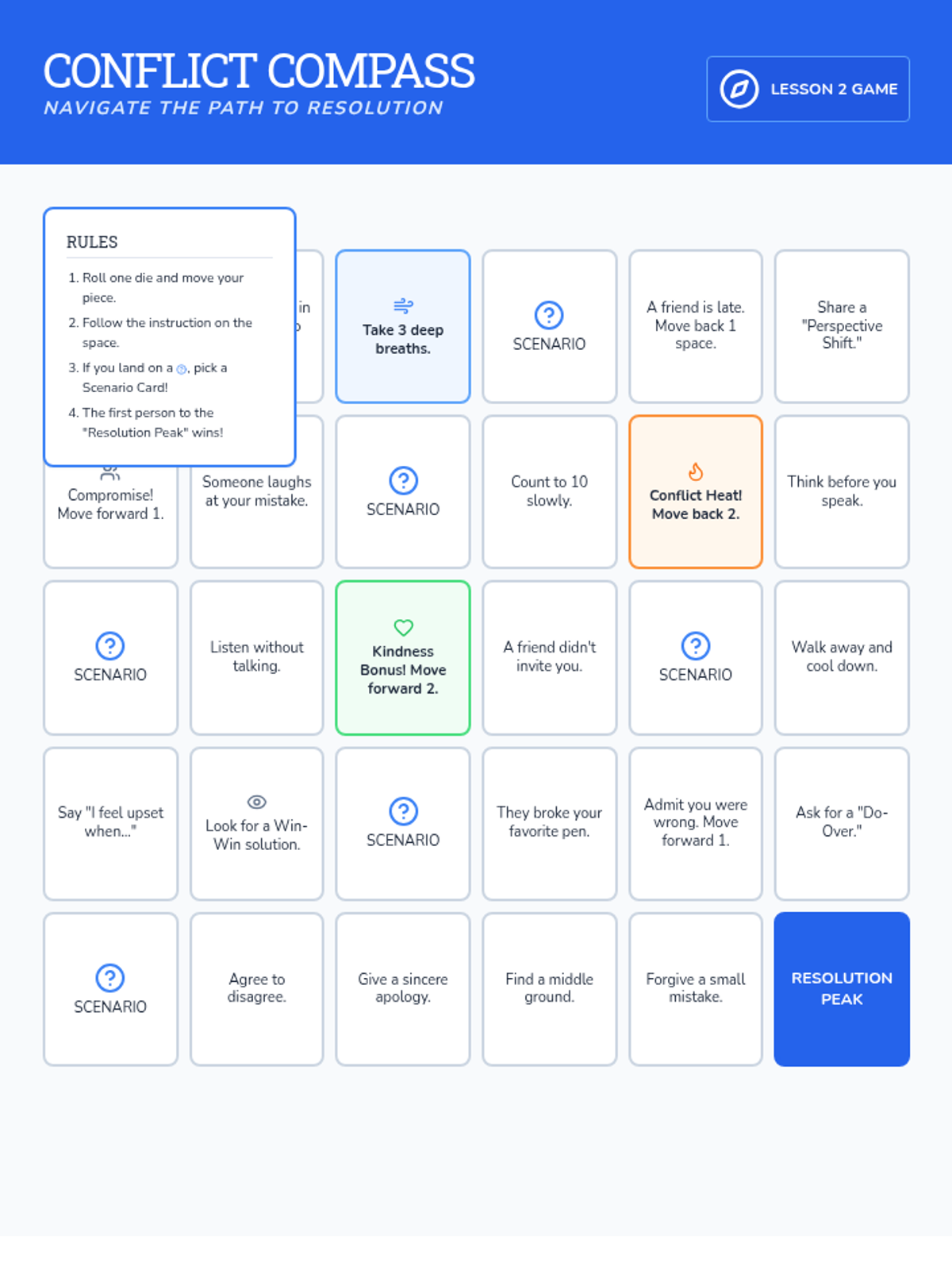
Students will explore different ways to navigate disagreements using a board game format to practice perspective-taking.
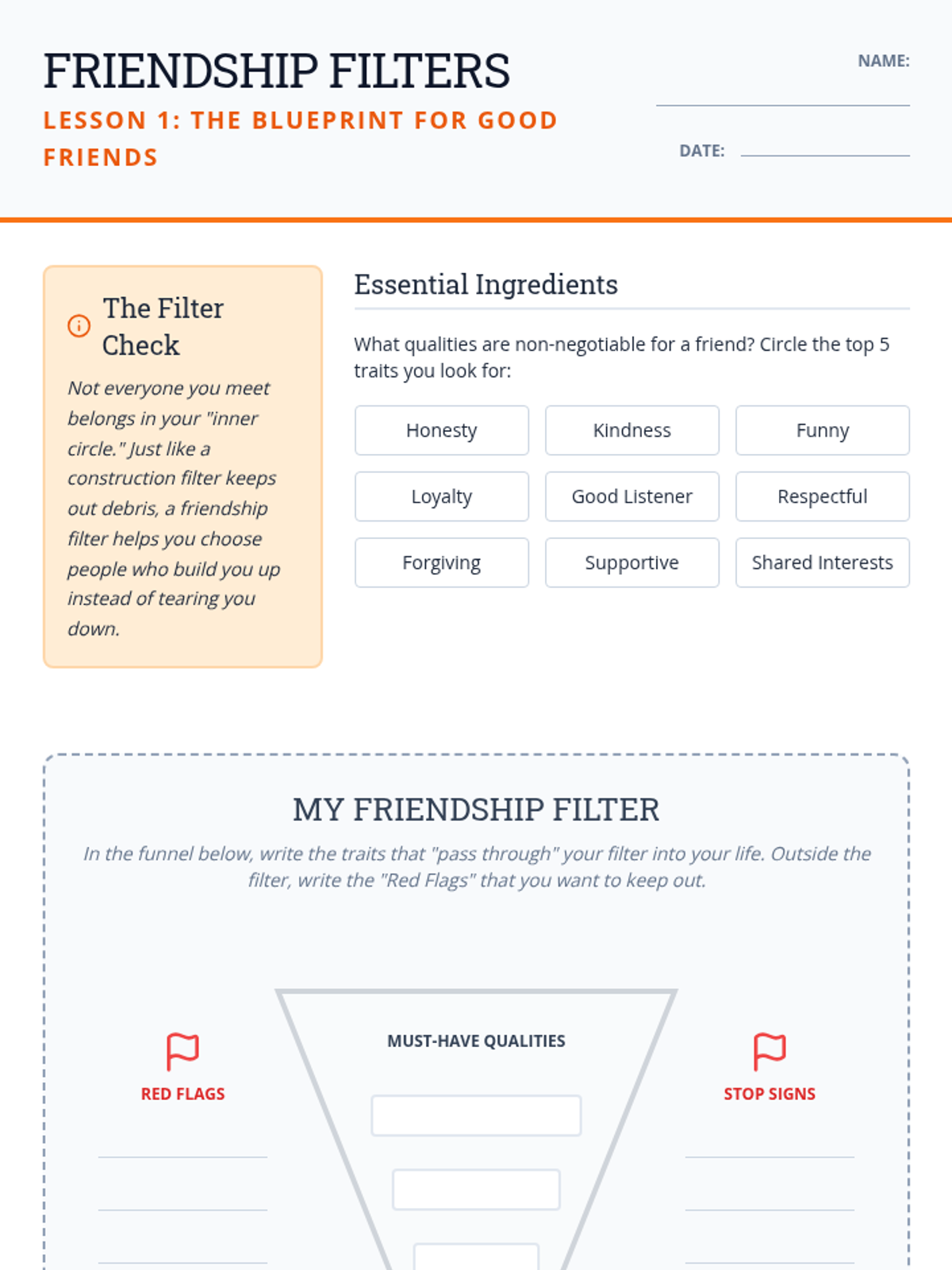
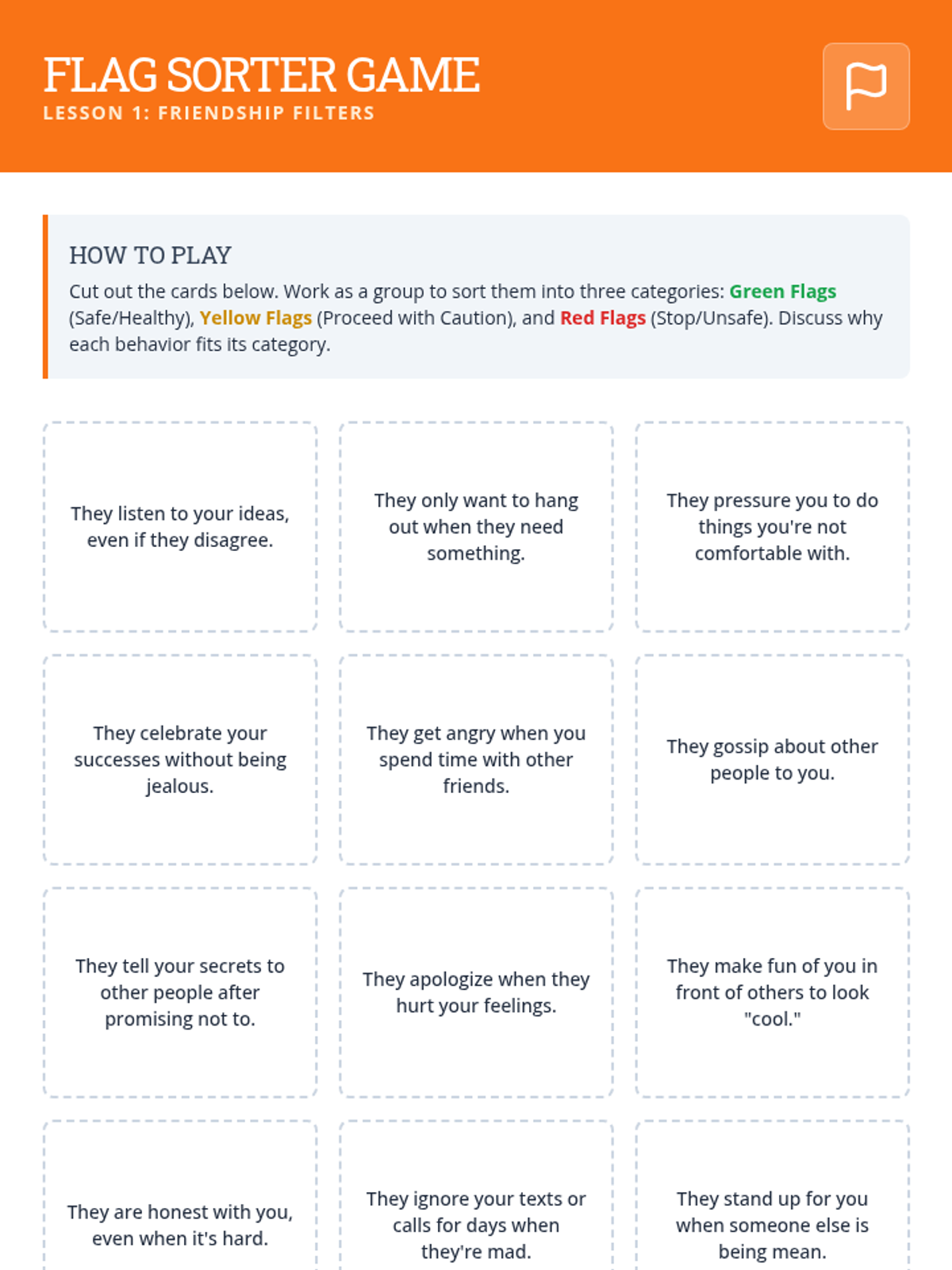
Students will identify the "ingredients" of a good friend and create a visual representation of their friendship standards.
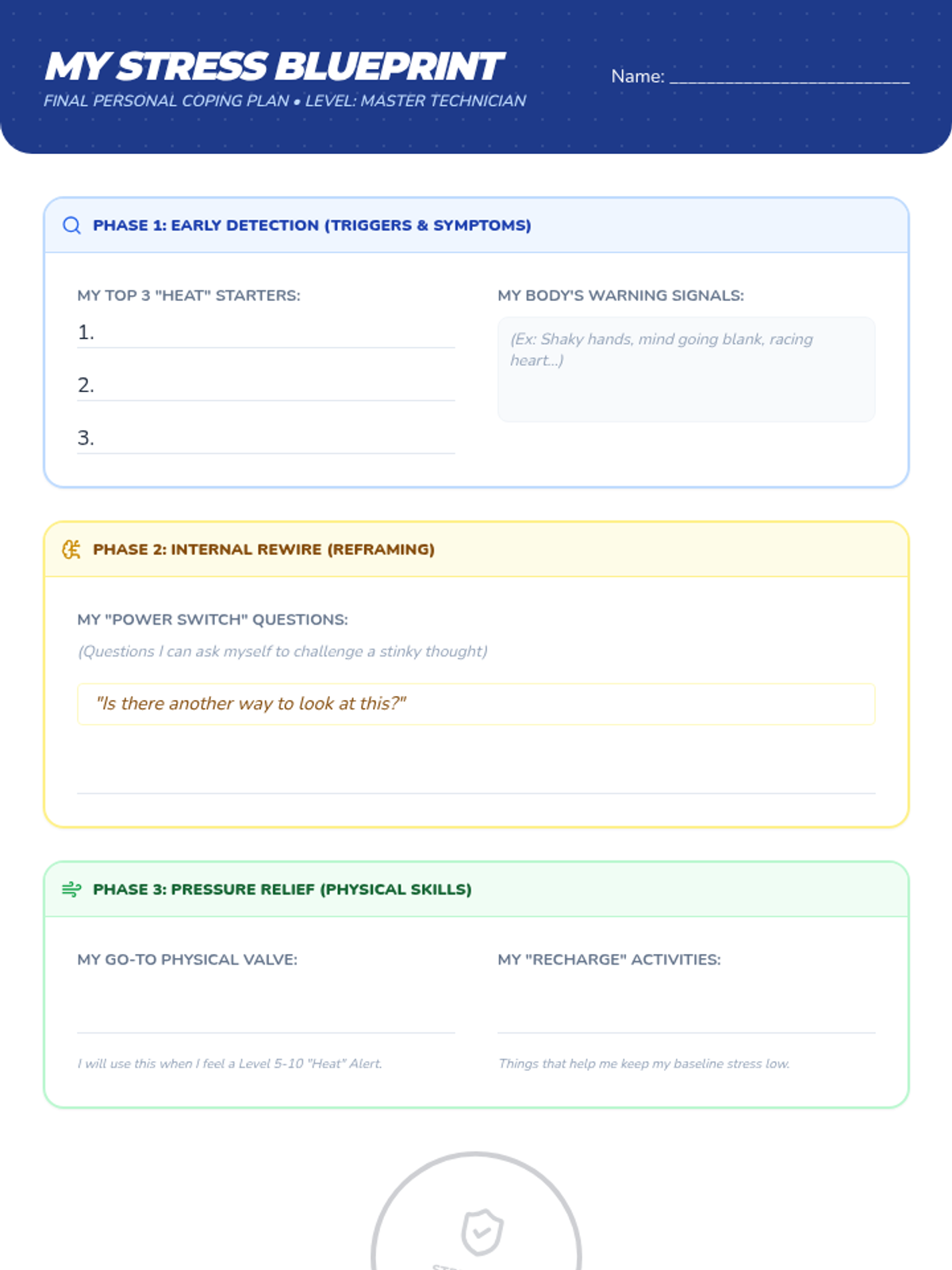
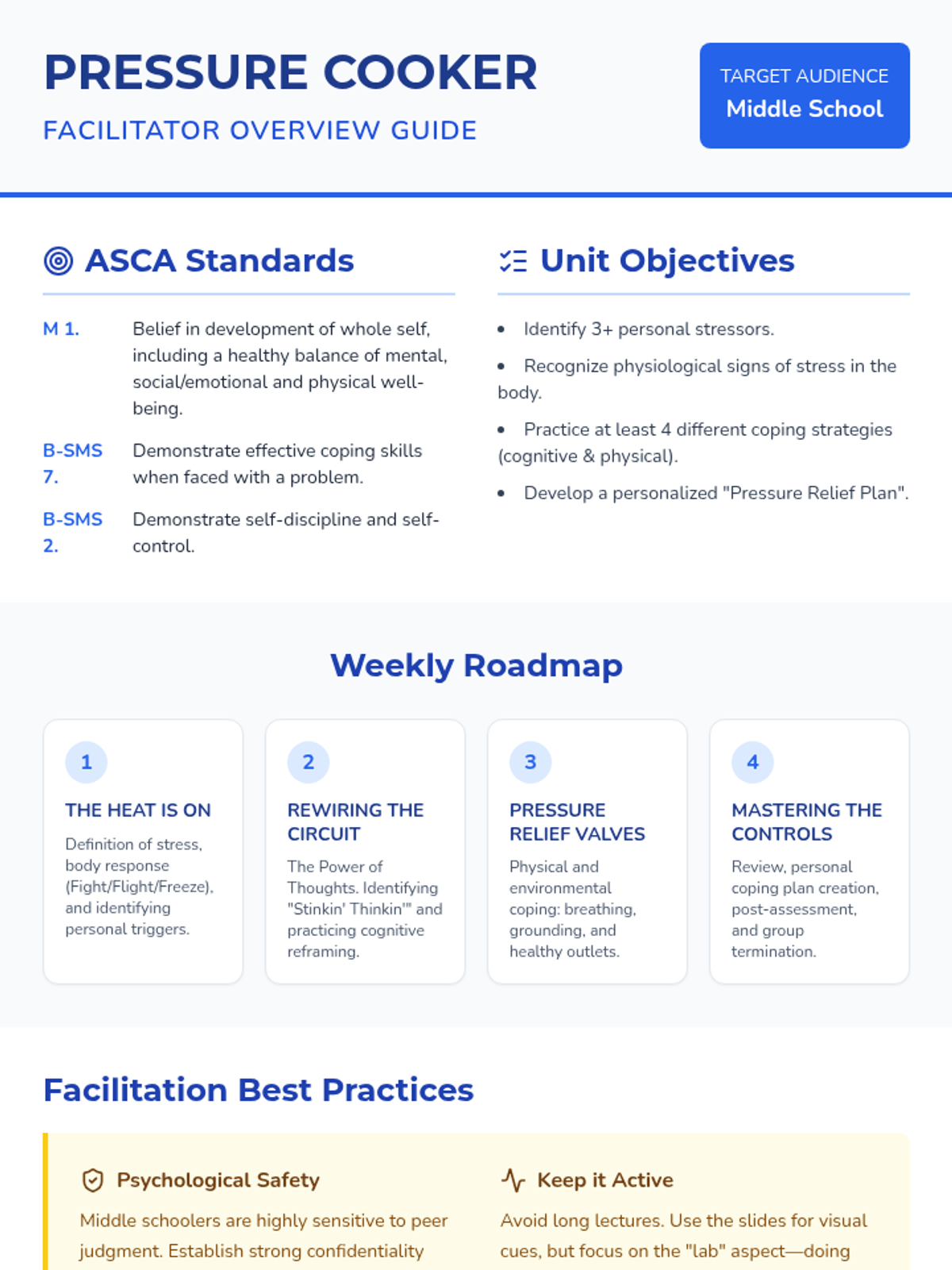
Students synthesize their learning by creating a personal coping plan and reflecting on their growth throughout the group.
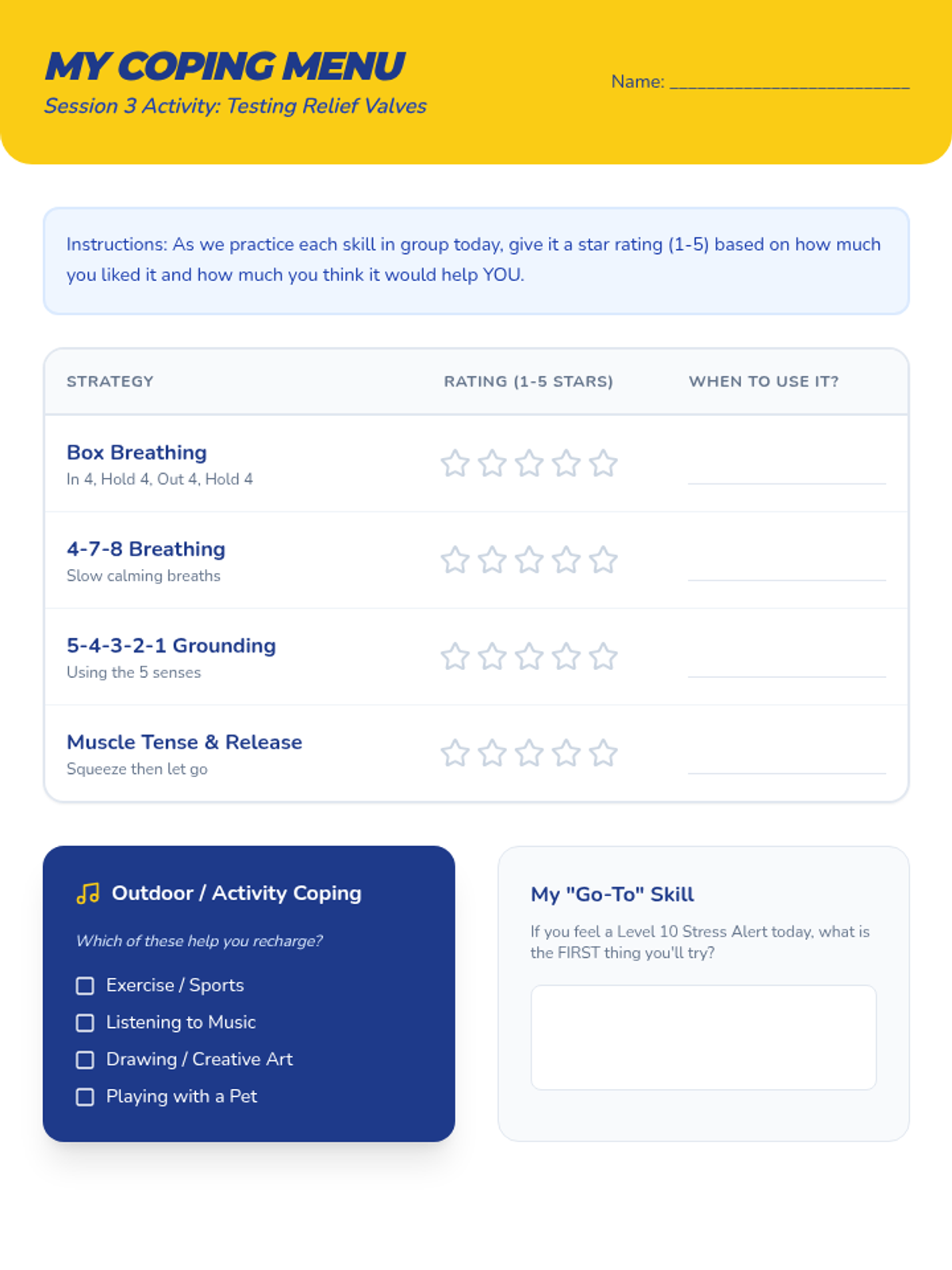
Introduces physical and environmental coping strategies, including deep breathing, grounding techniques, and healthy lifestyle habits.
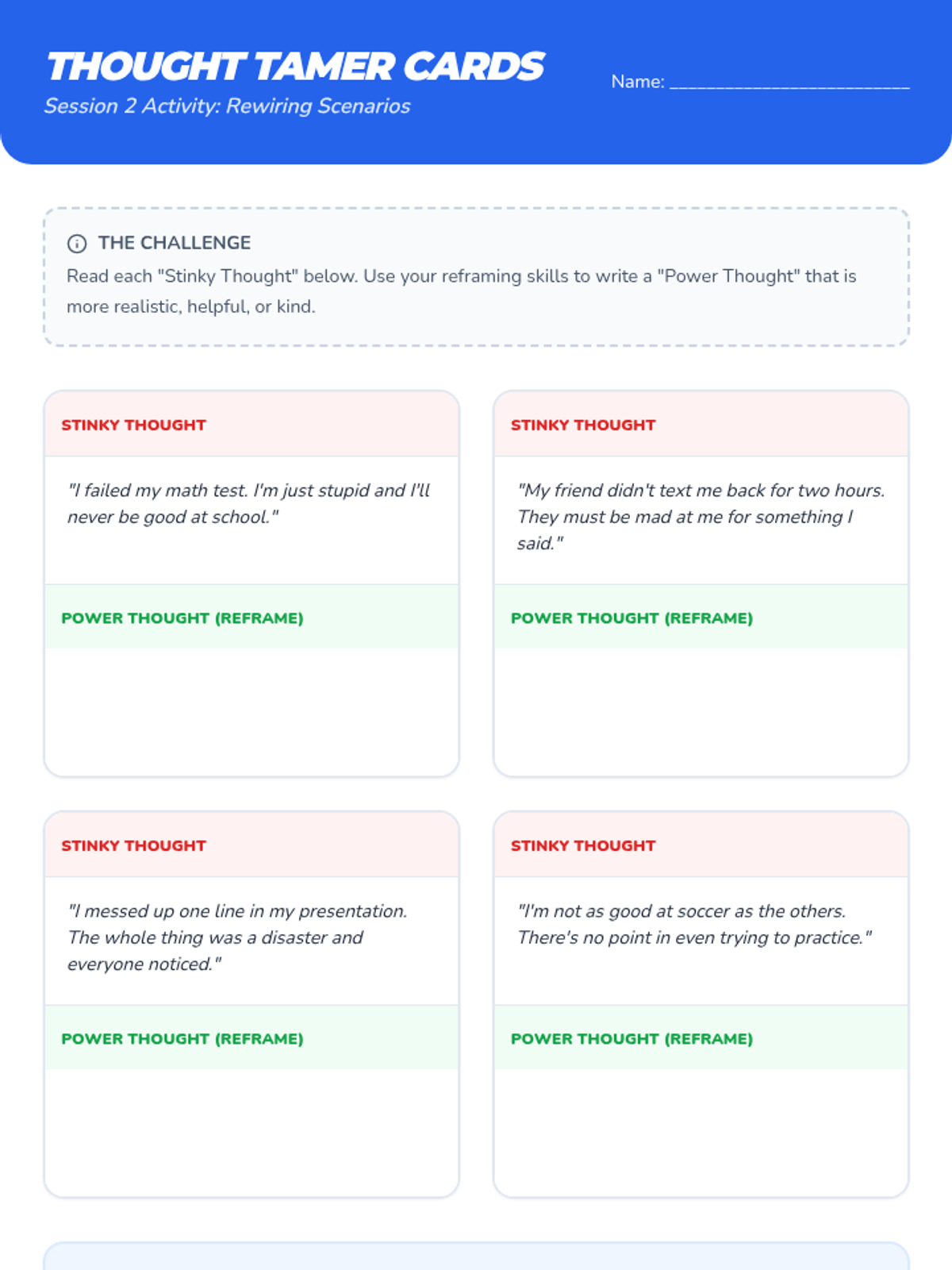
Focuses on the connection between thoughts and feelings, teaching students how to challenge negative self-talk and reframe stressful situations.
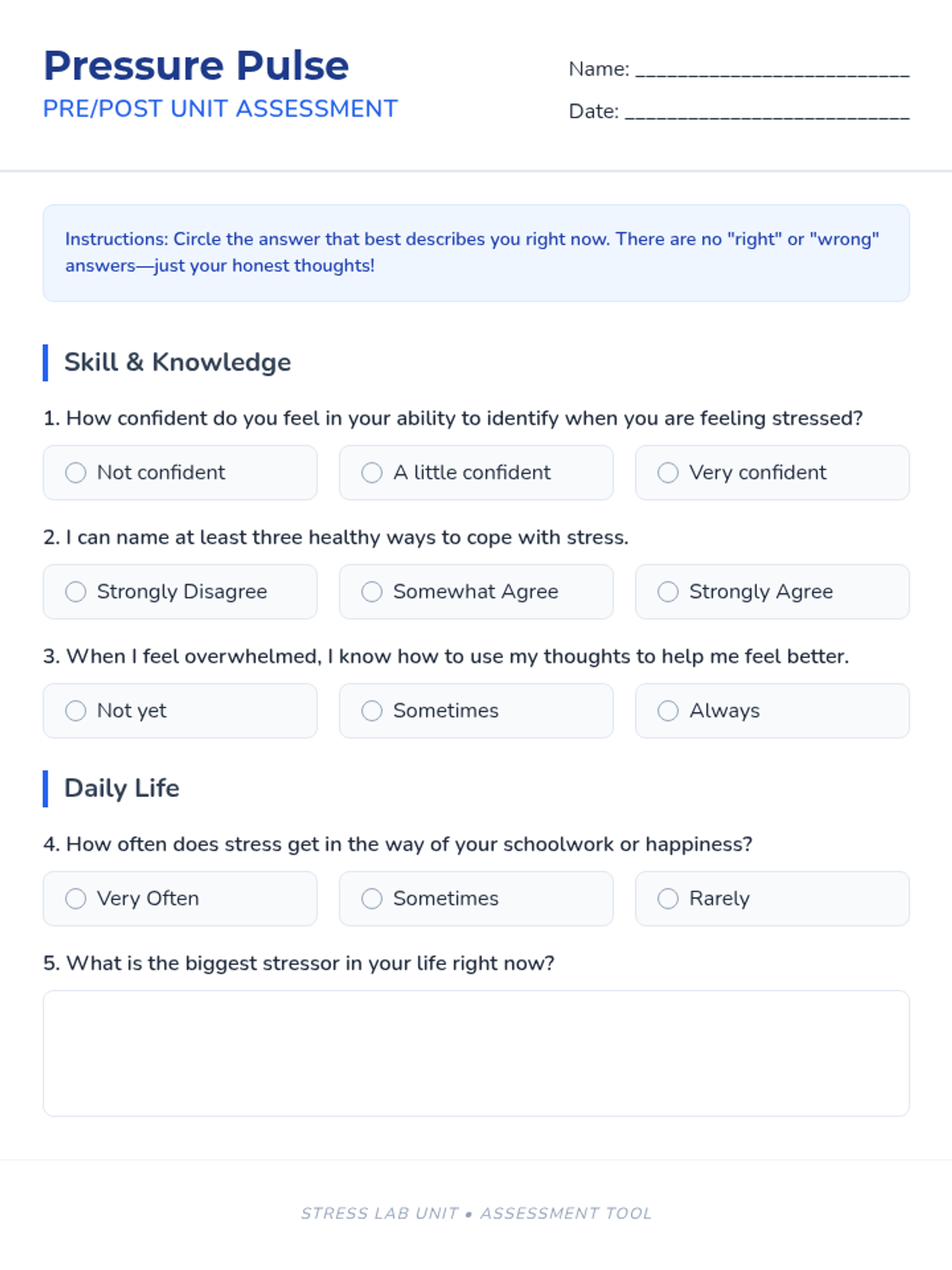
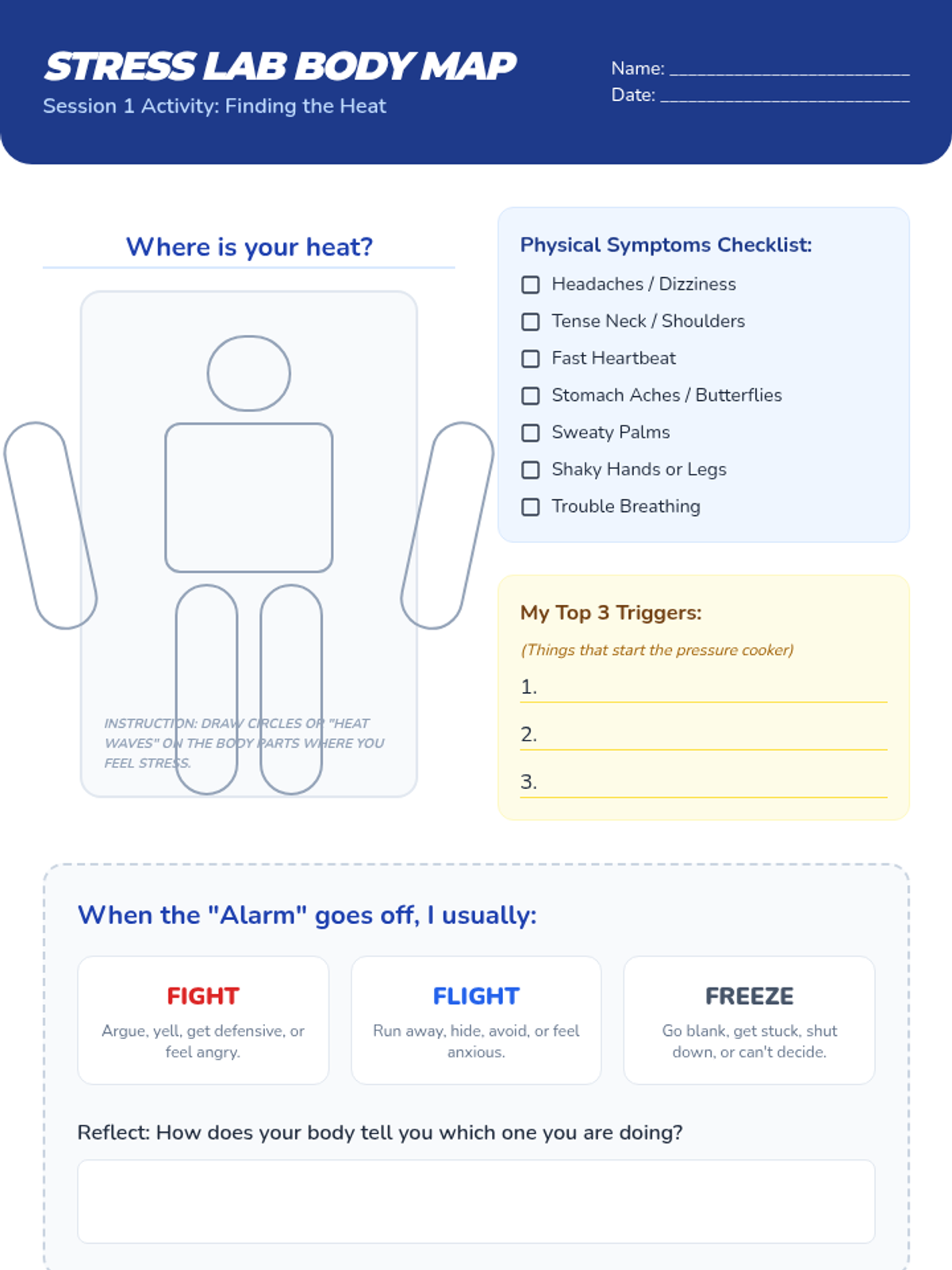
Students will define stress, identify their personal 'stress triggers', and learn how their bodies react to pressure.
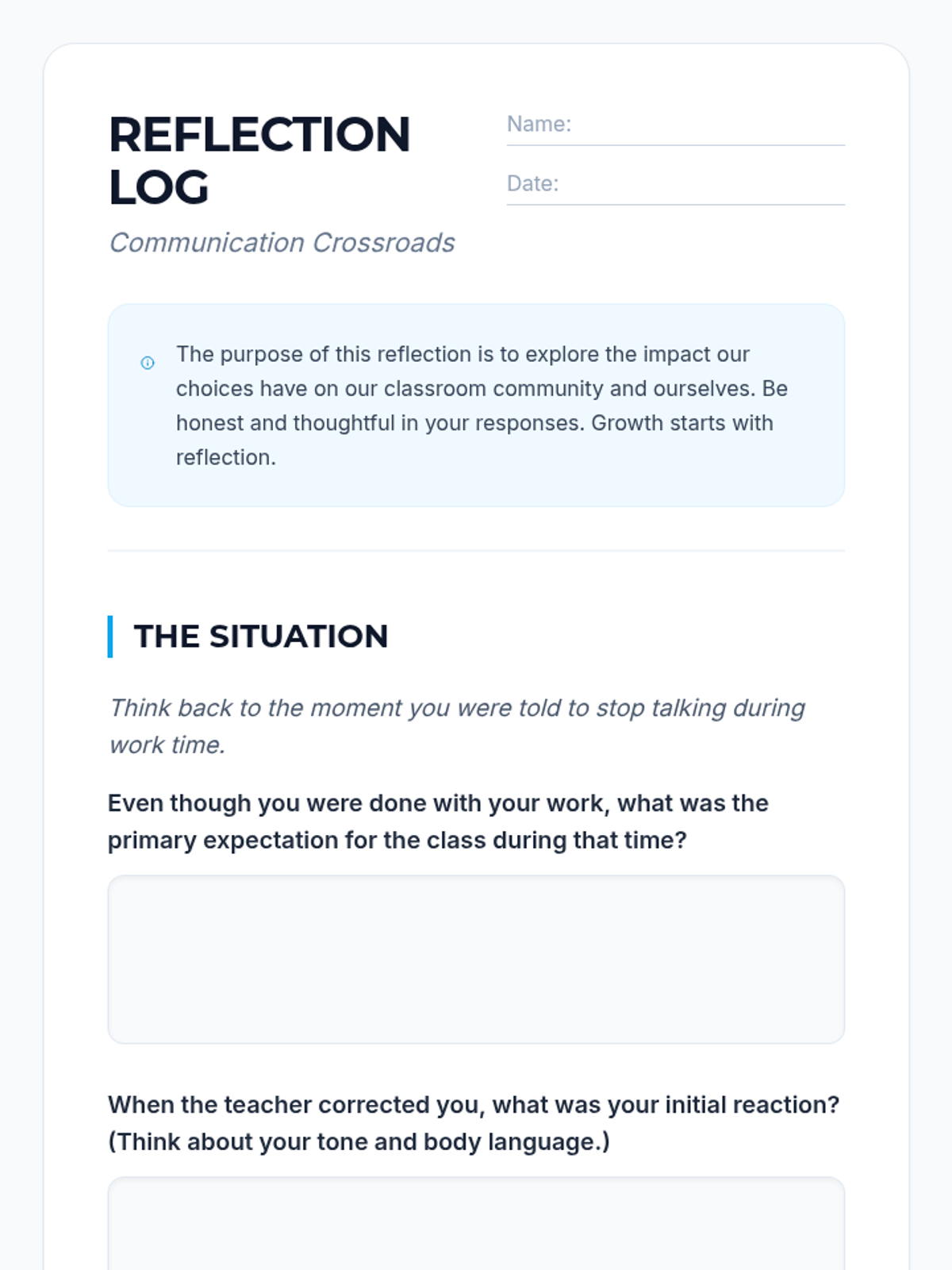
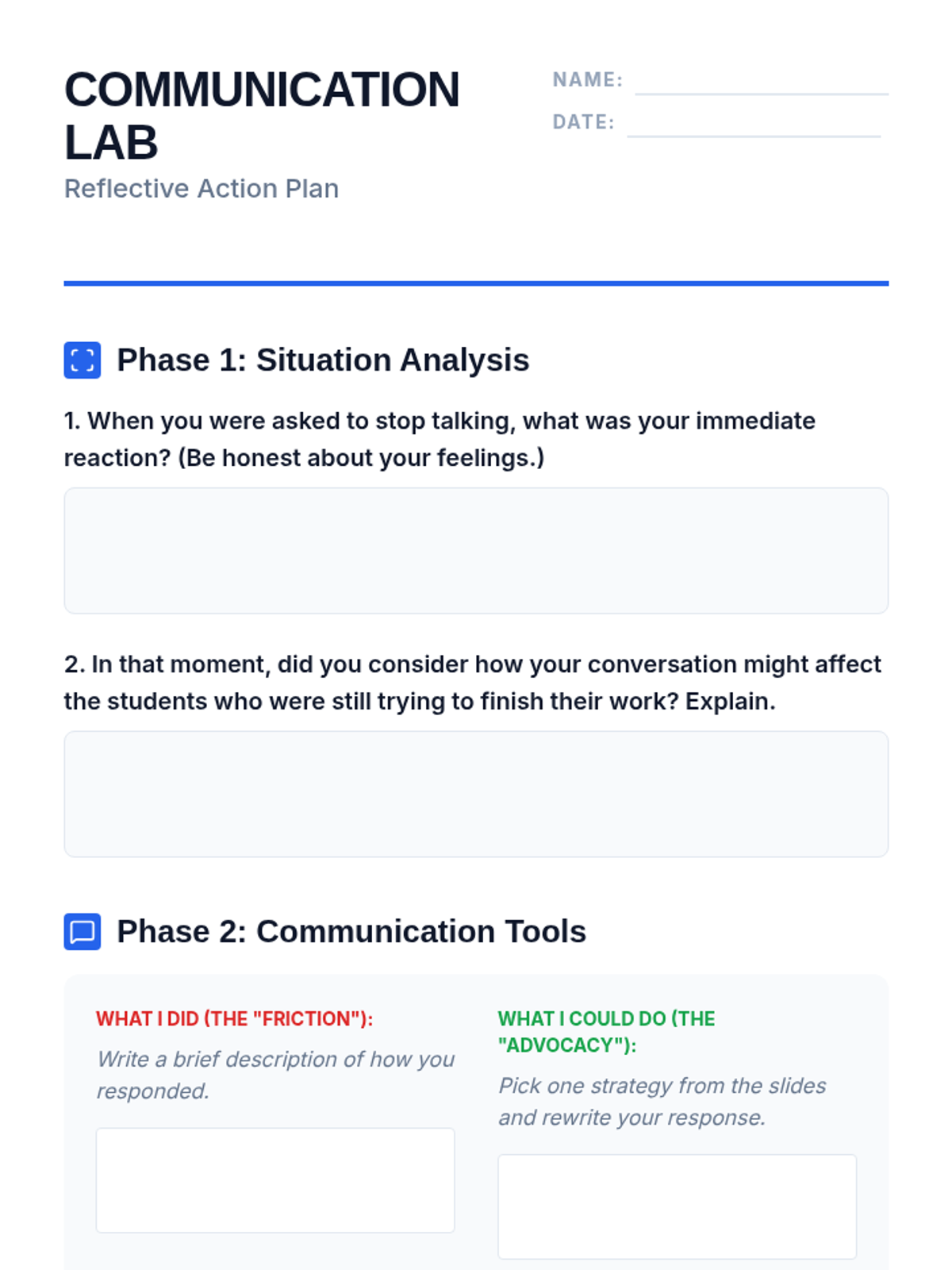
A reflective session designed for 8th-grade students to evaluate their communication choices and understand the impact of classroom disruptions, specifically focusing on respectful advocacy when work is completed.
A reflective lesson designed for 8th-grade students to analyze their communication styles, specifically focusing on how to advocate for themselves respectfully when they have completed work, and understanding the collective impact of classroom disruptions.
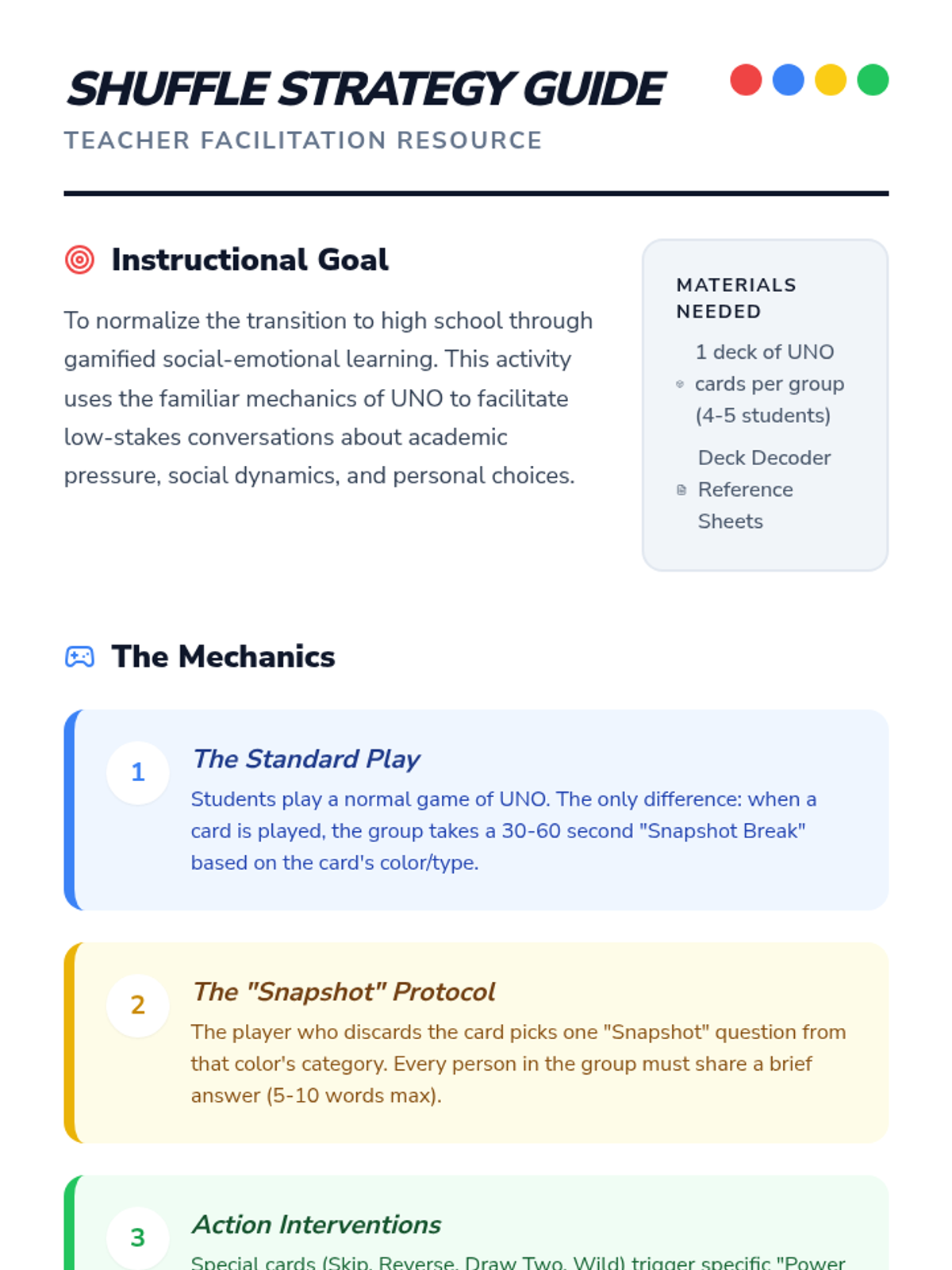
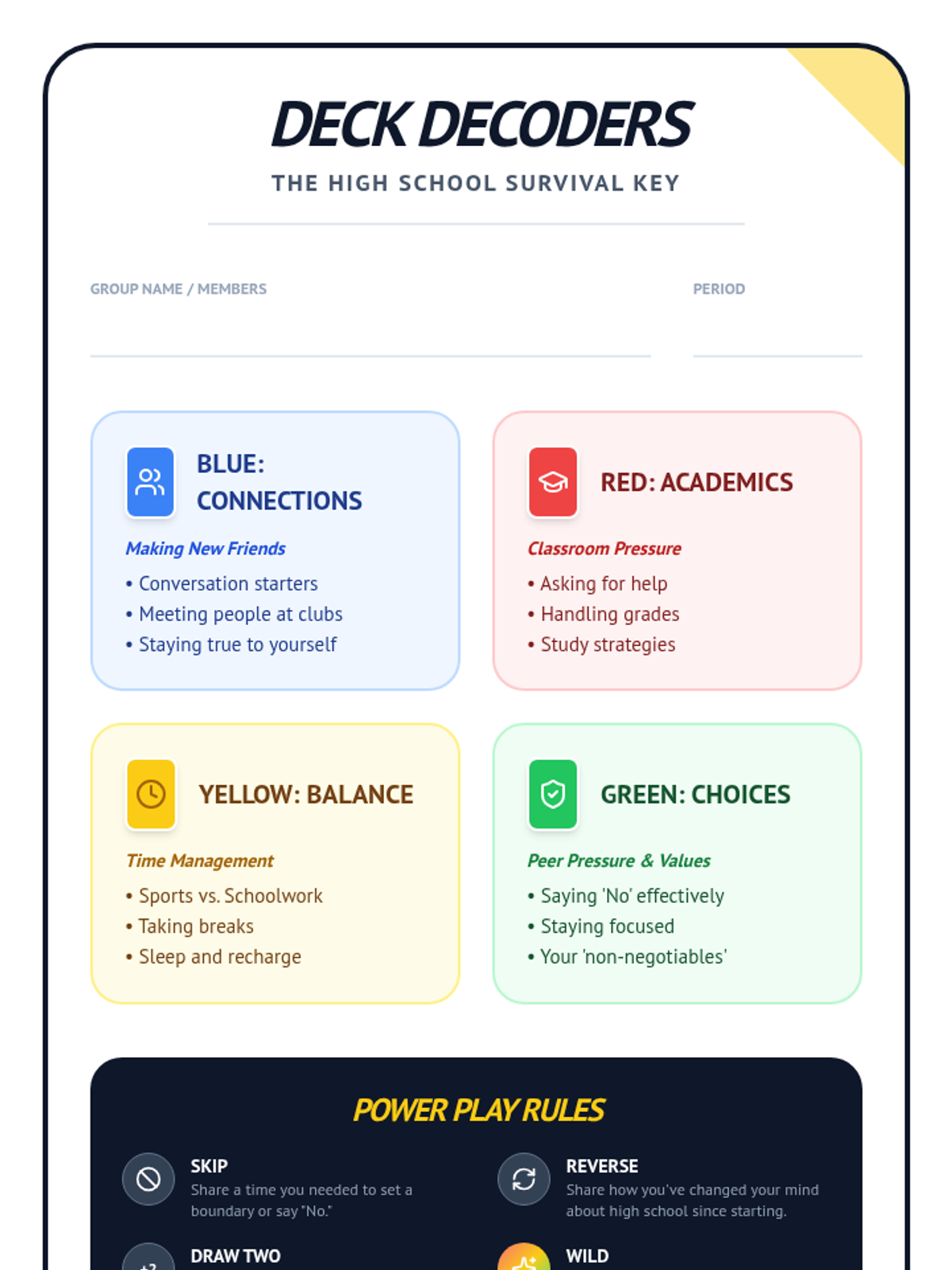
A game-based social-emotional learning lesson using UNO cards to help students navigate the transition to high school, focusing on friendships, academic stress, peer pressure, and balance.
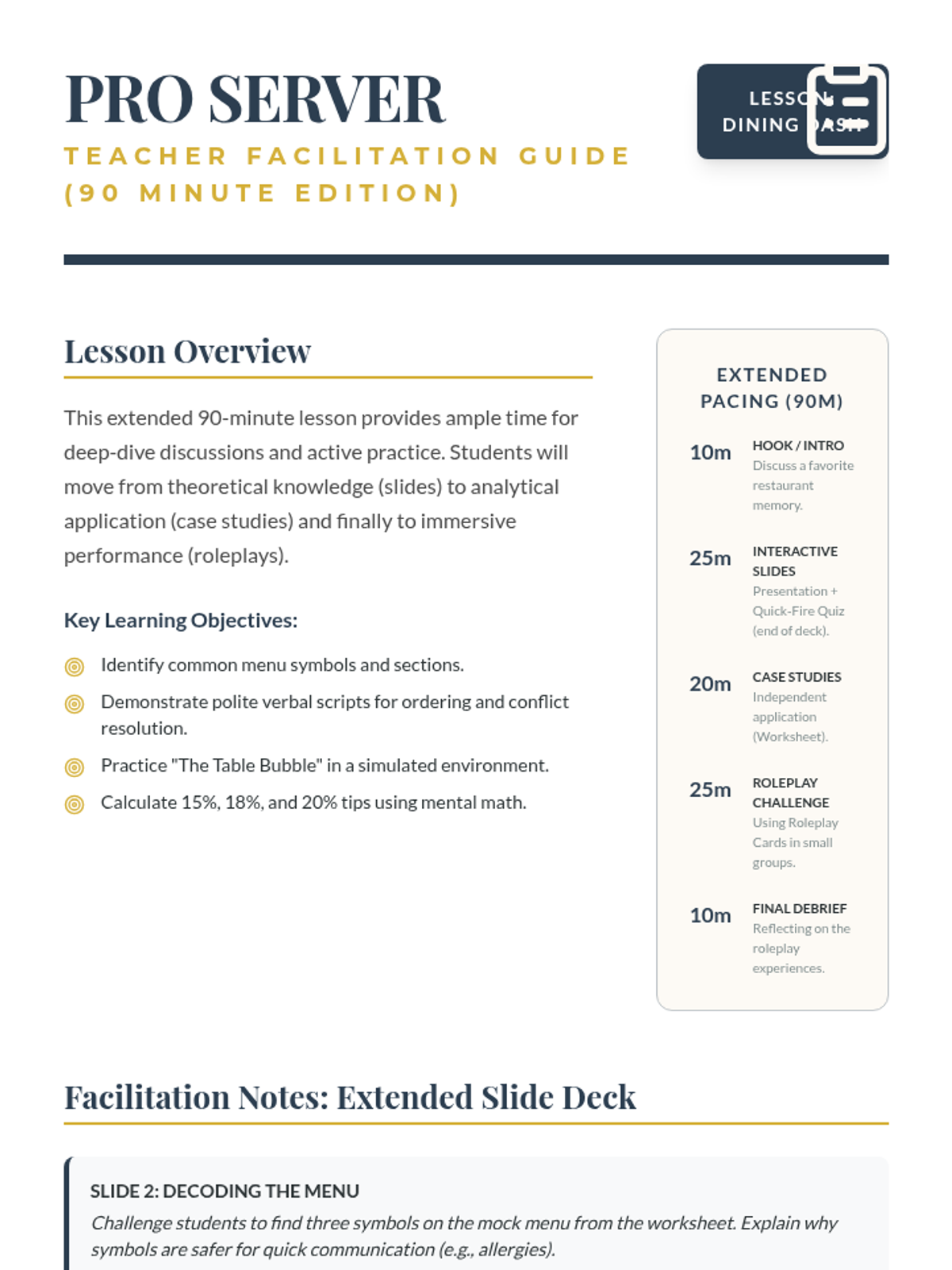
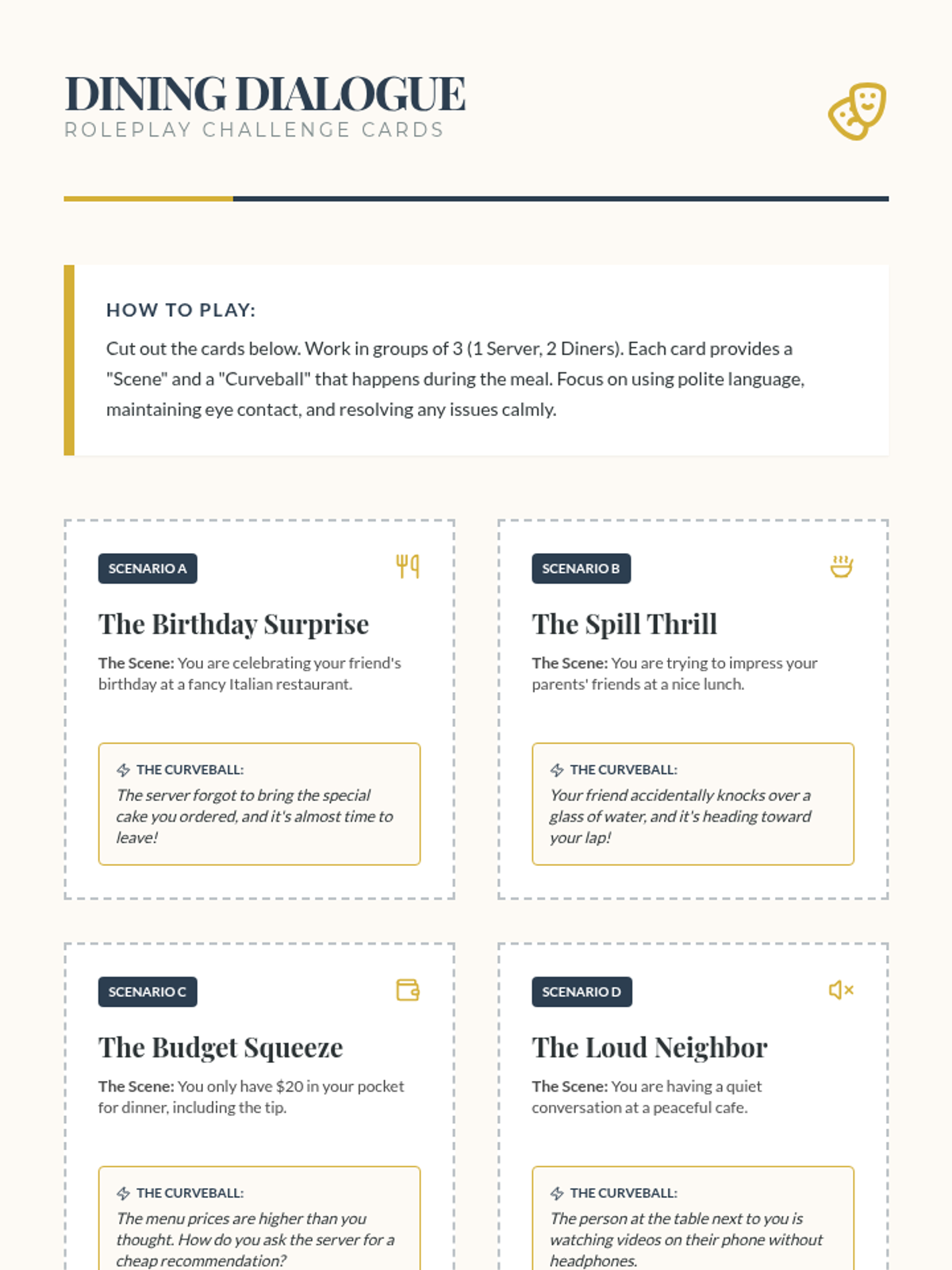
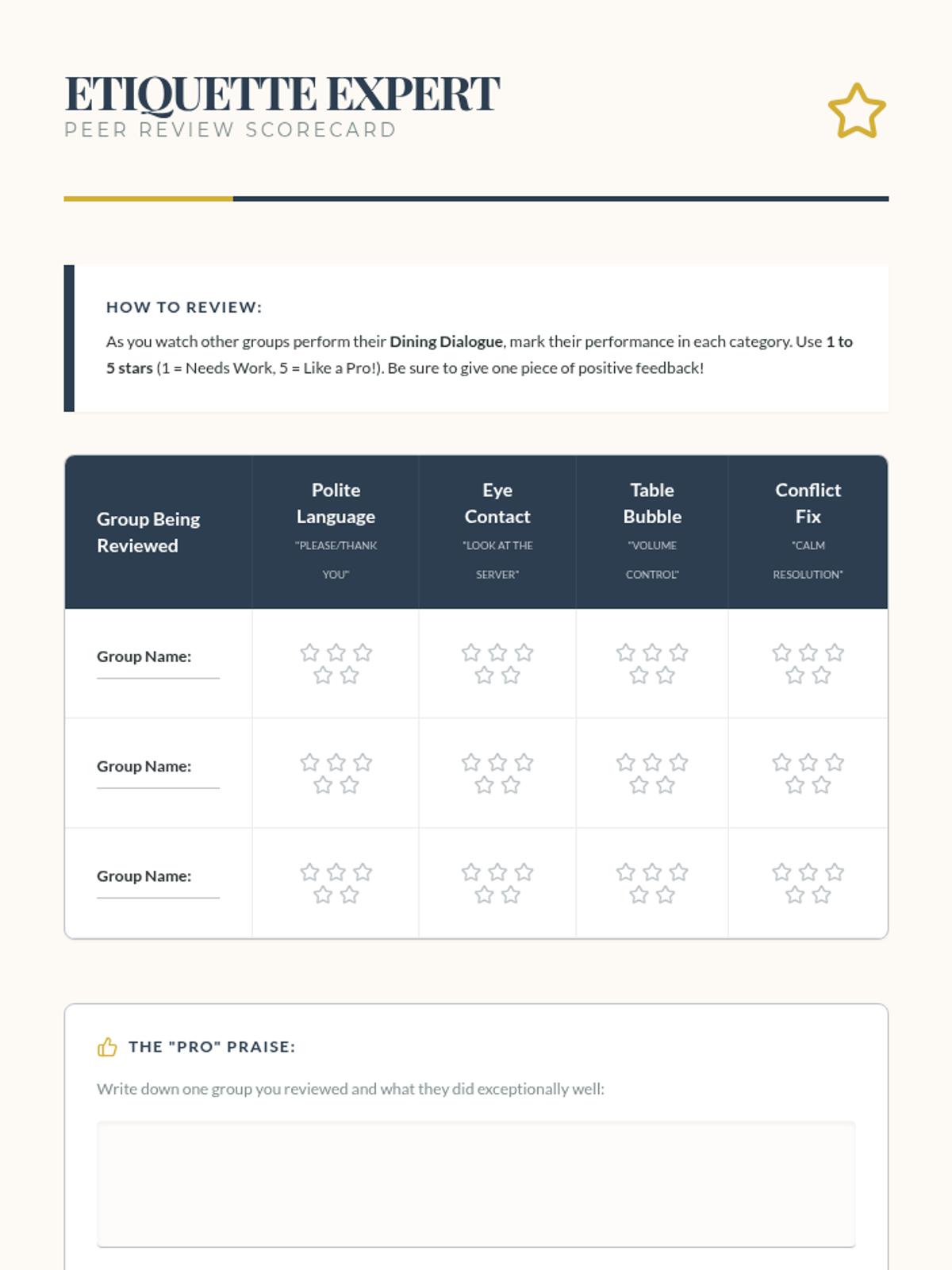
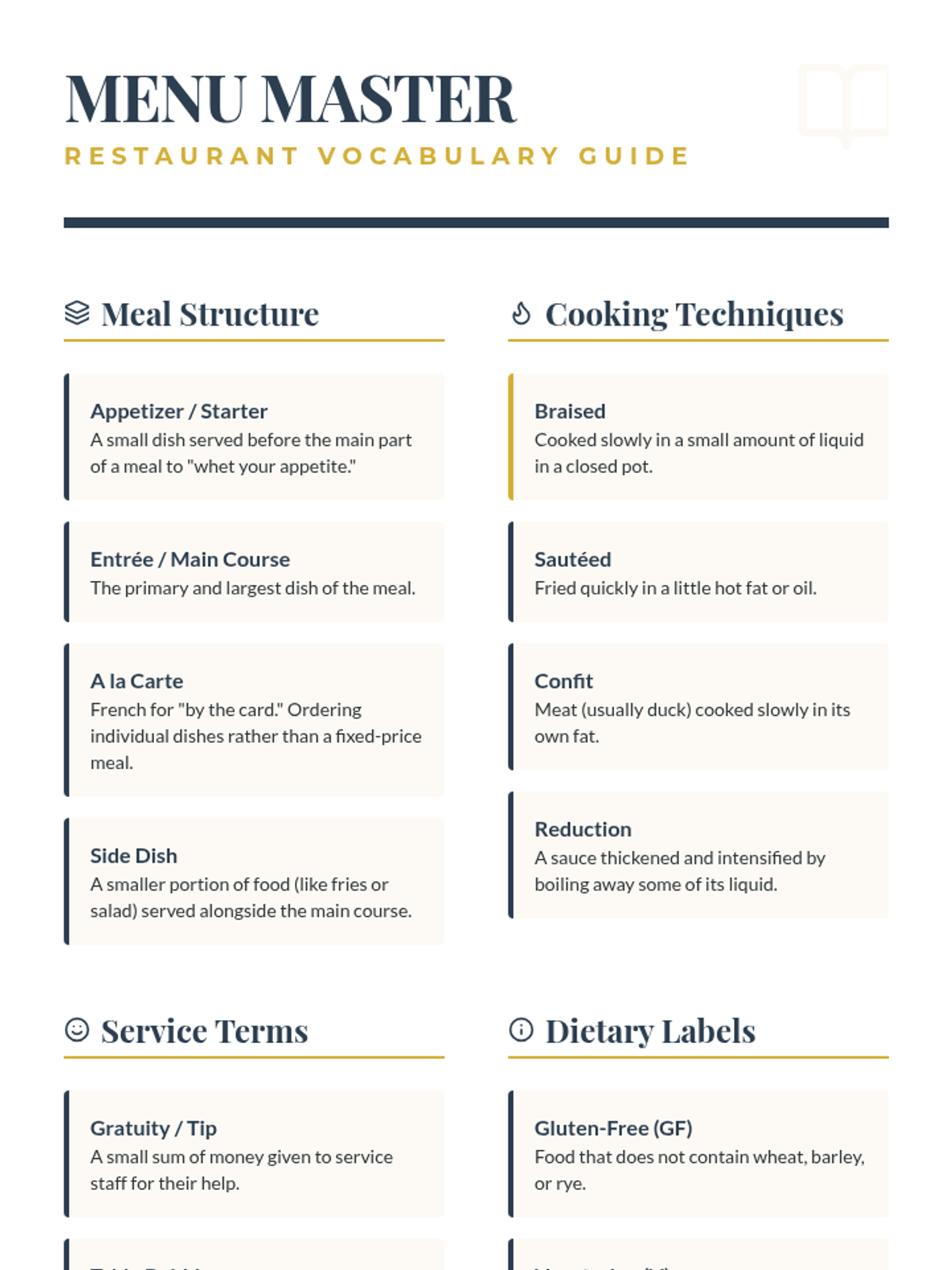
A comprehensive lesson on restaurant etiquette covering menu reading, ordering, manners, volume control, tipping, and conflict resolution.
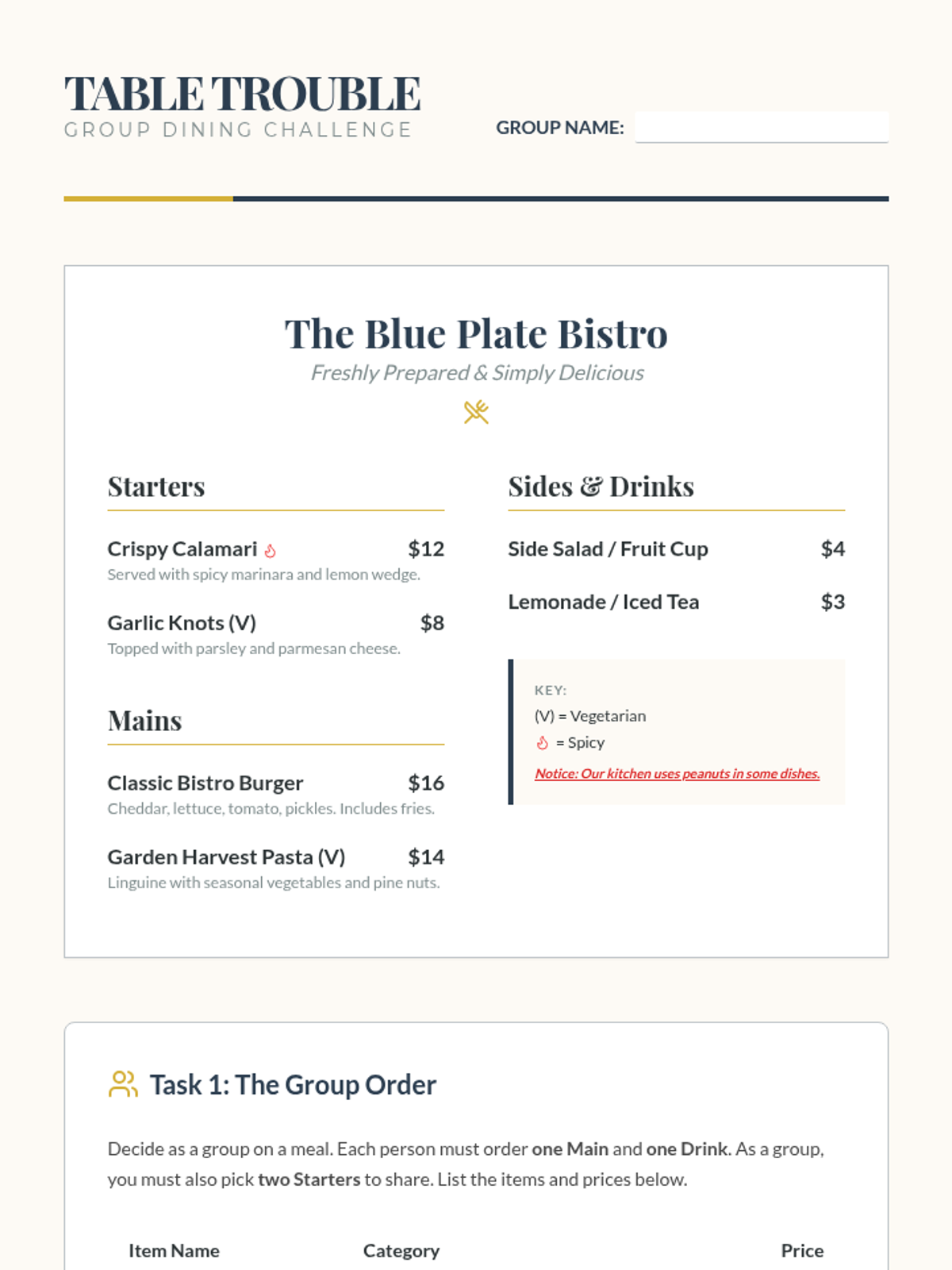
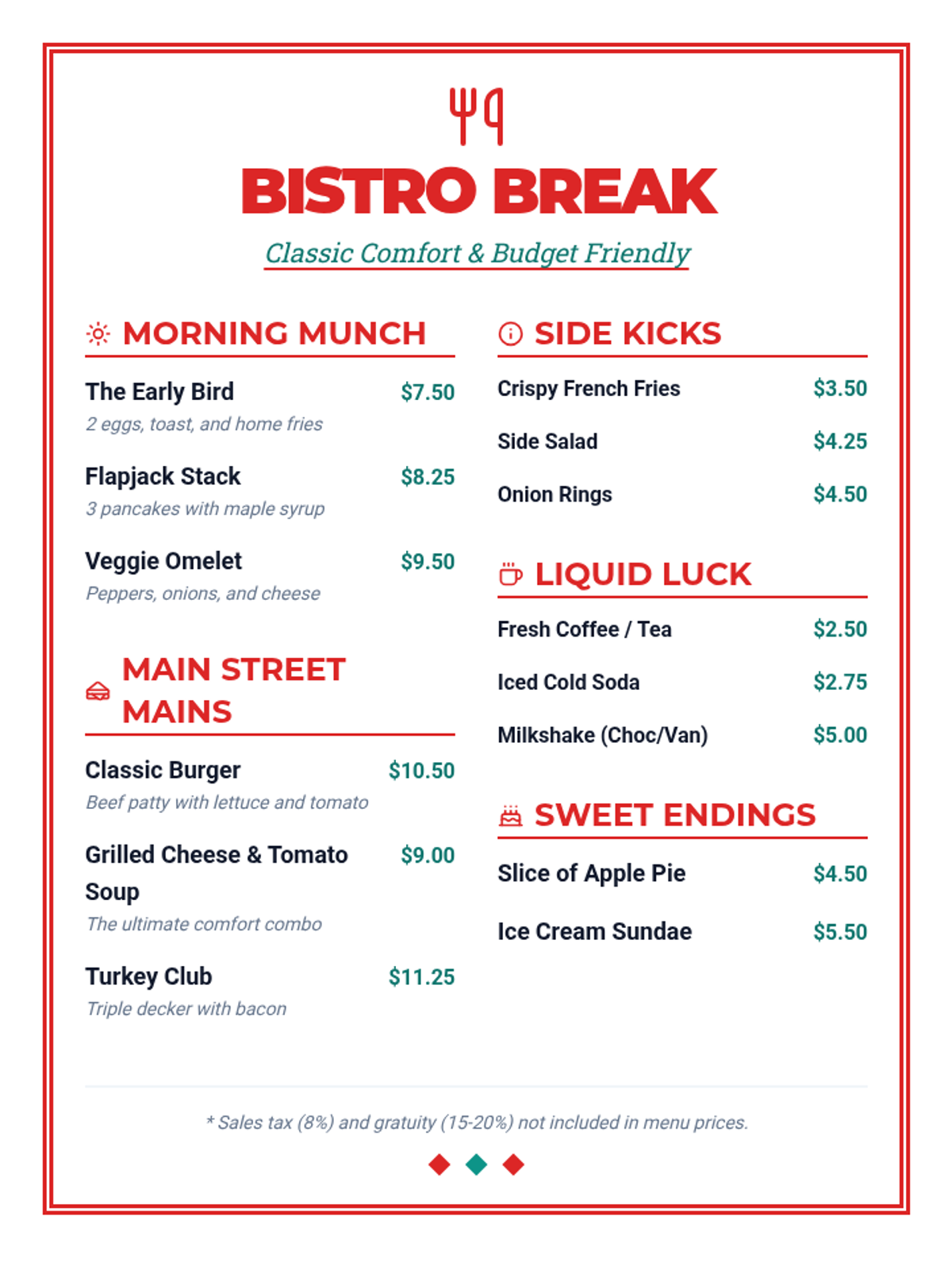
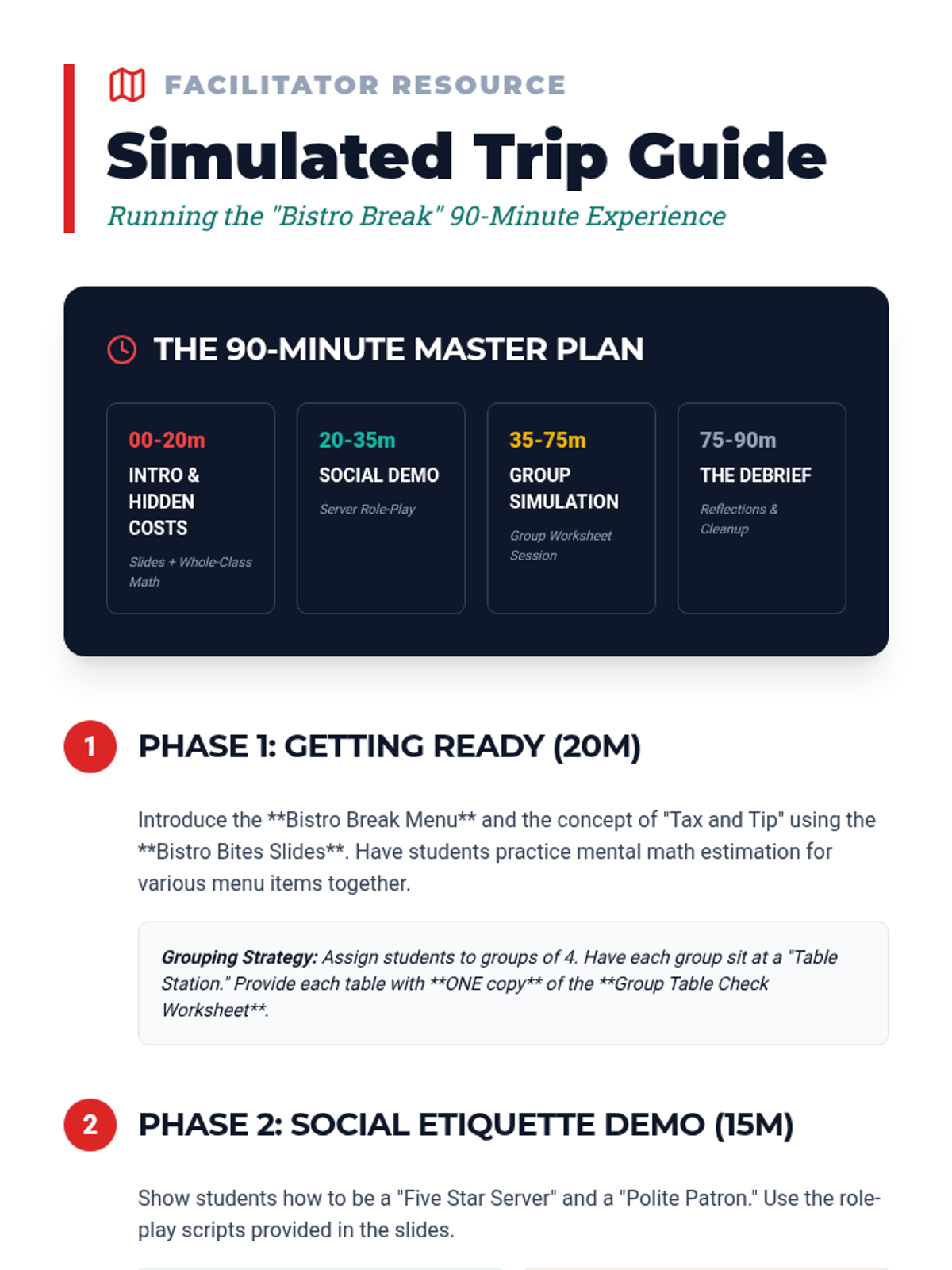
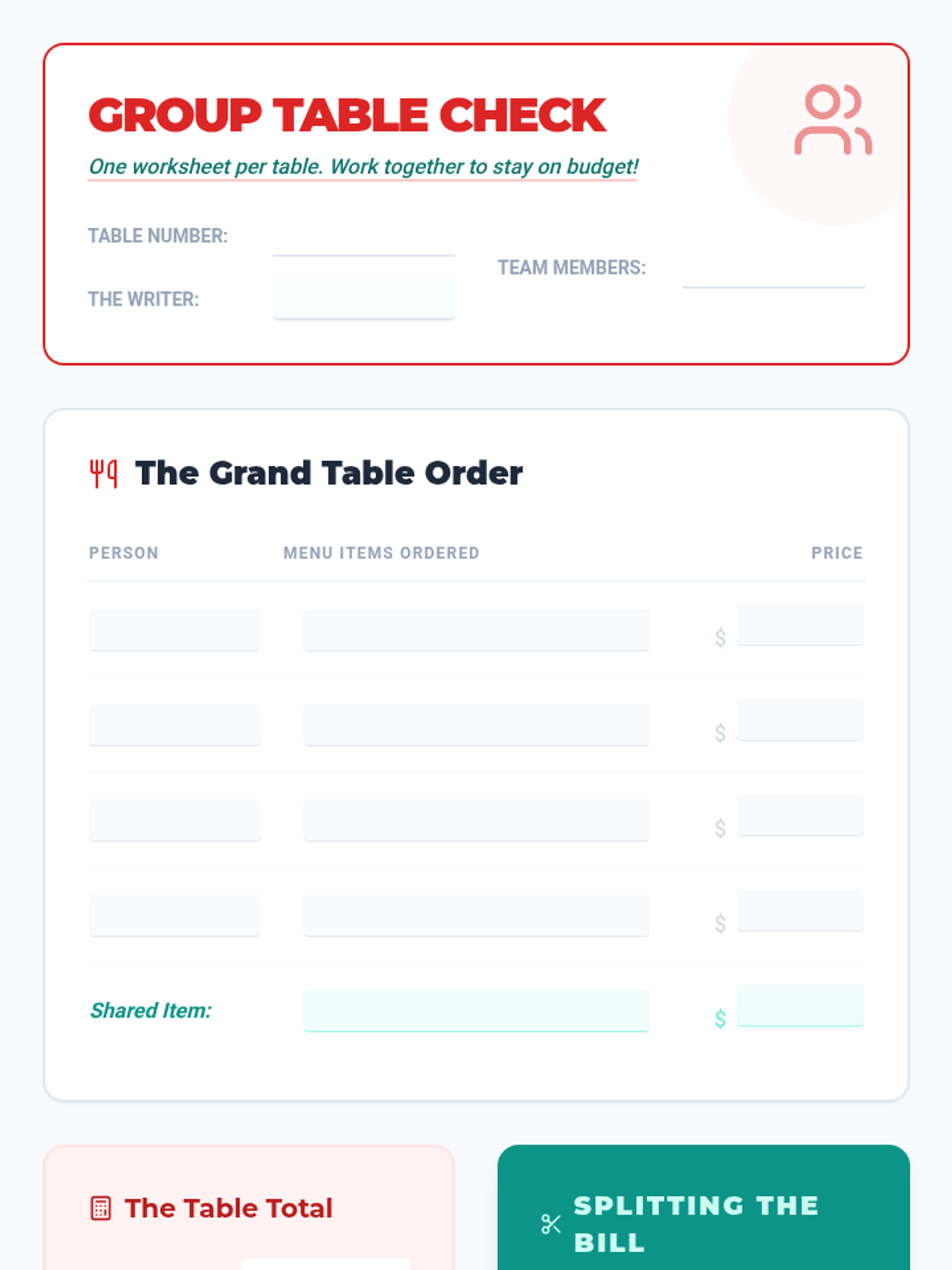
A functional skills lesson focused on navigating a restaurant experience on a budget, covering menu reading, budget planning, social etiquette, and group check splitting.
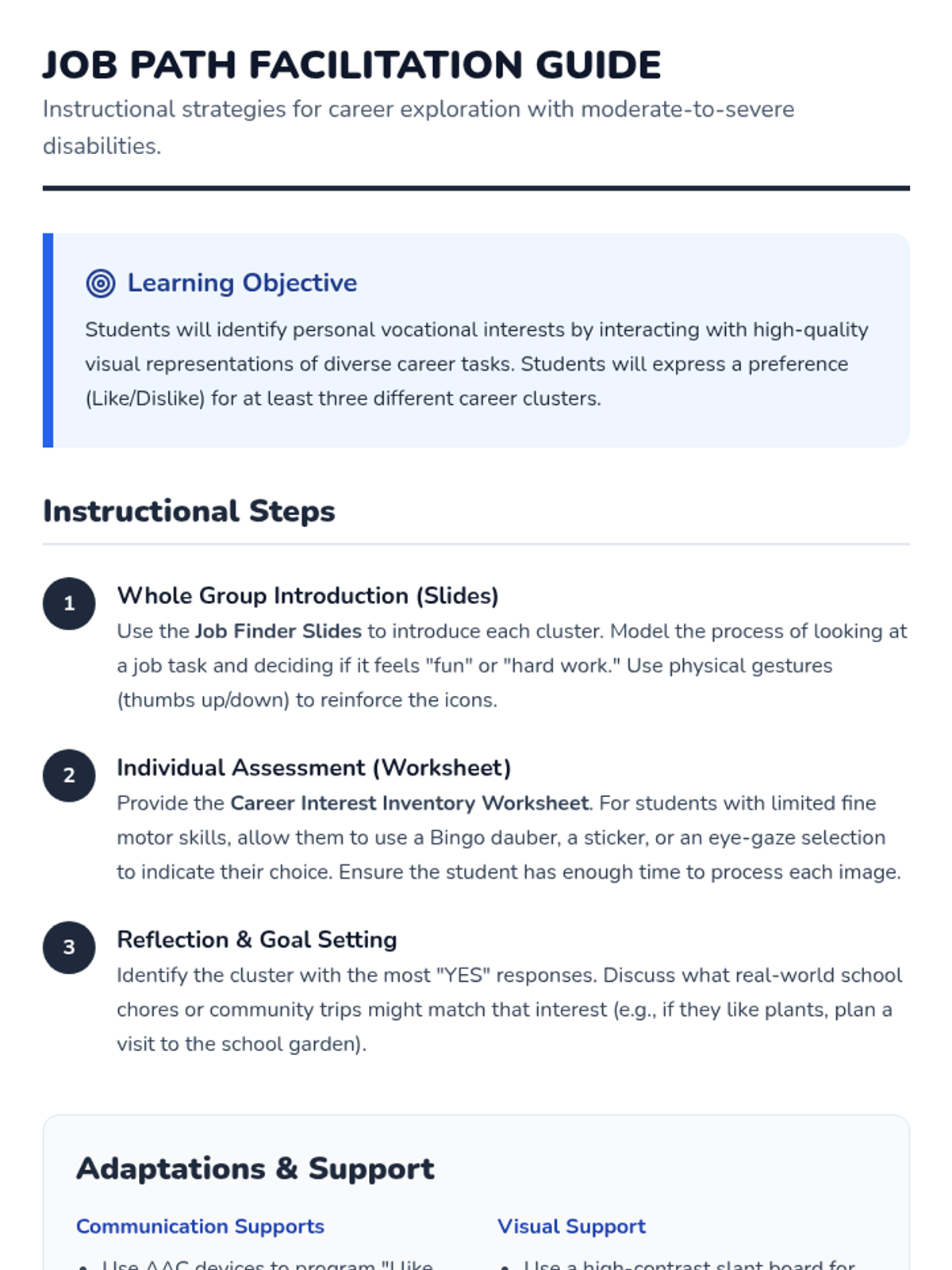
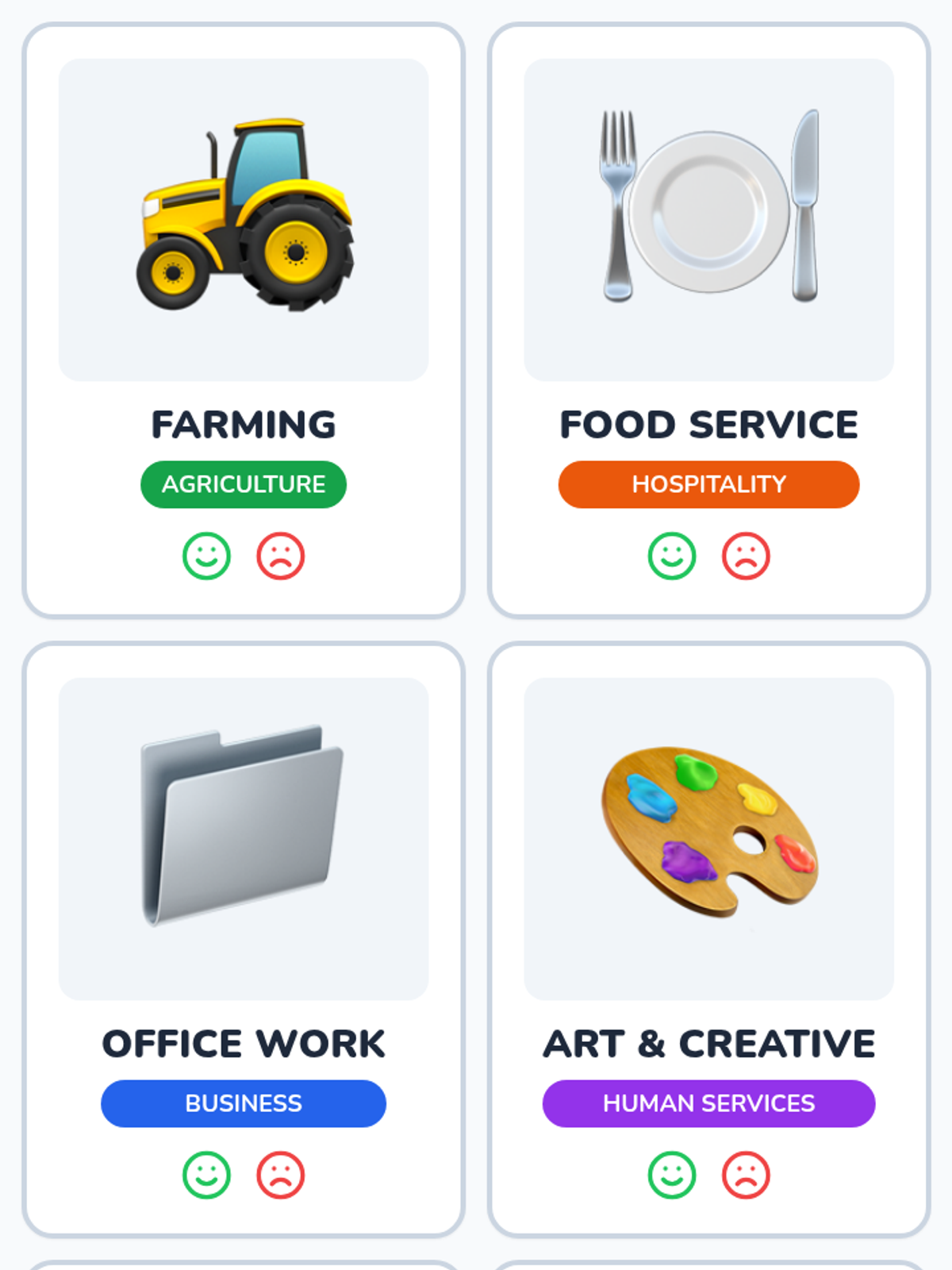
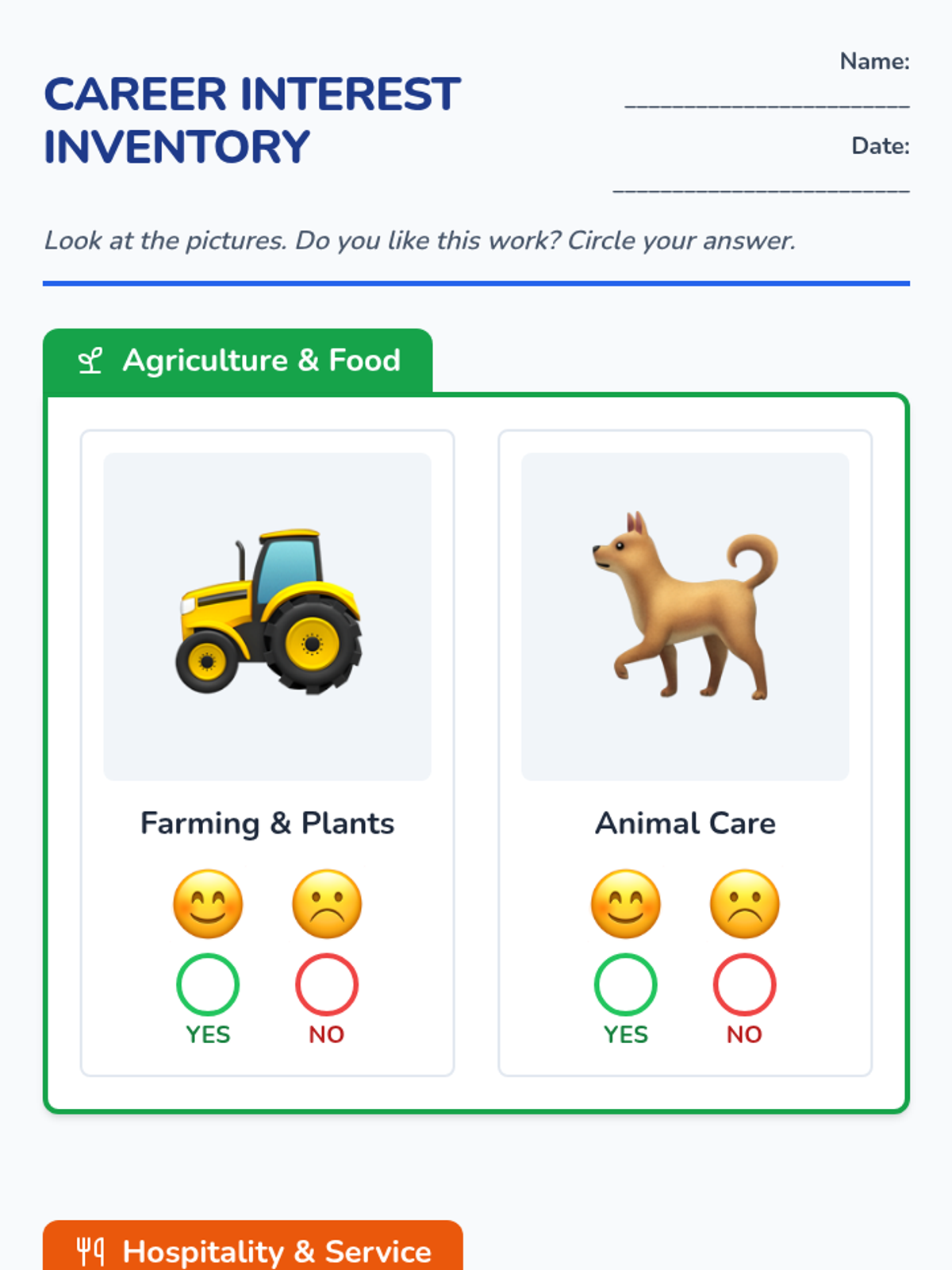
A visual career exploration lesson designed for students with moderate to severe disabilities, using real photos to identify interests across various career clusters.
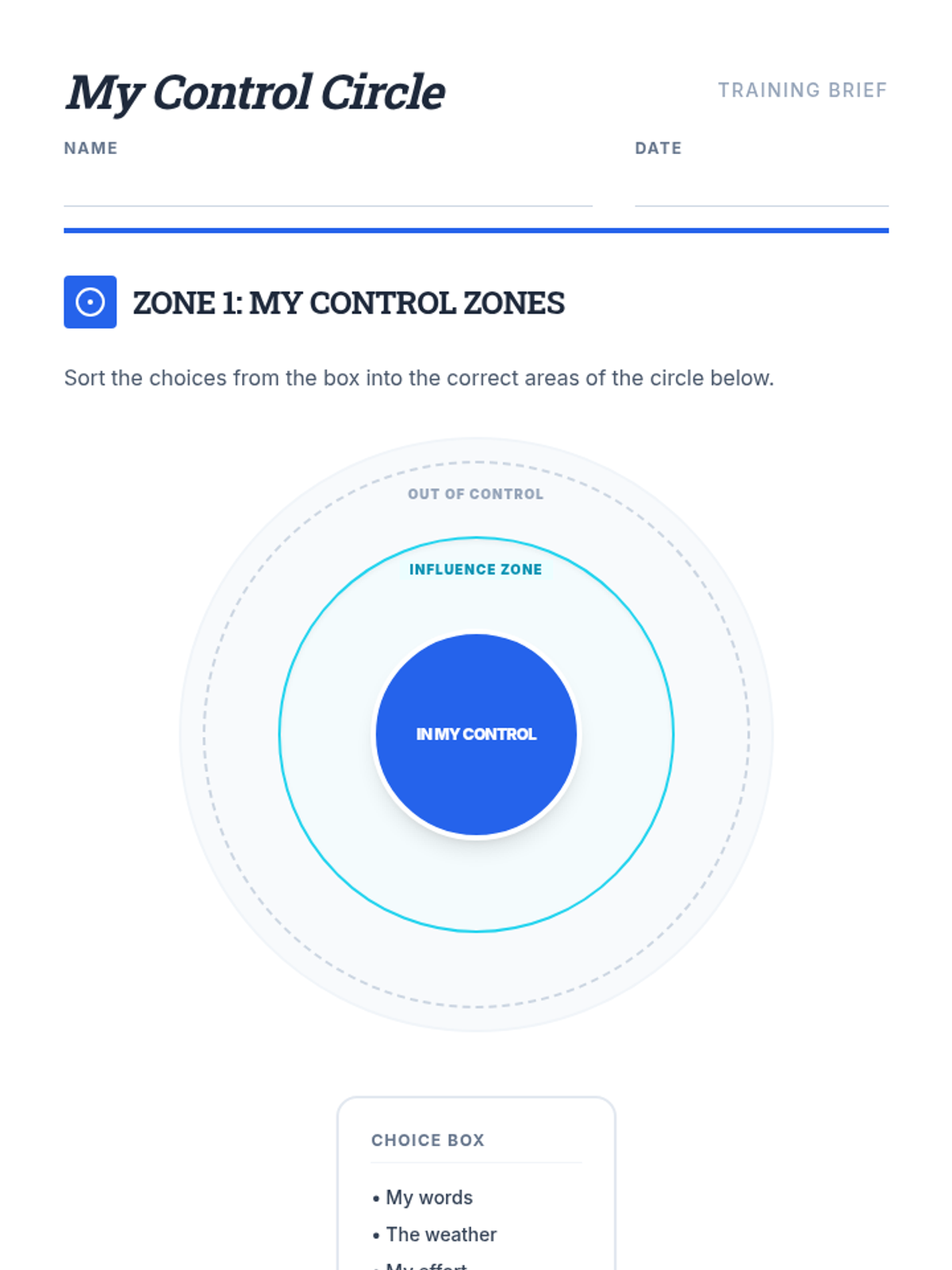
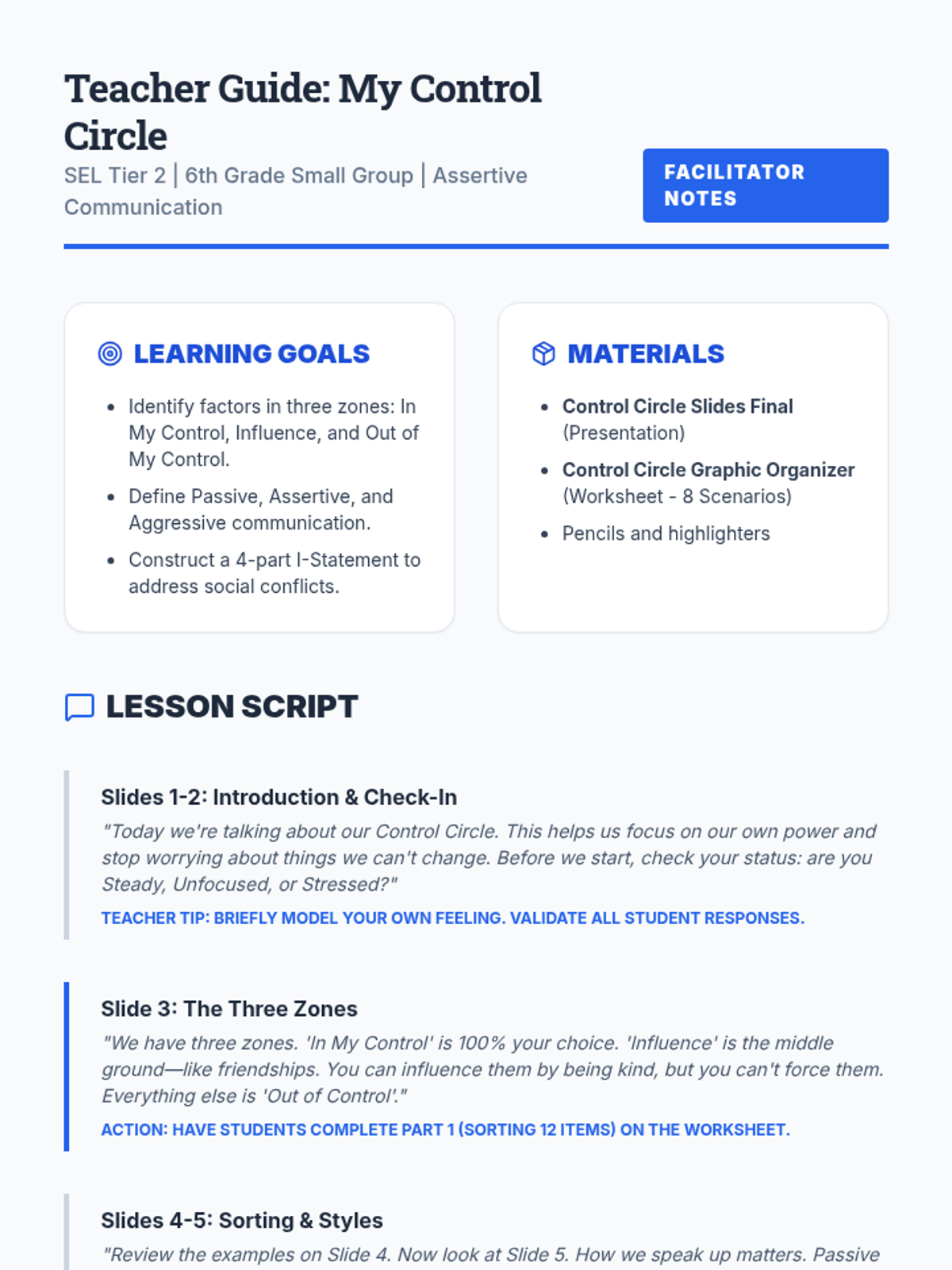
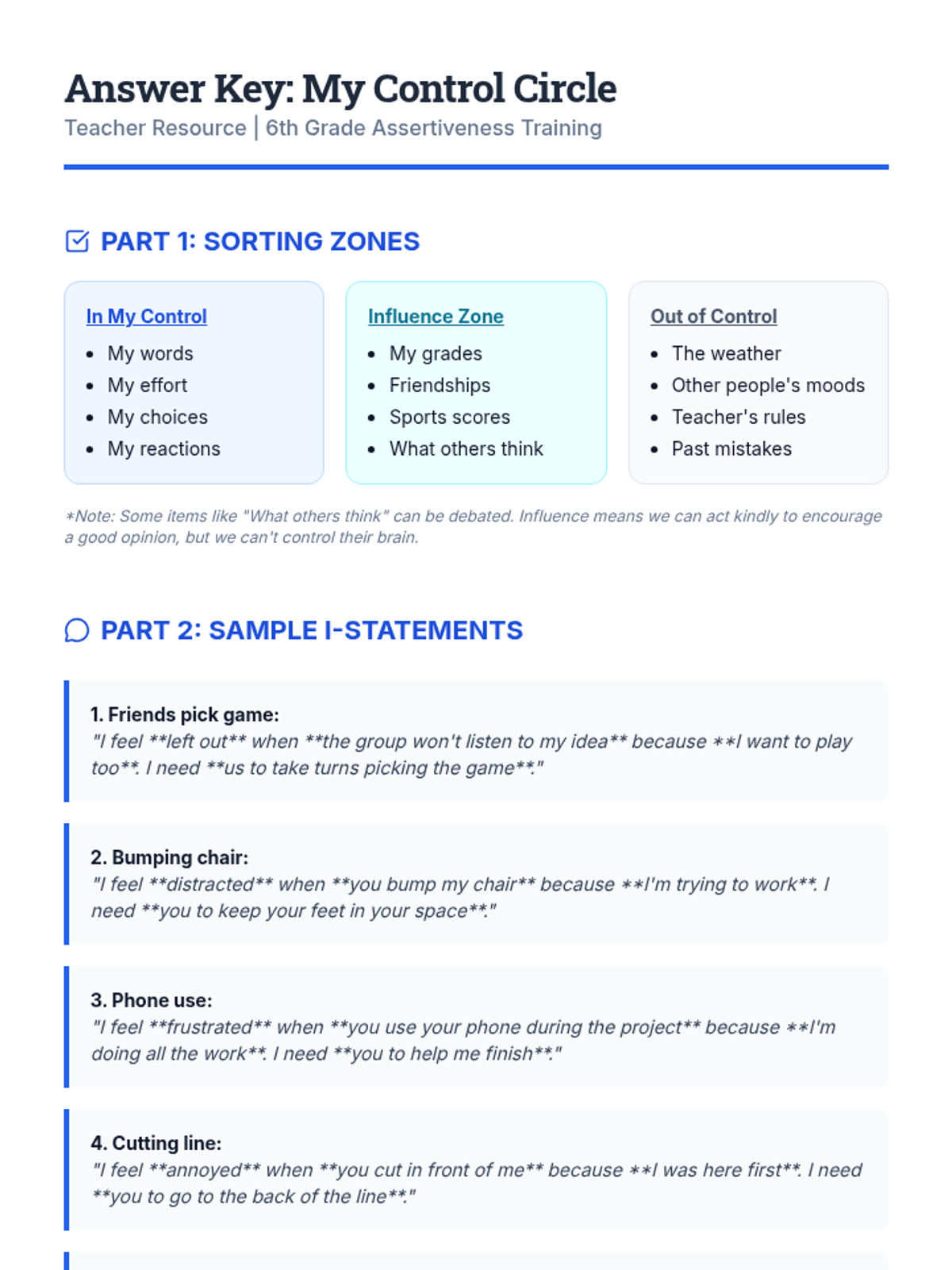
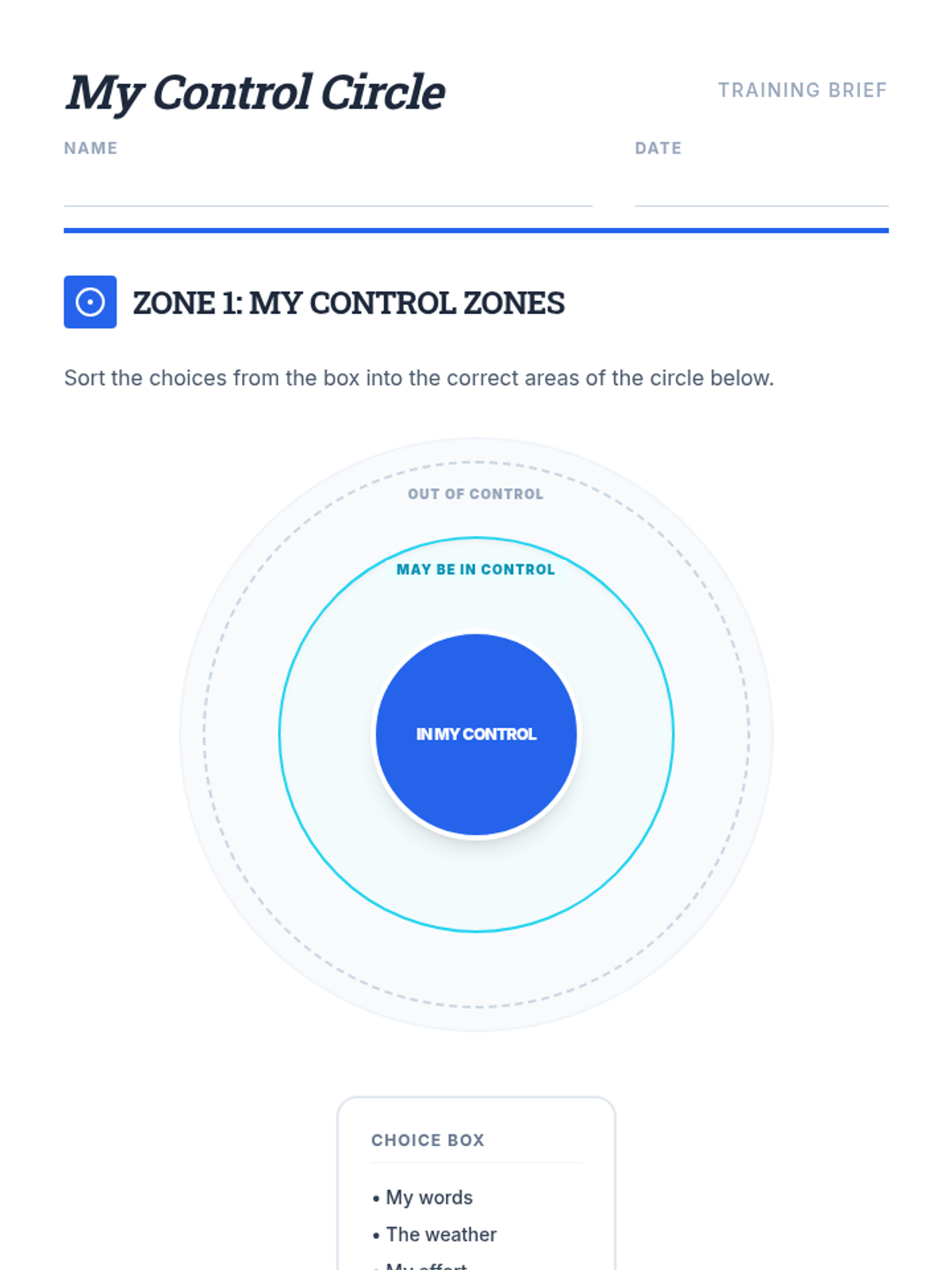
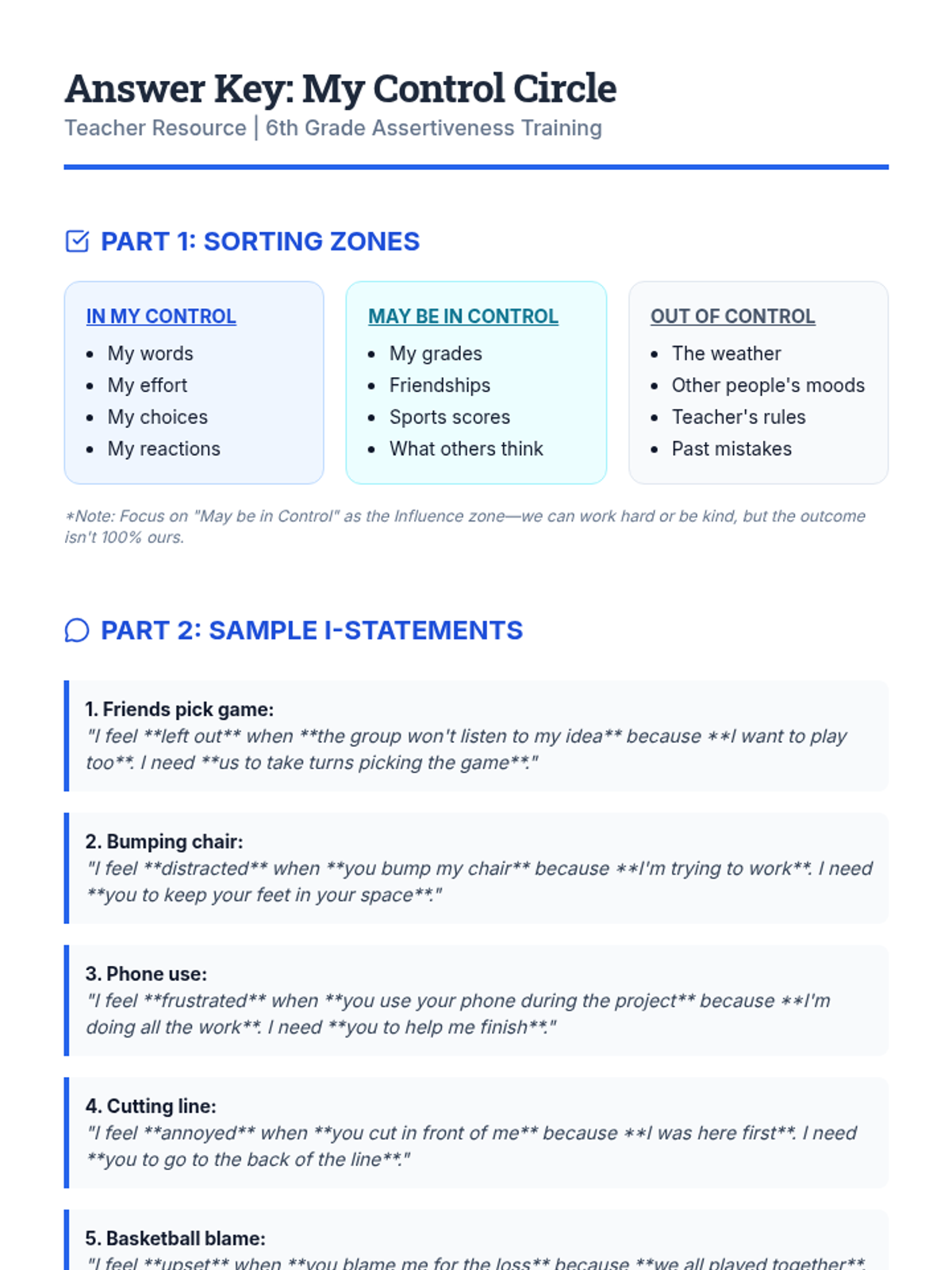
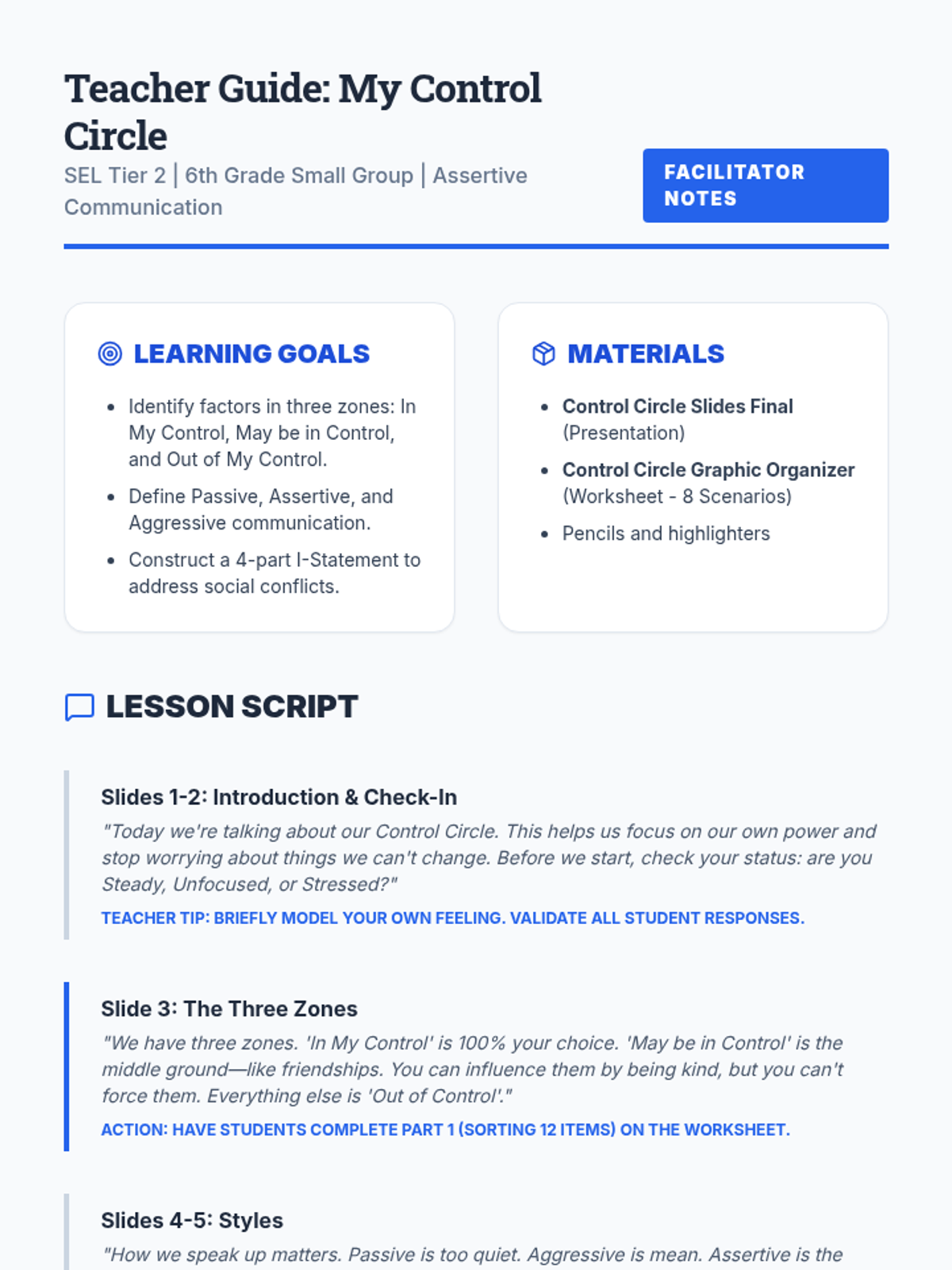
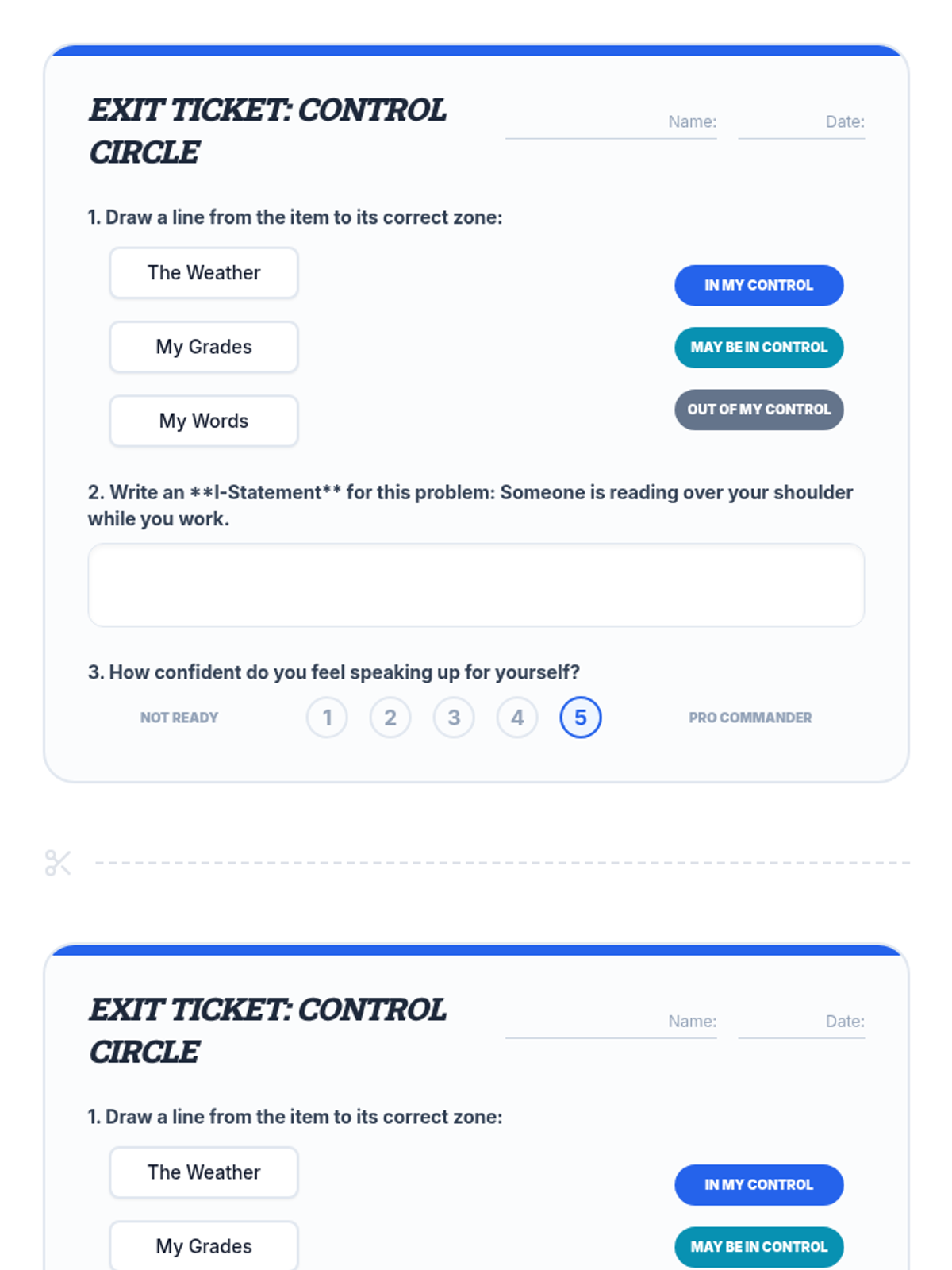
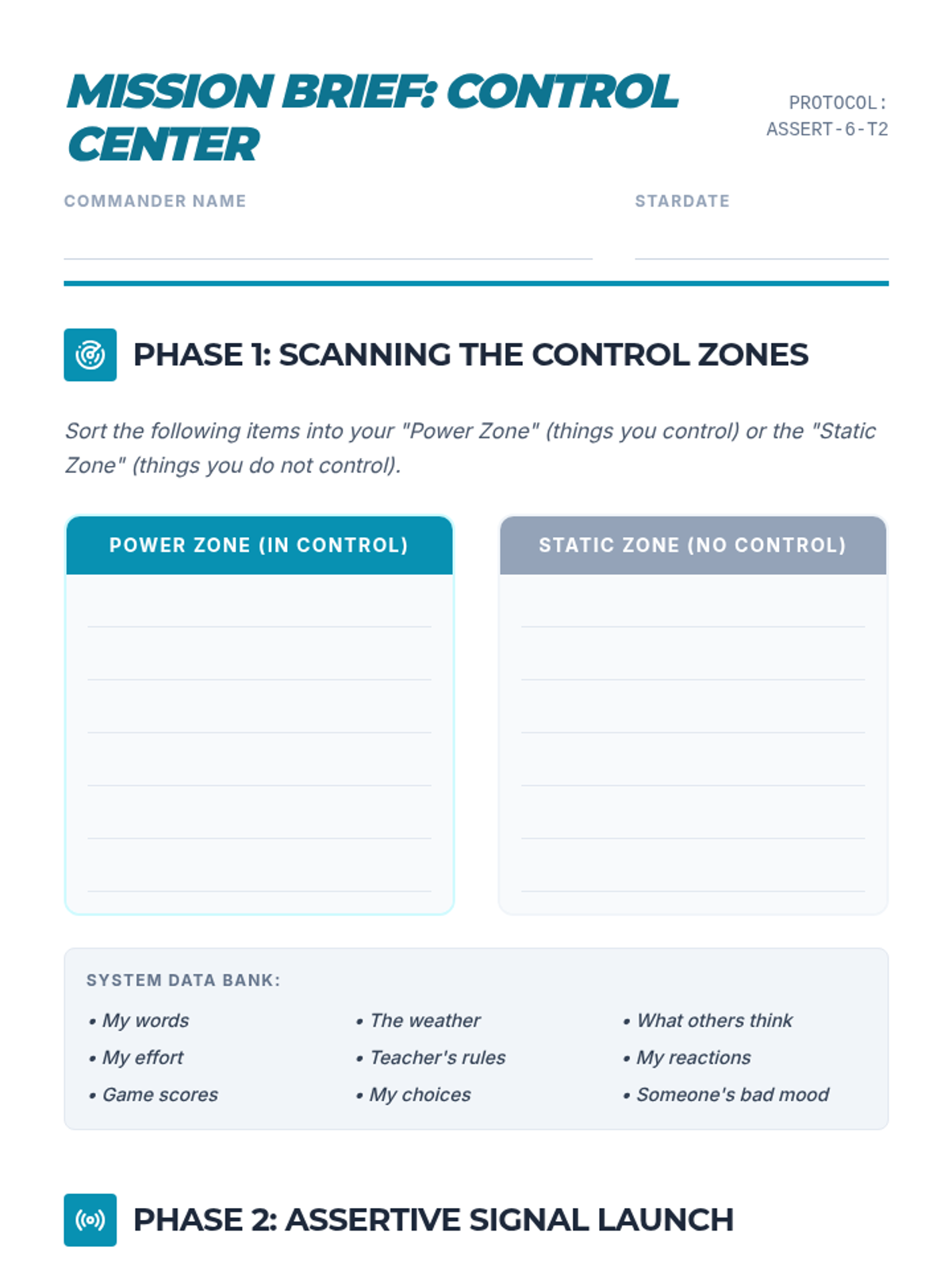
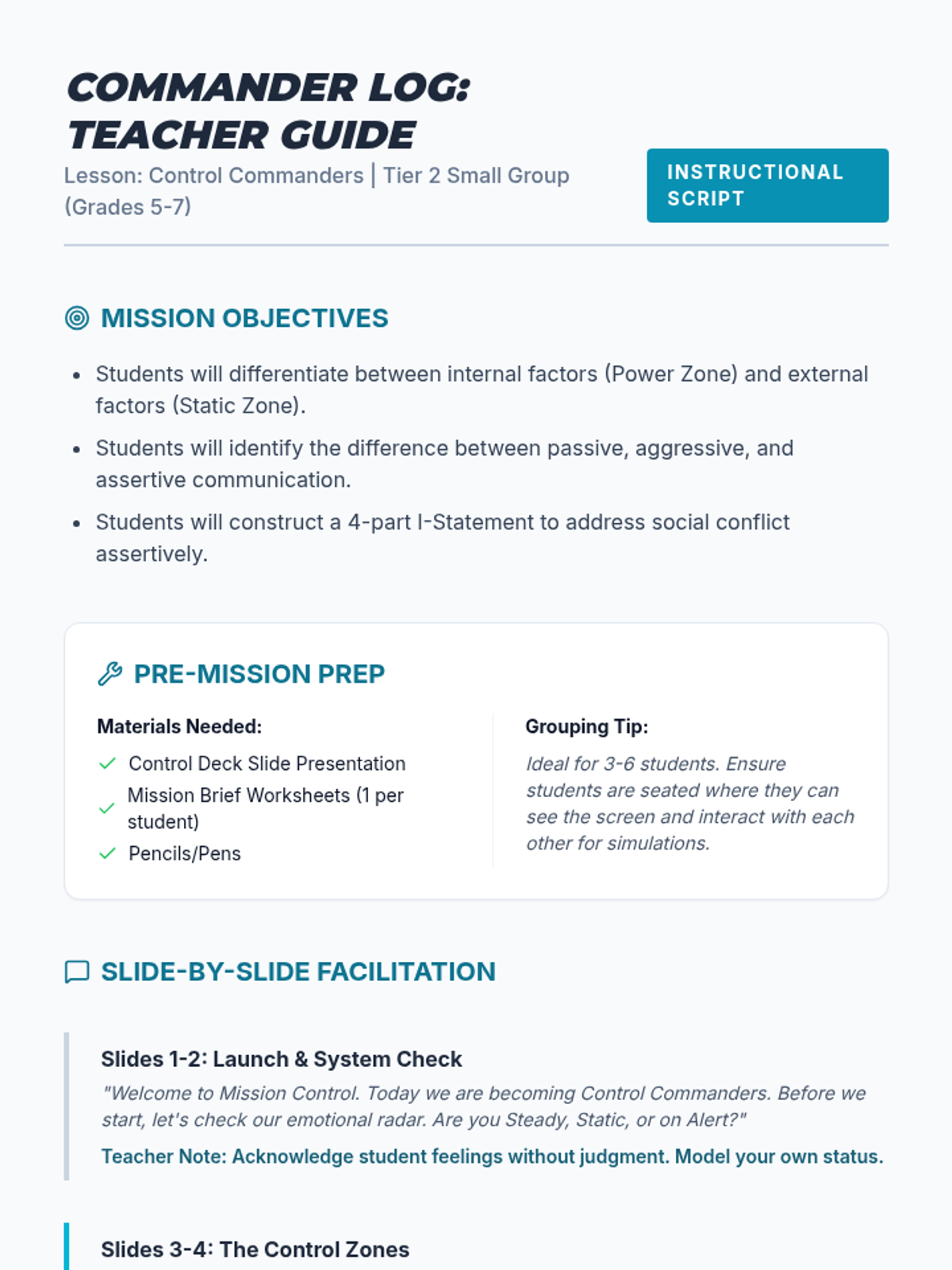
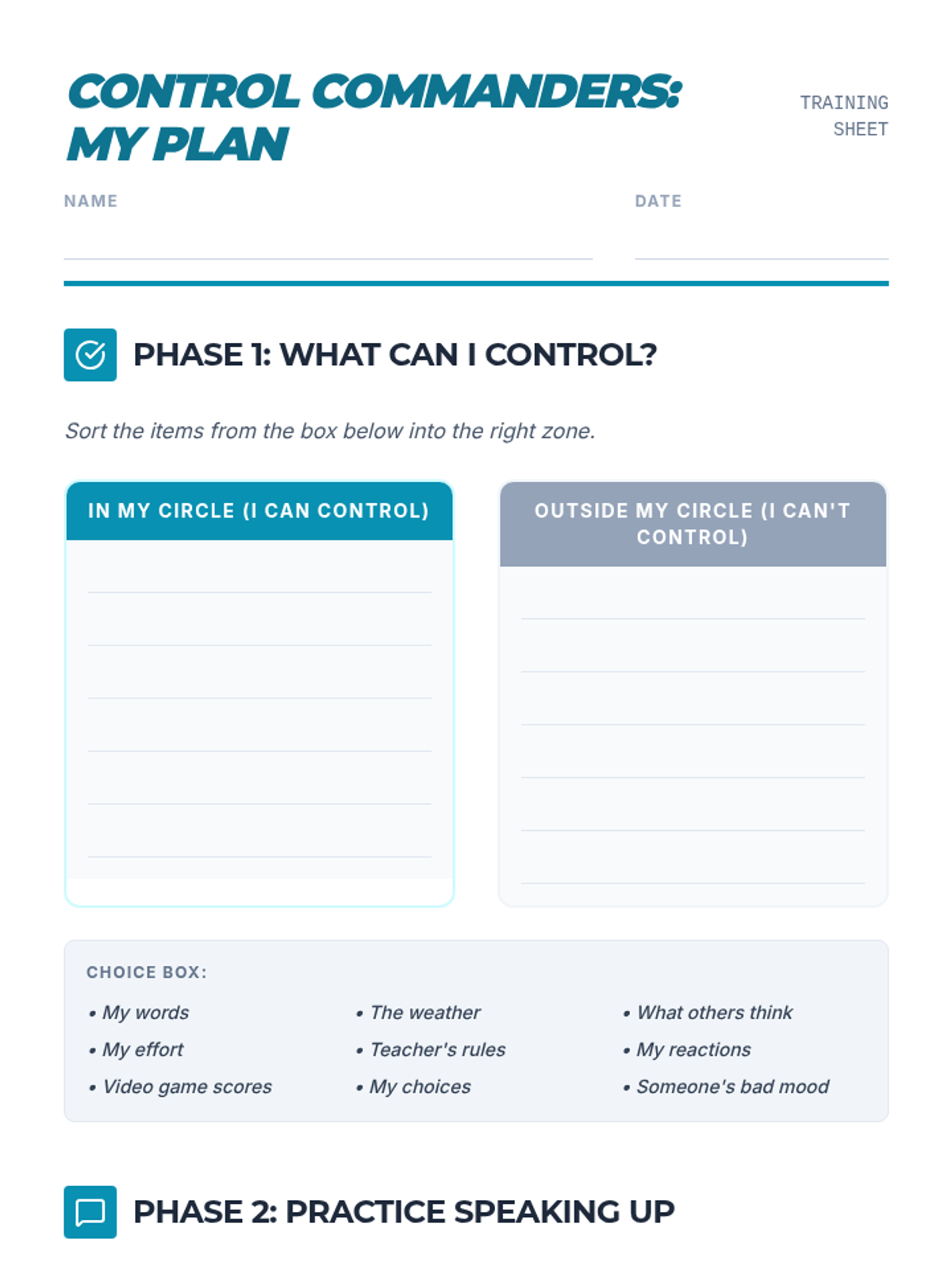
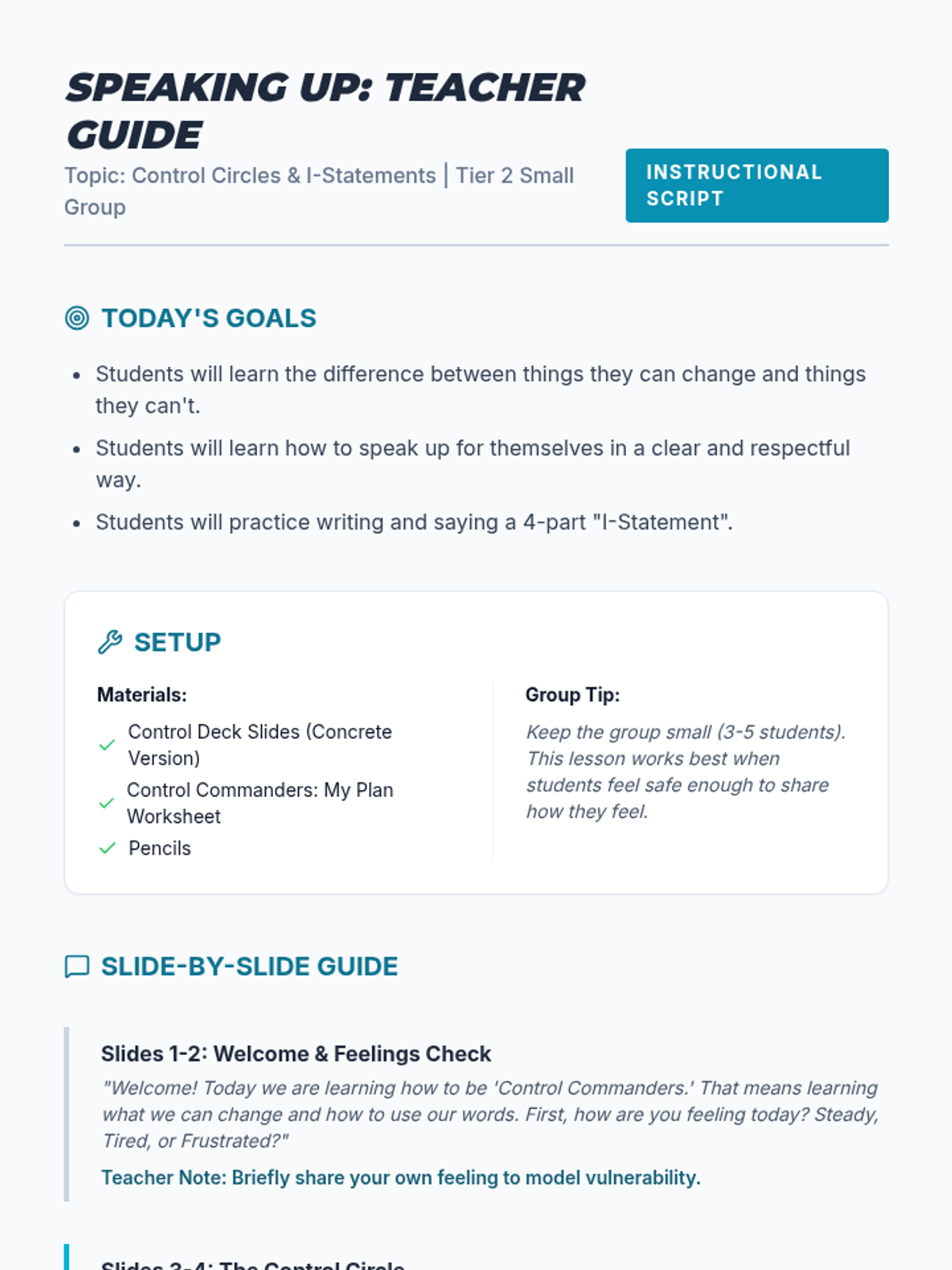
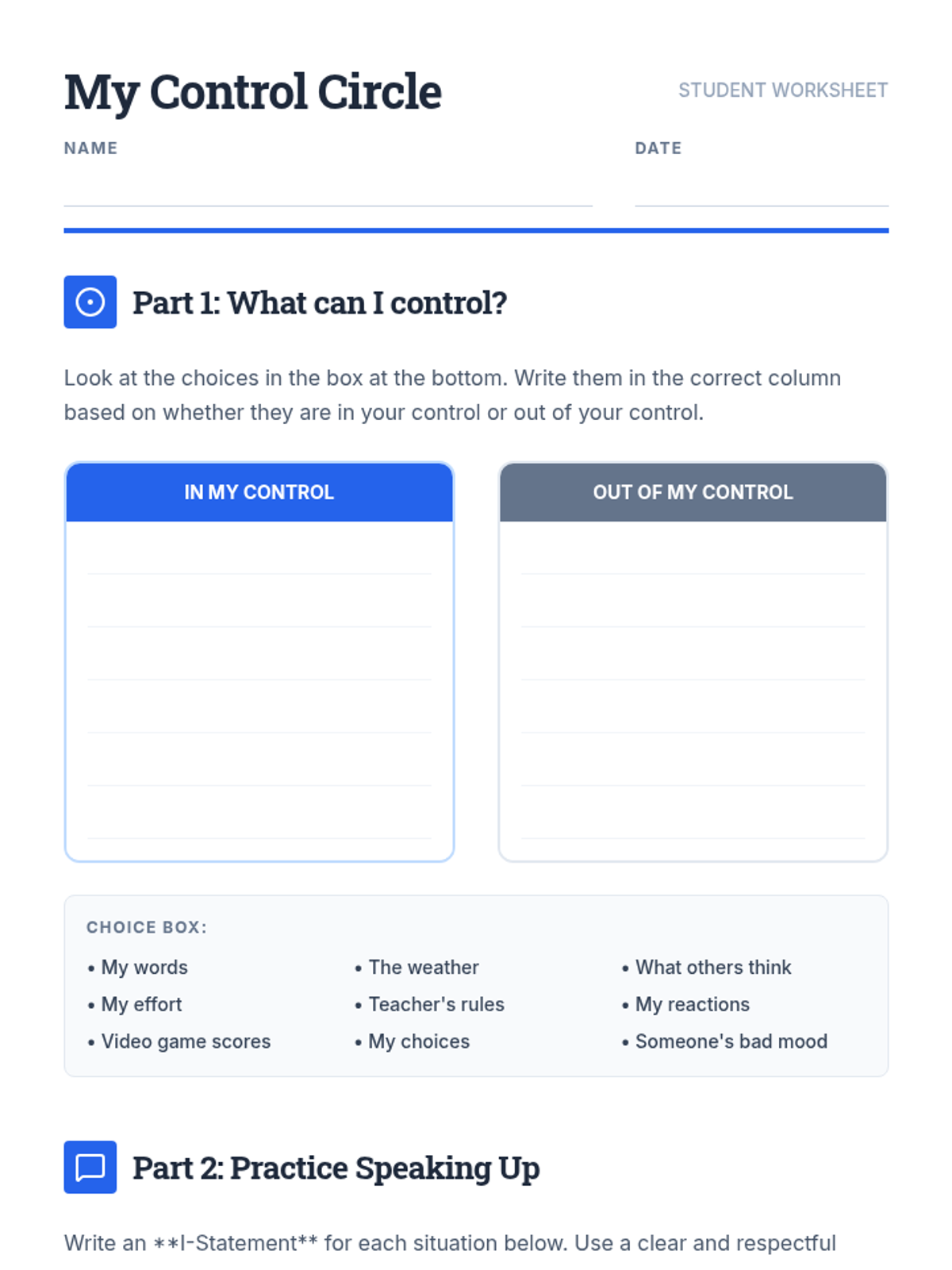
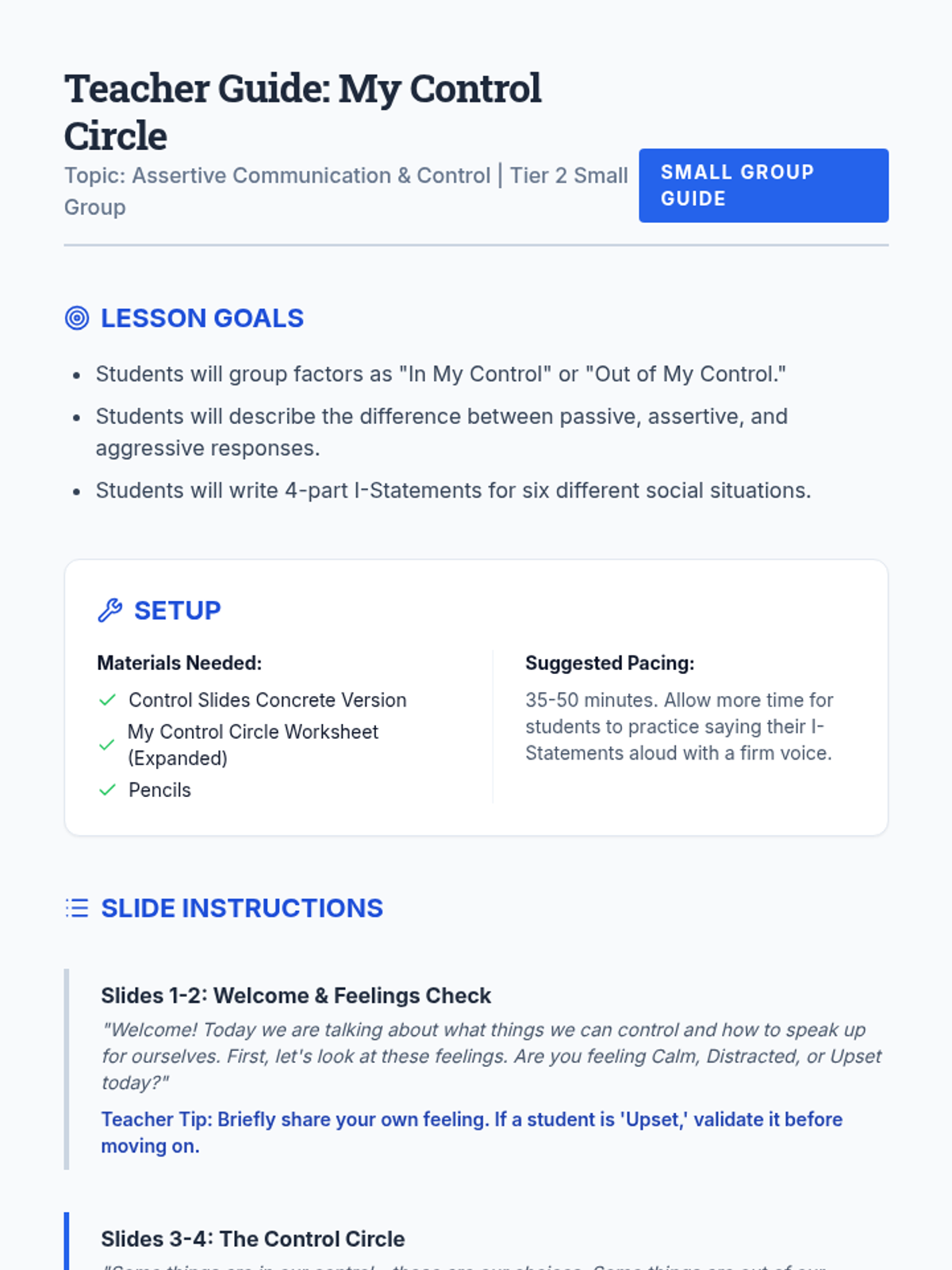
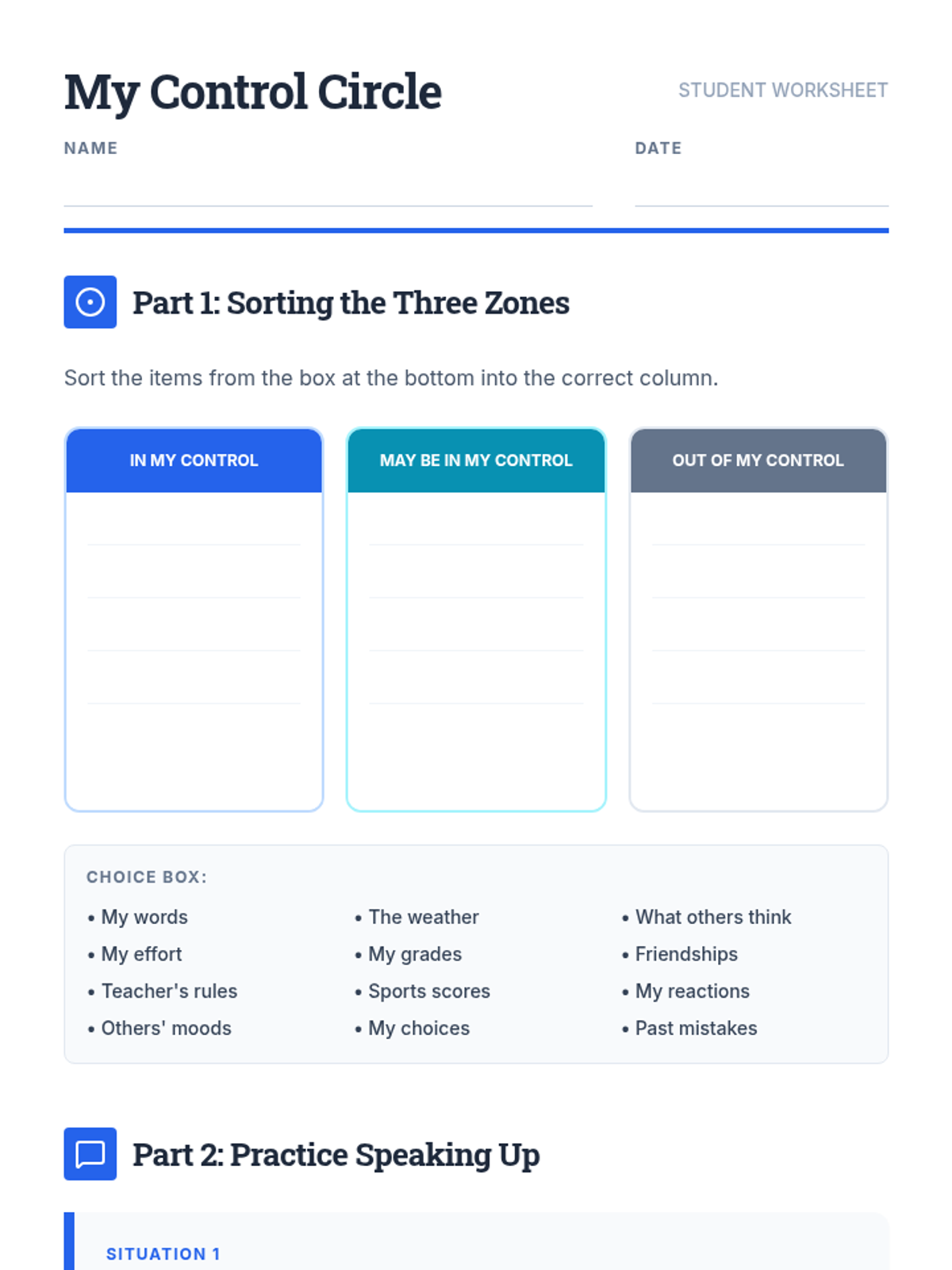
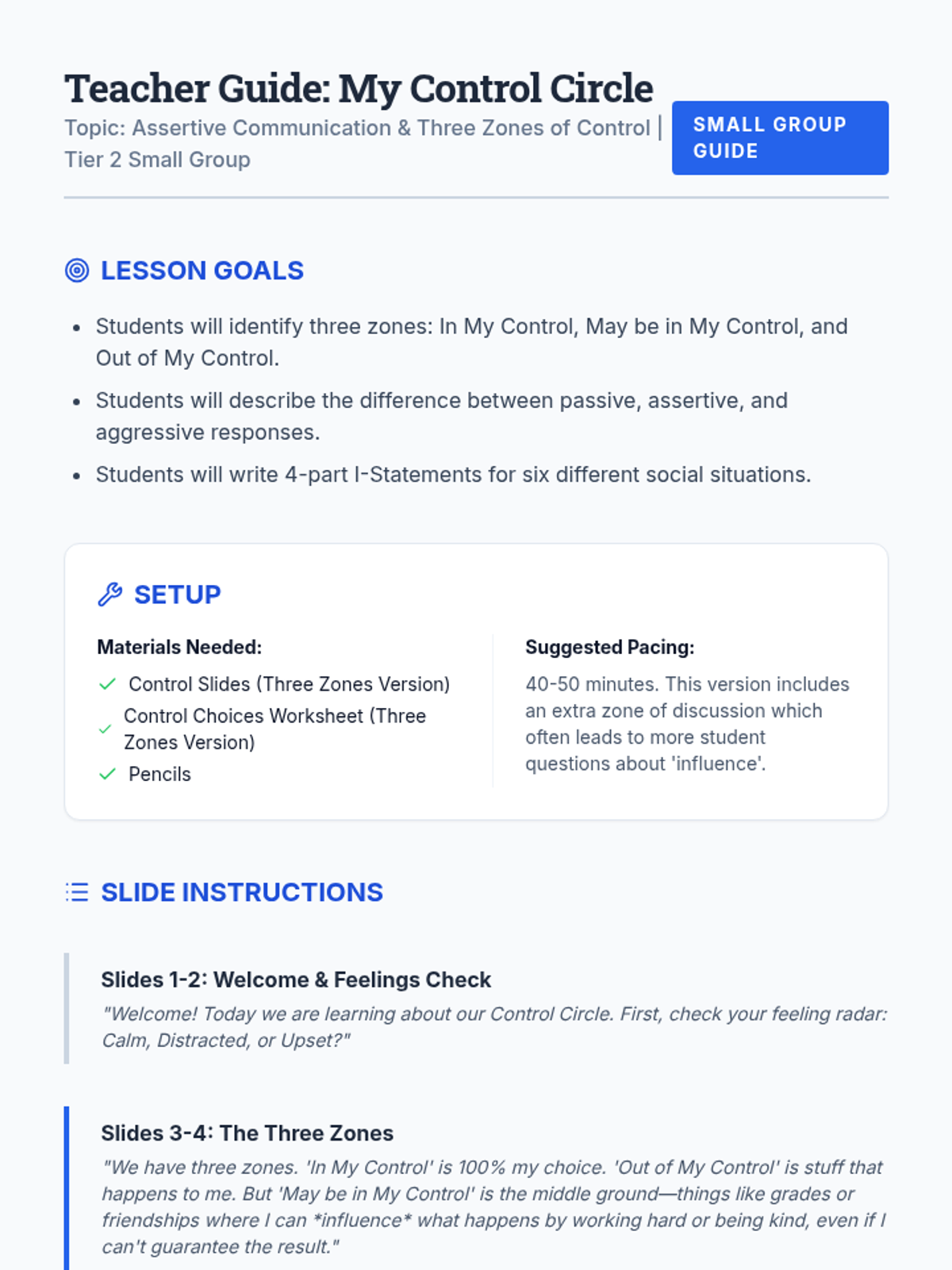
A social-emotional learning lesson for Tier 2 small groups focusing on identifying spheres of control and practicing assertive I-Statements in social scenarios.
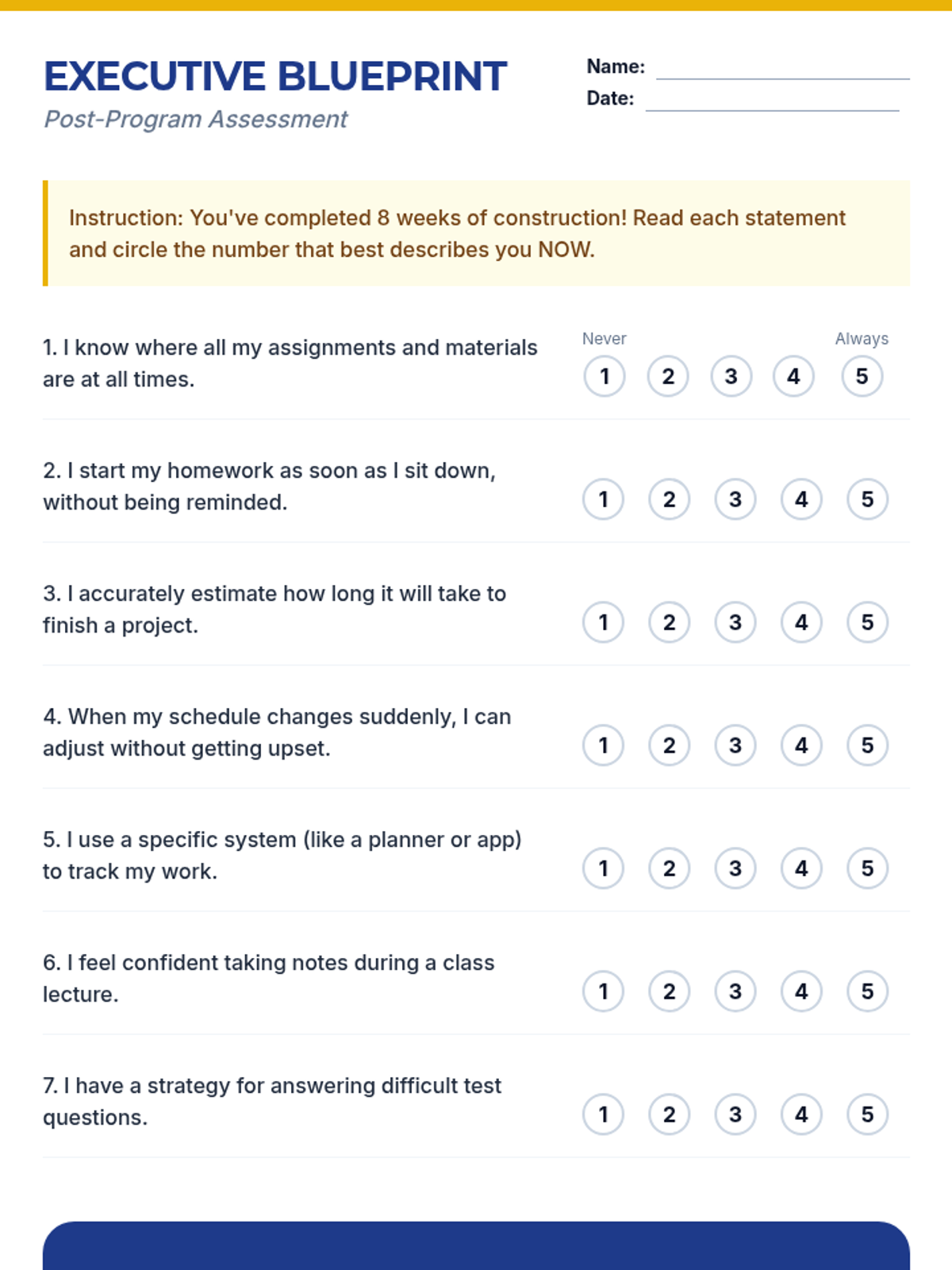
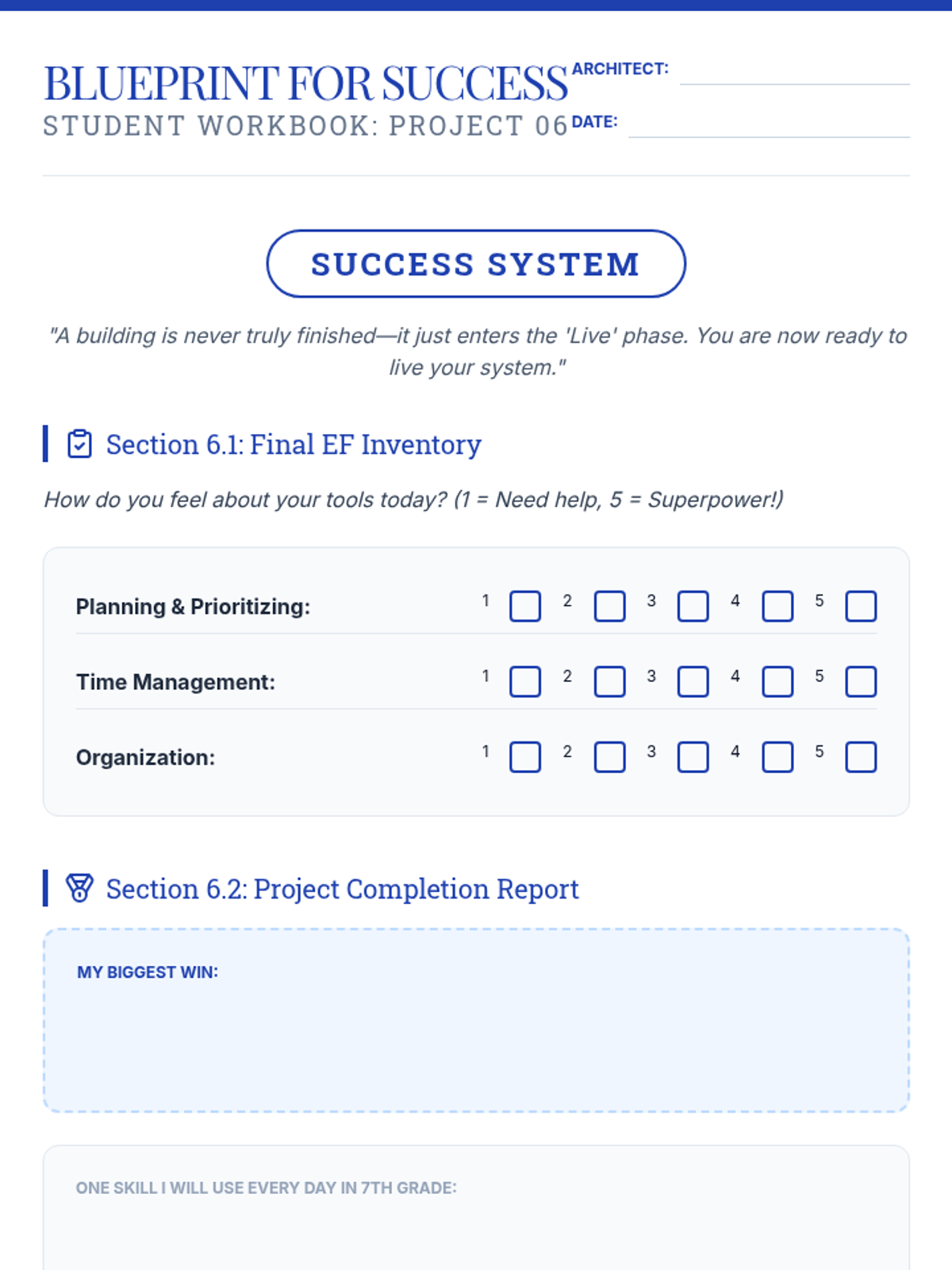
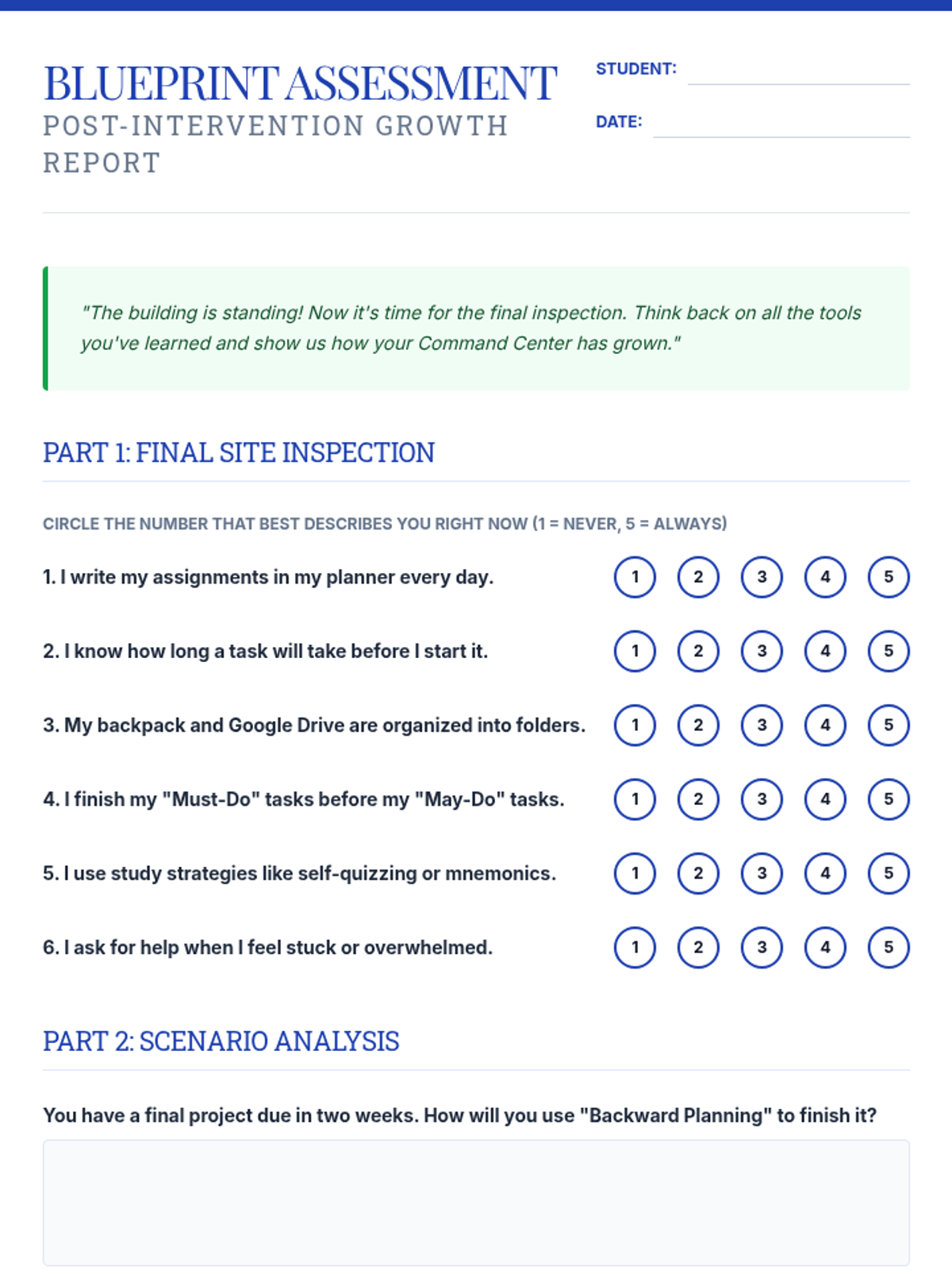
Program review, celebration of growth, and completion of the EF Post-Test.

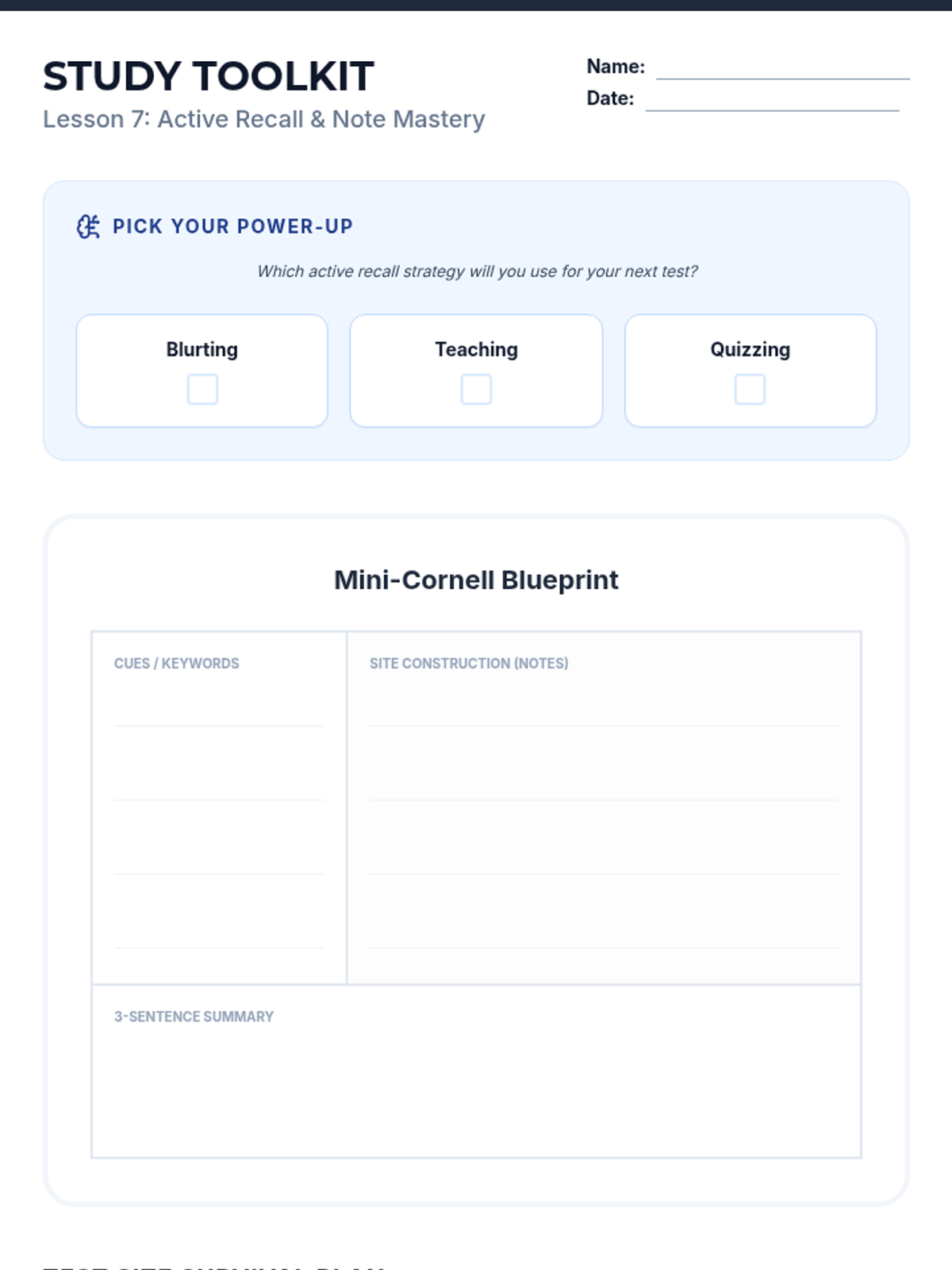
Instruction on effective note-taking and test-taking strategies tailored for middle school.
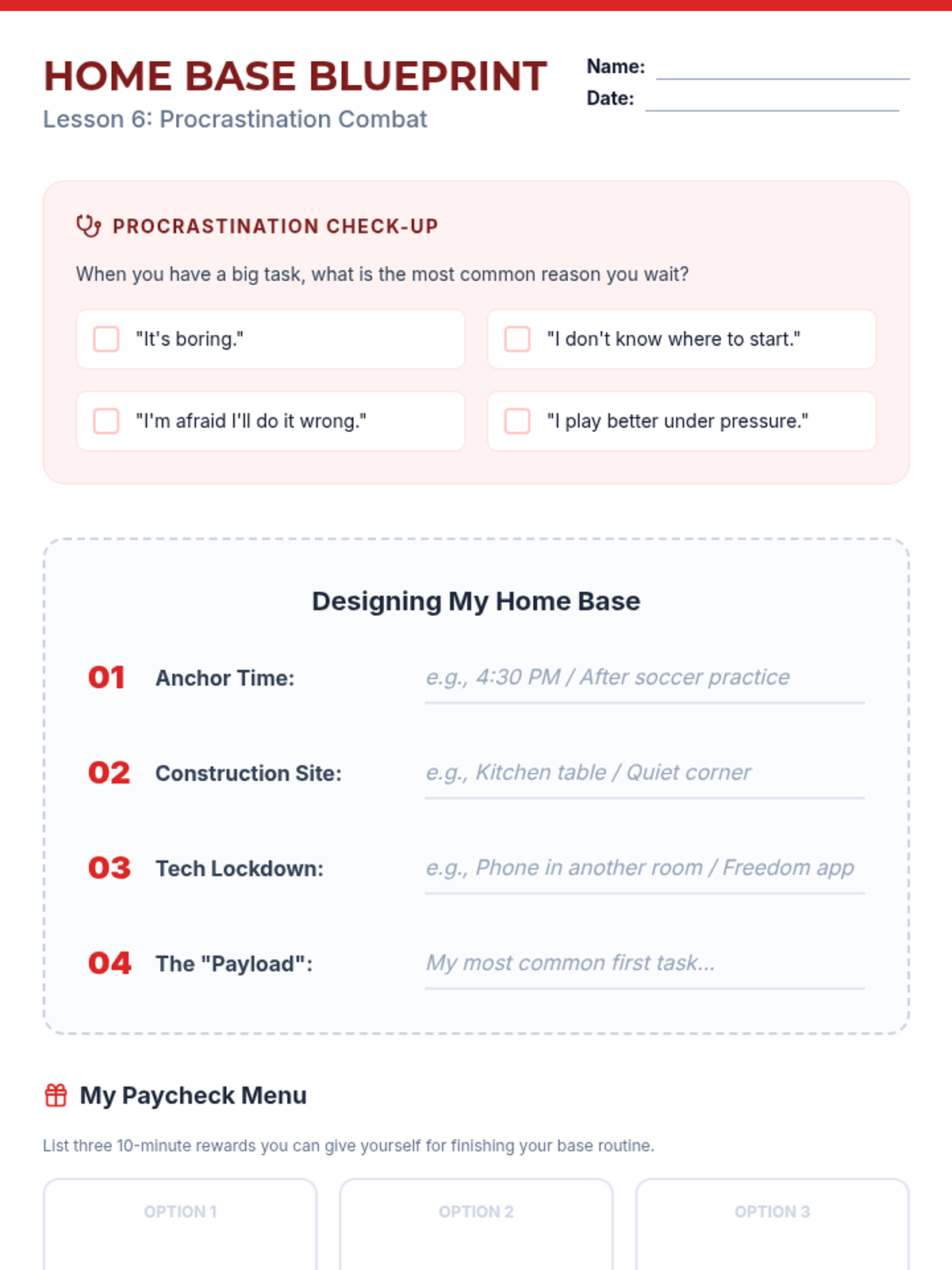
Practical strategies to defeat procrastination and streamline homework routines.
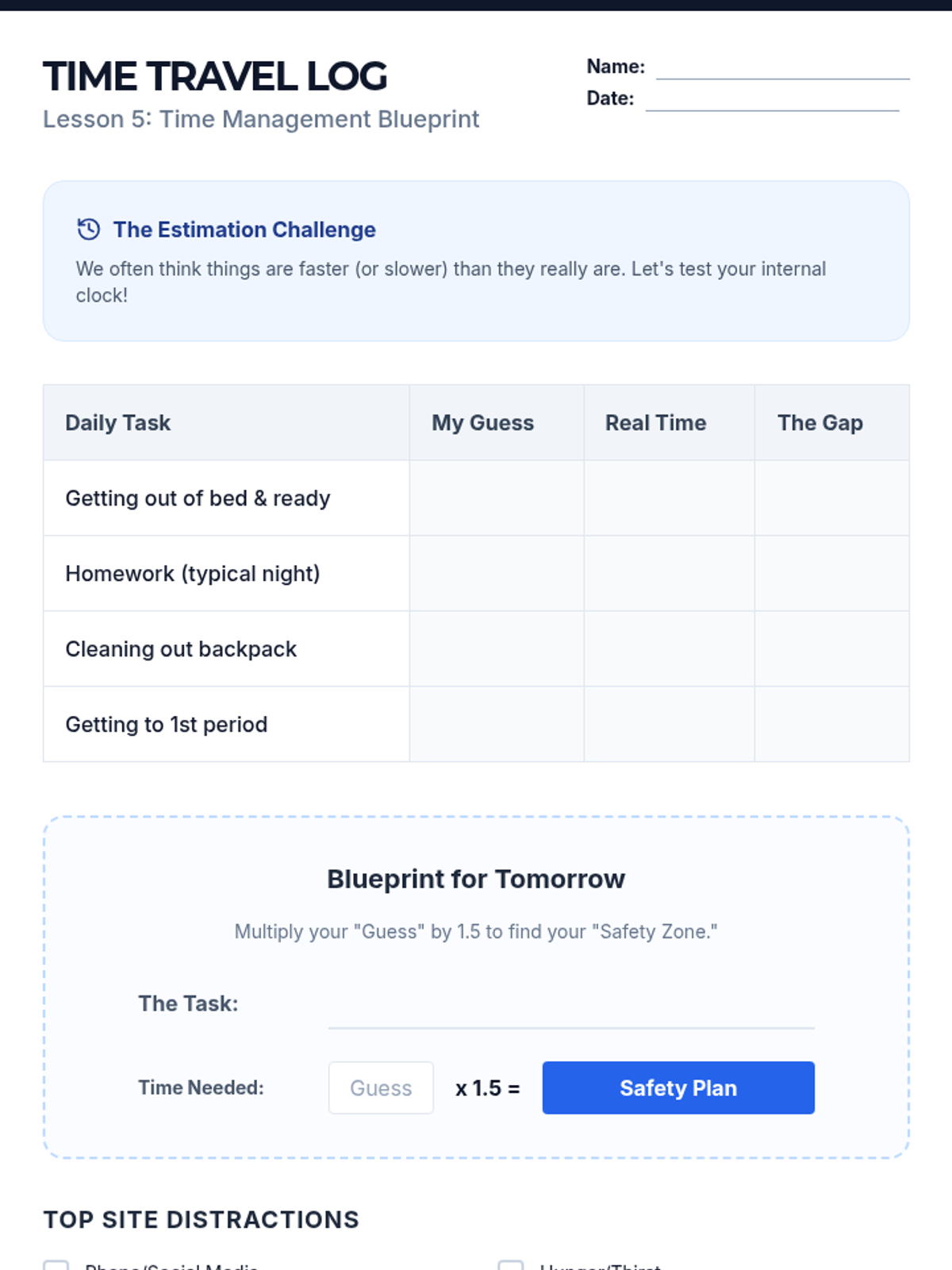
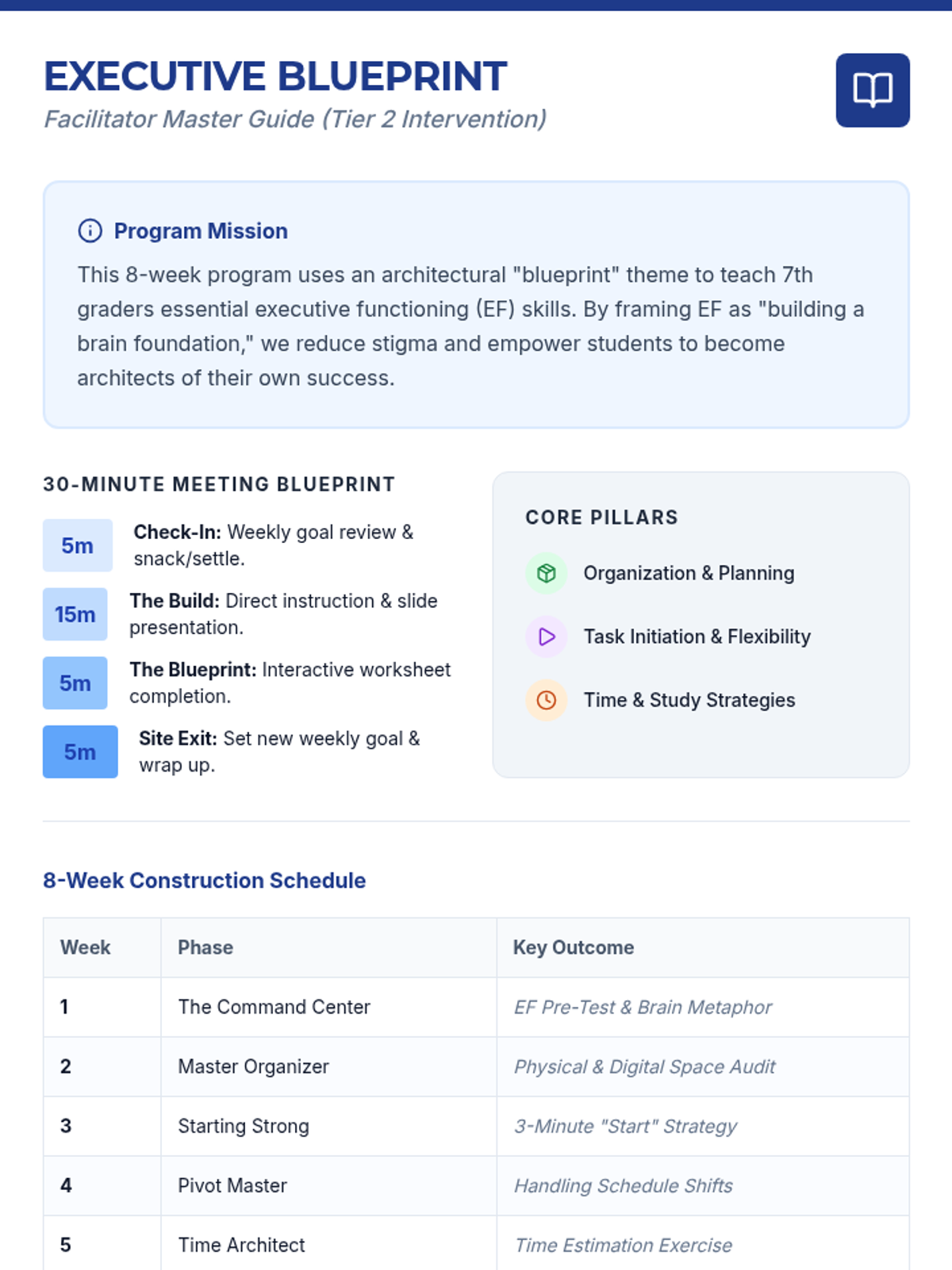
Building an awareness of time and learning how to estimate how long tasks actually take.
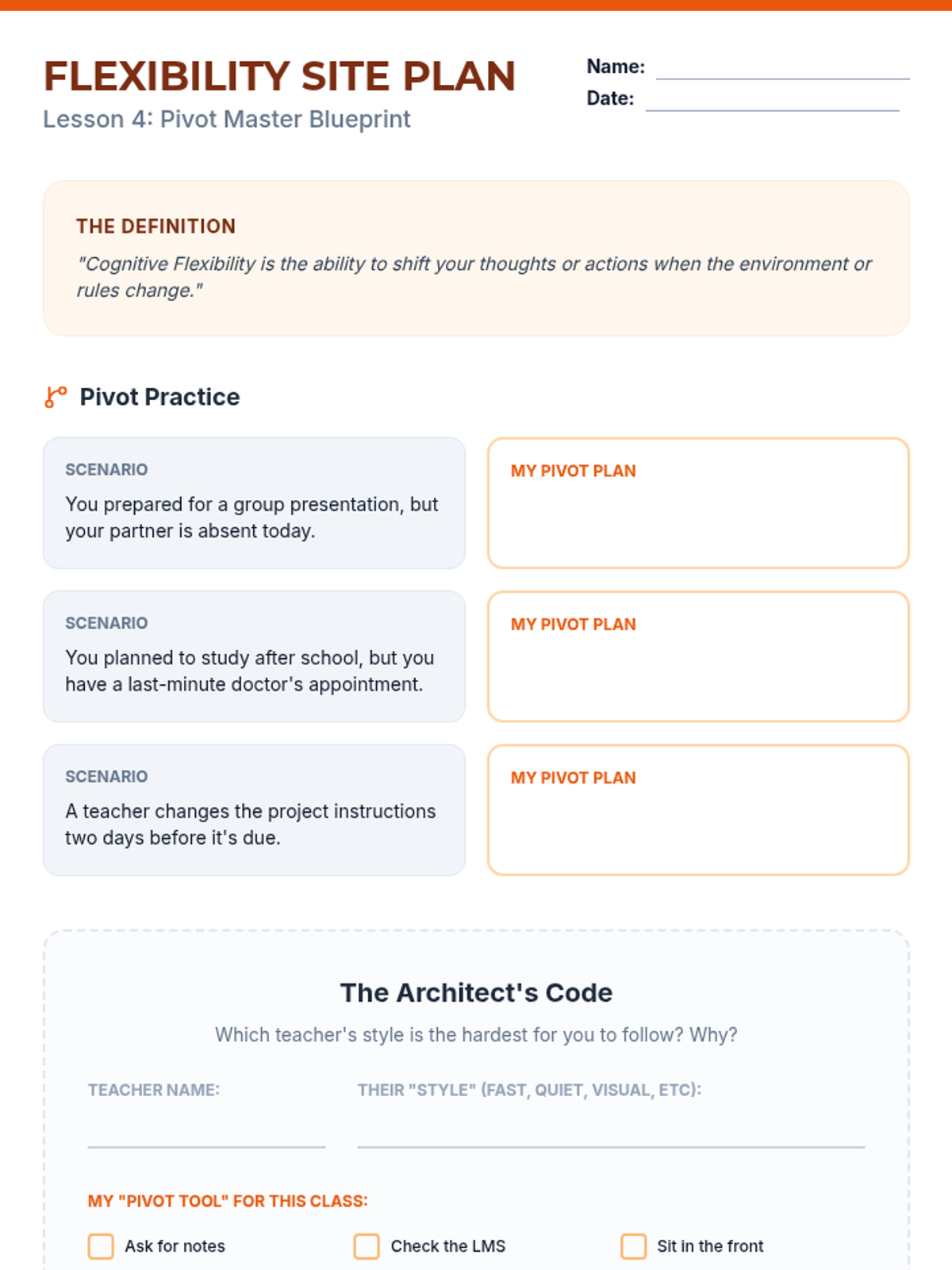
Developing cognitive flexibility to handle changes in schedules and different teaching styles.
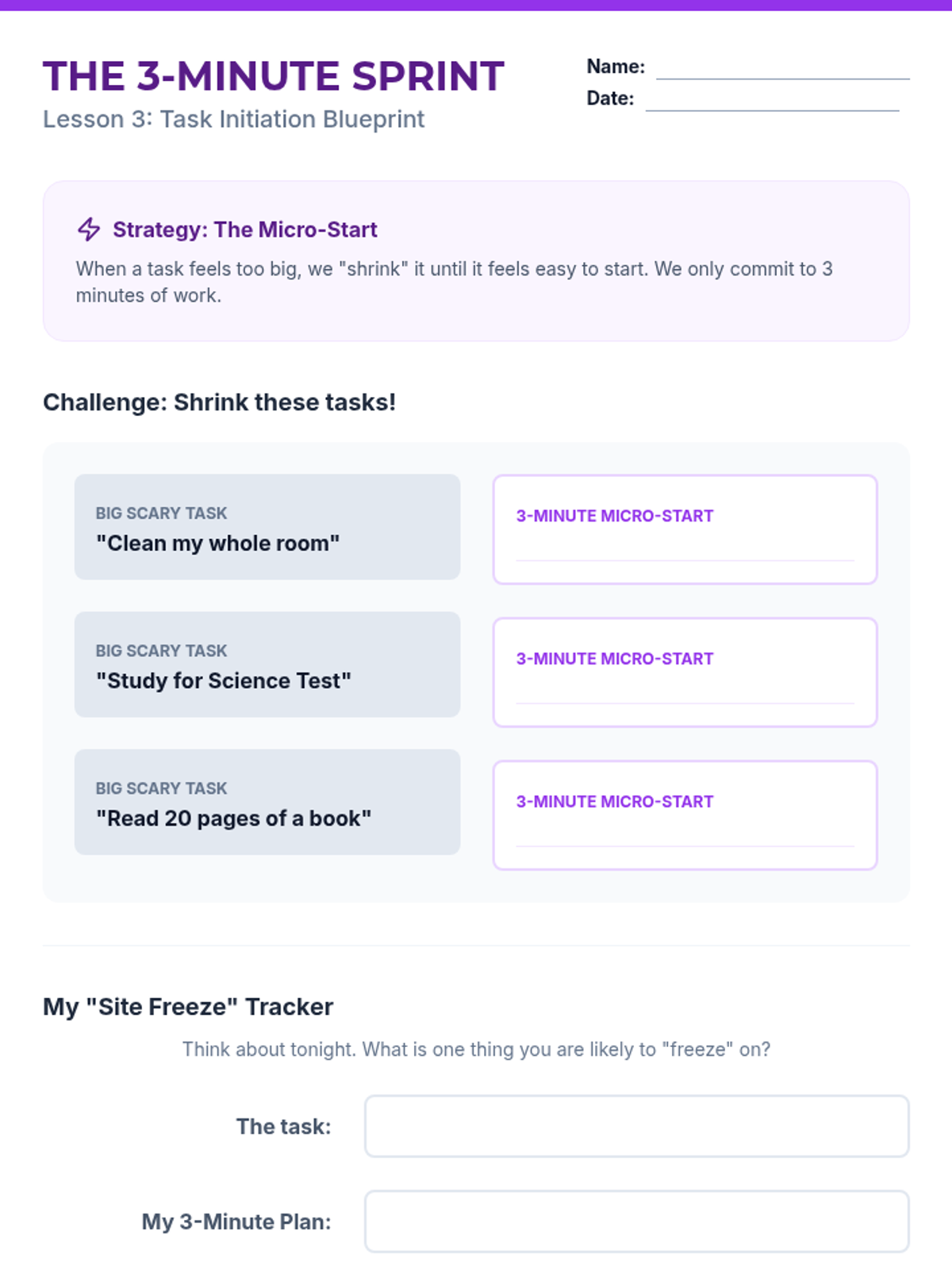
Strategies for overcoming the 'freeze' and getting started on difficult tasks immediately.
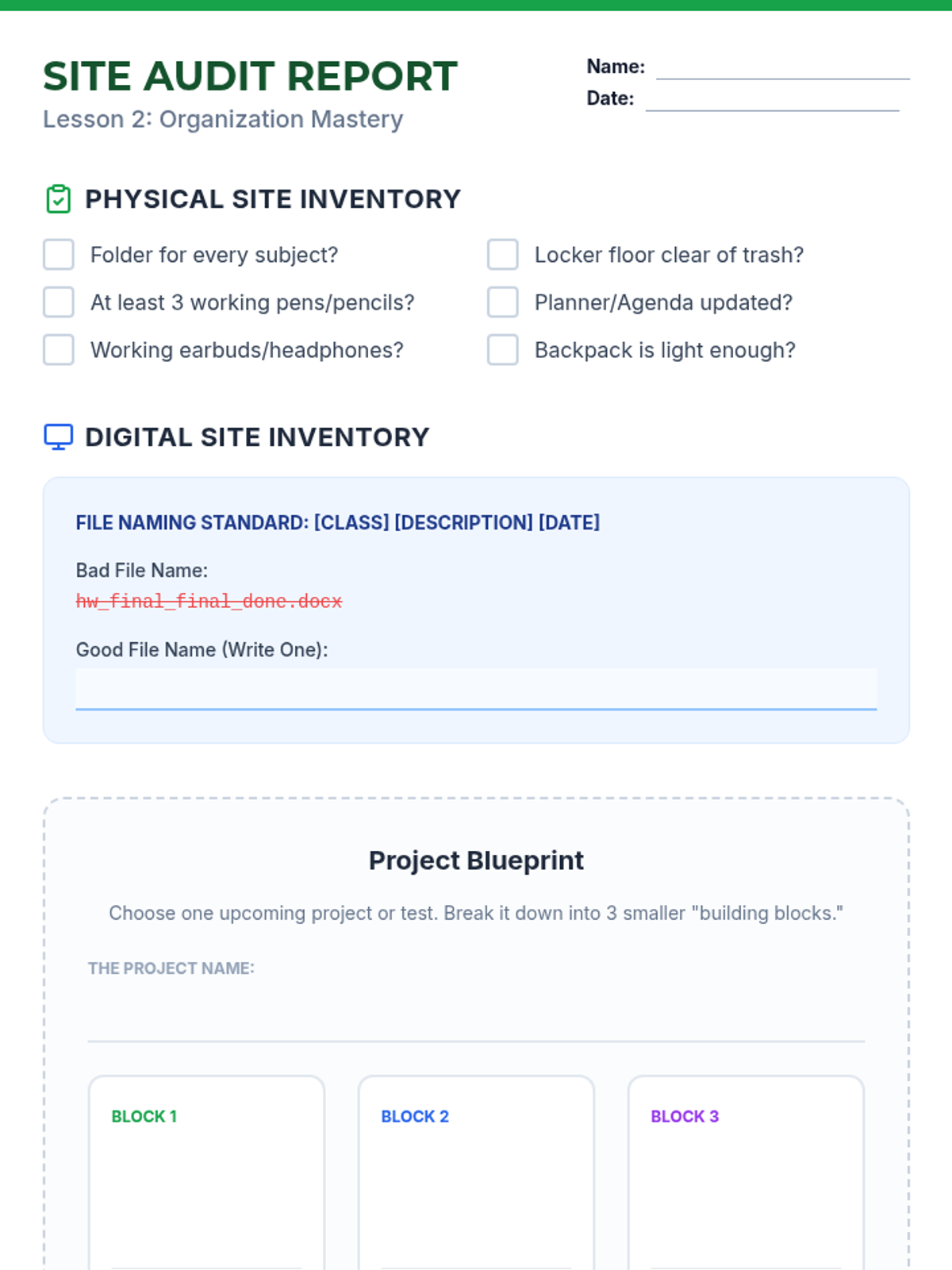
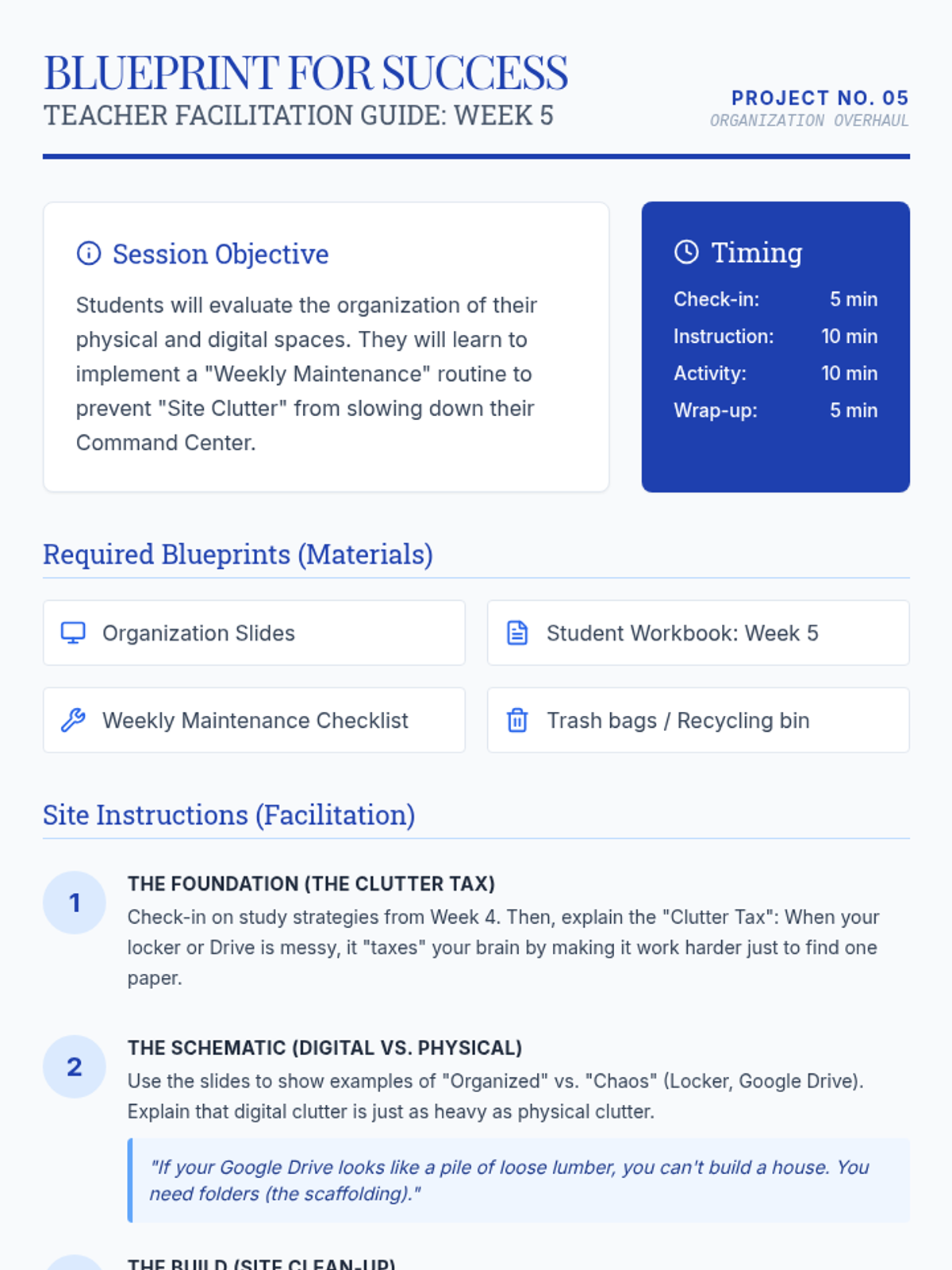
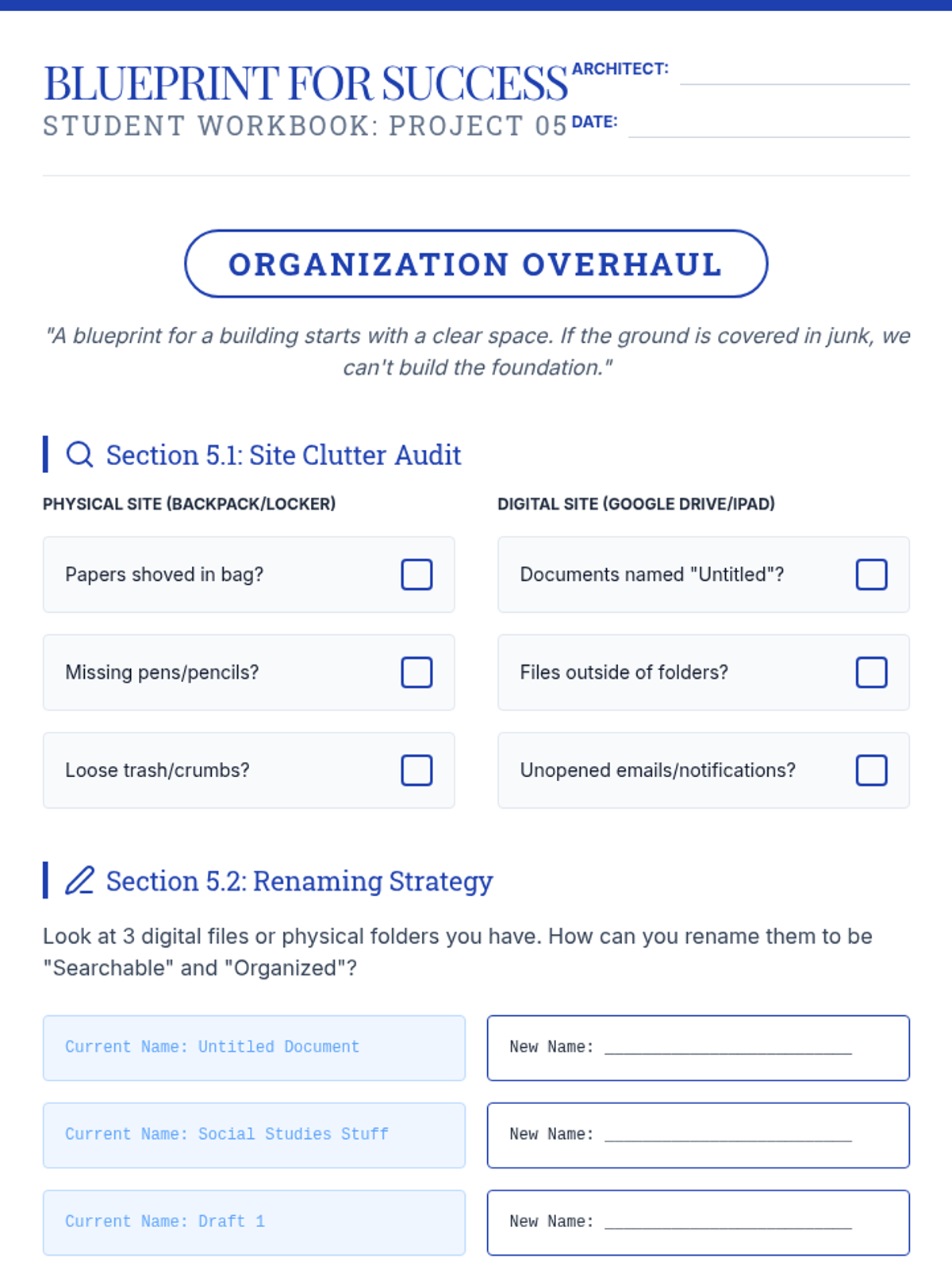
Focuses on organization of physical and digital spaces and long-term project planning.
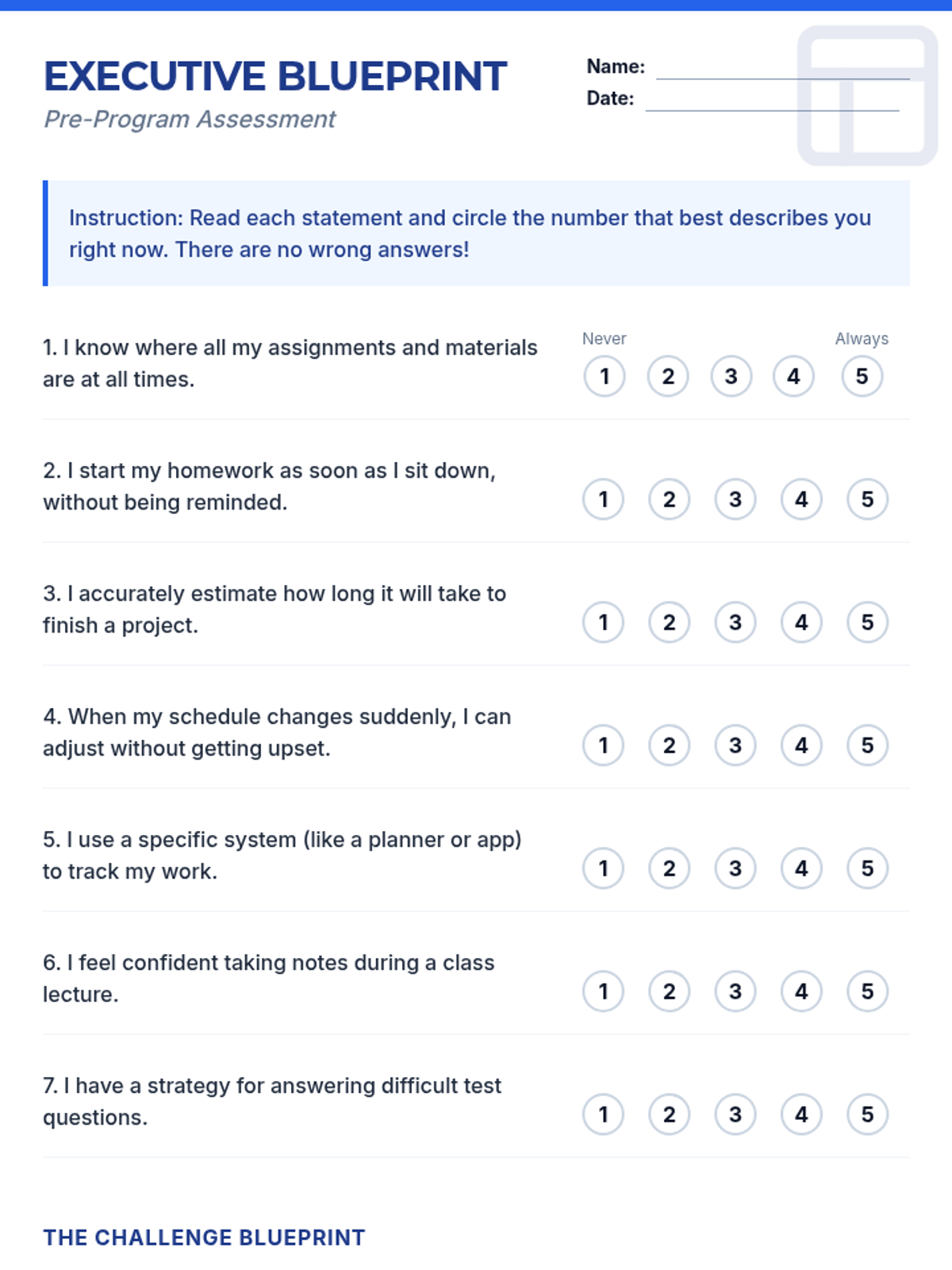
Introduction to the brain's "Command Center," establishing group norms, and completing the EF Pre-Test.
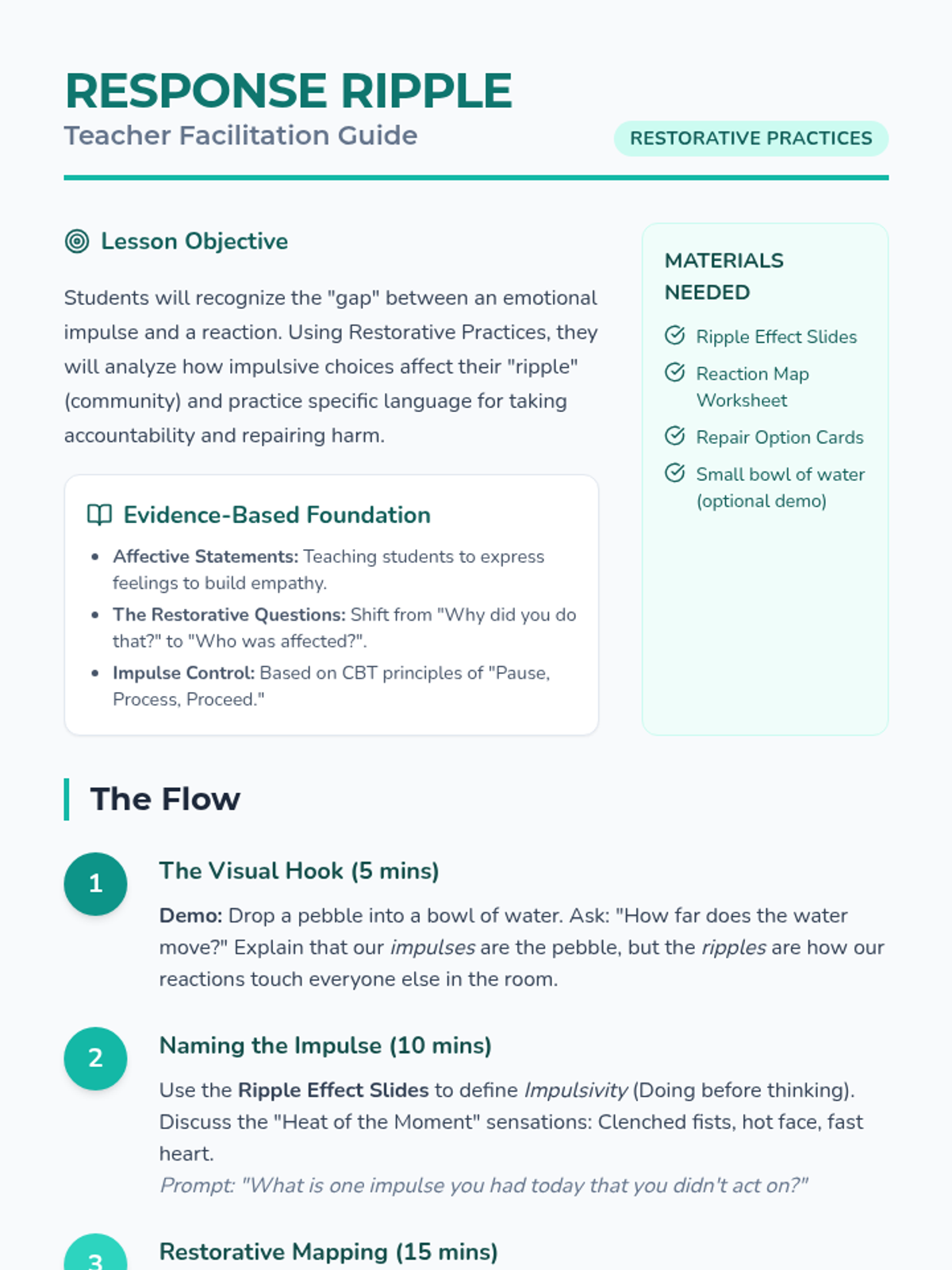
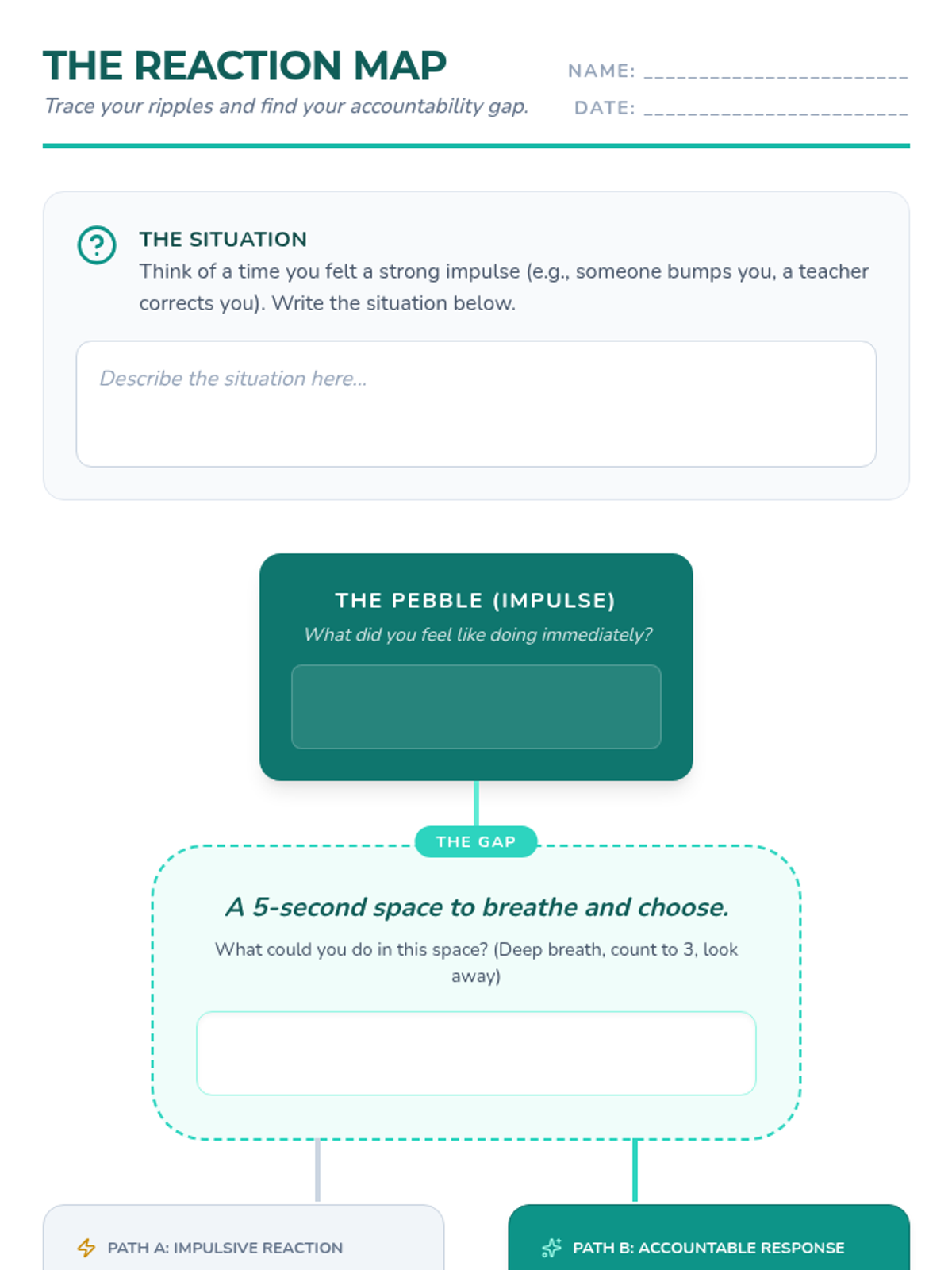
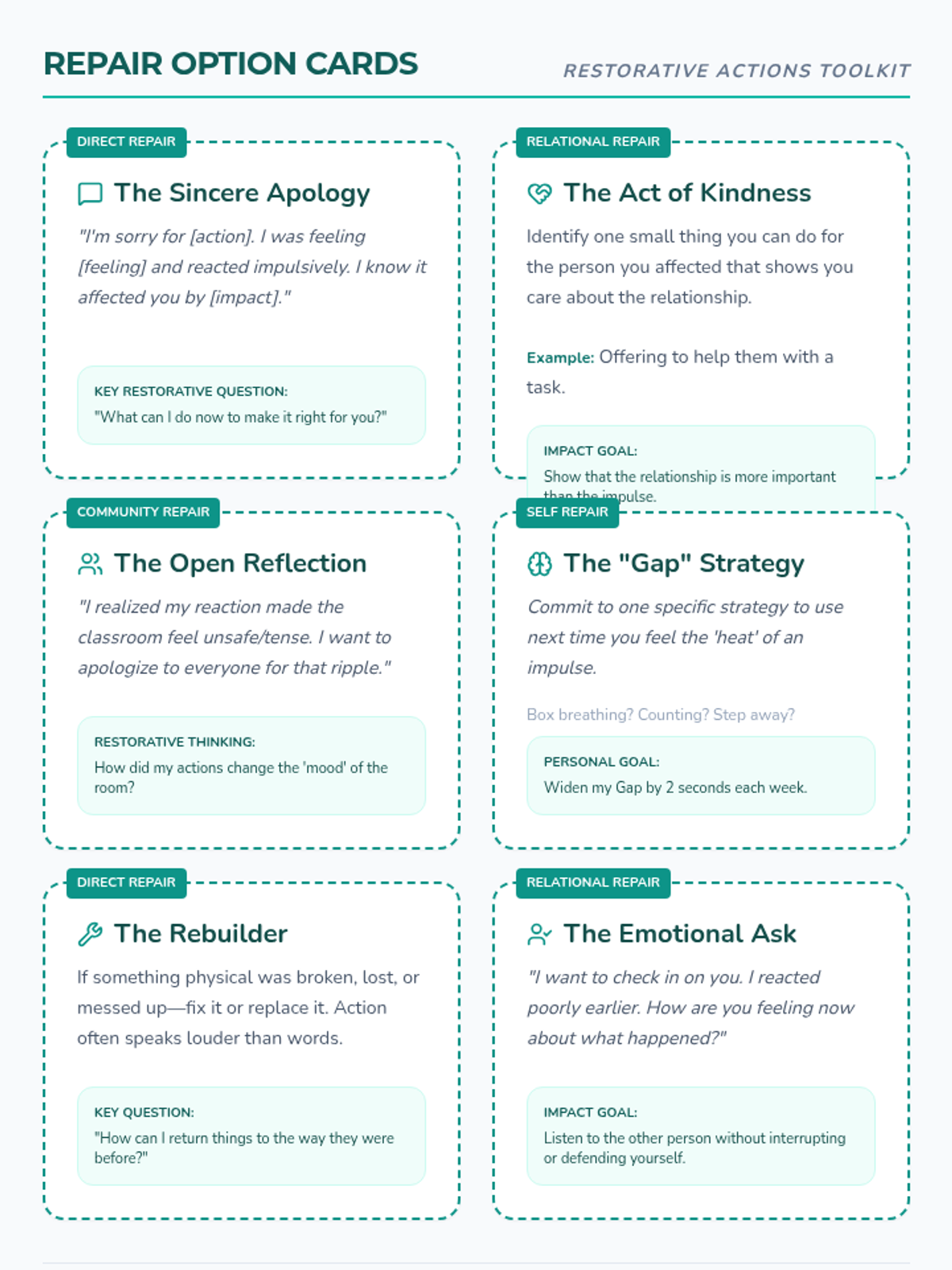
A Restorative Practices-based lesson for 6th graders focused on identifying impulsive emotional reactions, understanding their impact on others, and taking accountability through meaningful repair.
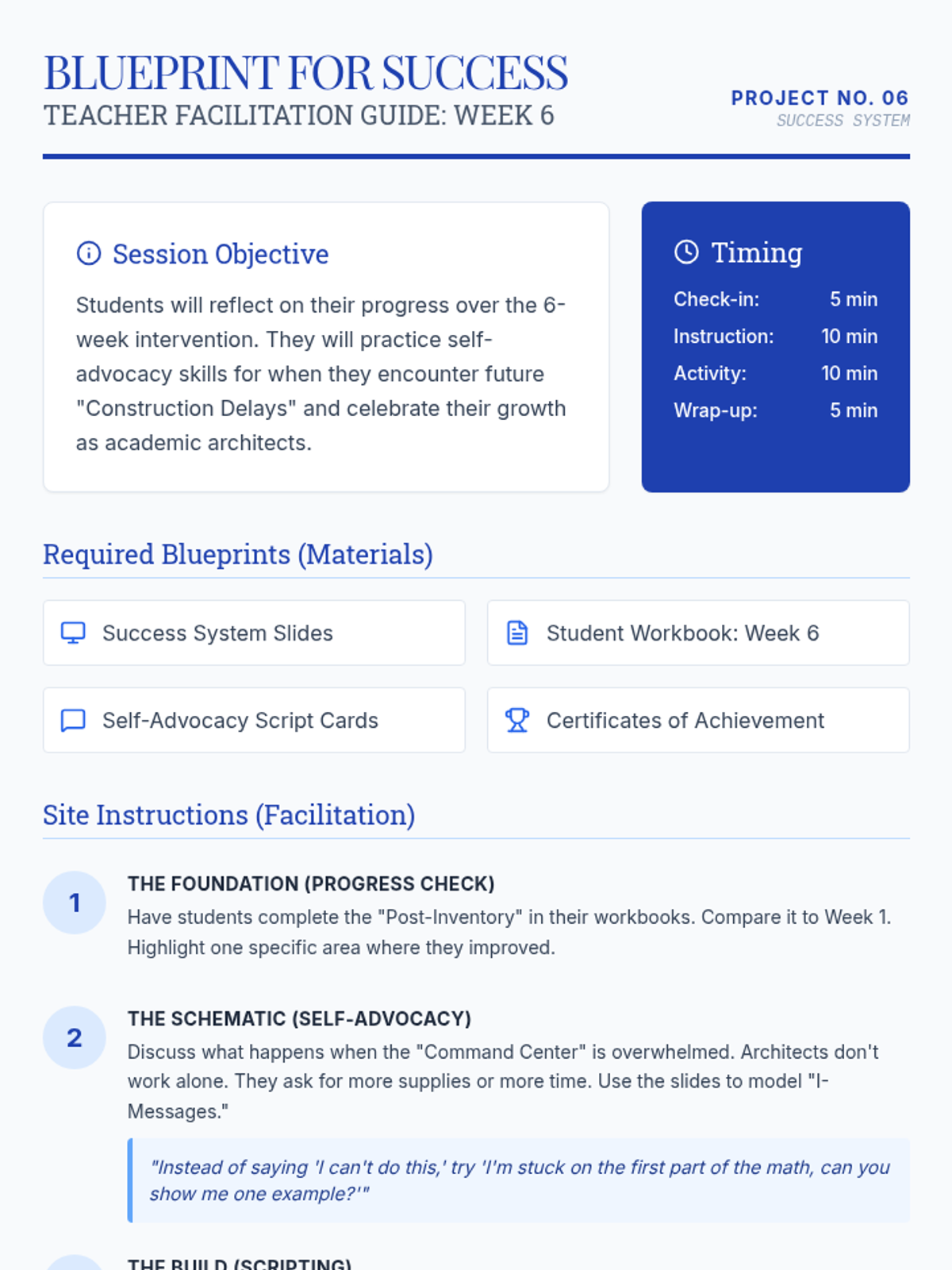
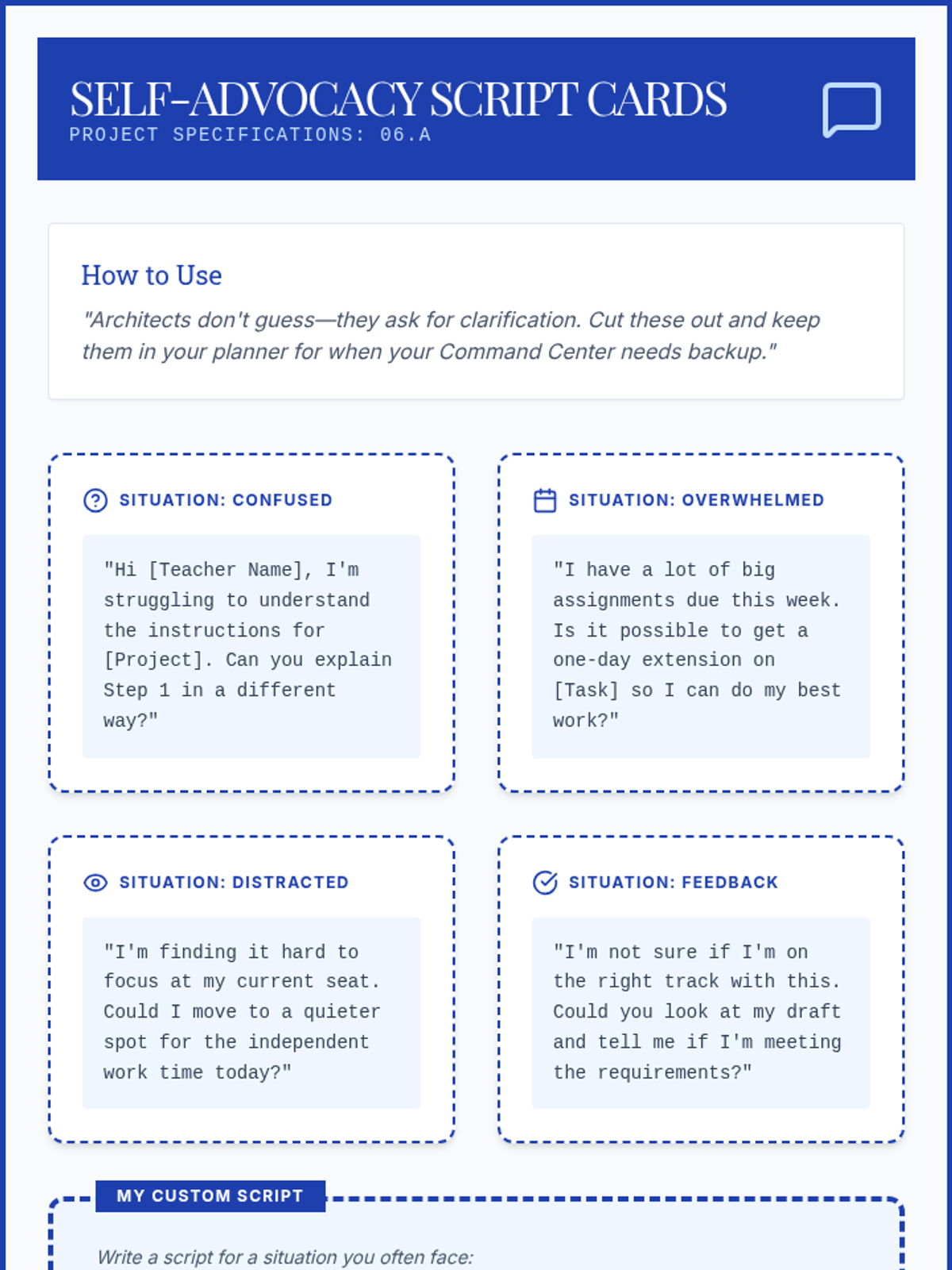
Reviewing skills learned, troubleshooting obstacles, and practicing self-advocacy for future success.
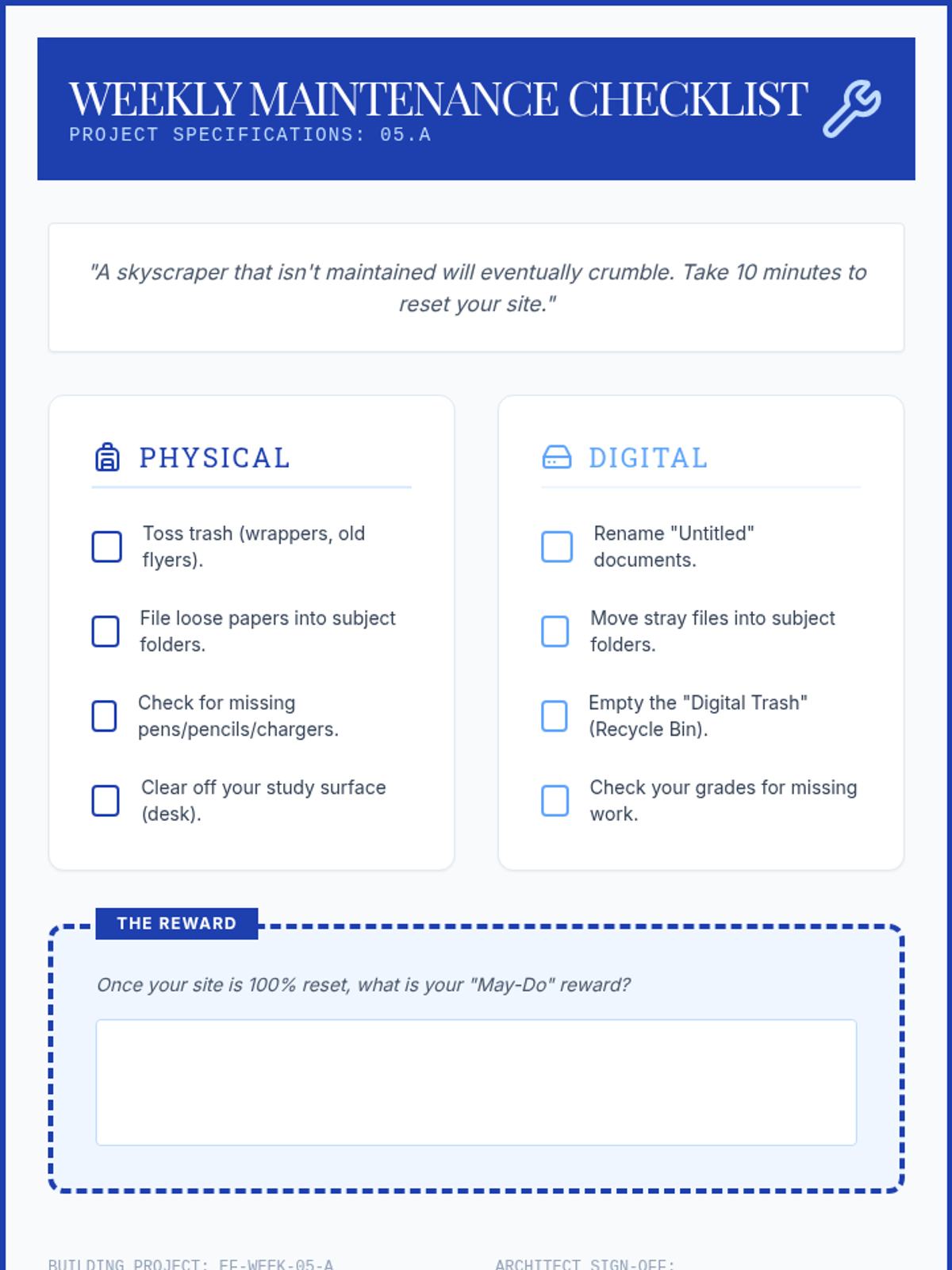
Organizing physical and digital spaces, establishing routines for material management.
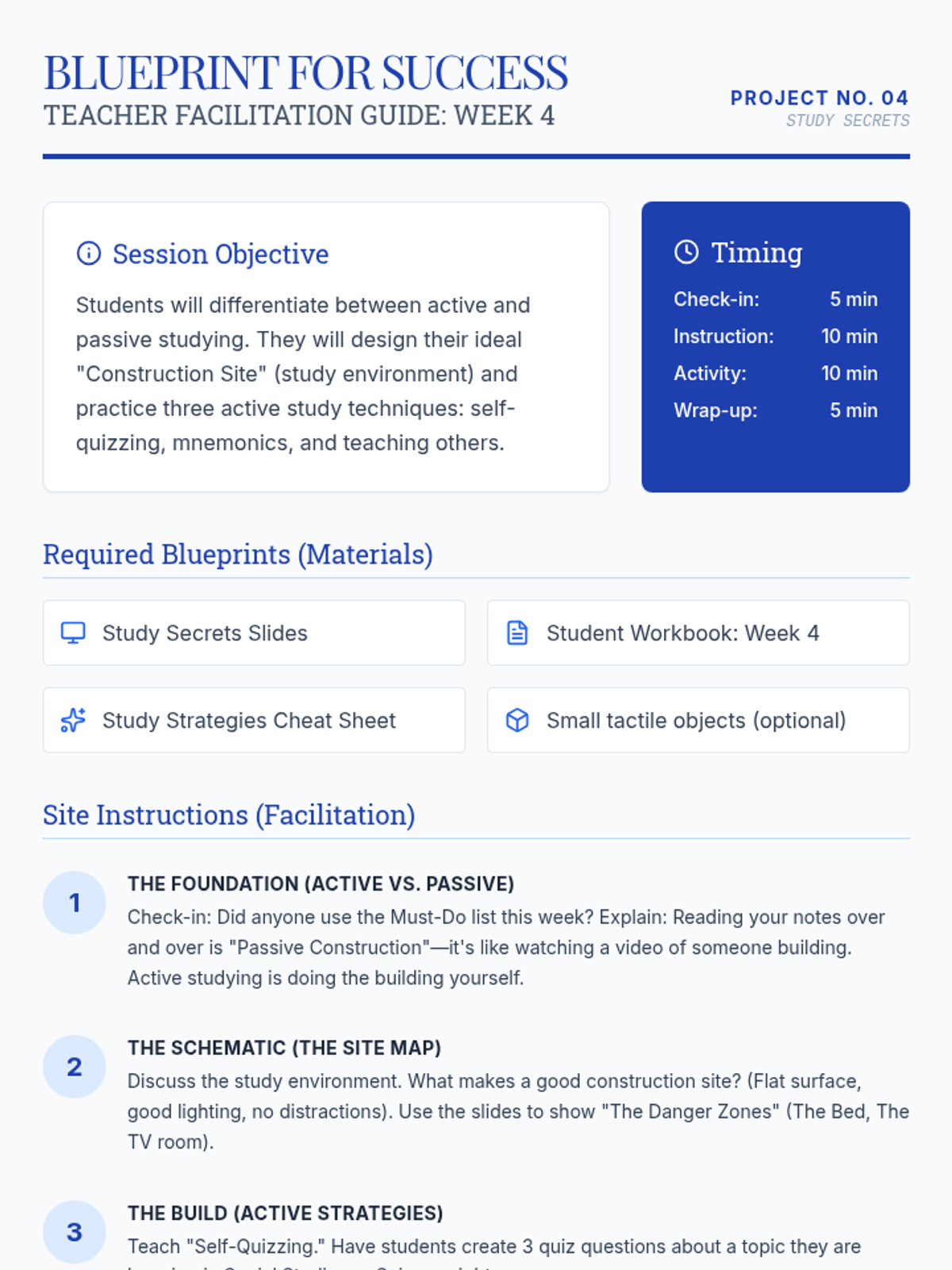
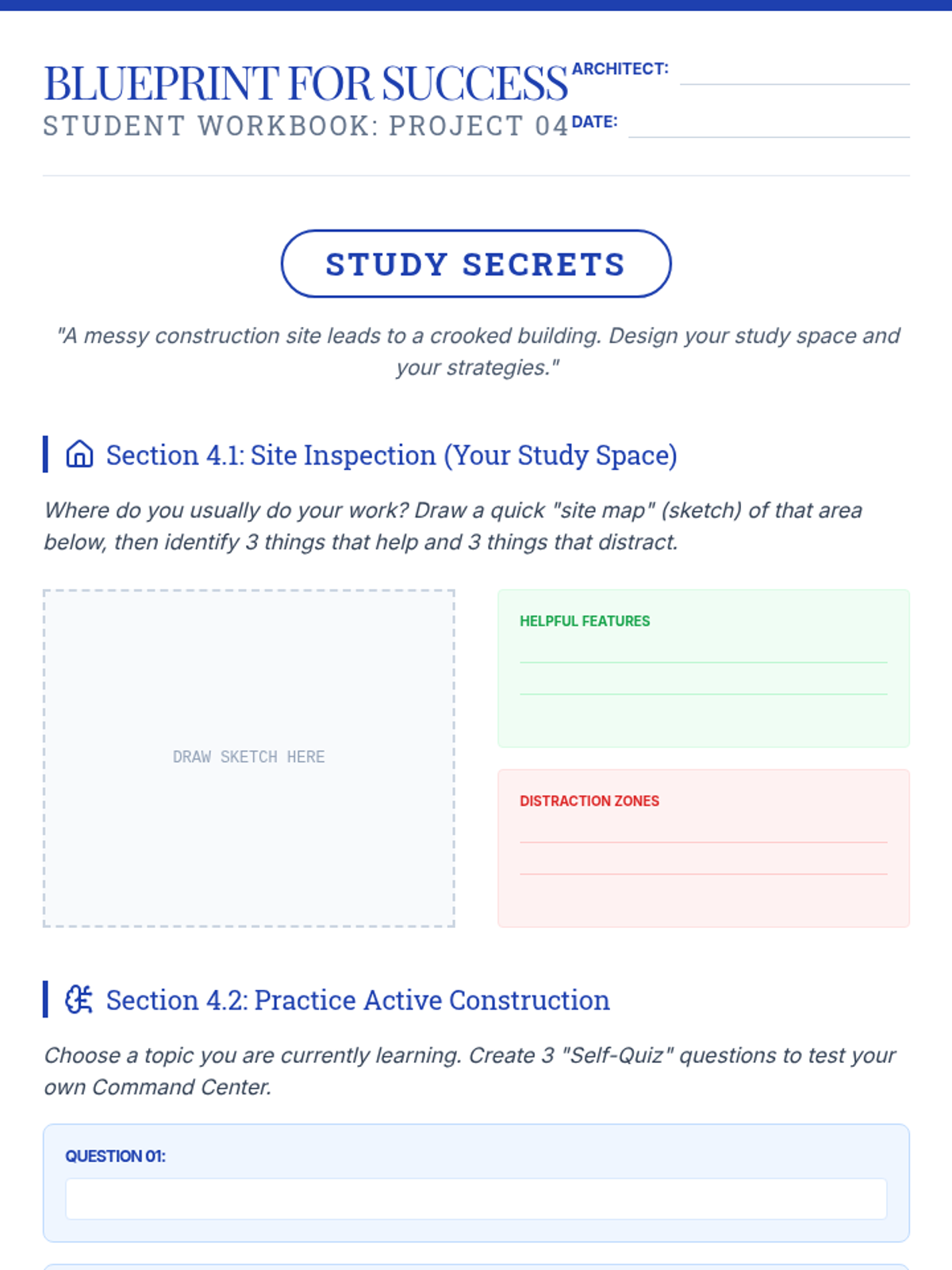
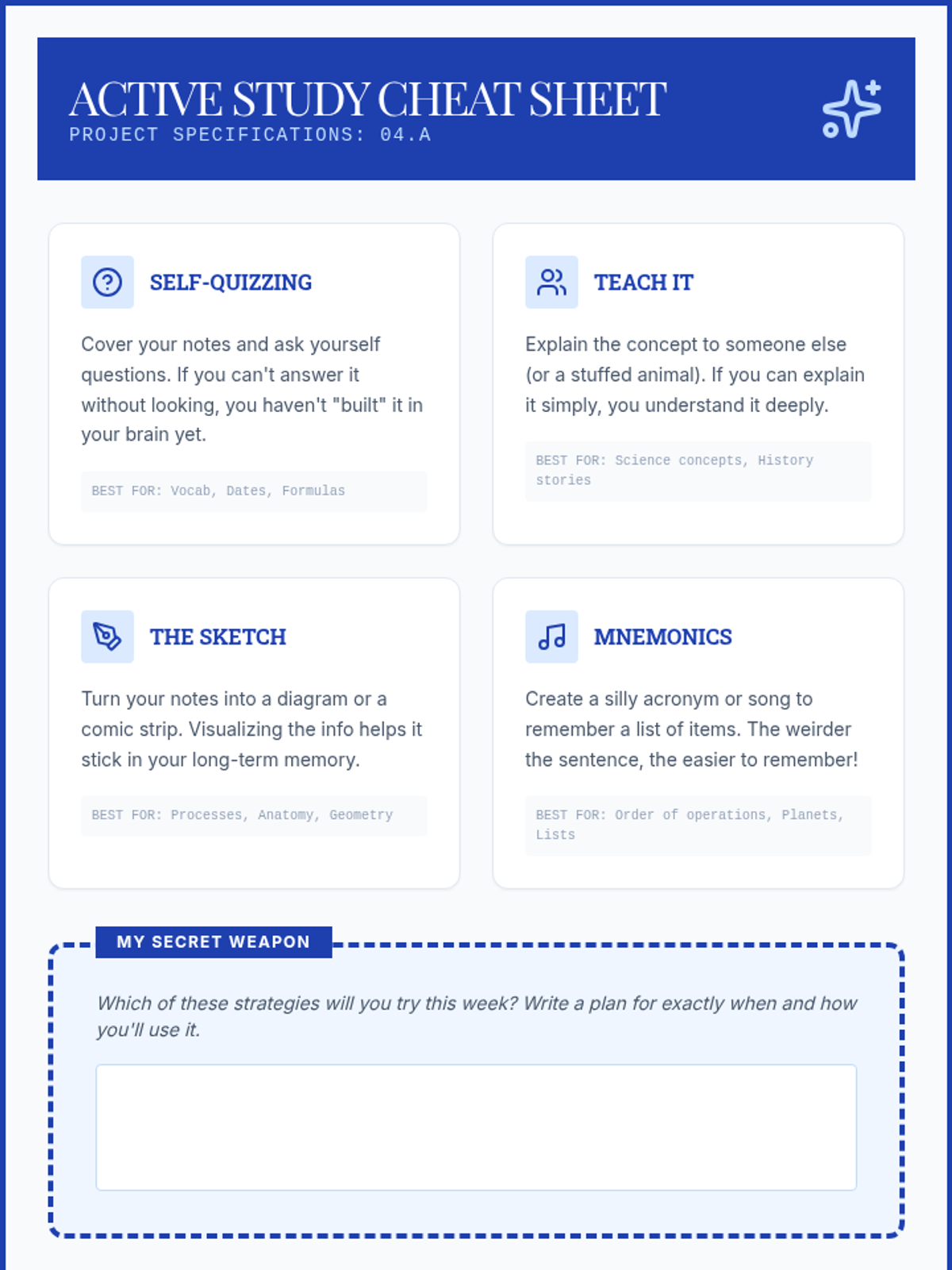
Developing active study habits, creating optimal study environments, and memory enhancement techniques.
Strategies for time estimation, prioritization of tasks, and overcoming procrastination.
Focusing on academic planning, using planners effectively, and the art of backward planning for long-term projects.
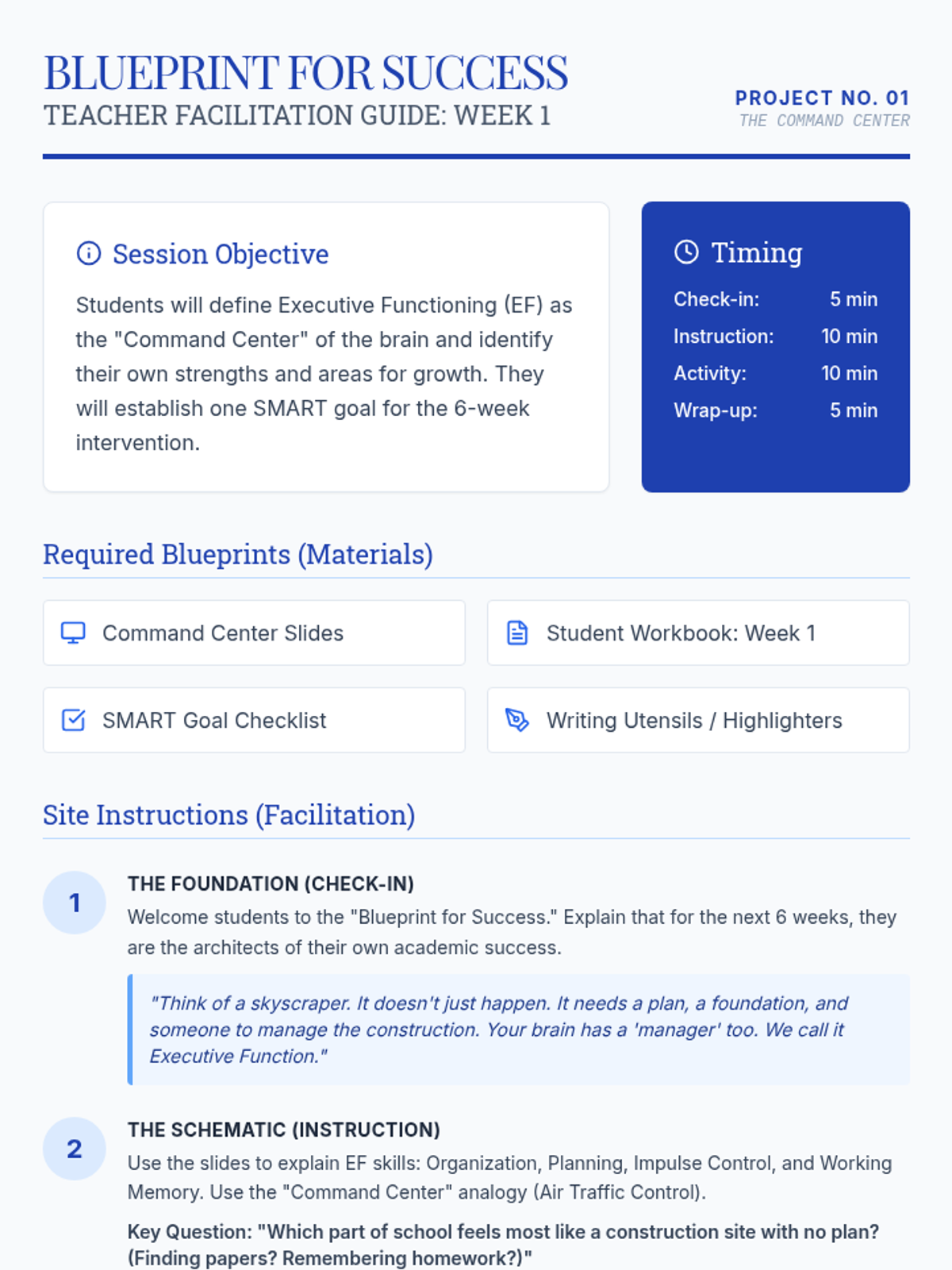
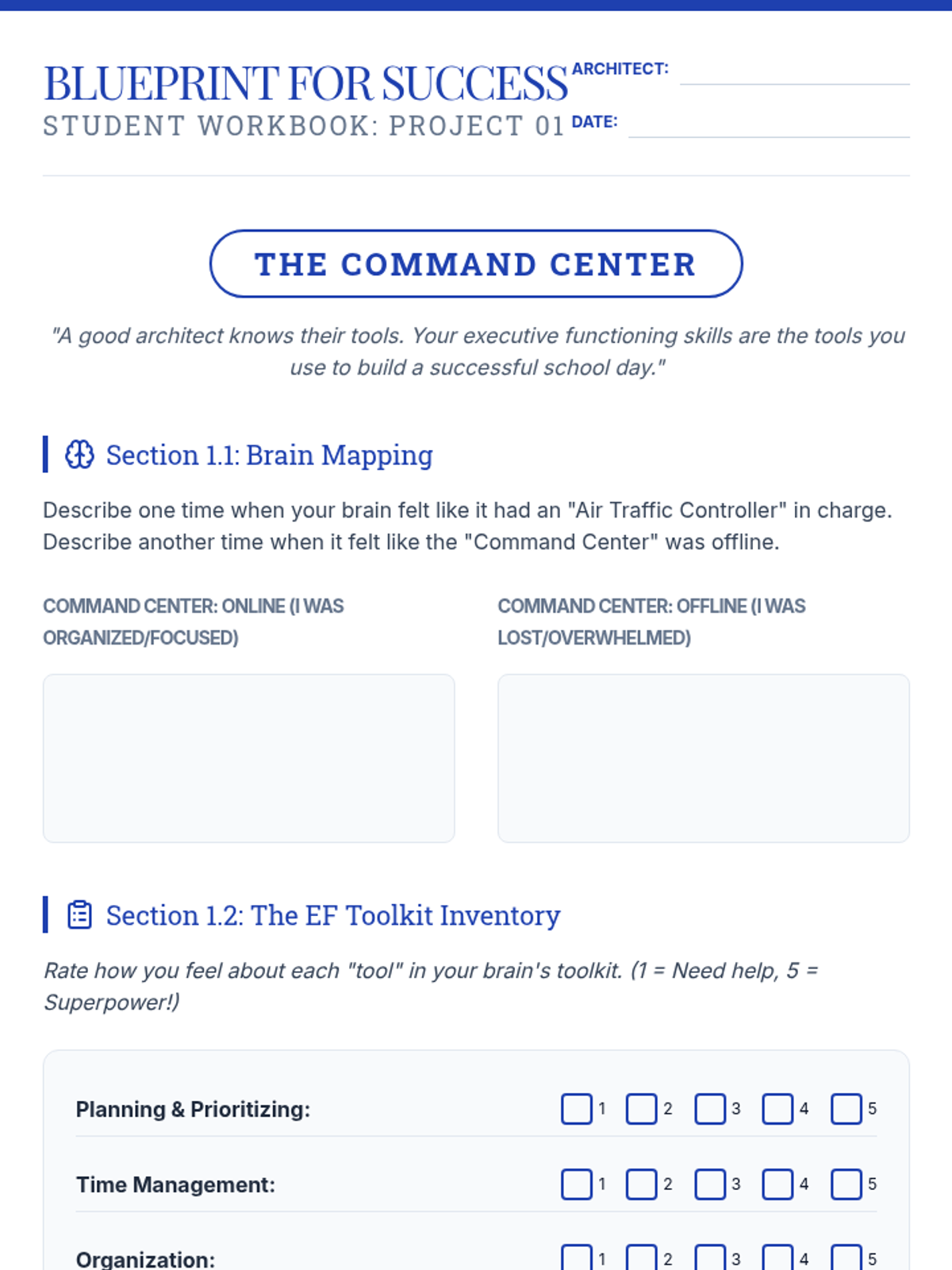
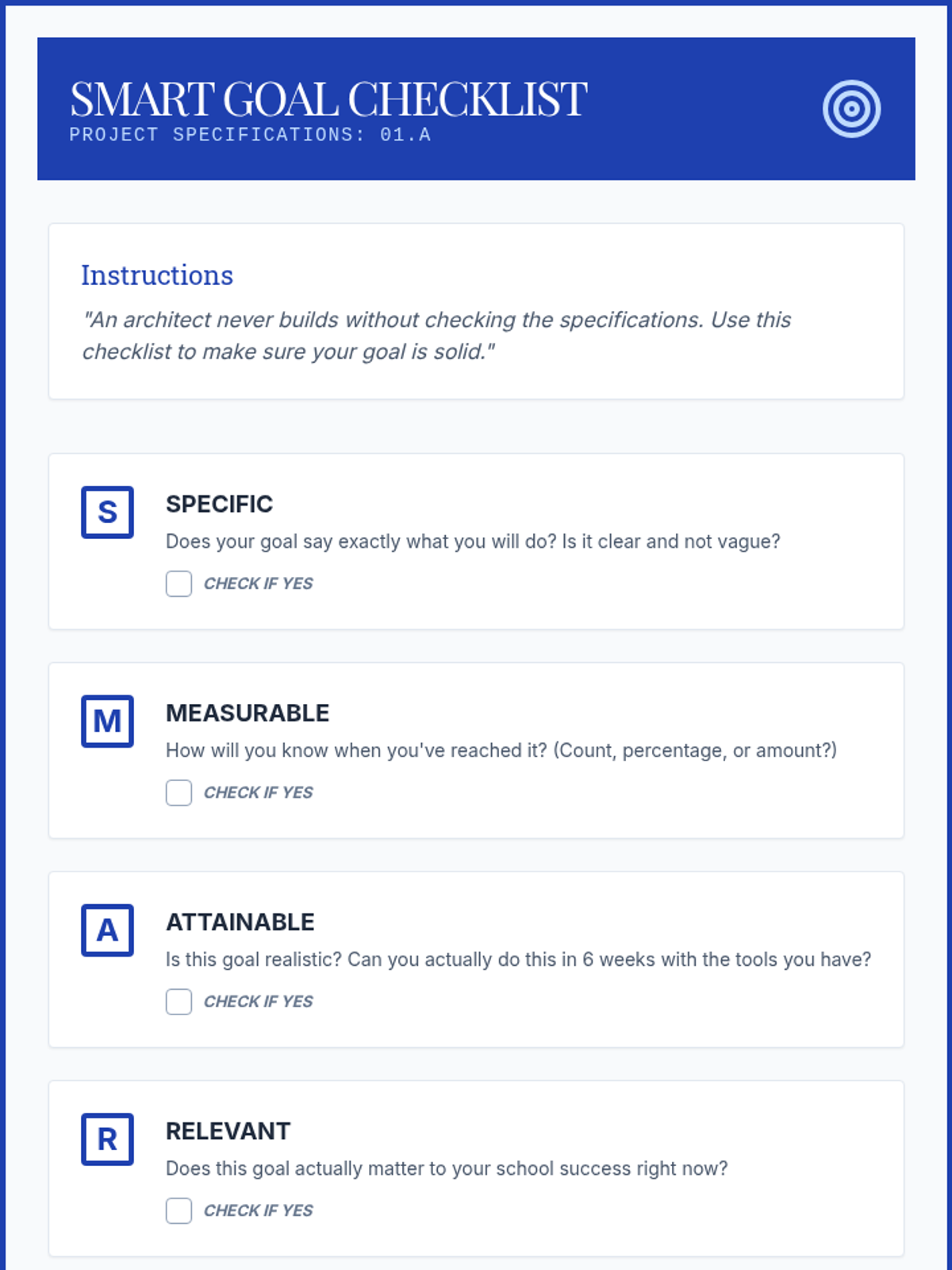
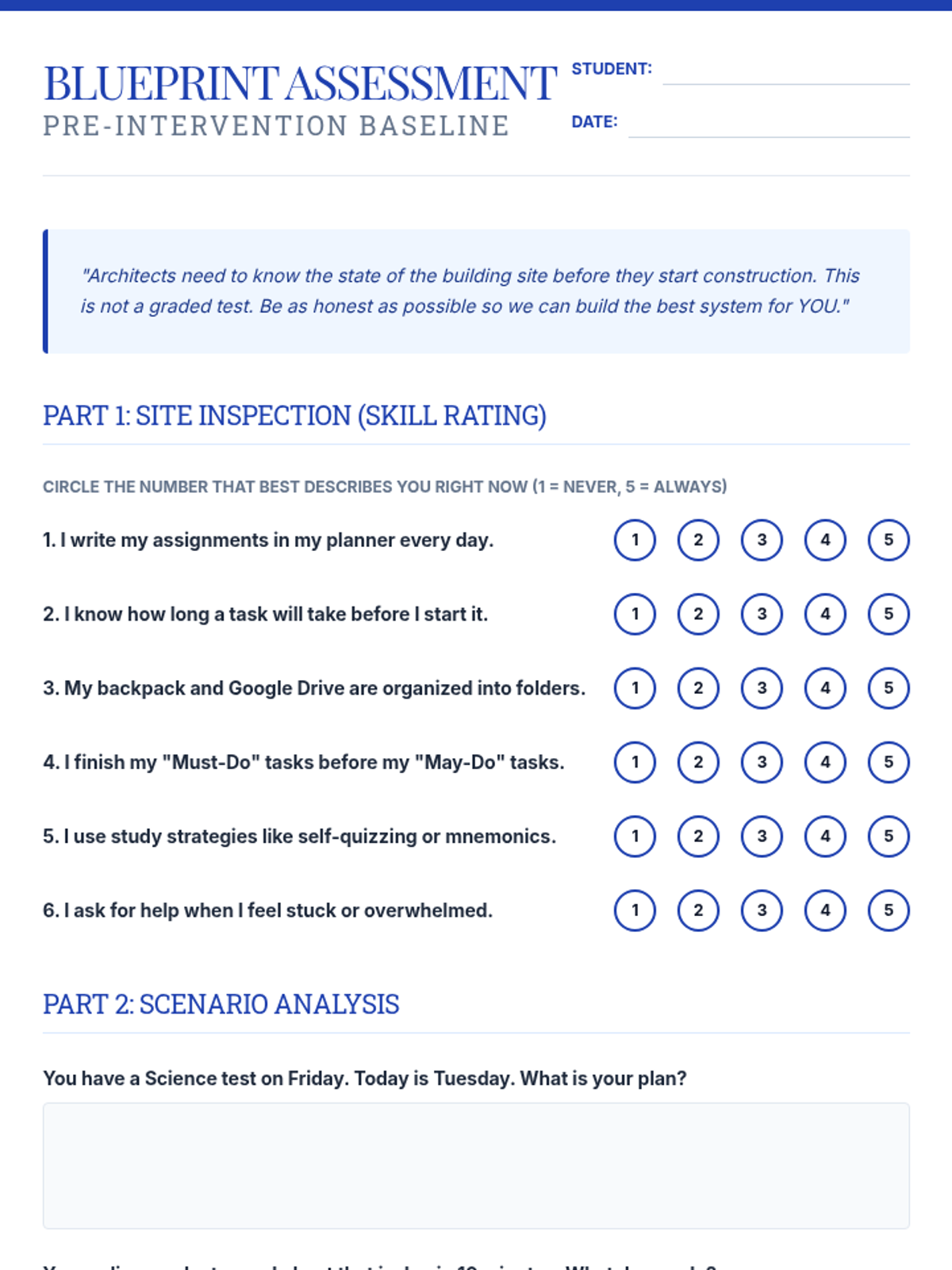
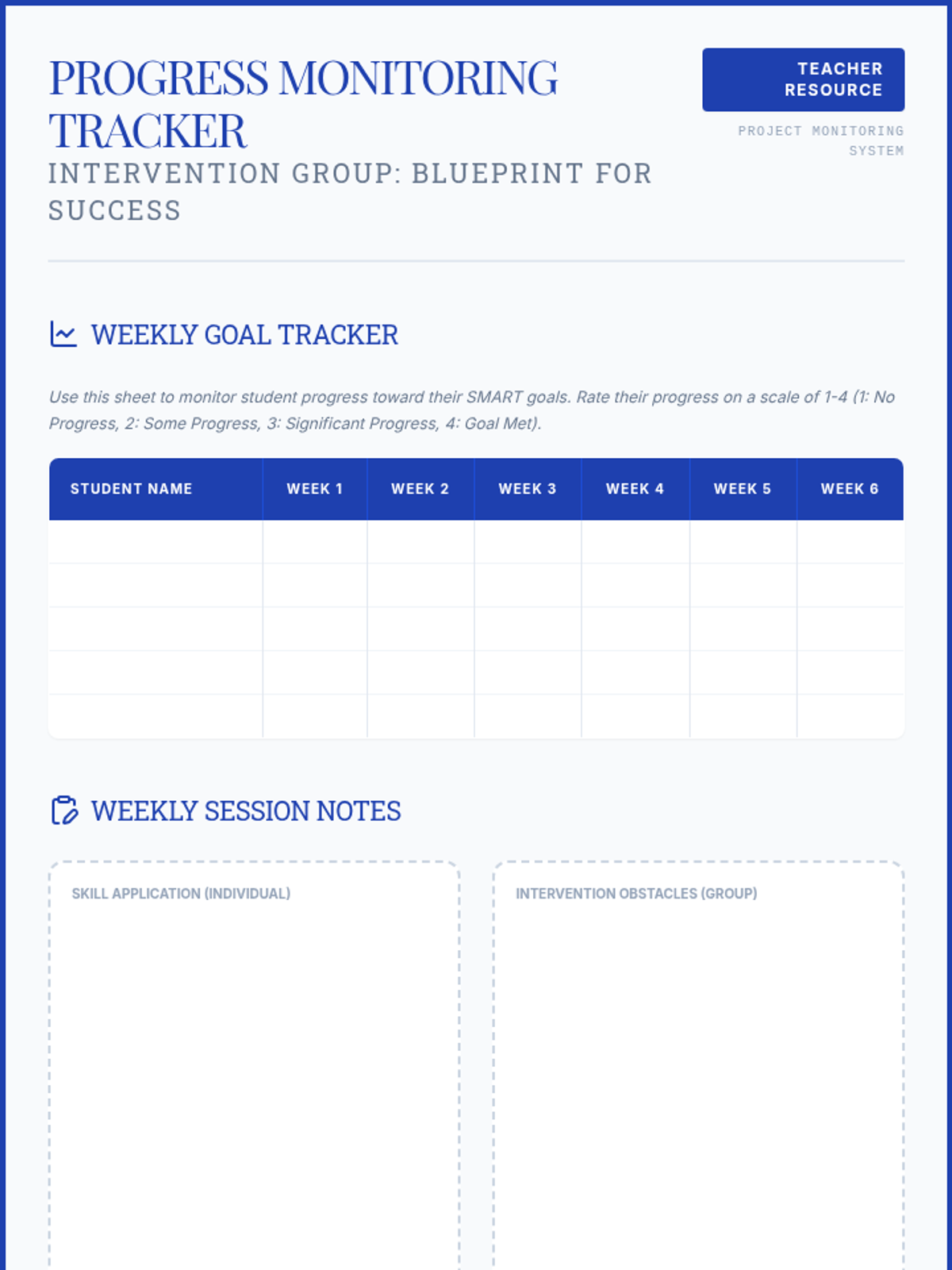
Introduction to executive functioning as the brain's 'Command Center' and setting initial SMART goals for the 6-week program.
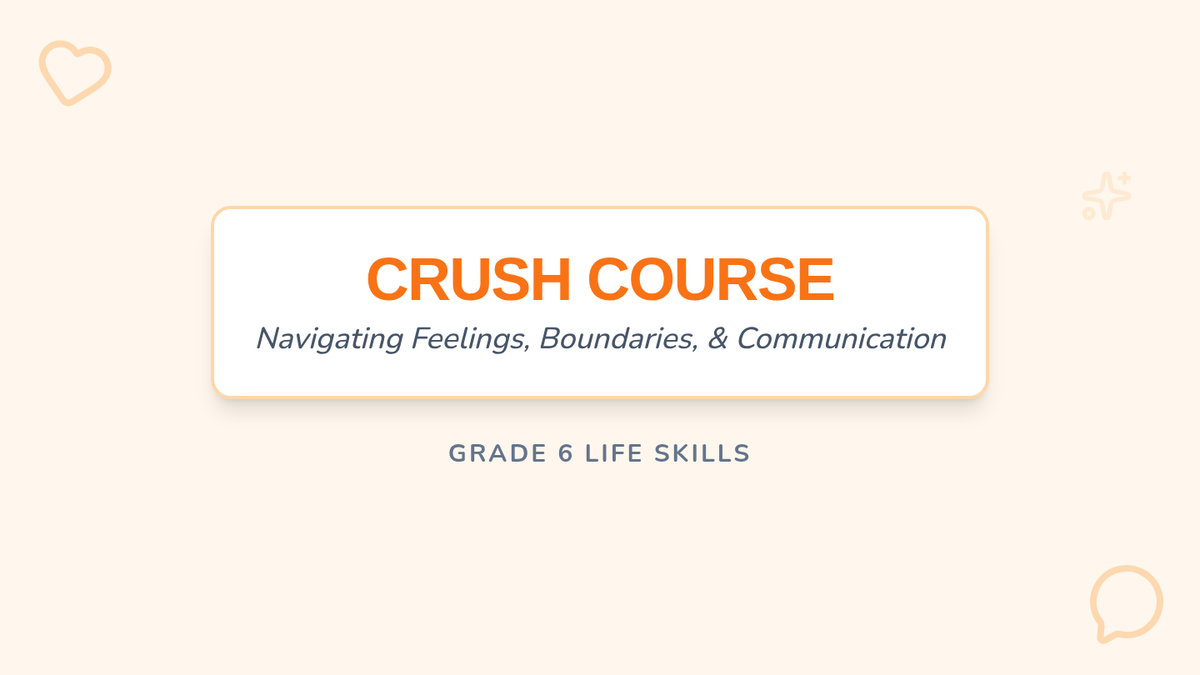
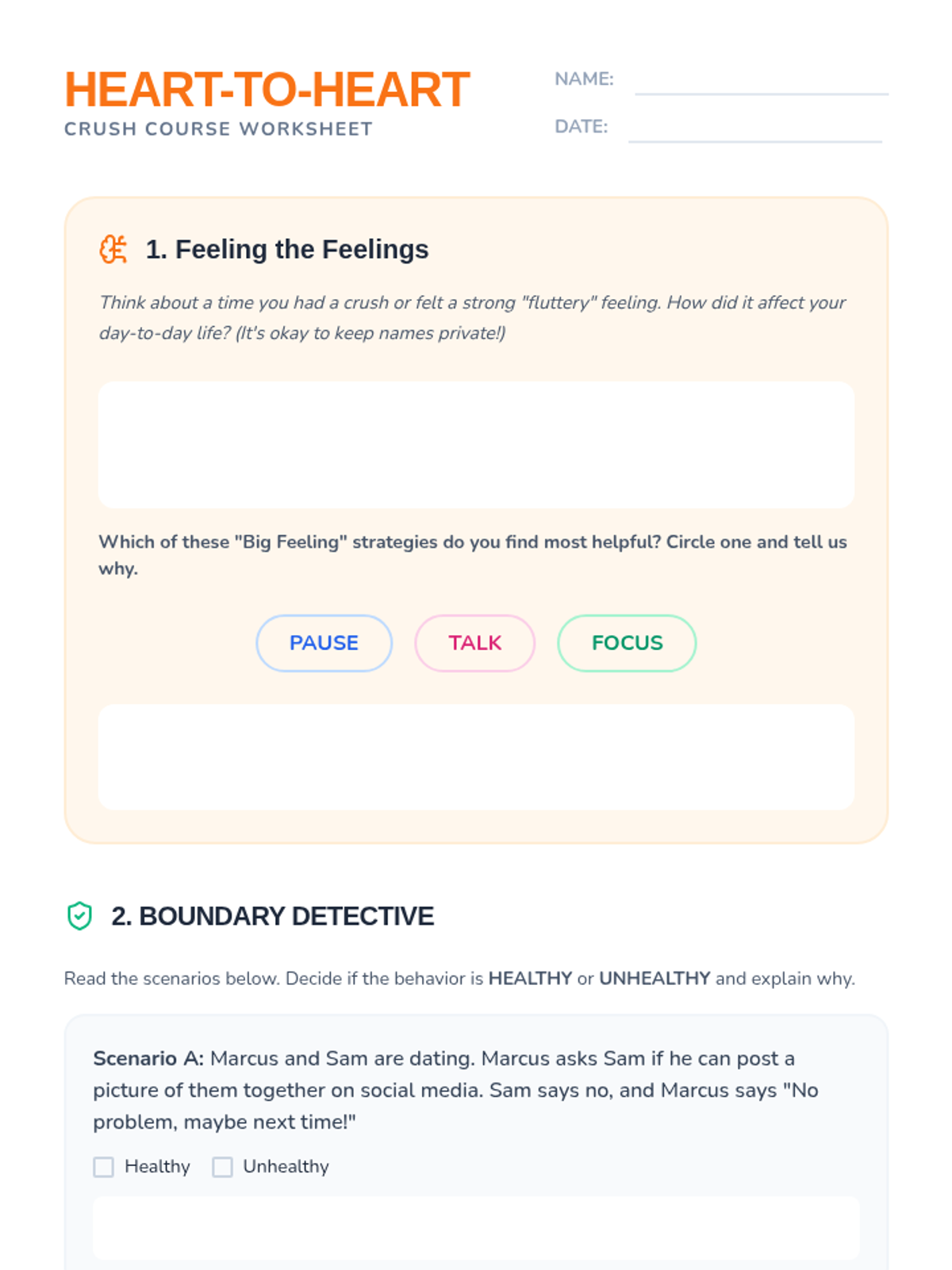
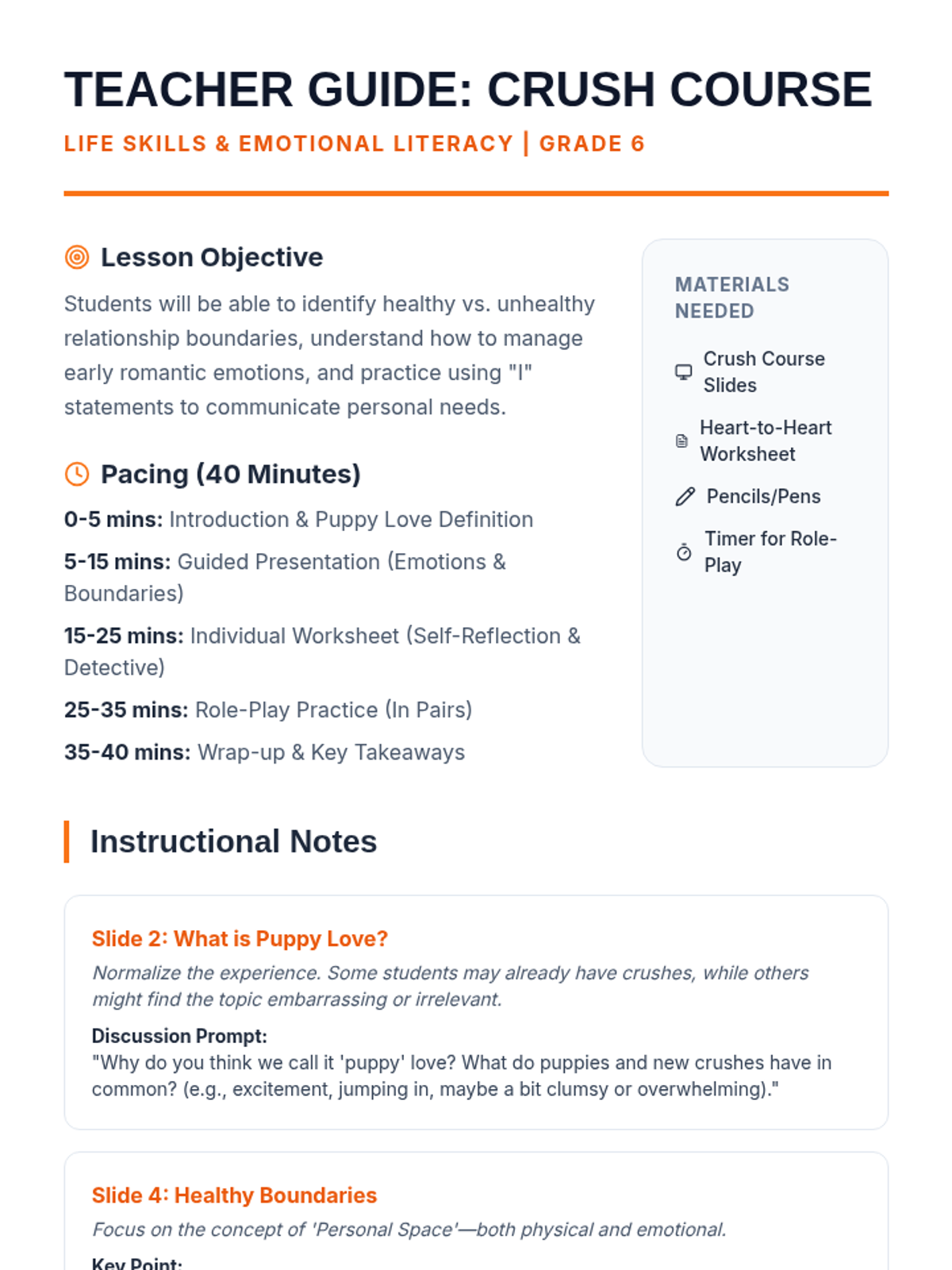
This lesson helps 6th graders navigate the complex world of early romantic feelings by focusing on identifying emotions, setting healthy boundaries, and practicing clear communication. Students will learn to distinguish between healthy and unhealthy relationship behaviors through interactive slides and role-play scenarios.
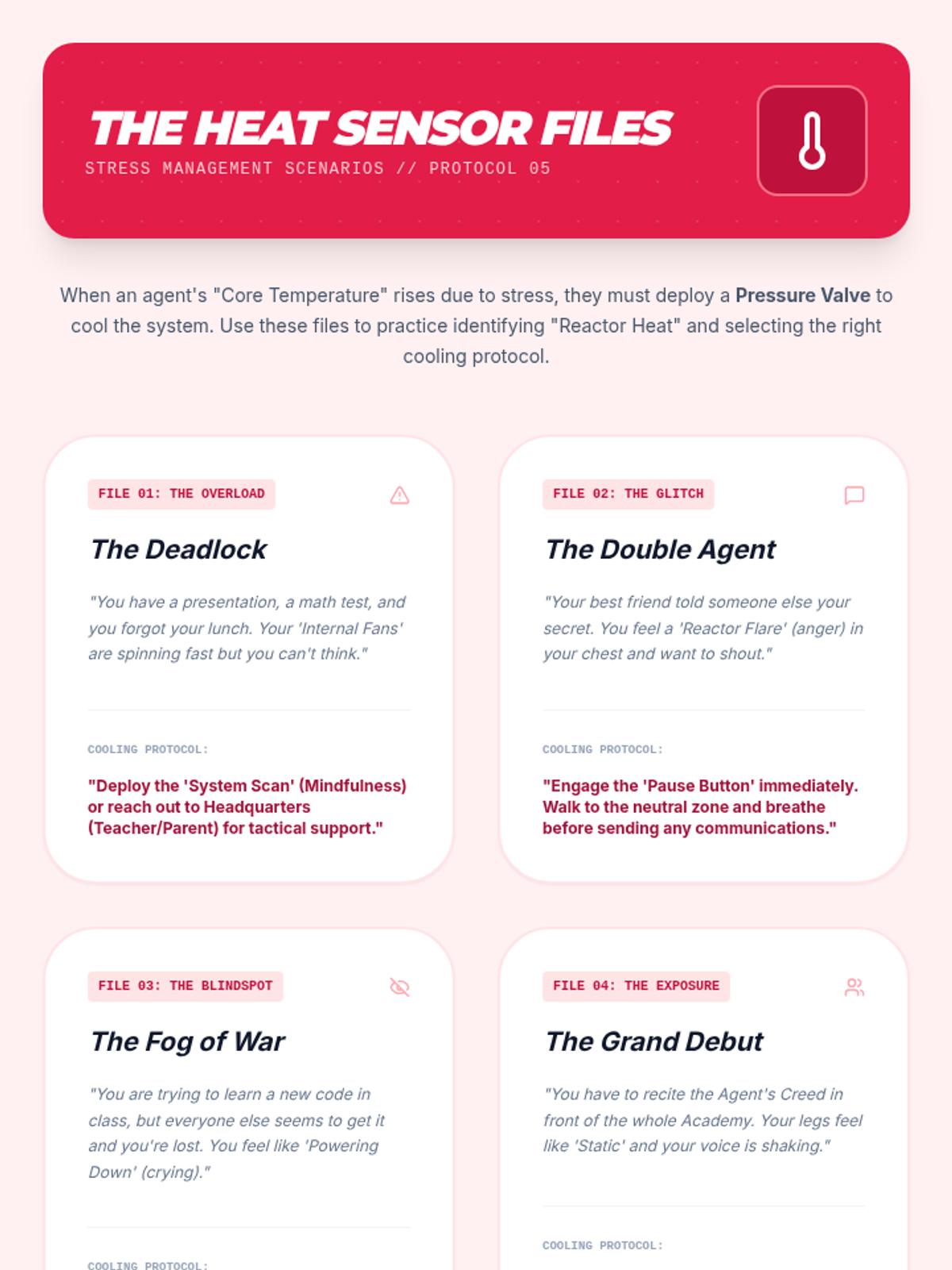
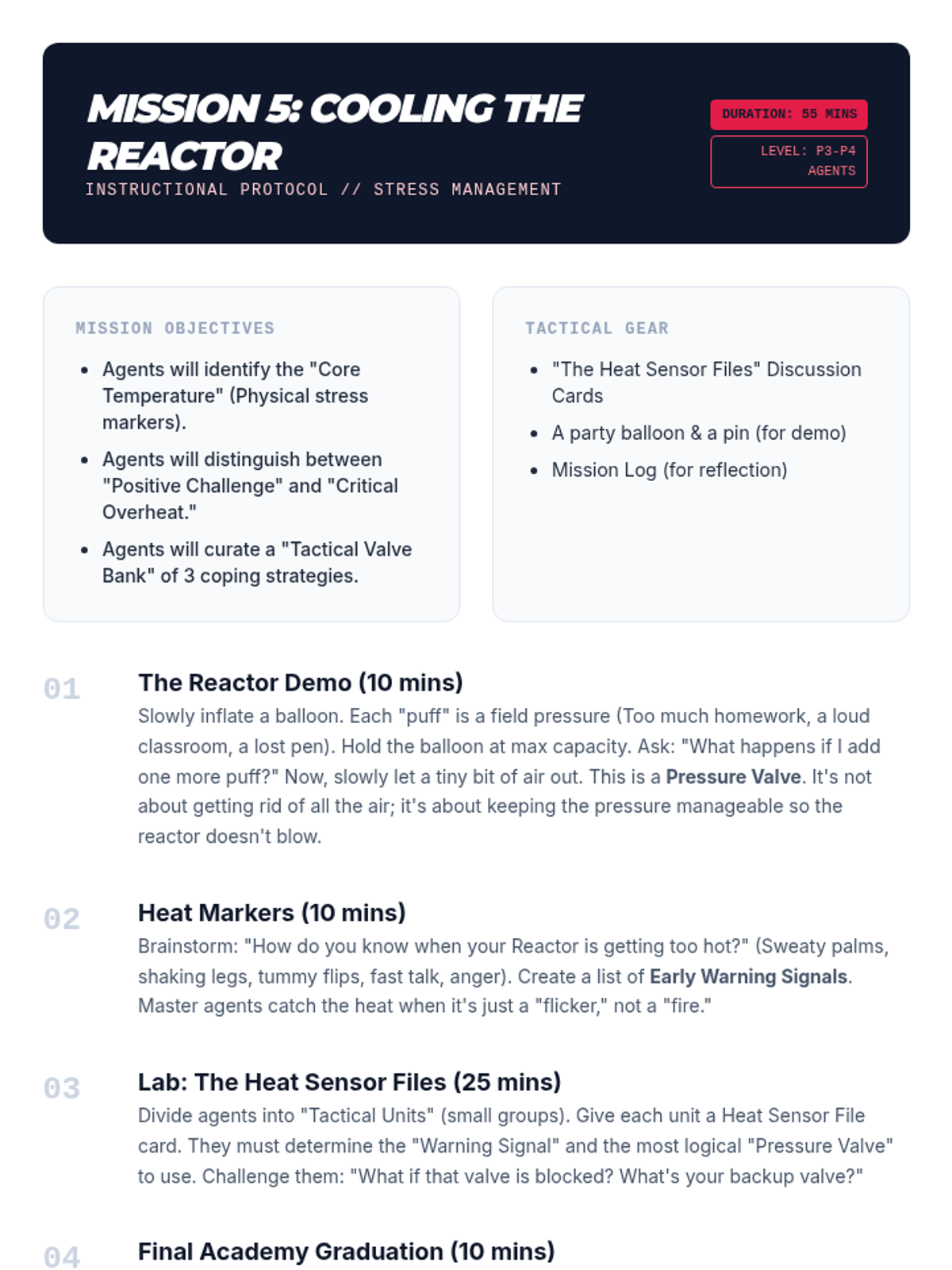
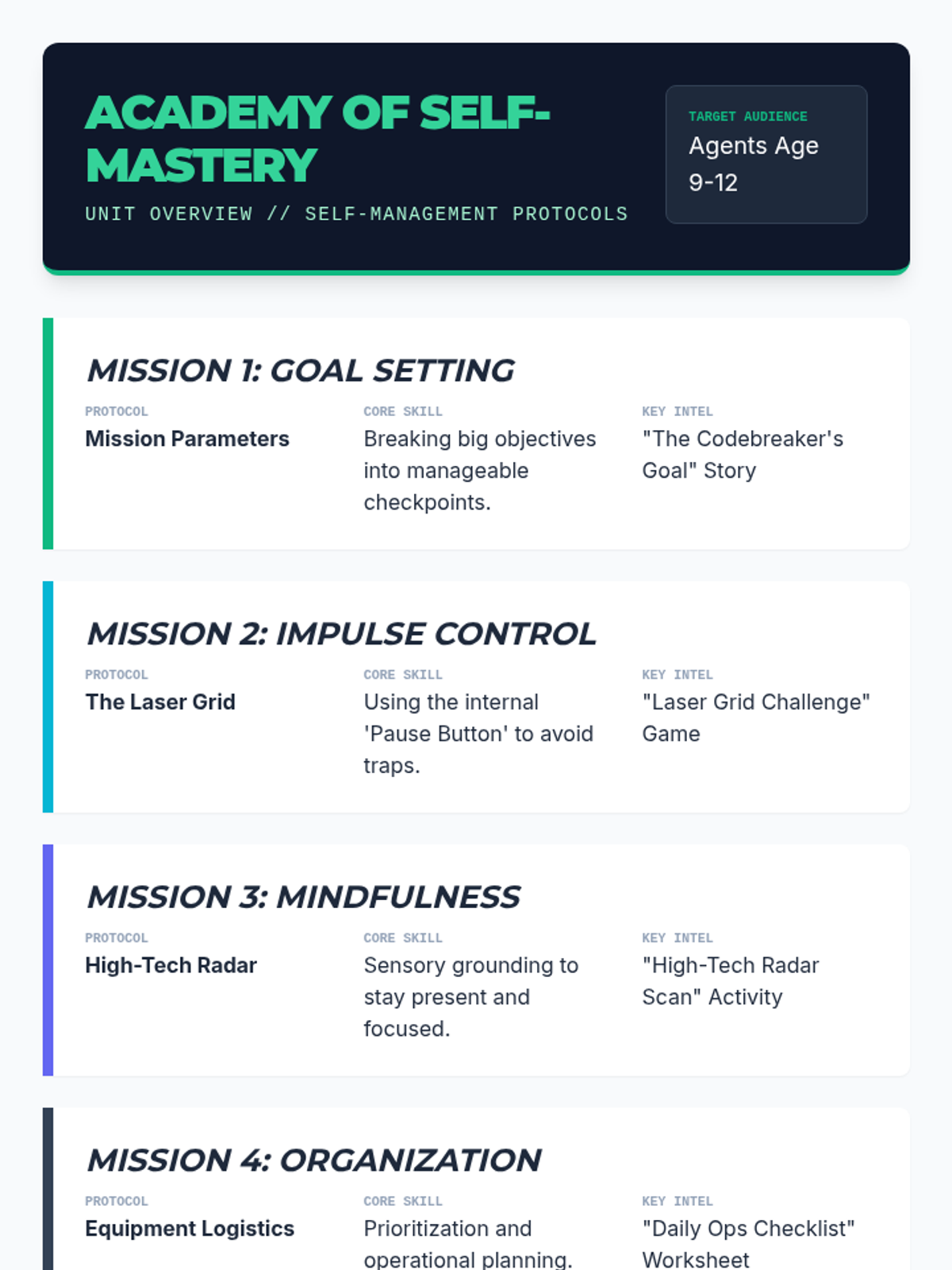
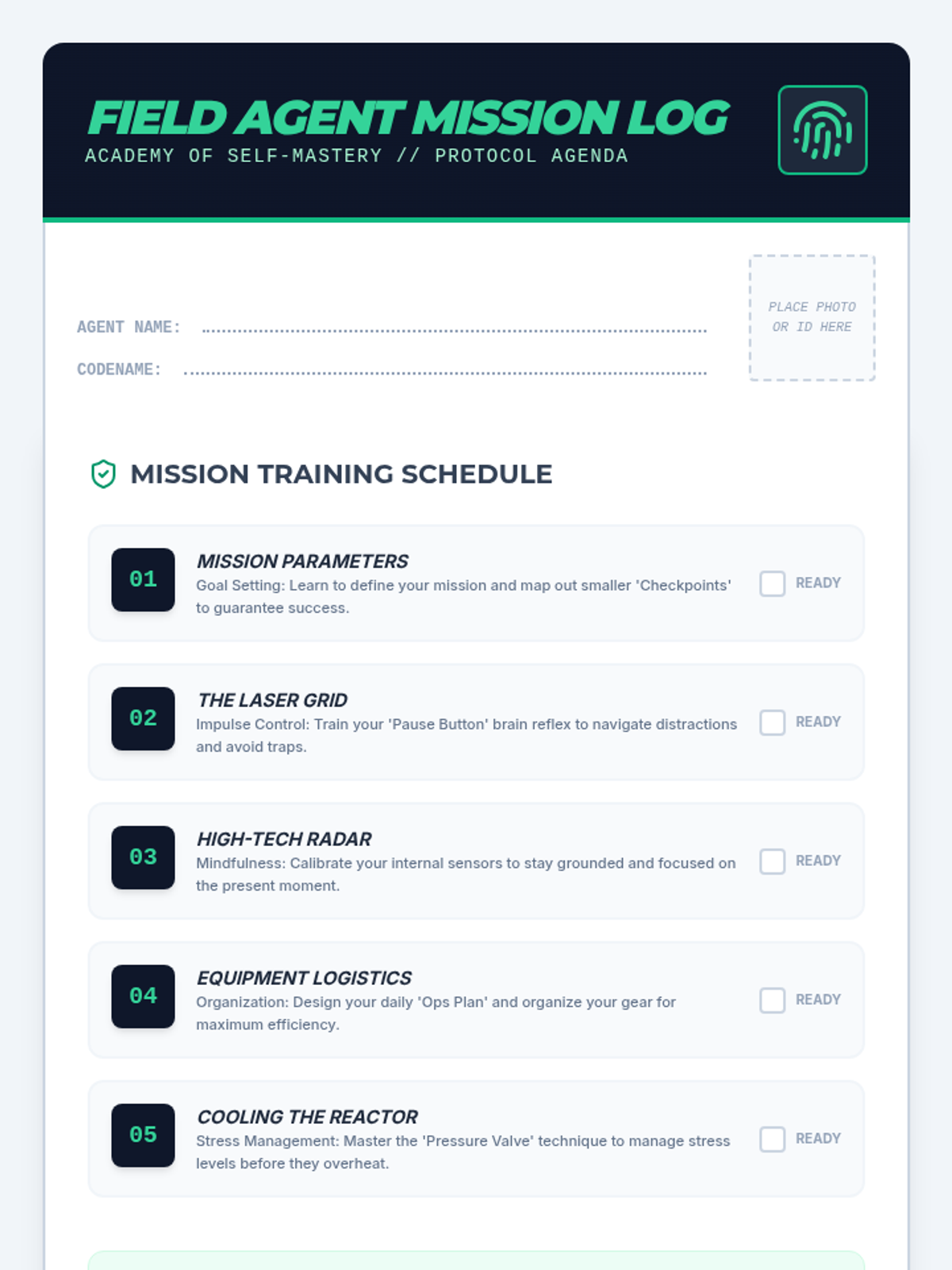
Agents learn to identify 'reactor heat' (stress) and use cooling valves to maintain operational status.
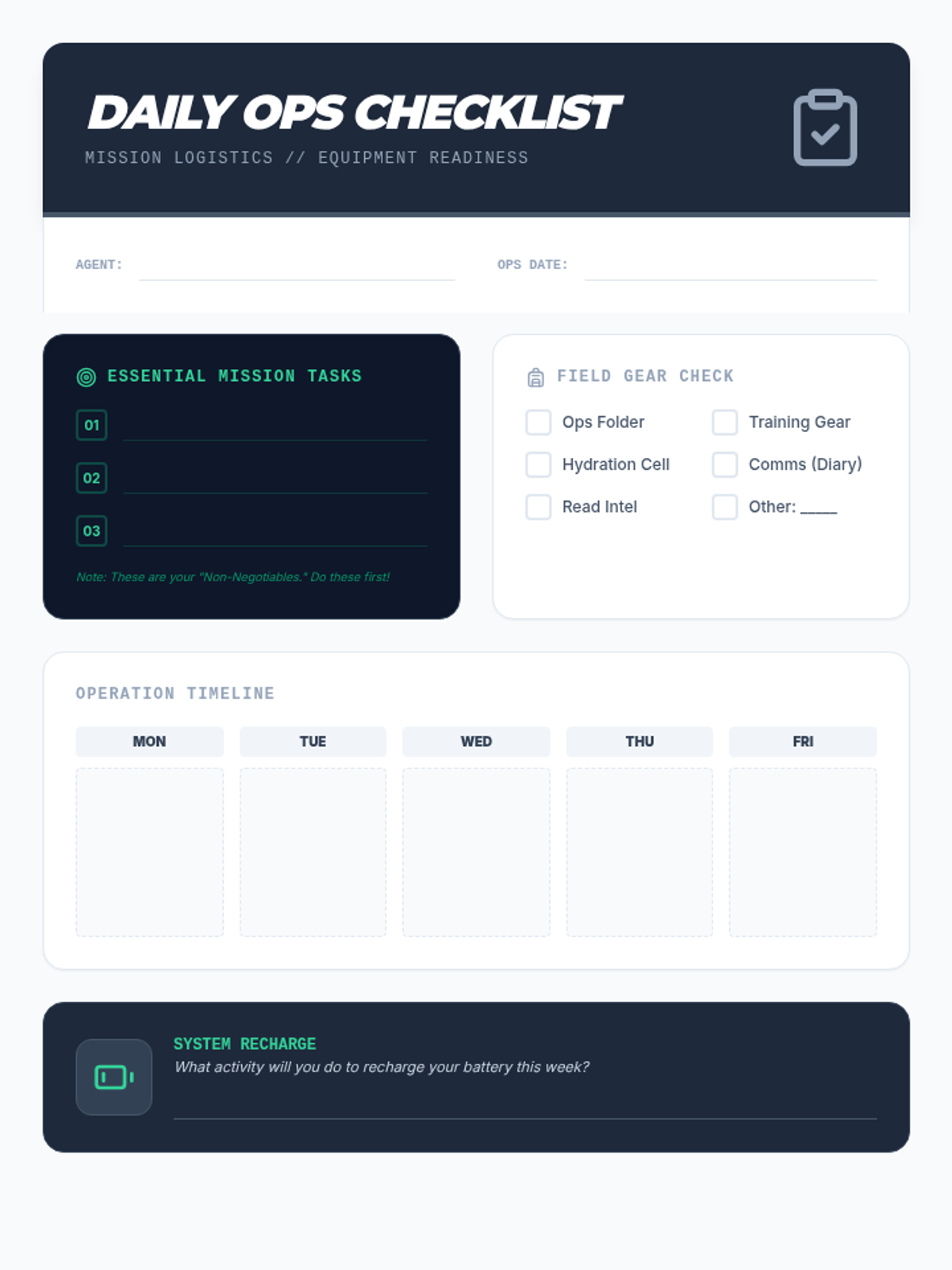
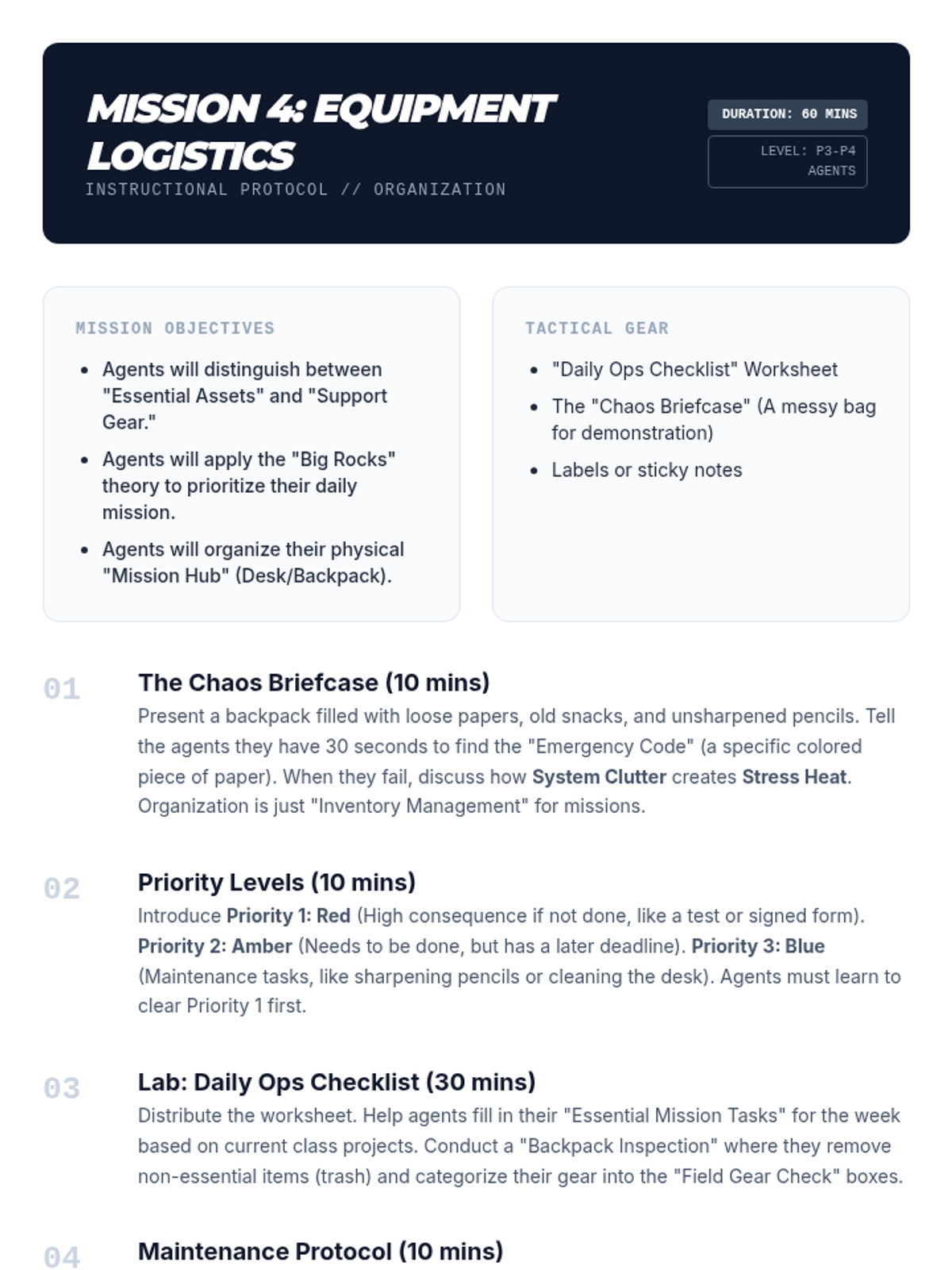
Agents master the logistics of their daily operations through effective planning and organization.
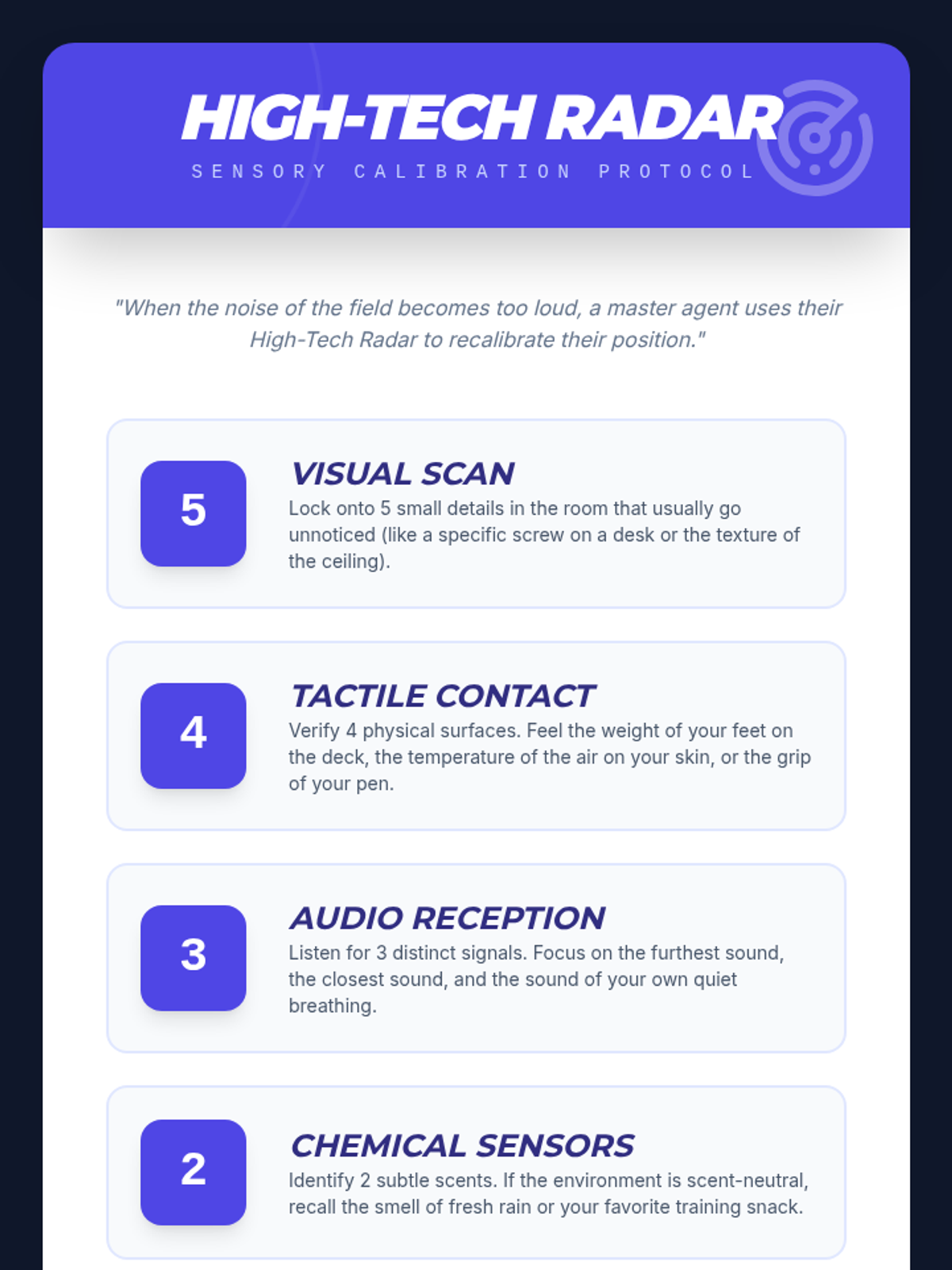
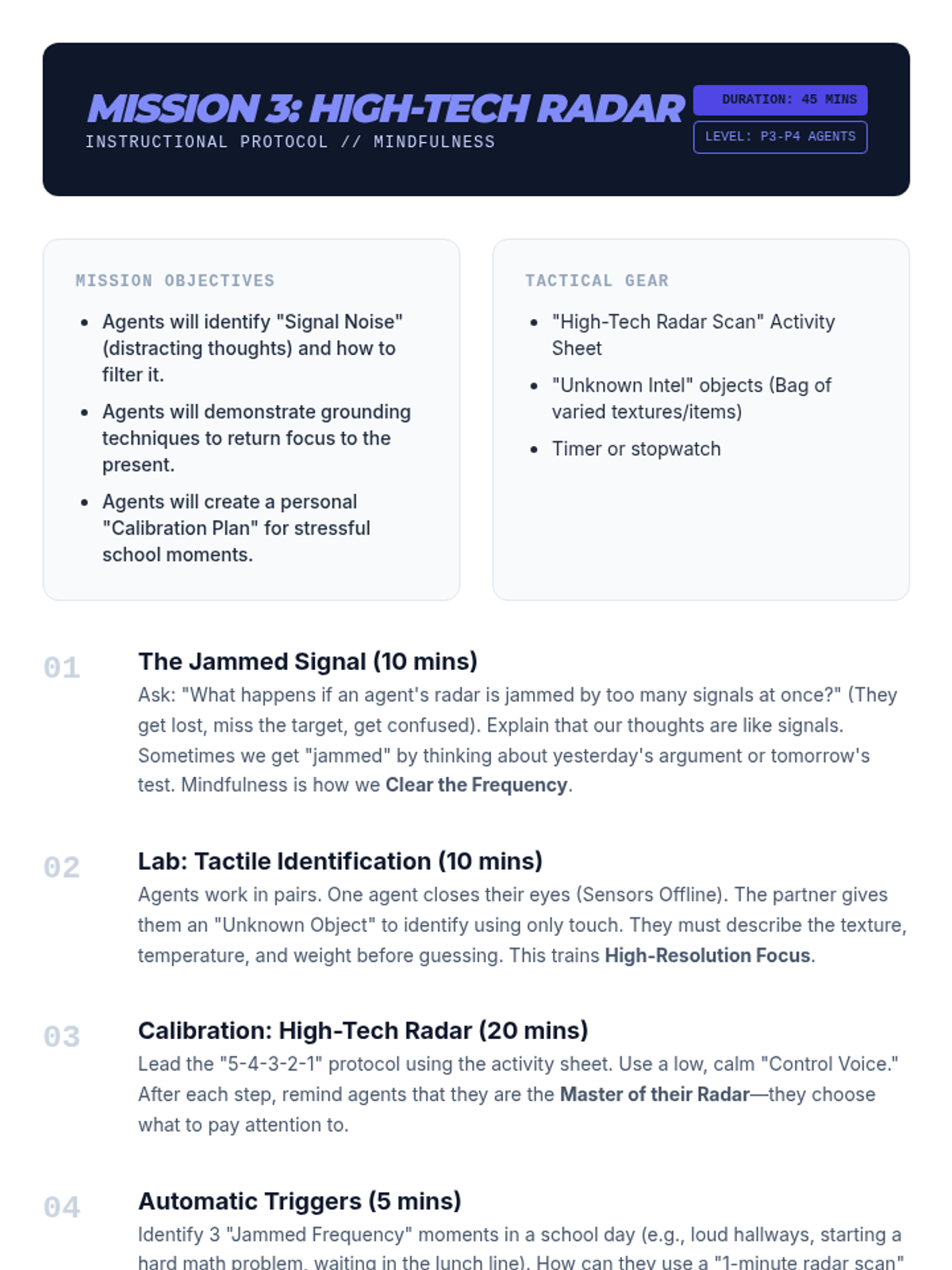
Agents calibrate their internal radar using sensory grounding techniques to stay focused.
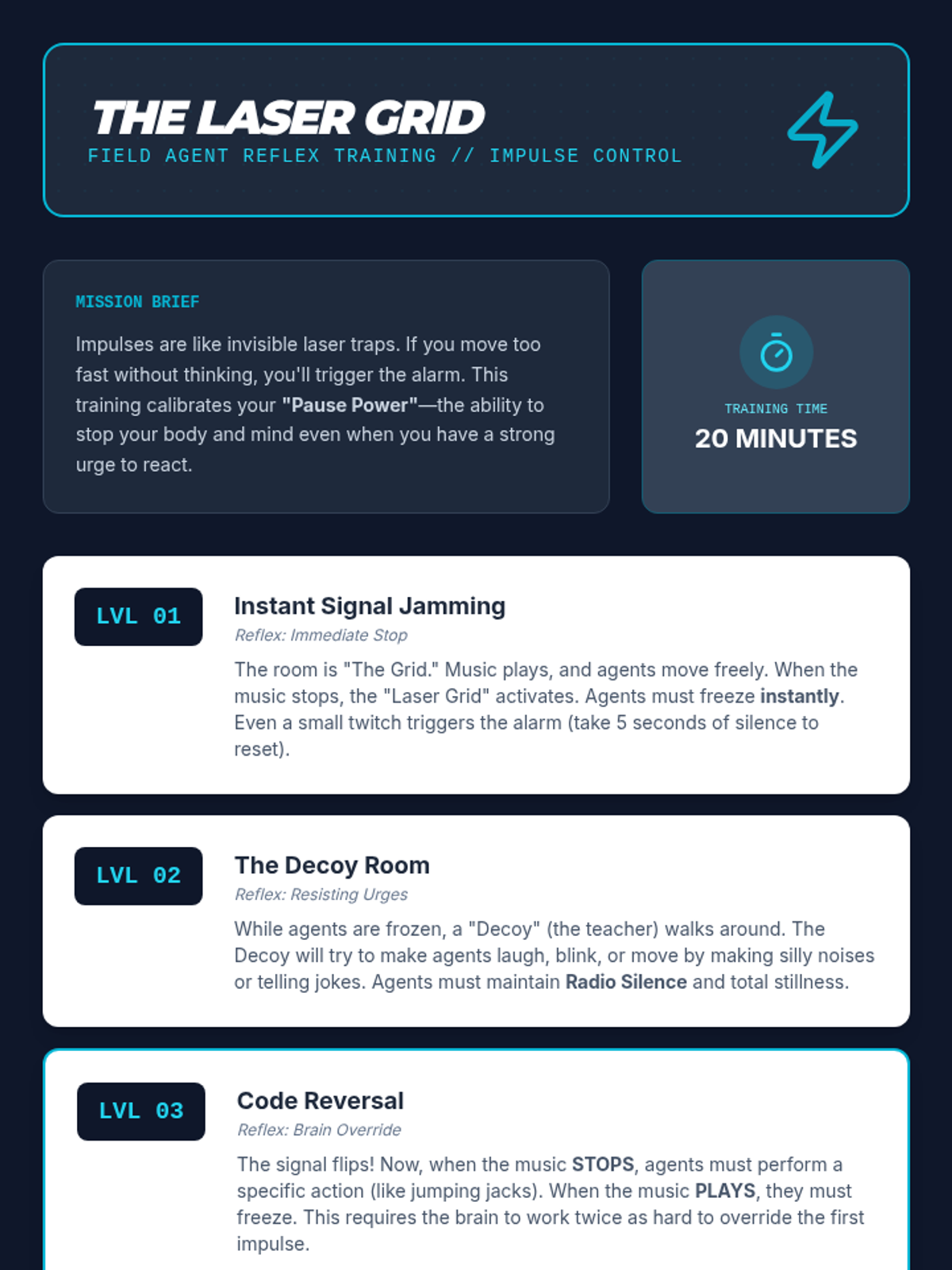
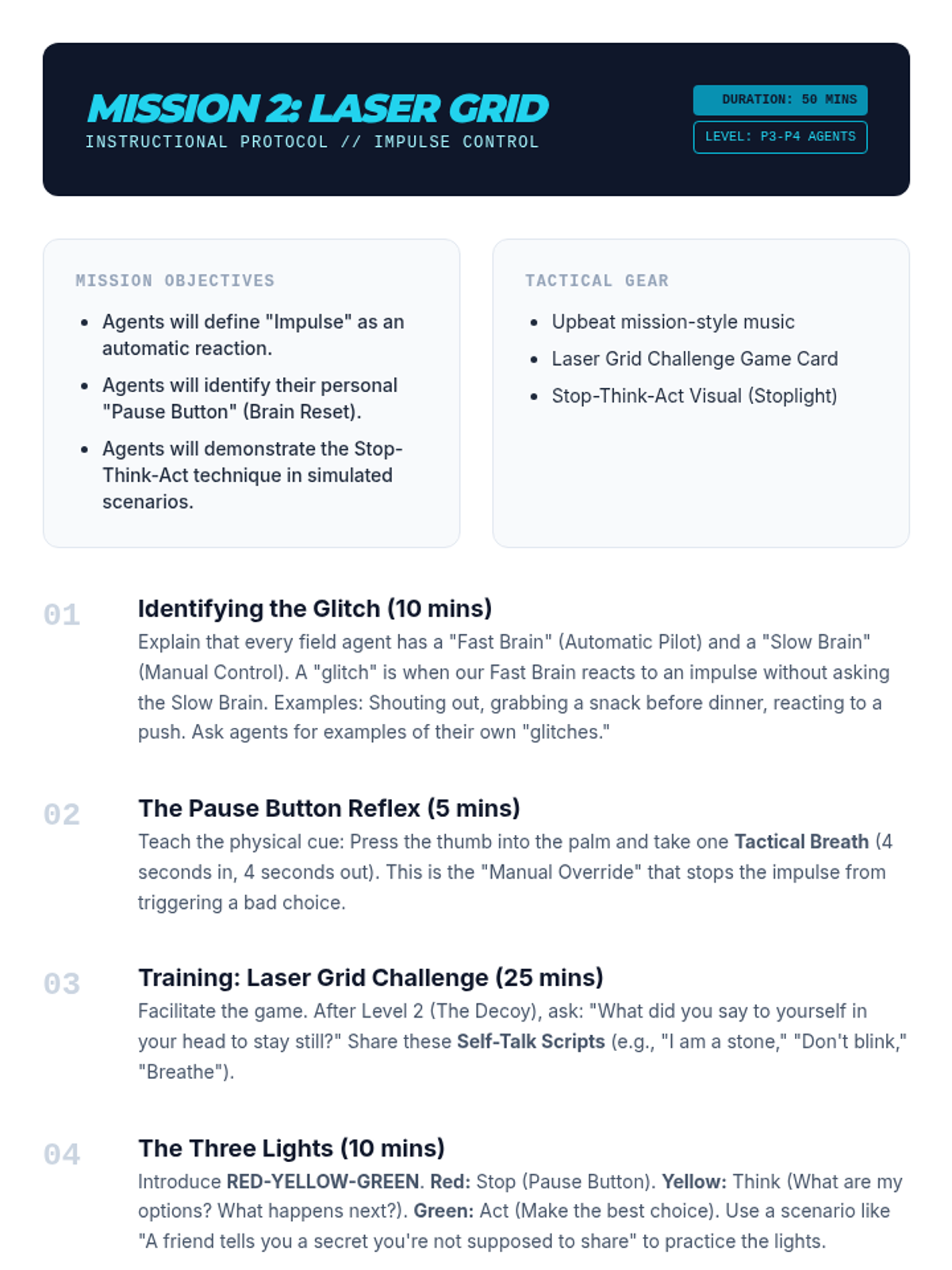
Agents practice navigating the 'Laser Grid' of impulses by using their internal pause button.
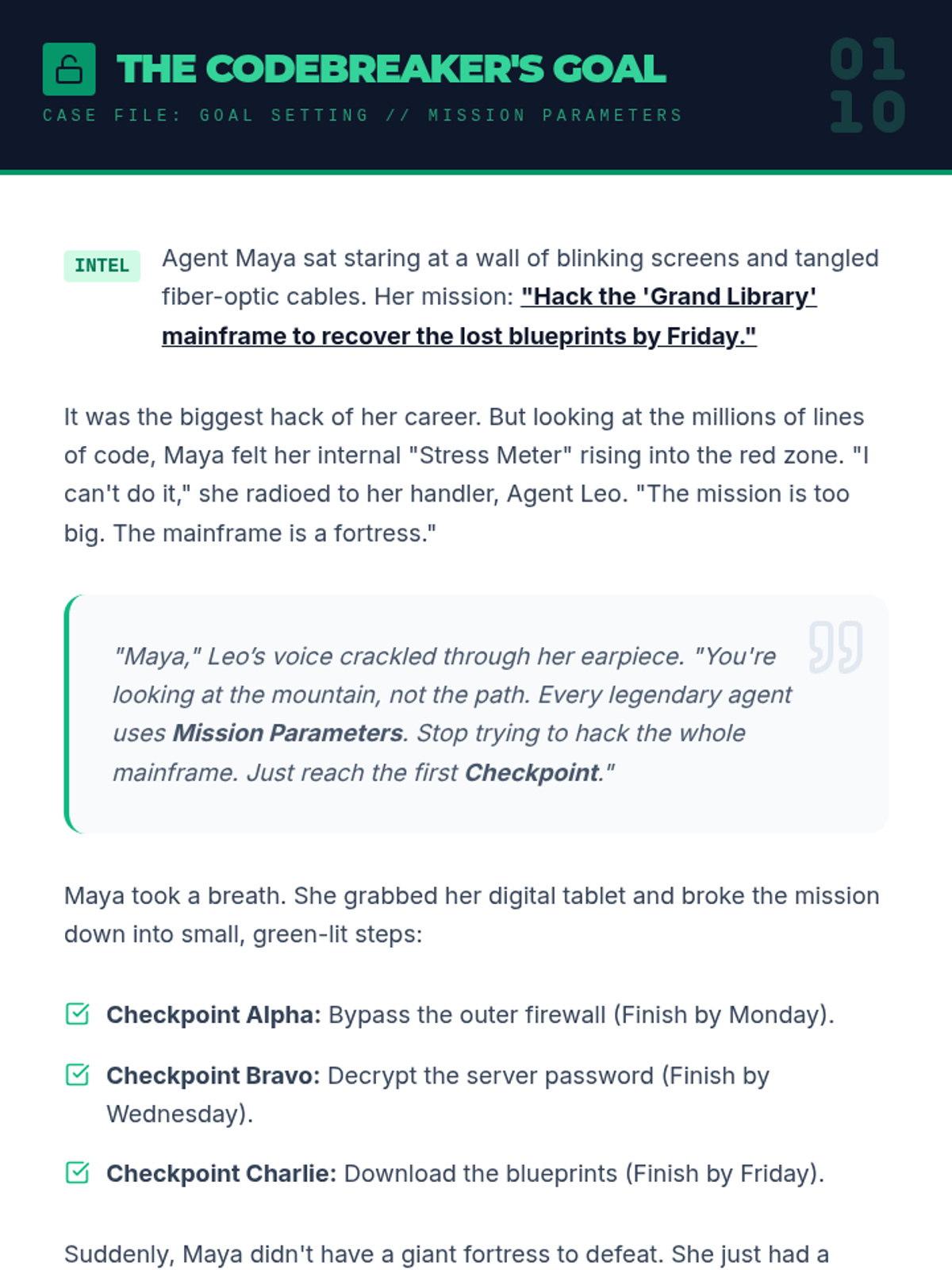
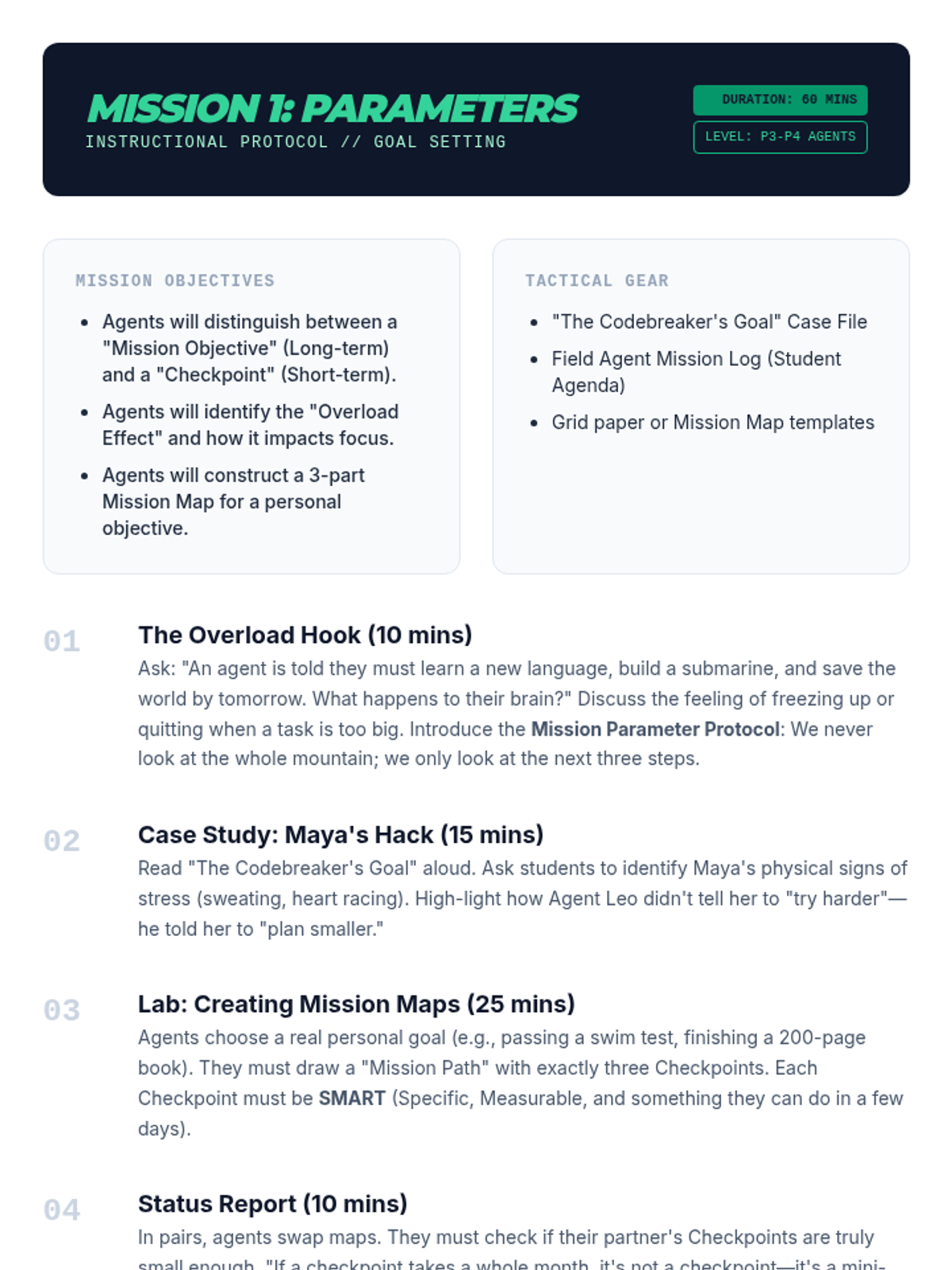
Agents learn to define their mission and break down big objectives into manageable checkpoints.
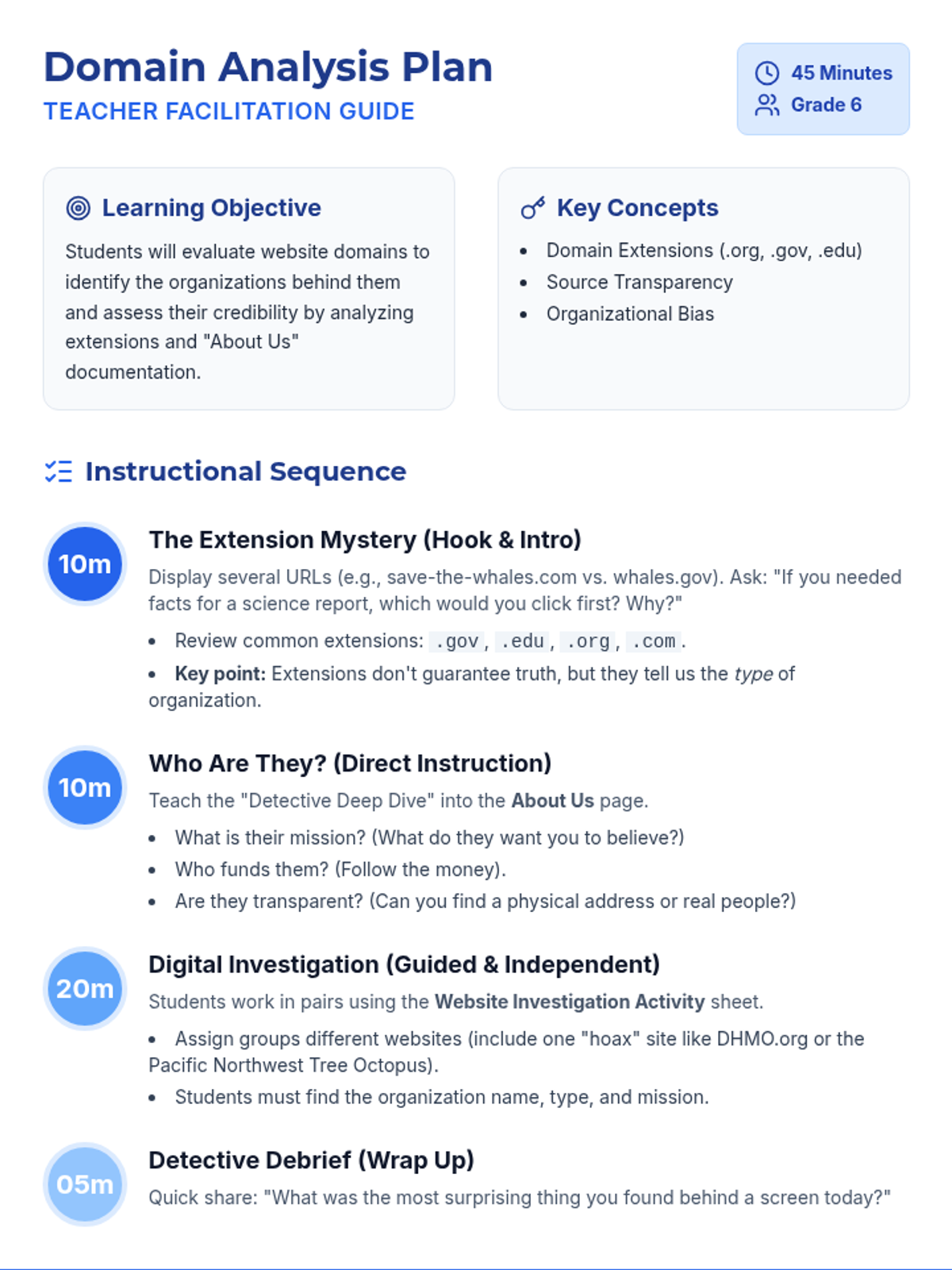
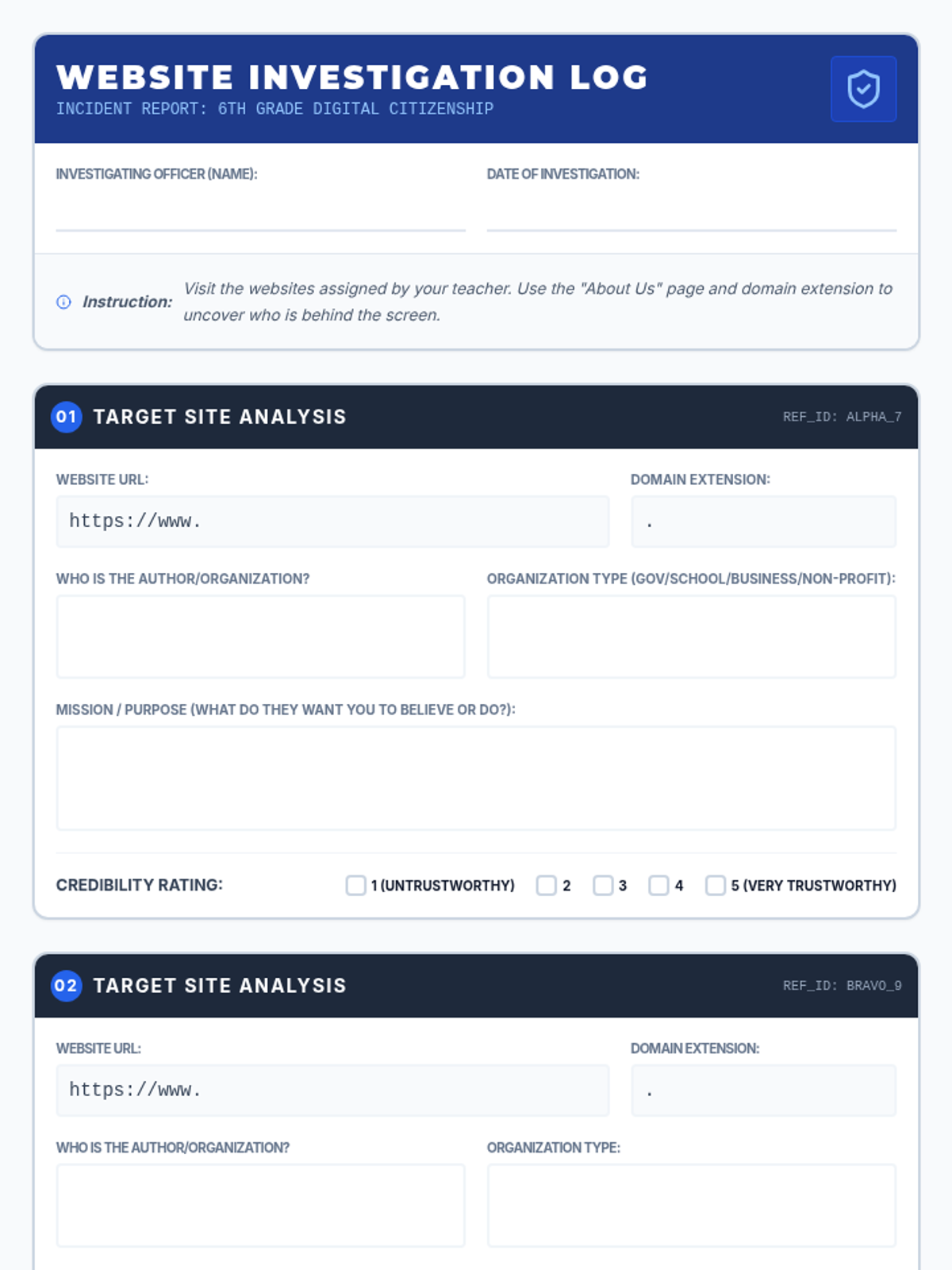
Students become digital detectives as they learn to peel back the layers of websites, analyzing domain extensions and "About Us" pages to determine who is providing information and whether they can be trusted.
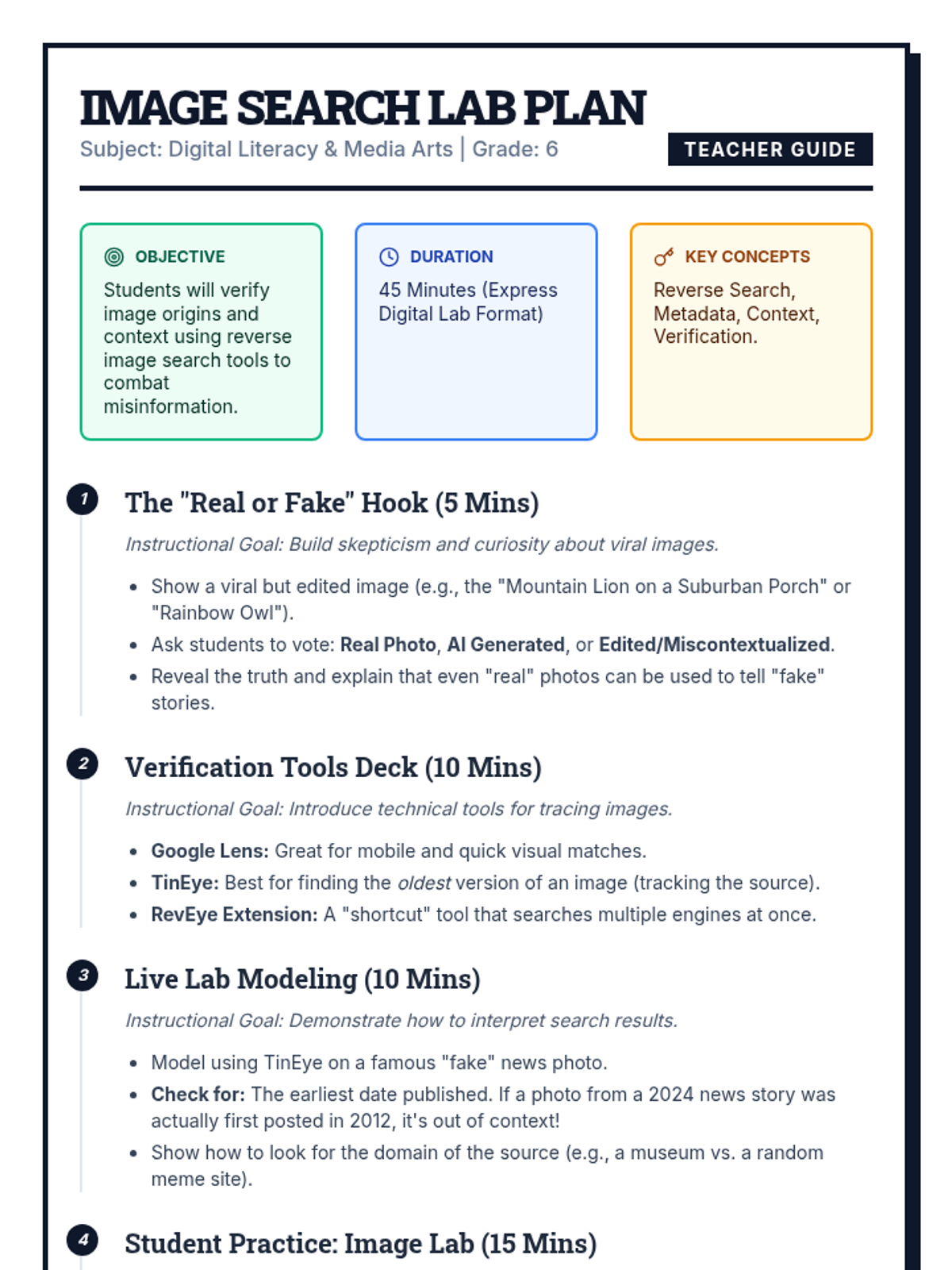
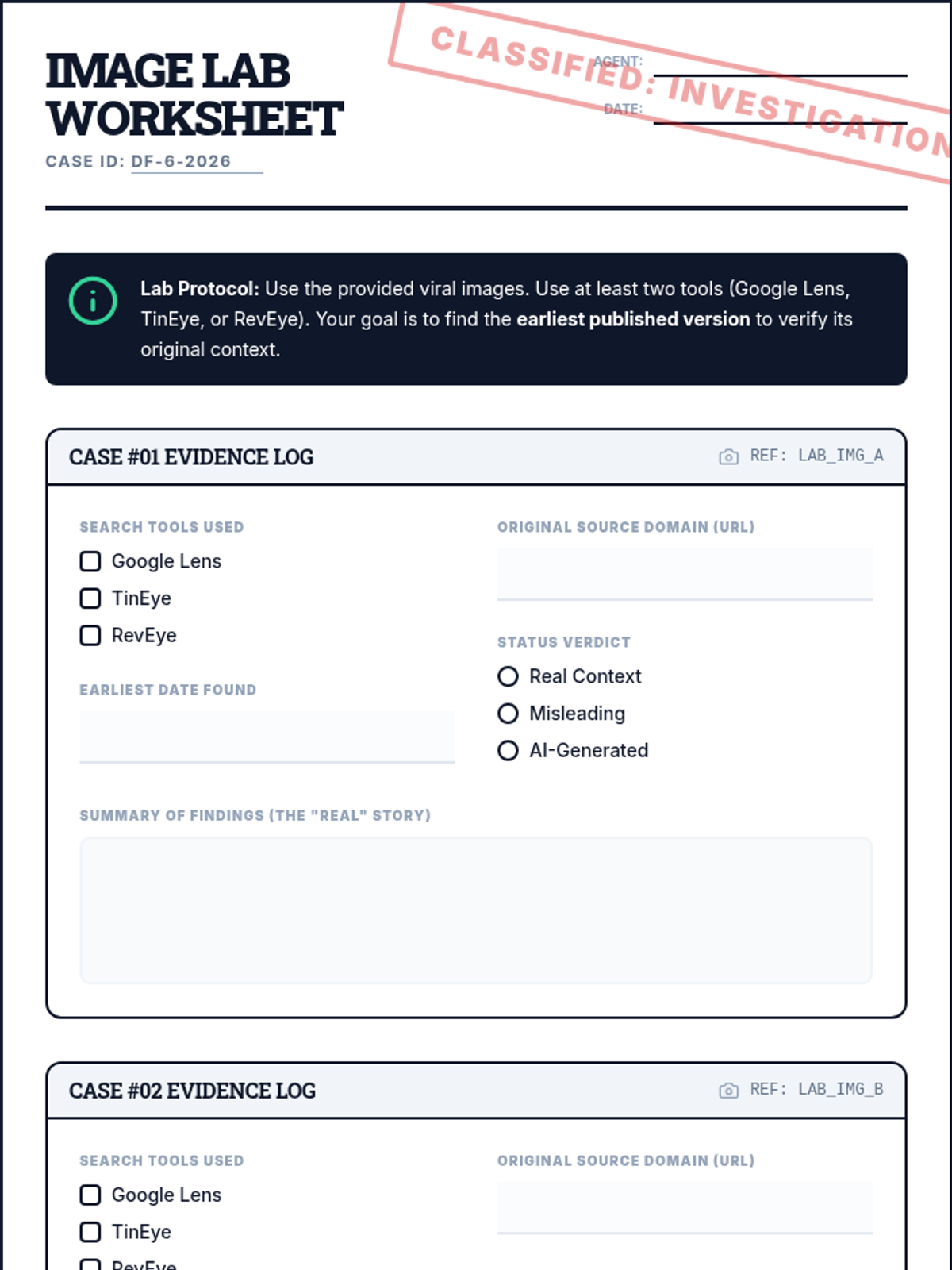
A 45-minute digital forensics lesson where 6th-grade students learn to use reverse image search tools to verify the authenticity and context of viral images. Students act as 'Image Detectives' to uncover the true origins of misleading digital media.
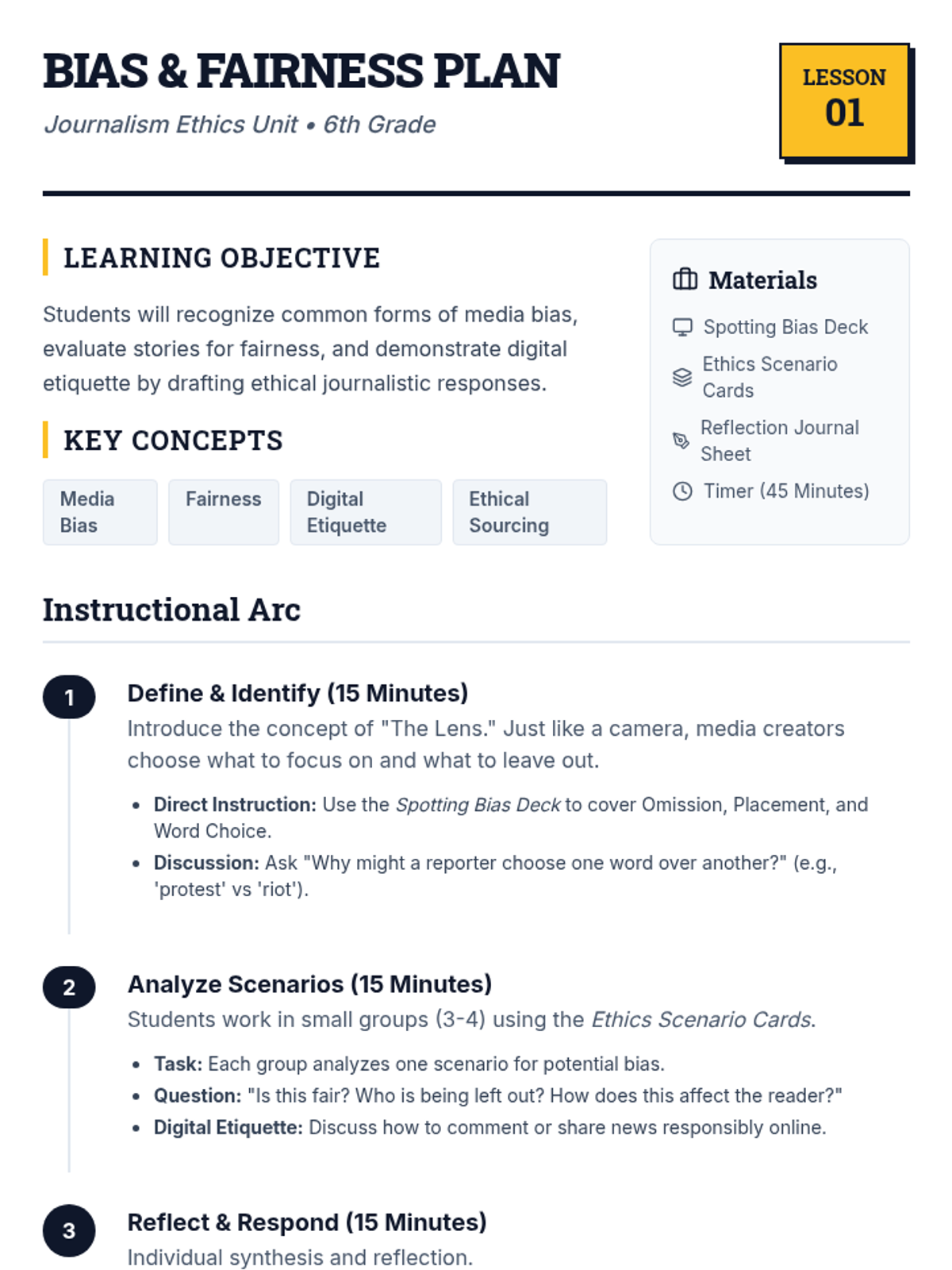
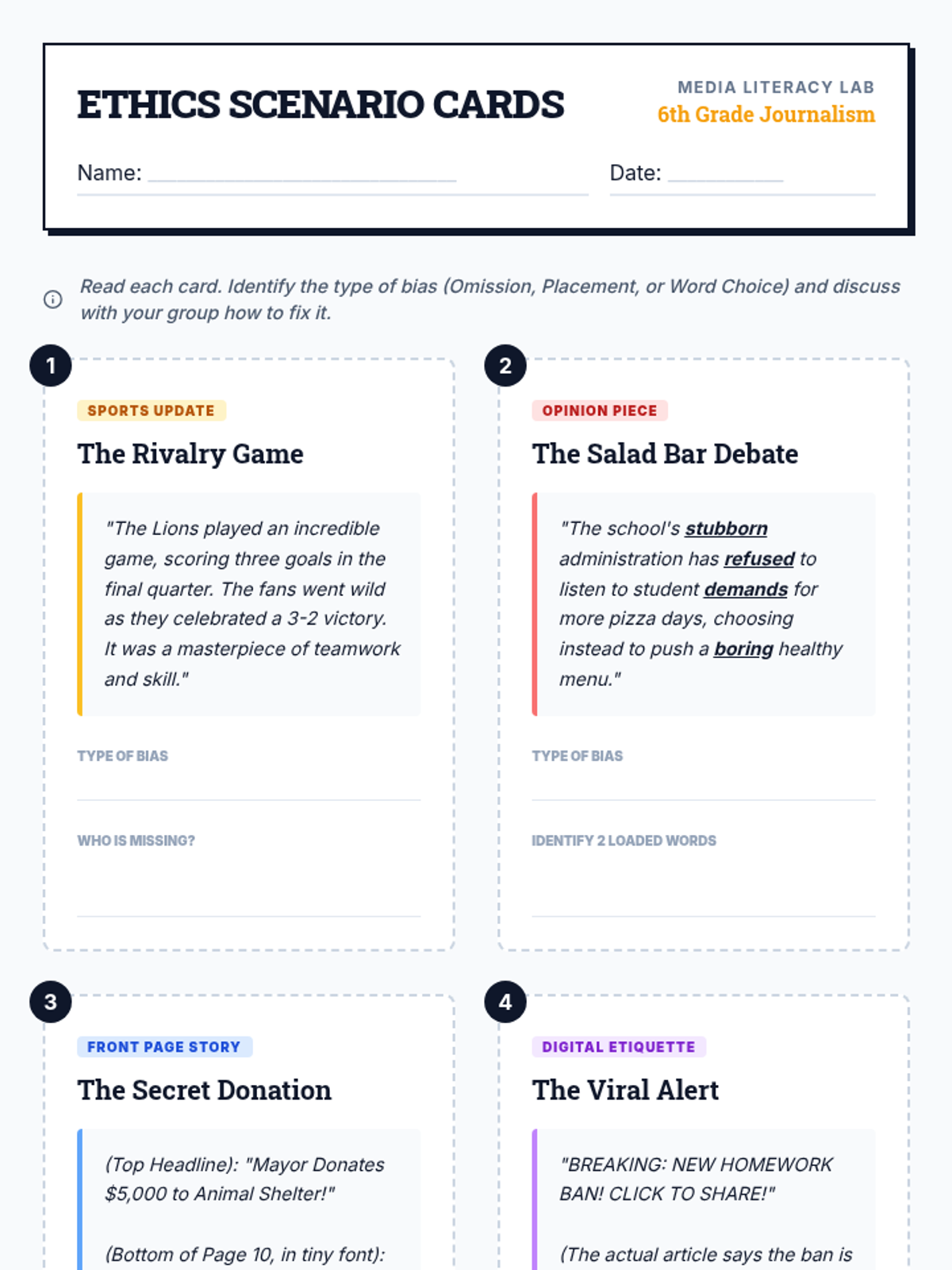
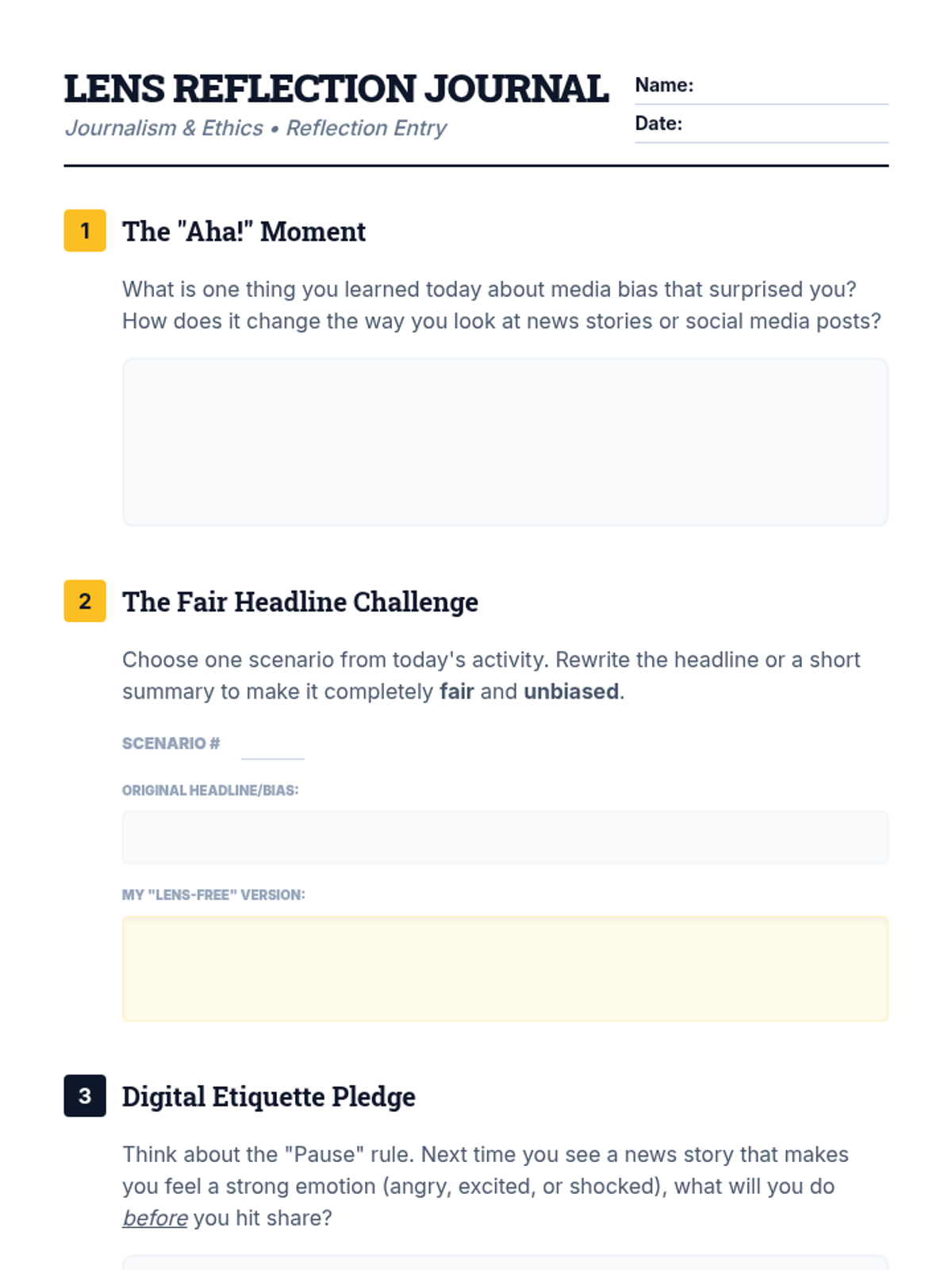
A 45-minute lesson for 6th graders to identify media bias, understand fairness, and practice digital etiquette in journalism. students analyze real-world scenarios and reflect on ethical communication.
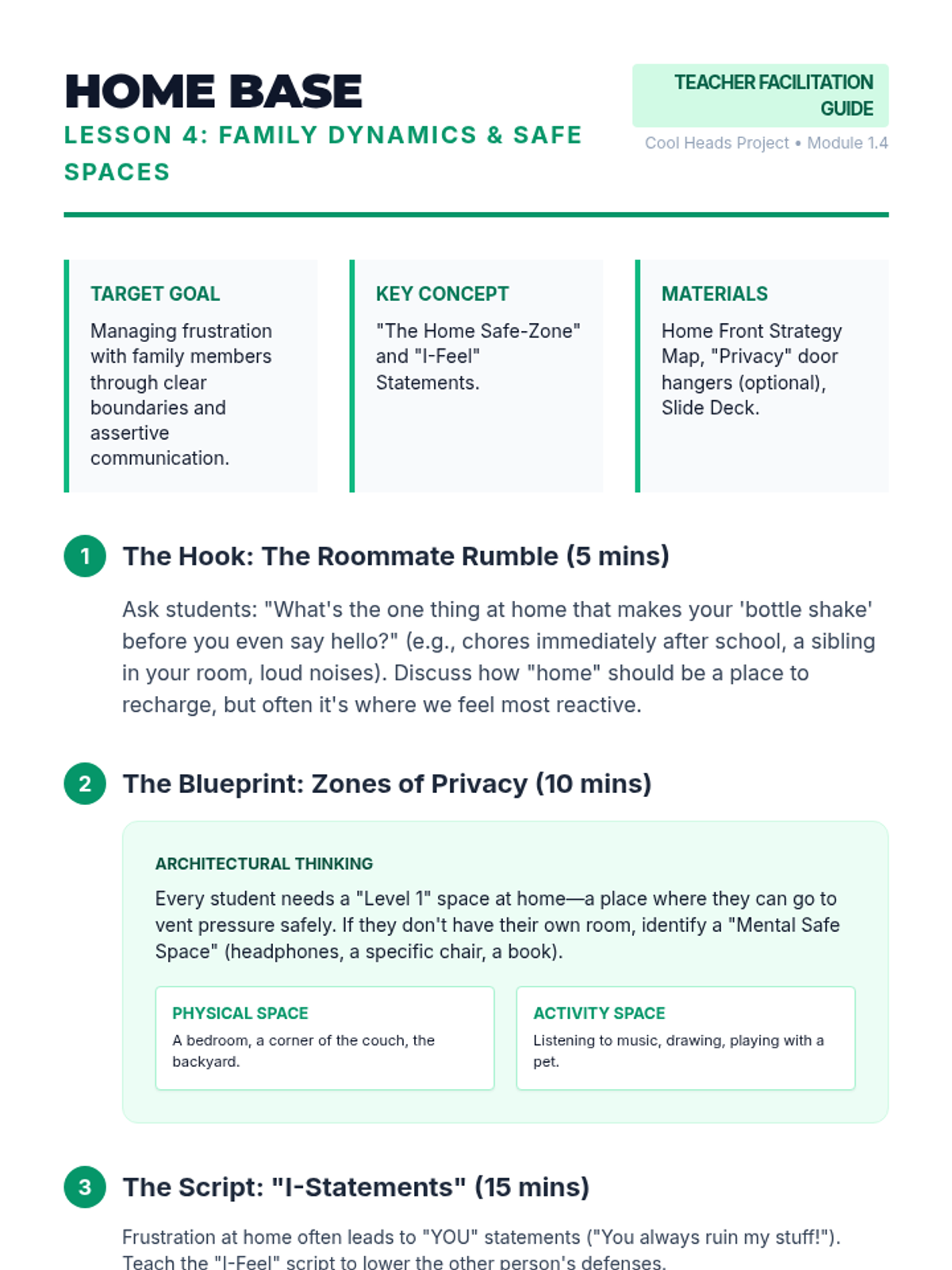
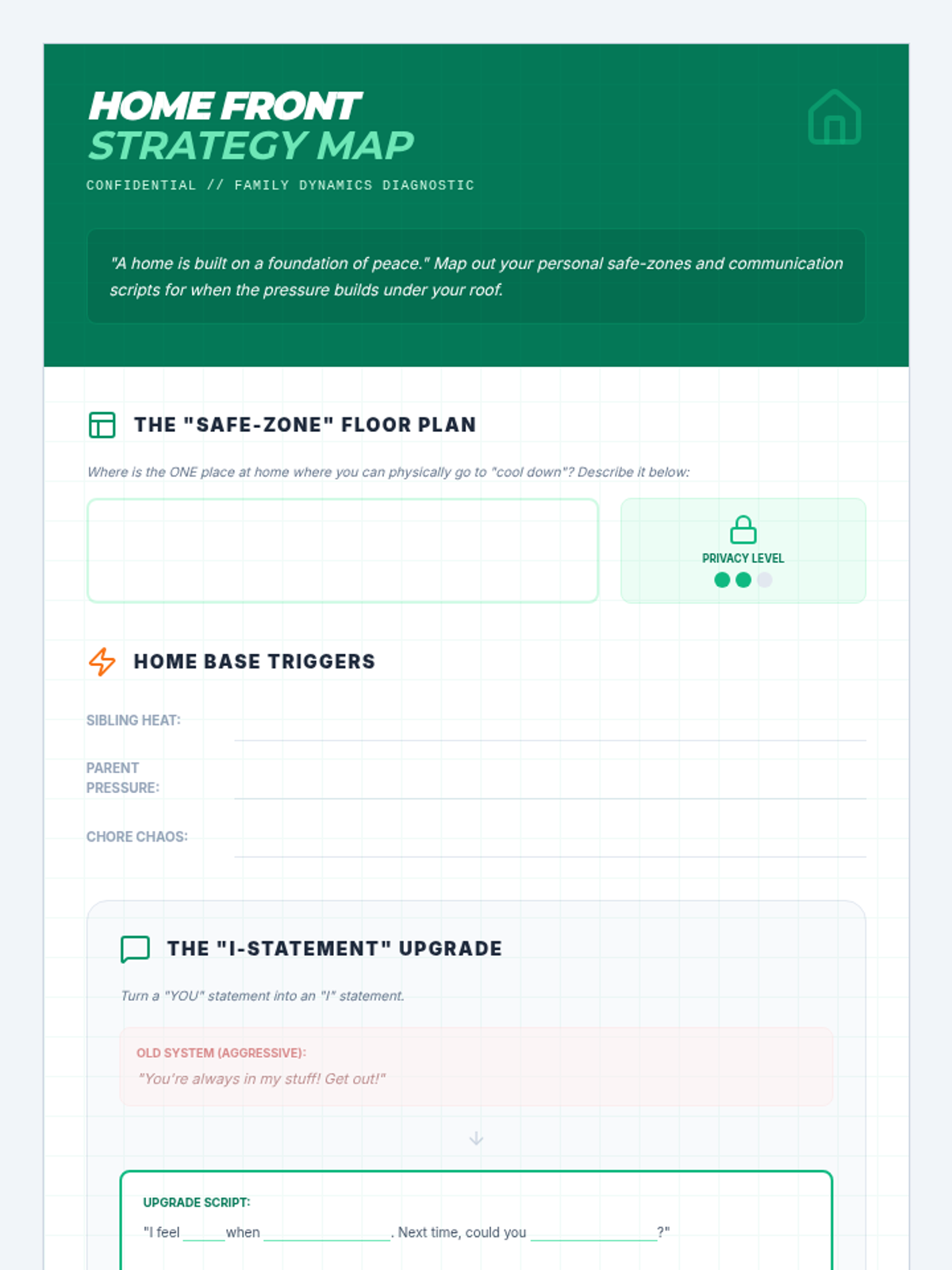
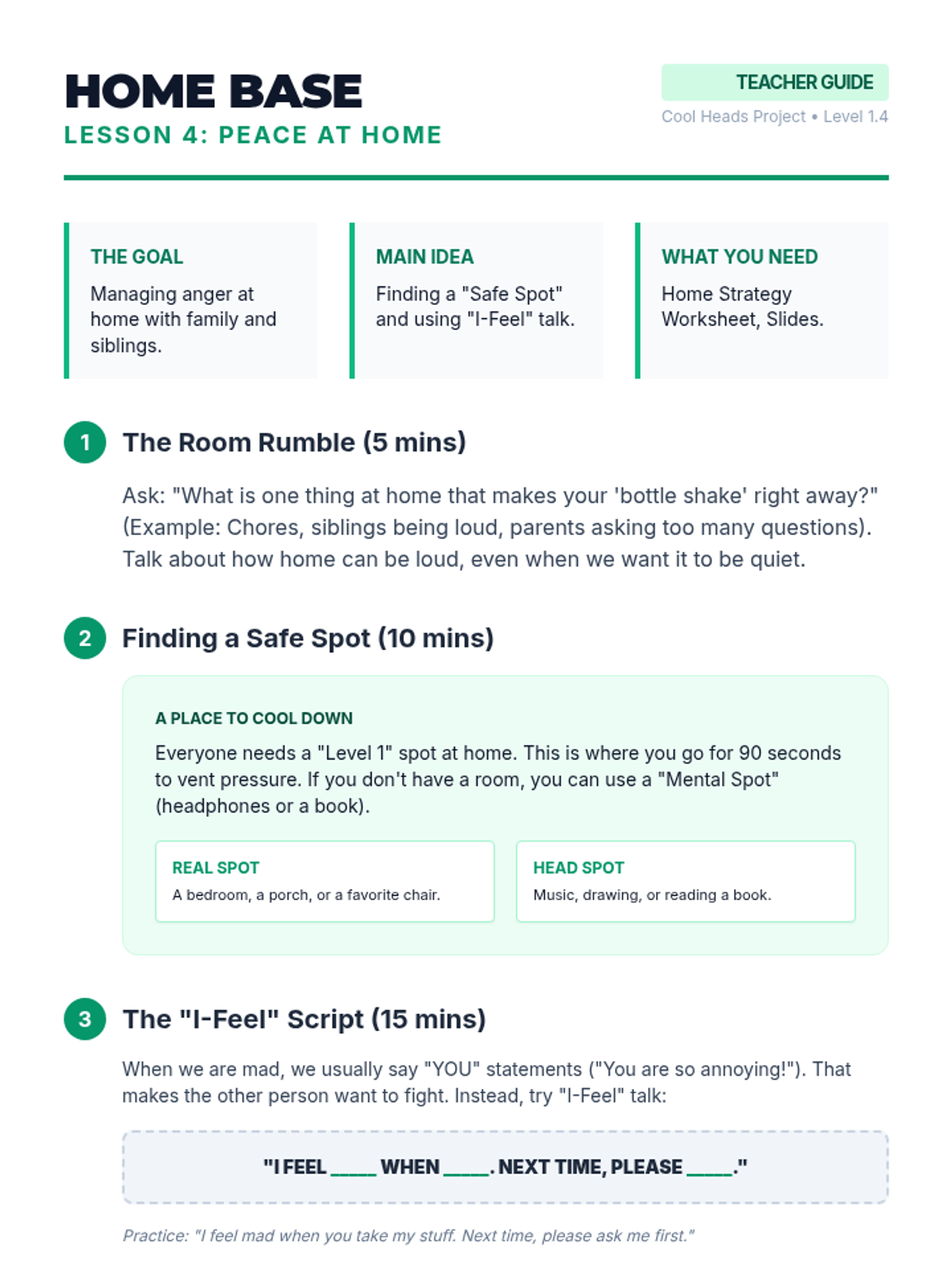
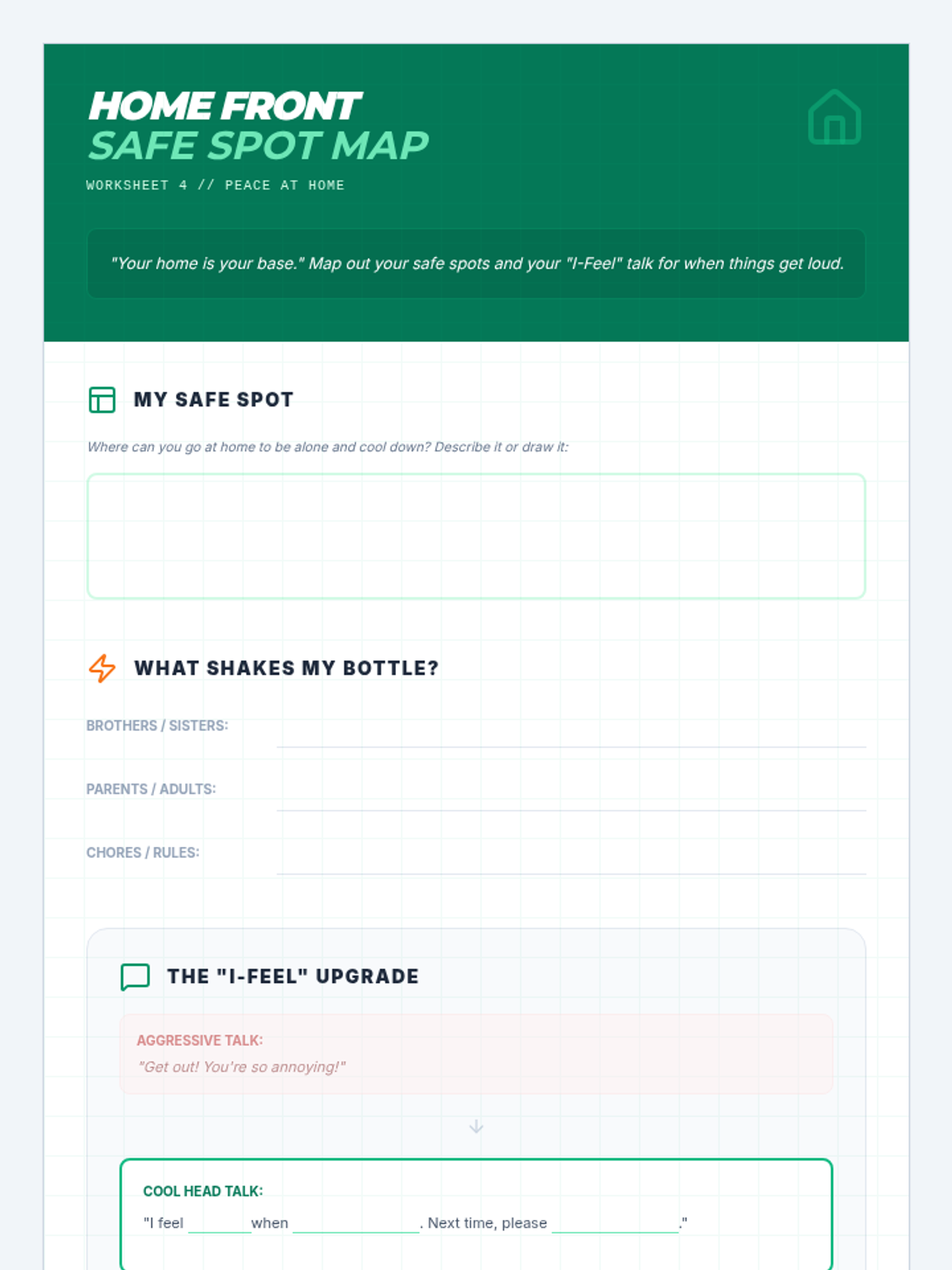
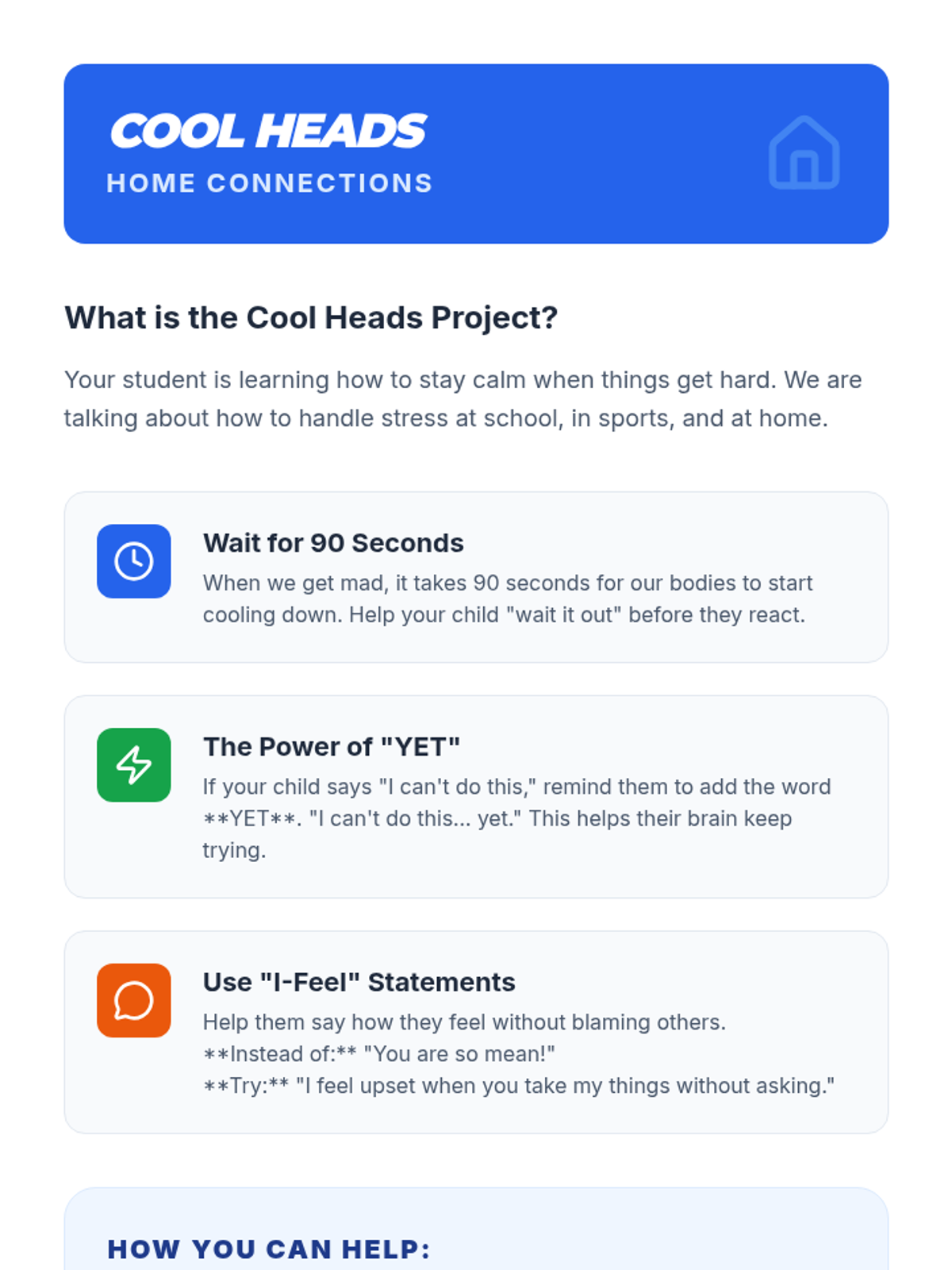
Strategies for navigating family dynamics, sibling conflicts, and home-based stressors through clear communication and personal space.
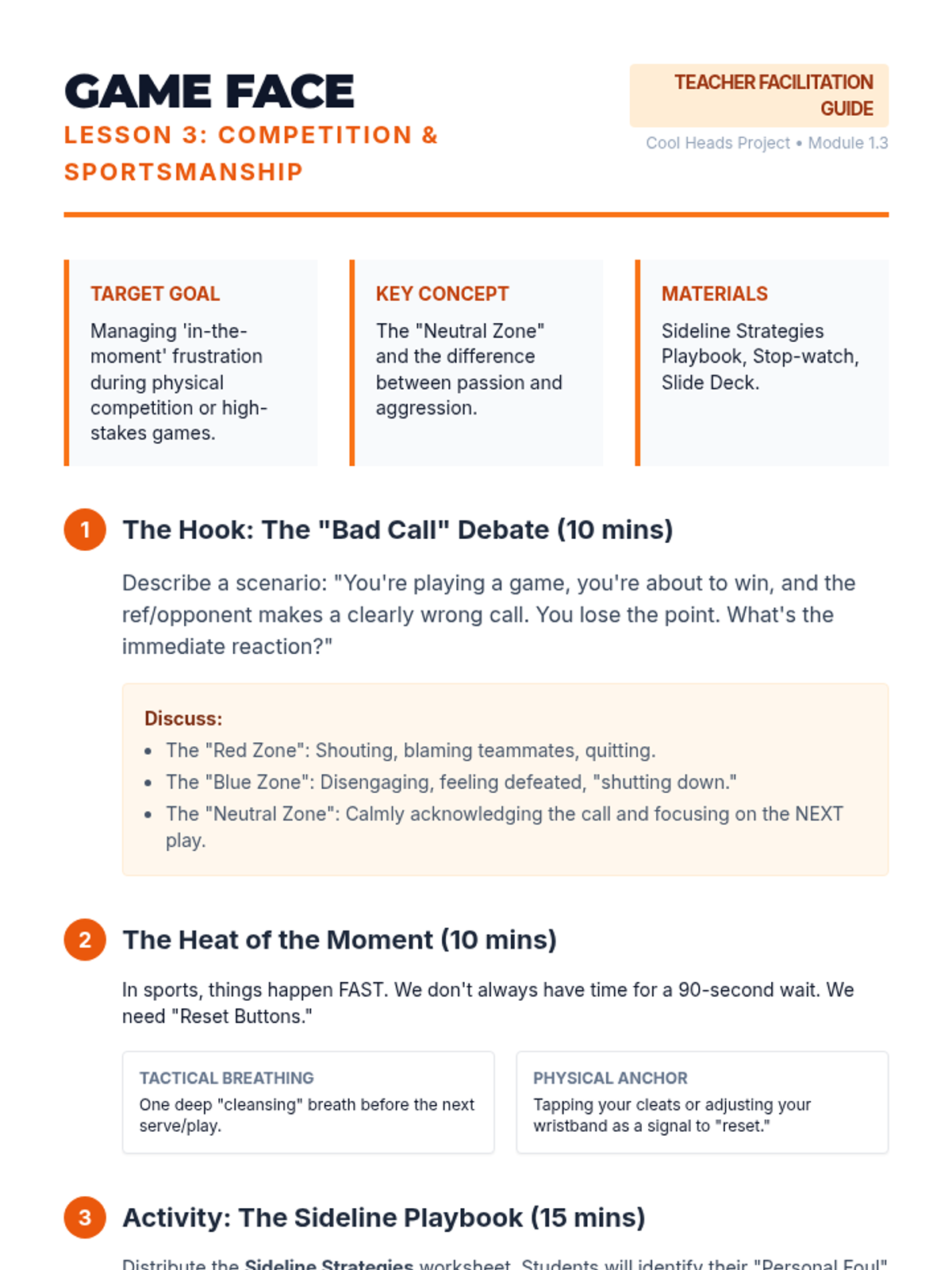
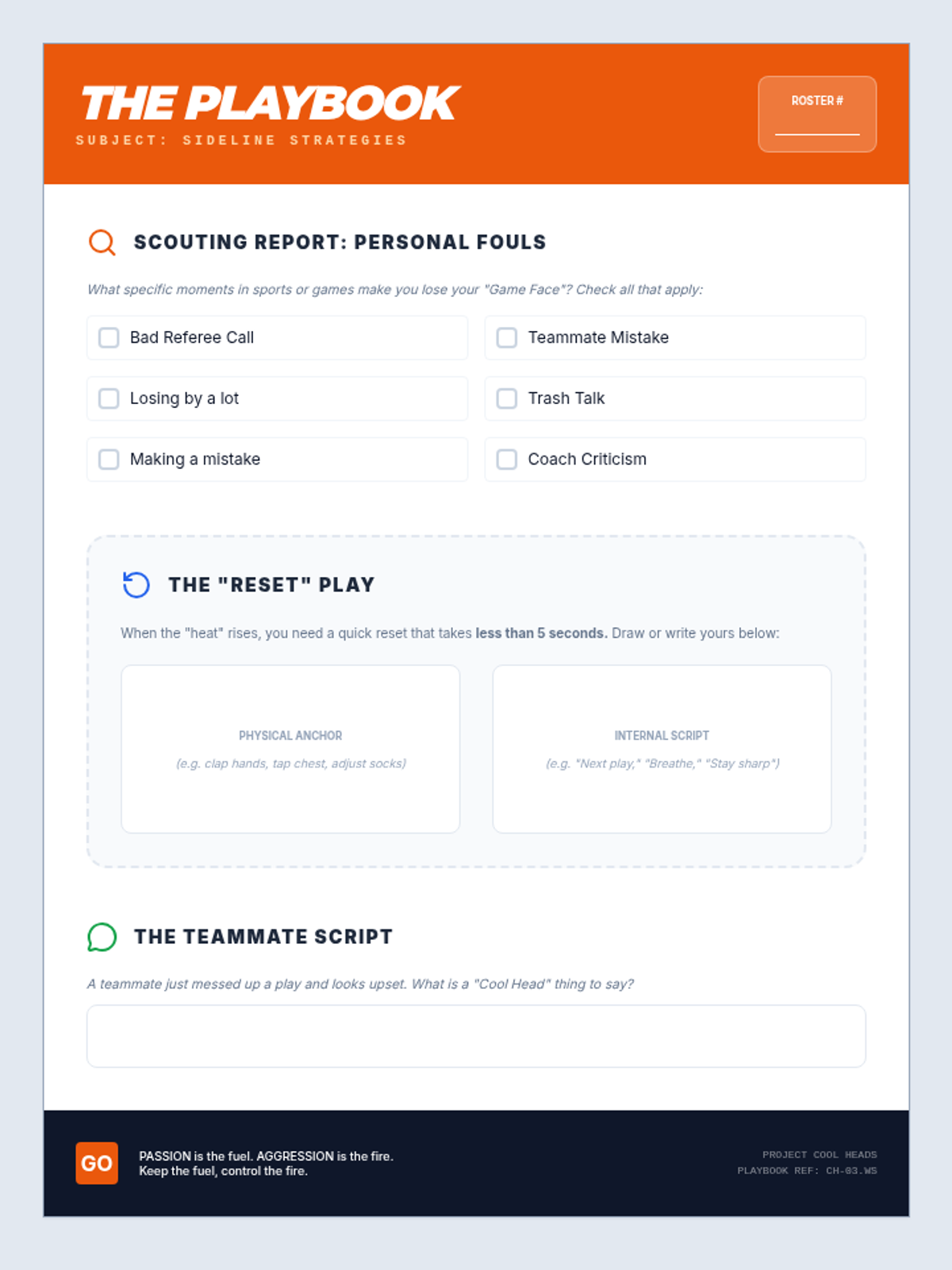
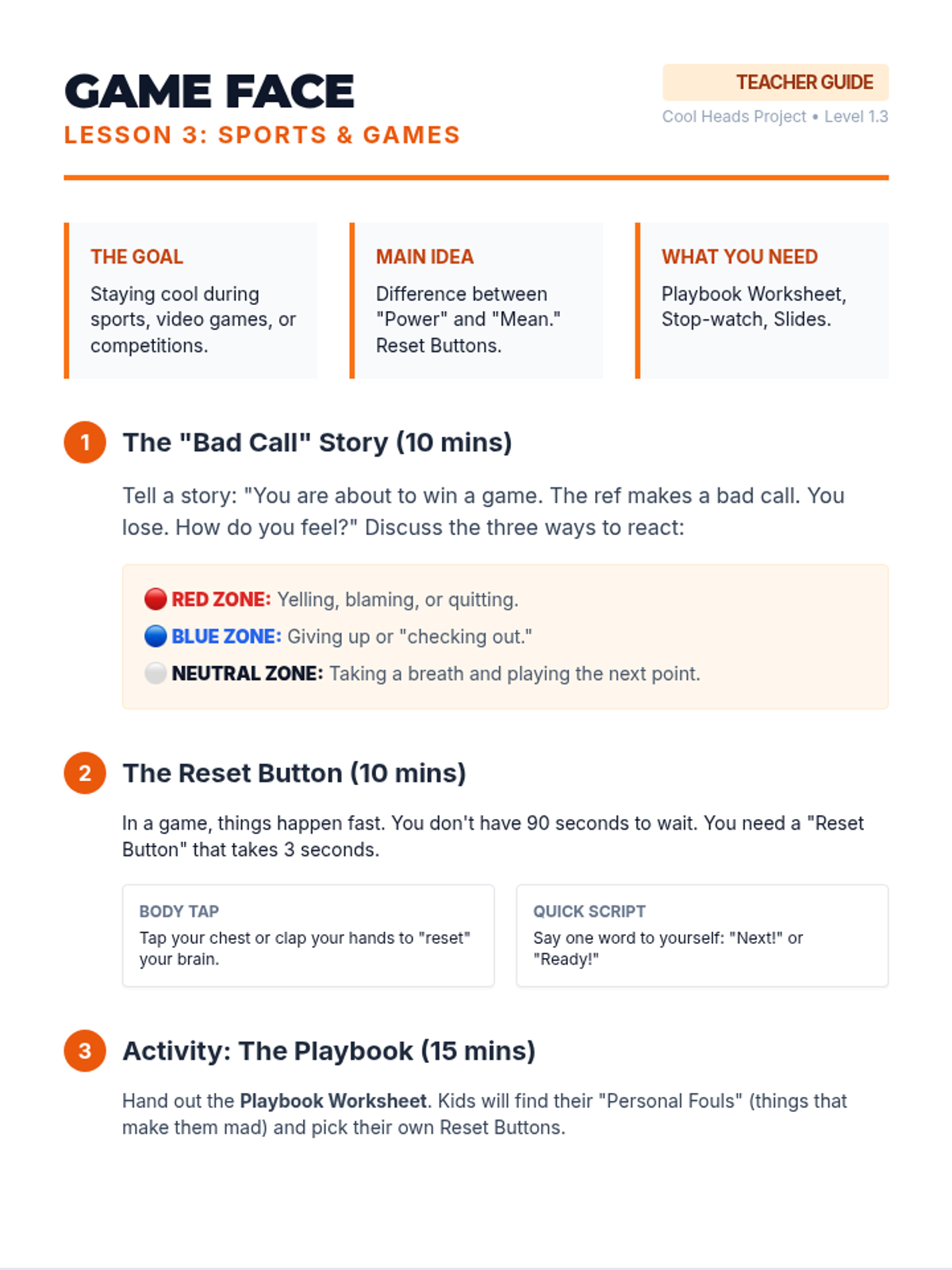
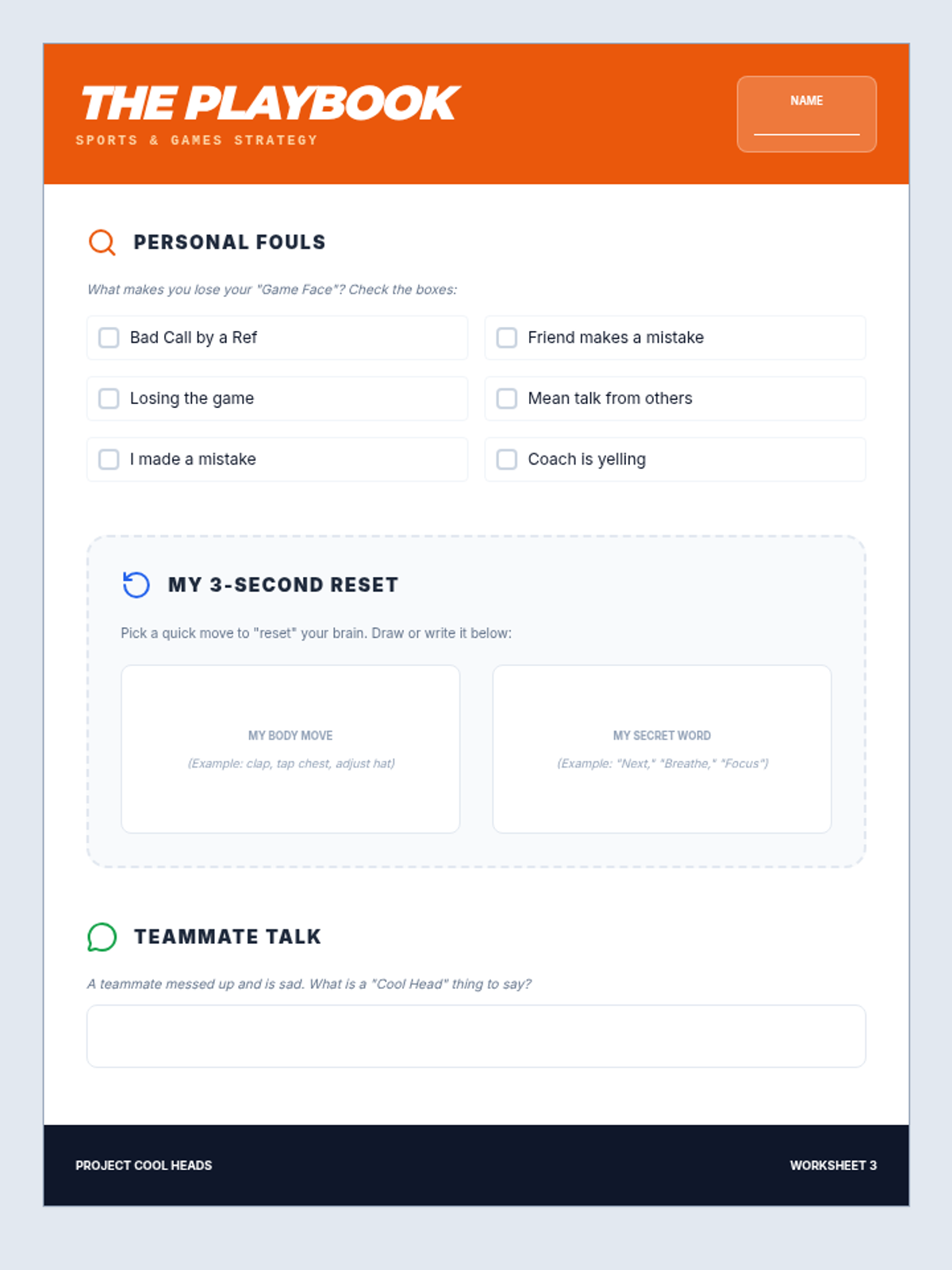
Explores the emotional ups and downs of sports and competition, teaching students how to keep their cool during wins and losses.
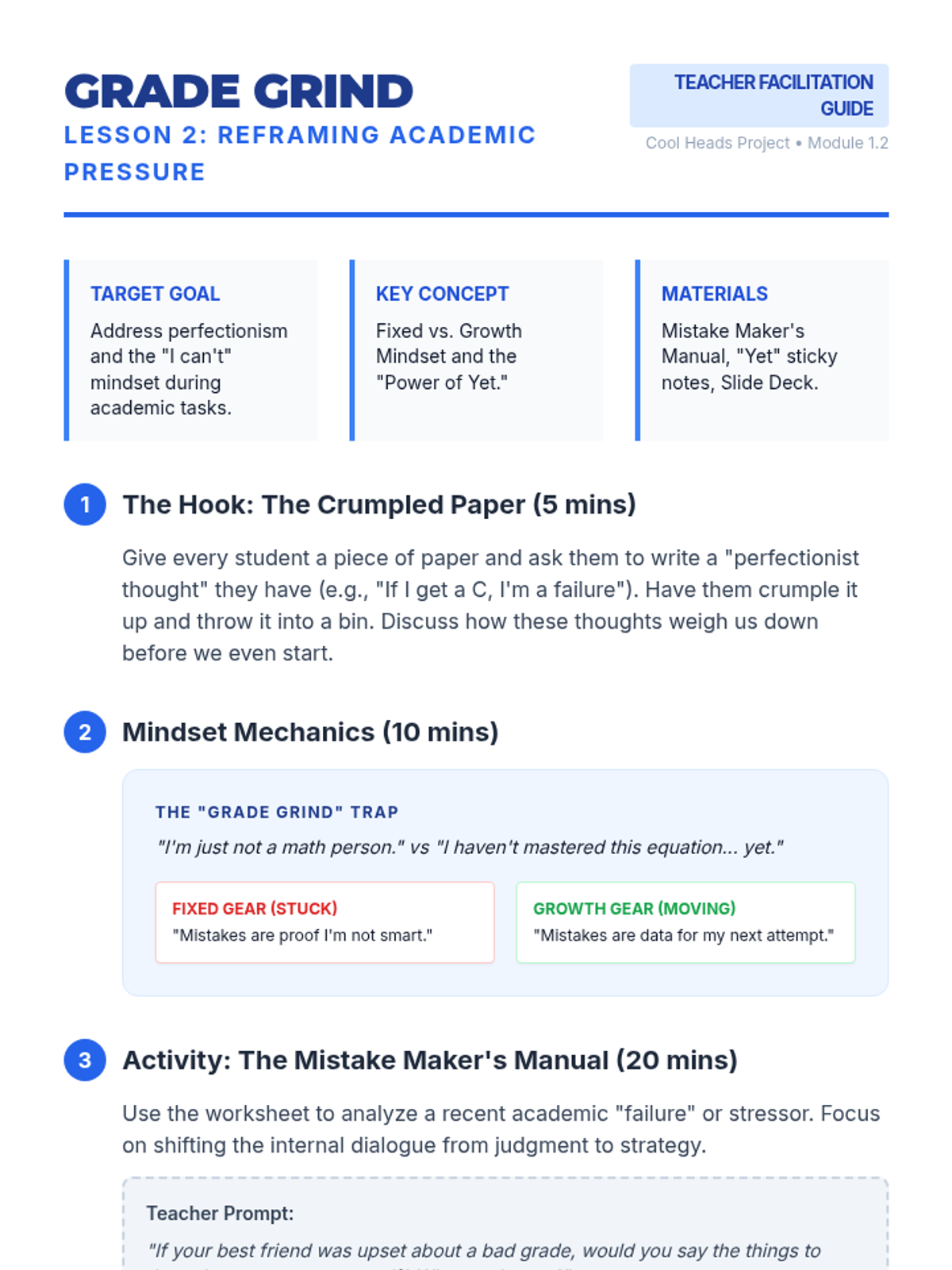
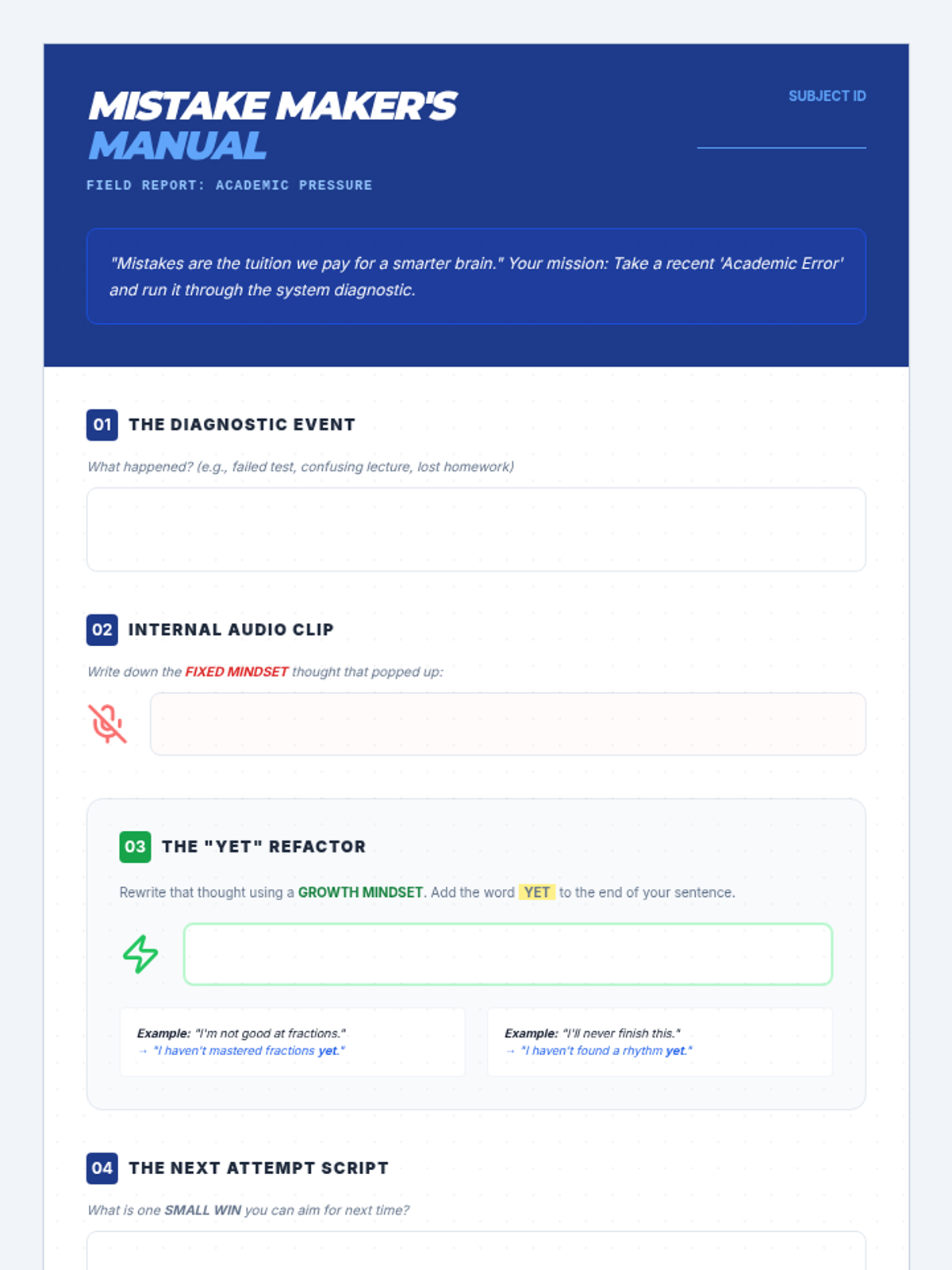
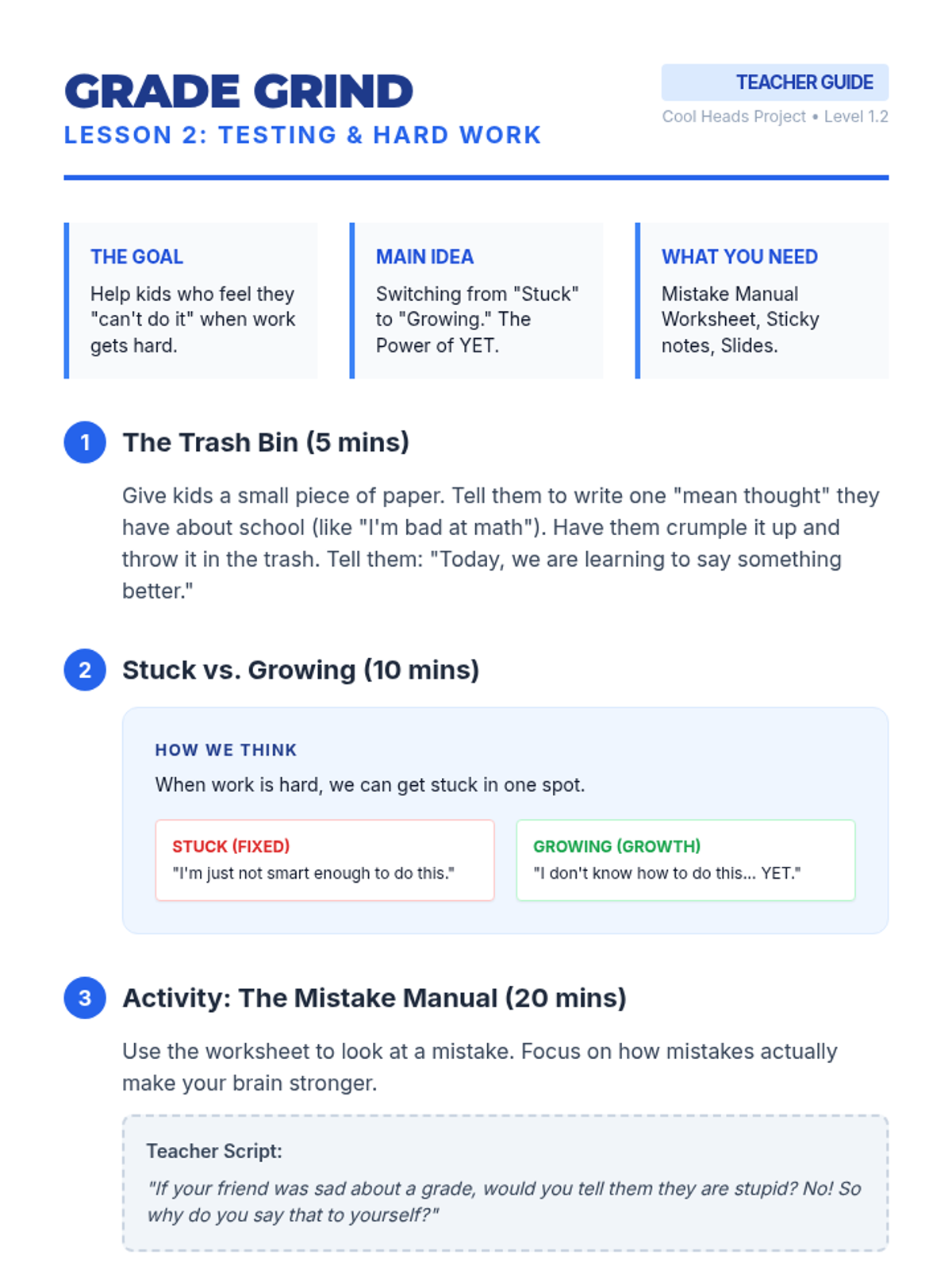
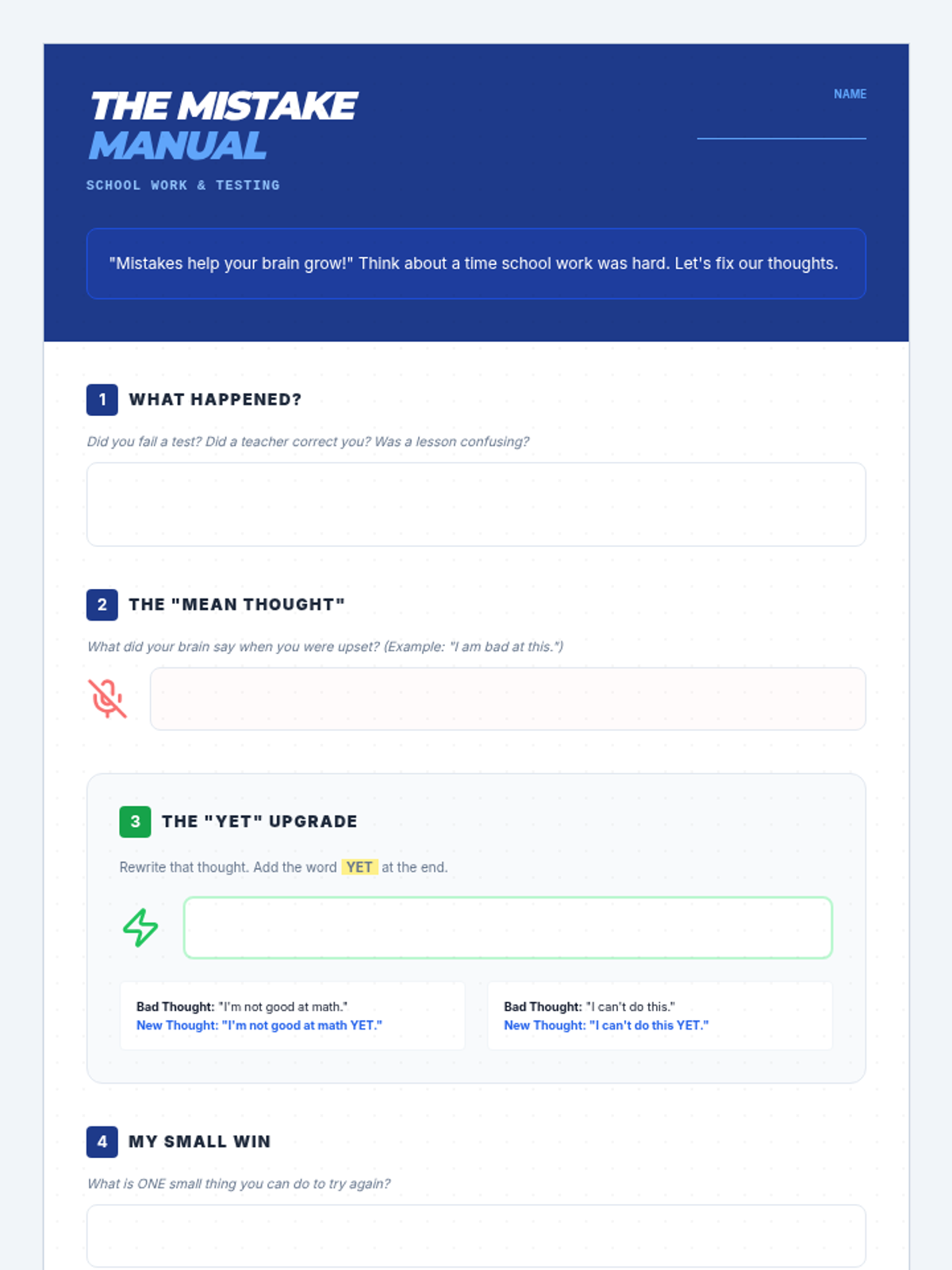
Focuses on managing the pressure of grades, tests, and academic expectations through reframing and realistic goal-setting.
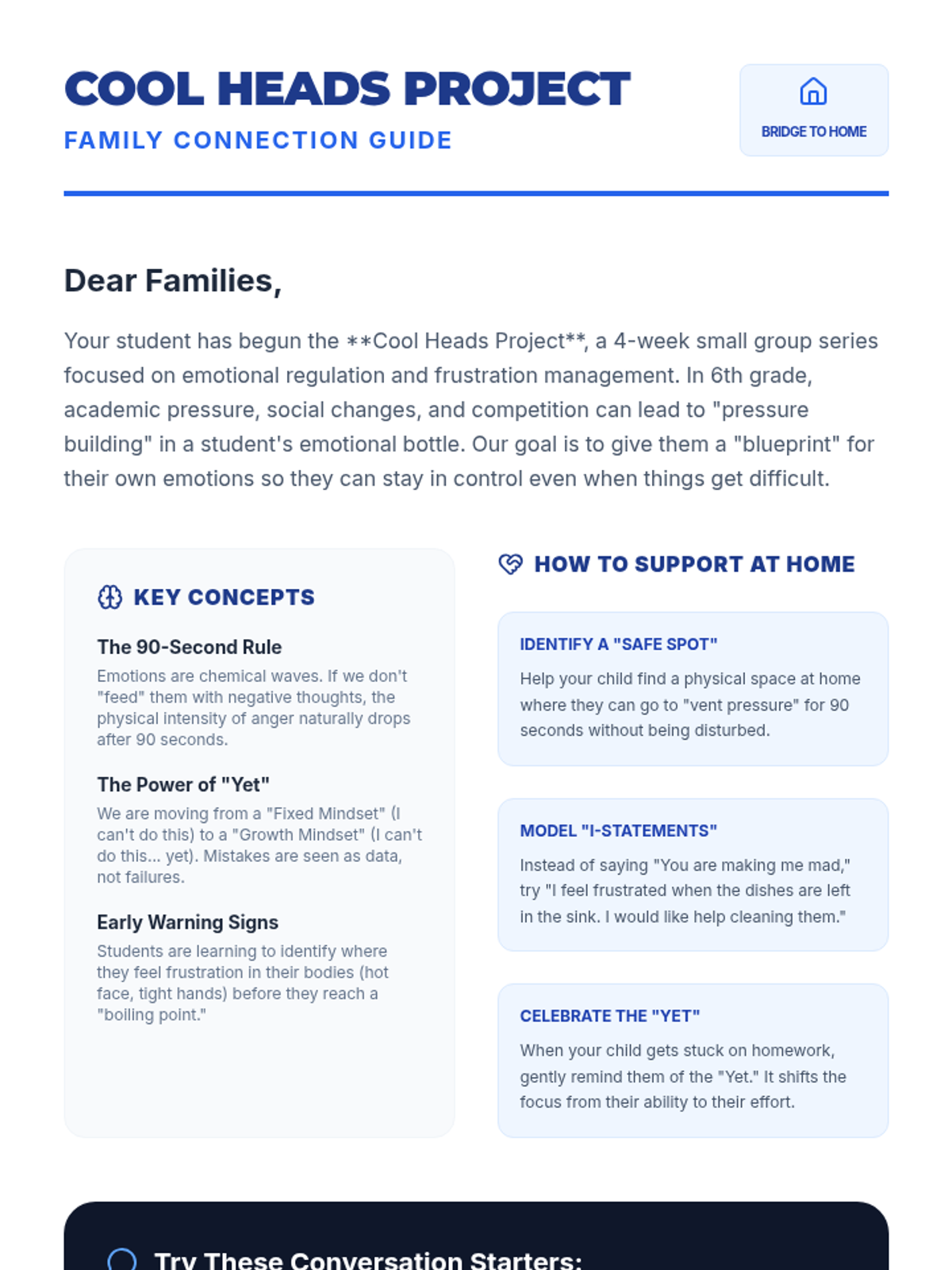
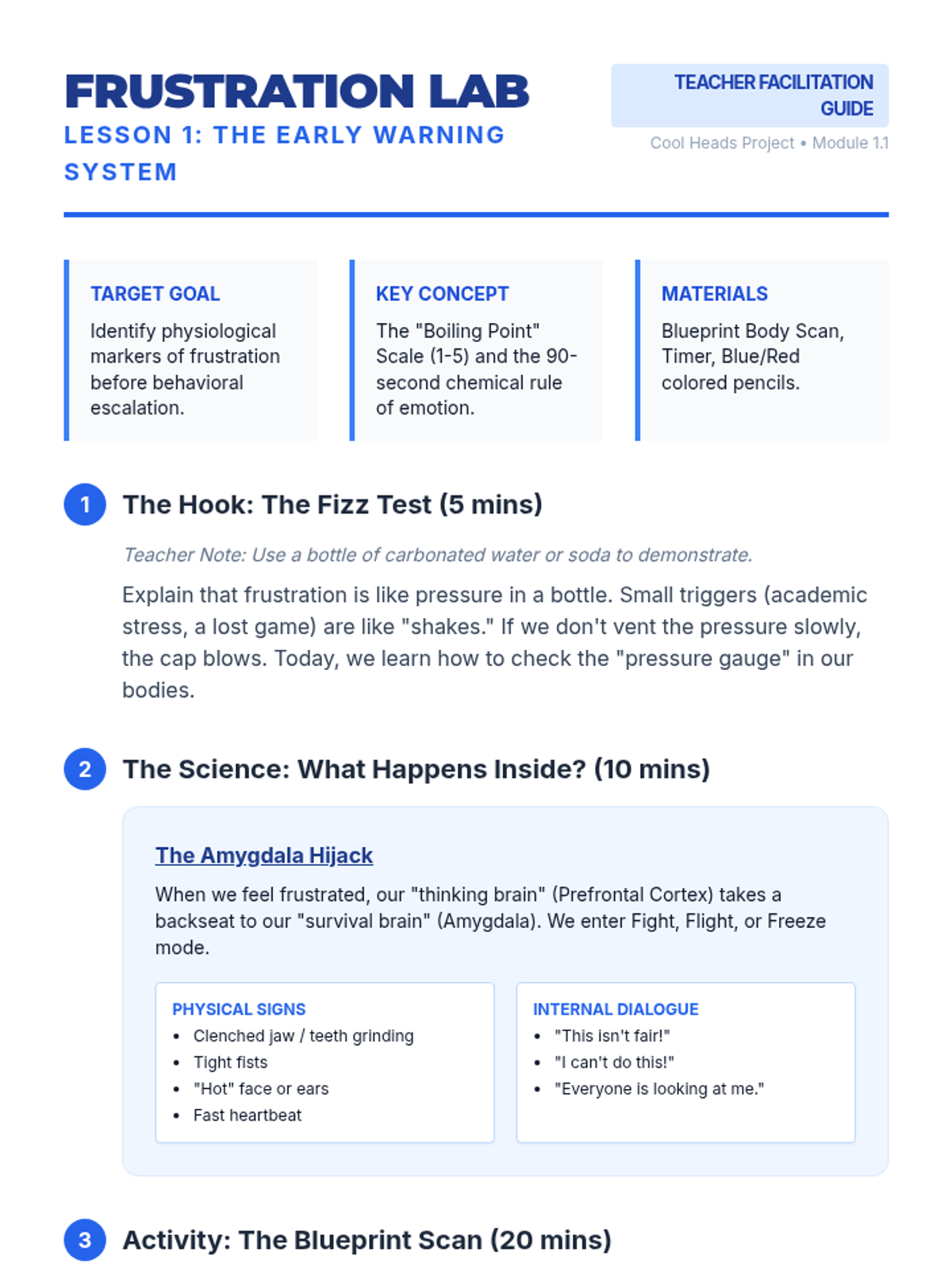
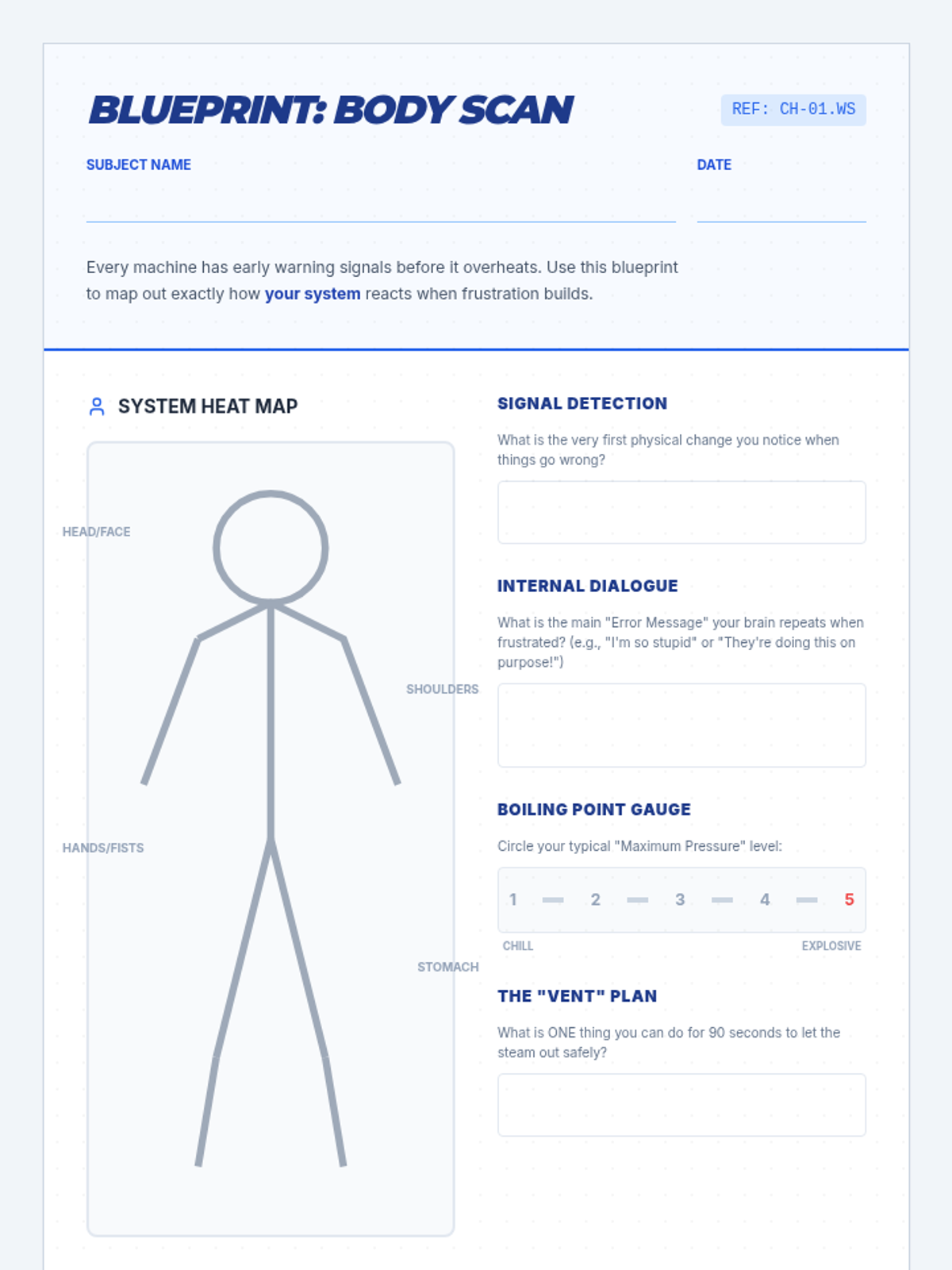
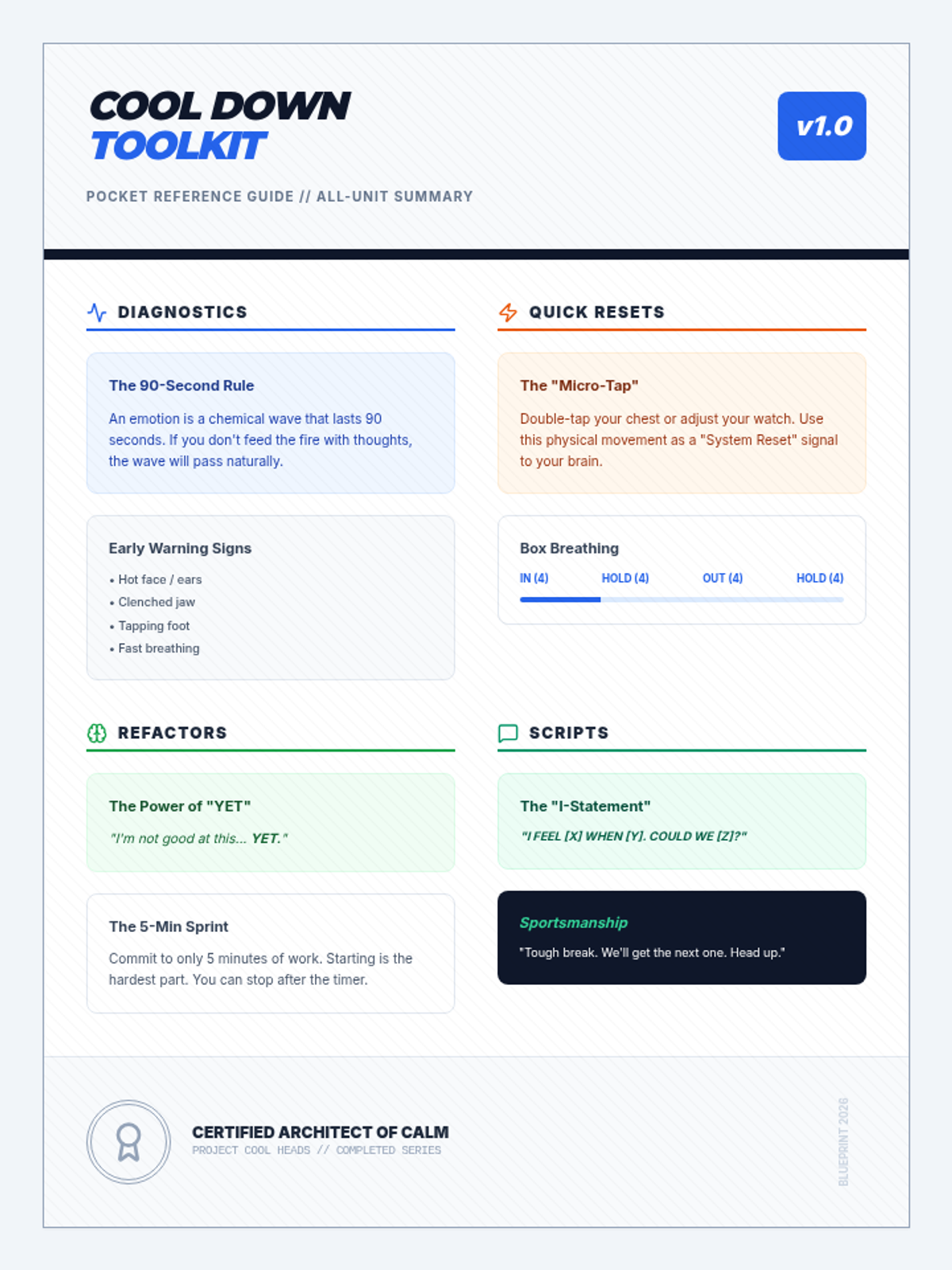
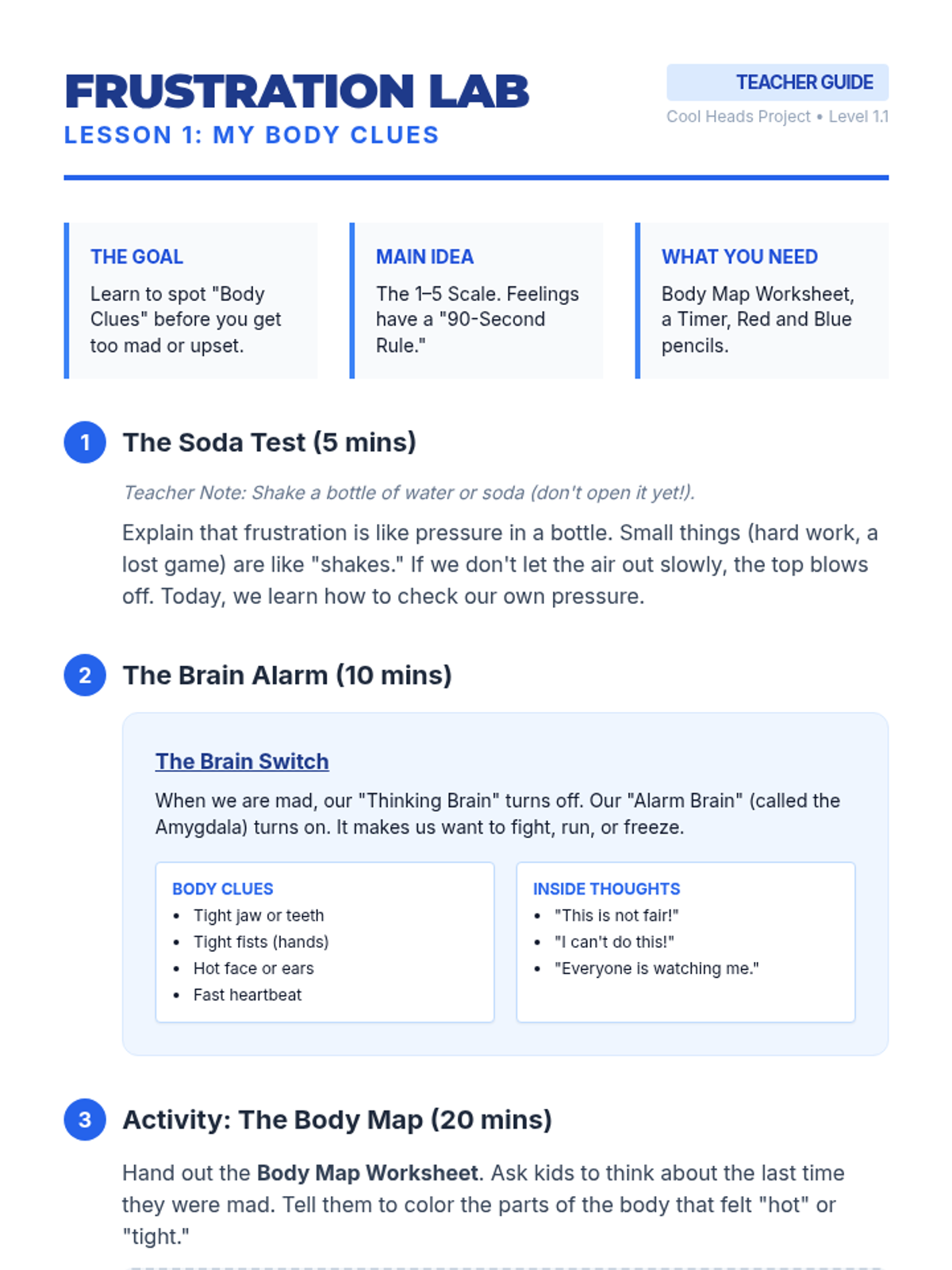
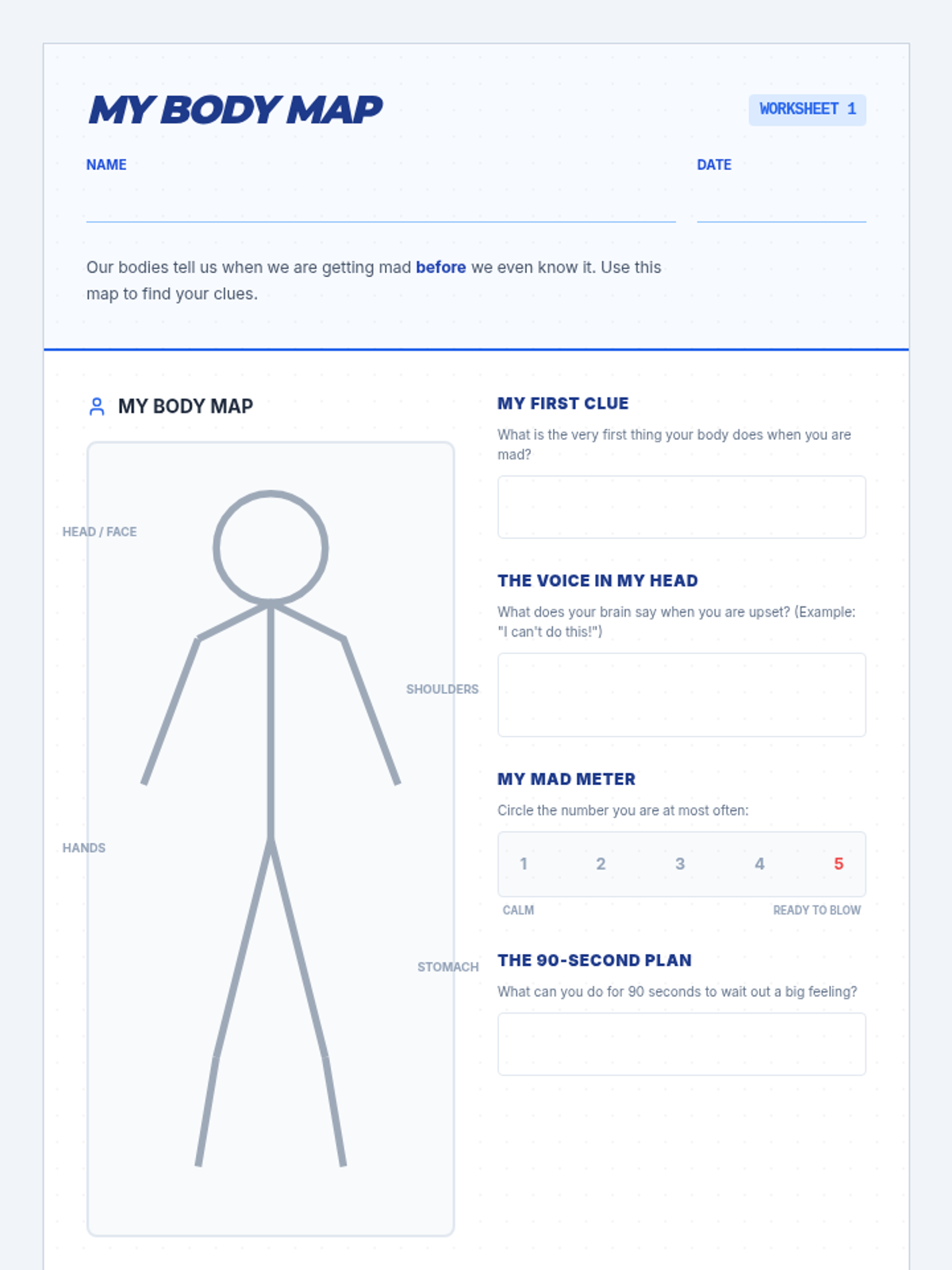
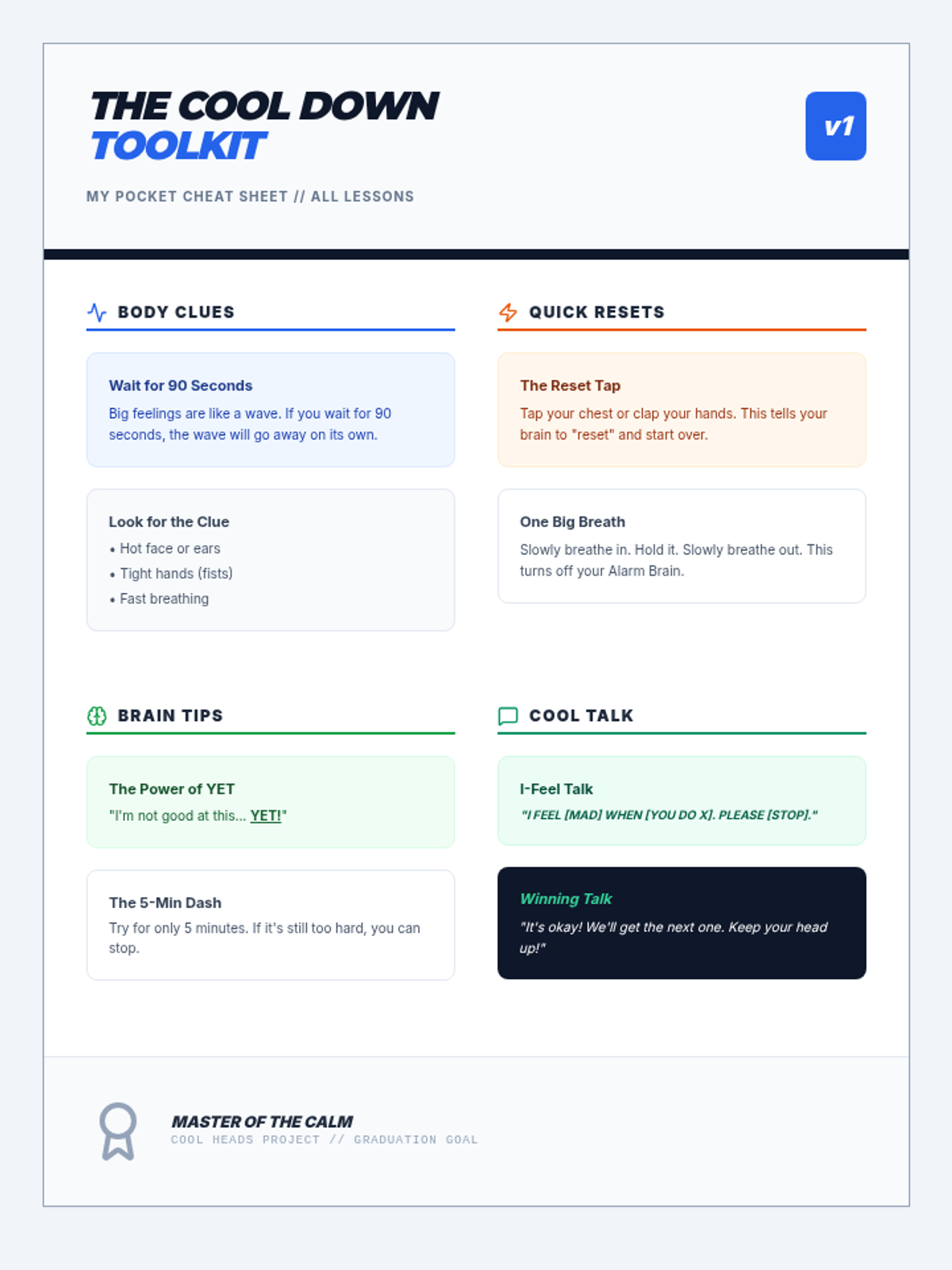
Students identify the physical sensations of frustration and learn to recognize their personal 'early warning signs' before they reach a boiling point.
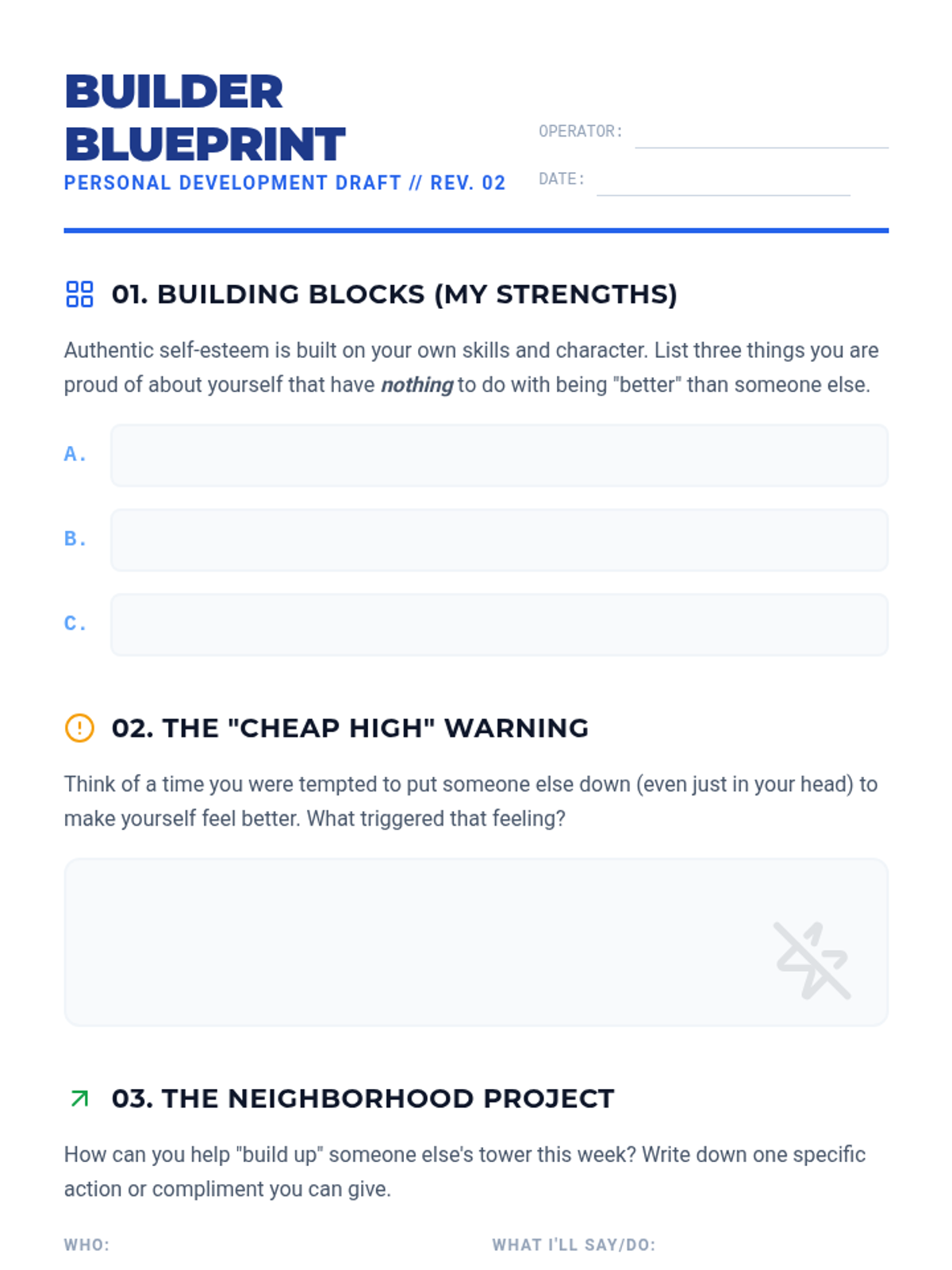
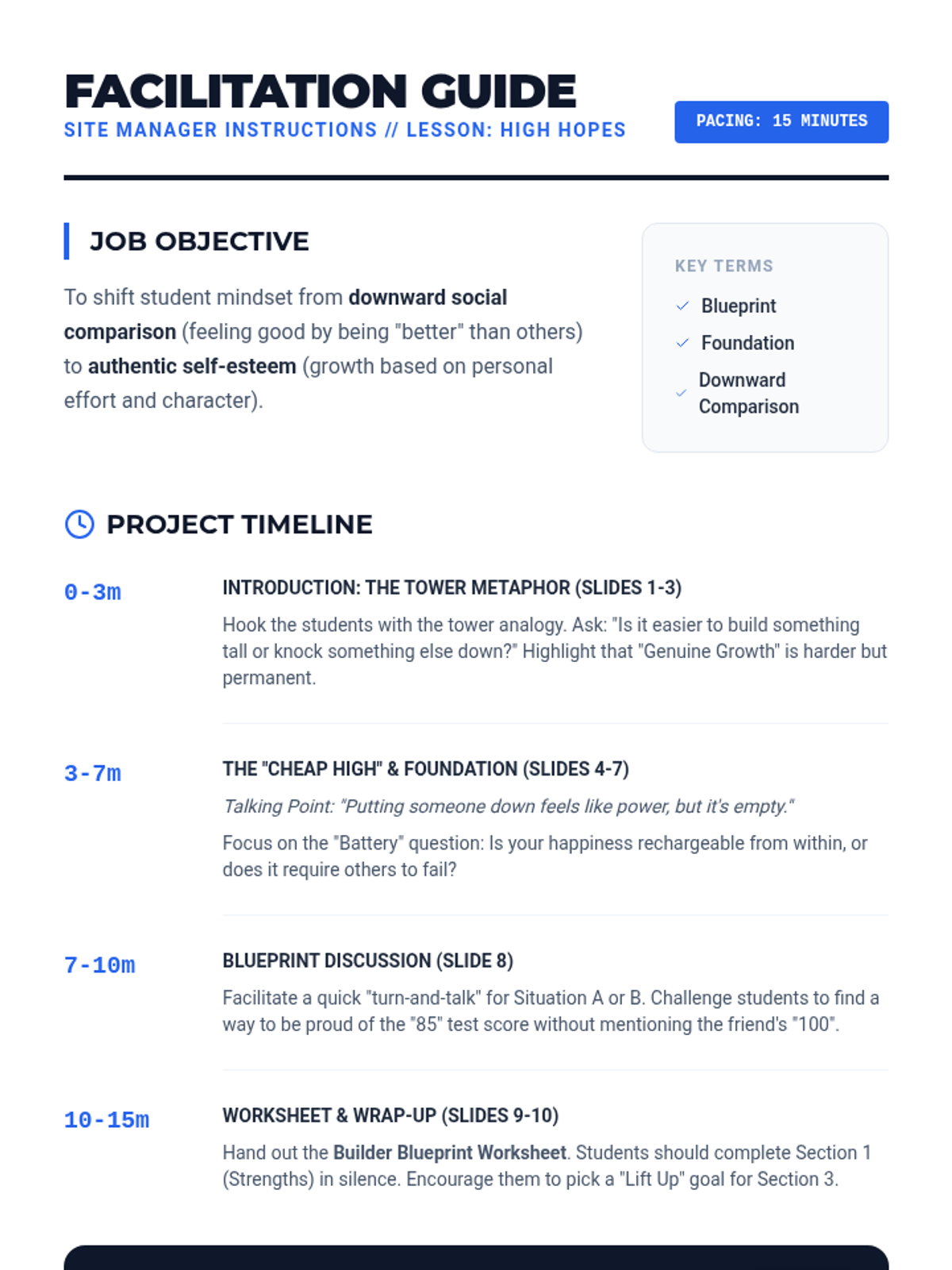
A 15-minute lesson exploring the pitfalls of 'downward social comparison' and how to build authentic self-esteem without diminishing others. Students will learn that true confidence comes from personal growth rather than putting others down.
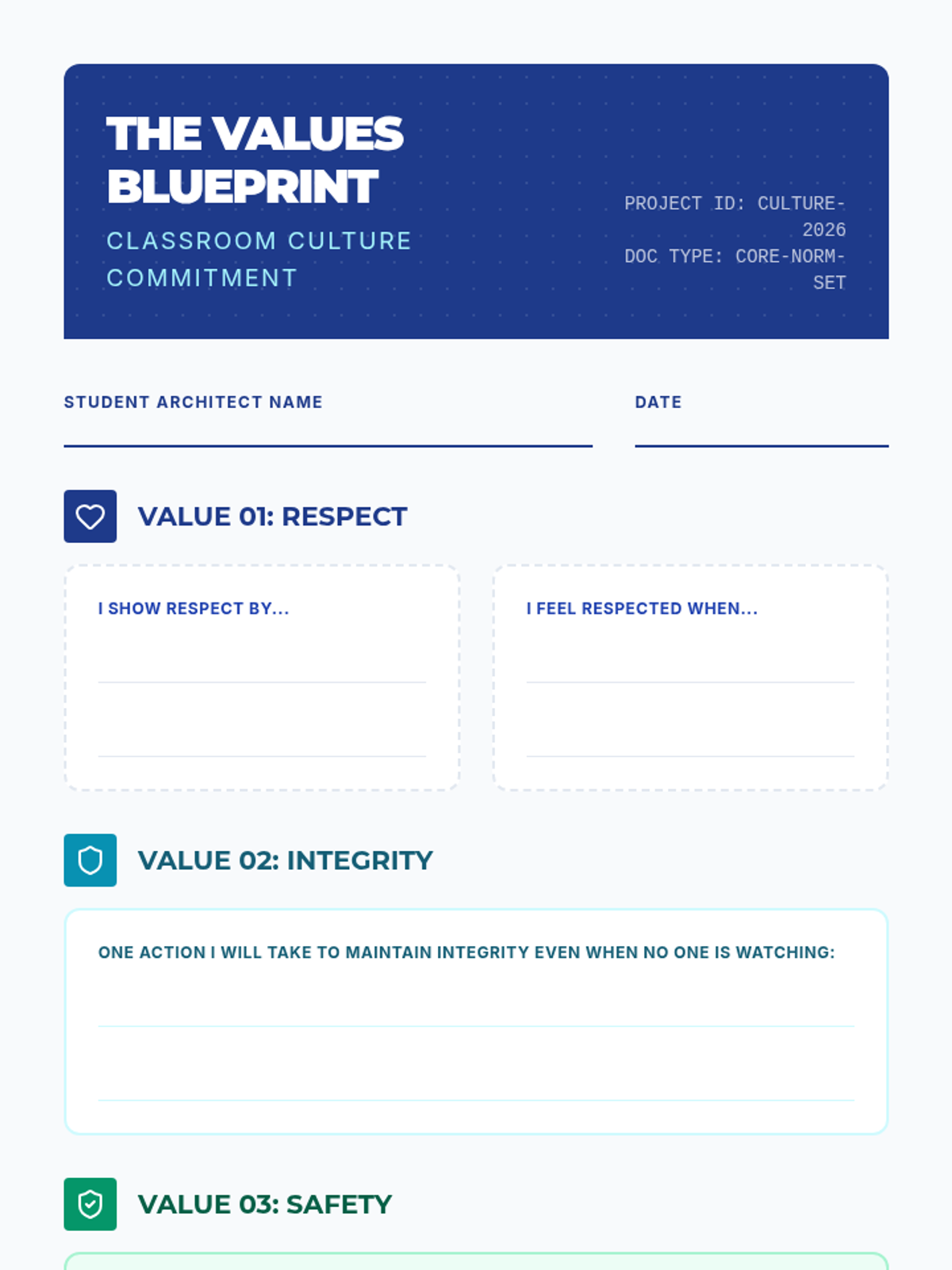
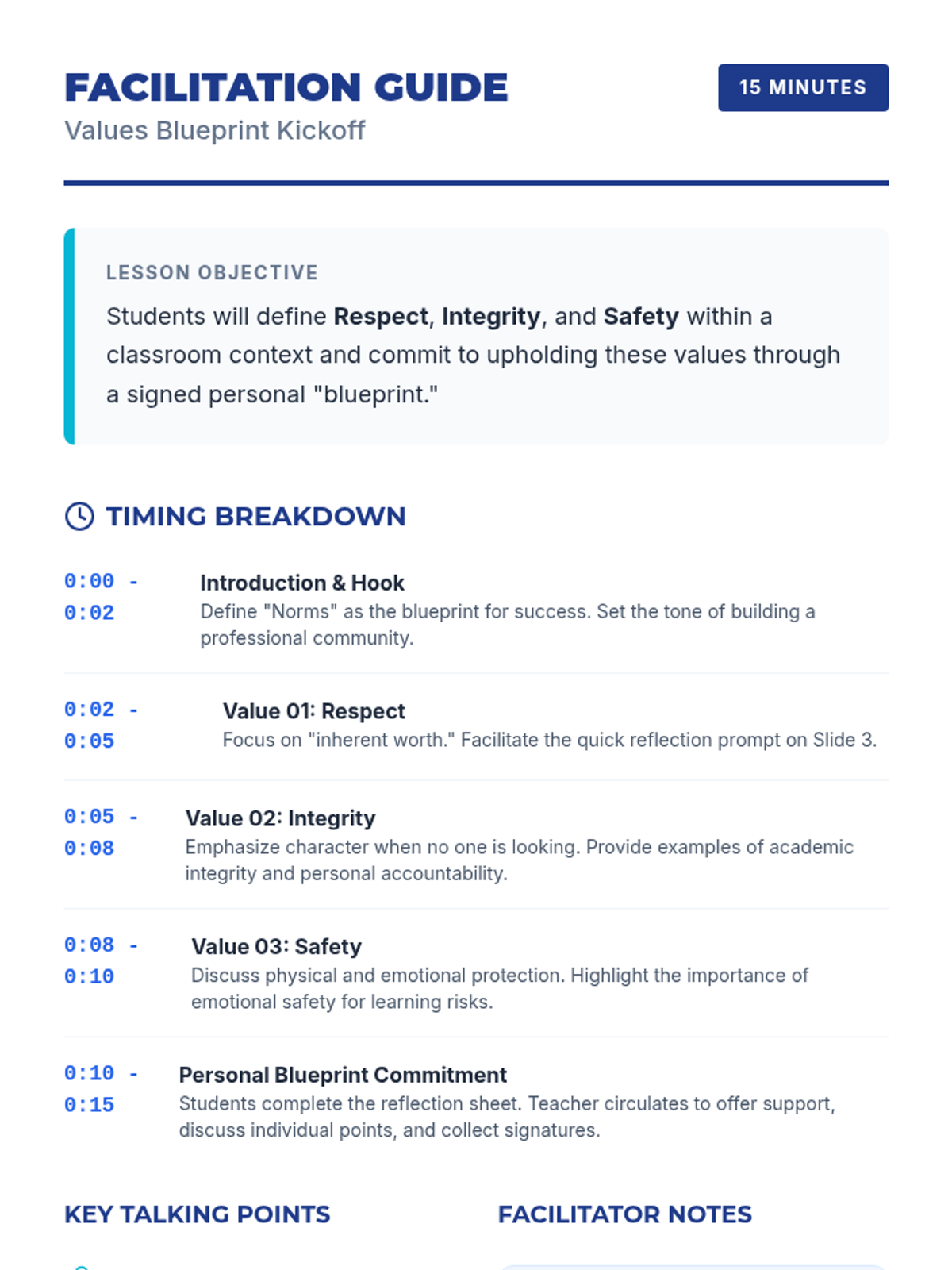
A concise 15-minute introduction to classroom norms centered on the core values of Respect, Integrity, and Safety. Students will define these values and commit to a shared culture of success.