A 45-minute digital forensics lesson where 6th-grade students learn to use reverse image search tools to verify the authenticity and context of viral images. Students act as 'Image Detectives' to uncover the true origins of misleading digital media.
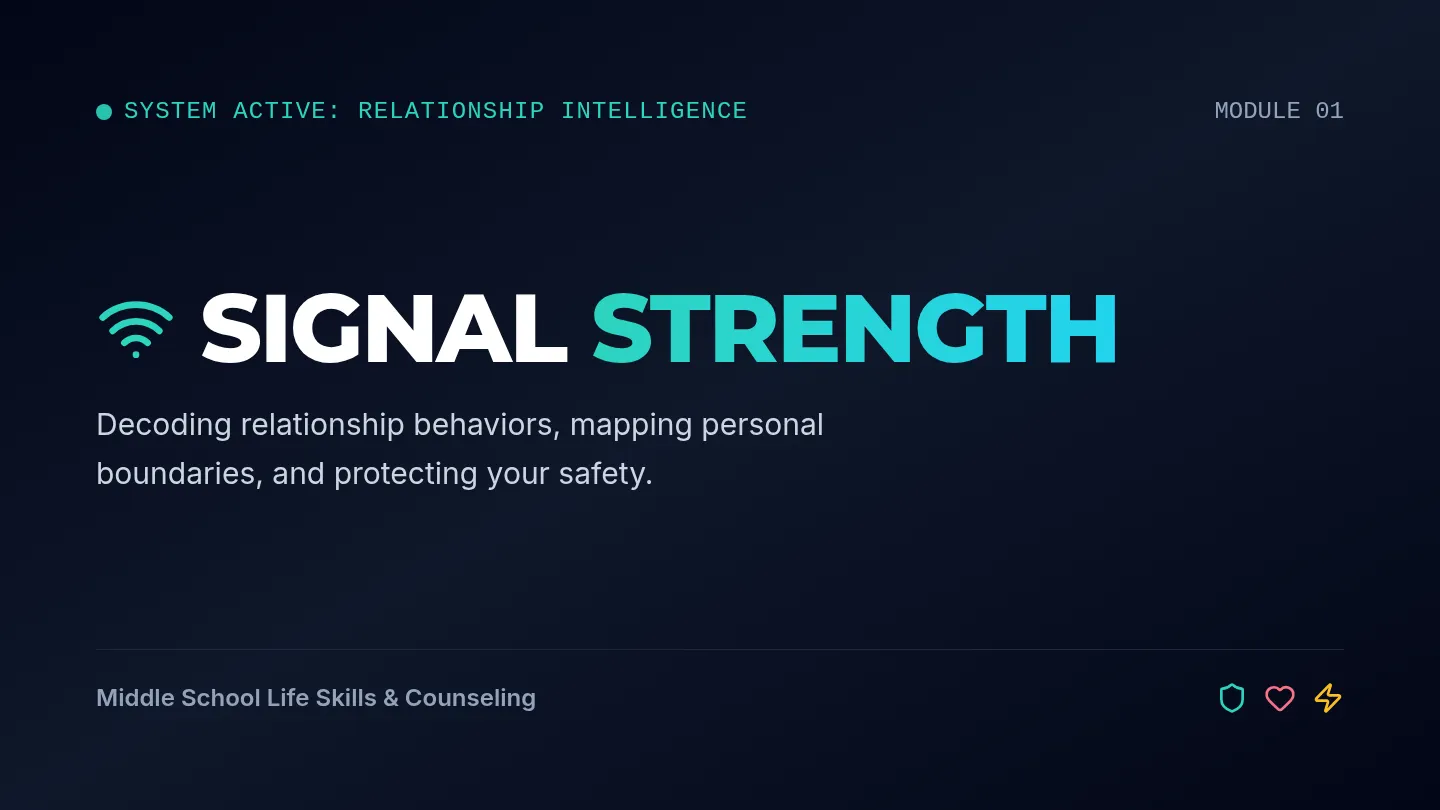
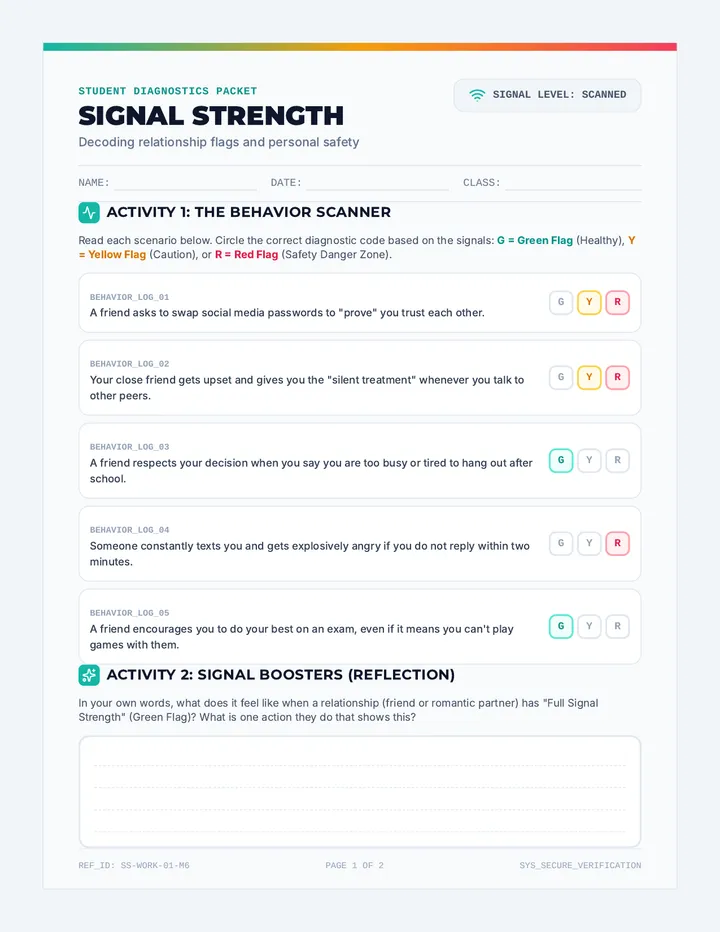
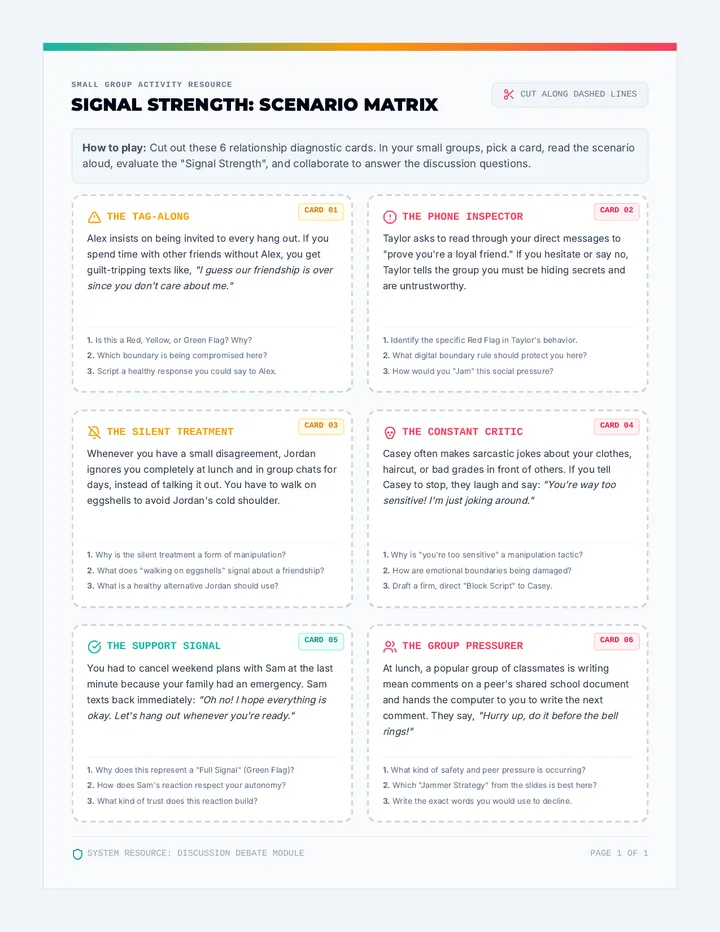
A middle school counseling lesson on healthy relationships and personal safety. Students learn to decode relationship signals, identify red and yellow flags, map their personal boundaries, and practice navigating peer pressure through interactive discussions and guided reflections.
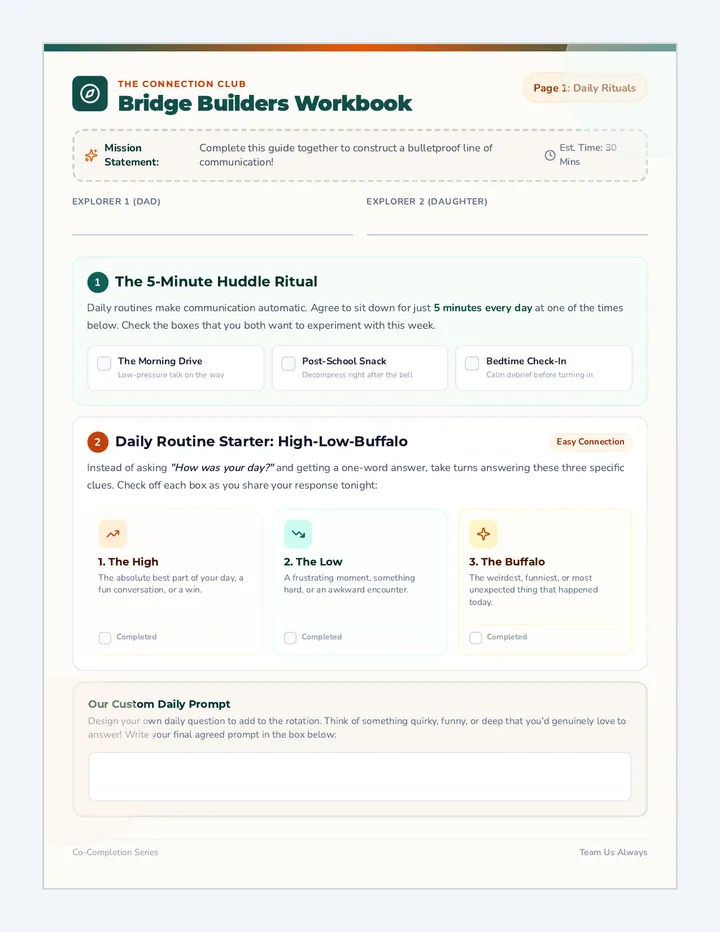
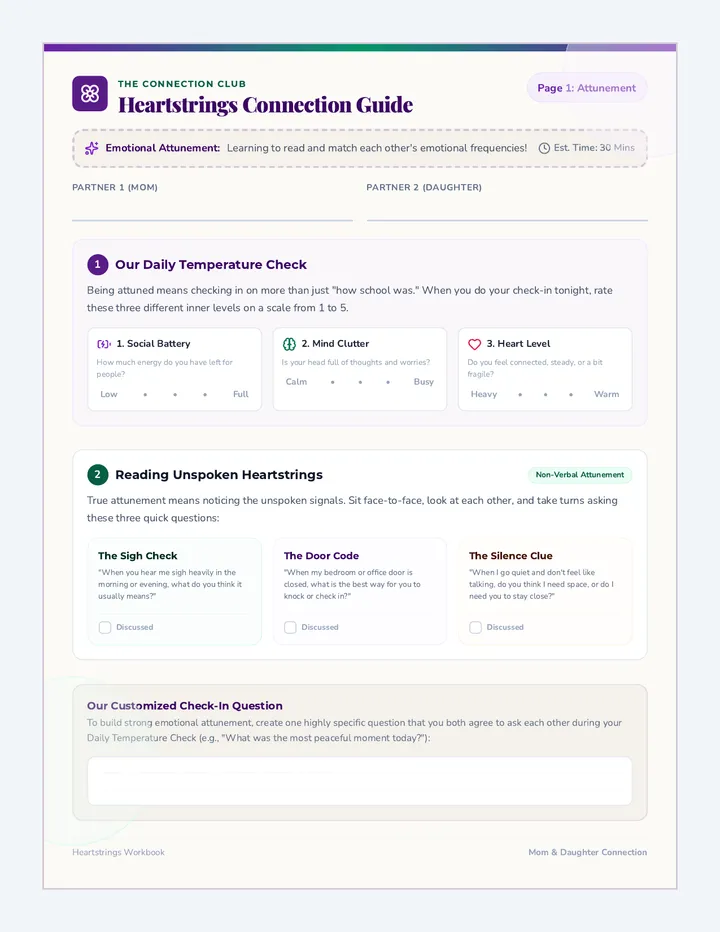
A high-quality co-completion toolkit for parents and 11-year-old pre-teens. Focuses on active listening, emotional attunement, conflict de-escalation, and establishing daily connection rituals.
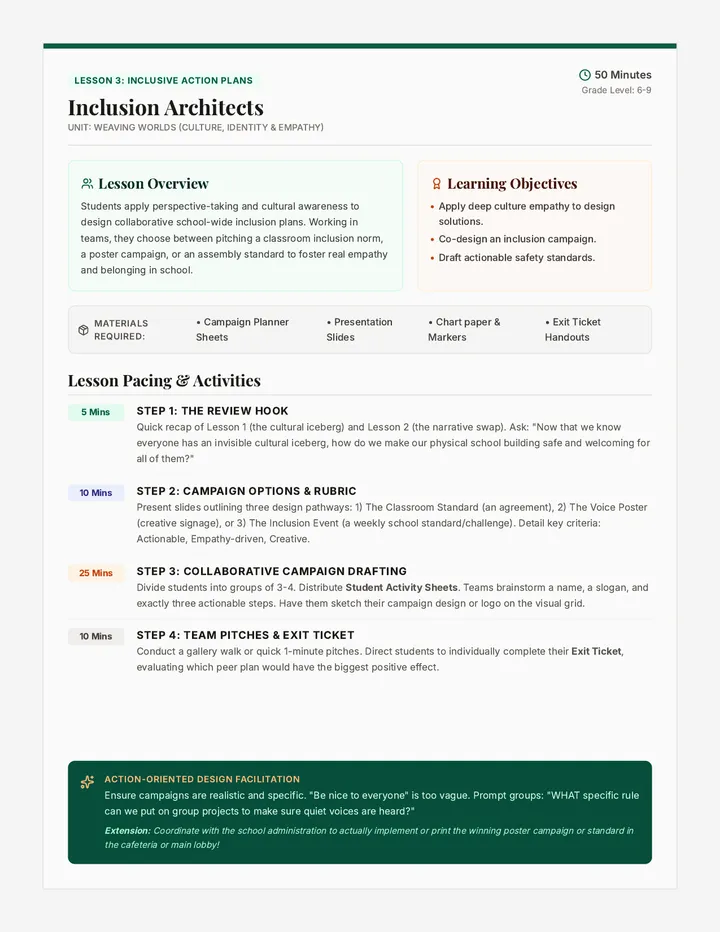
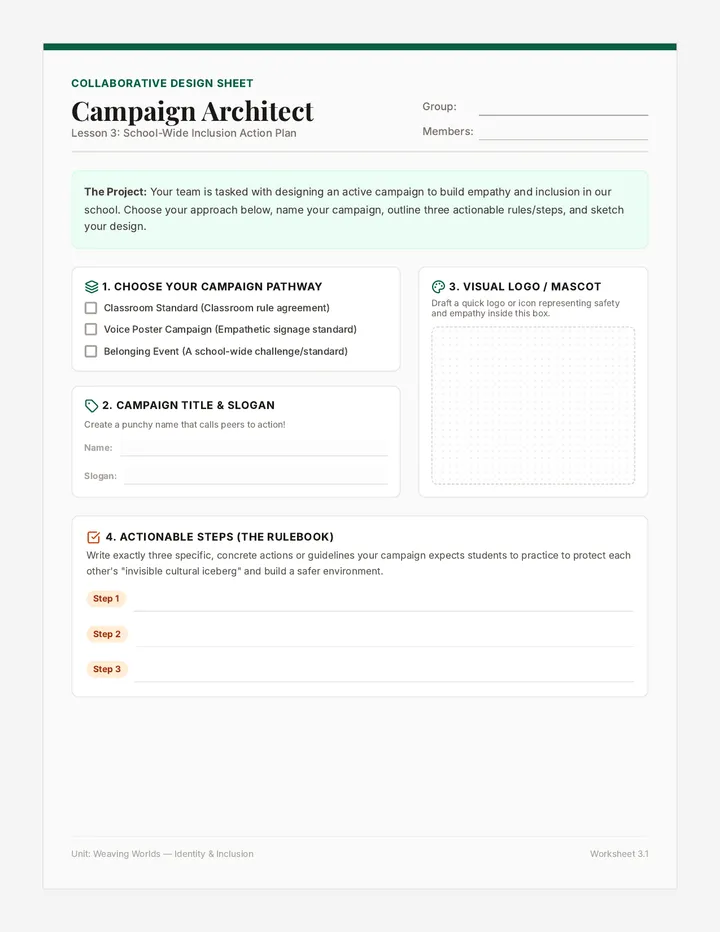
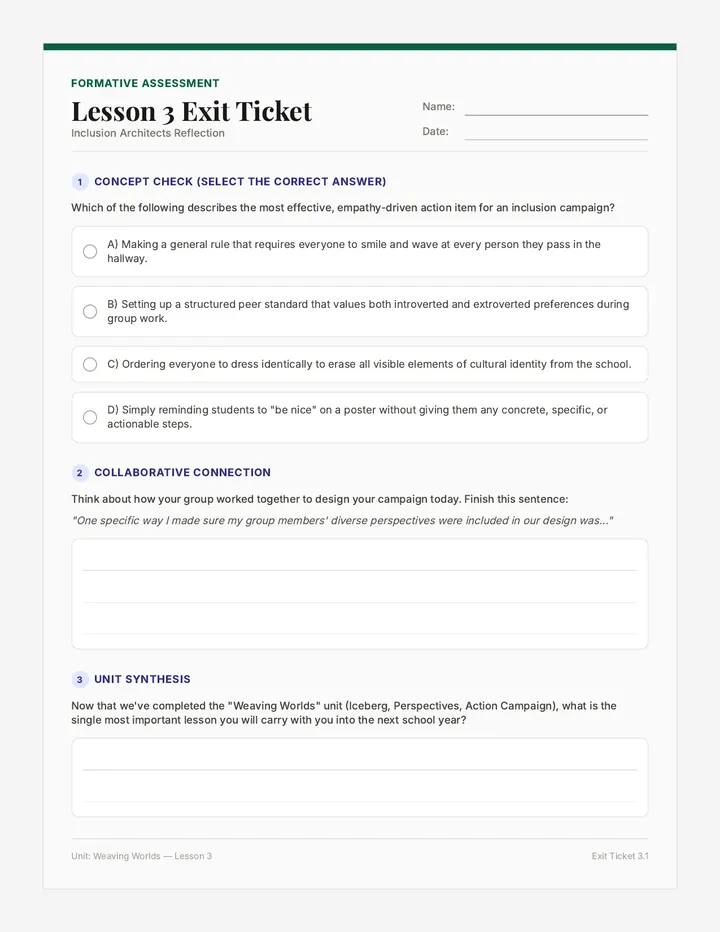
Students apply their deep listening and empathy skills to design a school-wide inclusion campaign or classroom standard, designing collaborative action items.
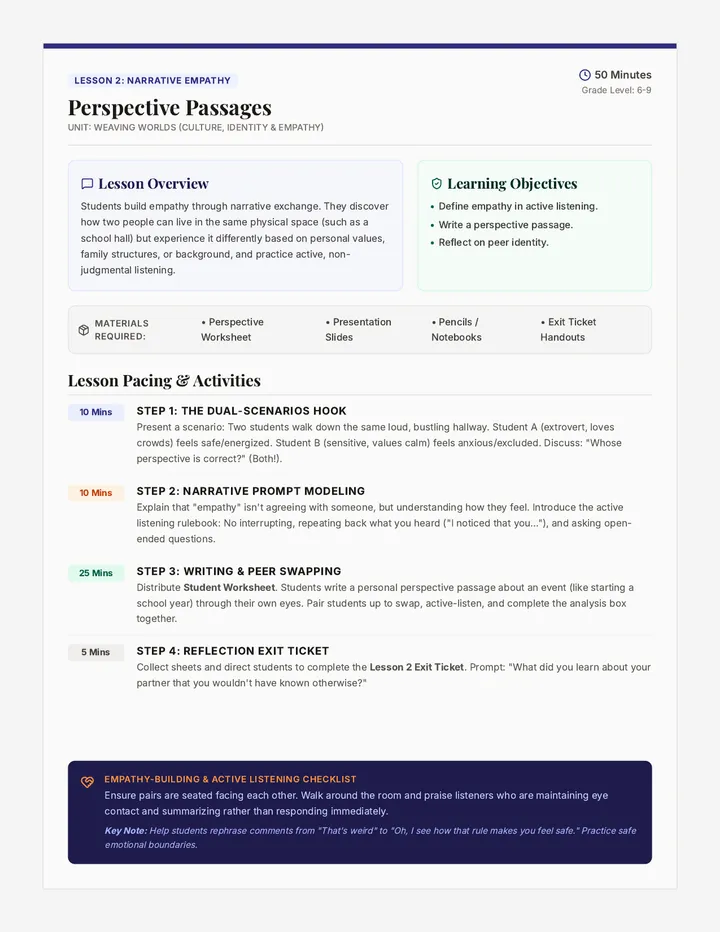
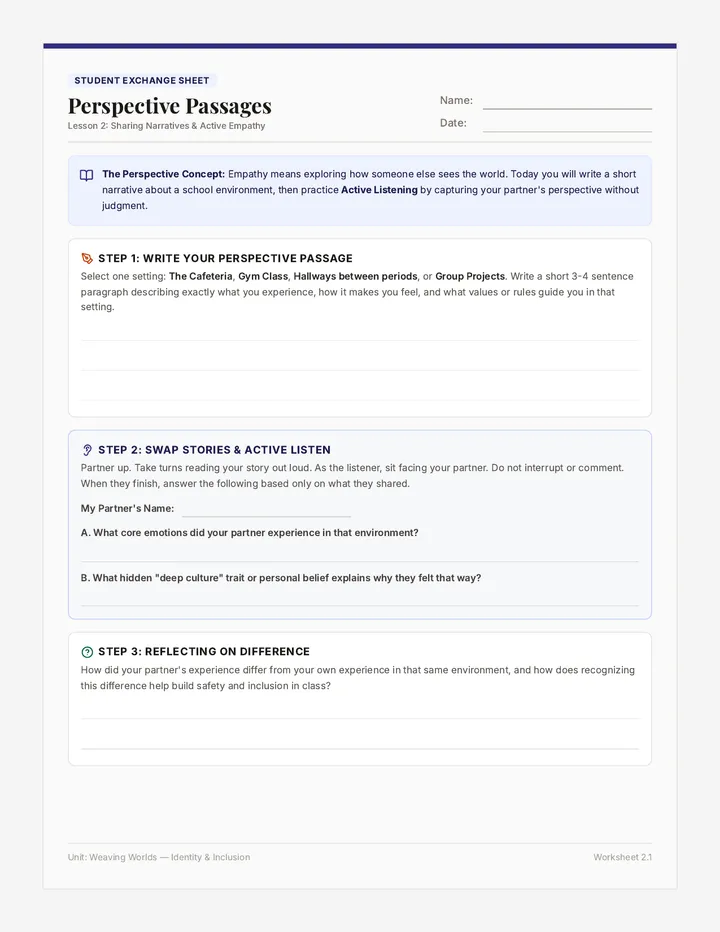
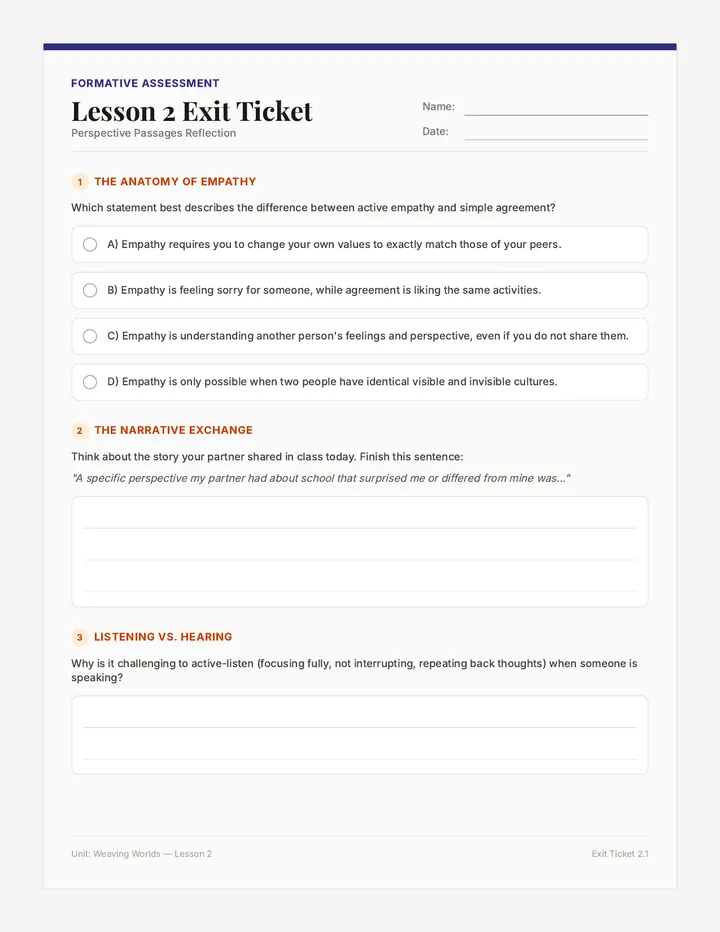
Students engage in active empathy and narrative exchange, analyzing how personal experiences and cultural backgrounds shape our perspectives of shared environments.
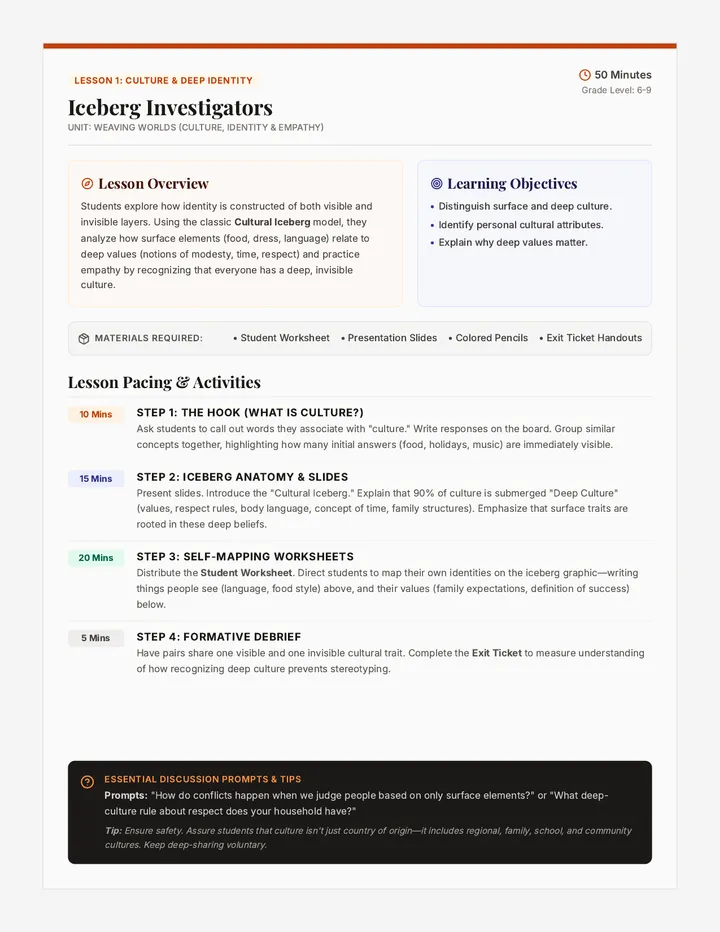
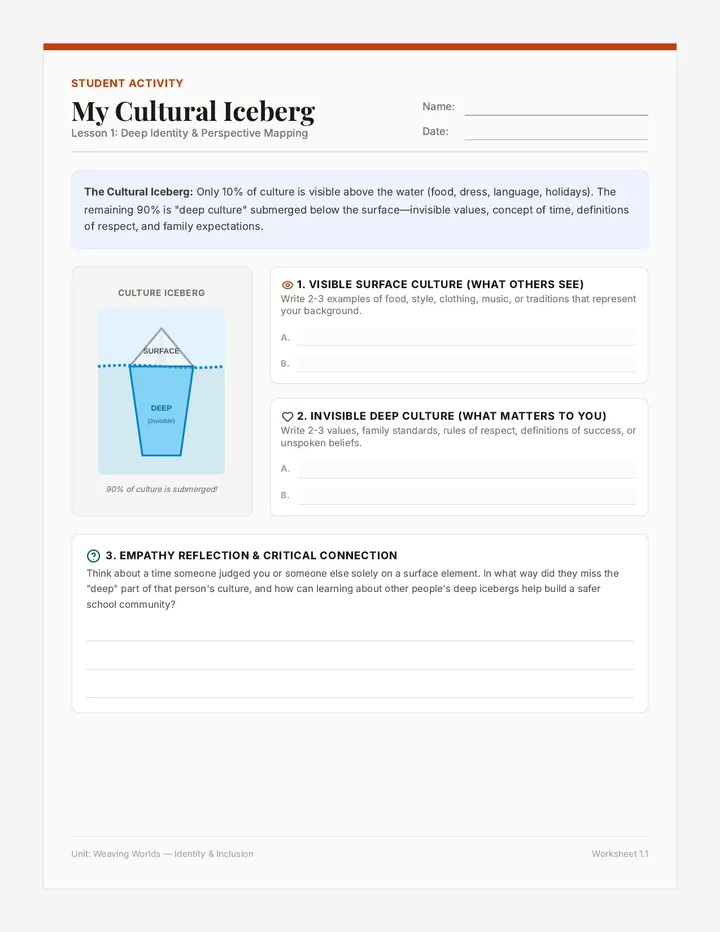
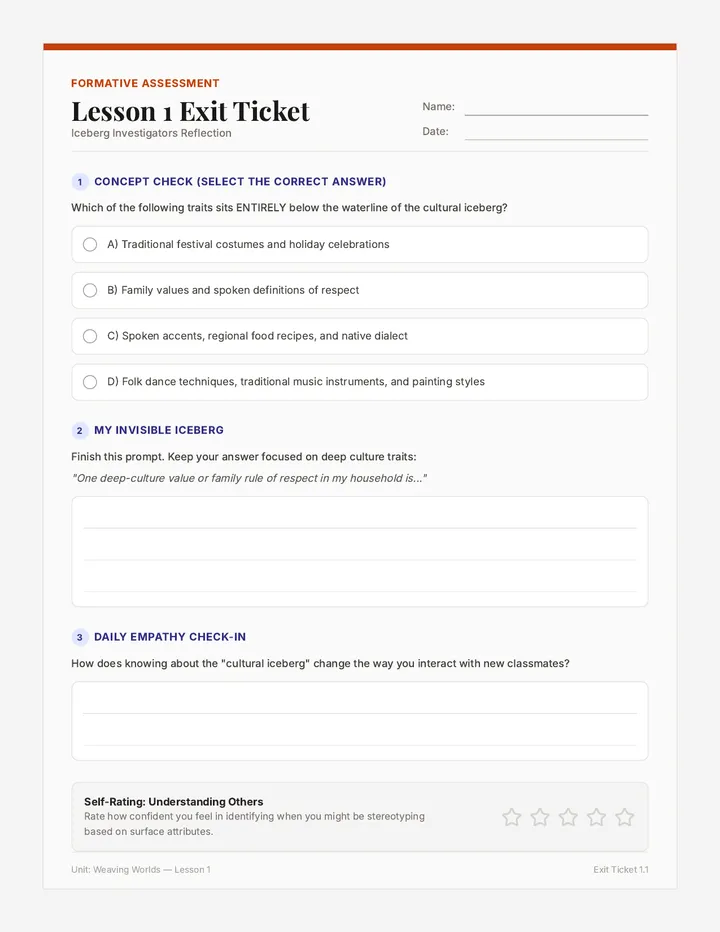
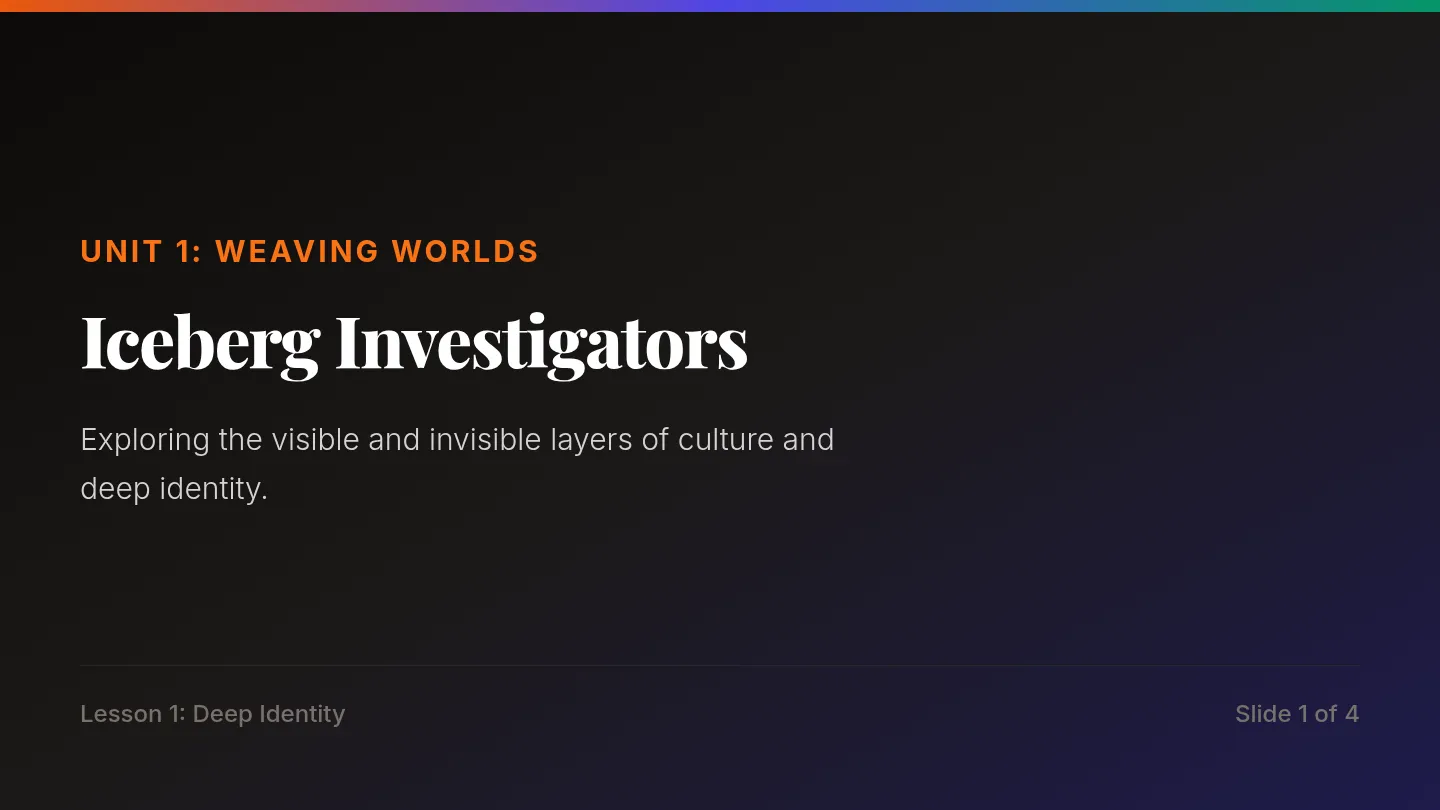
Students explore the concept of the cultural iceberg, distinguishing between visible elements of culture and deep, invisible values, to recognize the richness of identity.
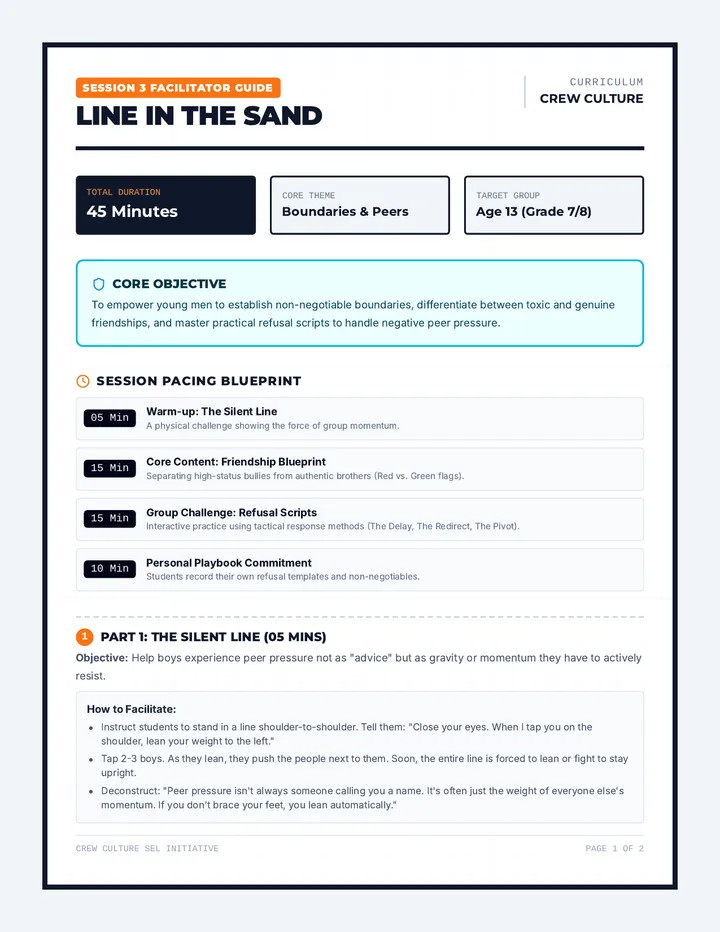
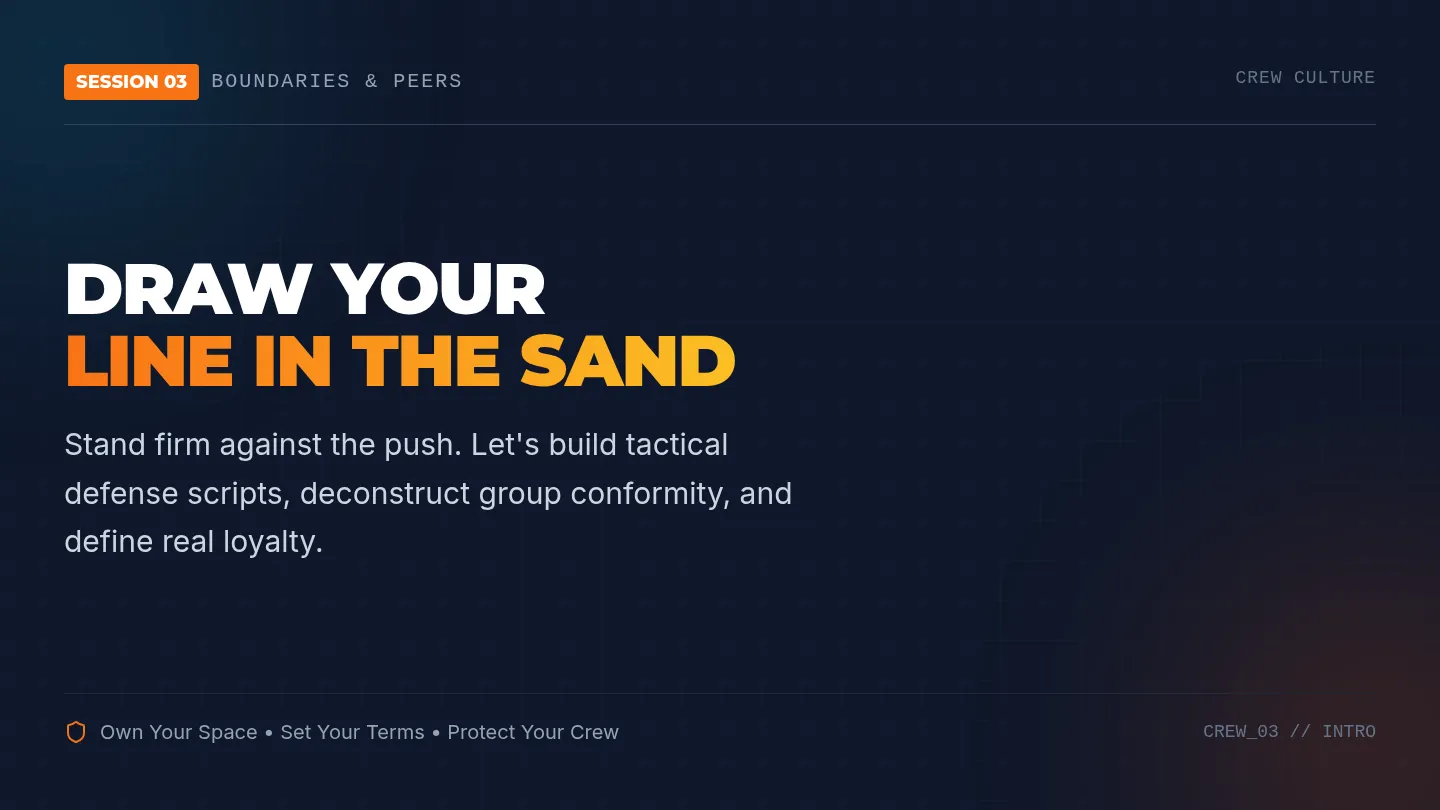
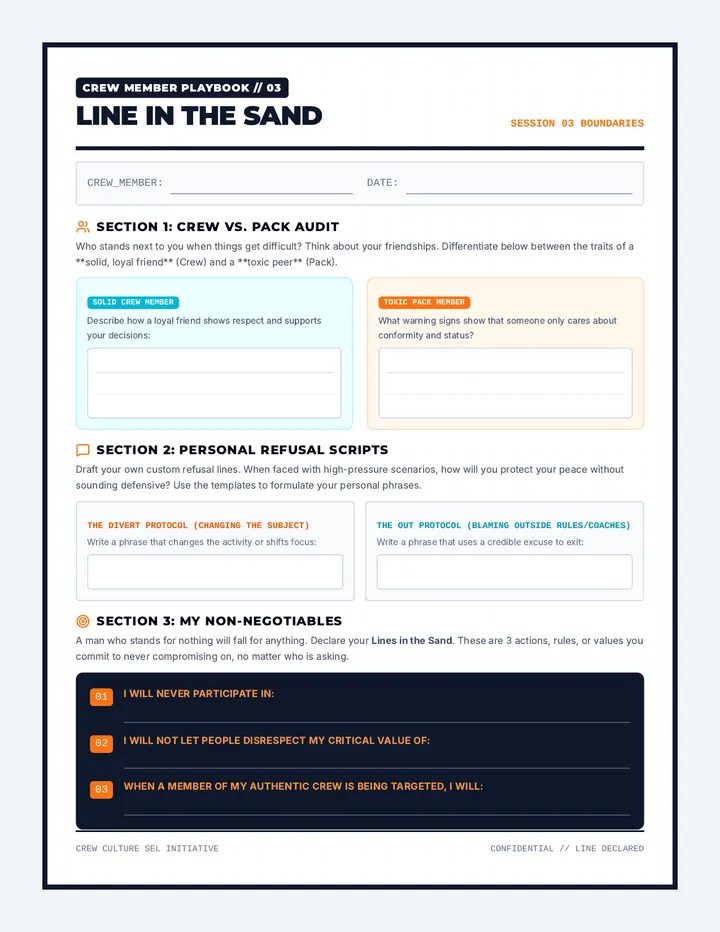
Students learn to set healthy boundaries, navigate peer pressure, and establish what authentic trust looks like in real-world friendships.
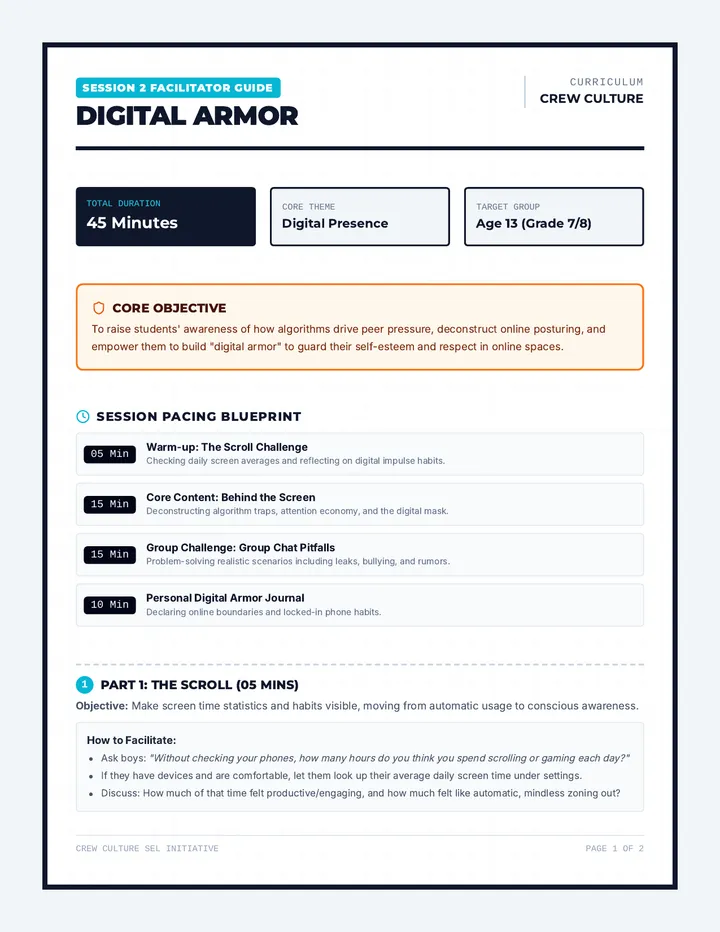
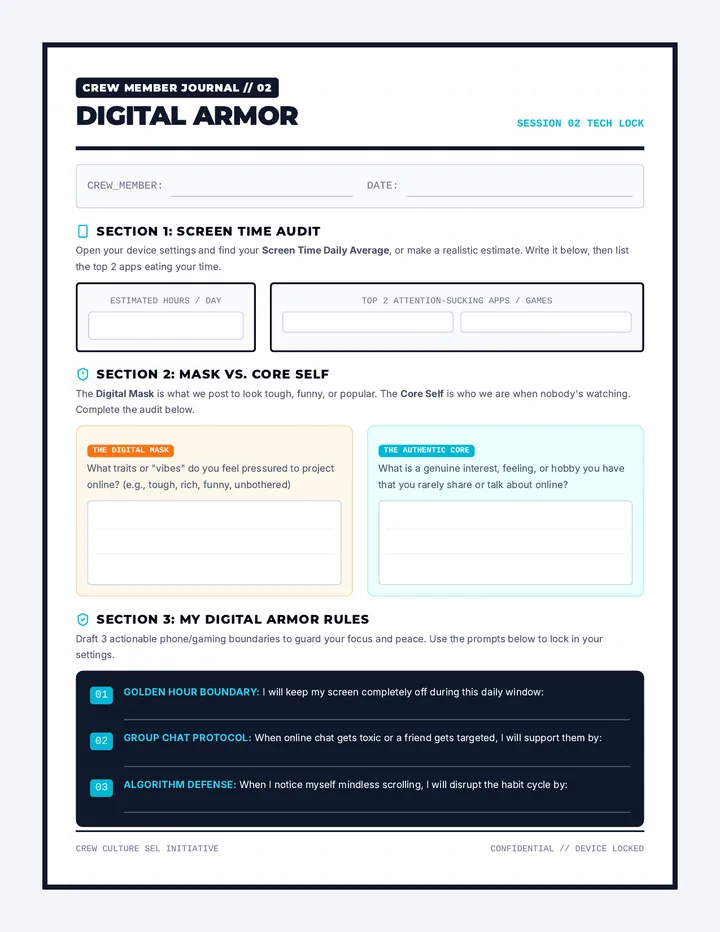
Students analyze their digital footprint, discuss modern social media pressures, and learn how to align their online actions with their offline values.
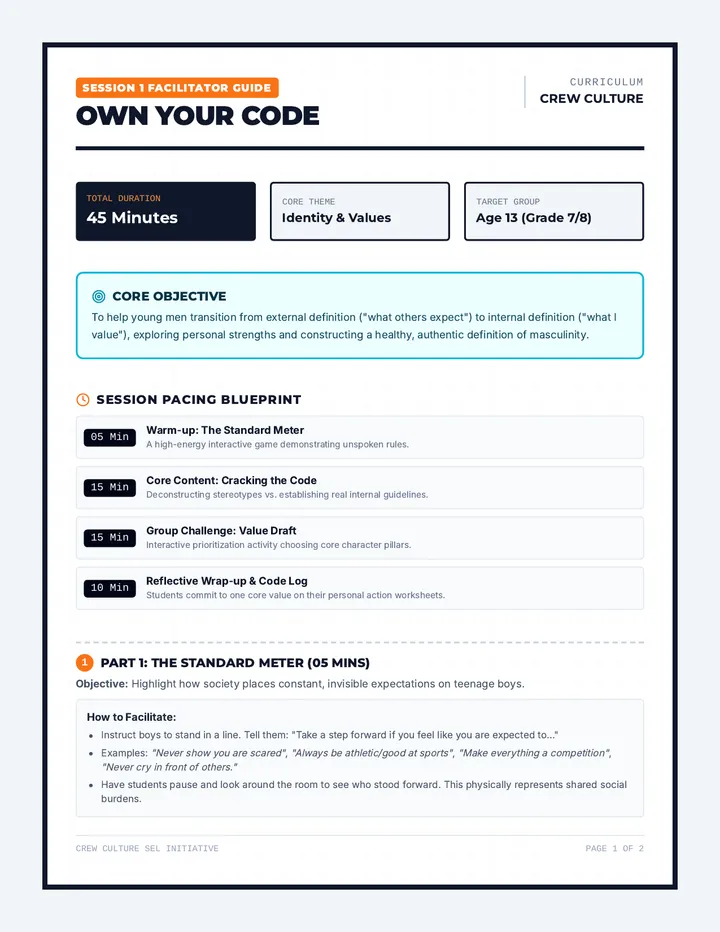
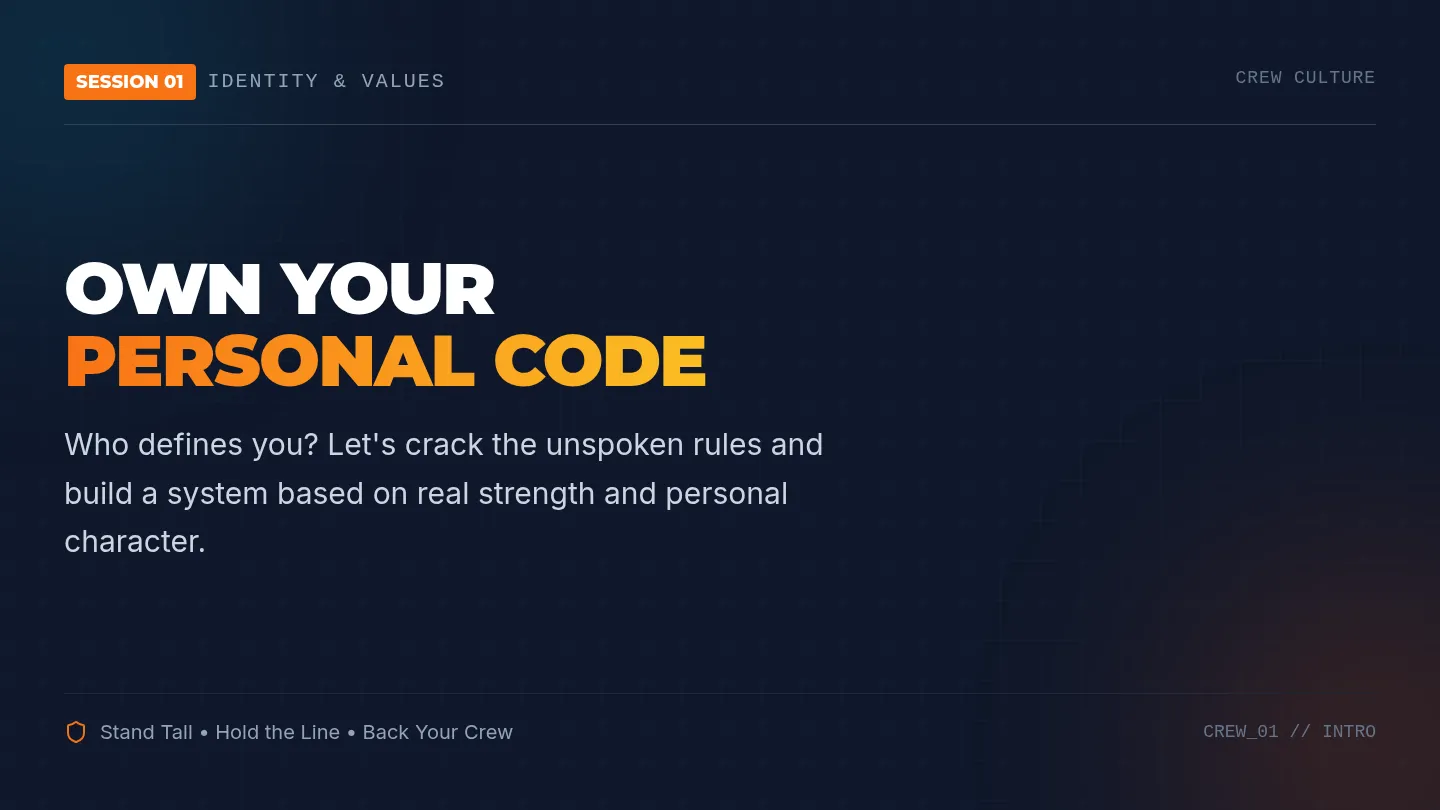
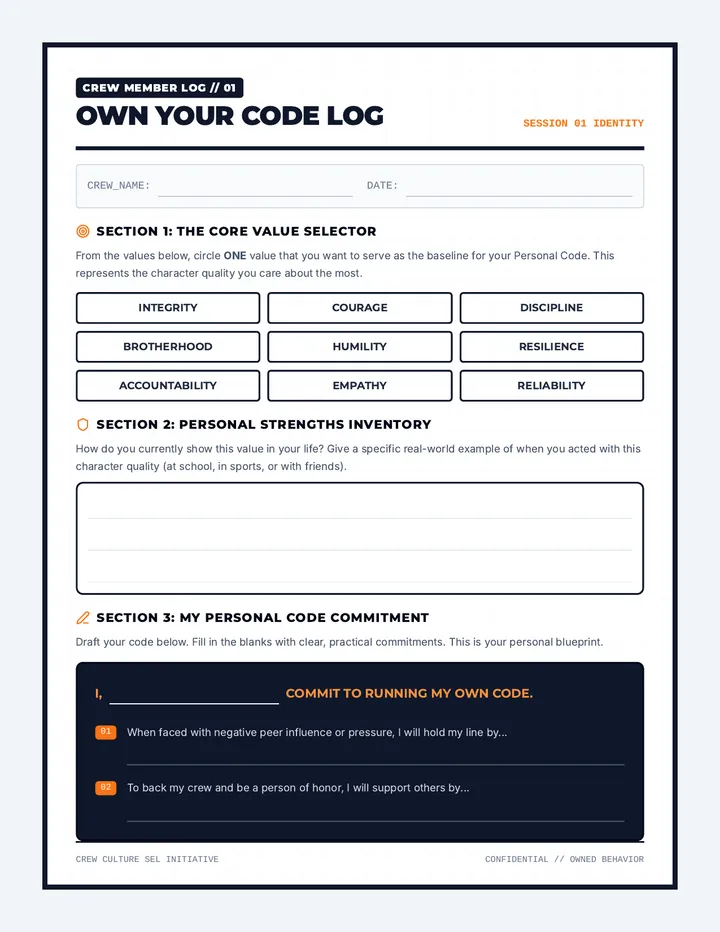
Students explore their personal identity, core values, and what healthy masculinity looks like in their daily lives.
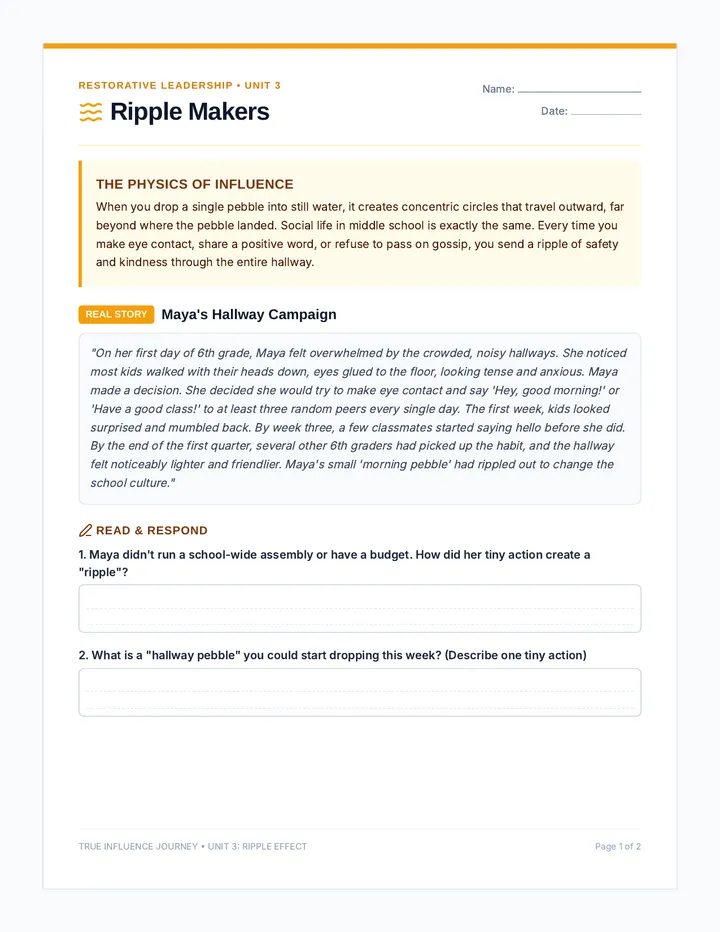
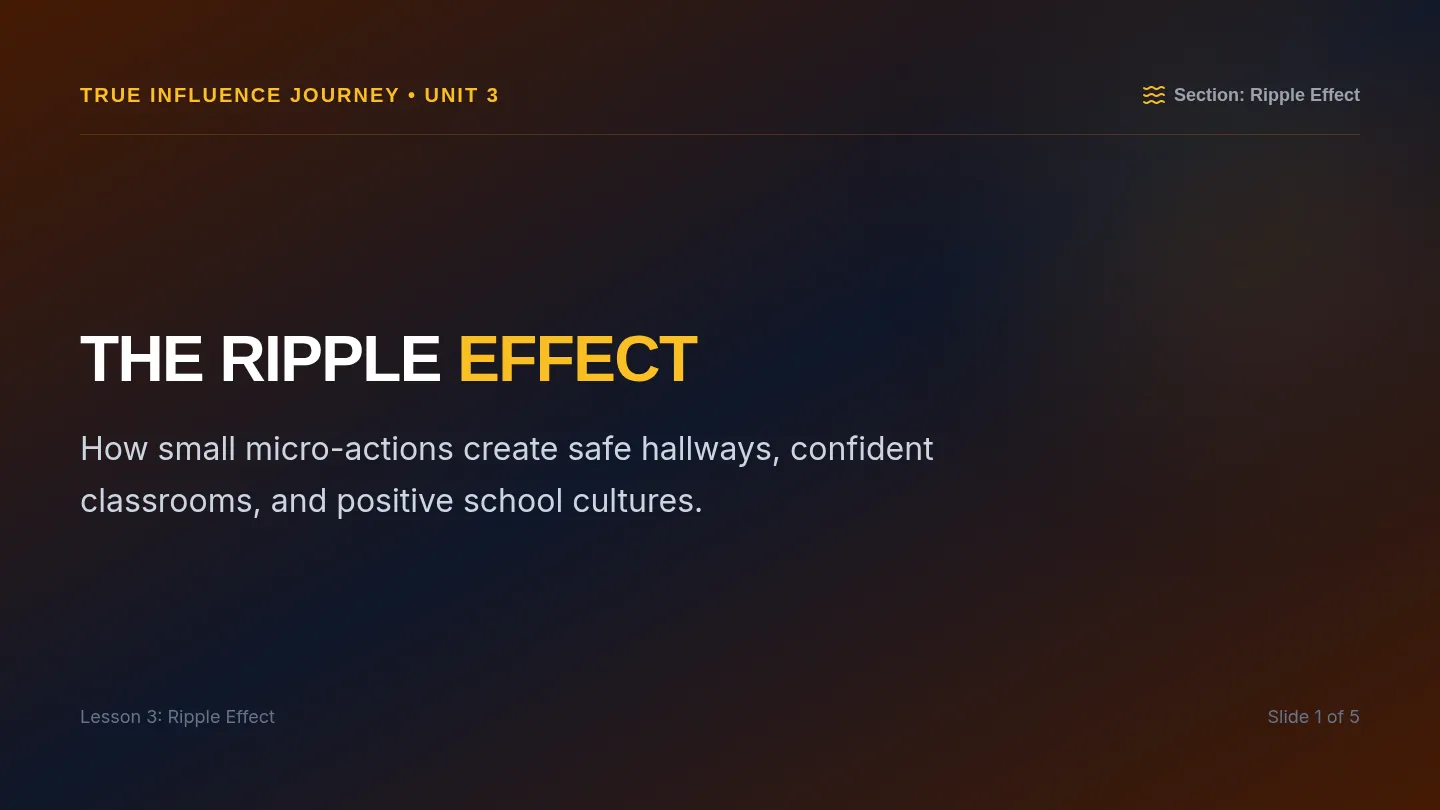
Focuses on creating a sustainable positive culture through daily small actions, prompting students to track their leadership and reflect on how positive behavior spreads. Features read-and-respond profiles of real student leaders.
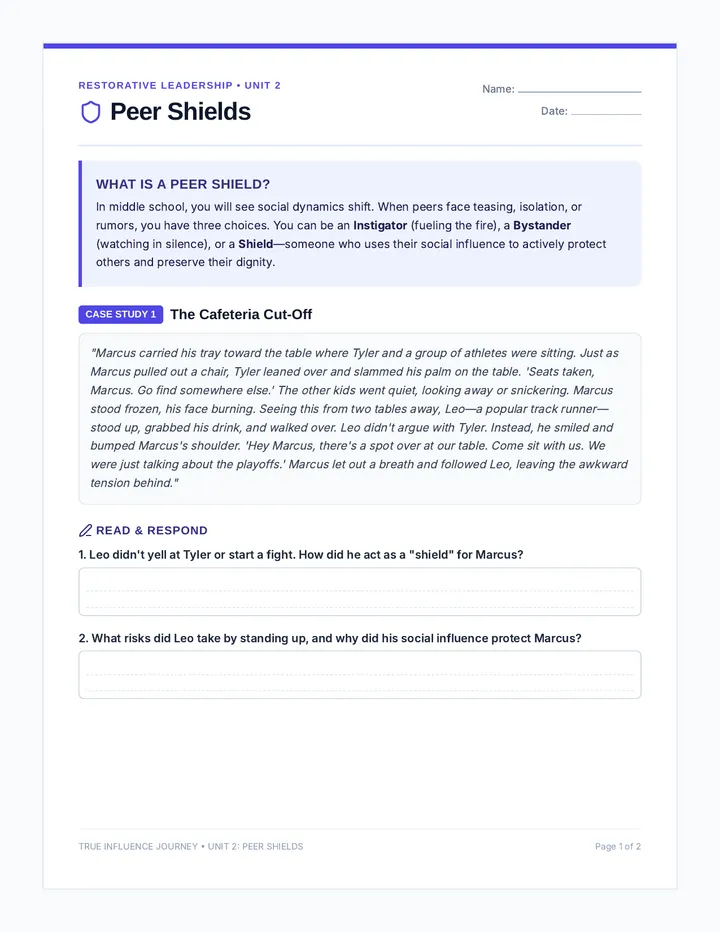
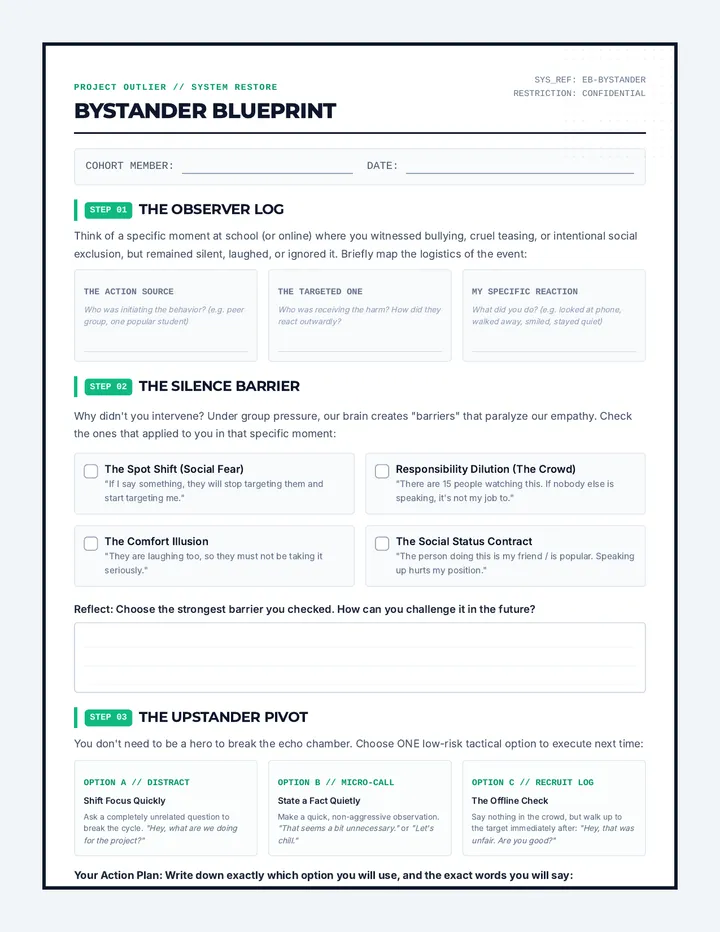
Students explore what it means to be a 'shield' for peers in middle school rather than a passive bystander or an instigator. Features narrative read-and-respond case studies on standing up to social exclusion and rumors.
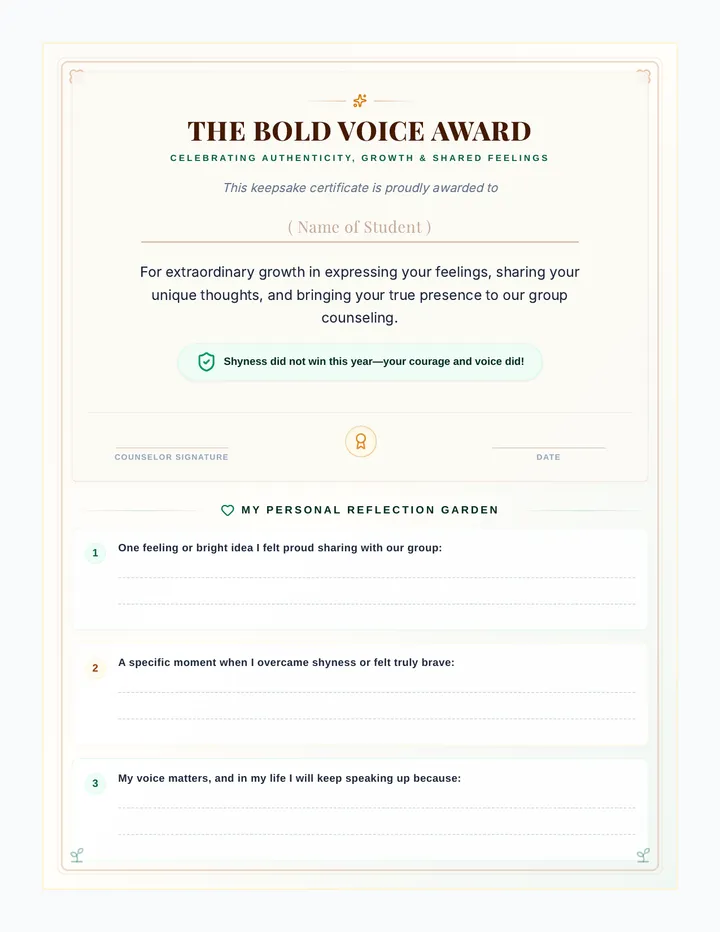
A reflective counseling lesson celebrating emotional expression, triumph over shyness, and setting intentions for speaking up with confidence in group settings.
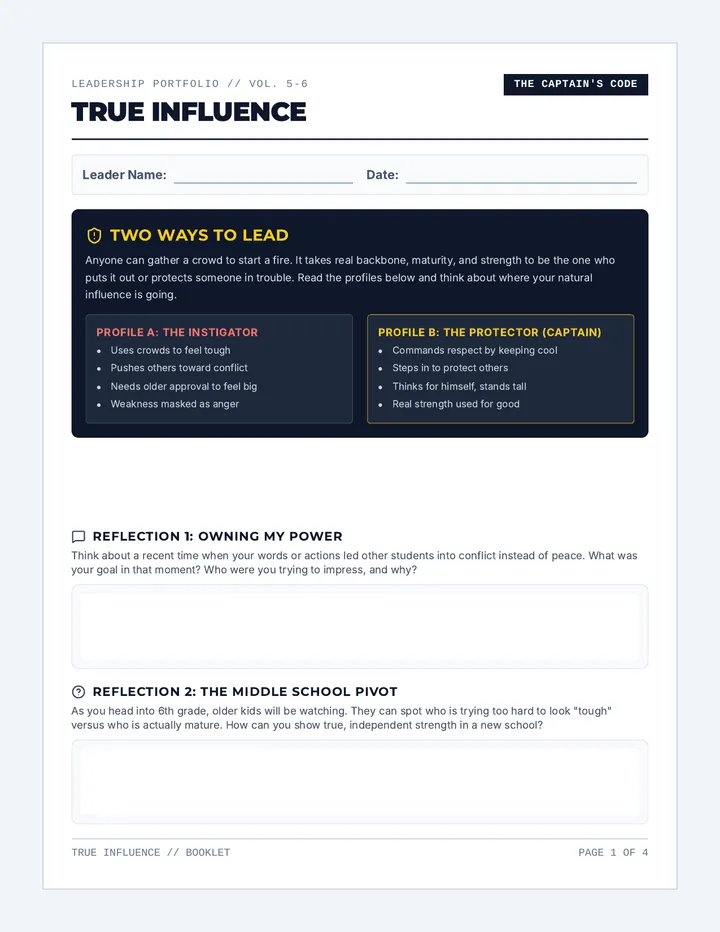
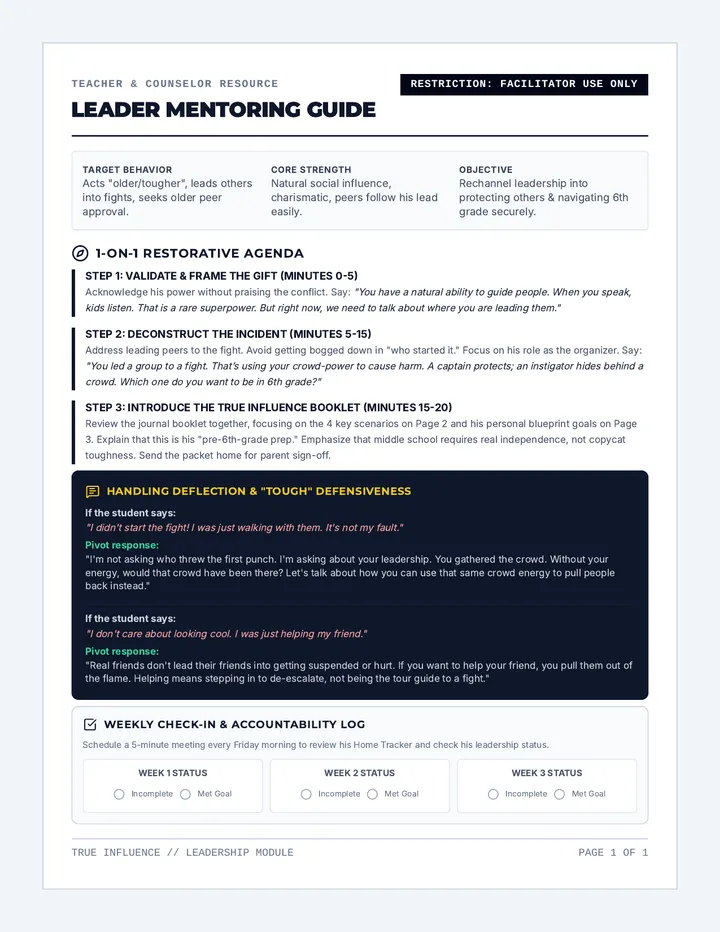
A restorative leadership module designed for a 5th-grade student transitioning to middle school. Focuses on channeling natural social influence into positive leadership, specifically protecting and looking out for others, rather than leading peers into conflict.
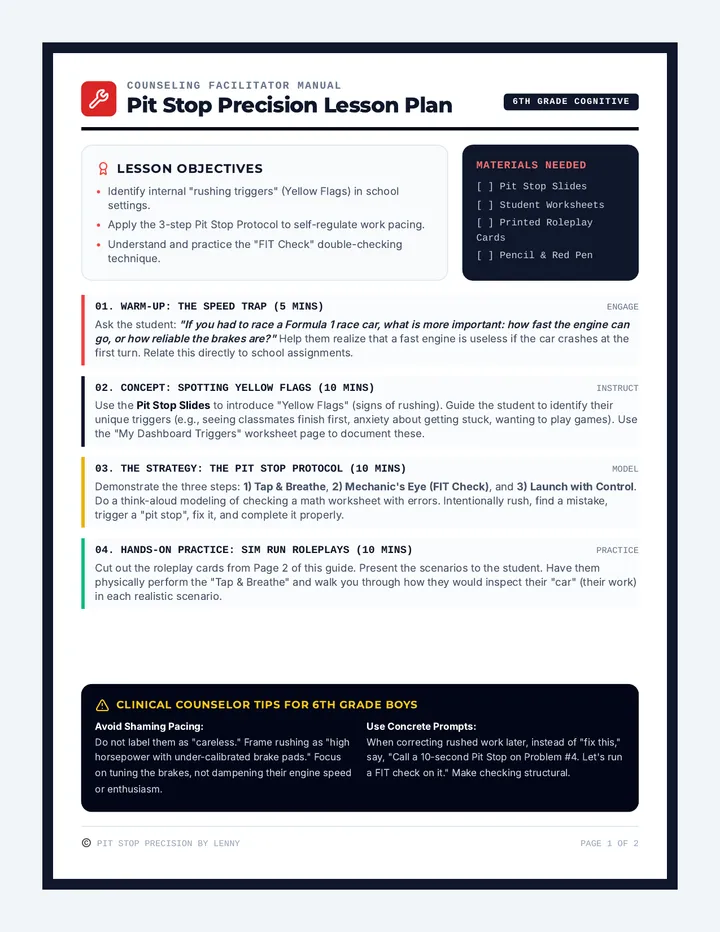
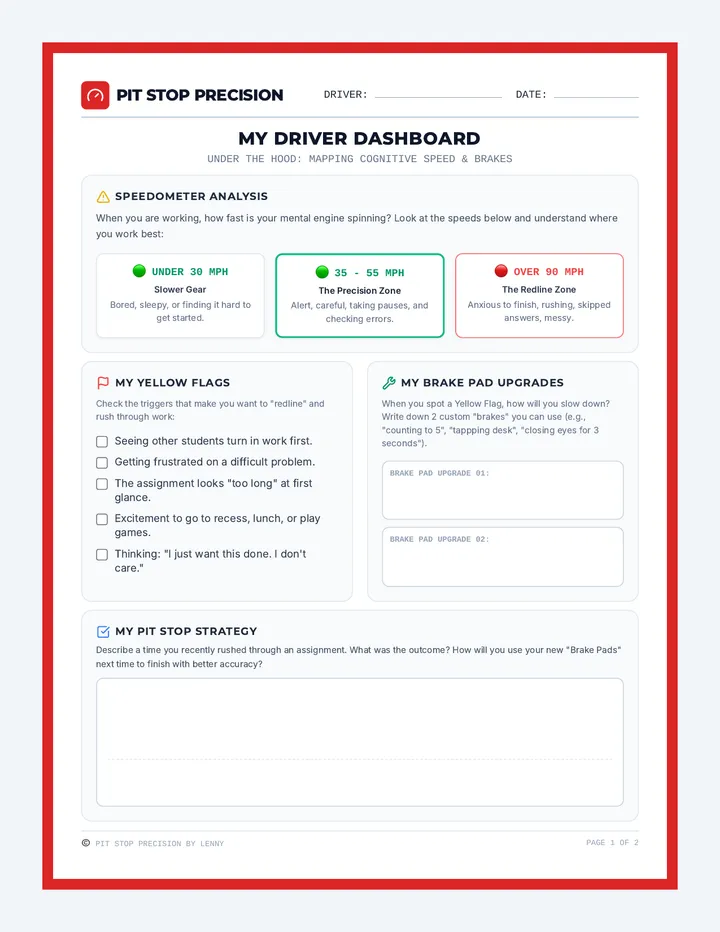
A counseling and self-regulation lesson for middle school students, using a high-octane racing 'Pit Stop' metaphor to teach self-control, persistence, and double-checking work instead of rushing.
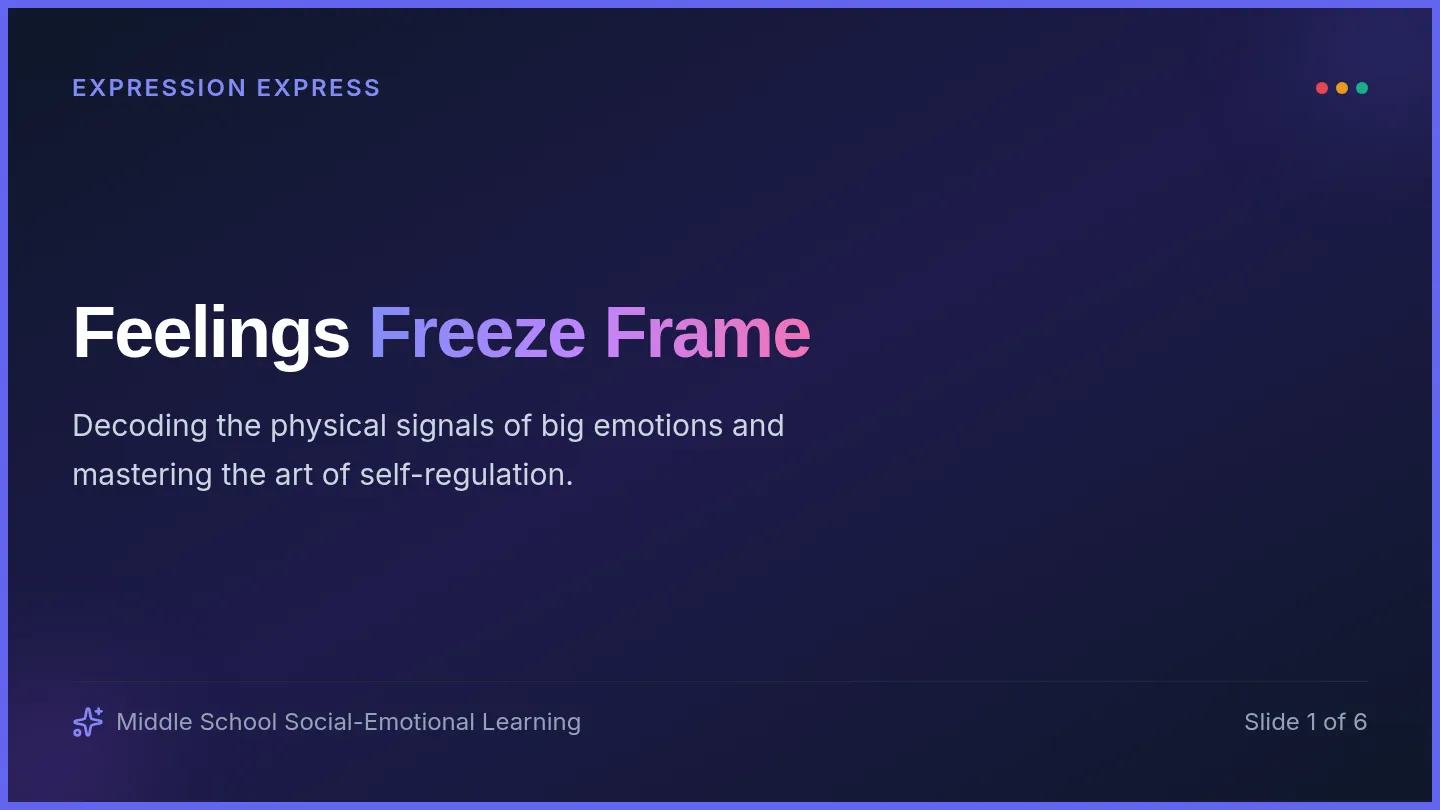
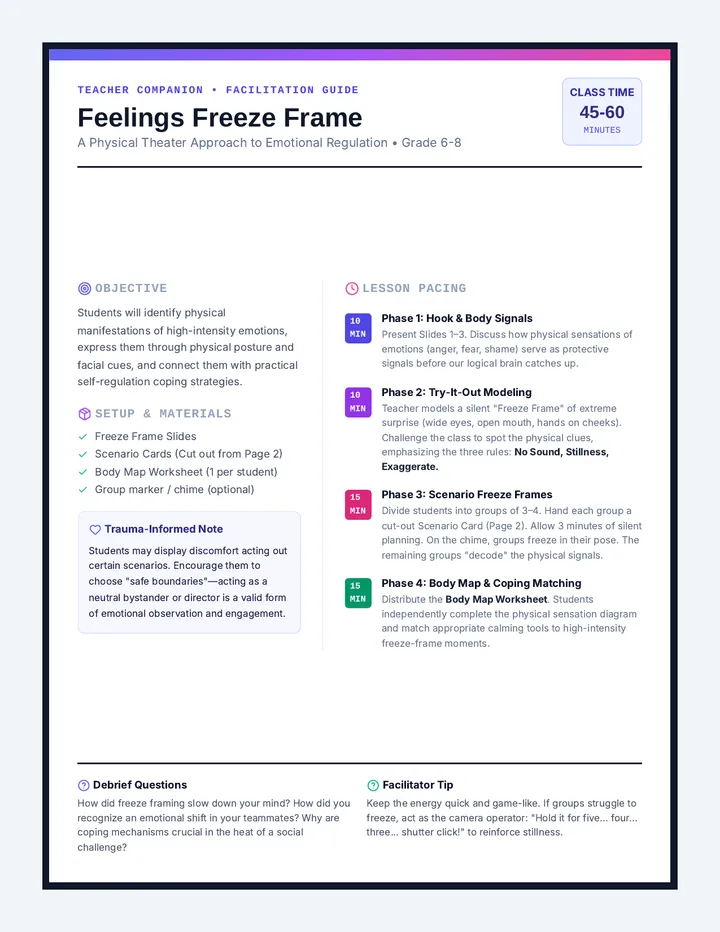
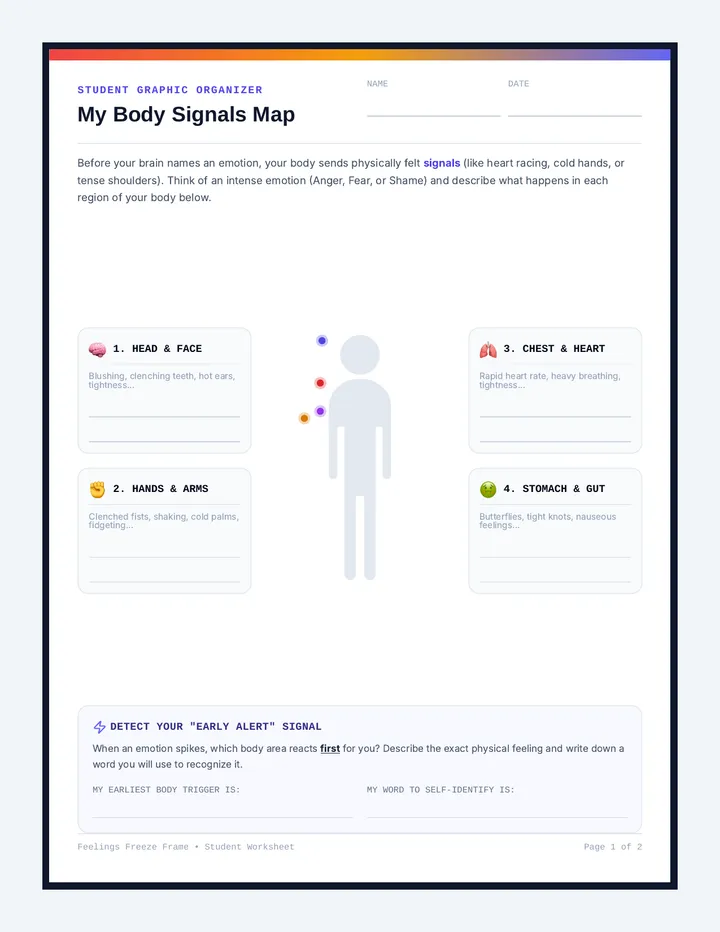
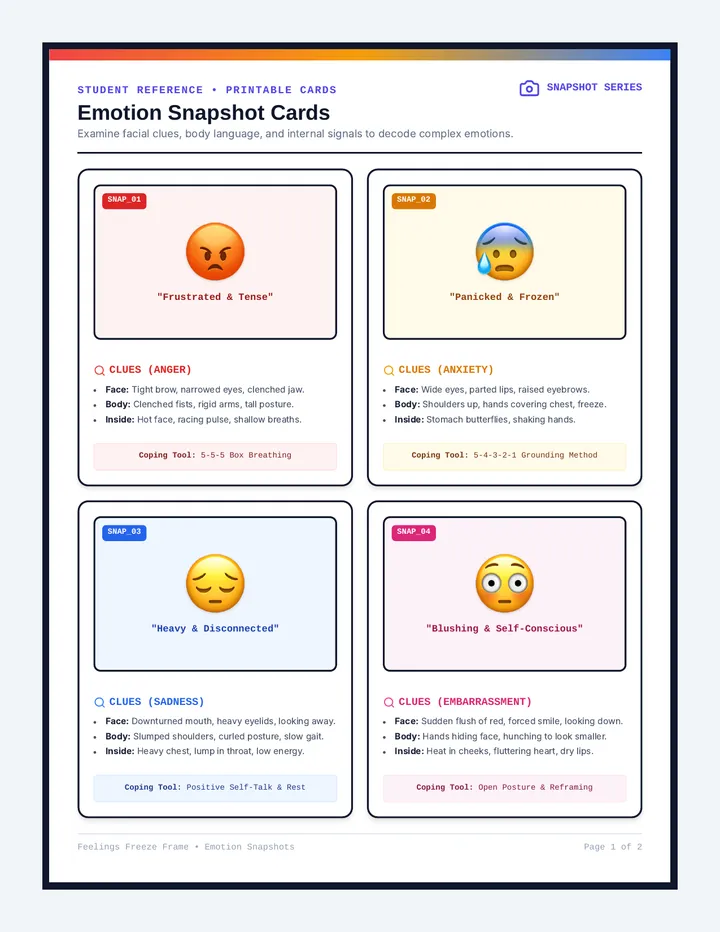
A comprehensive middle school lesson bundle on emotional literacy and self-regulation. Students explore physical sensations of high-intensity emotions, act out relatable scenarios in freeze frames, and match coping strategies using printable cards and graphic organizers.
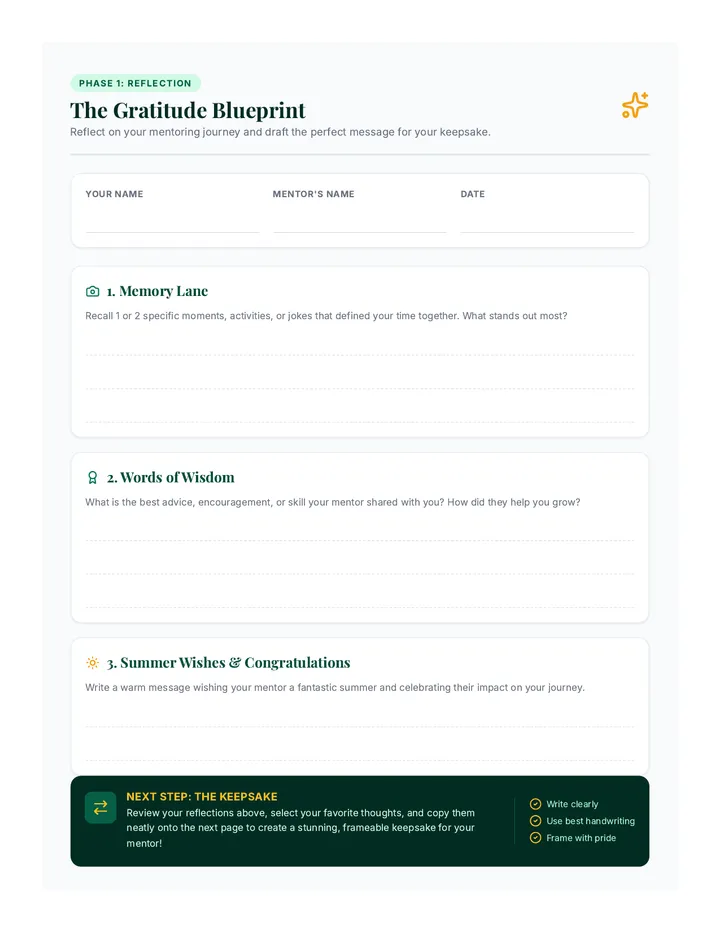
A heartfelt lesson designed to guide mentees through reflecting on their journey with their mentors, writing meaningful thank-you messages, and creating a beautiful framed keepsake.
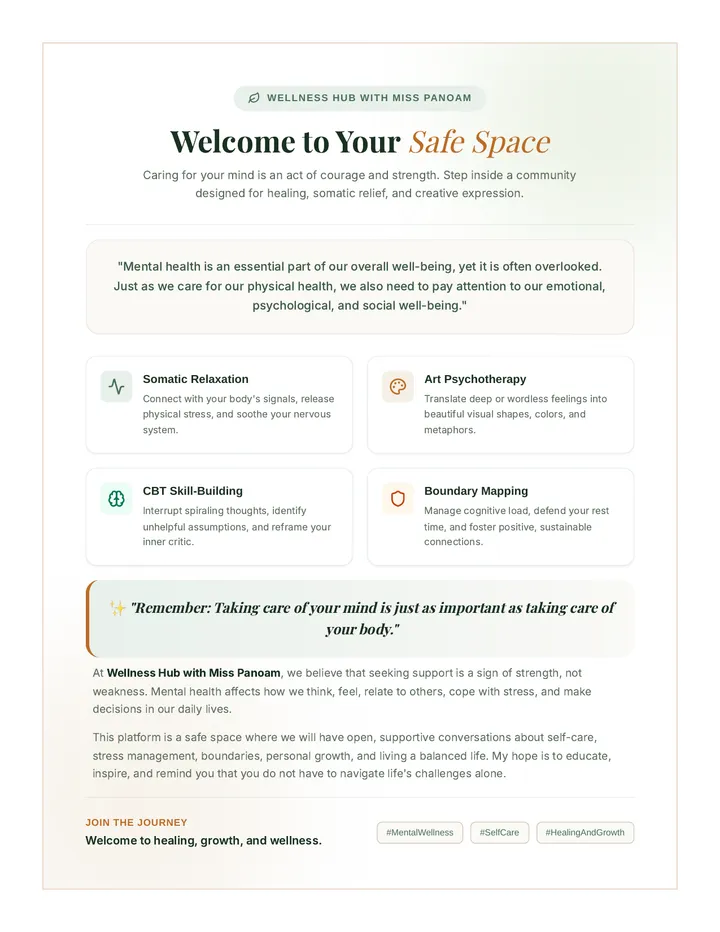
An elegant, welcoming visual announcement page introducing the Wellness Hub with Miss Panoam, designed for counseling psychology, art therapy, and somatic mindfulness support.
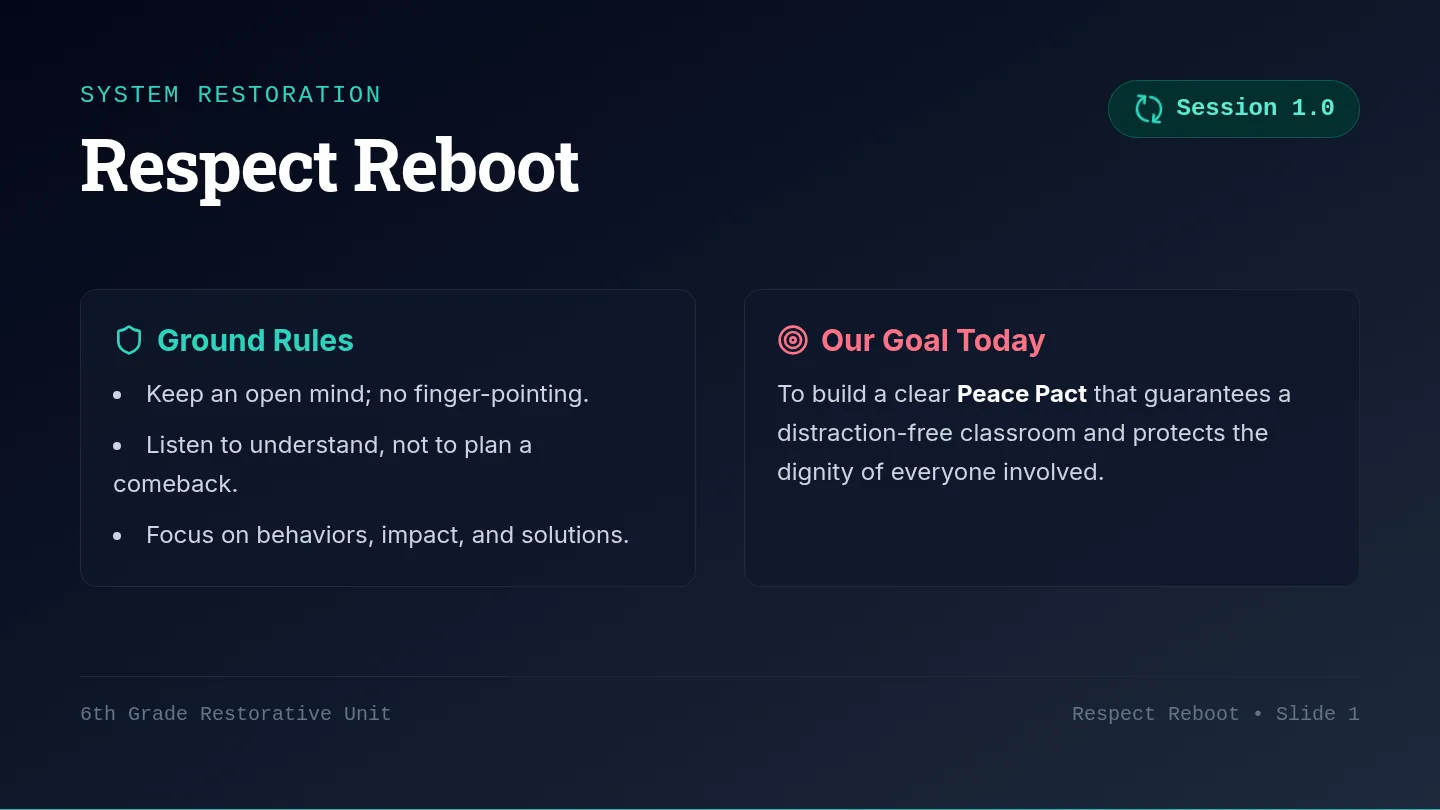
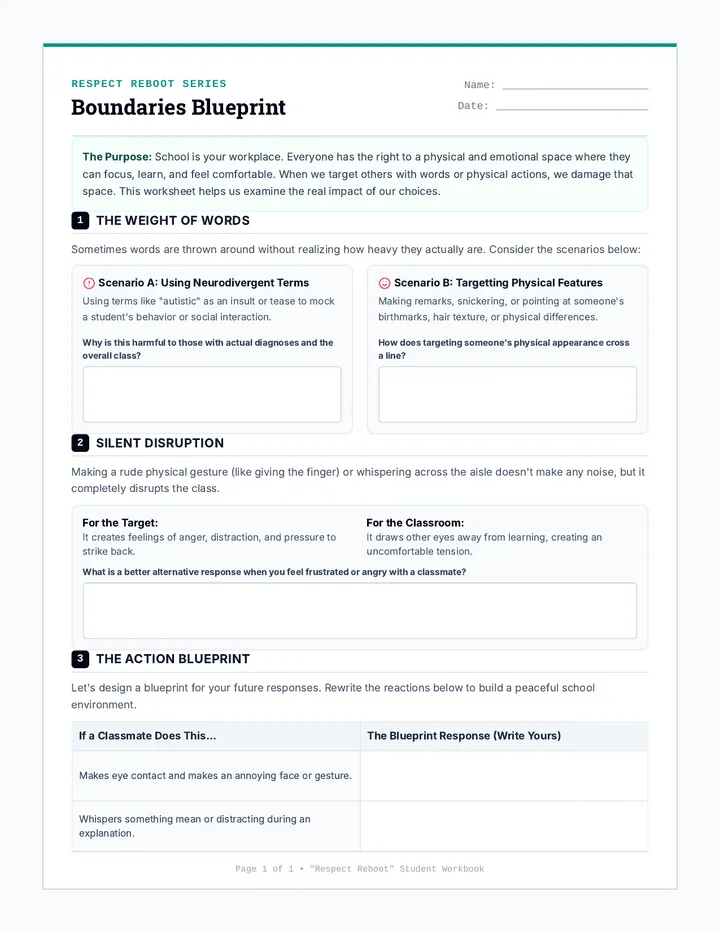
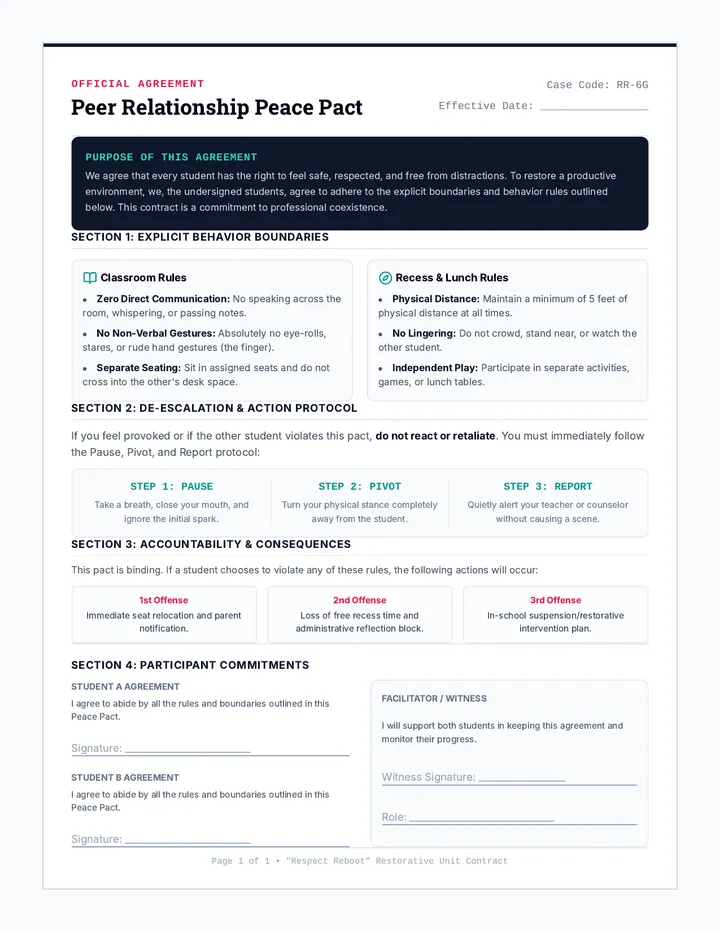
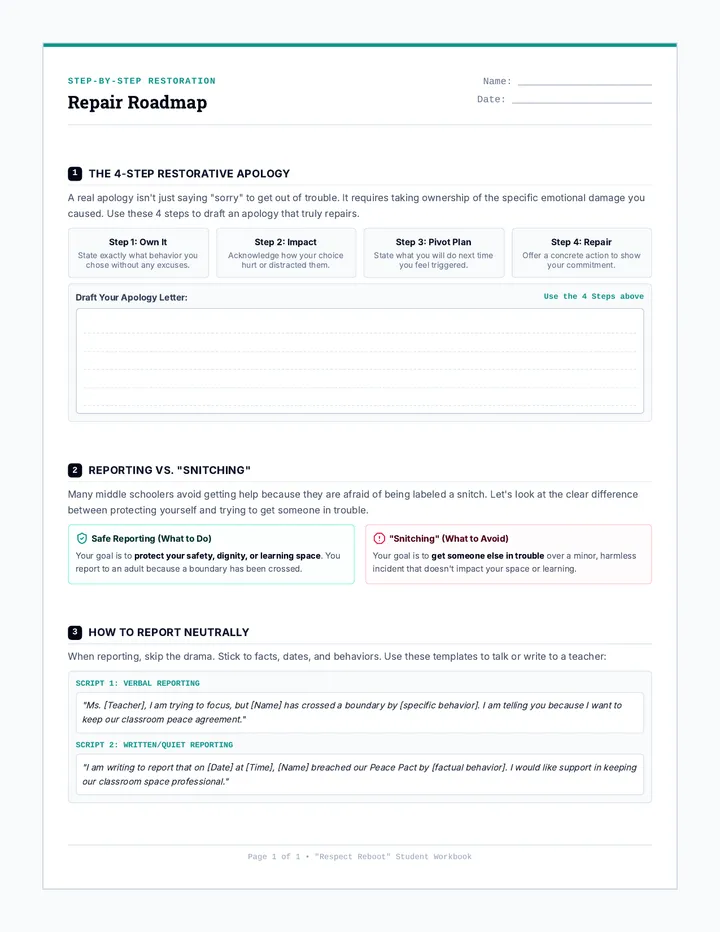
A restorative behavior intervention lesson designed for sixth-grade students in conflict, focusing on empathy, setting clear boundaries, and learning healthy reporting habits.
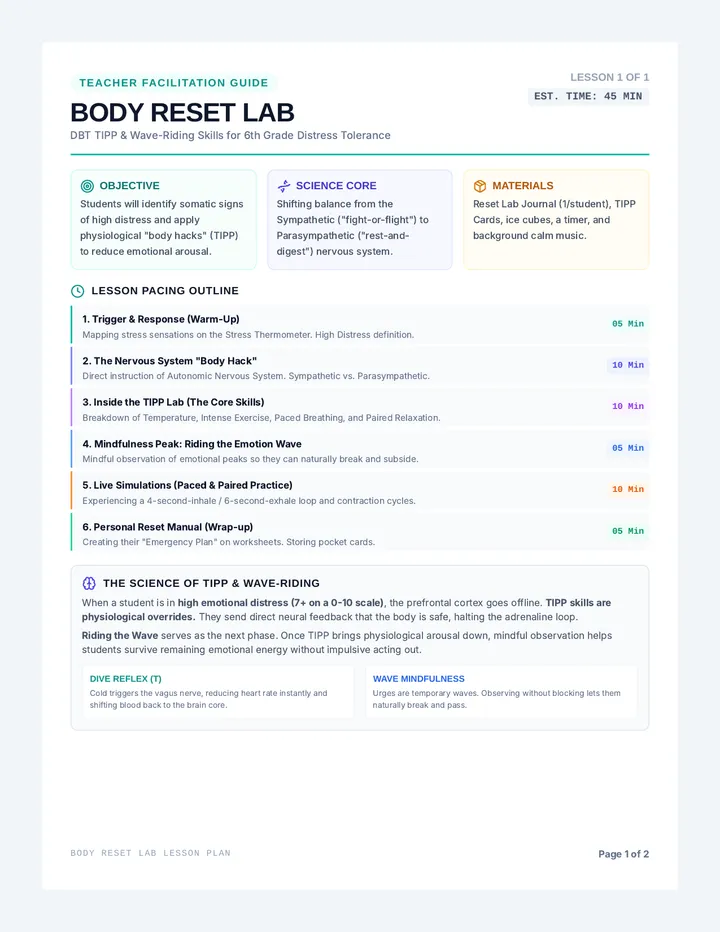
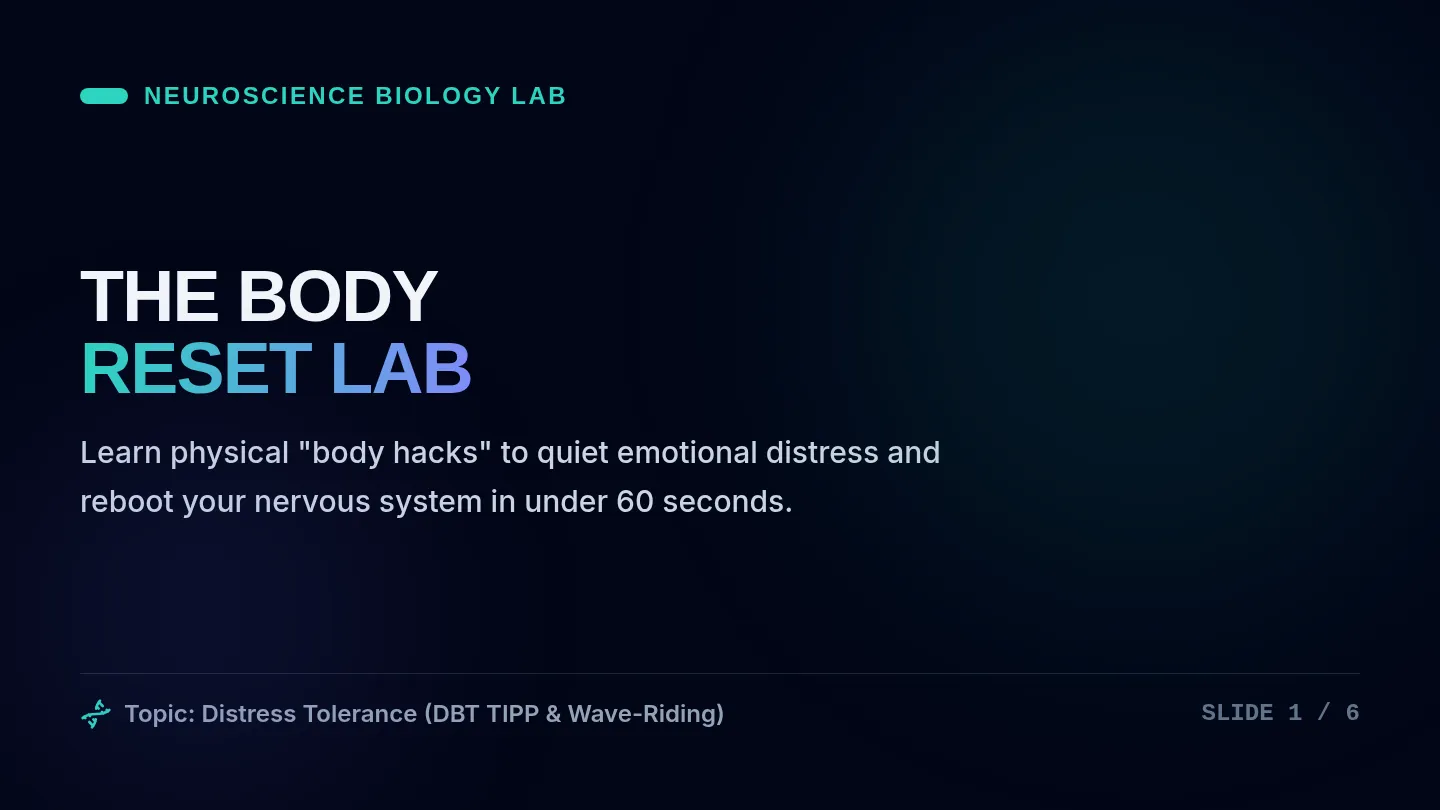
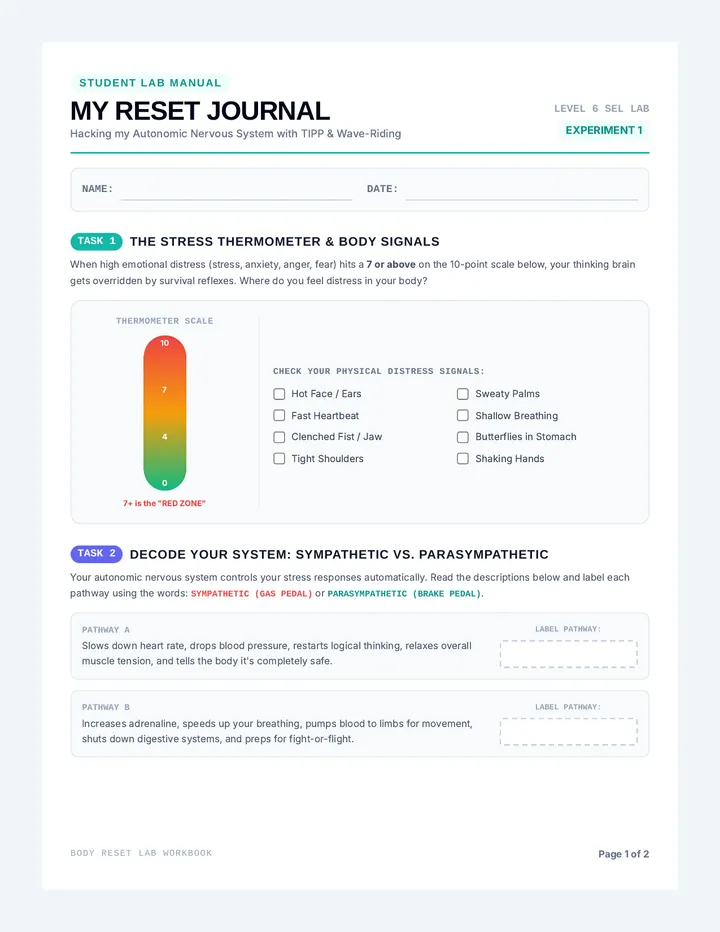
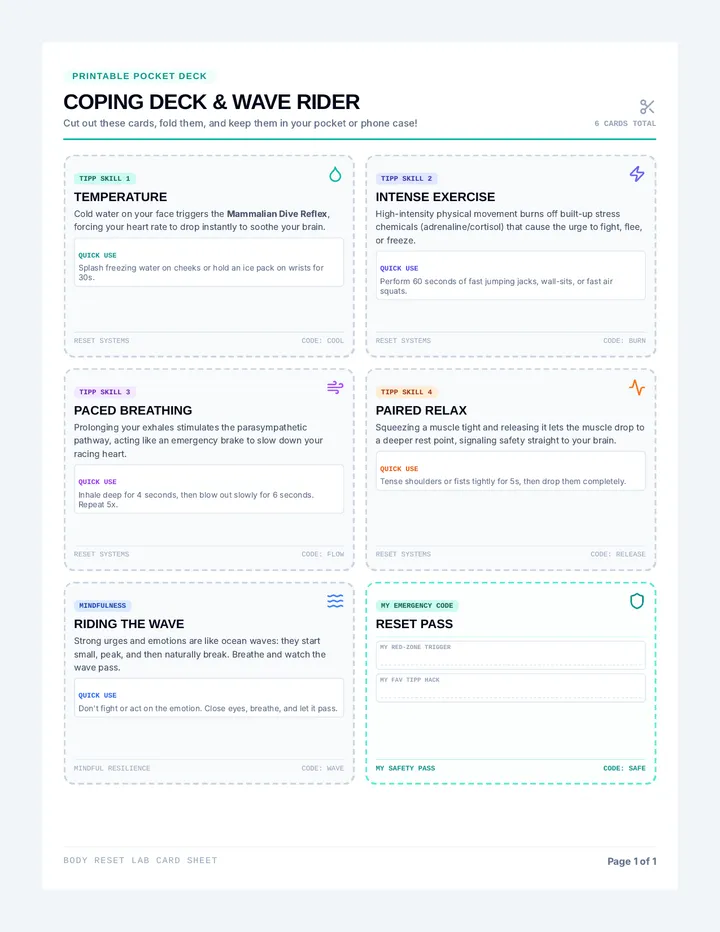
A 6th-grade Social-Emotional Learning (SEL) lesson introducing the DBT TIPP skills (Temperature, Intense exercise, Paced breathing, Paired muscle relaxation) as a physical 'body hack' to manage high emotional distress. Students learn how the autonomic nervous system works and build a personalized 'body reset' manual.
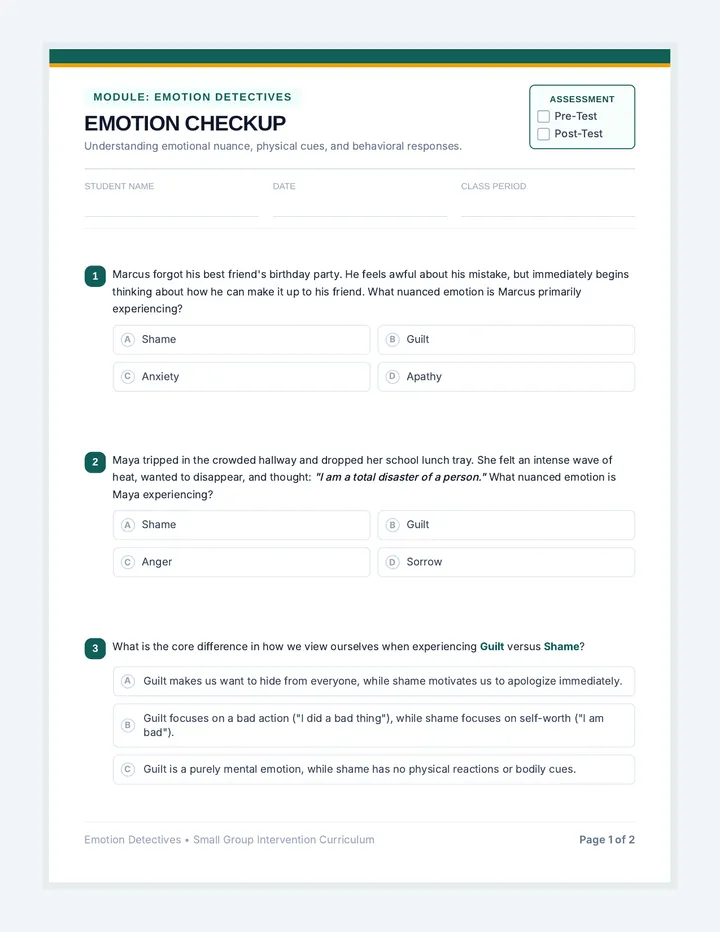
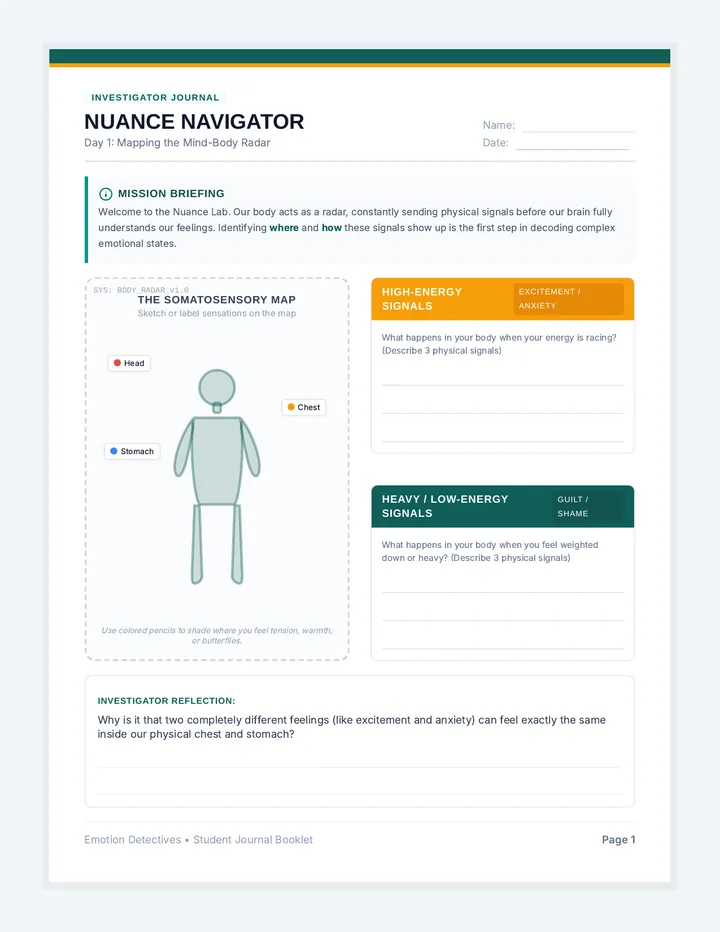
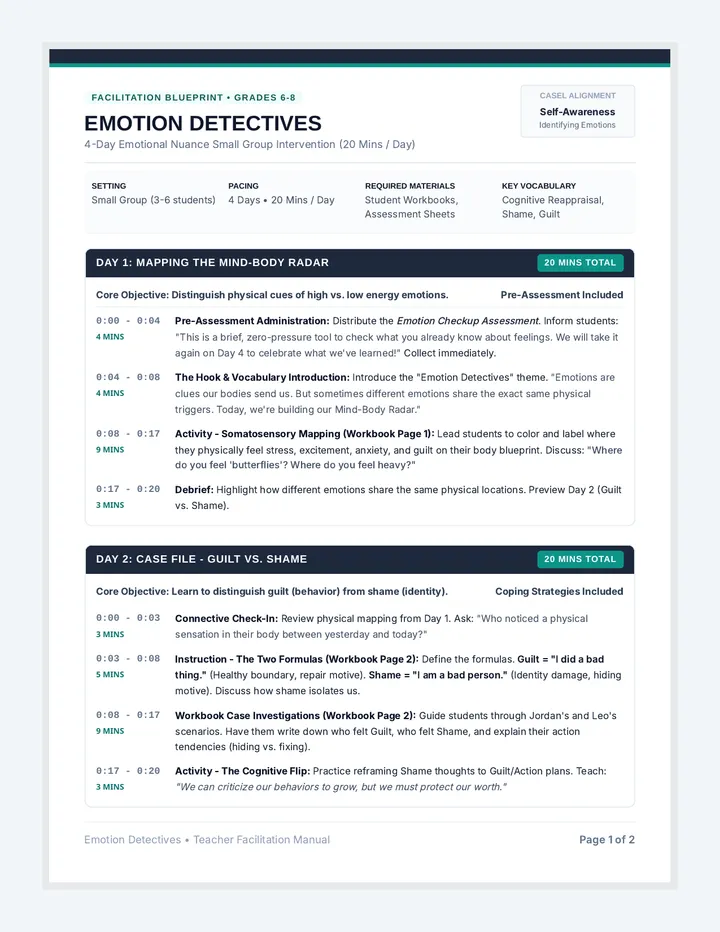
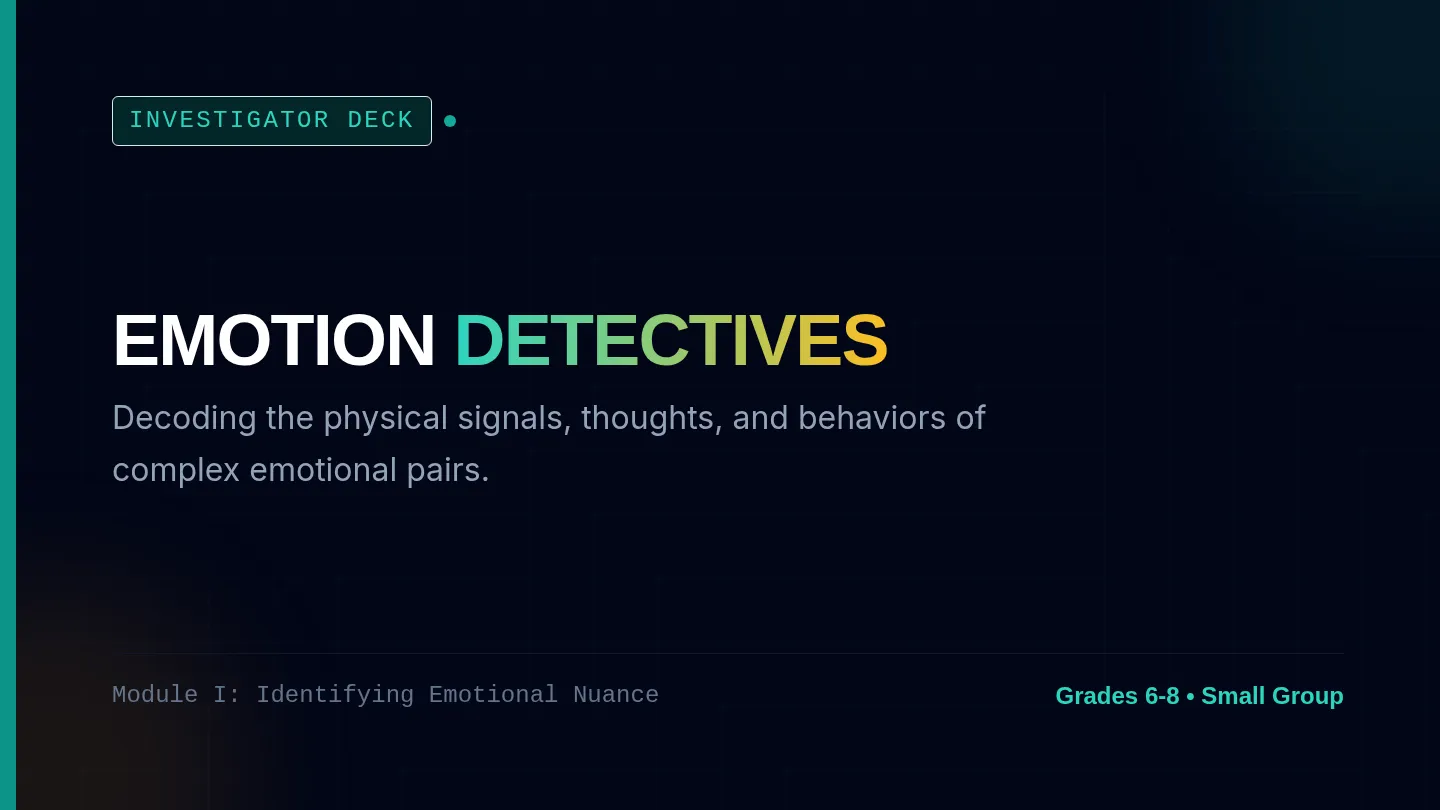
A 4-day small group intervention for grades 6-8 focusing on self-awareness and emotional nuance. Students explore the physical, cognitive, and behavioral distinctions between complex emotional pairs like guilt versus shame and excitement versus anxiety.
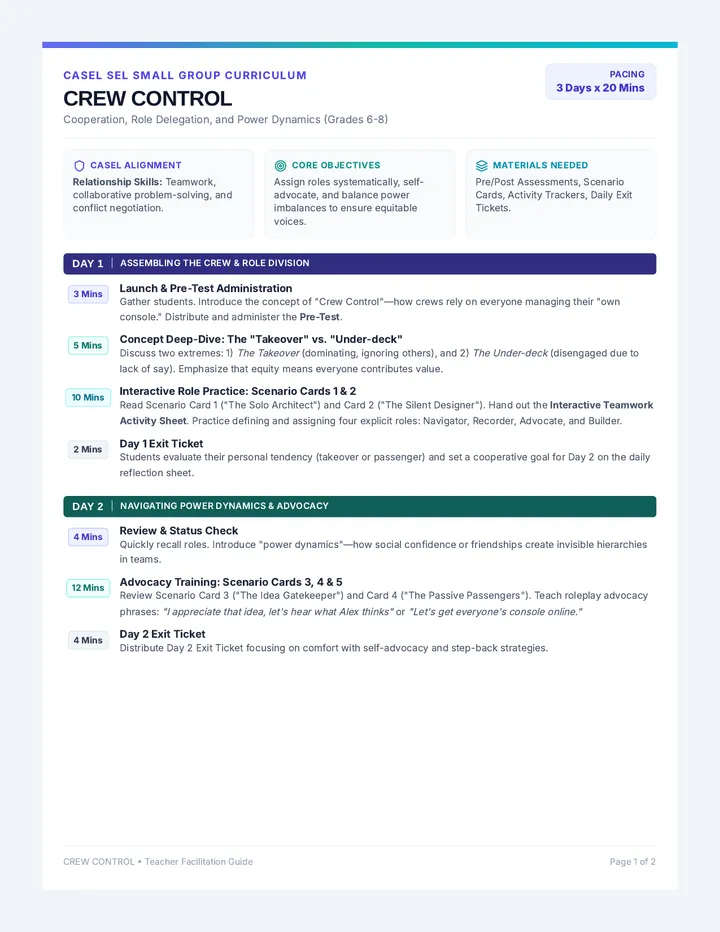
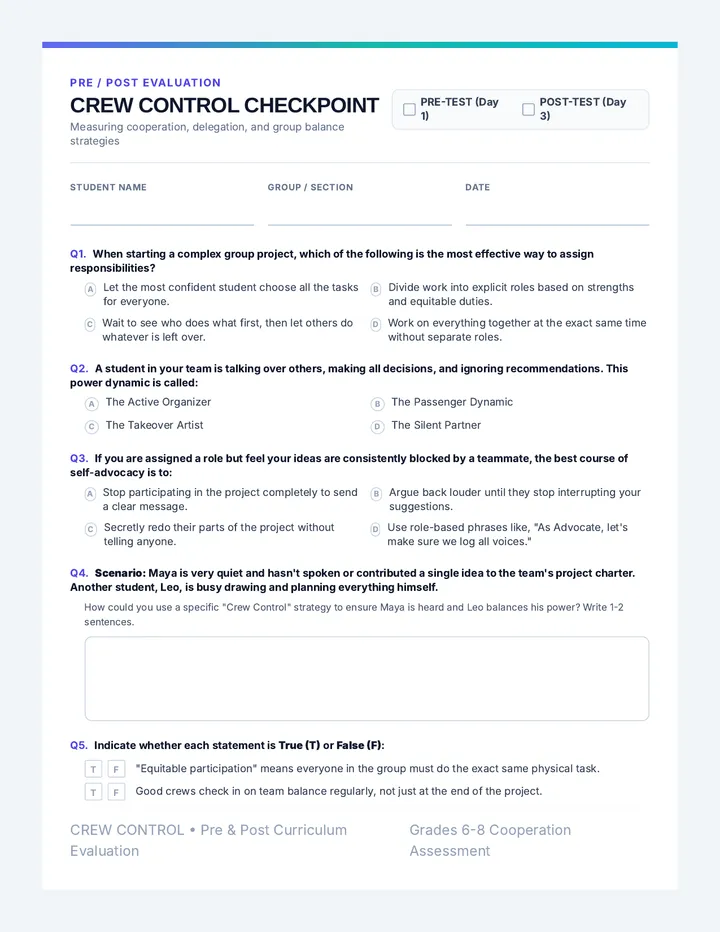
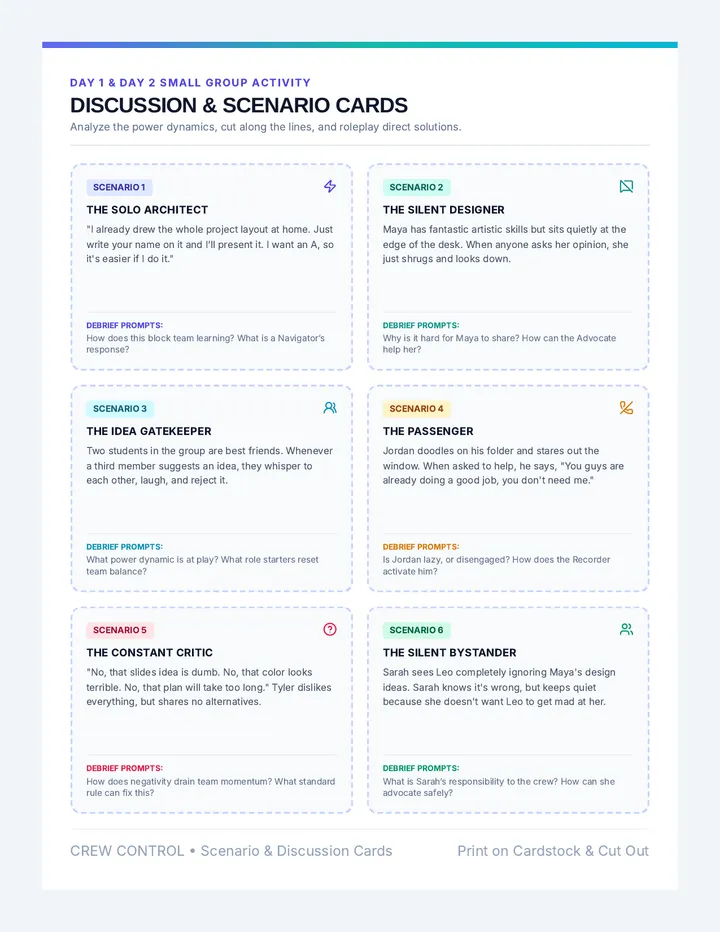
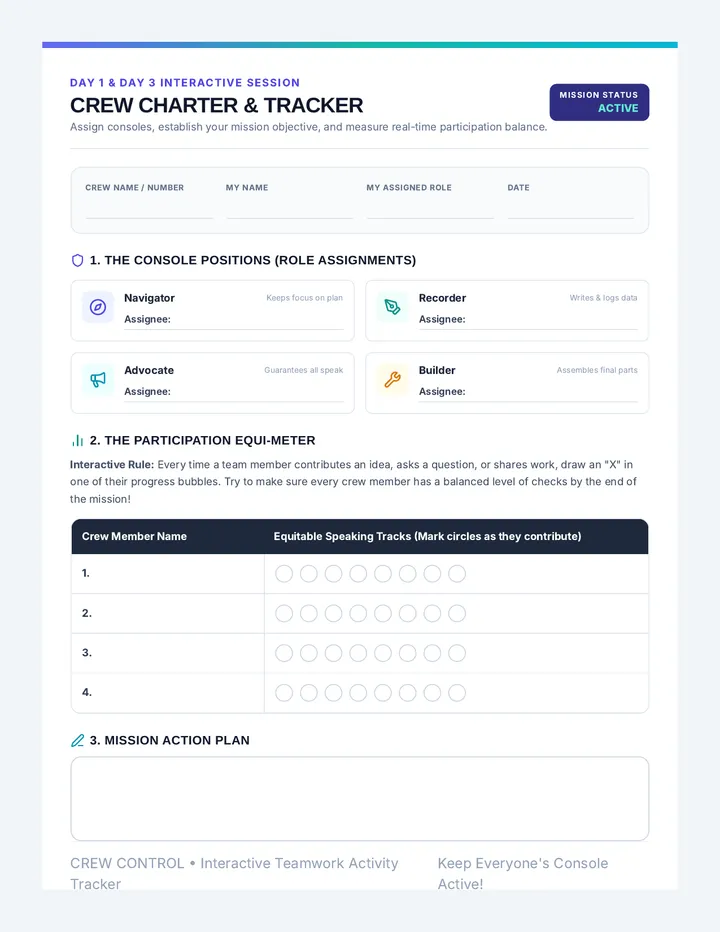
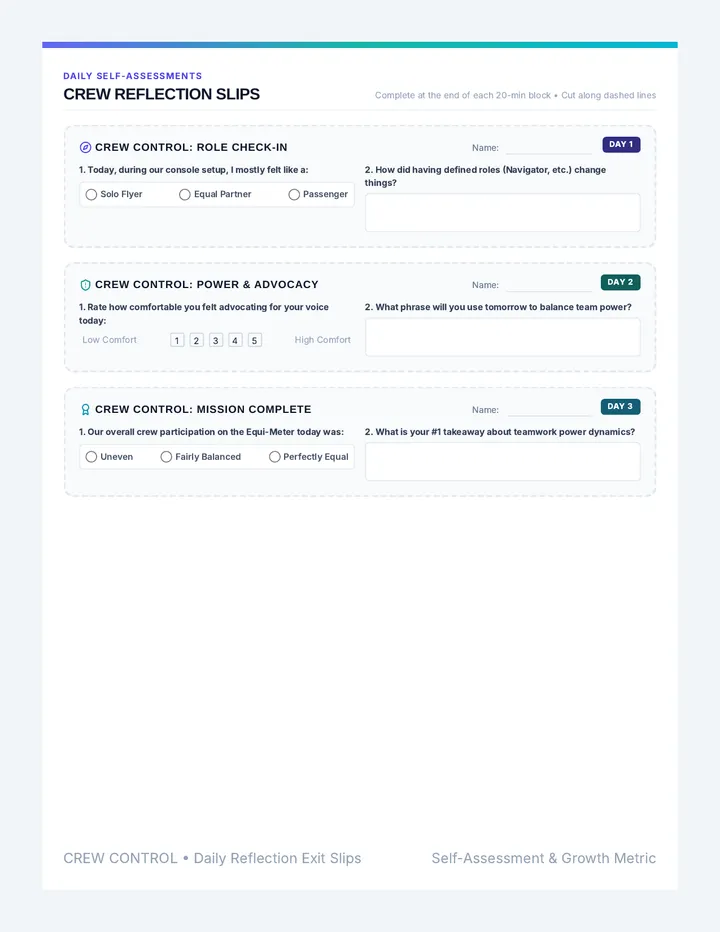
A cohesive 3-day small group curriculum that teaches middle school students how to coordinate project responsibilities, self-advocate, and address dominance or passivity to ensure equitable participation.
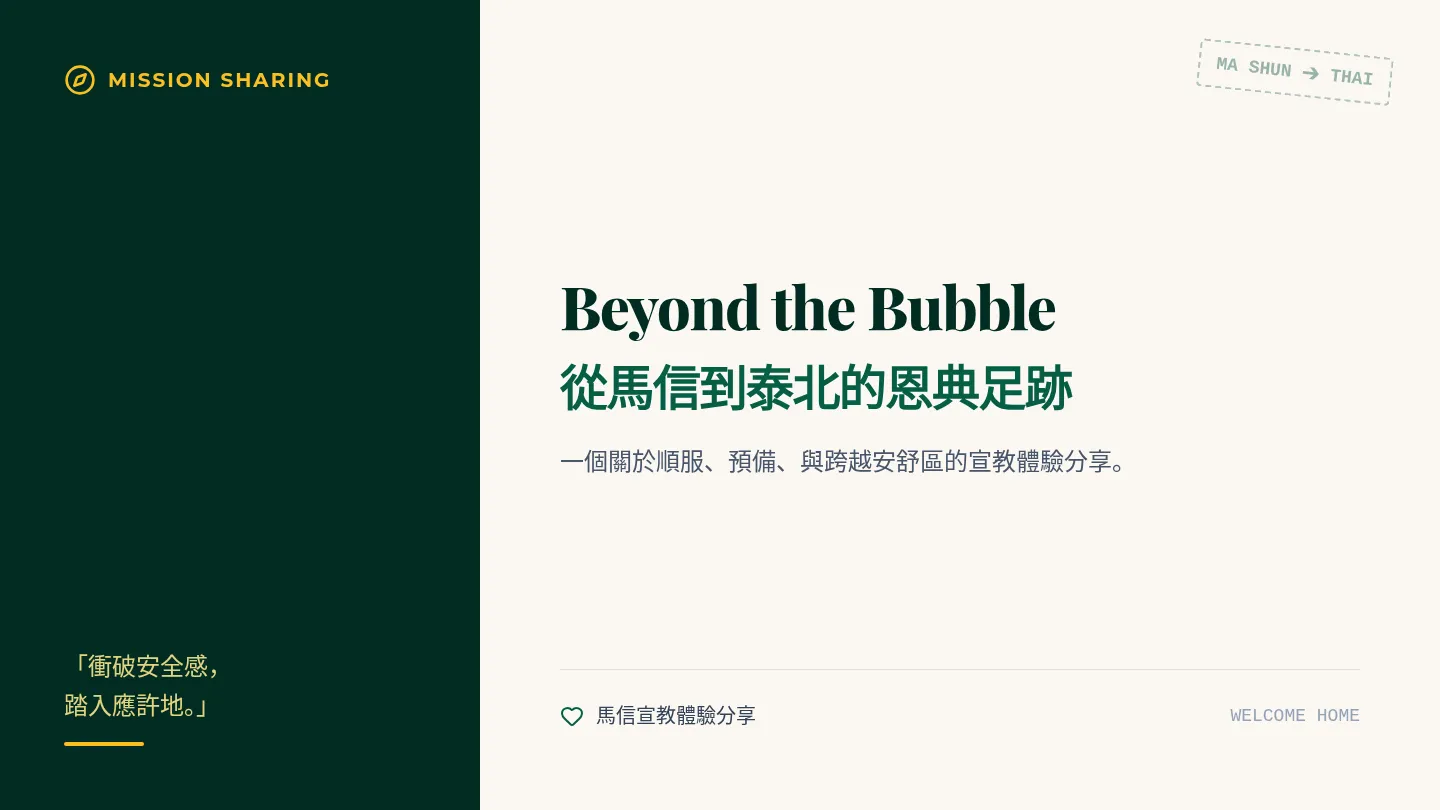
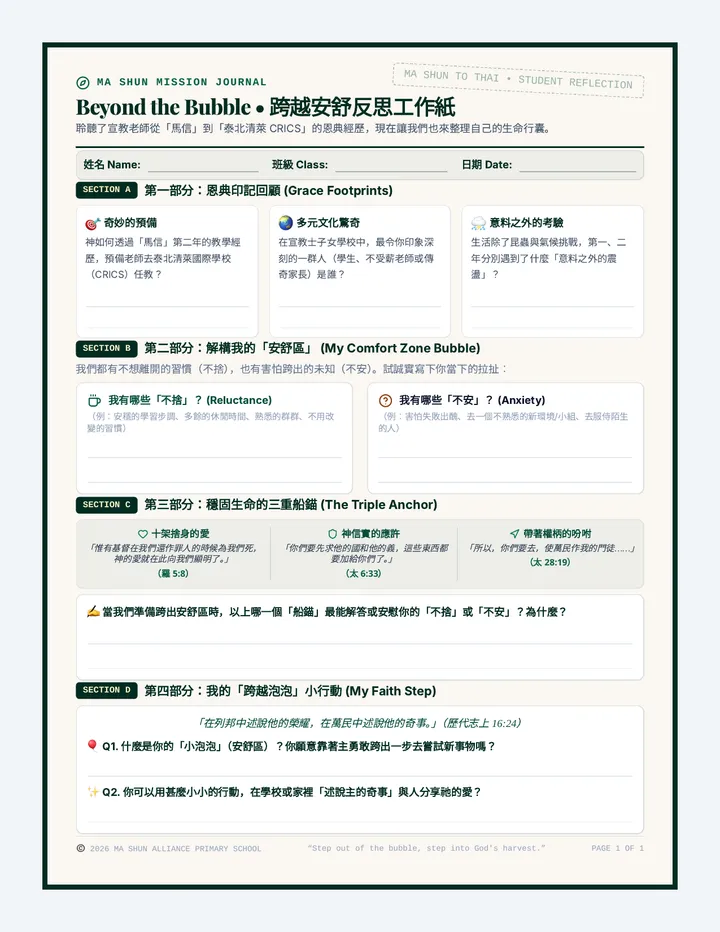
A testimony-based lesson exploring the journey of stepping out of one's comfort zone, overcoming fears through faith, and embracing God's mission in Thailand.
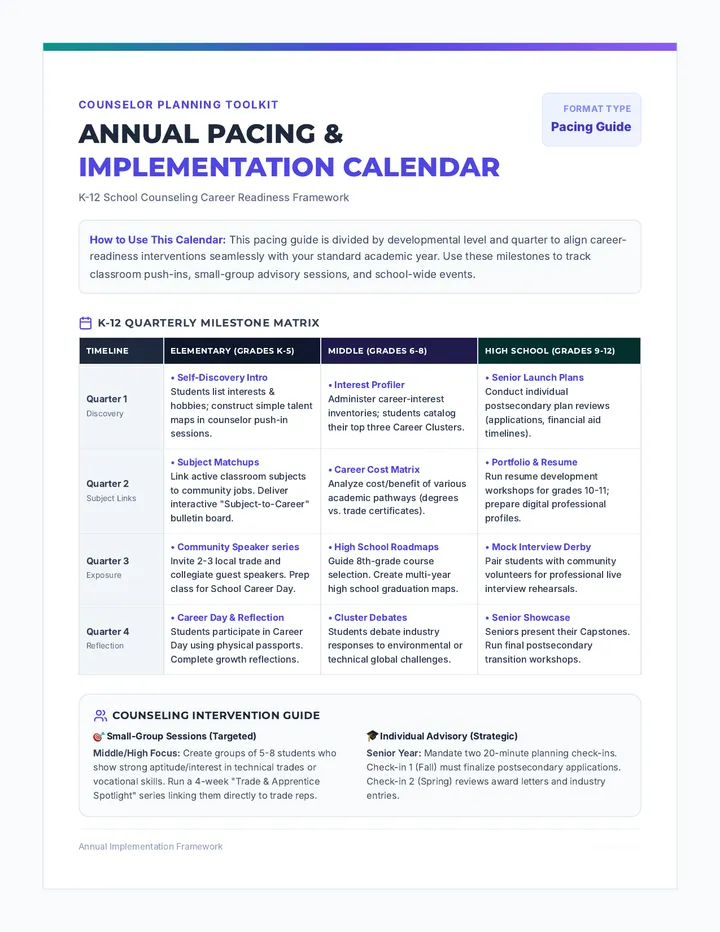
Actionable planning resources, school-wide career day guides, and implementation templates for school counselors to deploy career readiness curricula.
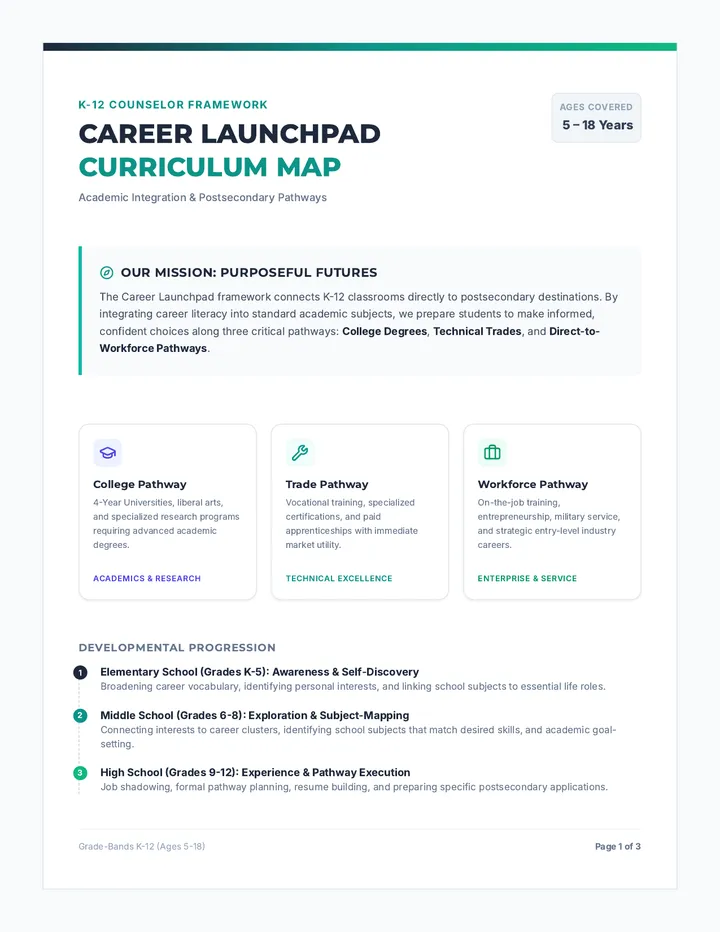
High-level scope, sequence, and developmental milestones for elementary, middle, and high school career exploration. This framework links classroom subjects to real-world college, trade, and workforce pathways.
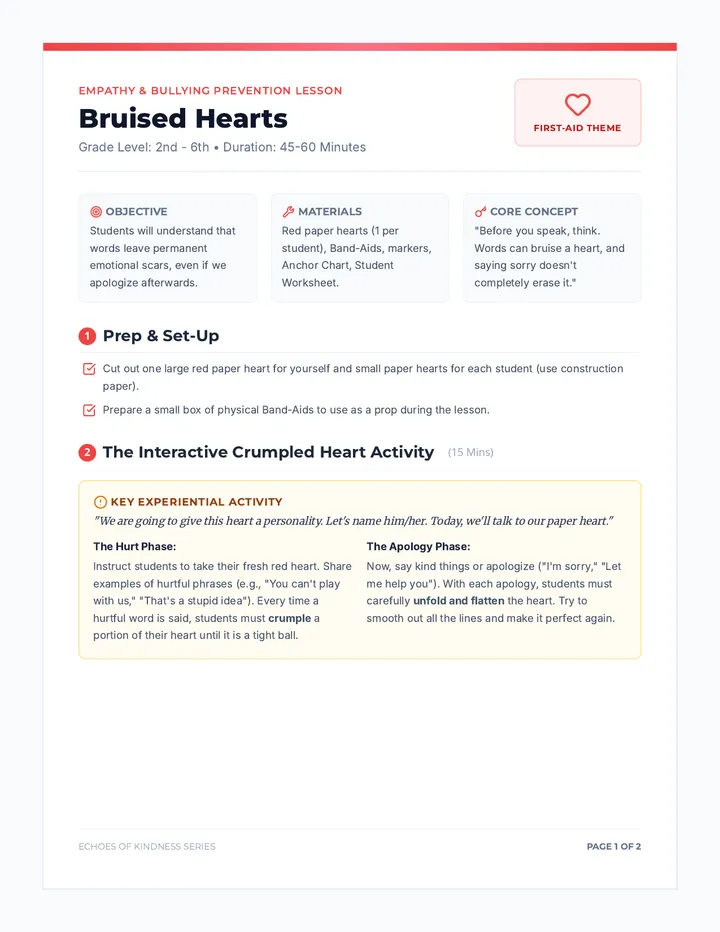
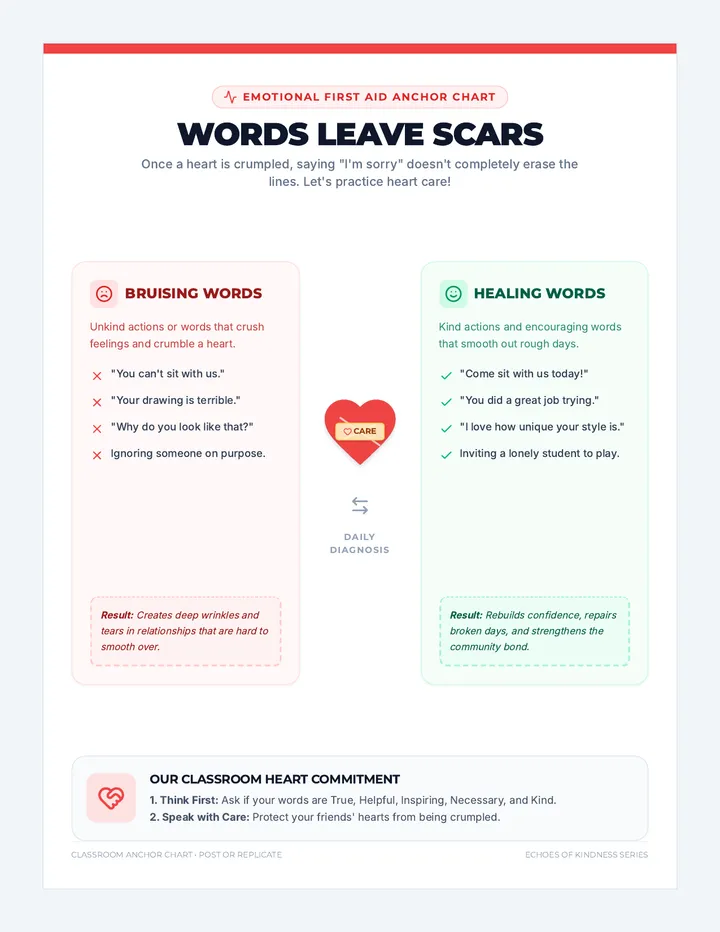
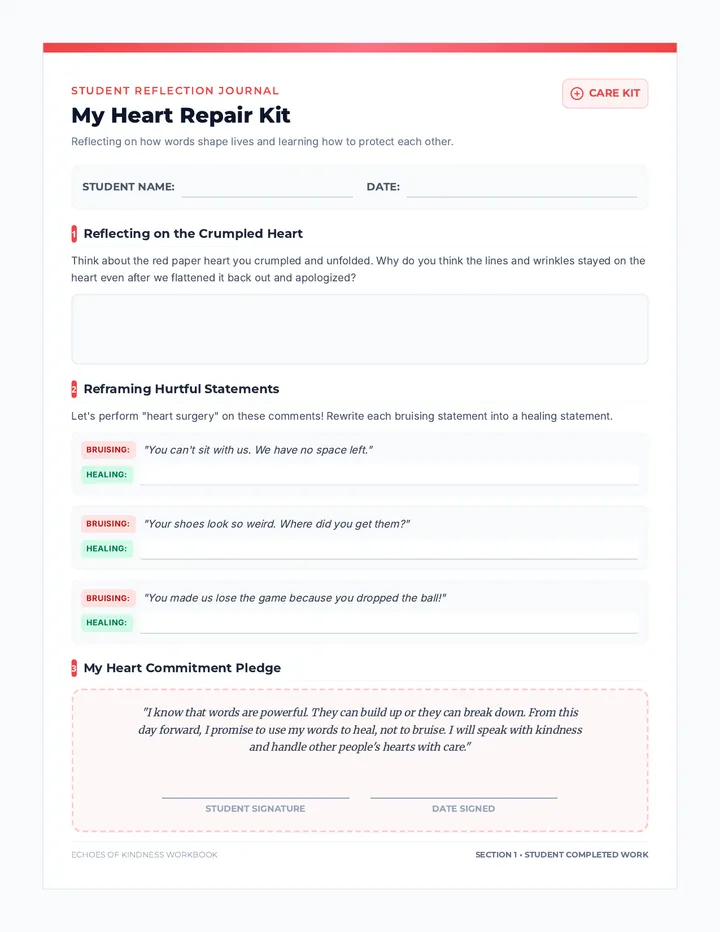
A powerful kindness and bullying prevention lesson exploring how hurtful words affect others and how we can repair hearts. Students engage in a paper-heart crumbling activity to visually understand the lasting impact of unkindness.
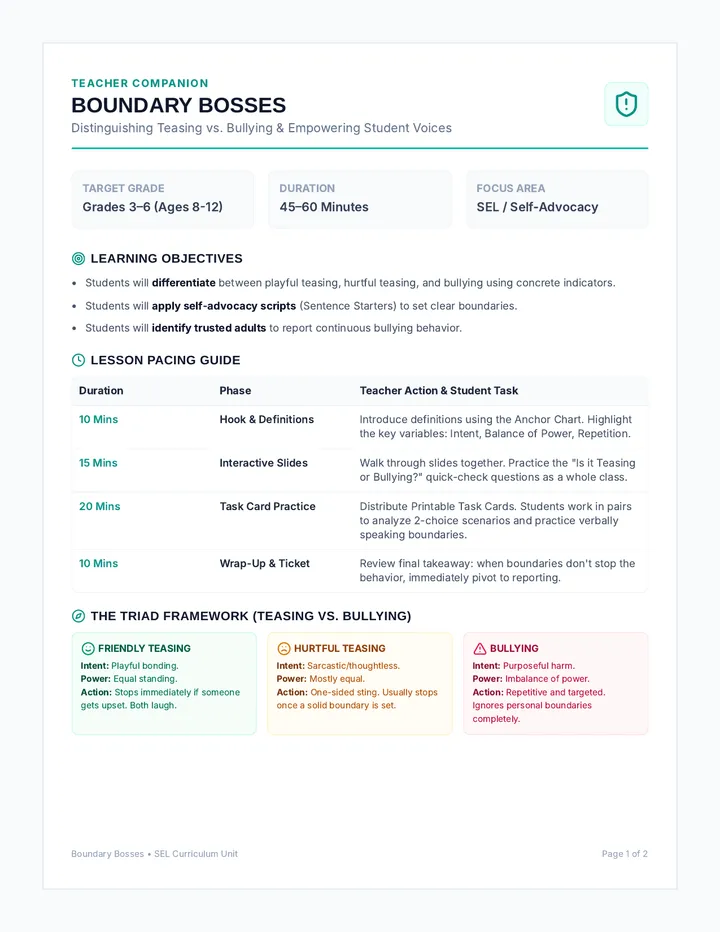
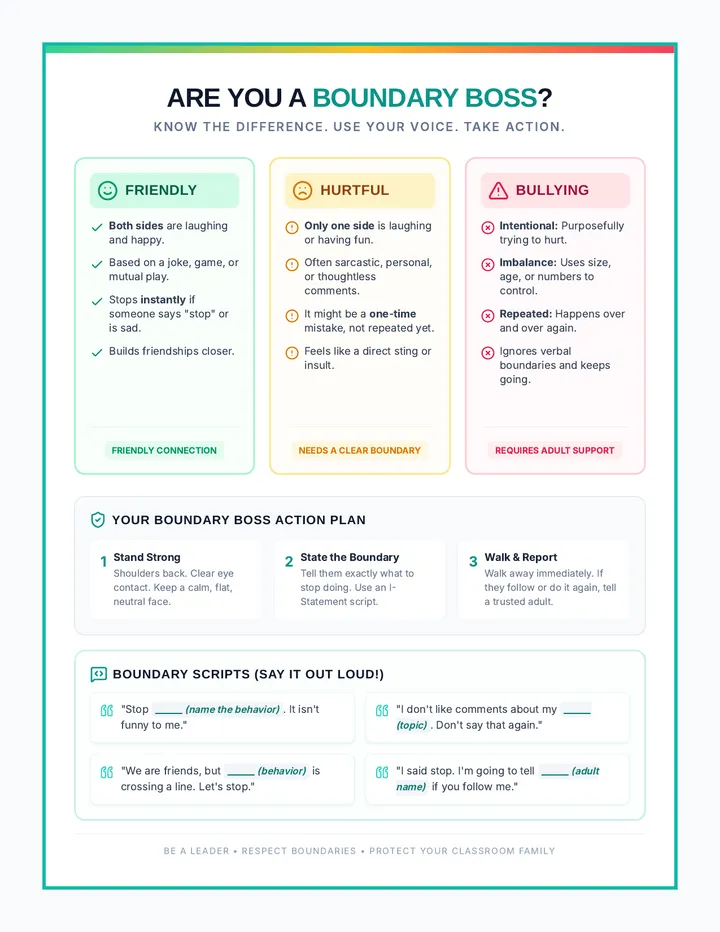
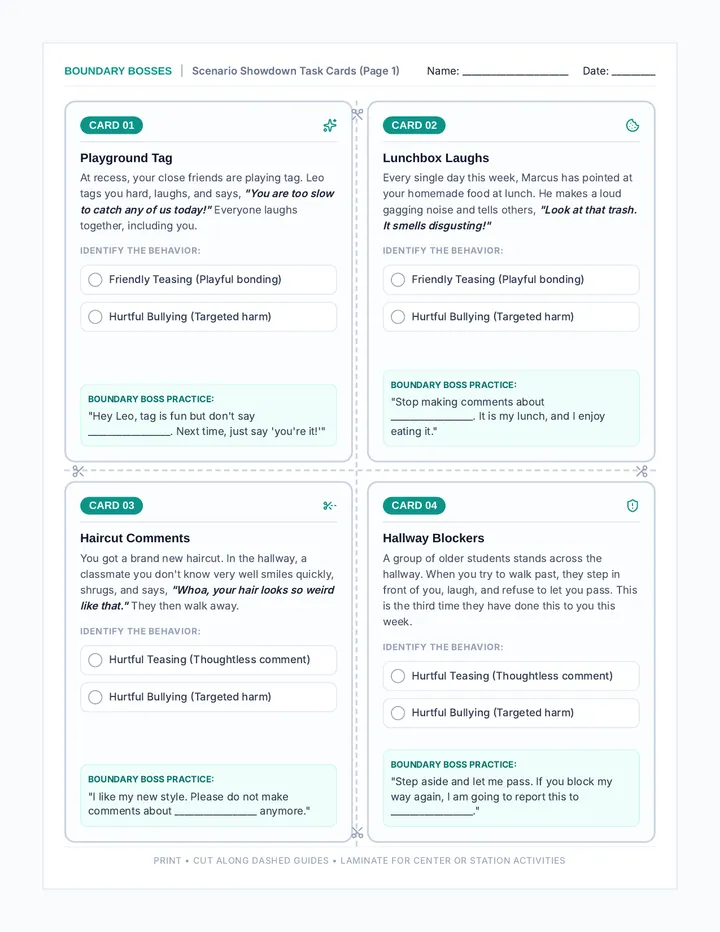
A comprehensive lesson helping students distinguish between friendly teasing, hurtful teasing, and bullying, while teaching concrete self-advocacy strategies and verbal boundary setting.
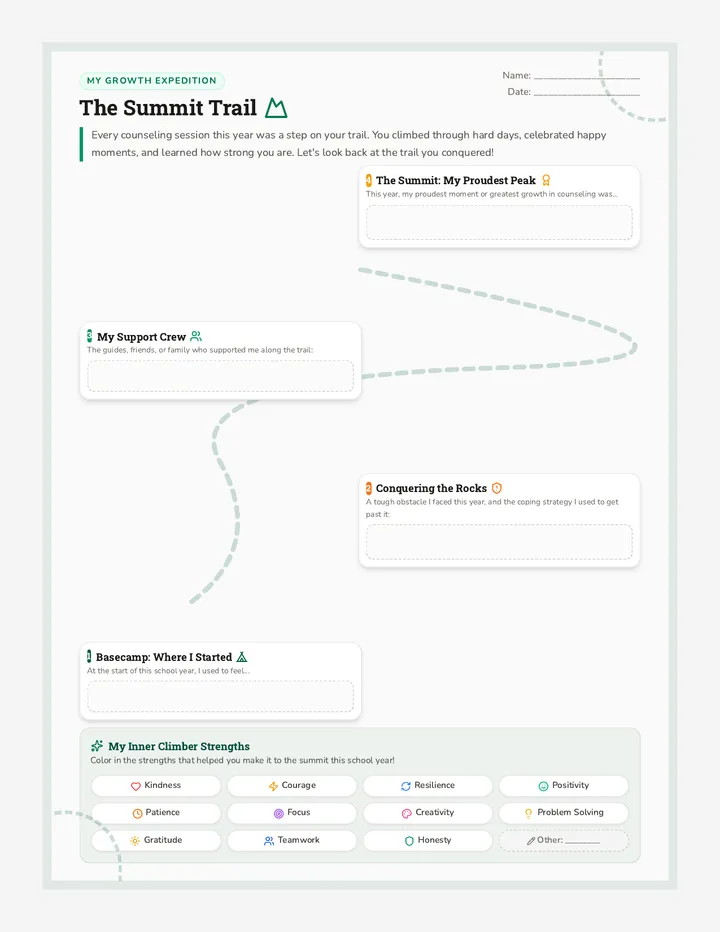
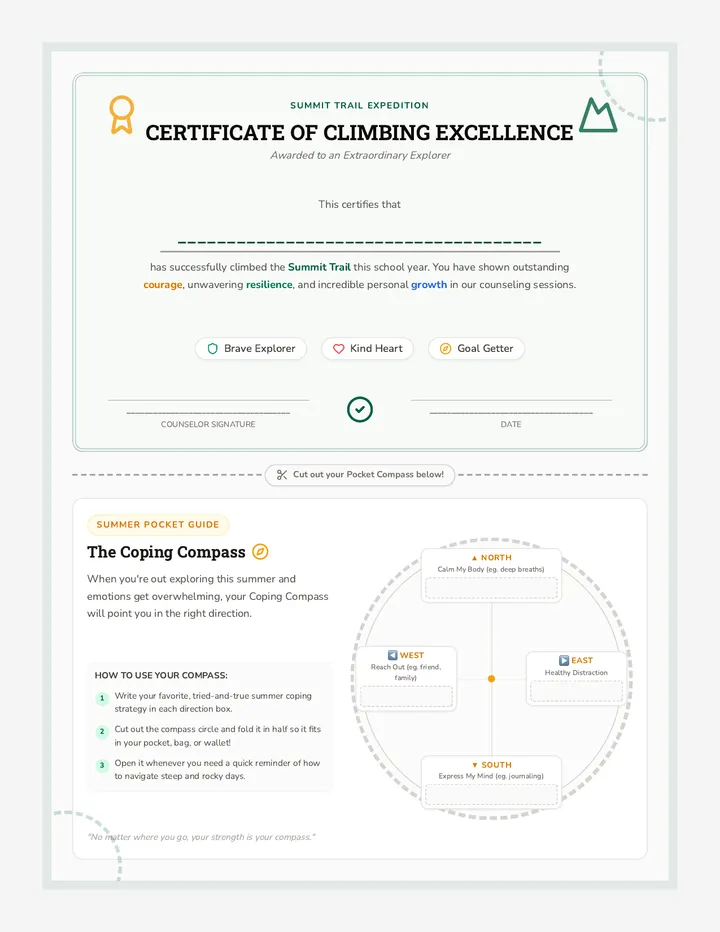
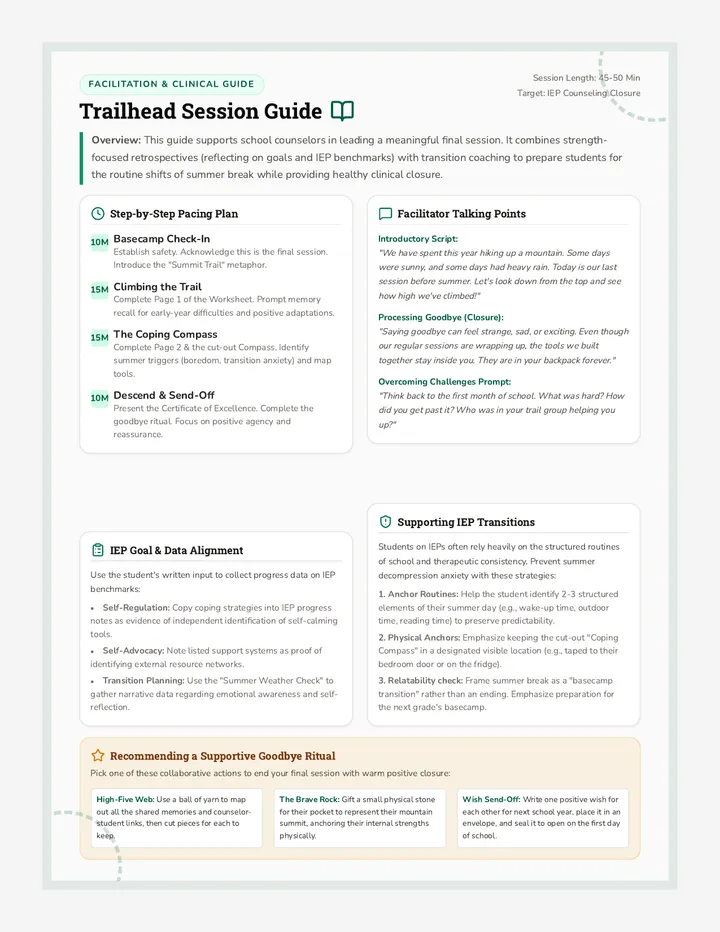
A supportive, mountain-trail-themed final counseling session designed for students on IEPs to celebrate their personal growth, develop summer coping strategies, set future goals, and process closure with their counselor.
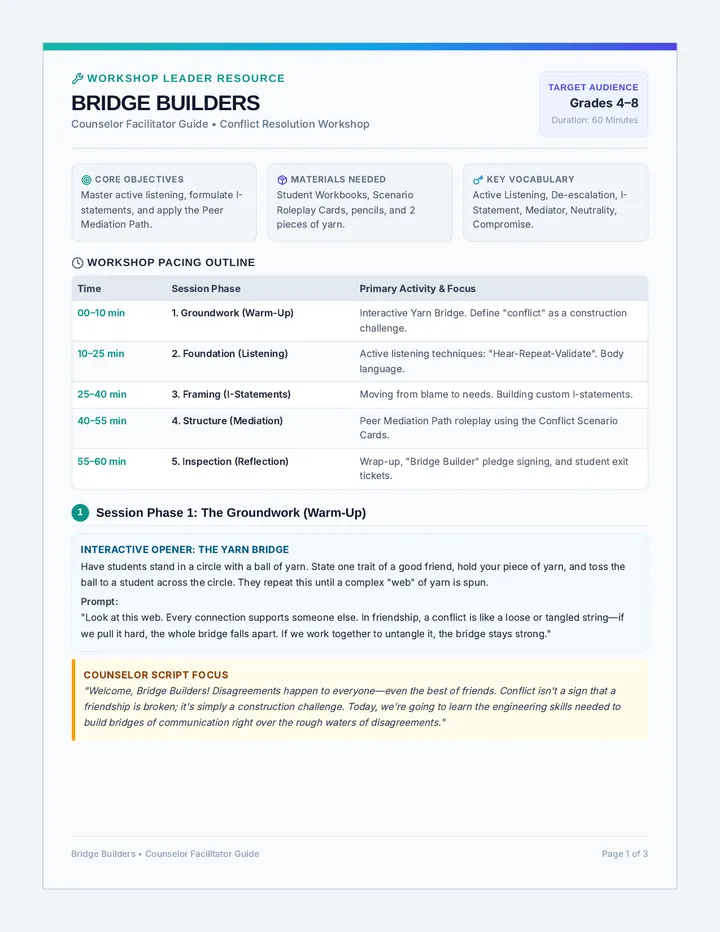
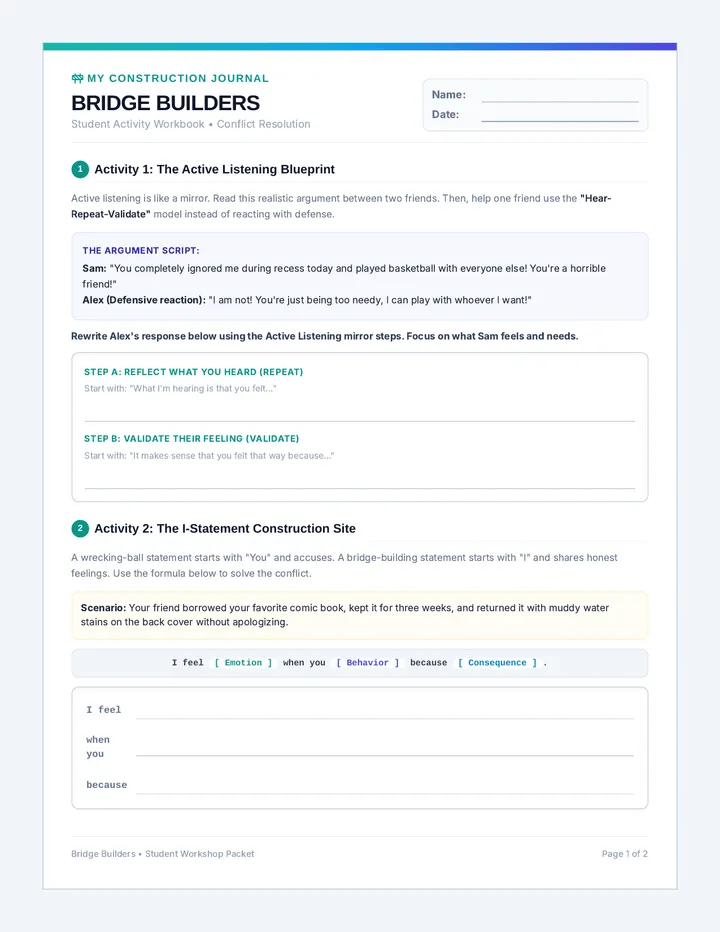
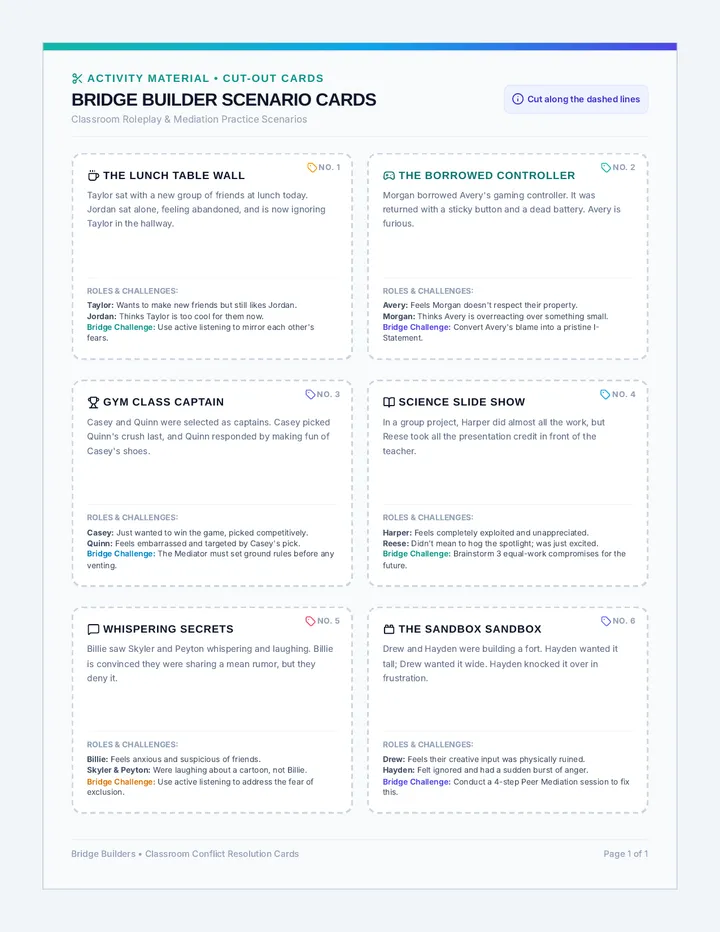
An interactive workshop teaching students essential conflict resolution skills, active listening techniques, and peer mediation frameworks to build stronger, more empathetic friendships.
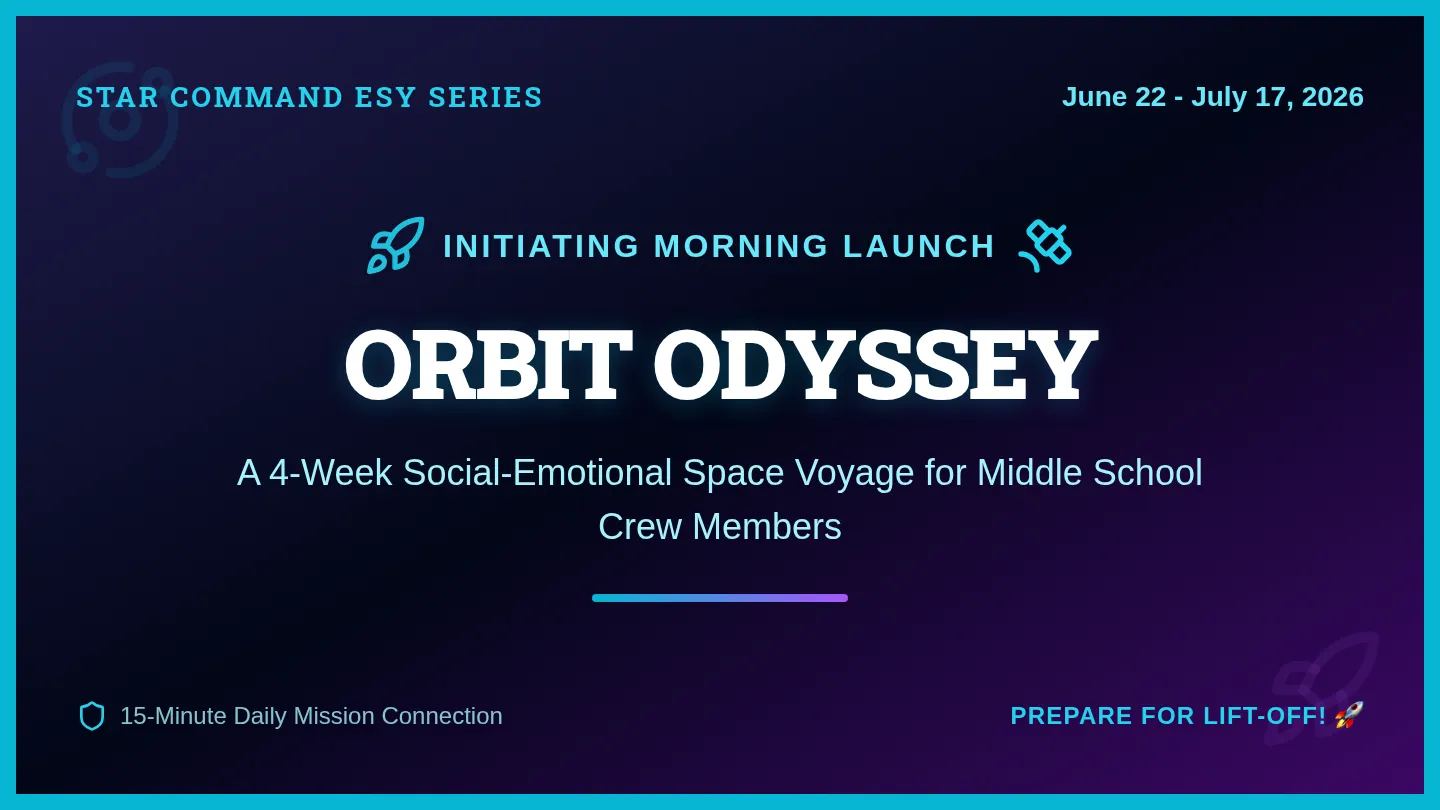
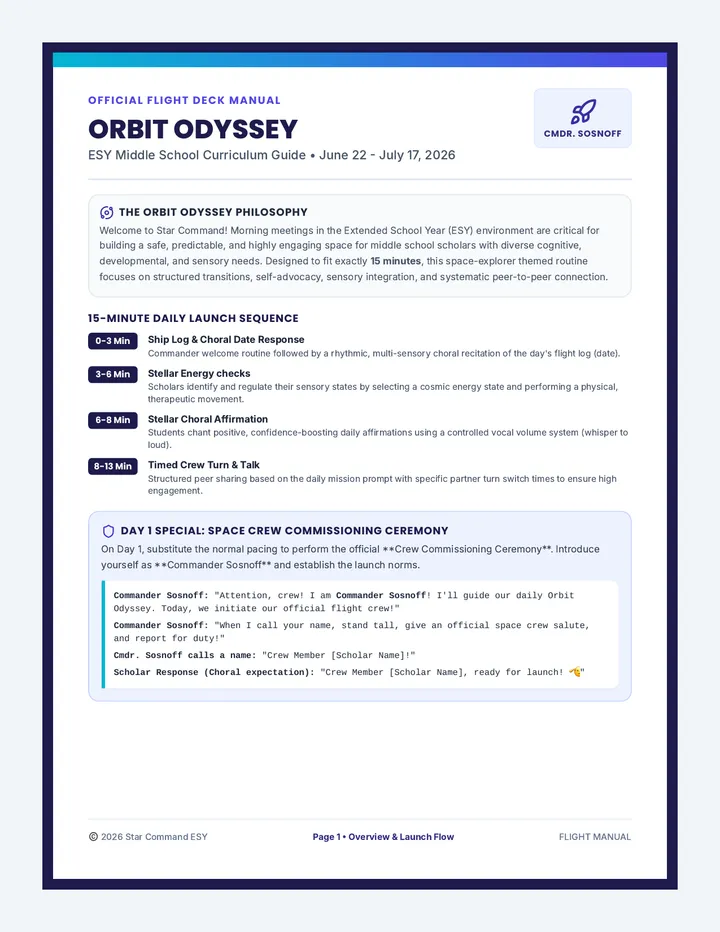
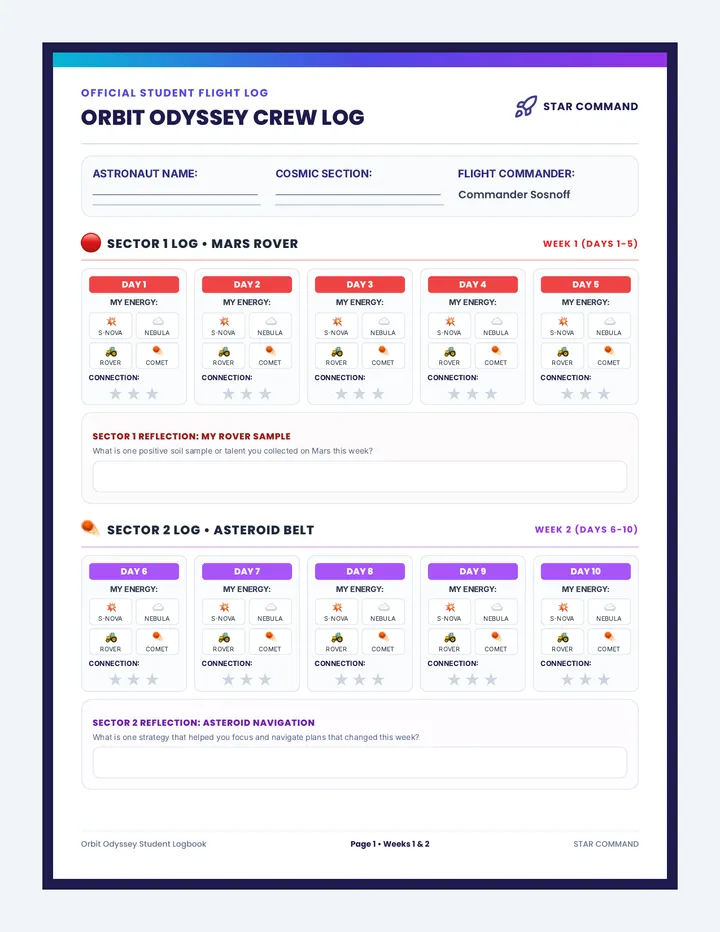
A 4-week space explorer themed morning meeting series for middle school ESY scholars with disabilities. Led by Commander Sosnoff, it covers Mars Rover, Asteroid Navigation, Saturn Rings, and Nebula sectors with calendar ship logs, cosmic energy checks, stellar affirmations, and turn-and-talk communication prompts.
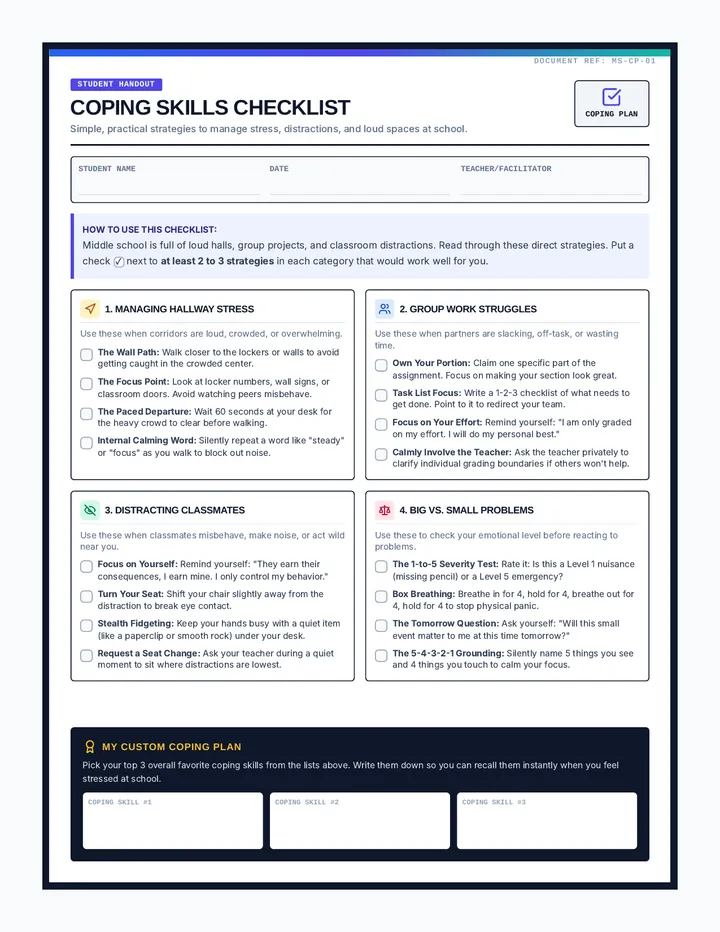
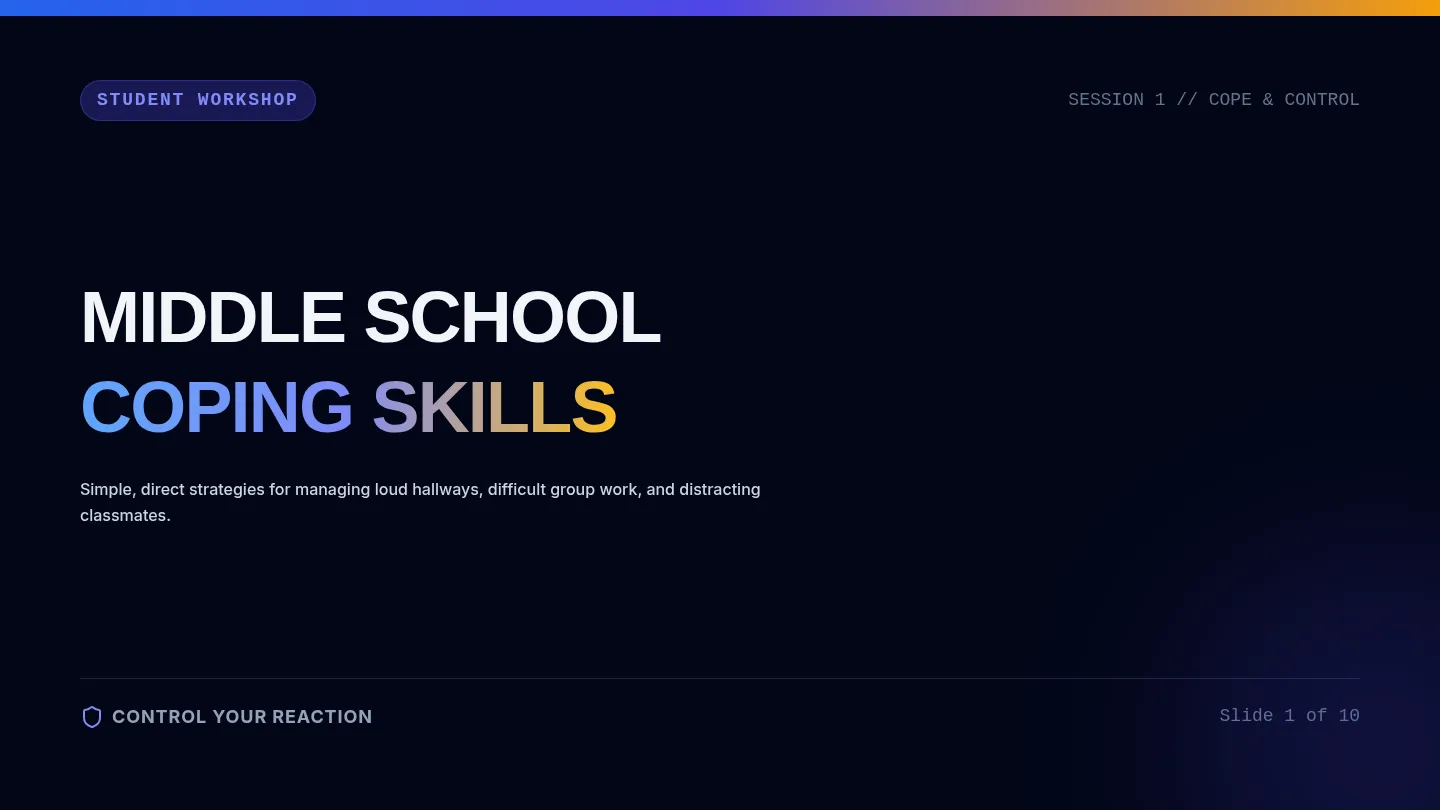
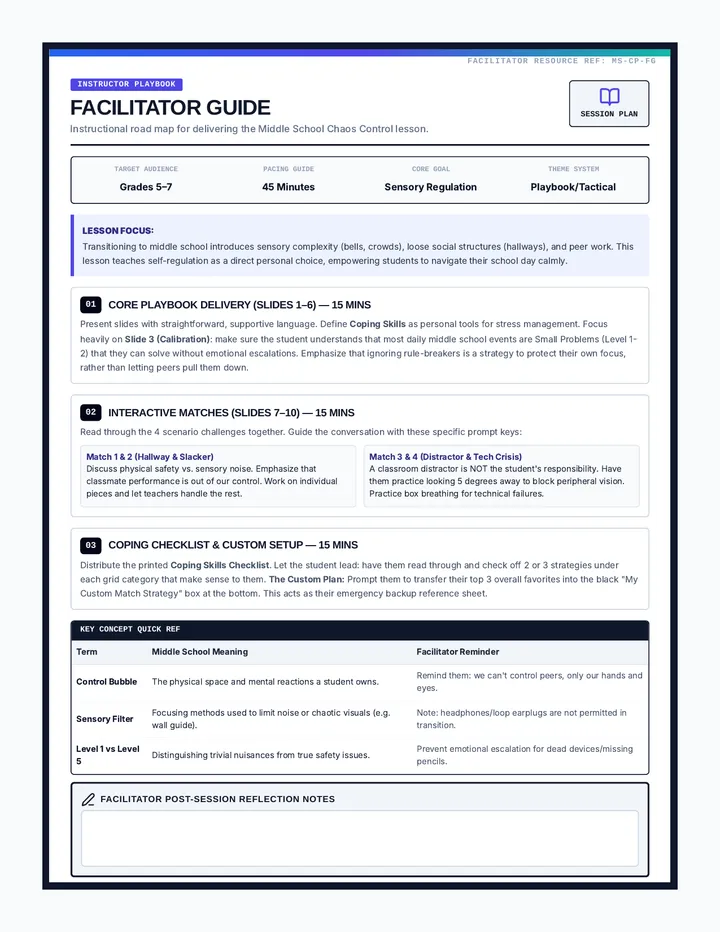
A interactive and engaging lesson designed to equip transitioning middle school students with coping strategies for handling sensory overload, rule-breaking peers, and group work frustrations. Includes an 10-slide presentation, a highly visual coping checklist, and a detailed facilitator guide.
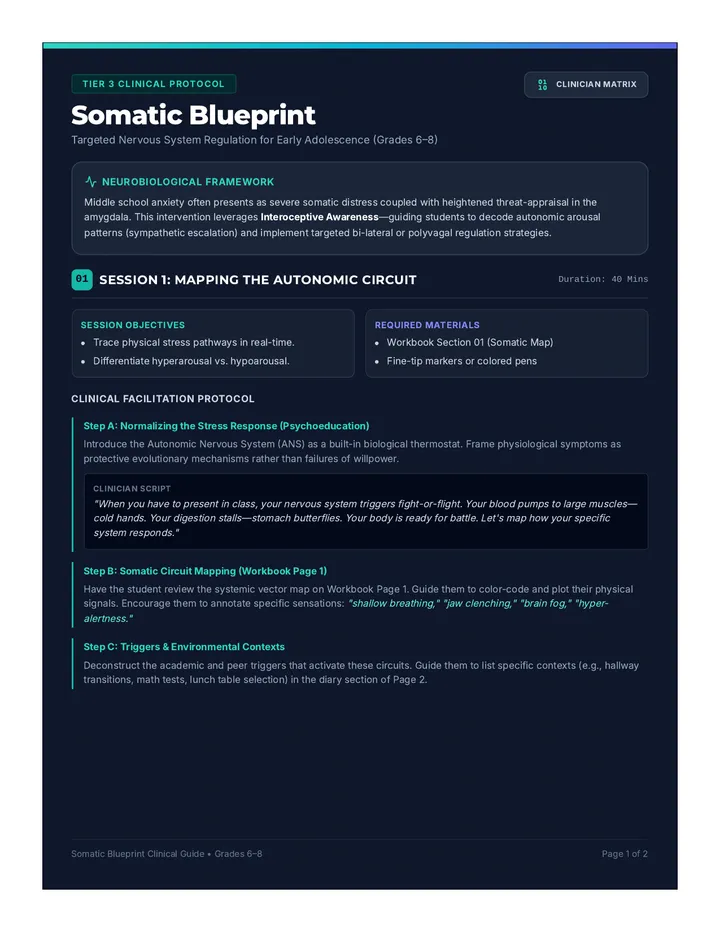
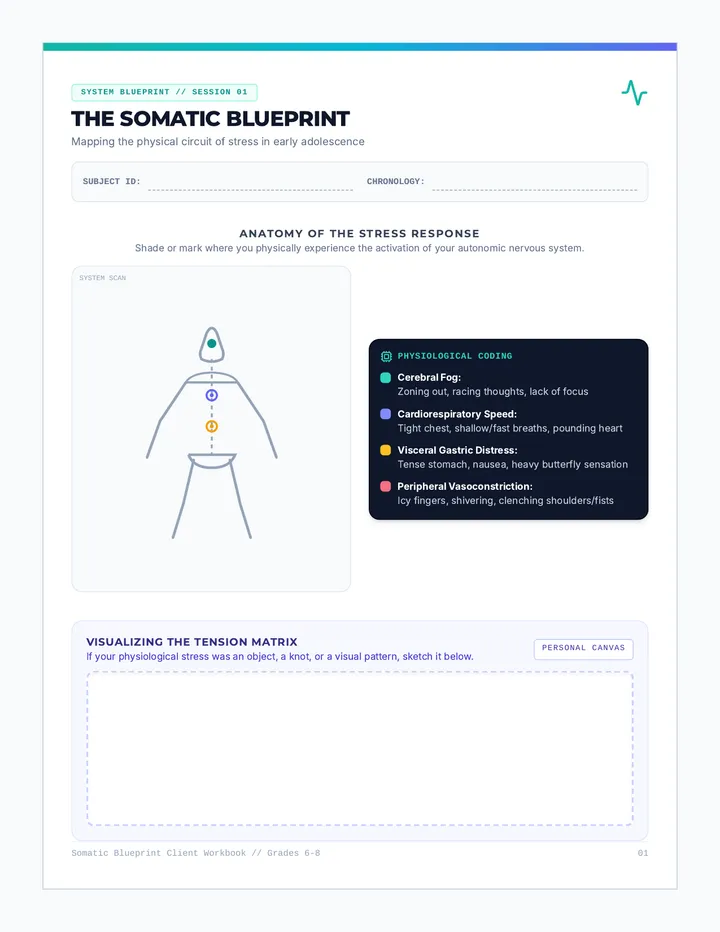
A Tier 3 individual counseling intervention designed for 7th graders (ages 12-13) to map physical stress patterns, analyze neurological escalation, and construct customized coping matrices.
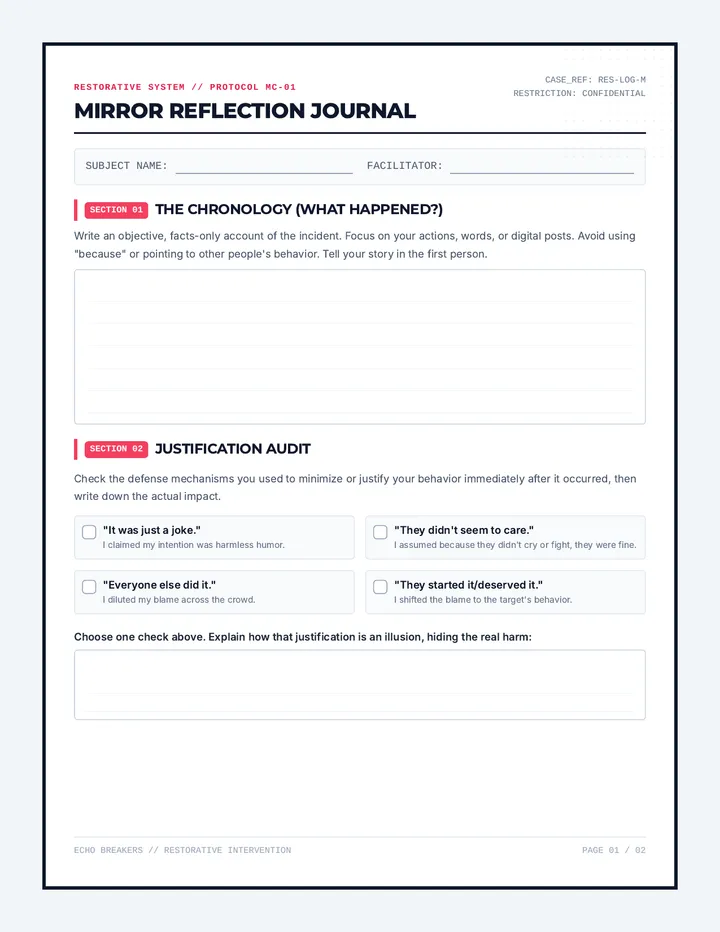
A restorative, intervention-focused lesson designed to address active bullying, social exclusion, or bystander behaviors. Provides a structured, objective, and deeply empathetic framework for restorative justice, self-reflection, and behavior correction.
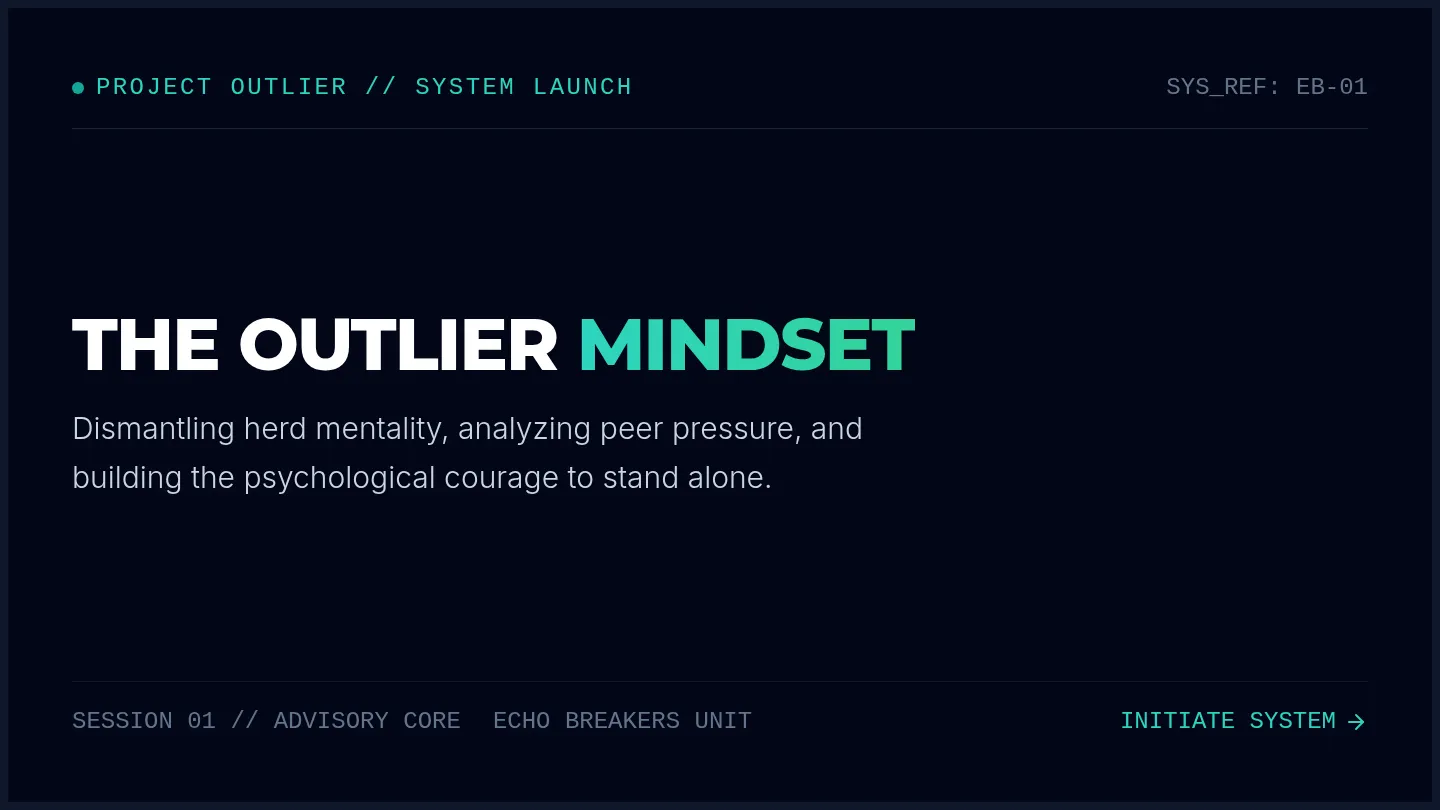
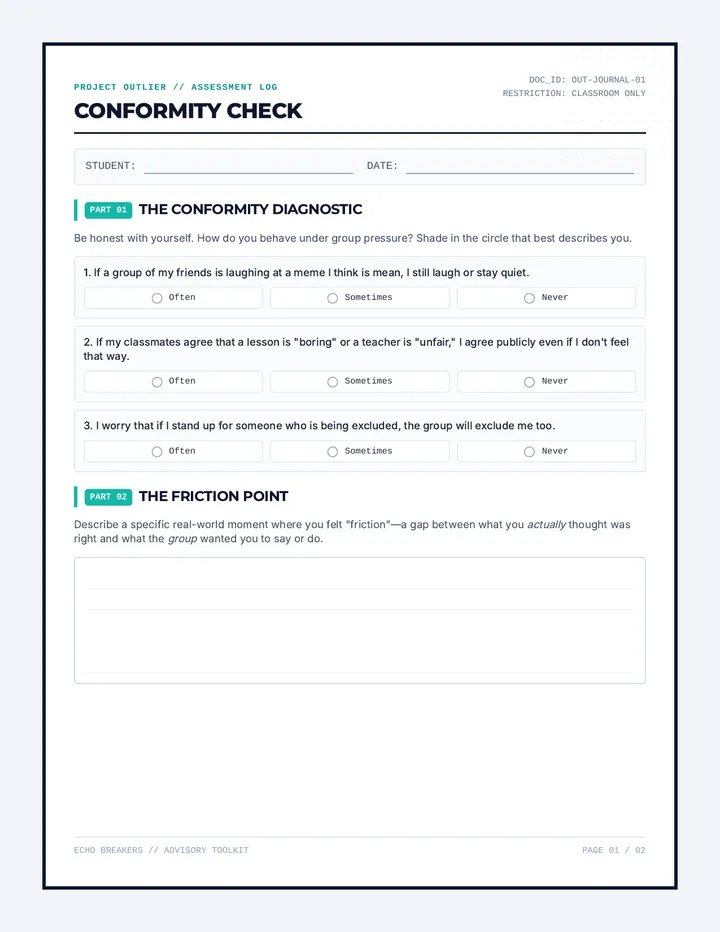
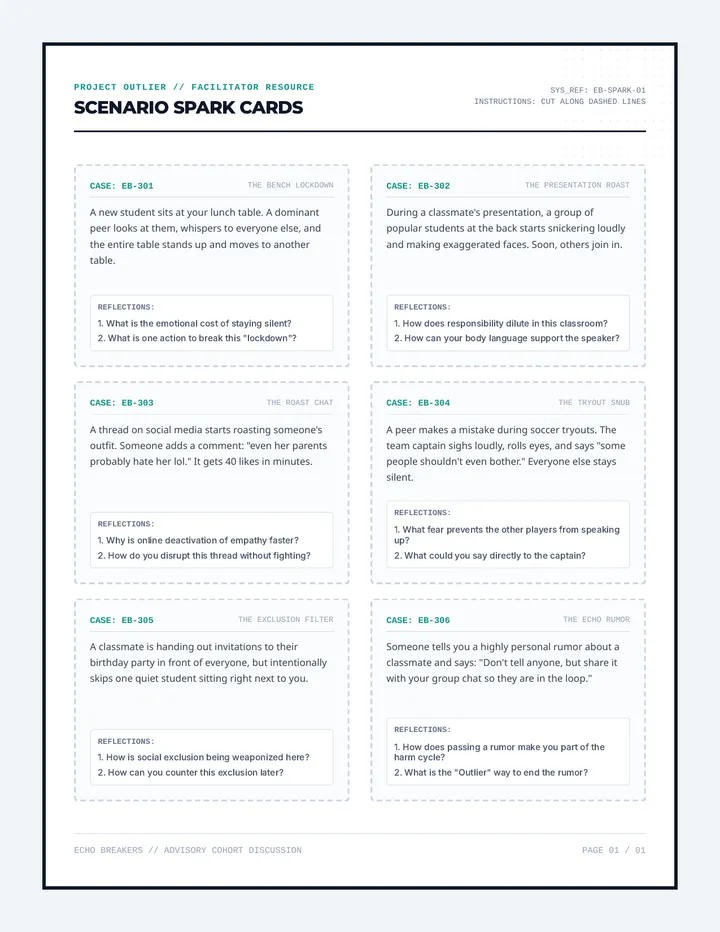
A preventative Advisory-focused lesson that analyzes peer pressure, the psychological mechanics of herd mentality, and the courage required to stand alone. Students engage in self-reflection, case analysis, and scenario-based writing prompts to develop an 'outlier' mindset.
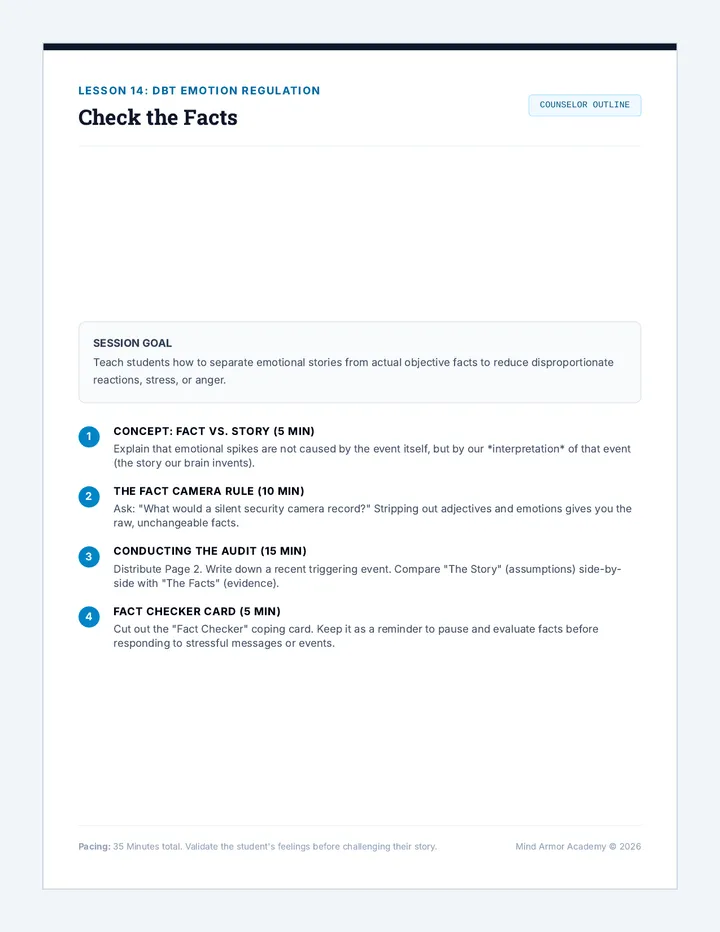
DBT emotion regulation session teaching 'Check the Facts' to verify if emotional reactions match the actual objective facts of a school or social situation.
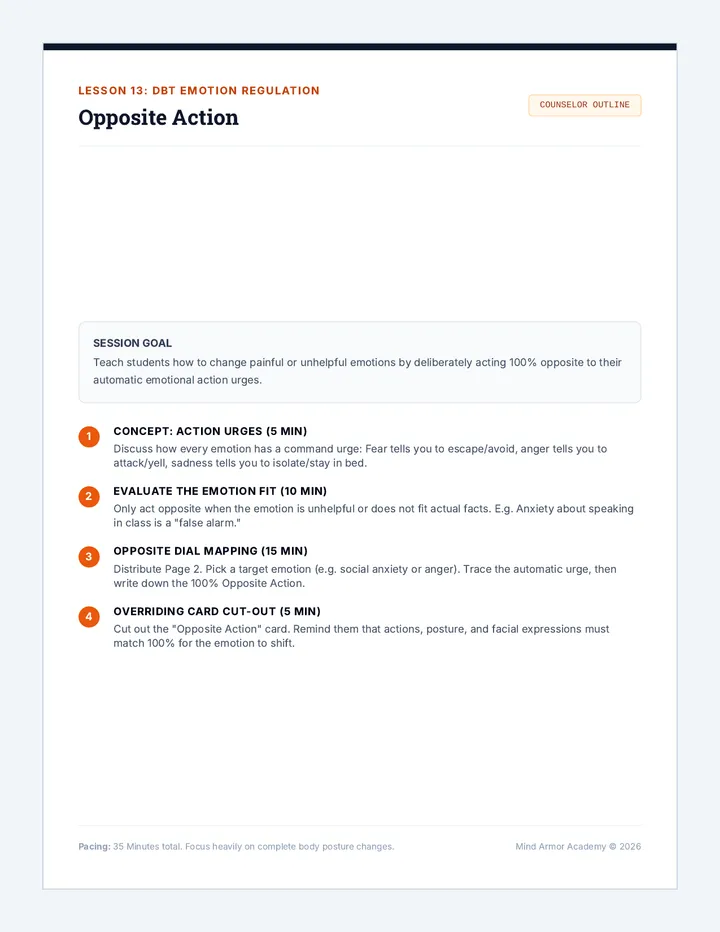
DBT emotion regulation session teaching 'Opposite Action' to change painful or unhelpful emotions by deliberately acting contrary to emotional urges.
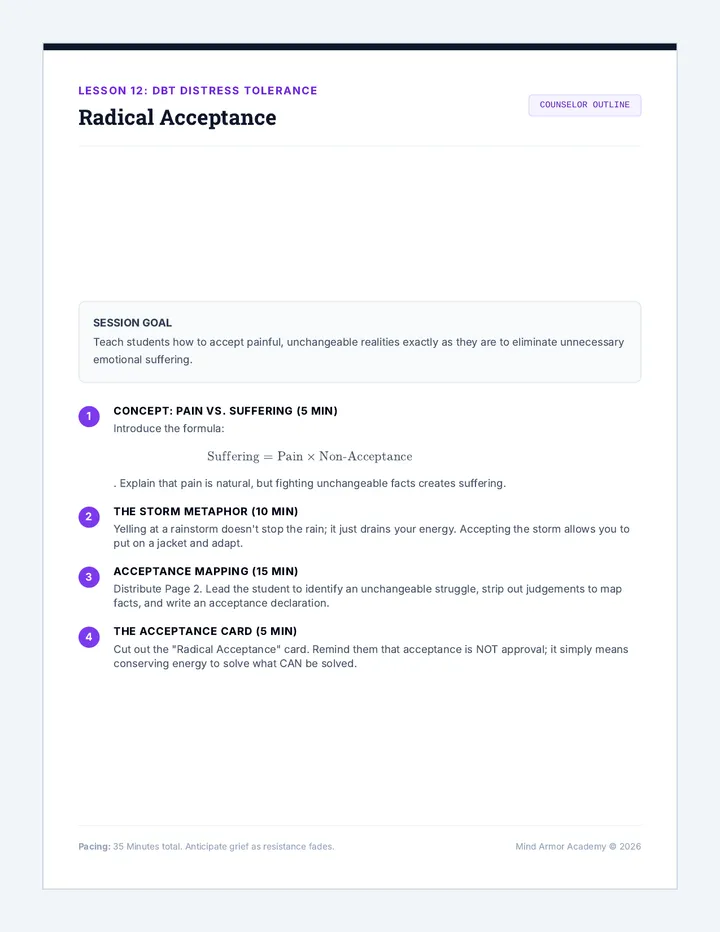
DBT distress tolerance session teaching 'Radical Acceptance' to tolerate painful realities that cannot be changed immediately without making them worse.
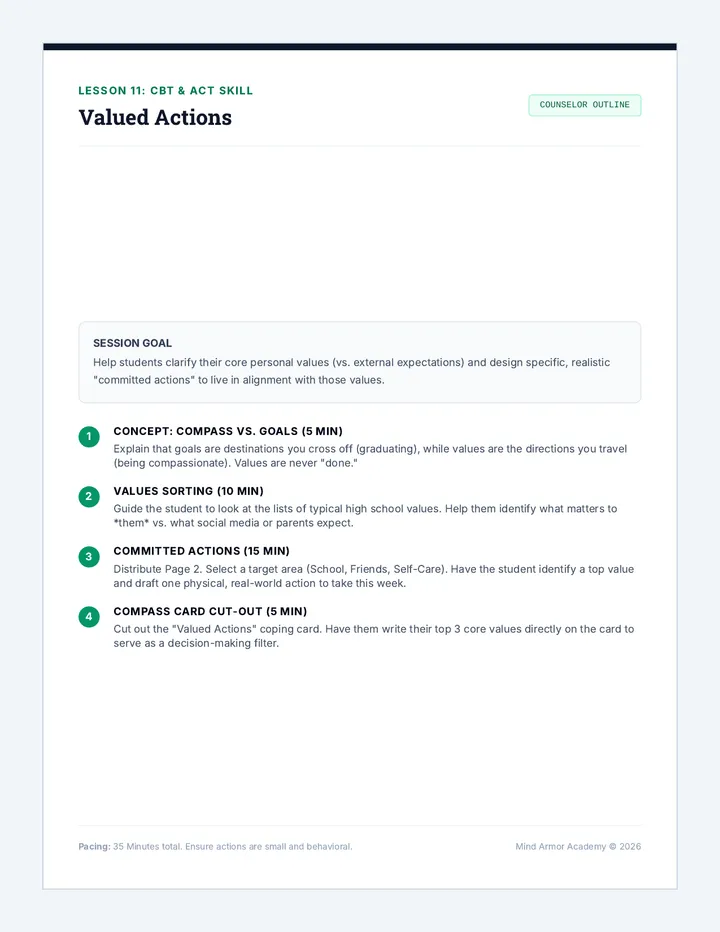
CBT and ACT session focusing on identifying core personal values and taking committed action steps toward them in school and life.
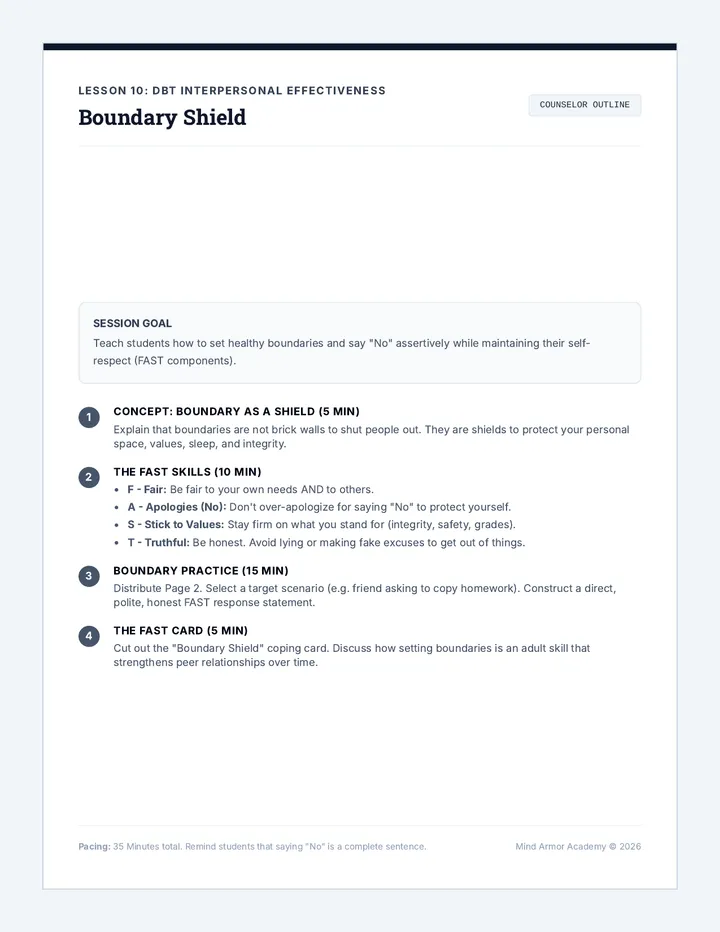
Interpersonal effectiveness session covering DBT FAST skills (Fair, Apologies, Stick to values, Truthful) to build self-respect and set healthy personal boundaries with peers.
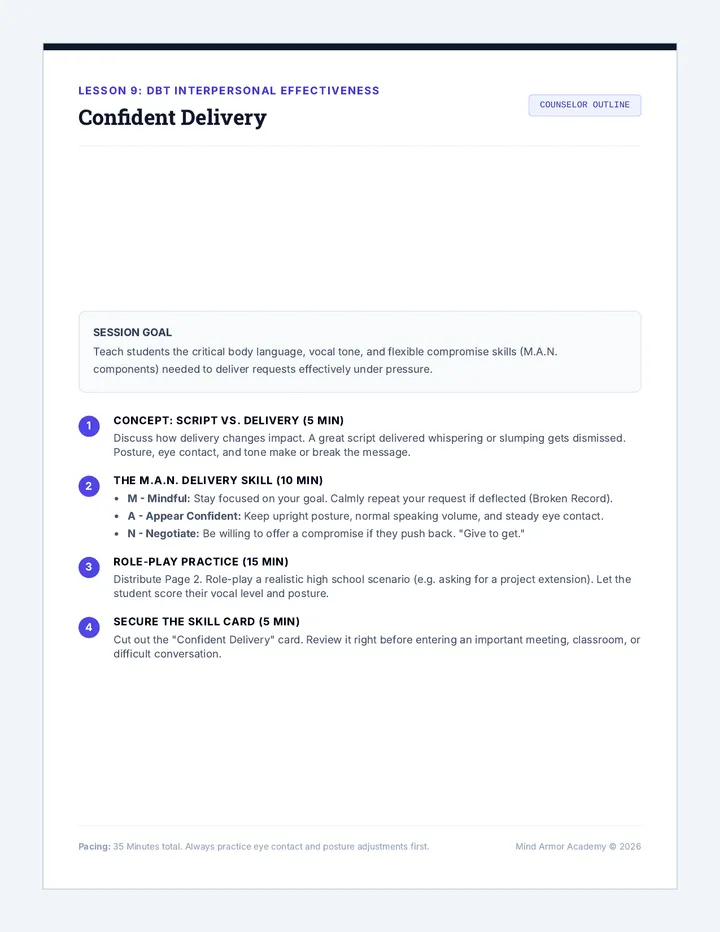
Interpersonal effectiveness session covering the second half of DBT DEAR MAN (Mindful, Appear confident, Negotiate) to guide active communication delivery and conflict negotiation.
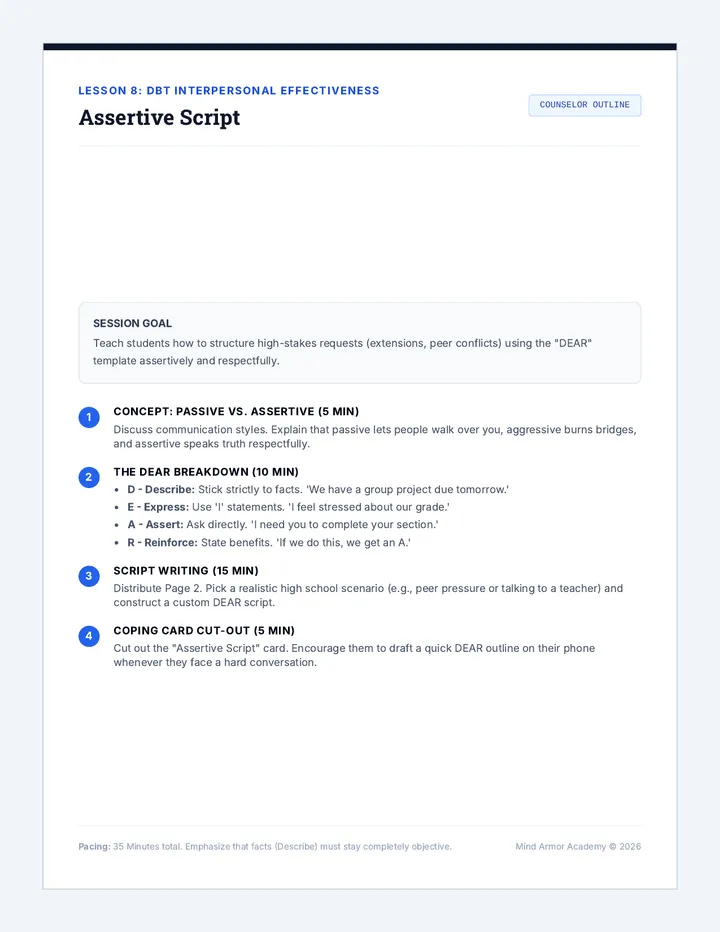
Interpersonal effectiveness session covering the first half of DBT DEAR MAN (Describe, Express, Assert, Reinforce) to teach structured assertive communication.
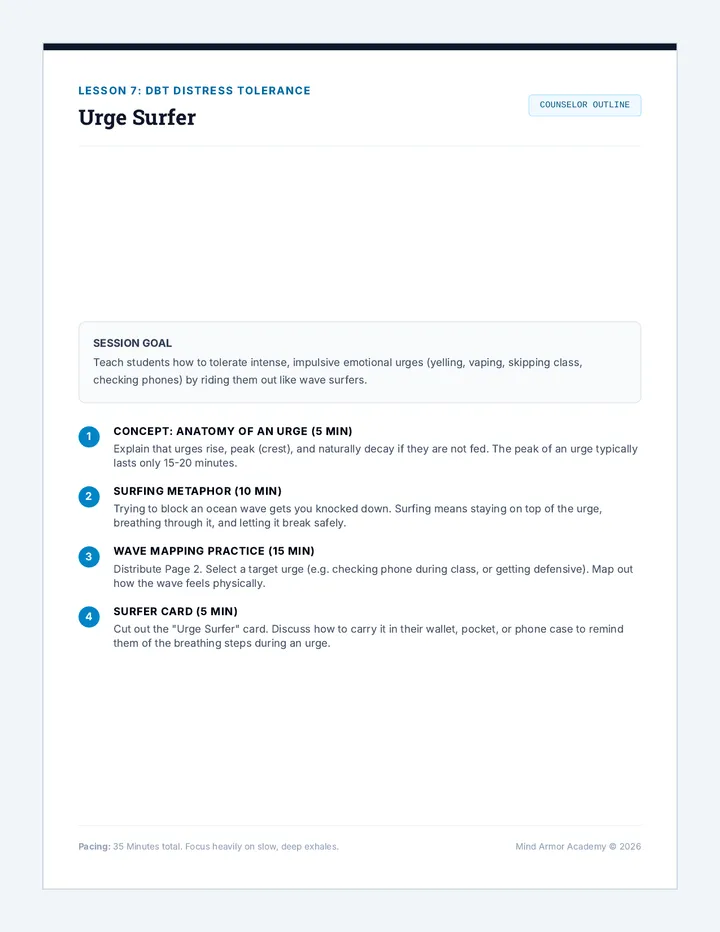
DBT session focusing on the 'Urge Surfing' technique to ride out intense emotional impulses and urges without acting on them destructively.
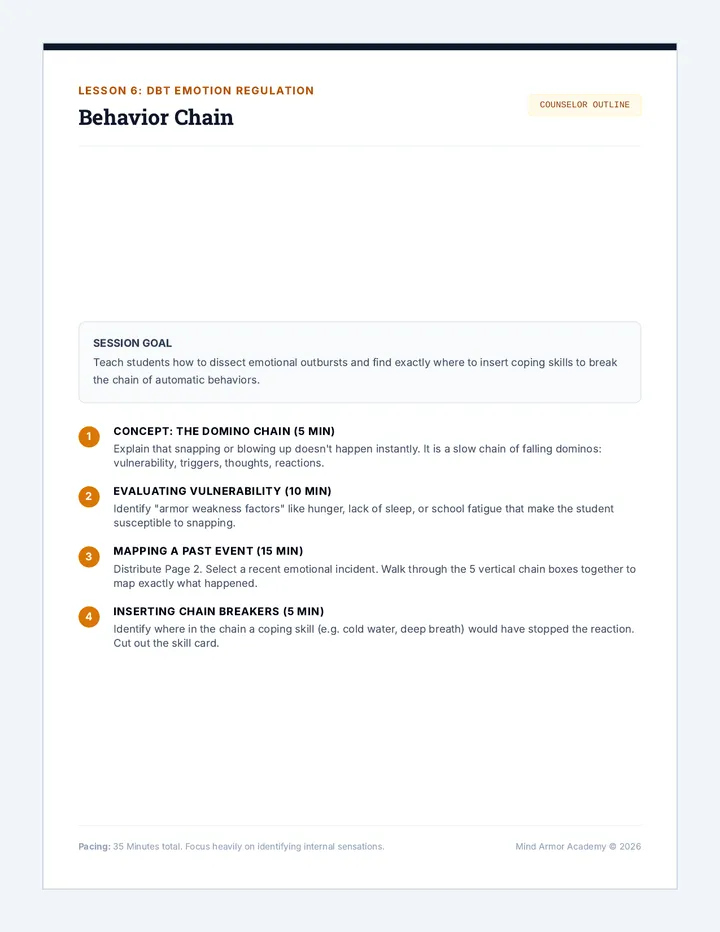
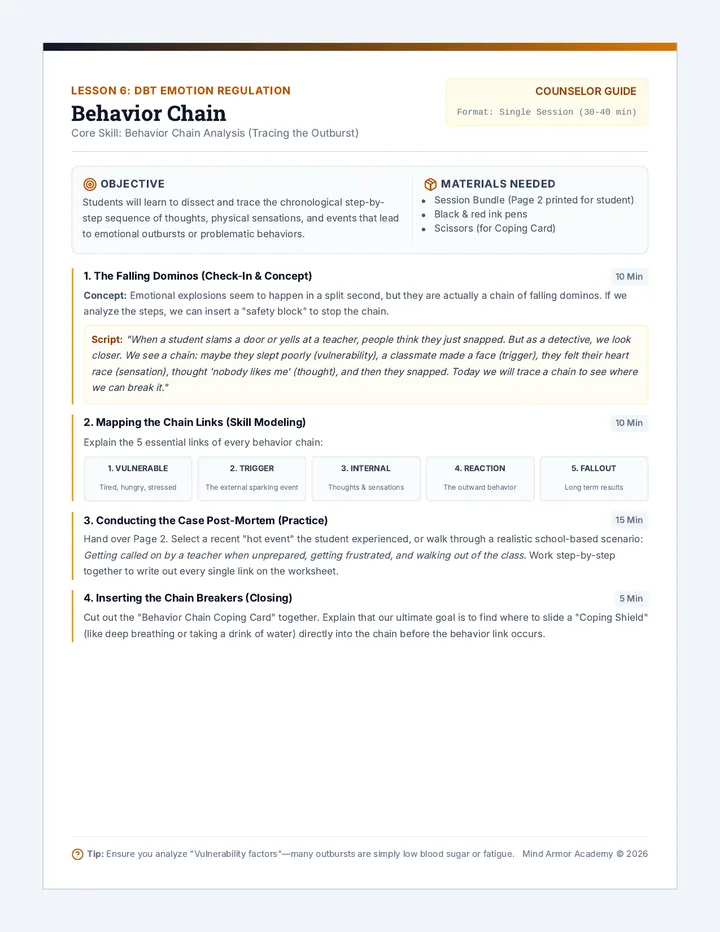
DBT session focusing on Behavior Chain Analysis to trace the sequence of events, thoughts, physical sensations, and actions that lead to emotional outbursts.
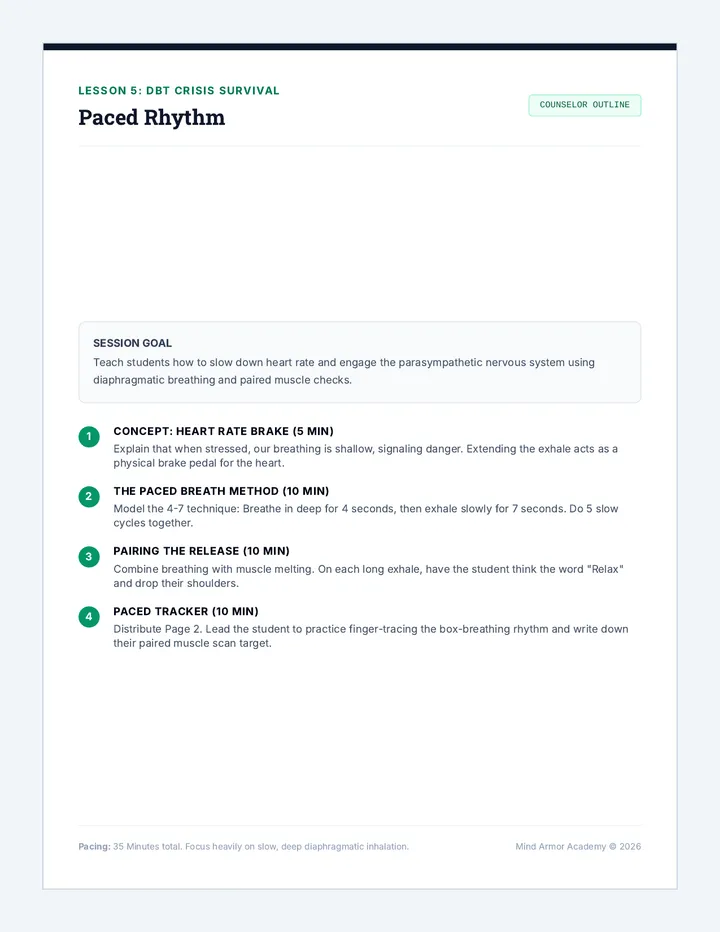
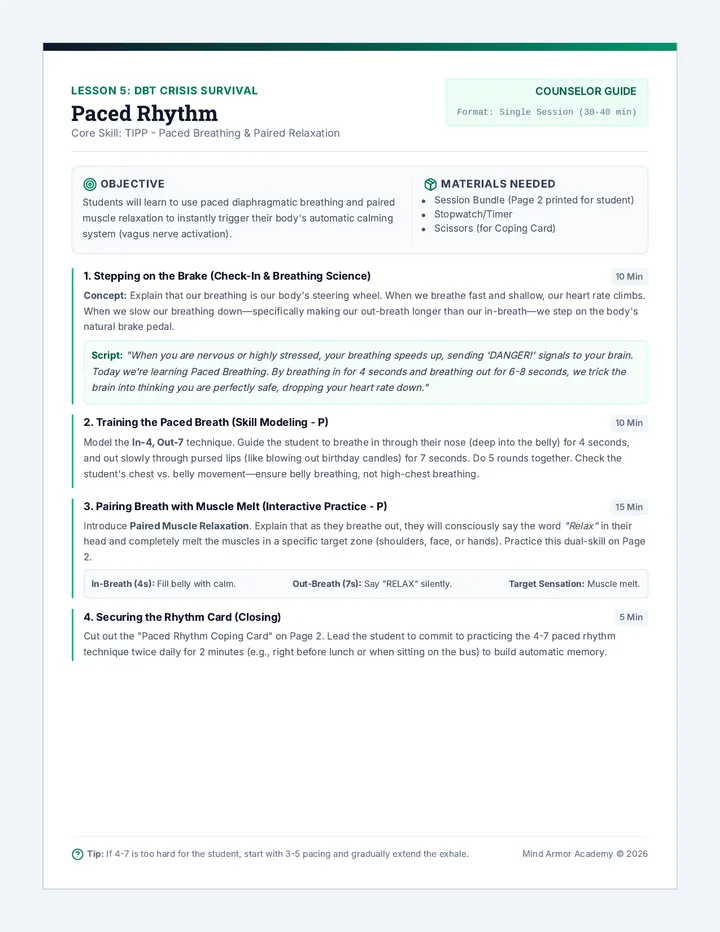
DBT crisis survival session focusing on the TIPP skills, specifically Paced breathing and Paired muscle relaxation to activate the parasympathetic nervous system.
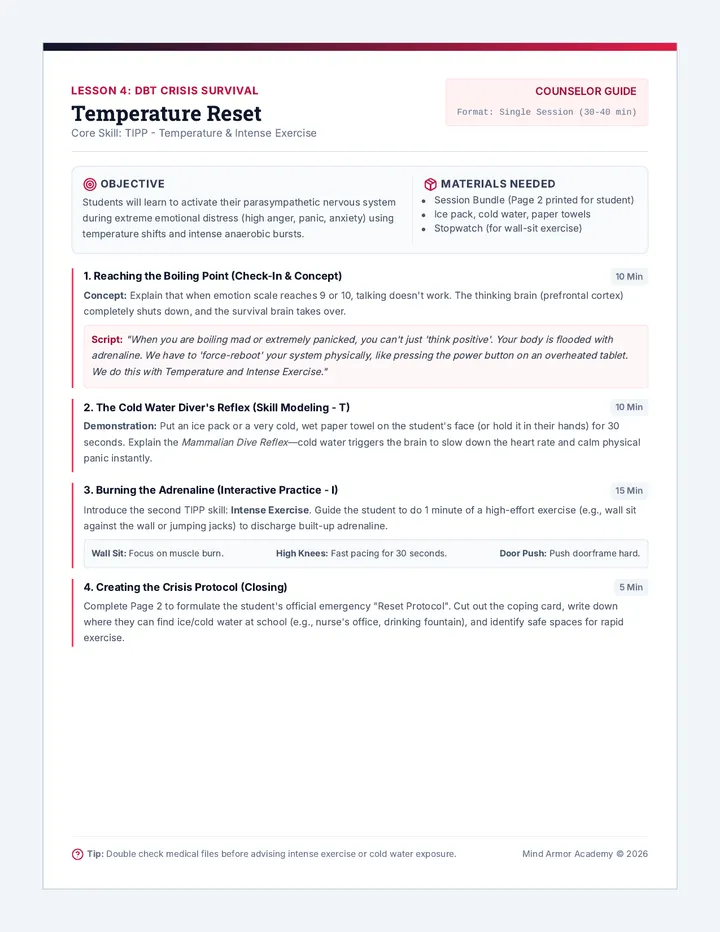
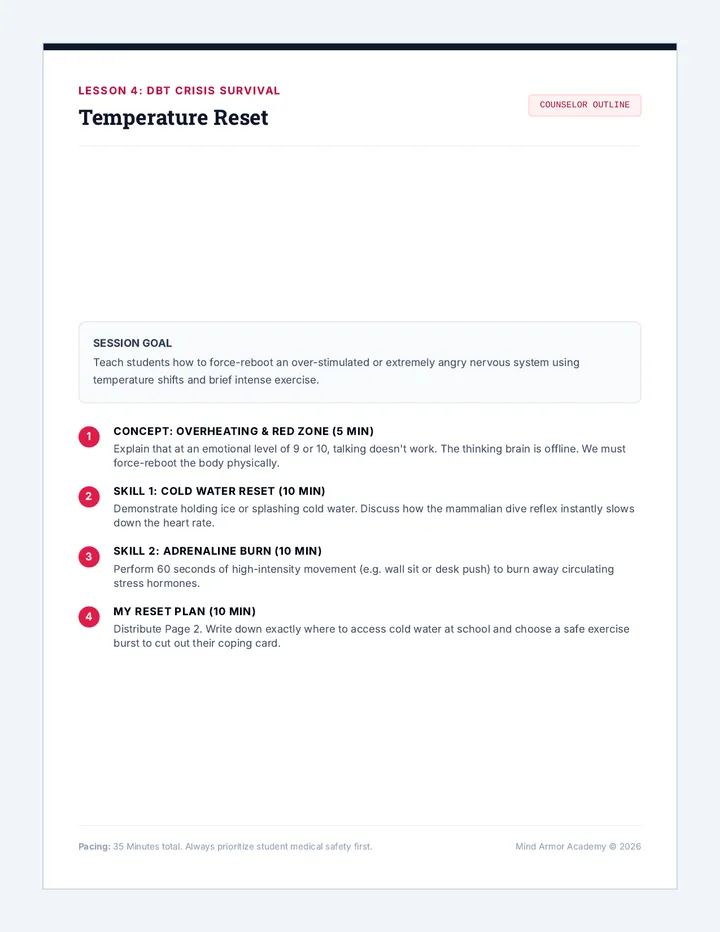
DBT crisis survival session focusing on the TIPP skills, specifically Temperature shift and Intense exercise to down-regulate the nervous system.
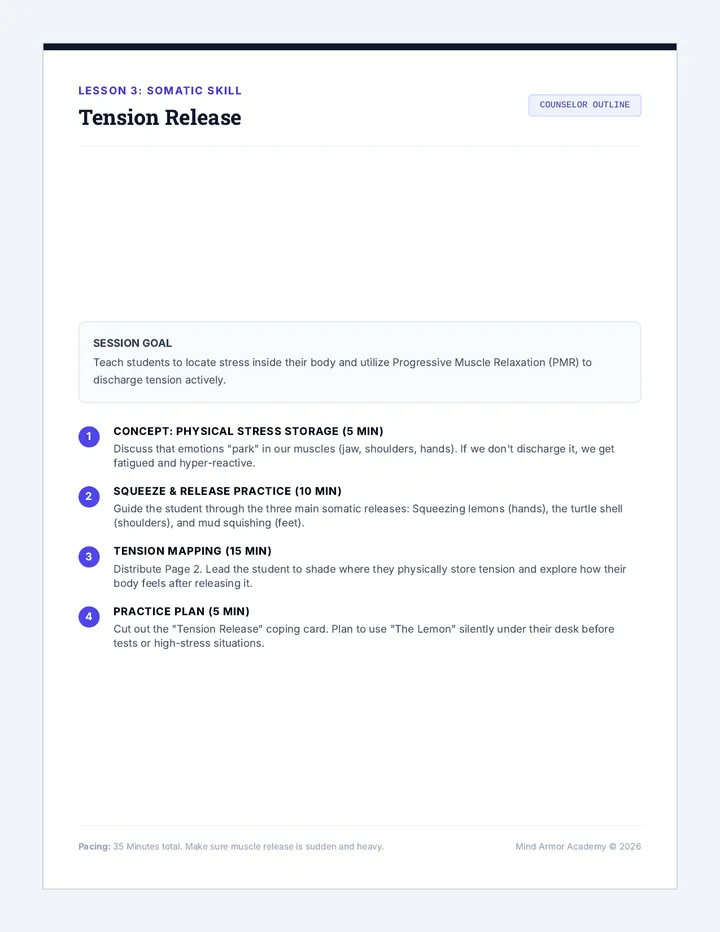
Somatic and relaxation session focusing on Progressive Muscle Relaxation (PMR) and diaphragmatic breathing to release physical stress.
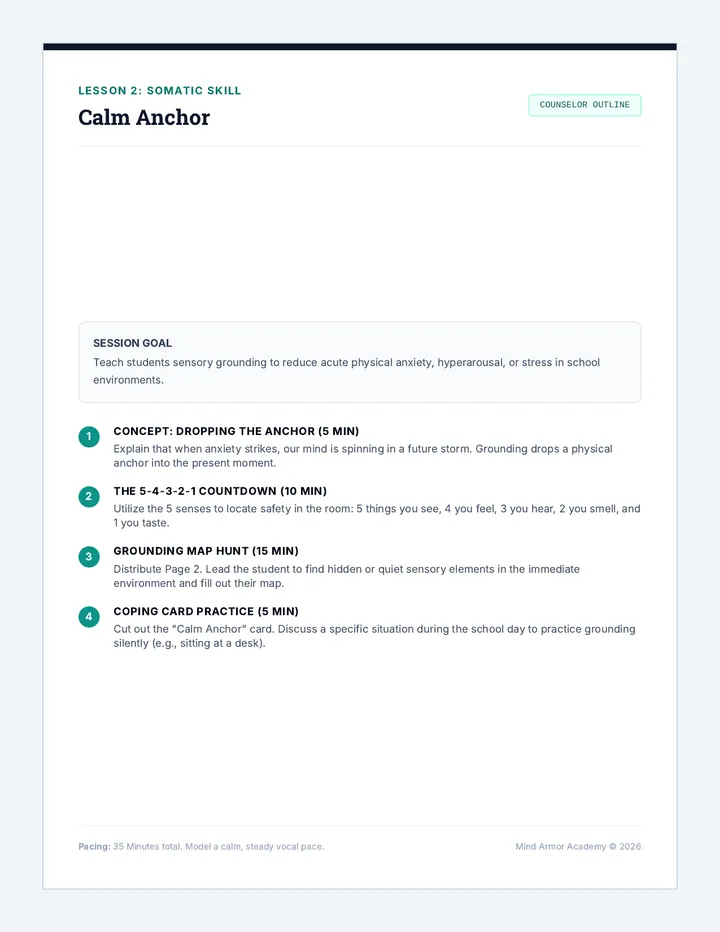
Somatic grounding session utilizing sensory-based techniques to de-escalate anxiety and hyperarousal in school situations.
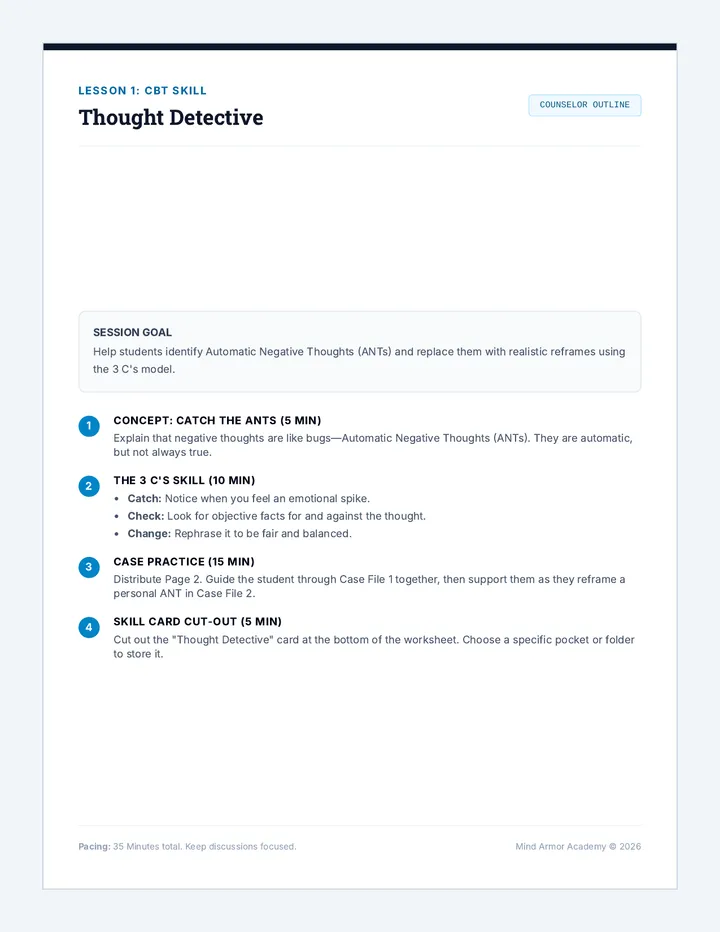
CBT session focusing on identifying automatic negative thoughts (ANTs) and cognitive reframing techniques using a 'Thought Detective' metaphor.
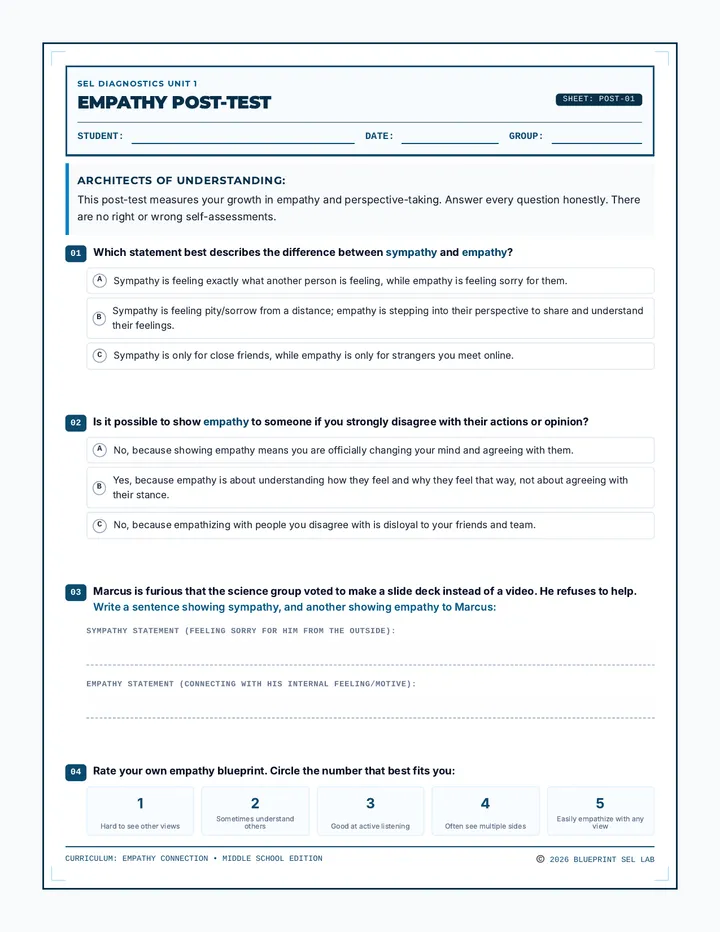
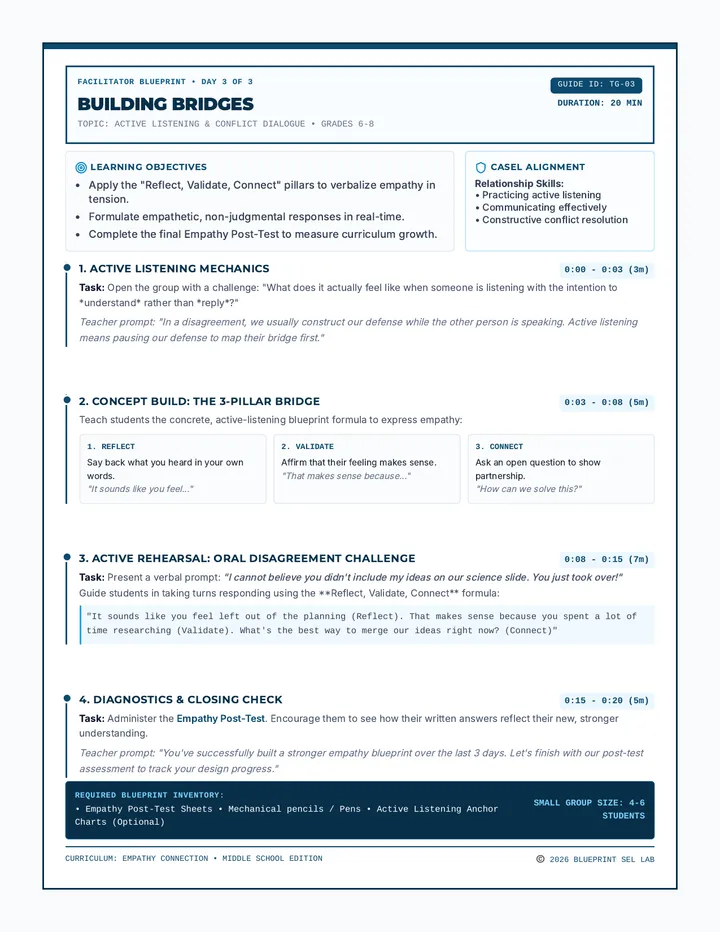
Day 3 of the Empathy Connection curriculum. Students apply active listening skills to complex disagreement scenarios, practice expressing empathy, and take the post-test assessment.
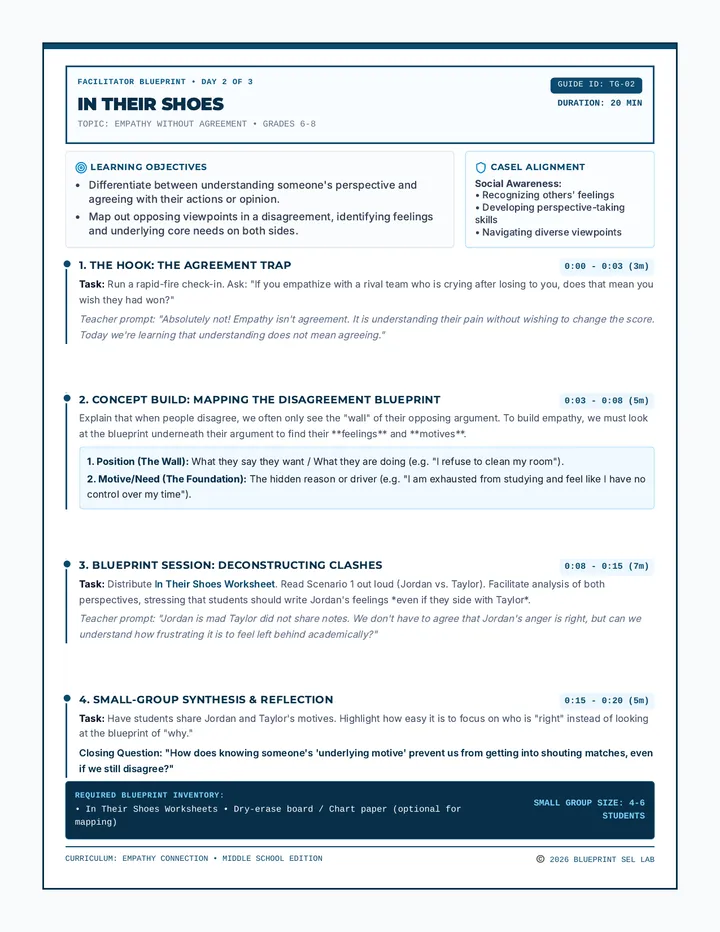
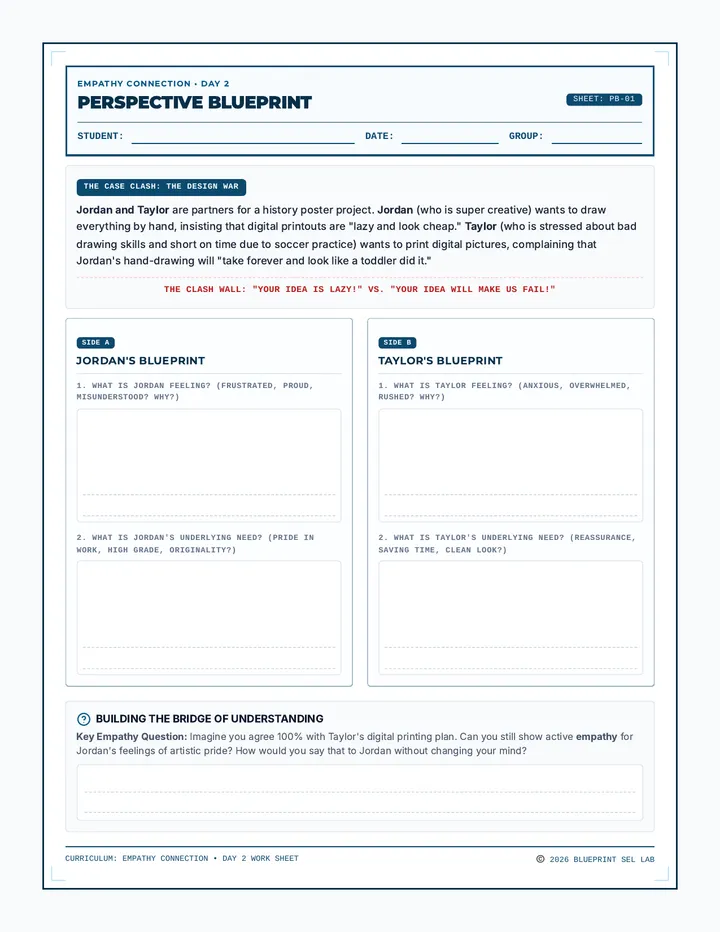
Day 2 of the Empathy Connection curriculum. Students engage in perspective-taking, learning that understanding another person's feelings and motives does not require agreeing with their point of view.
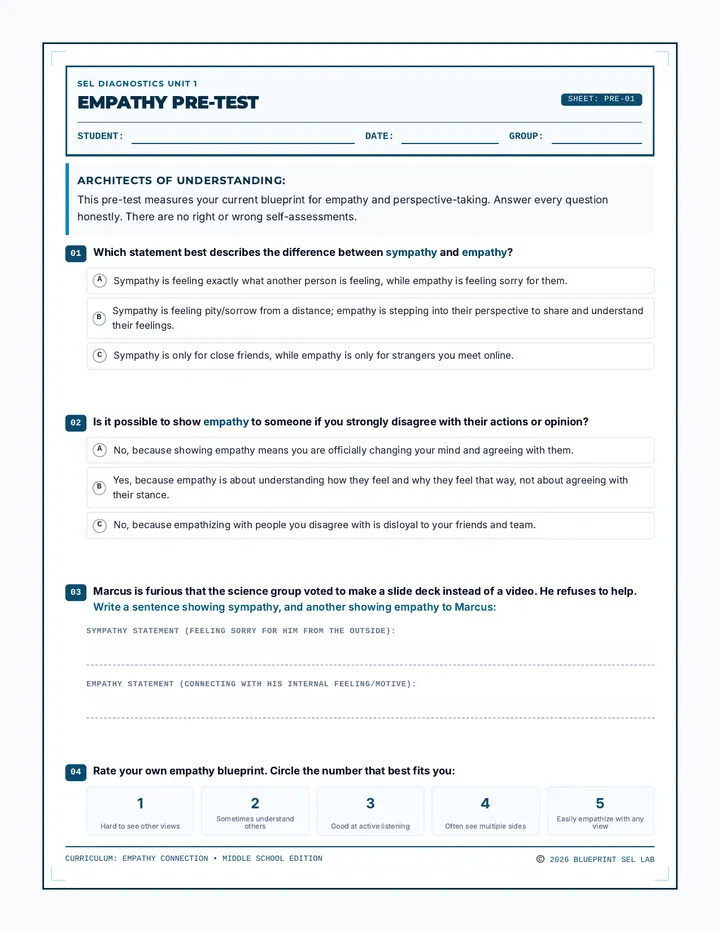
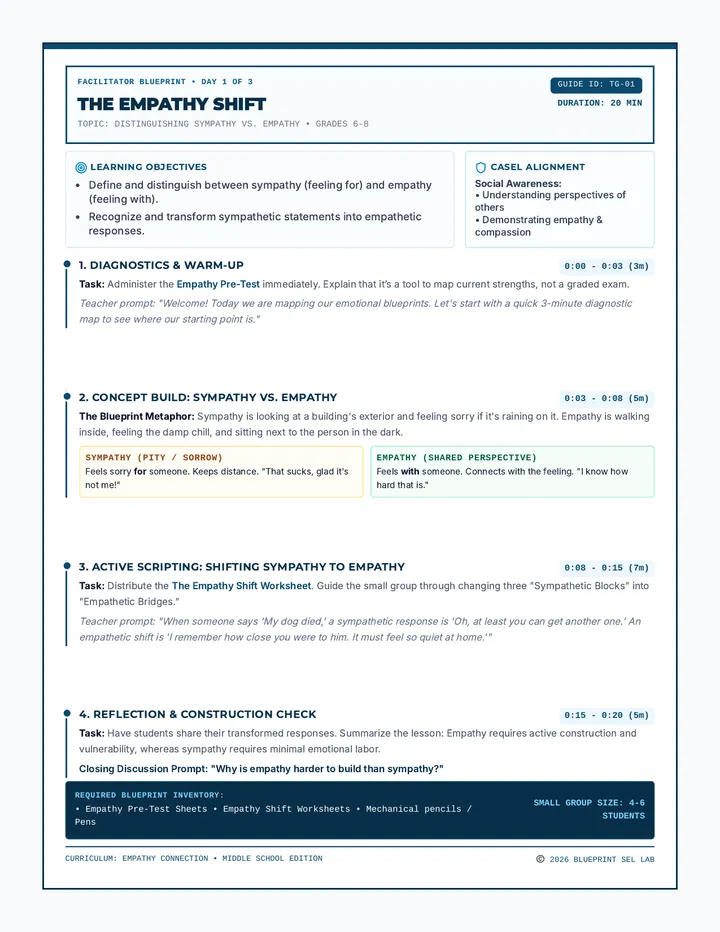
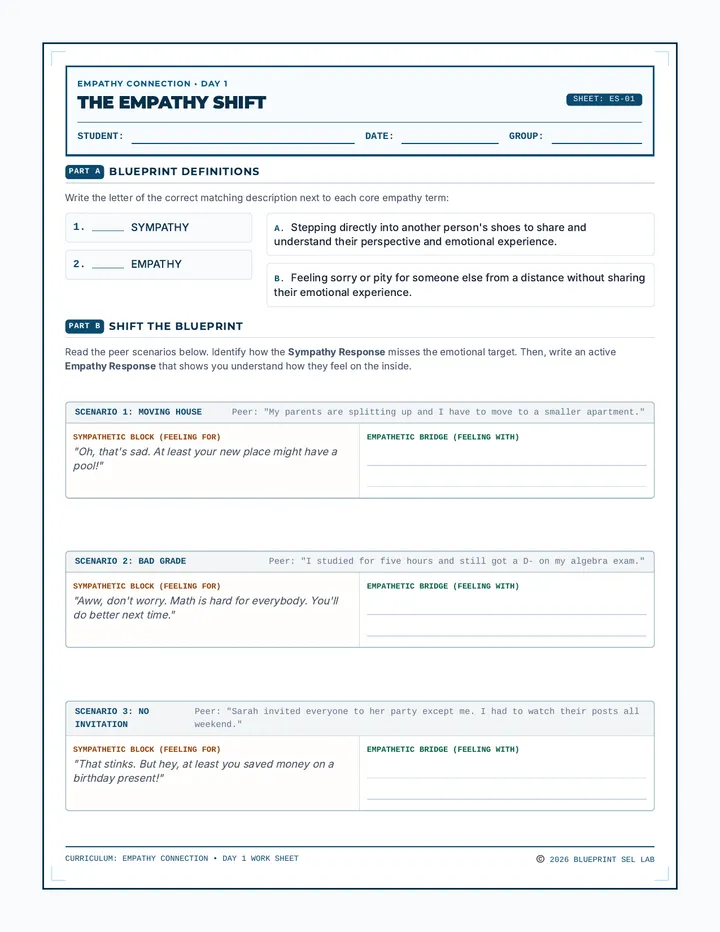
Day 1 of the Empathy Connection curriculum. Students administer the pre-test, explore the mechanical and emotional differences between sympathy and empathy, and practice shifting sympathy into empathy.
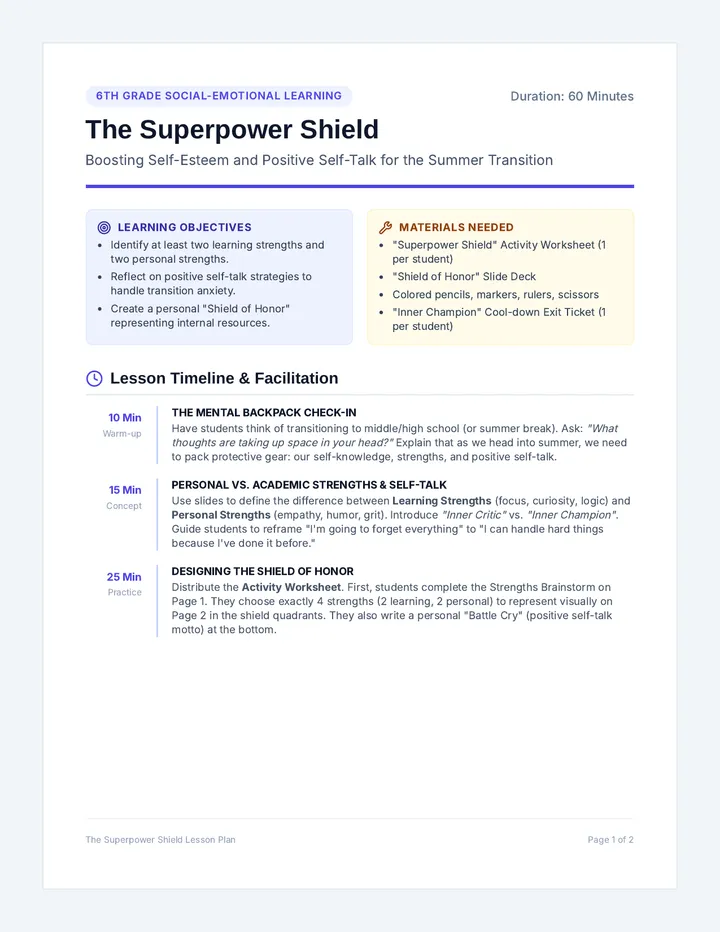
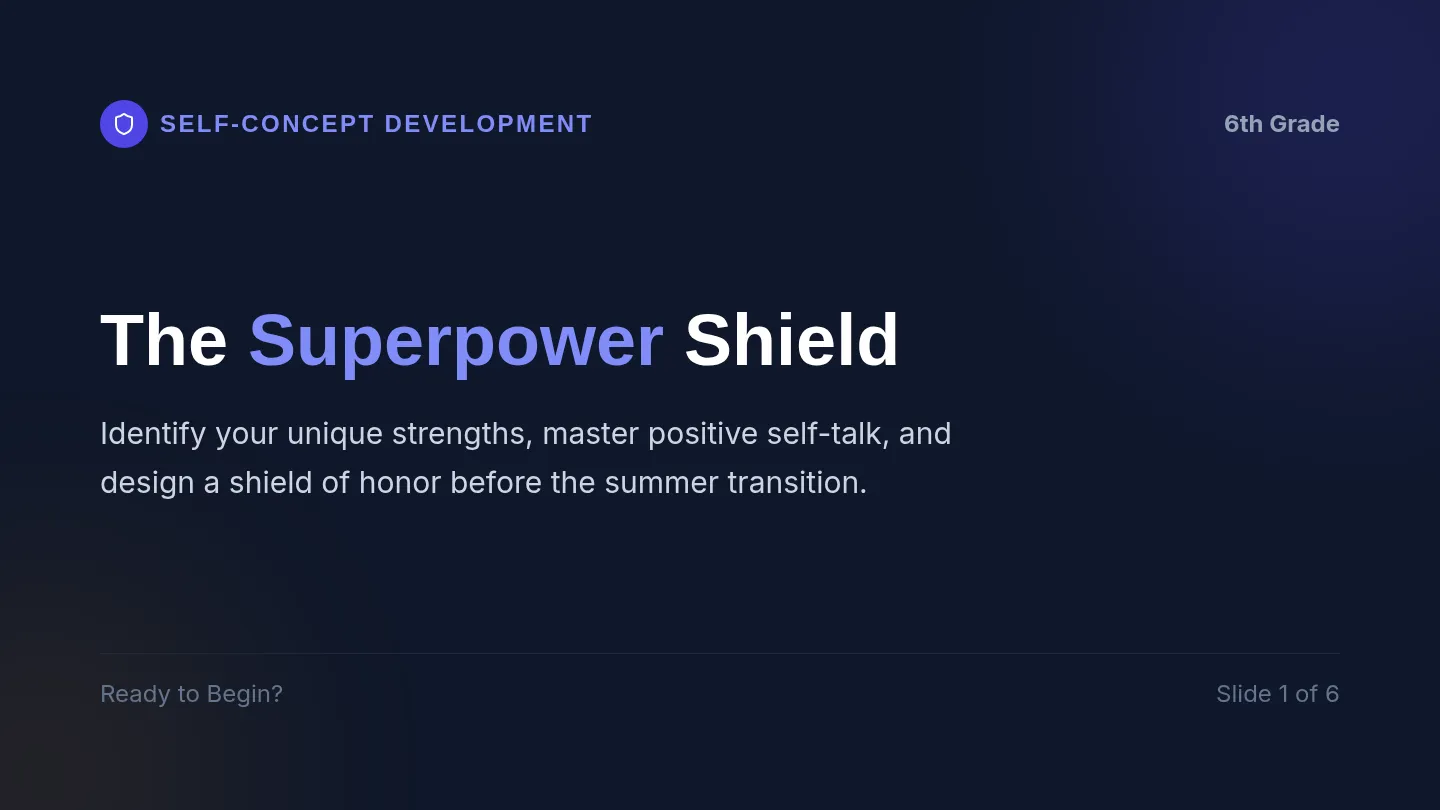
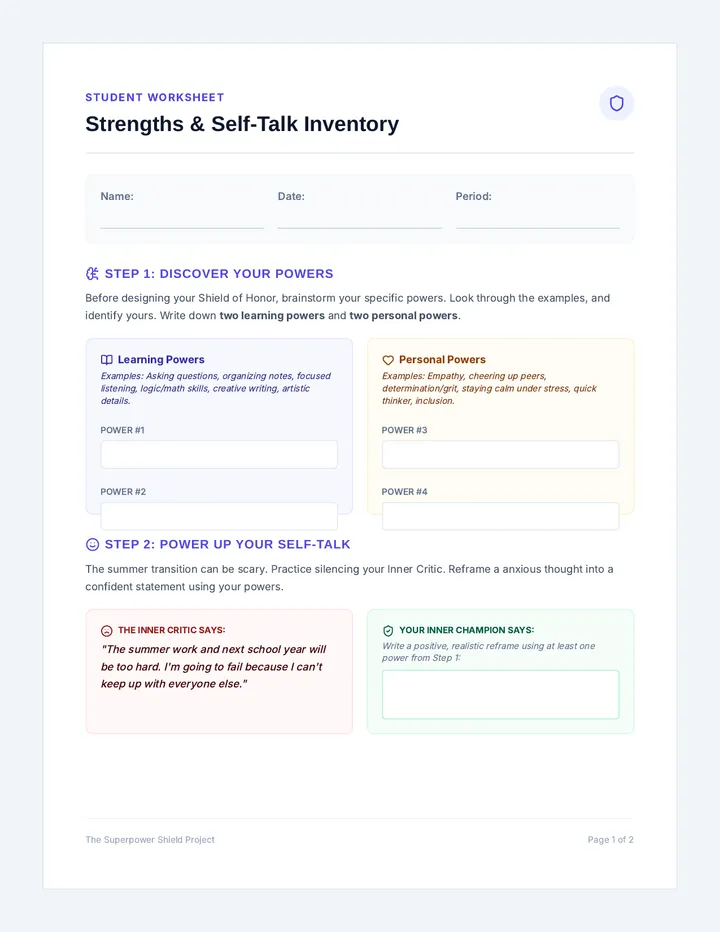
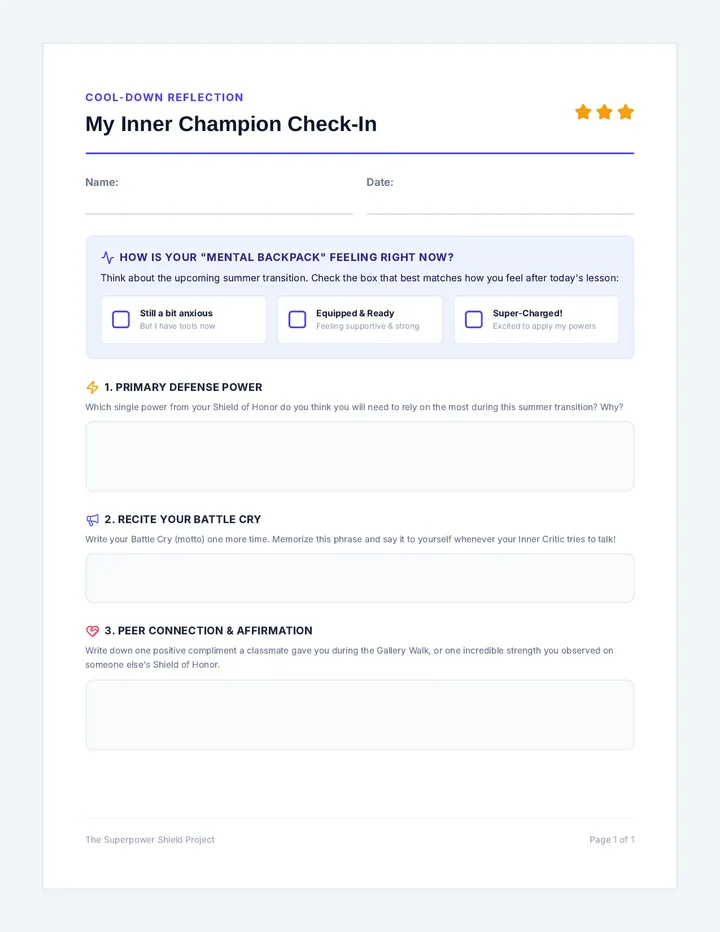
A self-concept development lesson for sixth-grade students to boost self-esteem and positive self-talk before the summer transition. Students identify four learning and personal strengths to design a personal 'shield of honor'.