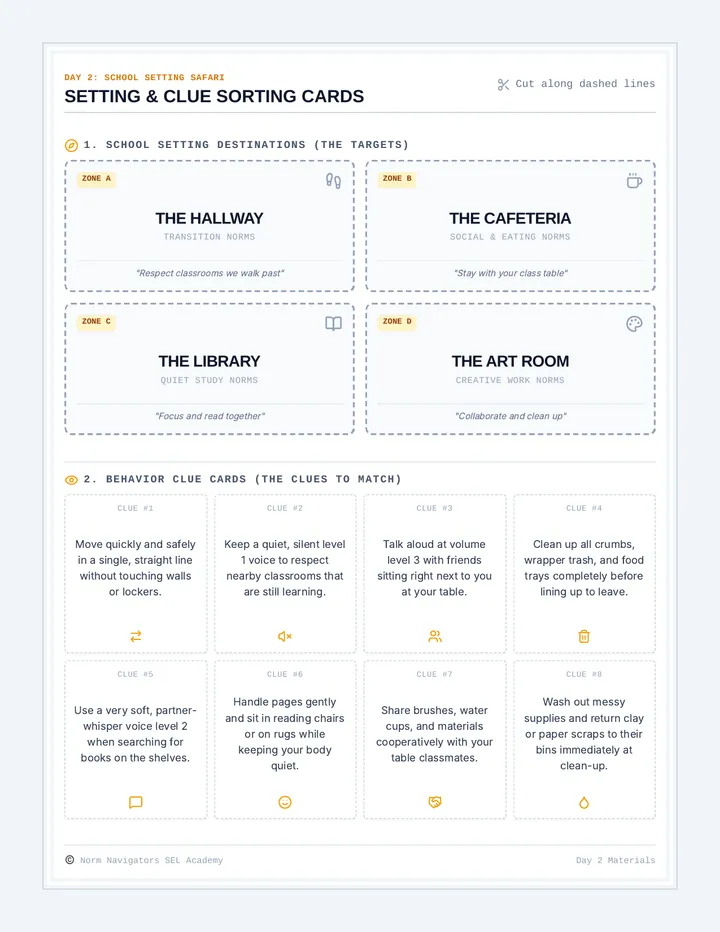
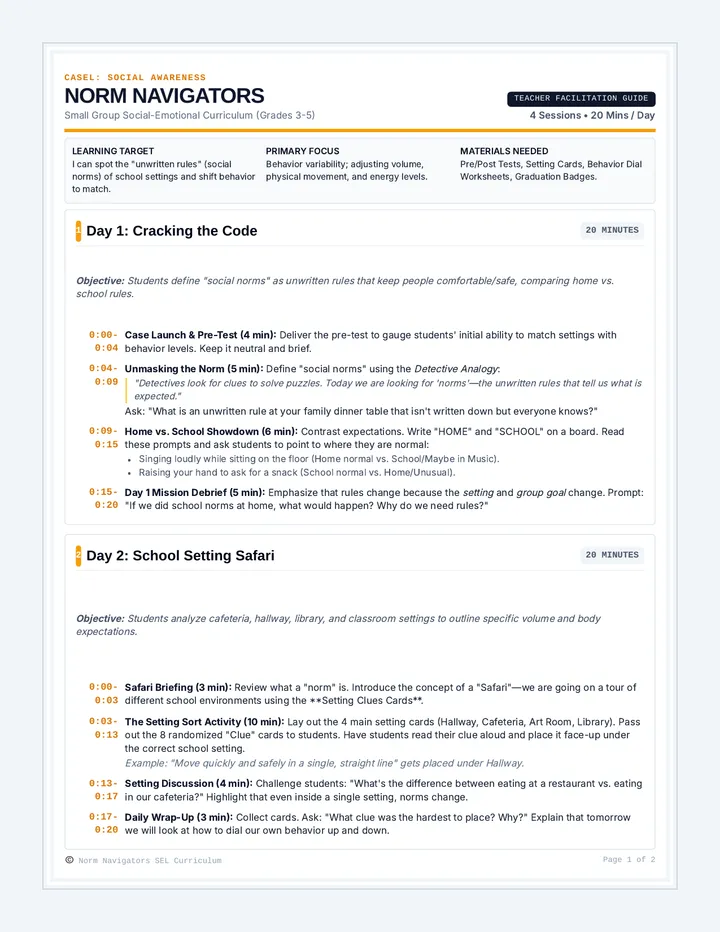
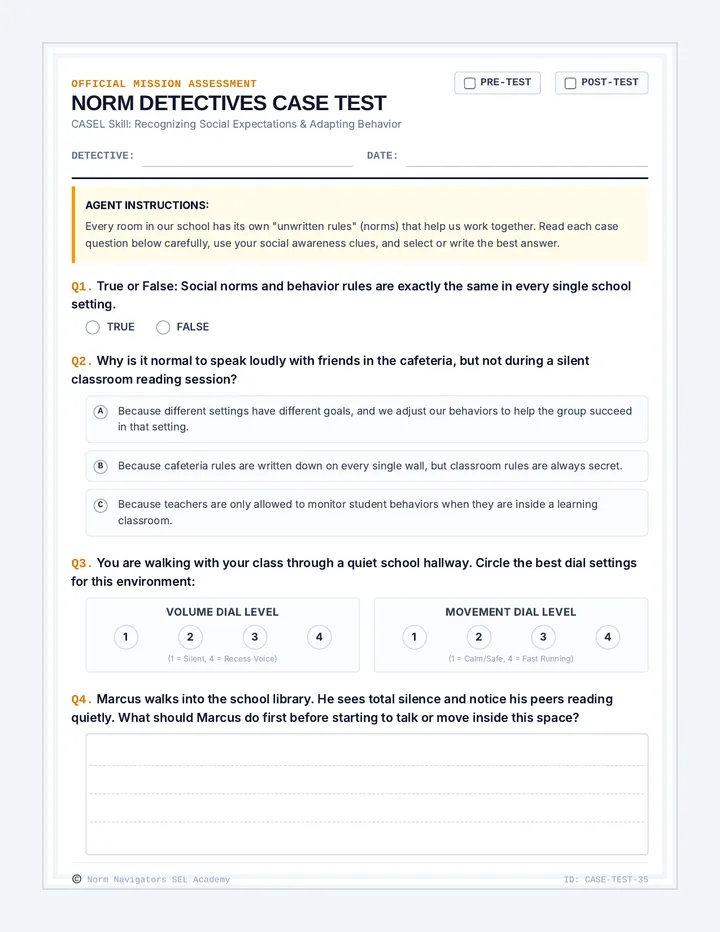
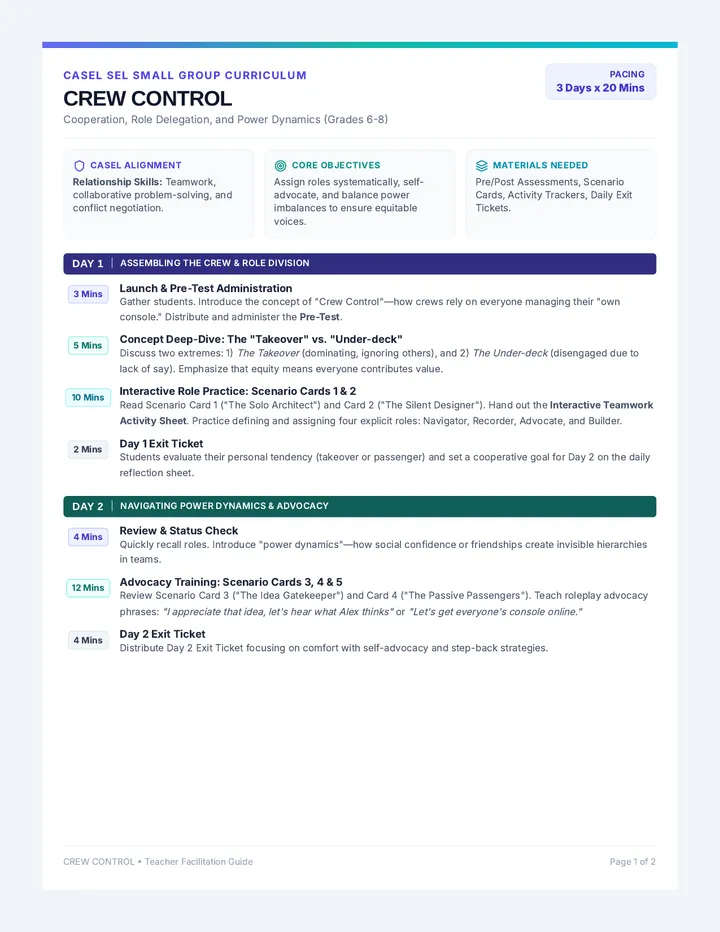
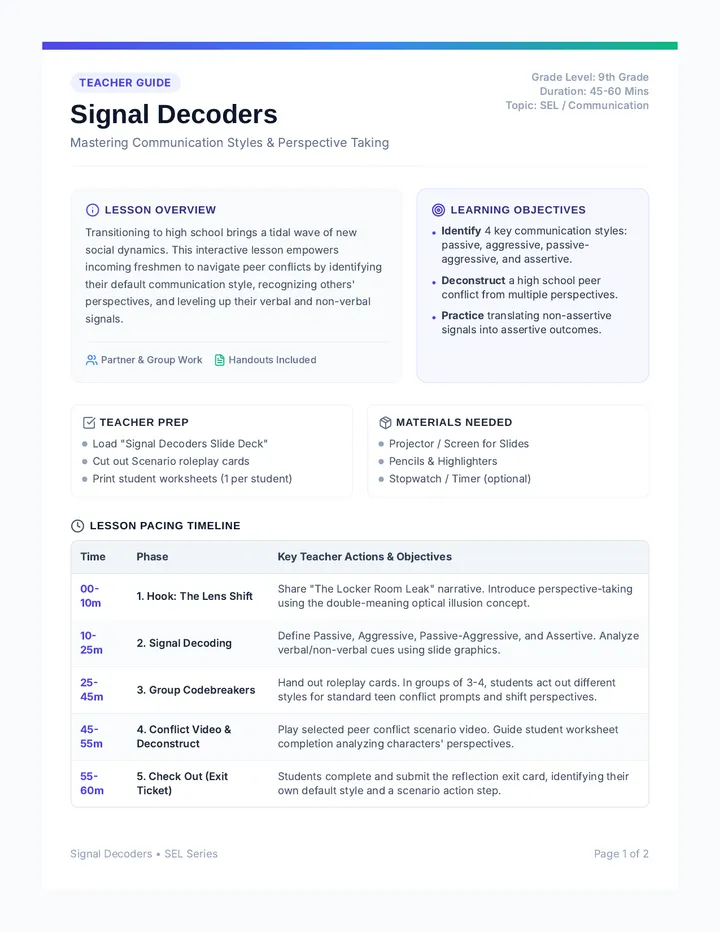
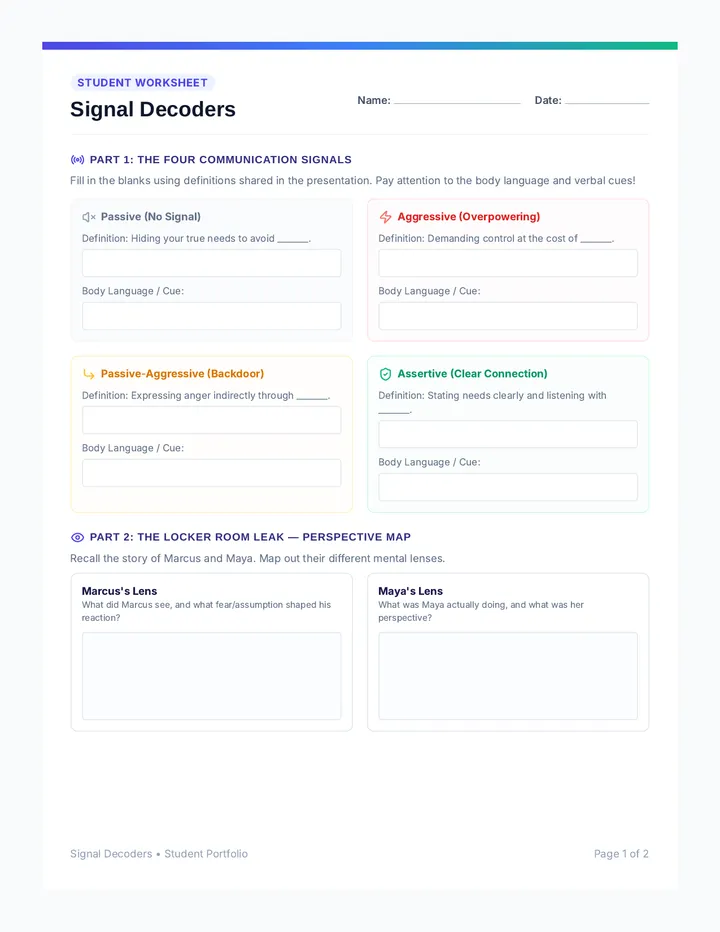
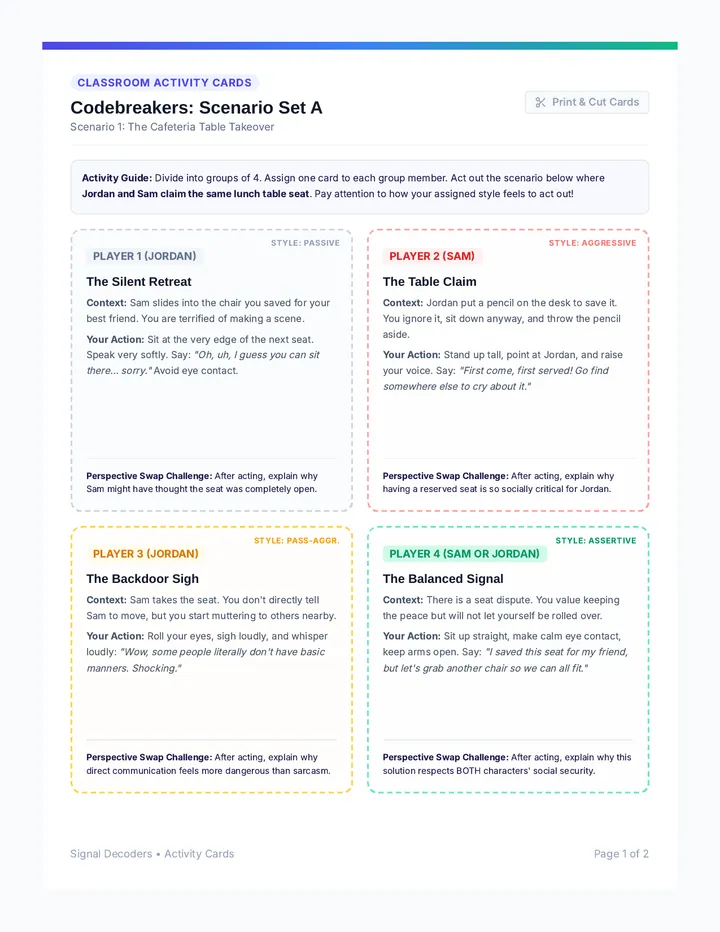
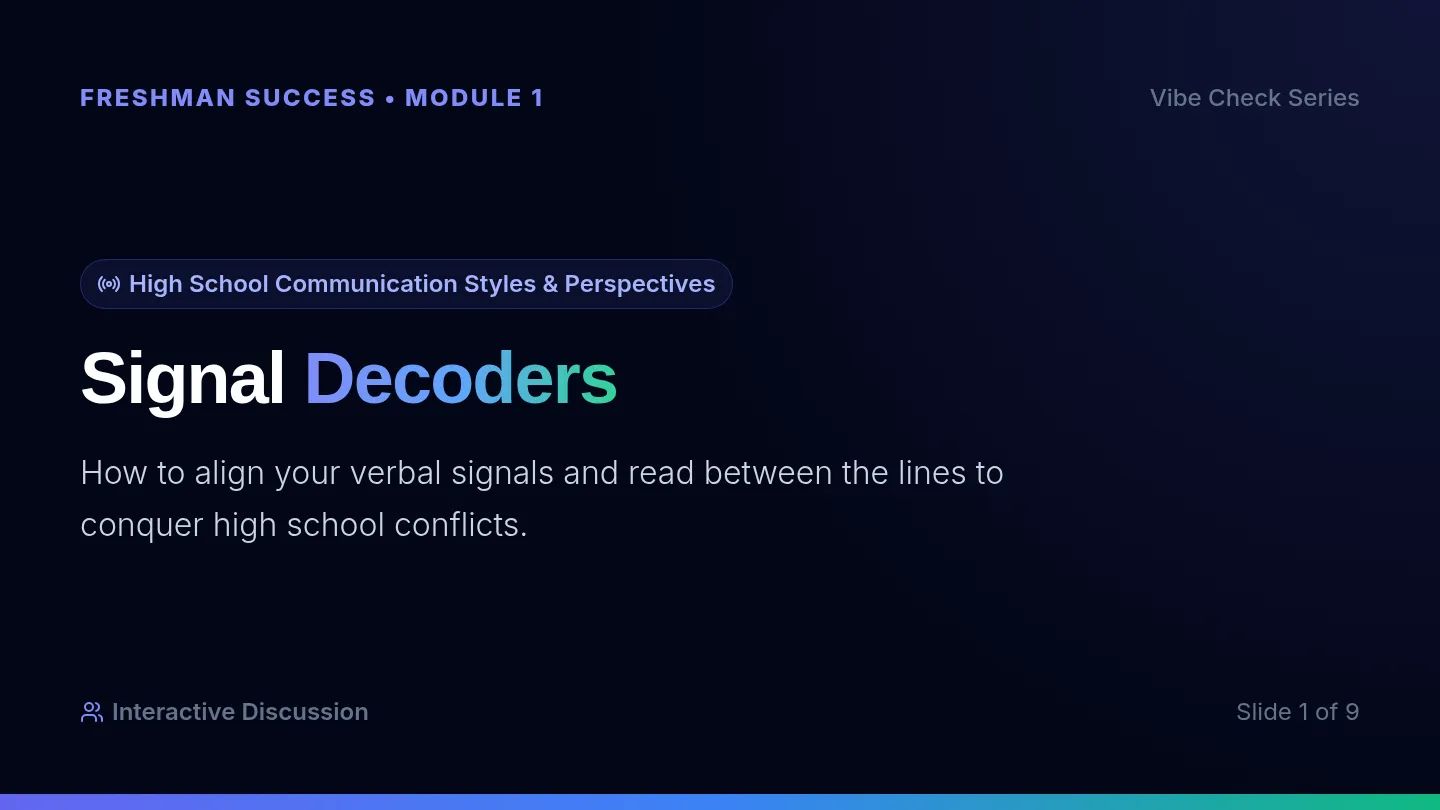
A comprehensive set of tools for teachers to plan, execute, and reflect on school events. Includes a master blueprint and a focused day-of execution sheet.
This lesson introduces middle school students to the concepts of emotional regulation and constructive conflict resolution through guided reflection and visual models. Students will explore their own triggers, learn the 'Iceberg' theory of conflict, and practice perspective-shifting.
A social-emotional learning lesson for Kindergarten students focused on the concept of perseverance. Students learn the 'Power of Yet' and practice staying determined through a challenging tower-building activity.
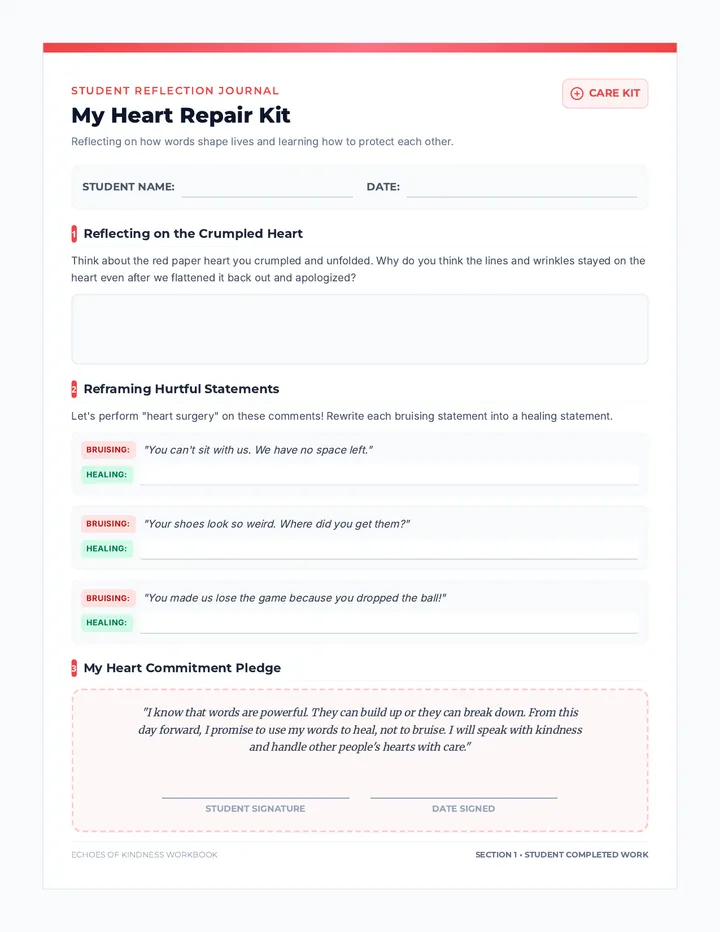
This lesson helps 2nd-grade students understand how to take responsibility and repair relationships after outbursts involving aggression or property damage. It focuses on the concept of 'building bridges' to restore trust and safety with peers and teachers.
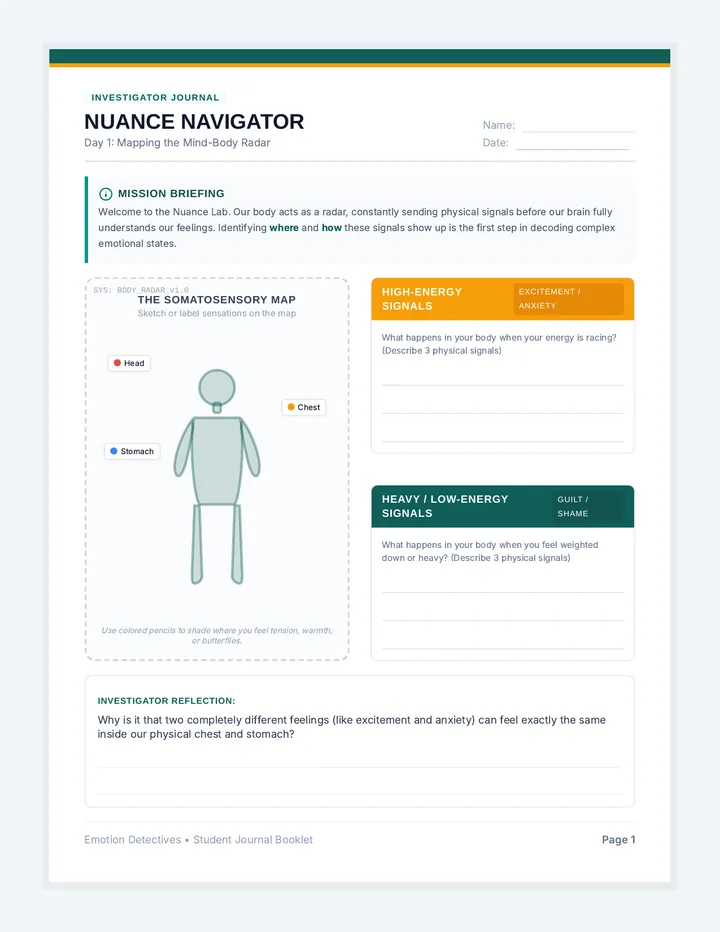
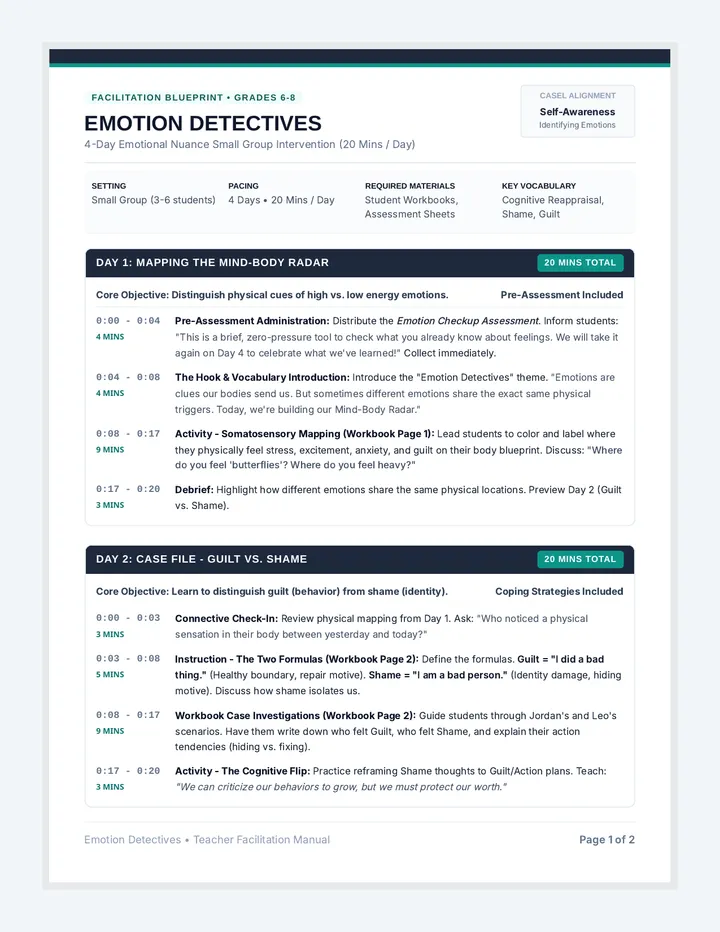
This lesson introduces the concept of emotions as 'inner weather,' focusing specifically on identifying the physical 'warning signs' of stress and anxiety and introducing initial grounding techniques.
A set of tools to help students identify when their minds have wandered into daydreaming or perseveration and learn how to return to the present task.
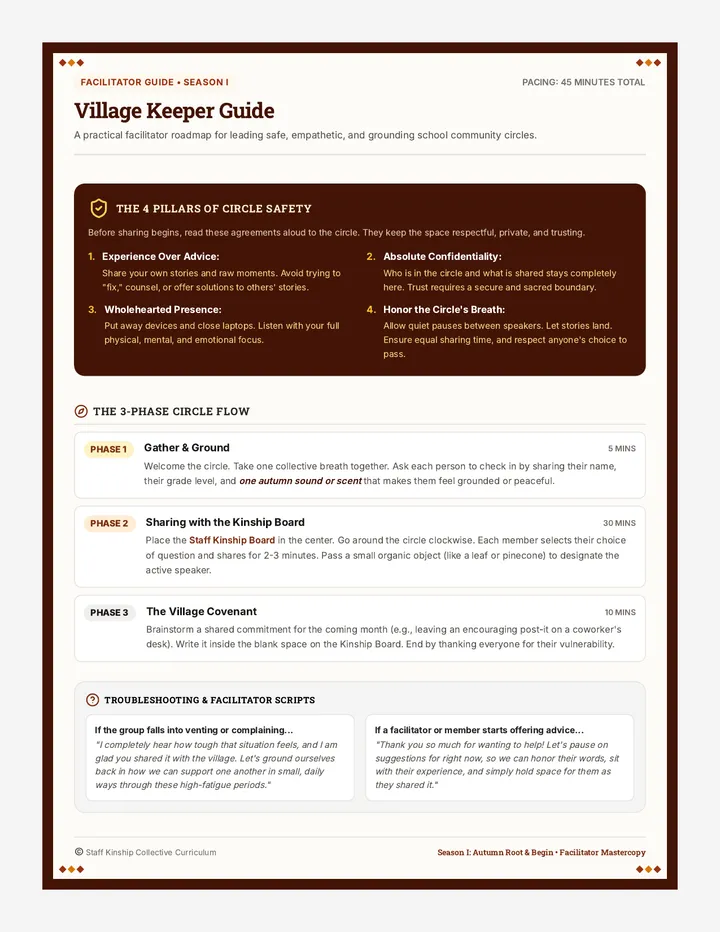
A morning meeting lesson focused on building classroom community, emphasizing teamwork, and establishing expectations for showing respect to substitute teachers.
A final review of all strategies with a focus on independent mastery and final data collection for the reporting period.
Practicing the reflection process on real and hypothetical past conflicts to improve accuracy in self-assessment.
Introduction to the 'Post-Flight Review'—a reflection tool to evaluate how well a strategy worked after a conflict.
Fast-paced identification drills and implementation challenges to build fluency in strategy selection.
Guided role-play scenarios where students implement their chosen strategies in a controlled environment.
Teaching a 4-step process for solving problems independently: Identify, Brainstorm, Pick, and Try.
Developing 'I-statements' and active listening skills to resolve conflicts through talking and sharing.
Exploring the nuance of genuine apologies and the art of finding a 'middle ground' through compromise.
Focused practice on recognizing 'big' problems that need adult help and 'small' problems where walking away is the best first step.
A deep dive into knowing when a conflict requires walking away versus talking it out.