Students explore the Enter key for new lines and the Backspace key for correcting mistakes.
A 50-minute instructional session for students in temporary housing, focusing on safe food storage and creative leftover use through visual guides and sequence flowcharts.
A foundational lesson for Transitional Kindergarten students focused on identifying basic emotions and the physical sensation of being 'wiggly' (stressed) vs. 'still' (calm). Introduces 'Turtle Breathing' as a primary regulation tool.
A hands-on collaborative project where students must work together, ensuring every person has a specific and valued role in the group.
Students learn simple phrases and gestures to invite others into their activities, practicing through guided roleplay and social scripting.
A foundational lesson focused on recognizing when a peer is playing alone and might want to join in, using visual cues and social stories.
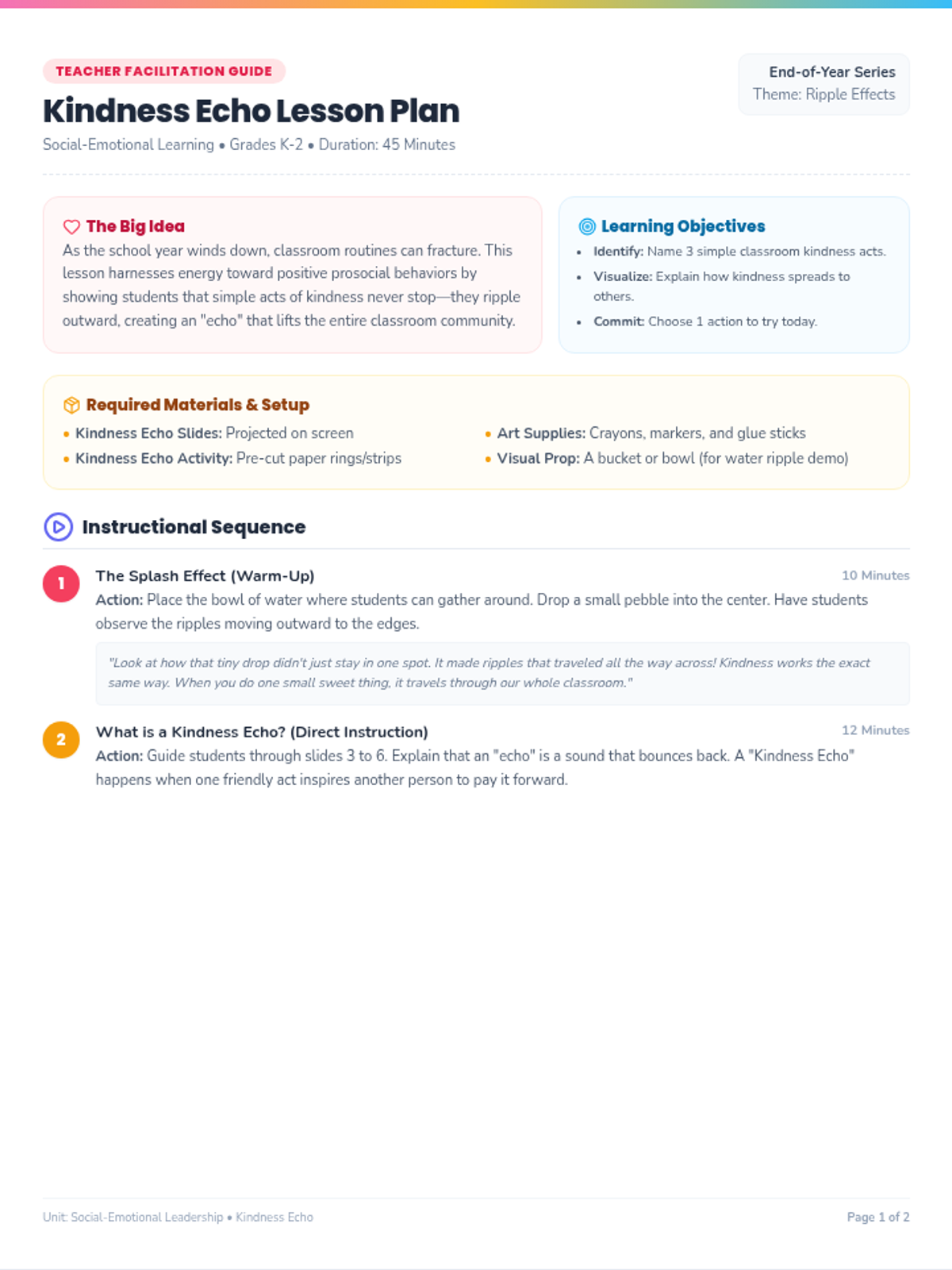
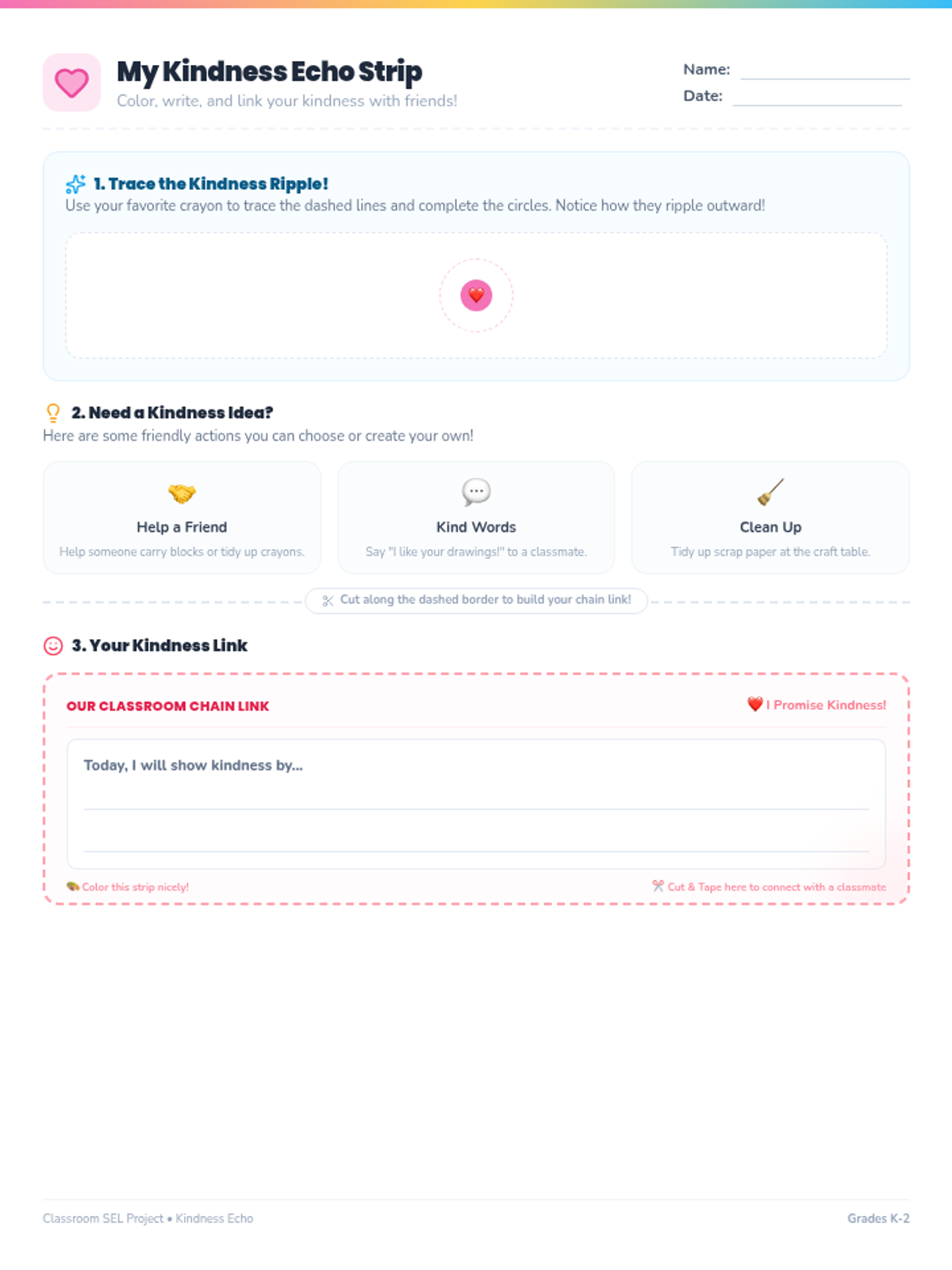
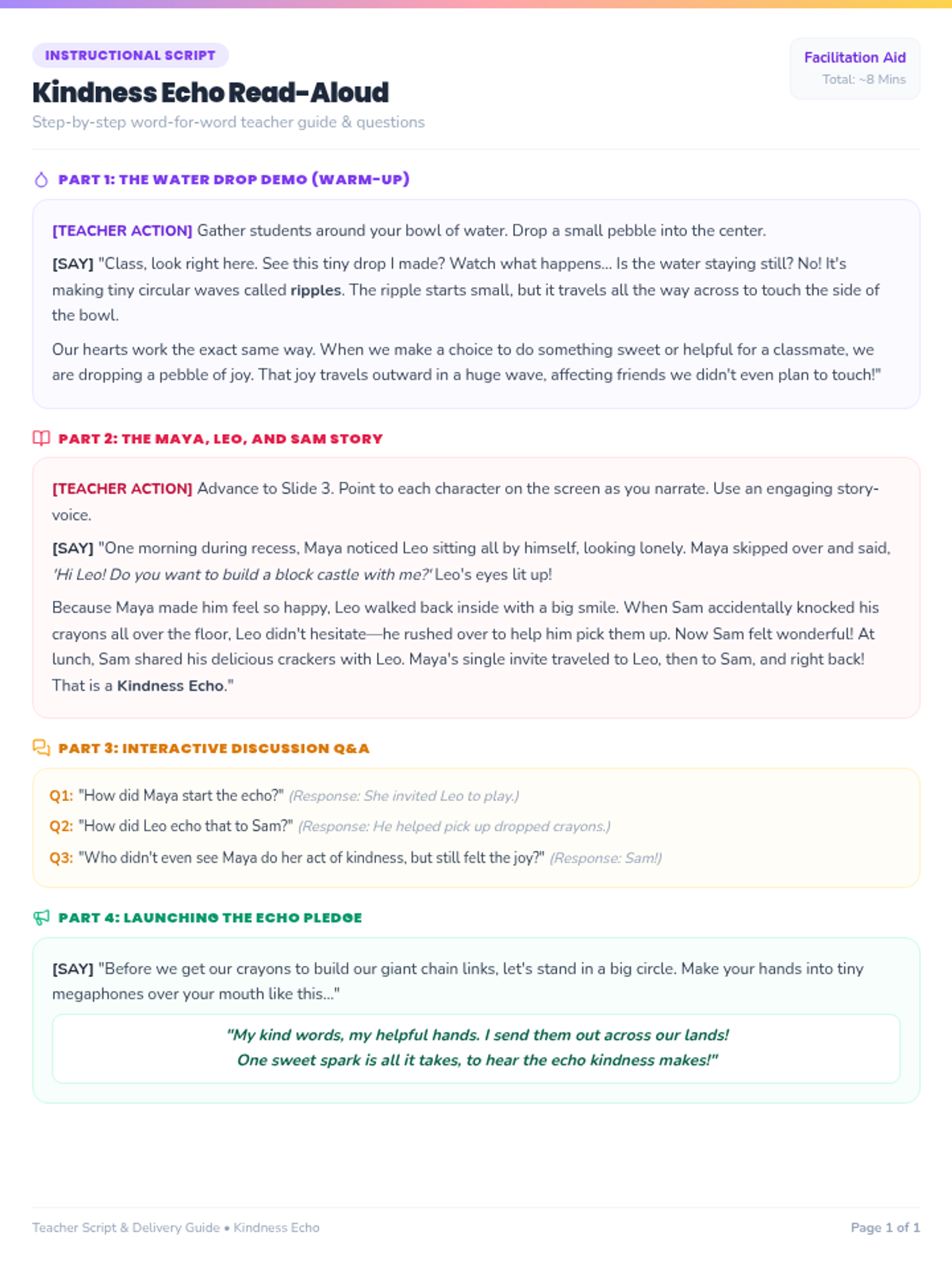
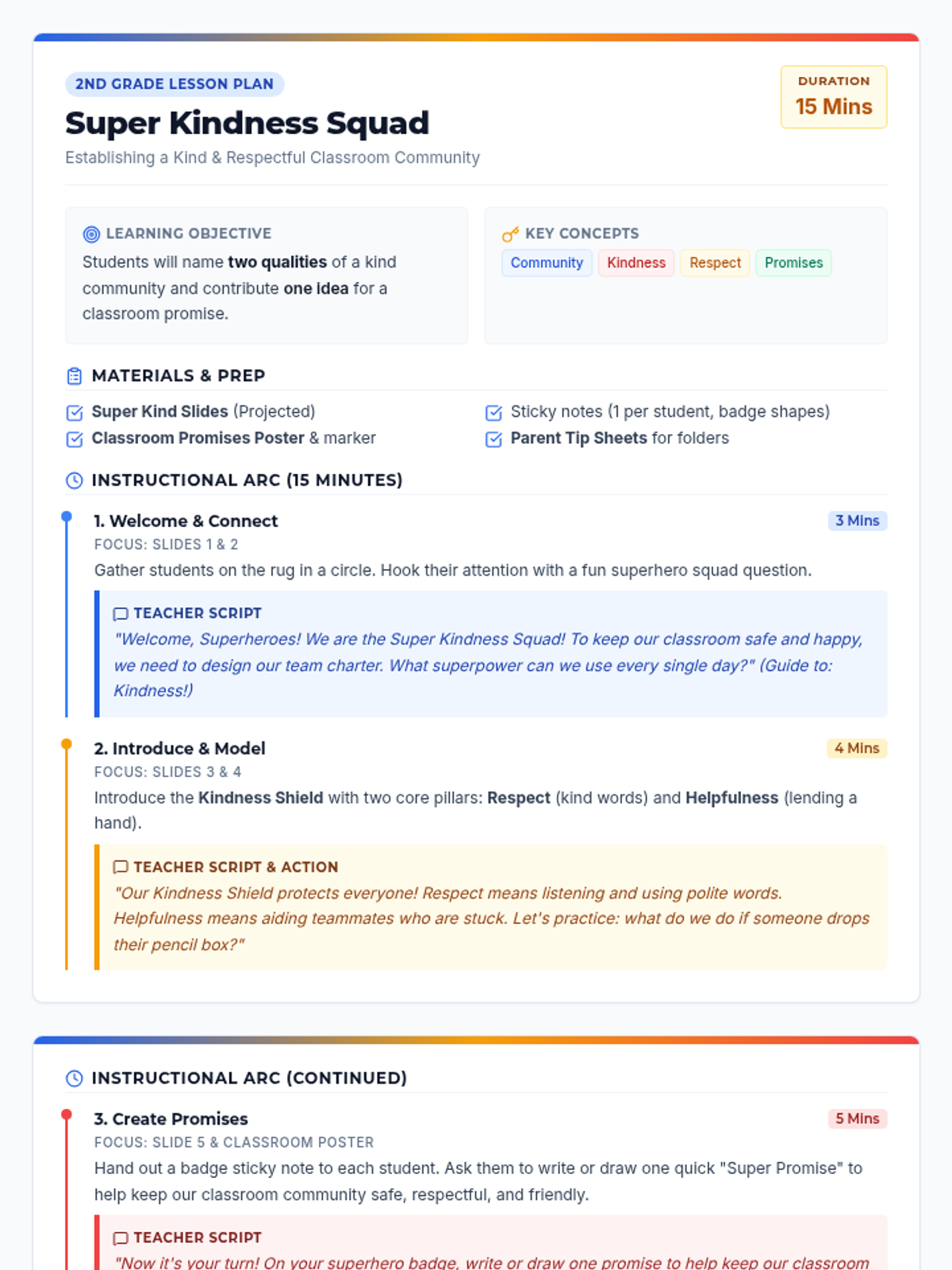
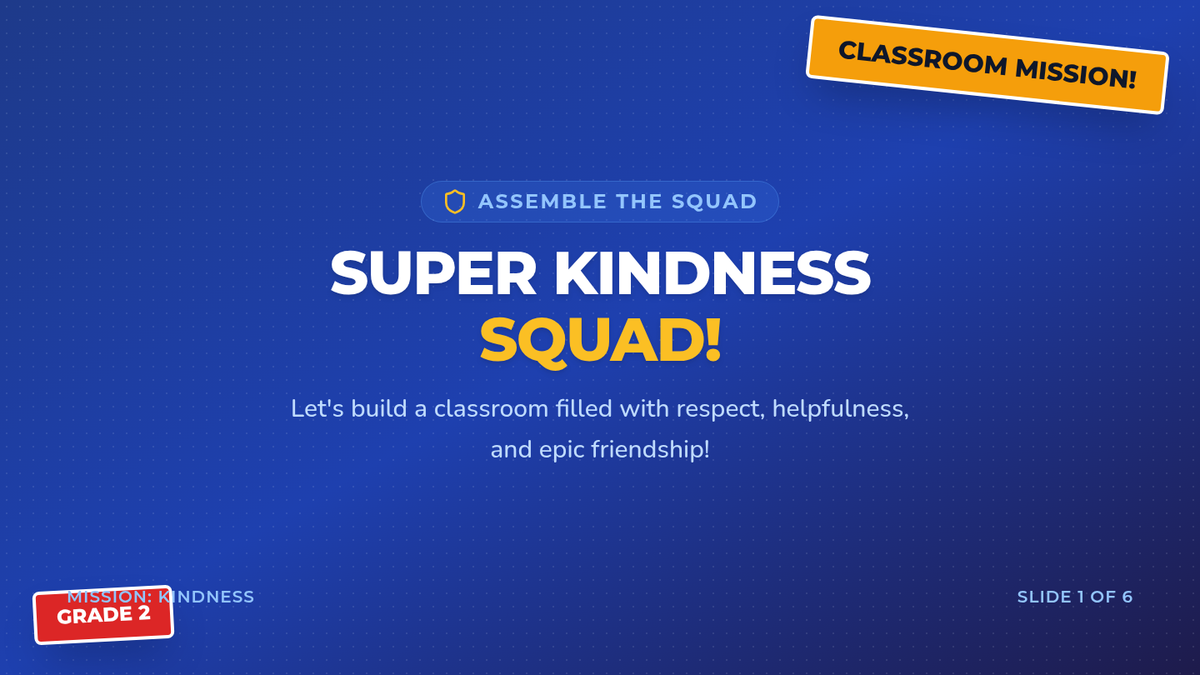
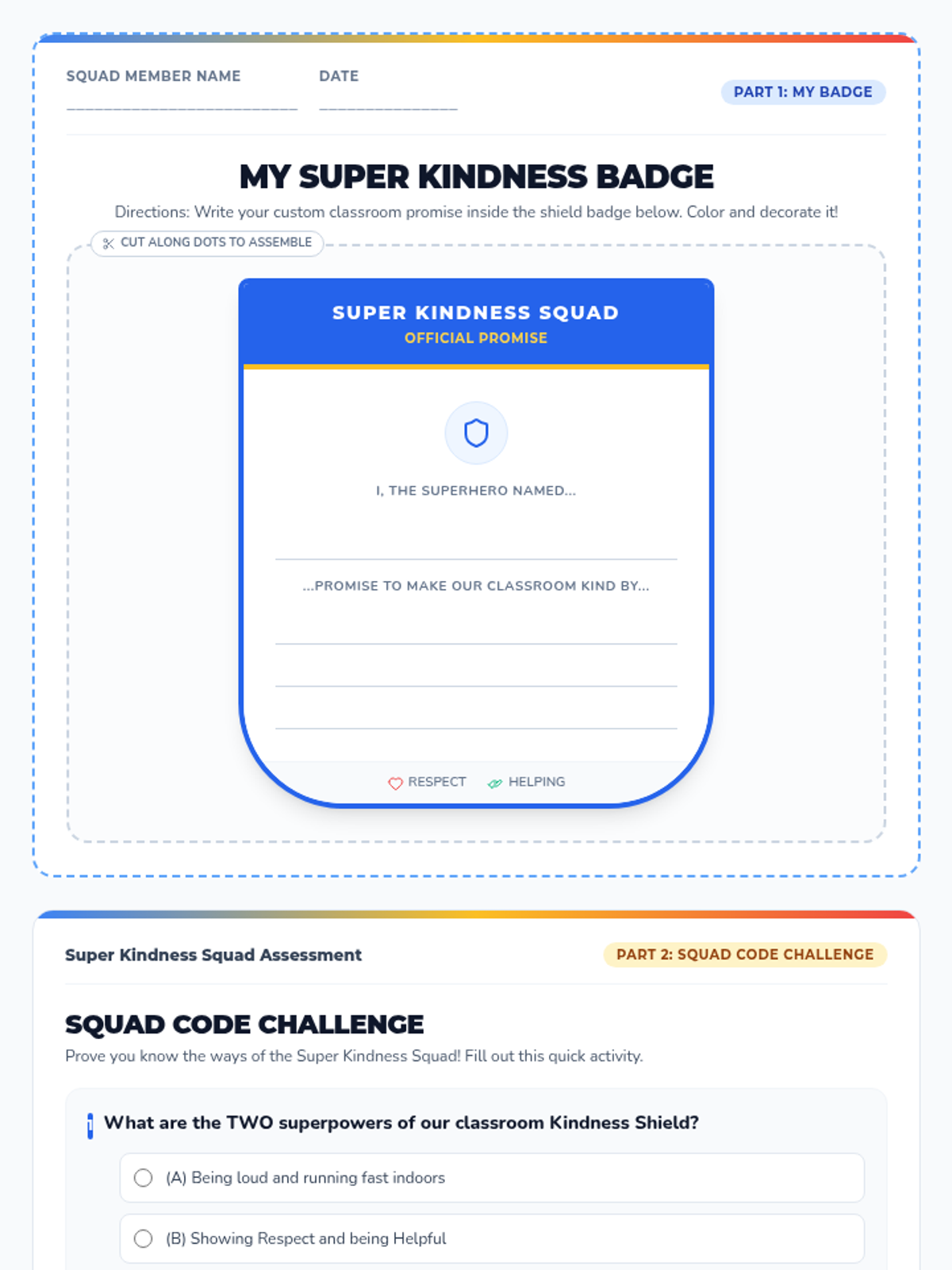
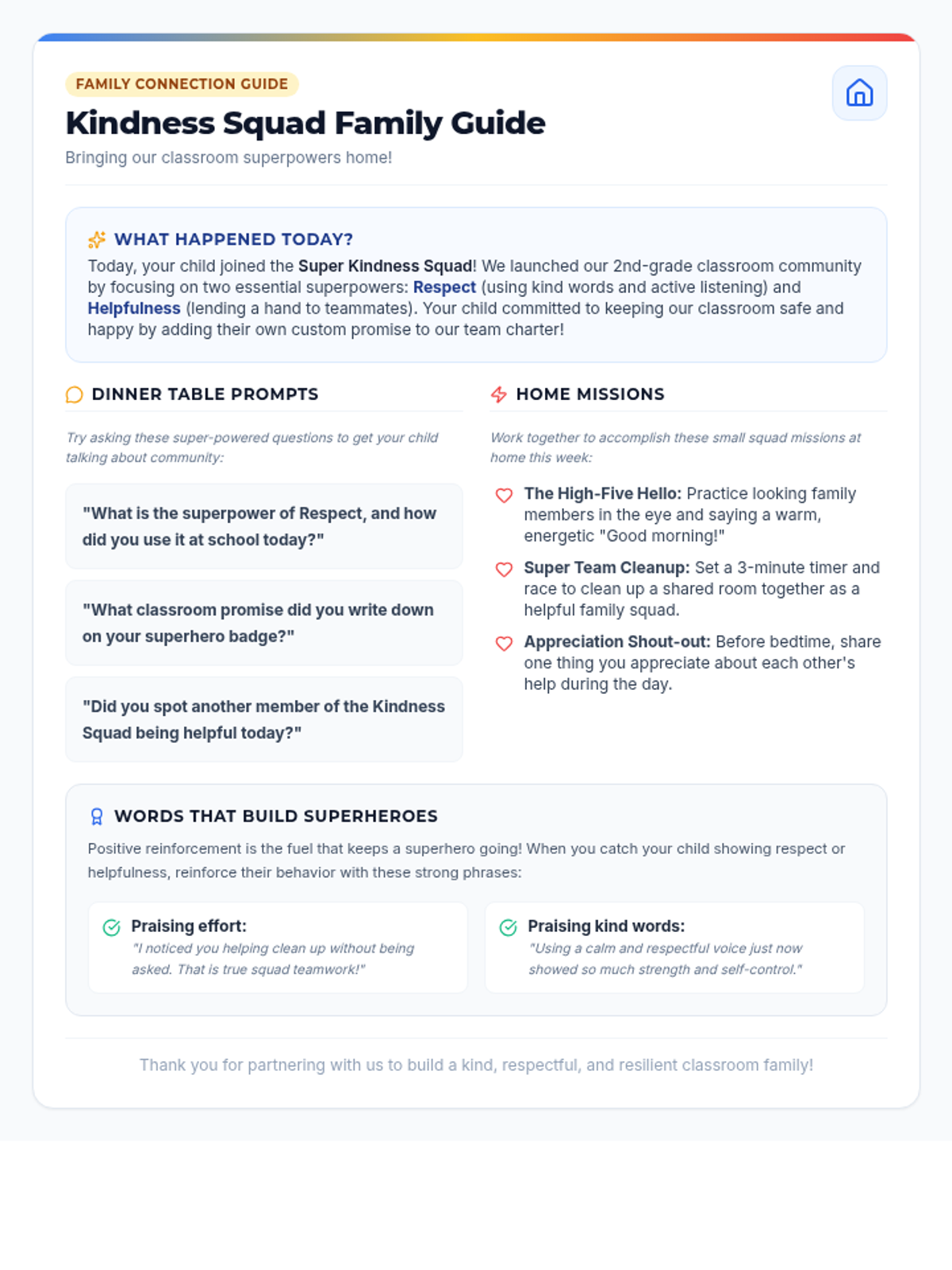
A fast-paced, engaging 15-minute lesson exploring the 'Ripple Effect' of kindness and why it matters for both the giver and the receiver.
A comprehensive training module on the professional standards for calling out of work, covering etiquette, timing, and communication methods.
A lesson designed to help learners identify and navigate modern peer pressure across workplace, social, digital, and home environments using practical refusal strategies.
A comprehensive training module designed to help employees understand and practice professional boundaries, communication, and collaboration. Includes interactive scenarios and practical strategies for a respectful workplace.
This lesson focuses on self-advocacy in the service industry, specifically regarding tipping policies and procedures. Students will learn how to identify different tipping systems and practice asking for clarification when they have questions about their earnings.
A lesson designed for two first-graders to learn how to replace screaming and eloping with verbal communication using a feelings chart. Through role-play and visual aids, students practice identifying their emotions and stating their needs.
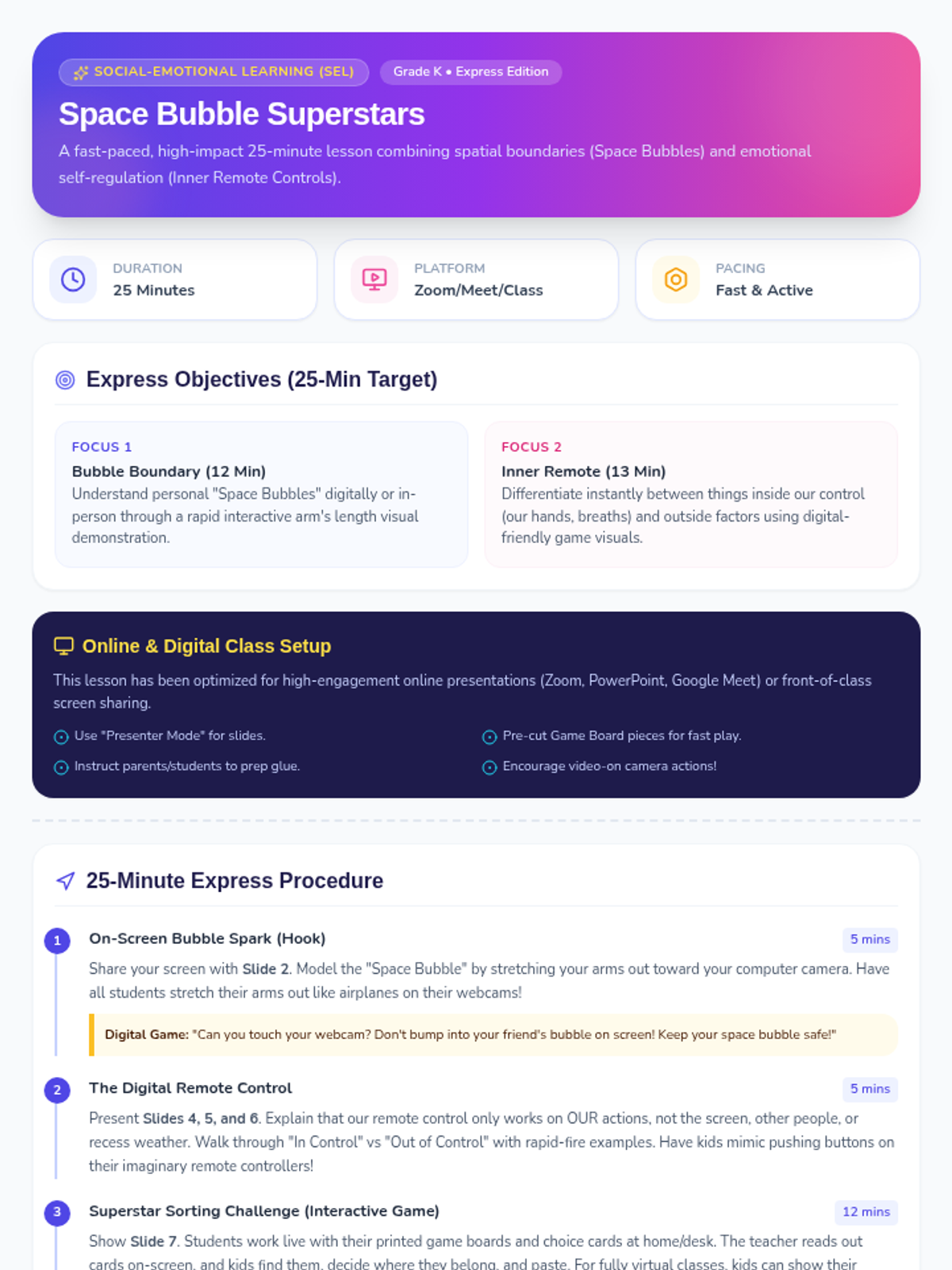
A social-emotional learning lesson for Kindergarteners focusing on the 'Circle of Control' using a nautical theme. Students learn to distinguish between things they can control (their words, actions, and effort) and things they cannot (the weather, others' behavior, or the past).
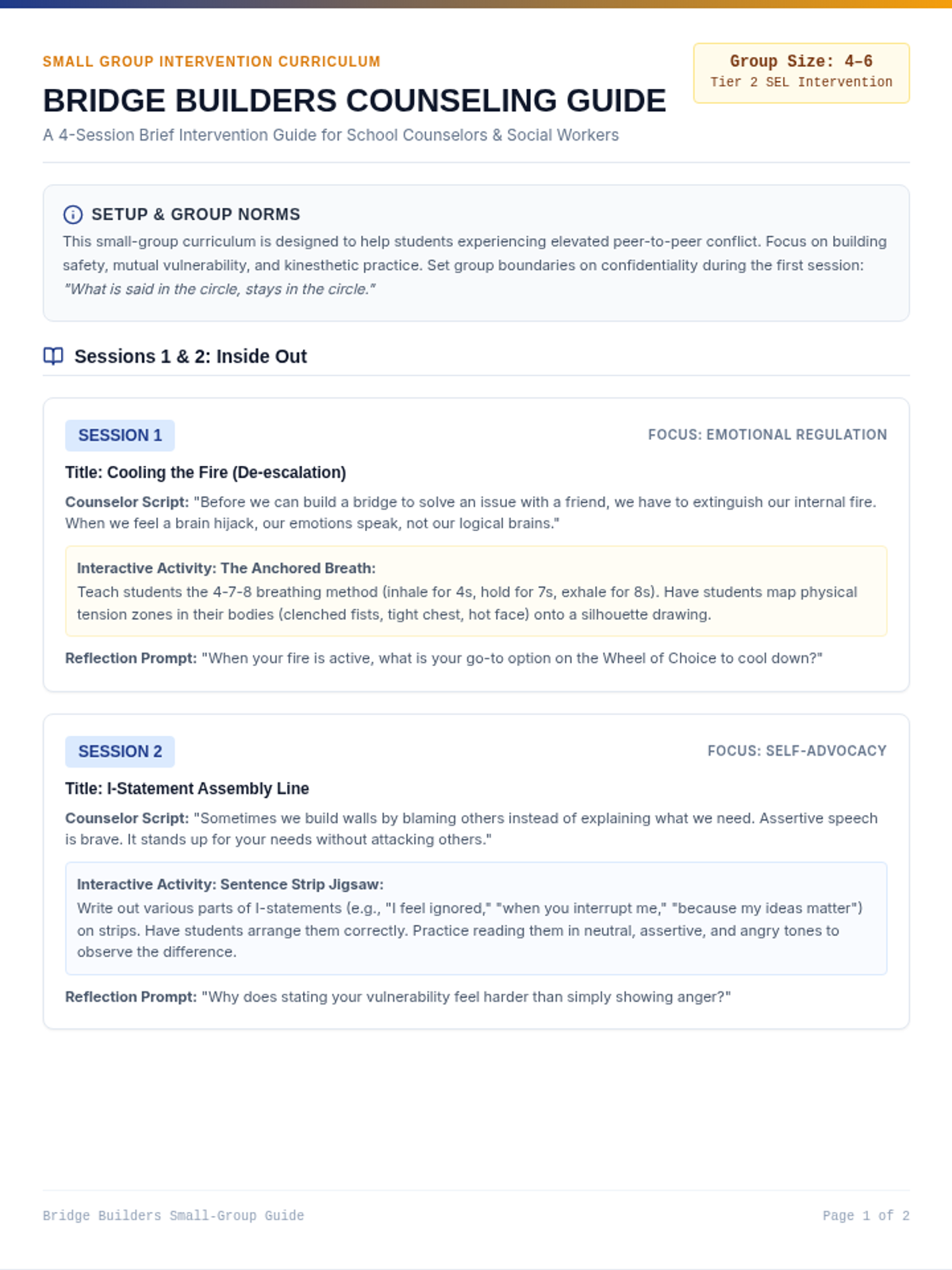
A social-emotional learning lesson for Tier 2 small groups focusing on identifying spheres of control and practicing assertive I-Statements in social scenarios.
A 45-minute therapeutic leisure session for teens focused on building social connections and team dynamics through collaborative activities and reflection.
Preparing for independence. Students review progress reports and finalize a plan for seeking teacher support autonomously.
Establishing consistent habits and routines. Students refine their planning process to require less counselor prompting.
Developing teacher communication skills. Students practice scripts for asking for help, clarifying assignments, and negotiating deadlines.
Time estimation and scheduling. Students practice predicting how long tasks take and slotting them into their Jawsome flex time.
Focus on categorization and prioritization. Students learn to distinguish between urgent tasks and long-term projects using a priority matrix.
Introduction to the "Grade Audit" process. Students learn to navigate their online portals efficiently and identify missing assignments.
Reviewing skills learned, troubleshooting obstacles, and practicing self-advocacy for future success.
Organizing physical and digital spaces, establishing routines for material management.
Developing active study habits, creating optimal study environments, and memory enhancement techniques.
Strategies for time estimation, prioritization of tasks, and overcoming procrastination.
Focusing on academic planning, using planners effectively, and the art of backward planning for long-term projects.
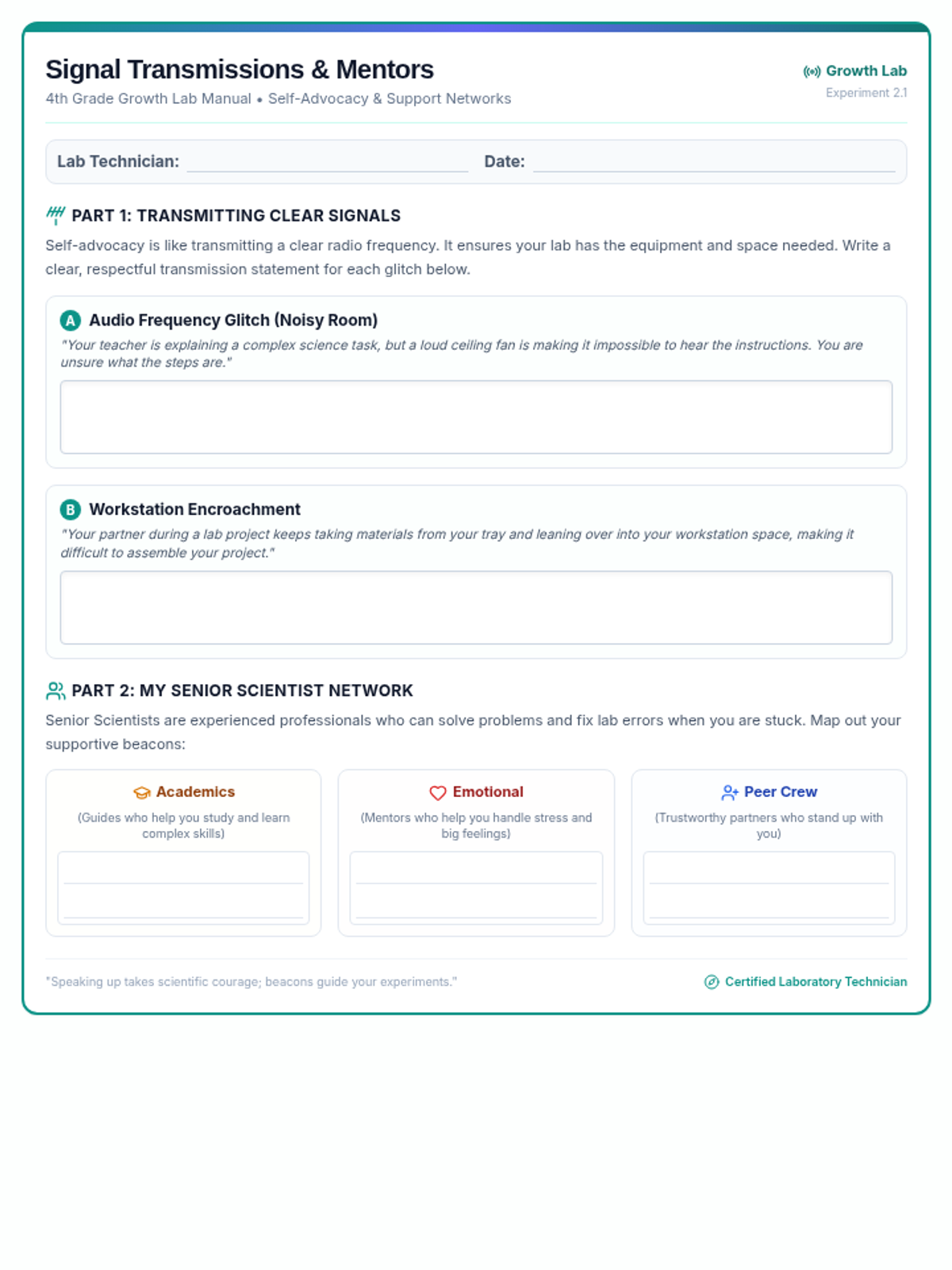
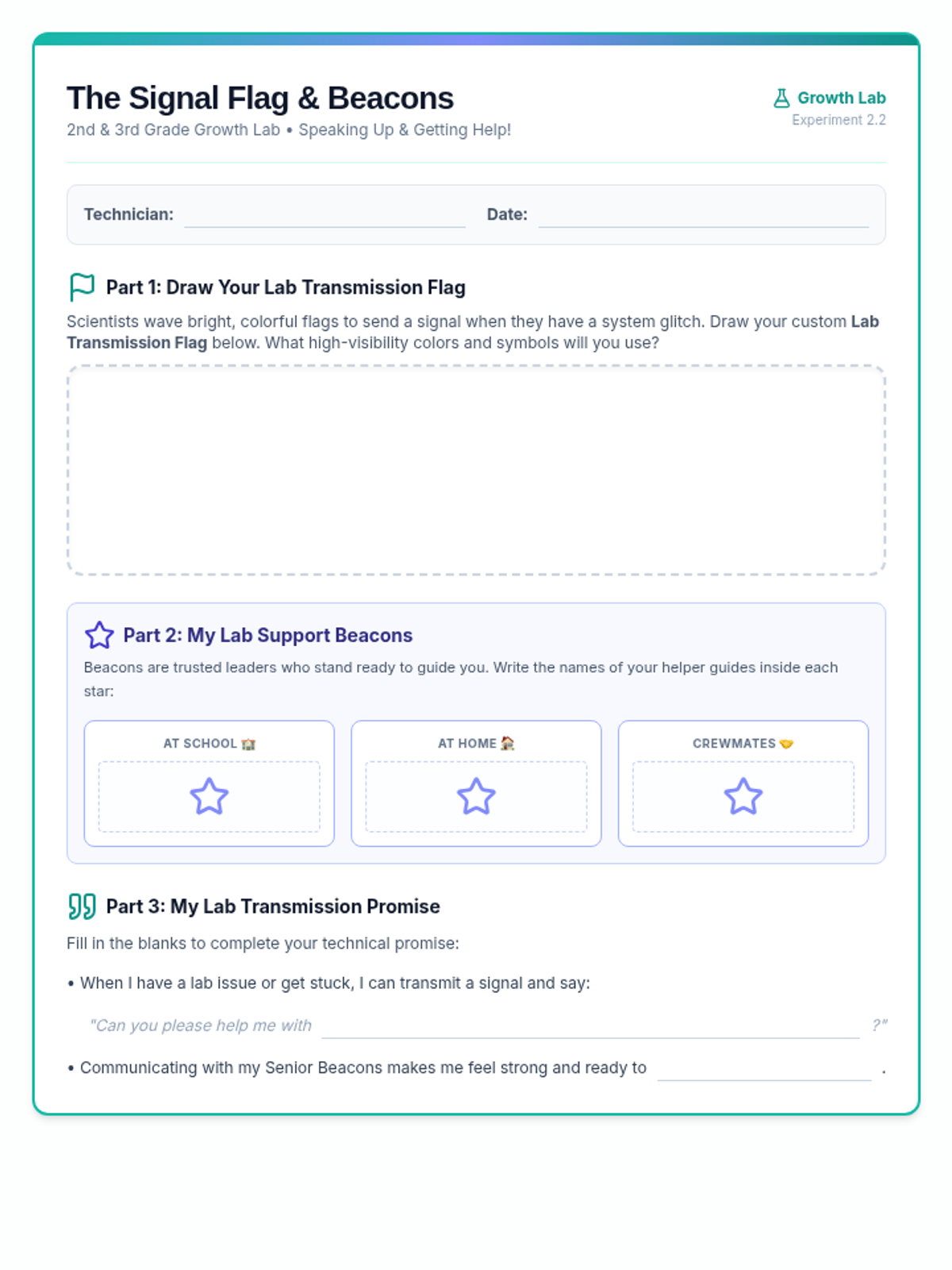
Introduction to executive functioning as the brain's 'Command Center' and setting initial SMART goals for the 6-week program.
A foundational social-emotional learning lesson for kindergarteners to identify and categorize feelings using the four color zones. Students will explore scenarios, match emotions, and practice physical sorting of feelings.
Strategies for navigating family dynamics, sibling conflicts, and home-based stressors through clear communication and personal space.
Explores the emotional ups and downs of sports and competition, teaching students how to keep their cool during wins and losses.
Focuses on managing the pressure of grades, tests, and academic expectations through reframing and realistic goal-setting.
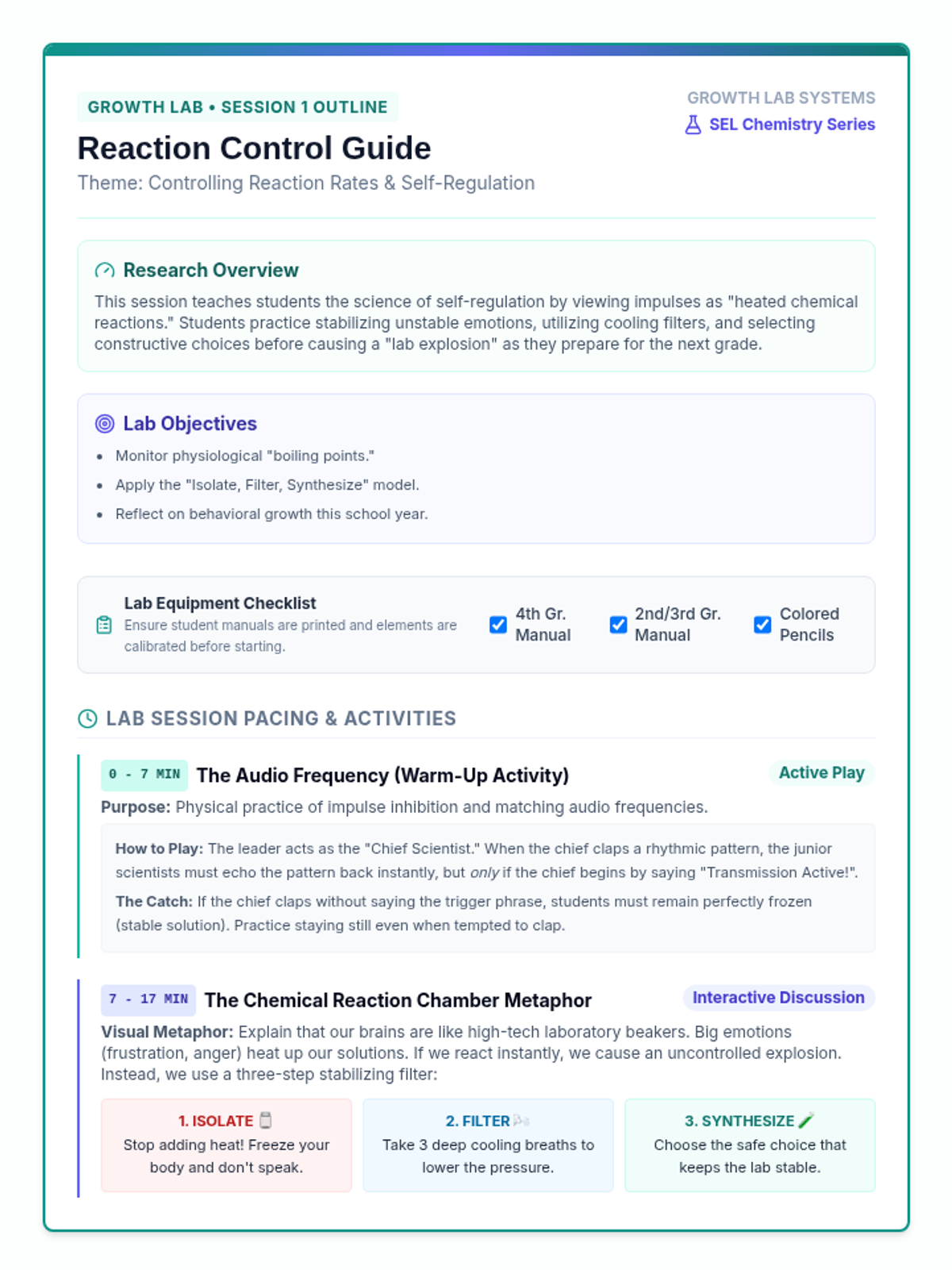
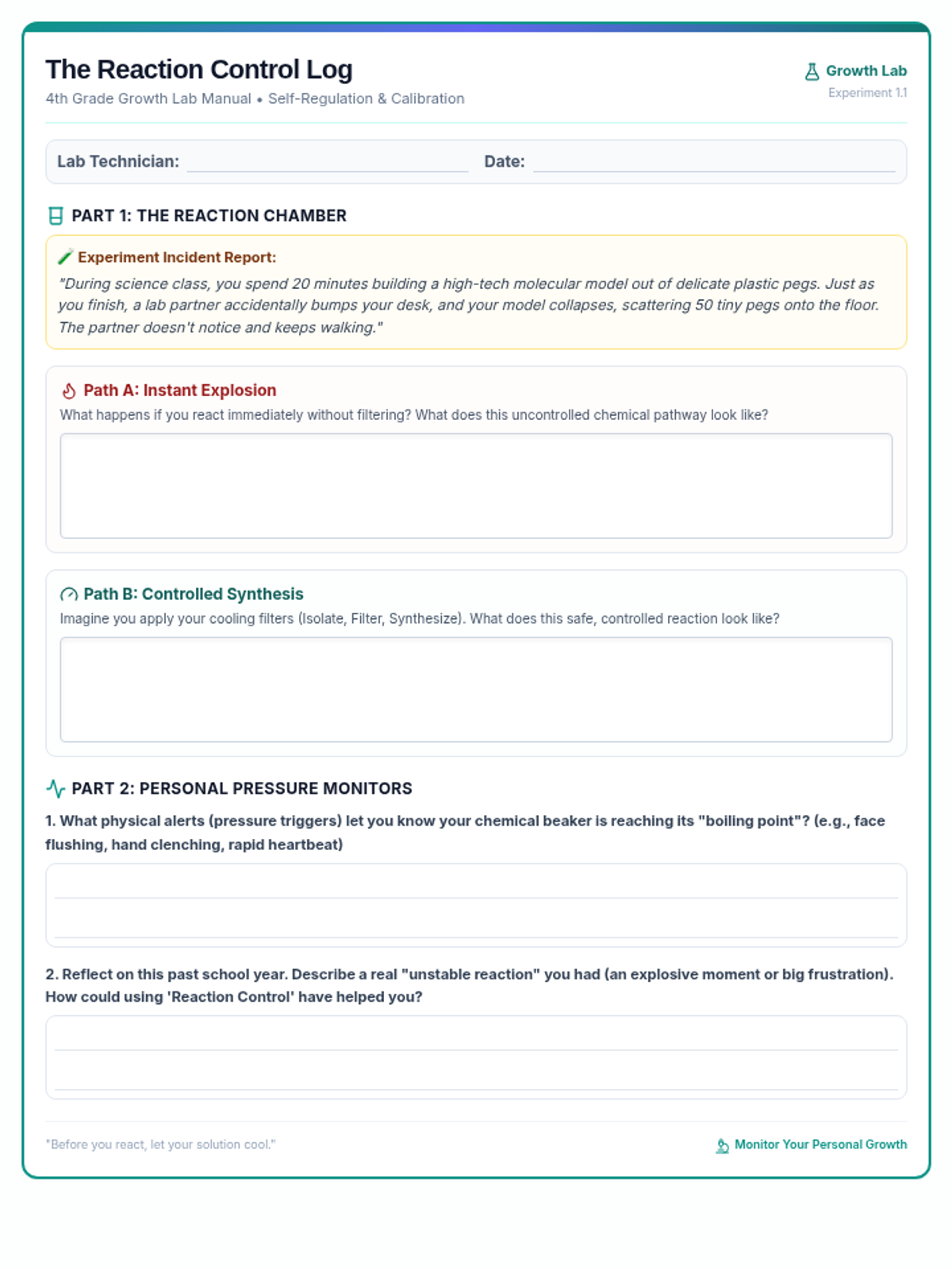
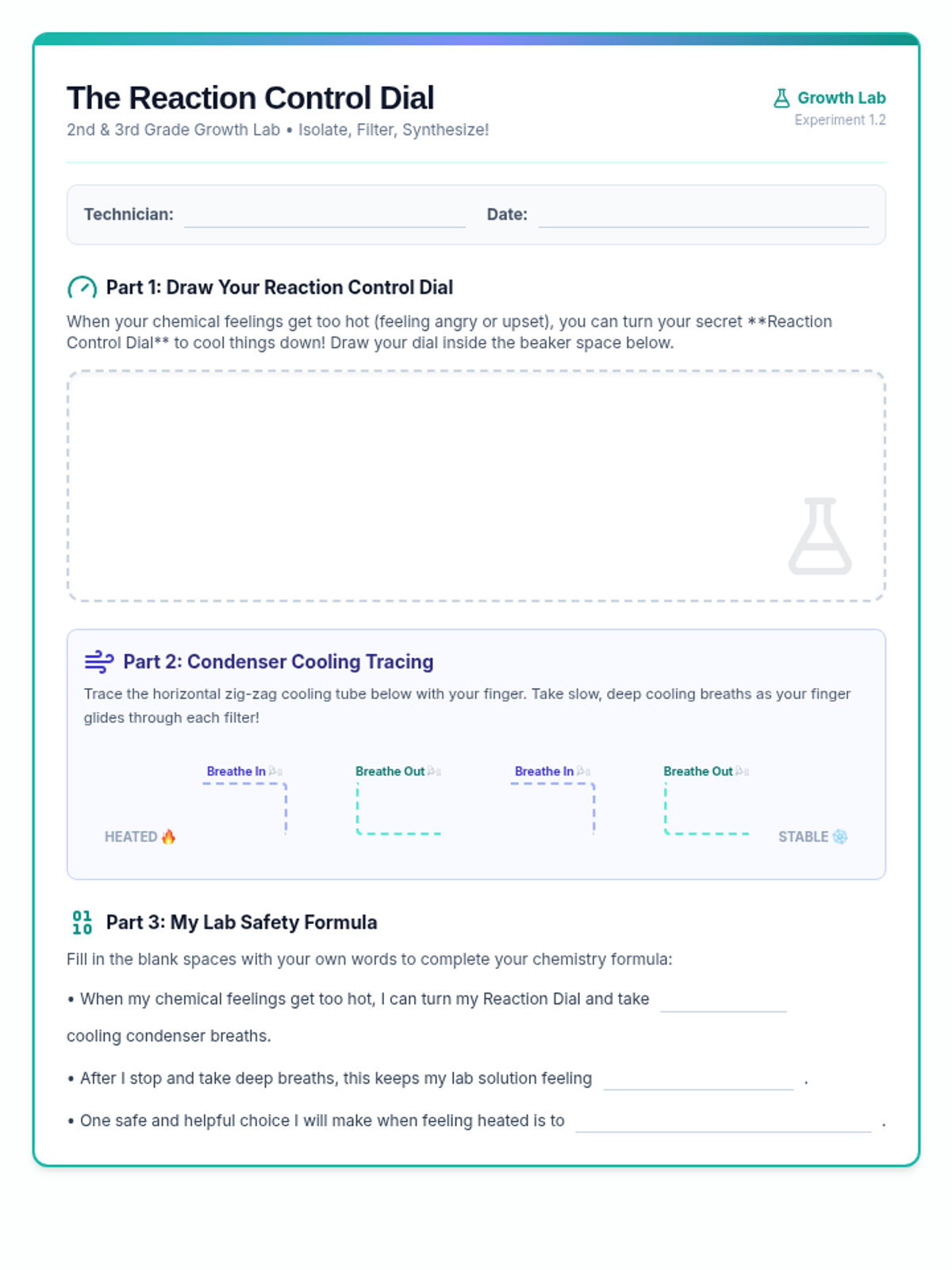
Students identify the physical sensations of frustration and learn to recognize their personal 'early warning signs' before they reach a boiling point.
A comprehensive primary lesson focused on building positive relationships, understanding fairness, and developing social skills through interactive candy-themed activities.
An introductory lesson on gratitude where students define the concept, engage in a visual anchor chart activity, and play a classroom-wide game of Gratitude Bingo.
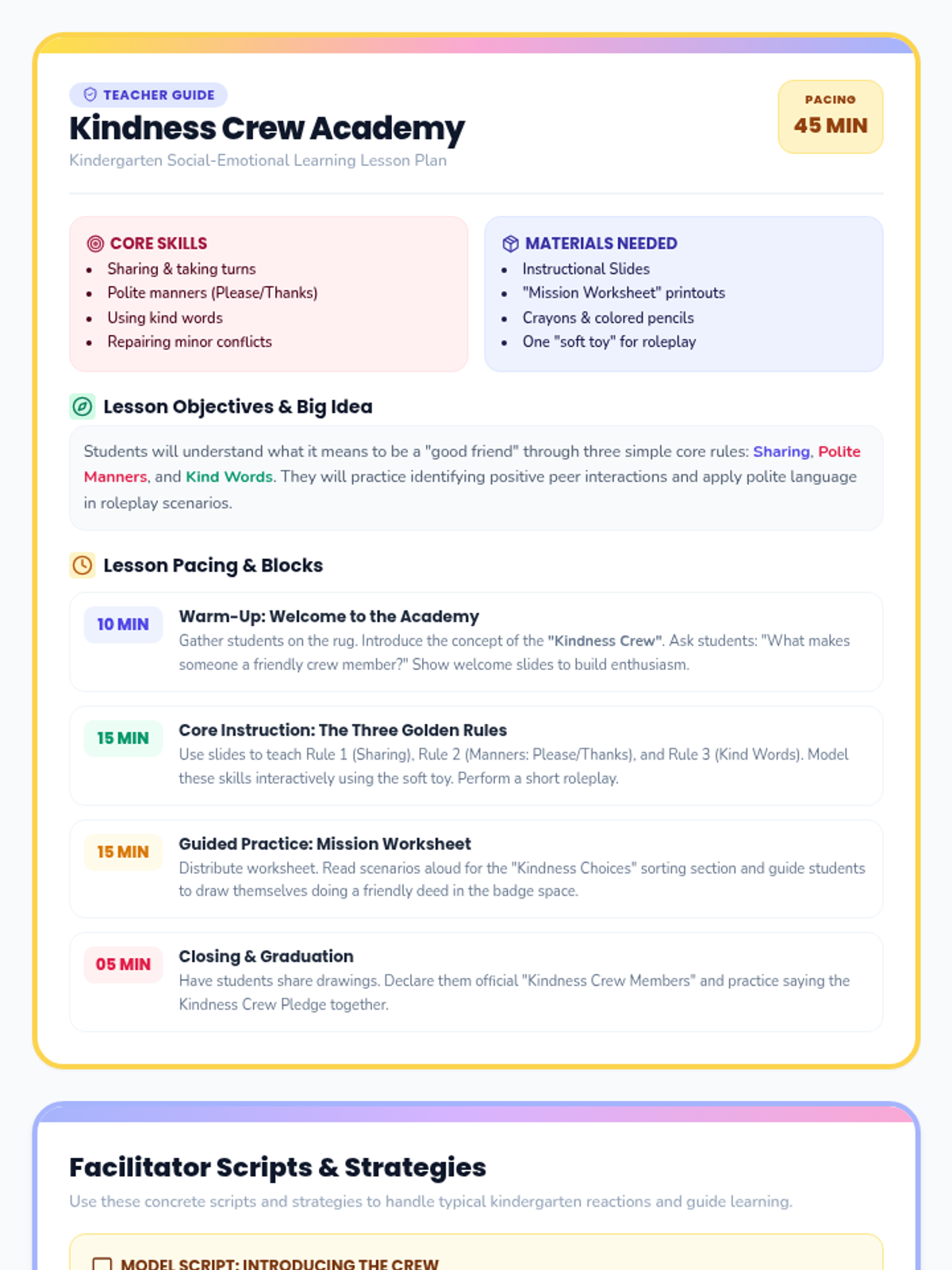
A 30-minute interactive lesson for Kindergarteners focusing on the fundamentals of sharing and taking turns through a whole-class circle game. Students practice using polite phrases and waiting for their turn in a supportive, factory-themed environment.
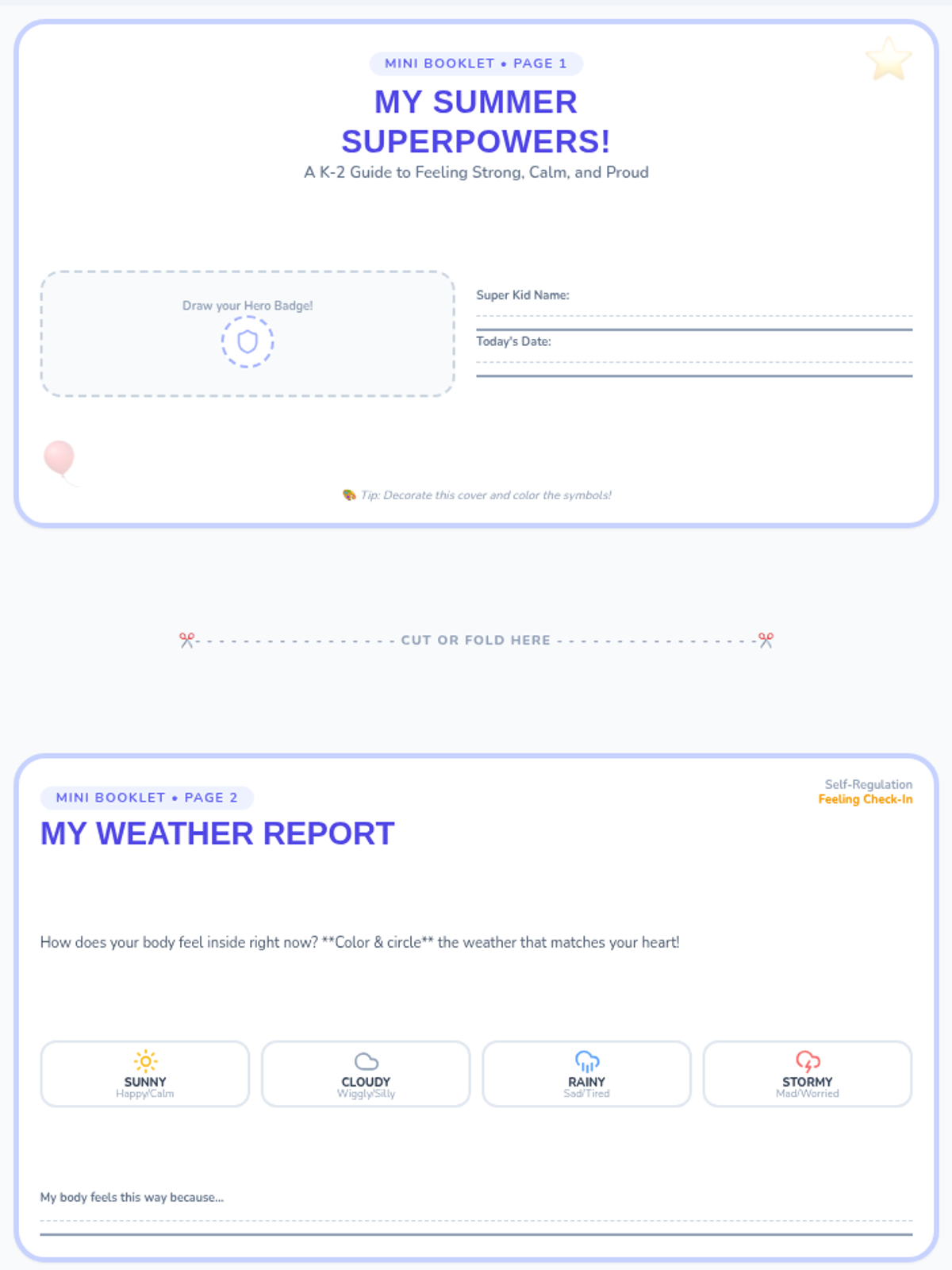
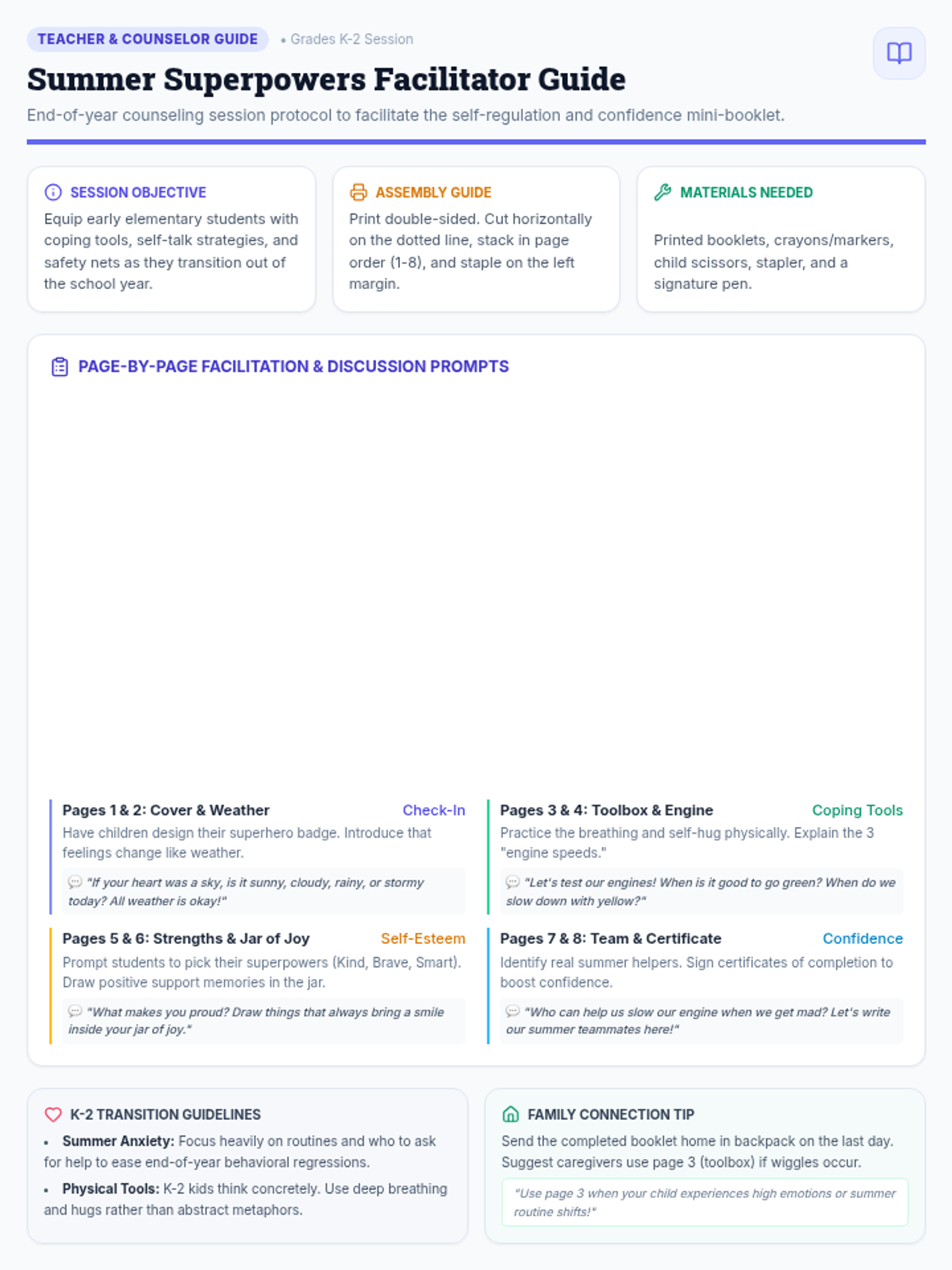
An end-of-year lesson for K-2 students focused on navigating social interactions using the Circle of Control and celebrating friendship growth. Students will learn what they can influence in their friendships and reflect on their social successes throughout the year.
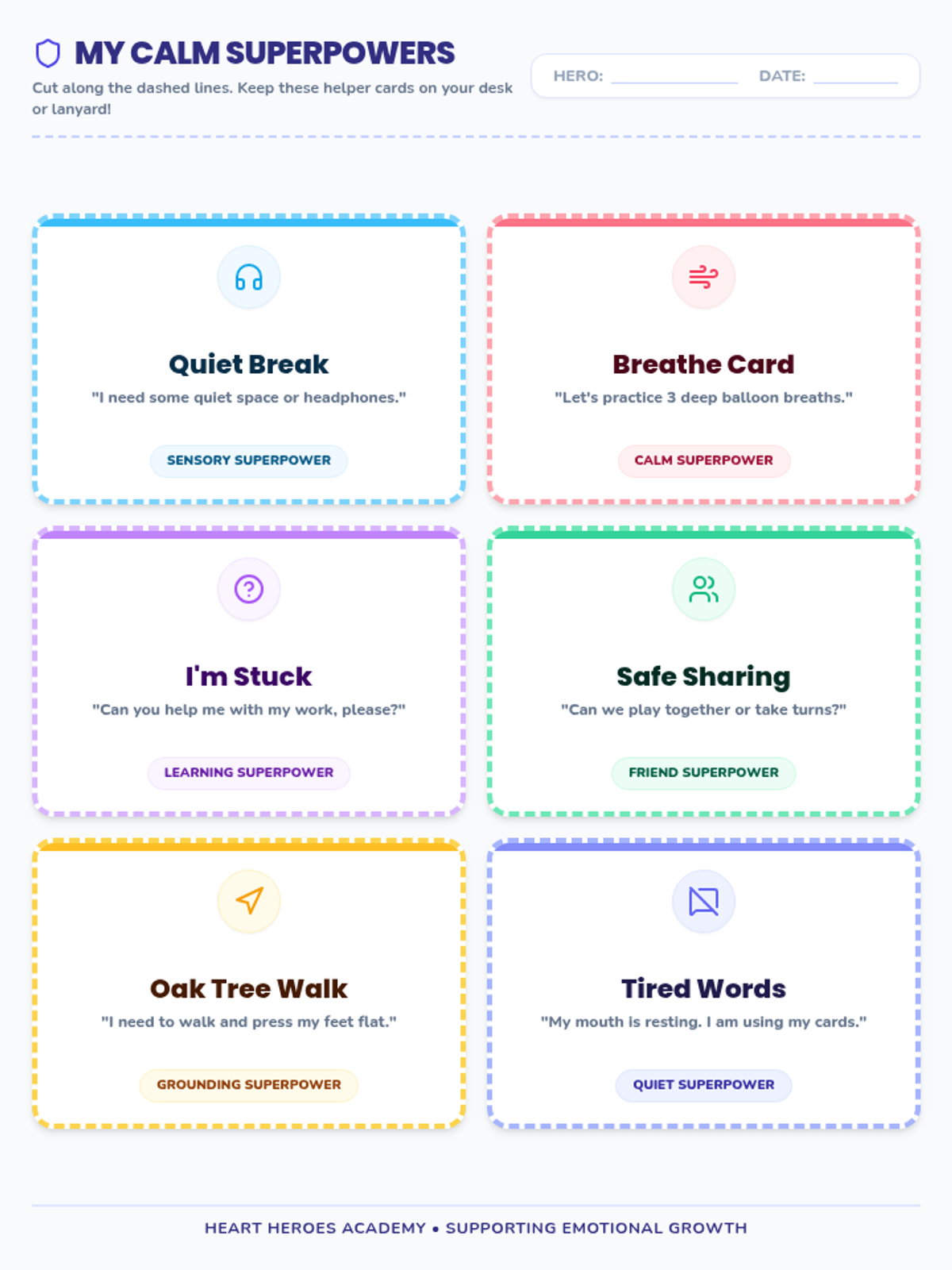
Students explore core leadership qualities through the lens of superheroes, identifying their own unique leadership 'superpowers' and learning how to lead with empathy, courage, and teamwork.
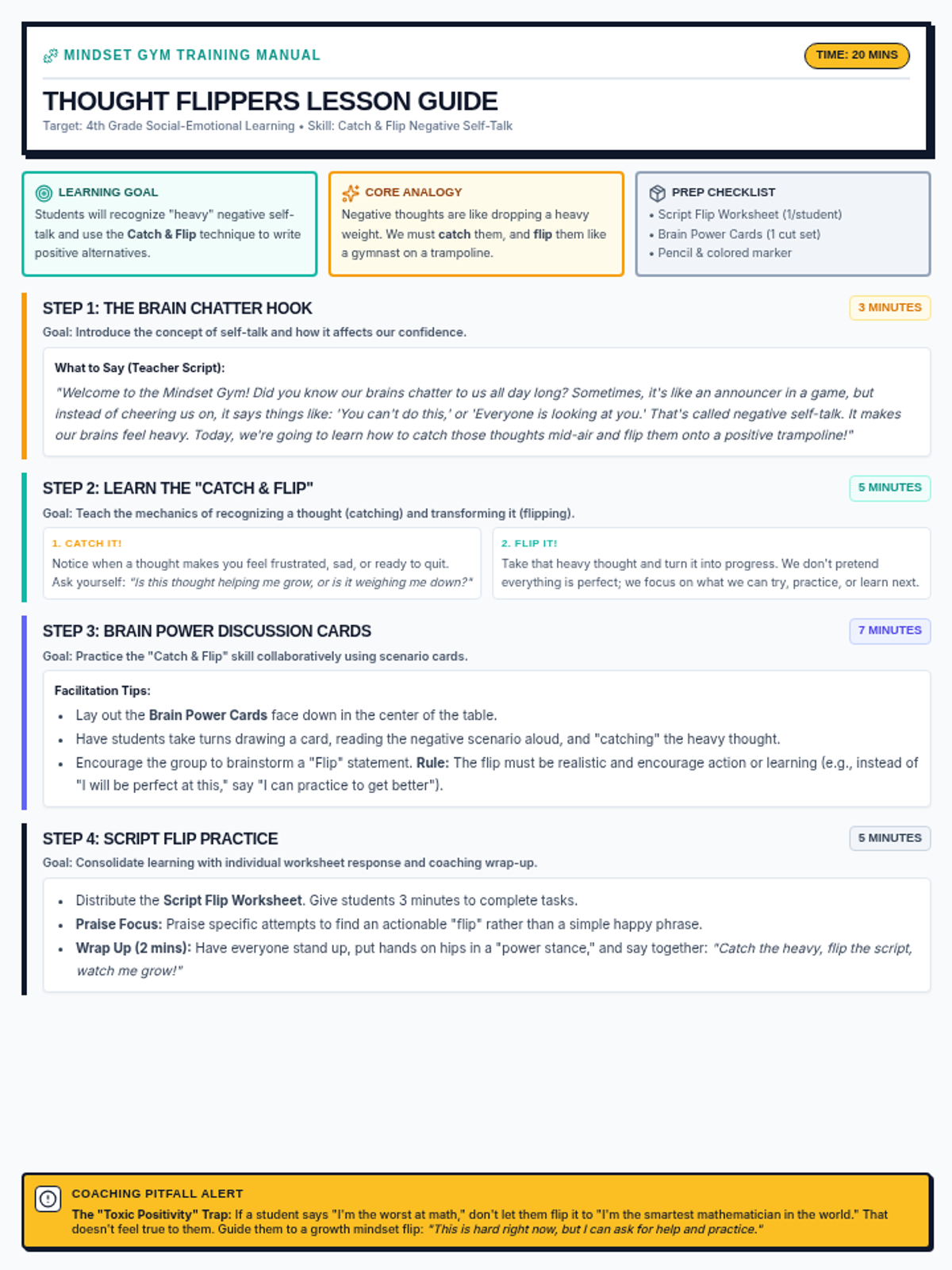
A lesson designed for 2nd graders to manage ruminating sad thoughts using externalization (thought distancing) and flexible thinking through the metaphor of a 'Thought Train'.
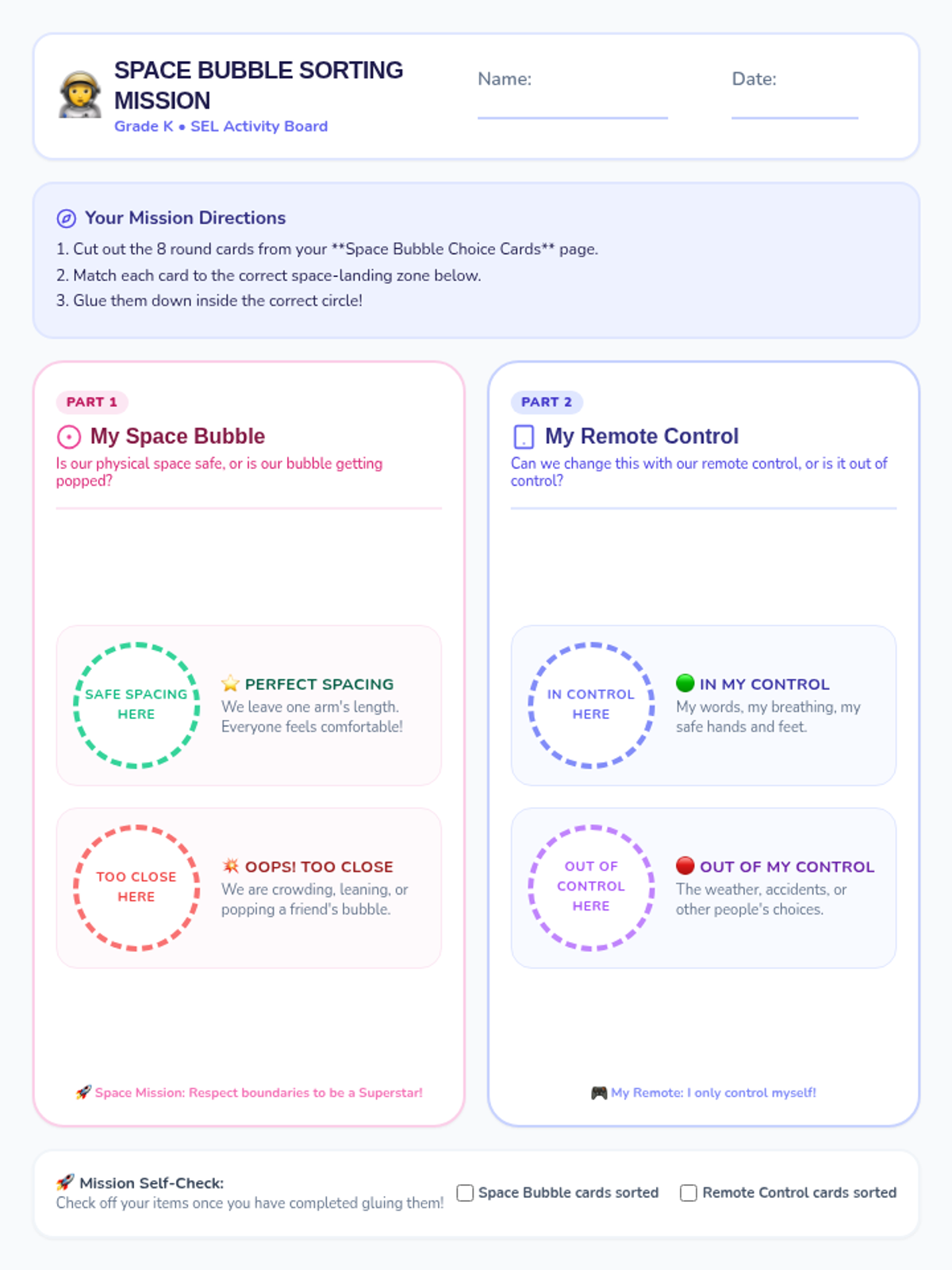
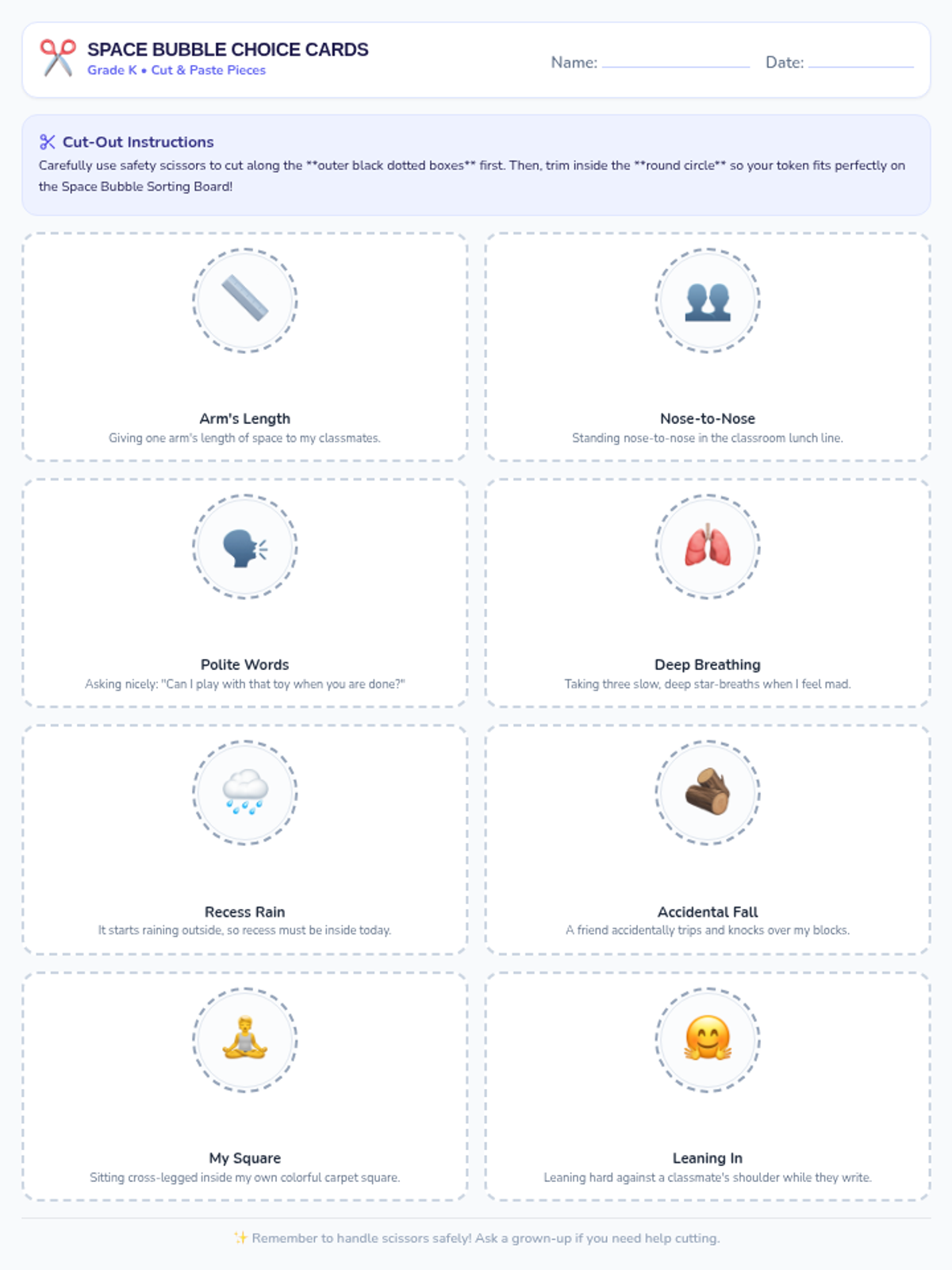
This lesson teaches students the importance of respecting personal space and how to contribute positively to group work. It uses social story modeling to show clear examples of 'expected' behaviors in various classroom scenarios.
An SEL lesson focused on distinguishing between hurtful and helpful language, introducing 'I' statements to manage emotions and maintain positive relationships.
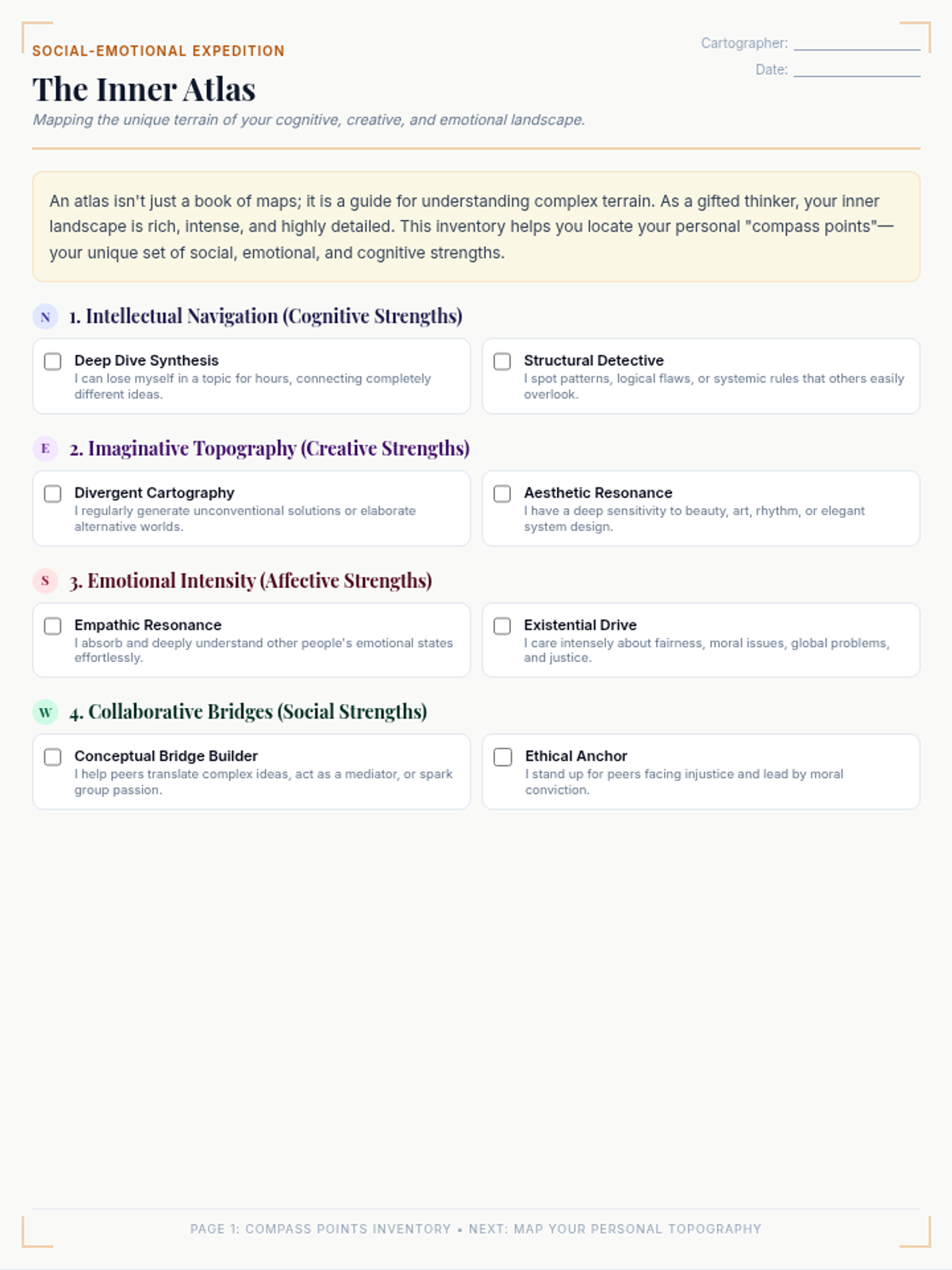
Students identify their personal strengths and positive qualities, reframing them as "inner superpowers". This lesson helps build self-esteem and a positive self-concept.
Students become Emotion Detectives to identify and name core emotions by looking for facial and body clues. This K-3 lesson focuses on happy, sad, angry, scared, surprised, and disgusted.
A set of reflection tools for students in grades K-5 to process behavioral incidents through the lens of core values: Respect, Responsibility, and Regard for Others. Includes tiered versions for lower and upper elementary students.
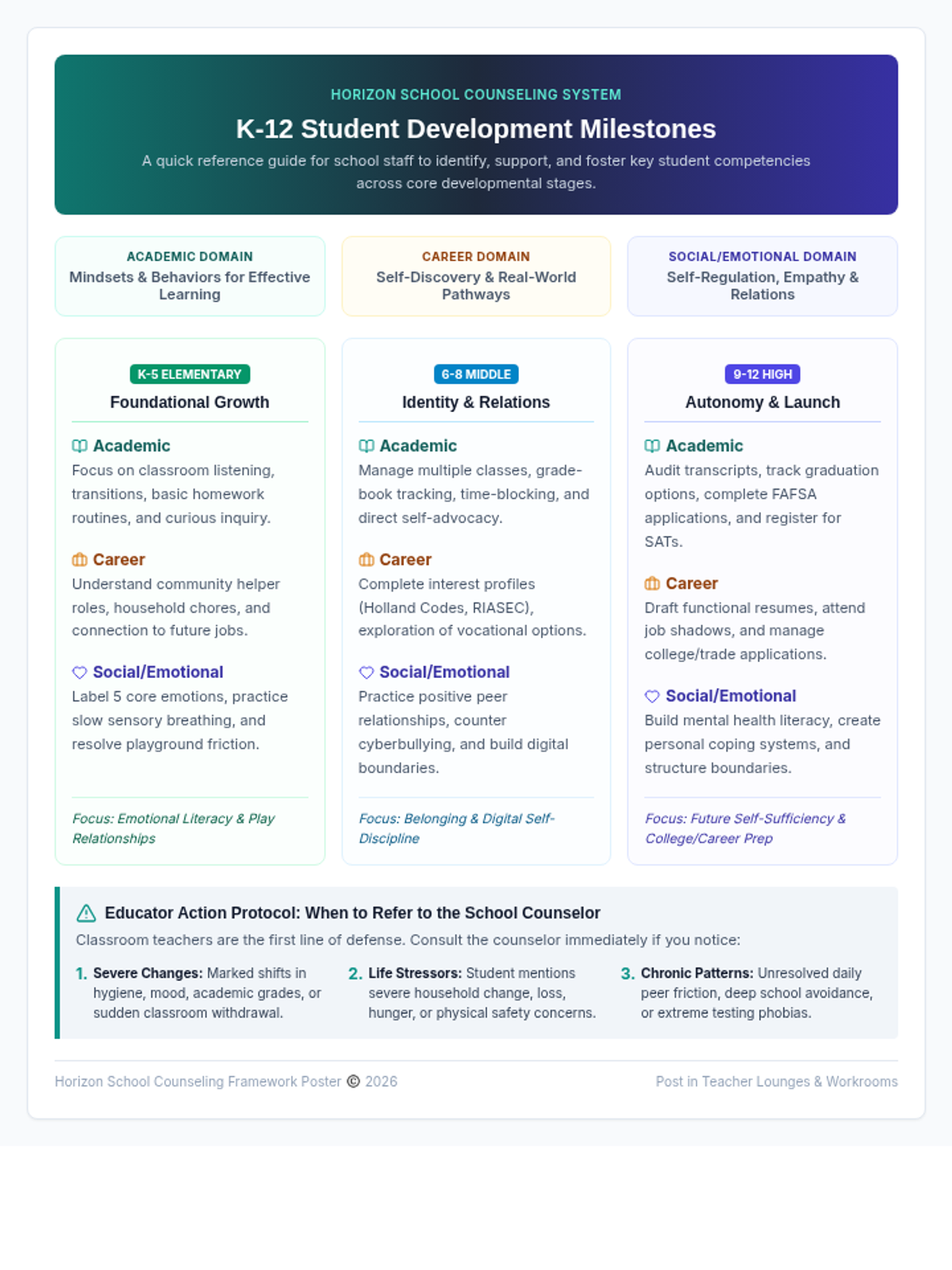
Introduces the Social Intelligence Academy and explores "Vibe Checks"—the criteria for healthy, high-functioning middle school friendships.
An exploration of Person-Centered Approach (PCA) applied to various school counseling group formats, focusing on core conditions and growth.
A comprehensive supervision framework for school social workers and their leaders, focusing on caseload management, ethical growth, and emotional well-being.
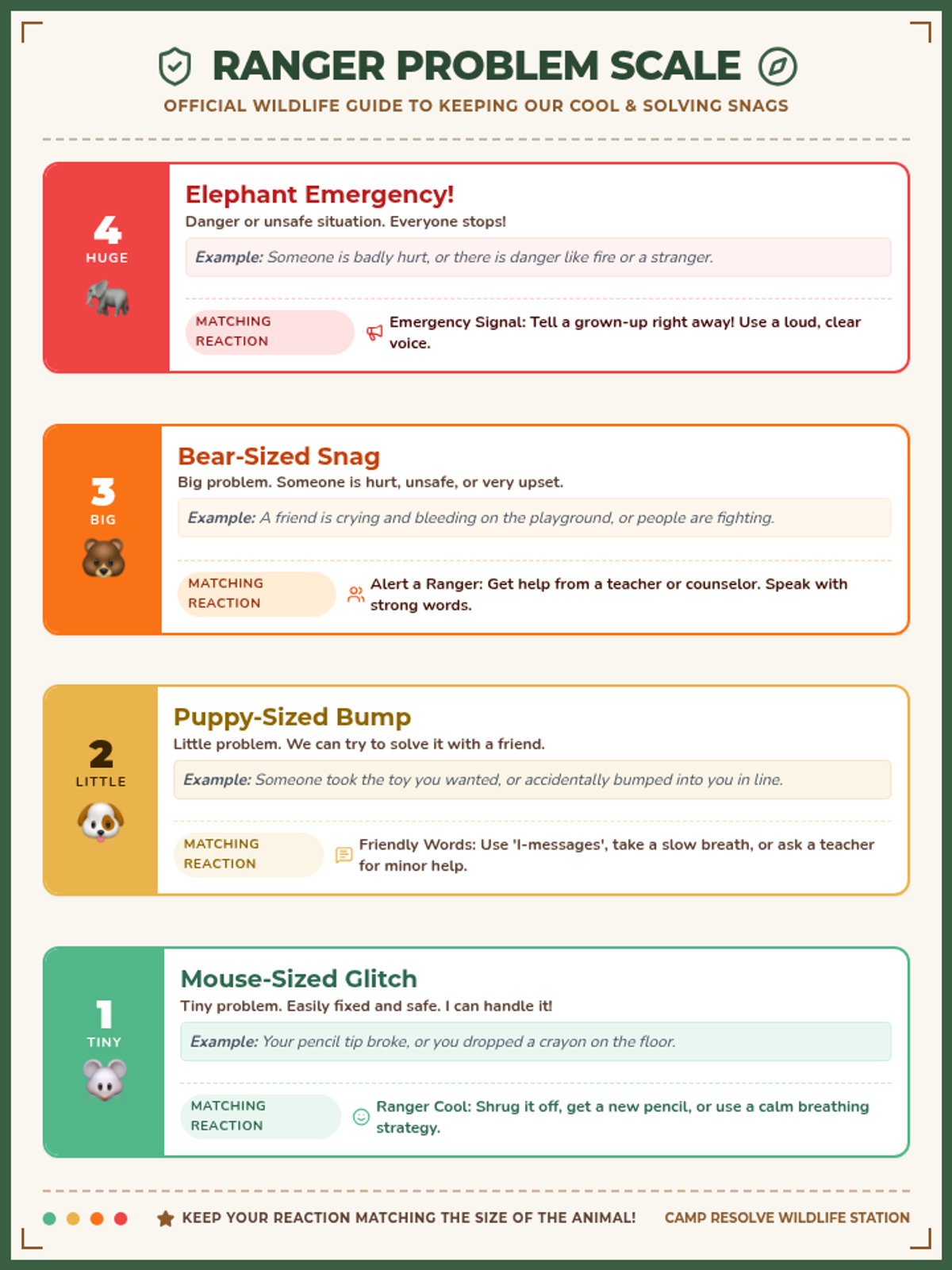
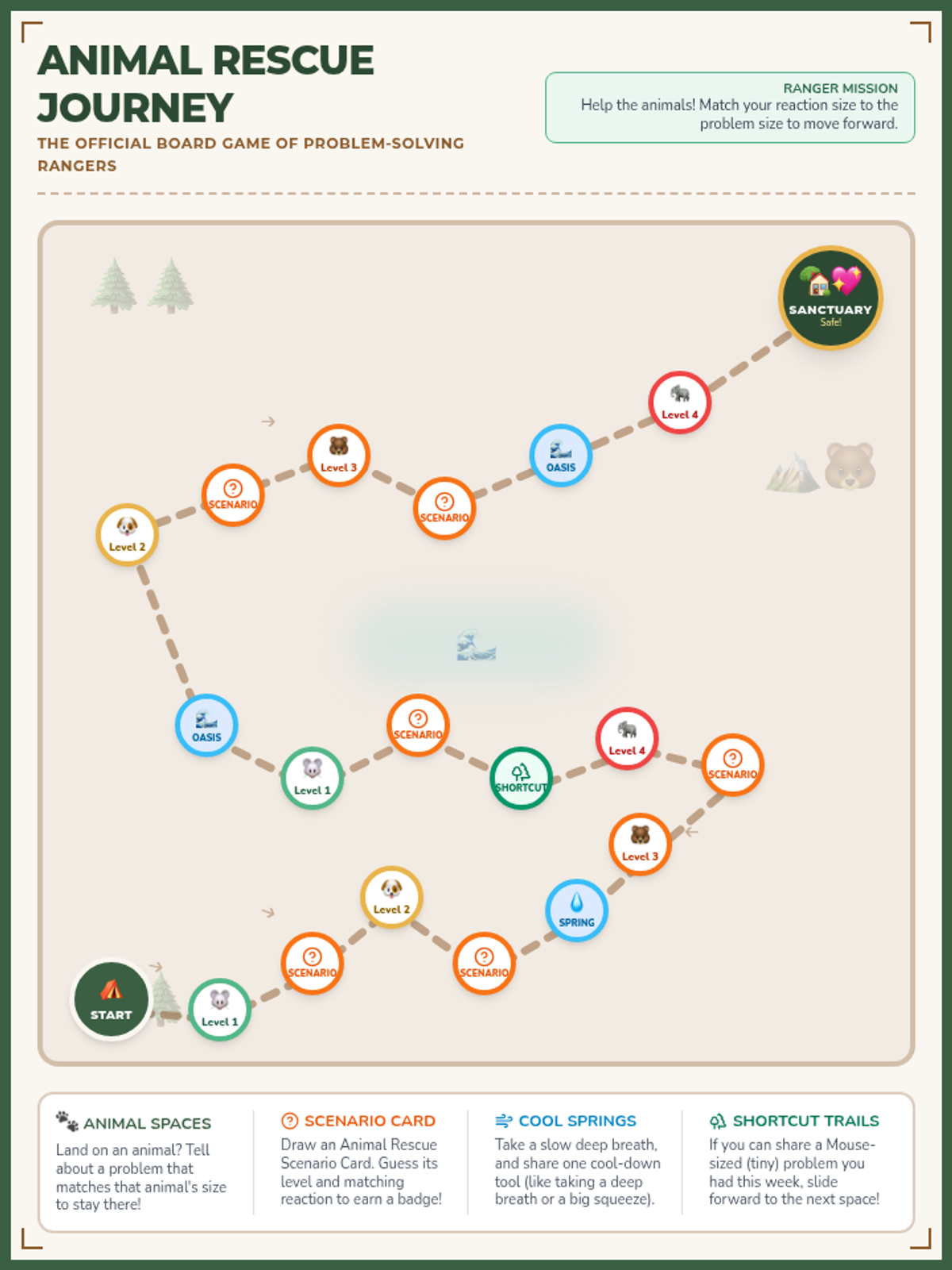
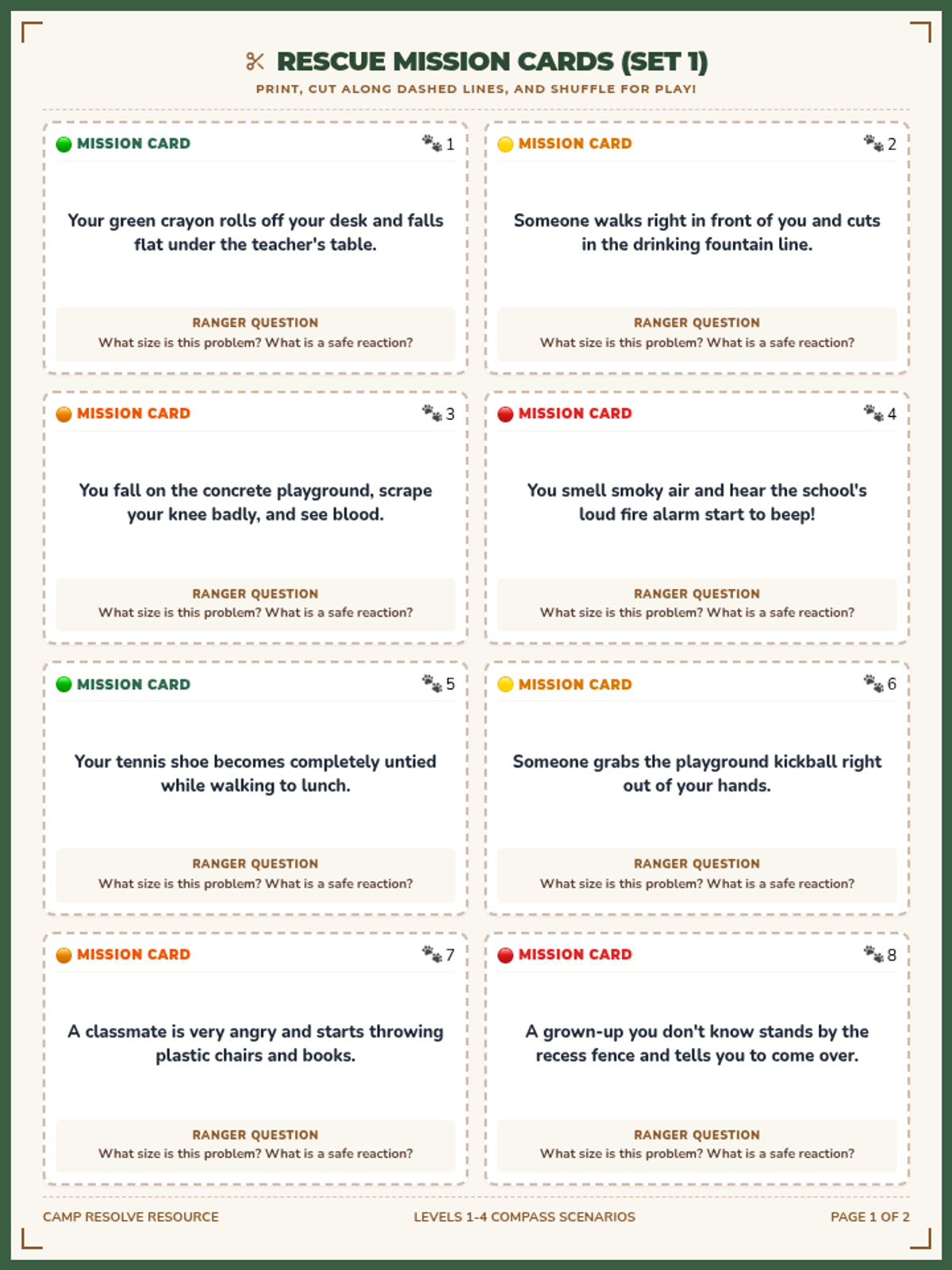
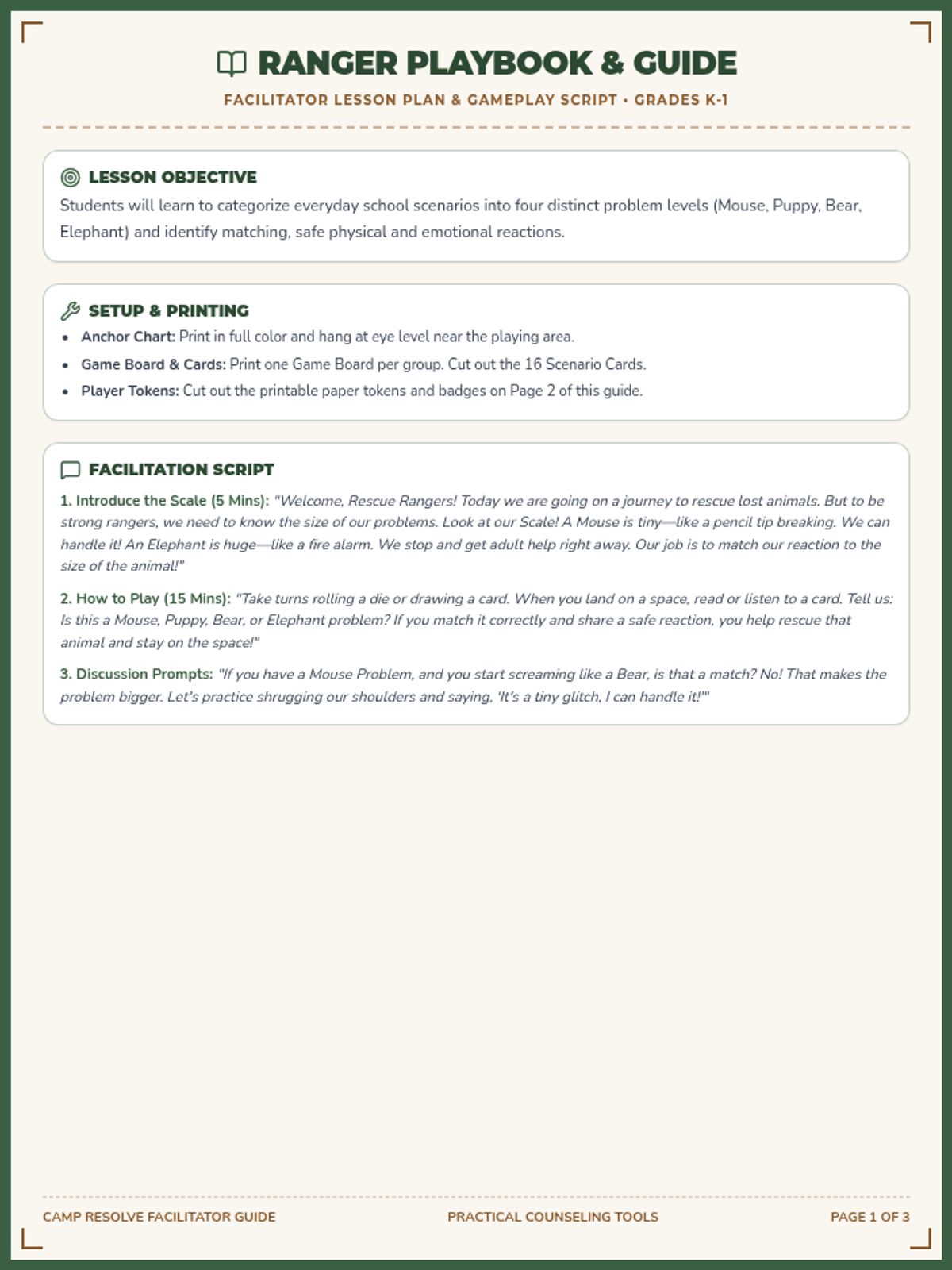
A lesson designed to help students distinguish between Small and Big Problems and choose safe regulation strategies instead of physical reactions. It includes a social story, practice worksheet, and strategy reference guide.
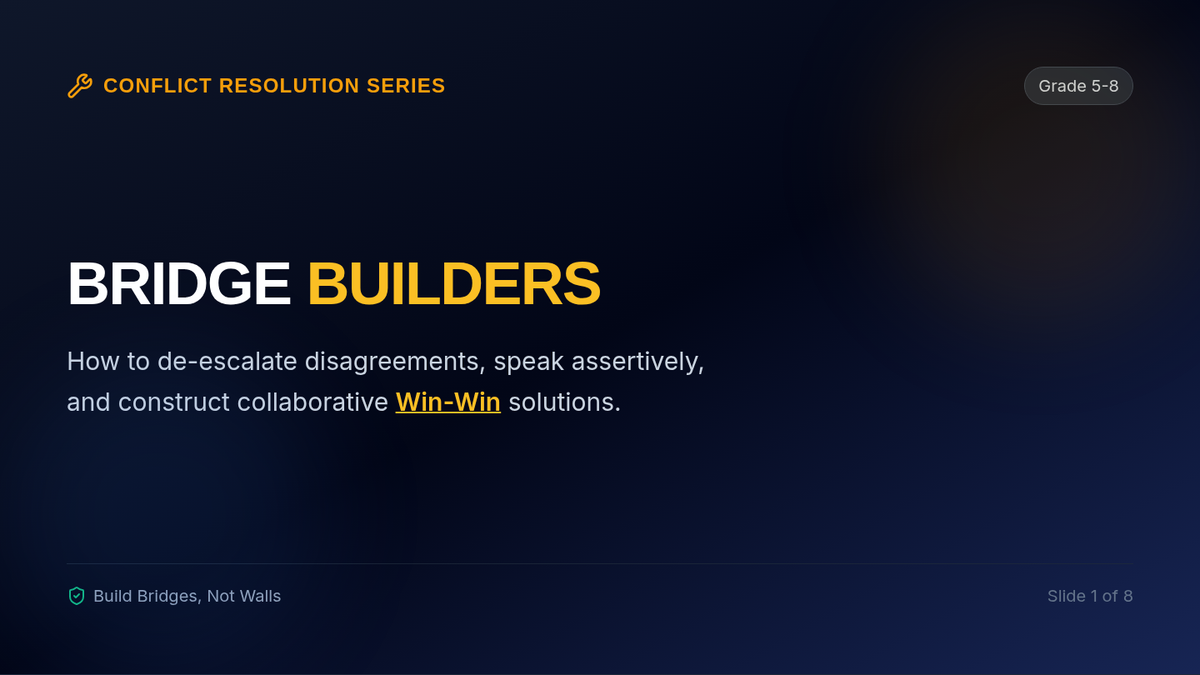
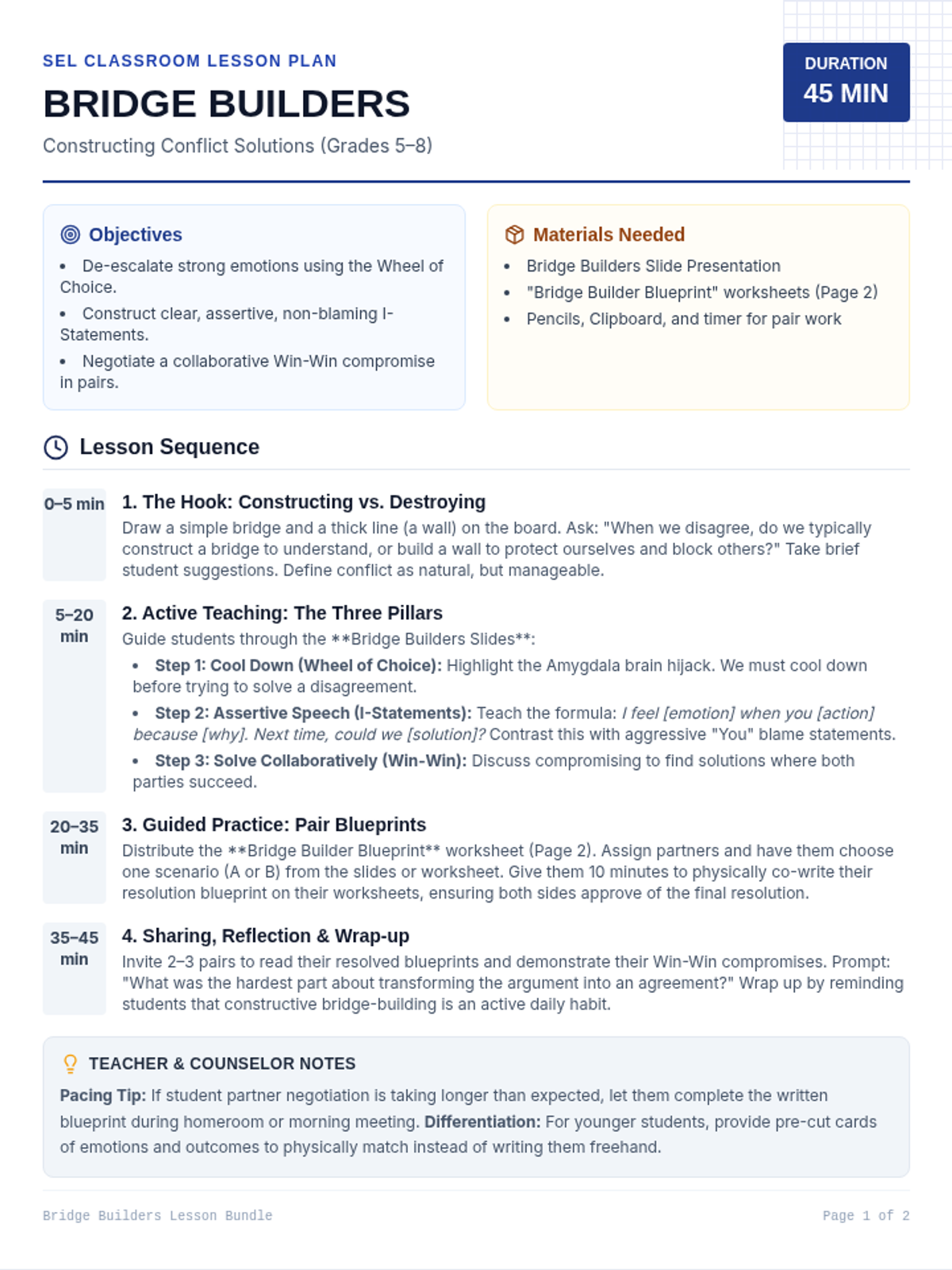
A comprehensive lesson designed for 12th-grade special education students to master conflict resolution across workplace, school, and community settings using a structured 'Resolution Roadmap' framework.
A comprehensive first-day lesson to establish classroom norms, physical space navigation, and digital responsibility. Includes instruction on Chromebook care and digital citizenship.