A 60-minute session for grades 3-5 focusing on empathy, perspective-taking, and social dynamics through scenario-based games and individual reflection. Students will learn to identify emotions and develop actionable plans for kindness.
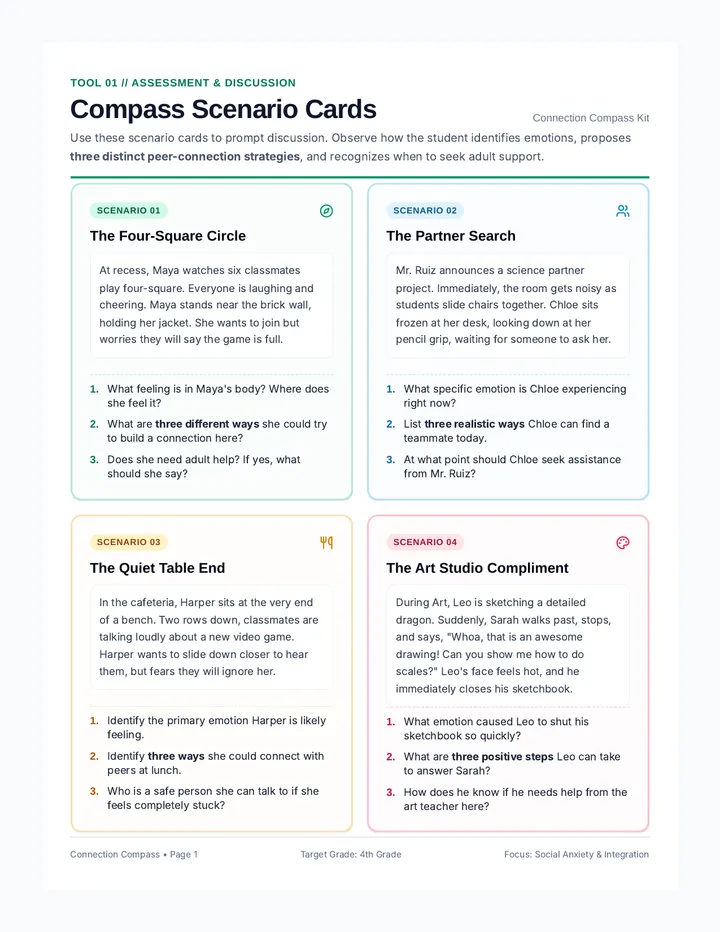
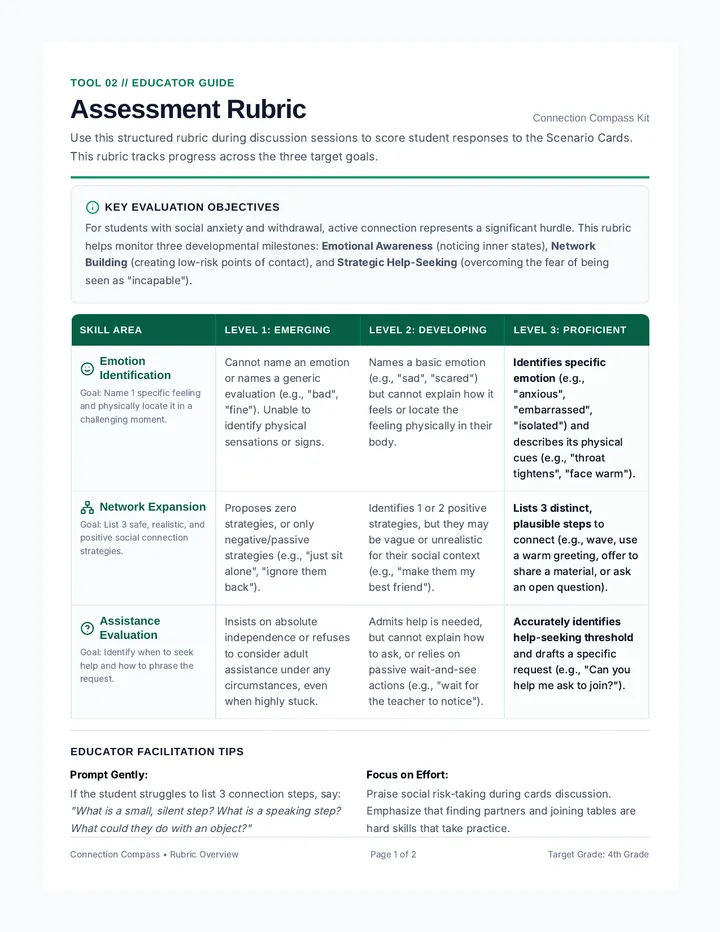
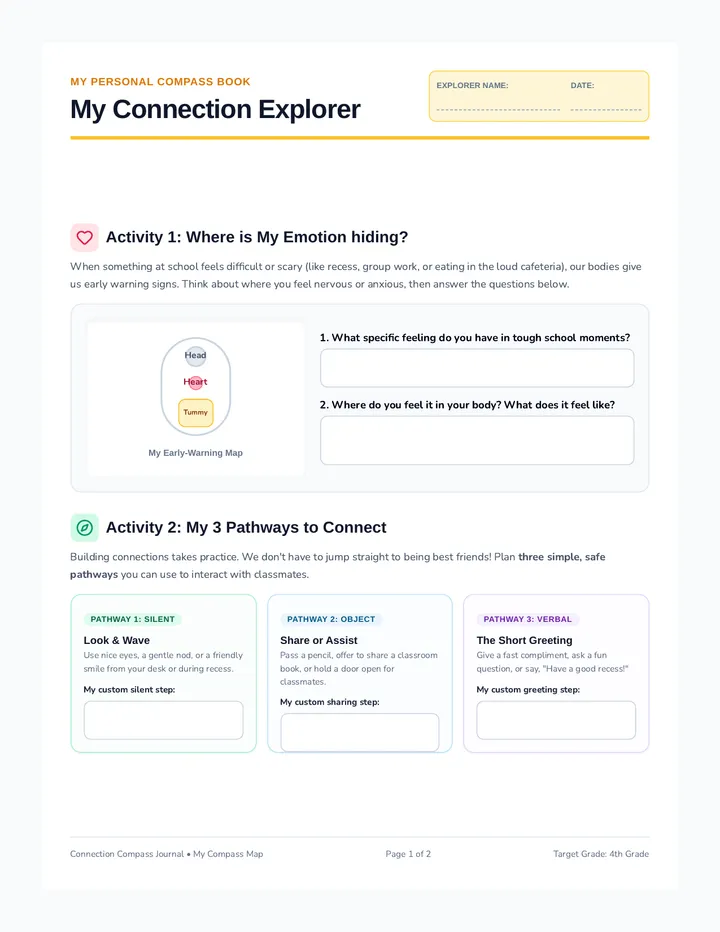
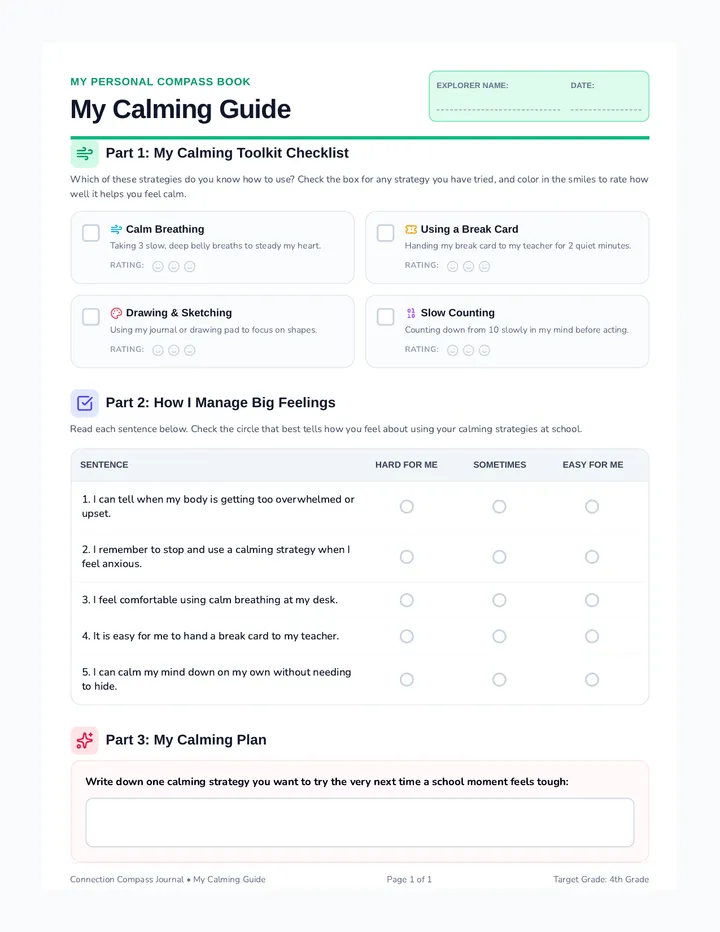
A comprehensive progress monitoring and intervention kit designed to help 4th-grade students experiencing social anxiety and withdrawal. The kit includes situational scenario cards, an educator assessment rubric, and a student self-reflection journal to build emotional awareness, expand peer connections, and develop help-seeking behaviors.
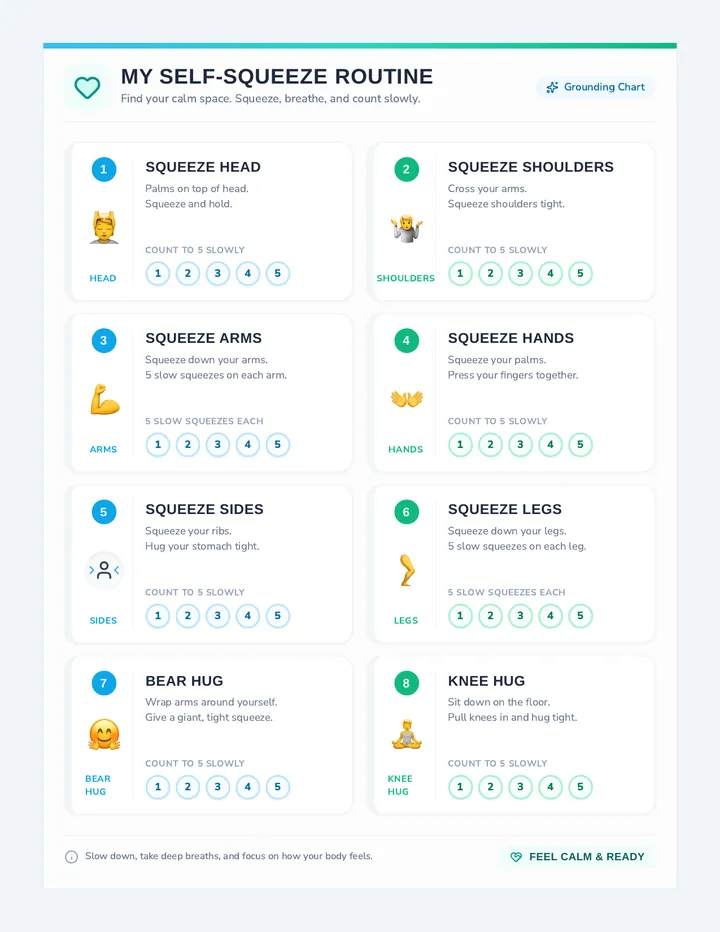
A pediatric grounding and sensory regulation lesson featuring a self-squeeze physical therapy routine to help students self-soothe and calm down.
Una lección de transición diseñada para estudiantes que ingresan a 4.º grado, enfocada en prepararlos socioemocionalmente para su nueva escuela, nuevos maestros y rutinas diarias.
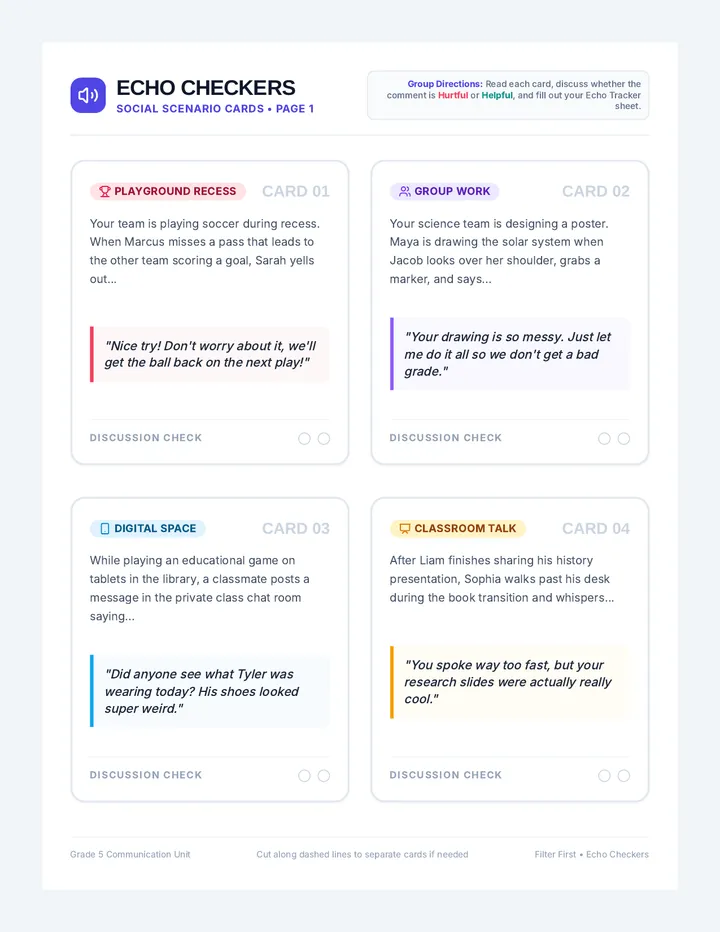
A lesson for 5th graders to analyze peer communication across recess, group work, and digital settings. Students learn to distinguish between helpful and hurtful comments and practice constructive reframing.
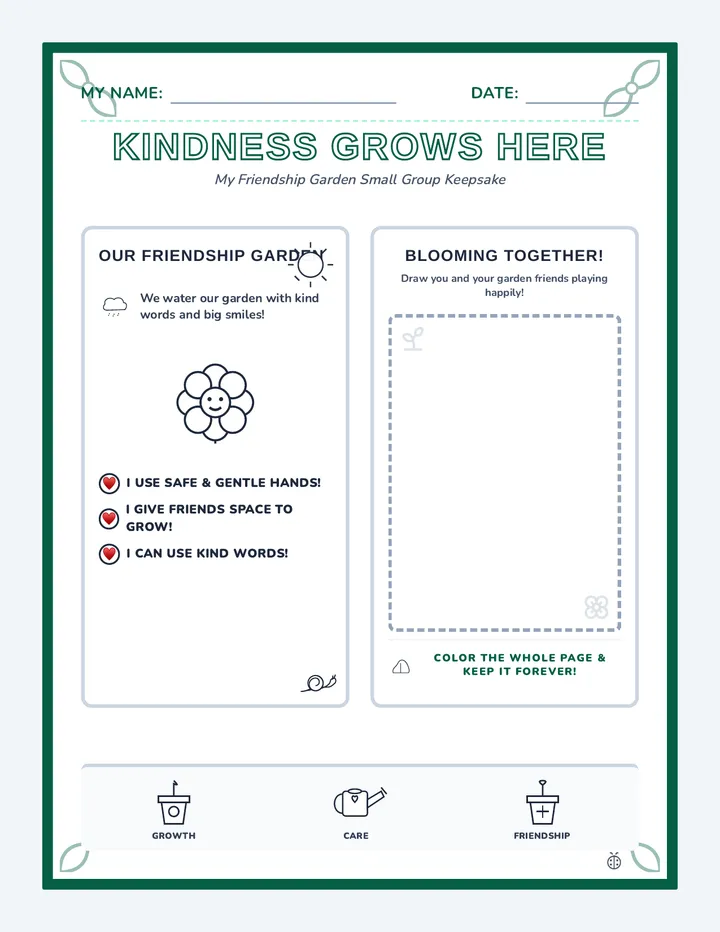
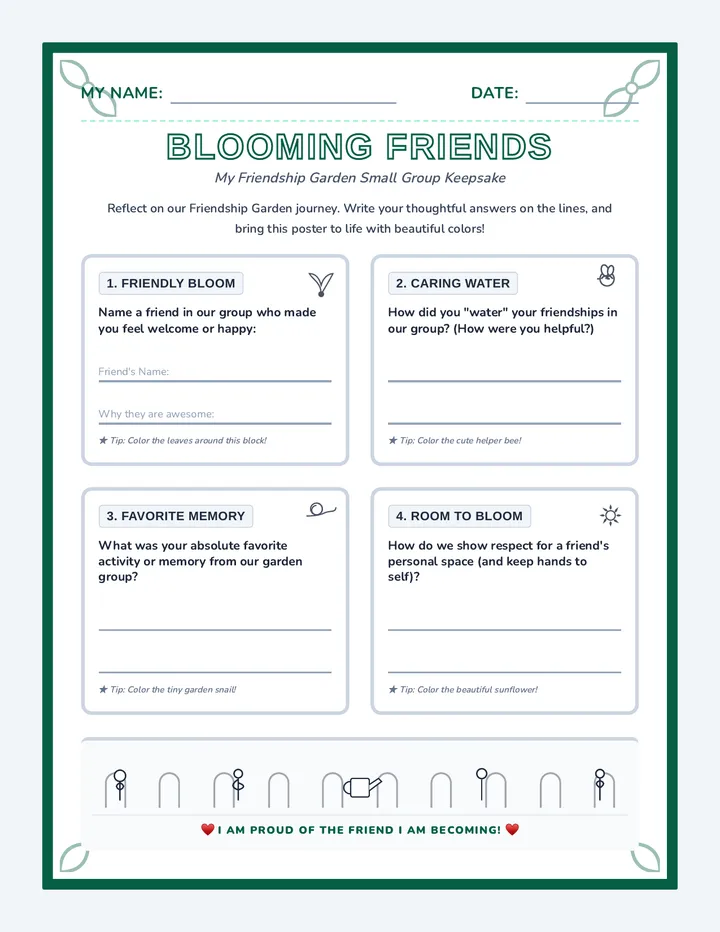
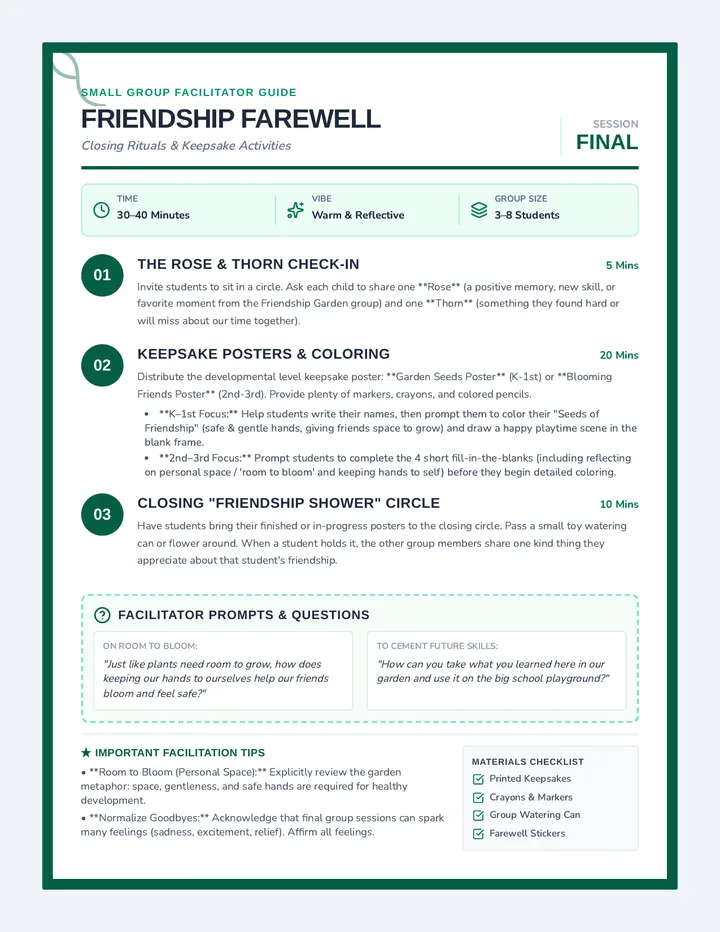
A warm, reflective closing lesson for the Friendship Garden small group. It provides students with creative keepsake coloring posters tailored to their grade levels to celebrate their growth and positive relationships.
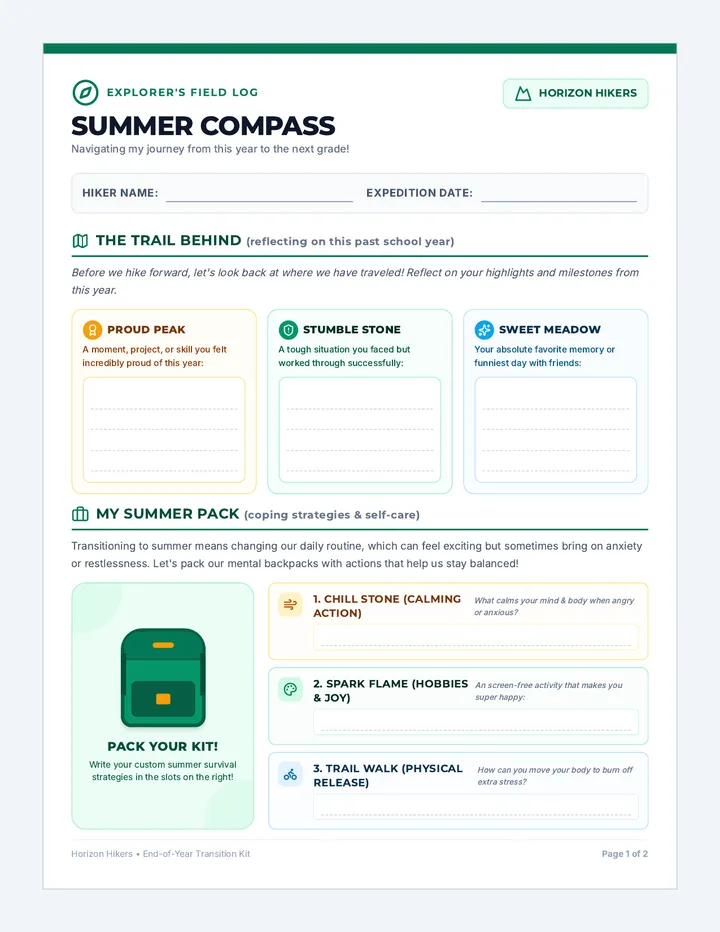
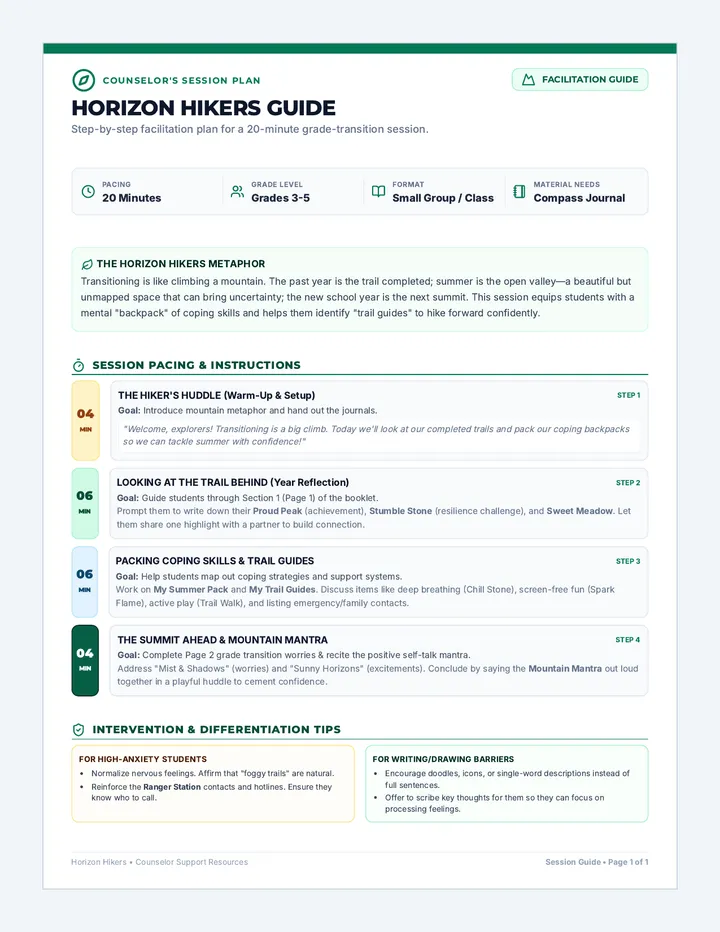
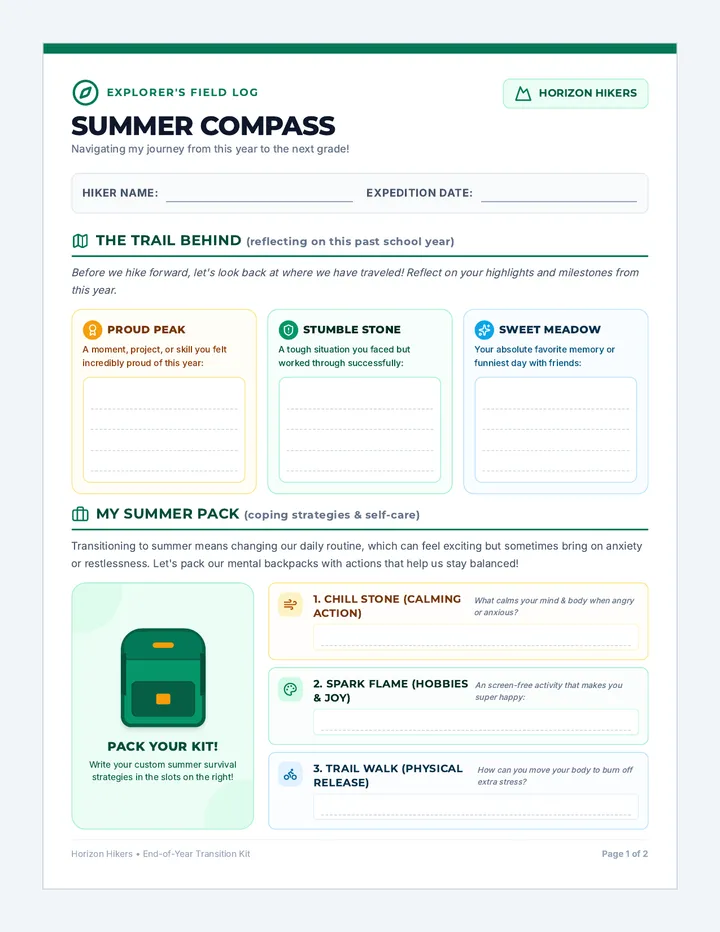
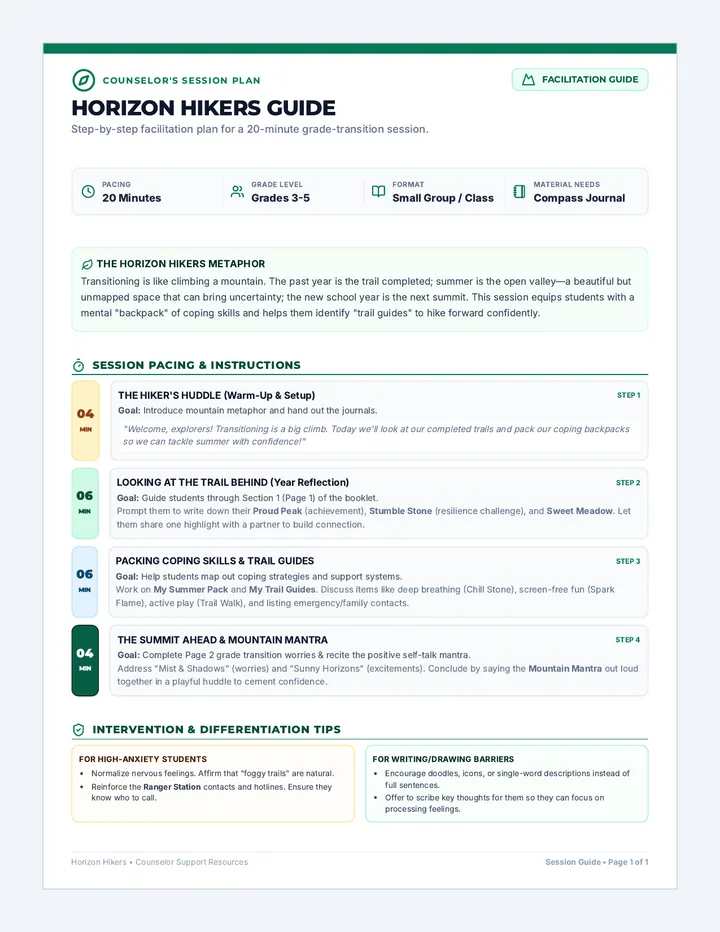
A supportive transition lesson for upper elementary students to reflect on the past year, create a visual coping plan for summer, and build confidence for entering the next grade.
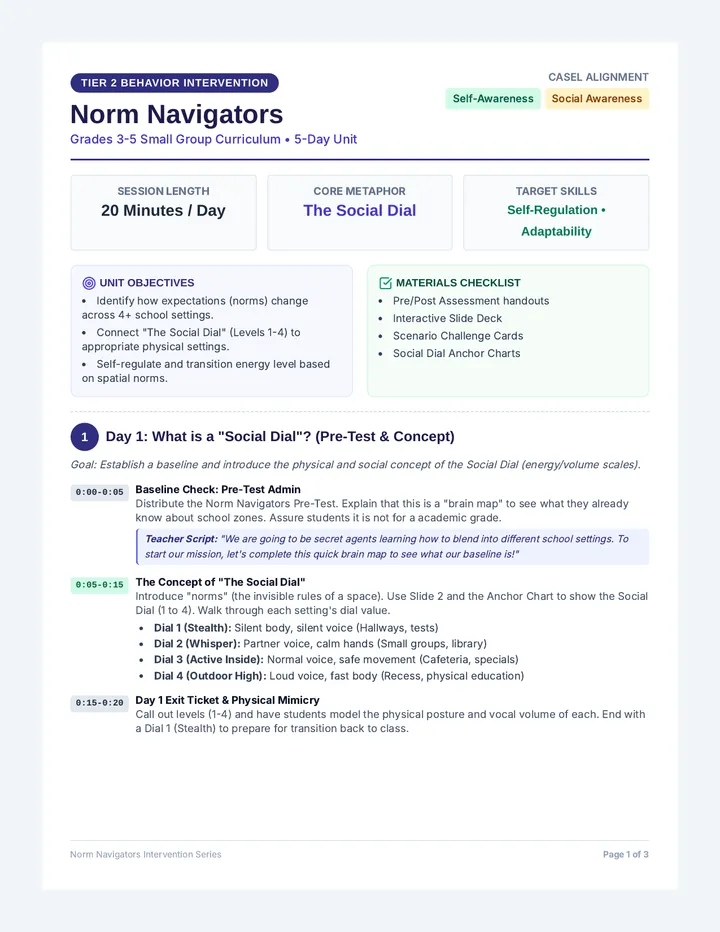
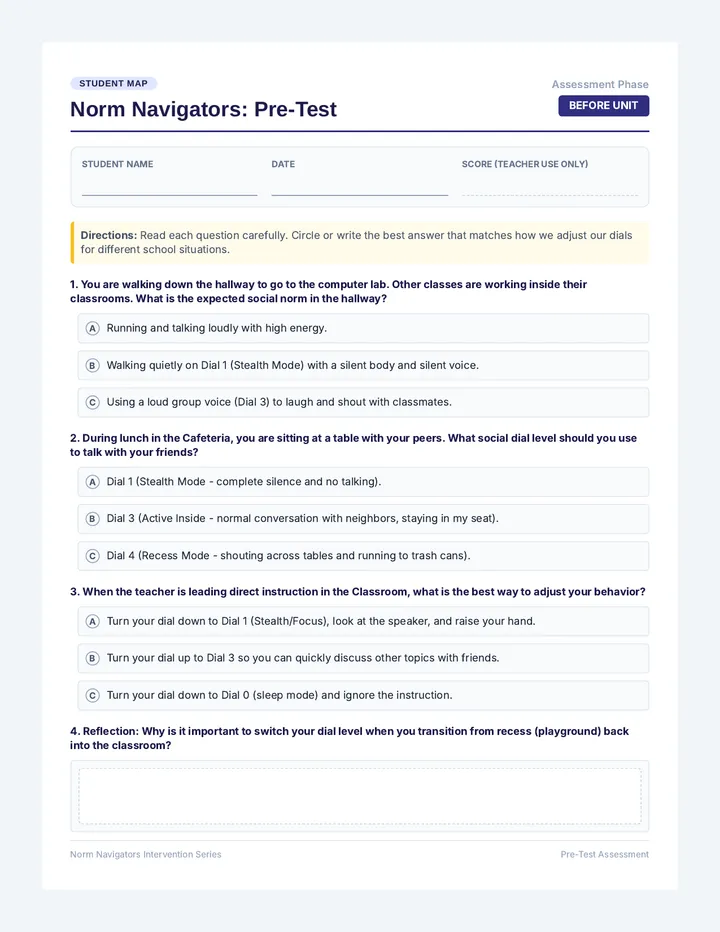
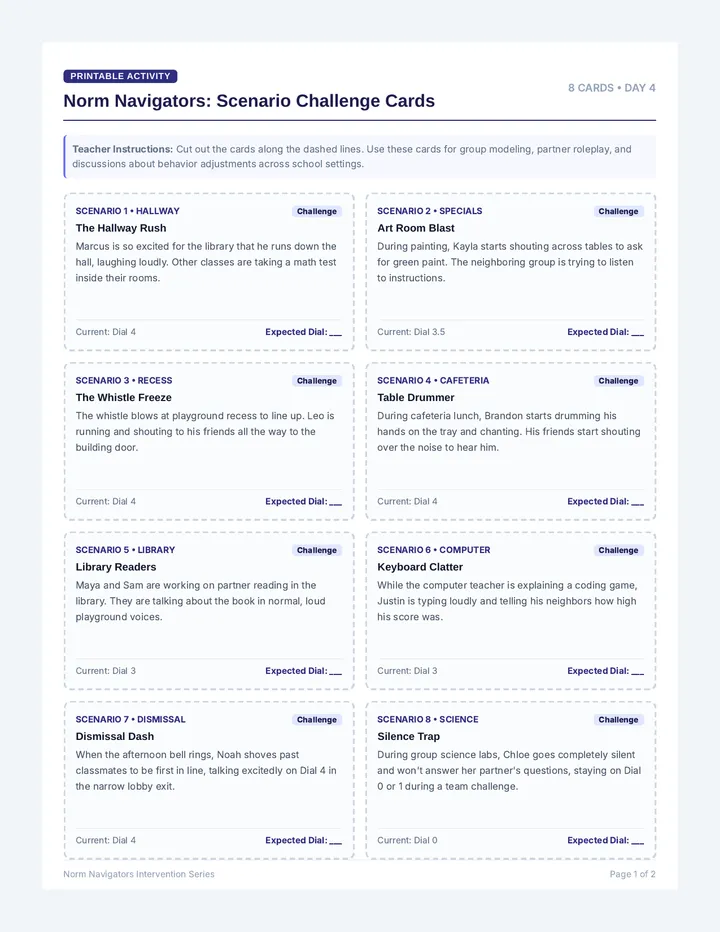
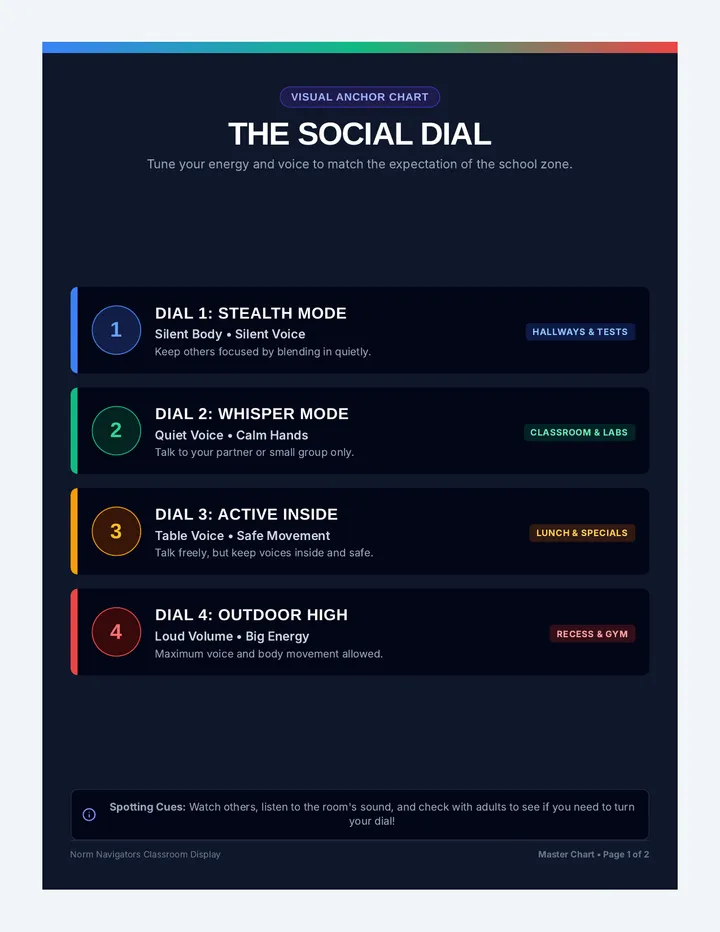
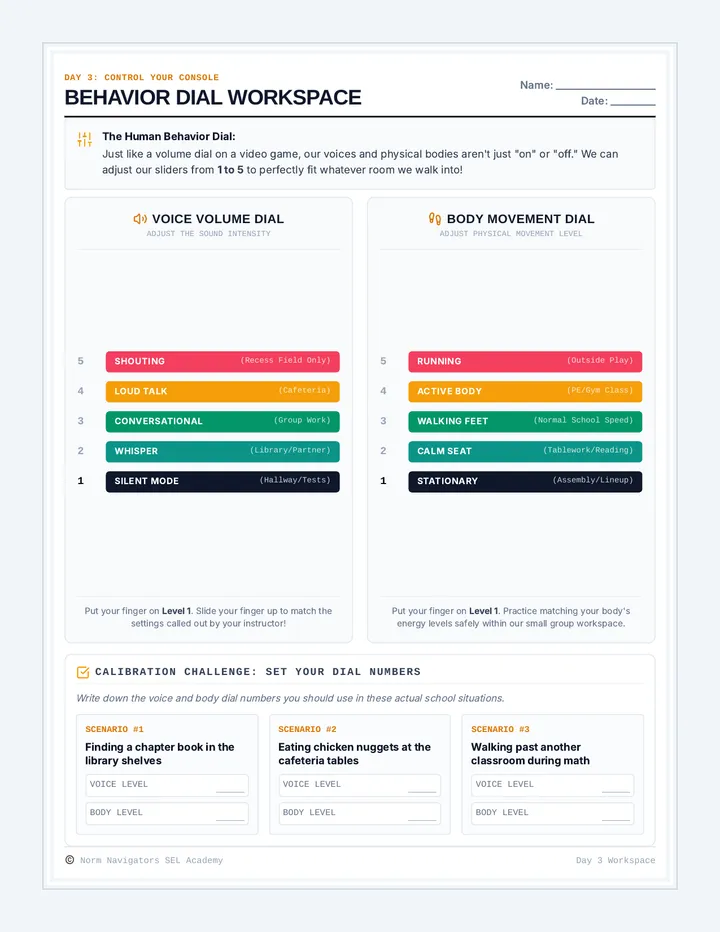
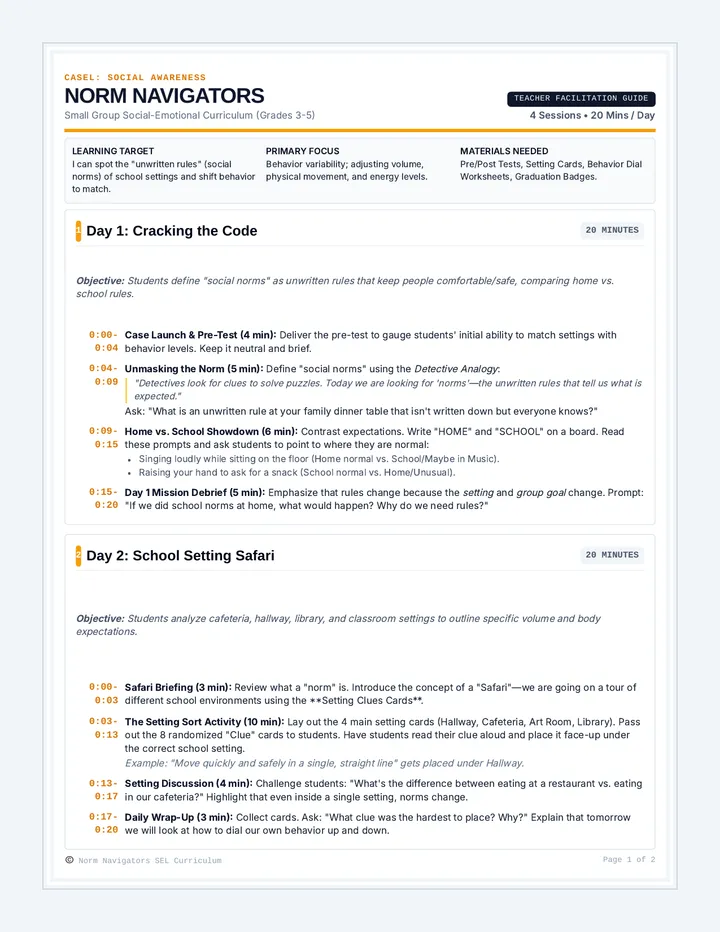
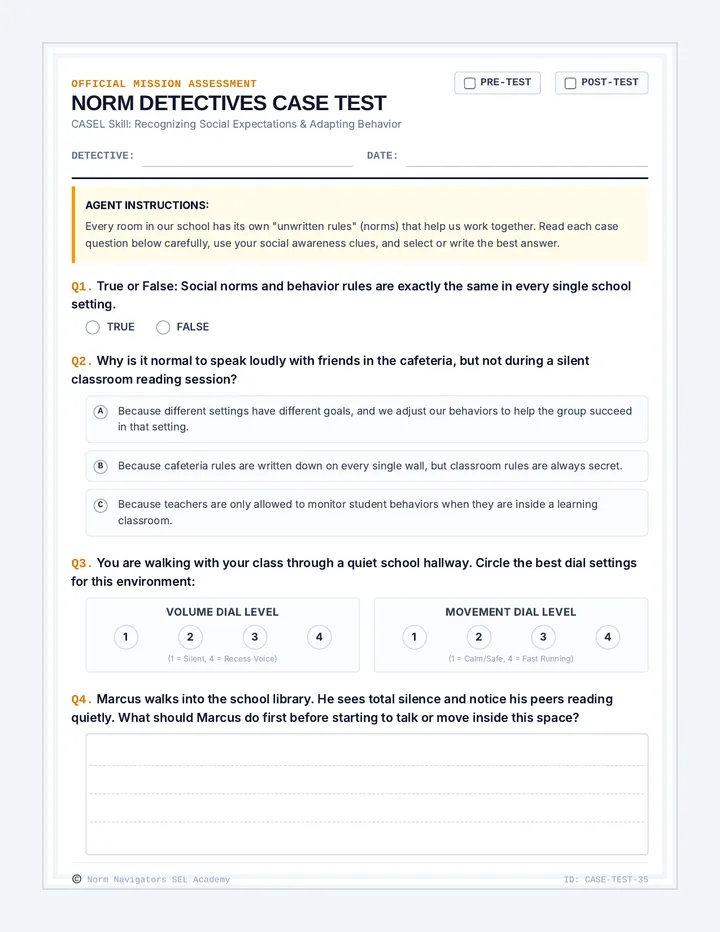
A 5-day small group Tier 2 intervention lesson designed to teach grades 3-5 students how to identify social norms across various school environments and regulate their behaviors accordingly. Includes structured daily facilitation guides, pre/post assessments, slide presentations, challenge cards, and anchor charts.
Students complete their post-test, demonstrate behavior-shifting skills in a scenario-based card challenge, and celebrate their growth with a graduation badge.
Students practice using a "Behavior Dial" to physically and vocally adjust their volume, movement, and energy levels to match different school environments.
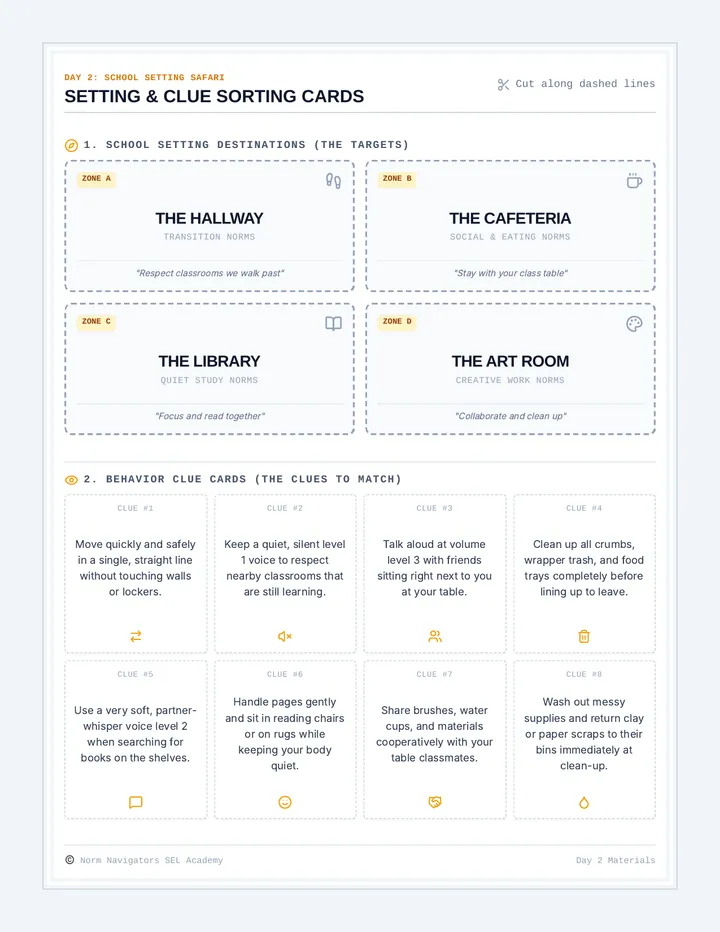
Students examine specific school settings like the hallway, cafeteria, and specials classes to map out their unique expectations and unwritten rules.
Students are introduced to the concept of social norms as unwritten rules that help groups work together, comparing how norms change between home and school.
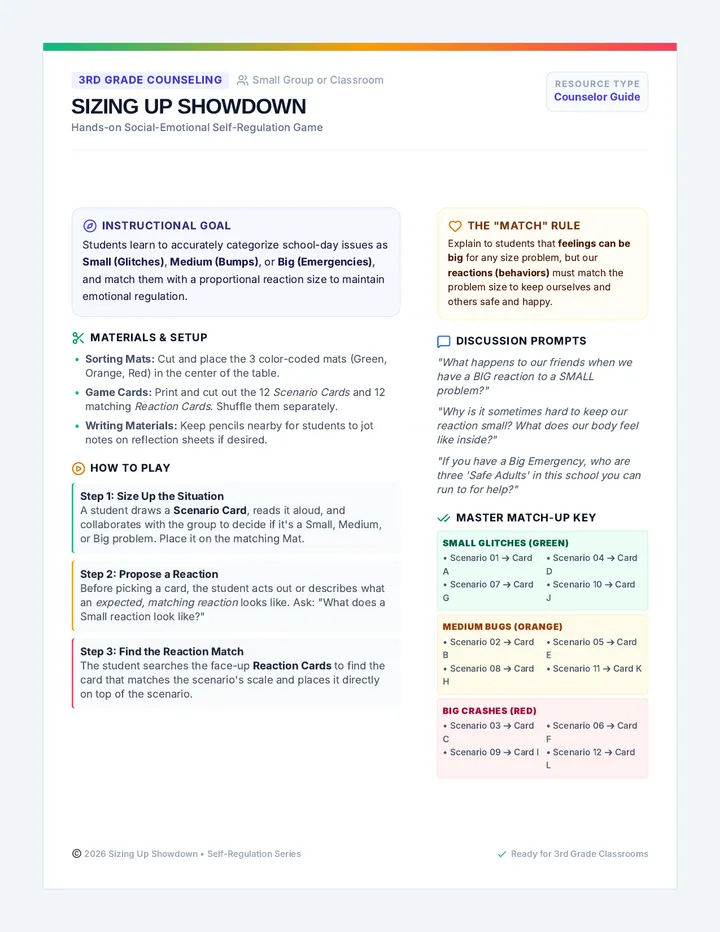
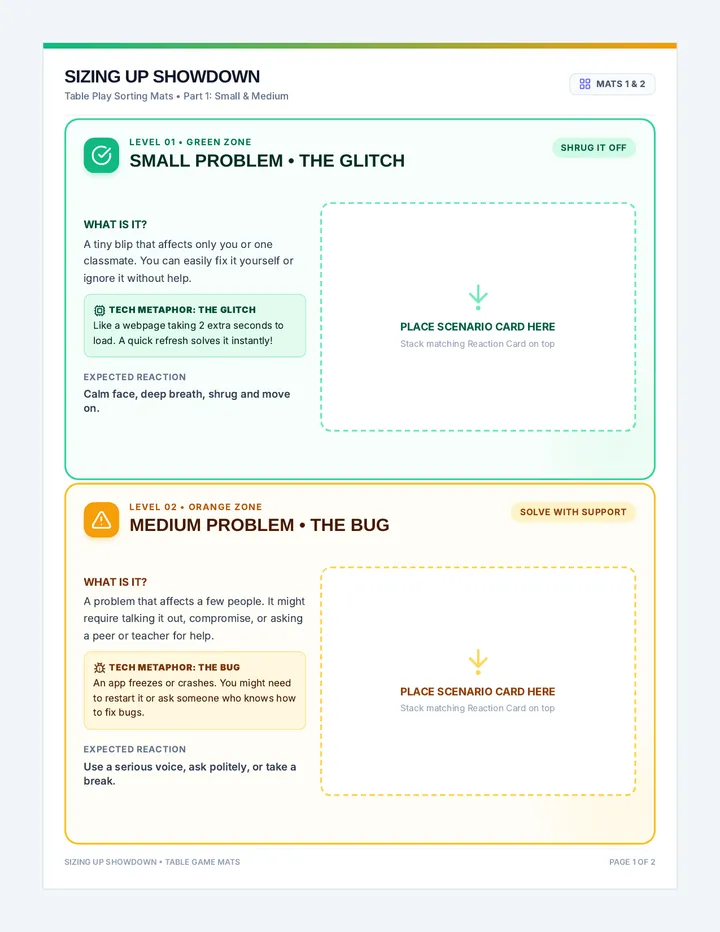
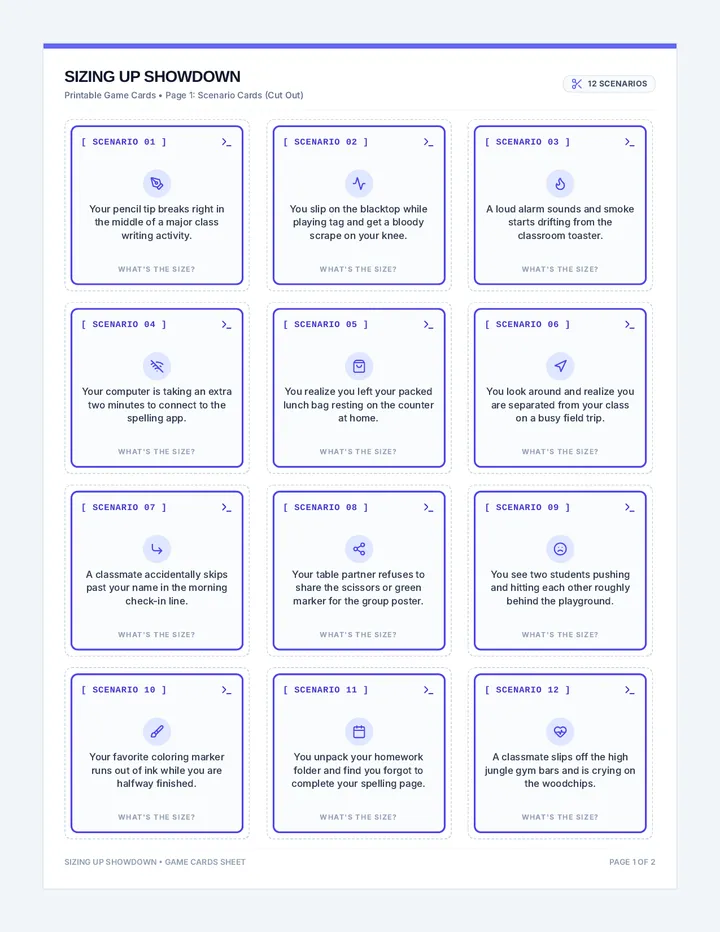
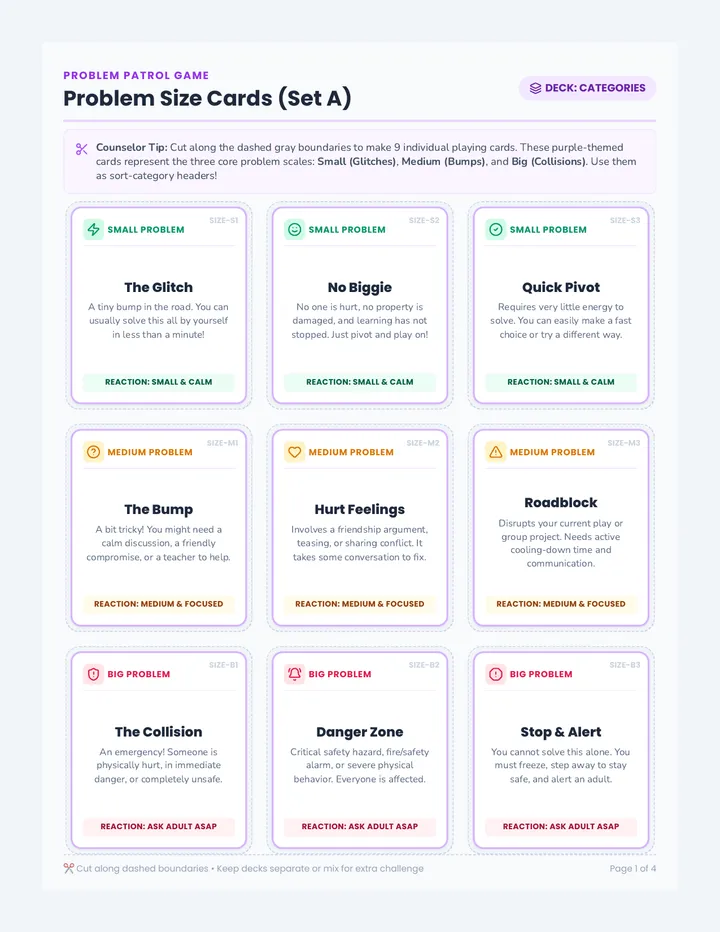
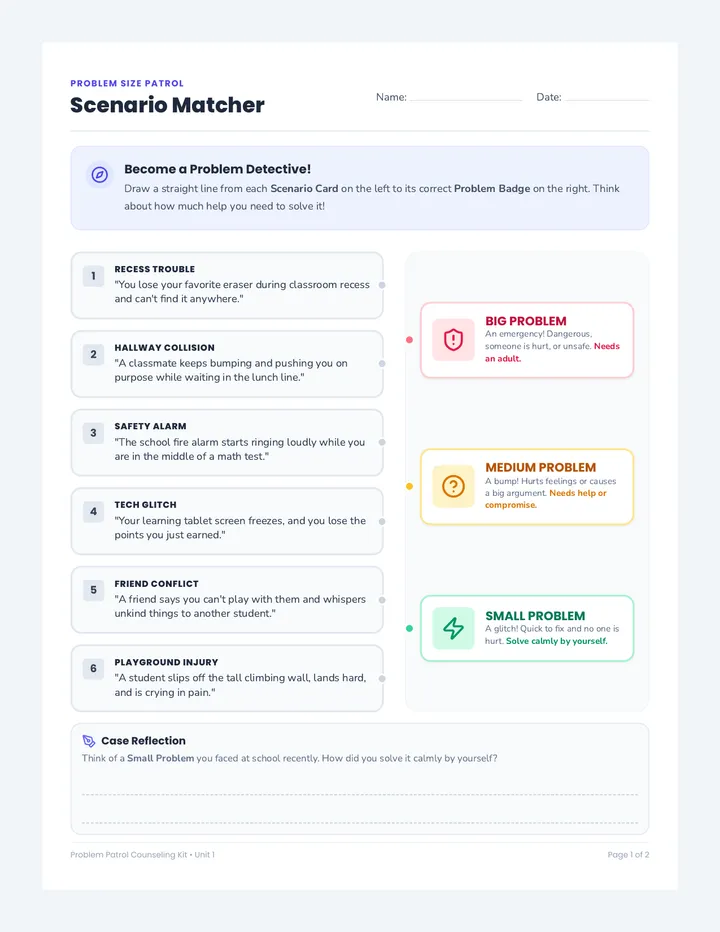
A hands-on, table-play counseling lesson for 3rd graders to master self-regulation by matching social-emotional problem scenarios to their appropriate problem size (Small, Medium, Big) and corresponding reaction size. Includes sorting mats, cut-out scenario/reaction cards, and a counselor facilitation guide.
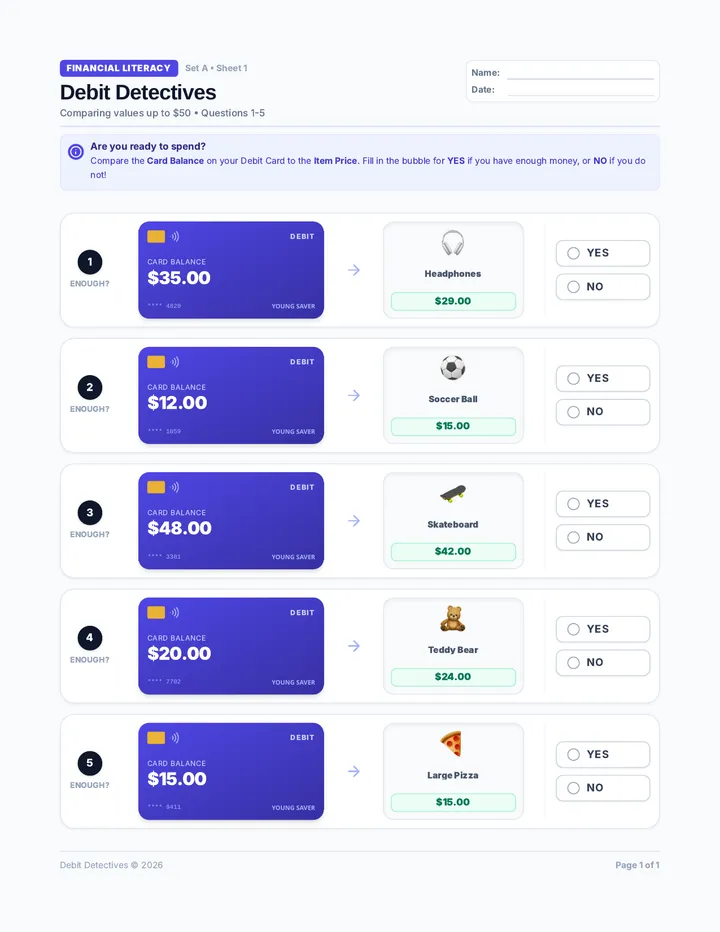
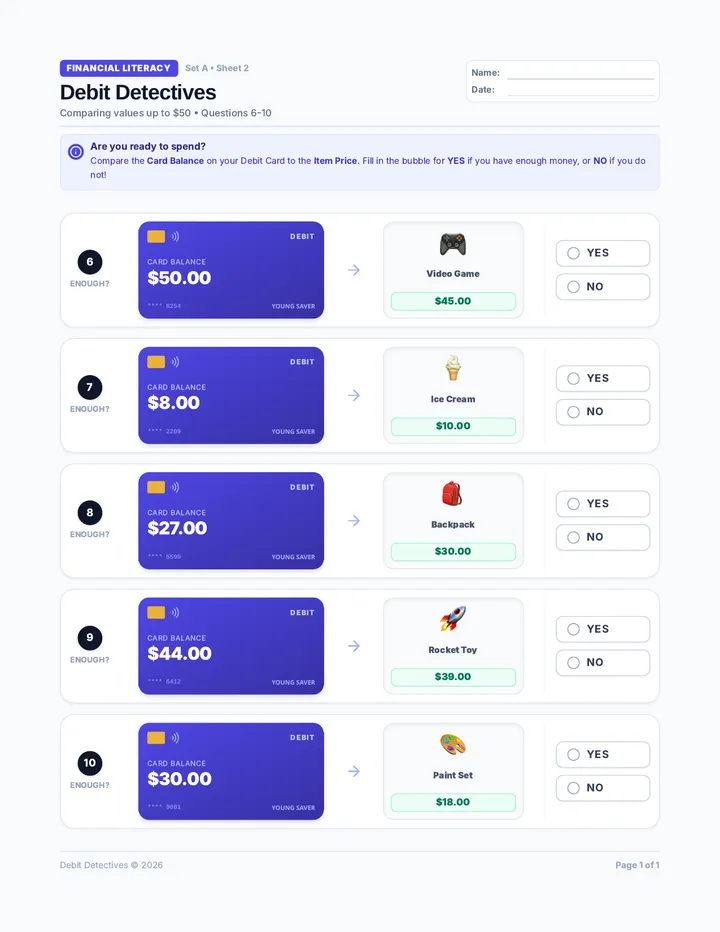
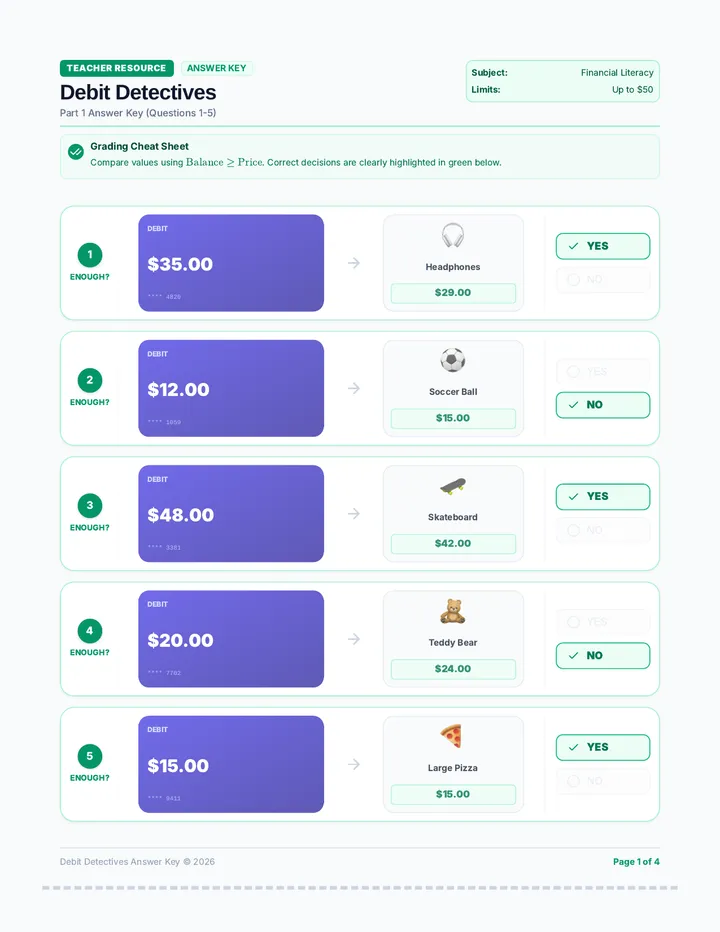
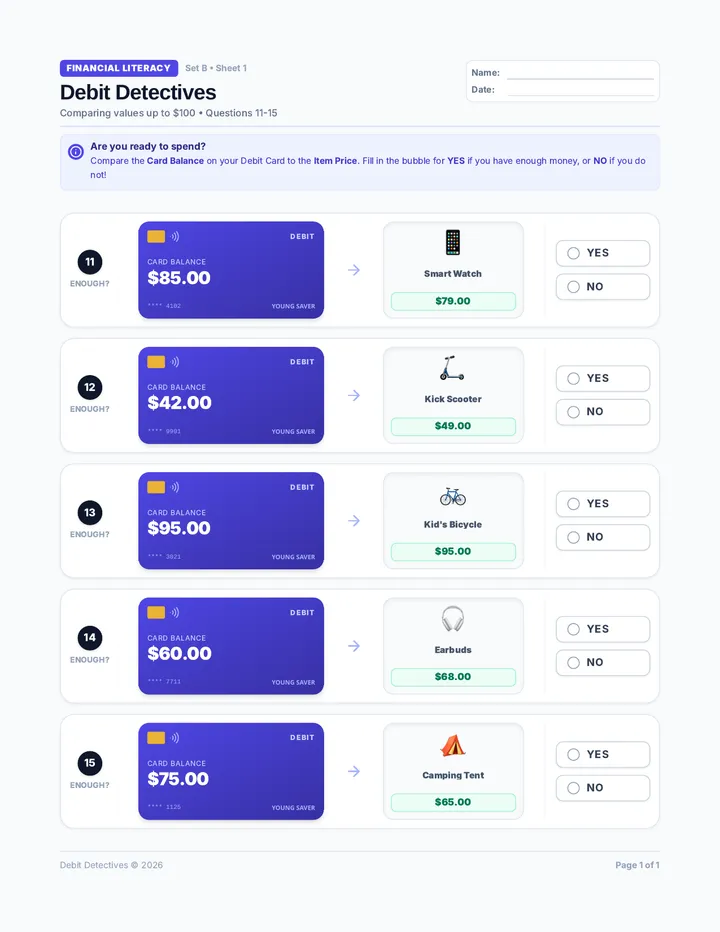
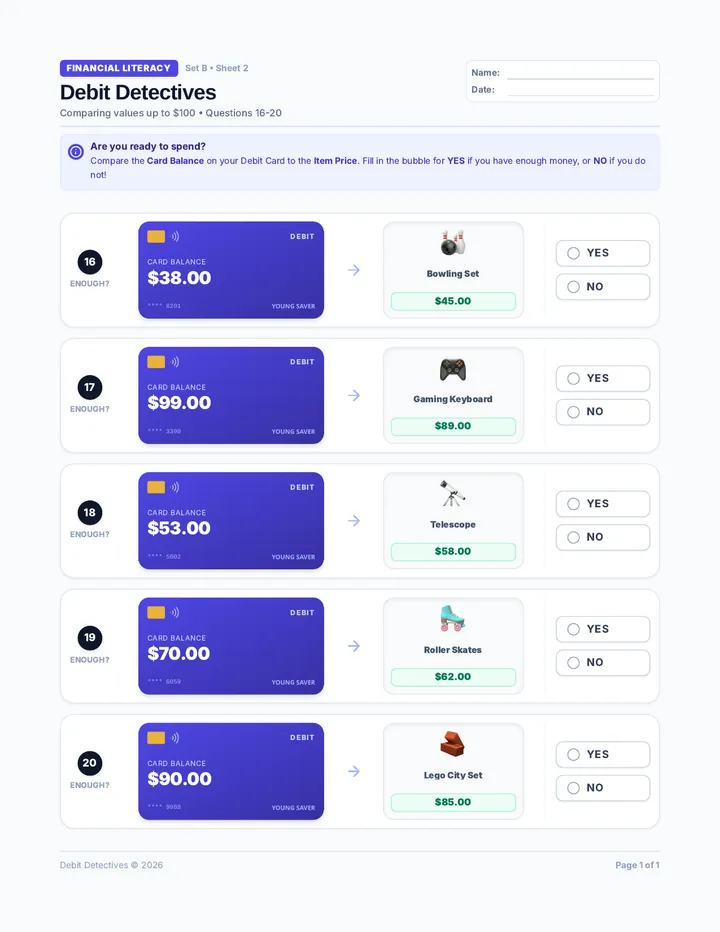
A double-digit financial literacy lesson where students compare debit card balances with item prices up to $50. Students practice decision-making by determining whether they have enough funds to complete various transactions.
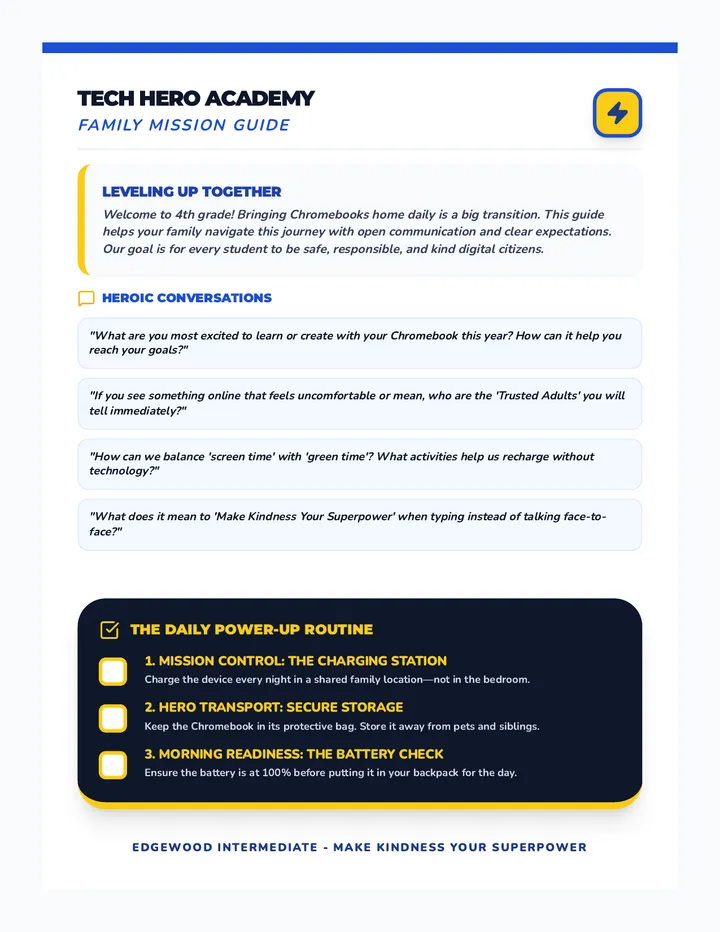
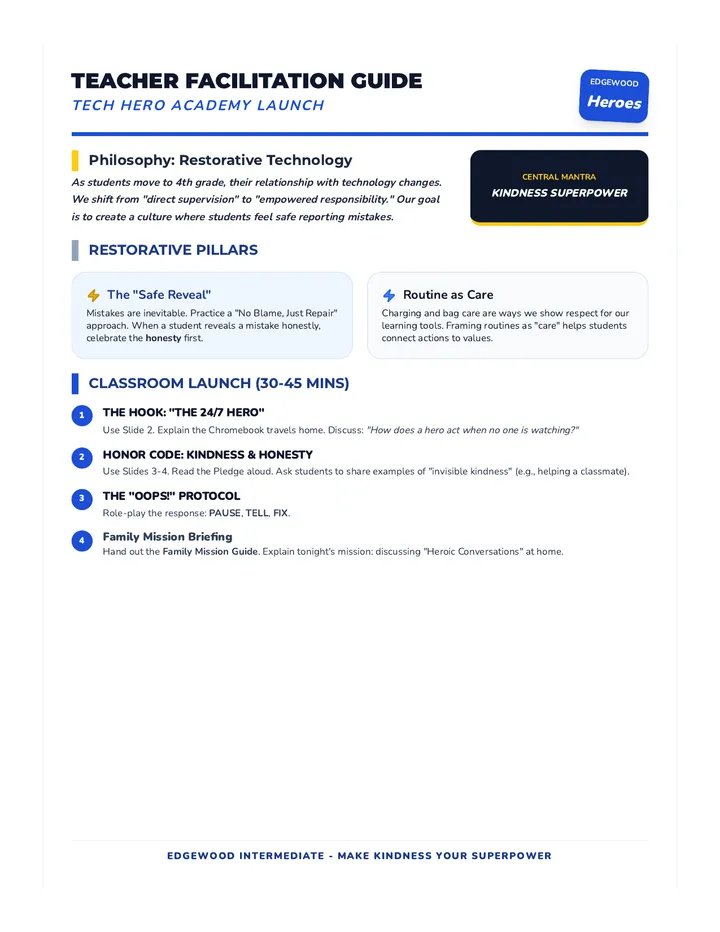
A lesson designed to transition 3rd grade students to 4th grade technology responsibilities, focusing on restorative practices, digital citizenship, and the 'Make Kindness Your Superpower' initiative.
A counseling unit focused on helping 3rd graders identify the size of everyday problems and match them with appropriate emotional reactions.
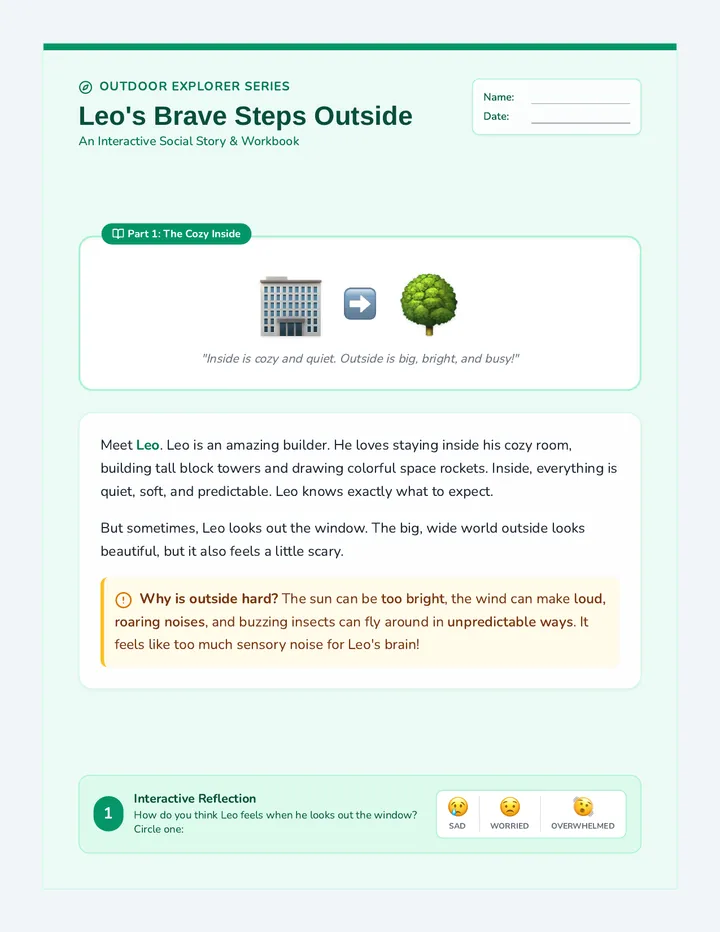
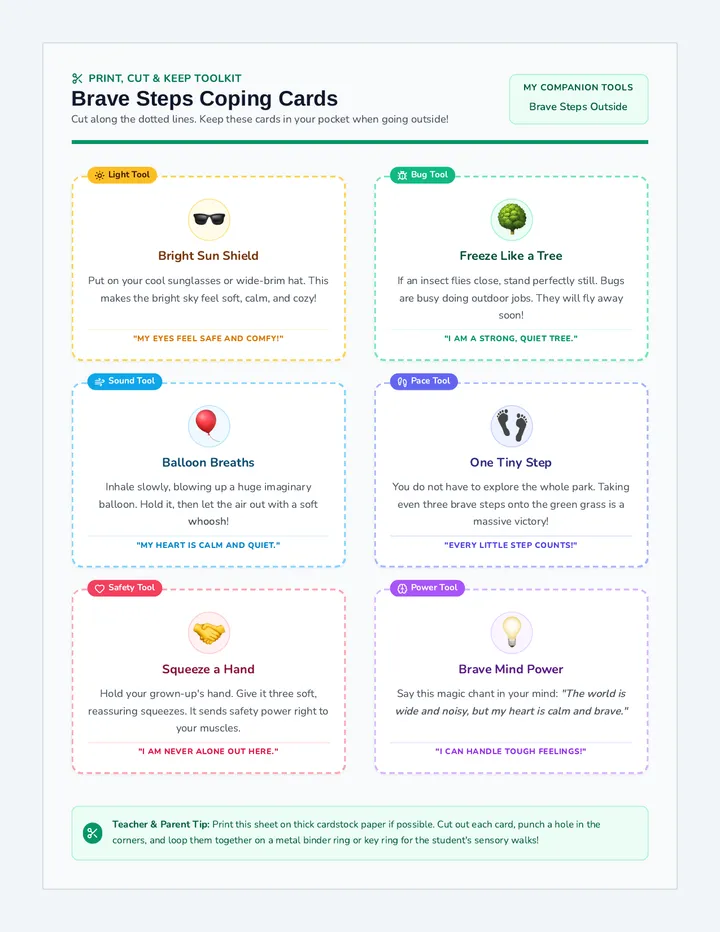
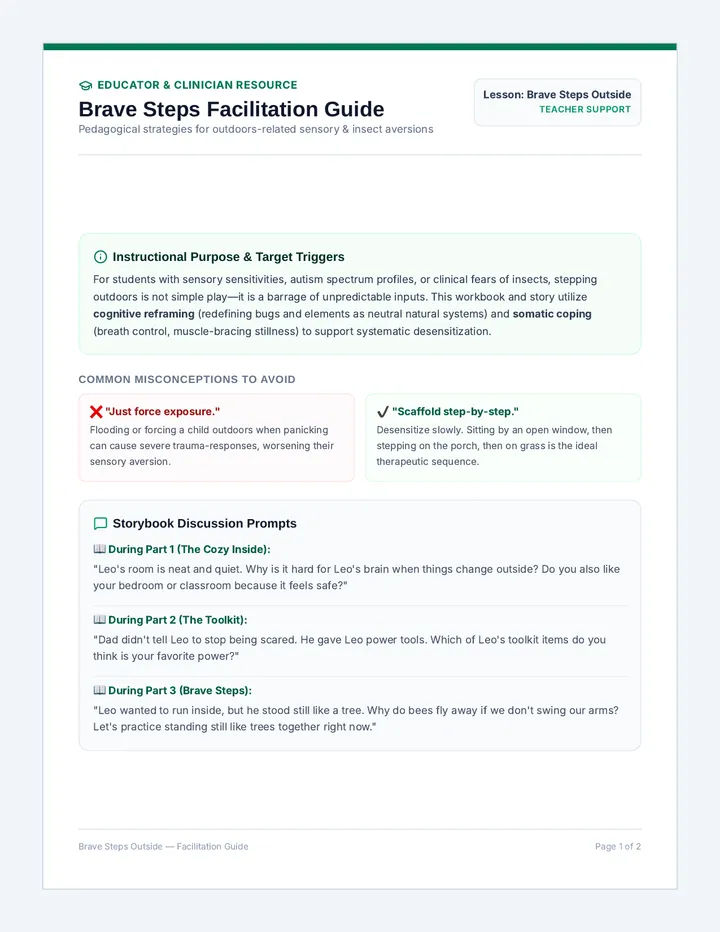
A comprehensive social emotional learning lesson designed to help children navigate fears of the outdoors, specifically focusing on sensory overload (loud noises, bright lights, weather) and unpredictable insects. Includes an interactive social story workbook, visual coping cards, and a teacher support guide.
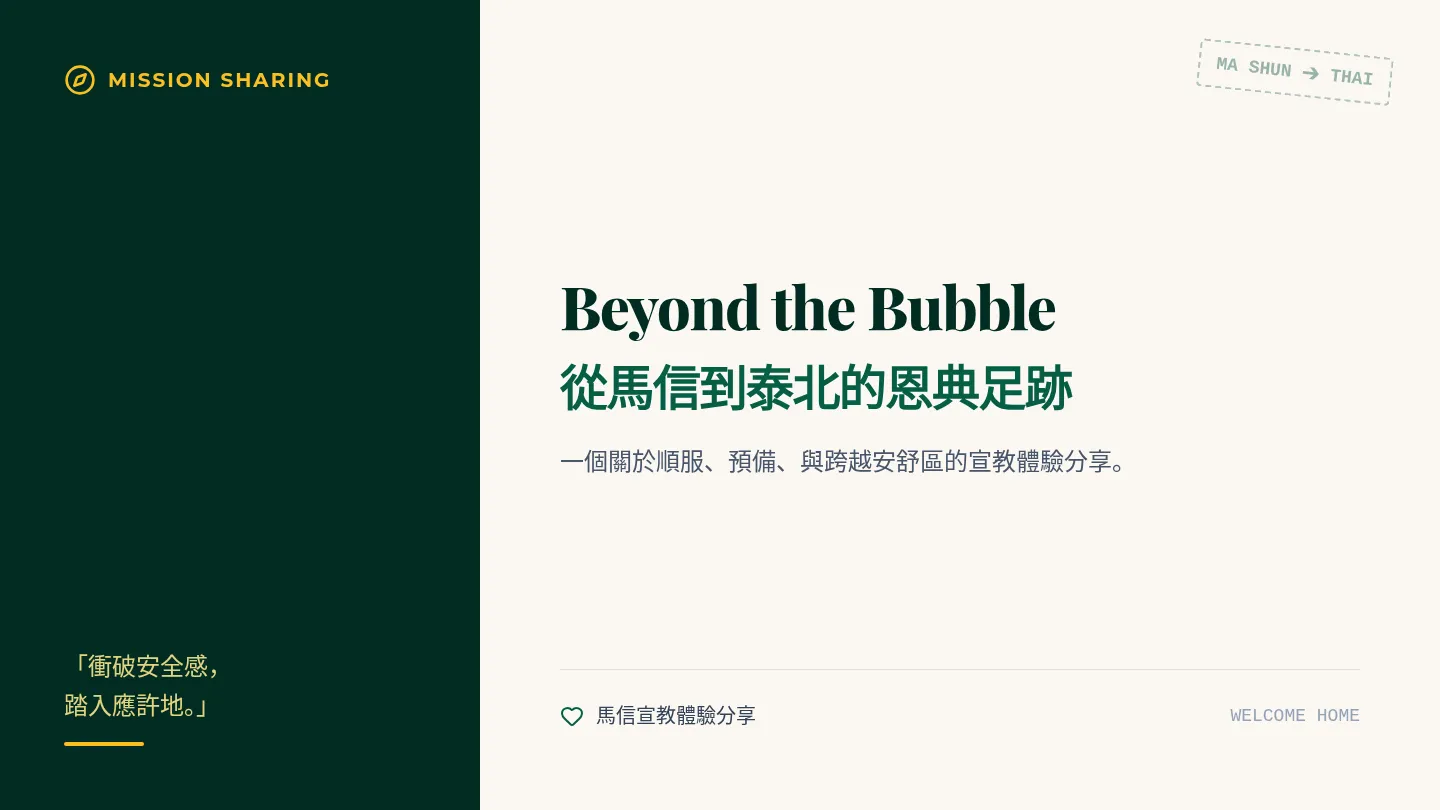
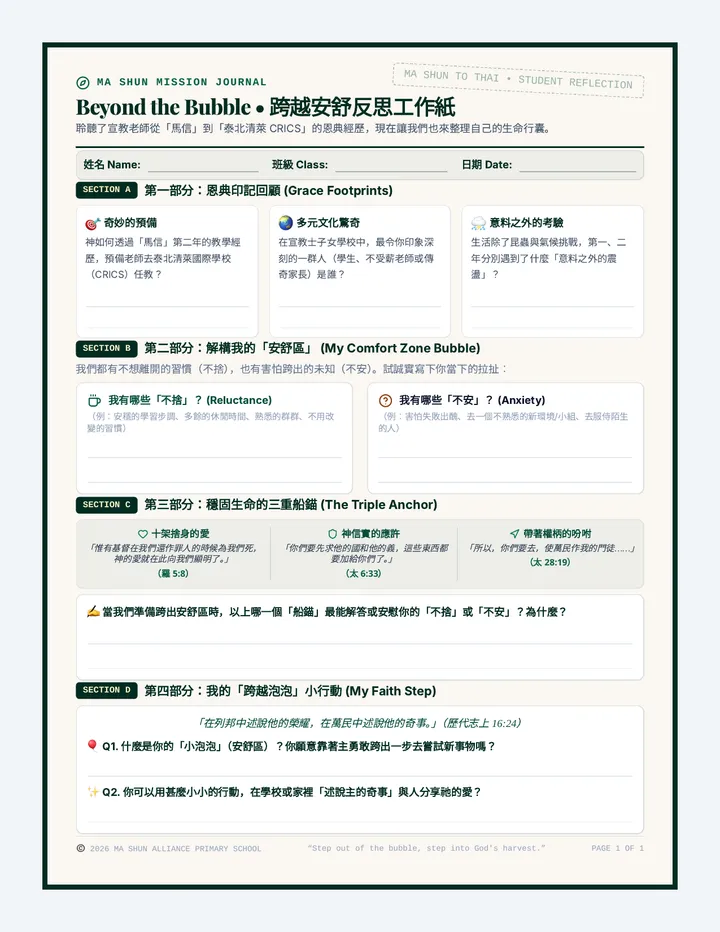
A testimony-based lesson exploring the journey of stepping out of one's comfort zone, overcoming fears through faith, and embracing God's mission in Thailand.
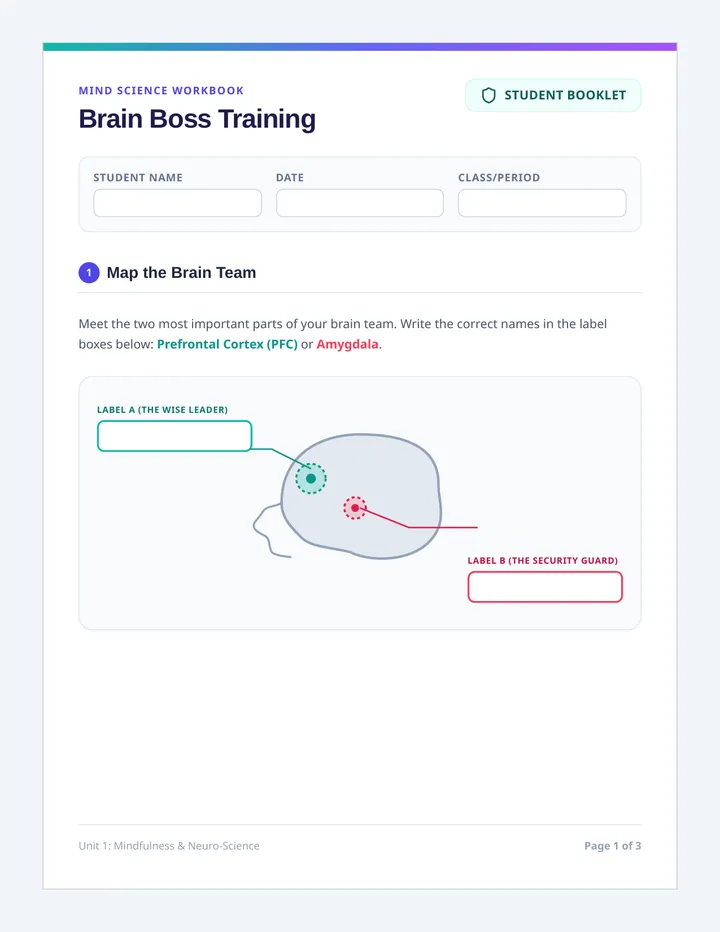
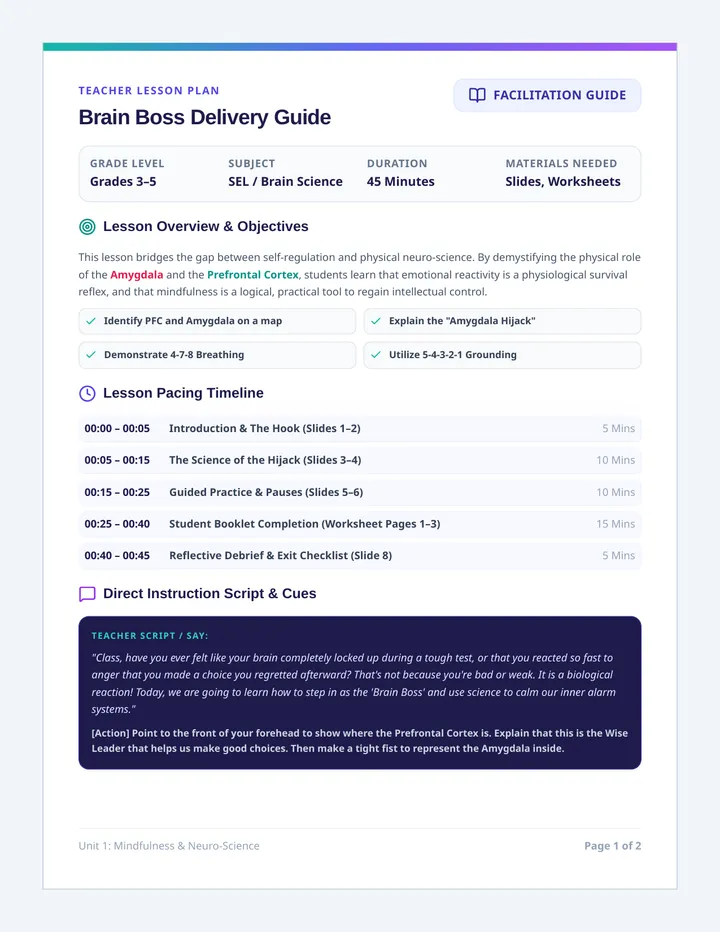
An explicit teaching lesson for Upper Elementary (grades 3-5) that introduces mindfulness through brain science, explaining the roles of the amygdala and prefrontal cortex, and provides concrete self-regulation strategies.
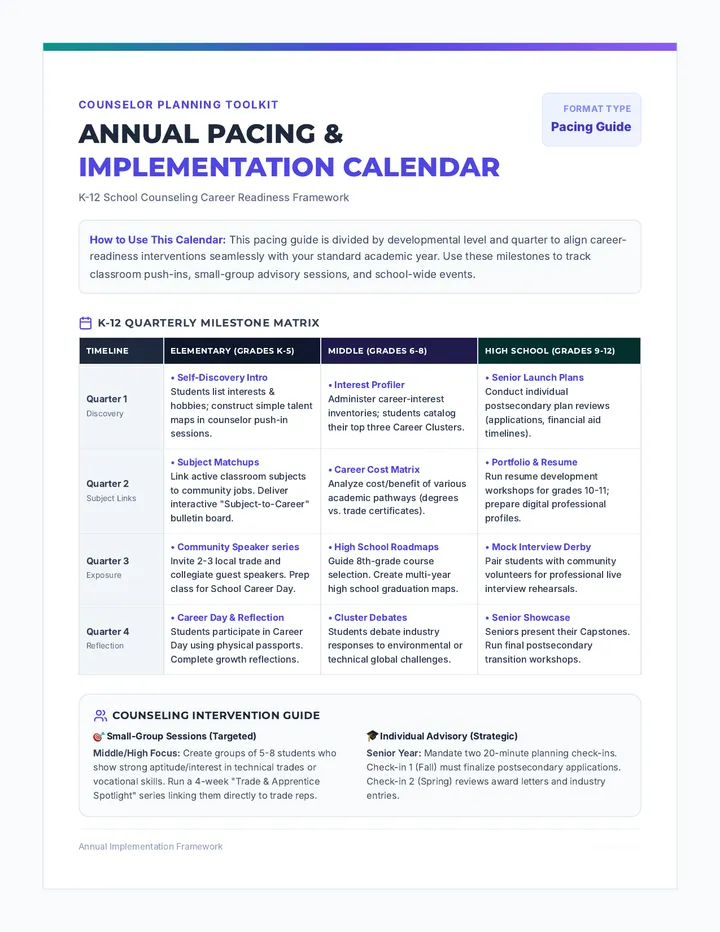
Actionable planning resources, school-wide career day guides, and implementation templates for school counselors to deploy career readiness curricula.
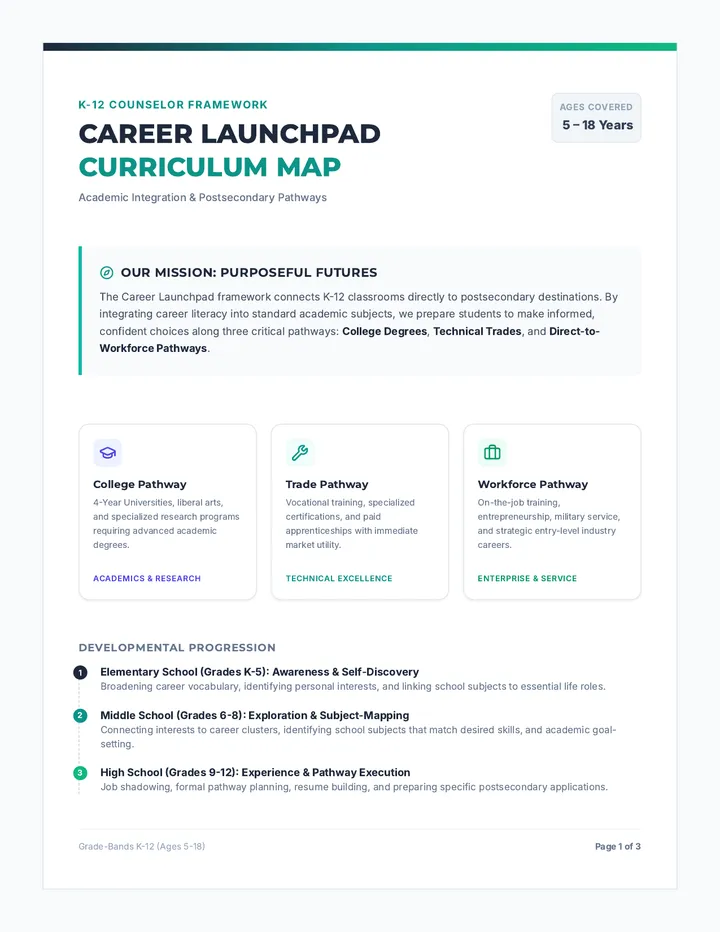
High-level scope, sequence, and developmental milestones for elementary, middle, and high school career exploration. This framework links classroom subjects to real-world college, trade, and workforce pathways.
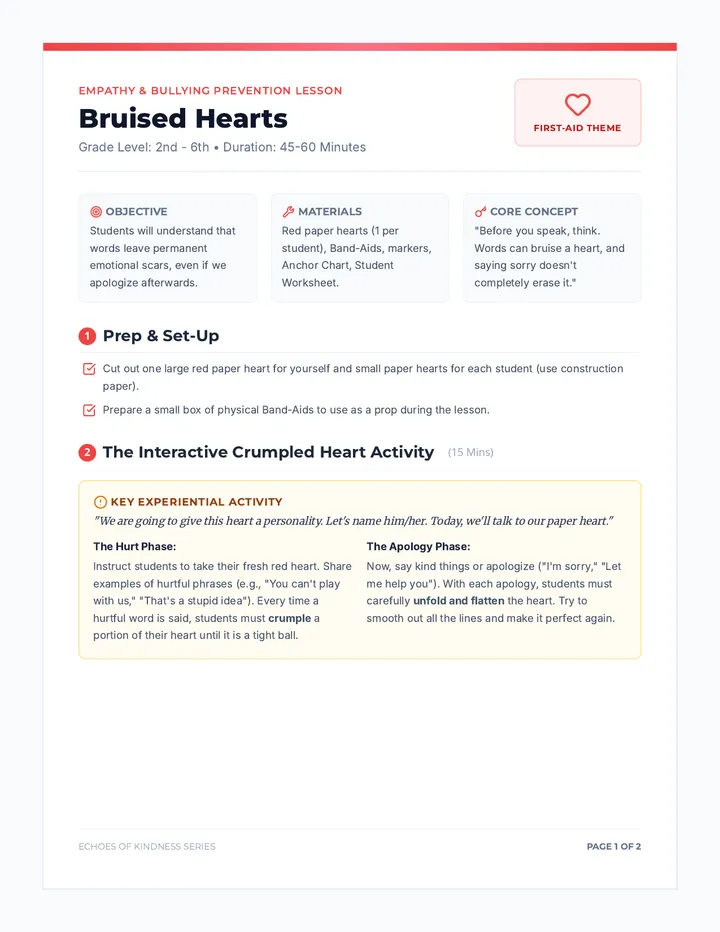
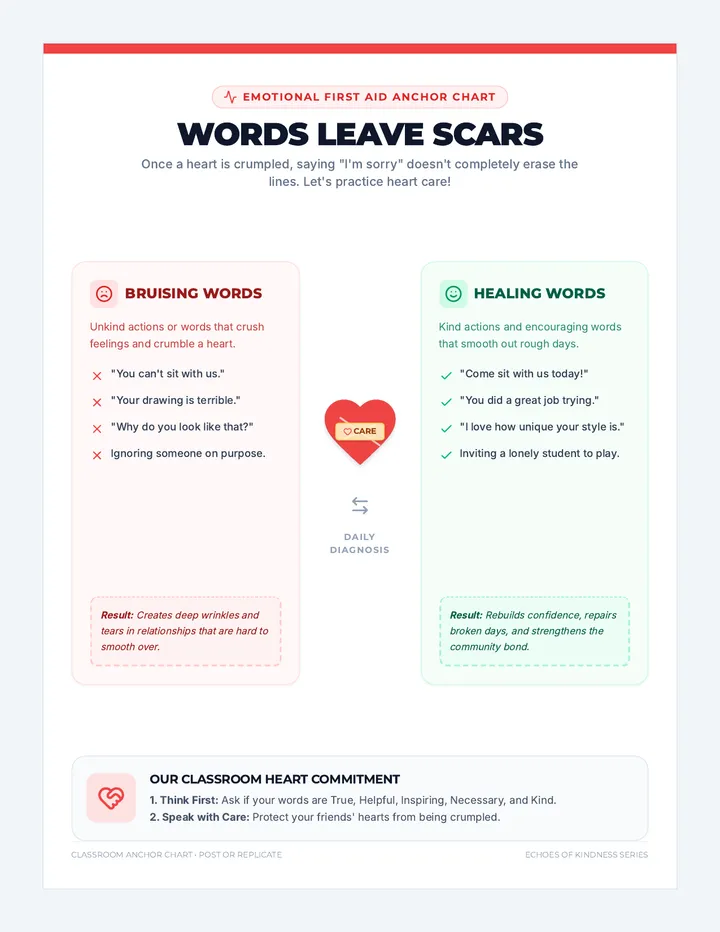
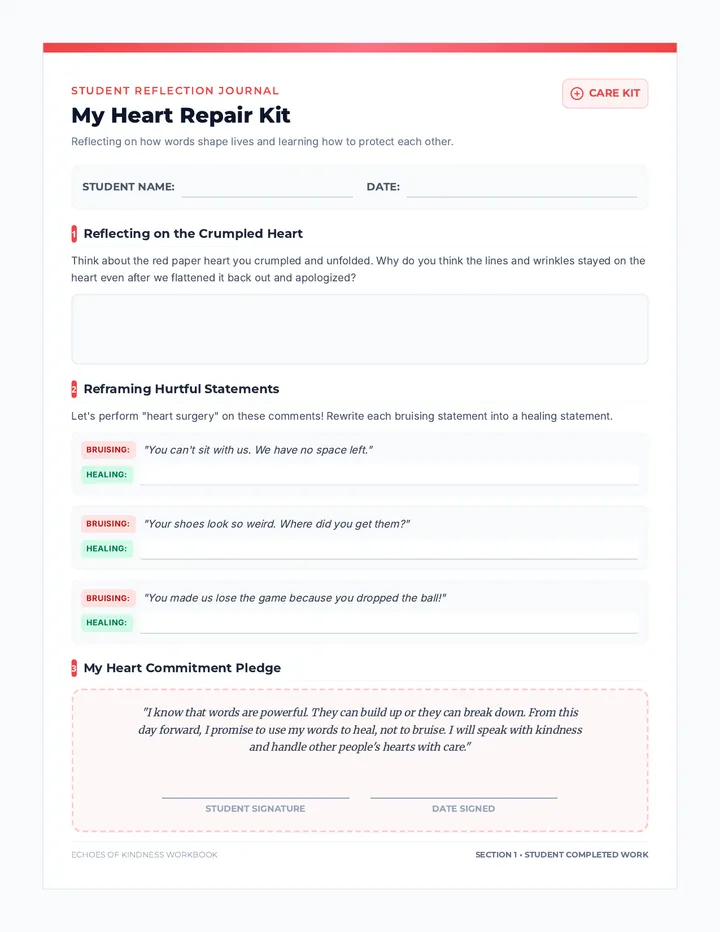
A powerful kindness and bullying prevention lesson exploring how hurtful words affect others and how we can repair hearts. Students engage in a paper-heart crumbling activity to visually understand the lasting impact of unkindness.
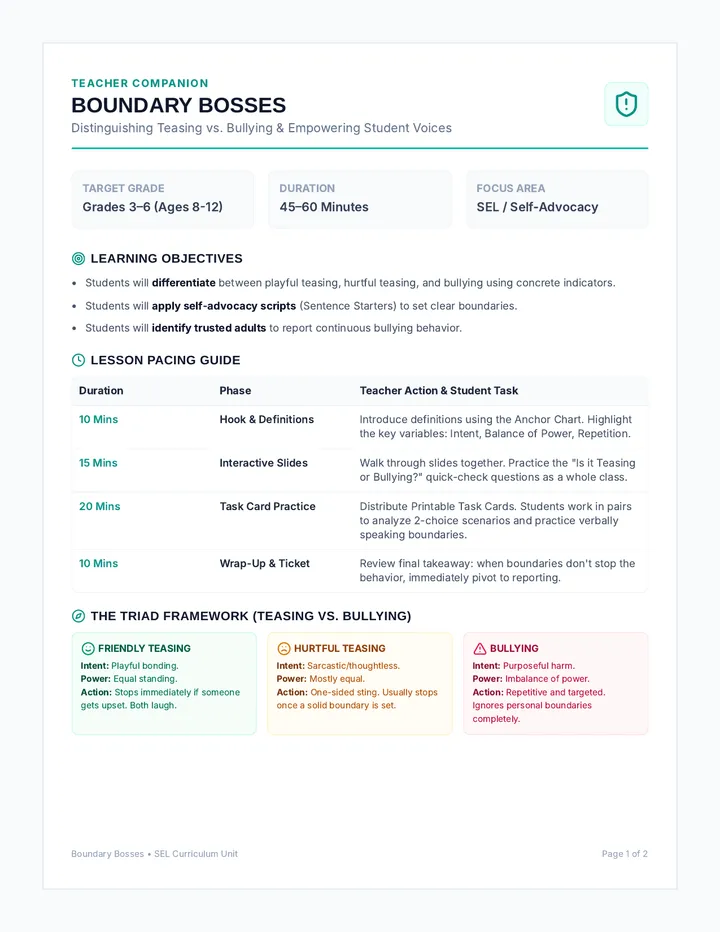
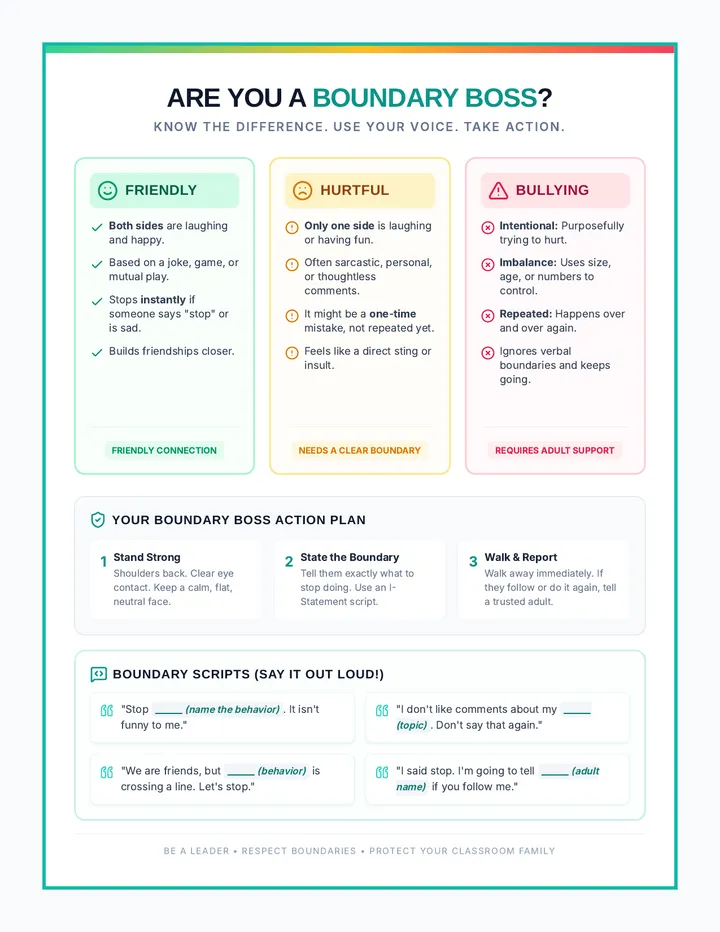
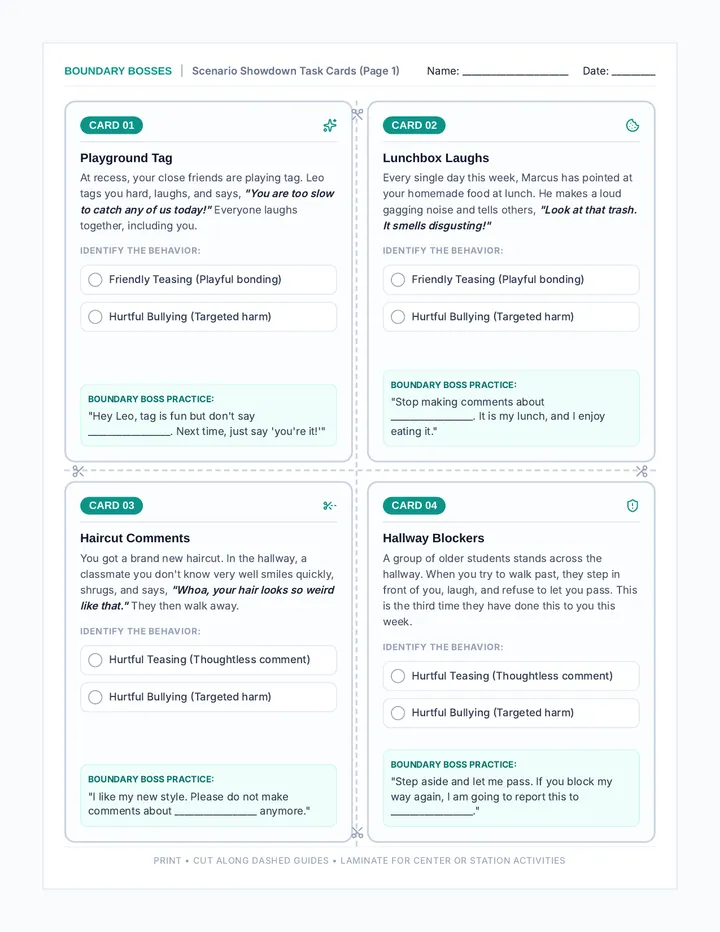
A comprehensive lesson helping students distinguish between friendly teasing, hurtful teasing, and bullying, while teaching concrete self-advocacy strategies and verbal boundary setting.