This lesson helps students identify, understand, and express different emotions through role-playing and creative expression, fostering emotional literacy and empathy.
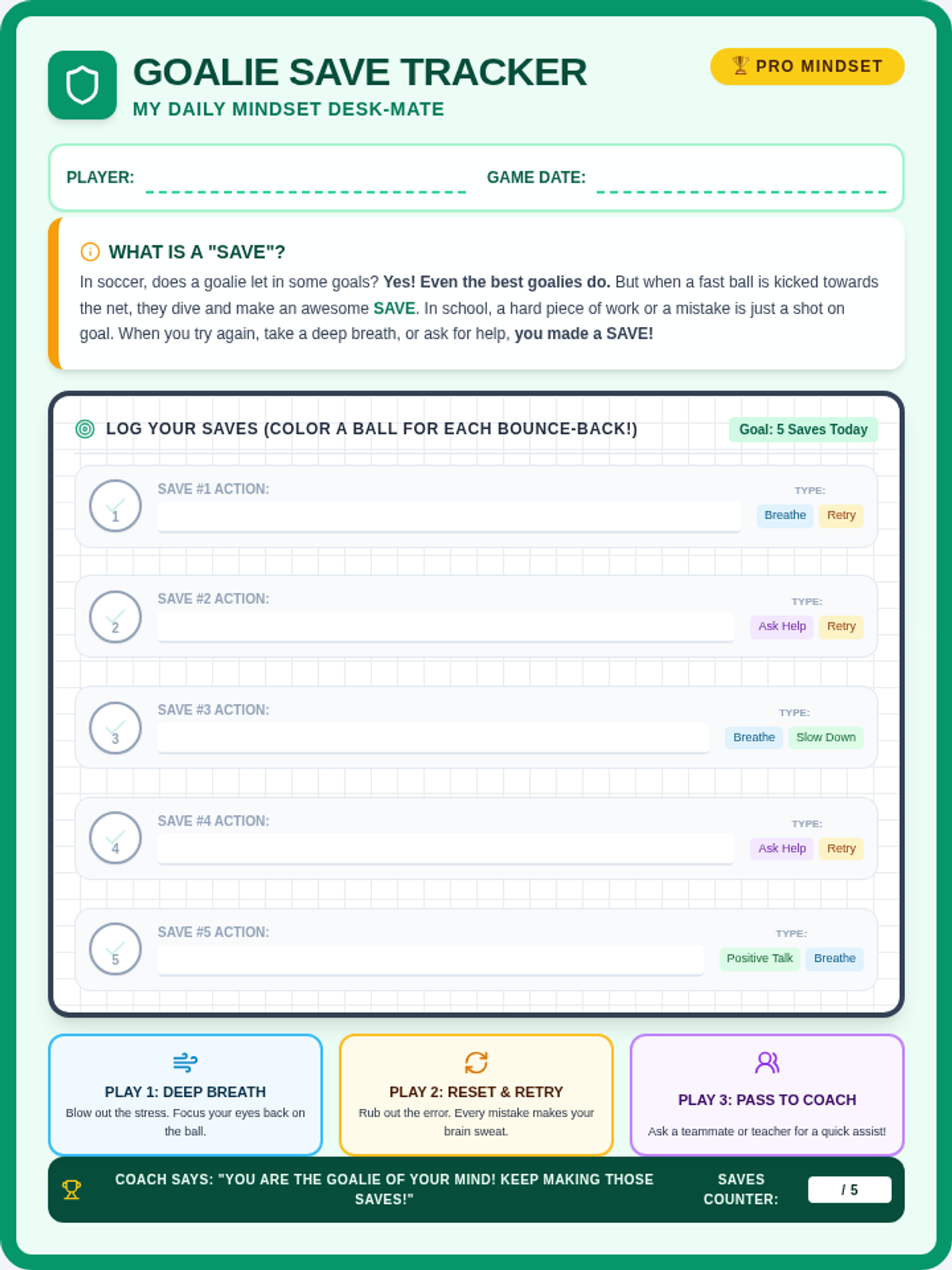
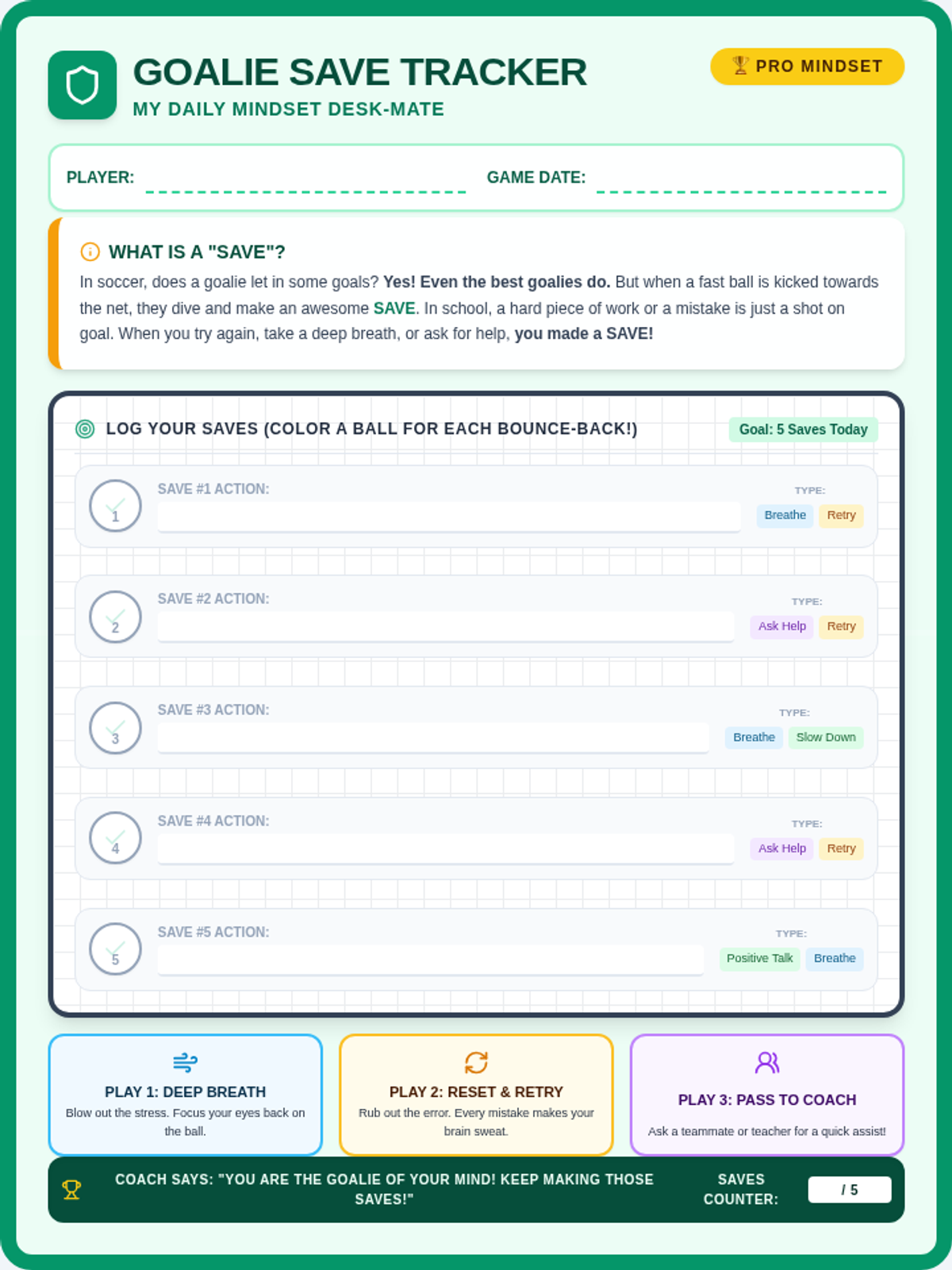
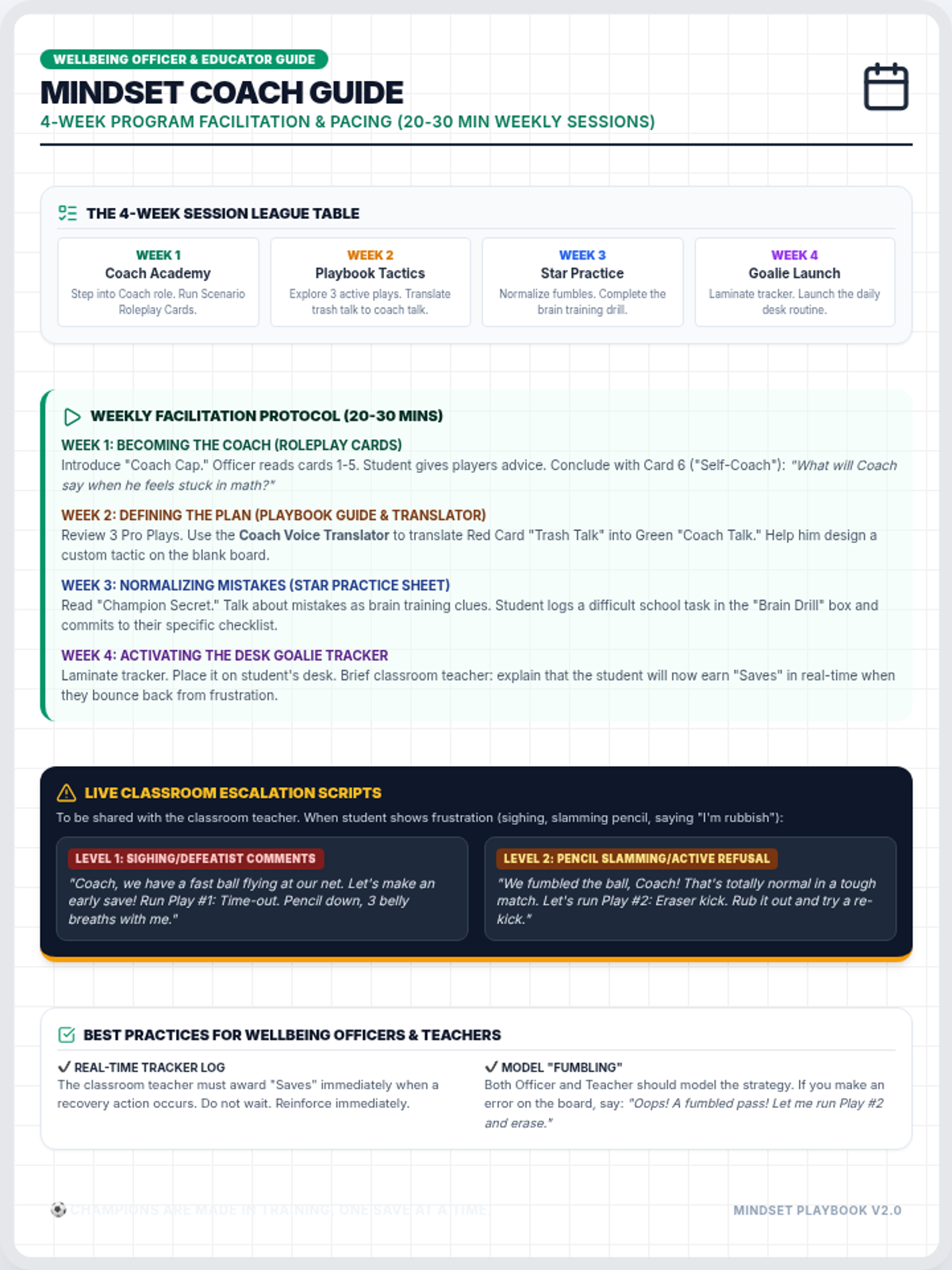
Week 4 of the Wellbeing program. Launches the daily desk-mate tracker routine in the live classroom, establishing goal-setting and long-term reinforcement of coping saves.
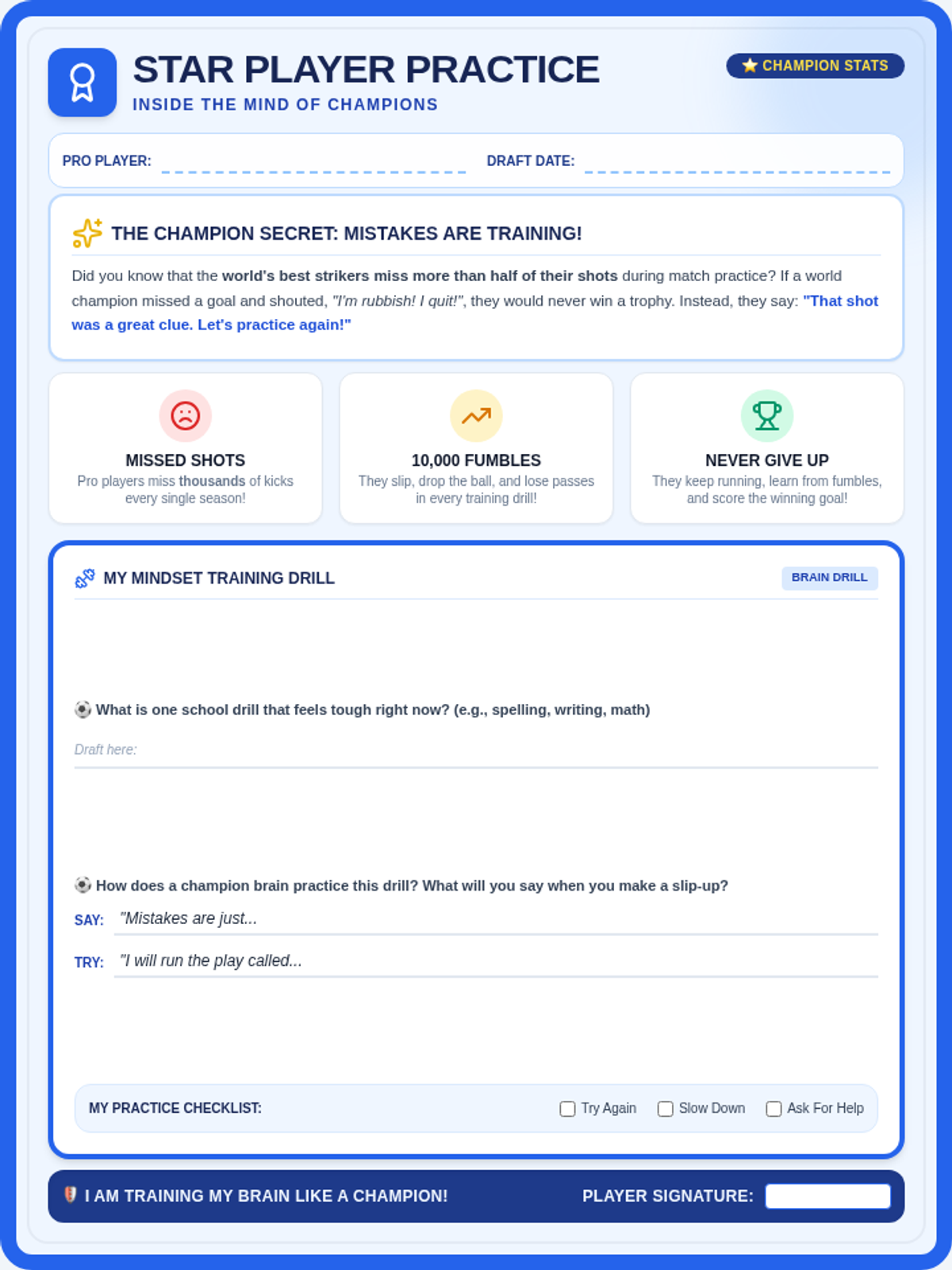
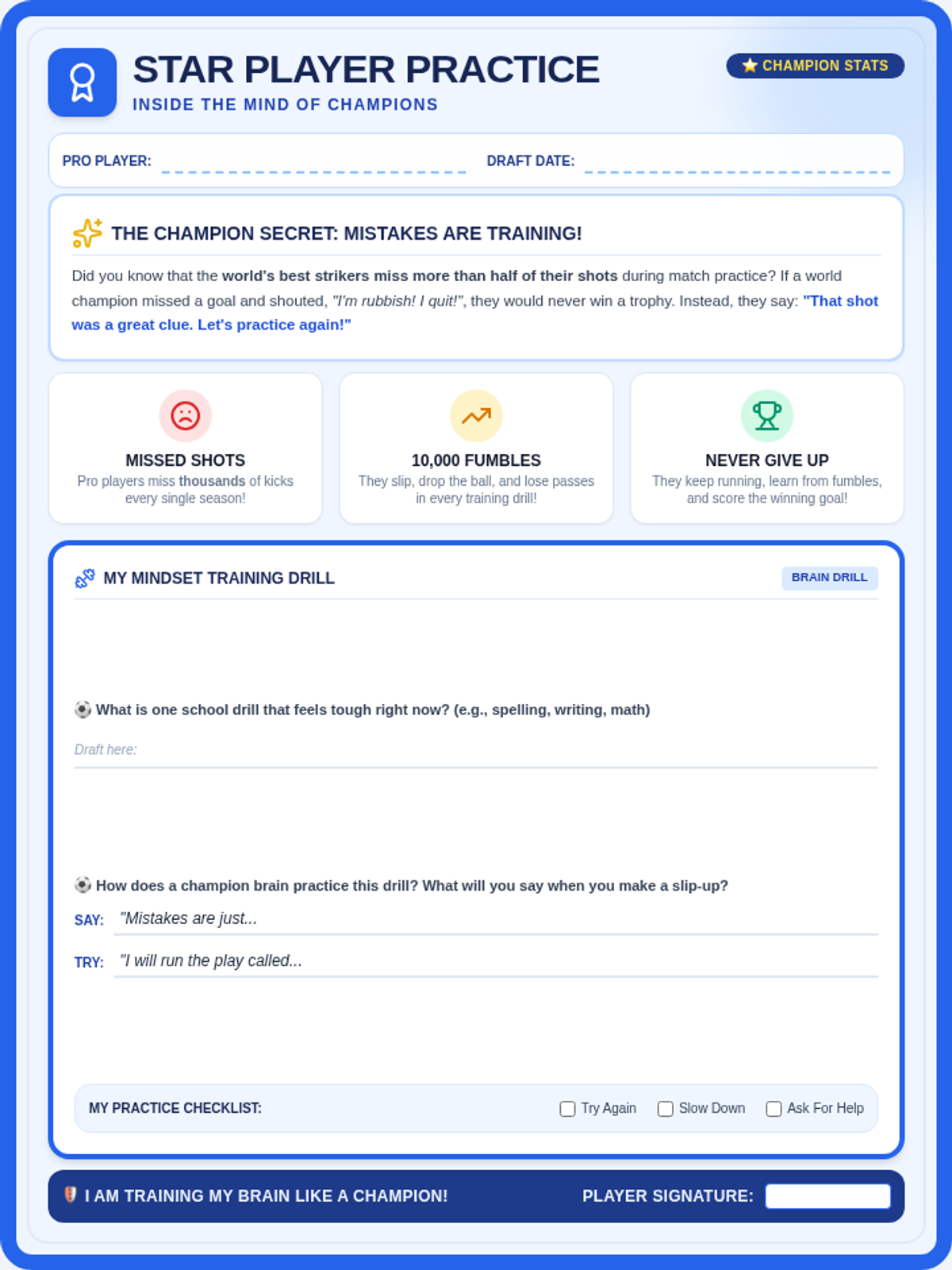
Week 3 of the Wellbeing program. Normalizes error-making by comparing student struggles to professional soccer players fumbling, failing, and practicing daily to train their brains.
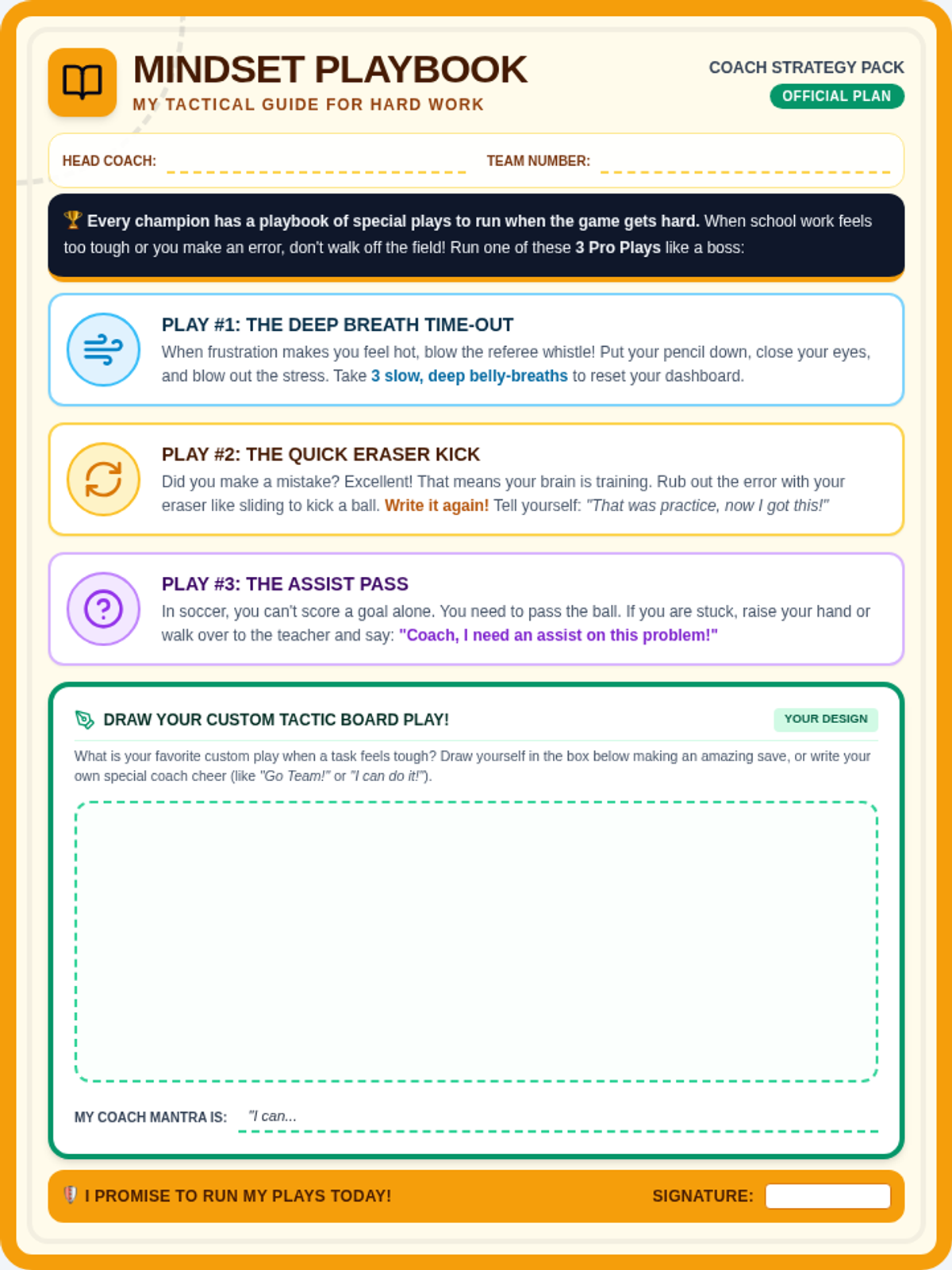
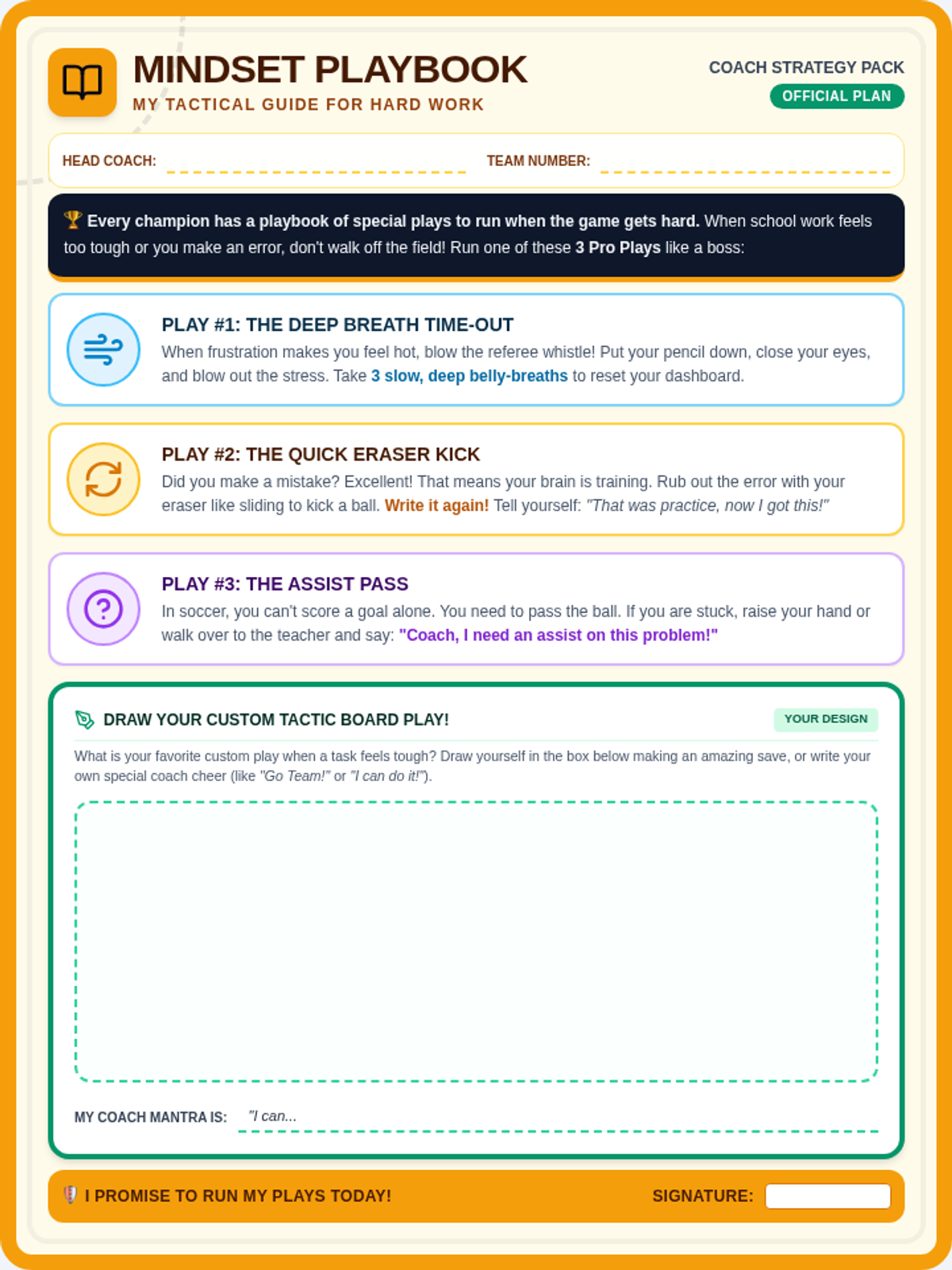
Week 2 of the Wellbeing program. The student learns to formulate a personal action plan by designing specific, physicalized tactical 'plays' to run when academic frustration hits.
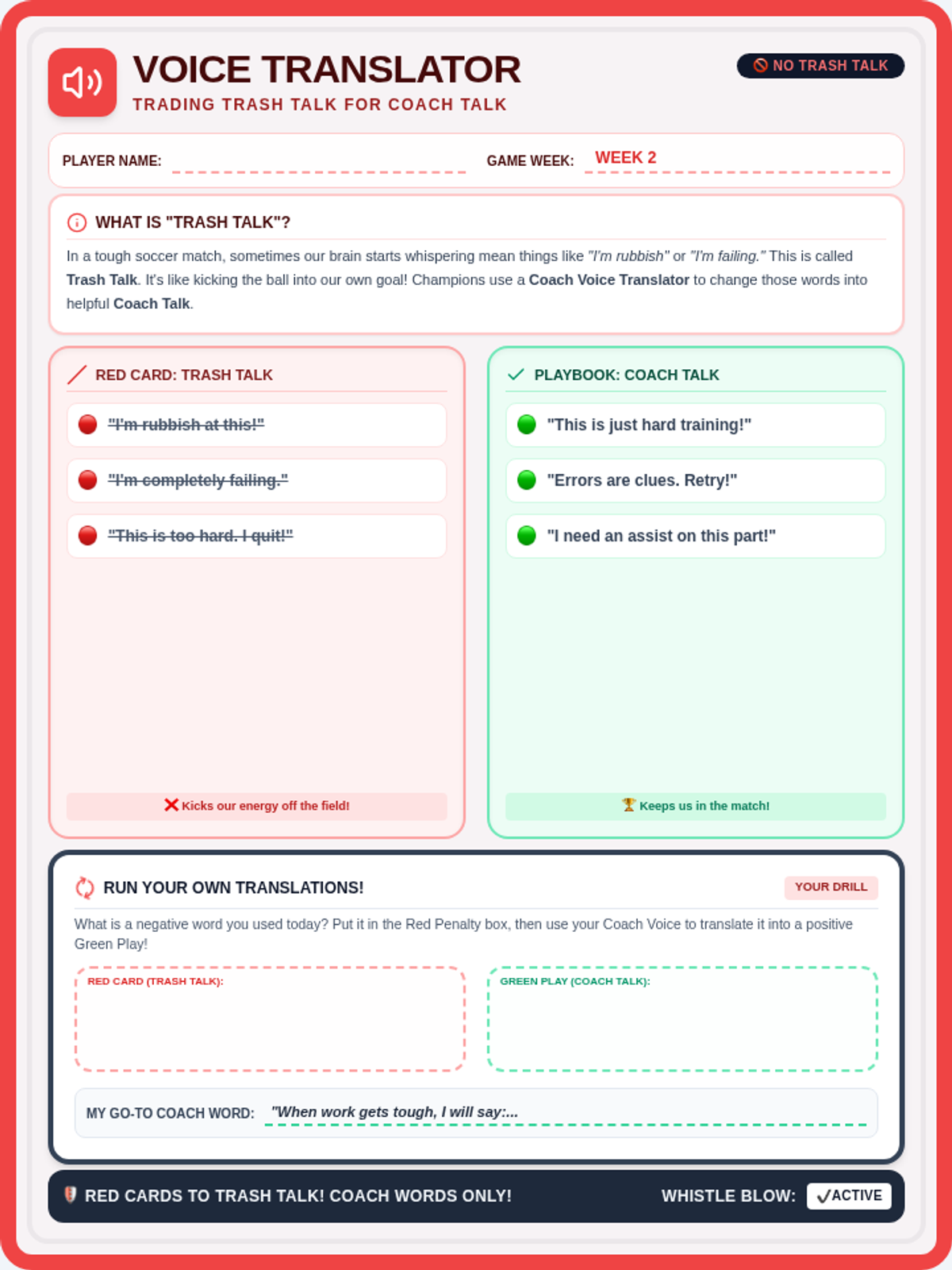
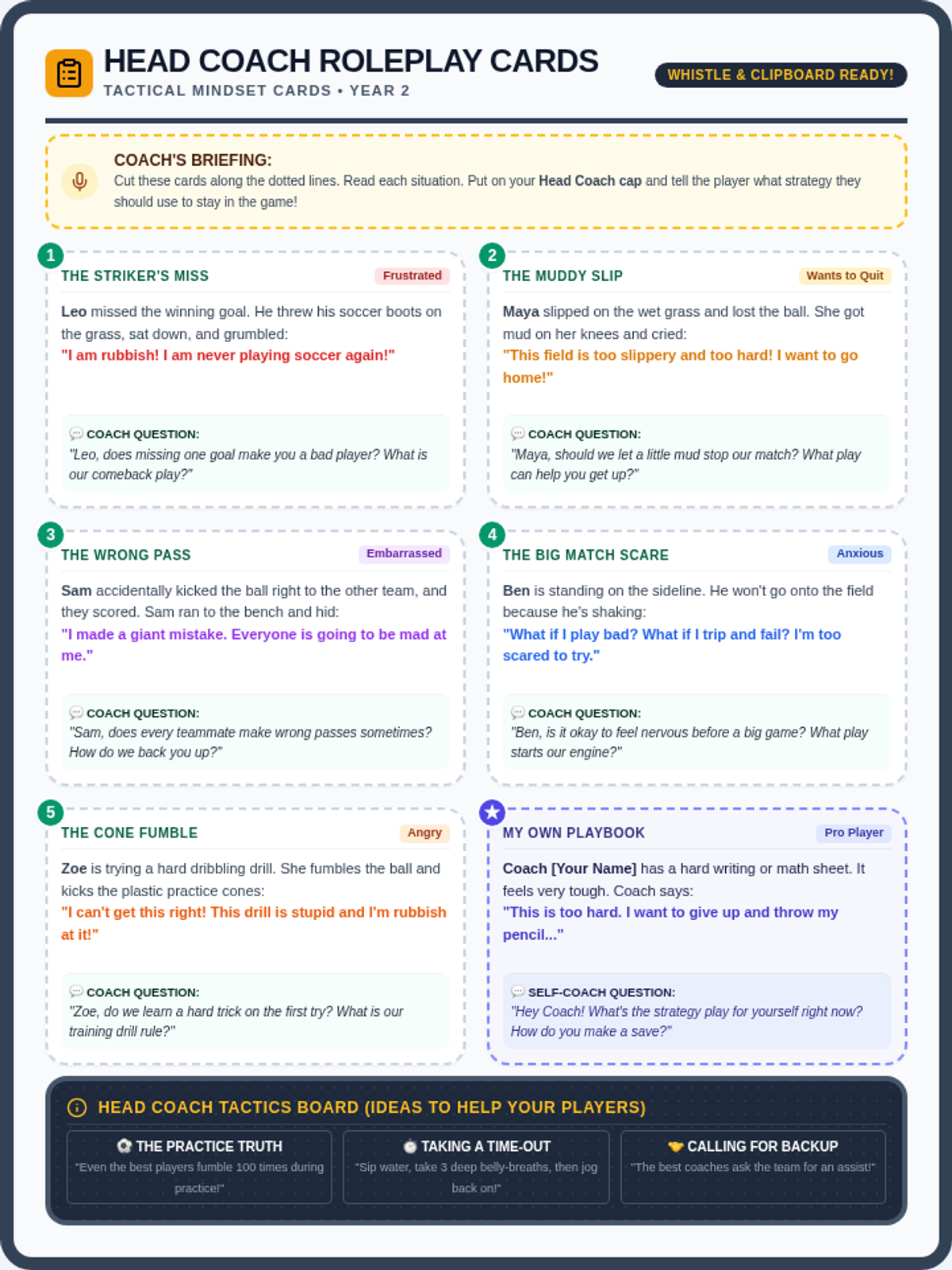
Week 1 of the Wellbeing program. The student takes on the role of the Head Coach to analyze soccer players who want to quit, building externalized positive self-talk and perspective.
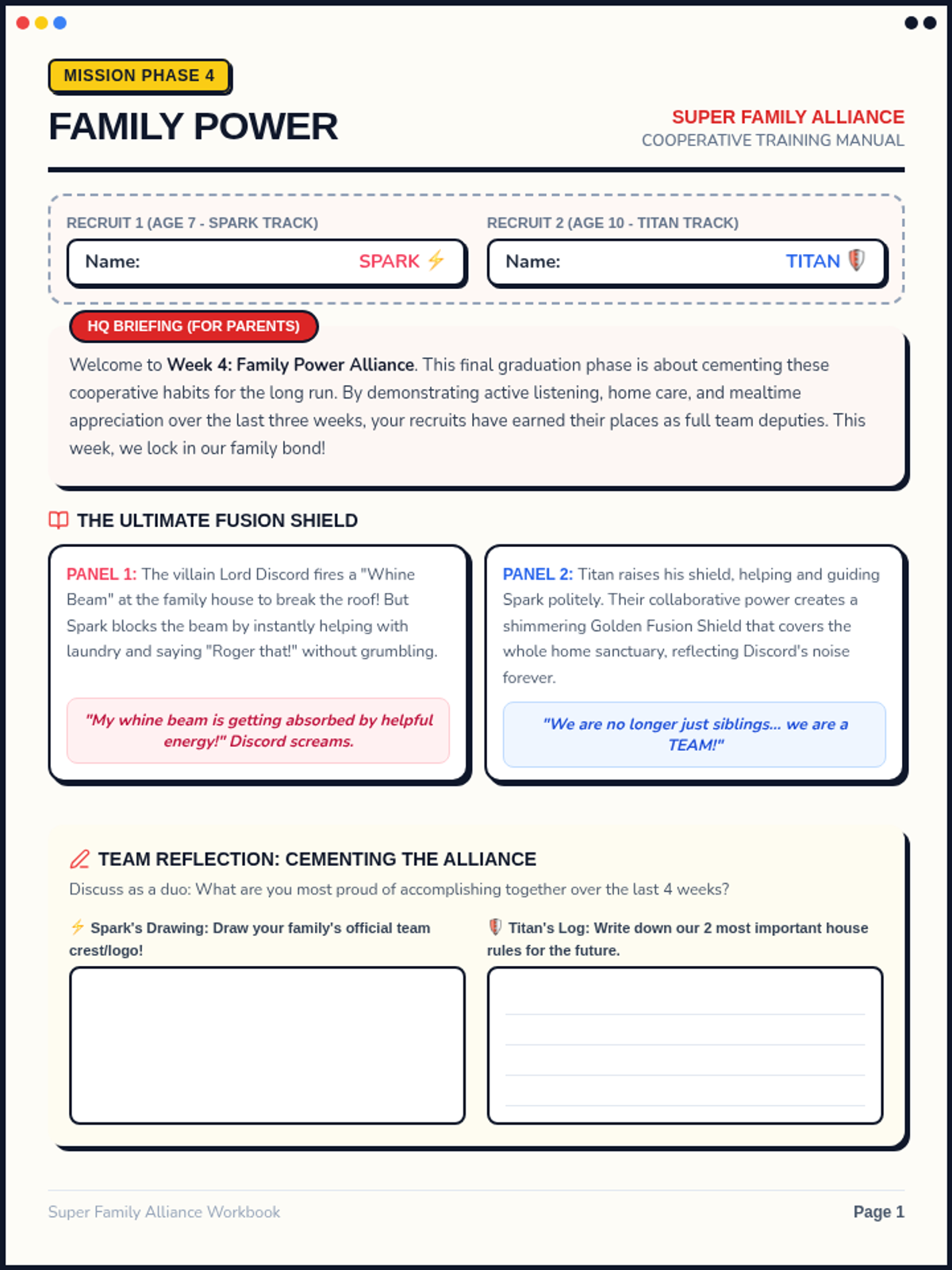
Week 4 focuses on being a cooperative part of the family team, celebrating growth, and locking in the long-term habits of the Super Family Alliance.
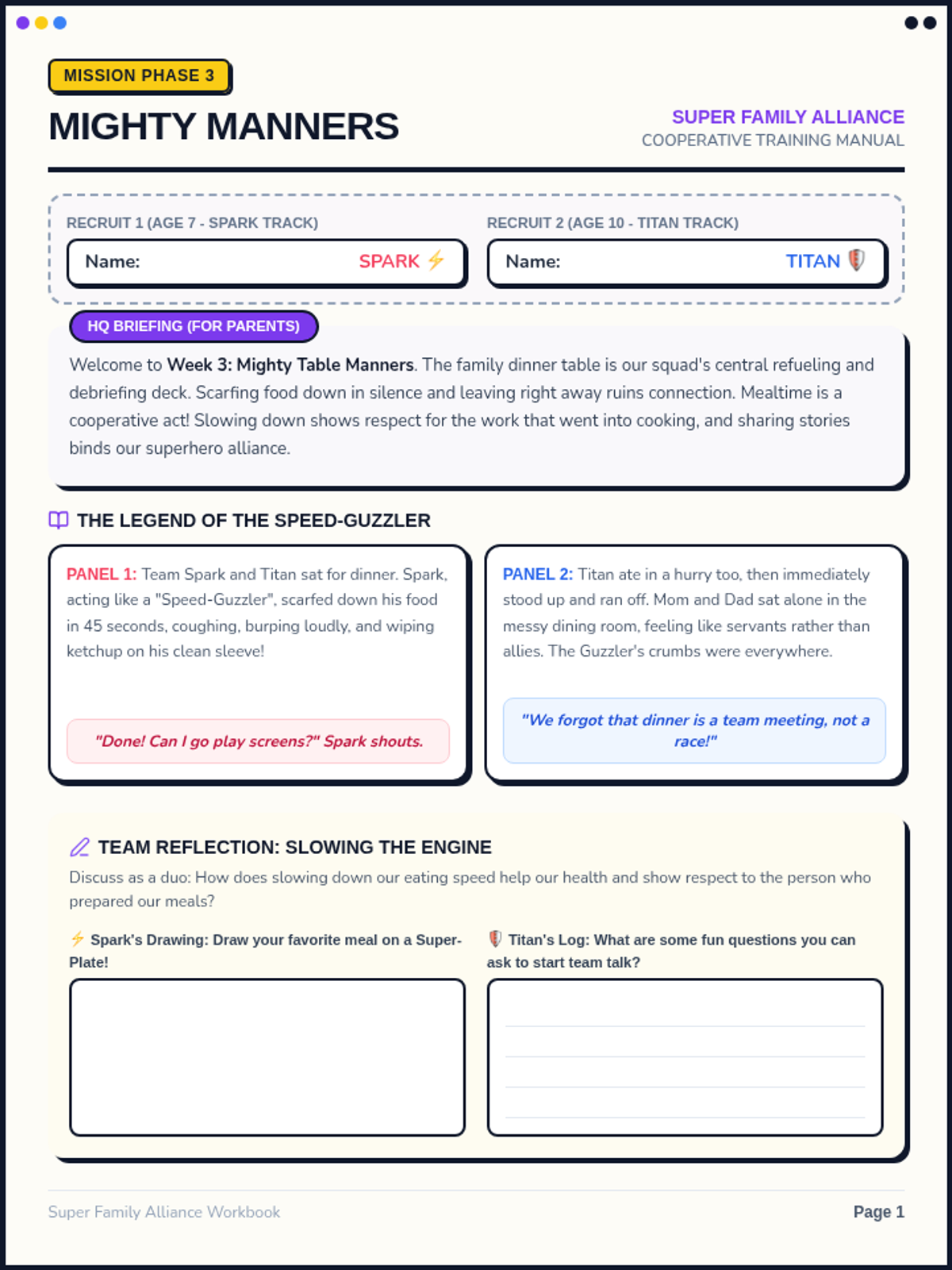
Week 3 focuses on table manners, appreciative dining, and ending the habit of scarfing down food. It emphasizes mealtime as a cooperative team-building space.
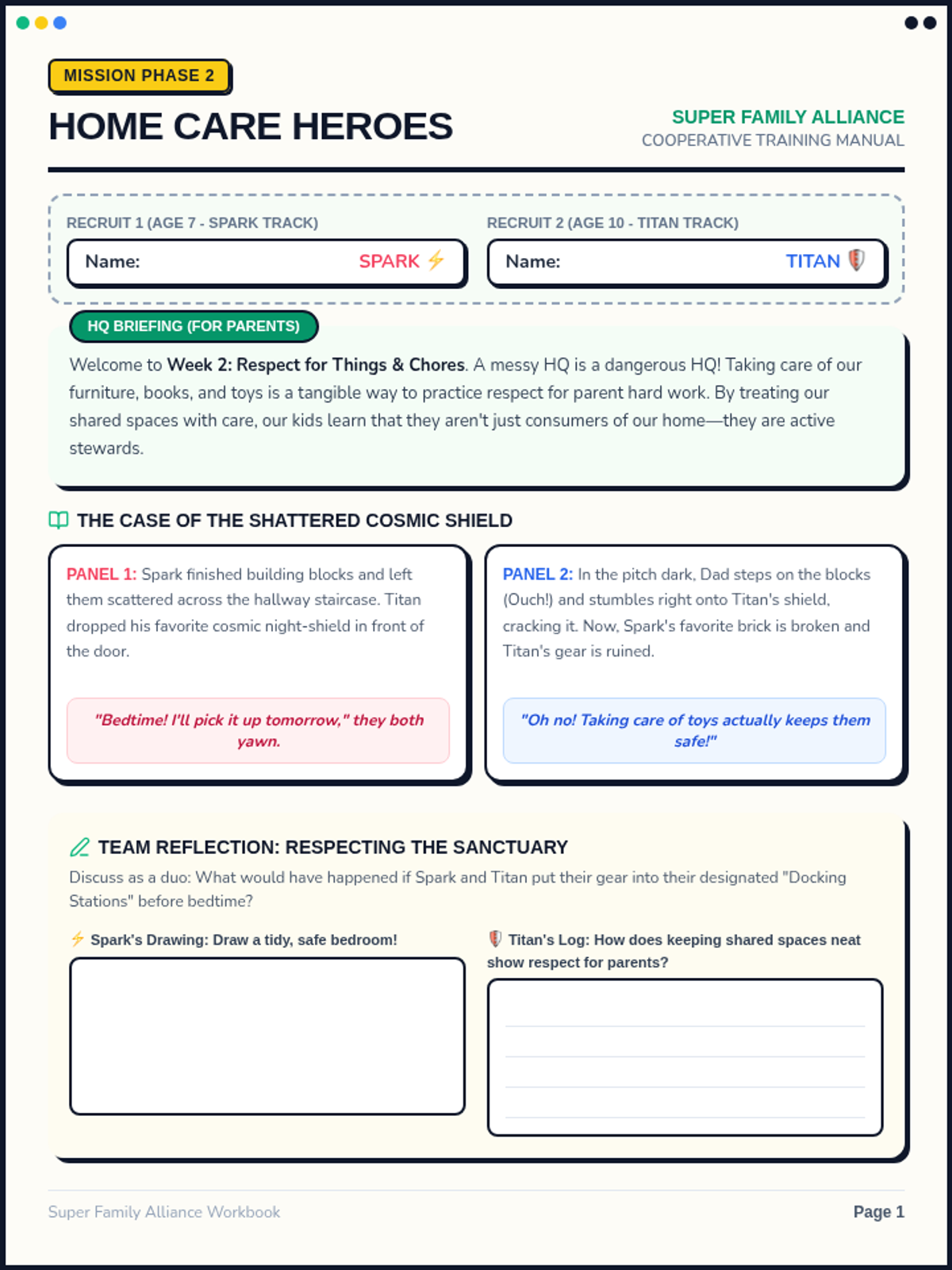
Week 2 focuses on respect for things (possessions, furniture, the home) and taking pride in doing chores as a way of caring for the sanctuary.
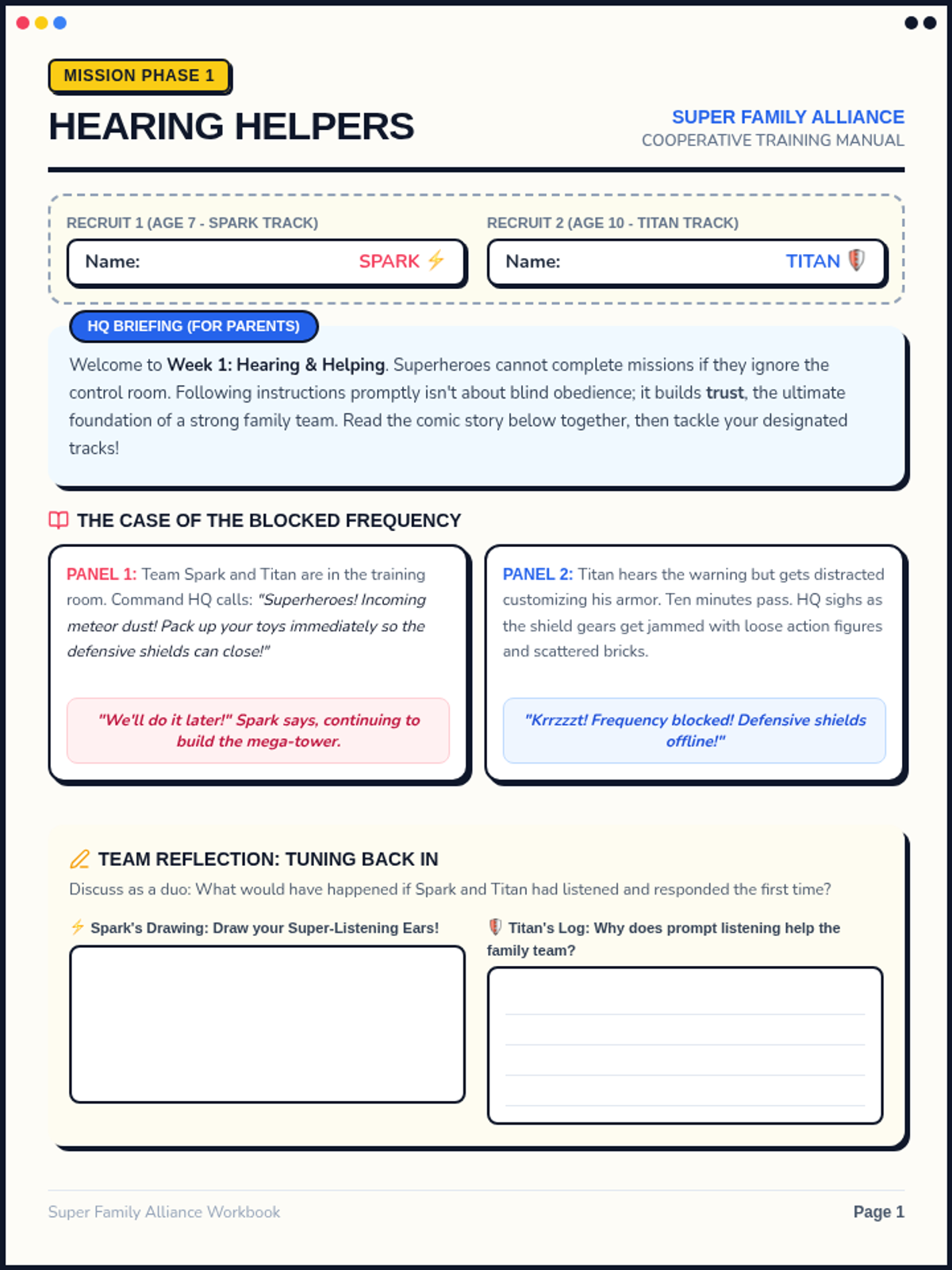
Week 1 focuses on active listening, respecting parental guidance, and following directions promptly. It establishes the baseline for the Super Family Alliance.
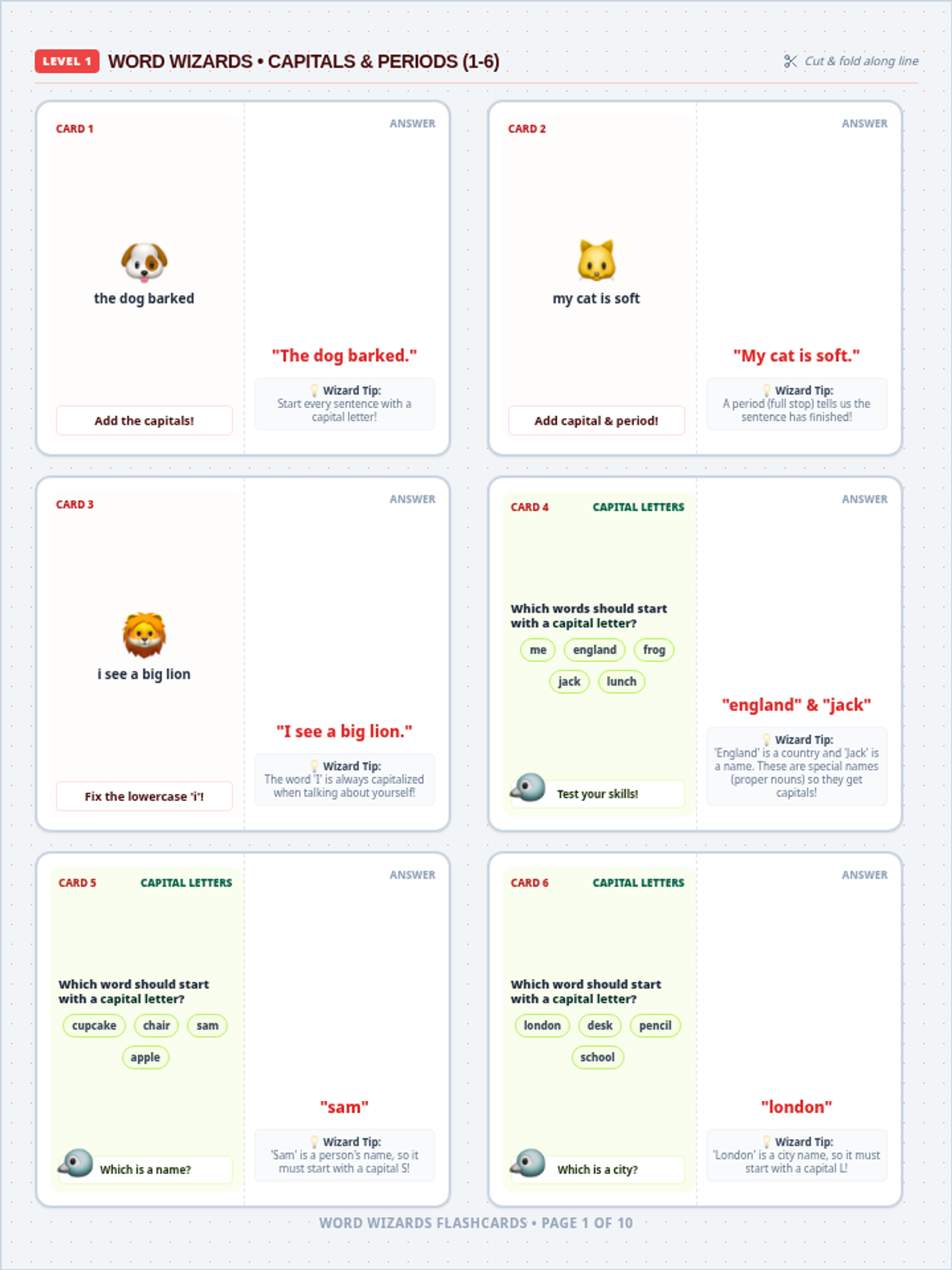
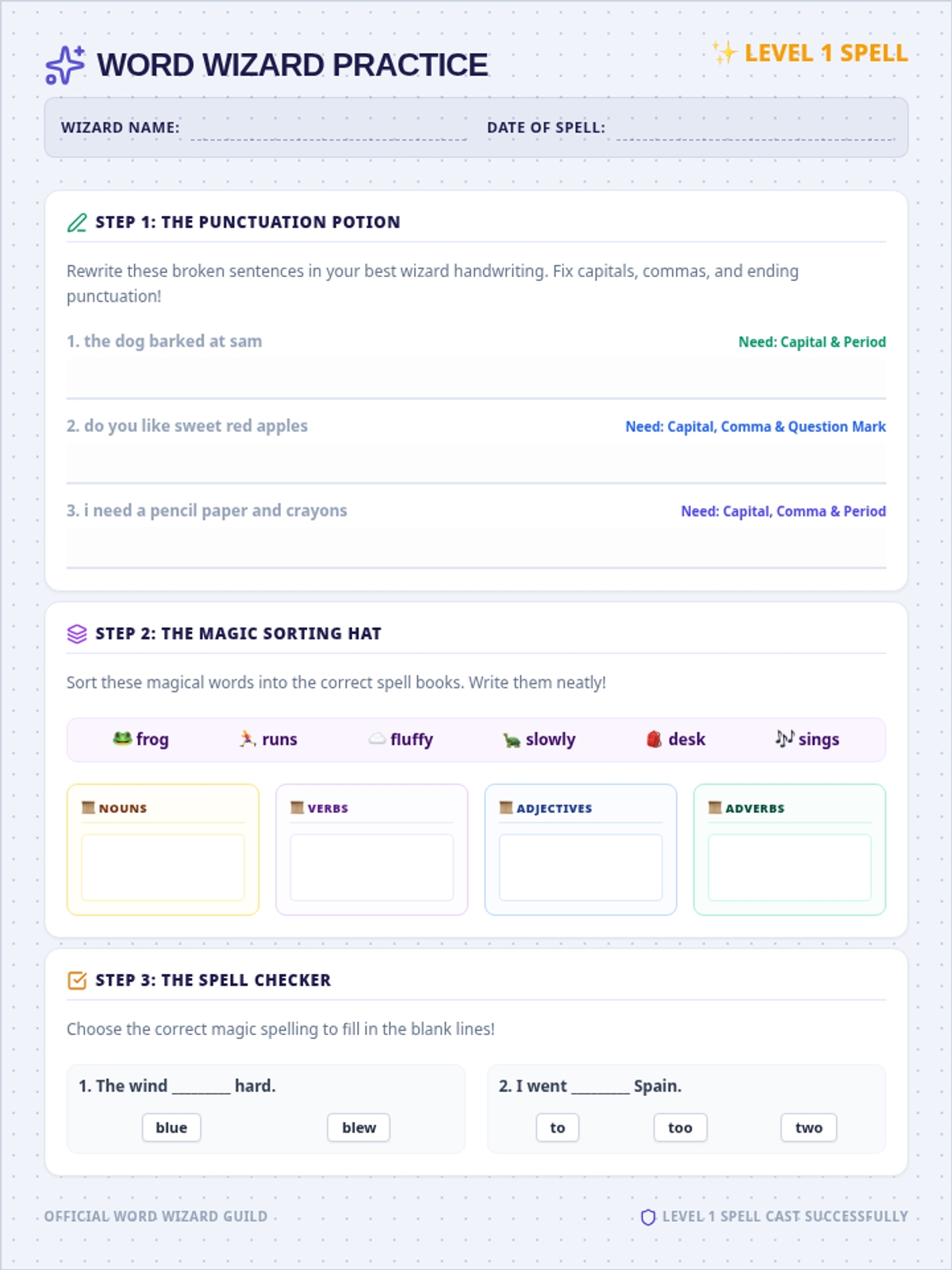
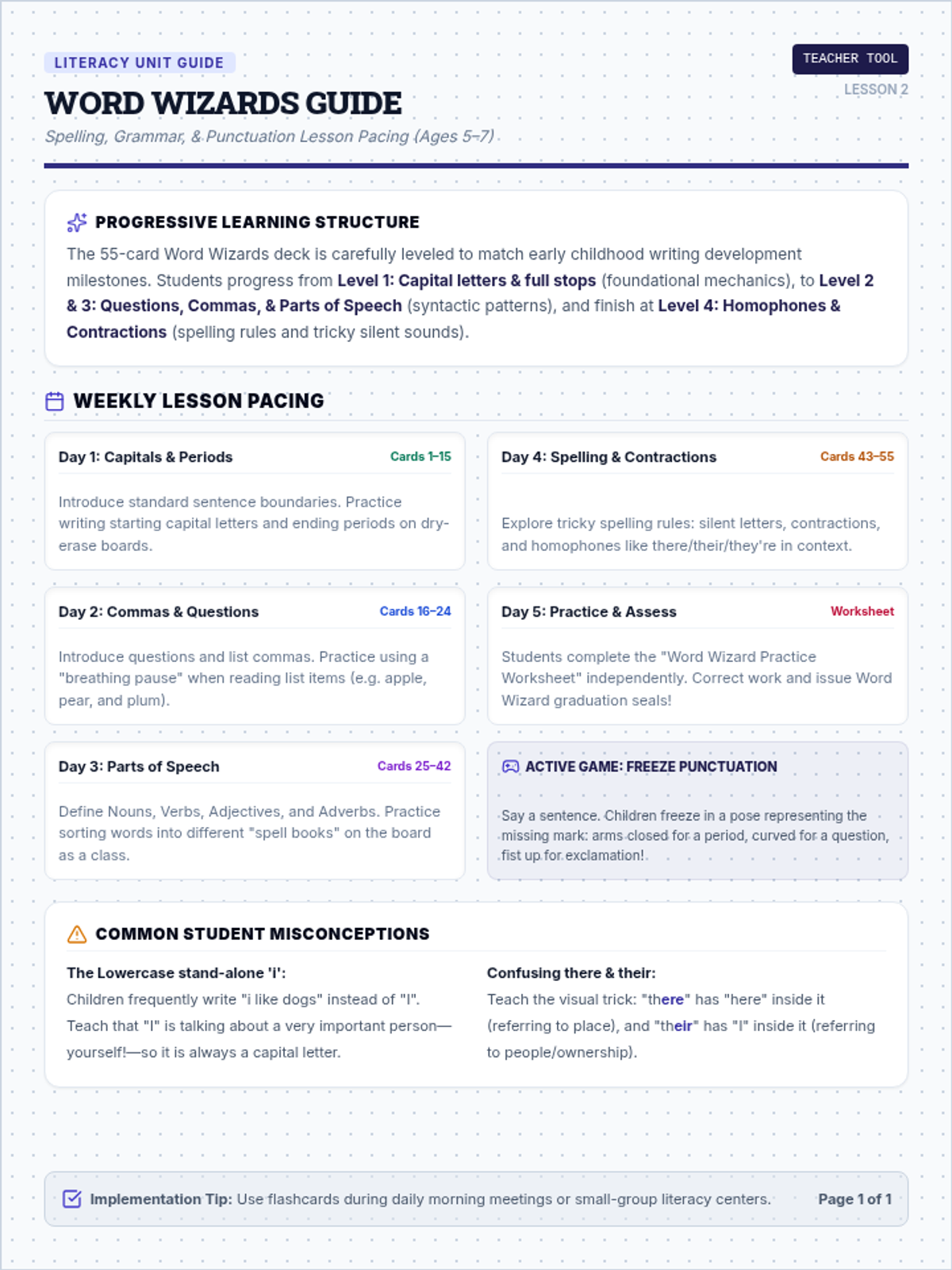
An engaging literacy and language lesson for 5-7 year olds focusing on basic grammar, punctuation, and spelling. Utilizing colorful helper cards and hands-on activities, students master capital letters, full stops, question marks, and tricky spelling rules with confidence.
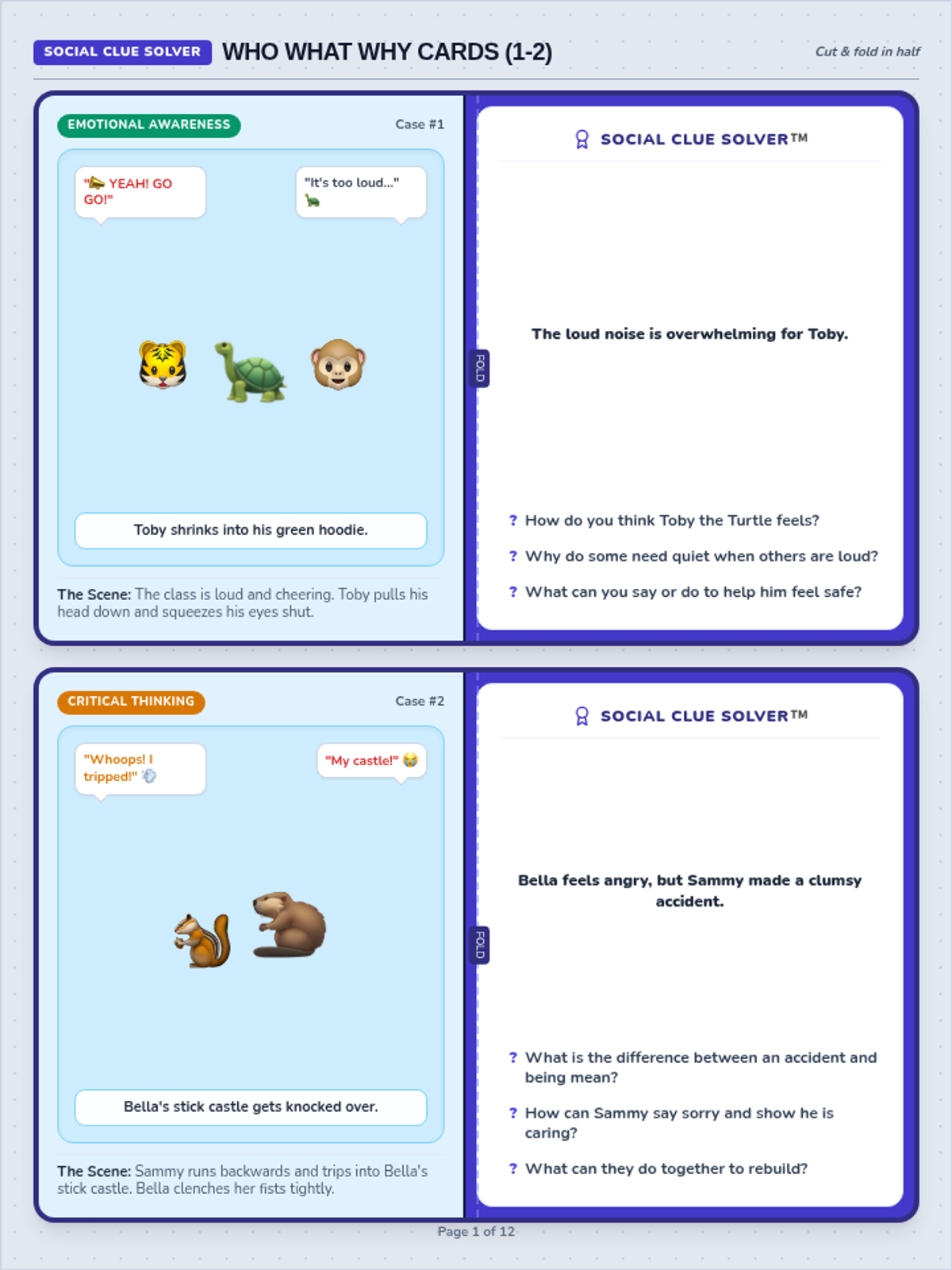
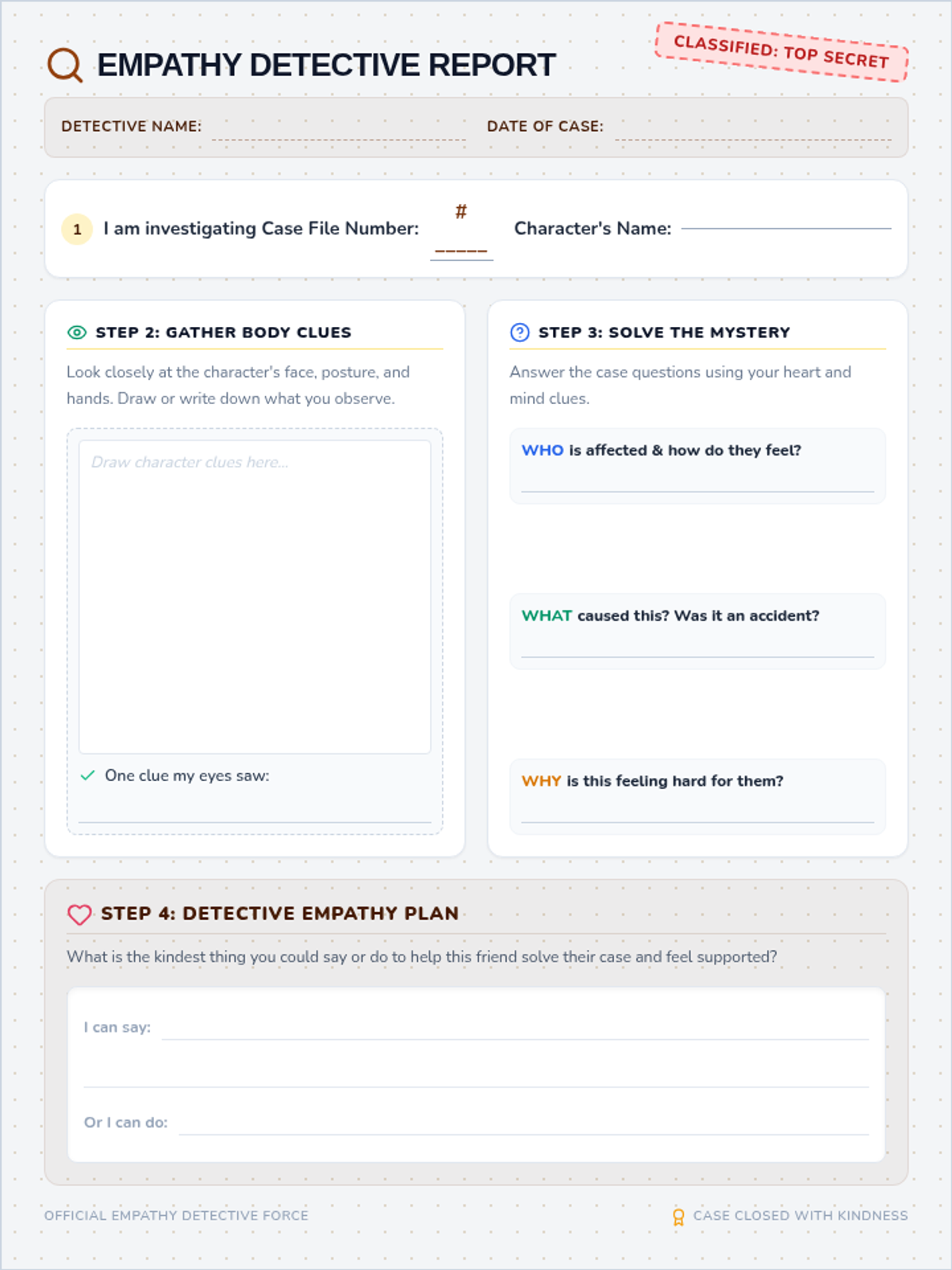
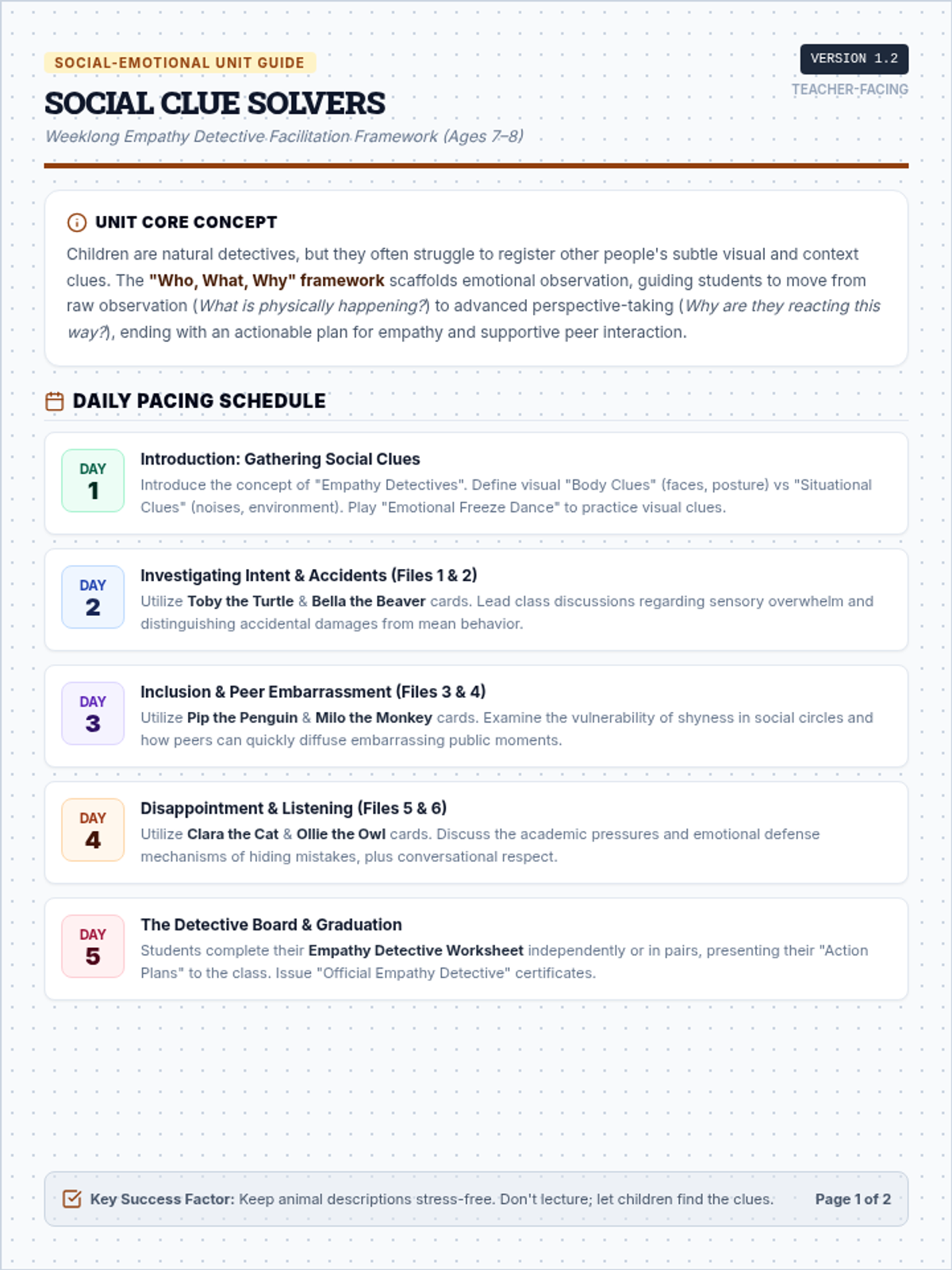
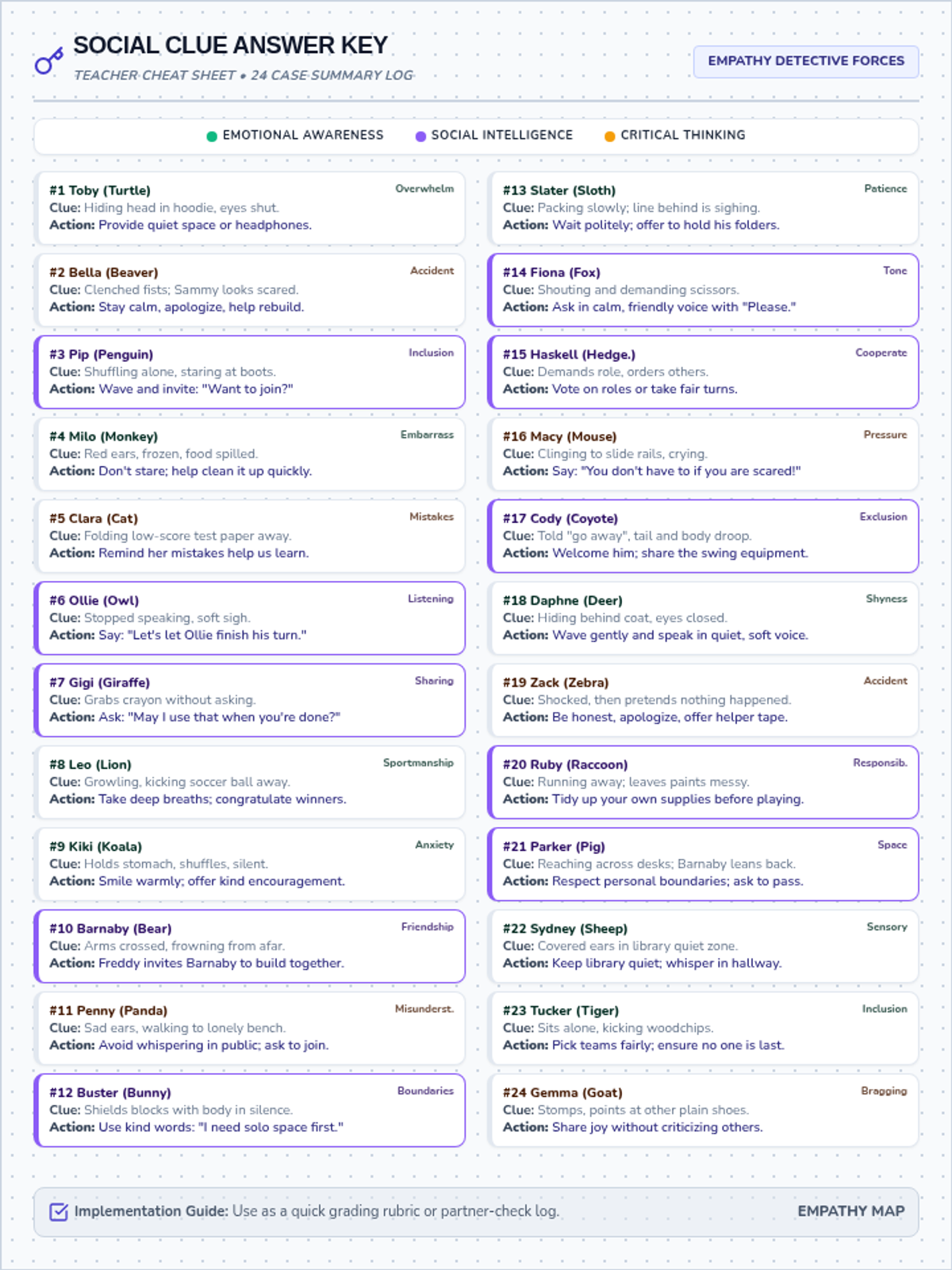
A comprehensive social-emotional learning lesson for 7-8 year olds using animal-themed scenario cards to foster observation, empathy, and critical thinking. Students learn to analyze visual and situational clues to solve 'social mysteries' and understand others' feelings.
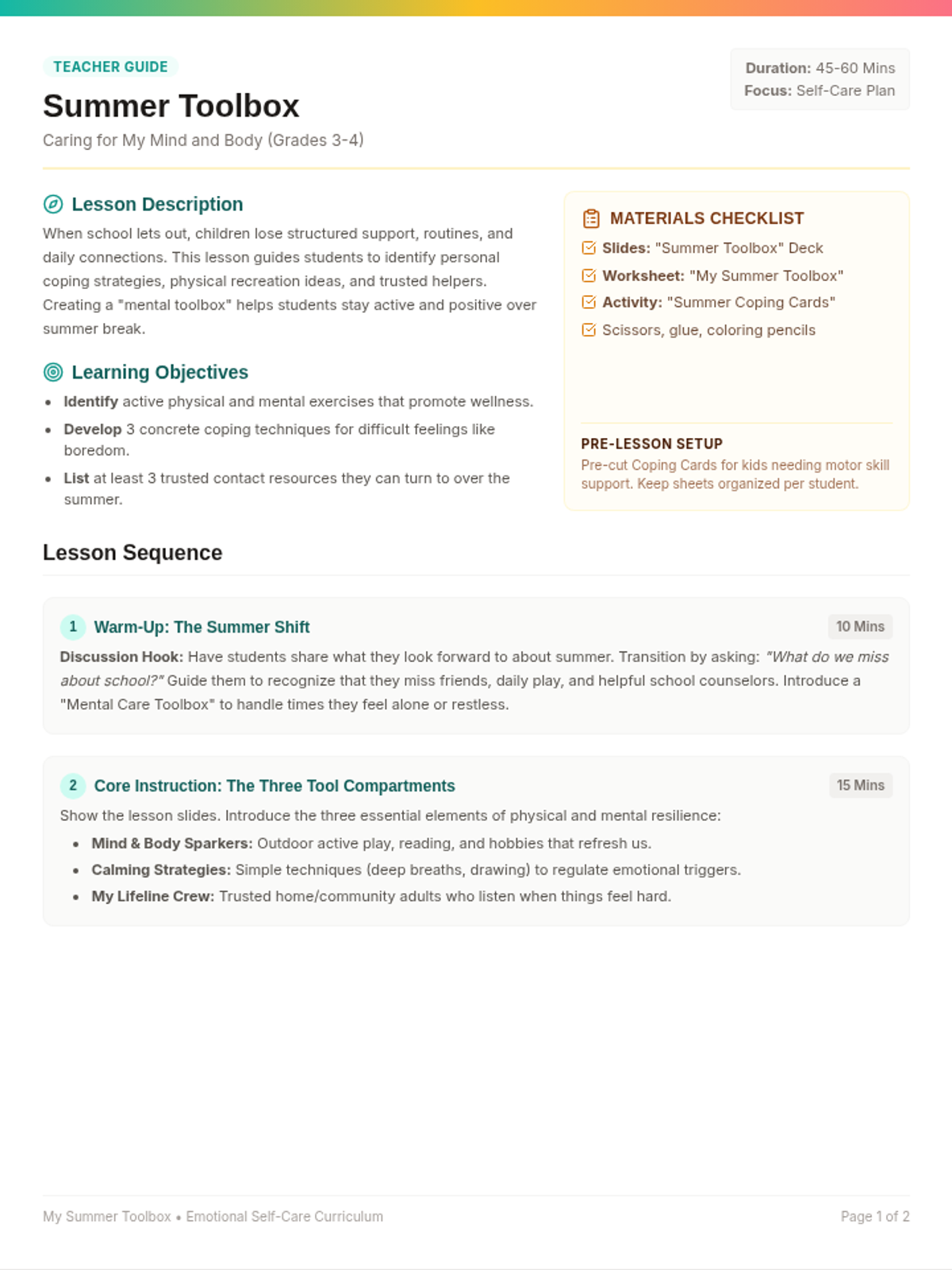
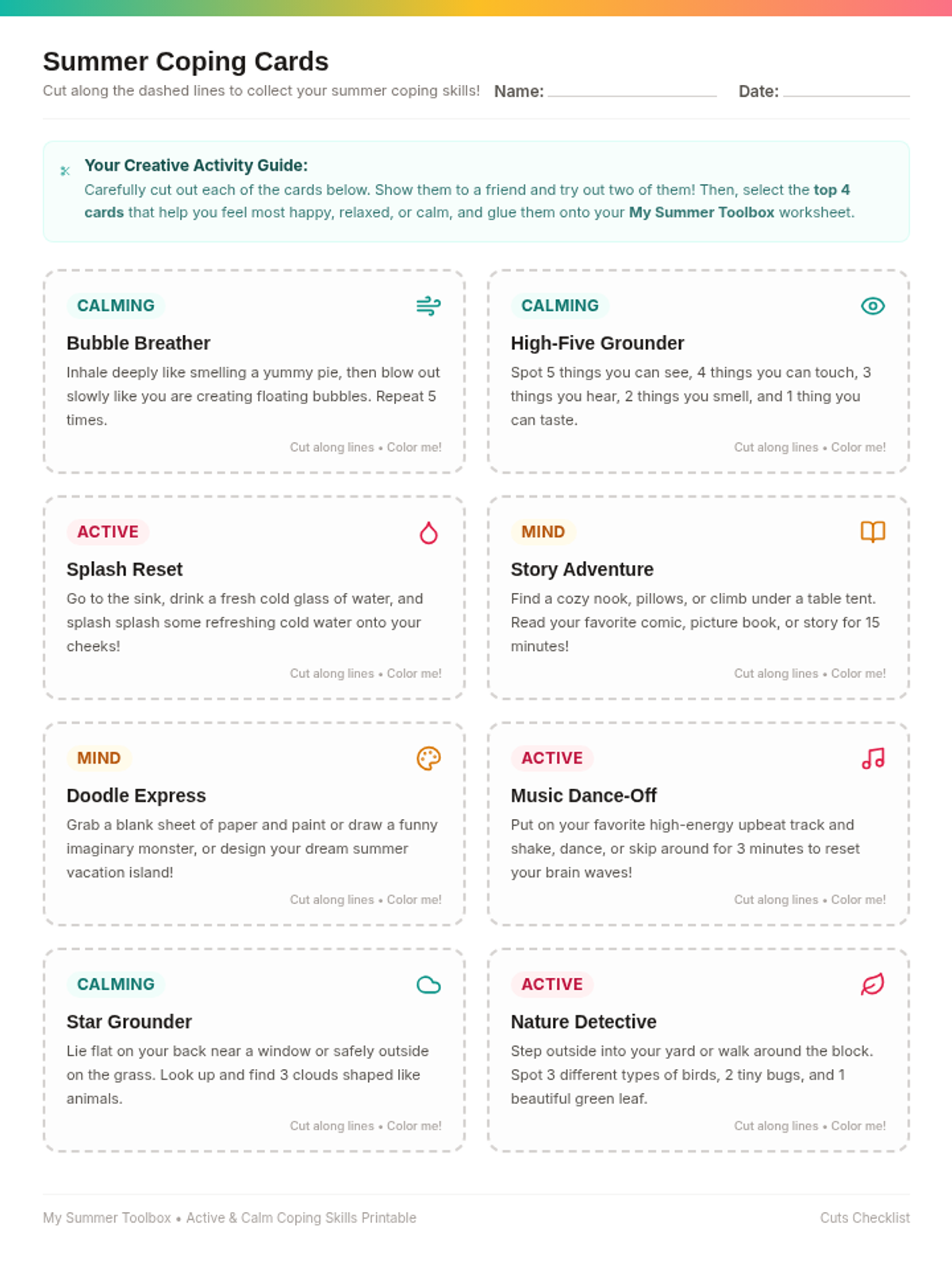
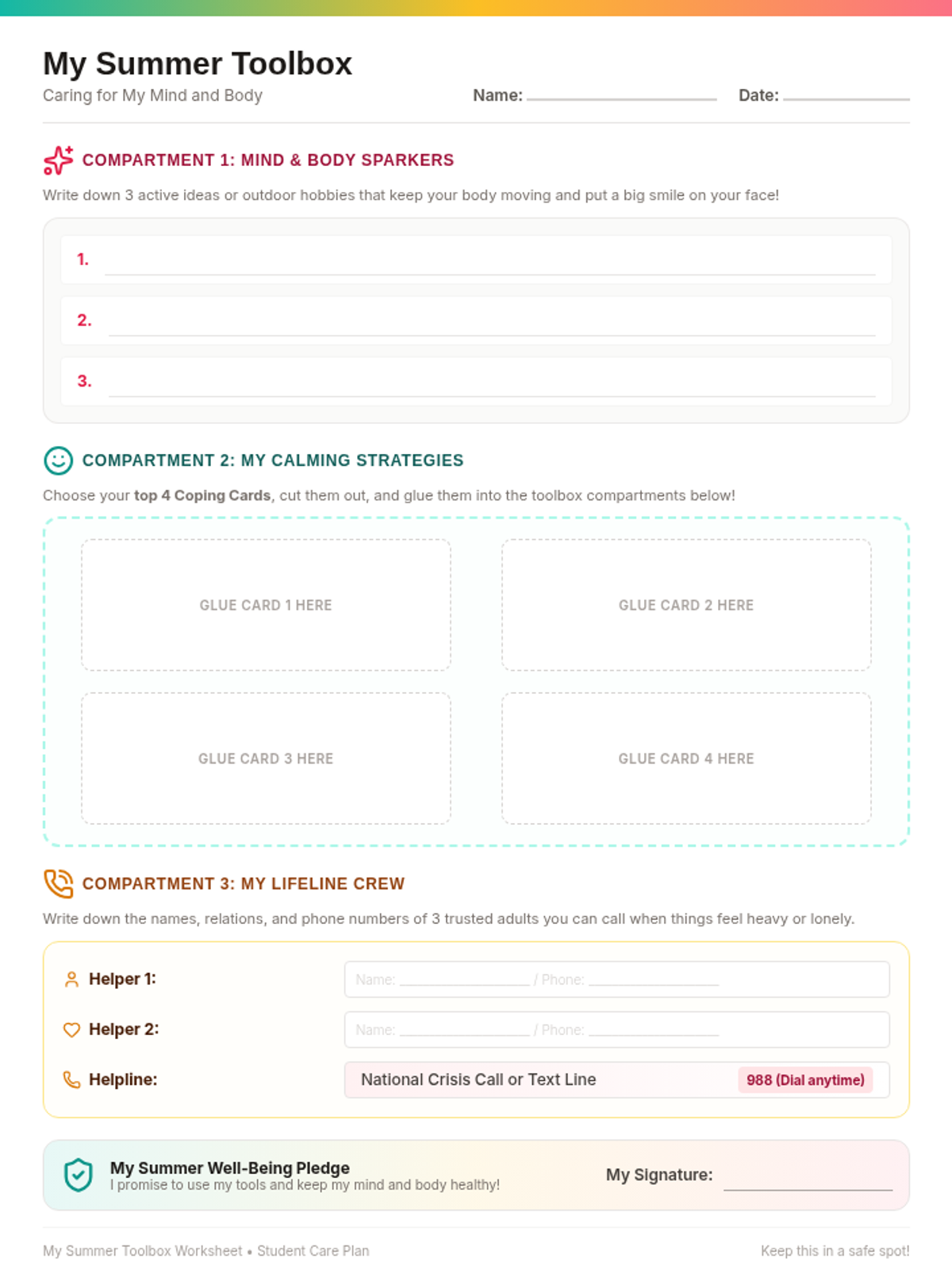
A comprehensive lesson plan designed for 3rd-4th graders to build their own emotional and physical self-care plan for the summer. It includes a teacher lesson plan, presentation slides, an interactive coping strategies activity, and a personal toolbox worksheet.
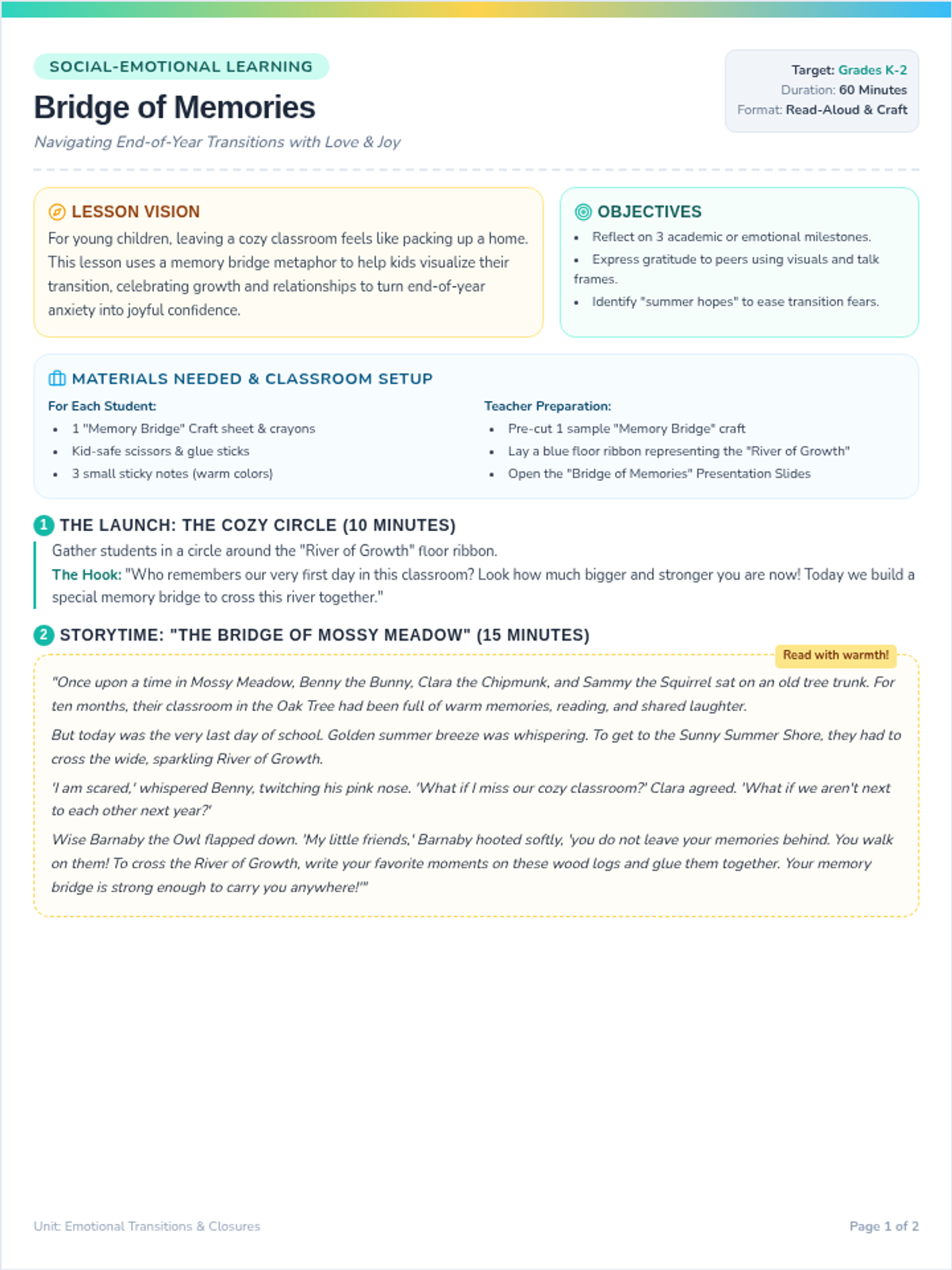
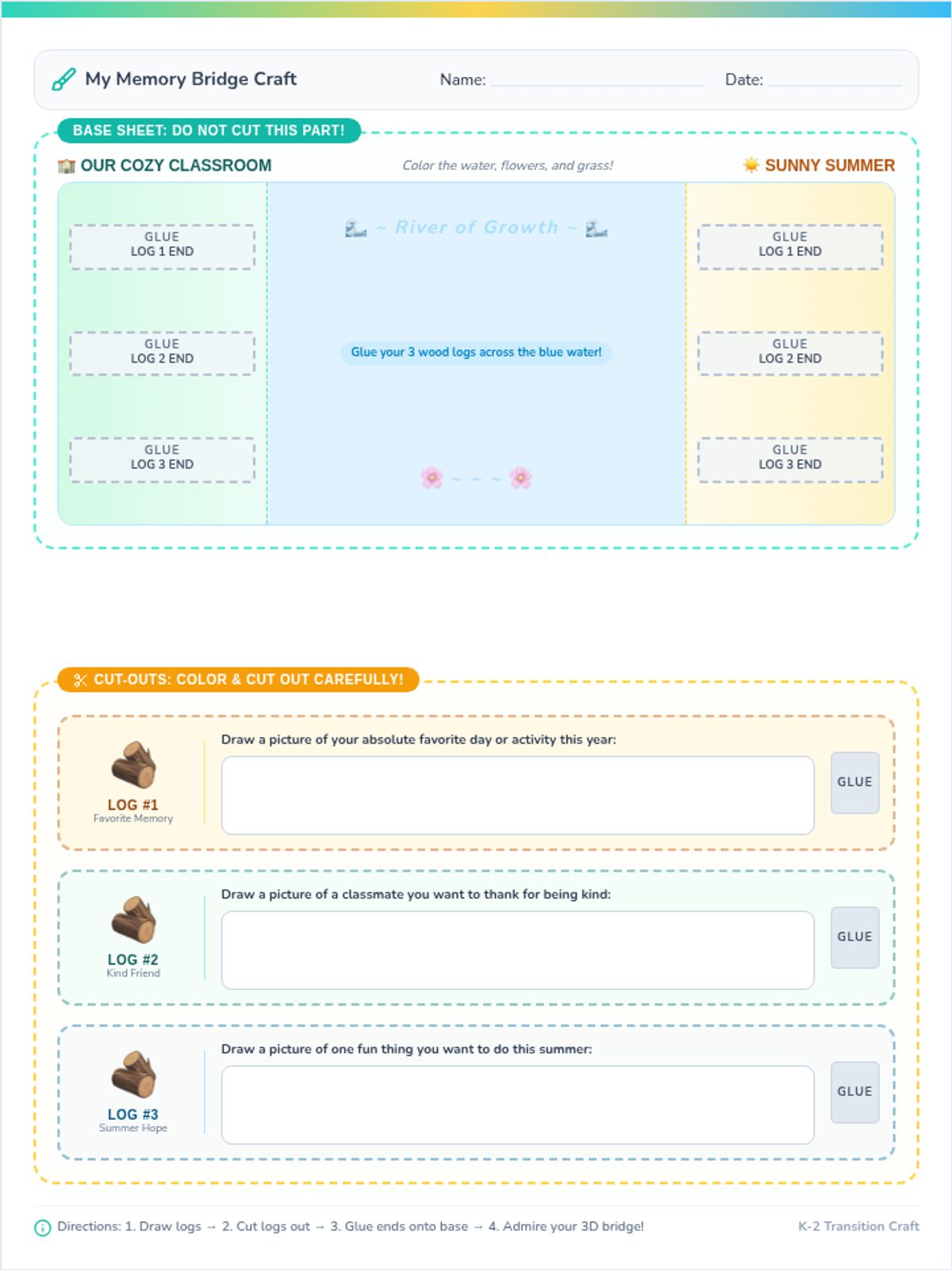
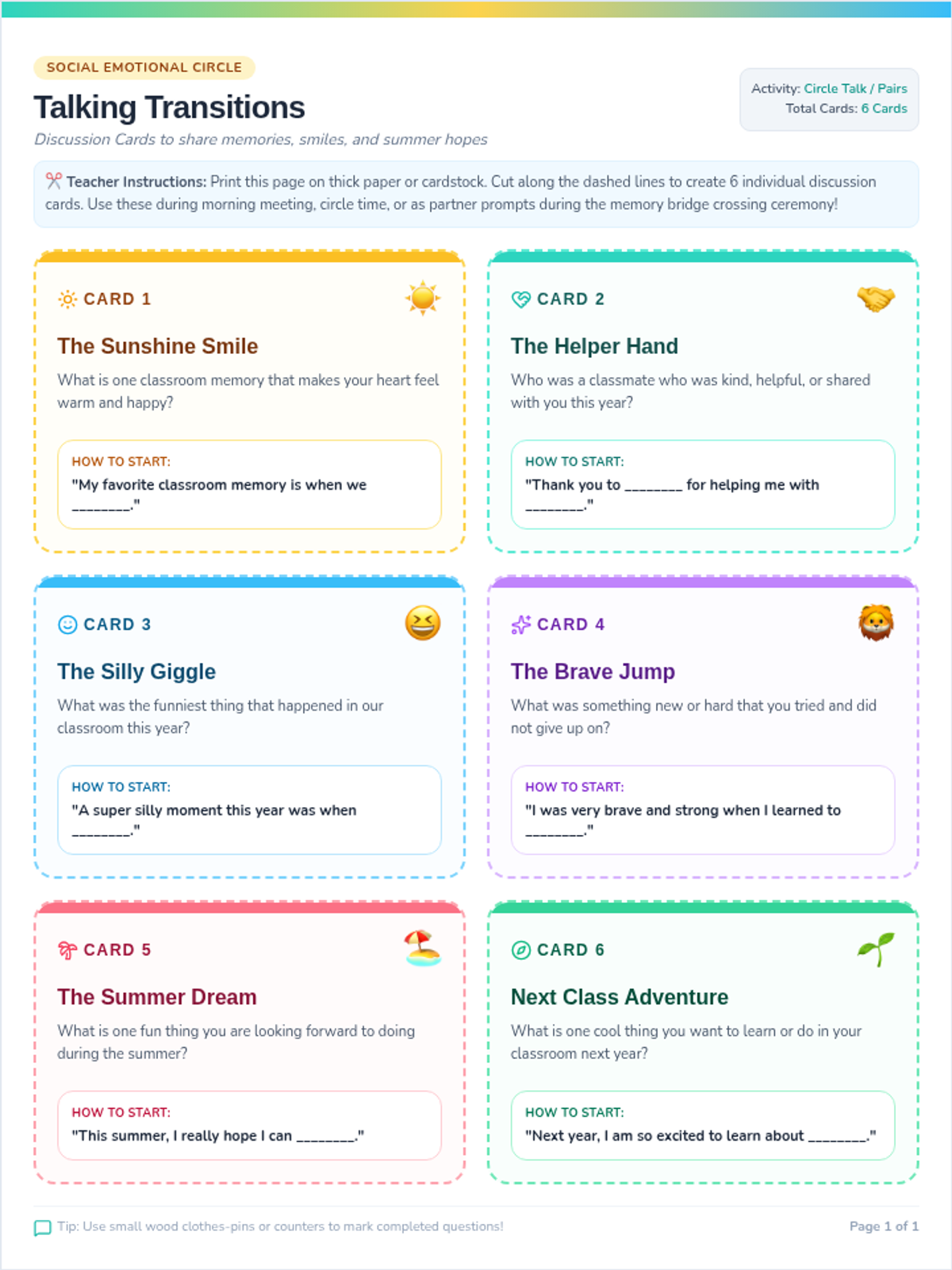
A heartwarming end-of-year transition lesson for K-2 students. Through a reflective story, guided discussions, and a hands-on memory bridge craft, students celebrate their growth, express classmate gratitude, and transition confidently to summer.
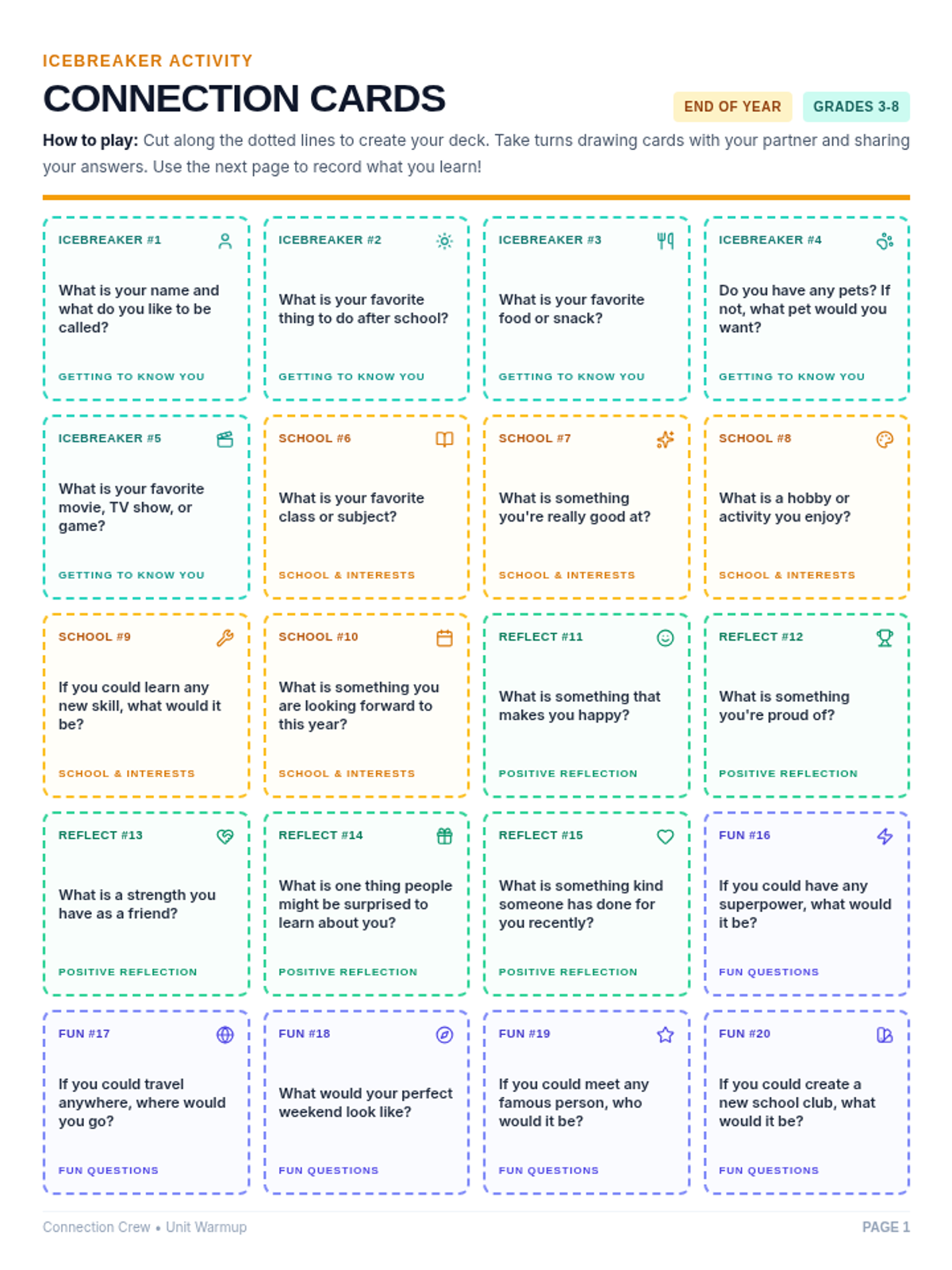
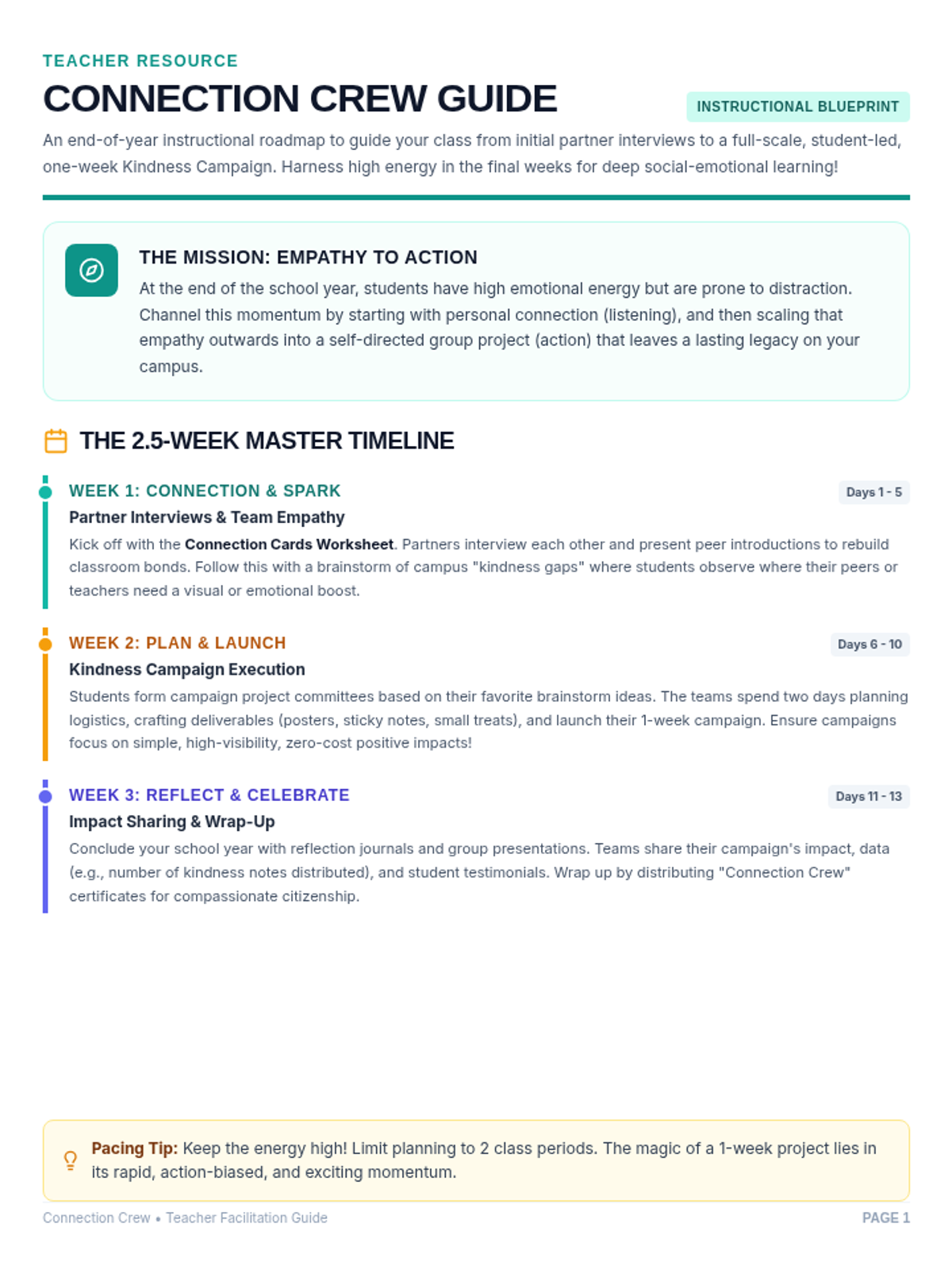
A quick-start end-of-year lesson plan and printable materials that utilize partner interviews to spark connection and transition students into planning a week-long Kindness Campaign.
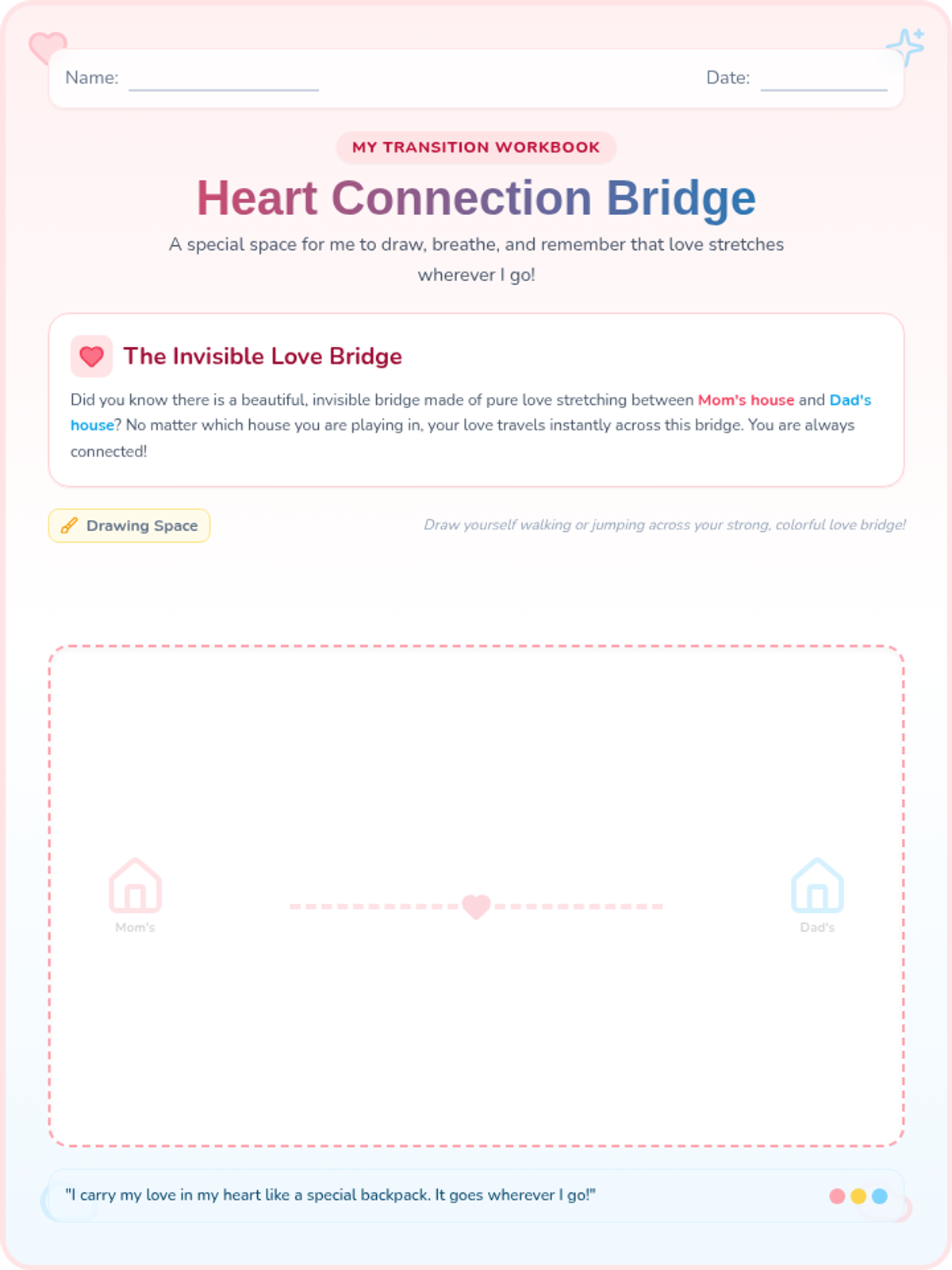
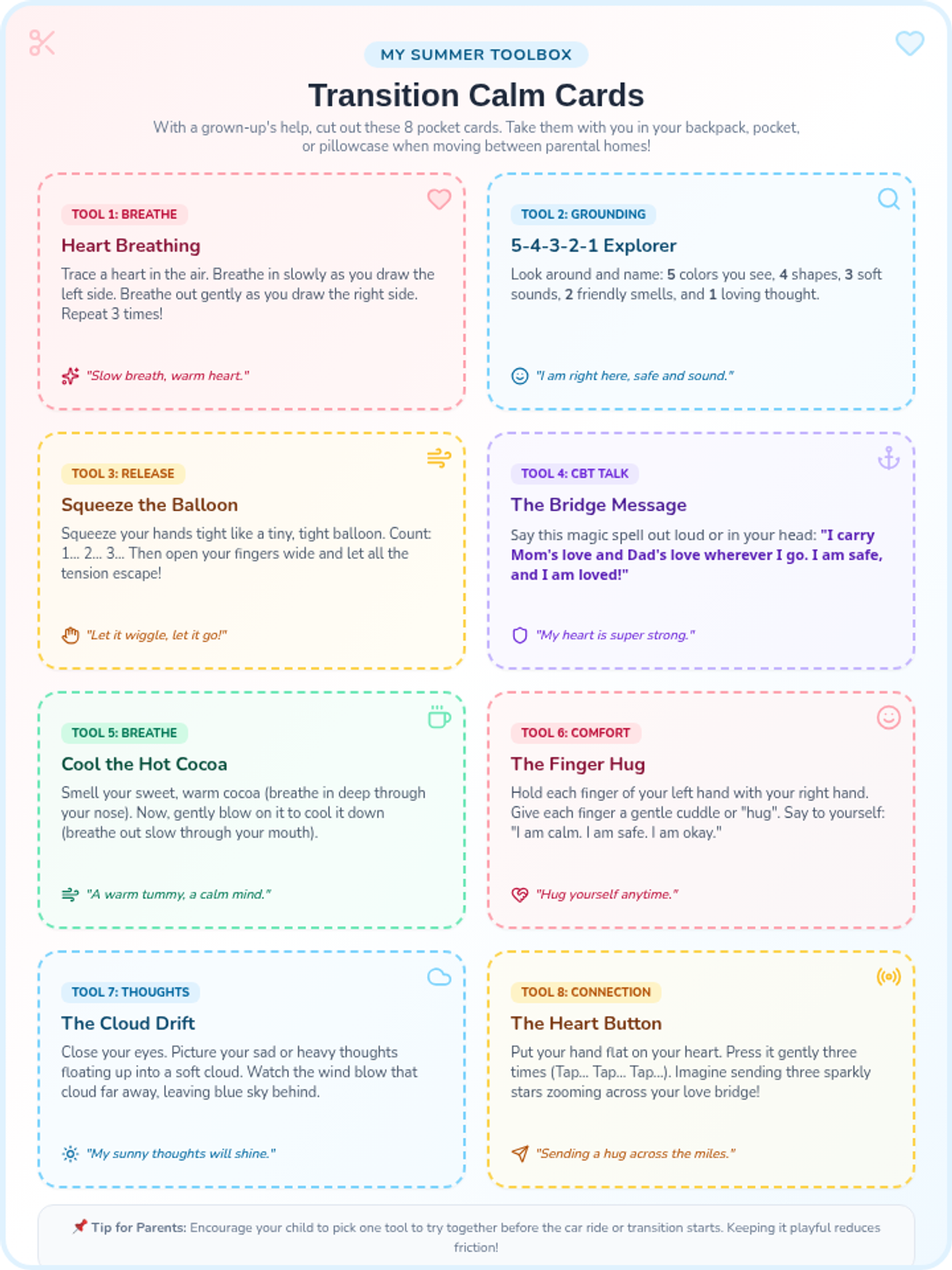
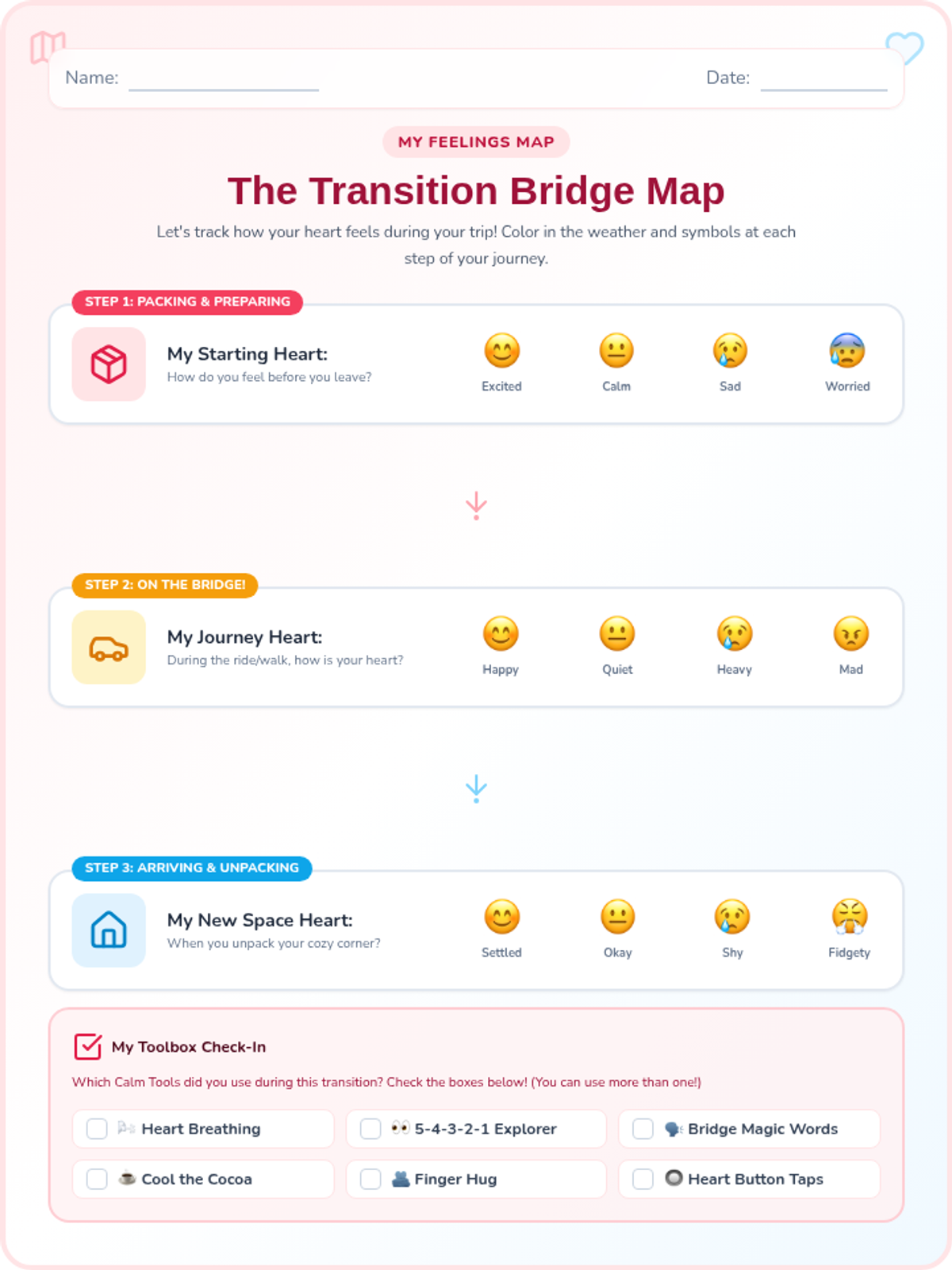
A therapeutic transition workbook, calming card deck, and interactive feeling log designed for a 2nd grader navigating transitions between parental homes. Utilizing CBT concepts and warm, reassuring metaphors, this packet empowers her to express feelings and feel connected to both parents.
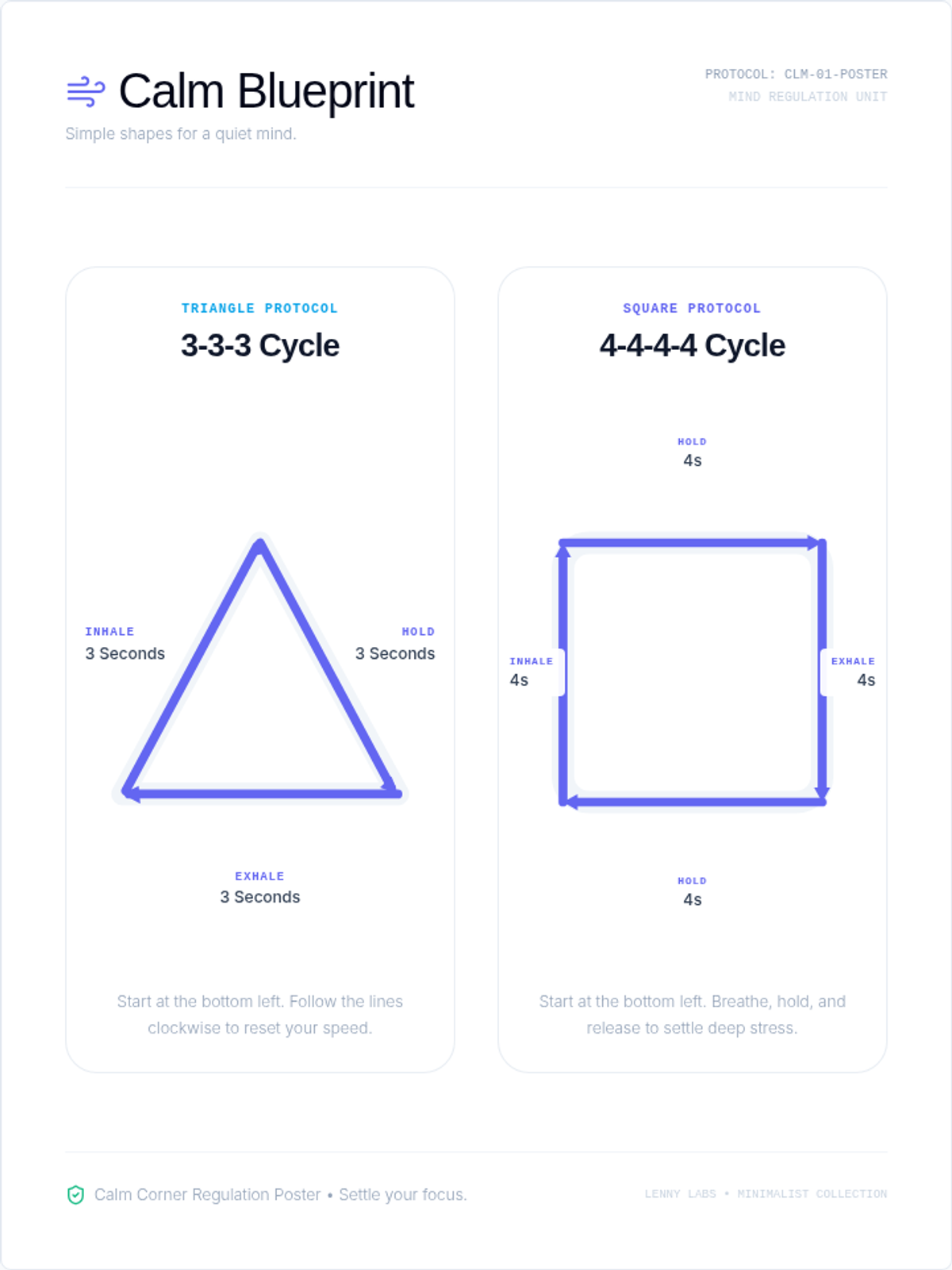
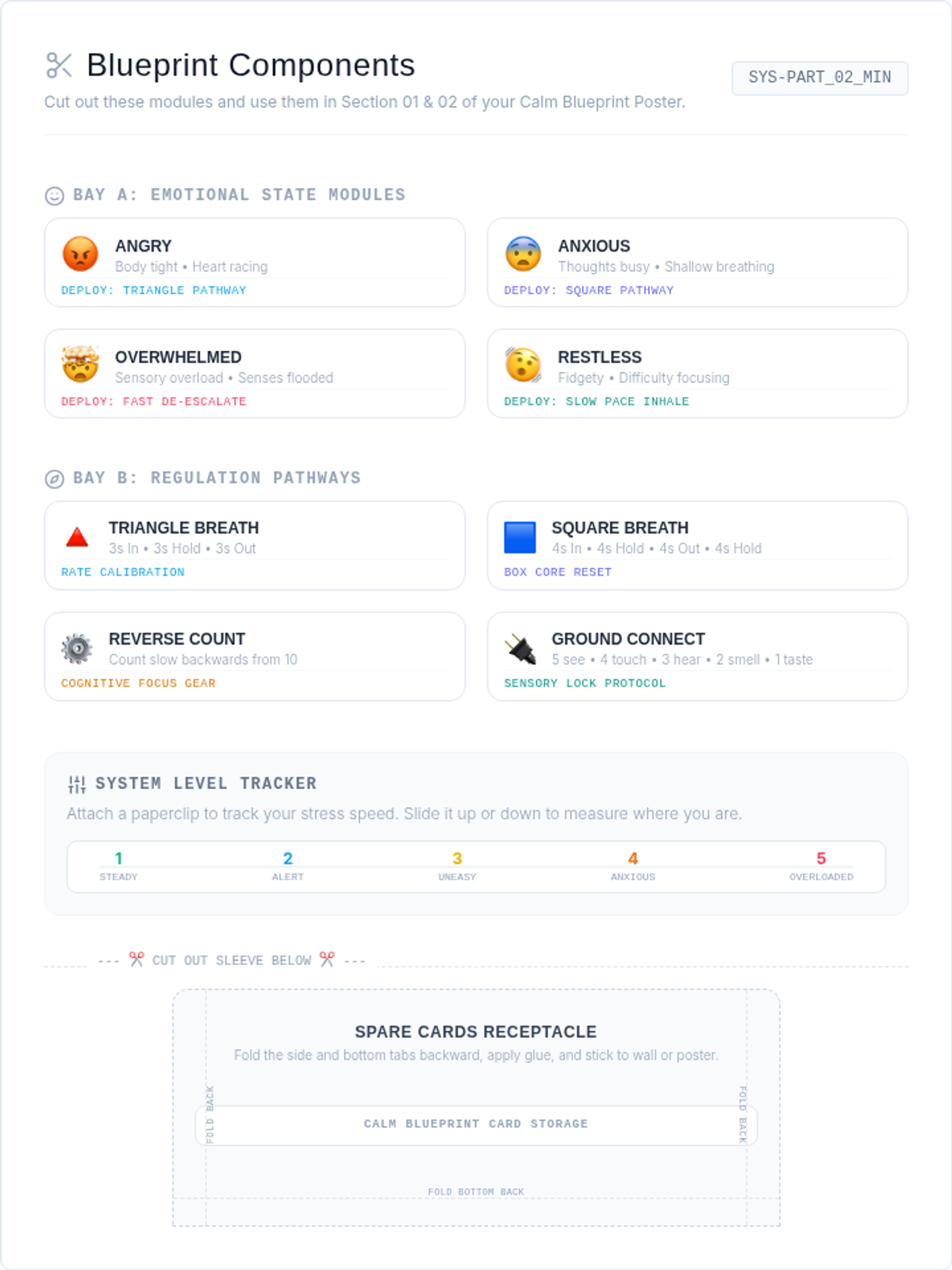
An interactive mental engineering toolkit that teaches children deep breathing exercises using concrete shapes. Students use the visual anchor chart and movable feeling/strategy blueprints to regulate their emotions.
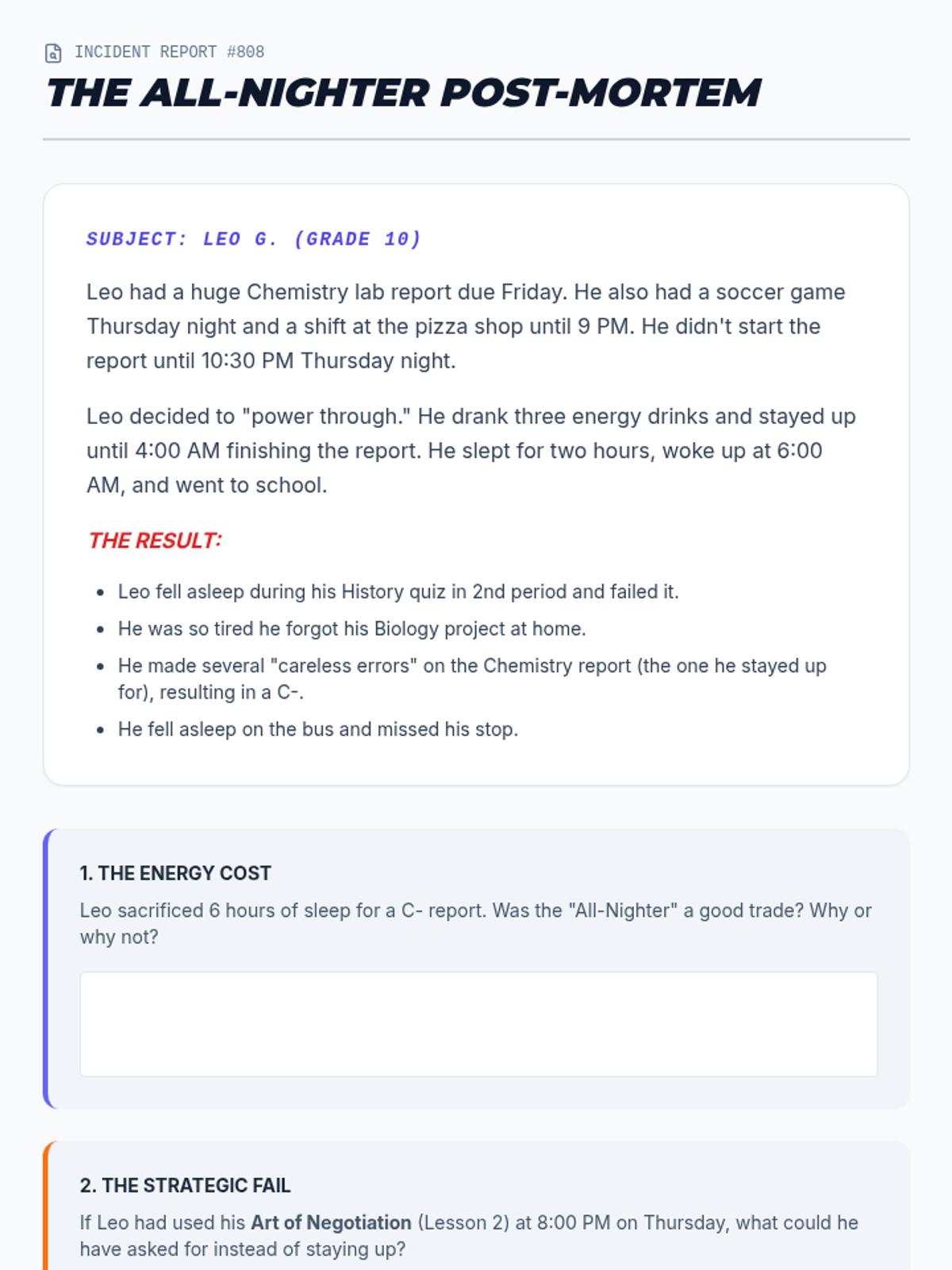
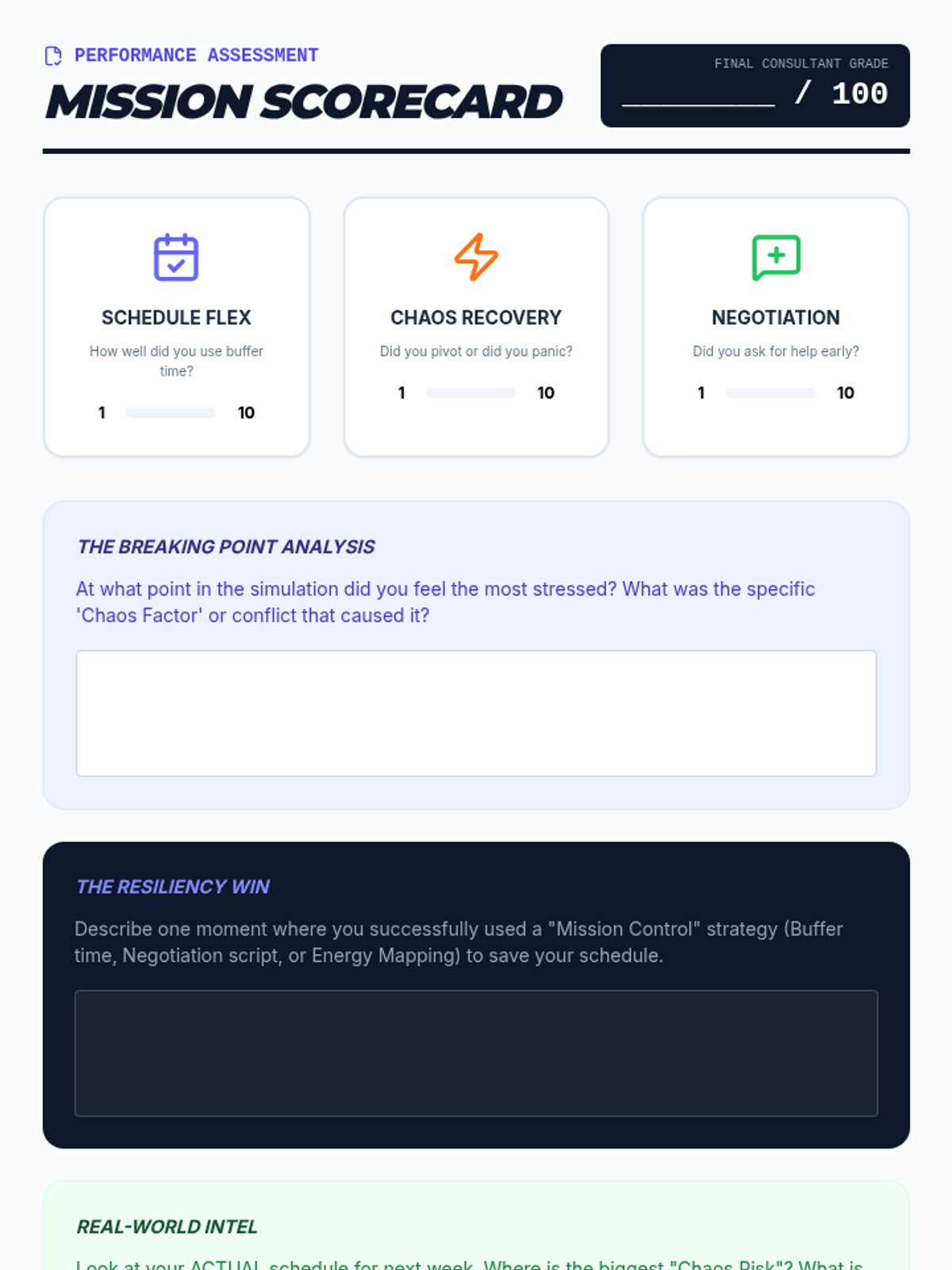
A final reflection on the simulation where students analyze their performance, identify breaking points, and create a long-term strategy for real-world balance.
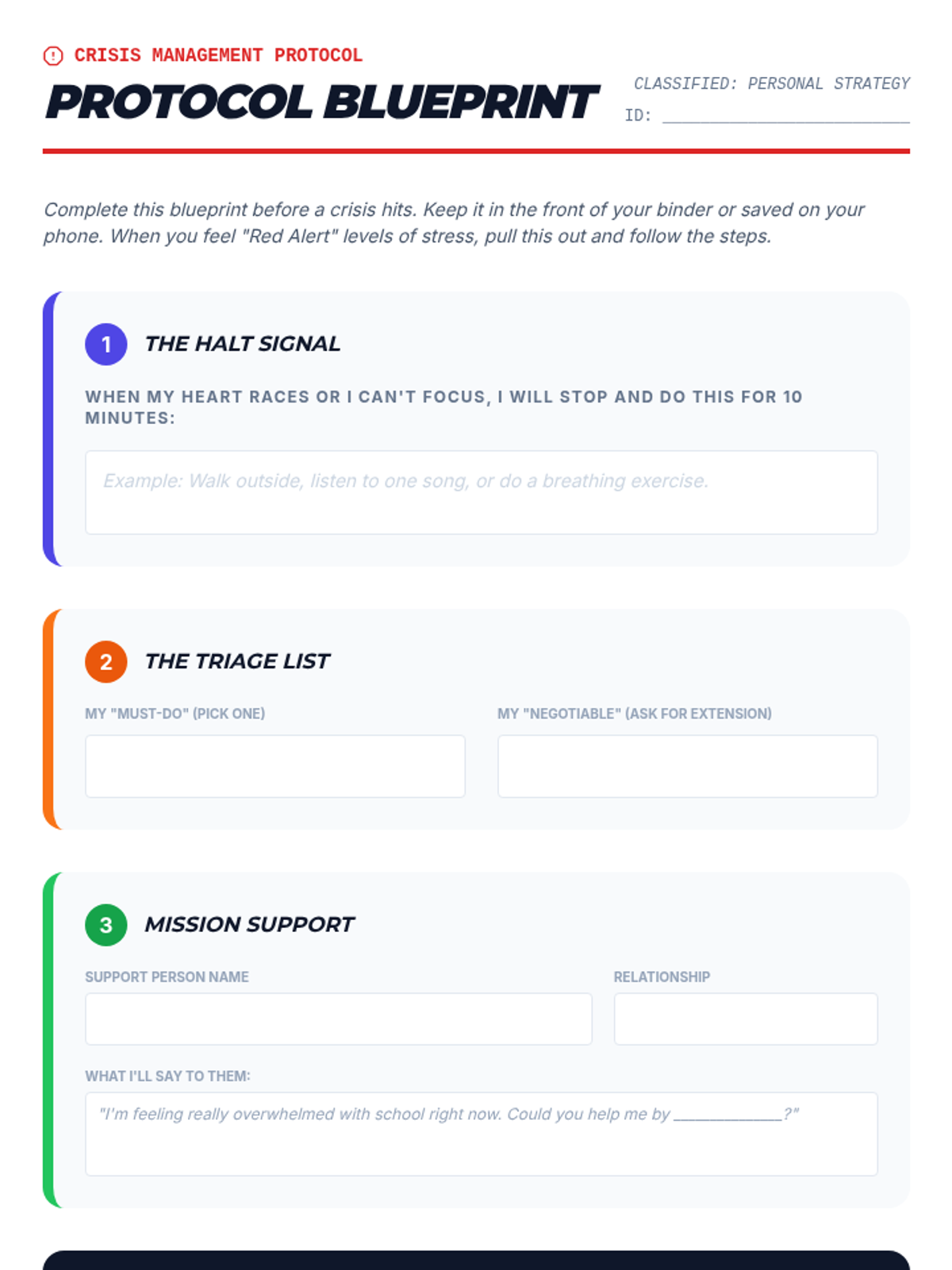
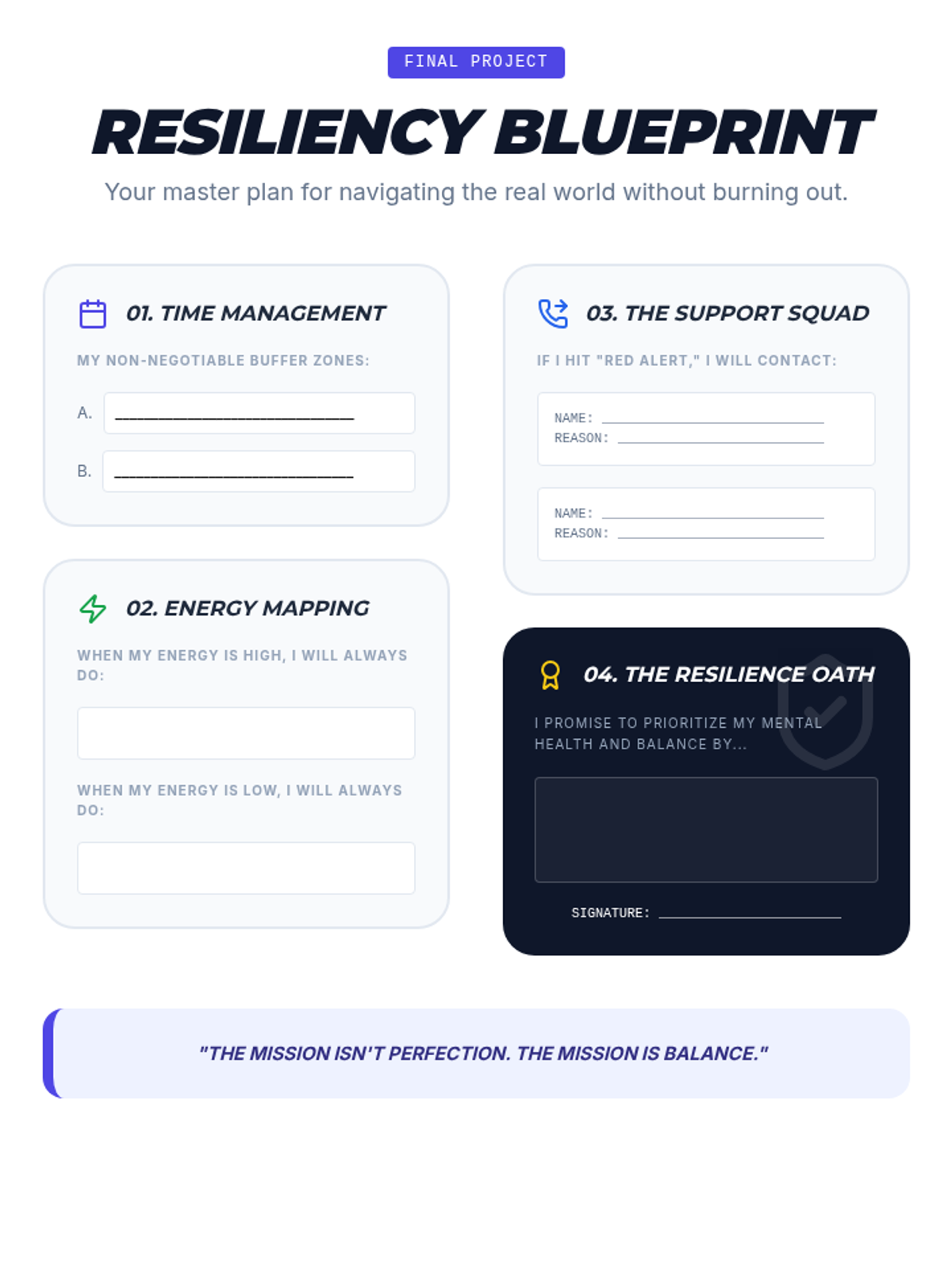
Students create a personal 'Emergency Protocol' for overwhelming situations, learning how to prioritize tasks to drop and identifying support systems for recovery.
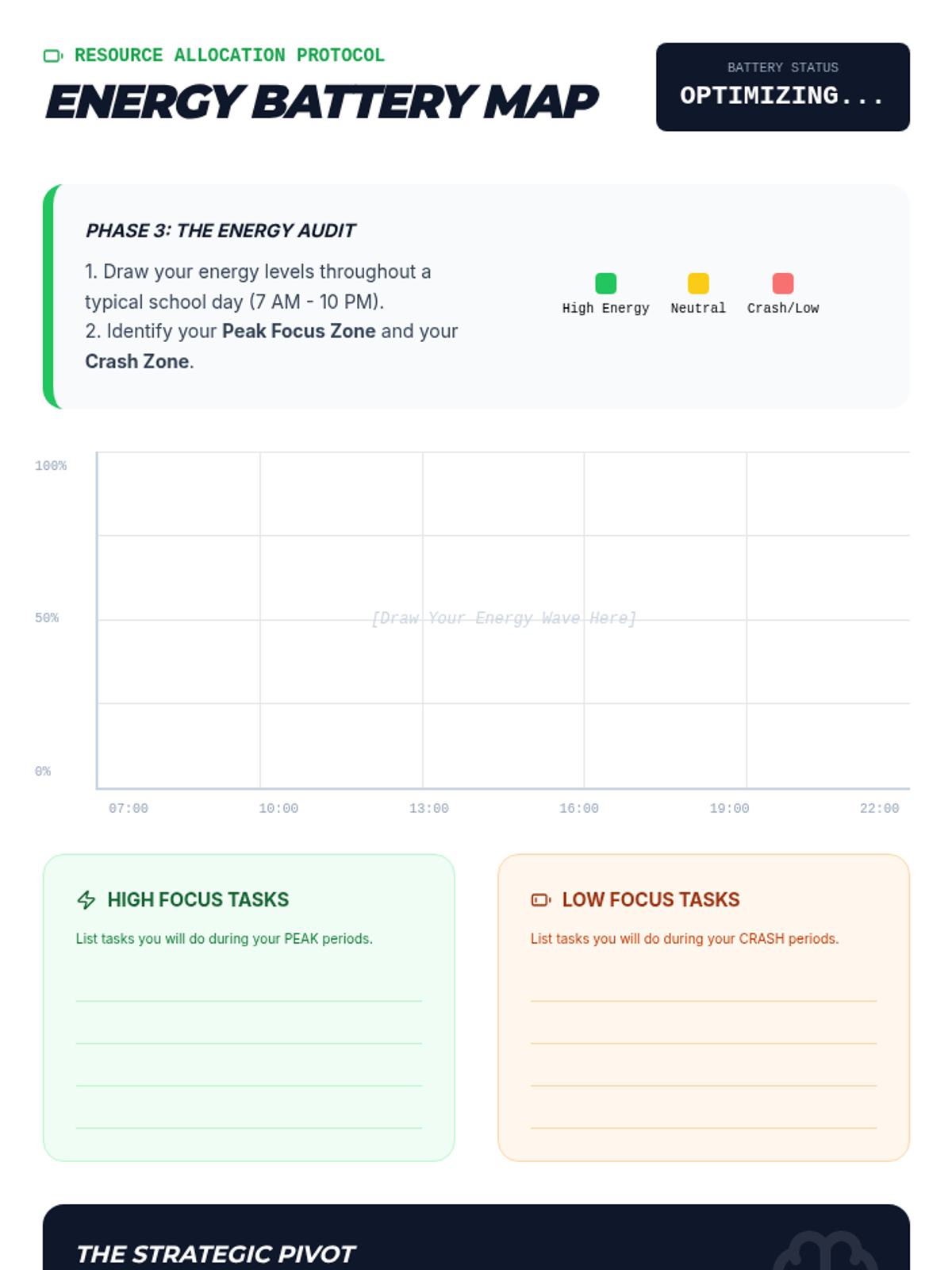
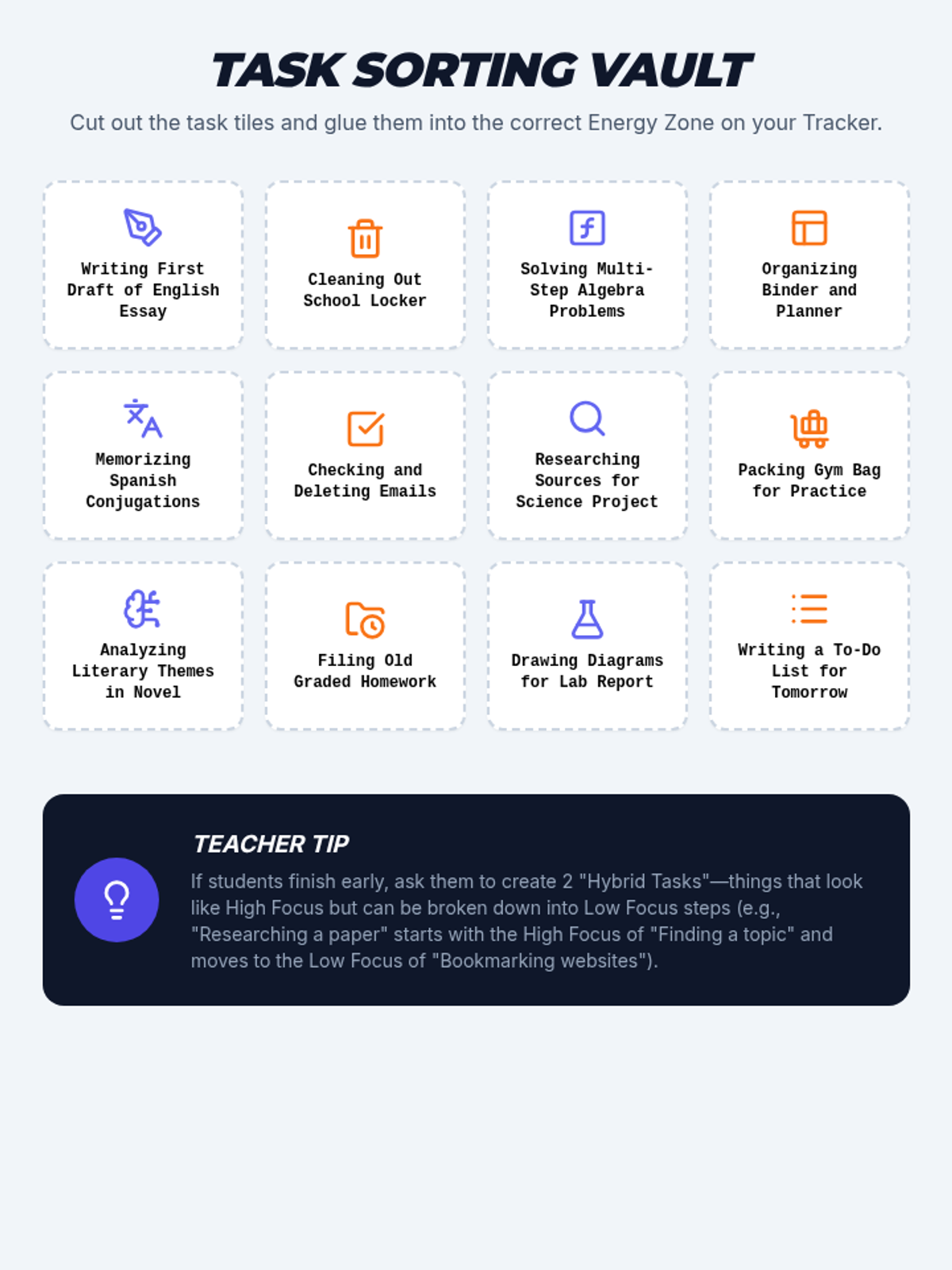
Students analyze their personal energy cycles to match high-demand tasks with high-energy periods, moving beyond simple time management to strategic resource allocation.
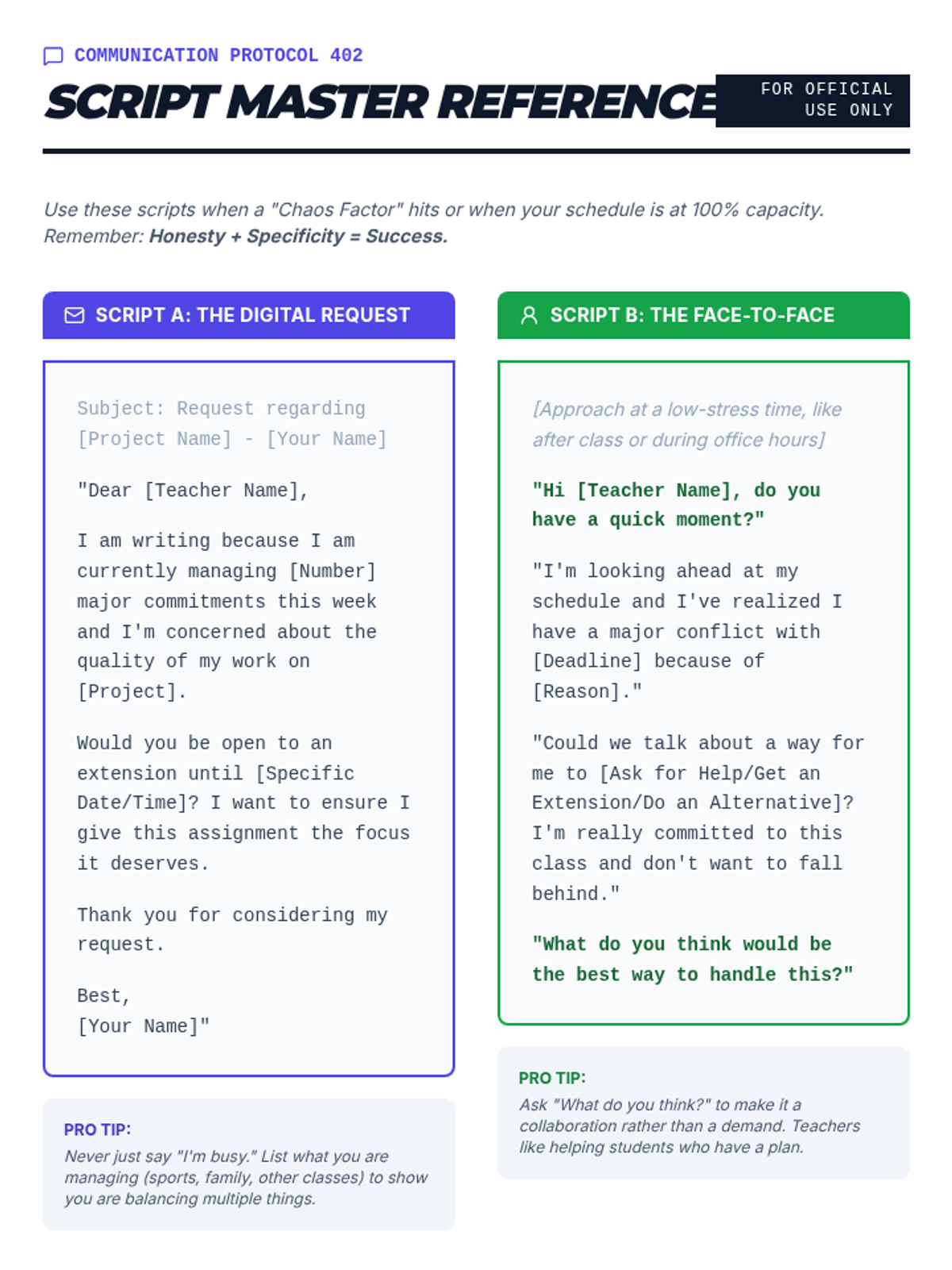
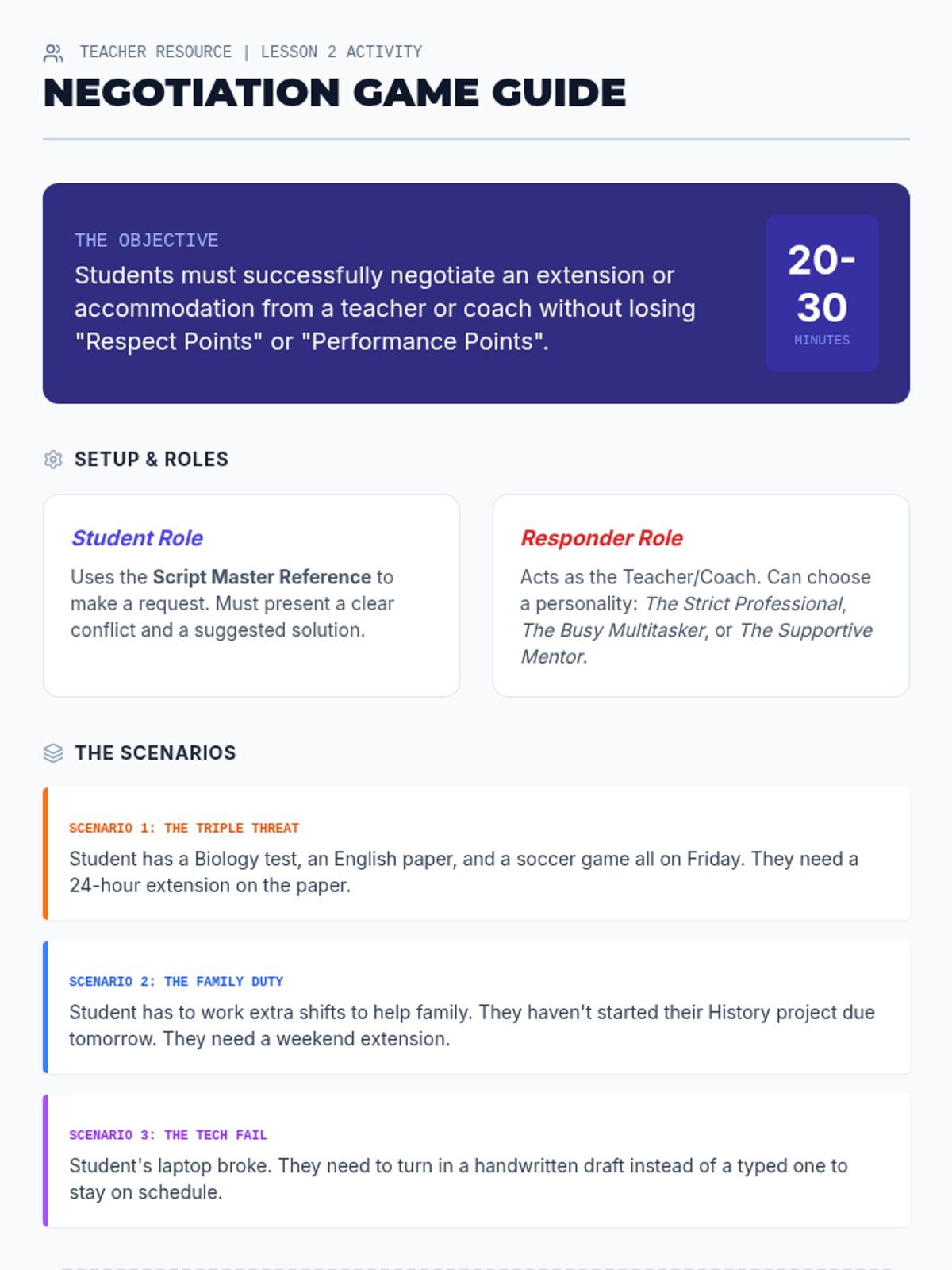
Focuses on professional communication and the distinction between hard and soft deadlines. Students practice scripts to negotiate extensions and help before a crisis occurs.
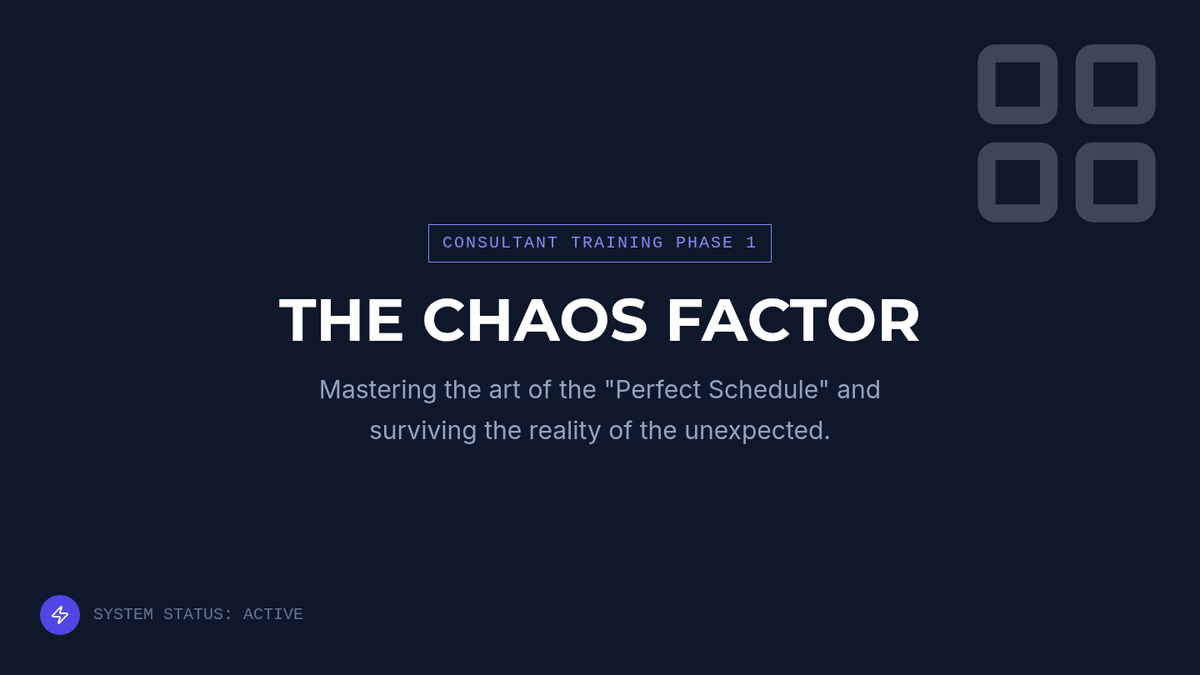
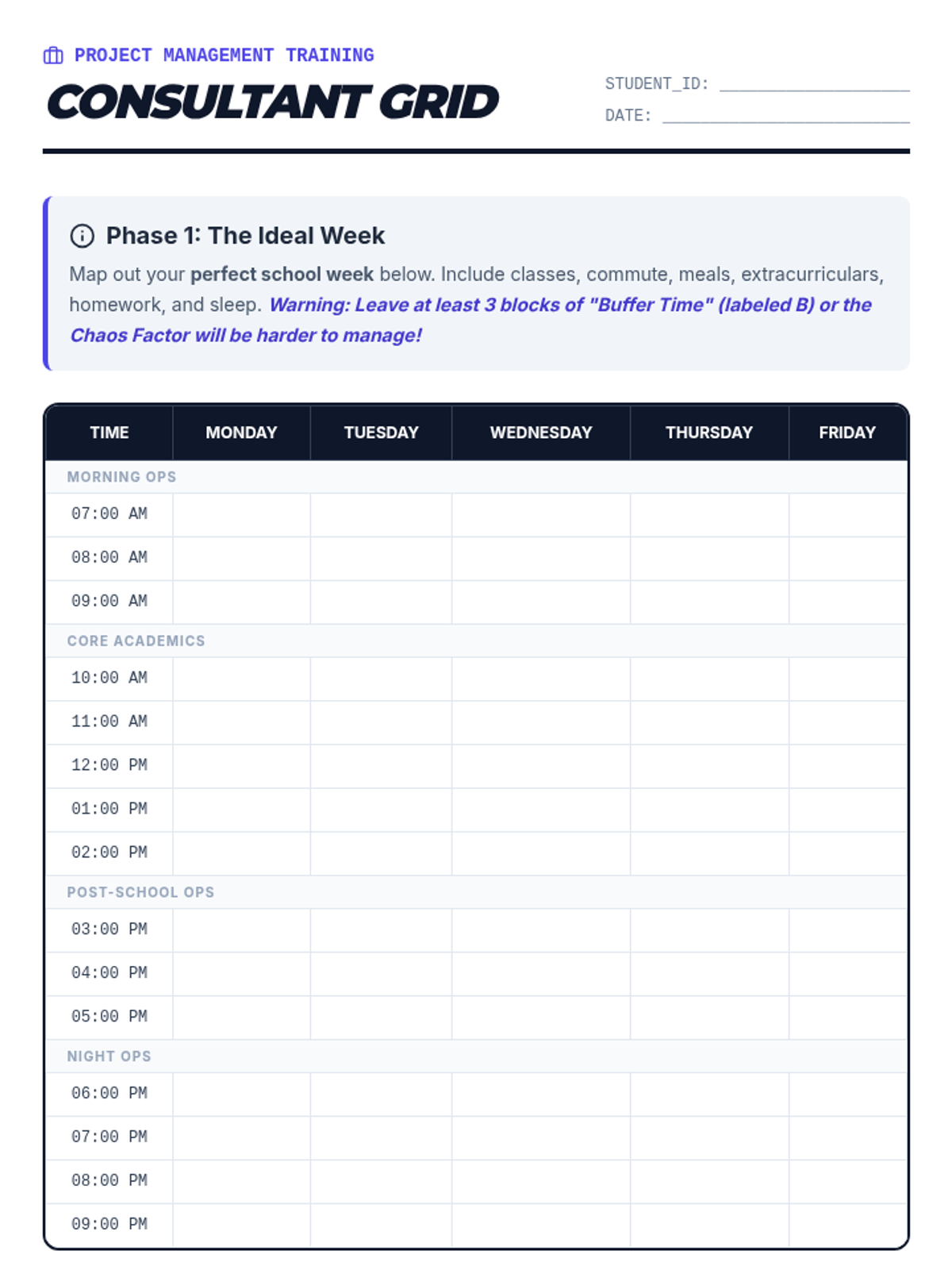
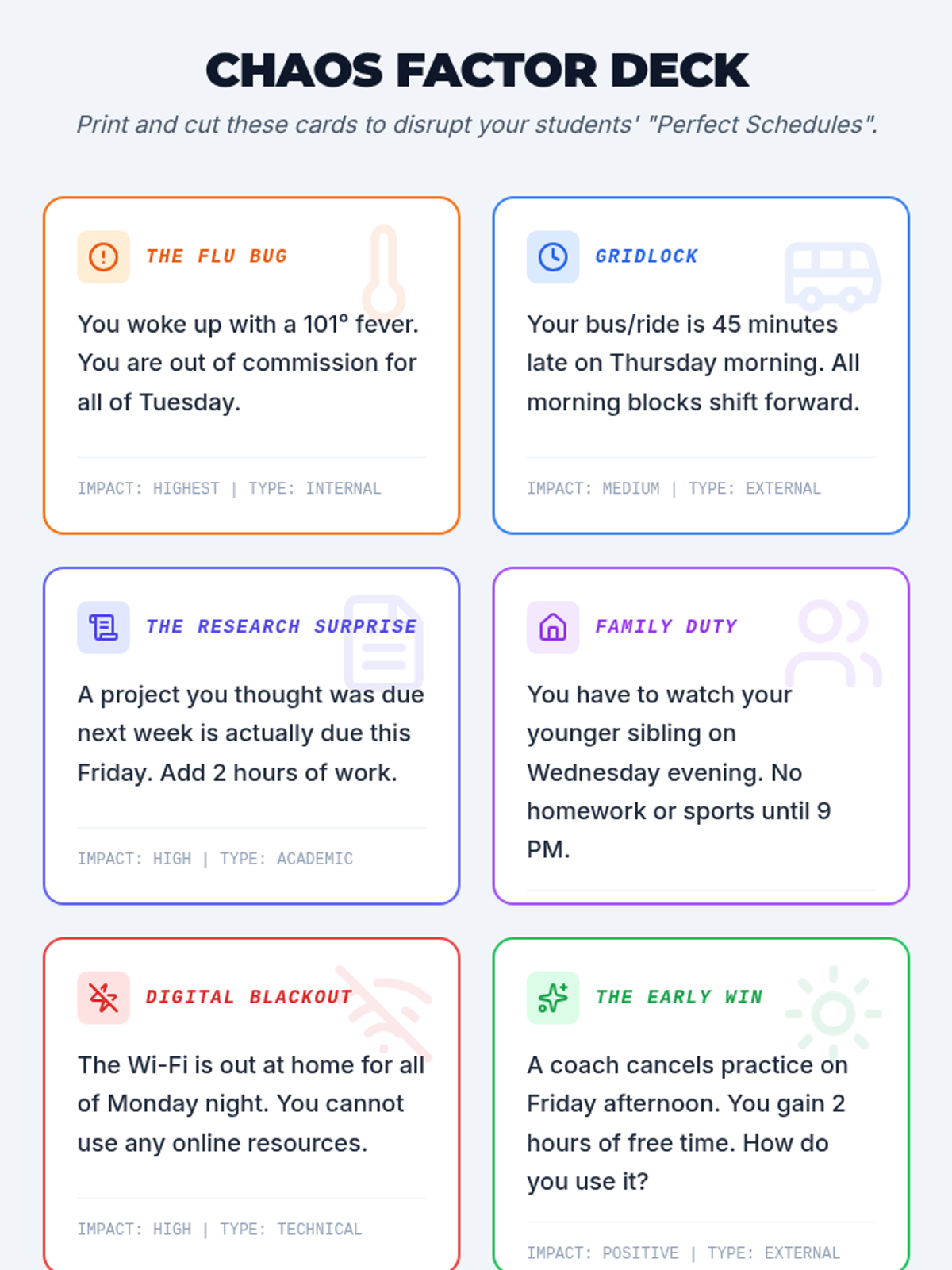
Students design an ideal weekly schedule and are immediately introduced to the 'Chaos Factor'—unpredictable life events that disrupt plans. They identify the need for buffer time and flexible scheduling.