A professional development lesson guiding K-8 staff through a systematic end-of-year digital archiving, folder handoff, and resource organization protocol to ensure a clean digital start and preserve institutional knowledge.
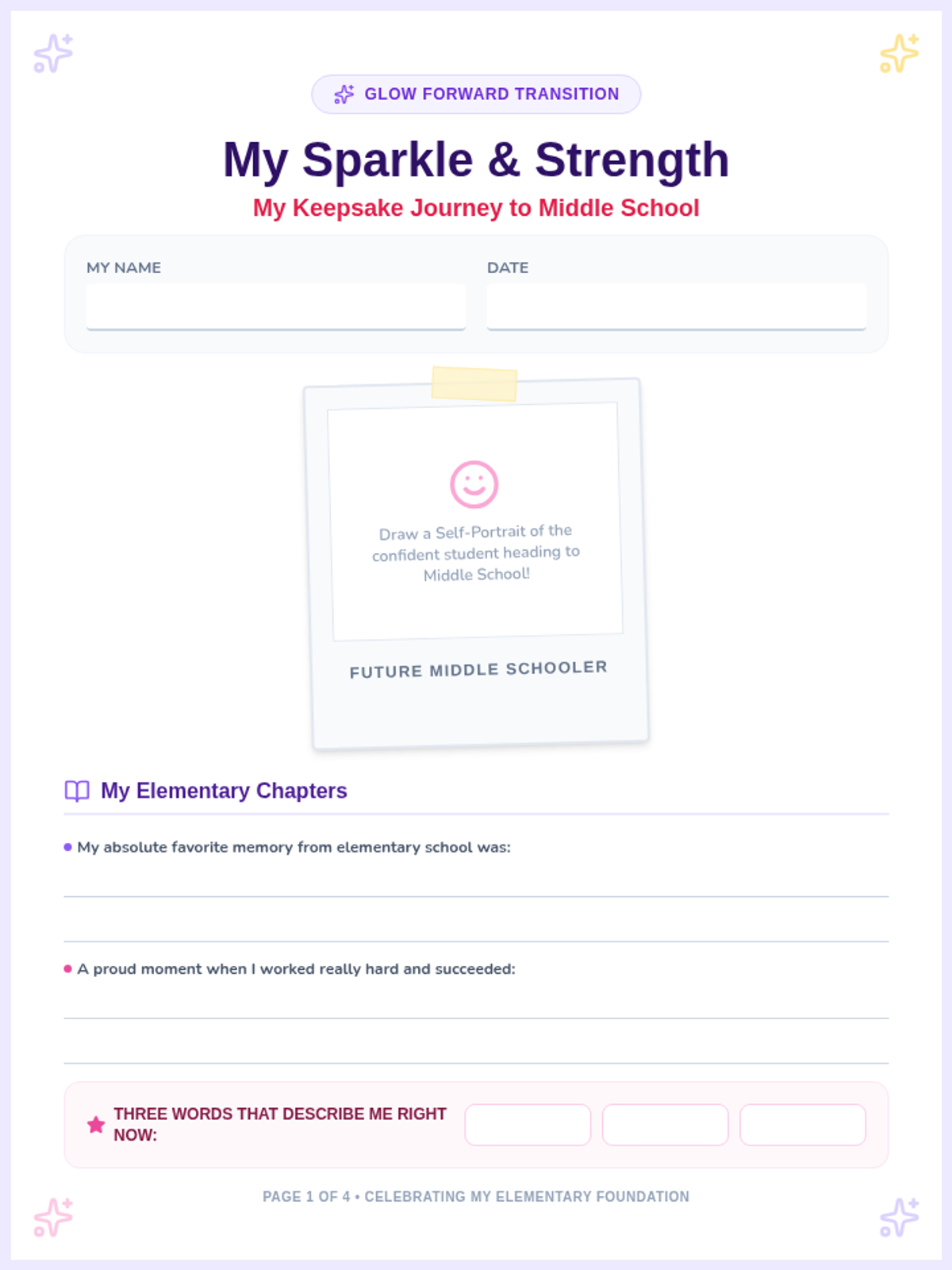
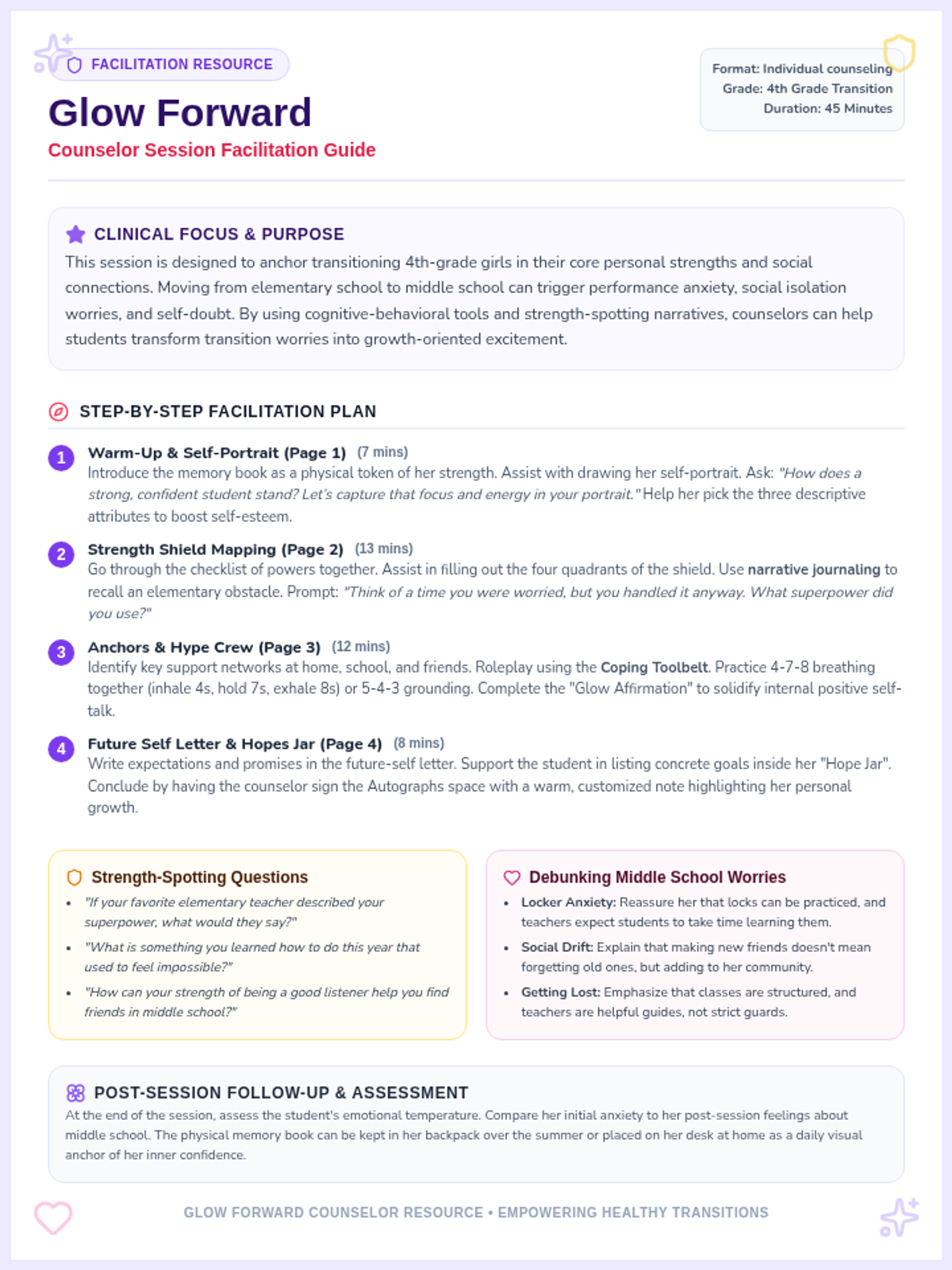
An empowering transition lesson for 4th-grade girls moving to middle school. It focuses on identifying core strengths, celebrating elementary milestones, and building self-confidence through a keepsake memory book.
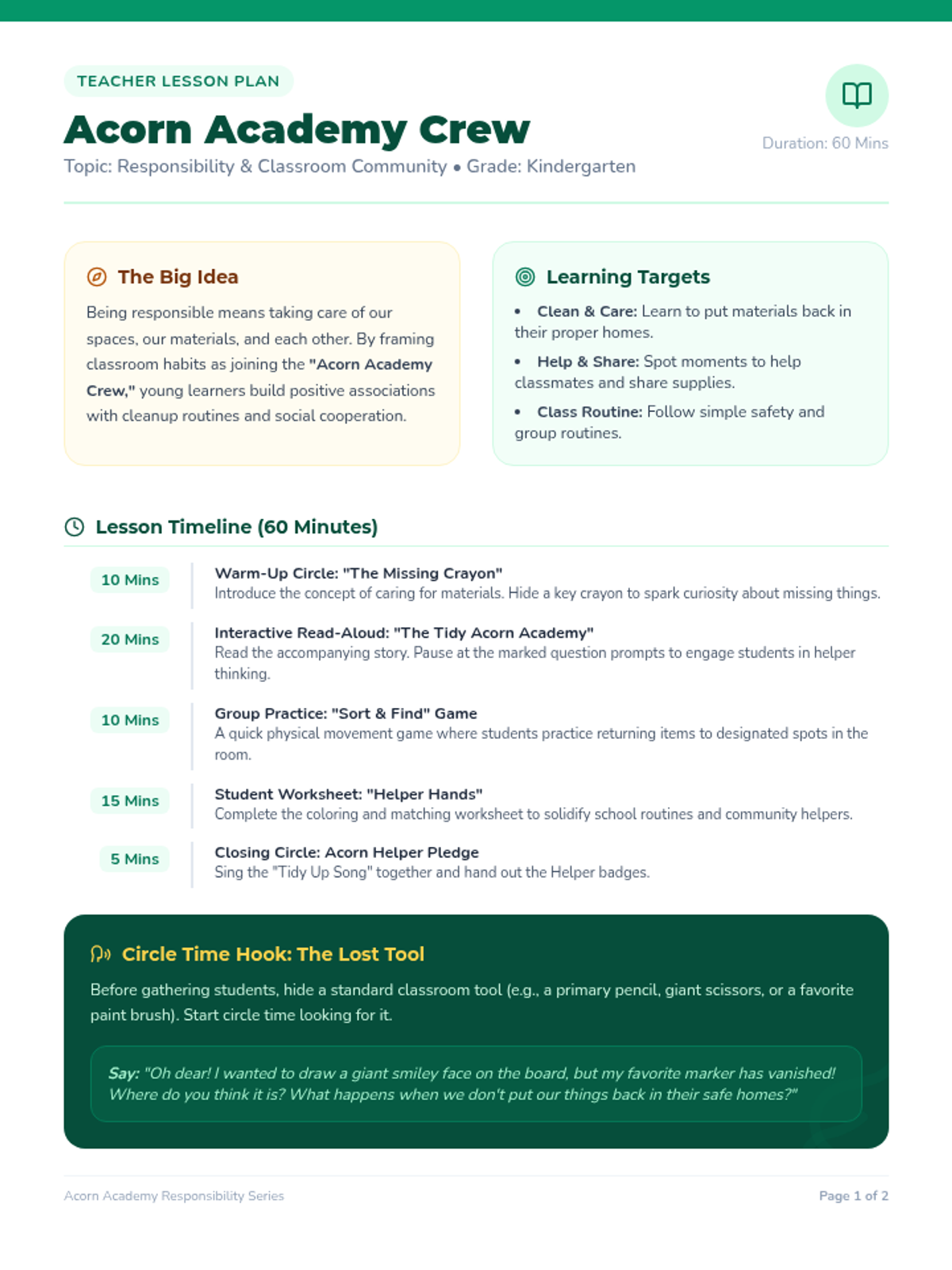
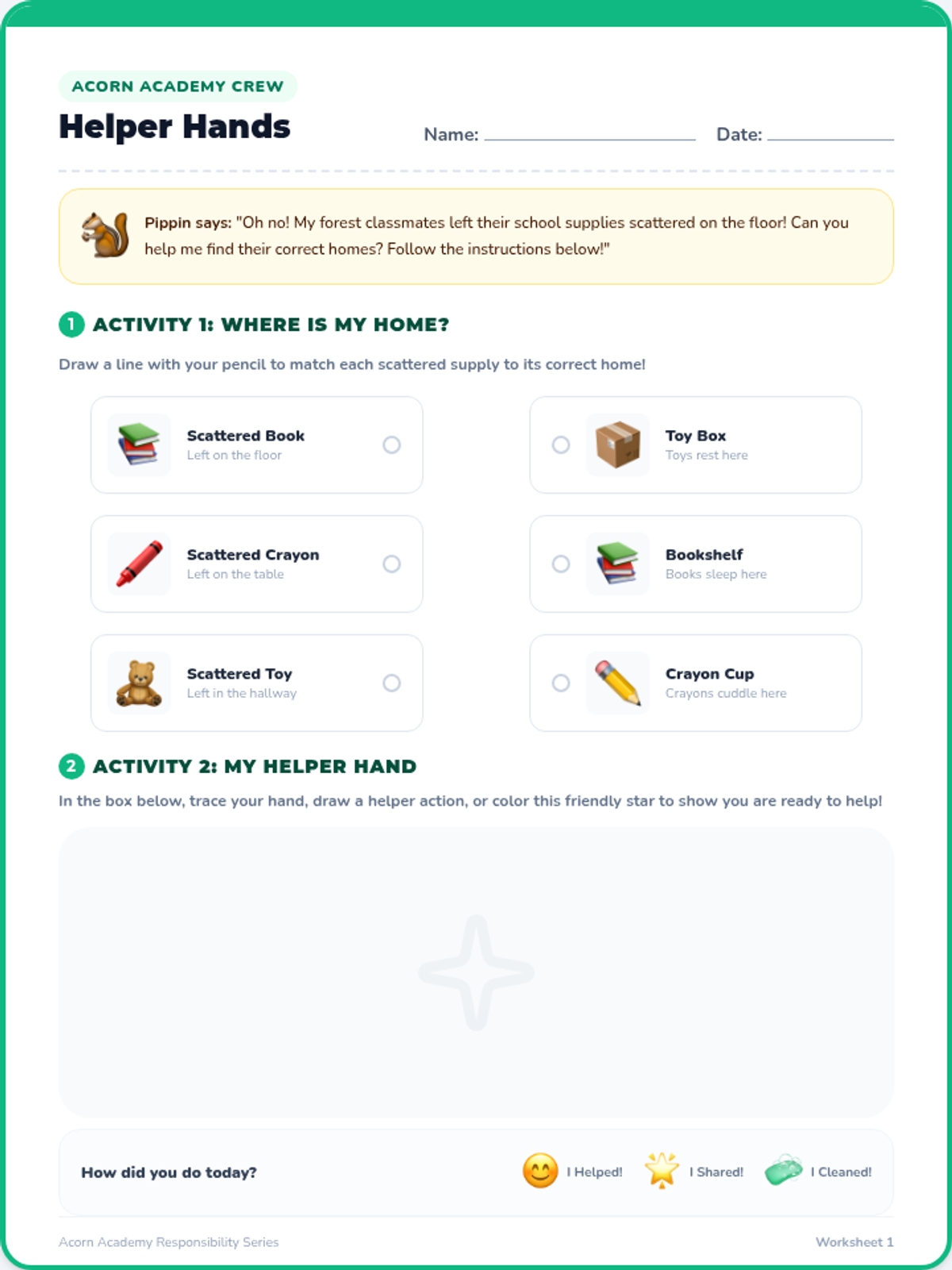
A comprehensive 60-minute kindergarten lesson on responsibility. It uses an engaging animal school theme ('Acorn Academy') to teach classroom habits (cleaning up, caring for materials) and community habits (sharing, helping classmates, kindness) through an original read-aloud story, a guided discussion, and a hands-on coloring and matching worksheet.
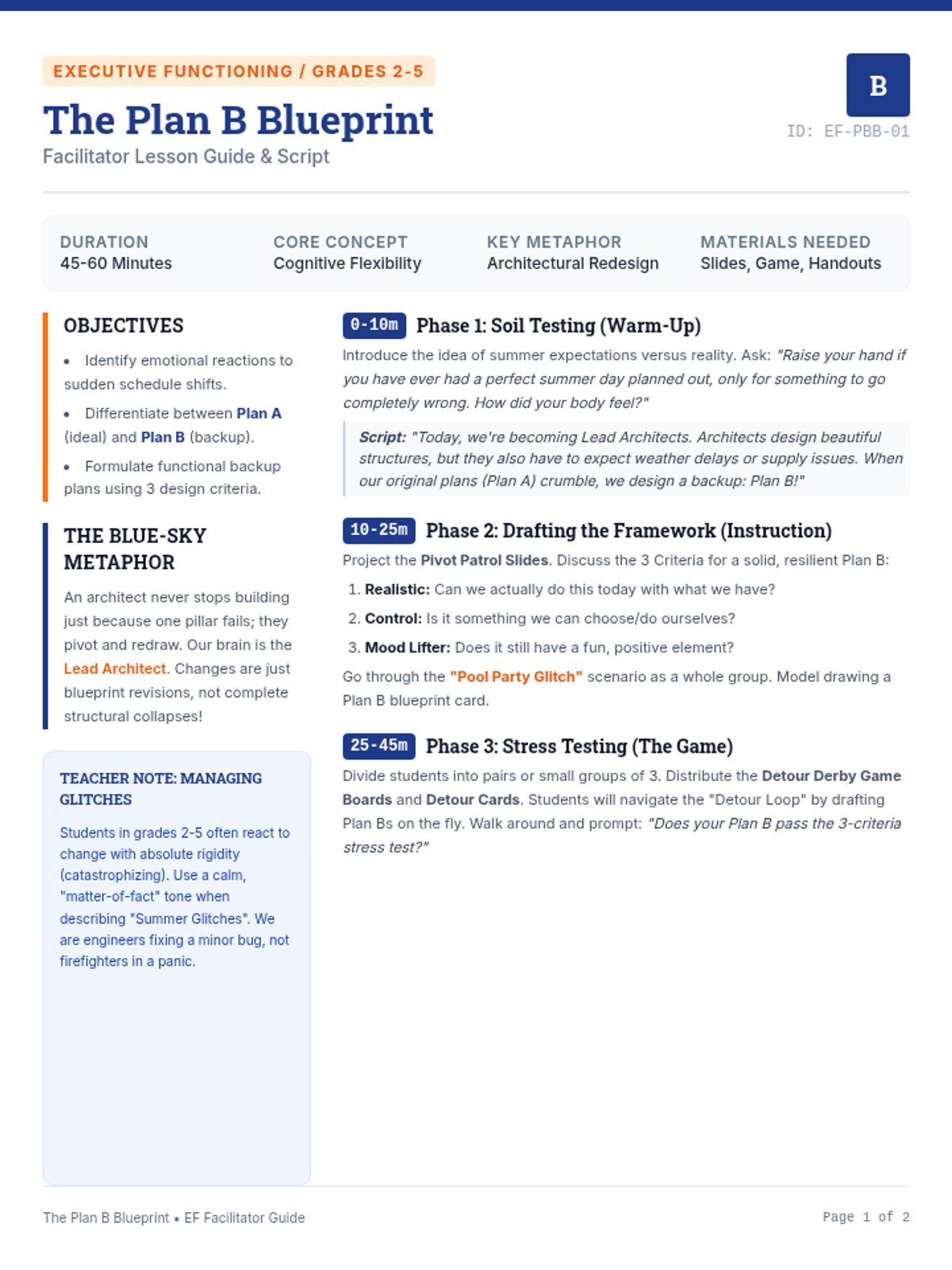
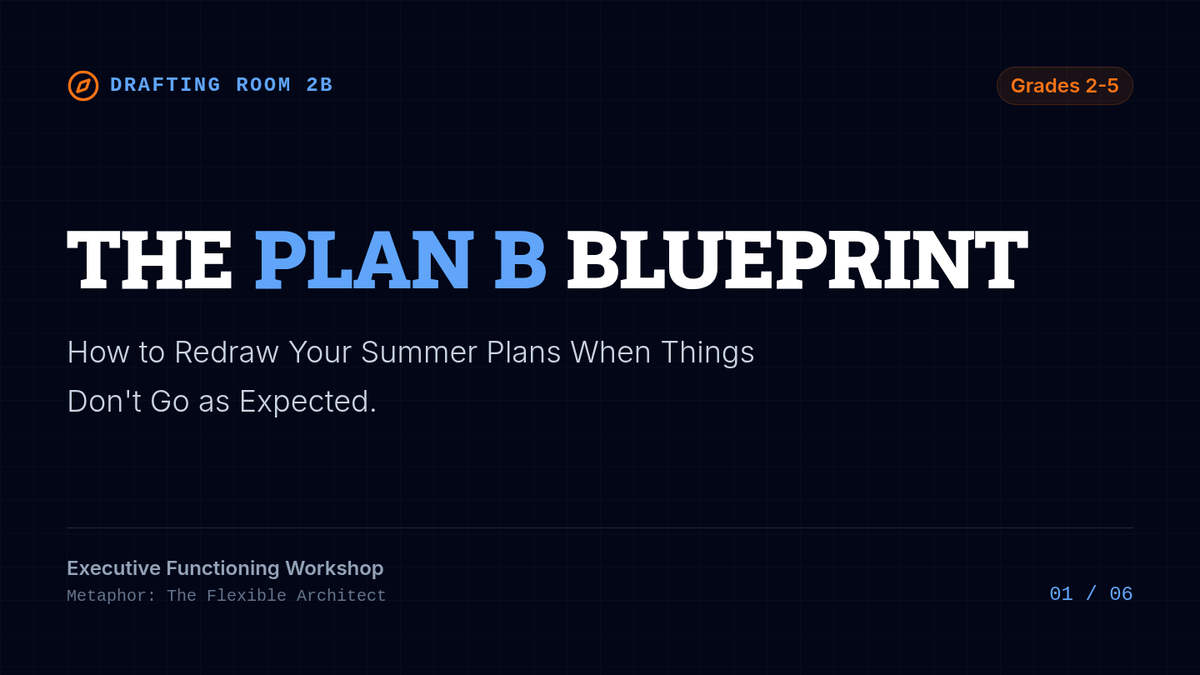
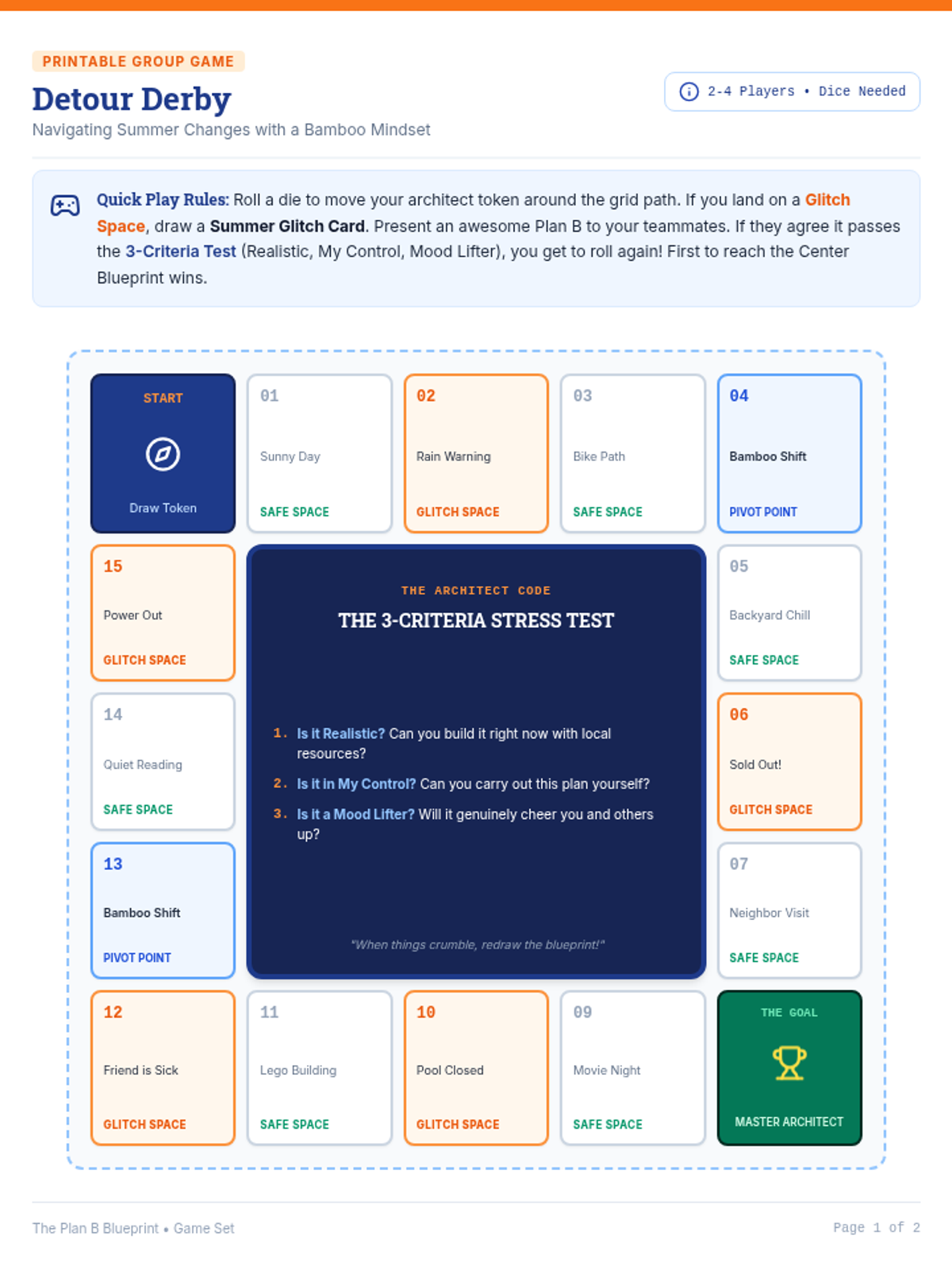
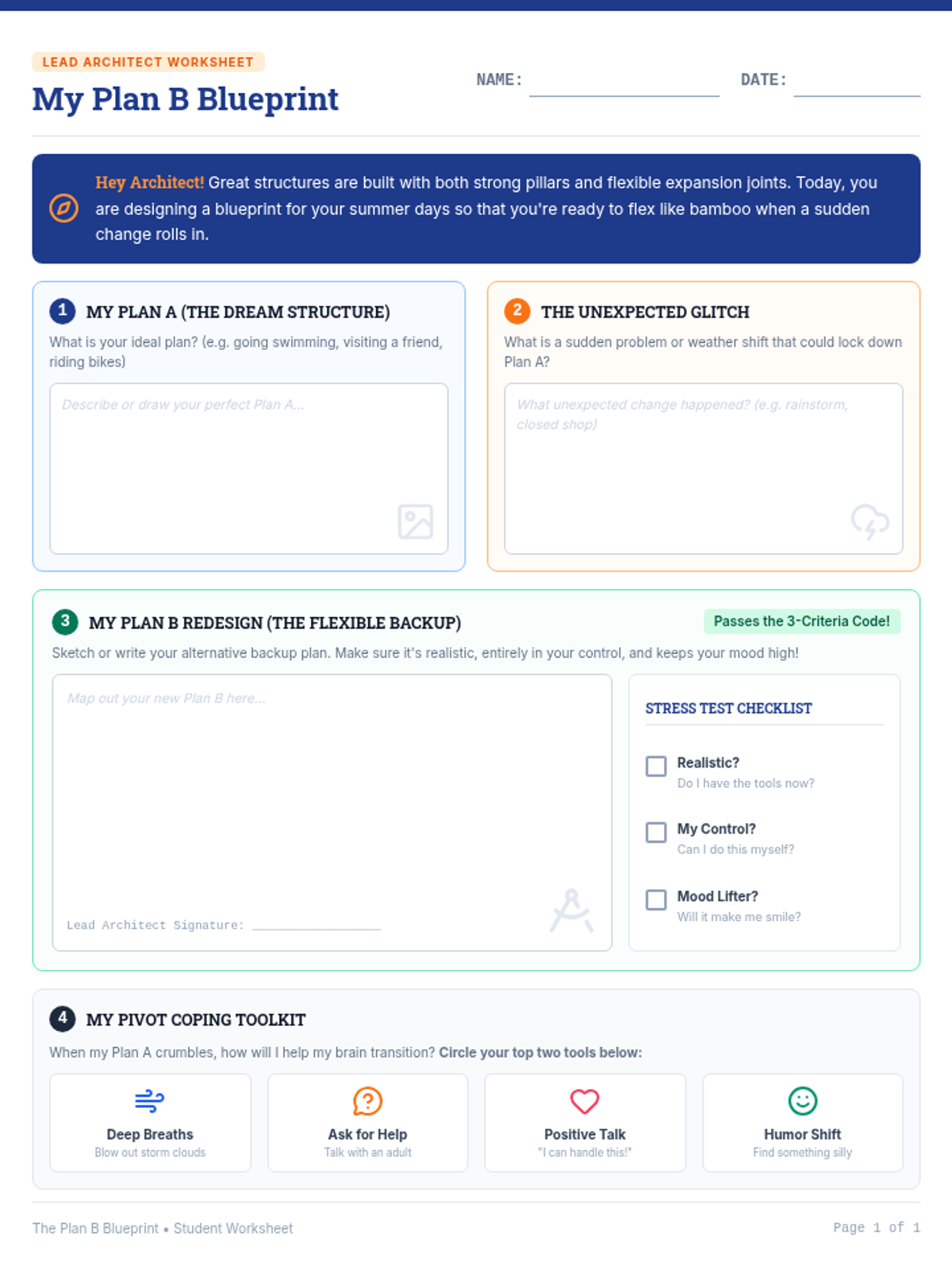
An executive functioning and cognitive flexibility workshop teaching students in grades 2-5 how to design alternative options ('Plan B') when summer plans change unexpectedly. This lesson uses an architectural blueprint metaphor to build resilience and reduce transition anxiety.
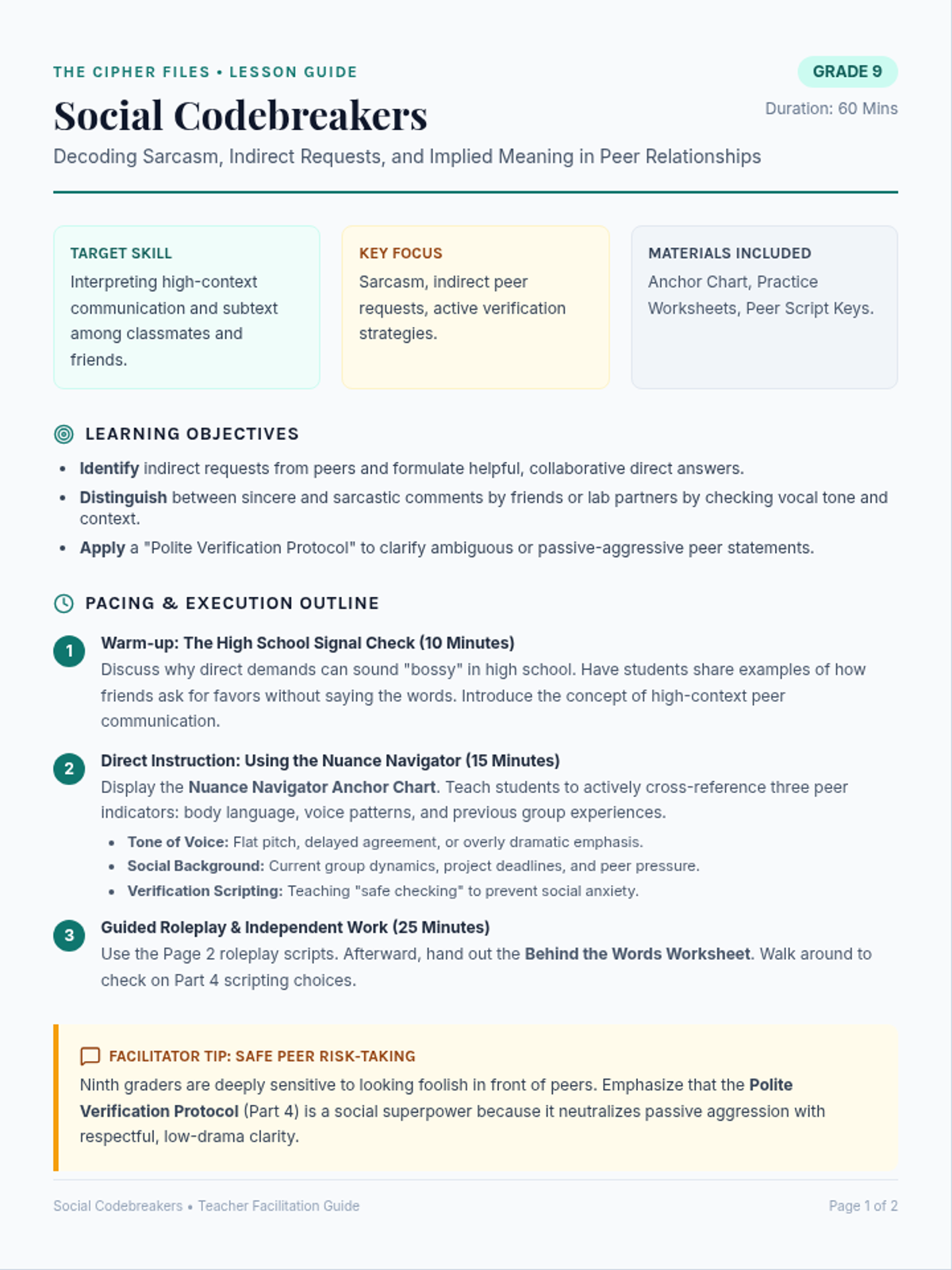
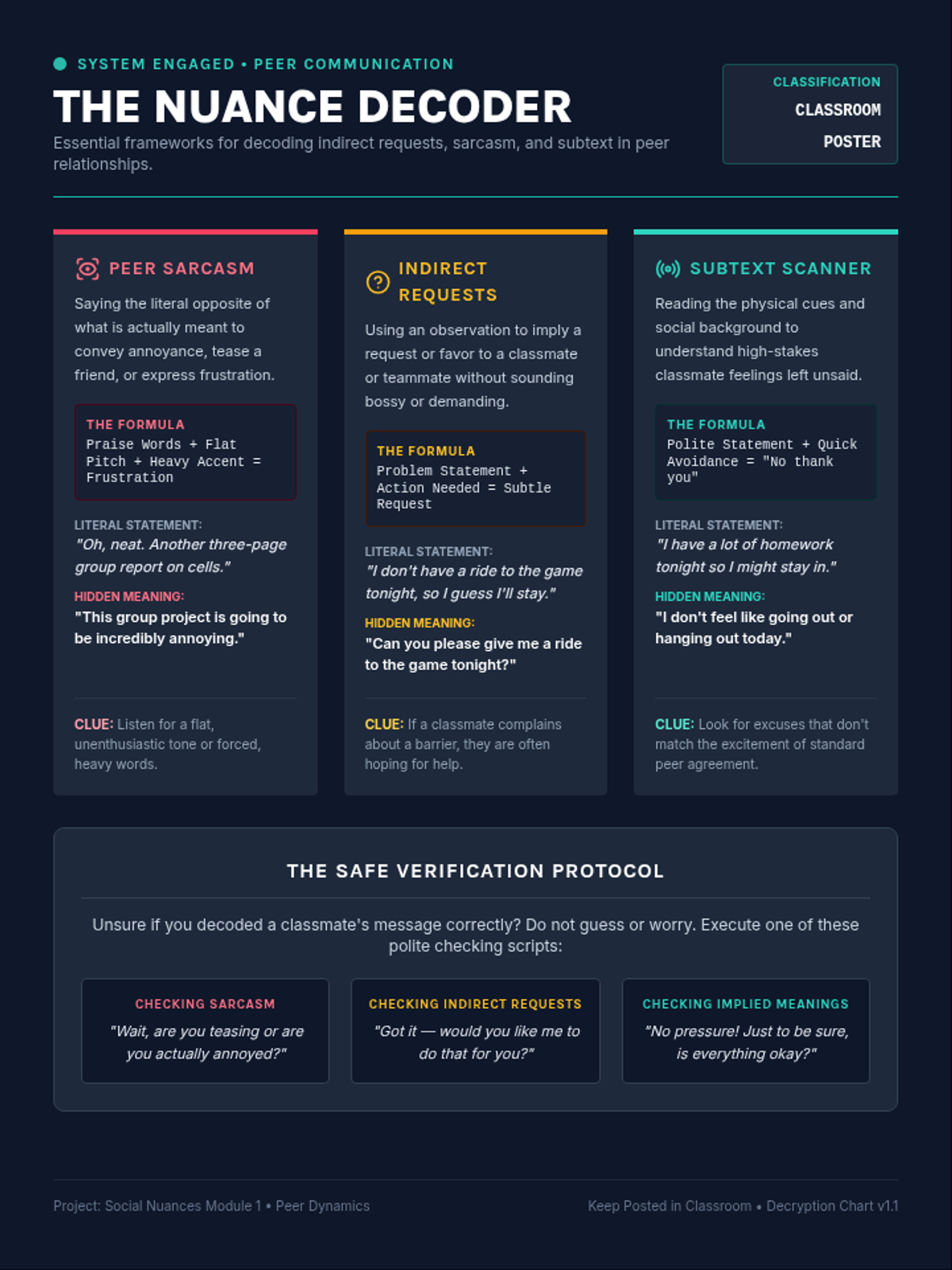
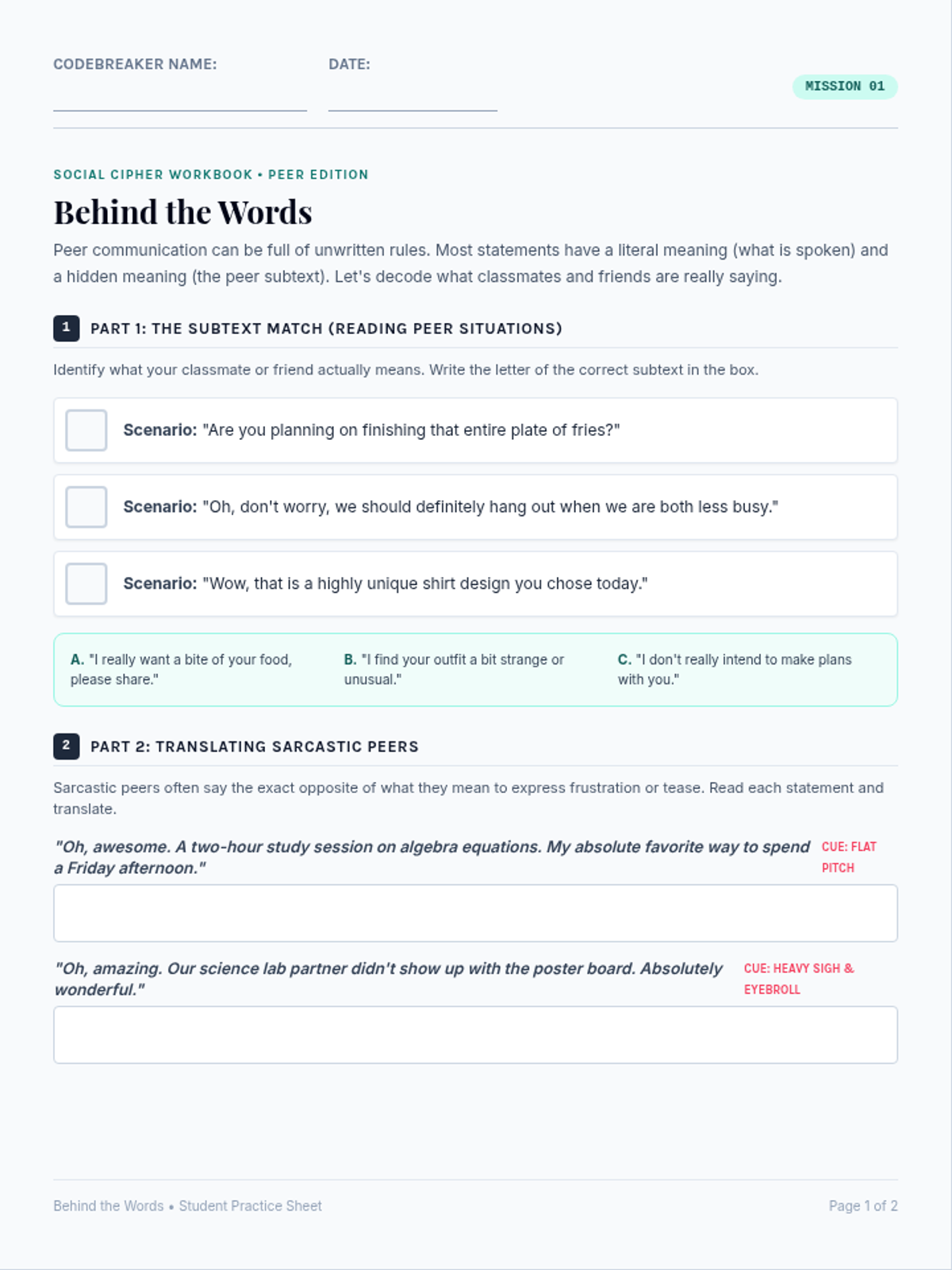
A high-school level social communication lesson focused on reading between the lines, helping students decode sarcasm, indirect requests, and implied meanings through structured analysis and real-world scenarios.
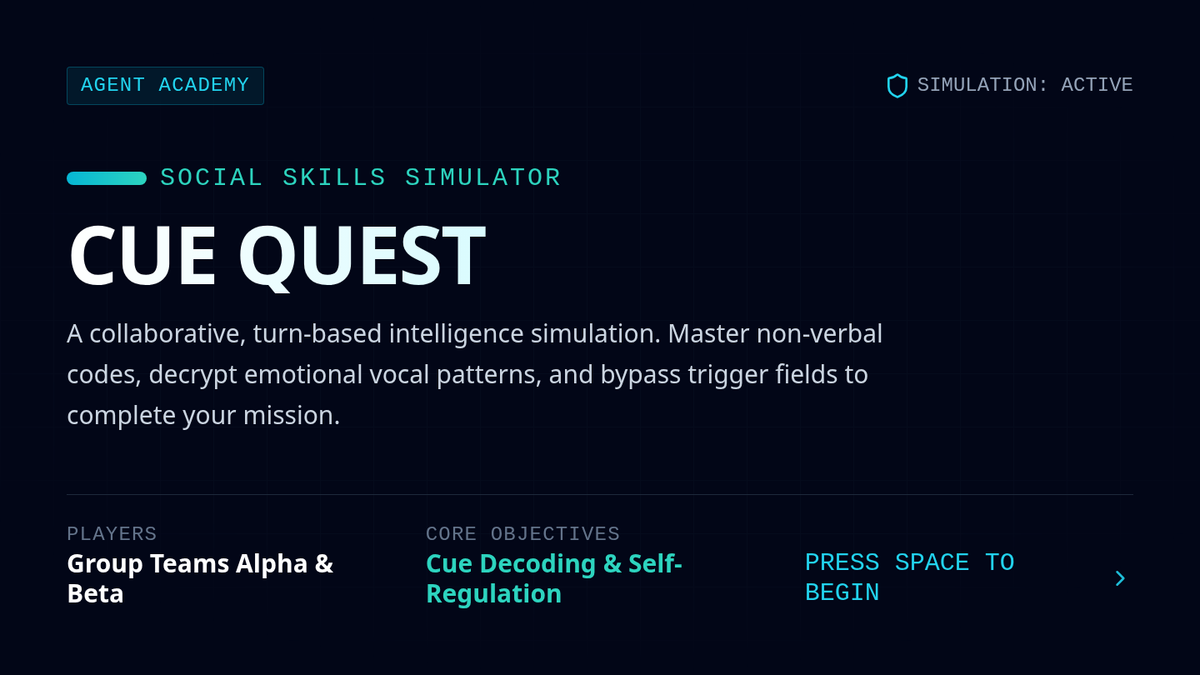
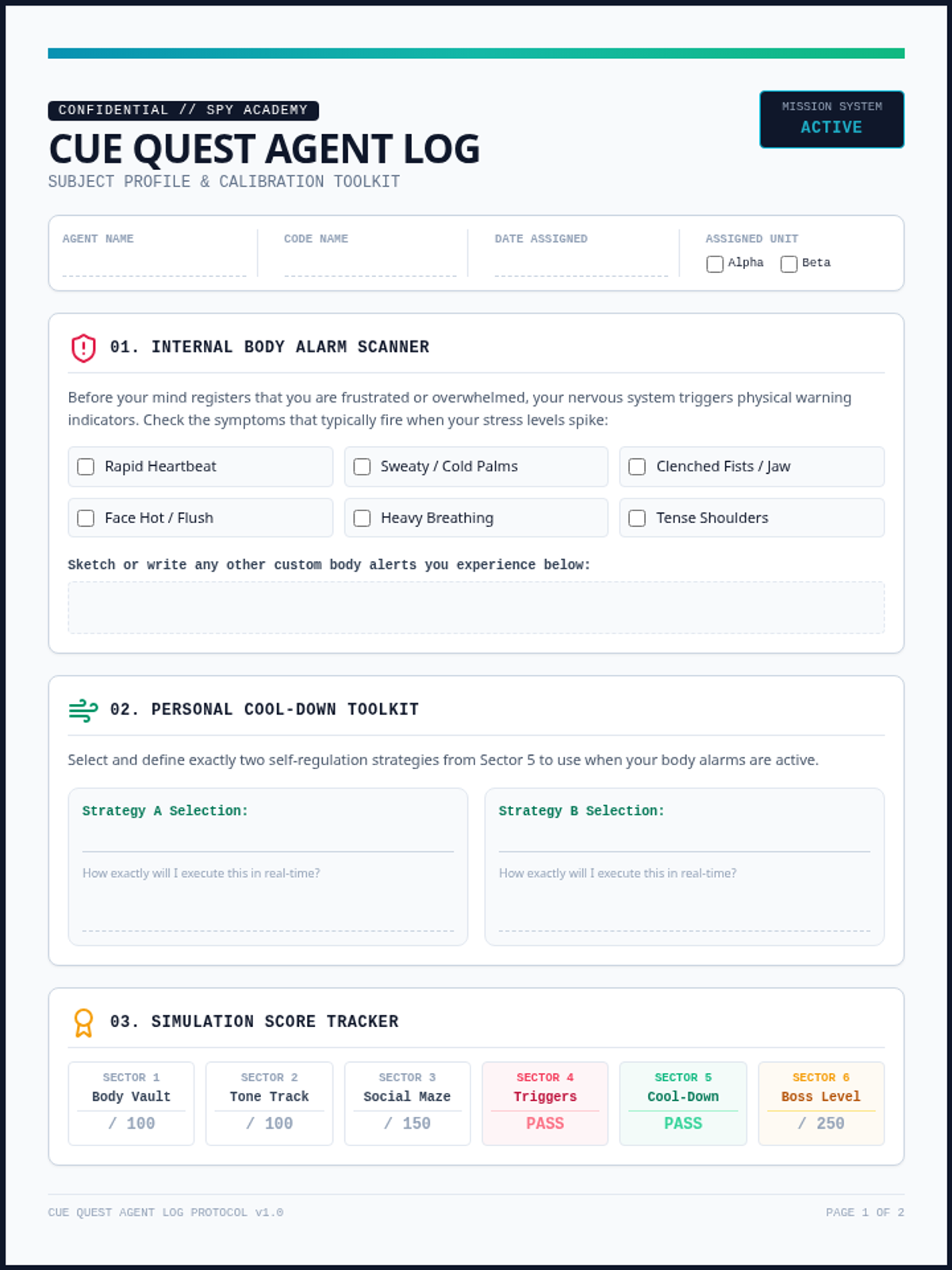
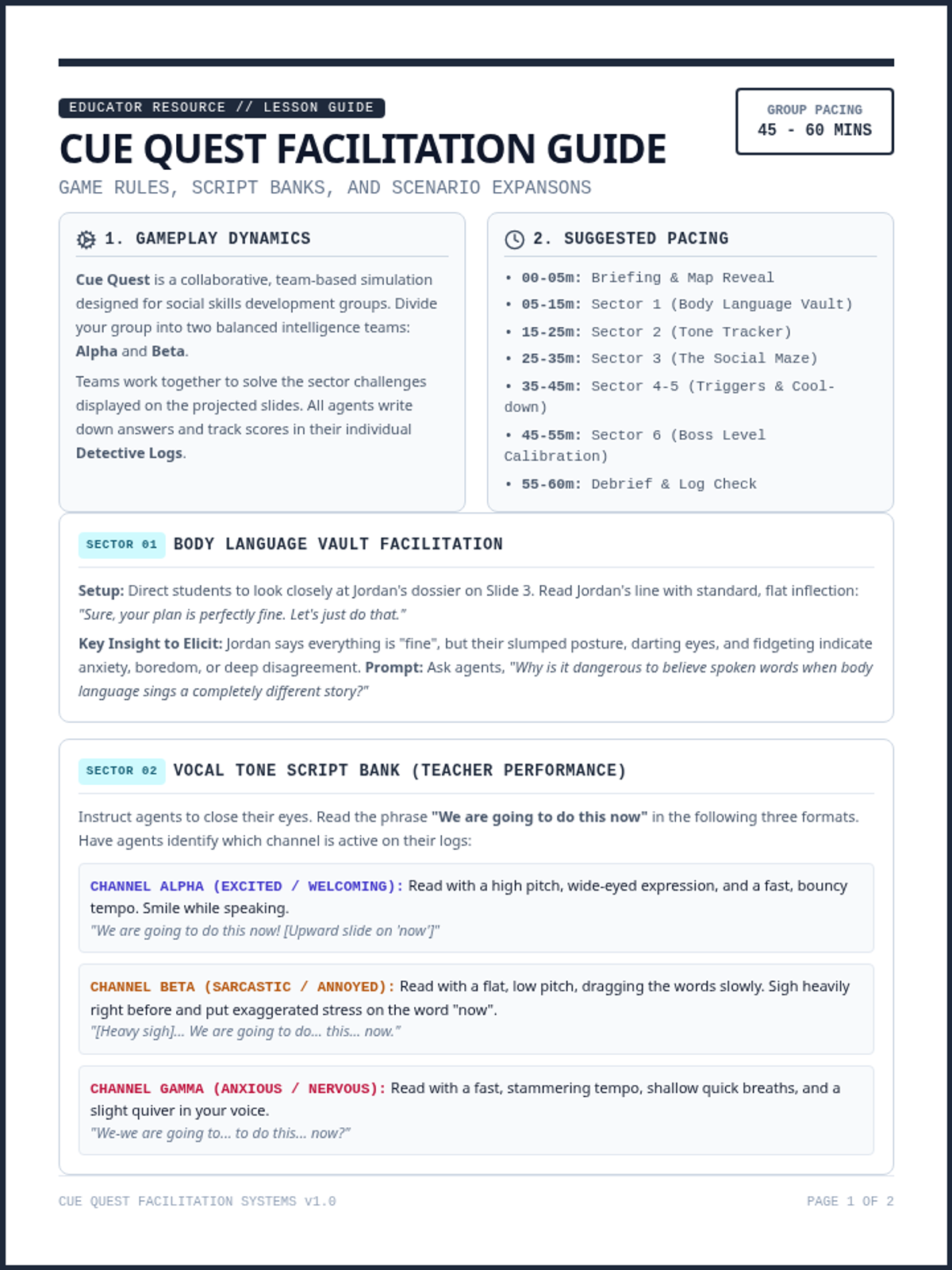
A gamified social skills lesson focusing on reading non-verbal cues, decoding tone of voice, and mastering emotional self-regulation through a collaborative turn-based simulation.
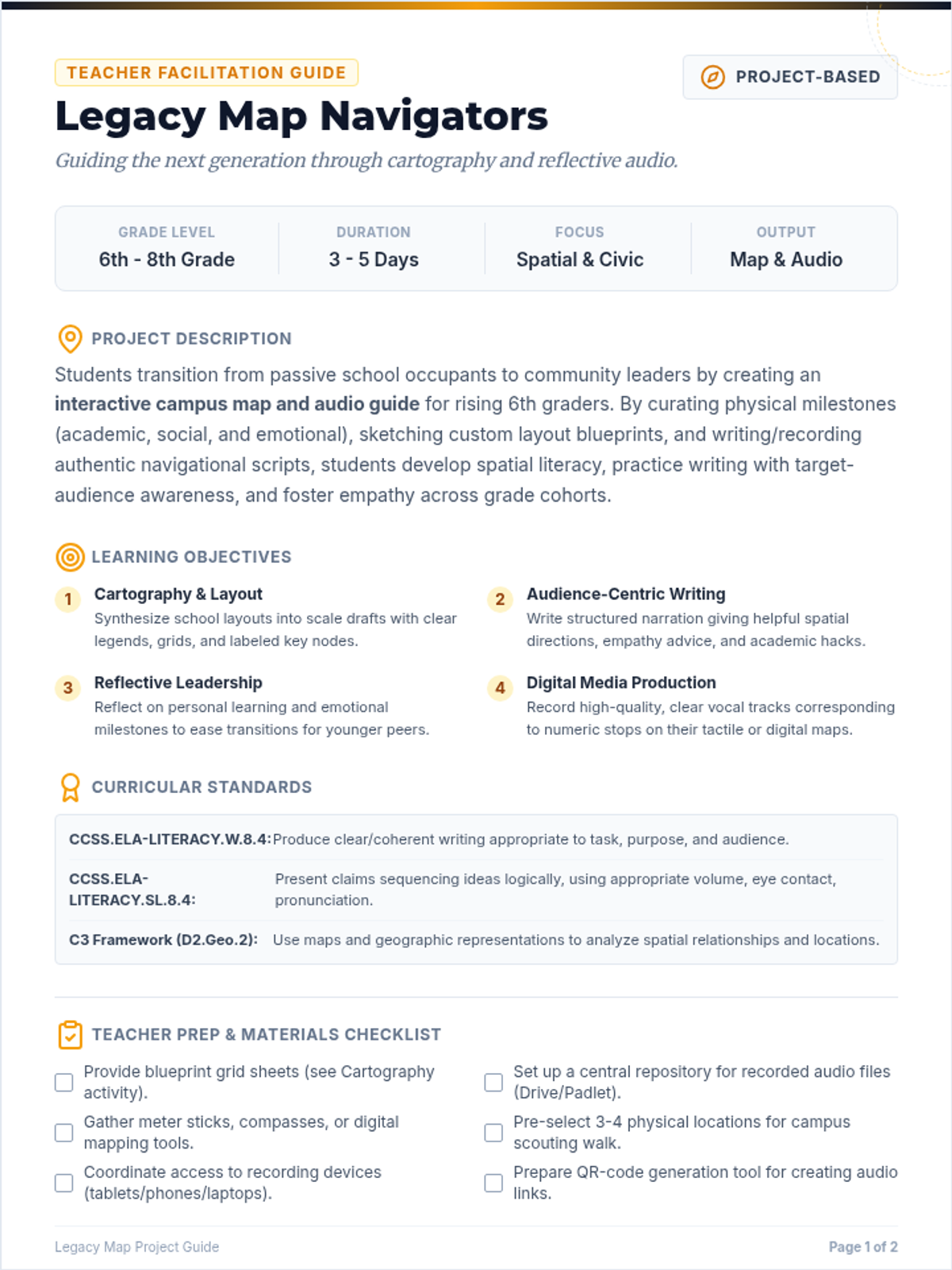
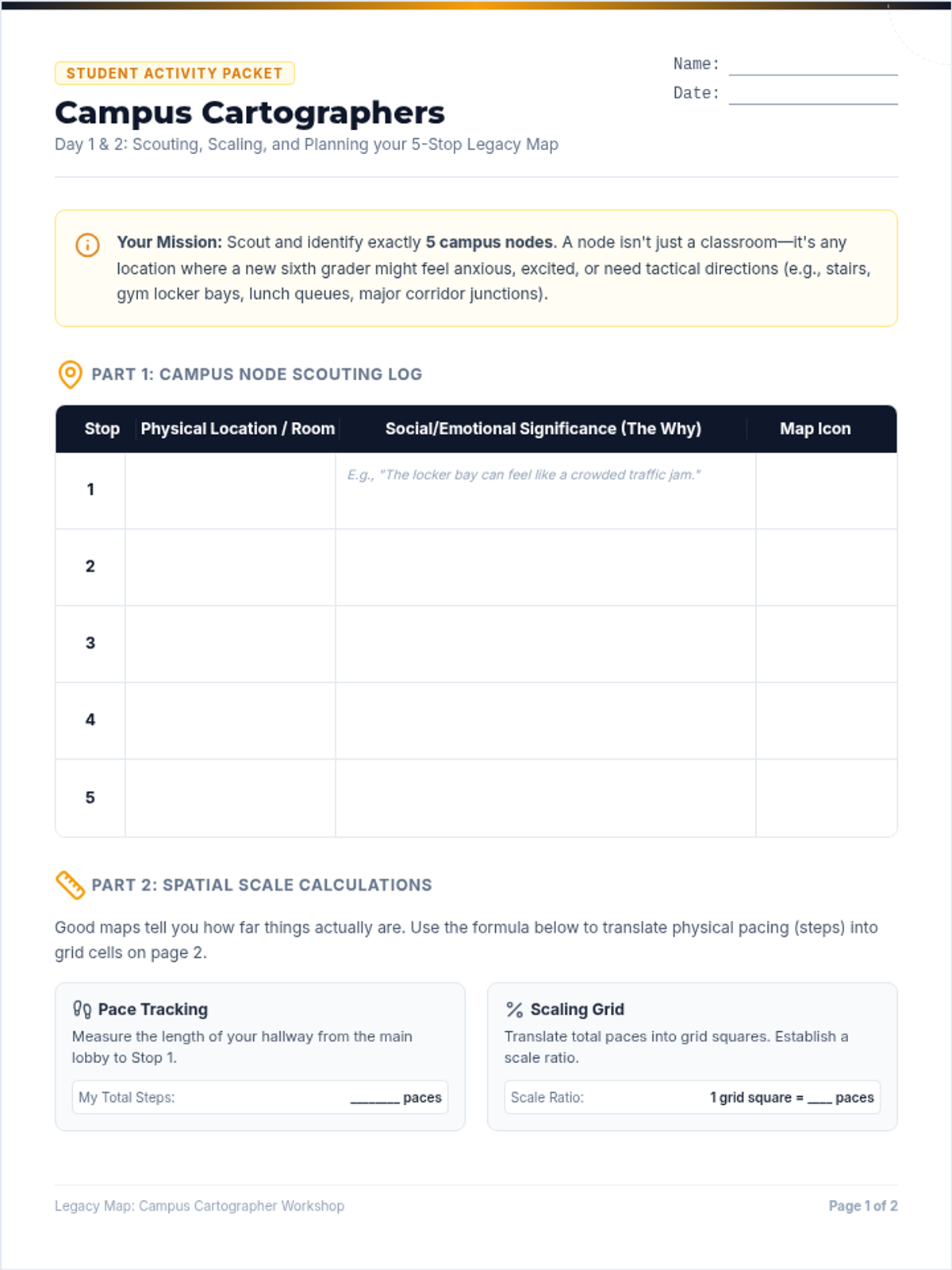
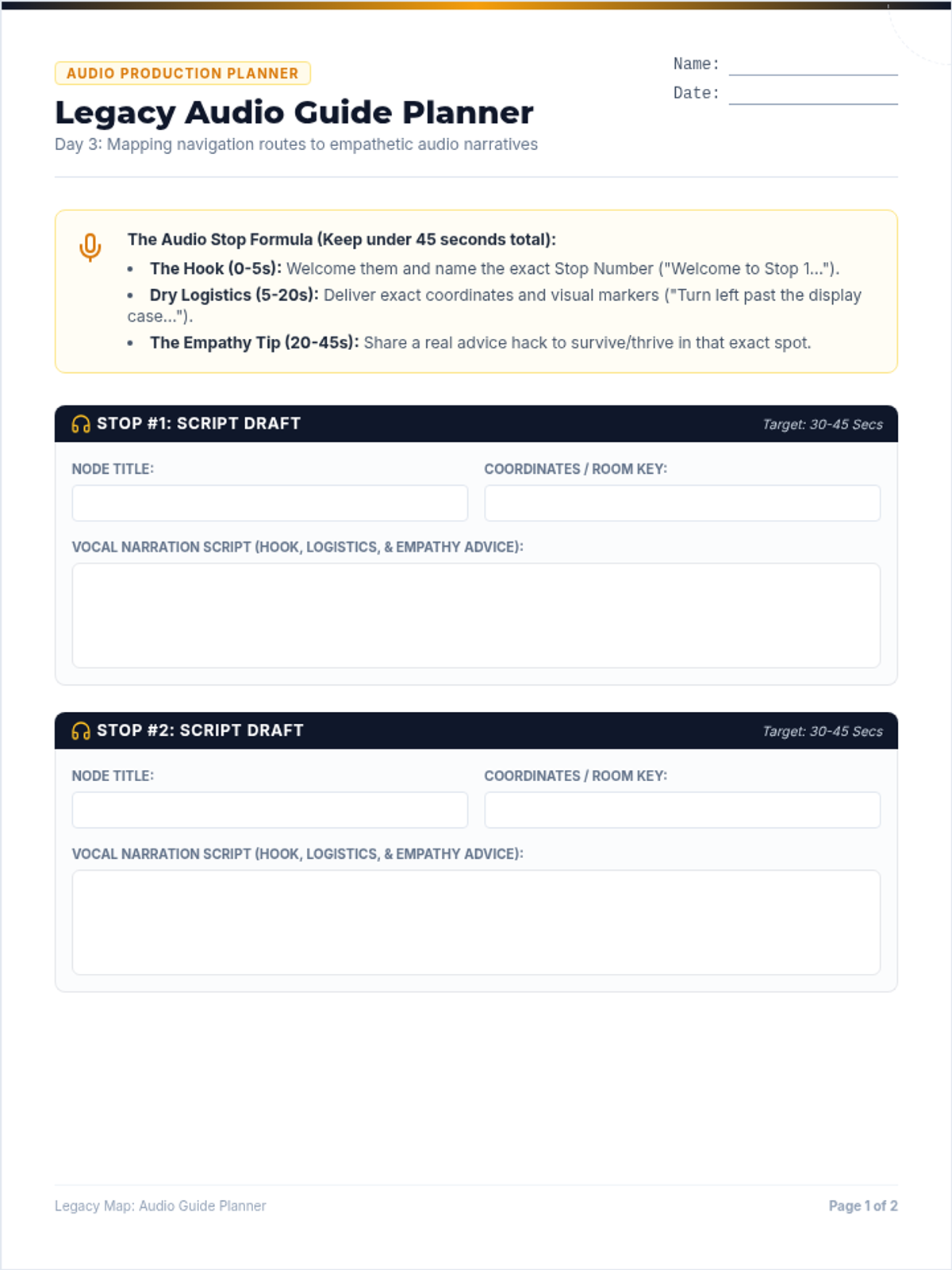
A project-based lesson where students create an interactive campus map and audio guide for rising sixth graders. Students practice cartography, reflective writing, and community leadership to ease the transition for future students.
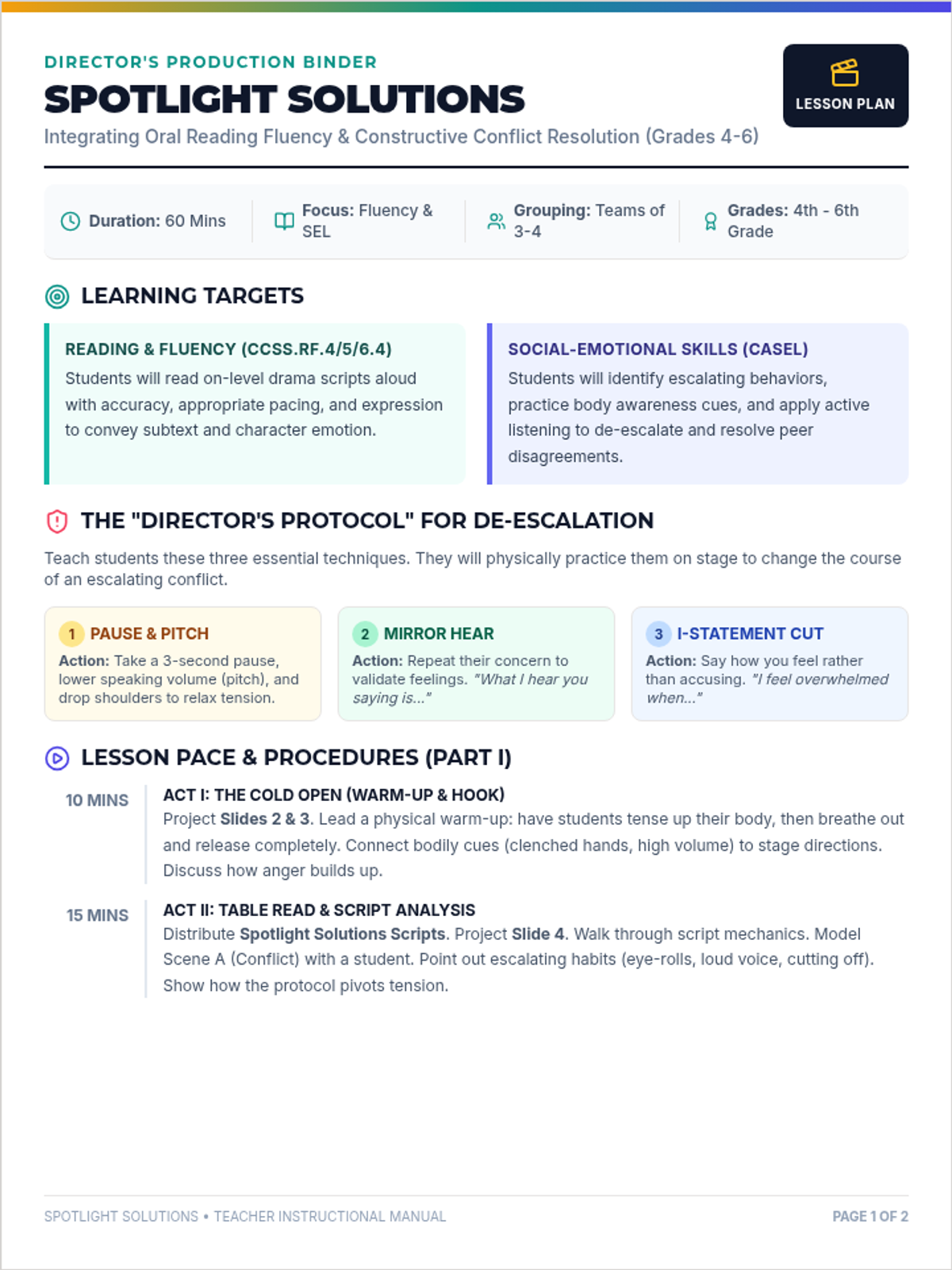
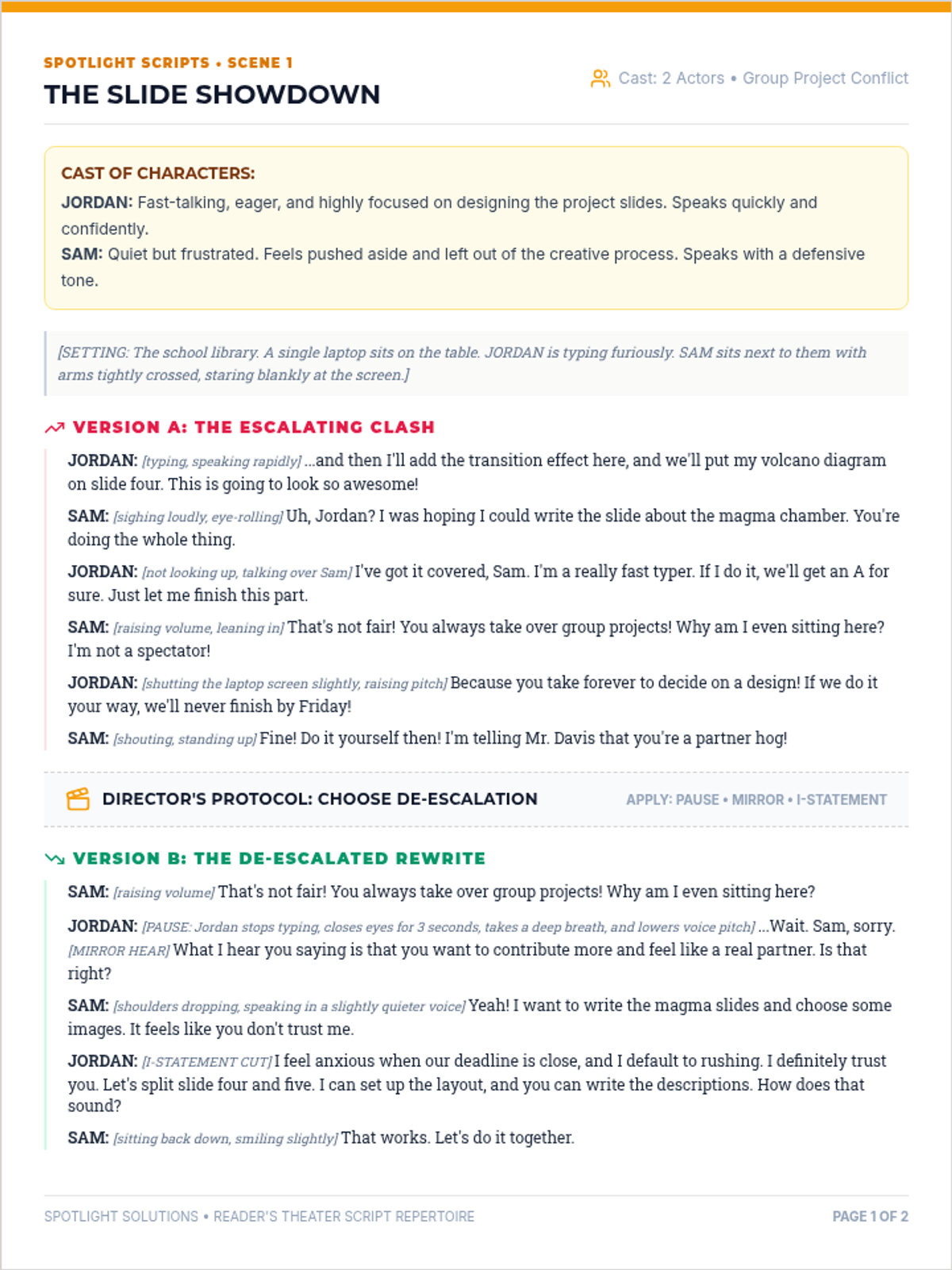
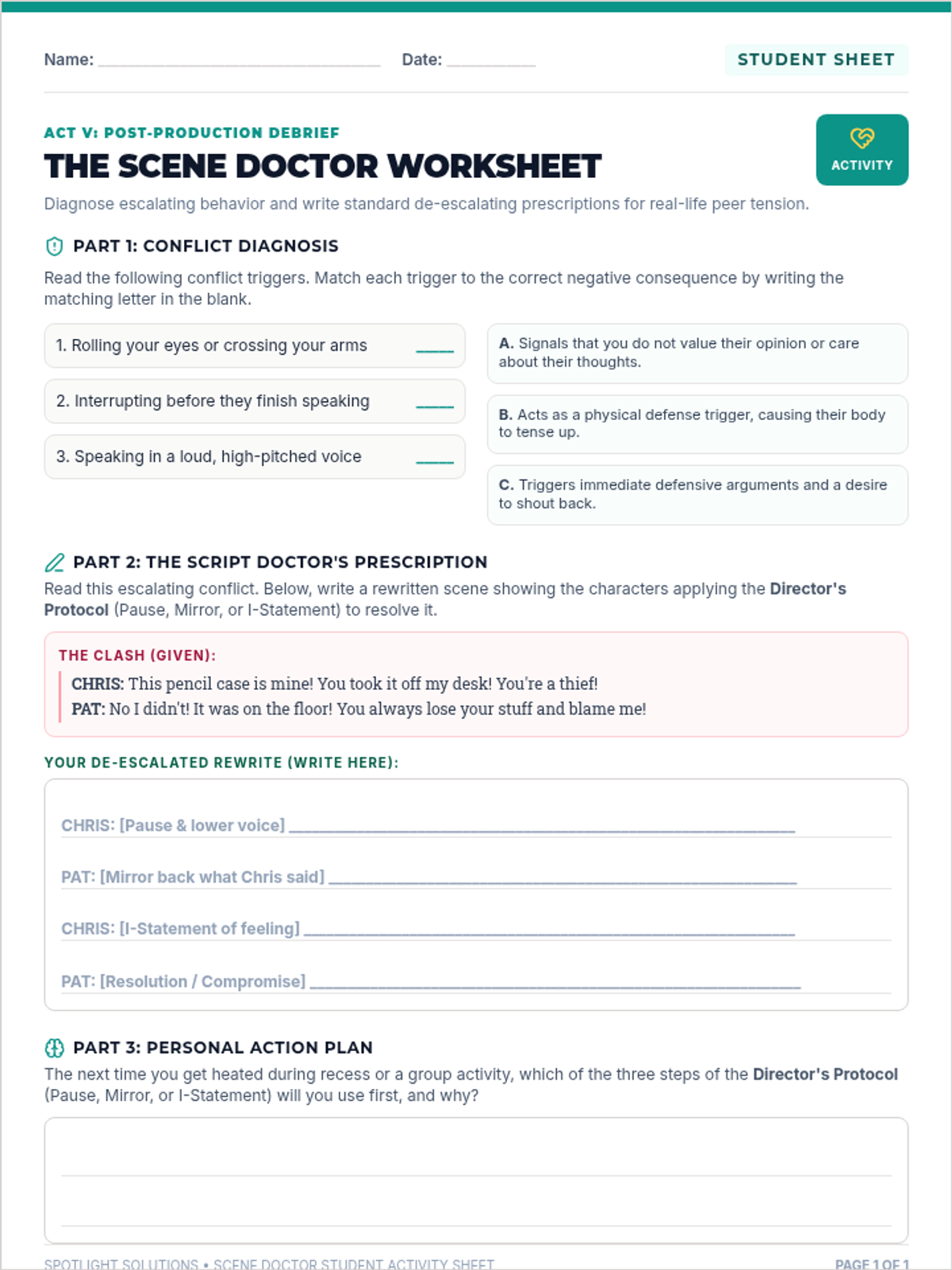
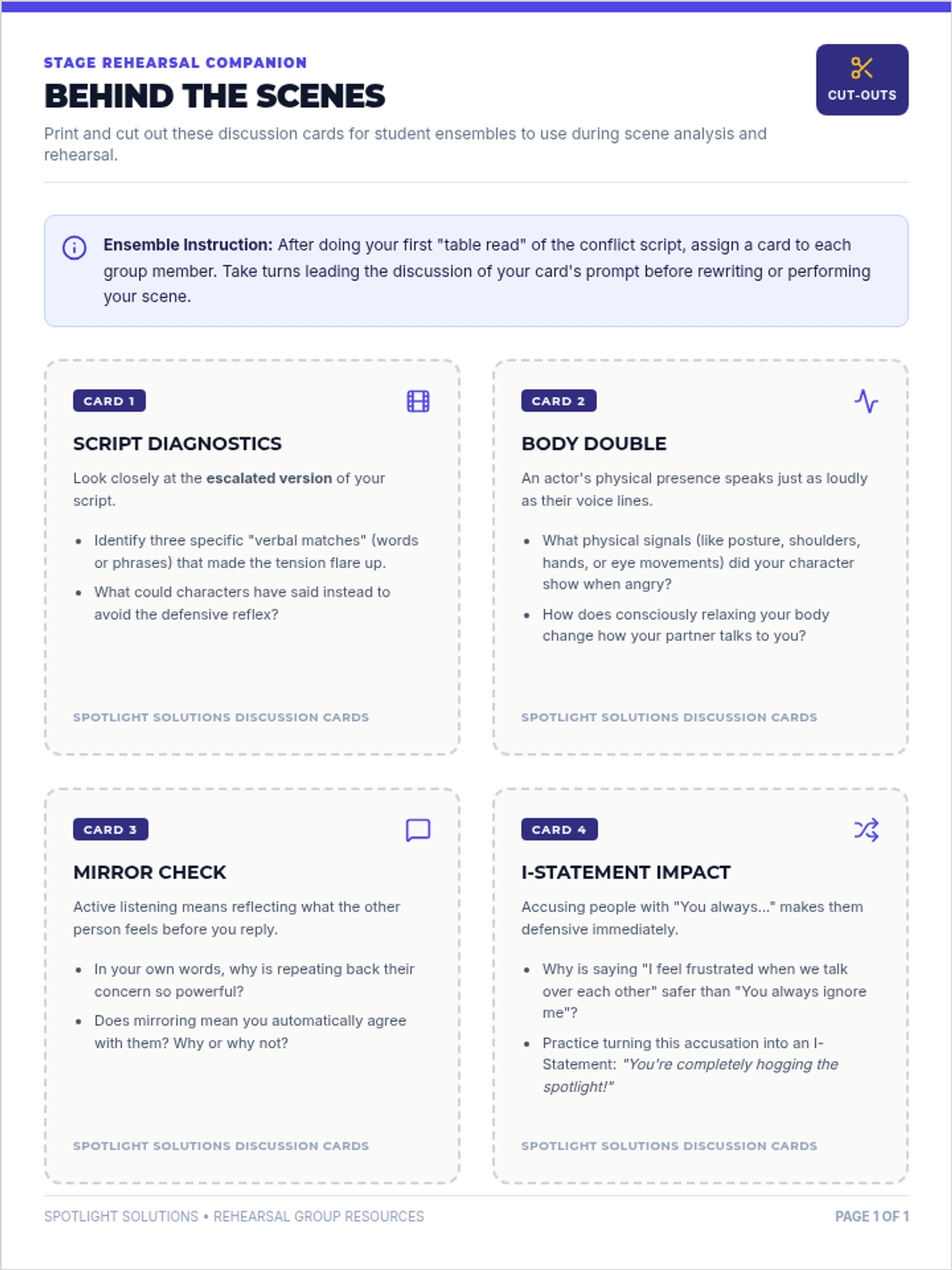
An interactive 4th-6th grade ELA and behavioral lesson where students perform reader's theater scripts, practicing oral reading fluency while exploring key de-escalation strategies and constructive conflict resolution.
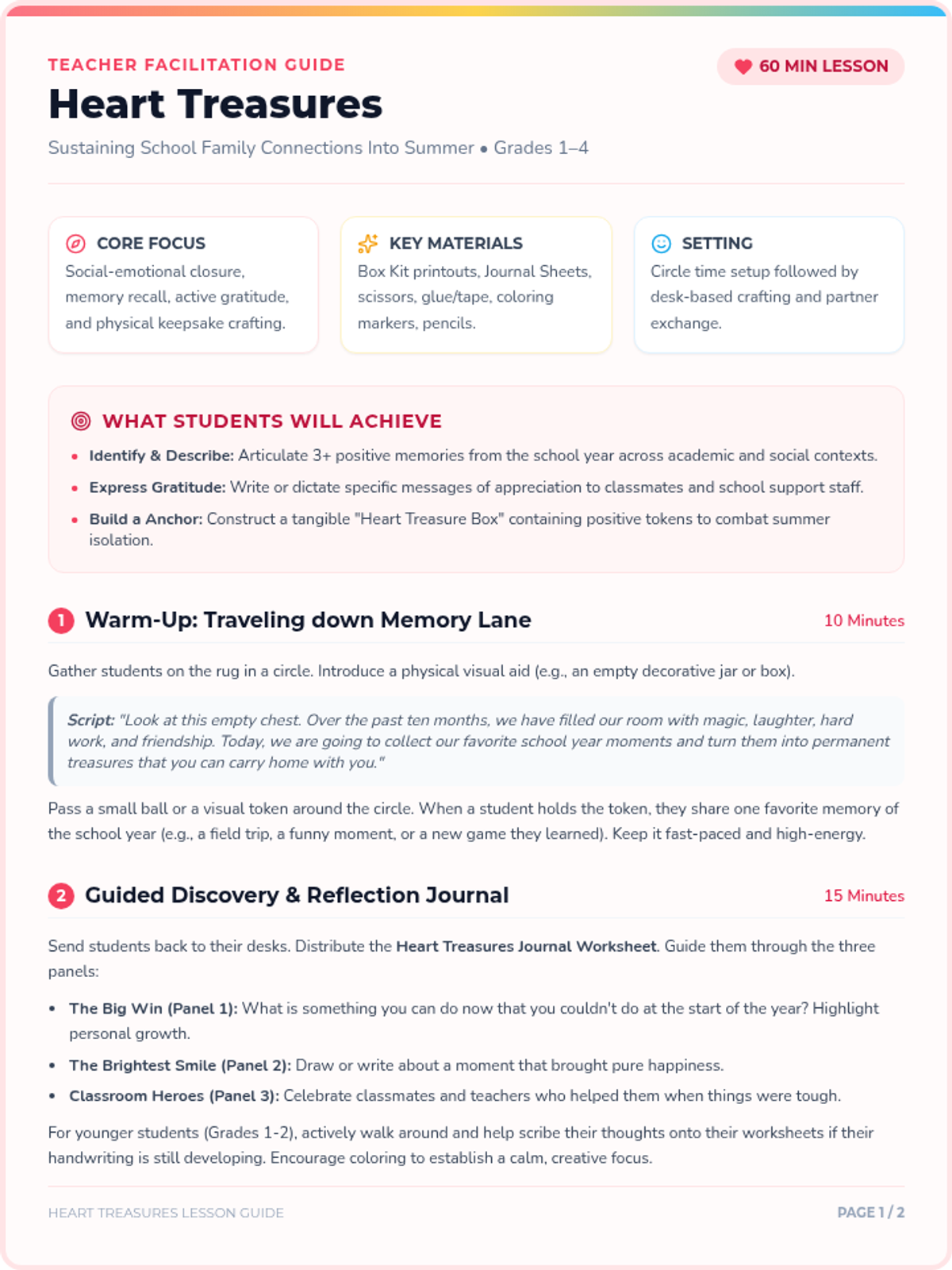
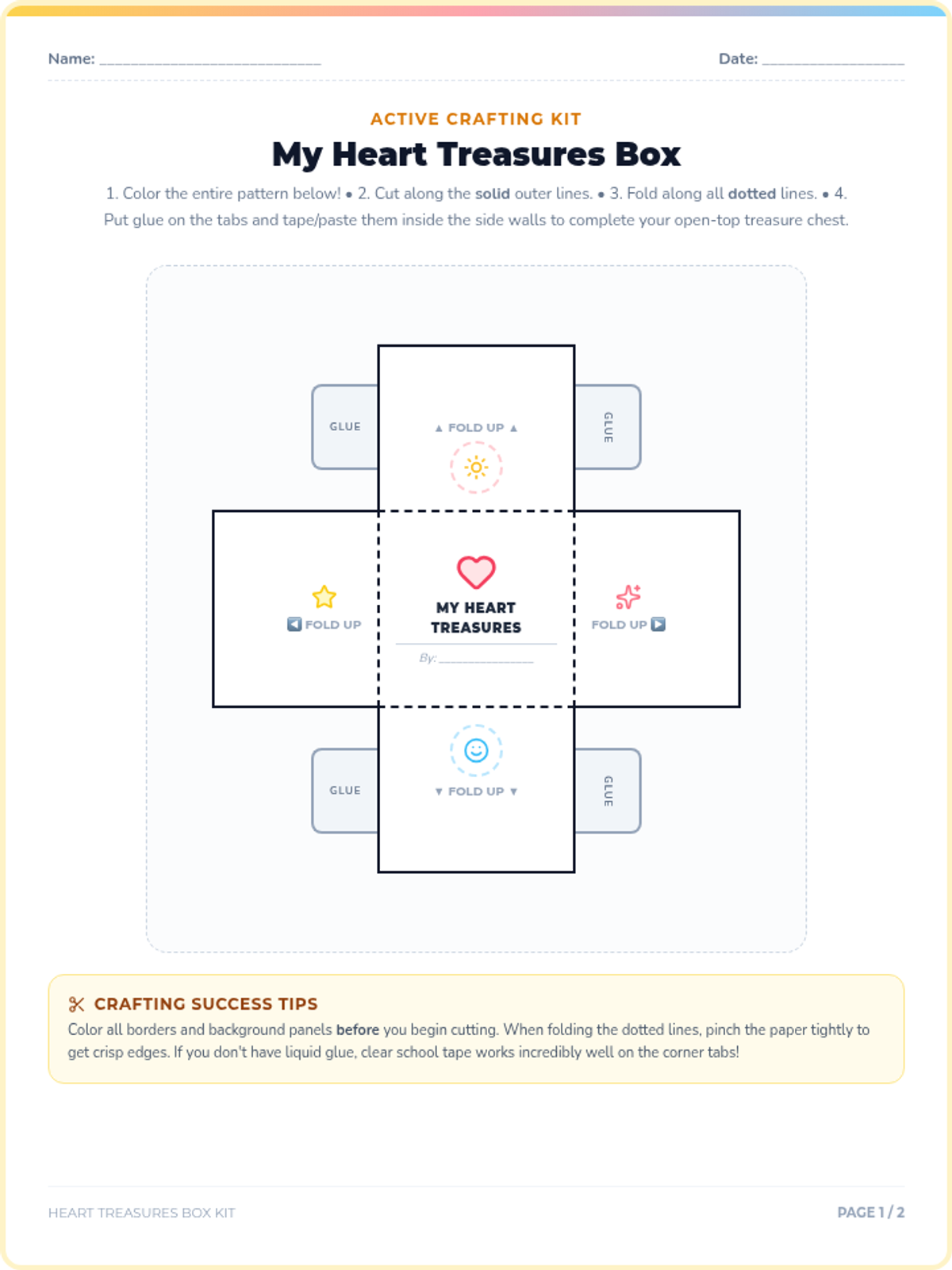
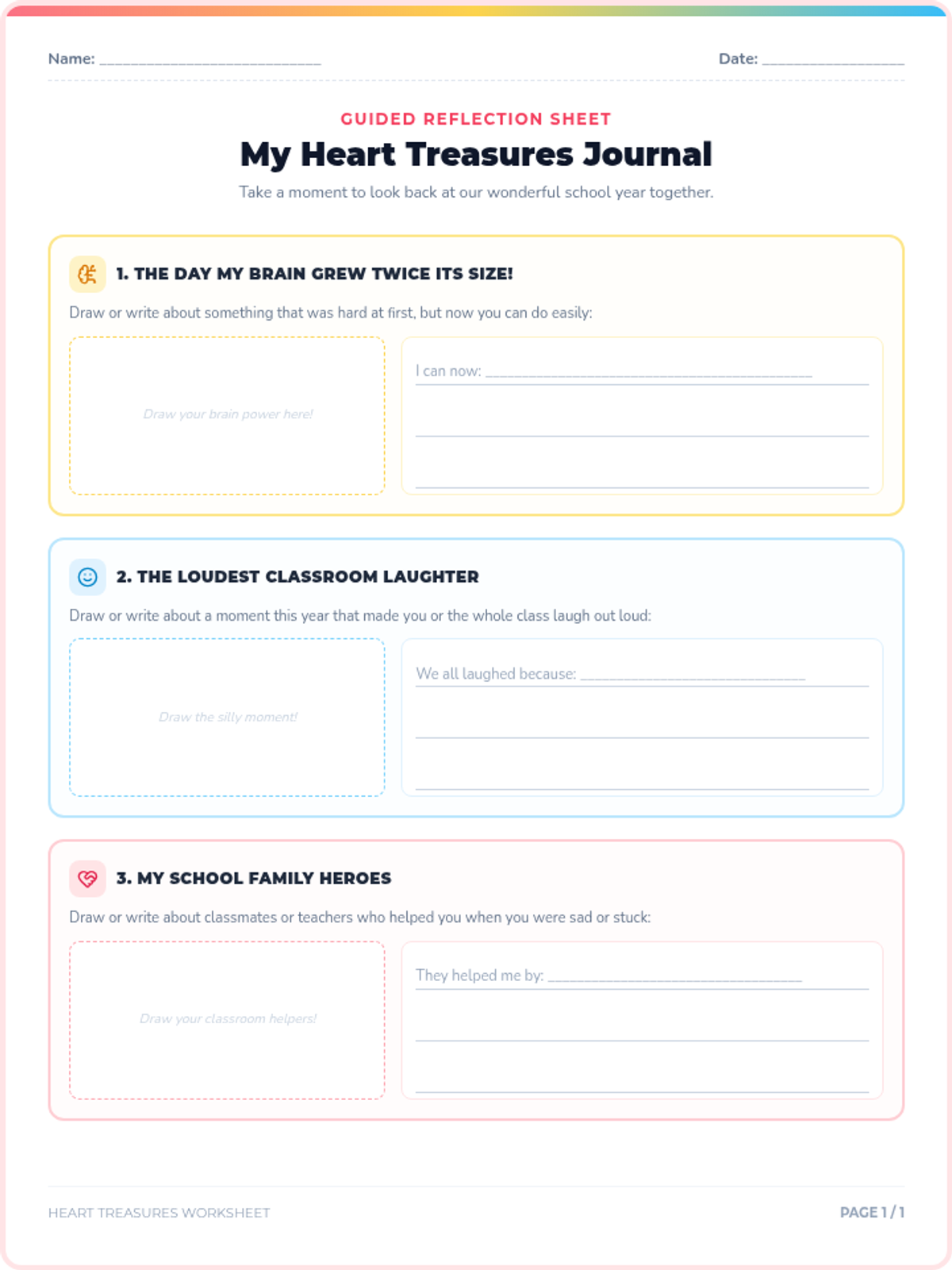
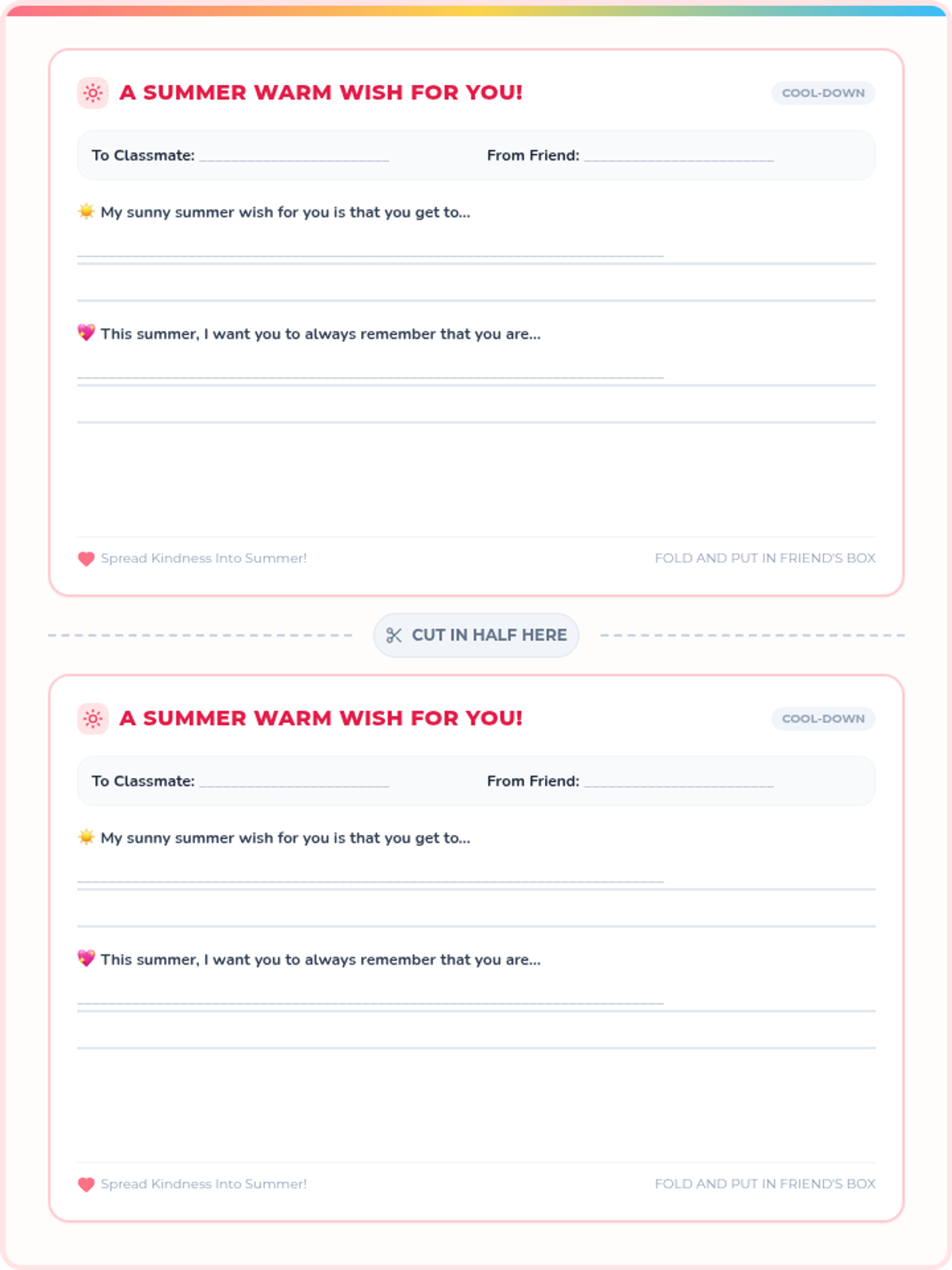
An emotional closure lesson for students in grades 1-4 to reflect on positive school-year memories, craft a physical keepsake box, write gratitude tokens for peers and staff, and carry positive vibes into the summer.
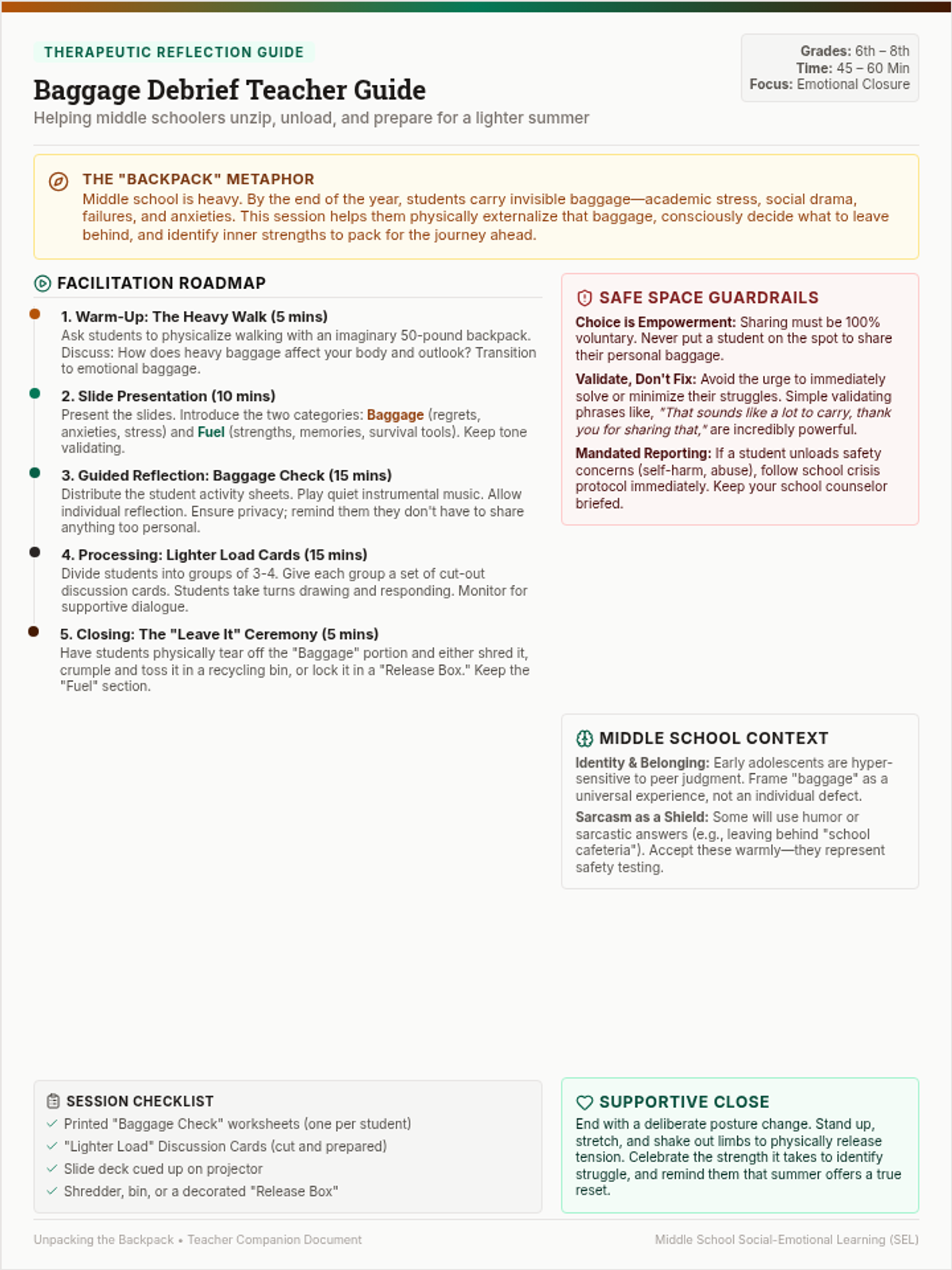
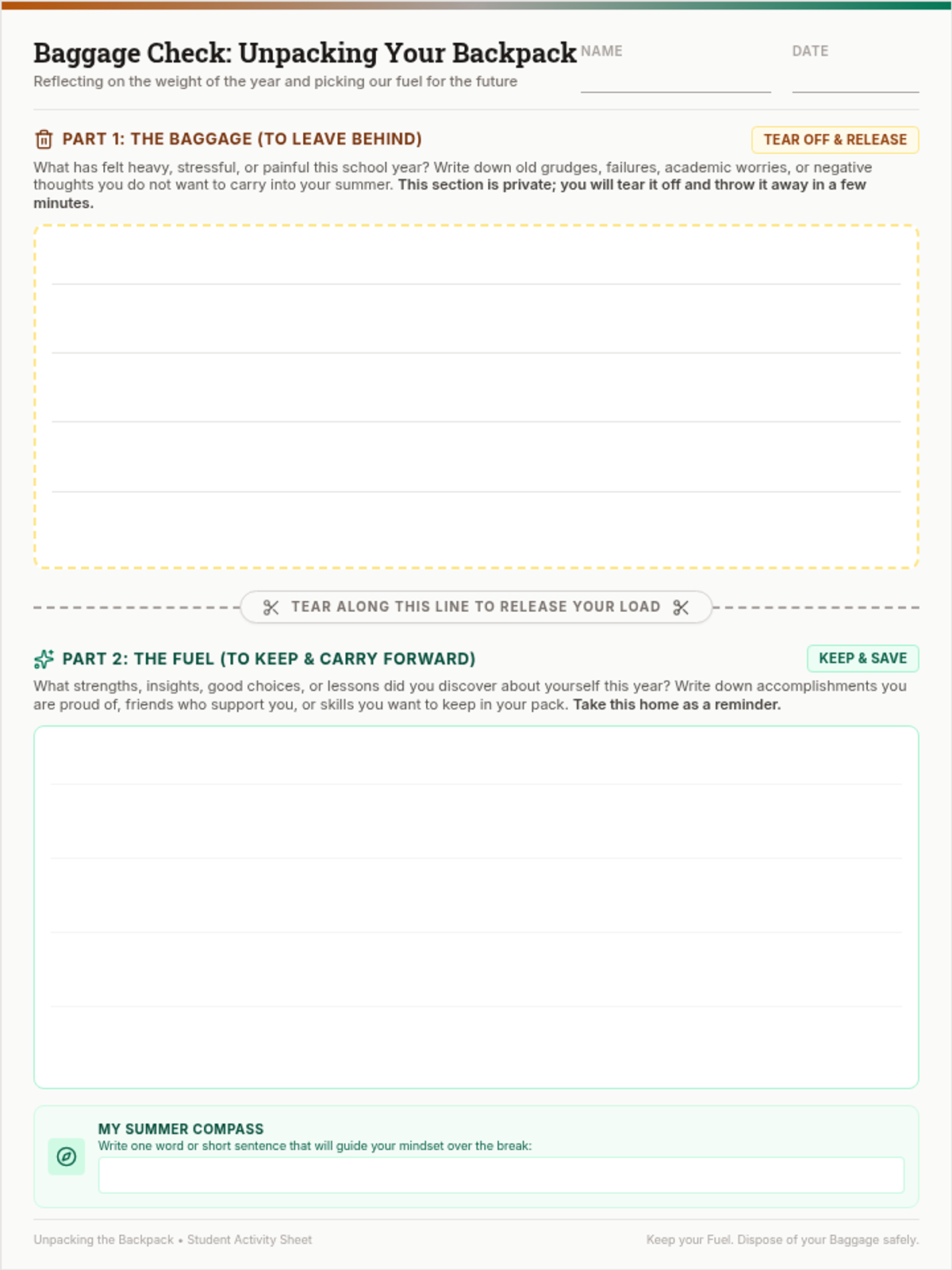
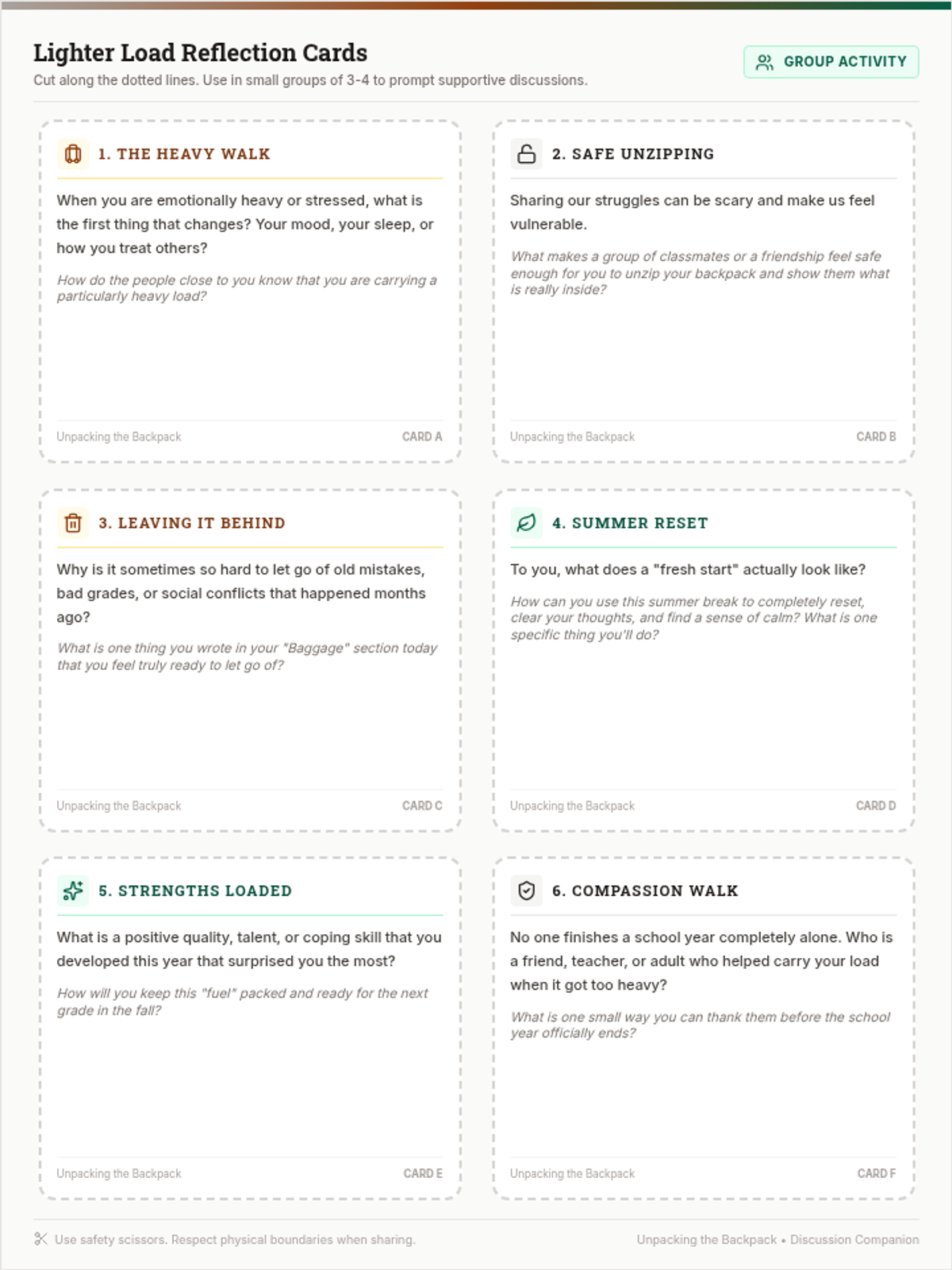
A therapeutic middle school closure activity designed to help students reflect on the emotional baggage of the school year. Students identify challenges to leave behind and strengths to carry forward into the summer.
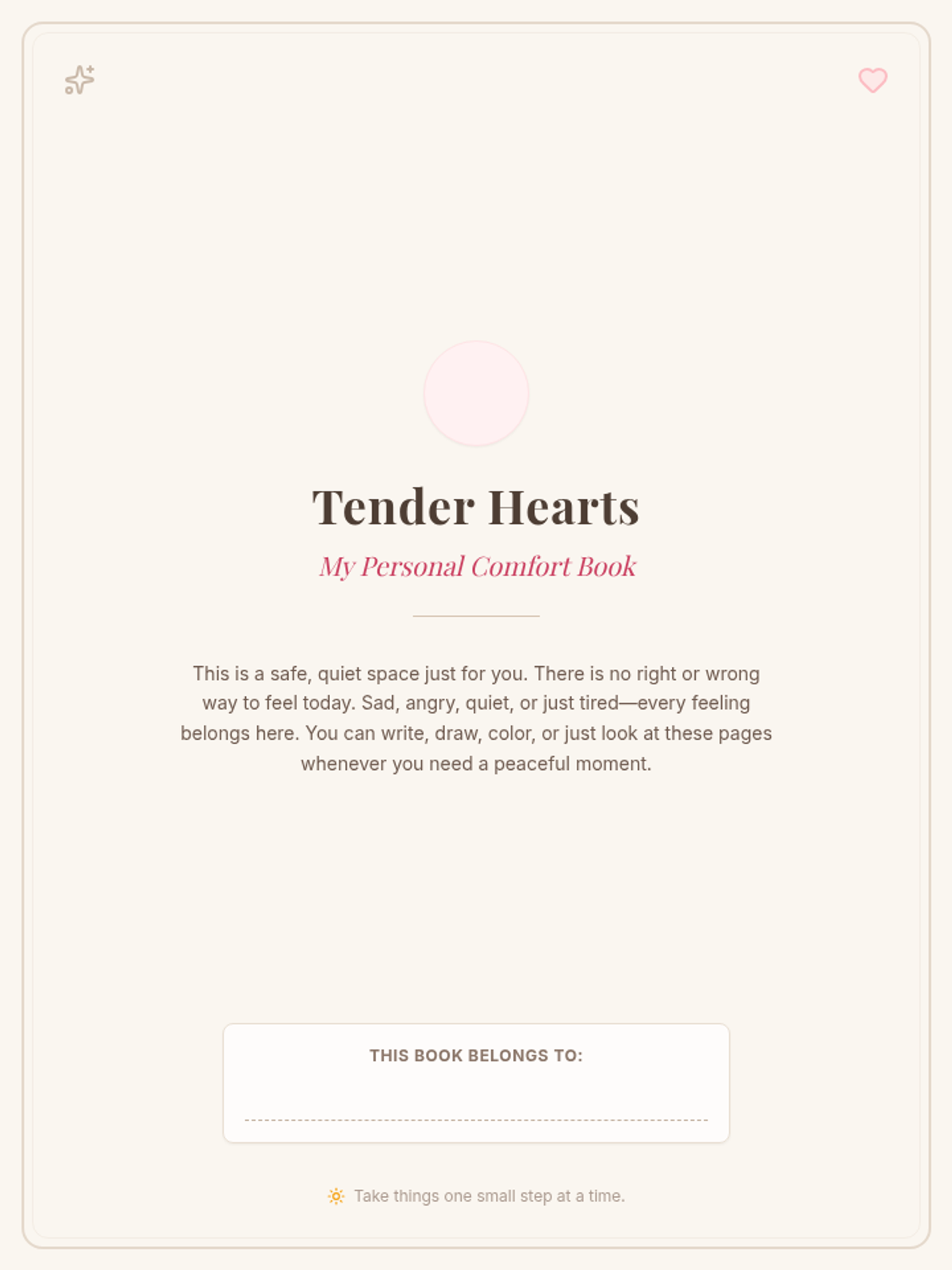
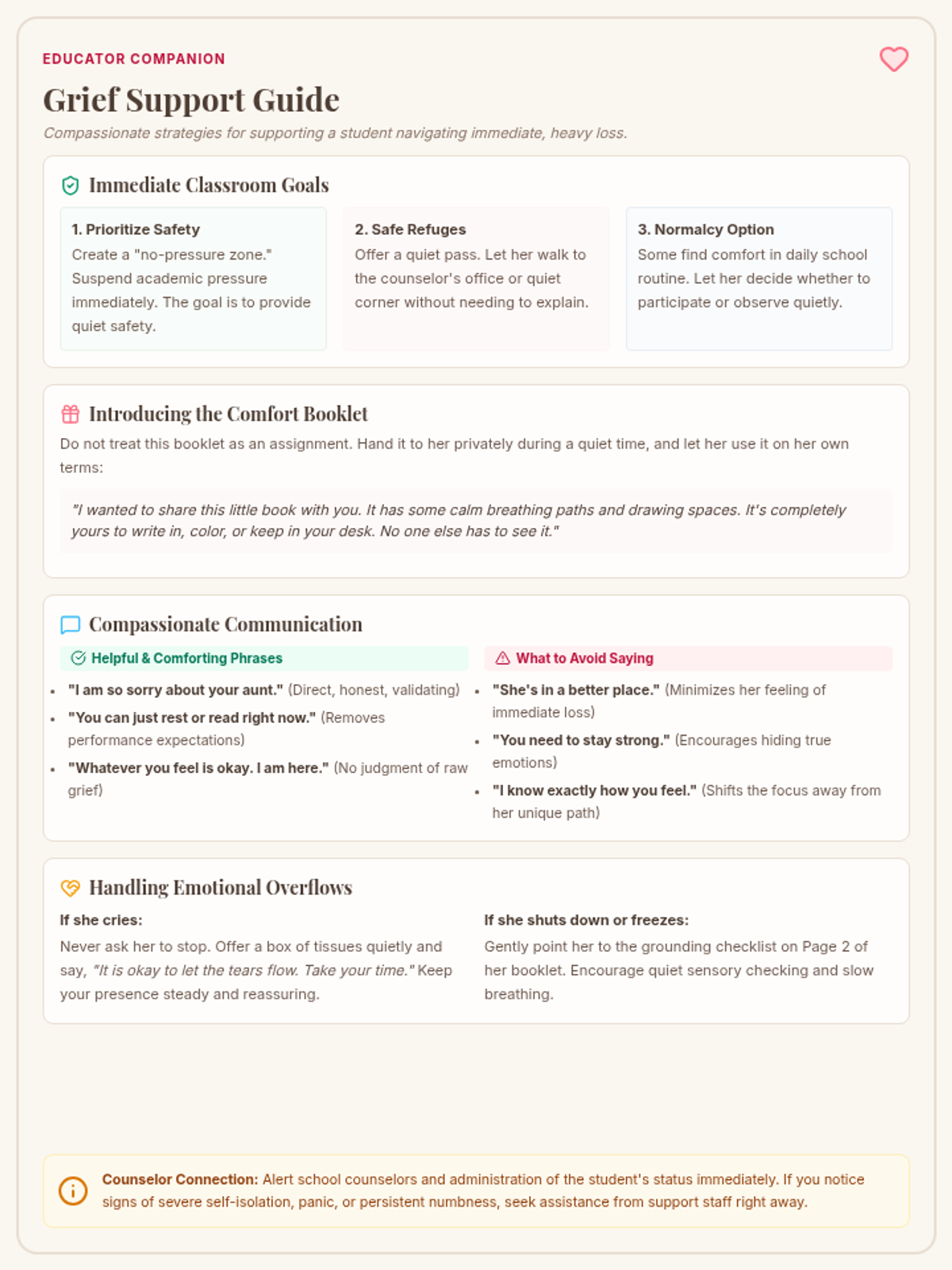
A comforting, supportive lesson structure containing a multi-page creative expression and emotional regulation booklet for a grieving student, alongside a companion guide for the educator to navigate support during early grief.
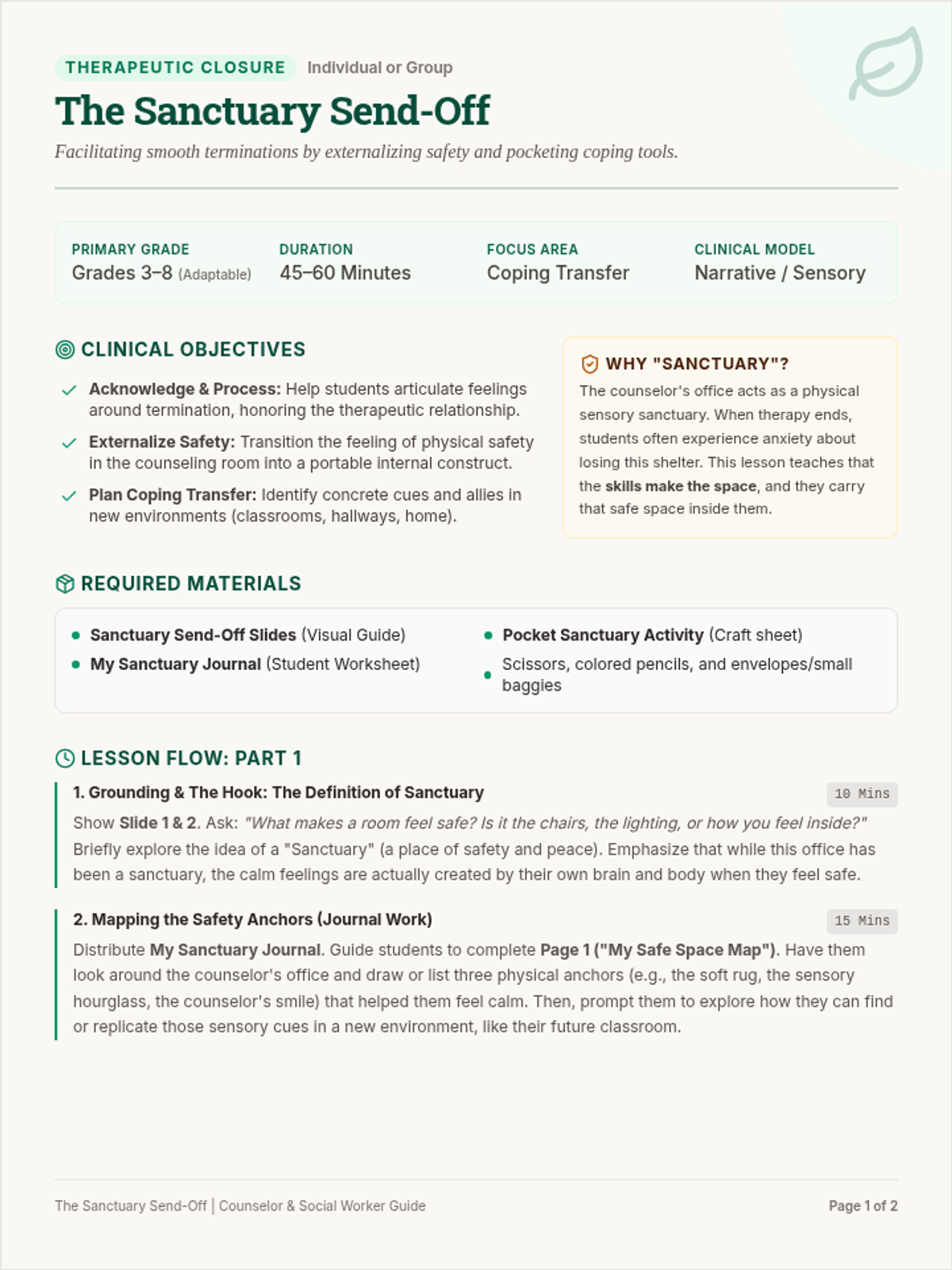
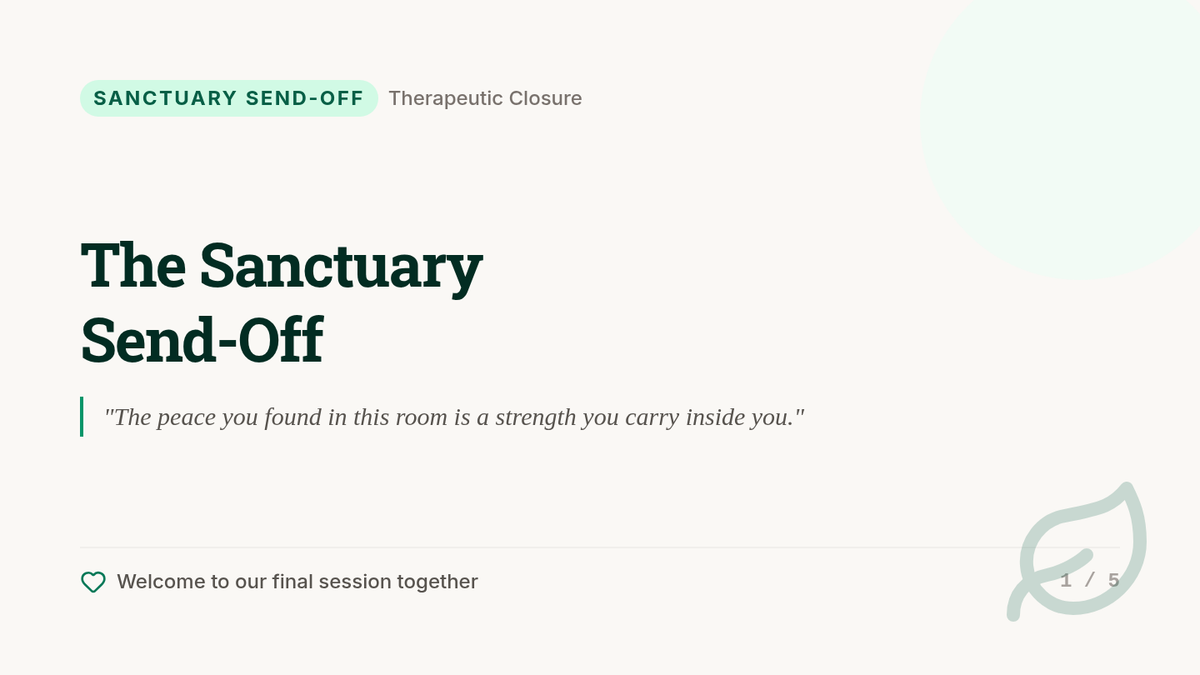
A therapeutic termination and closure lesson designed to help students transition out of individual or group counseling by externalizing their coping strategies and creating portable reminders of safety.
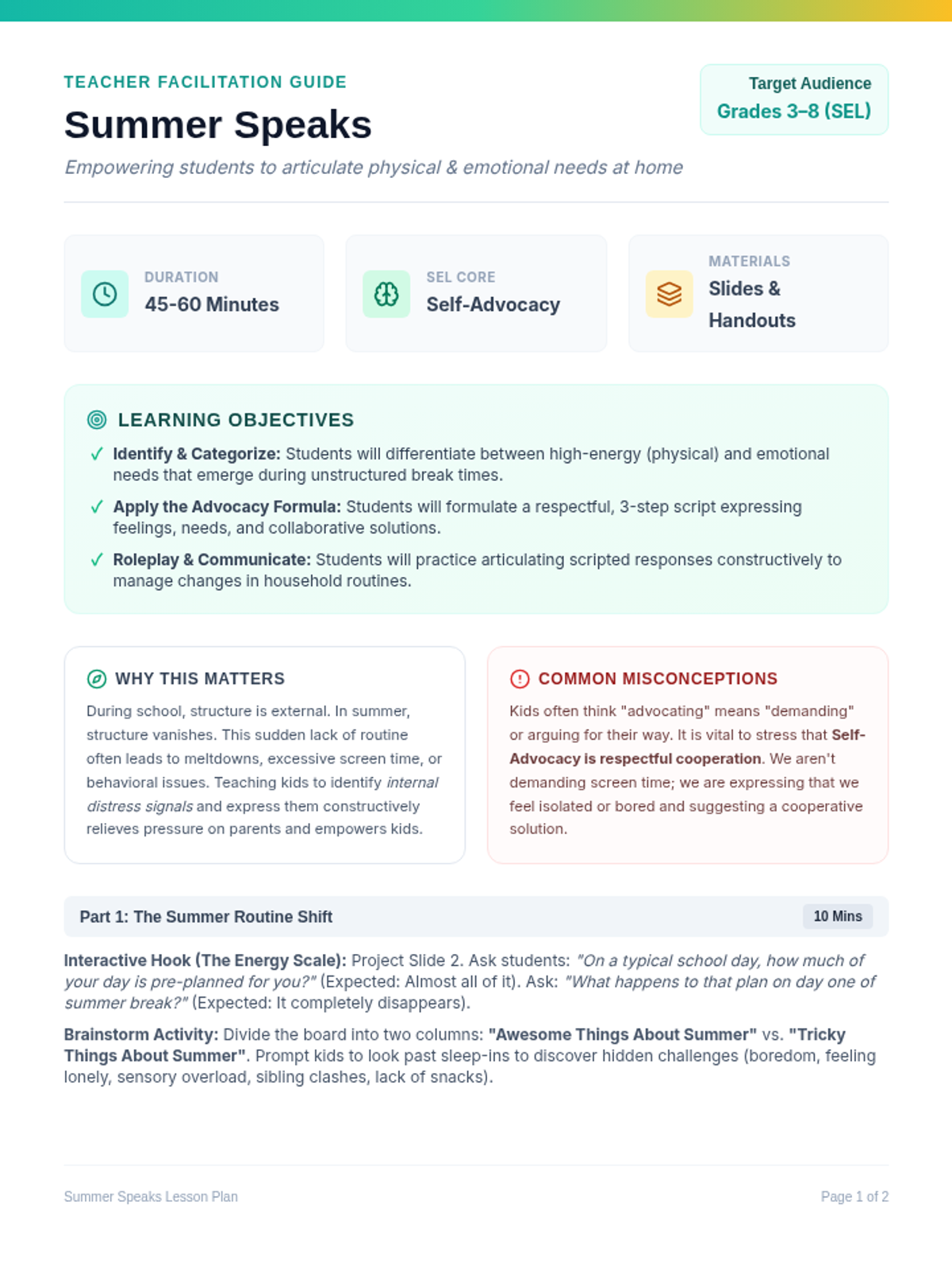
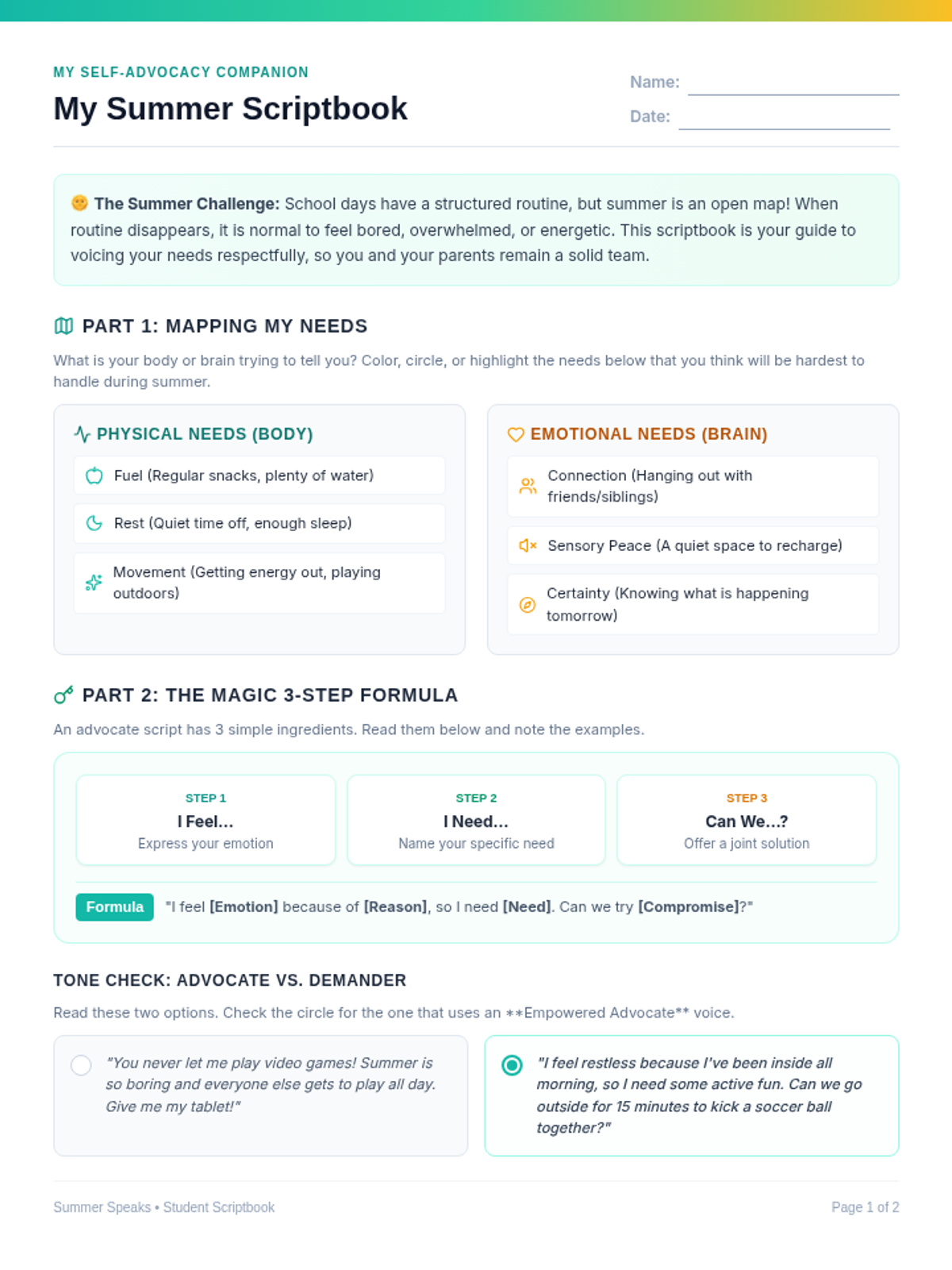
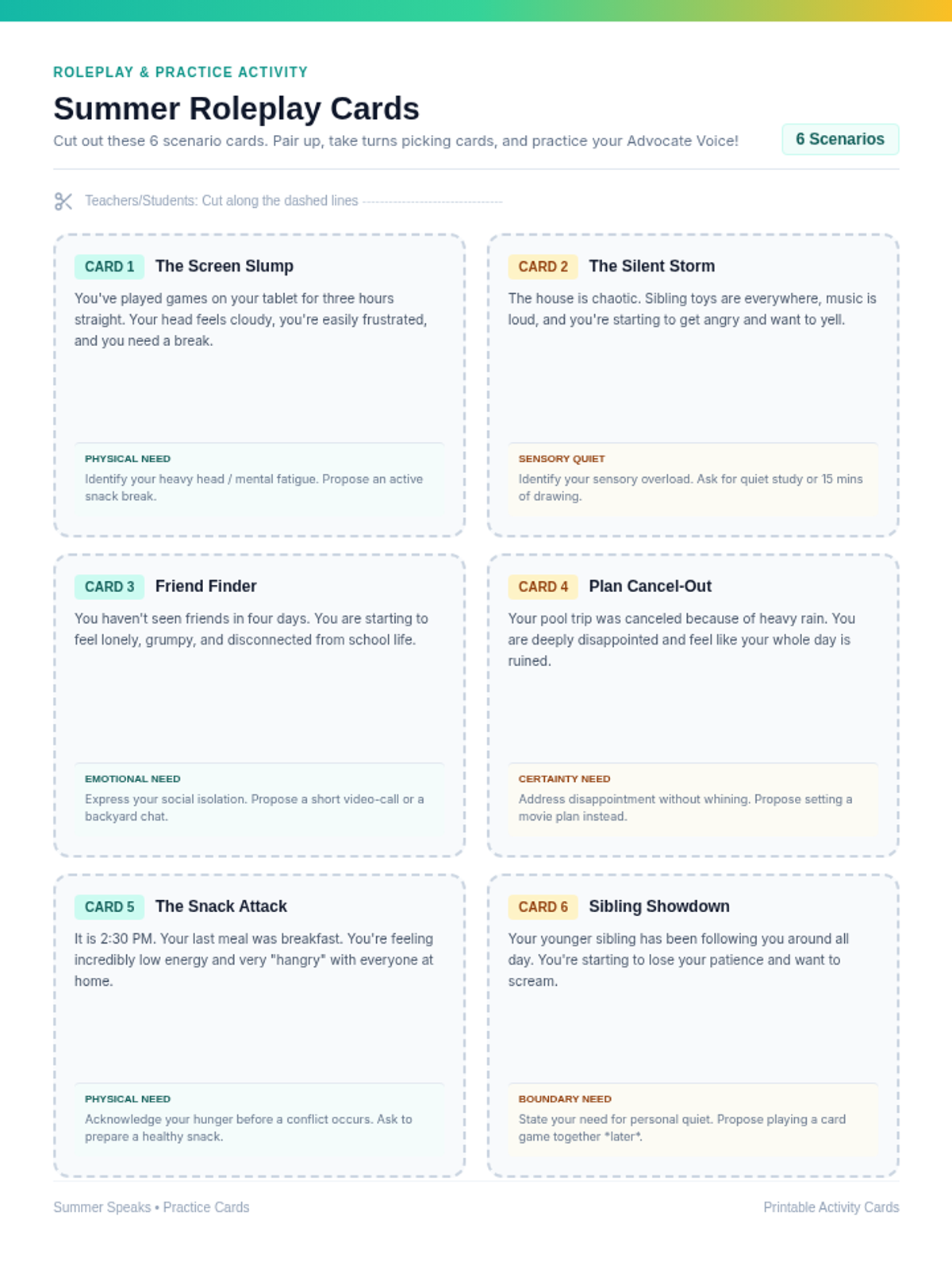
An empowering social-emotional learning lesson that teaches self-advocacy to elementary and middle school students. Students discover how to recognize their physical and emotional needs during unstructured summer breaks and articulate them to parents or guardians using structured, respectful script templates.
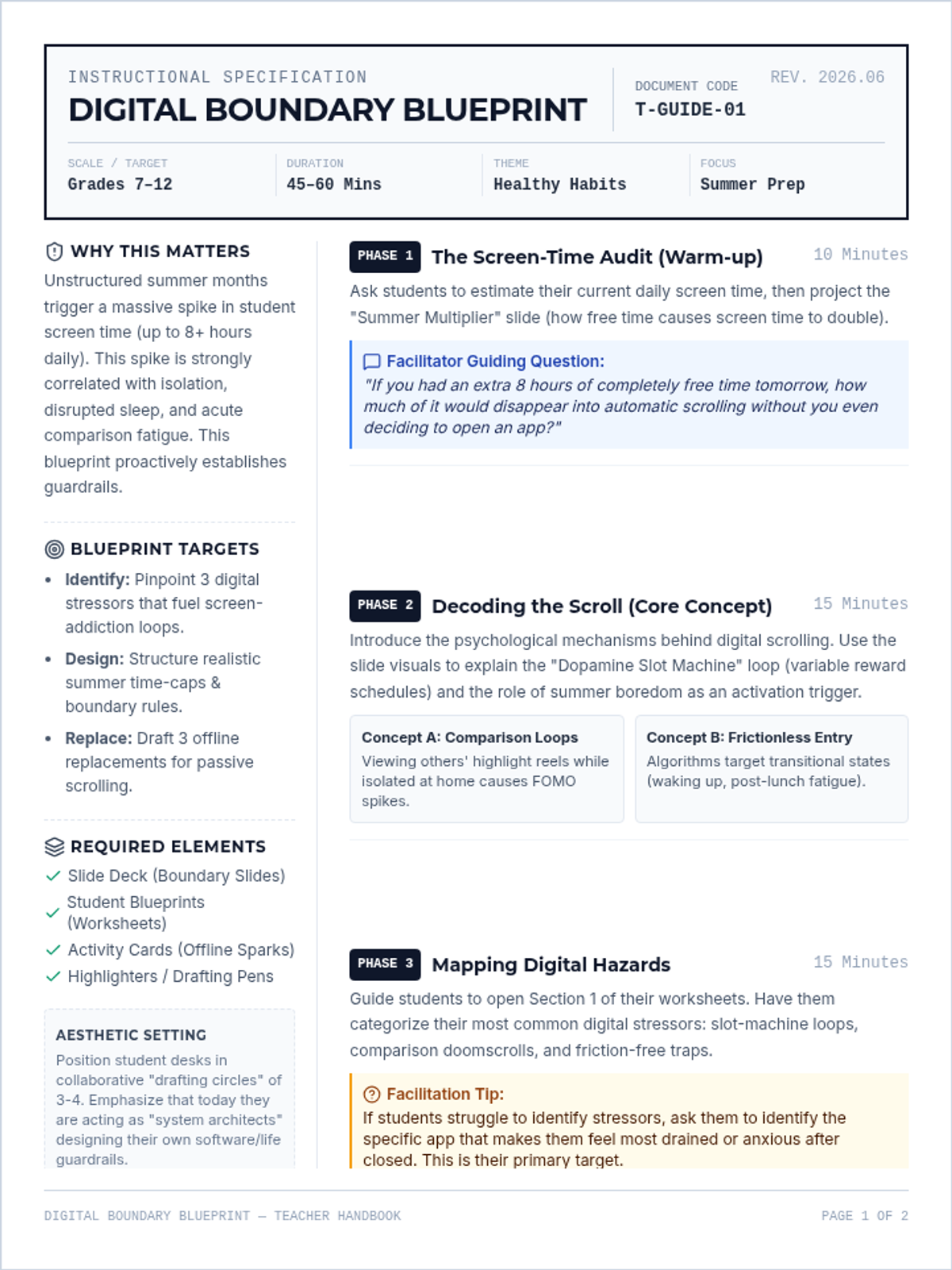
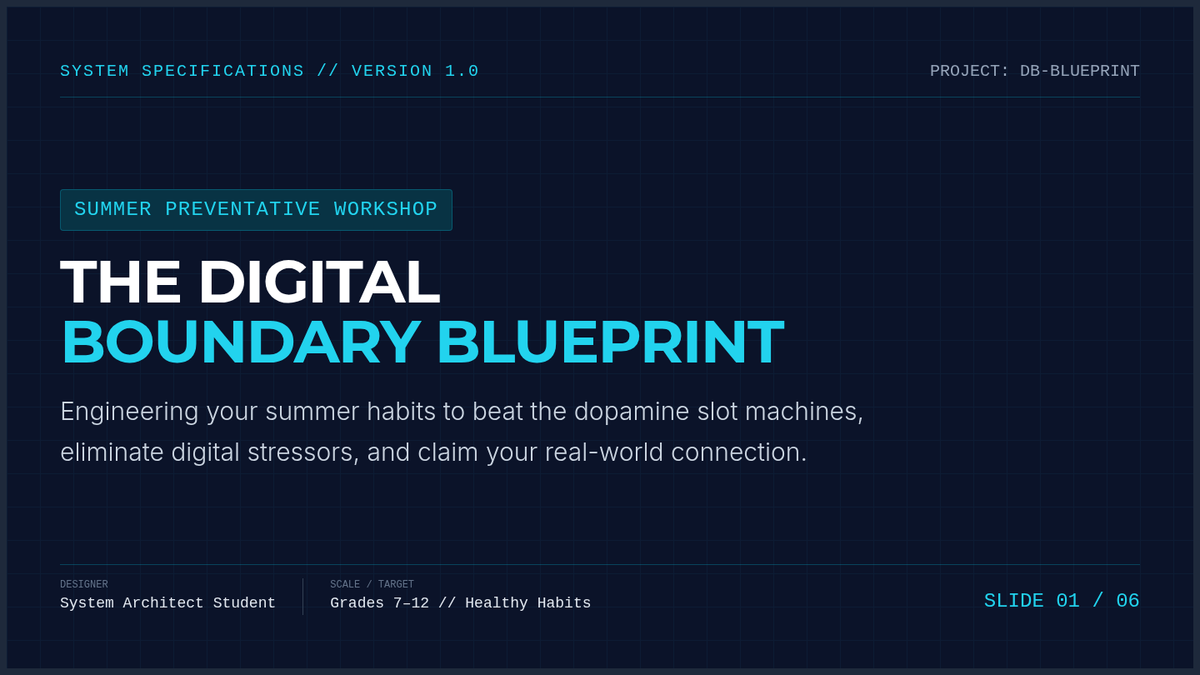
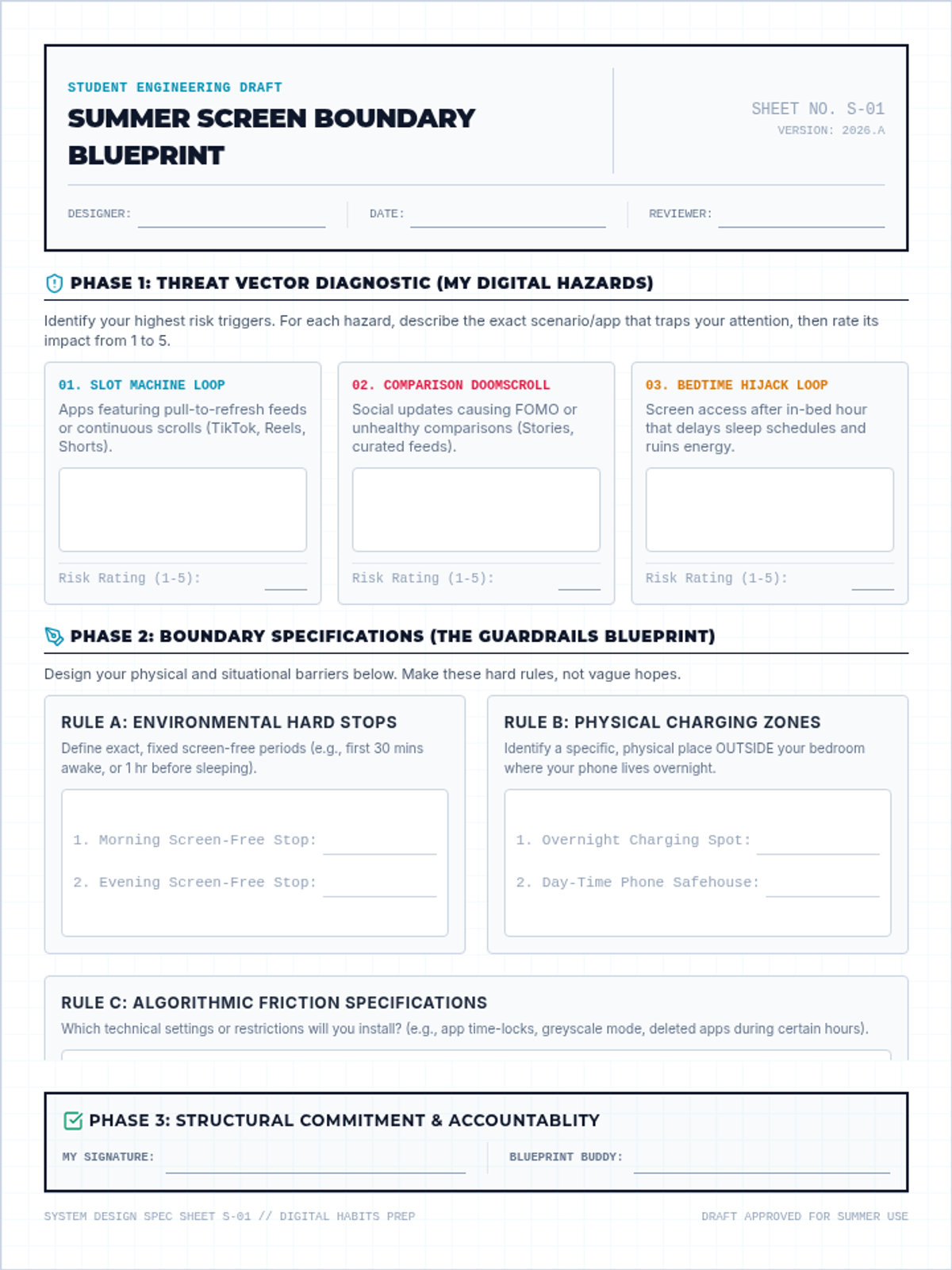
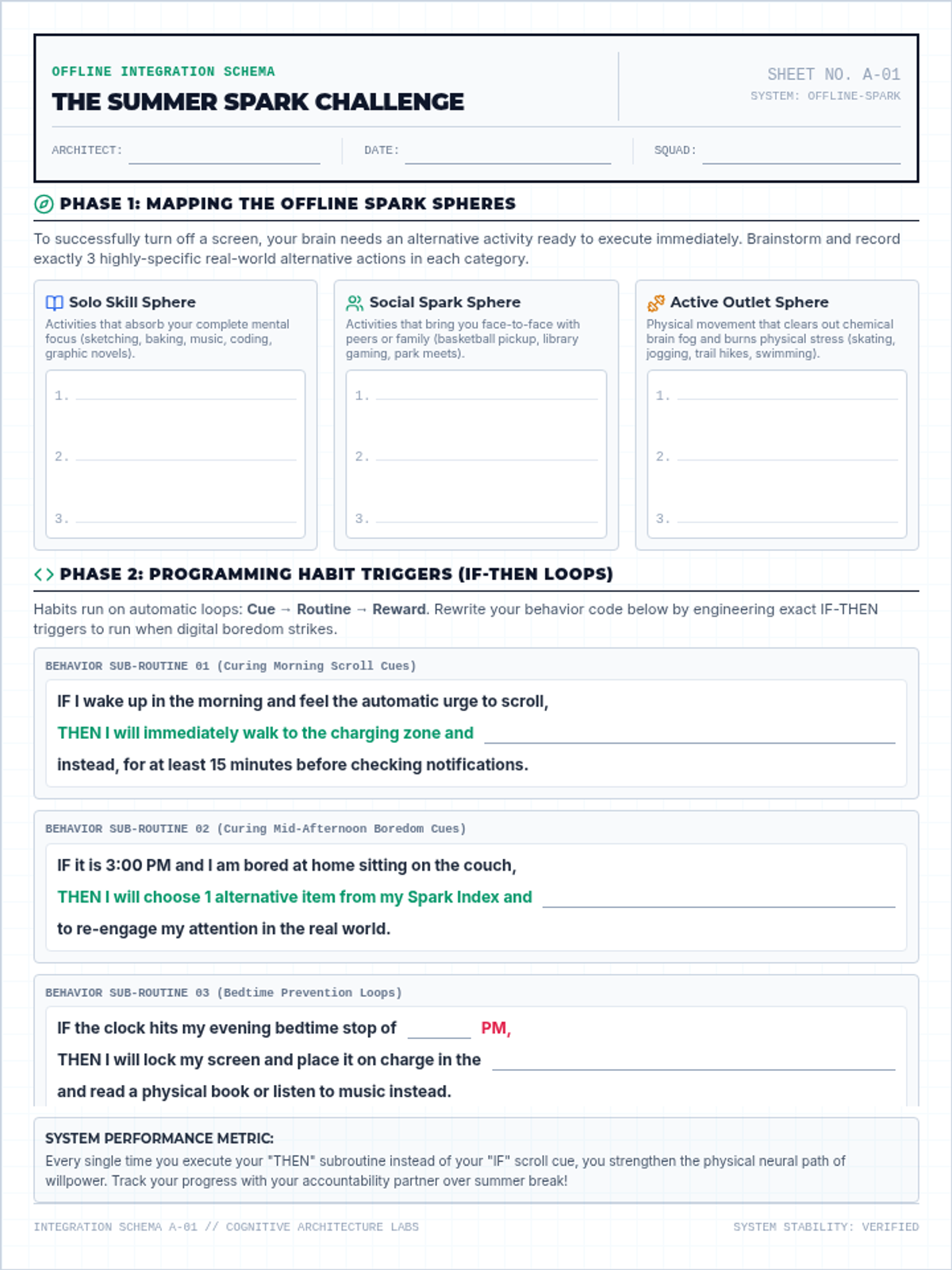
A preventative workshop designed to help middle and high school students establish healthy screen-time limits, identify online stressors, and build offline connection strategies to combat summer isolation. Includes a comprehensive facilitation guide, instructional slides, a reflective worksheet, and an offline action planner.
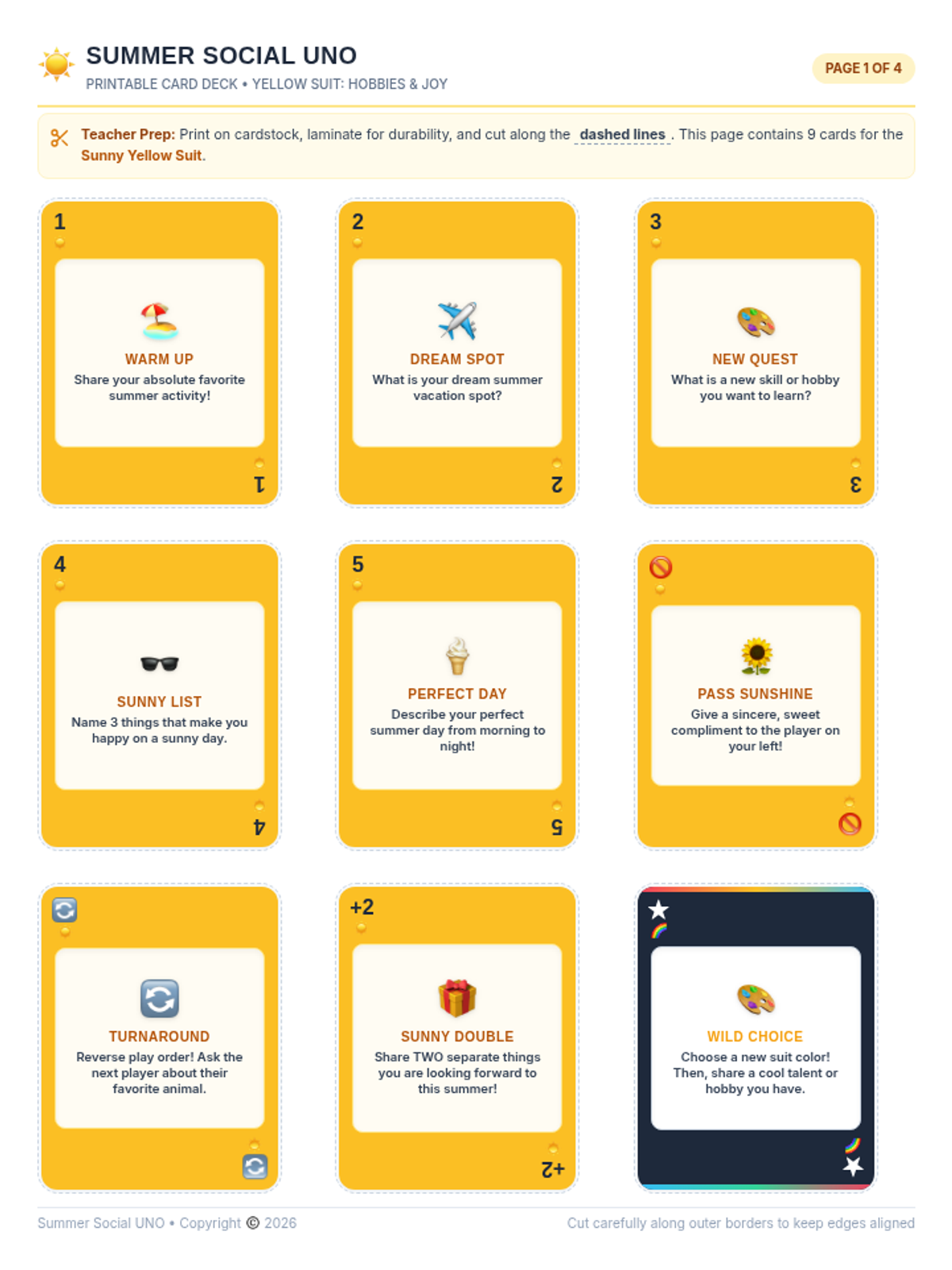
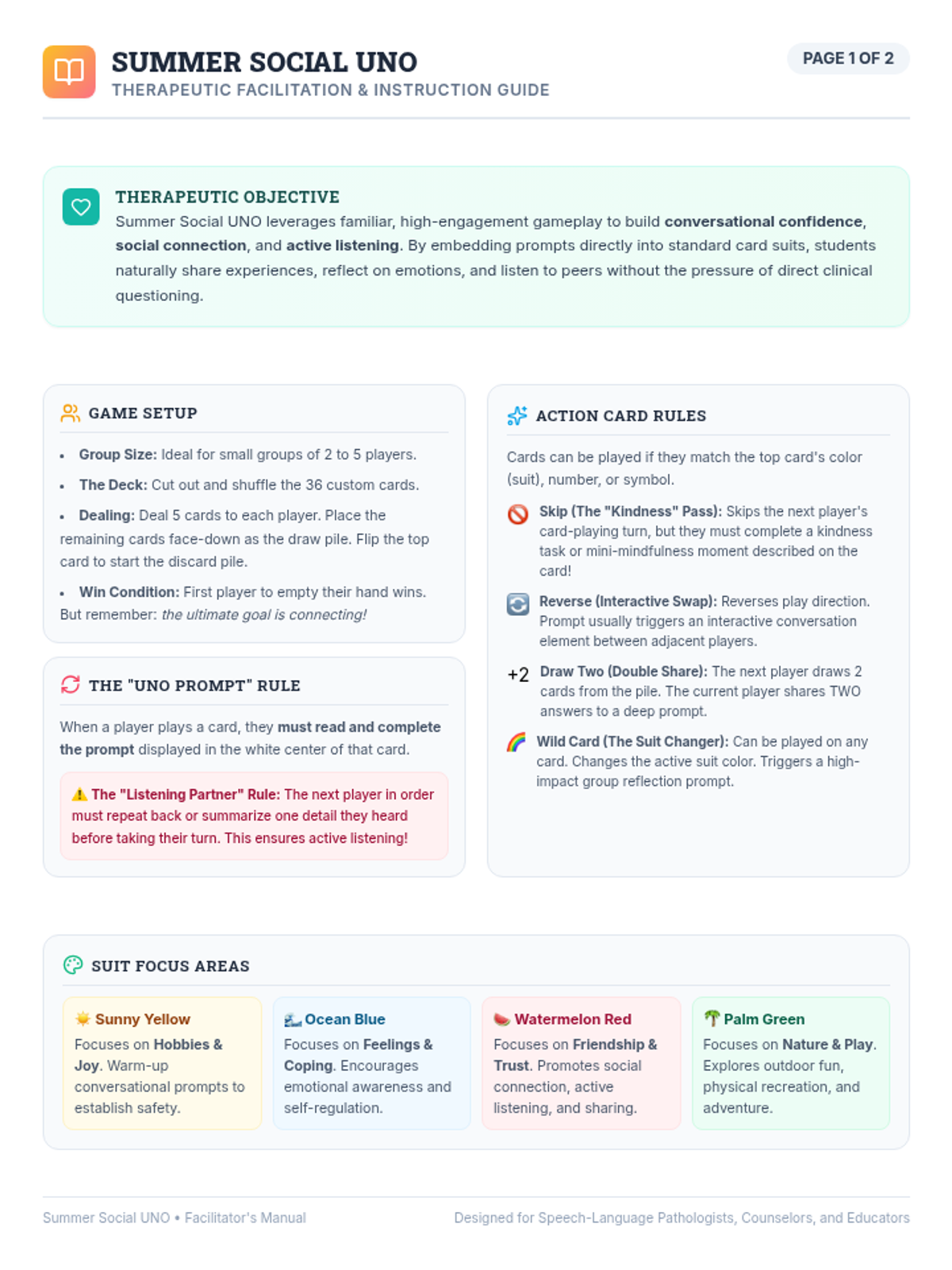
A therapeutic gameplay experience using a customized, summer-themed UNO card deck. Students practice conversational prompts, active listening, turn-taking, and relationship building in a fun, structured environment.
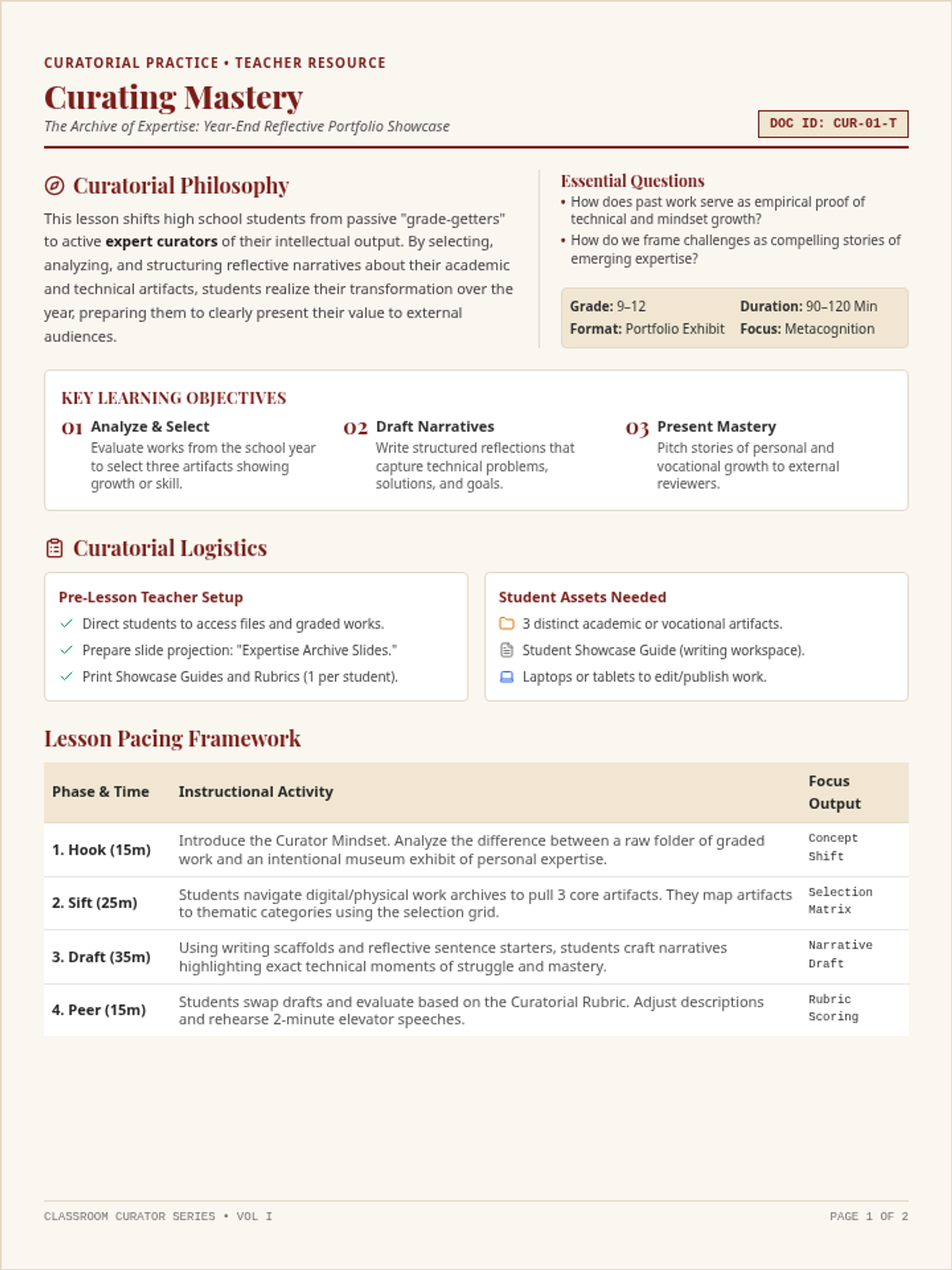
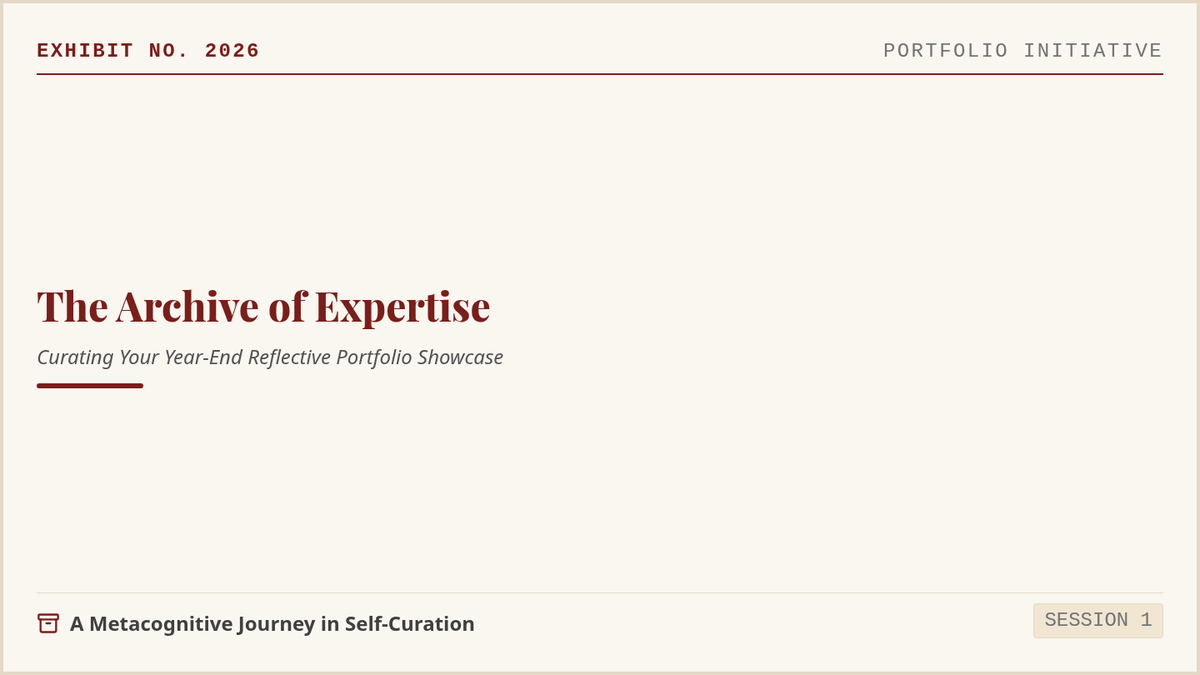
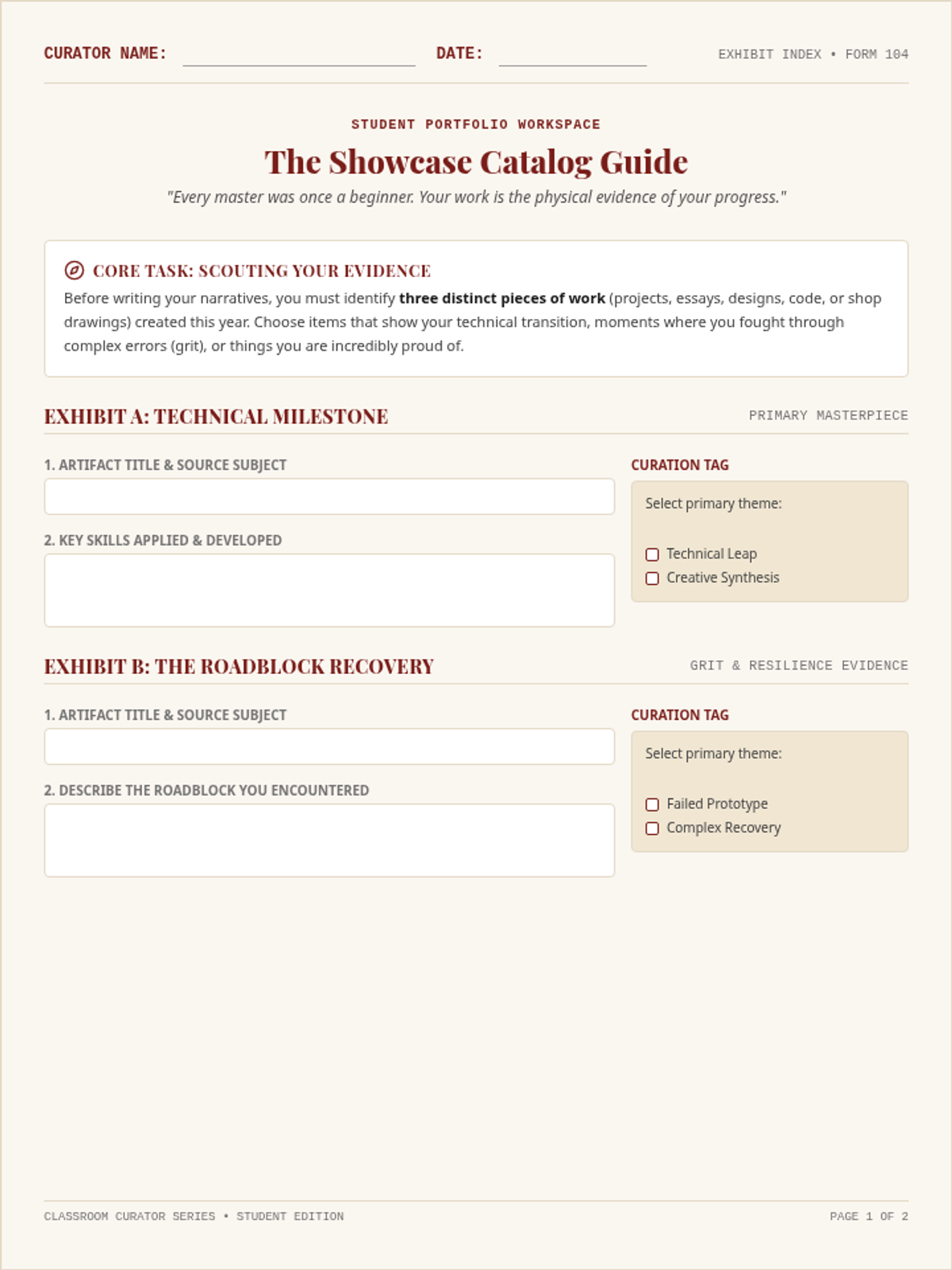
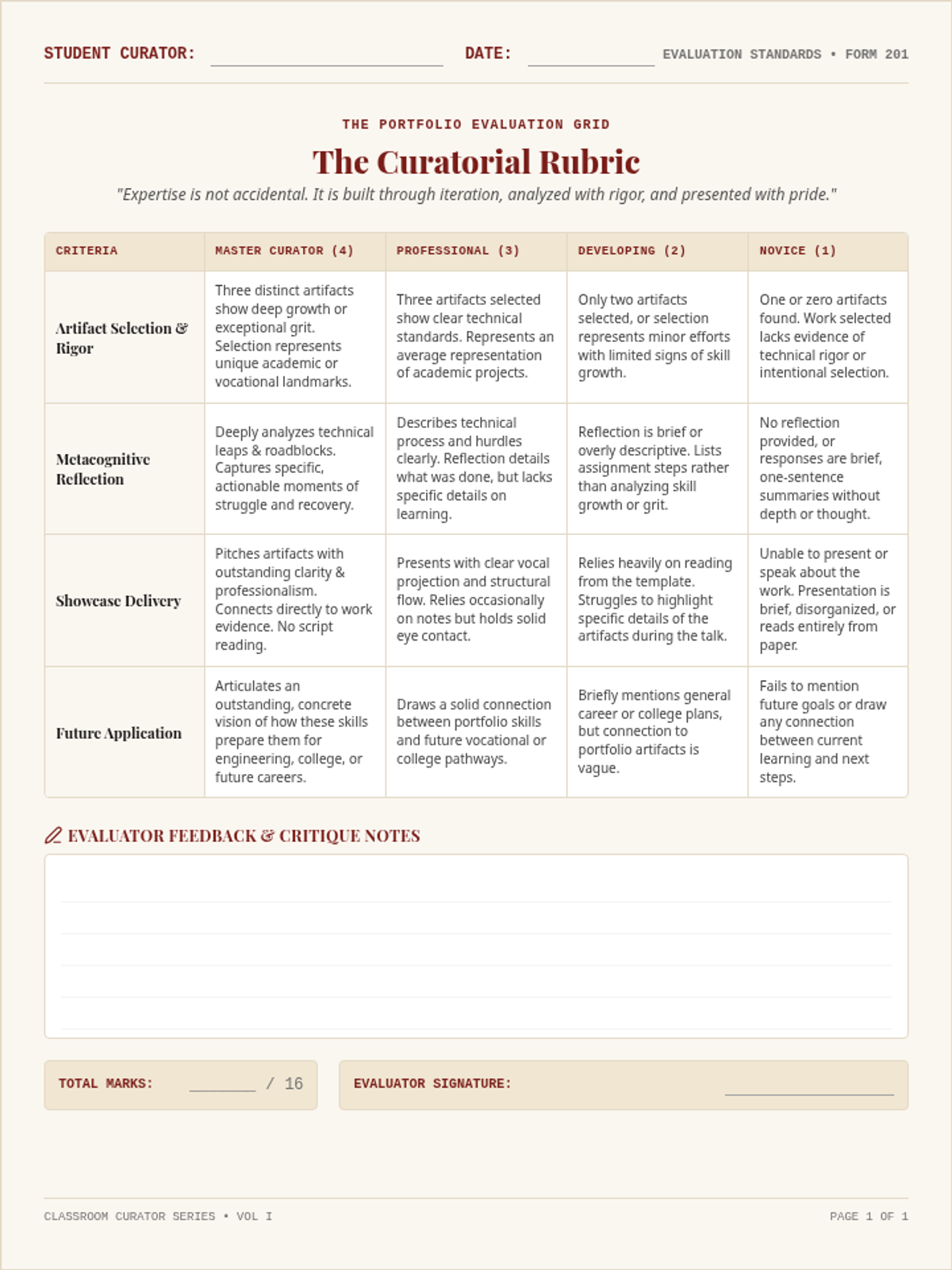
A comprehensive lesson guiding high school students to curate their academic and vocational work from the school year into a reflective portfolio showcase. Students analyze their learning journey, draft reflective narratives, and prepare to present their 'exhibits' of expertise.
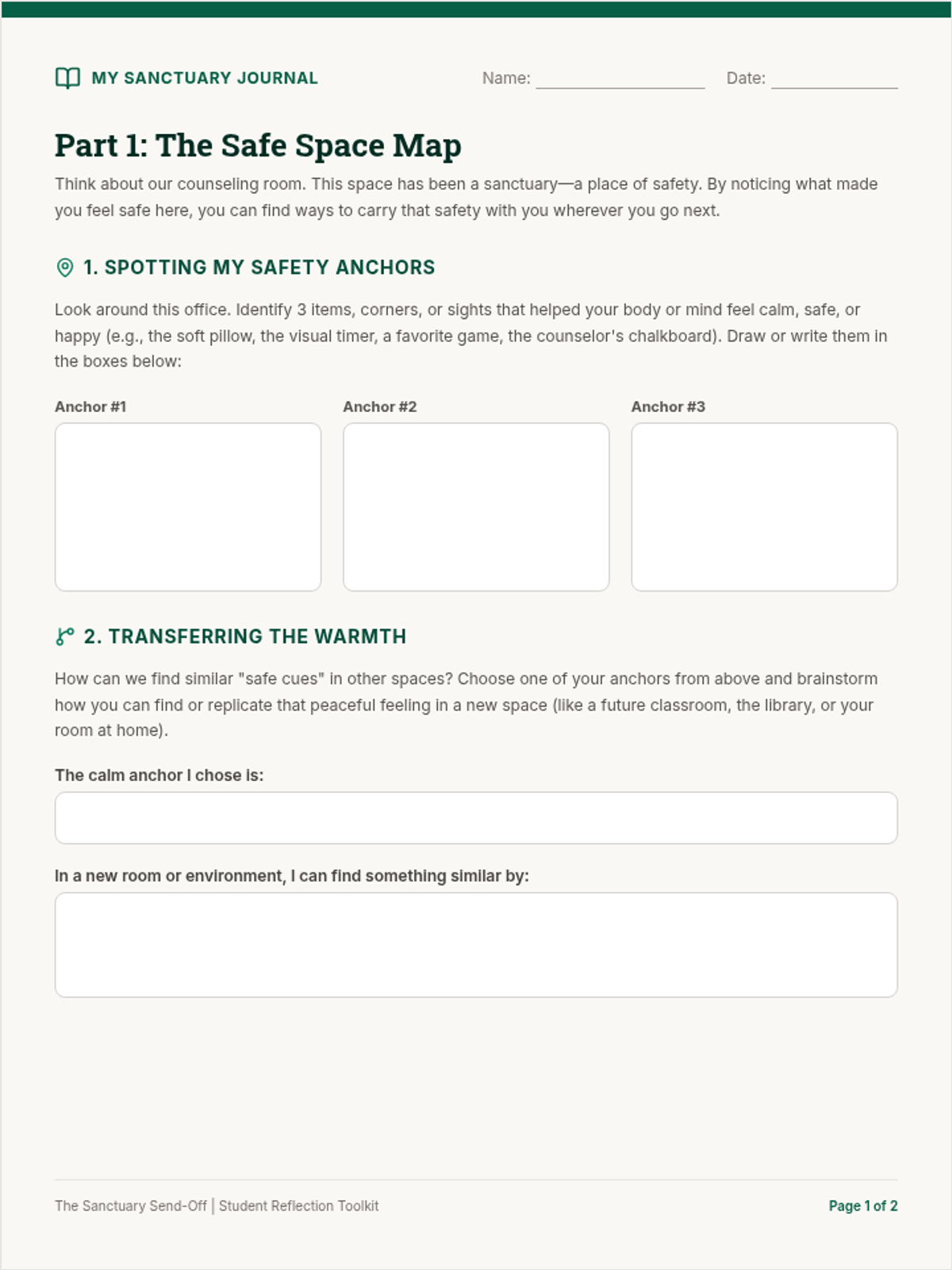
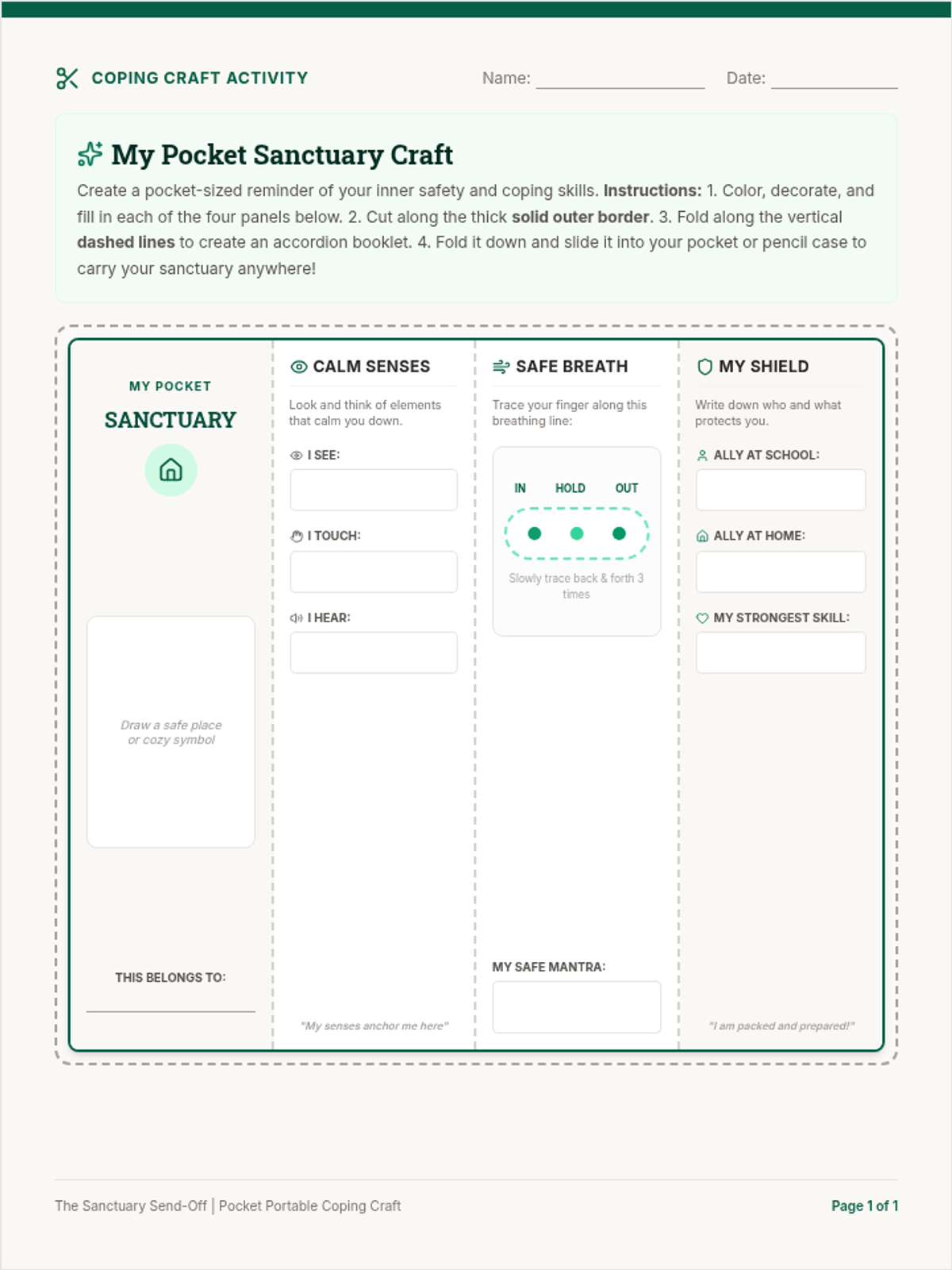
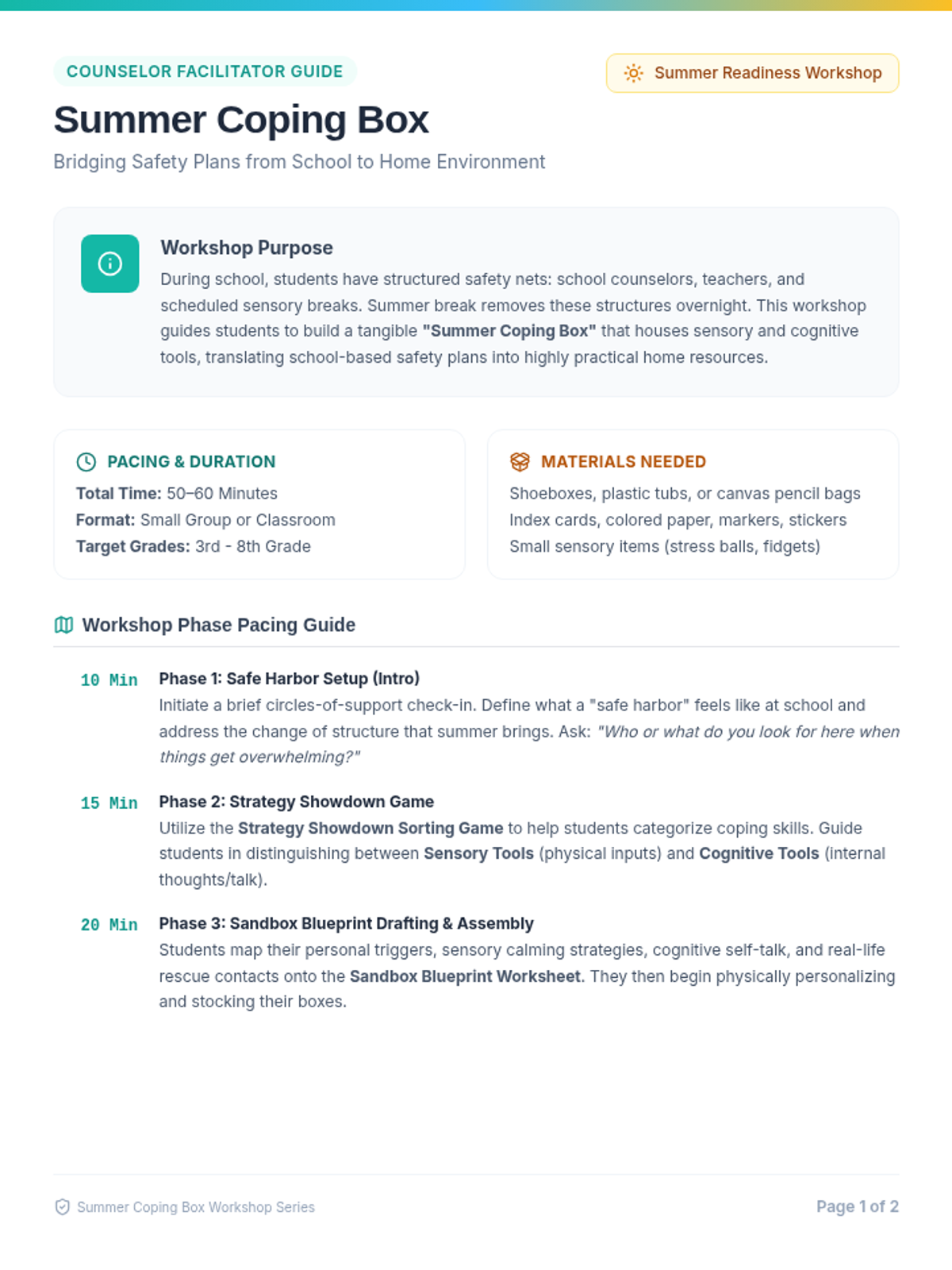
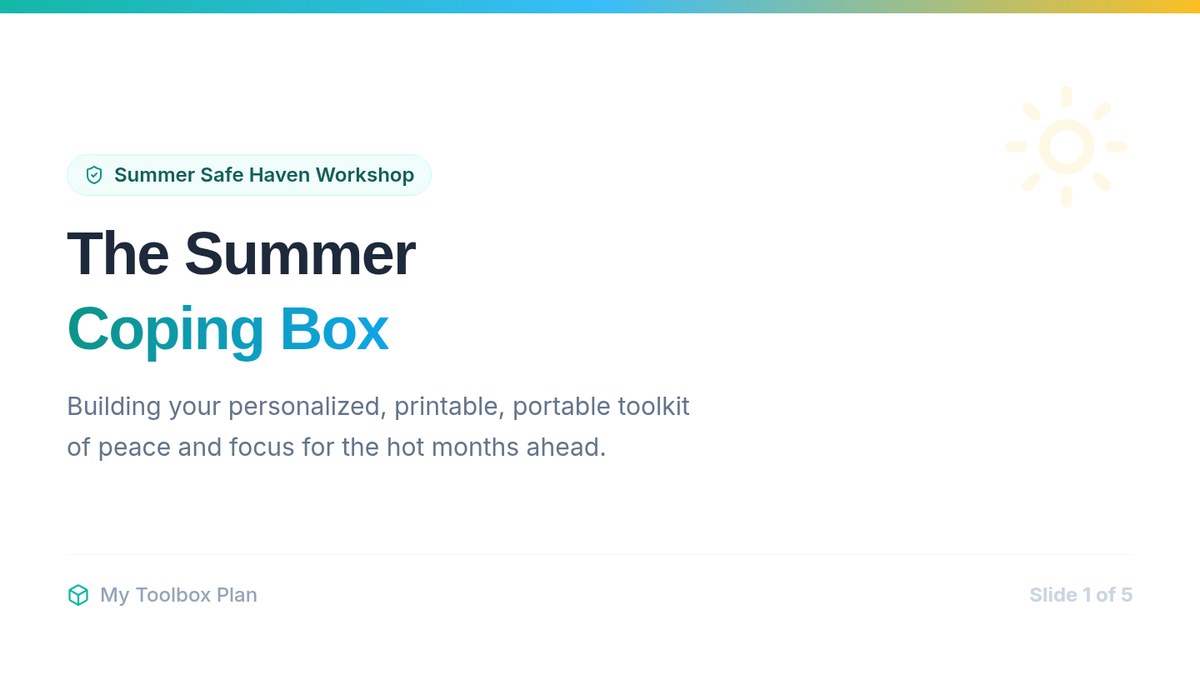
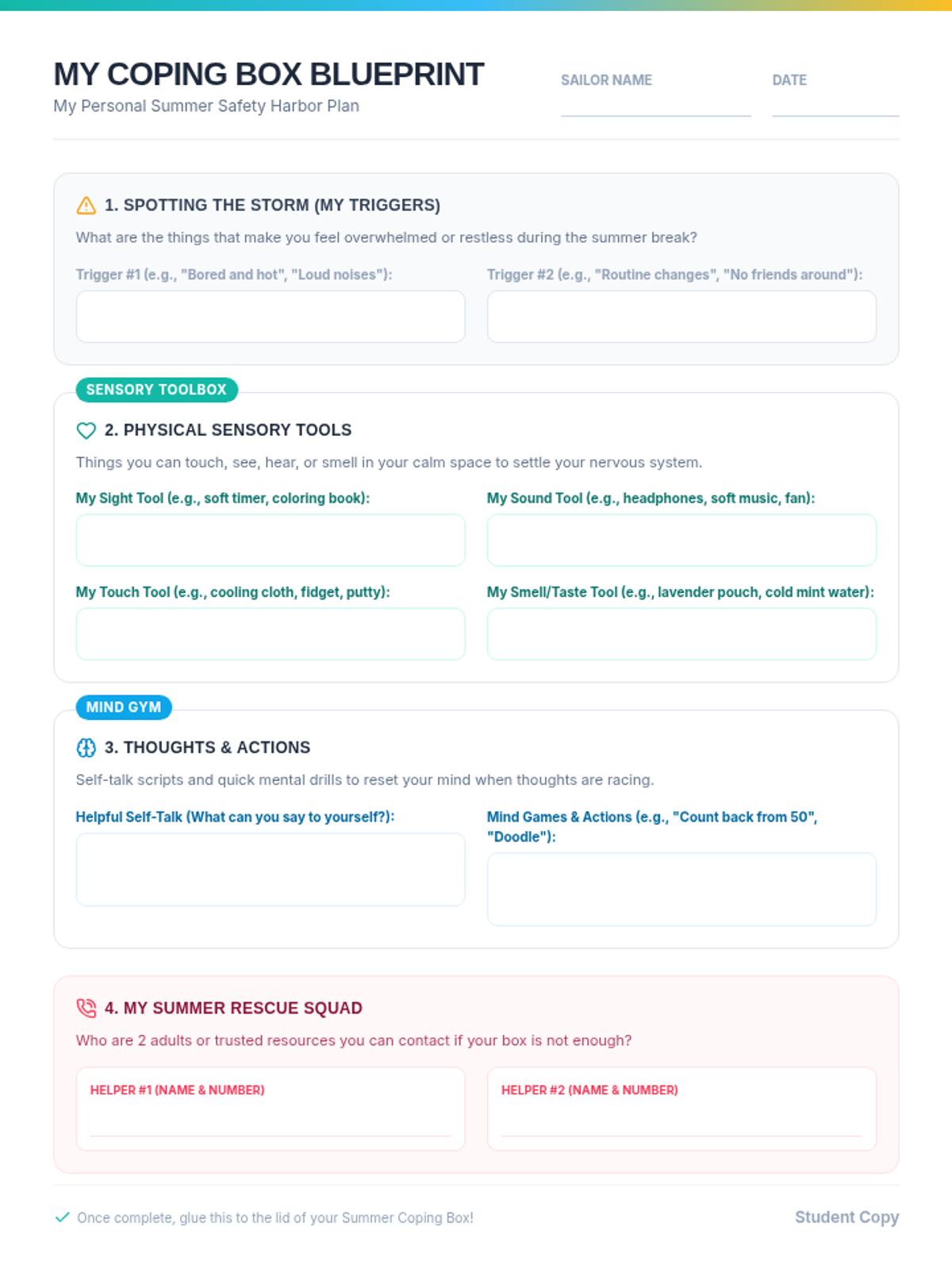
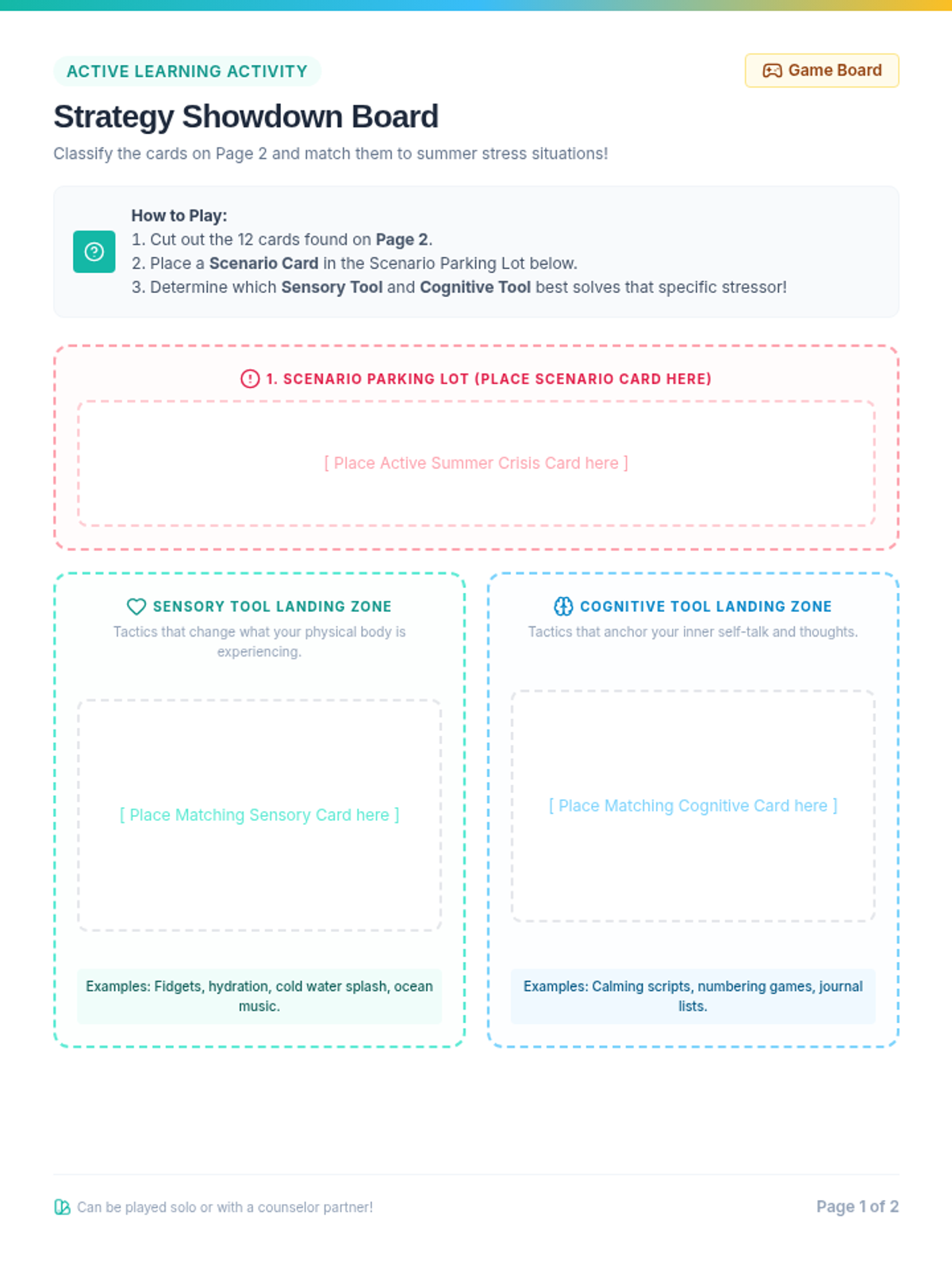
A practical self-regulation workshop where students build personalized, concrete sensory and cognitive coping toolkits to transition safety plans from the counselor's office to the home environment, ensuring continuity of support over summer break.
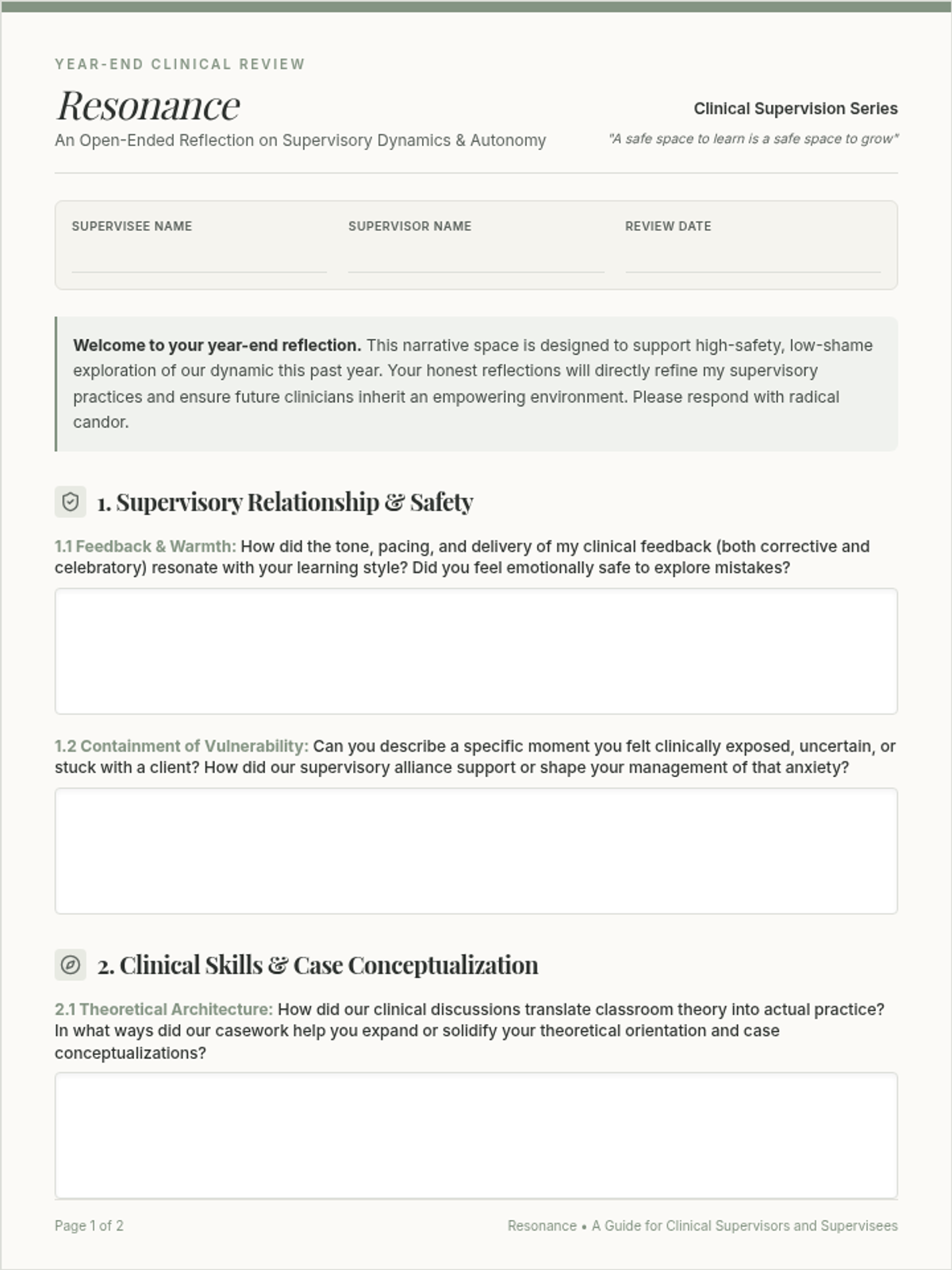
A structured feedback and evaluation lesson for clinical counseling supervisors to facilitate deep reflection, clinical growth, and relationship safety assessments at the conclusion of a supervisory year.
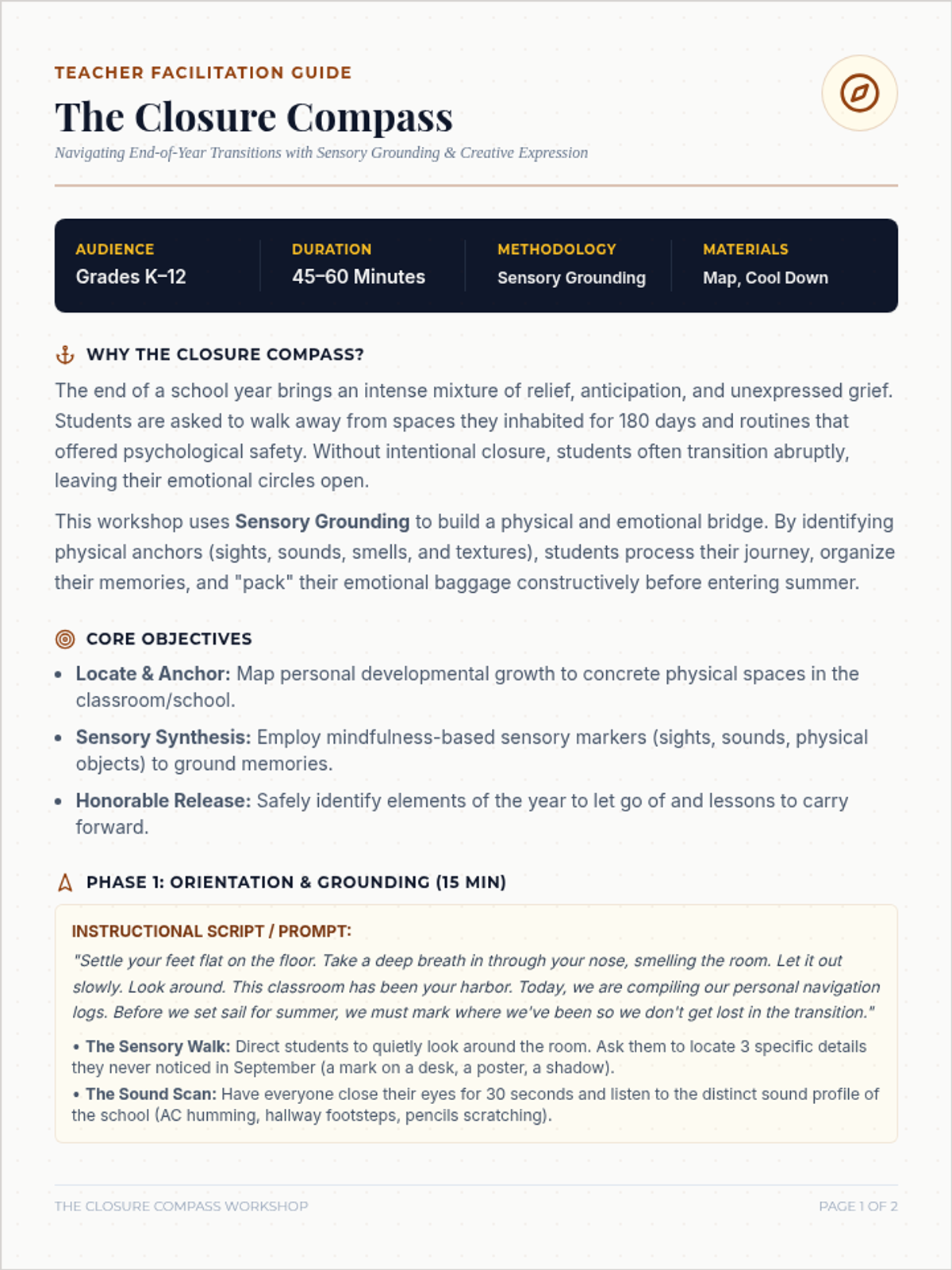
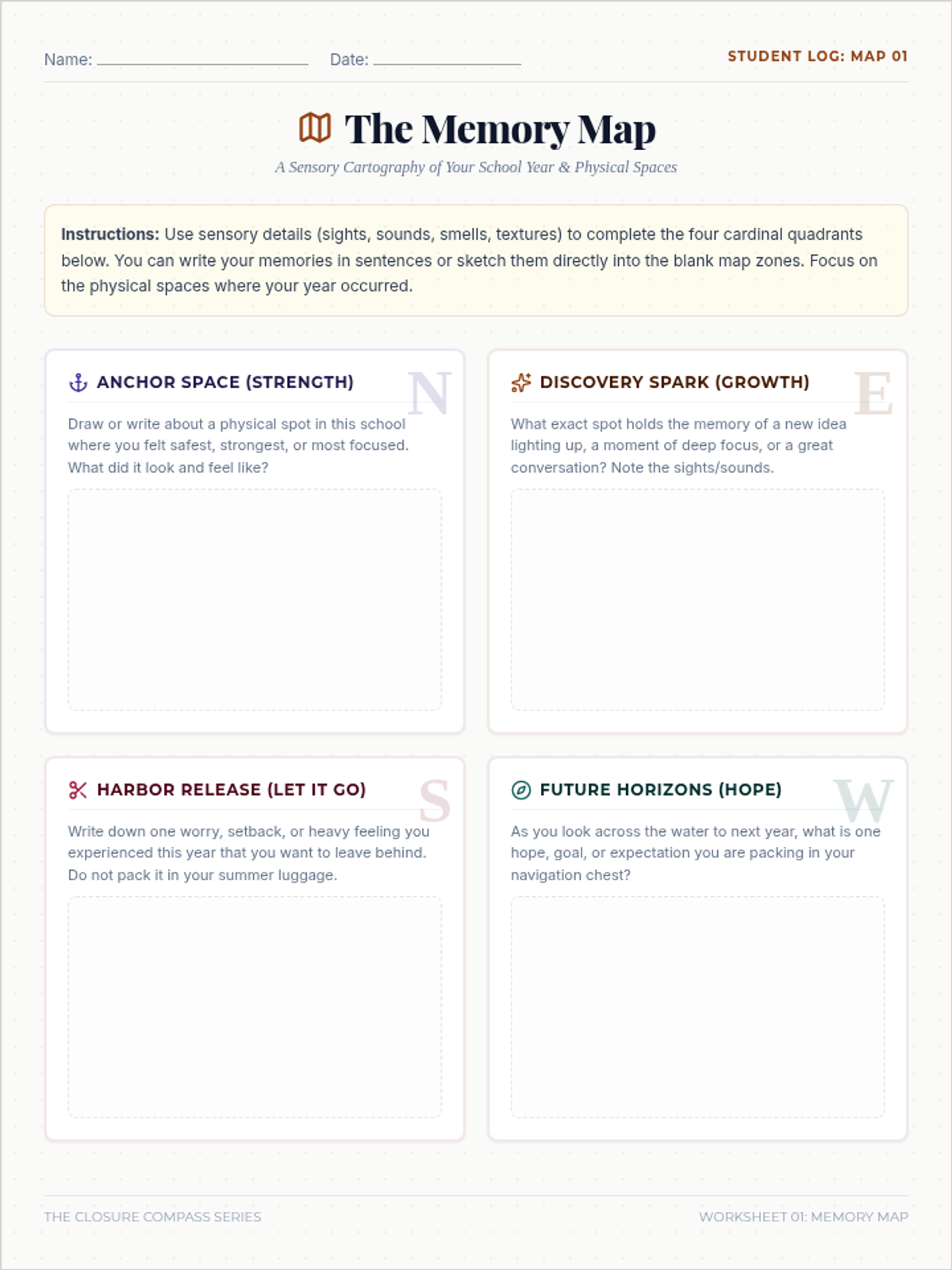
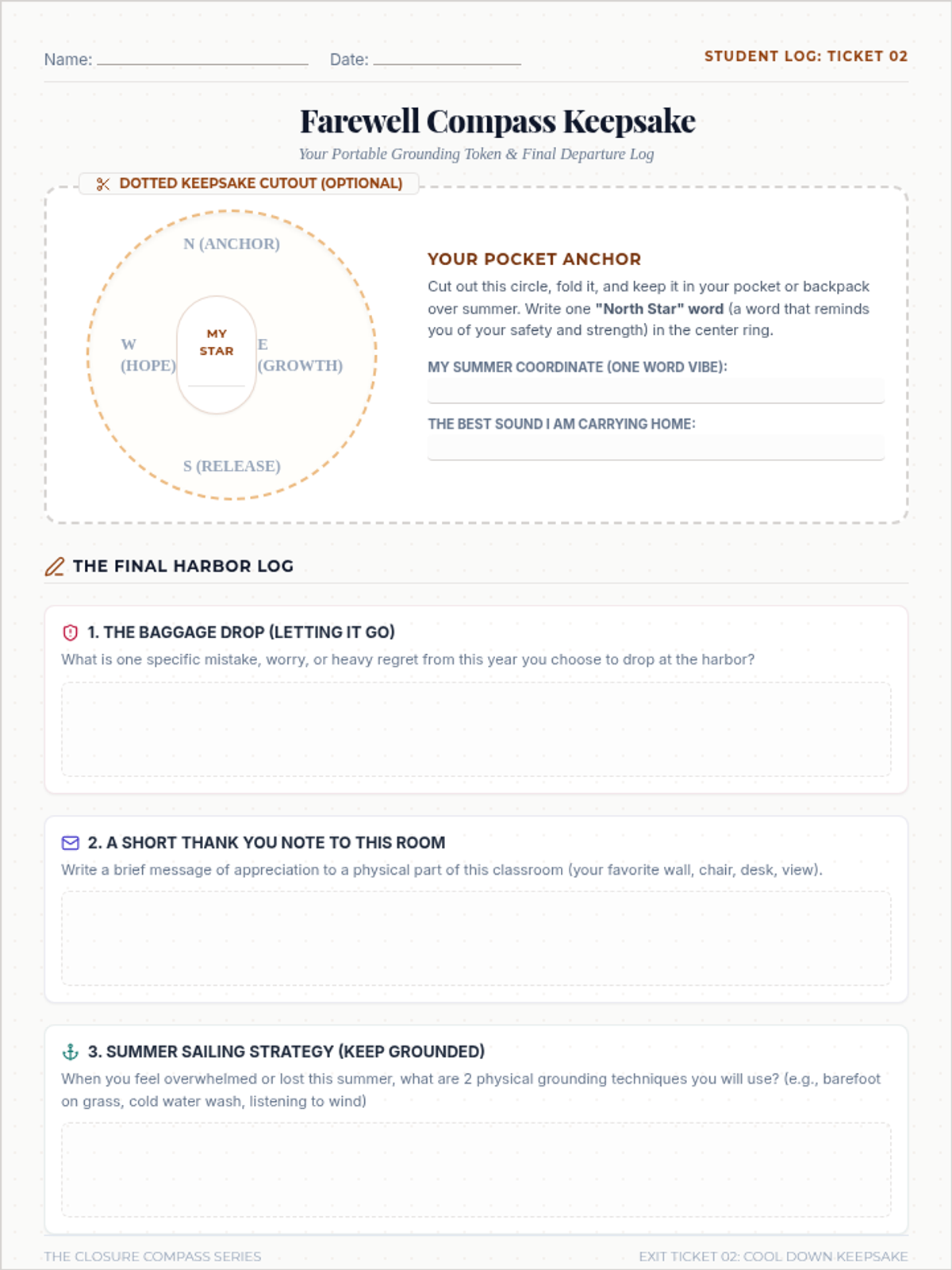
A transition workshop lesson that helps students of all ages navigate the end of the school year using sensory grounding and creative expression. The lesson provides a supportive, structured space to honor memories, express gratitude, and transition peacefully into summer.
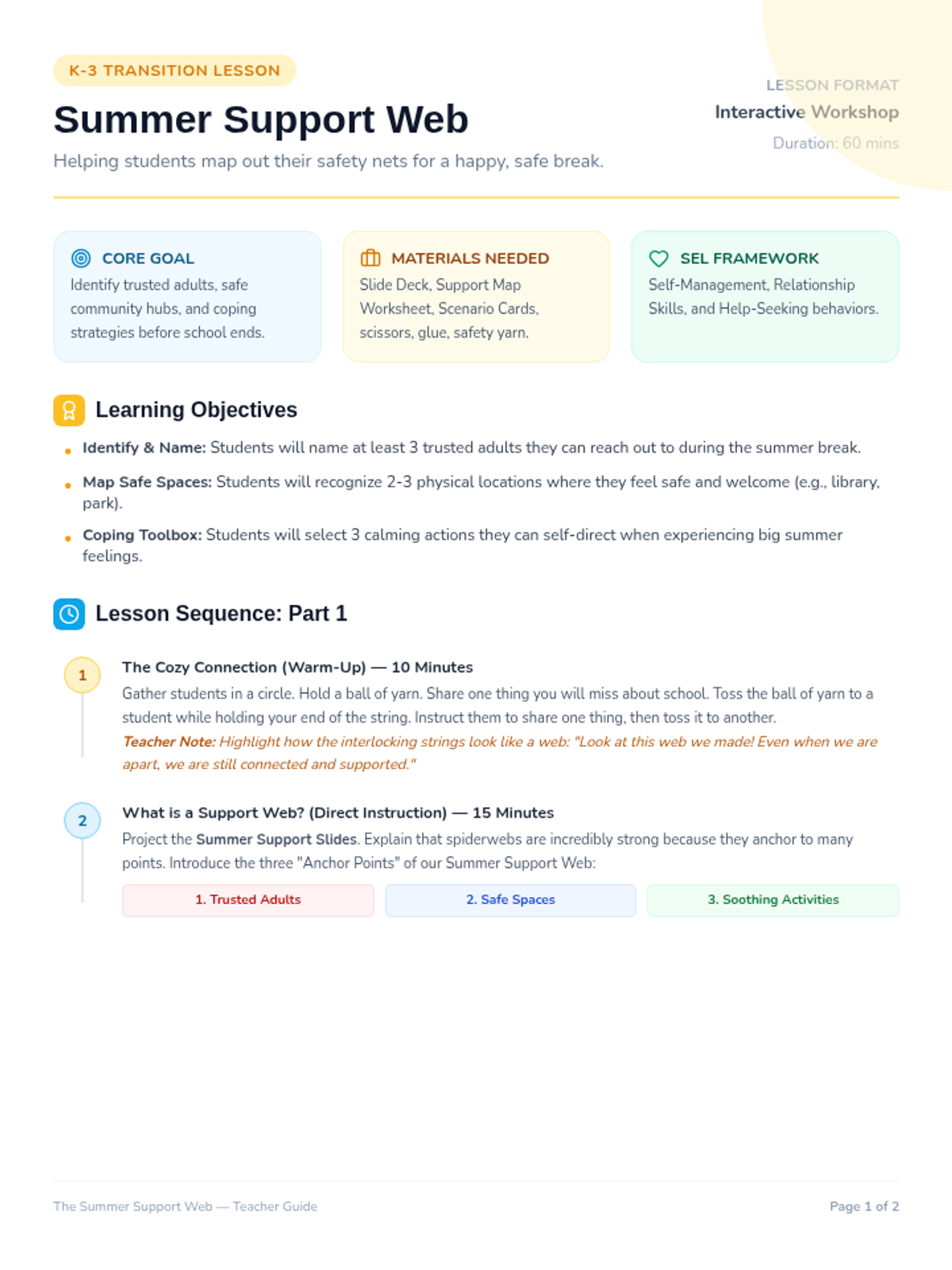
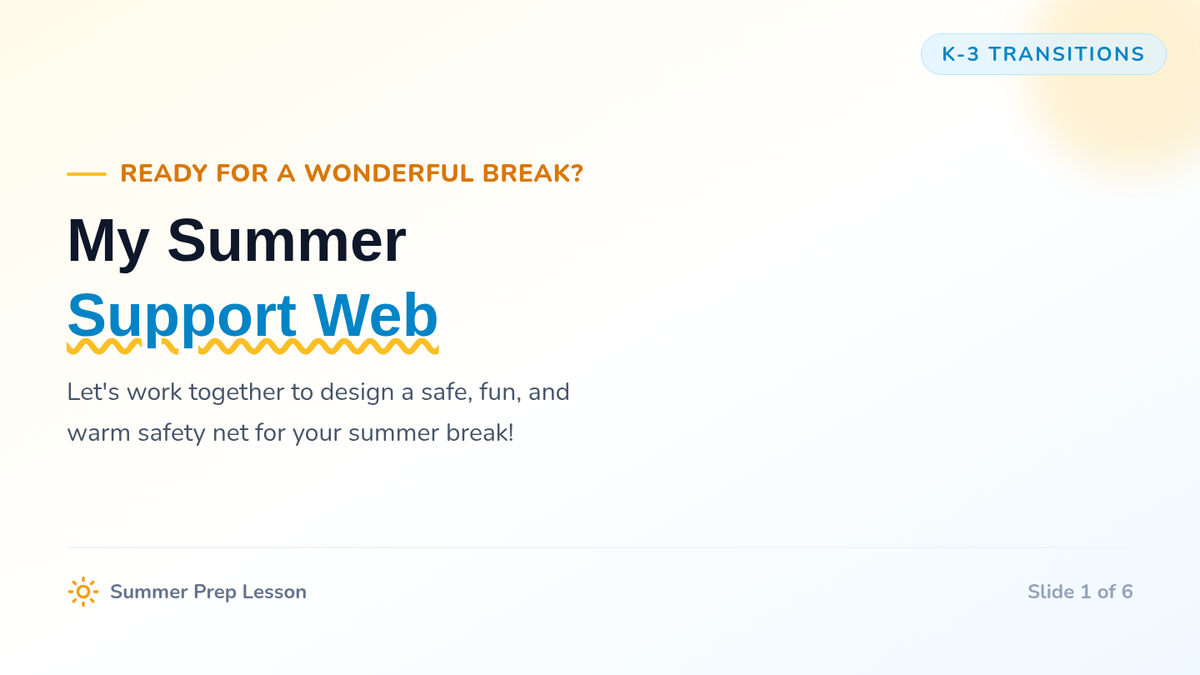
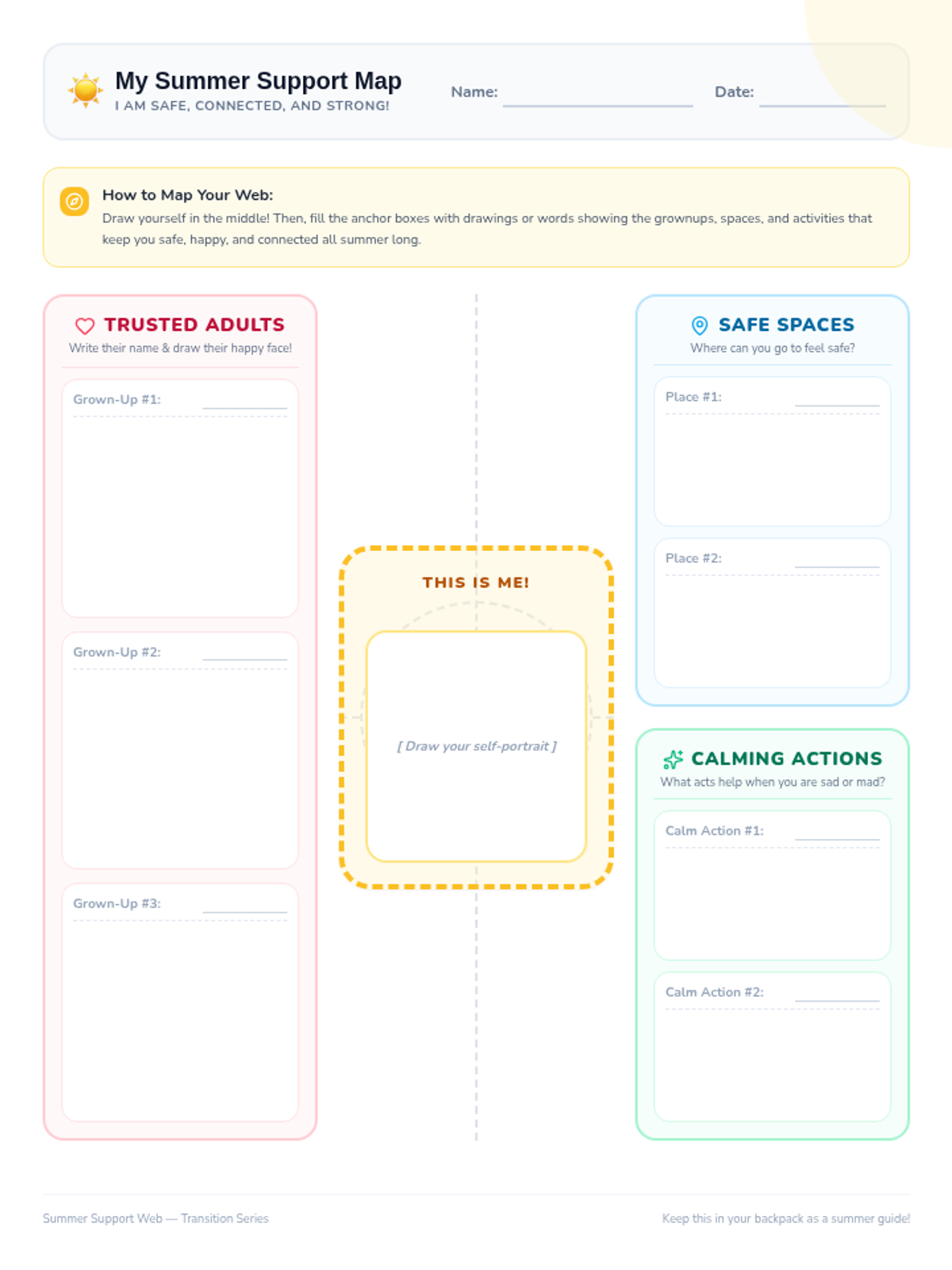
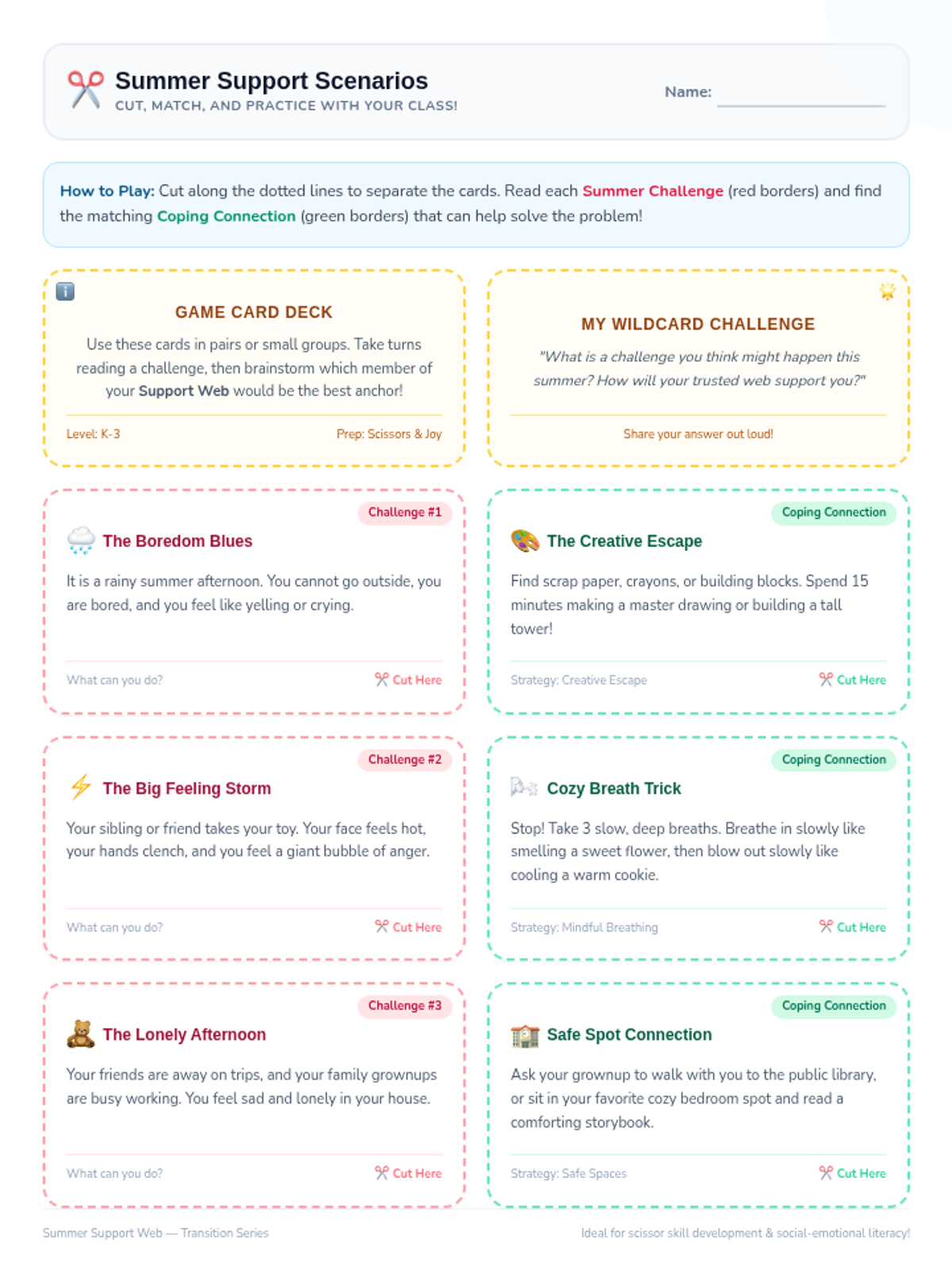
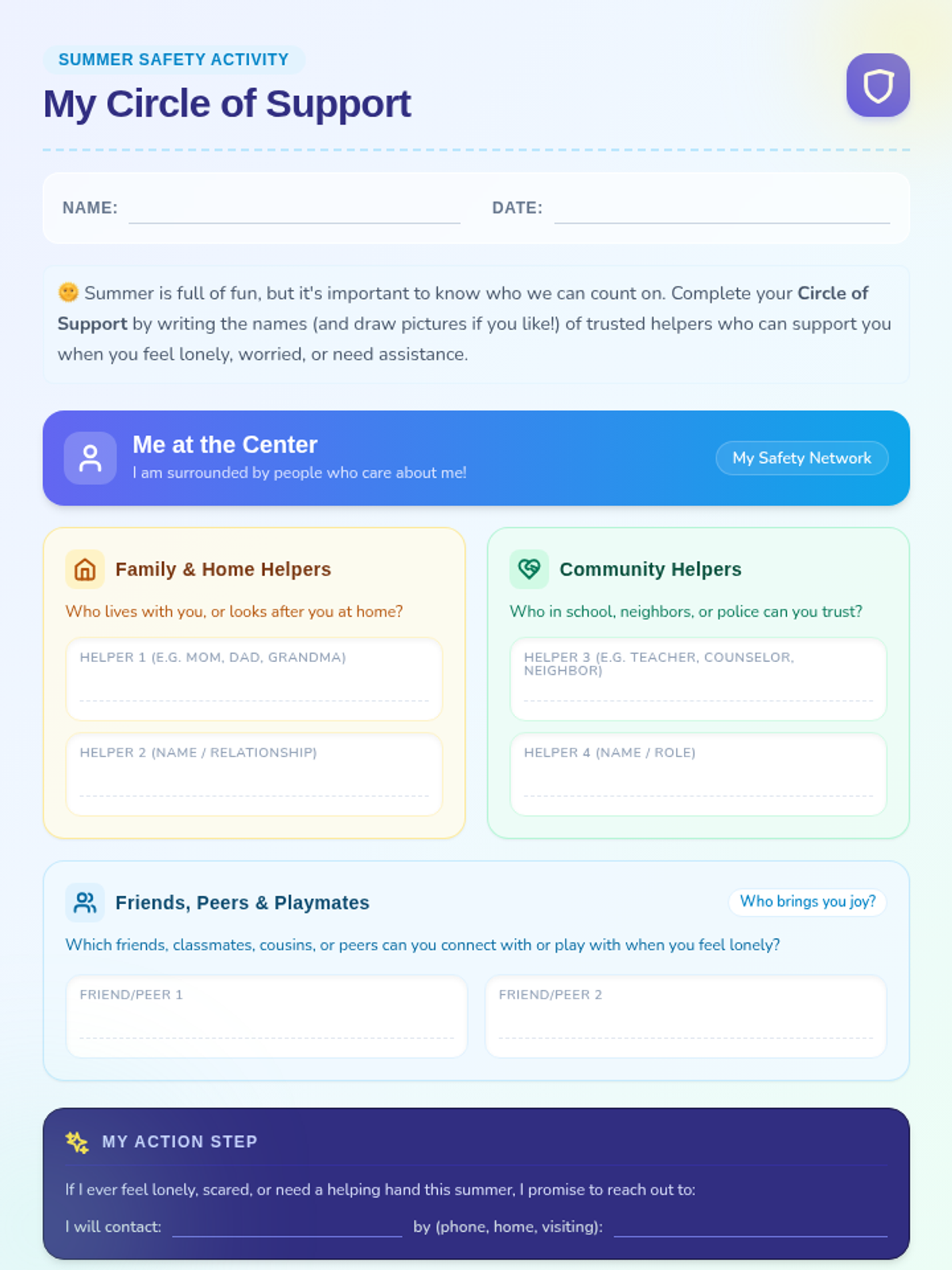
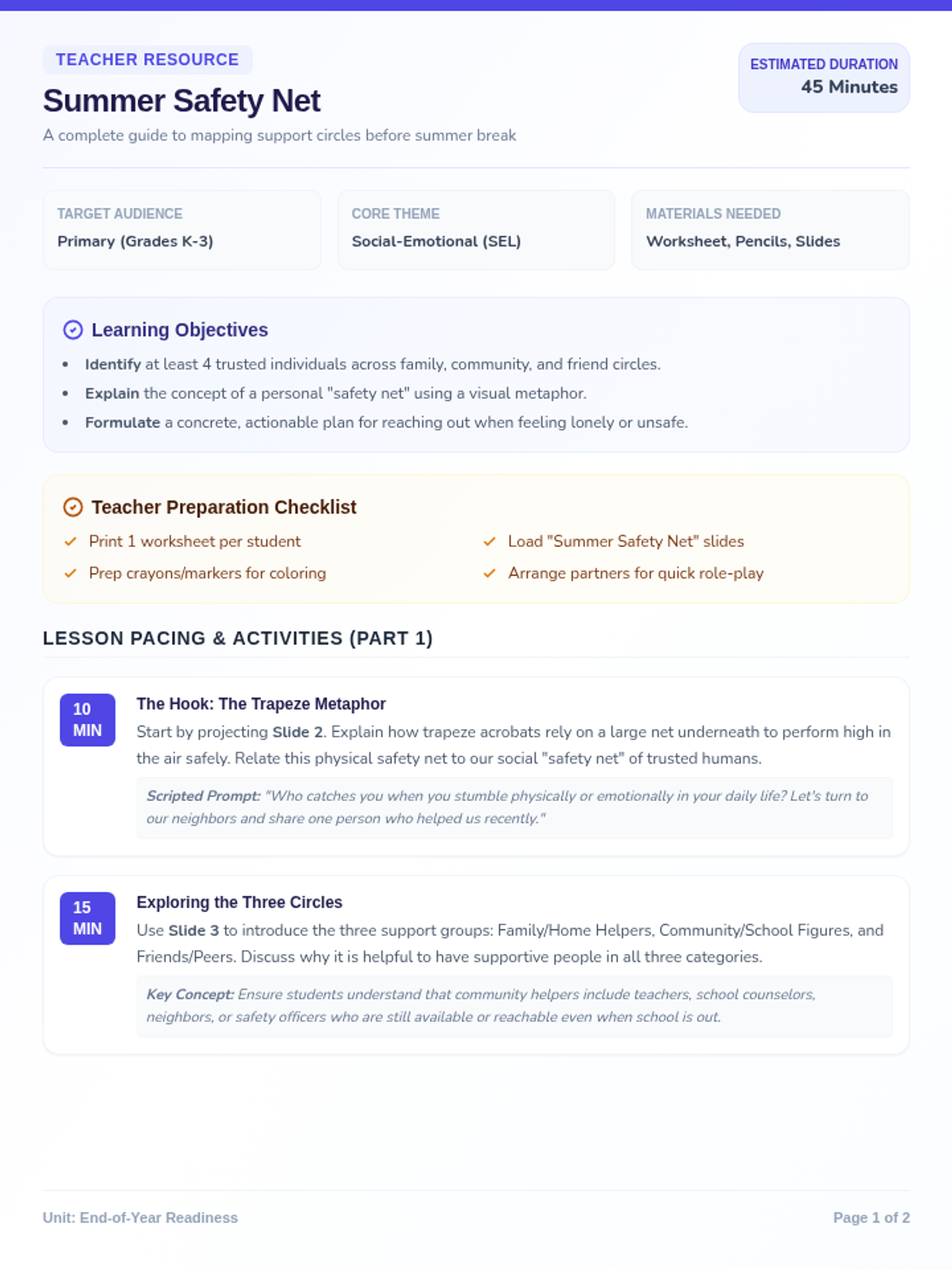
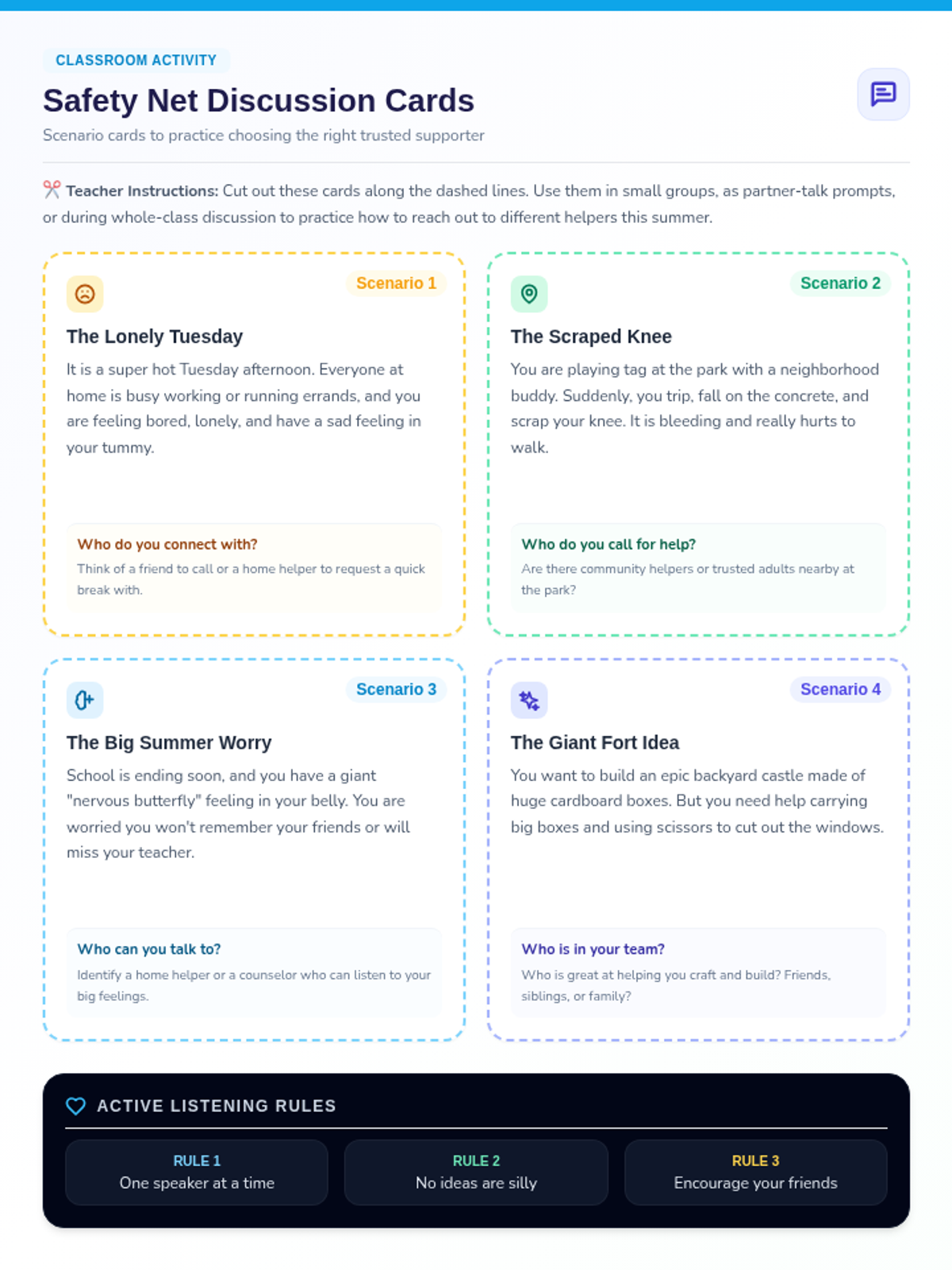
An interactive transition lesson designed to help K-3 students map out their summer safety net. Students identify trusted adults, safe community spaces, and soothing activities to turn to when school is closed, ensuring they feel supported during the long break.
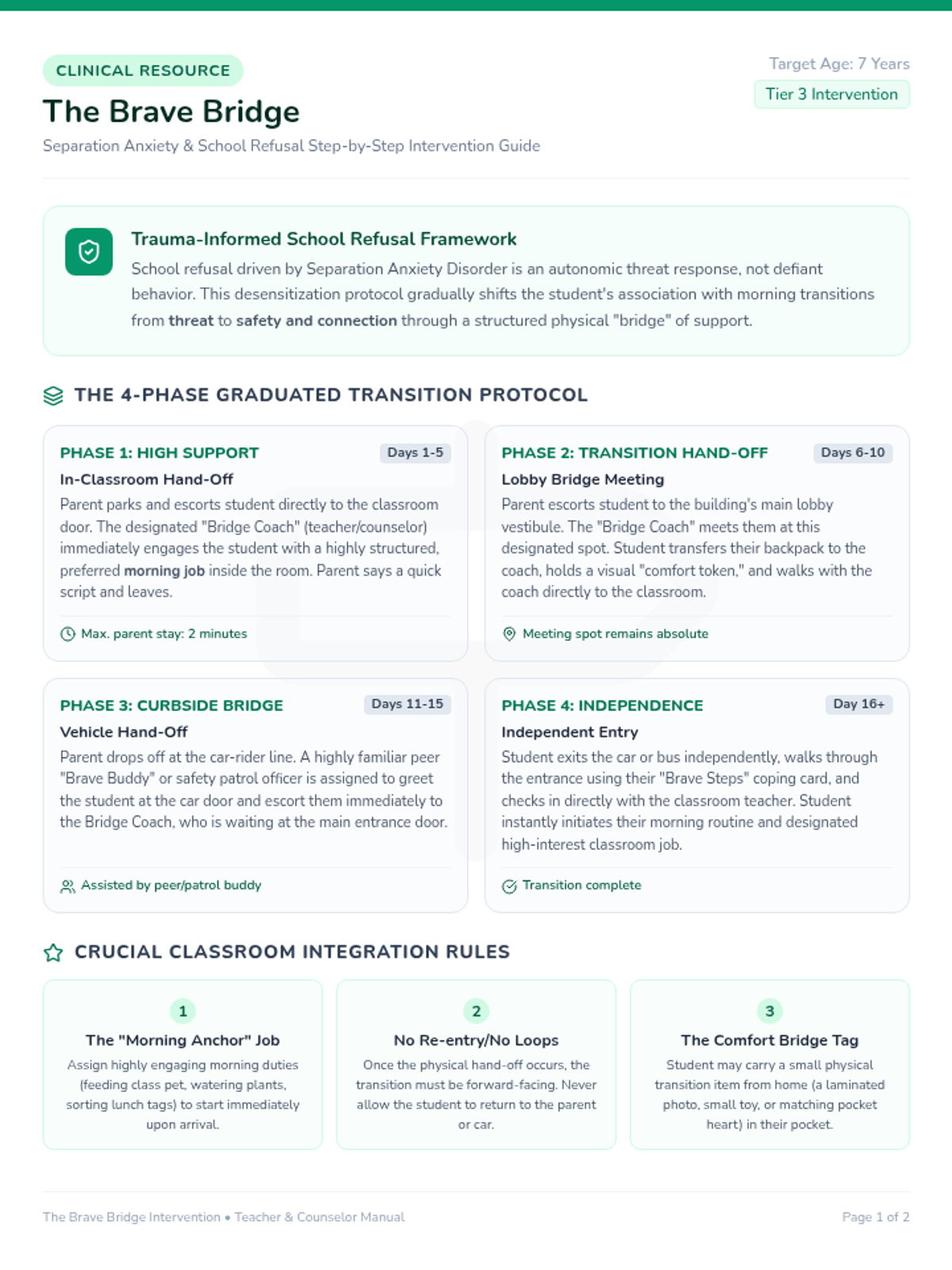
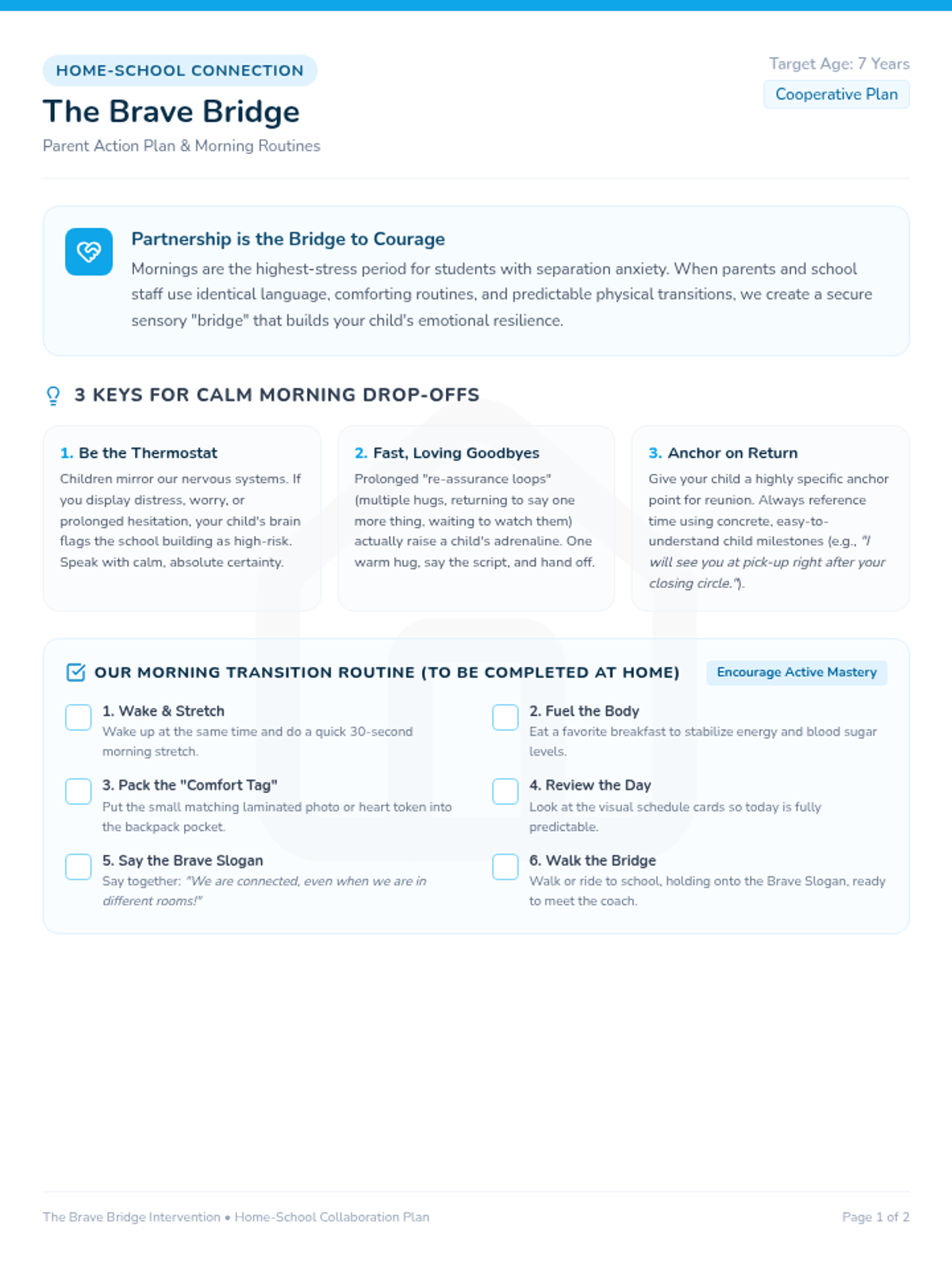
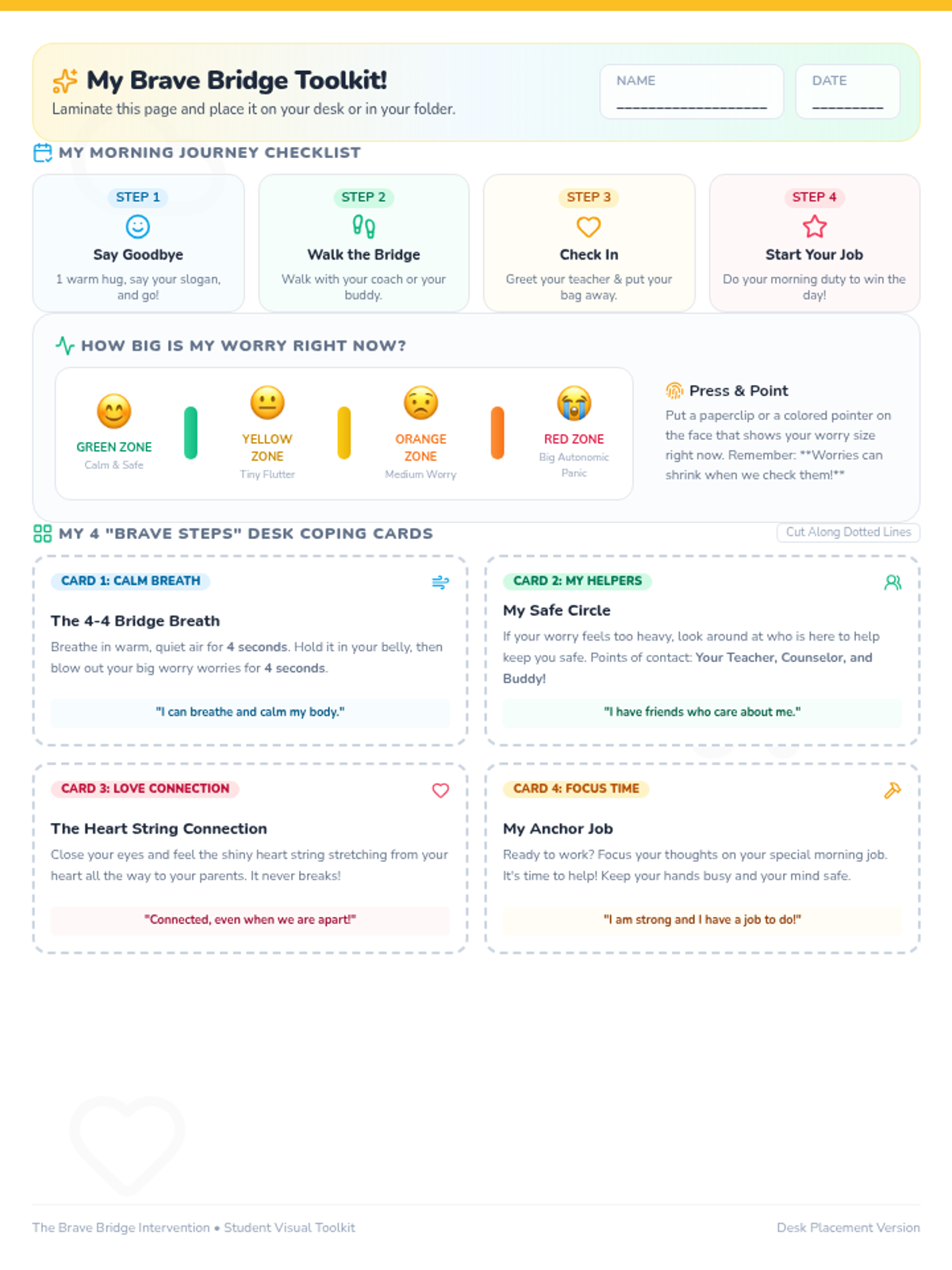
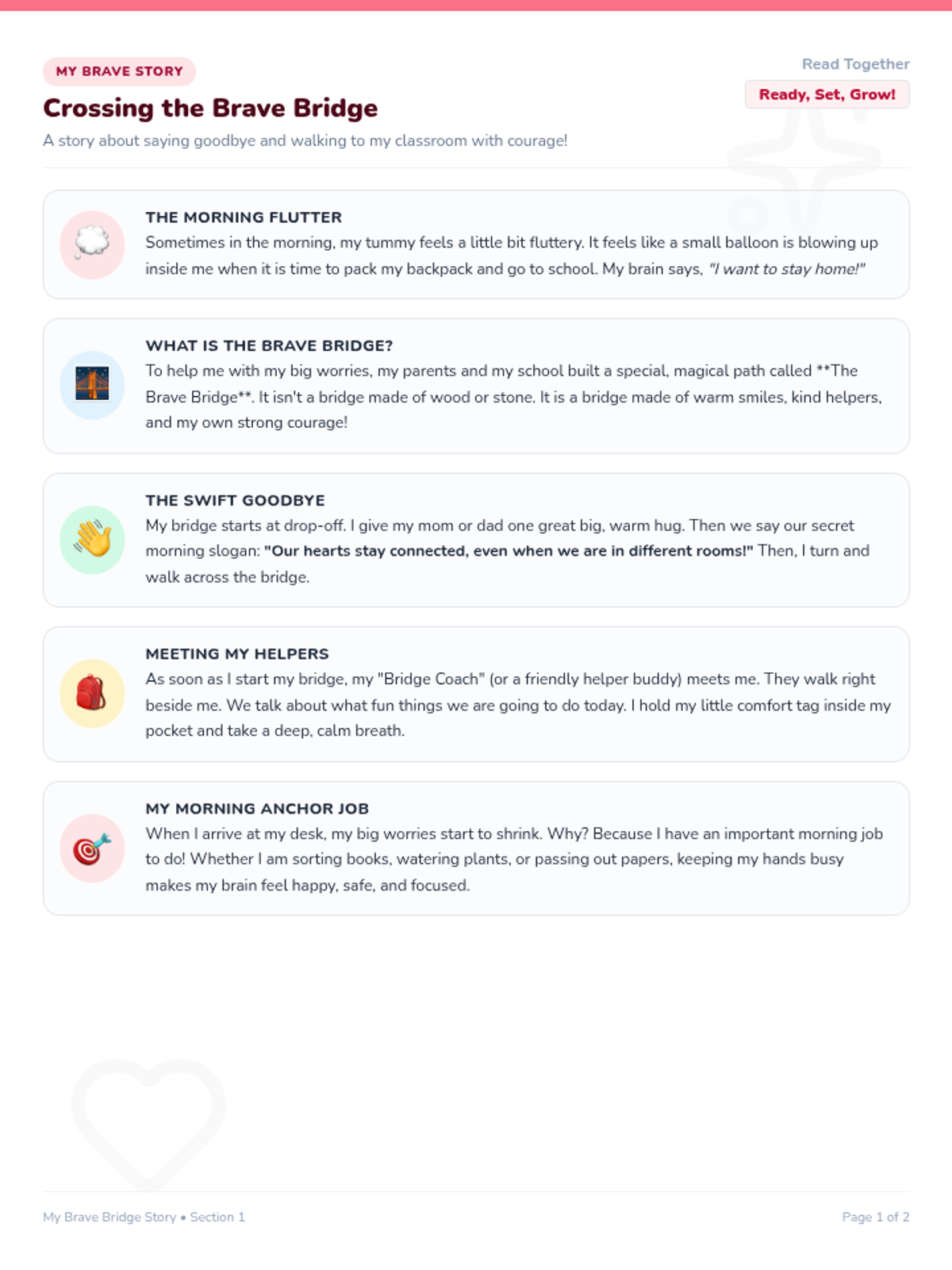
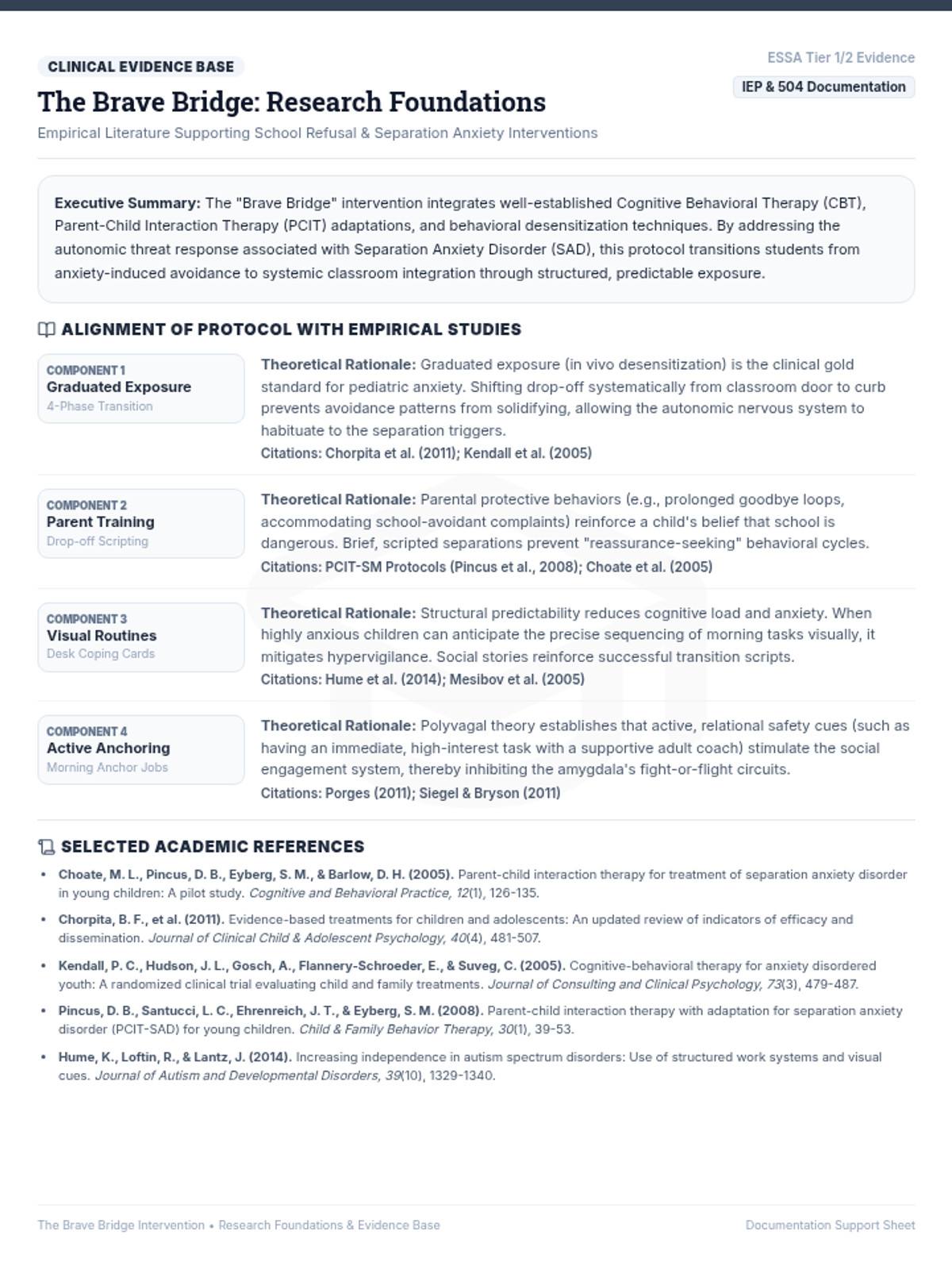
A comprehensive, trauma-informed intervention package designed to support a 7-year-old student experiencing school refusal due to Separation Anxiety Disorder. The lesson centers on 'The Brave Bridge' framework, focusing heavily on structured morning drop-off transitions, classroom integration, and home-school collaboration.
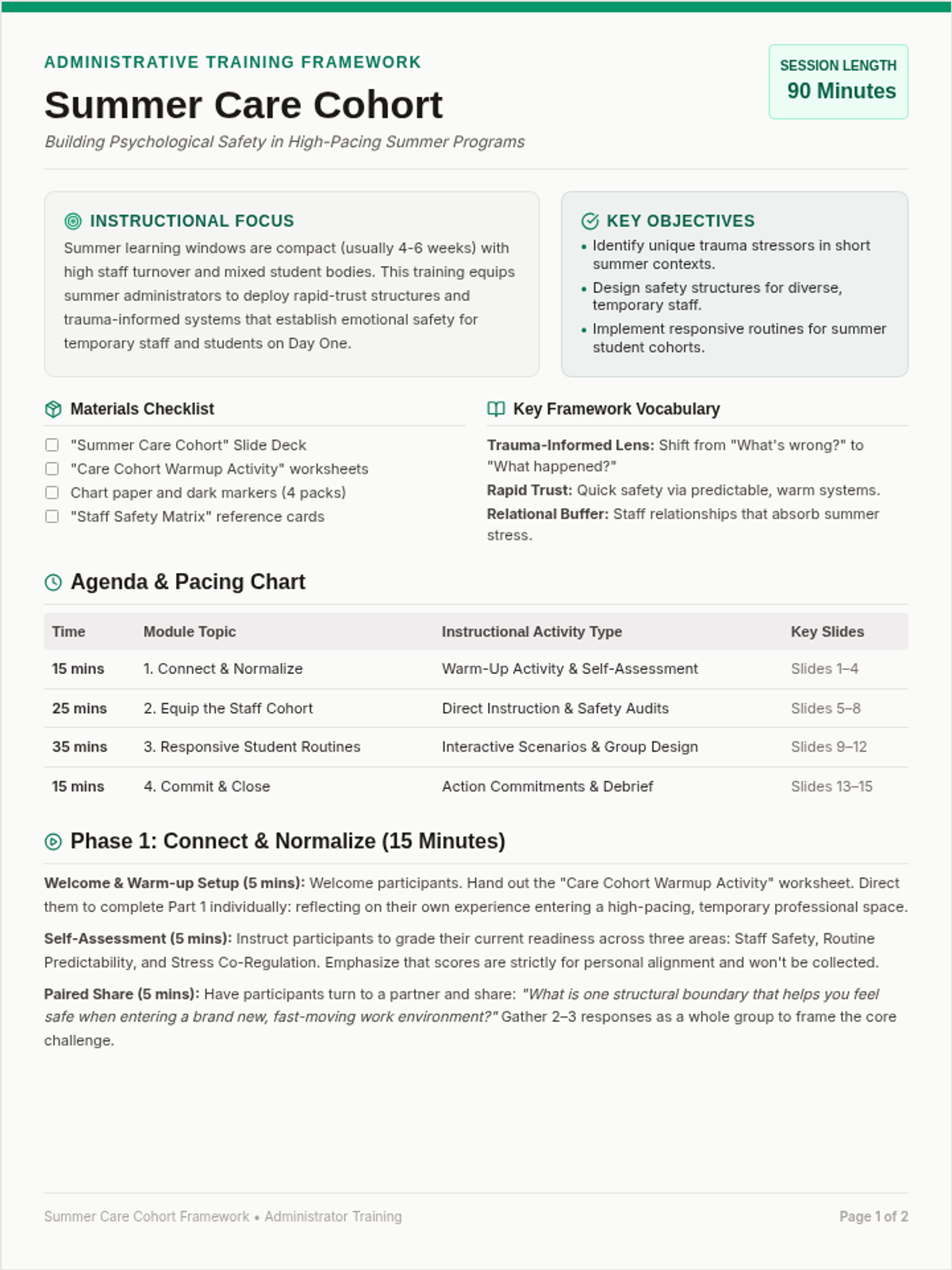
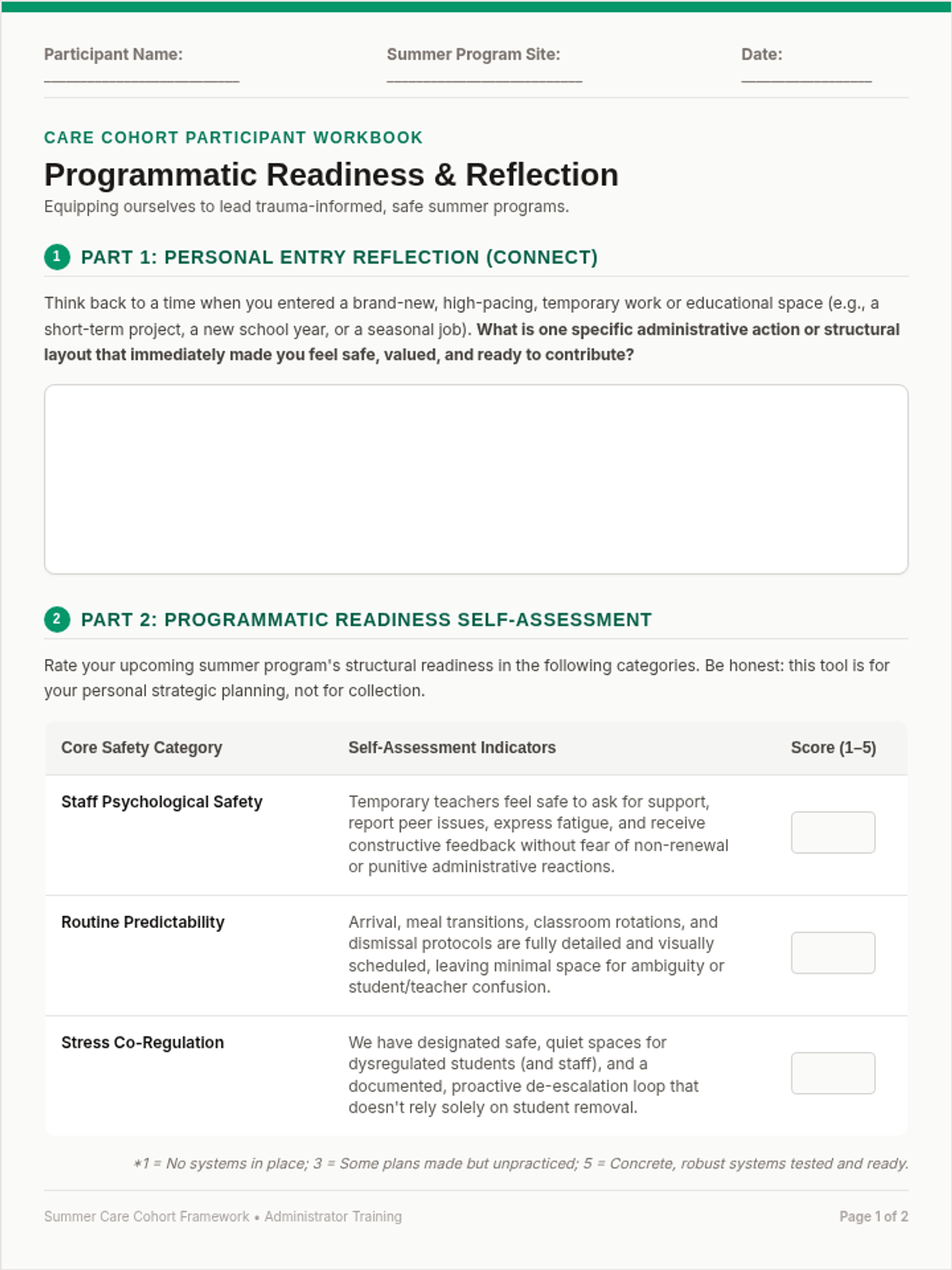
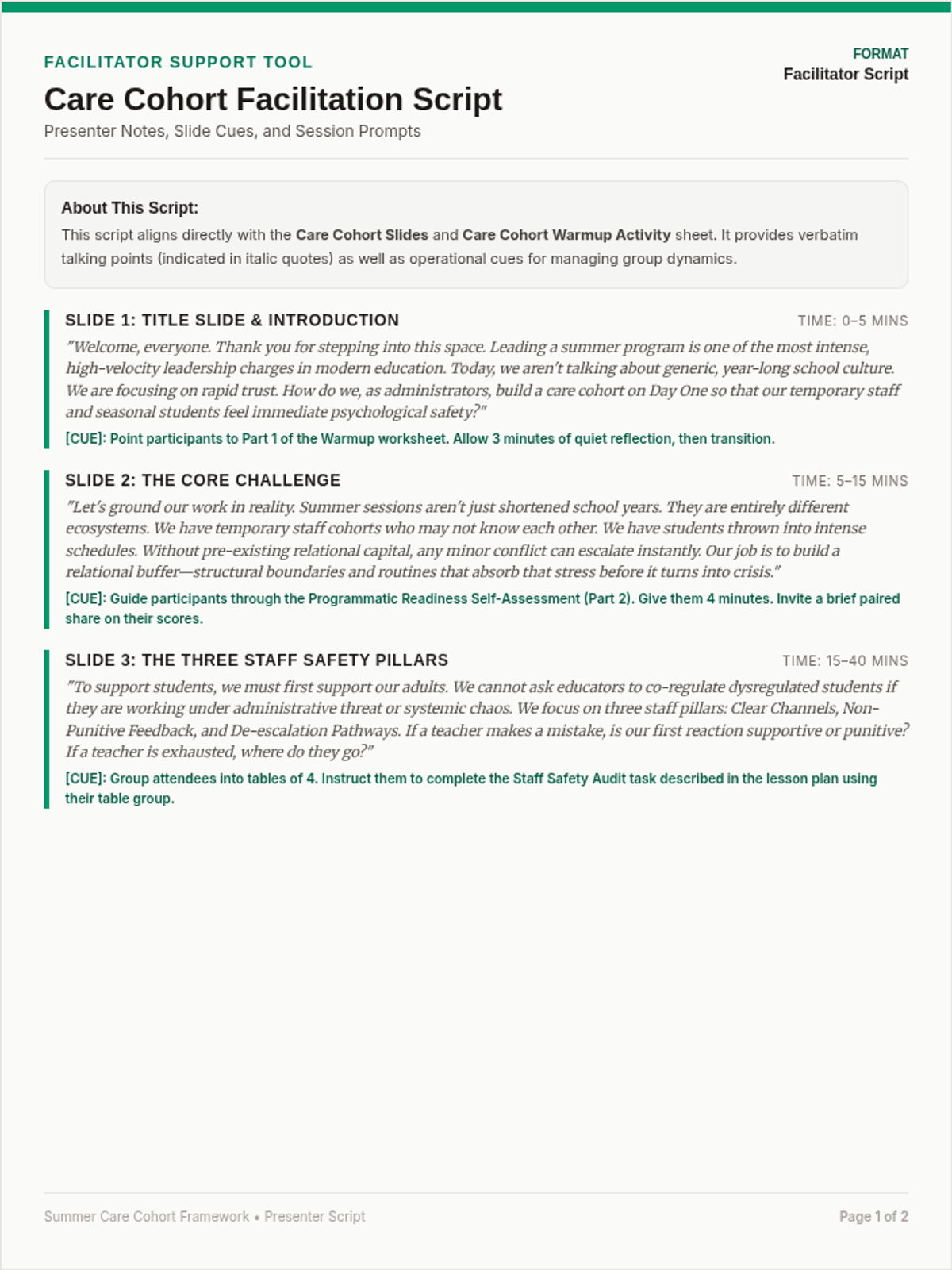
A specialized training lesson for administrators leading summer learning programs. It equips leaders to build immediate psychological safety and trauma-informed environments for both temporary staff and students during short-term, high-pacing summer sessions.
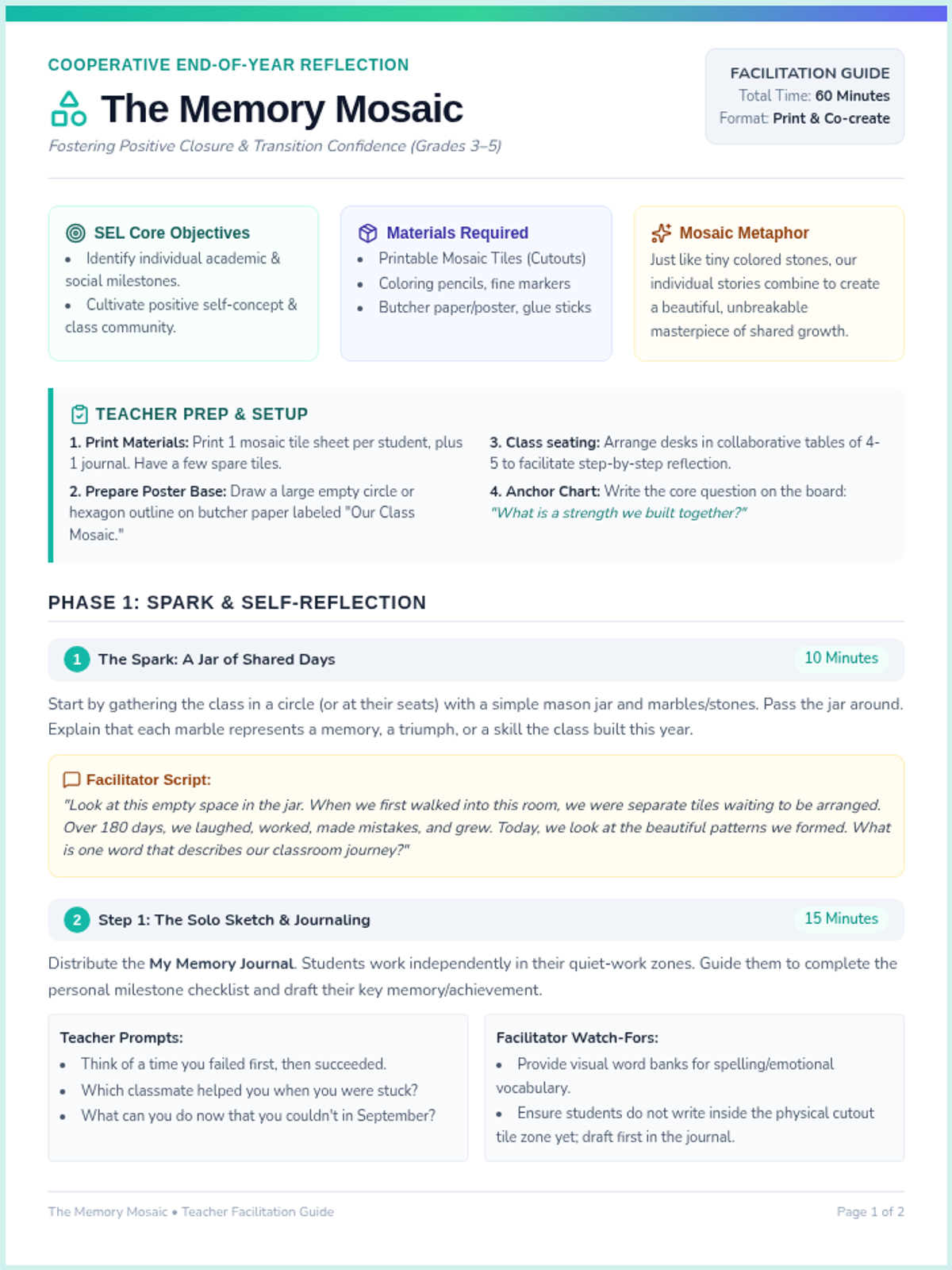
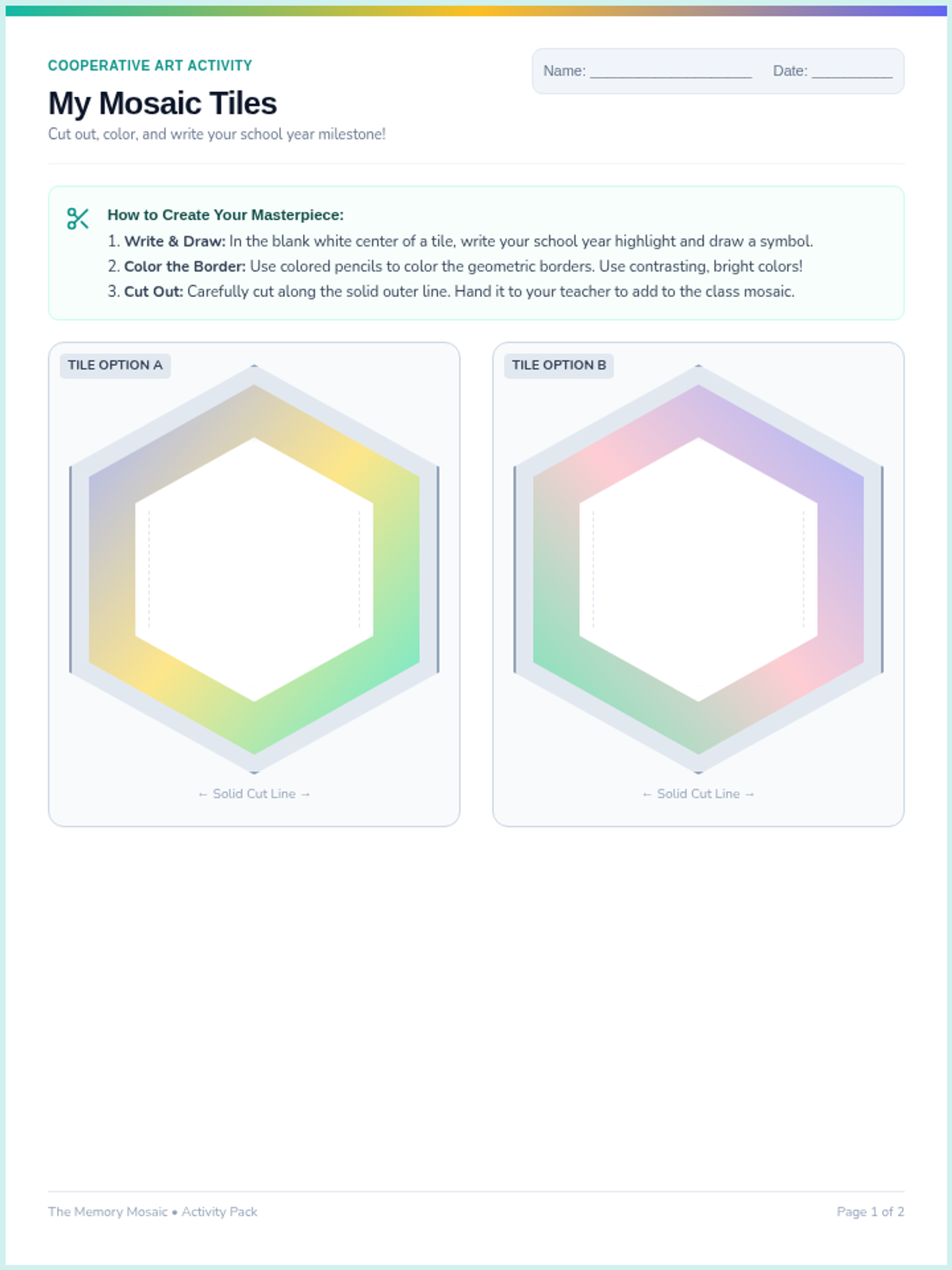
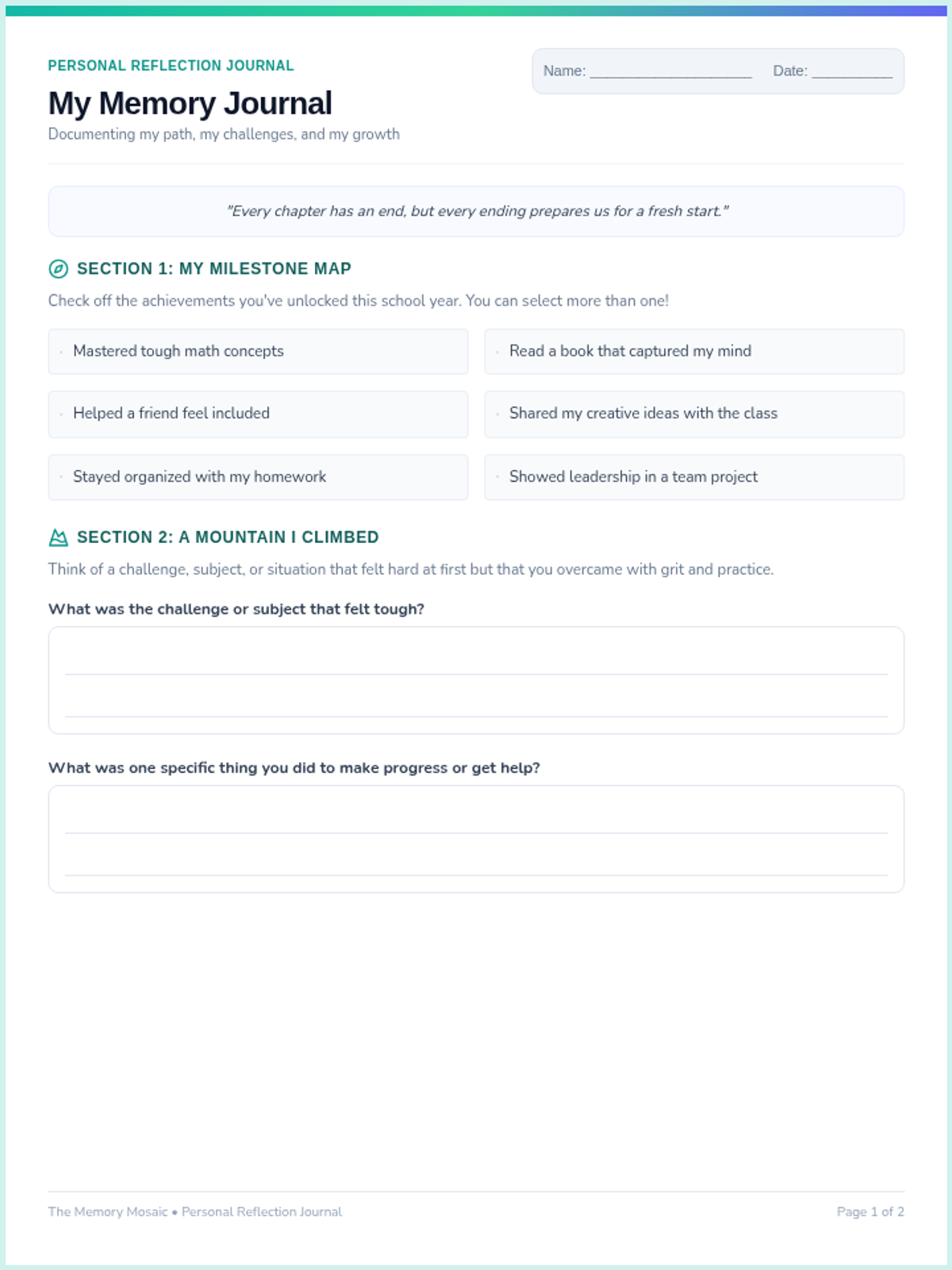
A collaborative, reflective lesson for grades 3-5 where students celebrate individual and collective highlights from the school year, building a cooperative visual mosaic of shared strengths to transition with confidence.
A lesson designed to help young learners identify and map their personal safety networks before summer break, ensuring they know who to turn to when they need help or feel lonely.
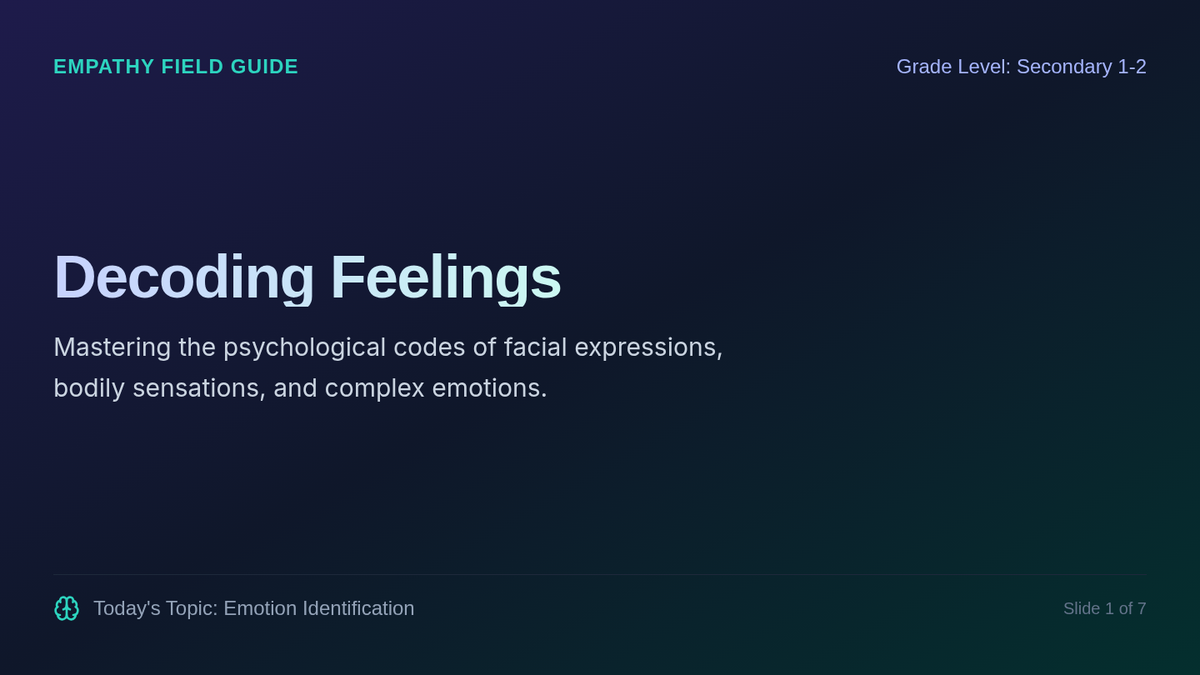
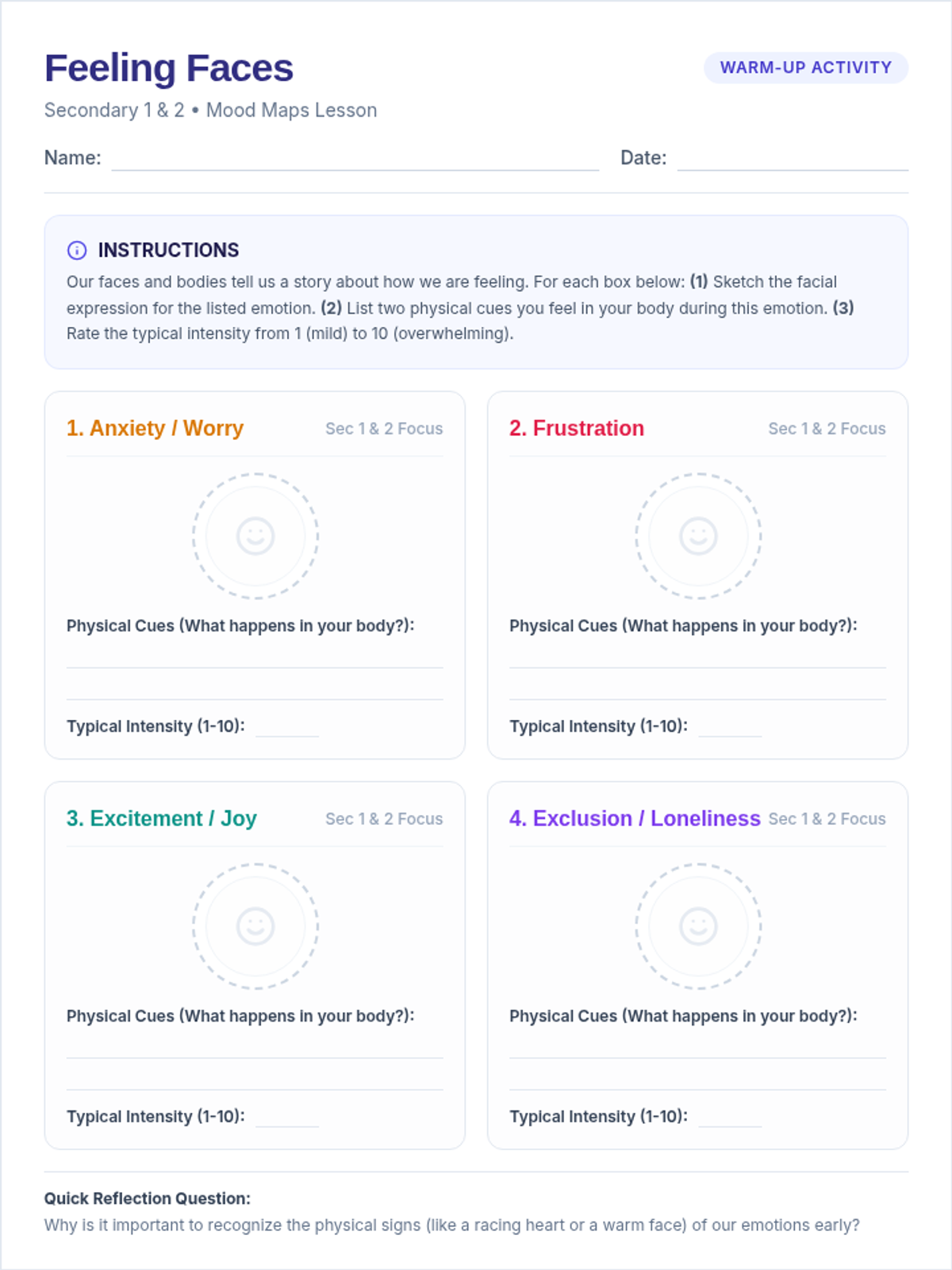
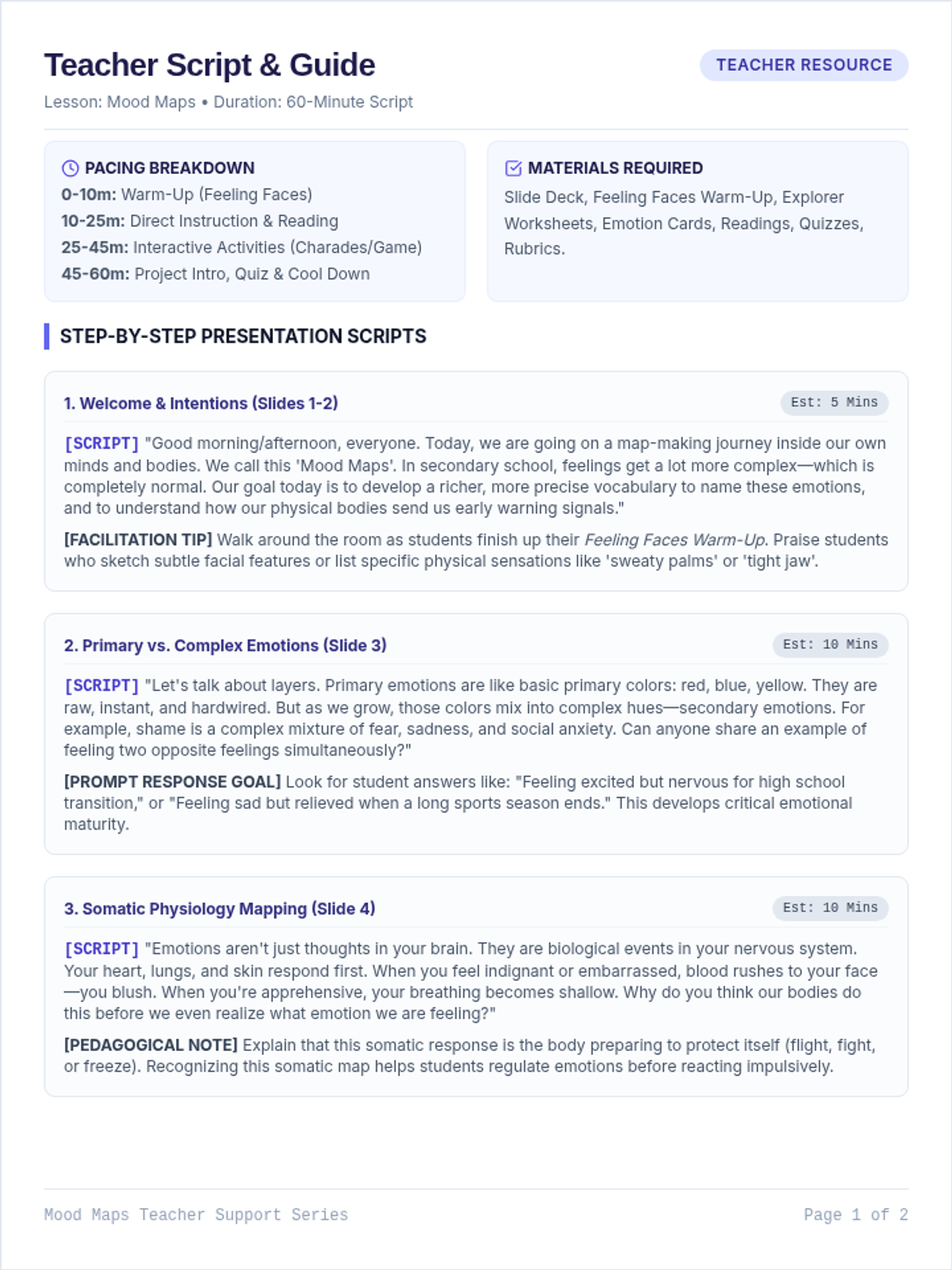
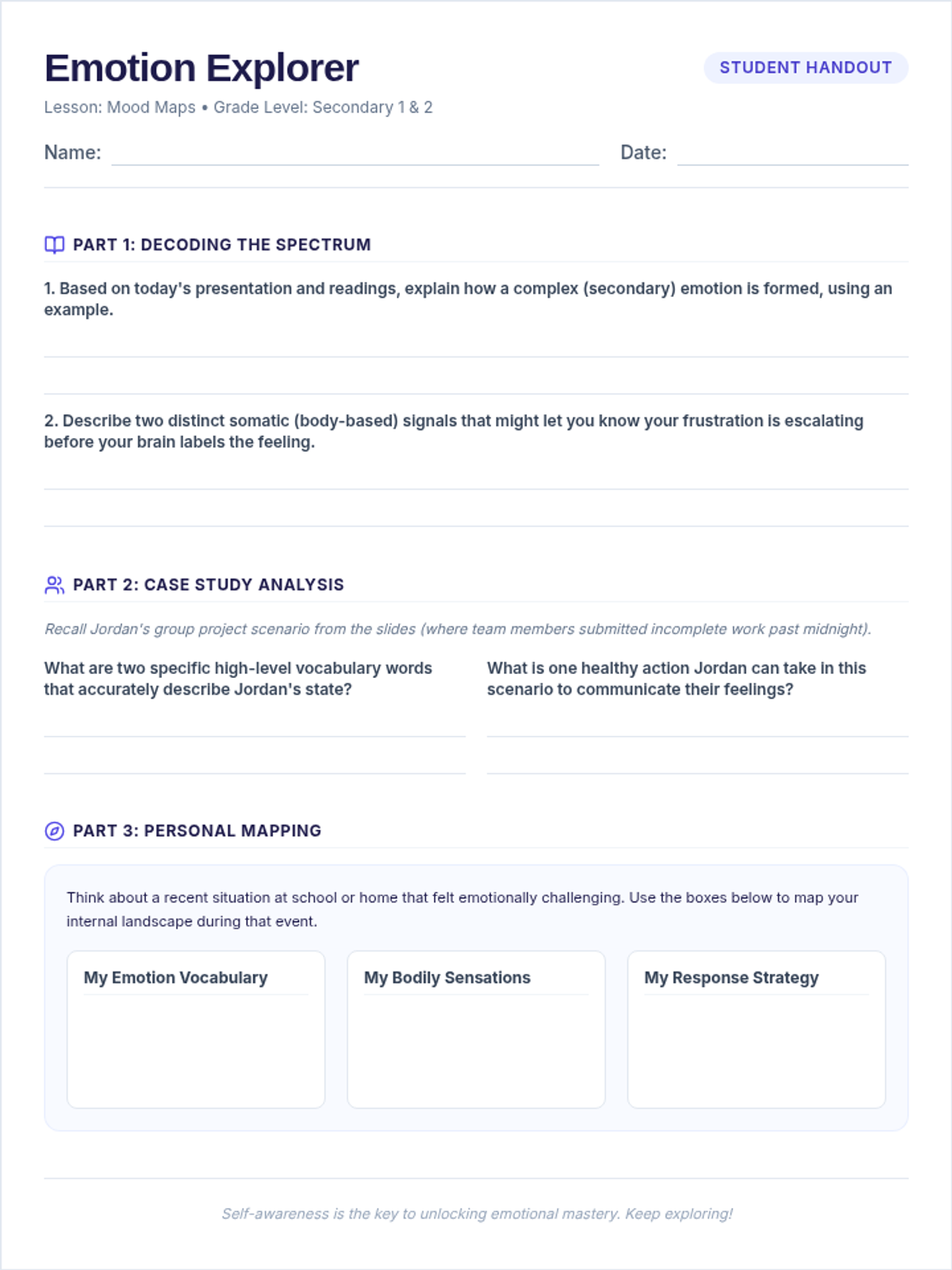
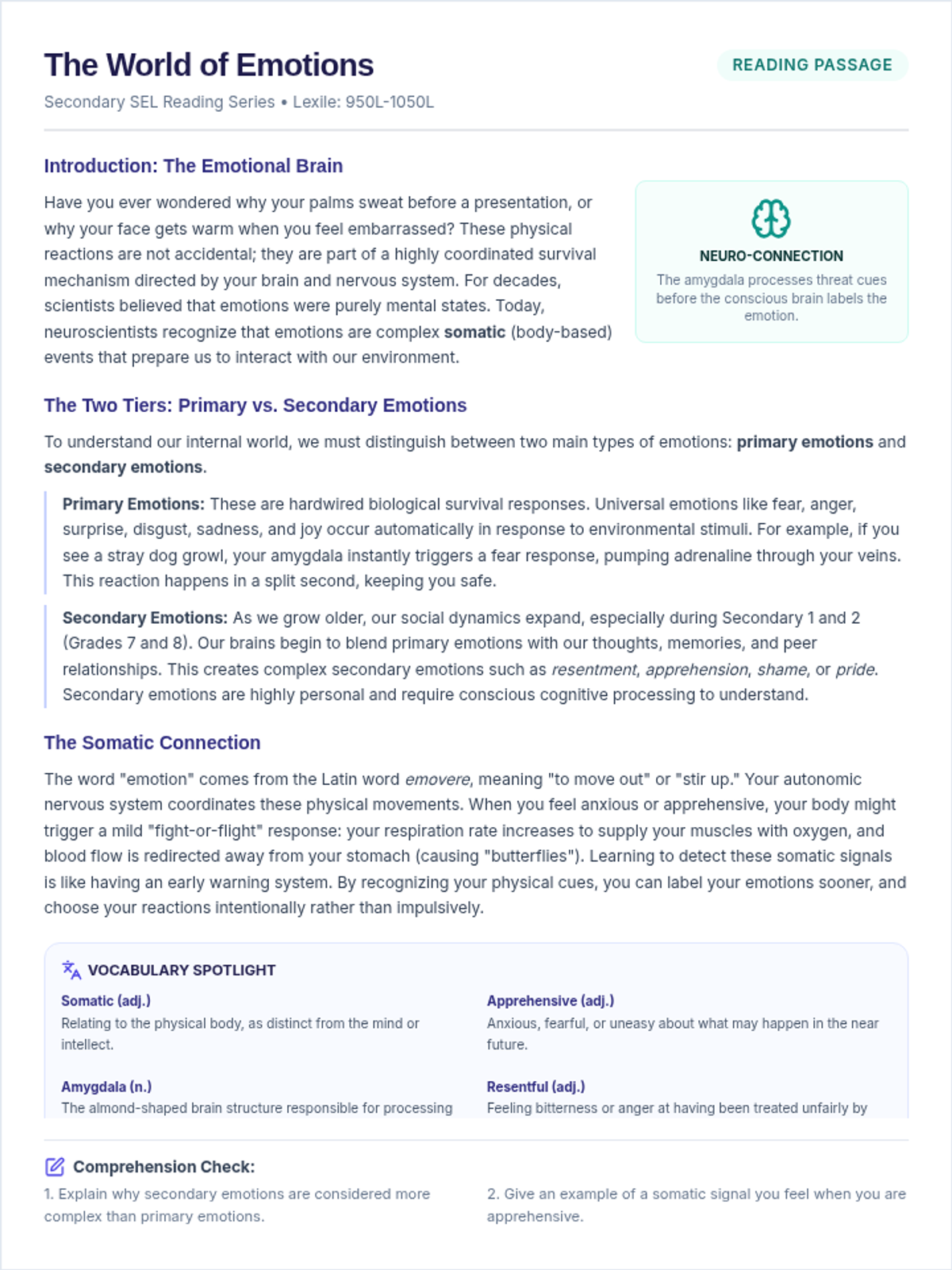
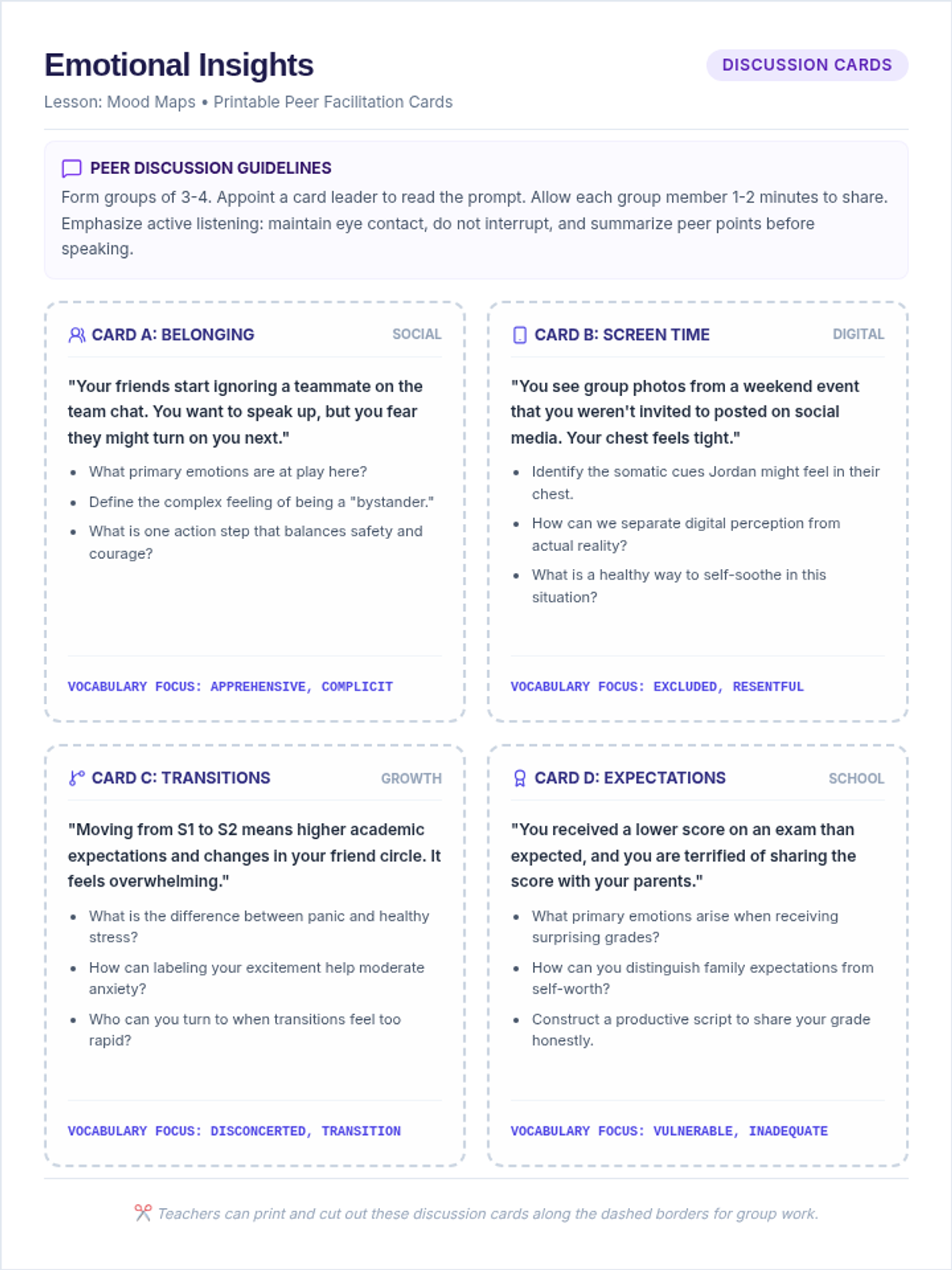
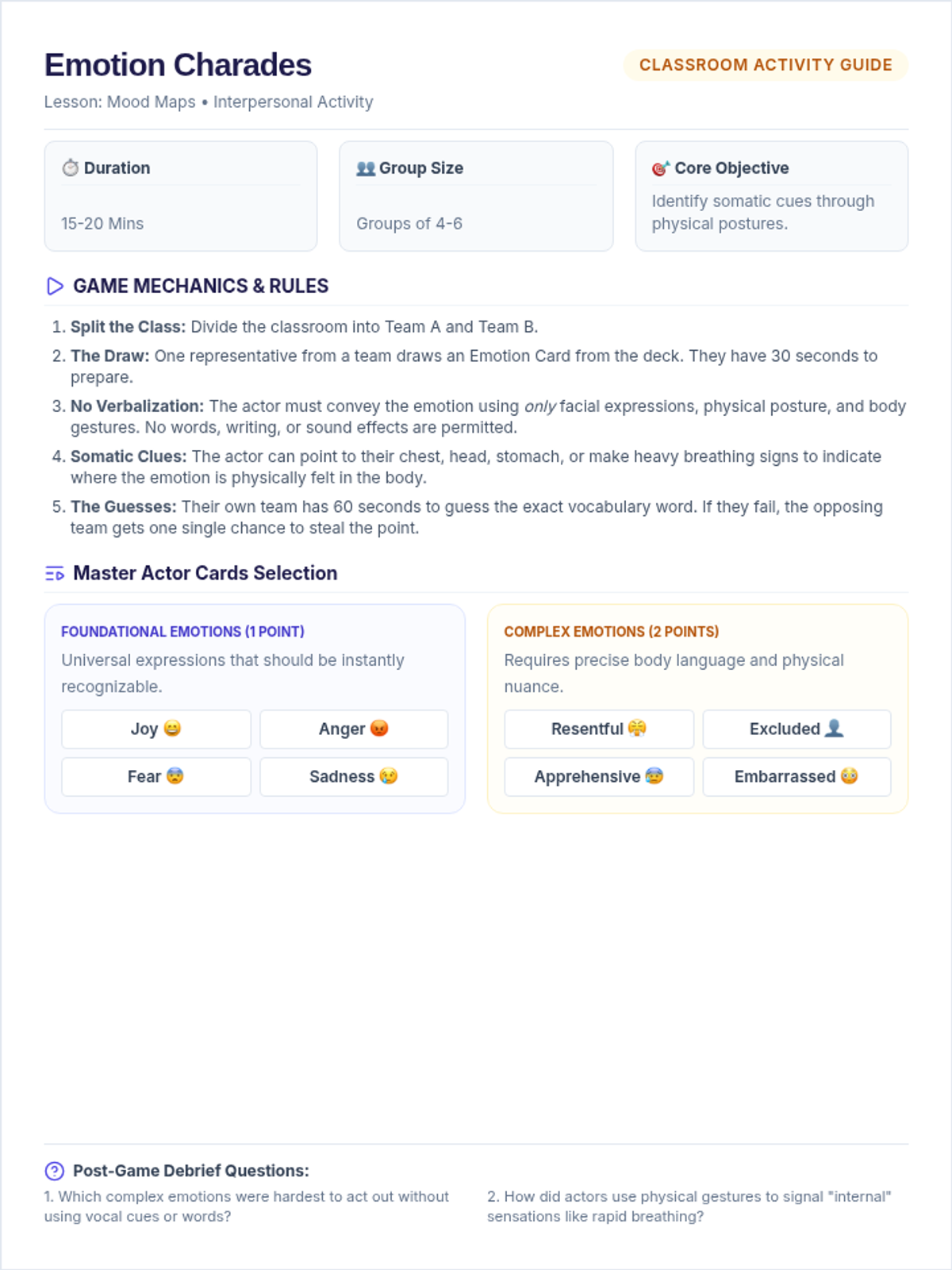
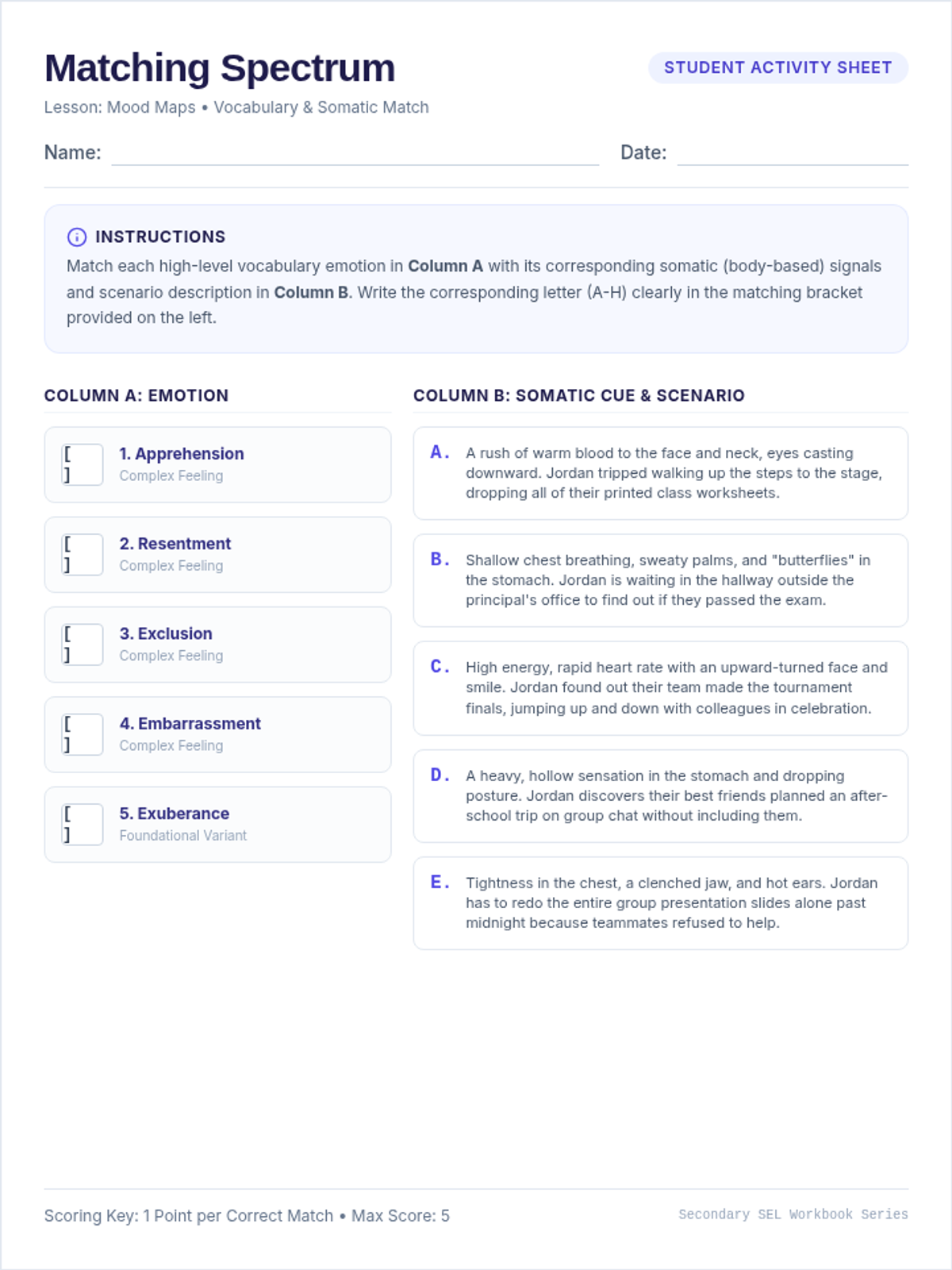
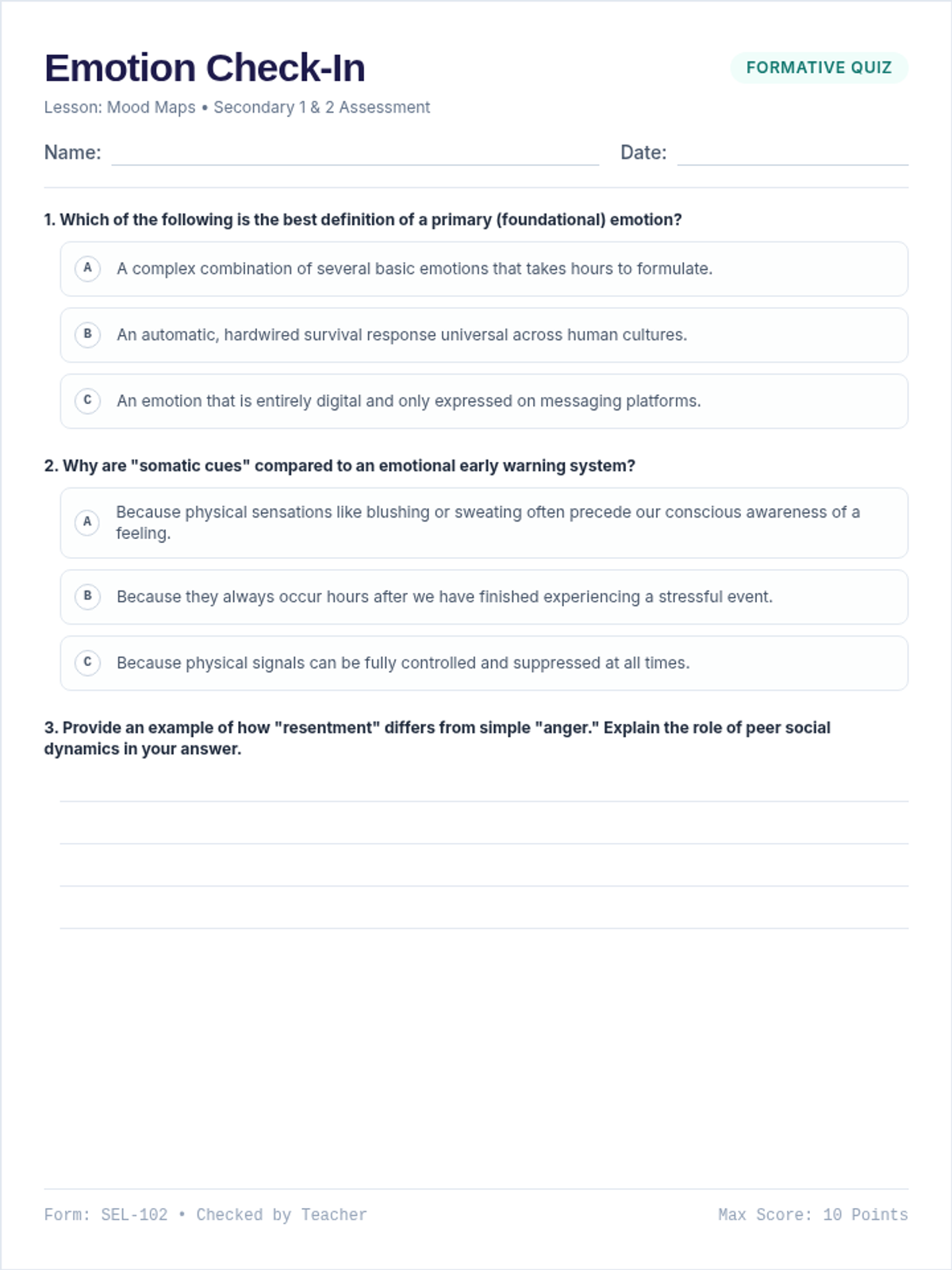
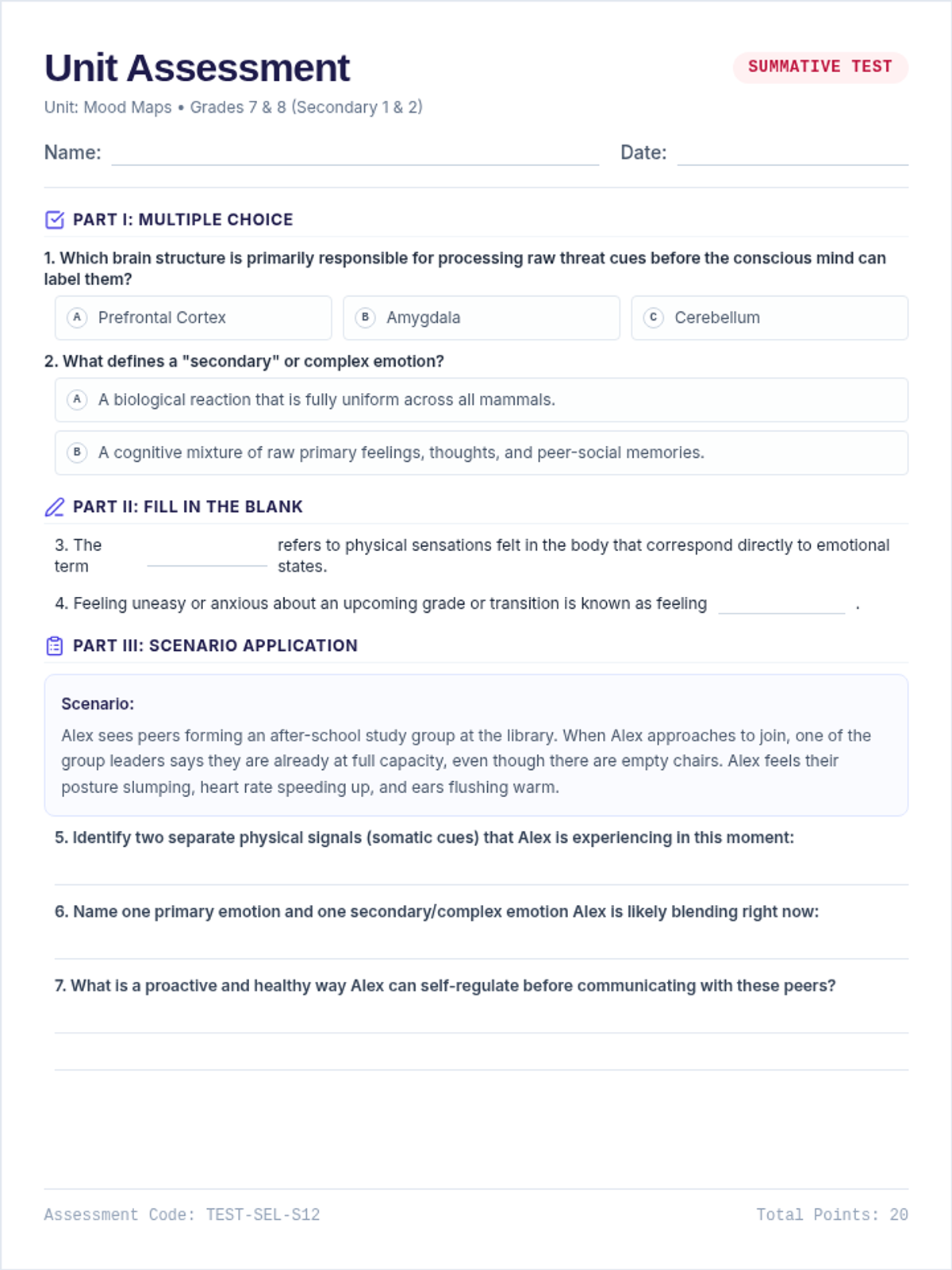
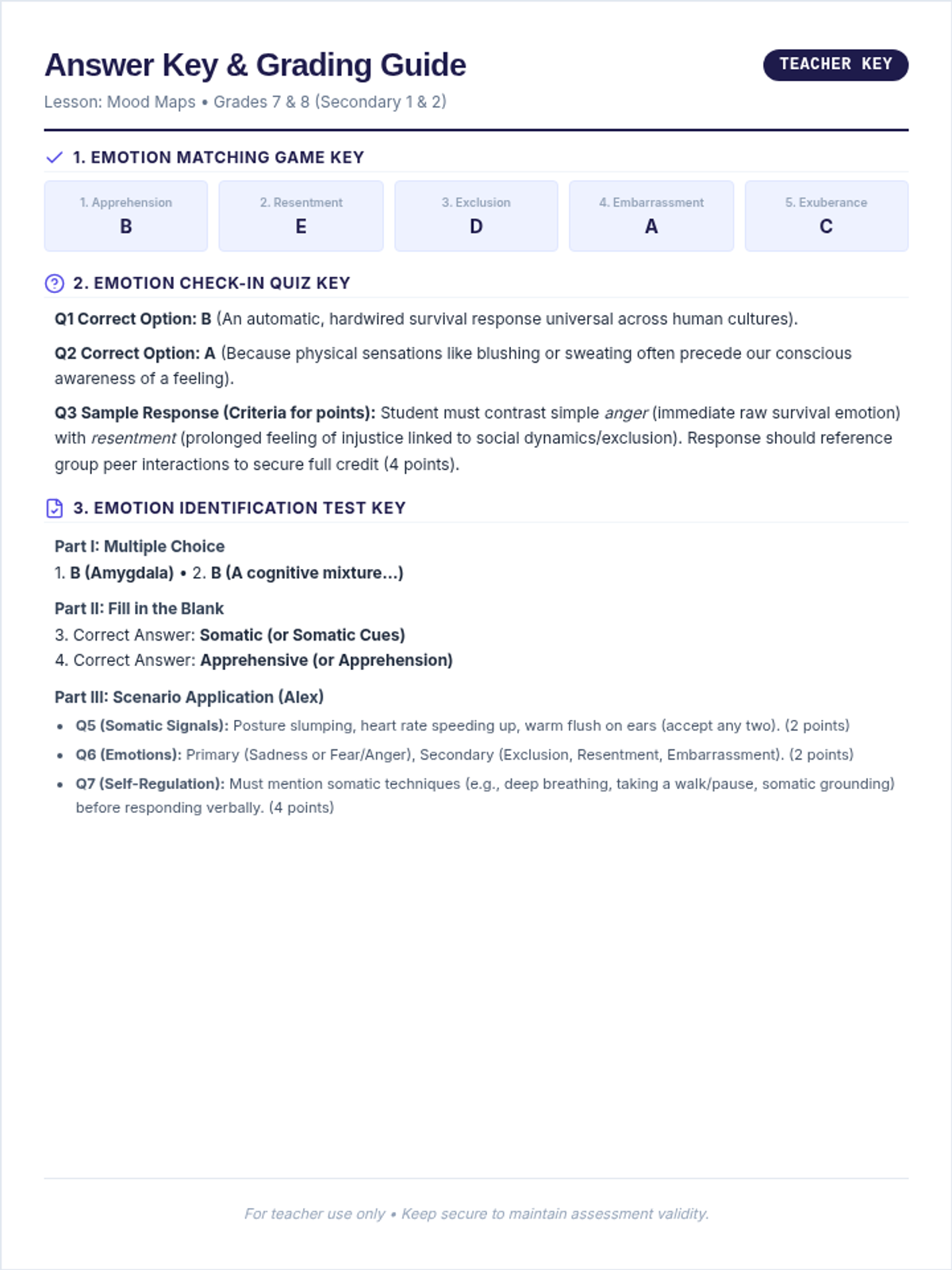
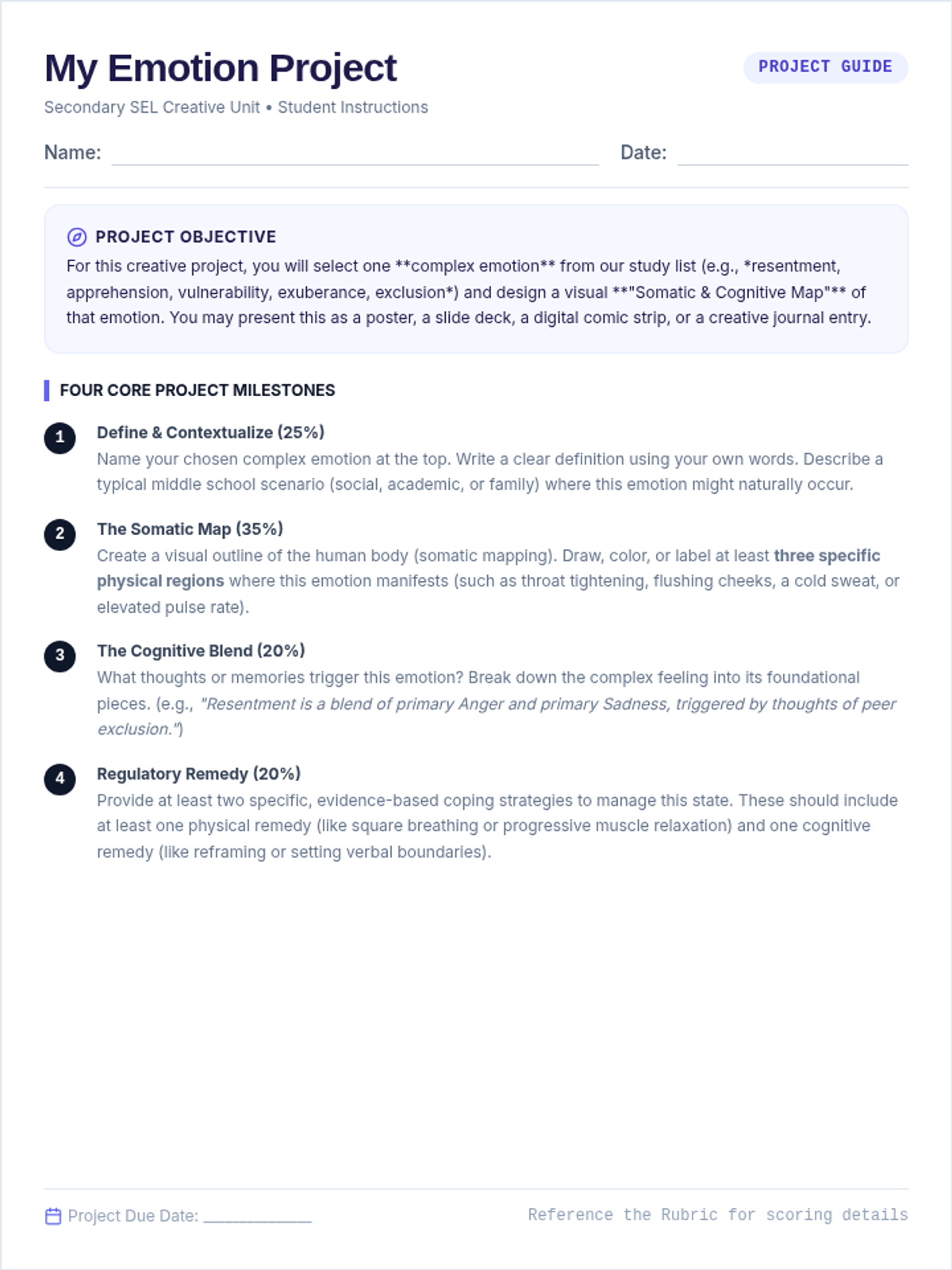
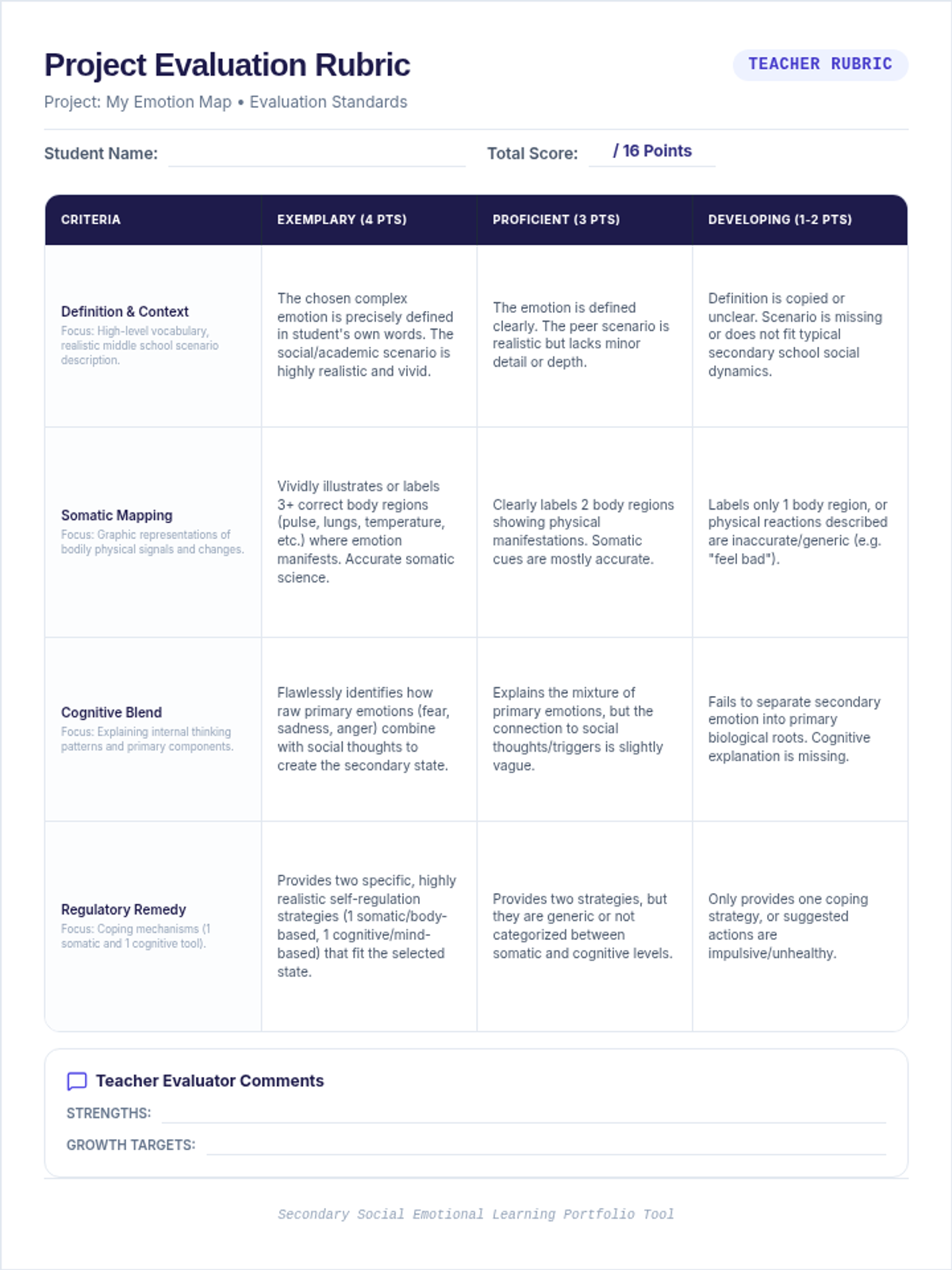
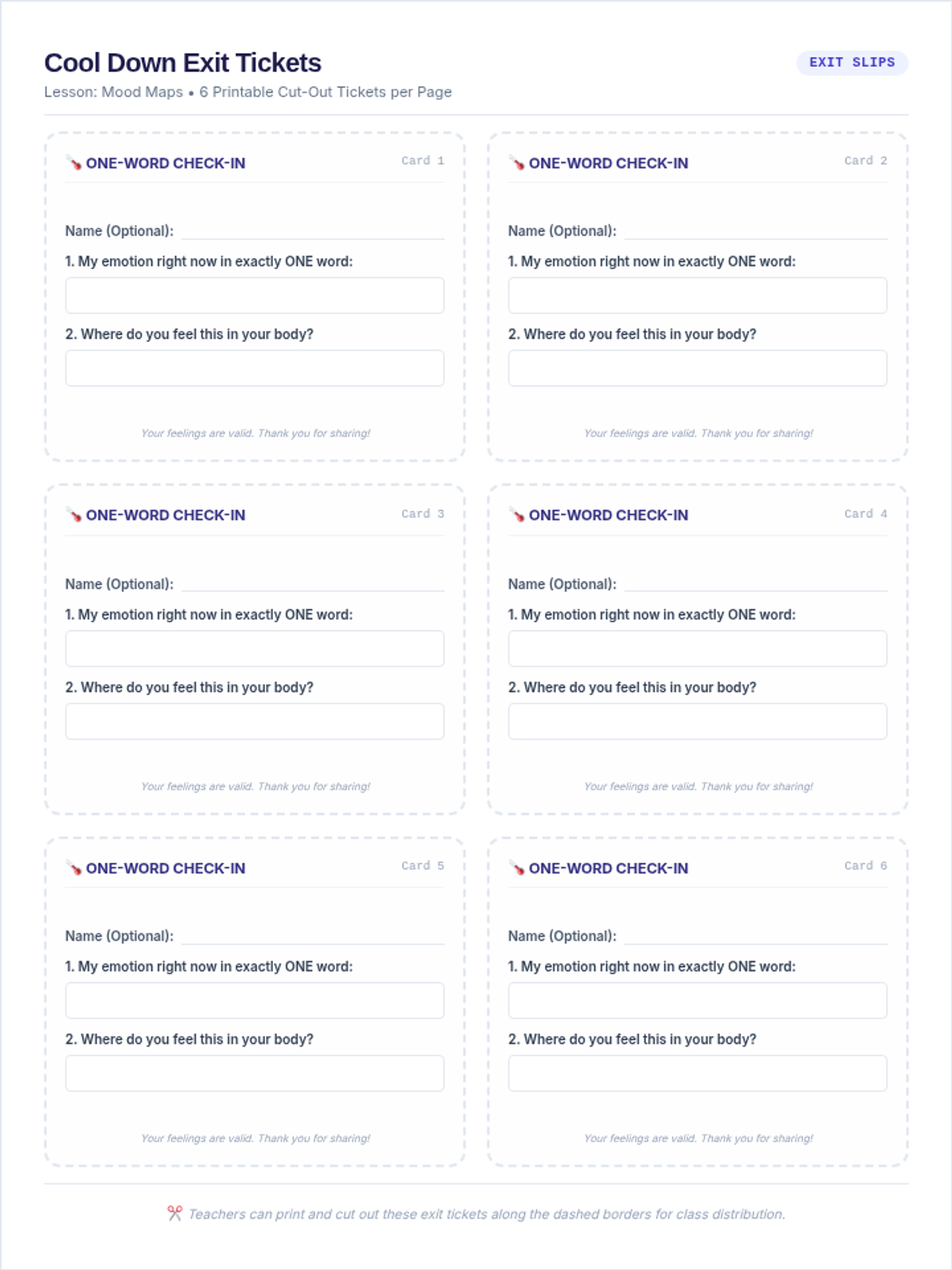
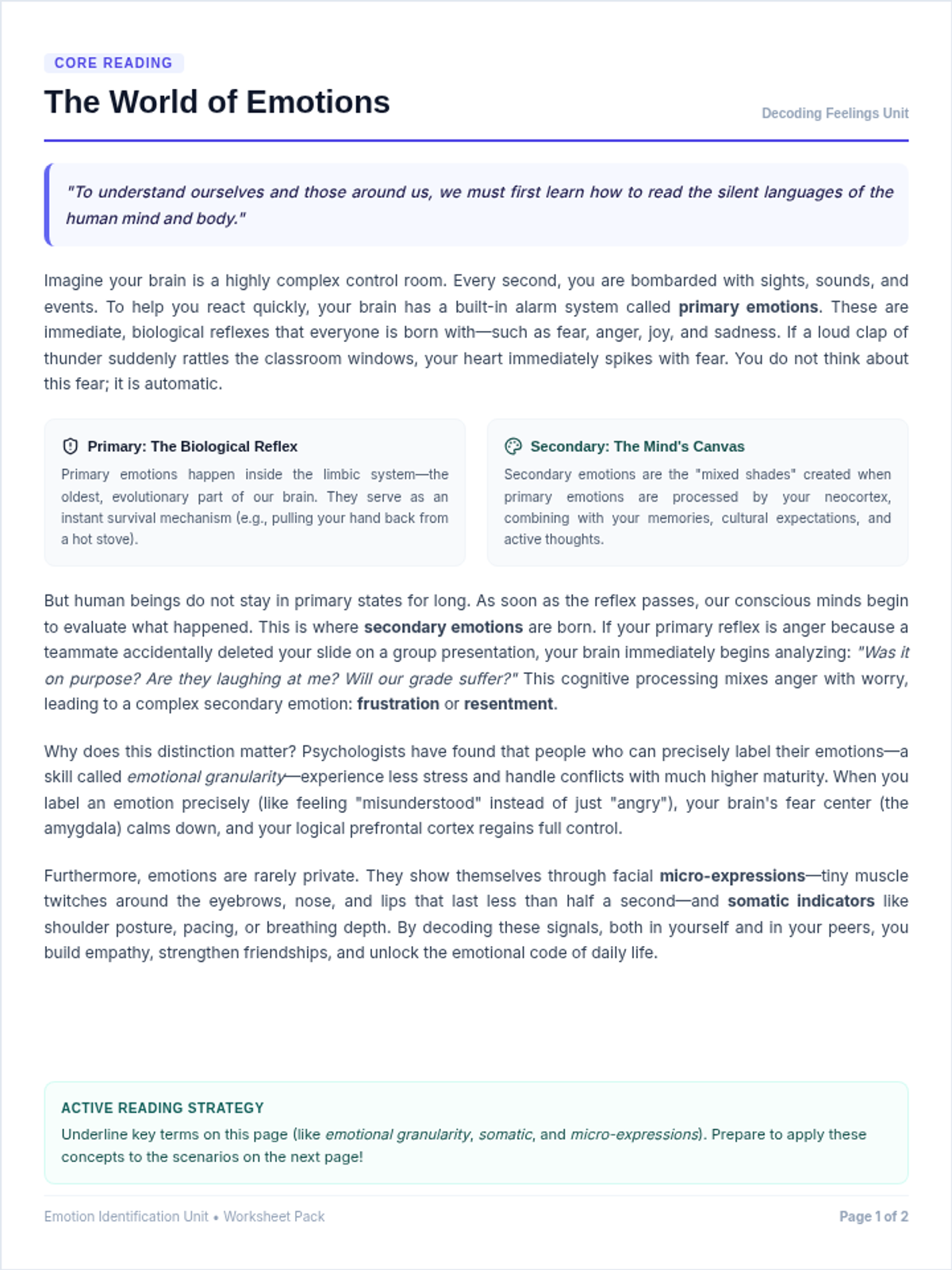
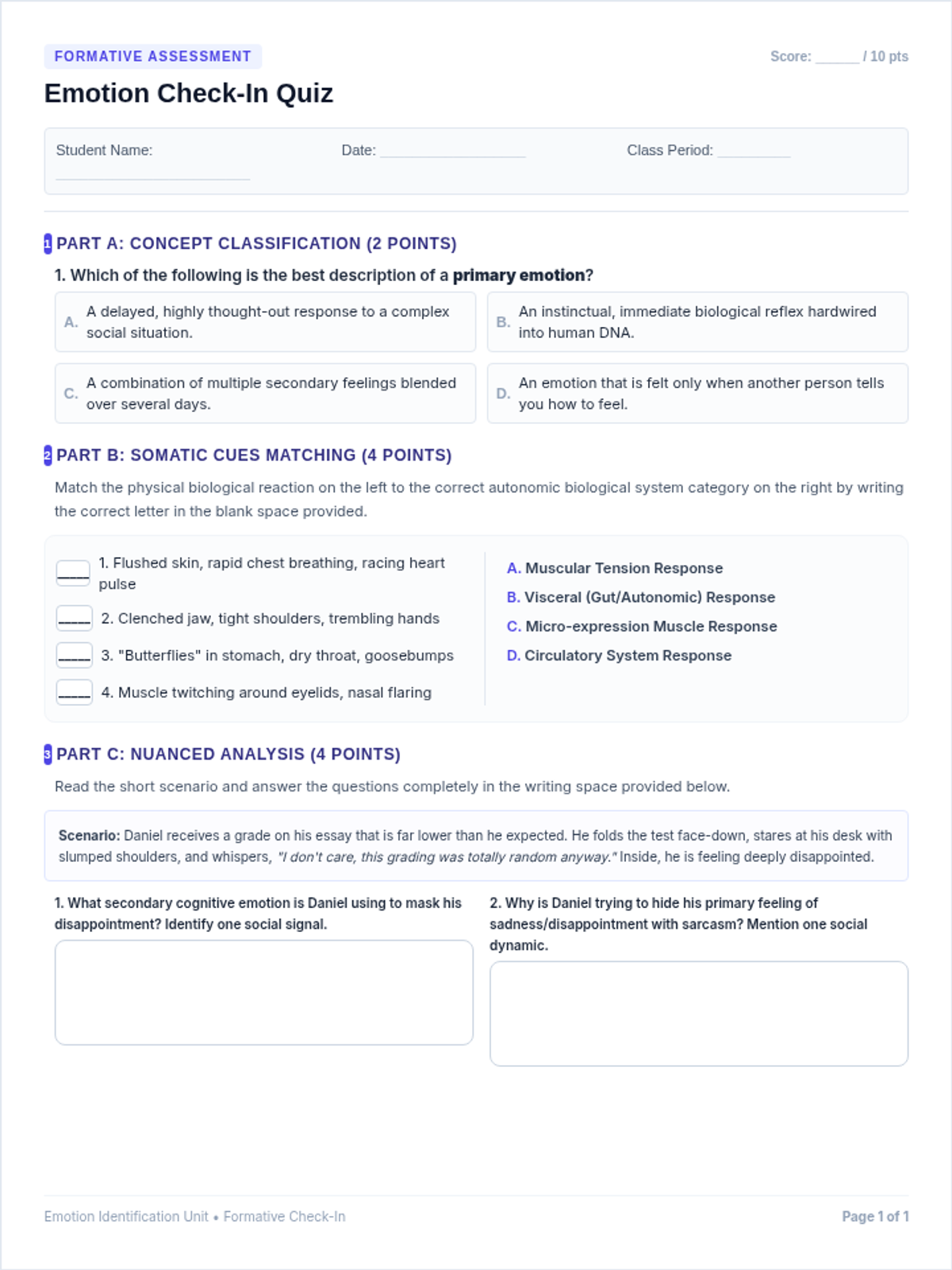
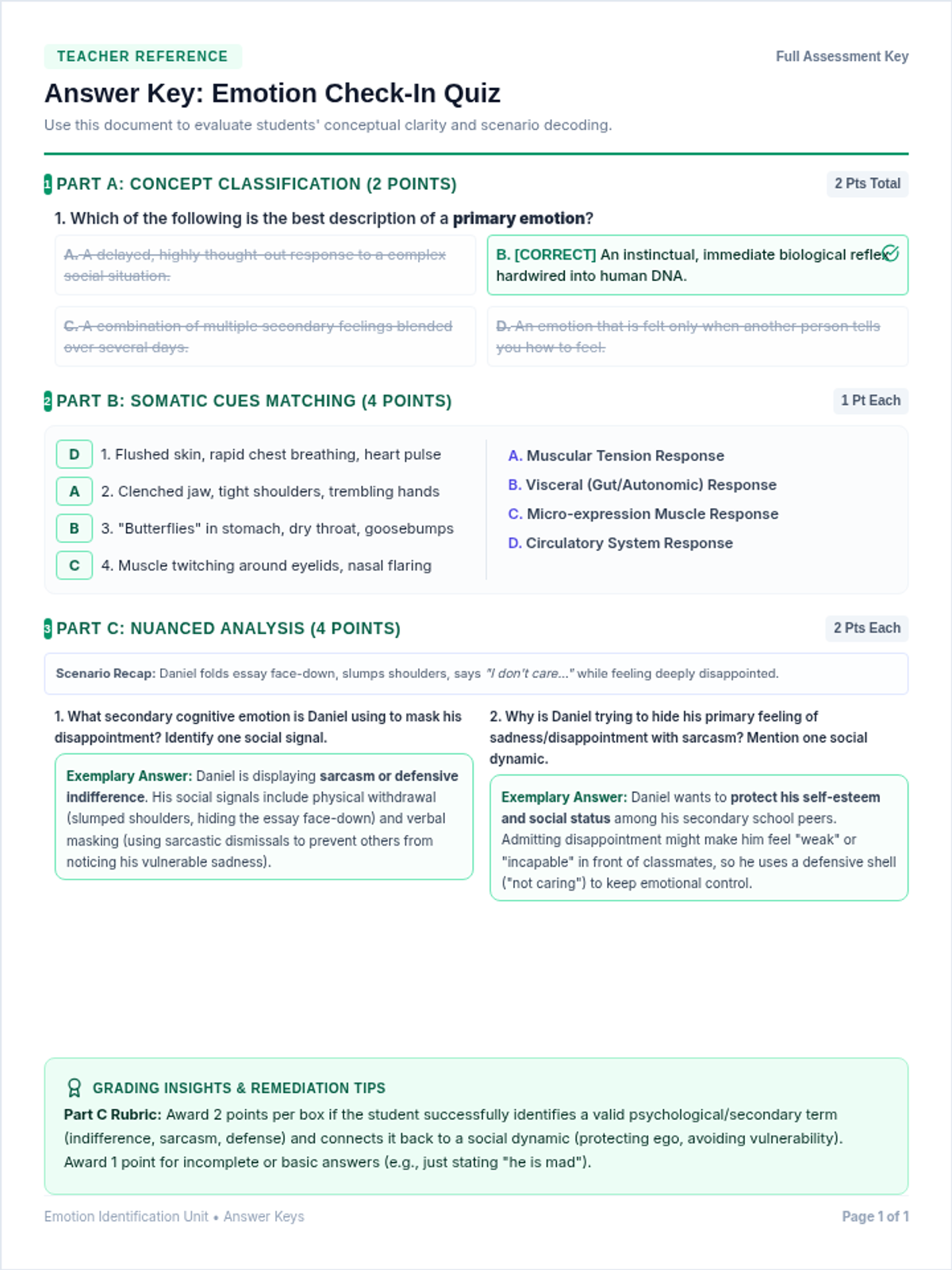
A 60-minute social-emotional learning lesson for Secondary 1 and 2 students focusing on emotion identification, vocabulary expansion, and self-awareness. Students explore foundational and complex emotions, practice physical/cognitive cue recognition, and participate in collaborative activities.
A core 60-minute lesson designed for Secondary 1 and 2 students to identify, analyze, and articulate complex human emotions. Through a structured sequence of warm-ups, direct instruction, and active role-play, students build their emotional vocabulary and empathy.
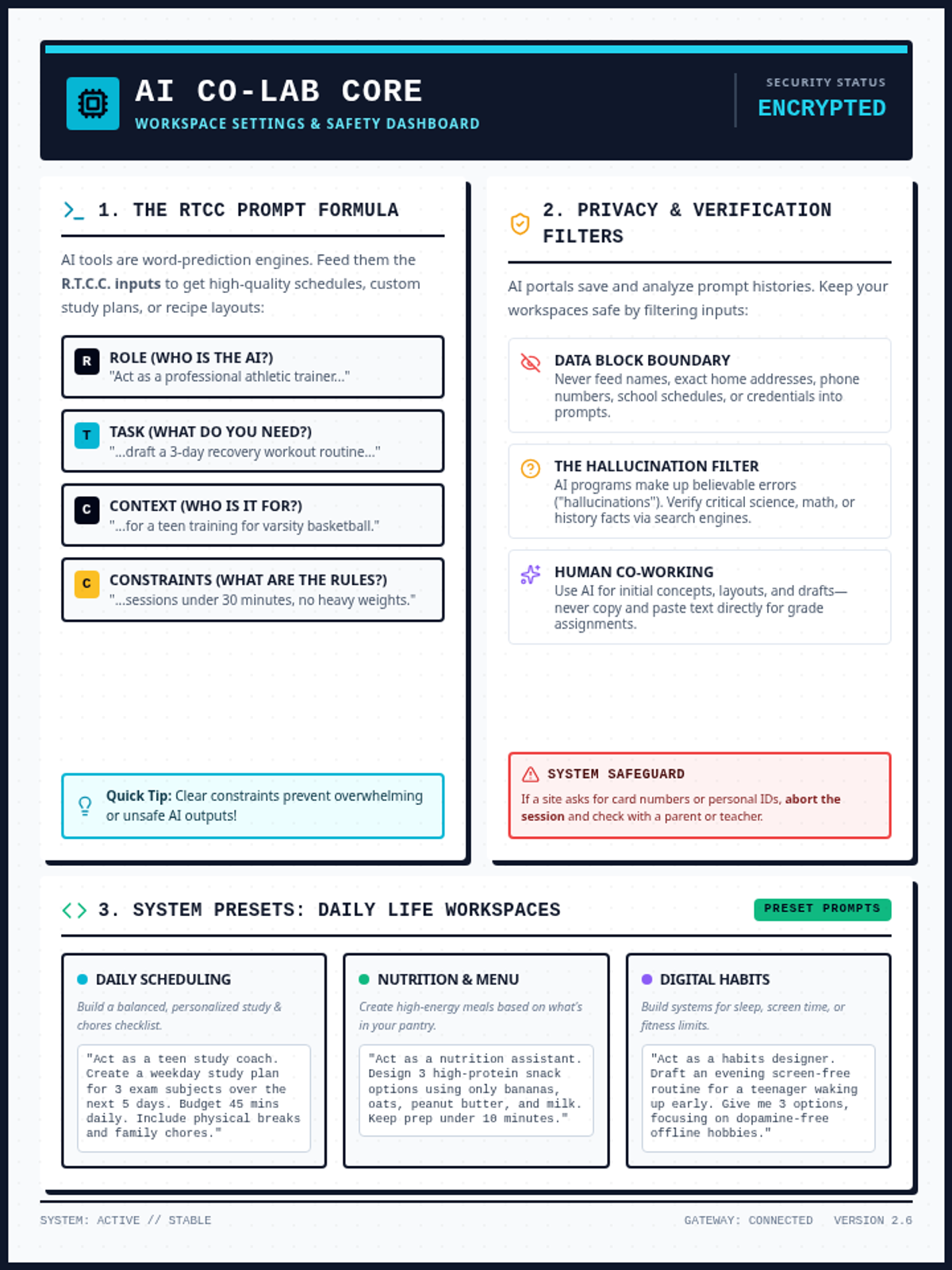
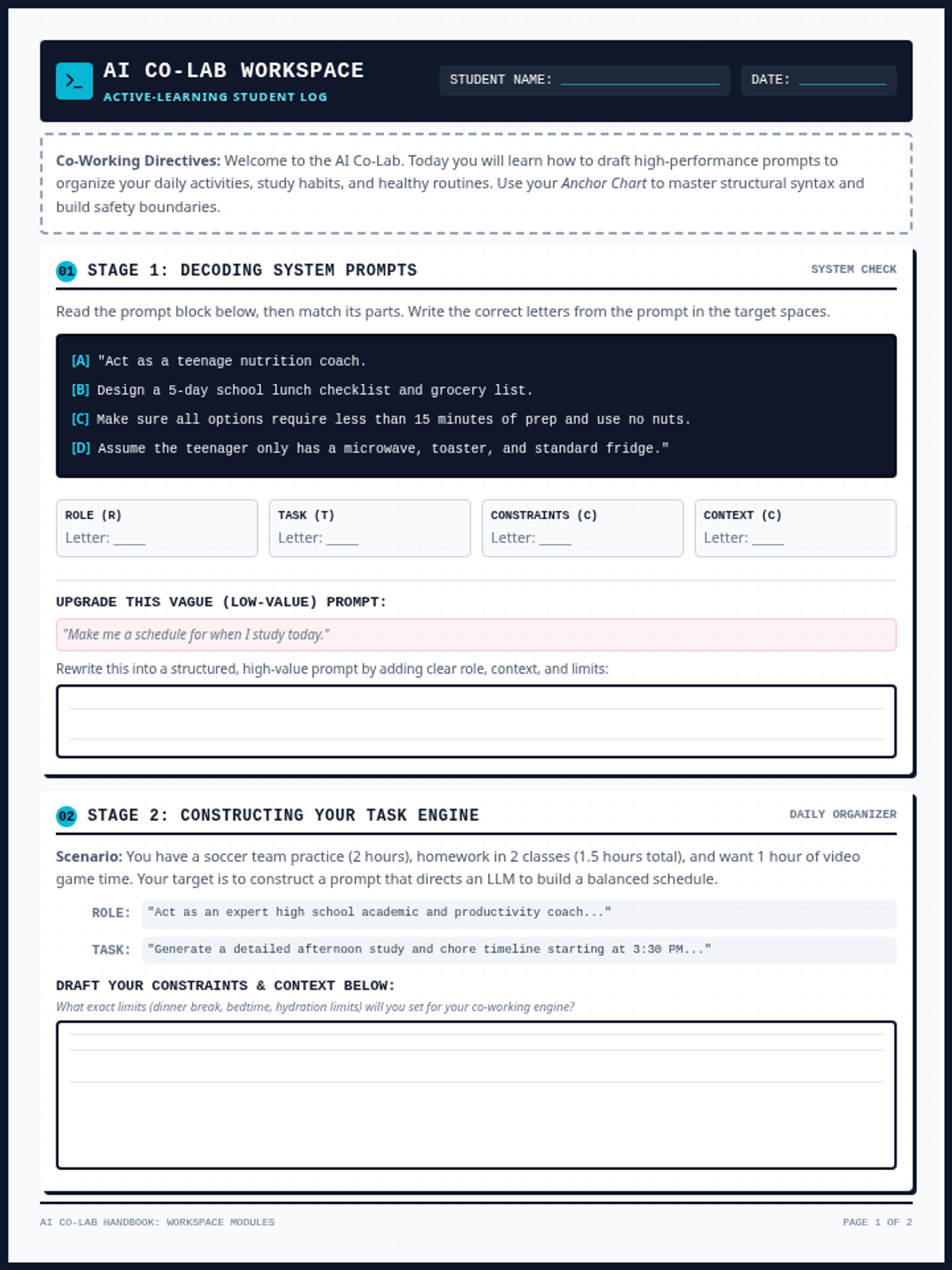
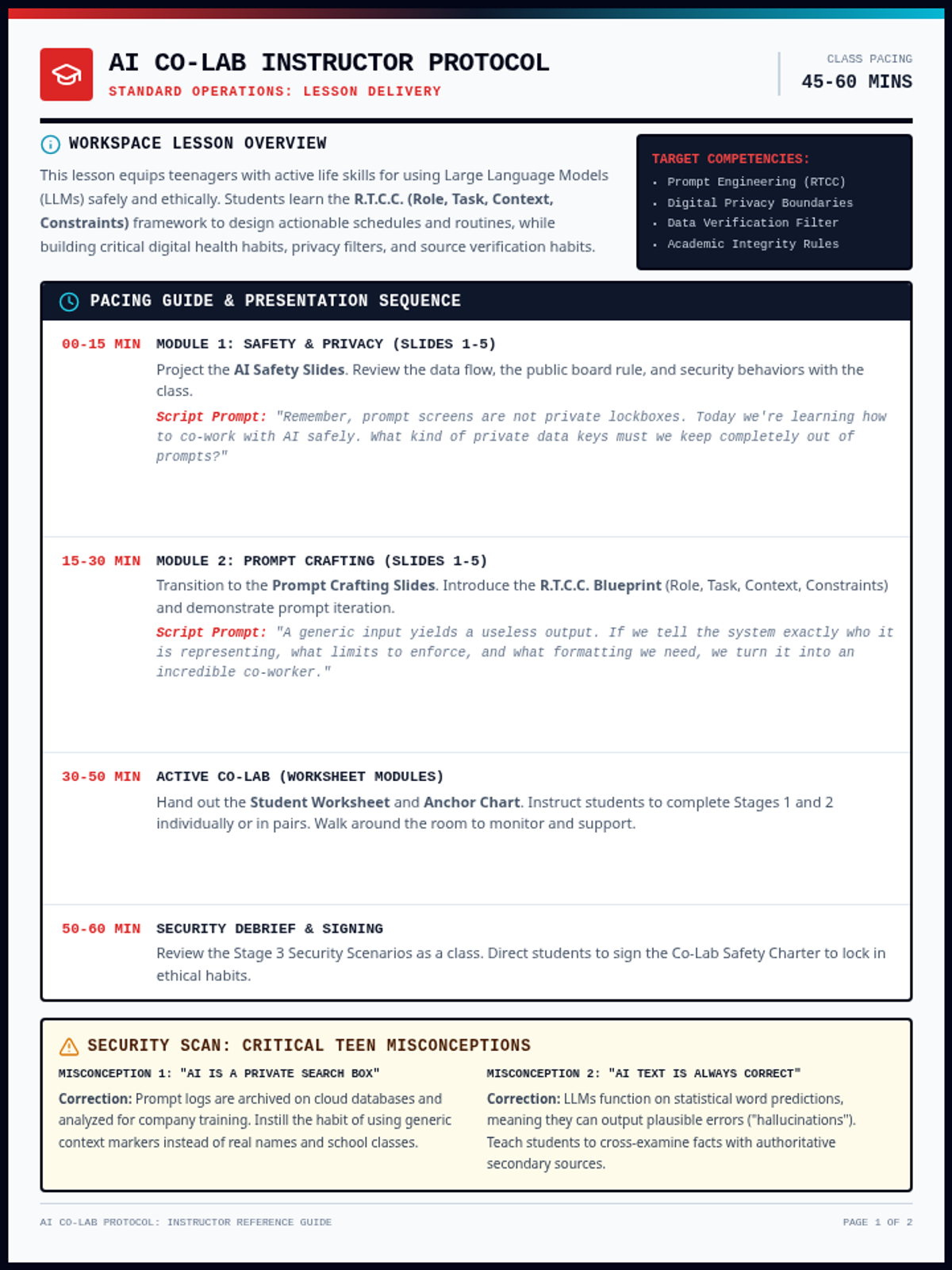
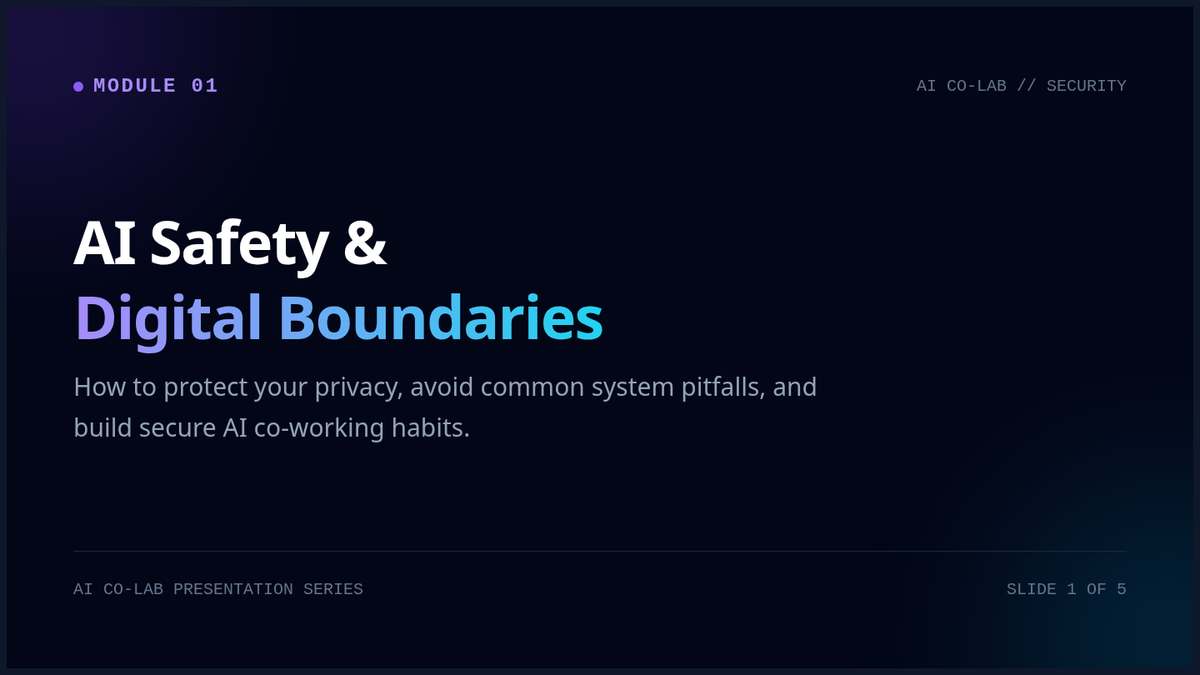
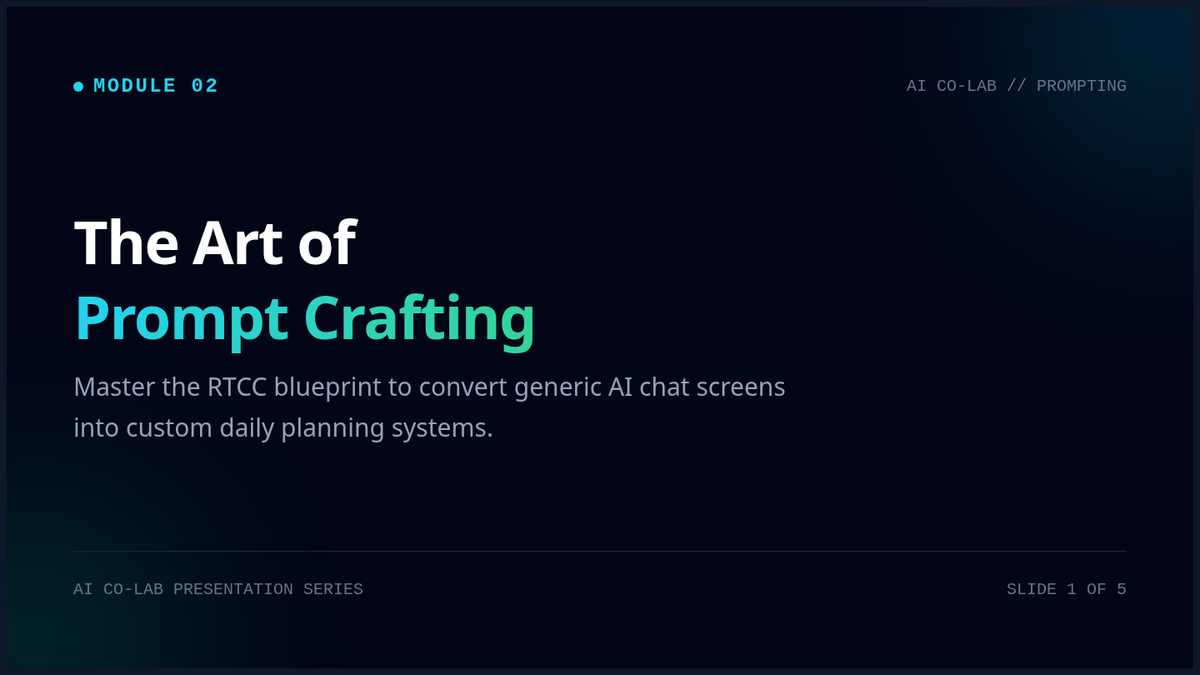
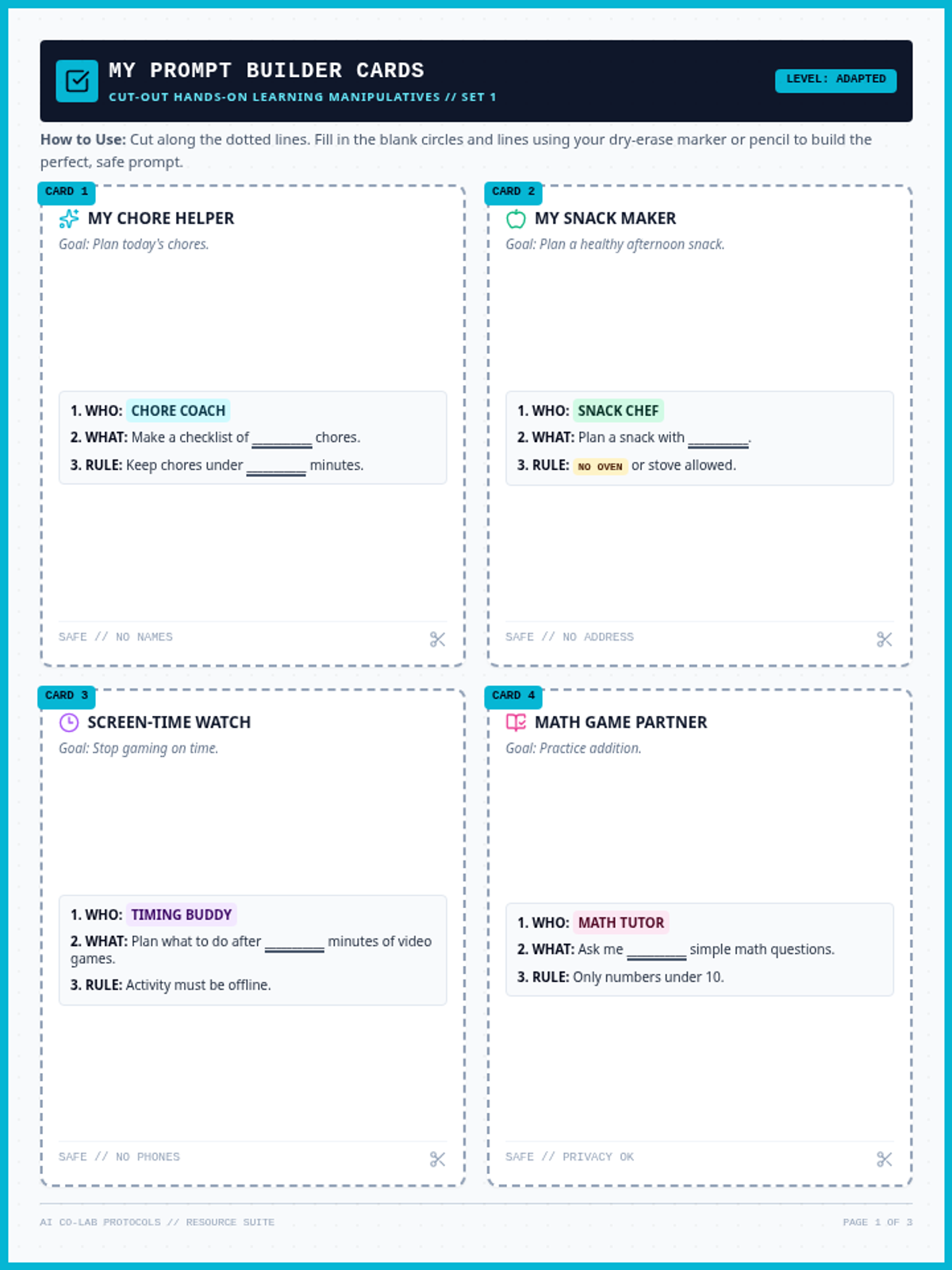
A complete guide for teenagers to responsibly use AI for everyday learning tasks, mastering critical safety habits, privacy boundaries, and advanced prompting techniques.
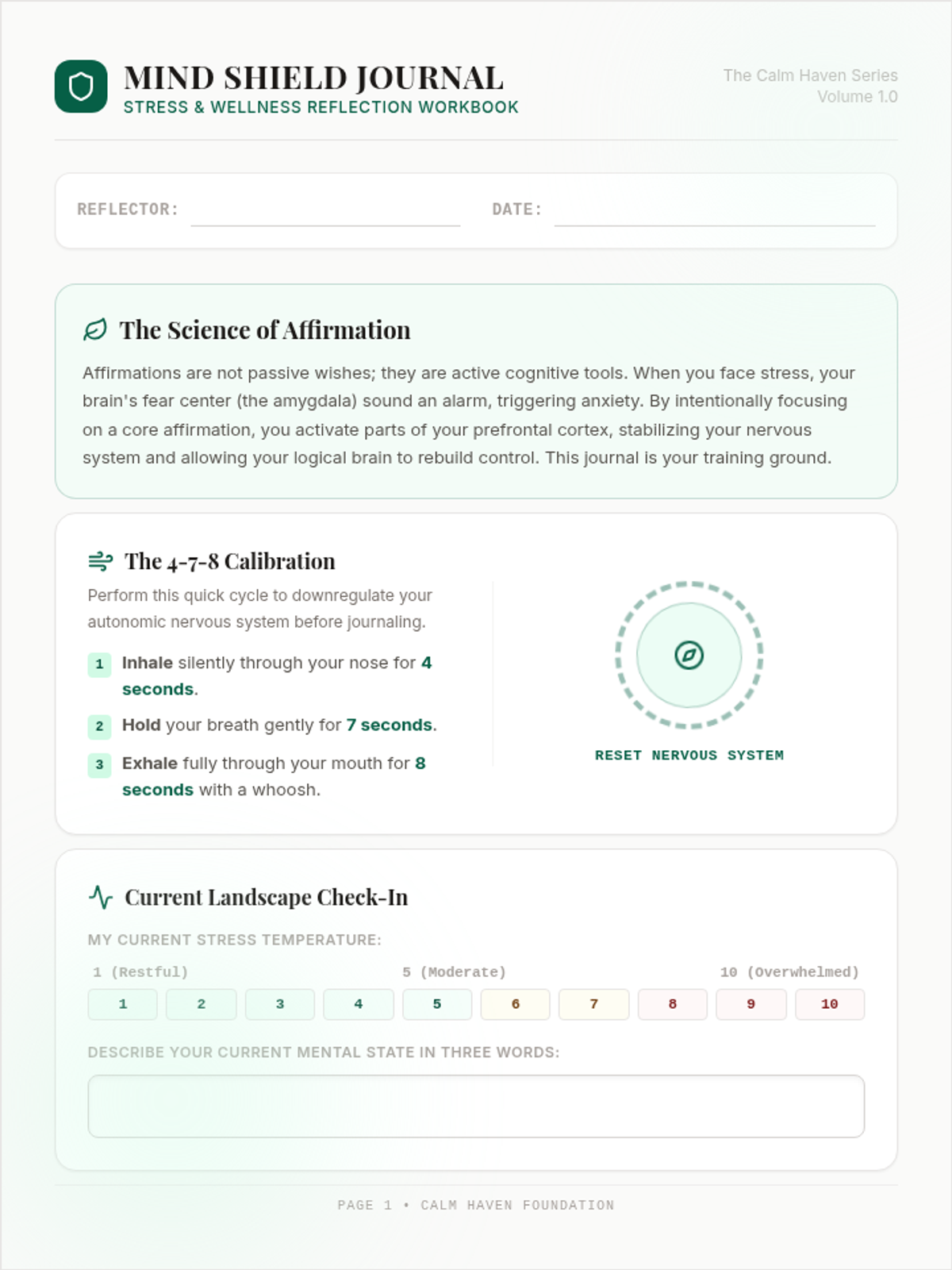
A reflective lesson designed to introduce students or individuals to stress management, anxiety reduction, and work-life balance through the practice of structured affirmations and mindful self-reflection.
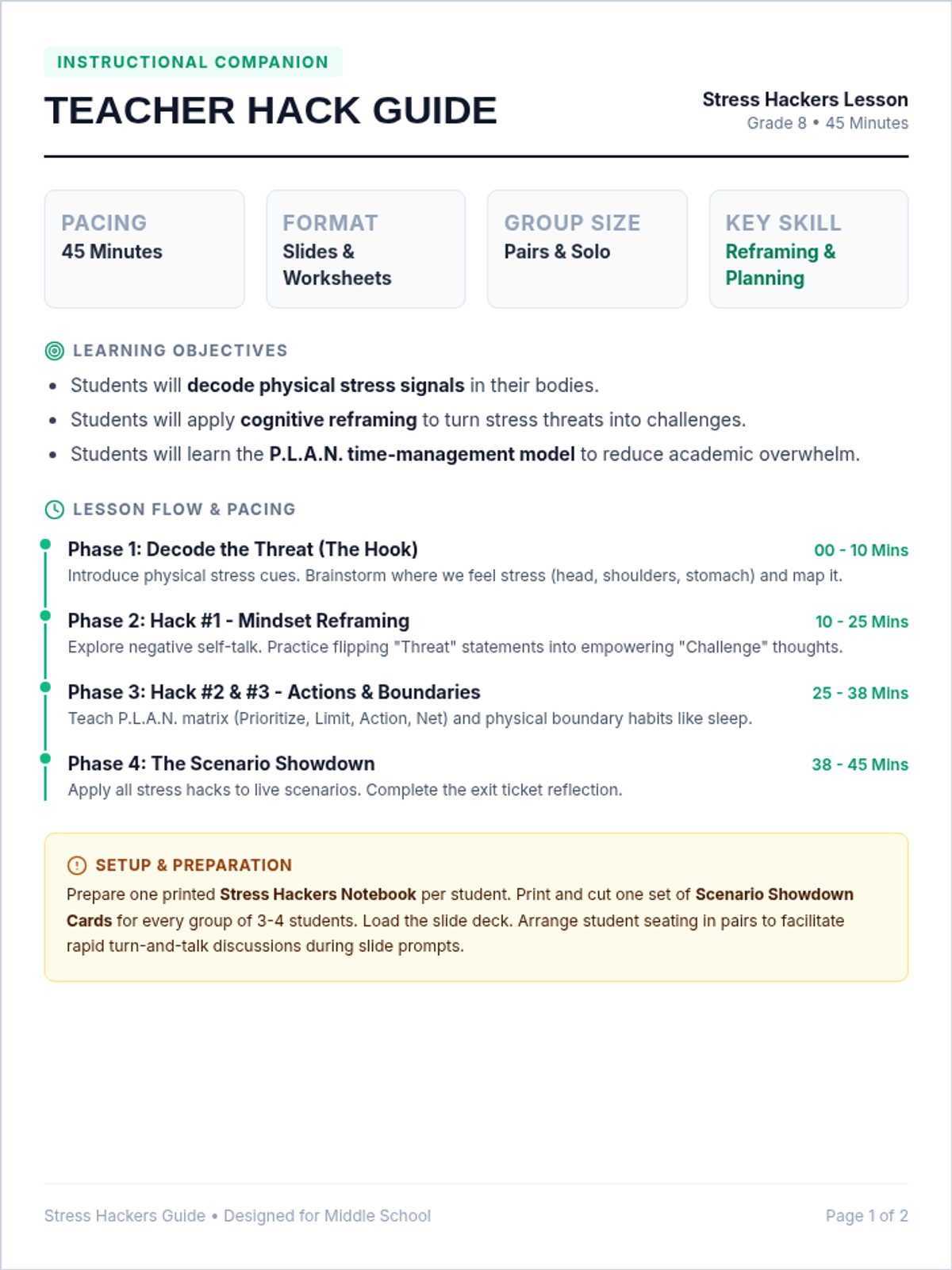
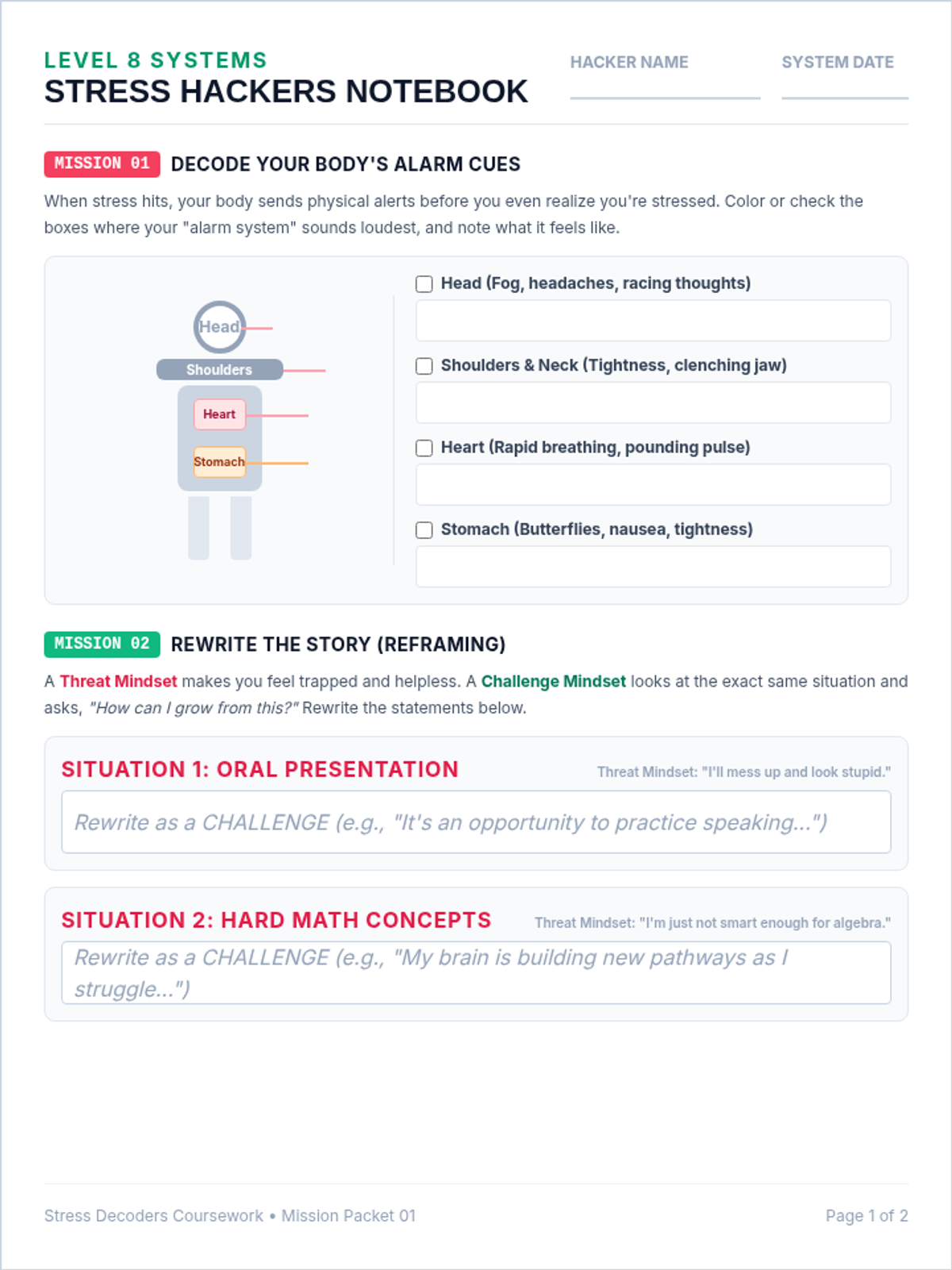
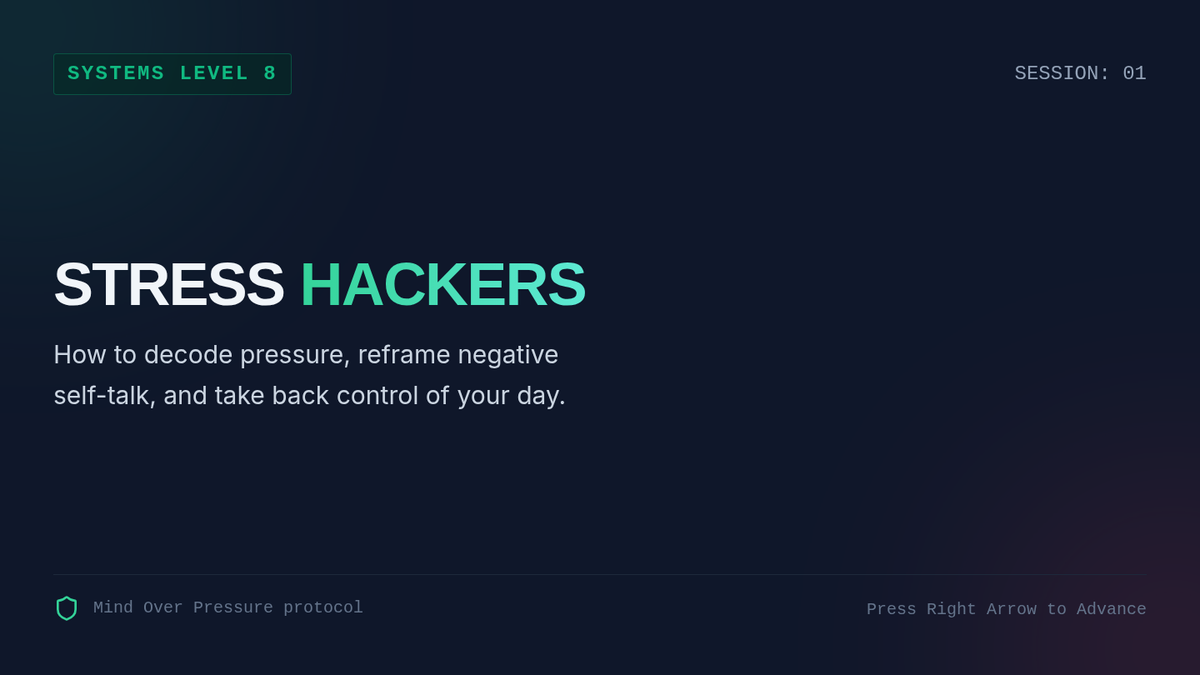
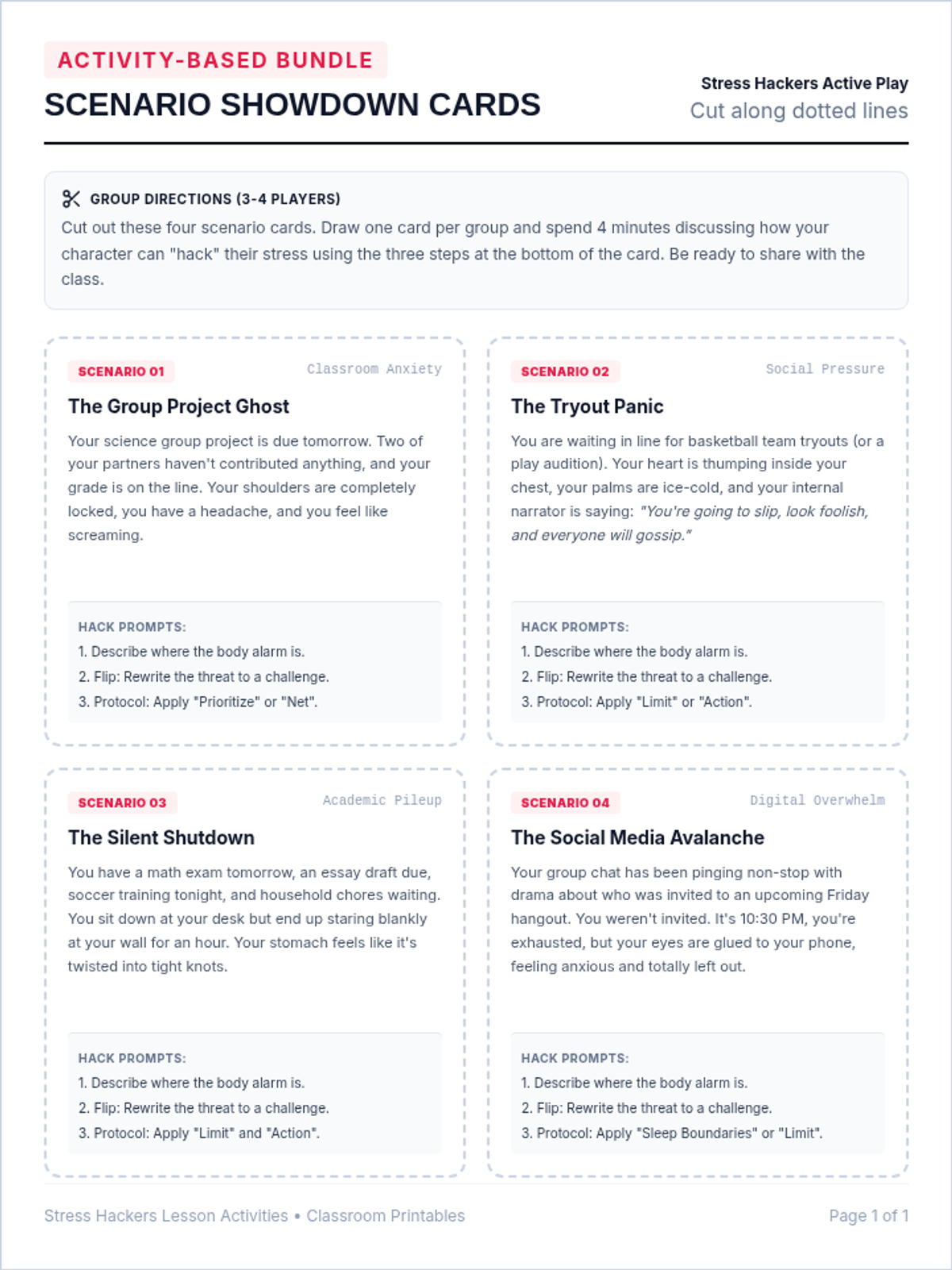
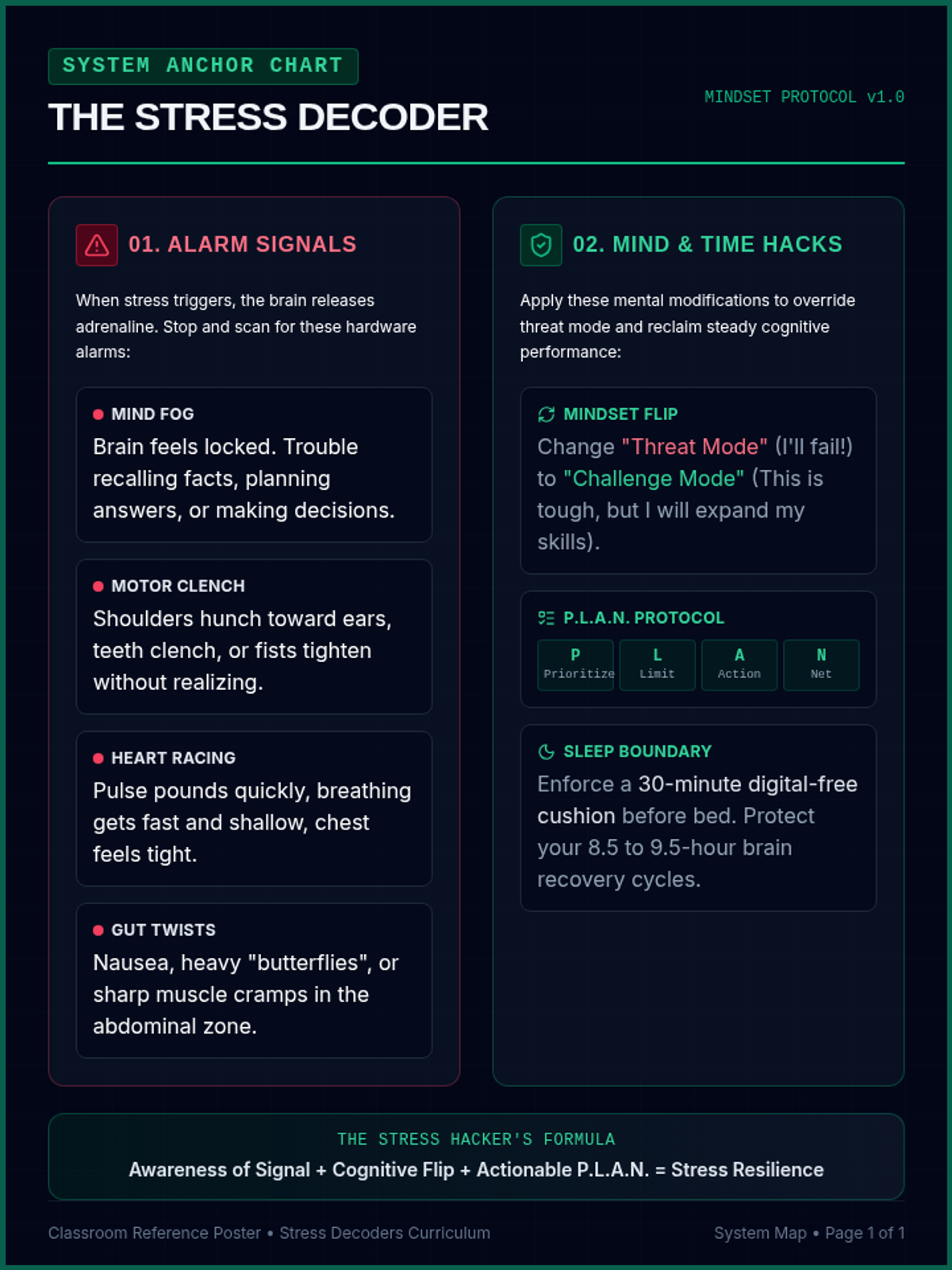
An interactive, comprehensive 45-minute lesson for 8th-grade students on stress management. Students learn to decode stressors, apply cognitive reframing, practice time management, and build boundaries through interactive slides, reflective worksheets, activity cards, and visual maps.
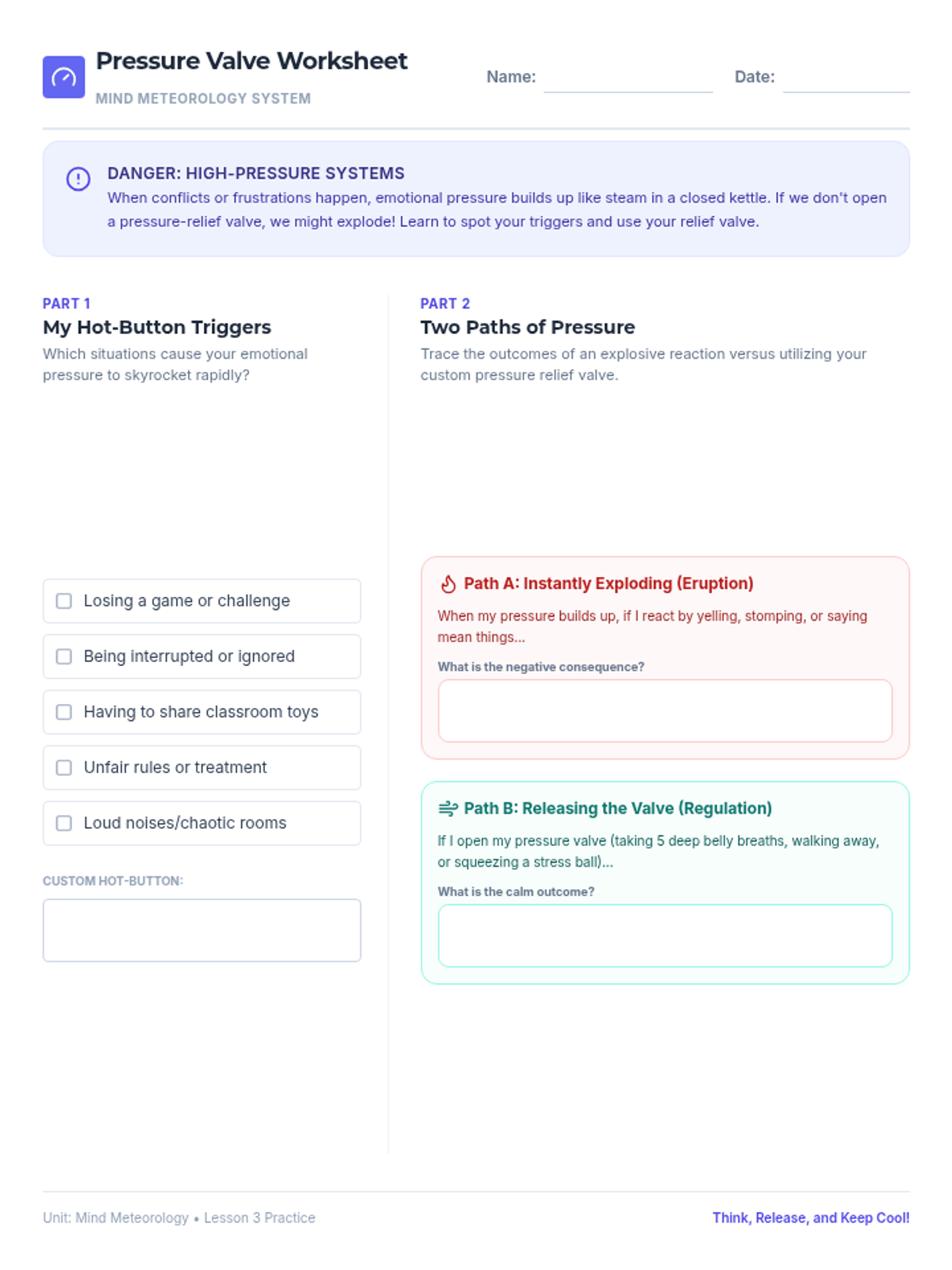
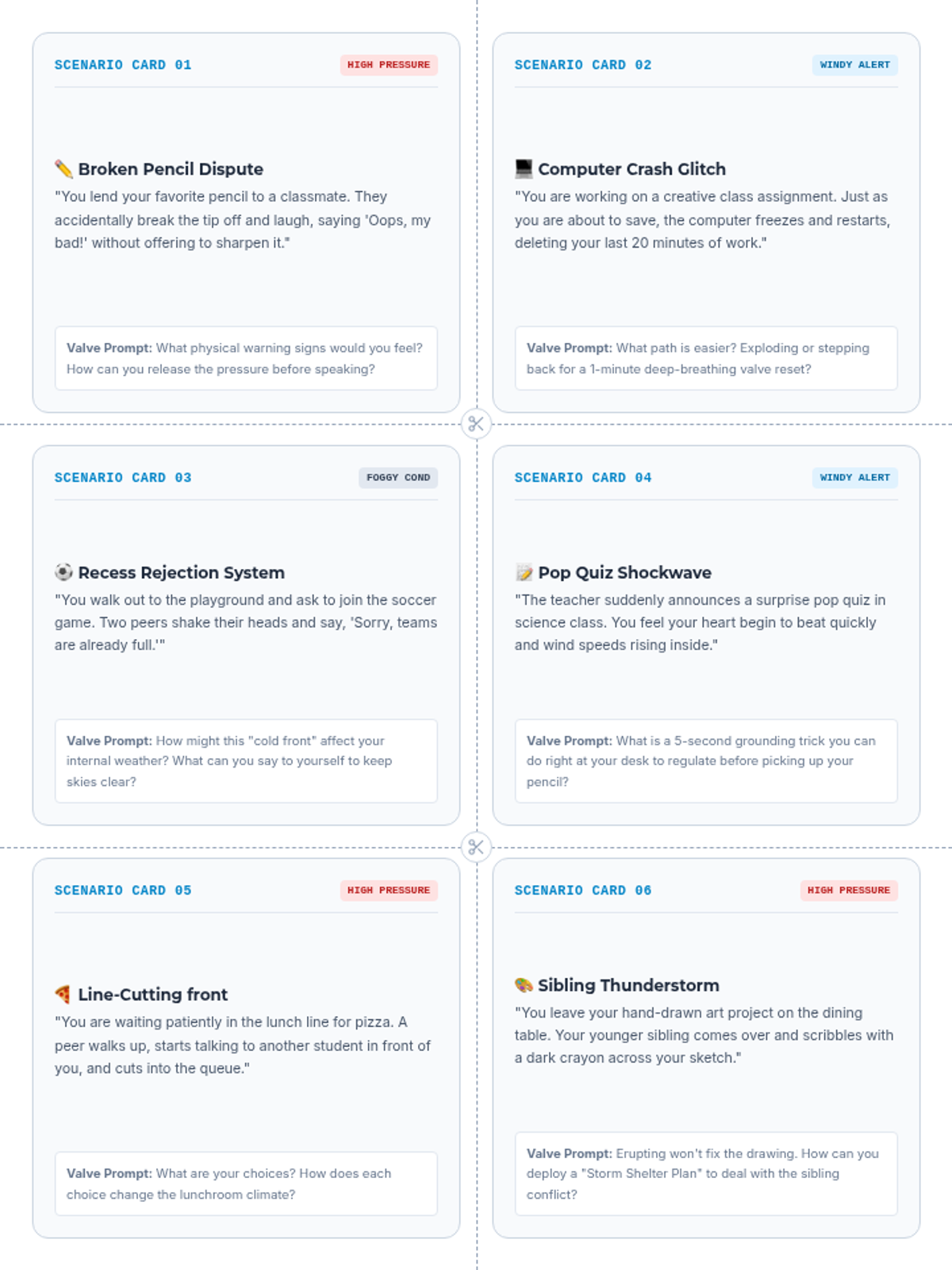
Focuses on responsible decision-making during high-stress conflicts, helping students identify hot-button triggers, evaluate action-consequences, and apply 'pressure relief valve' strategies.
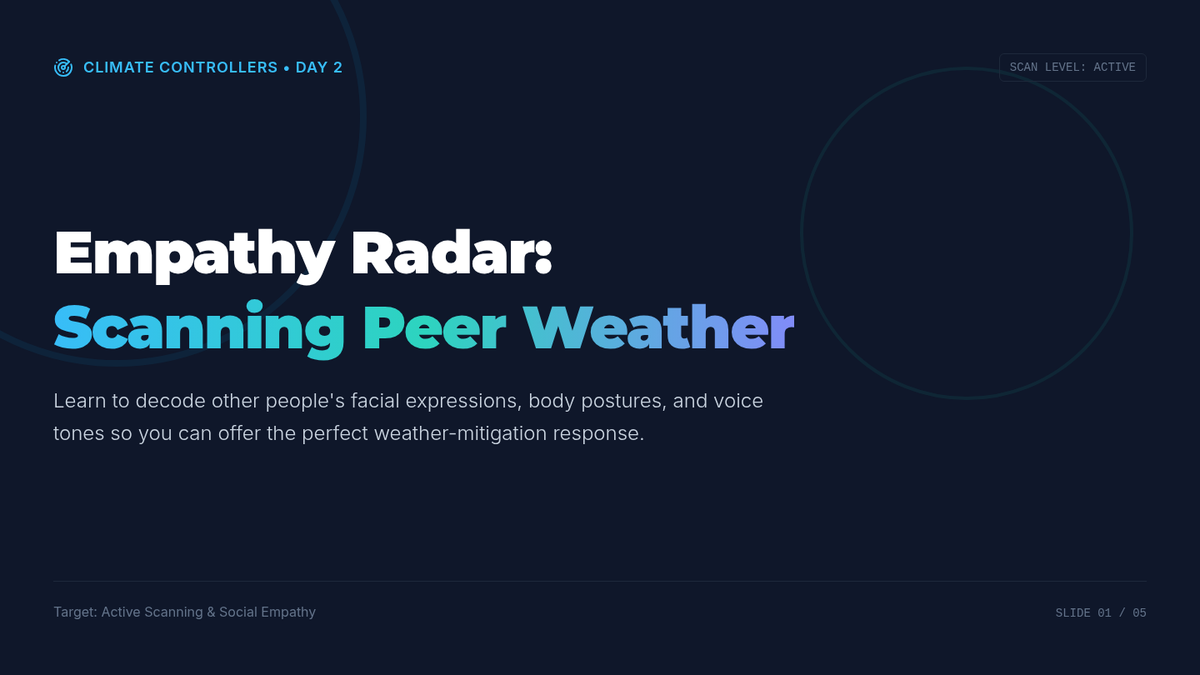
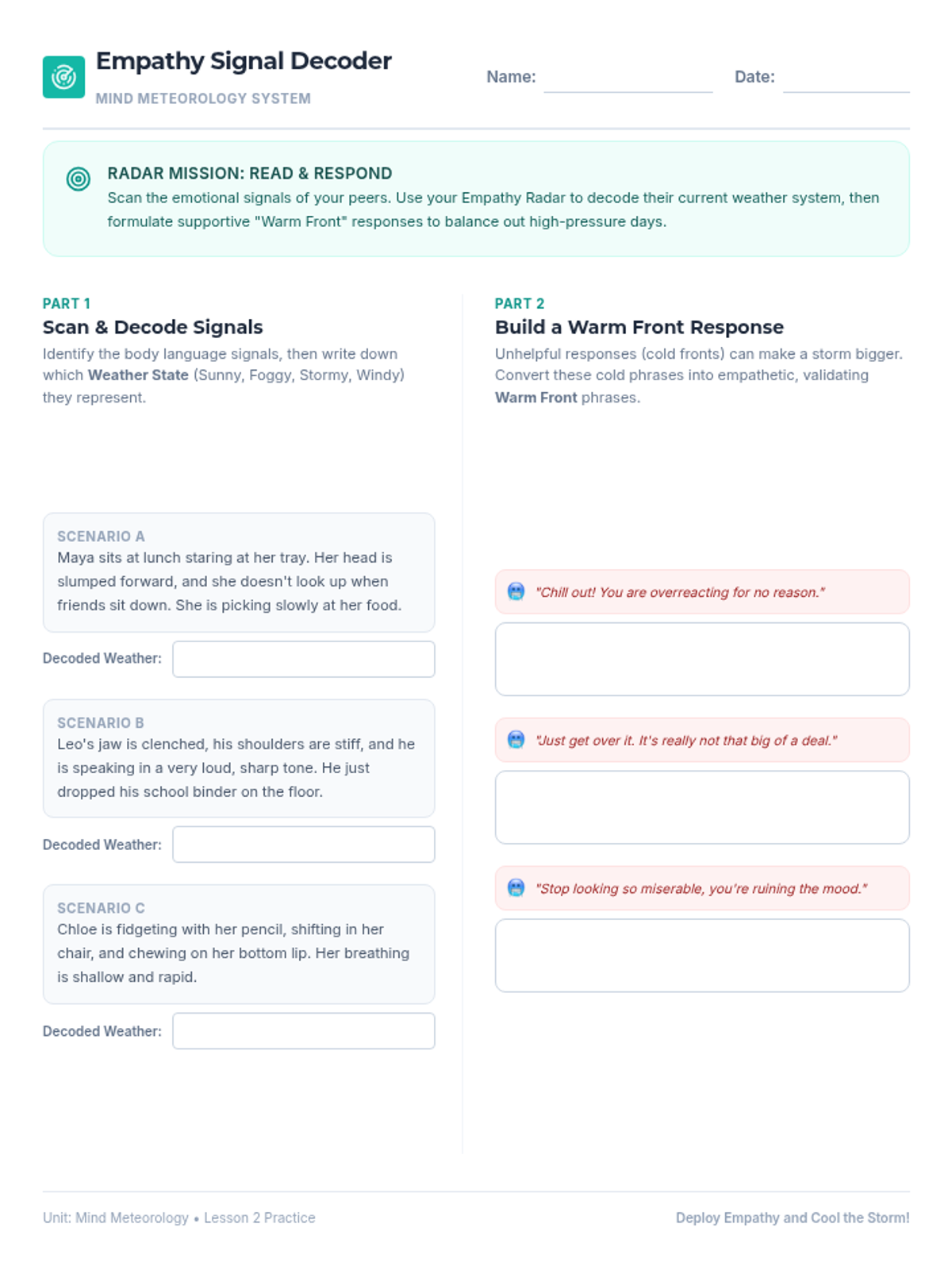
Focuses on active listening, reading other people's emotional signals (body language, tone), and matching our response to their weather state with empathy and validation.
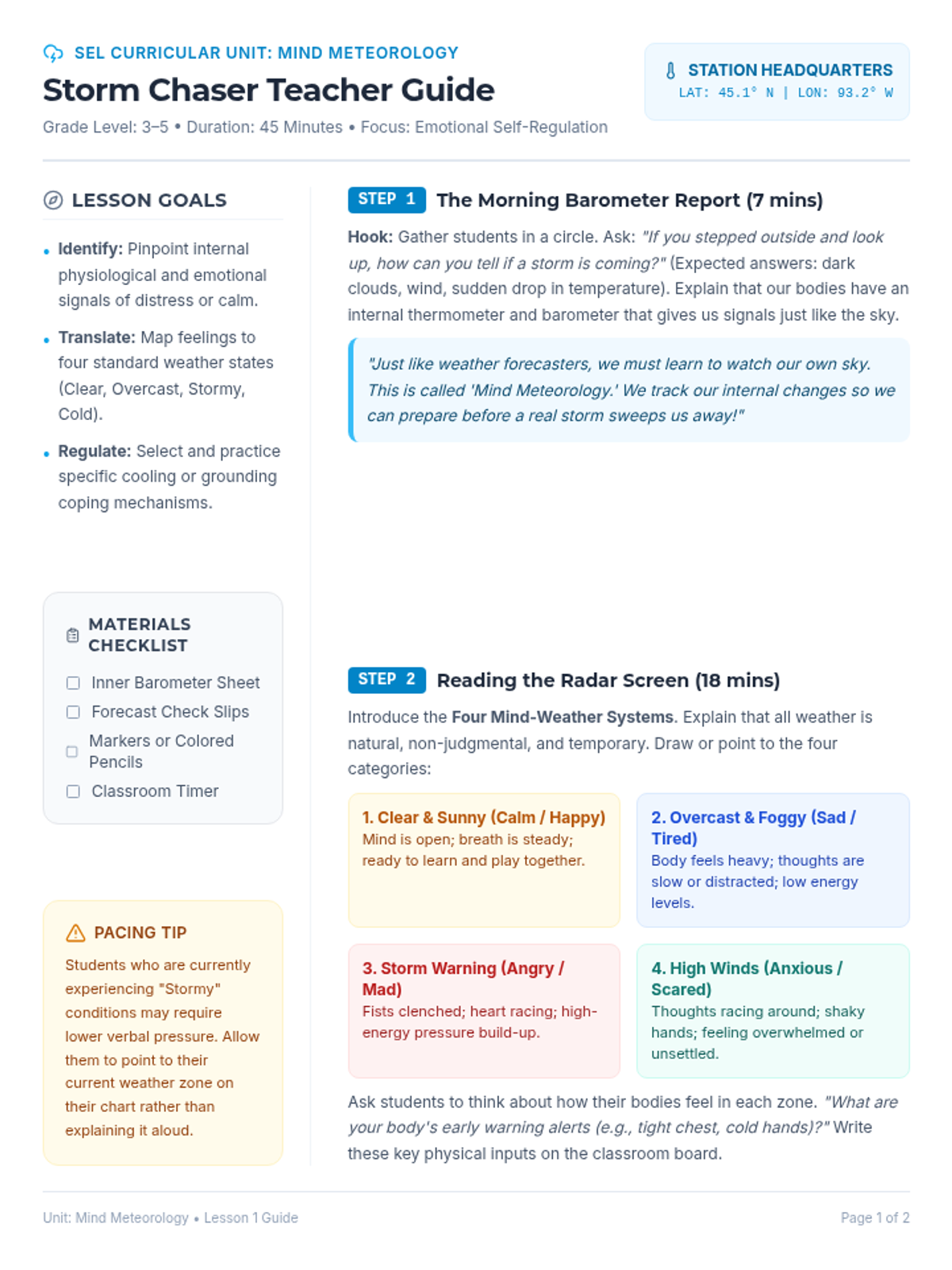
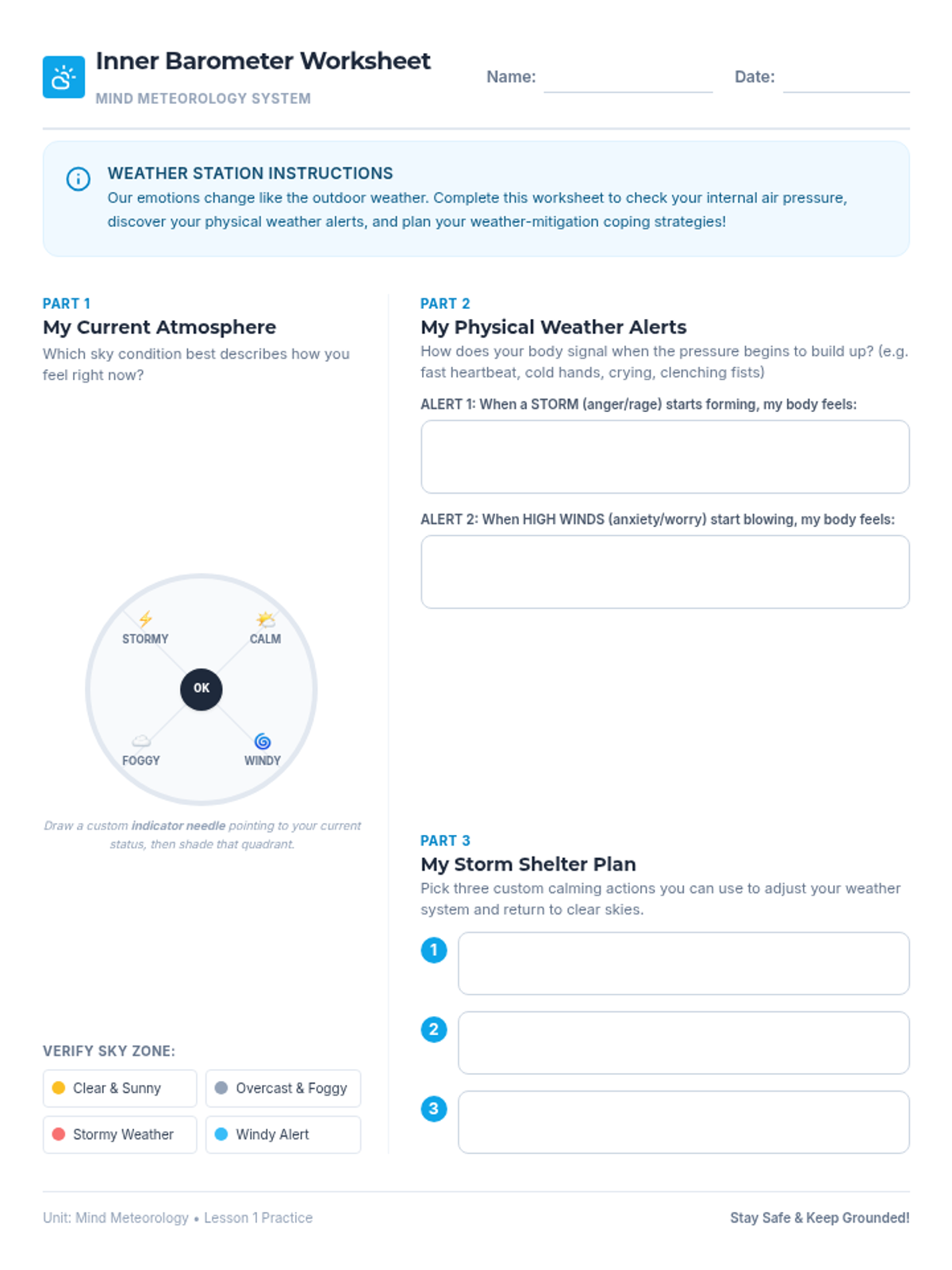
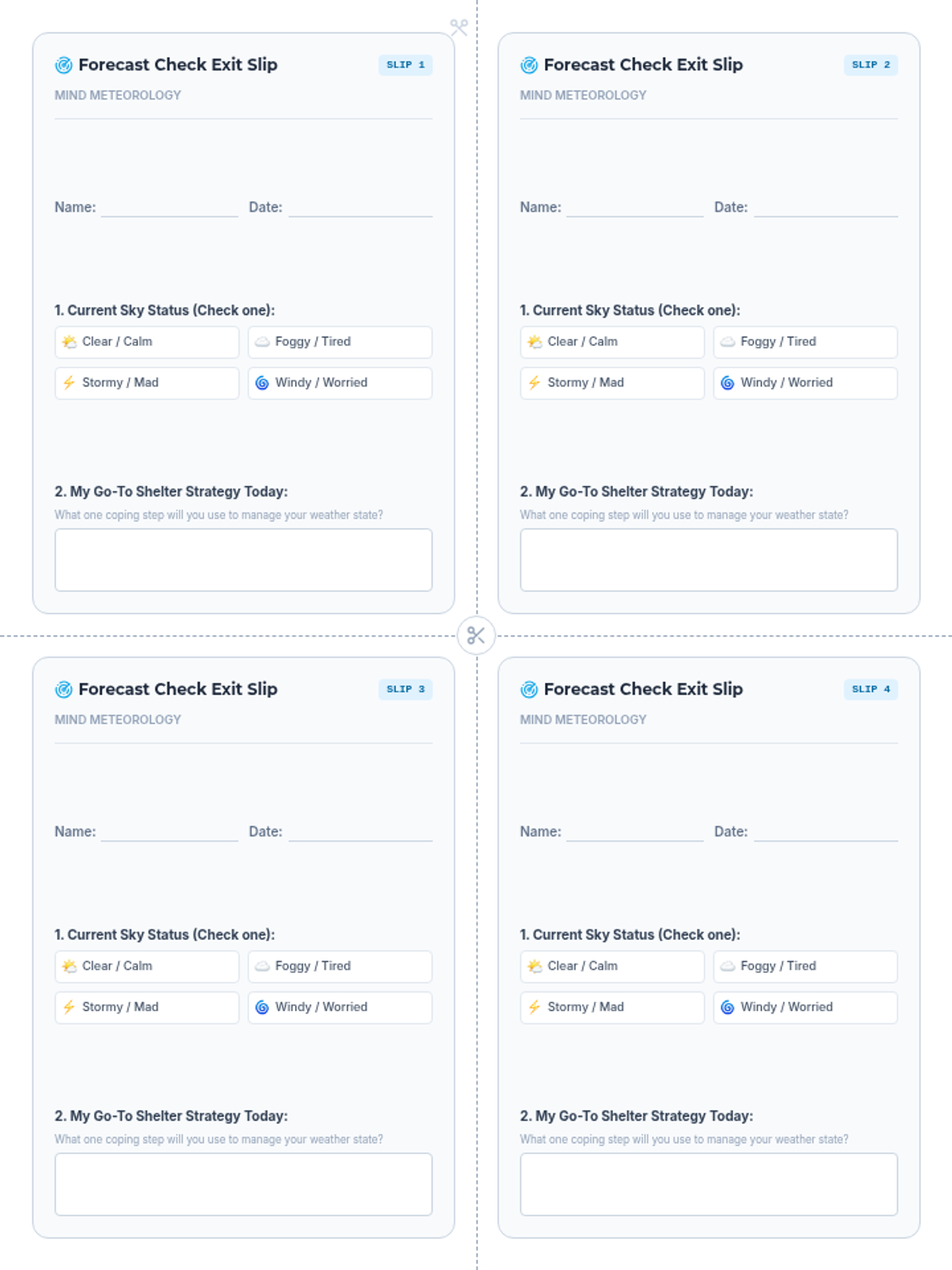
An engaging social-emotional learning lesson that teaches students to identify their emotional states as internal weather patterns and apply self-regulation coping strategies to return to calm, clear skies.
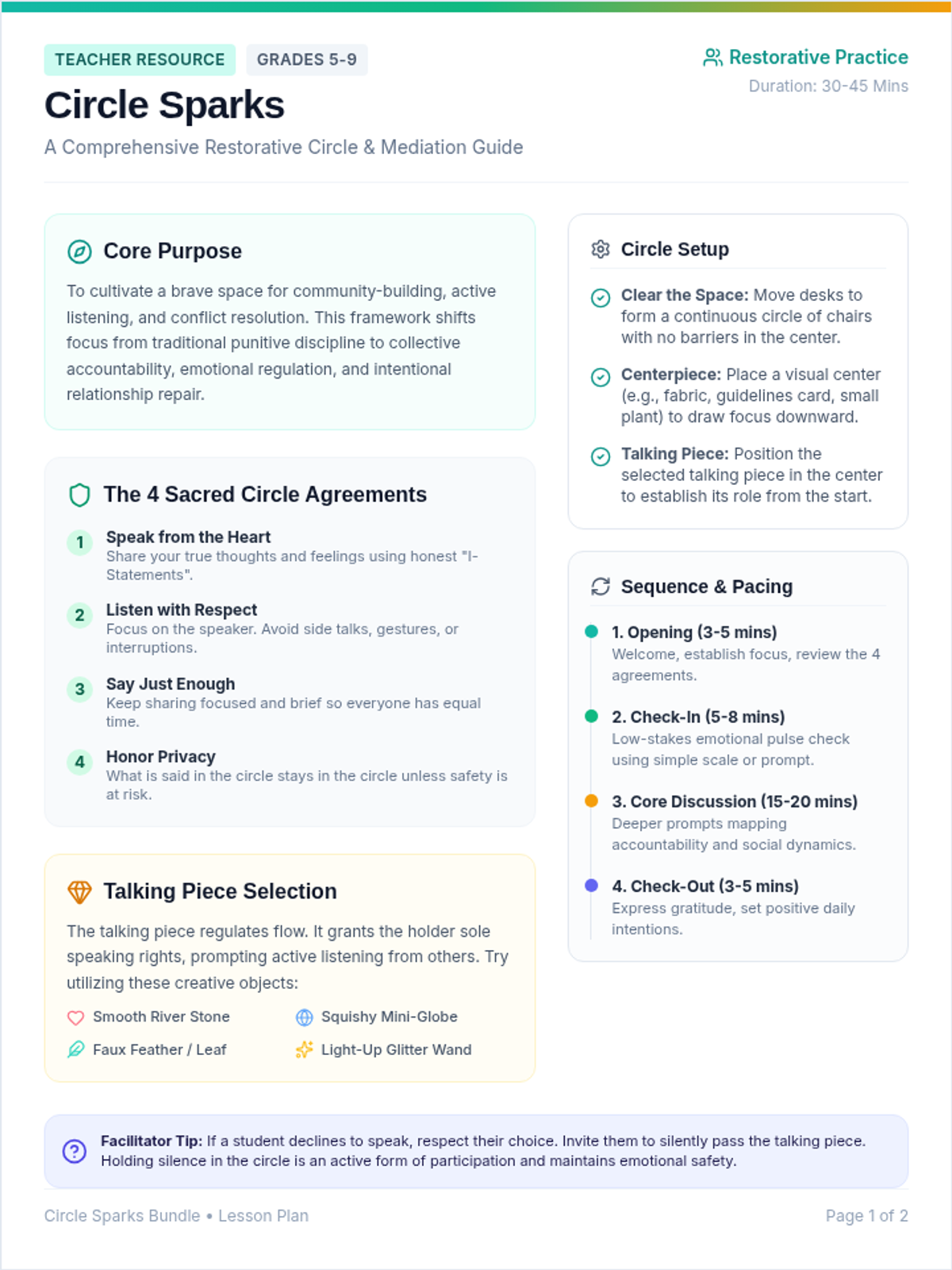
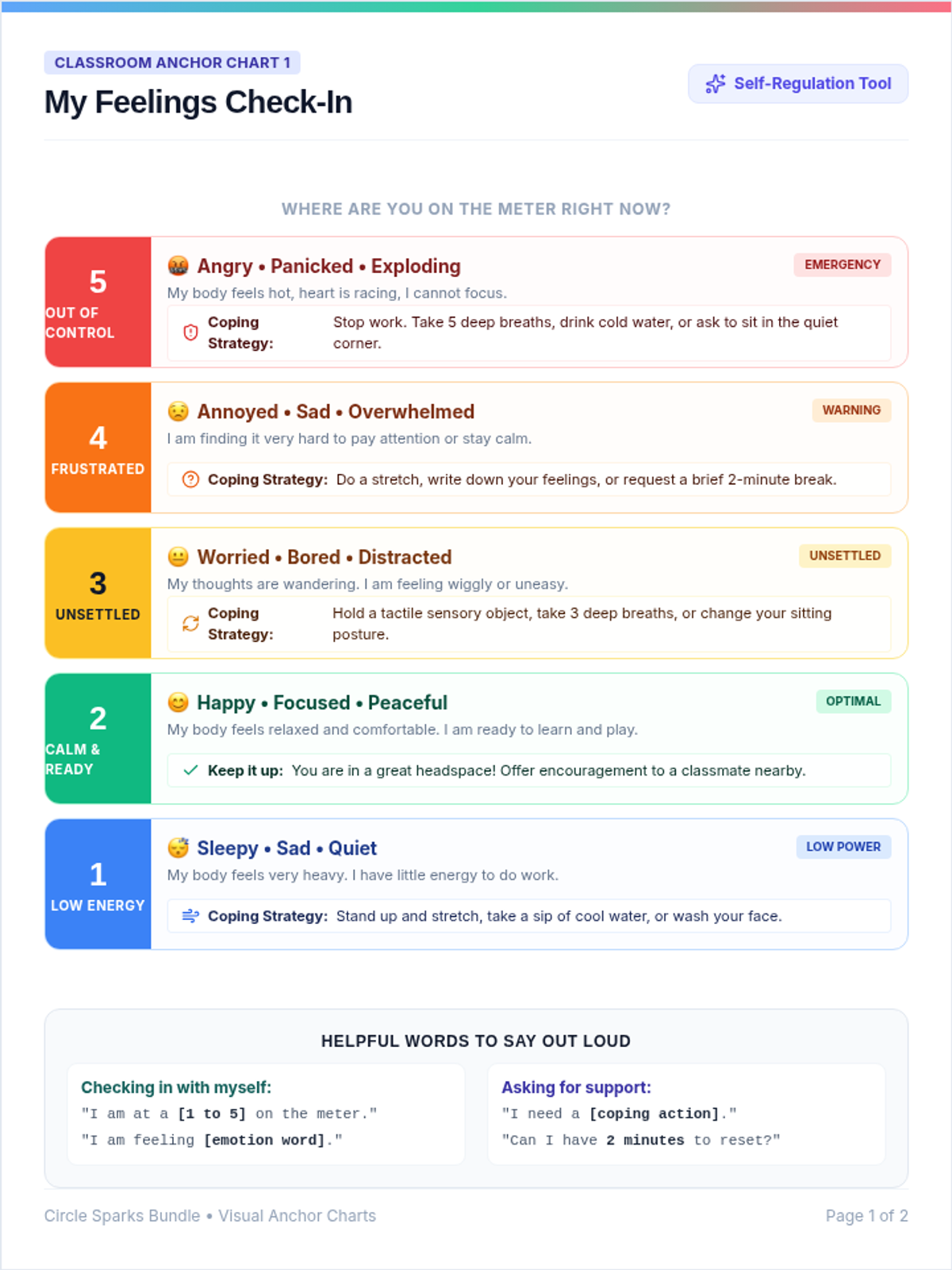
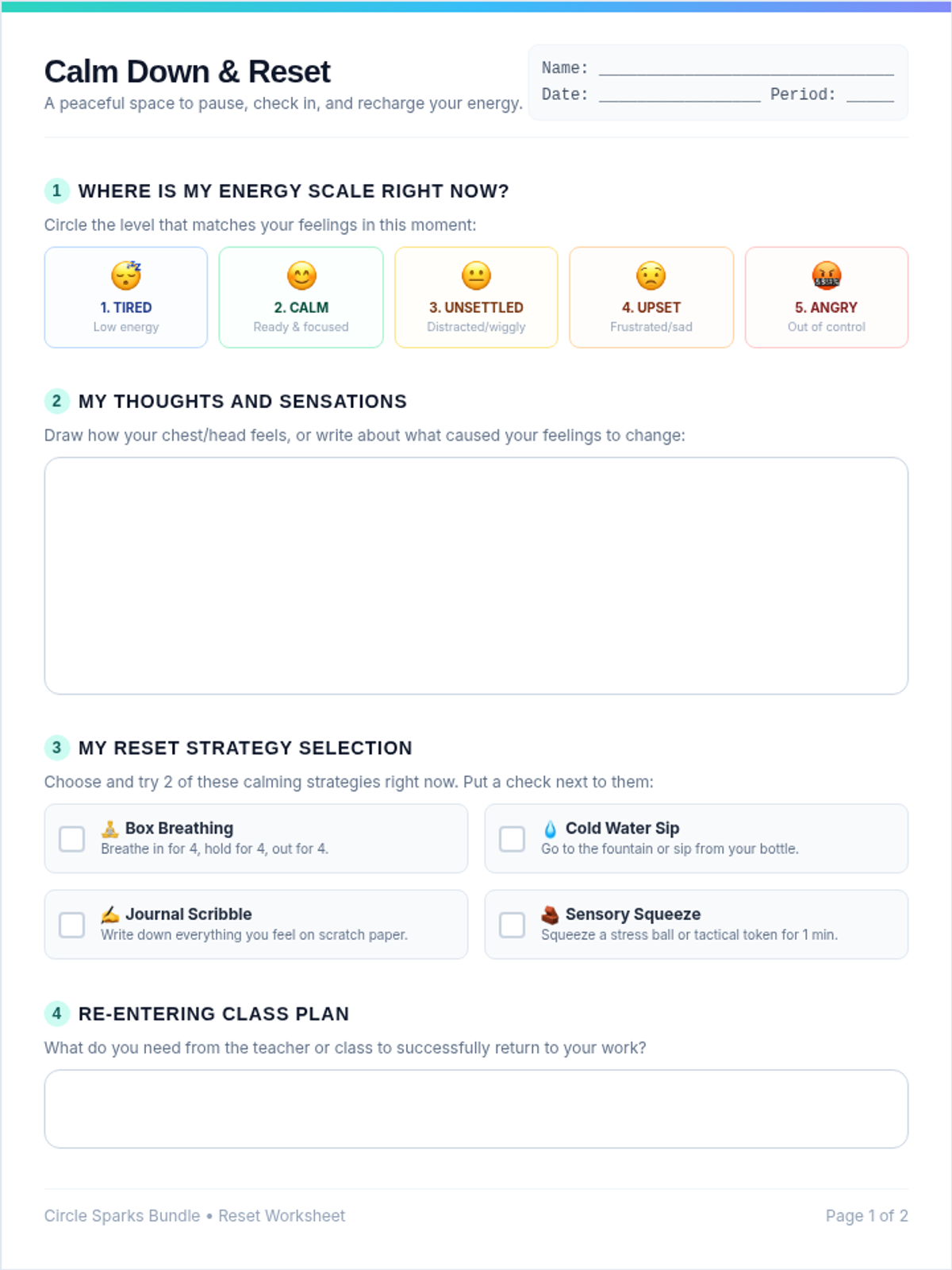
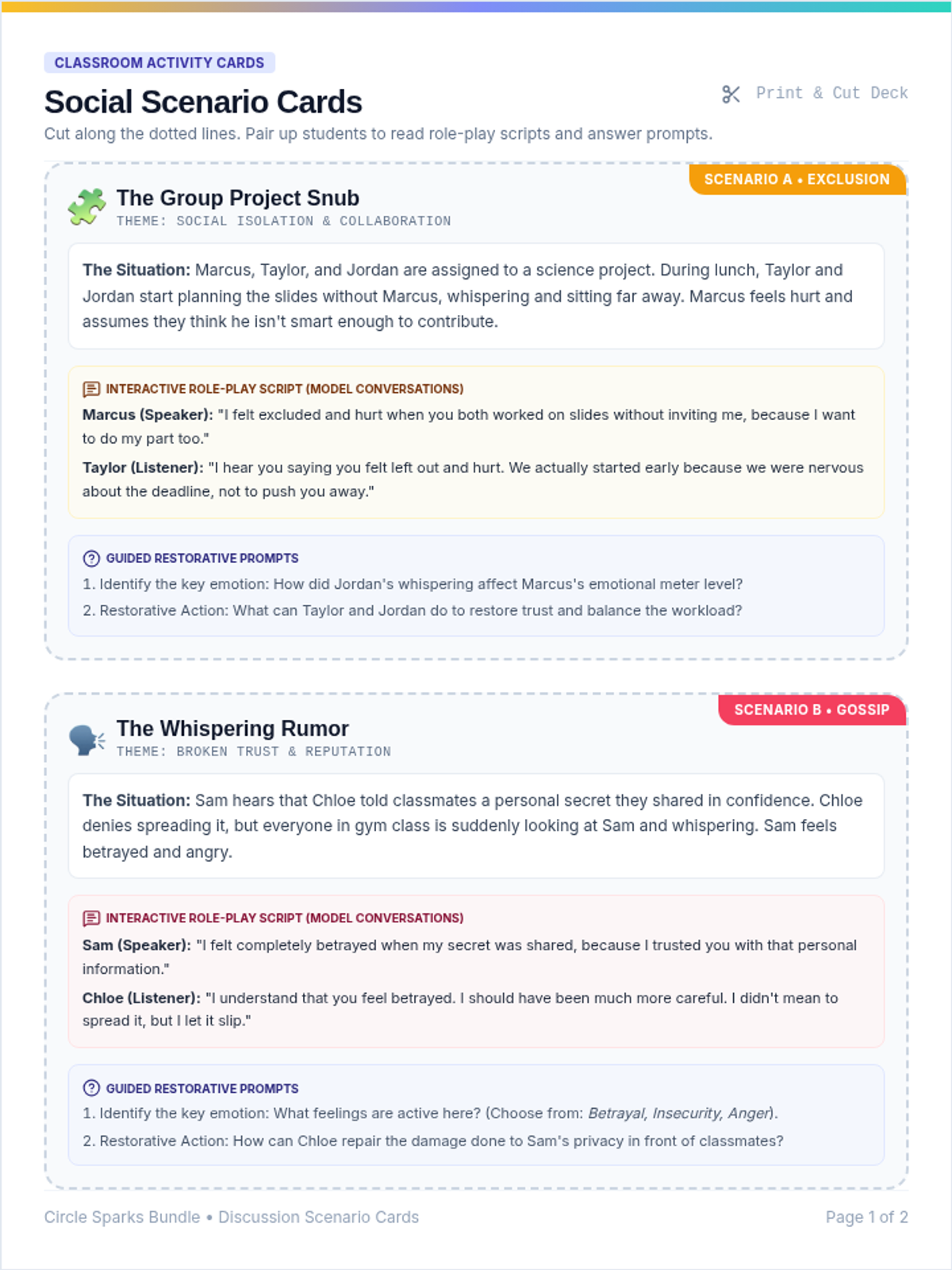
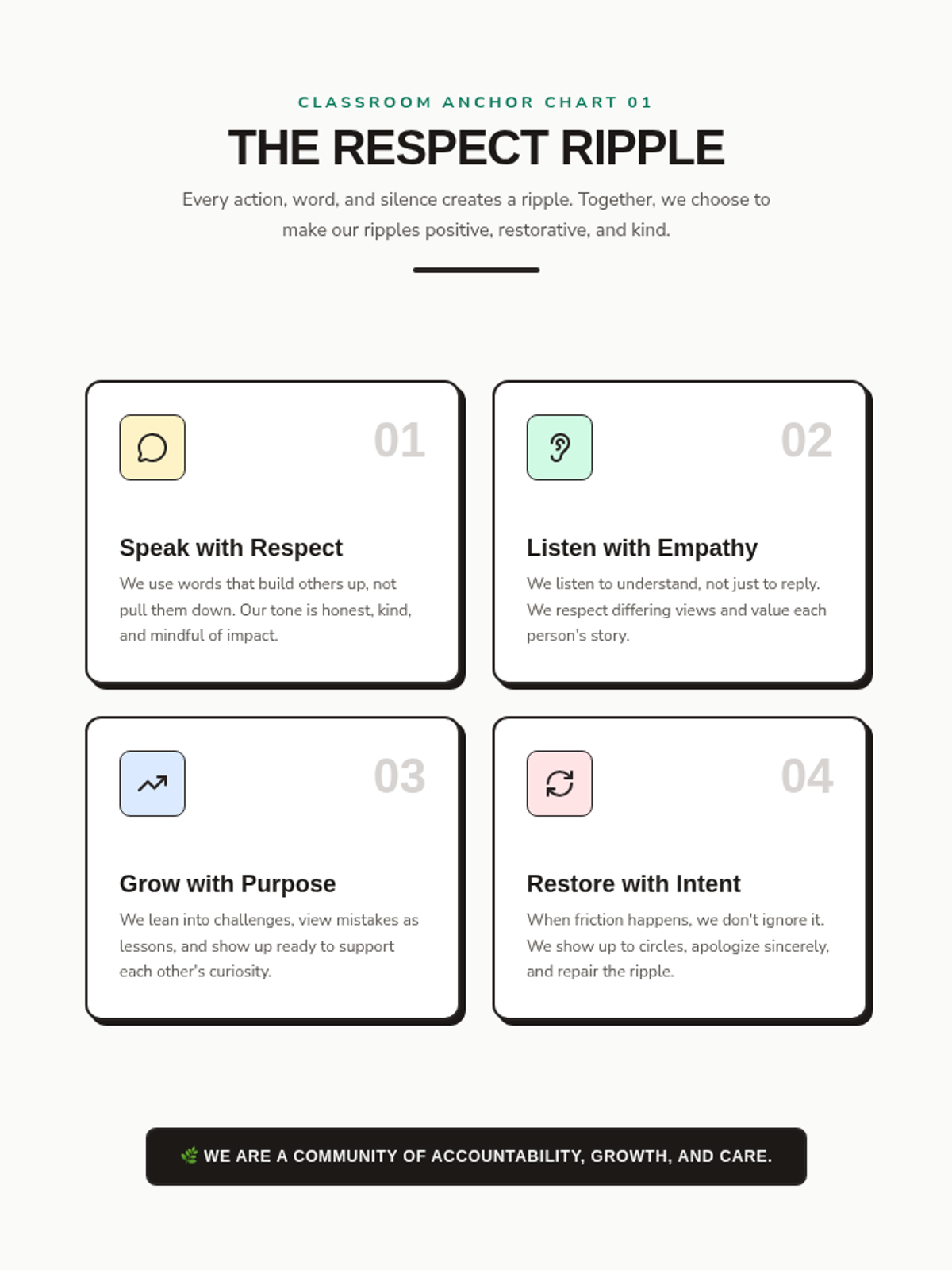
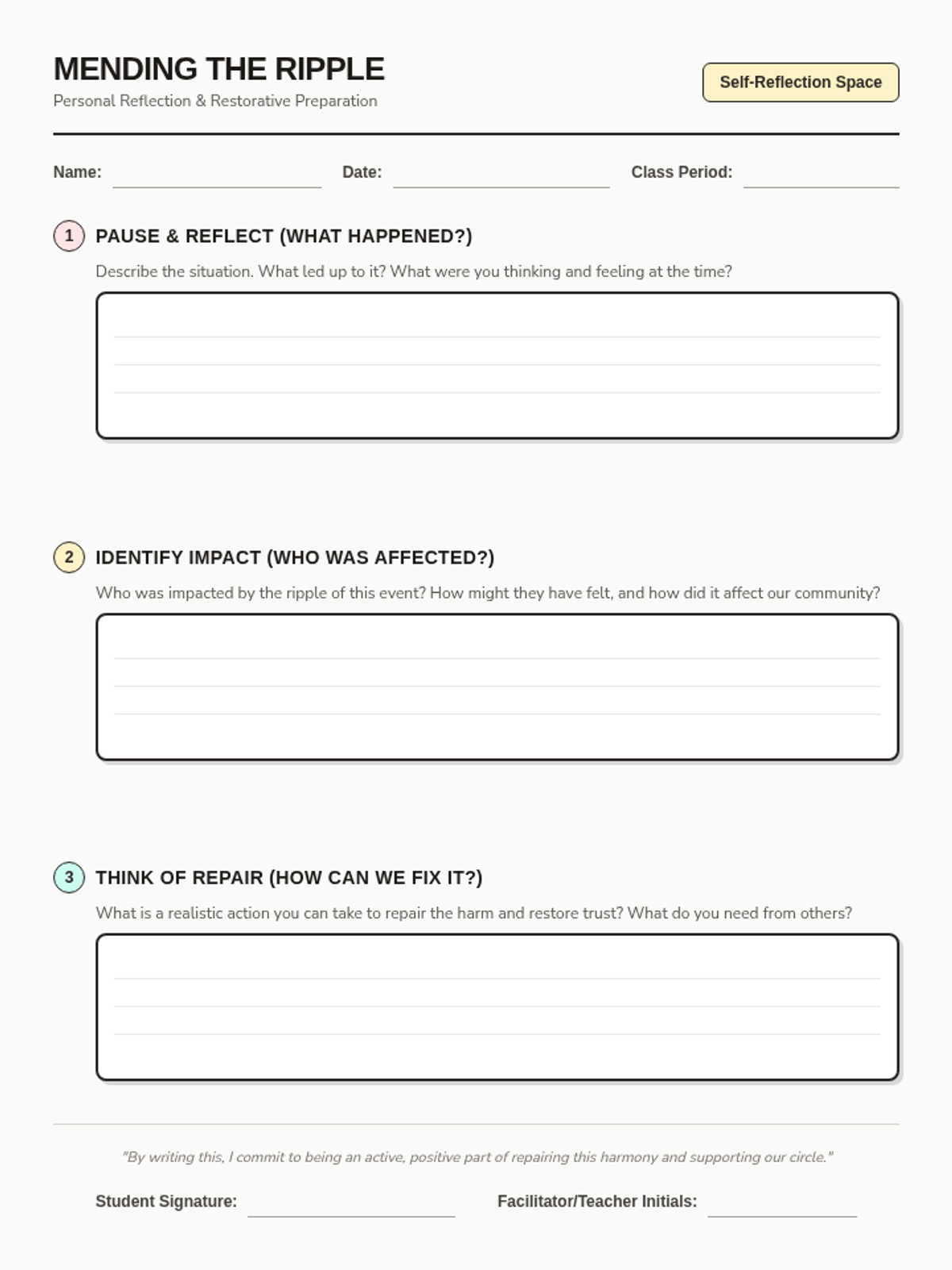
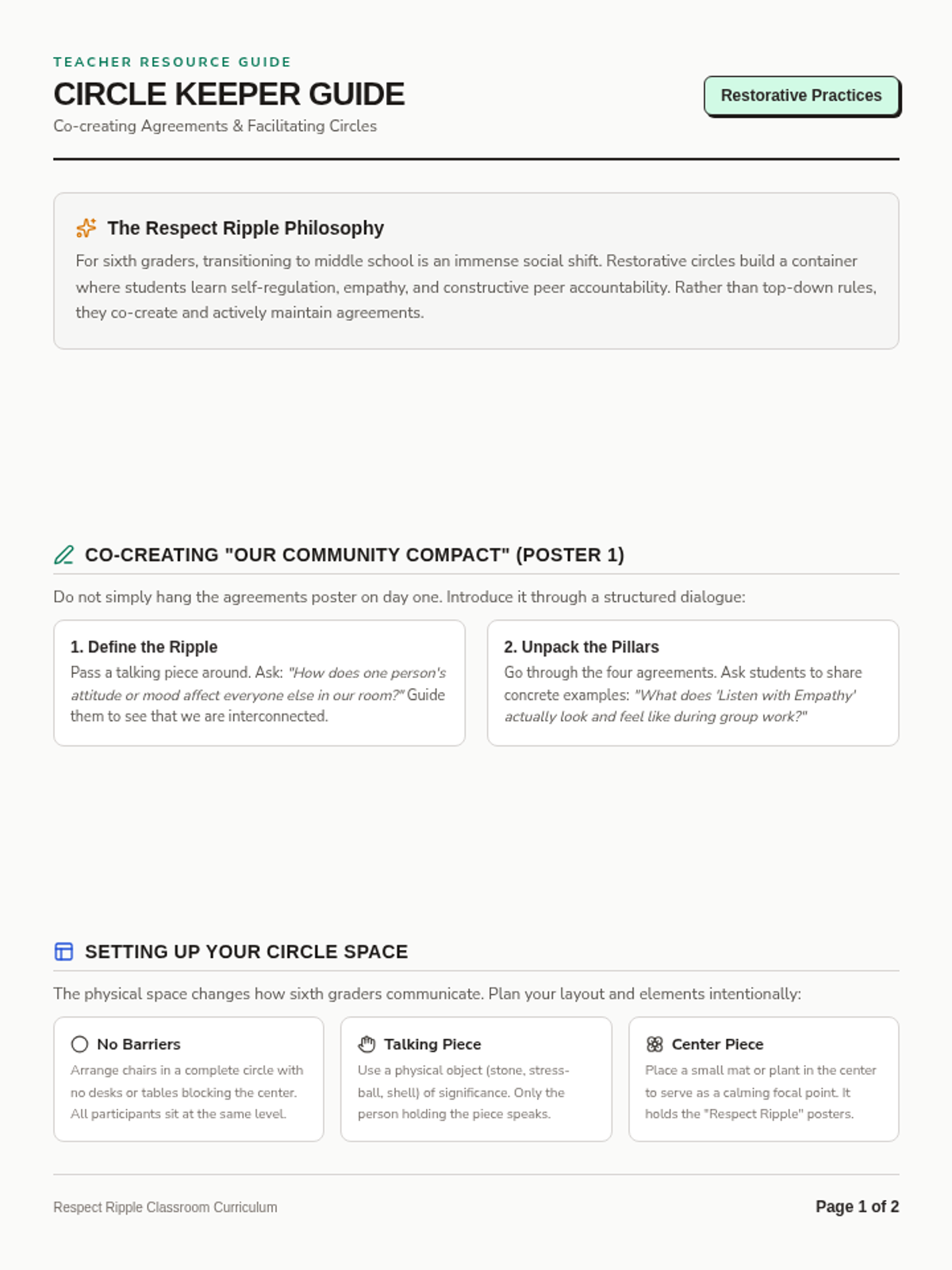
A comprehensive restorative justice lesson bundle designed to foster social-emotional learning, conflict resolution, and self-regulation through structured circle practices, visual anchor charts, visual reflection sheets, and real-world peer scenarios.
A restorative, community-focused set of materials for 6th grade classrooms. Includes large, clean visual anchor charts (posters) for agreements, restorative dialogue, and repairing harm, plus a student reflection worksheet and a teacher guide for hosting circle discussions.
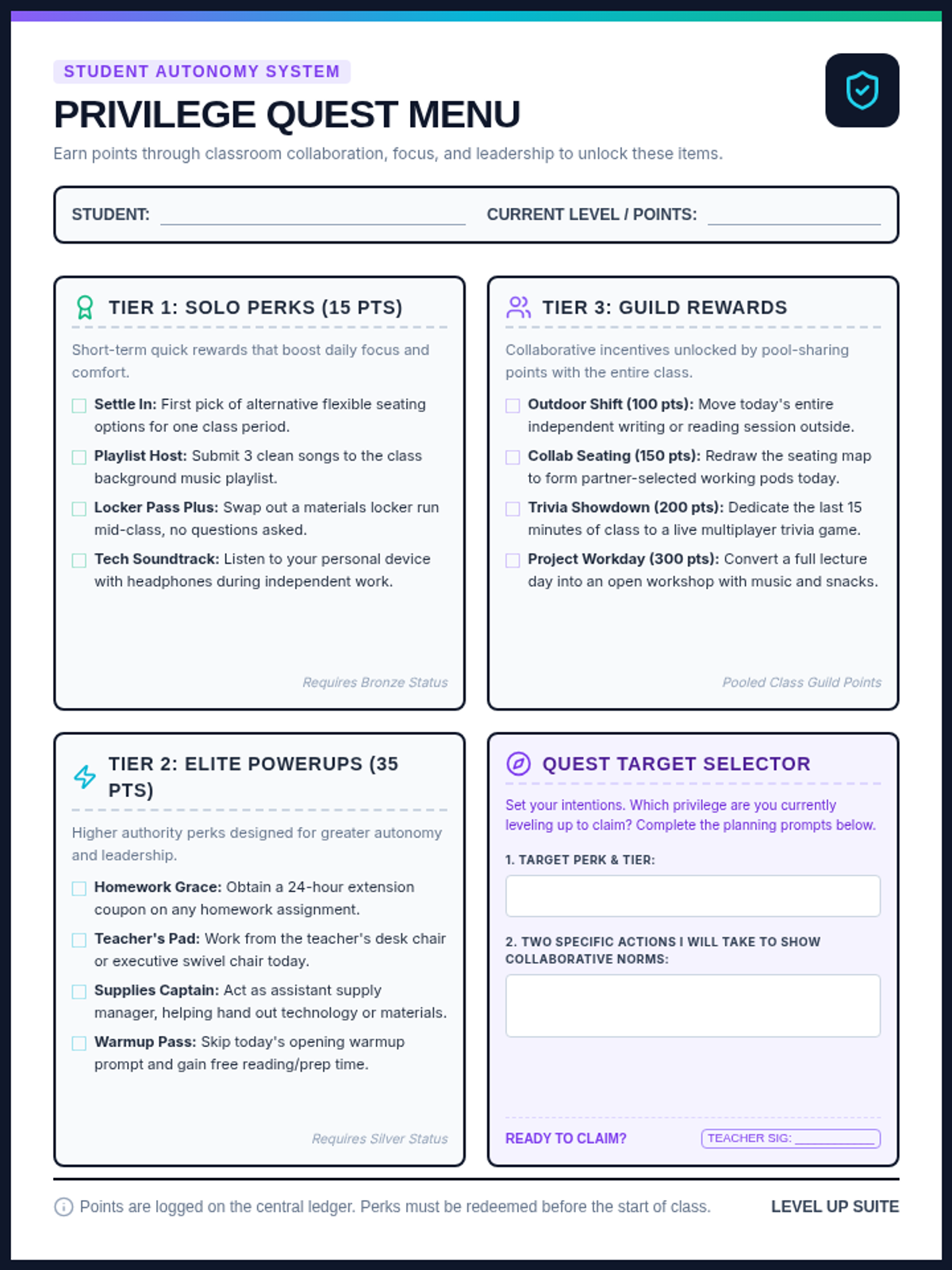
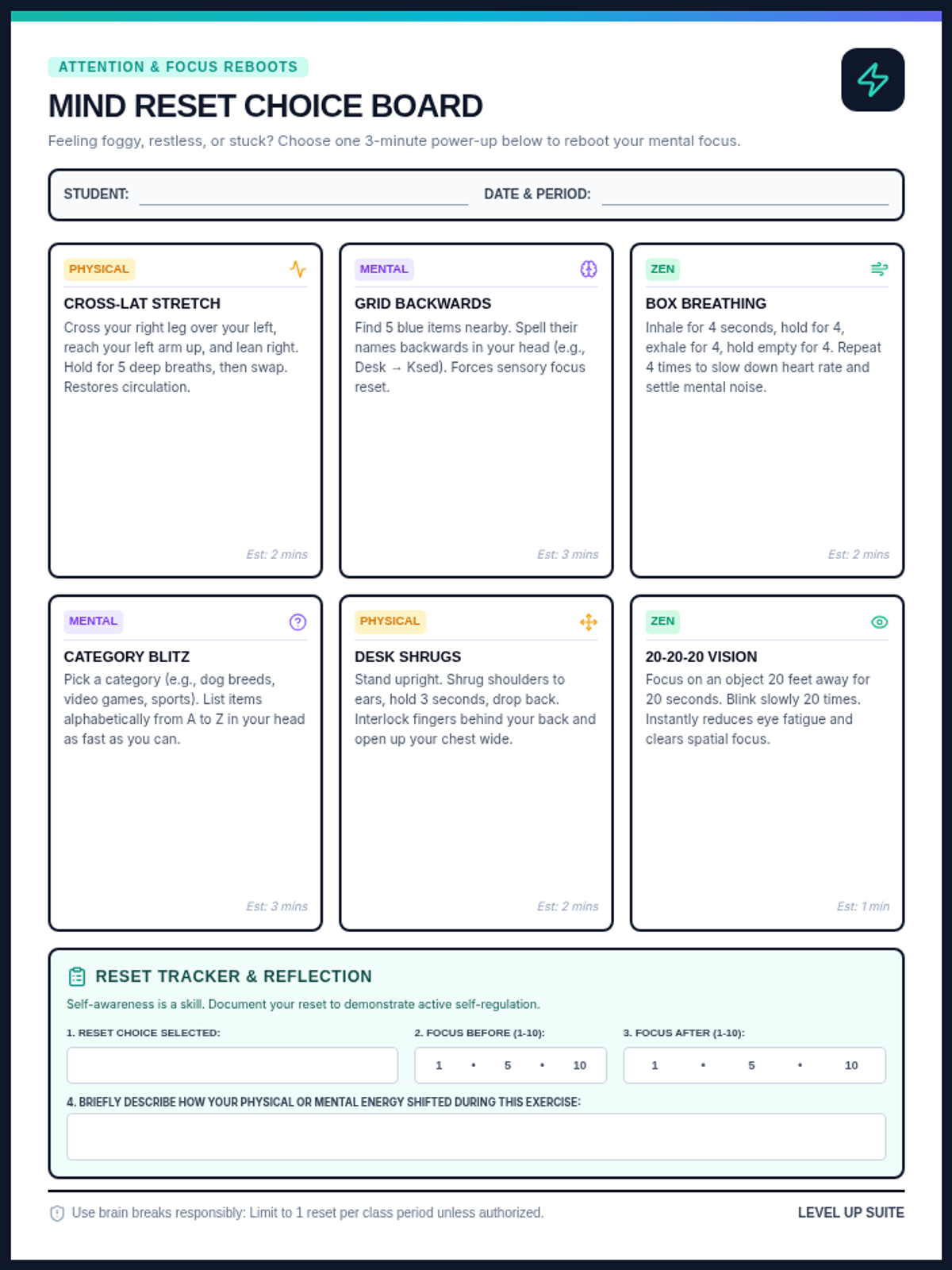
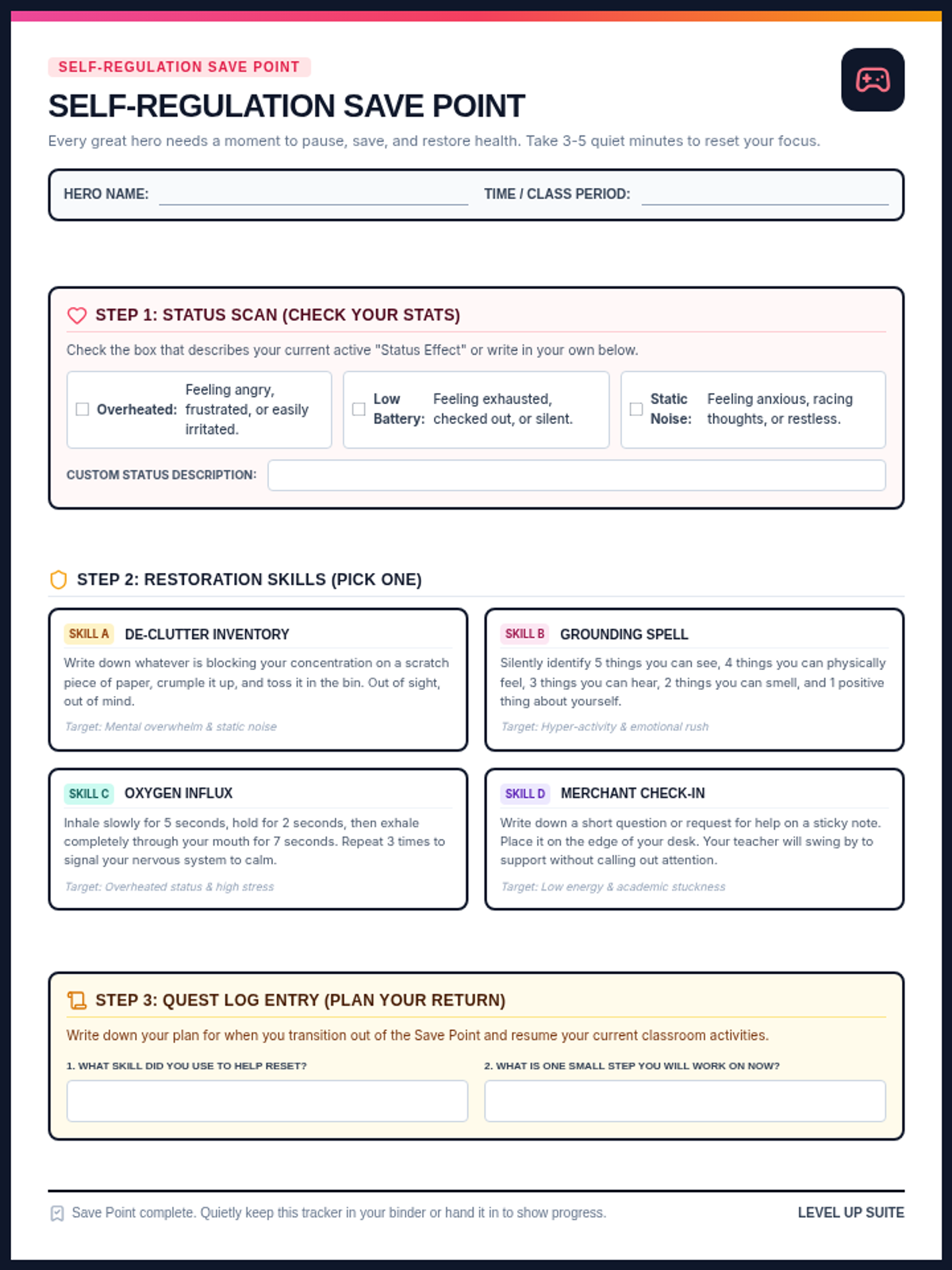
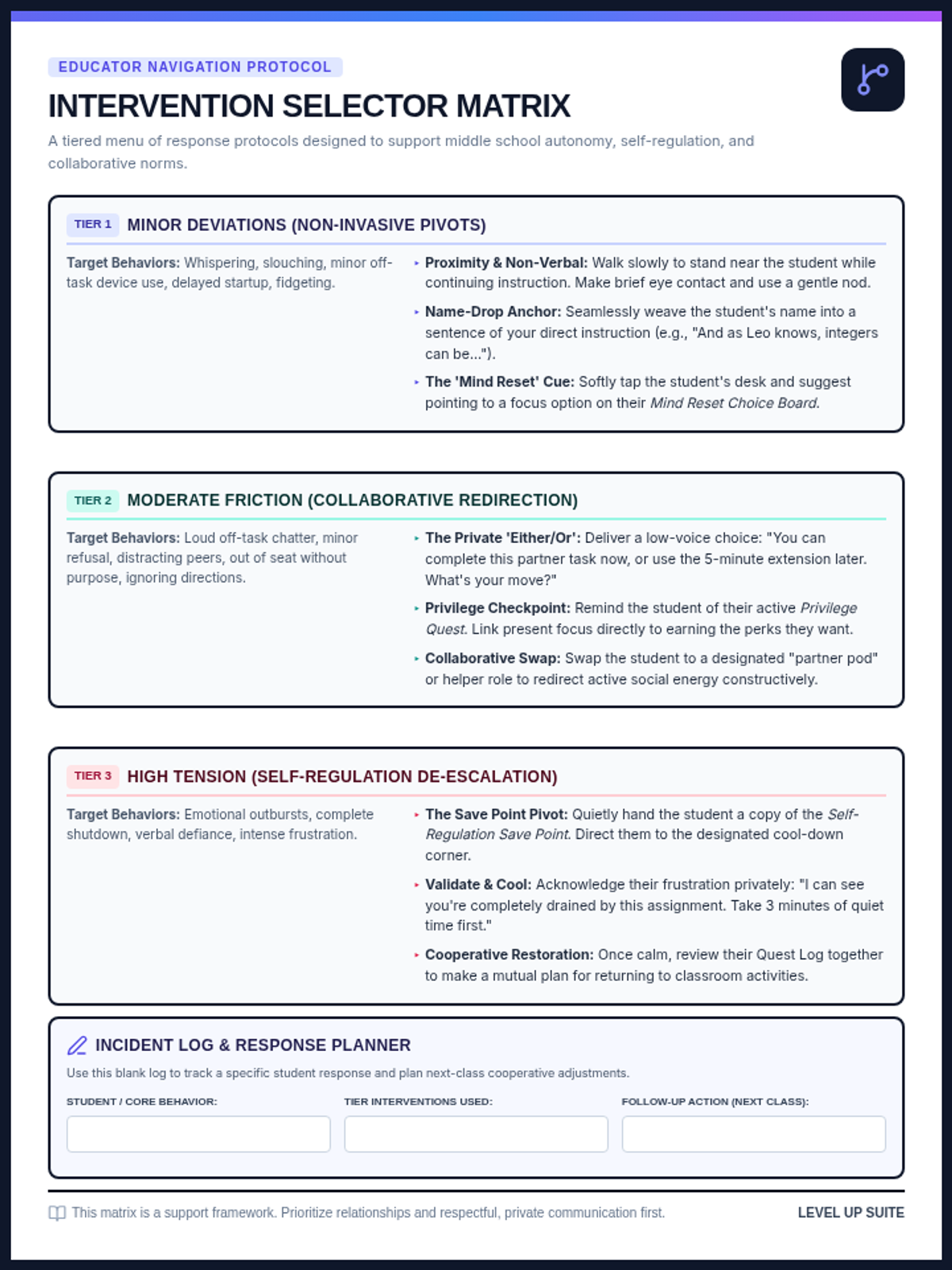
A comprehensive classroom management toolkit designed specifically for middle schoolers, emphasizing autonomy, self-regulation, and collaborative norms. It contains a privilege menu, a brain-break choice board, a student coping guide, and a teacher intervention selector.
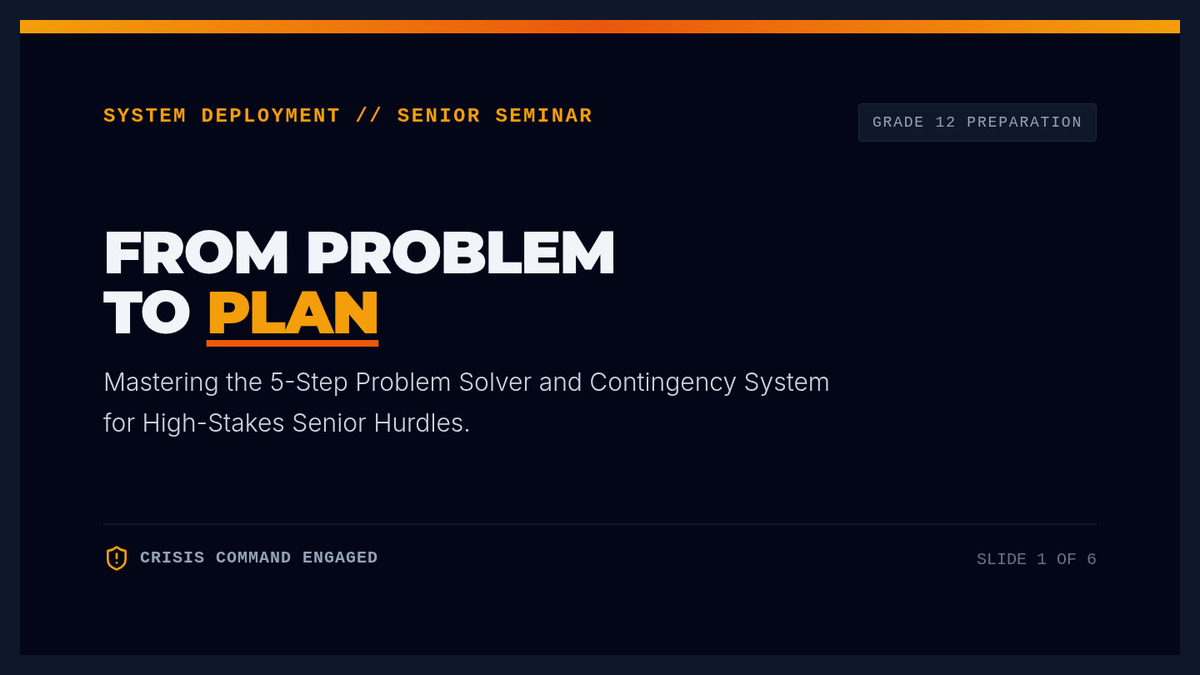
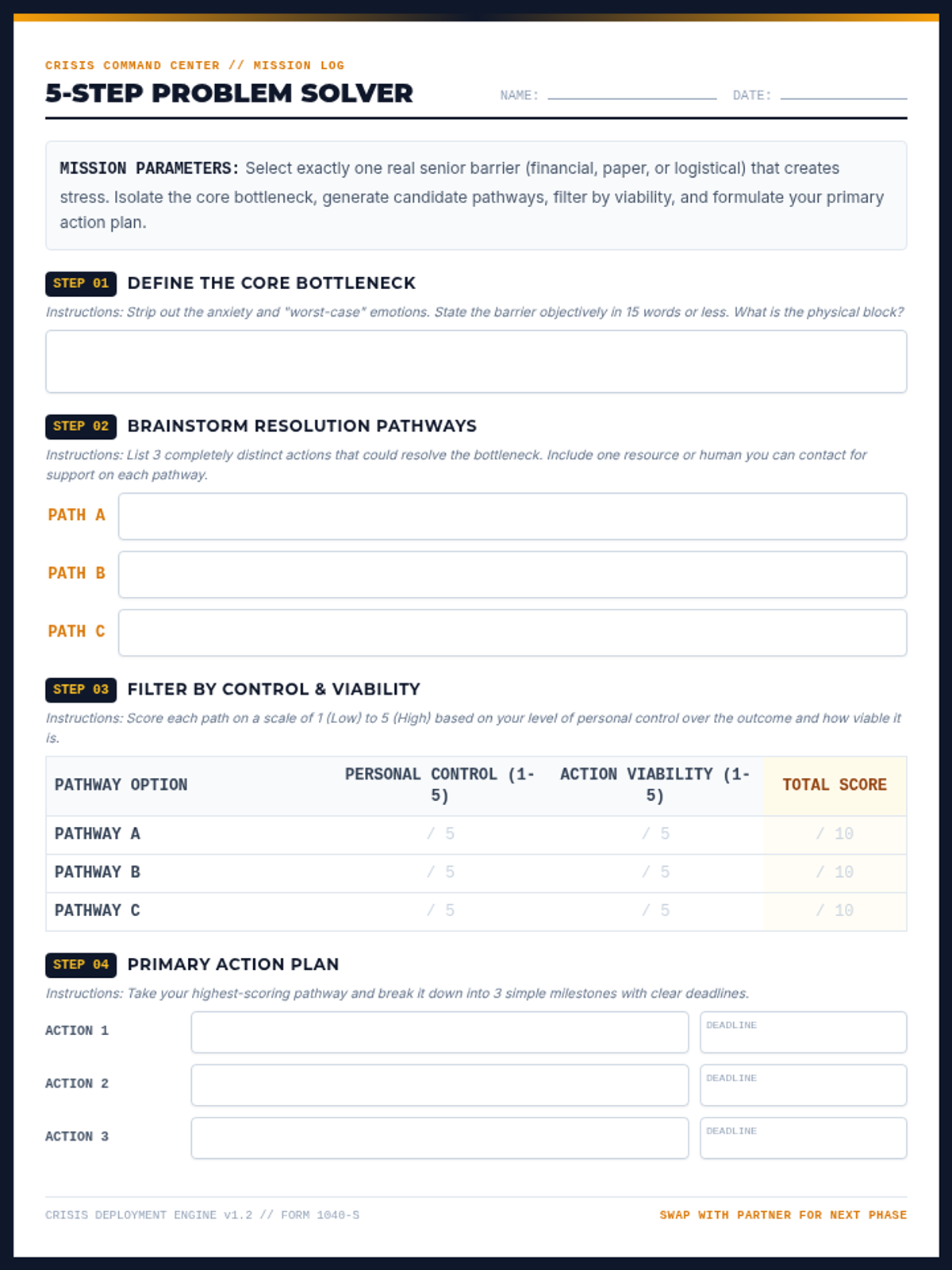
A high-impact 45-minute lesson for 12th graders to master problem-solving under pressure. Students learn a structured 5-step framework, analyze common senior barriers (financial, logistical, time), and build actionable backup plans with concrete contingencies.
A 45-minute lesson designed for 12th graders to analyze their punctuality habits, understand the high stakes of reliability in high school and the workplace, and build a concrete, personalized reliability plan.
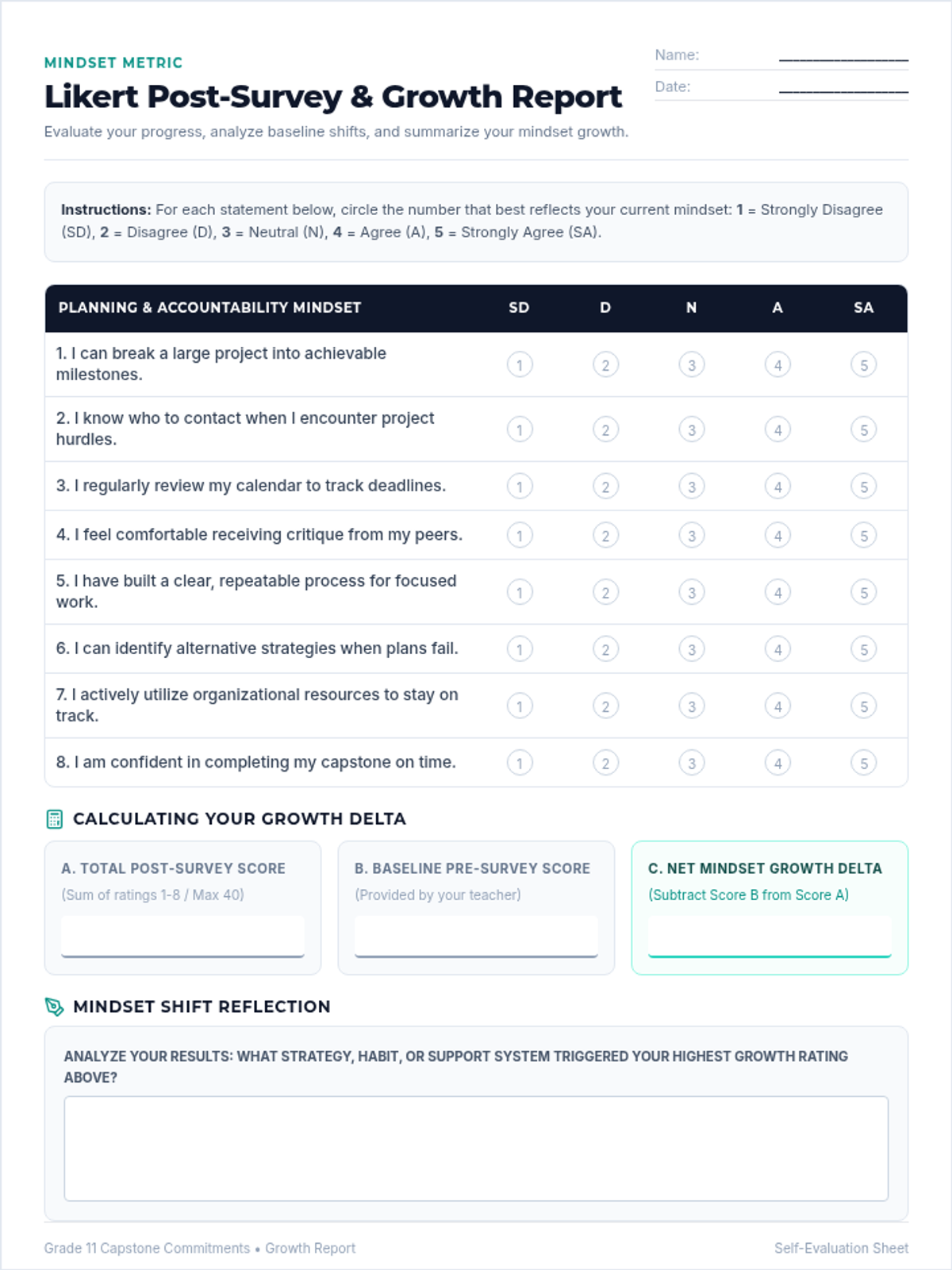
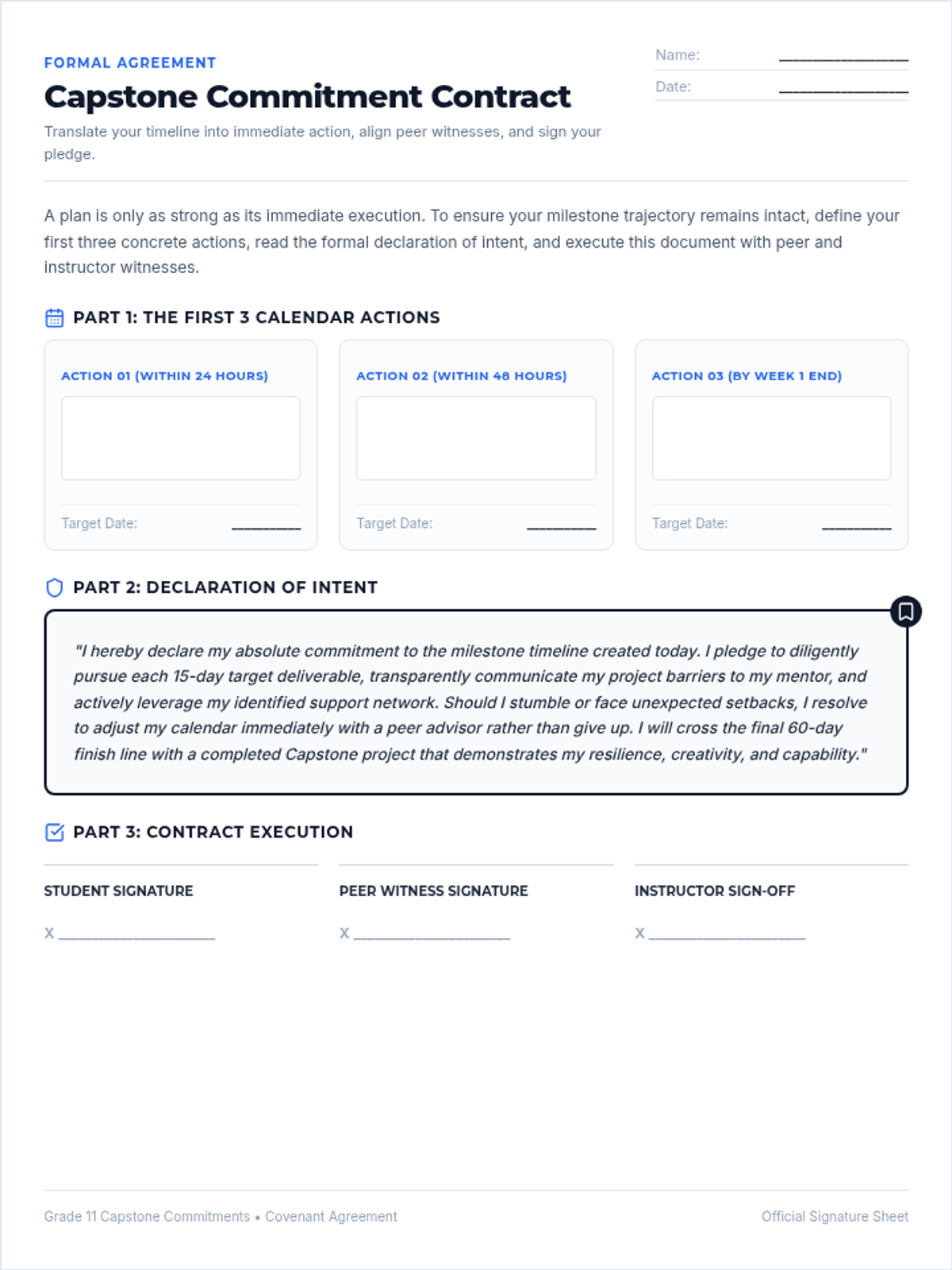
A 45-minute lesson for 11th graders to finalize their 60-day milestone plans, reflect on growth using a Likert post-survey, and make a formal commitment contract for their capstone projects.
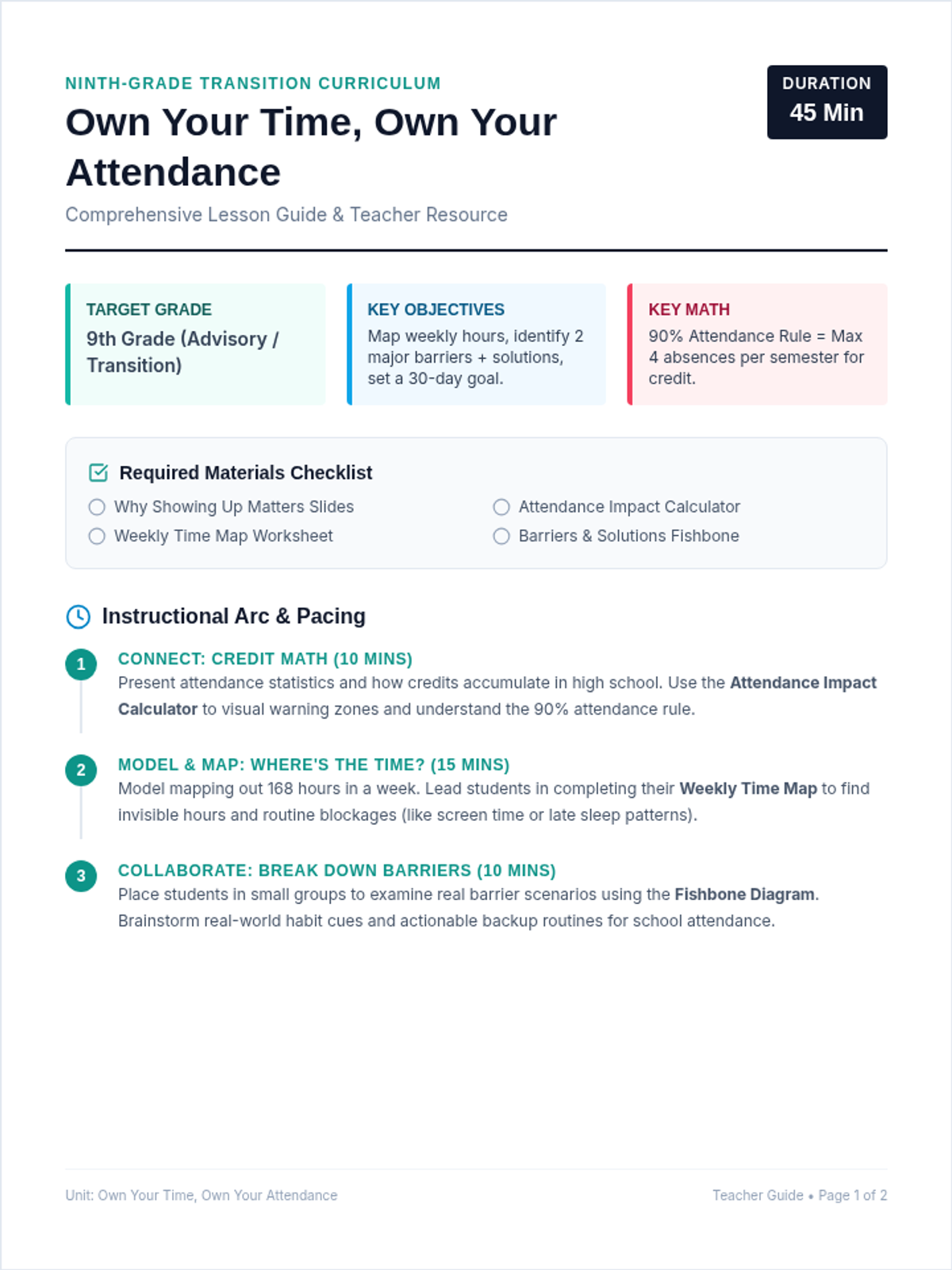
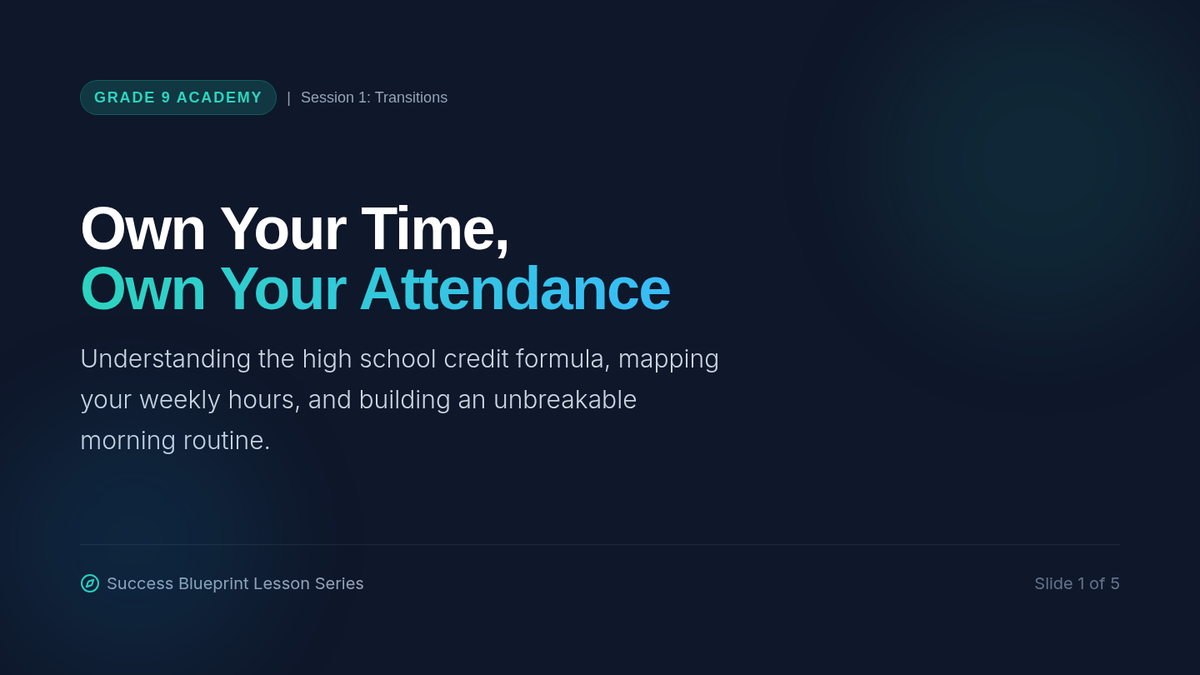
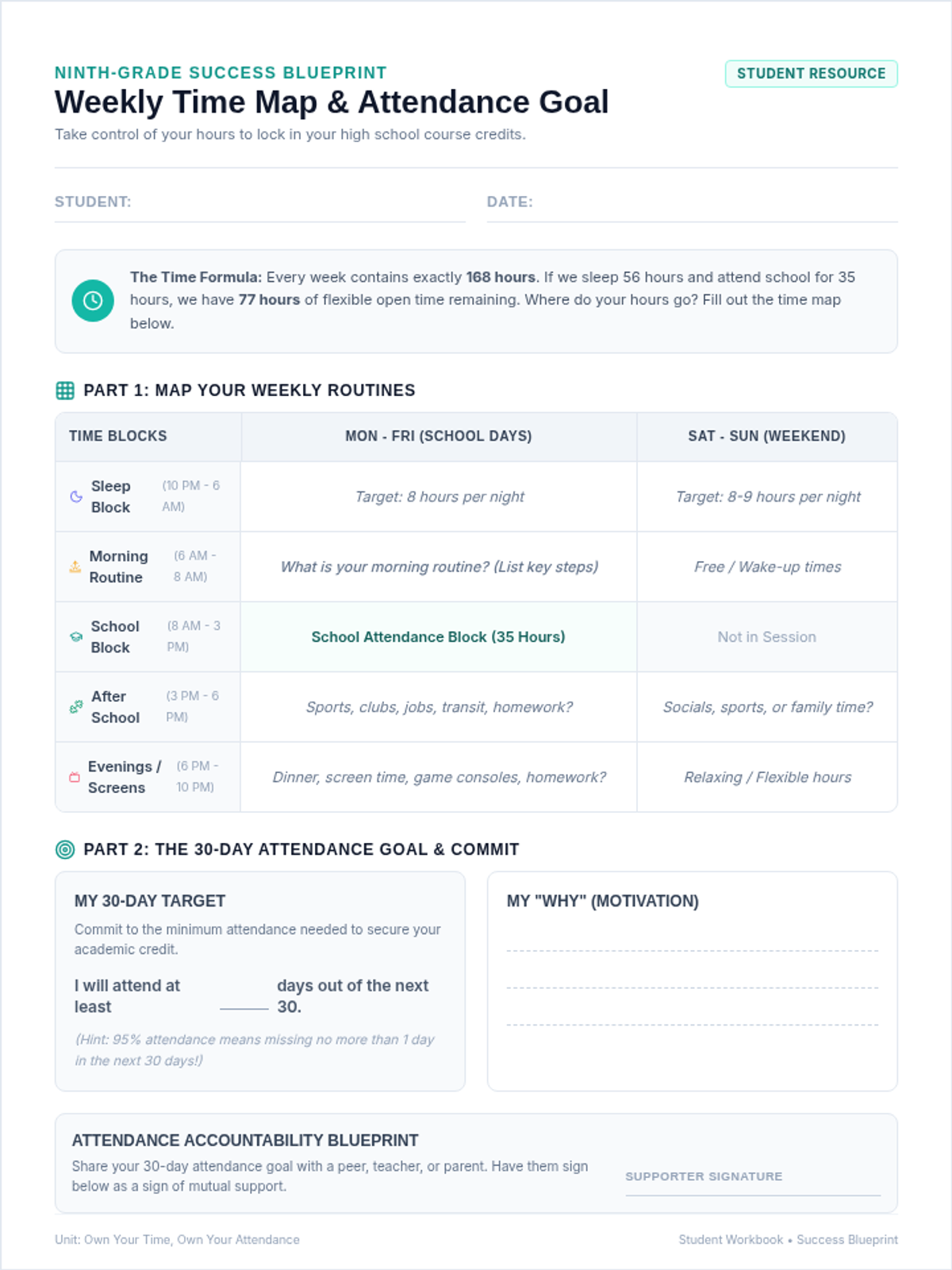
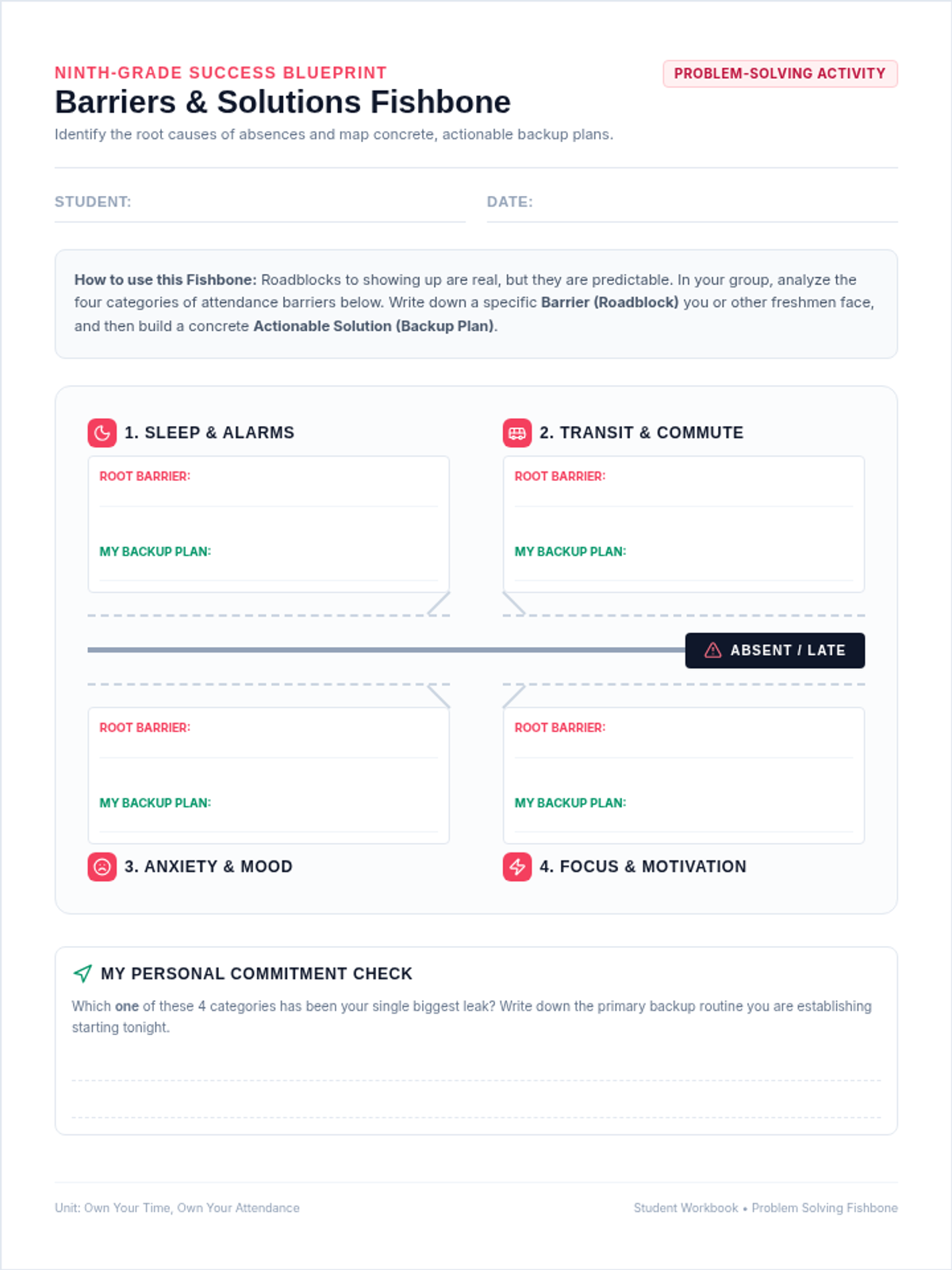
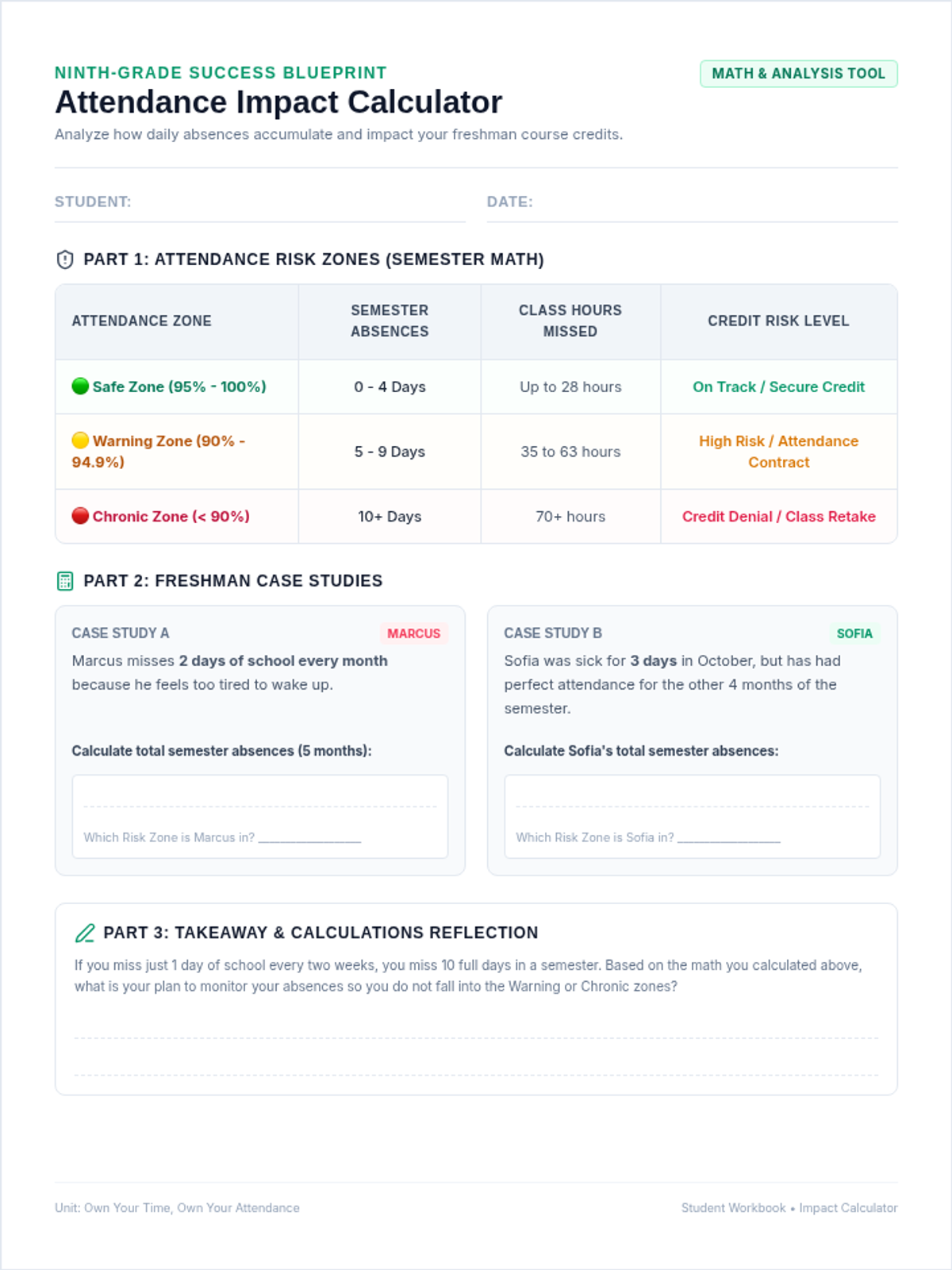
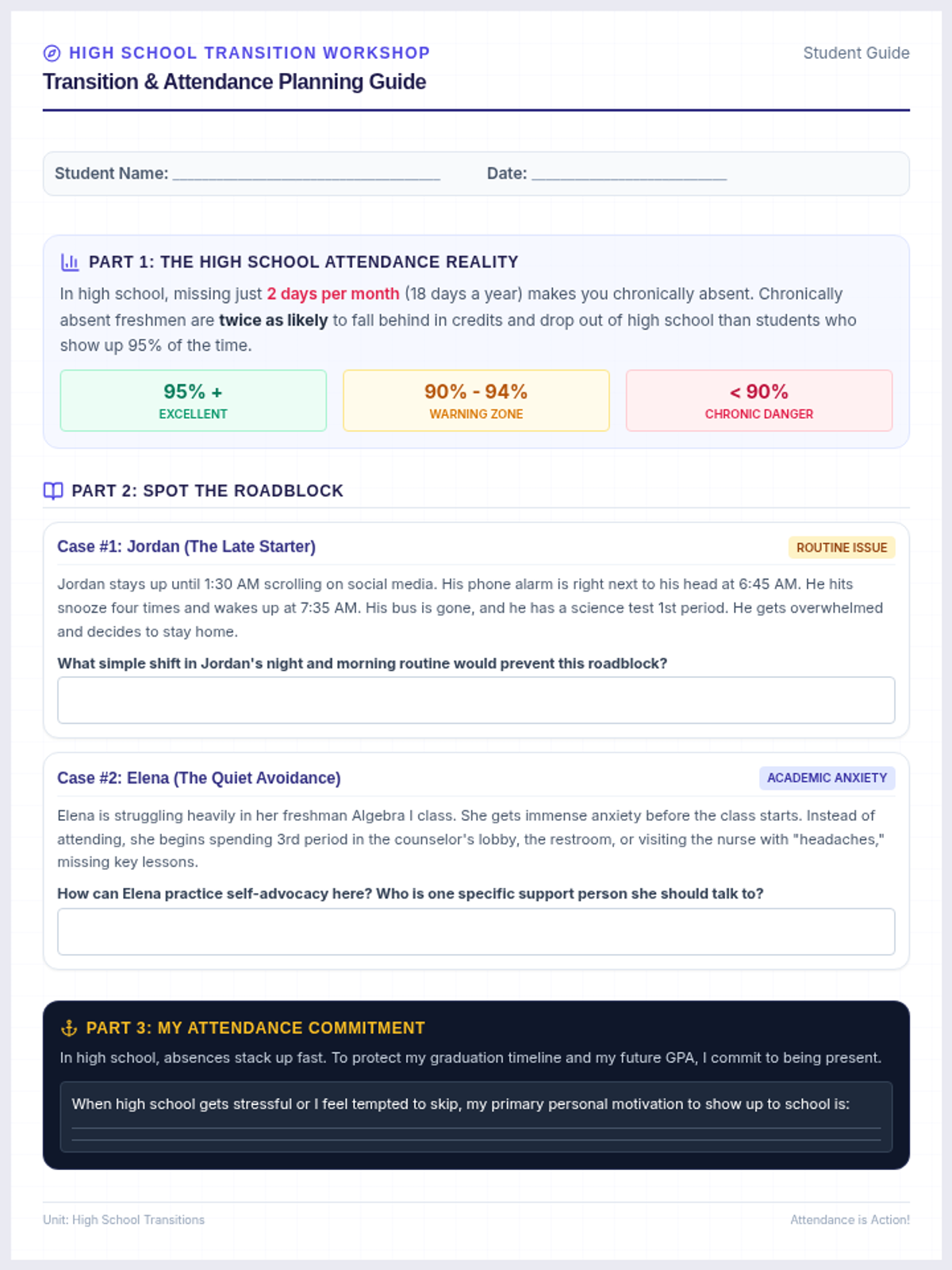
A high school transition lesson designed for 9th graders to understand the direct connection between daily attendance, high school credit acquisition, and time management. Students analyze their weekly schedules, map out barriers using a fishbone diagram, and commit to a 30-day attendance goal.
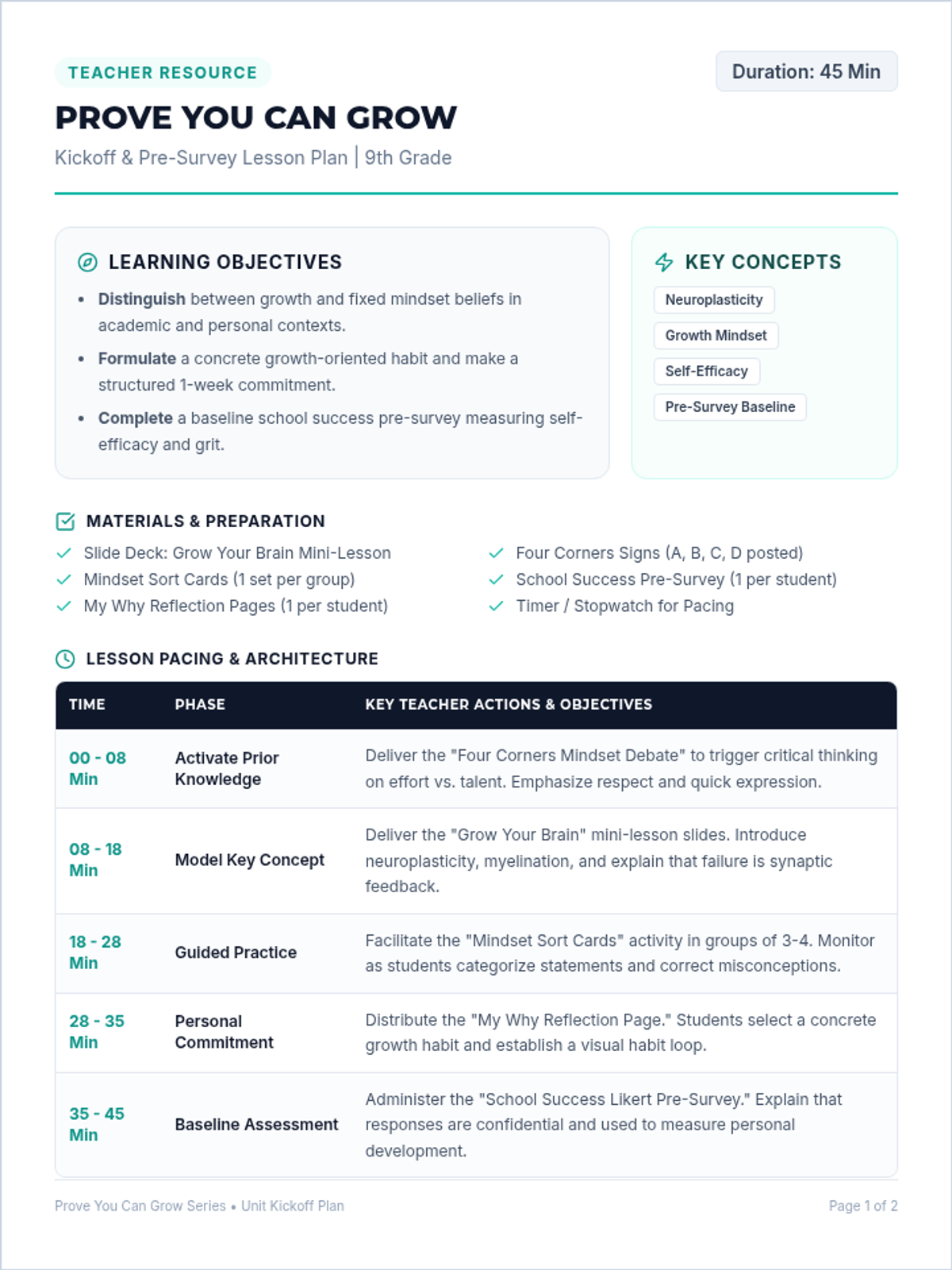
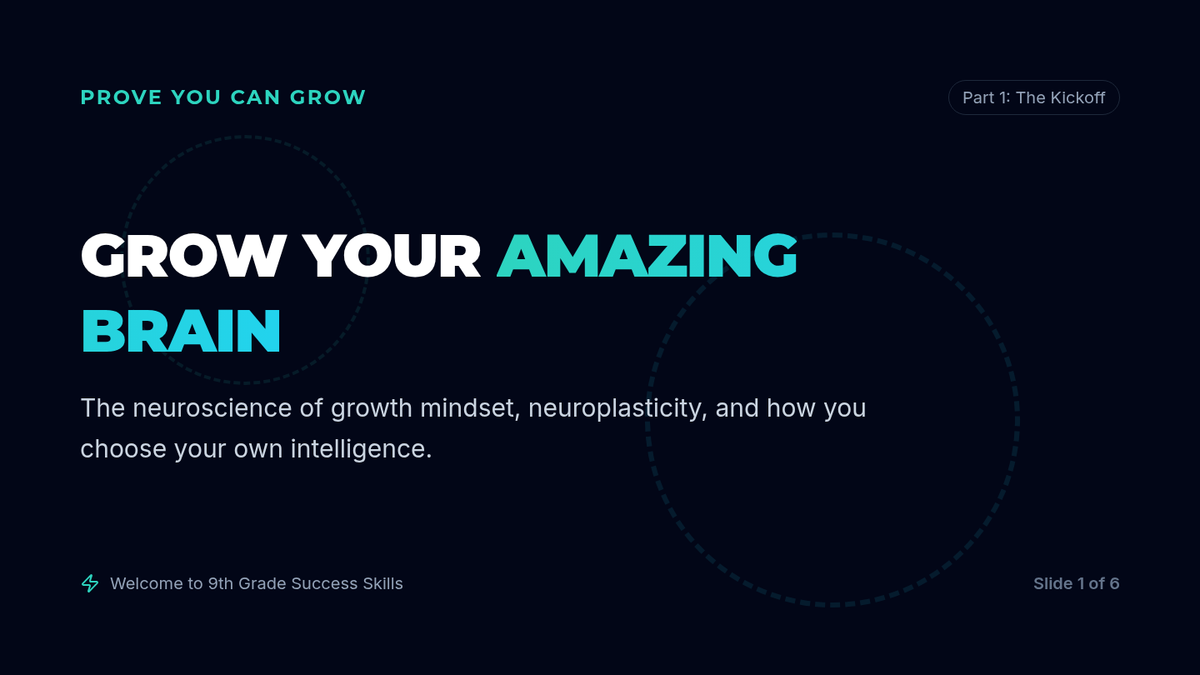
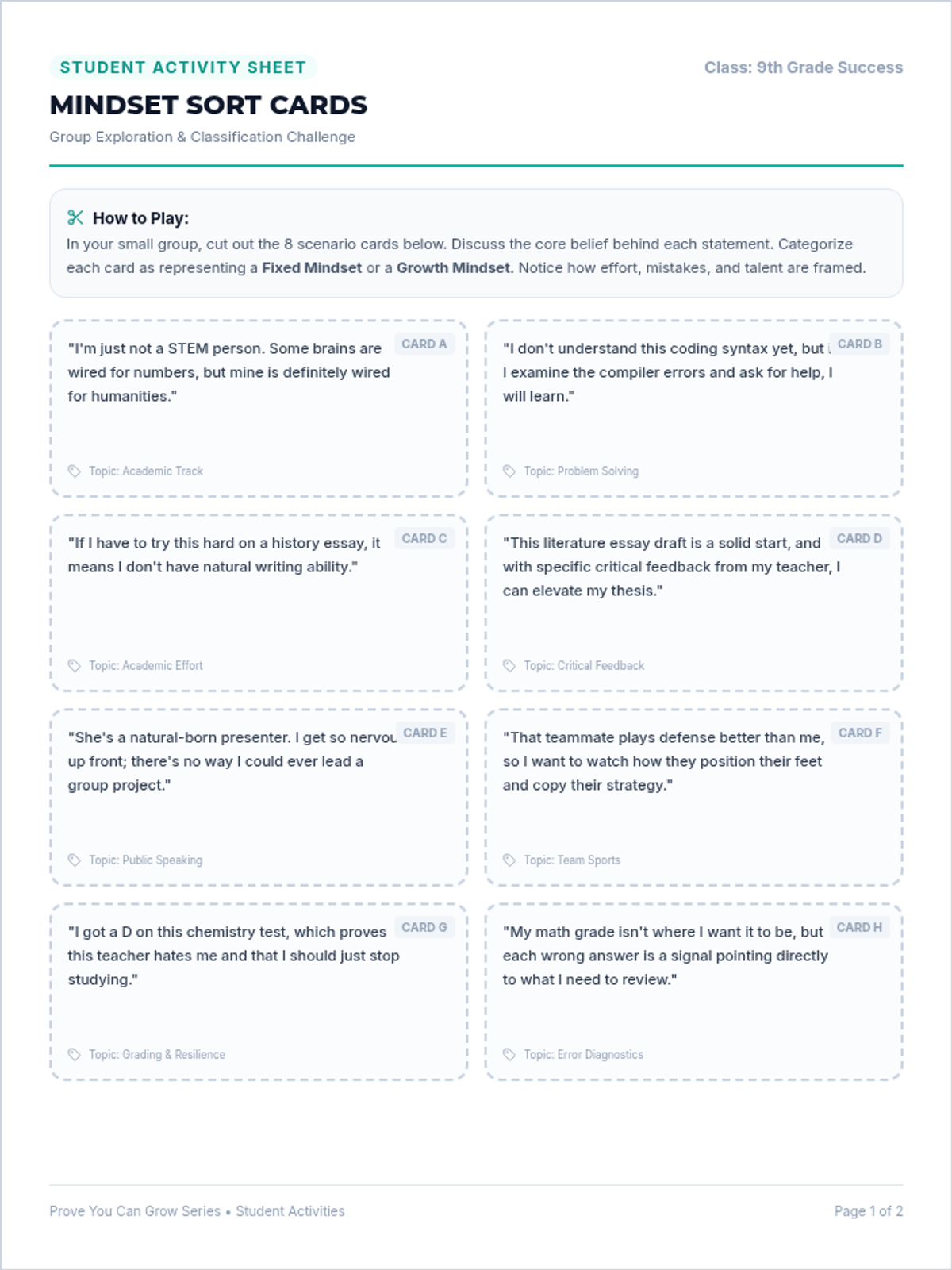
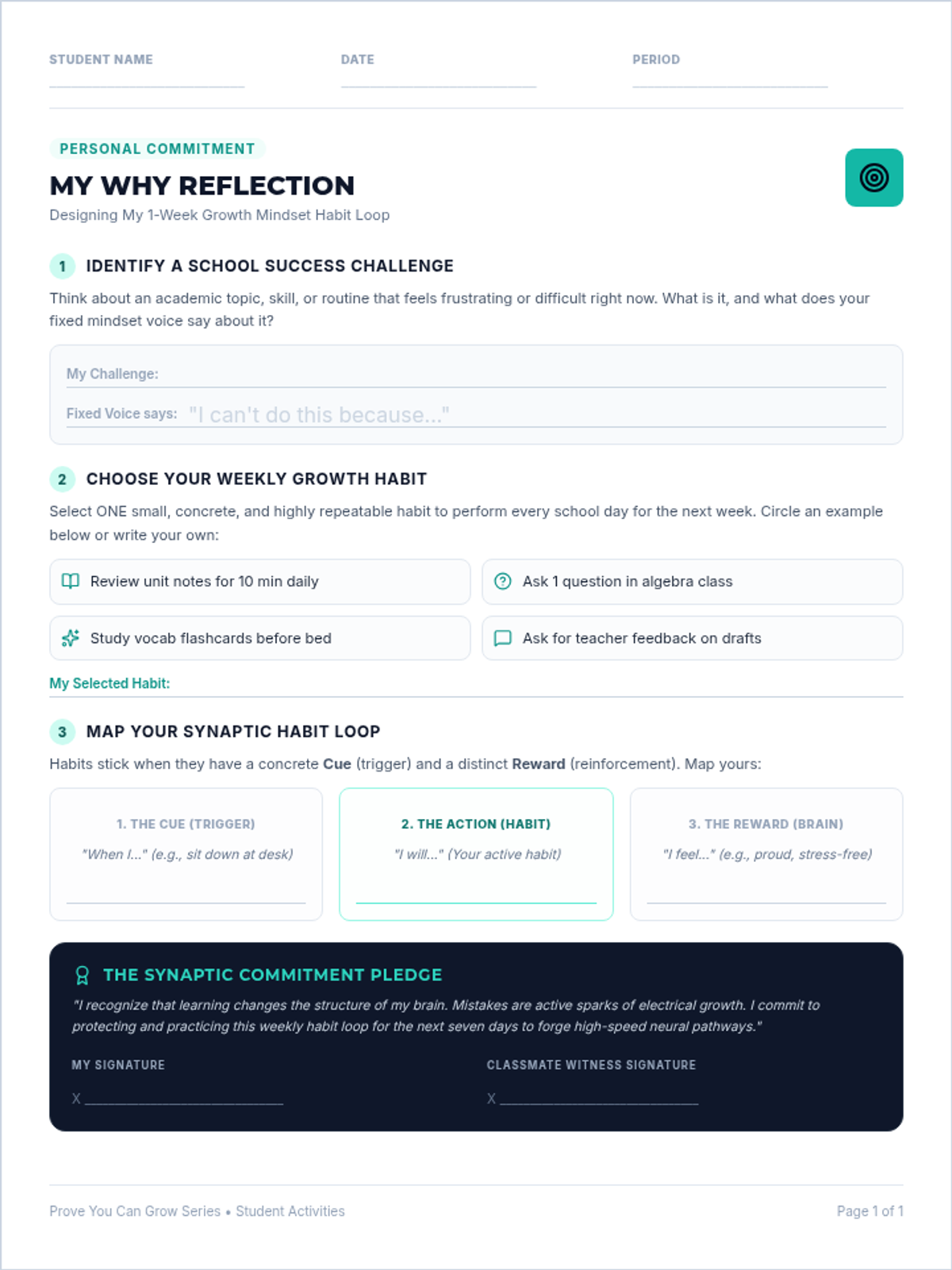
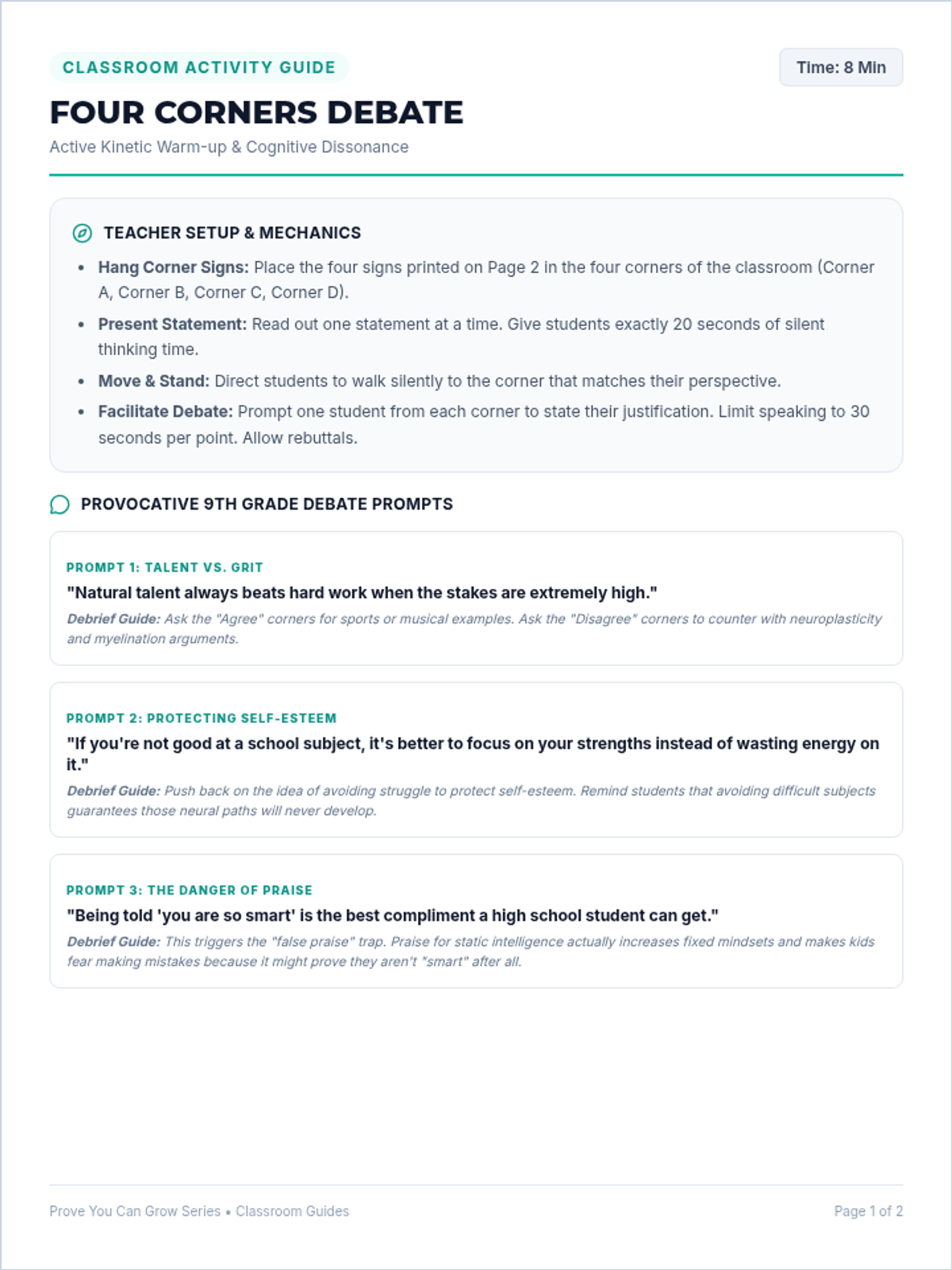
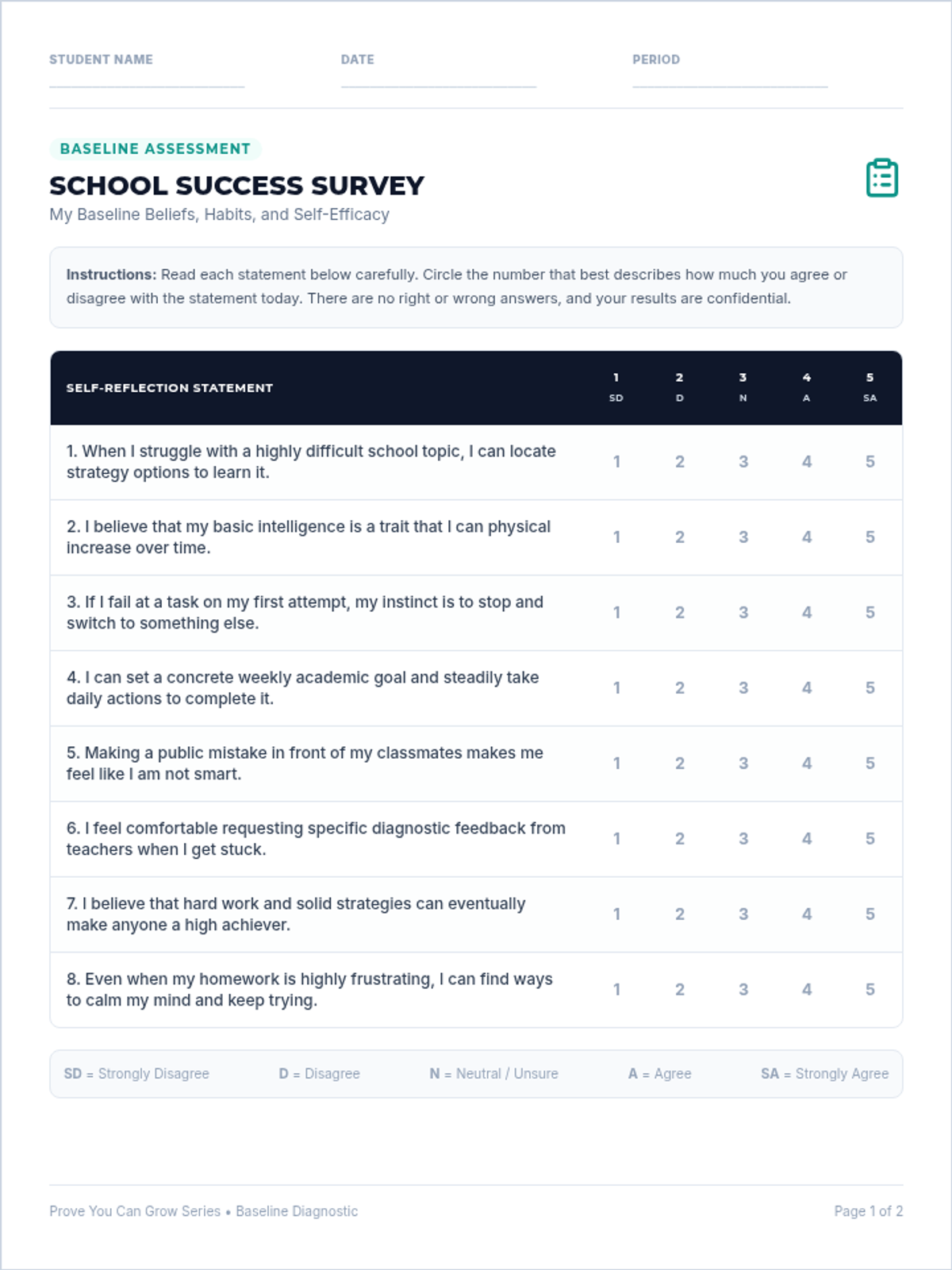
A kickoff lesson introducing 9th graders to growth mindset, neuroplasticity, and self-efficacy. Students engage in collaborative activities, analyze their mindsets, make a personal growth commitment, and complete a baseline school success pre-survey.
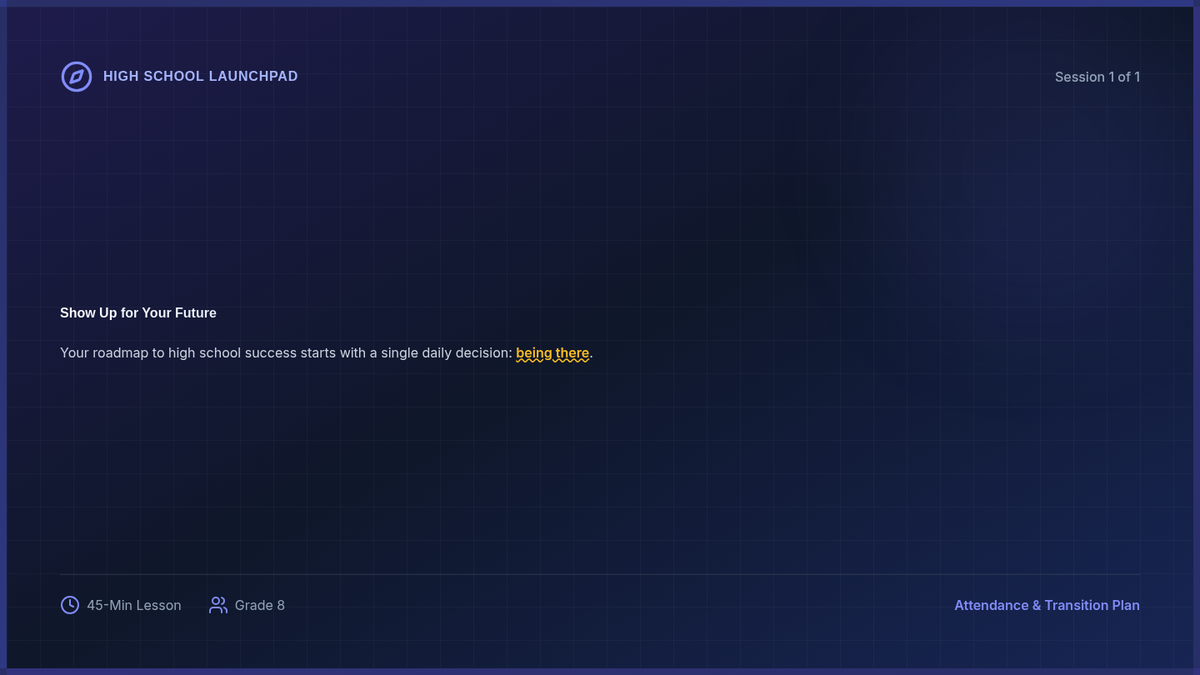
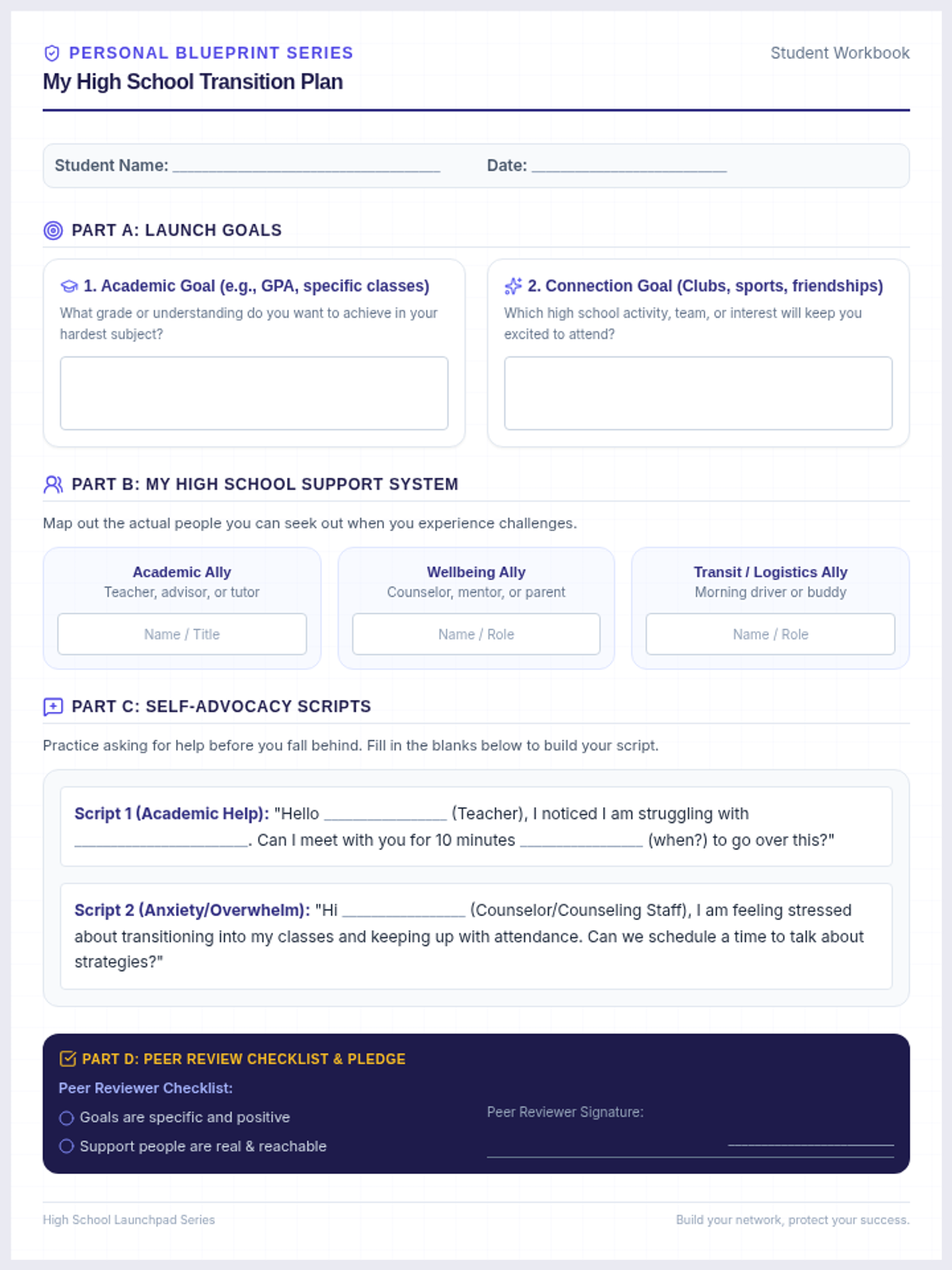
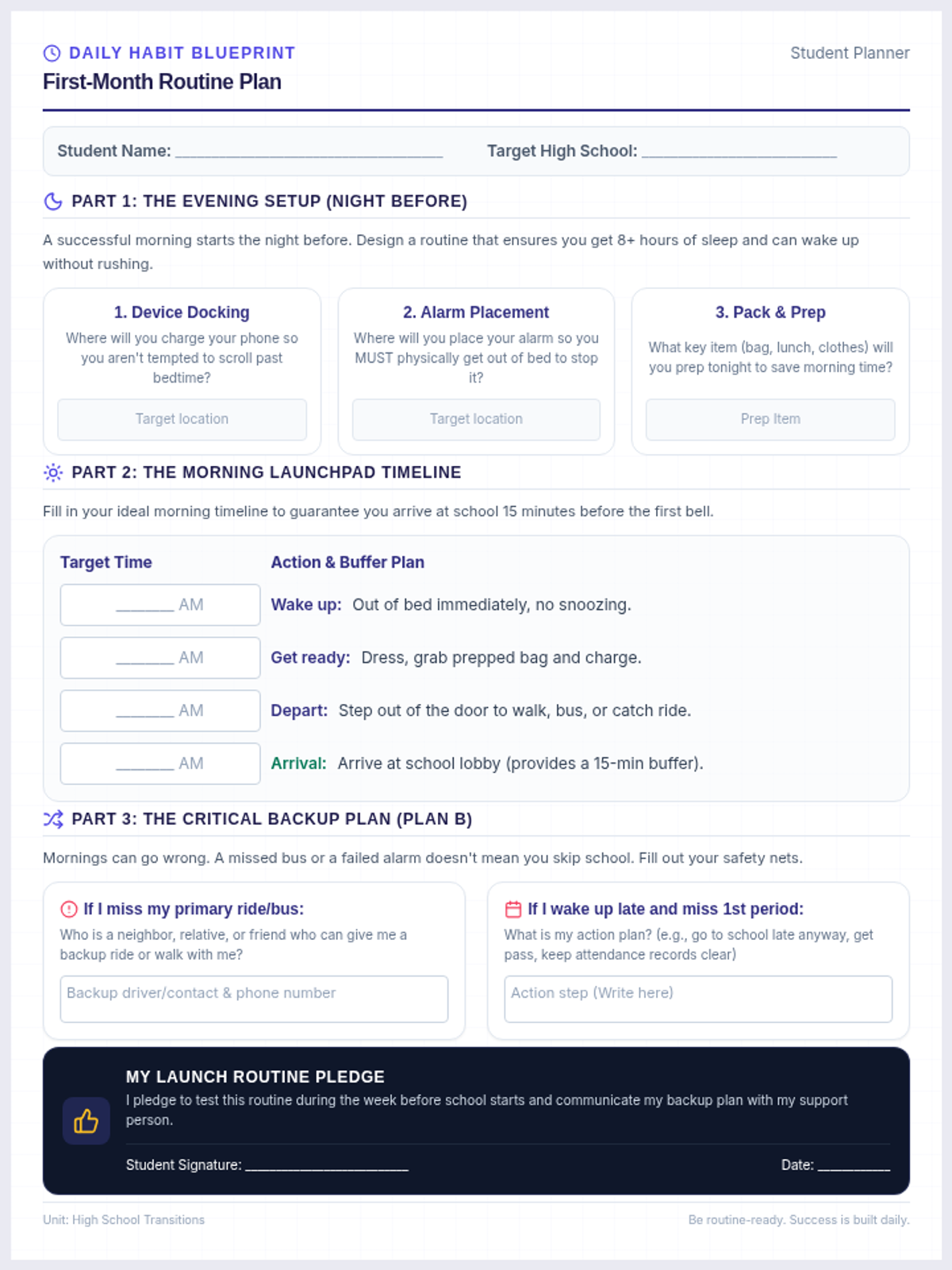
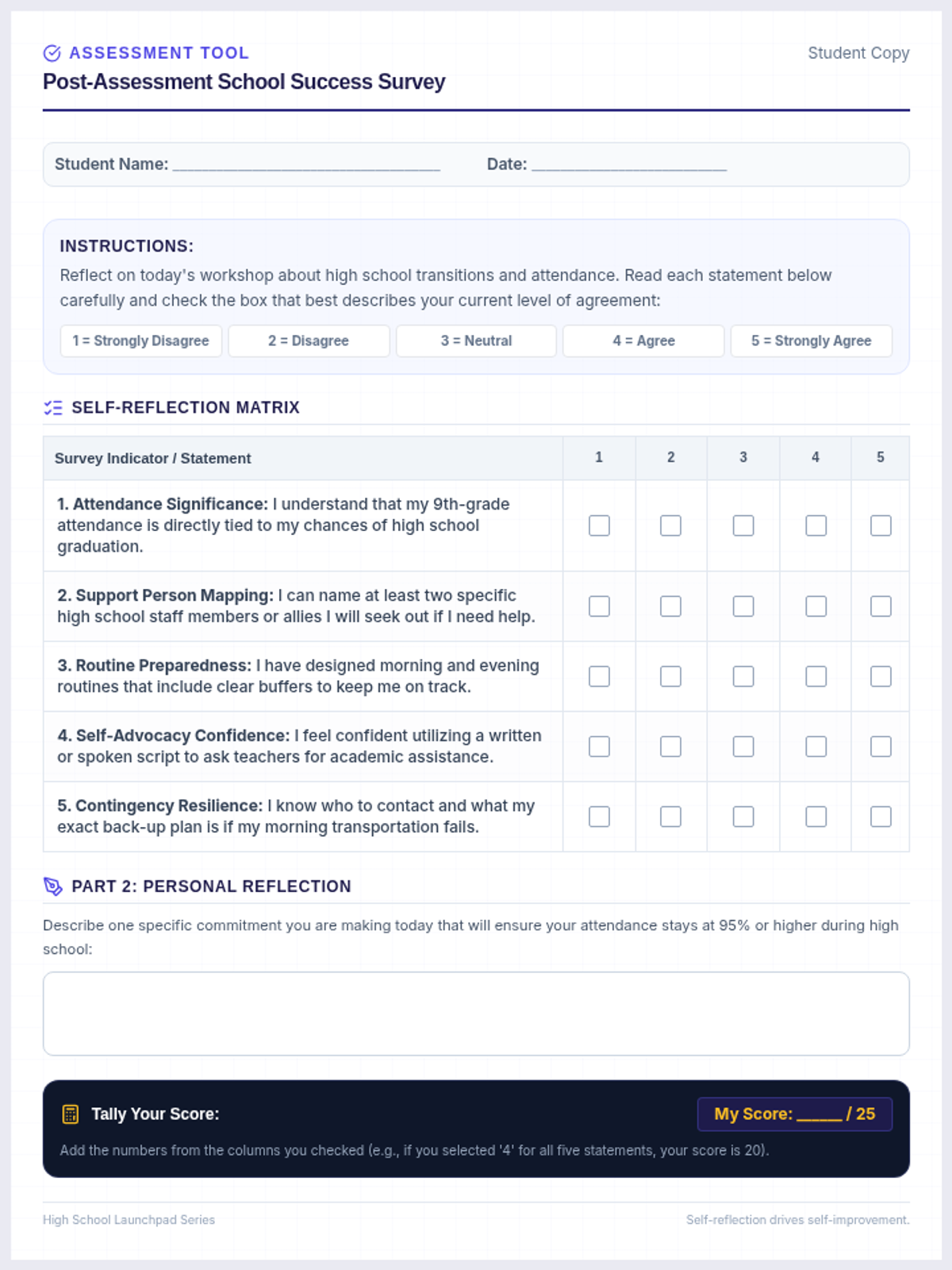
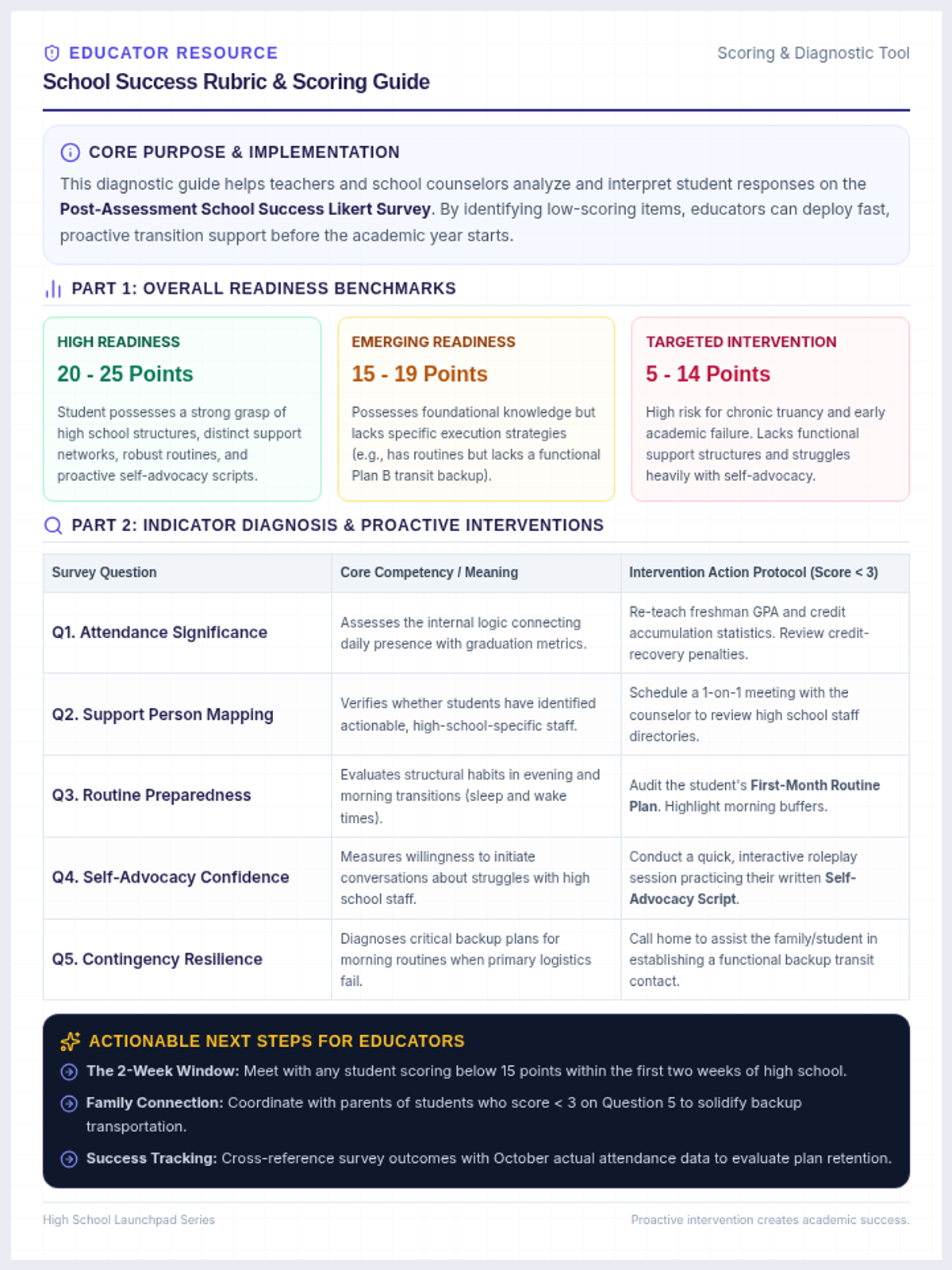
A comprehensive 45-minute lesson for 8th graders transitioning to high school, focusing on the link between attendance and academic success, building a personal transition plan with support networks, designing daily routines, and self-assessing readiness.
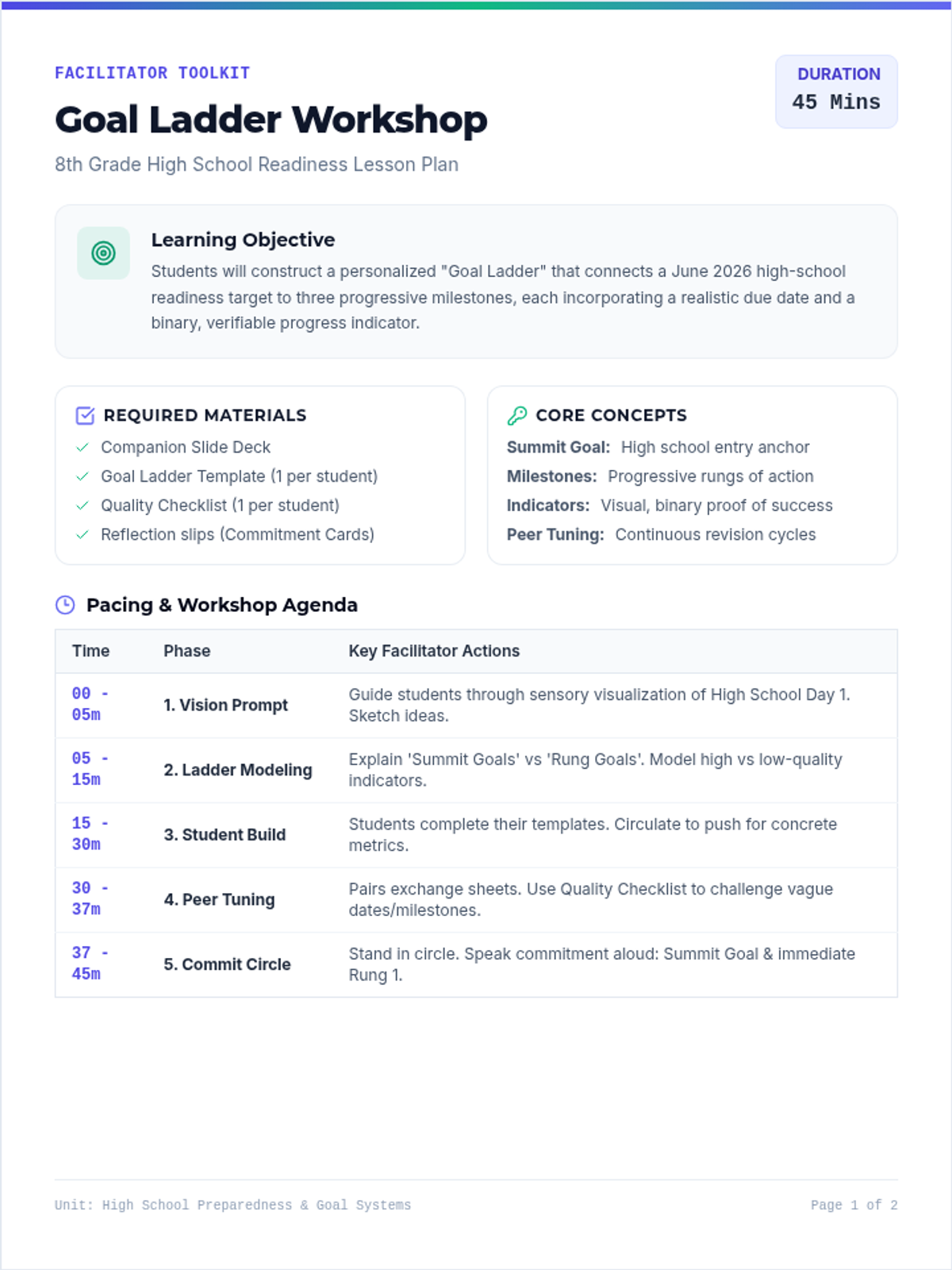
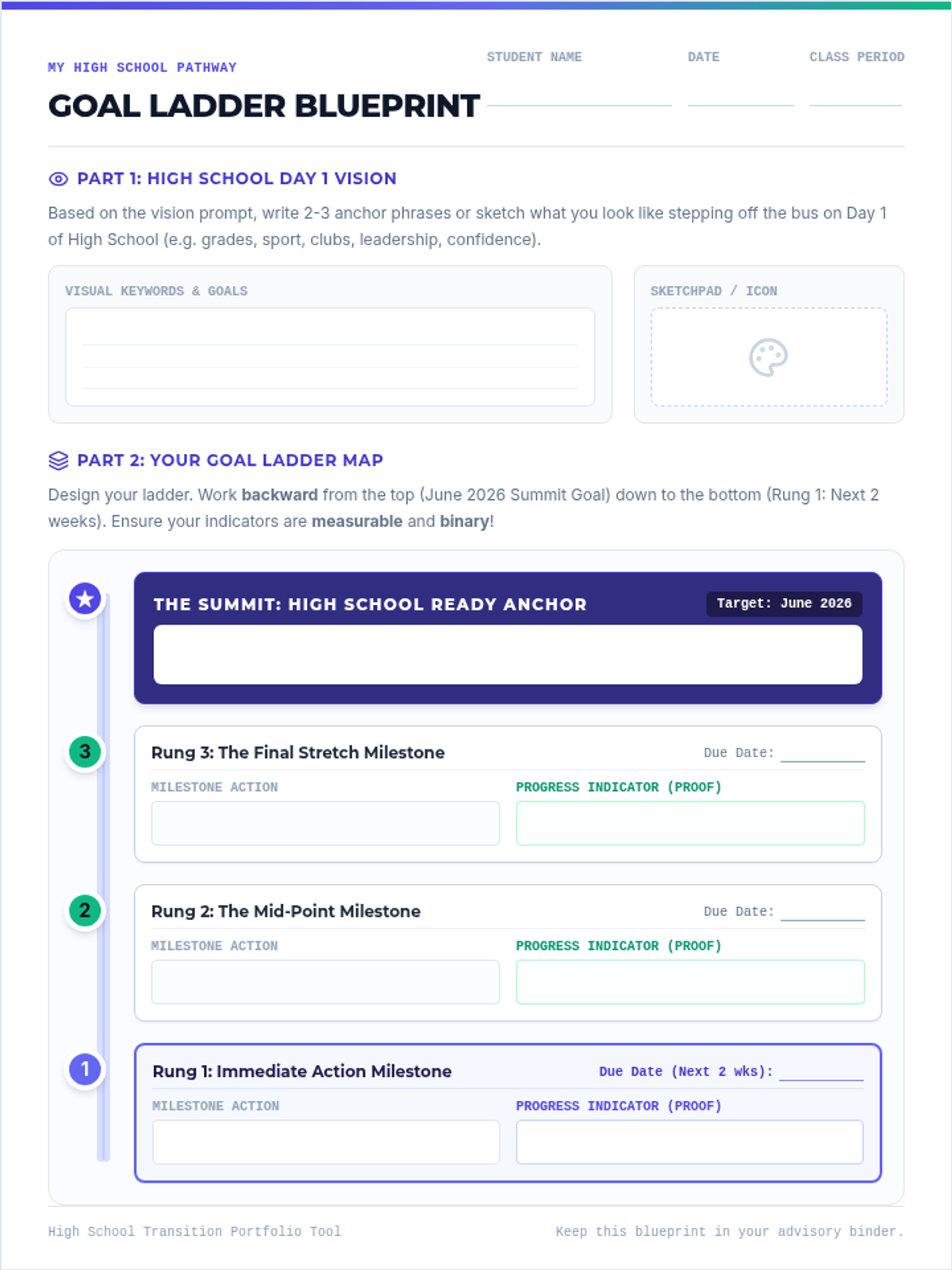
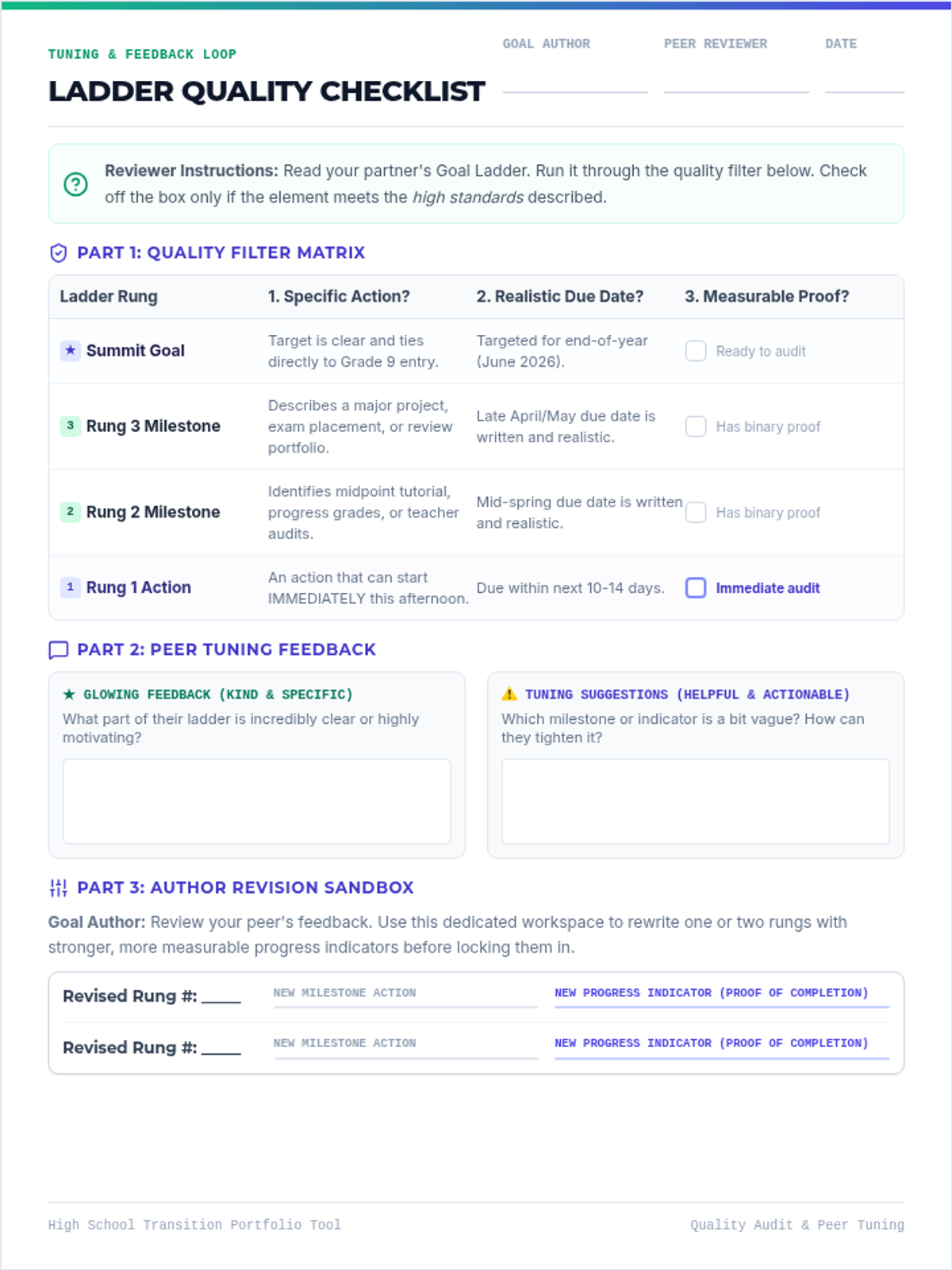
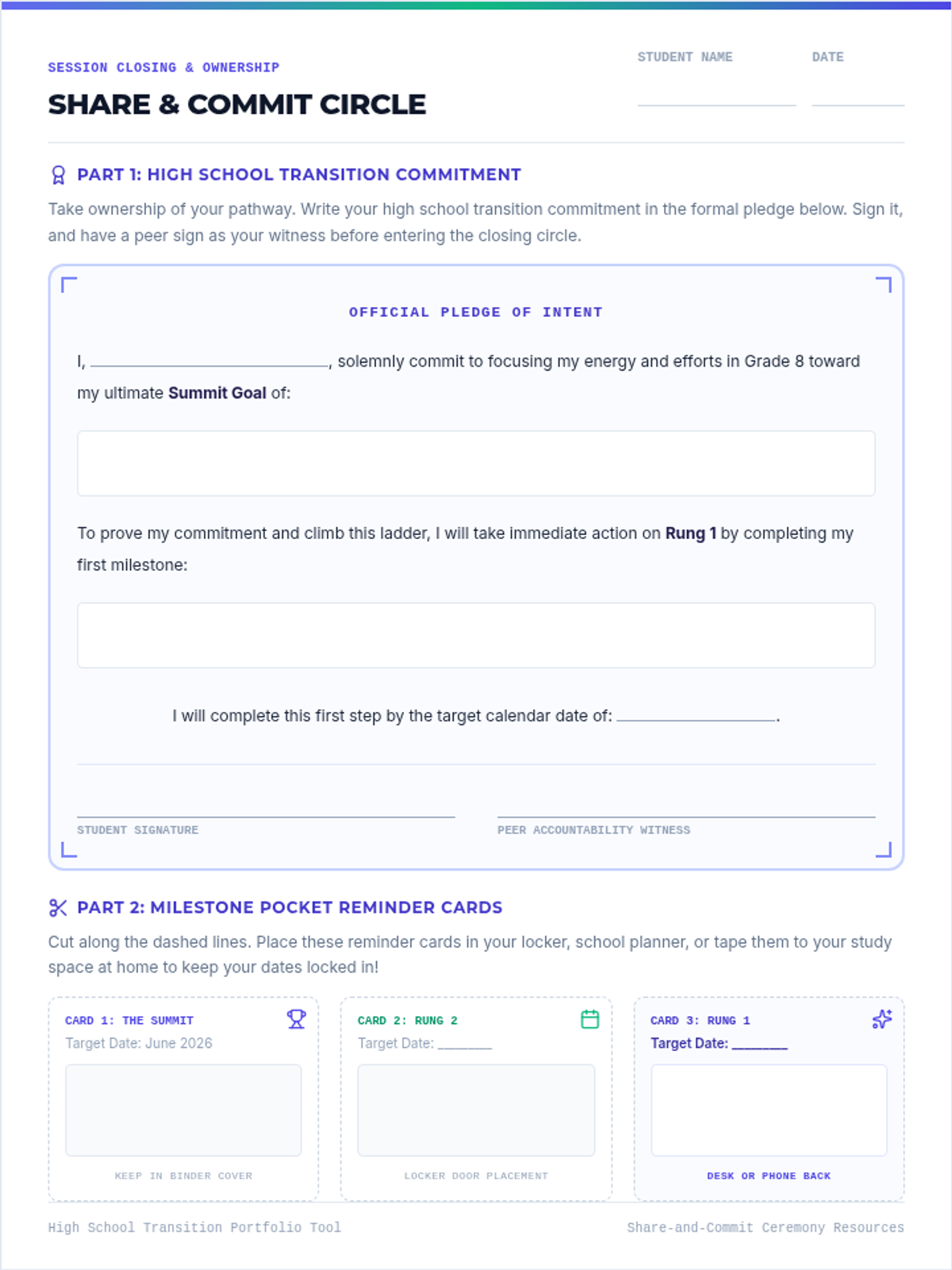
An interactive 8th-grade lesson designed to help students transition to high school by translating long-term visions into concrete, actionable steps. Students create a structured goal ladder with three milestones, specific due dates, and measurable progress indicators, followed by peer feedback and a share-and-commit circle.
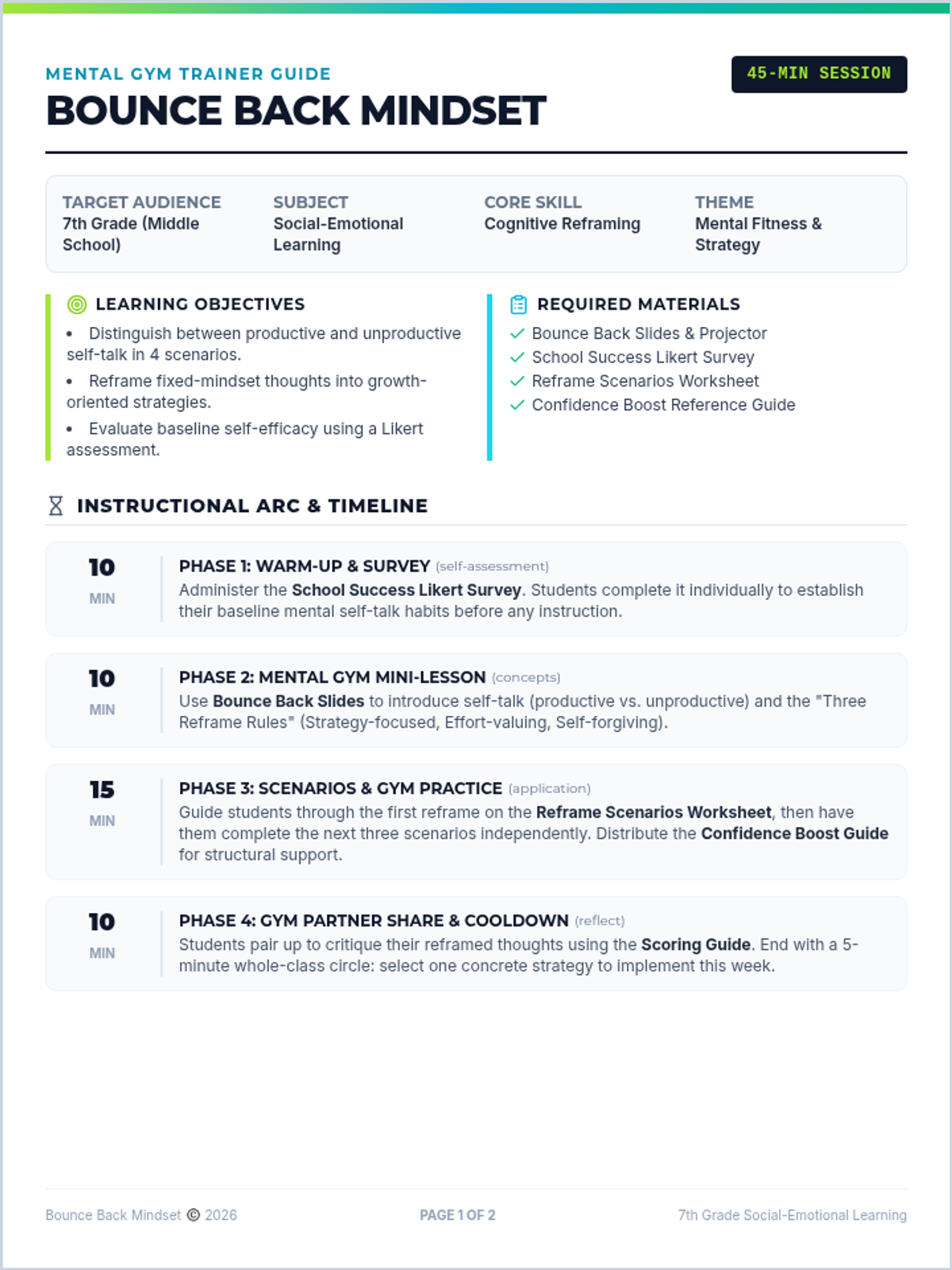
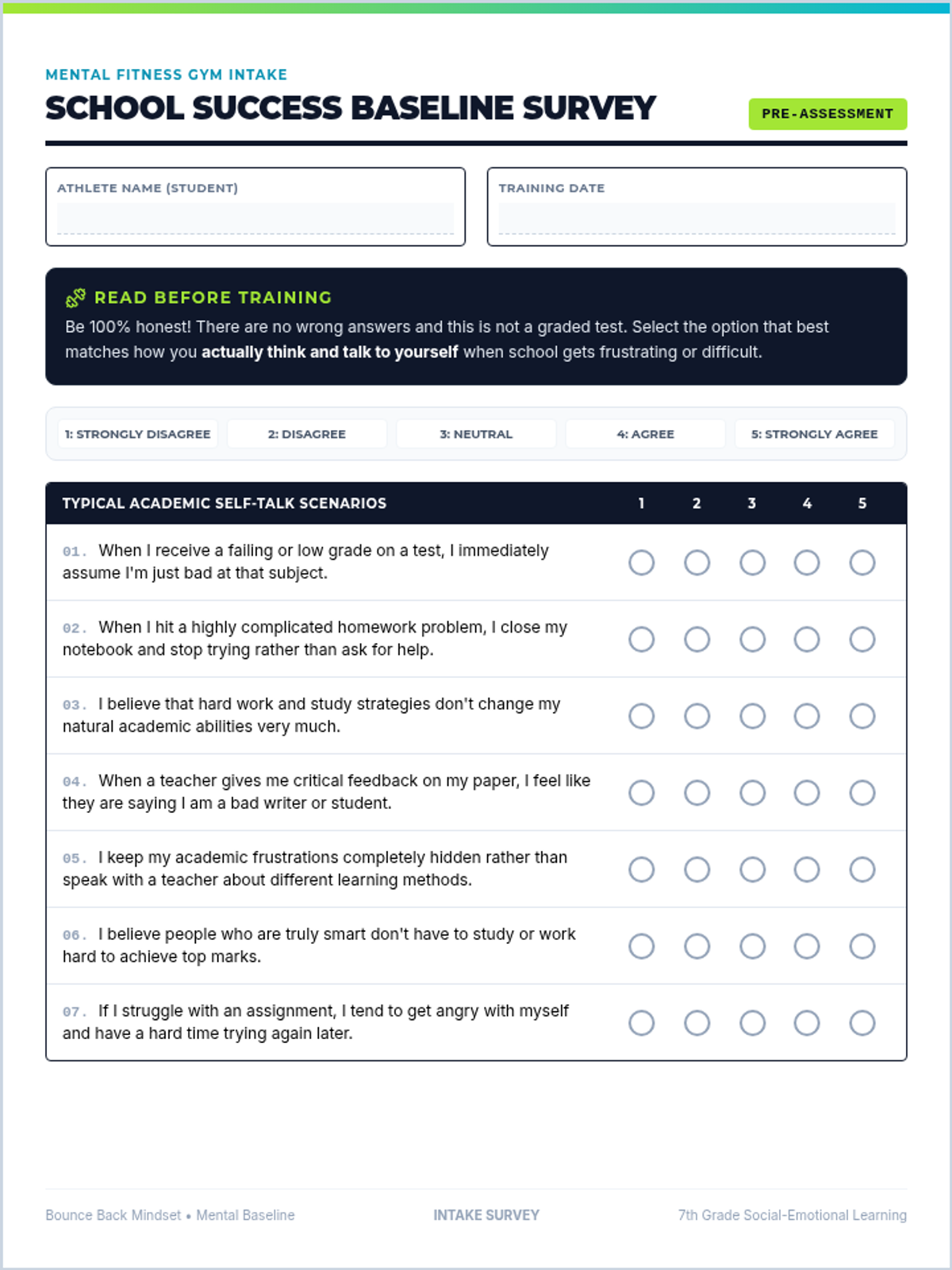
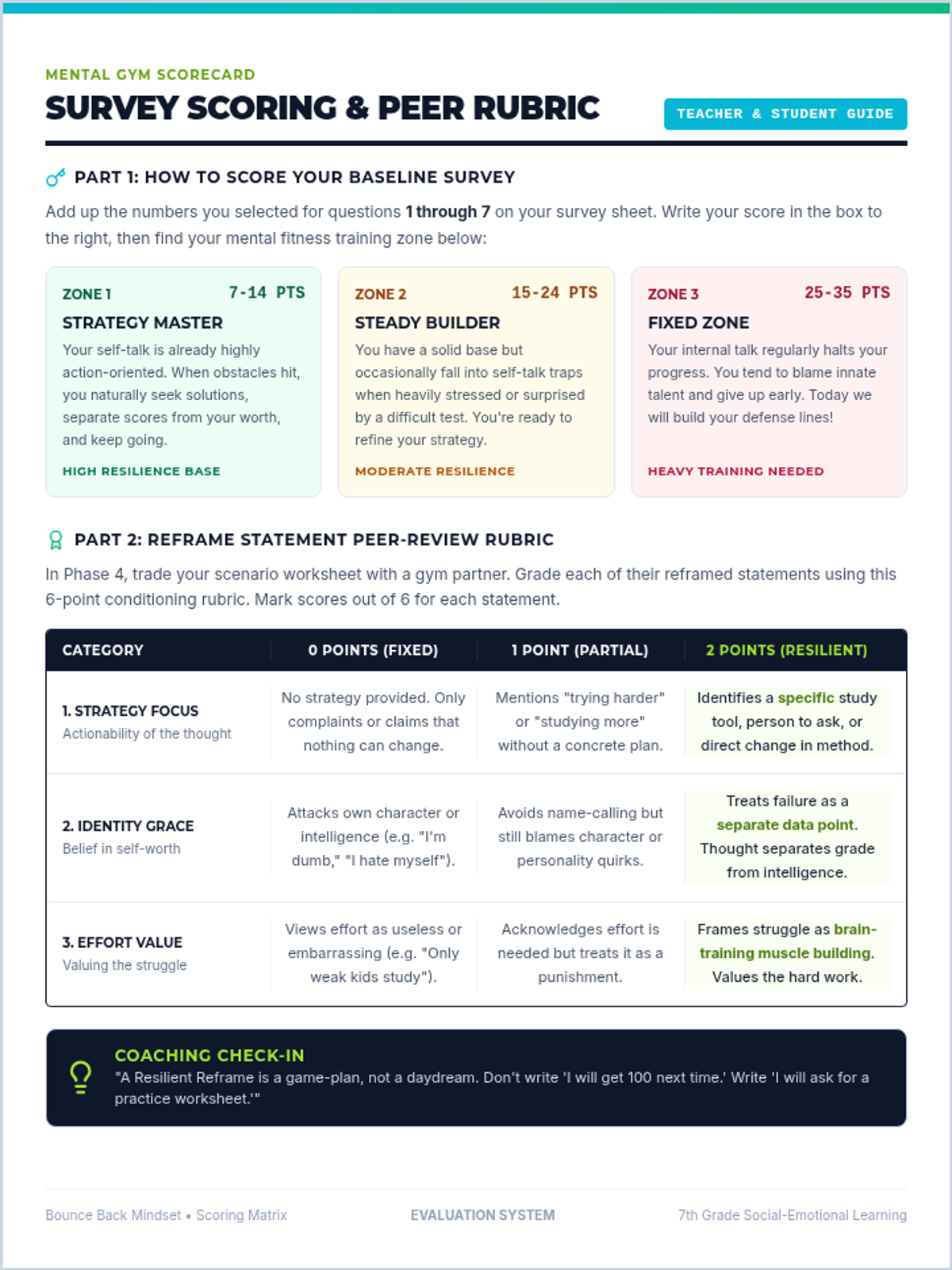
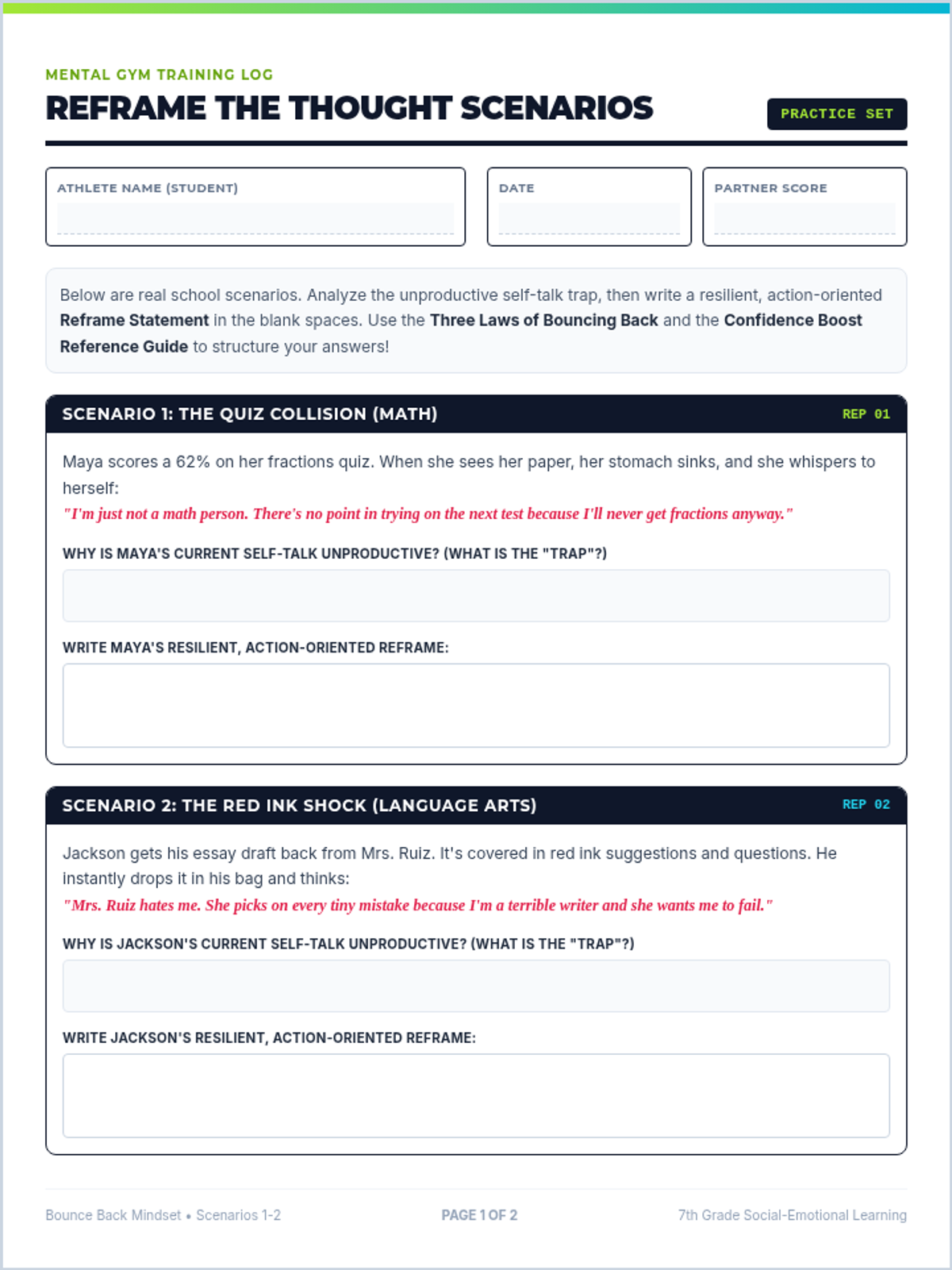
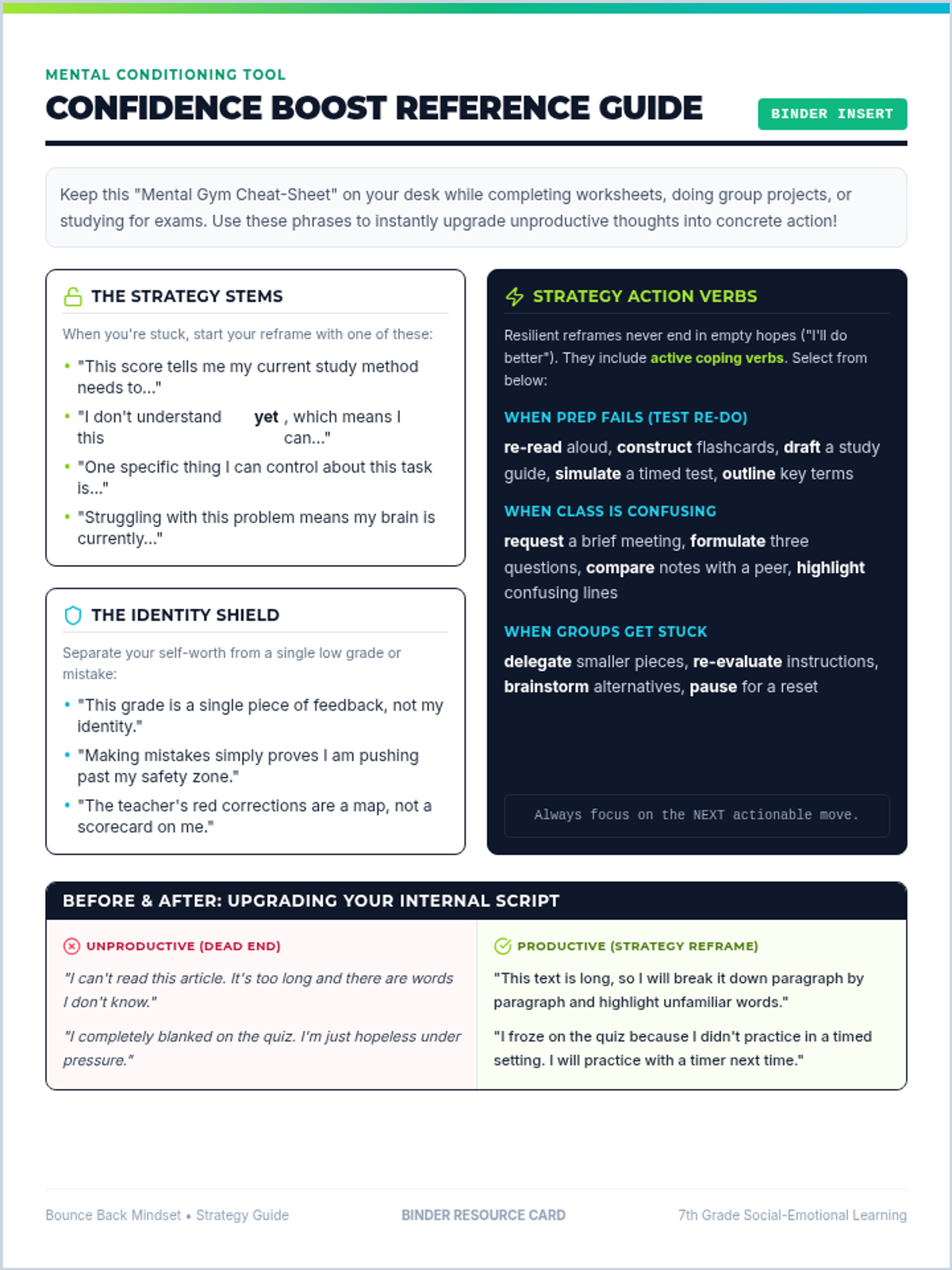
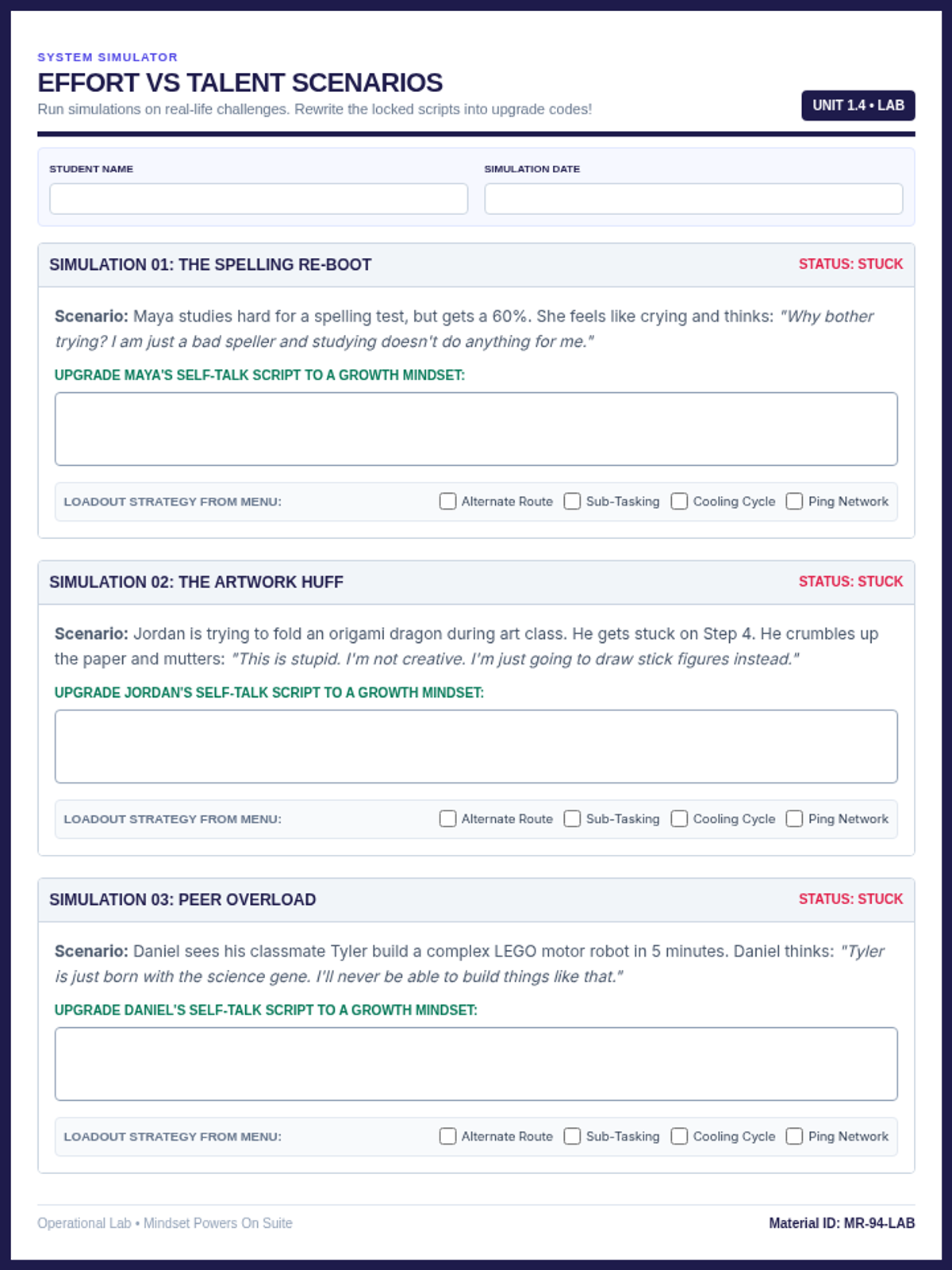
A 45-minute social-emotional learning lesson for 7th graders to explore cognitive reframing, distinguish between productive and unproductive self-talk, and practice applying growth-oriented strategies to academic setbacks.
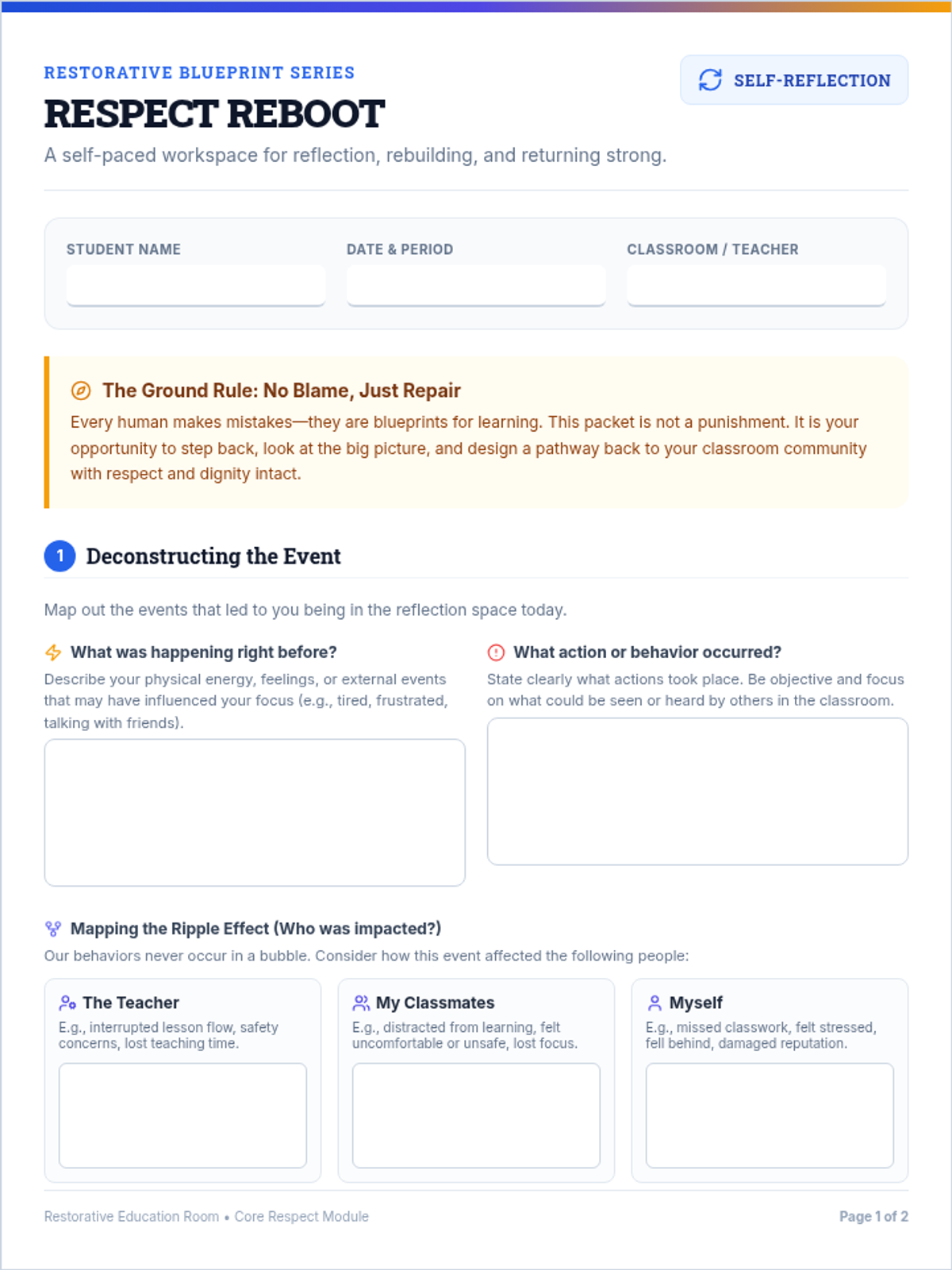
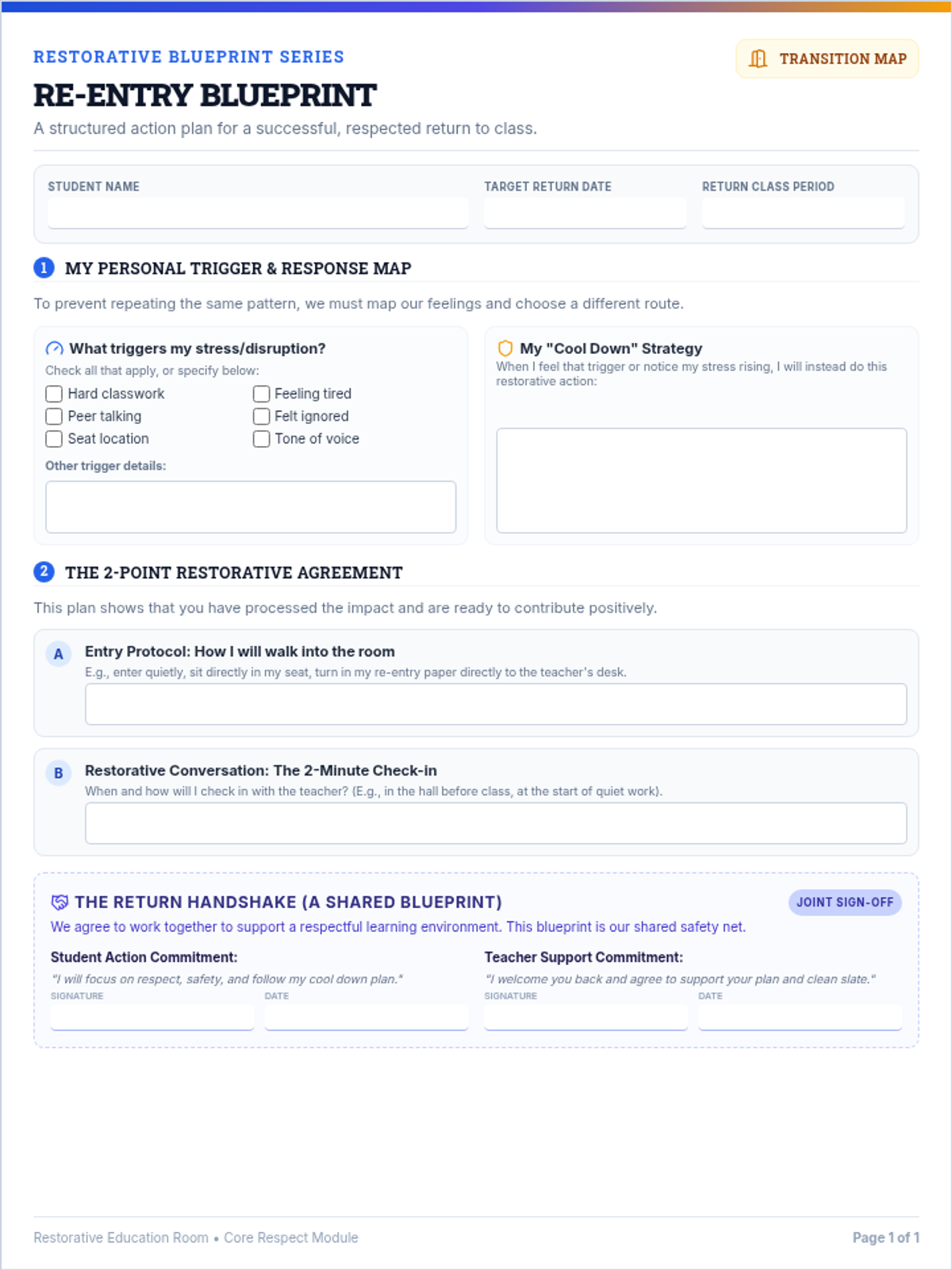
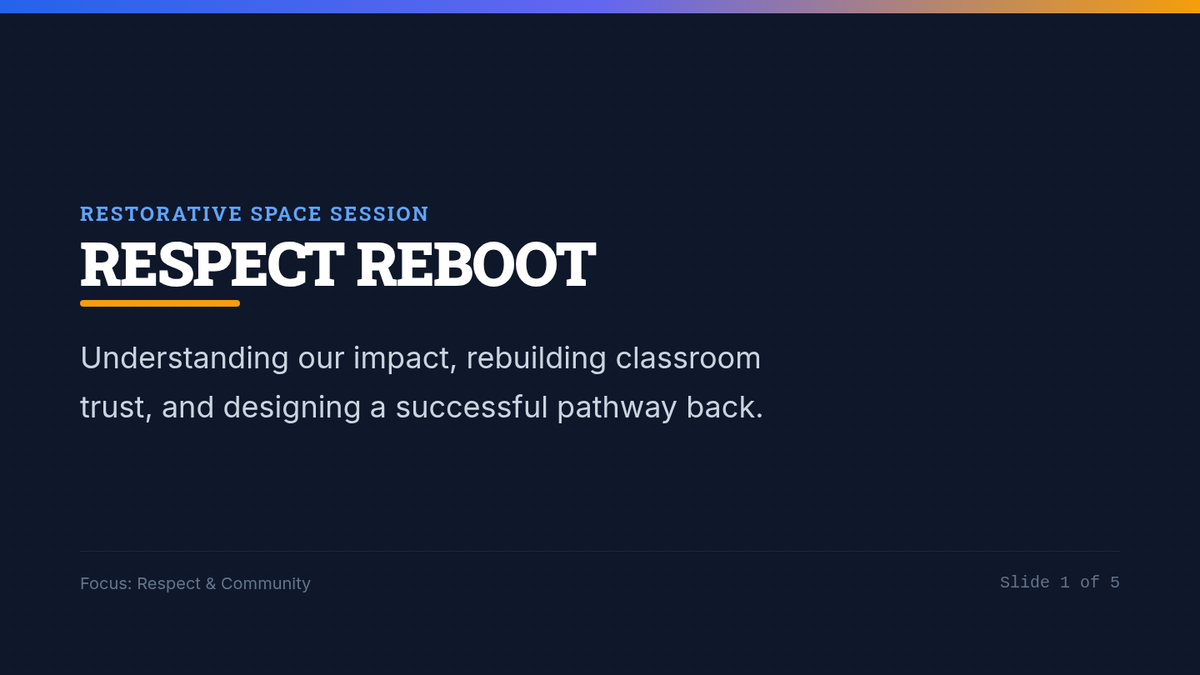
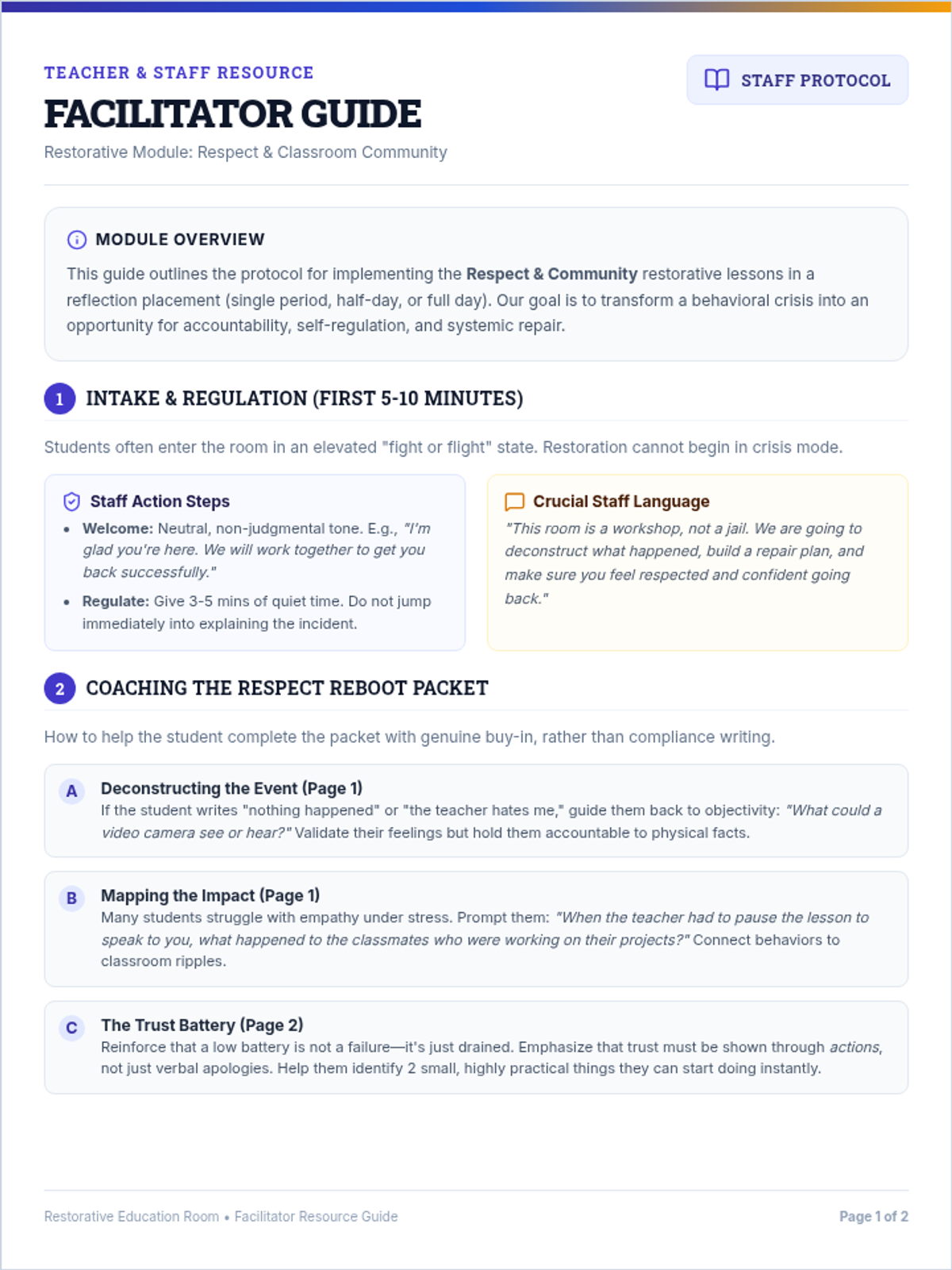
A restorative module focusing on understanding behavior impact, rebuilding classroom trust, and respecting authority. Includes a self-paced reflection packet, transition blueprint, guiding slides, and a facilitator guide.
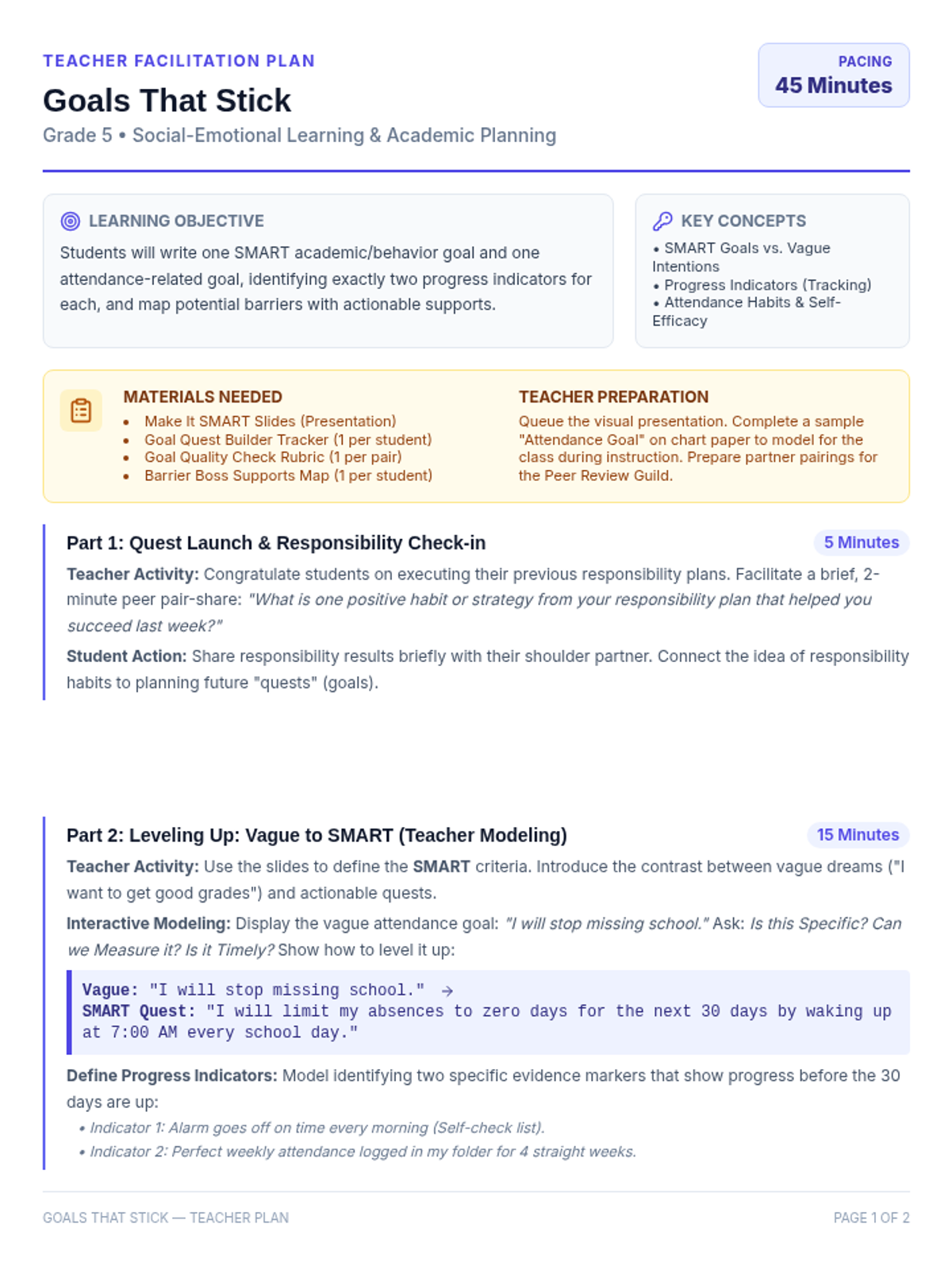
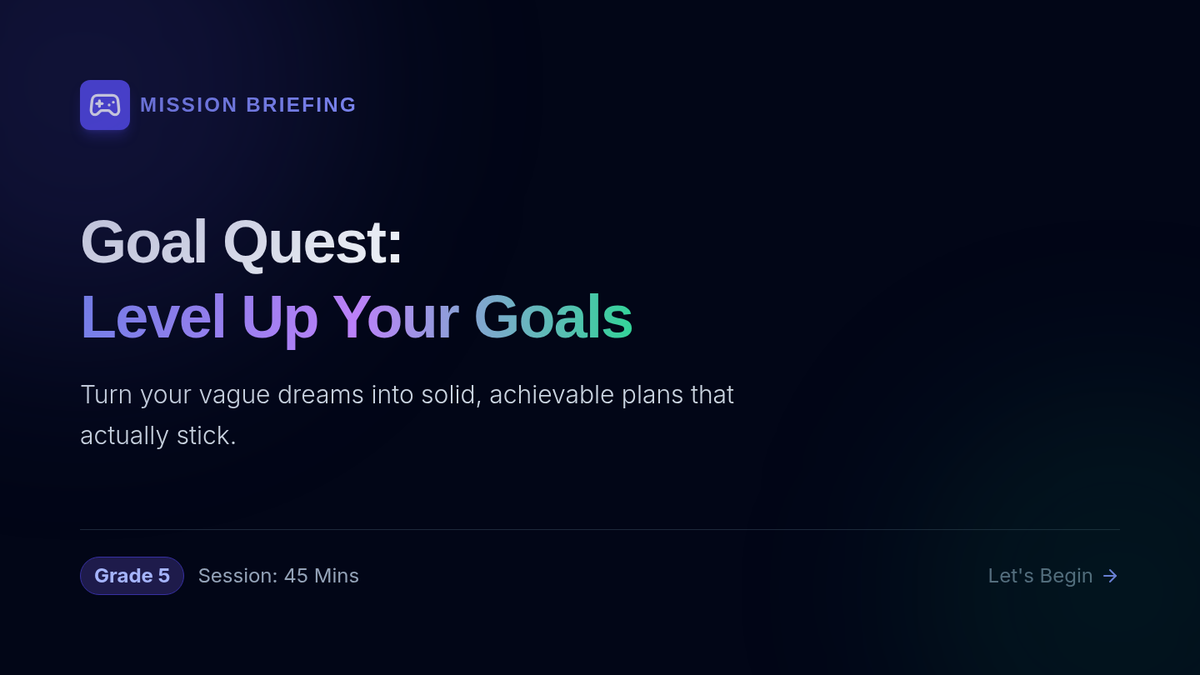
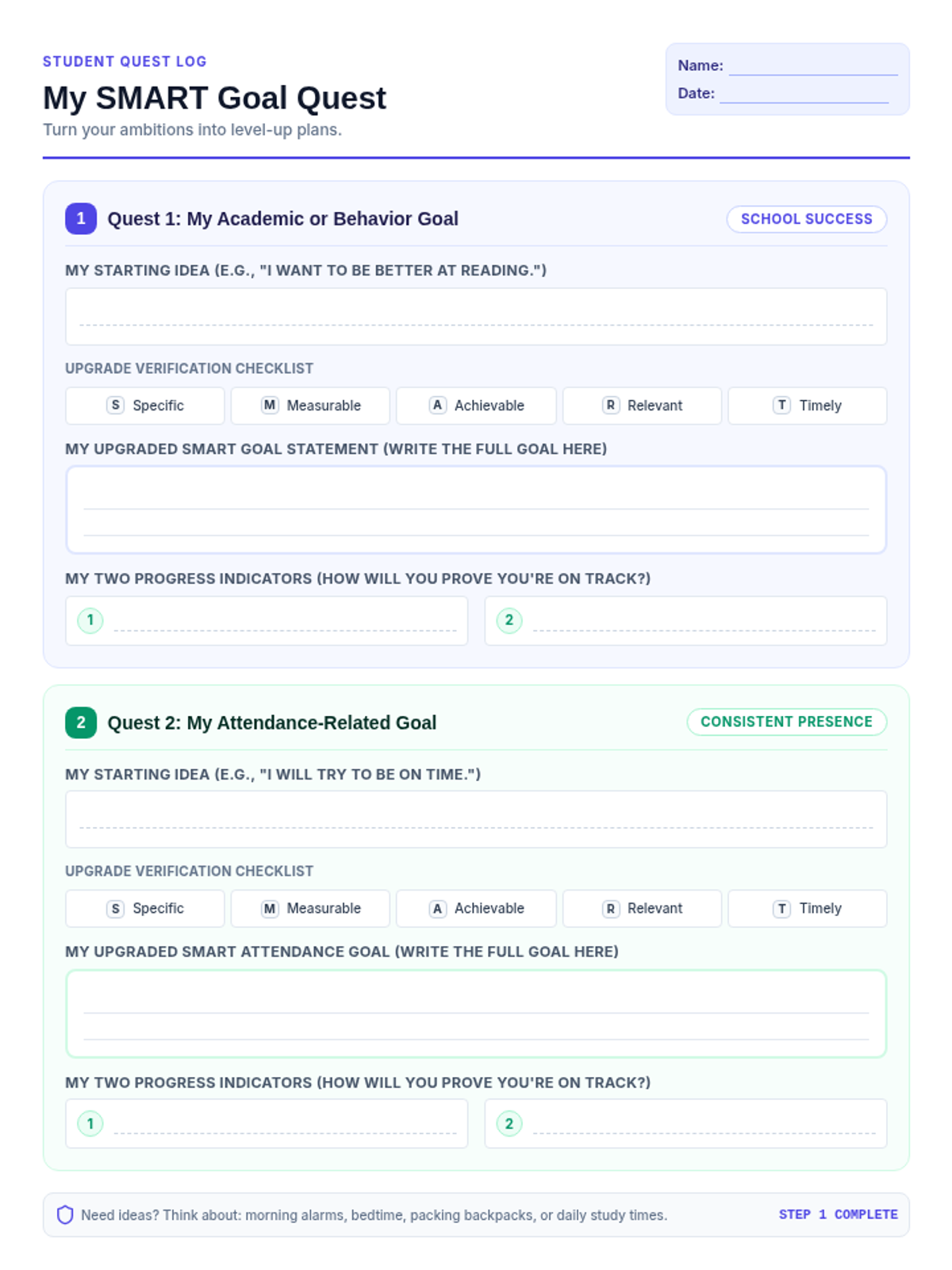
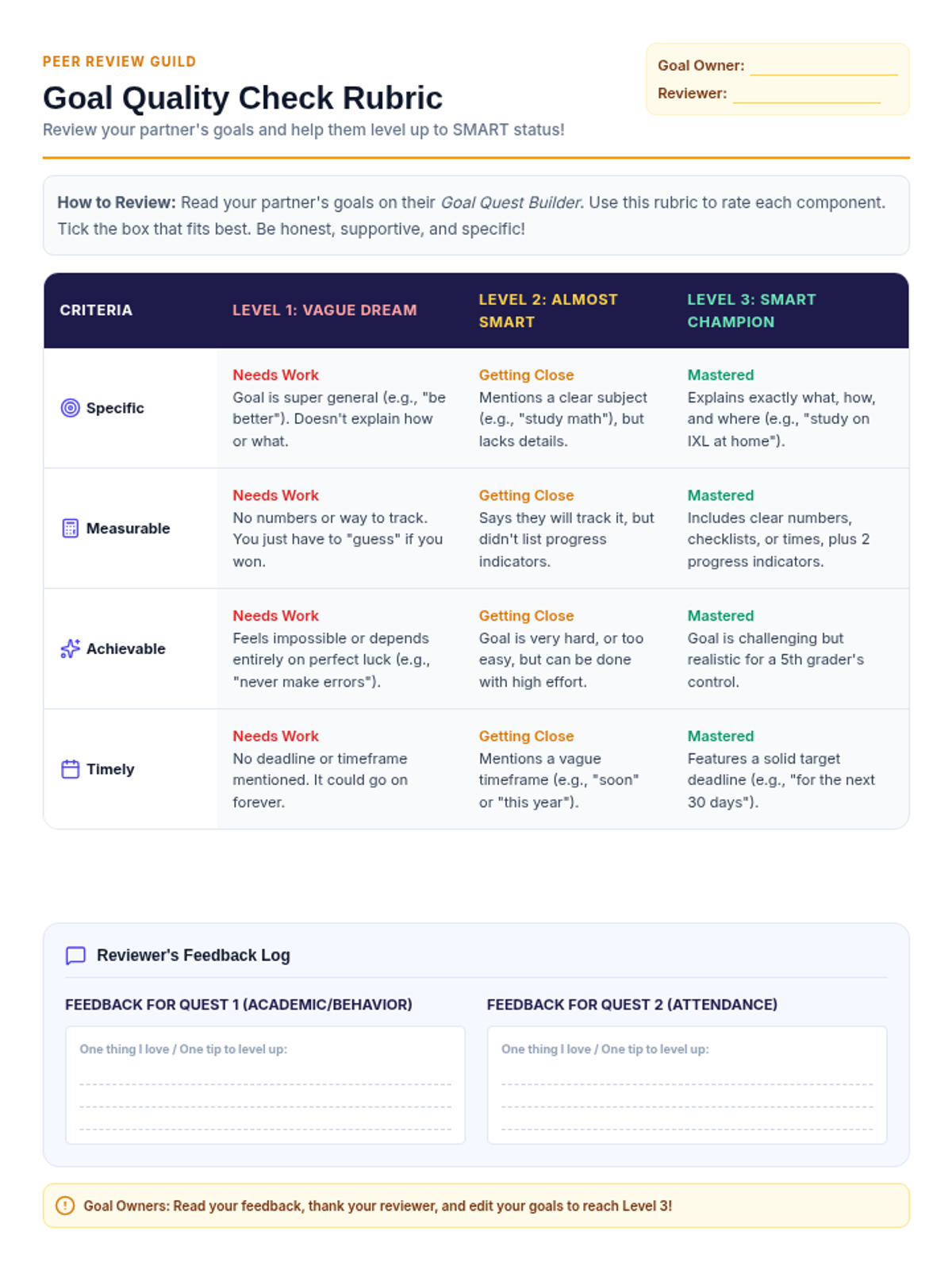
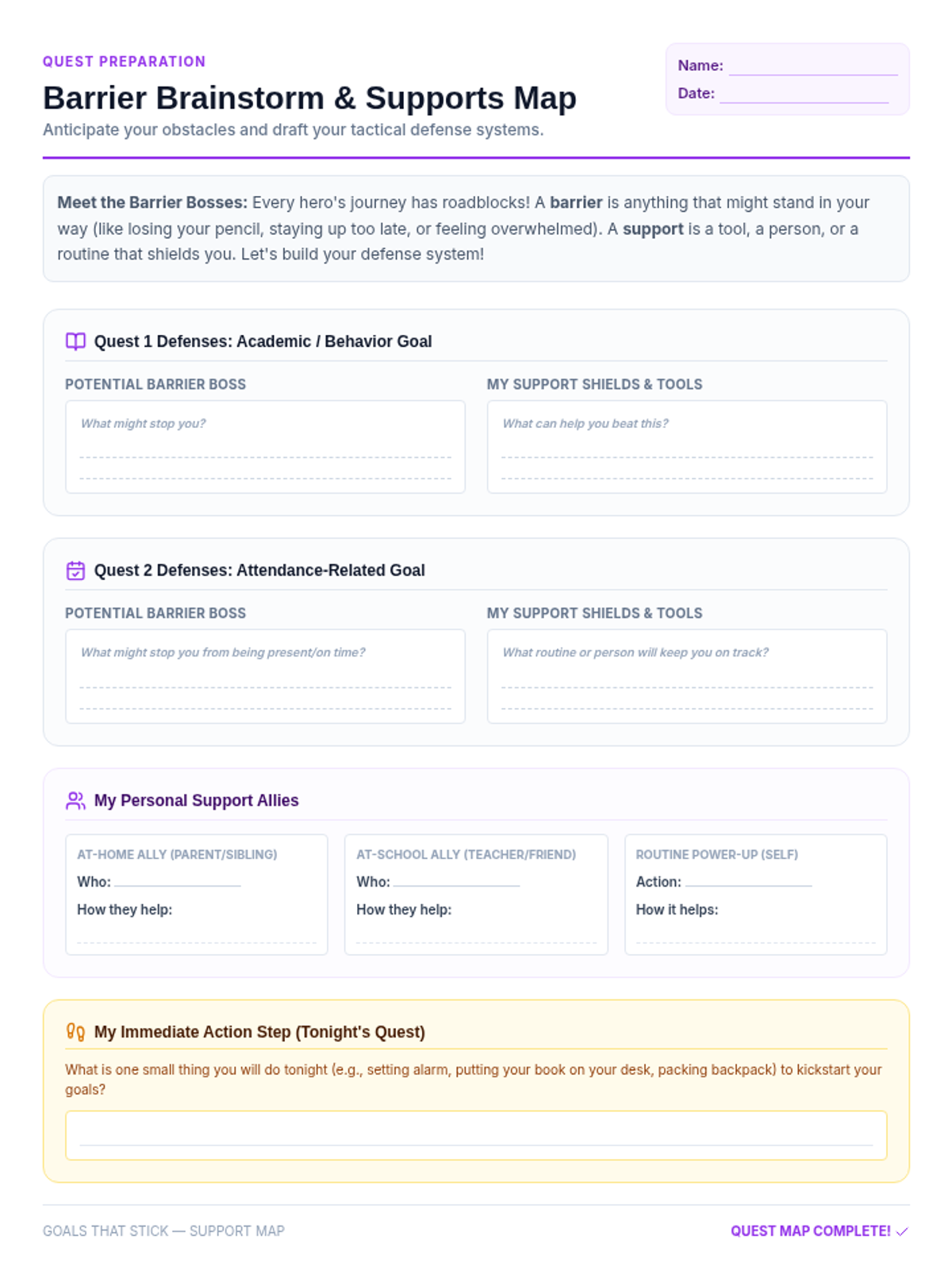
A 45-minute lesson designed for 5th-grade students to master the art of writing SMART academic/behavior and attendance goals. Students learn to define progress indicators, anticipate barriers, and use peer feedback to design achievable action plans.
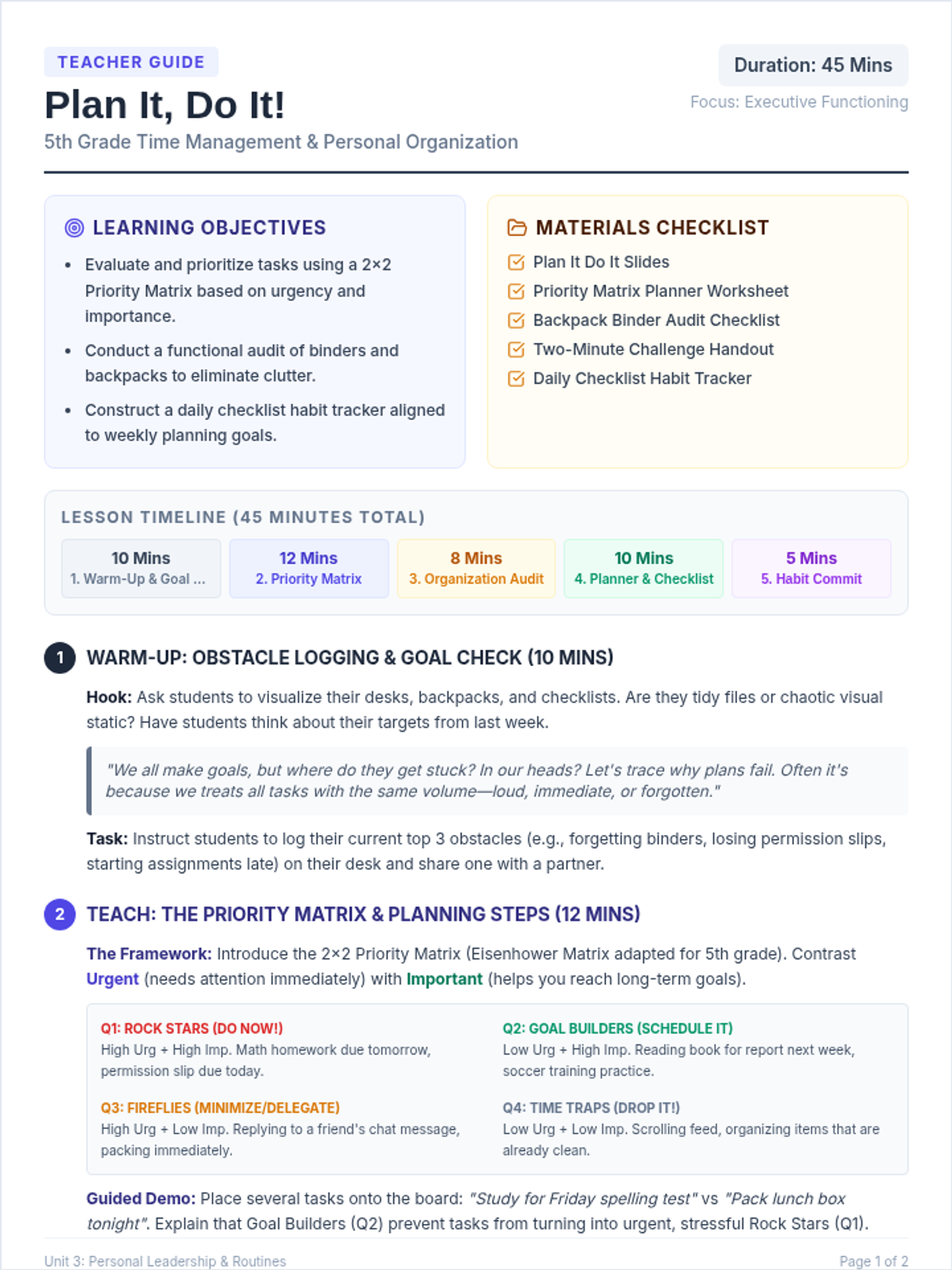
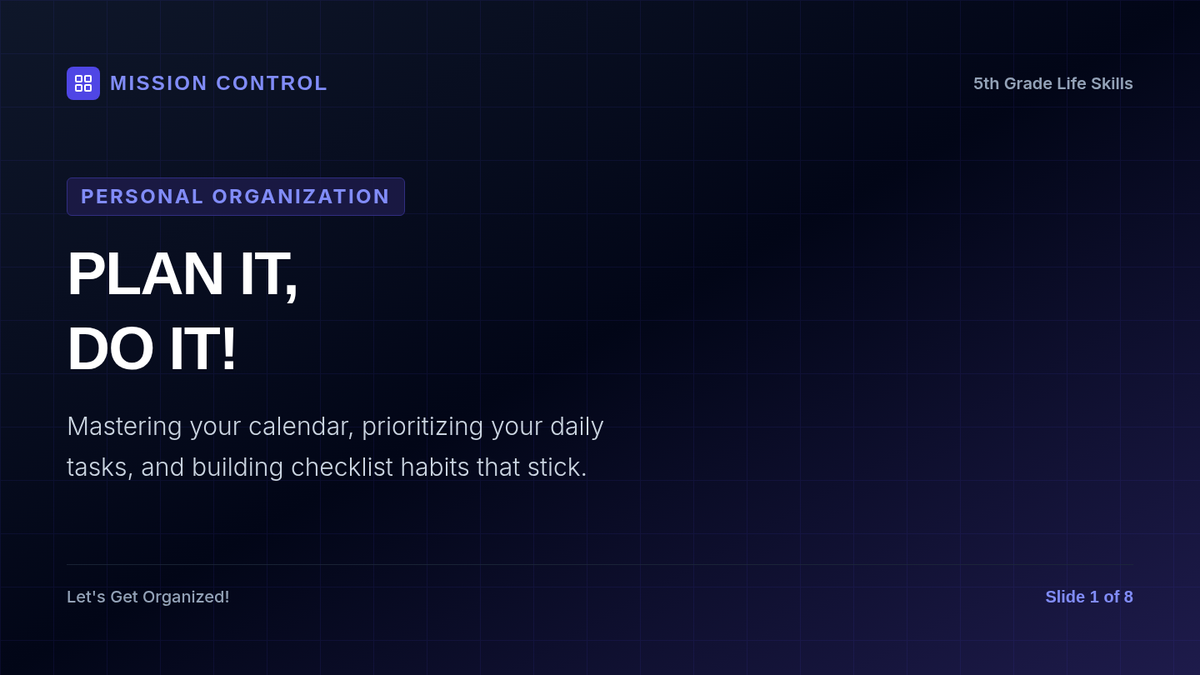
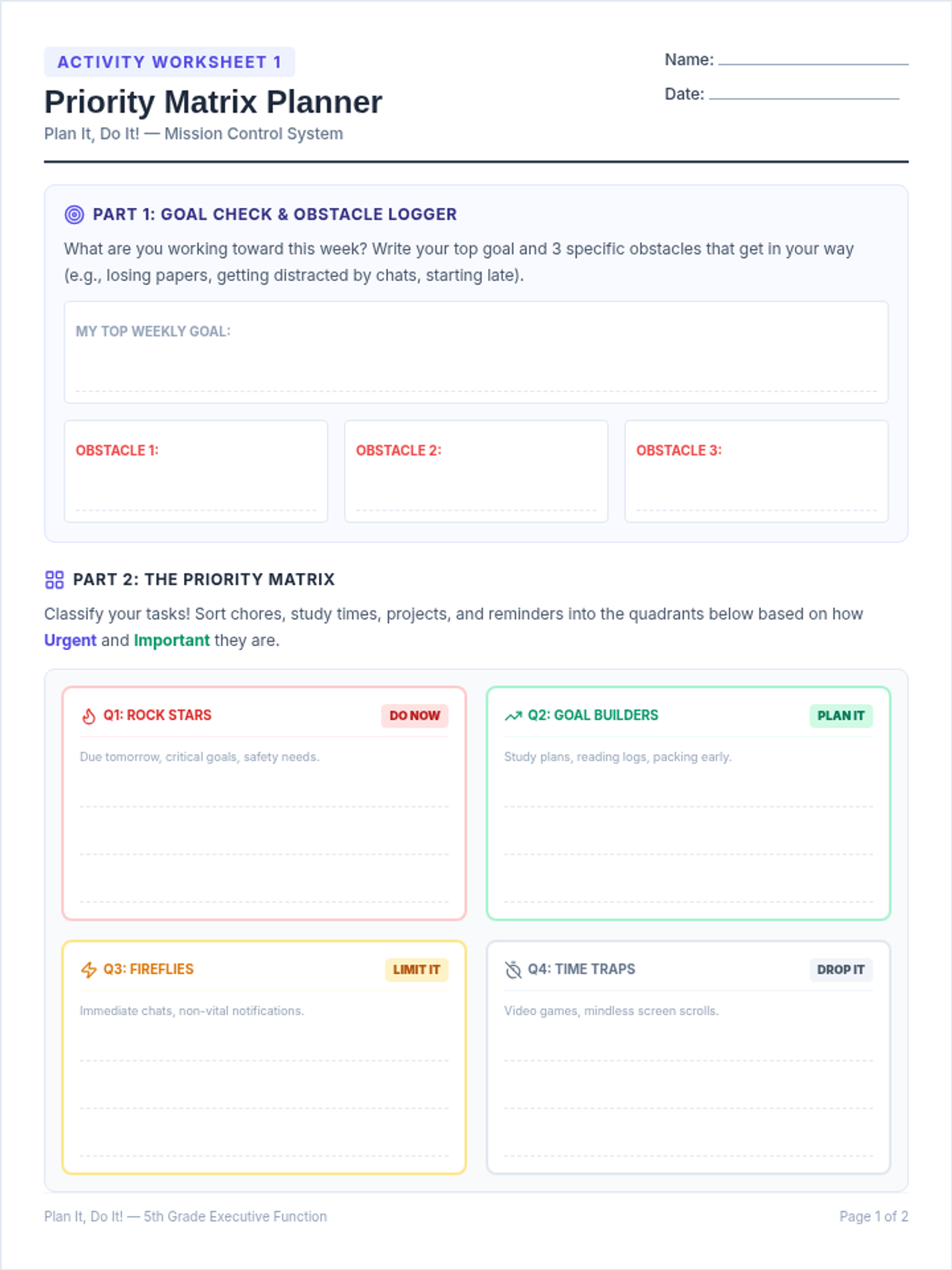
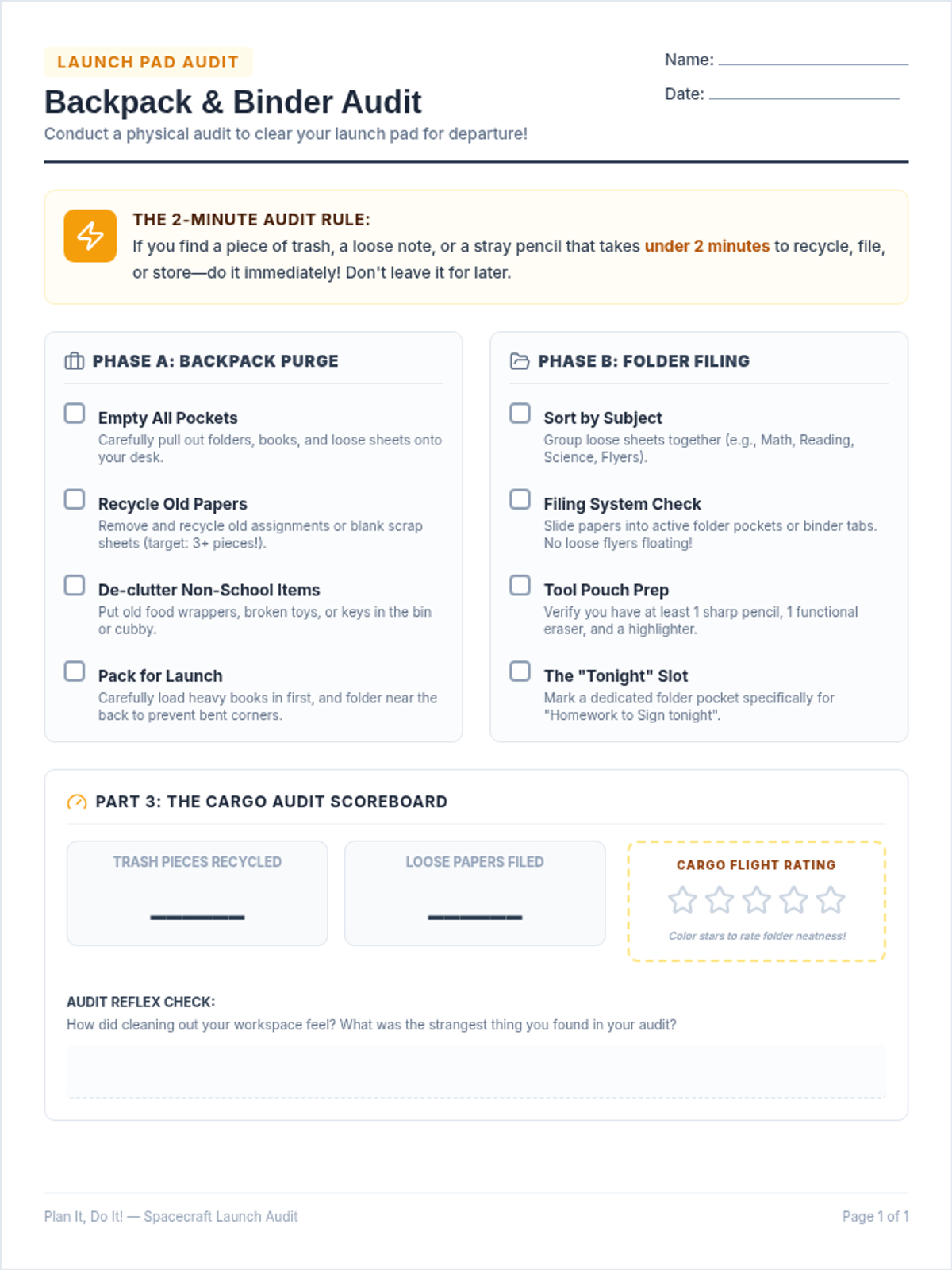
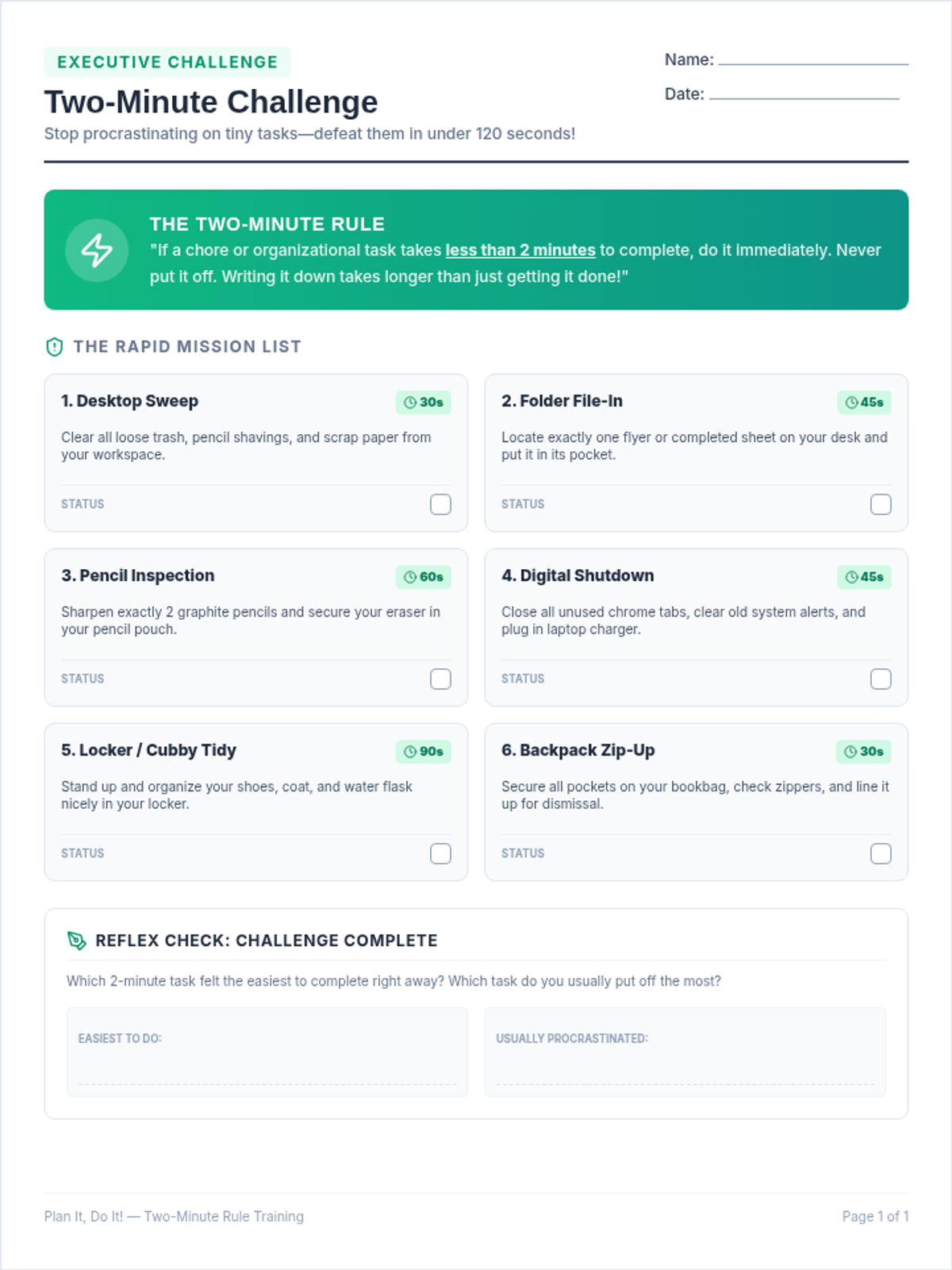
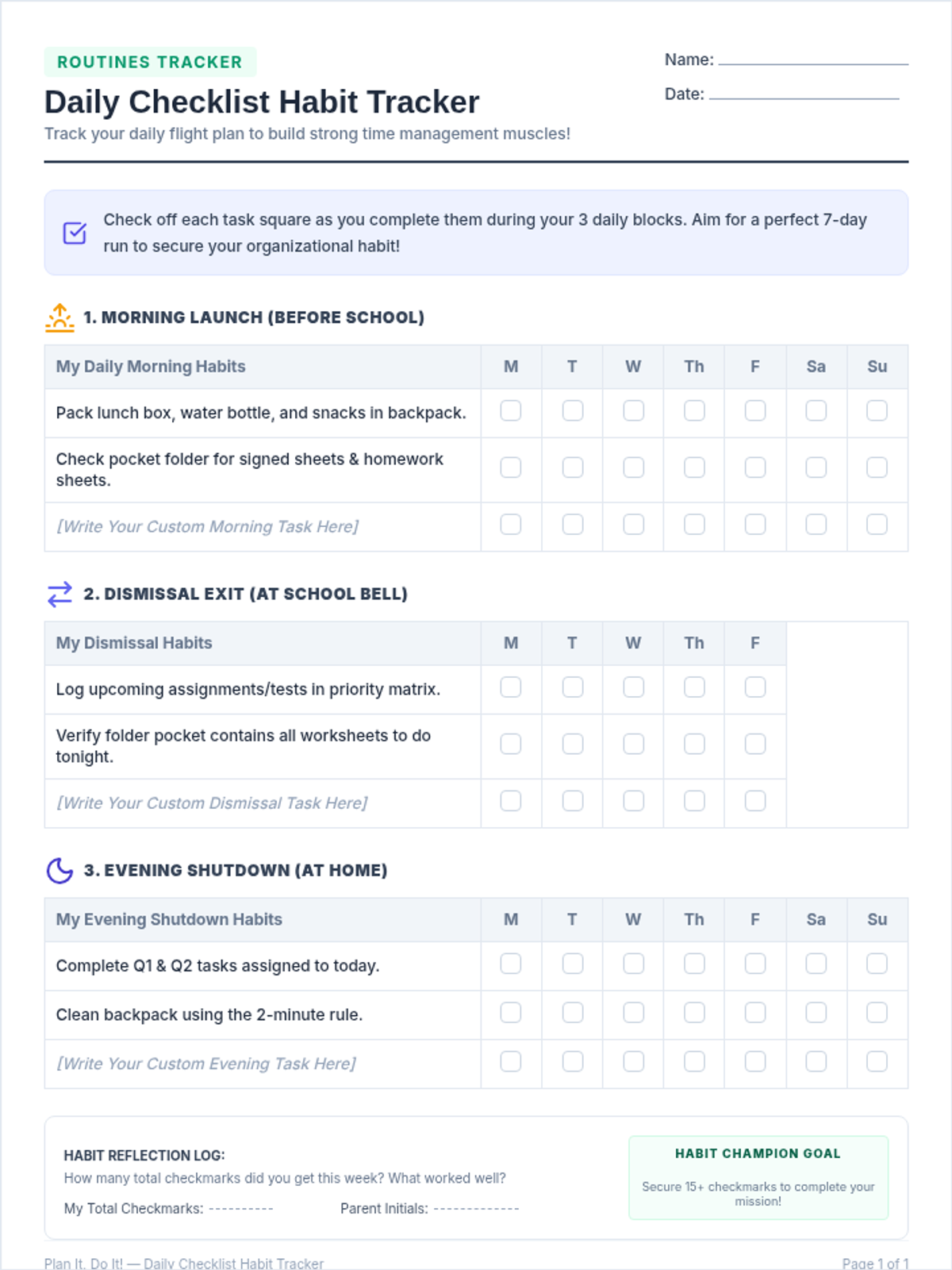
A hands-on lesson designed to teach 5th-grade students practical time management and organizational skills, including task prioritization with a matrix, binder/backpack auditing, and building sustainable daily checklists.
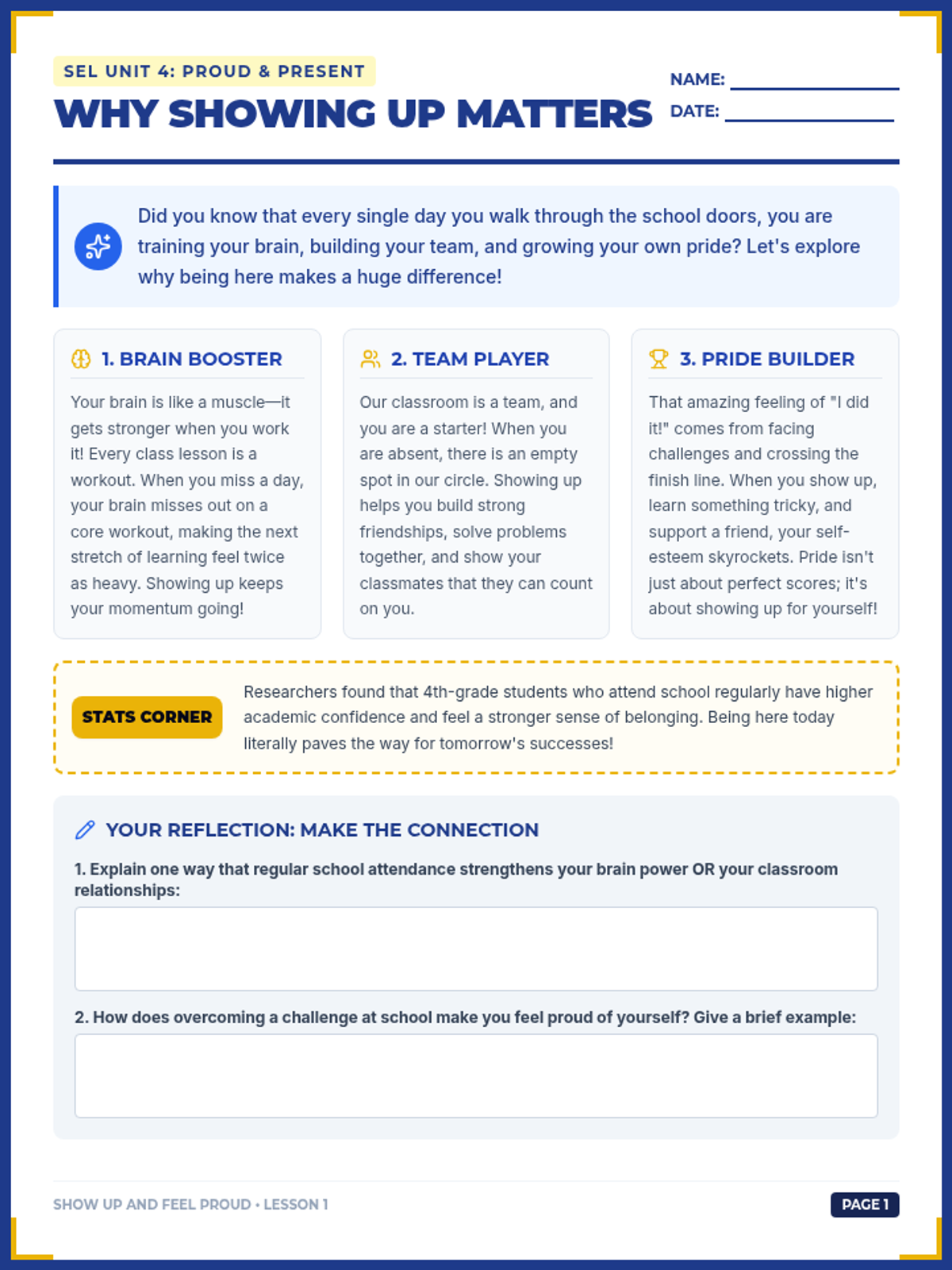
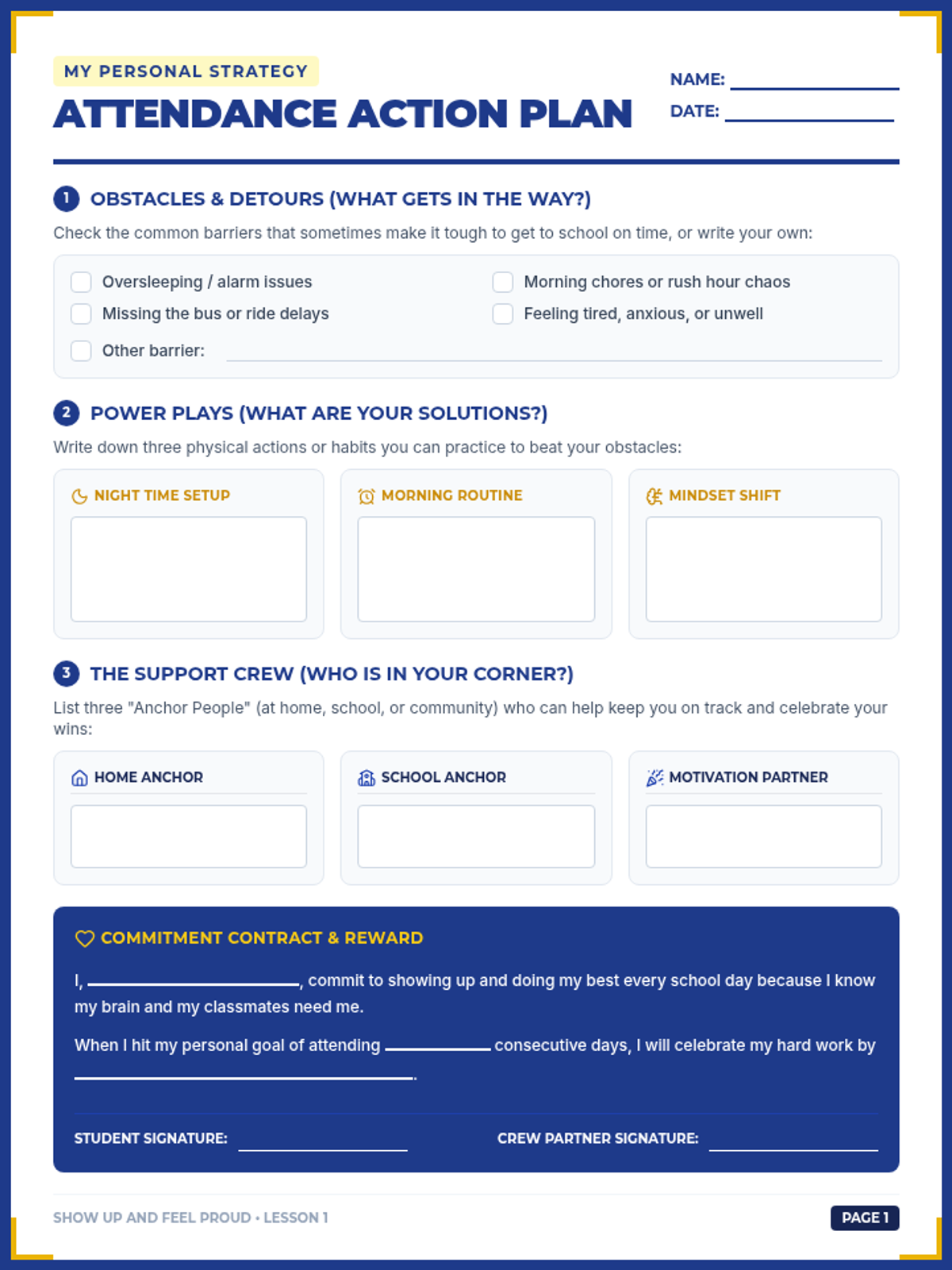
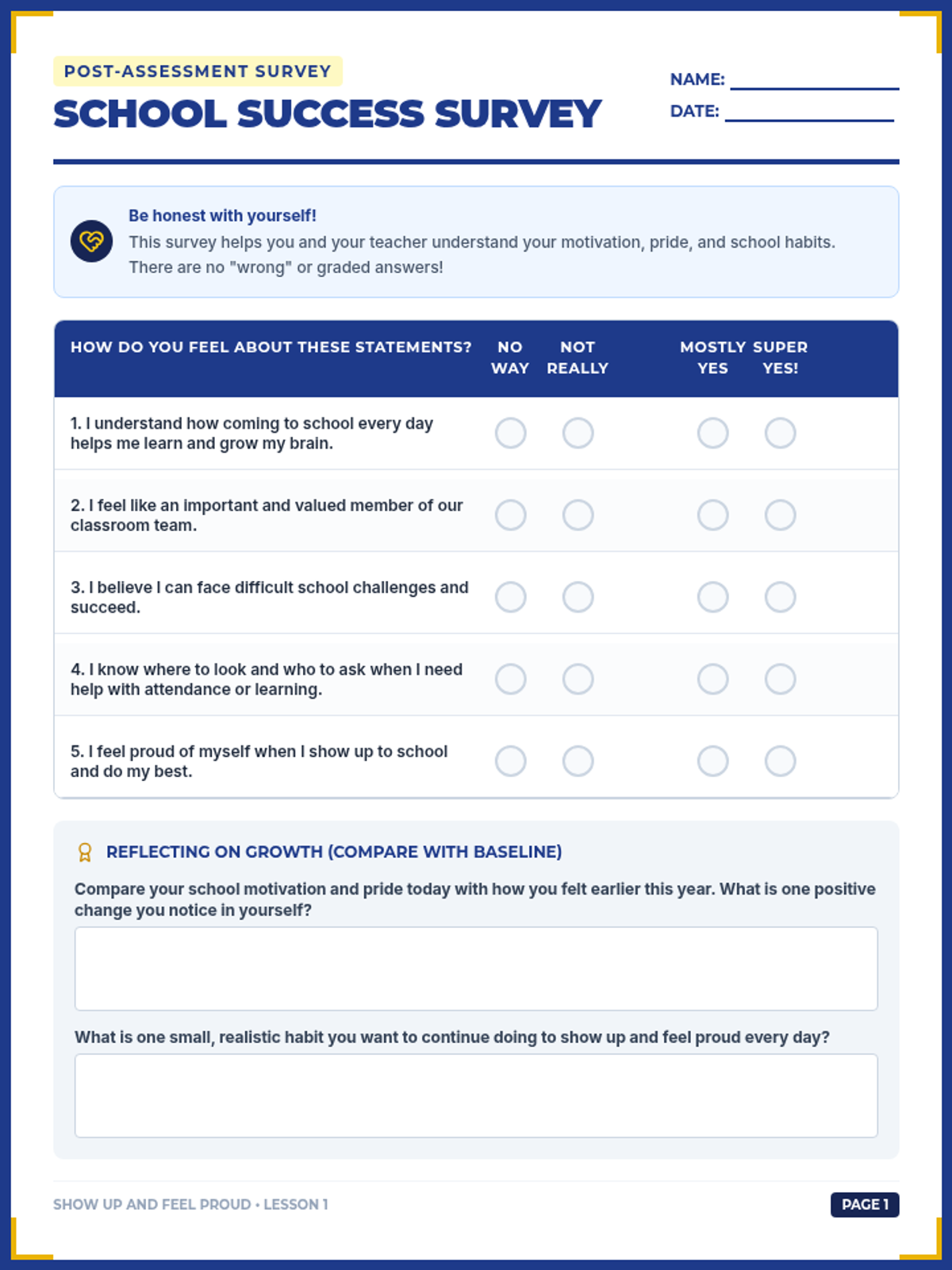
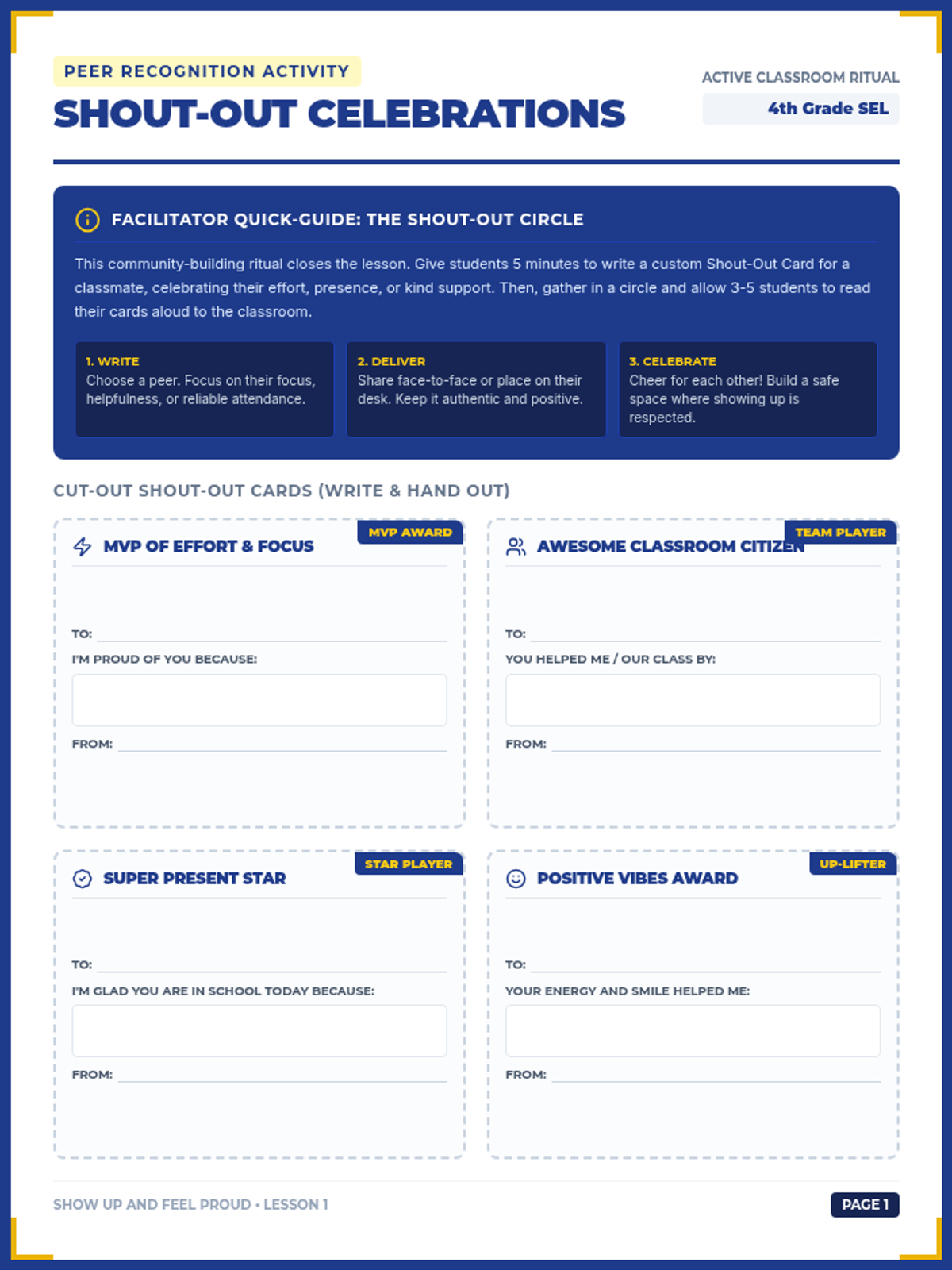
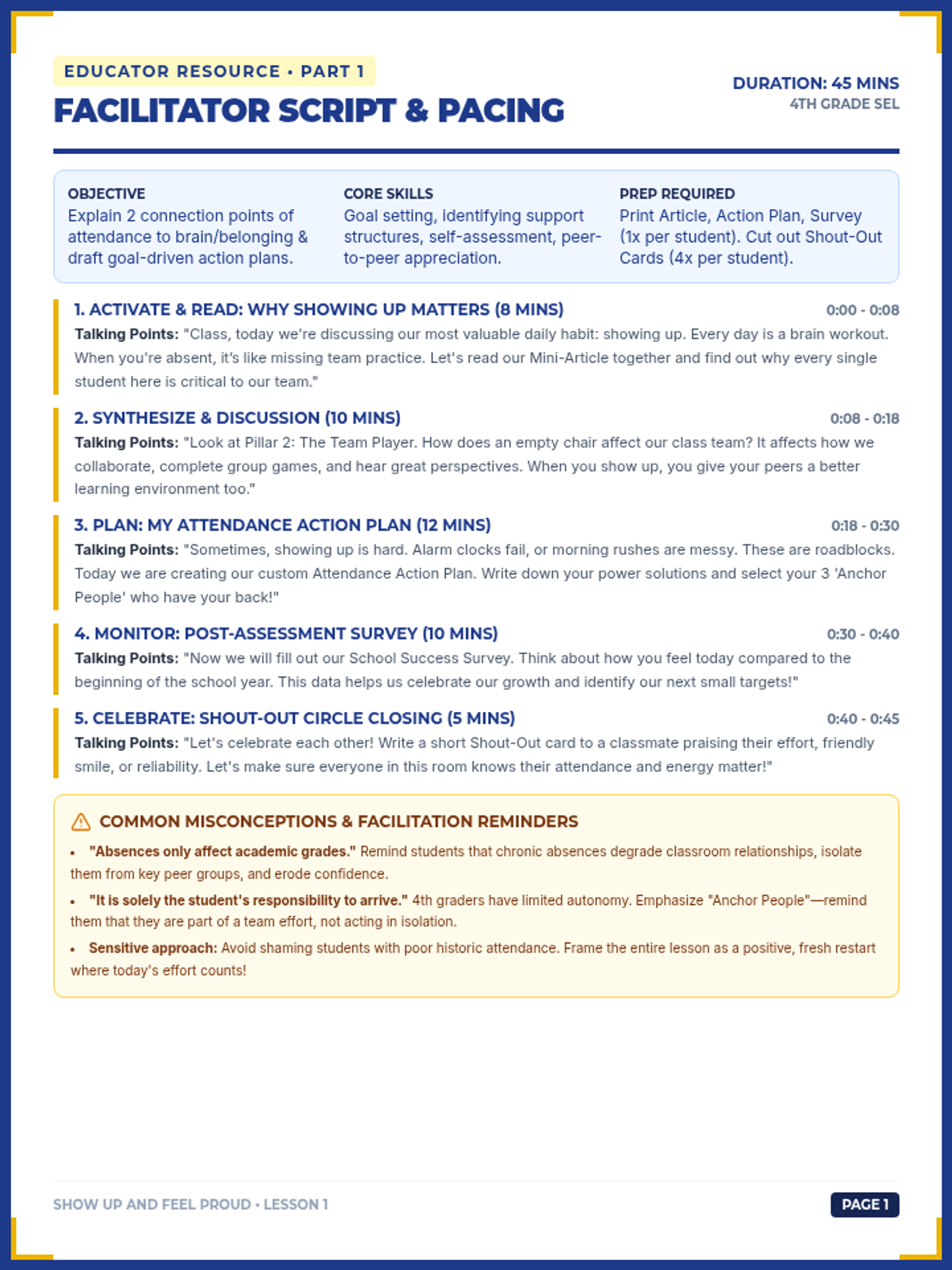
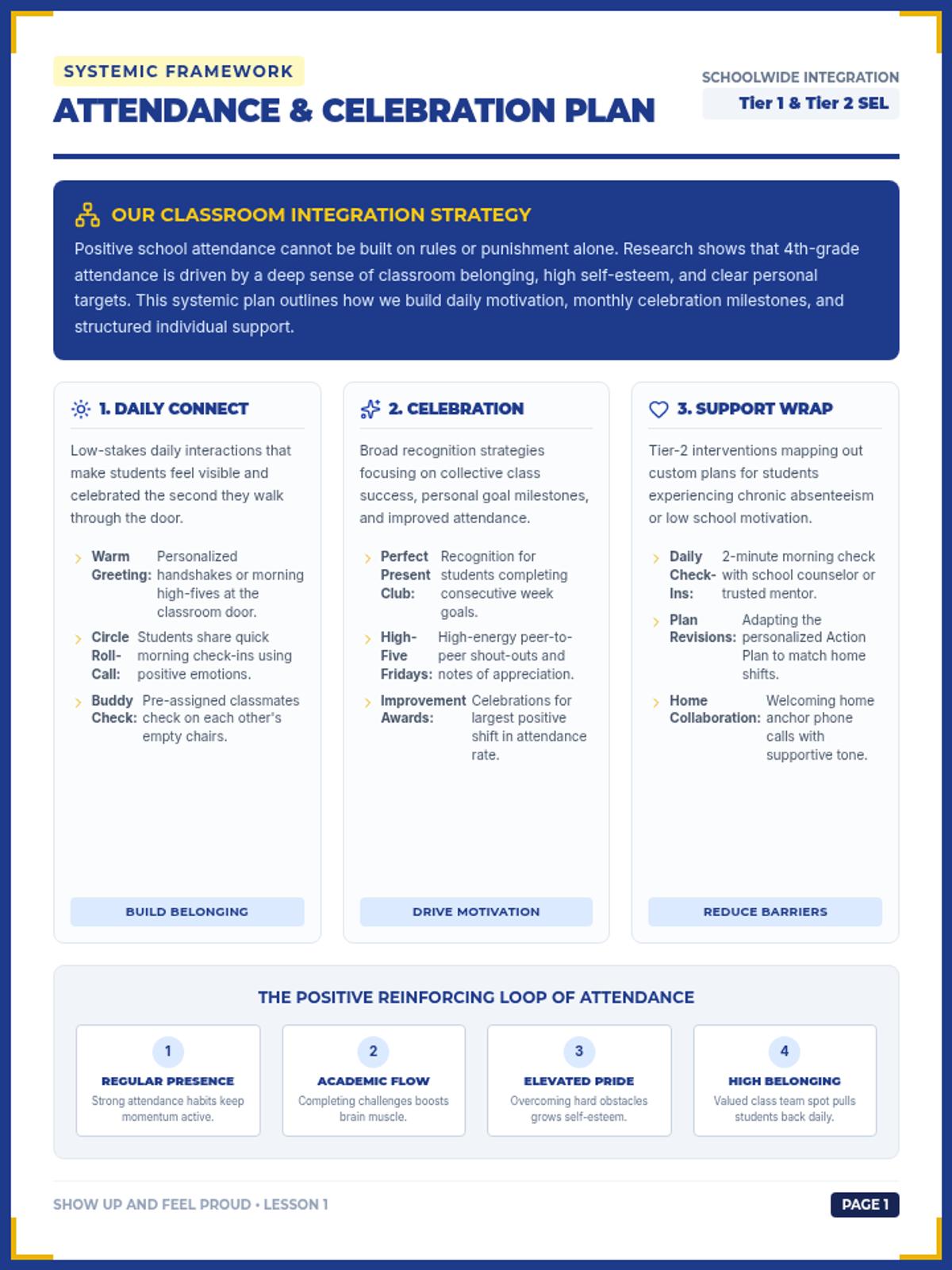
A 45-minute 4th-grade social-emotional learning lesson focusing on the connection between regular school attendance, academic success, and personal self-esteem. Students analyze a short text, design a personalized attendance action plan, complete a self-assessment, and celebrate their growth.
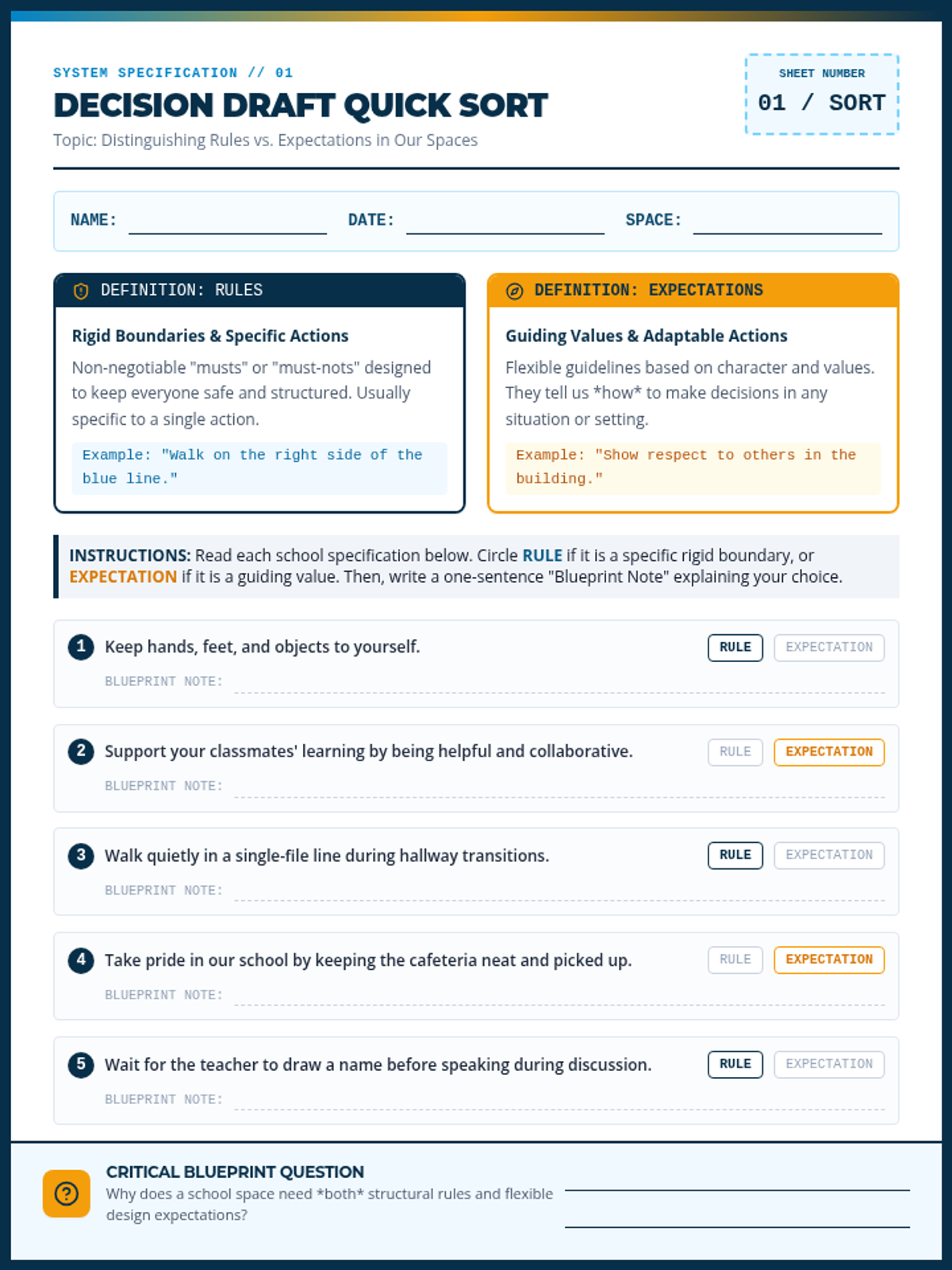
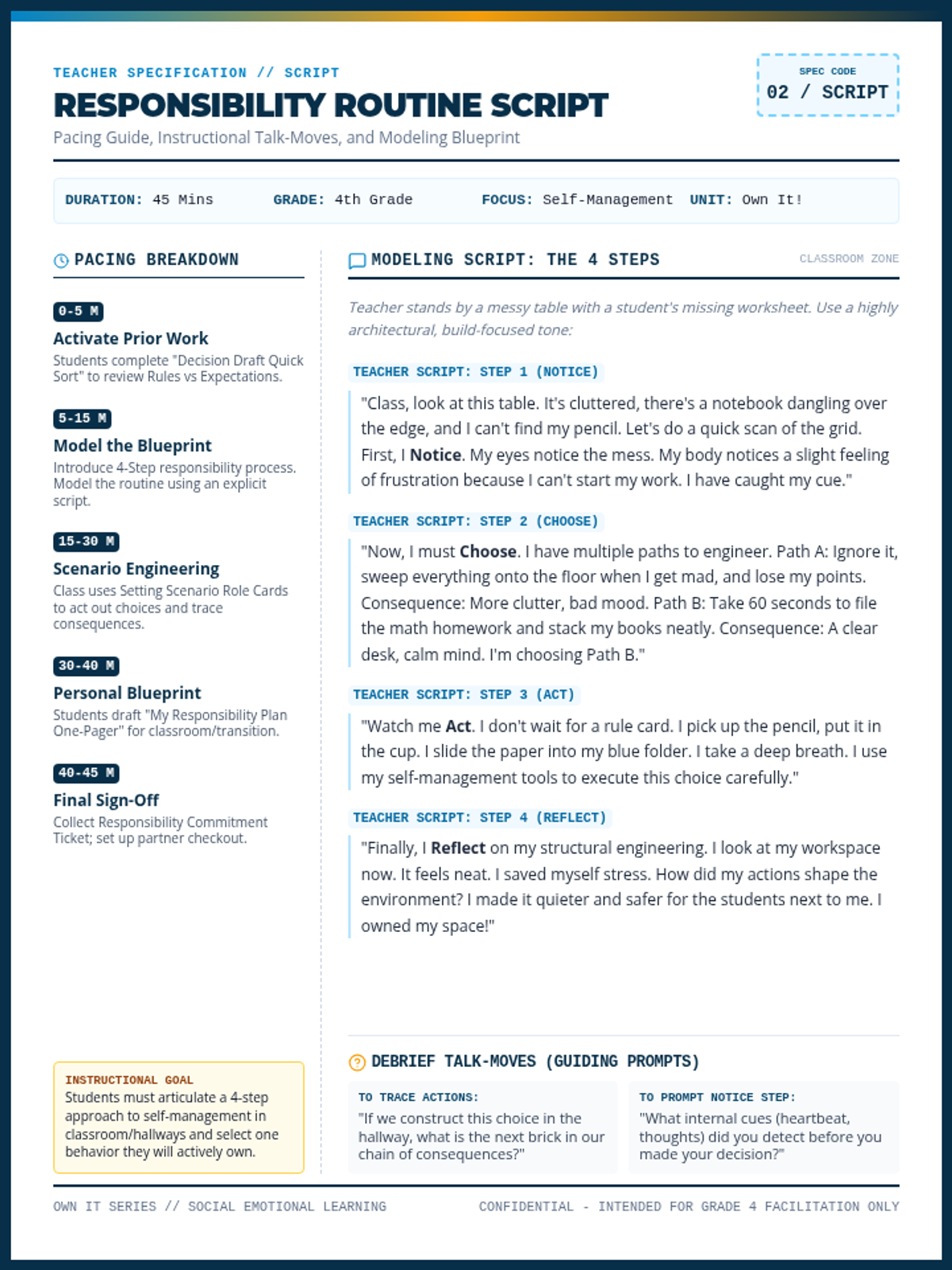
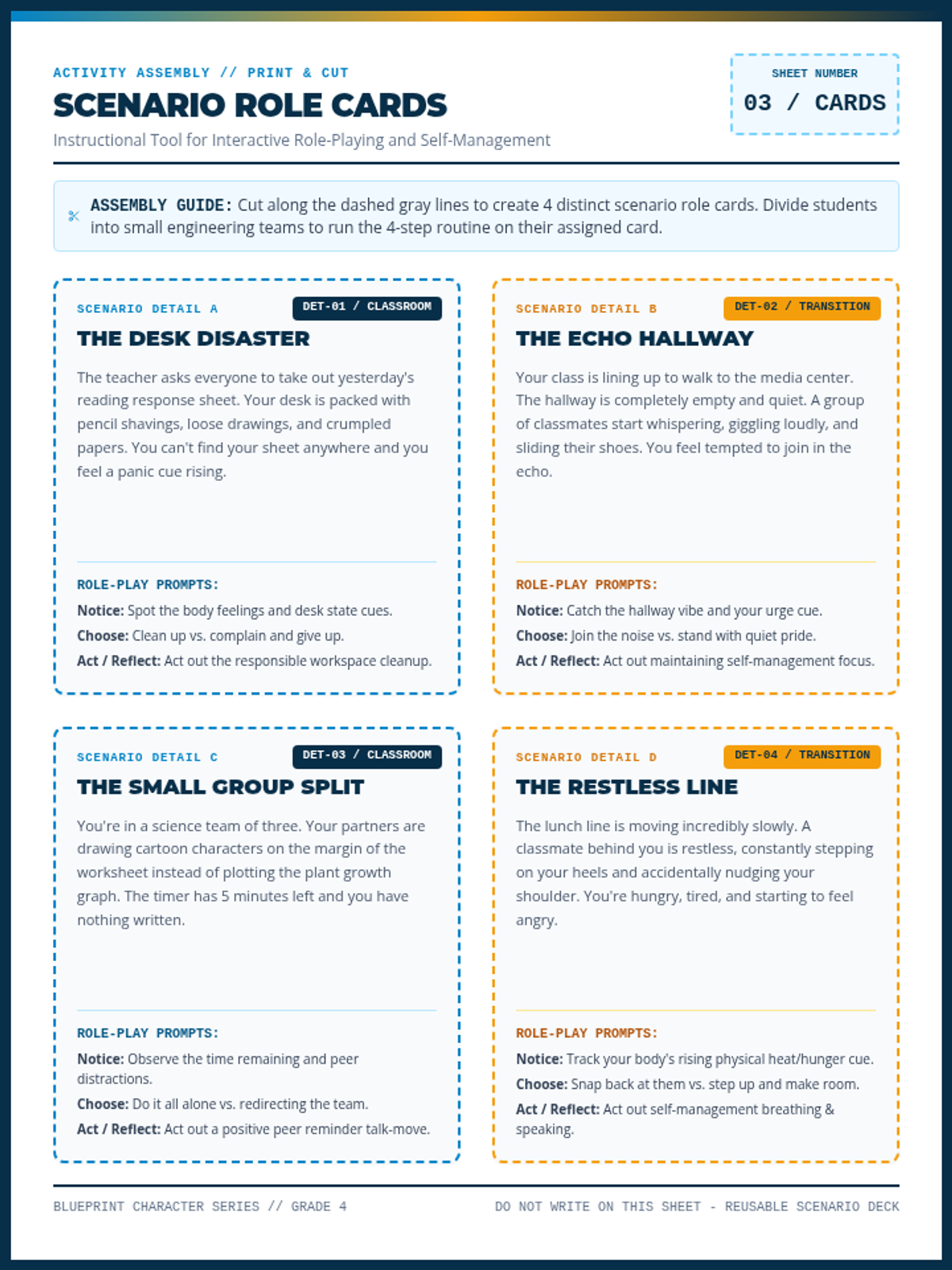
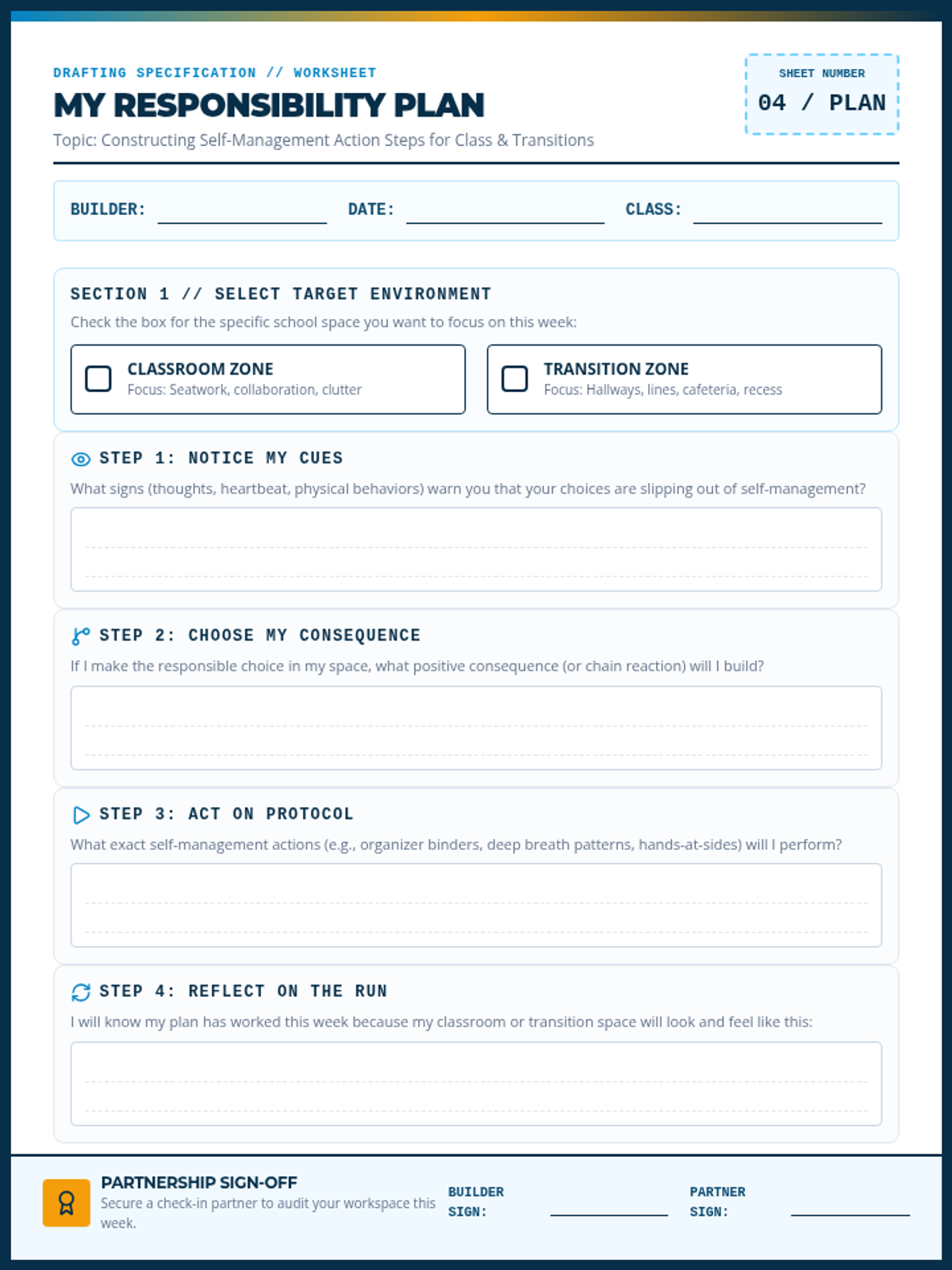
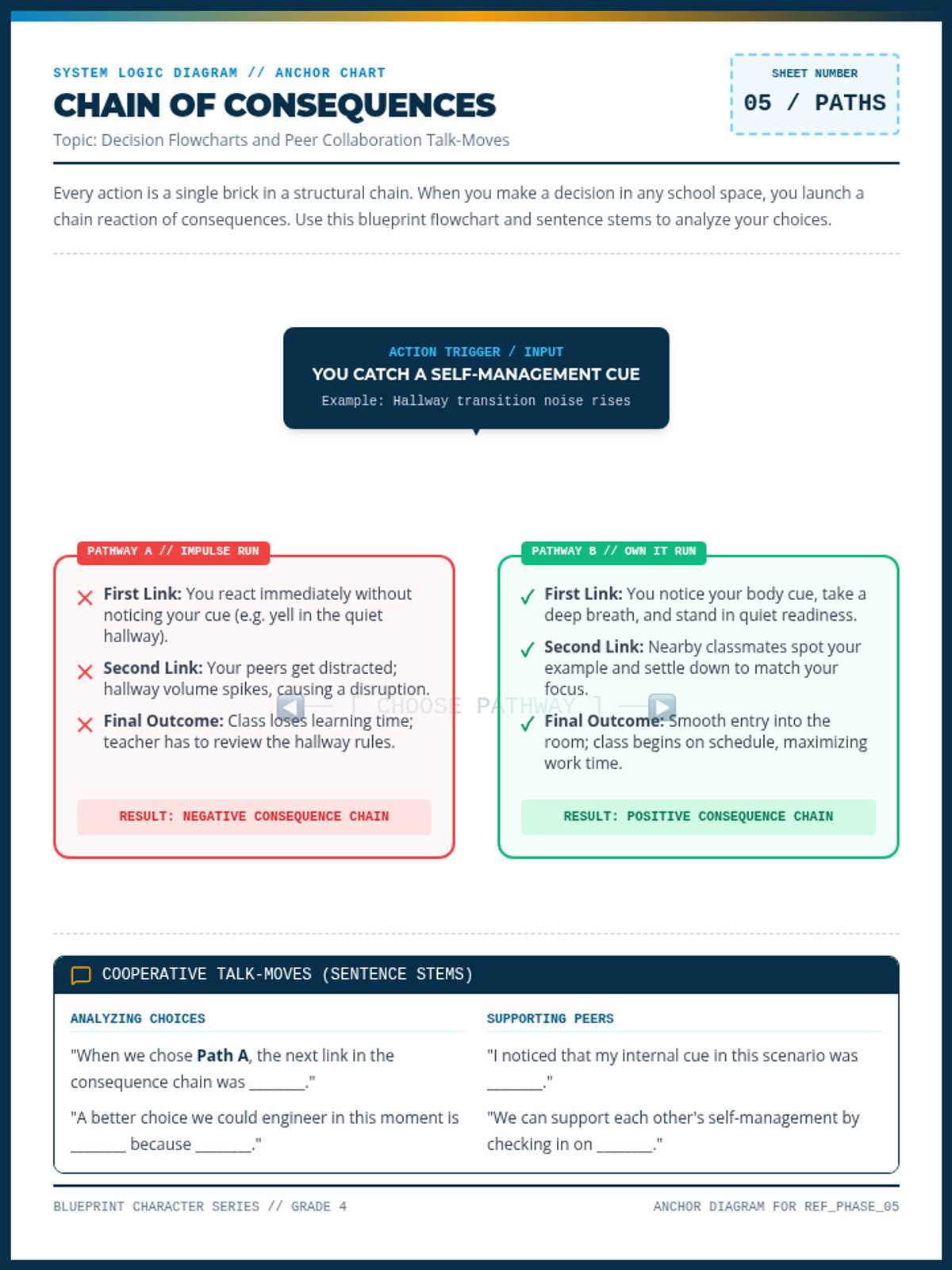
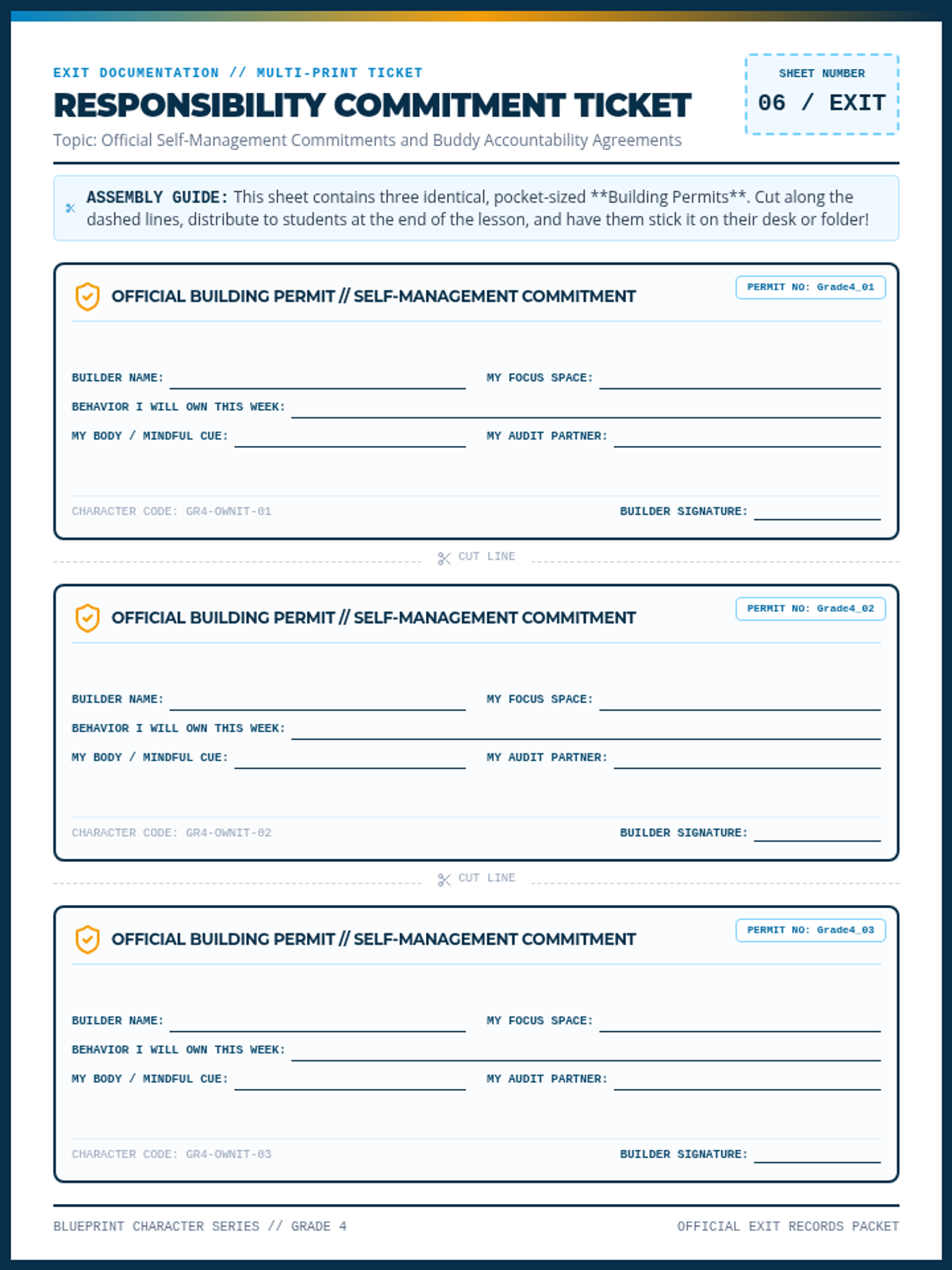
A 45-minute social-emotional learning lesson for 4th graders to master self-management and personal responsibility. Students analyze rules versus expectations, learn a 4-step responsibility process, and draft a personal action plan for classrooms and school transitions.
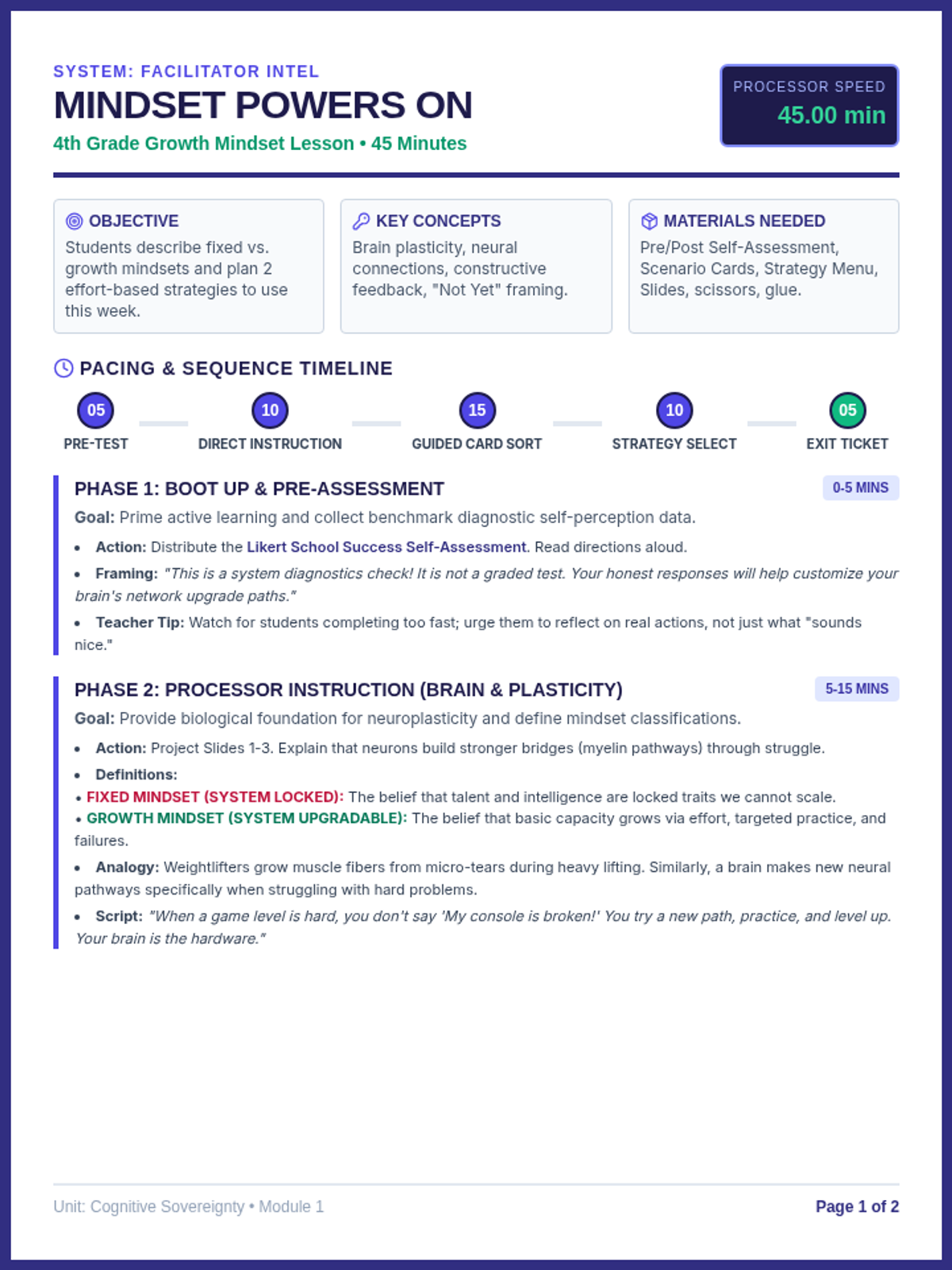
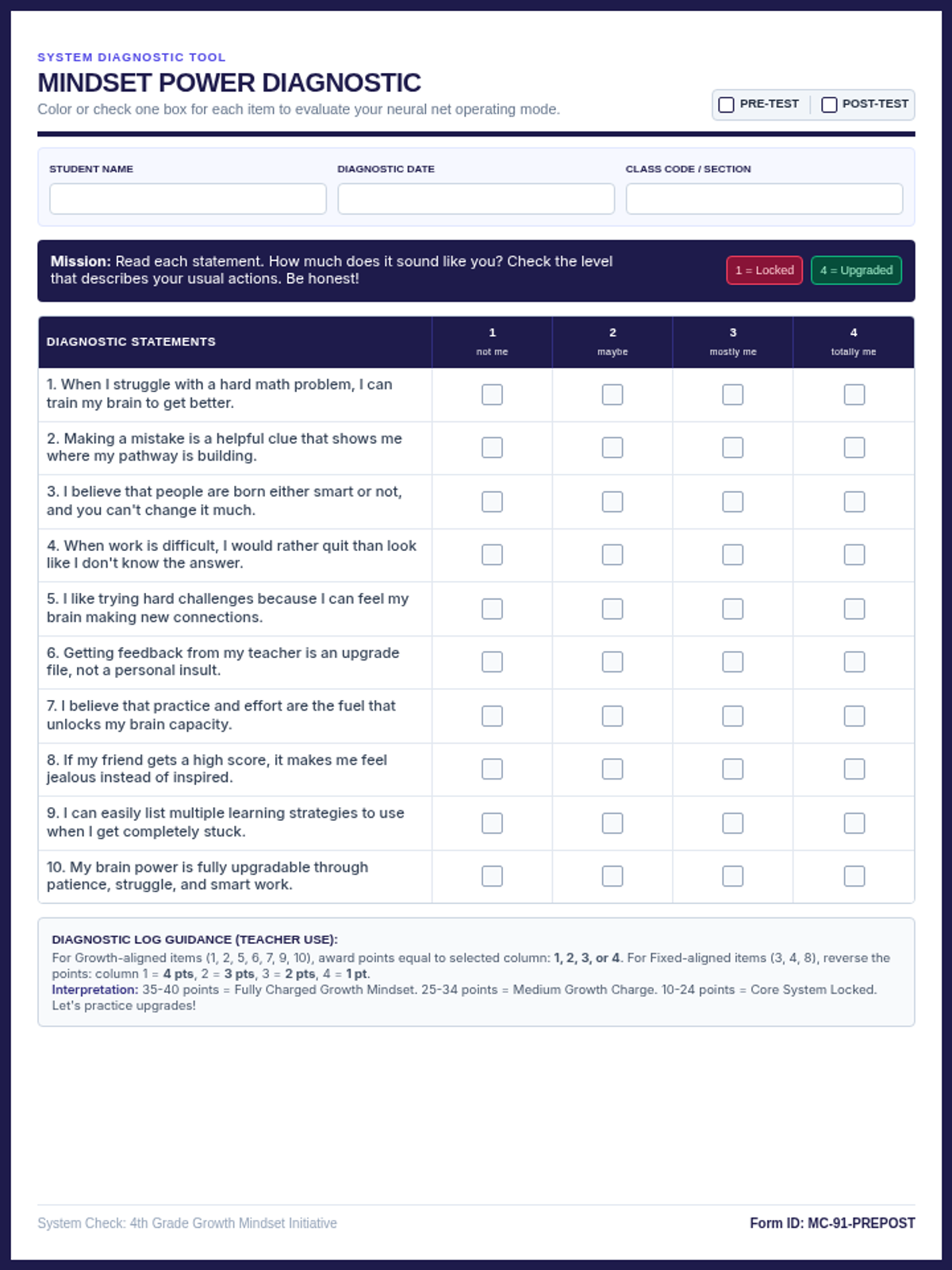
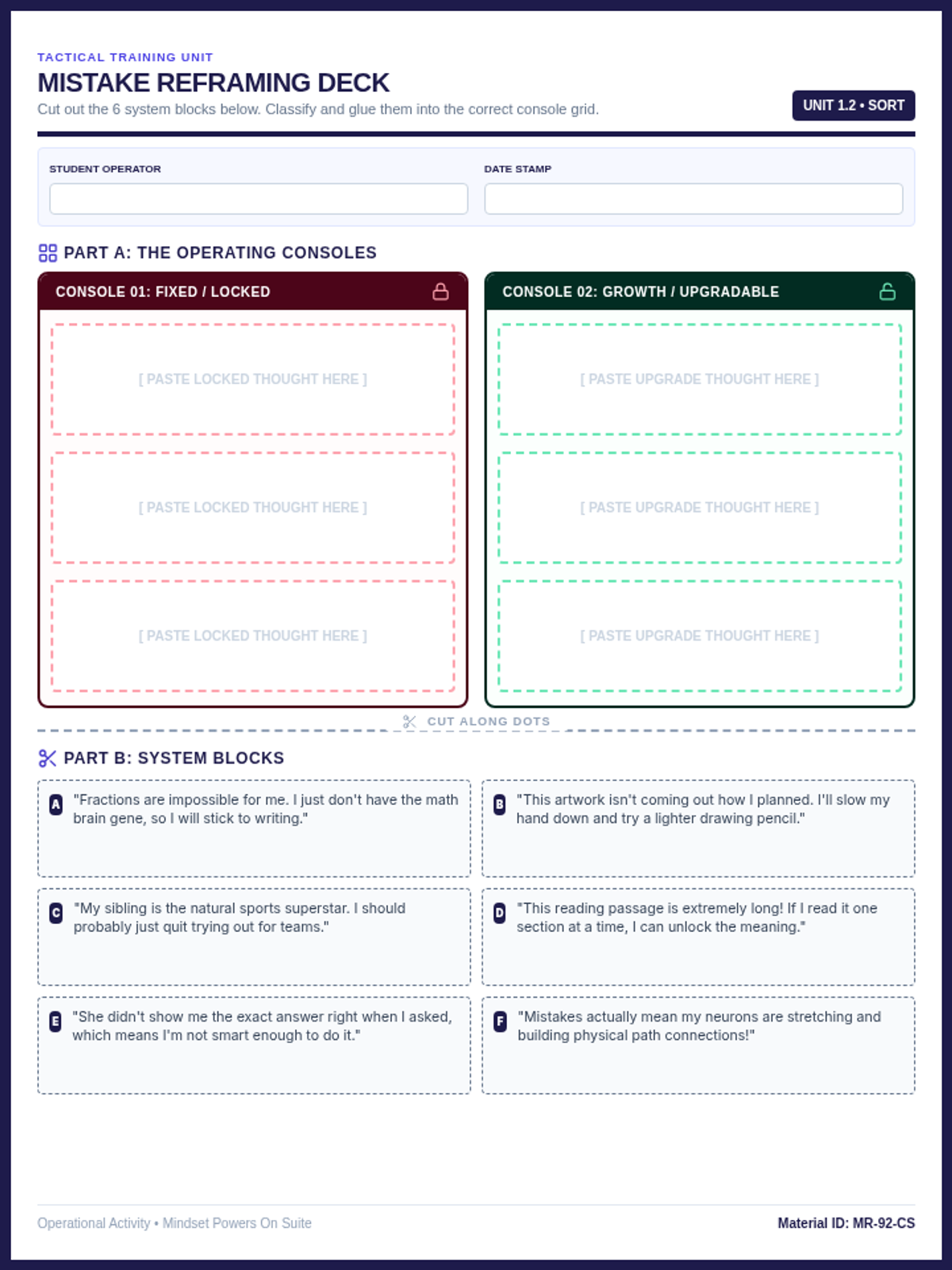
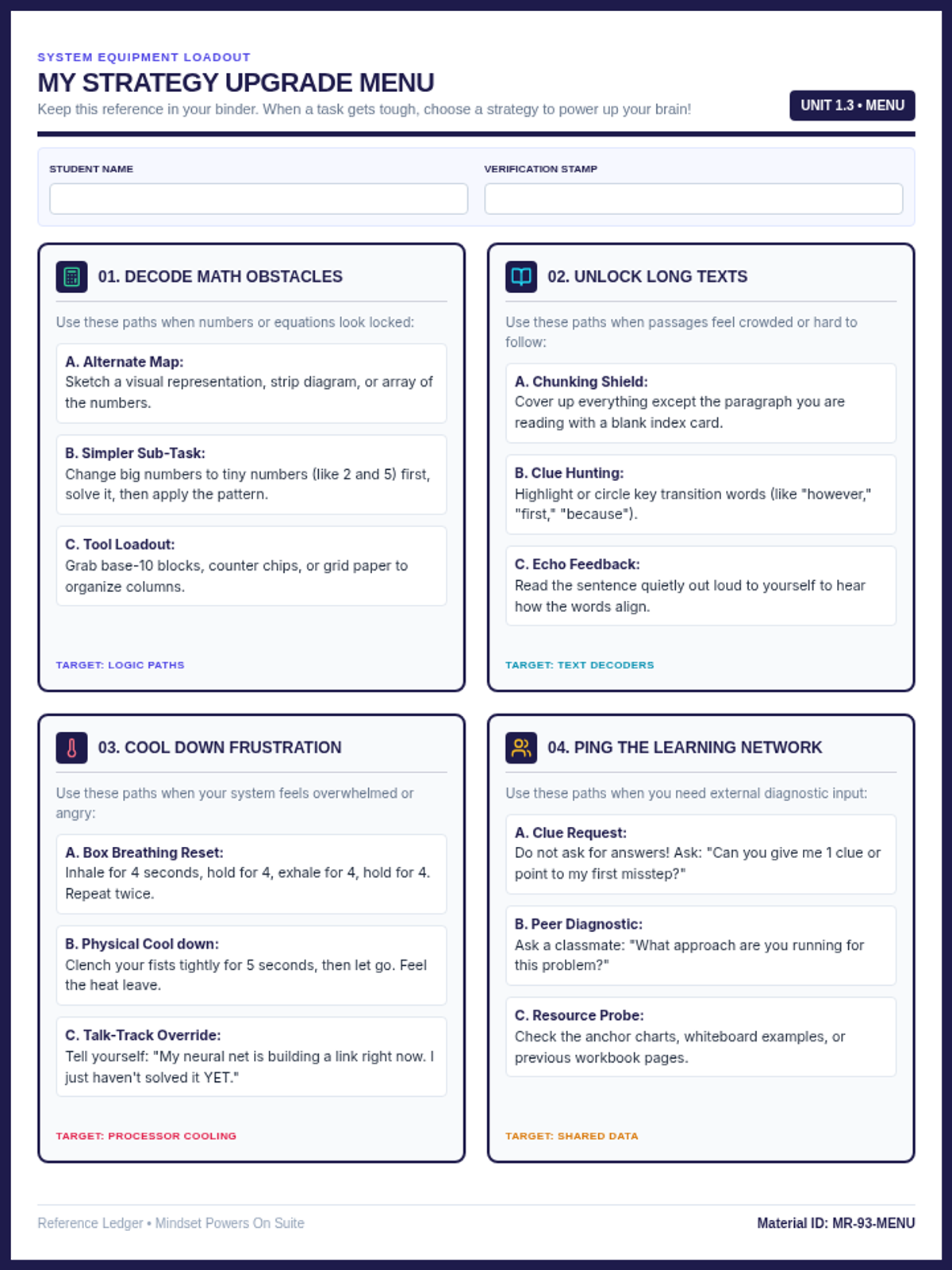
A 45-minute lesson for 4th graders on growth vs. fixed mindset. Students learn that effort and strategies build brain power, complete a self-assessment, sort growth mindset statements, and choose personal growth strategies.