Students build their first personal budget using a fictional allowance, prioritizing 'paying themselves first' through savings.
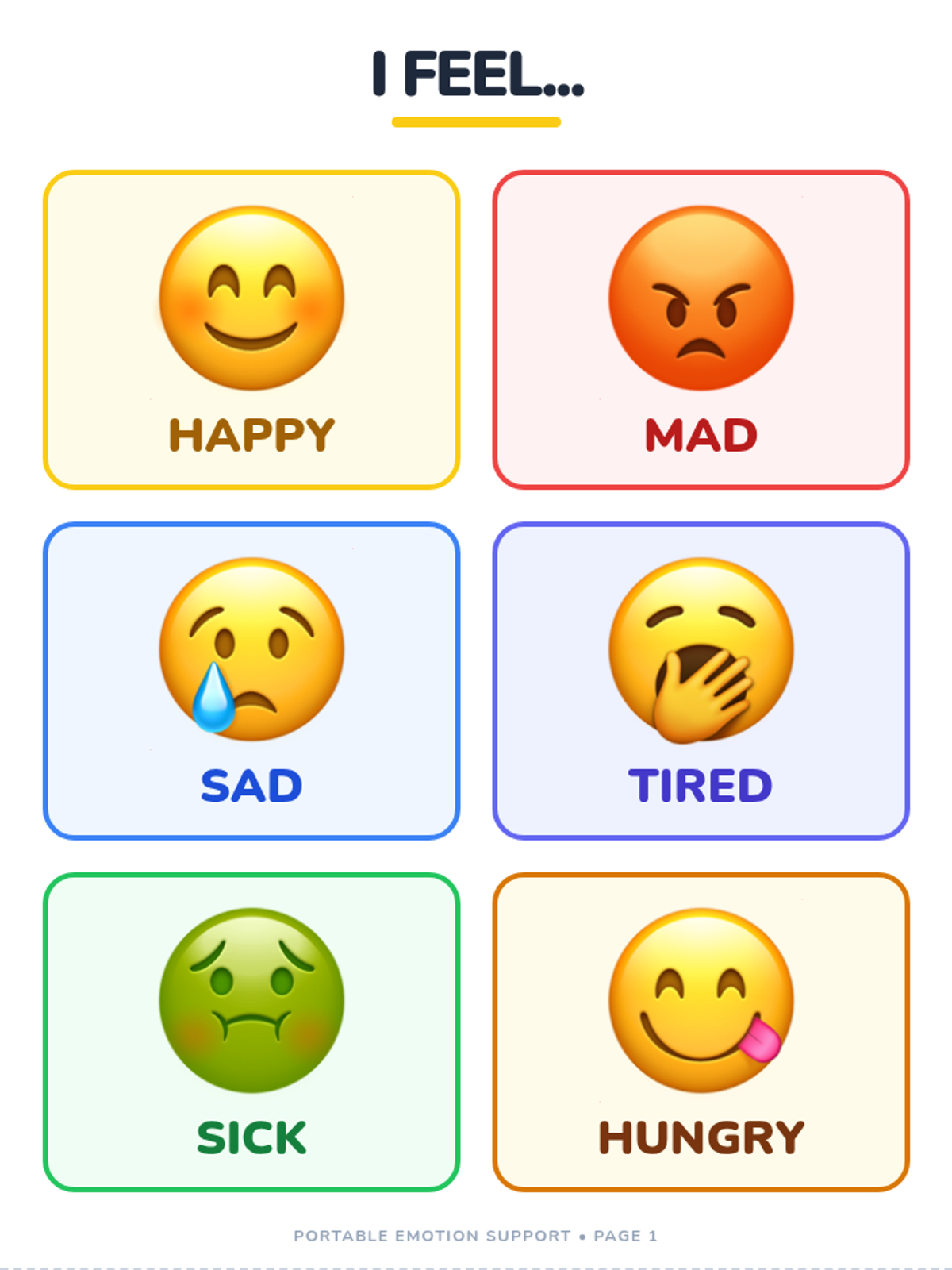
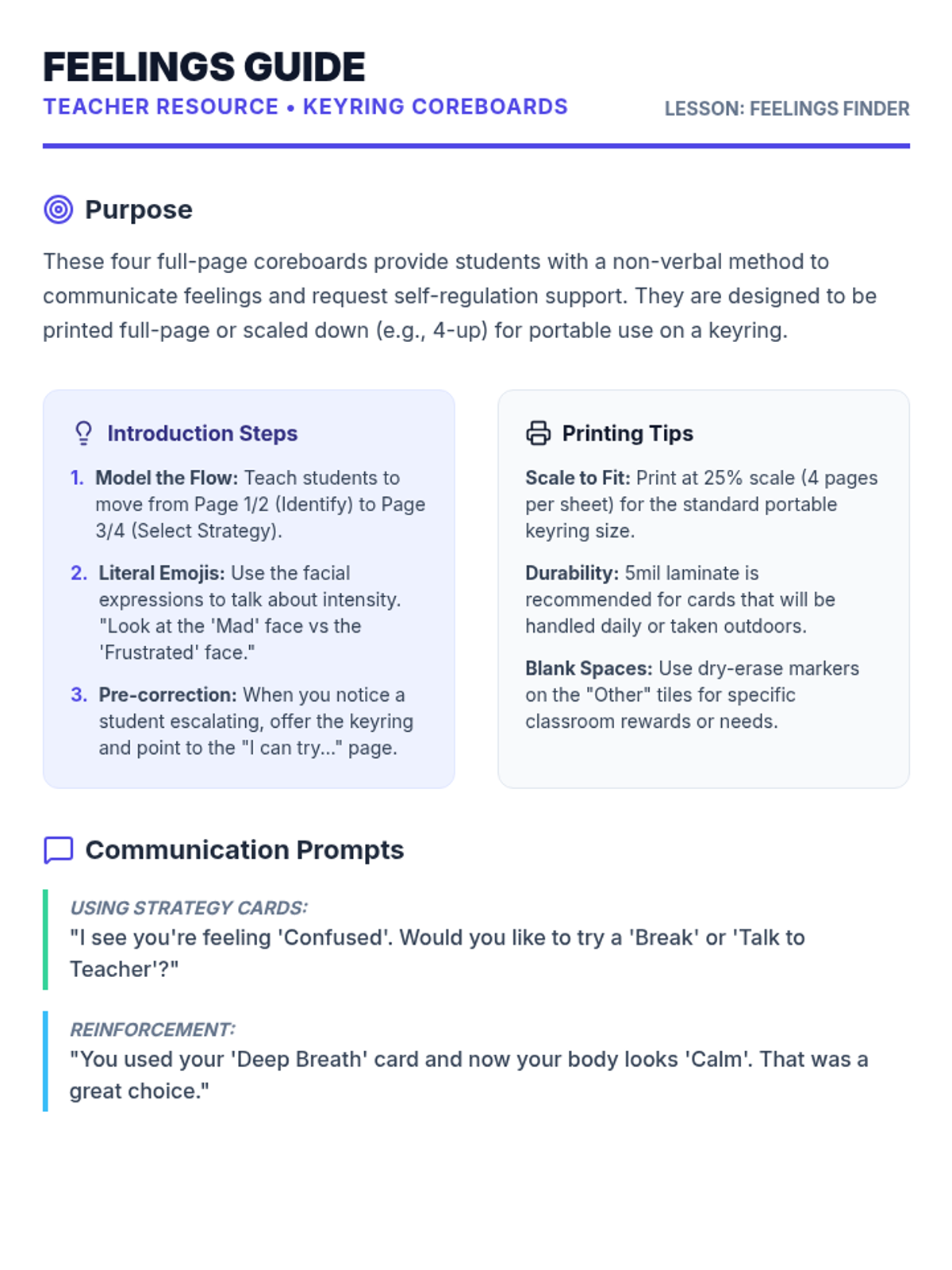
A collection of visual support tools to help students identify and communicate their emotions using portable keyring cards.
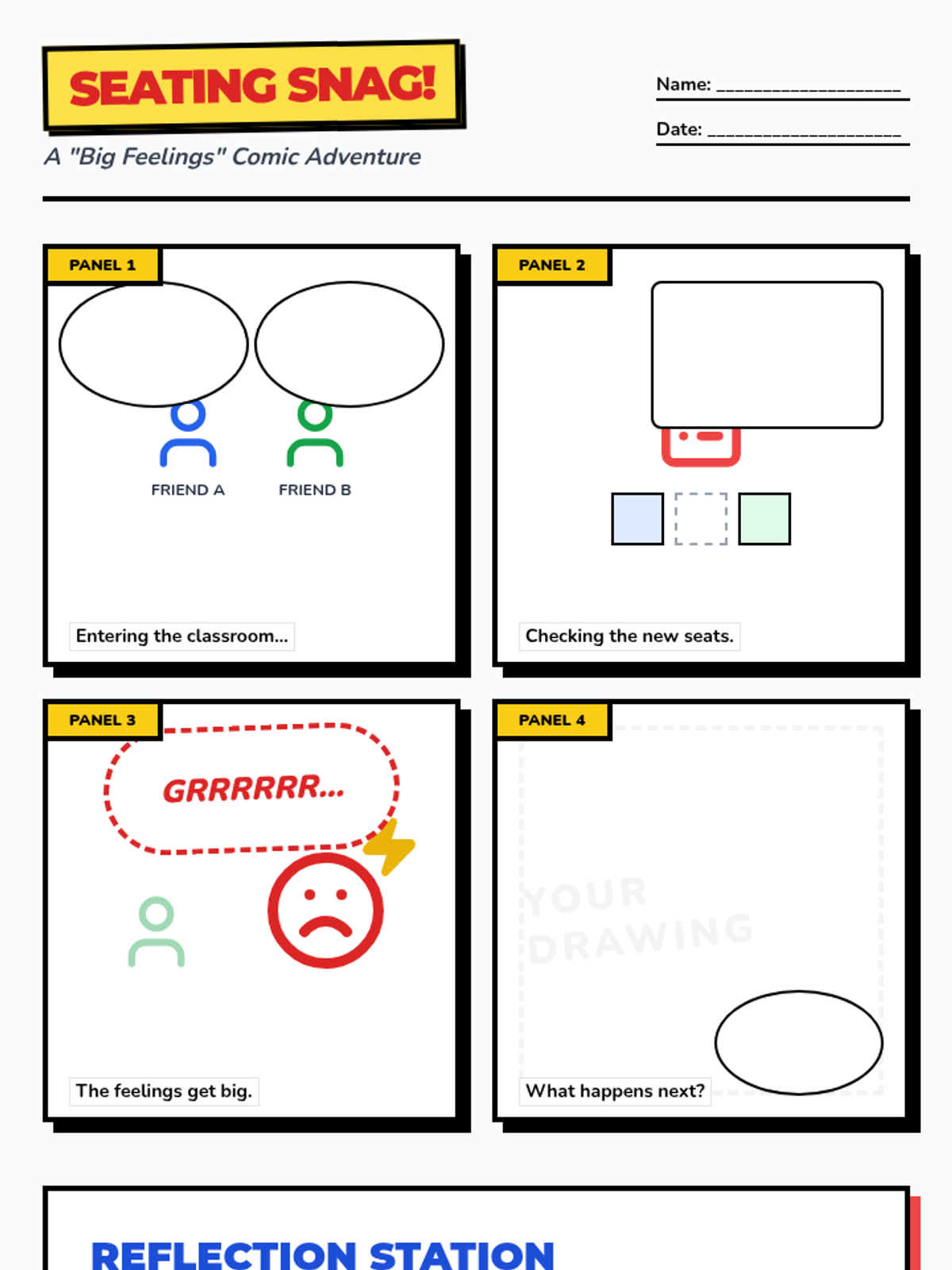
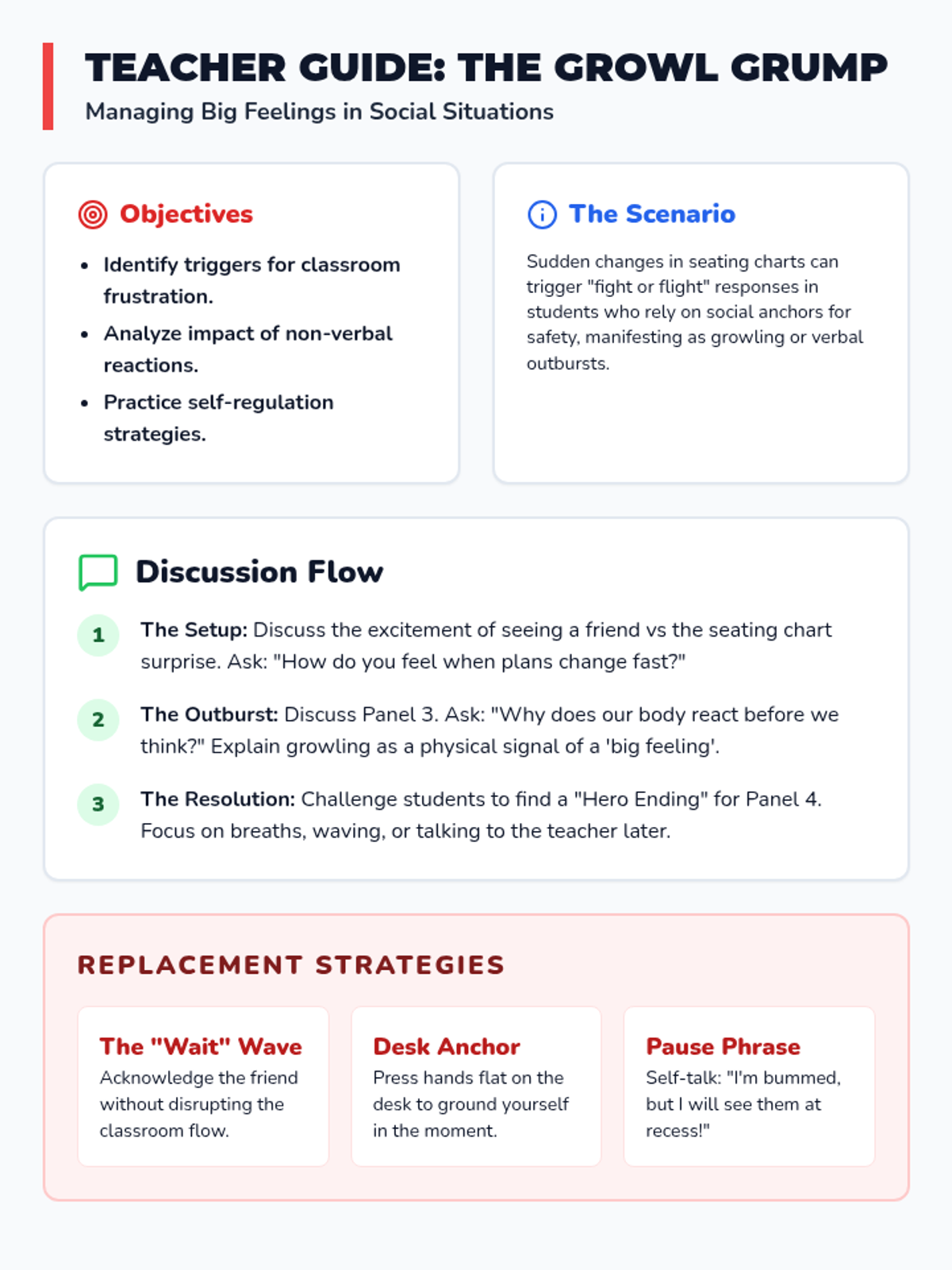
A social-emotional learning lesson focusing on identifying and managing frustration when things don't go as planned in the classroom, using a comic strip scenario.
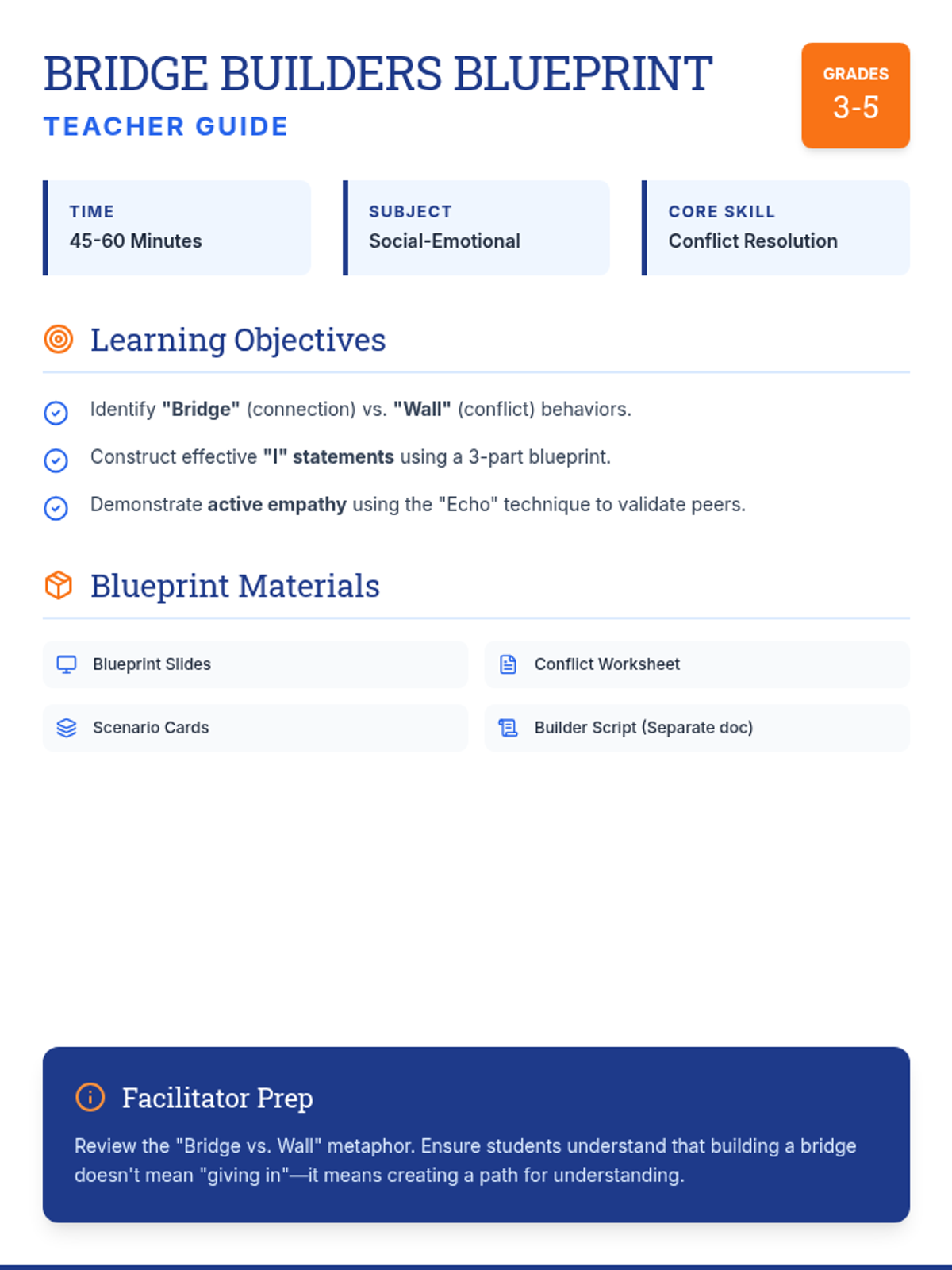
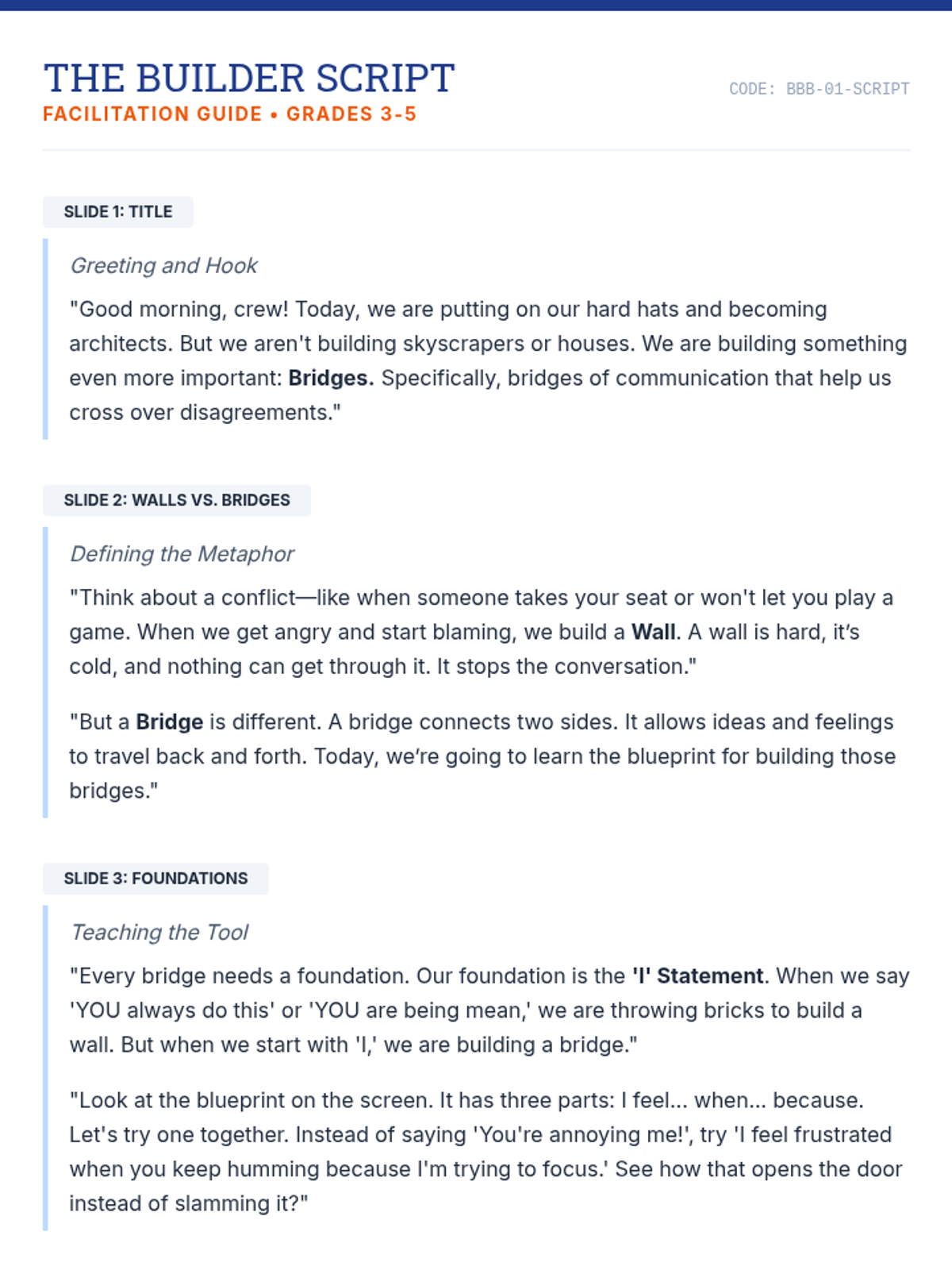
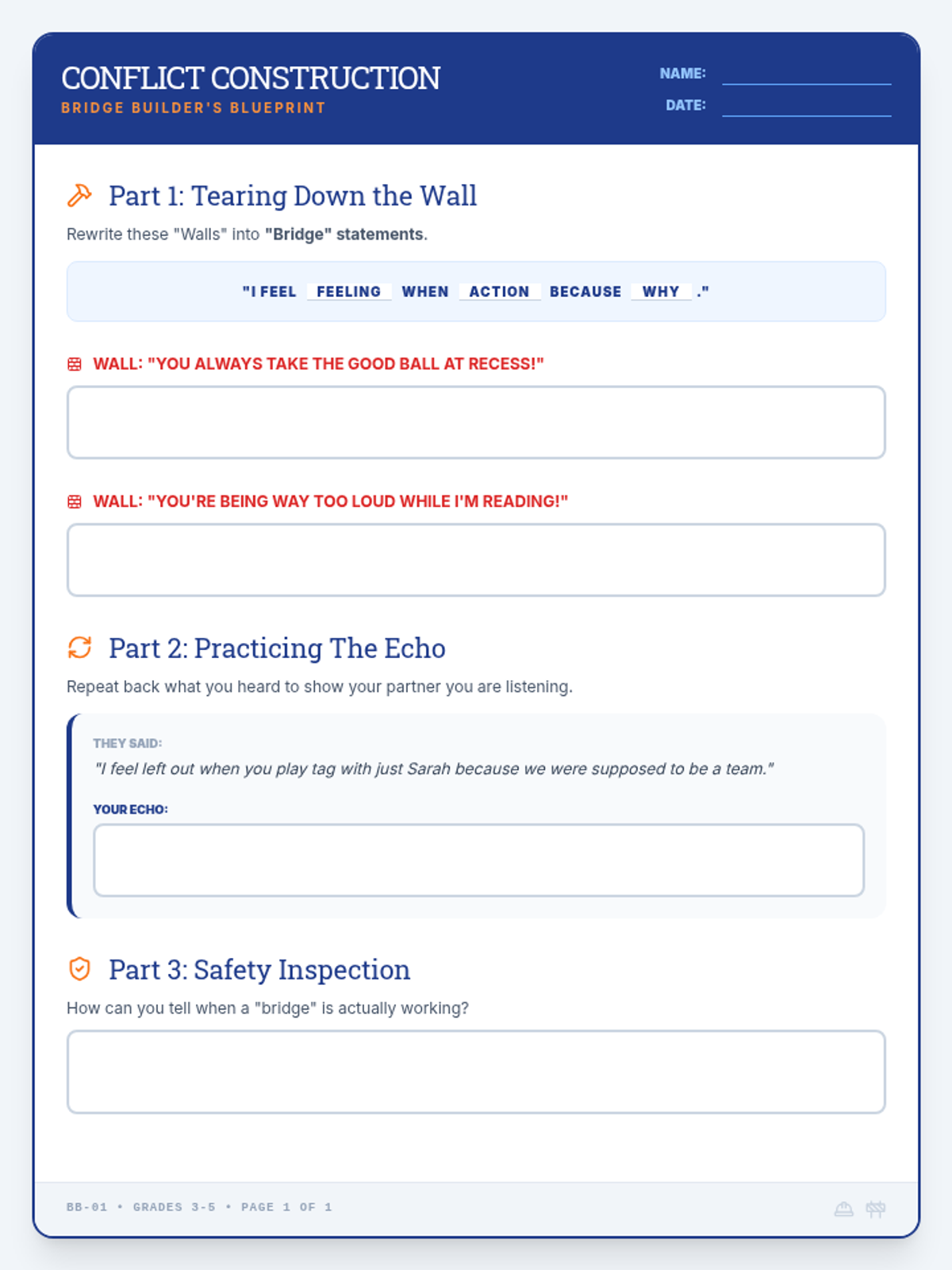
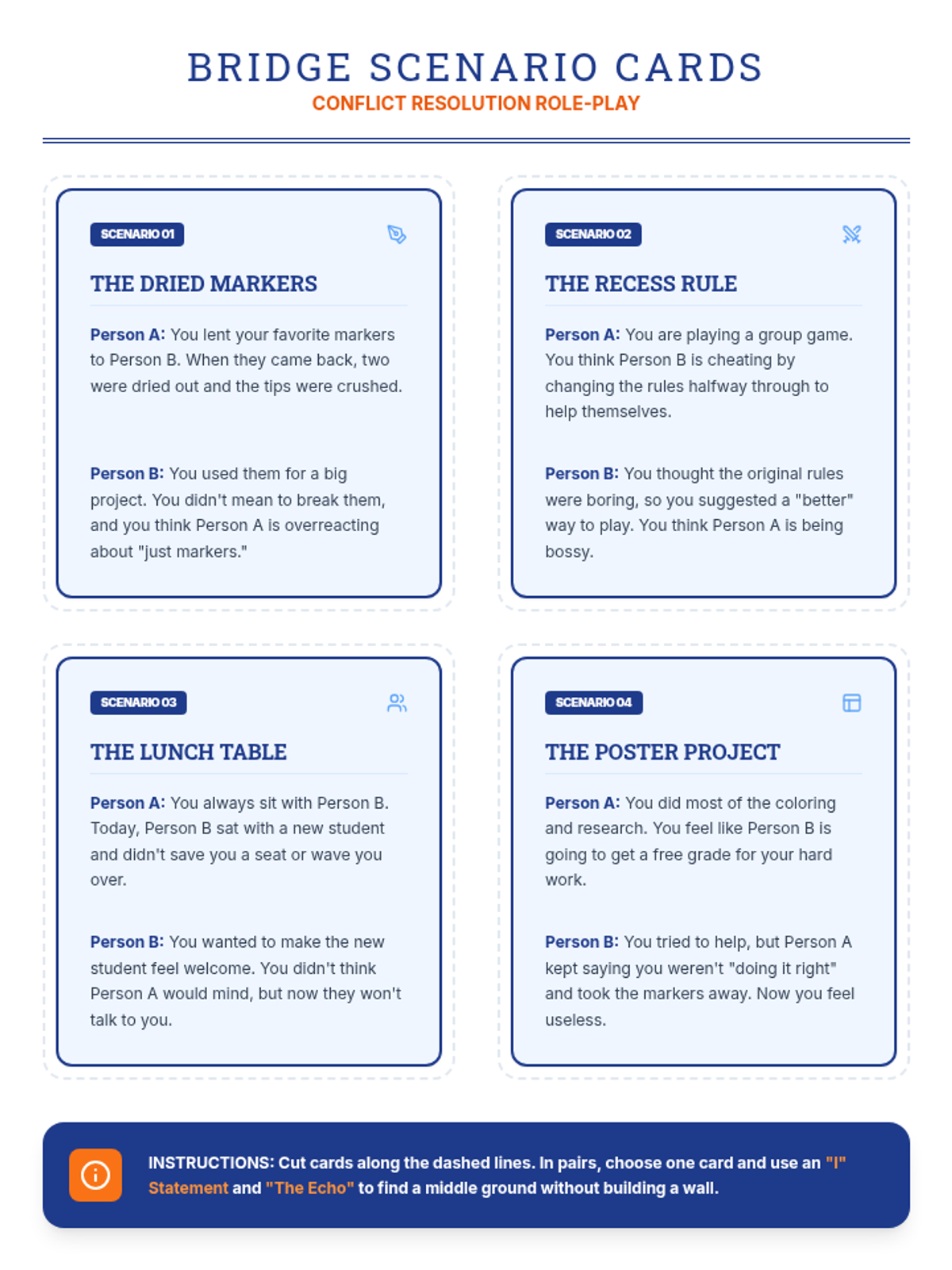
A comprehensive lesson on conflict resolution for grades 3-5, using the metaphor of bridge-building to teach "I" statements, empathy, and compromise.
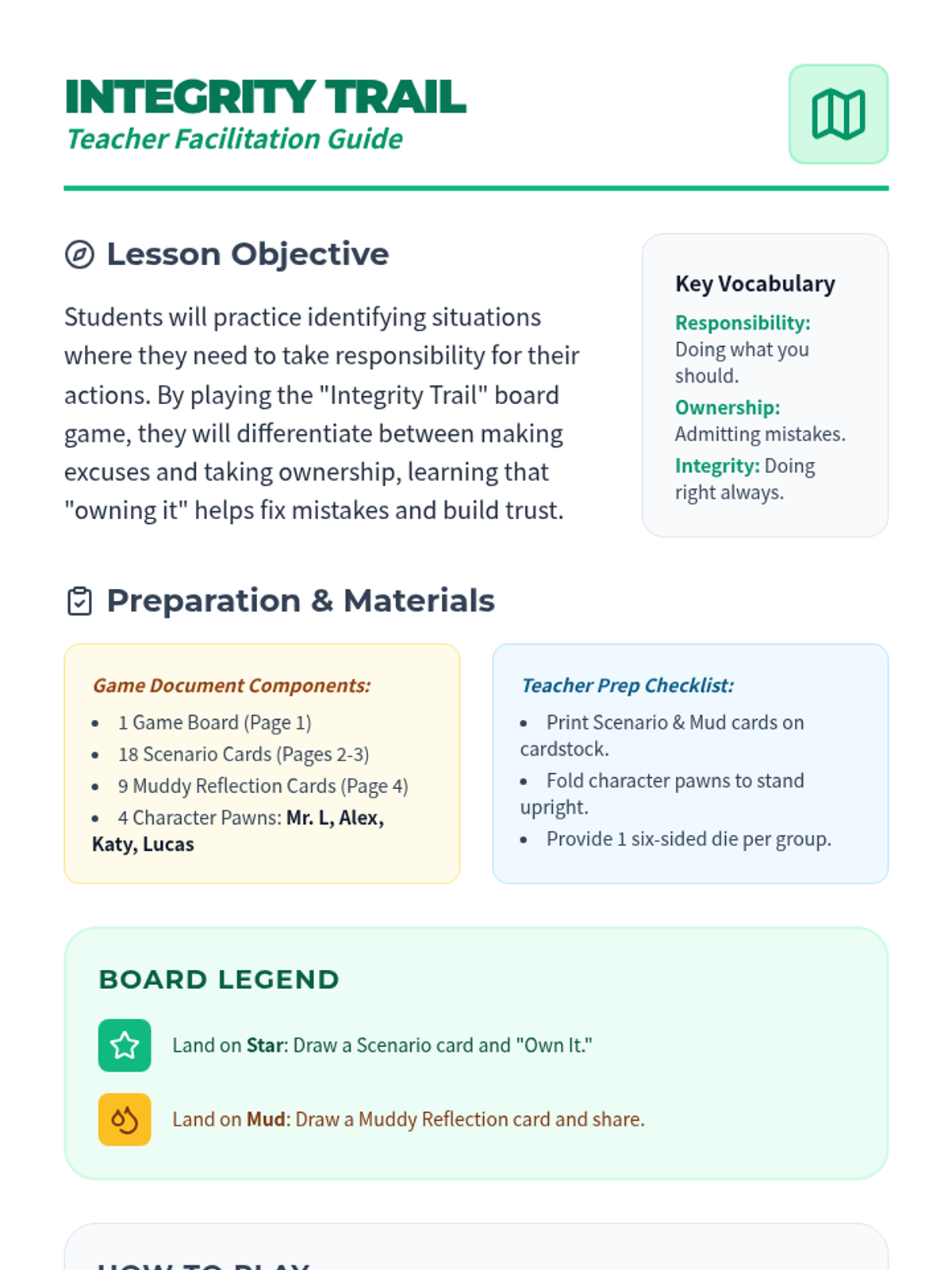
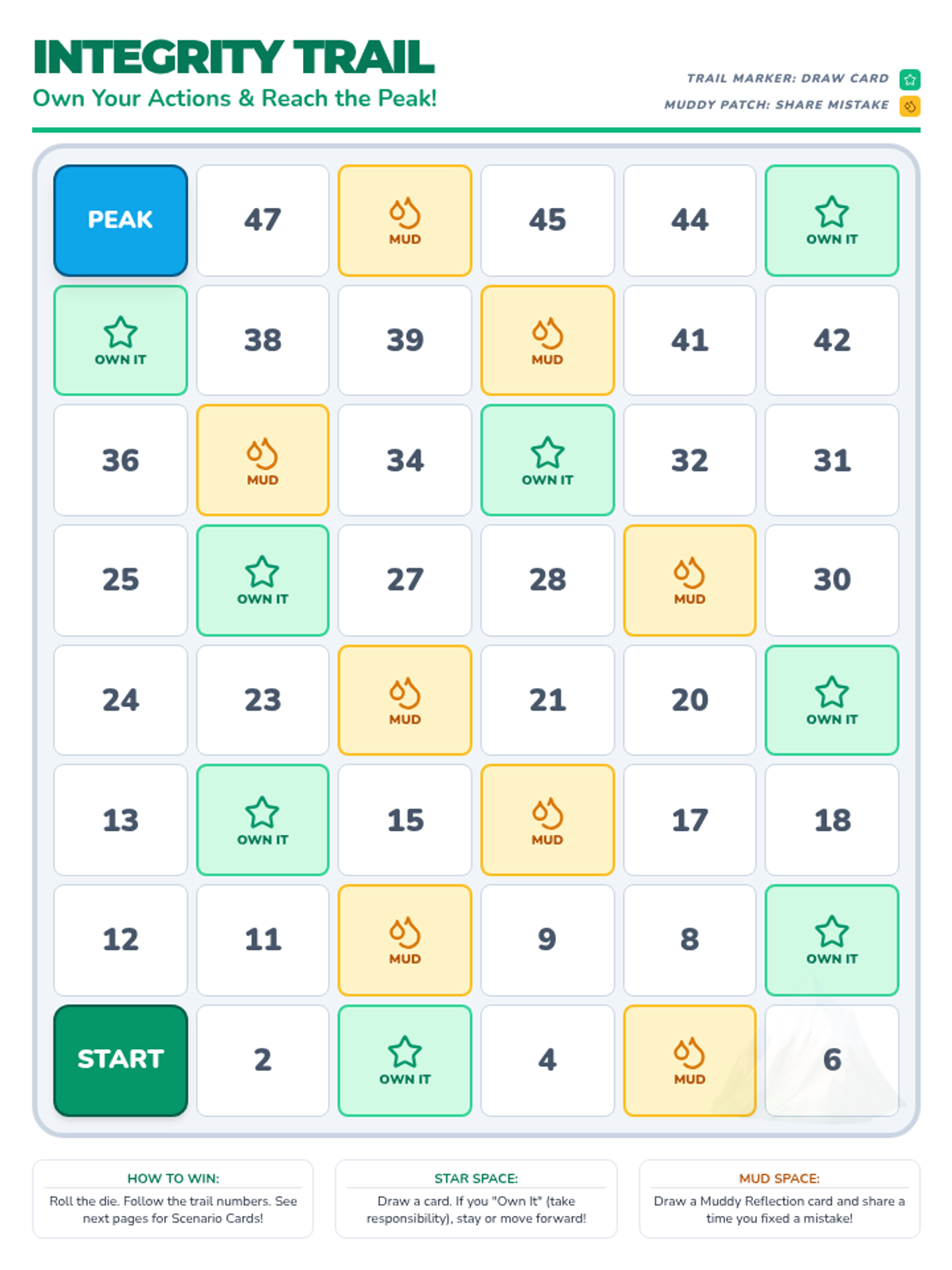
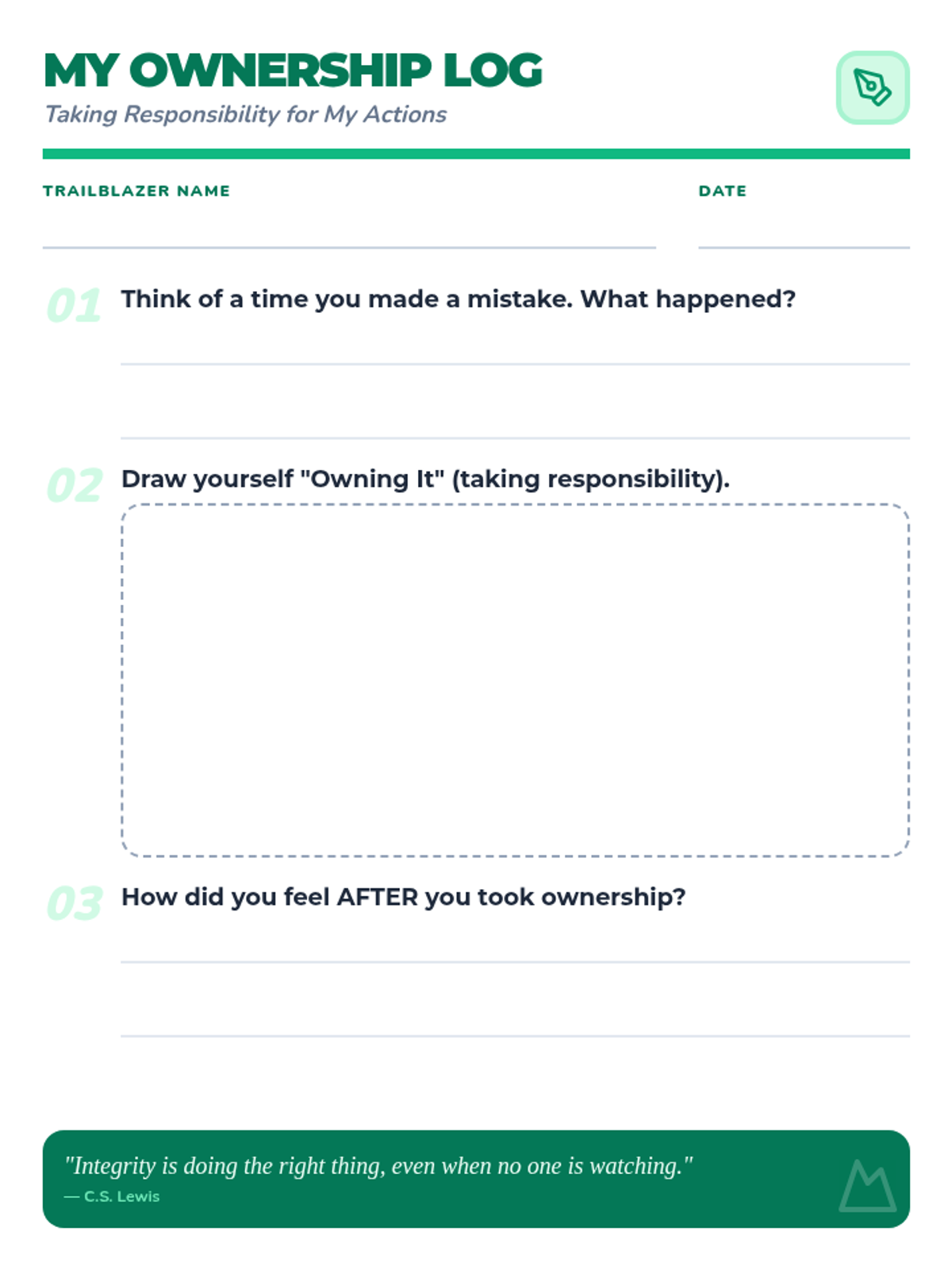
A character-building lesson centered around a board game where students navigate real-life scenarios to practice taking ownership of their actions and choices.
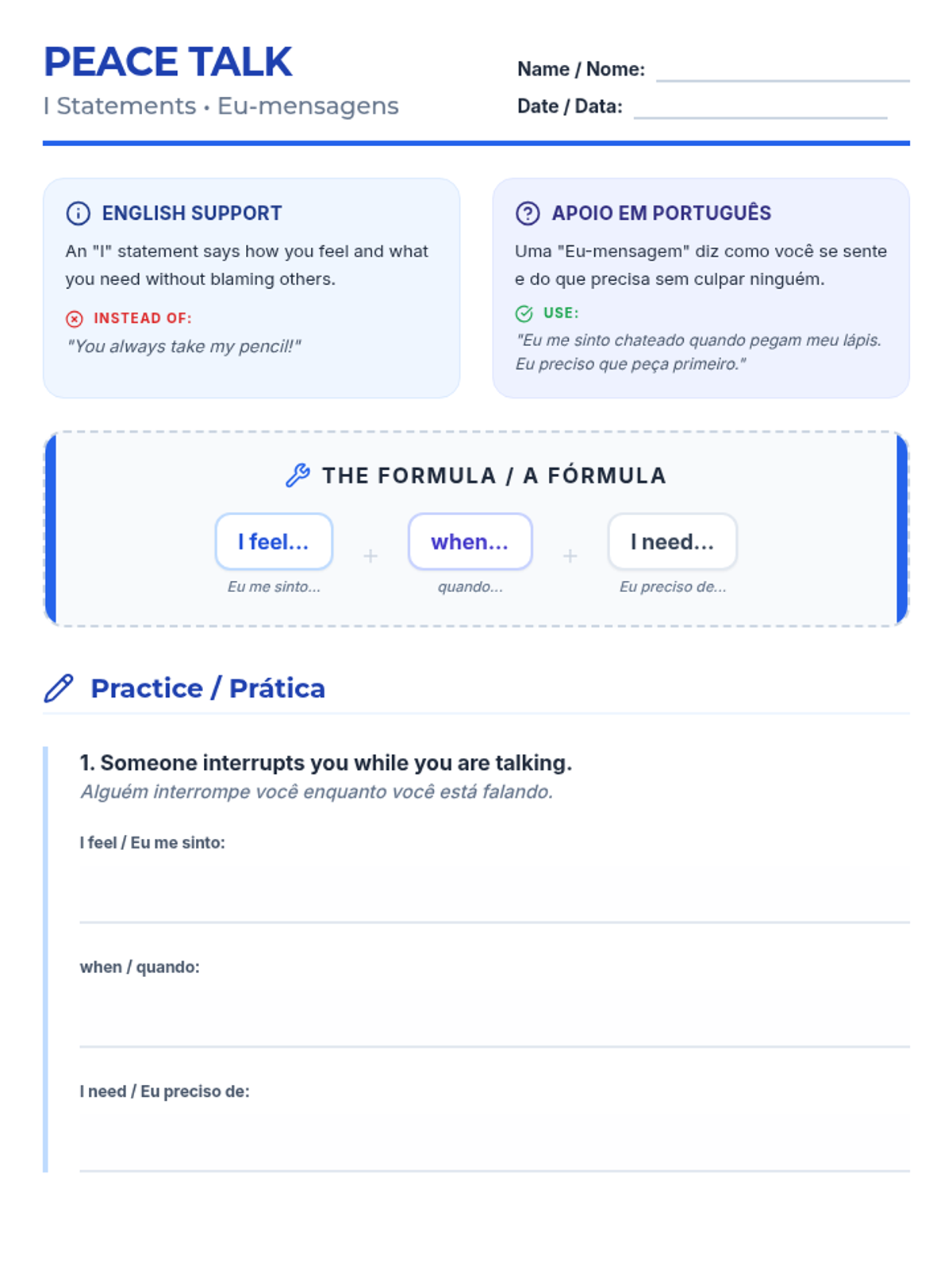
A lesson designed to help newcomer Portuguese students and native English speakers master the art of assertive communication using 'I' statements in classroom settings.

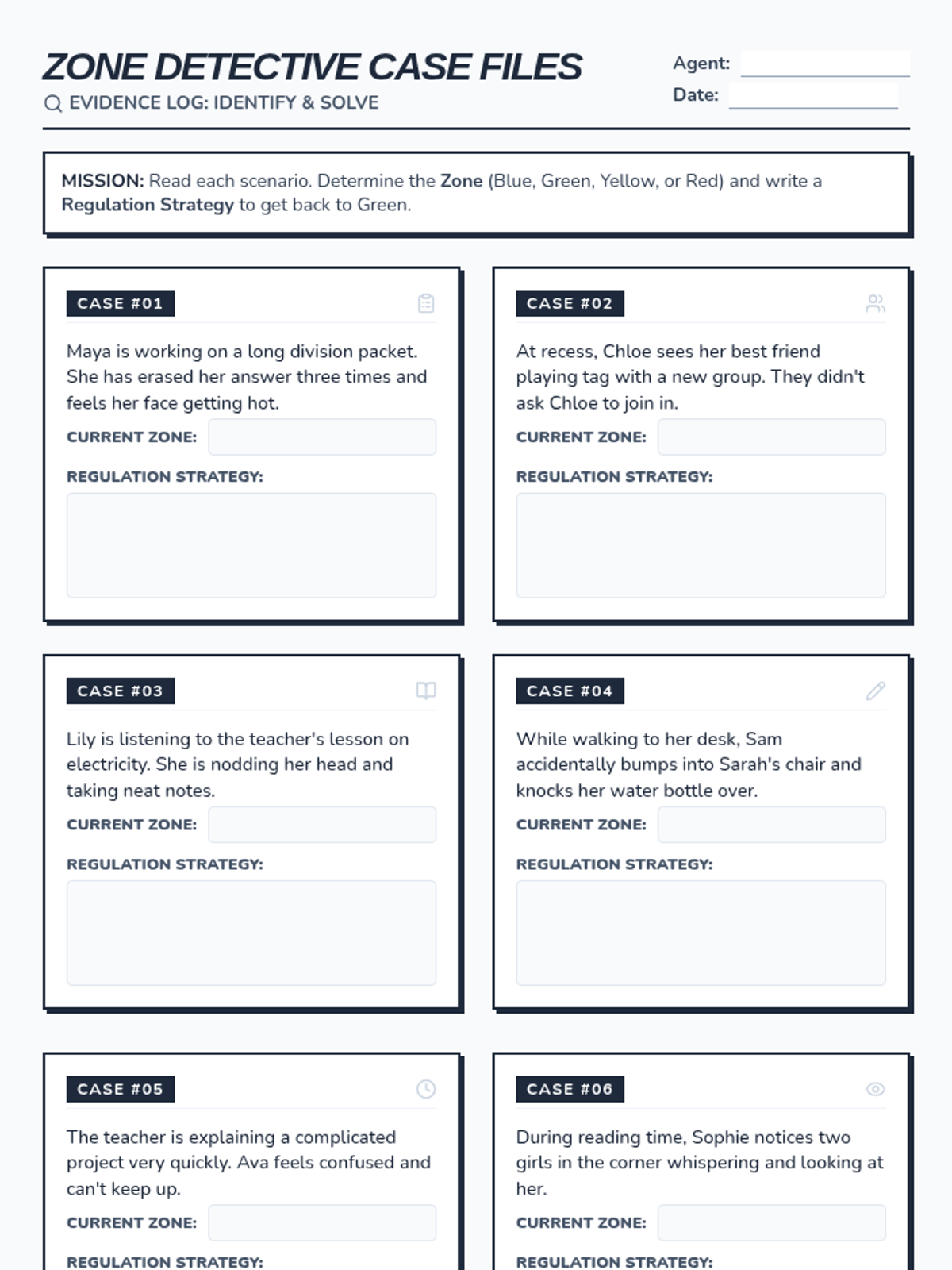
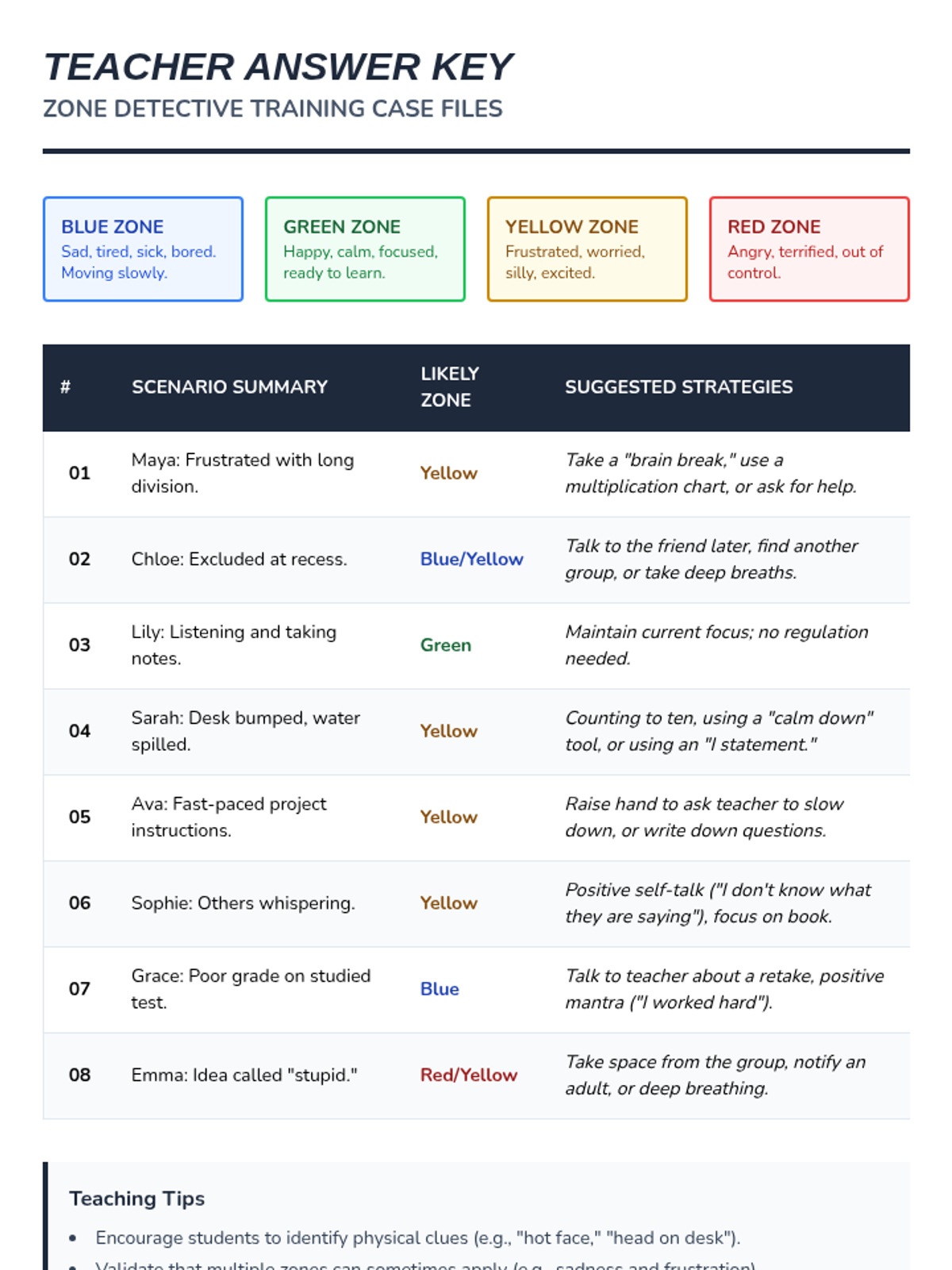
A lesson focused on identifying emotional zones and selecting appropriate self-regulation strategies for classroom and social scenarios.
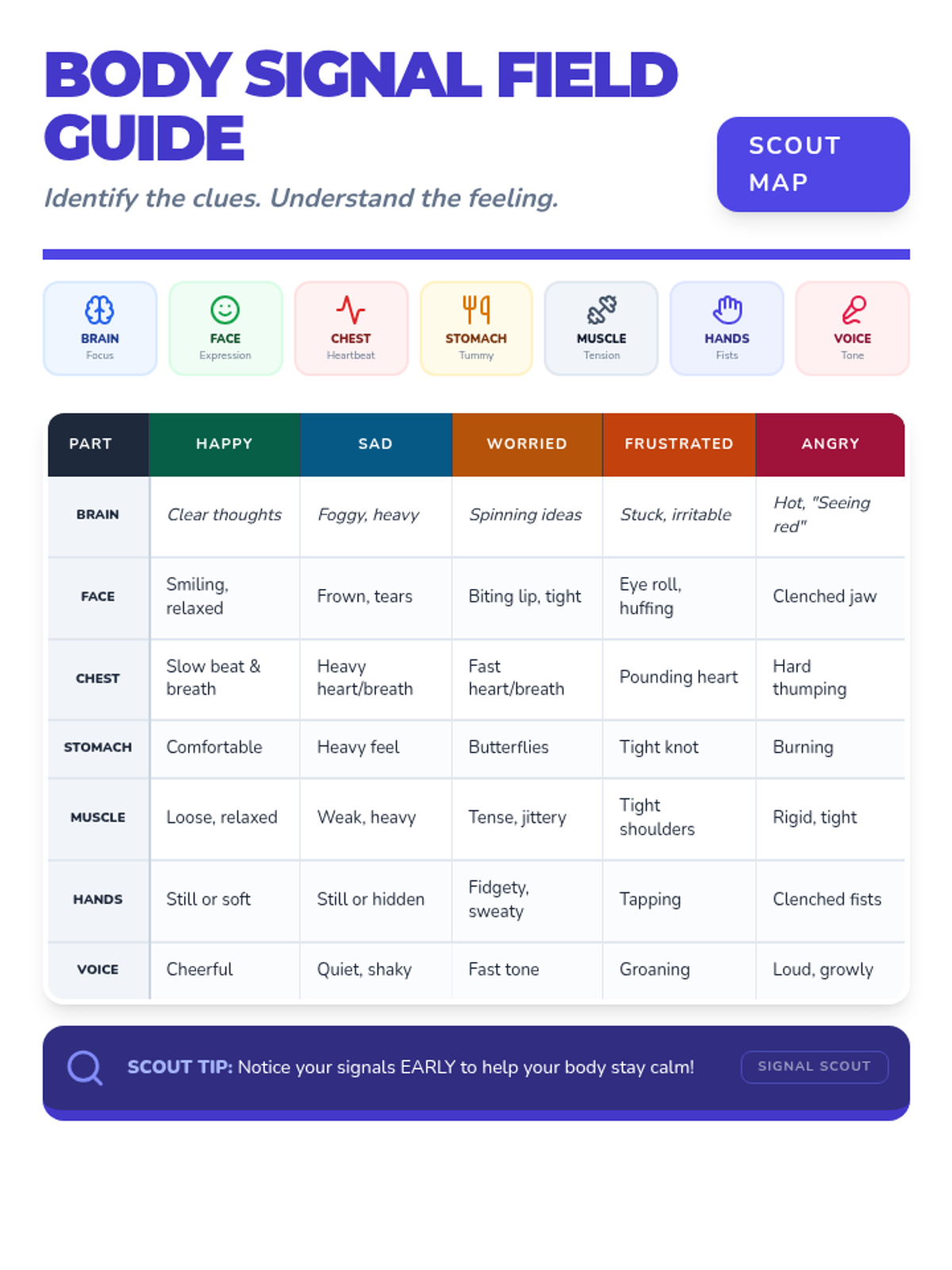
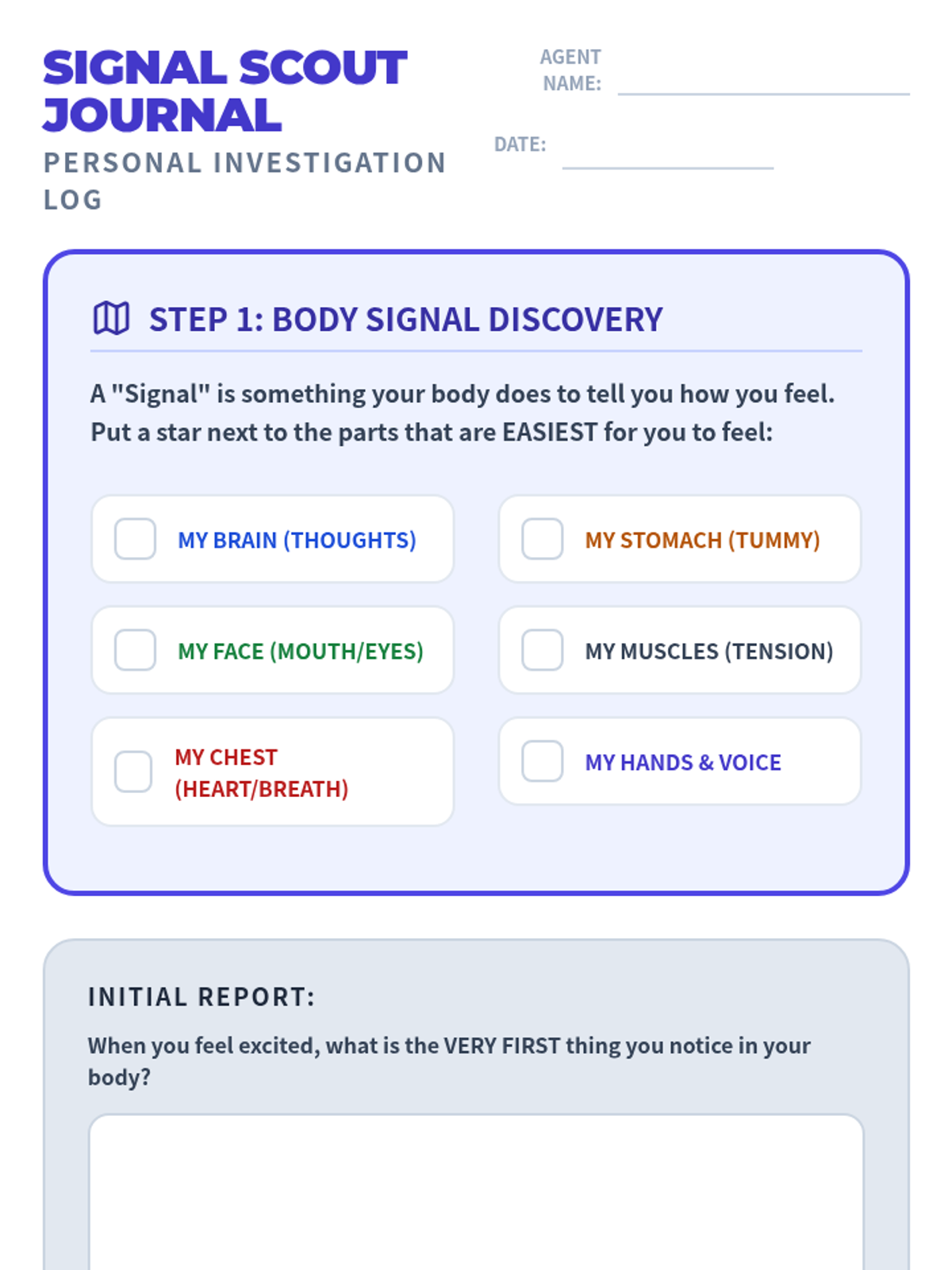
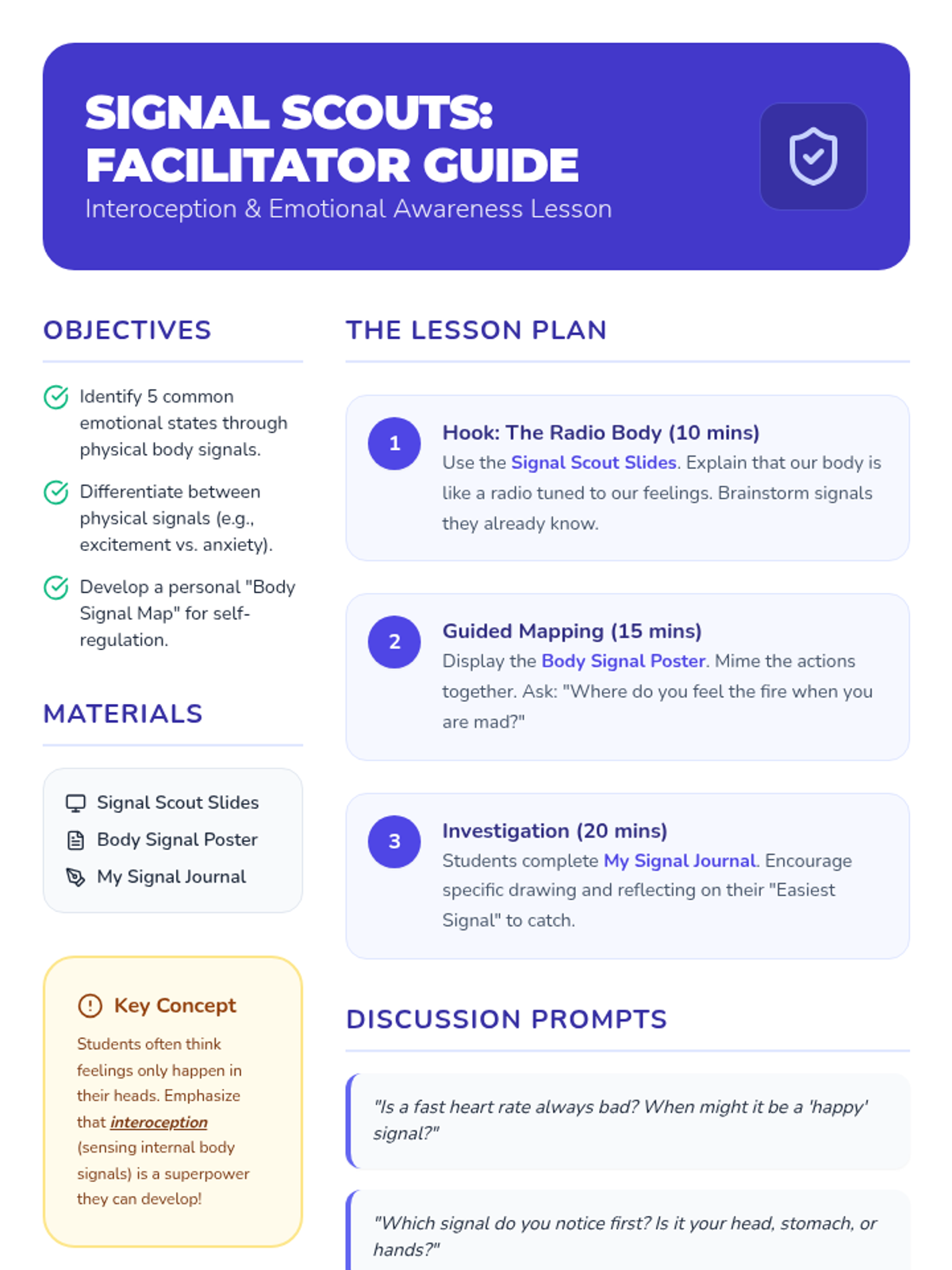
A lesson designed to help students identify and understand the physical signals their bodies send during different emotional states, using a 'Signal Scouts' theme to encourage self-awareness and emotional regulation.
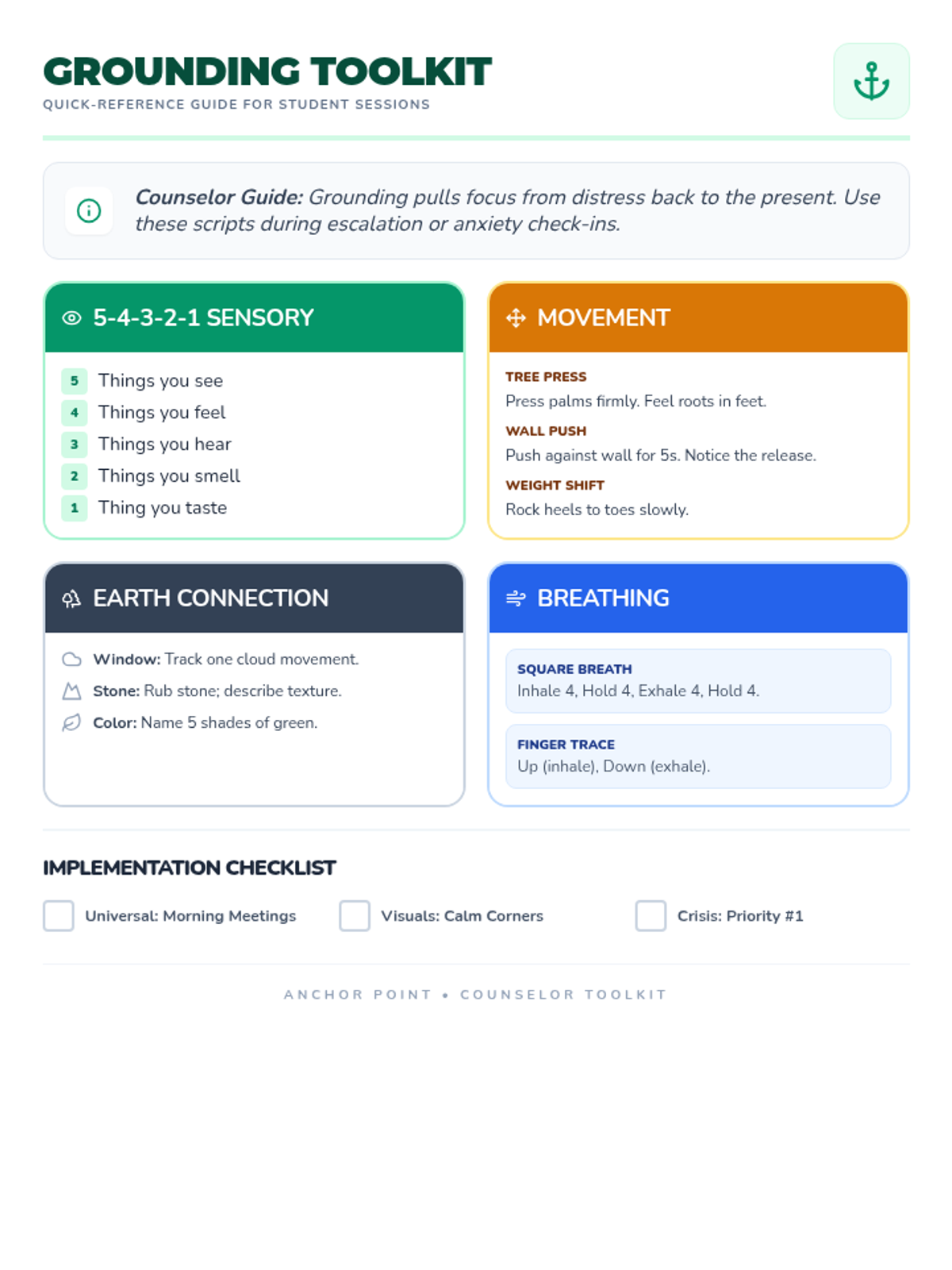
A comprehensive training session for school counselors on teaching effective grounding techniques to students, focusing on sensory, movement, nature-based, and breathing strategies.
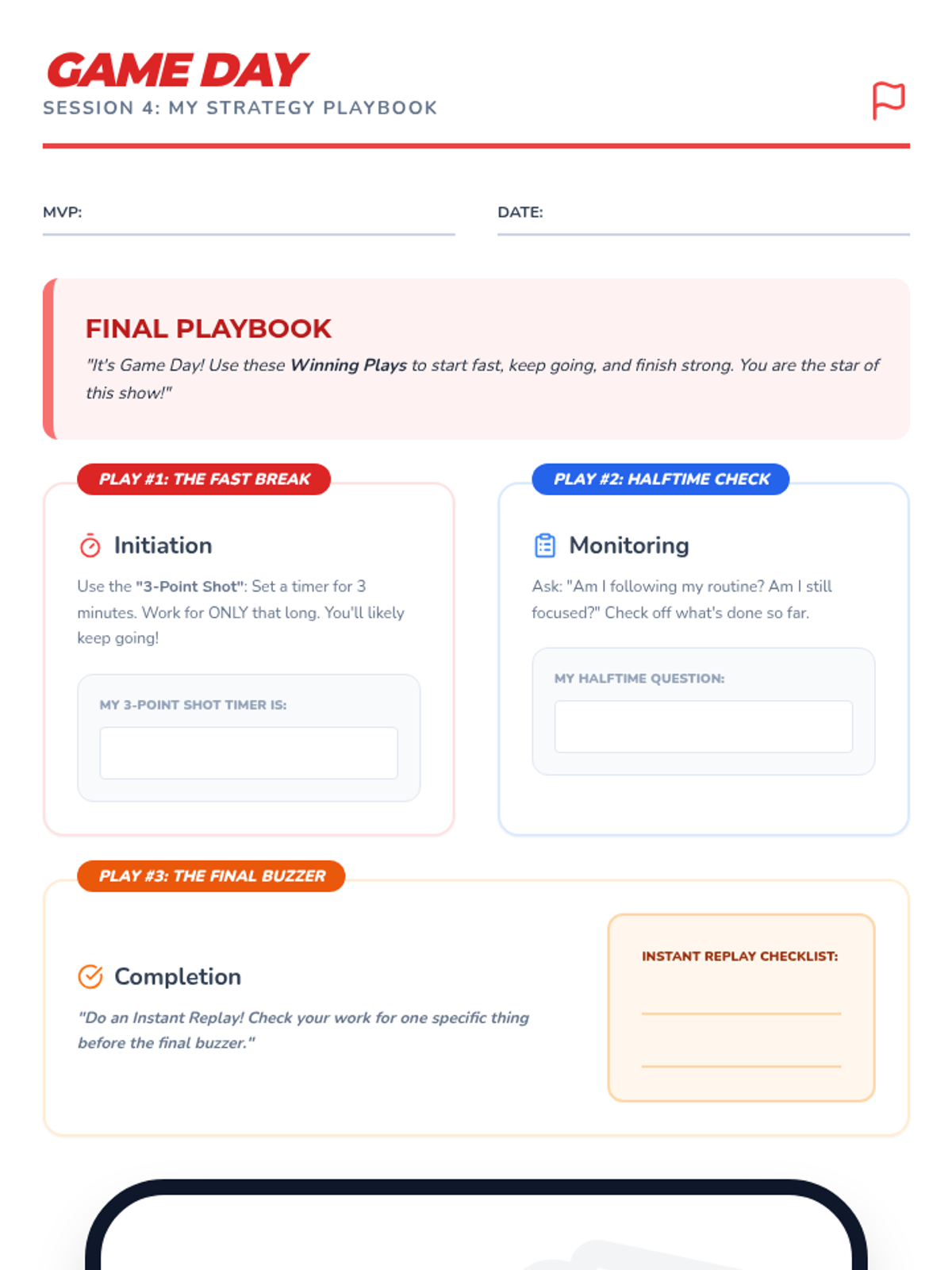
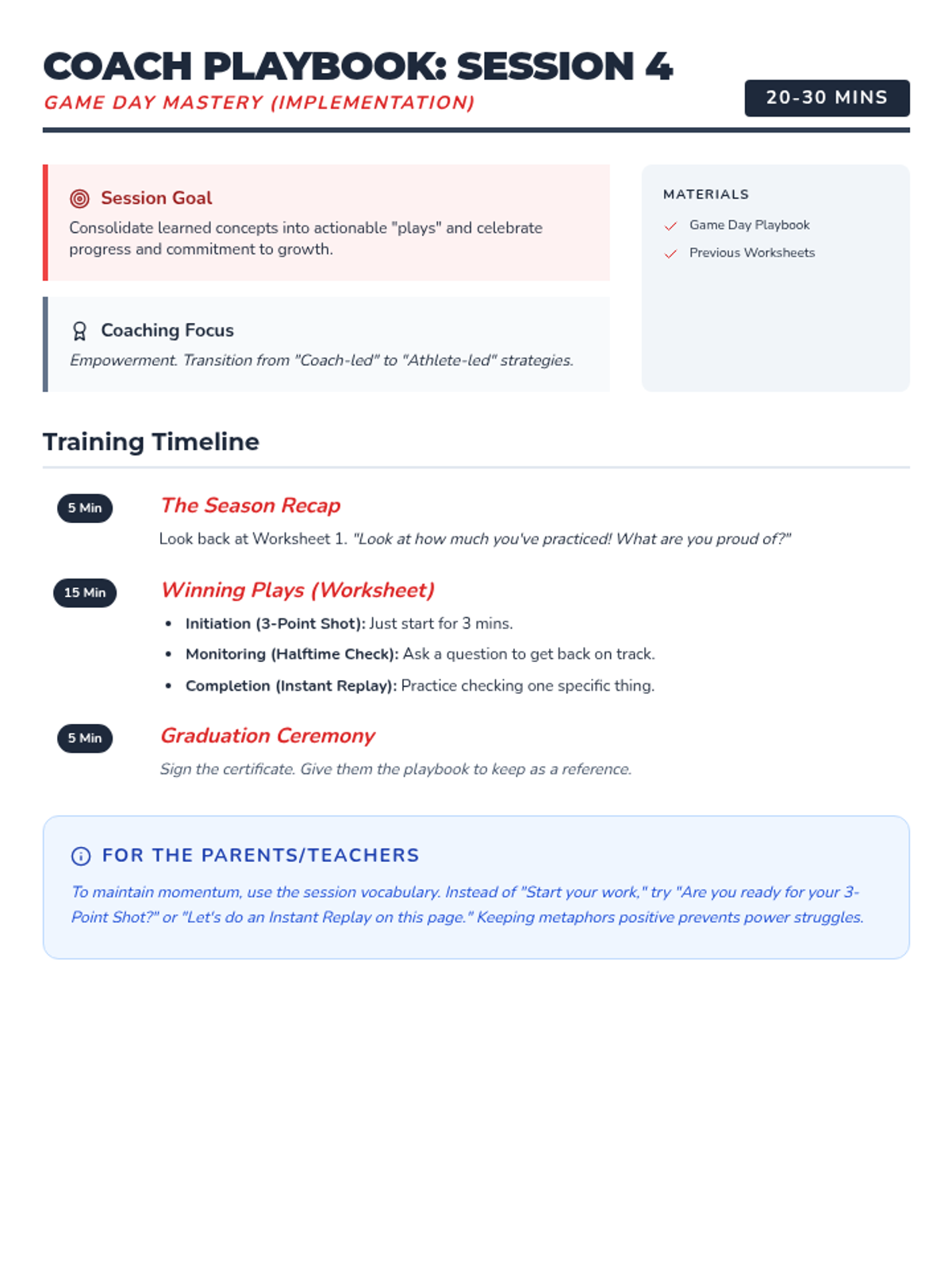
Students learn and practice specific strategies for task initiation, self-monitoring, and independence to finish their 'game' strong.
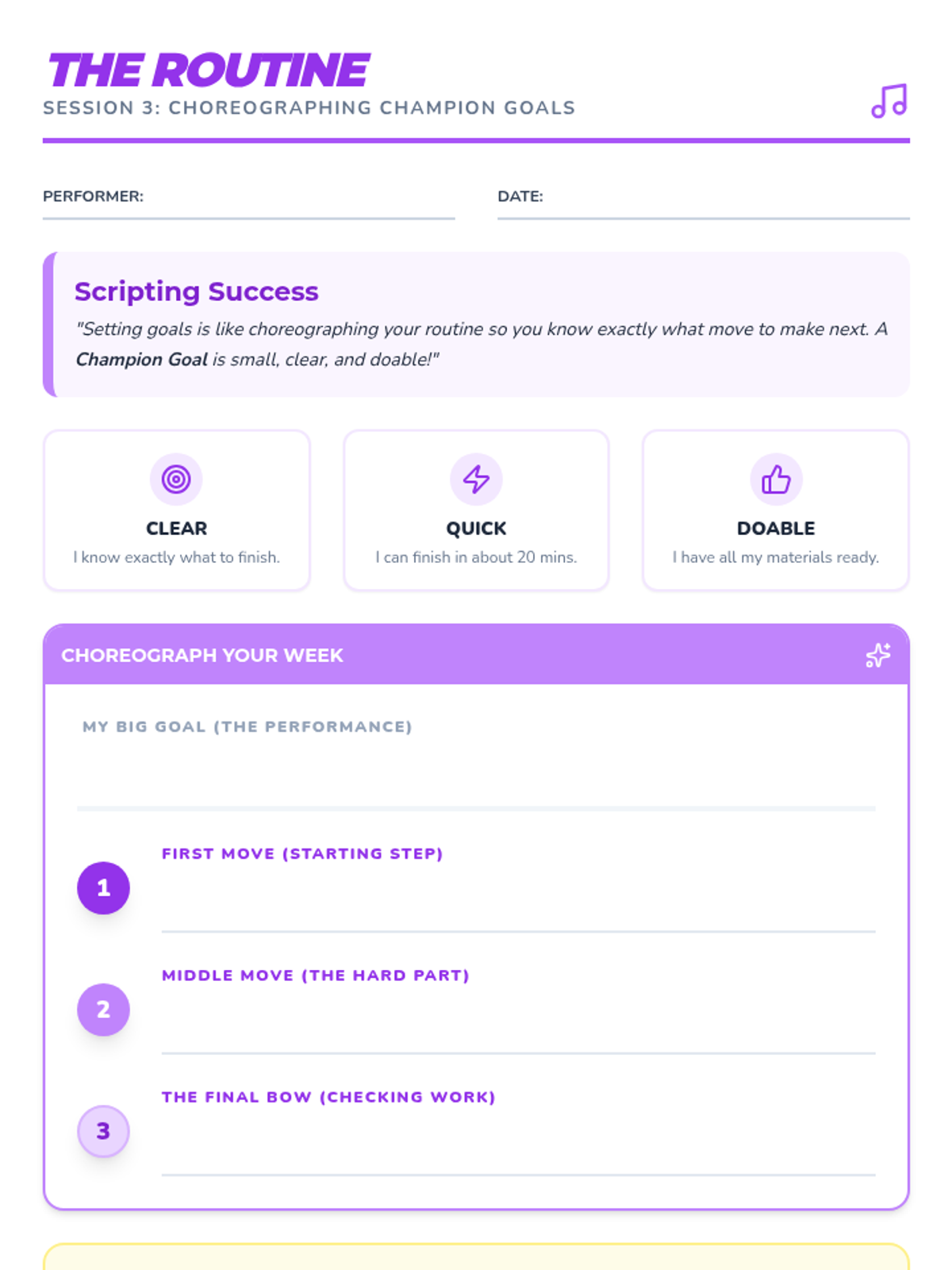
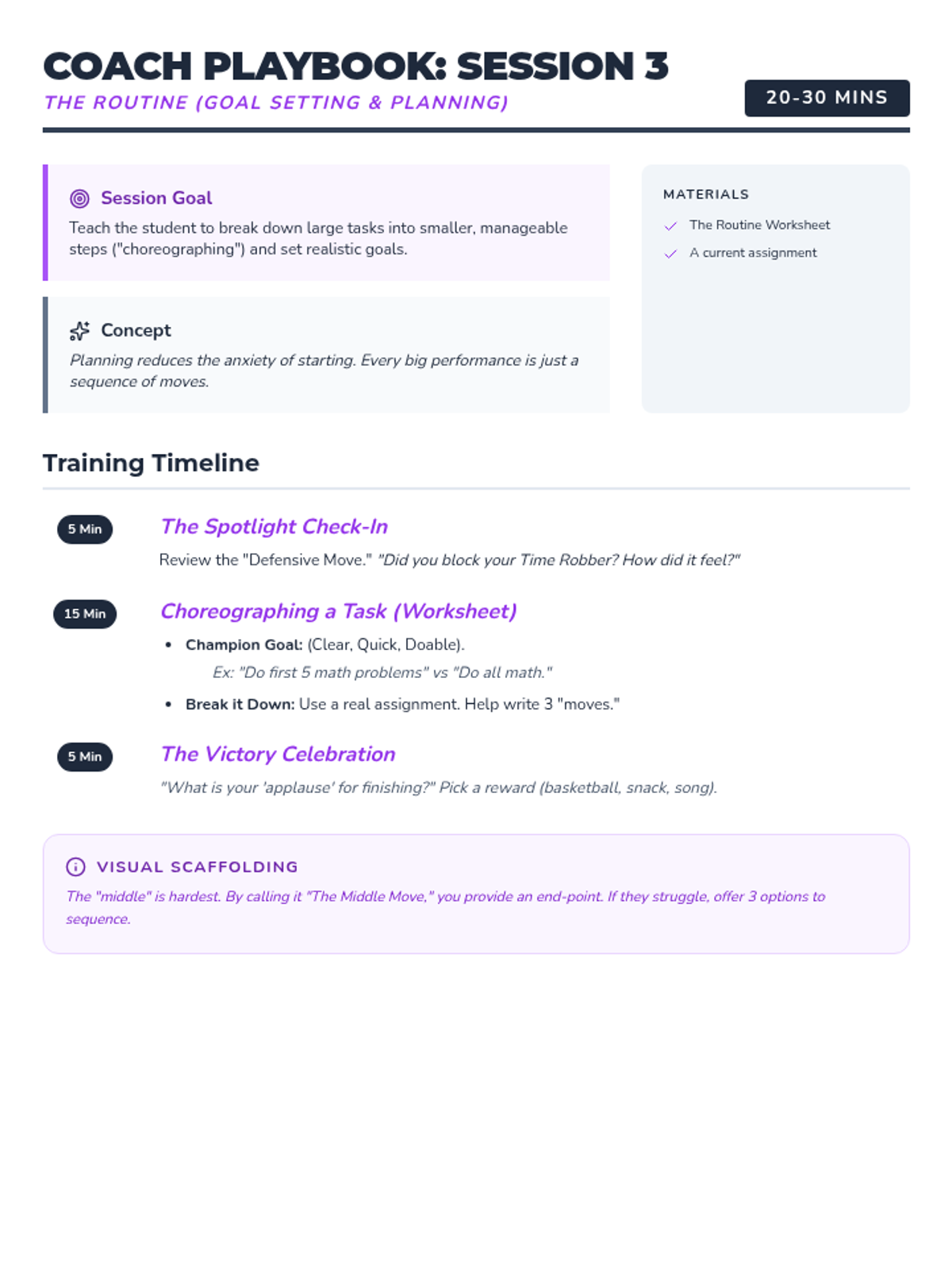
Students learn to choreograph their success by setting specific, manageable goals using dance and theater metaphors.
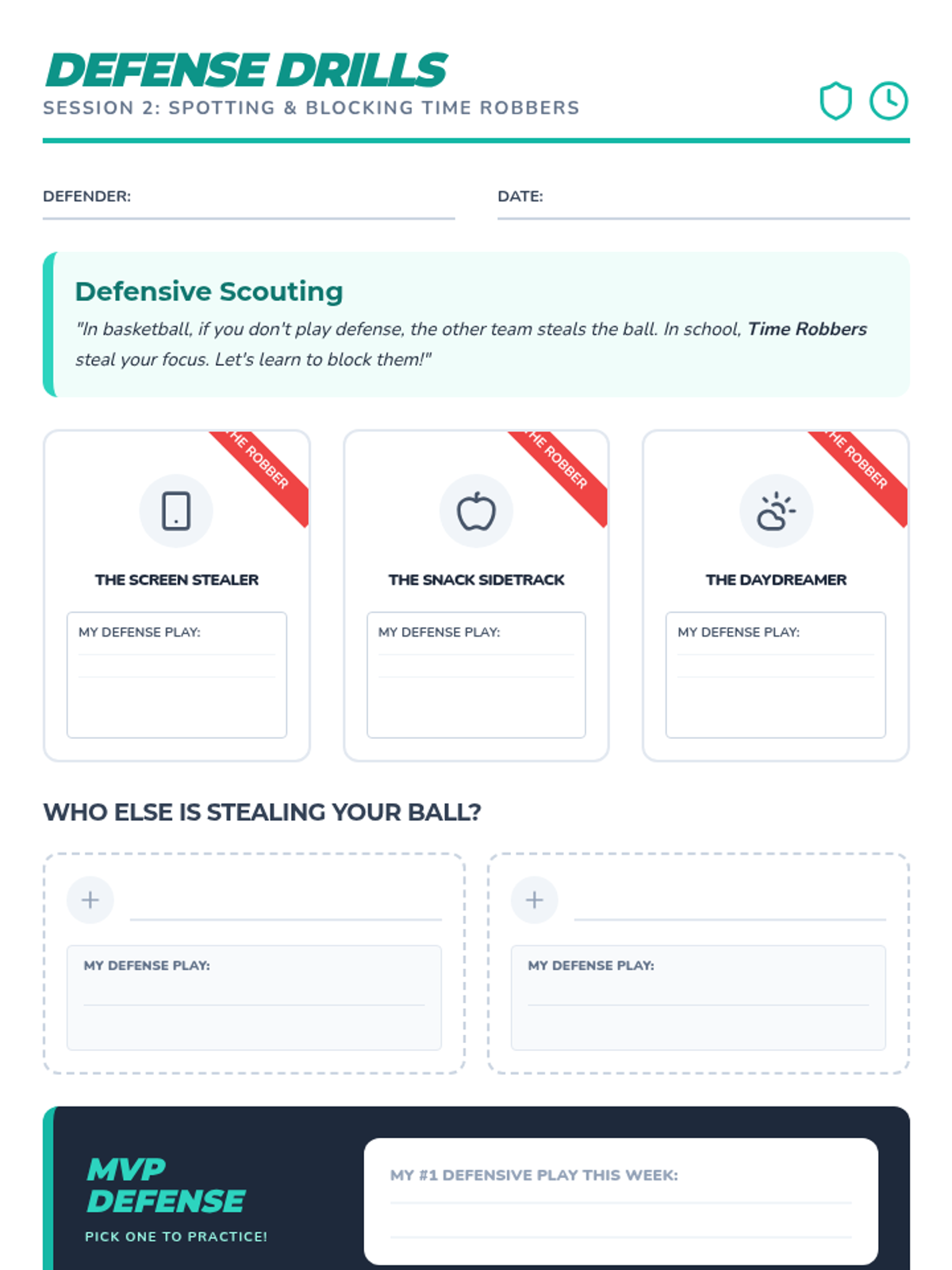
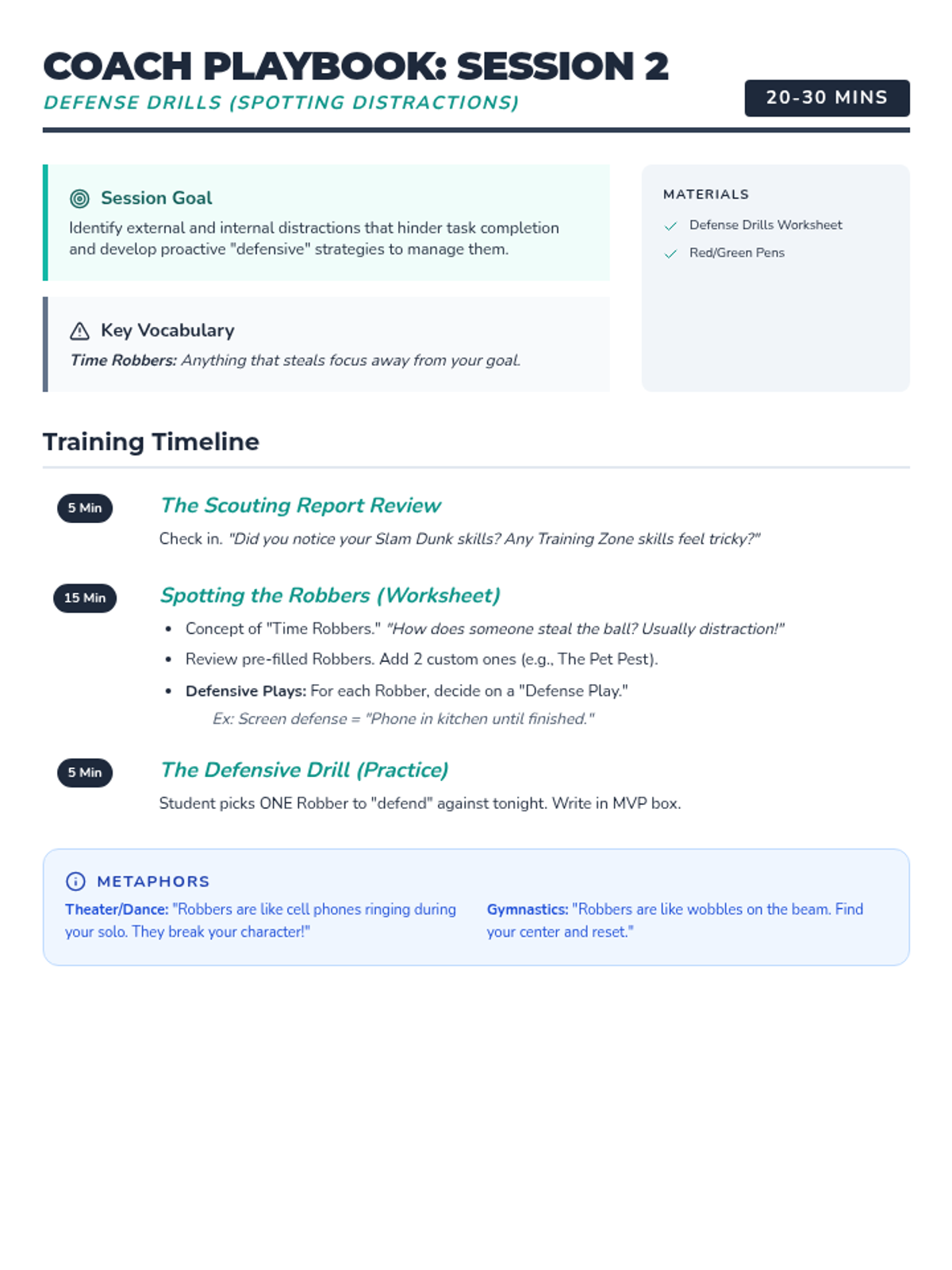
Students identify 'Time Robbers' (distractions) that interfere with work completion and develop defensive strategies to stay on task.
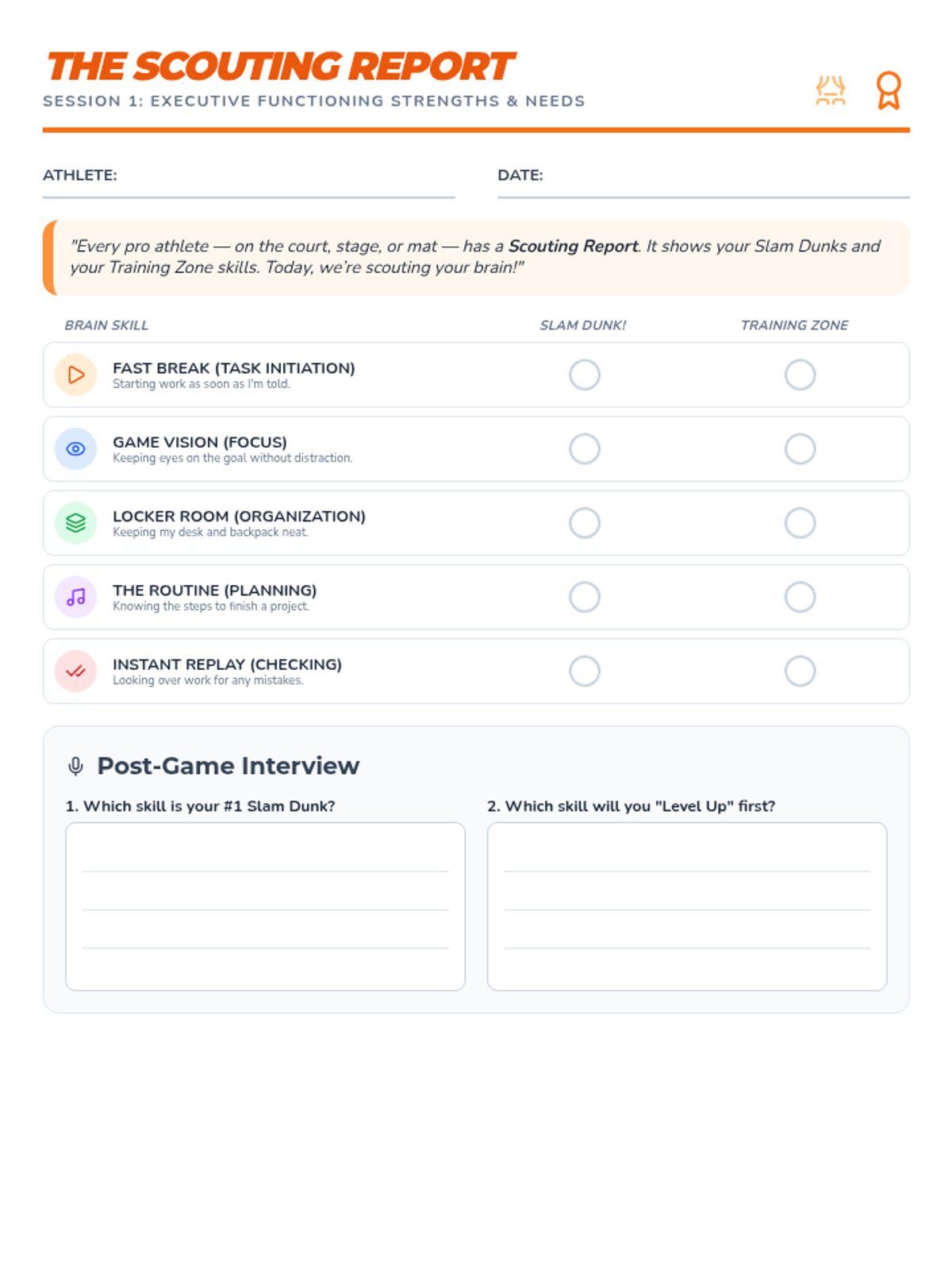
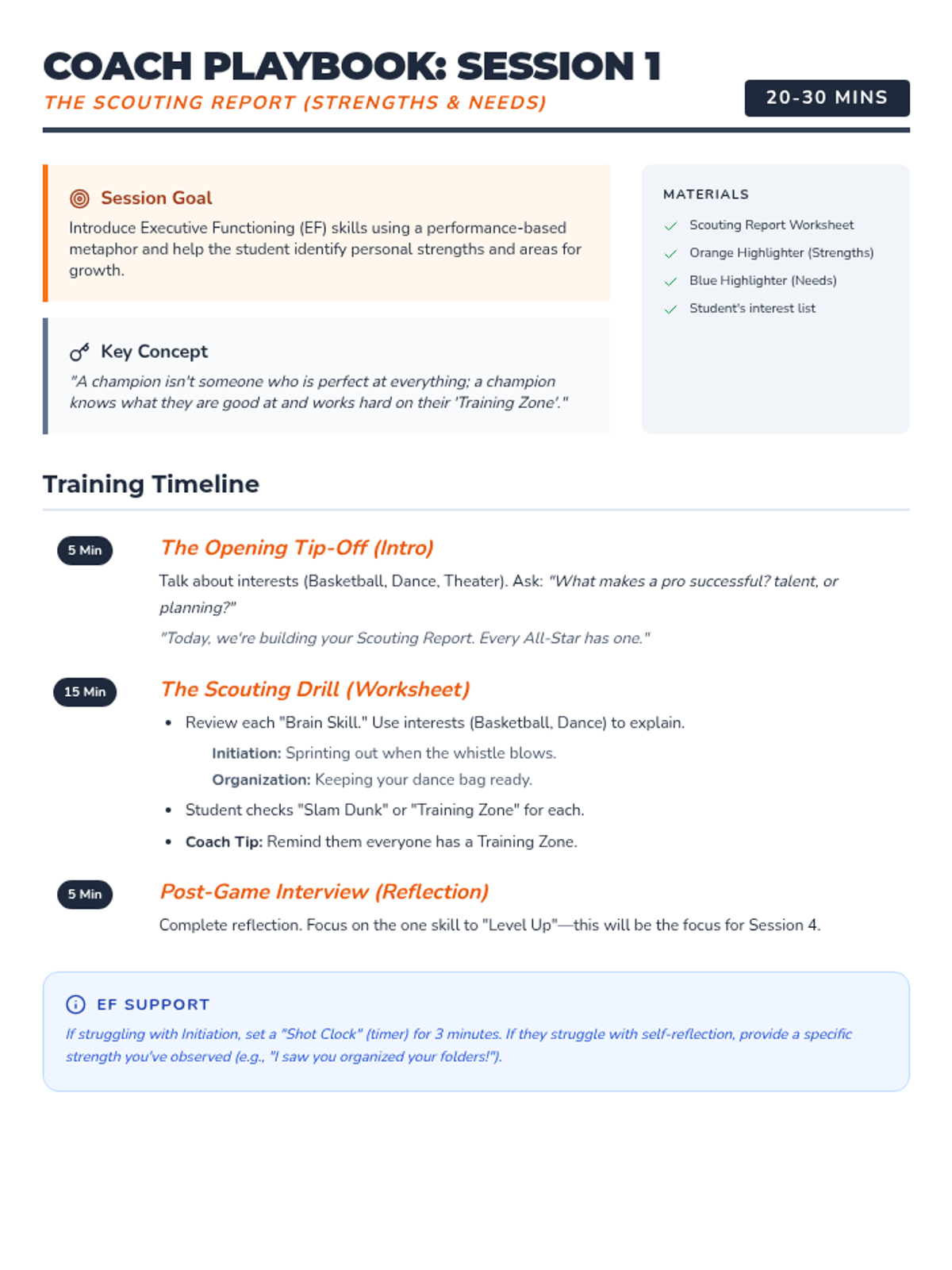
Students identify their executive functioning 'stats' by recognizing their strengths and areas for growth using a 'Scouting Report' metaphor.
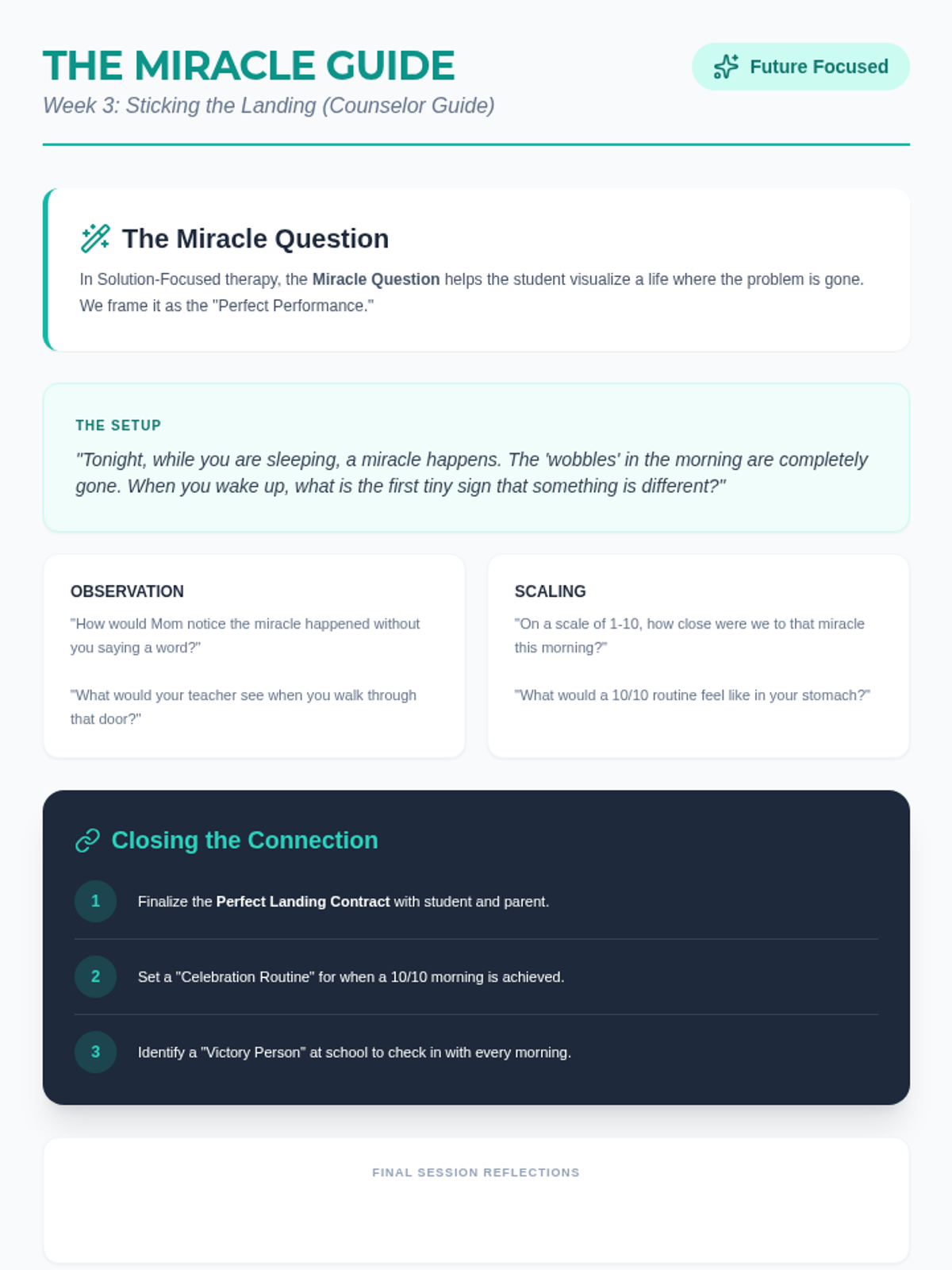
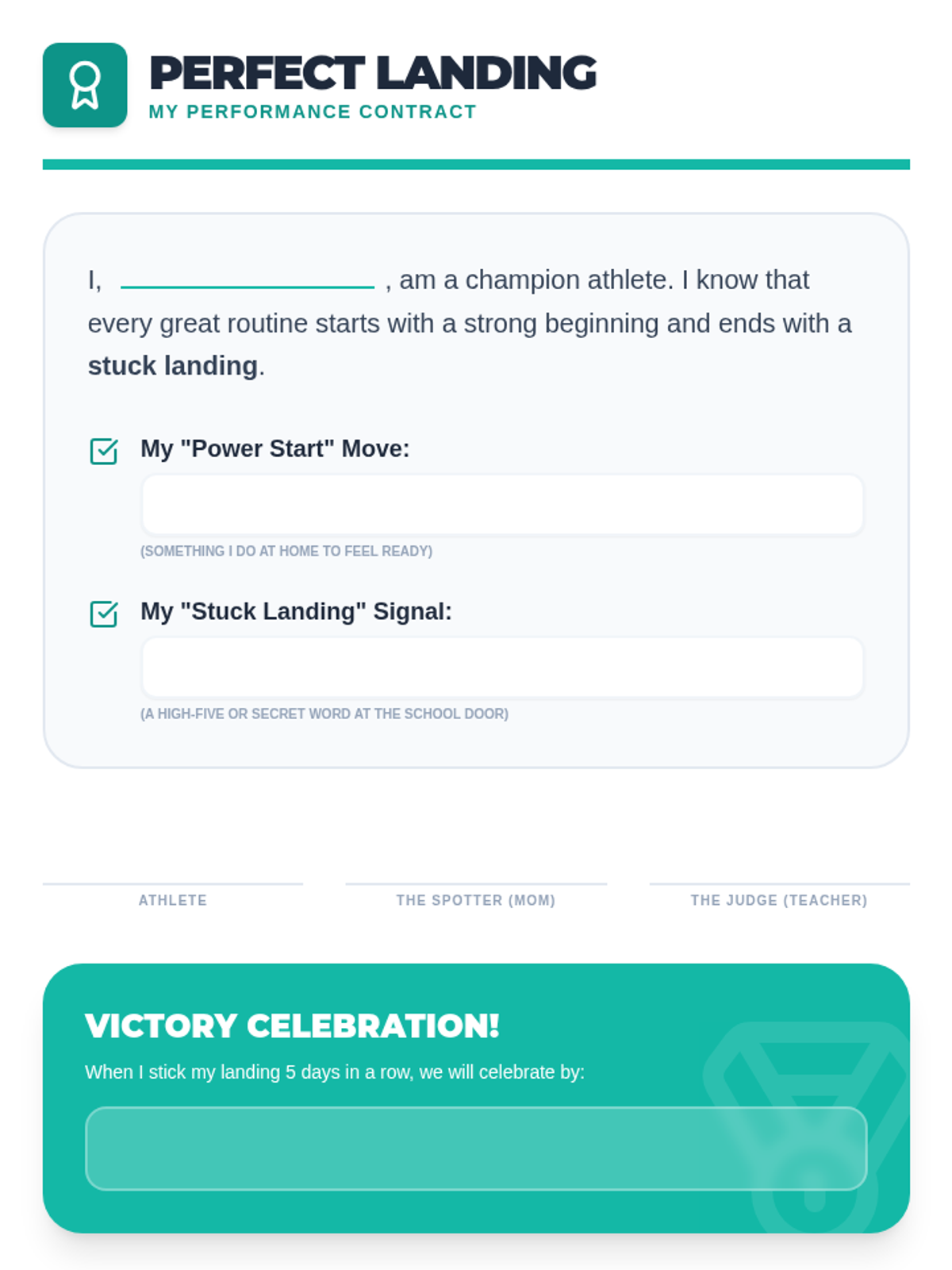
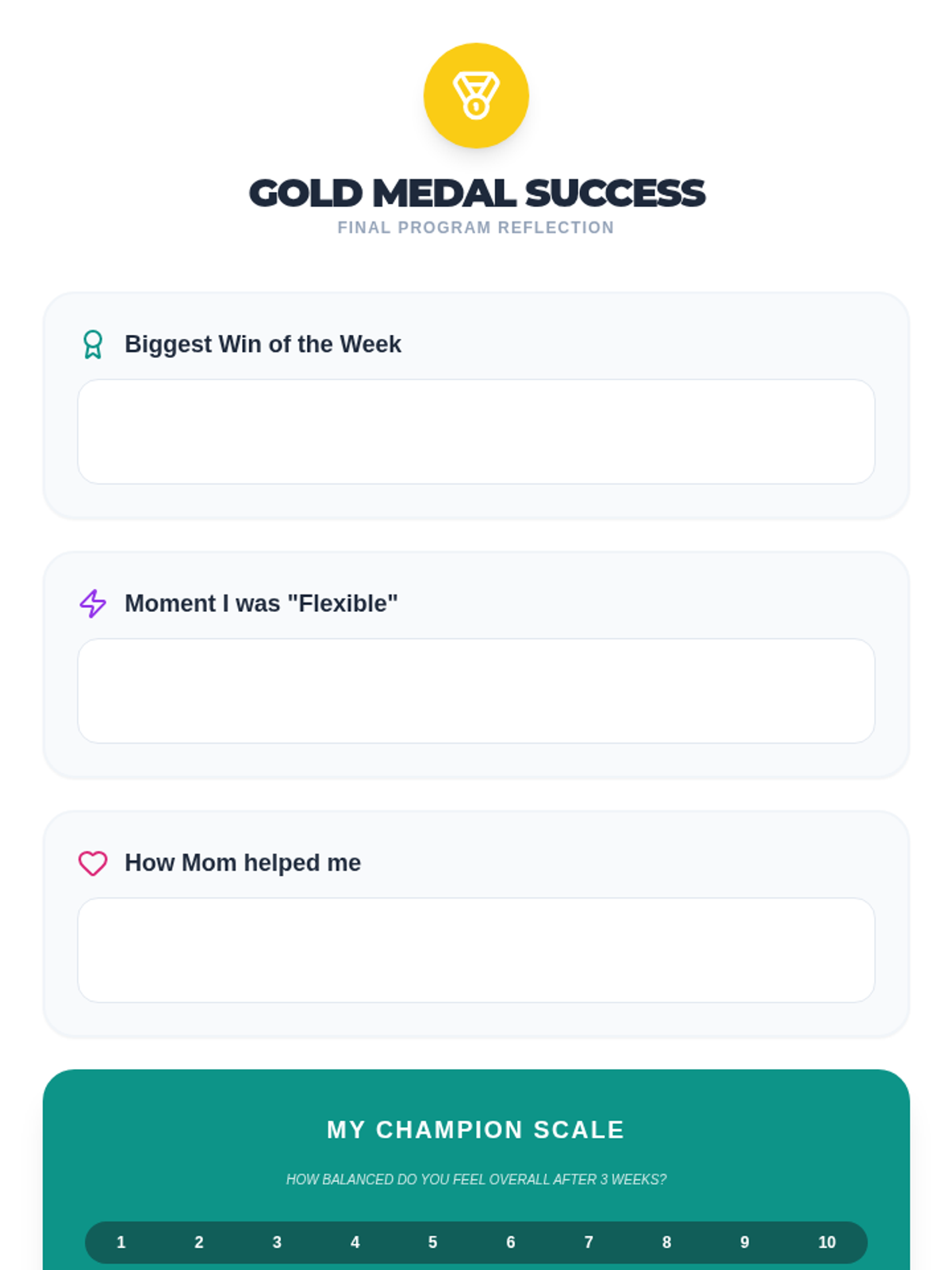
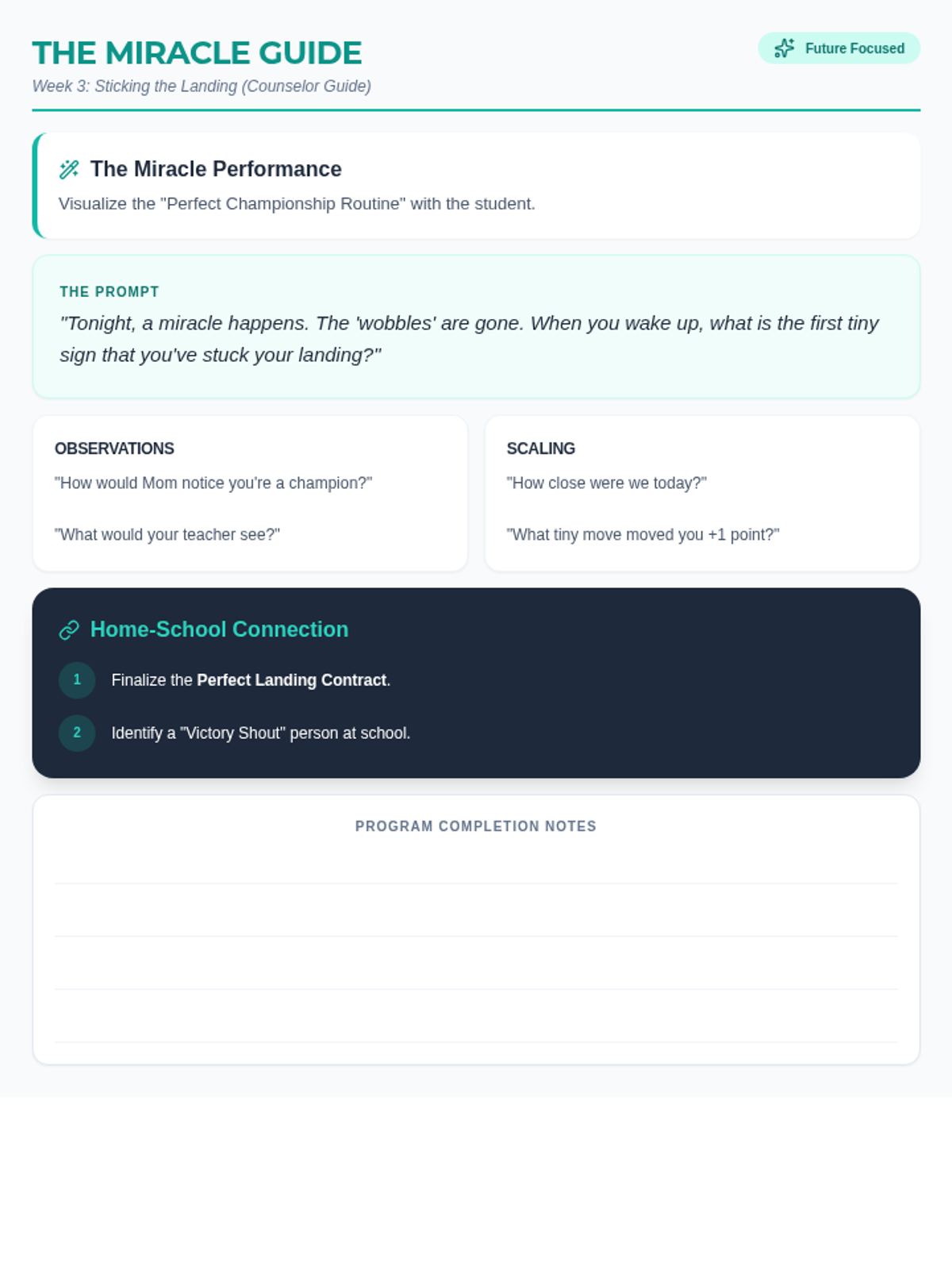
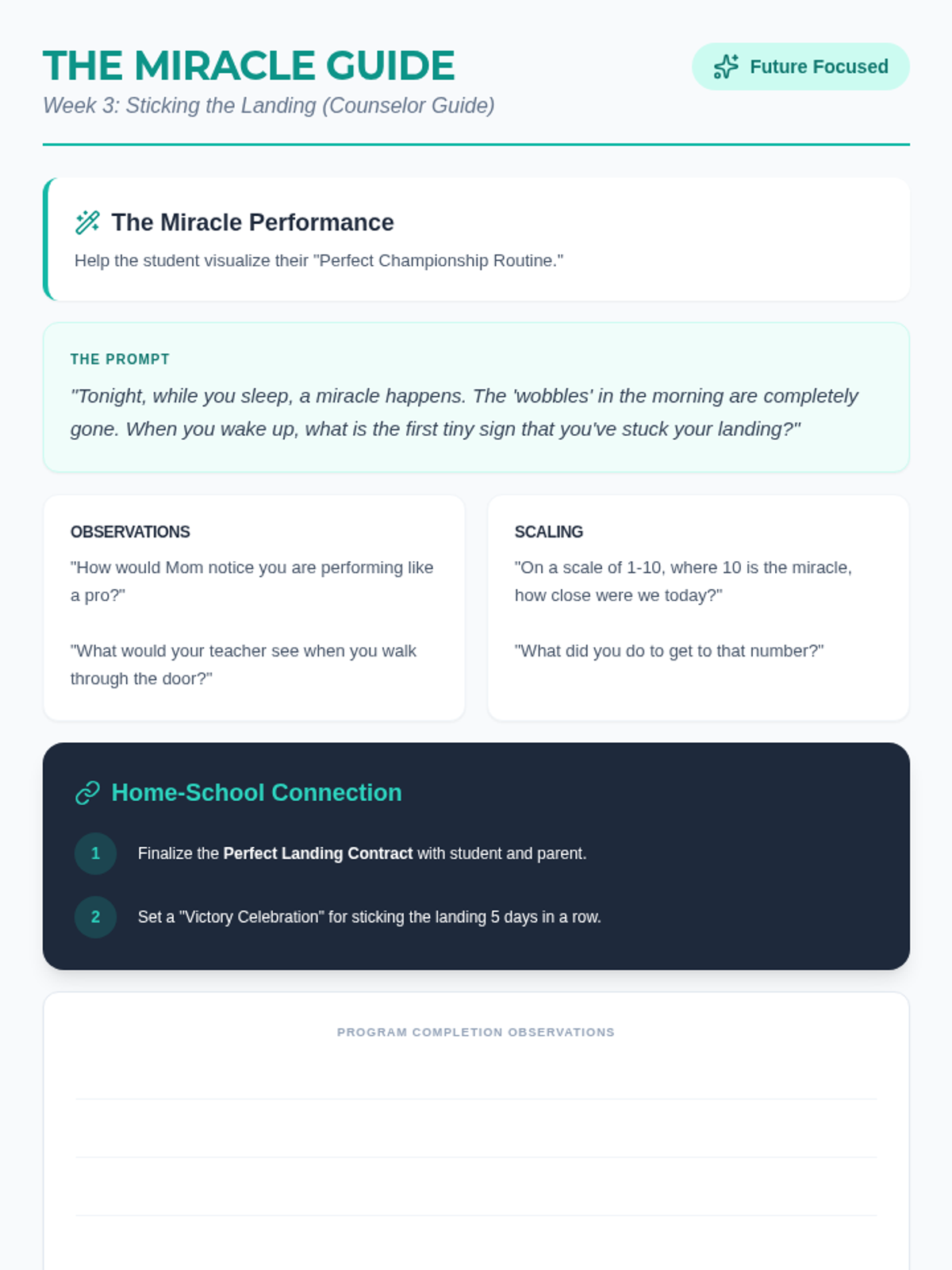
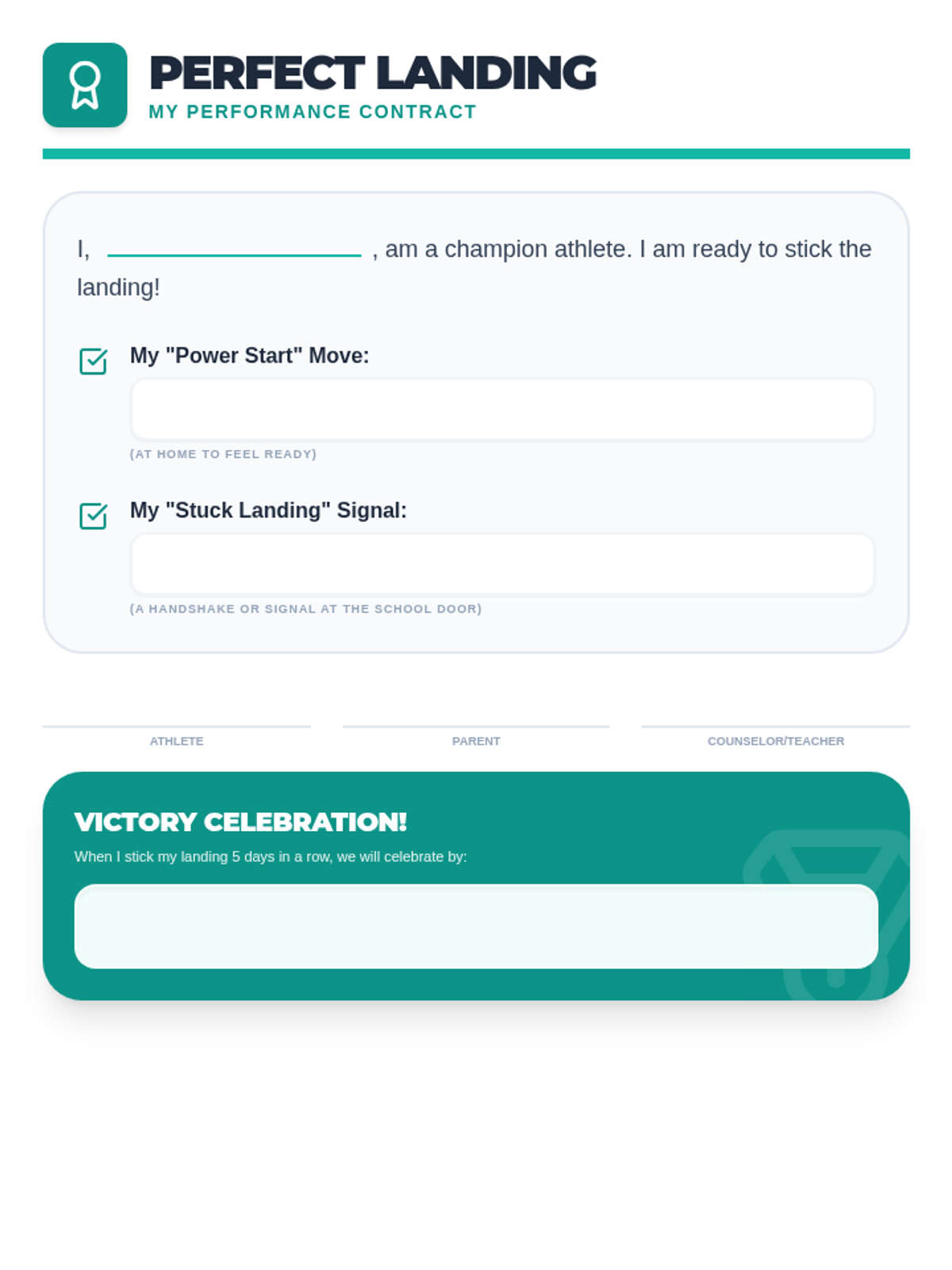
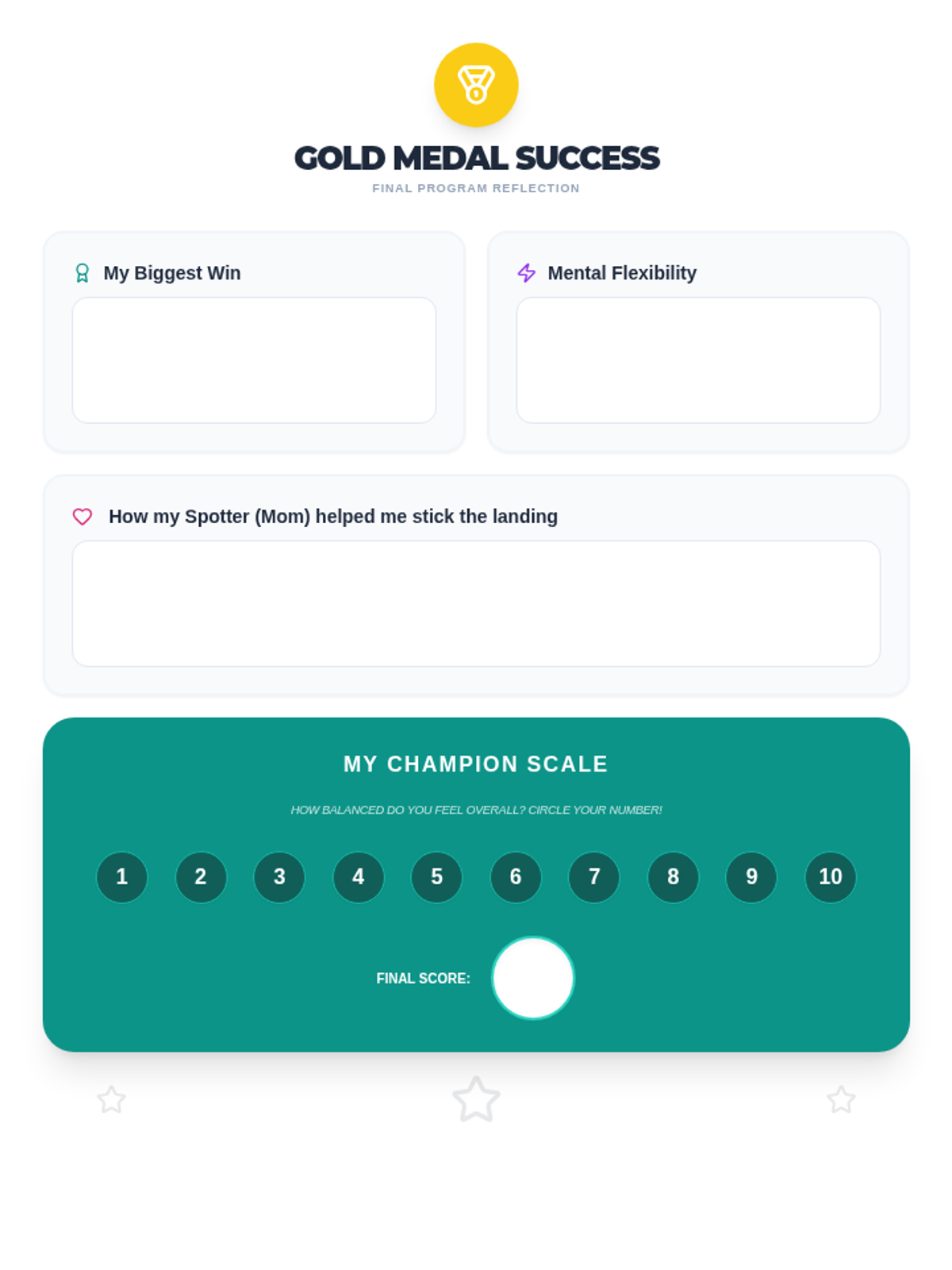
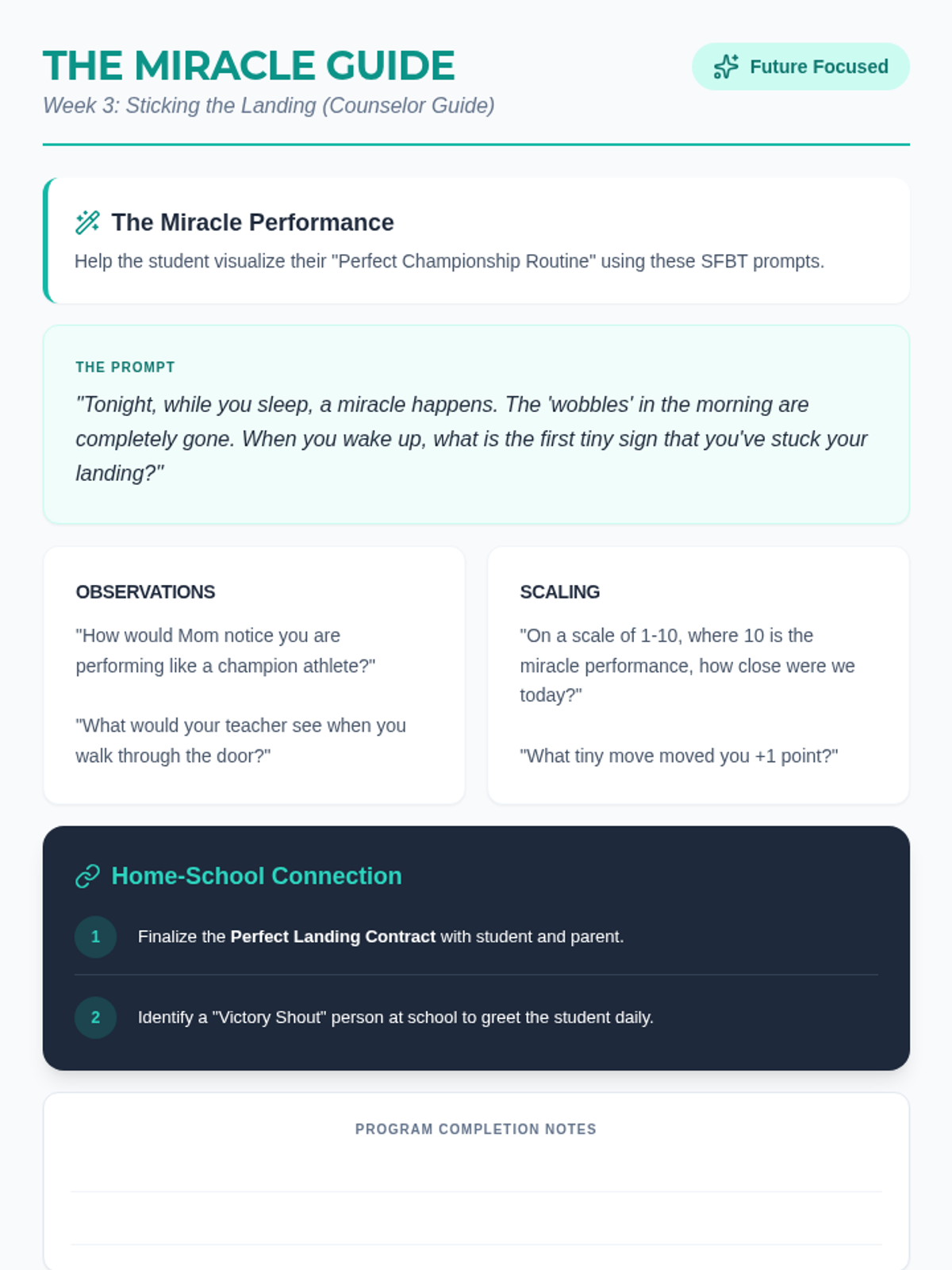
Focuses on future-oriented thinking and the "Miracle Morning." Solidifies the home-school connection and celebrates small wins with a "Gold Medal" mindset.
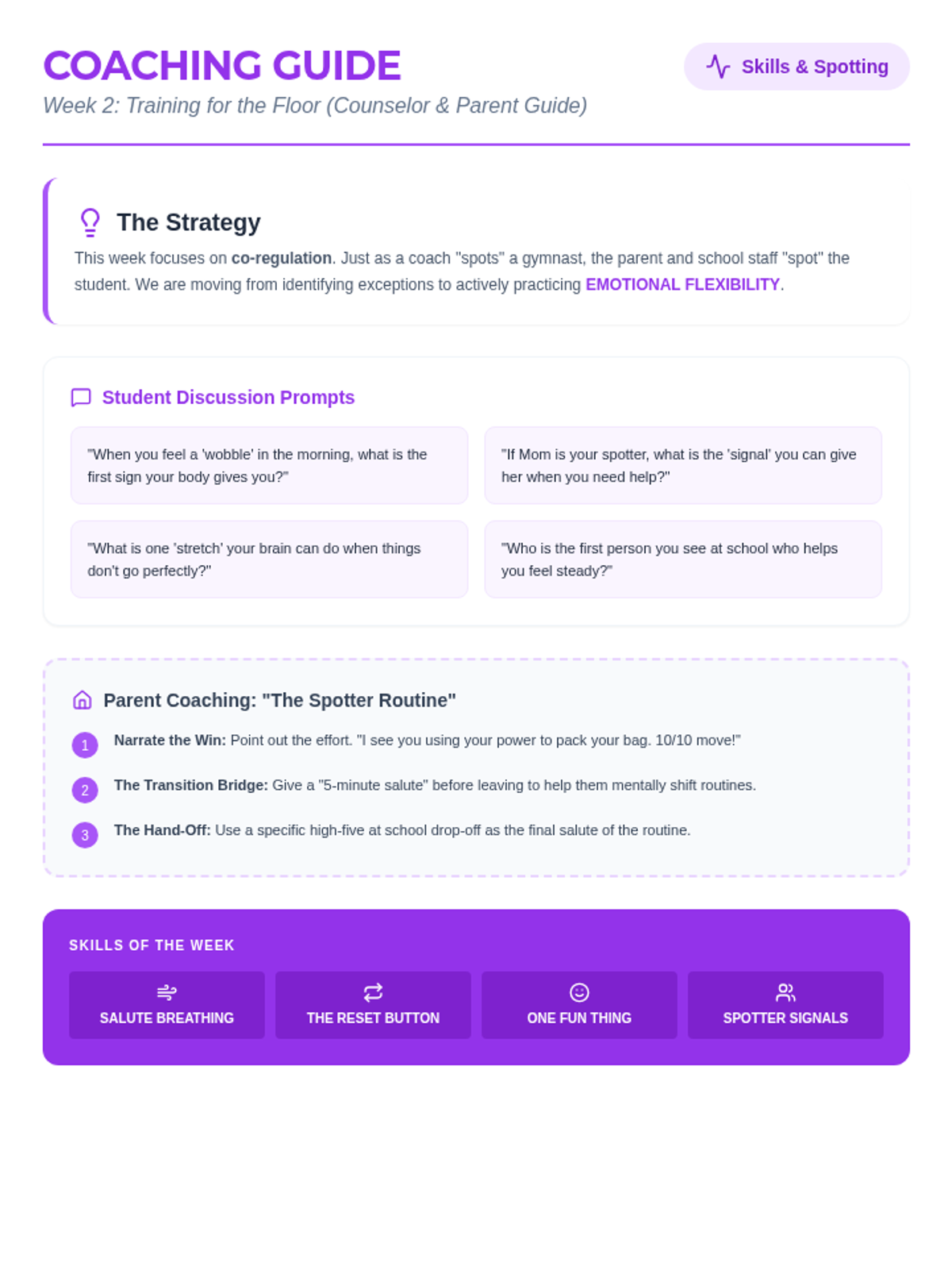
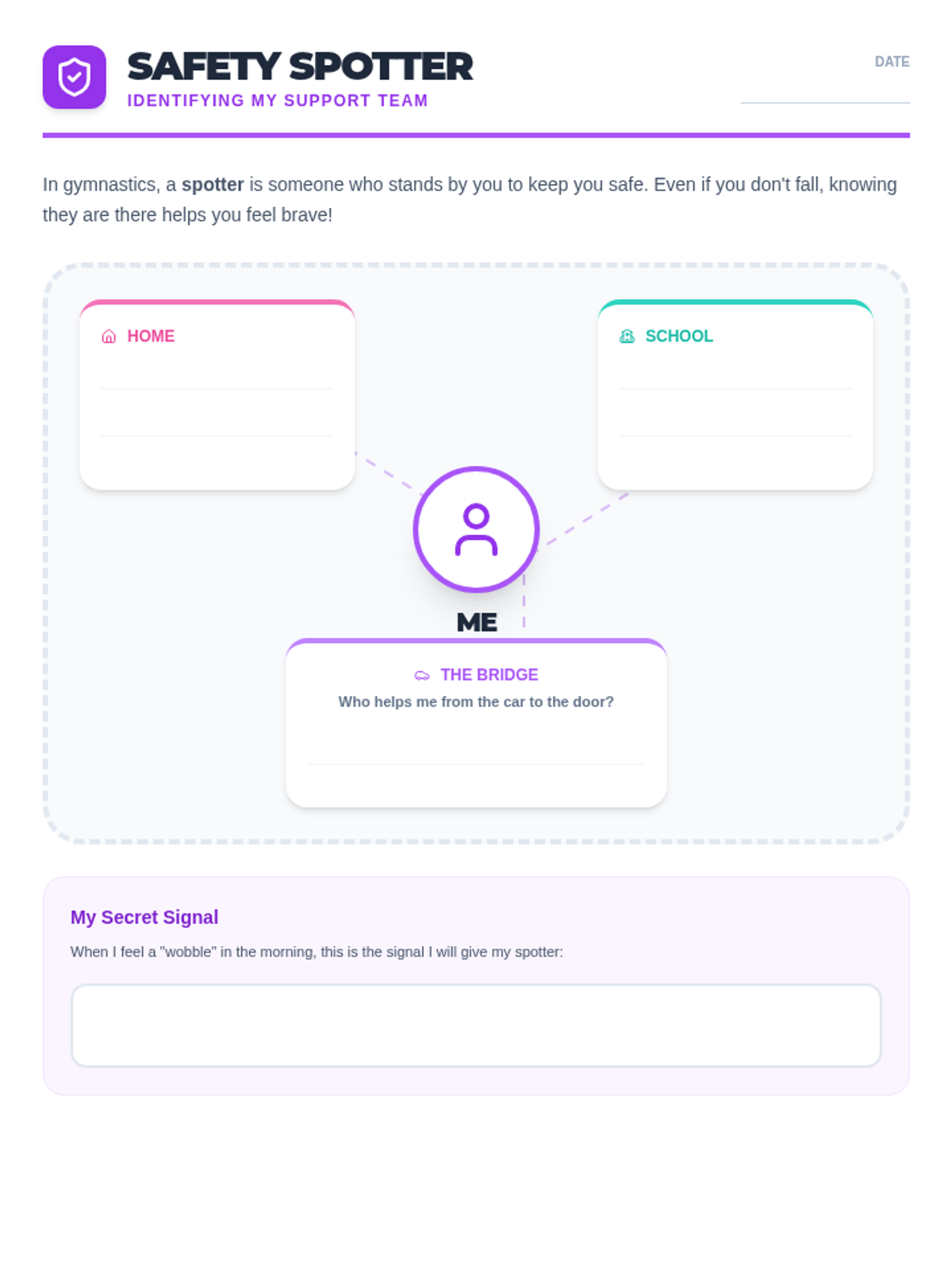
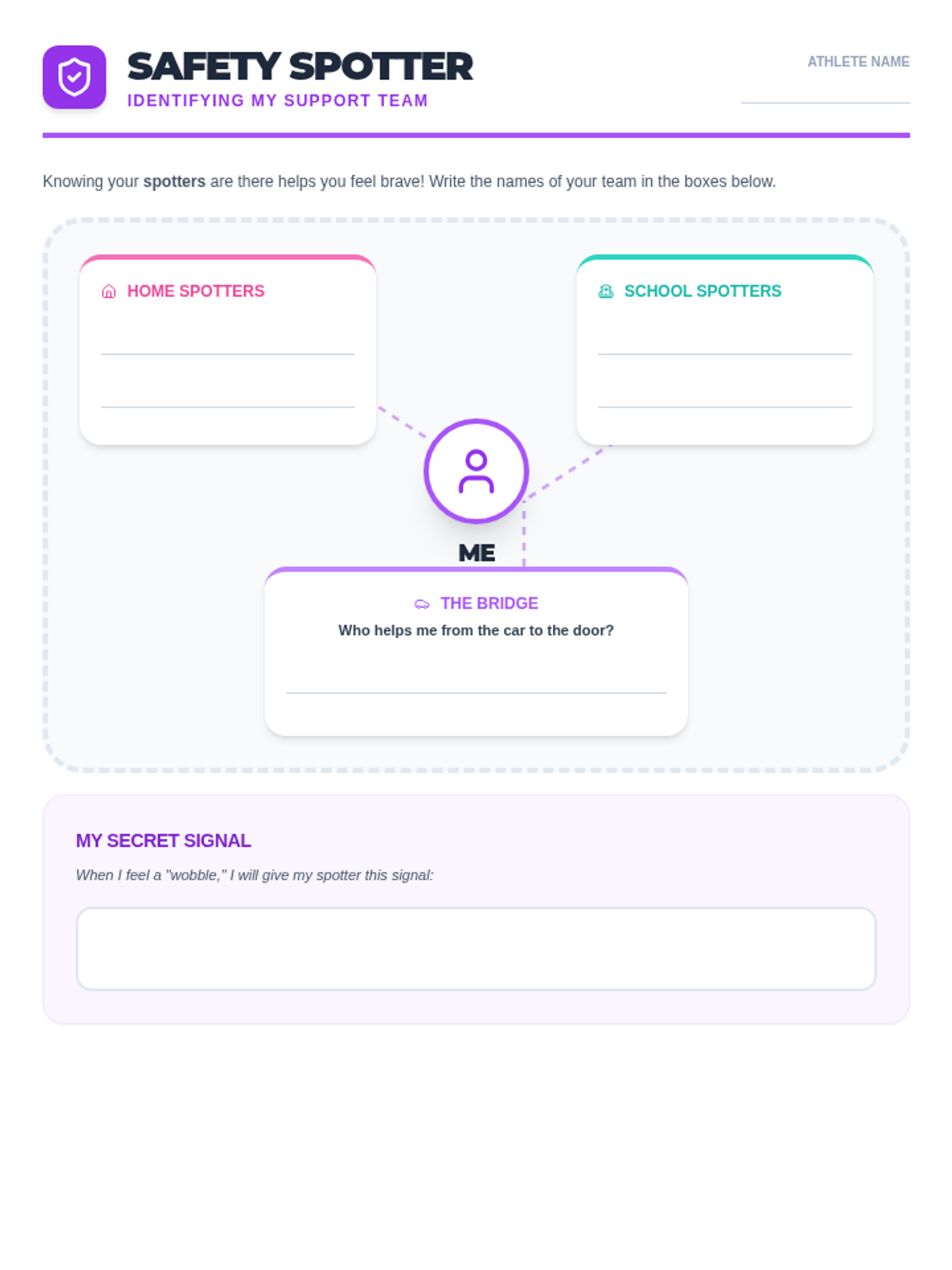
Focuses on developing specific coping skills and "routines" for the transition. Uses the metaphor of "spotting" and "flexibility" to manage big emotions in the morning.
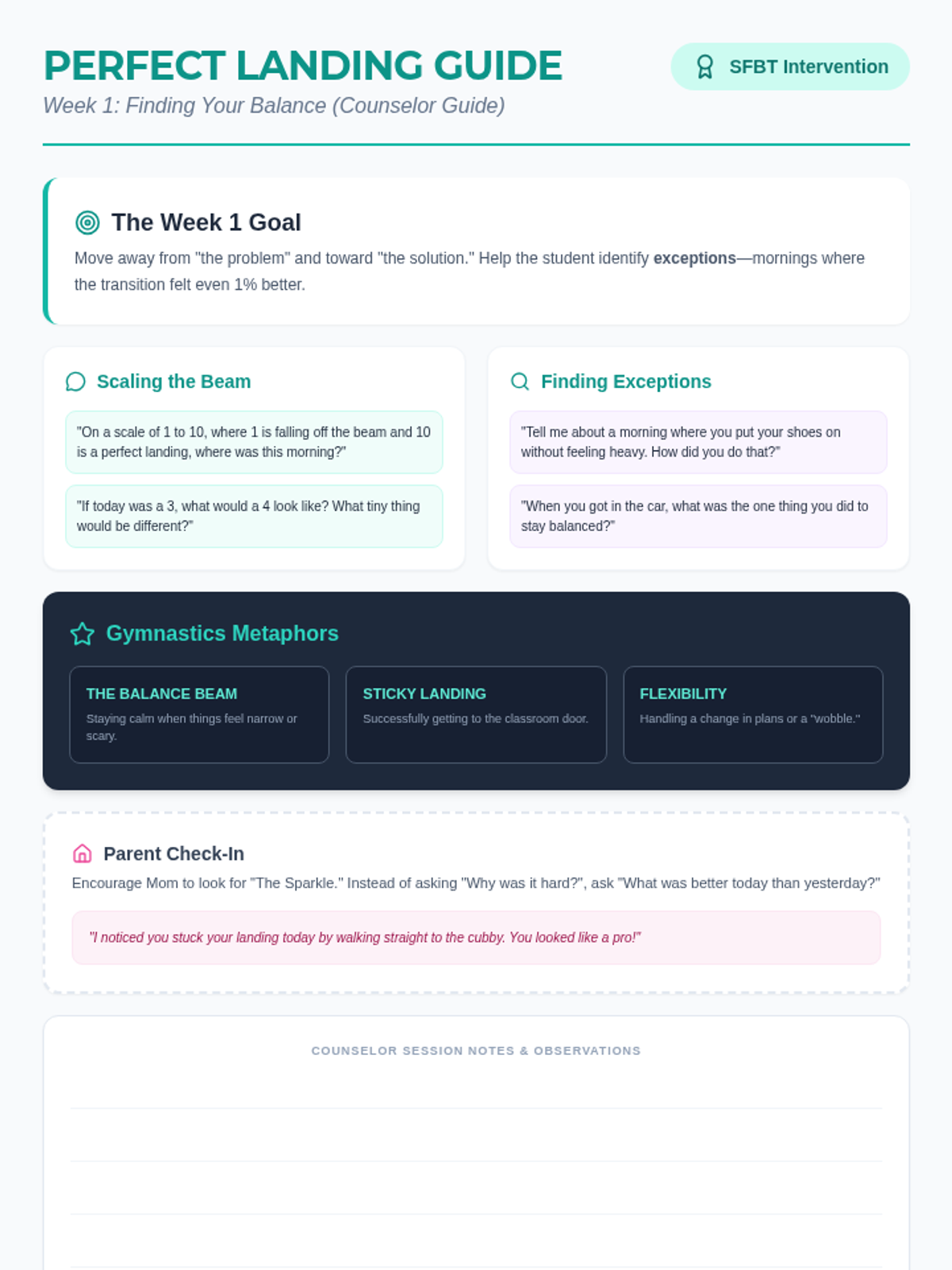
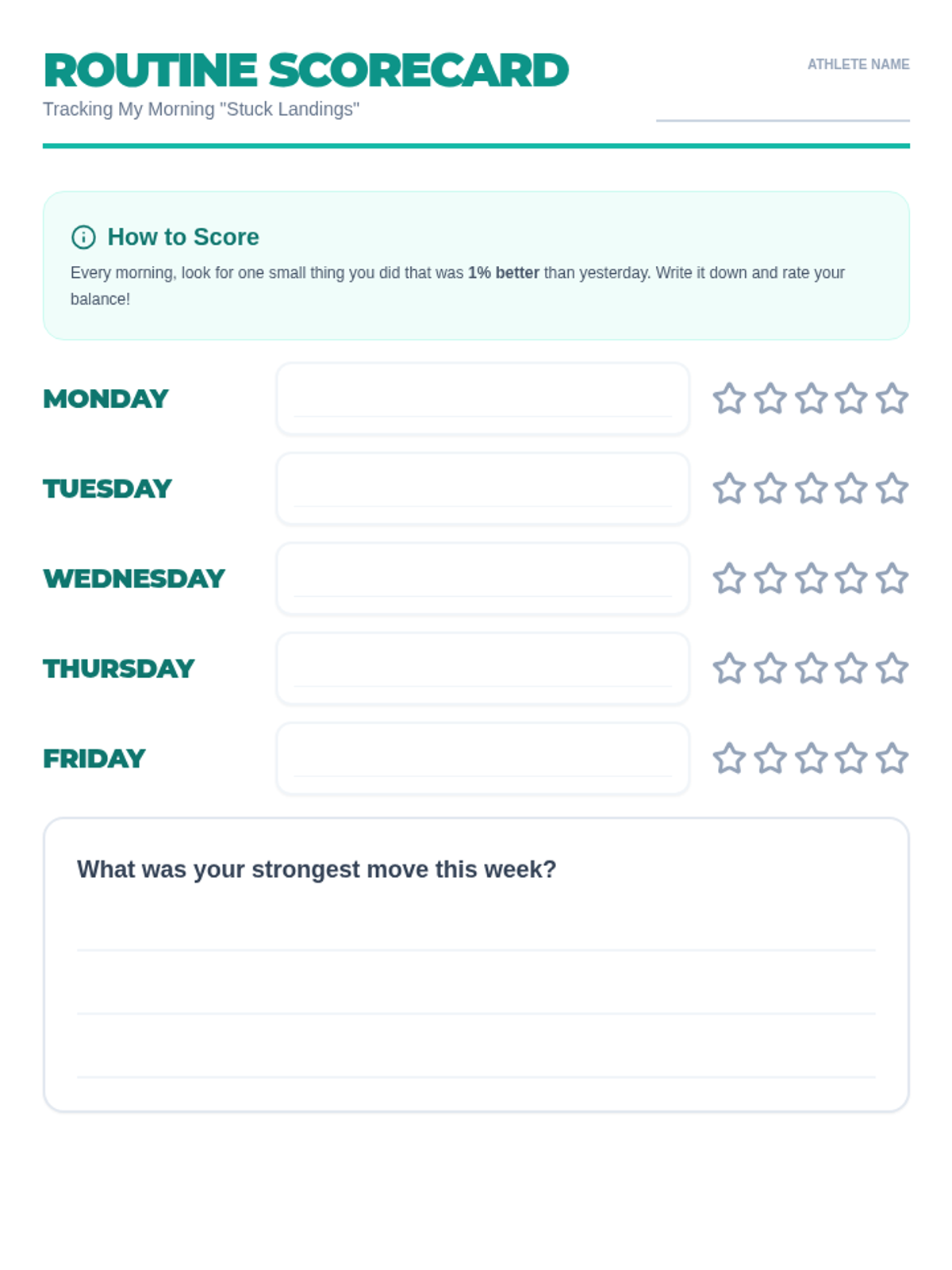
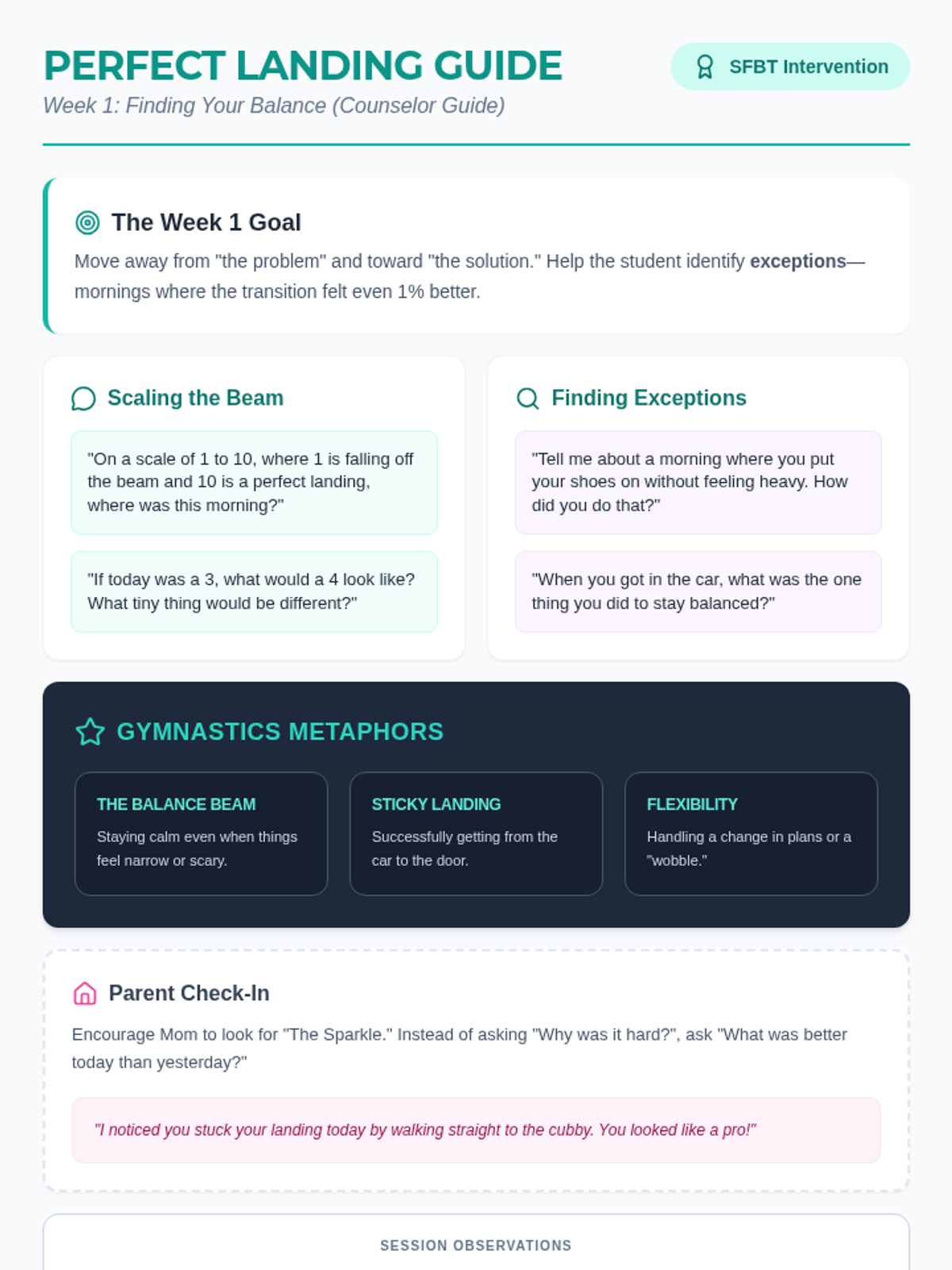
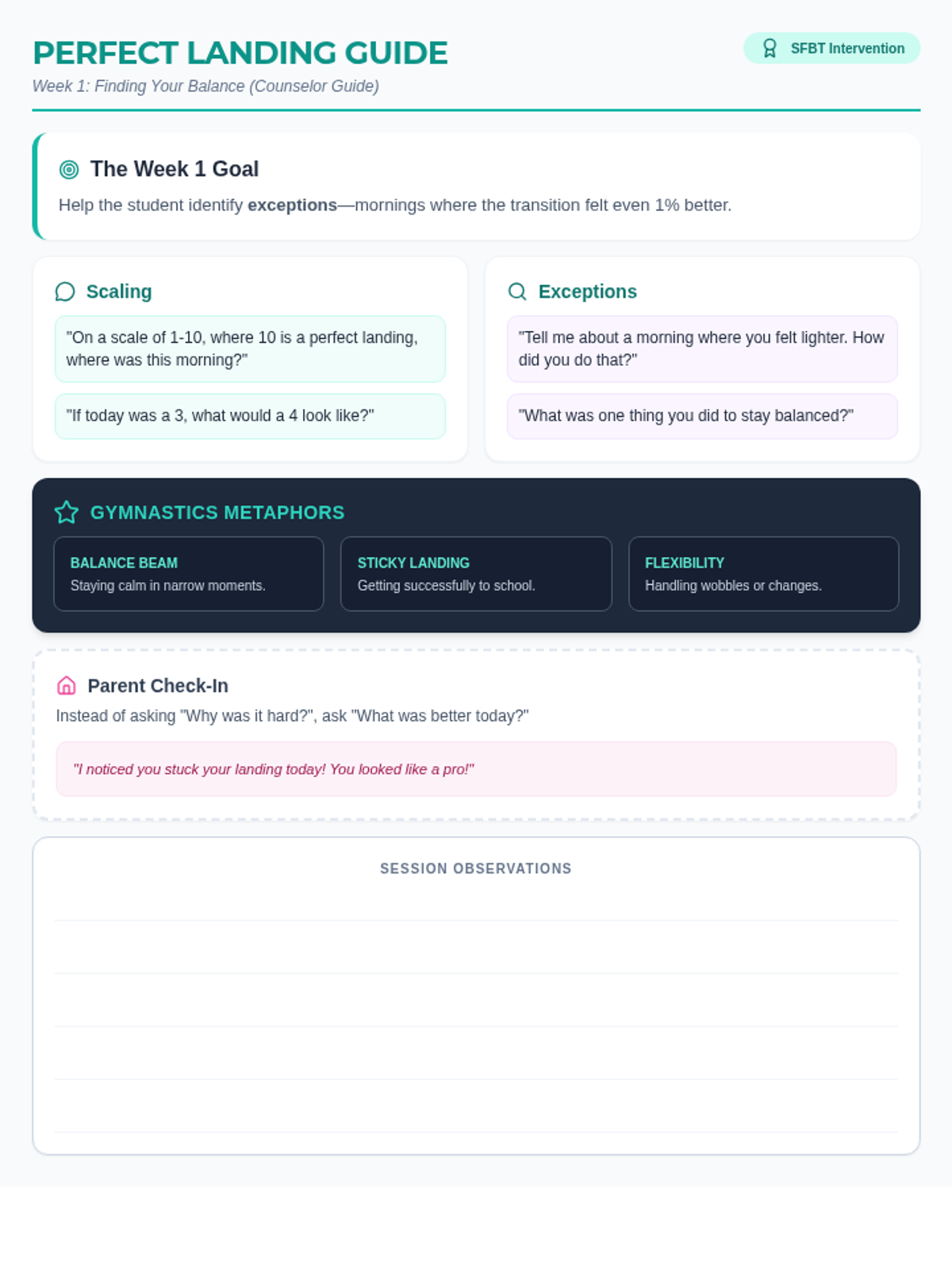
Focuses on identifying current challenges and finding "exceptions" to the morning struggle using the metaphor of a balance beam. Introduces scaling questions and strengths-based goal setting.
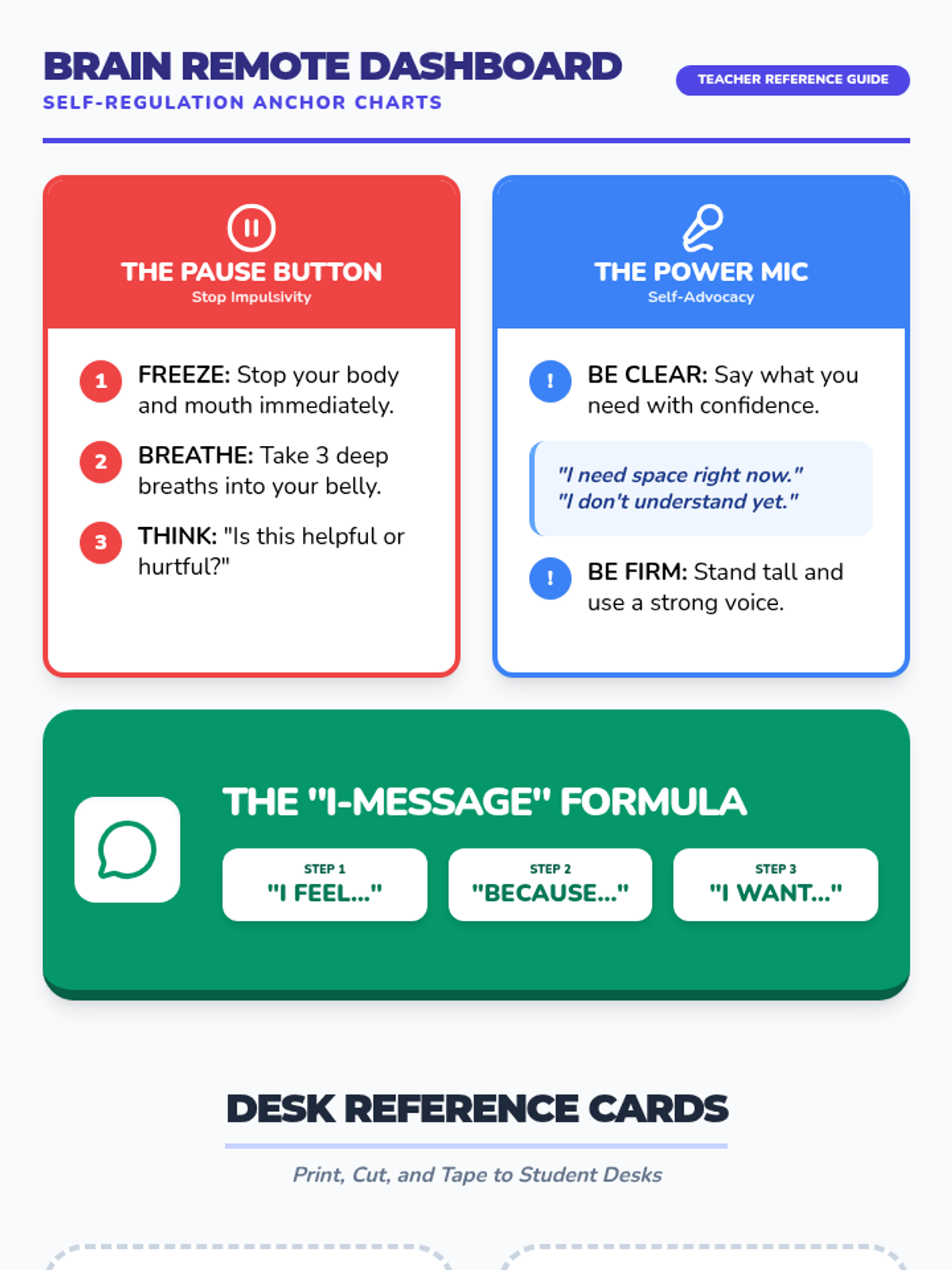
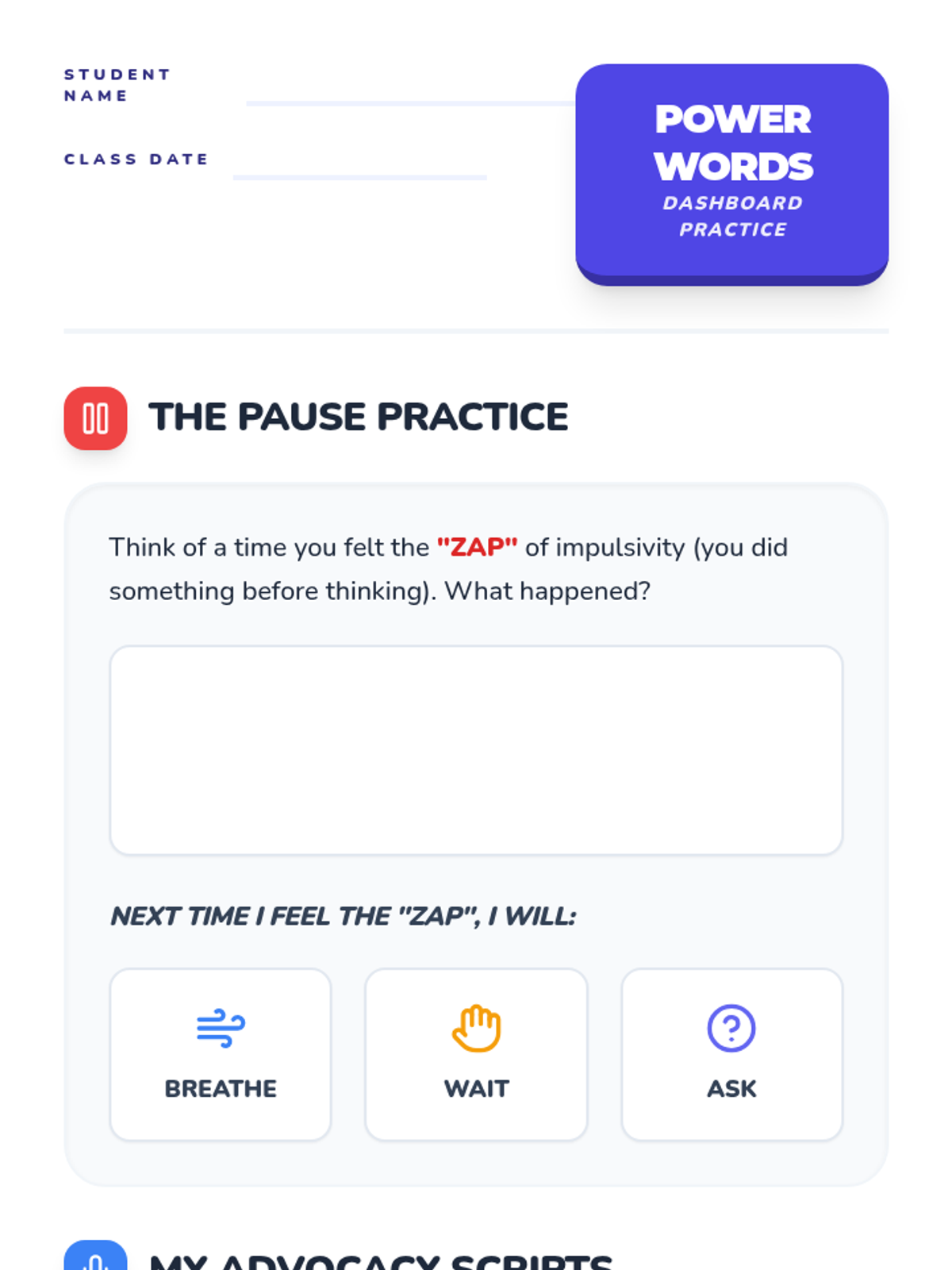
A comprehensive lesson exploring the 'Brain Remote' to manage impulsive urges and use 'Power Words' for self-advocacy and conflict resolution.
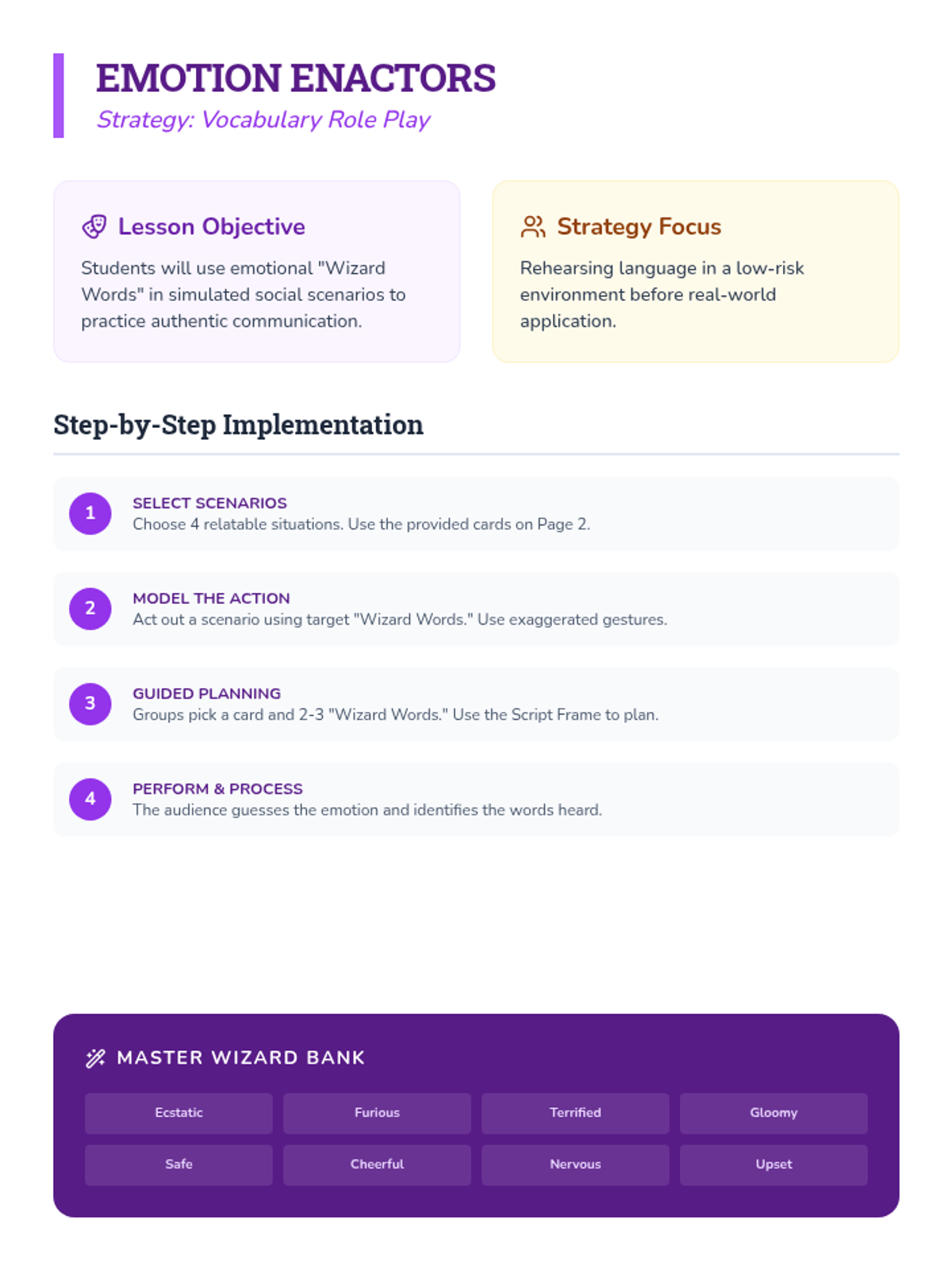
Students apply their expanded emotional vocabulary in simulated social situations, practicing the 'Vocabulary Role Play' strategy to solidify language acquisition through performance and interaction.
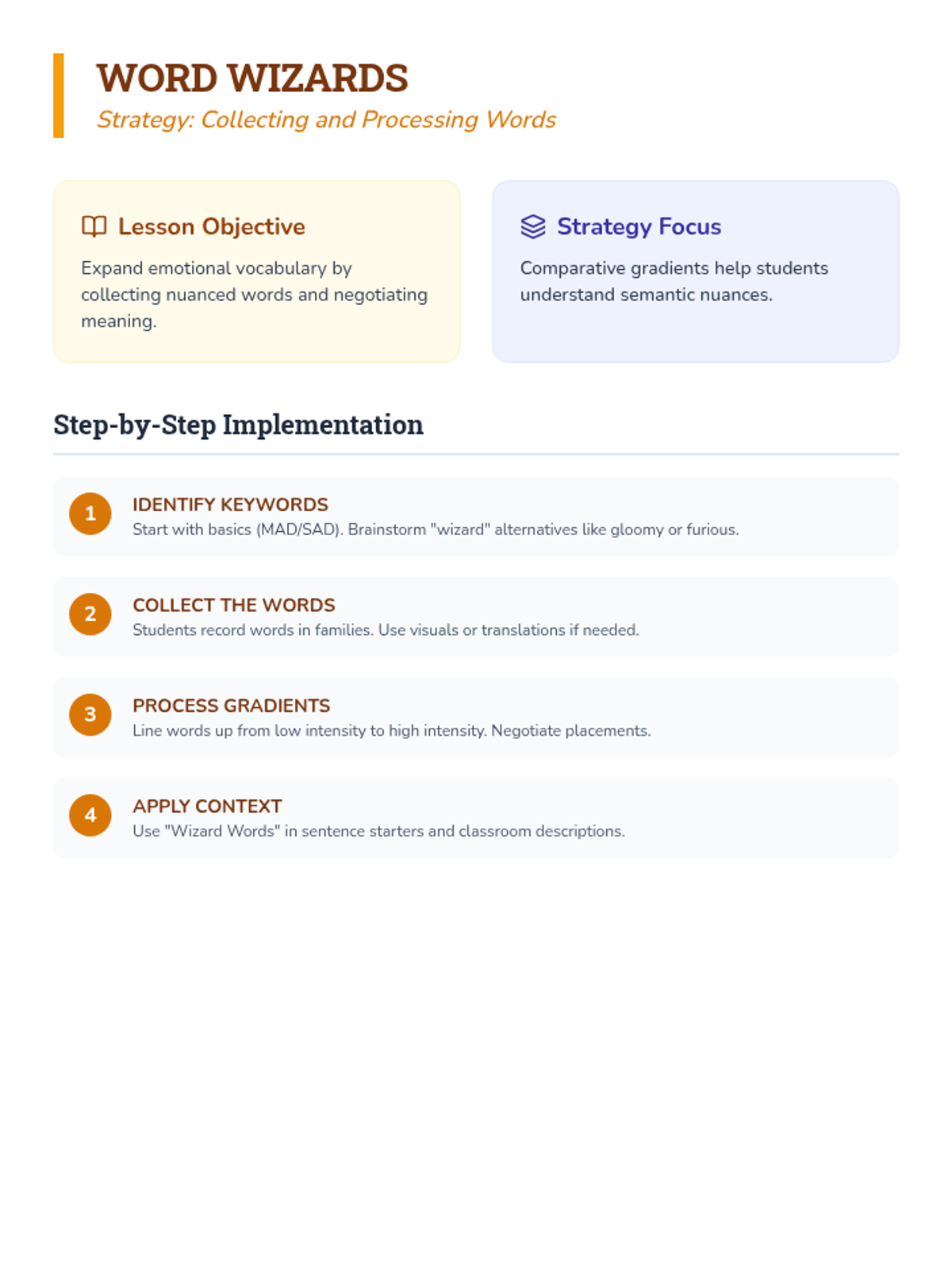
Builds a robust emotional vocabulary by systematically identifying, recording, and interacting with new words that describe complex feelings.
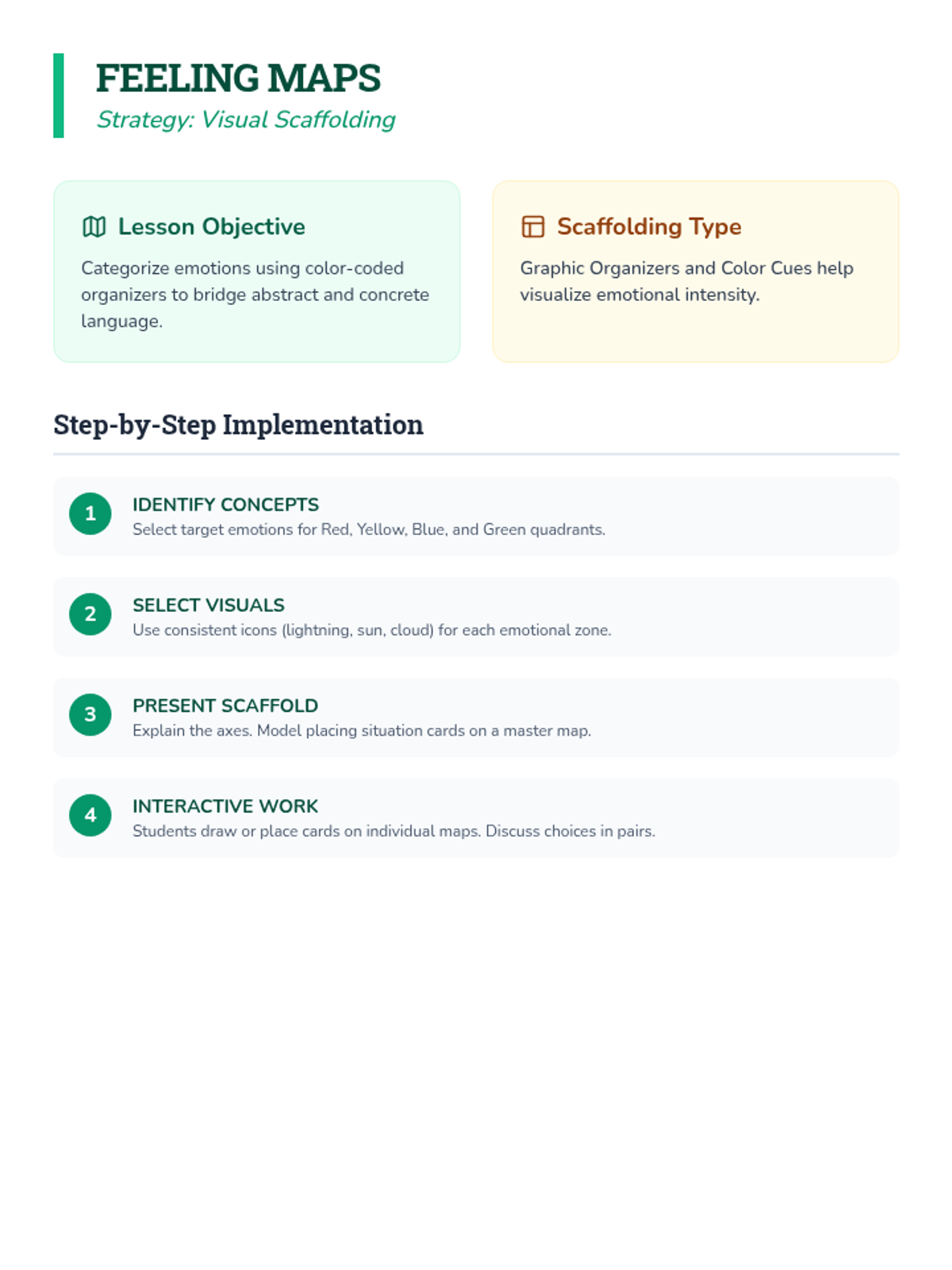
Employs graphic organizers, color-coding, and images to help students map the physical and situational connections to their feelings.
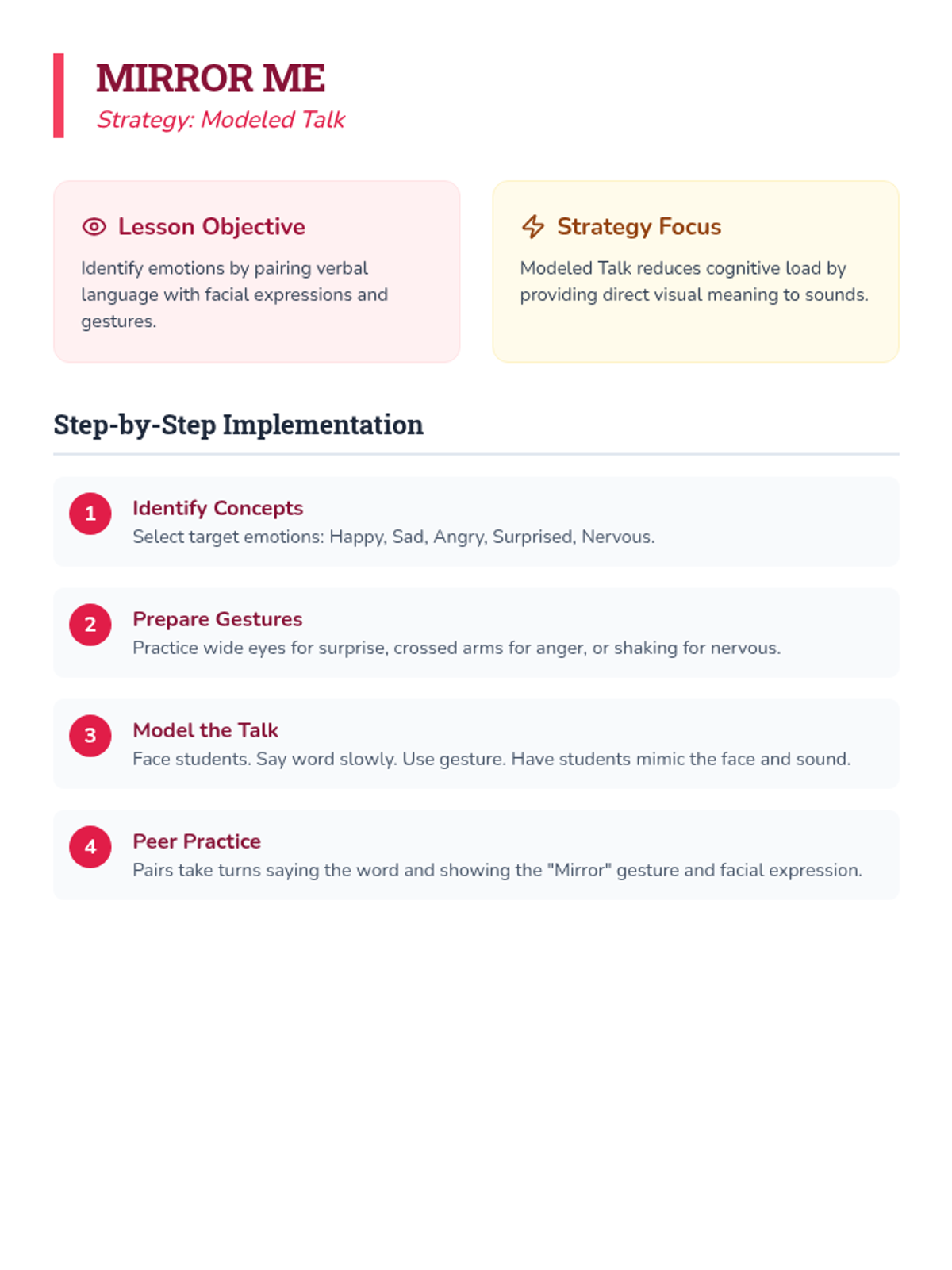
Uses gestures, facial expressions, and slowed speech to demonstrate emotional vocabulary and social interactions, making language comprehensible for ELLs.
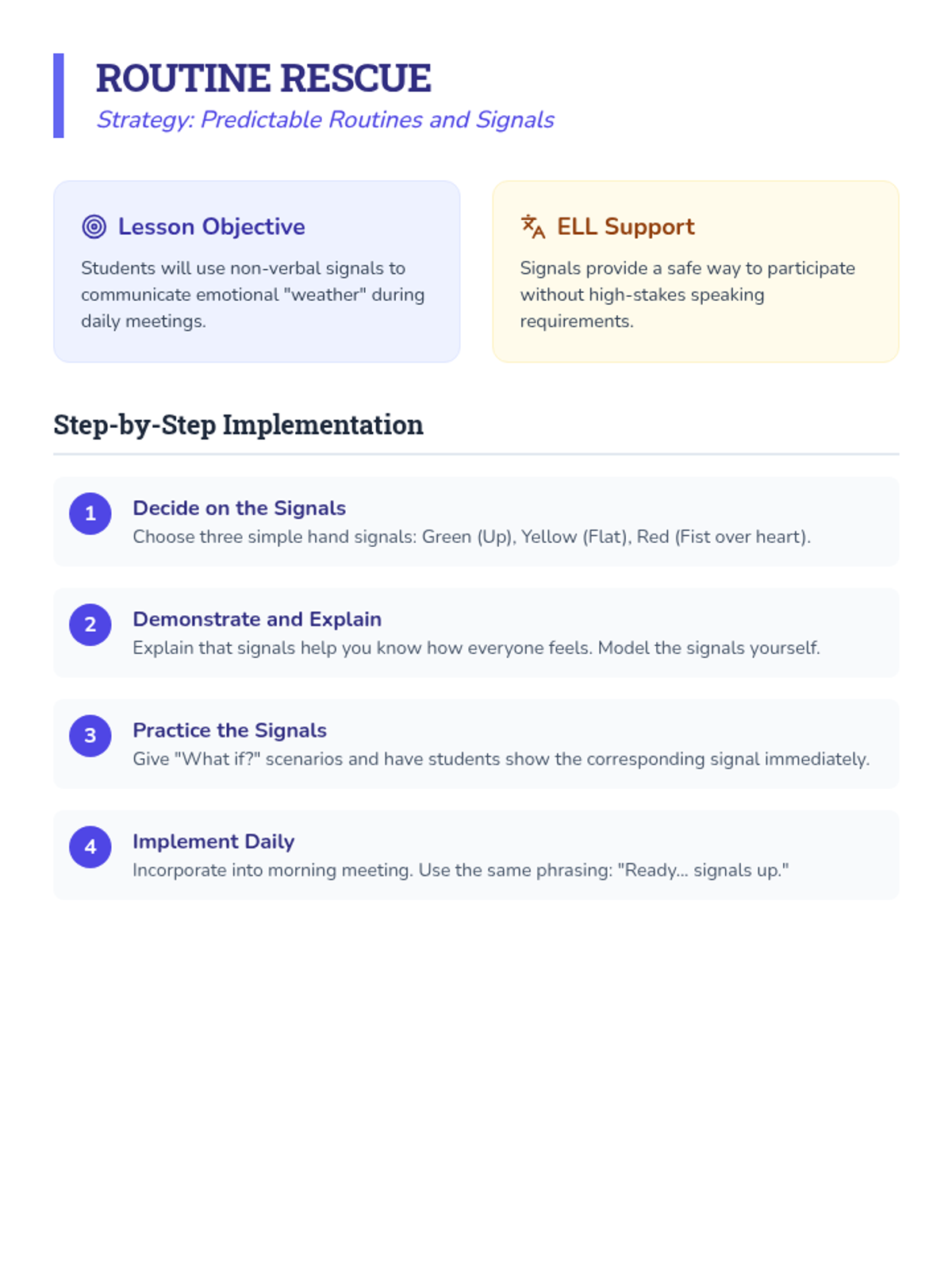
Establishes daily signals and routines for students to communicate their emotional state and readiness for learning, providing a safe and predictable classroom environment.
Day 5 covers staying focused and not contributing to classroom distractions.
Day 4 teaches students how to avoid drama and rumors by taking a 'detour'.