A preparation lesson for the Careers in Gear 2026 event, focusing on career interest identification, professional communication, and logistical readiness.
A social-emotional learning lesson designed to help students understand the difference between healthy, inclusive friendships and possessive or fixated behaviors. Through a 'Friendship Lab' theme, students analyze social 'reactions' and learn the value of expanding their social circles.
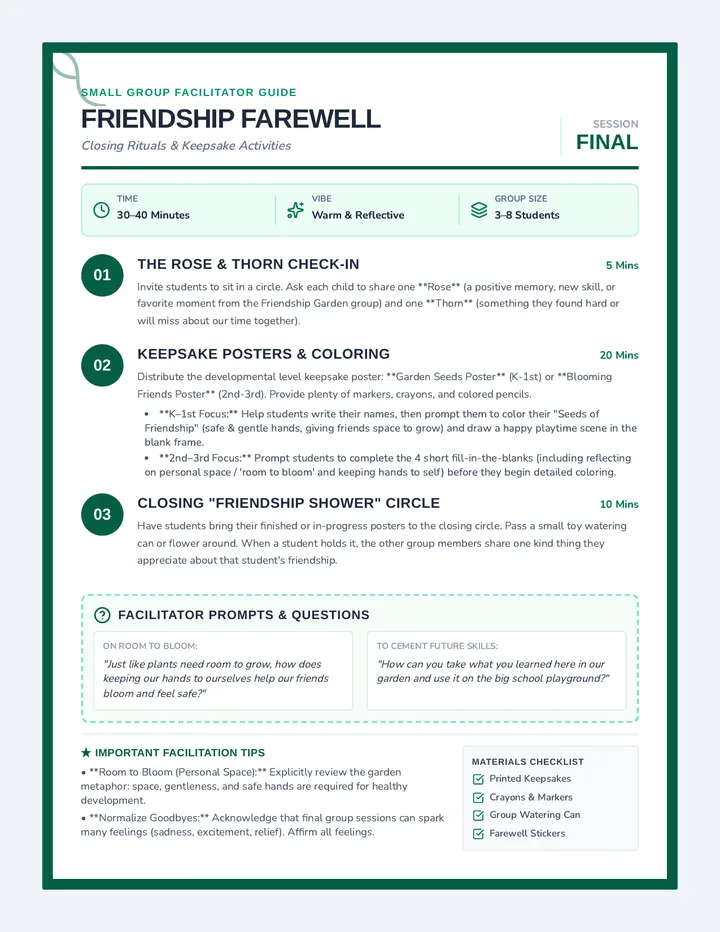
A lesson focused on identifying and practicing healthy friendship behaviors and personal boundaries across different school environments. Students use a bingo-style tracker to recognize positive social interactions.
A fast-paced, 30-minute debate activity where students explore the complex impact of Artificial Intelligence on the future of human employment. Students analyze evidence, prepare arguments, and engage in a structured 'lightning' debate.
A structured check-in process for paraeducators to support 5th and 6th grade students with attendance and academic goal-setting. Includes a facilitation guide for the educator and a visual presentation for the student.
Comprehensive training on identifying and responding to life-threatening emergencies, including medical issues, fire, and community safety reporting.
Covers safety protocols for independent travel, including effective communication with drivers and responding to transit delays or emergencies.
Teaches young adults how to stay safe while exercising or exploring outdoor trails, emphasizing the S.T.O.P. rule and signaling for help.
Focuses on independent navigation in retail settings, including identifying store security, using customer service, and responding to being separated from a group.
A comprehensive lesson for transition-age students and adult learners to distinguish between technical hard skills and interpersonal soft skills, identify their own strengths, and set professional development goals.
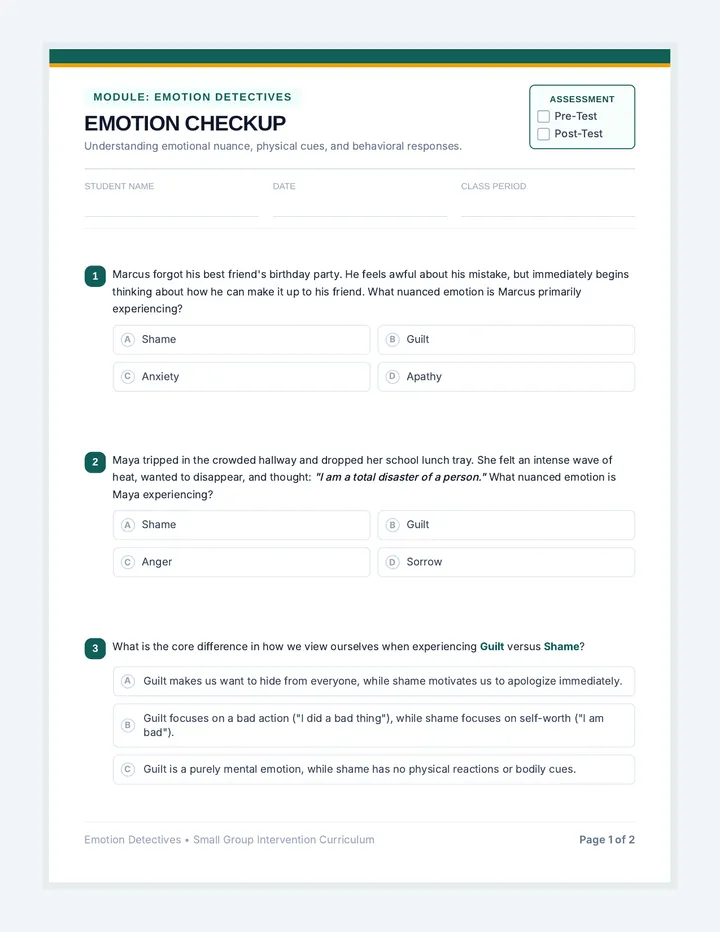
A social-emotional learning lesson focusing on the 'chemistry' of friendship through active listening, healthy boundaries, and nuanced thinking. Students explore practical strategies to build deeper, more resilient connections.
The foundational implementation of the Social Compass program, covering policy, instructional assessment, and team training.
A comprehensive set of materials to facilitate a formal family meeting and establish clear behavioral expectations following a conflict involving verbal bullying.
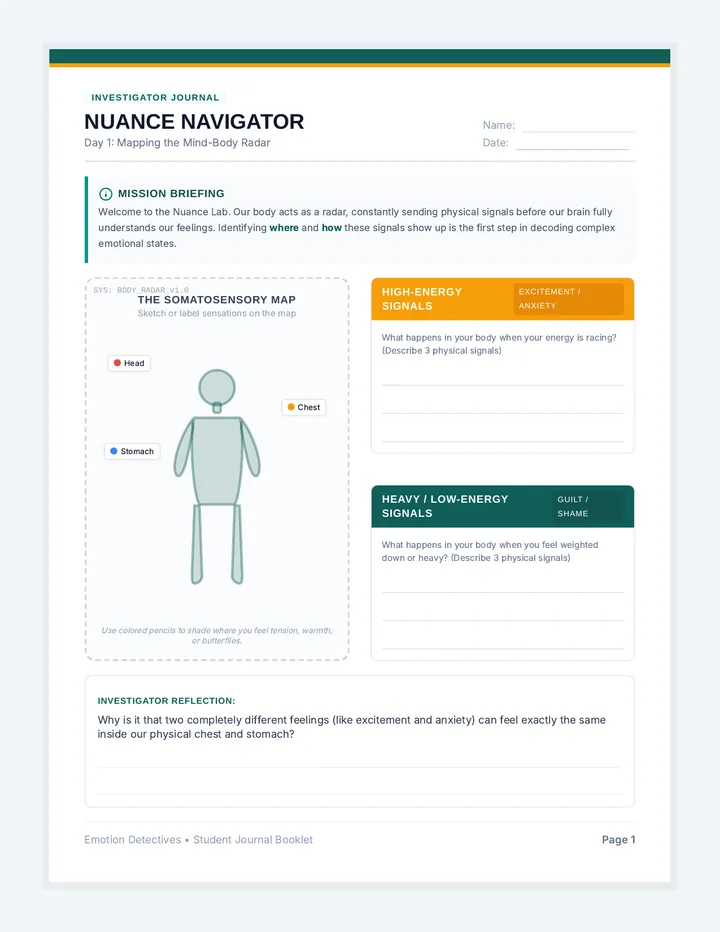
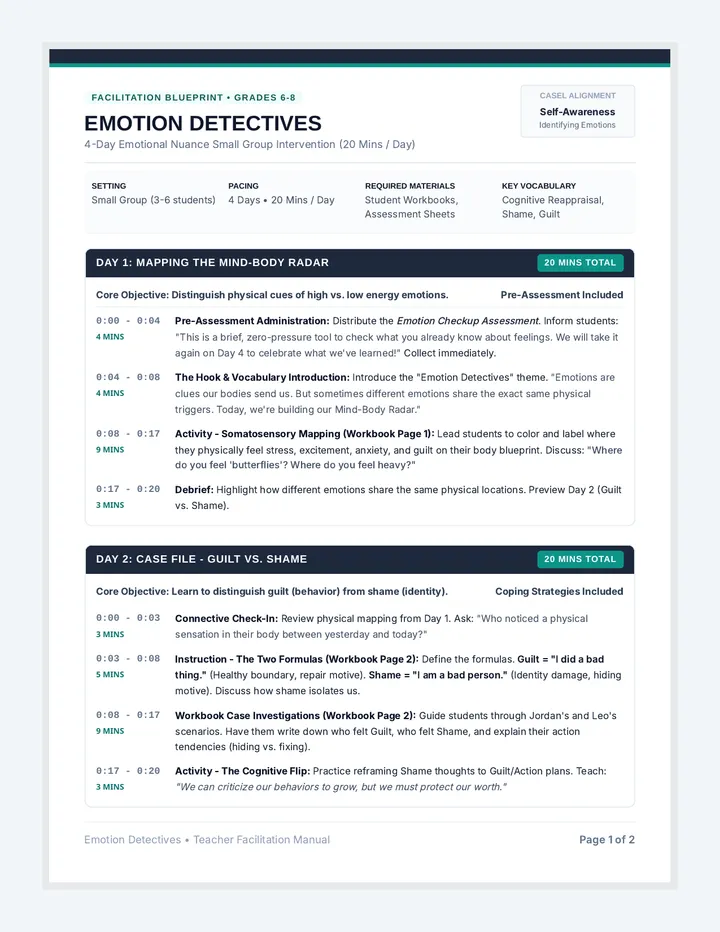
A lesson focused on identifying the physical sensations of anxiety and the cognitive 'what-if' loops that accompany them, featuring a body-mapping activity.
A focused counseling session designed to help students identify their internal strengths and practice positive self-talk through an 'Inner Architect' theme.
An introductory lesson that defines self-advocacy, explores its importance, and provides students with practical frameworks to communicate their needs effectively.
This lesson reframes procrastination as an emotional regulation challenge rather than a time management failure. Students use a psychological lens to identify triggers like perfectionism and fear of failure, replacing shame with actionable momentum strategies.
This lesson introduces students to somatic grounding techniques to regulate the nervous system, moving from 'fight-or-flight' to 'rest-and-digest' through practical, body-based tools.
A foundational lesson for Kindergarten students to learn how to identify their feelings and use 'I feel' statements to advocate for their needs in the classroom.
A comprehensive support package for 1st-grade students experiencing the loss of a pet, including a social story, teacher guidance, student activities, and parent support.
This lesson explores the dynamic between the individual student and the whole class, using an ecosystem metaphor to understand how personal actions shape the collective environment. Students will reflect on their contributions and the importance of a supportive classroom community.
A 45-minute social-emotional learning lesson focused on developing perspective-taking skills and identifying emotional cues in others. Students act as 'Human Decoders' to analyze social situations and build stronger connections.
A comprehensive lesson for teens and adults on the concept of 'Emotional Consent' and learning to gauge someone's capacity before sharing heavy or stressful information.