Students build their permanent framework of recurring events for the rest of the semester. This 'skeleton' remains on their calendar as the base layer for their organization.
A collection of visual support tools to help students identify and communicate their emotions using portable keyring cards.
A presentation-based game designed to help incoming middle schoolers navigate the social and logistical changes of their new school. Students will face scenarios, build their 'character stats,' and learn strategies for making friends and managing transitions.
This lesson helps middle school students identify when they need help and practice self-advocacy through a relatable social story, checklists, and sentence starters.
Connects financial literacy with stress management, teaching students how to handle money-related anxiety through basic budgeting and awareness.
Teaches communication skills and conflict resolution as vital tools for navigating social stress and maintaining support networks.
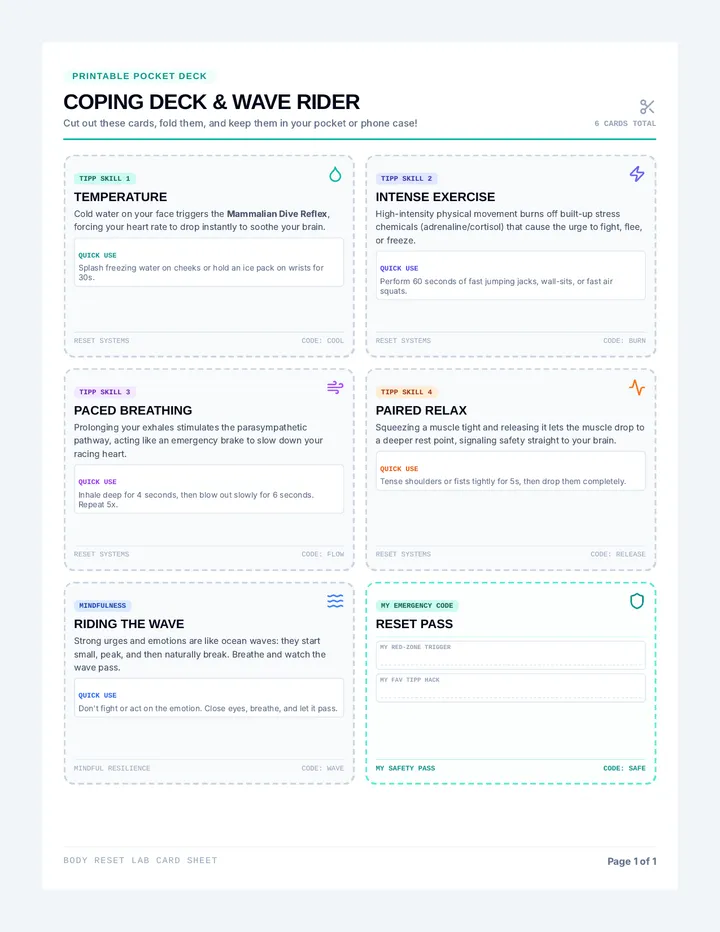
Covers physical and mental wellness strategies, including breathing exercises and healthy habits, to maintain a resilient body and mind.
Explores how effective scheduling and prioritization can reduce stress and prevent burnout.
Focuses on developing a growth mindset and the 'Power of Yet' to build mental toughness and perspective when facing setbacks.
A small group session for 6th-grade girls focused on building self-confidence by navigating social dynamics, understanding peer pressure, and identifying healthy friendship traits.
This lesson provides middle and high school teachers with actionable strategies for managing students who sleep in class, moving from frustration to empathetic problem-solving. It covers root causes, immediate intervention techniques, and long-term support systems.
The final session focuses on maintaining healthy social boundaries, the role of forgiveness in growth, and group closure.
Students apply a conflict mediation model to realistic middle school scenarios, focusing on sustainable compromise and healthy boundaries.
Students practice advanced perspective-taking to navigate complex social situations and understand the role of perception in peer groups.
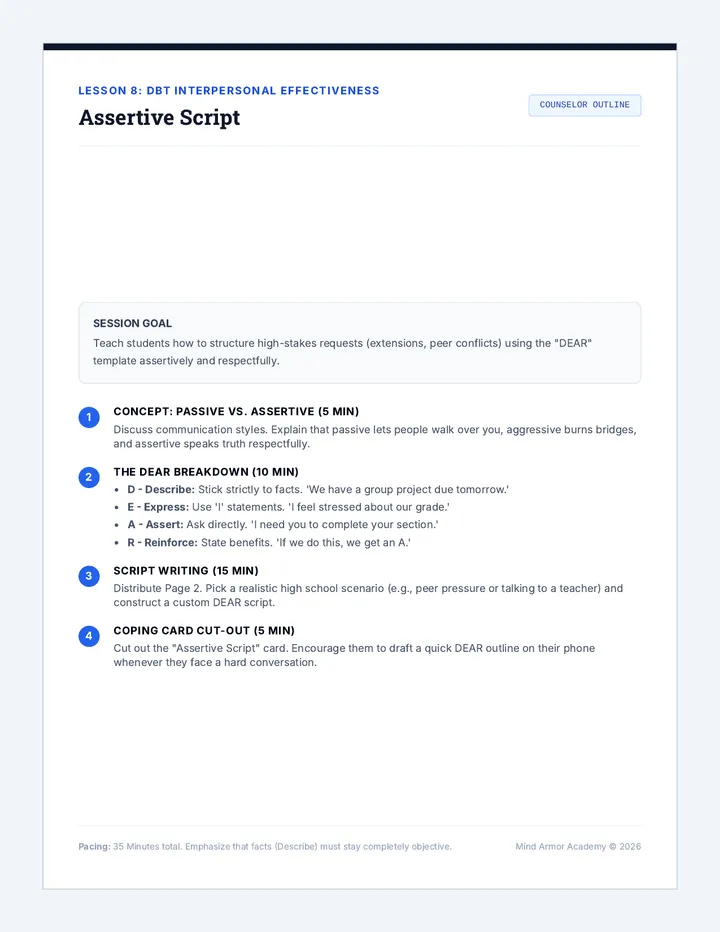
This lesson focuses on assertive communication and the impact of digital tone, teaching students to advocate for their needs without aggression.
Students analyze common middle school conflict triggers, including digital drama and social hierarchy, distinguishing between surface behaviors and underlying needs.
Students identify the core values that ground healthy friendships and analyze the difference between 'situational friends' and 'value-based friends.'
A practical budgeting lesson focused on selecting essential apartment items within a $100 limit, supporting IEP goals for functional math and decision-making.
A social-emotional learning lesson focusing on identifying and managing frustration when things don't go as planned in the classroom, using a comic strip scenario.
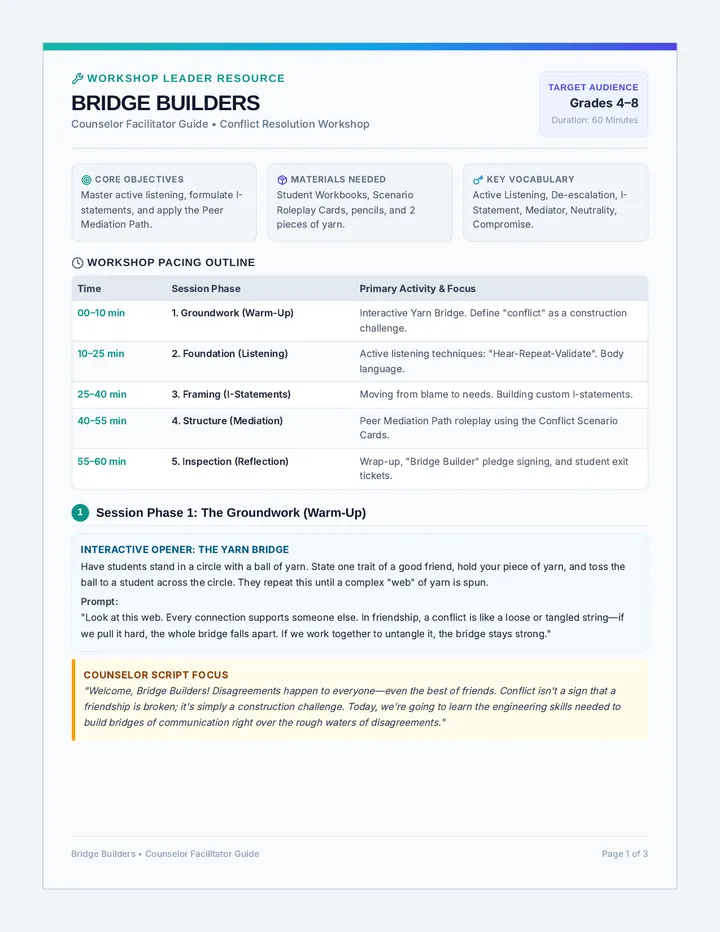
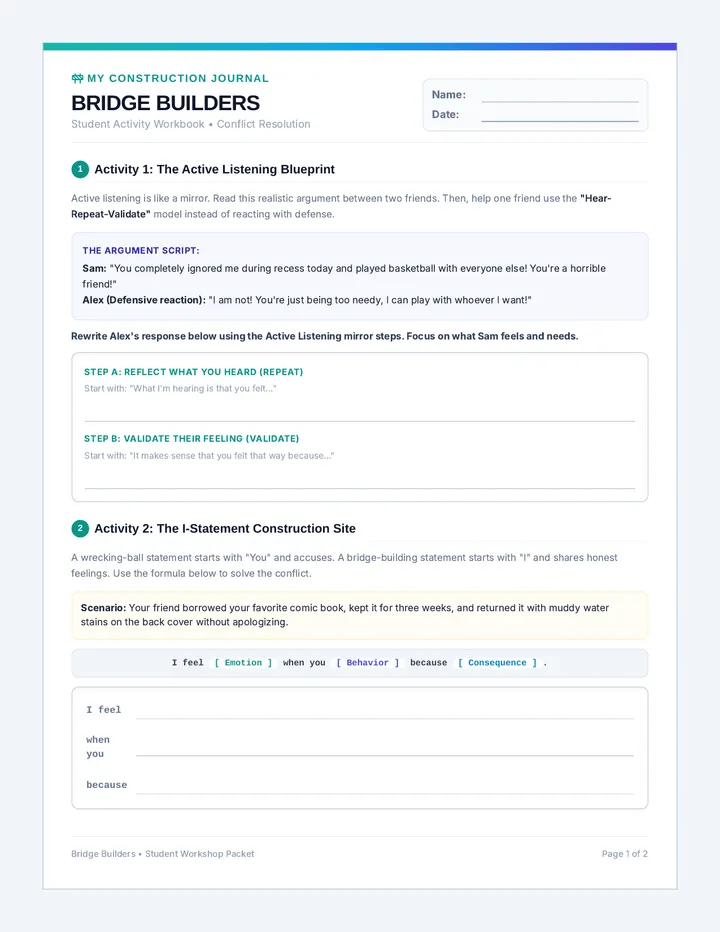
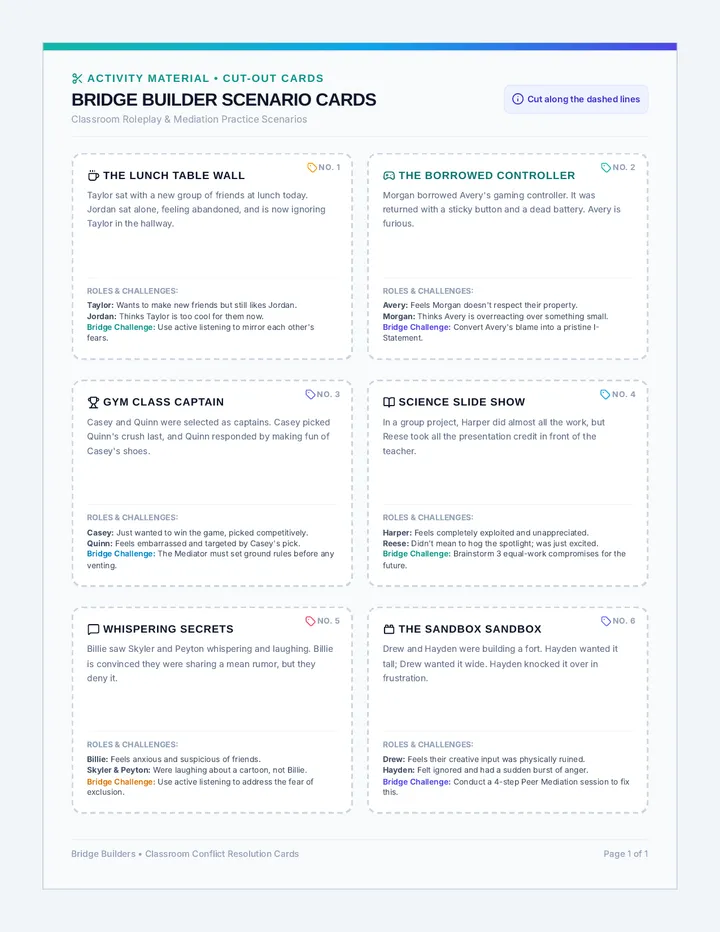
A comprehensive lesson on conflict resolution for grades 3-5, using the metaphor of bridge-building to teach "I" statements, empathy, and compromise.
A character-building lesson centered around a board game where students navigate real-life scenarios to practice taking ownership of their actions and choices.
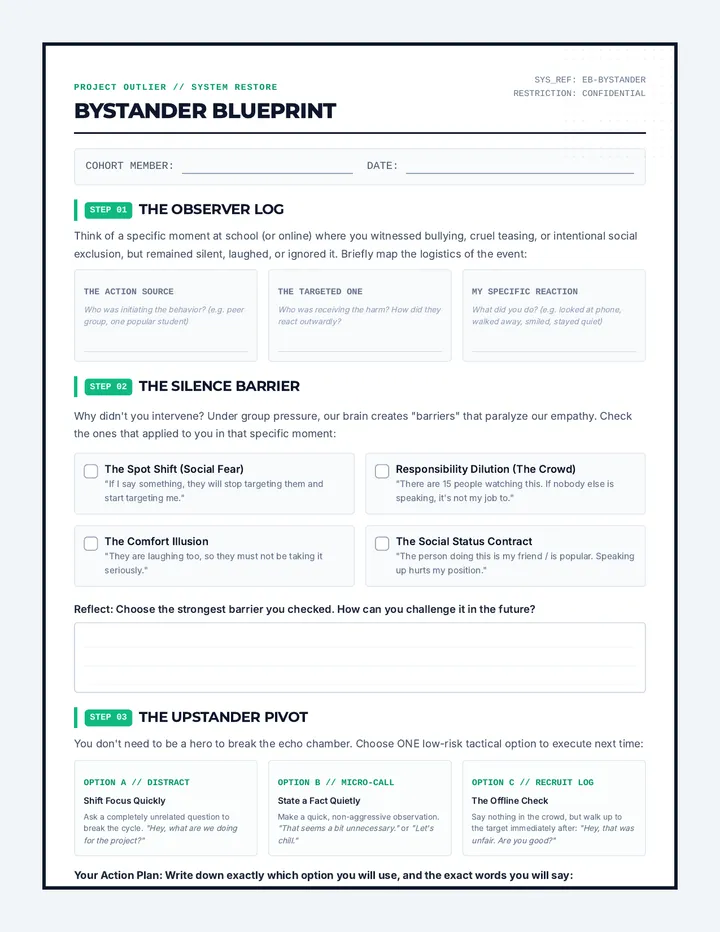
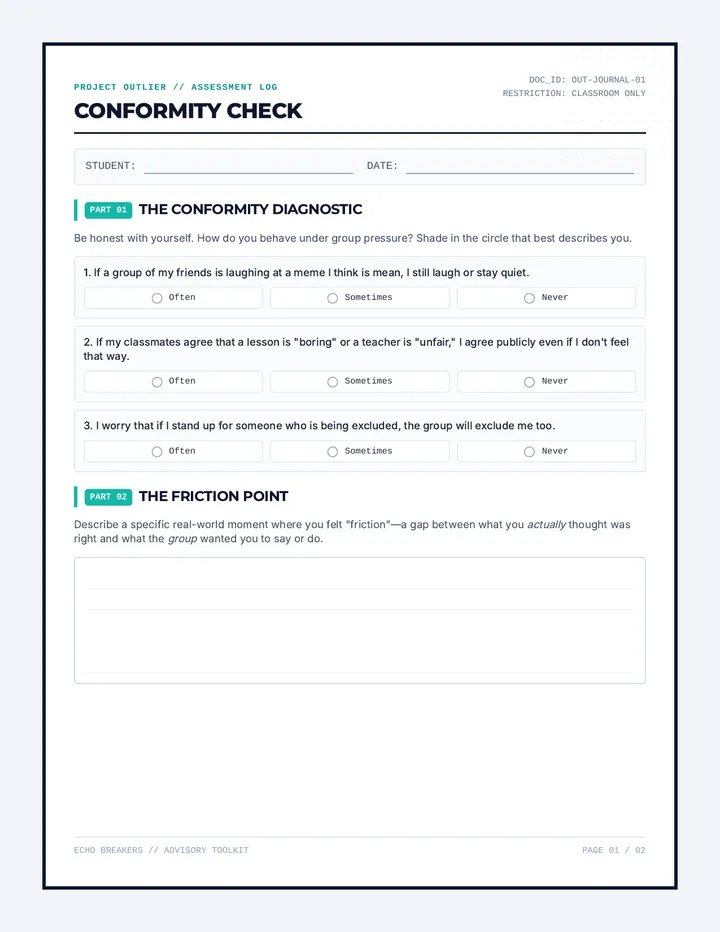
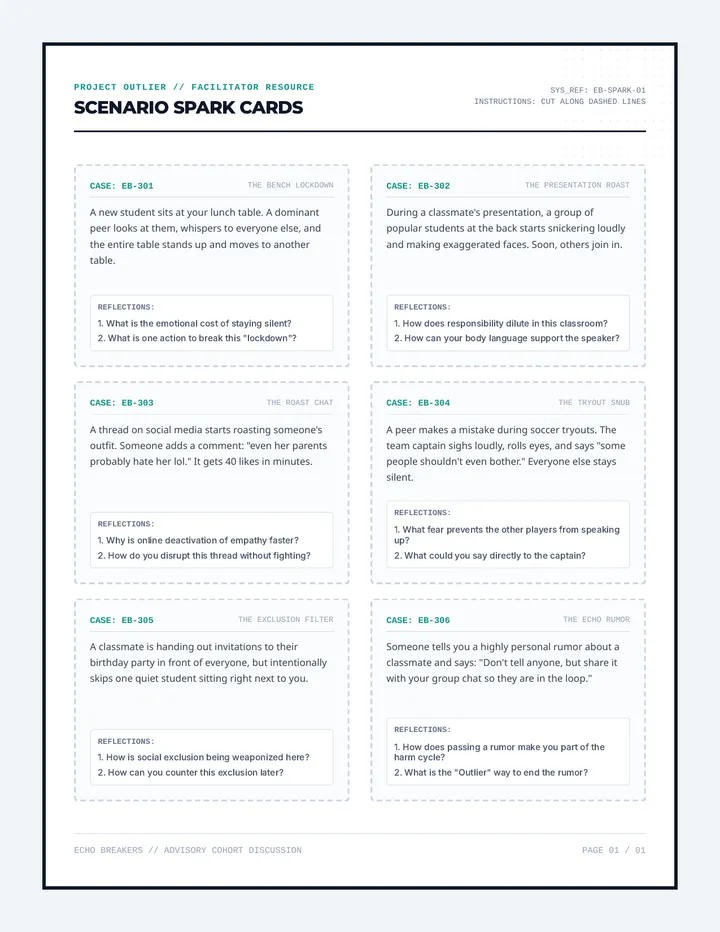
A comprehensive small-group session guide and set of resources designed to help students navigate peer pressure in social, academic, and physical safety situations.
A lesson designed to help newcomer Portuguese students and native English speakers master the art of assertive communication using 'I' statements in classroom settings.
A comprehensive lesson designed to help 5th-grade students, particularly boys, develop and apply coping strategies for common academic stressors like testing, public speaking, and difficult assignments.
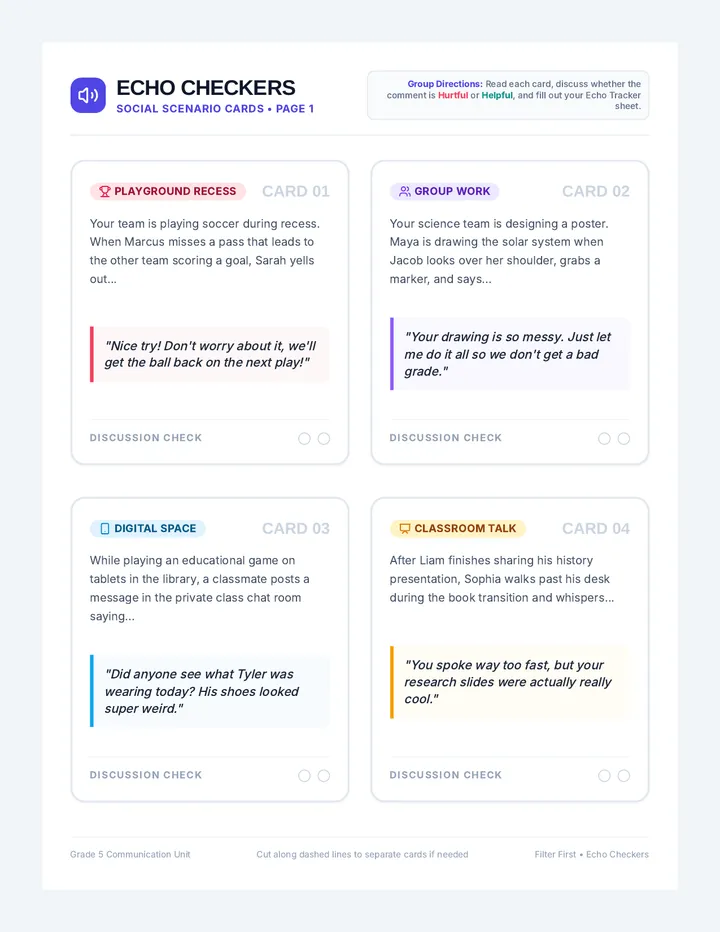
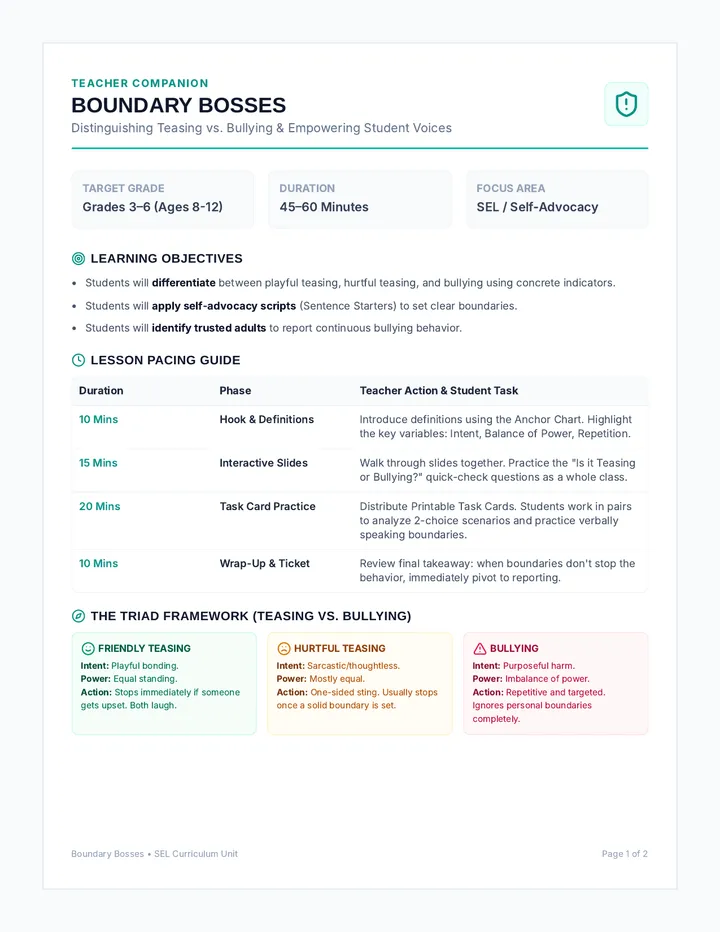
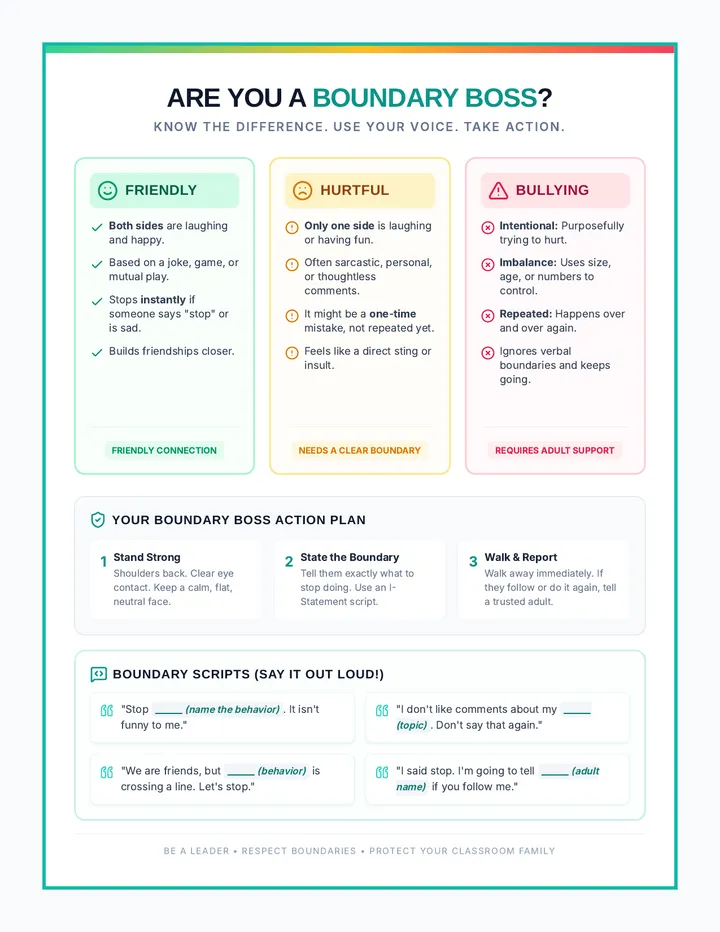
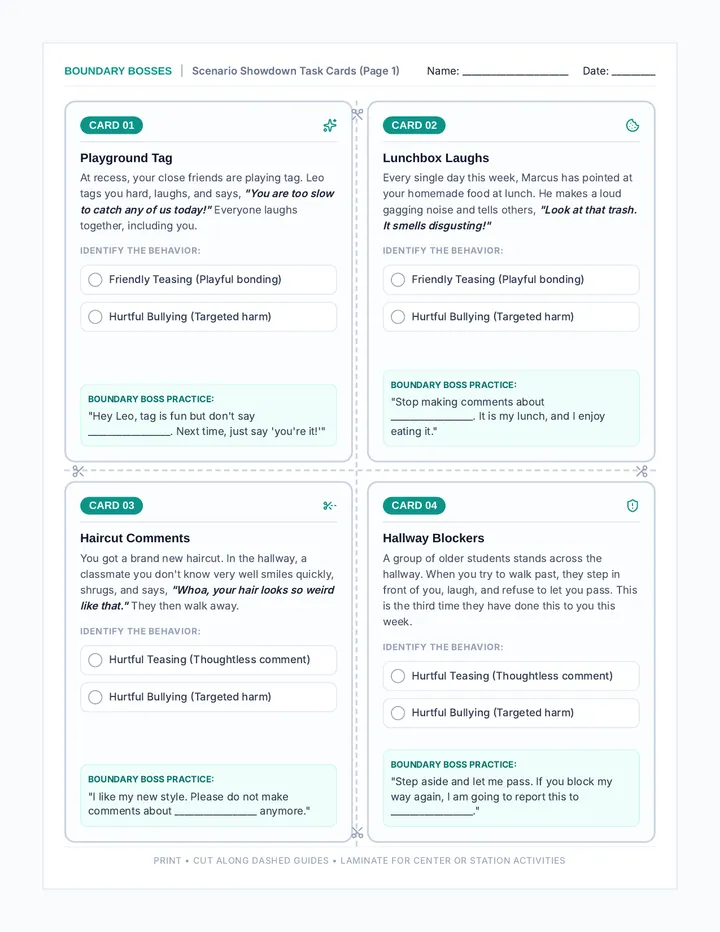
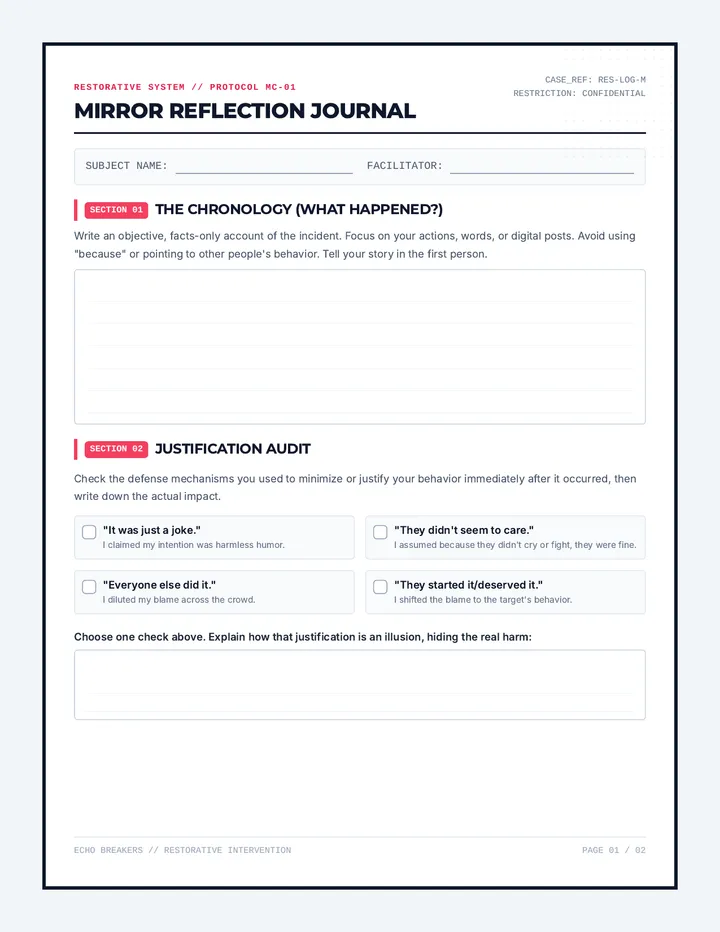
A social skills lesson for 6th grade students focused on empathy and distinguishing between playful joking and mean-spirited behavior using the 'Intent vs. Impact' perspective-taking model.
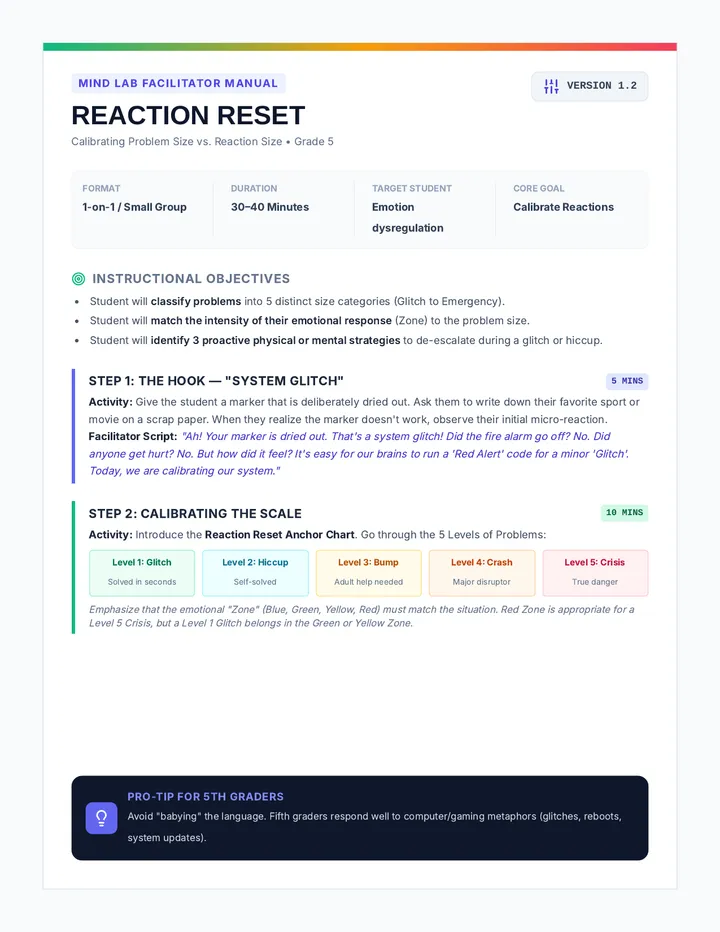
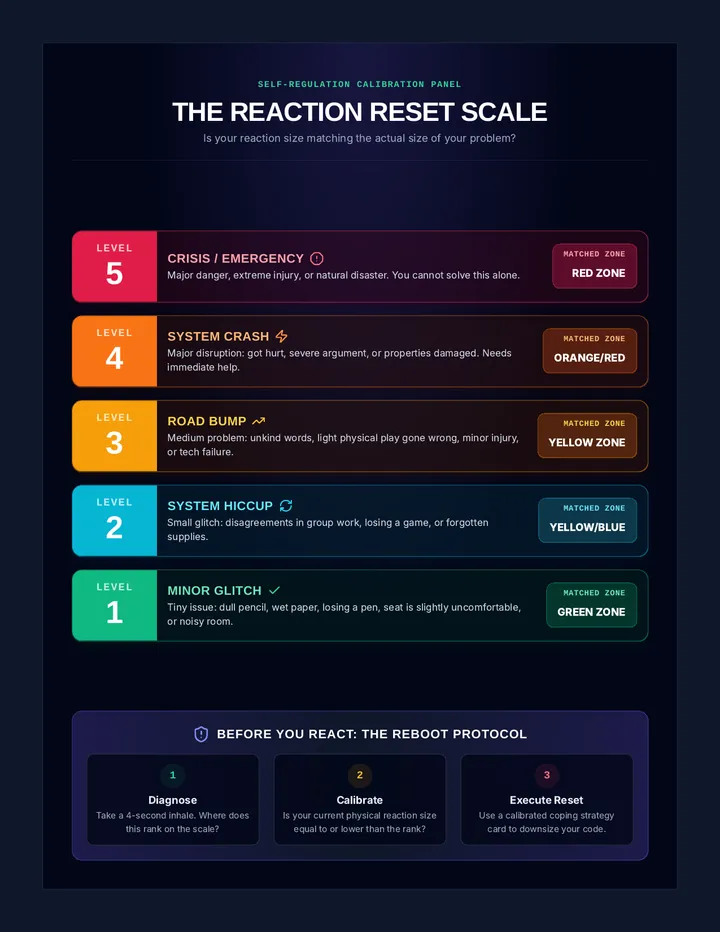
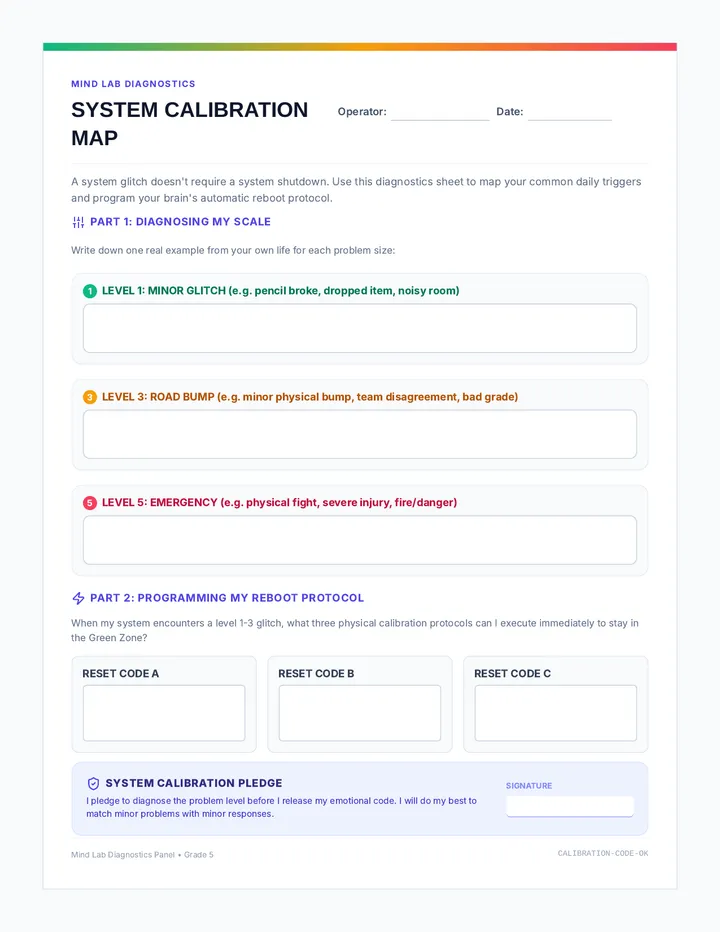
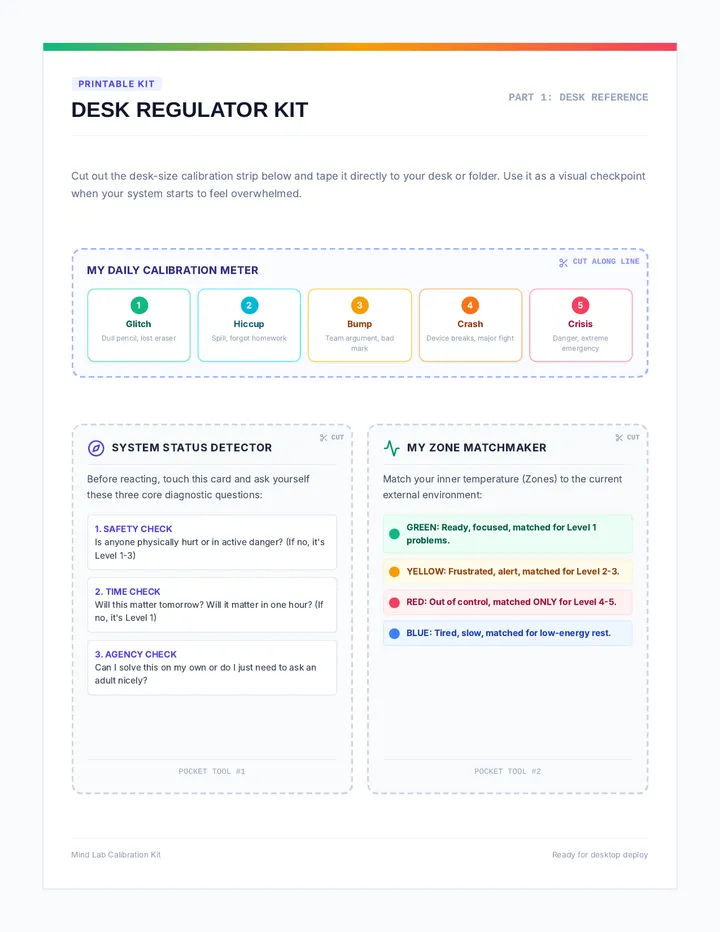
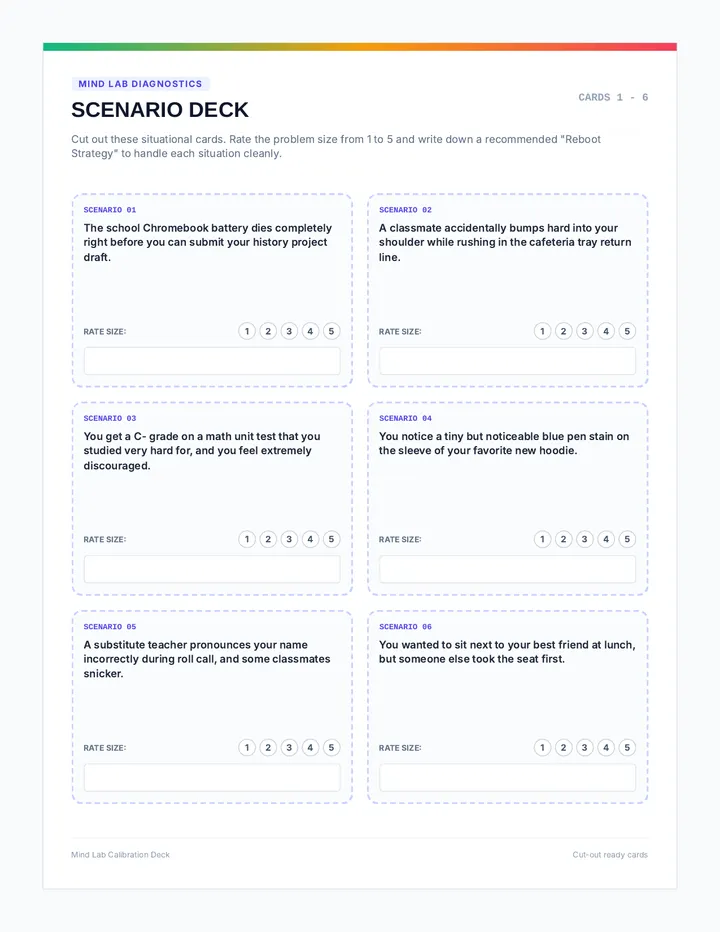
A lesson focused on identifying emotional zones and selecting appropriate self-regulation strategies for classroom and social scenarios.
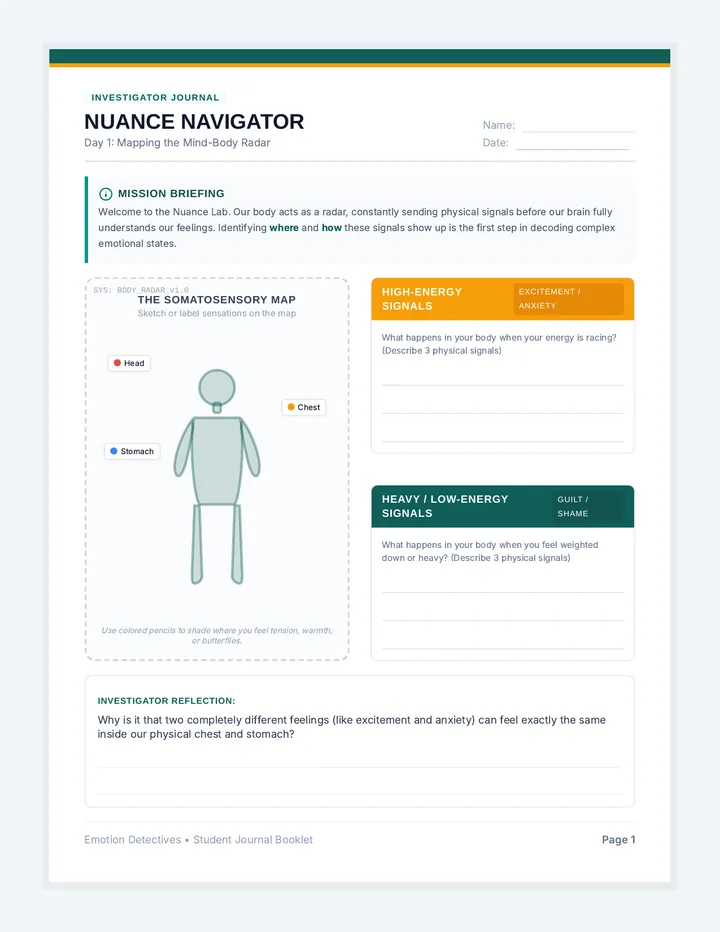
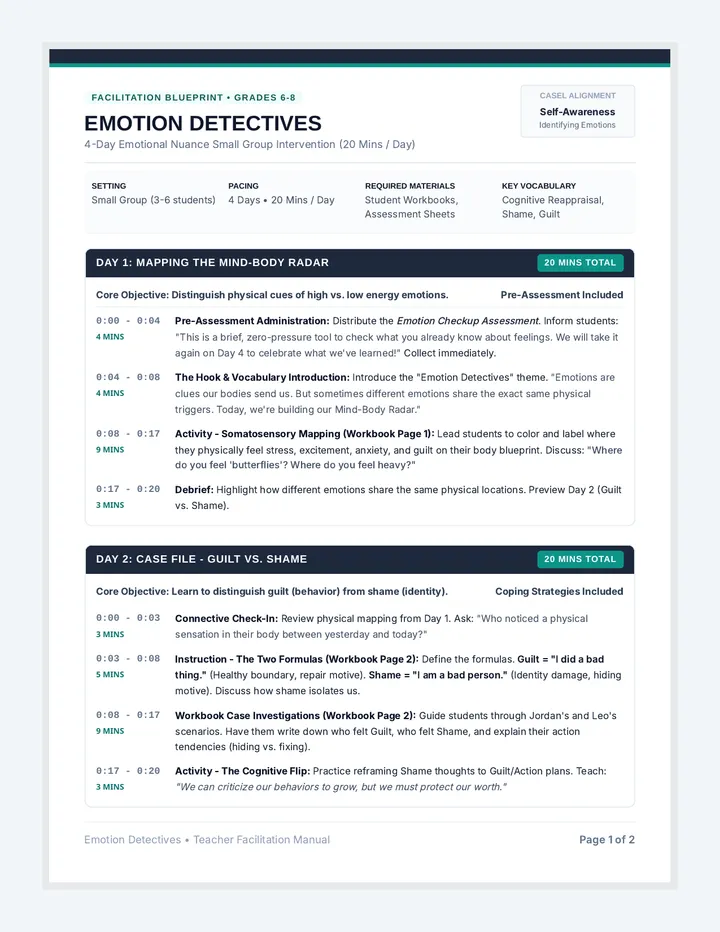
A lesson designed to help students identify and understand the physical signals their bodies send during different emotional states, using a 'Signal Scouts' theme to encourage self-awareness and emotional regulation.

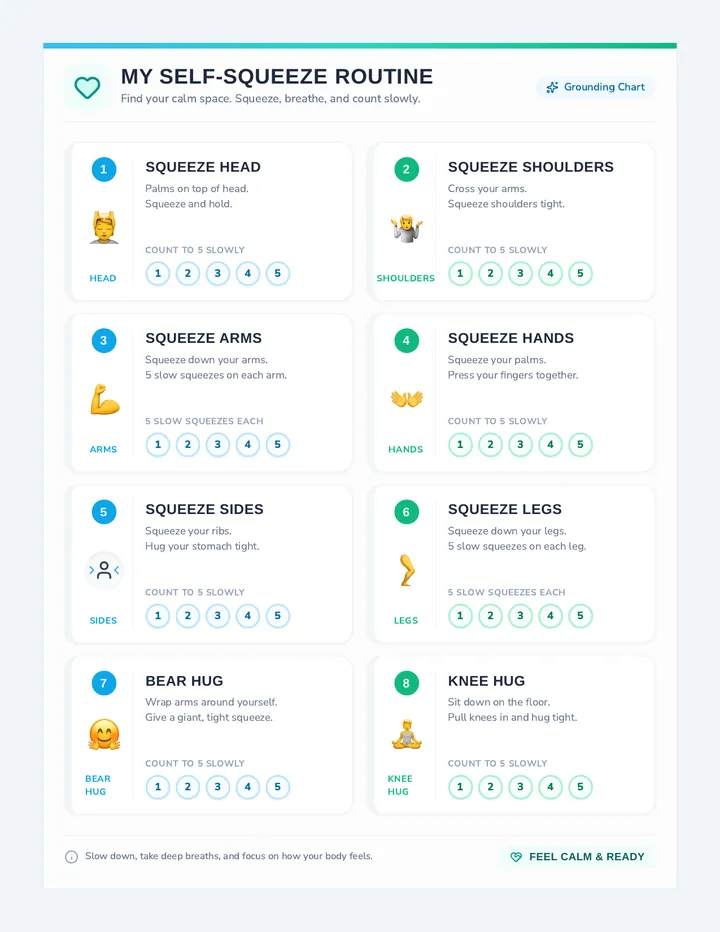
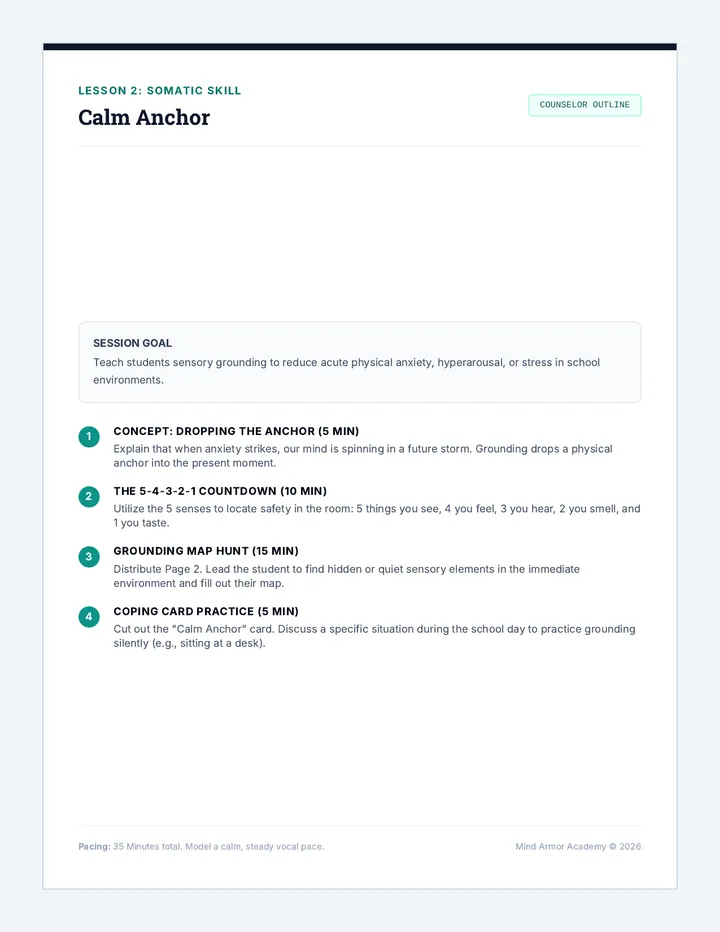
A comprehensive training session for school counselors on teaching effective grounding techniques to students, focusing on sensory, movement, nature-based, and breathing strategies.
A 30-minute individual counseling session designed for a middle school student navigating the challenges of living with a sibling with mental illness. The session focuses on validation, identifying circles of control, and practical coping strategies.
A 30-minute social skills lesson for 6th graders focused on using 'Fear vs. Fact' self-talk to overcome the anxiety of asking for help in the classroom.
A focused 30-minute intervention lesson designed for middle school students to recognize avoidance behaviors and develop healthier coping strategies for social and academic triggers.
Focuses on future-oriented thinking and the "Miracle Morning." Solidifies the home-school connection and celebrates small wins with a "Gold Medal" mindset.
Focuses on developing specific coping skills and "routines" for the transition. Uses the metaphor of "spotting" and "flexibility" to manage big emotions in the morning.
Focuses on identifying current challenges and finding "exceptions" to the morning struggle using the metaphor of a balance beam. Introduces scaling questions and strengths-based goal setting.
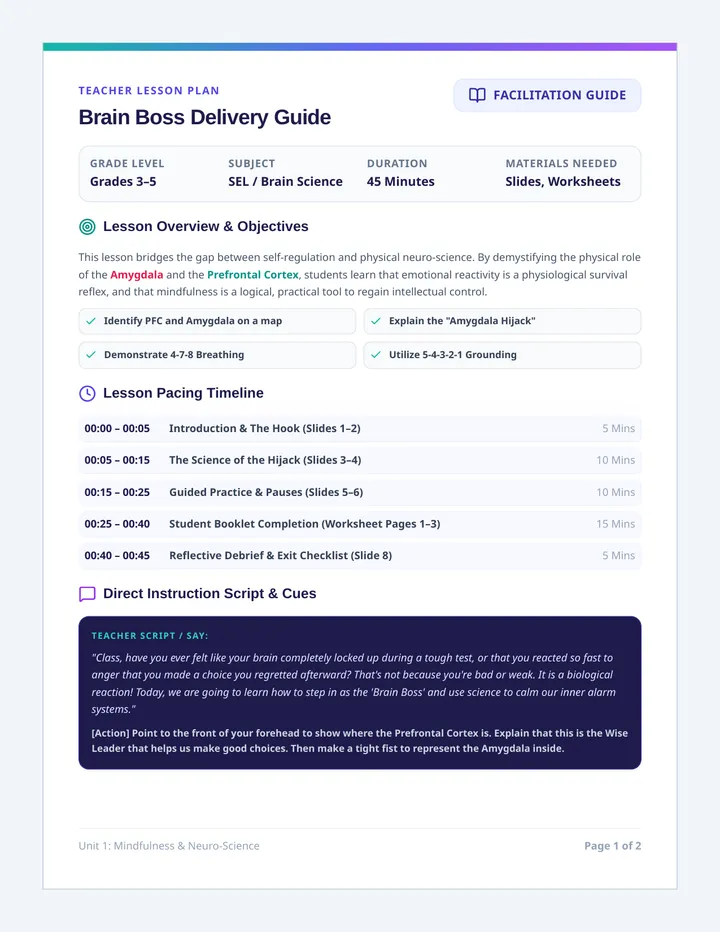
A comprehensive lesson exploring the 'Brain Remote' to manage impulsive urges and use 'Power Words' for self-advocacy and conflict resolution.
A lesson designed to help students understand the impact of excessive screen time and develop healthy, sustainable digital habits through reflection and goal-setting.
Students apply their expanded emotional vocabulary in simulated social situations, practicing the 'Vocabulary Role Play' strategy to solidify language acquisition through performance and interaction.
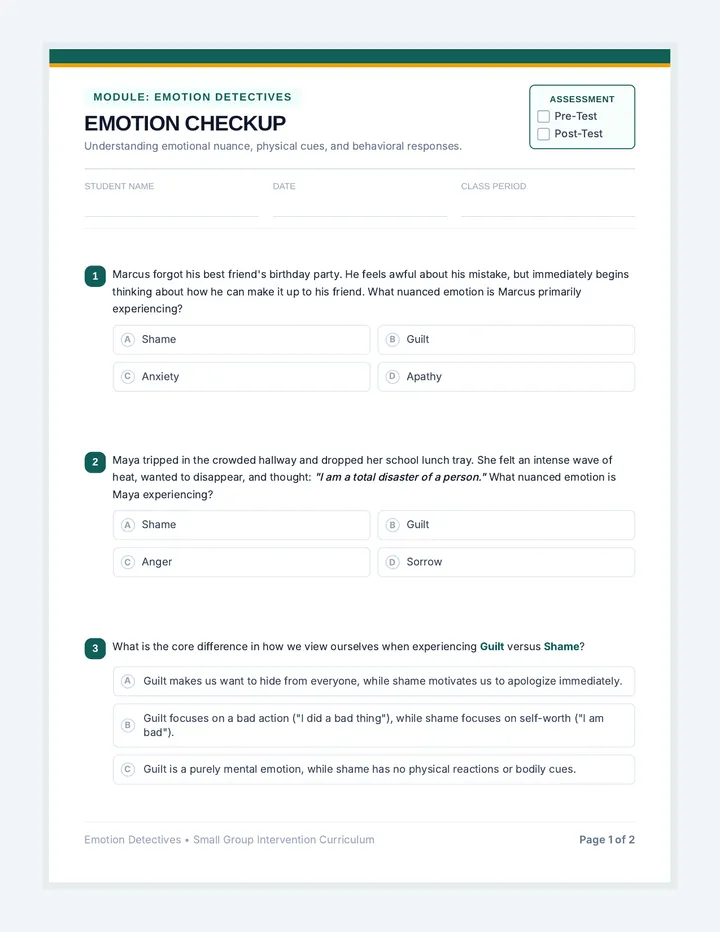
Builds a robust emotional vocabulary by systematically identifying, recording, and interacting with new words that describe complex feelings.
Employs graphic organizers, color-coding, and images to help students map the physical and situational connections to their feelings.
Uses gestures, facial expressions, and slowed speech to demonstrate emotional vocabulary and social interactions, making language comprehensible for ELLs.
Establishes daily signals and routines for students to communicate their emotional state and readiness for learning, providing a safe and predictable classroom environment.
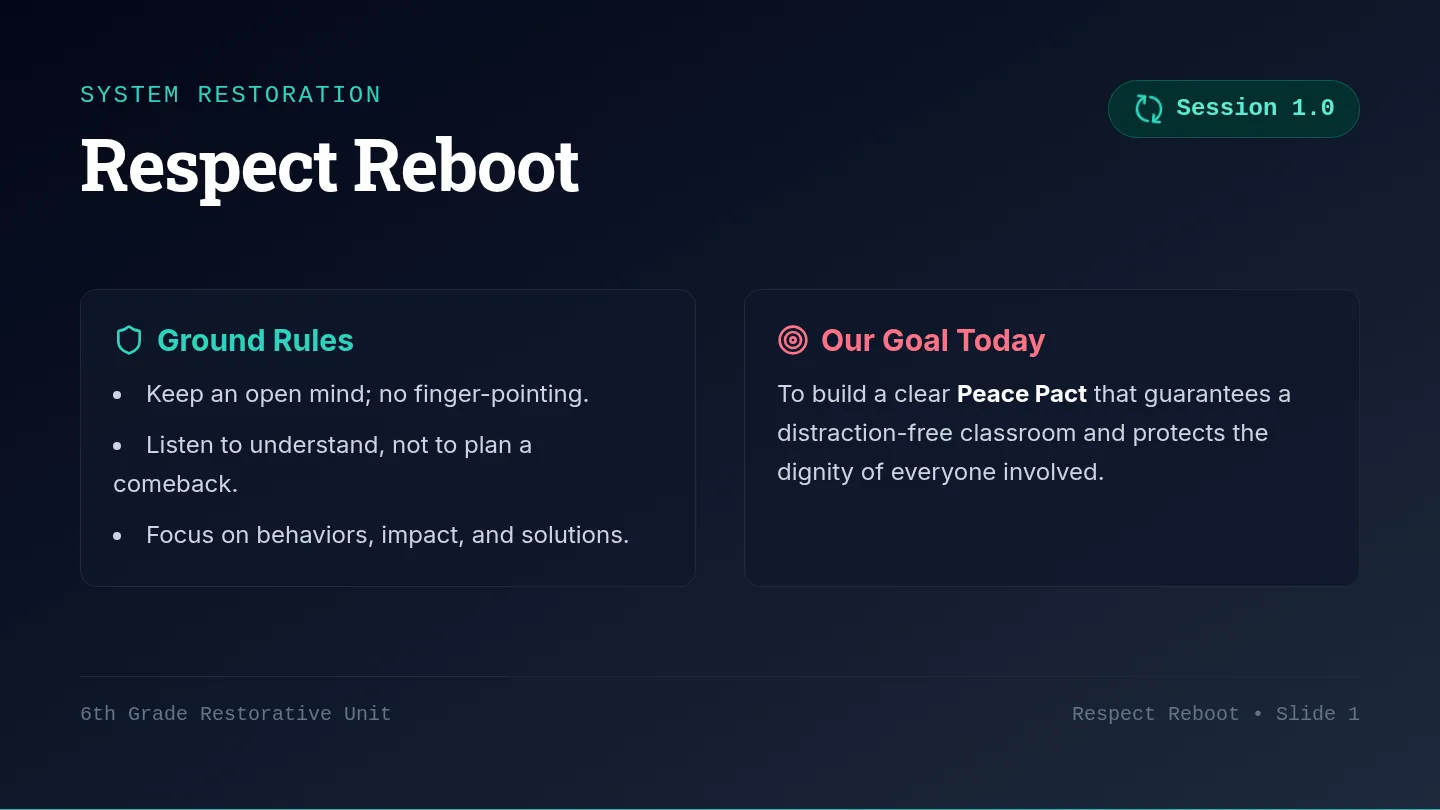
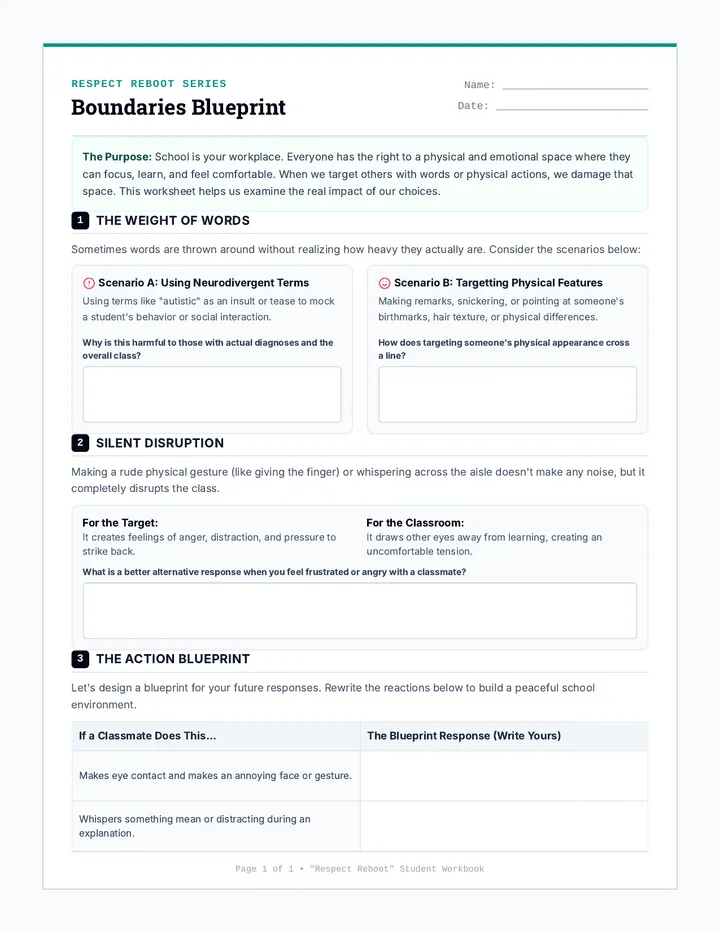
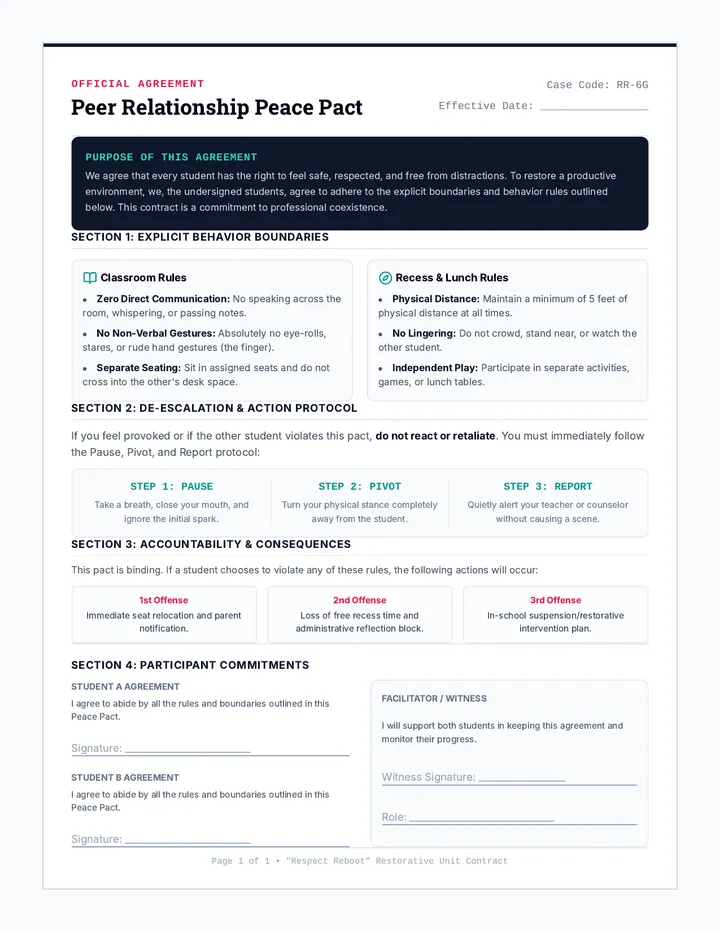
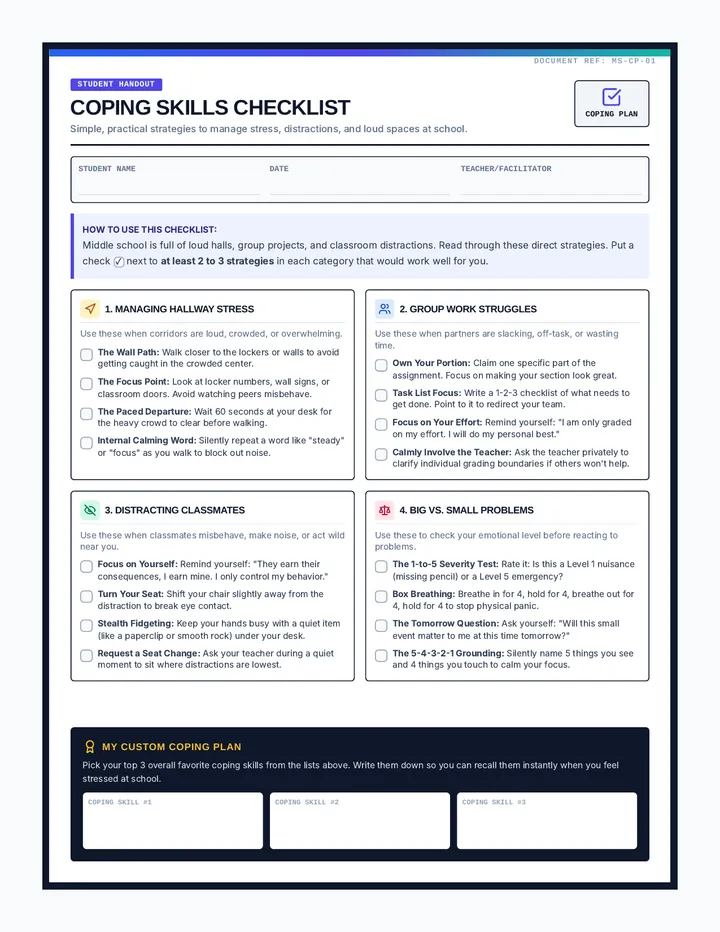
Day 5 covers staying focused and not contributing to classroom distractions.
Day 4 teaches students how to avoid drama and rumors by taking a 'detour'.