A 45-minute hands-on budgeting workshop where 6th-grade students collaborate in small groups to manage hypothetical income and expenses. Students practice distinguishing between needs and wants while navigating real-world financial scenarios.
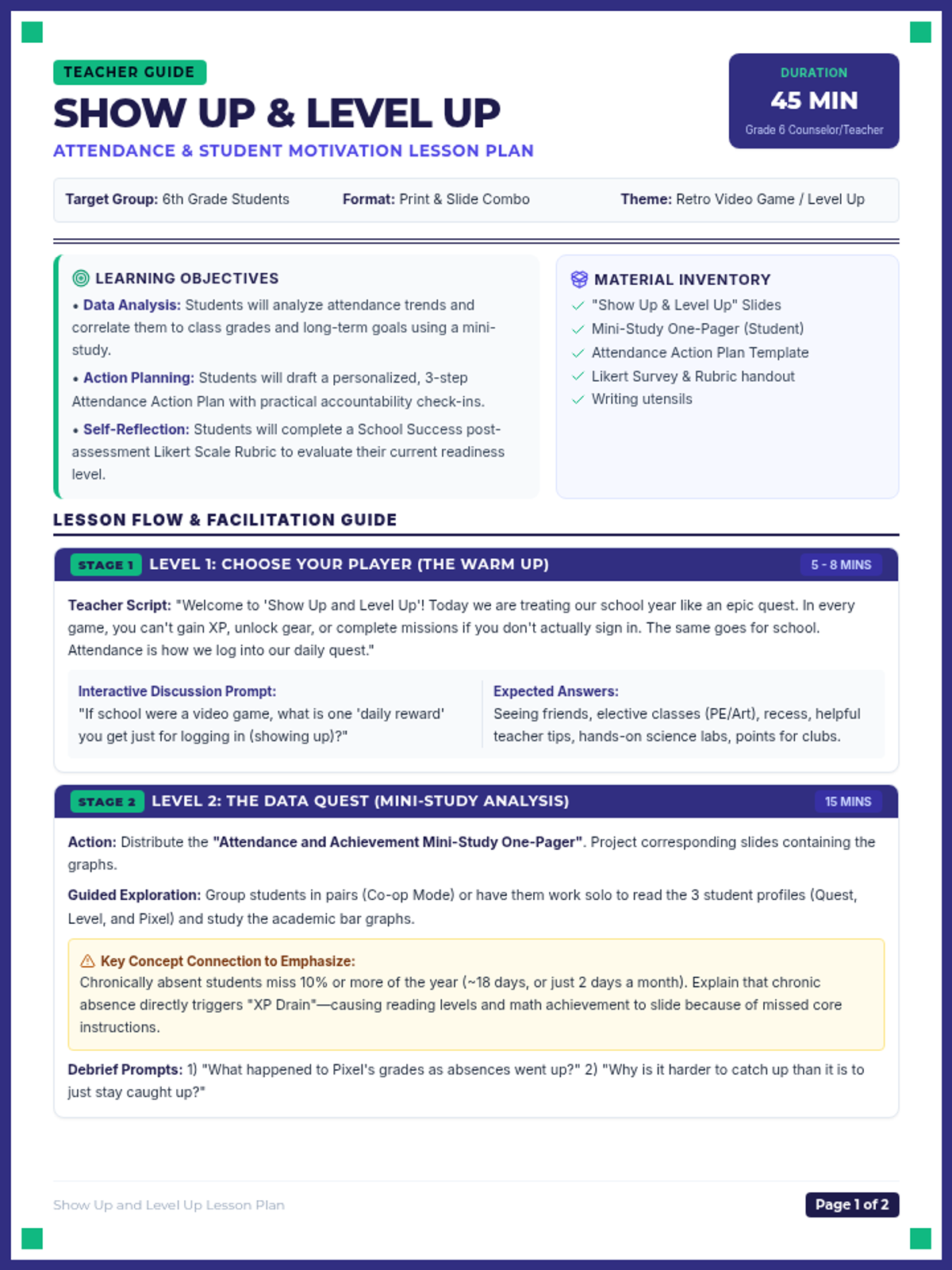
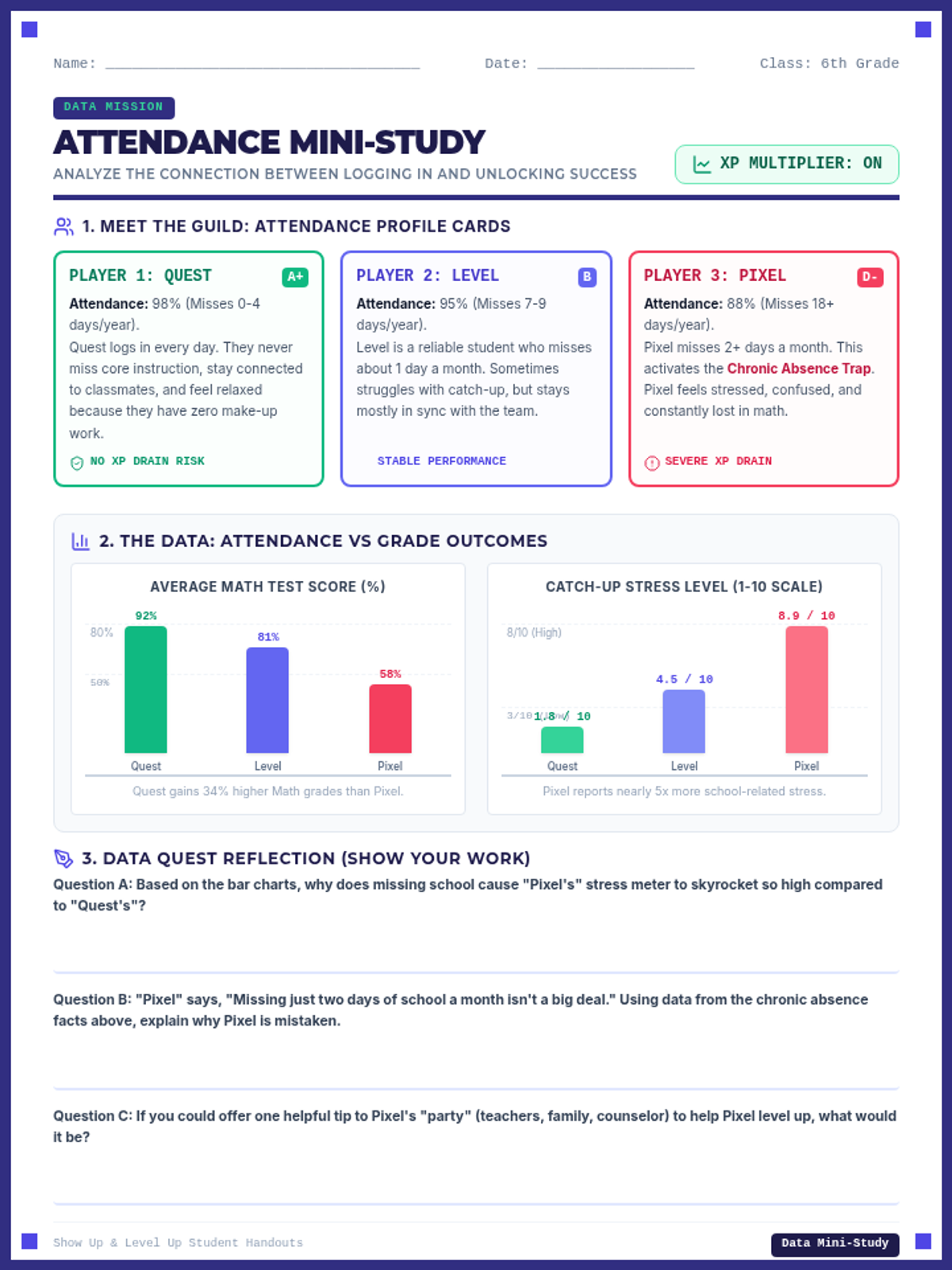
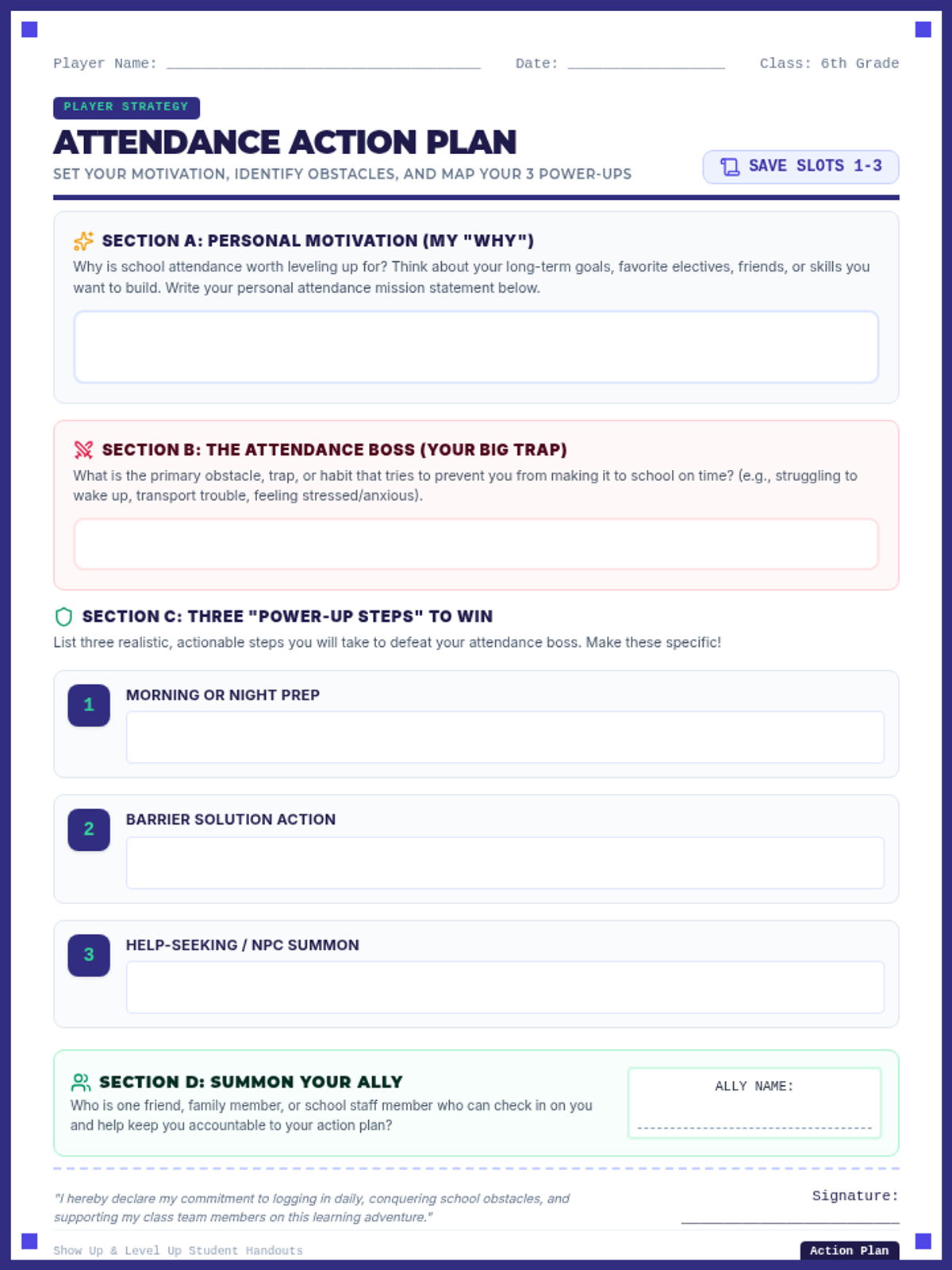
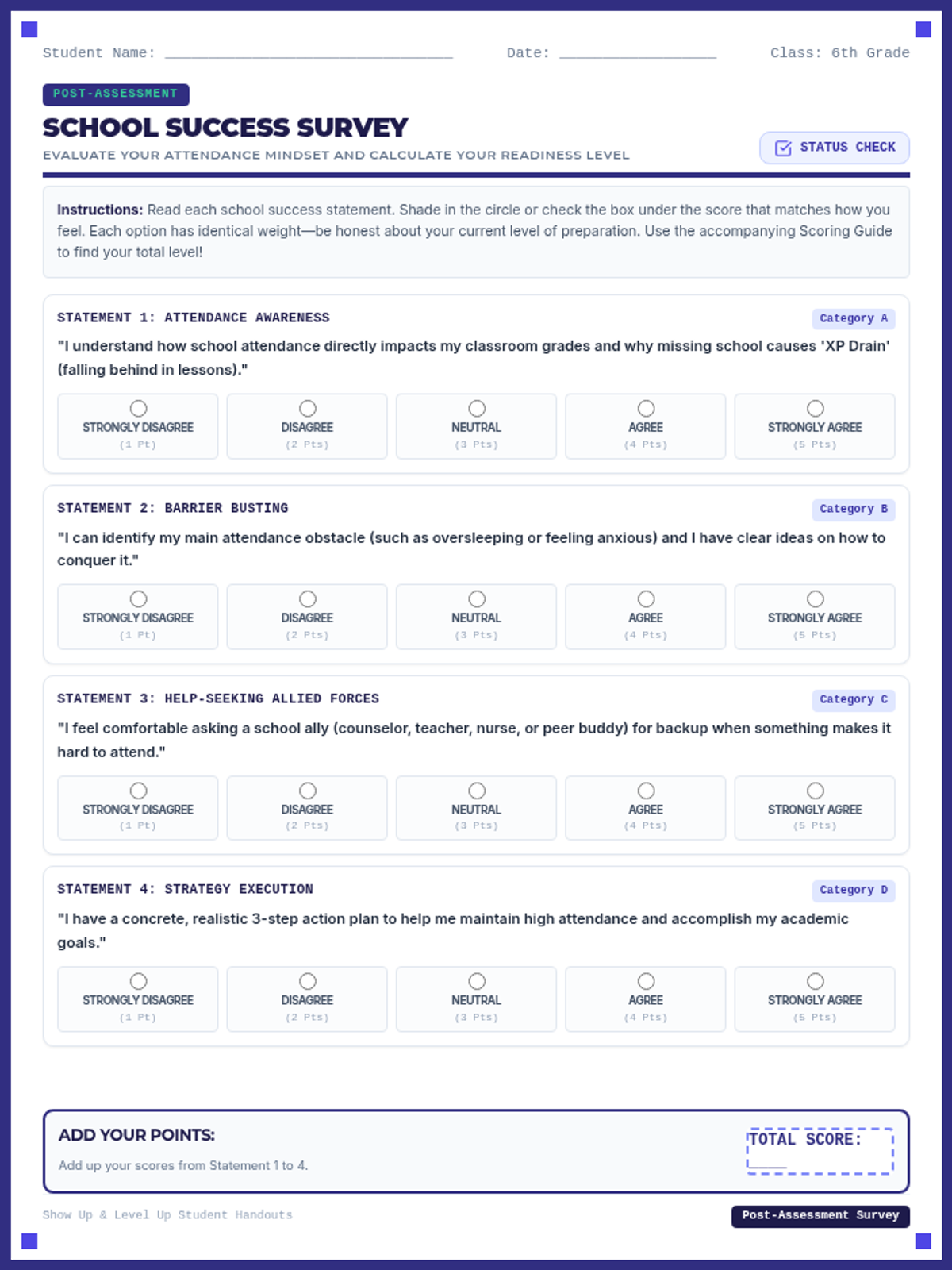
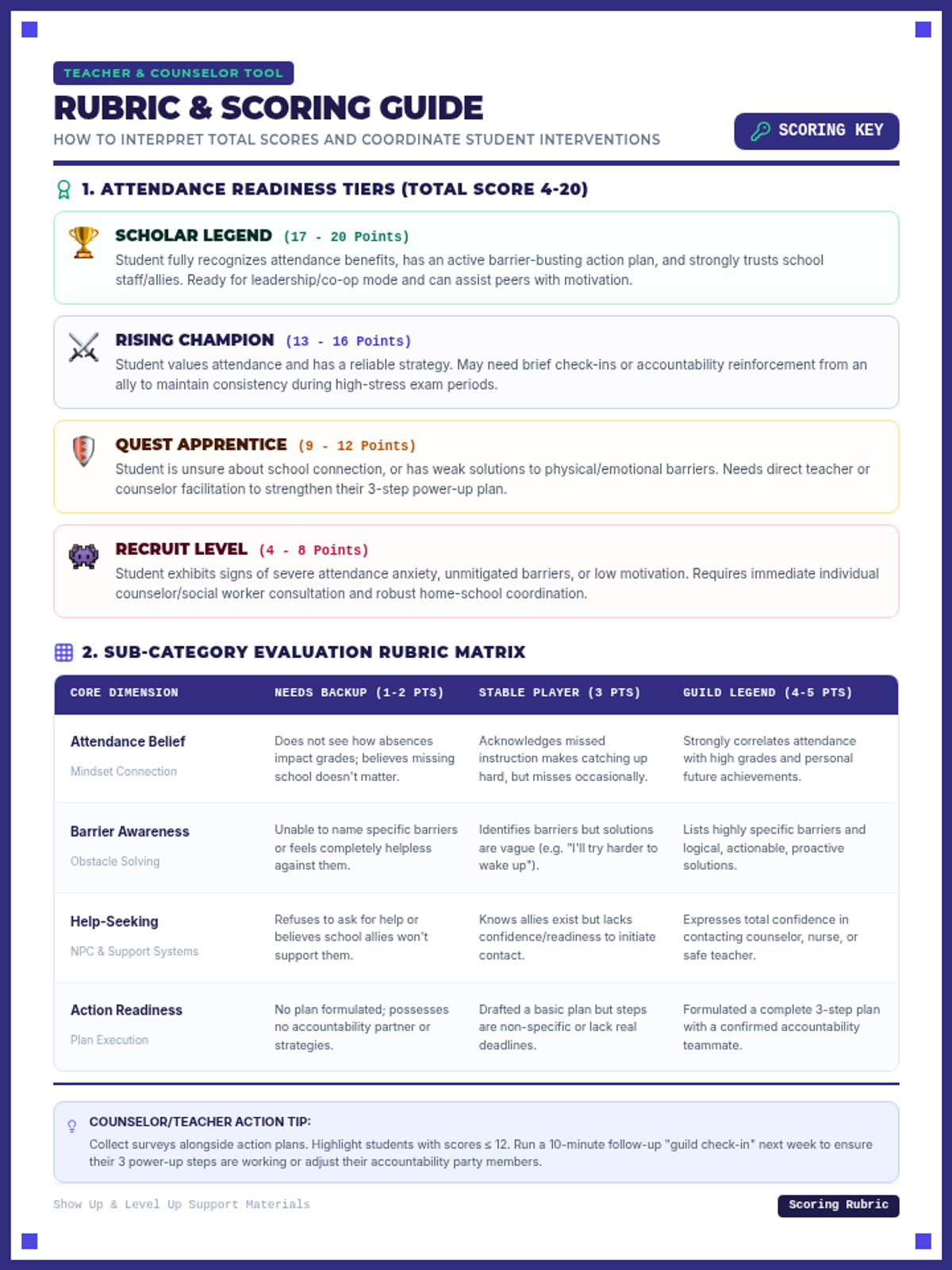
A 45-minute lesson for 6th grade designed to explore how school attendance directly impacts academic success, student confidence, and future goals. Students analyze data, brainstorm solutions to common barriers, and draft an action plan.
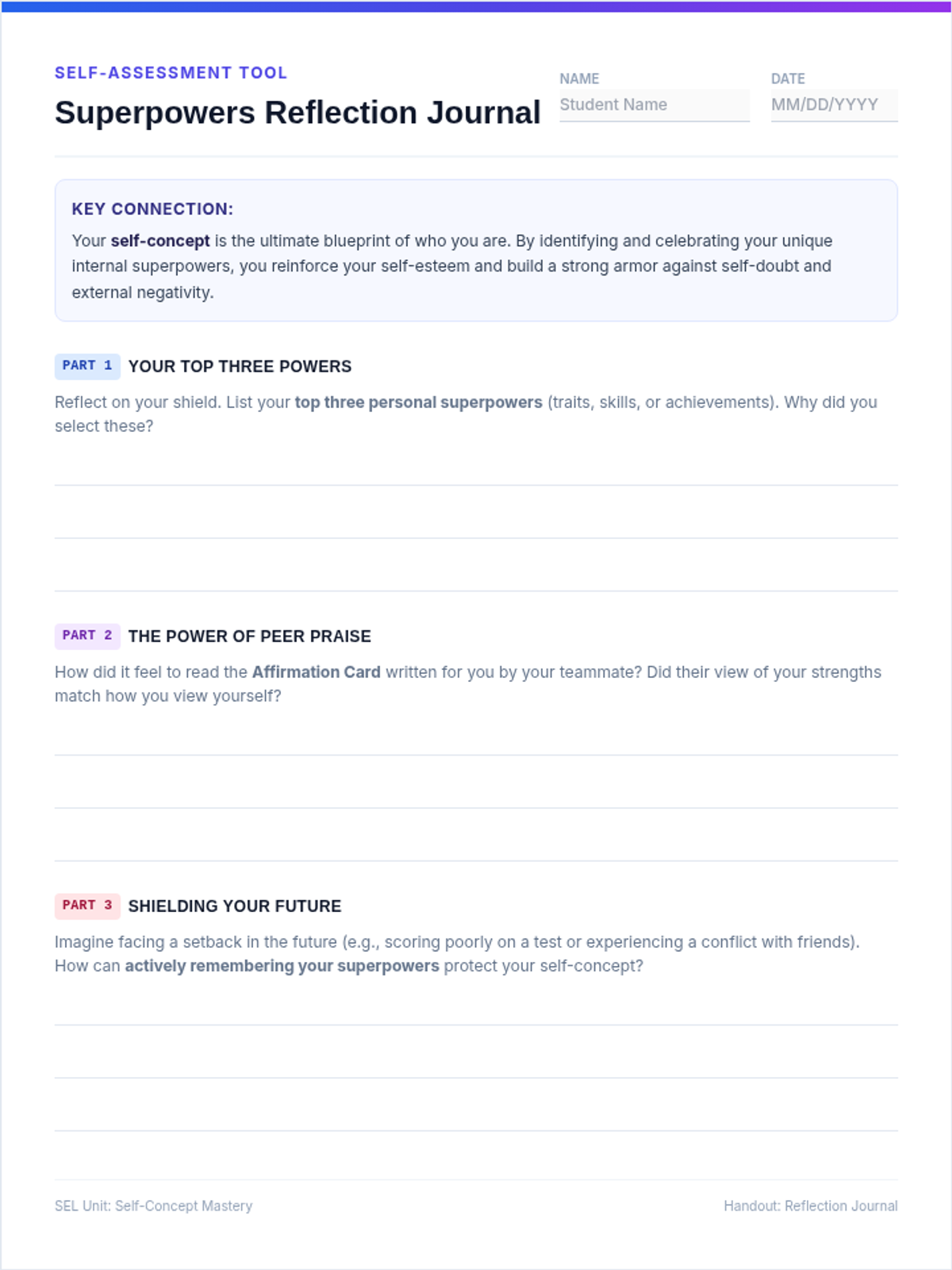
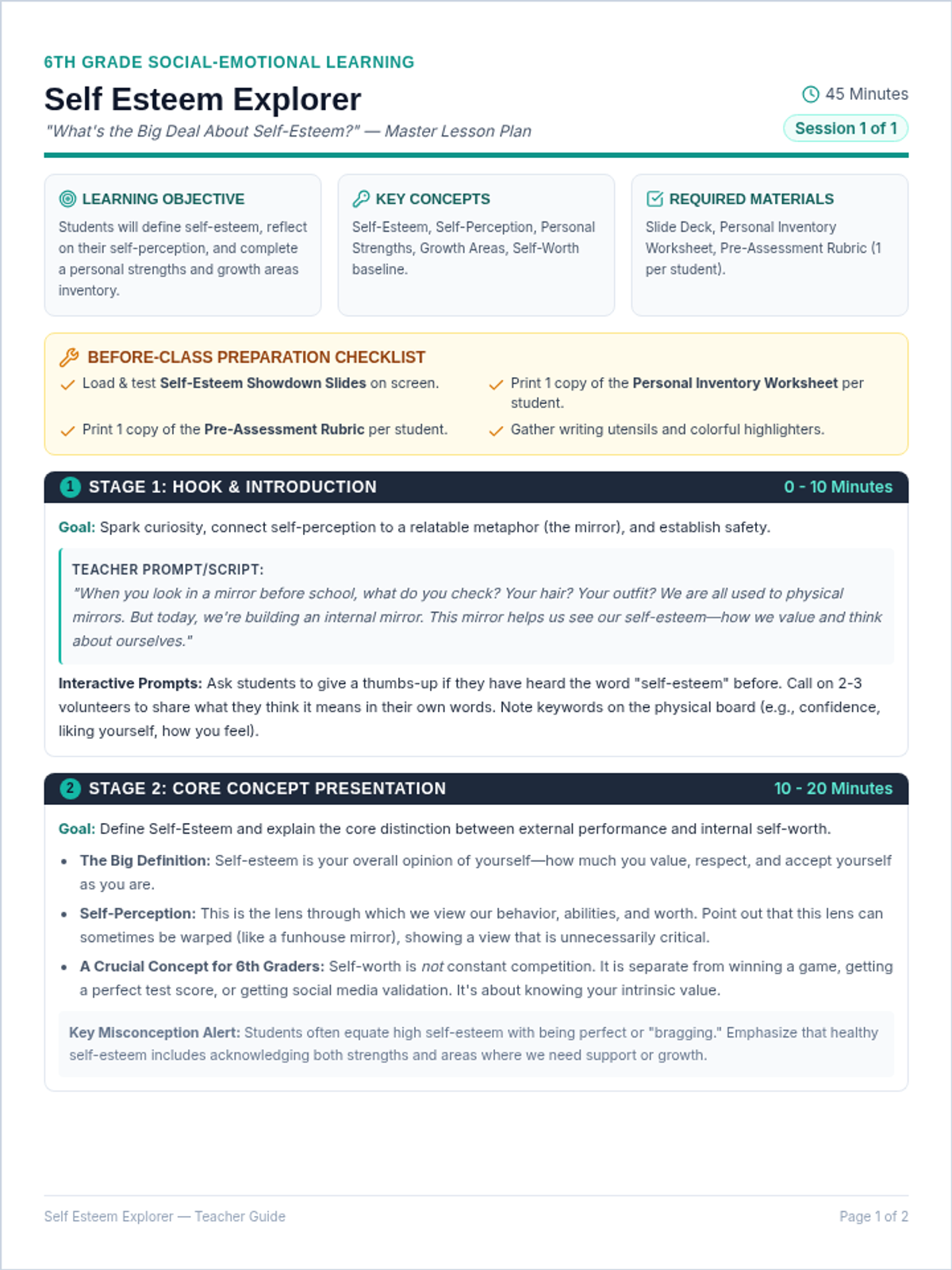
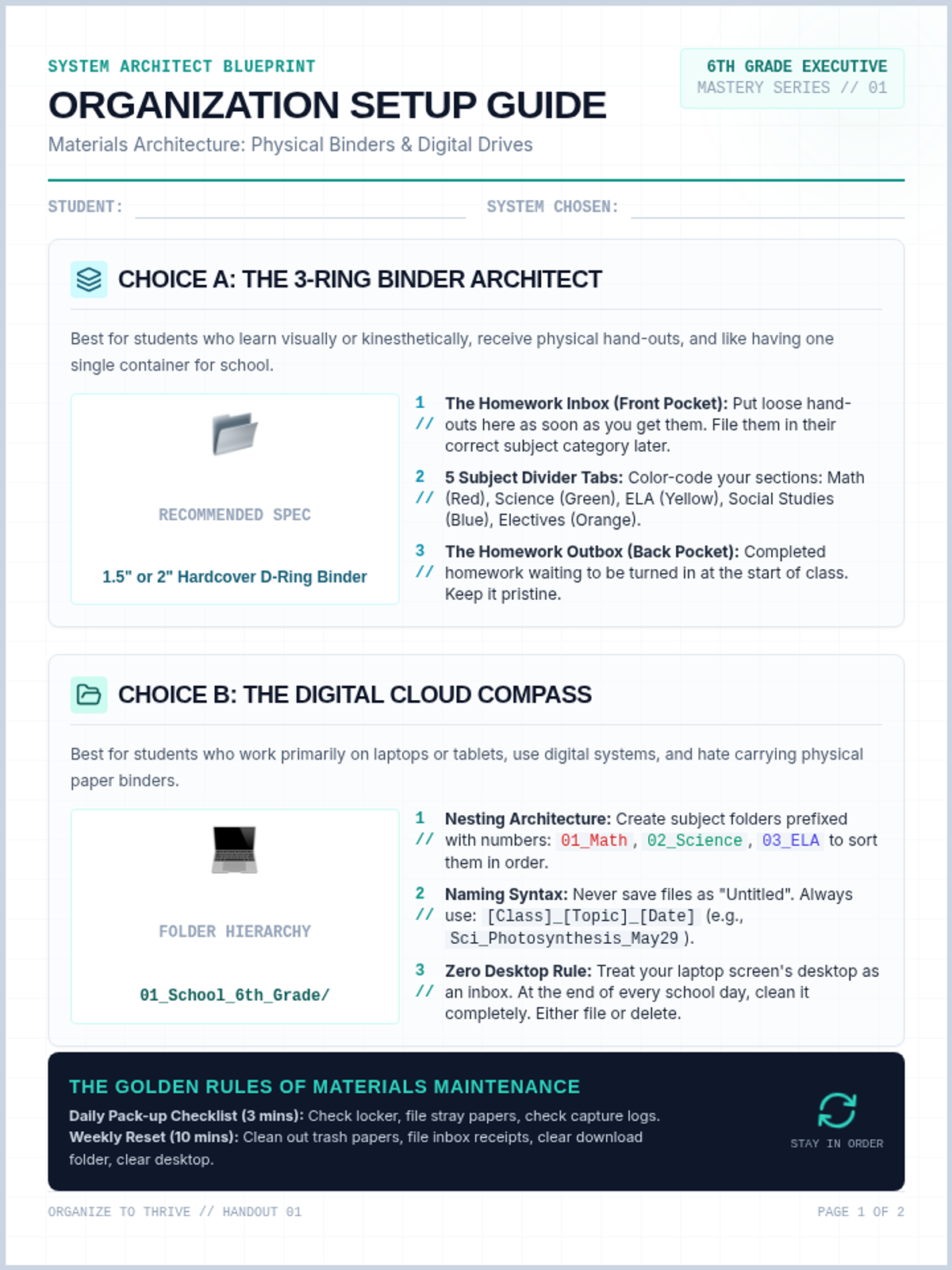
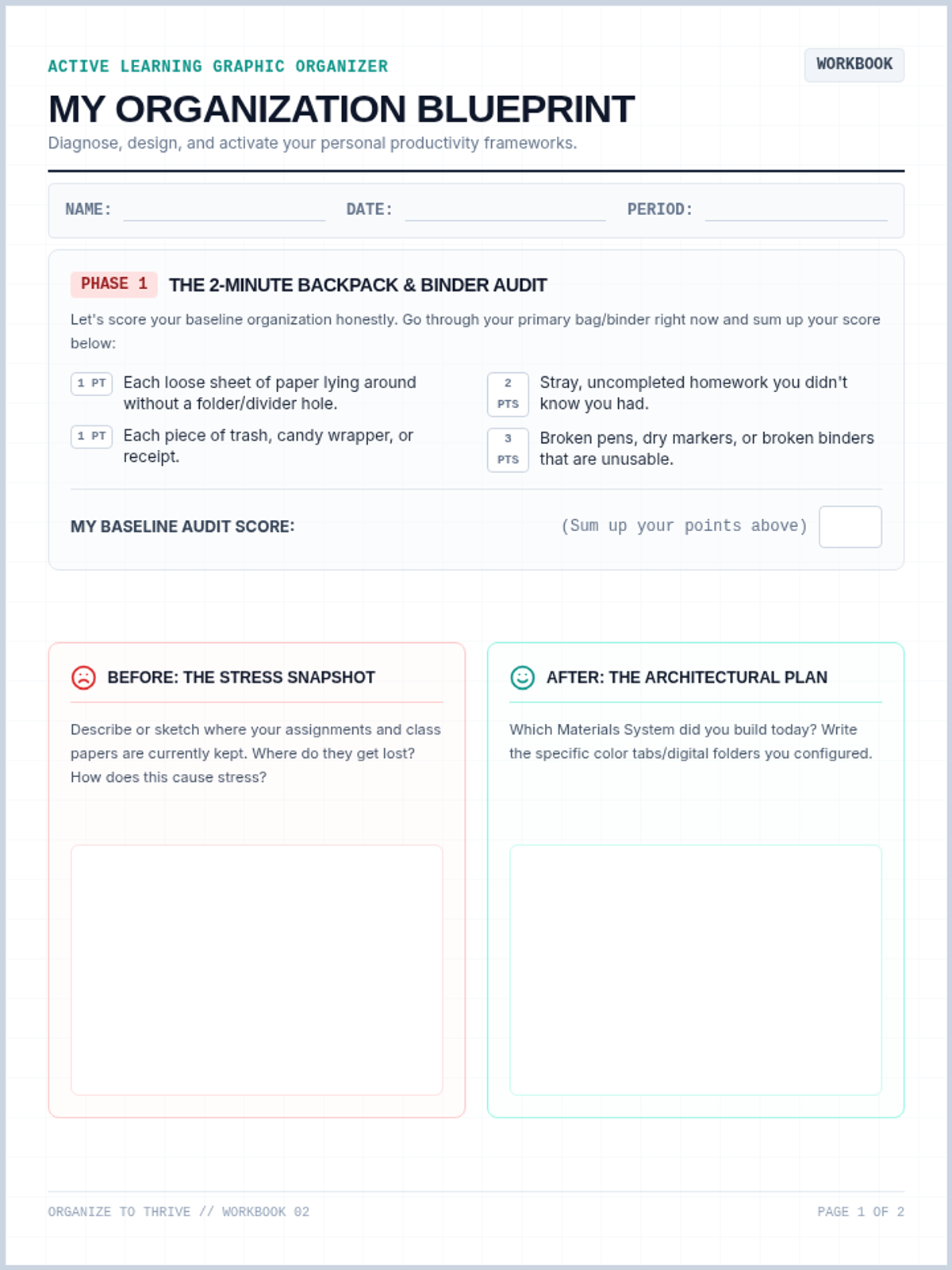
A practical, hands-on lesson designed to help 6th-grade students establish effective organizational and assignment capture systems. Students audit their current materials, select and build a binder or digital folder system, explore assignment-tracking tools, and practice logging tasks to reduce executive dysfunction and stress.
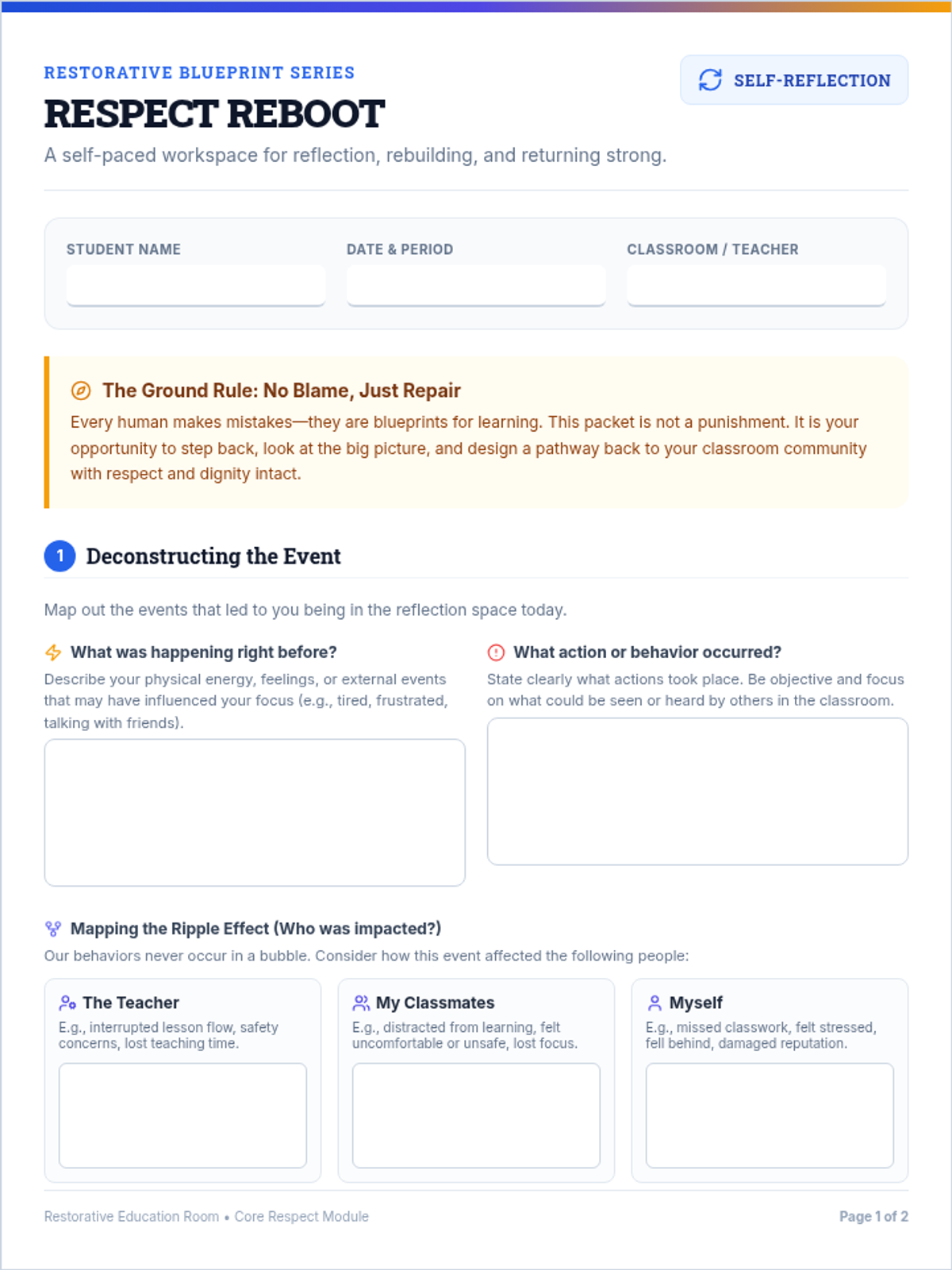
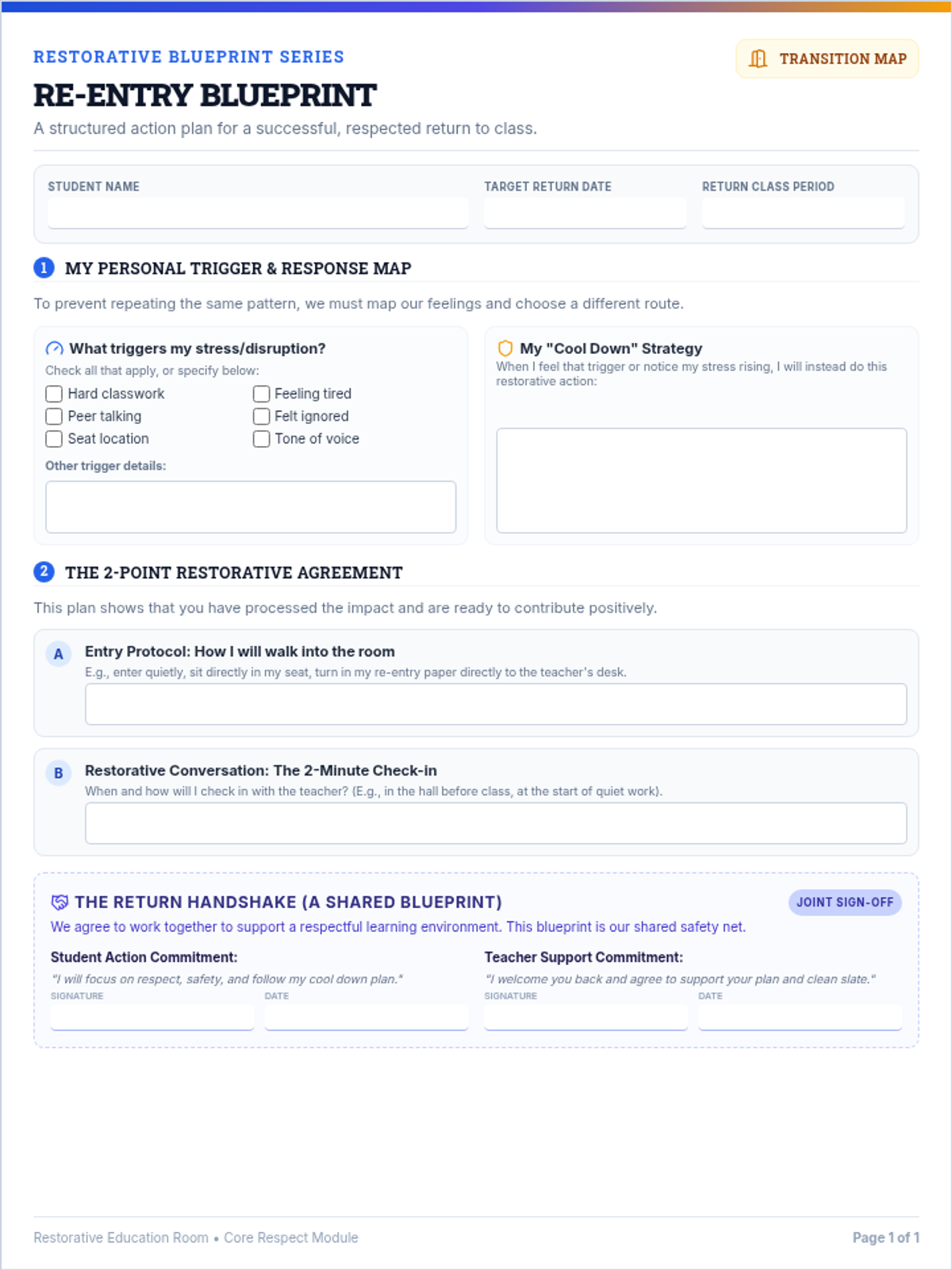
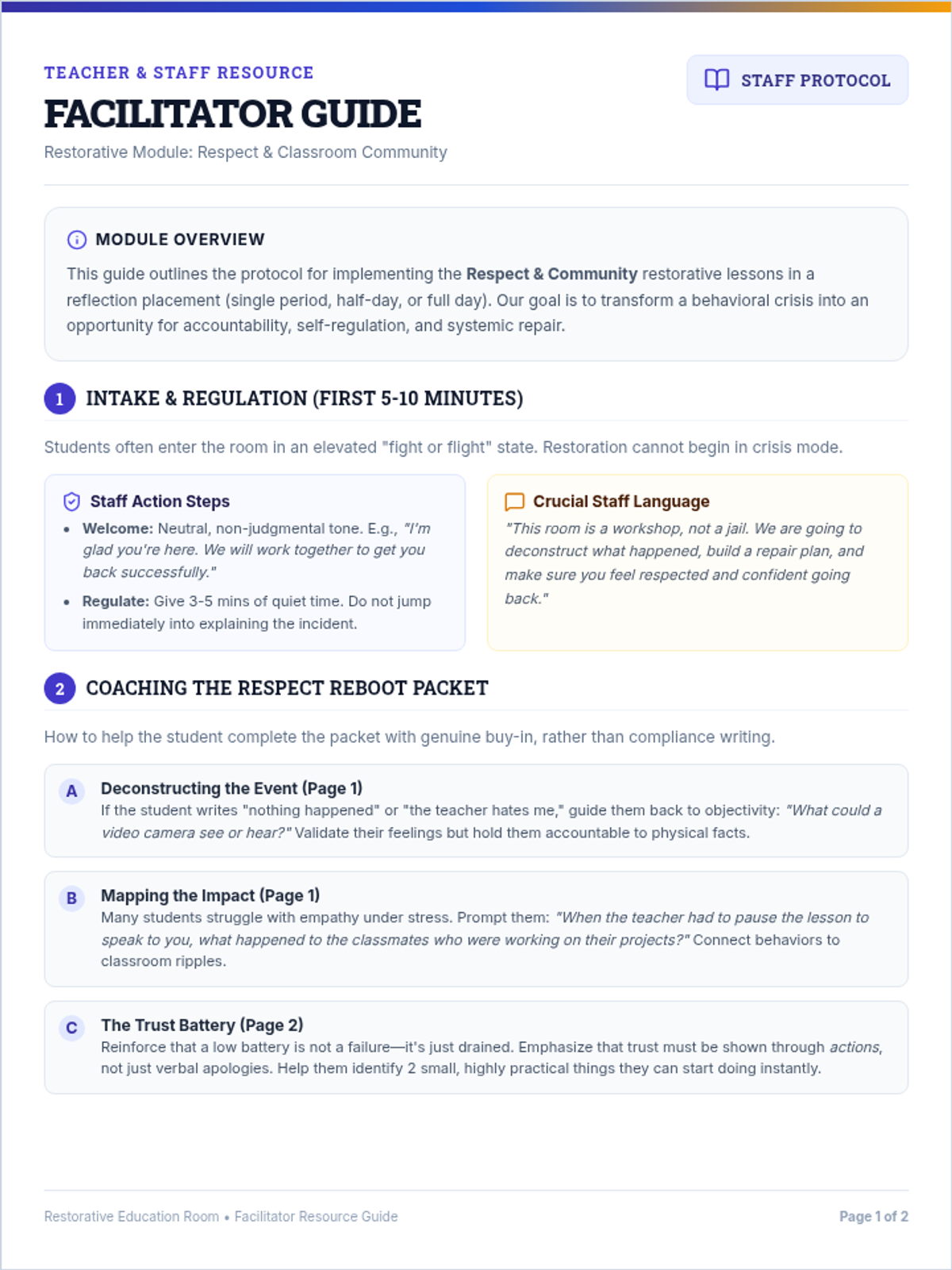
A restorative module focusing on understanding behavior impact, rebuilding classroom trust, and respecting authority. Includes a self-paced reflection packet, transition blueprint, guiding slides, and a facilitator guide.
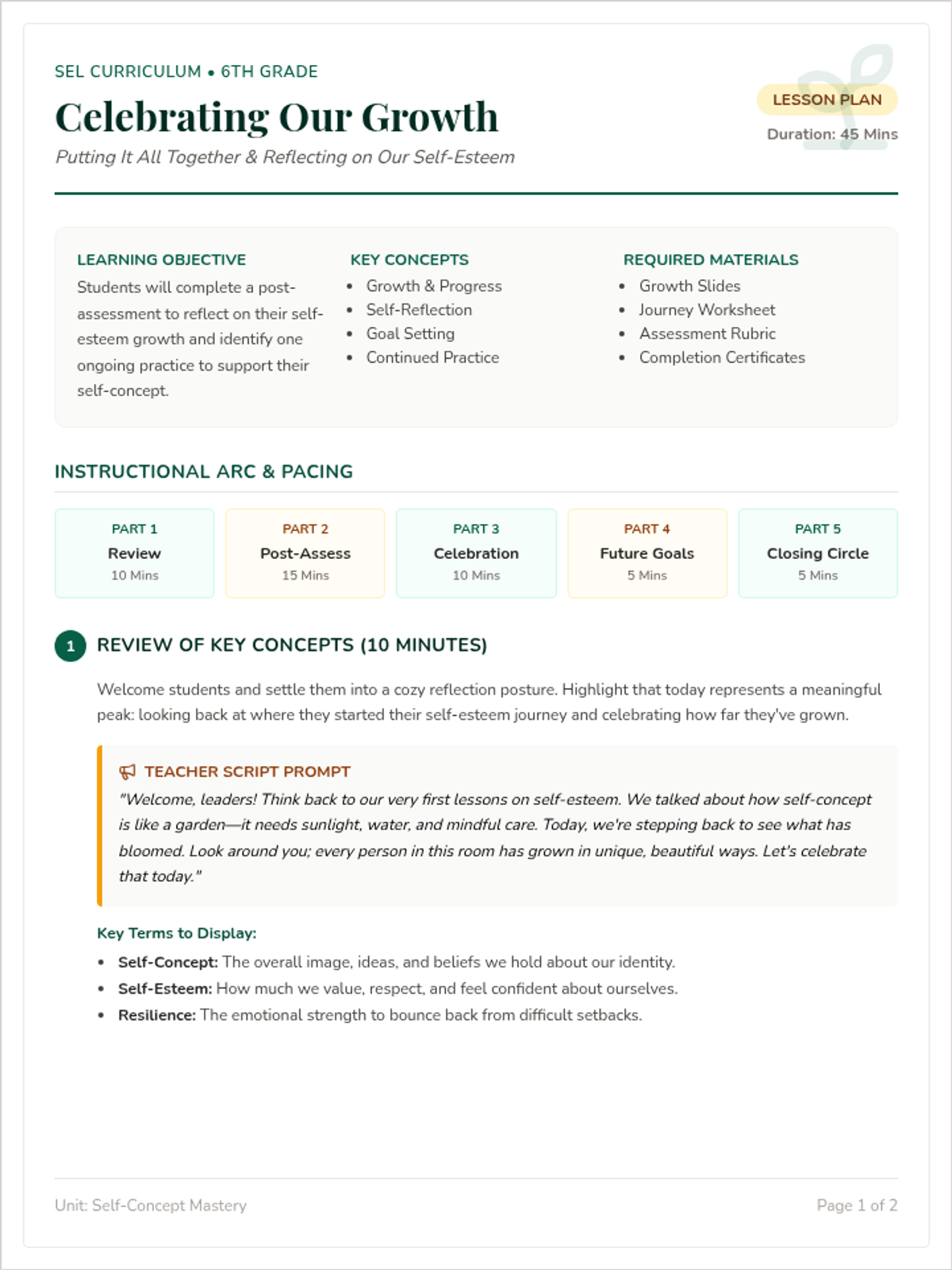
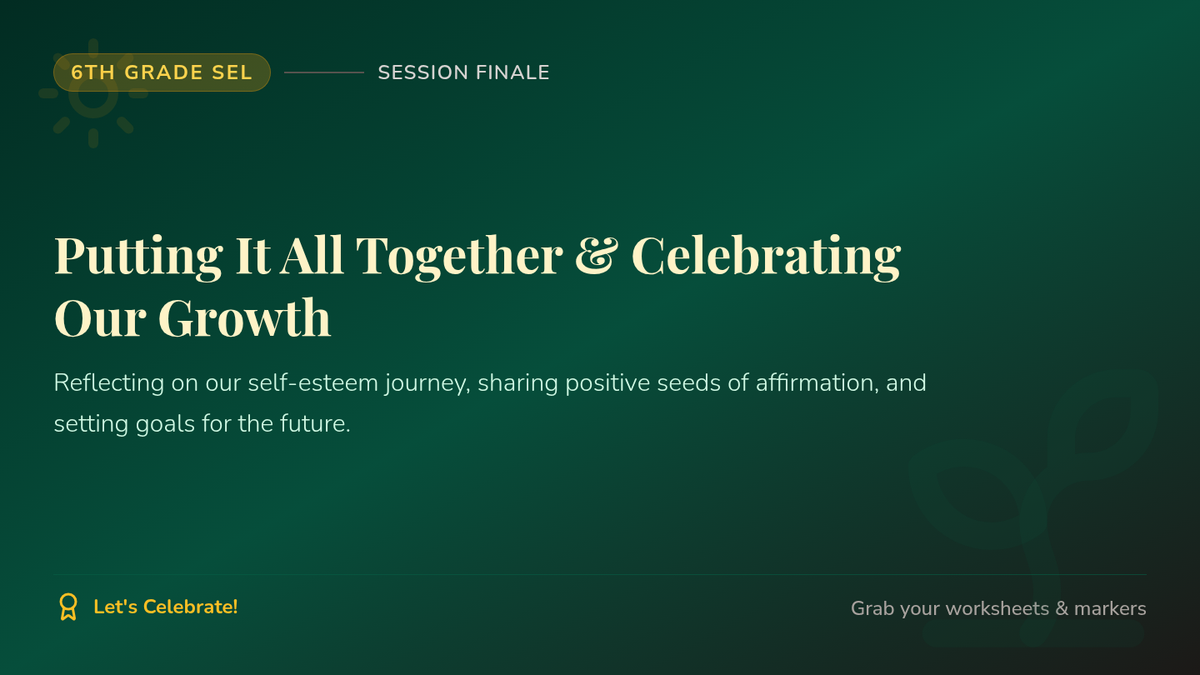
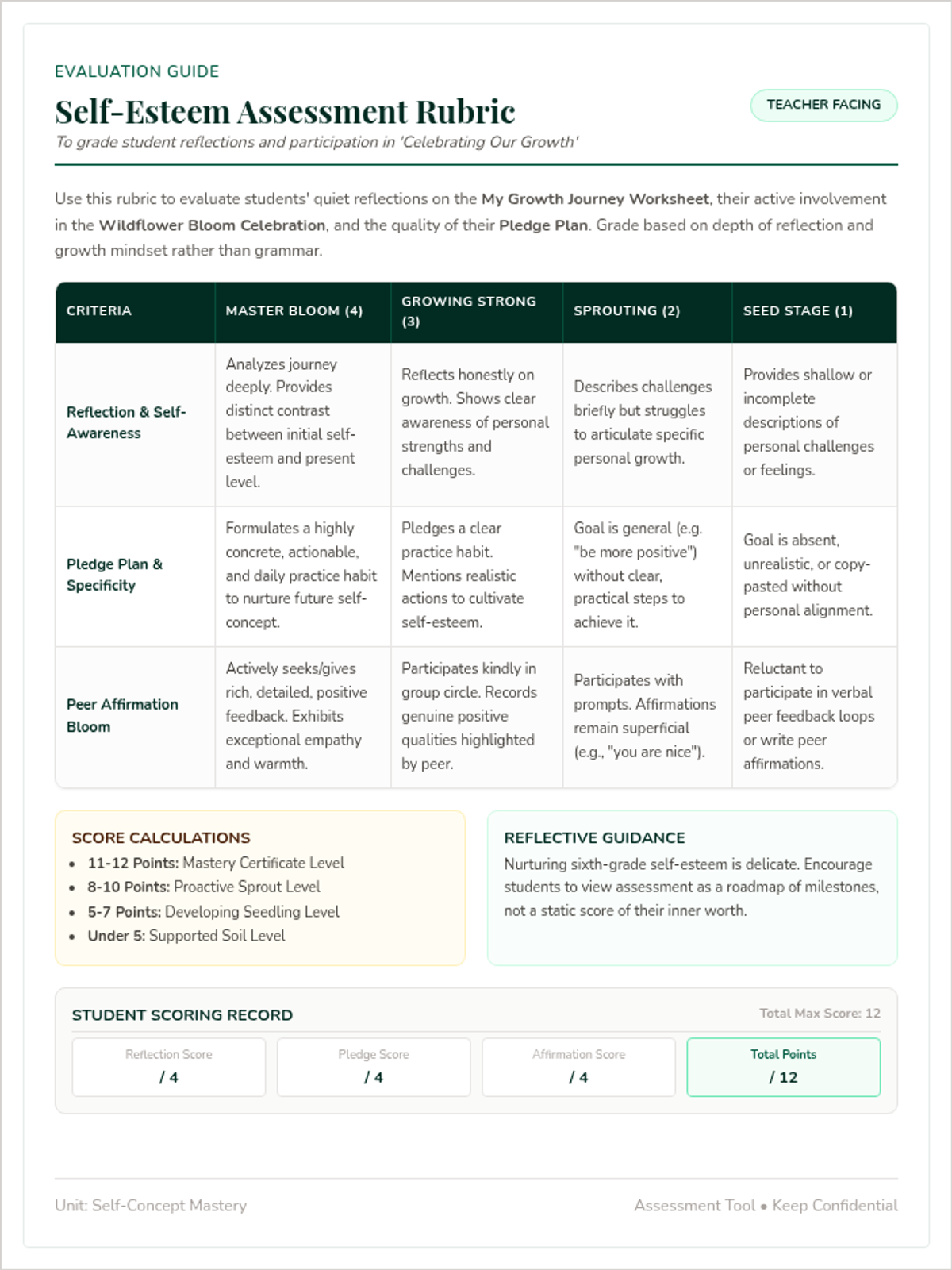
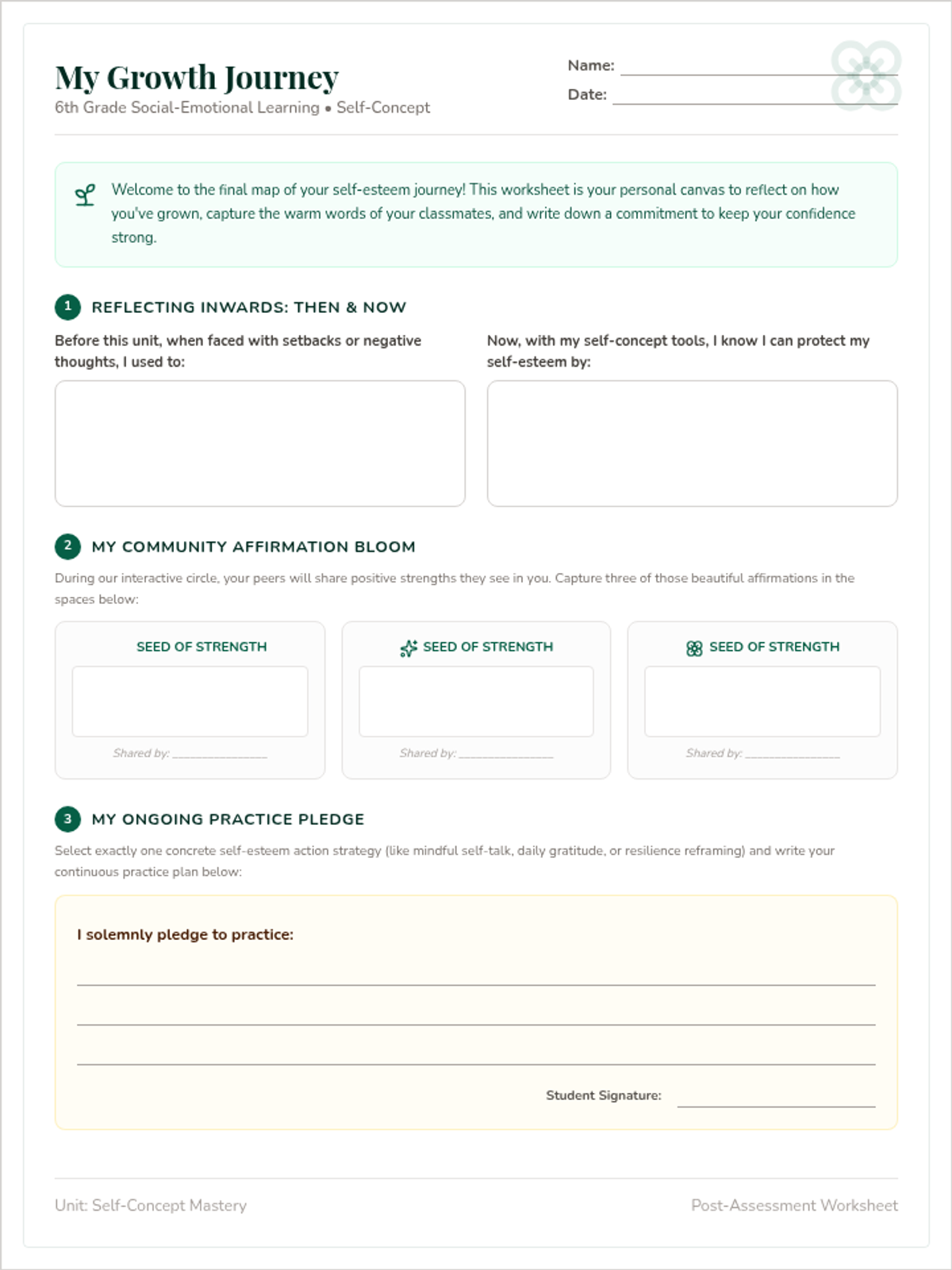
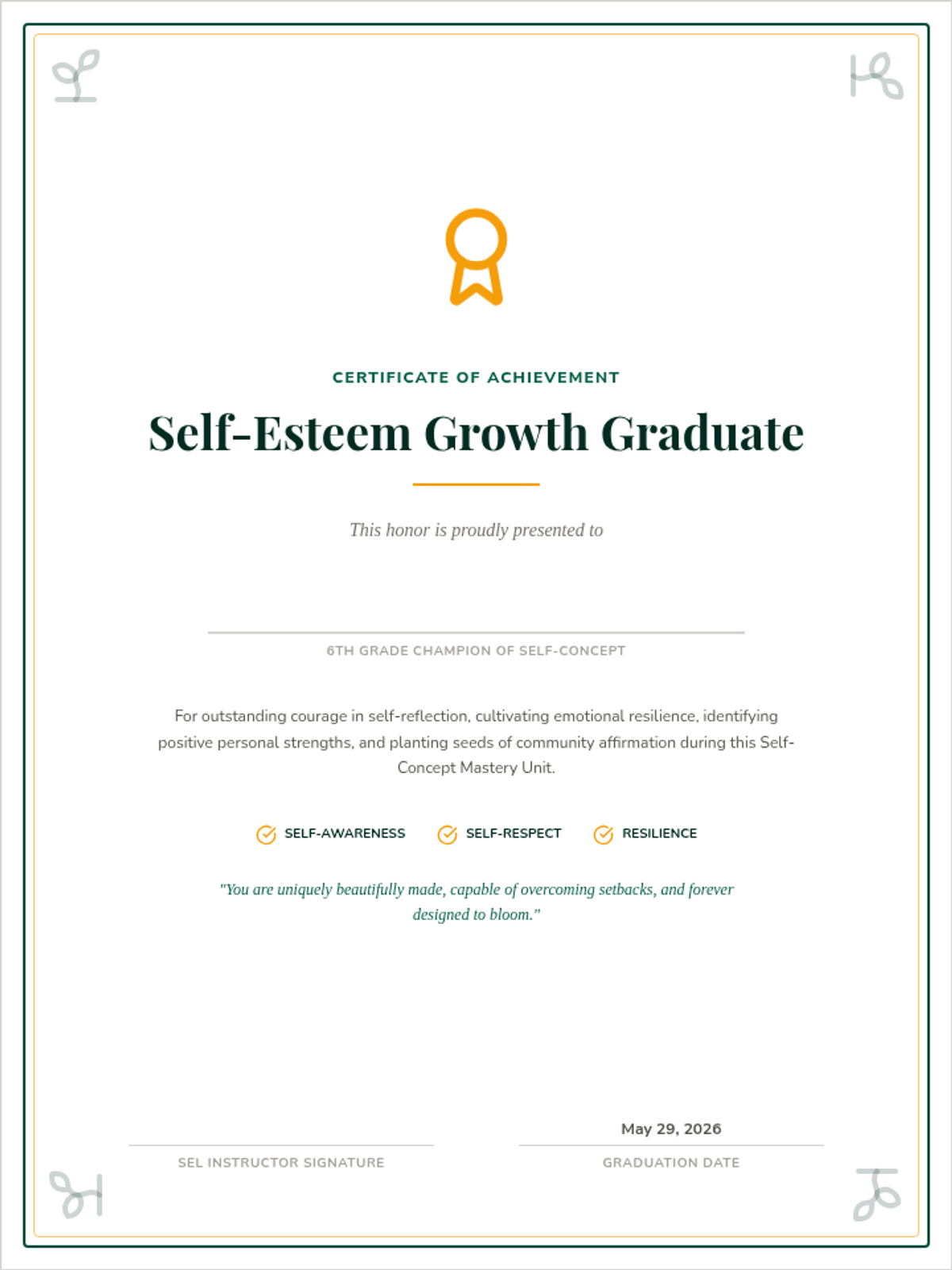
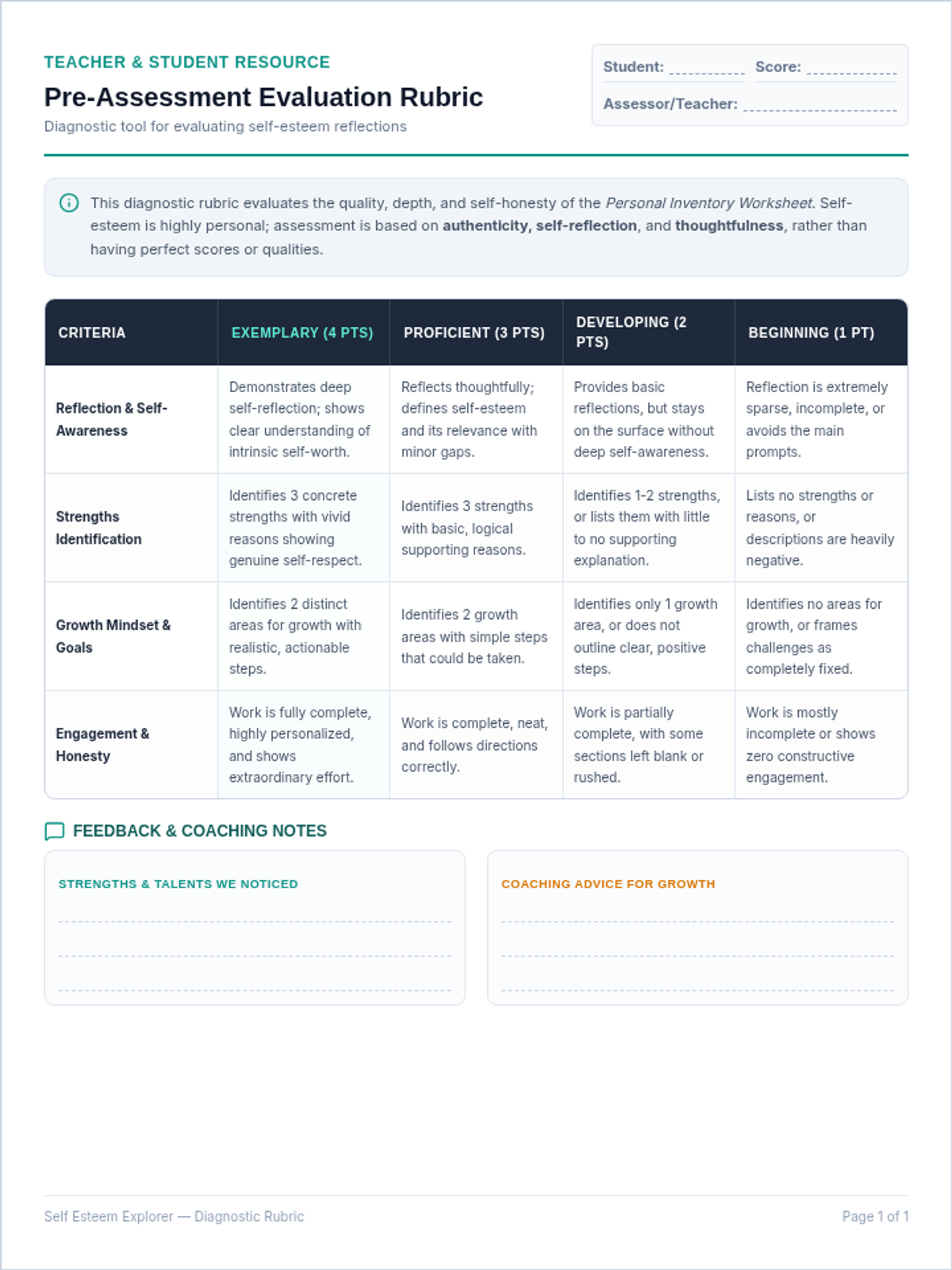
A 6th-grade social-emotional learning lesson focused on reflecting on self-esteem growth, completing a post-assessment, setting ongoing self-concept goals, and celebrating progress together. Includes a detailed lesson plan, instructional slides, reflection worksheet, assessment rubric, and a special certificate of completion.
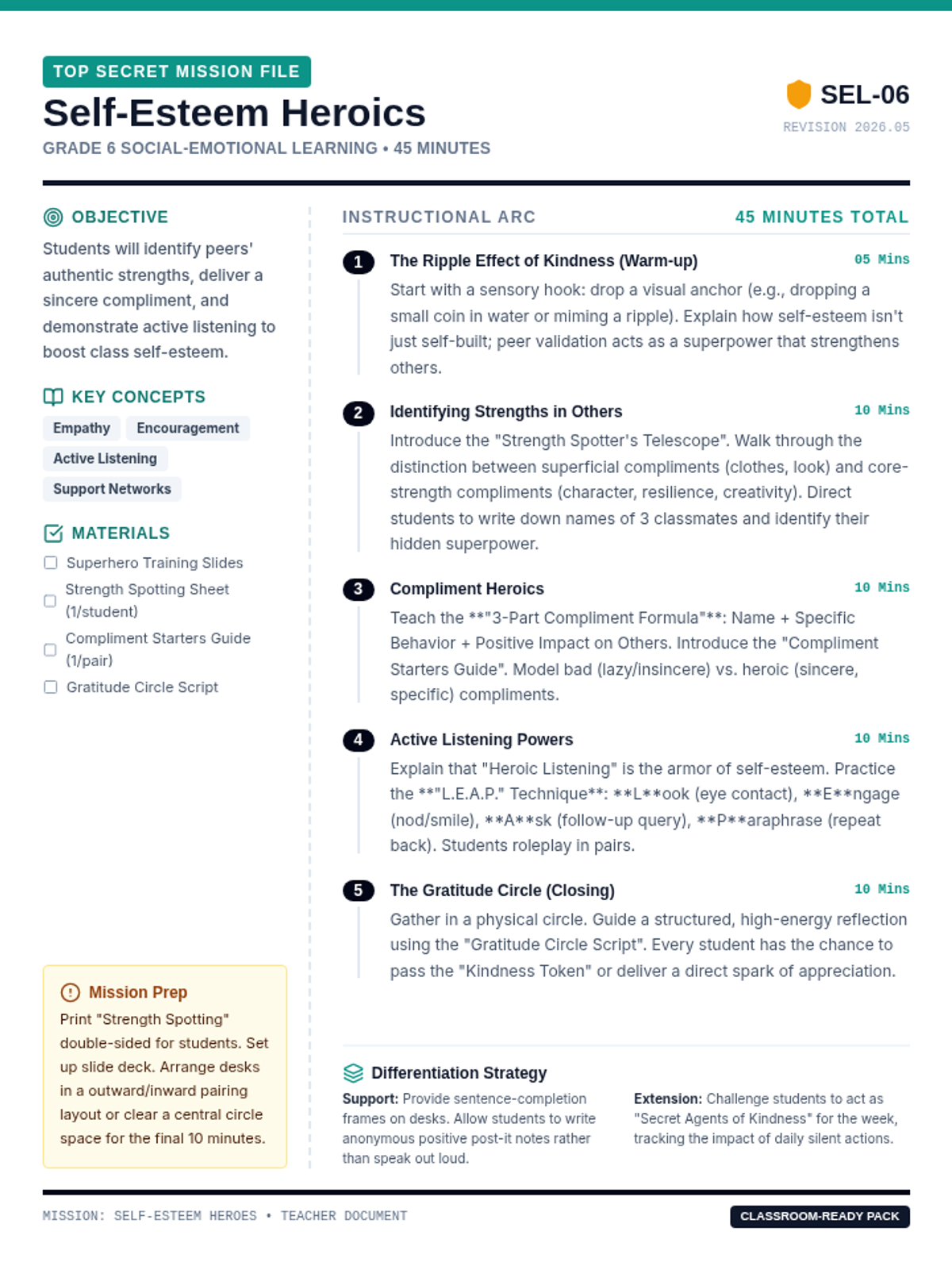
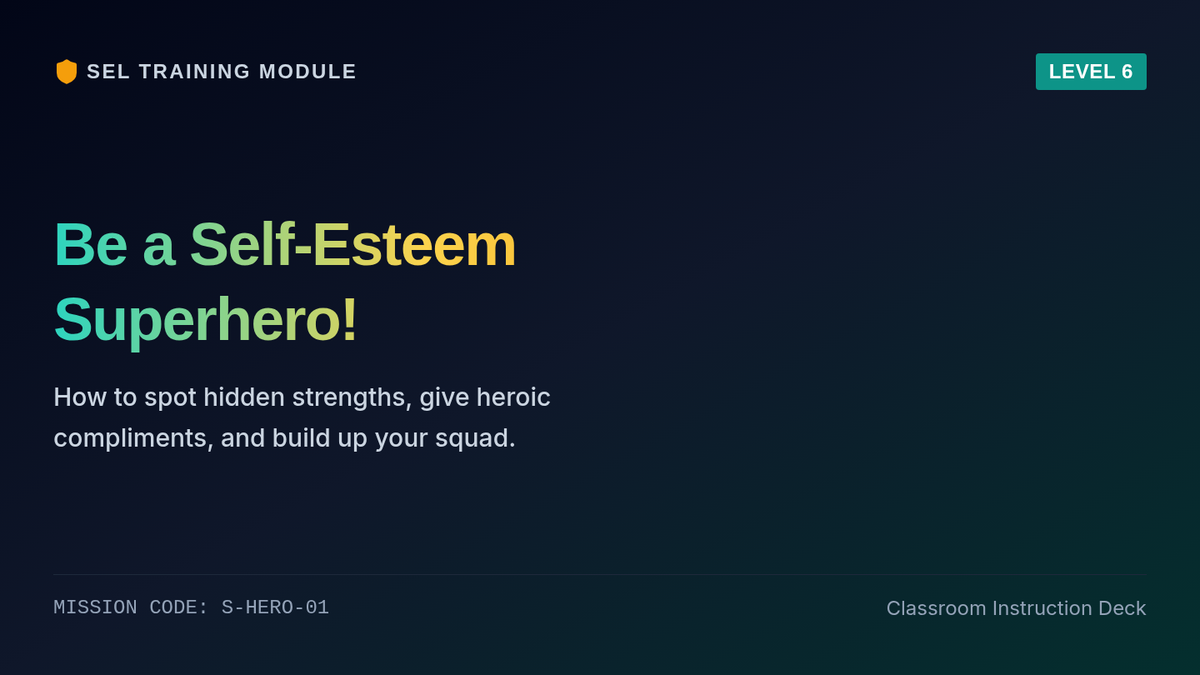
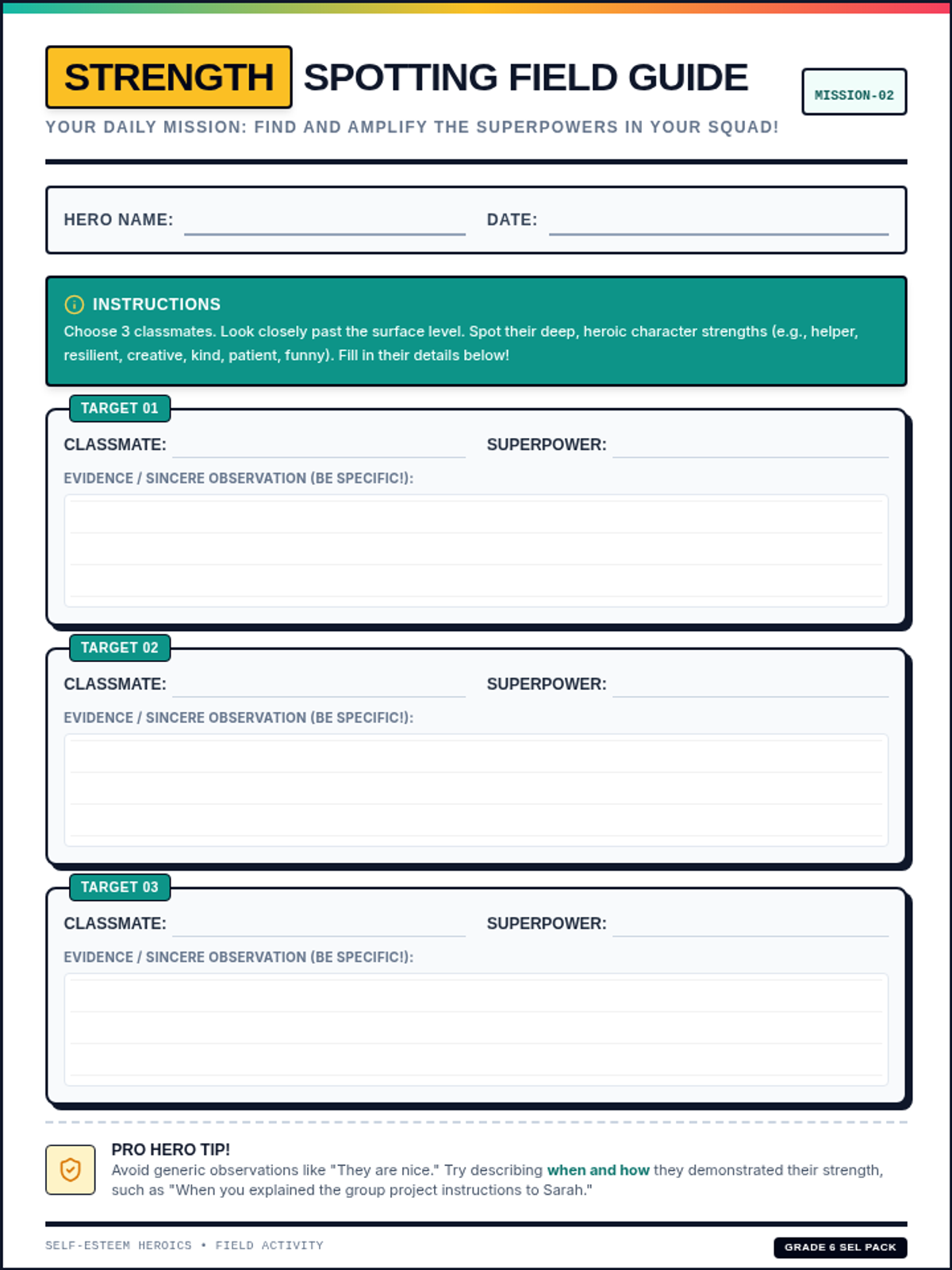
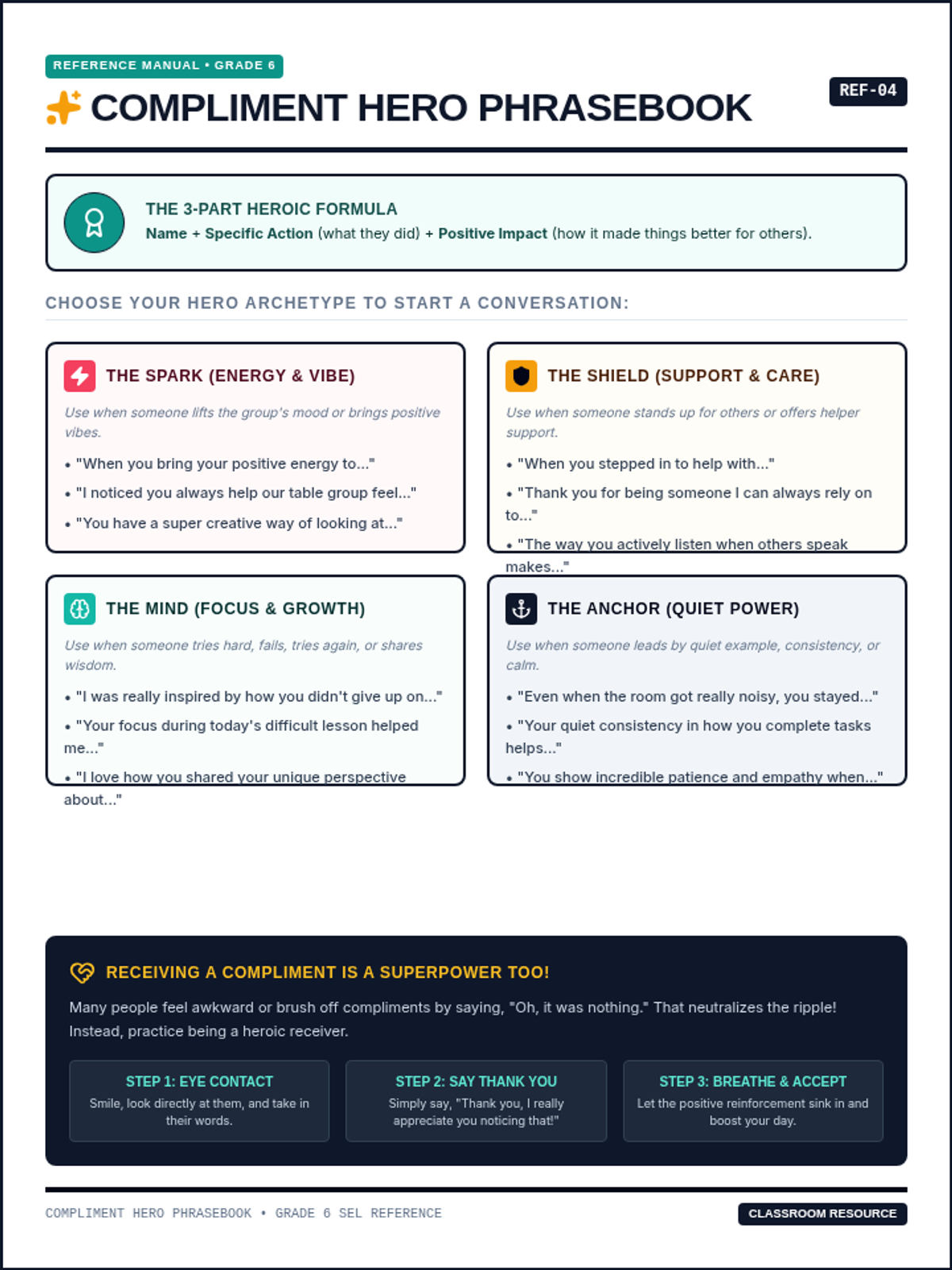
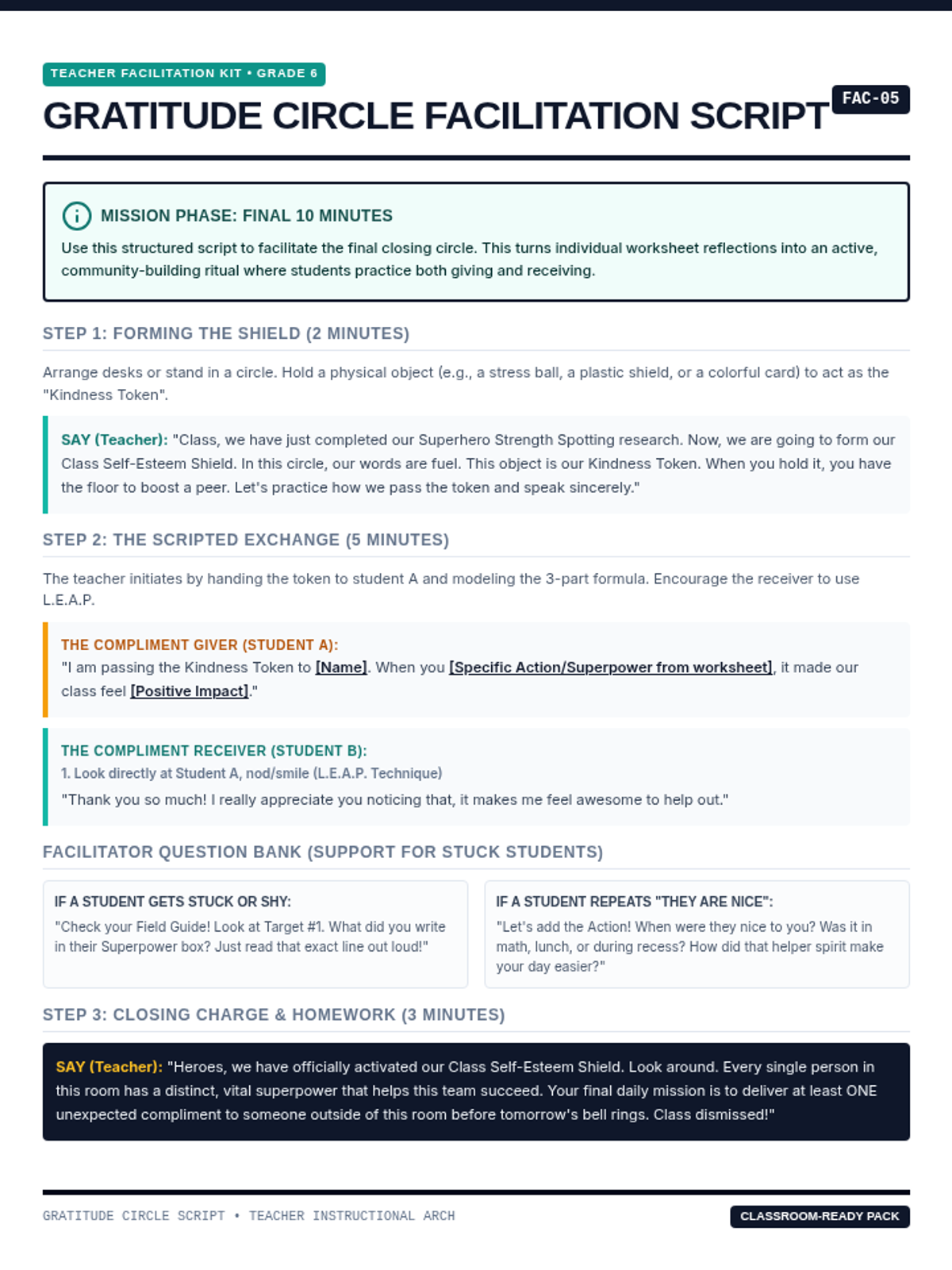
A 45-minute social-emotional learning lesson for 6th grade focused on empathy, active listening, and sincere encouragement to build peer self-esteem. Students learn to spot strengths, deliver authentic compliments, and practice active listening through comic-themed superhero training activities.
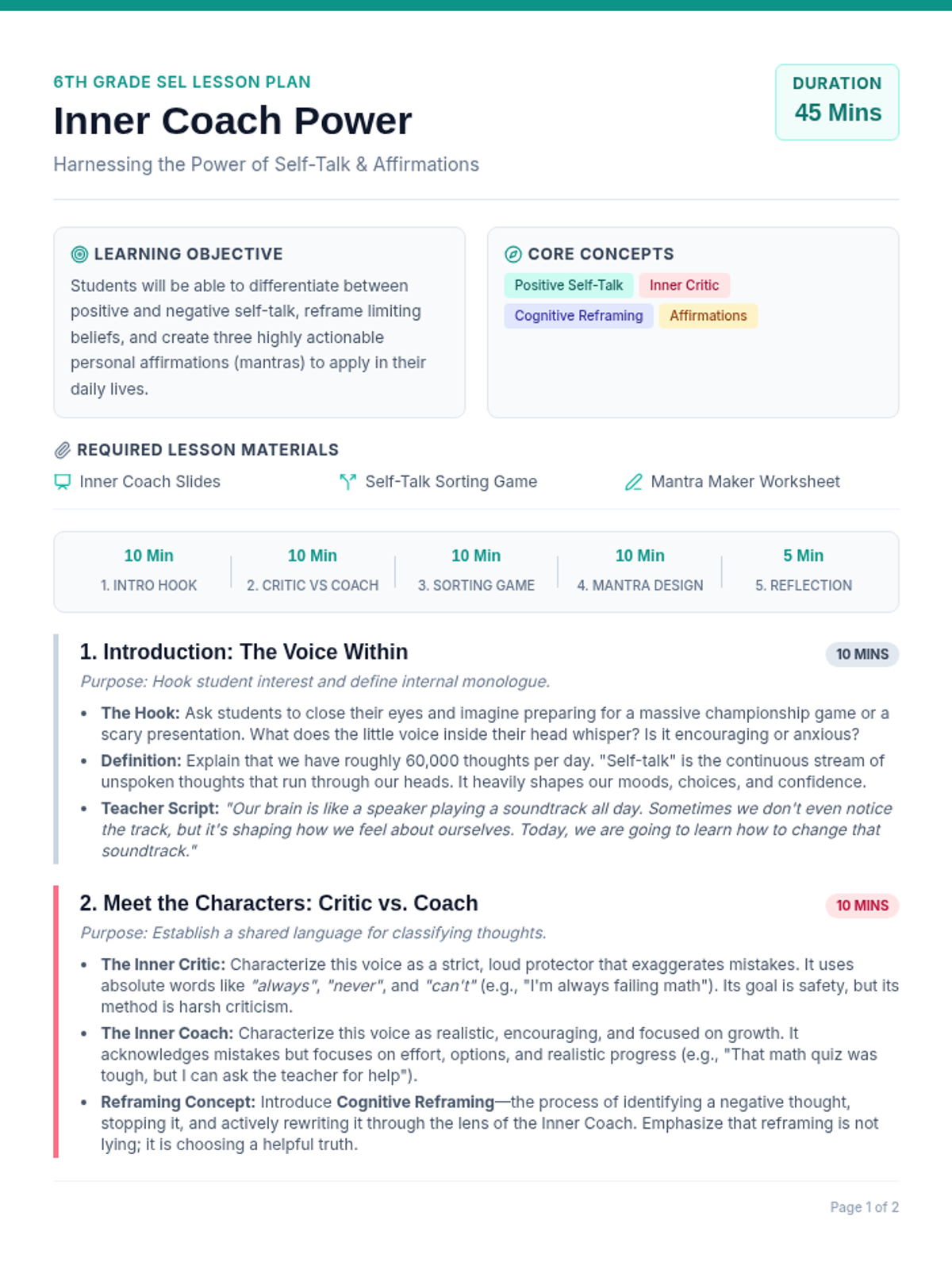
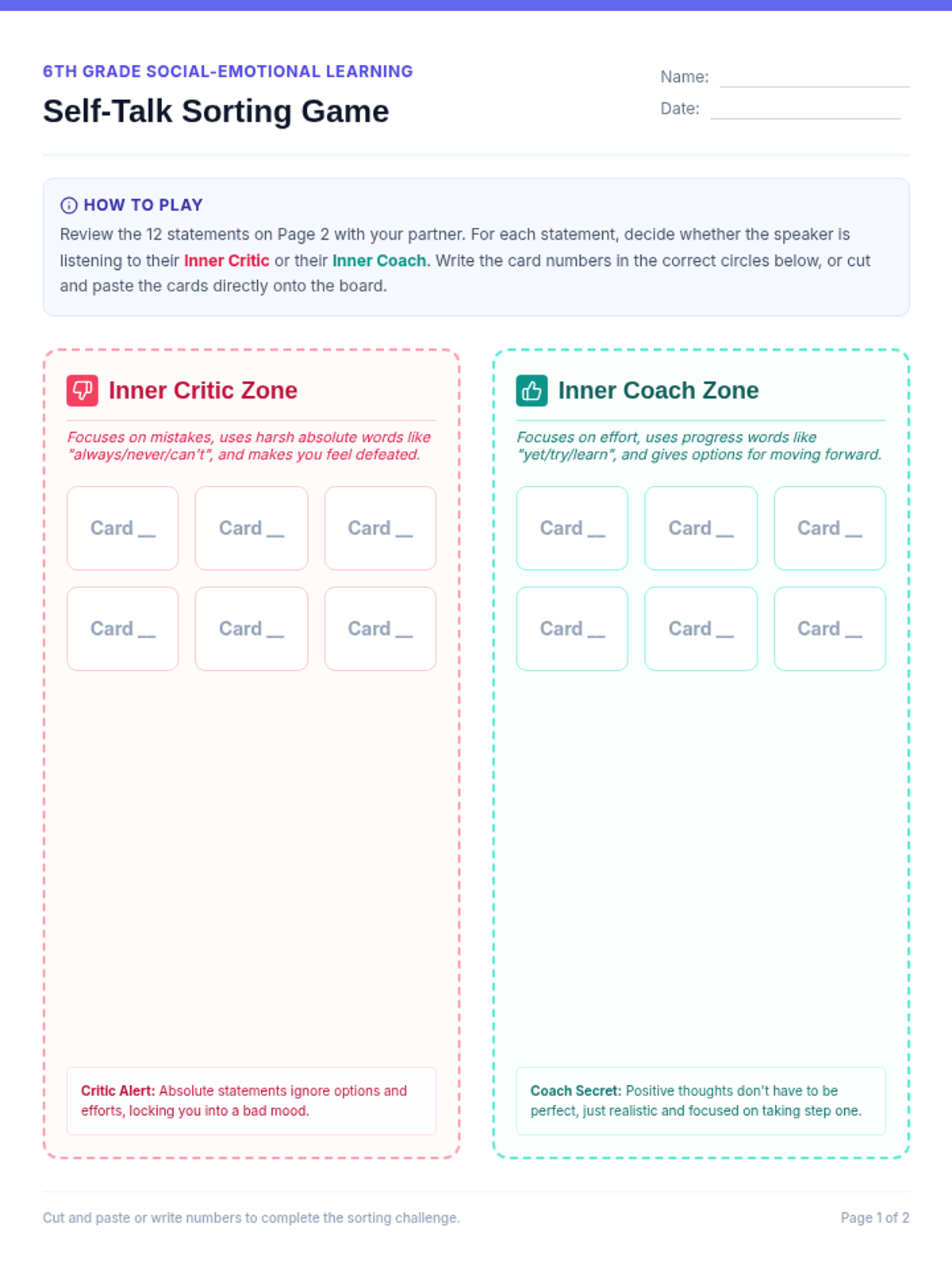
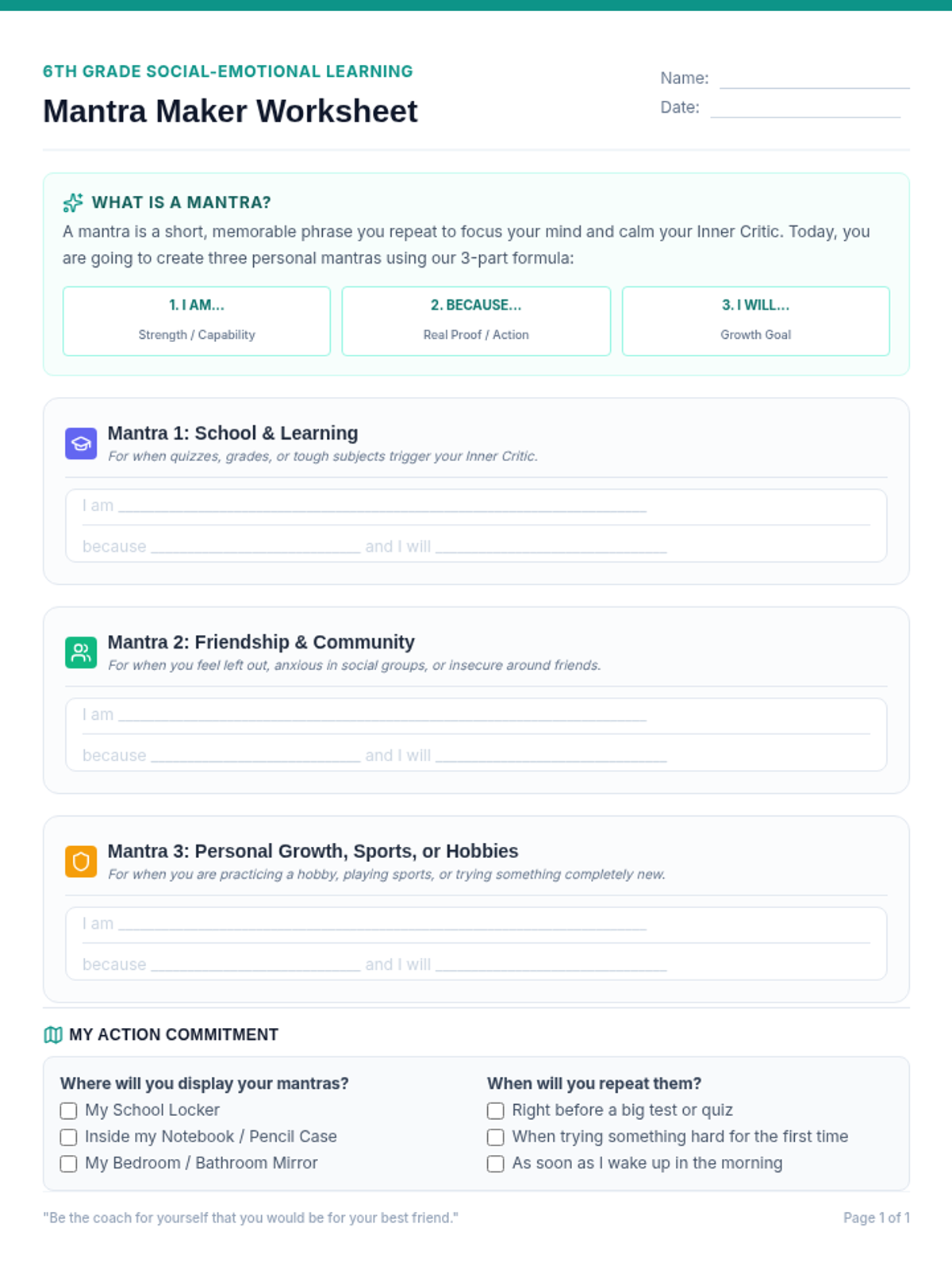
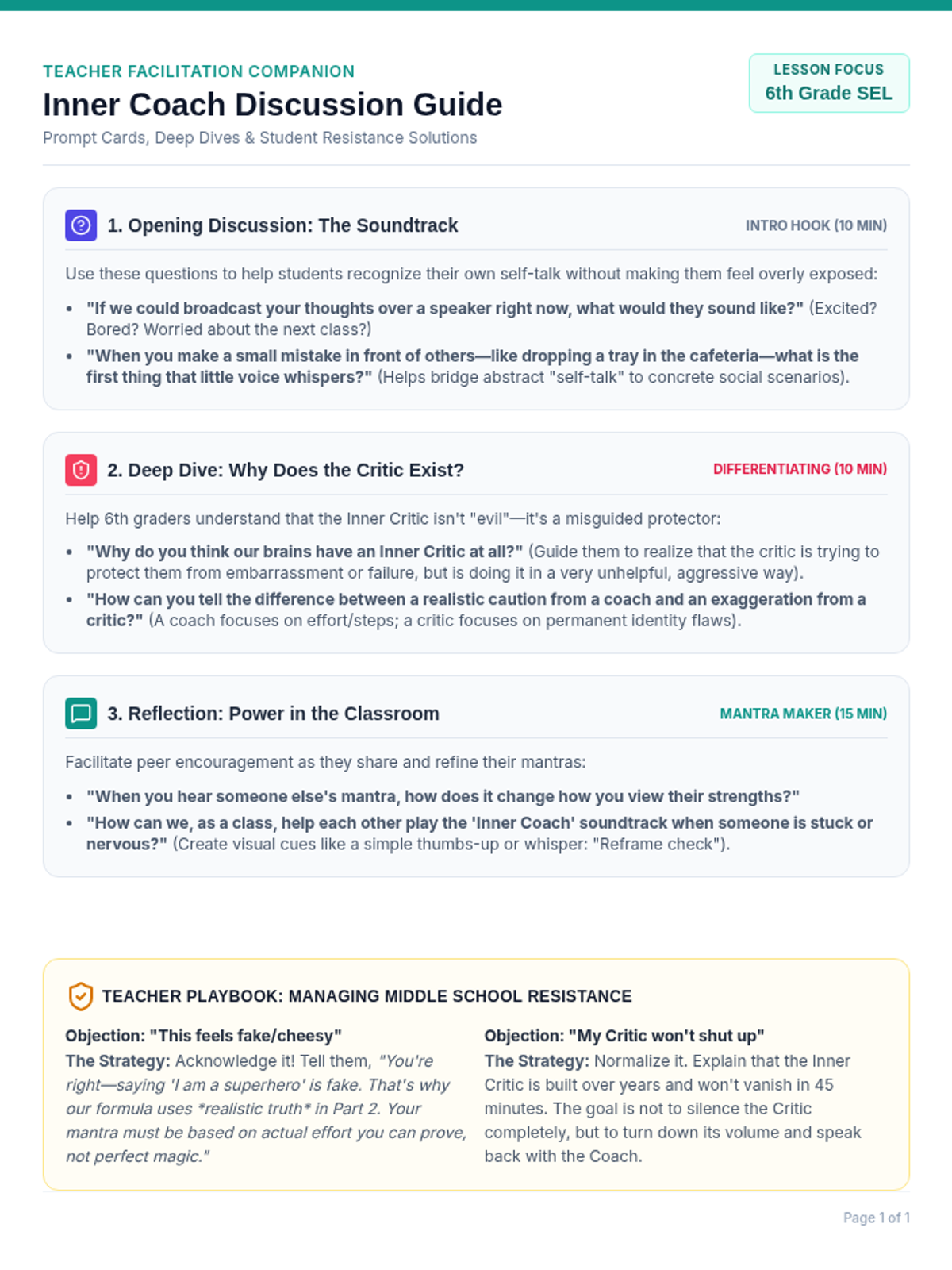
A 45-minute social-emotional learning lesson for 6th graders to explore their self-talk, contrast the 'Inner Critic' and 'Inner Coach', and design actionable personal affirmations.
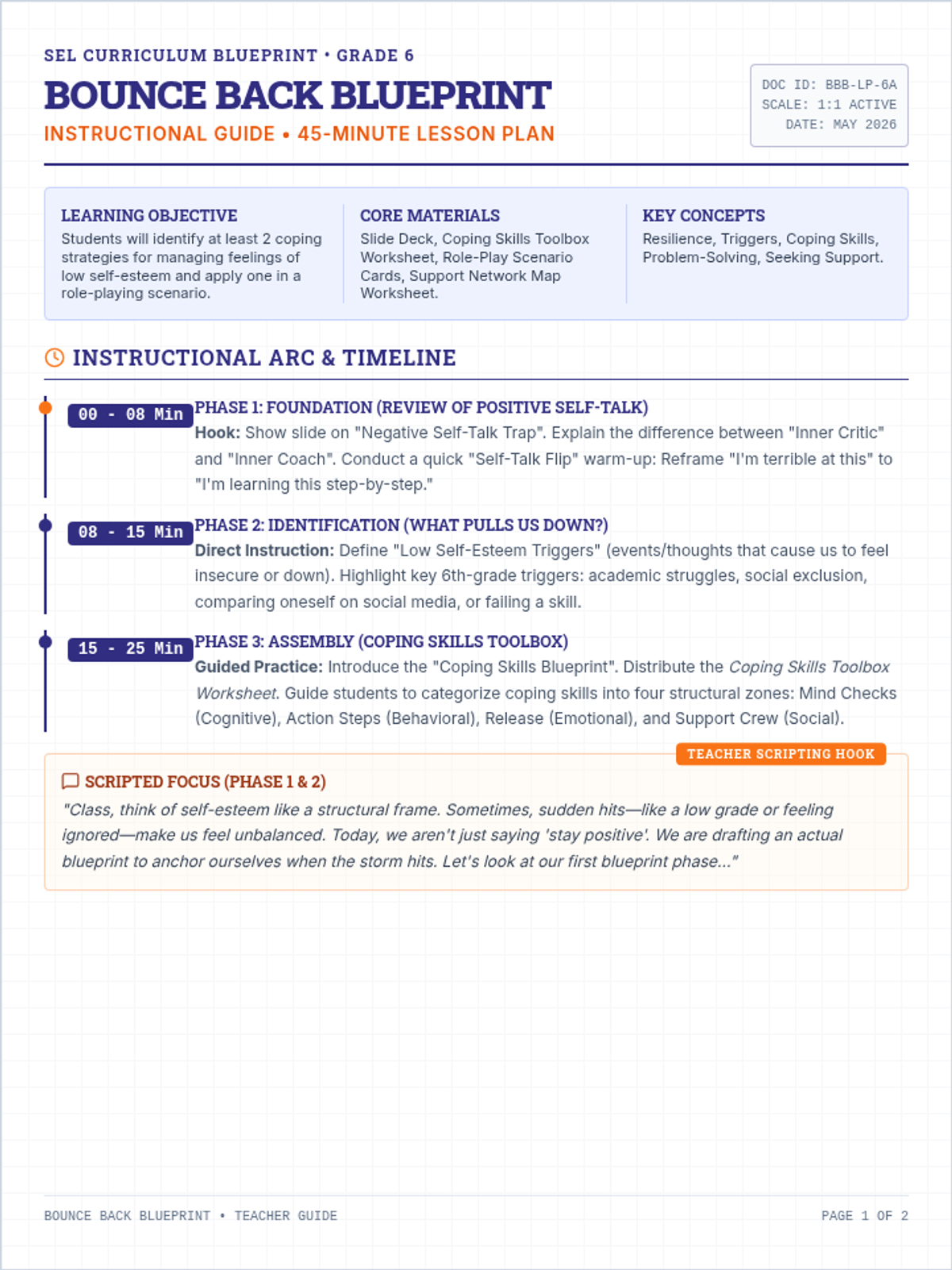
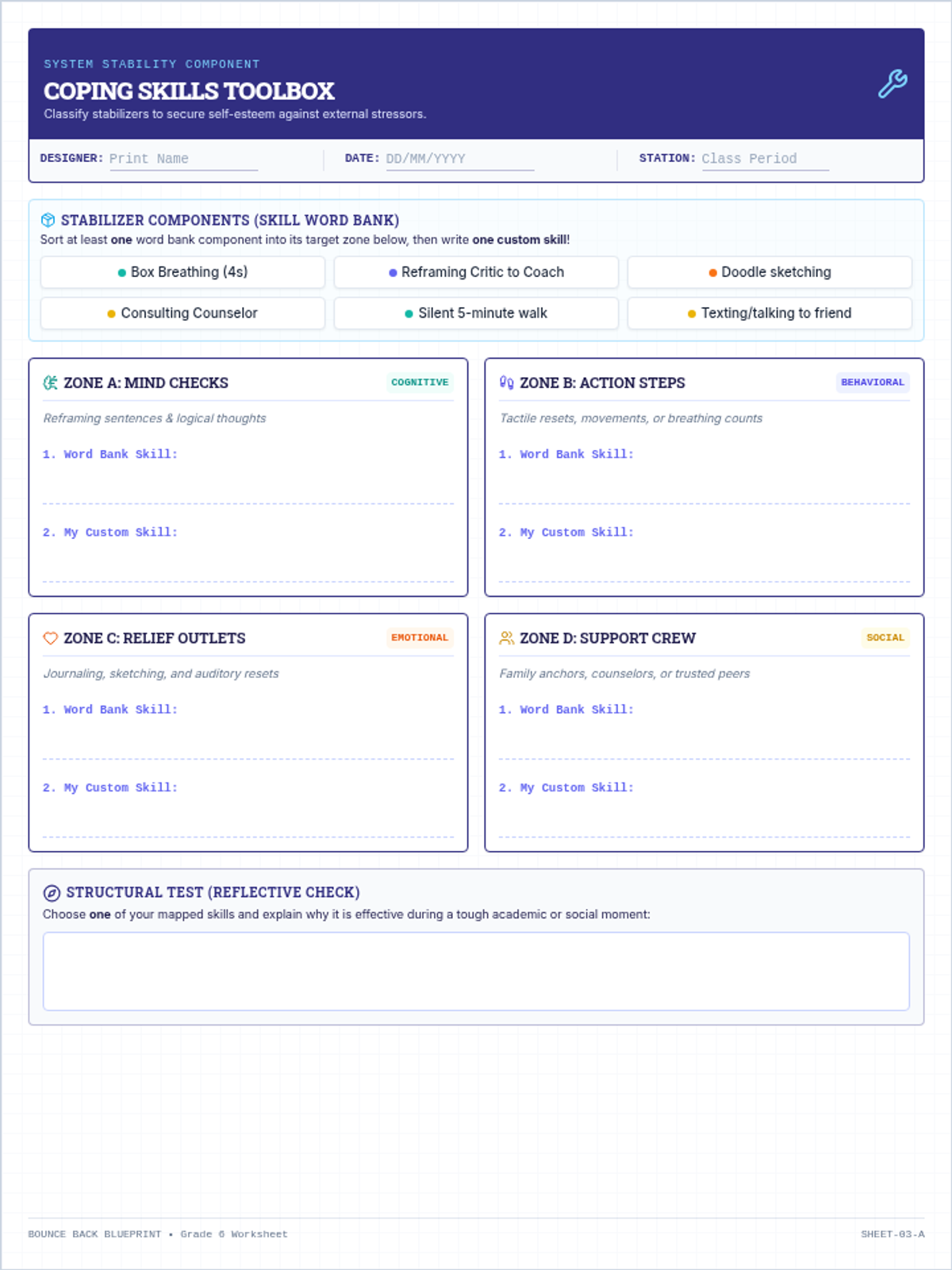
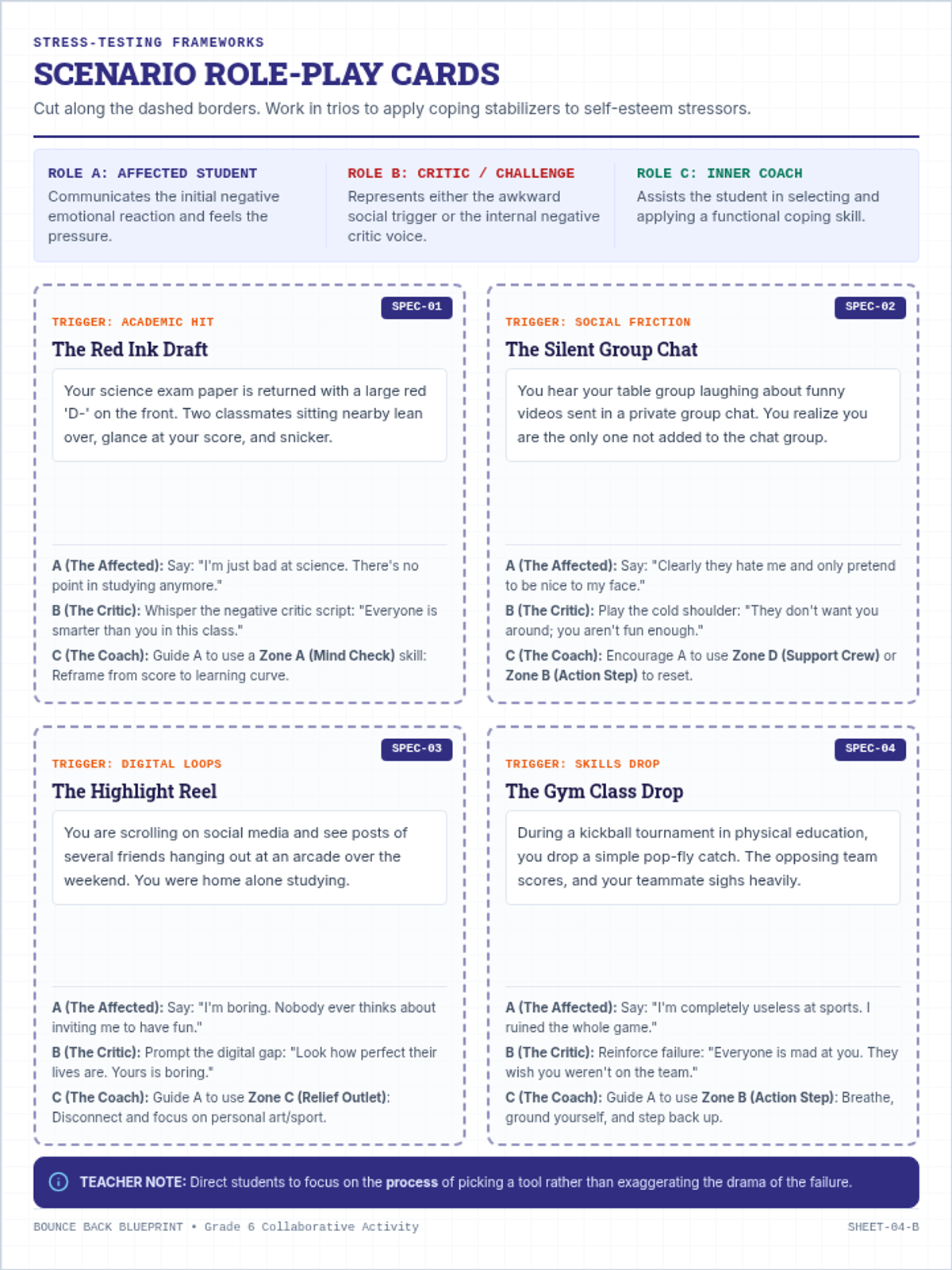
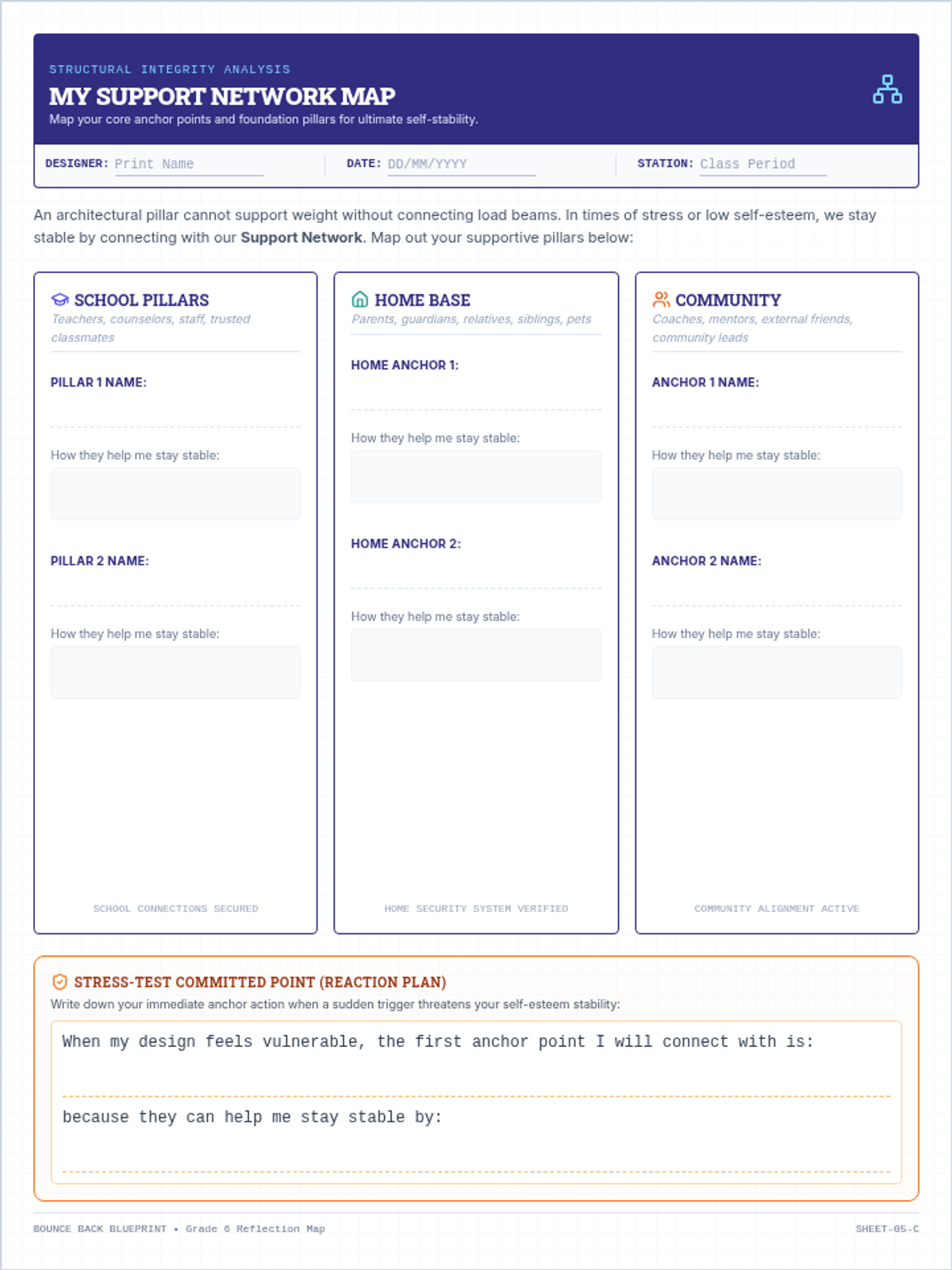
A 45-minute social-emotional learning lesson for 6th graders focused on identifying self-esteem triggers, building a personalized coping skills toolbox, mapping a support network, and practicing resilience strategies through collaborative role-play.
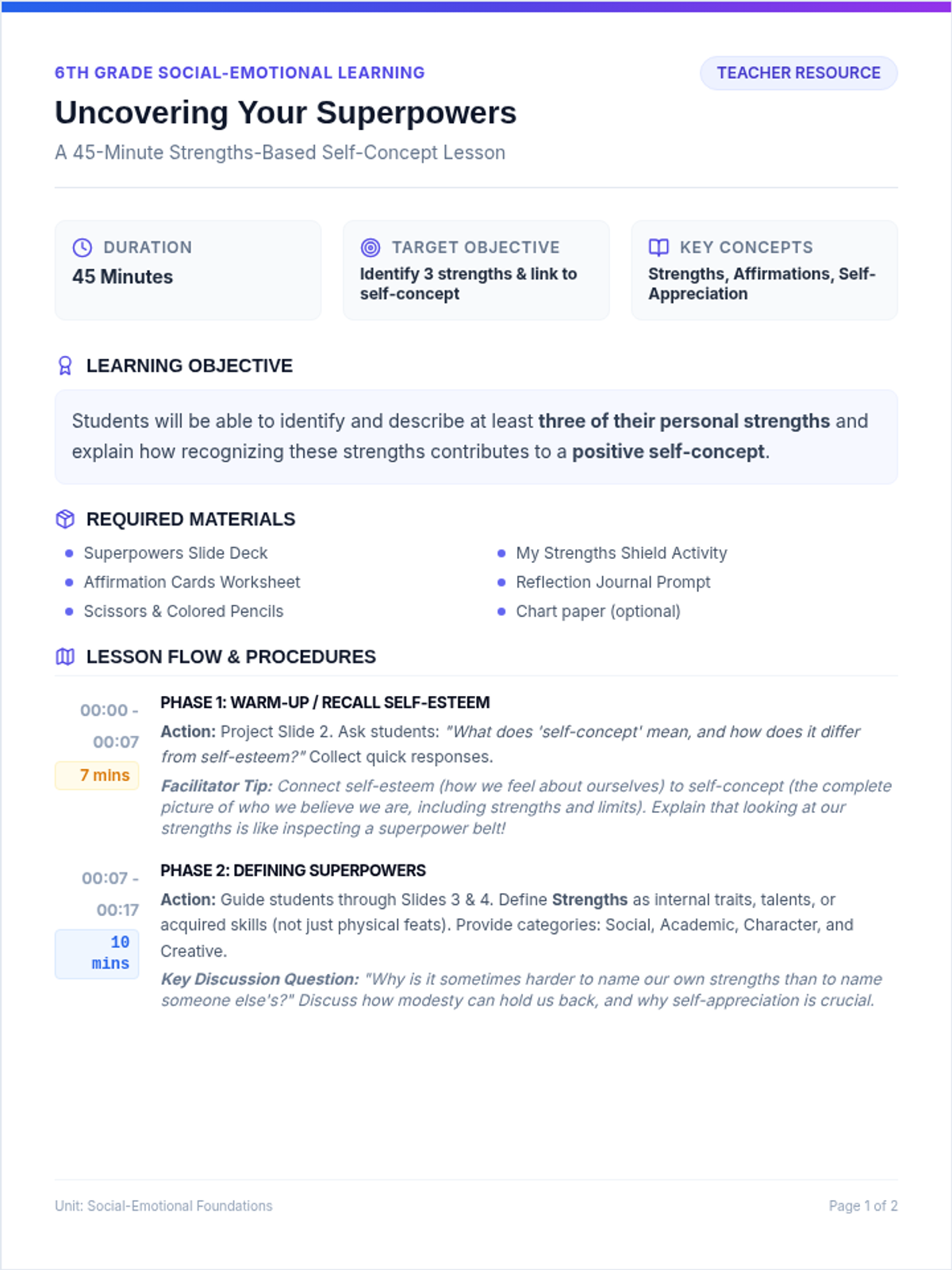
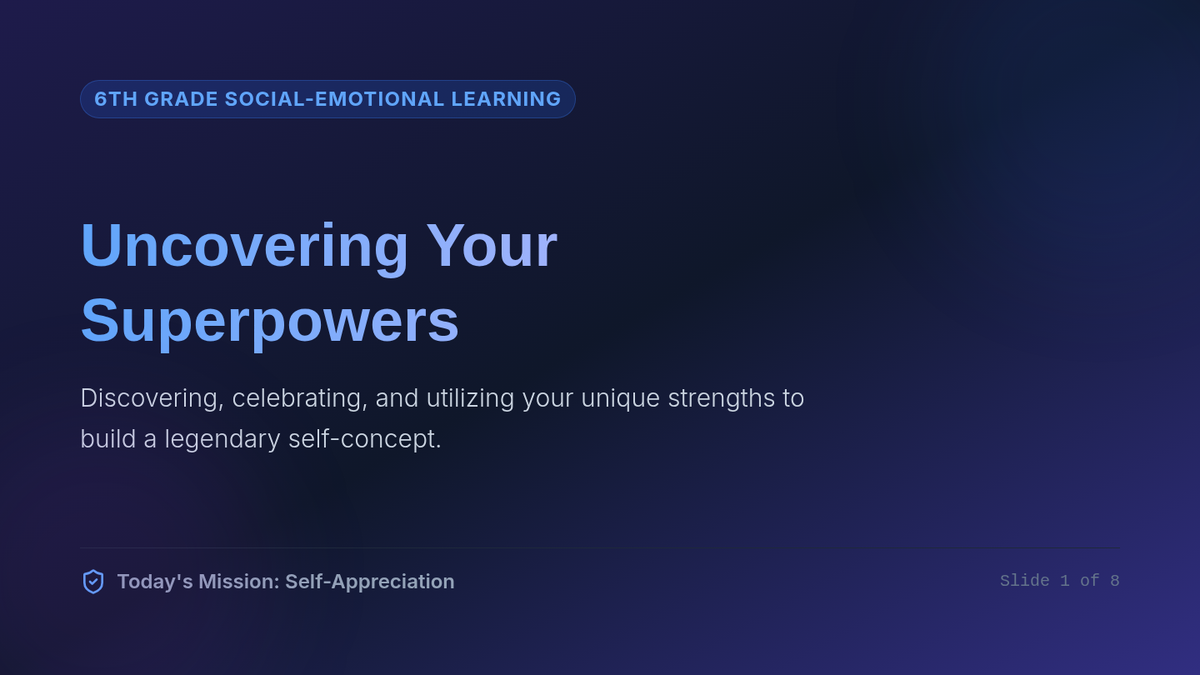
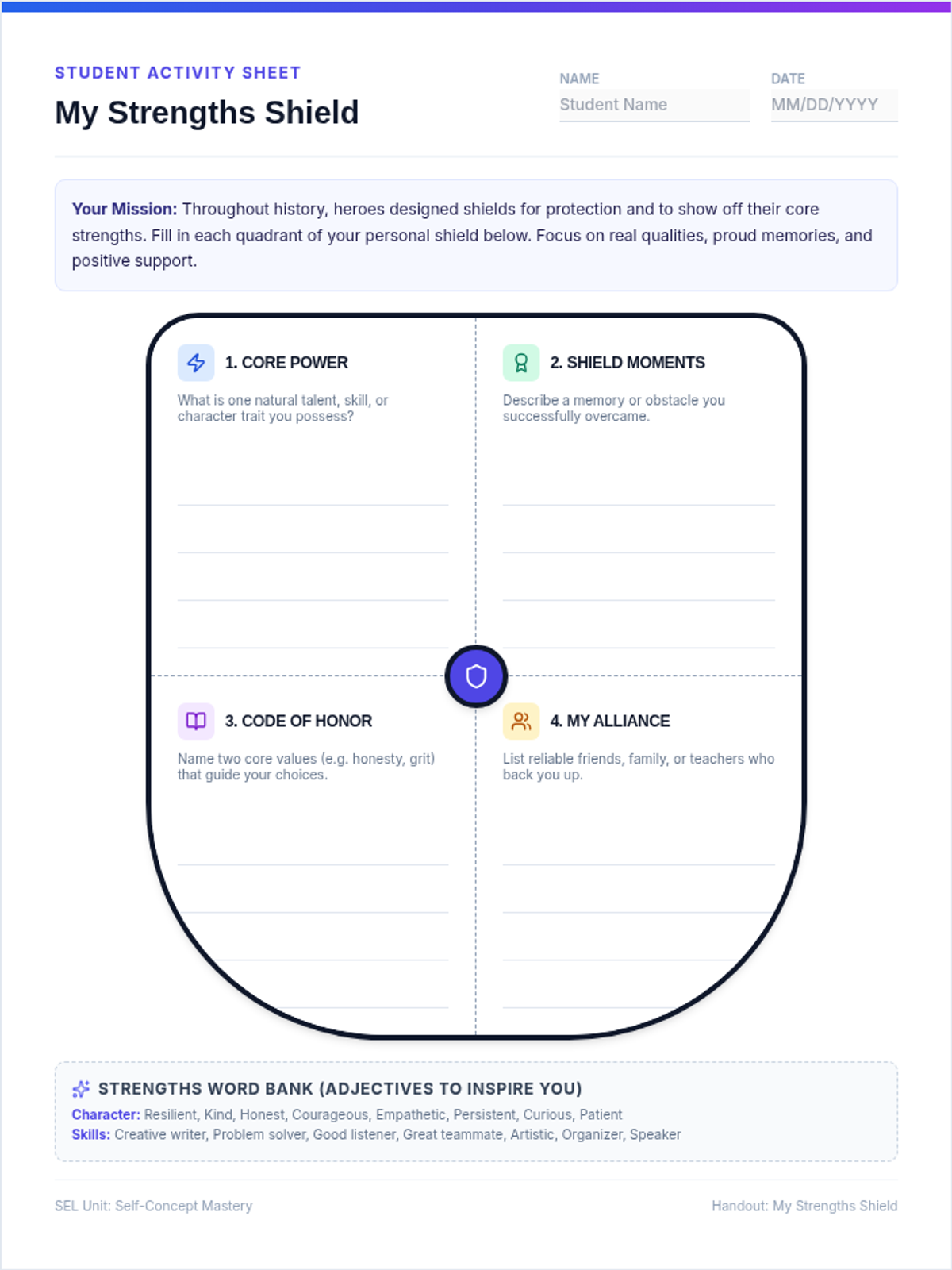
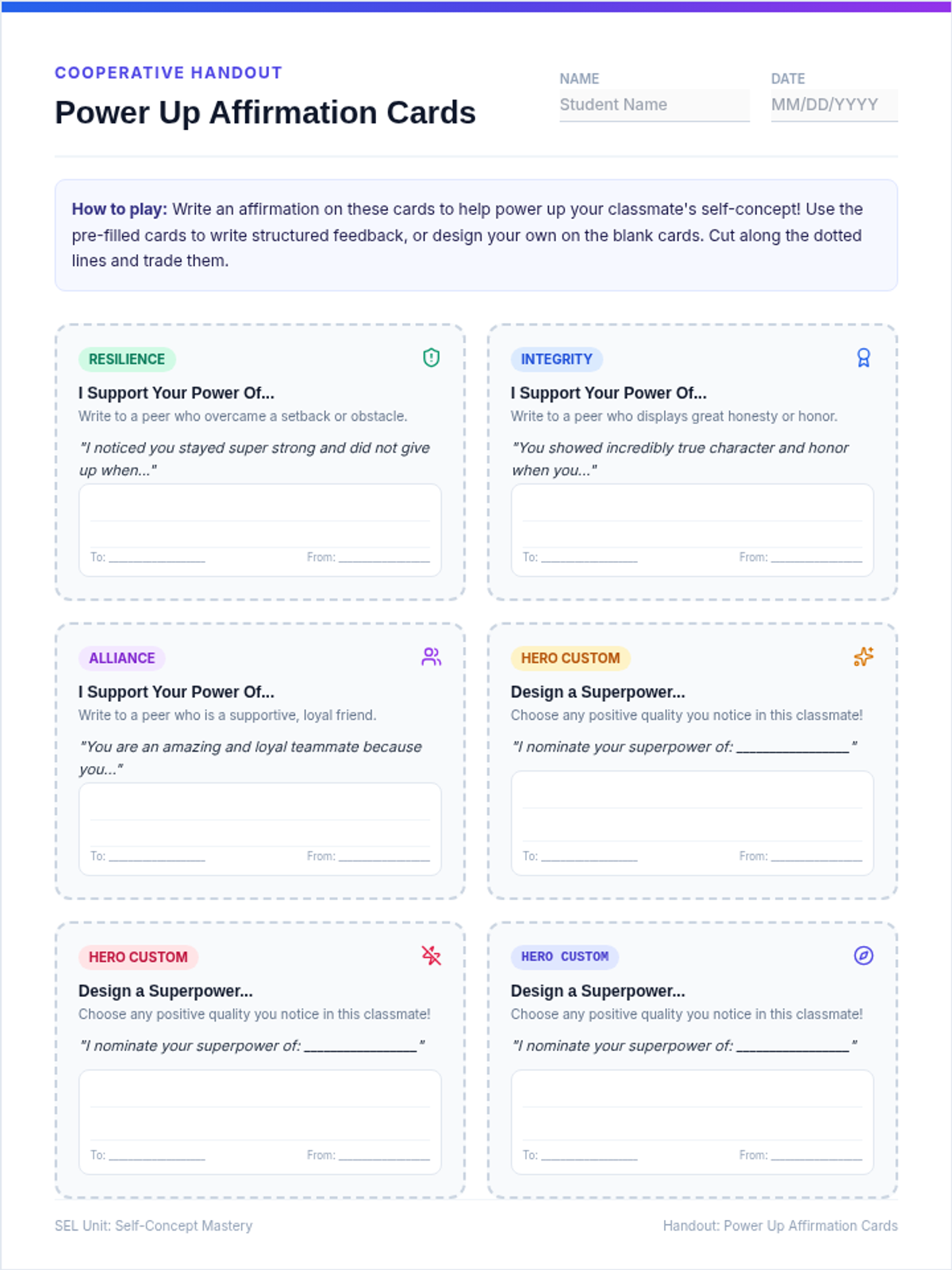
A transformative 45-minute social-emotional learning lesson for 6th graders designed to help students discover, articulate, and celebrate their personal strengths. Through a structured lesson plan, slide presentation, interactive strengths shield design, and reflection prompts, students build self-appreciation and a positive self-concept.
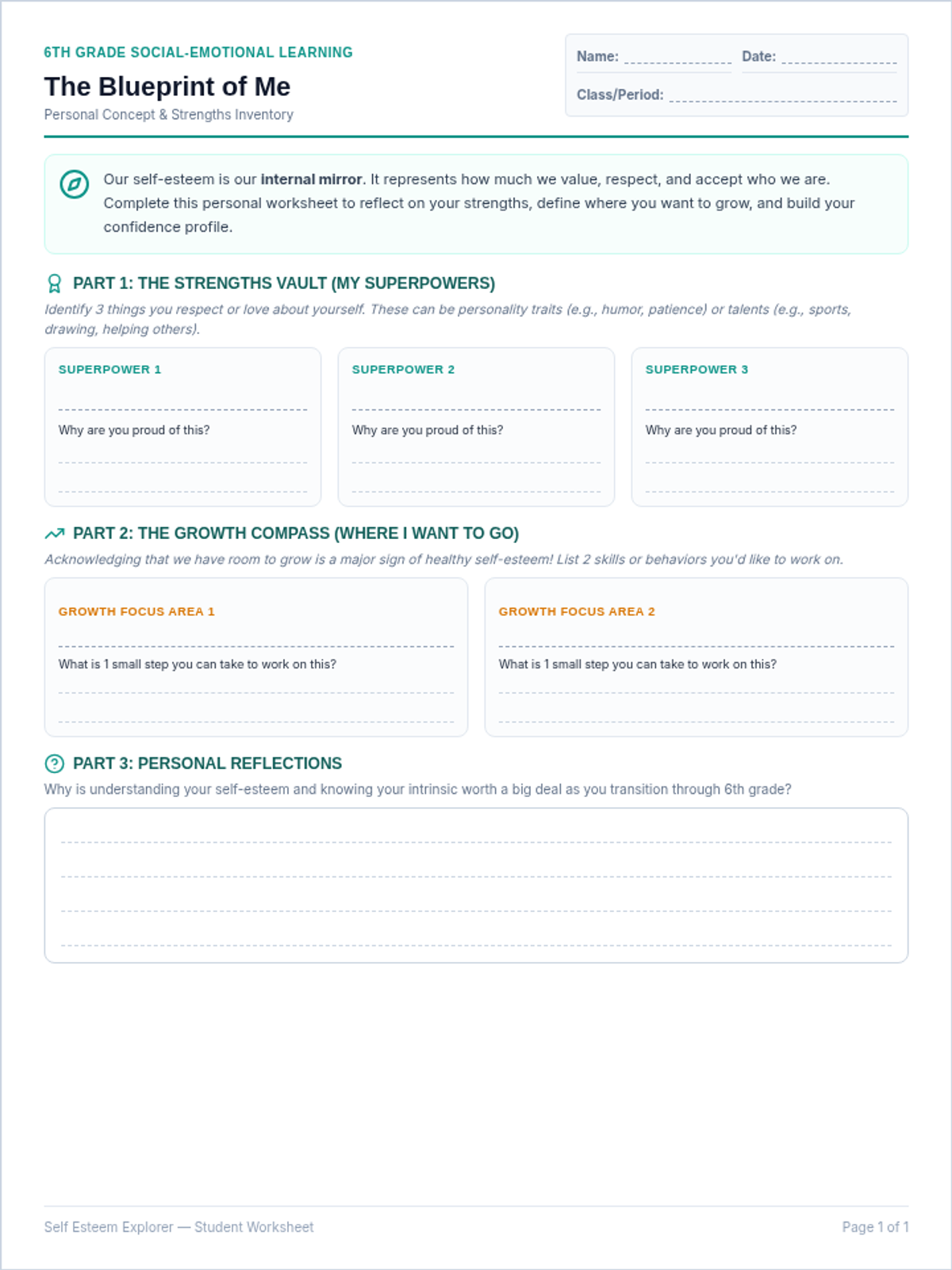
A 45-minute introductory lesson on self-esteem for 6th-grade students. It introduces self-perception, helps students complete a personal strengths inventory, and establishes a baseline for emotional self-awareness.
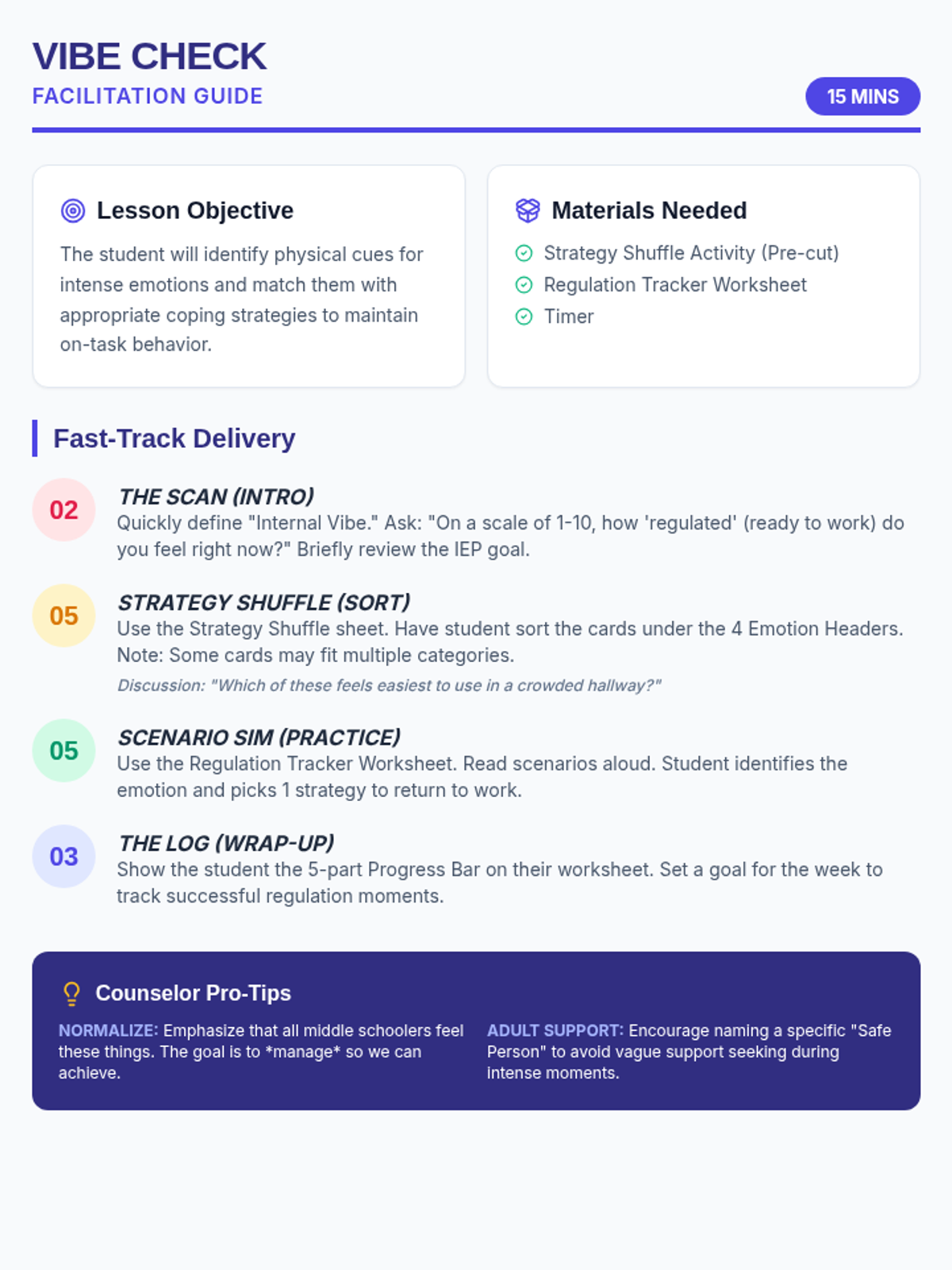
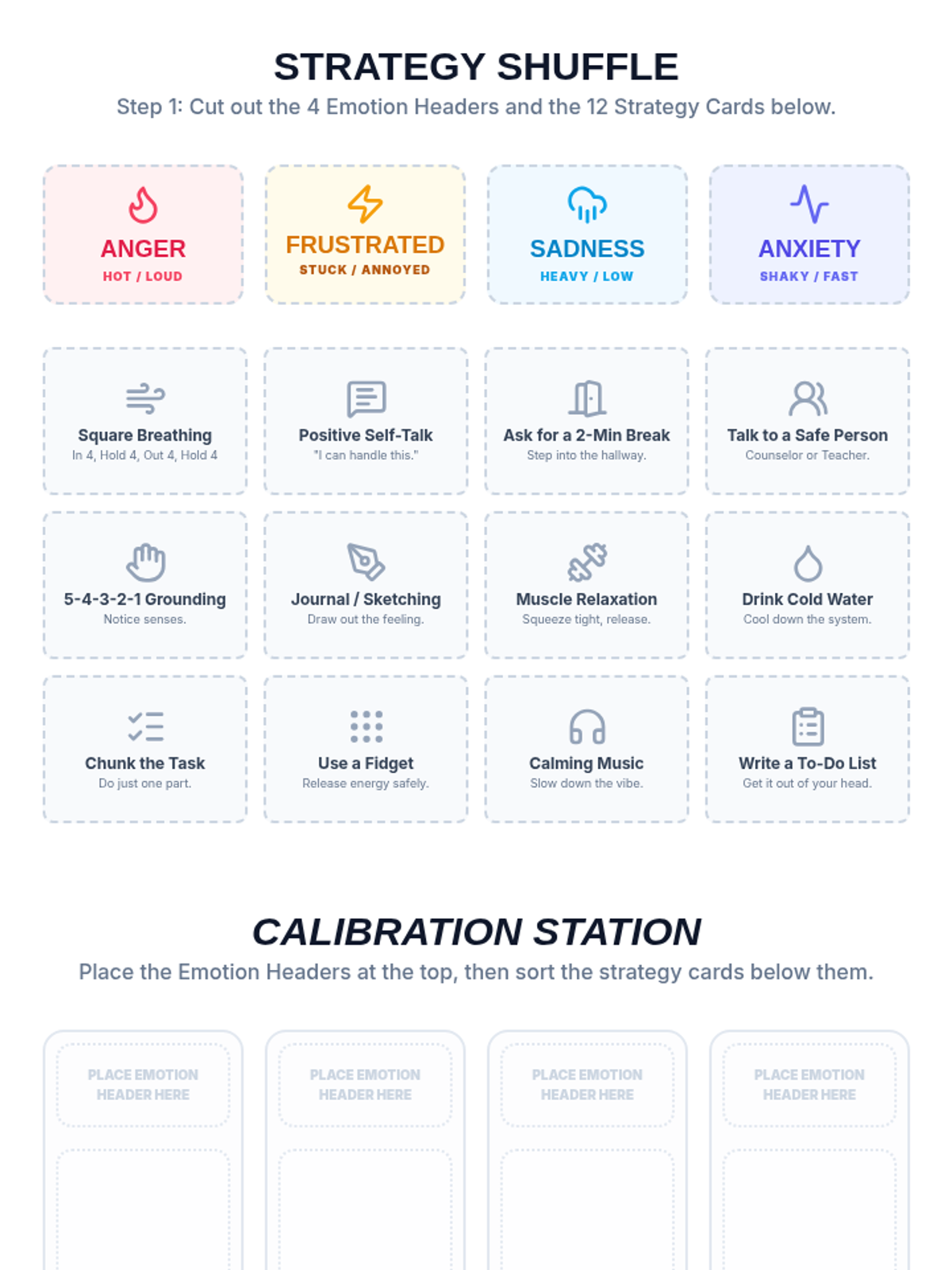
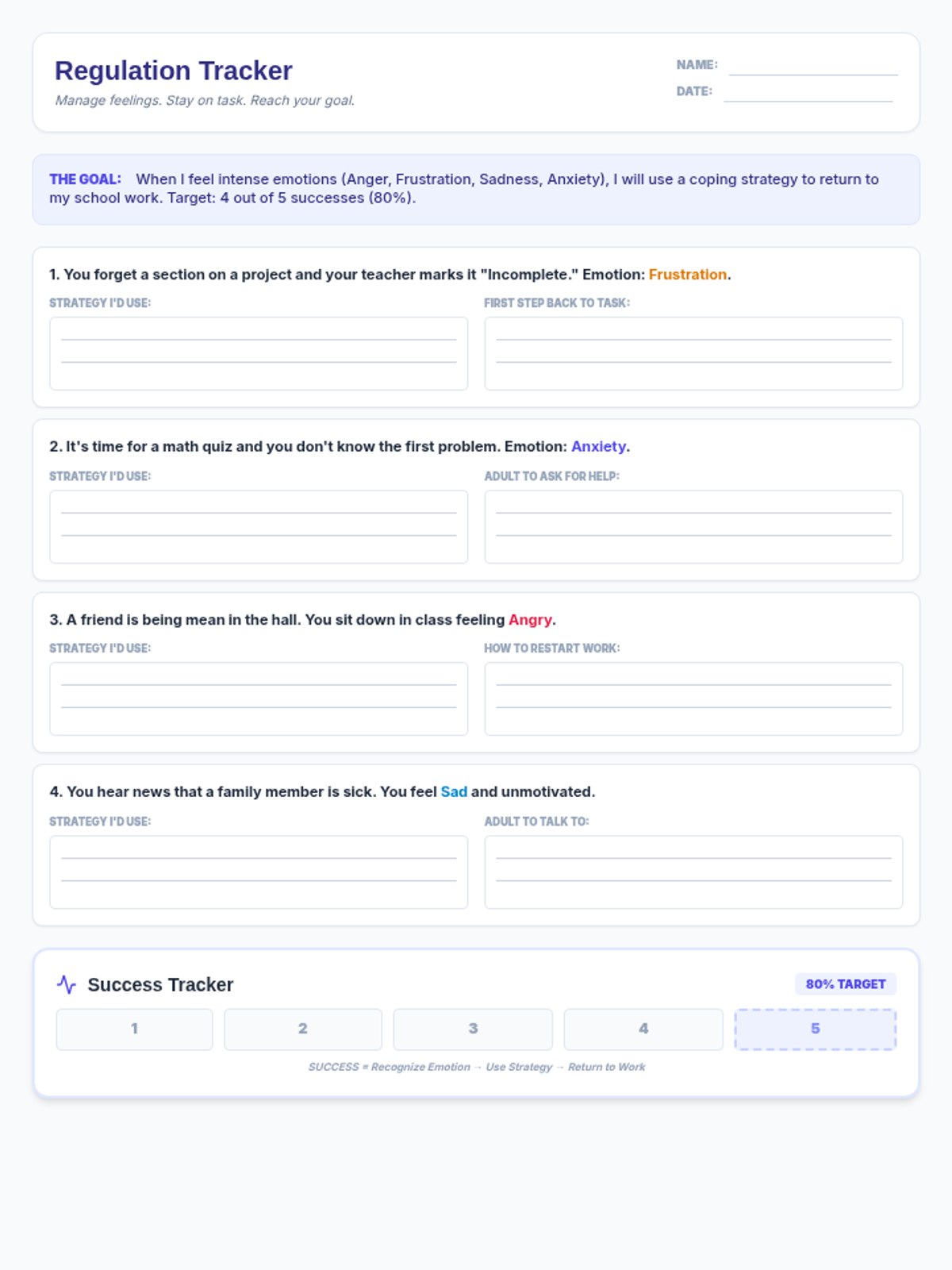
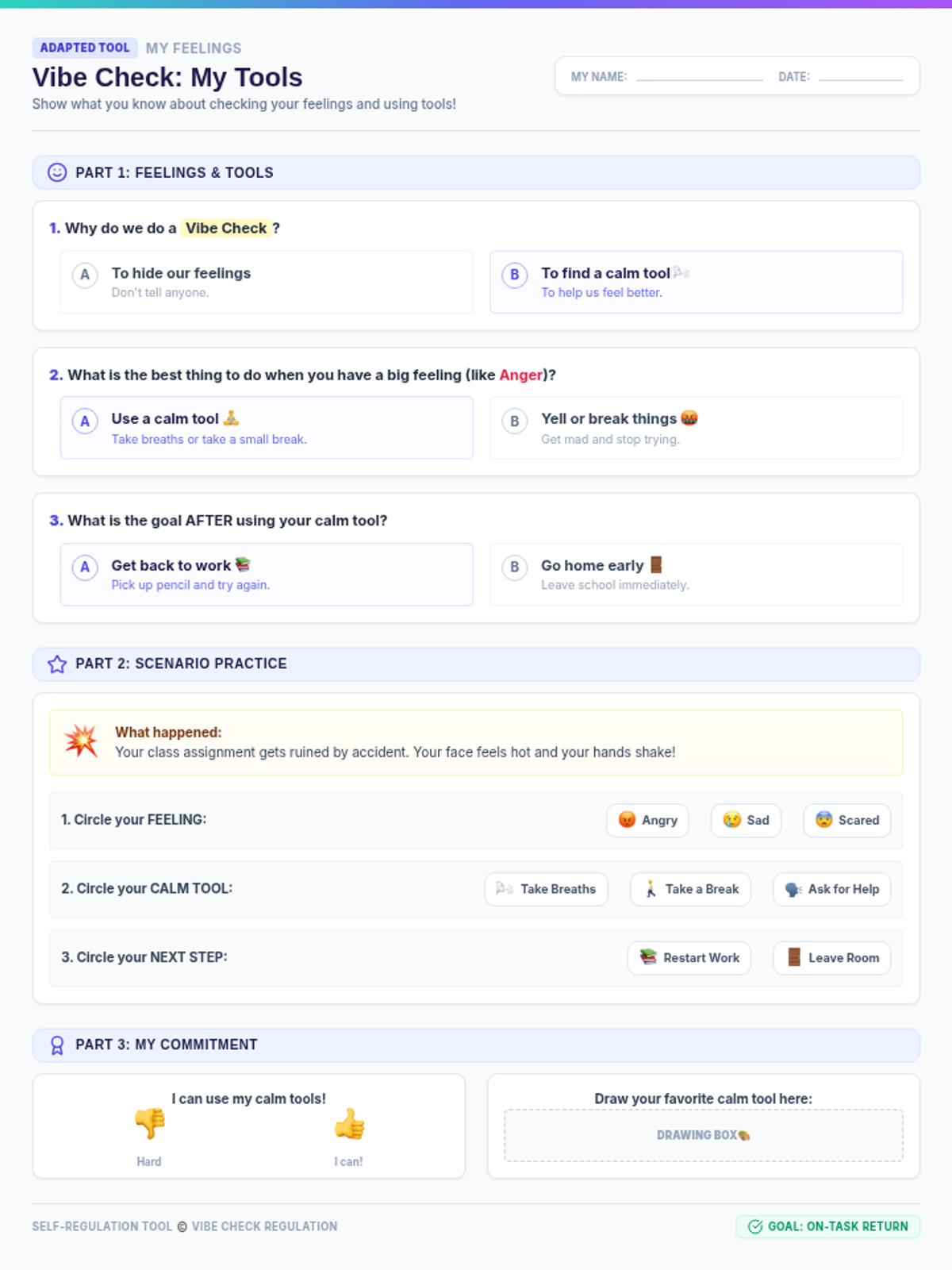
A 15-minute counseling lesson designed to help middle school students identify intense emotions and apply specific self-regulation strategies to return to on-task behavior.
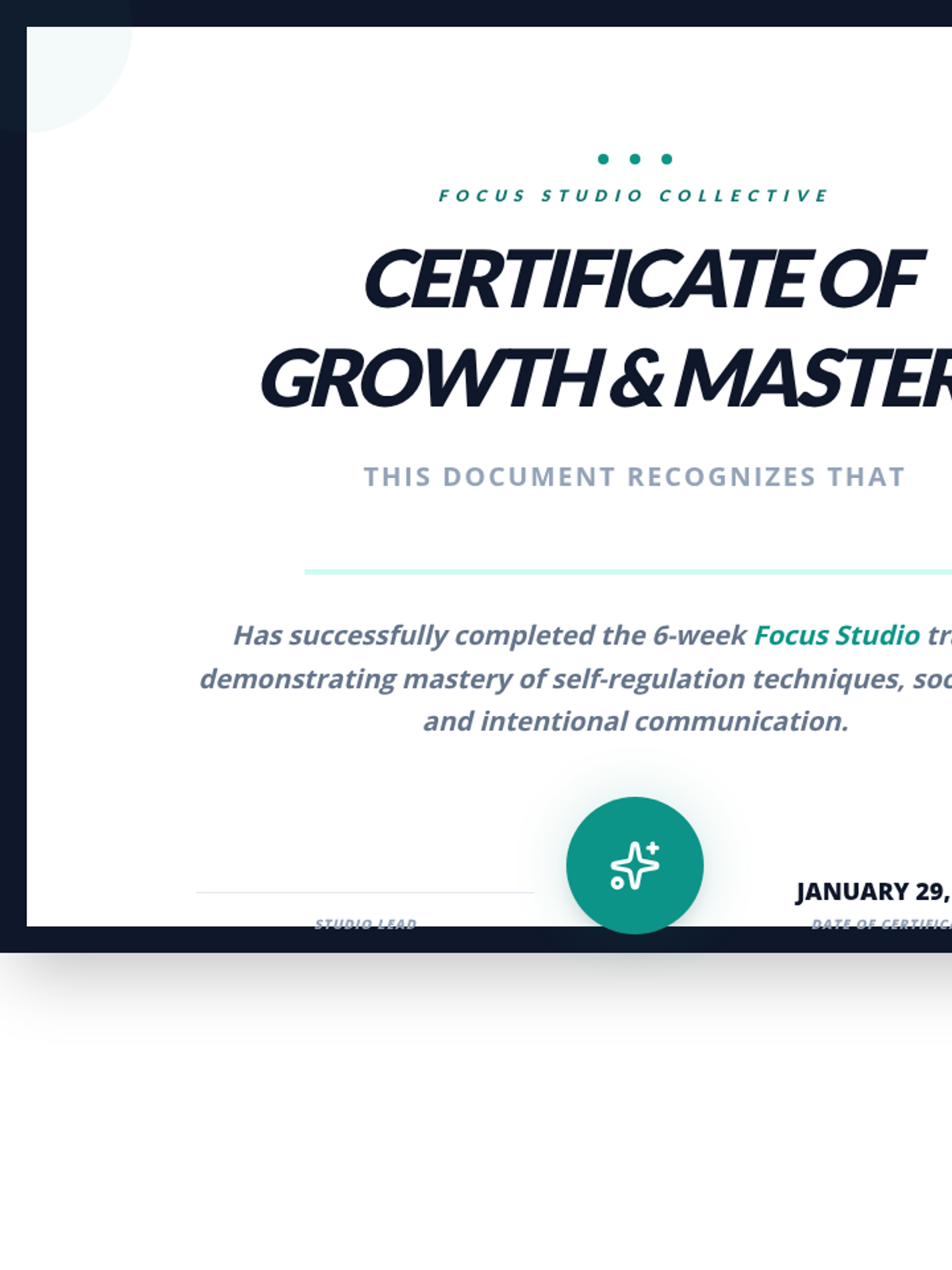
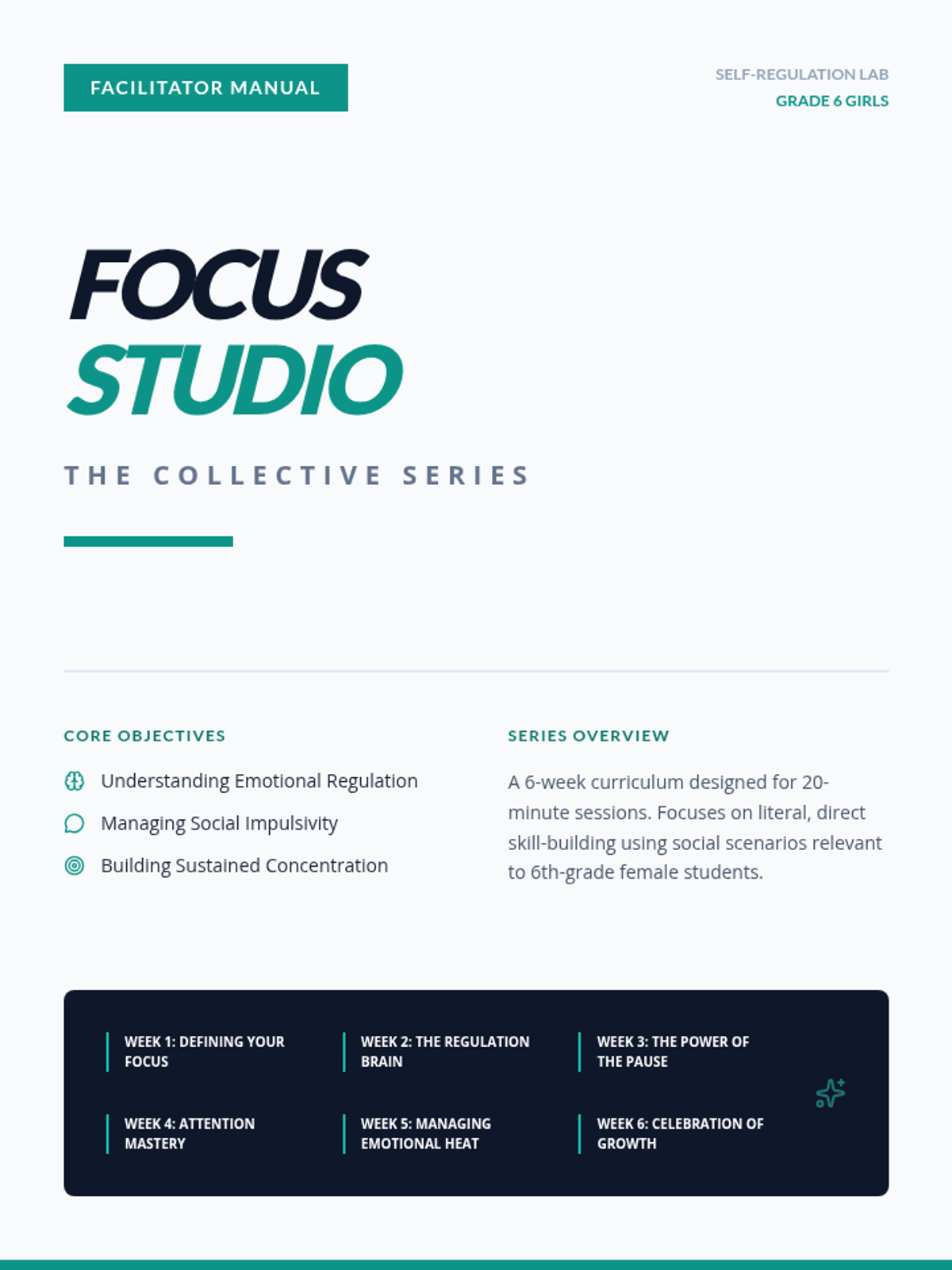
Review of self-regulation tools, personal growth reflection, and final graduation.
Recognizing the 'heat' of frustration in social settings and applying early-intervention calming strategies.
Identifying 'Focus Thieves' like social pressure and internal anxiety. Practicing sustained attention during complex tasks.
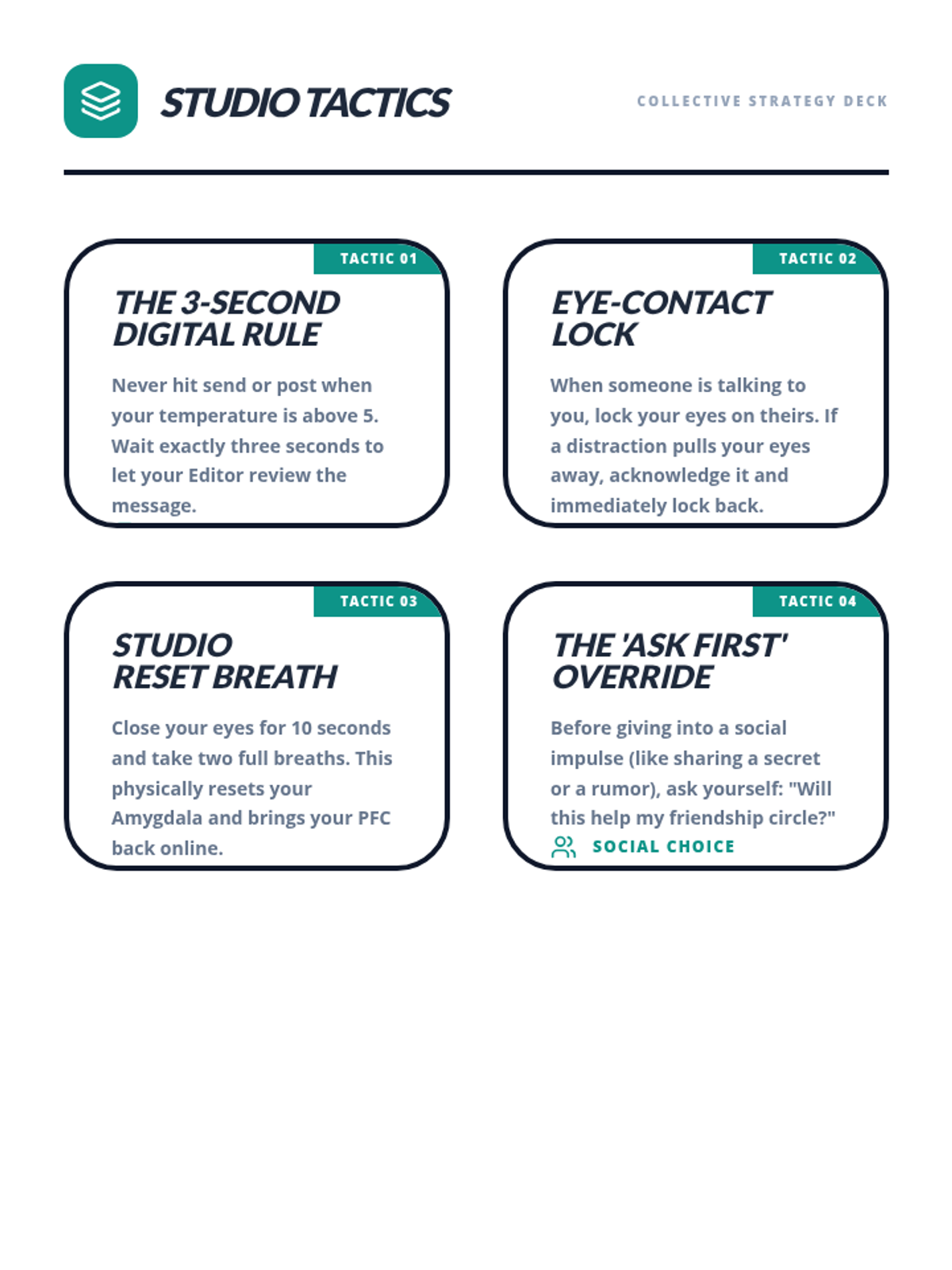
Applying the 3-second rule to social interactions and digital communication. Role-playing managed responses.
Direct instruction on the Amygdala and Prefrontal Cortex. Practice physical inhibition through the 'Slow-Motion Mirror' game.
Introduction to the group, defining self-control in social and academic contexts, and establishing norms. Includes a reaction-time icebreaker.
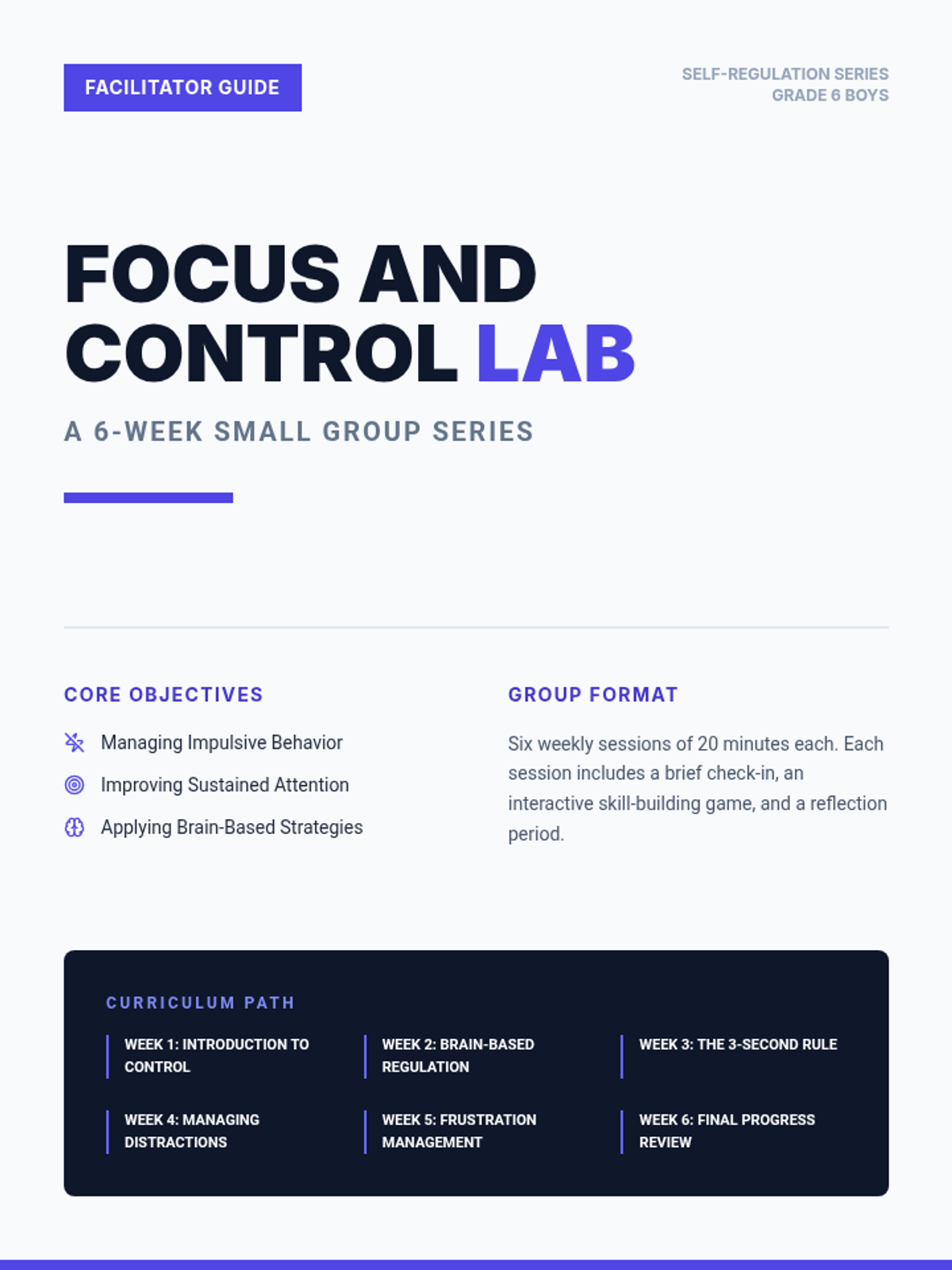
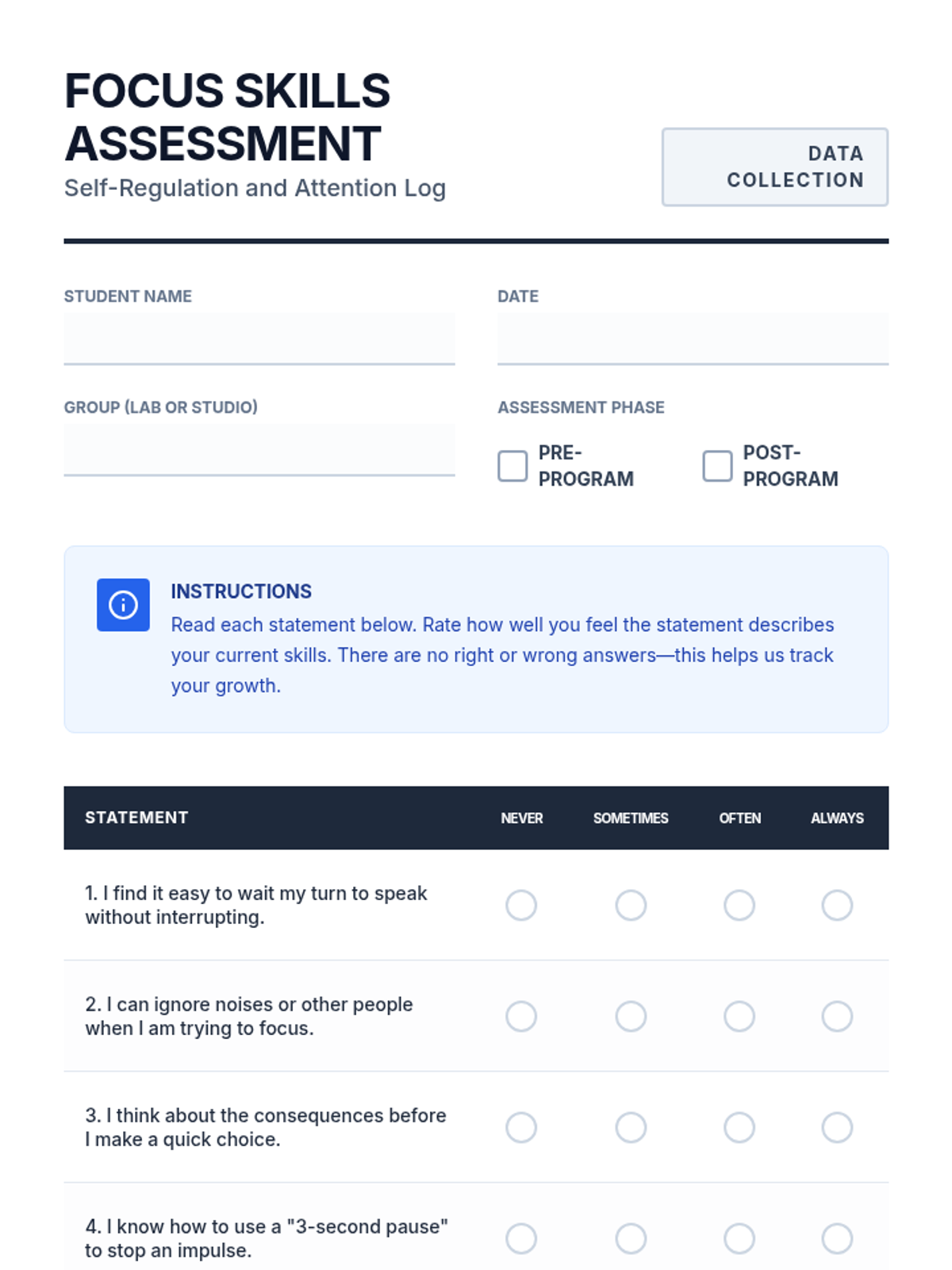
Review of all skills, reflection on personal progress, and setting future goals for self-control and focus.
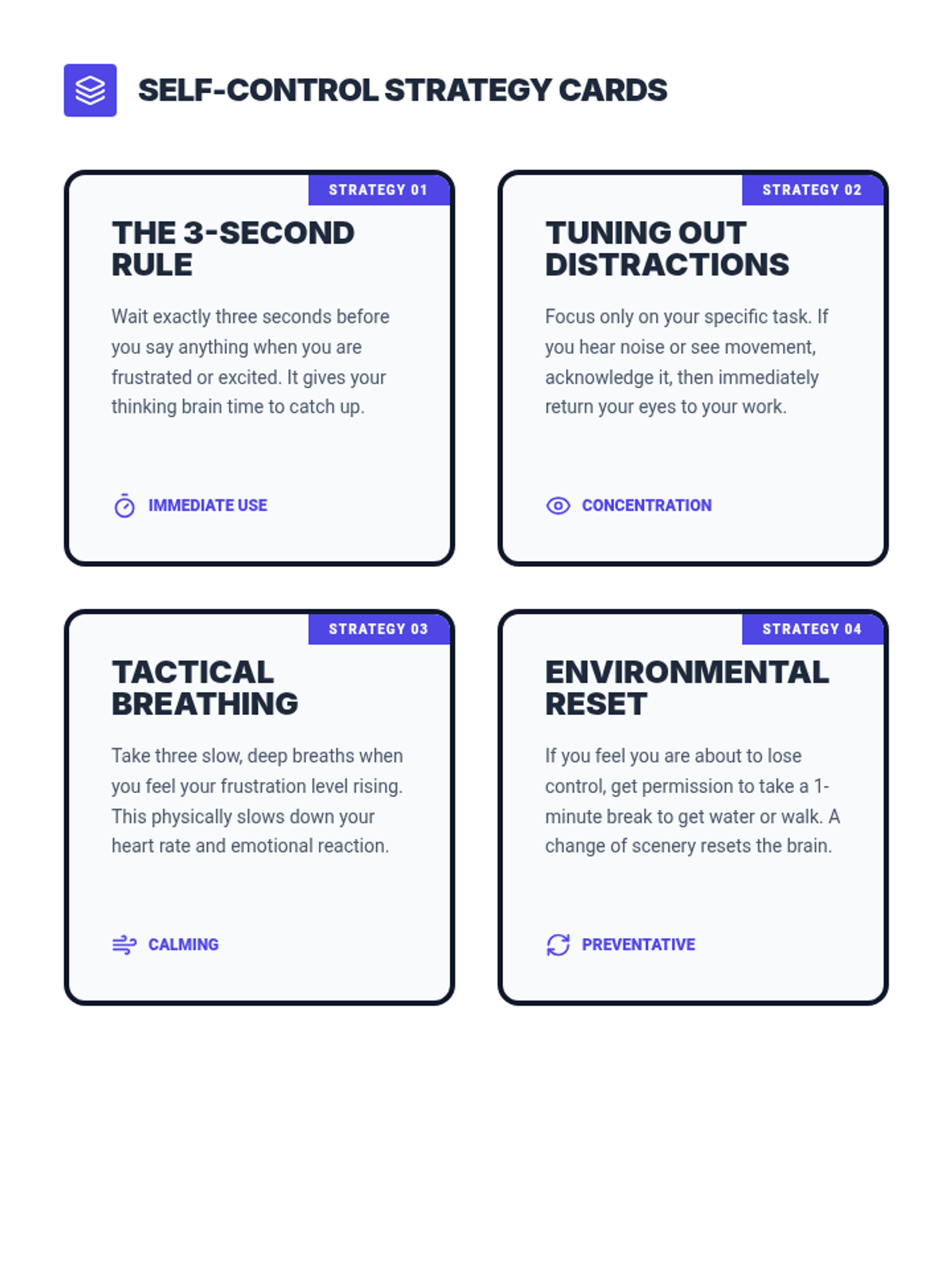
Learning to recognize frustration early and using calming techniques to stay in control. Practice frustration management through a challenging task.
Developing techniques to block out external distractions and maintain focus on schoolwork. Practice concentration during noisy tasks.
Learning the '3-Second Rule' to manage immediate reactions. Practice identifying high-impulse situations and planning alternatives.
Explaining the difference between the 'Emotional Brain' (Amygdala) and the 'Thinking Brain' (Prefrontal Cortex). Practice pausing through a physical game.
Introduction to the group, defining self-control, and establishing group norms. Includes an icebreaker to measure baseline reaction times.