This lesson helps 9th-grade students learn how to break down large assignments into smaller, manageable parts to improve time management and reduce stress.
A lesson designed to help students transition into summer break with mindfulness and coping strategies to manage end-of-year nerves and summer stressors.
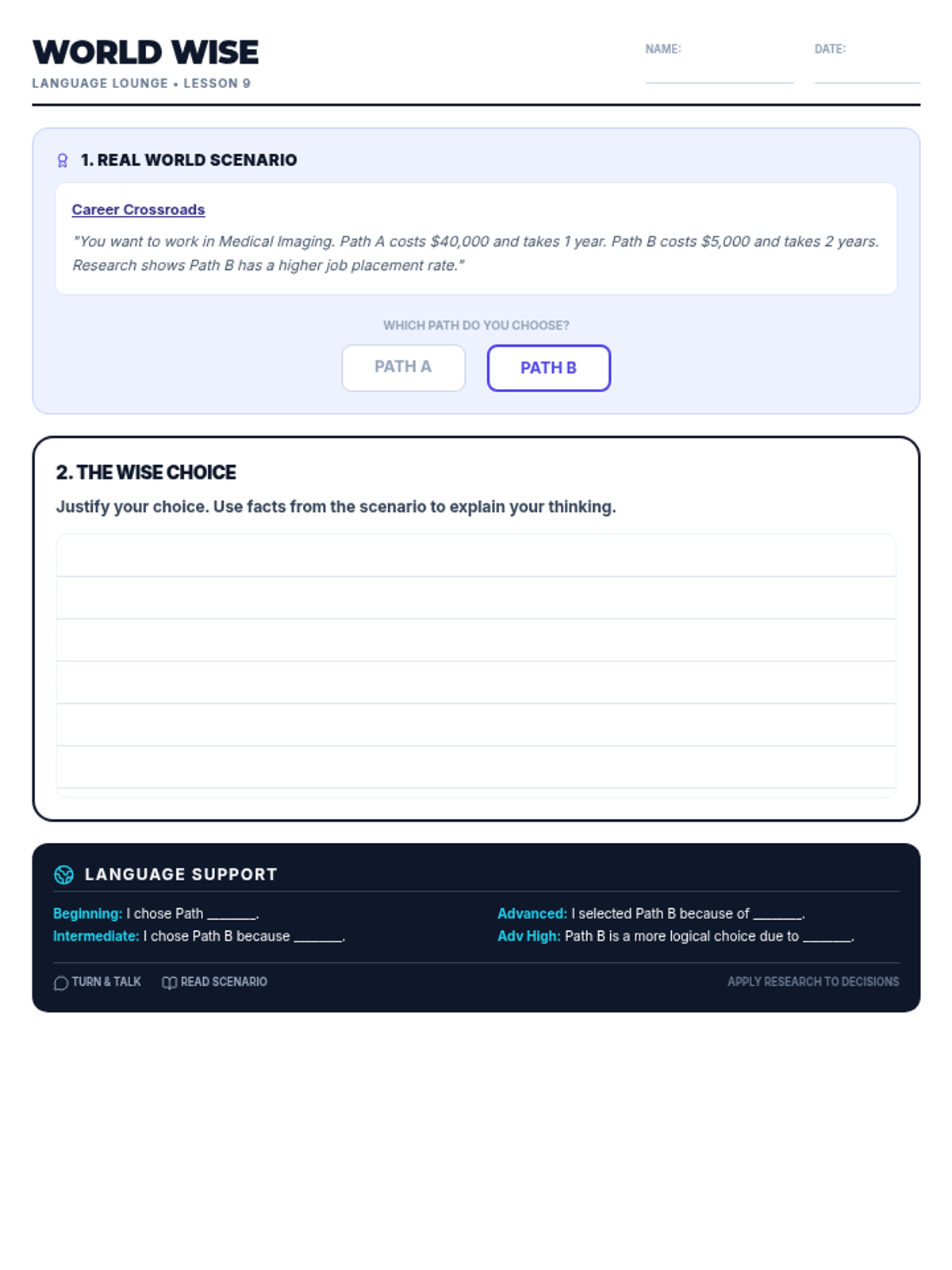
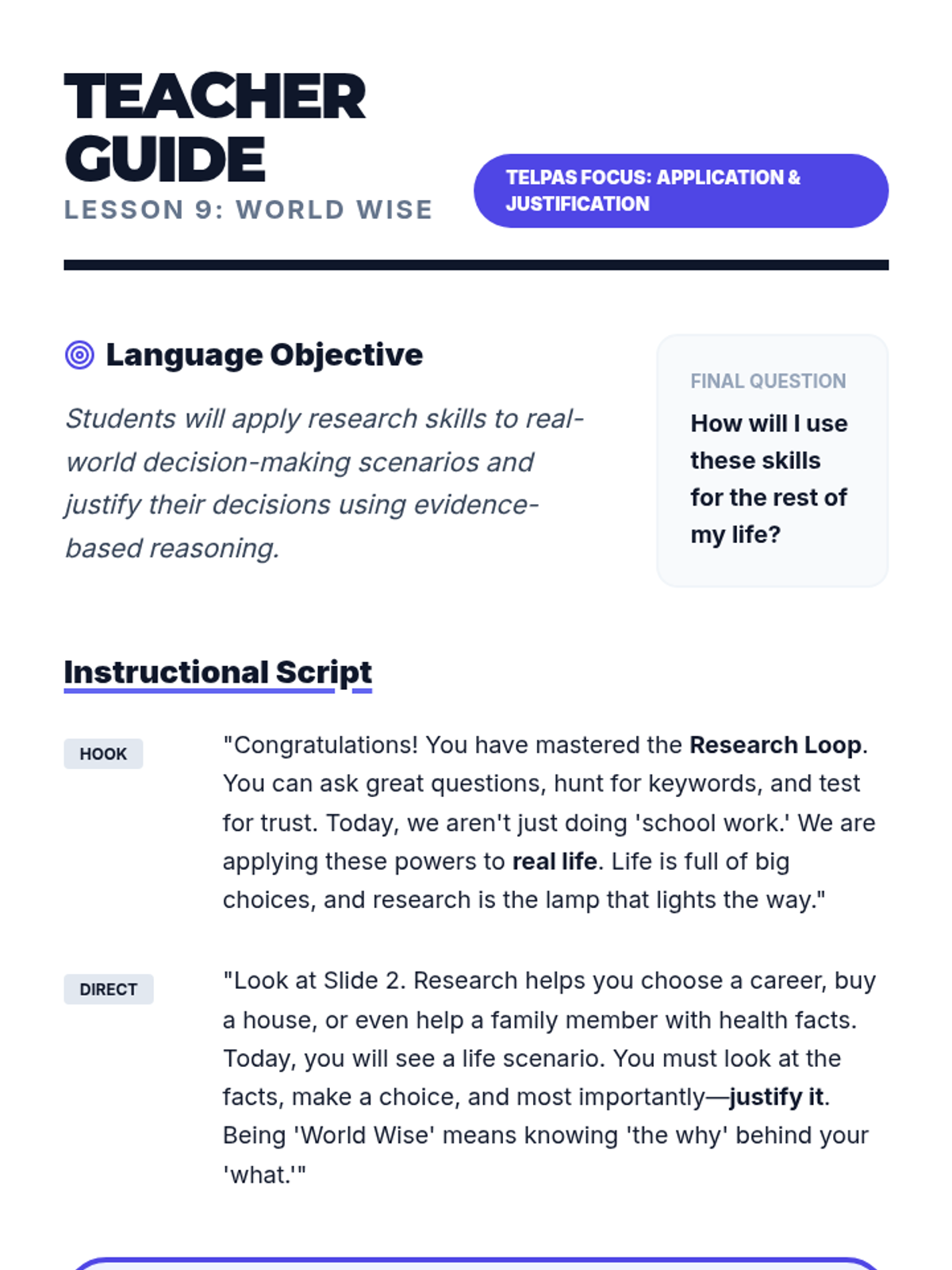
Students apply their research skills to a real-world scenario, justifying decisions with evidence.
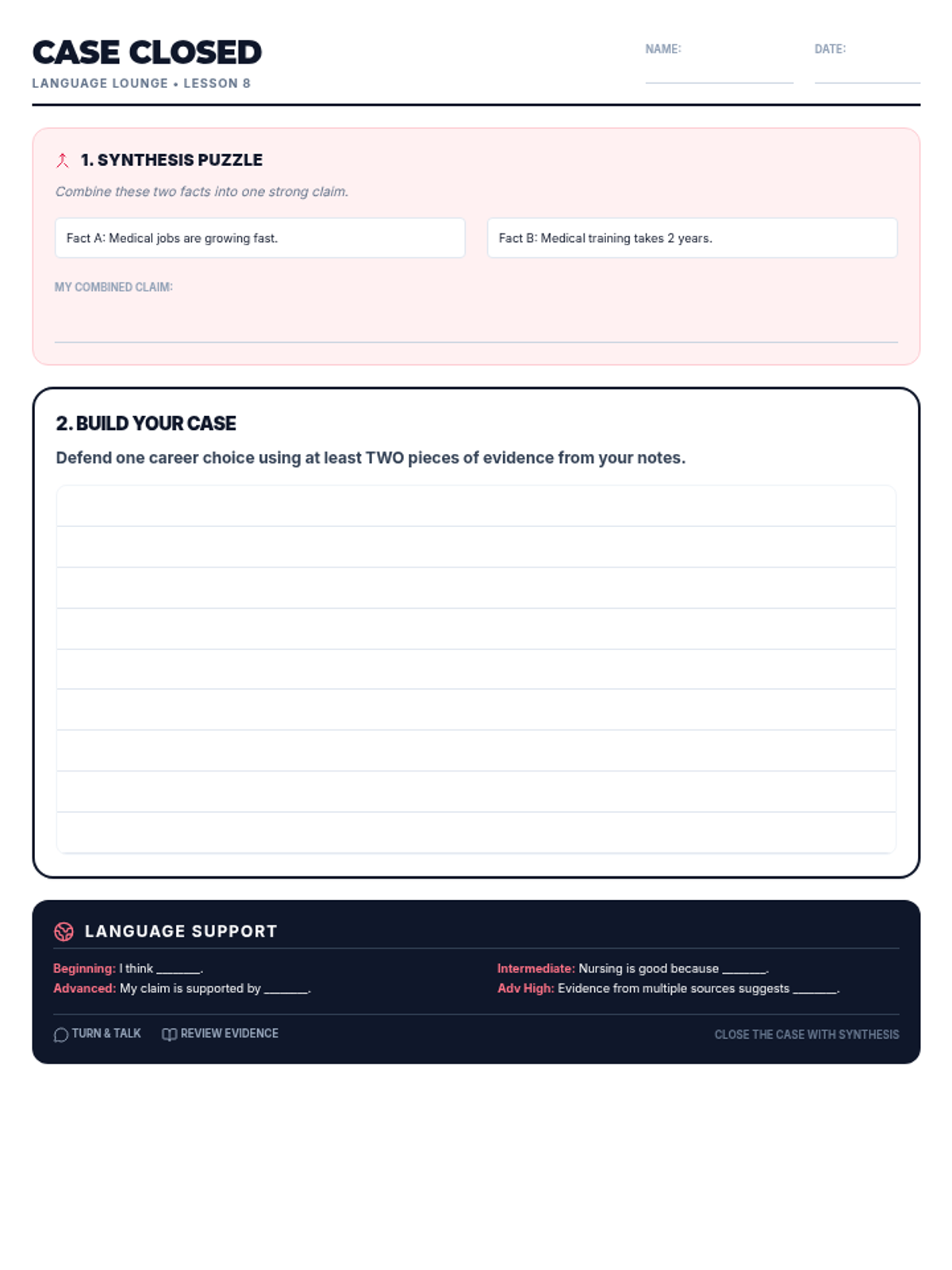
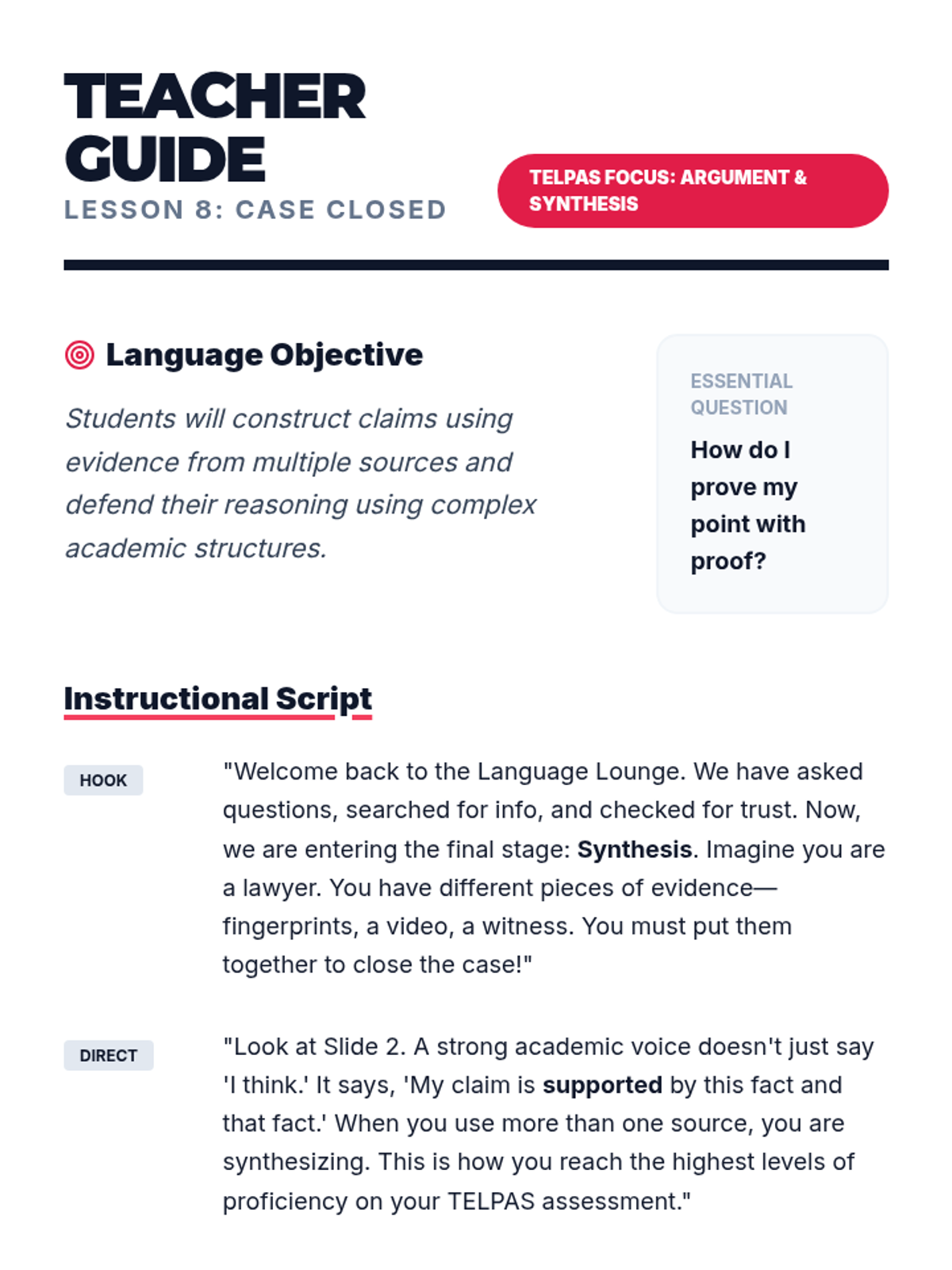
Students synthesize information from multiple sources to construct and defend academic claims.
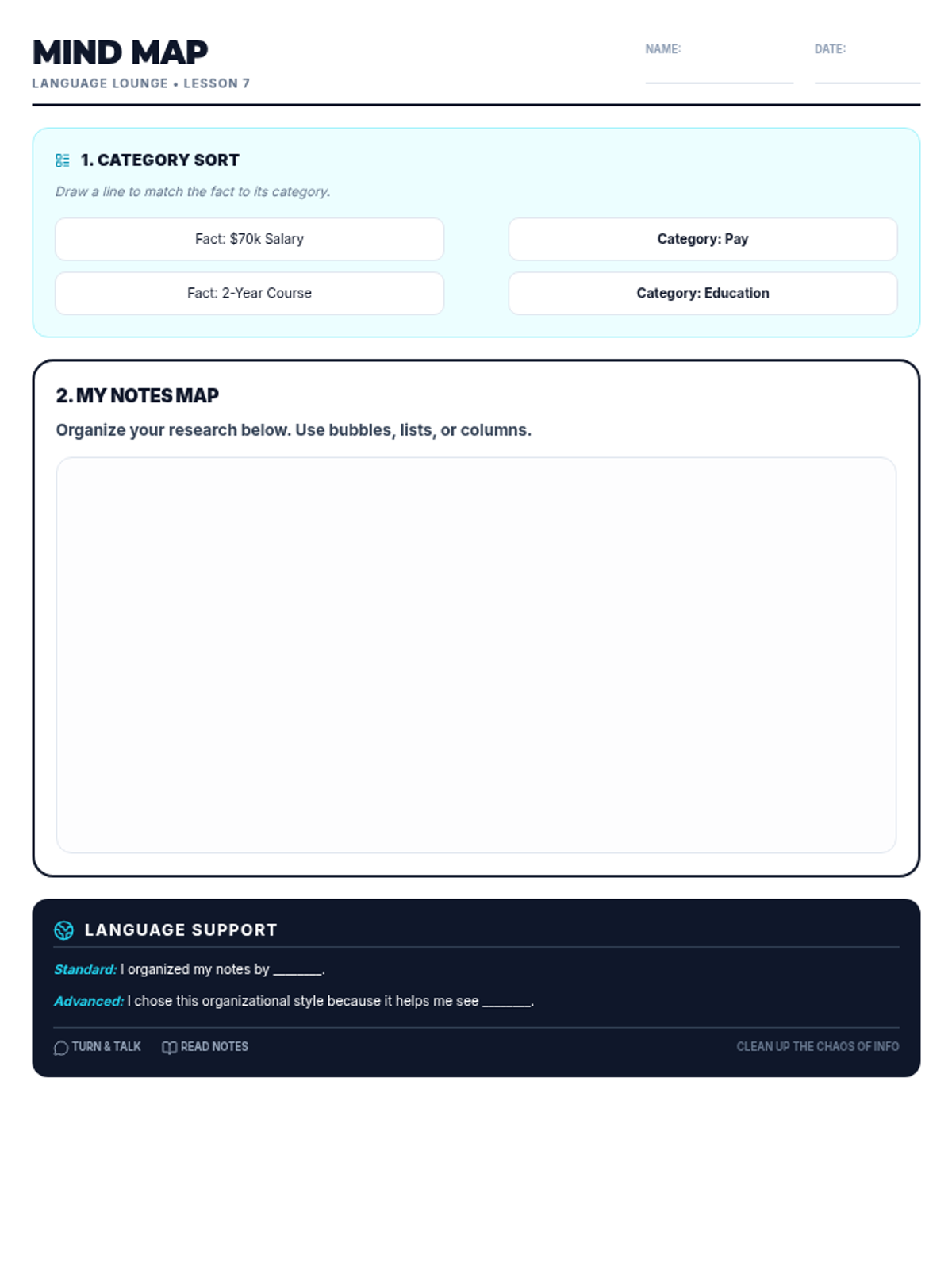
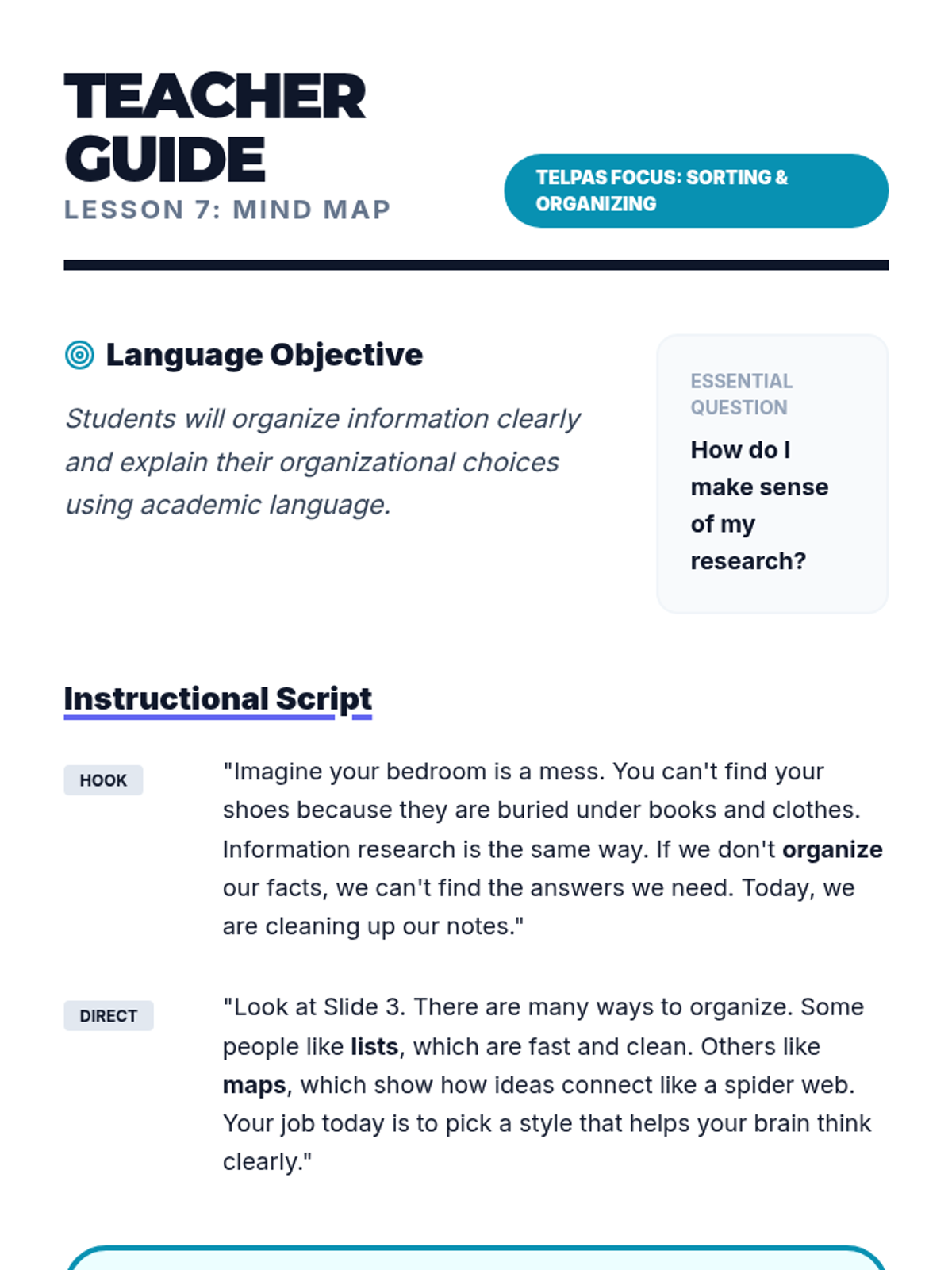
Students utilize various note-taking and organization strategies to manage career and college research.
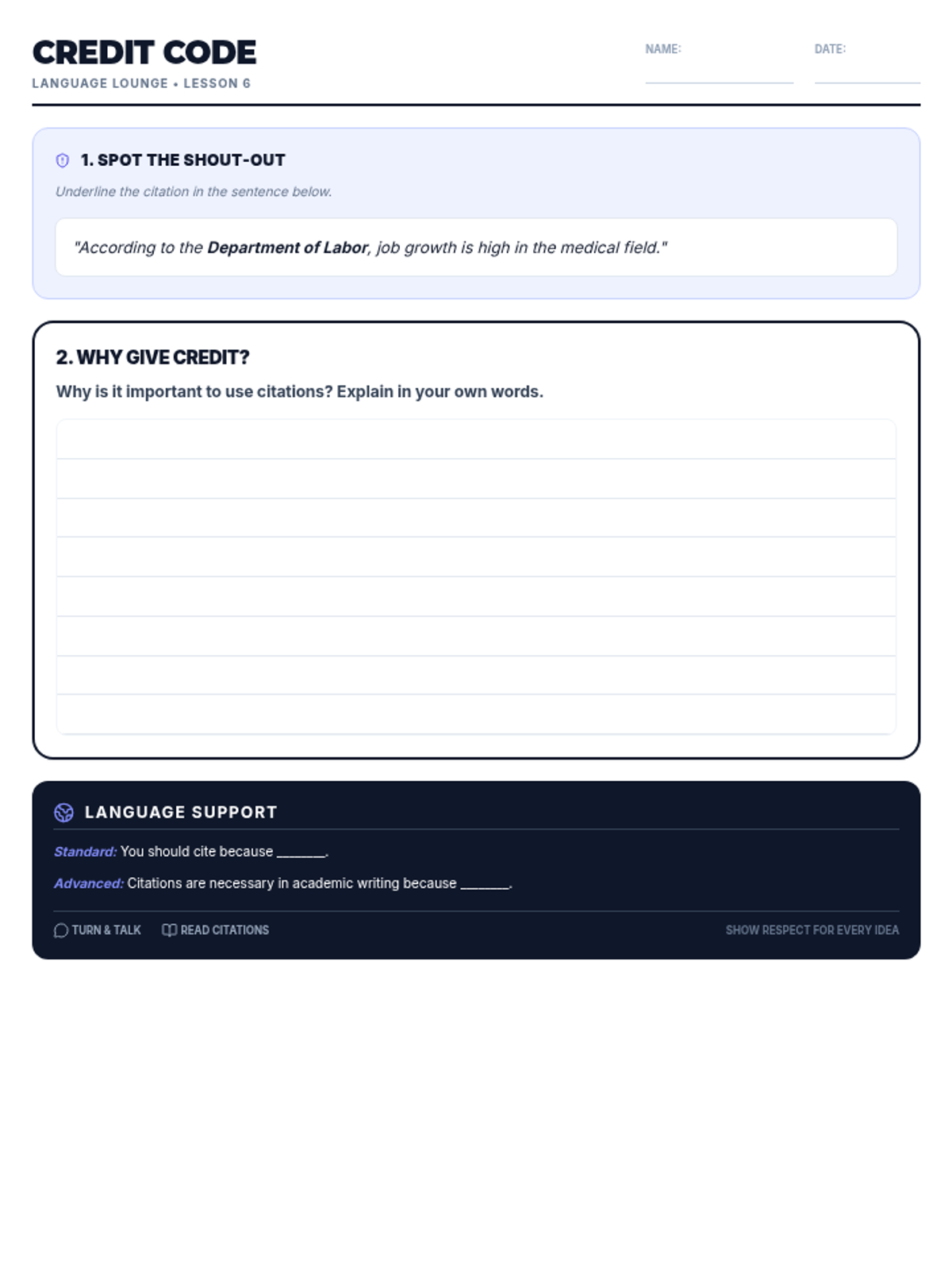
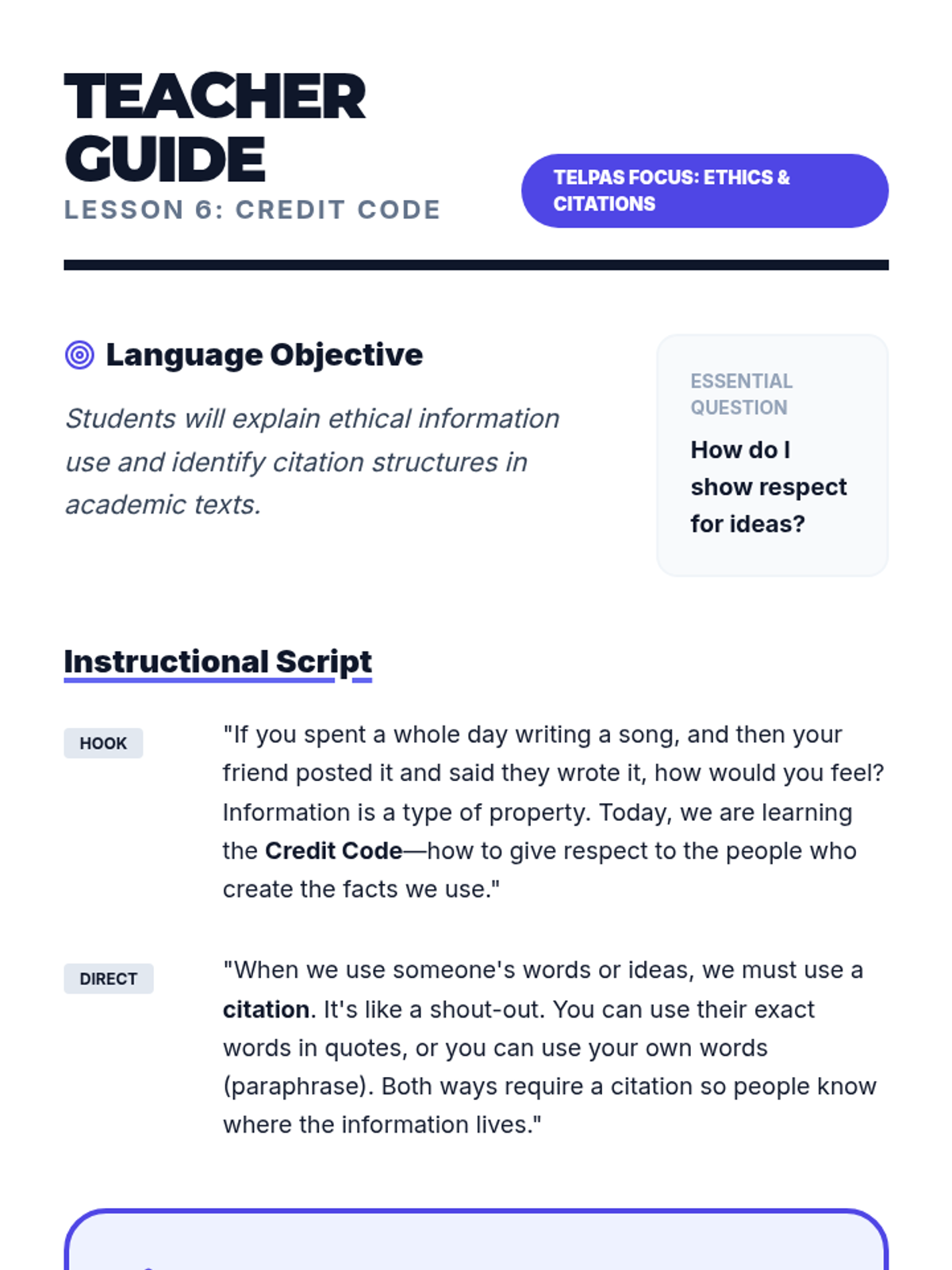
Students explore the ethics of information use, including plagiarism, citations, and responsible social media sharing.
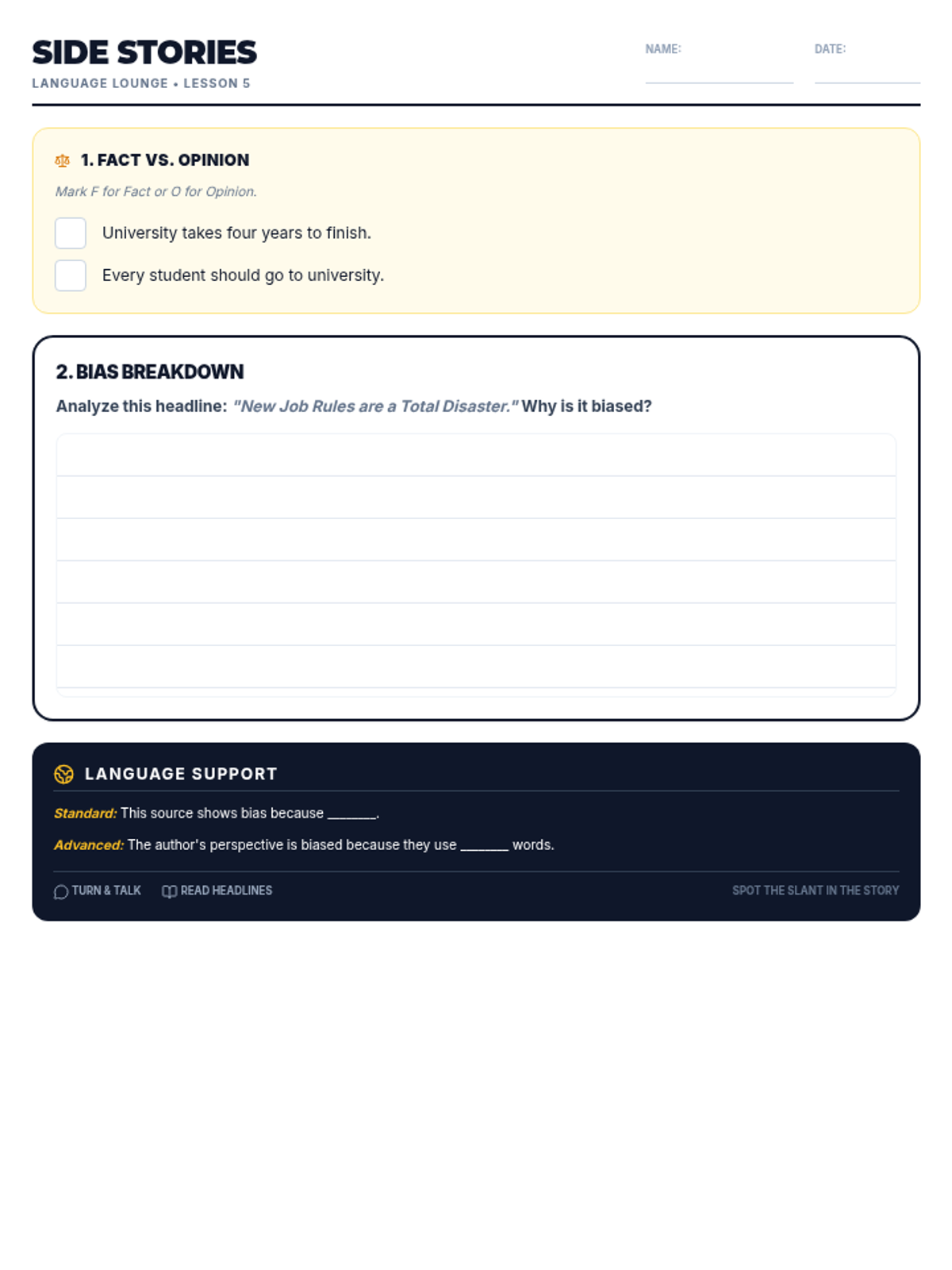
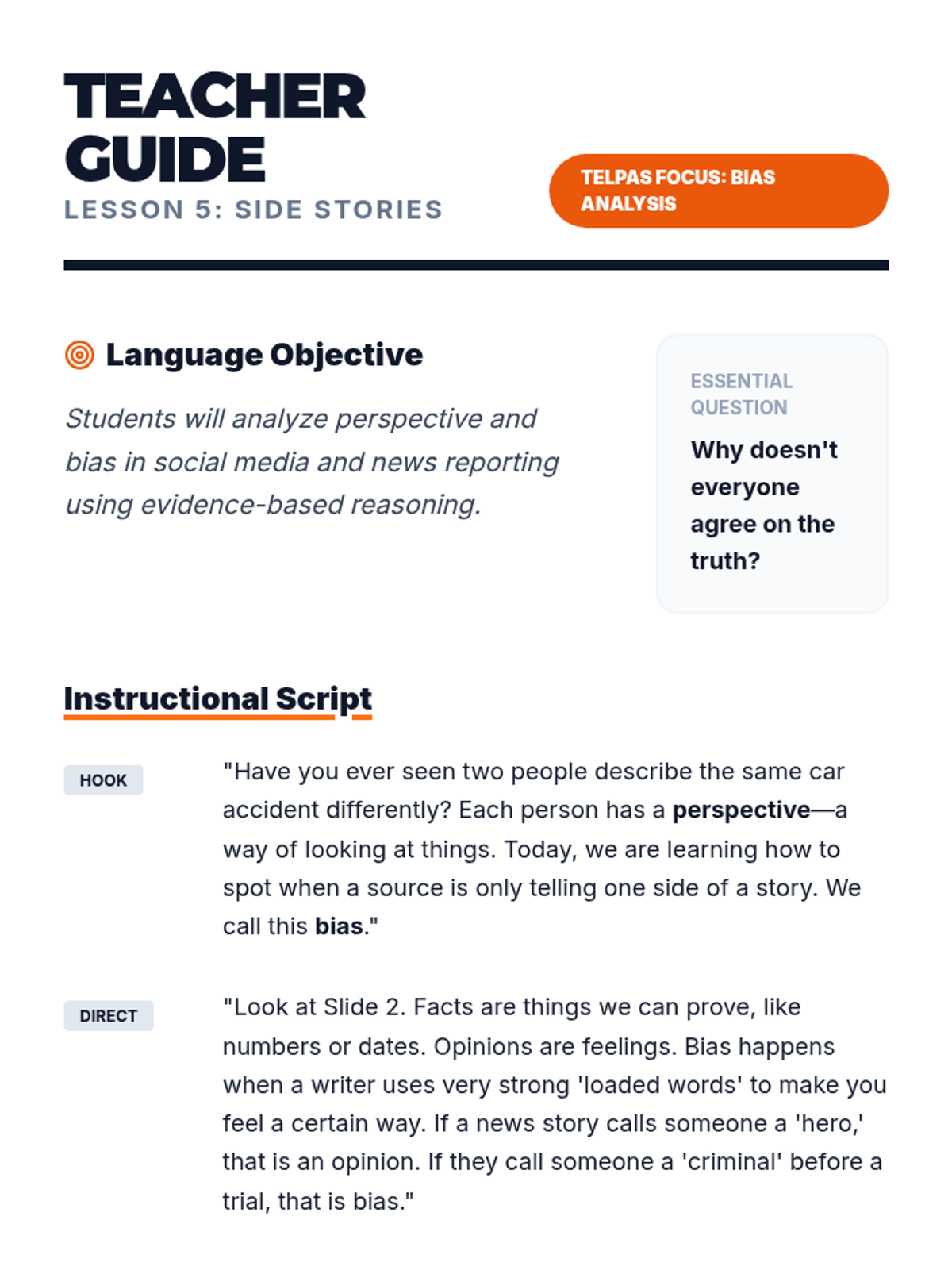
Students identify fact versus opinion and recognize bias in social media and news reporting.
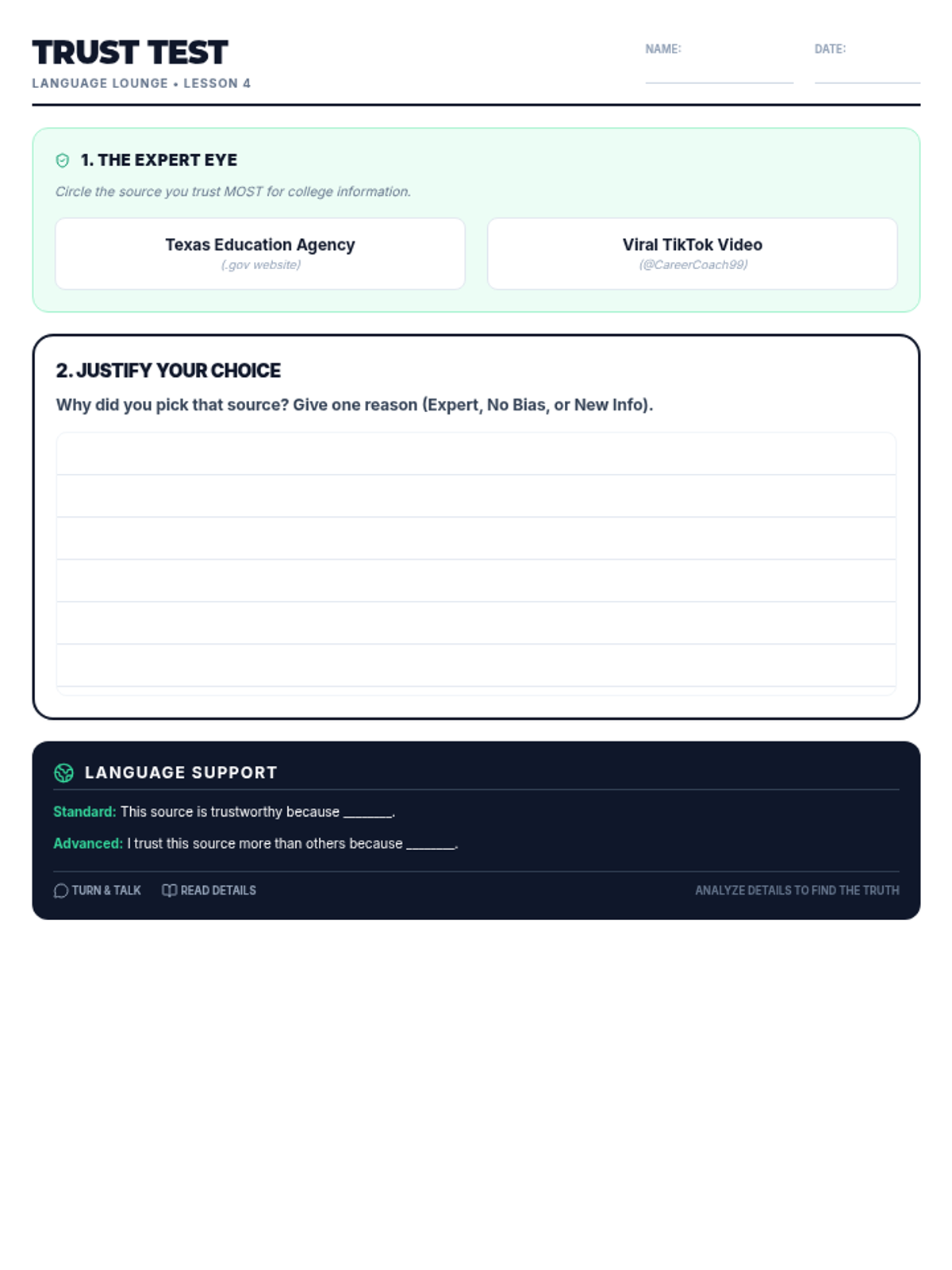
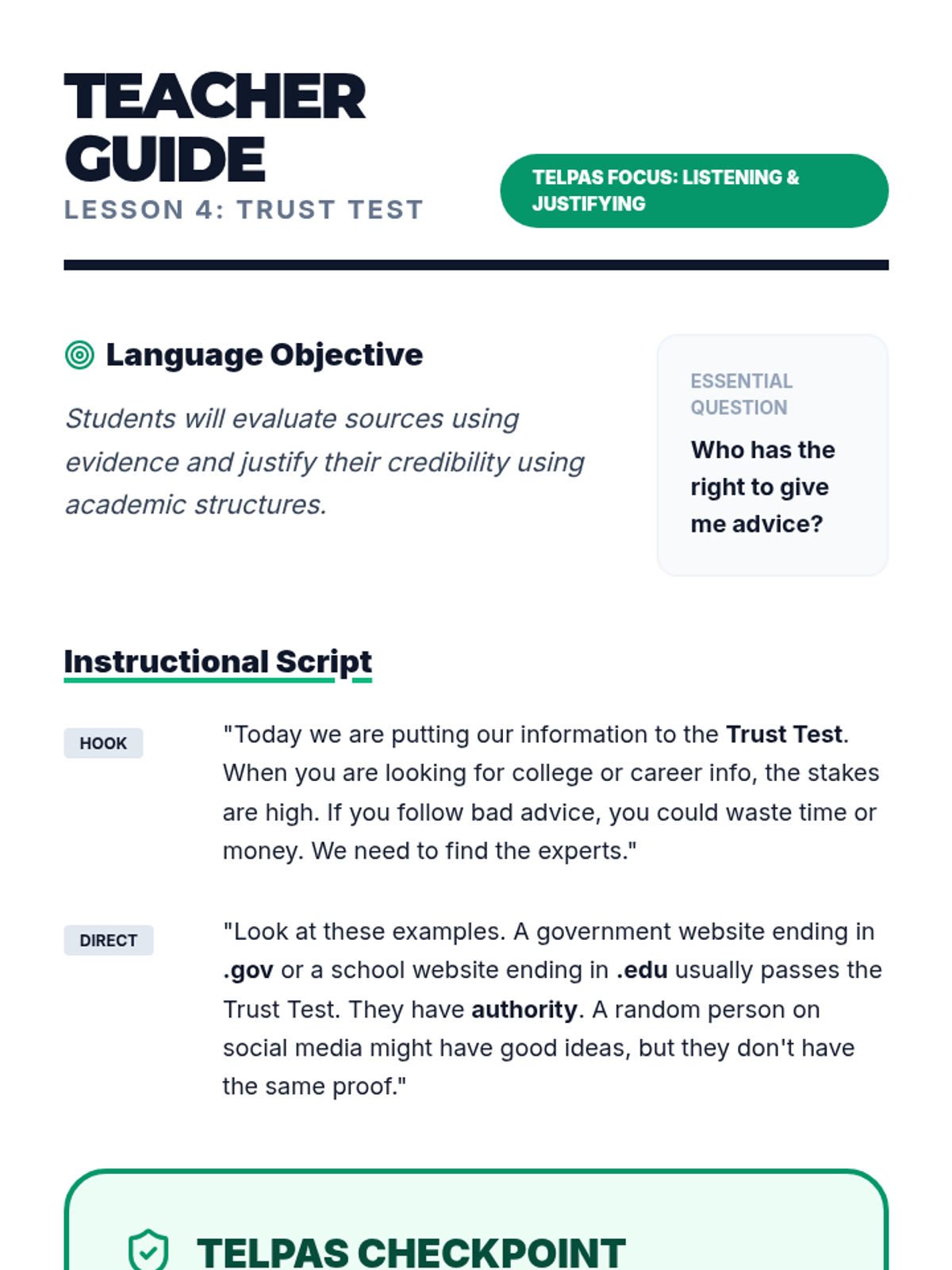
Students analyze the credibility of college and career resources using evidence-based evaluation techniques.
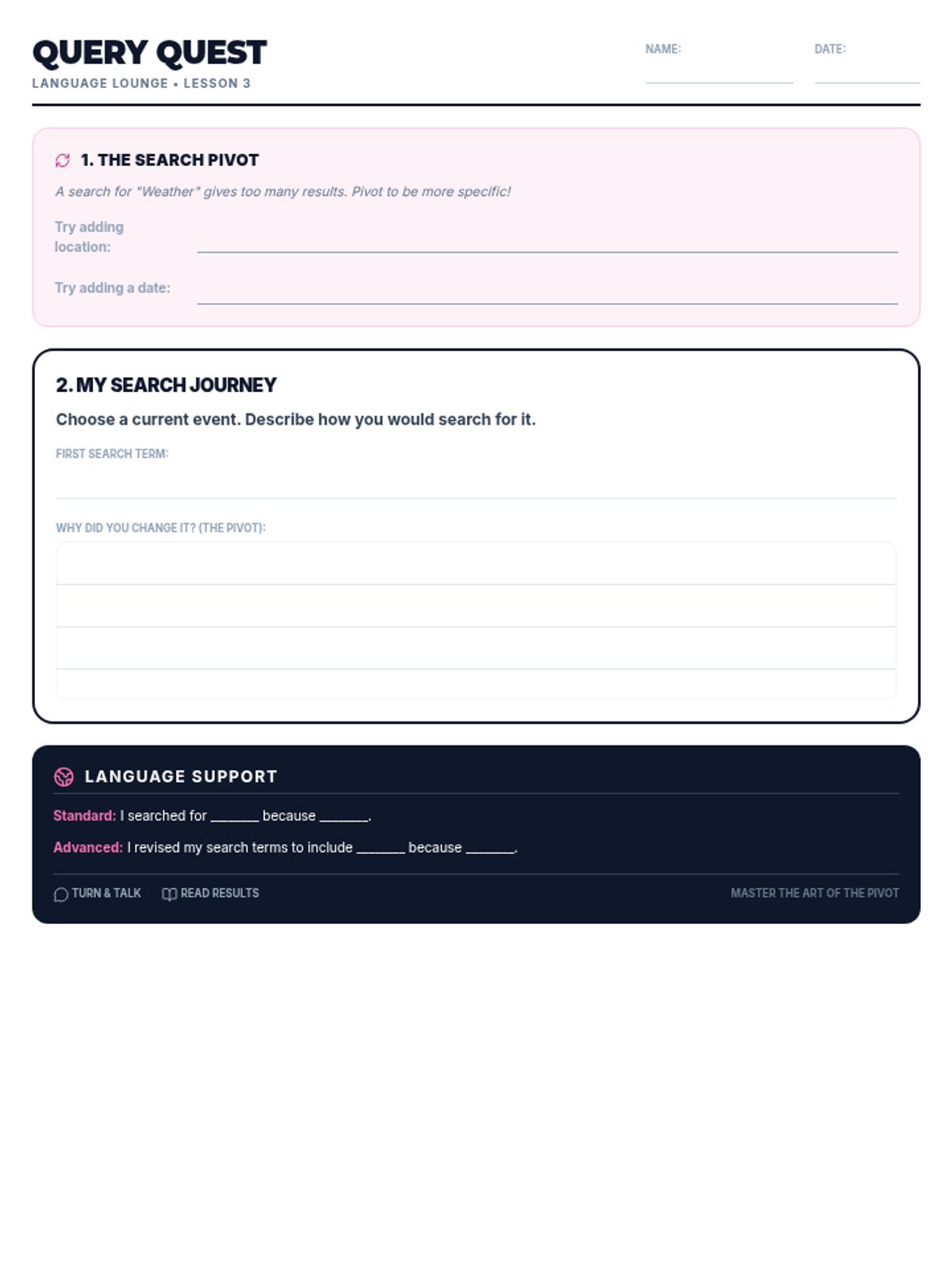
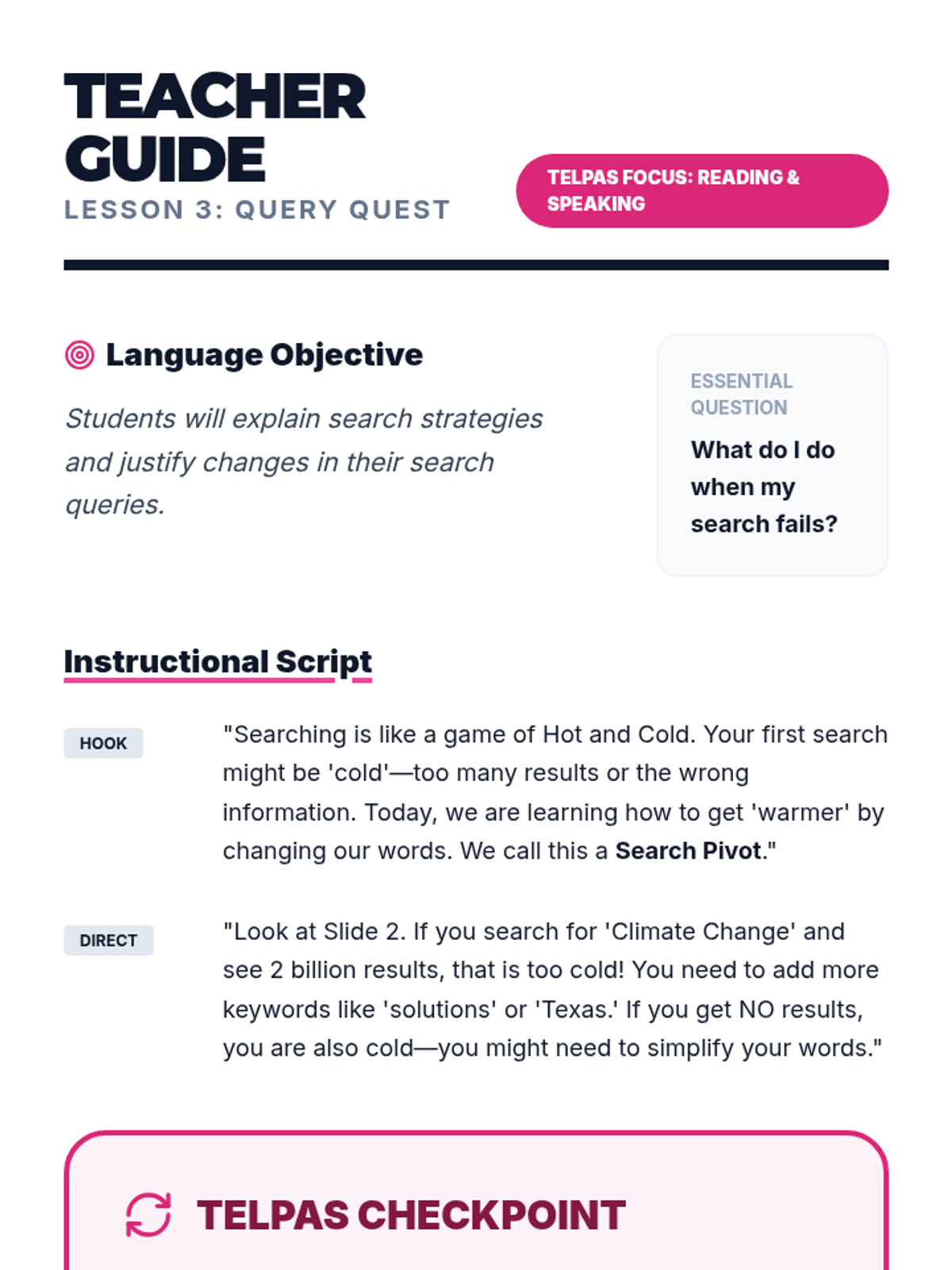
Students practice advanced search strategies to navigate current events and filter for high-quality information.
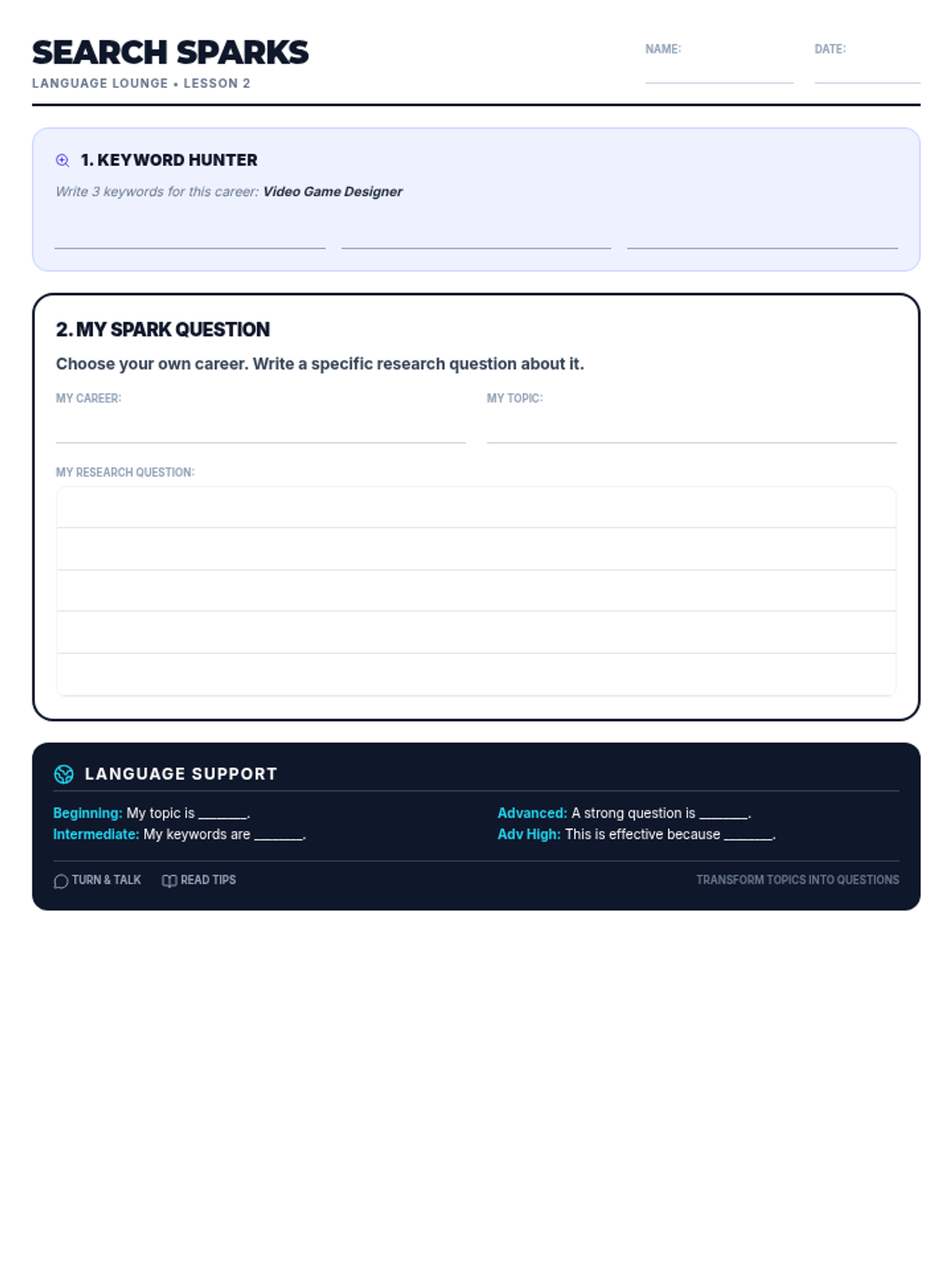
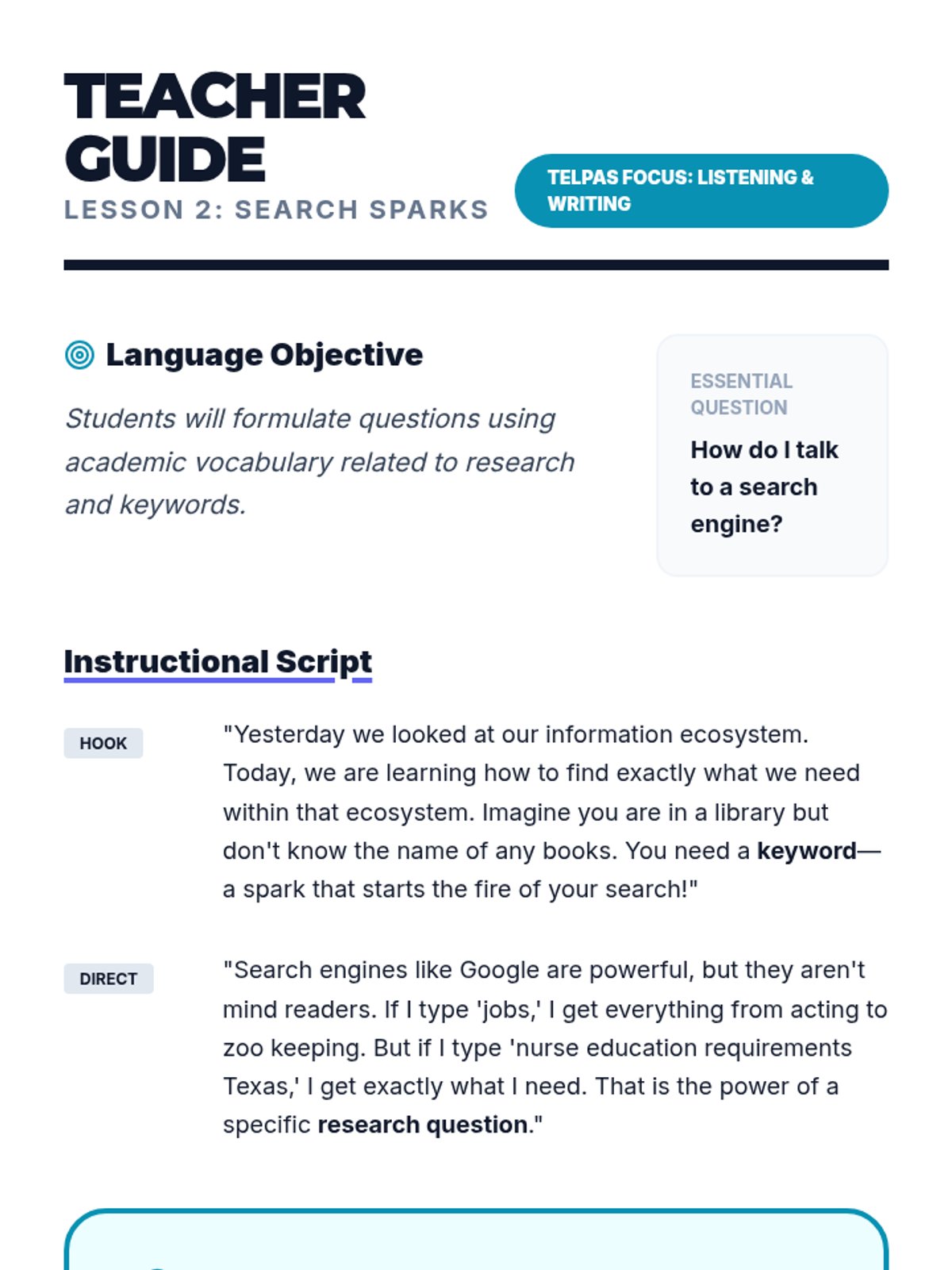
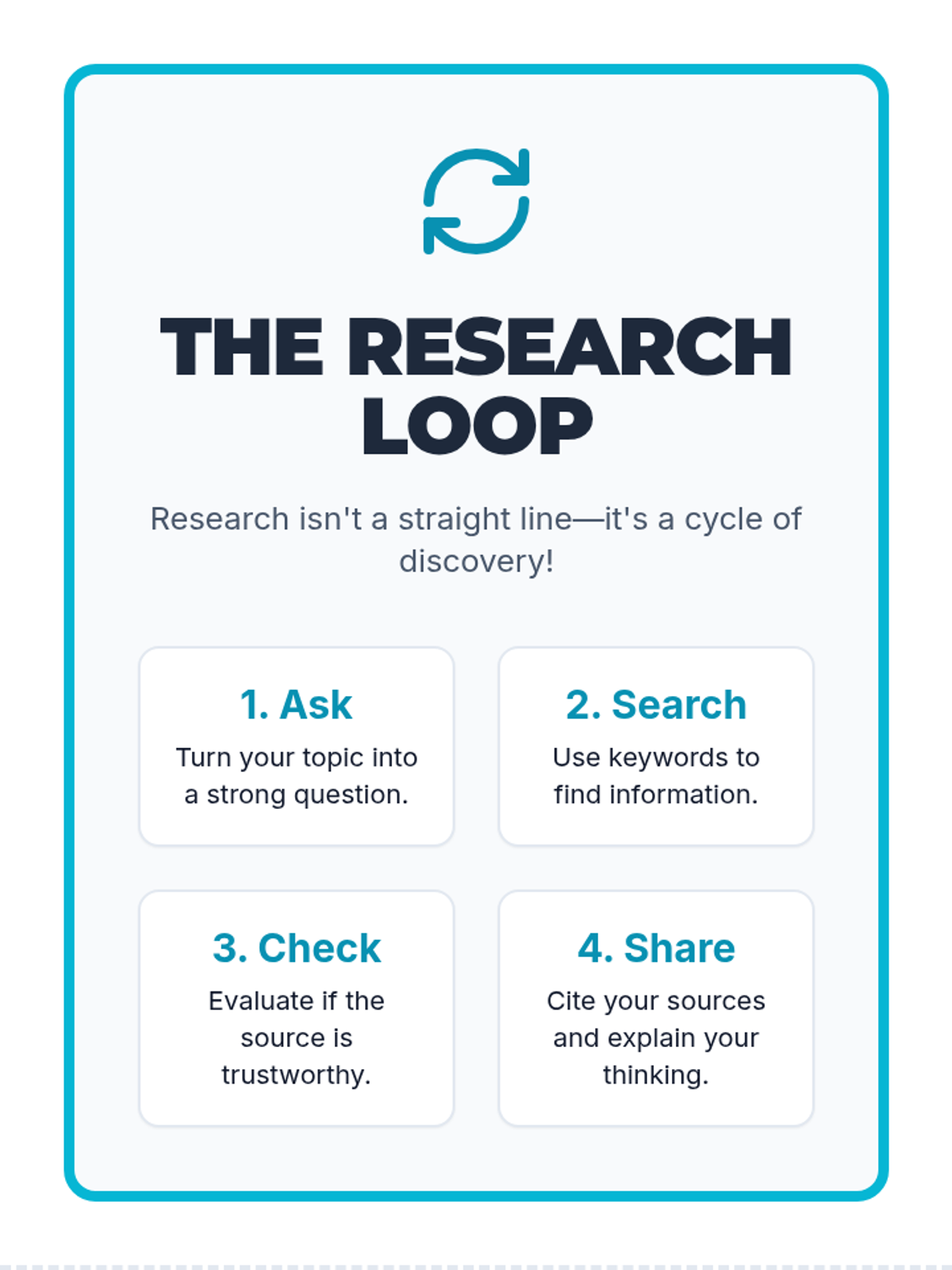
Students learn to transform broad topics like career interests into specific, searchable research questions and keywords.
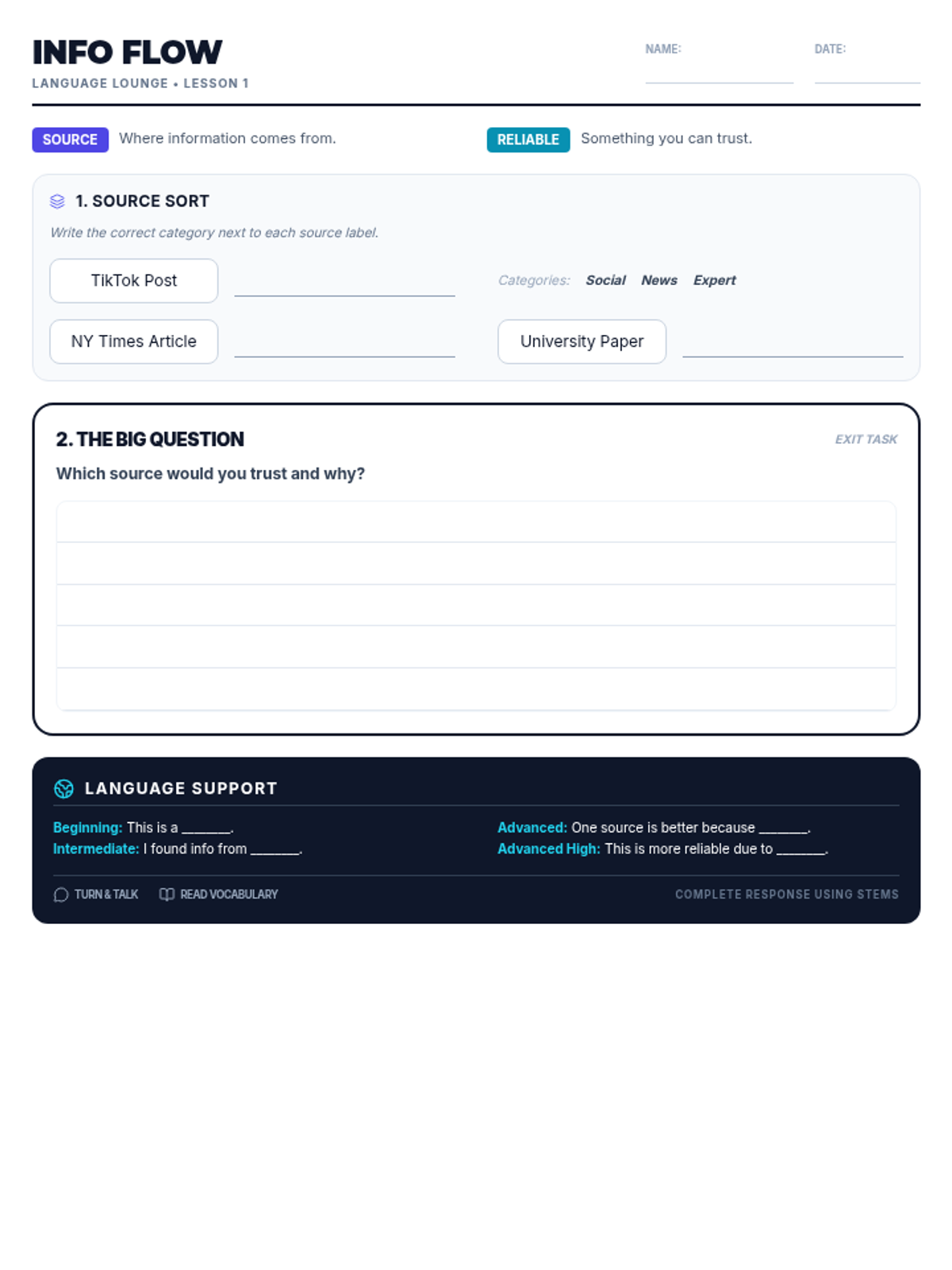
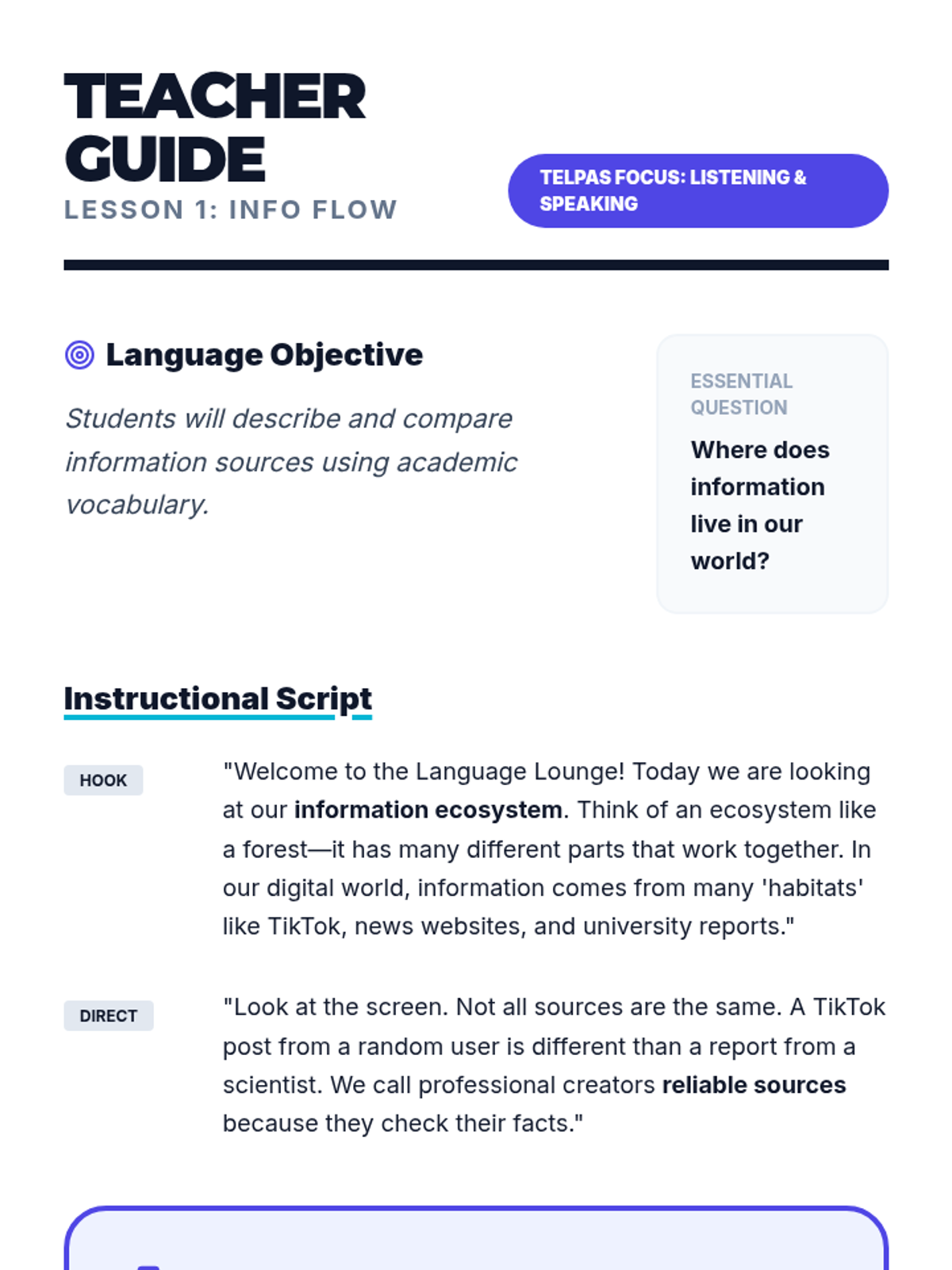
Students identify and classify different types of information sources within the digital ecosystem, focusing on social media and news outlets.
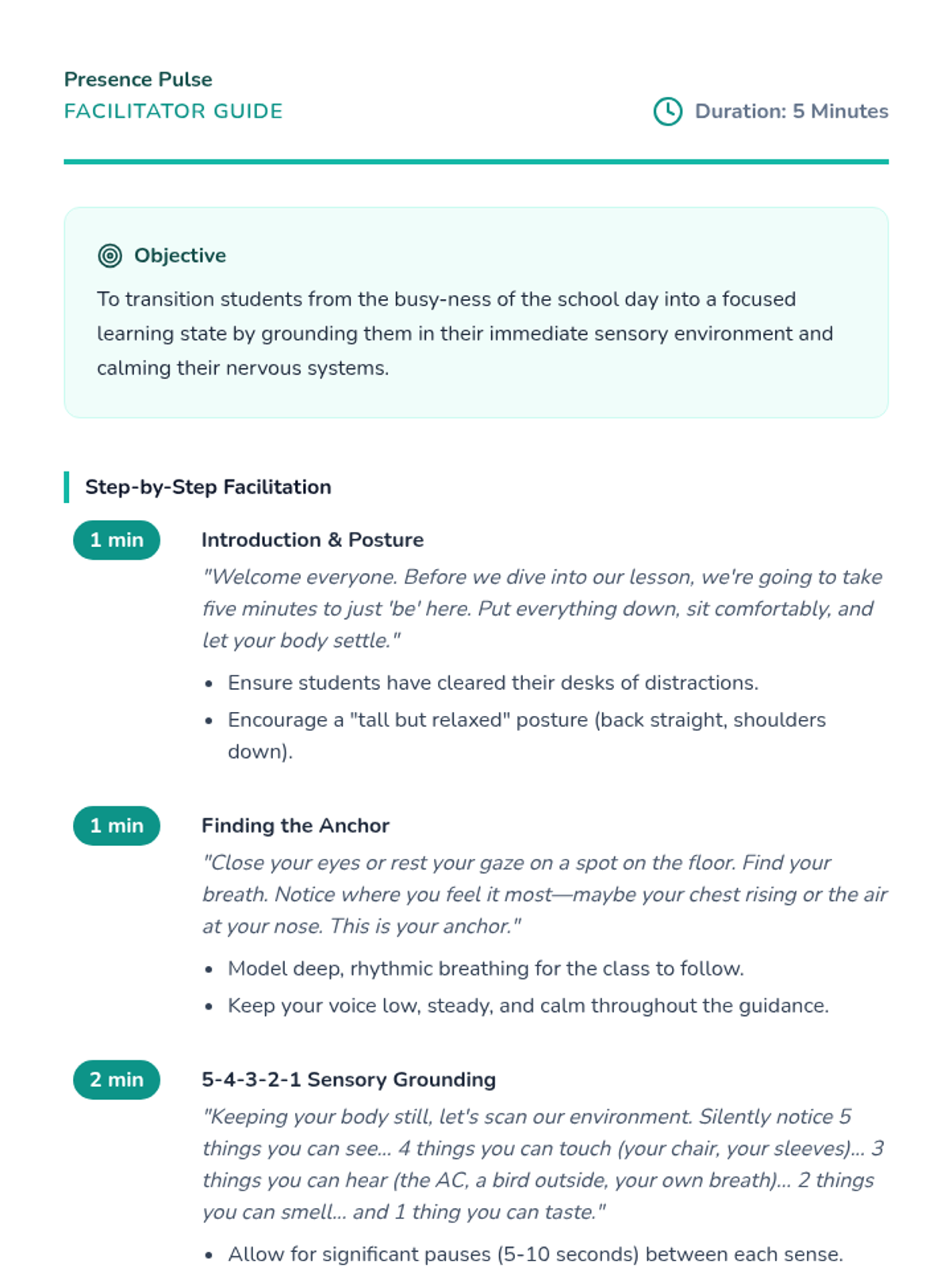
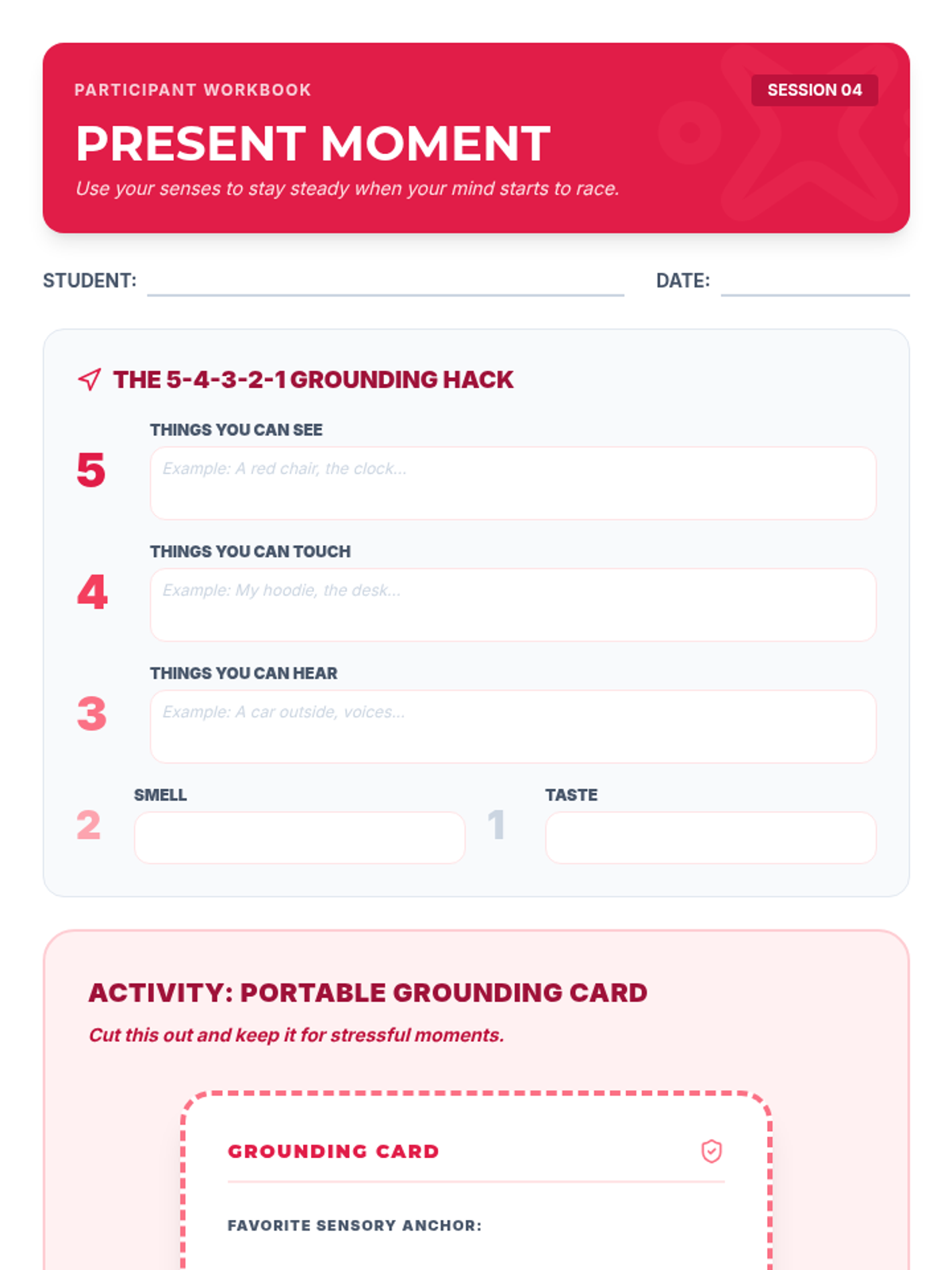
A quick, 5-minute mindfulness session designed to ground students in the present moment before beginning academic work. This lesson uses sensory awareness and breathing techniques to calm the mind and improve focus.
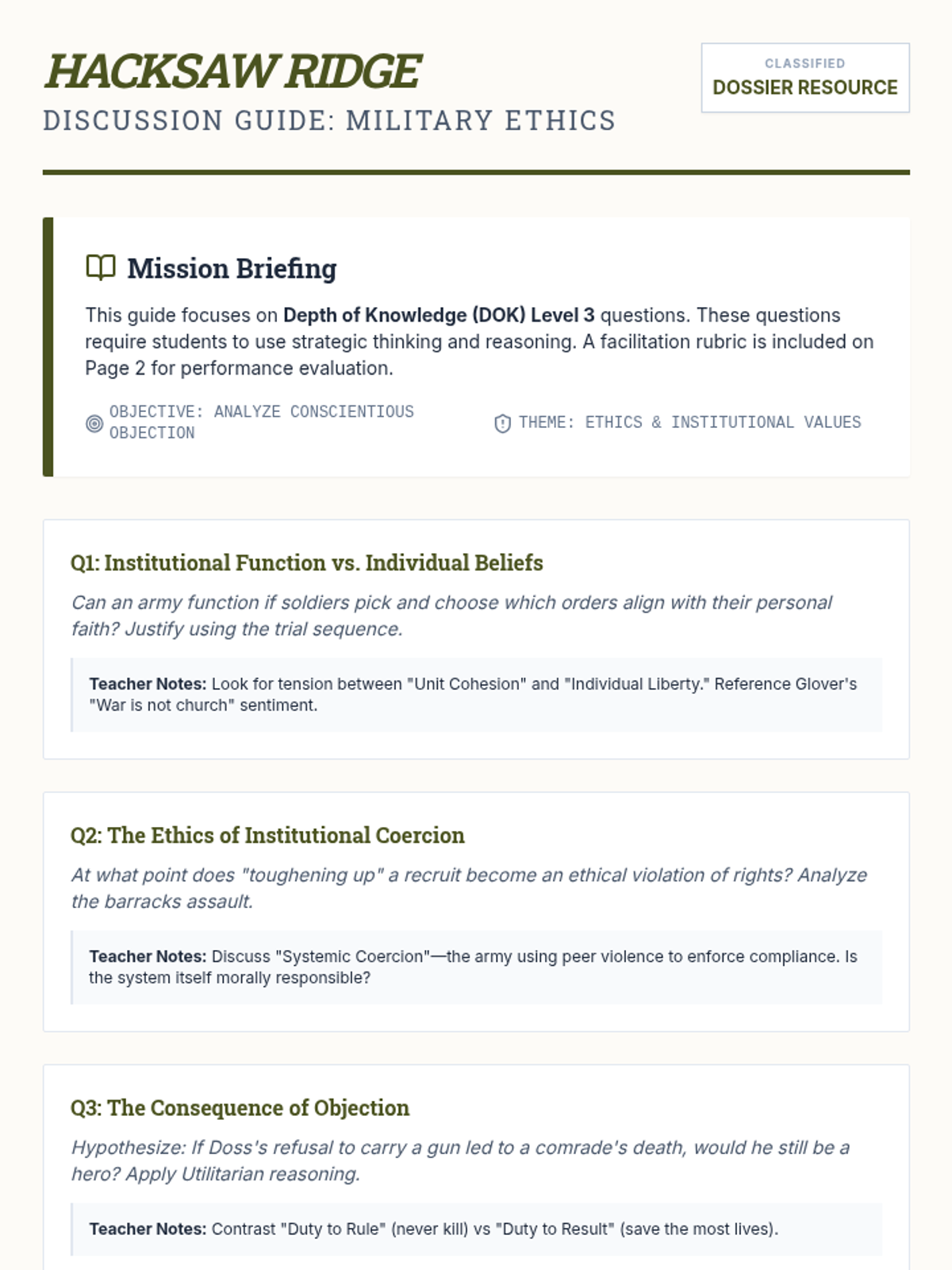
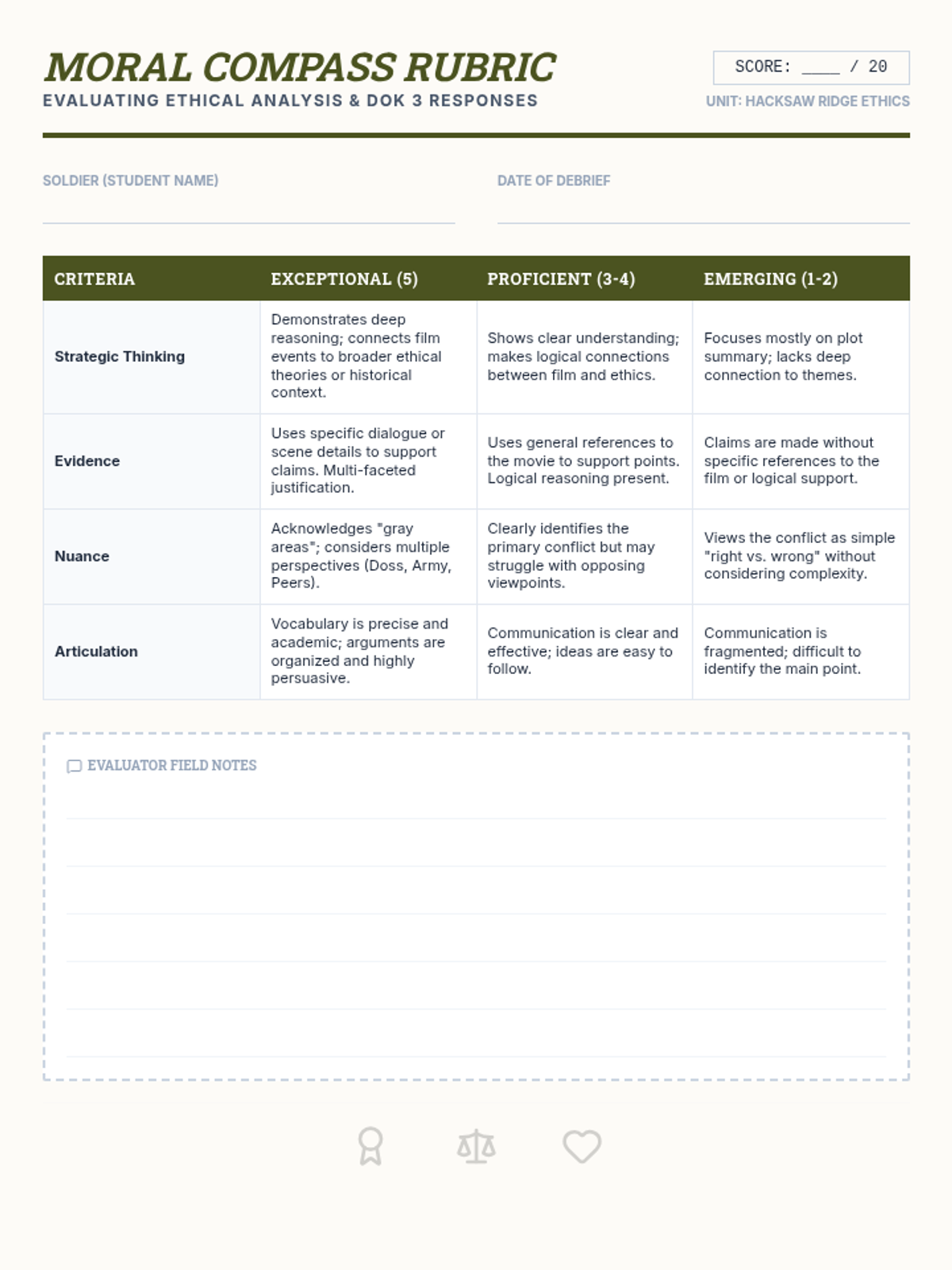
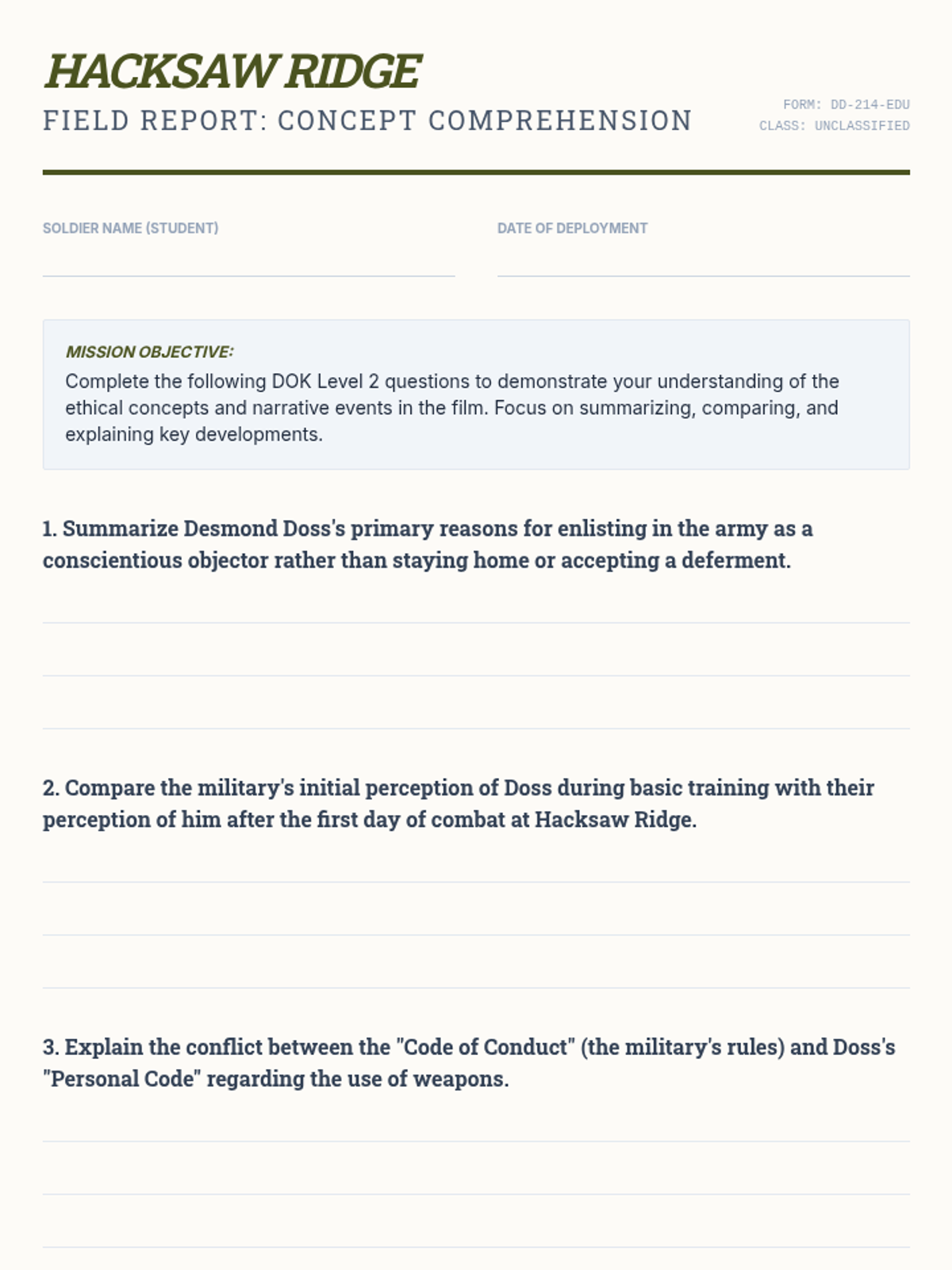
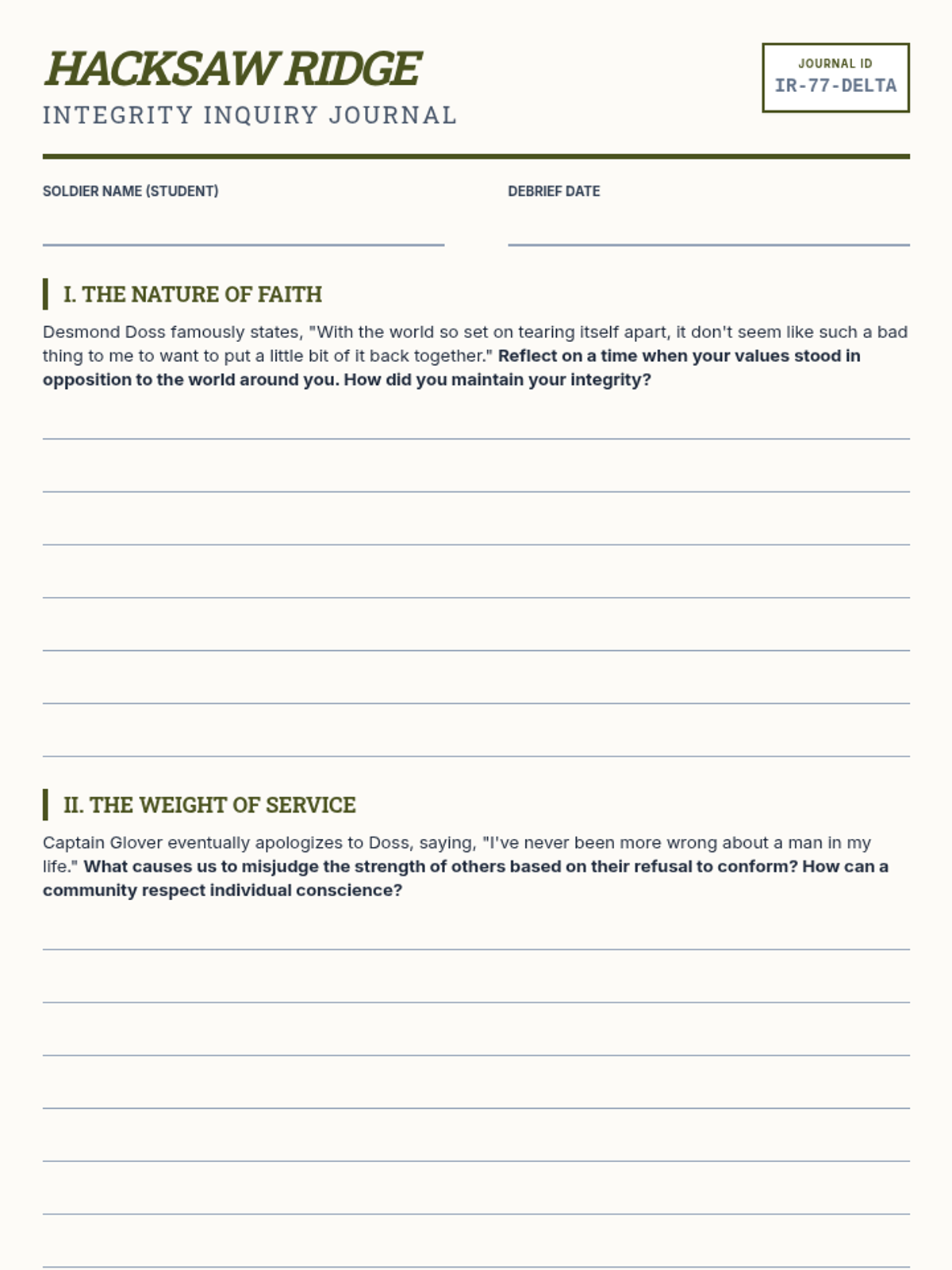
An in-depth exploration of conscientious objection and military ethics through the lens of the film Hacksaw Ridge, featuring DOK Level 3 discussion prompts and evaluation tools.
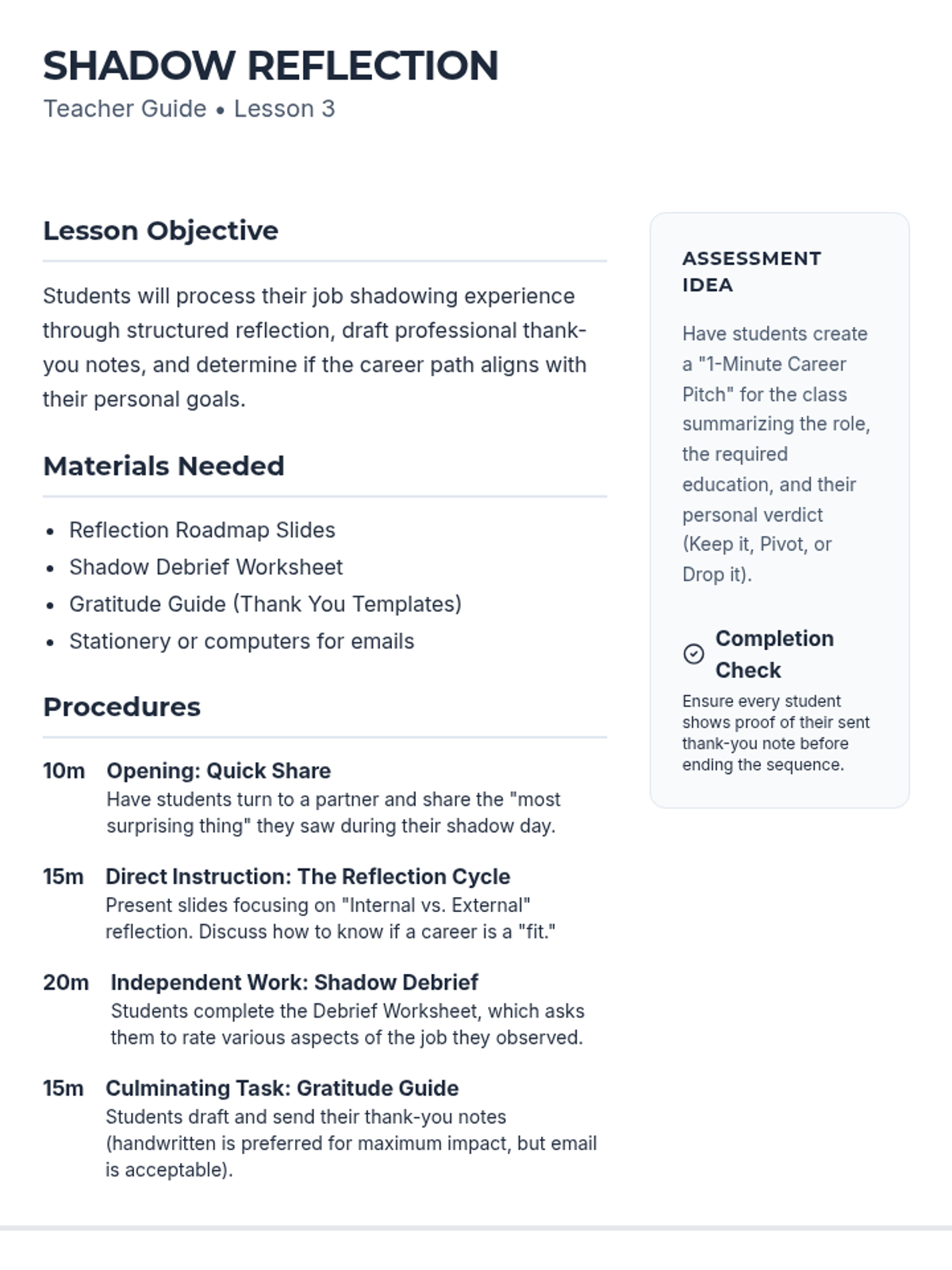
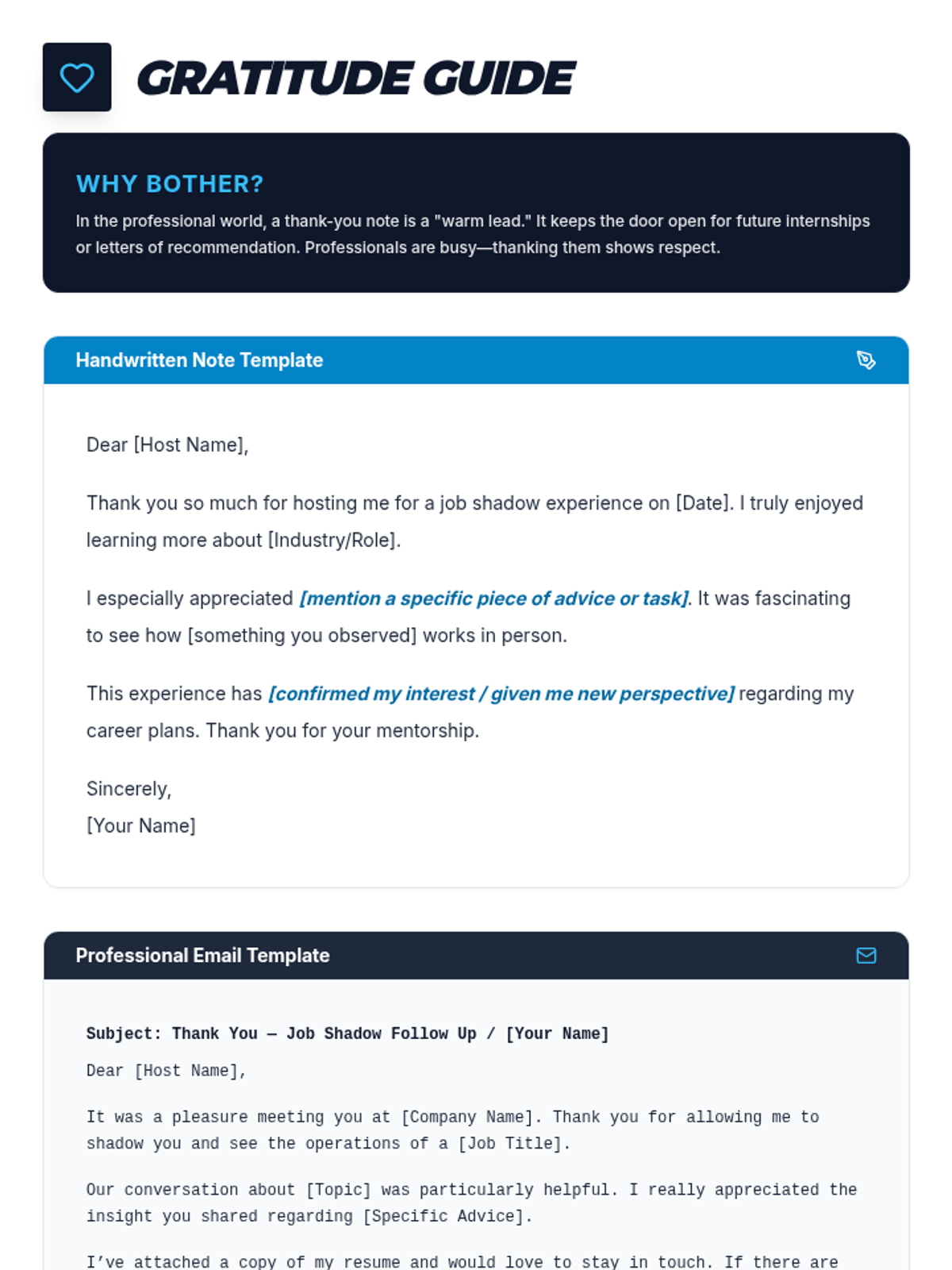
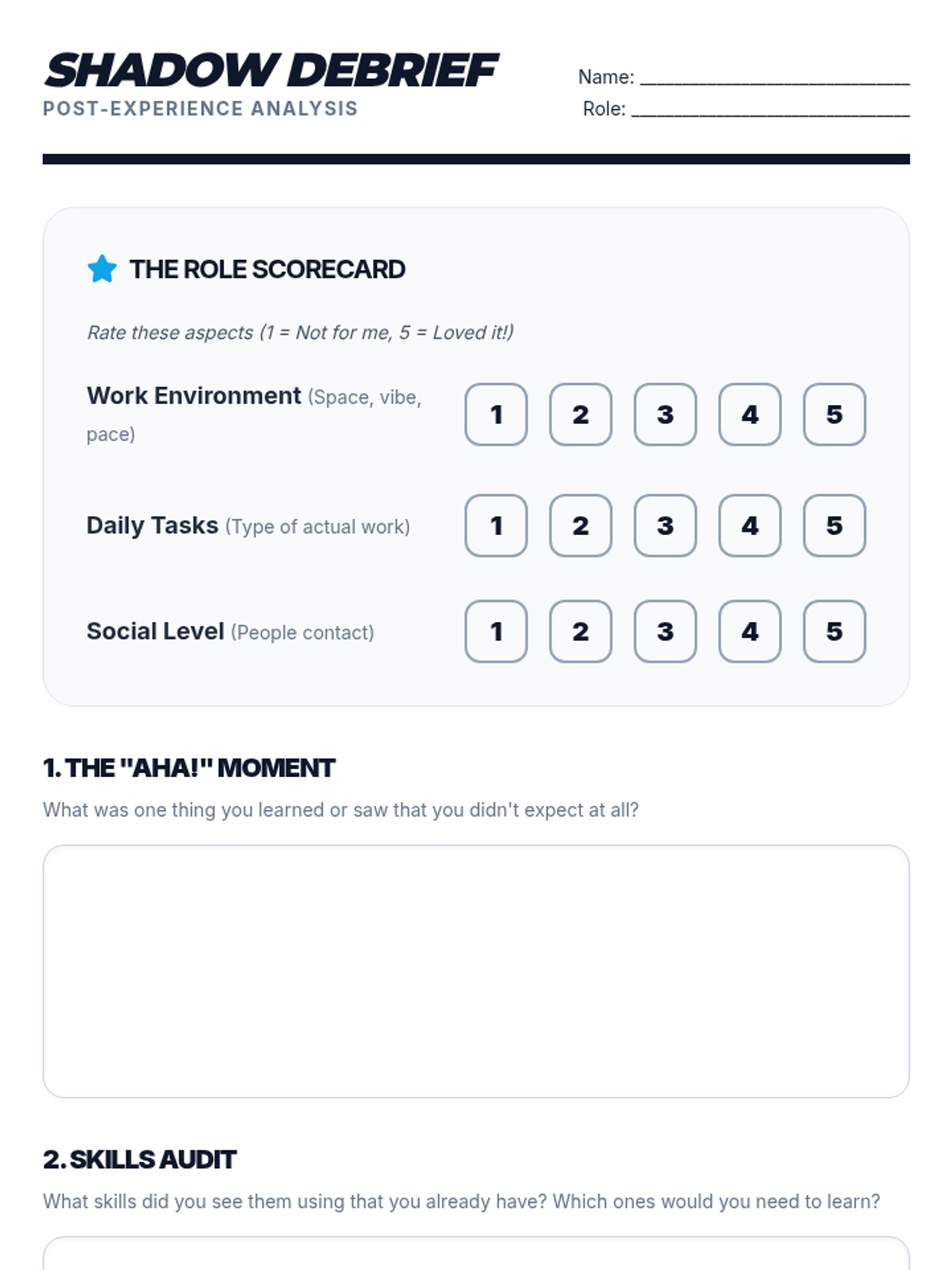
Guides students through analyzing their experience, writing thank-you notes, and planning next career steps.
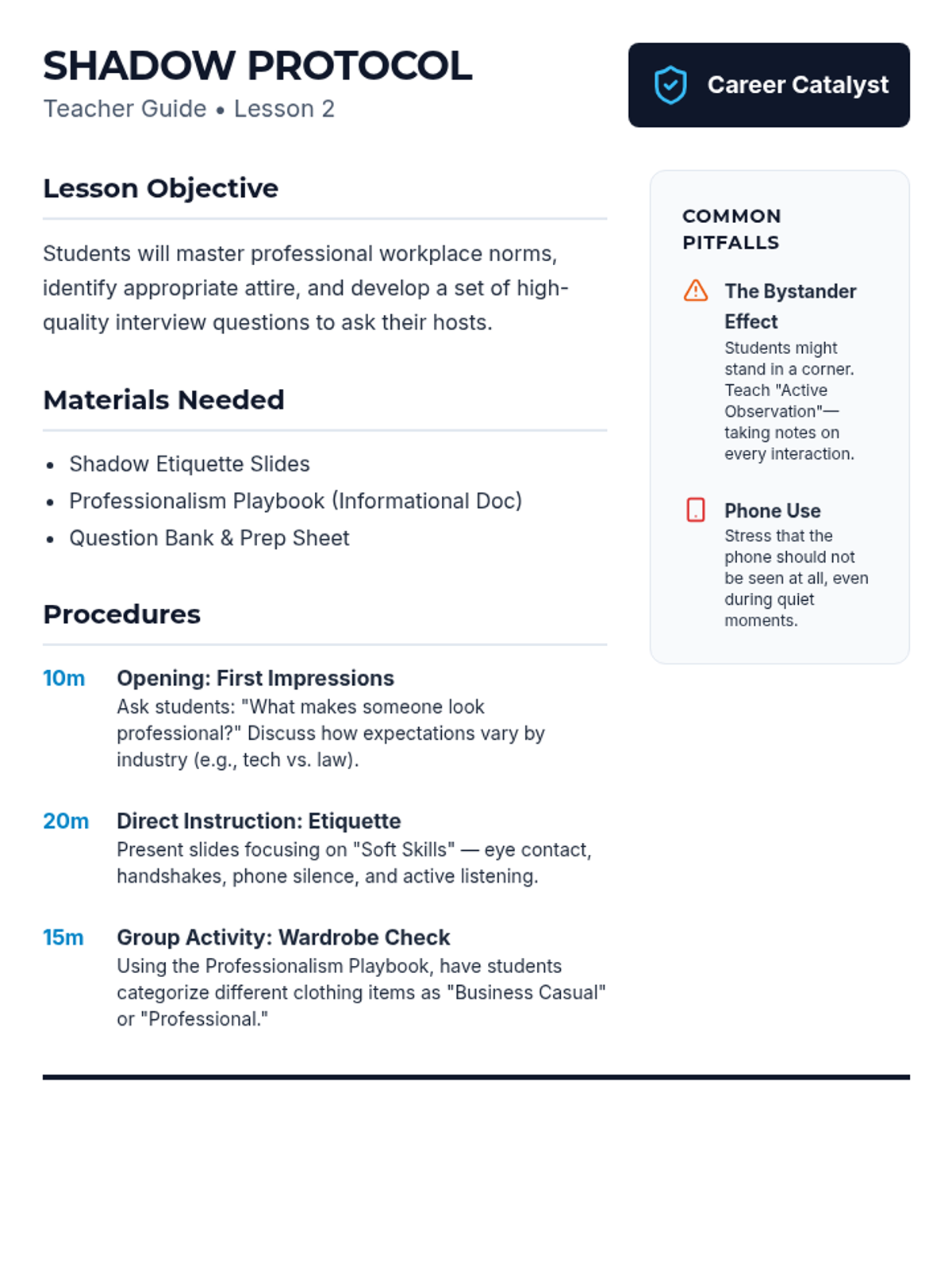
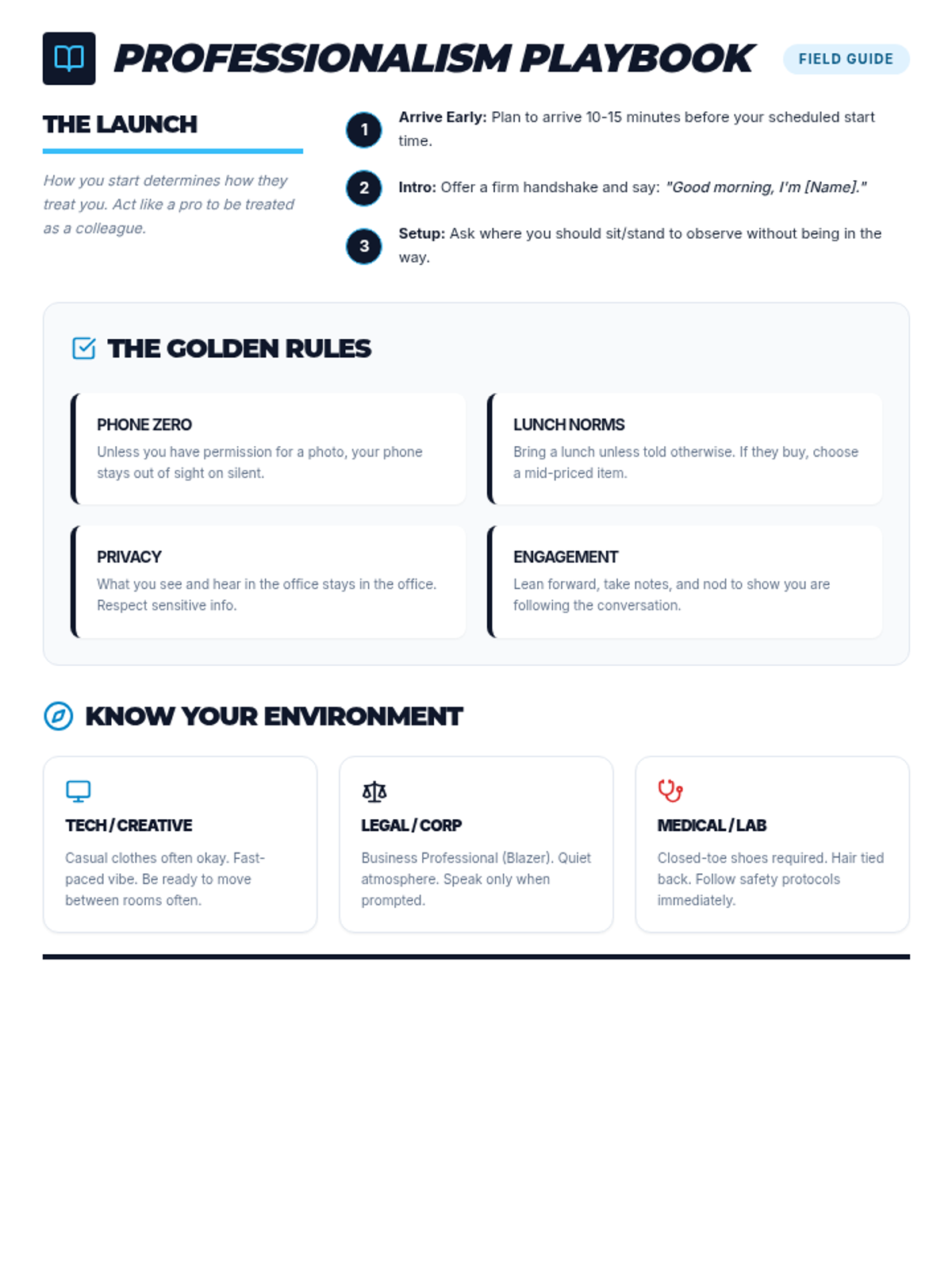
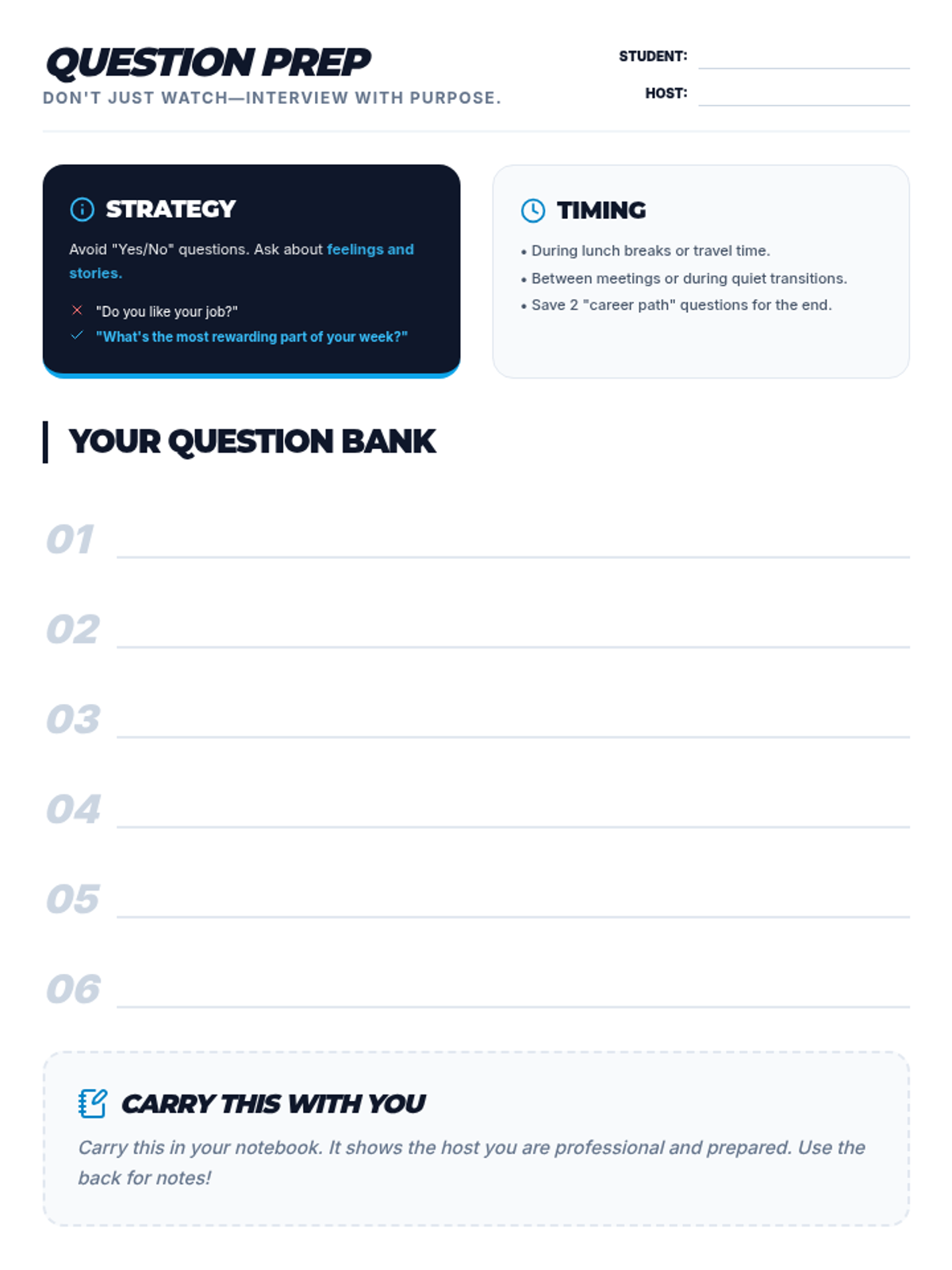
Prepares students for the shadowing day through professionalism training, dress code expectations, and question preparation.
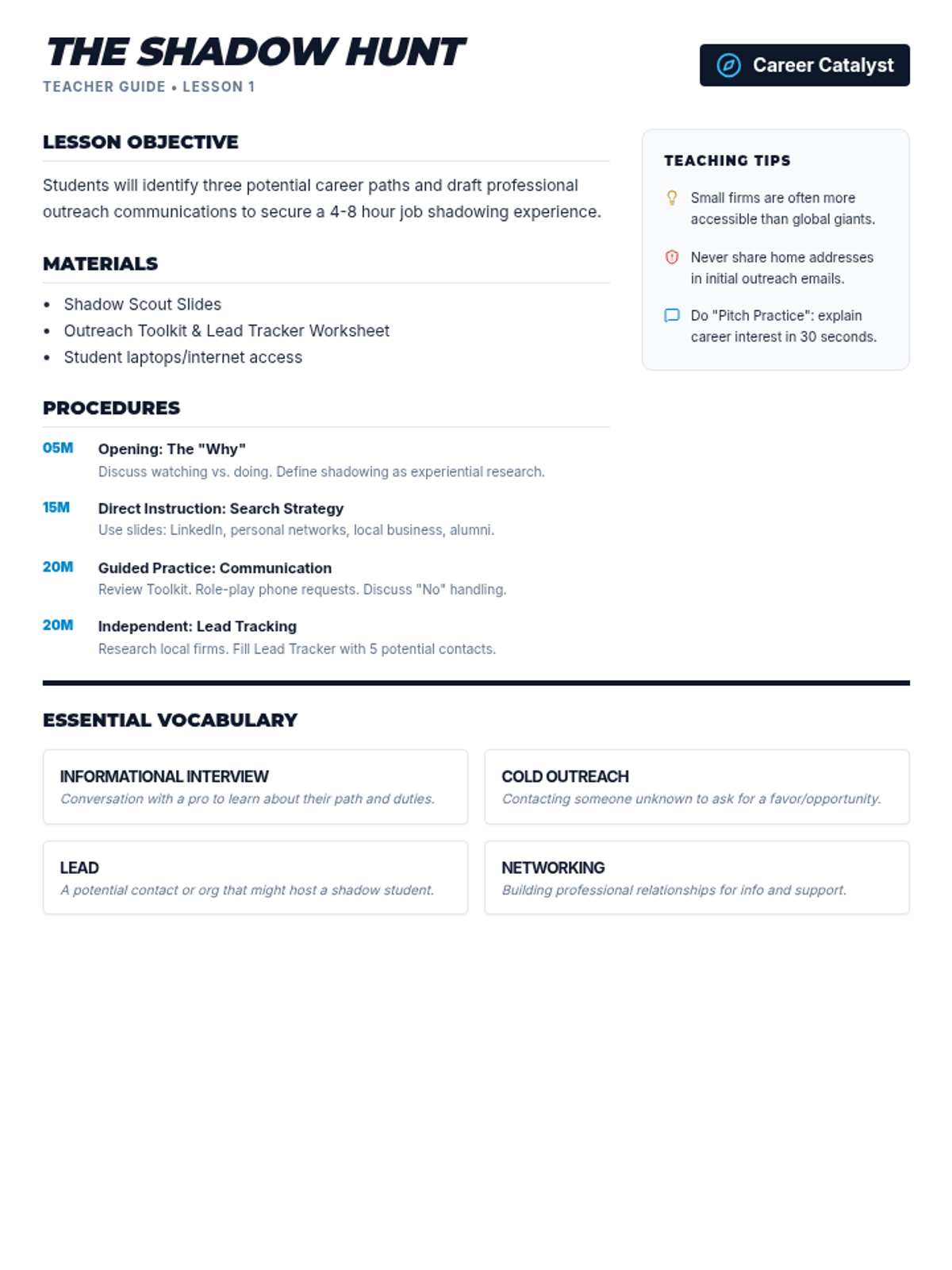
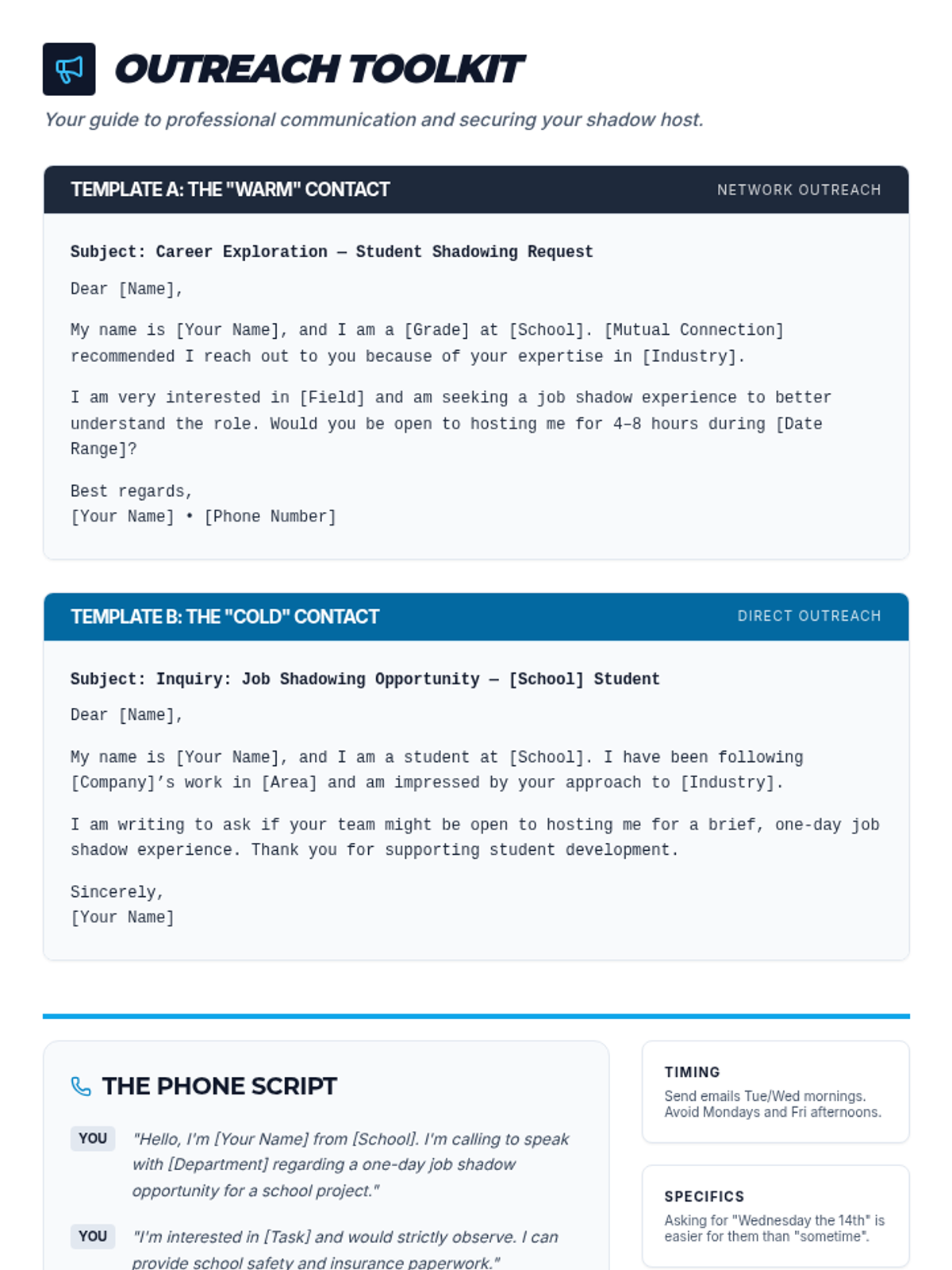
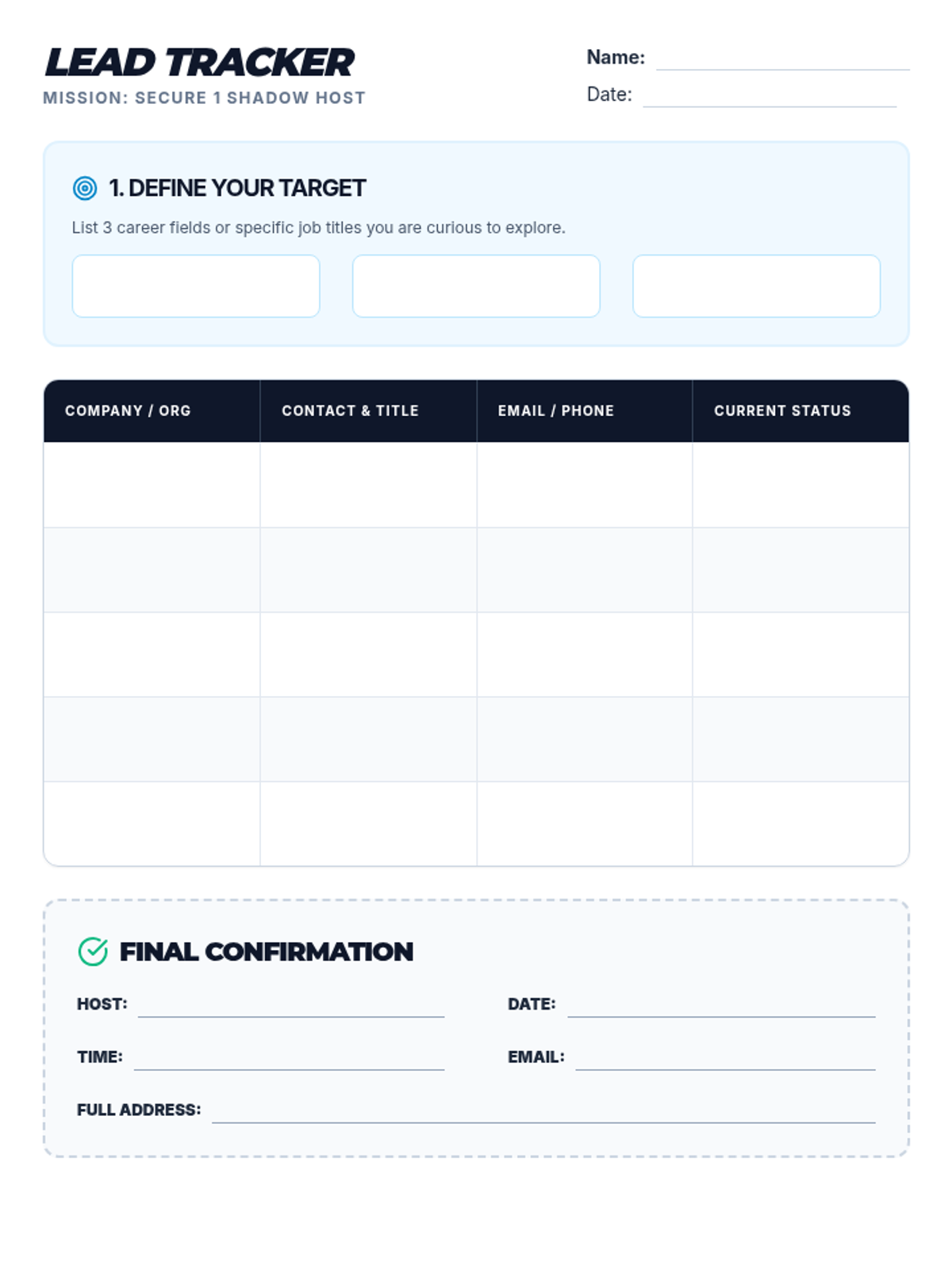
Focuses on identifying career interests and the process of reaching out to professional hosts for shadowing opportunities.
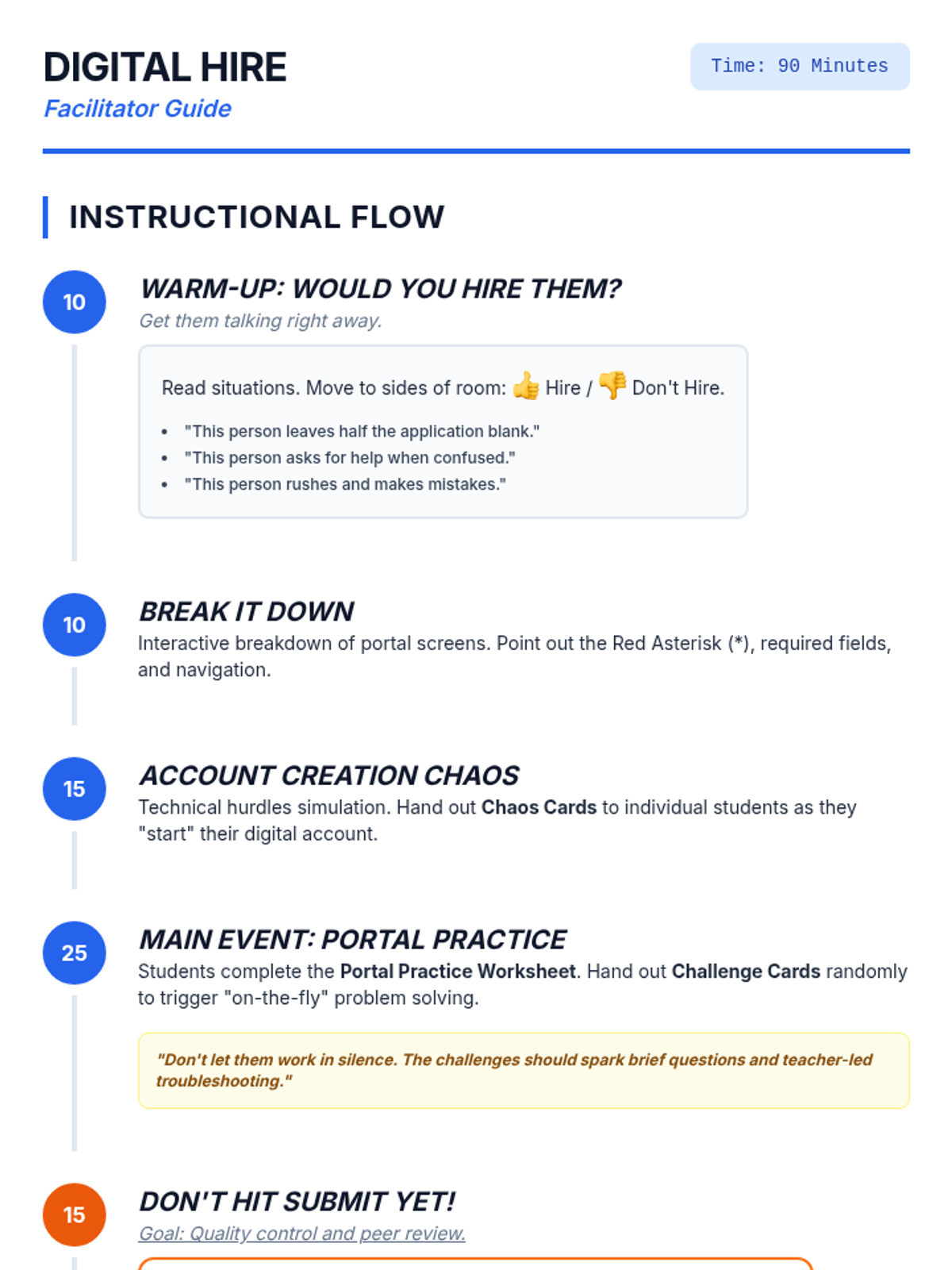
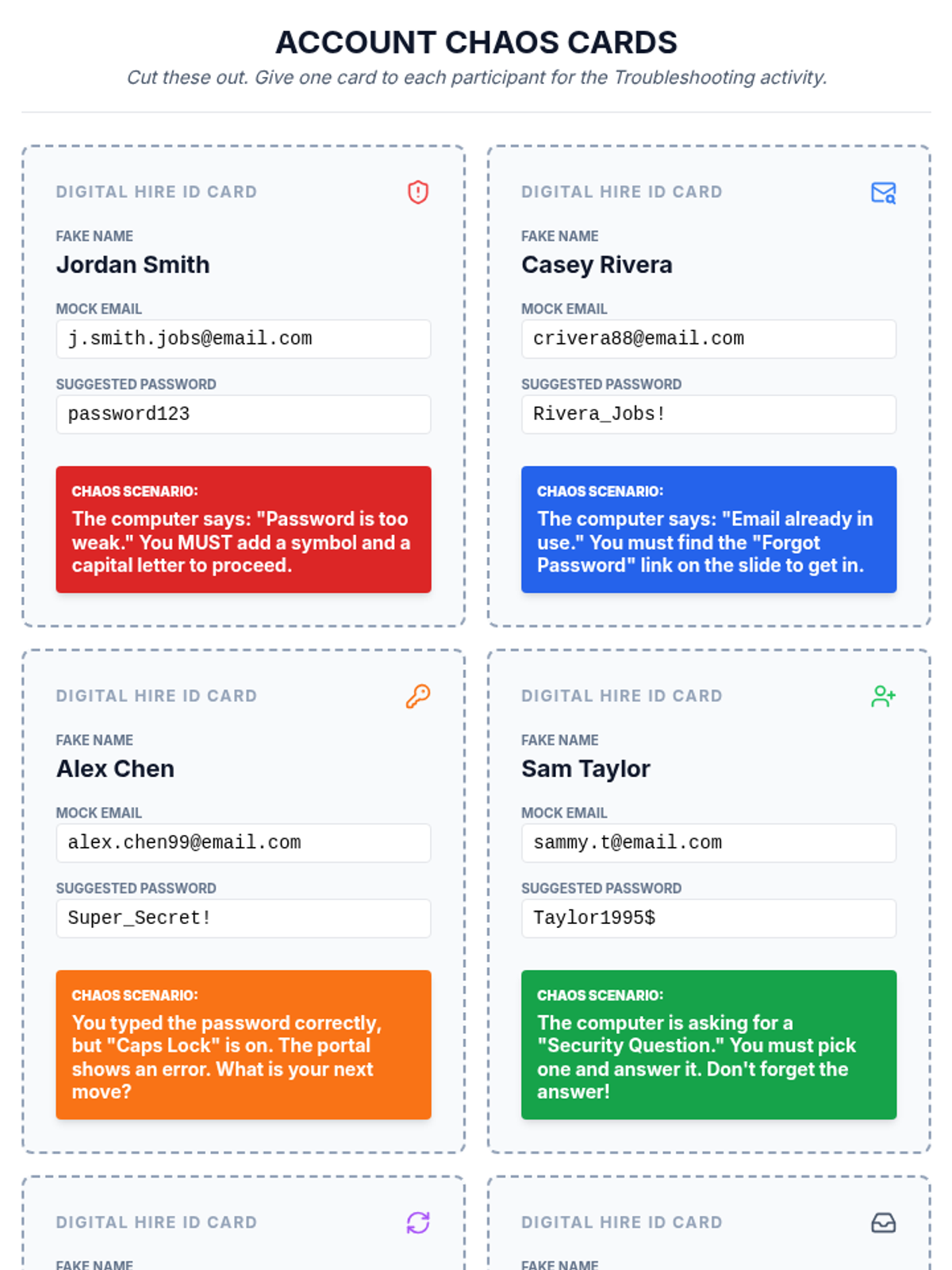
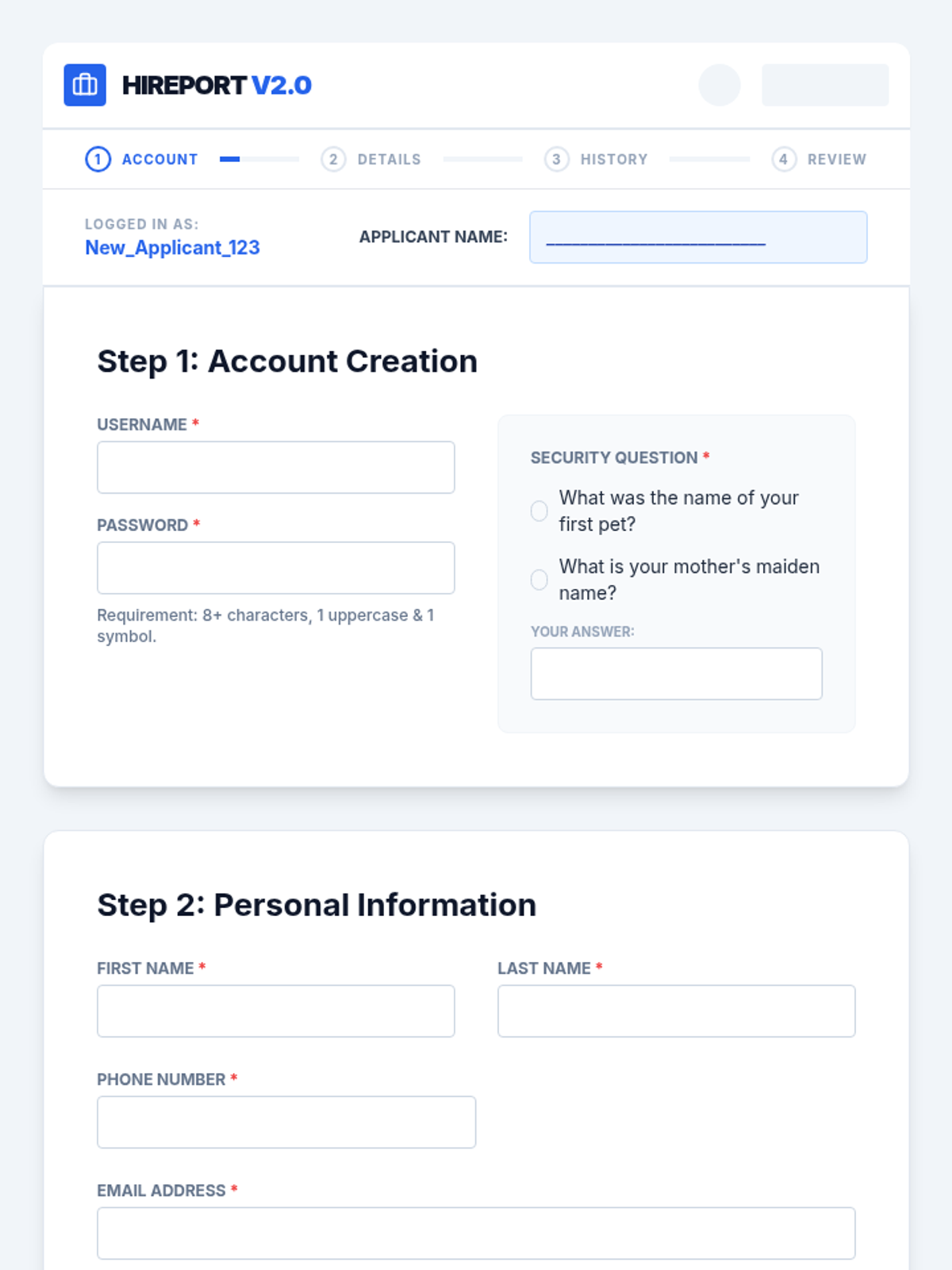
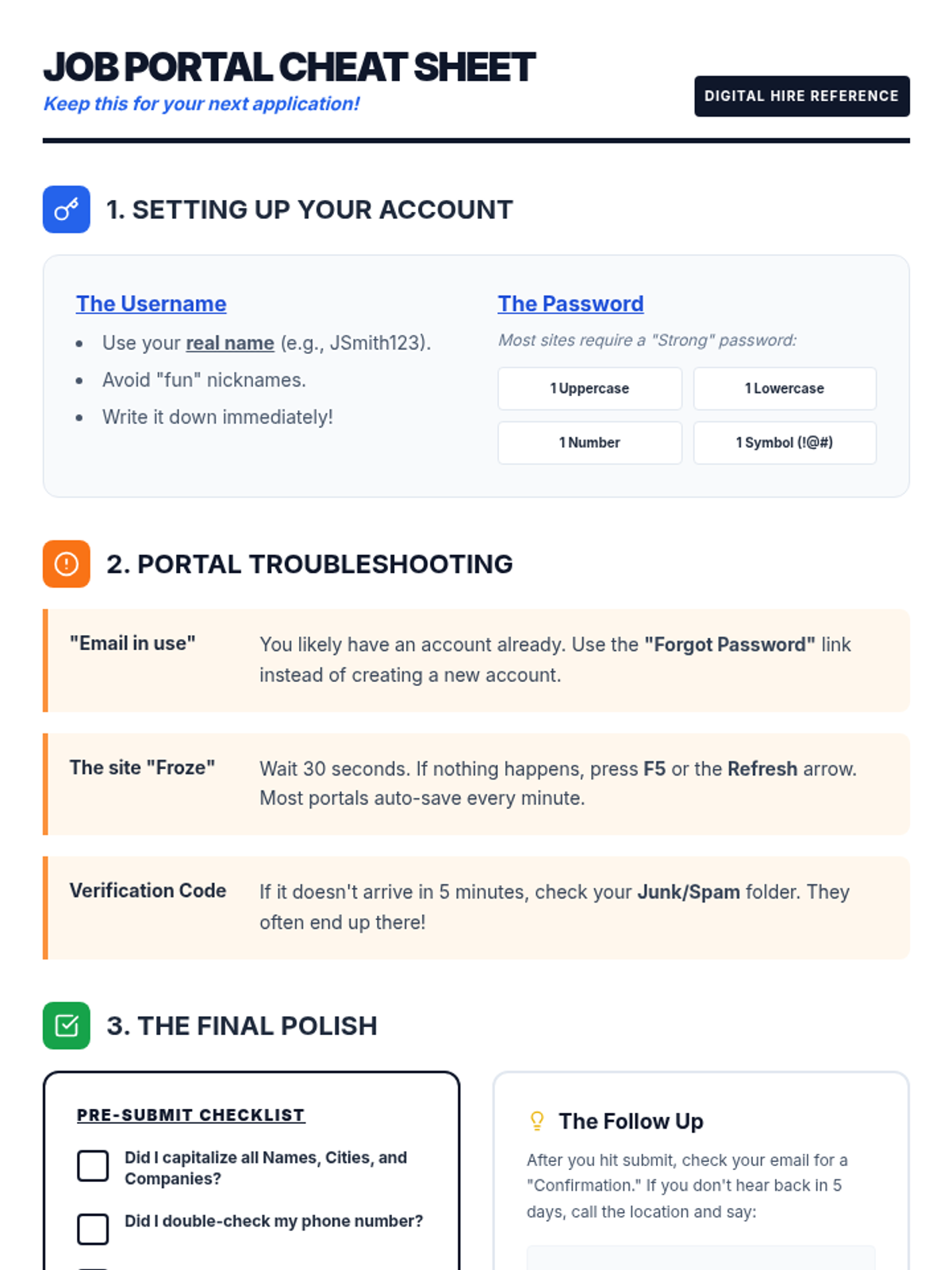
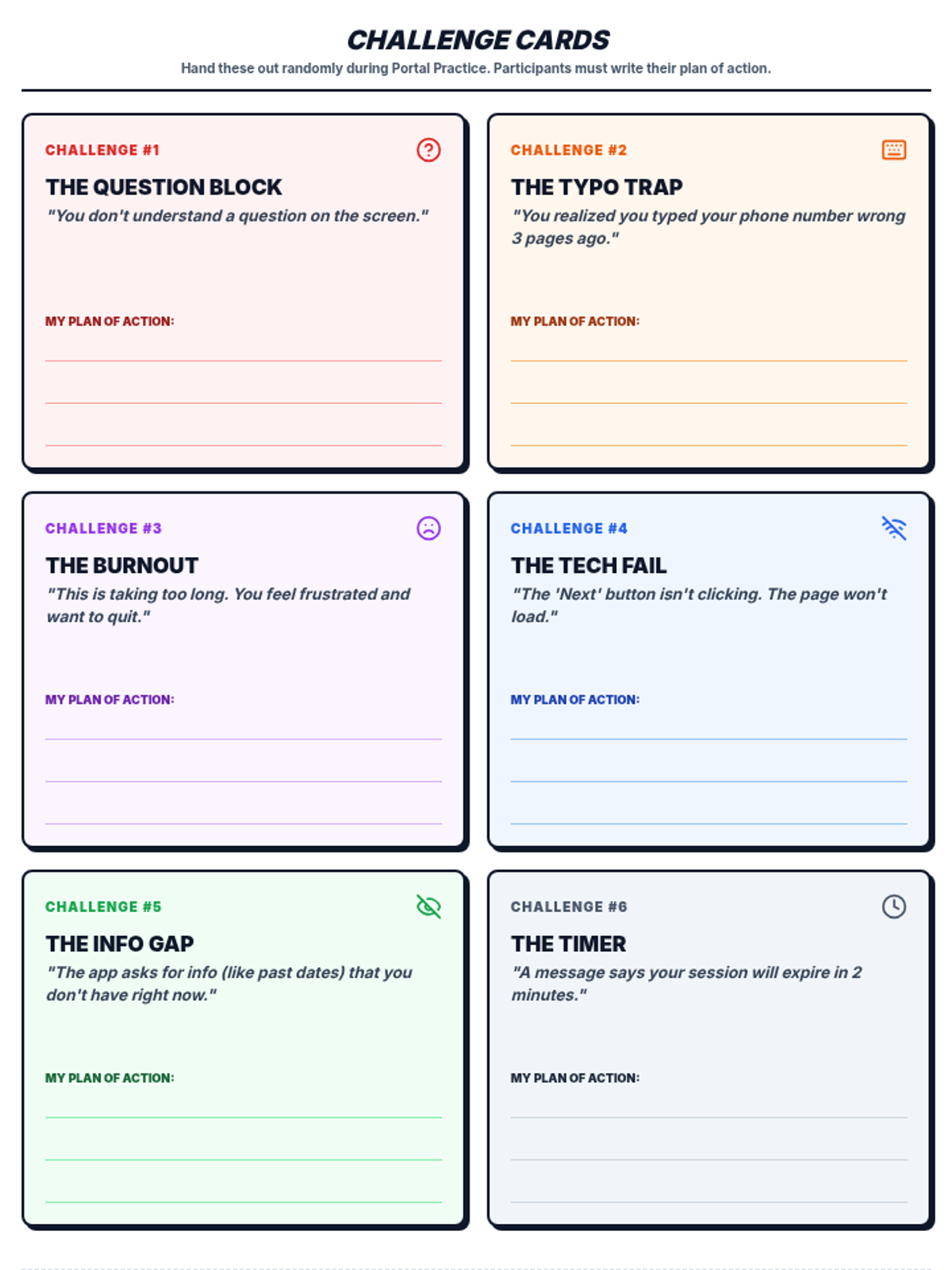
A comprehensive lesson on navigating the digital hurdles of modern job applications, from account creation to final submission. Participants practice technical skills and troubleshooting for online portals.
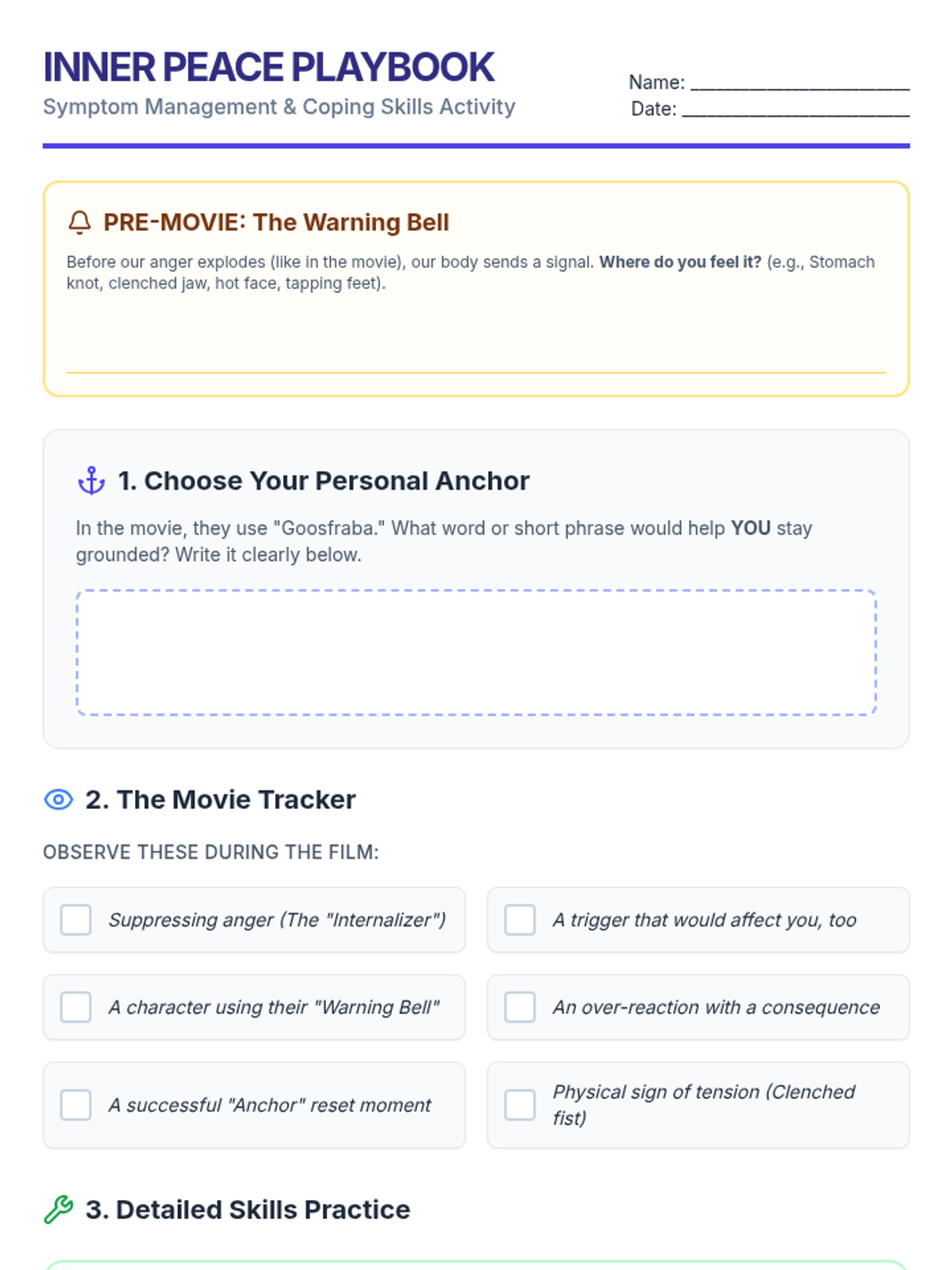
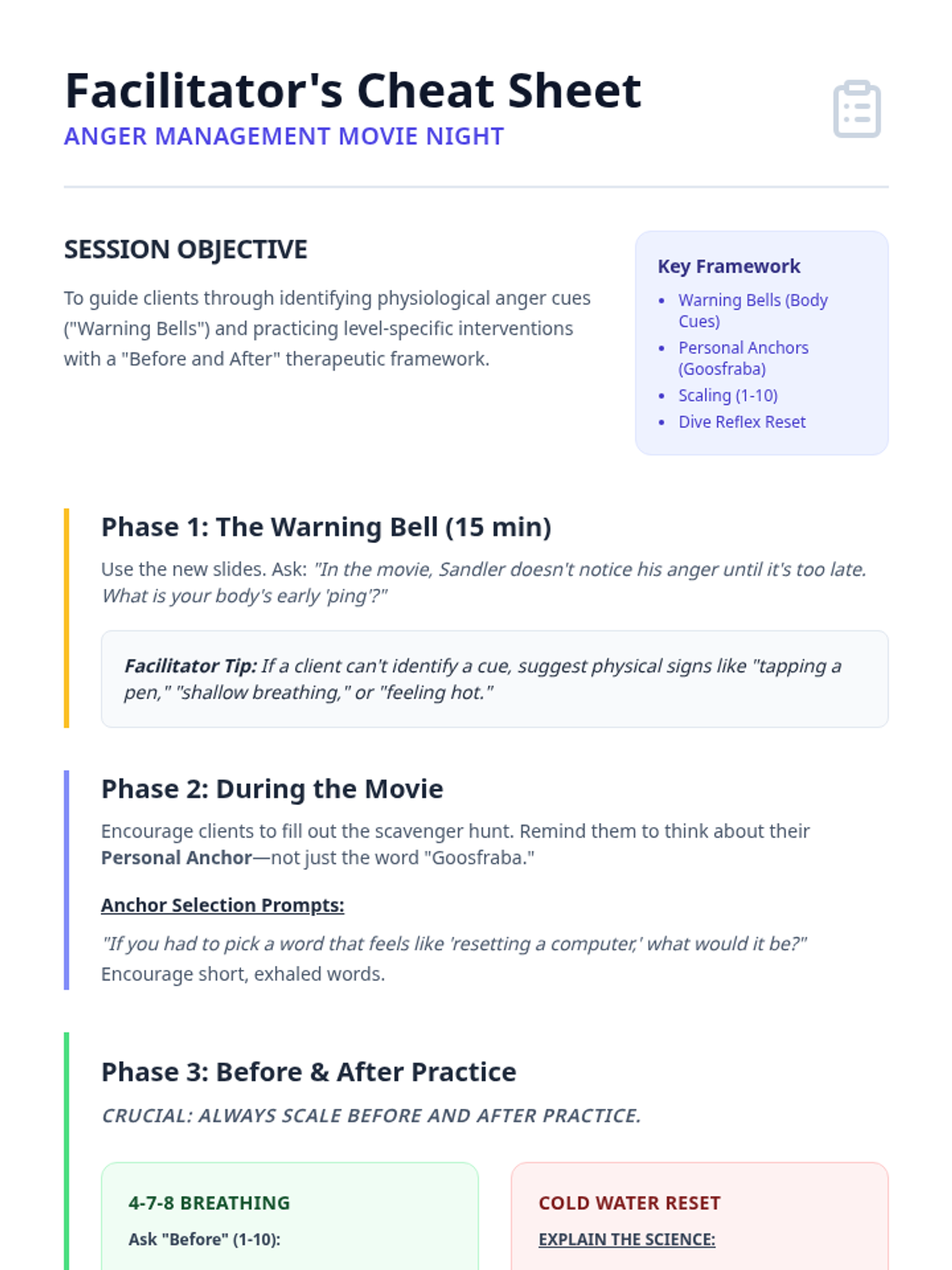
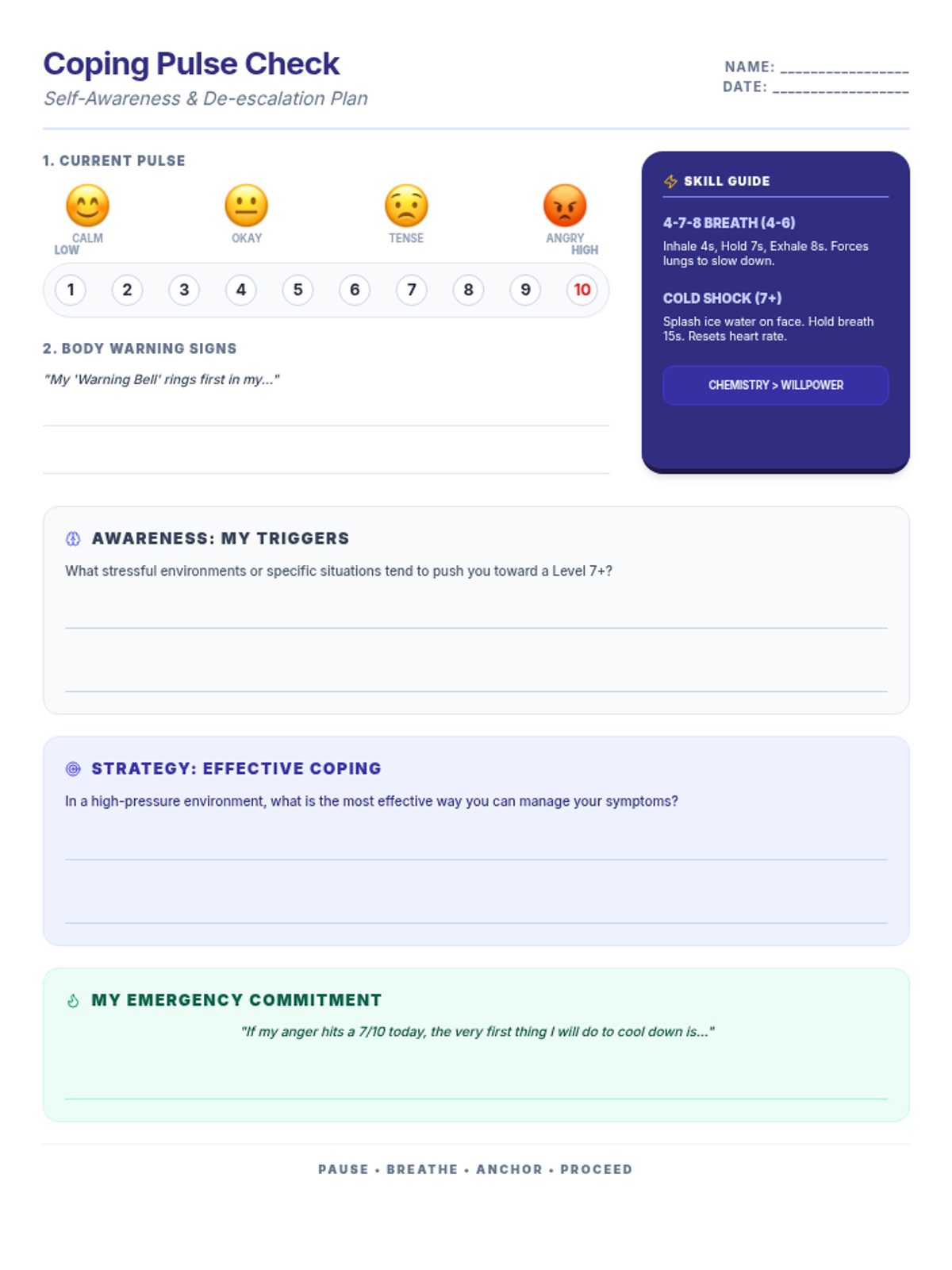
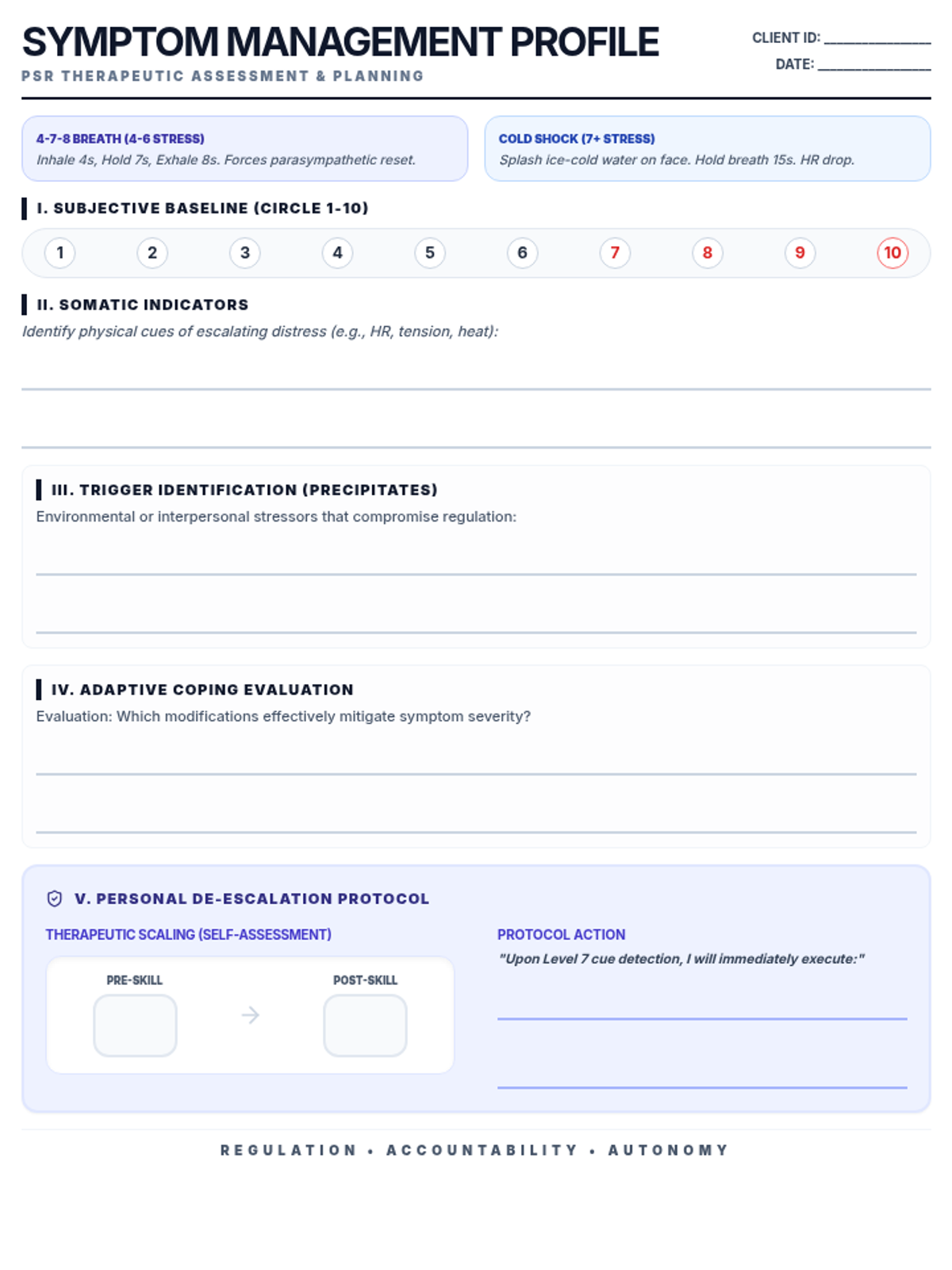
An interactive PSR group lesson centered on the movie 'Anger Management,' focusing on identifying personal triggers and building a hierarchy of coping skills from moderate stress to severe anger.
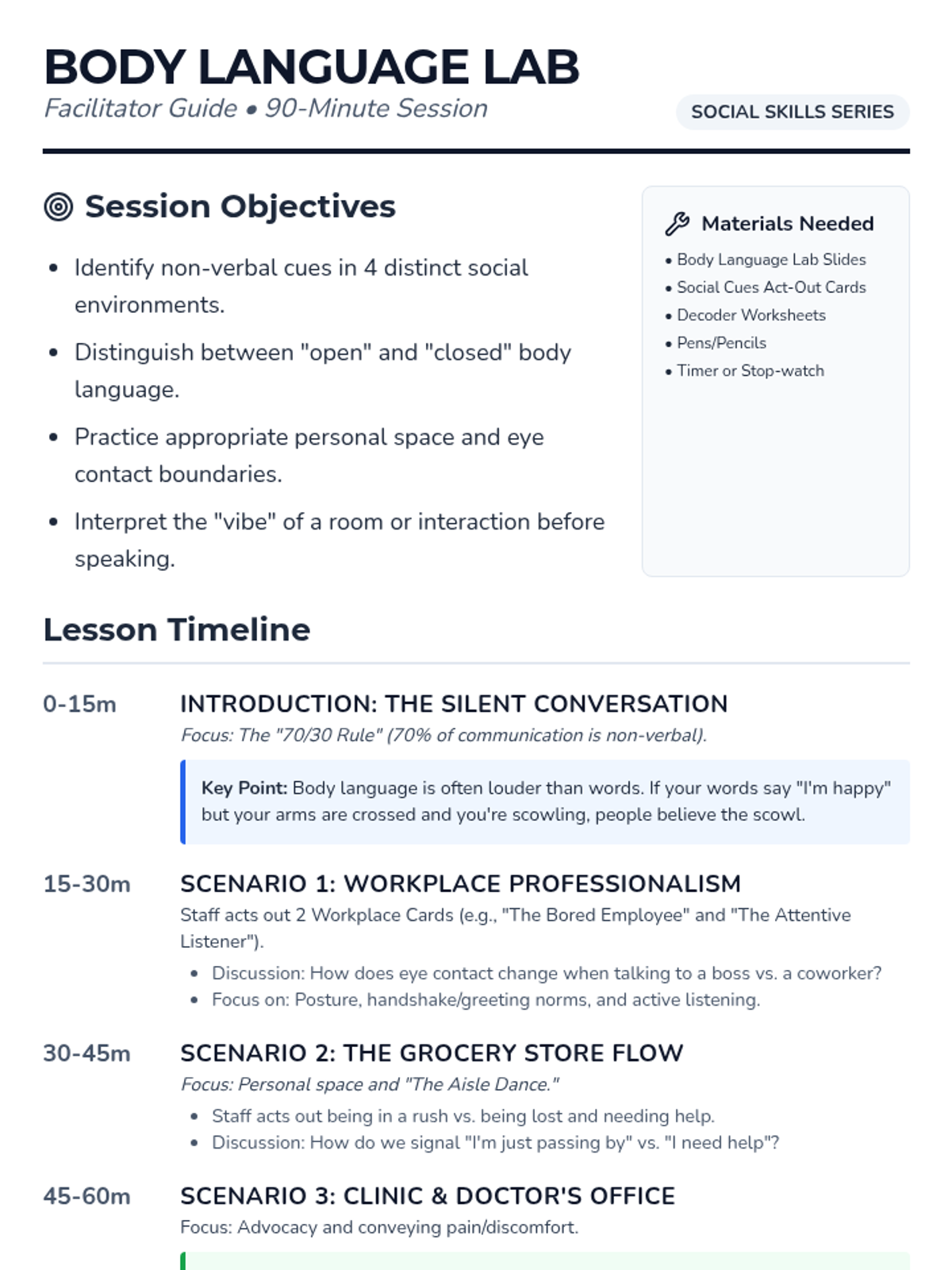
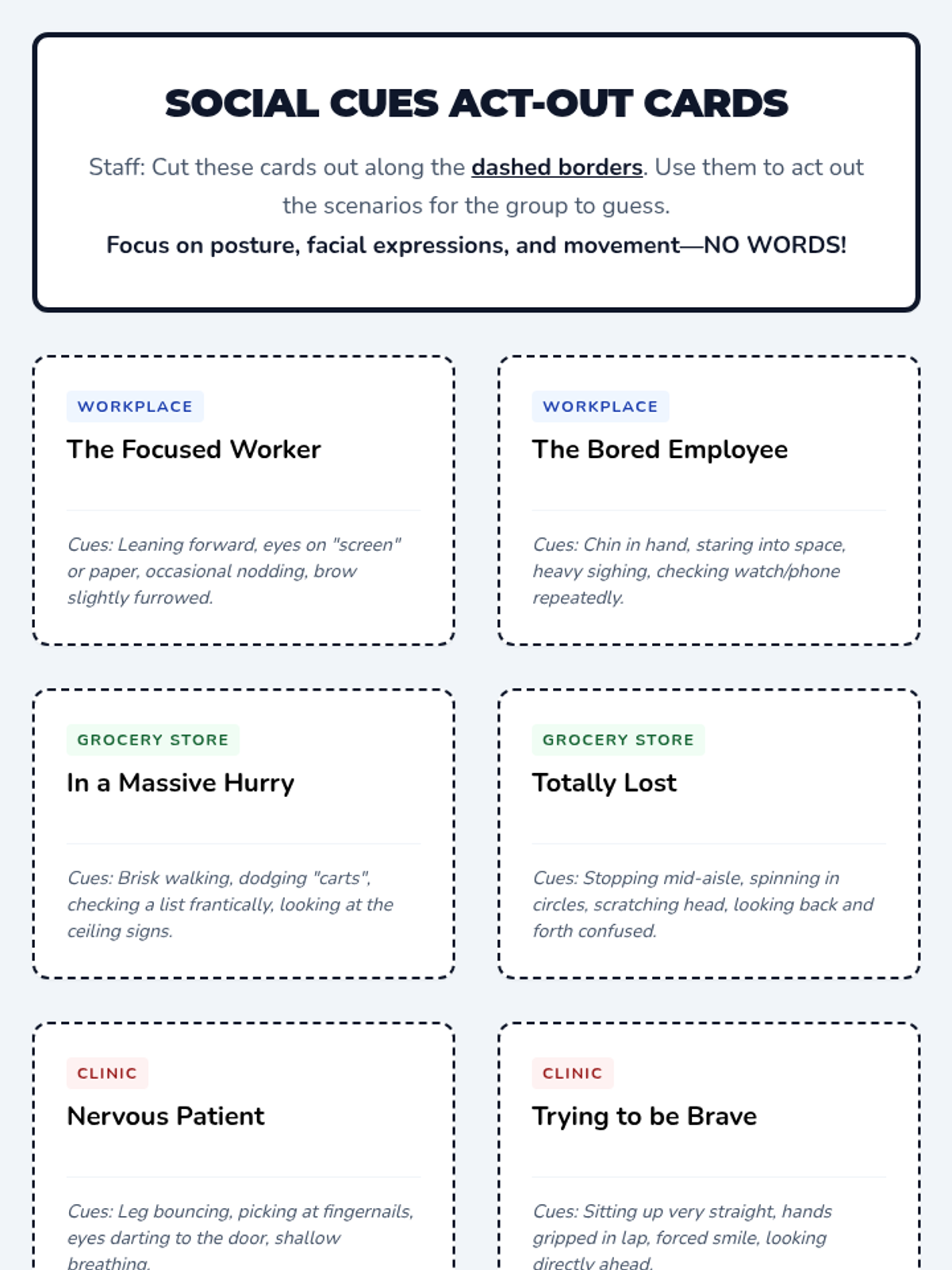
A 90-minute verbal-only workshop on body language in workplace, retail, clinical, and social settings. Uses interactive live acting and guided group discussion.
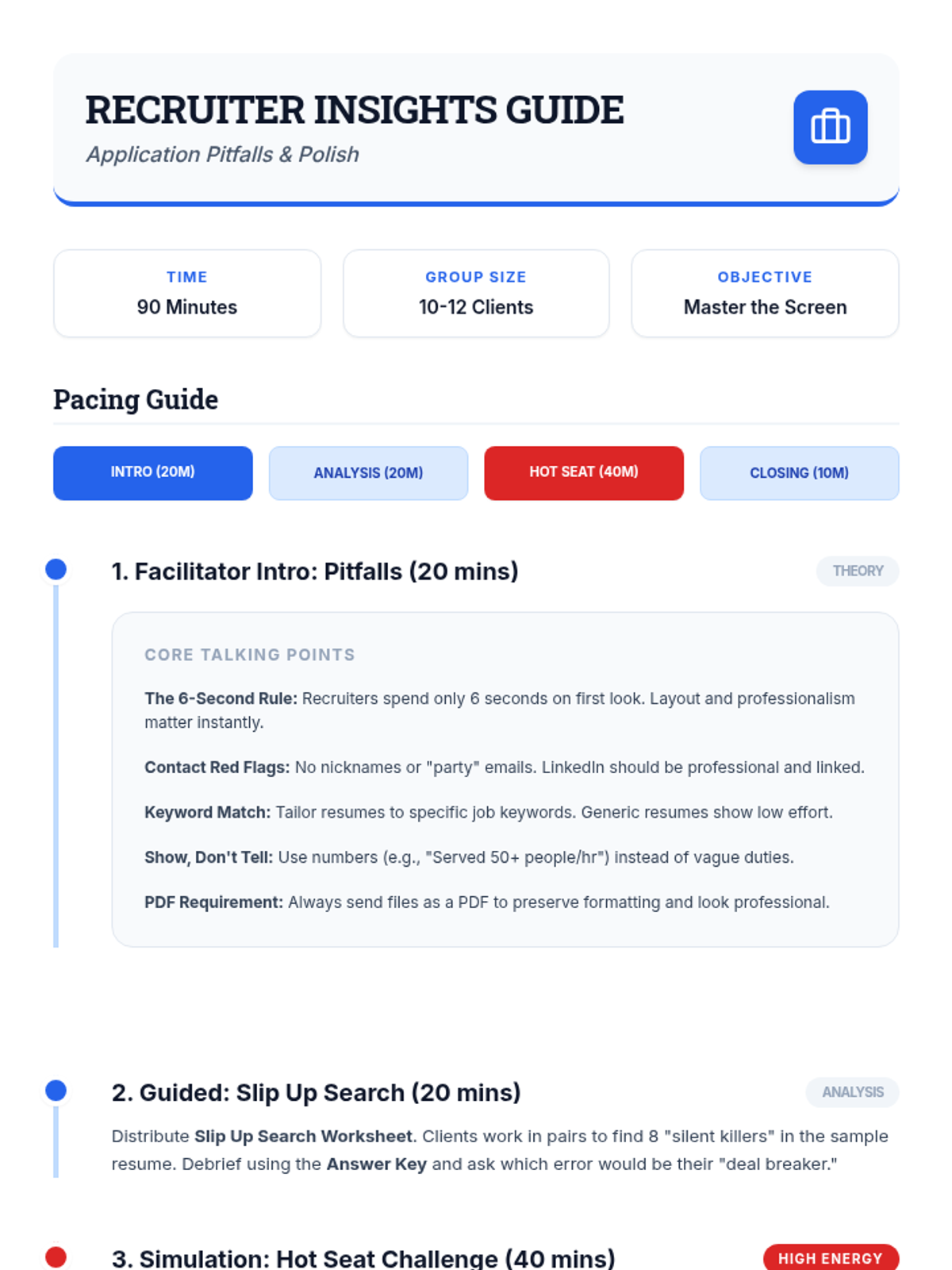
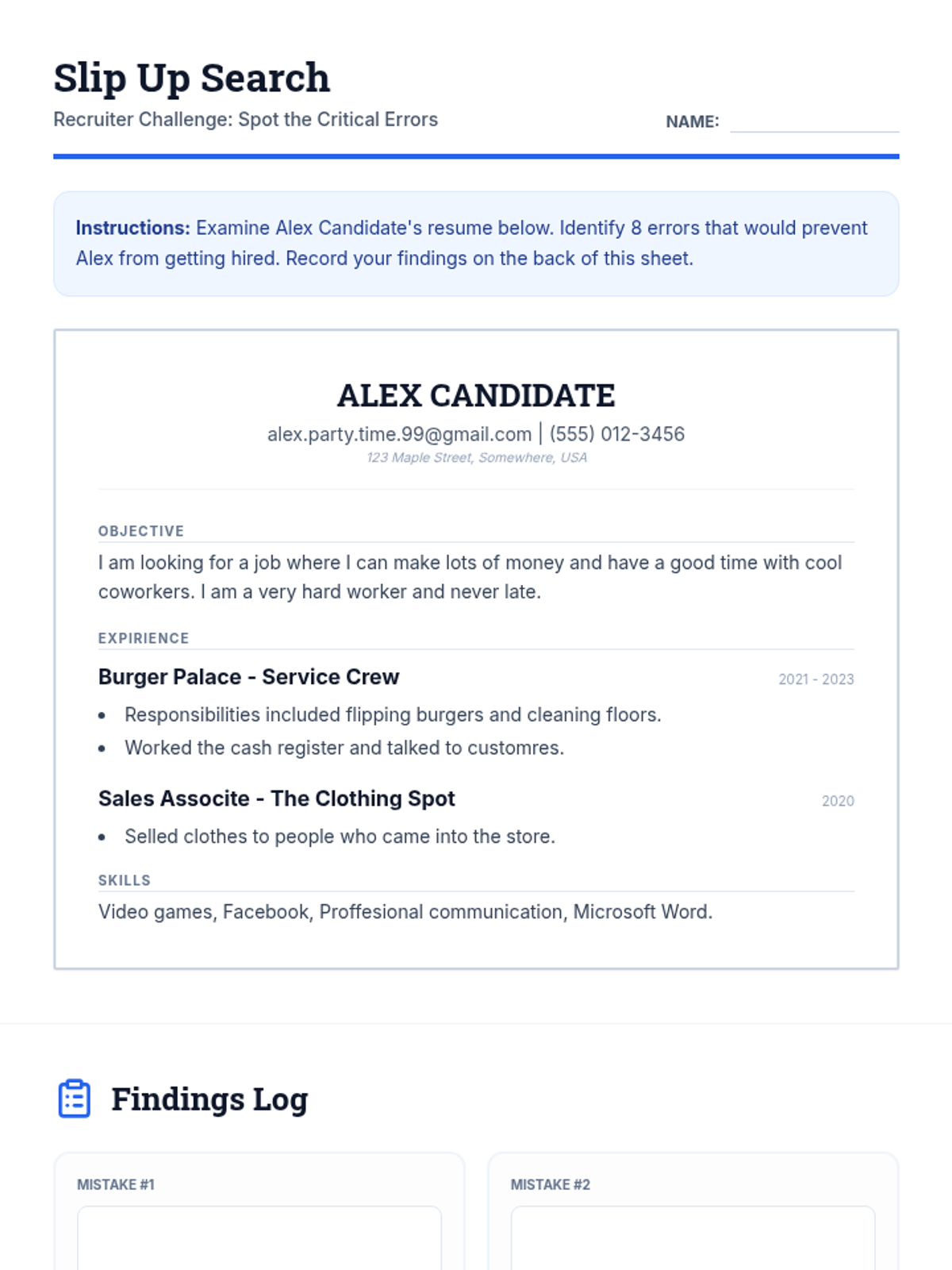
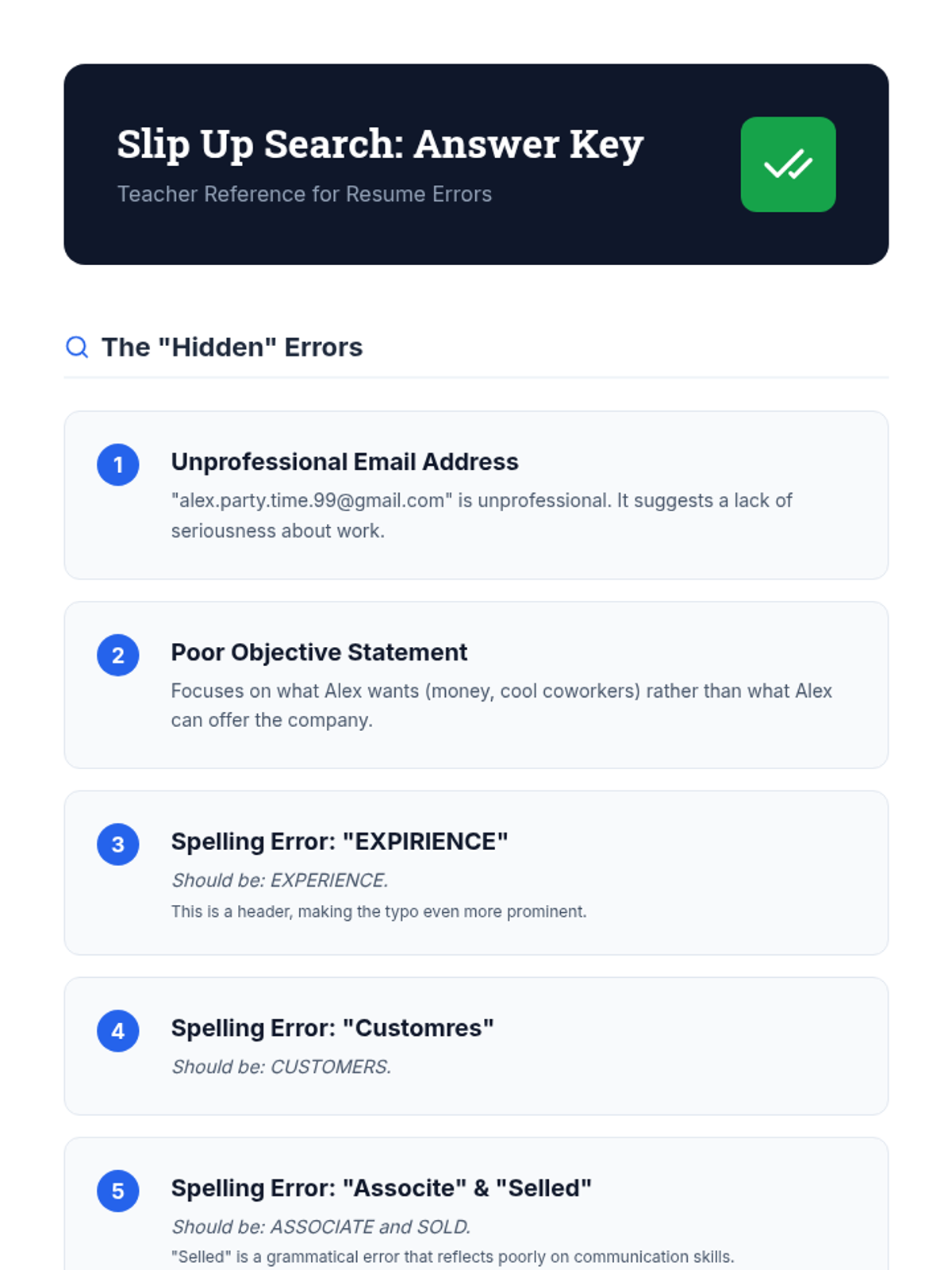
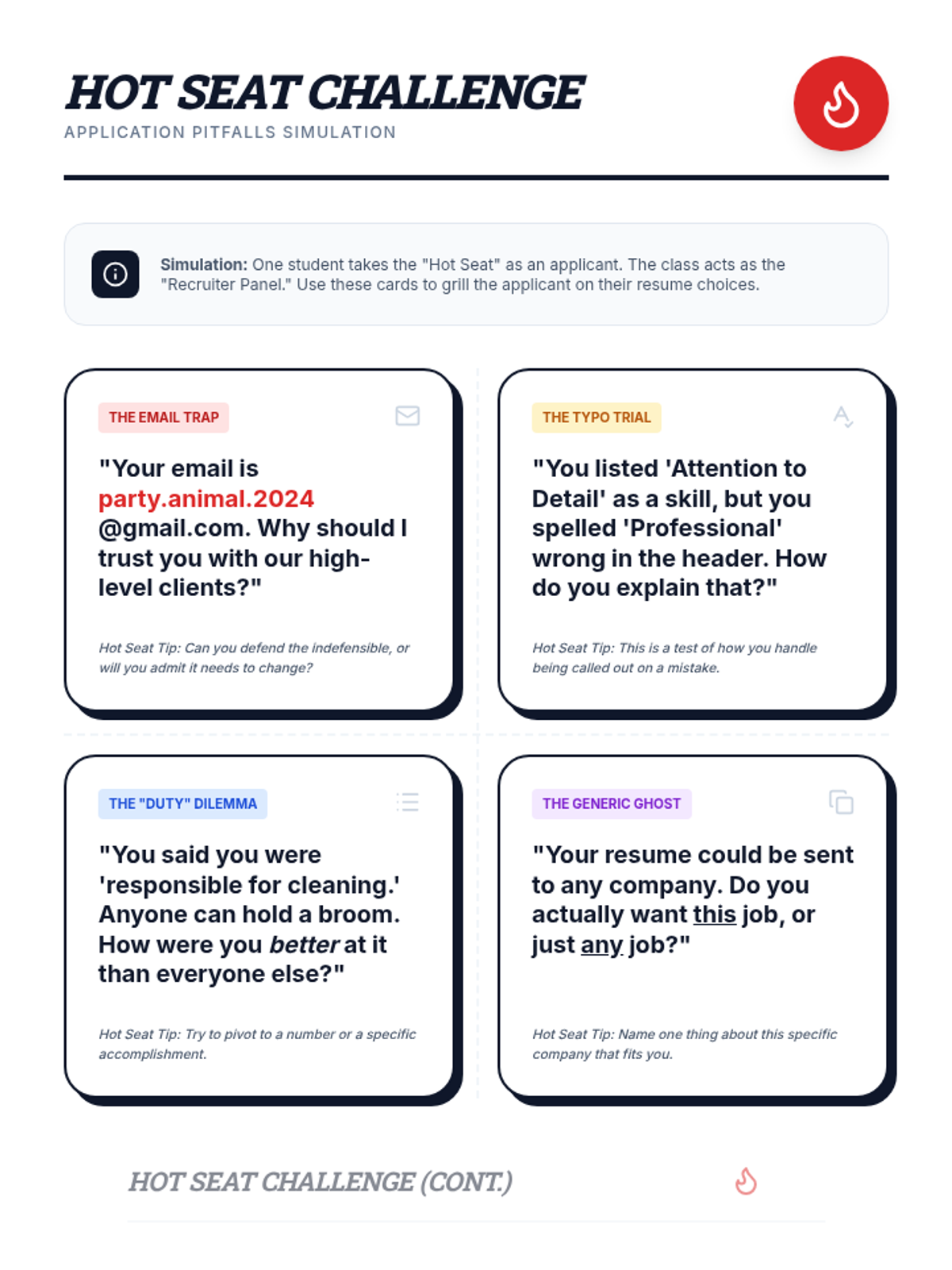
A comprehensive lesson identifying common workplace application errors, from resume typos to unprofessional email addresses, and how to fix them.
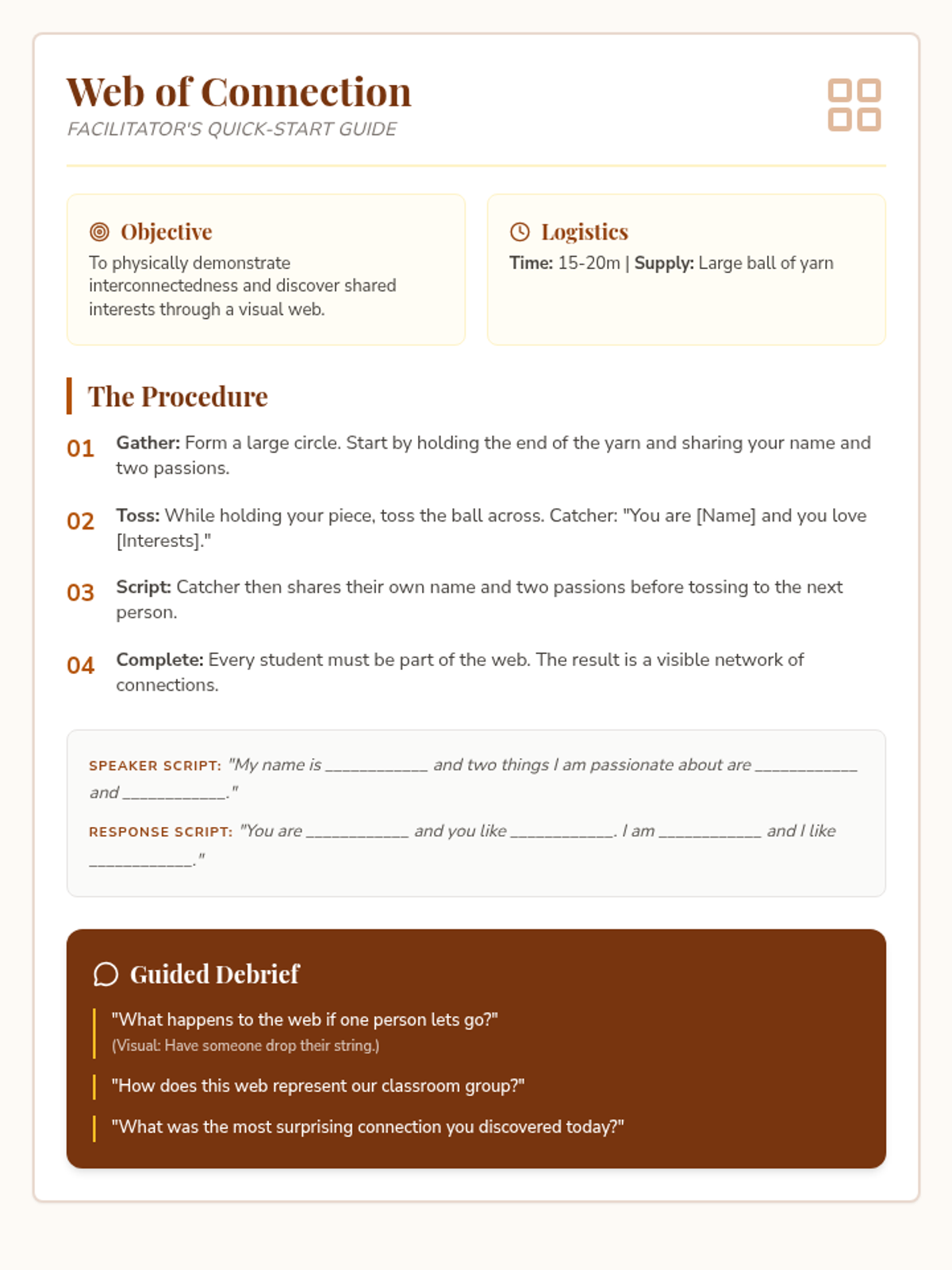
A community-building activity where students use a ball of string to create a physical web, visualizing their shared interests and the strength of their group connection.
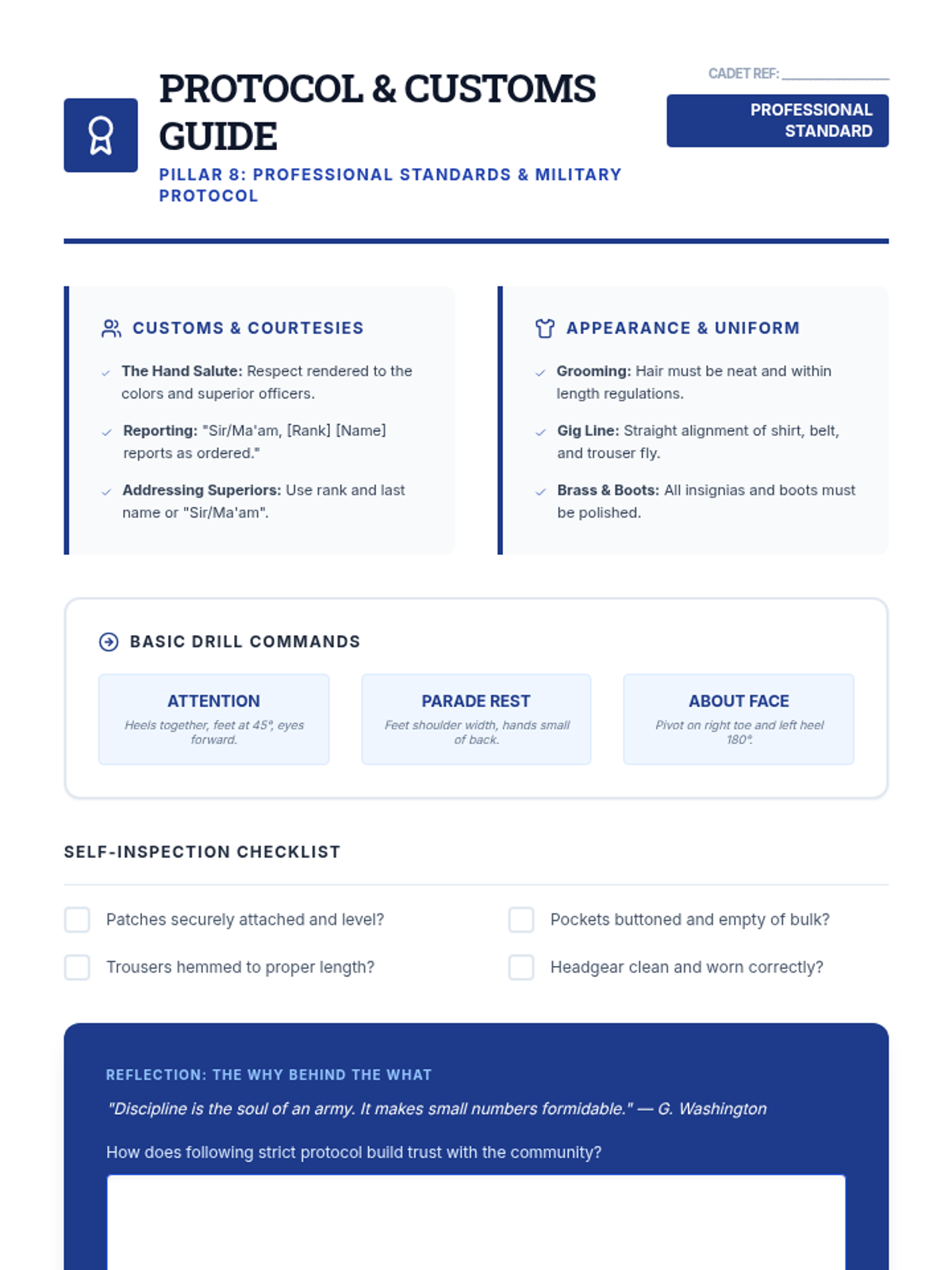
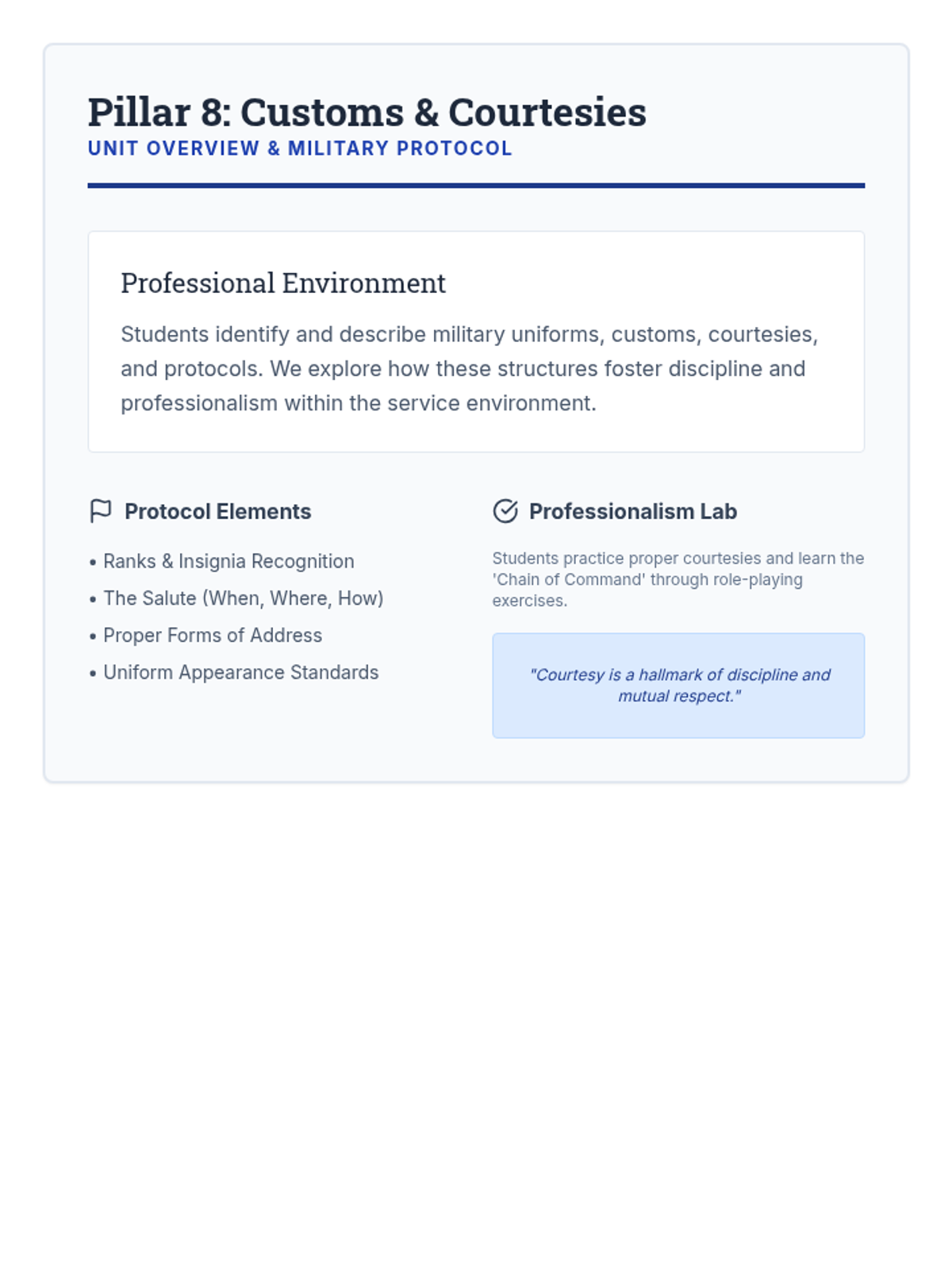
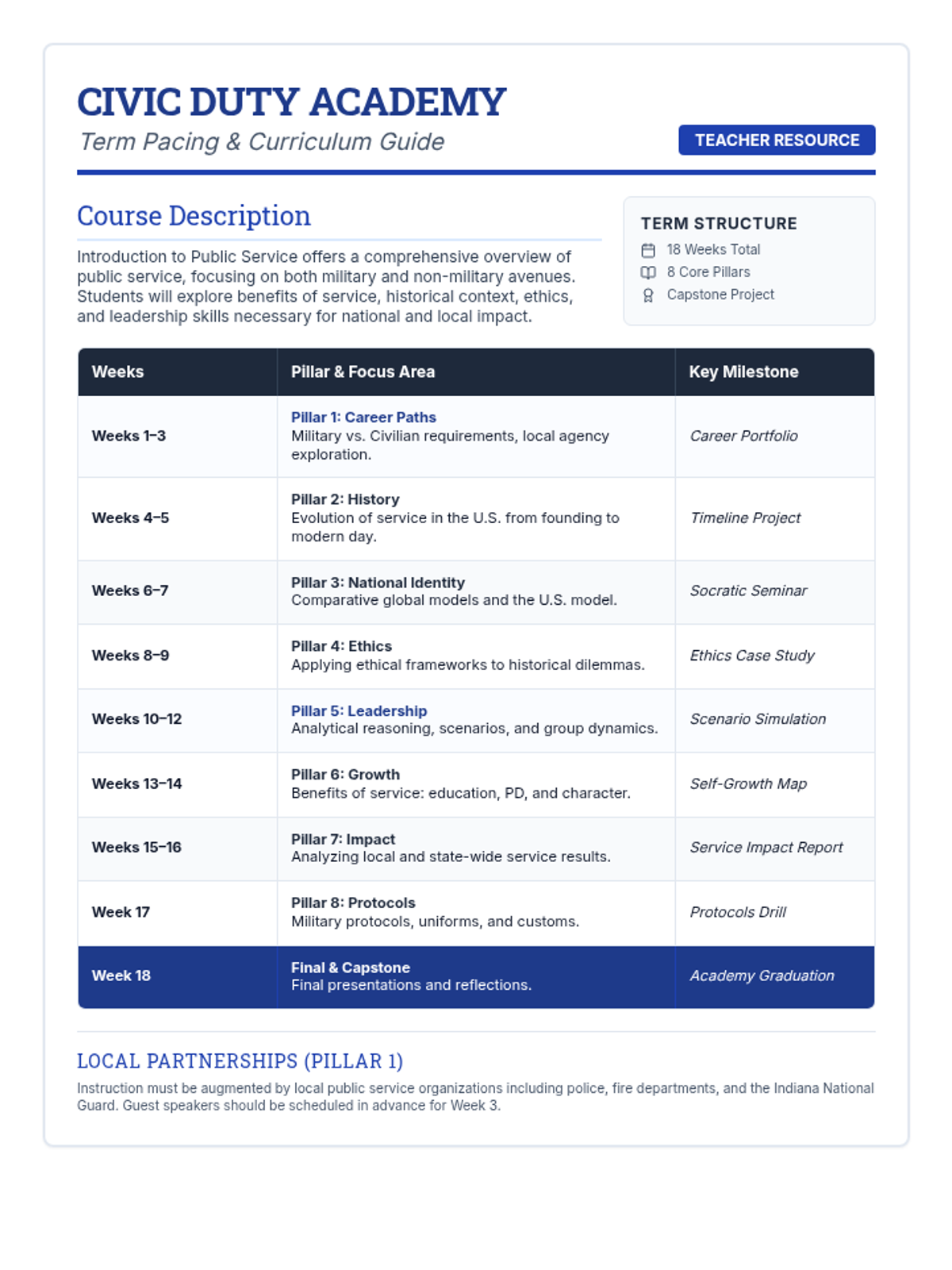
Master military customs, courtesies, protocols, and uniform standards essential for professional military environments.
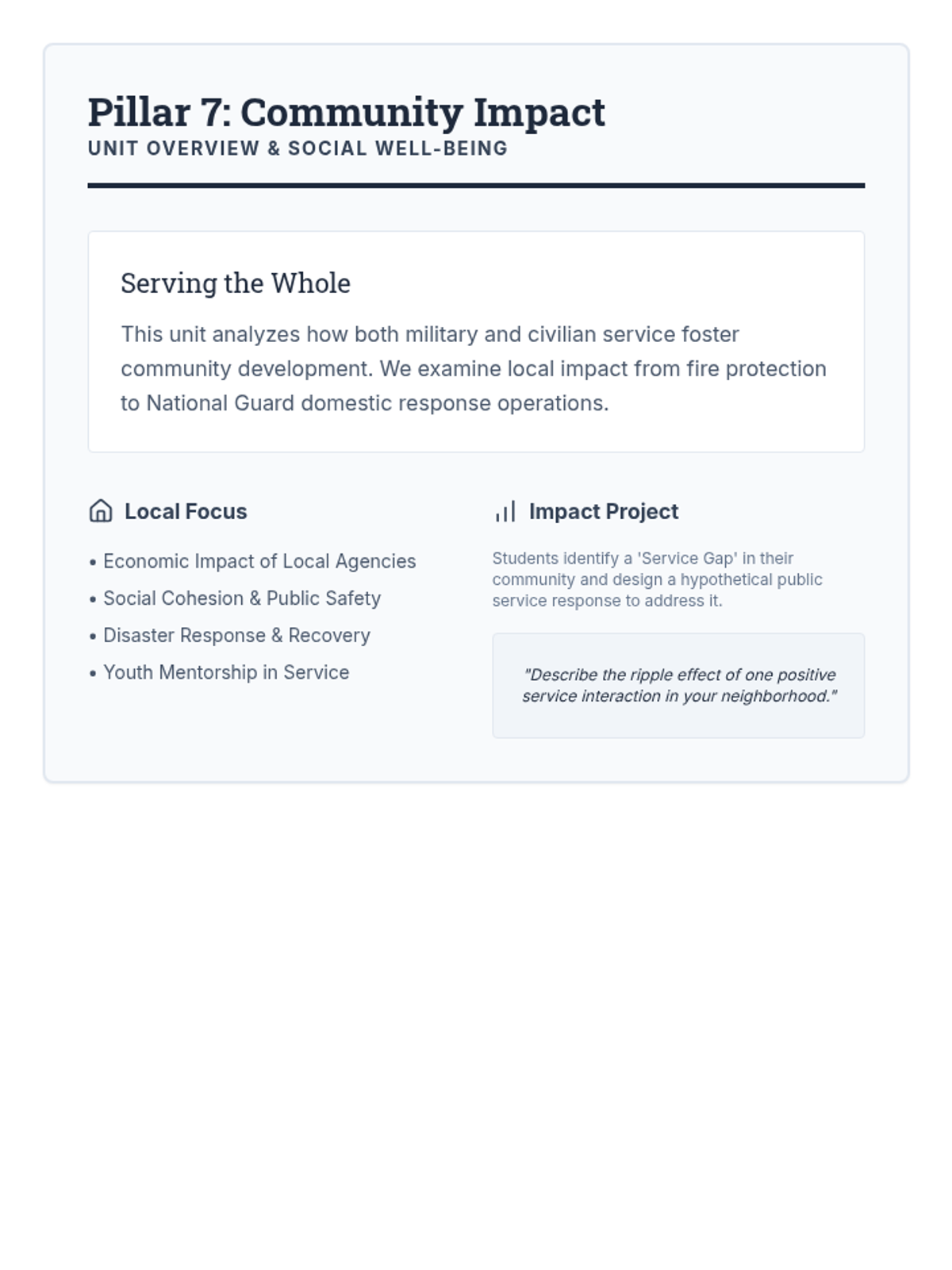
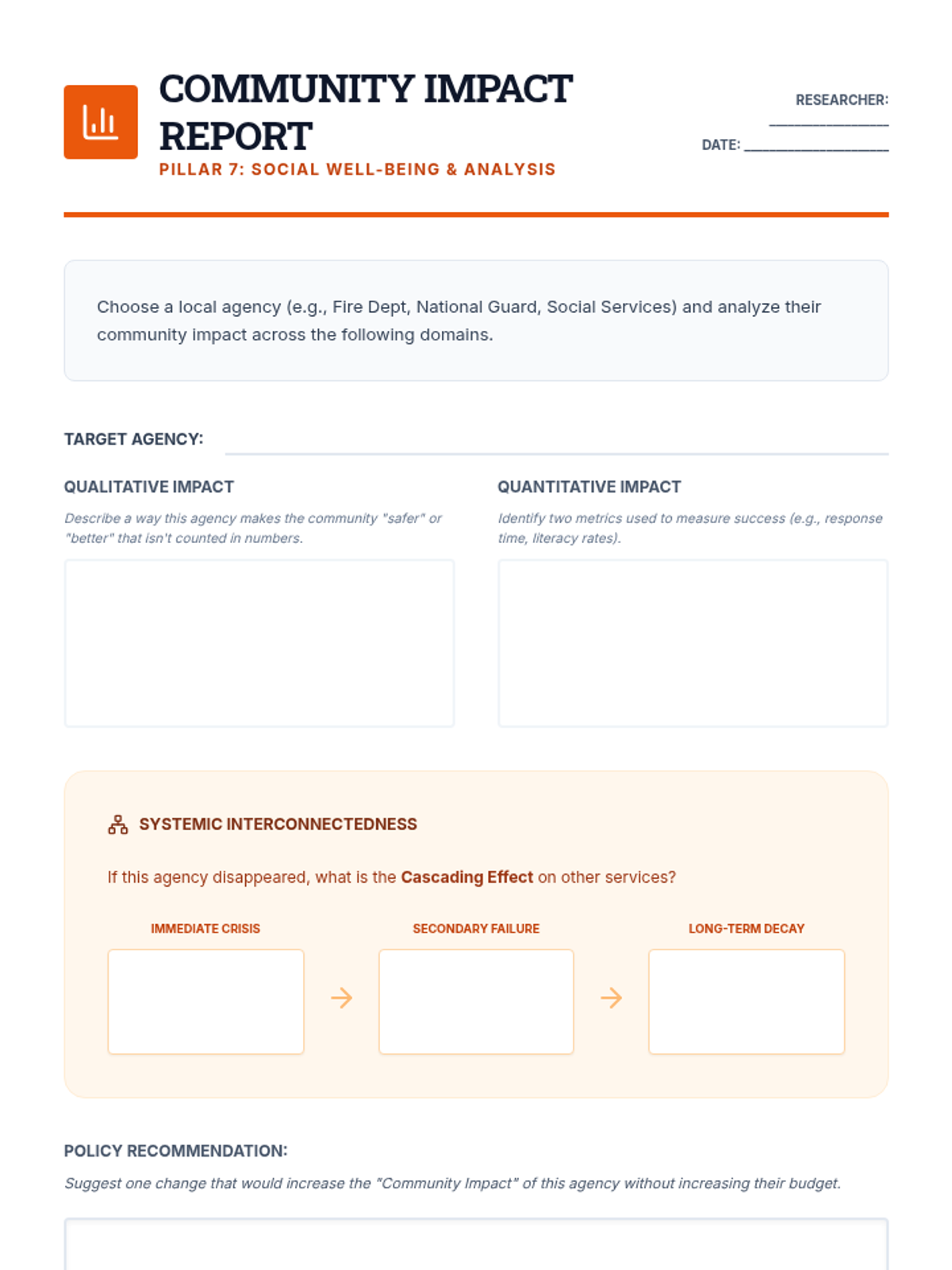
Assess the positive impact of public service on local and national communities, focusing on development and societal well-being.
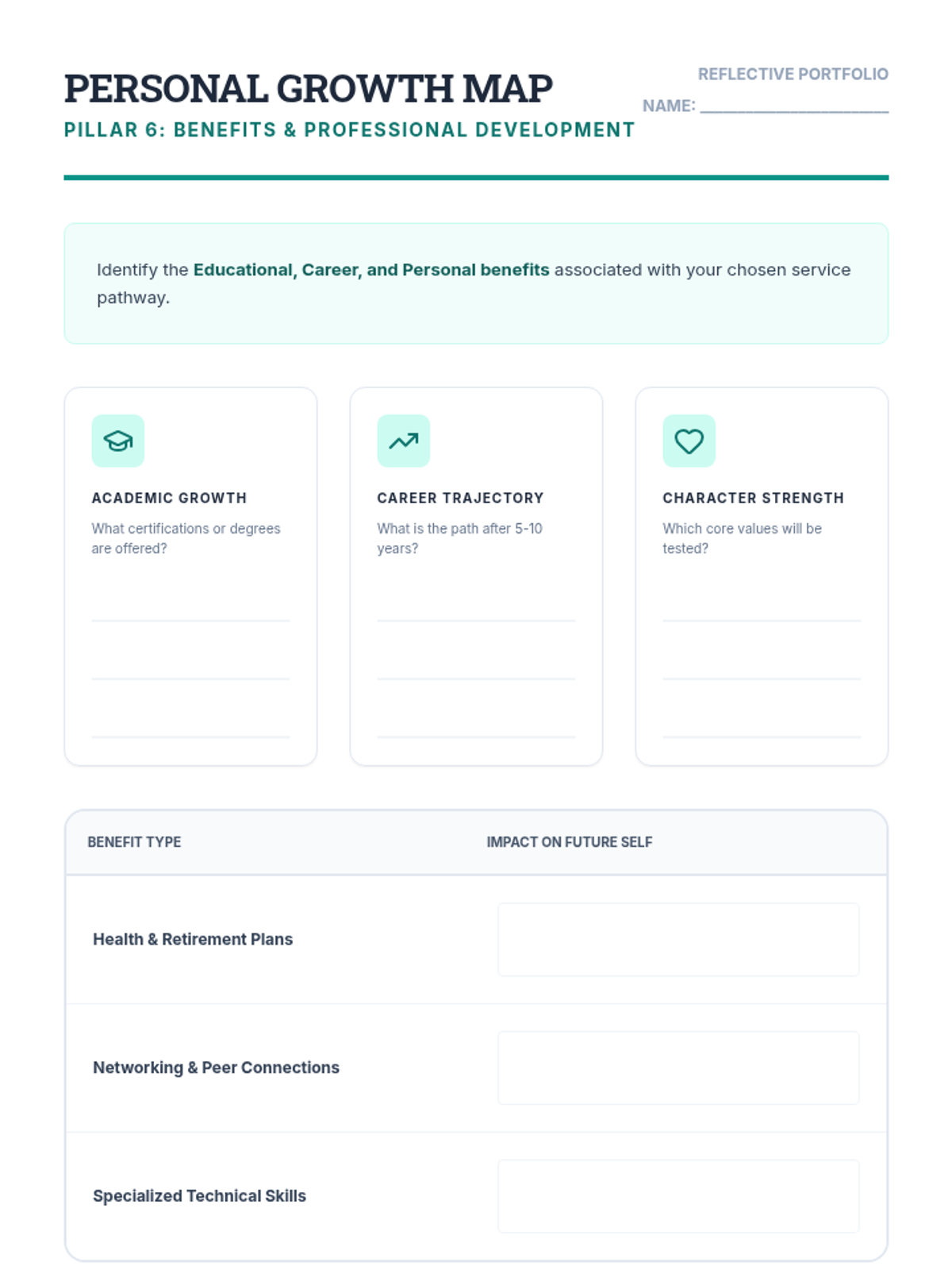
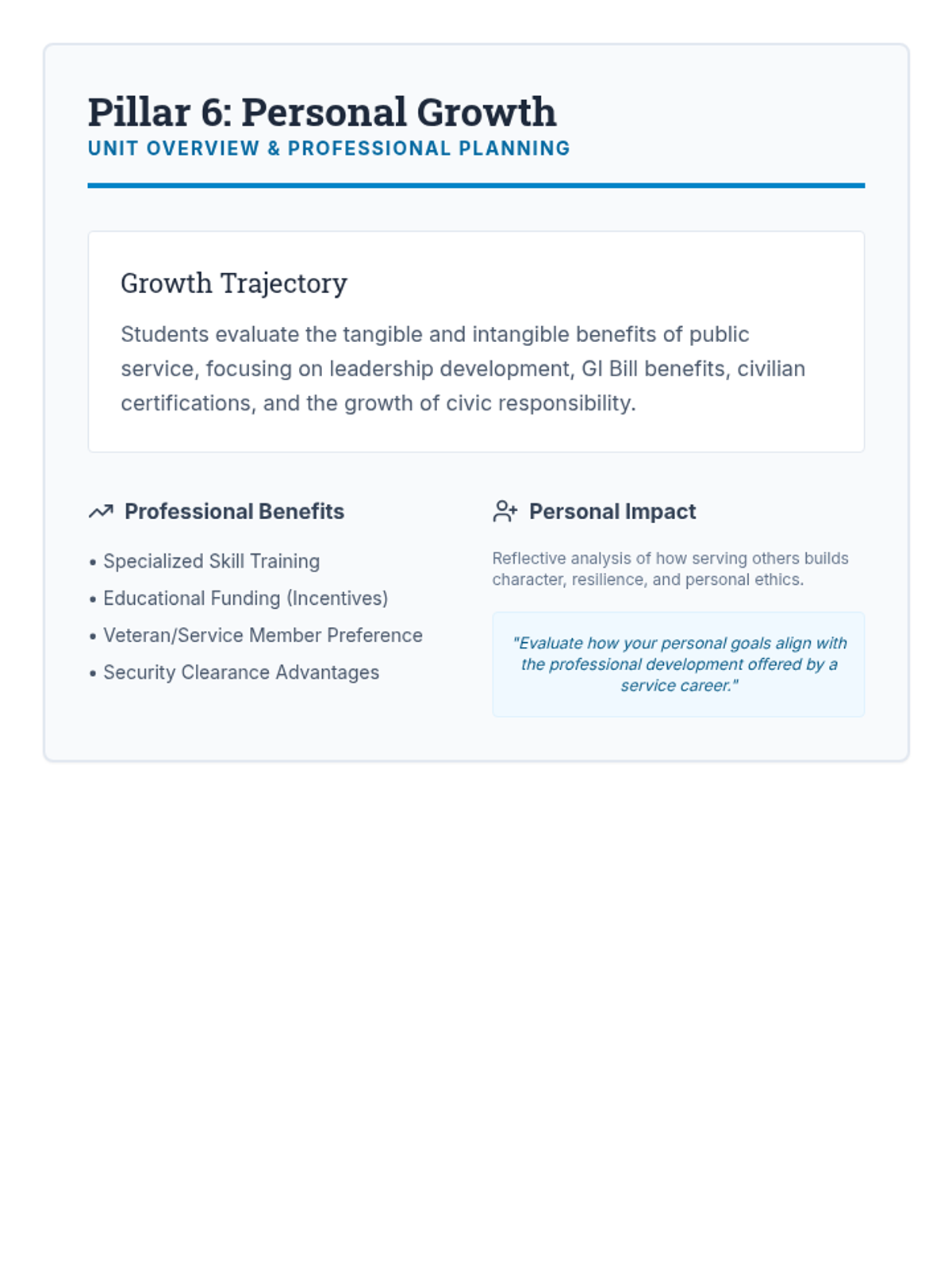
Examine the personal and professional growth resulting from service careers, including civic responsibility and professional advancement.
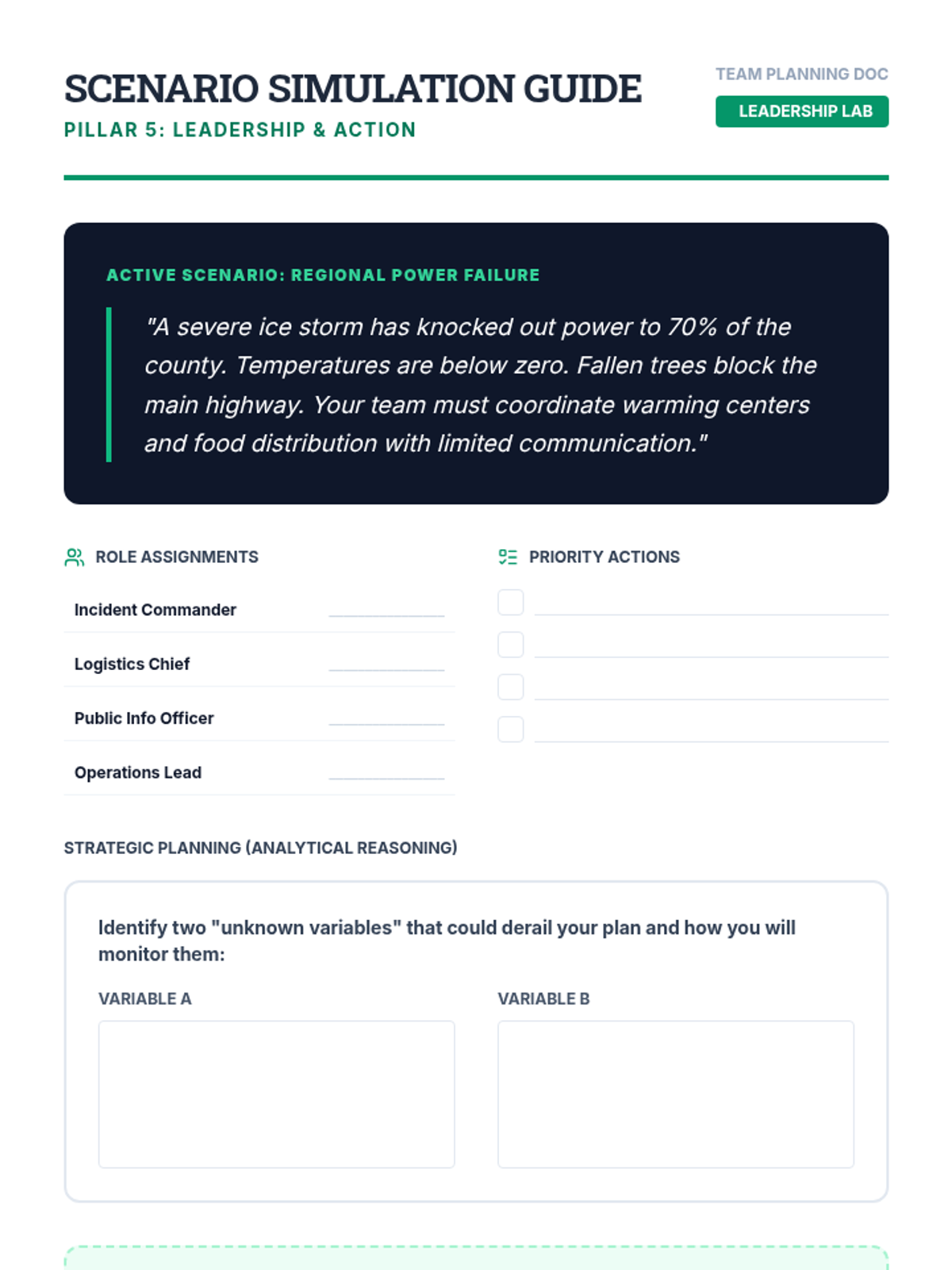
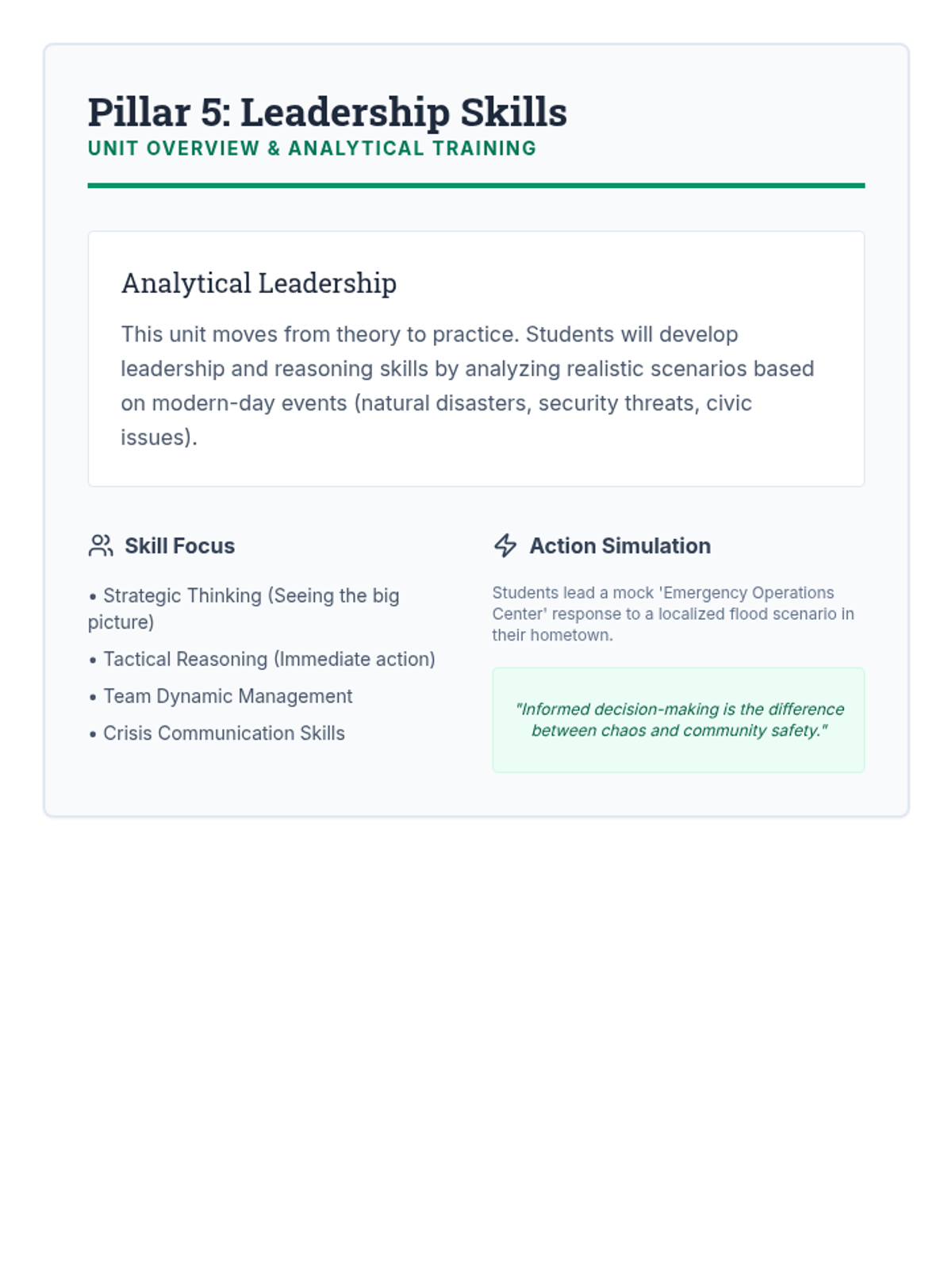
Develop leadership, critical thinking, and analytical reasoning skills through realistic public service simulations and current event analysis.
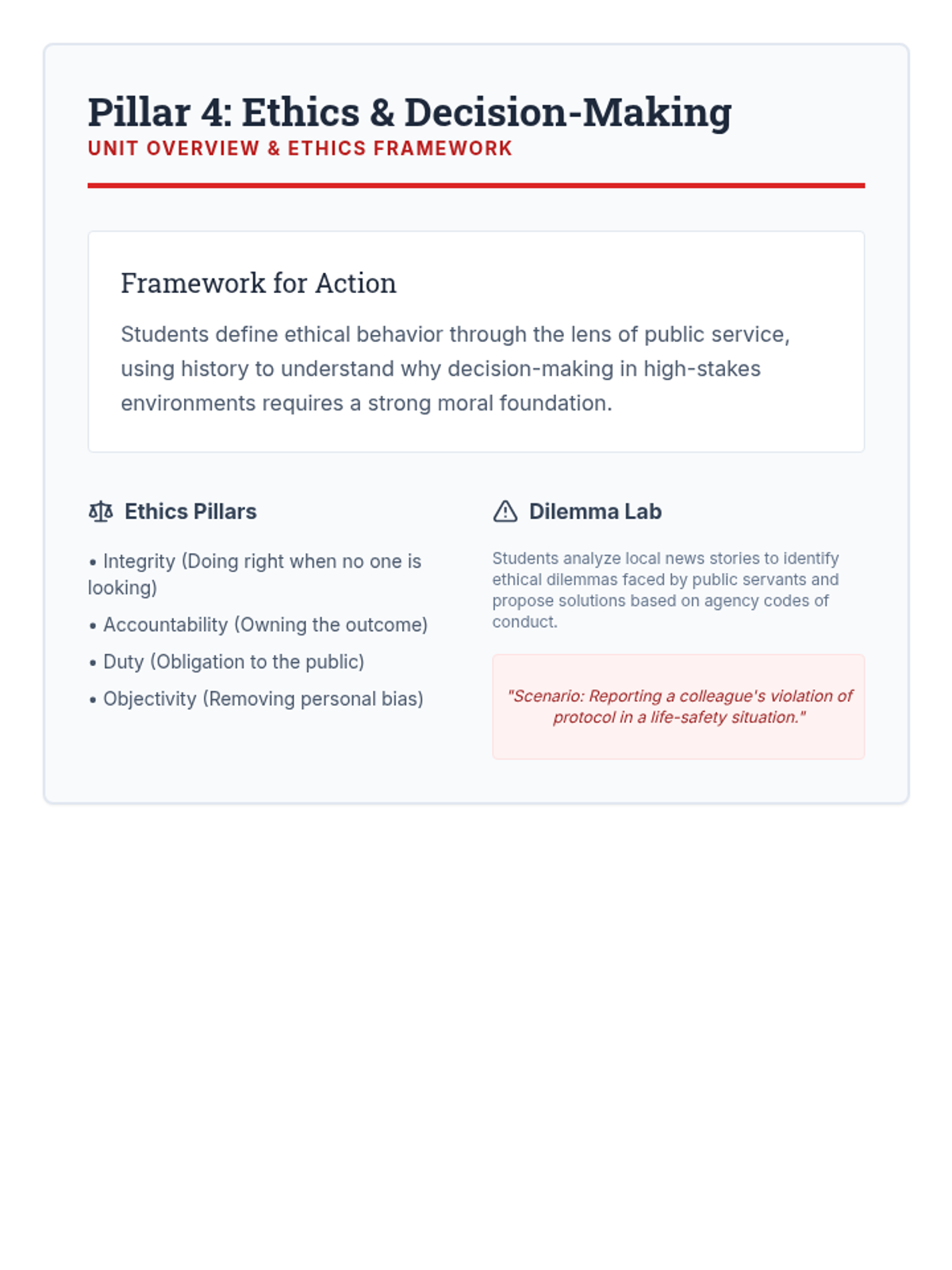
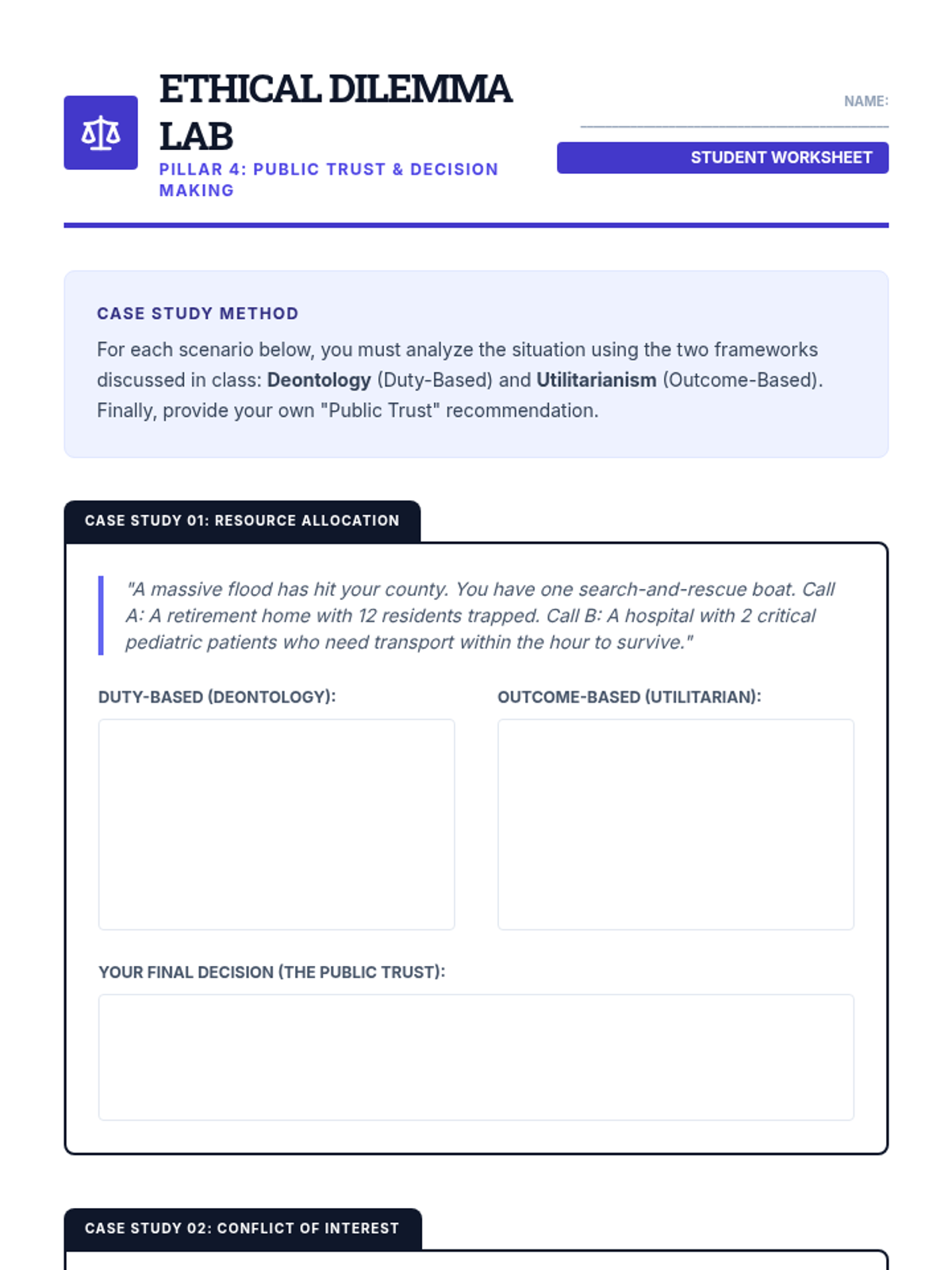
Define and apply ethical frameworks to public service scenarios, analyzing complex challenges and the role of ethics in leadership.
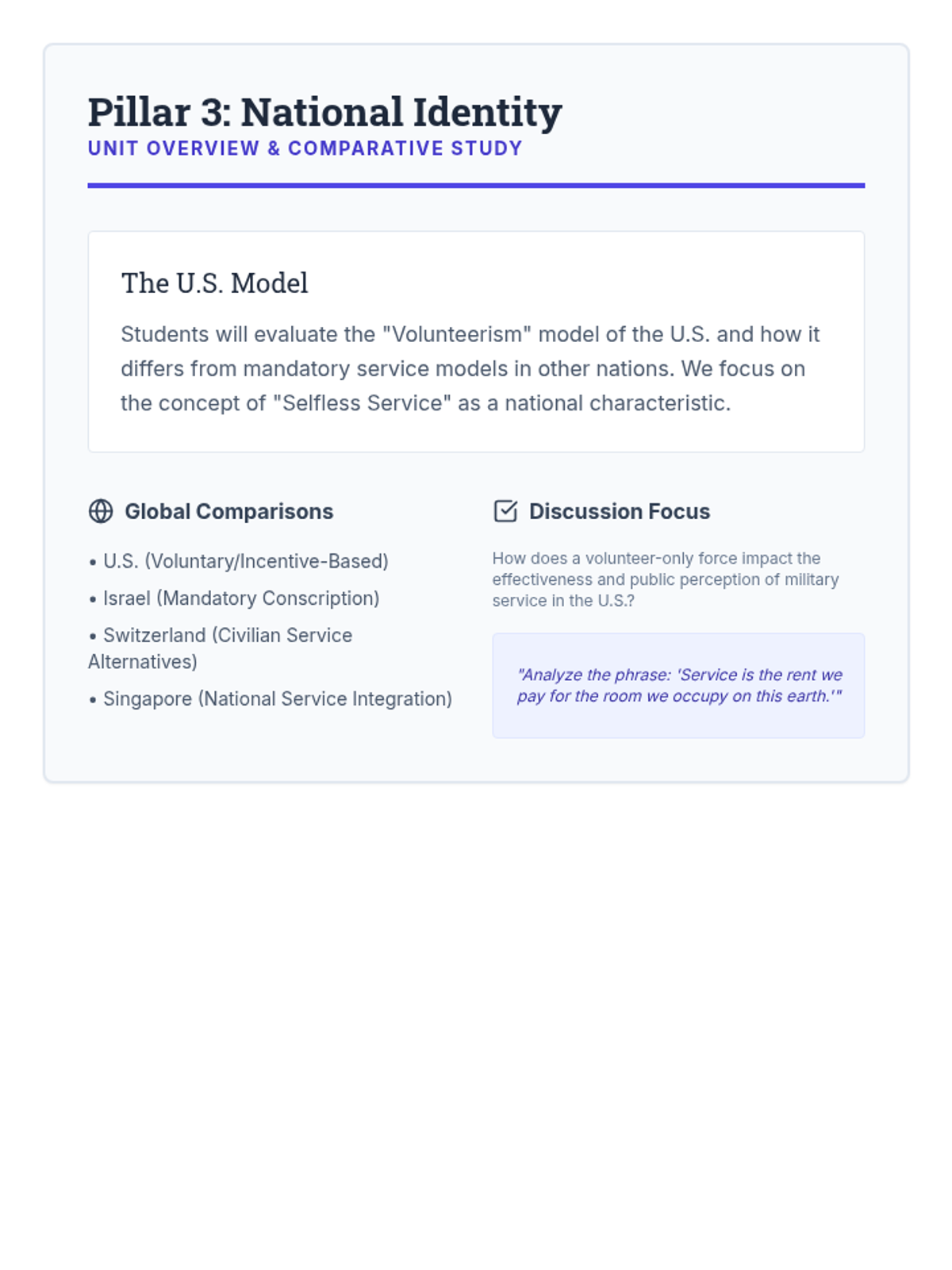
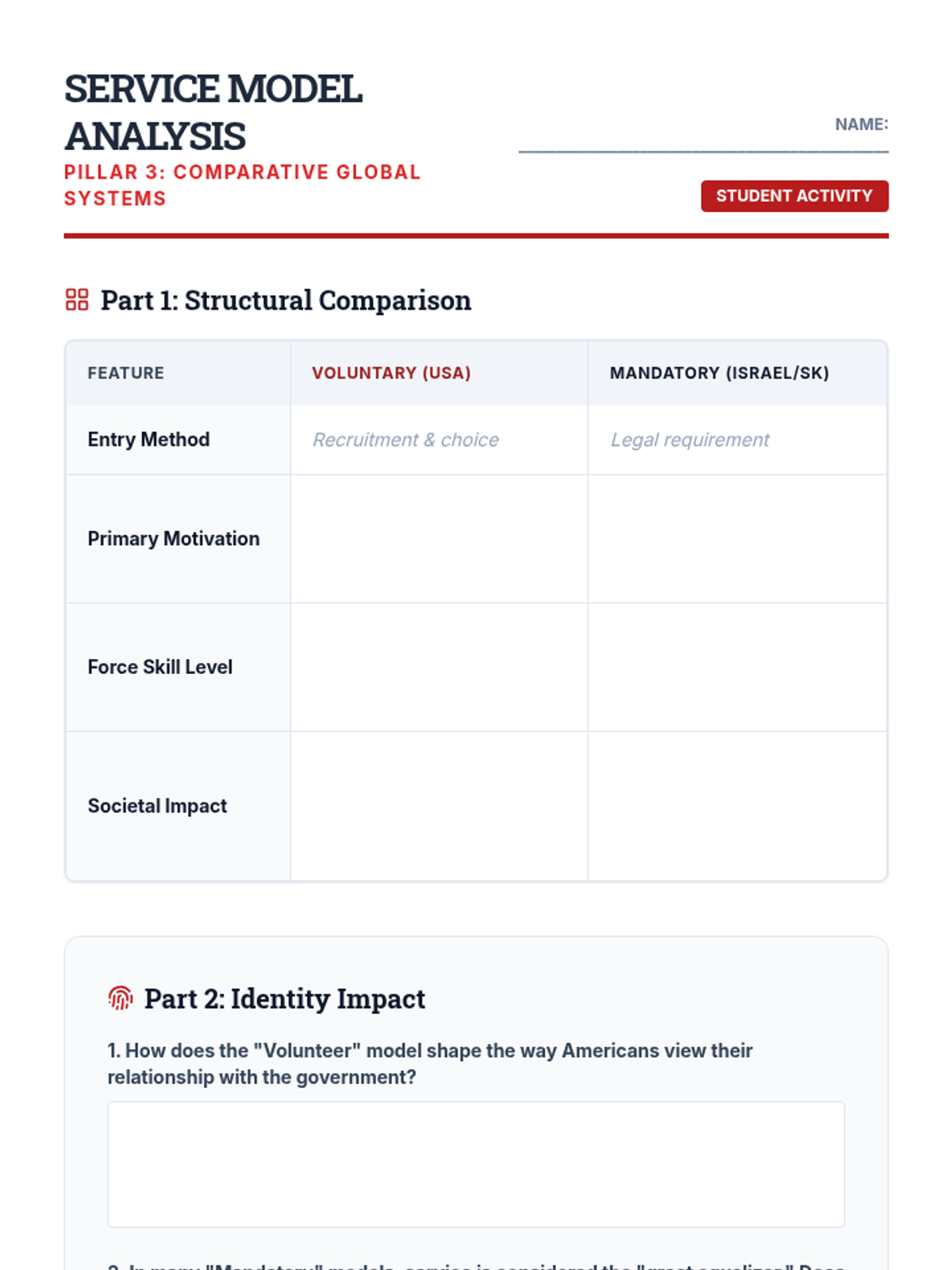
Evaluate how public service shapes U.S. national identity and compare the U.S. volunteerism model with international public service structures.
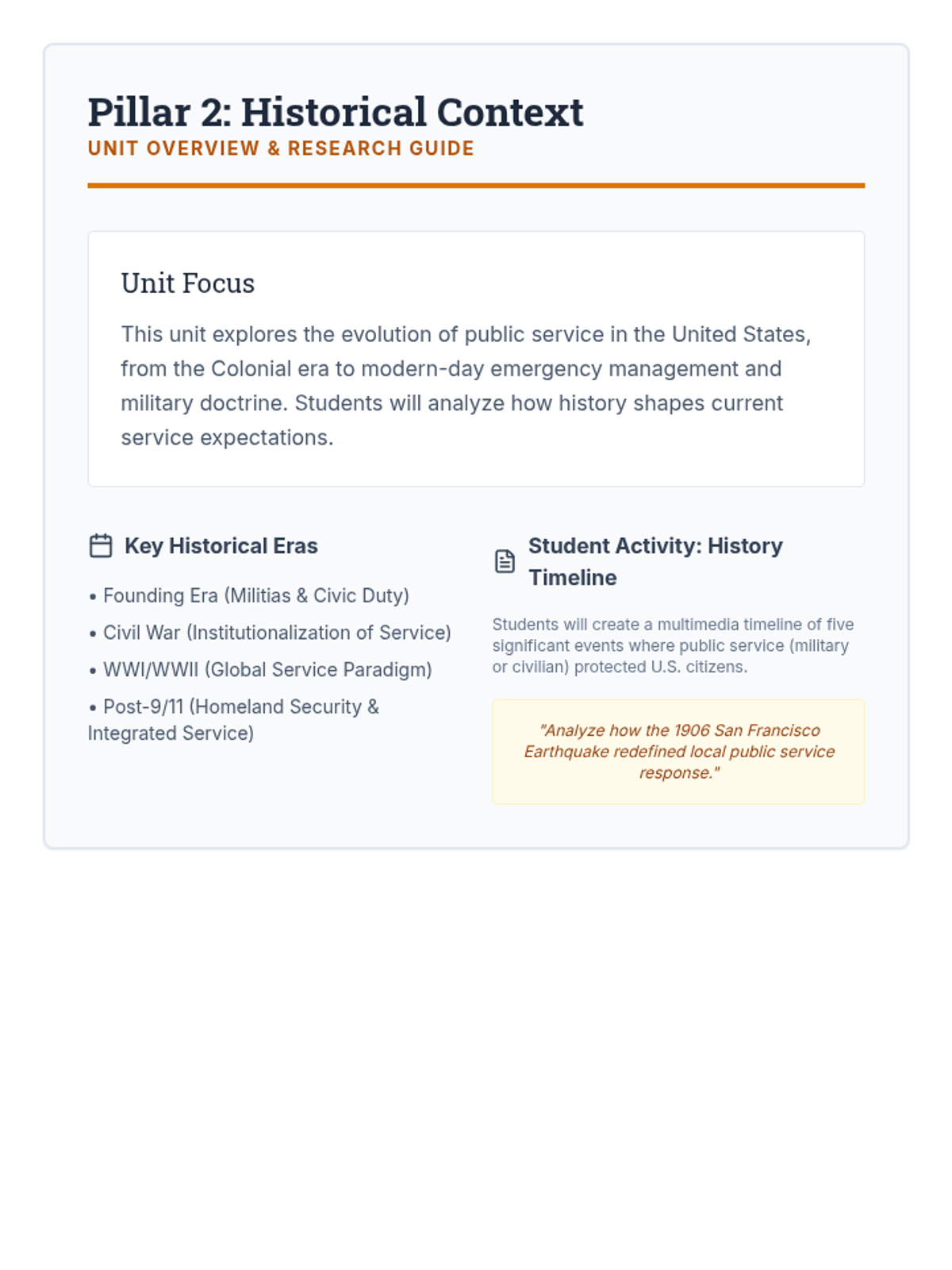
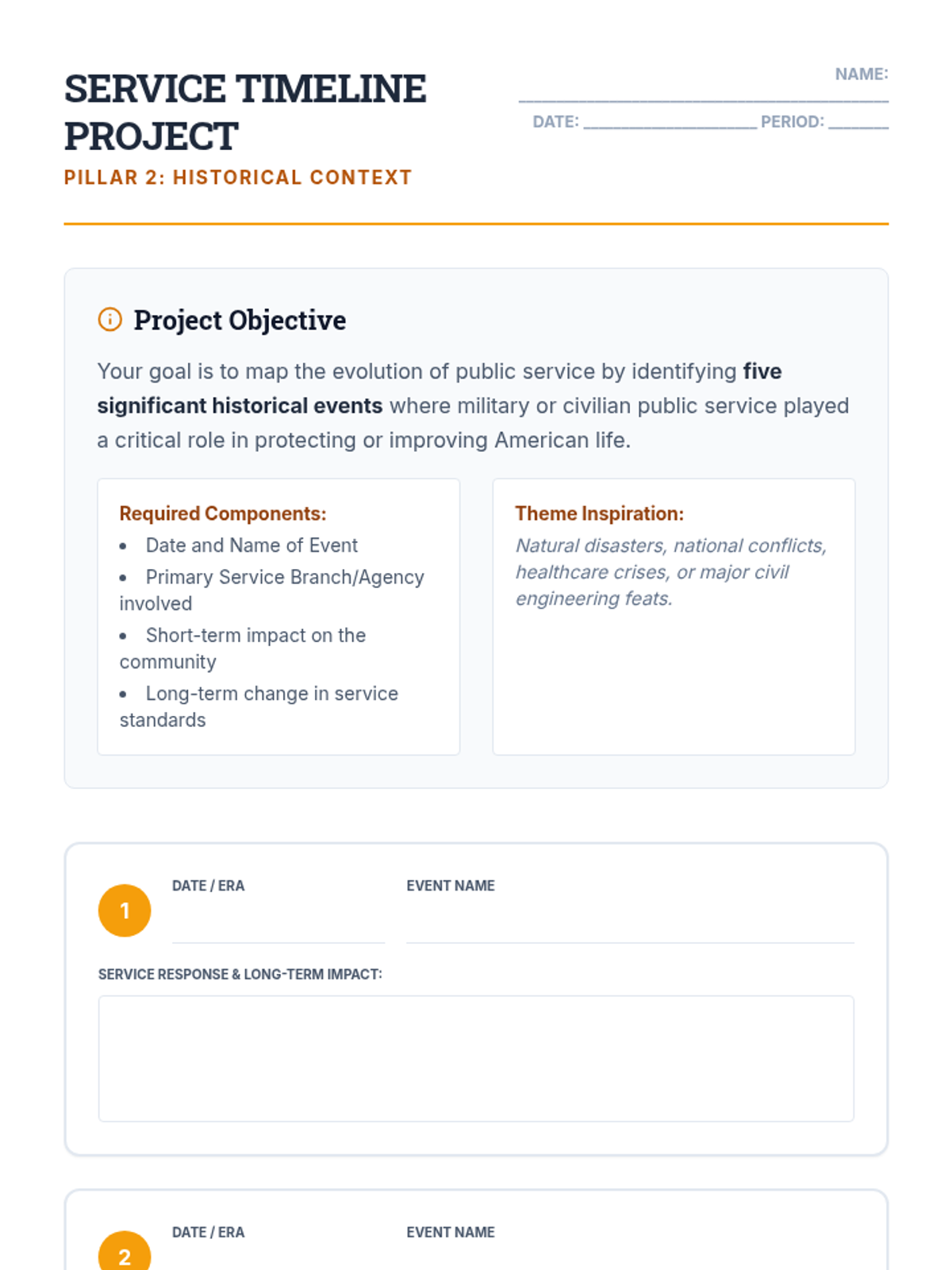
Analyze the historical evolution of public service in the U.S., researching significant events and their impact on national safety and service.
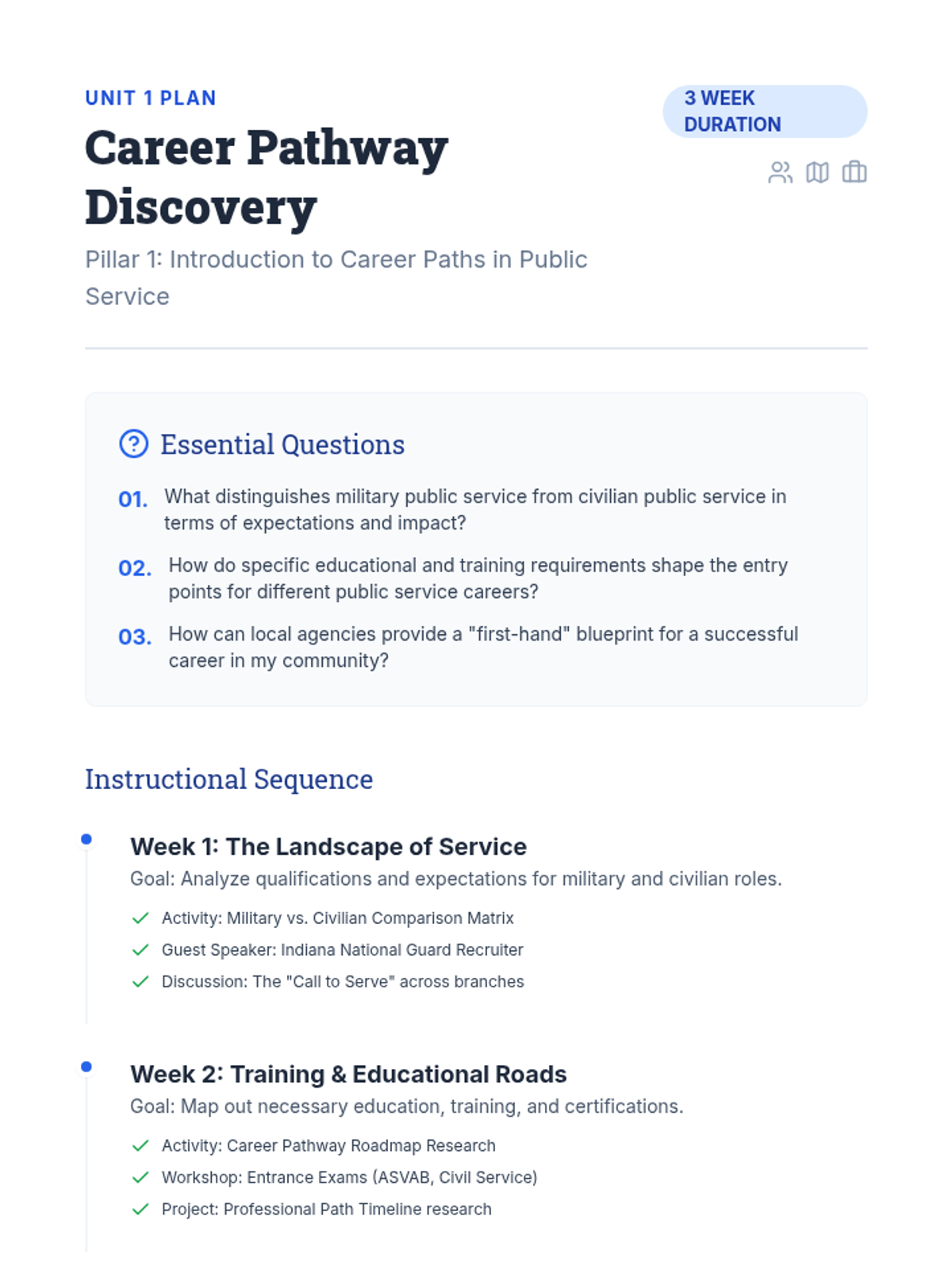
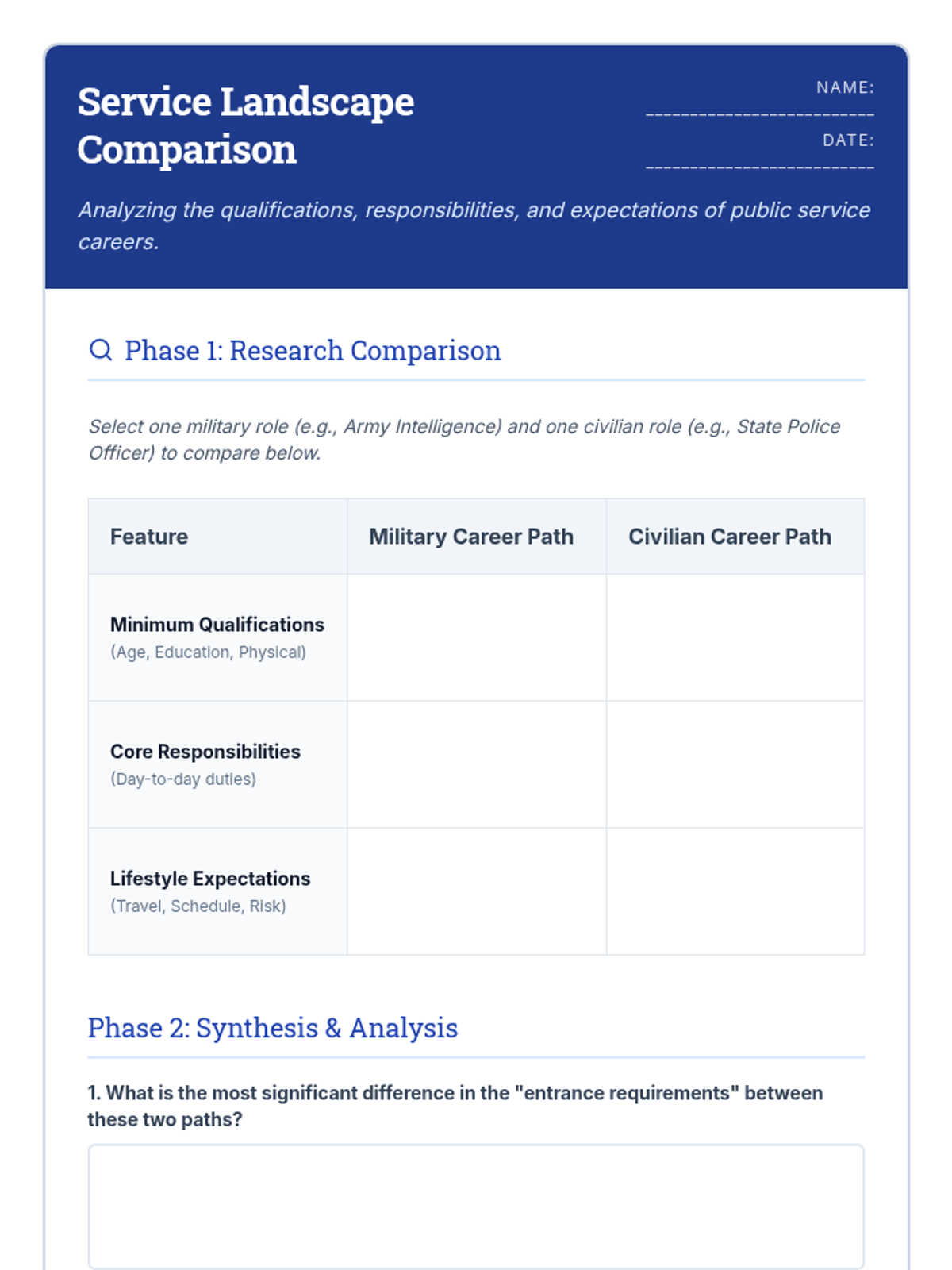
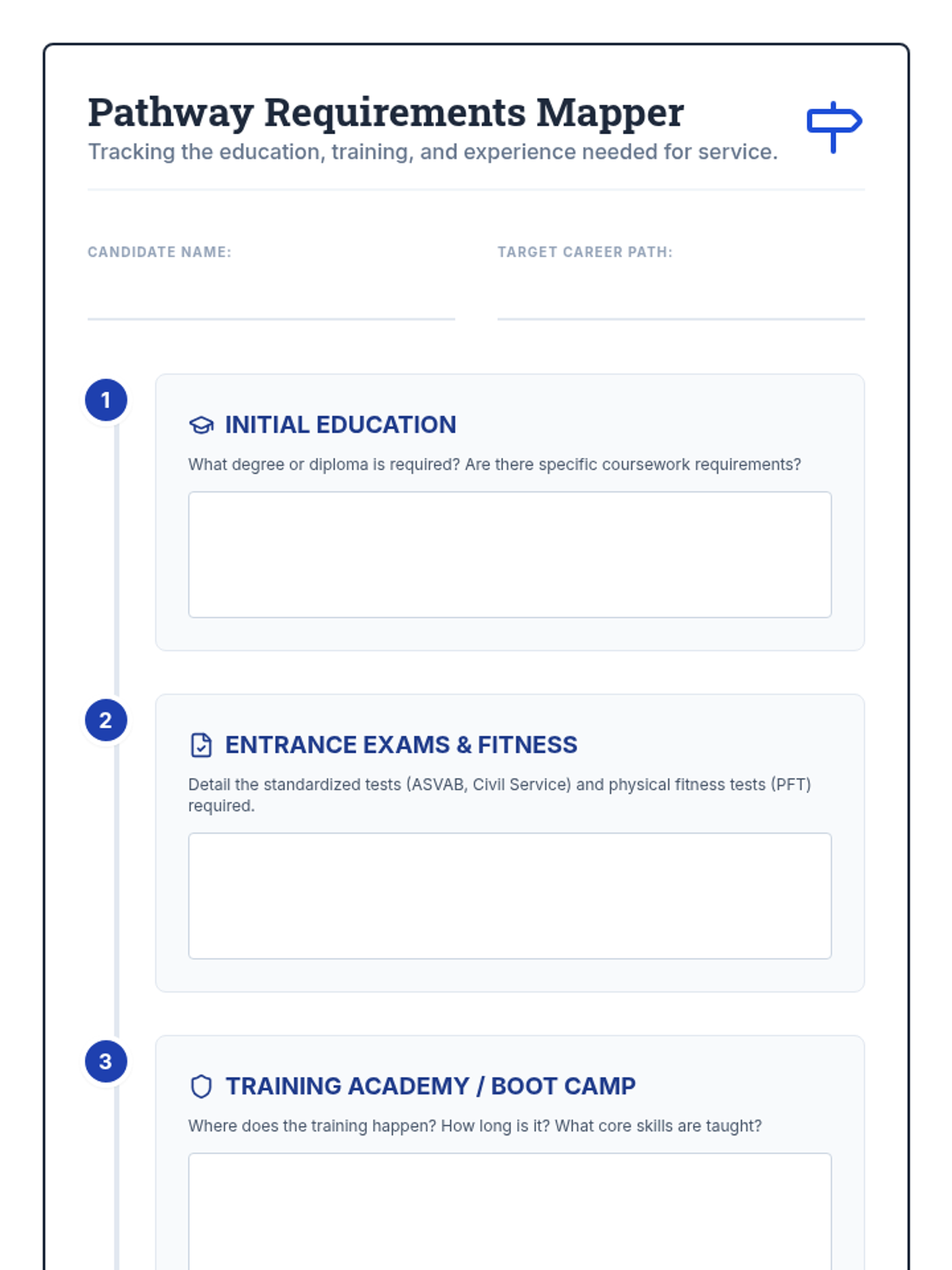
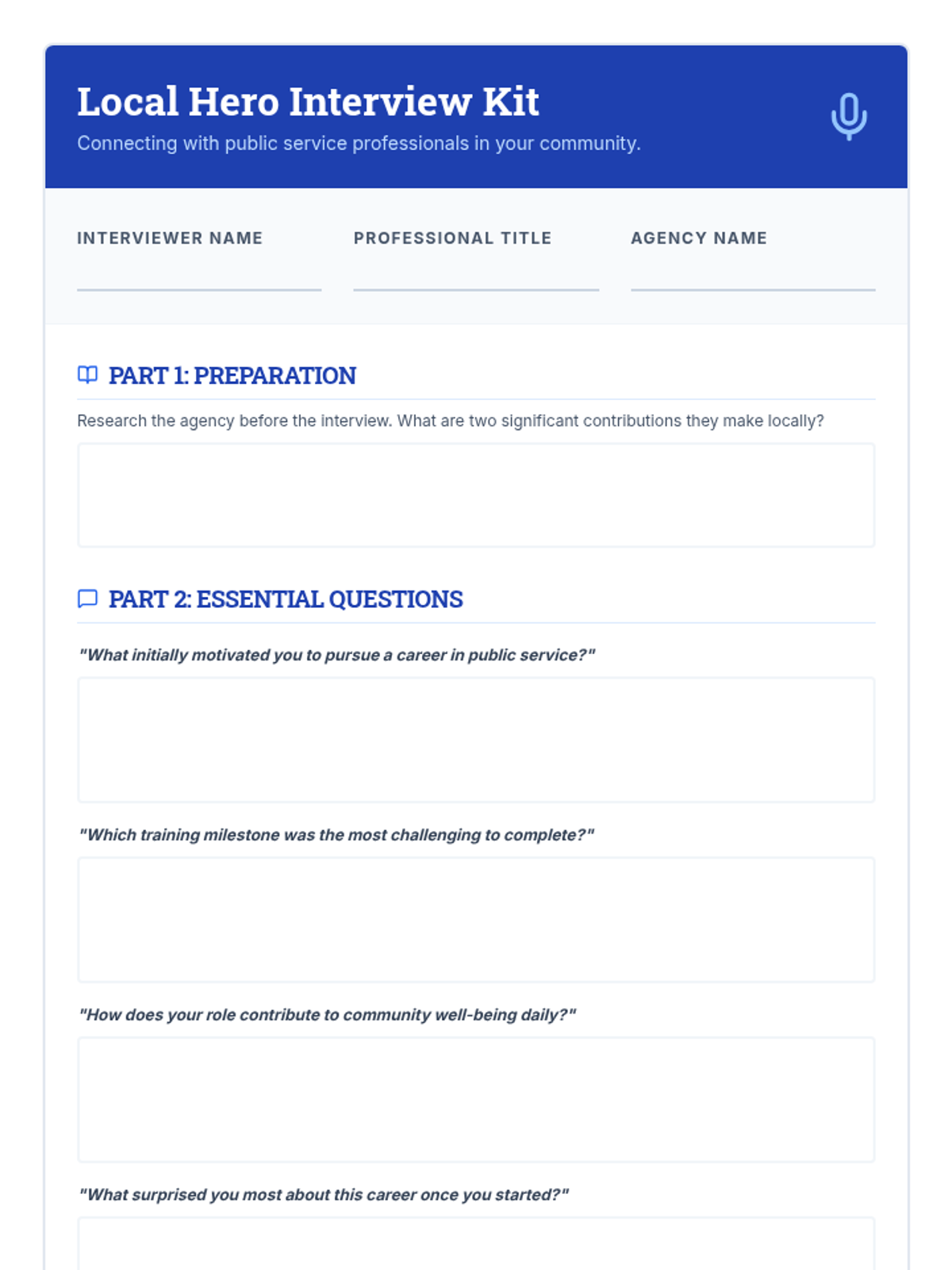
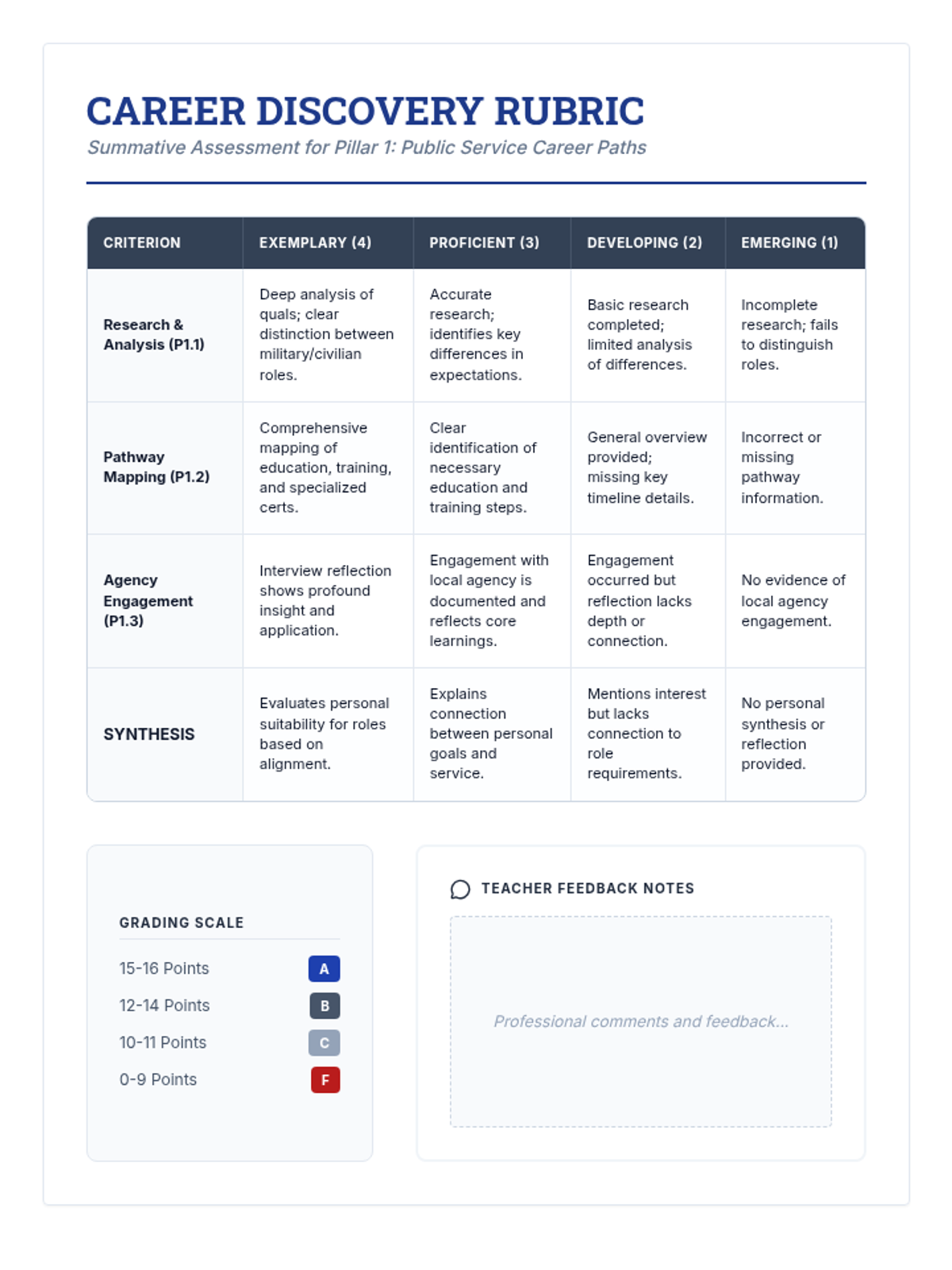
Explore the landscape of public service careers, analyzing qualifications and requirements for military and civilian roles while connecting with local agencies.
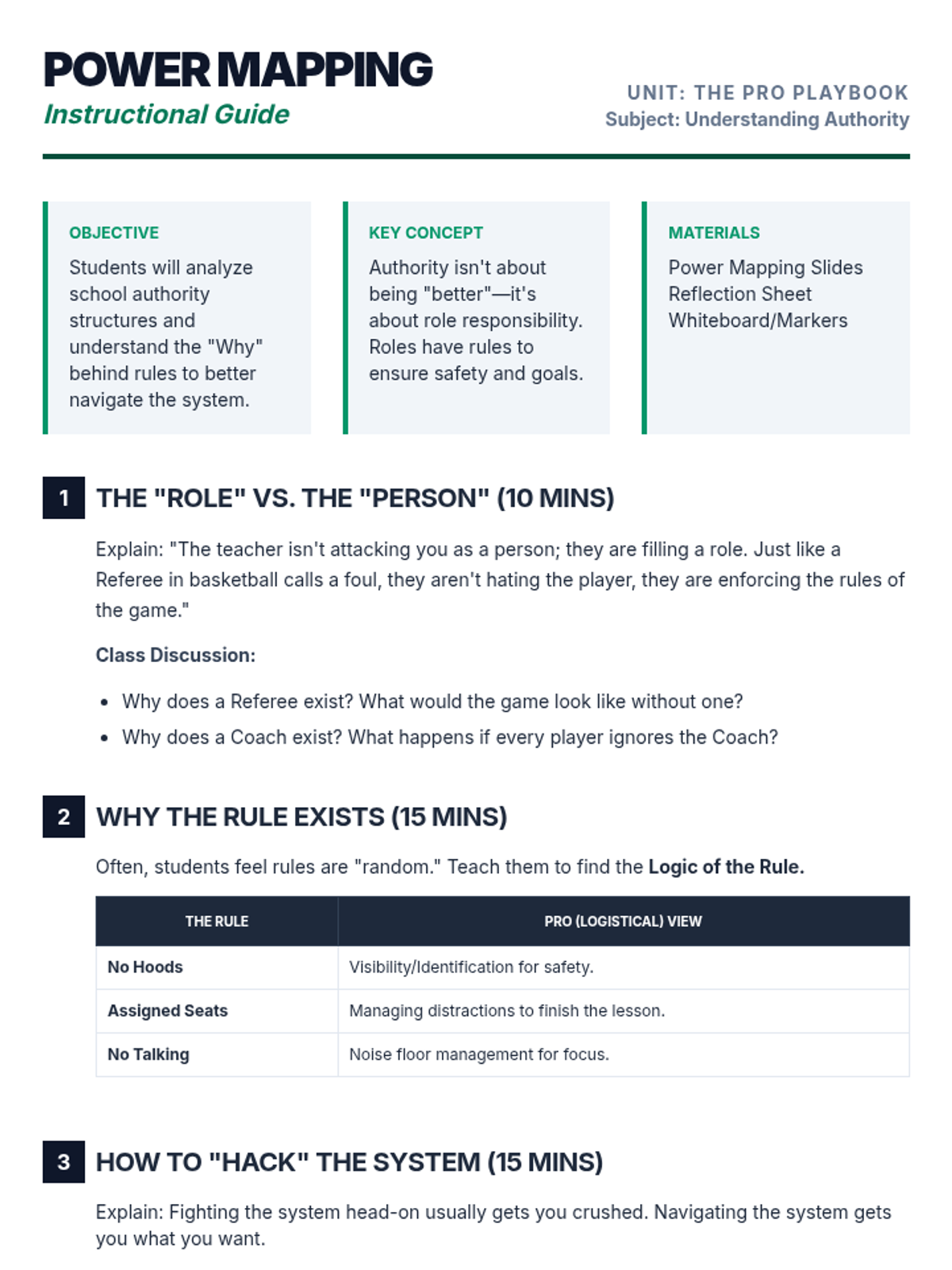
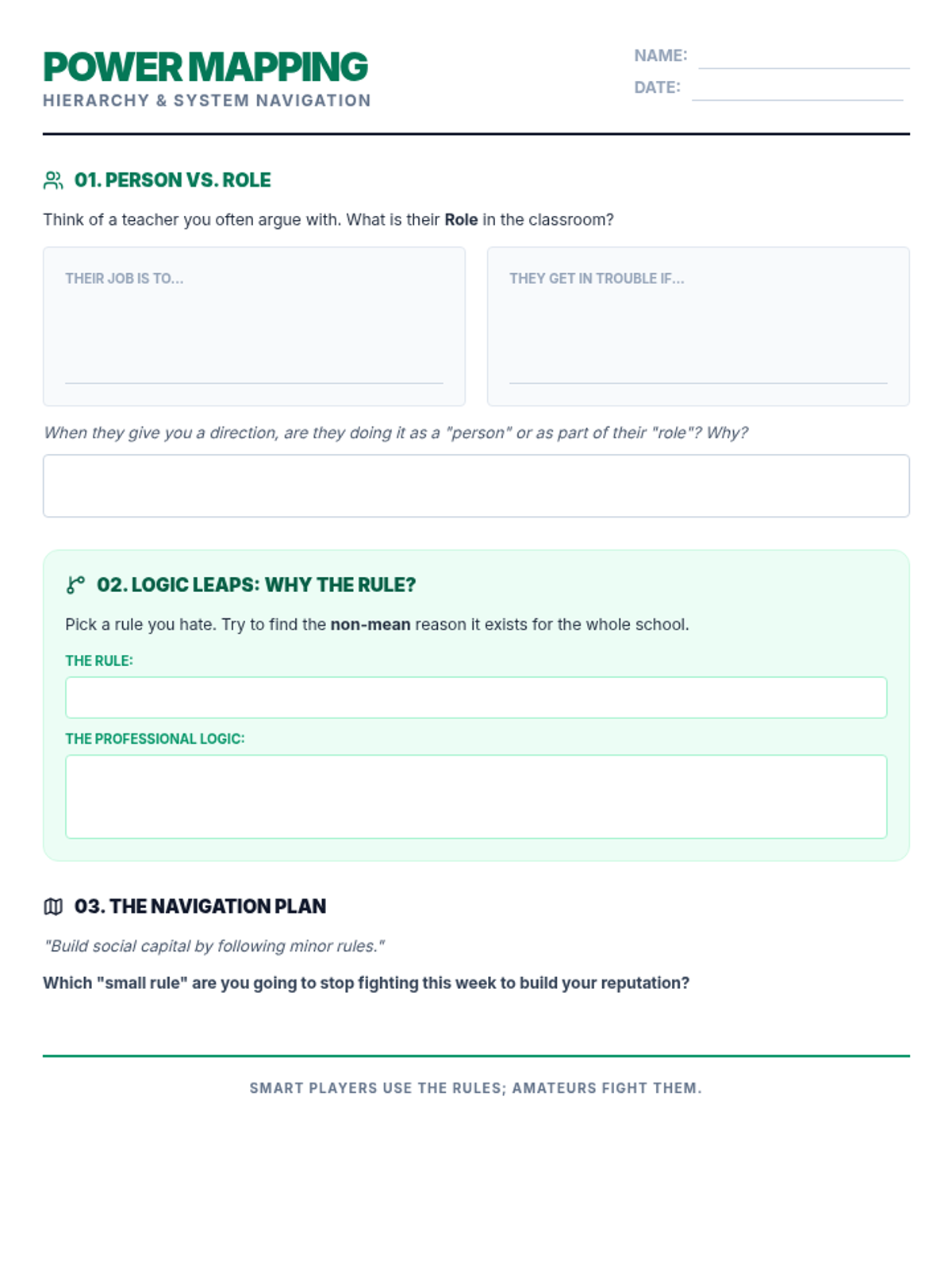
Explores the structure of school authority and how students can work within the system to achieve their goals rather than fighting against it.
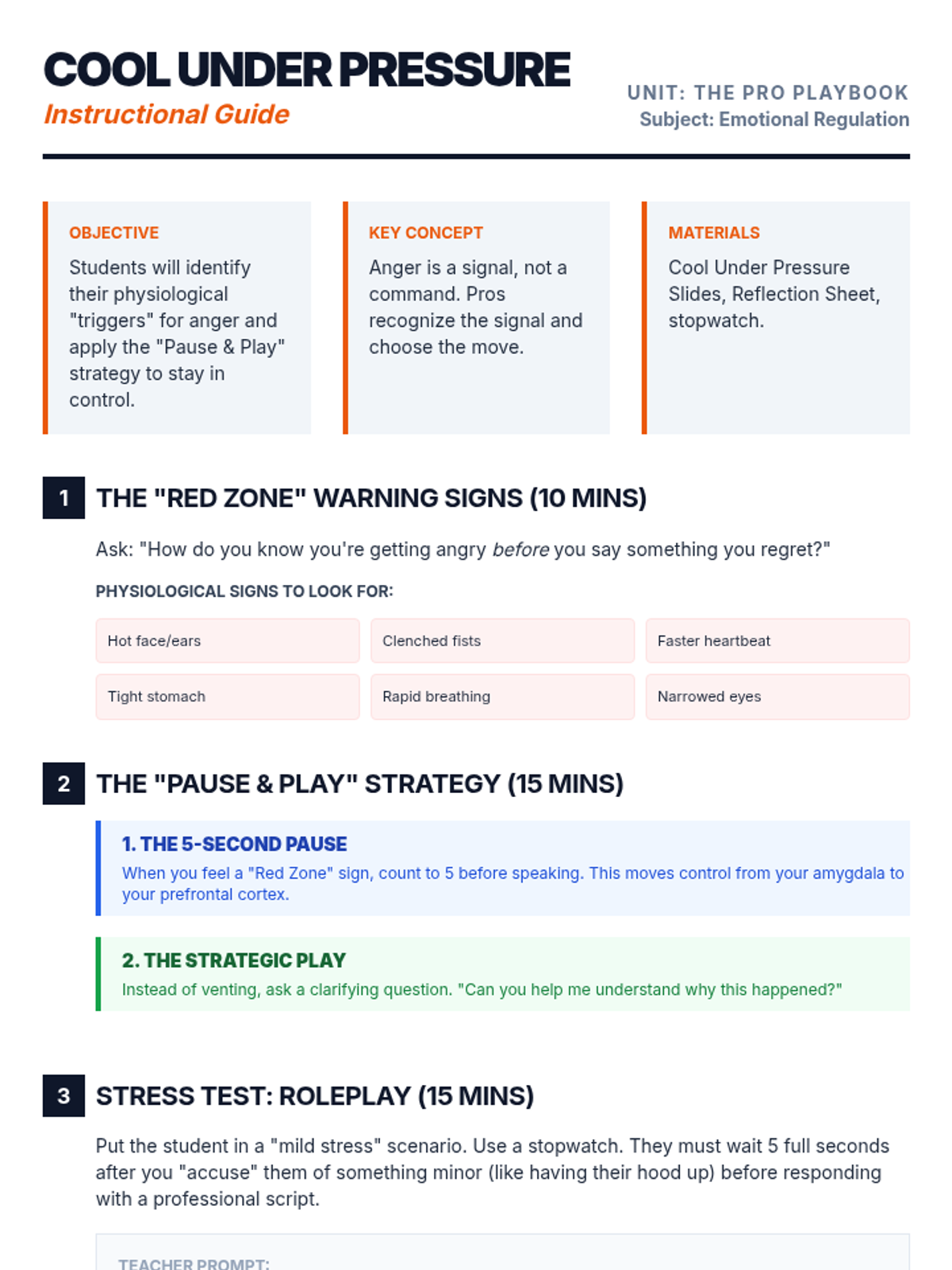
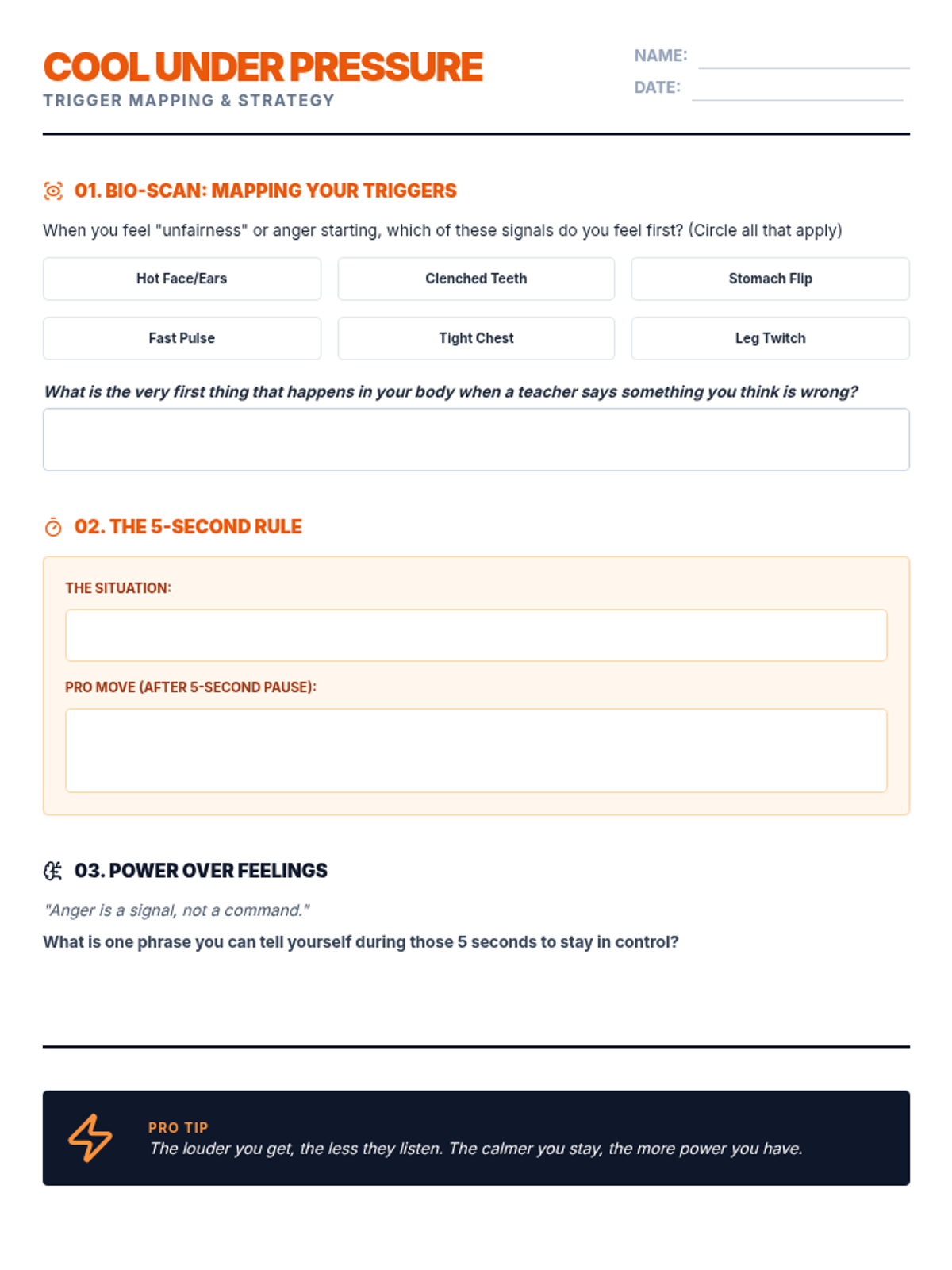
Teaches students how to identify physical triggers of anger and implement immediate de-escalation strategies when they feel unfairly treated.
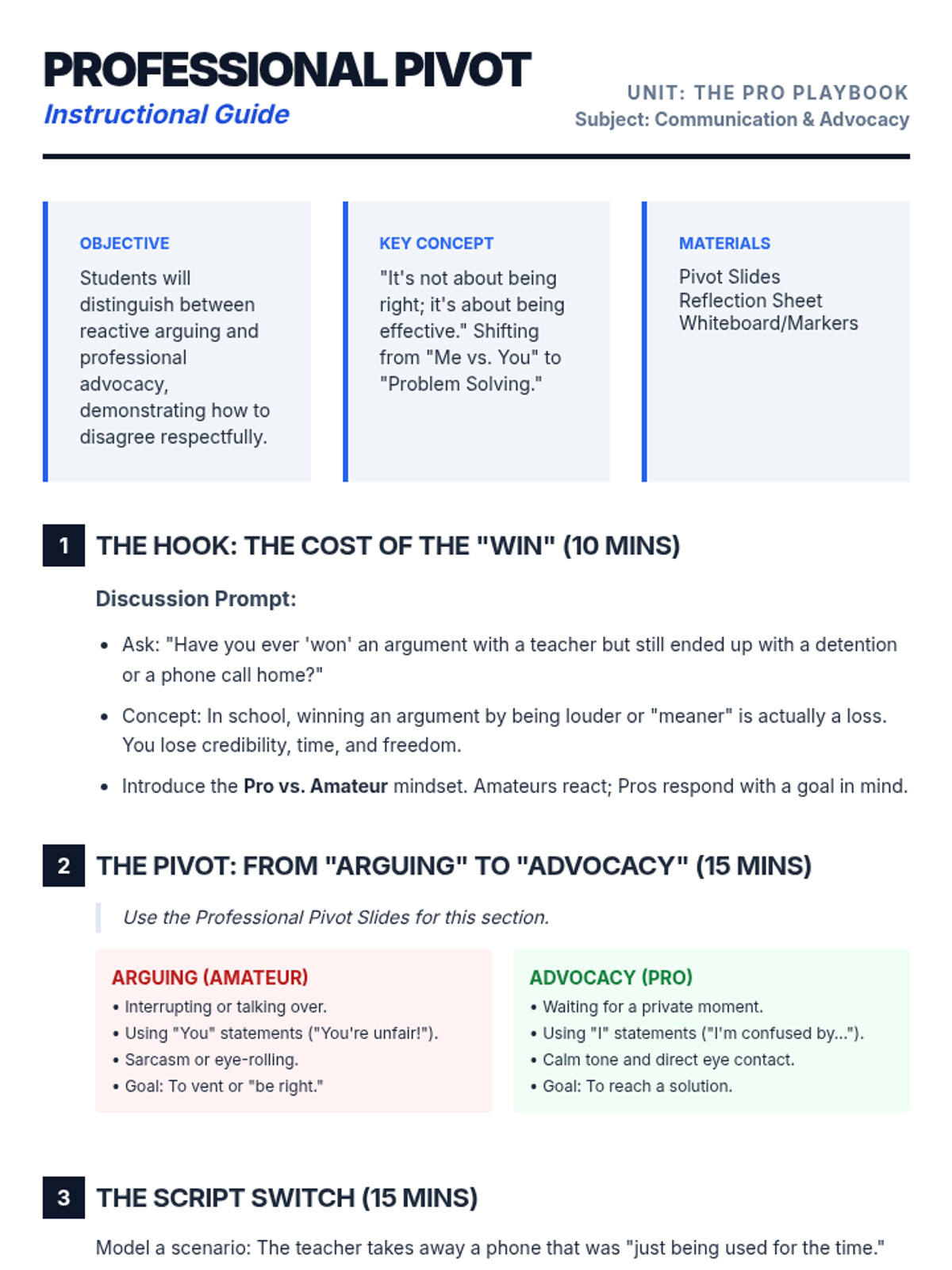
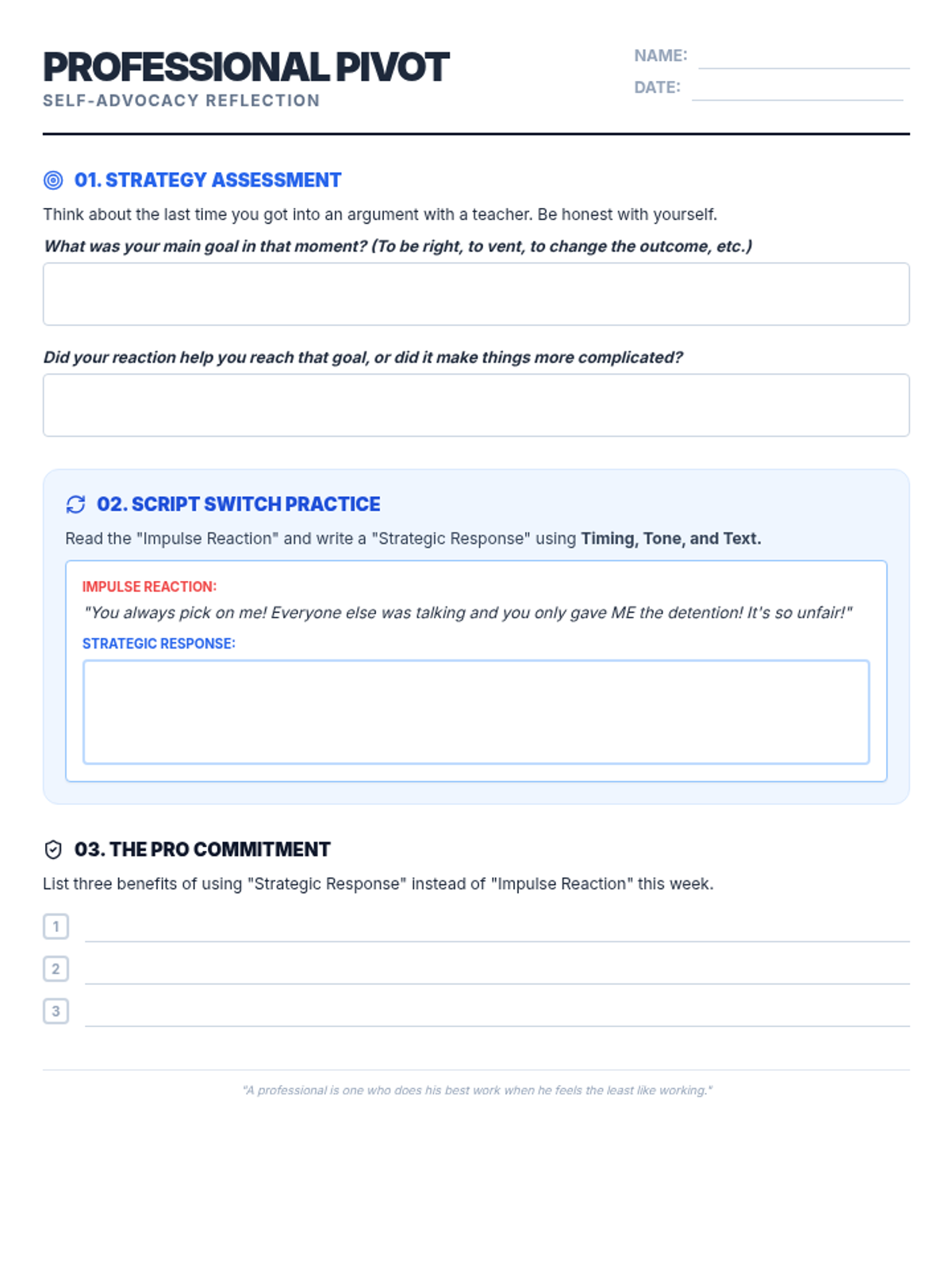
Focuses on the distinction between arguing and professional advocacy, teaching students how to express disagreement without escalating conflict.
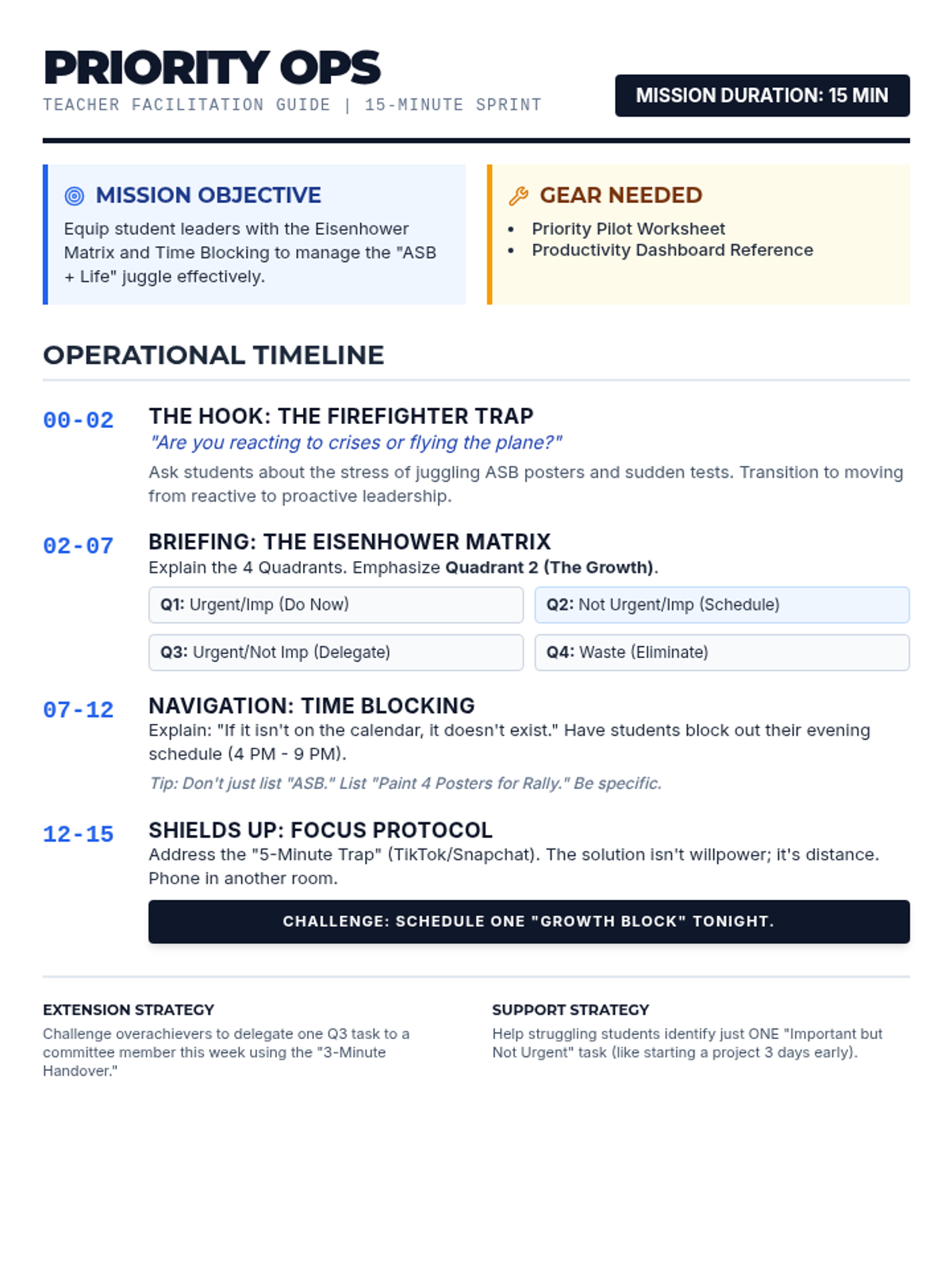
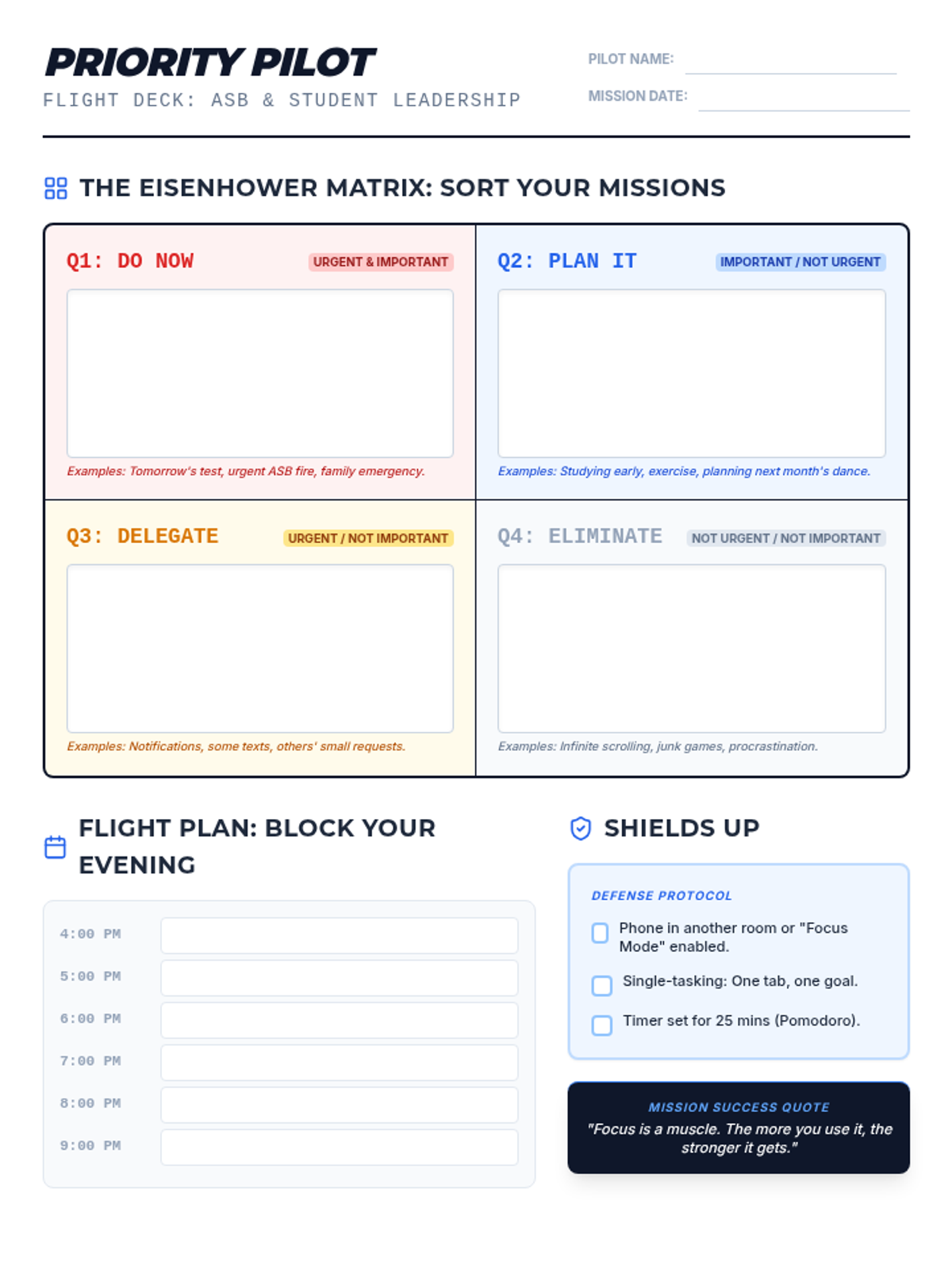
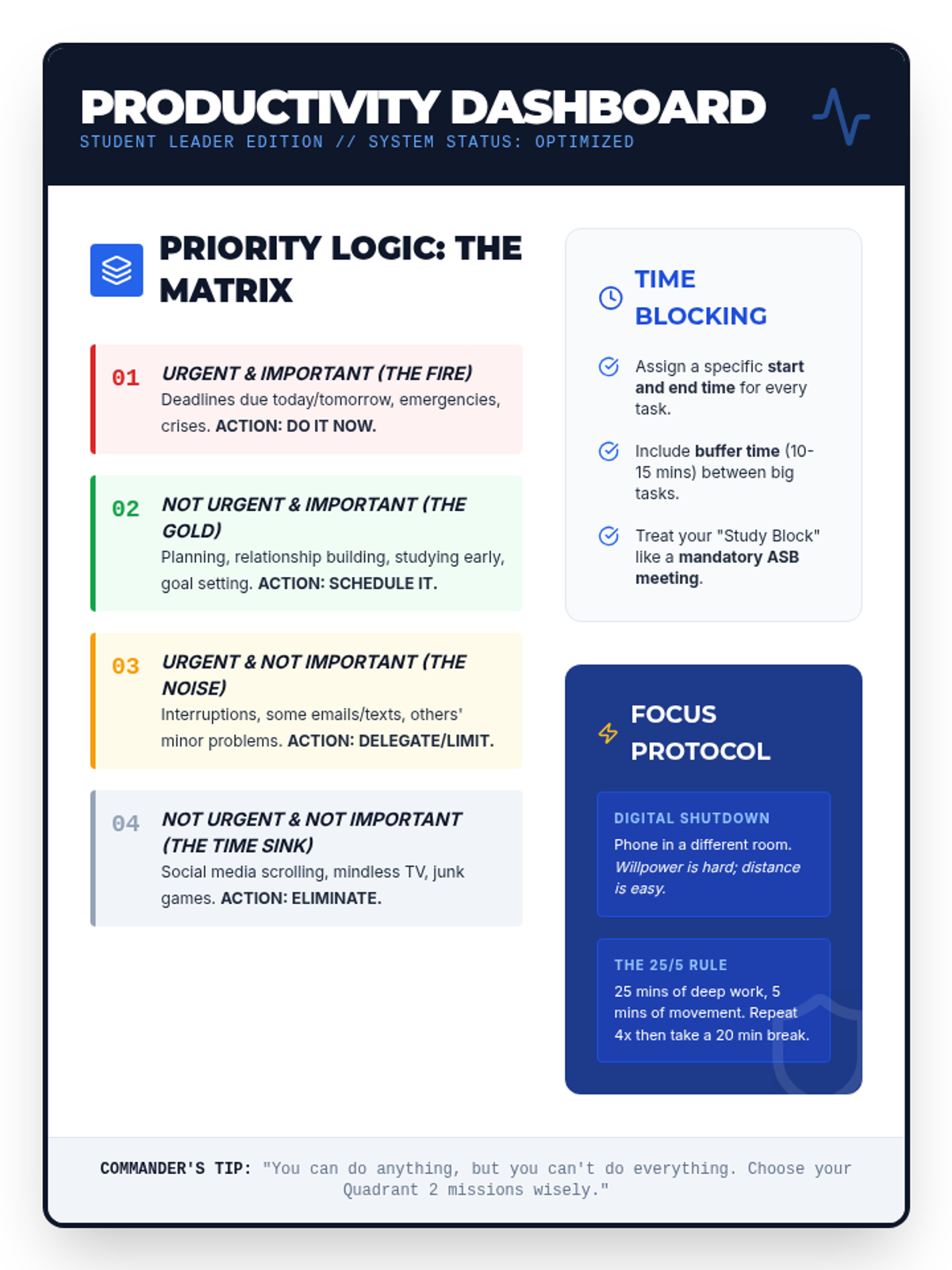
A high-impact, 15-minute workshop designed for student leaders to master the Eisenhower Matrix, time-blocking, and digital focus techniques.
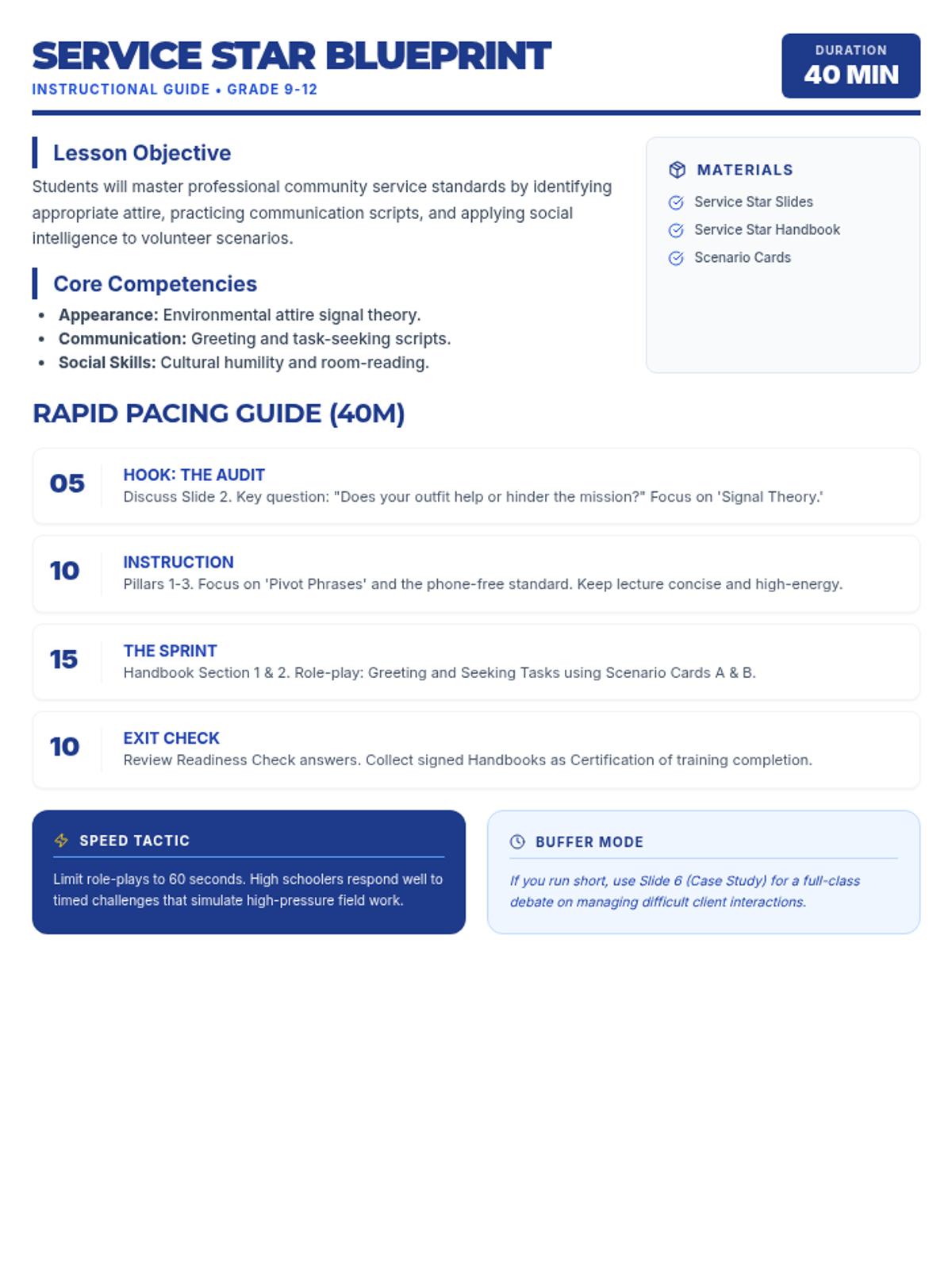
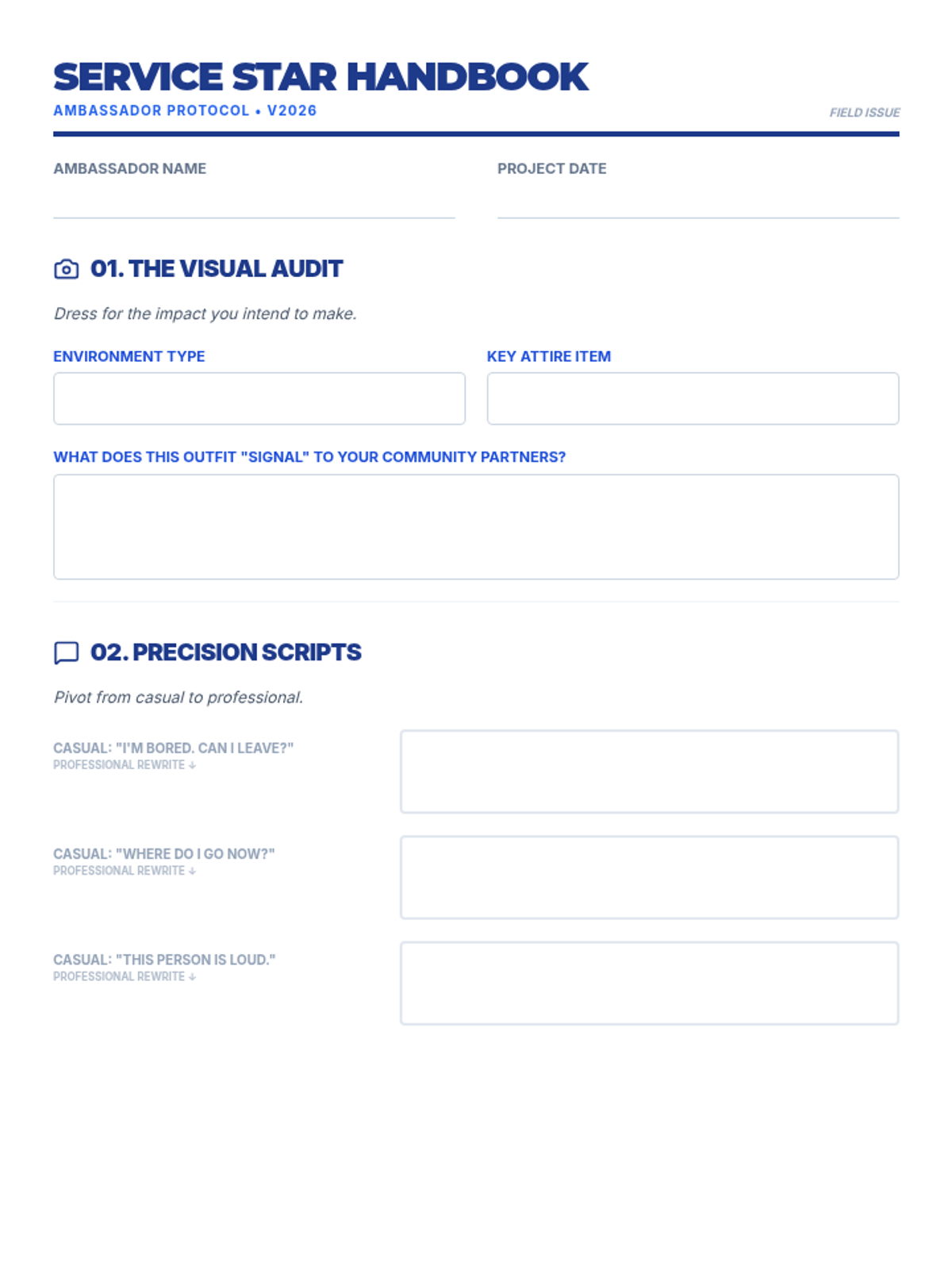
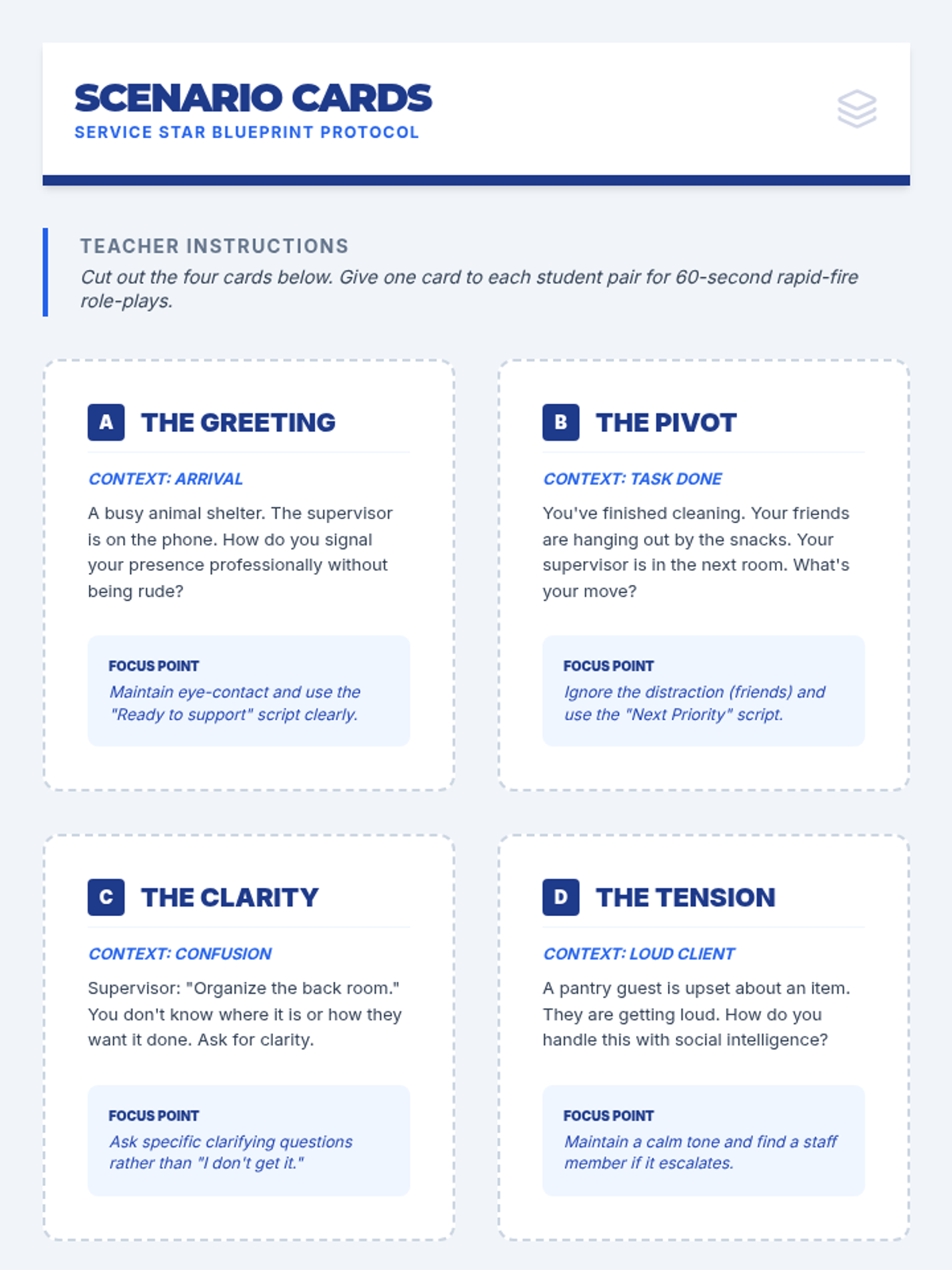
A comprehensive lesson teaching high school students the essential etiquette, communication, and professional appearance standards for community service roles.
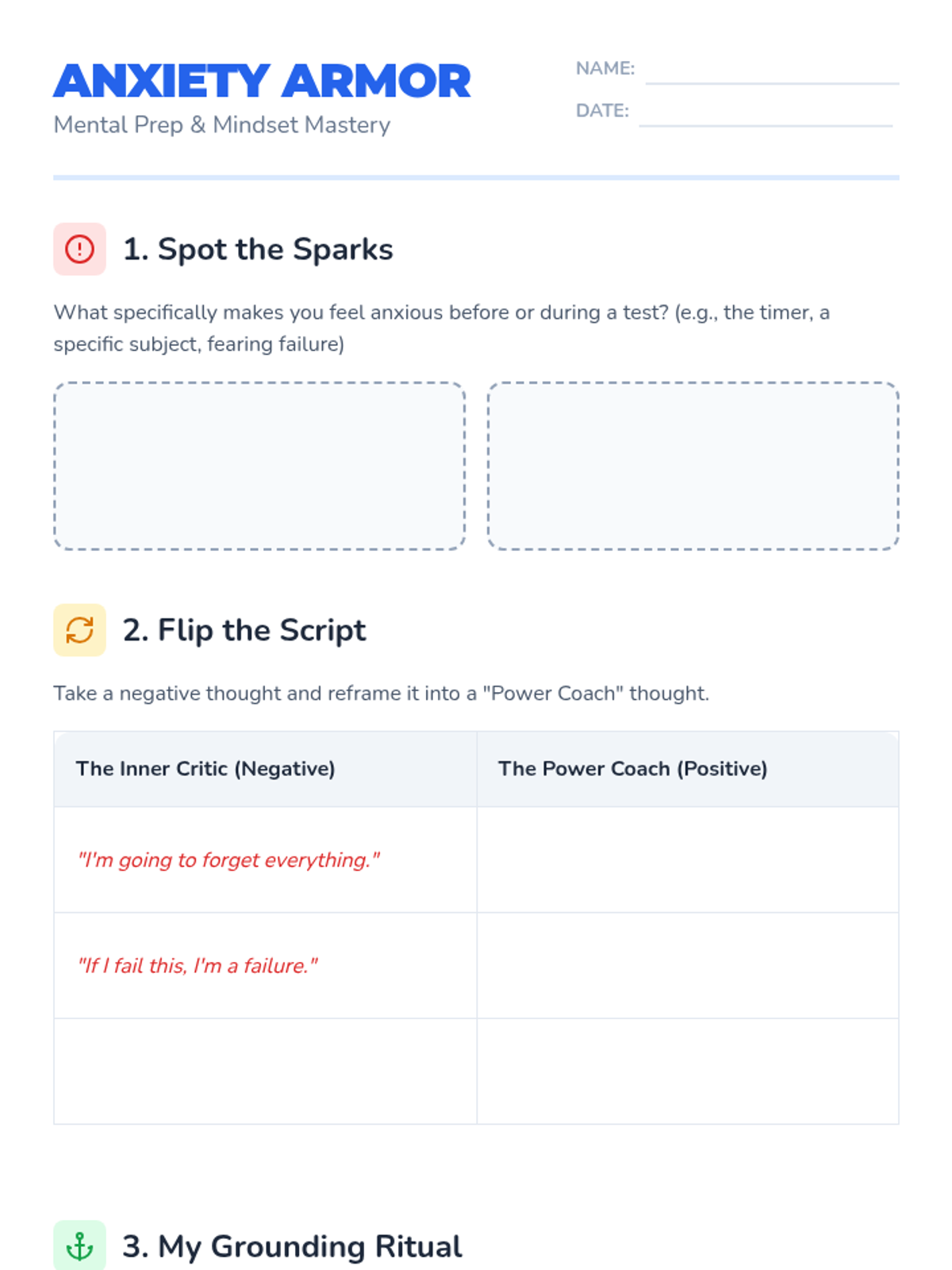
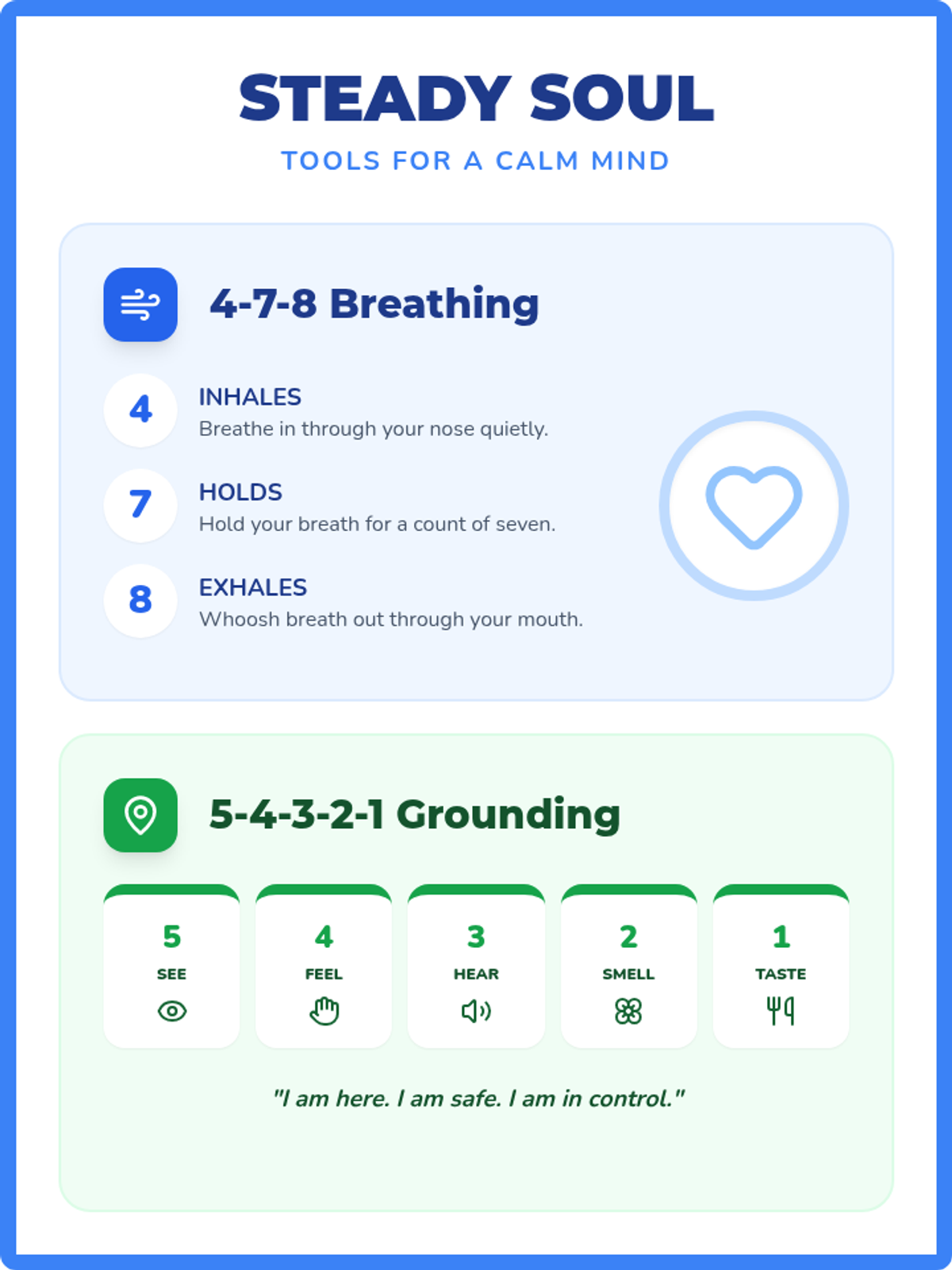
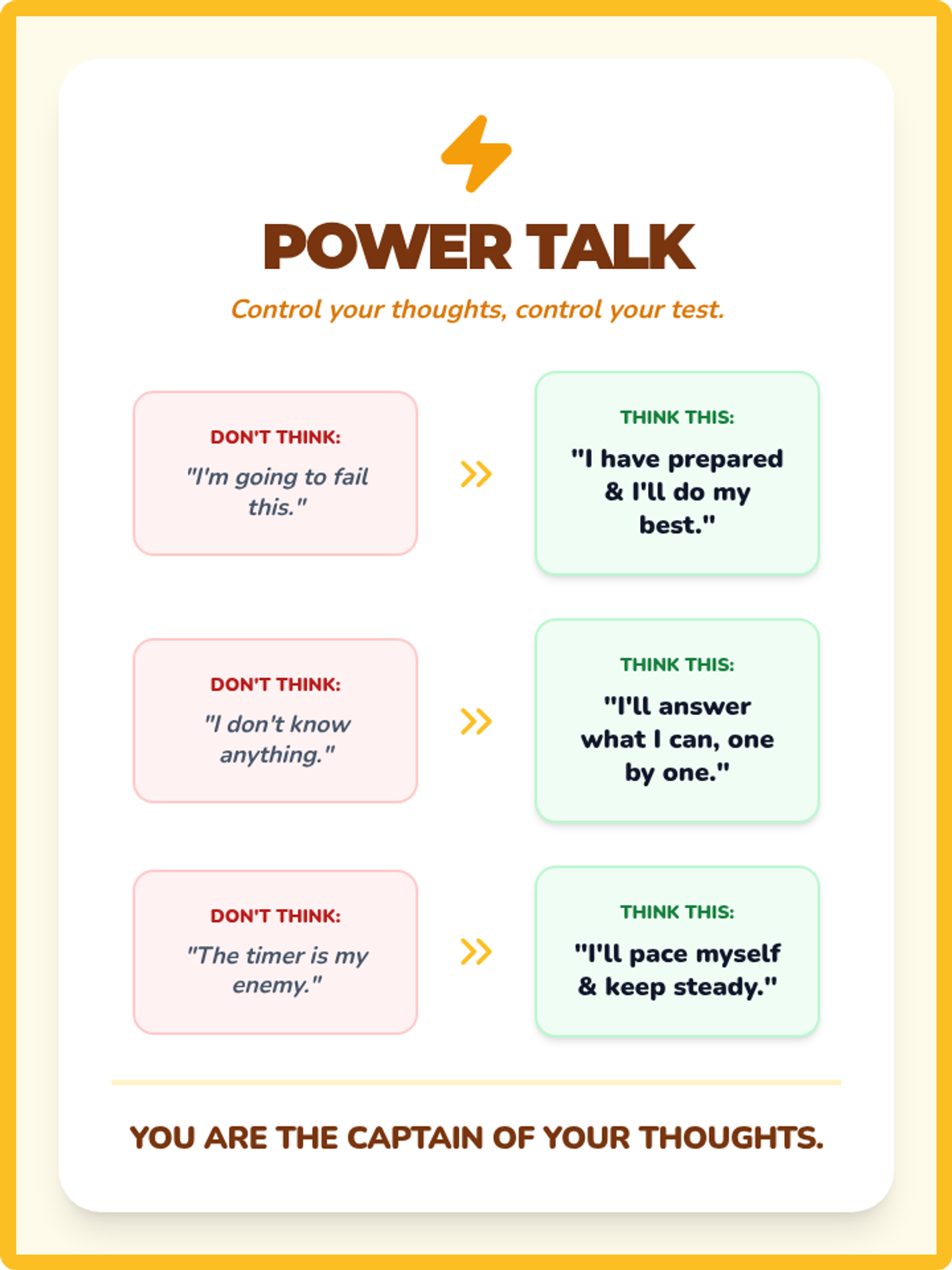
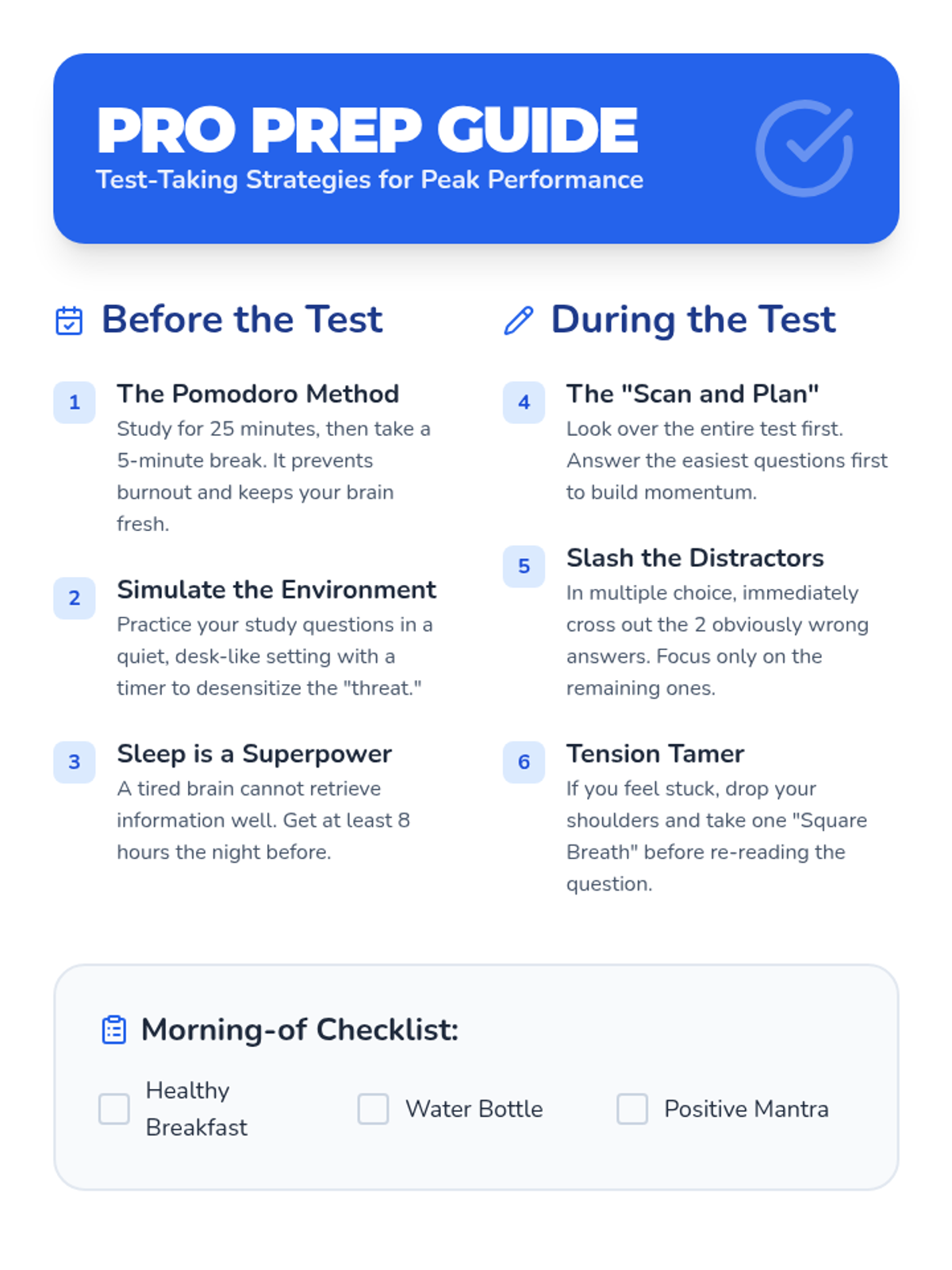
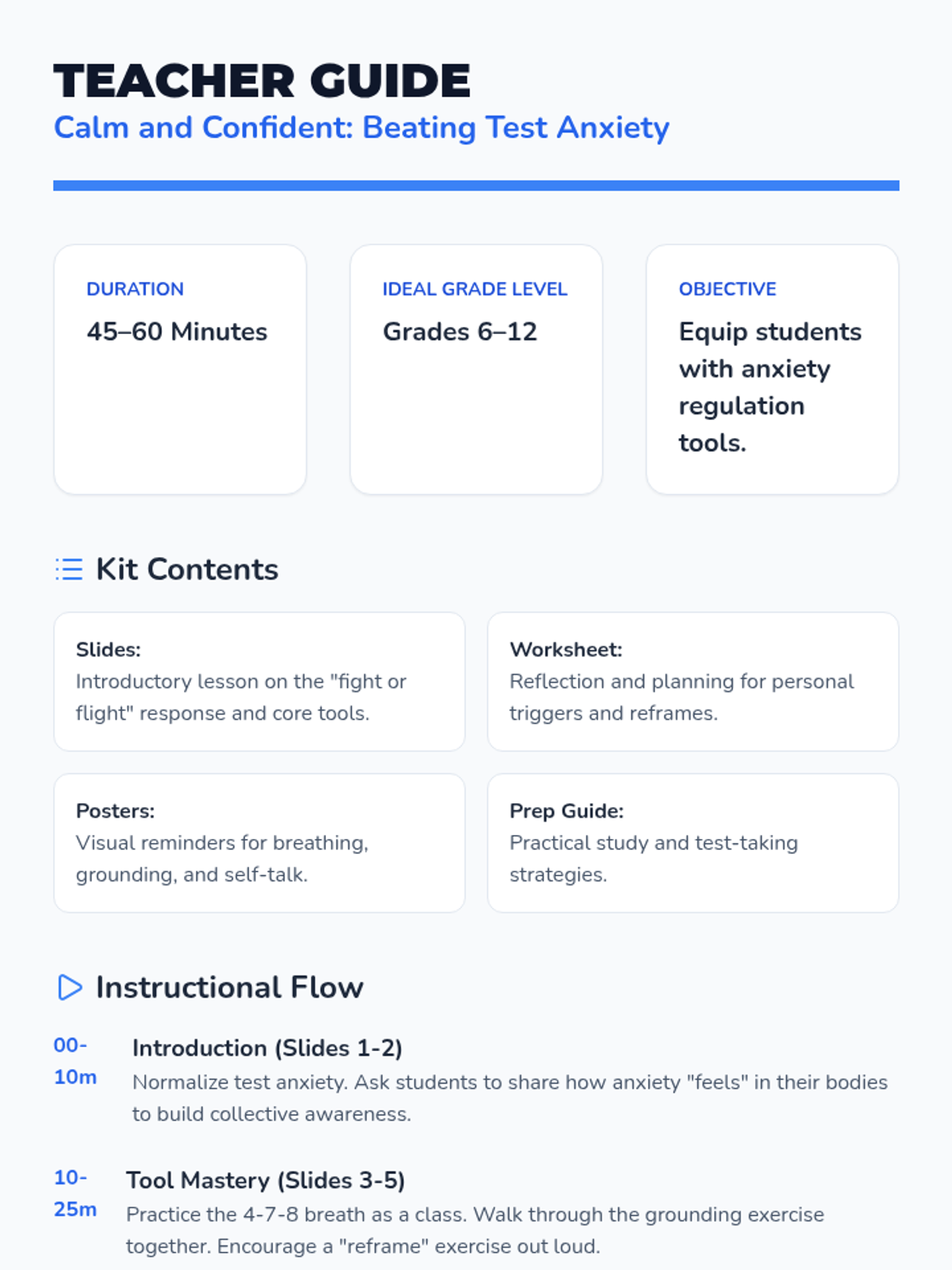
A comprehensive toolkit designed to help students manage test-related stress through breathing techniques, positive mindset shifts, and practical preparation strategies.
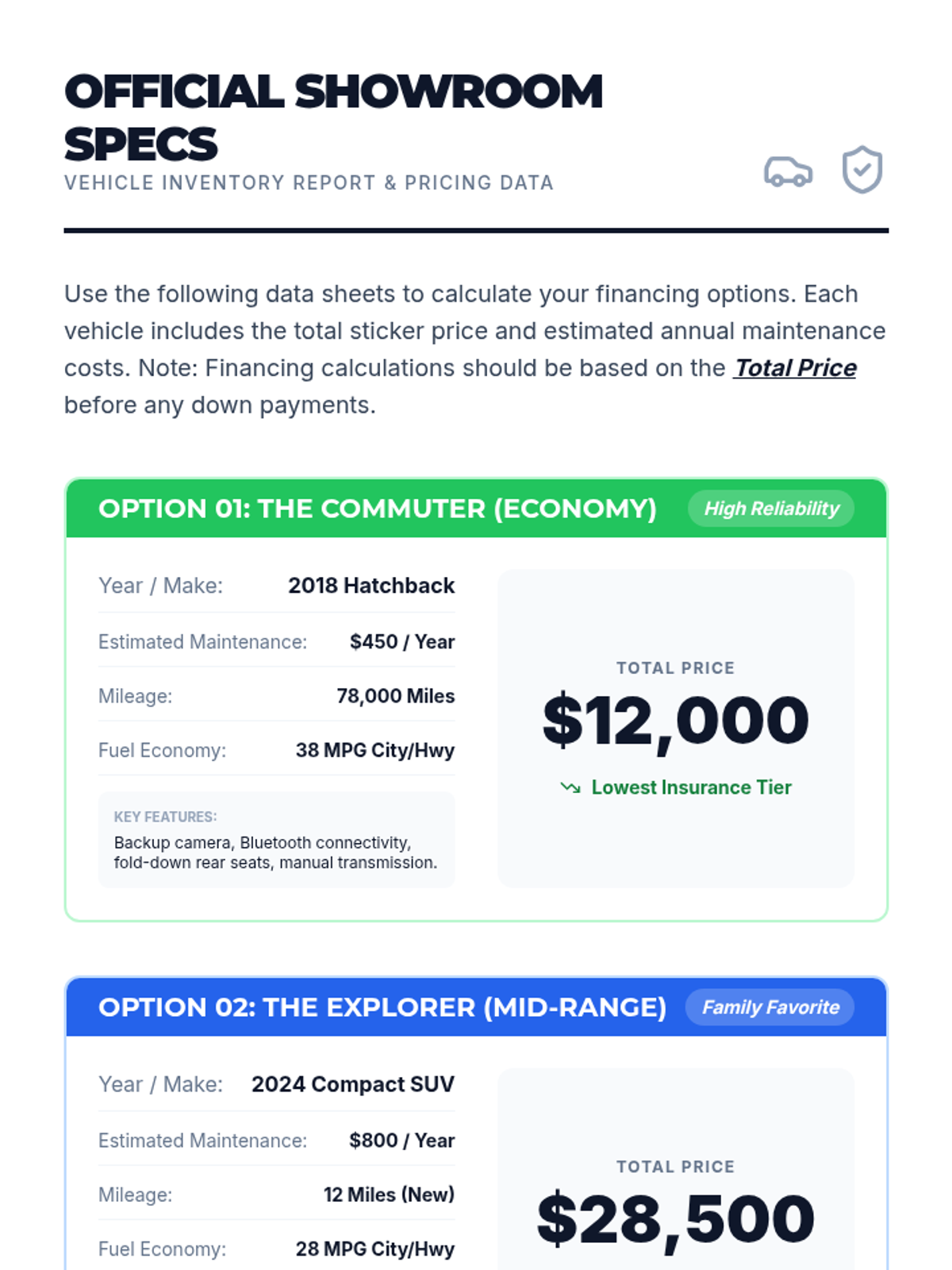
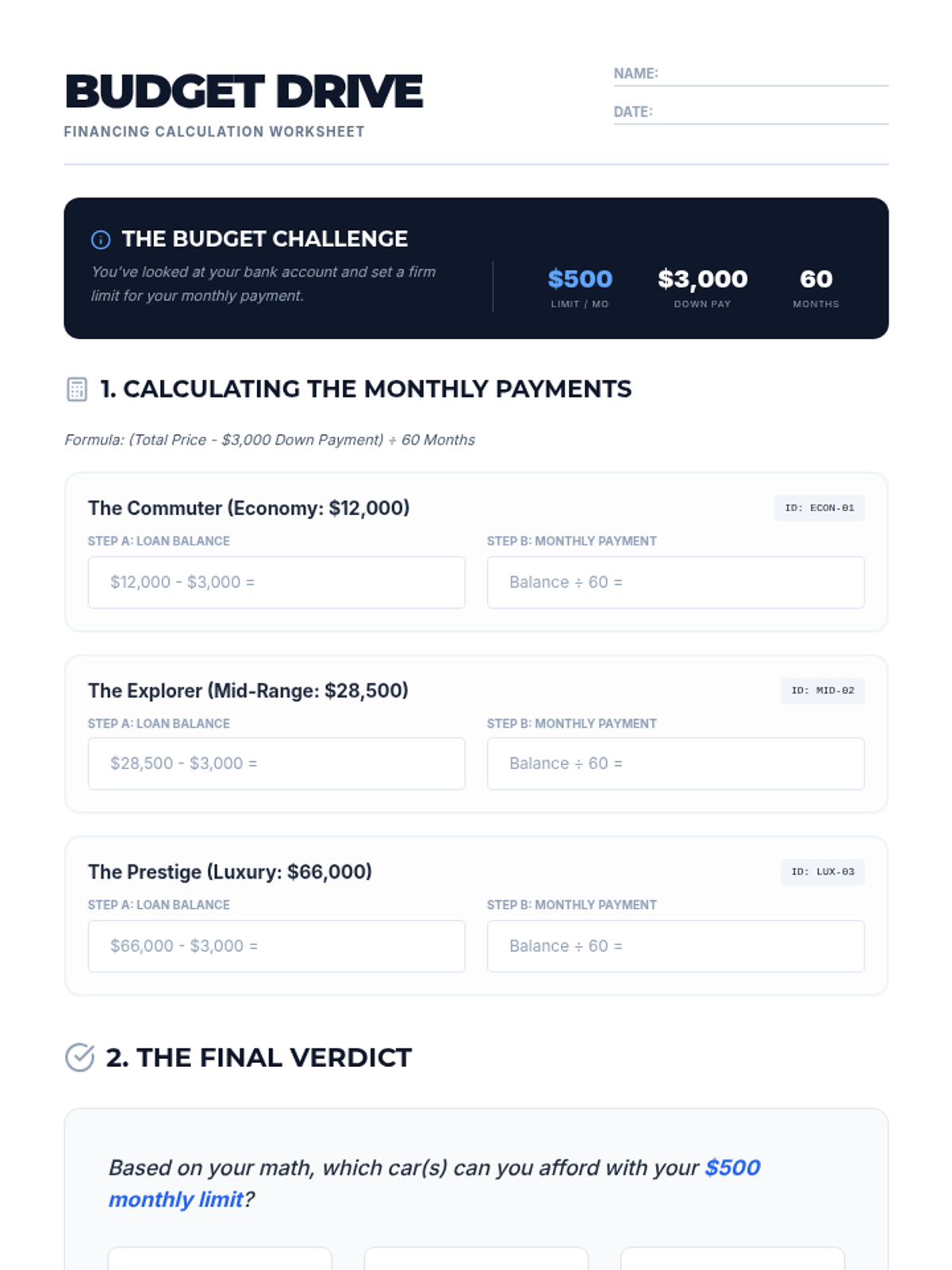
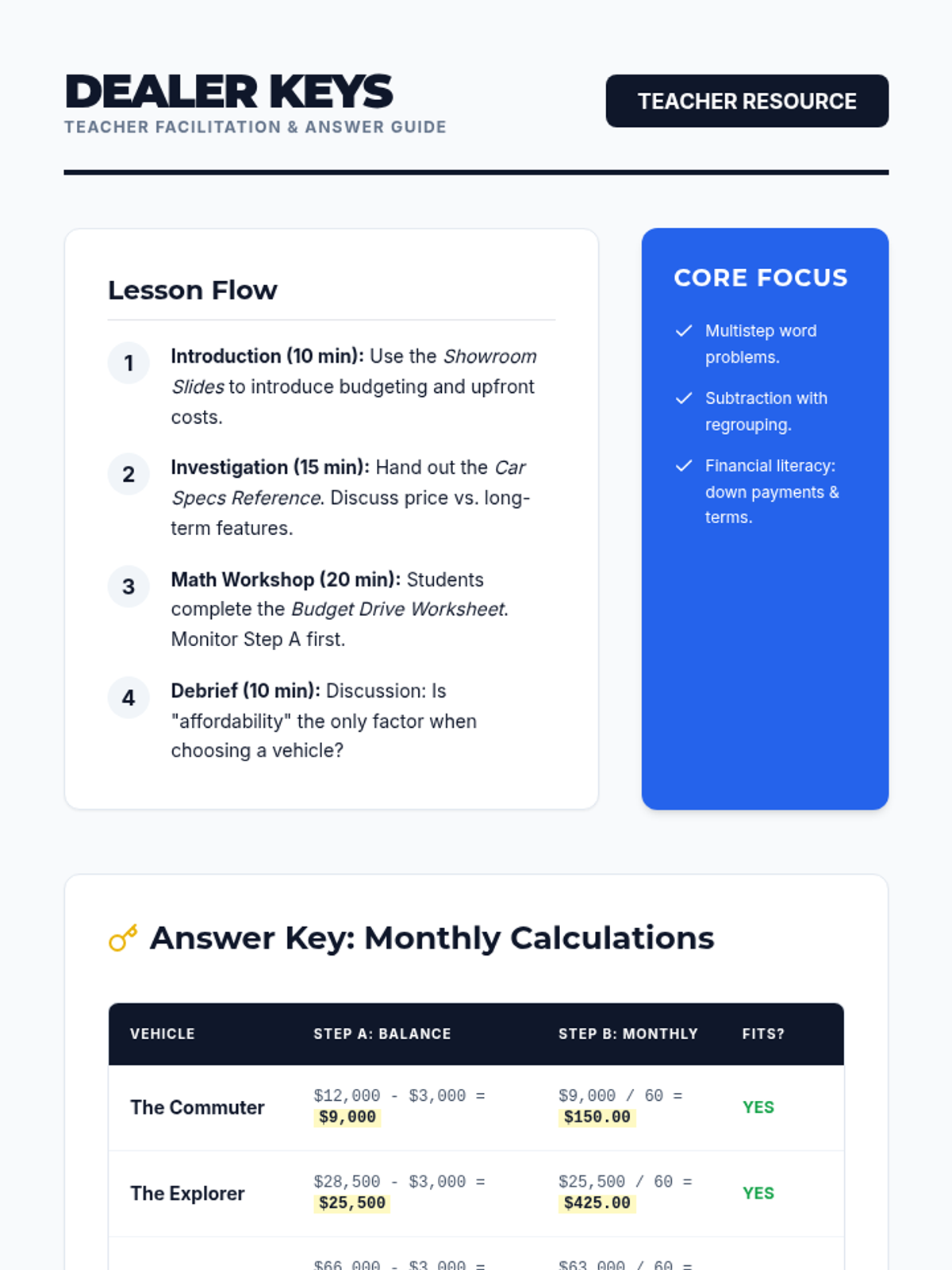
A practical financial literacy lesson where students evaluate three different car options (economy, mid-range, and luxury) to determine which best fits a monthly budget using simple payment calculations.
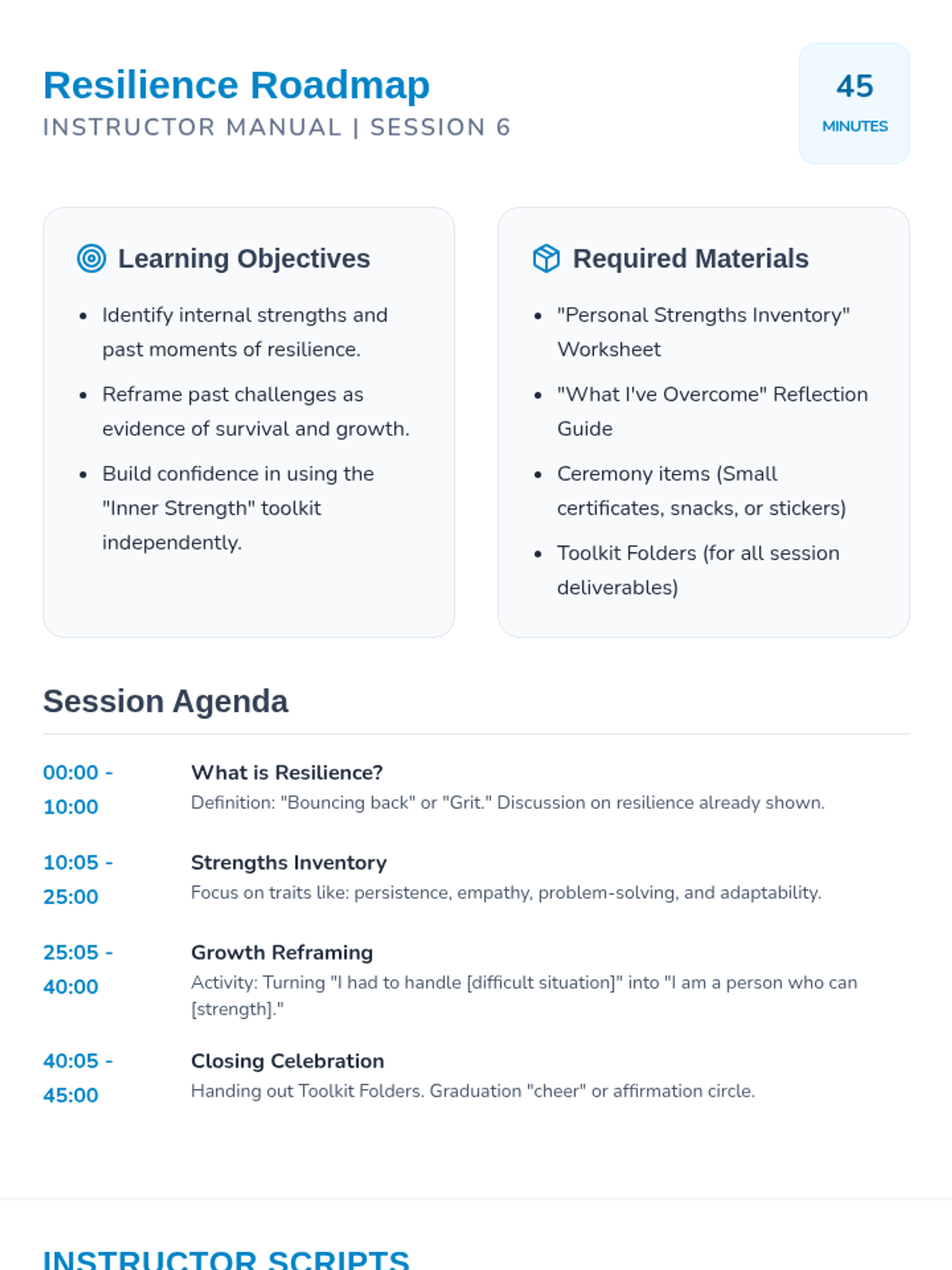
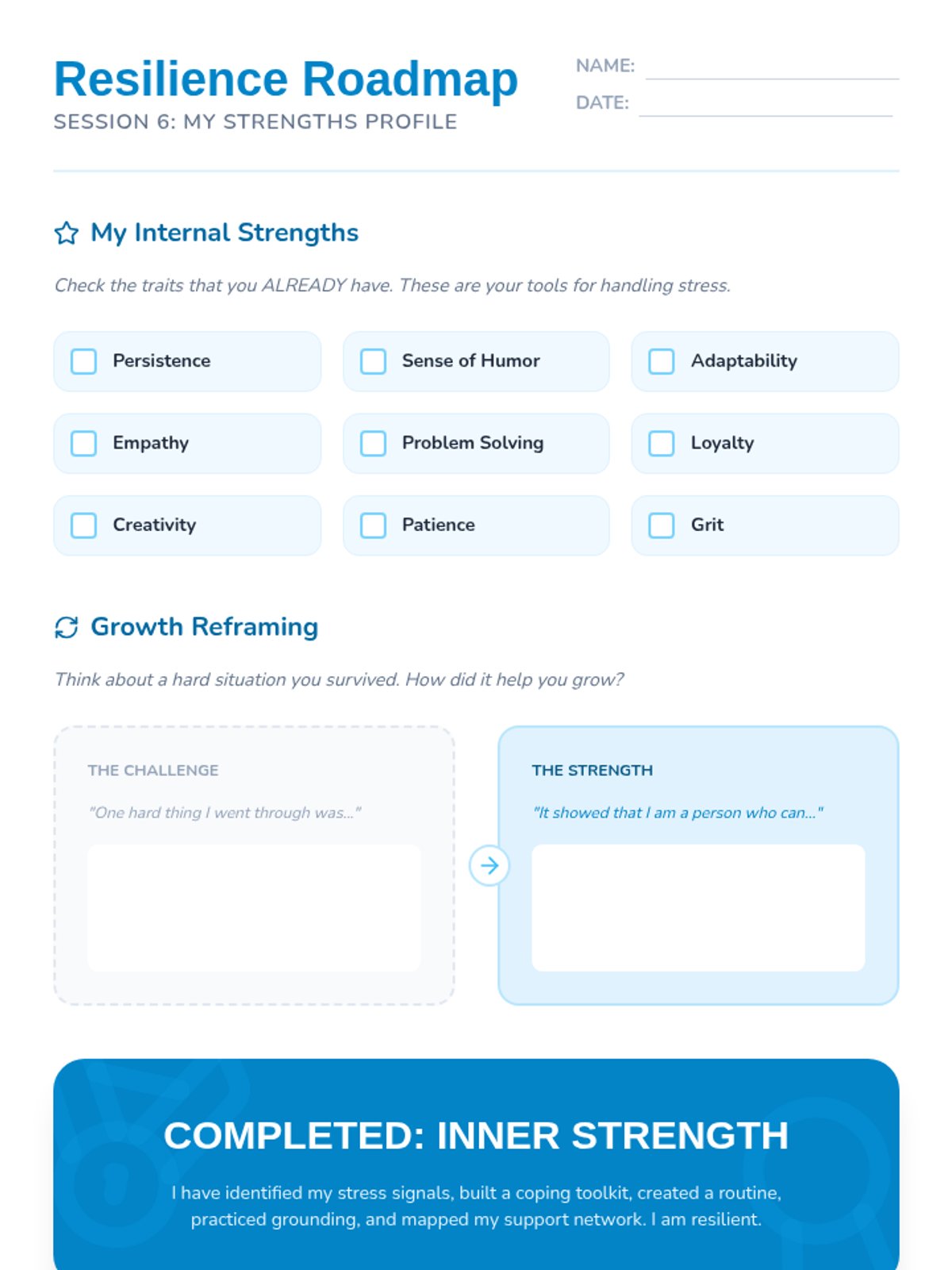
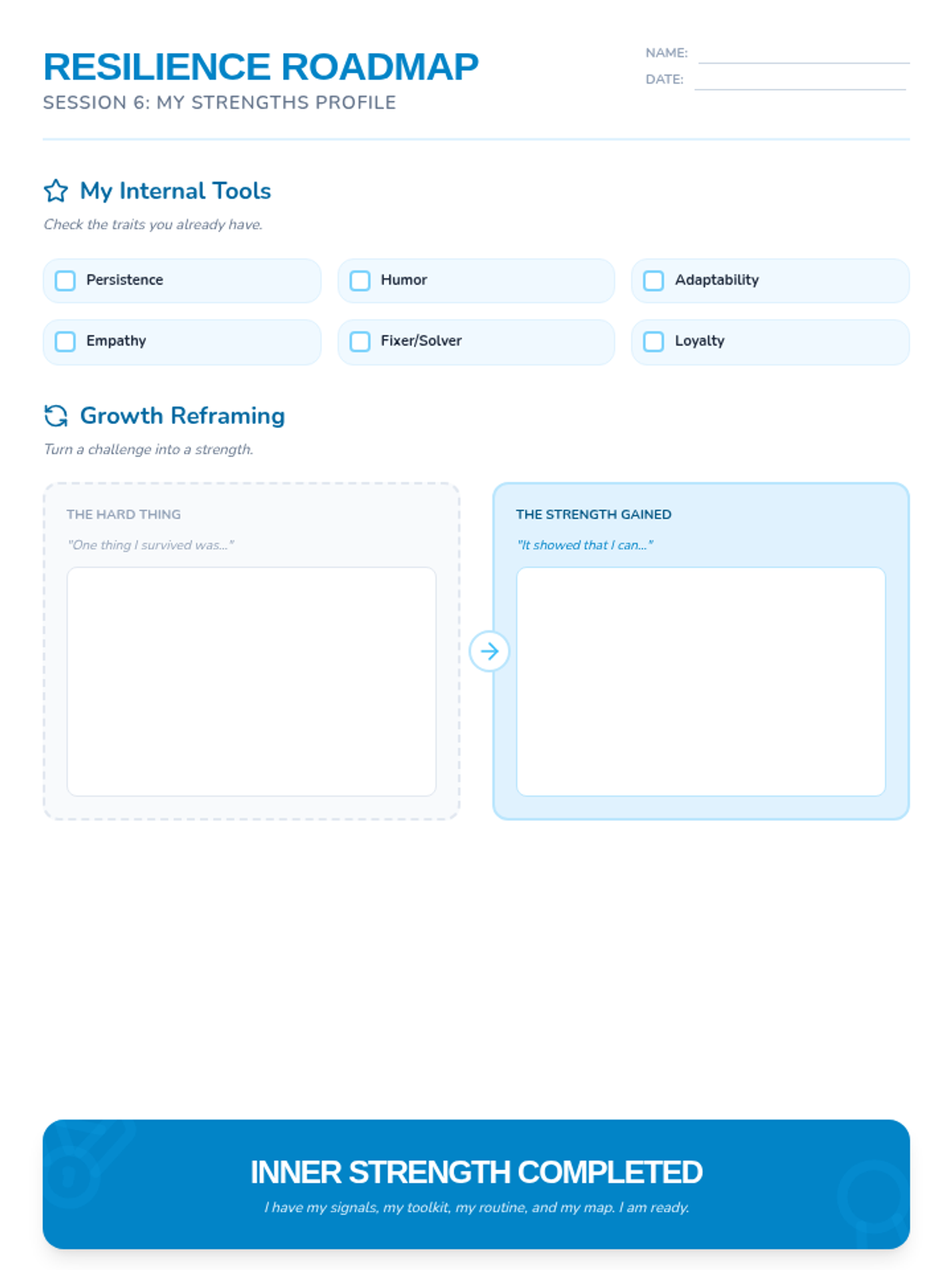
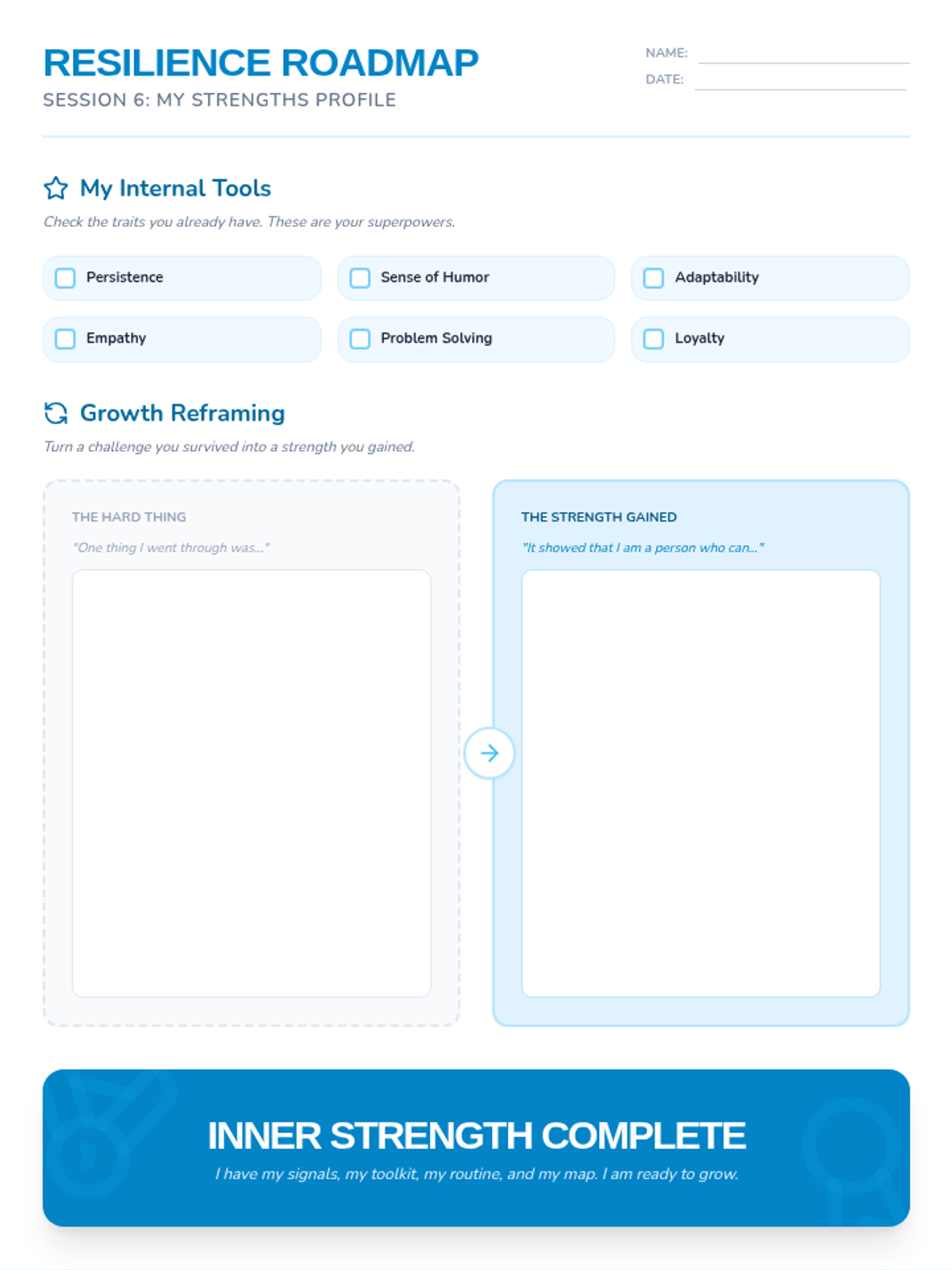
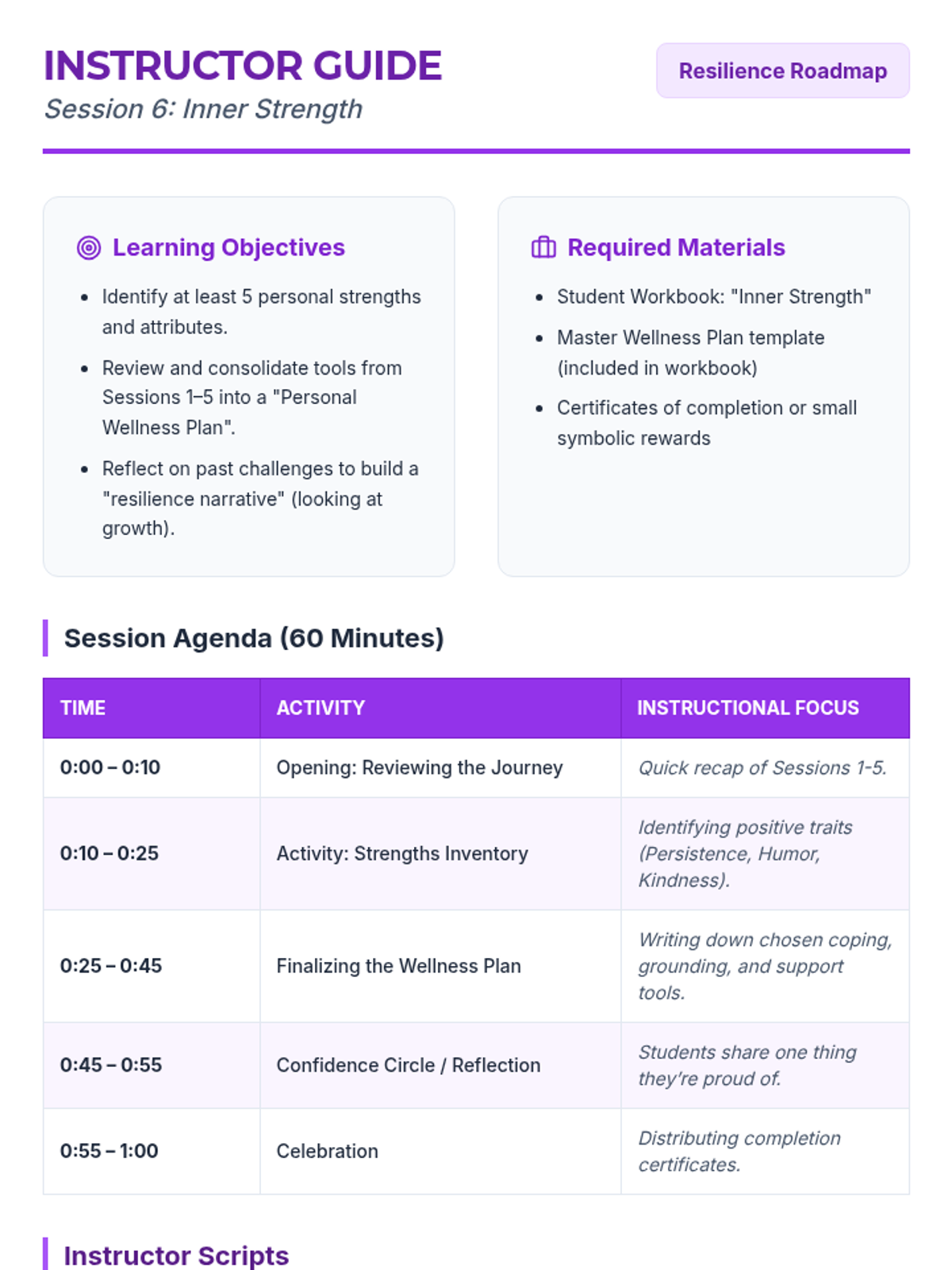
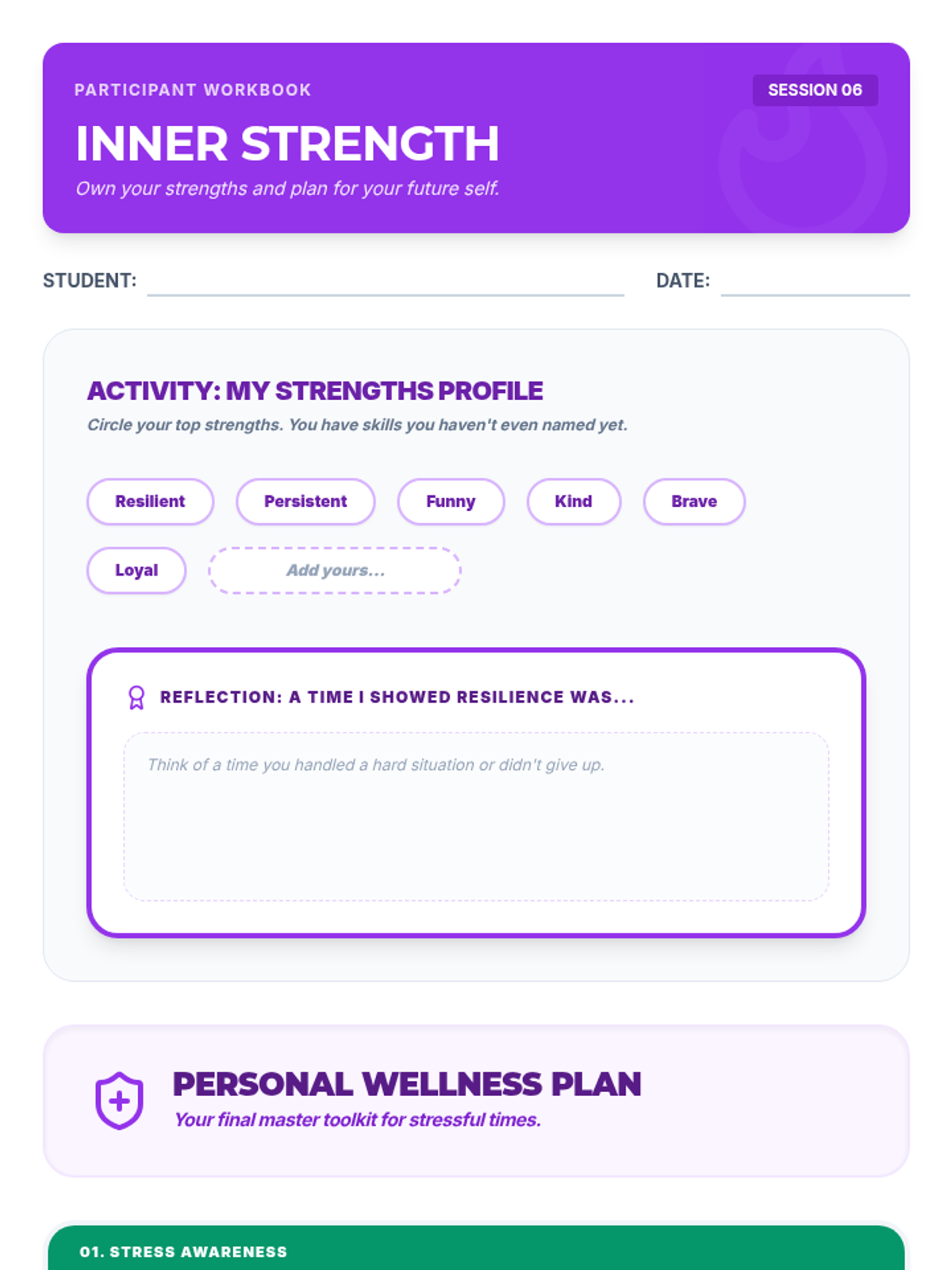
A final session focused on identifying personal strengths and reframing challenges as opportunities for growth.
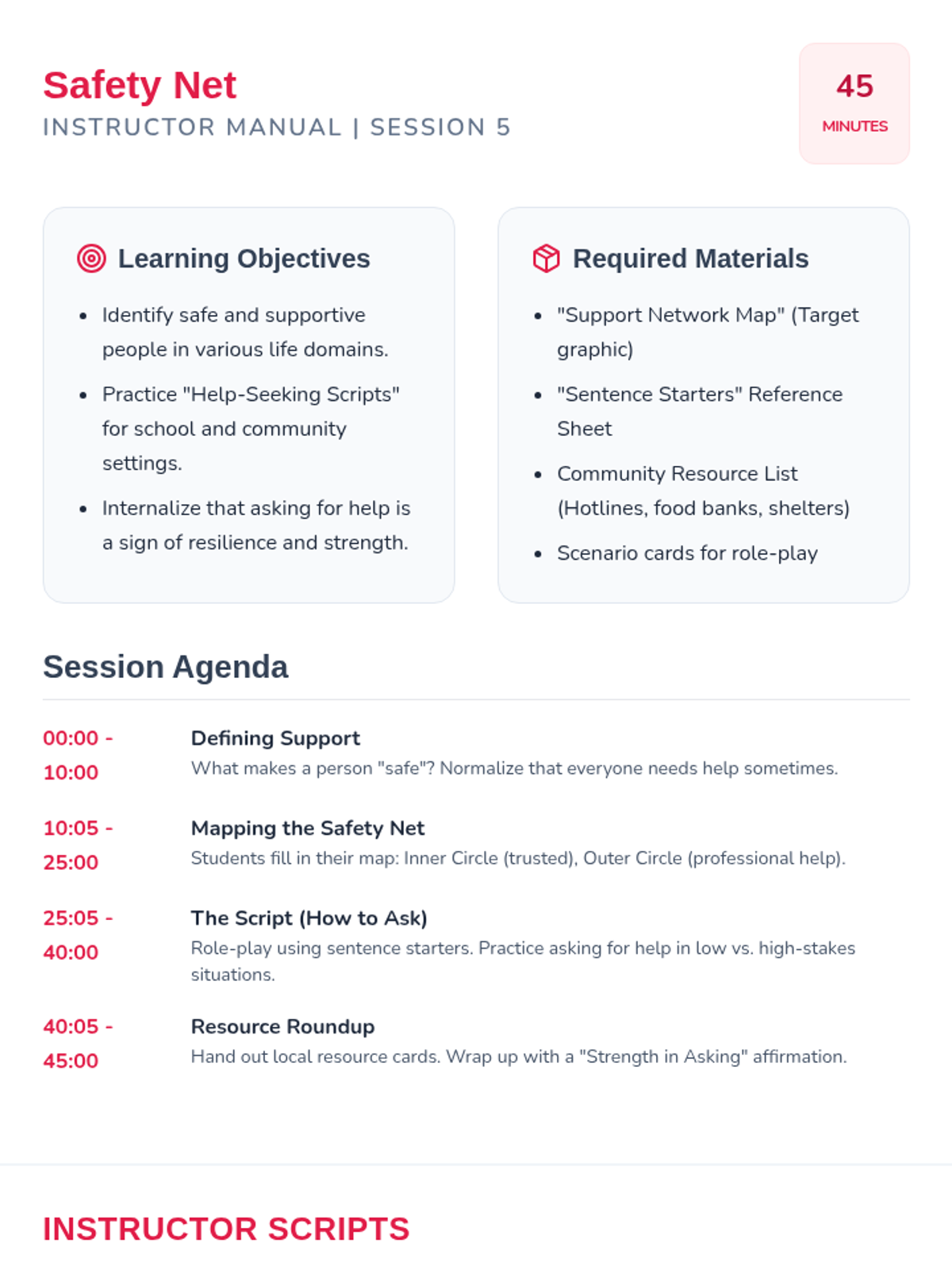
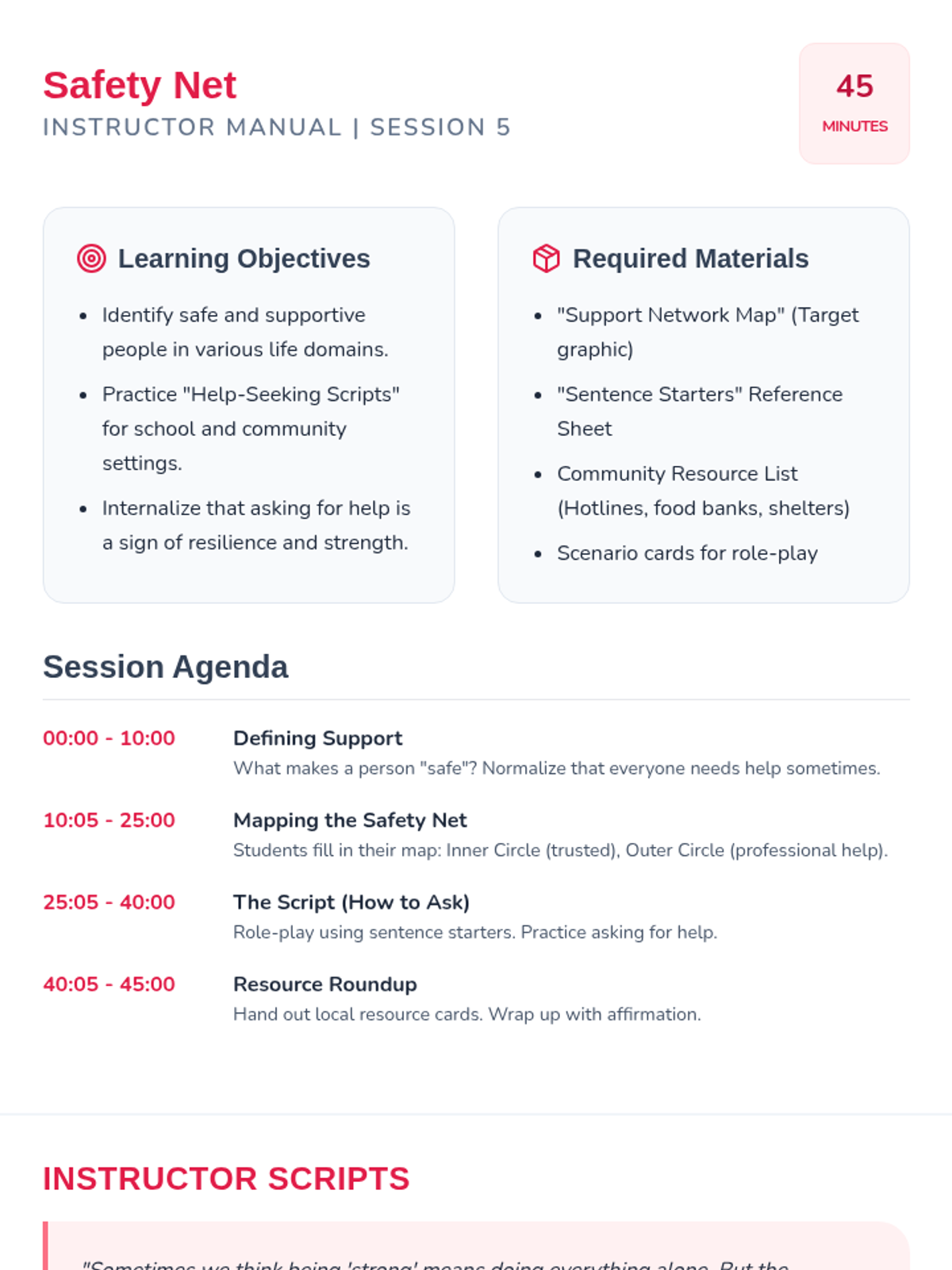
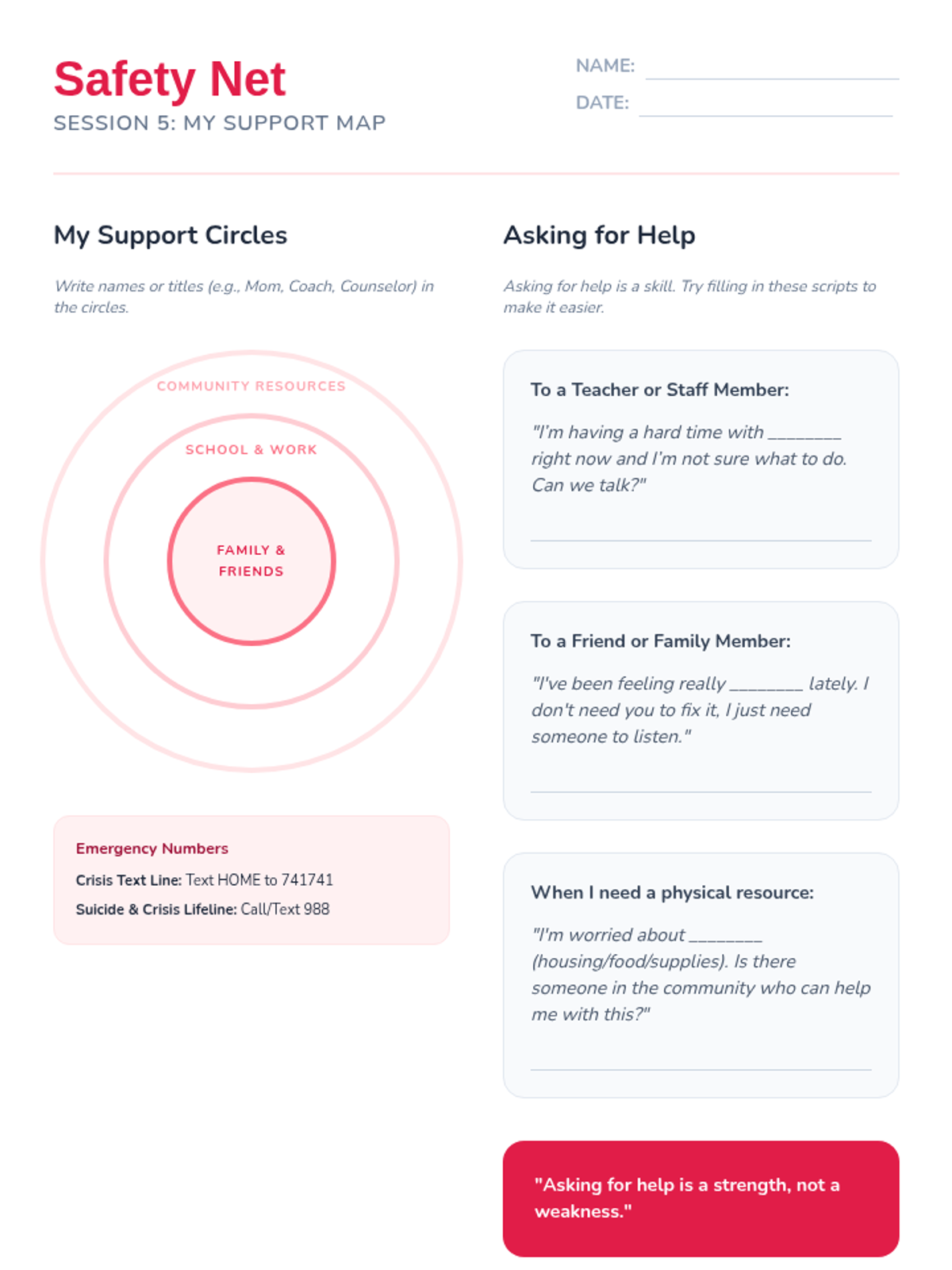
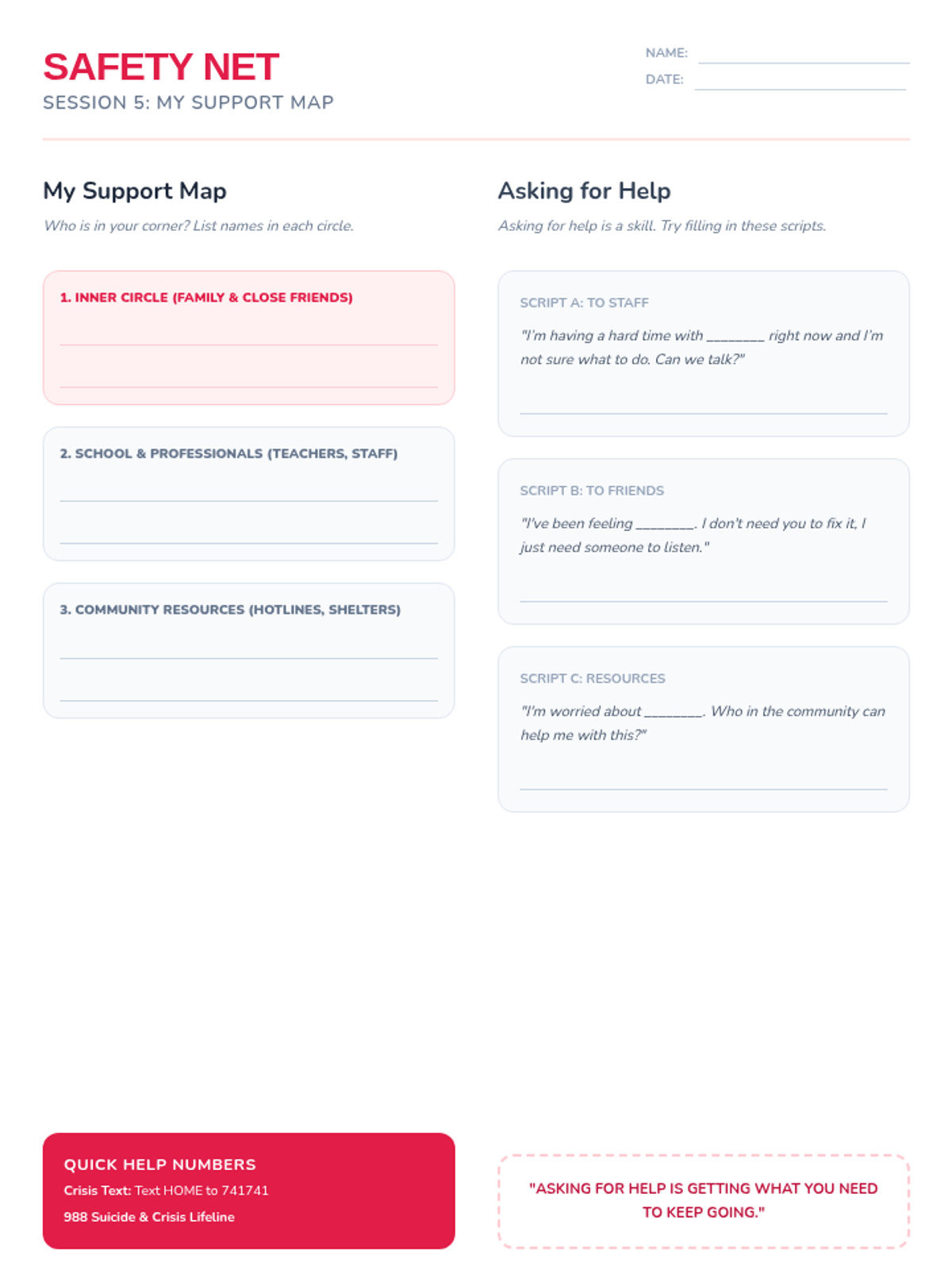
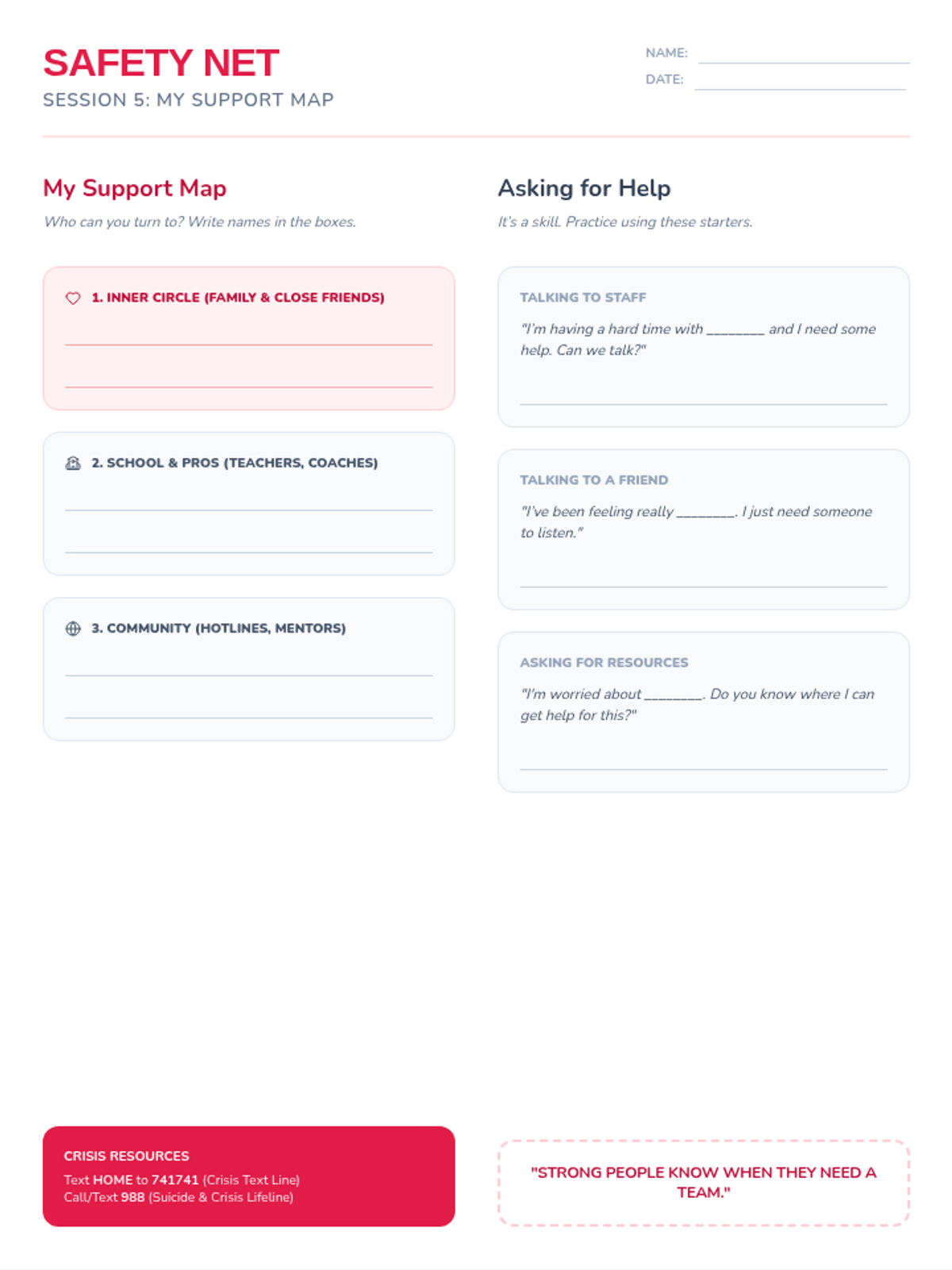
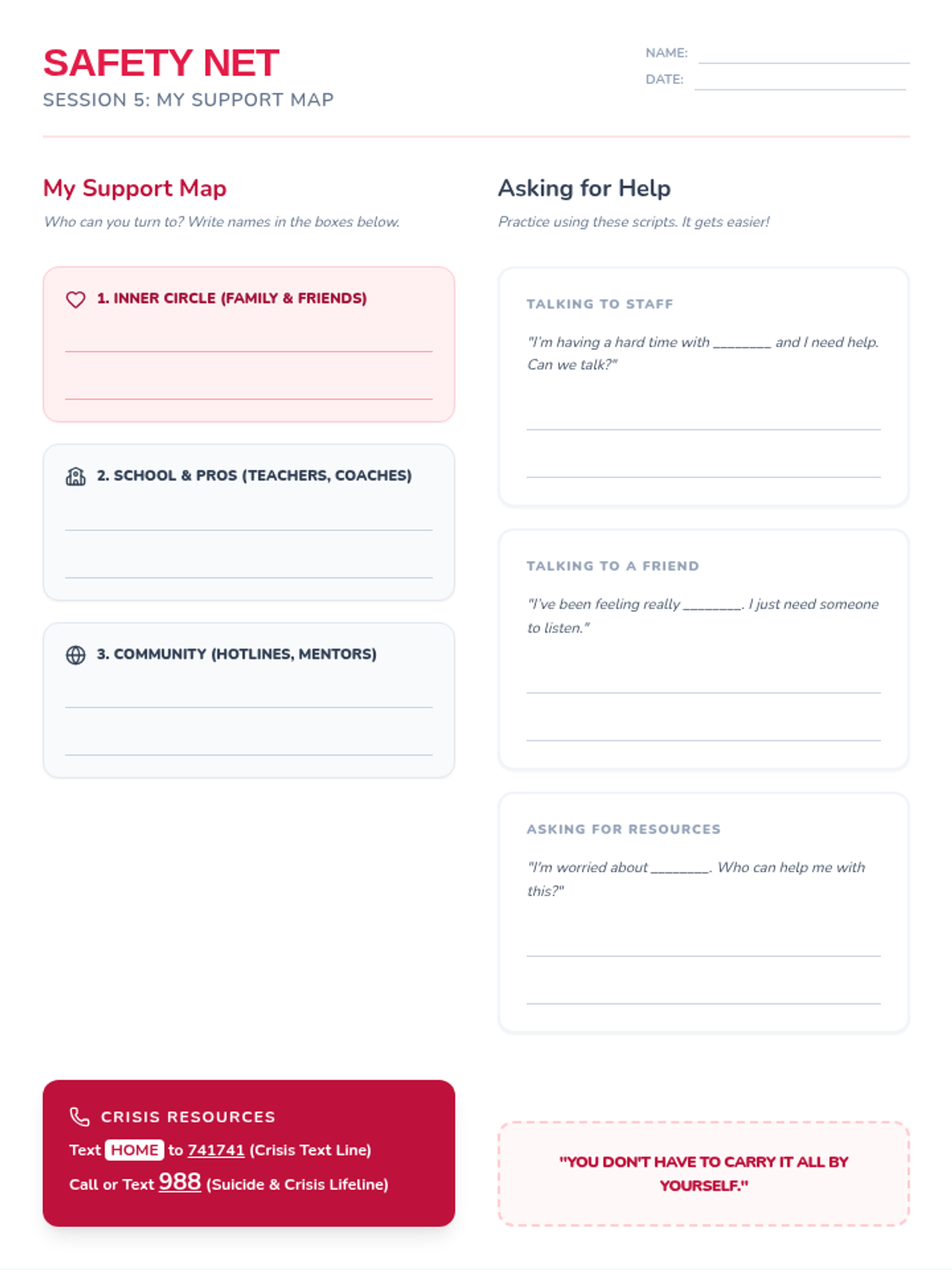
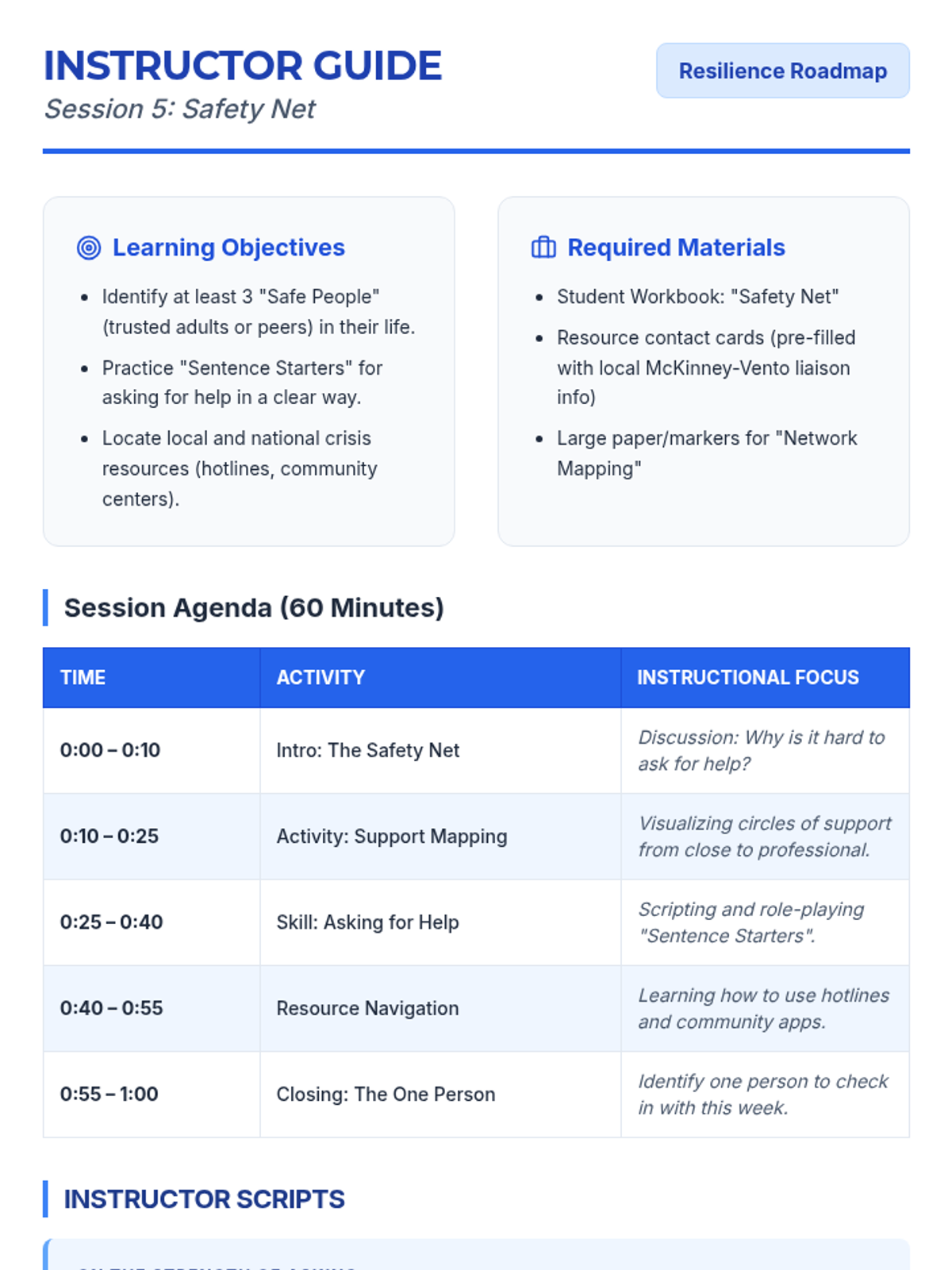
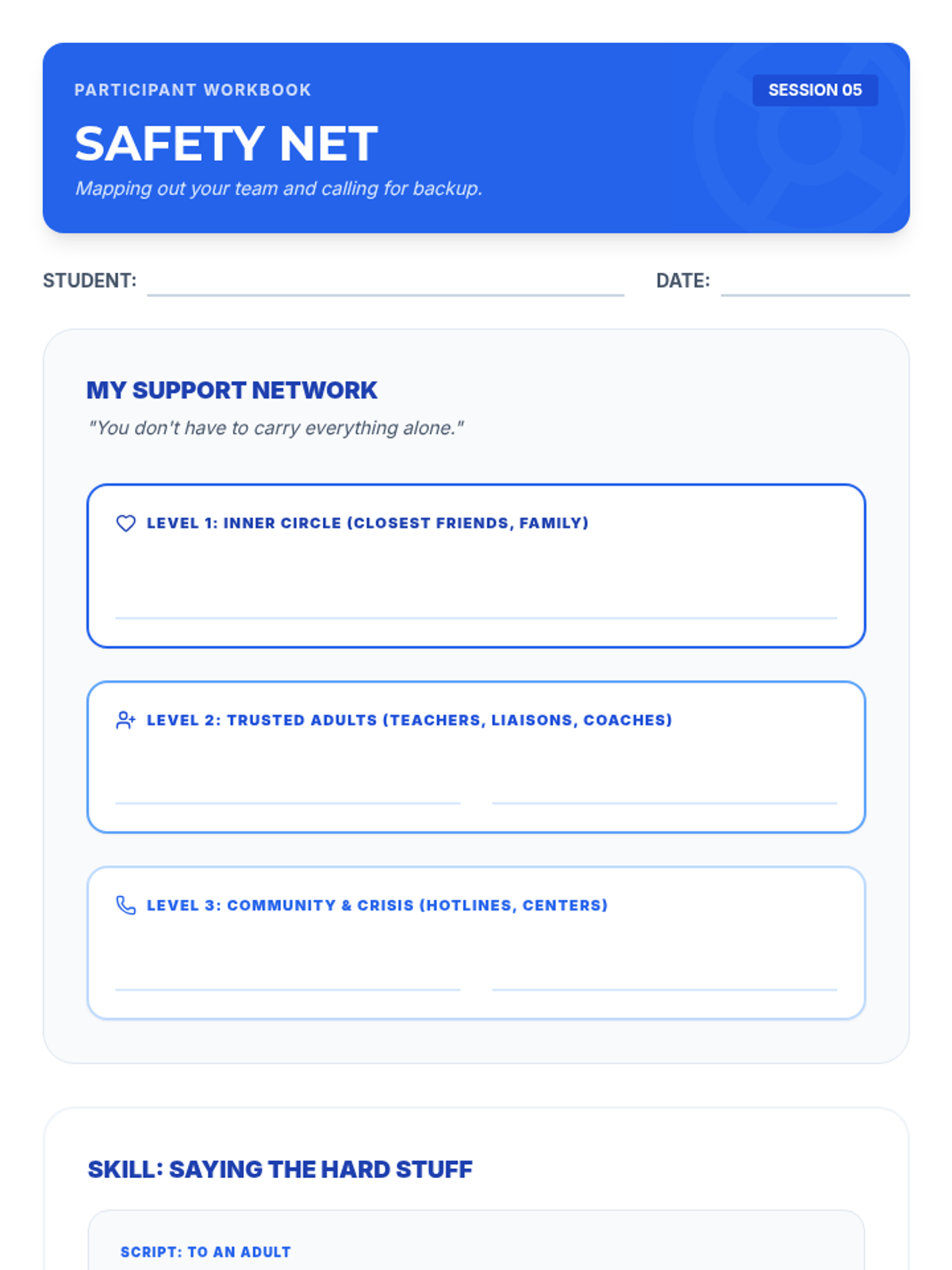
Students will map out their support networks and practice assertive communication for seeking help.
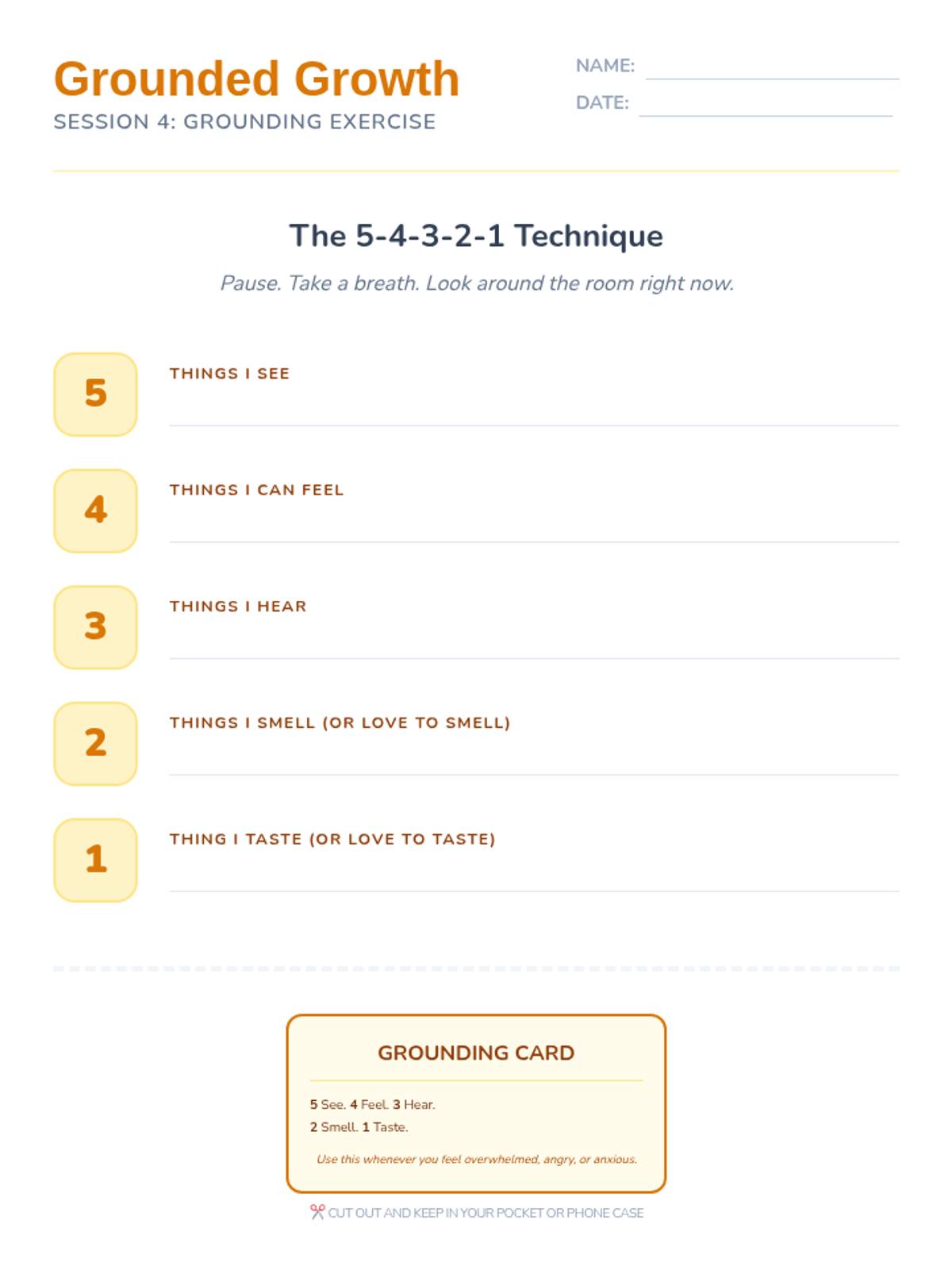
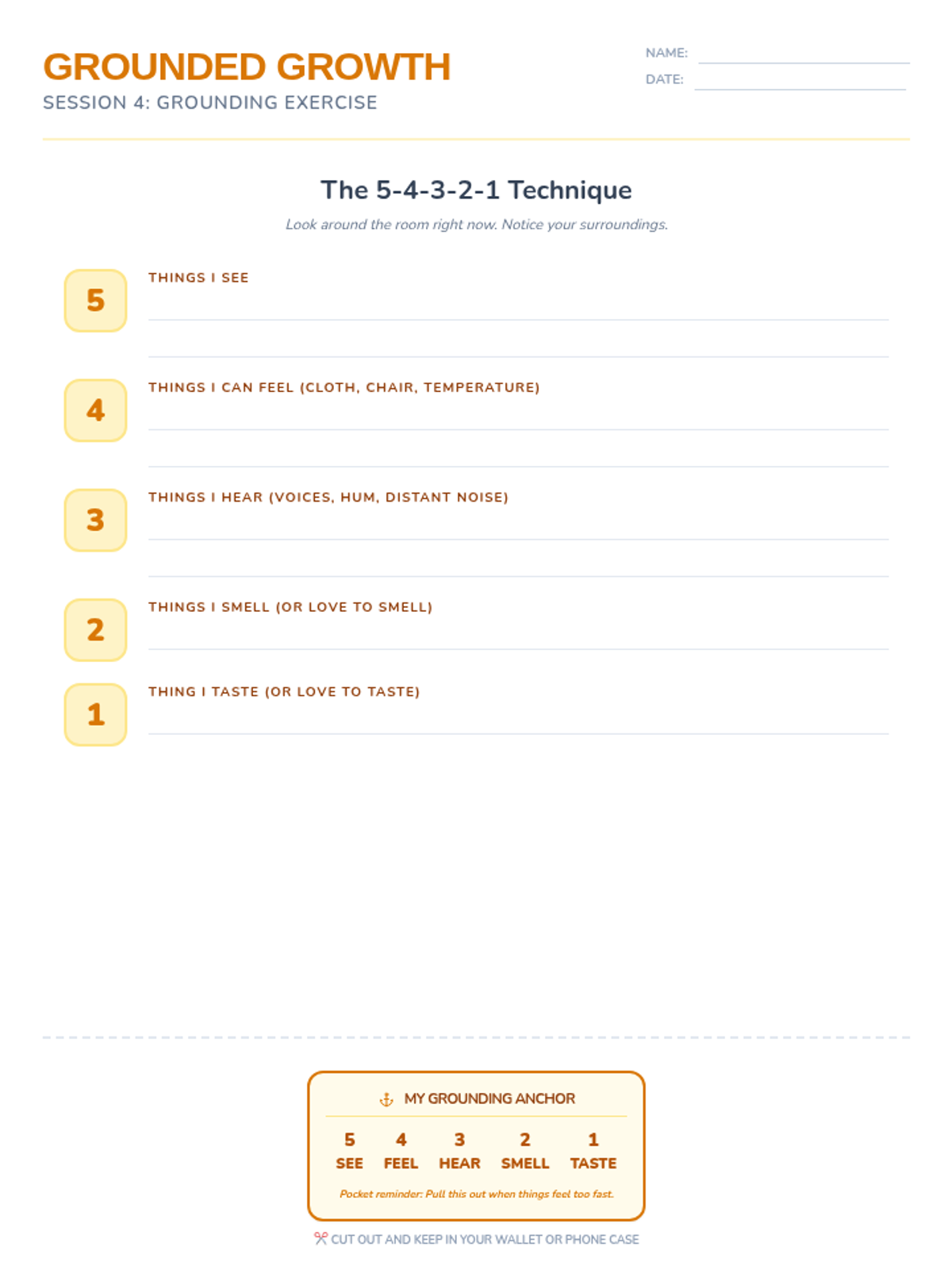
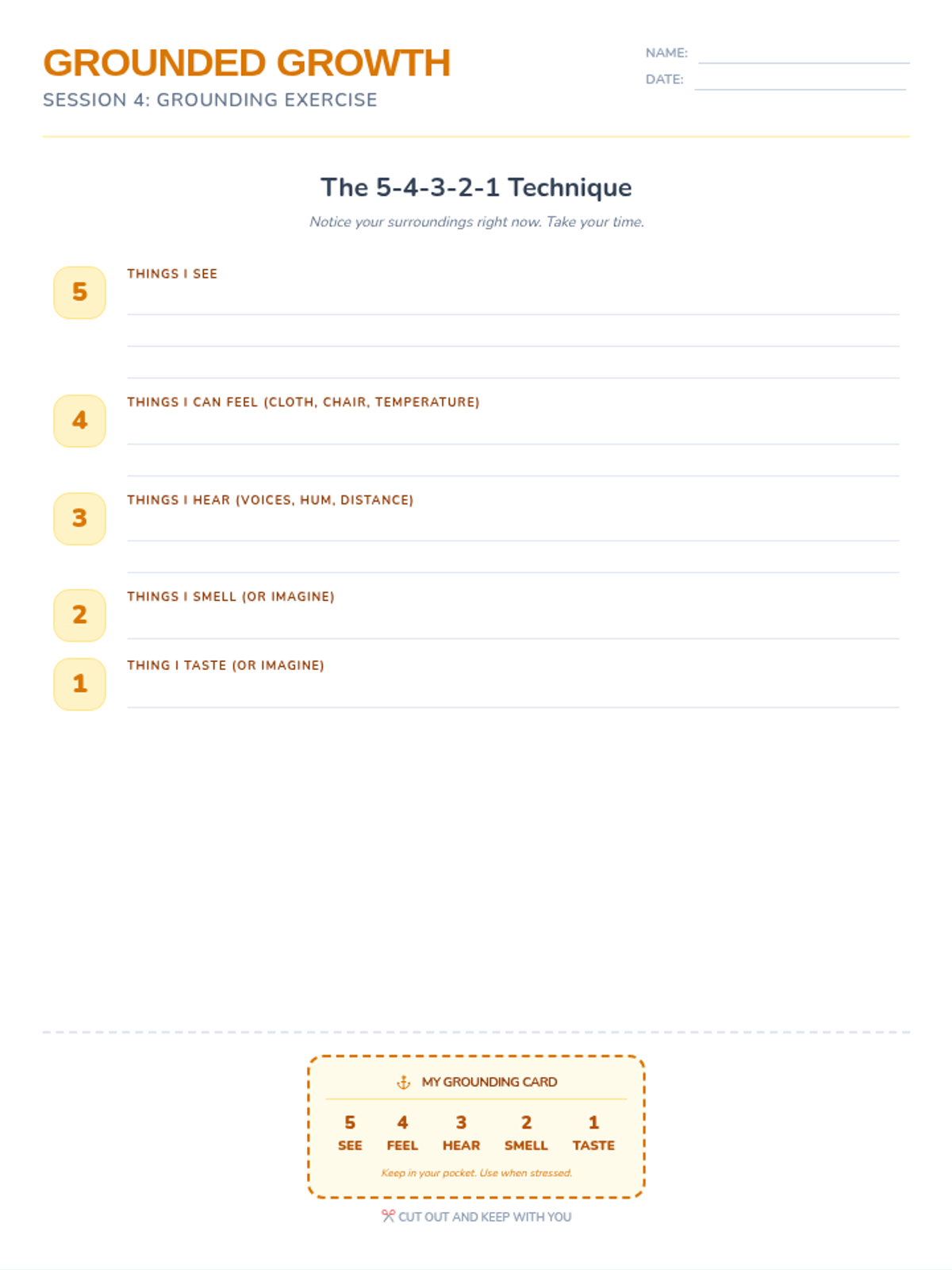
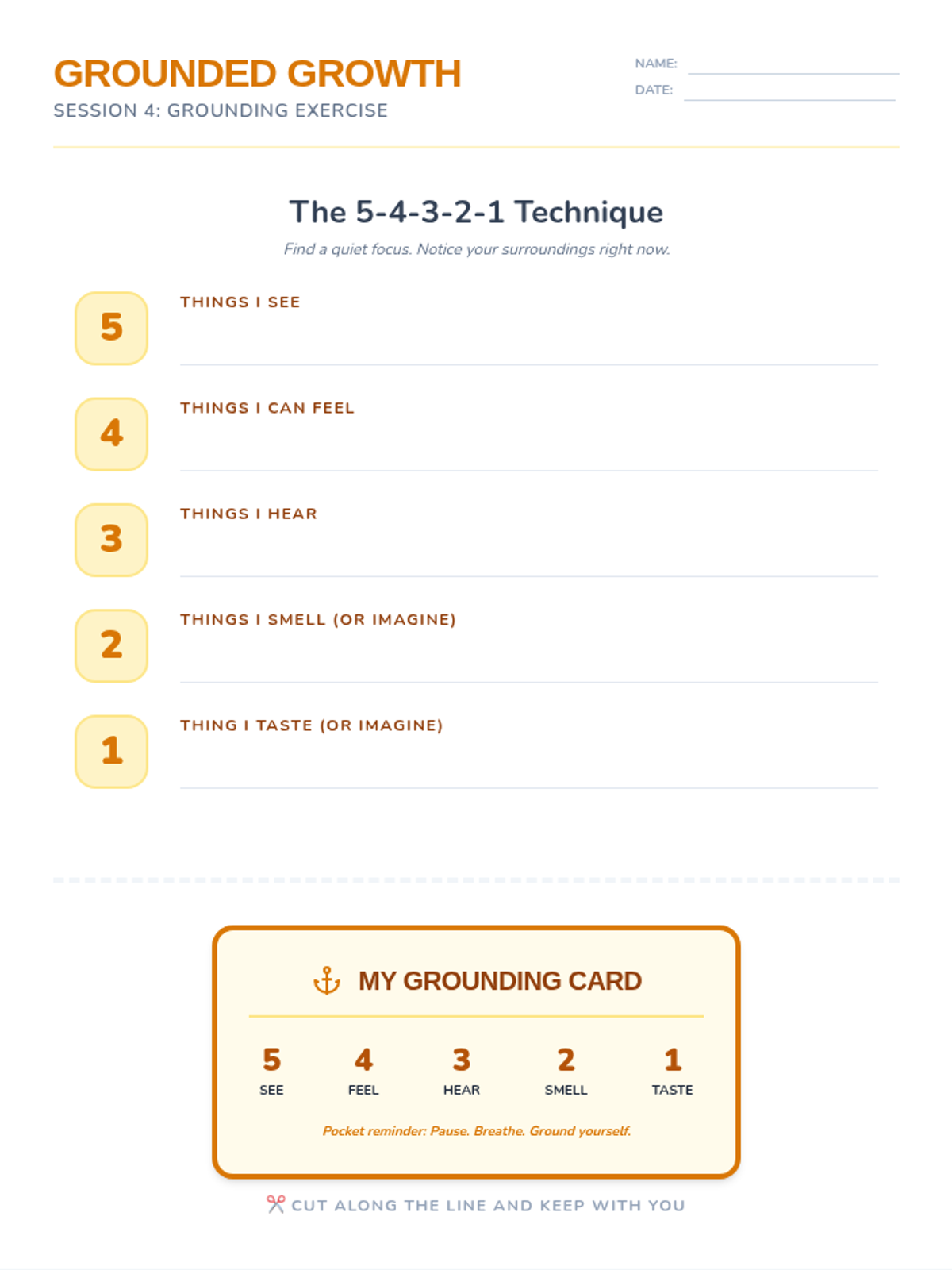
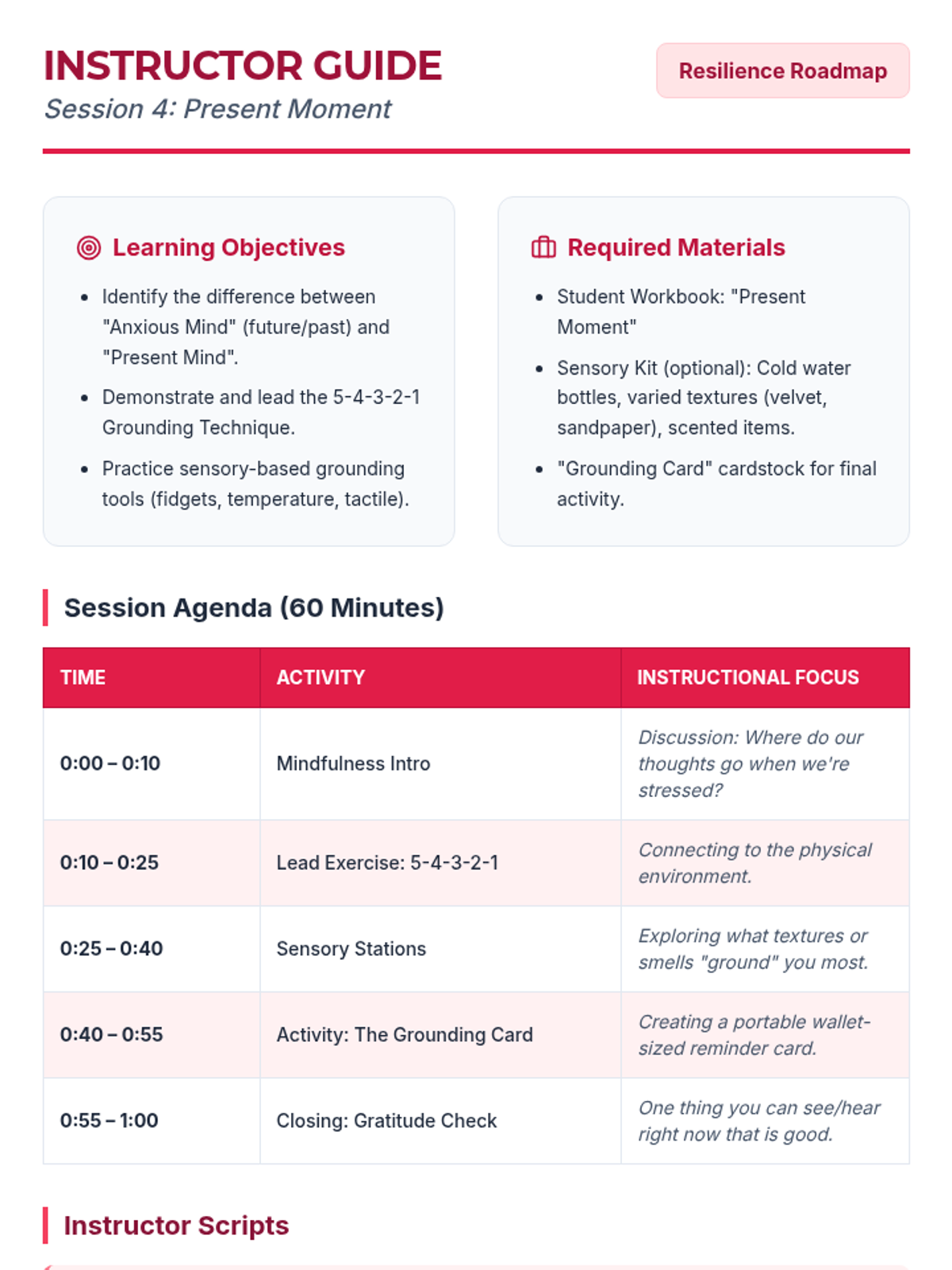
Practical application of grounding techniques and mindfulness to manage overwhelming emotions.
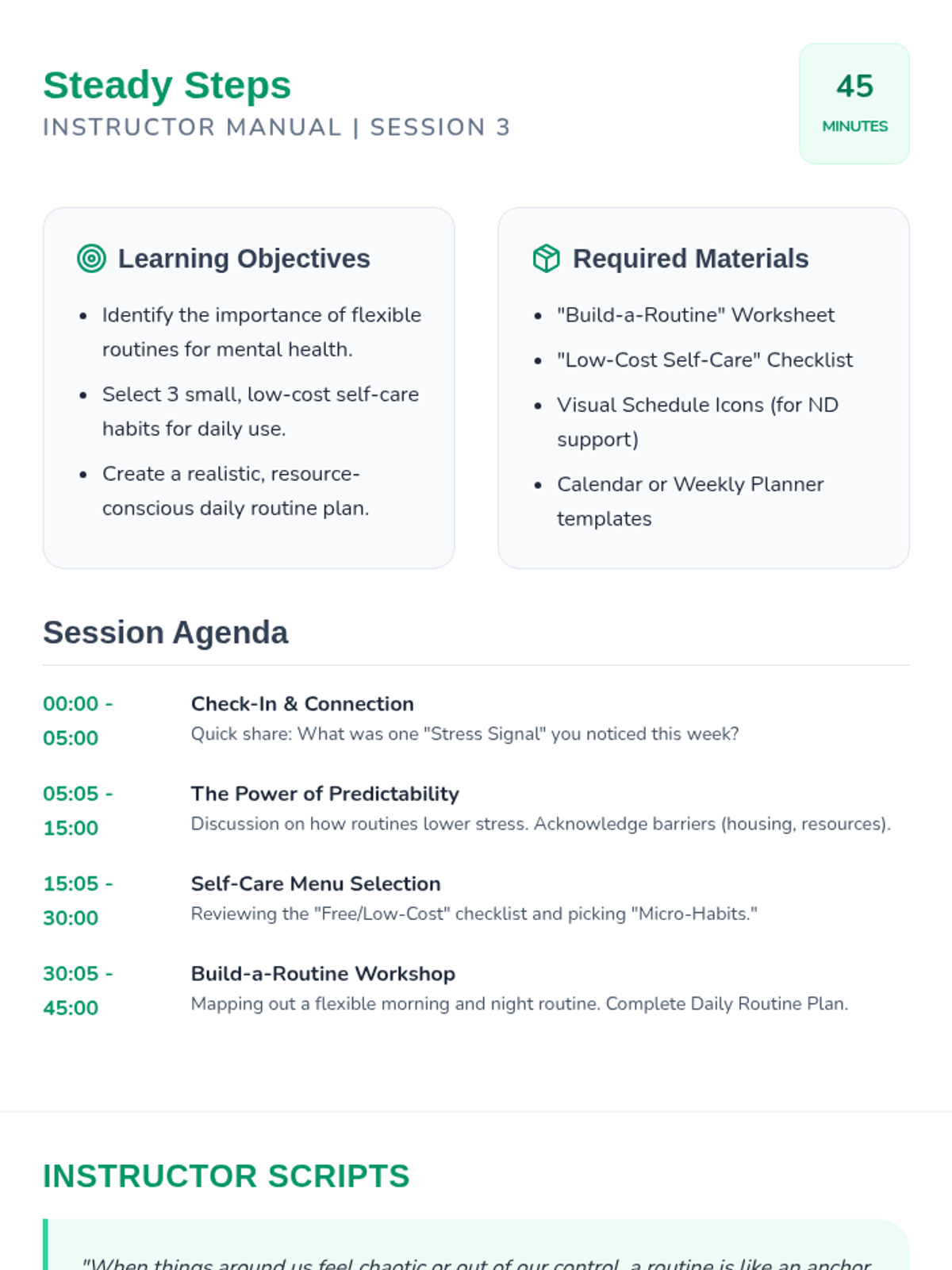
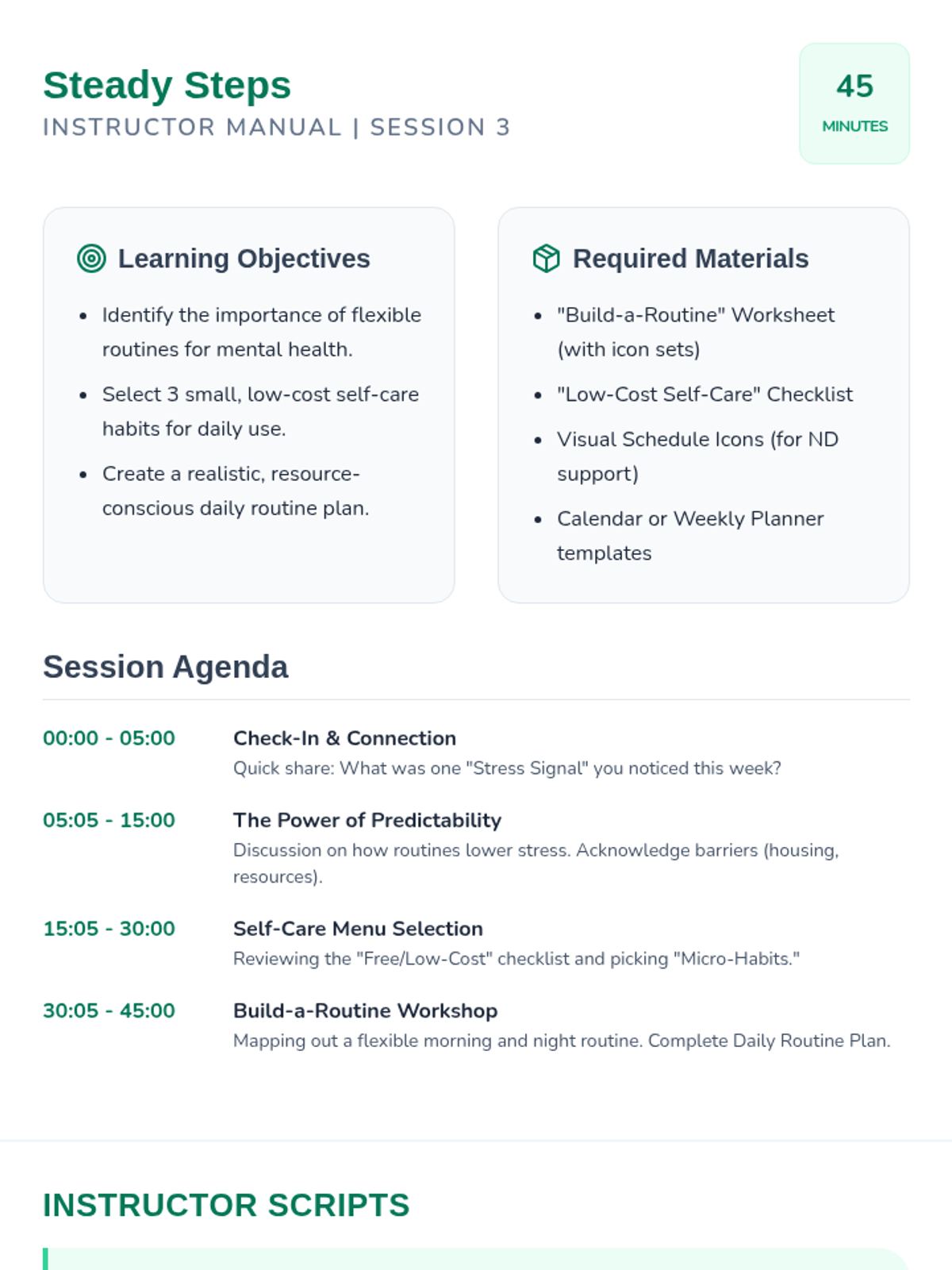
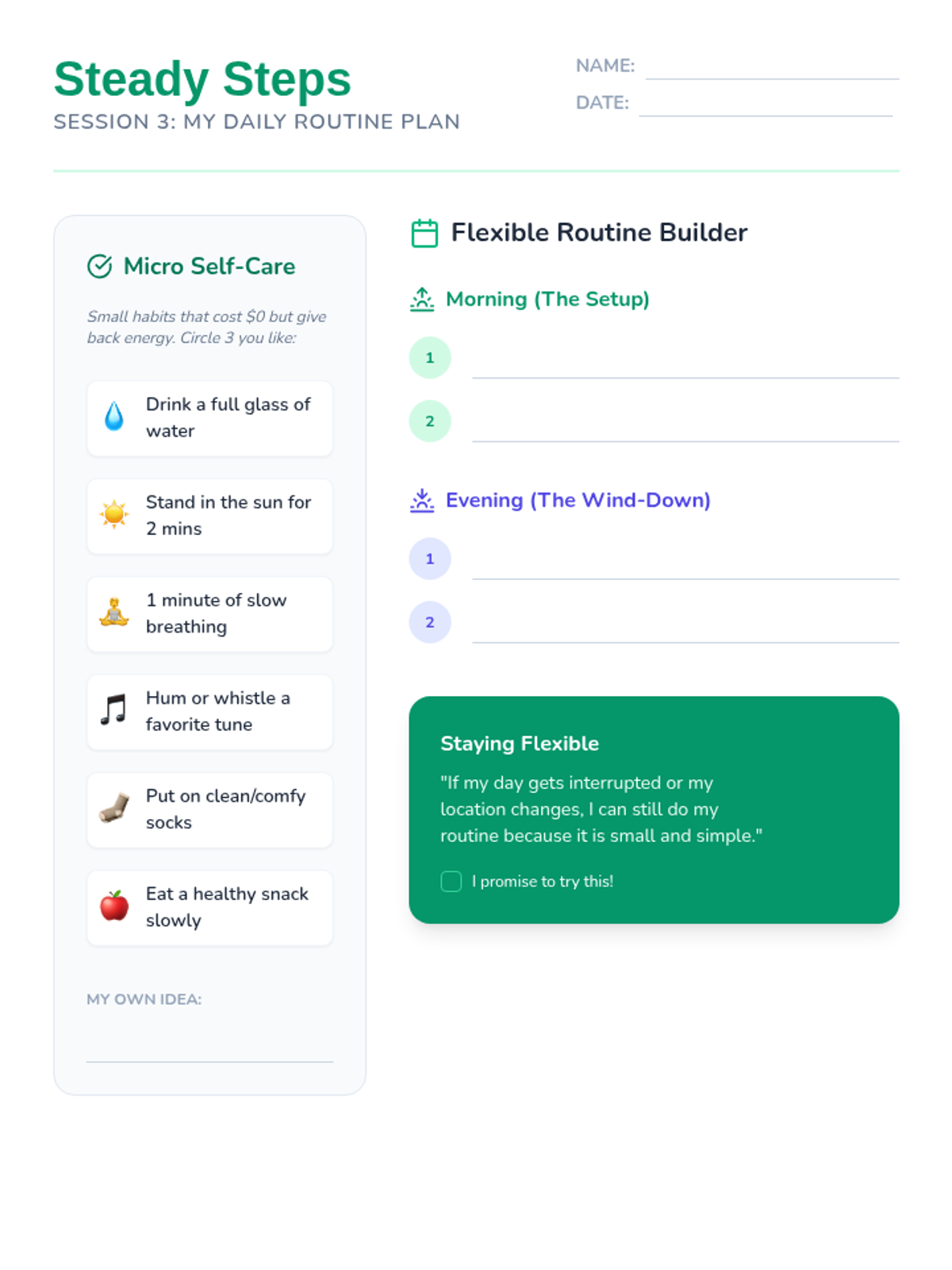
Students will explore the importance of flexible routines and identify low-cost self-care habits.
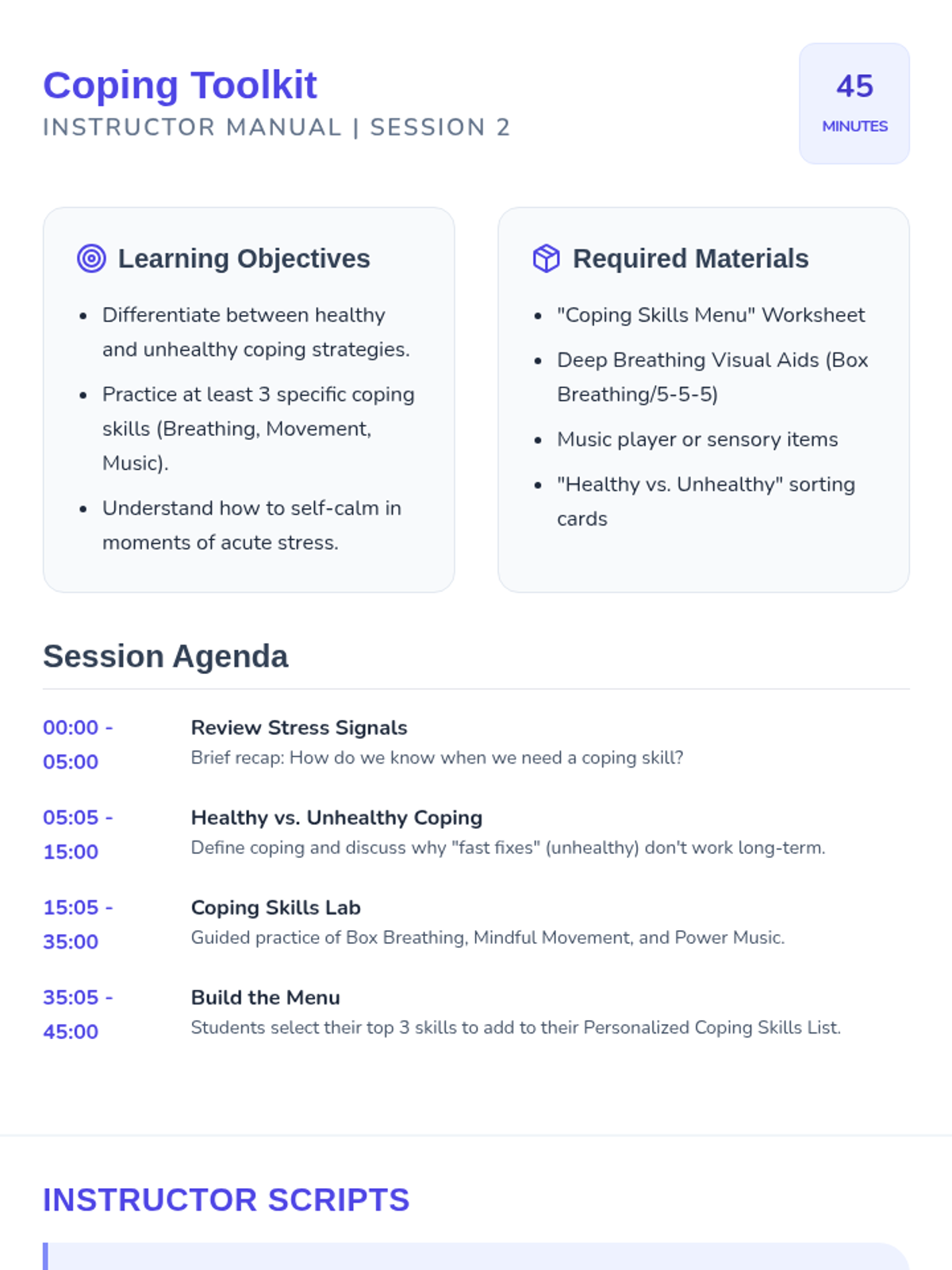
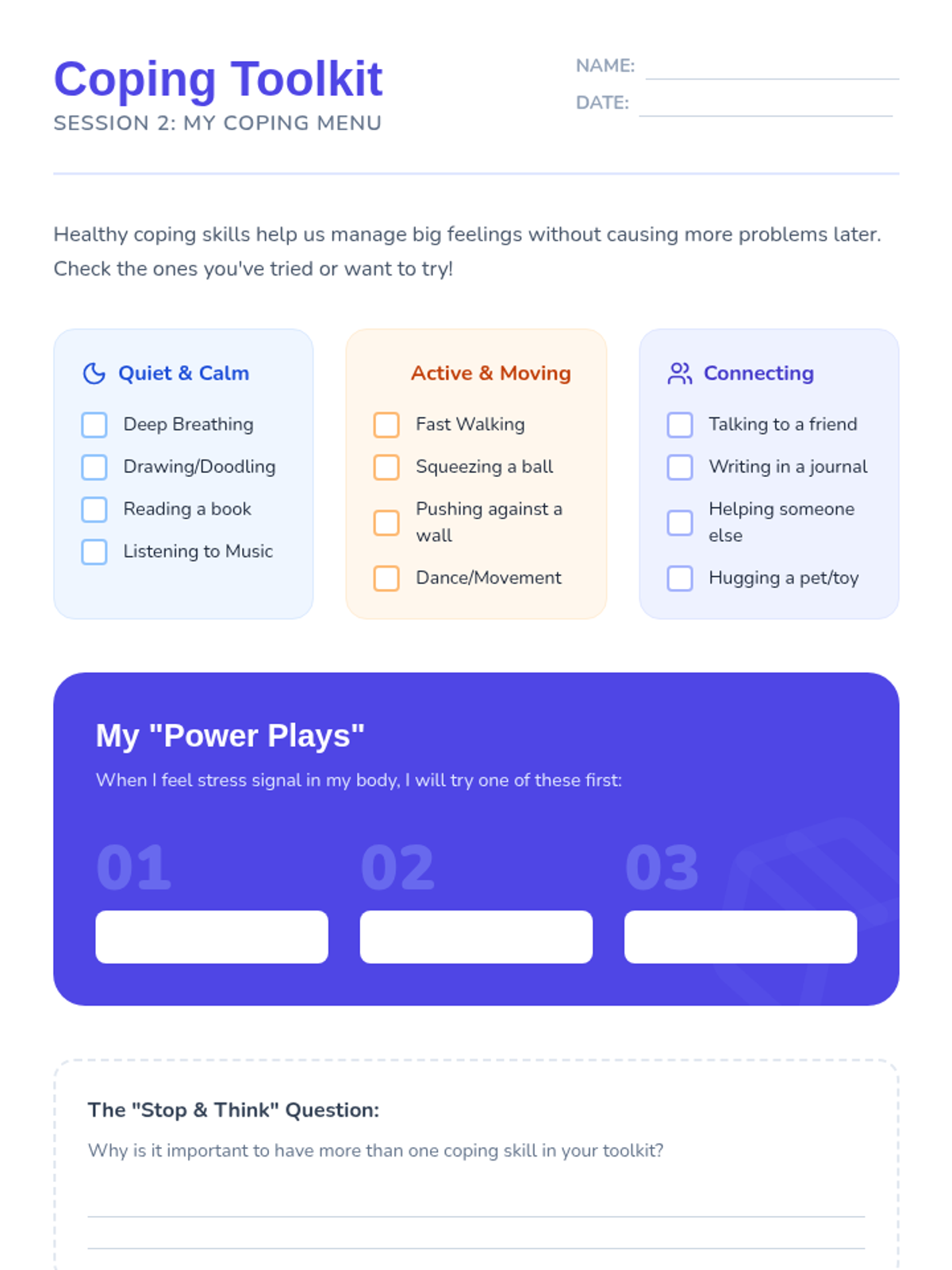
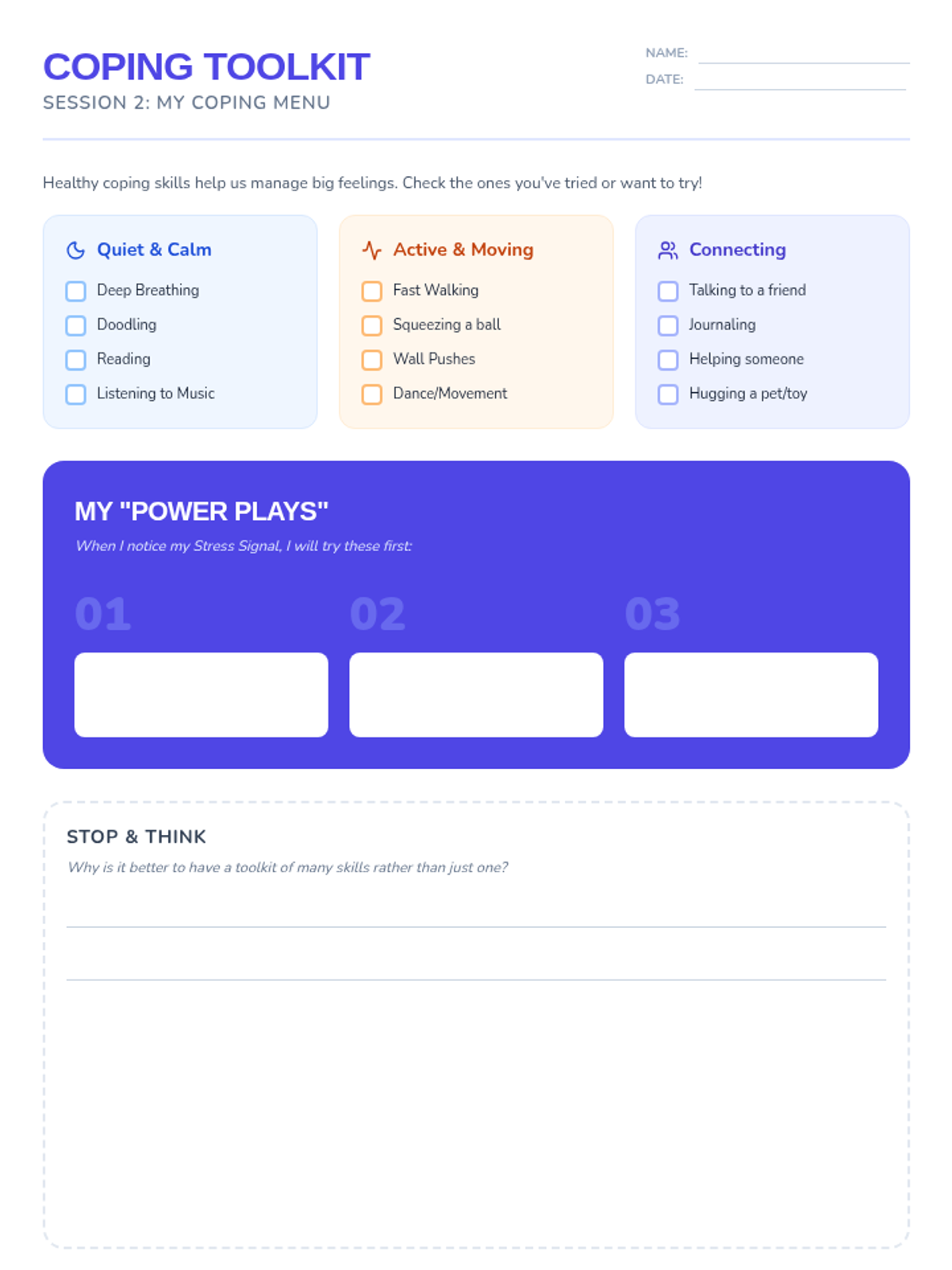
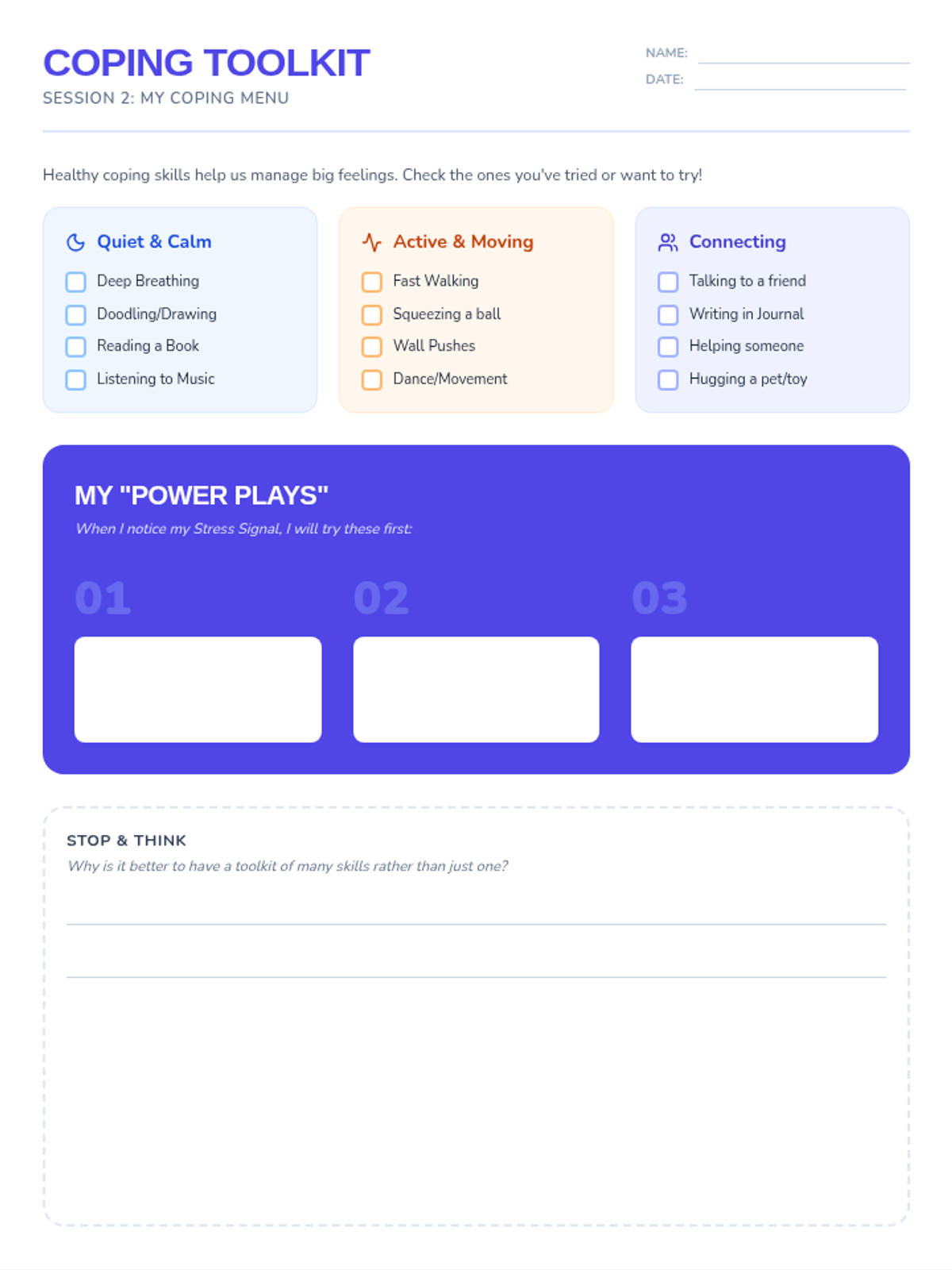
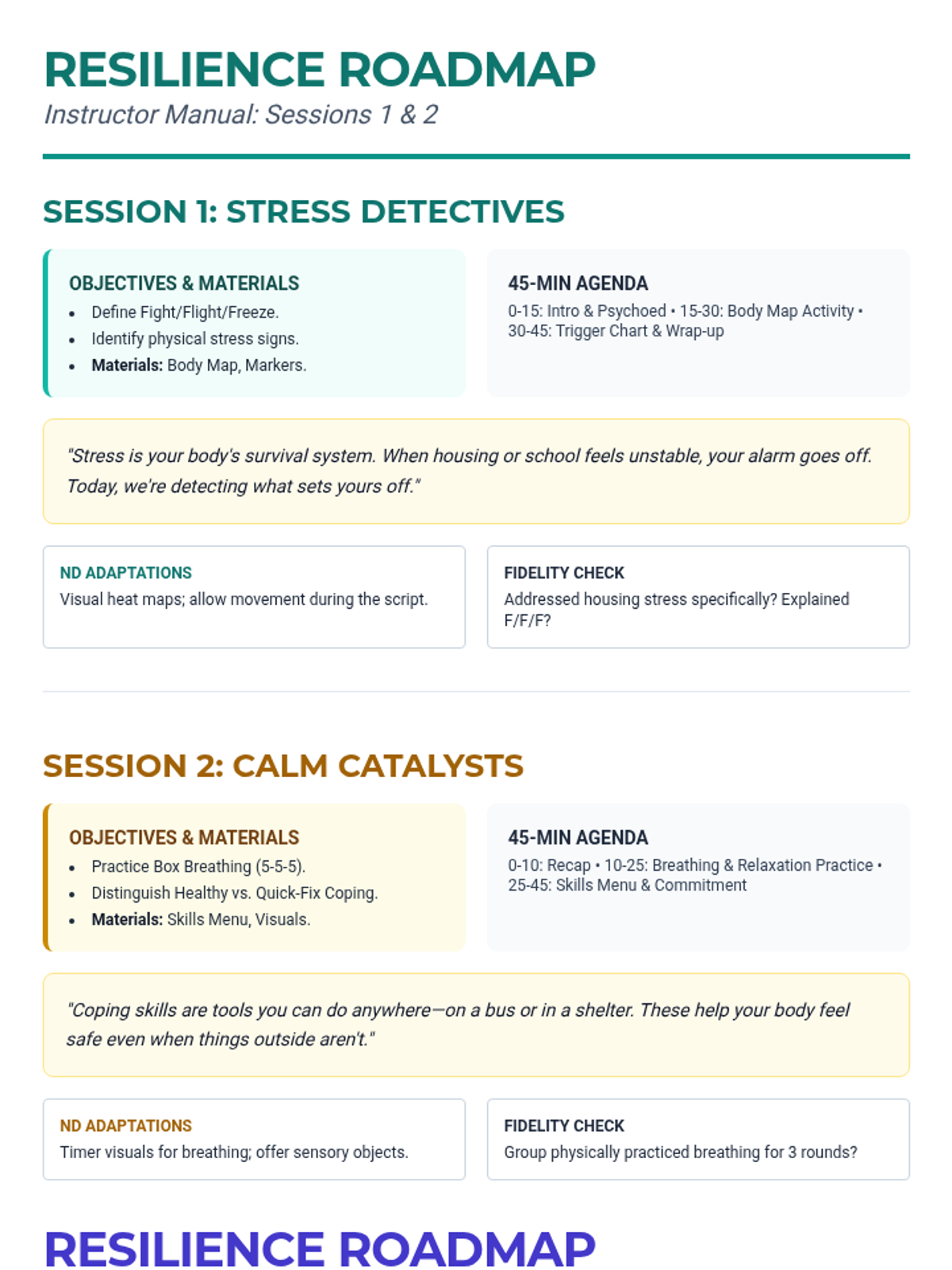
Introduction to healthy coping strategies and the development of a personalized coping skills menu.
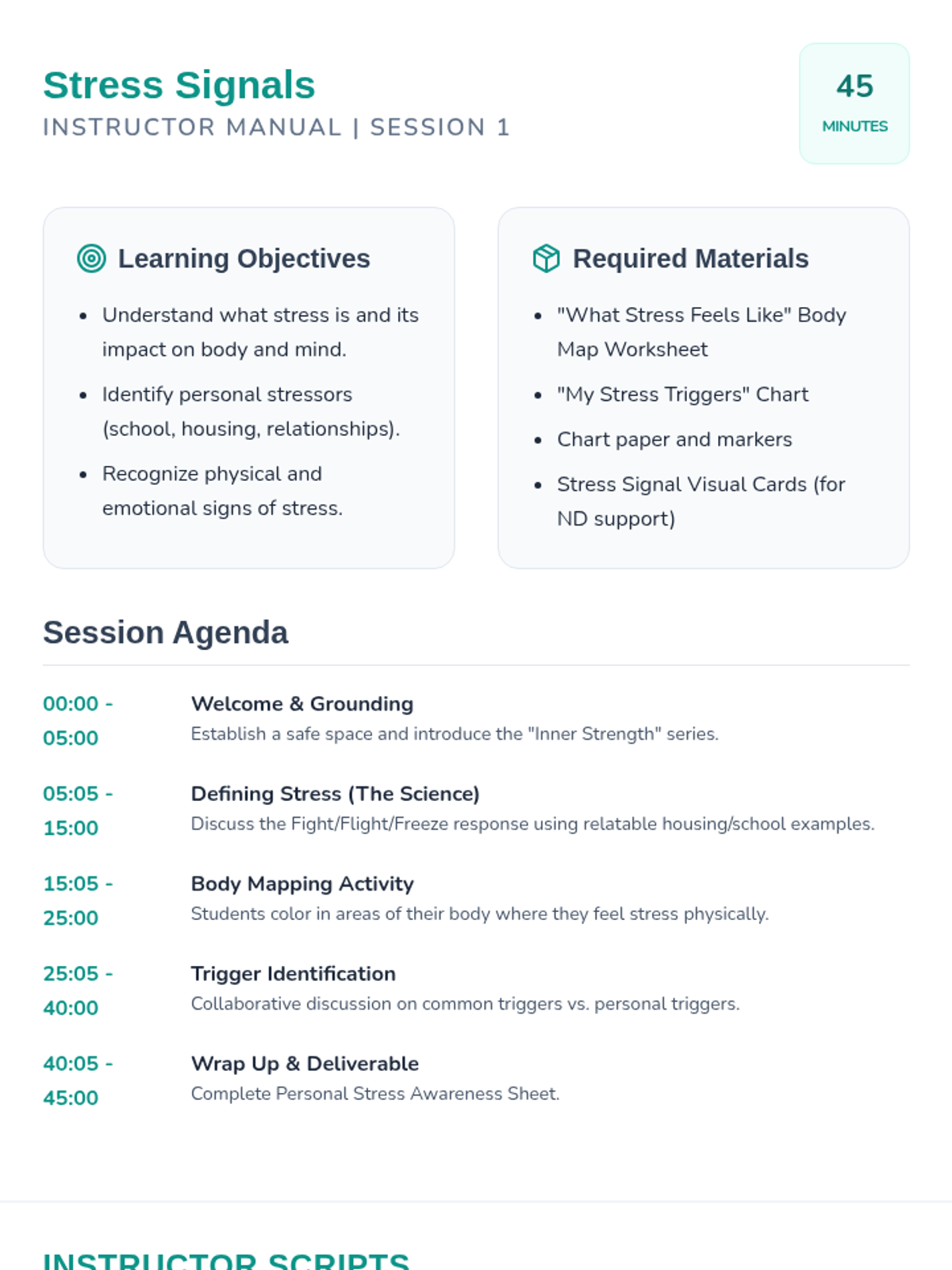
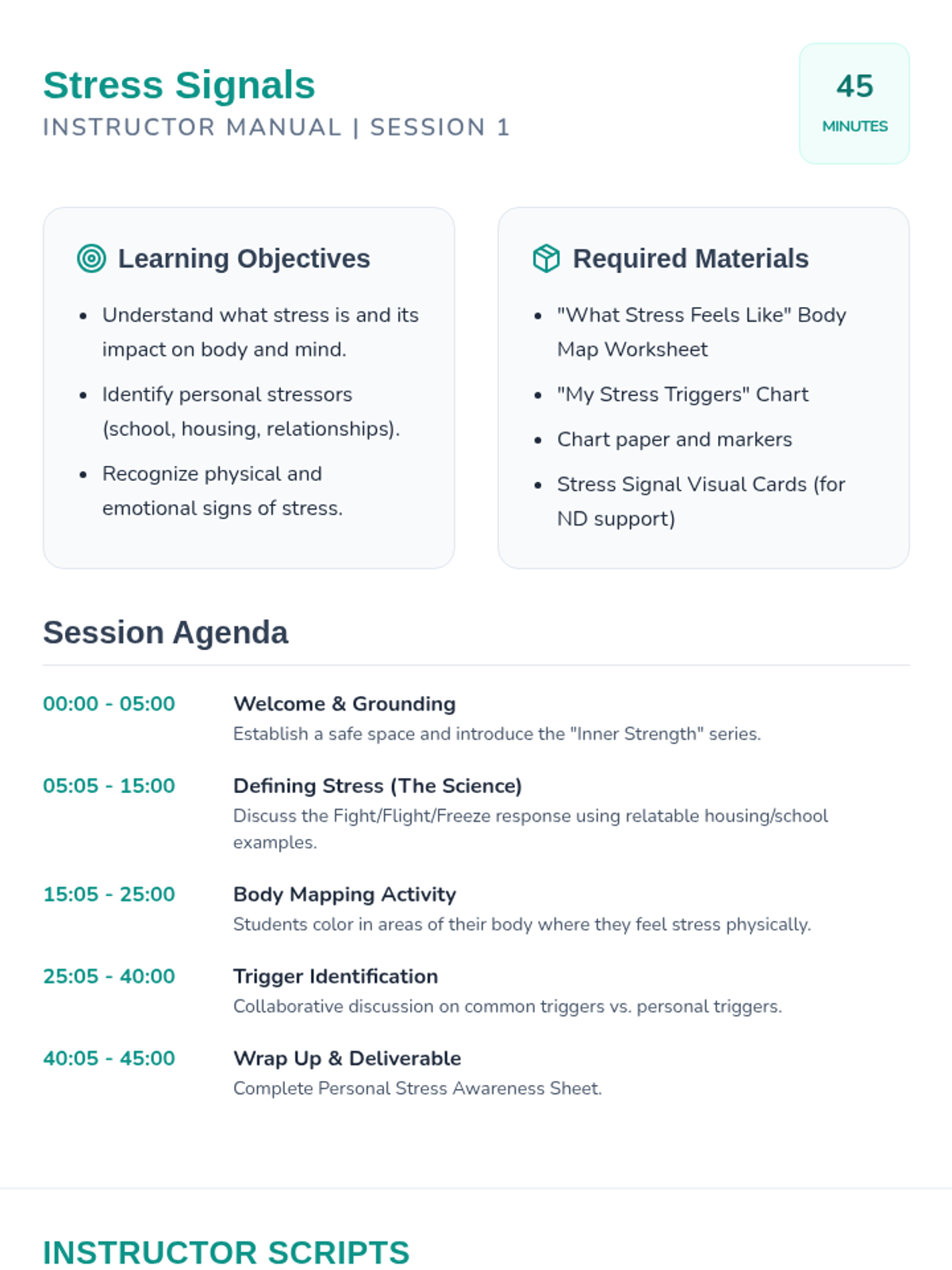
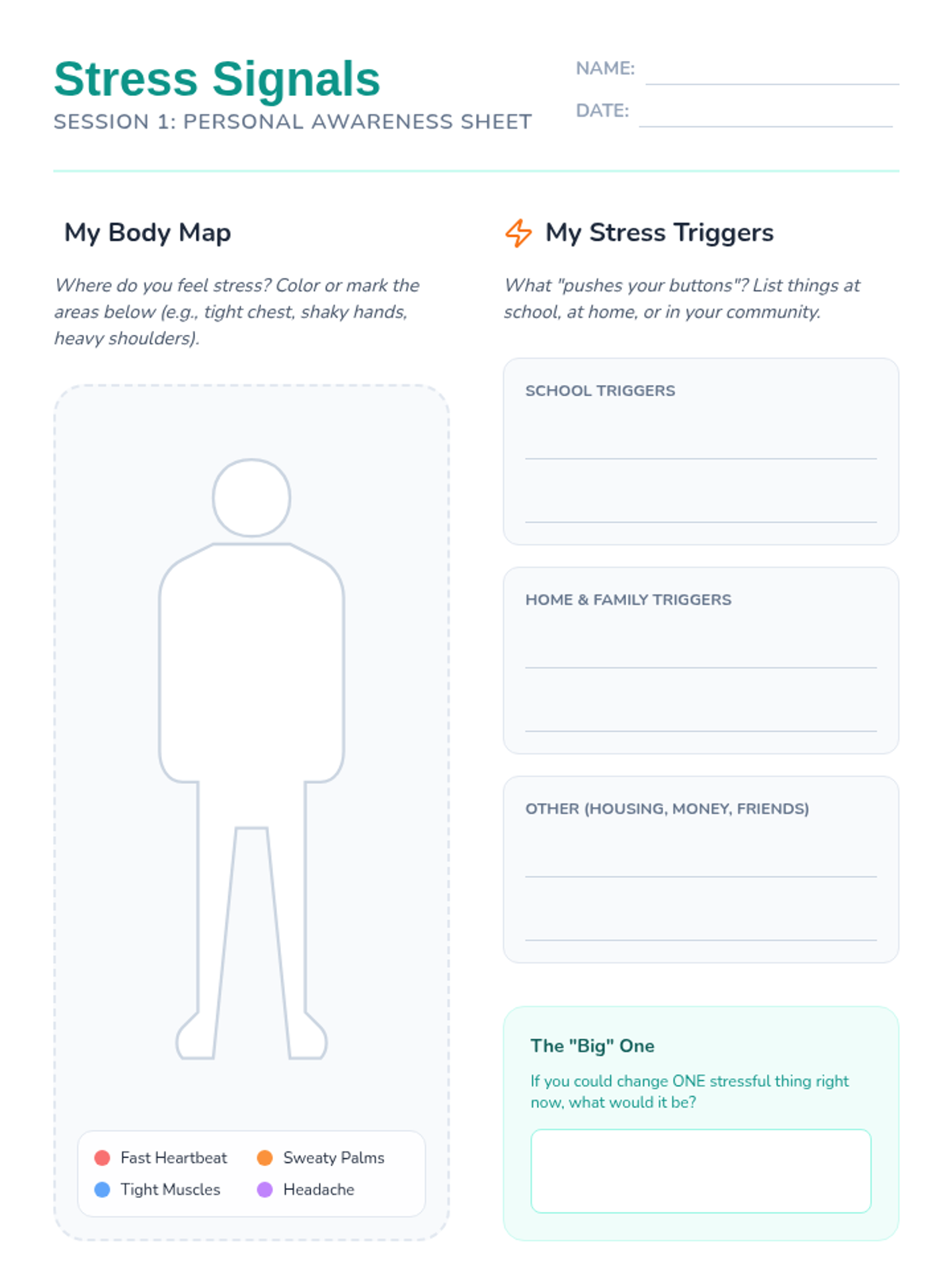
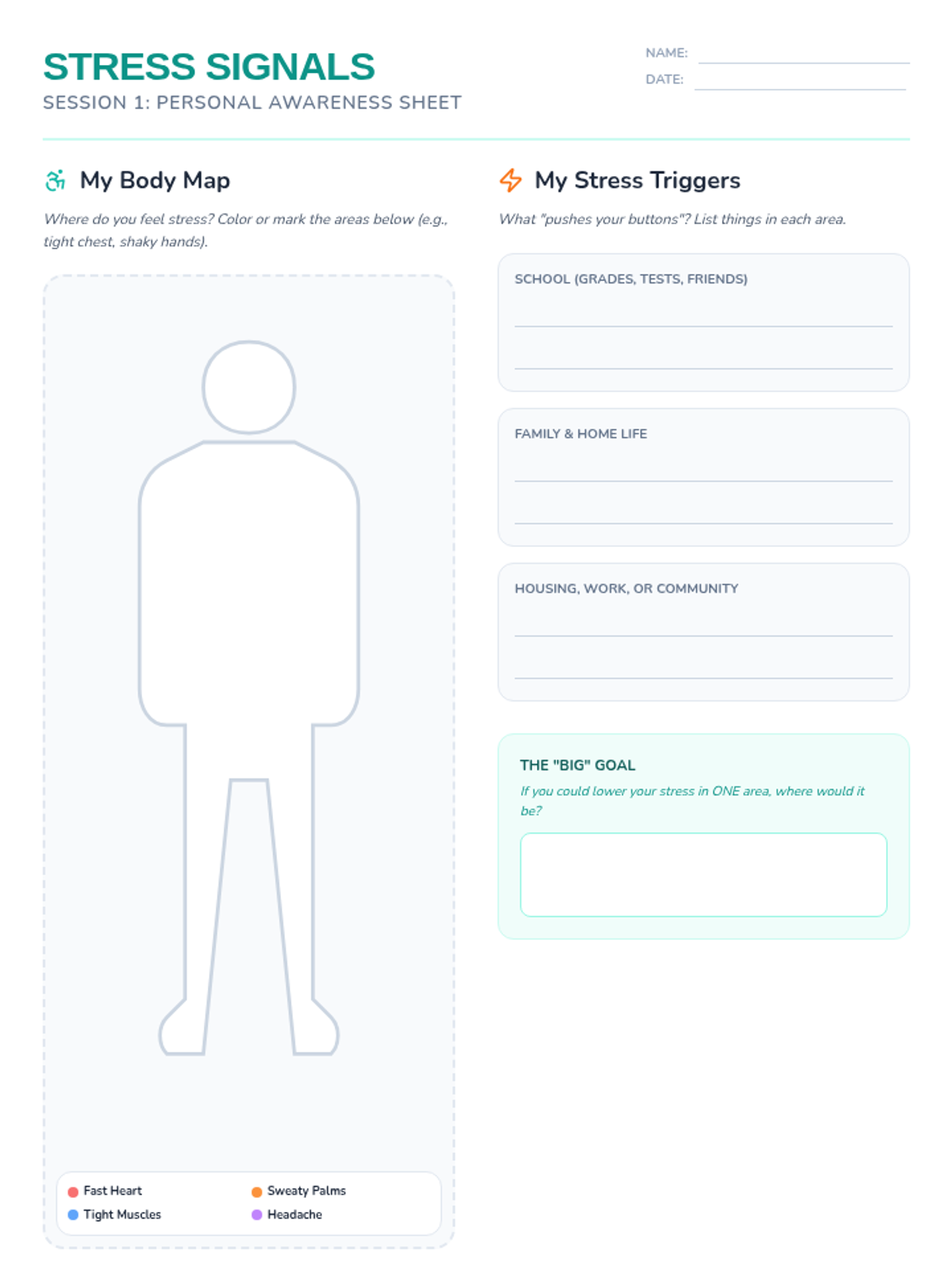
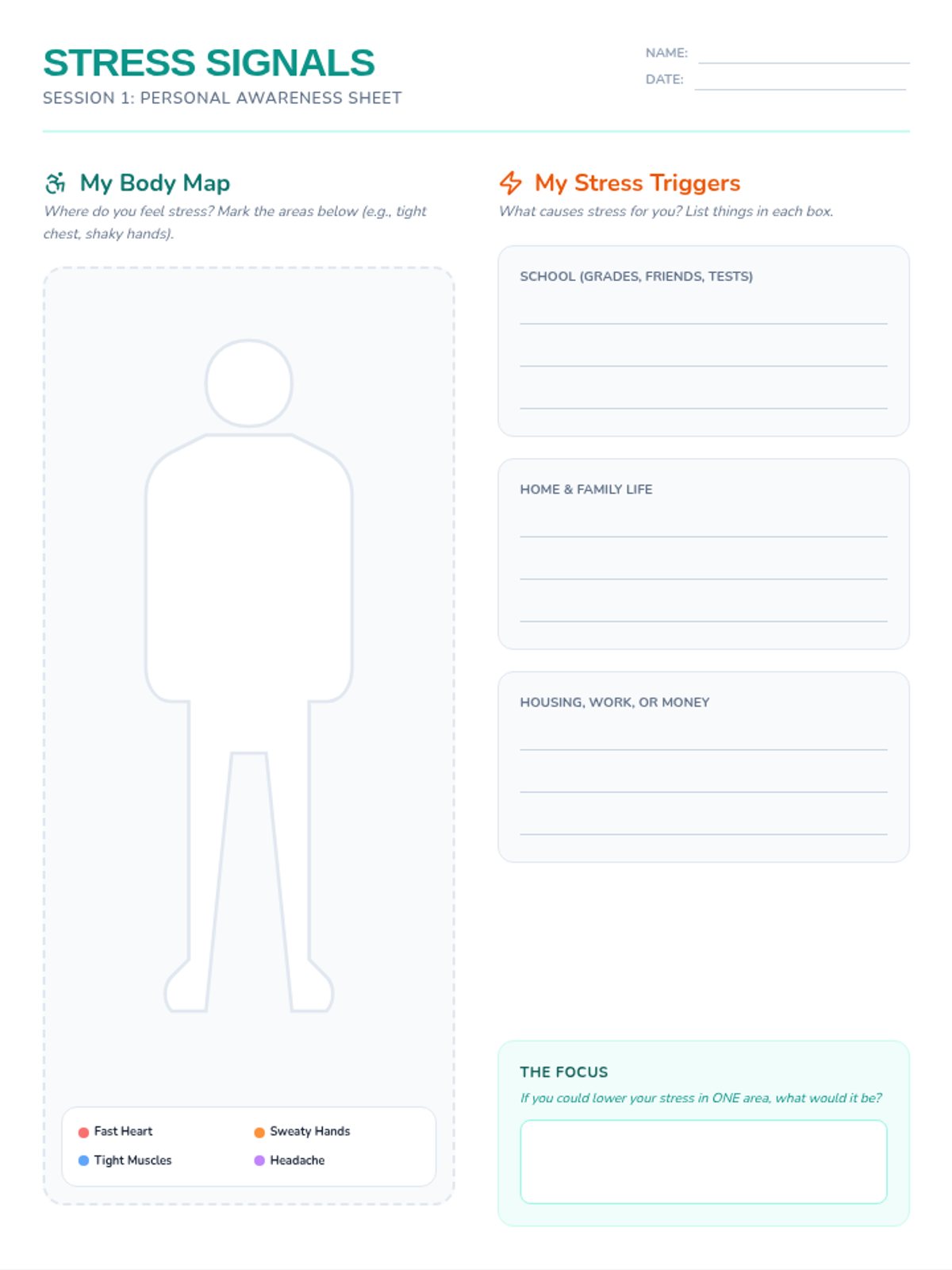
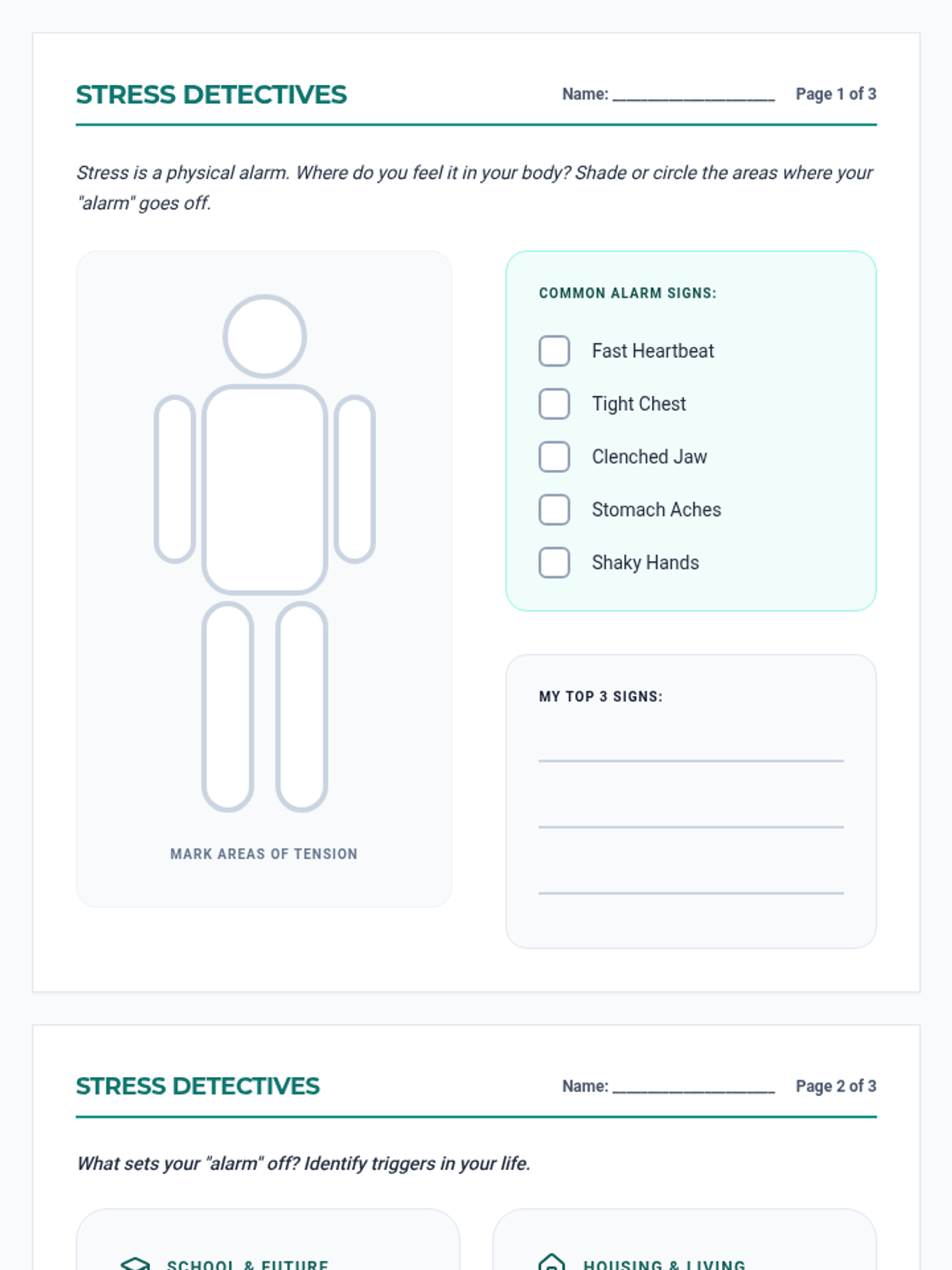
Students will learn to identify the physical and emotional signs of stress and recognize their personal triggers.
A concluding session focused on identifying personal strengths and reframing past challenges as evidence of existing resilience and capability.
Helps students map out their support systems and practice the vital skill of asking for help from trusted adults and community resources.
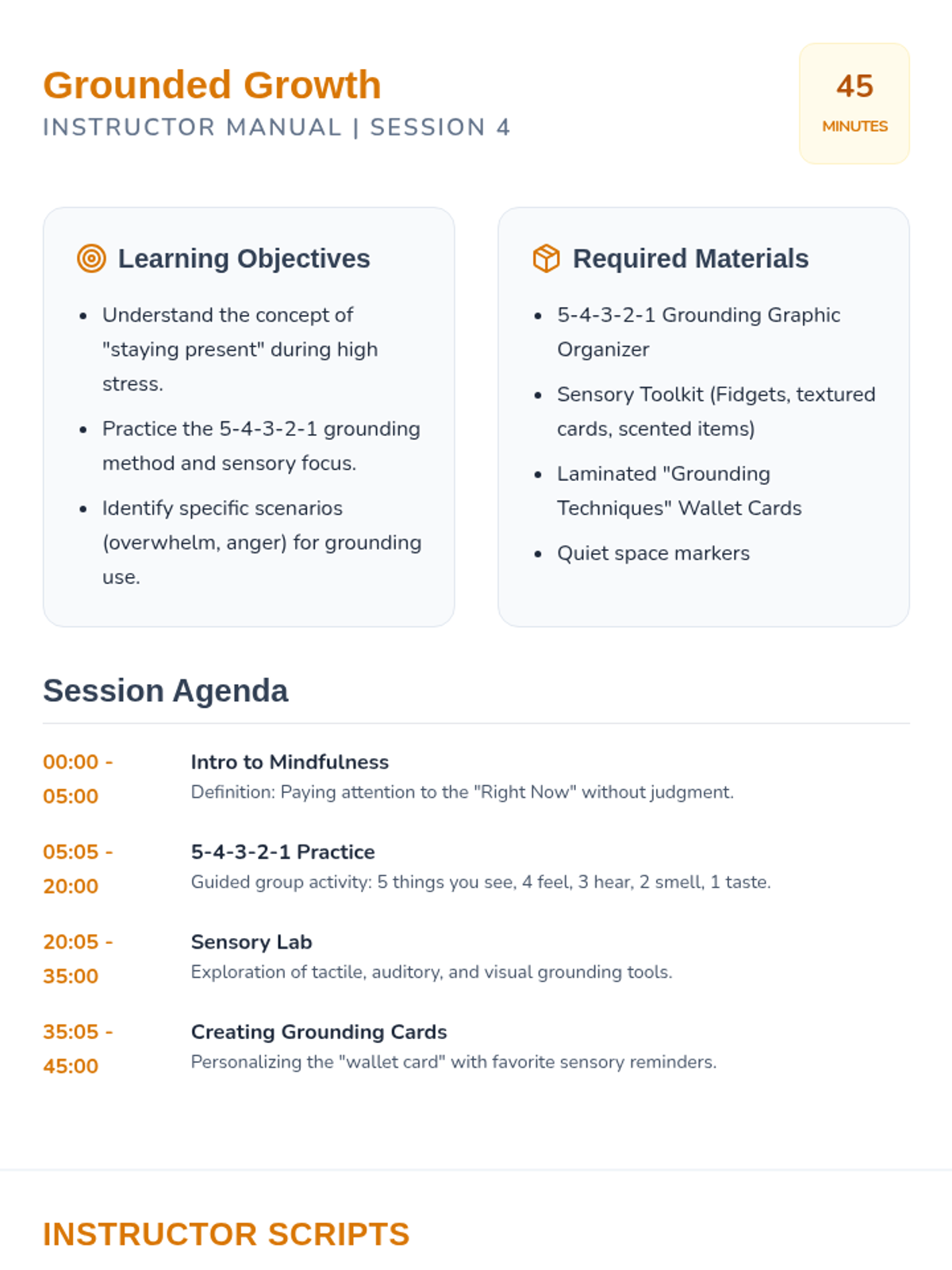
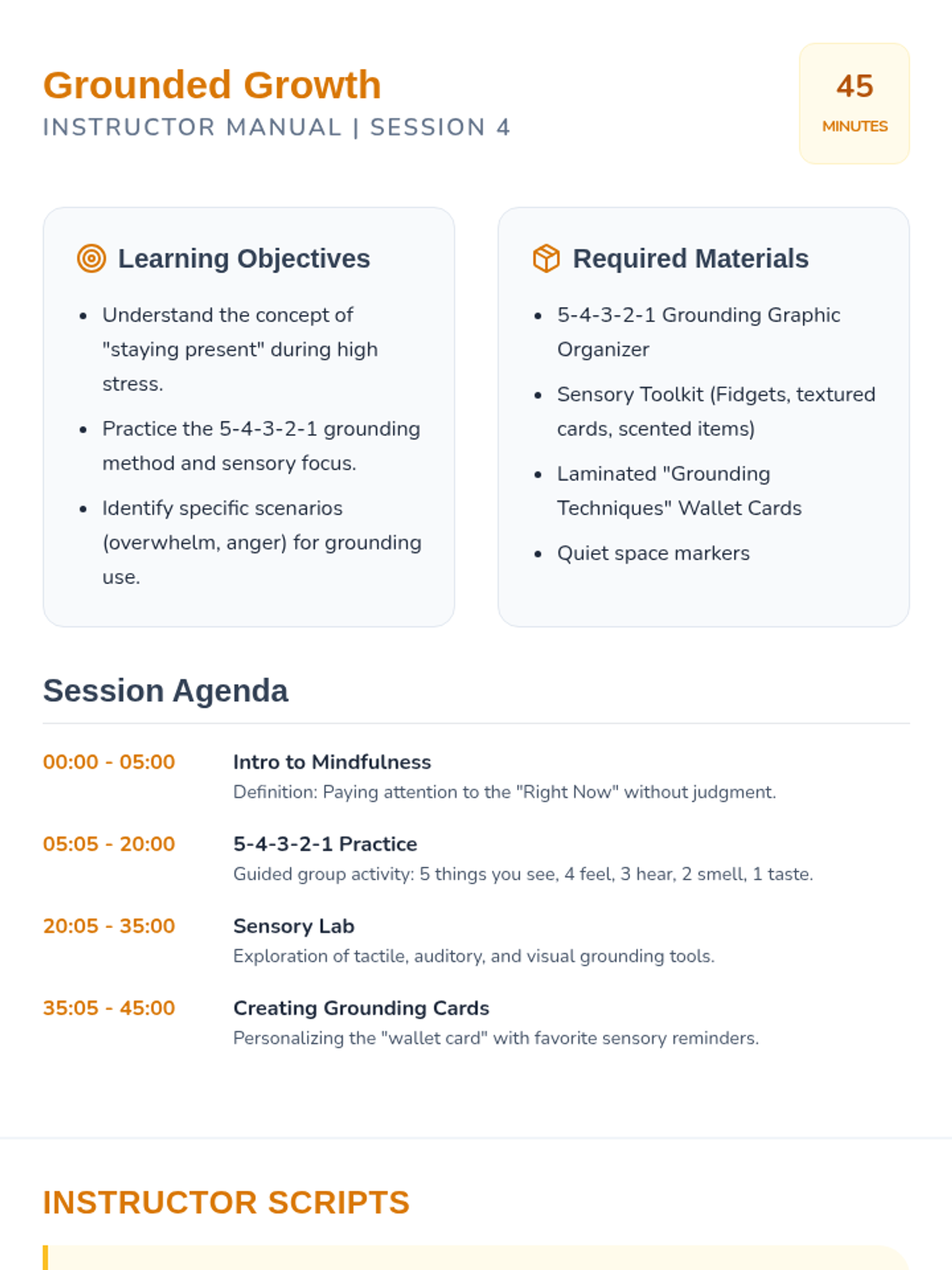
Teaches students sensory-based grounding and mindfulness techniques to stay present and manage overwhelm in high-stress moments.
Focuses on the importance of routines for mental wellness, helping students build flexible and realistic daily plans despite unpredictable environments.
An introduction to healthy coping strategies and emotional regulation, featuring practical exercises like box breathing and creating a personalized coping menu.
Students learn to define stress and identify their personal physical and emotional triggers, specifically addressing the unique challenges of housing instability.
The final session celebrates personal growth, helps students identify their inherent strengths, and concludes with the completion of their personal wellness plans.
Participants map out their support networks and practice the social skills needed to ask for help from trusted adults and community resources.
Students practice immediate grounding techniques to manage overwhelm and learn how to stay present during periods of high anxiety.