A practical financial literacy lesson where students evaluate three different car options (economy, mid-range, and luxury) to determine which best fits a monthly budget using simple payment calculations.
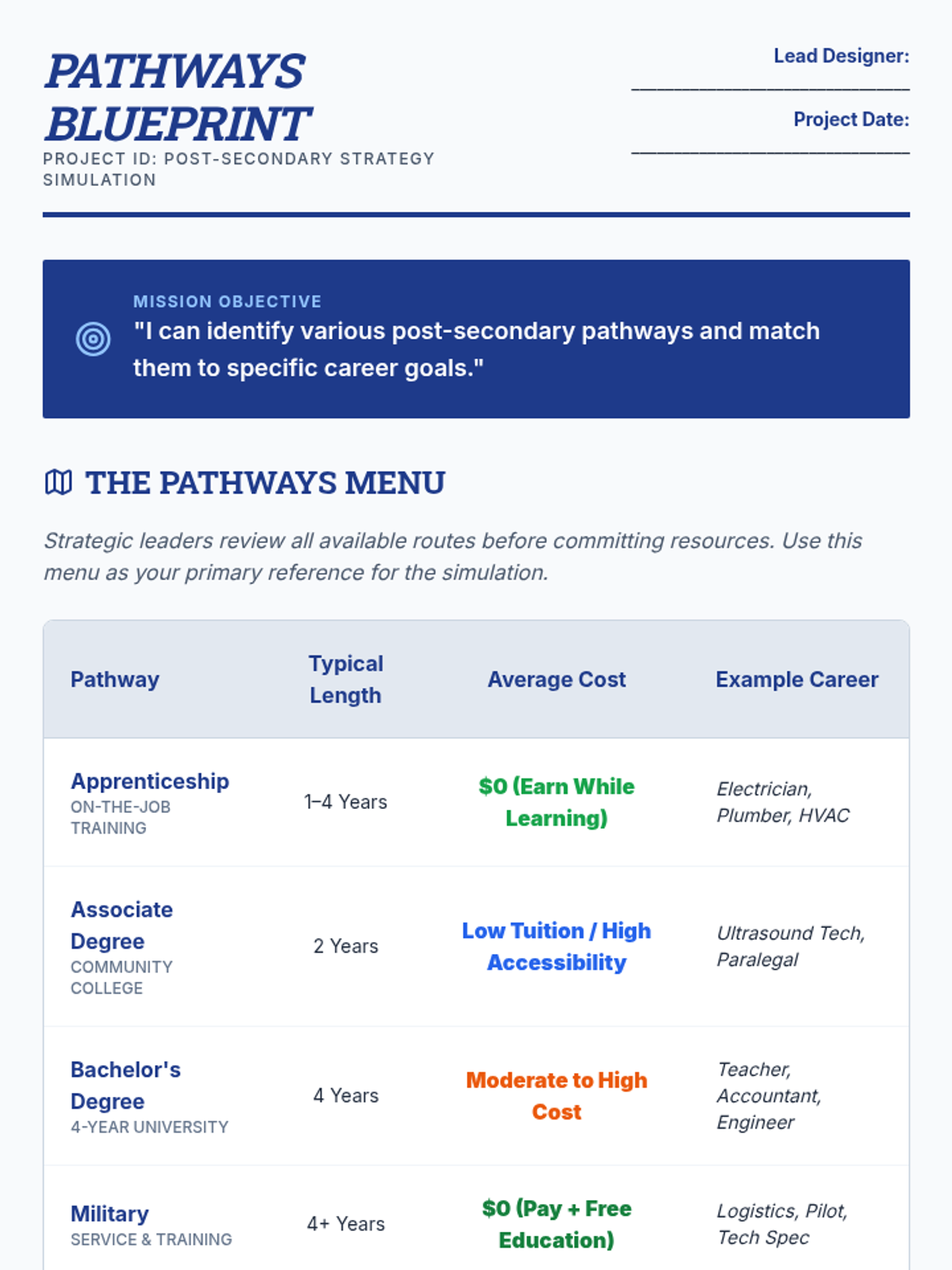
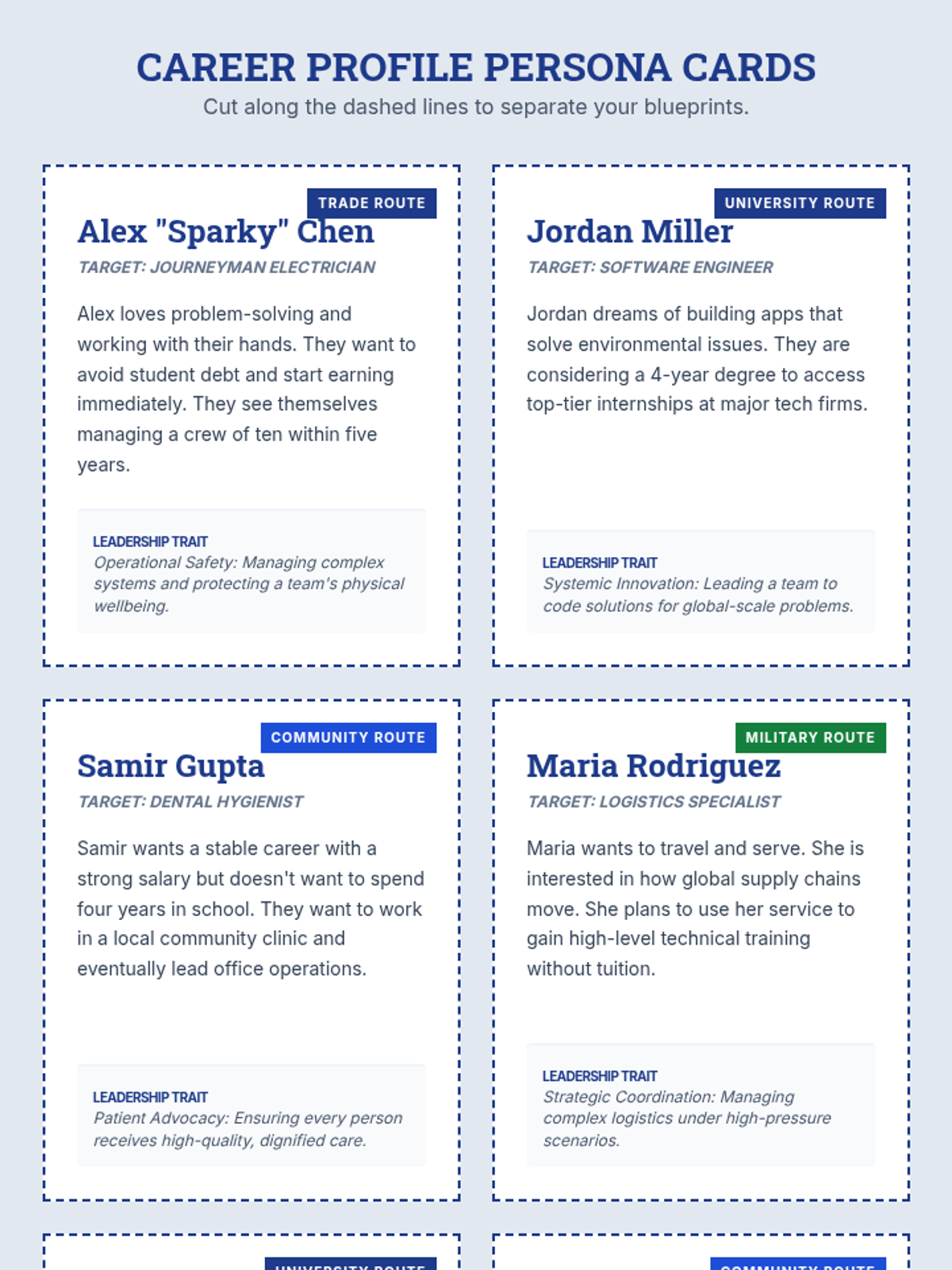
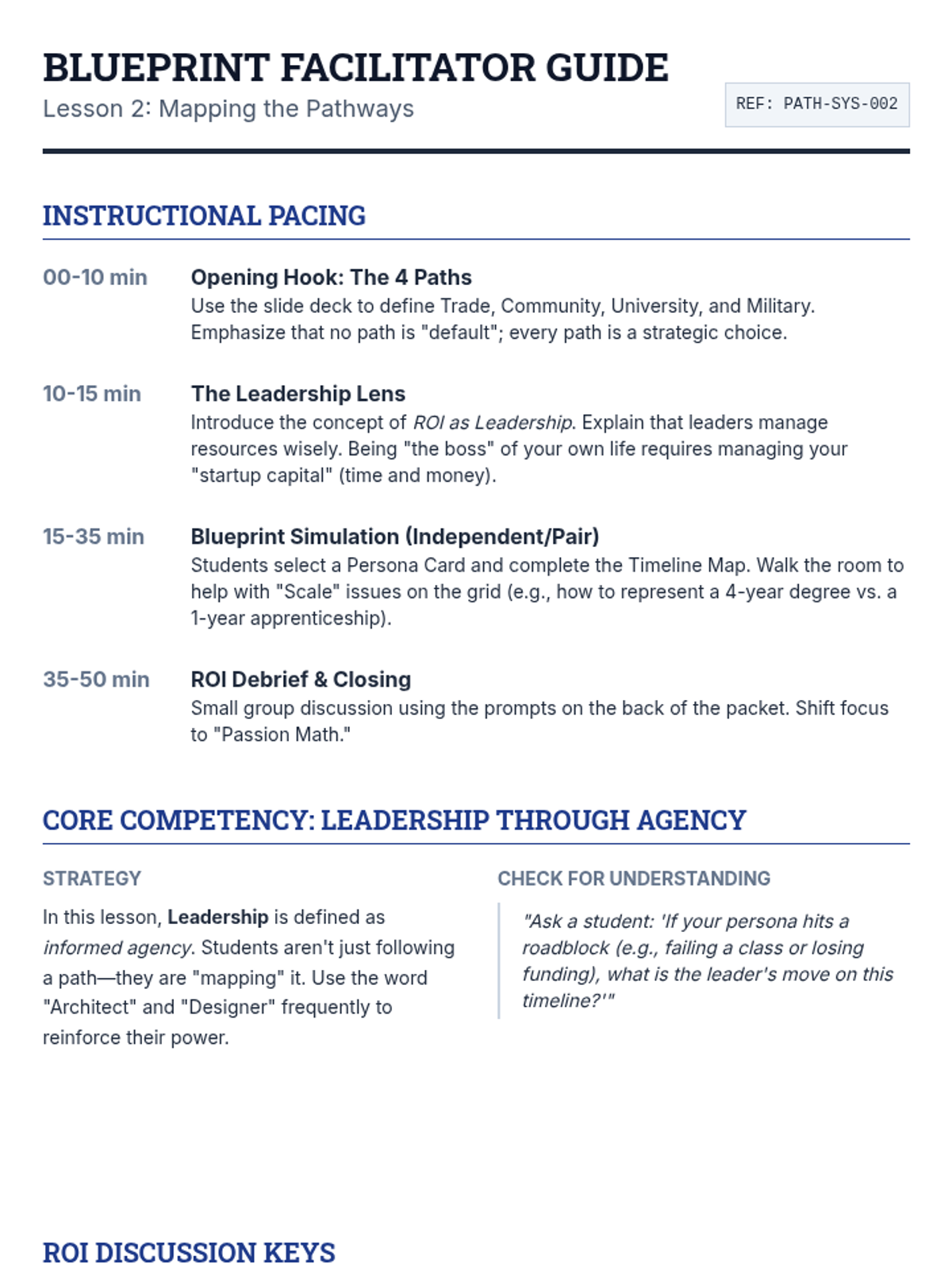
A hands-on simulation where students explore post-secondary pathways (Trade, College, Military) through the lens of a career 'blueprint.' Students analyze ROI and practice leadership by taking agency over their financial and professional futures.
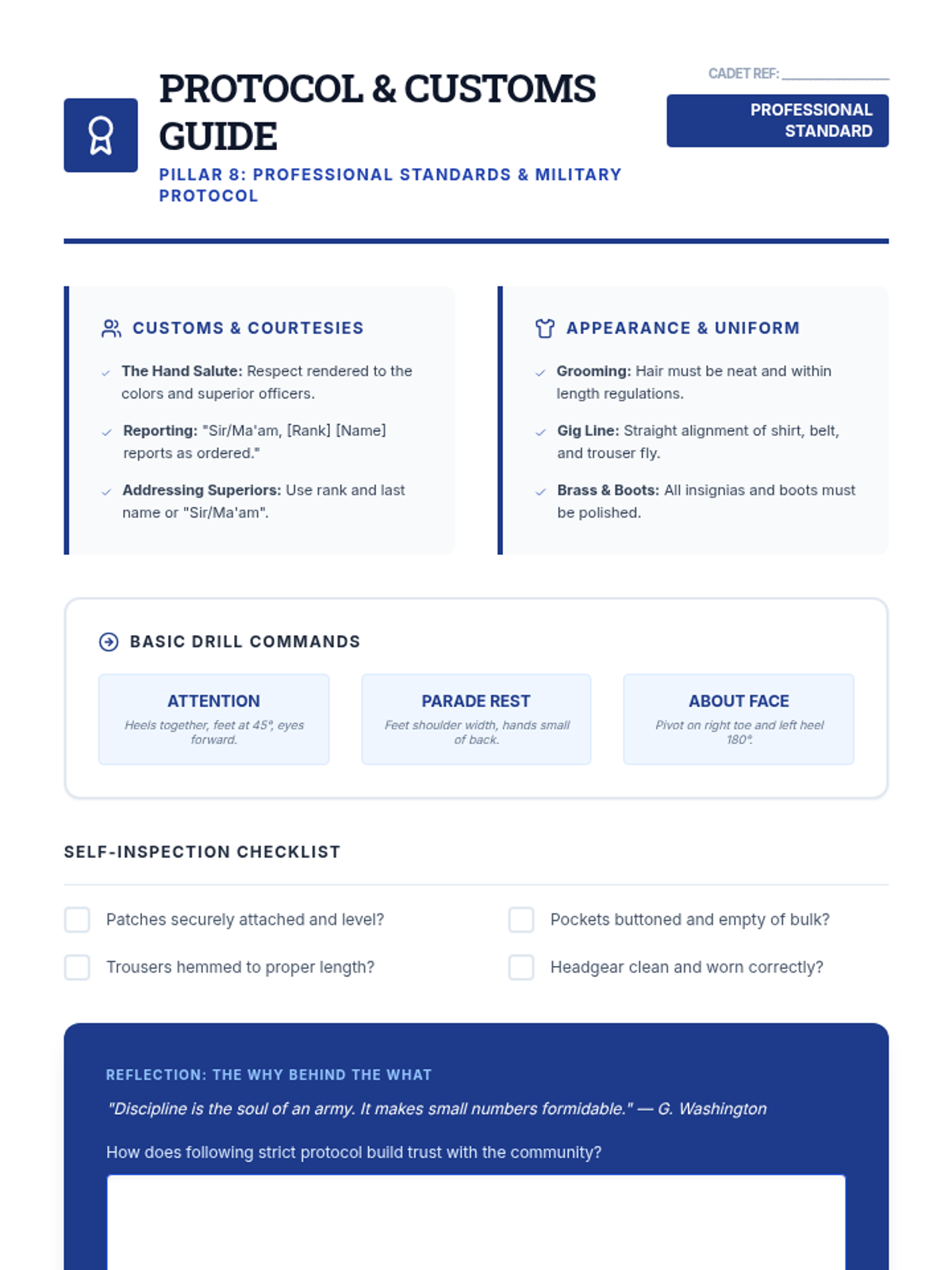
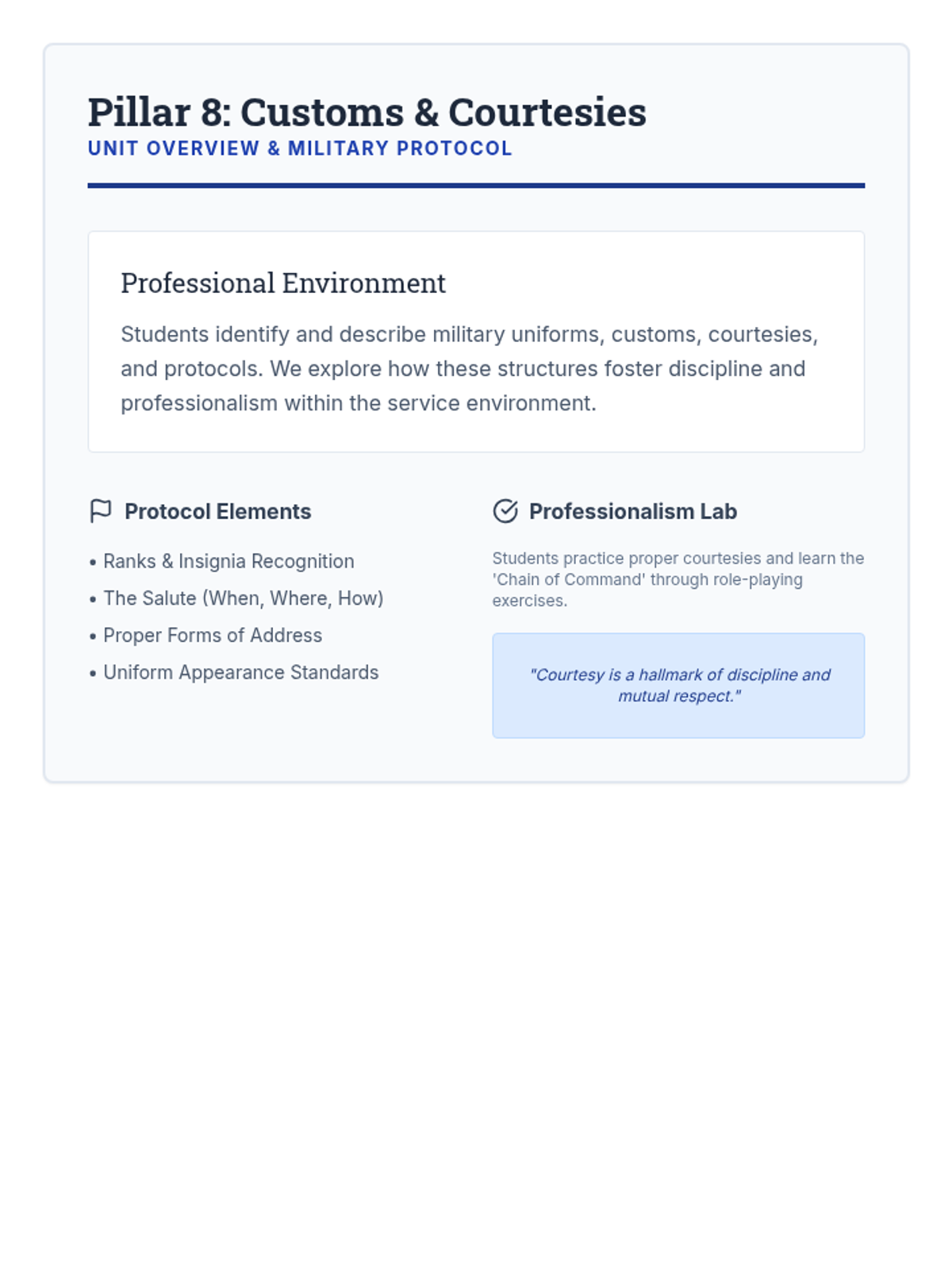
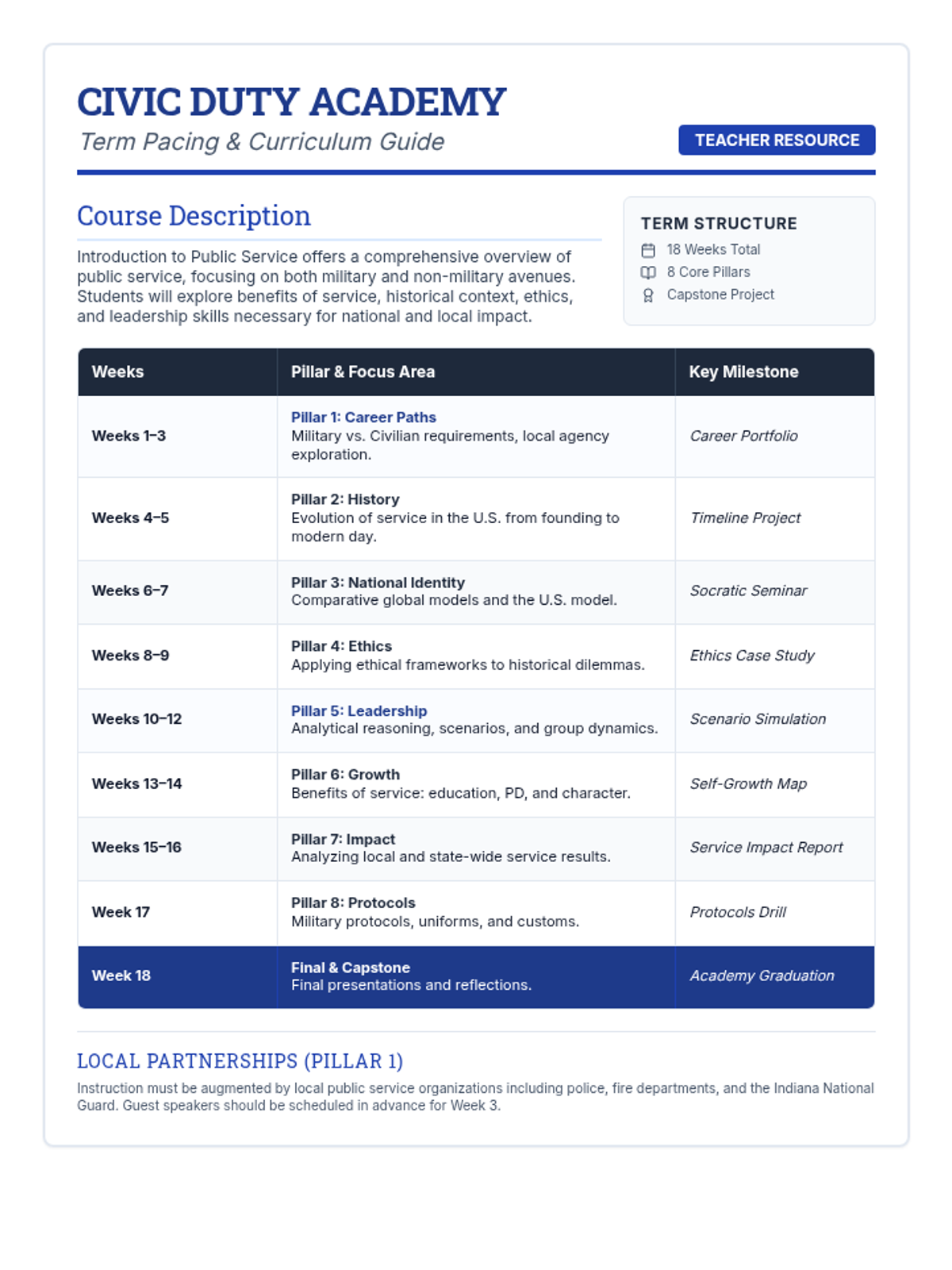
Master military customs, courtesies, protocols, and uniform standards essential for professional military environments.
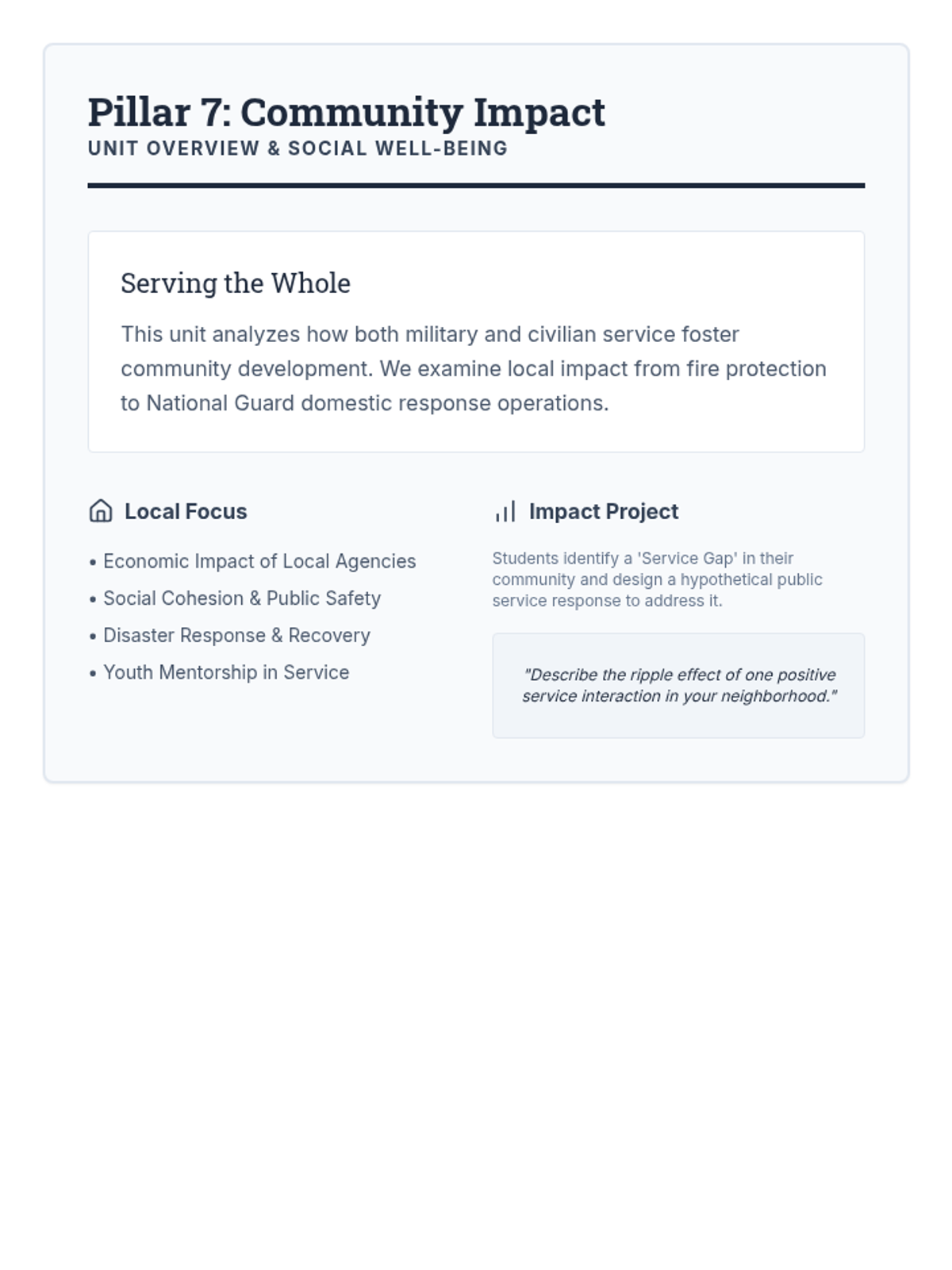
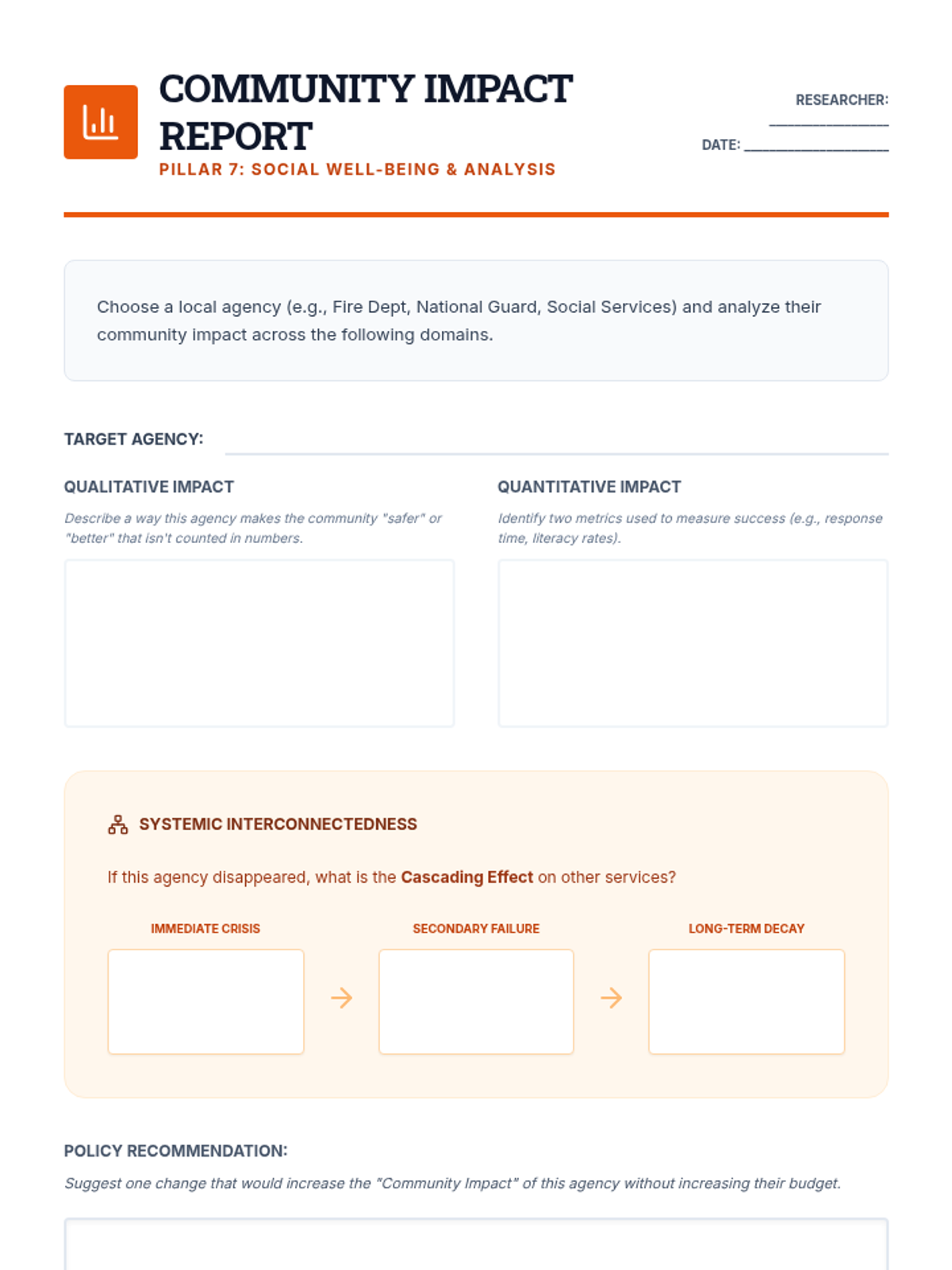
Assess the positive impact of public service on local and national communities, focusing on development and societal well-being.
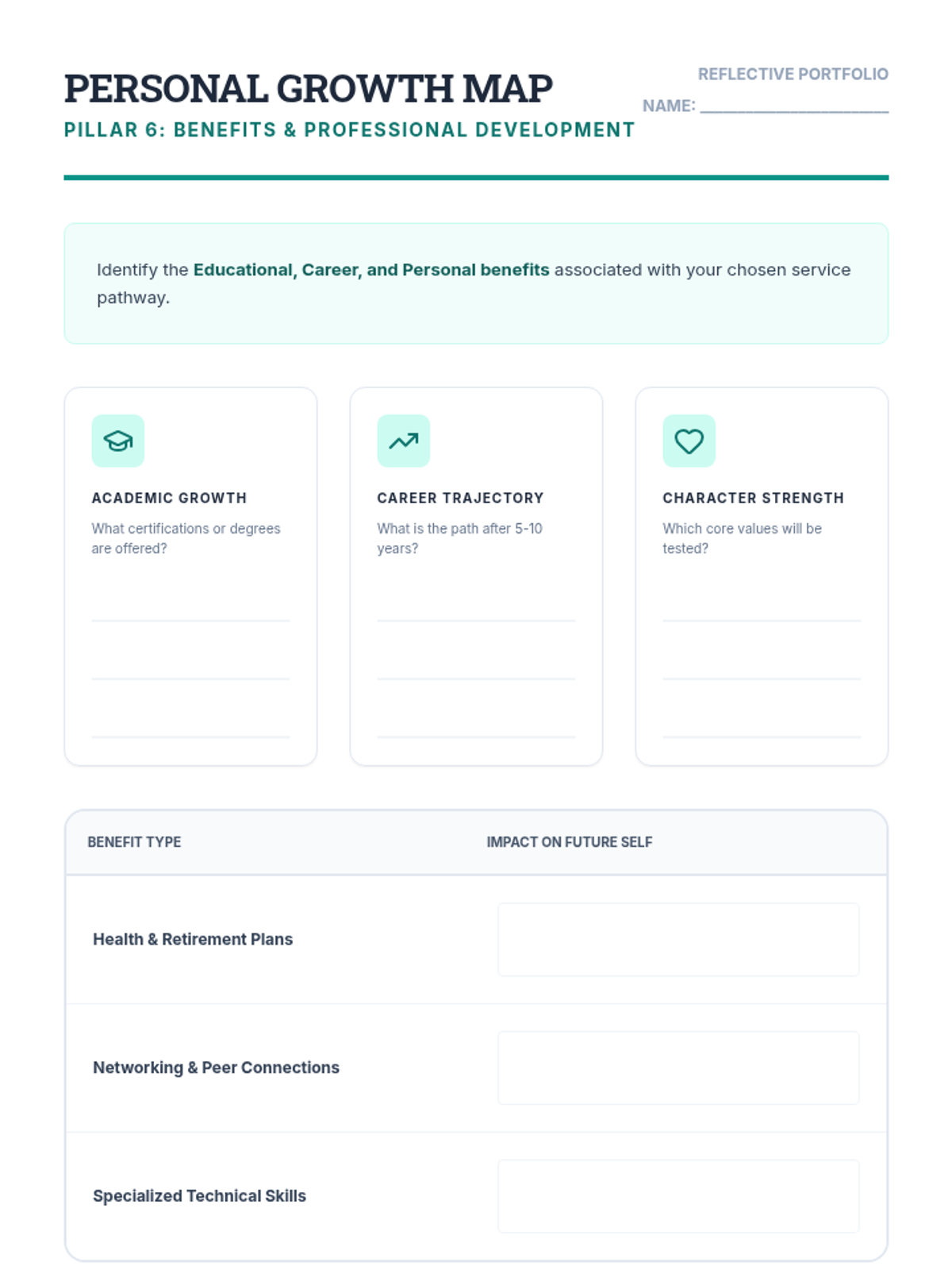
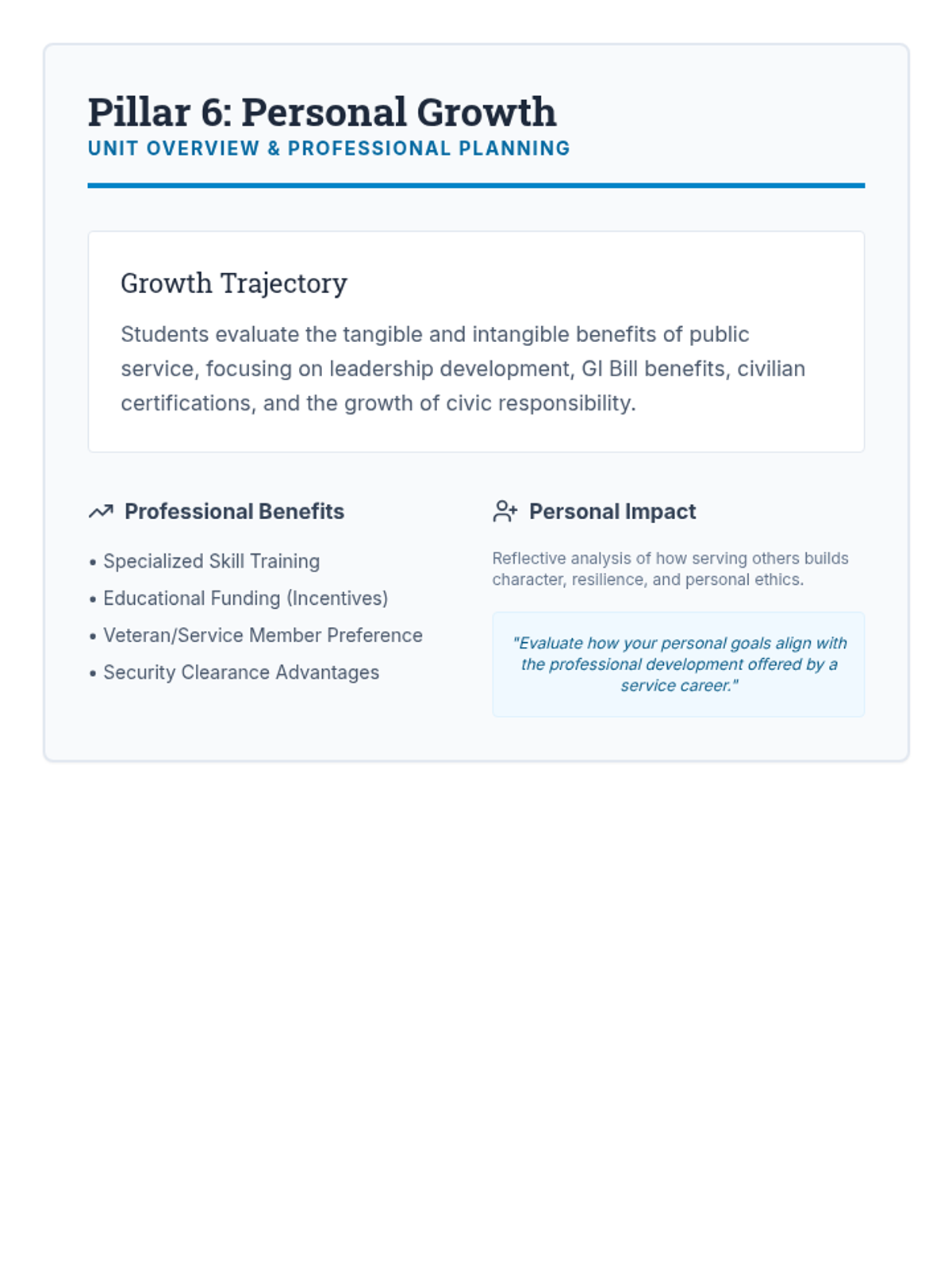
Examine the personal and professional growth resulting from service careers, including civic responsibility and professional advancement.
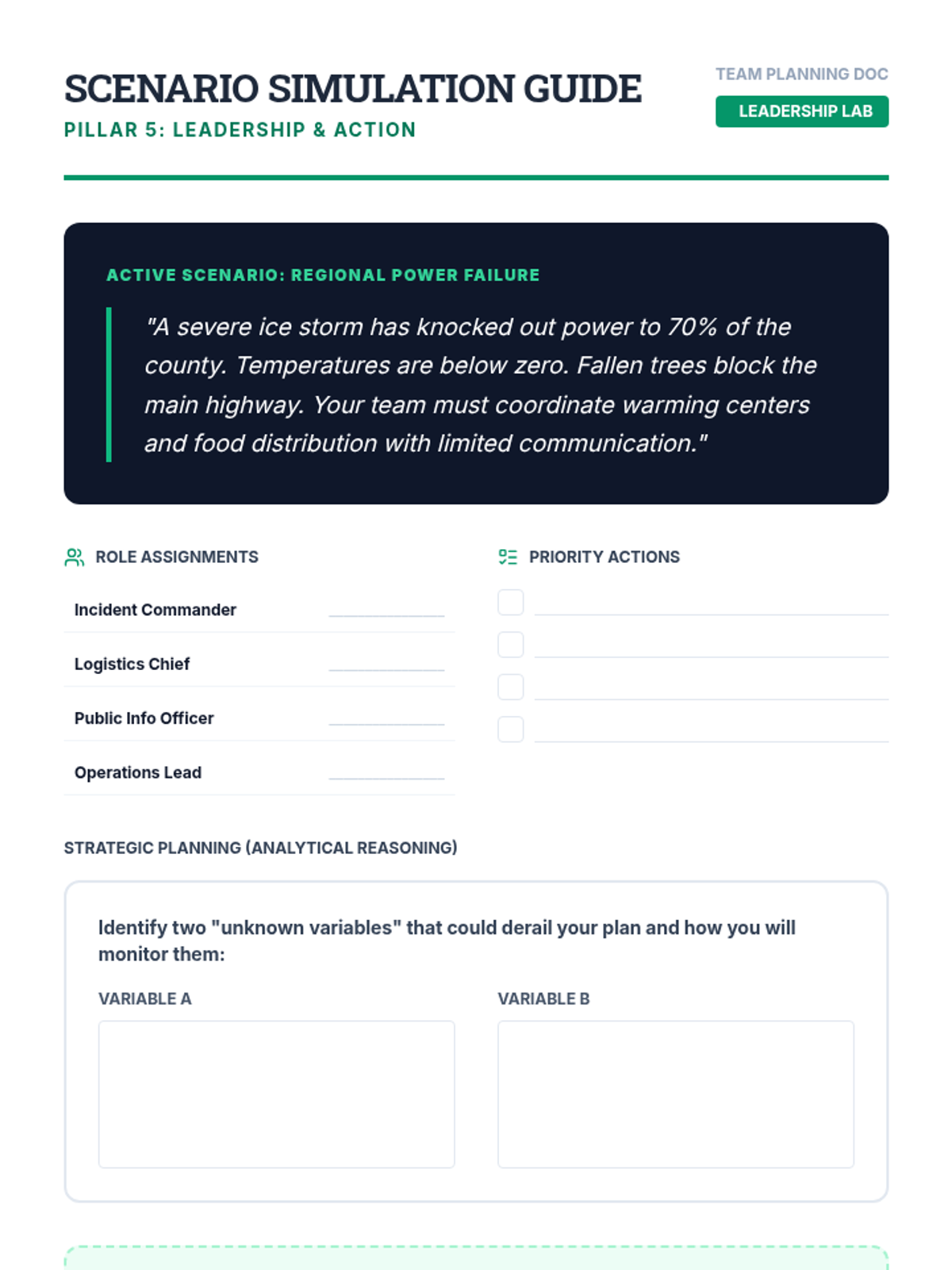
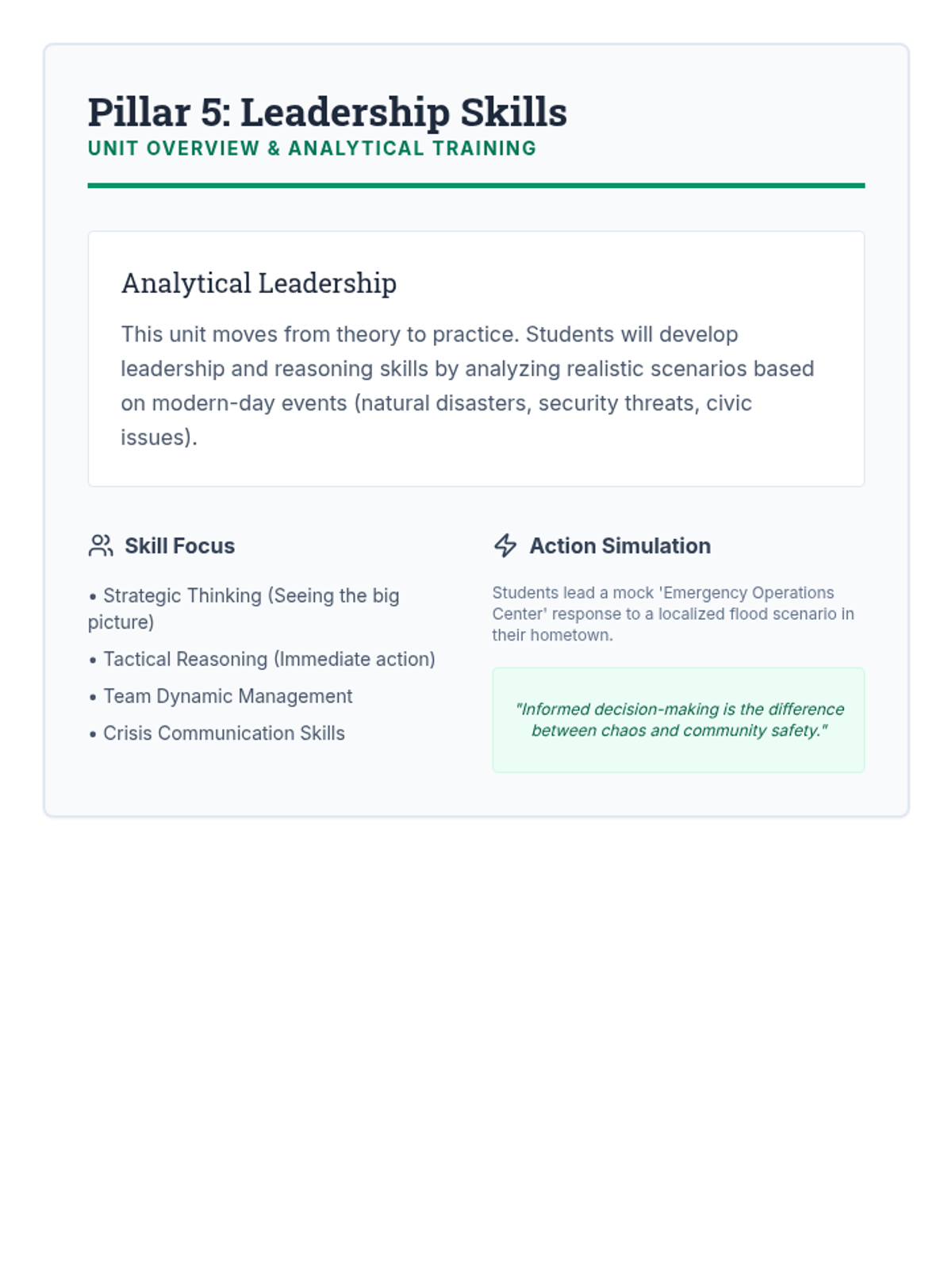
Develop leadership, critical thinking, and analytical reasoning skills through realistic public service simulations and current event analysis.
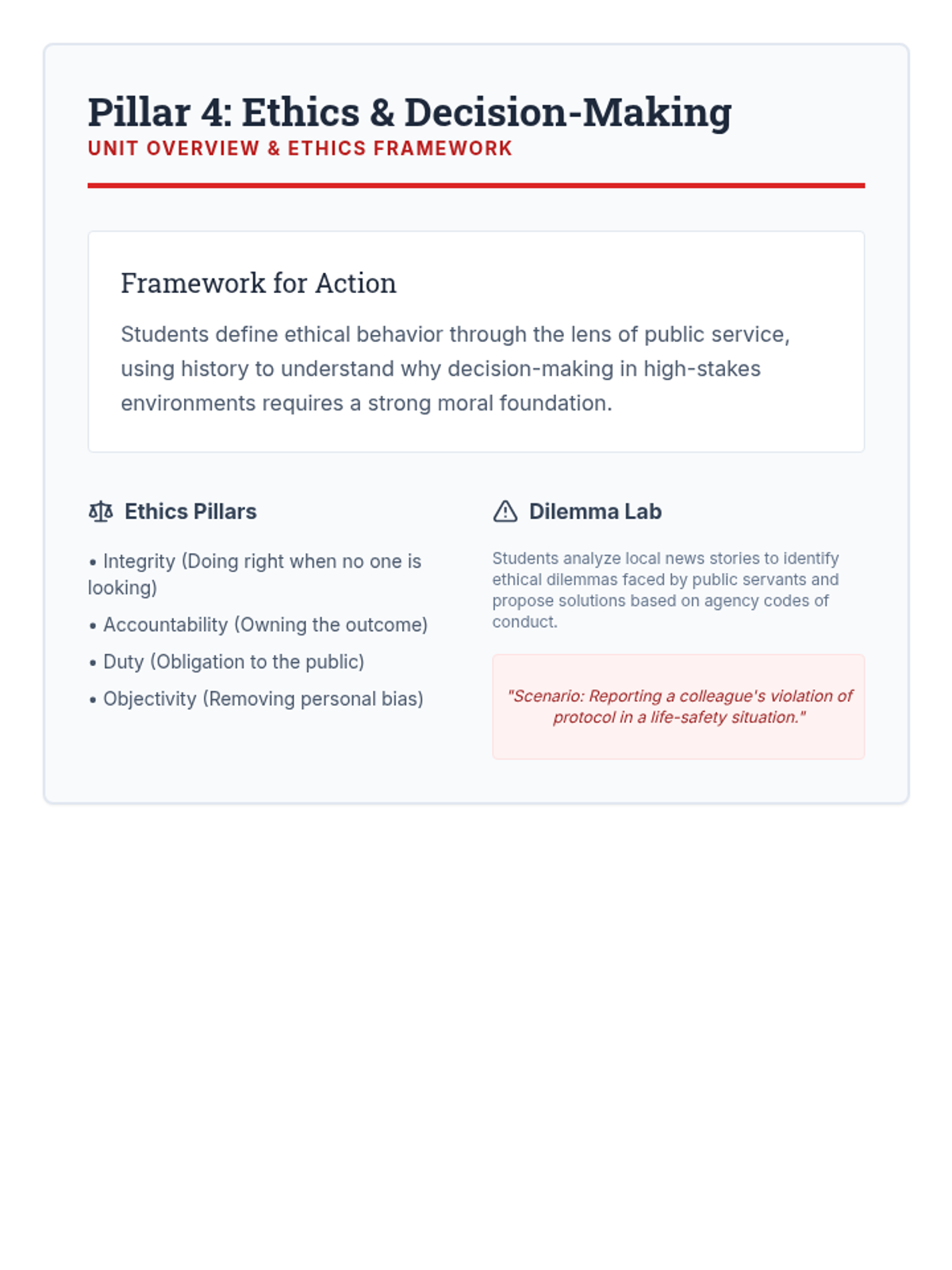
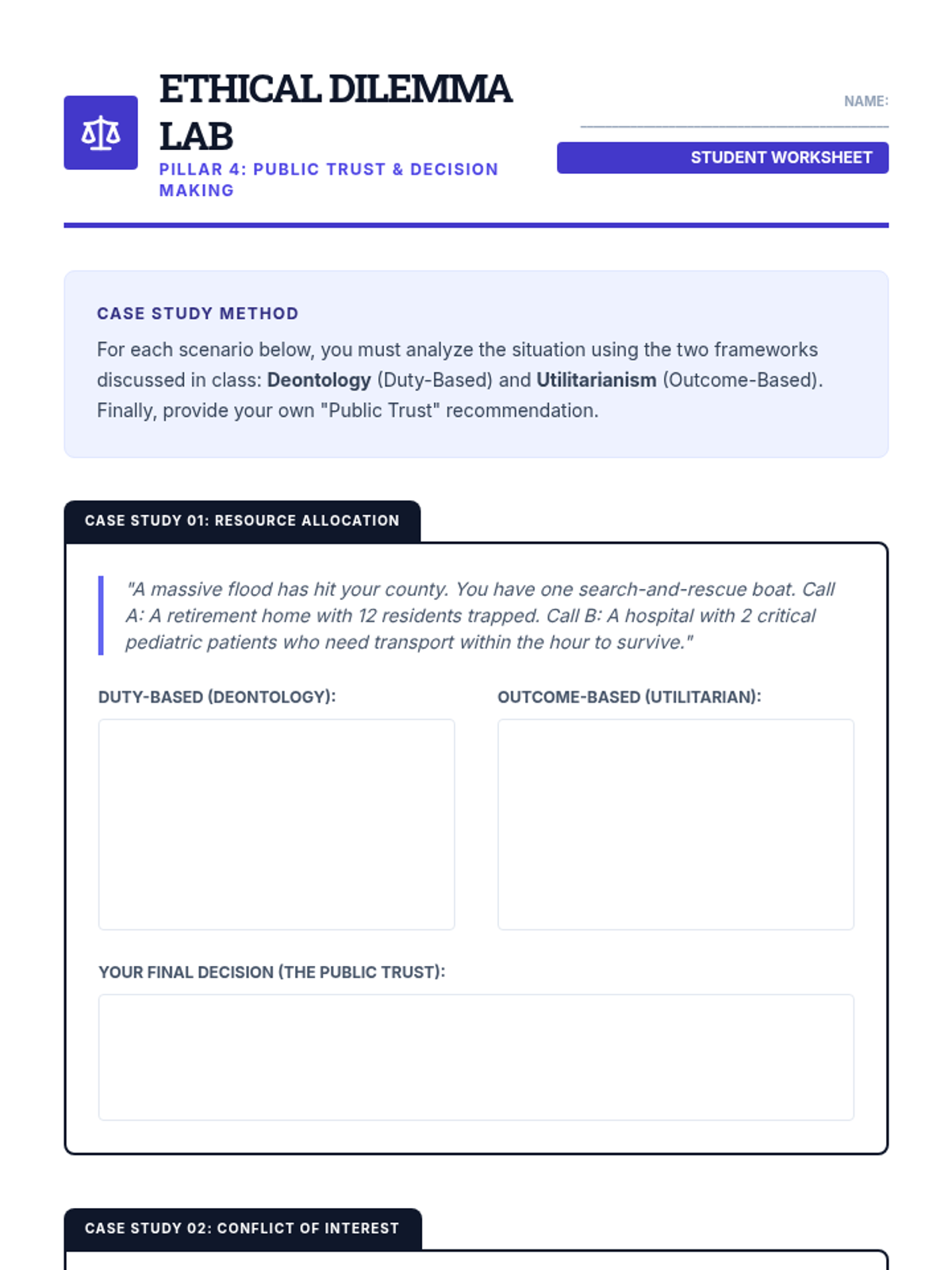
Define and apply ethical frameworks to public service scenarios, analyzing complex challenges and the role of ethics in leadership.
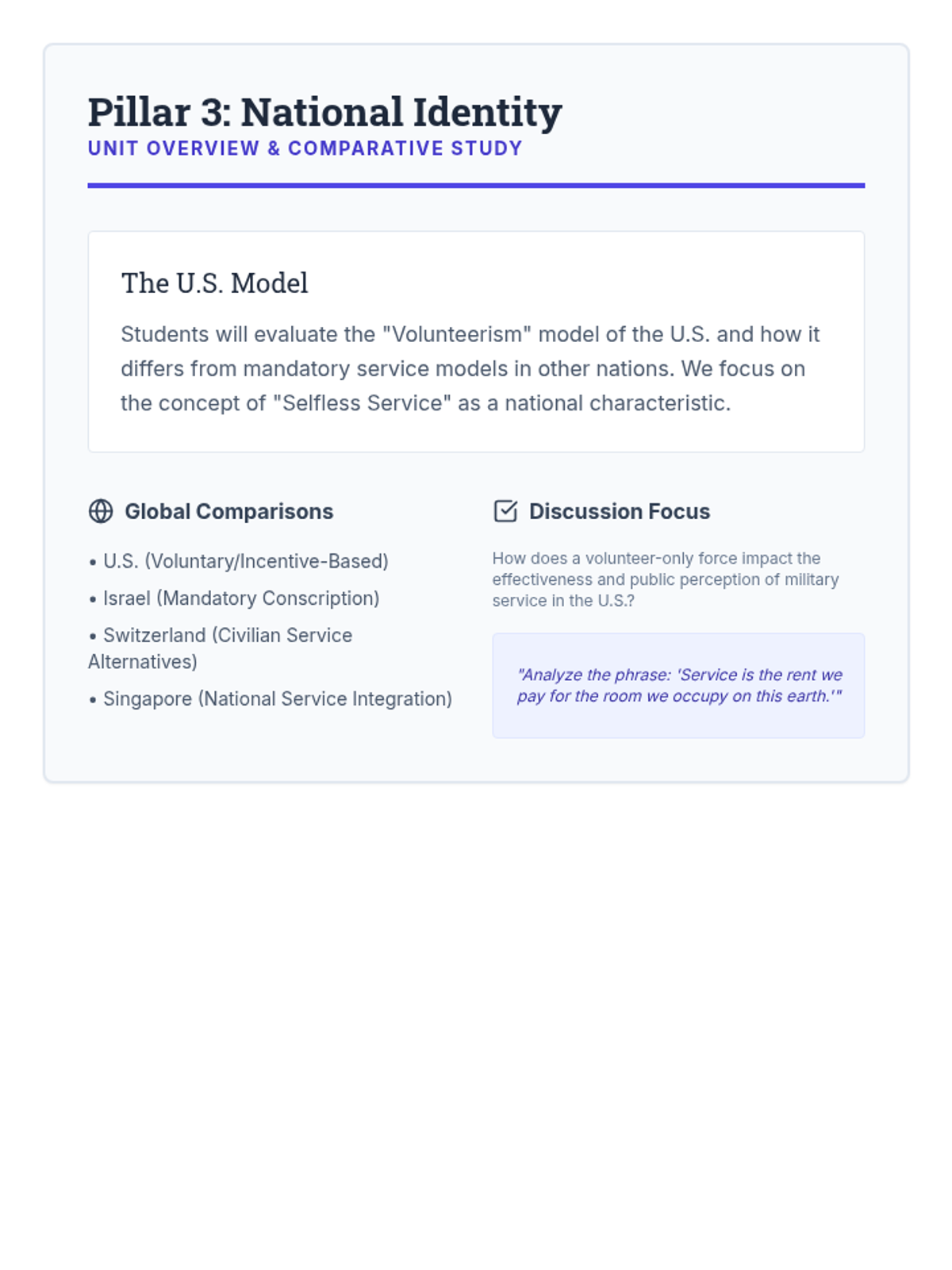
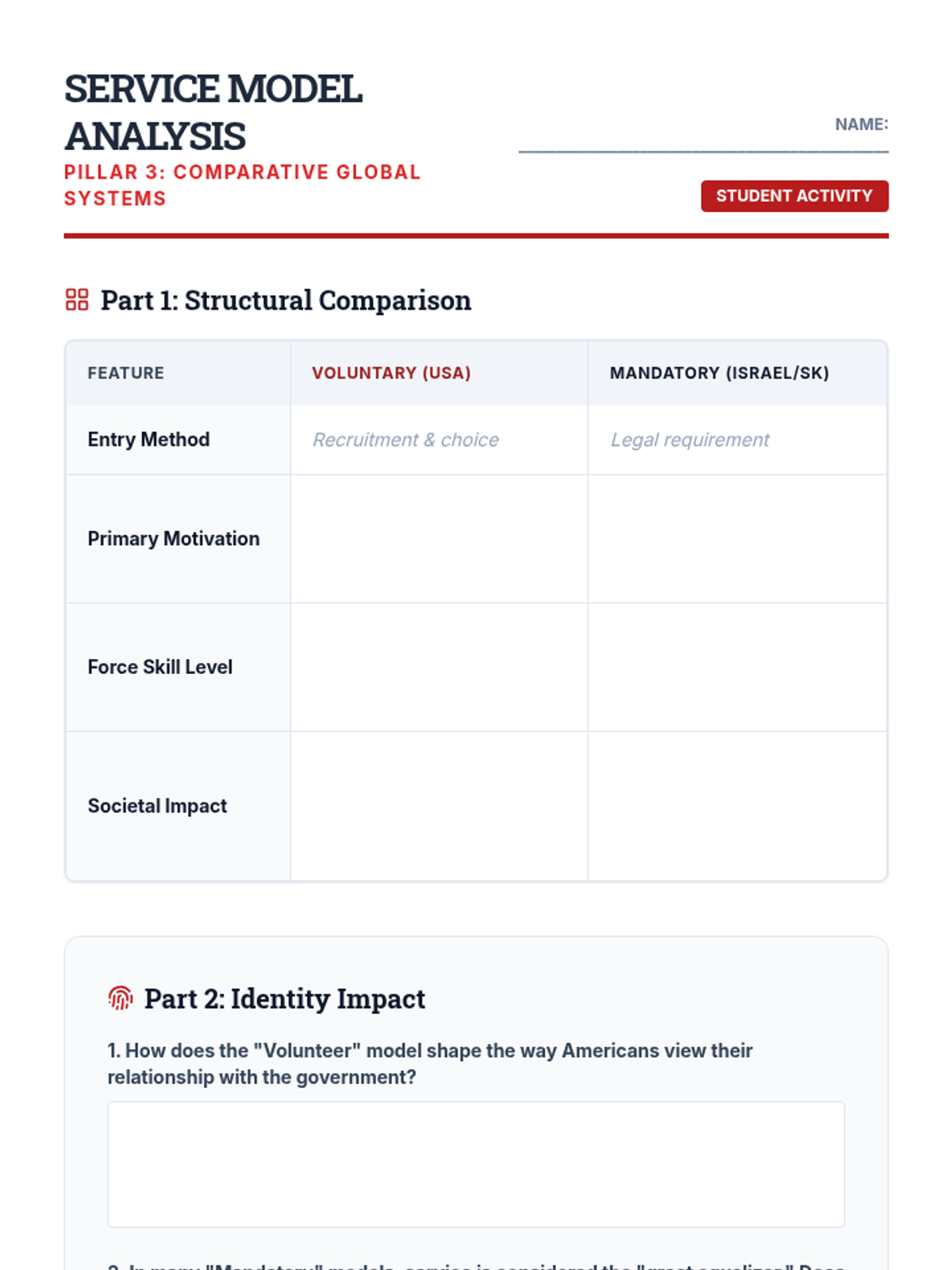
Evaluate how public service shapes U.S. national identity and compare the U.S. volunteerism model with international public service structures.
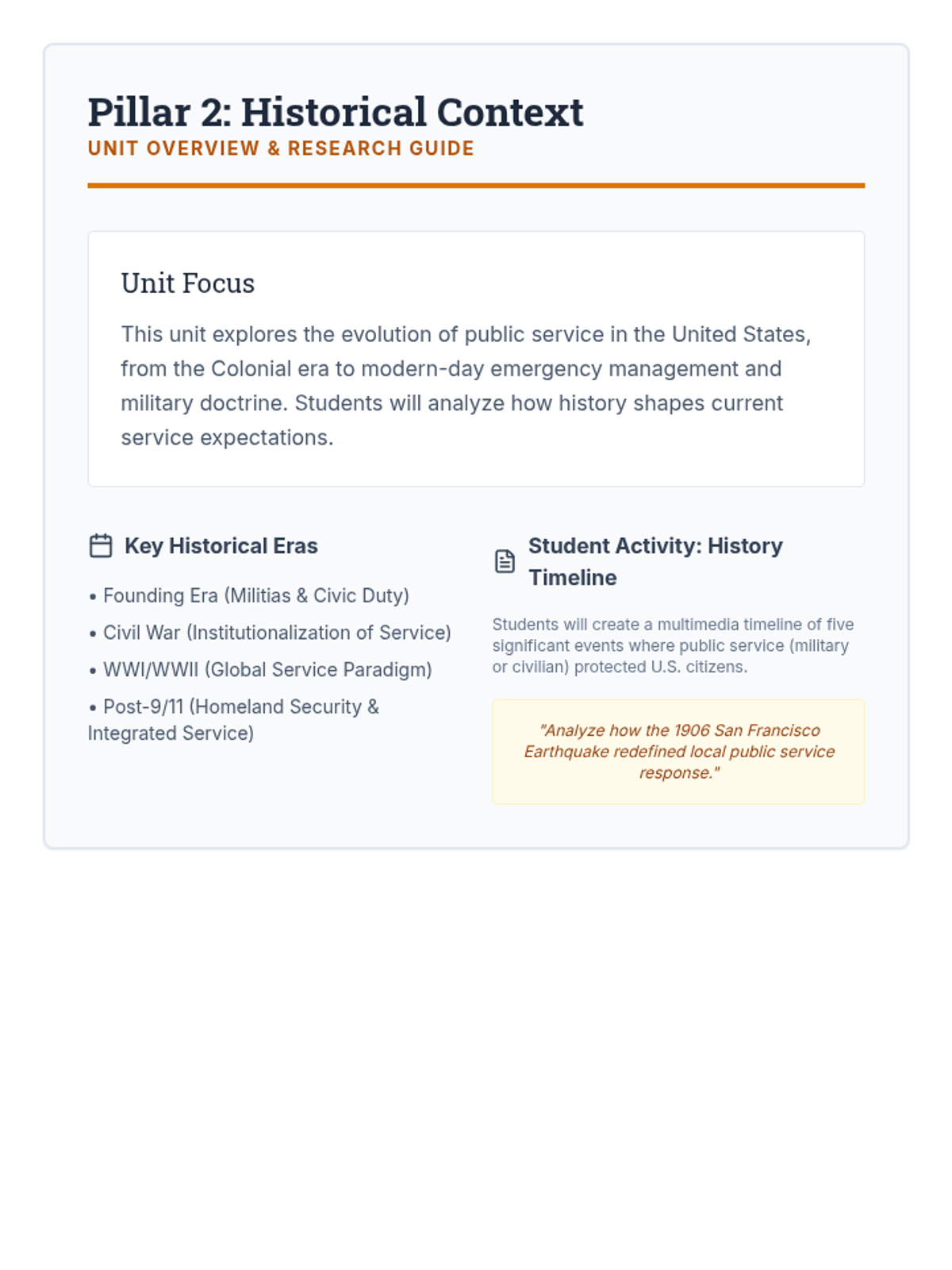
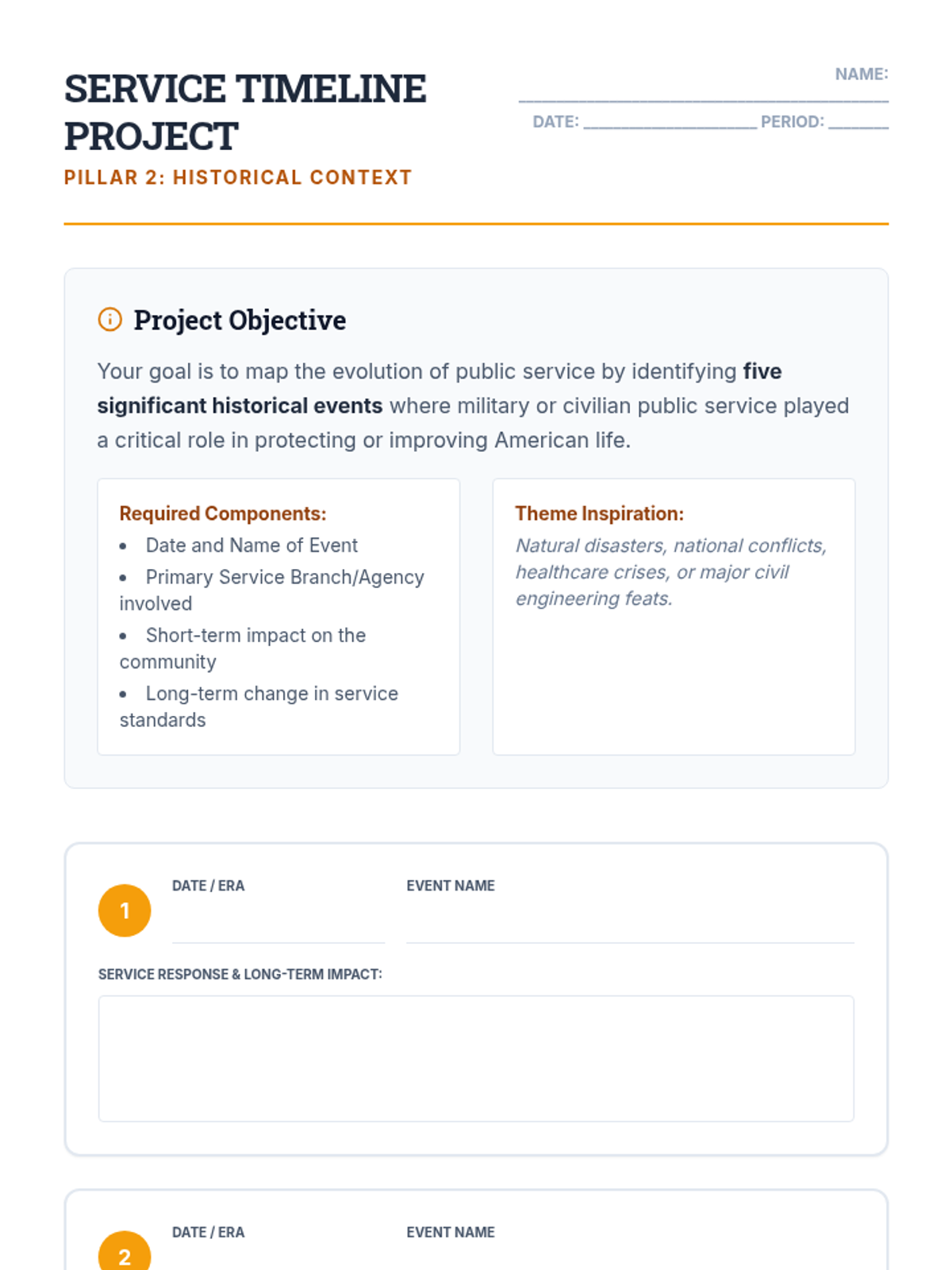
Analyze the historical evolution of public service in the U.S., researching significant events and their impact on national safety and service.
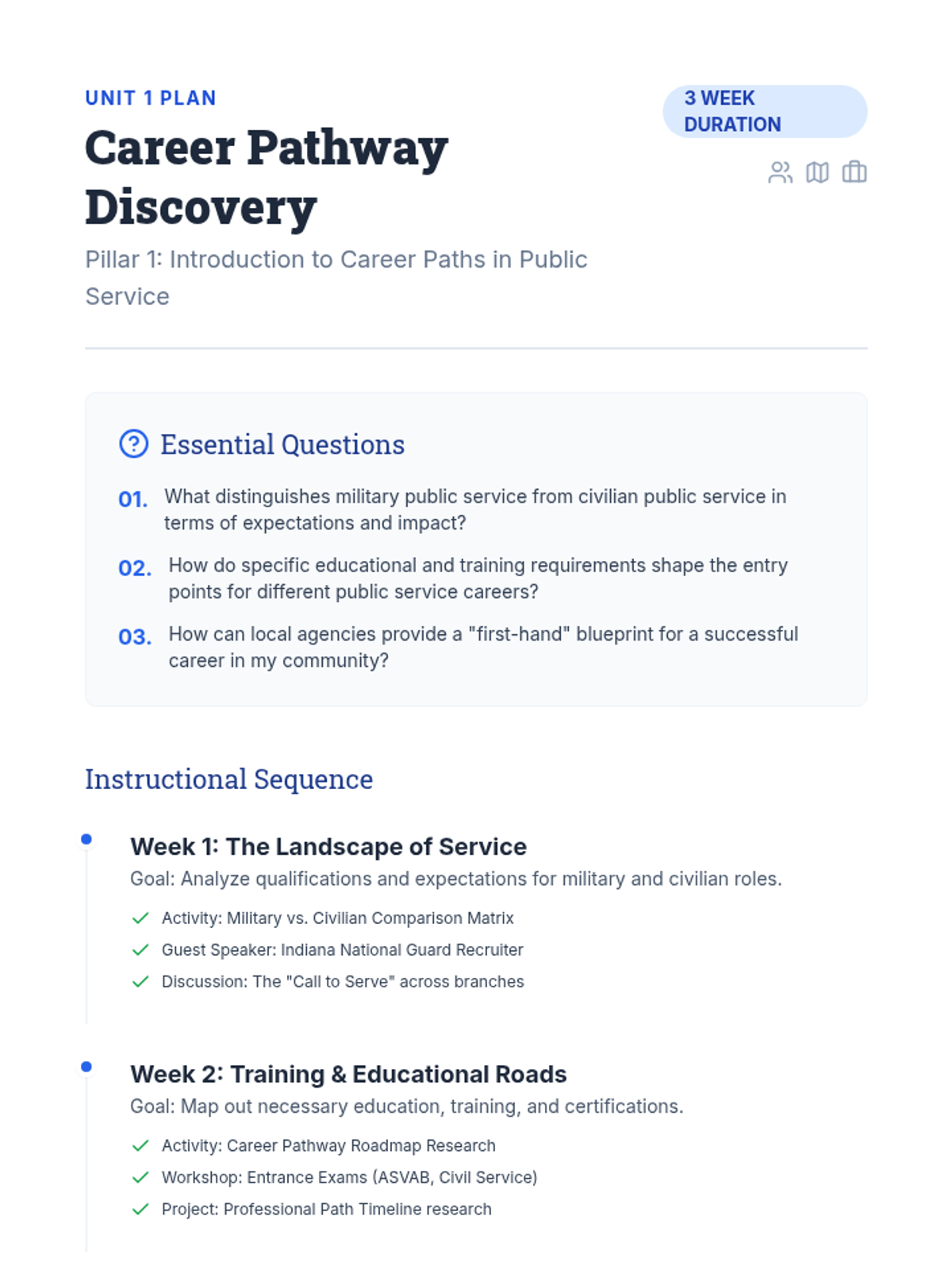
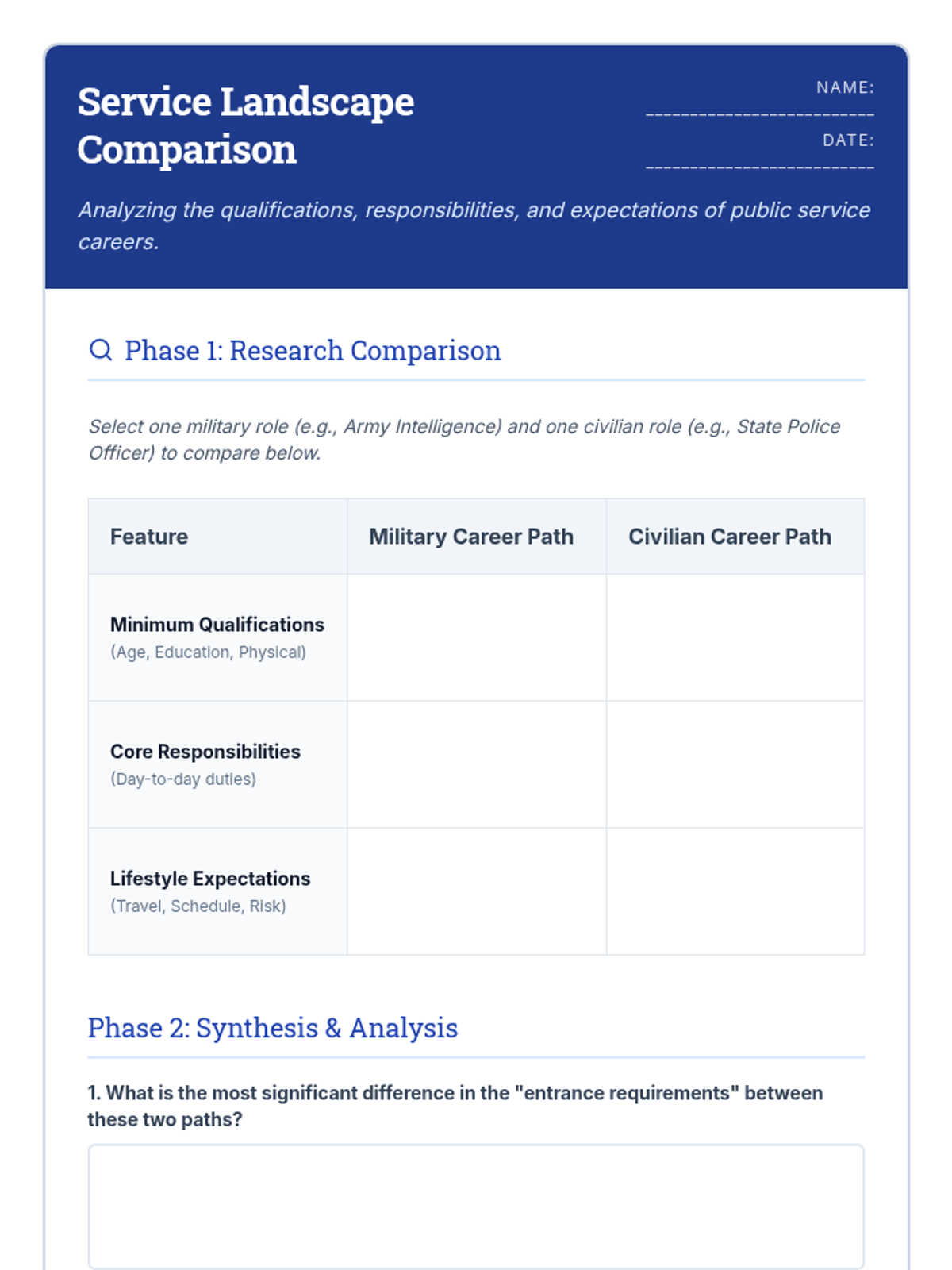
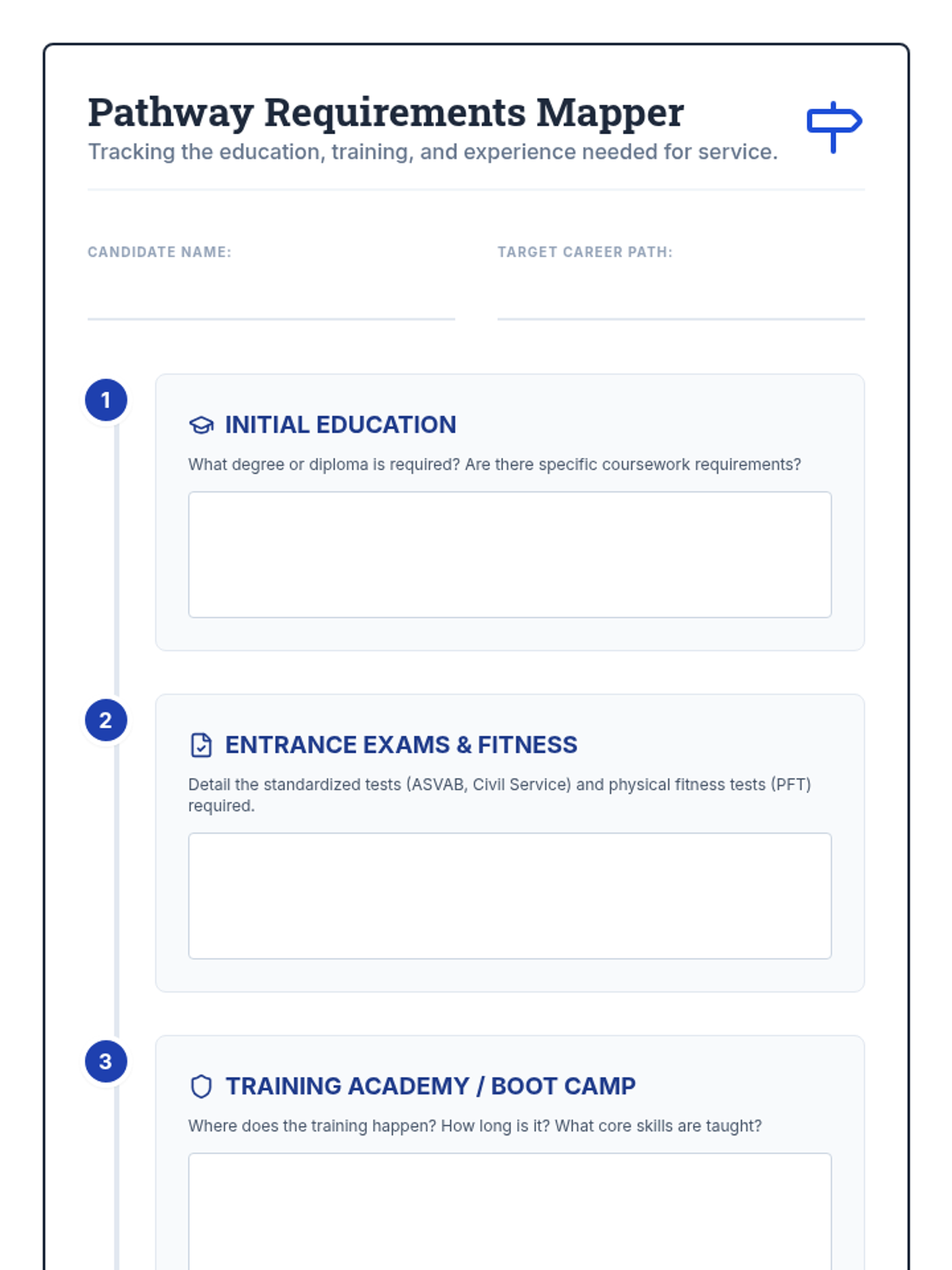
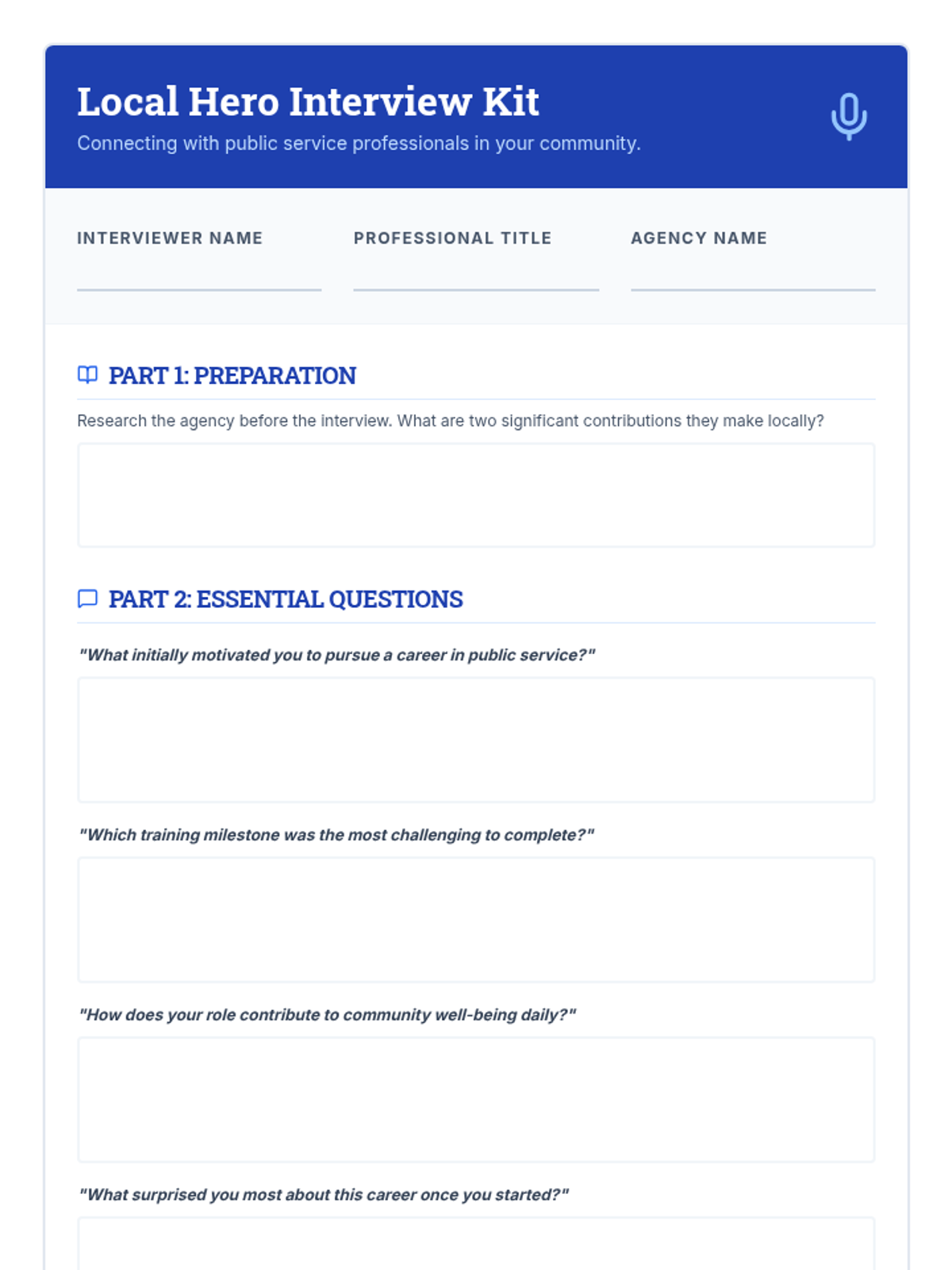
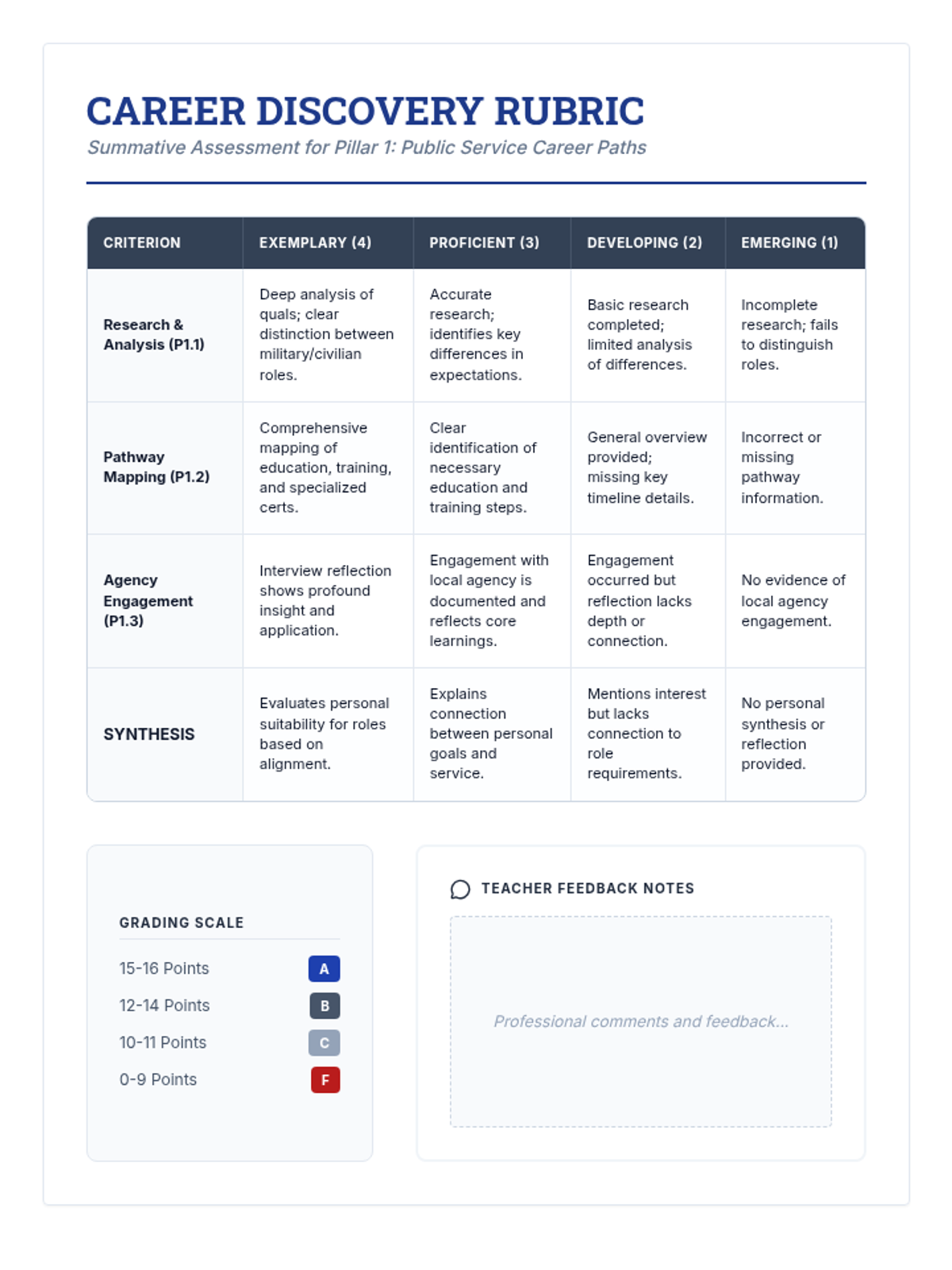
Explore the landscape of public service careers, analyzing qualifications and requirements for military and civilian roles while connecting with local agencies.
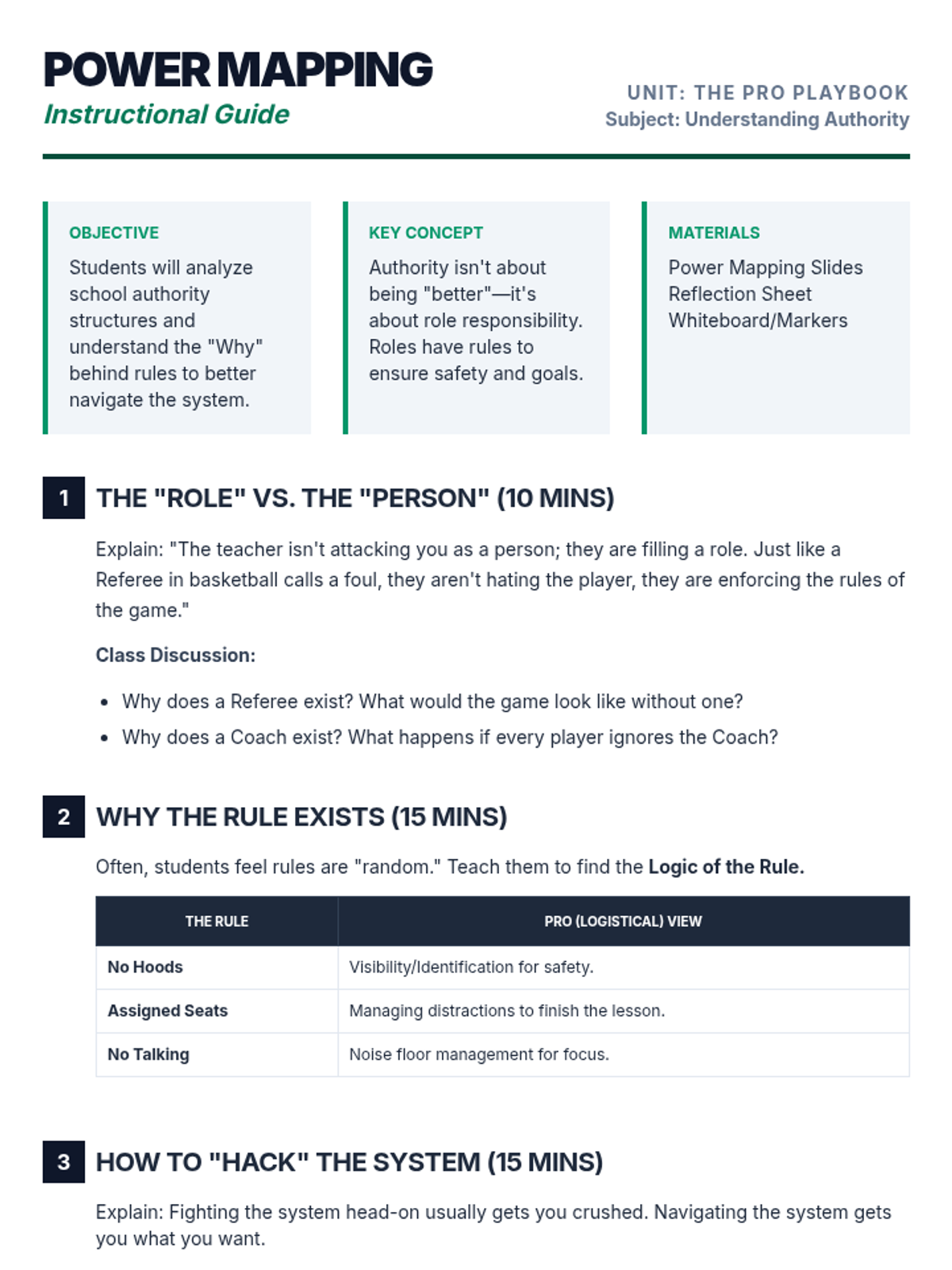
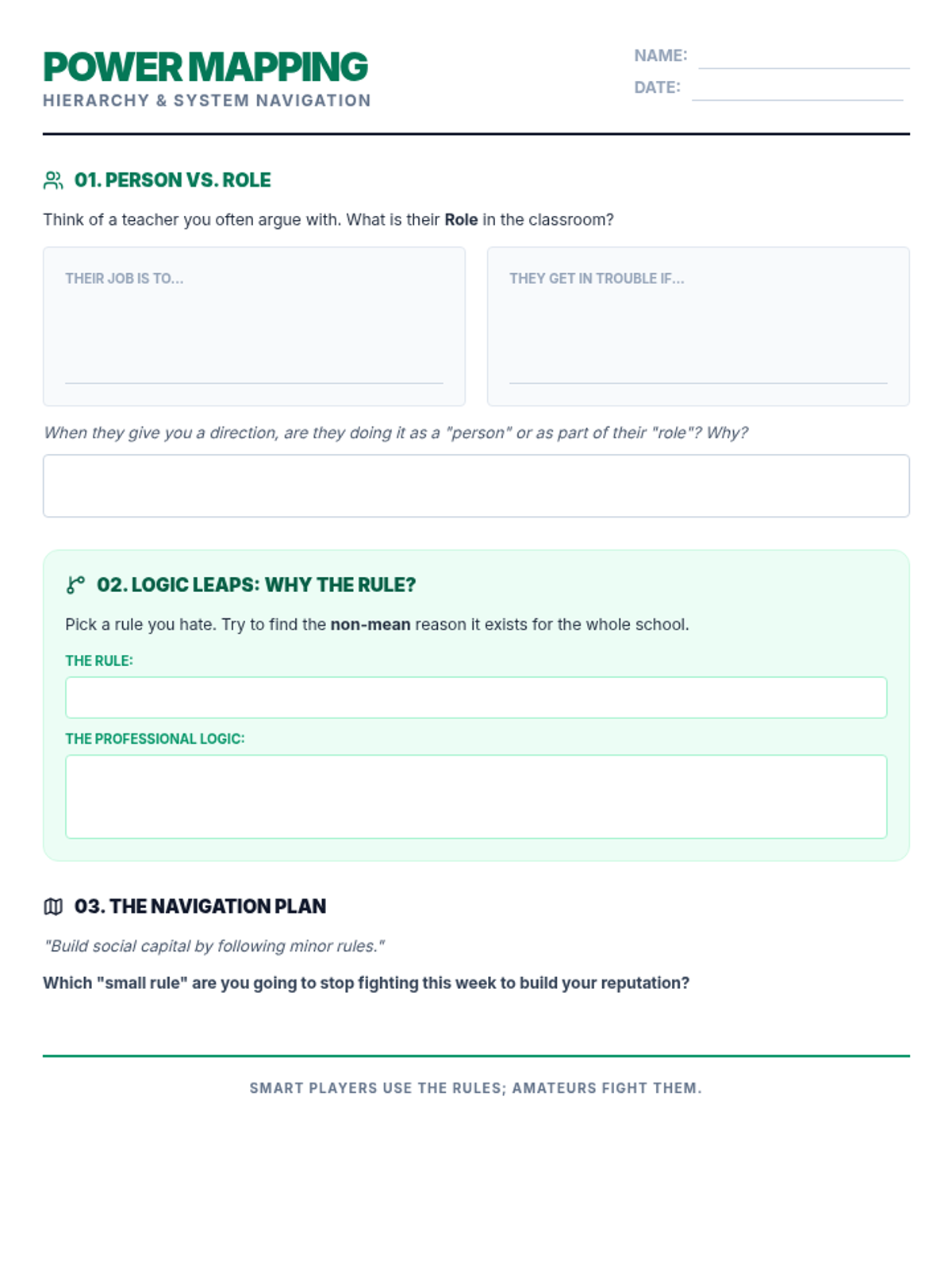
Explores the structure of school authority and how students can work within the system to achieve their goals rather than fighting against it.
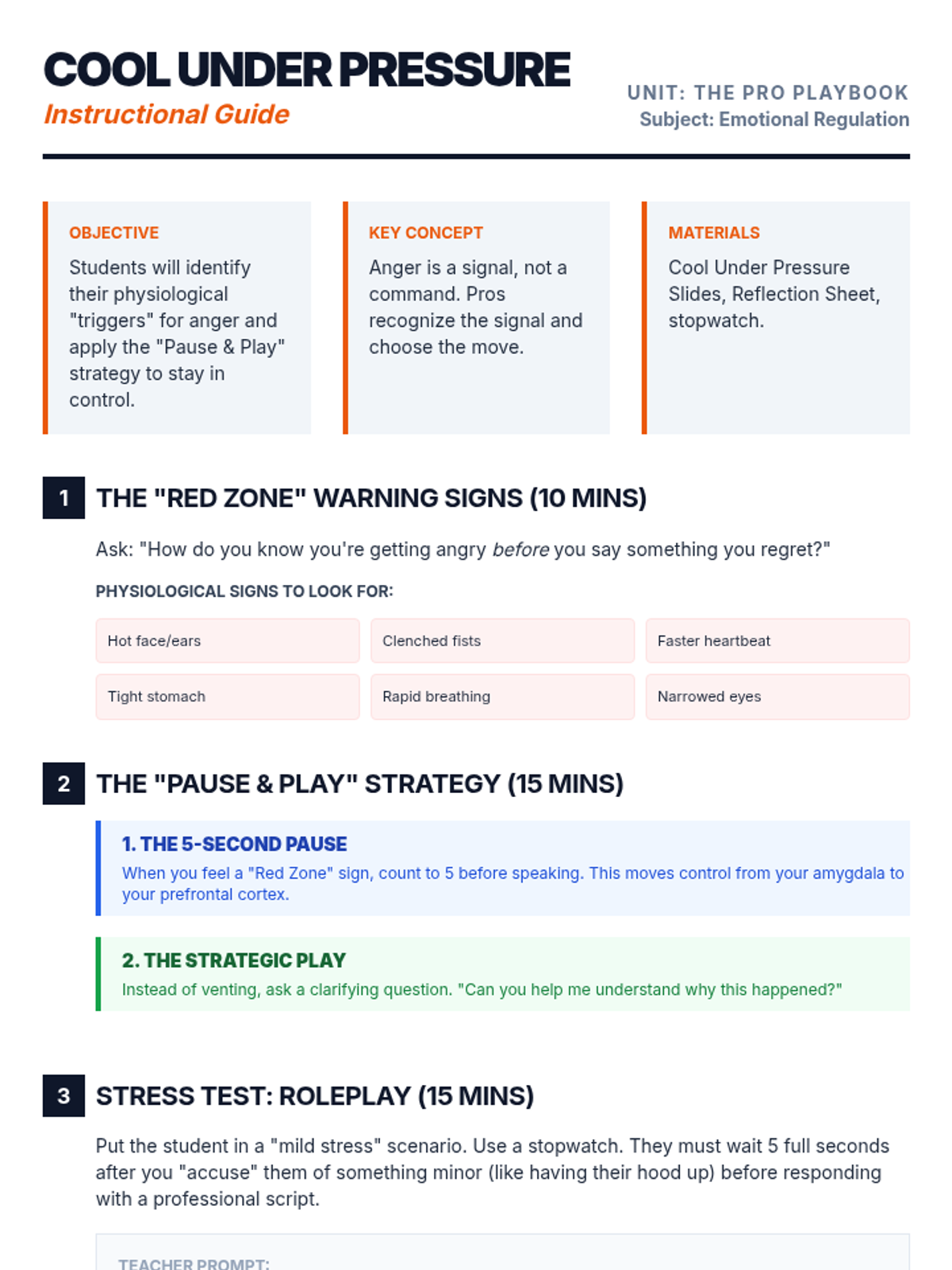
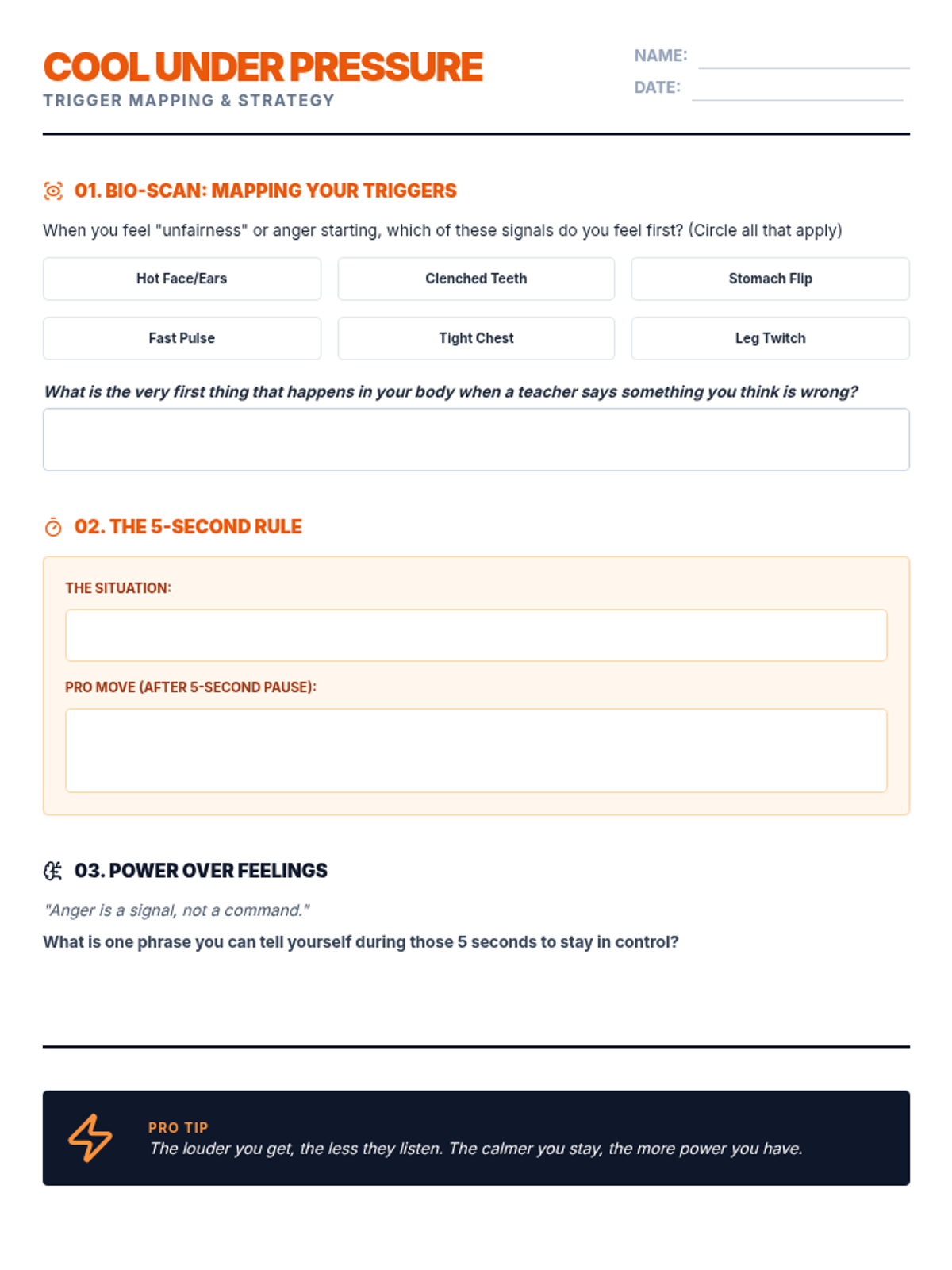
Teaches students how to identify physical triggers of anger and implement immediate de-escalation strategies when they feel unfairly treated.
Focuses on the distinction between arguing and professional advocacy, teaching students how to express disagreement without escalating conflict.