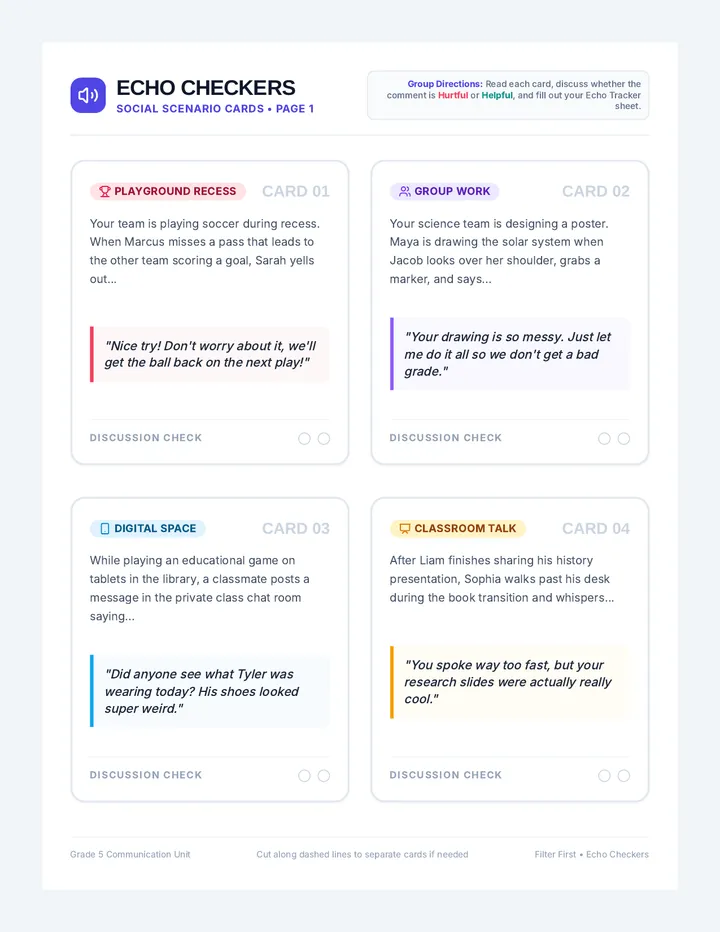
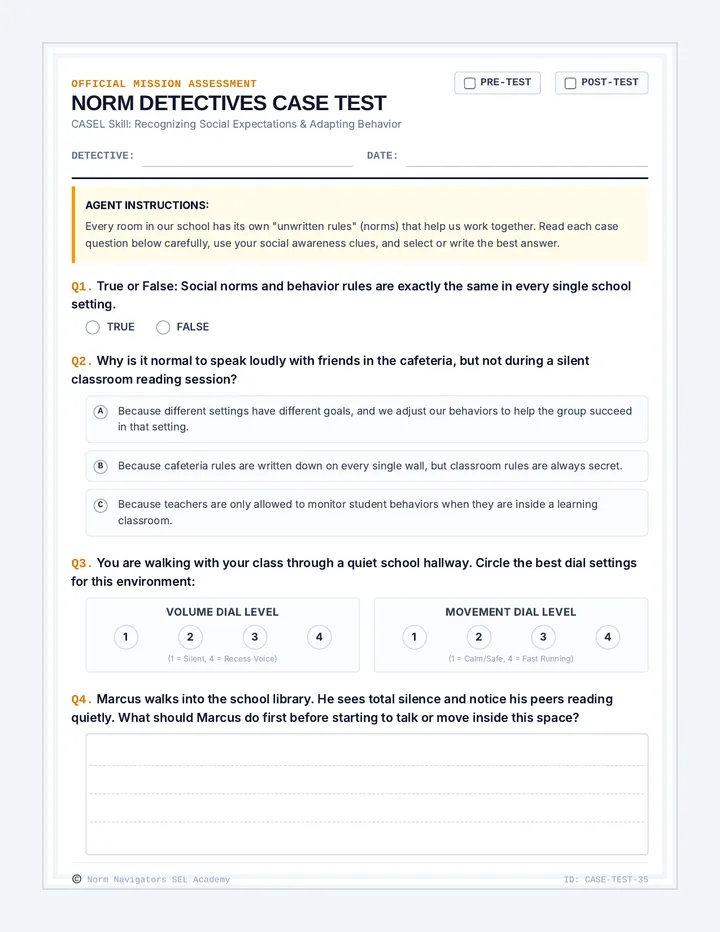
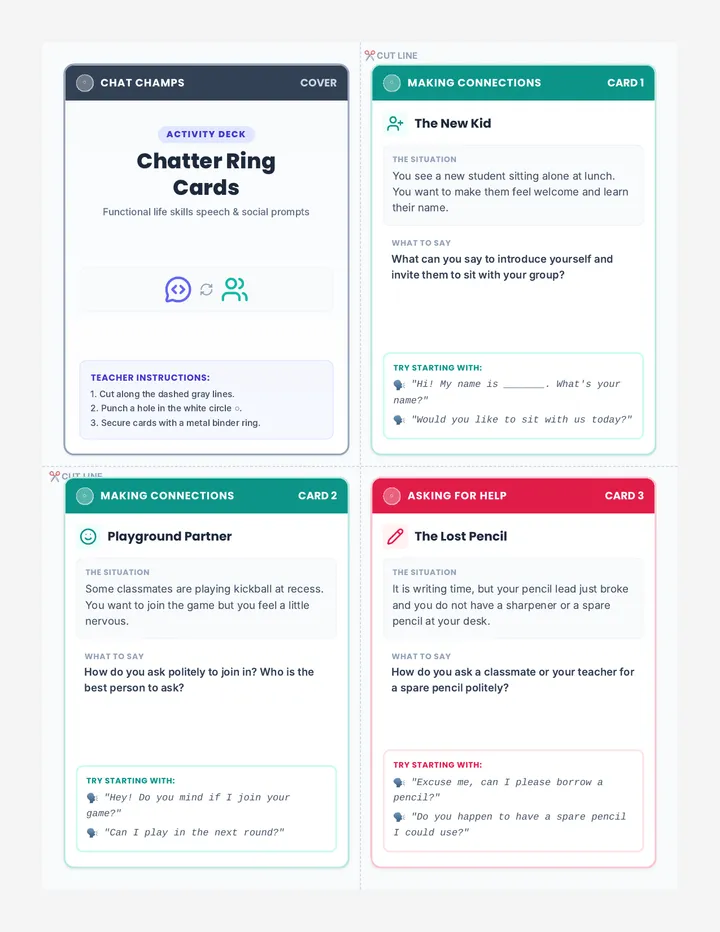
Students demonstrate mastery by completing a worksheet and a brief one-on-one interview with the teacher. They must explain why they chose a specific greeting for a given scenario, demonstrating metacognitive understanding of social rules.
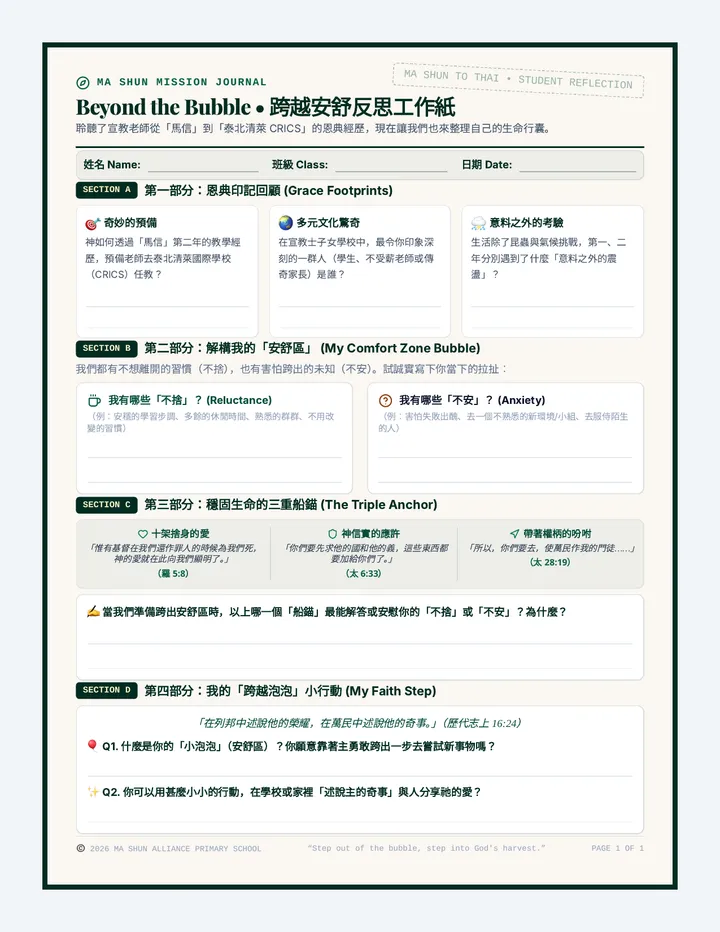
Synthesizing personal mission statements with bicultural identity and global goals.
Scaffolding self-advocacy and clarification strategies for students navigating an English-speaking environment.
Understanding non-verbal communication, personal space, and social cues across different cultures.
Expanding emotional vocabulary for ESL students to express nuance and intensity in English.
Final review, celebration of growth, and official program mastery certification.
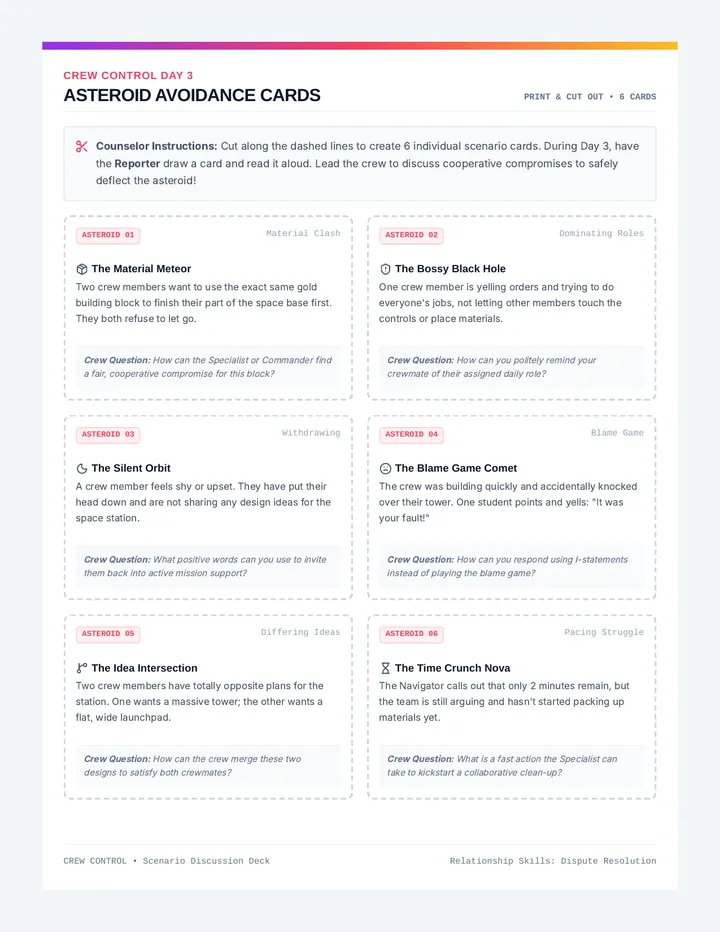
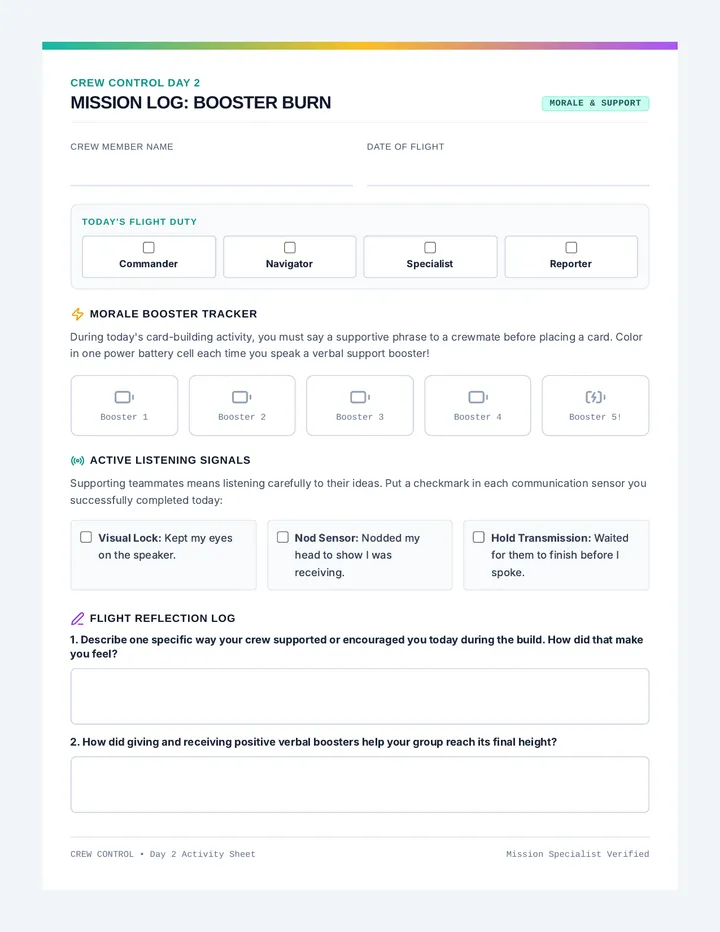
Practical team-based synergy challenges to apply collaborative problem-solving skills.
Explores proactive responses to social media and digital habits to protect self-esteem and focus.
Teaches the concept of the Emotional Bank Account and how to build trust through small deposits.
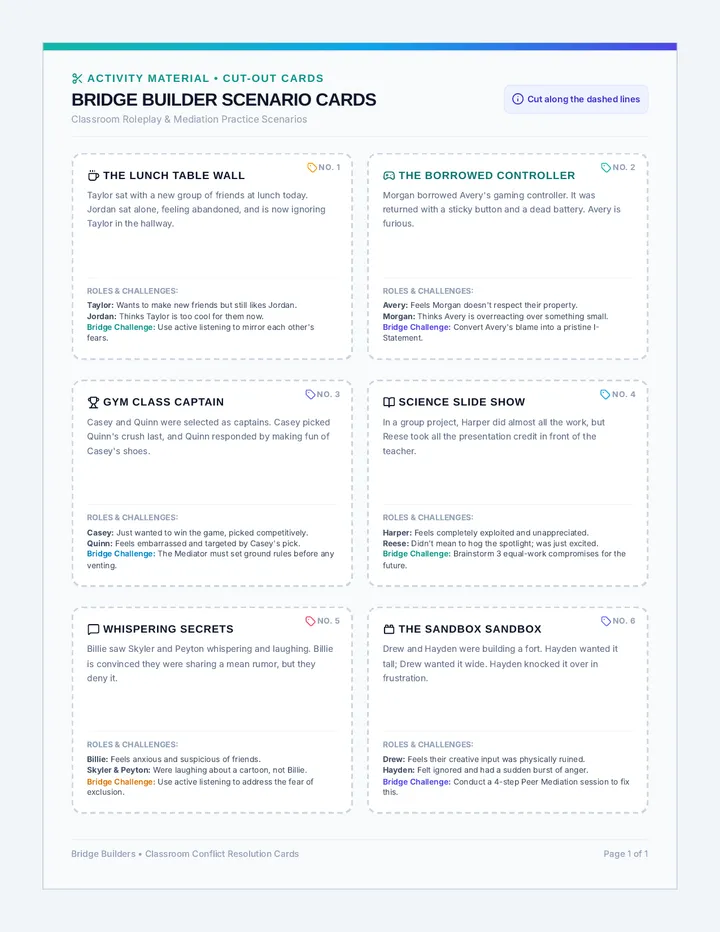
Finalizes skills with conflict resolution strategies (Stop-Drop-Solve) and long-term goal planning.
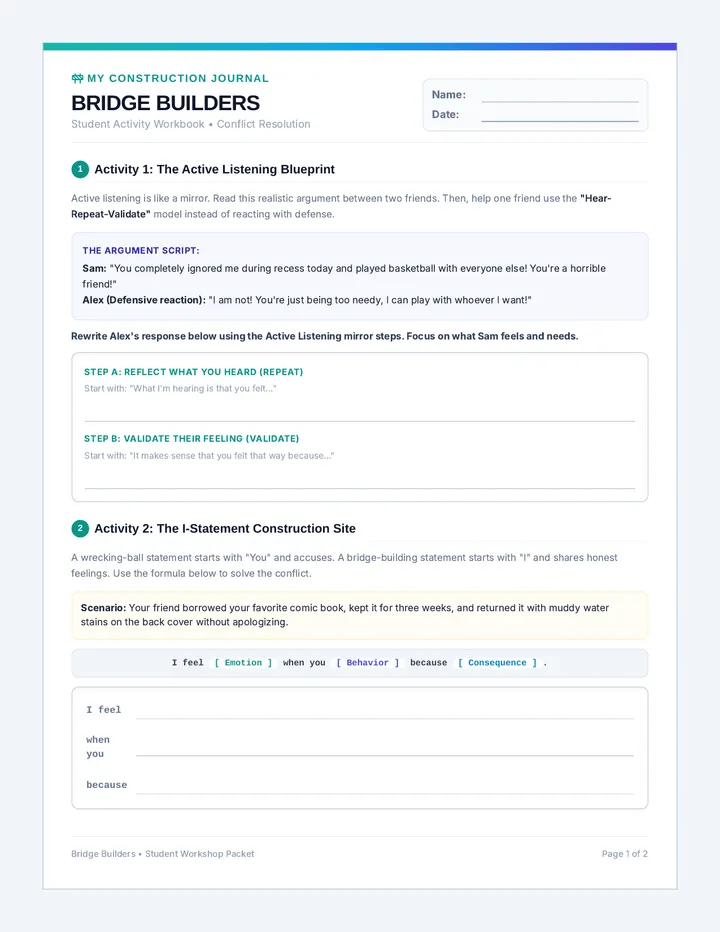
Develops assertive communication skills using I-Statements and empathetic listening techniques.
Focuses on focus, Will vs. Won't power, and active recall strategies for academic success.
Teaches prioritization using the Eisenhower Matrix and managing the 'Big Rocks' of life.
Teaches emotional regulation through the Notice-Name-Breathe method and building a resilience toolkit.
Explores growth mindset, the power of 'Yet', and understanding neuroplasticity during challenges.
Focuses on building confidence and self-esteem by identifying and 'patching' negative self-talk glitches.
Introduction to self-awareness and identifying personal values to build an internal 'Source Code'.
Develops social communication skills, conflict resolution strategies, and stress management techniques.
Teaches practical strategies for time management, prioritization, and effective study habits.
Focuses on developing a growth mindset and building emotional resilience to handle setbacks effectively.
Explores self-awareness and self-esteem to help students understand their strengths and build a positive self-image.
High schoolers align their device habits with professional workplace standards, focusing on agency and self-regulation.
Eighth graders develop peer accountability allies and set community standards for focused digital collaborative work.
Seventh graders explore the difference between compliance and agency, evaluating how their digital navigation builds their personal brand.
Sixth graders analyze the attention economy and map out personal accountability safe-zones for any classroom environment.
Fifth graders model digital leadership by sharing navigation strategies and mentoring peers in responsible device use.