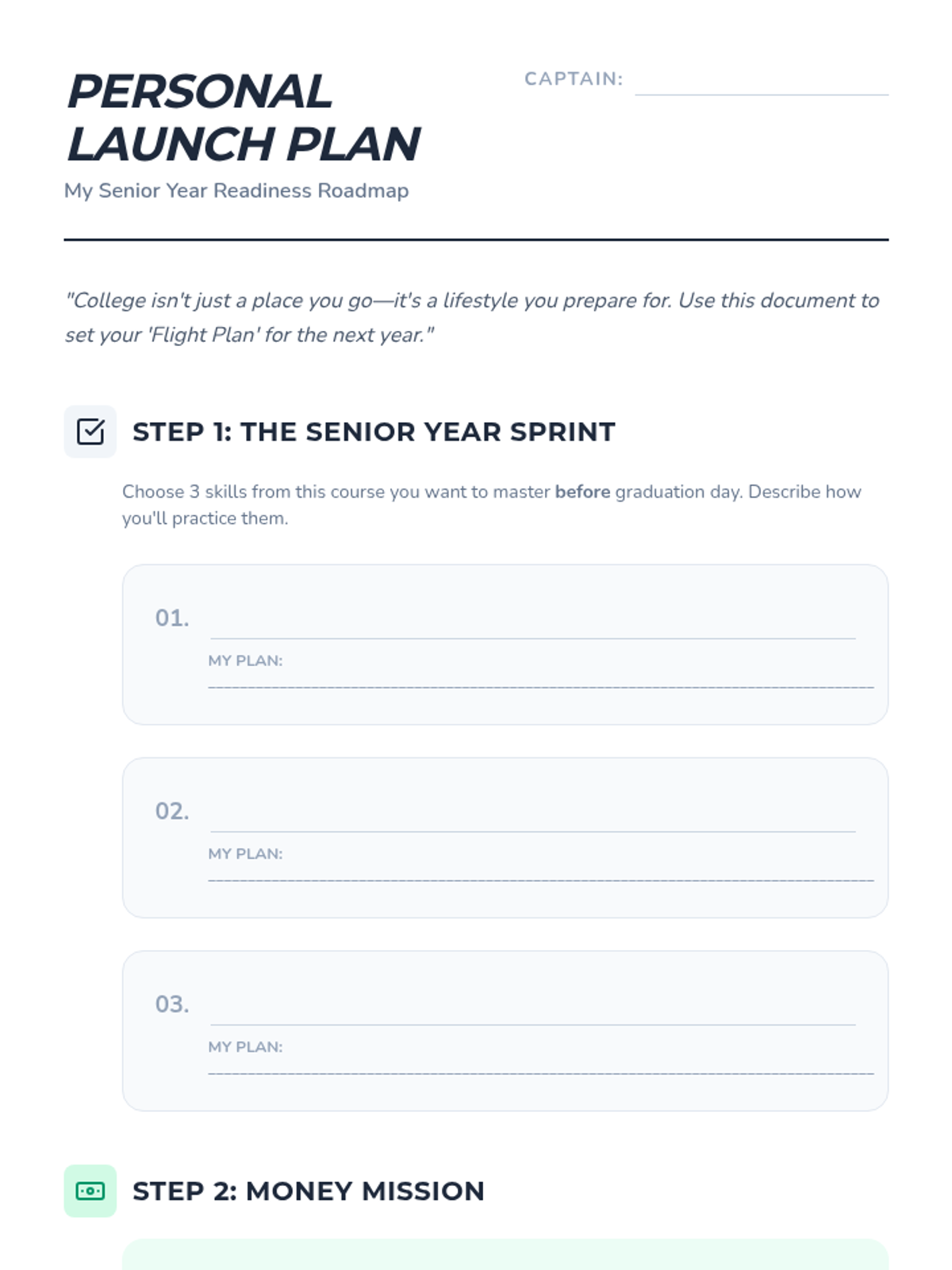
A 30-minute high school lesson designed to jumpstart the college application process for 11th graders, focusing on personal statement brainstorming and summer planning.
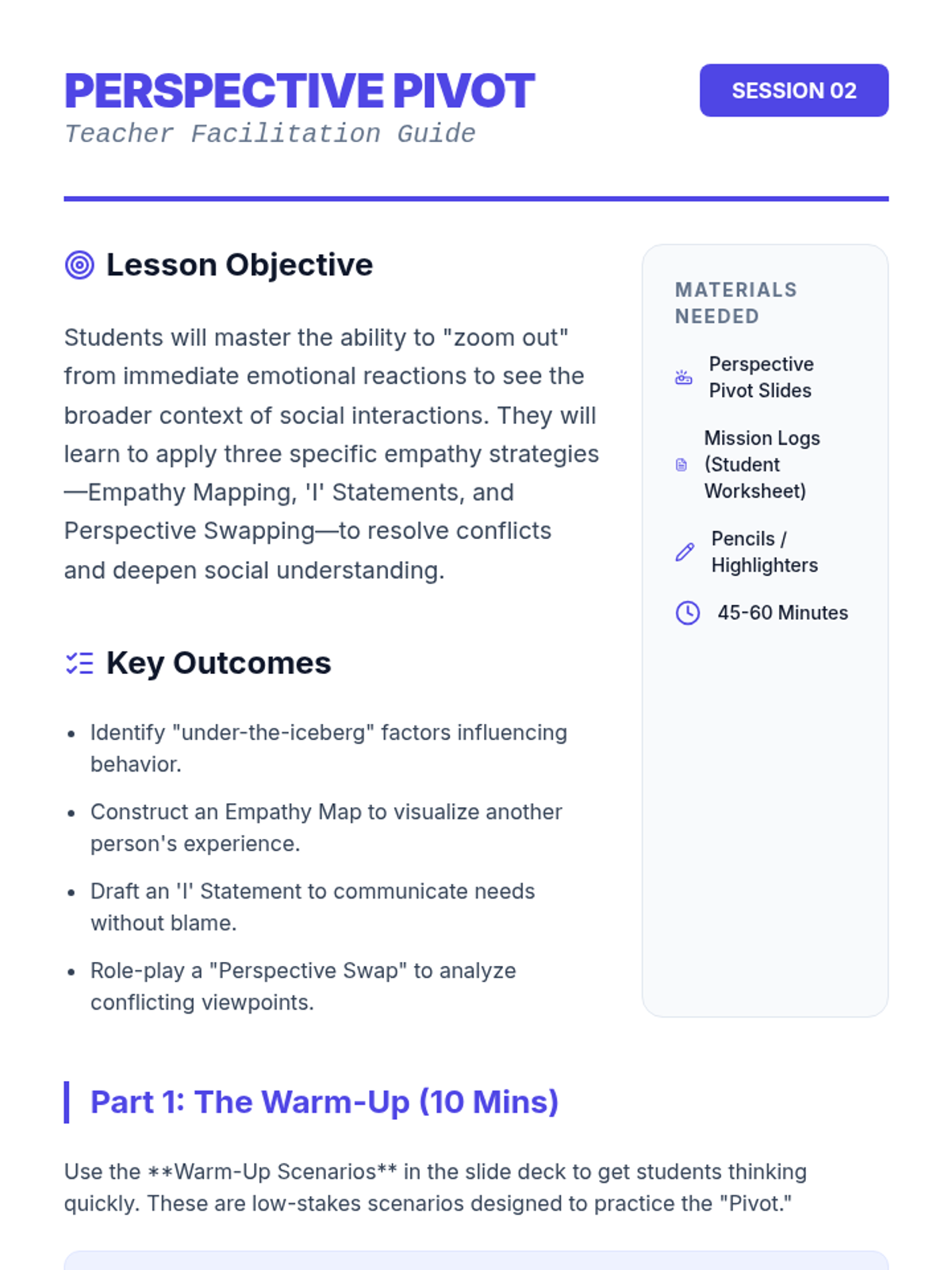
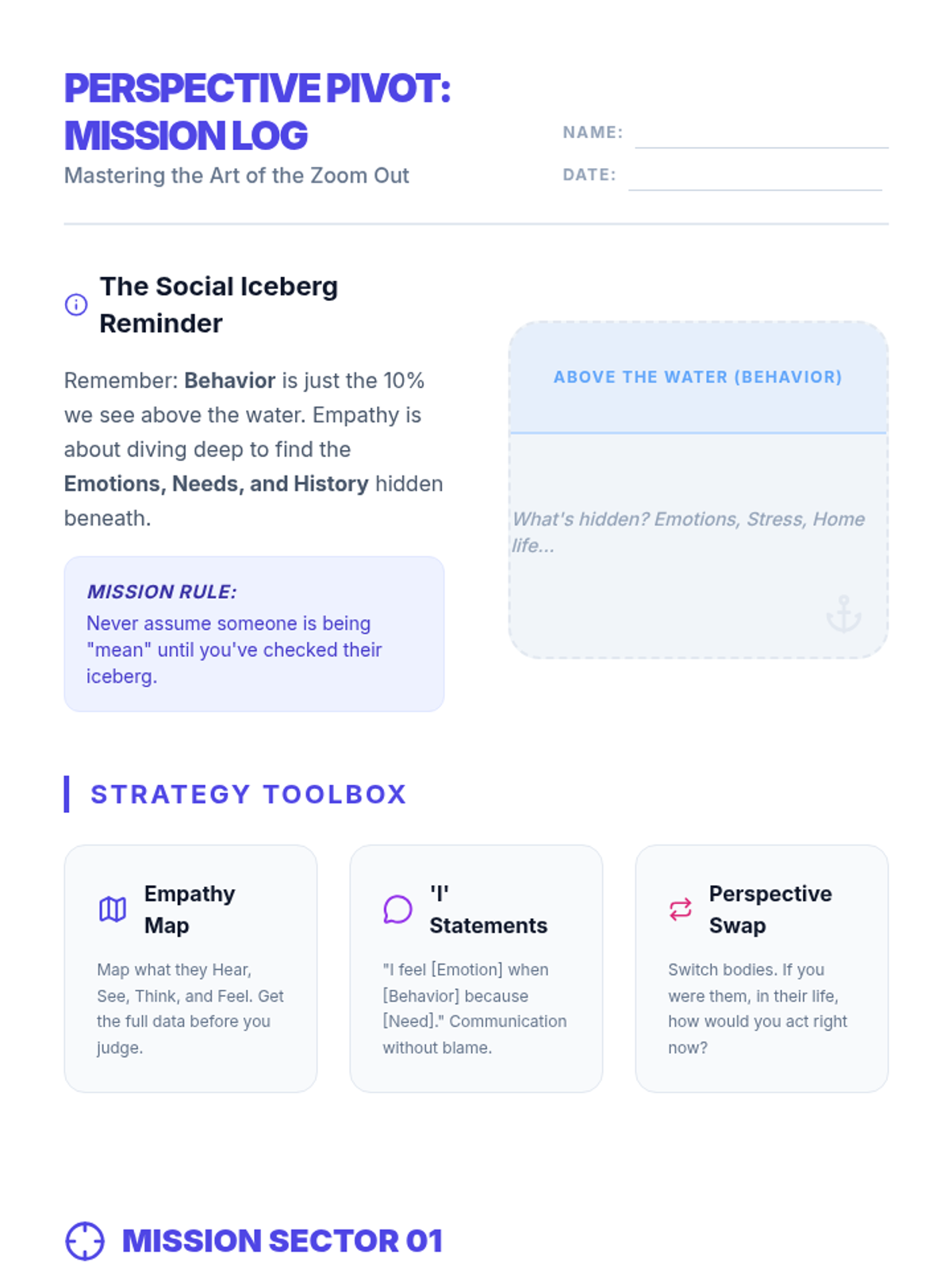
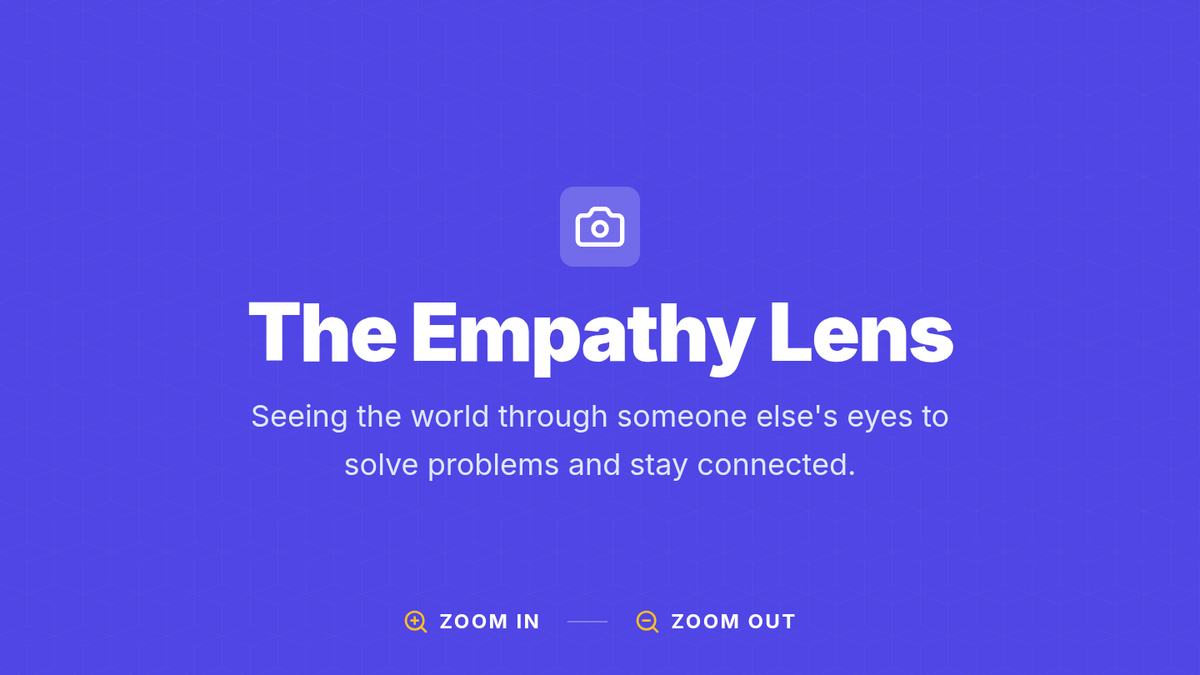
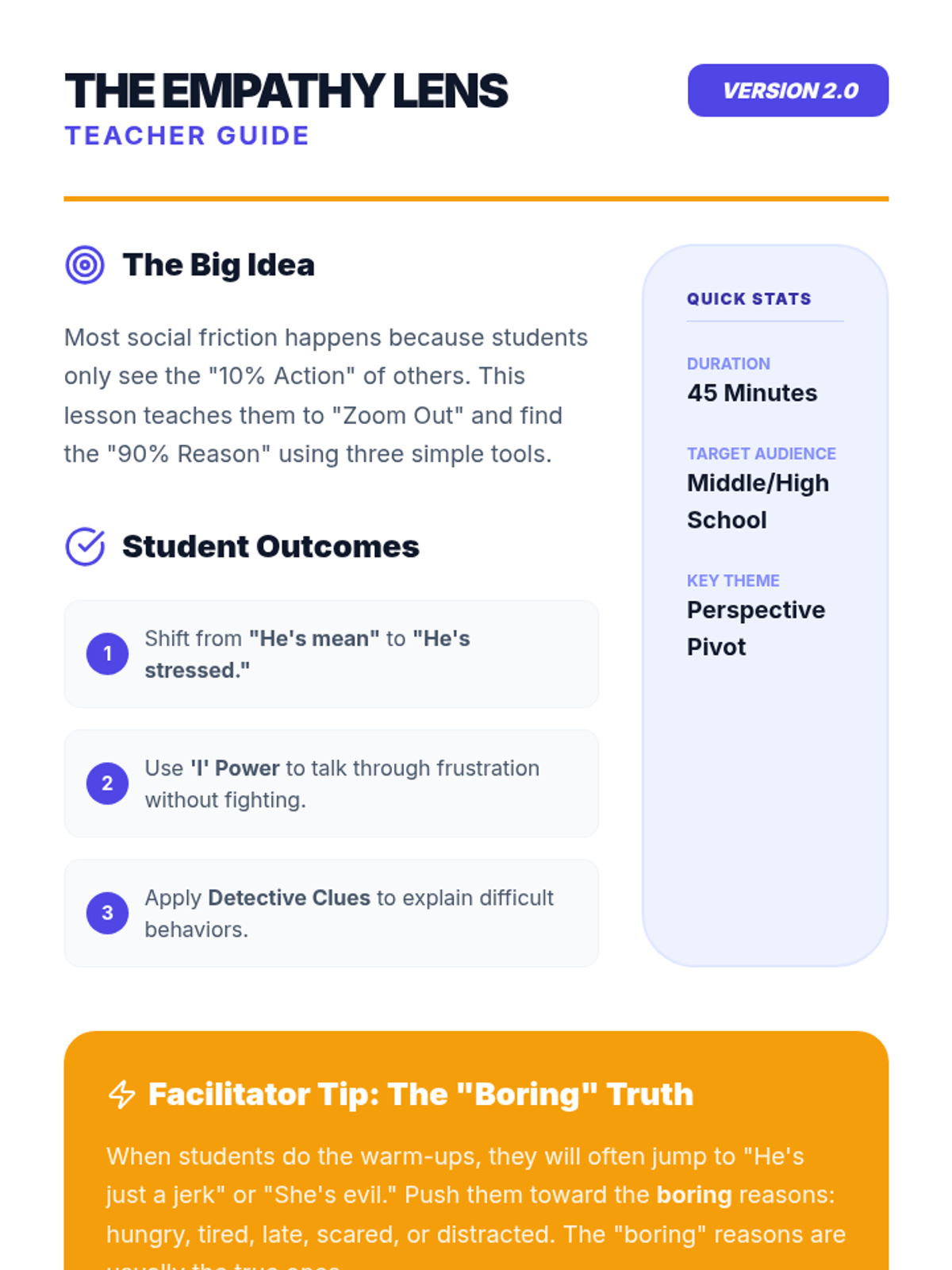
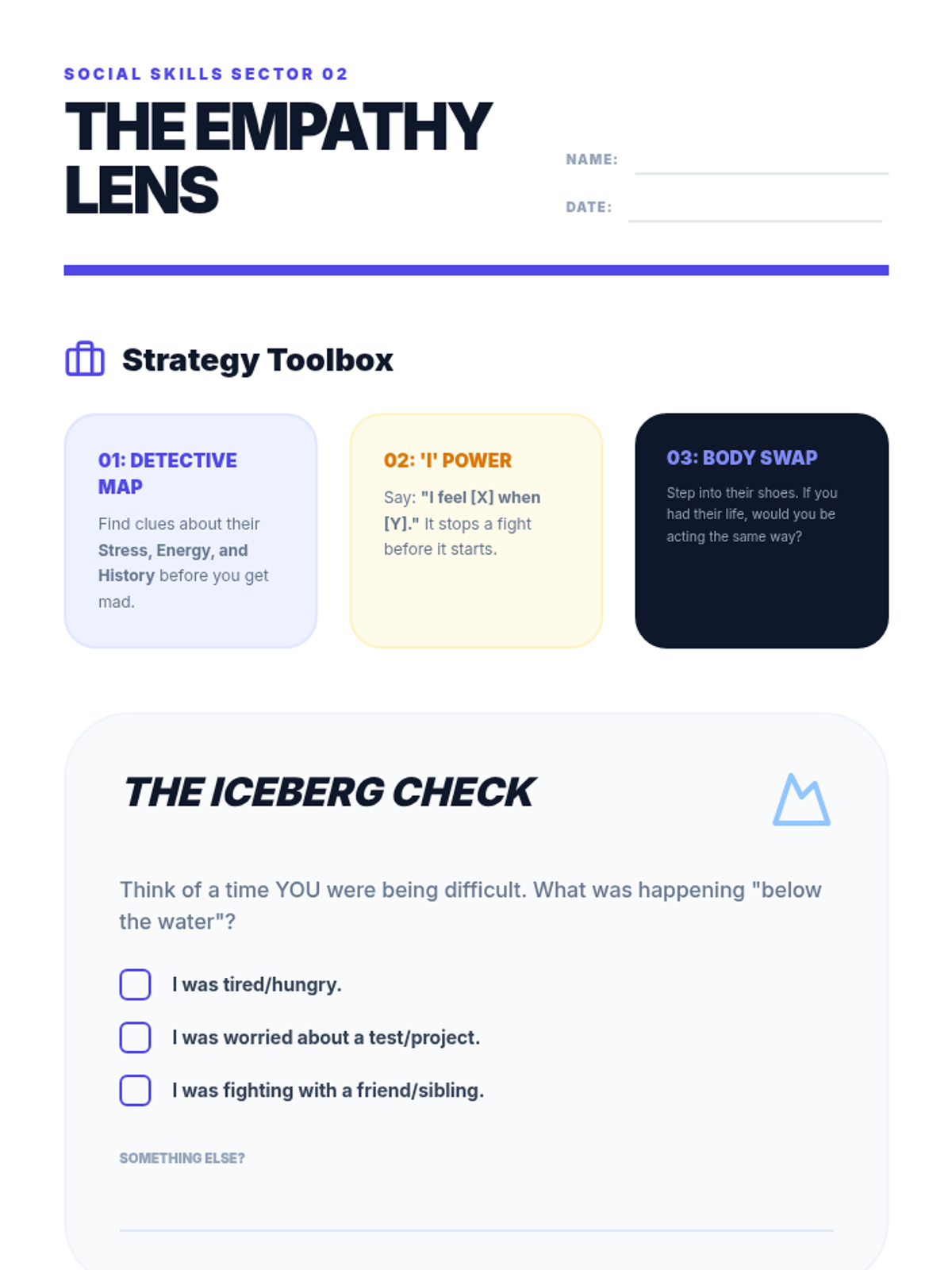
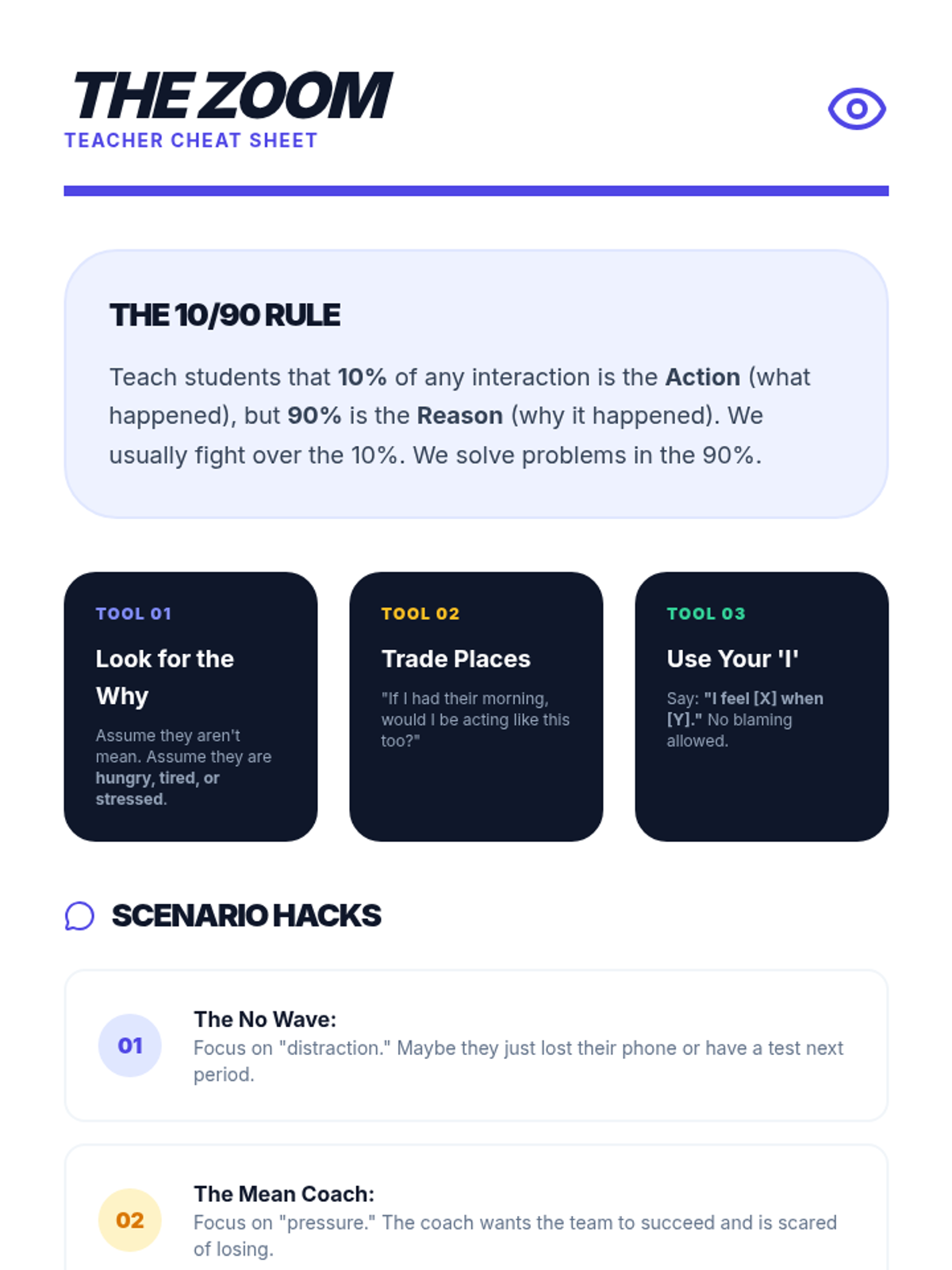
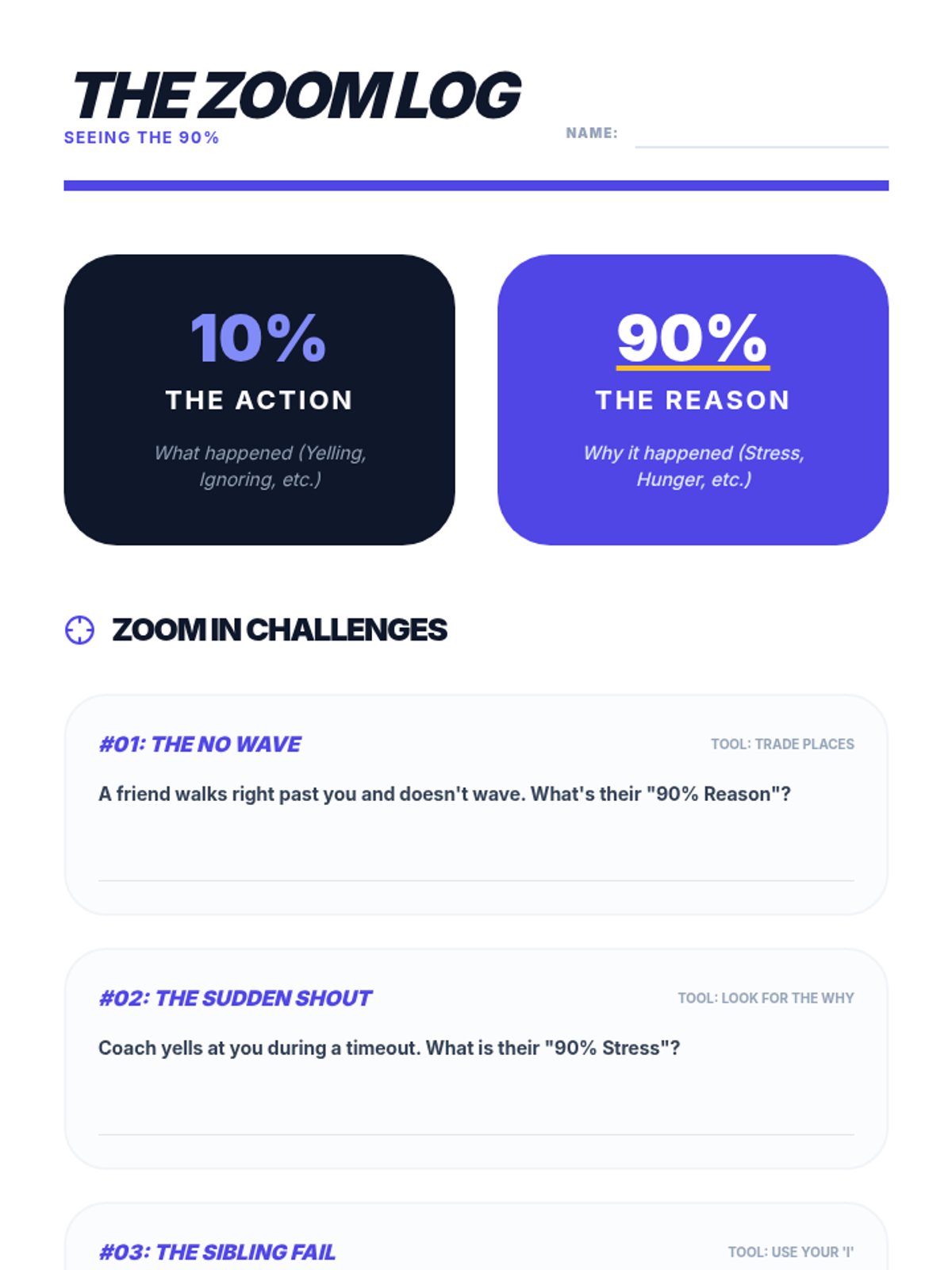
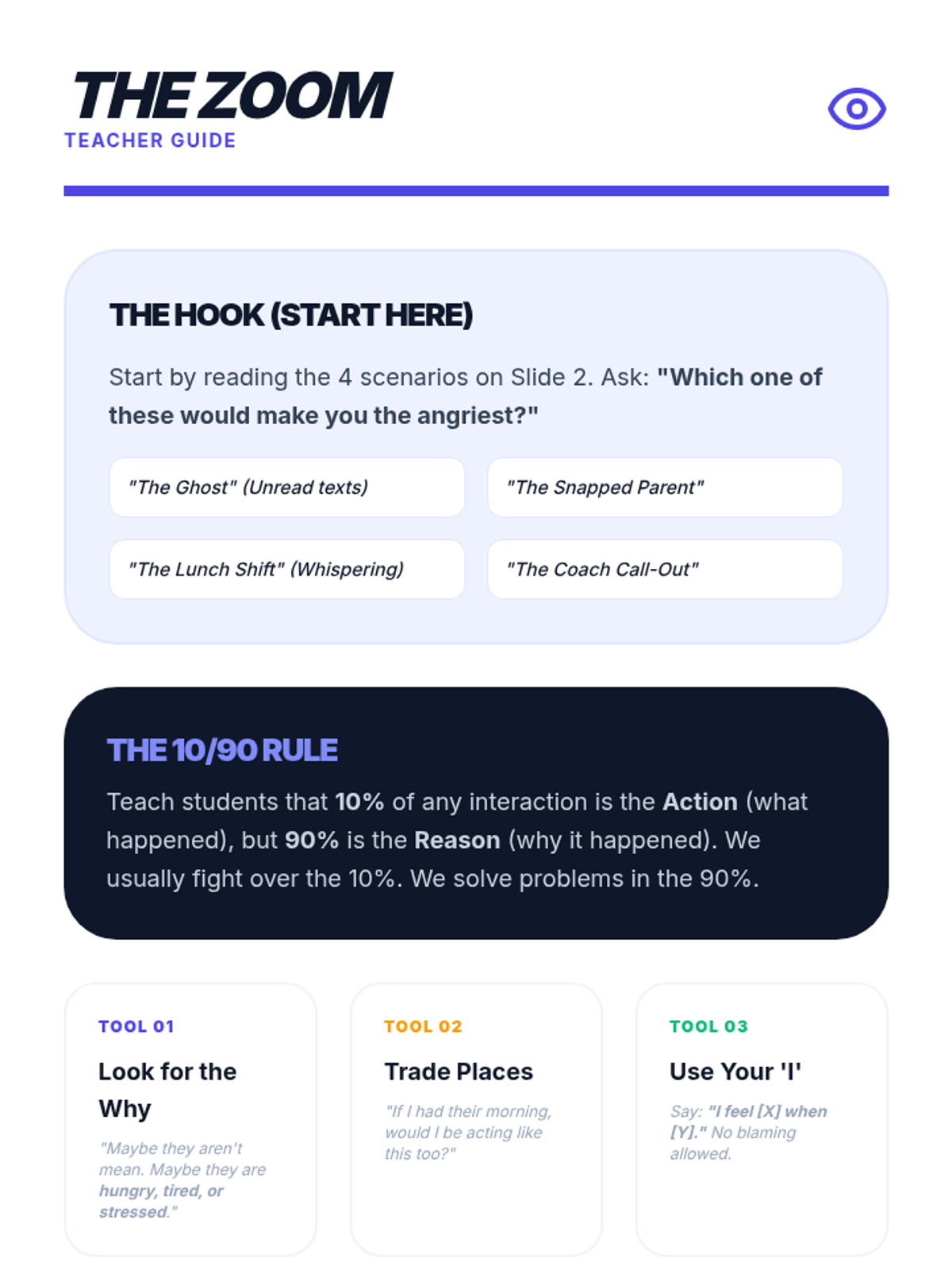
An expanded lesson on mastering empathy through the 'Perspective Lens' metaphor. Students explore warm-up scenarios, learn concrete strategies (Empathy Mapping, 'I' Statements, Role-Playing), and apply them to complex social situations.
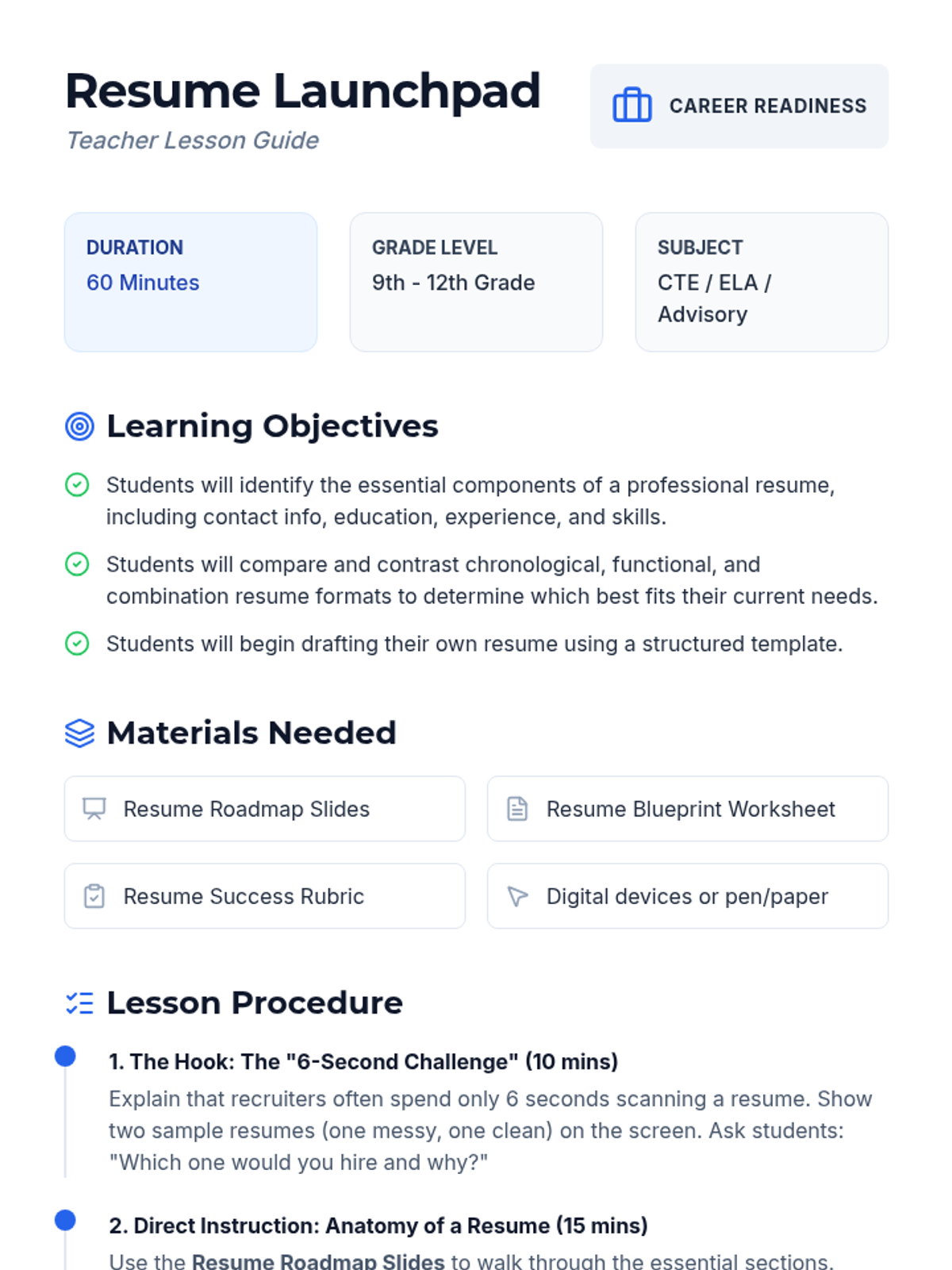
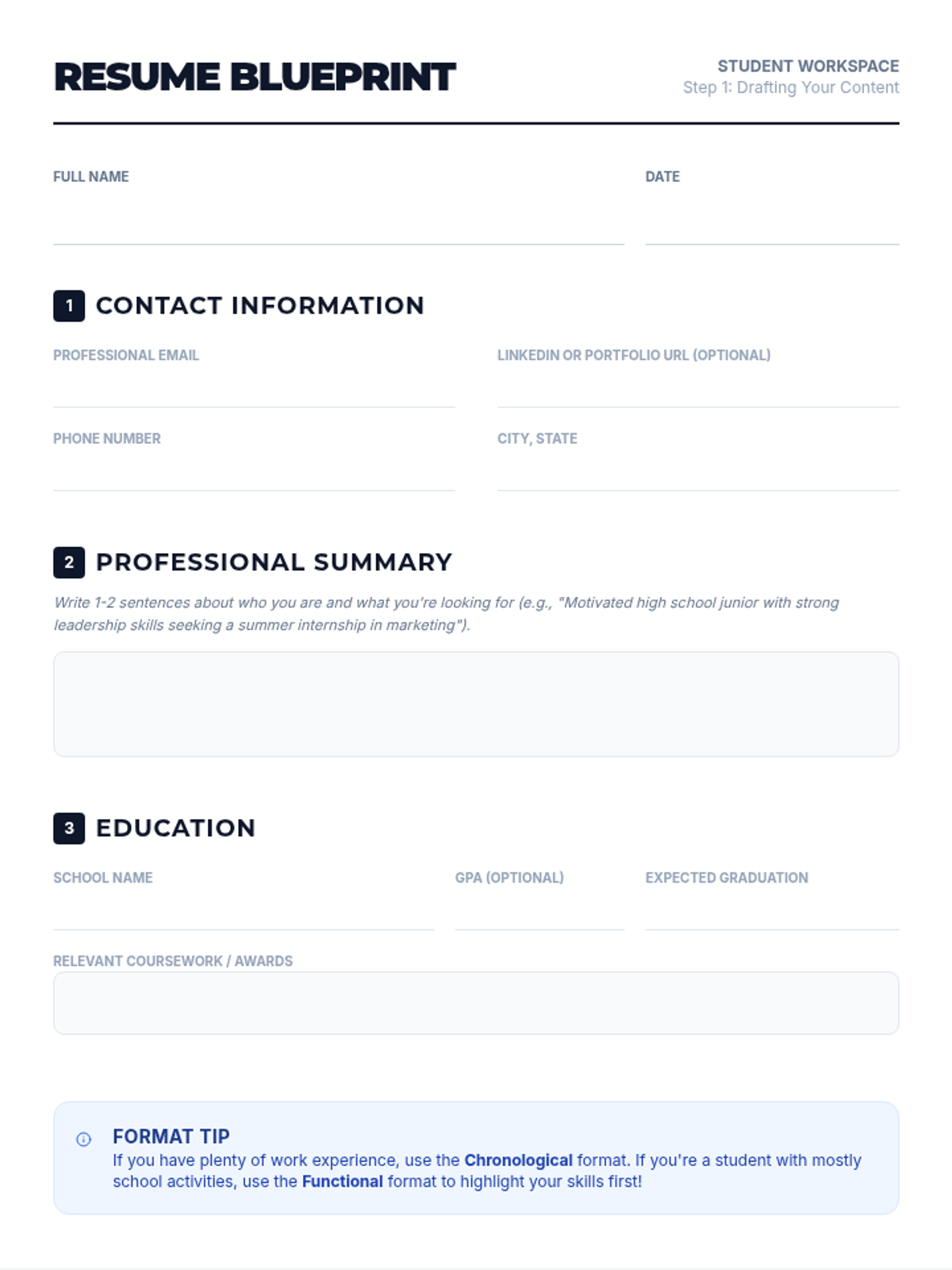
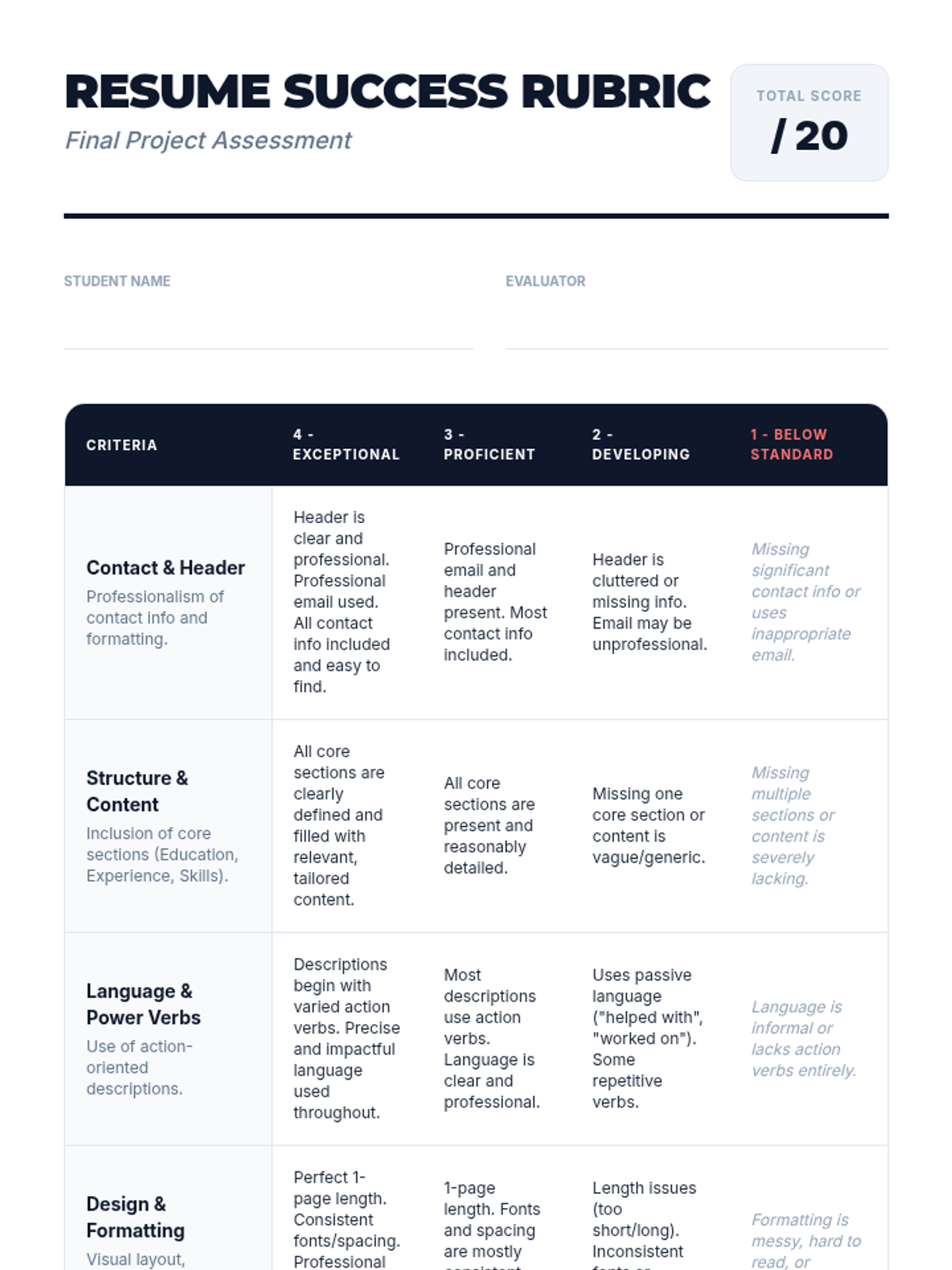
A comprehensive lesson designed to help students understand the purpose of a resume, explore various formatting styles, and craft their own professional profile for future opportunities.
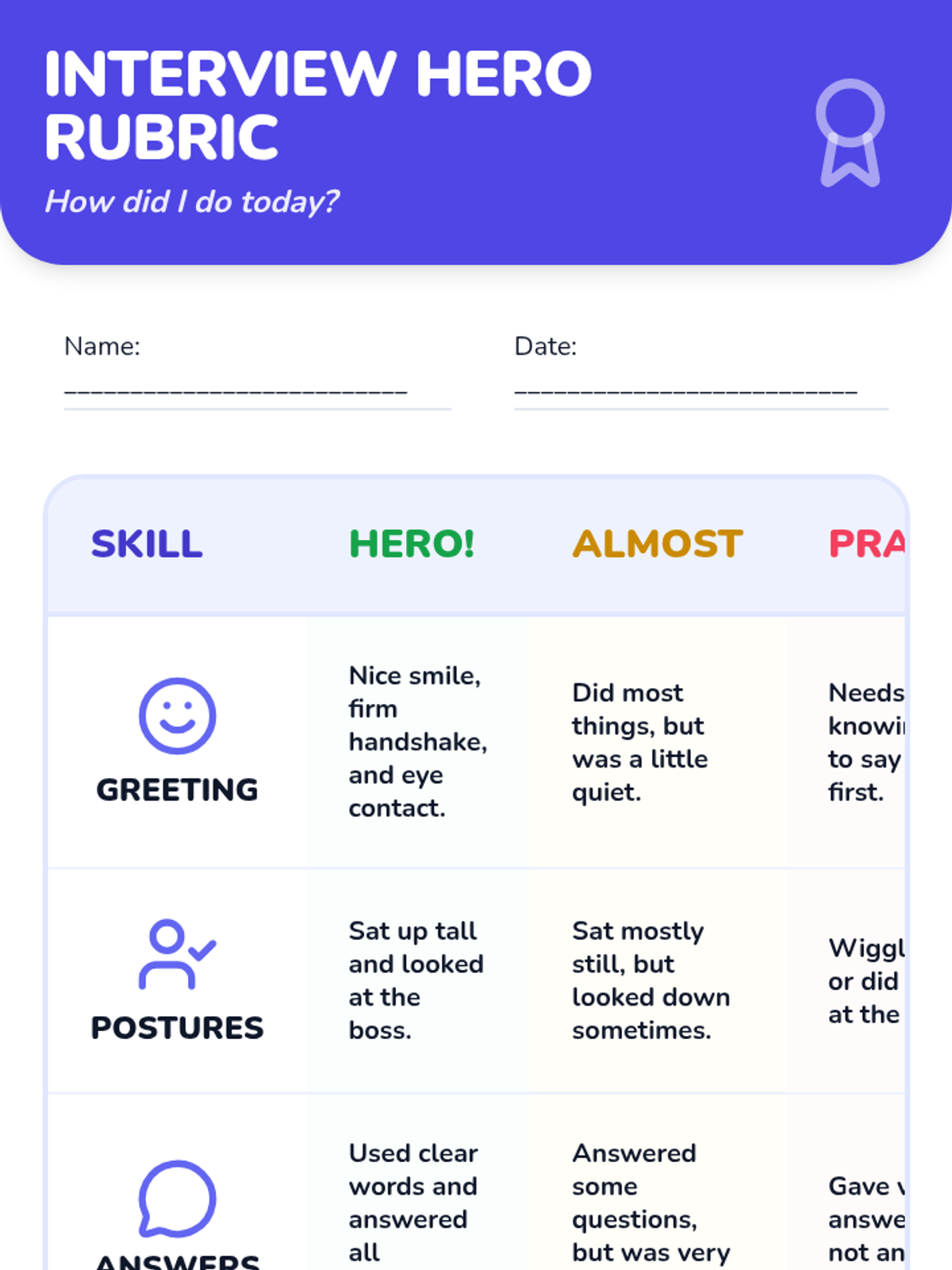
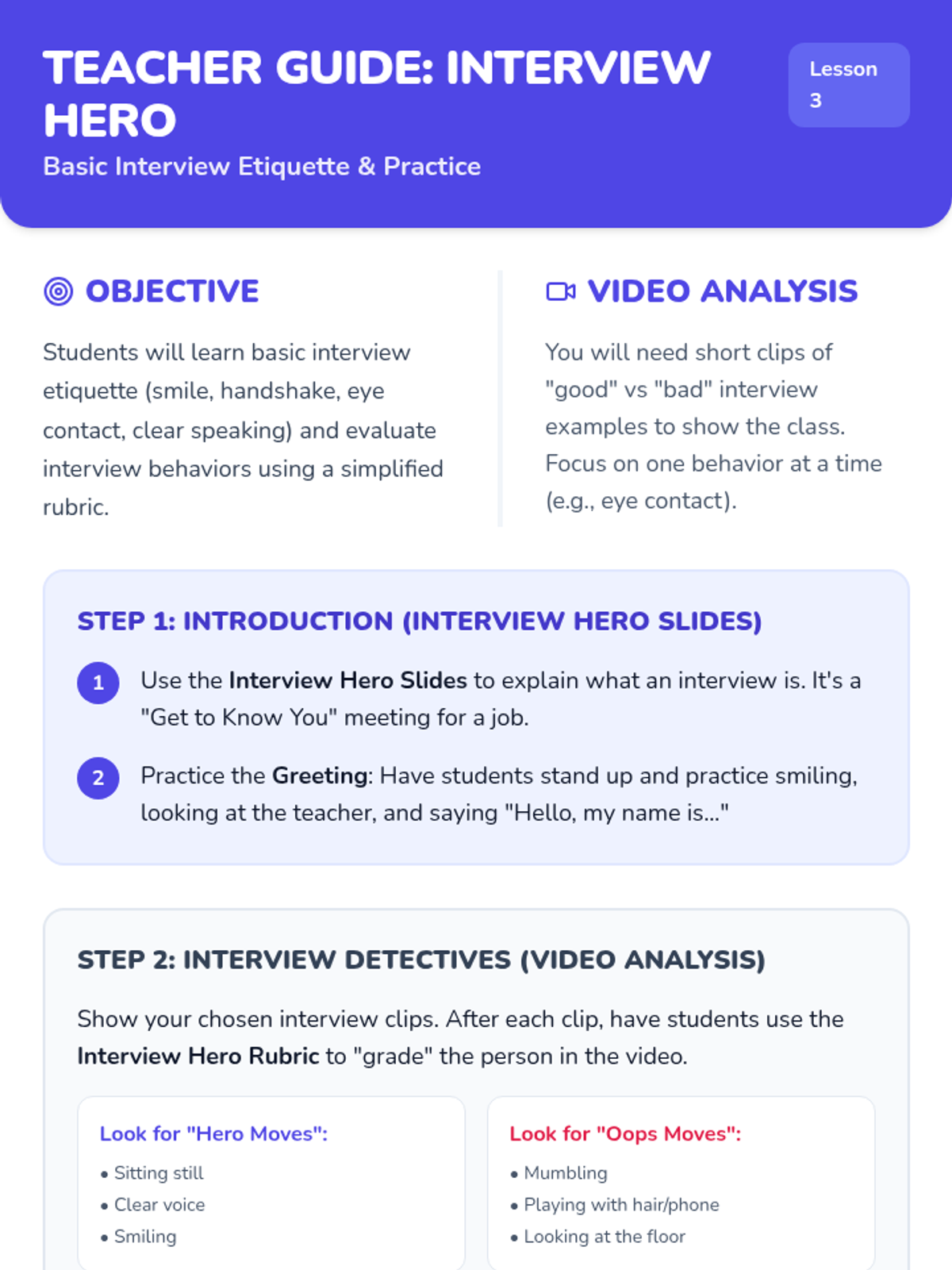
Students practice interview etiquette and evaluate interview behaviors using a simplified rubric and video analysis of common interview mistakes.
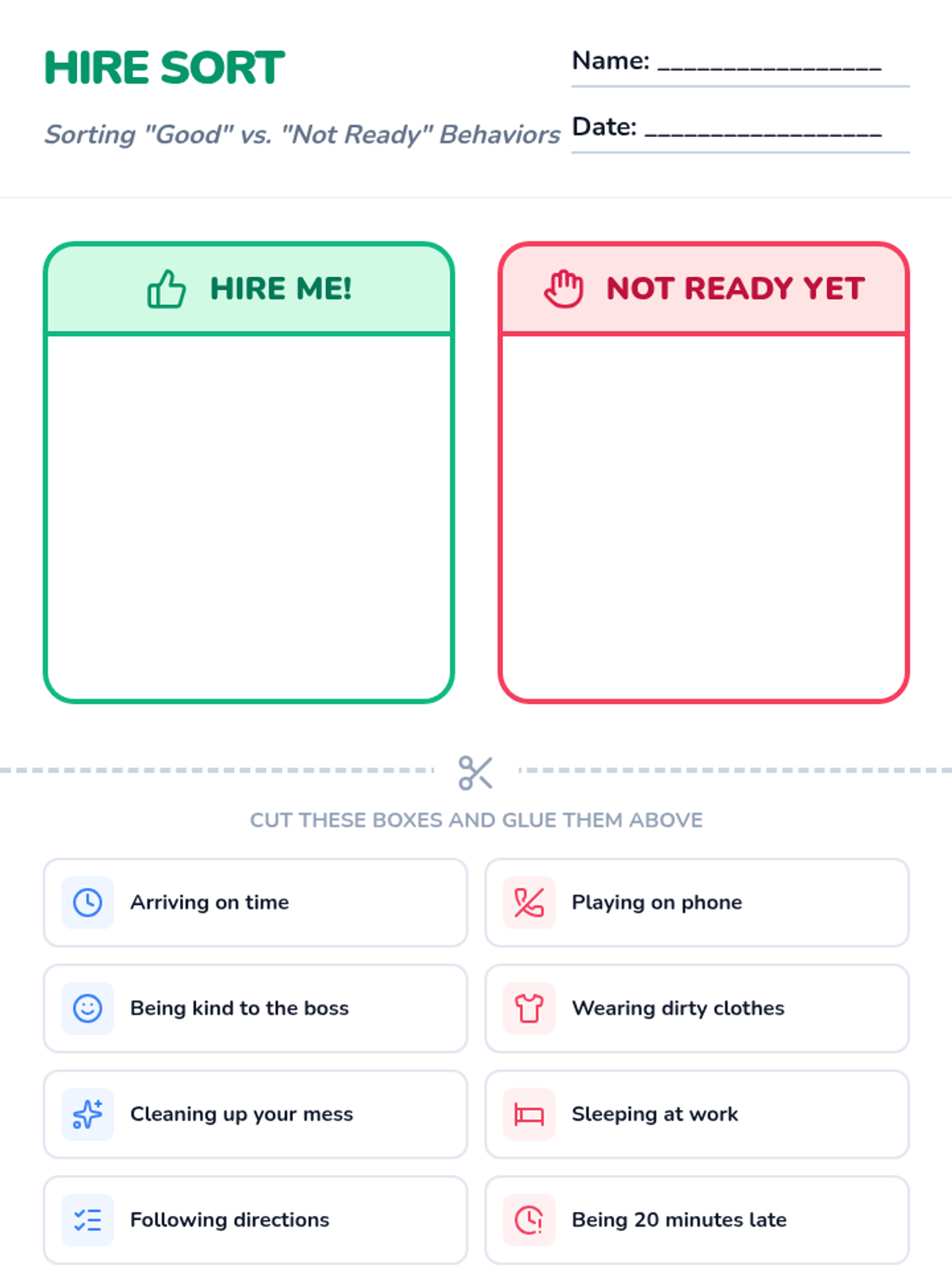
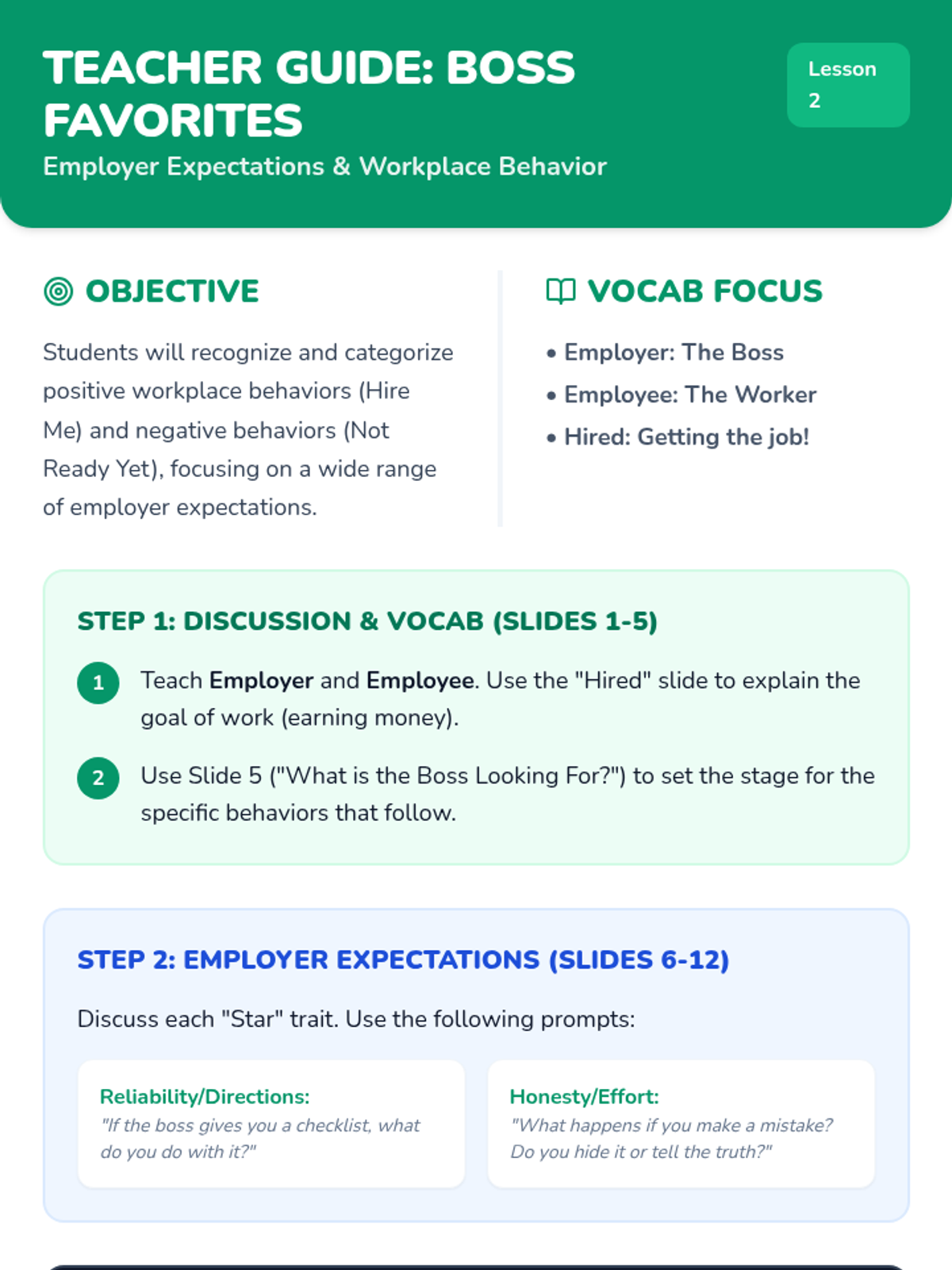
Students explore qualities that make a "good employee," such as punctuality, hygiene, and teamwork, through a "Hire vs. Not Ready Yet" behavior sorting activity.
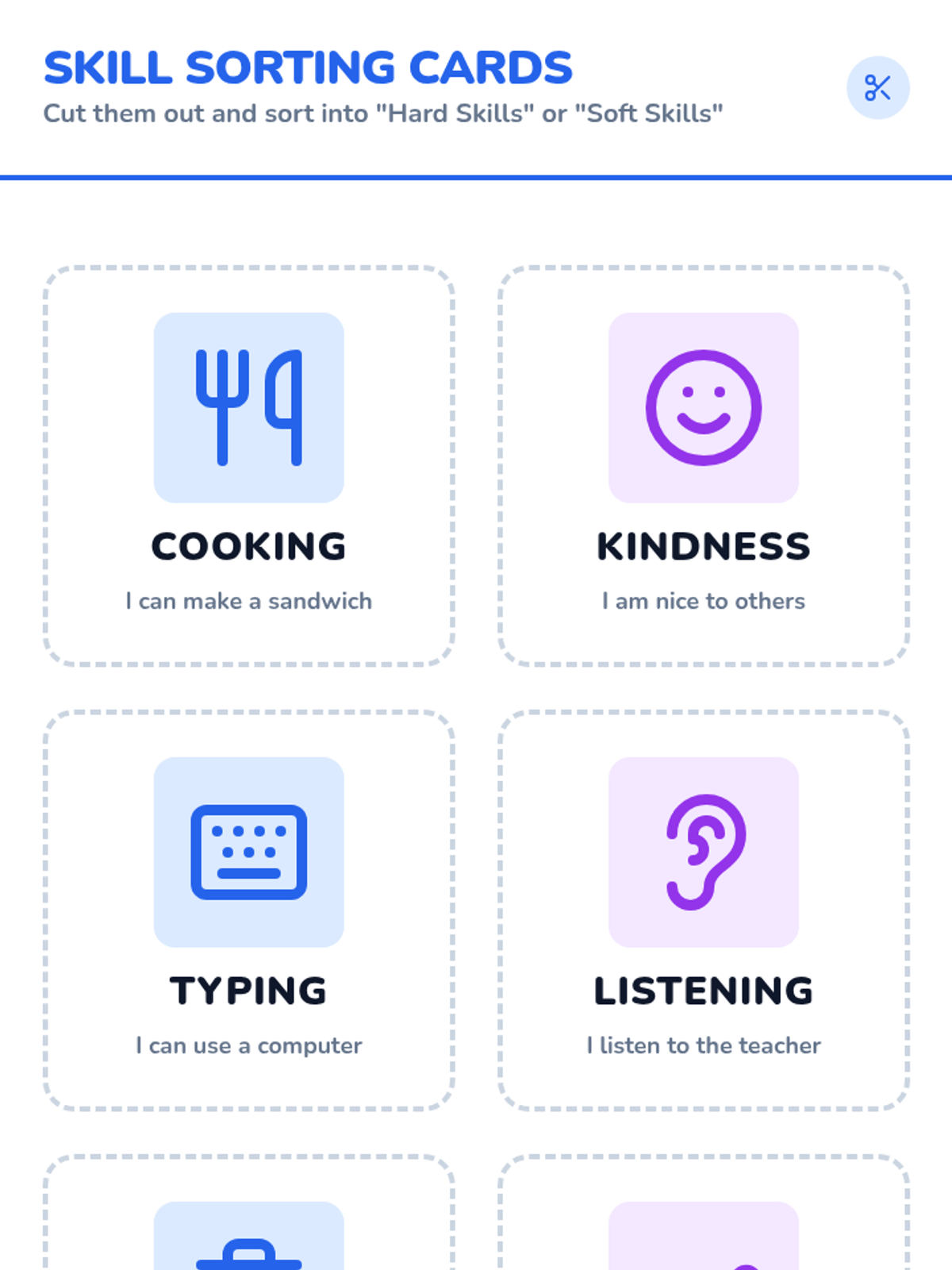
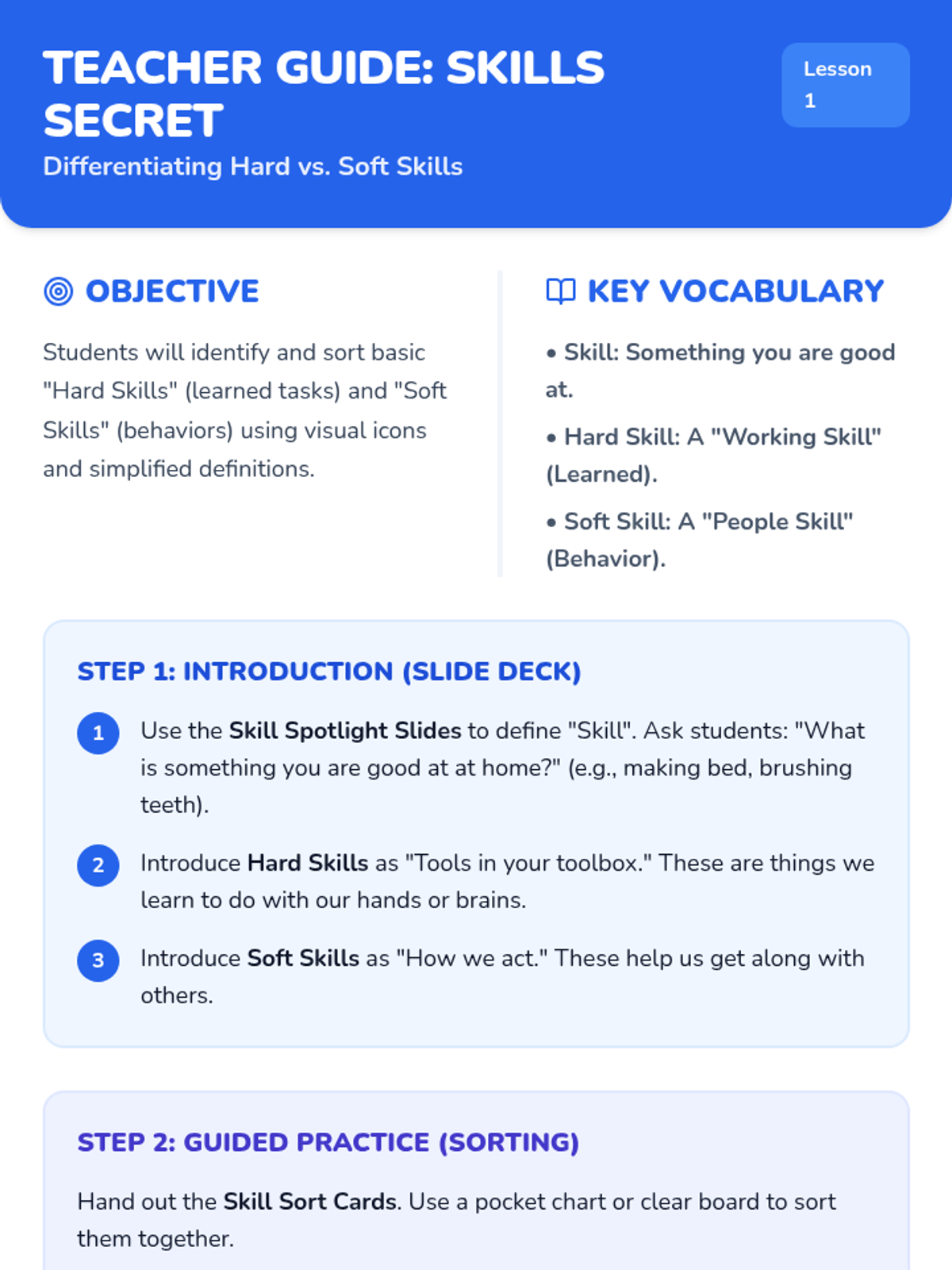
Students will differentiate between hard skills (learned tasks) and soft skills (people skills) using visual aids and sorting activities tailored for low cognitive ability levels.
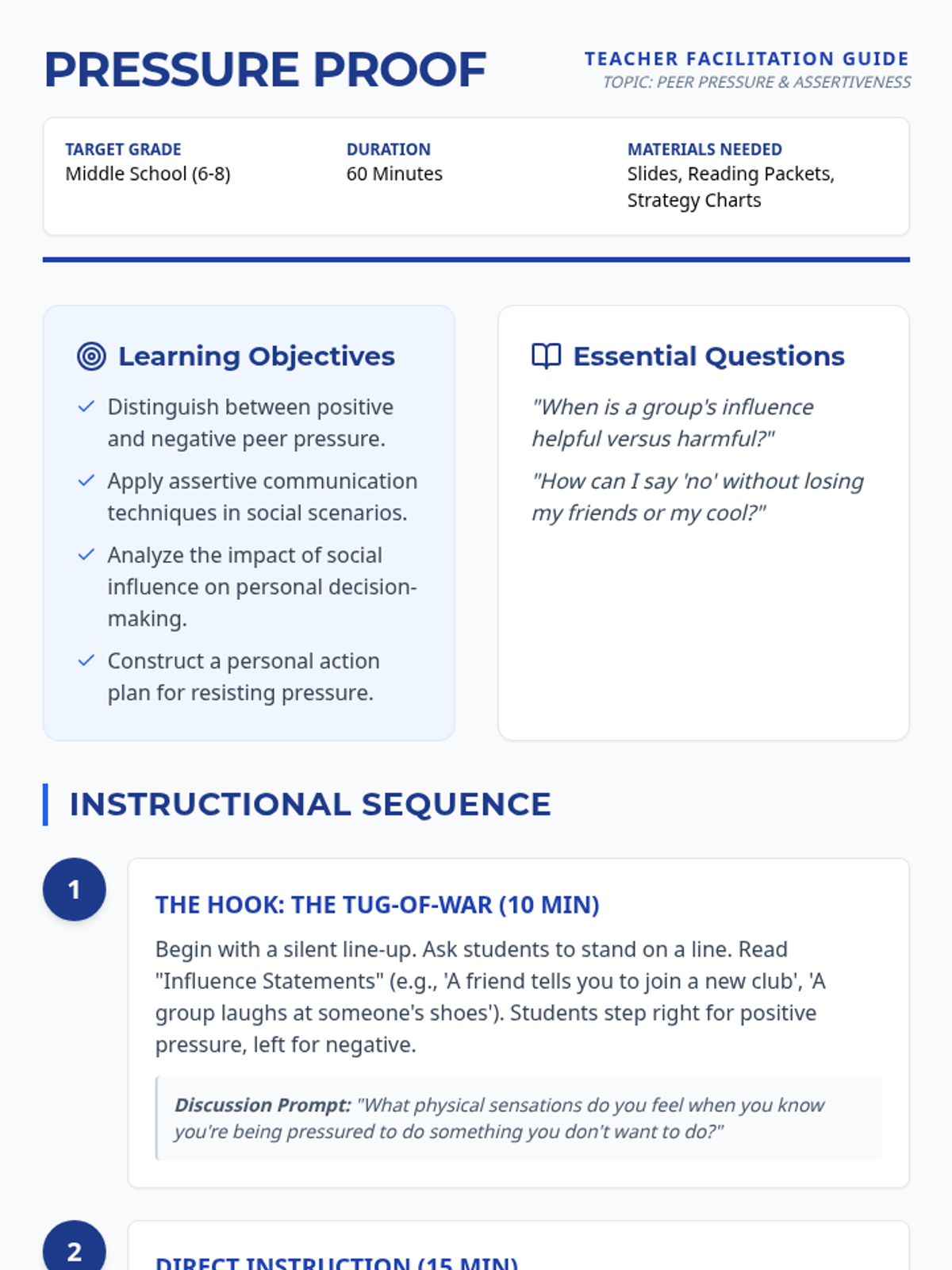
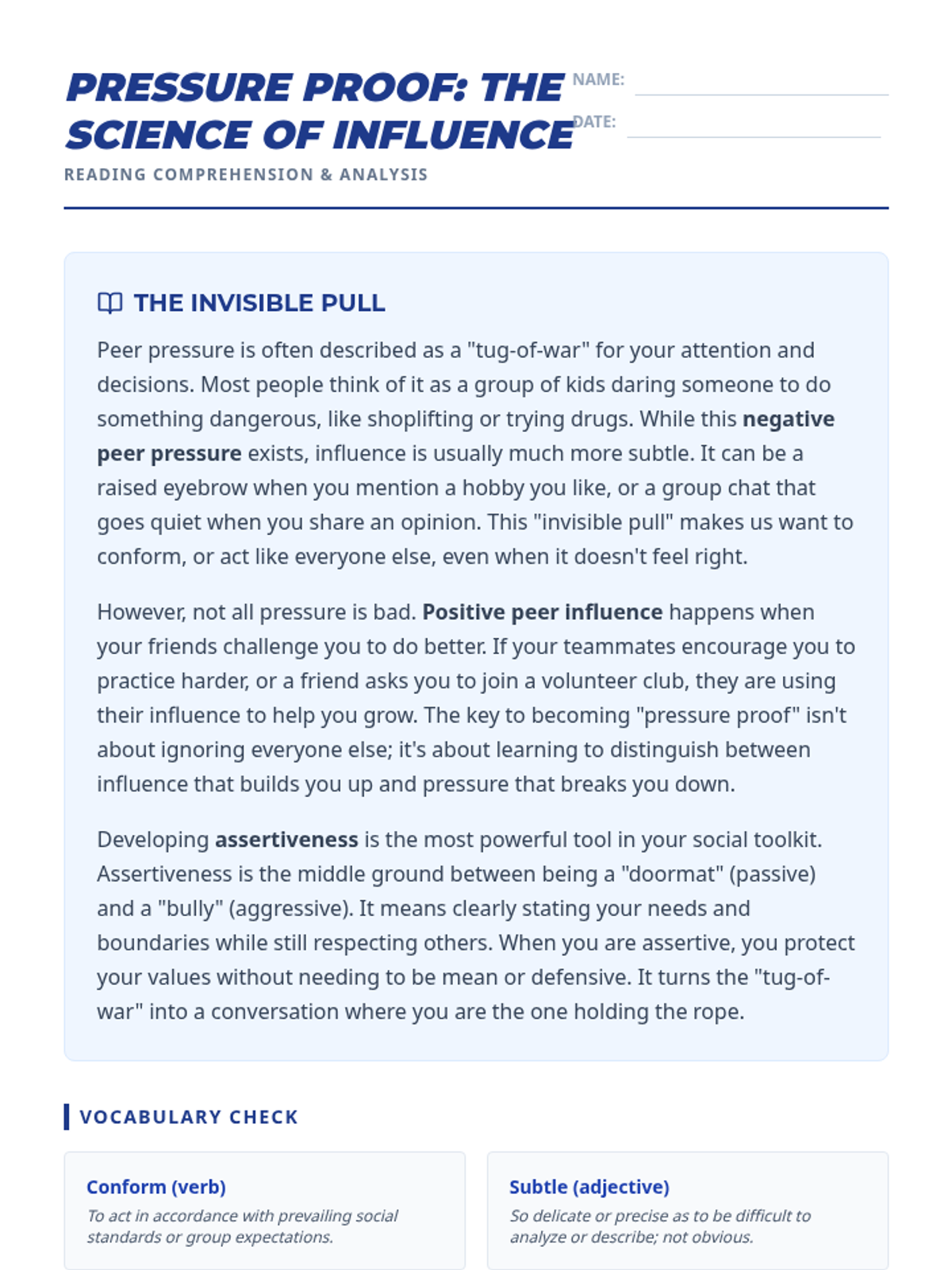
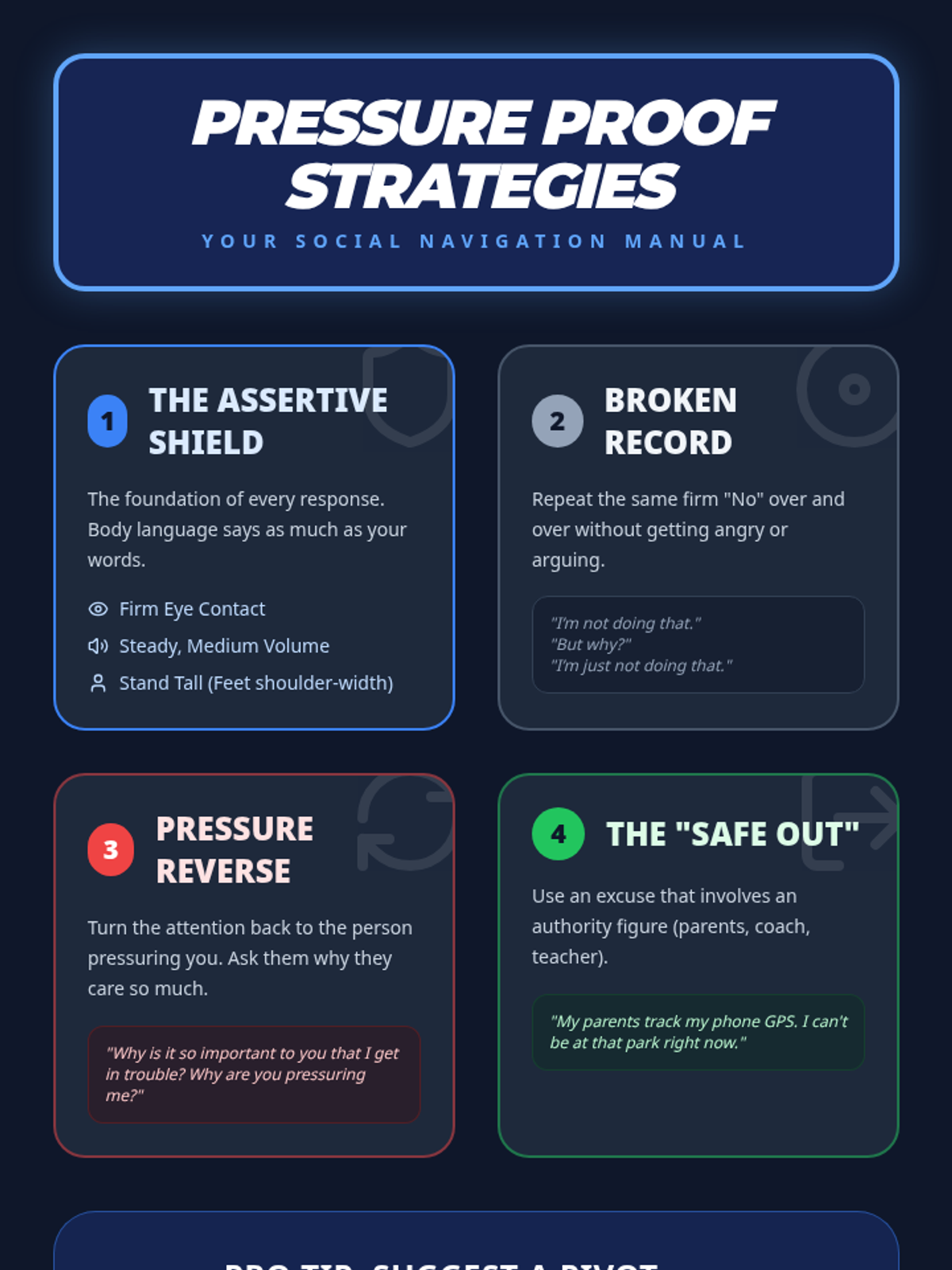
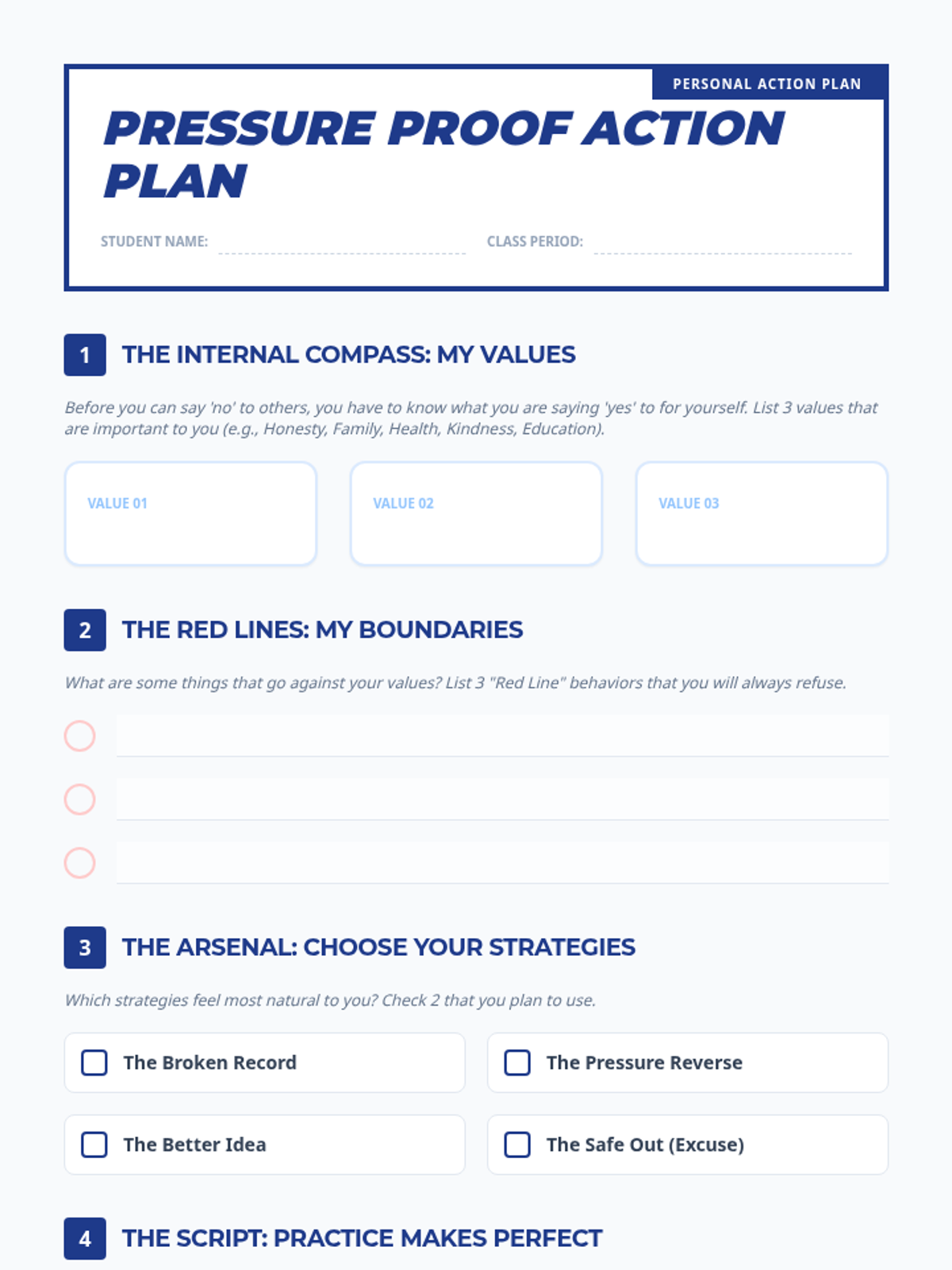
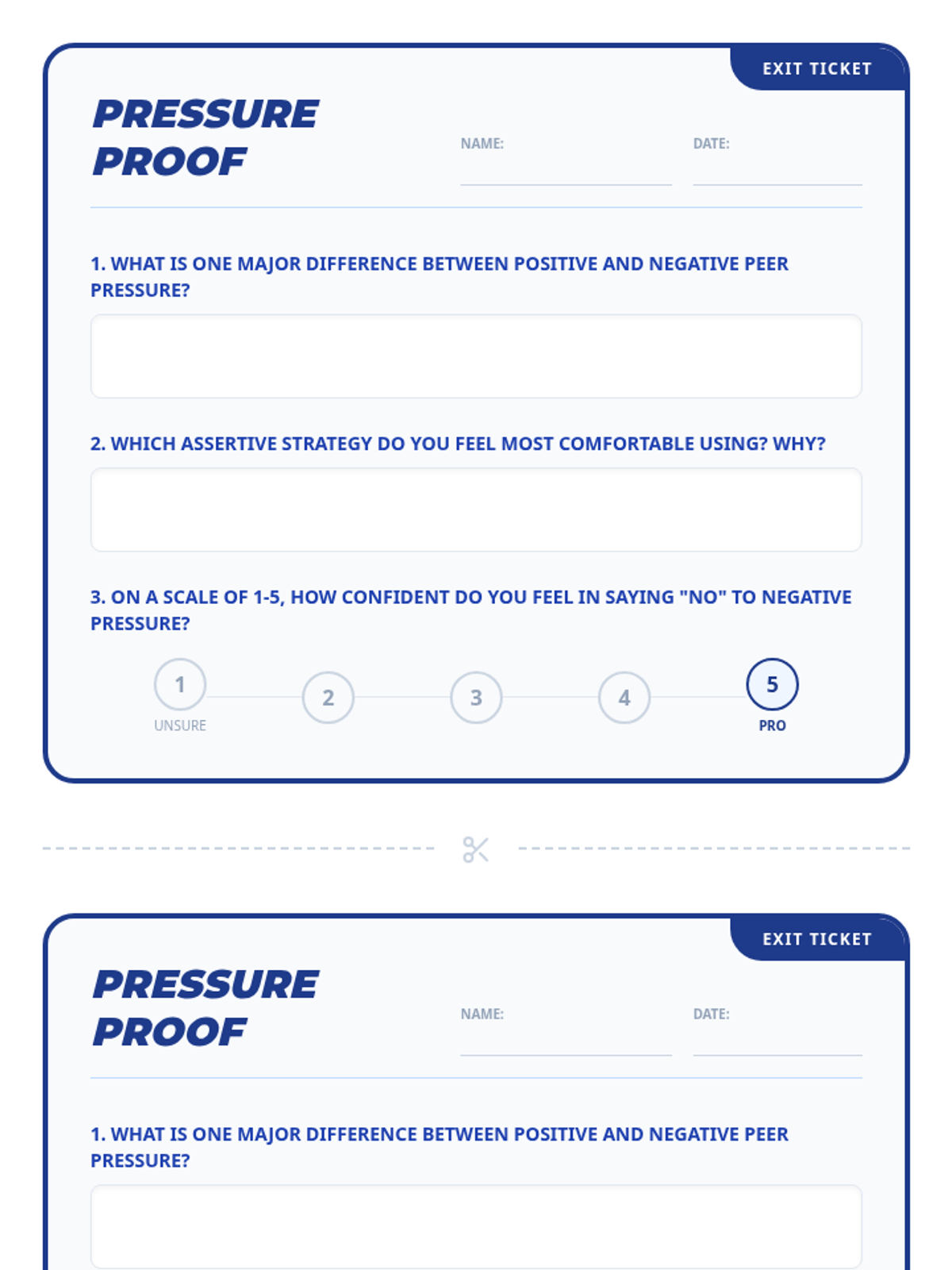
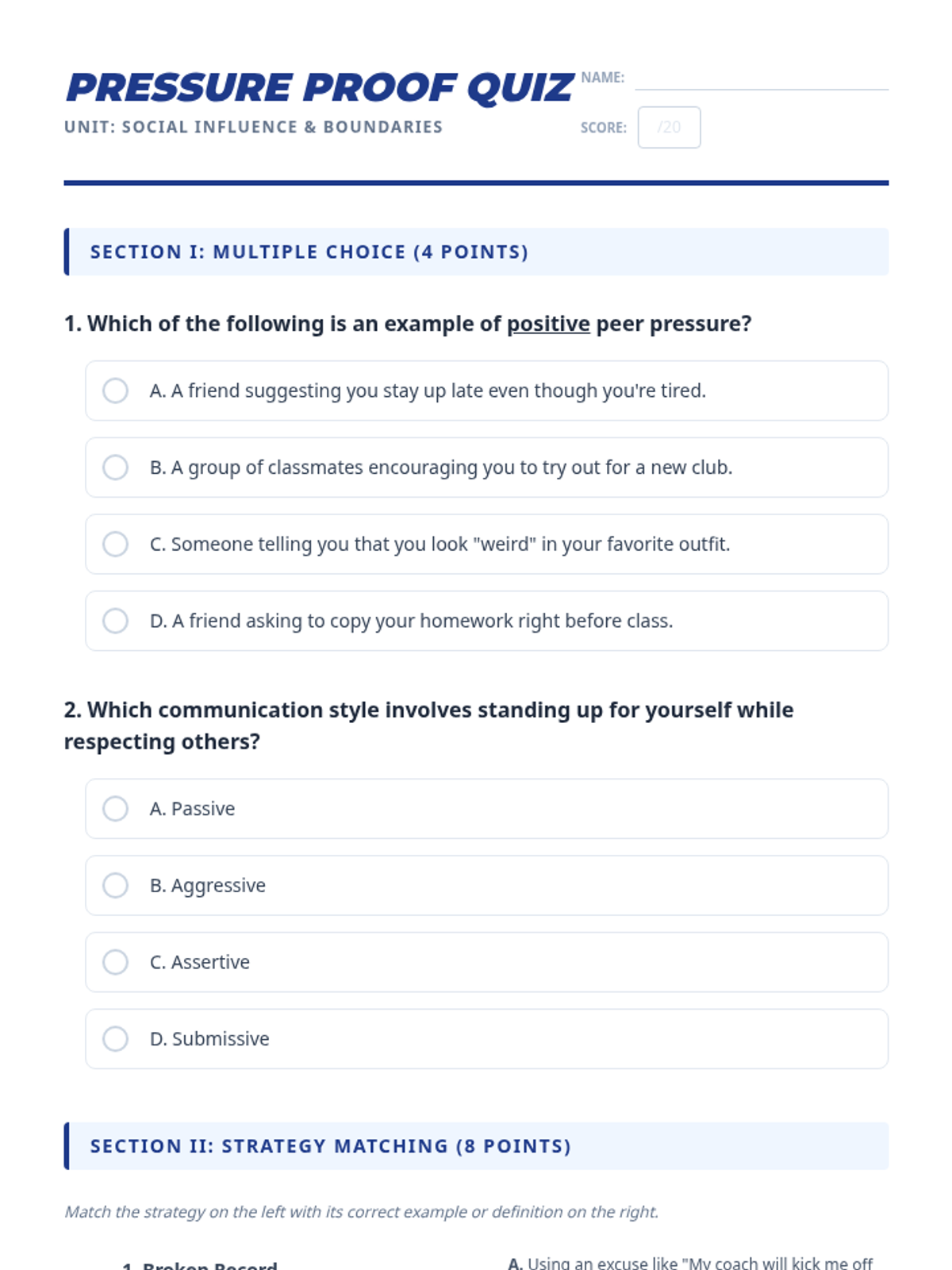
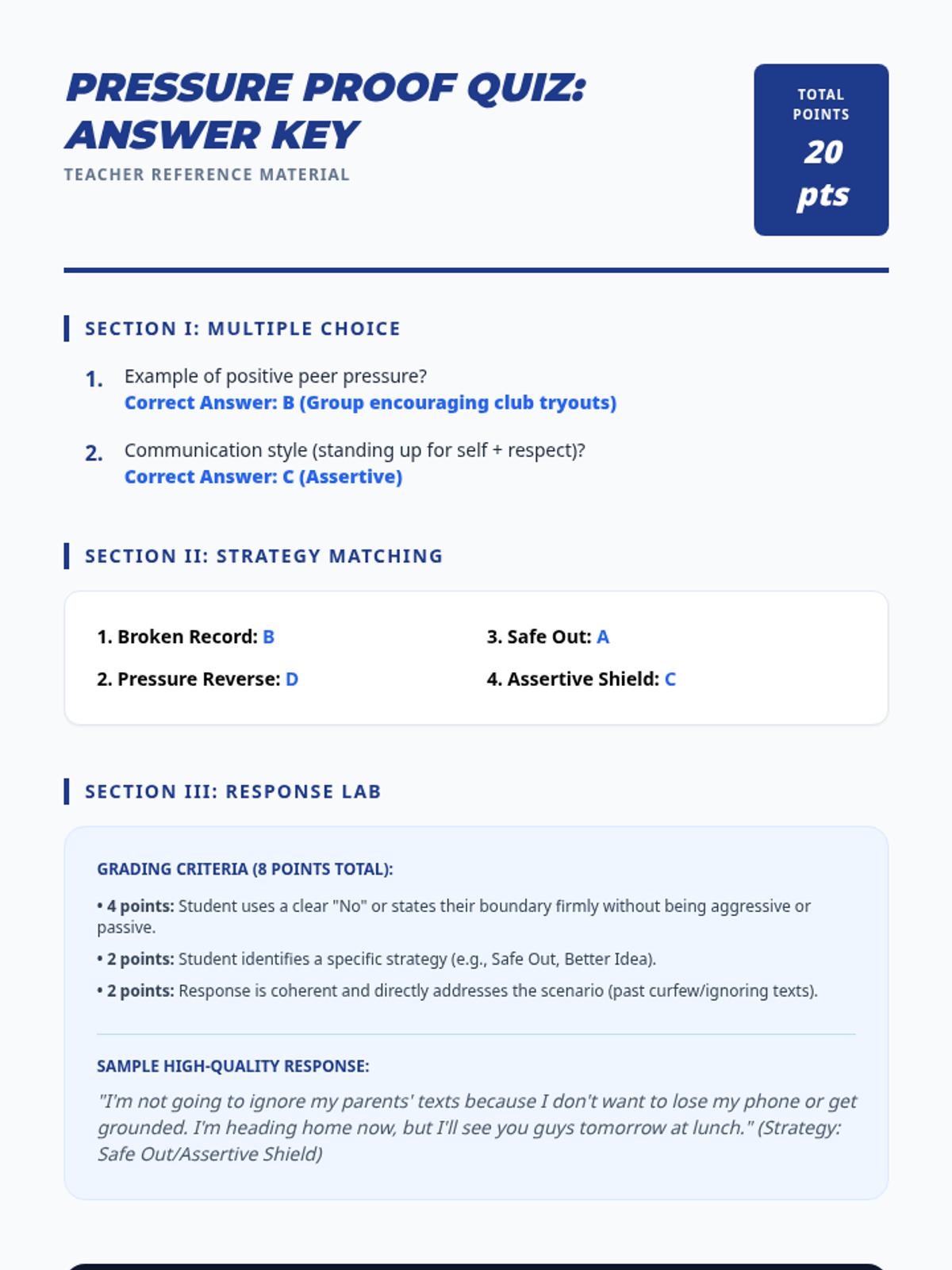
A comprehensive lesson designed to help students identify, navigate, and resist negative peer pressure while recognizing positive influence. Students will practice assertive communication and develop personal strategies for staying true to their values.
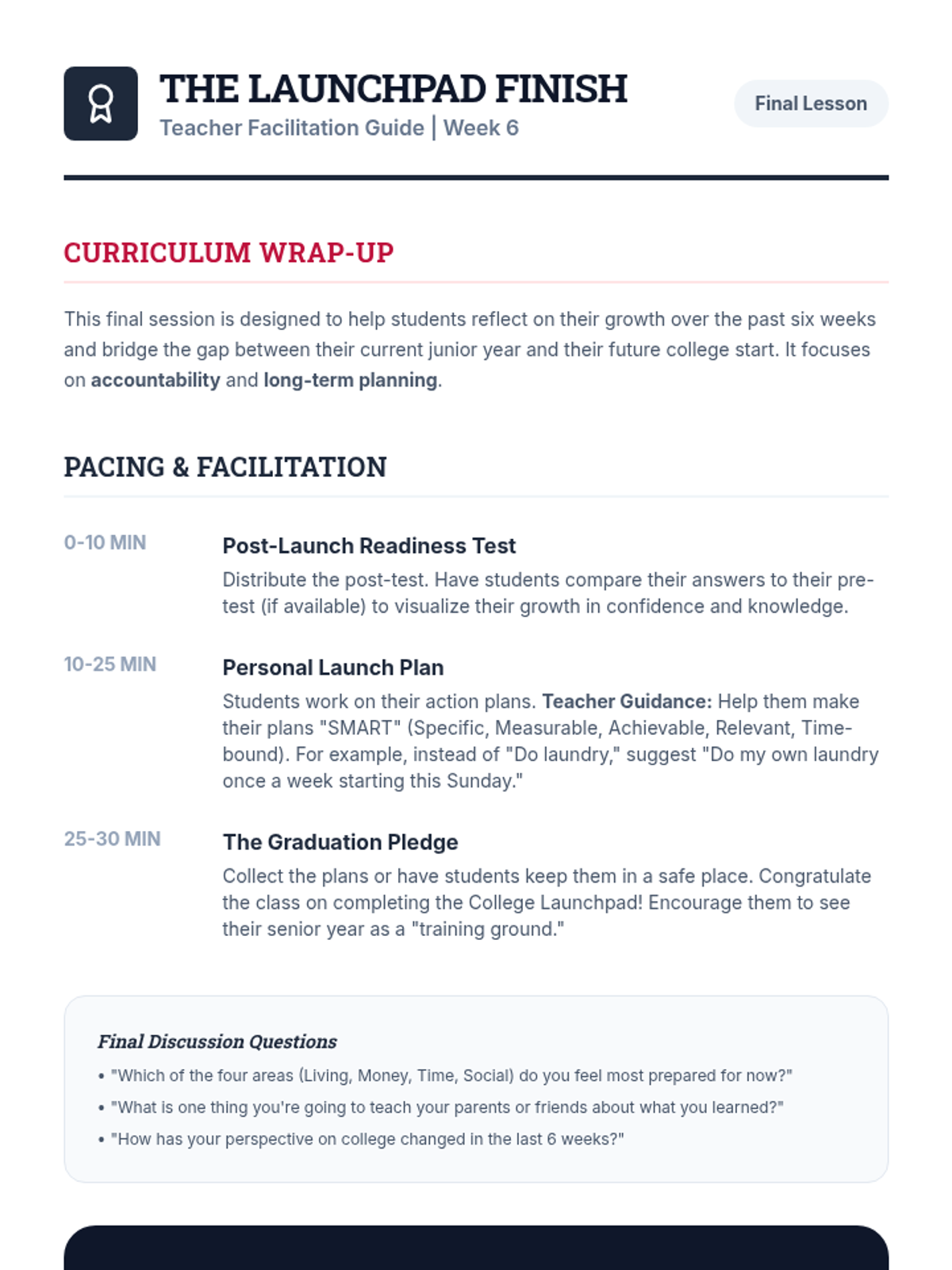
A final review of the curriculum, completion of the post-test, and creation of a personal transition action plan.
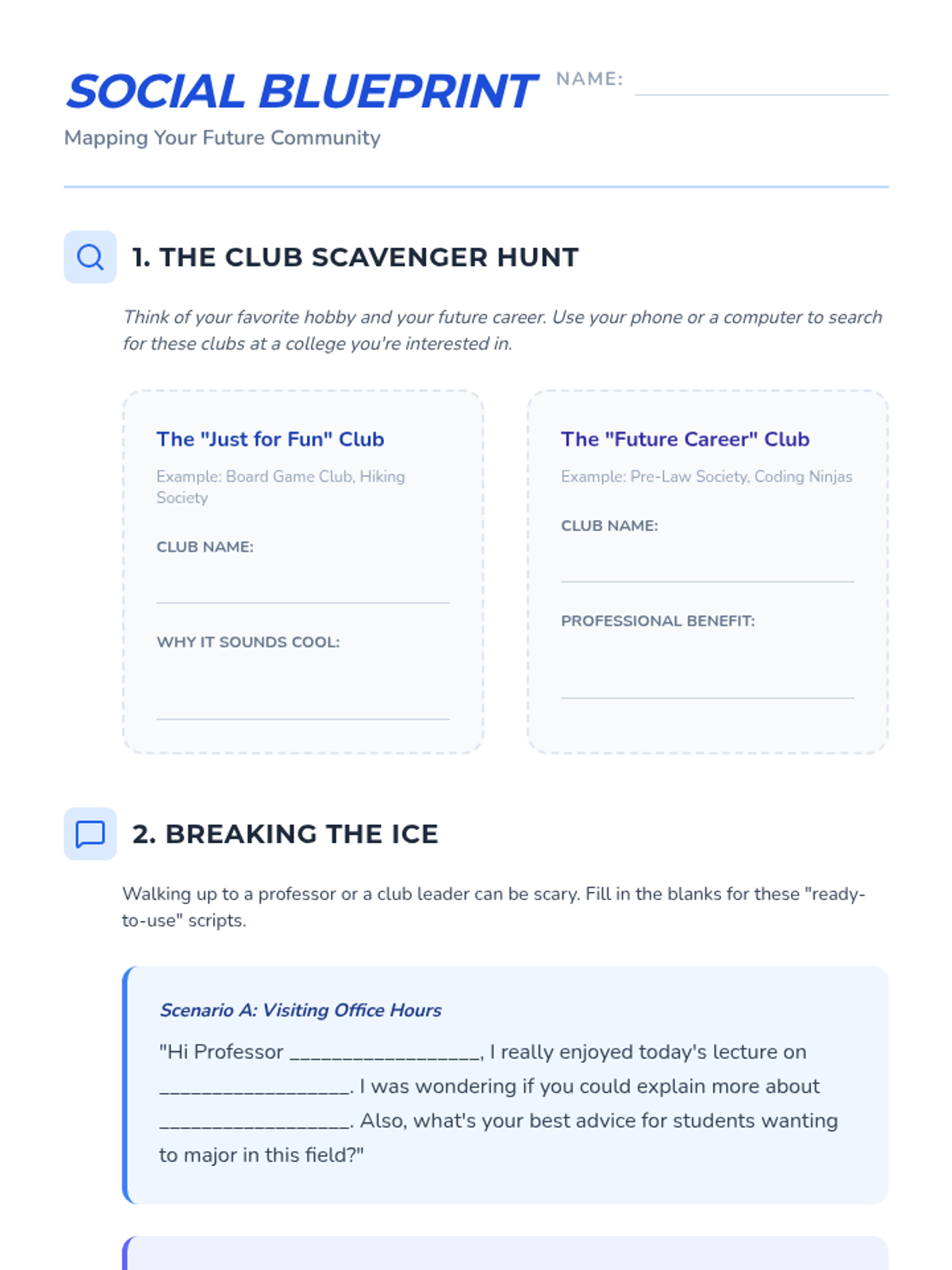
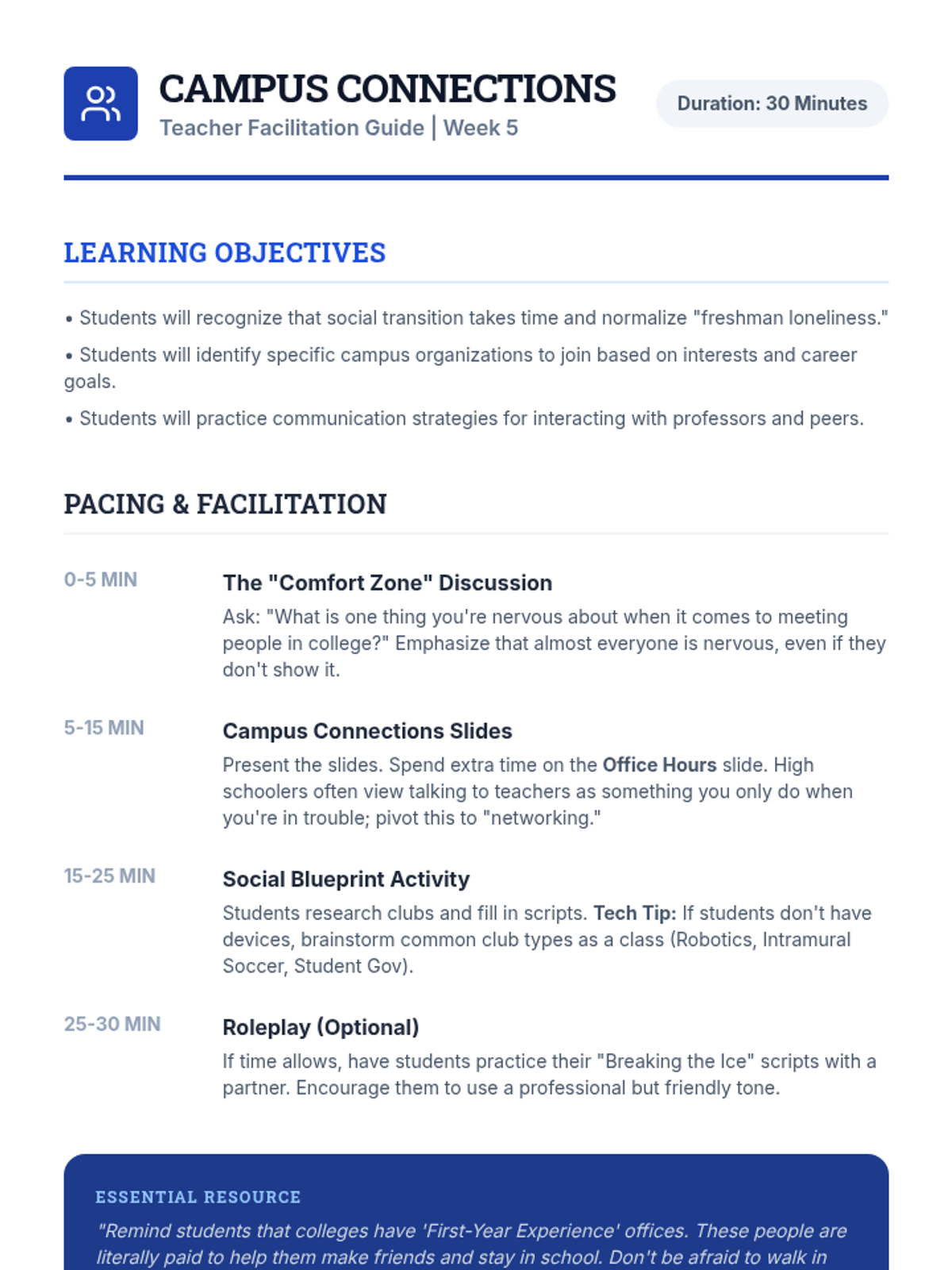
Techniques for social integration, including joining campus organizations, networking with peers and professors, and managing social expectations.
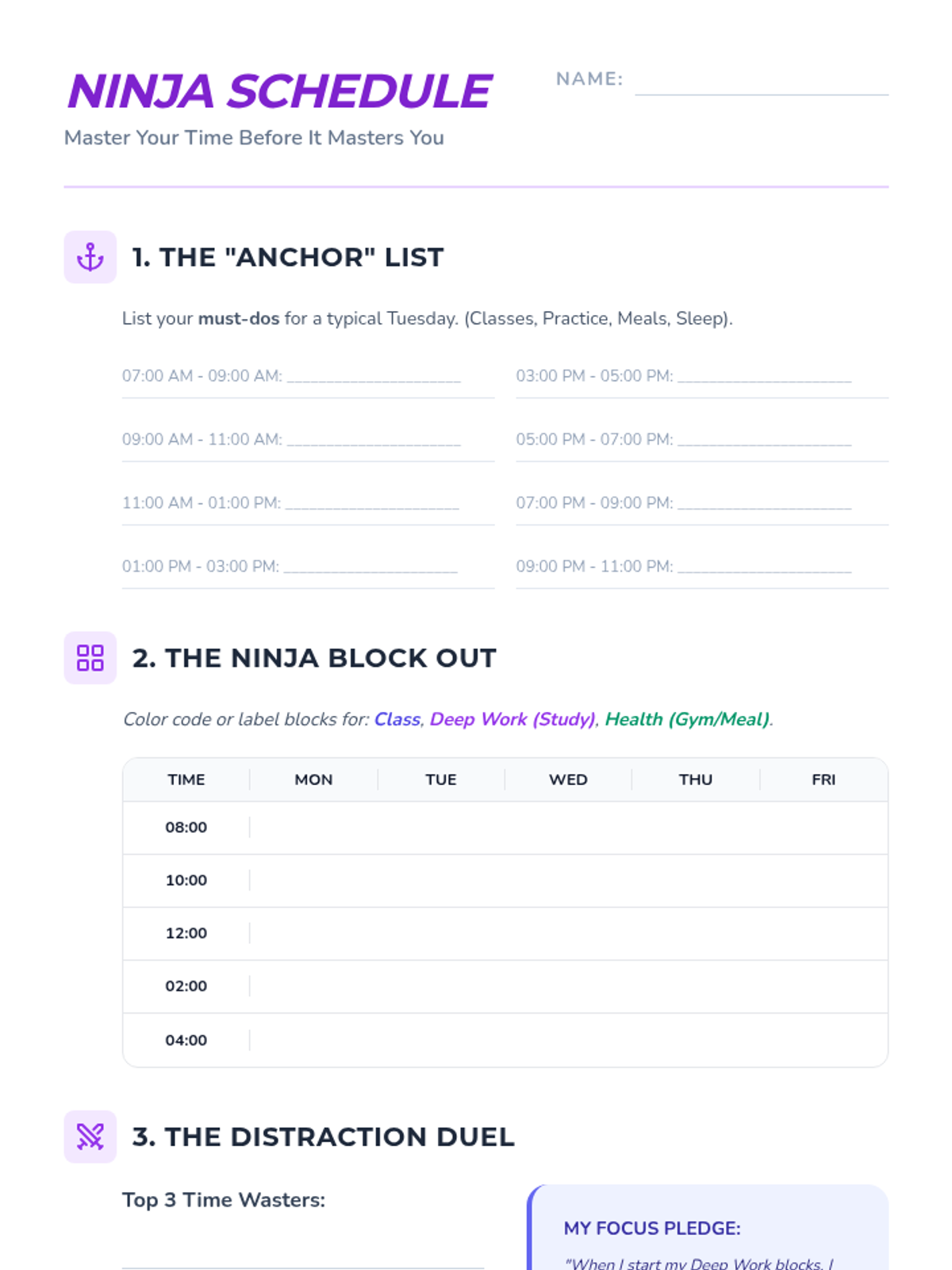
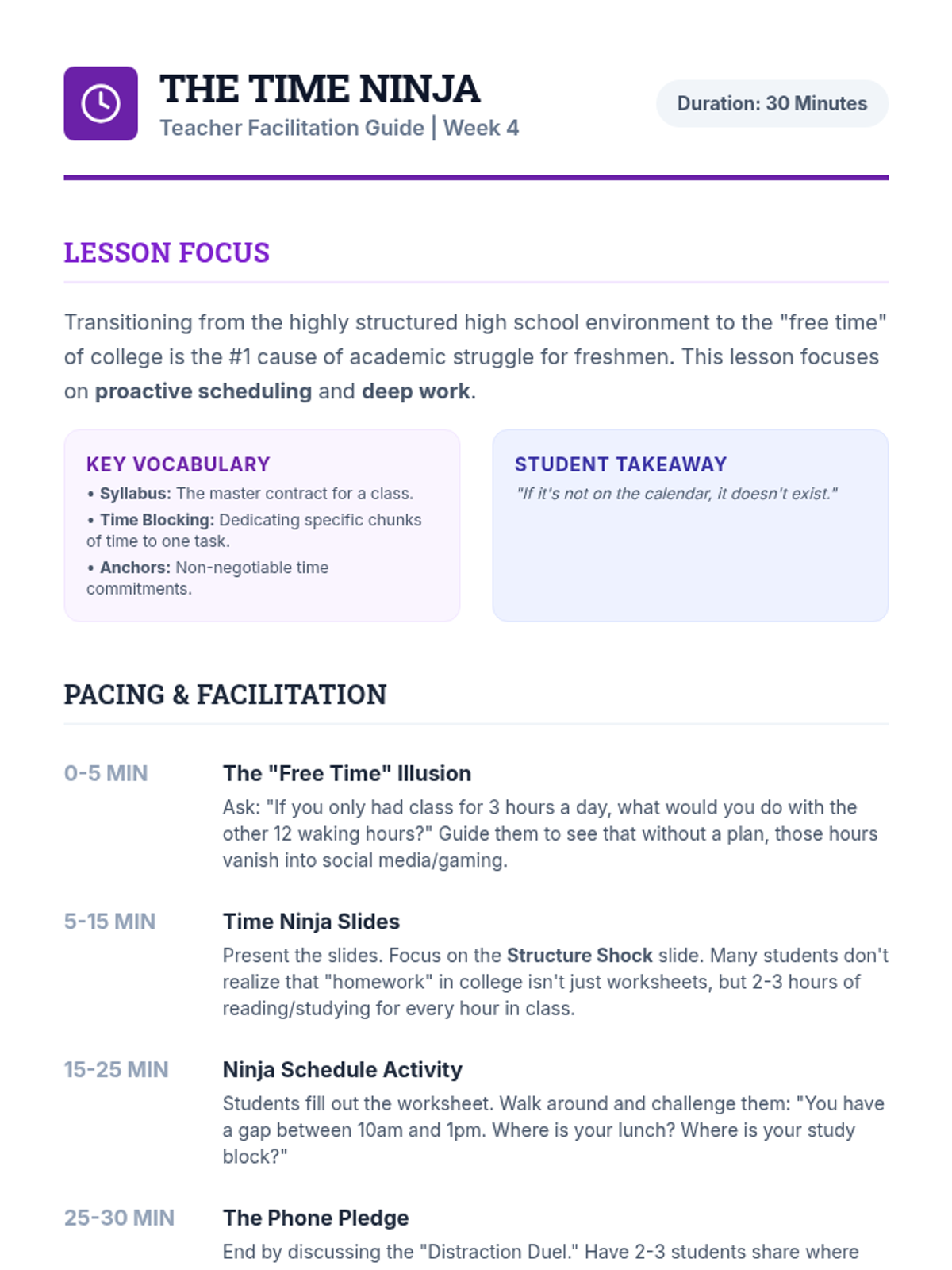
Strategies for managing time effectively in a less structured environment, focusing on study habits, balancing social life, and using planners.
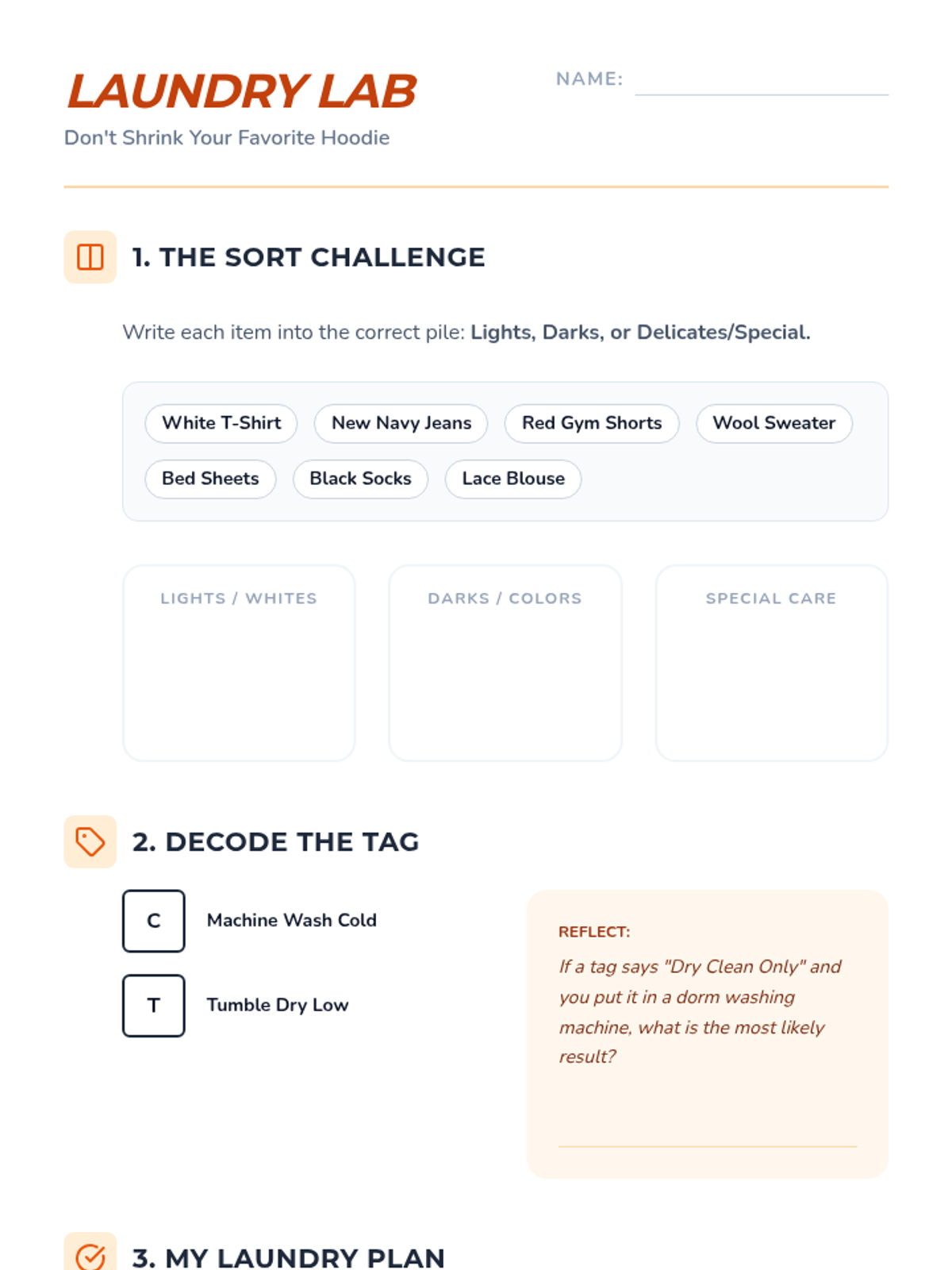
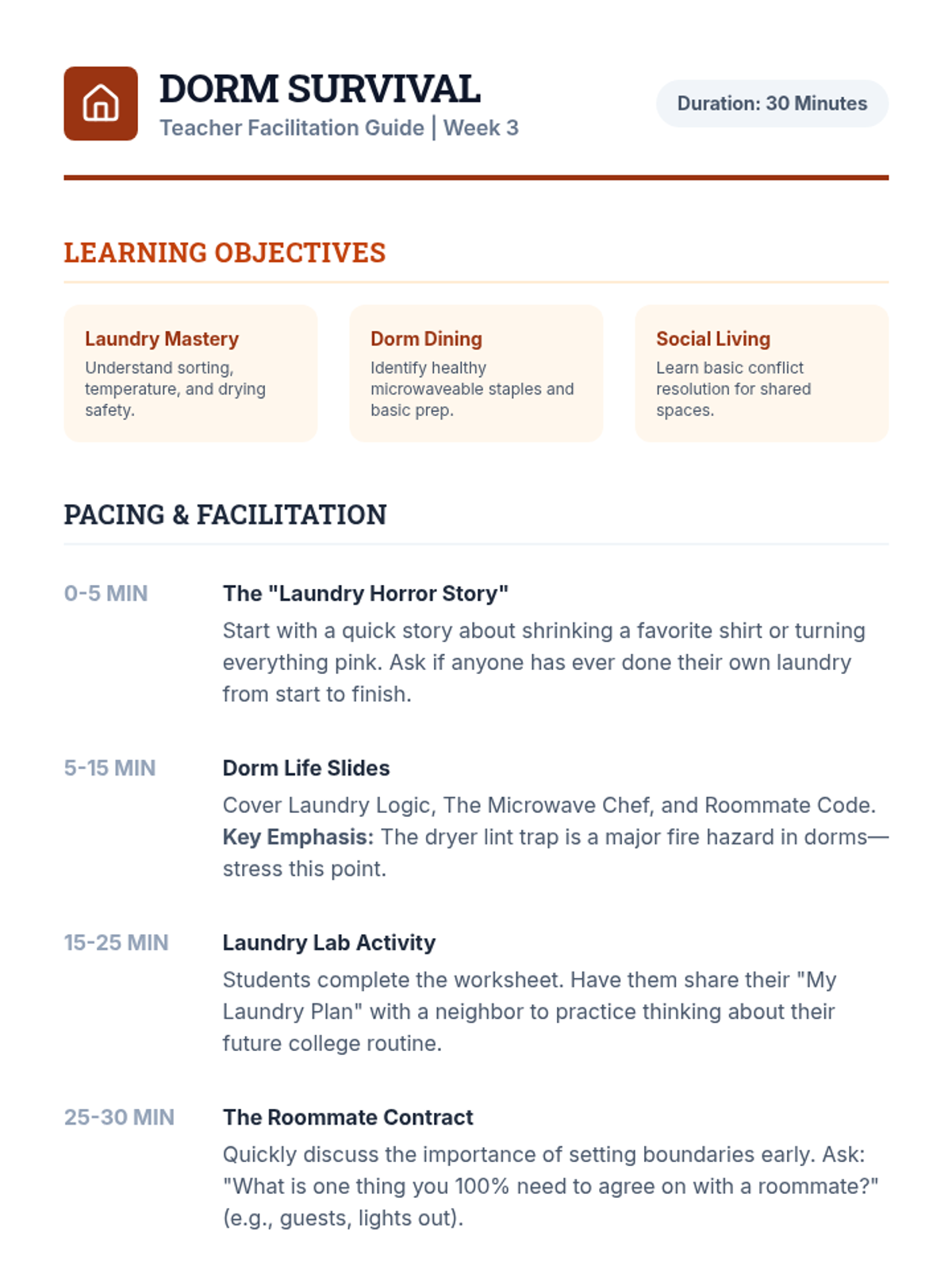
Practical skills for independent living, including laundry techniques, basic meal prep, and maintaining a healthy living environment in a dorm.
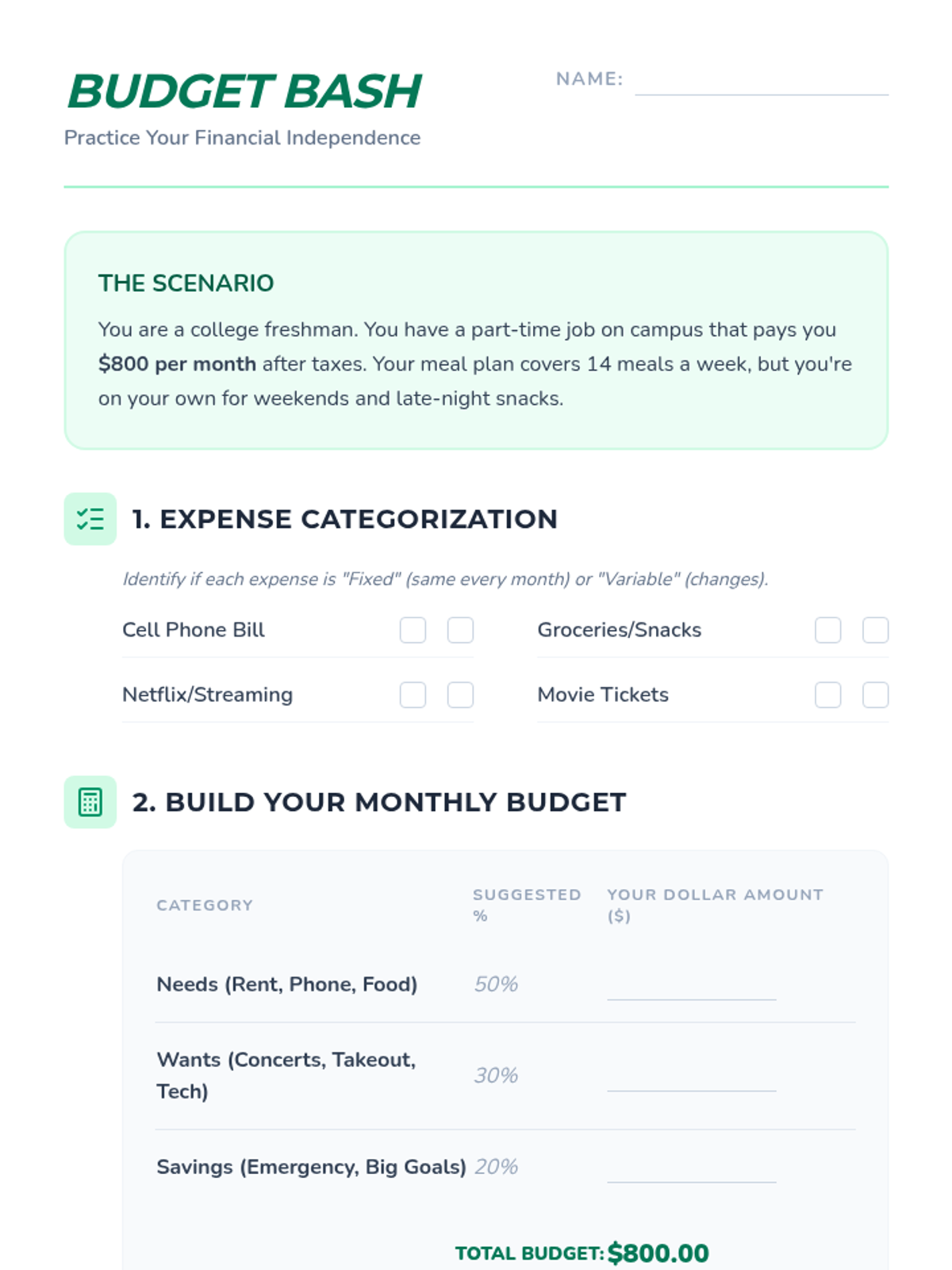
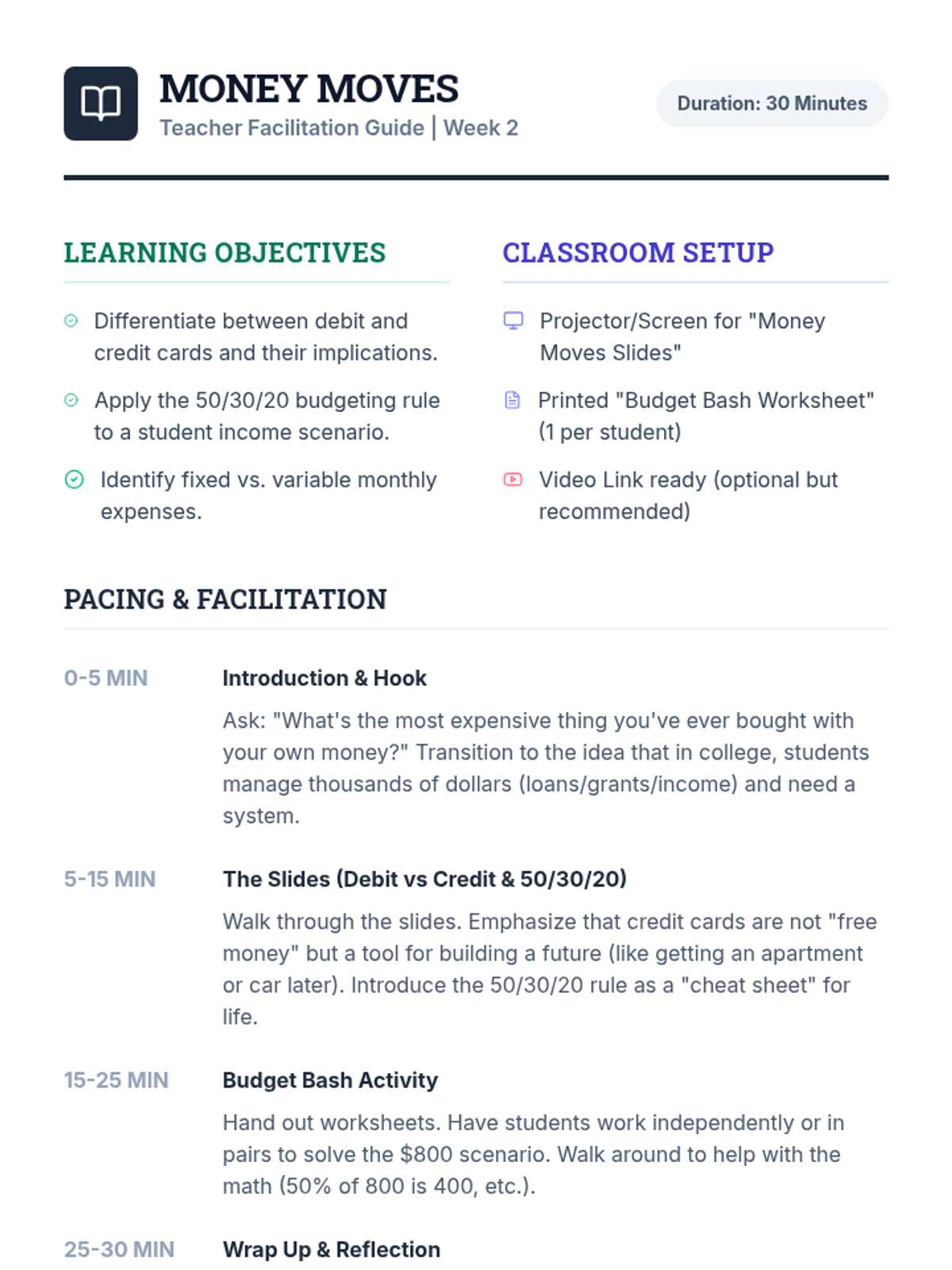
An introduction to financial independence, covering banking basics, credit vs. debit, and building a sustainable college budget.
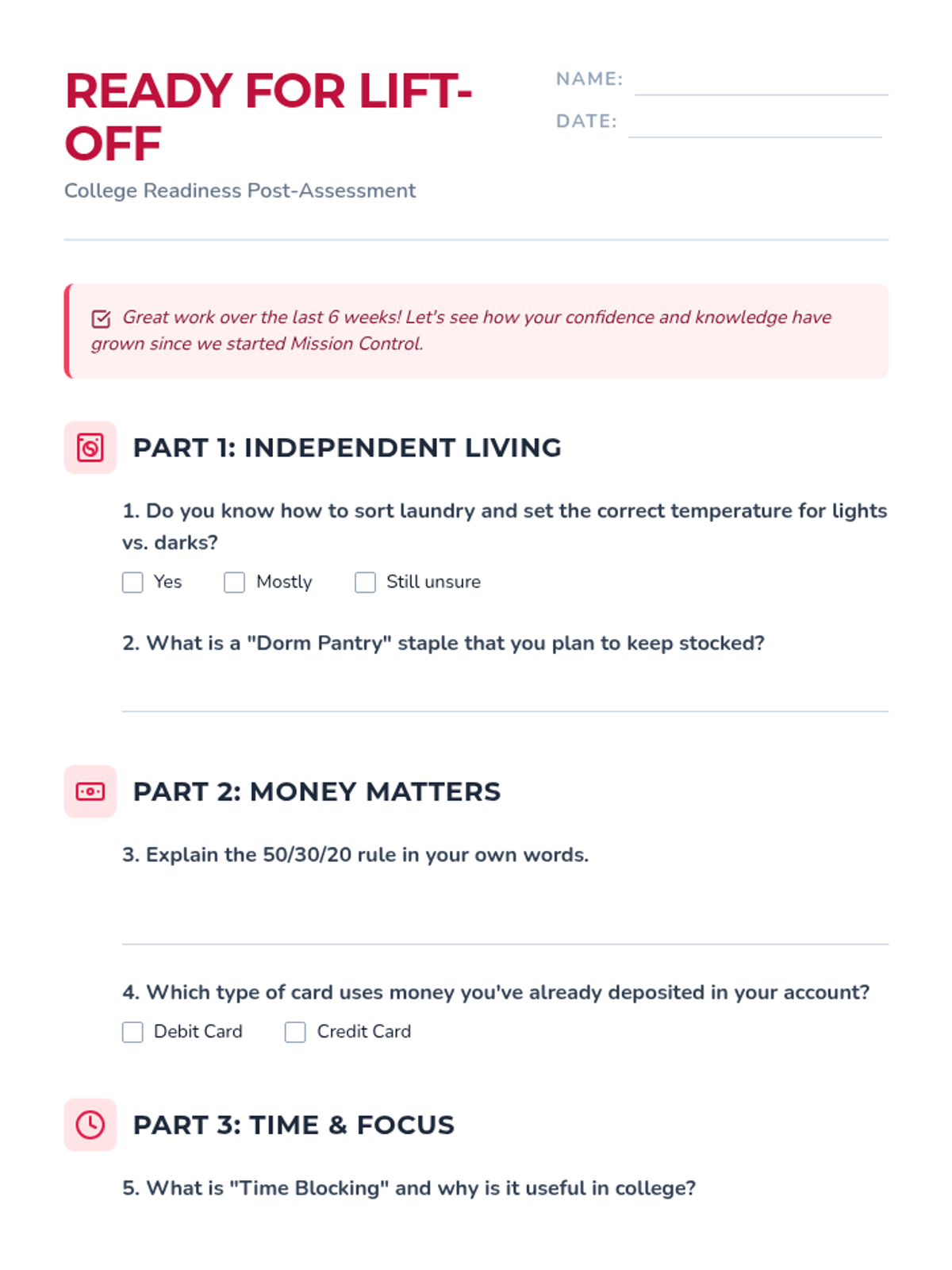
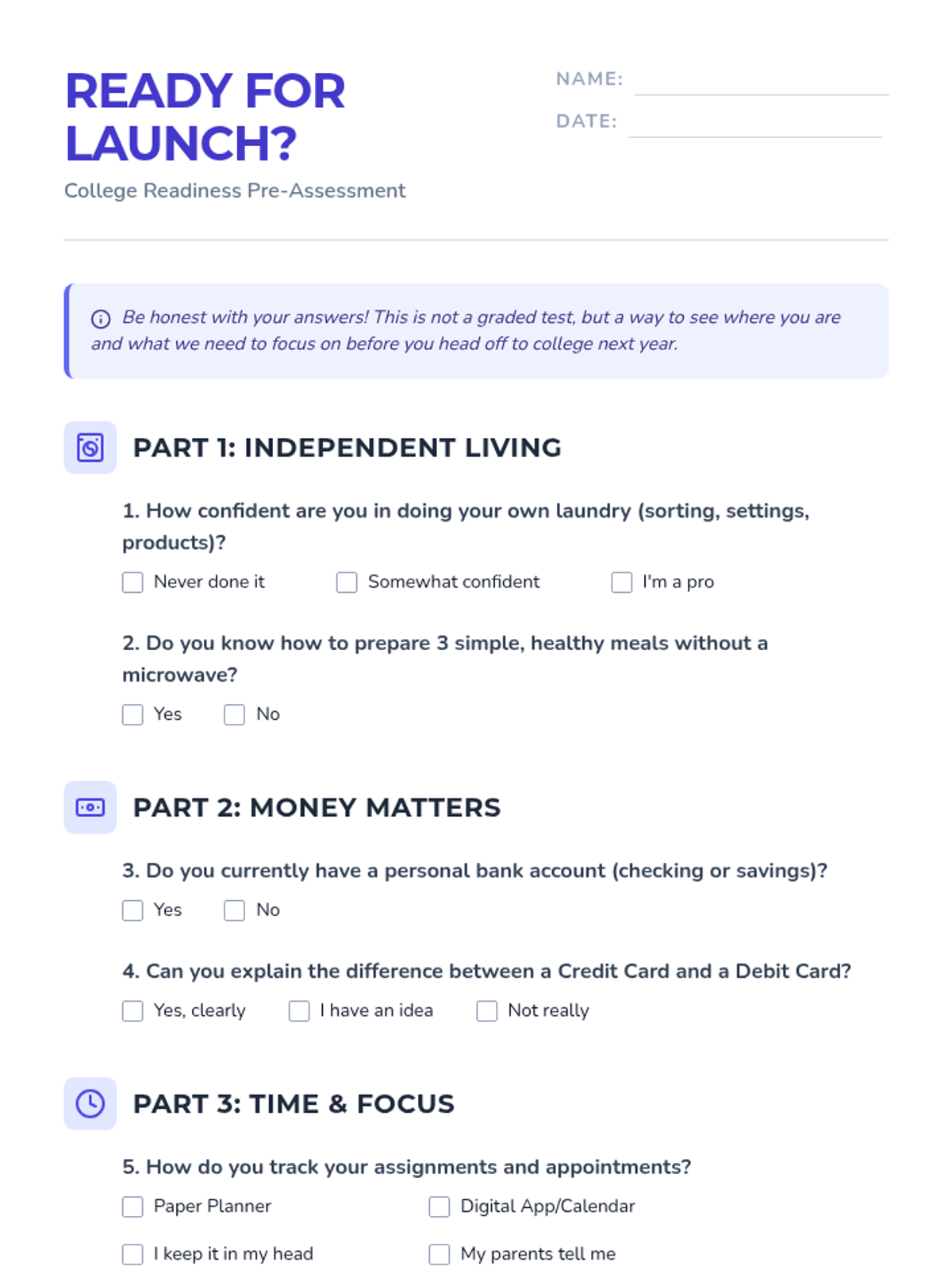
Students assess their current readiness for college life and explore the overarching goals of the College Launchpad curriculum through an orientation and baseline assessment.
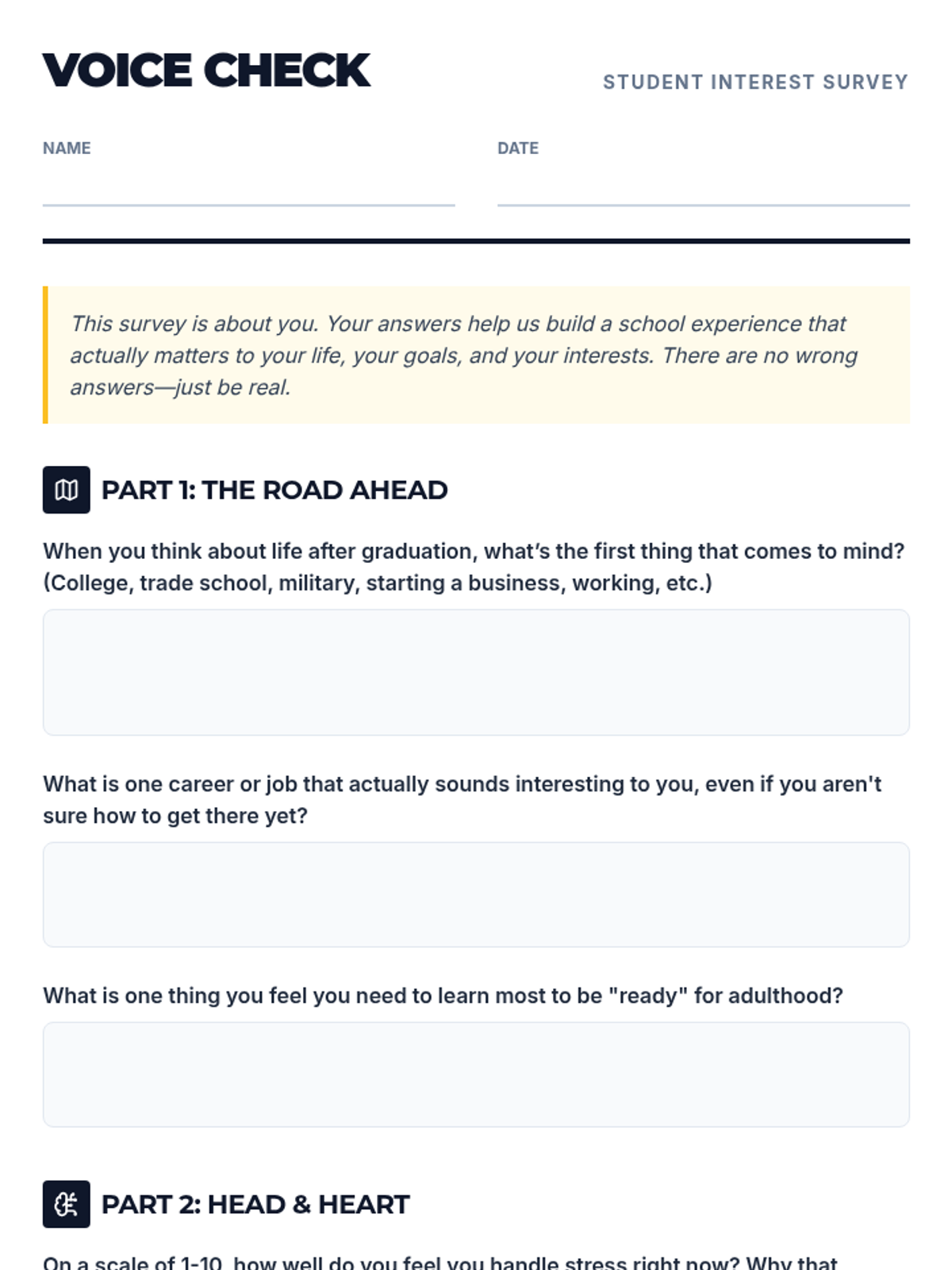
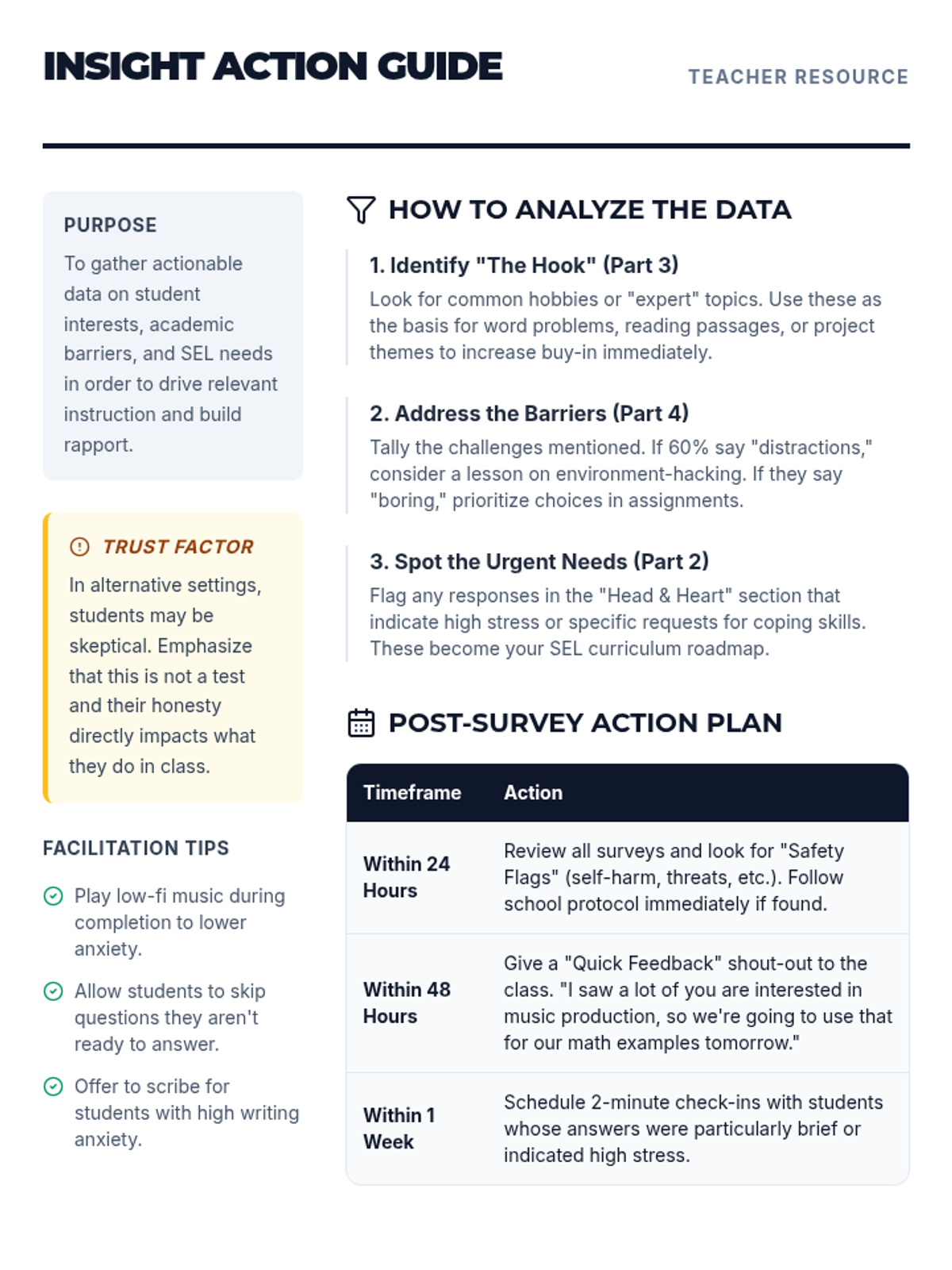
A set of materials designed to gather meaningful input from students in alternative education settings to tailor instruction and support to their specific needs and interests.
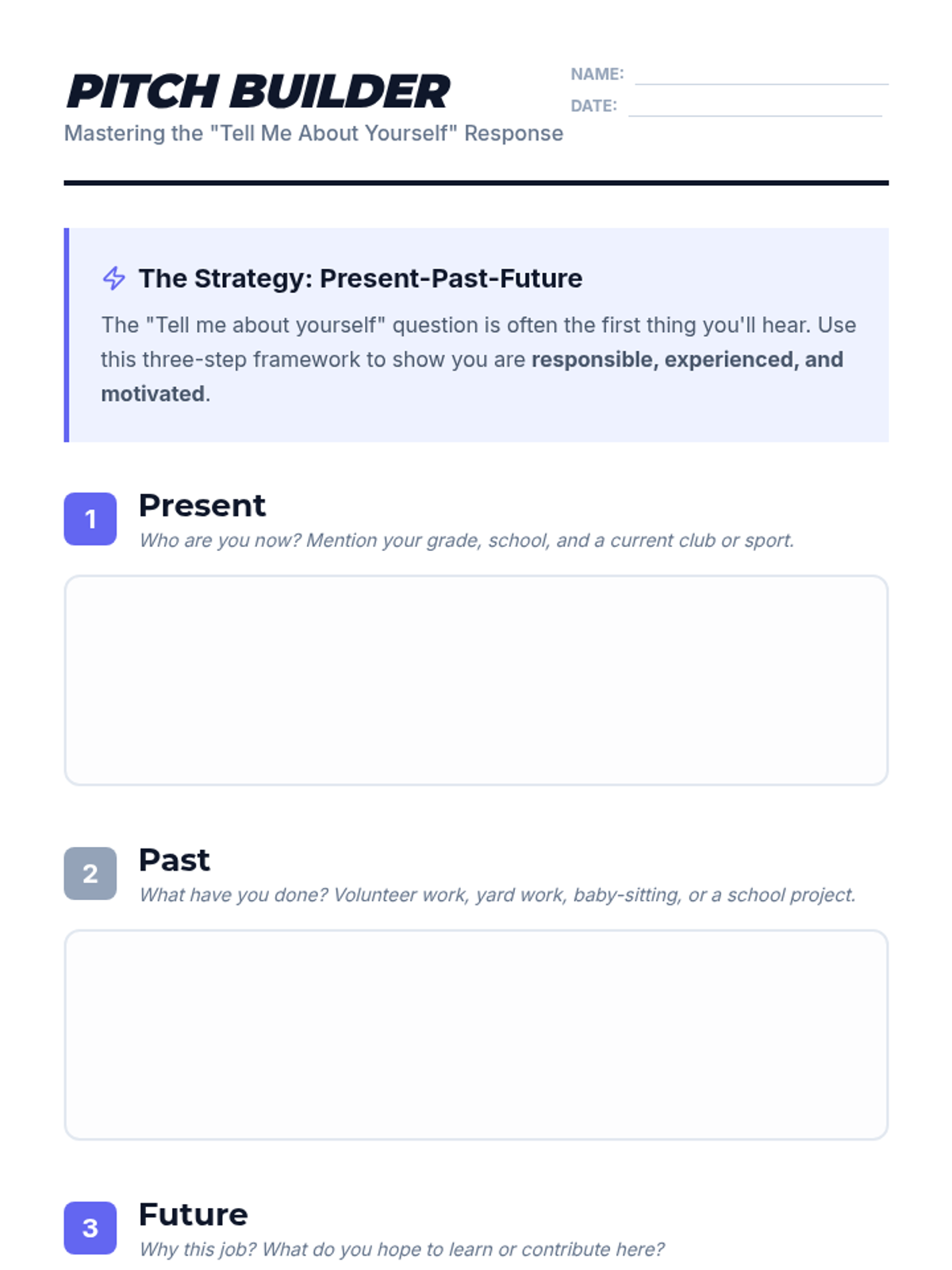
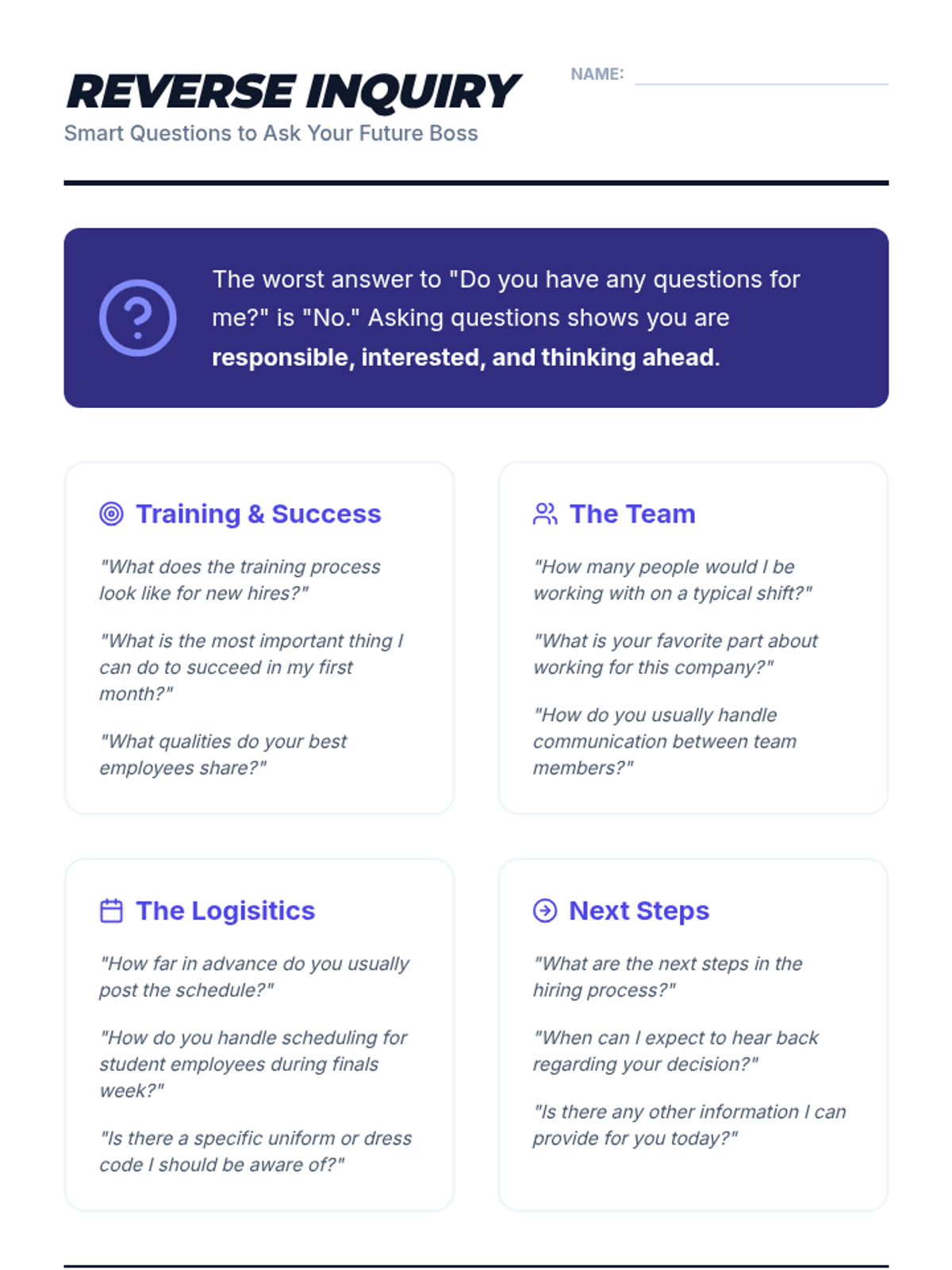
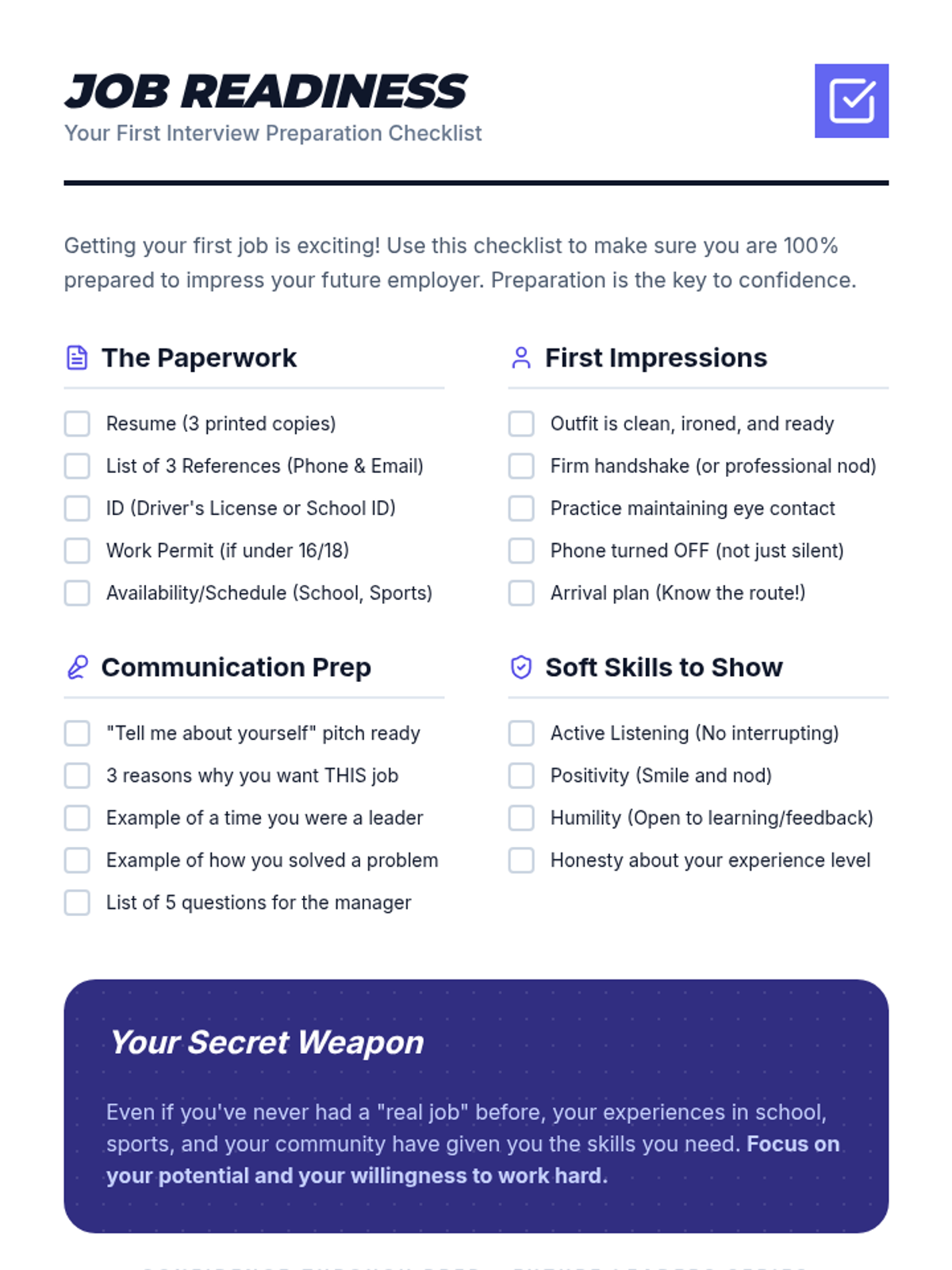
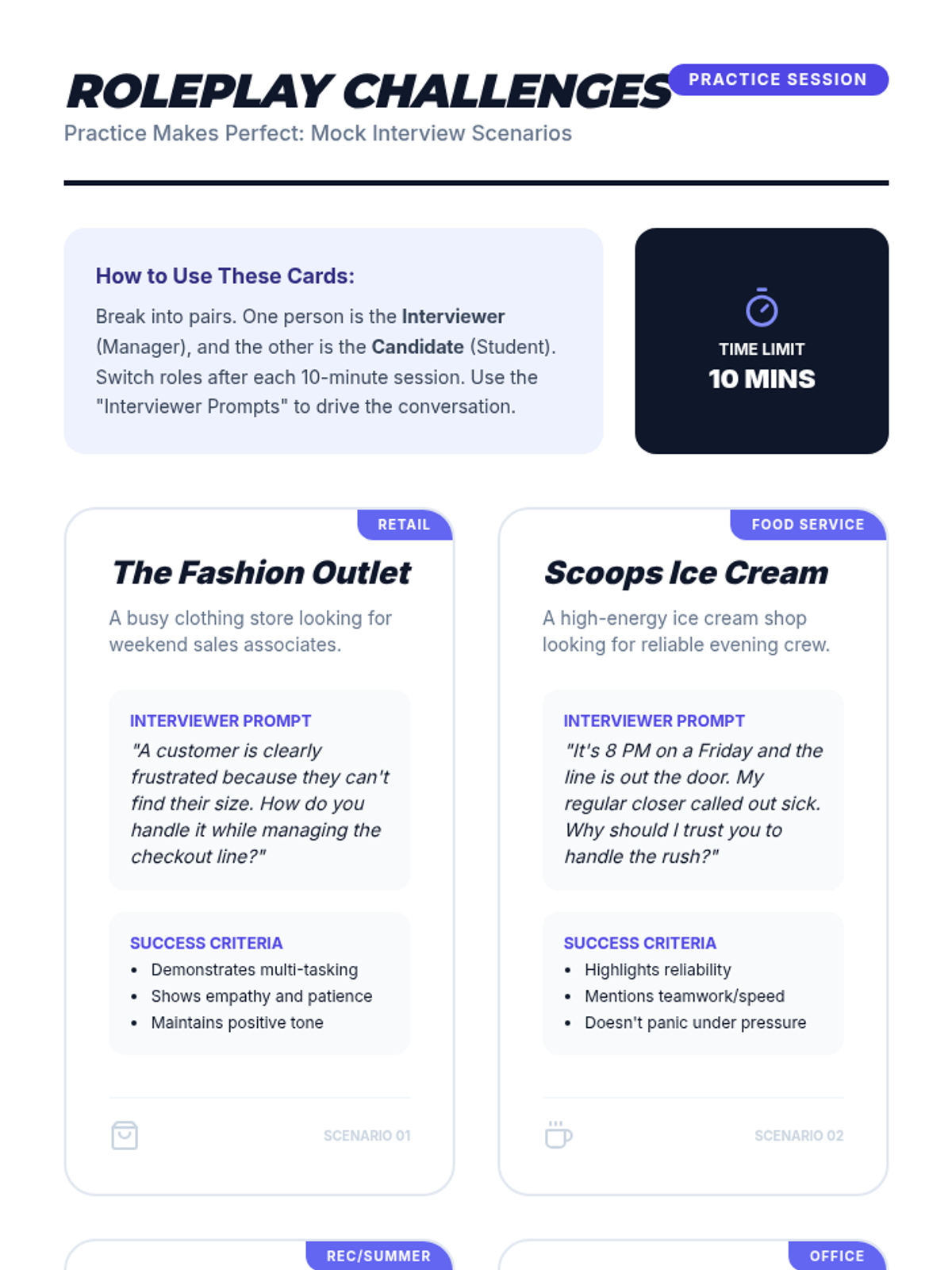
A comprehensive lesson for high school students on mastering their first job interviews, focusing on personal branding, soft skills, and professional inquiry.
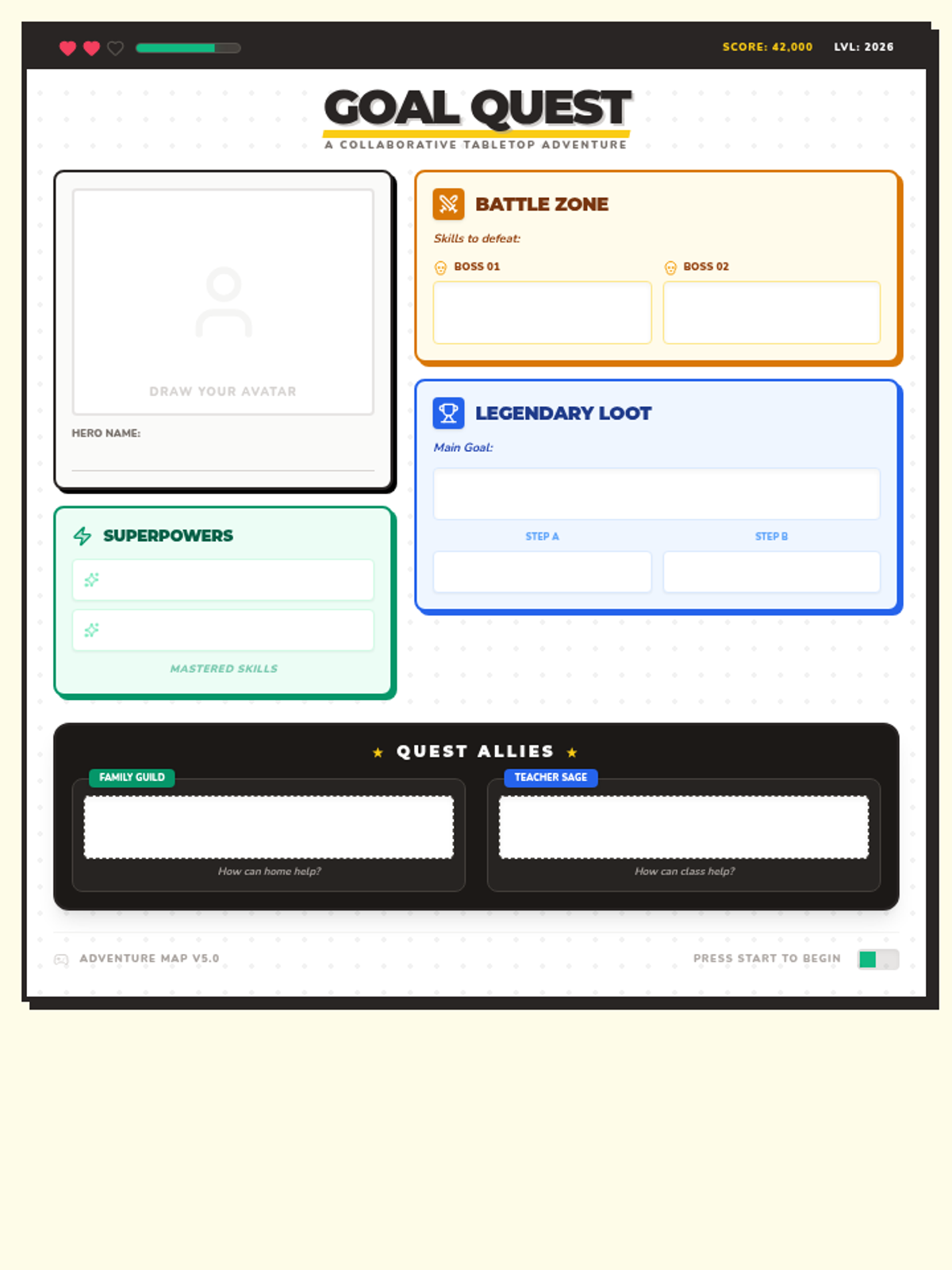
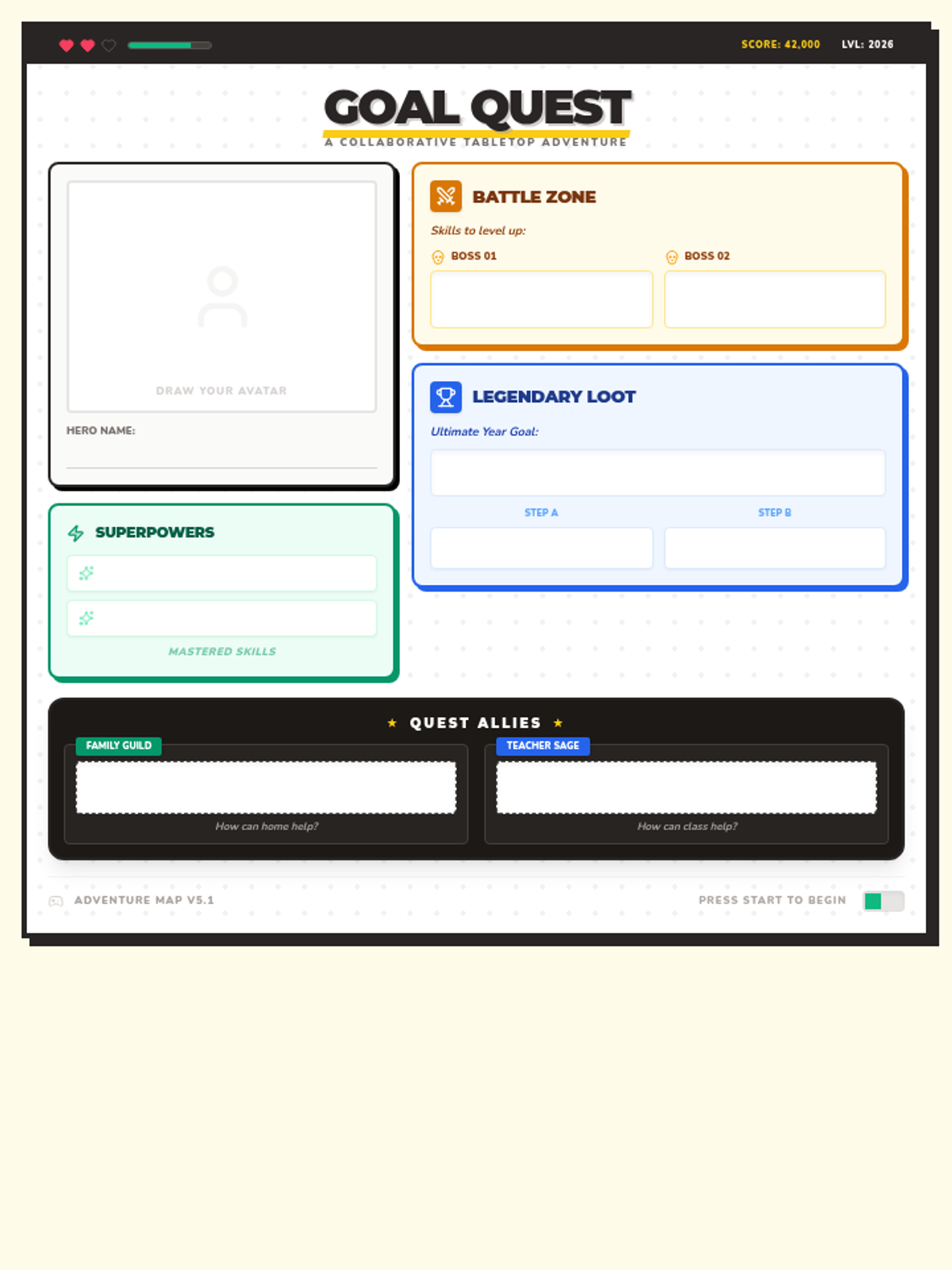
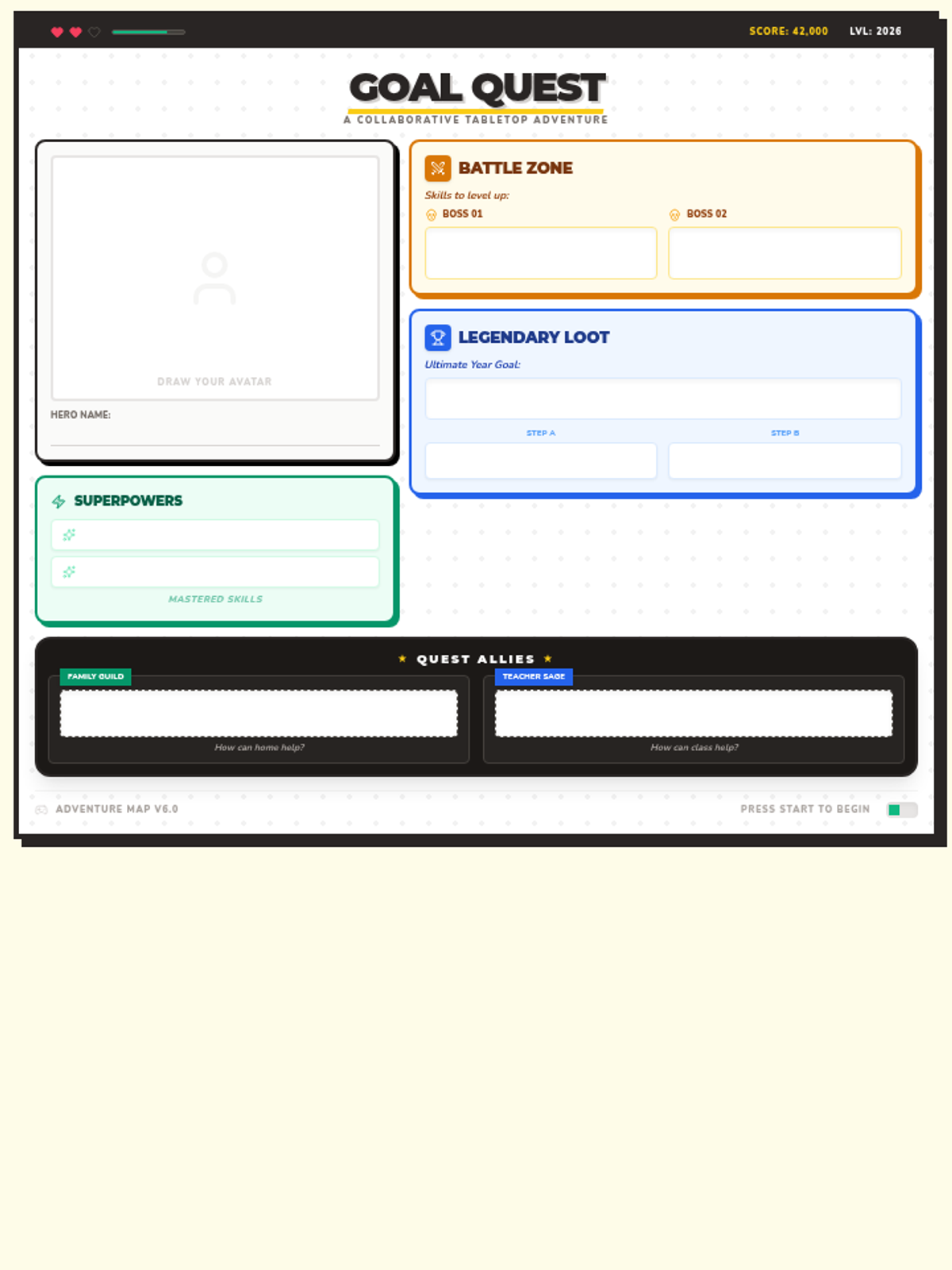
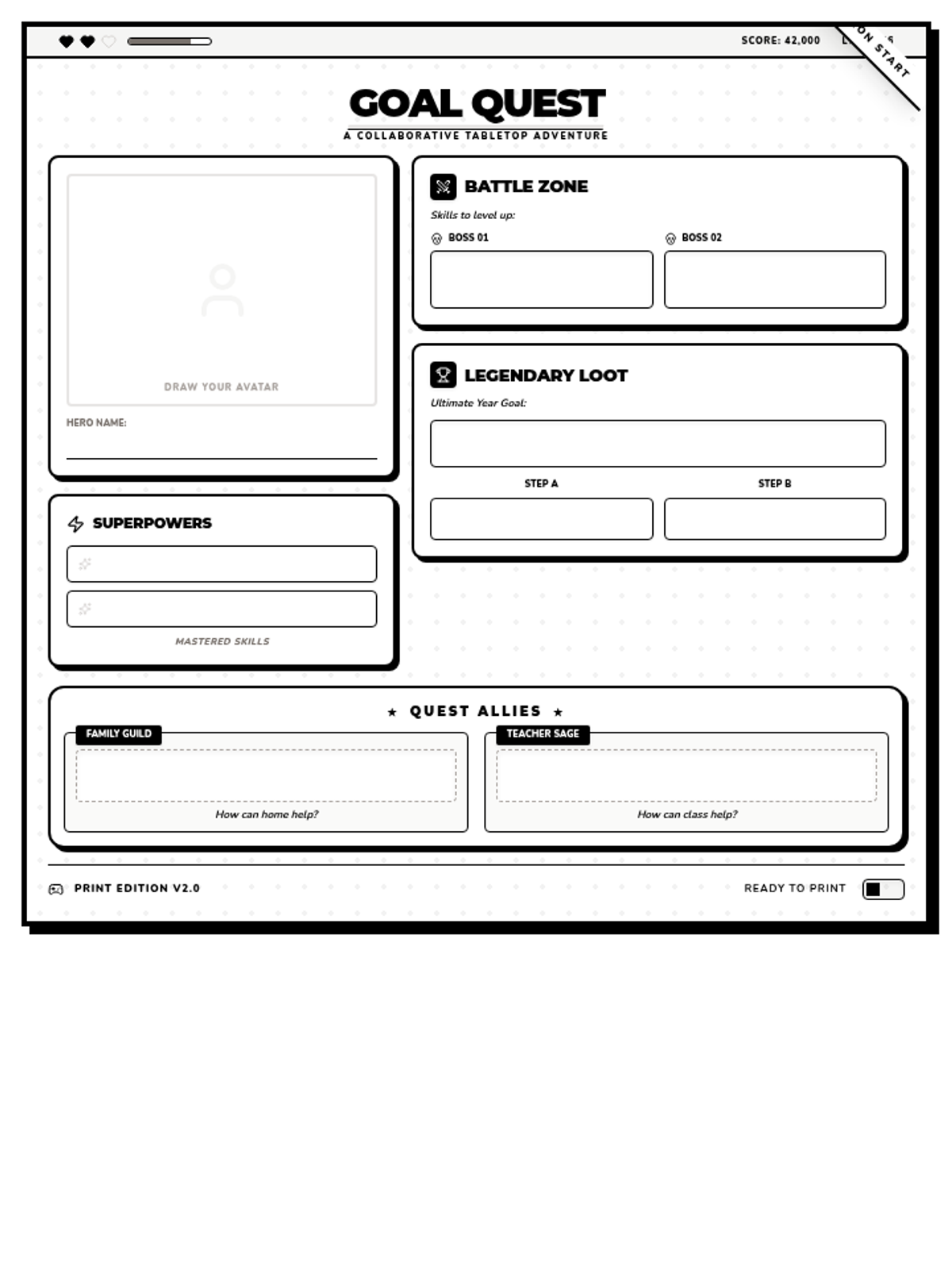
A game-inspired goal-setting activity designed for parent-teacher conferences, focusing on identifying student strengths and growth areas through a 'future quest' lens.
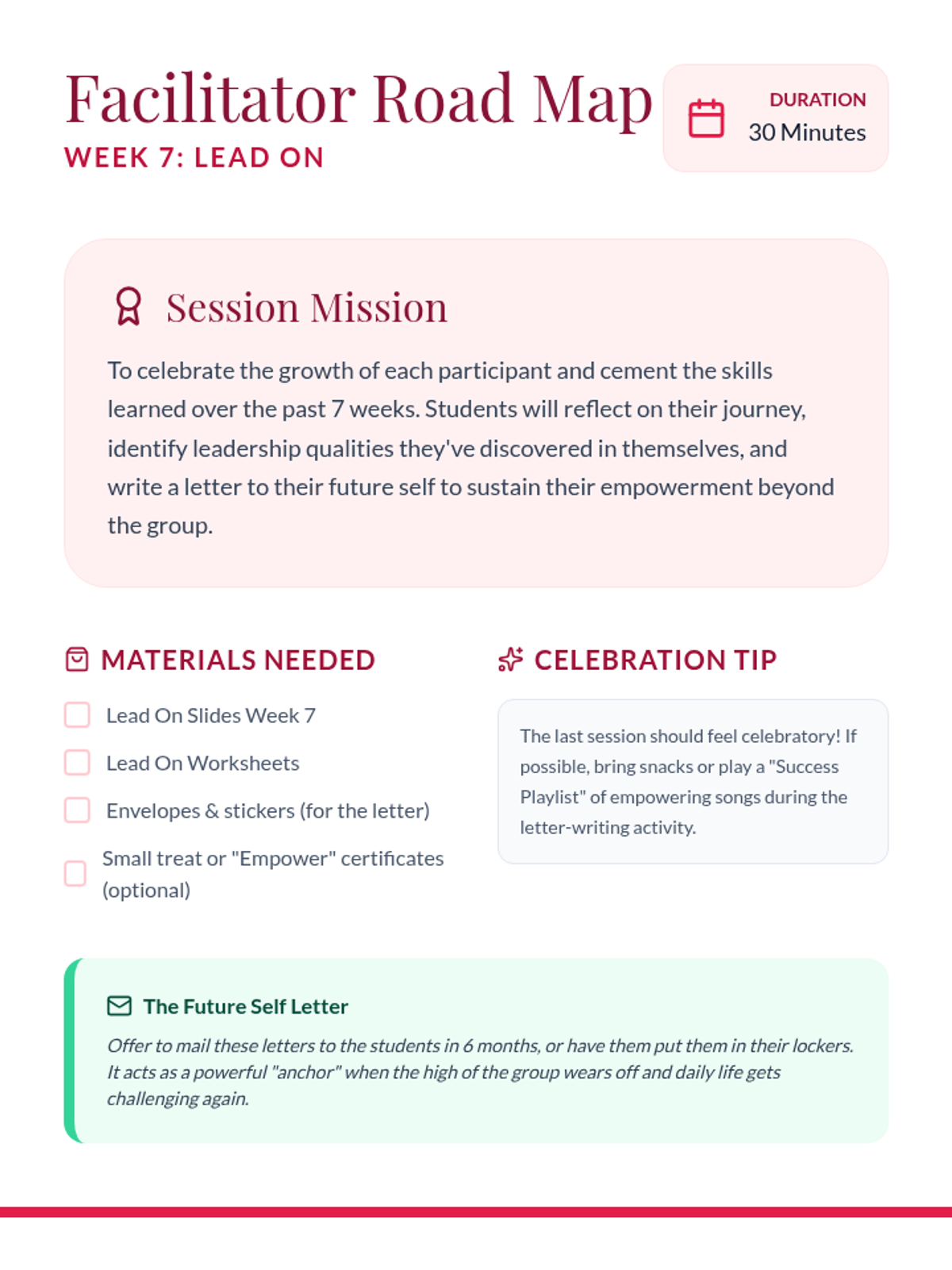
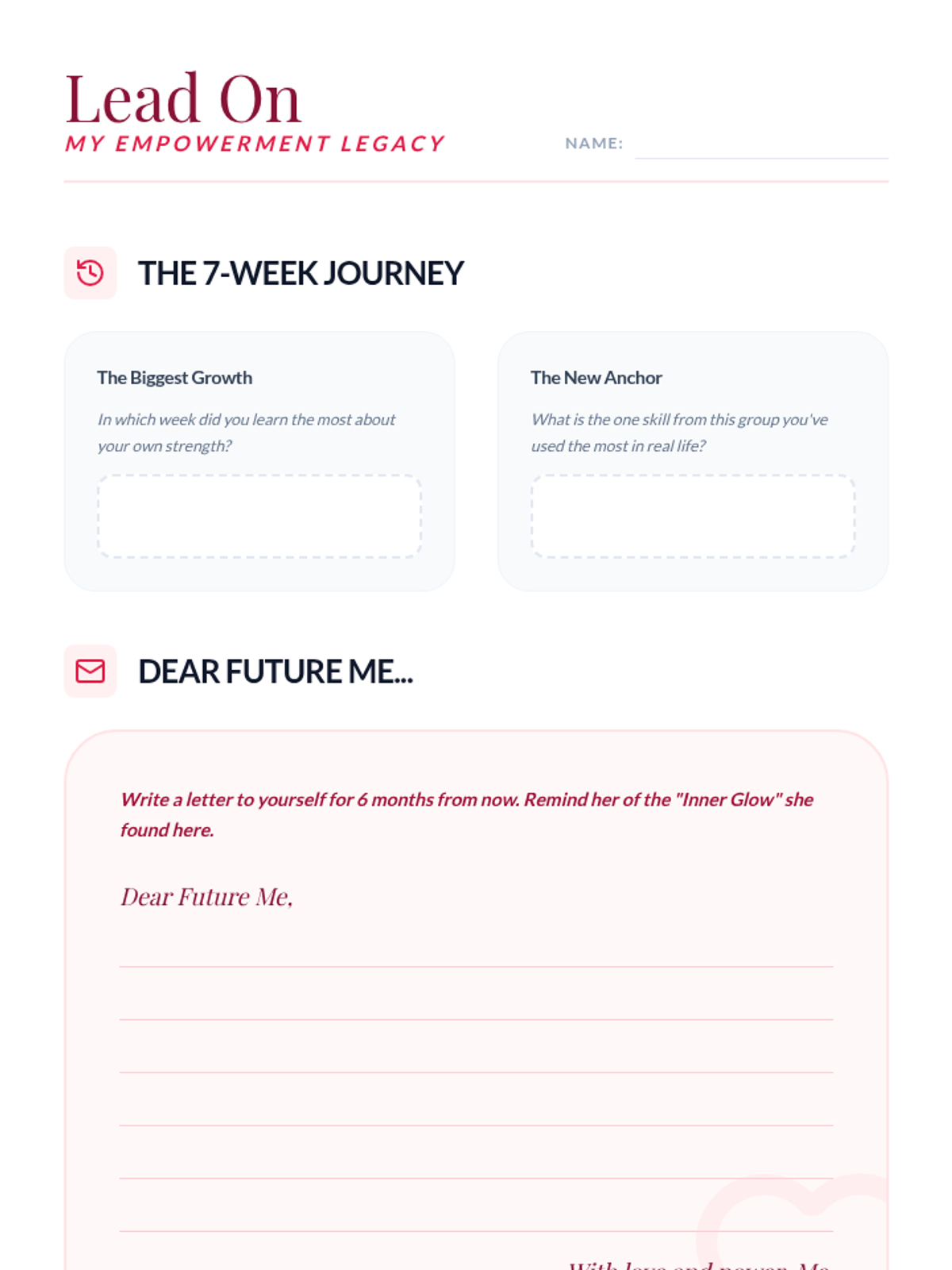
Reflecting on growth, identifying leadership qualities, and writing a vision for the future.
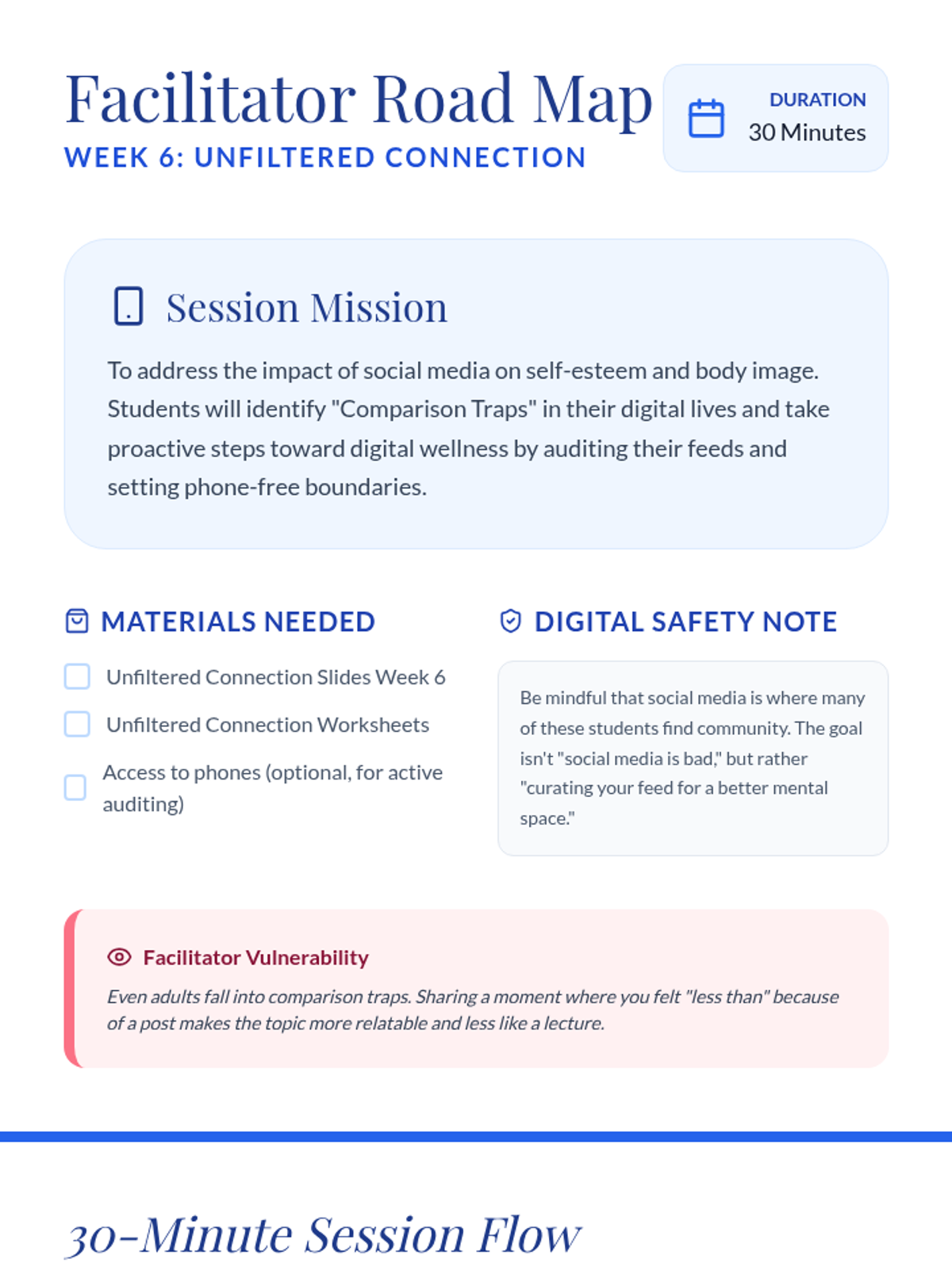
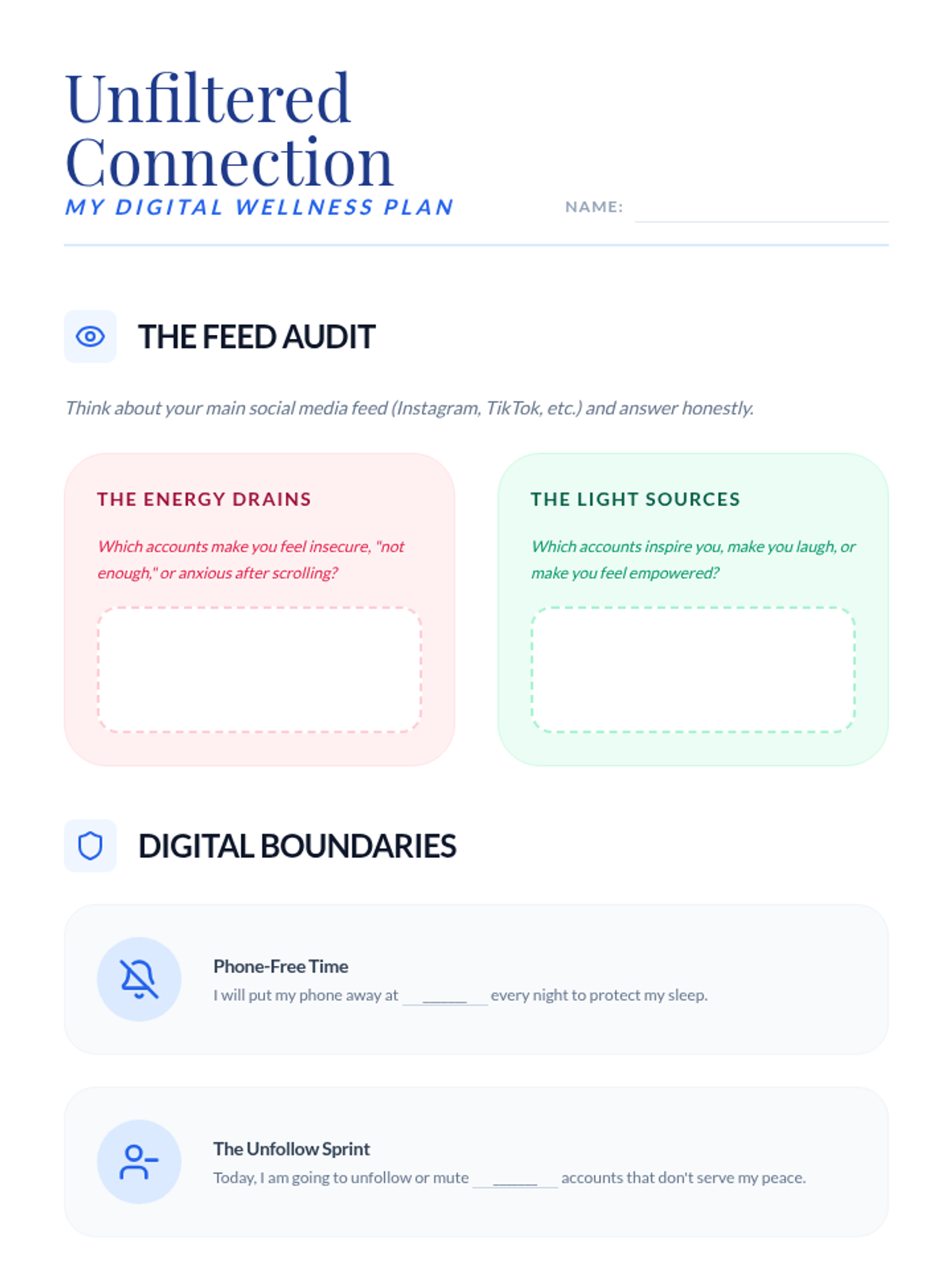
Navigating social media influence, digital wellness, and staying true to oneself amidst peer pressure.
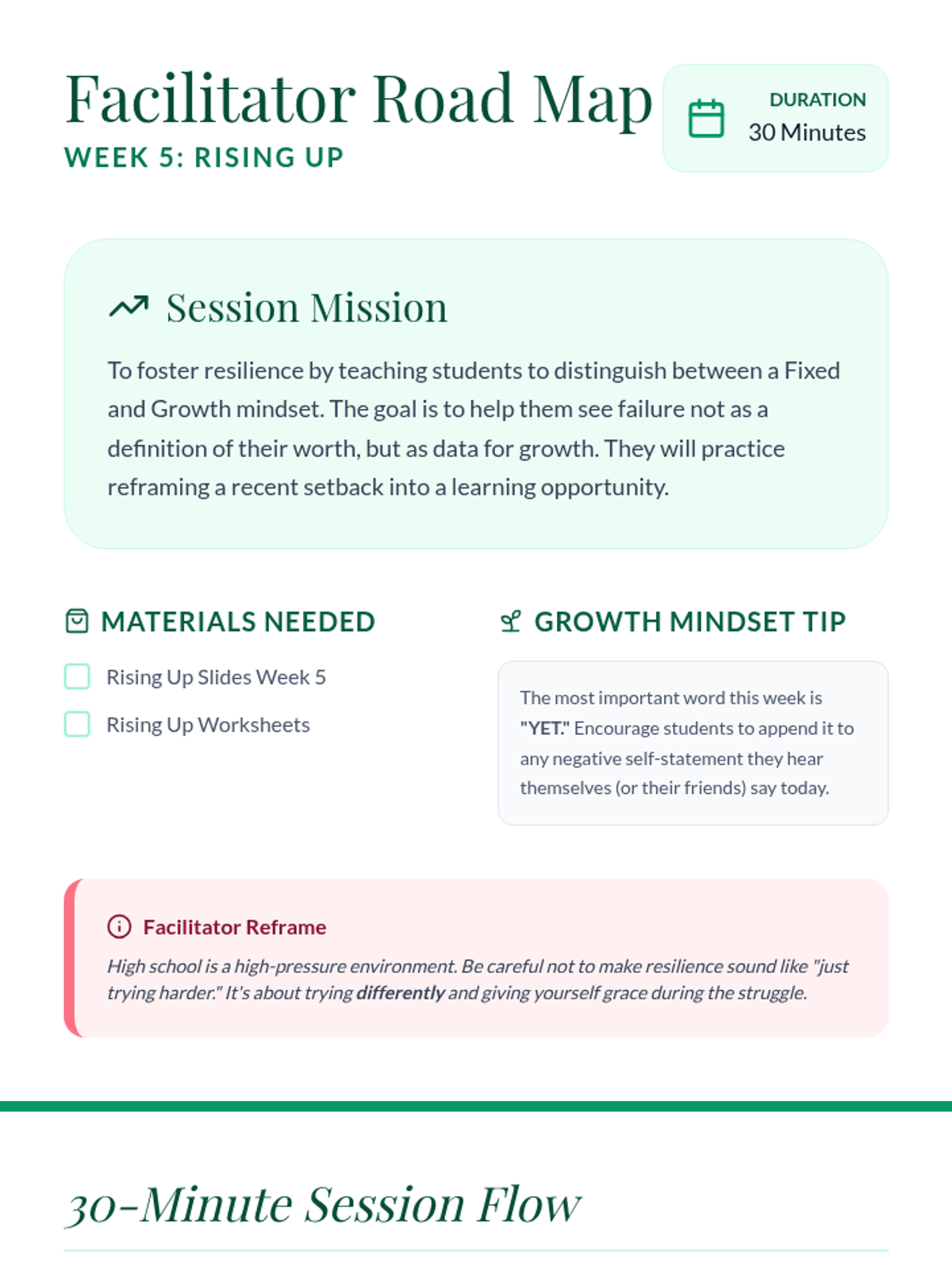
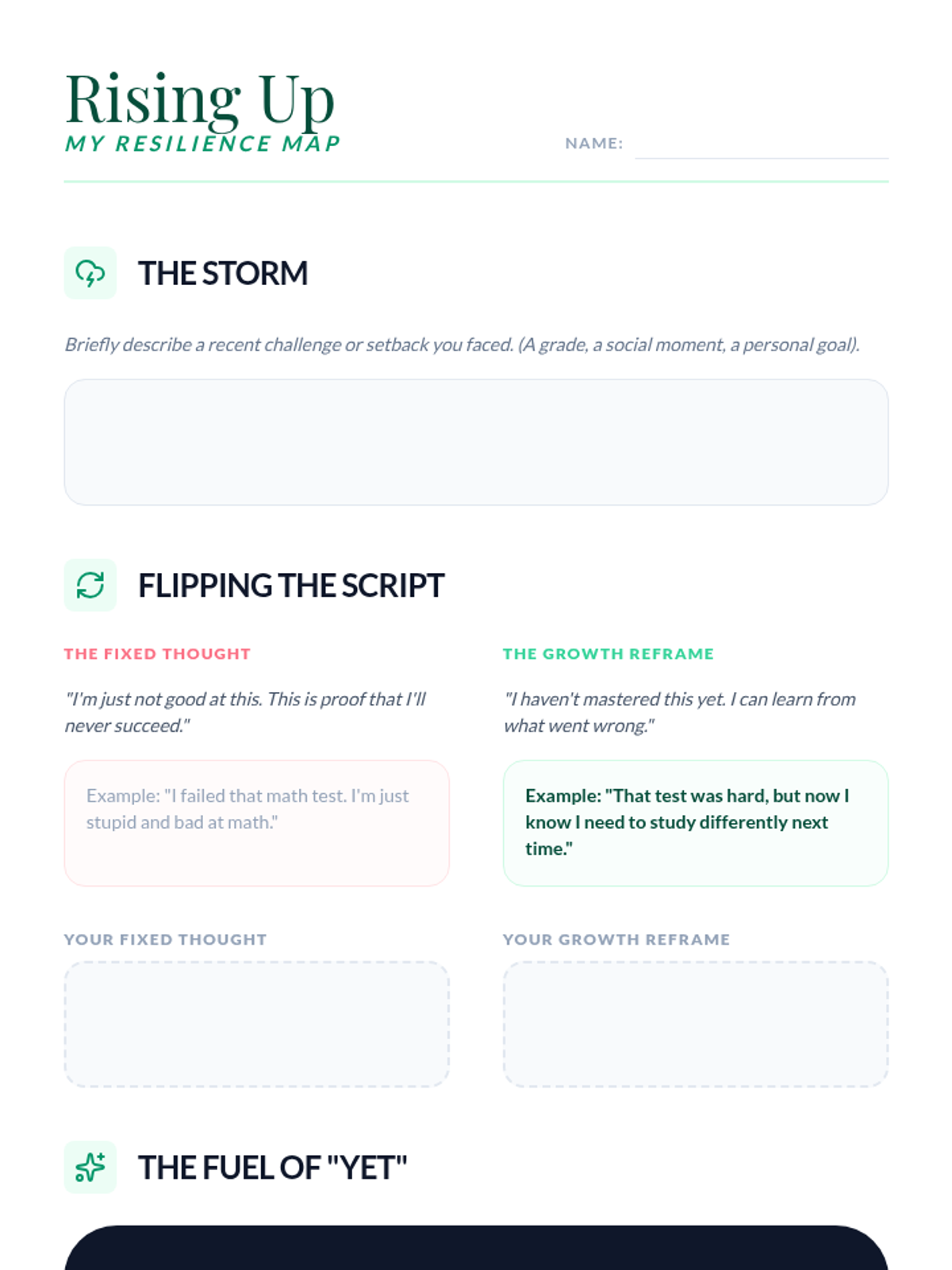
Building resilience by reframing setbacks as growth opportunities and cultivating a growth mindset.
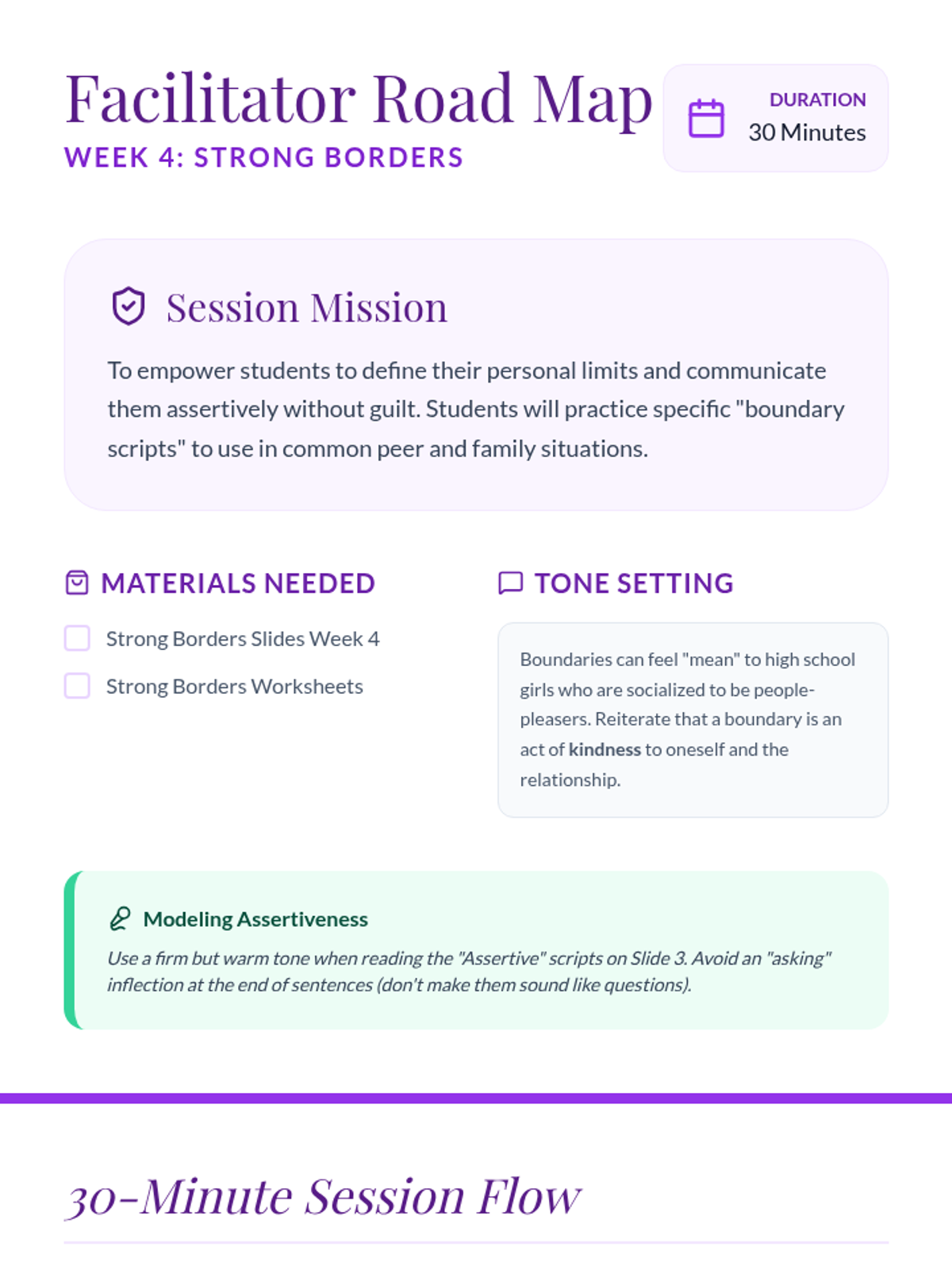
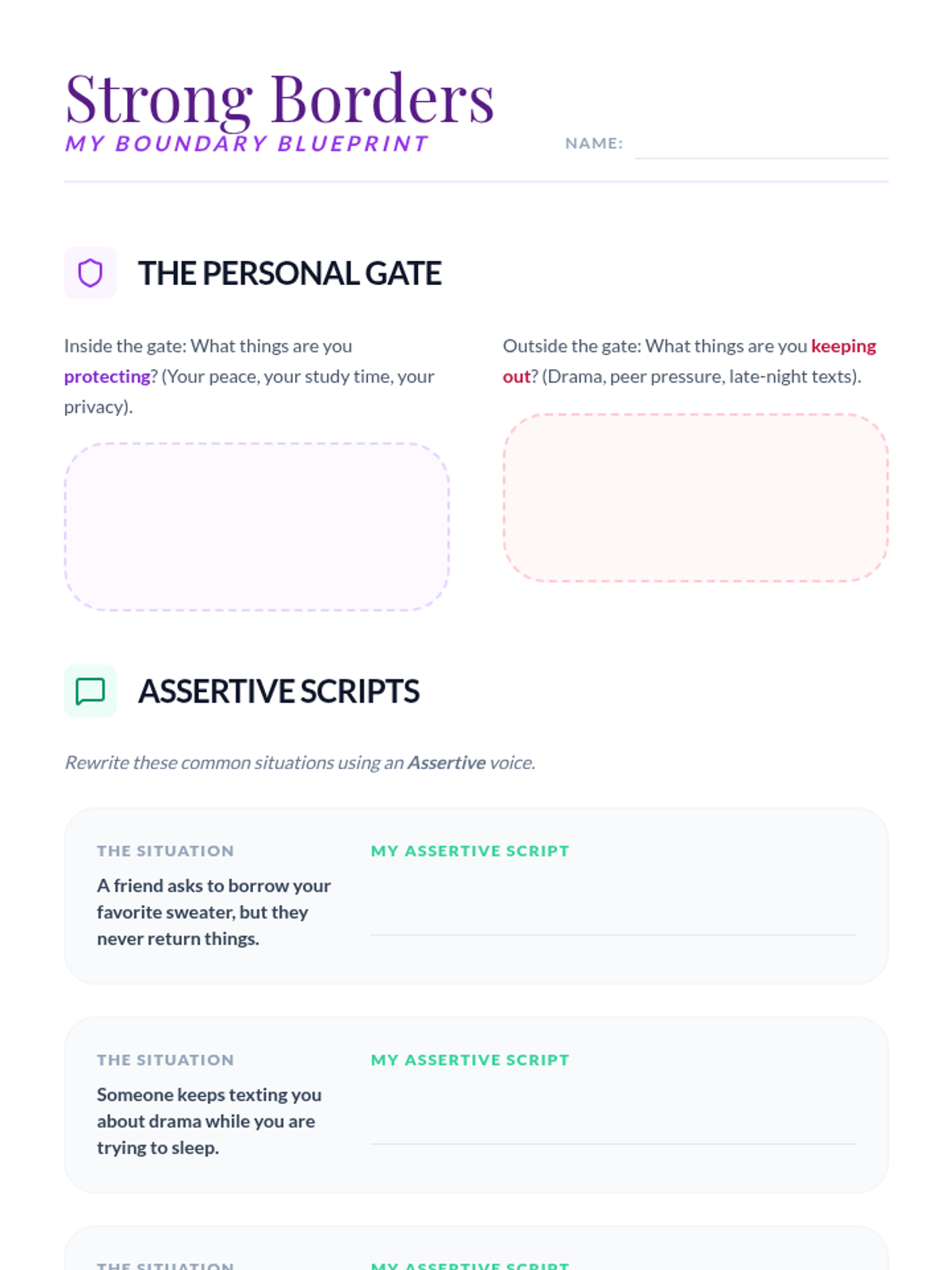
Learning to set healthy boundaries in friendships and romantic relationships while practicing assertive communication.
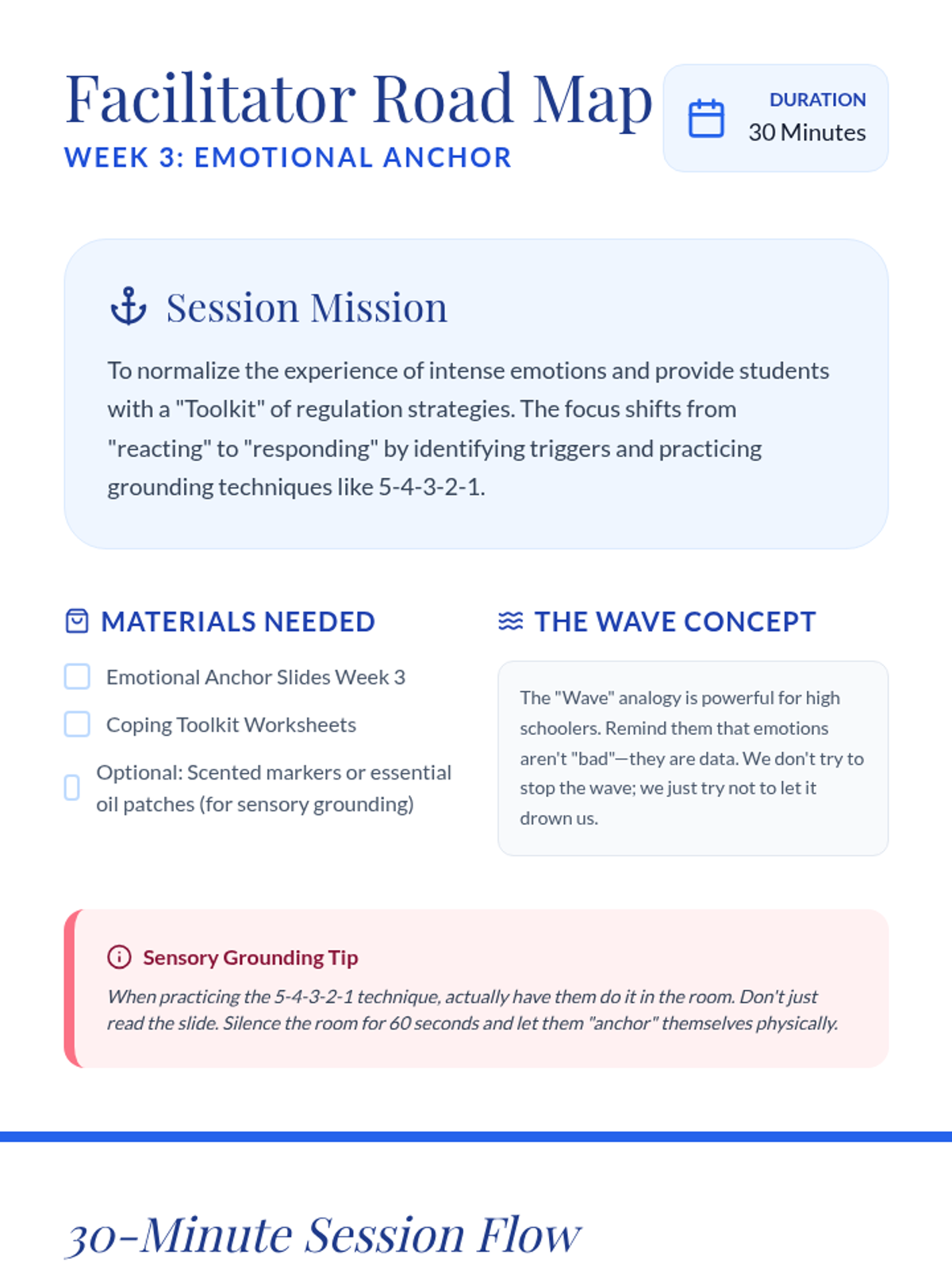
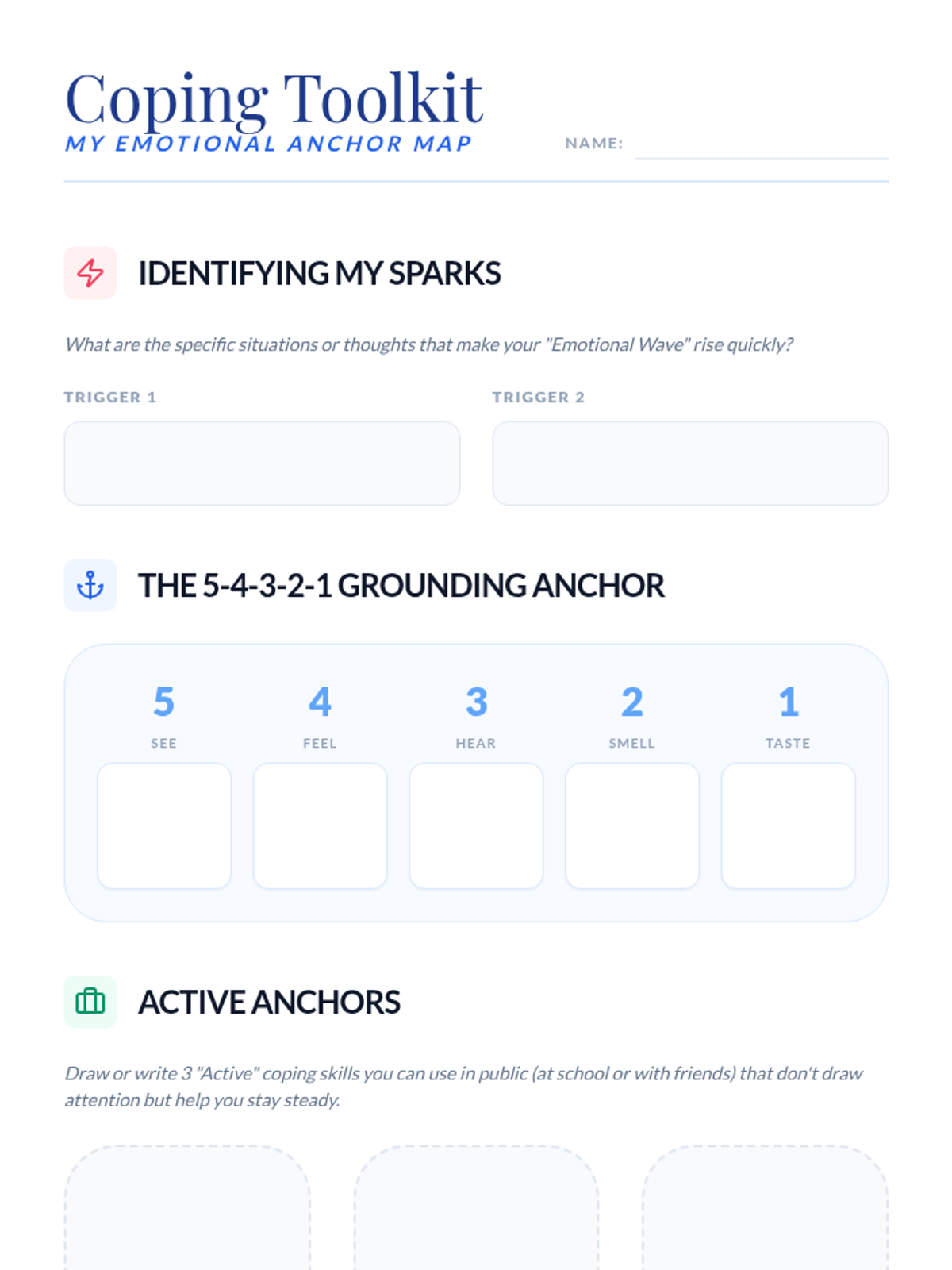
Developing emotional regulation strategies, identifying triggers, and building a toolkit of healthy coping mechanisms.
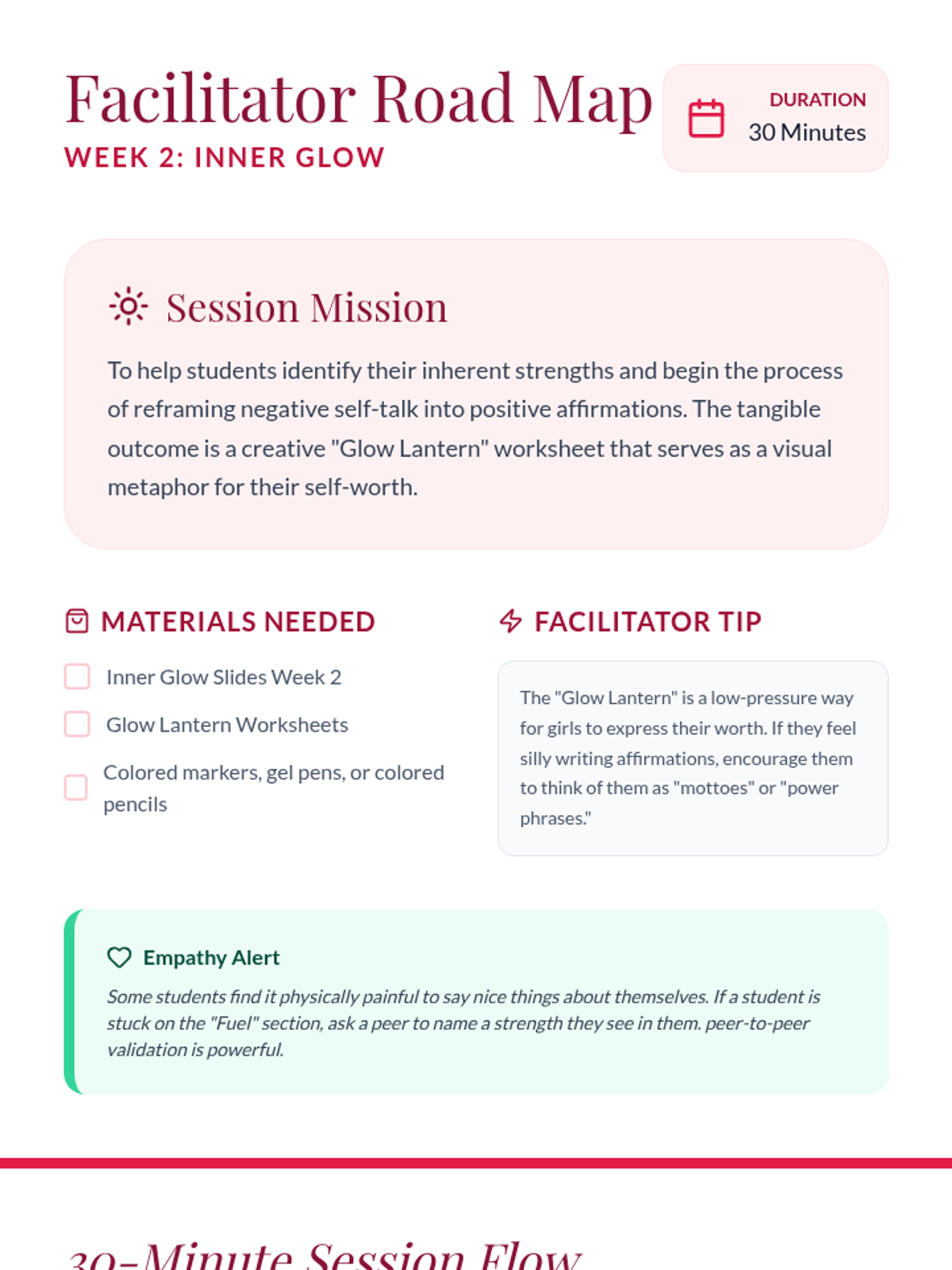
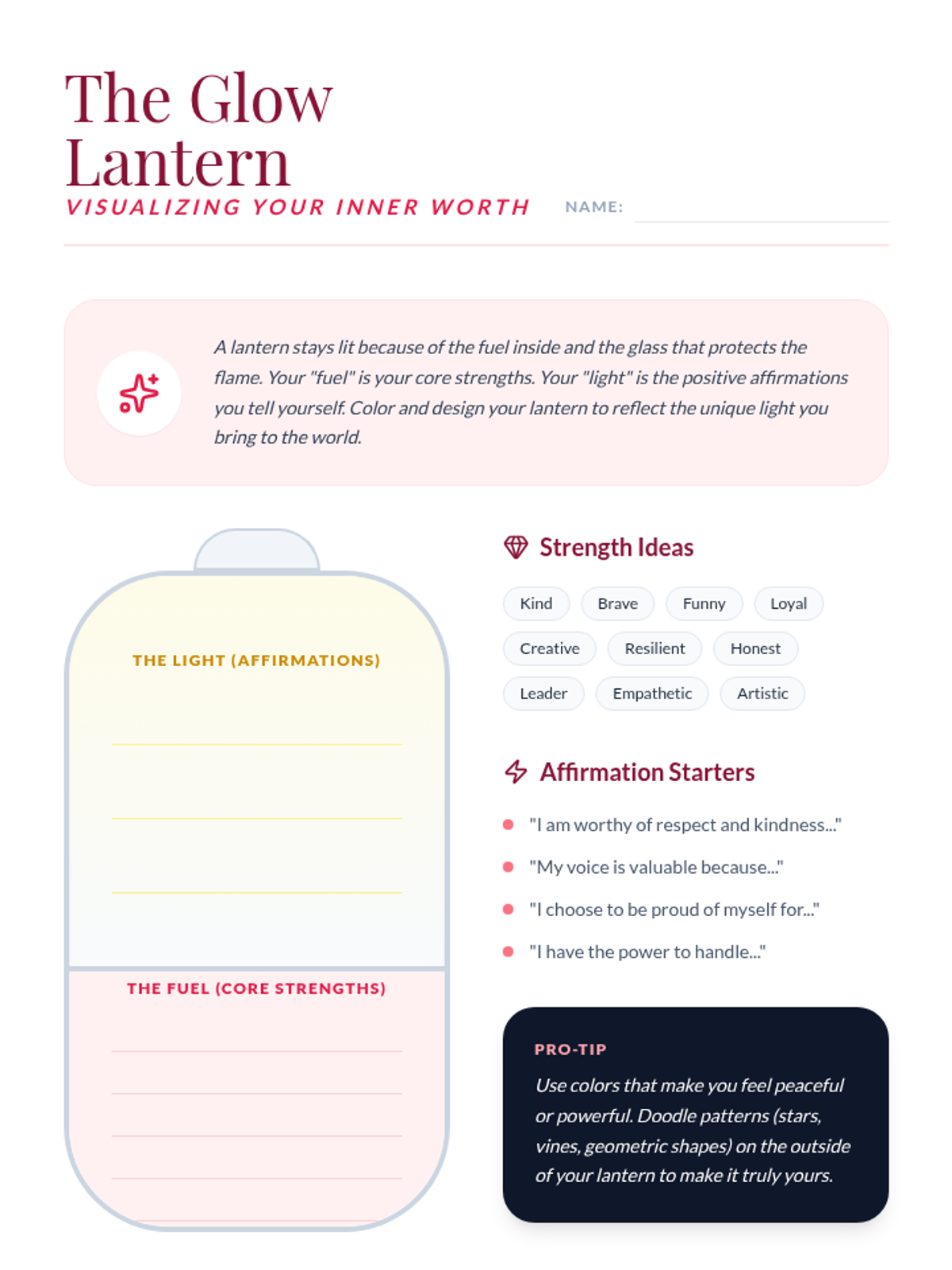
Exploring self-identity and boosting self-esteem through positive affirmation practices and identifying personal strengths.
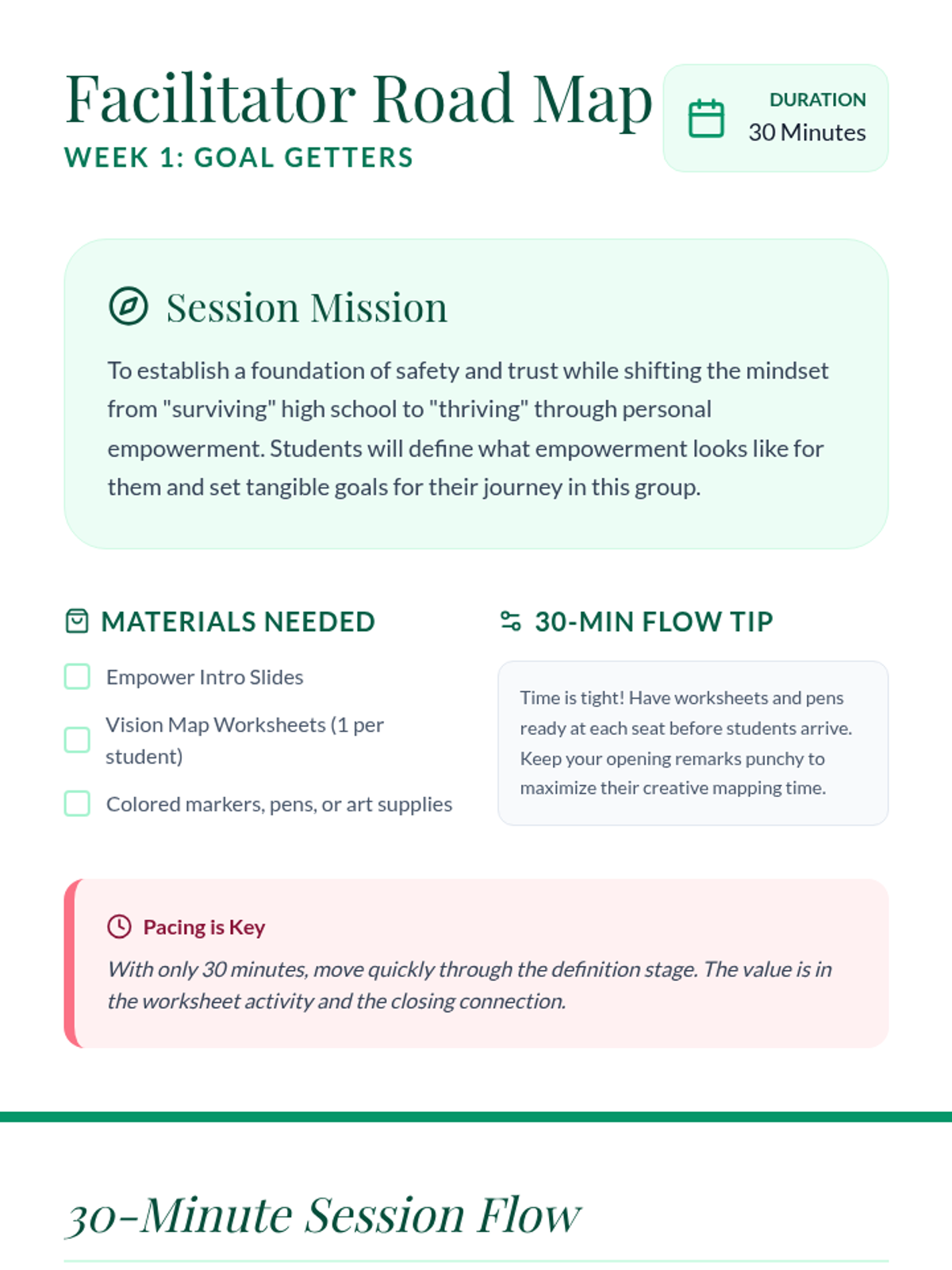
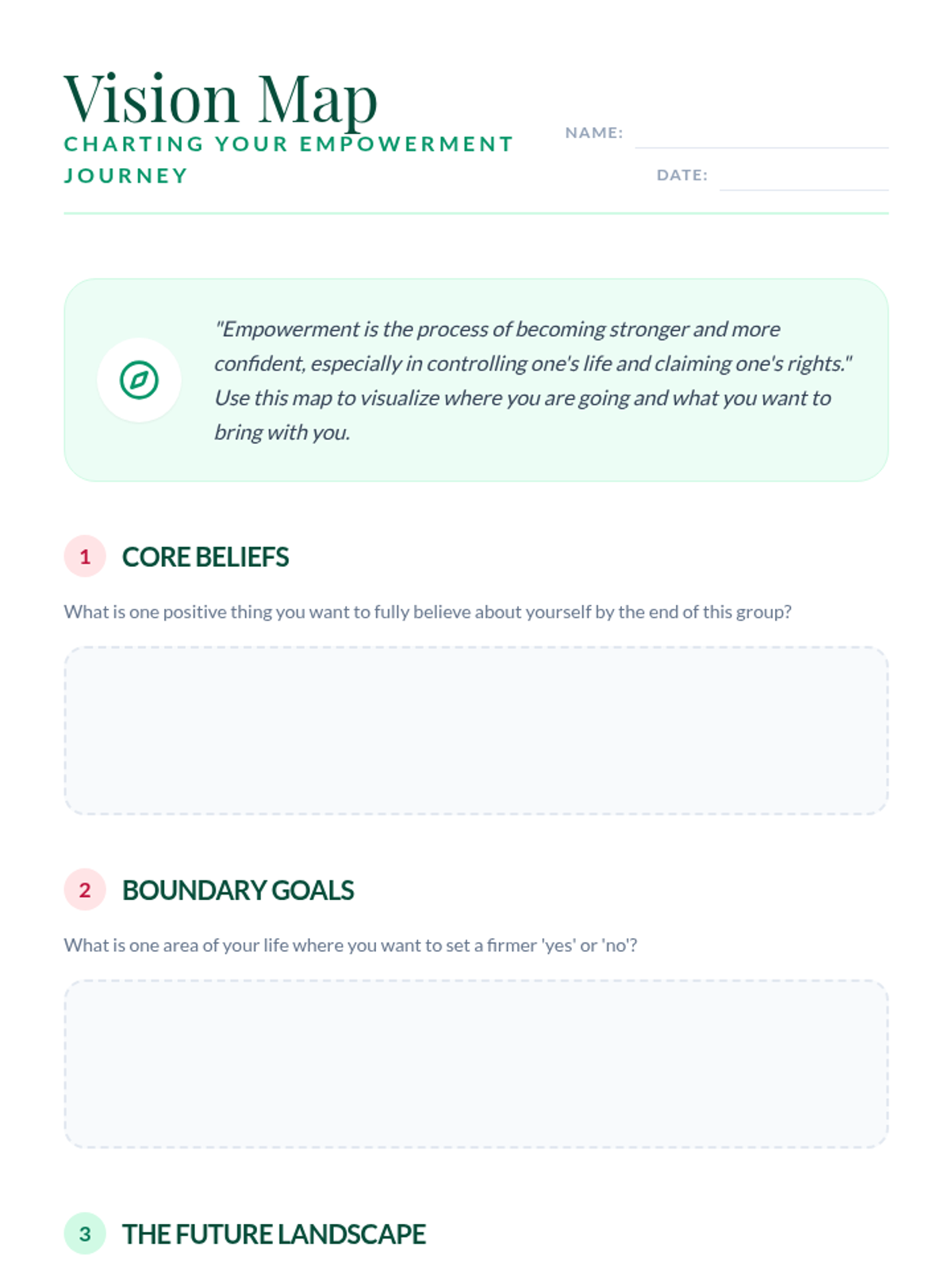
Introduction to the group, setting norms, and defining personal empowerment goals through a creative vision-mapping activity.
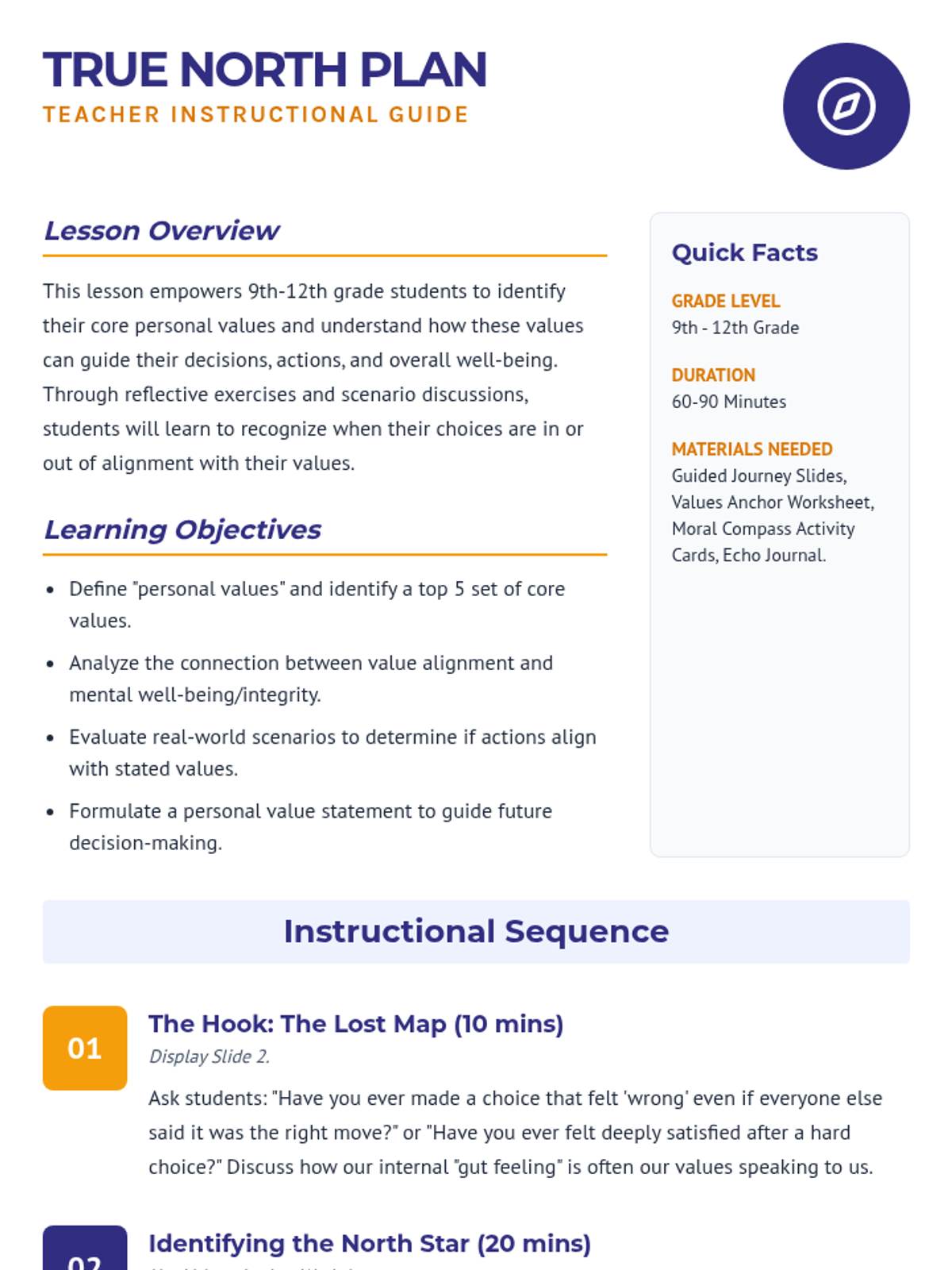
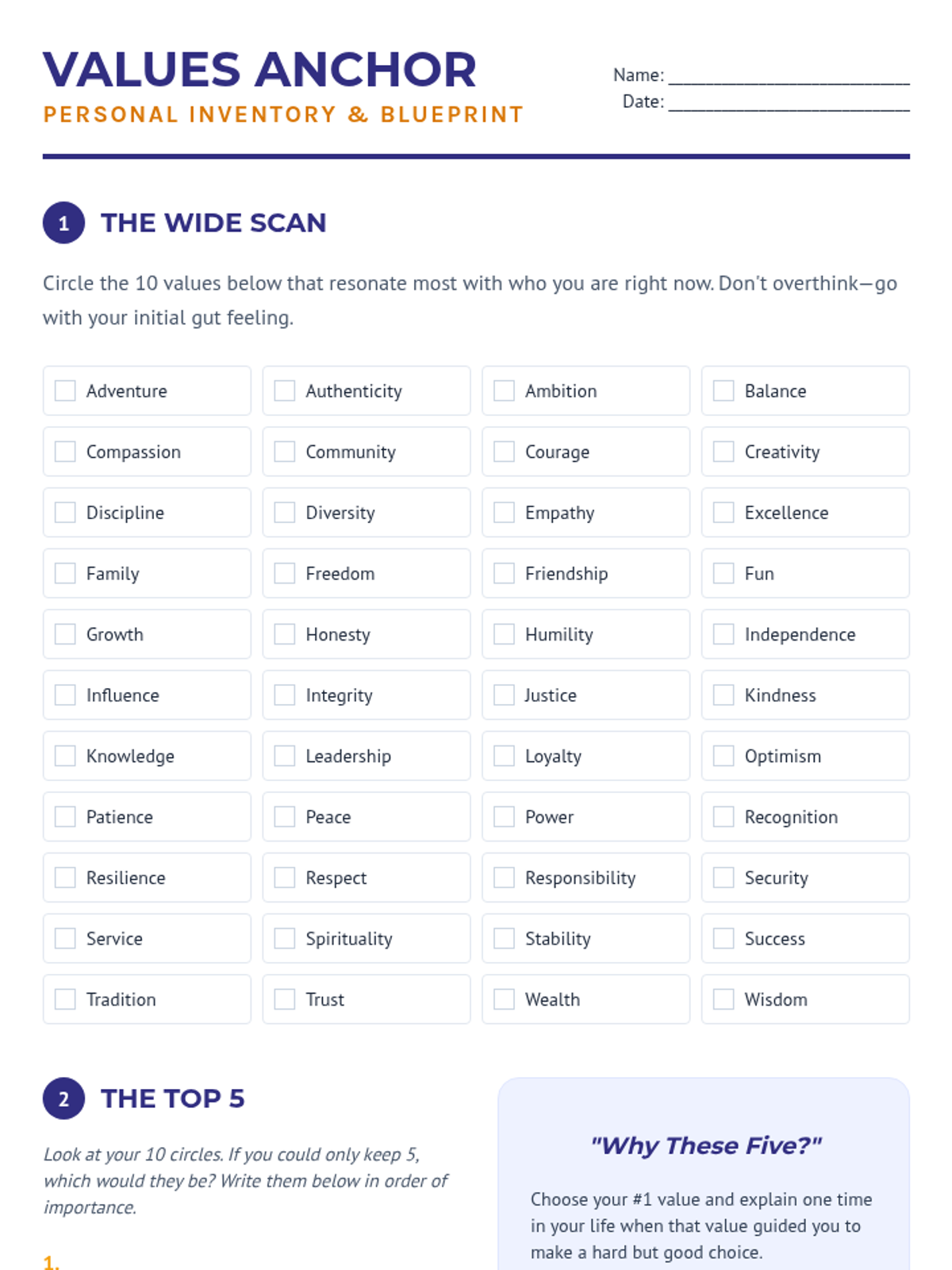
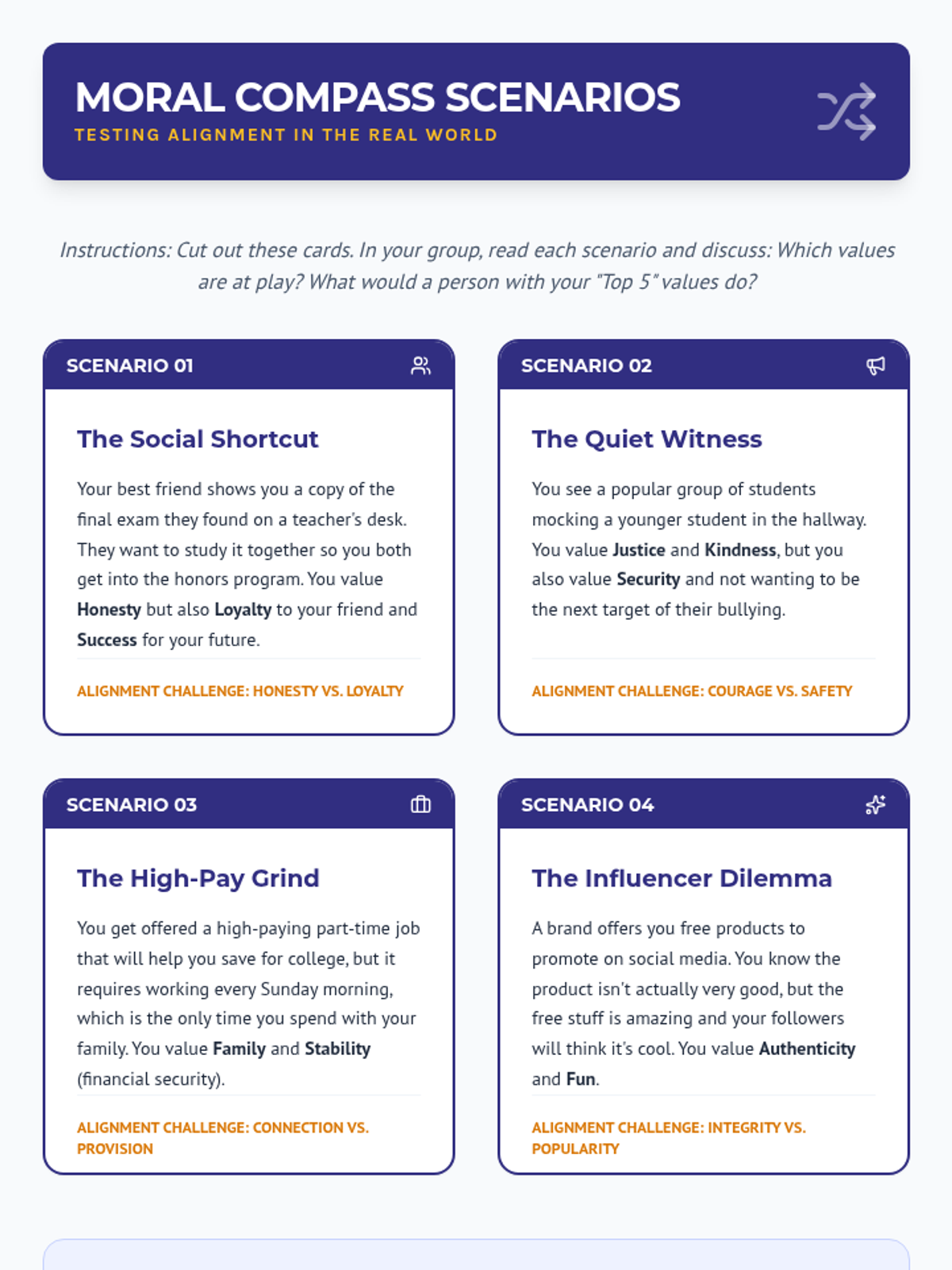
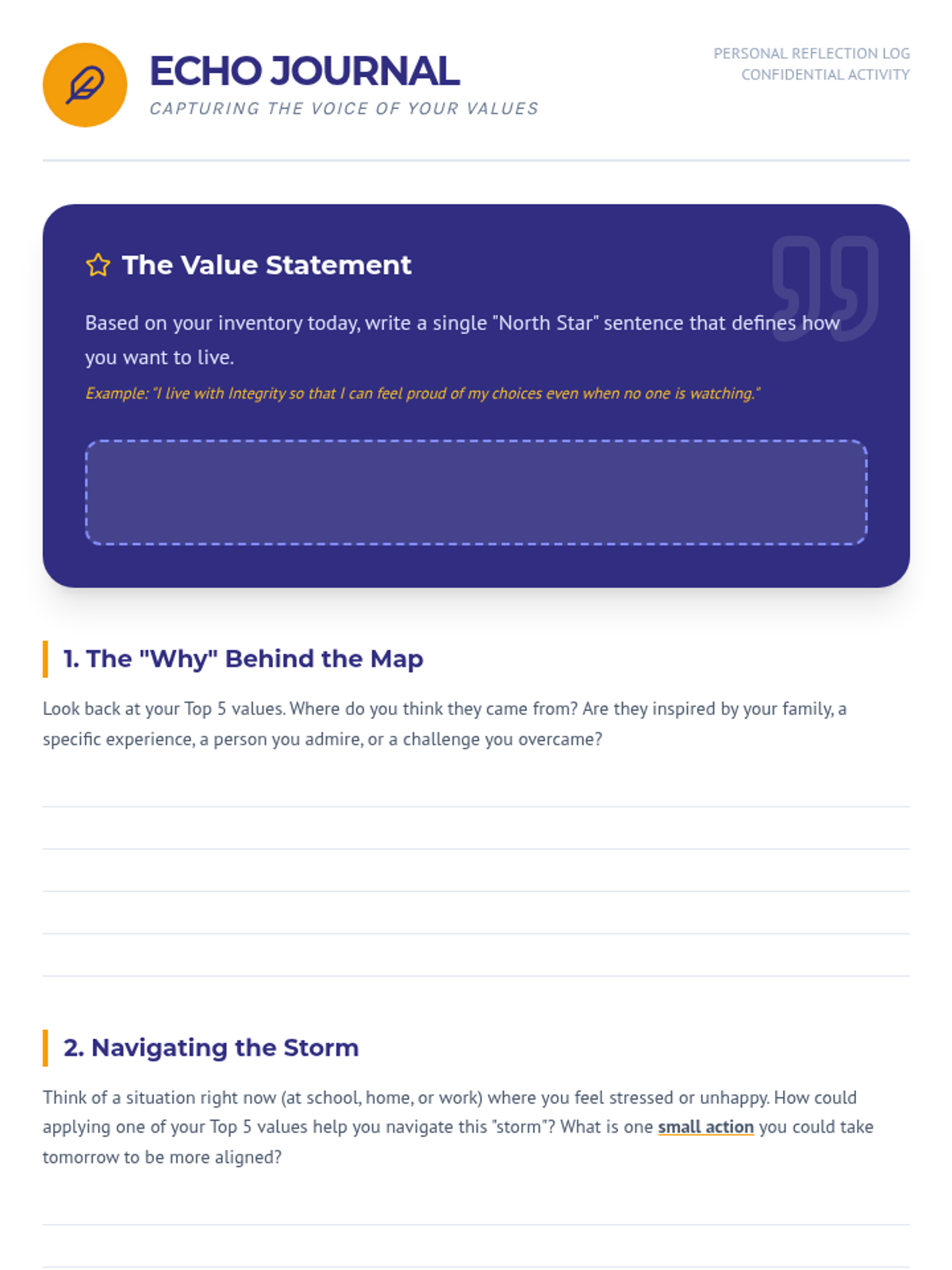
A comprehensive lesson for high schoolers to identify core values and explore how alignment between actions and beliefs leads to personal growth and reduced internal conflict. Students will navigate real-world scenarios and reflect on their personal "True North."
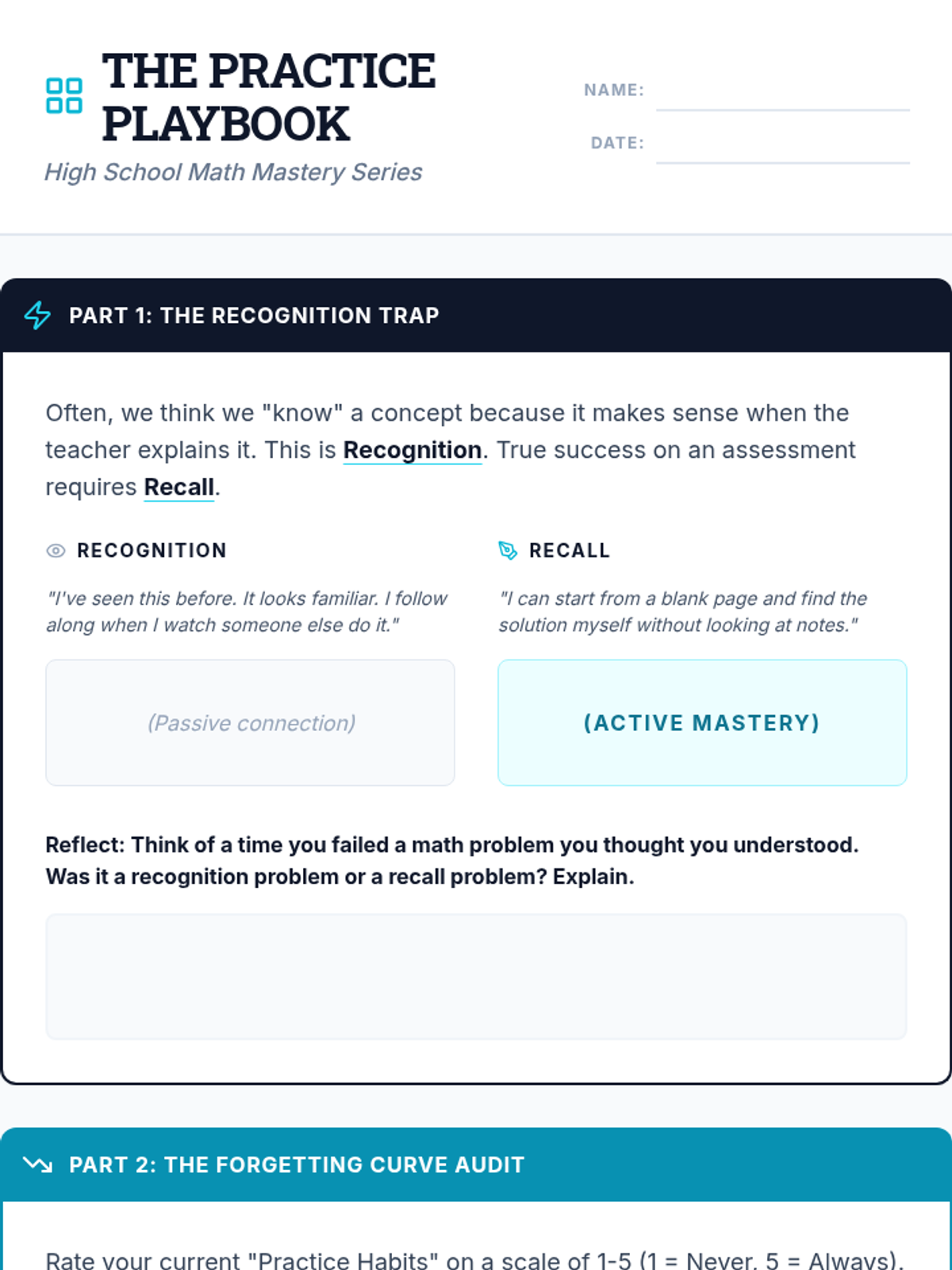
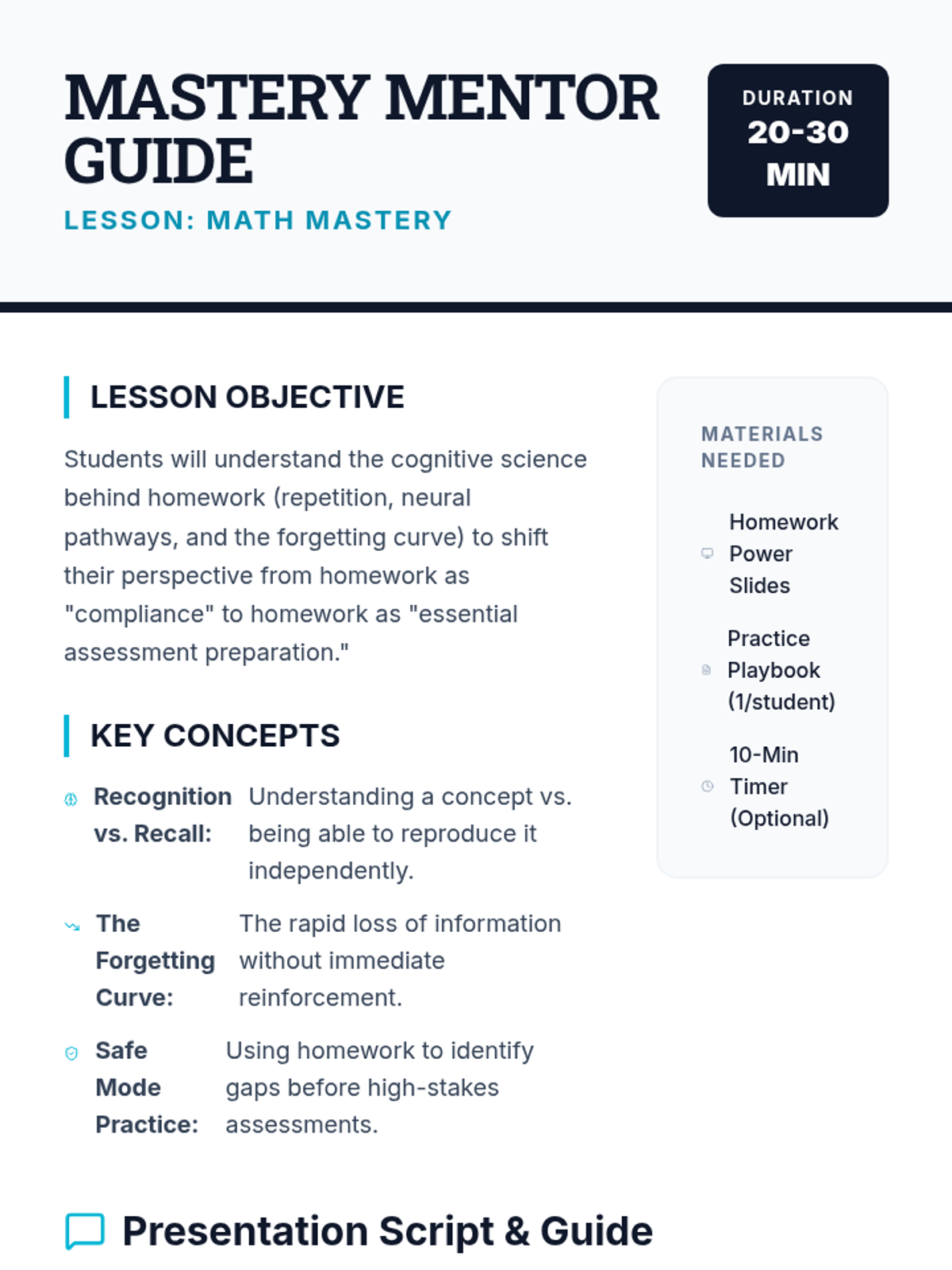
A lesson focused on the value of math homework as essential practice for skill mastery and assessment readiness, tailored for high school students.
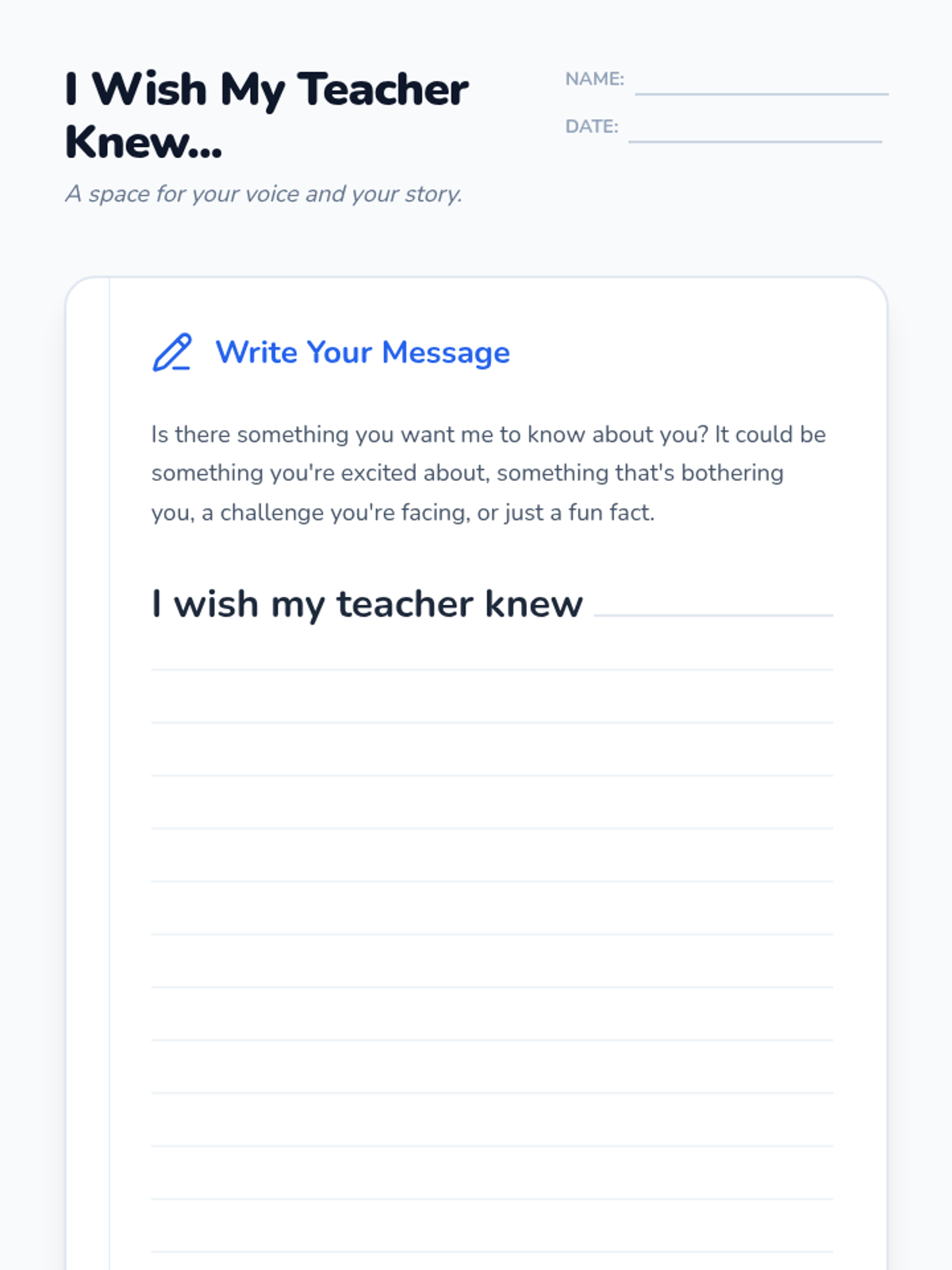
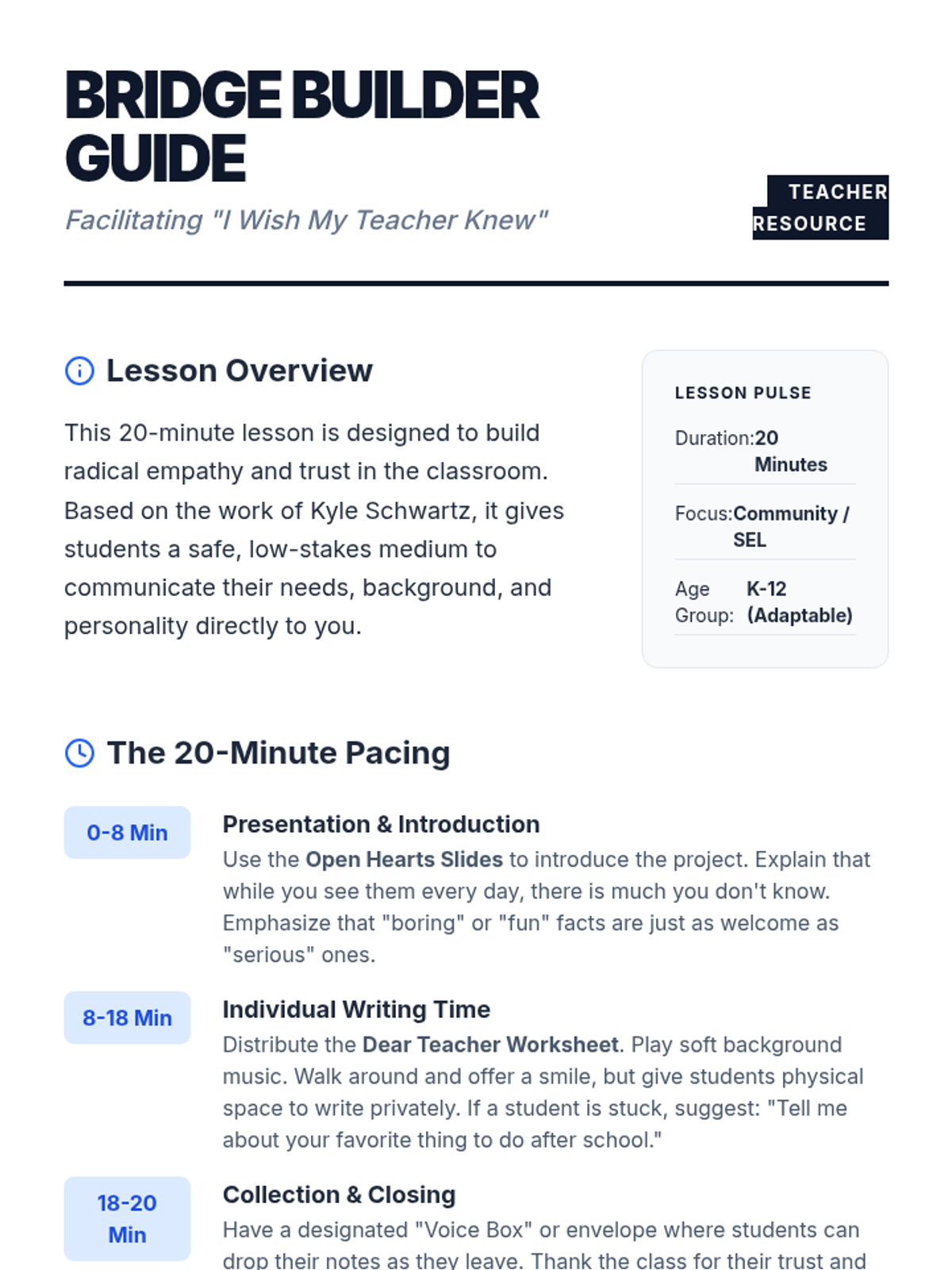
A short, impactful community-building lesson based on the "I Wish My Teacher Knew" project. Students share personal insights, needs, or stories with their teacher to build trust, empathy, and a stronger classroom community.
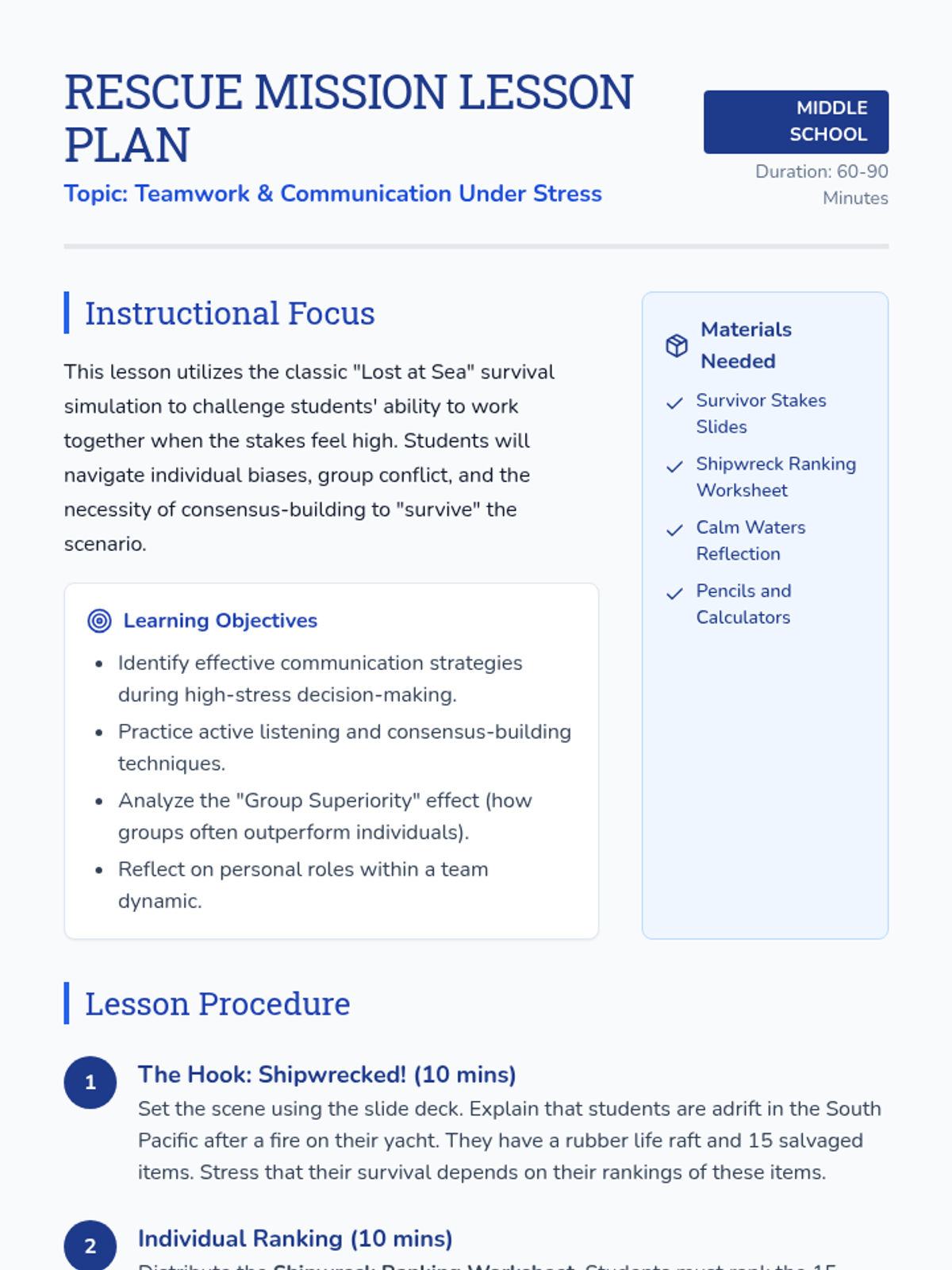
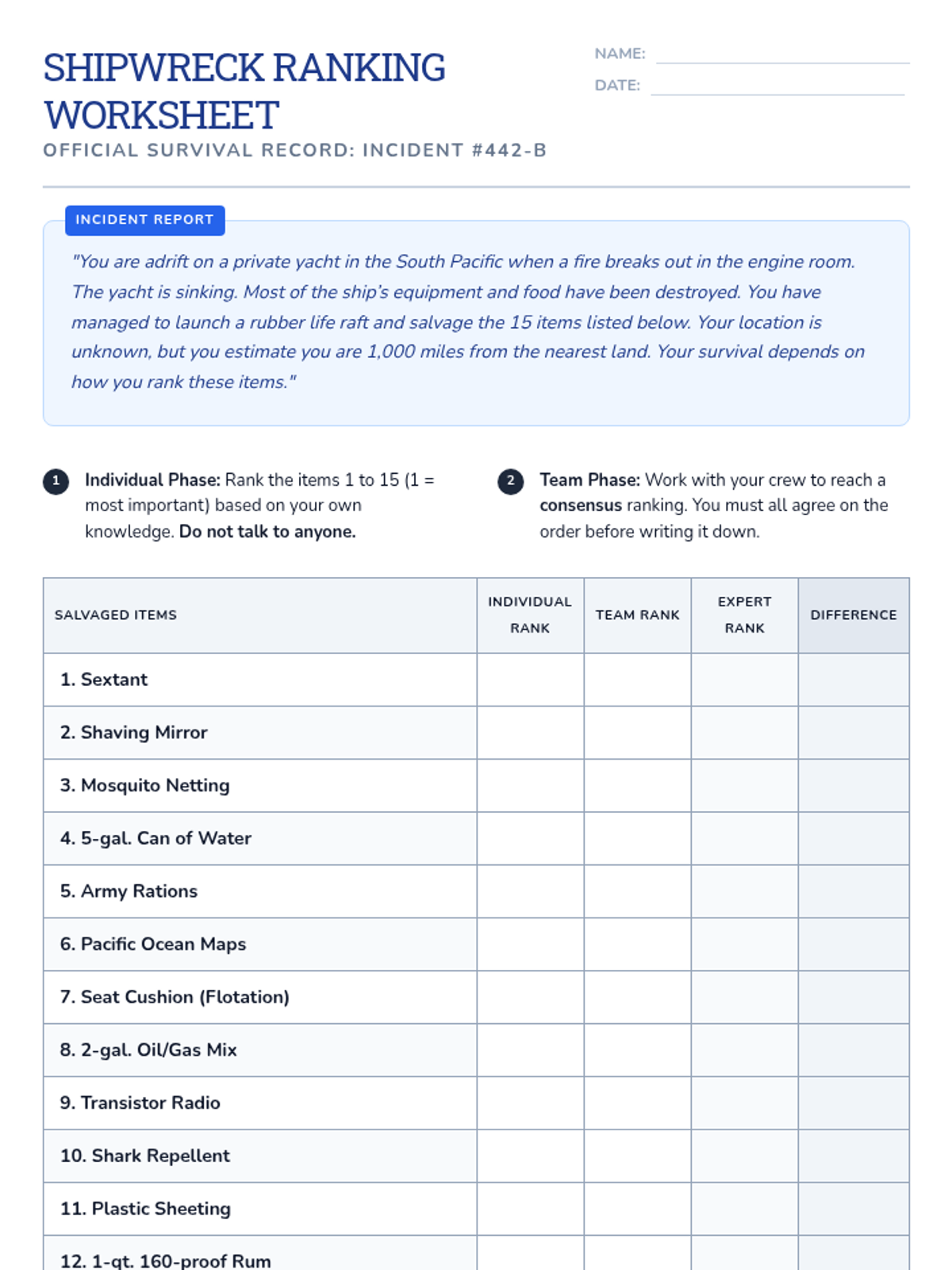
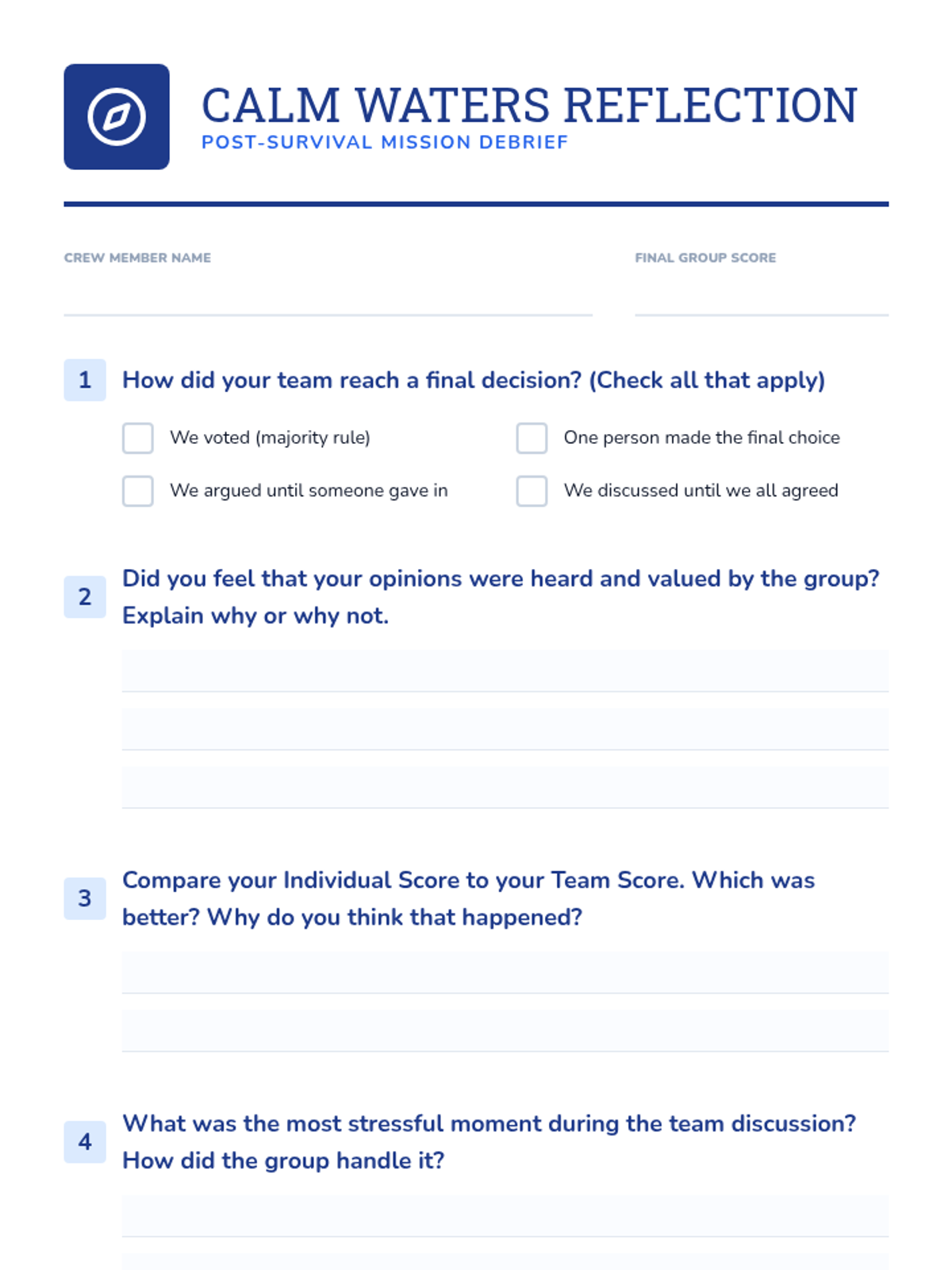
A comprehensive lesson focused on teamwork, consensus-building, and communication under stress using a classic maritime survival scenario. Students must collaborate to rank items for survival after a shipwreck.
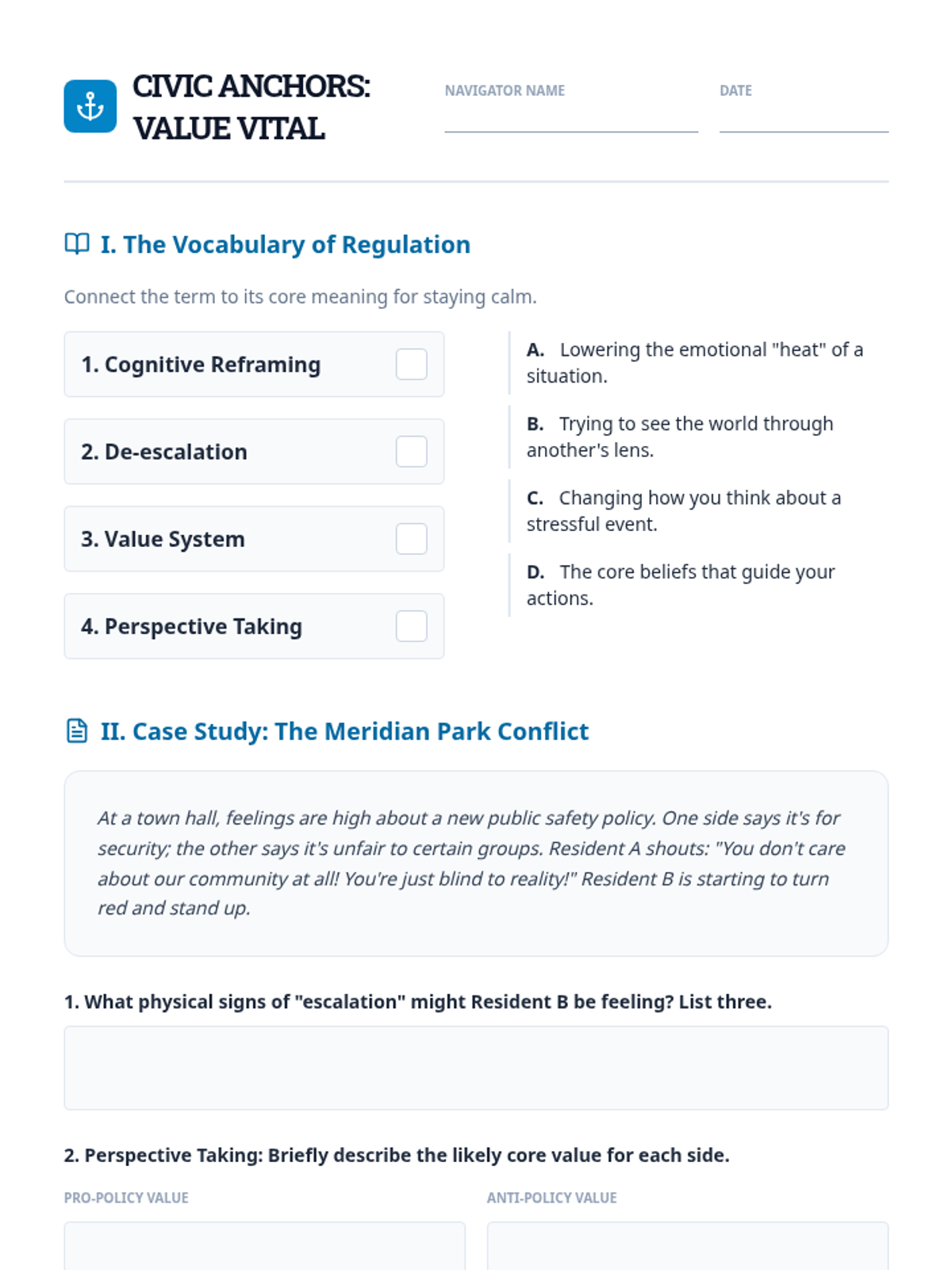
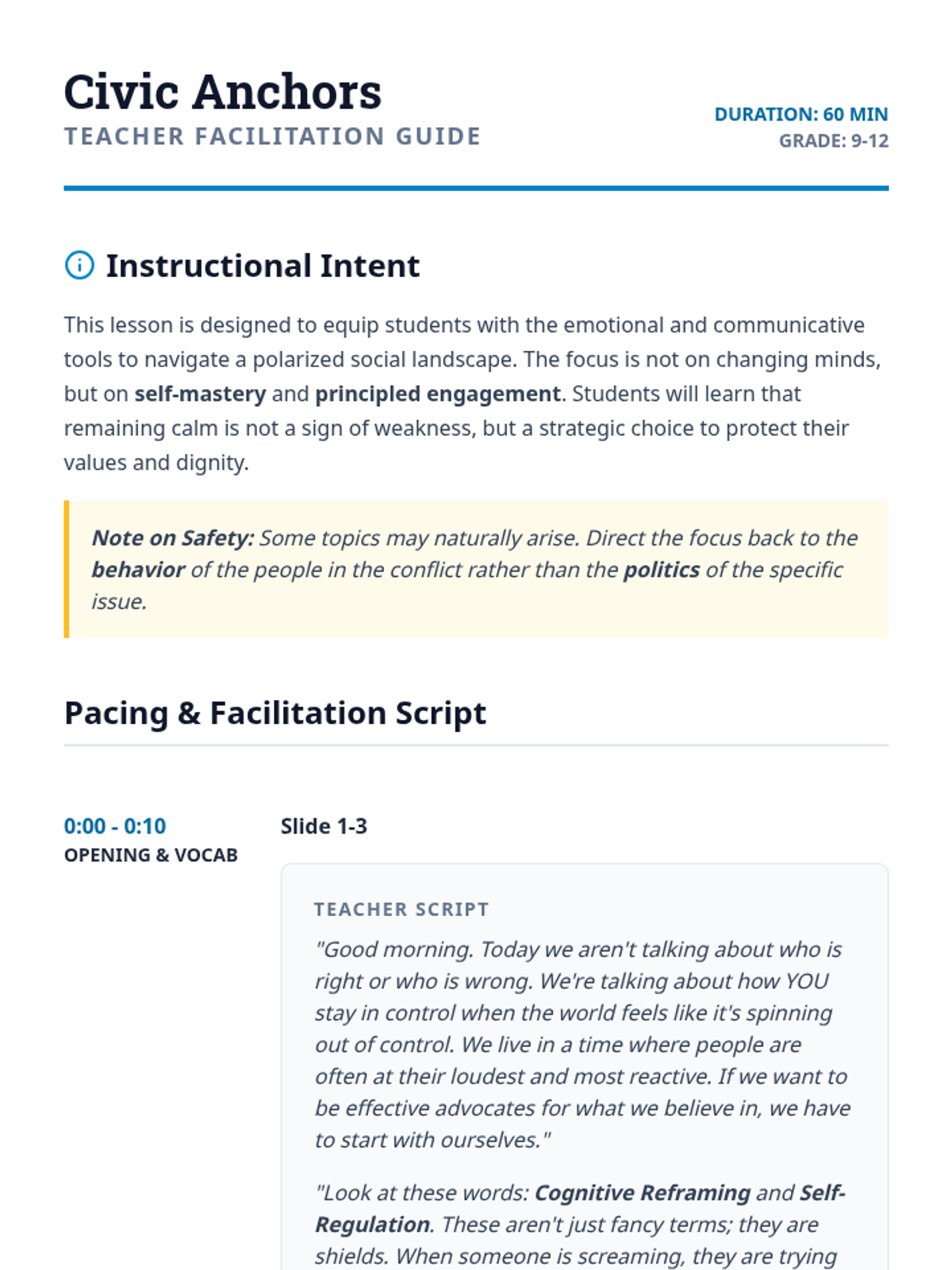
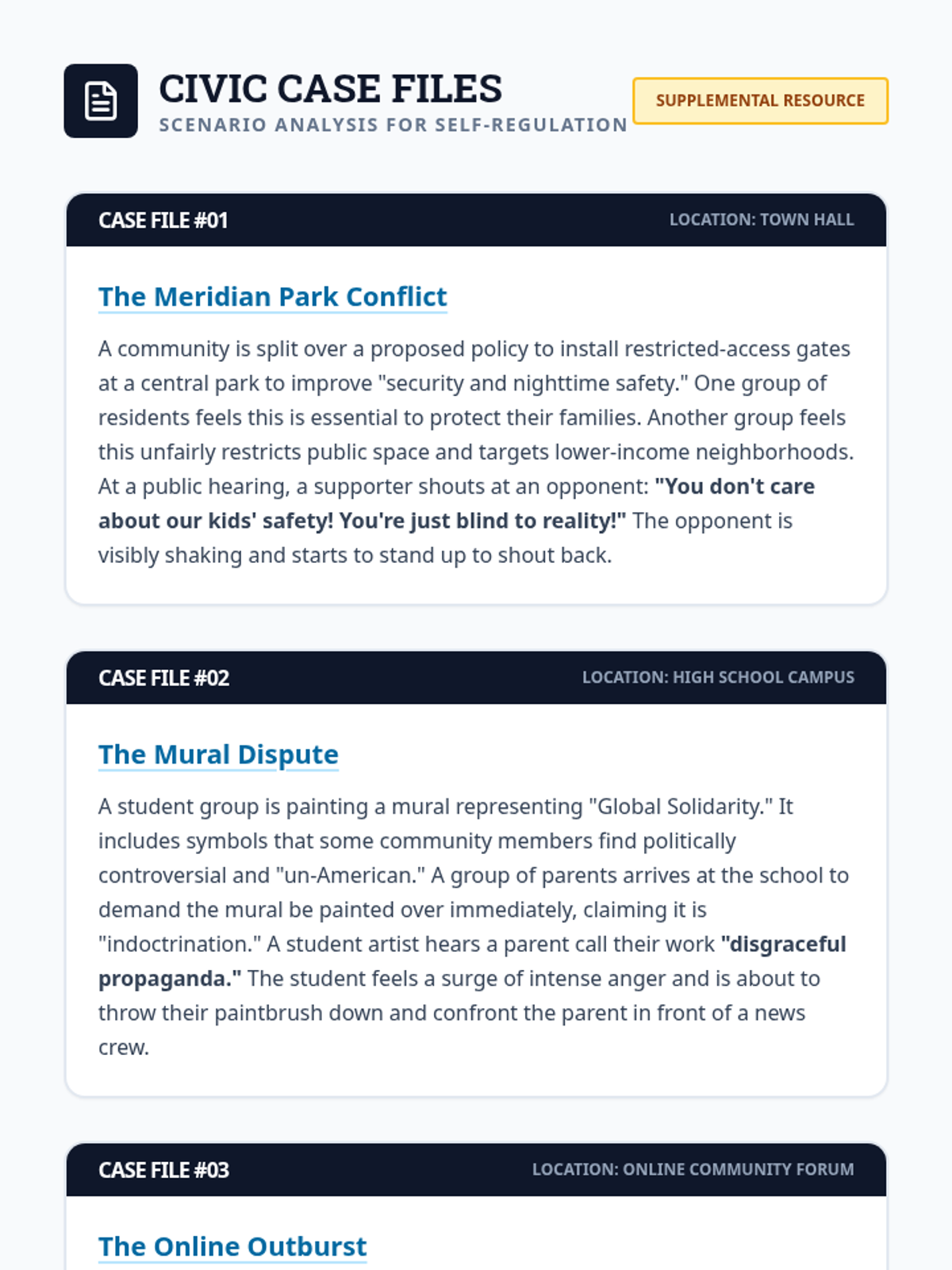
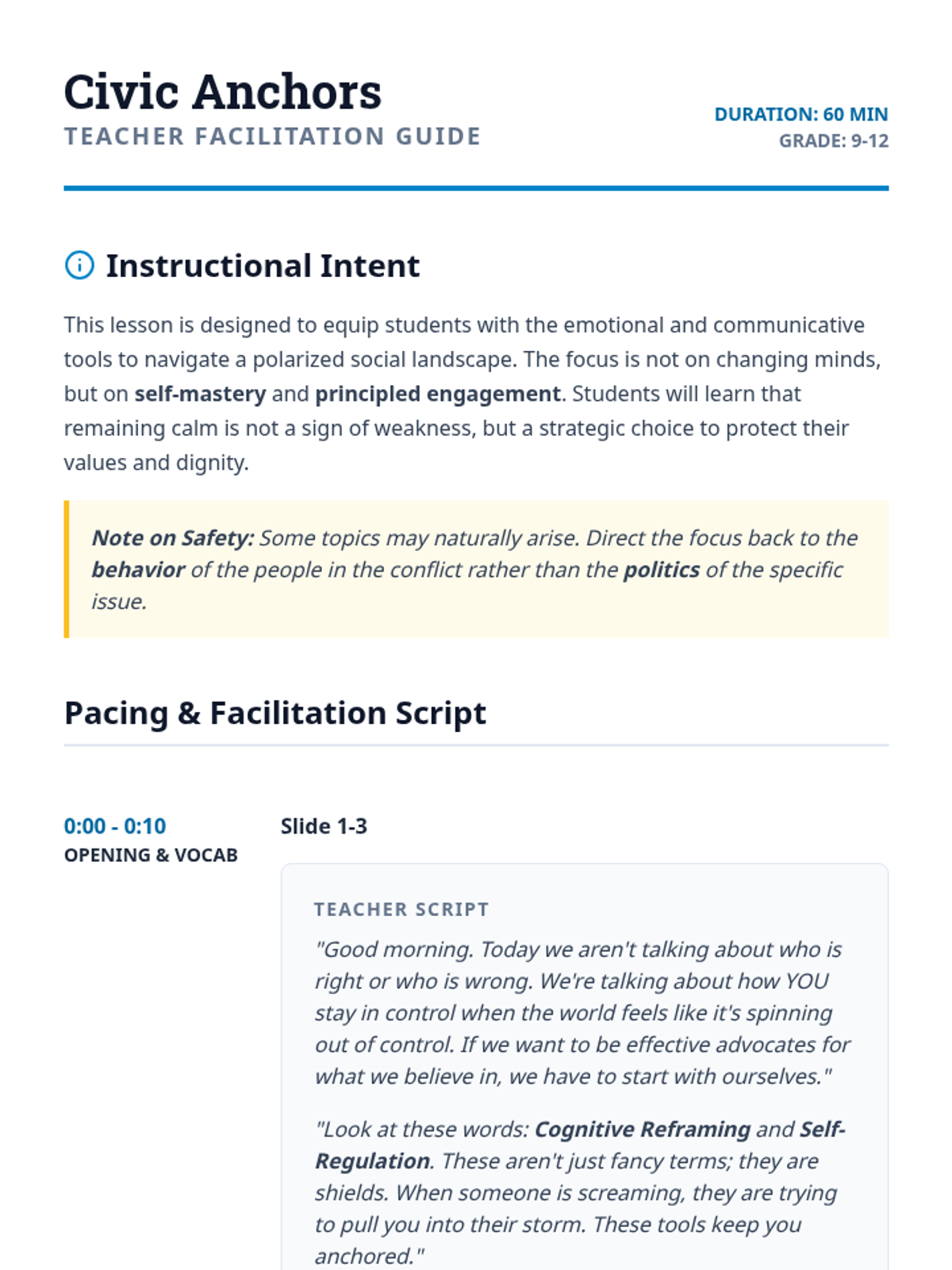
A one-hour high school lesson focused on self-regulation, communication, and perspective-taking within a divided political climate, helping students stay true to their values without escalating conflict.
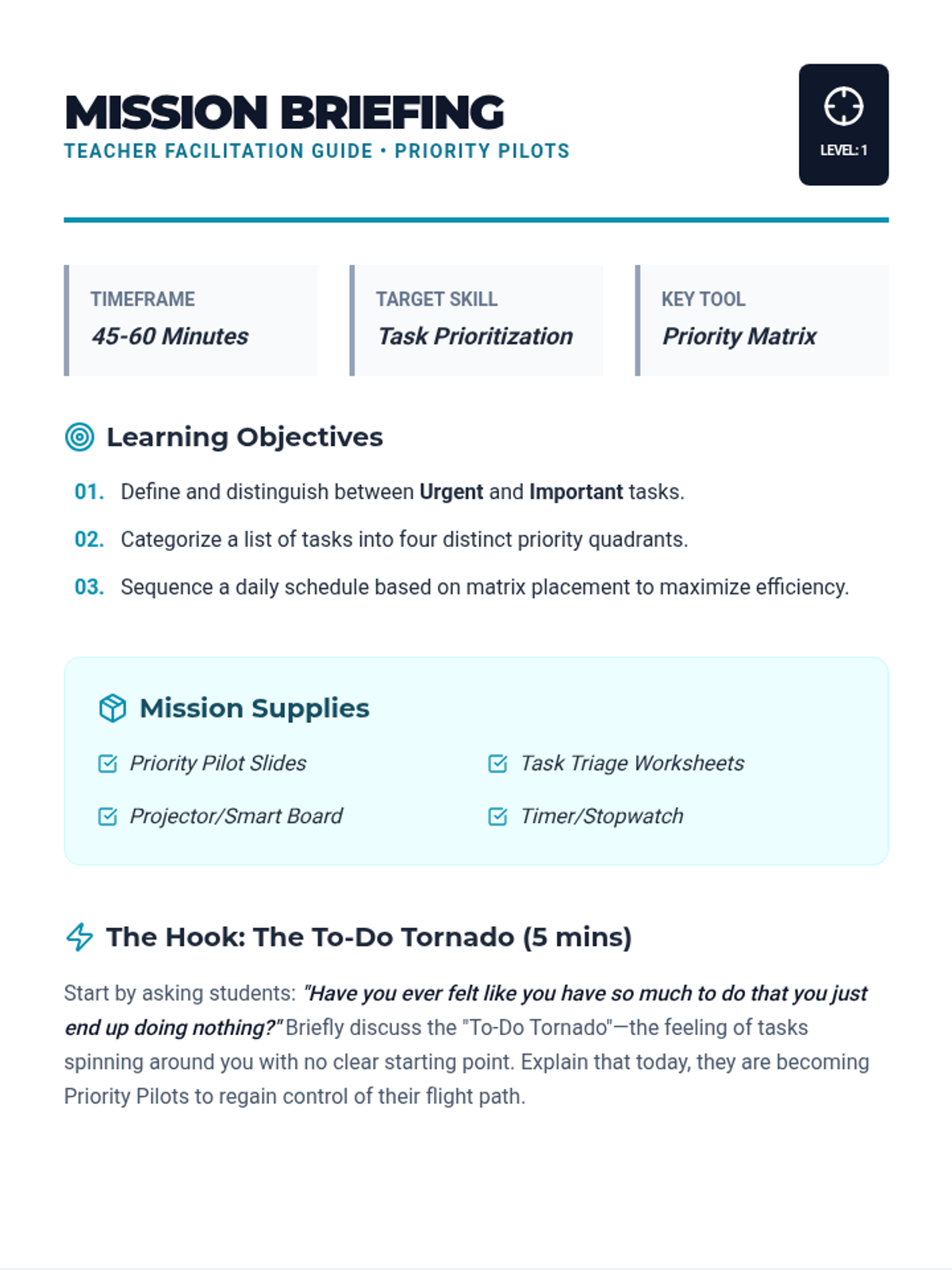
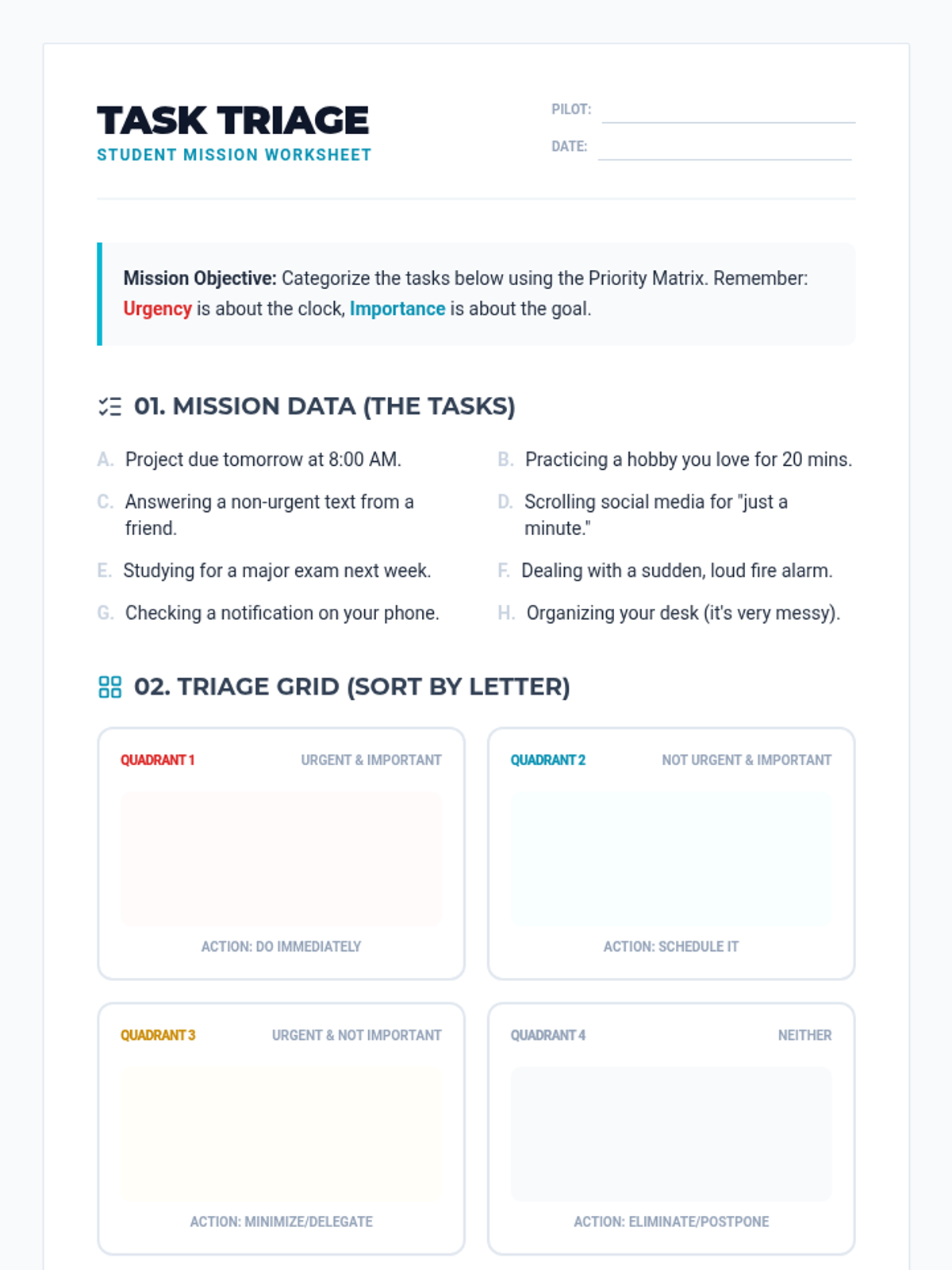
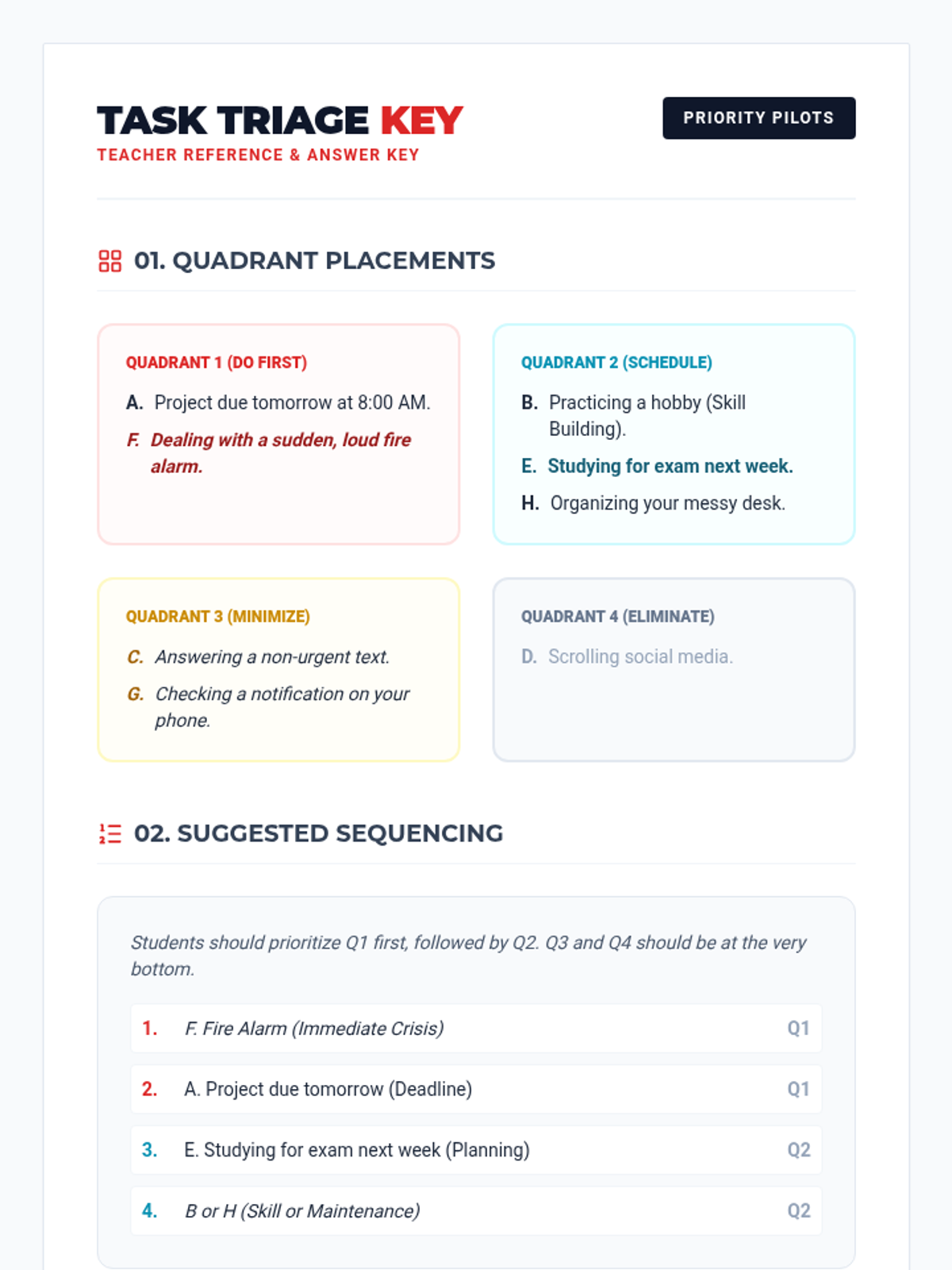
A comprehensive lesson on task prioritization where students learn to distinguish between urgent and important tasks and use a matrix to sequence their daily activities.
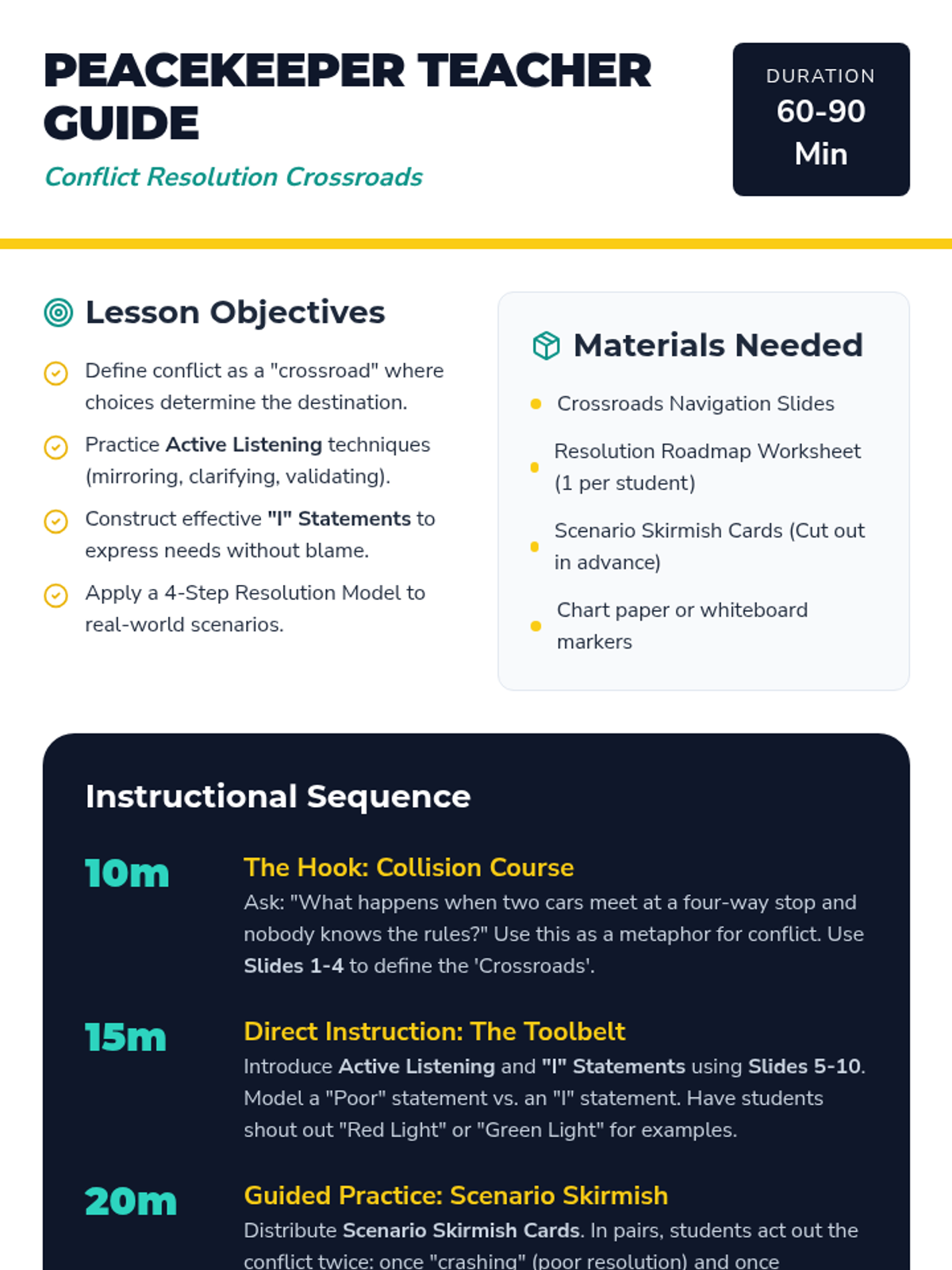
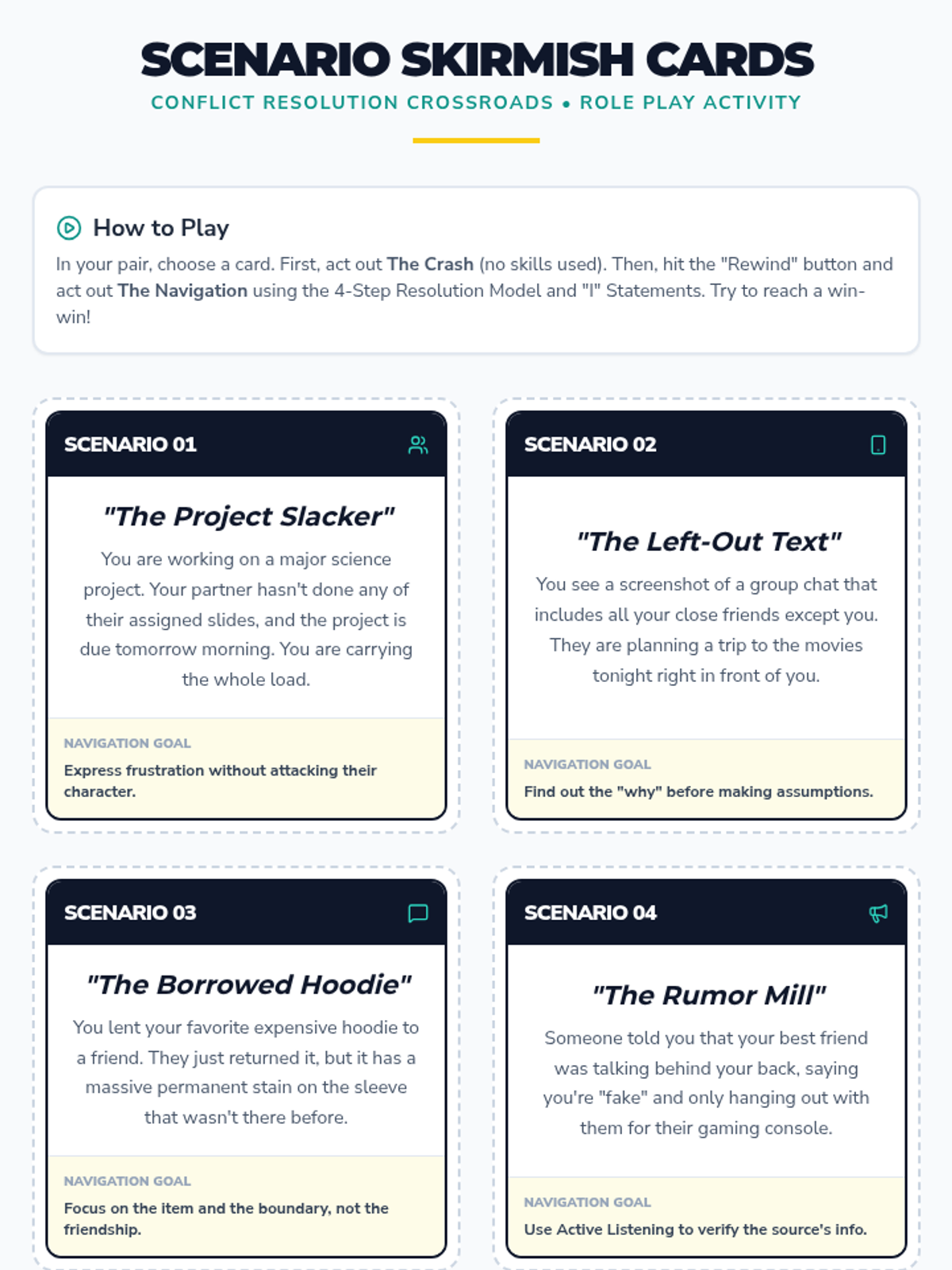
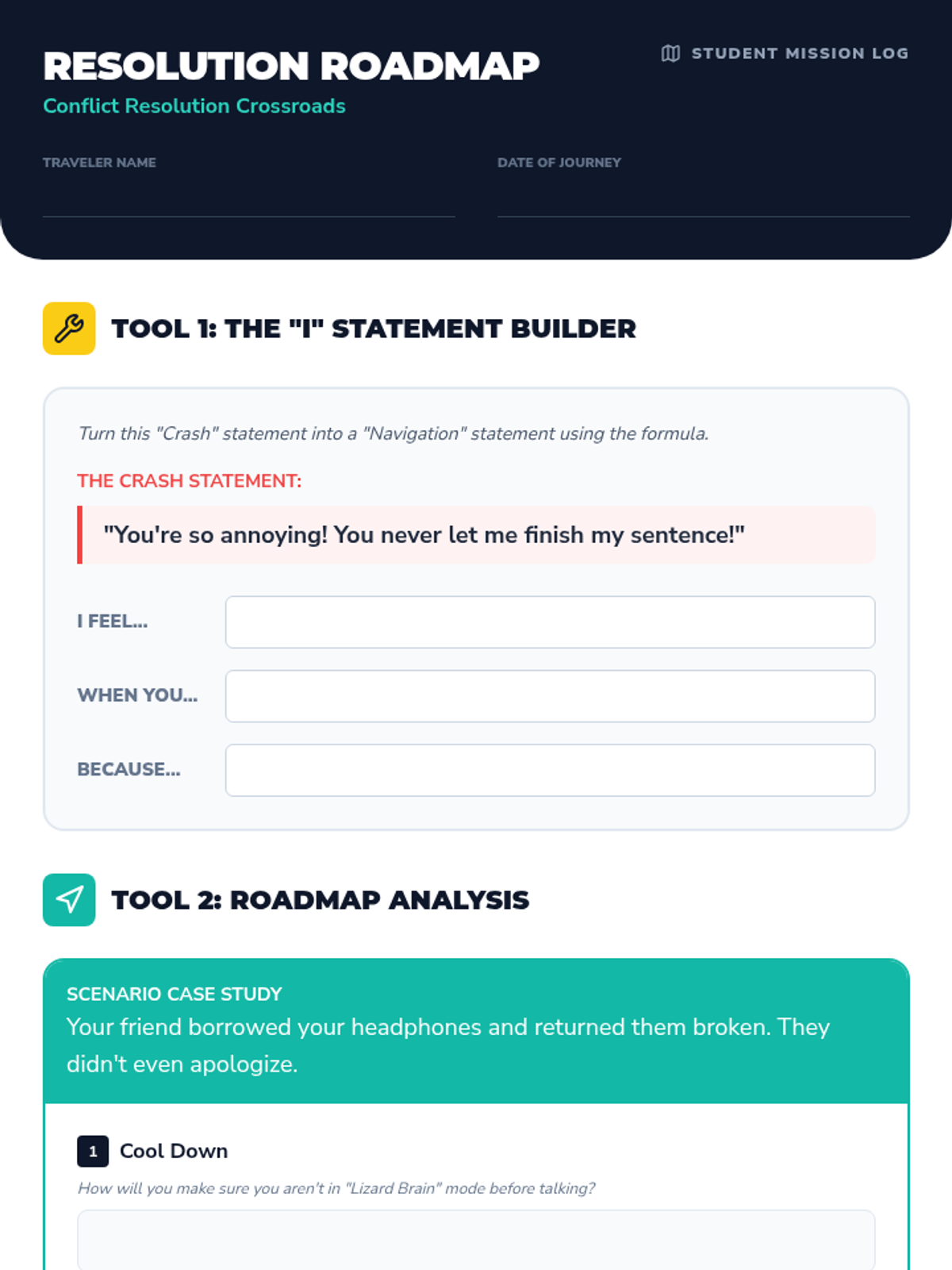
A comprehensive lesson for middle and high school students to master conflict resolution through a structured resolution model, active listening, and role-playing scenarios. Students learn to navigate 'conflict crossroads' using empathy and clear communication.
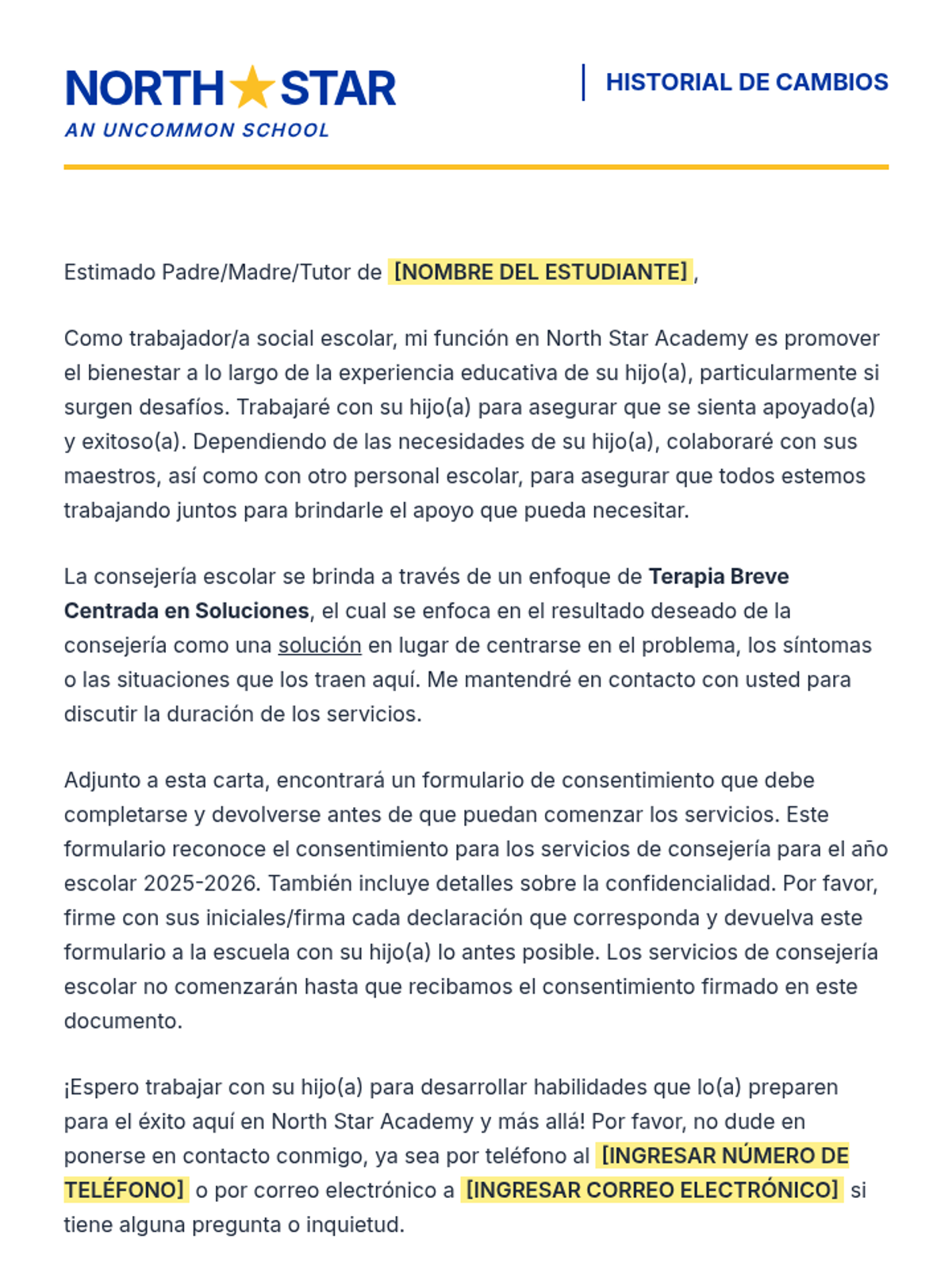
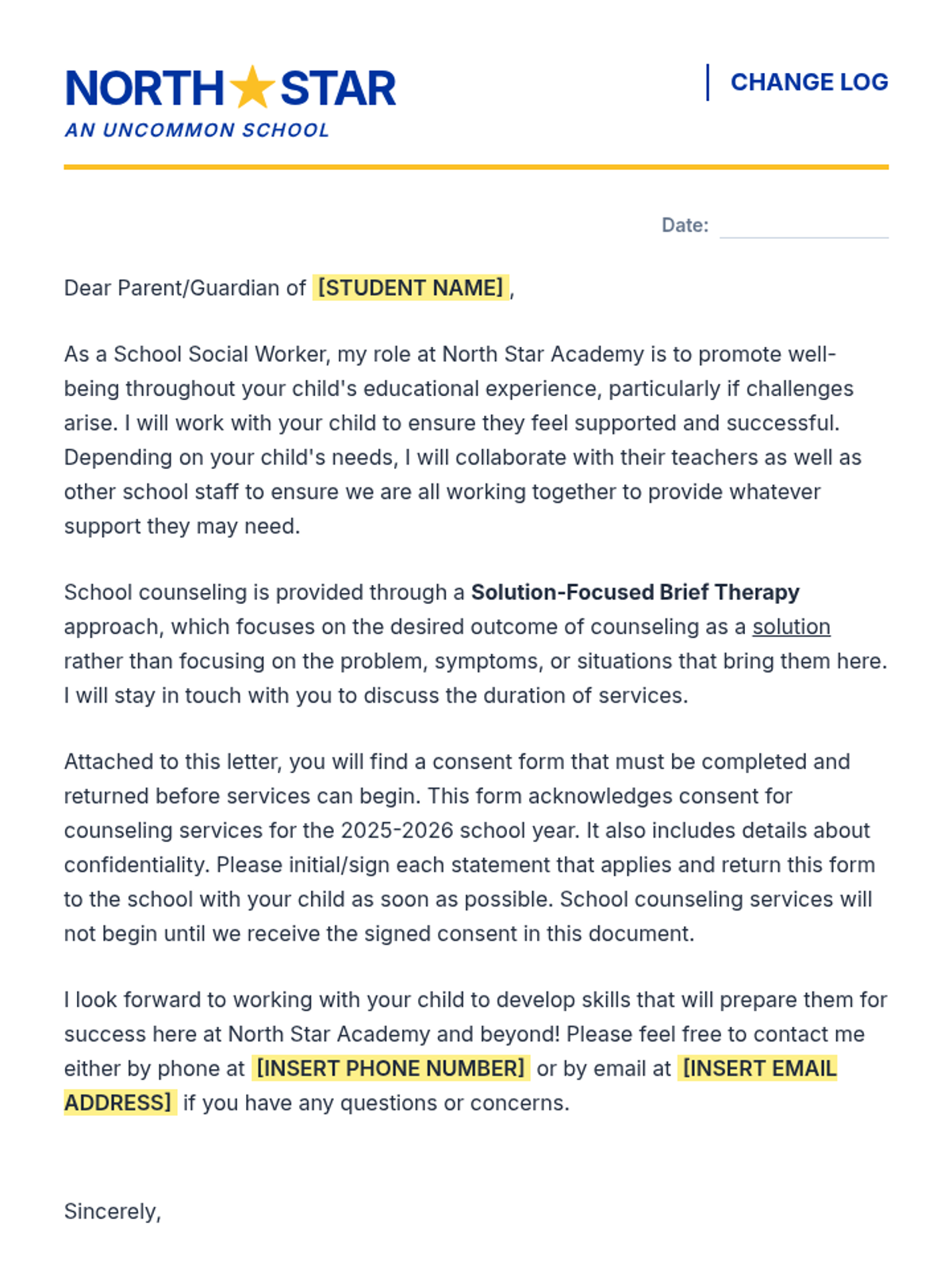
A set of translated resources for school social workers to obtain parental consent for school-based counseling services.
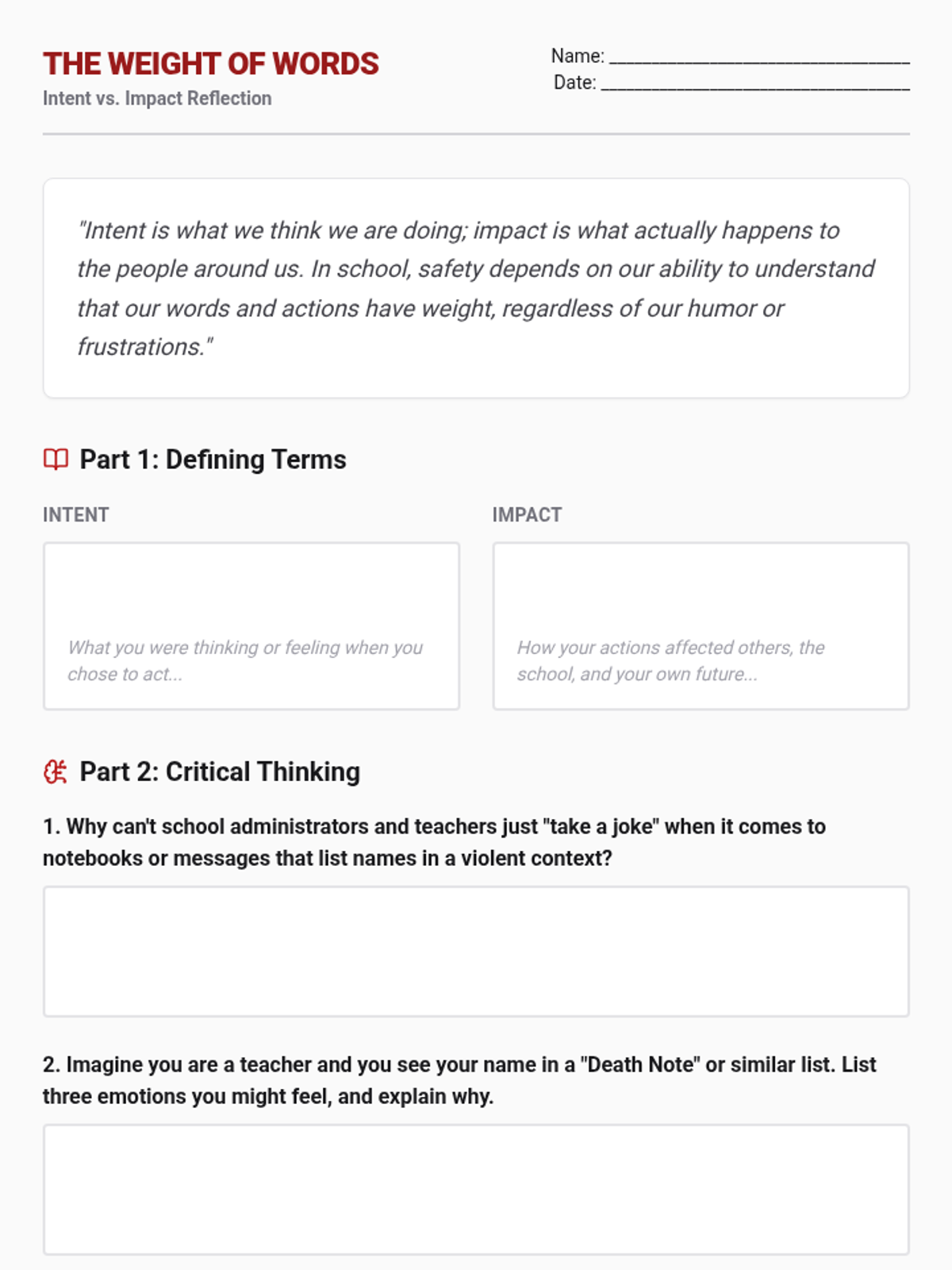
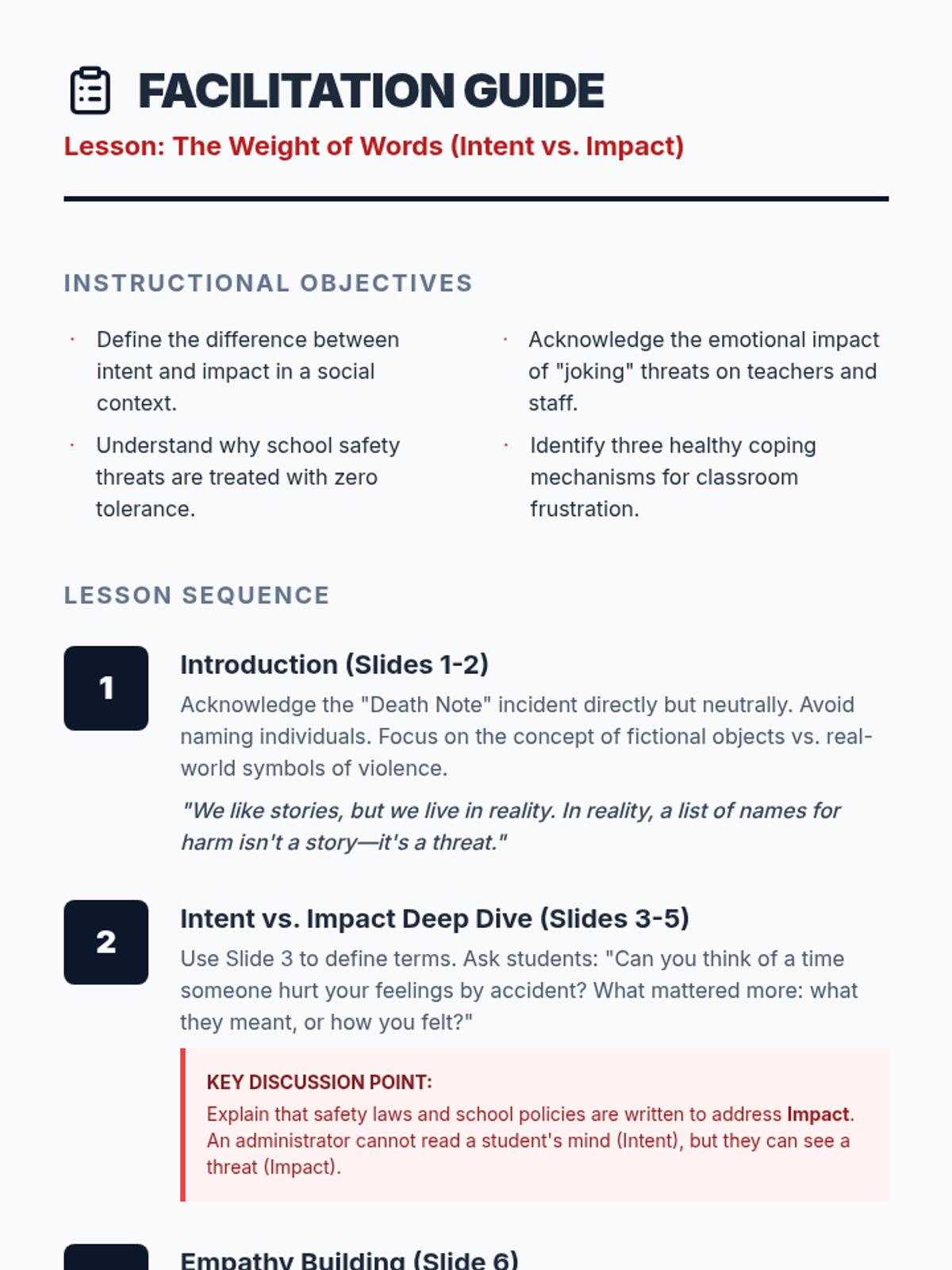
A psychoeducation lesson designed to address the severity of school threats following a 'Death Note' incident, focusing on the critical difference between intent and impact.
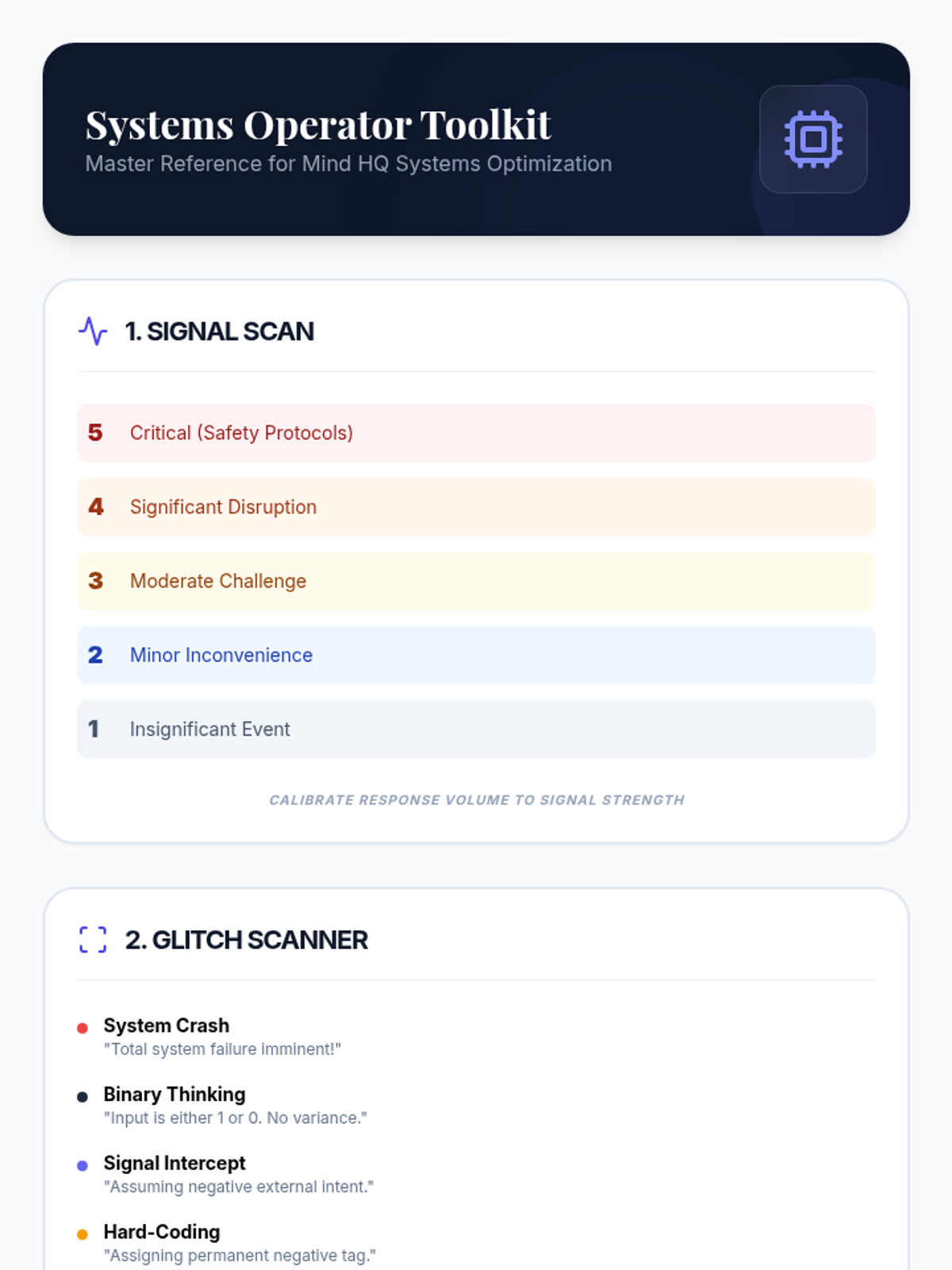
Focuses on long-term application and maintenance of regulation strategies, culminating in a personalized 'Operator Toolkit' for sustained mastery.
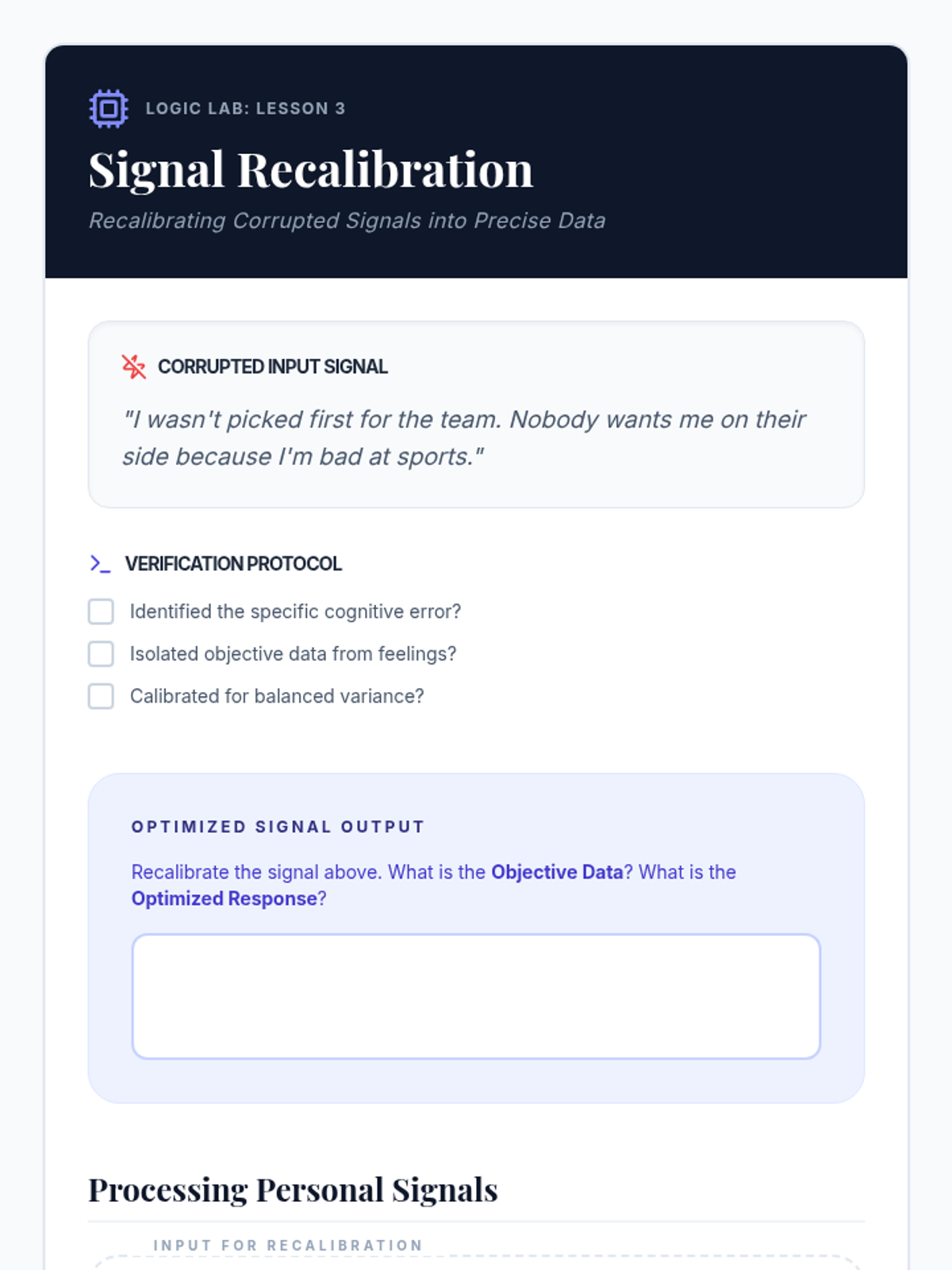
Provides tools for cognitive restructuring, teaching students to challenge 'Thinking Glitches' and calibrate their perspective in the 'Logic Lab' to reach balanced conclusions.
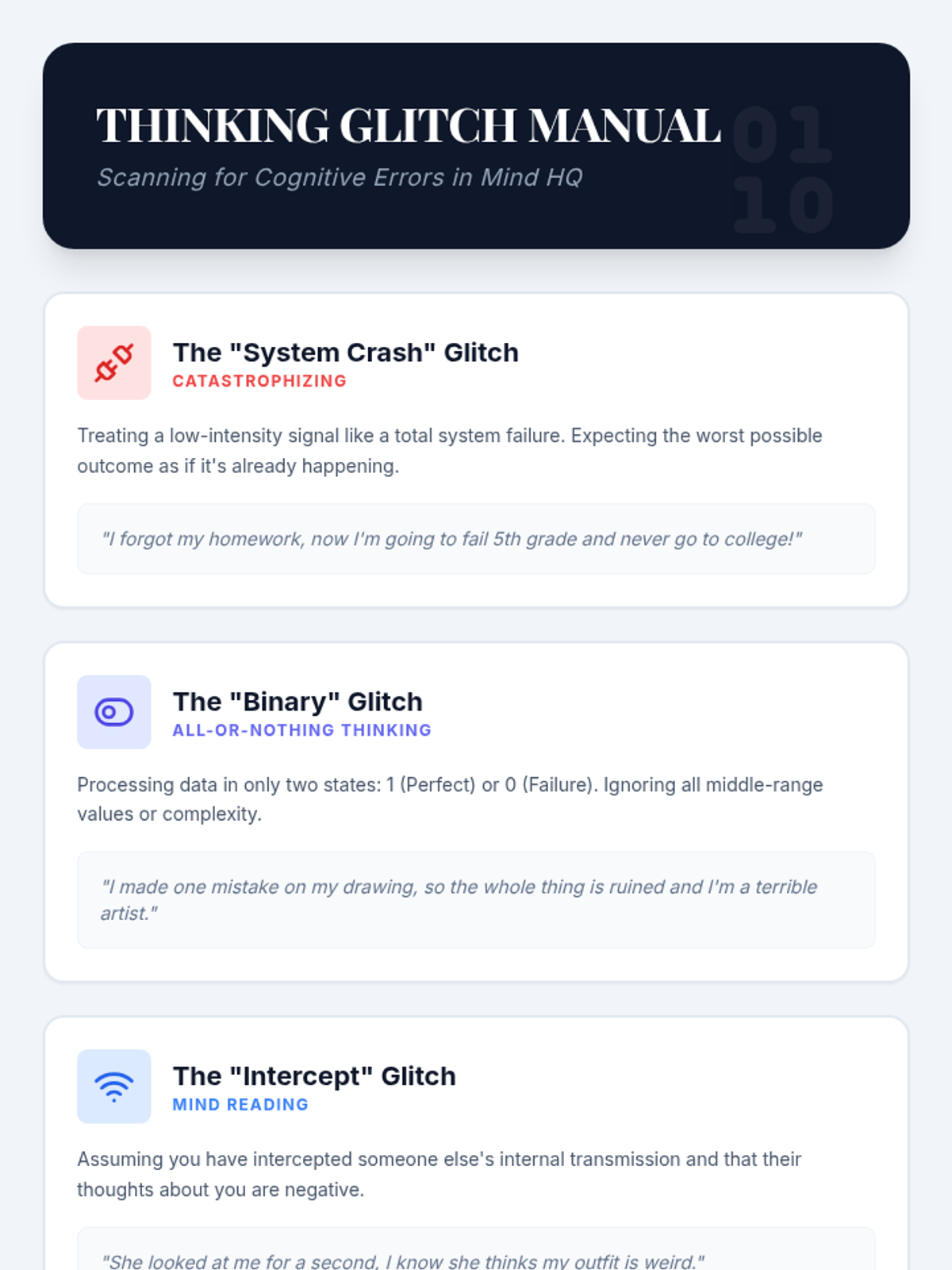
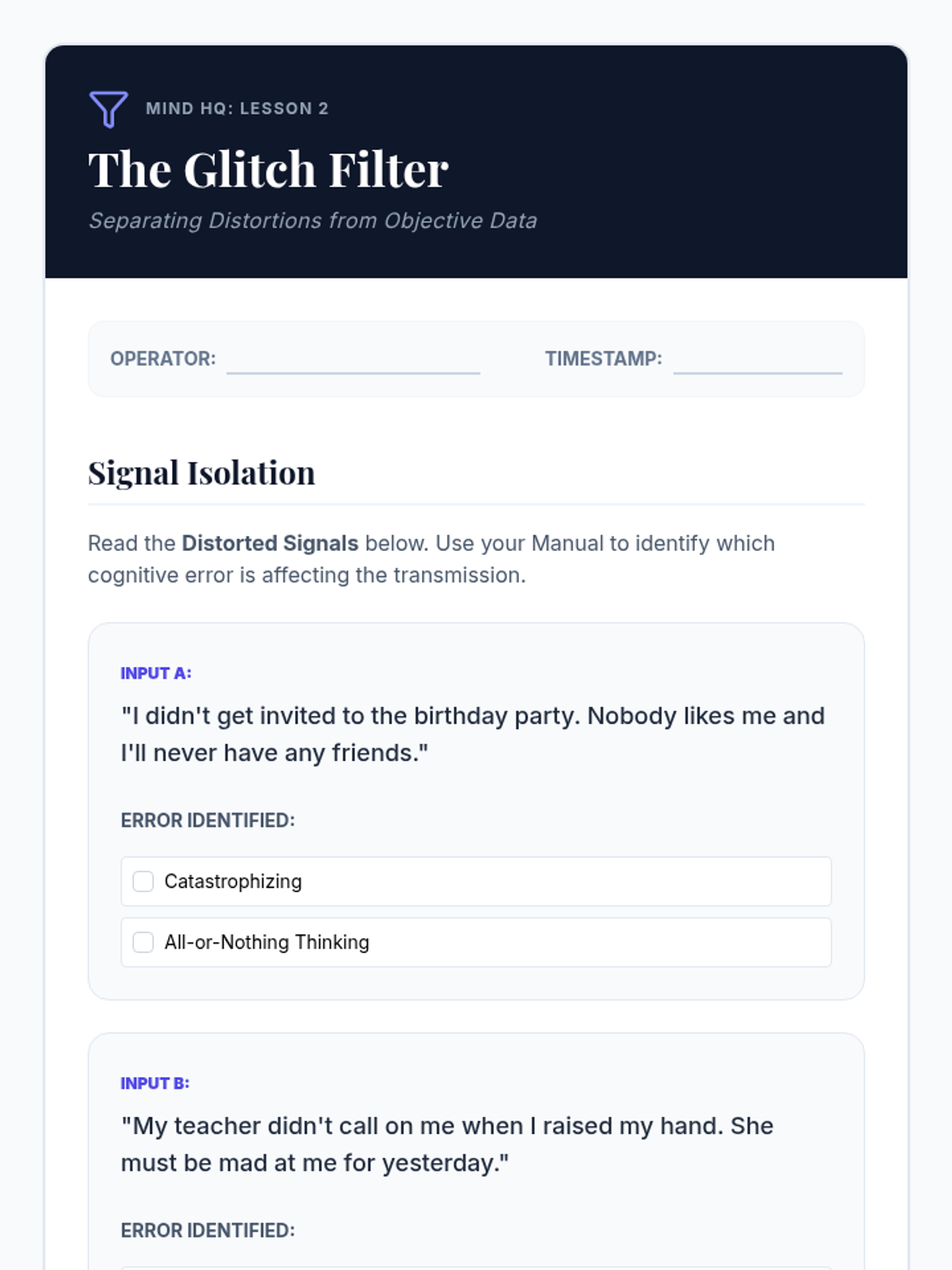
Introduces the concept of cognitive distortions as 'Thinking Glitches' and teaches the student to identify patterns like catastrophizing and all-or-nothing thinking.
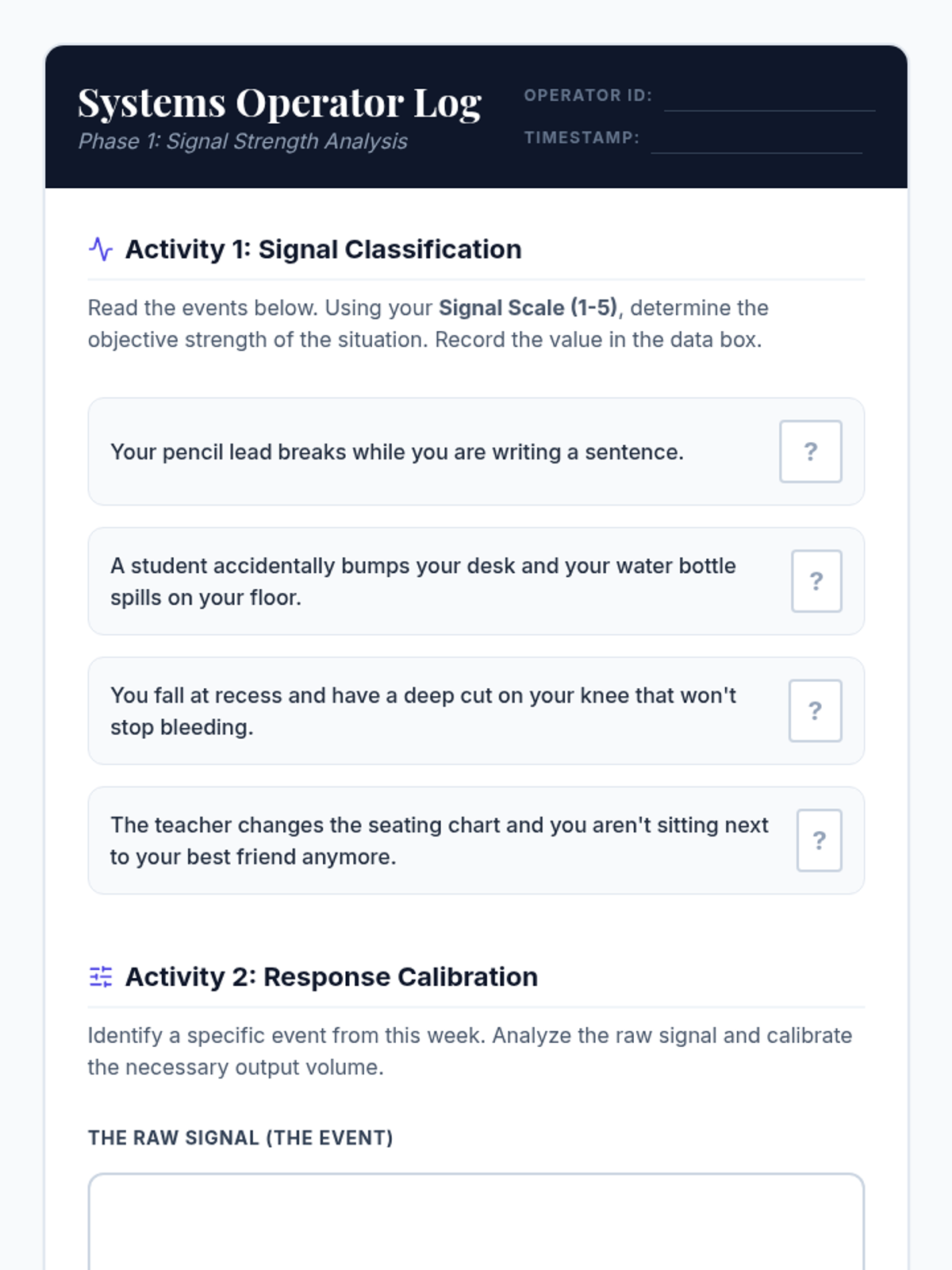
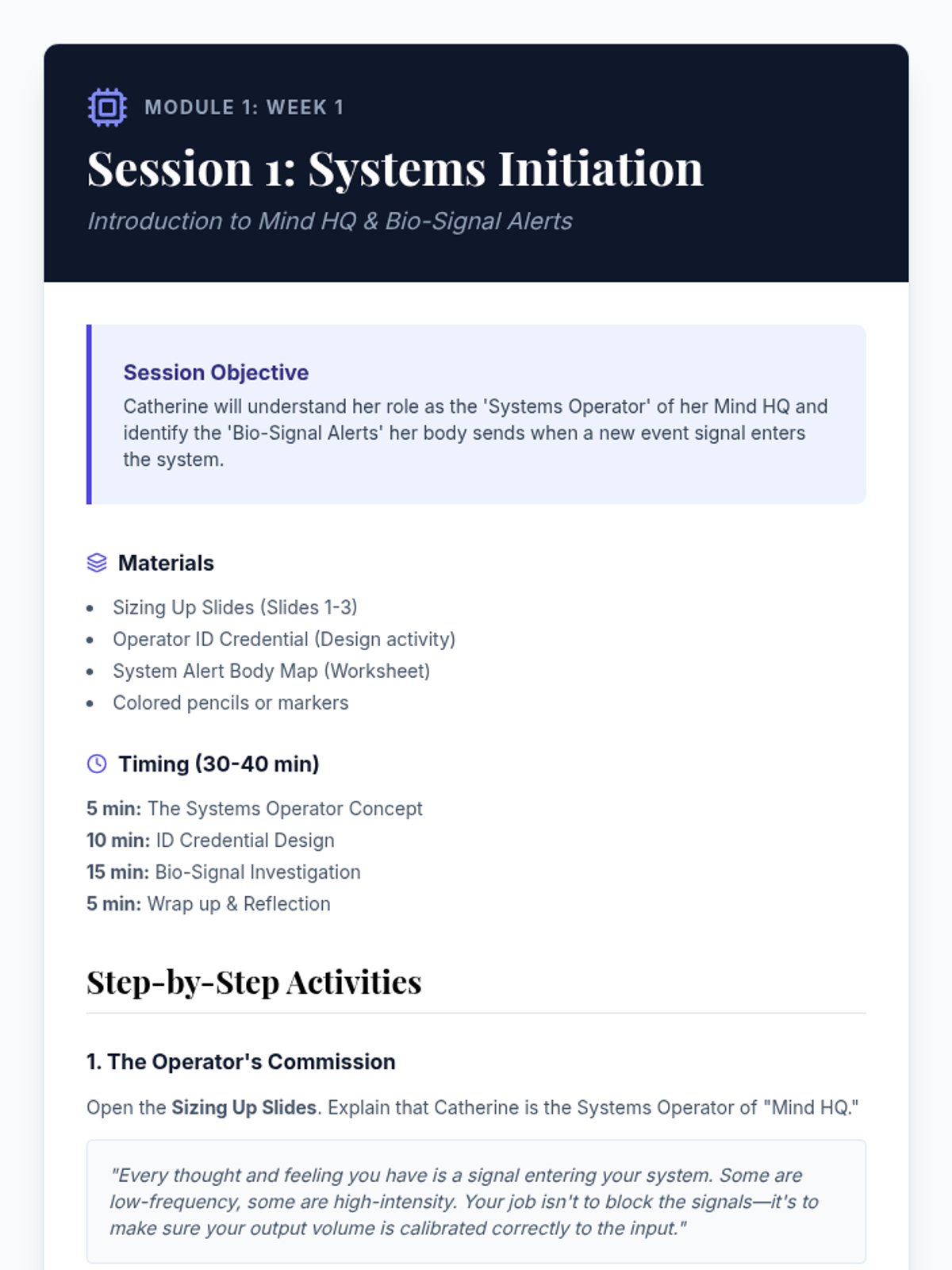
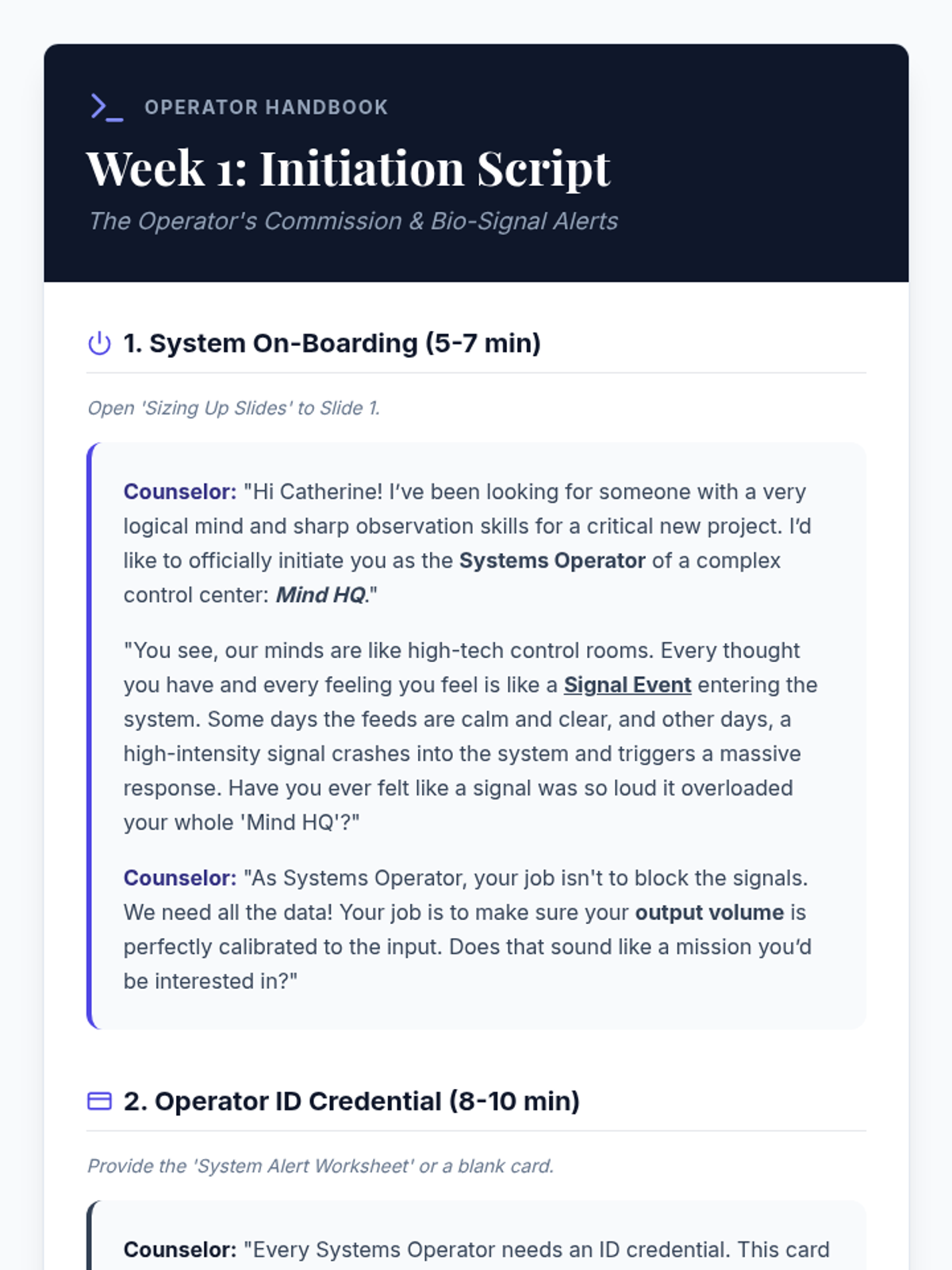
Focuses on identifying the 'Scale of Situation' and ensuring physiological and emotional reactions are proportionate. This module provides the foundation for objective situational interpretation using the 'Mind HQ' framework.
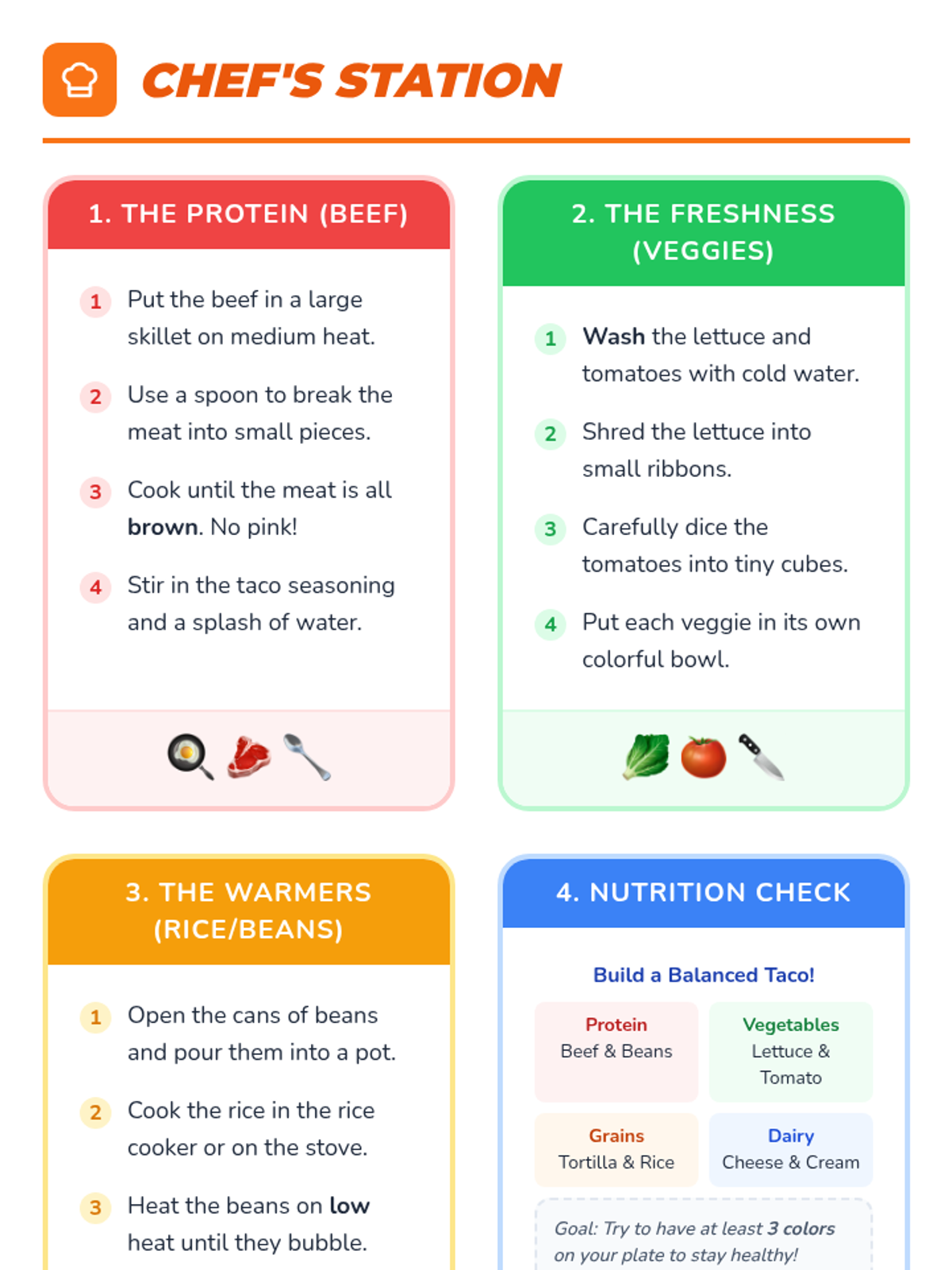
Focuses on food preparation and nutrition. Students follow visual recipes to prepare taco ingredients and identify healthy food groups.
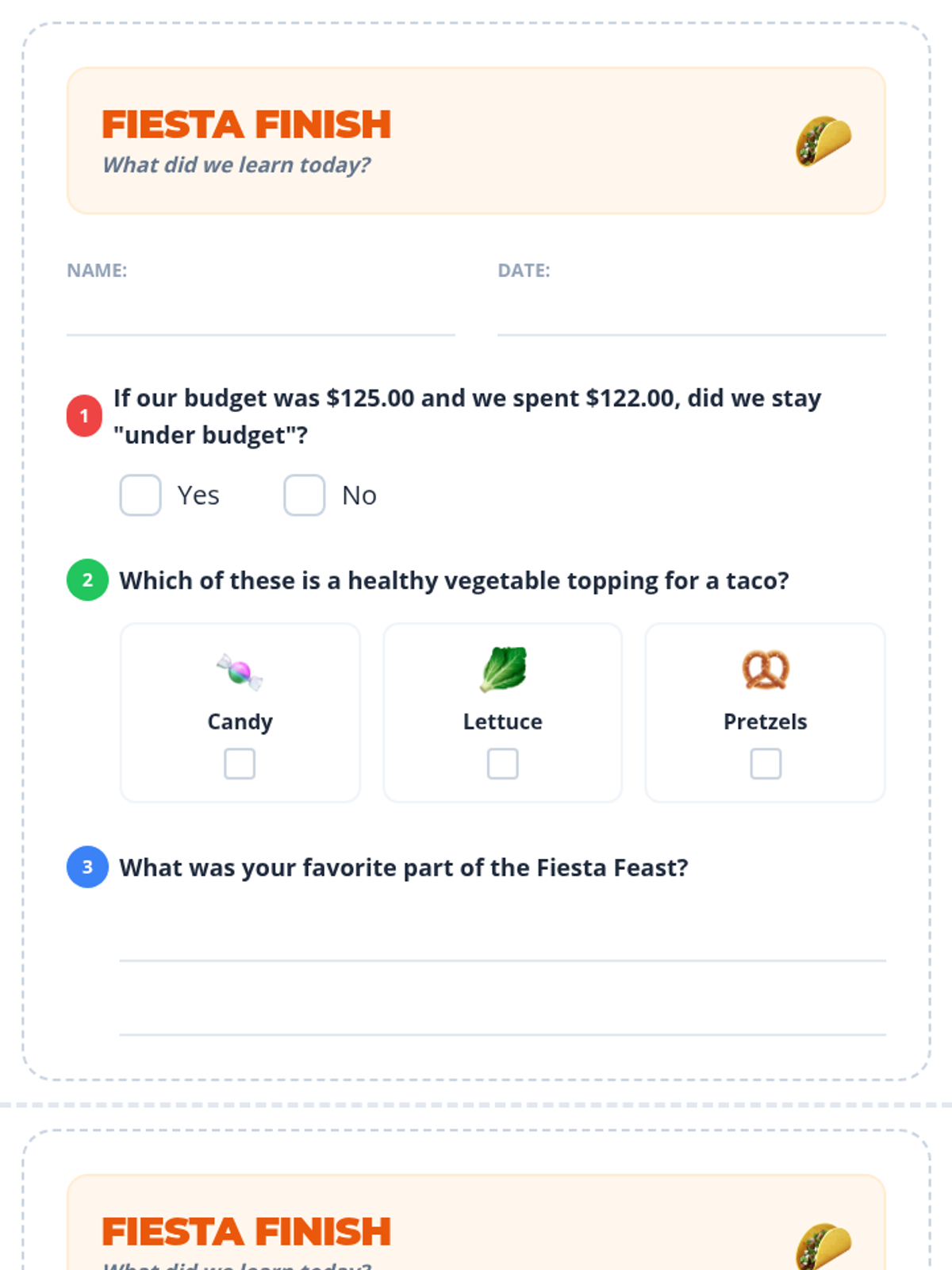
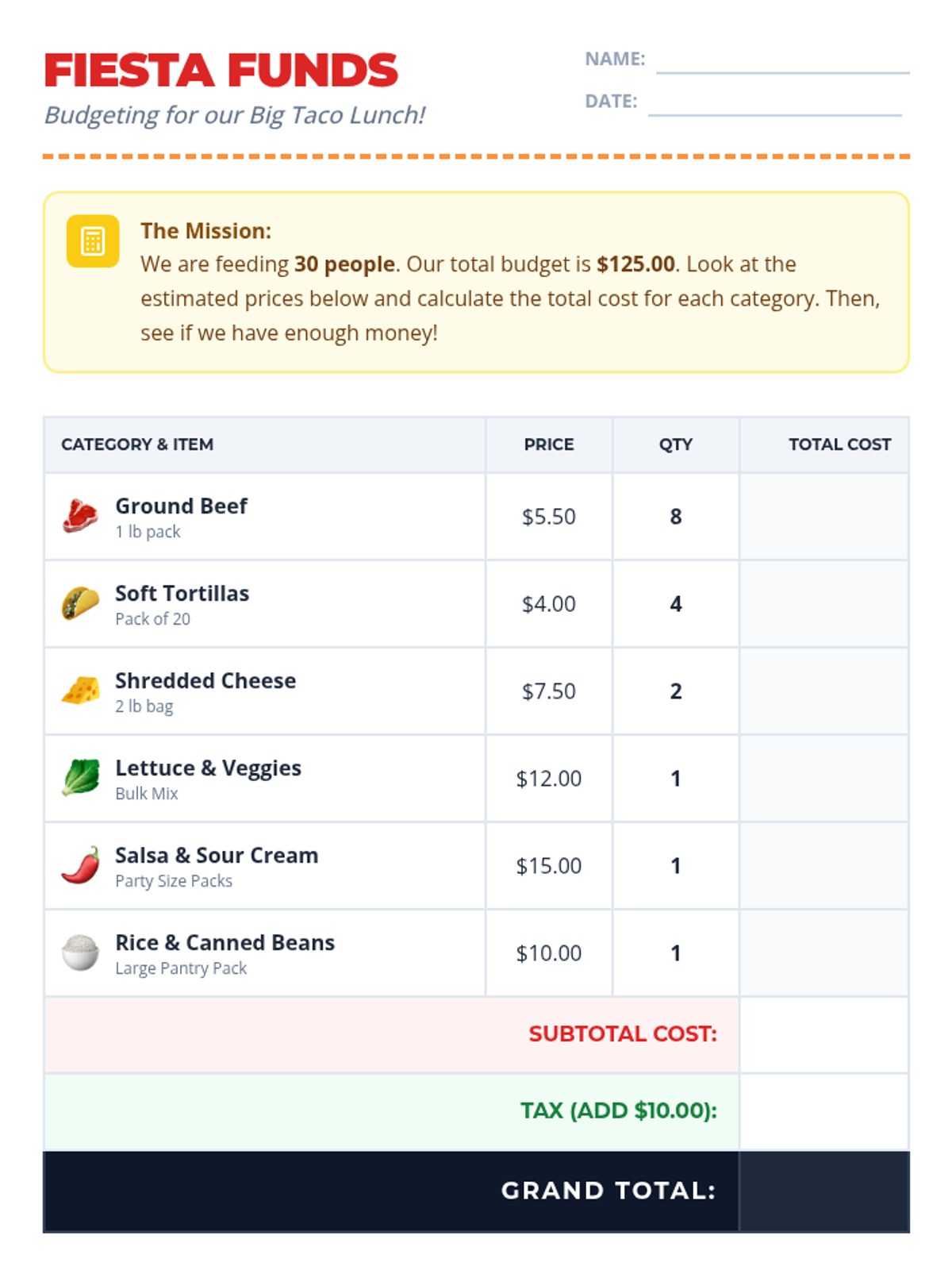
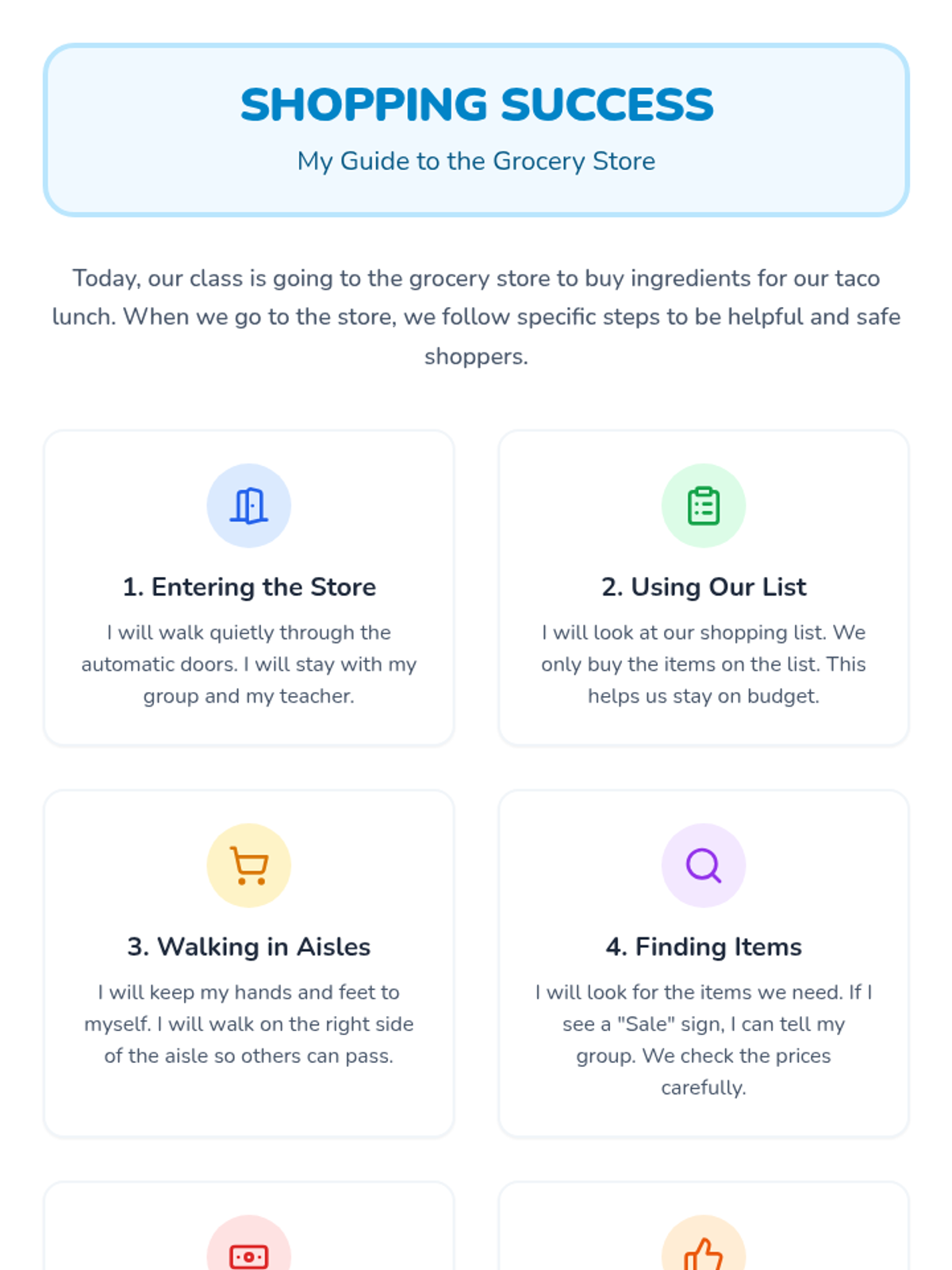
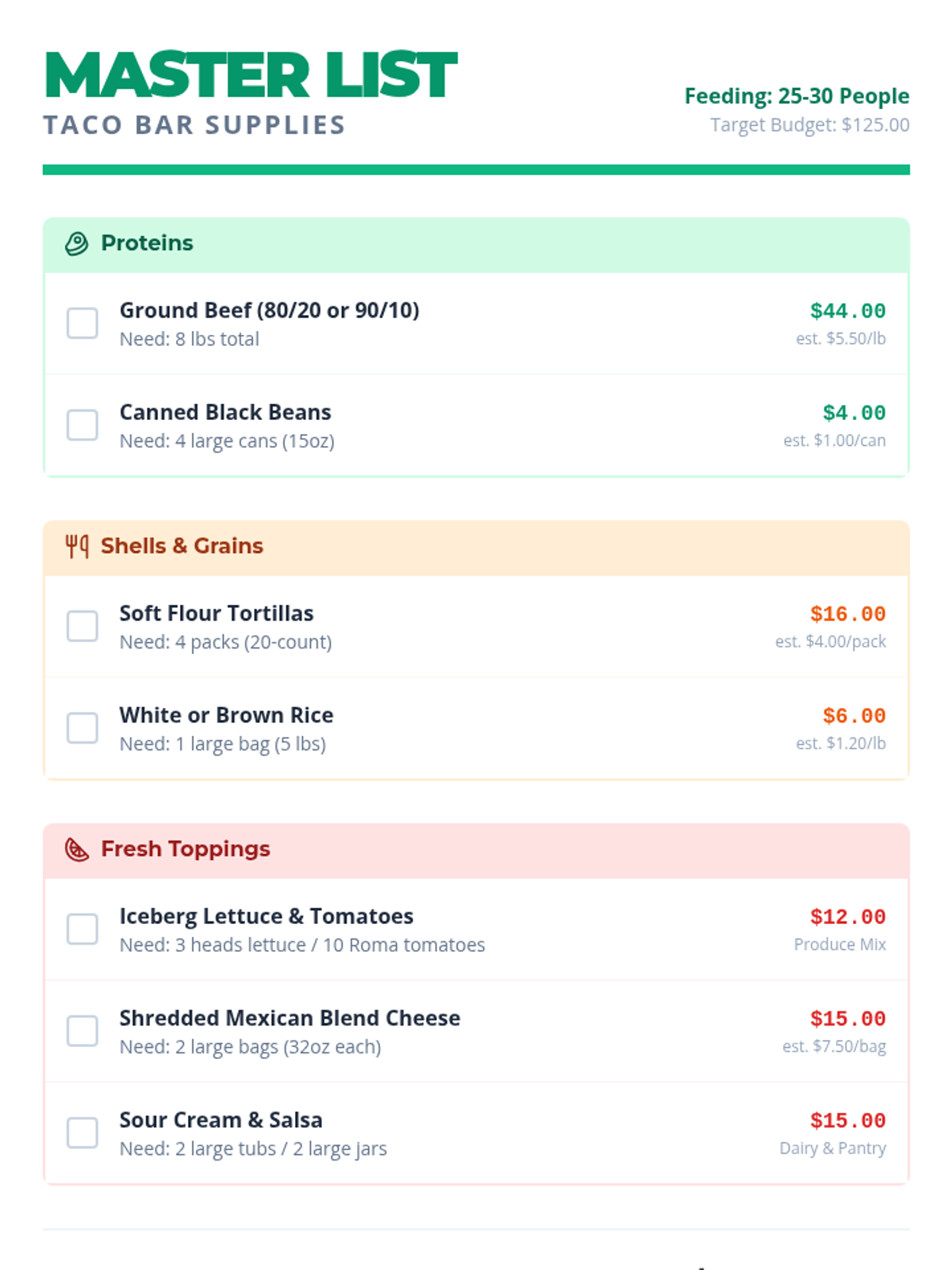
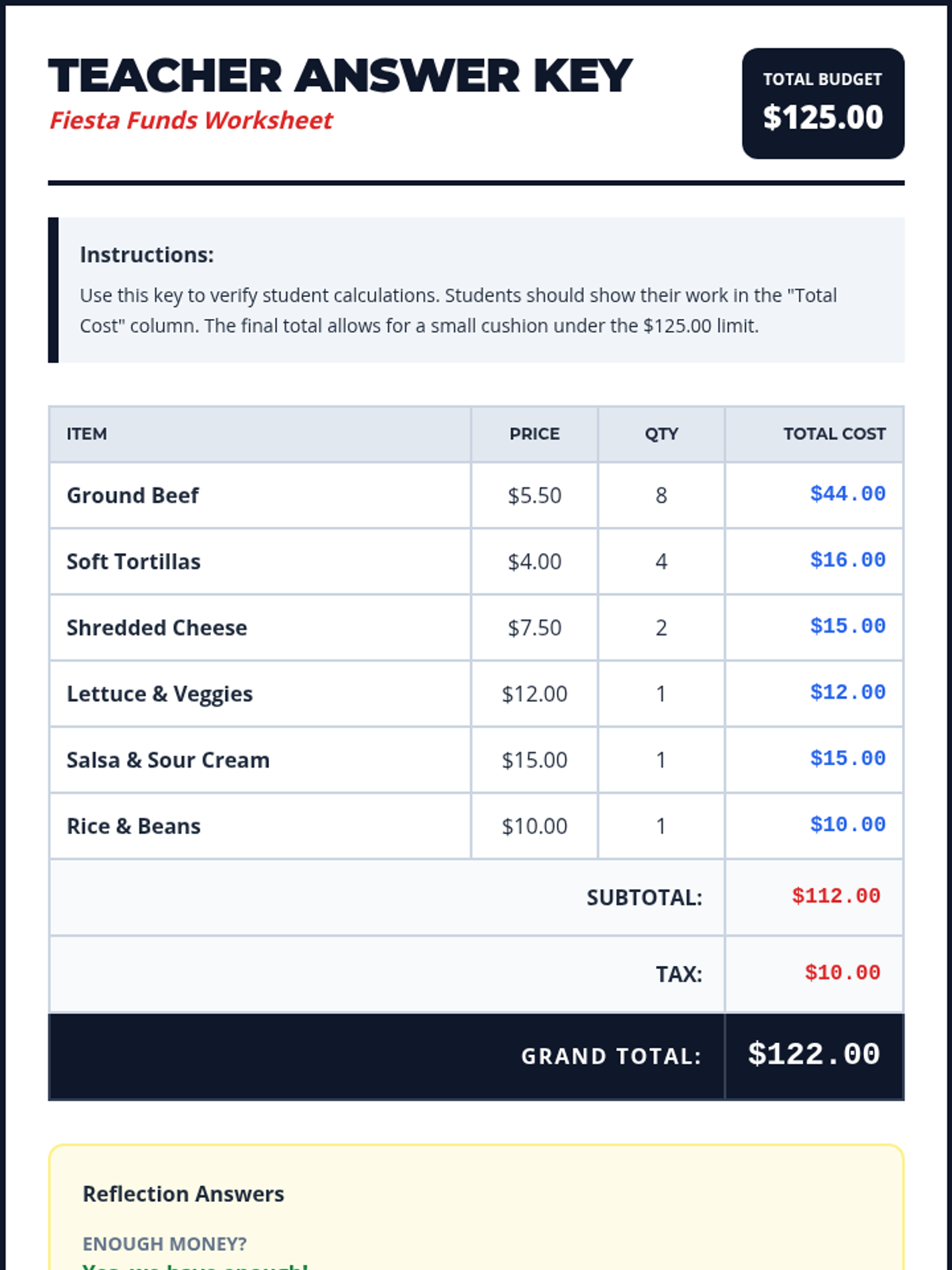
Focuses on the financial and social aspects of grocery shopping. Students calculate costs, manage a budget, and learn the social expectations of visiting a store.
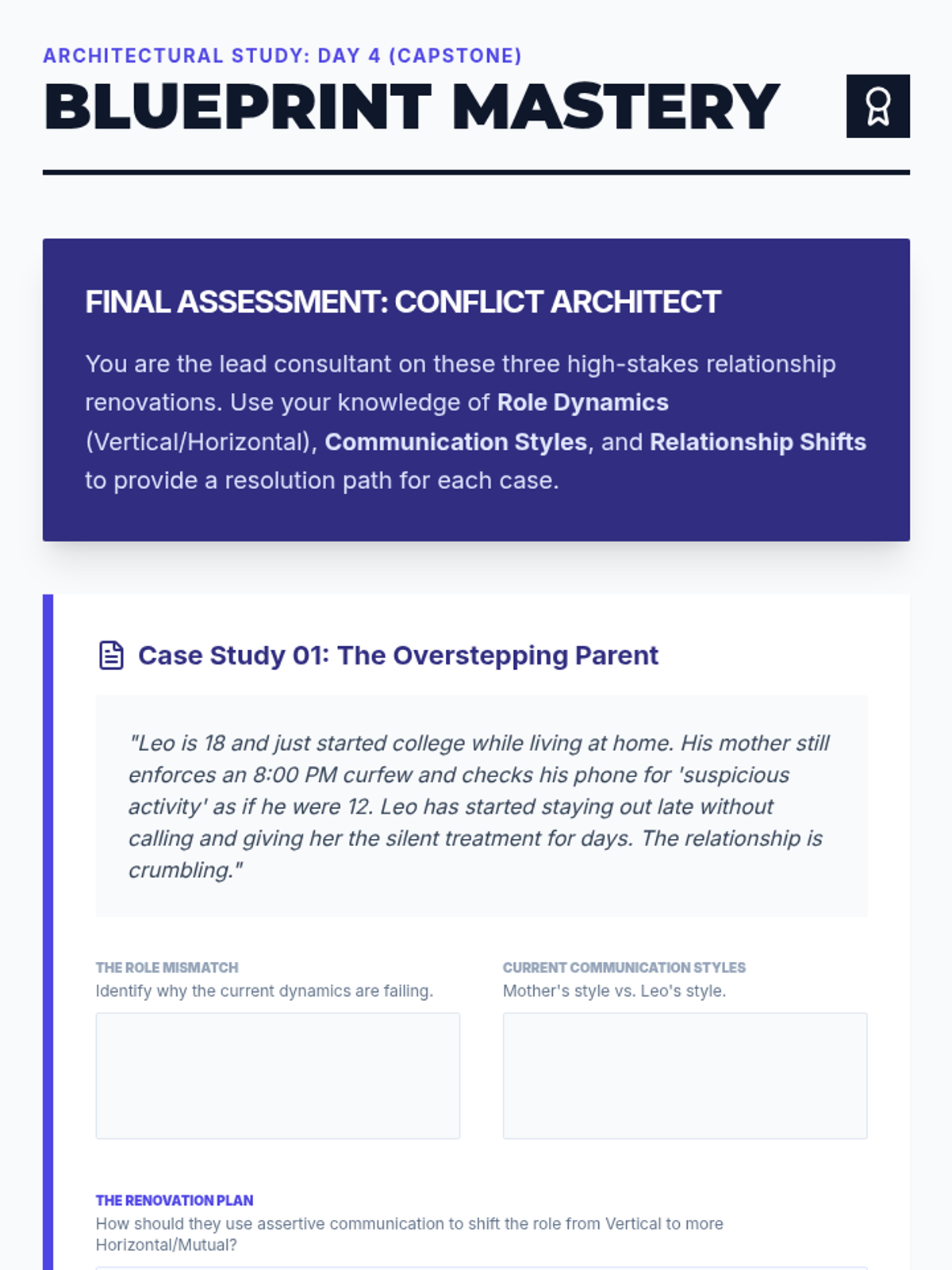
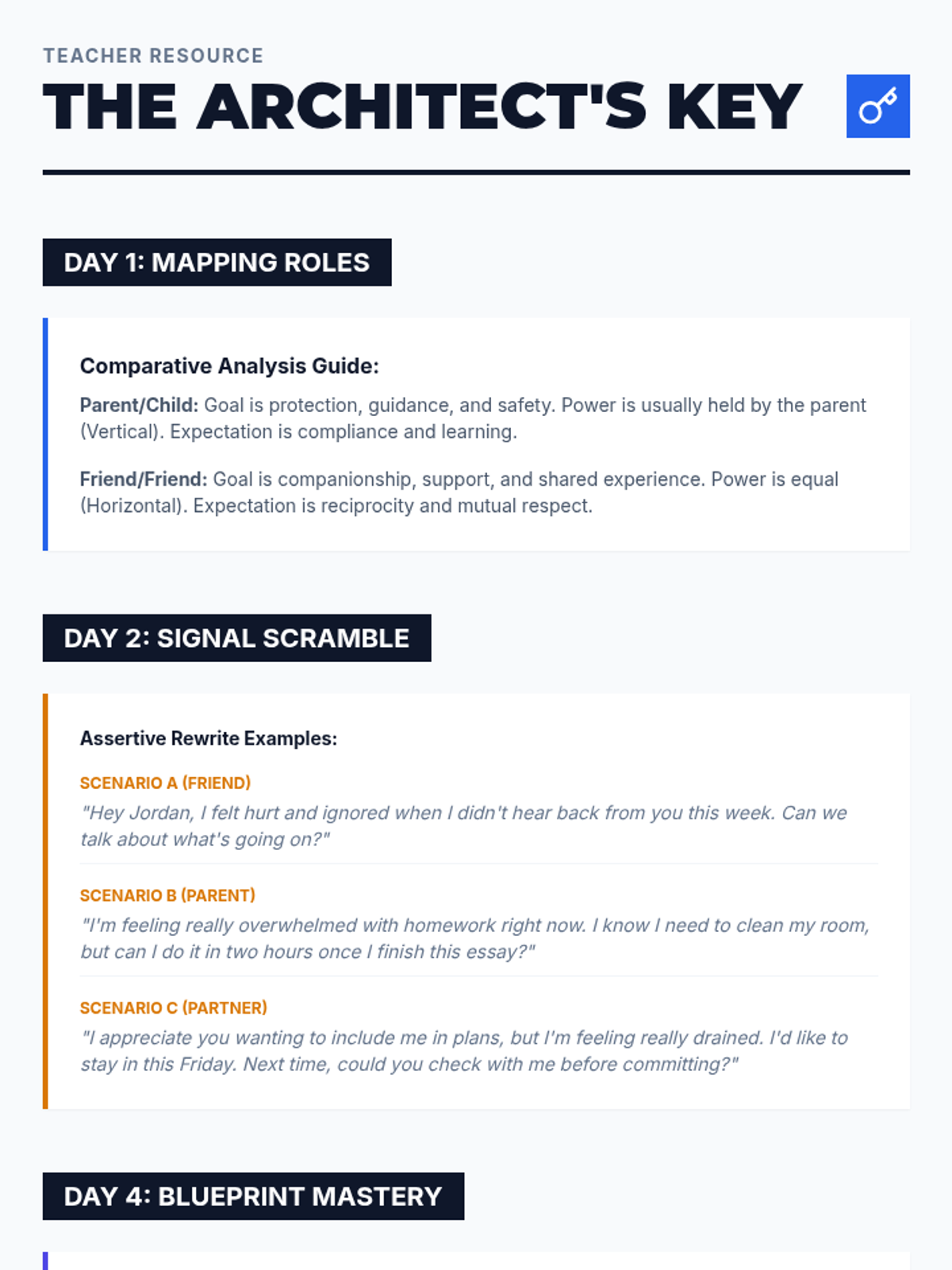
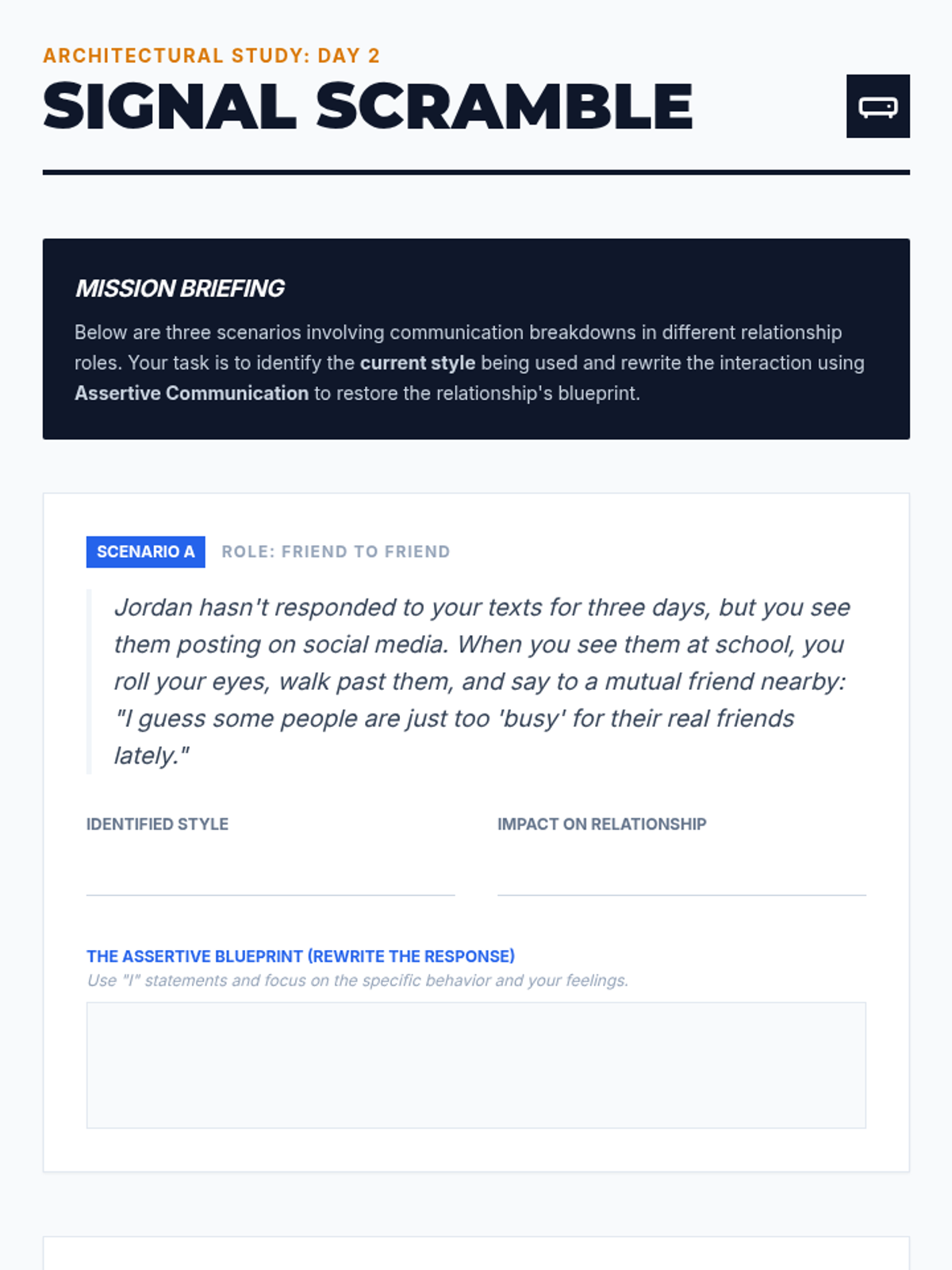
A capstone practice where students apply their knowledge to complex scenarios involving role changes and communication breakdowns.
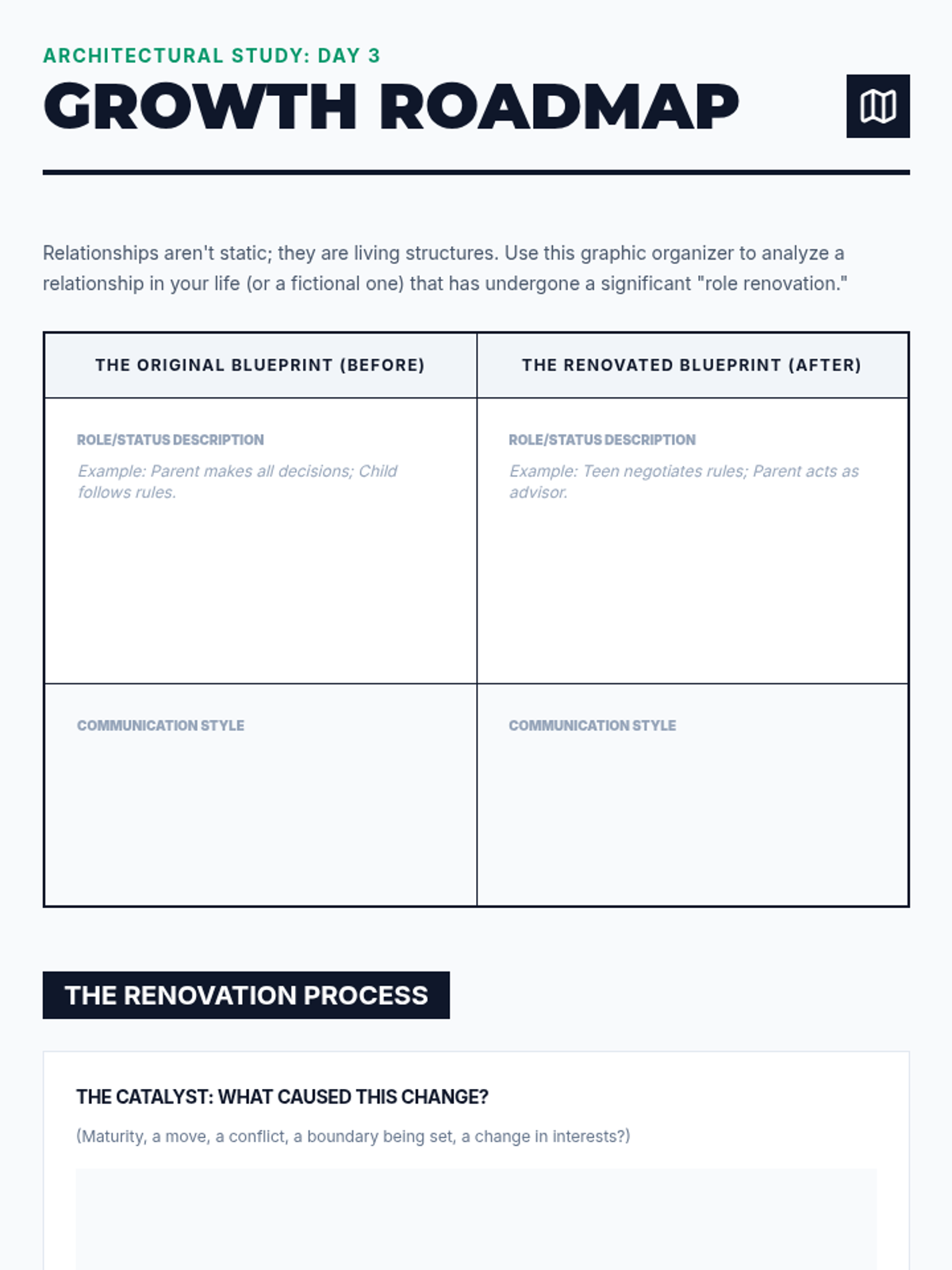
Students investigate why and how relationships change over time, focusing on boundaries and life transitions.
An exploration of the four primary communication styles and how they interact with different relationship roles to build or break connections.
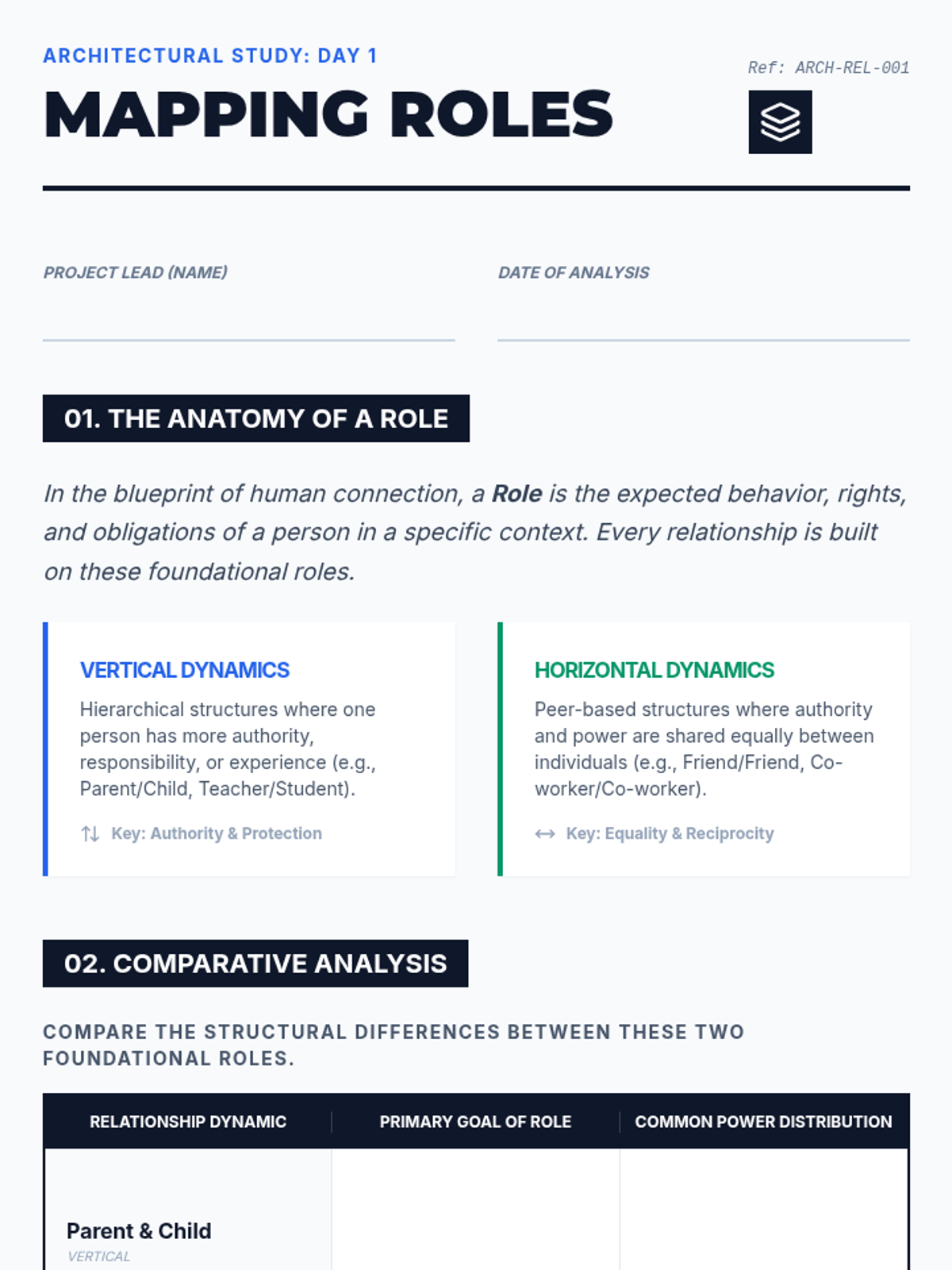
Students define relationship roles and analyze the core differences between vertical (parent-child) and horizontal (friend-friend) dynamics.
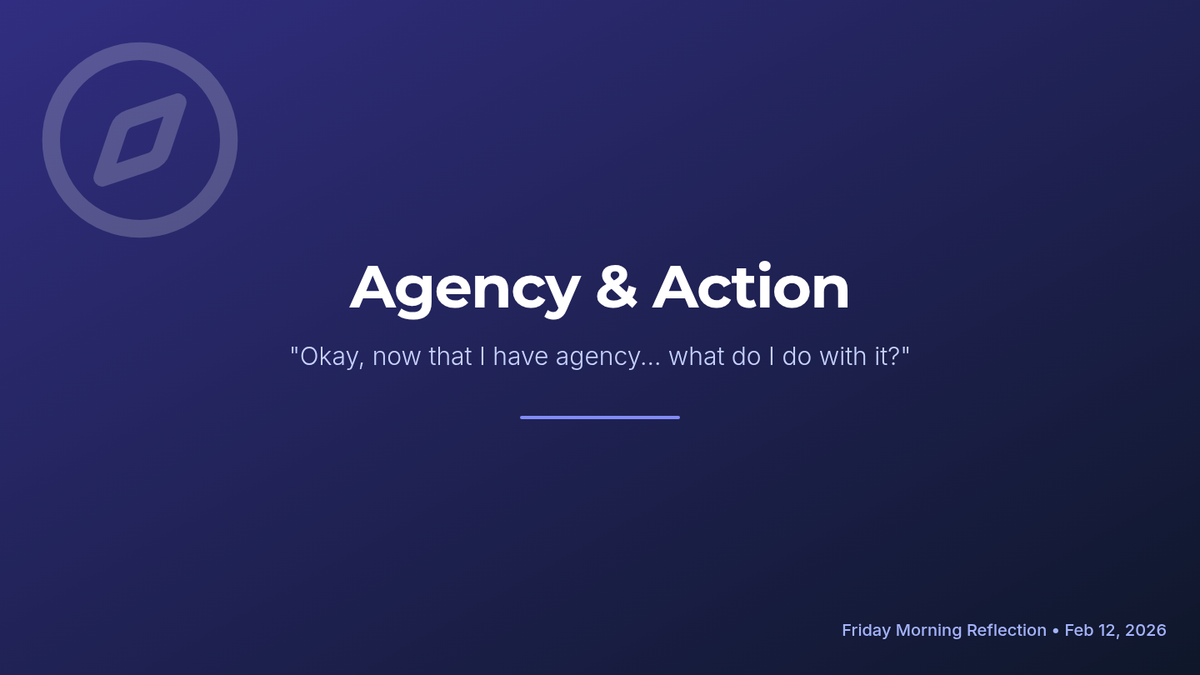
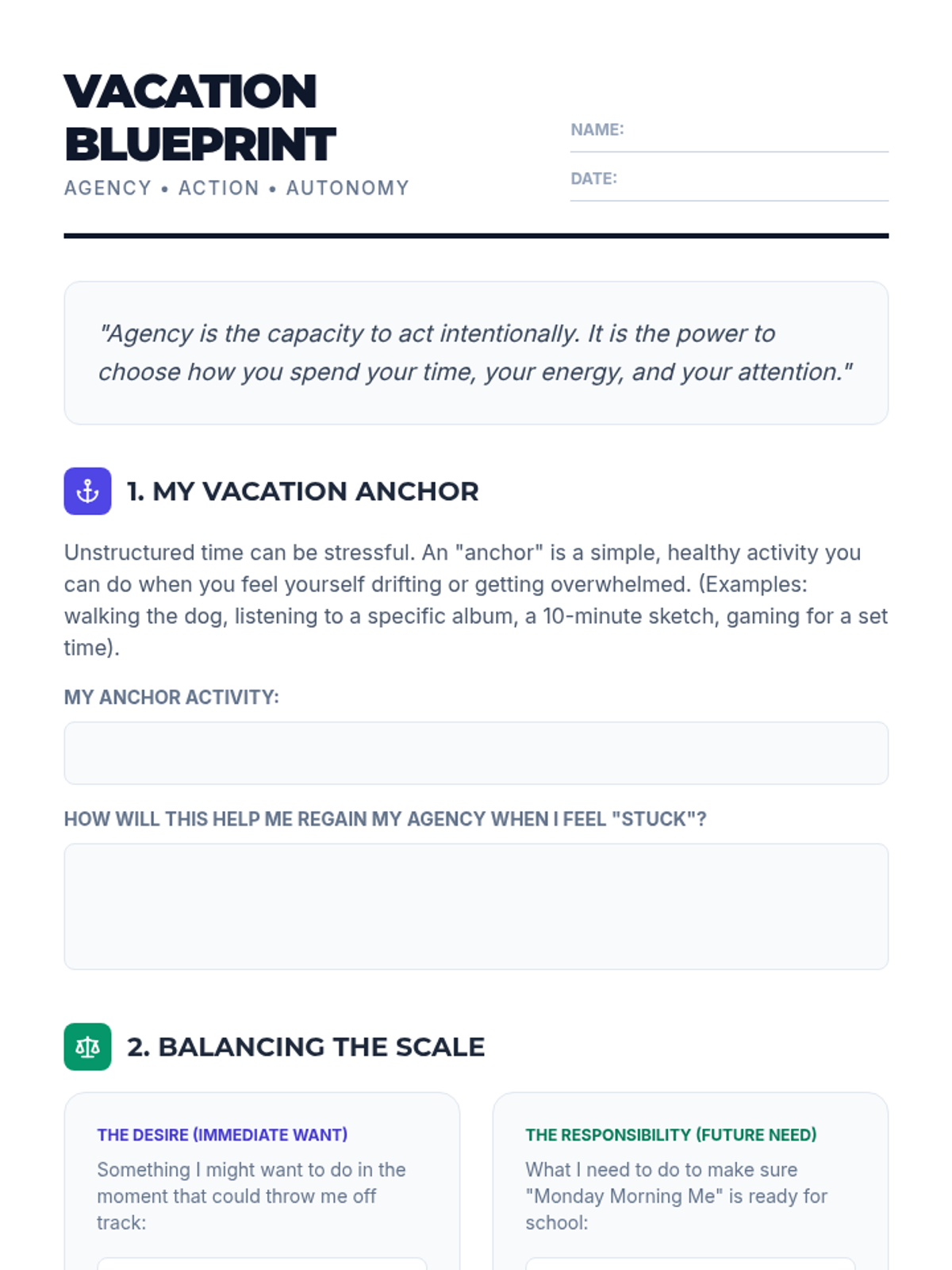
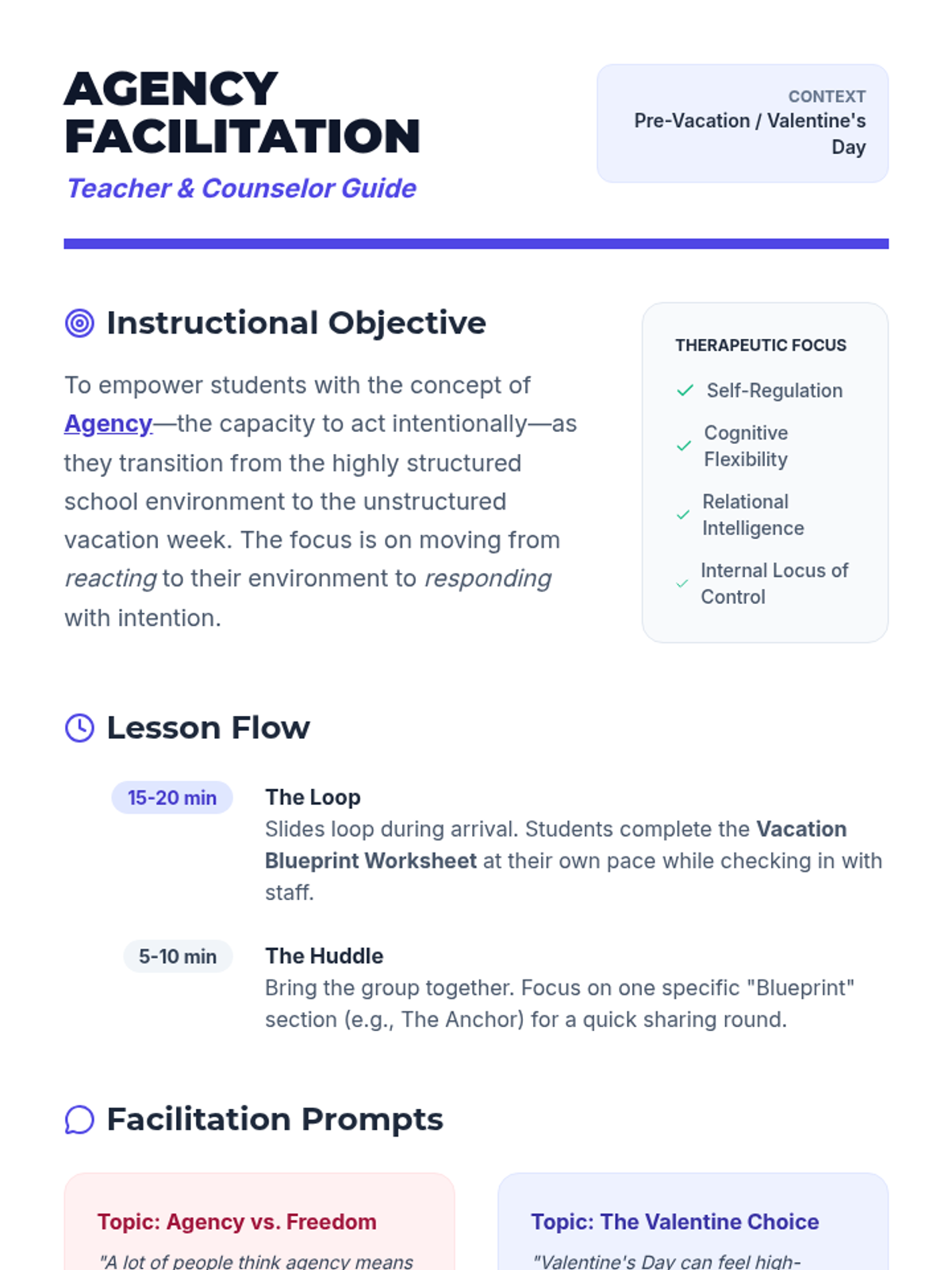
A morning meeting and reflection lesson focused on using personal agency to navigate vacation time and interpersonal relationships effectively.
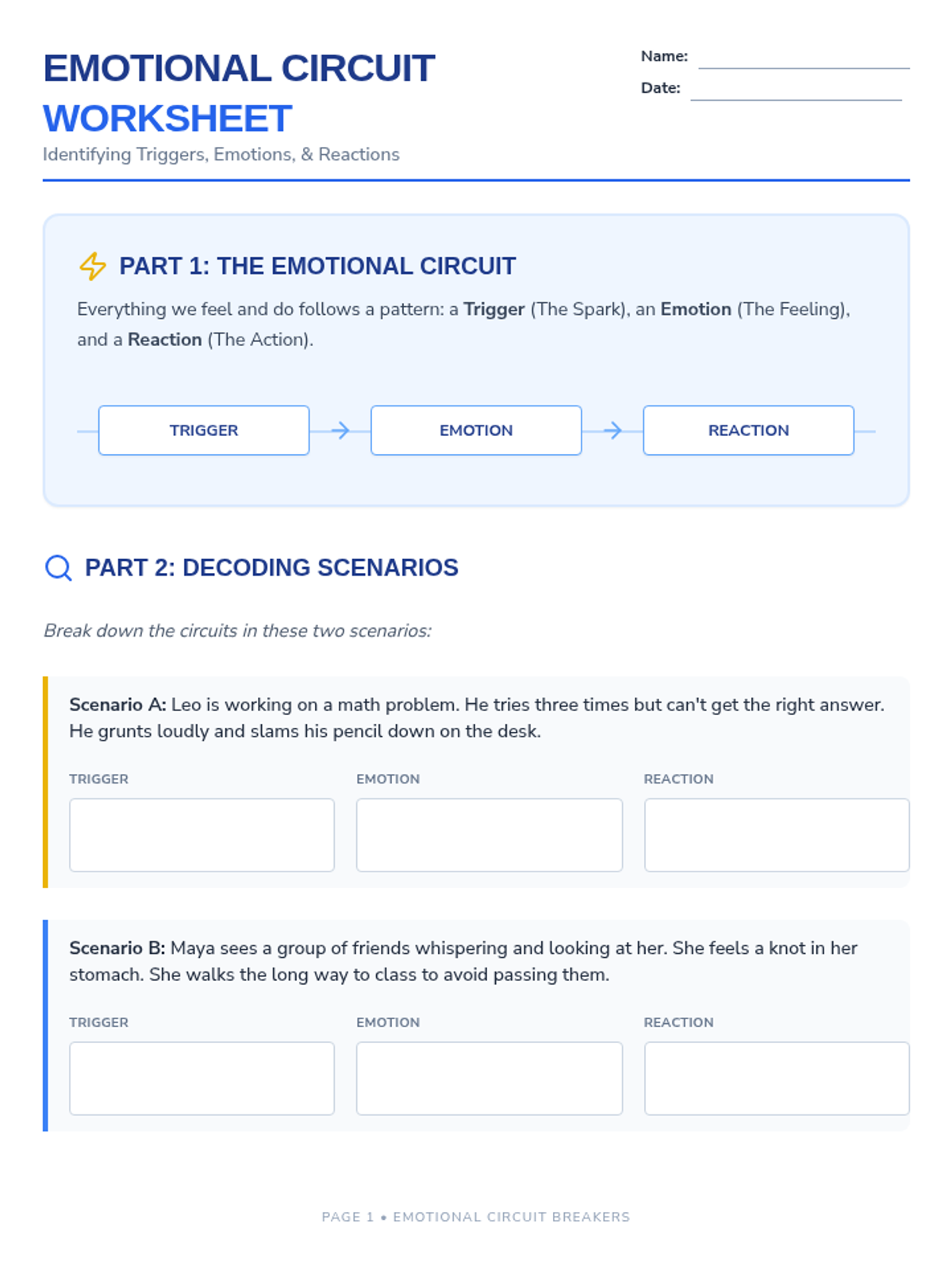
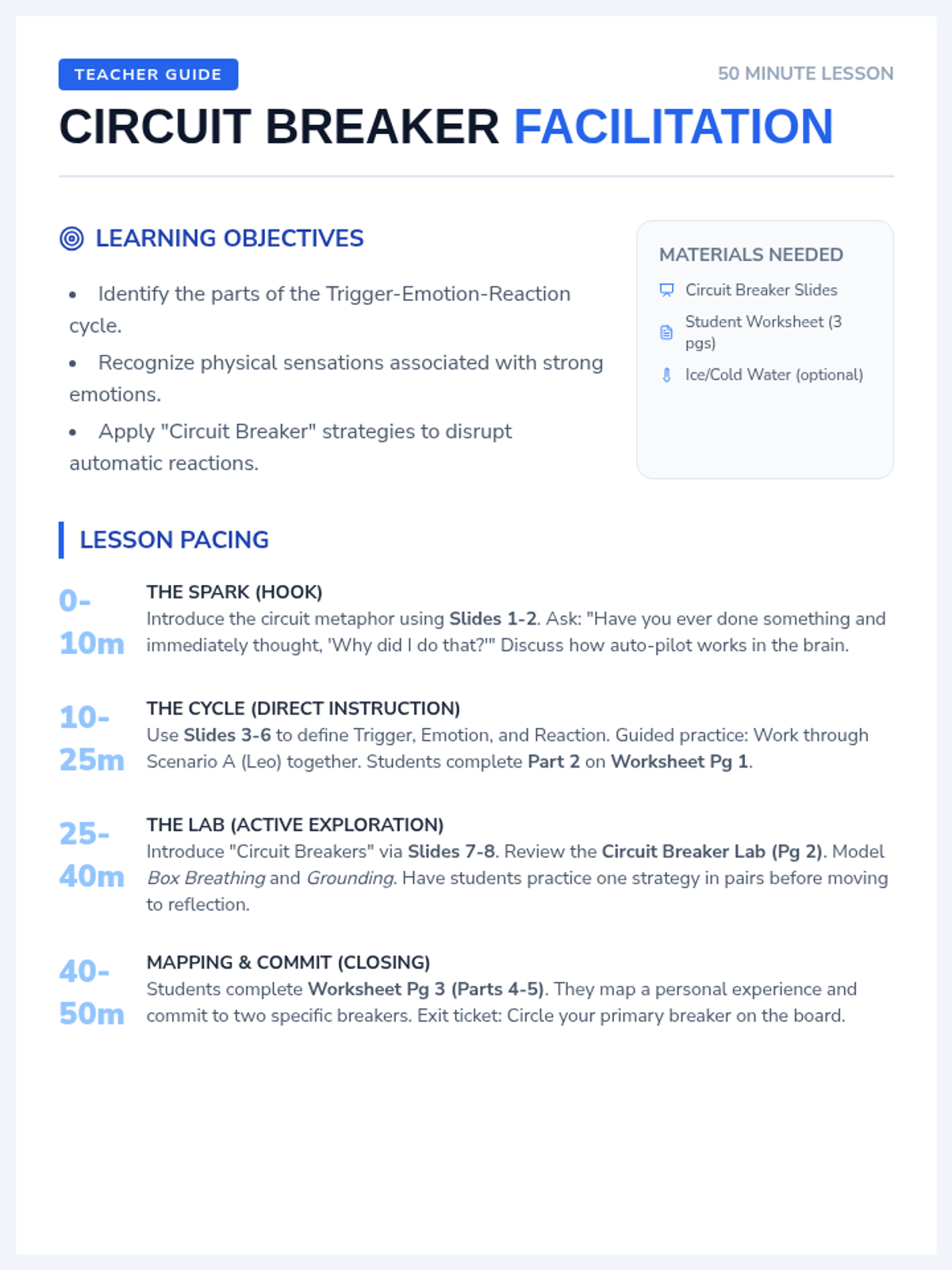
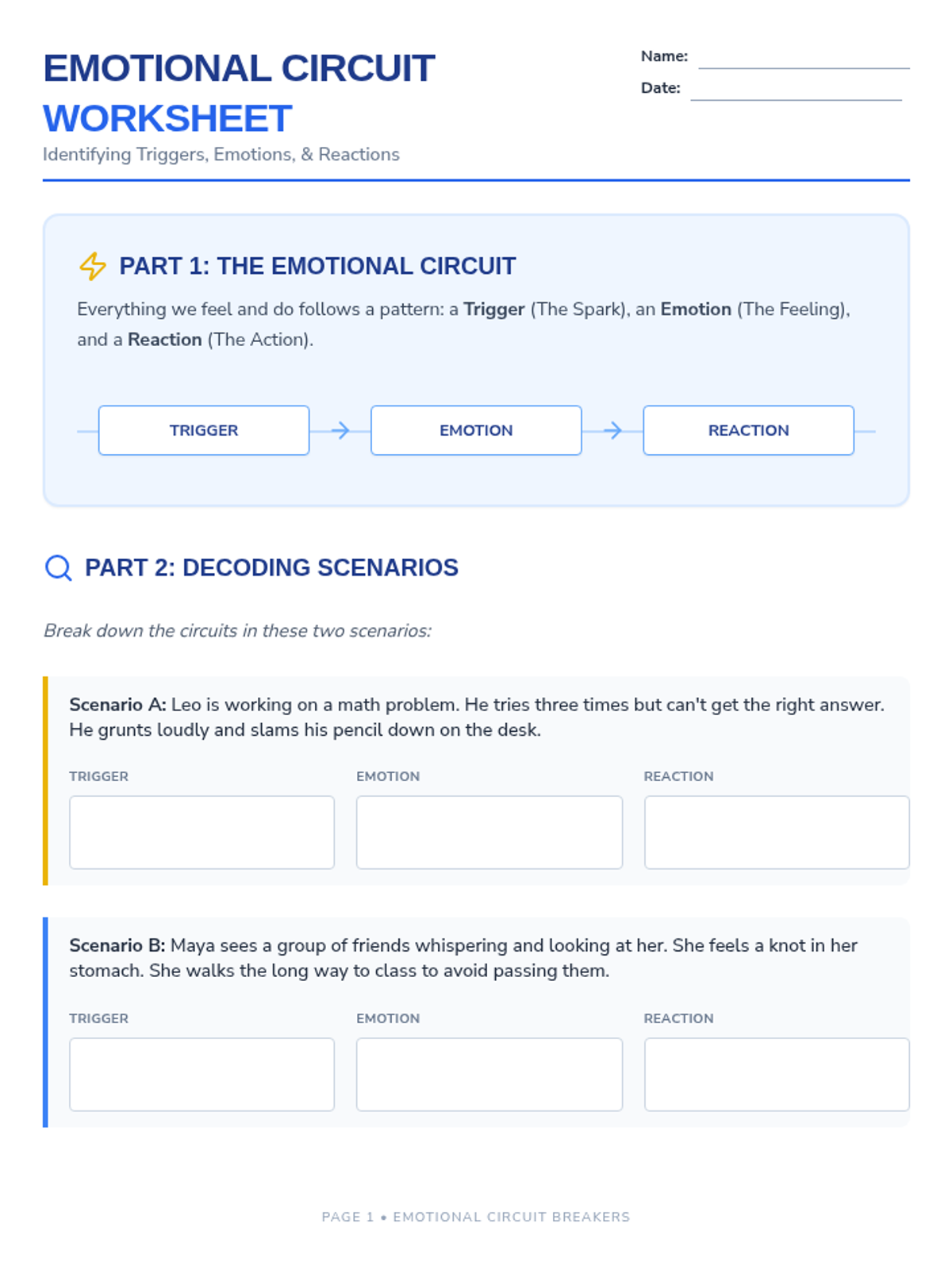
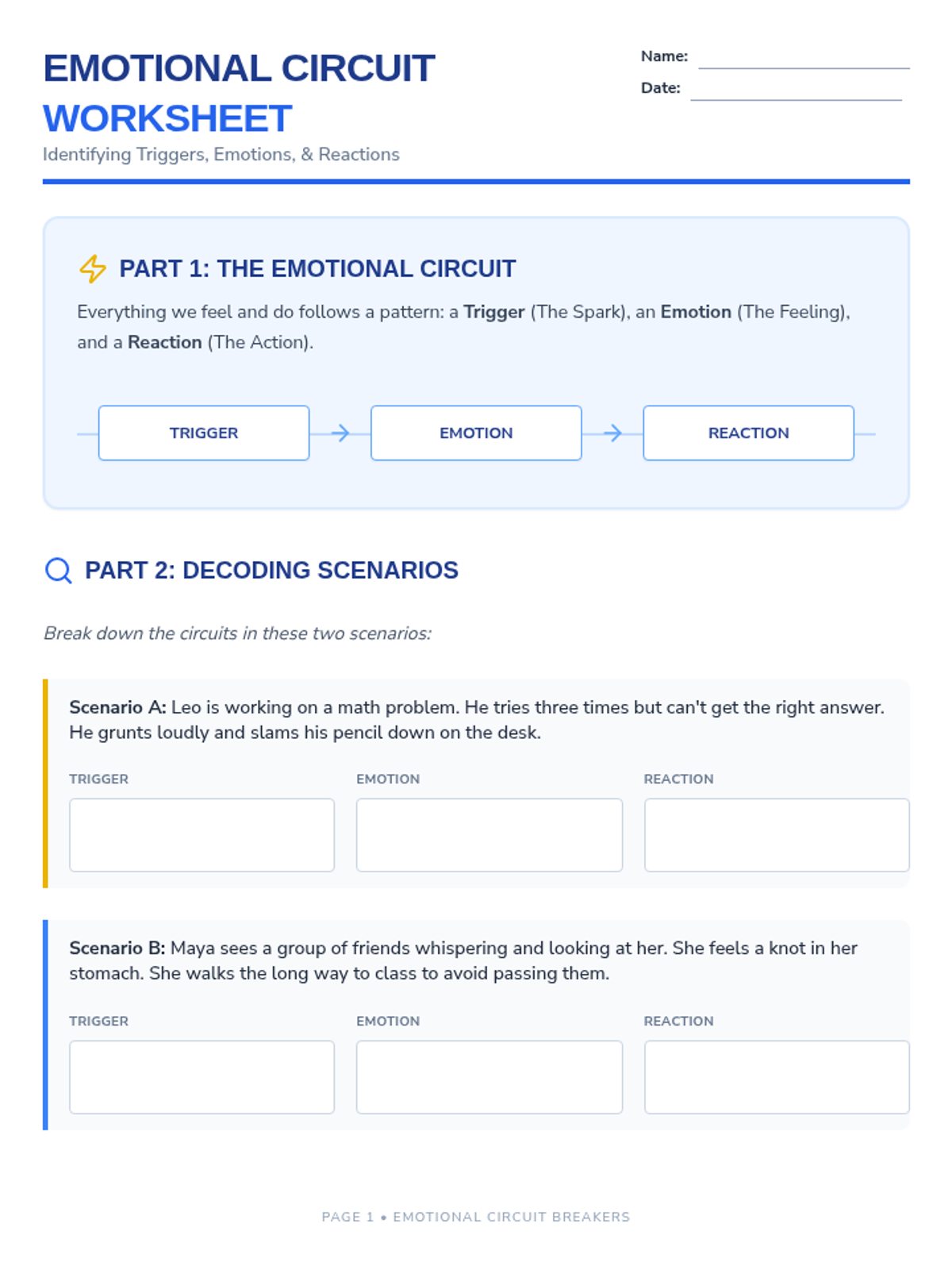
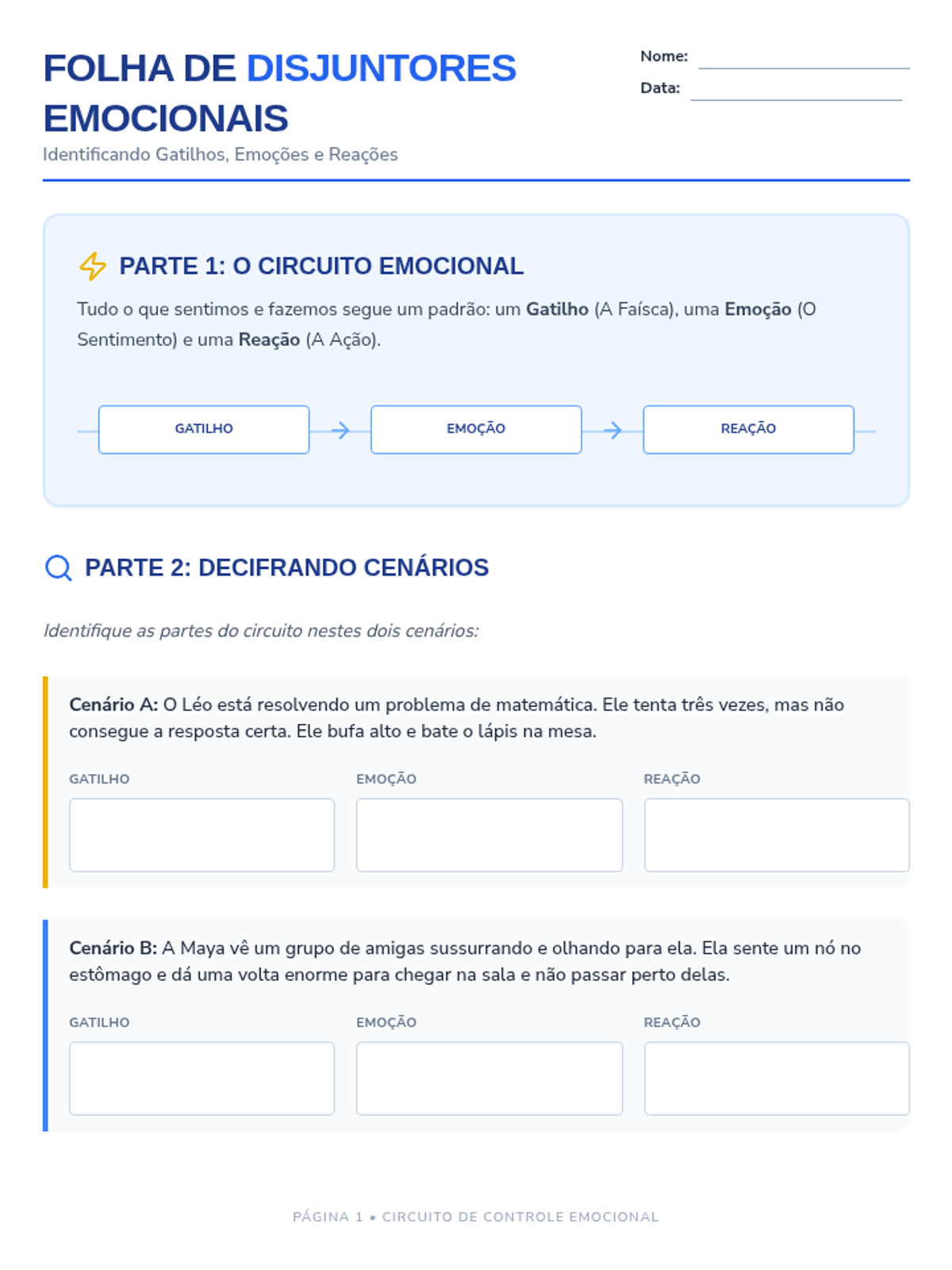
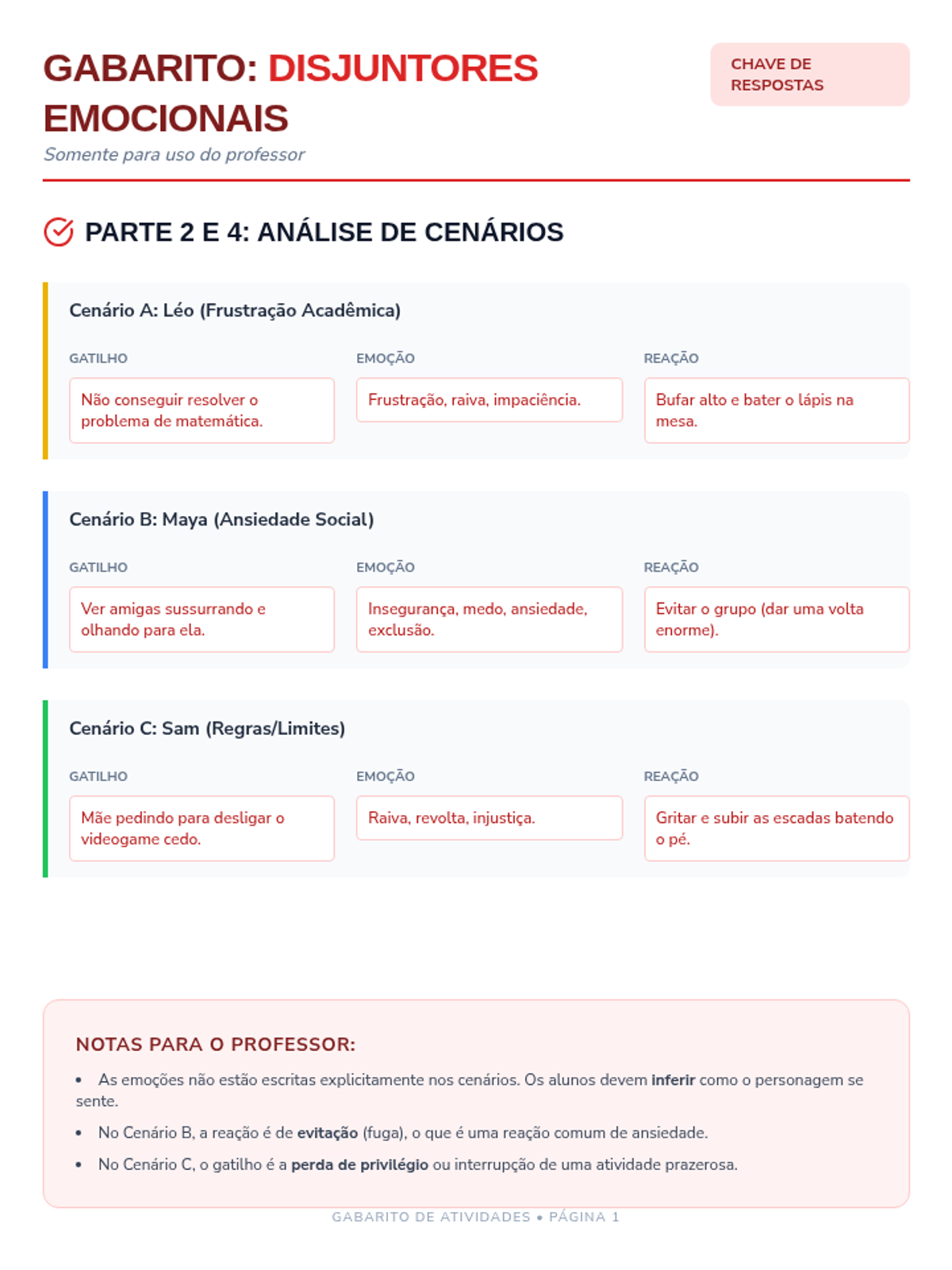
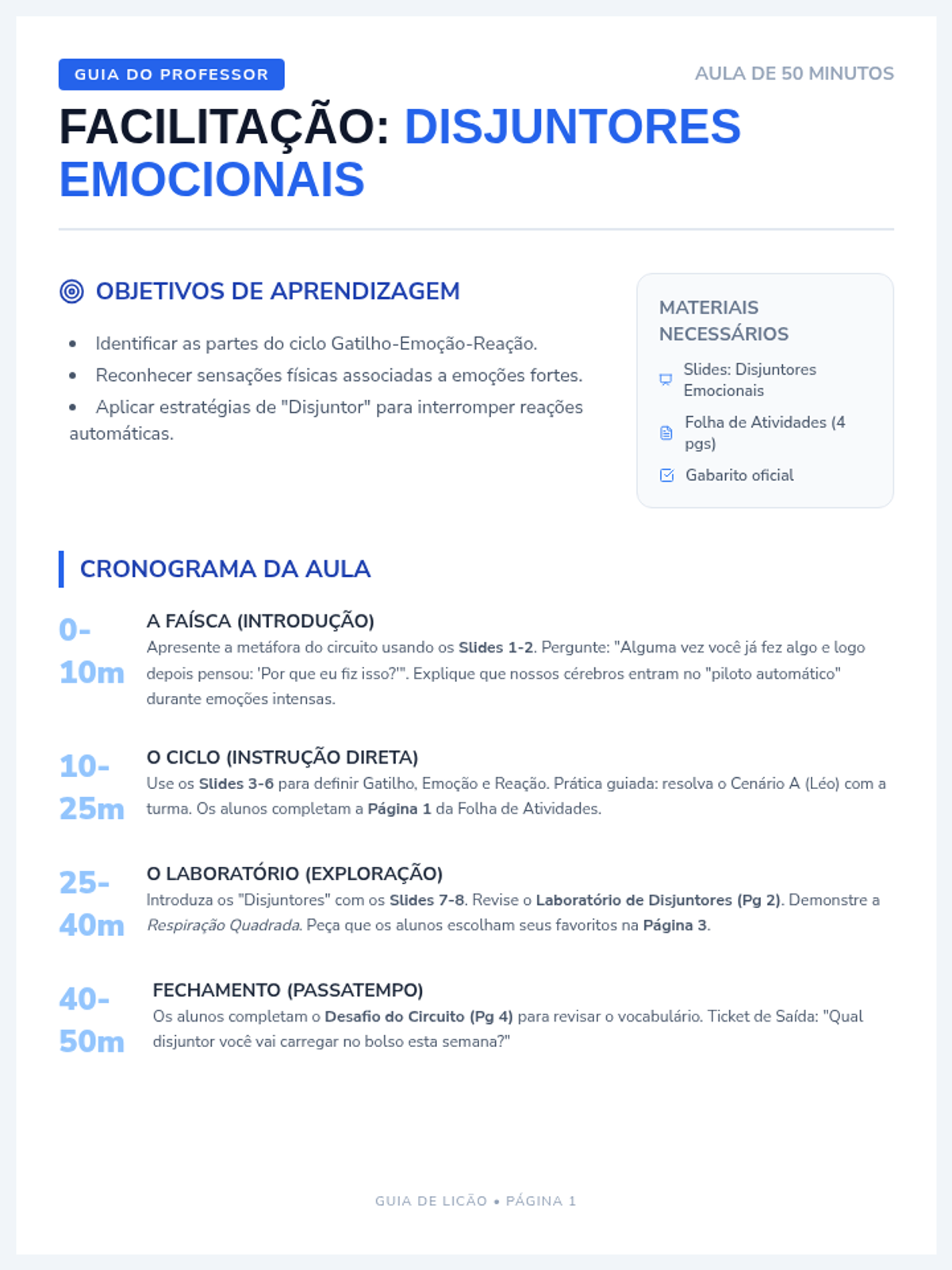
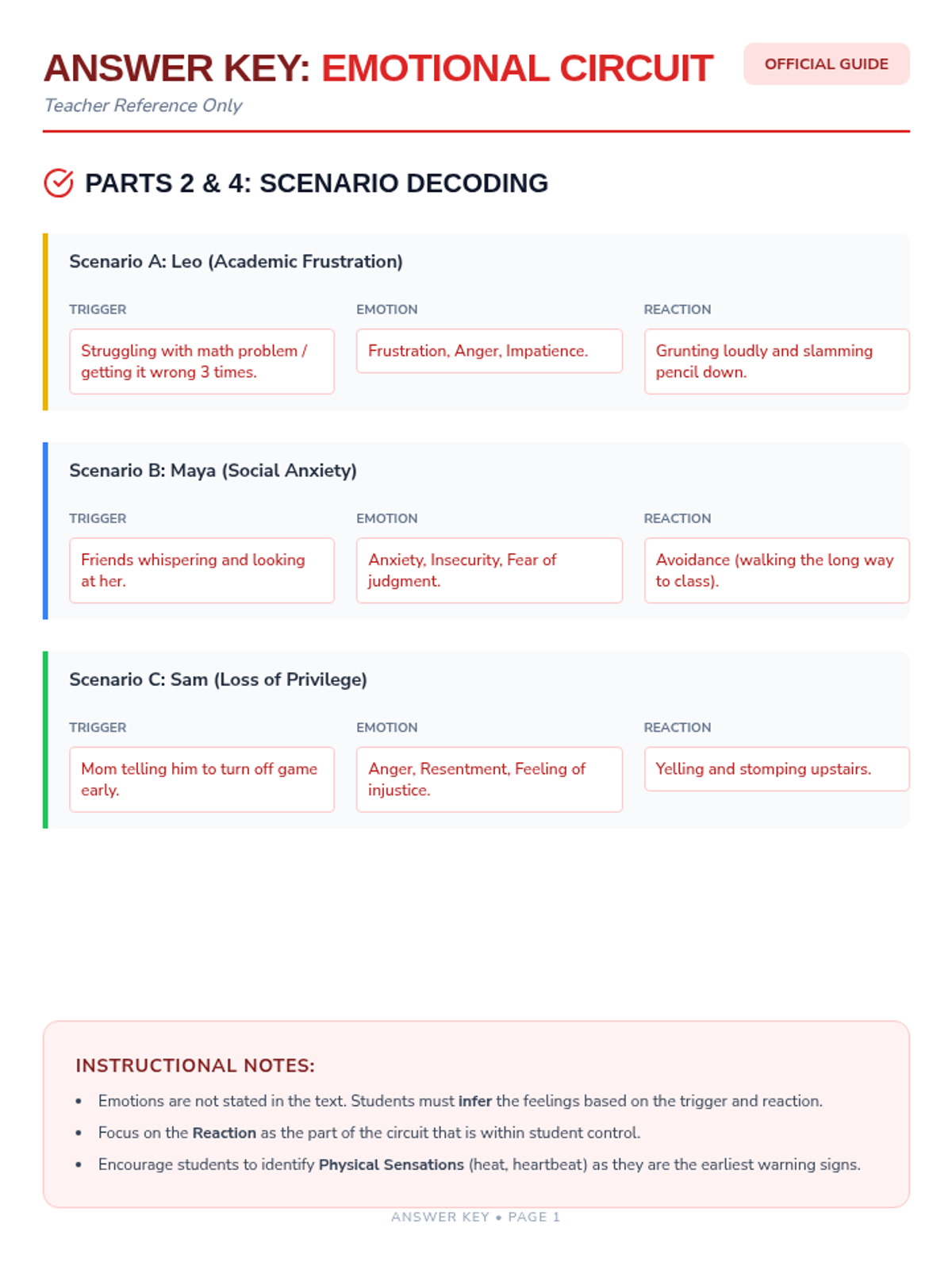
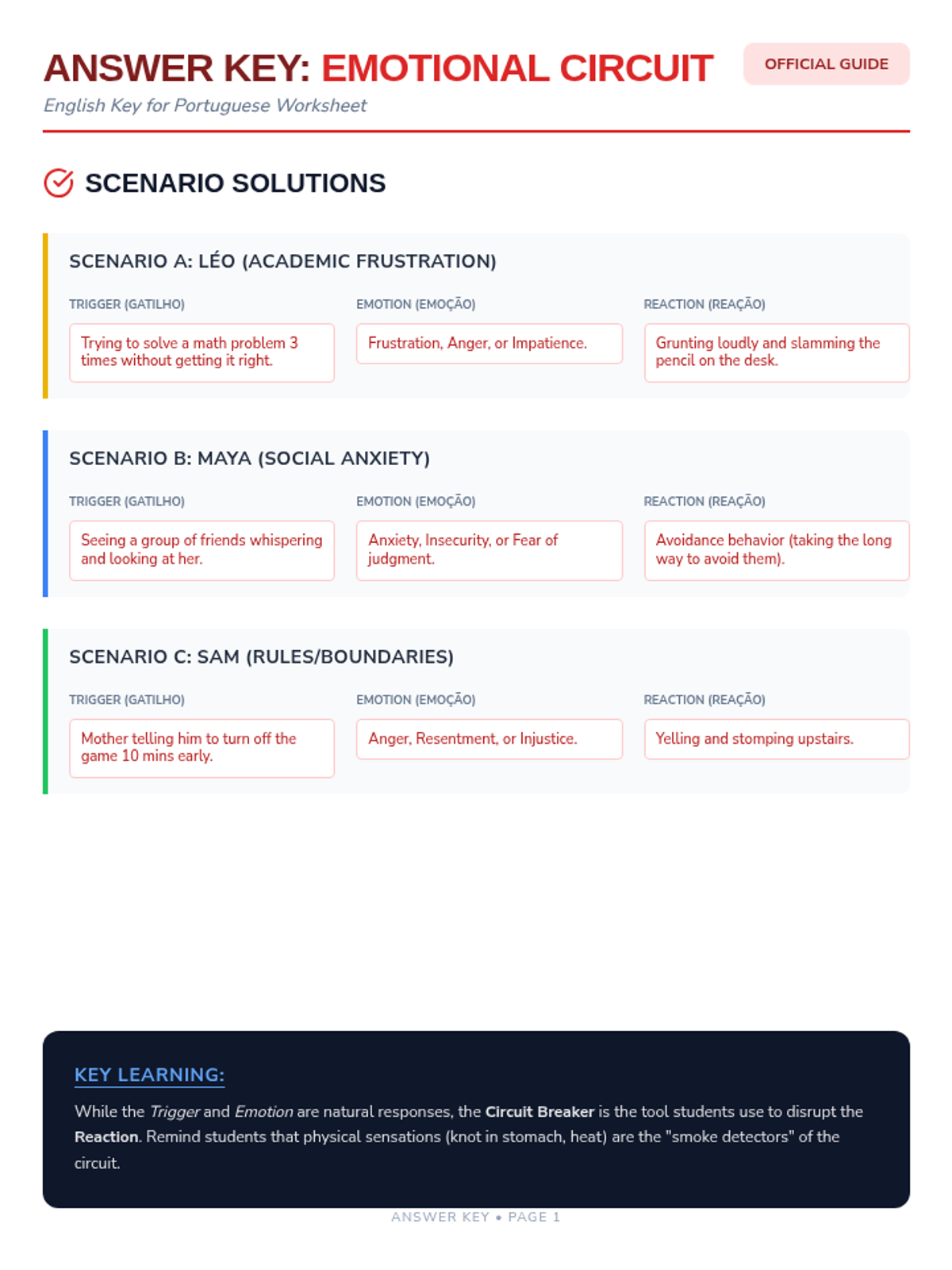
A comprehensive lesson designed to help students identify the 'Trigger-Emotion-Reaction' cycle and develop 'Circuit Breaker' strategies for emotional regulation. Students will analyze scenarios and map their own emotional responses to build self-awareness and self-control.