A 3-lesson sequence for K-4 students focused on neurodiversity, celebrating individual strengths, and building inclusive classroom communities. Students will learn that every brain is unique and that differences make a community stronger.
A series of four 10-minute micro-lessons designed for 3rd graders to build empathy, self-control, and respect. Using the 'Think Before You Speak' framework and the book Chrysanthemum, students learn to replace name-calling with responsible and kind choices aligned with school expectations.
A comprehensive 8-lesson intervention using the Prevent, Teach, Reinforce (PTR) model to help students transition from defiant avoidance to self-regulated break-taking.
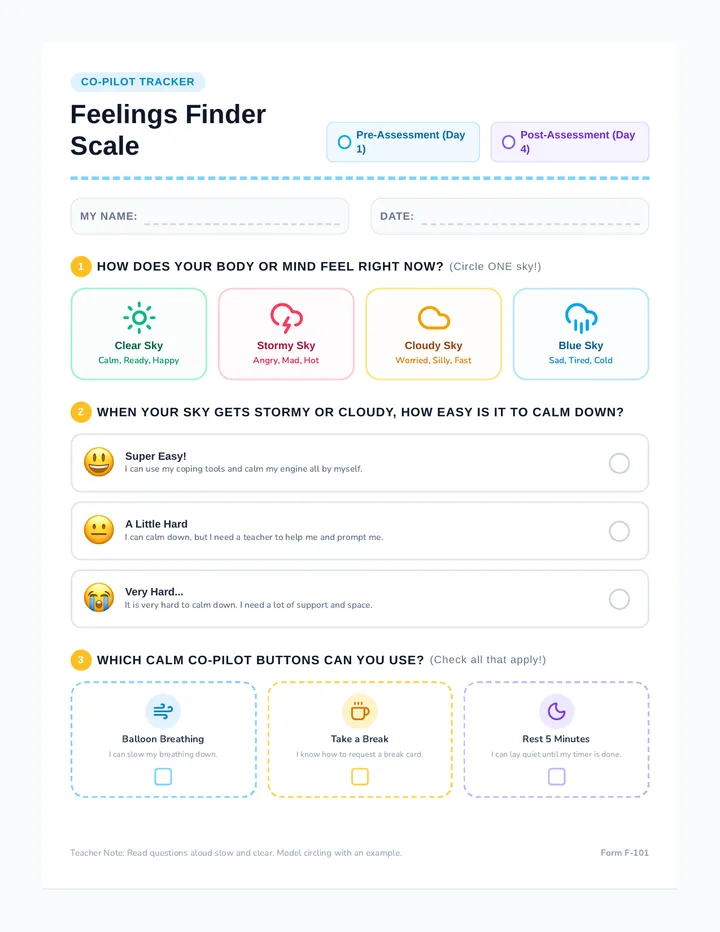
A gentle, visual 8-lesson intervention for preschoolers to learn self-regulation. Uses simple icons, puppet-based role-play, and 'I Can' picture goals to move from 'wiggly' feelings to 'calm' choices through the Pause Power routine.
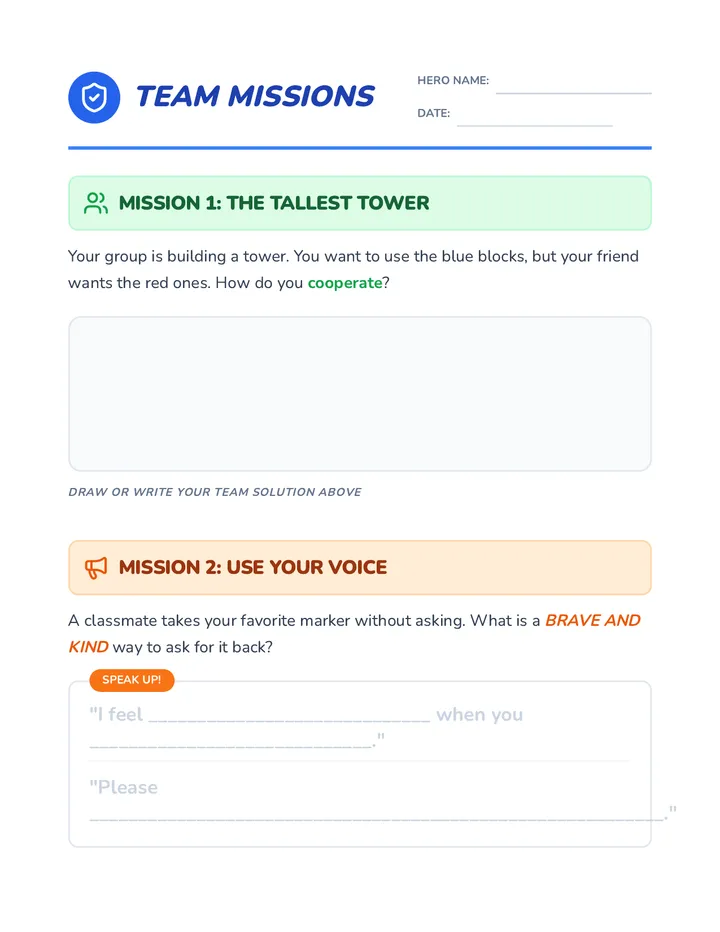
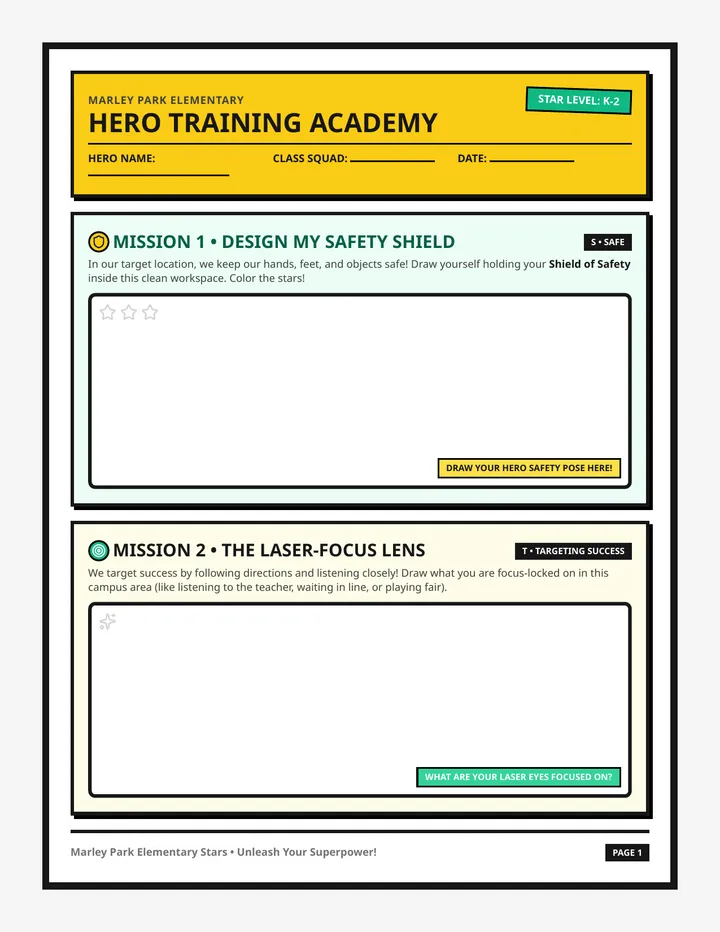
A 6-week SEL curriculum for 3rd graders focused on personal boundaries, self-regulation, and conflict resolution using the Stop-Think-Act method. The curriculum uses a superhero theme to engage students in building 'Social Superpowers'.
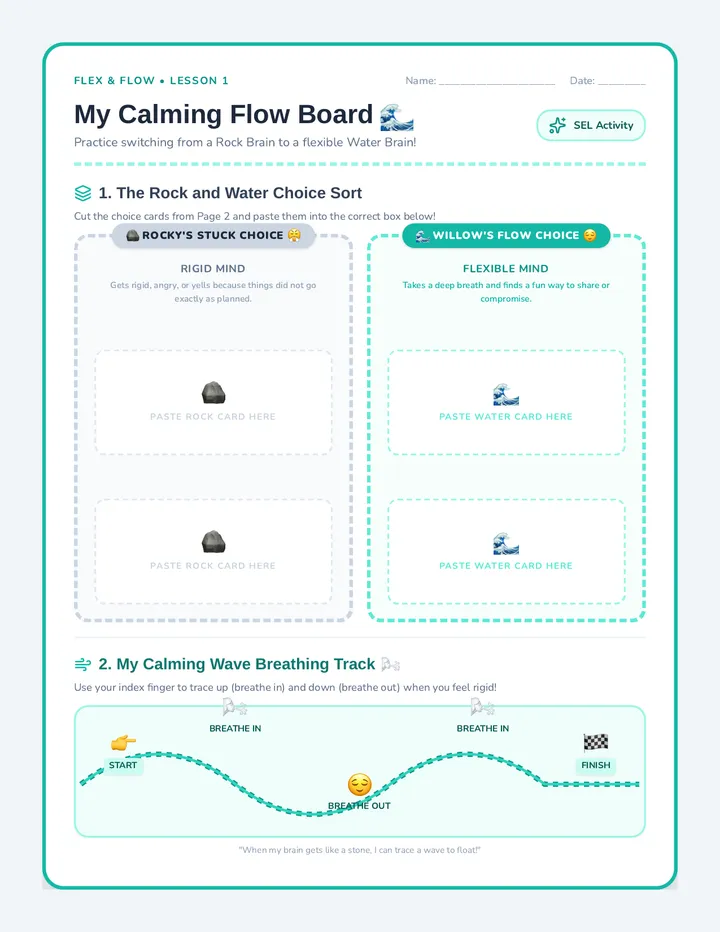
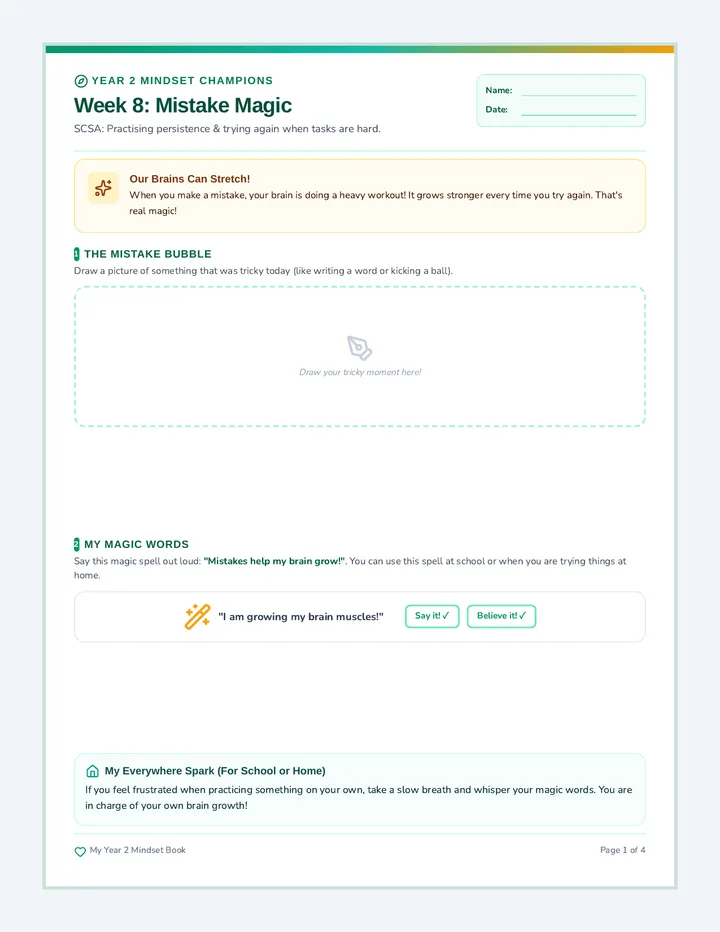
A collection of three SEL lessons for 1st grade focusing on growth mindset, conflict resolution, and personal space.
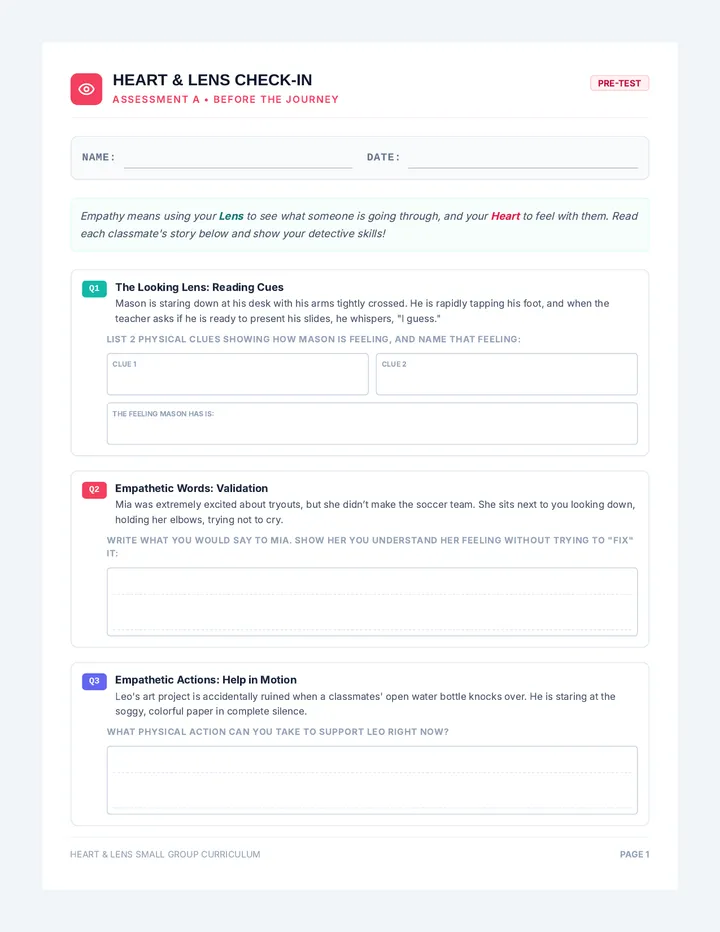
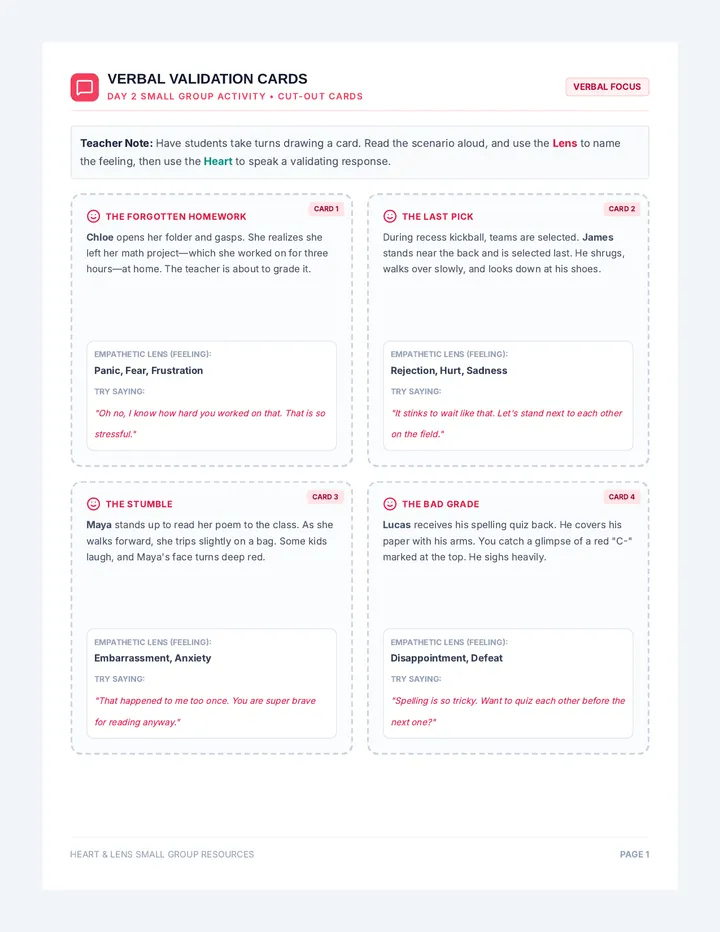
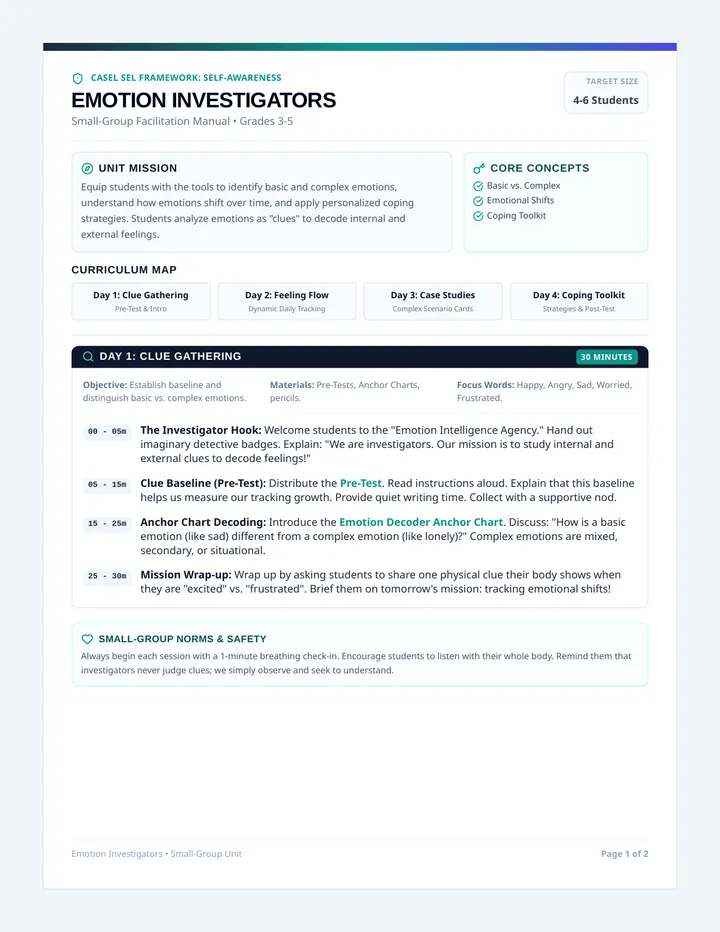
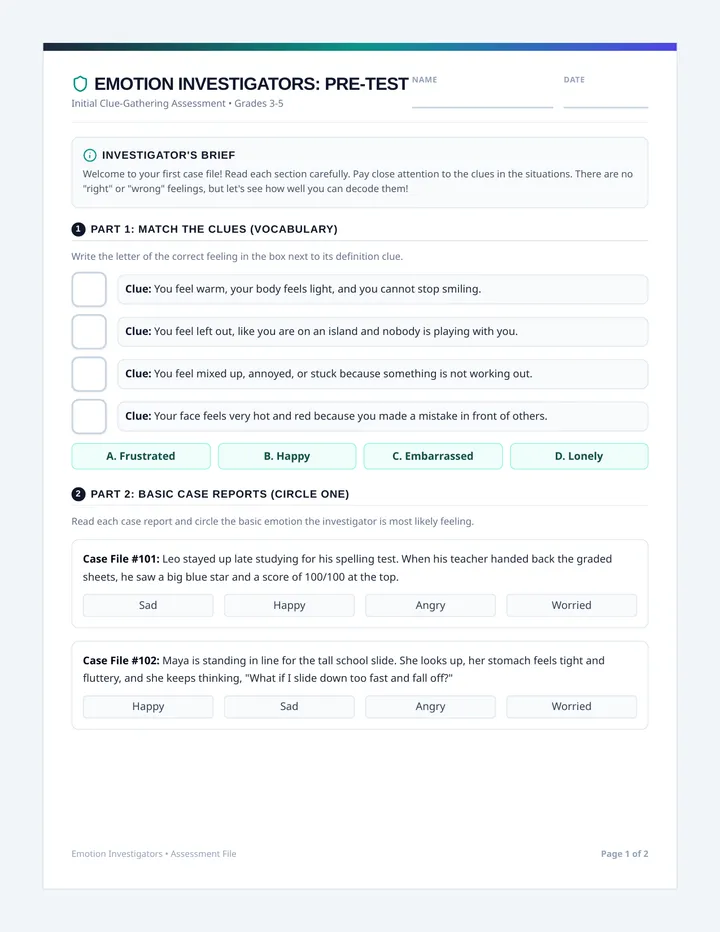
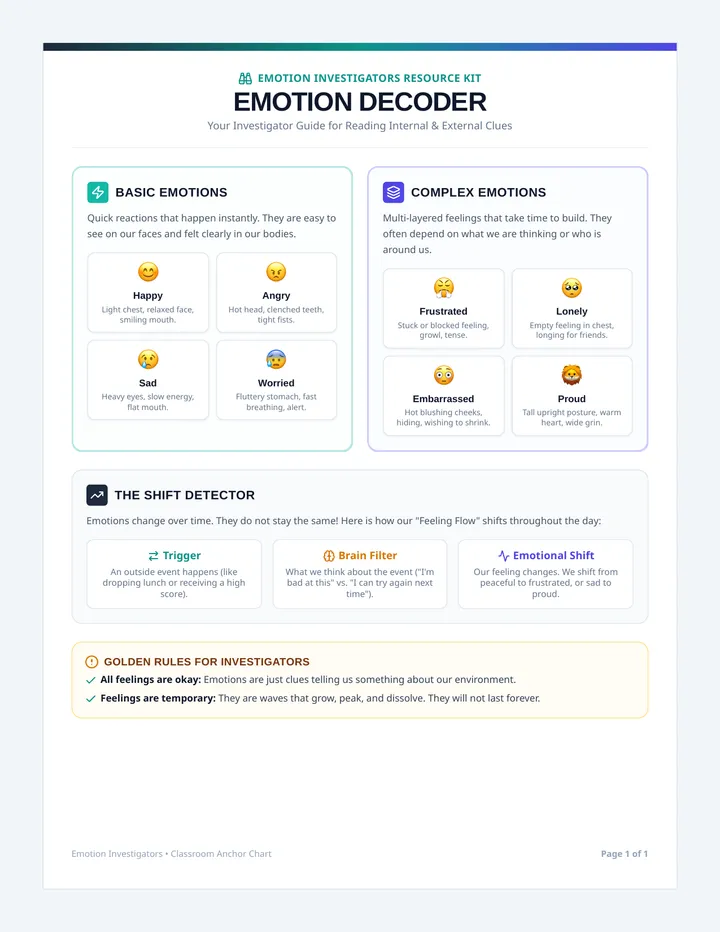
A curriculum focused on developing emotional intelligence, self-regulation, and social-emotional skills in students. It covers identifying emotions, understanding triggers, and mastering various coping strategies for personal and social success.
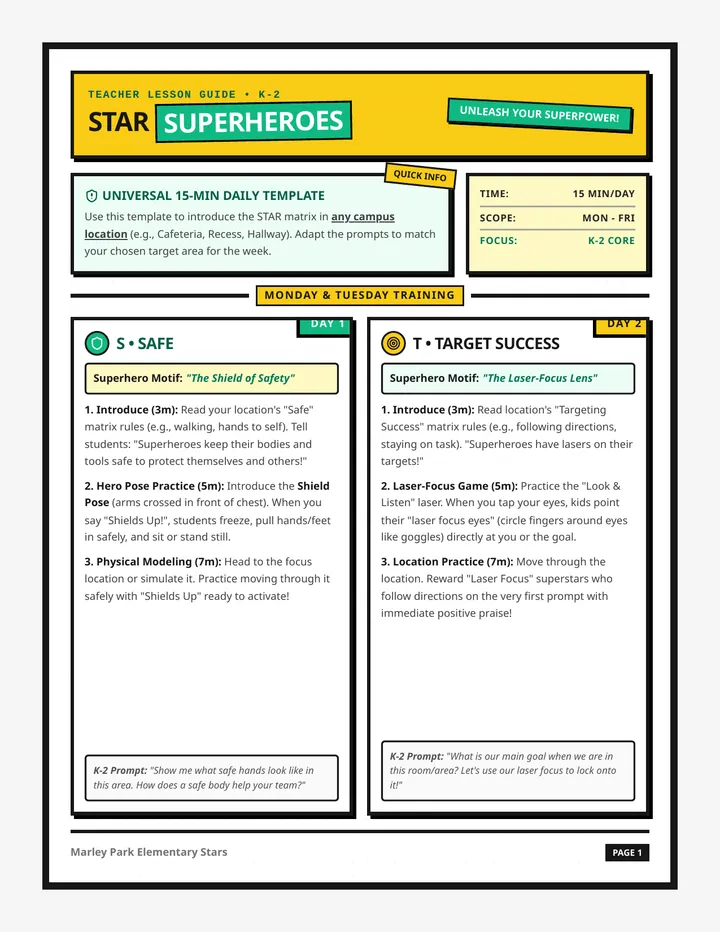
A two-lesson unit for kindergarten students to learn appropriate attention-seeking behaviors and self-regulation techniques using the 'Spotlight Stars' theme.
A two-day social skills unit for Kindergarten students focusing on personal boundaries, kind communication, turn-taking, and managing schedule changes before a school break.
An 8-week play-based social skills program for grades 3-5 focusing on executive functioning, flexible thinking, and social pragmatics through an adventure-quest theme.
A scientific approach to understanding feedback, helping students distinguish between hurtful criticism and helpful growth while managing their emotional responses to "no" or negative outcomes.