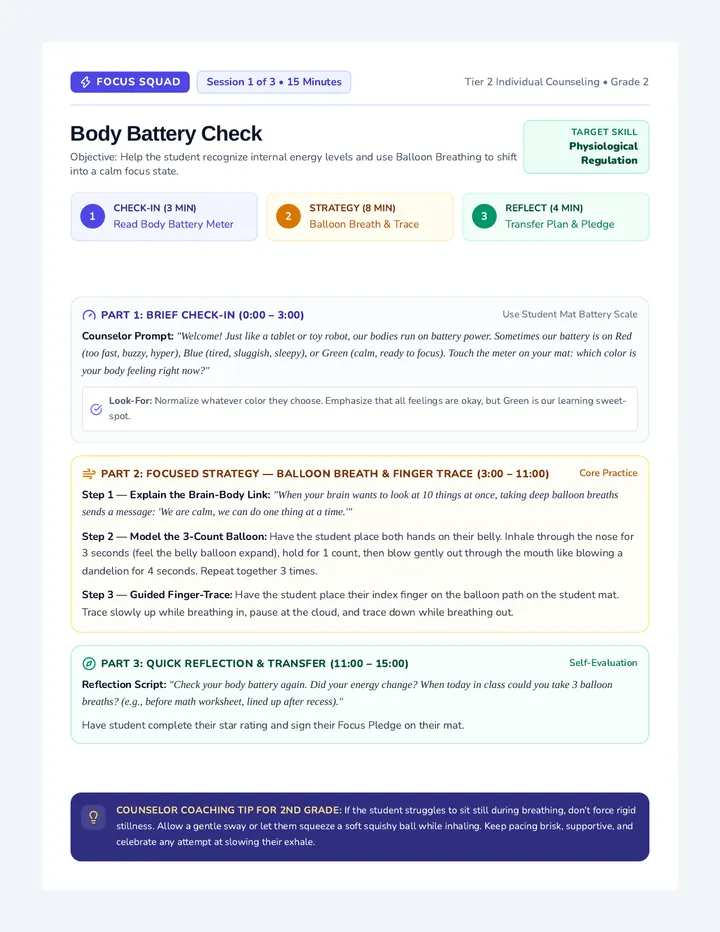
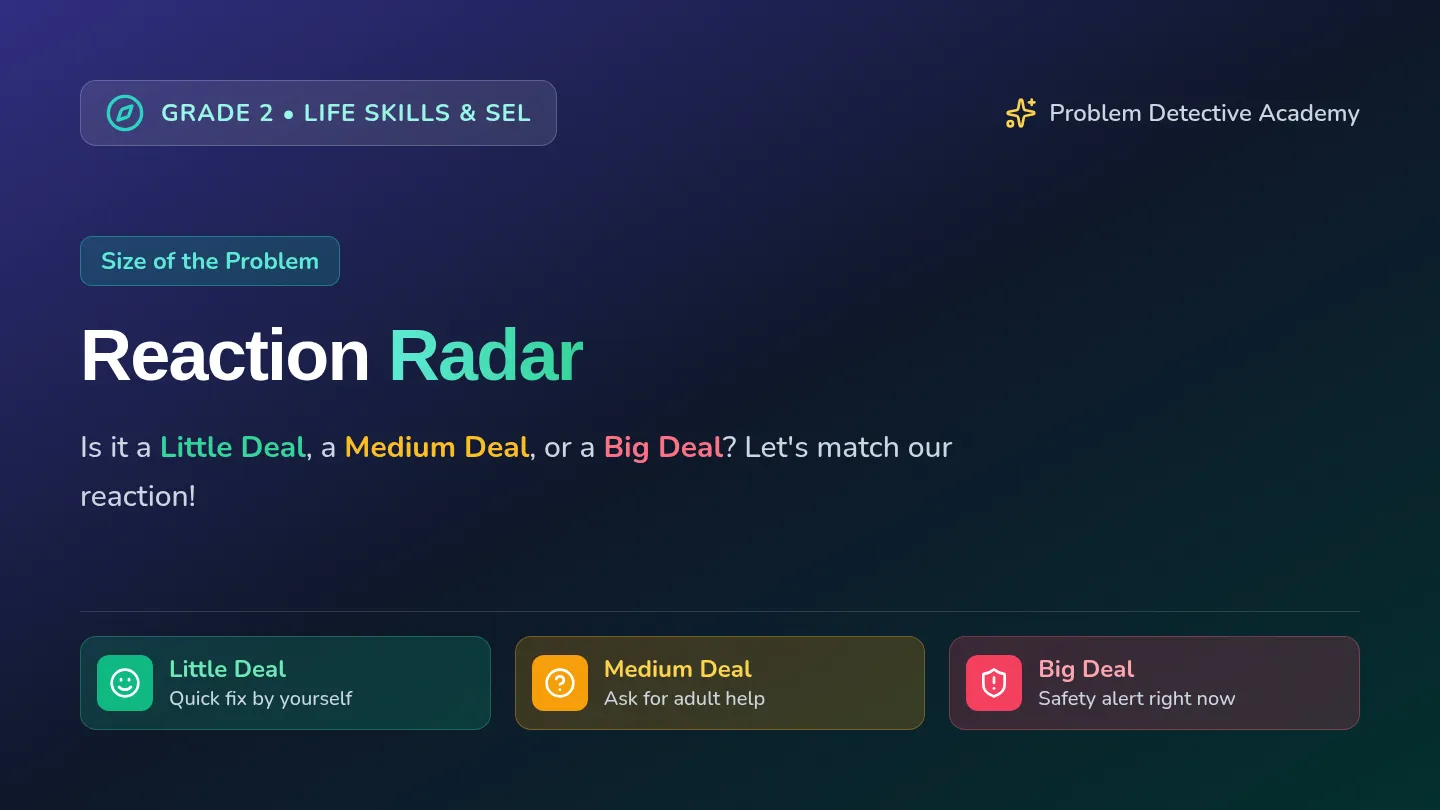
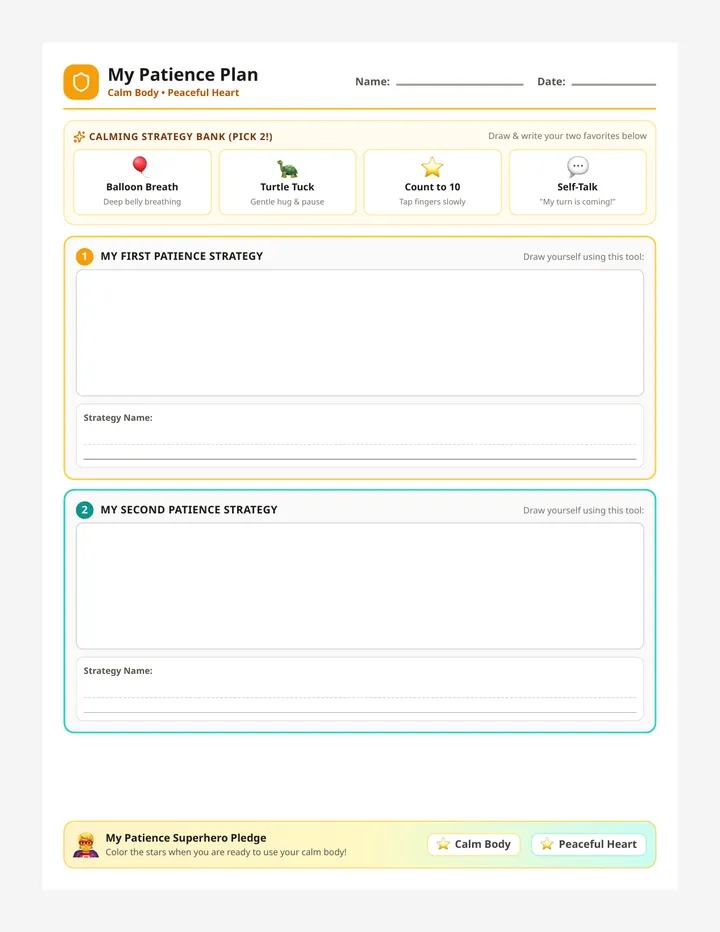
Emotion Navigators Slides Emotion Navigators
Mastering the Art of Healthy Coping
Finding your way through big feelings
Big Emotions
"Big Emotions" are feelings that feel intense, overwhelming, or hard to control.
Fury or Rage
Deep Sadness
Intense Anxiety
Huge Excitement
Why do they matter?
"Emotions are like weather—they come and go. But when a storm hits, you need a safe place to wait it out."
Checking the Compass
Your body gives you clues before the storm hits!
Heart
Beating fast or pounding in your chest.
Heat
Face feeling hot or hands getting sweaty.
Muscles
Tension in your jaw, neck, or fists.
Coping Choices
HEALTHY
Helps you feel better in the long run and doesn't hurt anyone.
• Deep Breathing
• Drawing your feelings
• Going for a walk
UNHEALTHY
Might feel good for a second, but causes more problems later.
• Hurting others or self
• Breaking things
• Keeping it all inside
When to Use Them?
1
Proactive: Use them daily to keep your "emotional bucket" from overflowing.
2
Reactive: Use them the moment you notice a "Body Clue."
3
Emergency: When you feel you might lose control or act out.
You're the Navigator
Scenario: The Mystery Grade
"You worked really hard on a project, but you just got it back and the grade is much lower than you expected. You feel your face getting hot and your hands clenching into fists."
What's the big emotion?
Which skill will you use?
My Calm Map Worksheet My Calm Map
Navigating Big Emotions with Style
Name:
Date:
1. Checking the Compass
What does your body do when you feel a Big Emotion ? Circle or write your own clues.
Fast Heart
Hot Face
Tight Muscles
Fast Breathing
Other body clues I notice:
2. My Resilience Toolkit
Select three healthy coping skills you can use when you notice your body clues.
Skill #1: _________________
How does this help you?
Skill #2: _________________
How does this help you?
Skill #3: _________________
How does this help you?
3. Navigator Scenario
"You are working on a difficult math problem. You've tried three times and still can't get it right. Your teacher is busy with another student. You feel like throwing your pencil across the room."
What is the "Big Emotion"?
What is one healthy coping skill you could use right then?
My Navigator Promise
I promise to listen to my body clues and use my healthy coping skills to navigate through big emotions.
Signature
Coping Skill Coach Guide Coping Skill Coach Guide
Facilitator's Roadmap for "The Big Emotion Toolkit"
Learning Objectives
Students will define "big emotions" and identify personal physical cues.
Students will differentiate between healthy and unhealthy coping behaviors.
Students will select and apply at least three proactive and reactive coping skills.
Materials Needed
• Emotion Navigators Slides
• My Calm Map Worksheets
• Coping Tool Cards (printed/cut)
• Chart paper & markers
Lesson Flow
1
Hook: The Weather Report (5-10 min)
Introduce the concept that emotions are like weather—they are natural and ever-changing. Ask students to share a "sunny" feeling and a "stormy" feeling they've had this week.
Key Question:
"What happens to a ship if a storm hits and the captain doesn't have a plan?"
2
Body Clue Detective (15 min)
Use the slides to explore physical manifestations of stress. Have students stand up and act out a body clue (e.g., clenching fists, rapid breathing) when you call out an emotion.
Tip: Emphasize that body clues are "early warning signals" that tell us a coping skill is needed NOW.
3
Skill Sorting (15 min)
Distribute the Coping Tool Cards . In small groups, have students sort them into "Quiet Skills" (for class), "Active Skills" (for recess/home), and "Social Skills" (talking it out).
Scenario Bank for Practice
The Lost Item
"You can't find your favorite sweatshirt anywhere. You've looked in your locker and at home. You feel like crying and screaming."
The Interruption
"You're trying to tell a story to a friend, but another student keeps talking over you. You feel your jaw tightening."
The Change in Plans
"The teacher announces that instead of outdoor recess, you have to stay inside because of rain. You feel a heavy weight in your chest."
The Mistake
"You made a mistake during a game in PE. Some other kids laughed. You feel your face getting very hot."
Differentiation Strategies
Support
Provide a "Coping Menu" with pictures for students who struggle with writing. Allow students to draw their body clues instead of writing them.
Extension
Ask students to create a "Coping Schedule"—specific times during the day (proactive) where they will practice a skill to prevent stress build-up.
Coping Tool Cards Coping Tool Cards
Choose the right tool for the job. Cut these out and keep them in your toolkit!
Box Breathing
In for 4, hold for 4, out for 4, hold for 4. Repeat.
Art Break
Draw how you feel or just doodle some patterns.
Silent Walk
Walk slowly and notice 3 things you can see.
Talk It Out
Find a trusted friend or adult and share your feelings.
Calm Music
Listen to soft music or nature sounds for 2 minutes.
Wall Pushes
Push against a wall with all your strength for 10 seconds.
Read Away
Get lost in a book for a few minutes to reset your brain.
Count to 50
Slowly count up to 50 or backward from 50 to 0.
Happy Place
Close your eyes and imagine a place where you feel safe.
Navigator Tip:
Pick the tools that work best for YOU. Everyone's toolkit looks different!
Navigator Anchor Chart Navigator Anchor Chart
Your Guide to Staying Calm in the Storm
1. Body Clues
"Stop! Check your body before you react."
Fast Heartbeat
Pounding or racing in your chest.
Heat & Sweat
Hot face, sweaty palms, or shaky hands.
Tight Muscles
Clenched fists or a tight jaw.
2. Tool Selection
"Choose a tool that helps you reset."
Deep Breathing
Box breathing or slow belly breaths.
Movement
Wall pushes, jumping jacks, or a walk.
Creative Reset
Drawing, writing, or listening to music.
When do I use them?
1. Before a storm
2. During the storm
3. After the storm