Student peer feedback form for Lesson 4, using the TAG method to critique and improve tracker prototypes.
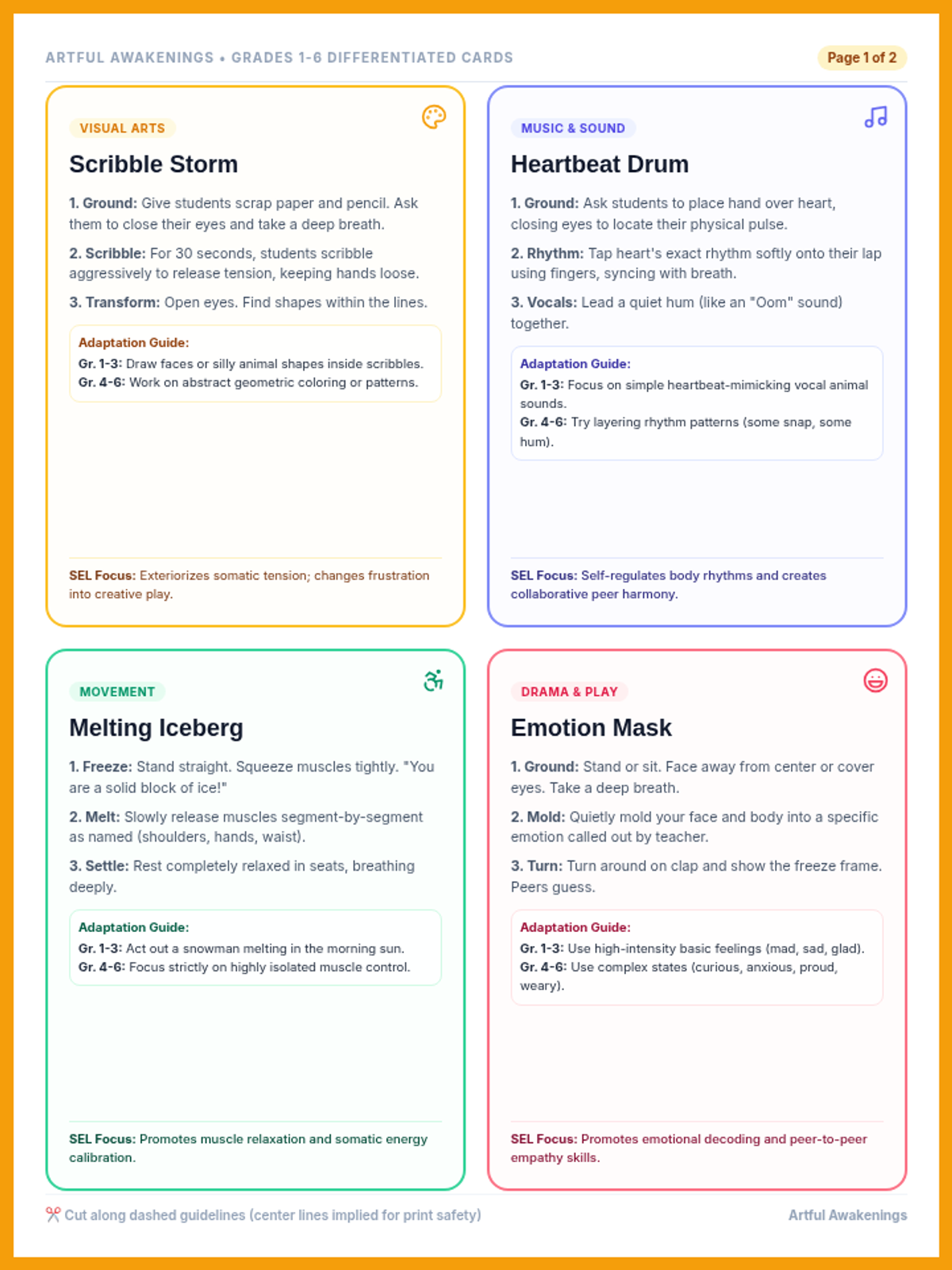
A 2-page print-and-cut resource containing 8 beautiful, color-coded daily SEL task cards (2 of each artistic modality) with clear step-by-step facilitation prompts.
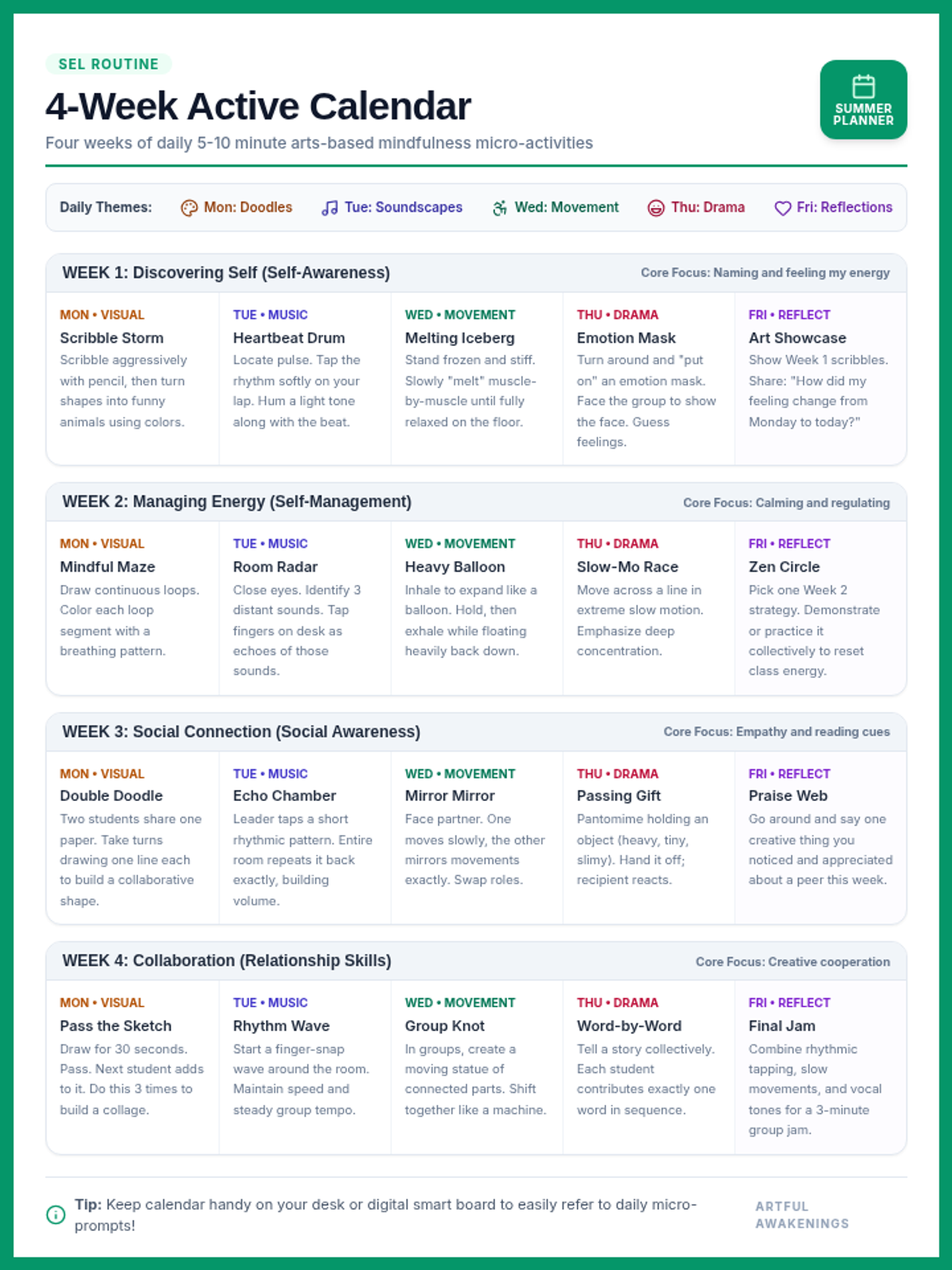
A 4-week structured calendar grid providing short, actionable daily micro-activities across visual arts, music, movement, drama, and Friday reflections.
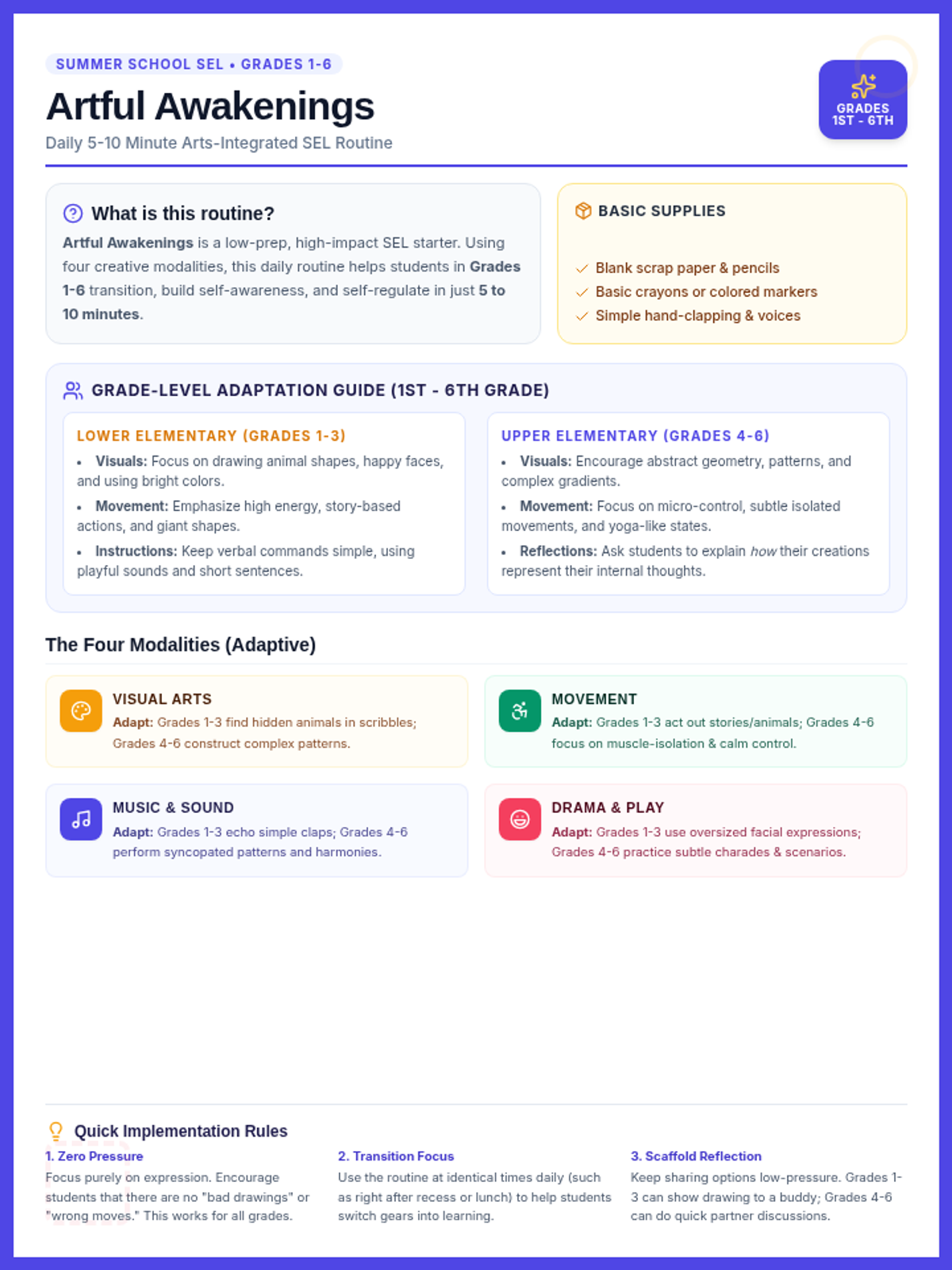
An updated 1-page teacher reference guide with explicit adaptation strategies for grades 1-3 (lower elementary) and grades 4-6 (upper elementary) to facilitate the 5-10 minute daily SEL routine.
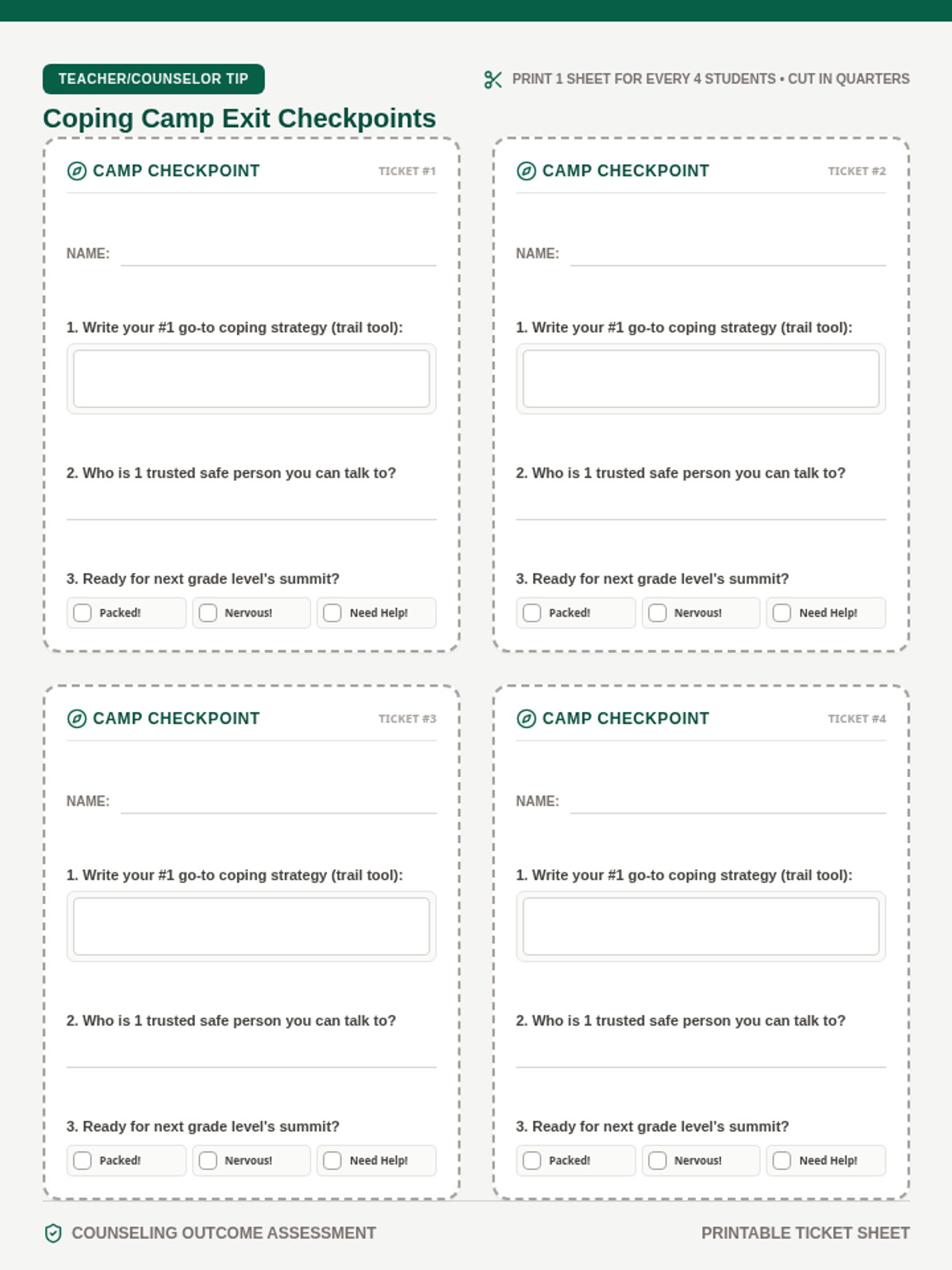
A printable sheet of 4 identical, easy-to-cut counseling exit tickets to assess students' key takeaways, individual go-to coping strategy, and self-reported readiness for upcoming transitions.
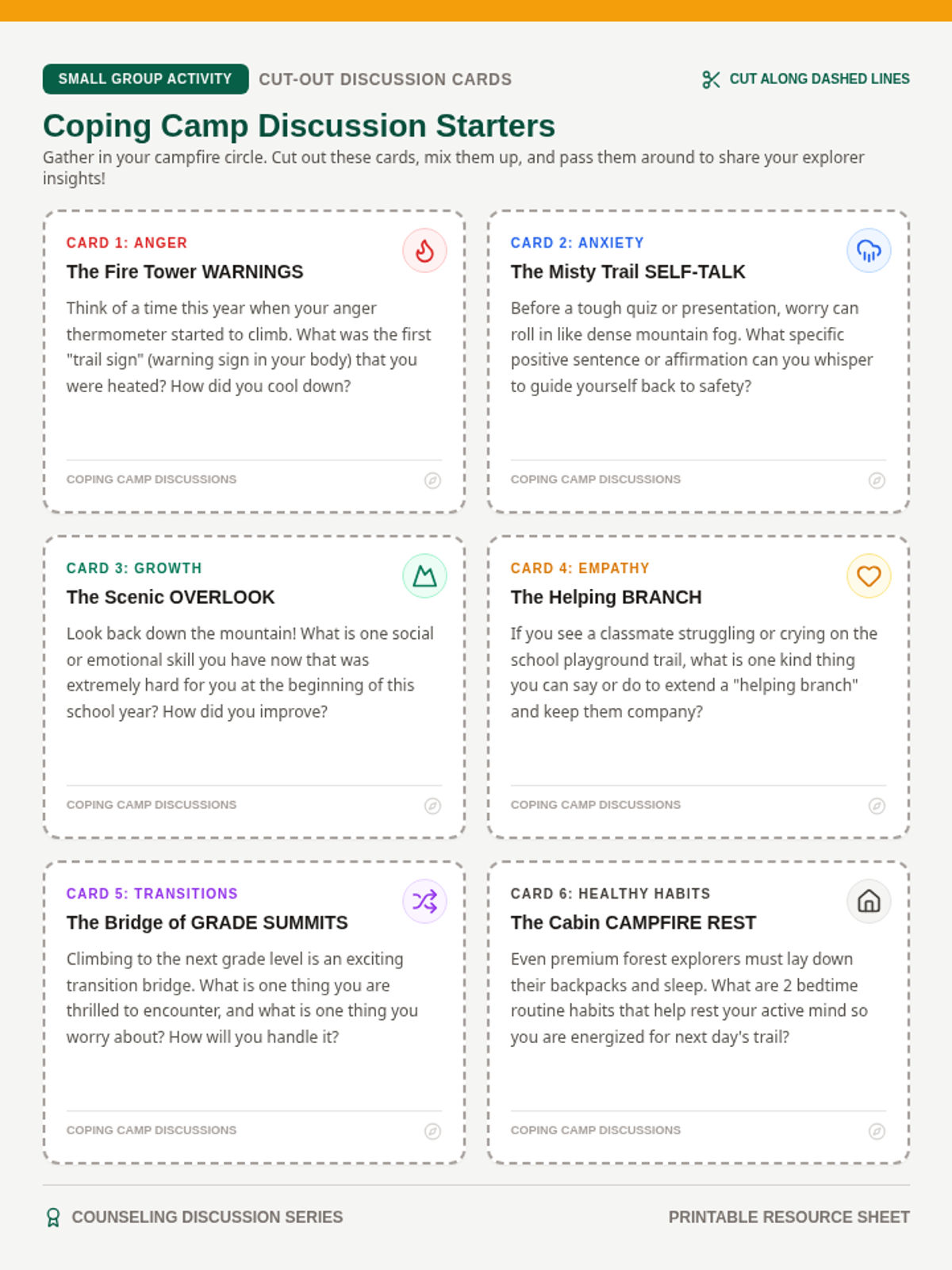
A printable set of 6 structured counselor/teacher-led discussion task cards designed to prompt small-group reflections on self-regulation, anger warning signs, transition anxiety, peer support, and personal growth.
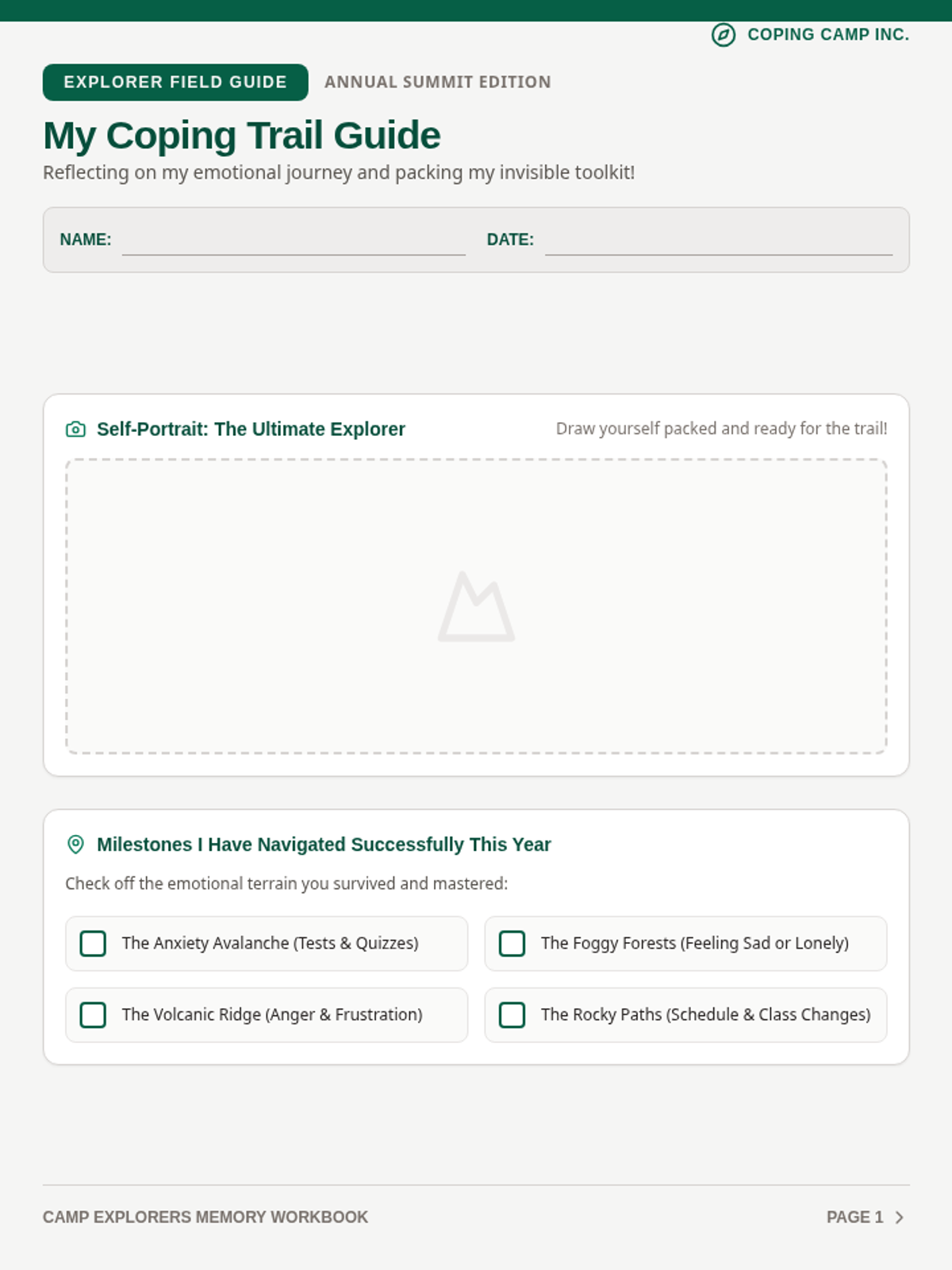
A beautiful, print-ready 3-page personal memory book for students to review emotional milestones, draft their custom coping toolkit (breathing, grounding, self-talk), and write future goals with campfire signature spaces.
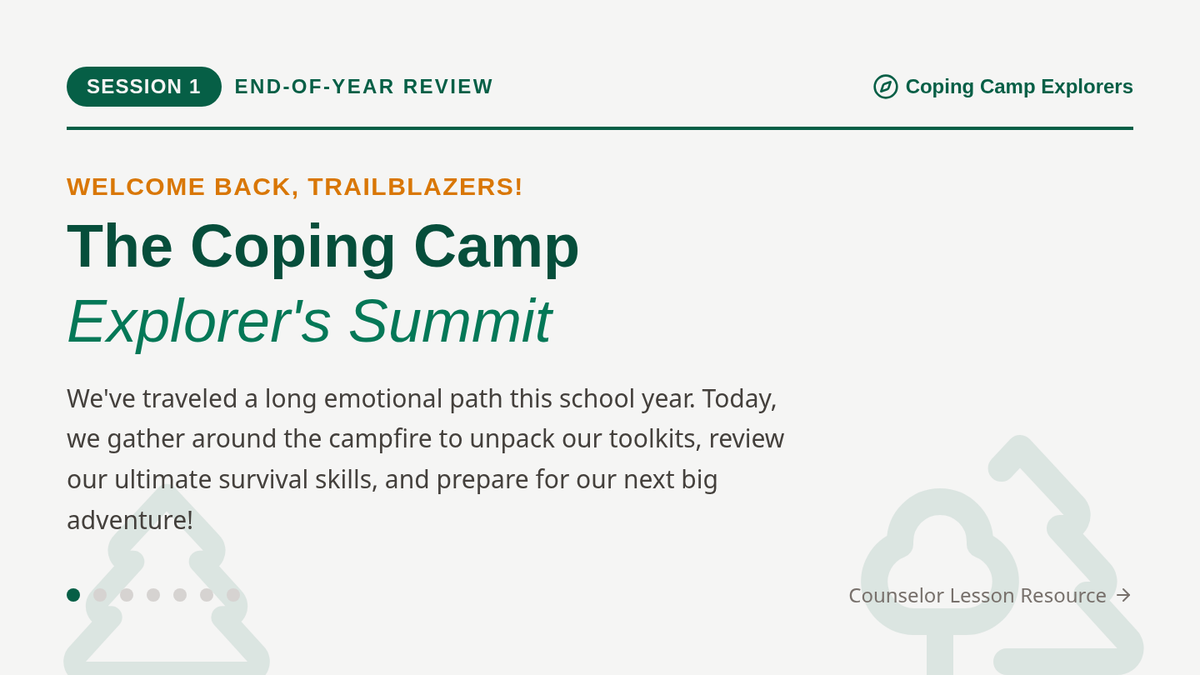
An engaging 7-slide presentation designed to lead a counselor-led or teacher-led classroom discussion reviewing key self-regulation tools, deep breathing techniques, grounding methods, and positive self-talk before students move on to the next school year.
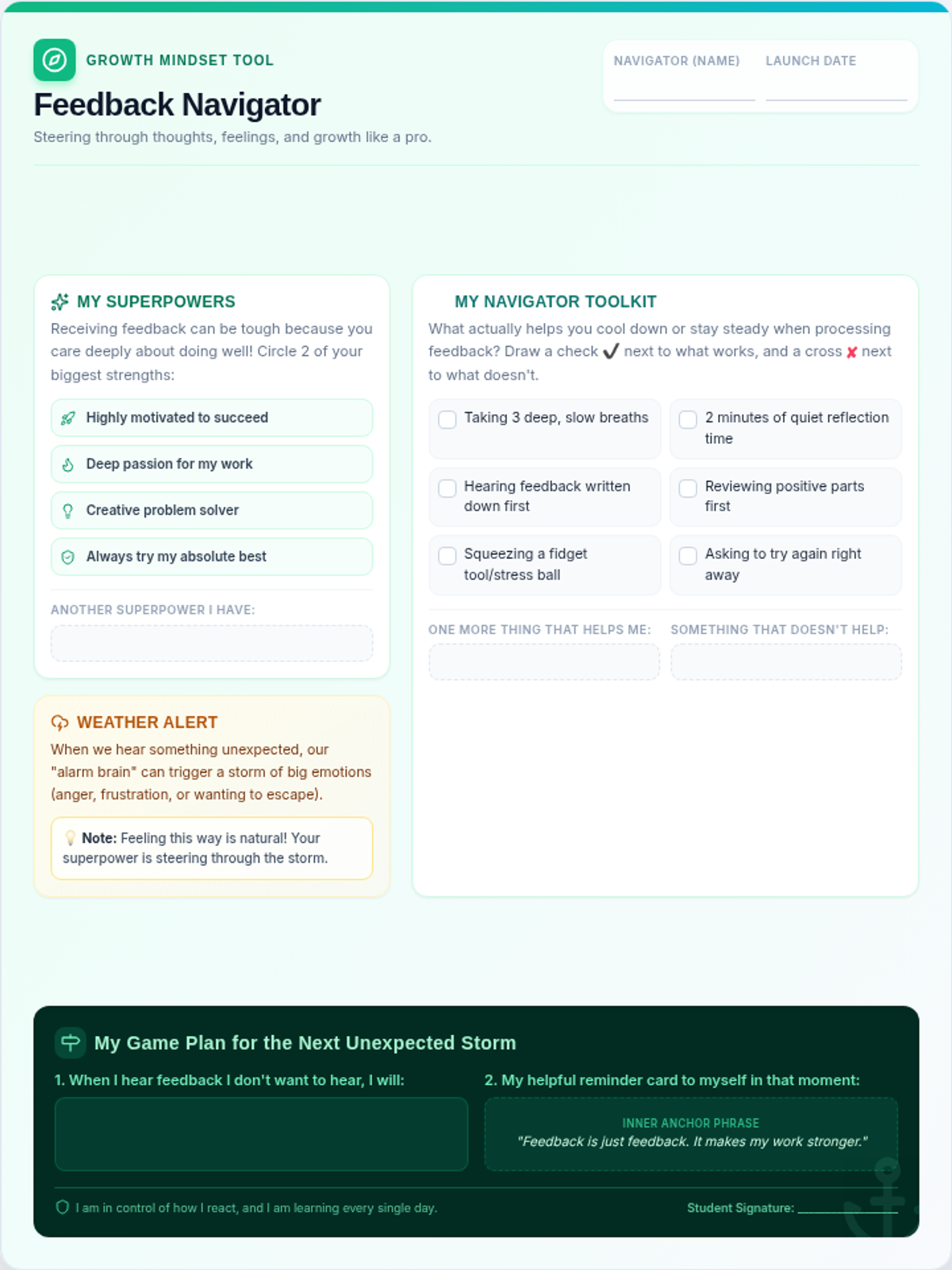
An empowering, strength-based guided reflection sheet designed for a student who struggles with receiving feedback. It includes a strengths assessment, a strategy toolkit, and scenario-based roleplay cards to practice handling feedback safely.
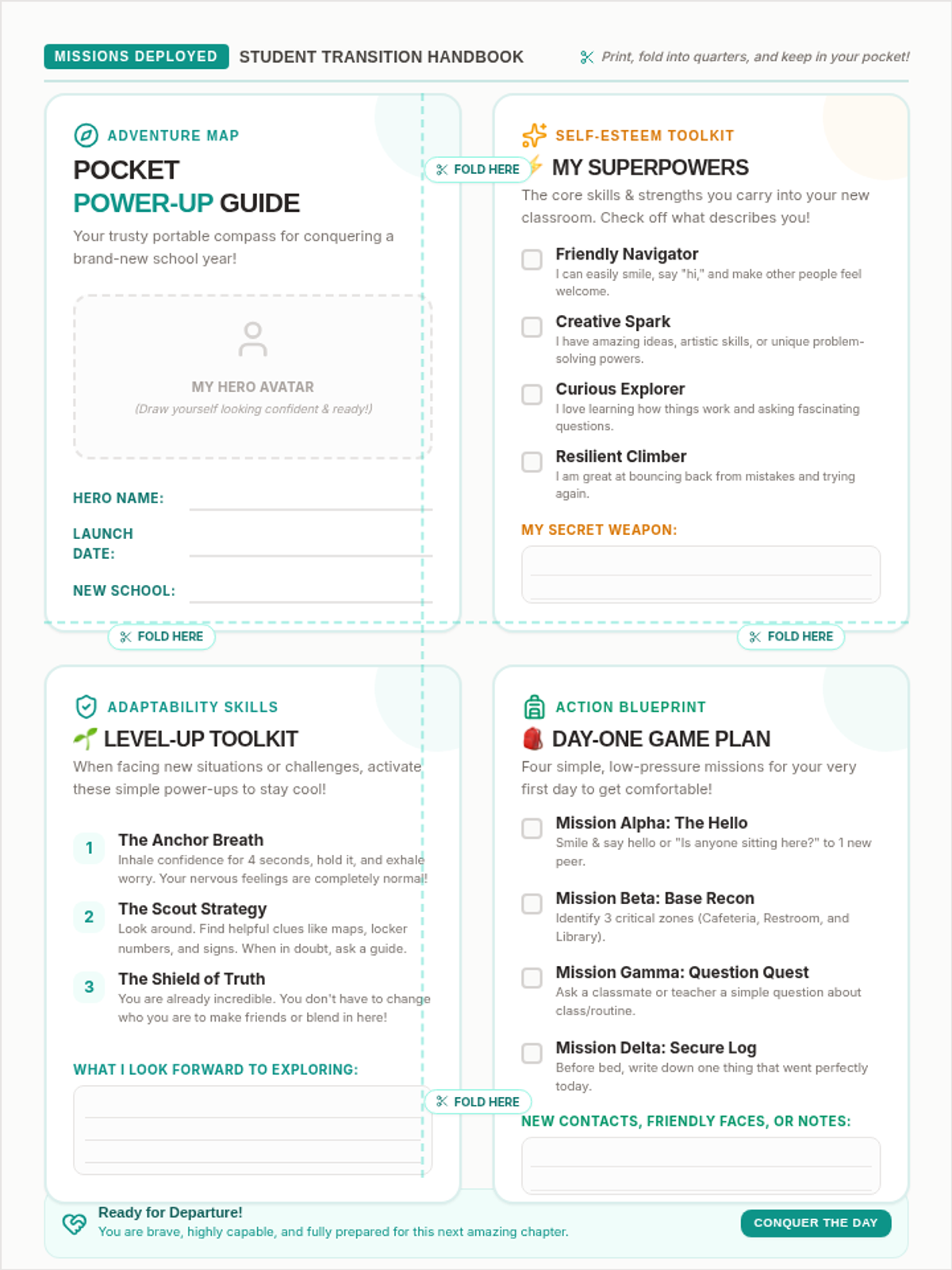
A beautifully designed, foldable 1-page pocket-sized guide and portfolio for students transitioning to a new school. It features 4 quadrants that fold into a pocket booklet: a hero identity cover page, self-esteem building superpowers checklist, a growth-oriented coping toolkit, and a practical day-one action checklist.
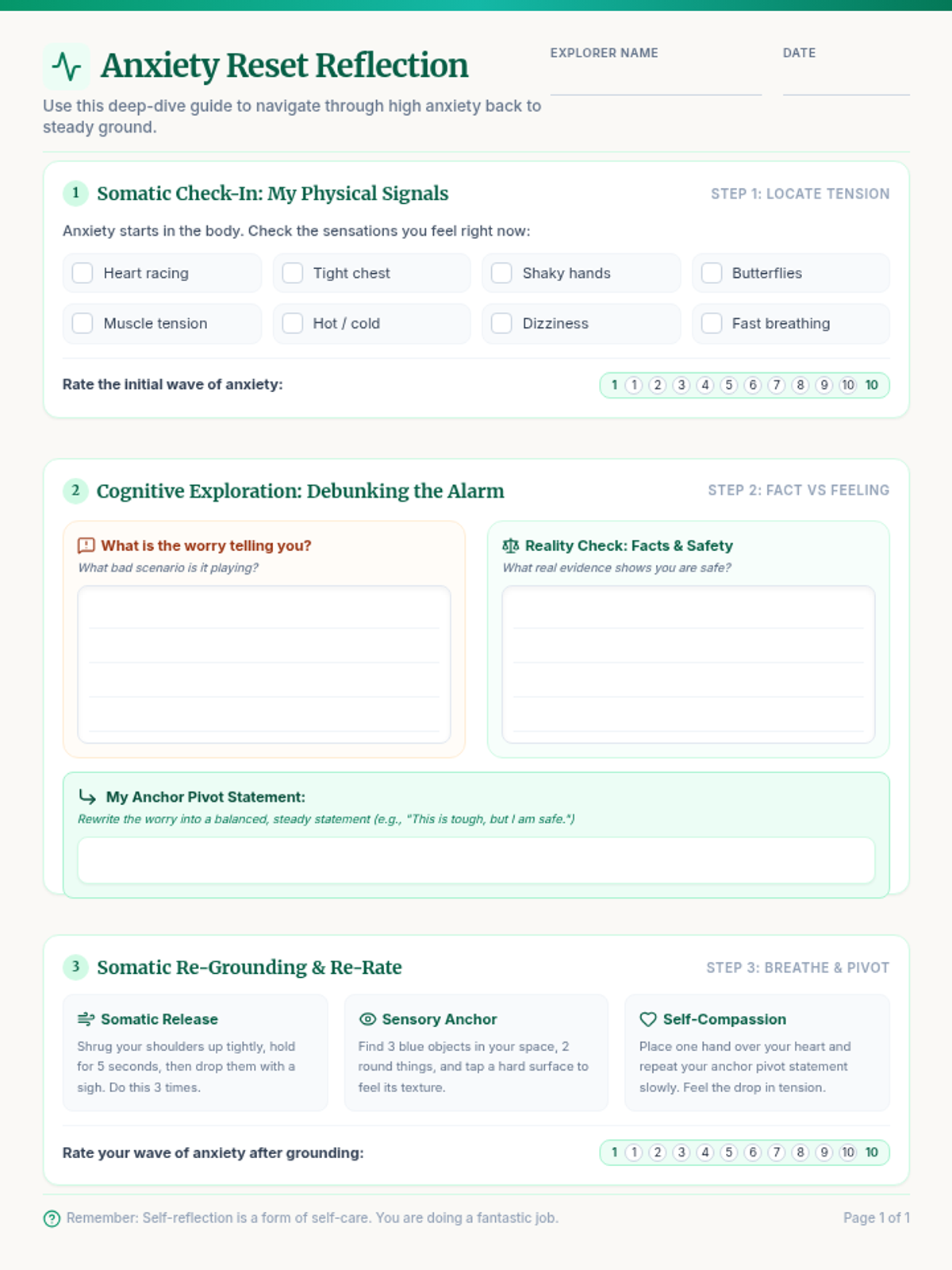
A deep-dive Cognitive Behavioral Therapy (CBT) and somatic reflection worksheet designed to help students analyze and process acute episodes of anxiety, challenge automatic negative thoughts, and practice somatic grounding techniques.
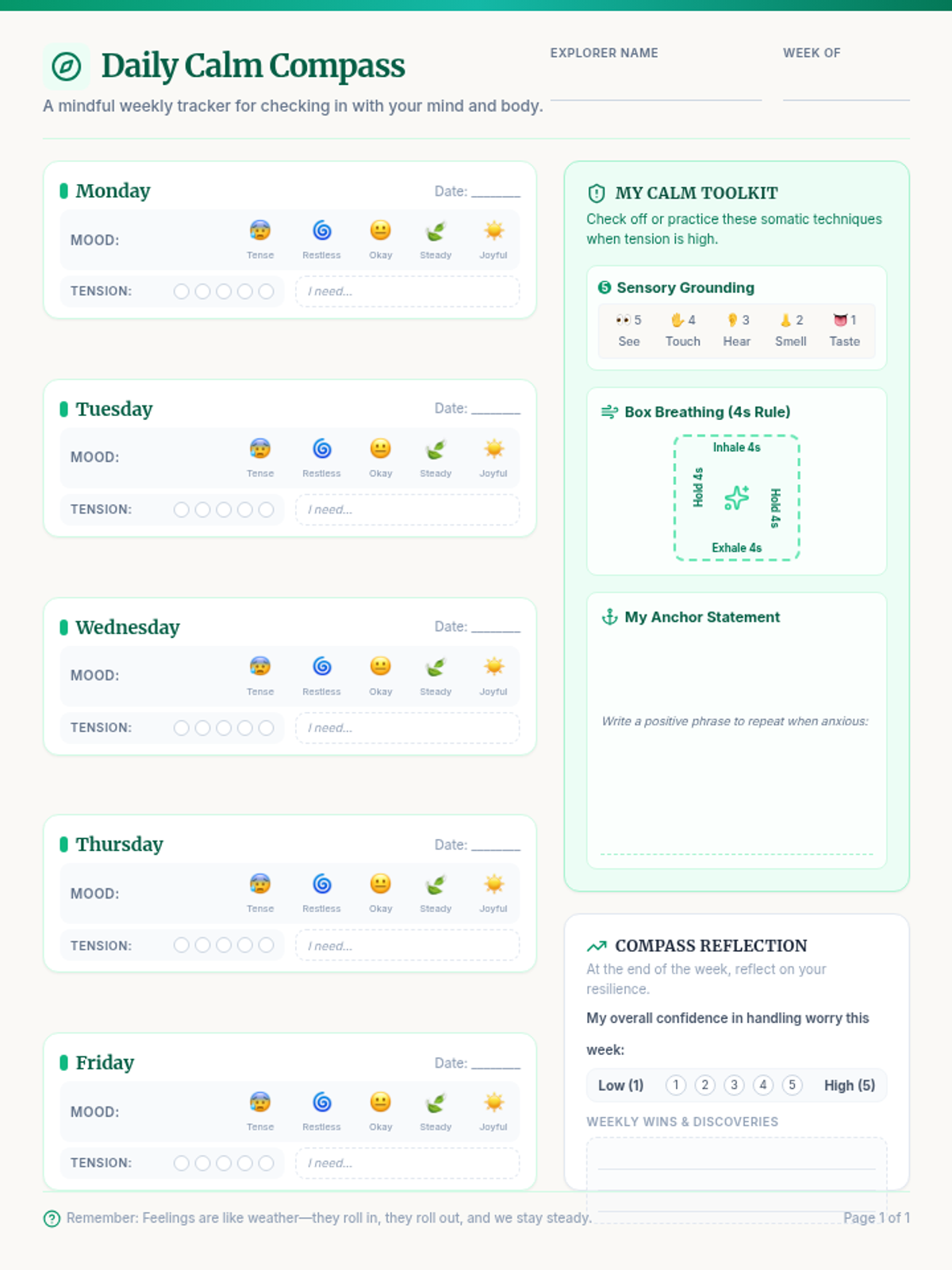
A single-page daily visual tracker and coping log designed to help students track anxiety, physical tension, and positive focus across the week. Features custom-designed emoji scales and a visual calming toolkit.
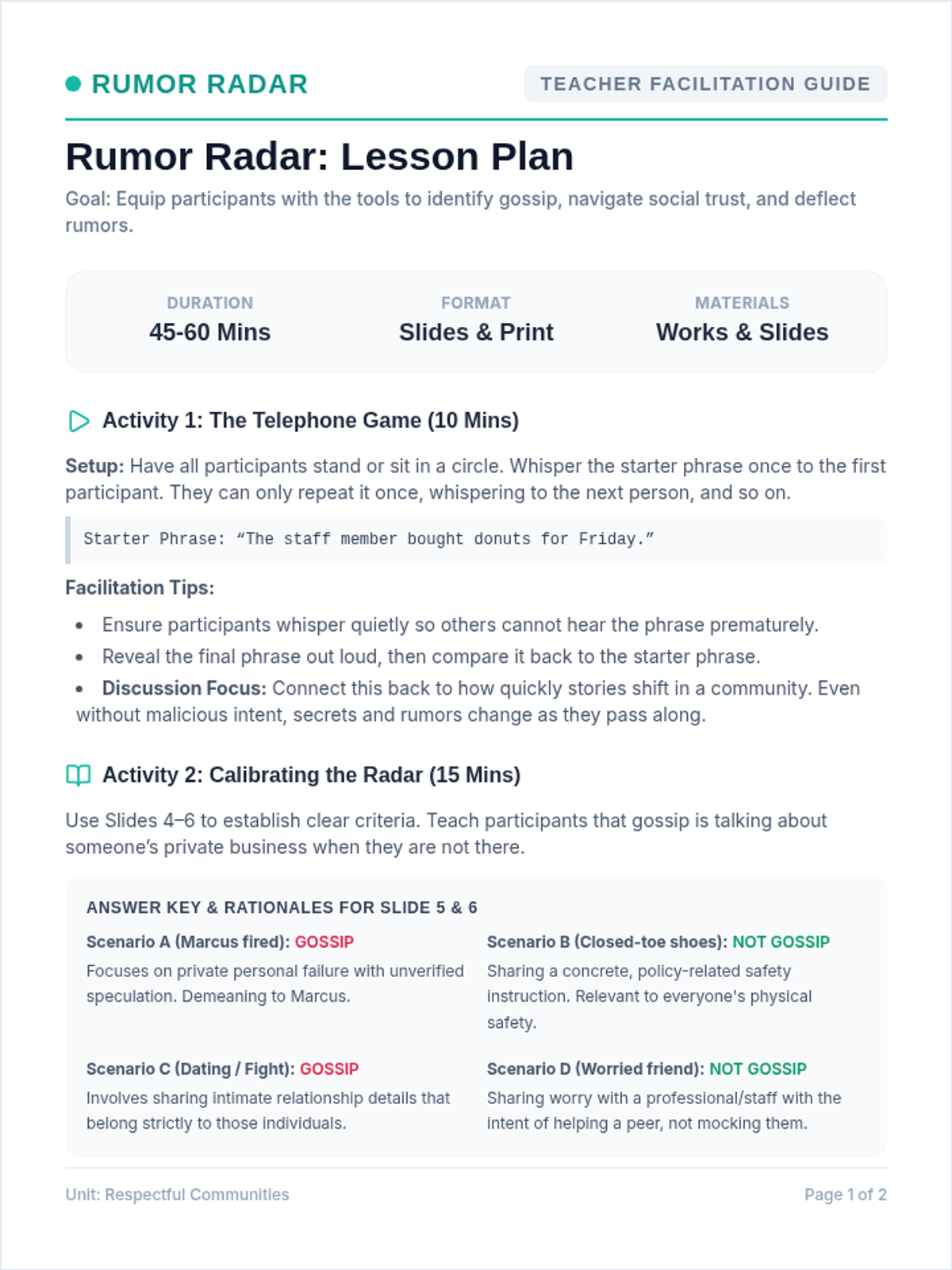
A comprehensive teacher facilitation guide providing pacing suggestions, discussion prompts for every slide, answer keys for activities, and a differentiation matrix to support diverse learning needs in the same group.
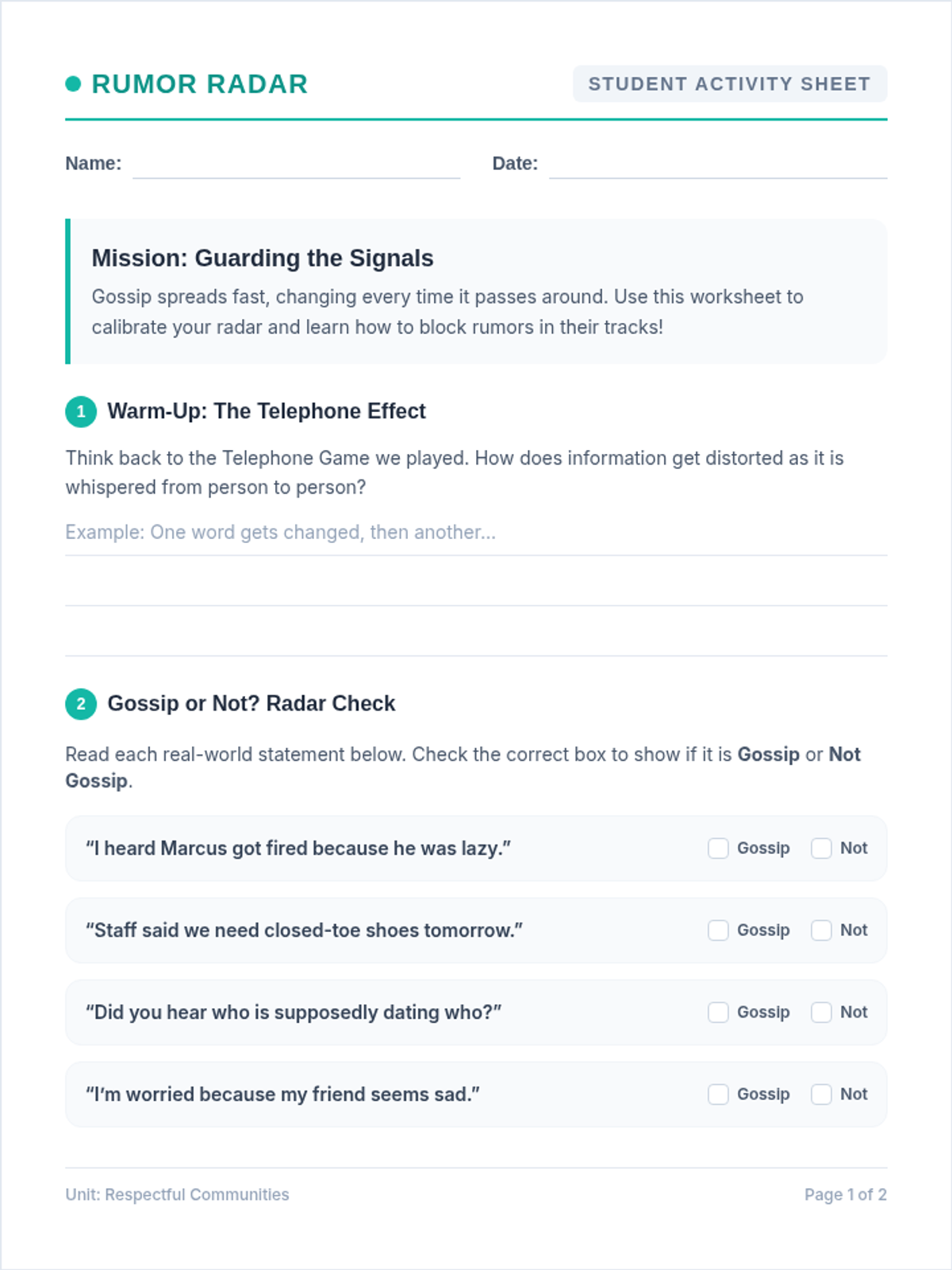
A student-facing printable worksheet designed to reinforce the Rumor Radar concepts. It includes a name/date section, a Gossip or Not? sorting activity, emotional reflections, and a scenario-based practice area for constructing personal deflection shields.
An interactive and highly visual slide deck for the Rumor Radar lesson. It guides participants through the Telephone Game warm-up, definition of gossip, real-world examples, underlying reasons, emotional/social effects, and practical deflection responses to prevent rumors. Now features expanded interactive group voting polls.
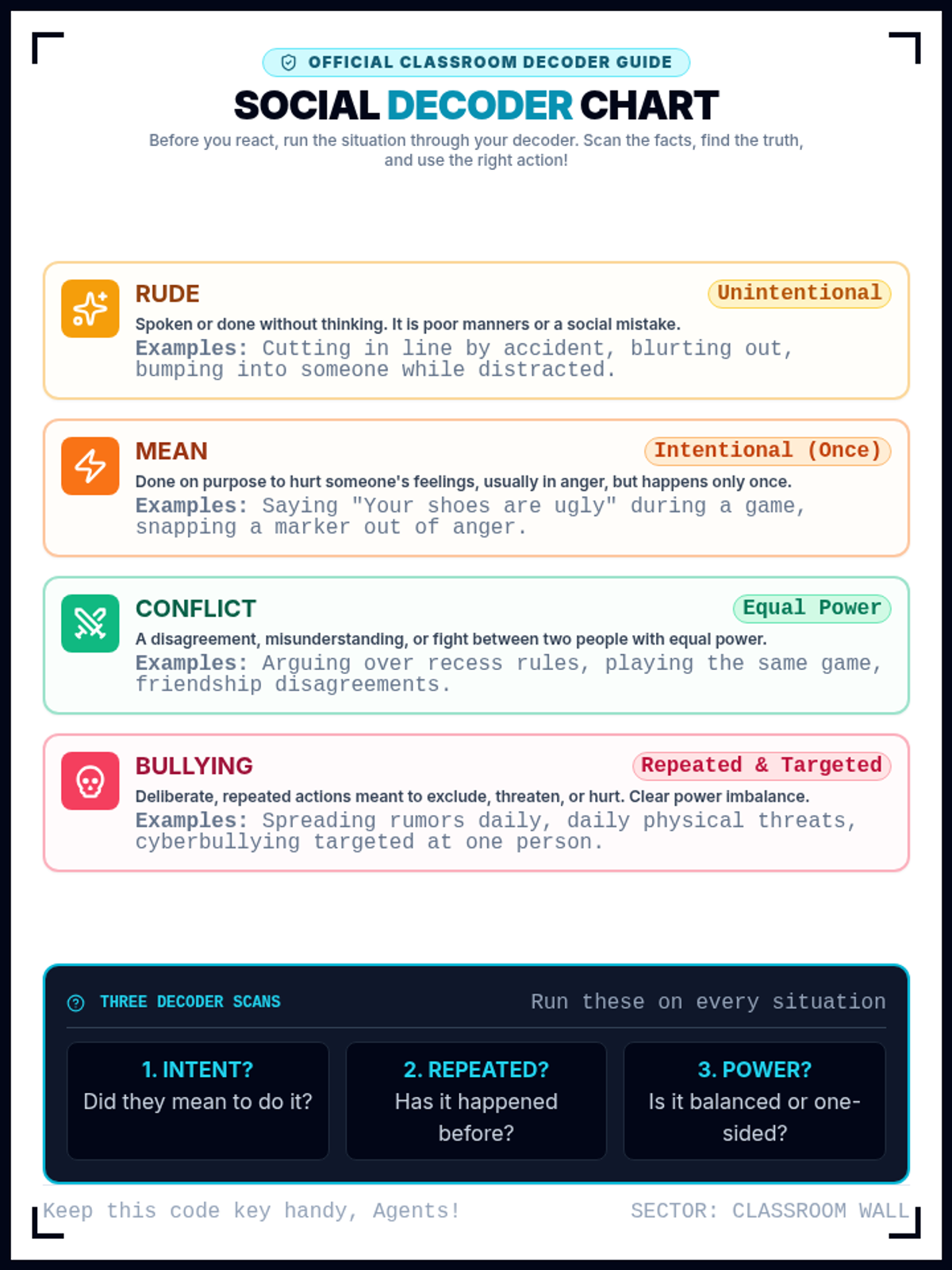
A high-impact printable classroom poster / anchor chart summarizing the key differences between Rude, Mean, Conflict, and Bullying with clear criteria and visual icons.
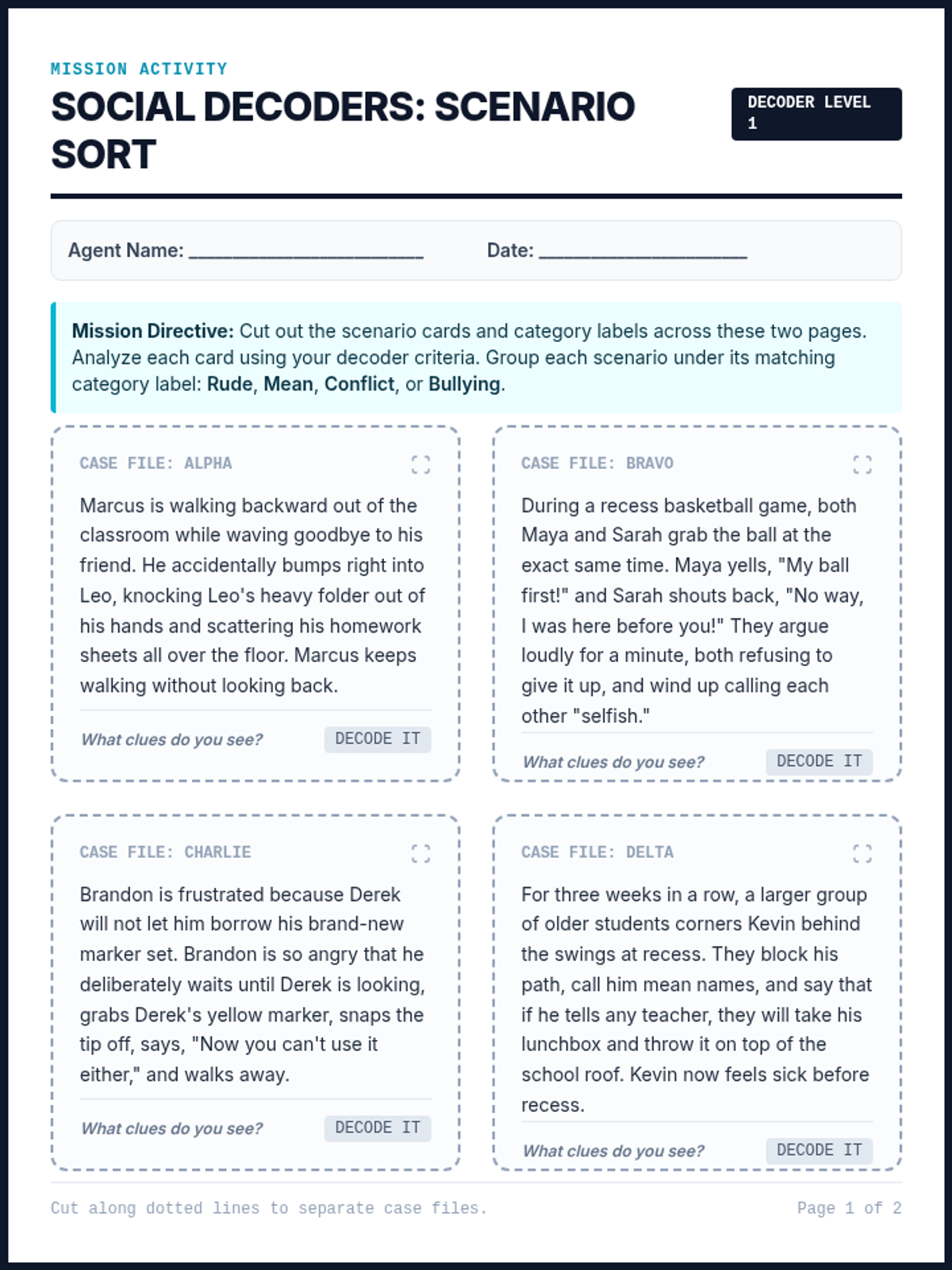
A 2-page printable card sorting activity containing student instructions, name fields, 8 detailed social scenarios, and 4 category labels for hands-on decoding and categorization.
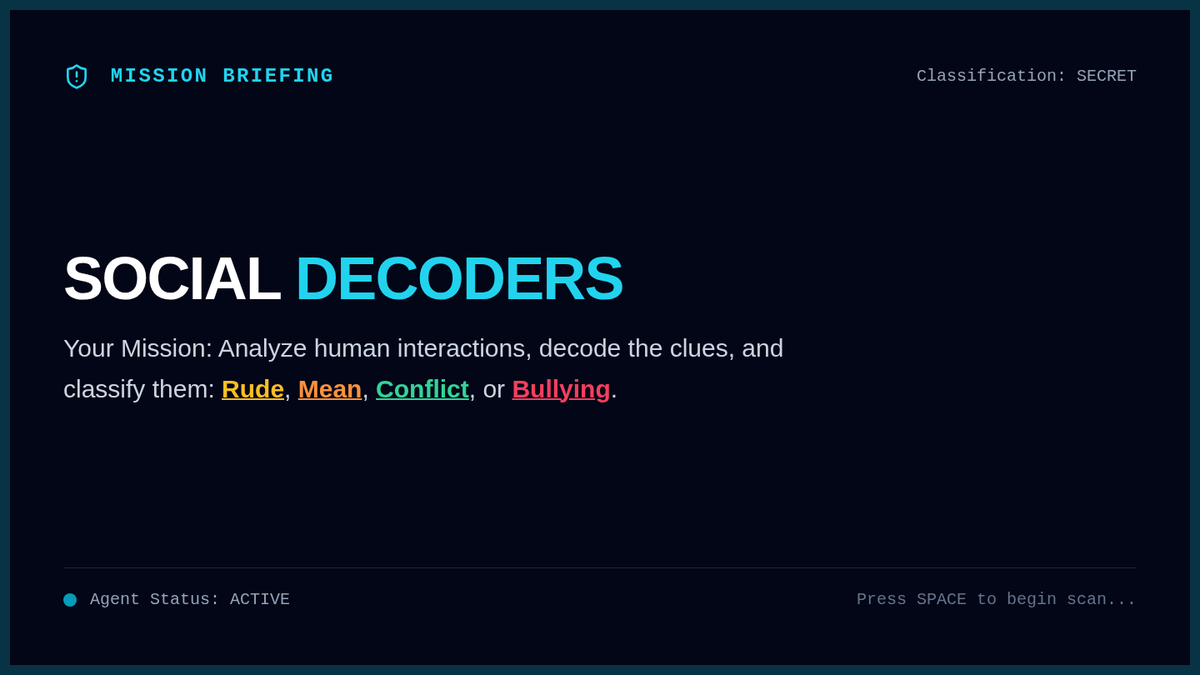
A digital presentation utilizing a secret agent / decoder theme to teach students how to identify and distinguish between rude, mean, conflict, and bullying behaviors, using visual matrices and interactive case files.
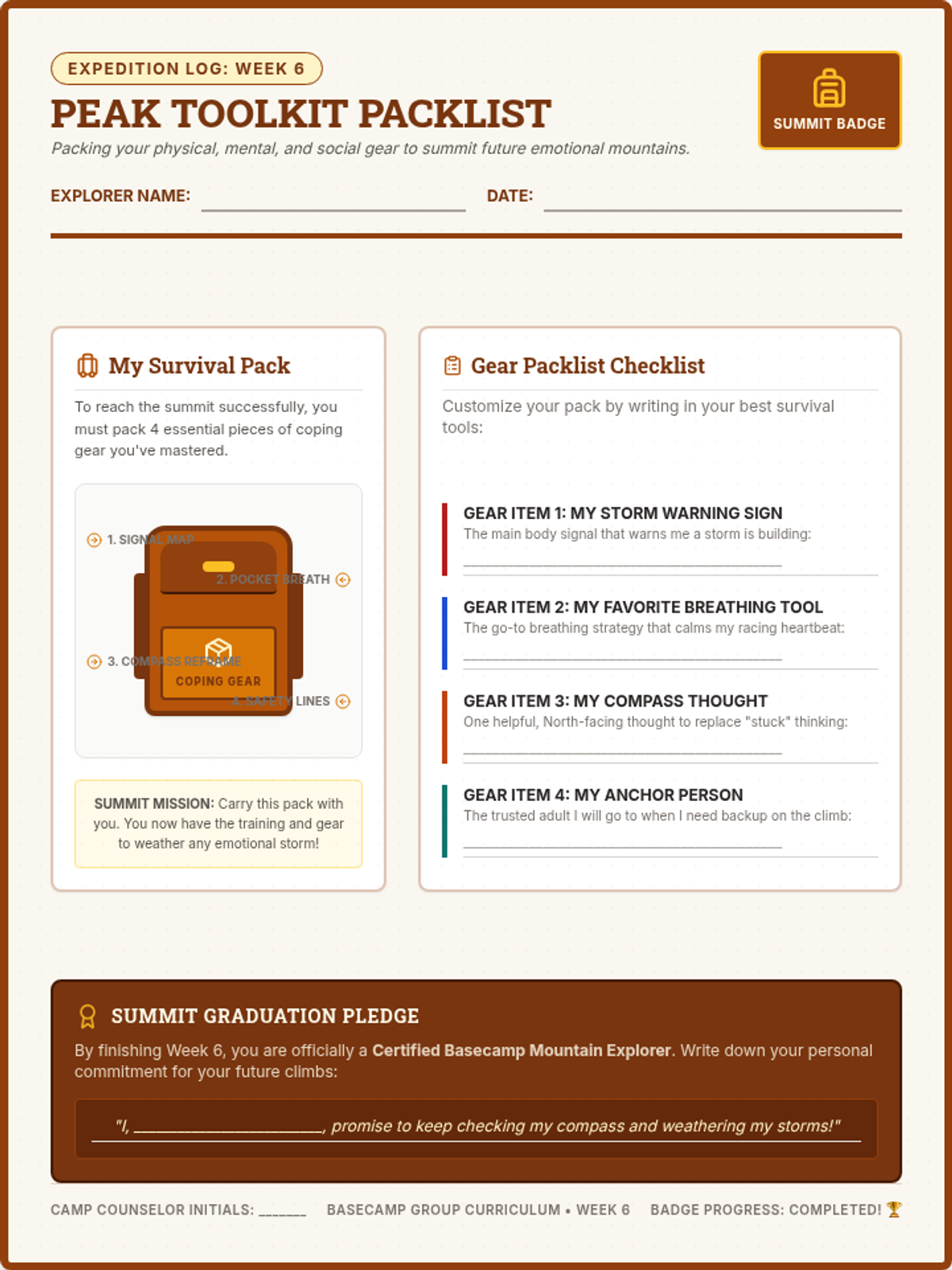
A Peak Coping Kit review and reflection guide for Week 6 where students compile and customize their physical and mental survival gear (calming tools, mindset shifts, and support anchors) for future emotional climbs.
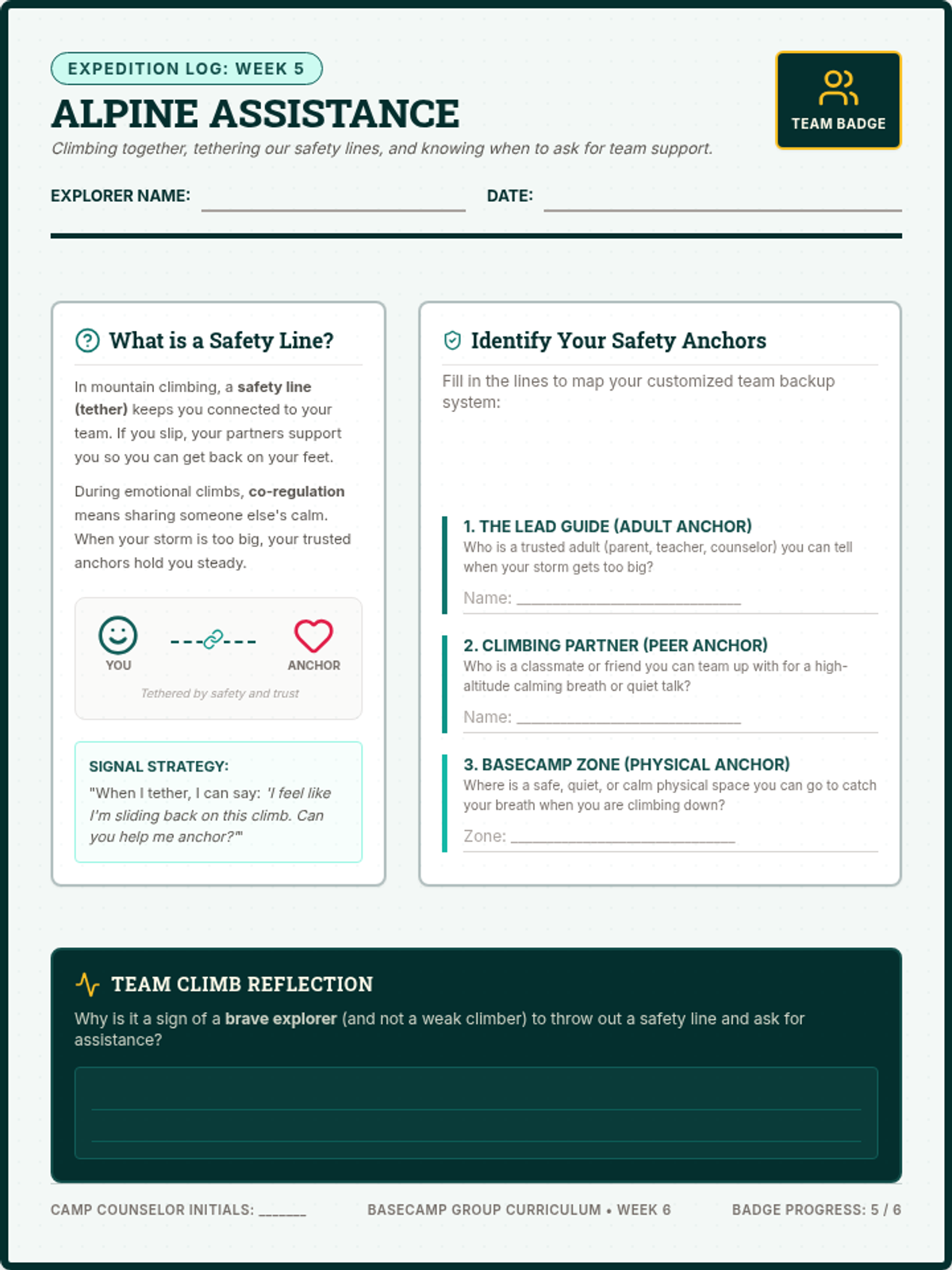
A co-regulation mapping activity for Week 5 where students map their trusted support network (peers, parents, educators) and physical safe zones as 'safety line anchors' for difficult emotional climbs.
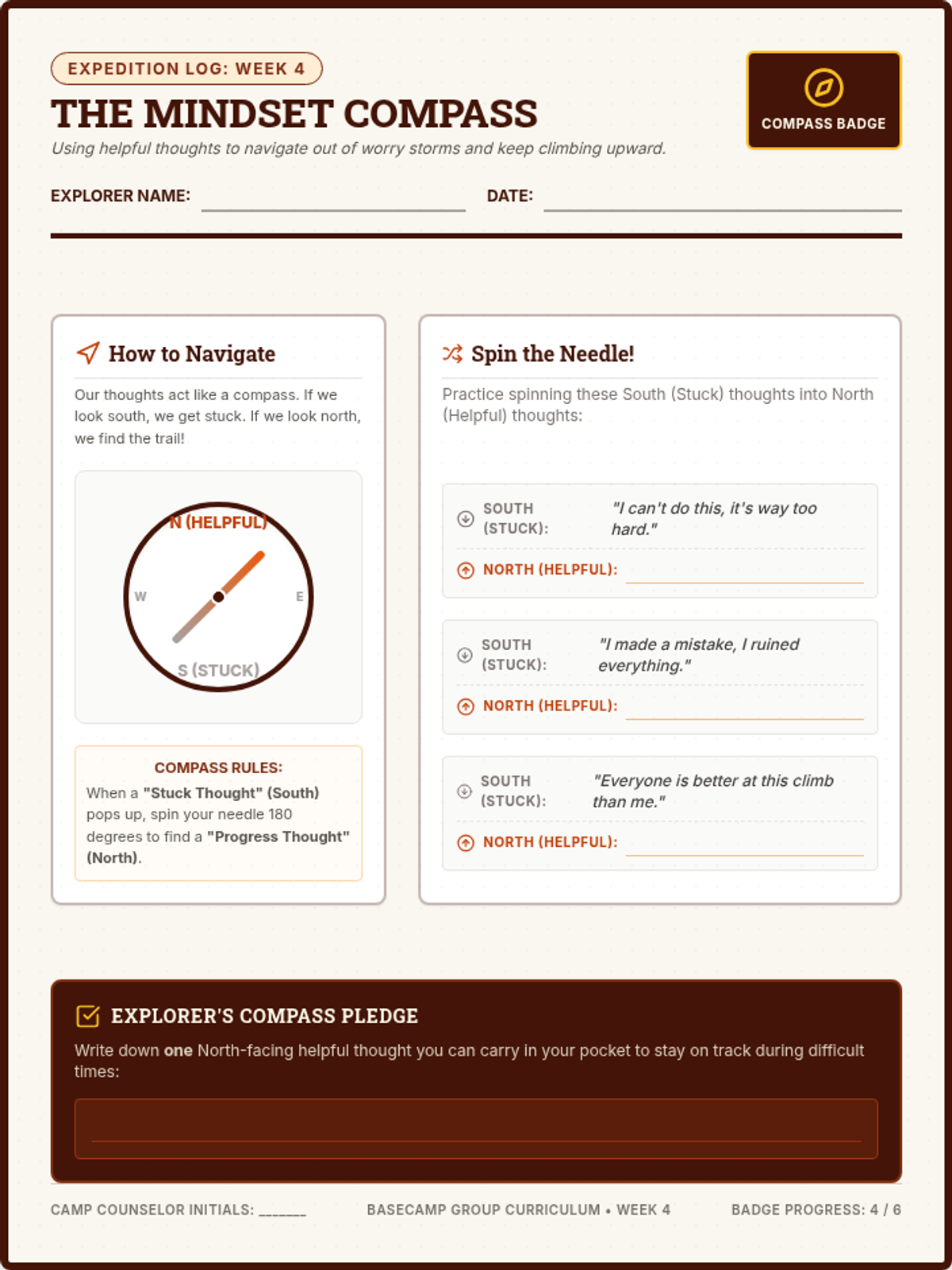
A Mindset Compass Challenge worksheet for Week 4 where students practice cognitive reframing by converting "stuck thoughts" (South) into "progress thoughts" (North) using a vintage navigation theme.