A printable game board for 'Thought Traps Detectives', featuring a winding path with specific spaces for landing on cognitive distortion scenarios and positive logic leaps.
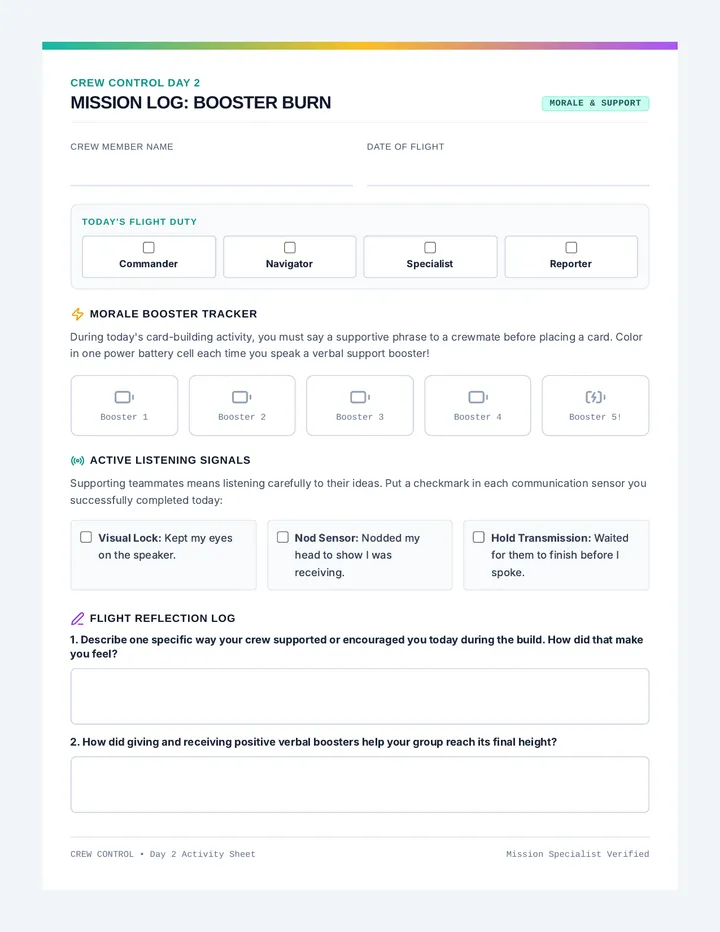
An engaging student worksheet designed as a racing pit-stop dashboard. It includes a visual progress track, a debris log for identifying barriers, and space for two specific tactical adjustments.
A detailed step-by-step instructional script for teachers to deliver the Goal Pit-Stop lesson, including specific prompts, transitions, and teacher notes for each phase of the lesson.
High-impact visual slides for the Goal Pit-Stop lesson, featuring a racing theme, clear phases for reflection, and guidance on setting specific, actionable adjustments.
A comprehensive 30-minute lesson plan for 6th-grade students using a racing pit-stop metaphor to teach goal reflection and adjustment. Includes instructional arc, success indicators, and differentiation strategies.
A comprehensive one-page behavior guide that synthesizes the decision matrix from Irving ISD with the sequential intervention process from de Zavala Middle School, optimized for printing on an 8.5 x 11 inch page.
A comprehensive behavior policy handbook for K-12 schools, including mission statements, a detailed classification matrix (summary table), and a restorative action menu for teachers and administrators.
A visual decision-making flow chart for K-12 teachers that distinguishes between teacher-managed minor infractions and office-managed major infractions, including specific intervention steps and proactive strategies.
A detailed analysis of four existing behavior systems, highlighting their commonalities, differences, and the best practices used to synthesize a new, cohesive K-12 framework.
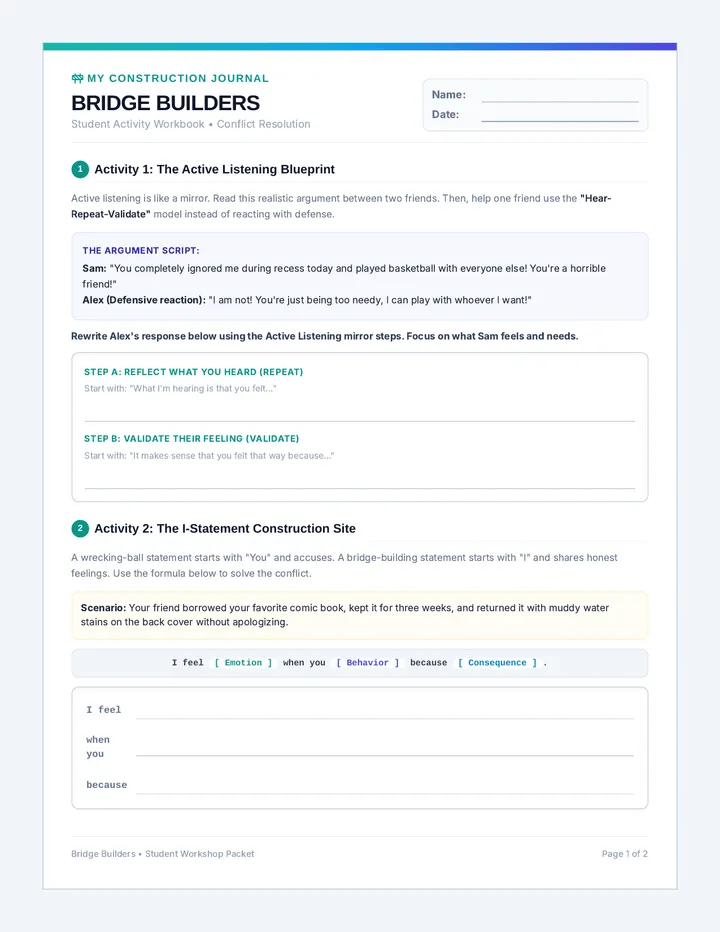
Summative assessment and reflection worksheet for the listening lesson. Challenges students to recall the L-I-S-T-E-N acronym and re-order complex, multi-step directions to test comprehension and sequencing skills.
Interactive student activity sheet for 'Blueprint Builder'. Includes mission grids for students to draw based on oral instructions, highlighting the difference between one-way and two-way communication. Features secret blueprints for the student 'Dispatcher' to describe.
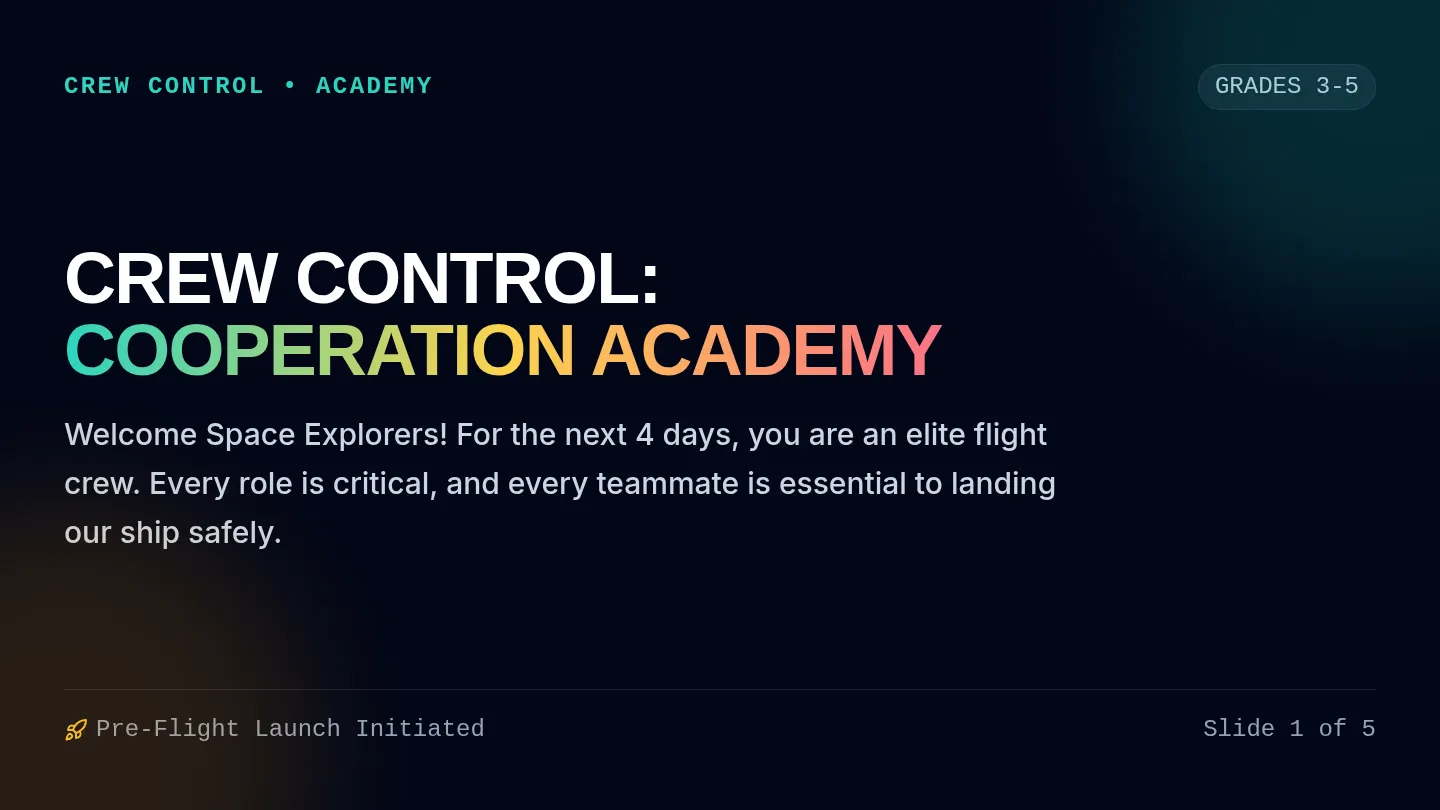
High-impact visual presentation for a 4th-grade listening lesson. Features a 'Mission Listening' theme, introduces the L-I-S-T-E-N active listening acronym, and provides clear strategies for following multi-step directions.
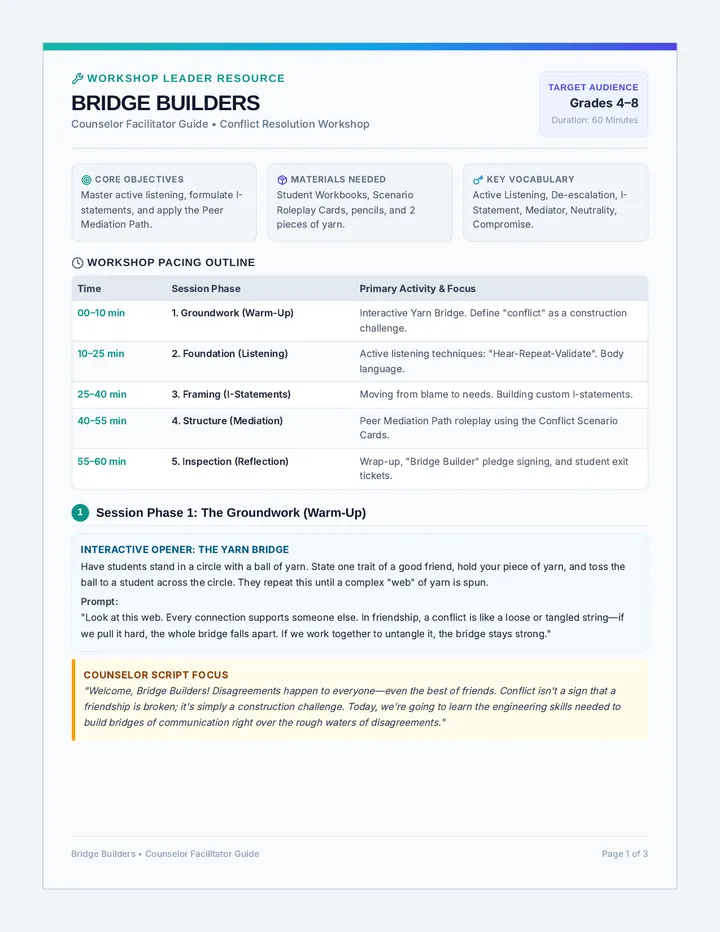
Comprehensive 2-page teacher guide for a 4th-grade listening lesson. Includes lesson objectives, a detailed pacing guide with a 'Secret Agent' theme, and specific instructions for the interactive 'Blueprint Builder' activity.
A comprehensive teacher's guide for Lesson 6, providing pacing, discussion prompts, and technical tips for facilitating the formal business proposal setup.
A student-facing formatting checklist and architecture guide for setting up a formal business proposal, featuring technical requirements for alignment, typography, and spacing.
A professional, visually striking slide deck for teaching document architecture and formal business proposal formatting, featuring blueprint design elements and technical software skill guides.
A student synthesis worksheet for Lesson 5, guiding students through the process of writing a summary paragraph based on their market research and deciding whether to pivot their product idea.
A joint teacher's guide for Lessons 4 and 5, covering interviewing techniques, the concept of the pivot, and facilitating a market research sprint with digital citizenship reminders.
A high-energy slide deck for Lesson 5, focusing on market research, transcribing customer feedback, and the concept of 'pivoting' based on data synthesis.
A student worksheet designed to help scaffold the creation of an interview script with open-ended questions, featuring a table layout and a digital skills checklist.
A high-impact slide deck for teaching customer interviewing techniques, focusing on open-ended questions vs. leading questions and introducing the technical skill of creating tables.
A teacher facilitation guide for the Emotional Intelligence Navigator lesson, including learning objectives, lesson flow, and differentiation strategies.
A visual presentation to introduce the four core emotions (angry, sad, worried, calm) using a weather/navigation metaphor and teaching basic self-regulation tools.
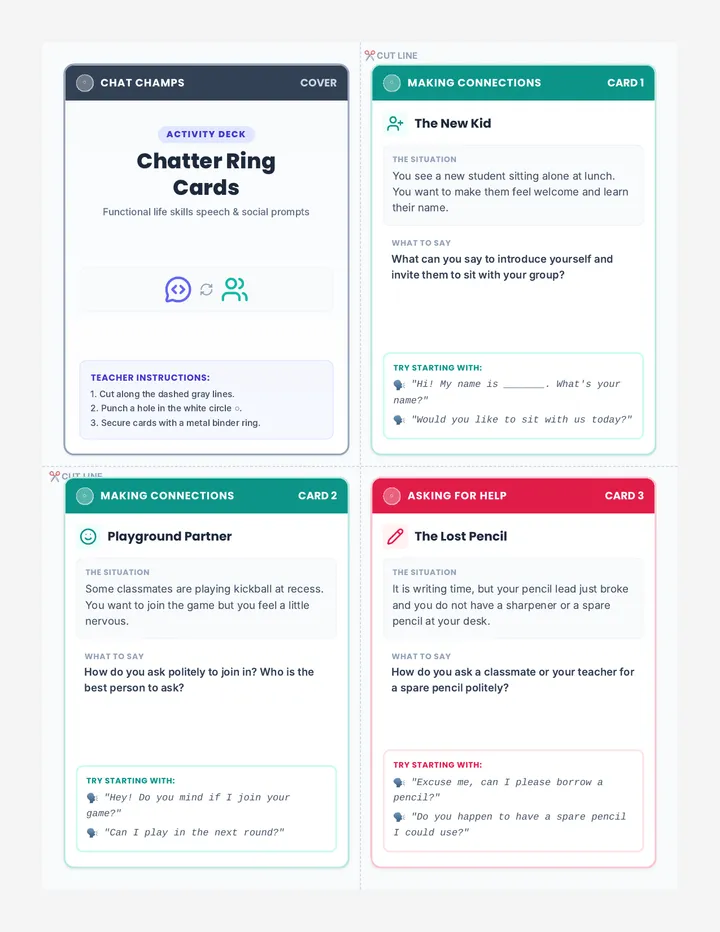
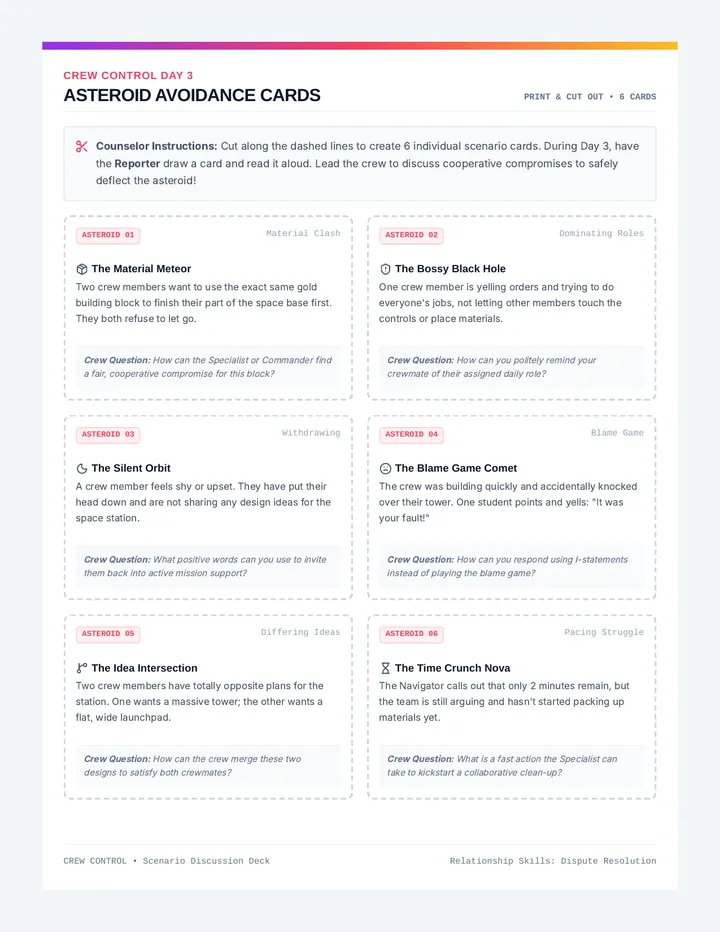
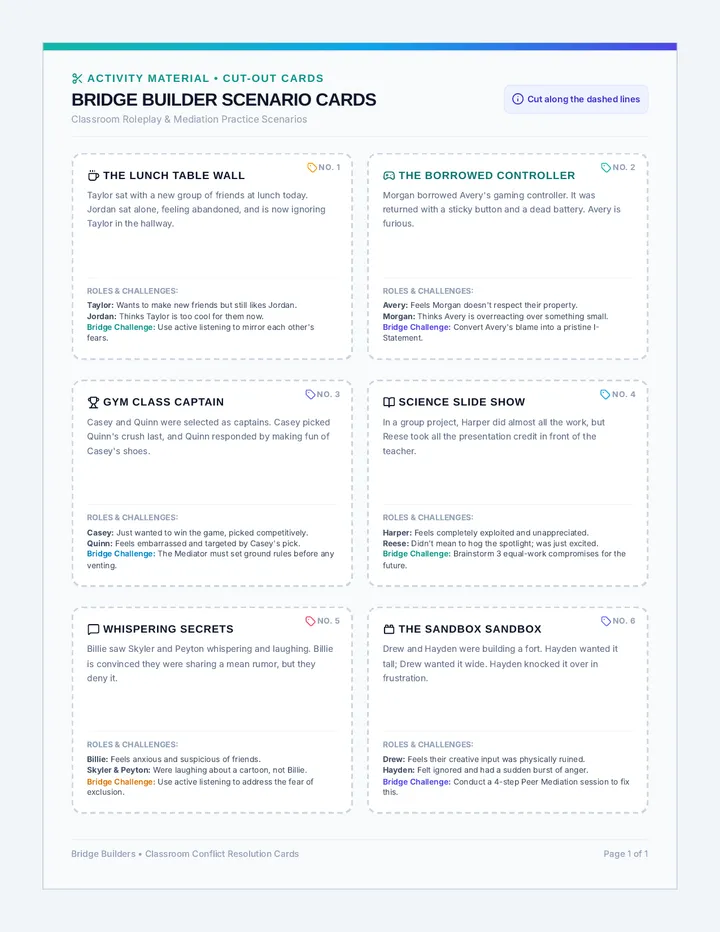
A set of printable scenario cards for calm, sad, worried, and angry emotions, designed to help students practice social-emotional regulation and perspective-taking.
A comprehensive facilitator guide for Lesson 3, covering target market segmentation, customer empathy, and user journey mapping with facilitation tips.
A detailed template for students to create a "User Persona" profile, identifying customer demographics, frustrations, and a "Day in the Life" journey for their product ideas.
A visually engaging slide deck teaching the concepts of target markets and customer empathy, featuring gift-giving analogies, demographic breakdowns, and instructions for creating a User Persona.
A comprehensive teacher's guide providing pacing instructions, discussion prompts, common misconceptions, and differentiation strategies for facilitating the "Scarcity & Opportunity Cost" lesson.
A visually compelling slide deck using a blueprint-inspired design to teach the concepts of scarcity and opportunity cost, featuring a 'Feature Fight' activity where students must budget resource points for their product ideas.
A printable board game designed for small groups to practice empathy scenarios and kindness expressions using a 'Heart Detectives' theme.