A professional guide for therapists or teachers to facilitate the final reflection session. Includes objectives, a suggested timeline, key facilitation questions, and tips for handling termination.
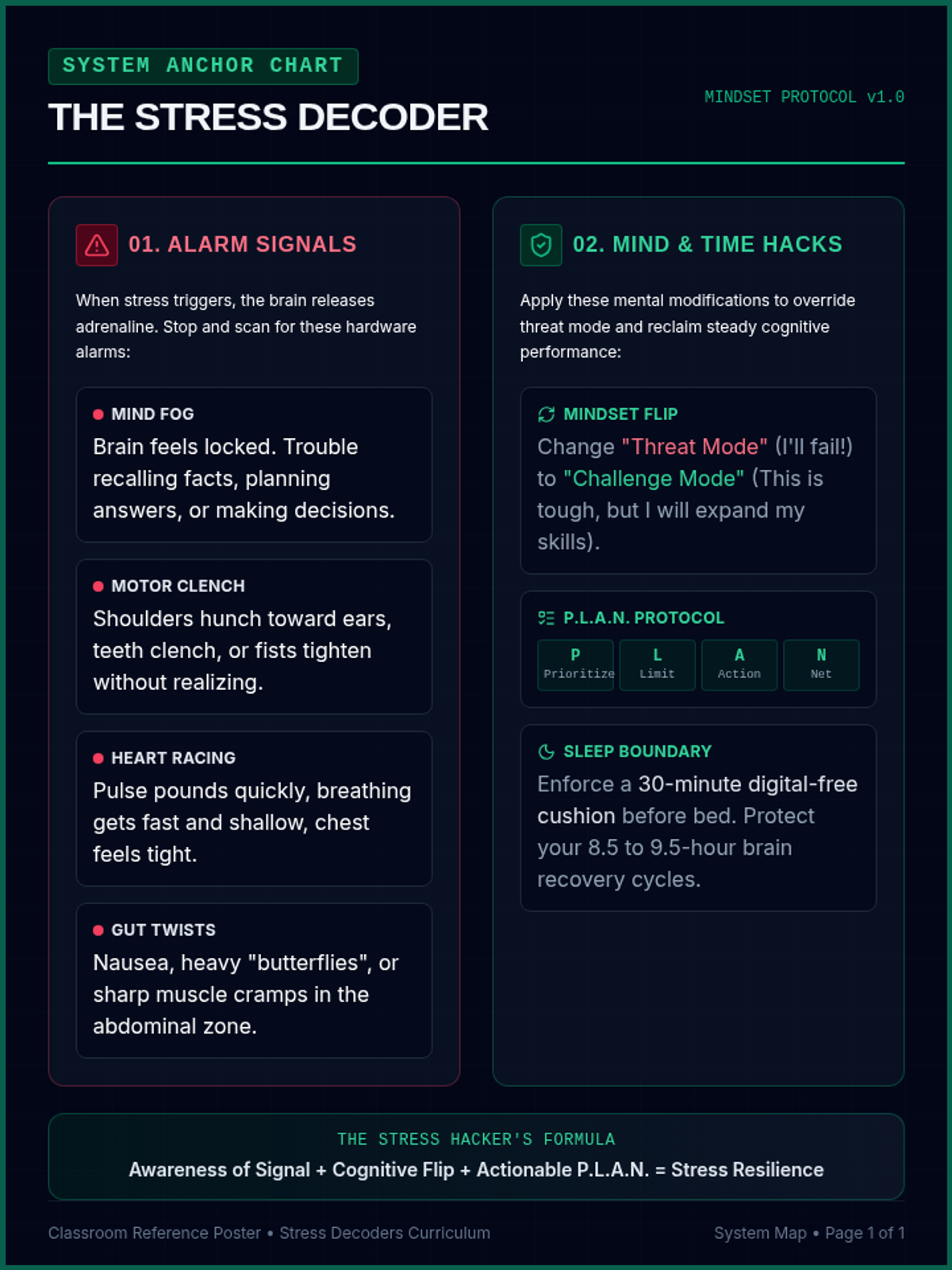
A single-page printable classroom anchor chart summarizing physical stress triggers, cognitive reframing, and the P.L.A.N. time-management model.
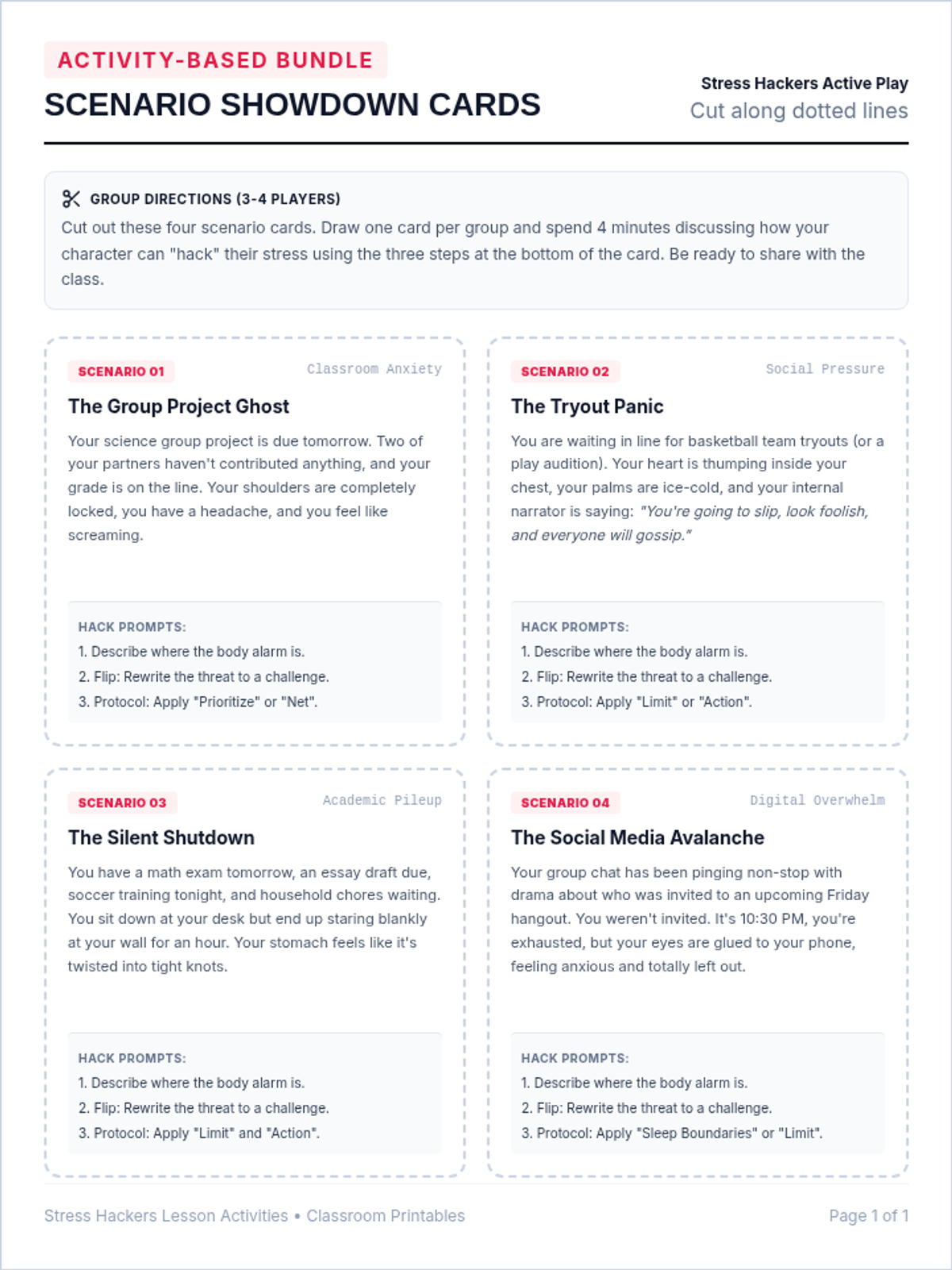
A single-page printable activity document featuring 4 high-interest, relatable middle school scenario cards with guided reflection prompts.
An 8-slide presentation with bold graphics, conceptual models, active-learning prompts, and structured pacing cues.
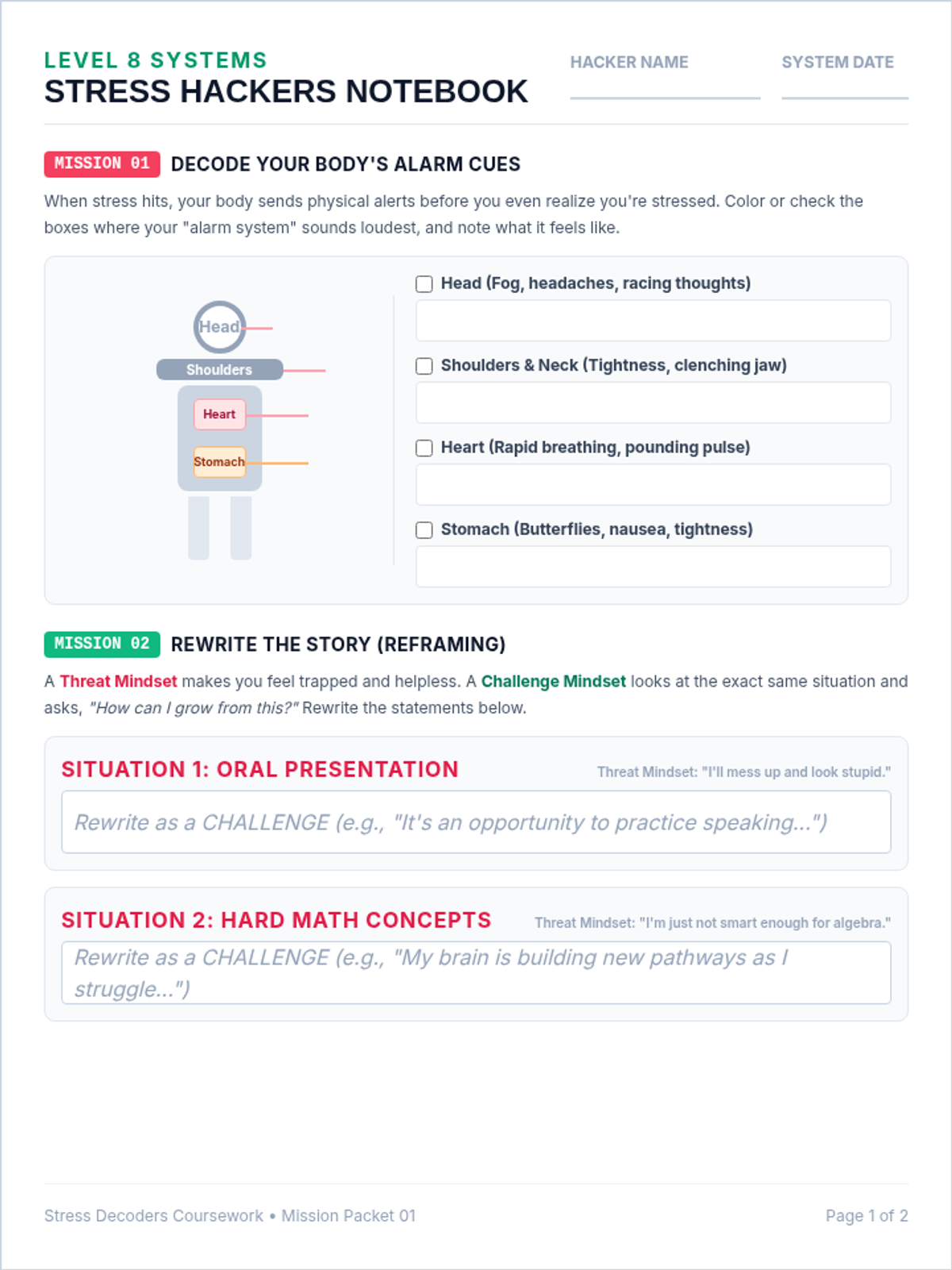
A 2-page interactive student workbook including a physical stress-mapping activity, cognitive reframing exercises, and the P.L.A.N. time management planner.
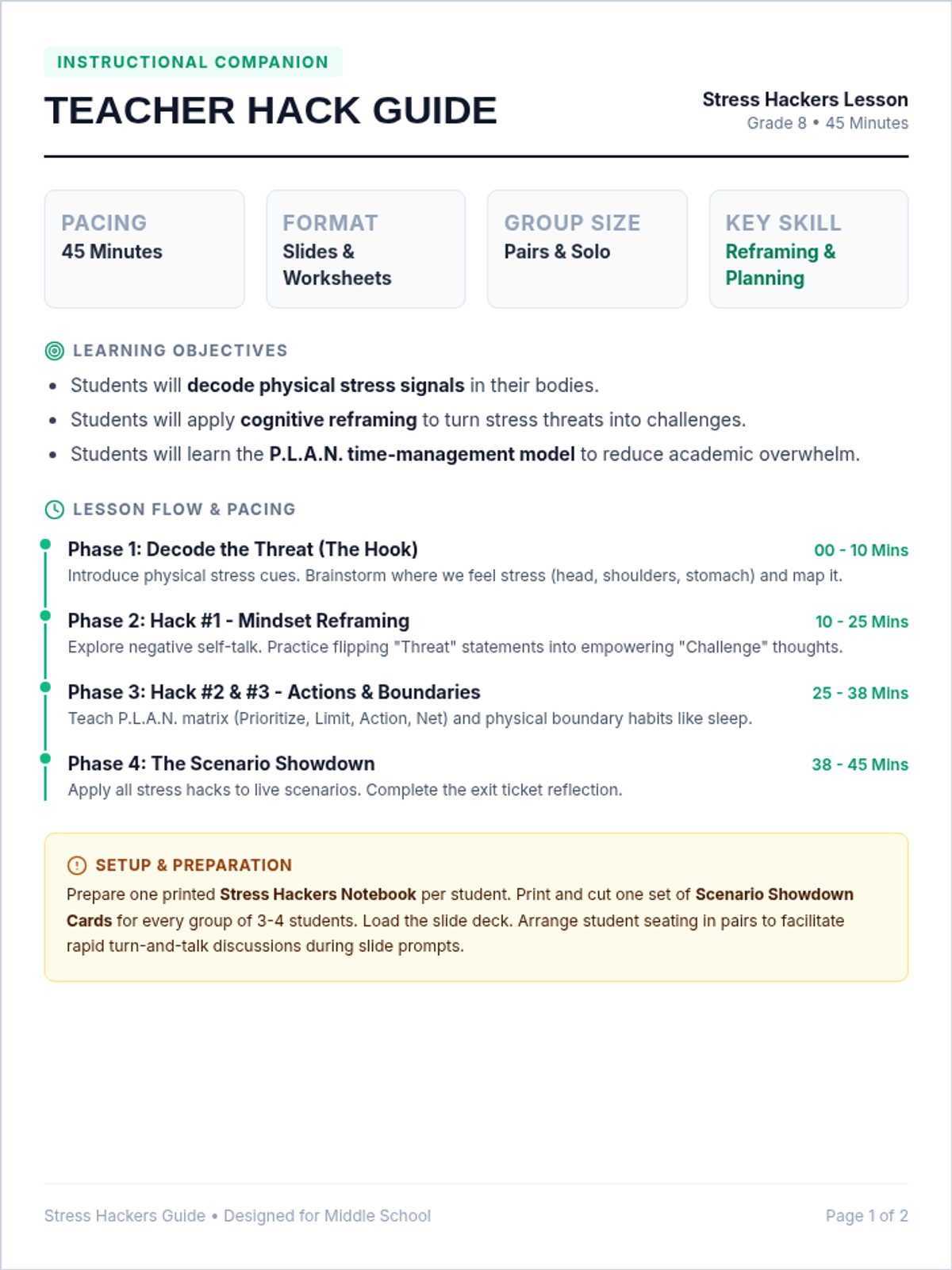
A 2-page teacher facilitation guide outlining the 45-minute lesson plan, pacing, discussion prompts, active learning strategies, and exemplary student responses.
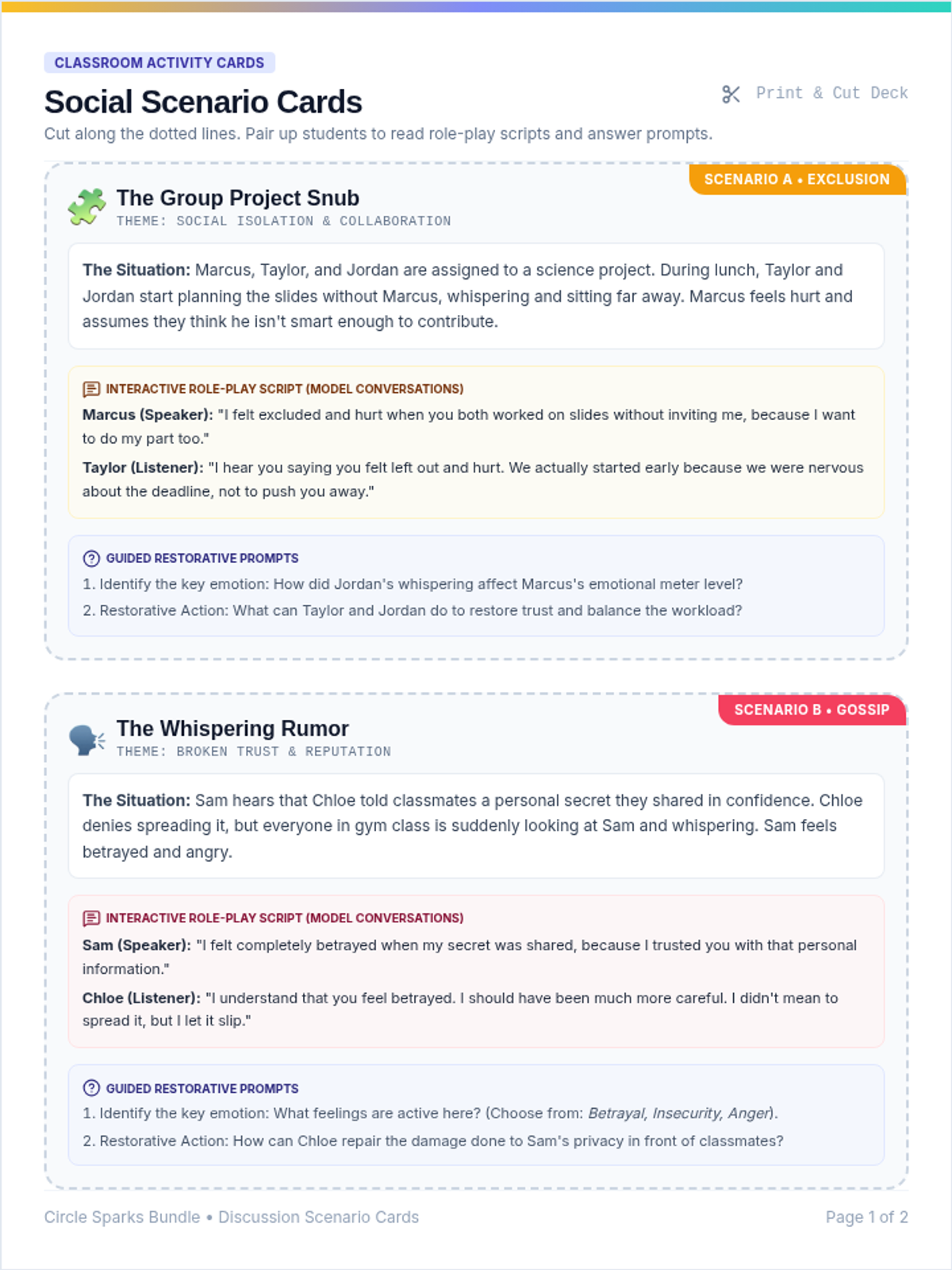
Four highly detailed, cut-out Social Scenario Cards featuring real-world middle school peer conflicts. Each card includes a realistic peer scenario, an interactive role-play script modeling mediation, and guided reflection questions targeting social-emotional vocabulary.
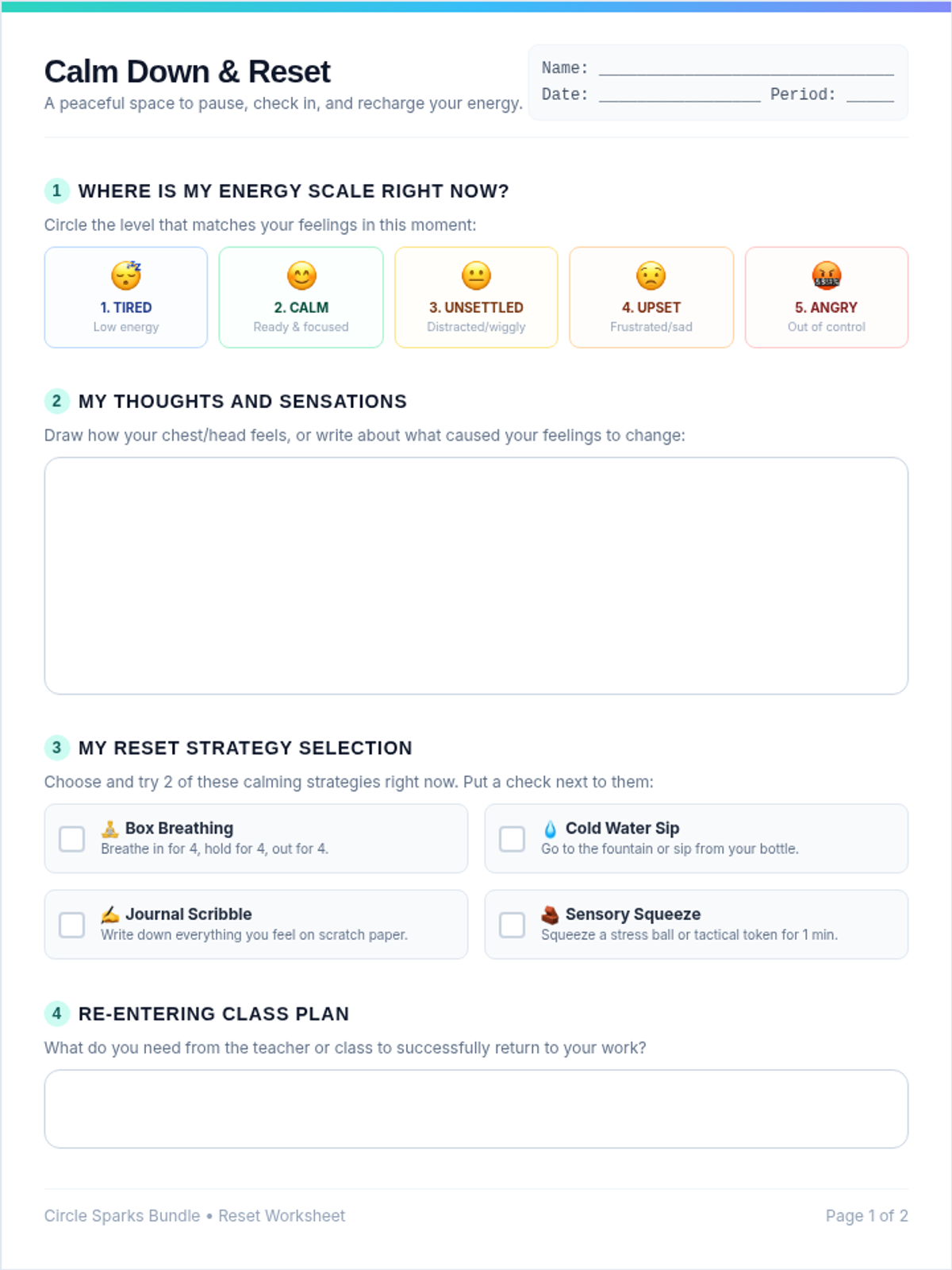
A 2-page, self-paced student reflection tool. Page 1 is a Calm Down & Reset Sheet that guides students to identify feelings and select a calming strategy. Page 2 is a Restorative Think Sheet focusing on taking ownership of choices, analyzing peer impact, and planning repair.
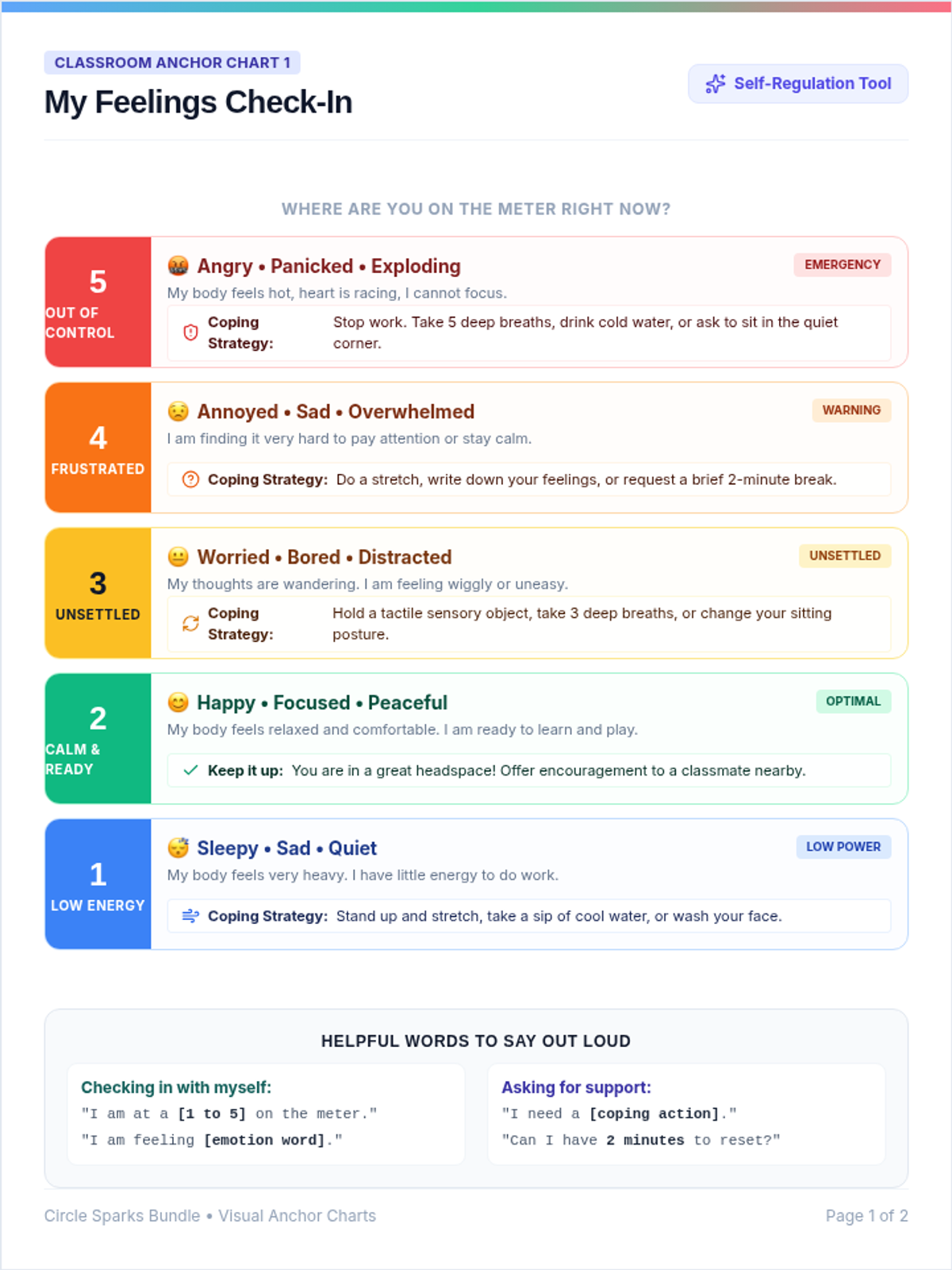
Two complete, highly visual classroom anchor charts. Page 1 contains a 1-5 Emotional Regulation Scale with emoji supports and coping actions. Page 2 provides a step-by-step Conflict Resolution Flowchart with verbal sentence stems for student mediation.
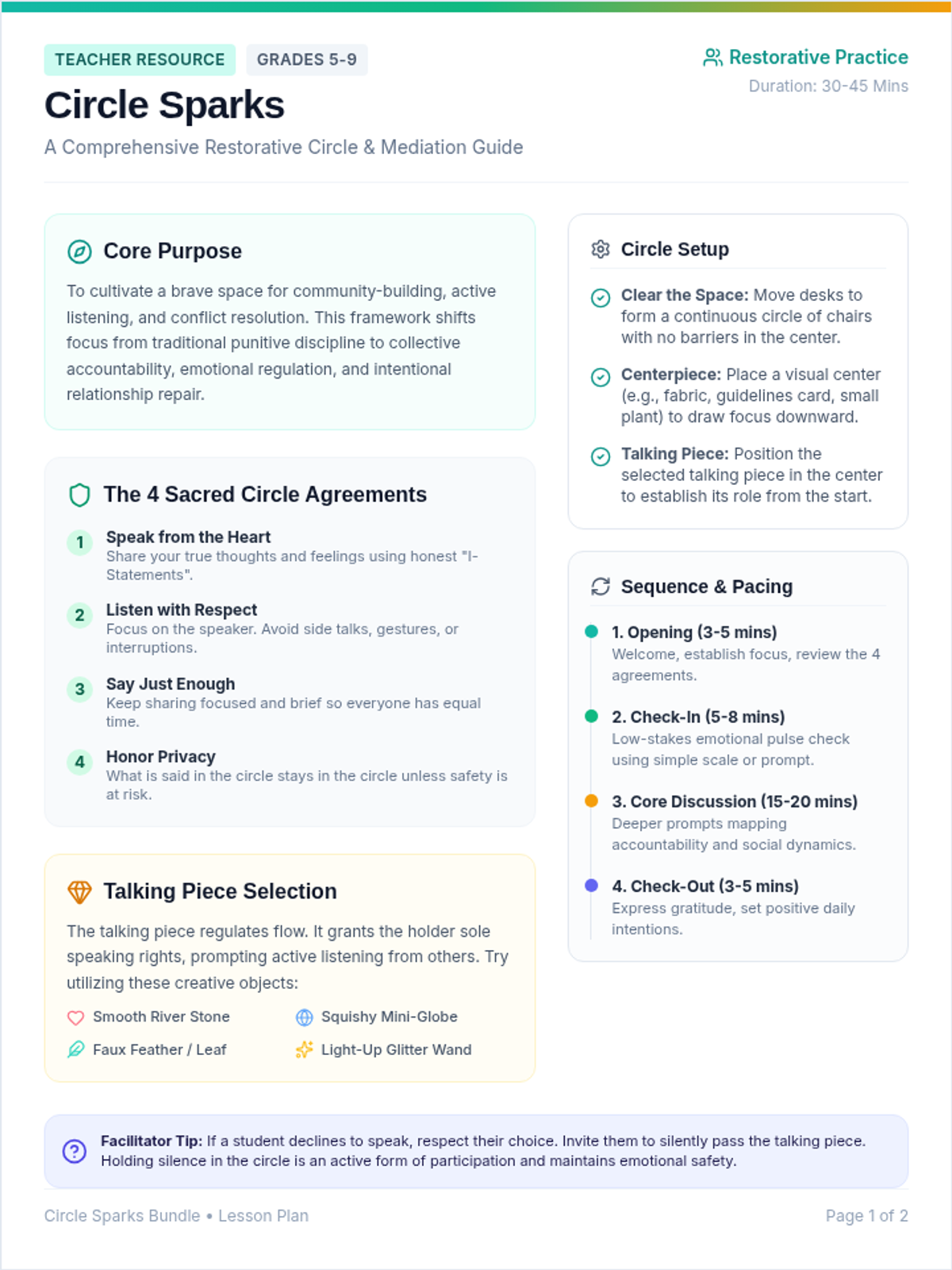
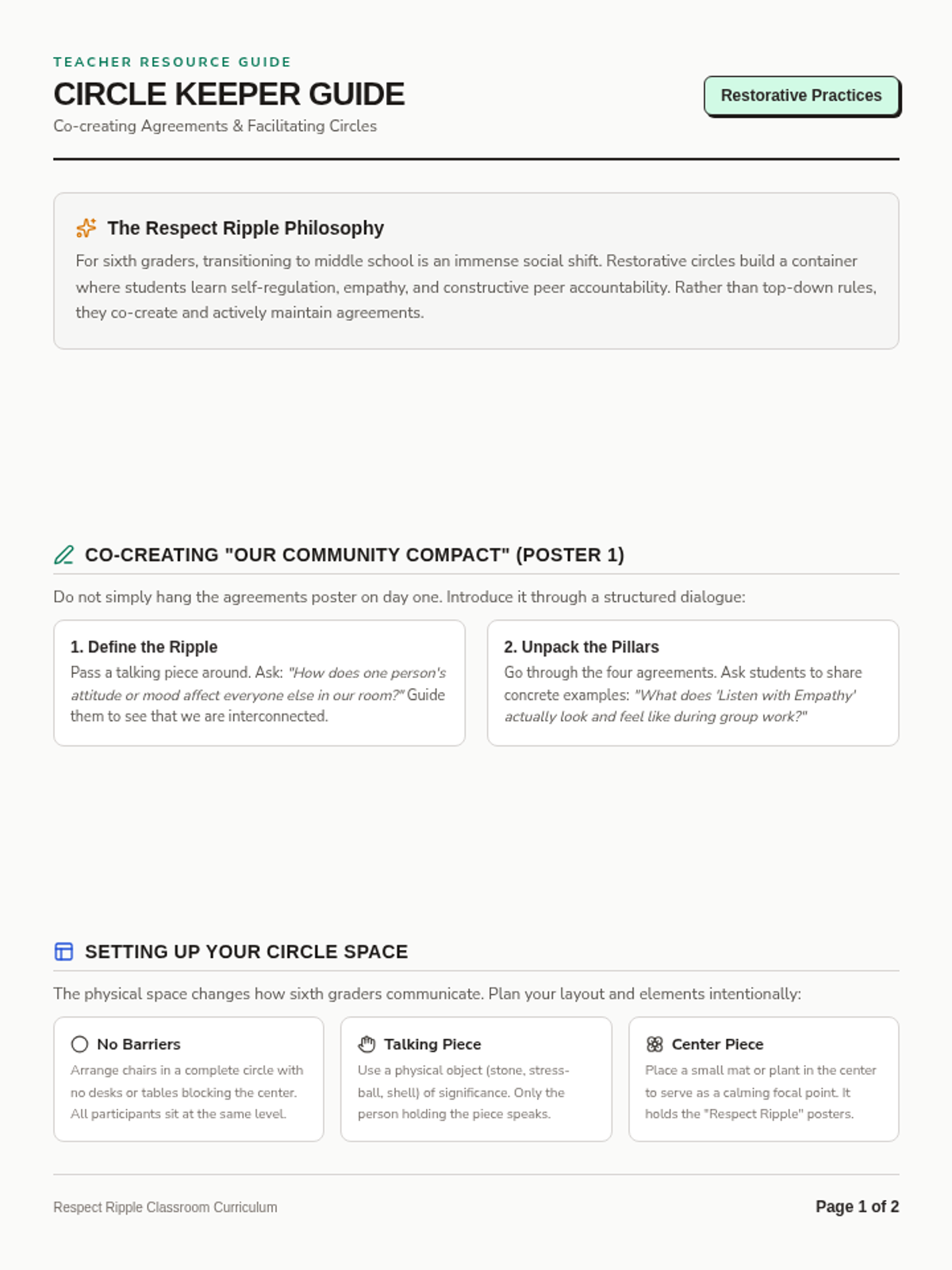
A complete, step-by-step teacher guide and facilitation lesson plan for hosting Restorative Circles. Includes circle guidelines, innovative talking piece ideas, a comprehensive sequential prompt bank (check-in, core, check-out), and restorative questioning scripts.
A comprehensive teacher facilitation guide for hosting restorative circles, co-creating community agreements with students, and using restorative dialogue prompts in the classroom.