A high-energy trivia game slide deck designed for the end of 5th grade, themed around "The Teacher Files." Includes categories for favorites, classroom life, and mystery facts. Updated to include 8 functional questions.
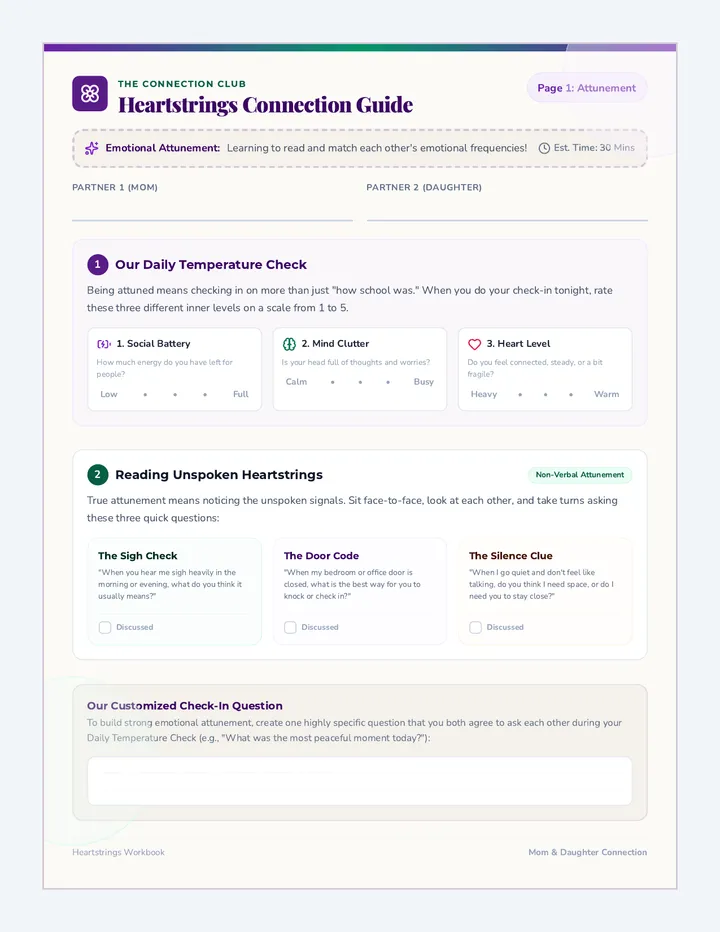
A concise facilitation guide for teachers to deliver the 10-minute Peace Patrol lesson, including pacing, scripted dialogue, and instructional tips for the STEP model.
A high-energy 9-slide presentation teaching the STEP conflict resolution model (Say, Think, Explore, Pick) with a superhero theme, featuring a scenario on rumors and social exclusion.
A student-facing peer-feedback checklist for the 'Ears Open Phones Down' lesson, designed to help partners evaluate eye contact, body language, and verbal cues.
A guide for teachers to lead the 'Ears Open Phones Down' lesson, including a script for the 'Bad Listener' vs. 'Good Listener' skit and guidance for slide presentation.
A set of high-impact slides for the 'Ears Open Phones Down' lesson, using a 'Signal & Receiver' theme to teach active listening through non-verbal and verbal cues.
A comprehensive lesson plan for the 'Ears Open Phones Down' session, outlining the objective, materials, and a structured 30-minute instructional arc.
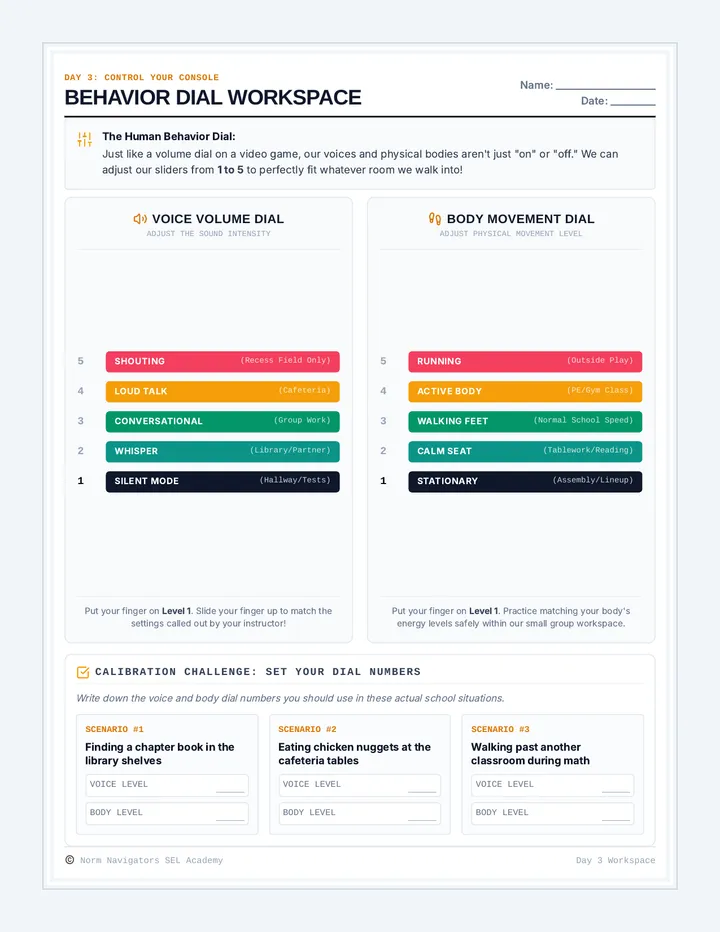
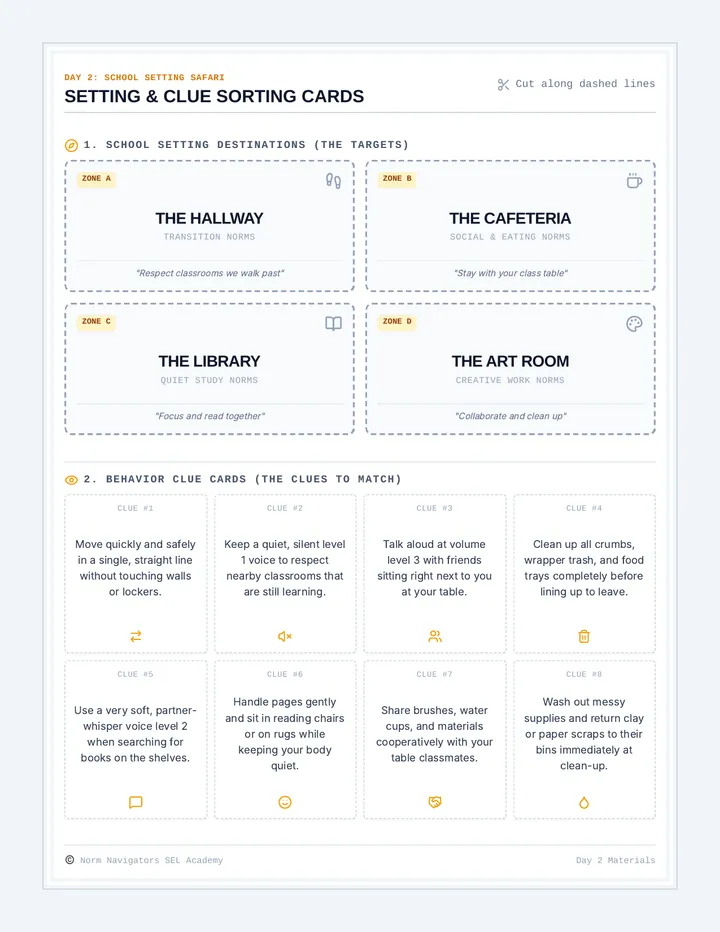
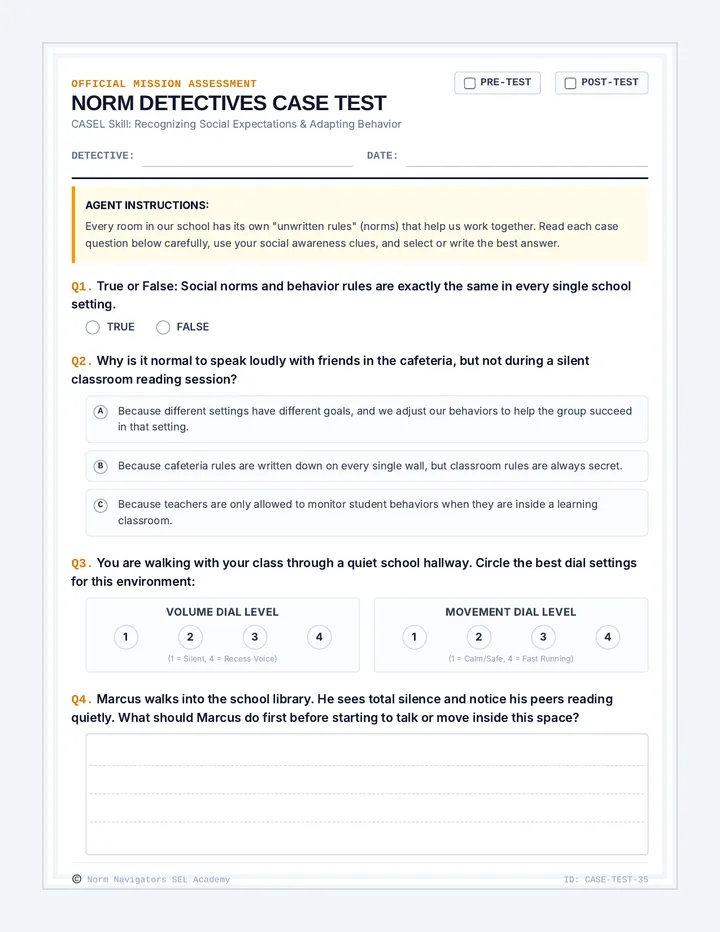
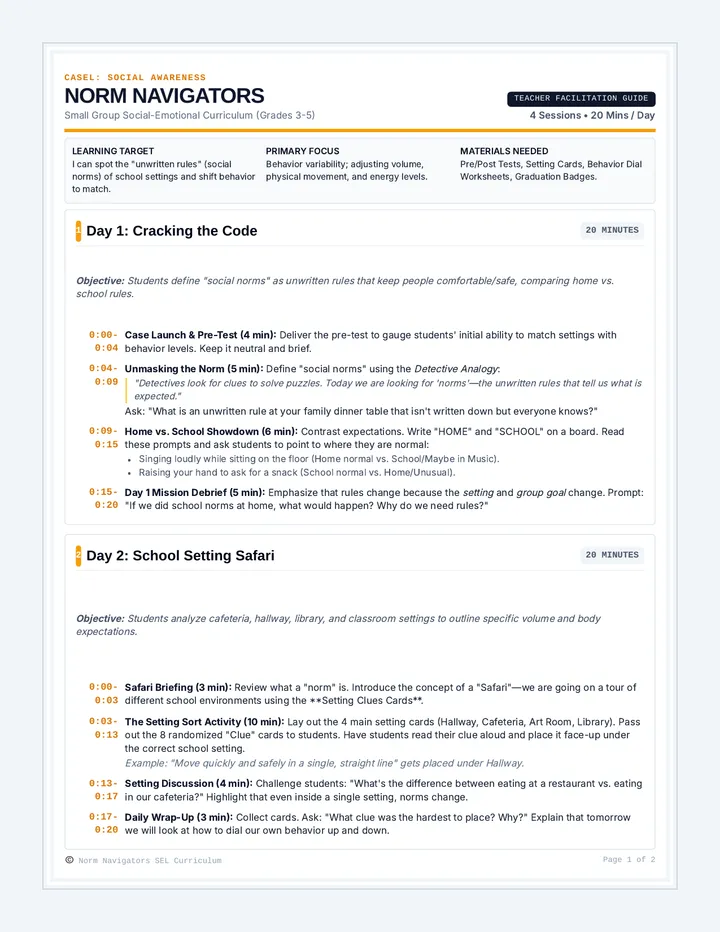
A teacher's guide for implementing the 'Social Skies' lesson, featuring key vocabulary, implementation steps, and specific scripting prompts for managing behavioral challenges in the classroom.
A behavior reflection sheet designed to help students process incidents of 'social turbulence' and plan better responses for future situations using a 'Peace Pilot' flight metaphor.
A worksheet for students to practice identifying personal space boundaries and responding appropriately to 'no' in different scenarios, featuring a 'Peace Pilot' theme.
A social story slide deck using a 'Peace Pilot' theme to teach students how to accept 'no', respect personal space (airspace), and manage big emotions during 'social turbulence'.
Teacher facilitation guide for the 'Signal Strength' social skills lesson, including discussion prompts, differentiation strategies, and extension activities.
A student worksheet for identifying 'tuned in' and 'tuned out' behaviors and reflecting on personal communication habits.
A slide presentation using a radio signal metaphor to teach students about 'tuned in' vs 'tuned out' behaviors in social interactions, including interactive scenarios.
A teacher's facilitation guide for a restorative justice lesson, including learning objectives, step-by-step instructions, and a restorative questioning script.
A student reflection worksheet for identifying the impact of actions on others and developing a personalized cool-down plan to manage emotions.
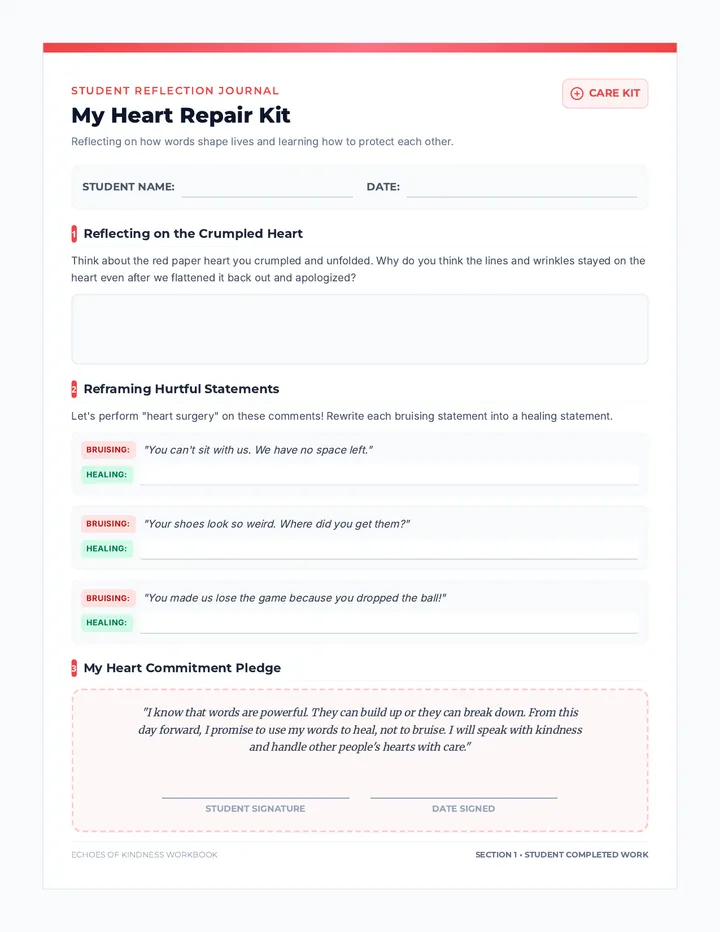
A slide deck introducing restorative principles, specifically focusing on identifying impact versus intent and providing concrete cool-down strategies for self-regulation.
A teacher facilitation guide for the 'Thought Detective' lesson, providing instructional steps, example walkthroughs, and troubleshooting tips for the evidence for/against technique.
Visual instructional slides for the 'Thought Detective' lesson, introducing the difference between facts and opinions and the cross-examination process.
A student-facing journal worksheet designed as a 'Thought Investigation' to help students practice the evidence for/against CBT technique.
A teacher guide for facilitating the Weekly Momentum reflection. Revised to fit on a single page and improve content grouping.
A weekly reflection worksheet with a doodle-style aesthetic, focusing on social-emotional wins, stress management, and academic focus habits. Revised for layout and readability.
A teacher guide for facilitating the Weekly Momentum reflection, including timing, implementation steps, and discussion prompts.
A weekly reflection worksheet with a doodle-style aesthetic, focusing on social-emotional wins, stress management, and academic focus habits.
An optional student worksheet for 4th graders to practice digital integrity scenarios and define their commitment as a Tech Trailblazer. Includes role-play drafting space and a personal integrity promise. Revised for better spacing and one-page printing.
A supplemental worksheet for Week 3, providing structured practice for identifying physical warning signs (the "Rumble") across different scenarios and personalizing a "First Signal" detection plan. Now with guided writing lines and optimized 2-page layout.
Instructional slides for Week 3 (Mapping the Storm), focusing on the "Storm Analogy" and identifying the physical "Rumble" before an emotional outburst. Includes body radar points and common environmental triggers.