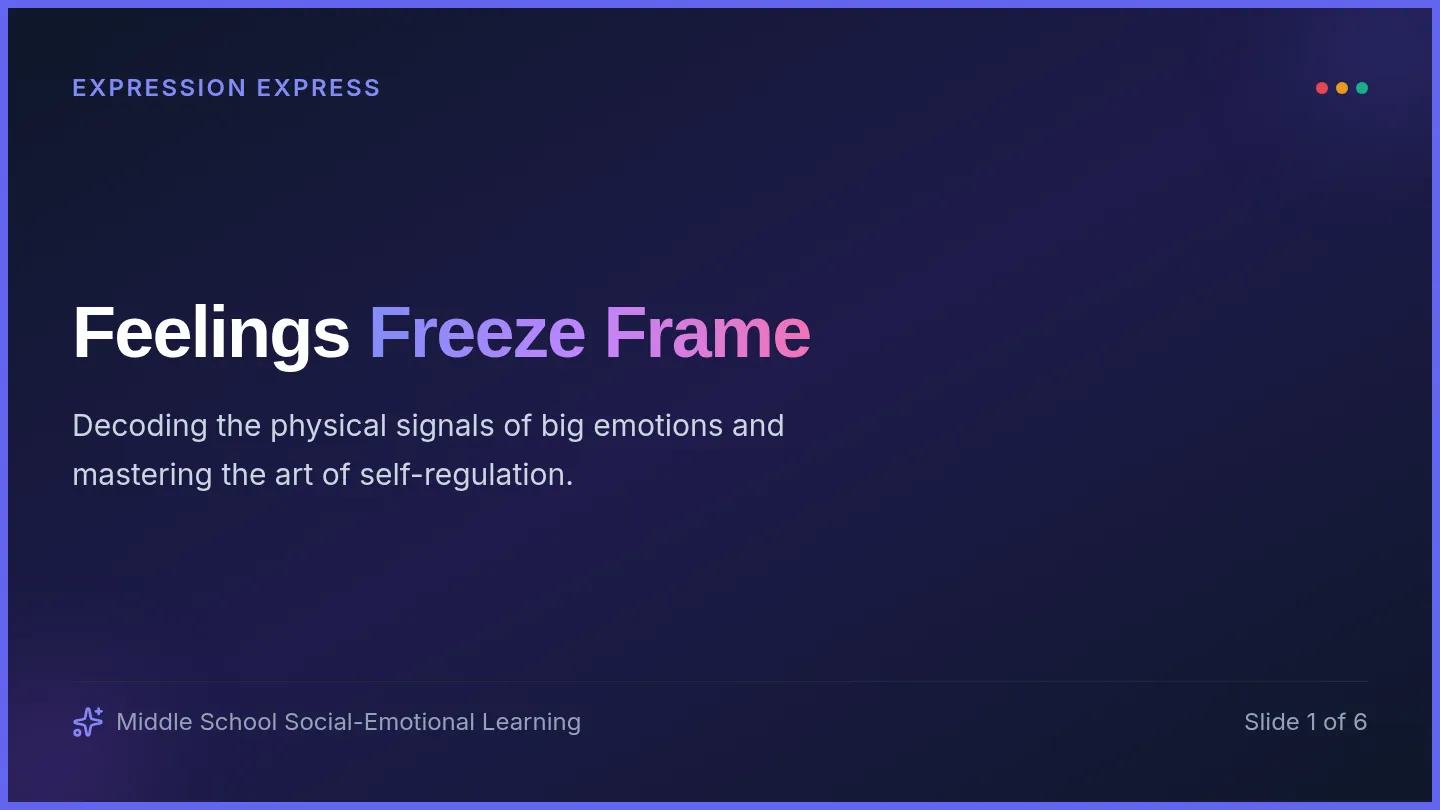
Introductory slides for Lesson 1, exploring the psychosomatic connection between emotions and physical sensations.
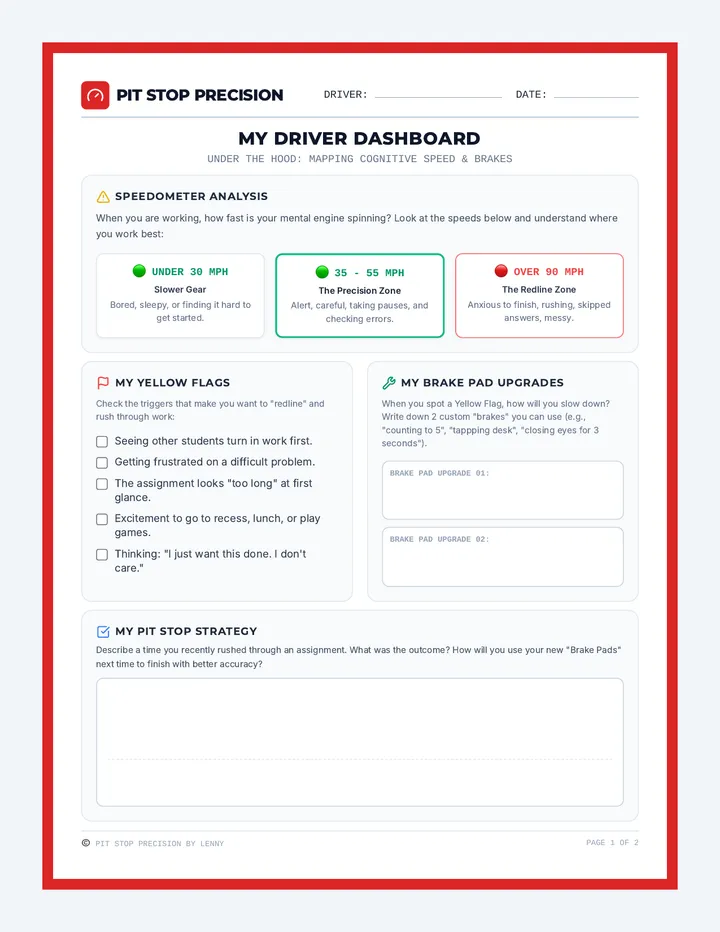
A high-octane, racing-themed student worksheet pack. Page 1 helps students identify personal rushing triggers (Yellow Flags) and design coping skills. Page 2 provides a desk-ready FIT Check checklist and a real-world persistence drill.
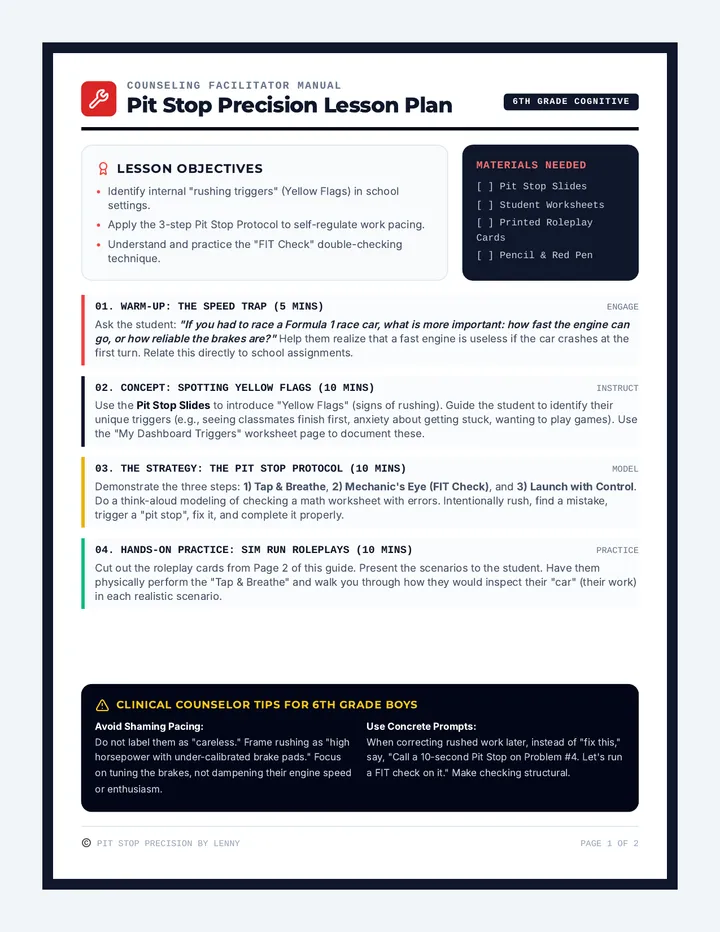
A comprehensive 2-page counselor guide for the Pit Stop Precision lesson. Includes structured facilitator scripts, step-by-step lesson pacing, and 4 high-octane printable roleplay cards to practice self-regulation and double-checking.
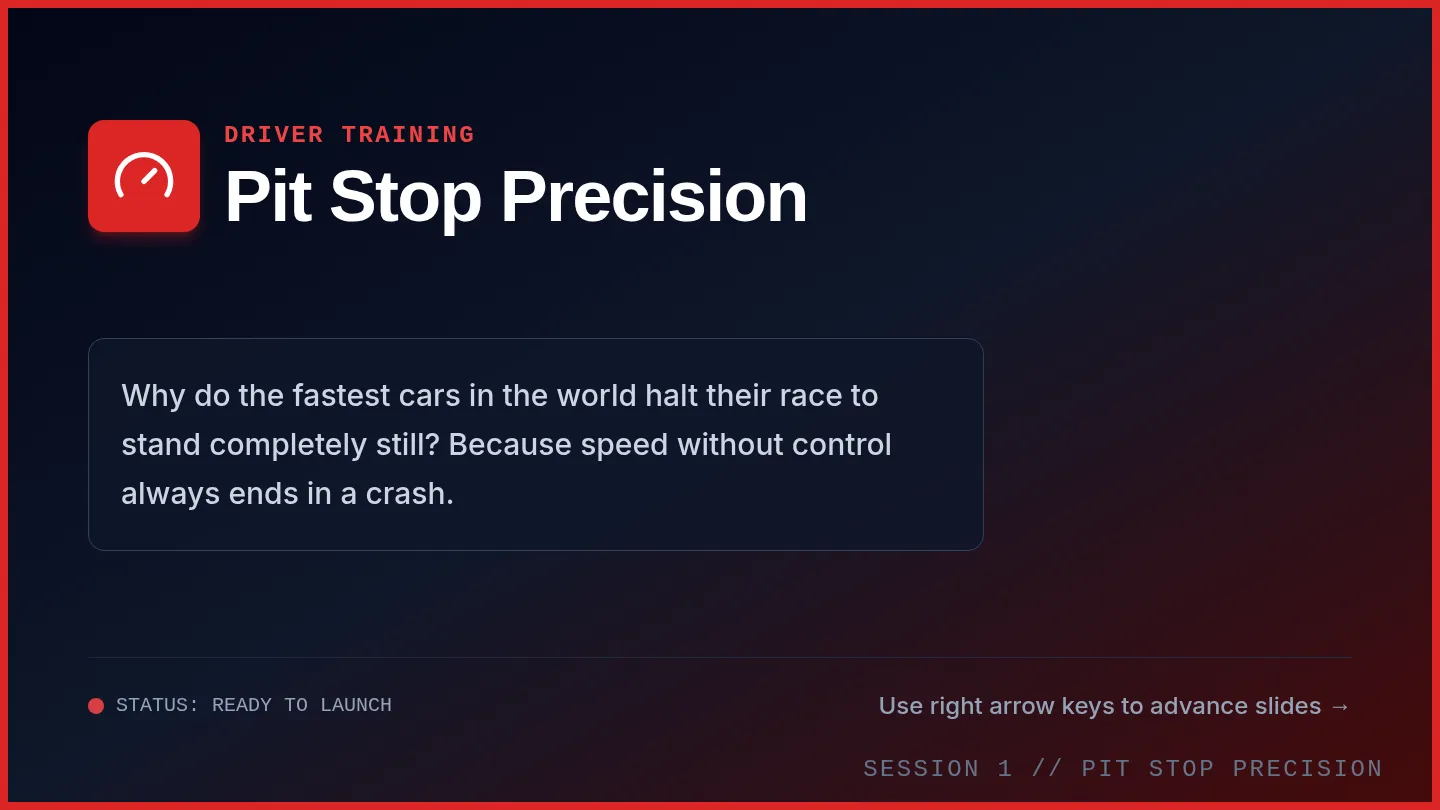
An interactive, racing-themed slide deck designed for 6th grade counseling. It teaches the 'Pit Stop Protocol' to help students identify rushing behaviors, recognize the need for double-checking, and master task persistence.
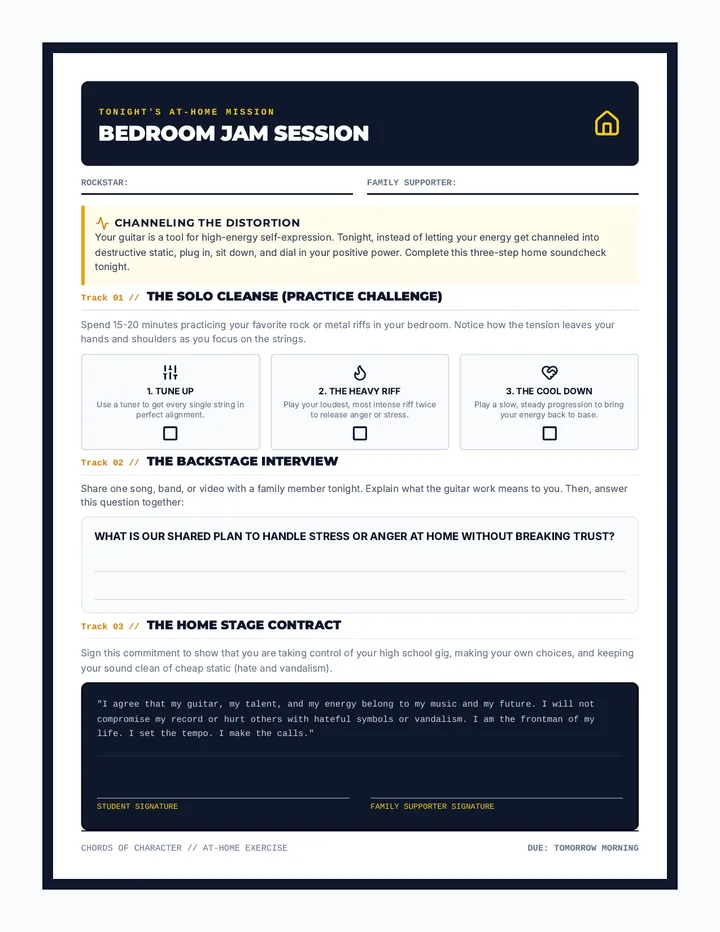
A 1-page at-home guitar practice and family reflection sheet for tonight. Features a physical playing checklist as a positive outlet, a prompt to share a favorite song, and a collaborative student-family commitment pact.
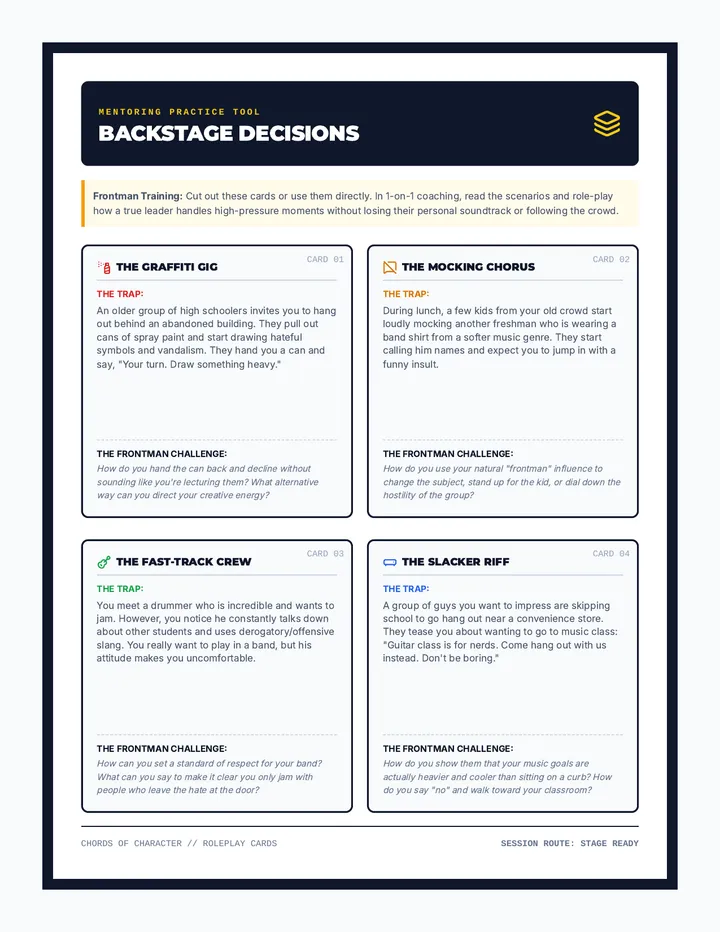
A 1-page printable activity featuring 4 role-play cards. Provides realistic social scenarios for standing up to peer pressure, resisting vandalism/hate speech, and practicing frontman leadership when transitioning to high school.
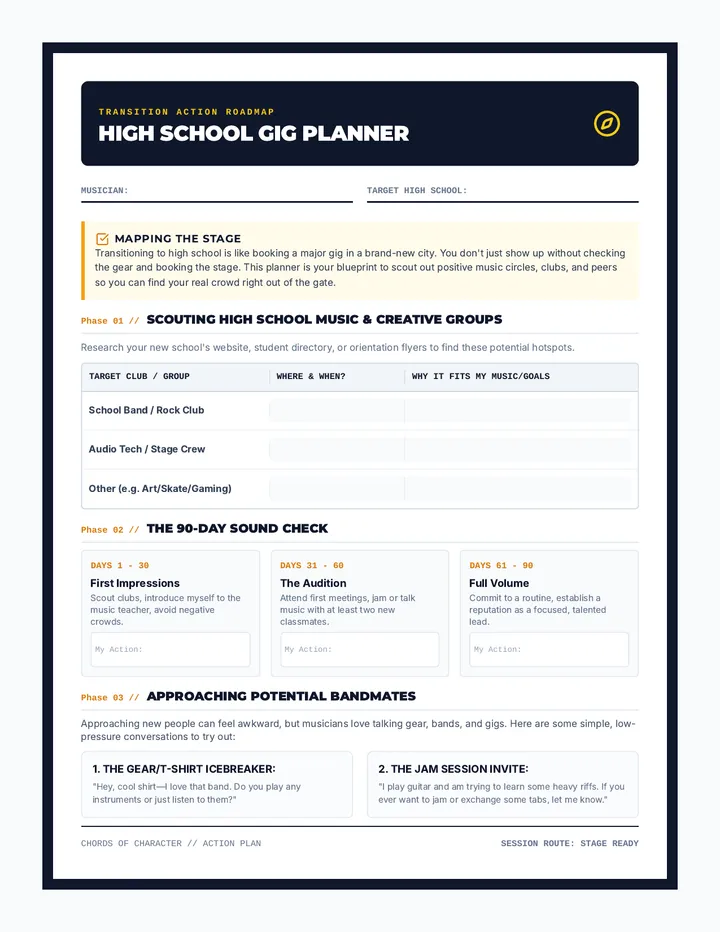
A 1-page Independent Action Plan and transition roadmap for the student. Helps him research high school music clubs, track prospective bandmates, set goals for his first 90 days, and establish a constructive routine.
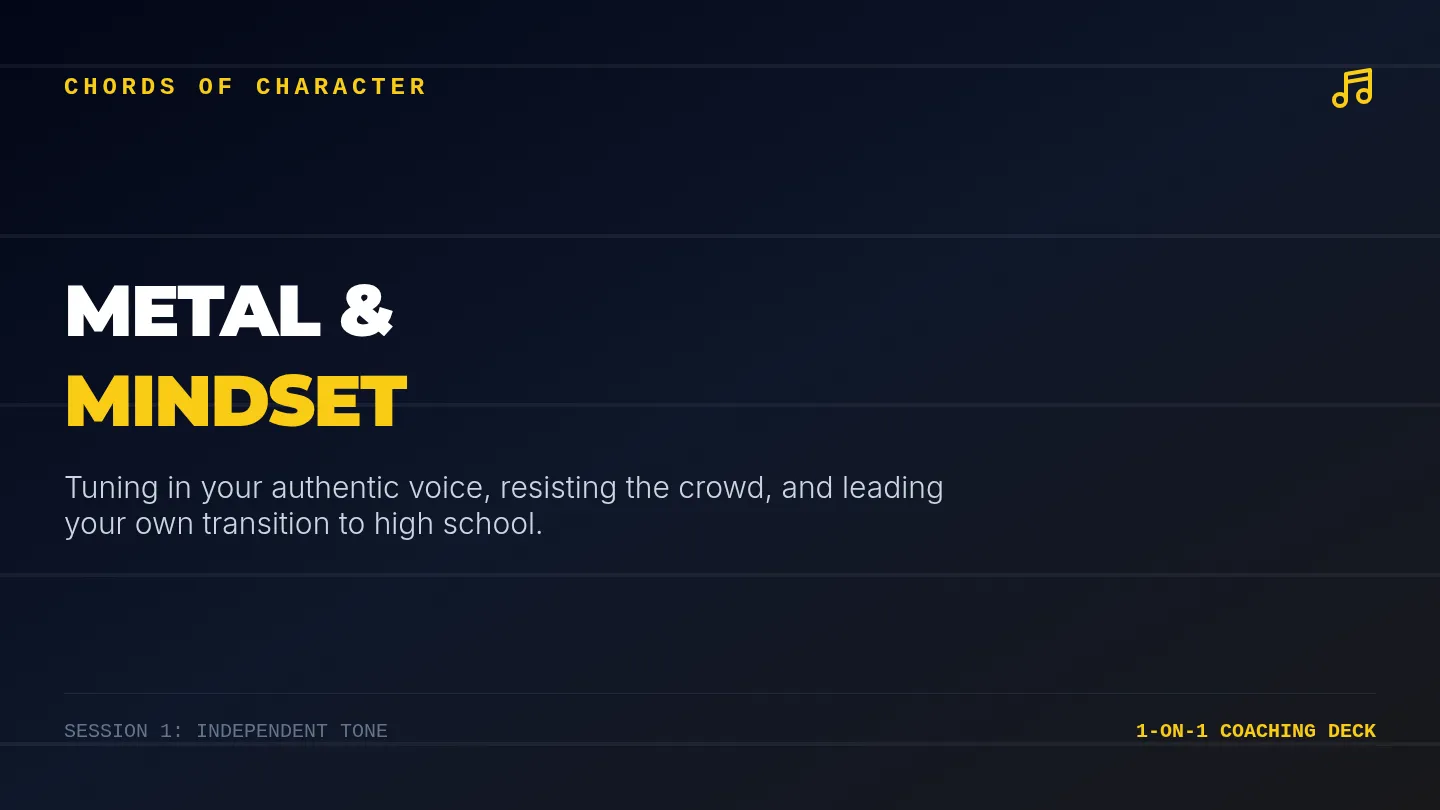
A 5-slide interactive presentation designed for 1-on-1 coaching. Uses a heavy metal/rock theme to explore the true history of the subculture, address peer pressure (feedback vs. rift), stand up against hate, and map out a positive transition to high school.
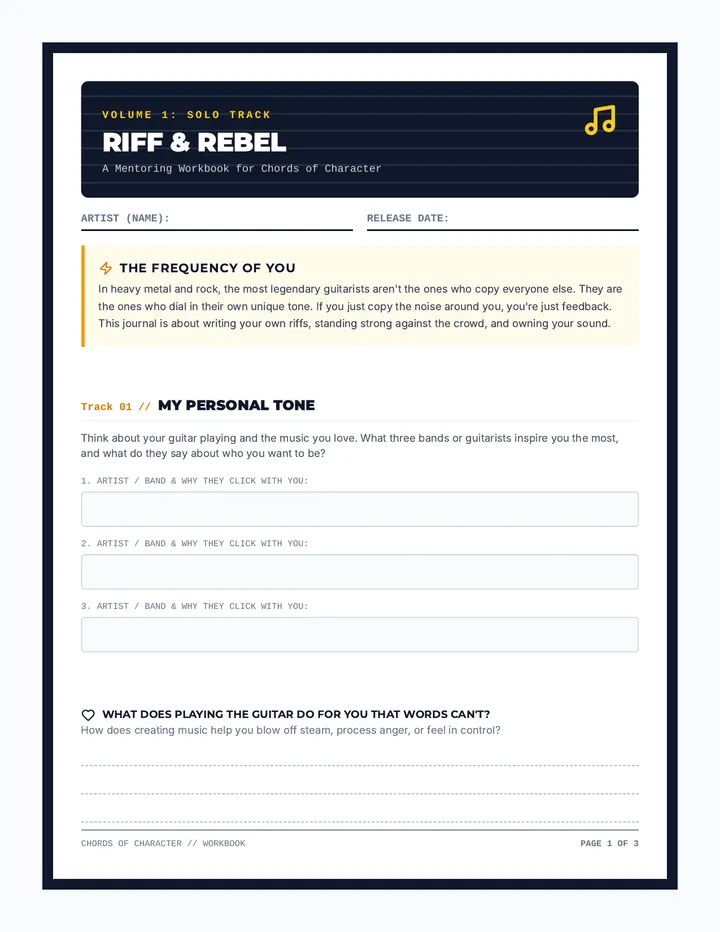
A 3-page Guided Reflection Journal for 1-on-1 mentoring. Connects the student's passion for heavy metal and guitar with themes of identity, true rebellion (standing against hate and groupthink), and creating a positive personal soundtrack.
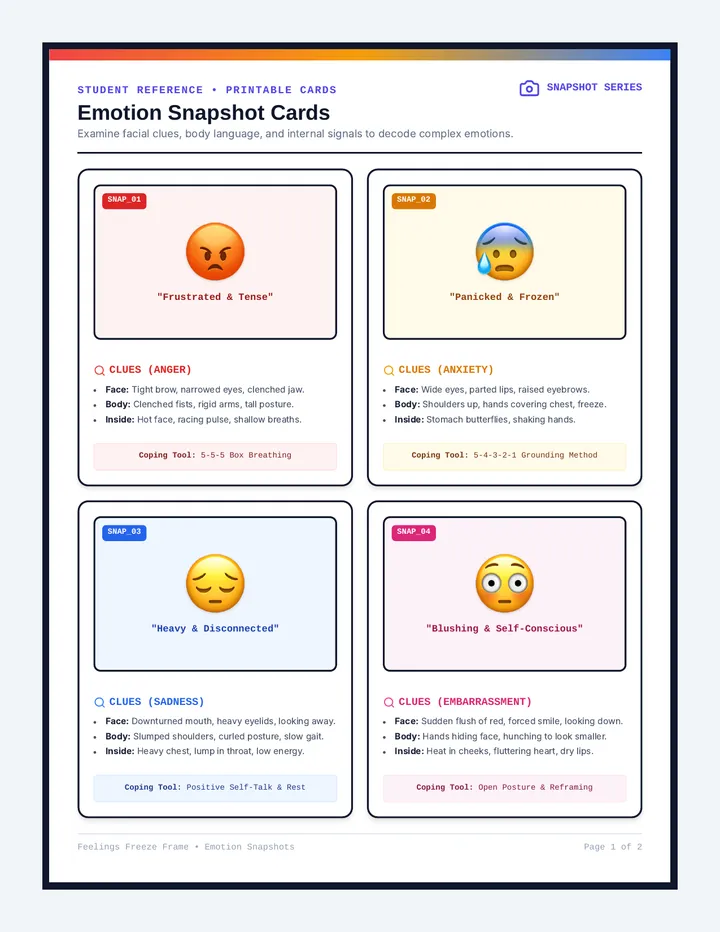
A 2-page student reference tool. Page 1 contains 4 styled 'Polaroid' snapshot cards describing facial/body clues and internal somatic signals. Page 2 provides 2 more snapshots and a quick self-guided matching activity.
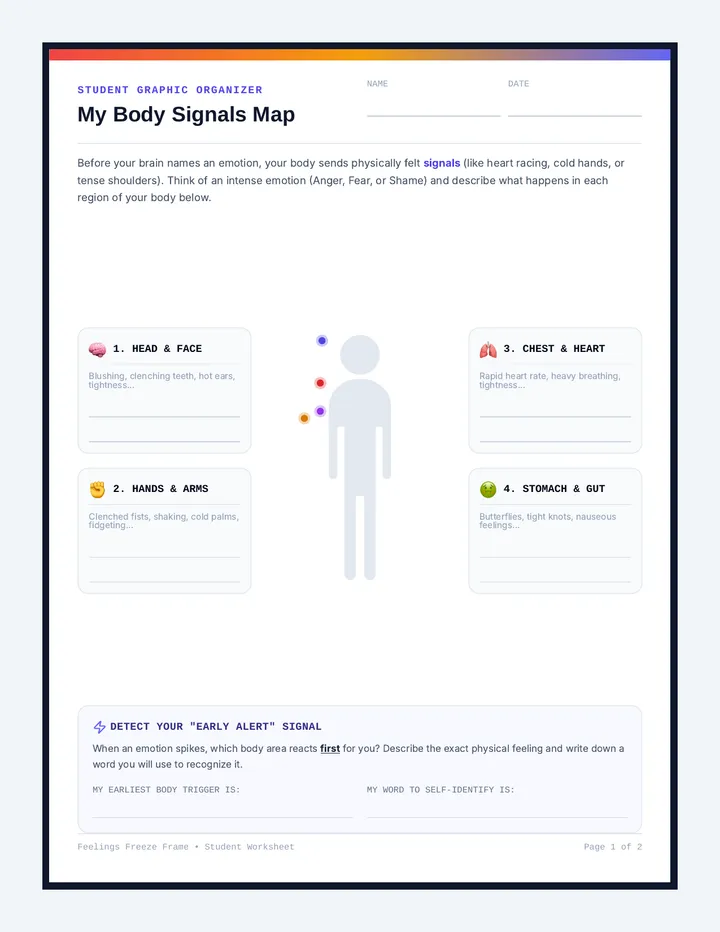
A 2-page student worksheet. Page 1 features a physical 'Body Signals Map' graphic organizer to label physical feelings. Page 2 provides scenario coping match-ups and self-regulation reflections.
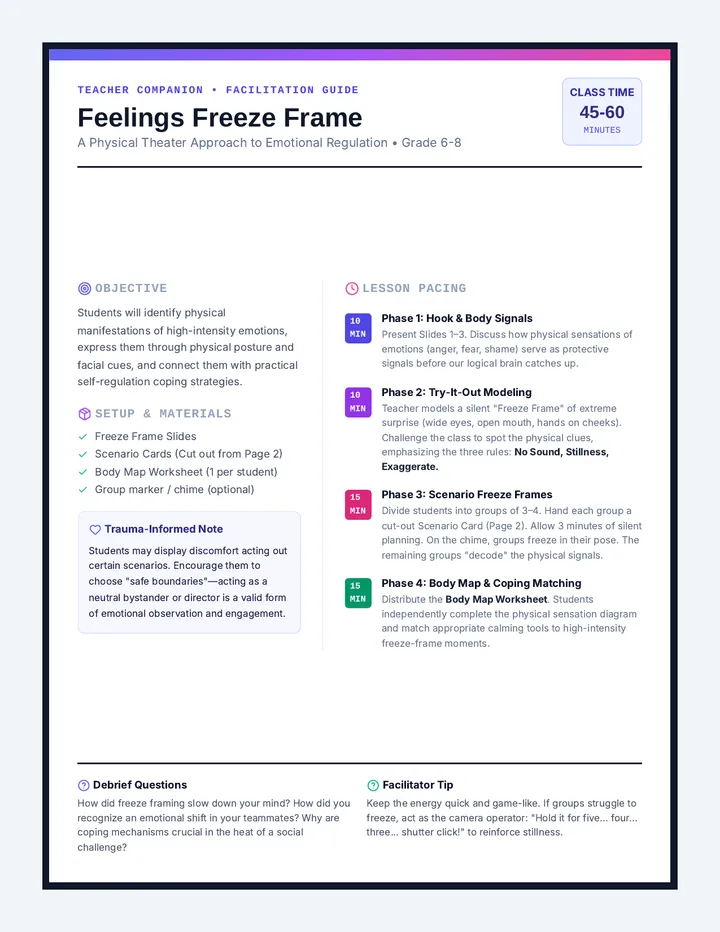
A 2-page print-and-cut facilitator's guide. Page 1 contains step-by-step pacing, pedagogy, and tips. Page 2 provides 6 pre-formatted scenario cards to cut out and distribute to student groups.
Interactive, highly visual classroom slide deck to introduce emotional expressions, body signals, and freeze-frame activities. Includes real-world scenarios and coping strategy matching.
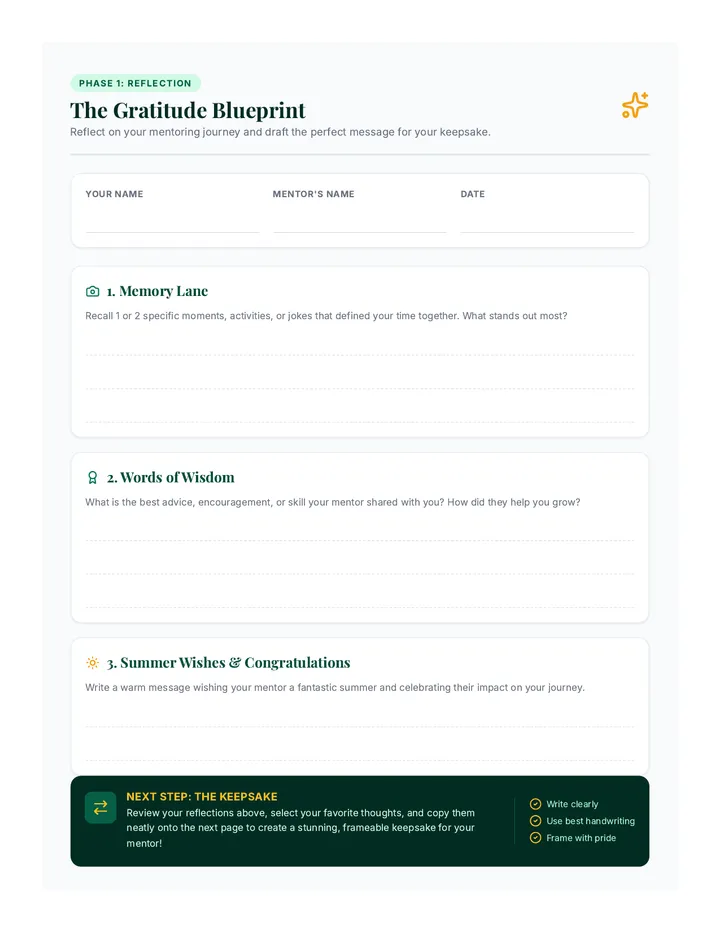
A printable 2-page resource. Page 1 is a structured reflection worksheet for mentees to brainstorm key memories and draft messages. Page 2 is a beautiful, certificate-style keepsake with a classic border and writing lines designed to be framed as a mentor gift.
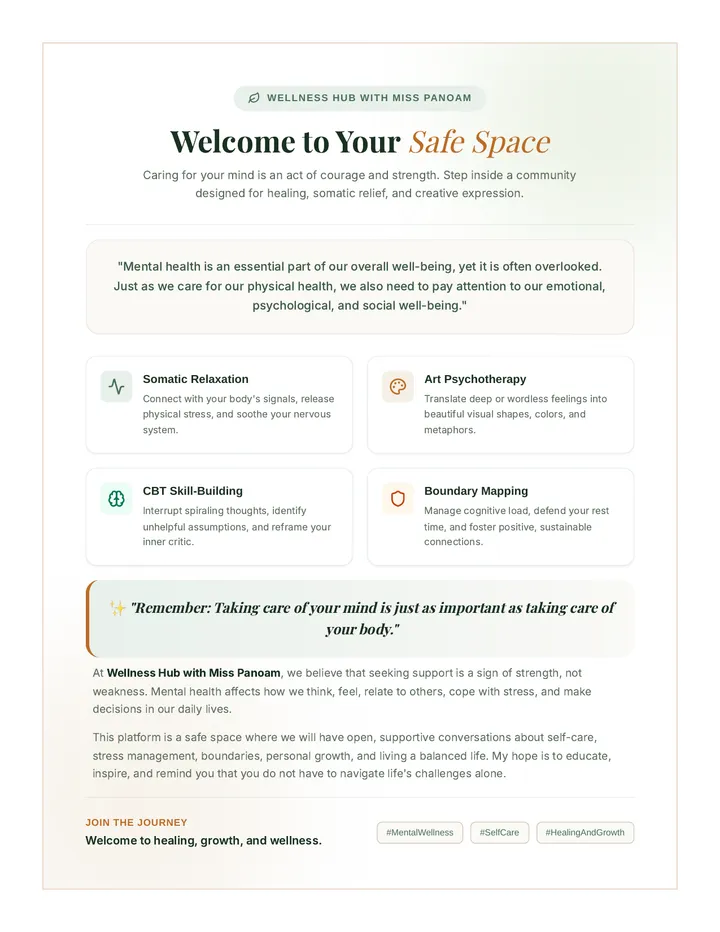
A beautifully formatted, welcoming announcement page/flyer for Miss Panoam's Wellness Hub. It features botanical motifs, key therapeutic pillars (somatic relaxation, CBT, art therapy), and an inspiring mental wellness message.
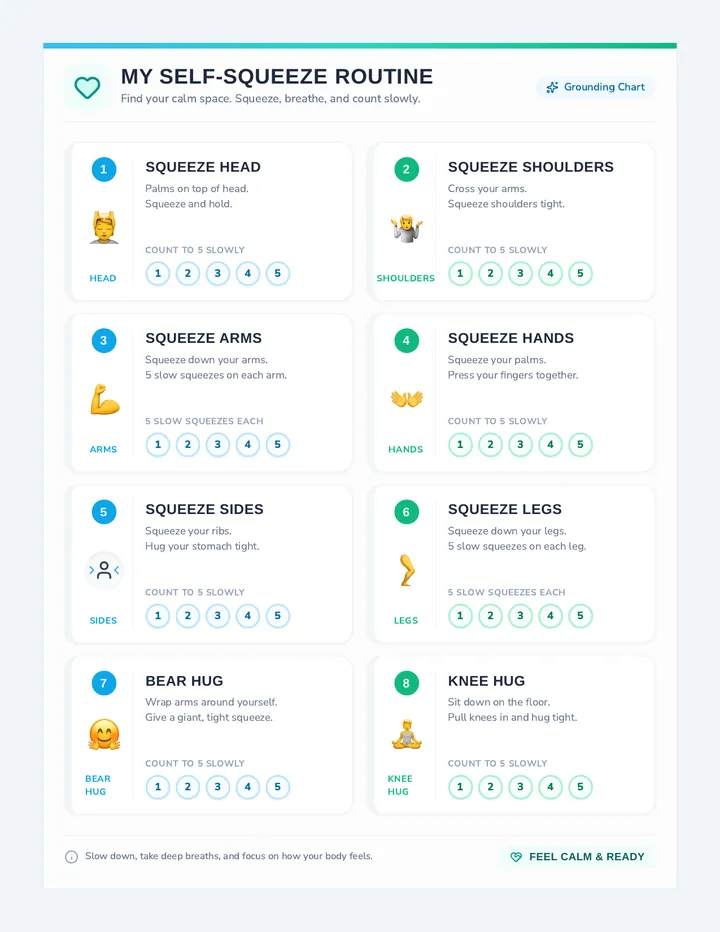
A clean, minimalist single-page routine chart featuring a calming 8-step self-squeeze physical therapy routine. Includes physical count-down touchpoints from 1 to 5 to help students track their grounding exercises directly on the poster.
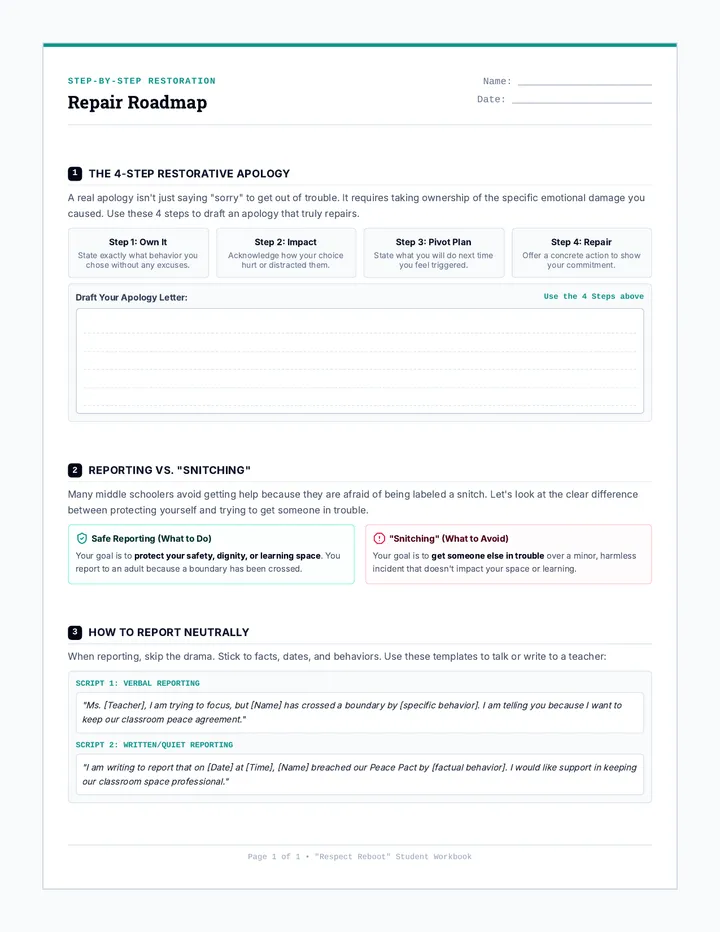
A student guide and writing prompt detailing the four steps of a restorative apology and providing practical reporting templates for middle schoolers.
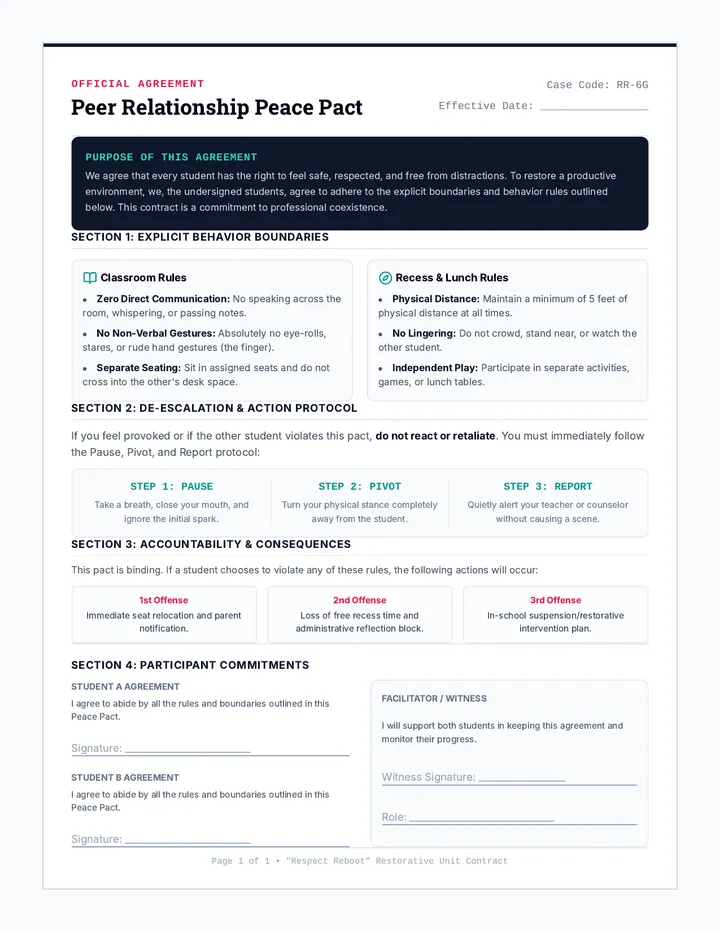
A formal signed Peer Relationship Contract detailing explicit boundaries, classroom rules, recess guidelines, and de-escalation protocols for two 6th-grade students.
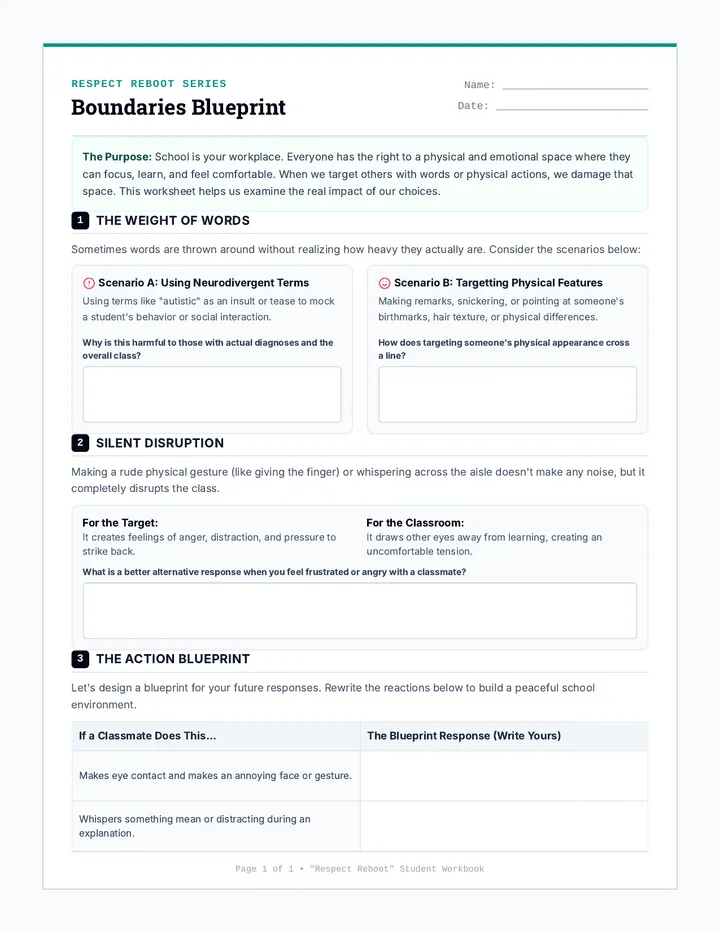
An interactive student worksheet designed to help 6th-grade students analyze the emotional impact of words, teasing physical traits, and making offensive gestures, offering concrete reflection scenarios.
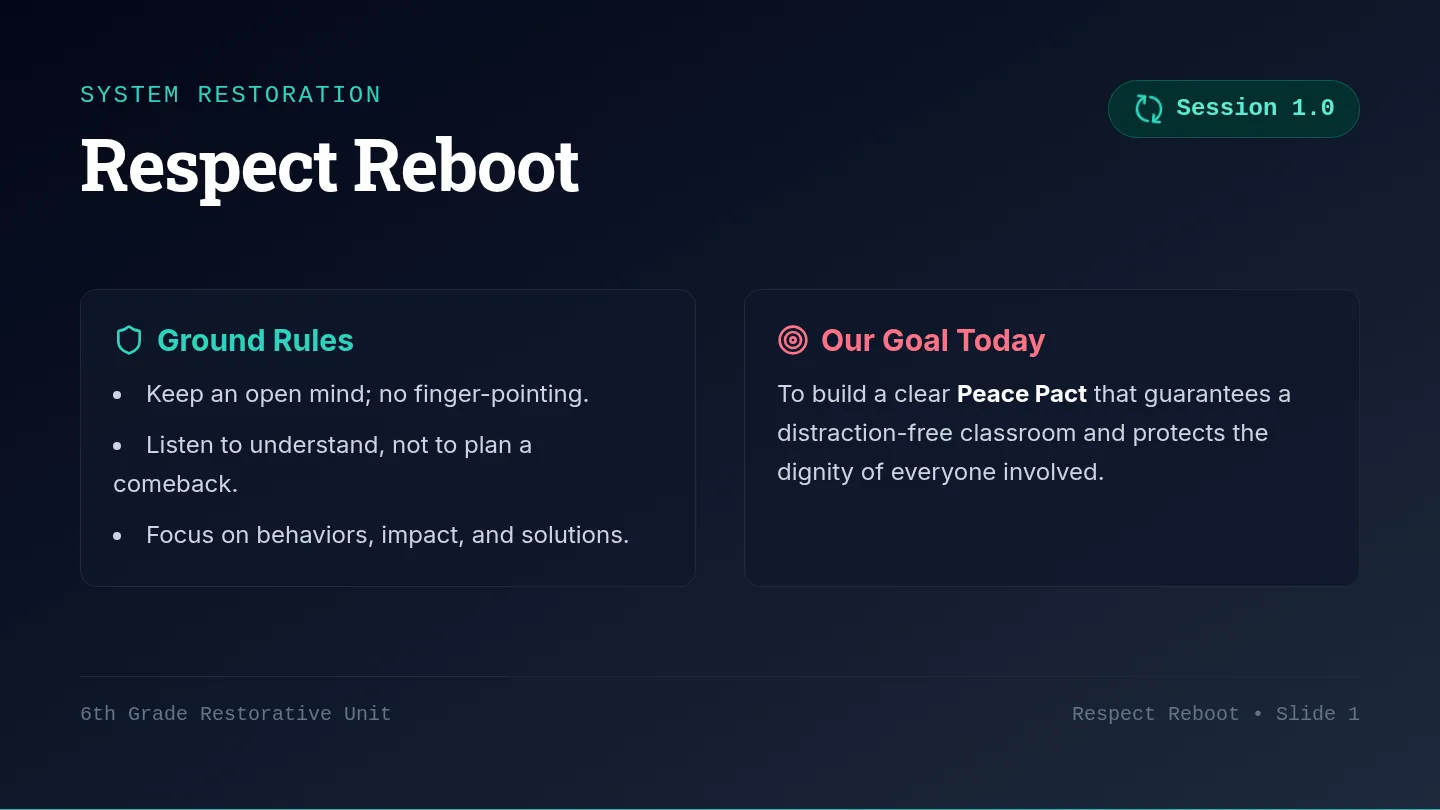
A 5-slide presentation for administrators or counselors to lead a restorative conflict resolution session. It outlines ground rules, addresses the impact of slurs and physical teasing, introduces de-escalation strategies, and sets expectations.