A simplified, text-based version of the Banking Basics lesson plan designed for easy copying and pasting into Word documents, updated with NYSAA Science standards for data analysis.
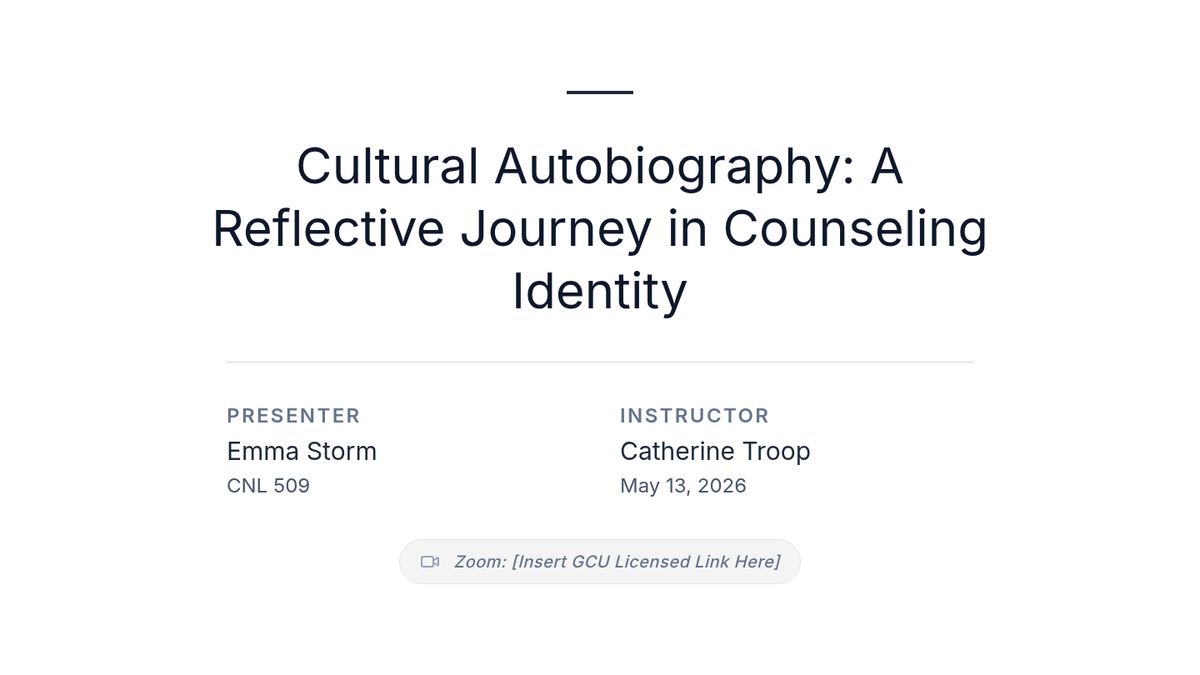
A professional academic slide deck for a Cultural Autobiography presentation, featuring a clean minimalist aesthetic with abstract geometric imagery and sophisticated typography. The slides cover communication styles, cultural pride, biases, and professional counseling dispositions without speaker notes.
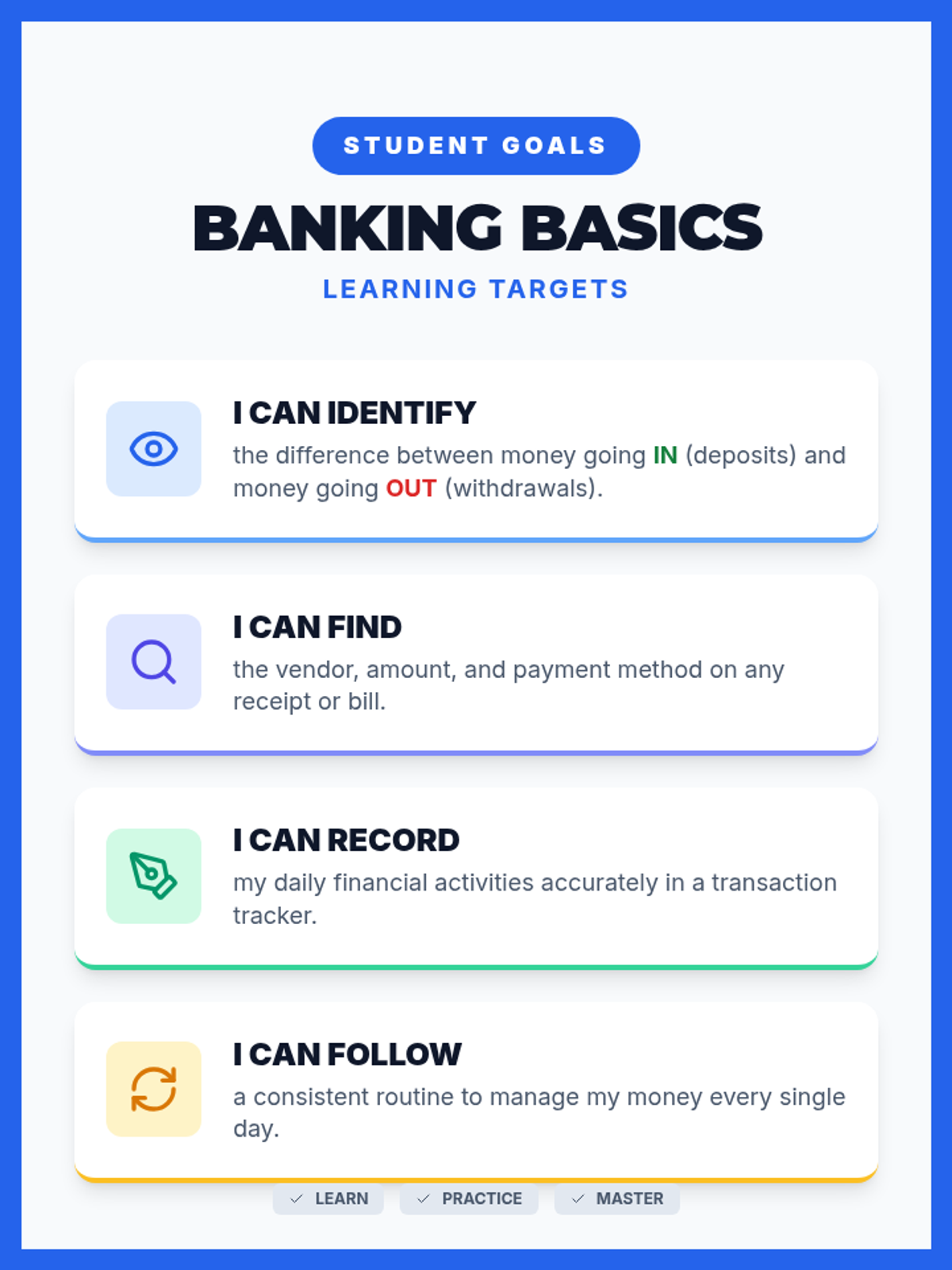
A high-contrast, student-facing anchor chart featuring 'I can' statements that define the learning objectives for the banking basics lesson.
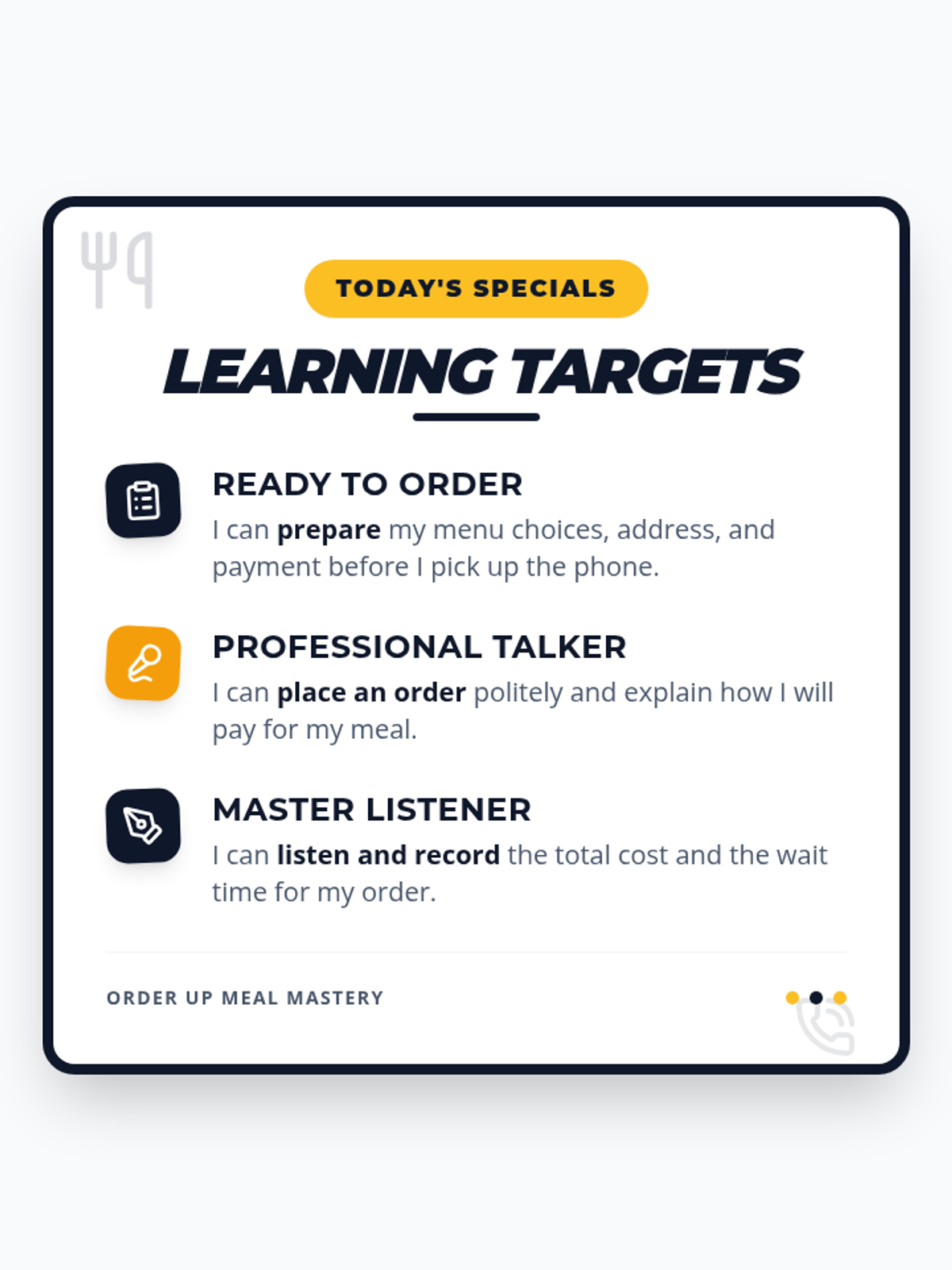
A student-facing 'I Can' statement poster designed for the Order Up lesson, featuring clear learning targets in a diner-inspired visual style.
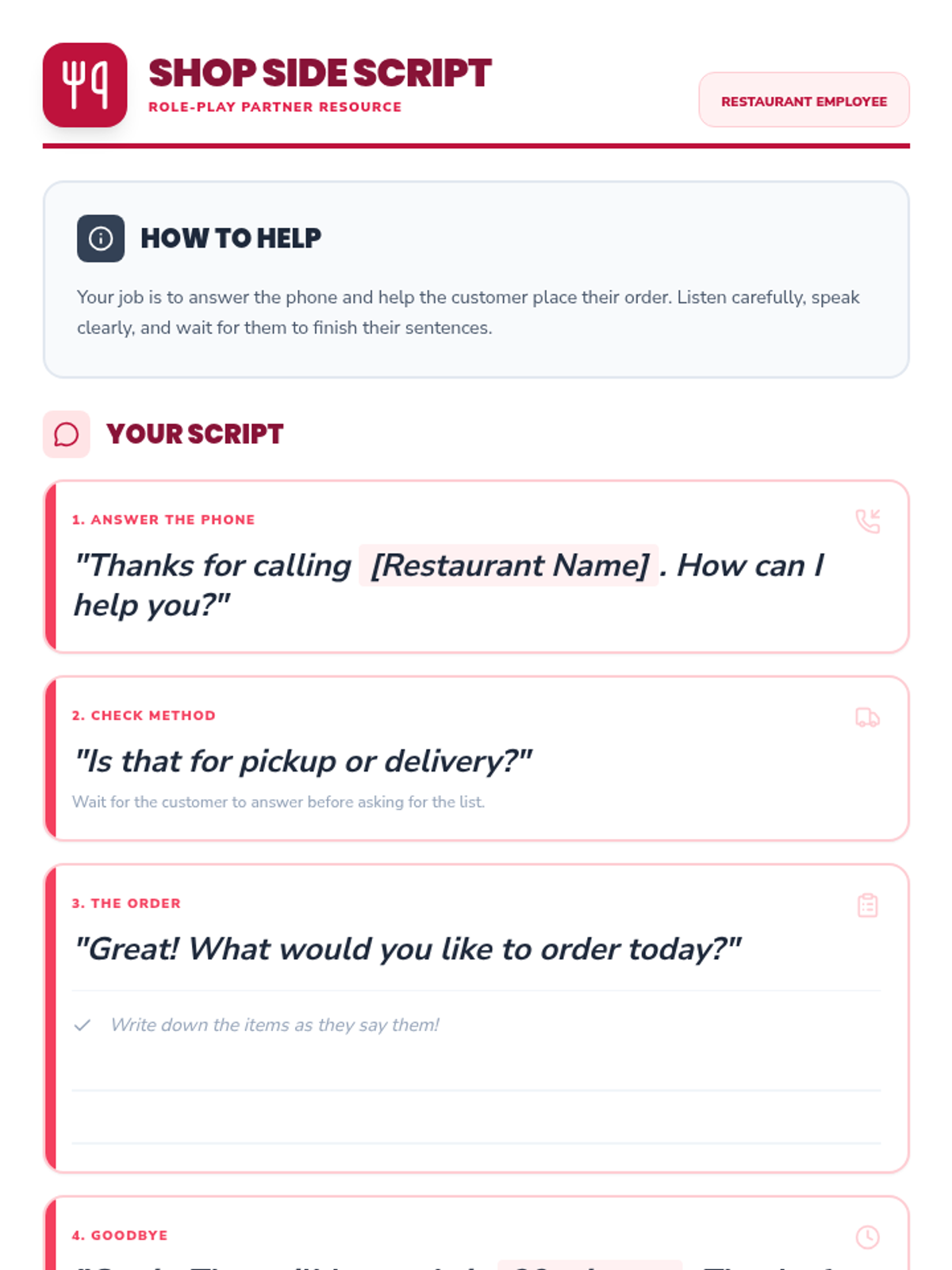
A role-play script for the restaurant employee side of the phone call, featuring blank restaurant name fields and a new conditional section for requesting contact information based on the order method. Optimized for a single page.
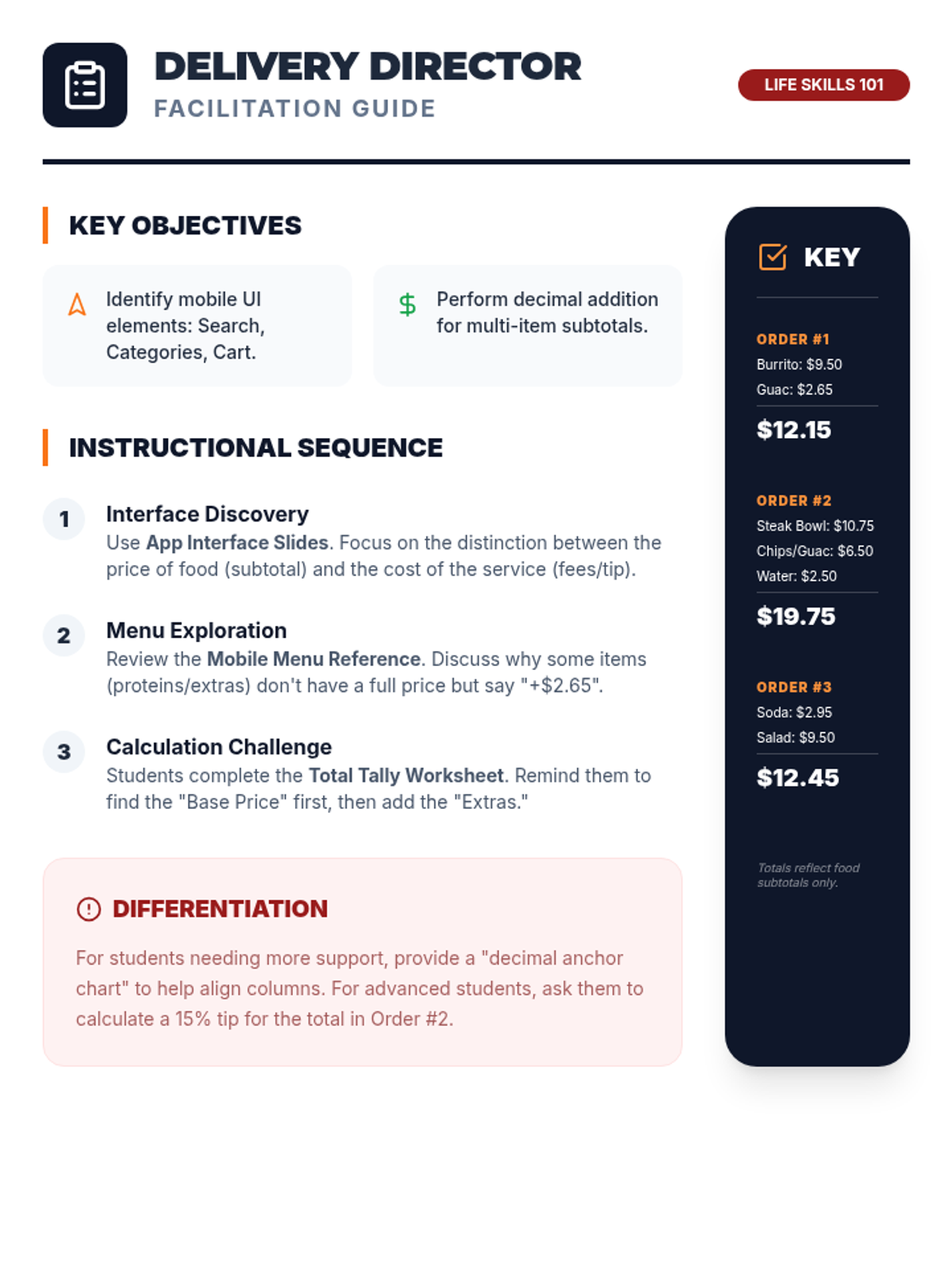
Teacher guide for the App Appetite lesson. Includes learning objectives, a detailed classroom activity flow, and a complete answer key for the Total Tally Worksheet.
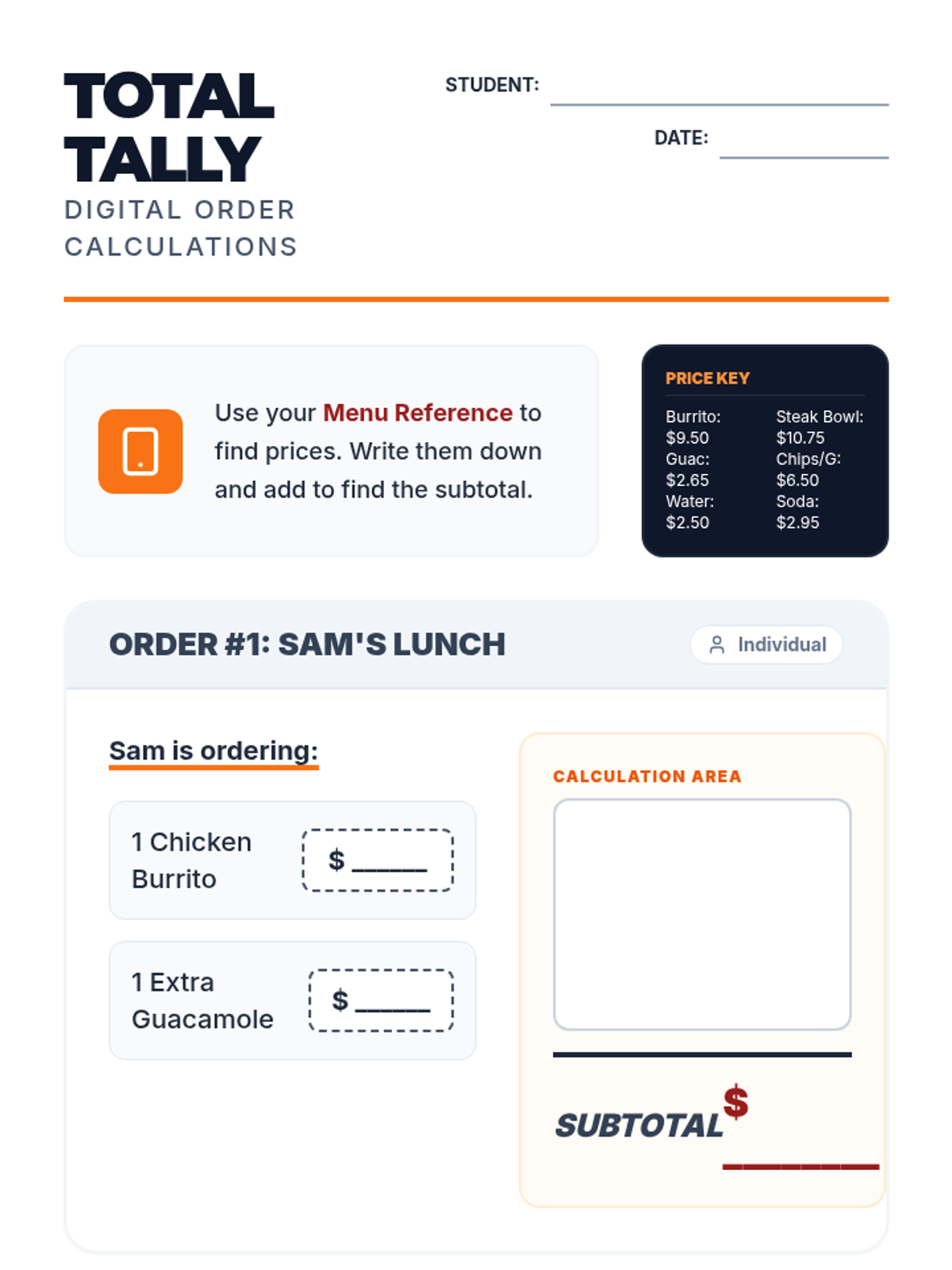
A math worksheet where students calculate order subtotals based on specific scenarios. Students must find the correct prices from the Menu Reference and perform multi-item addition with clear work areas.
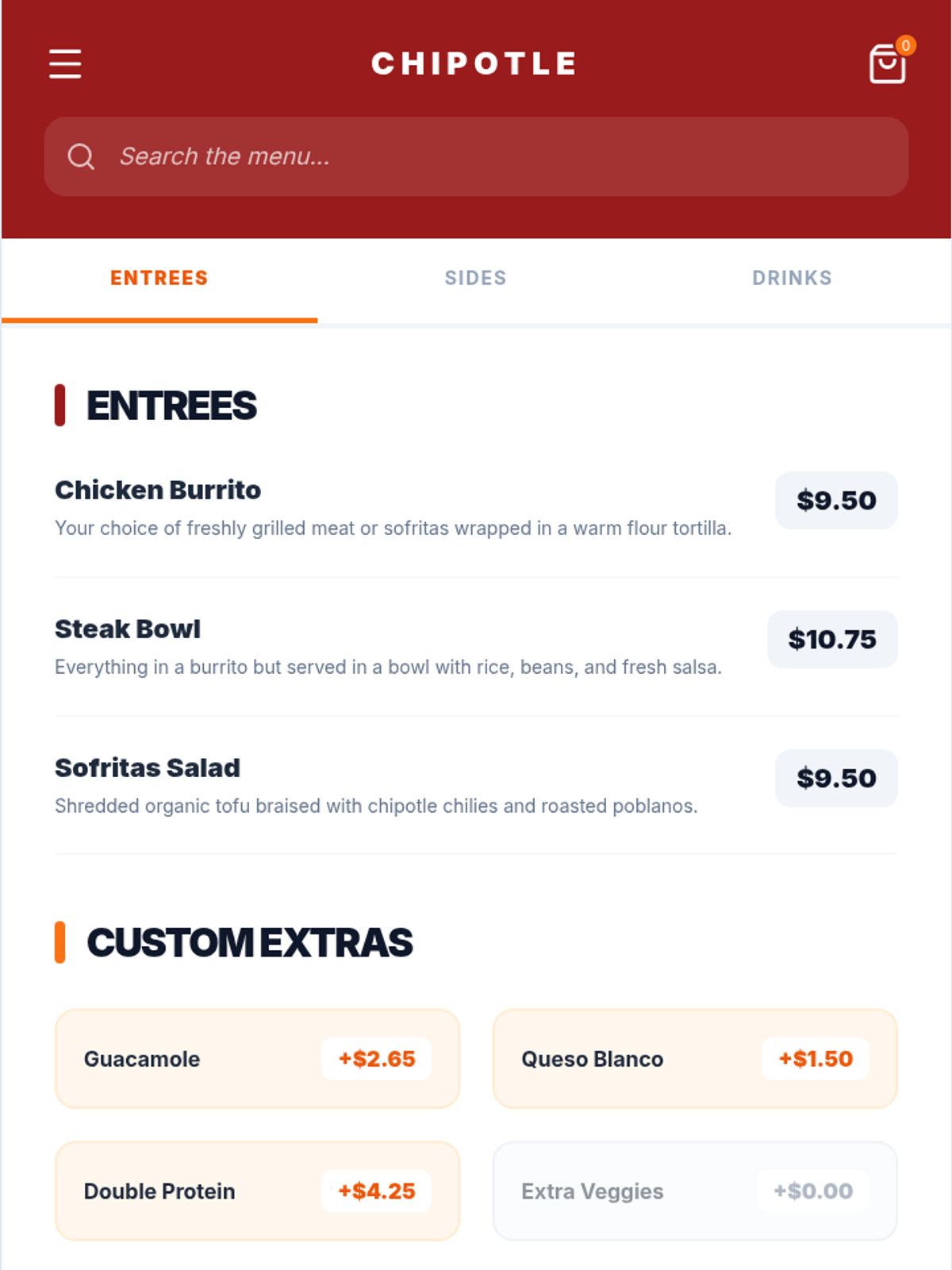
A reference sheet styled as a mobile app menu for Chipotle. It includes prices for various entrees, extra add-ons like guacamole, and sides and drinks to be used for calculation exercises.
A slide deck introducing the visual elements of a mobile delivery app for Chipotle. It guides students through searching for a restaurant, navigating the menu categories, and understanding the checkout fee breakdown.
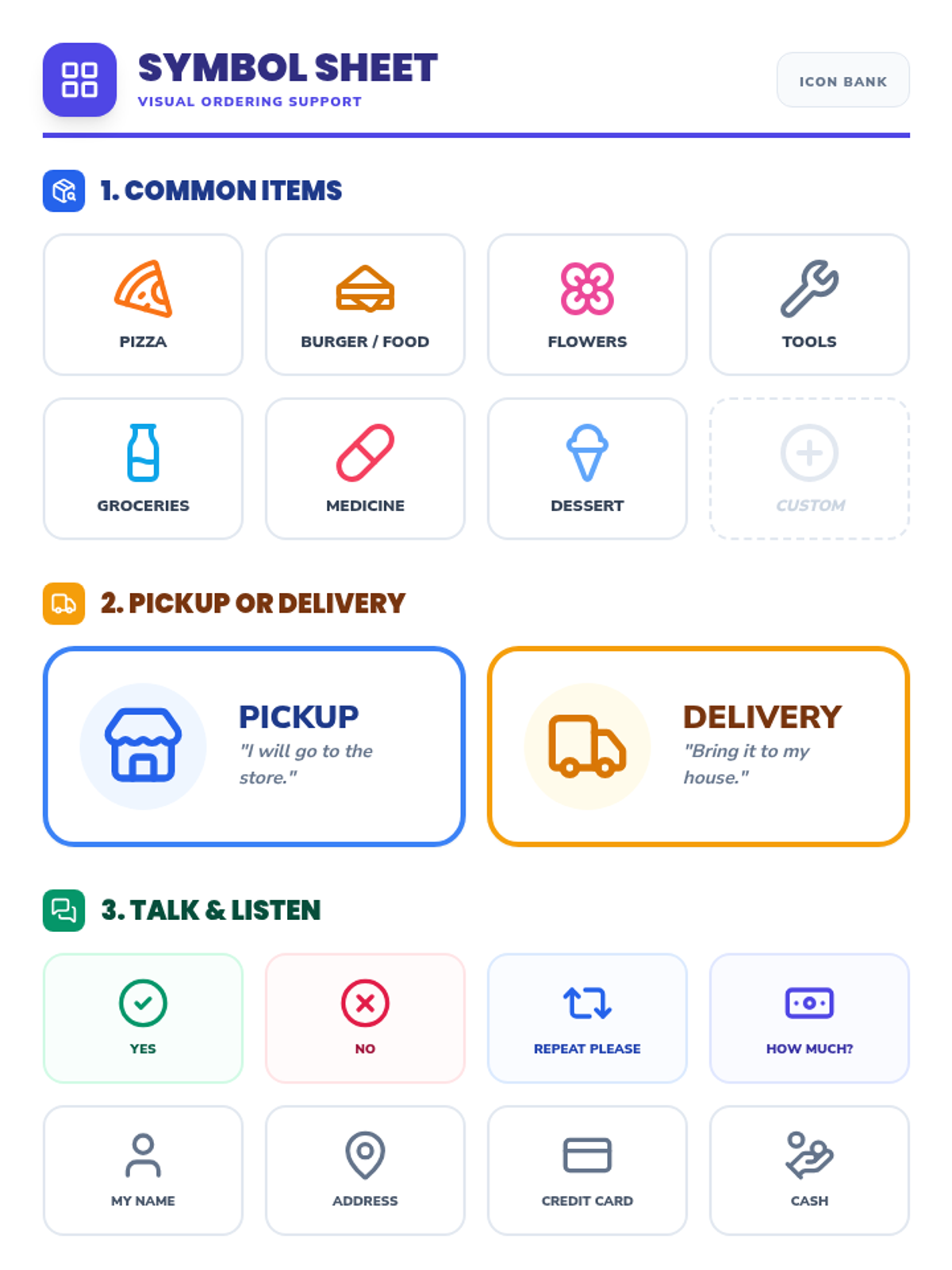
A comprehensive symbol sheet featuring a wide range of icons for common items, actions, and social responses to support students in making choices and communicating during a phone order. Now includes writing lines for identifying order items.
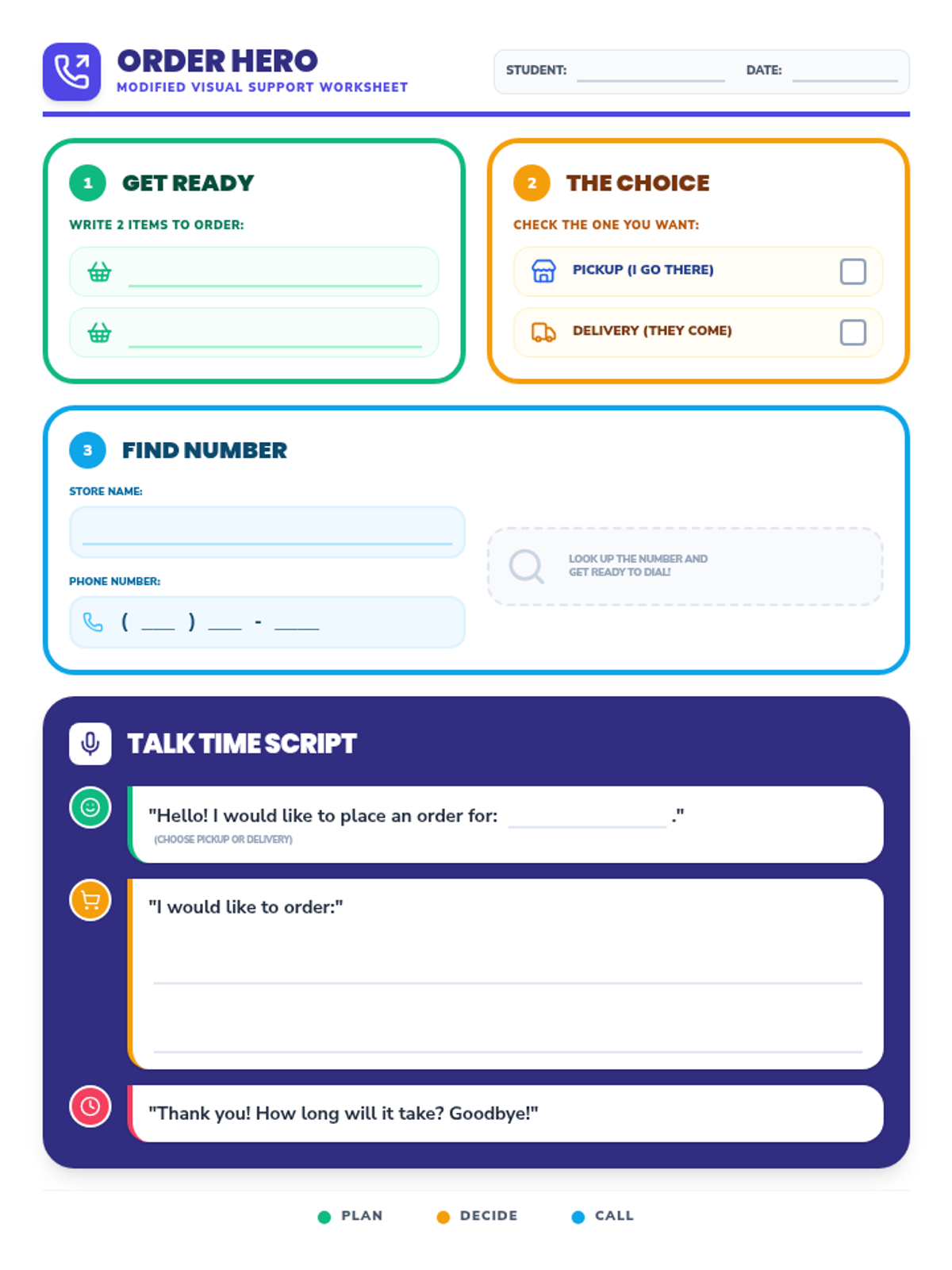
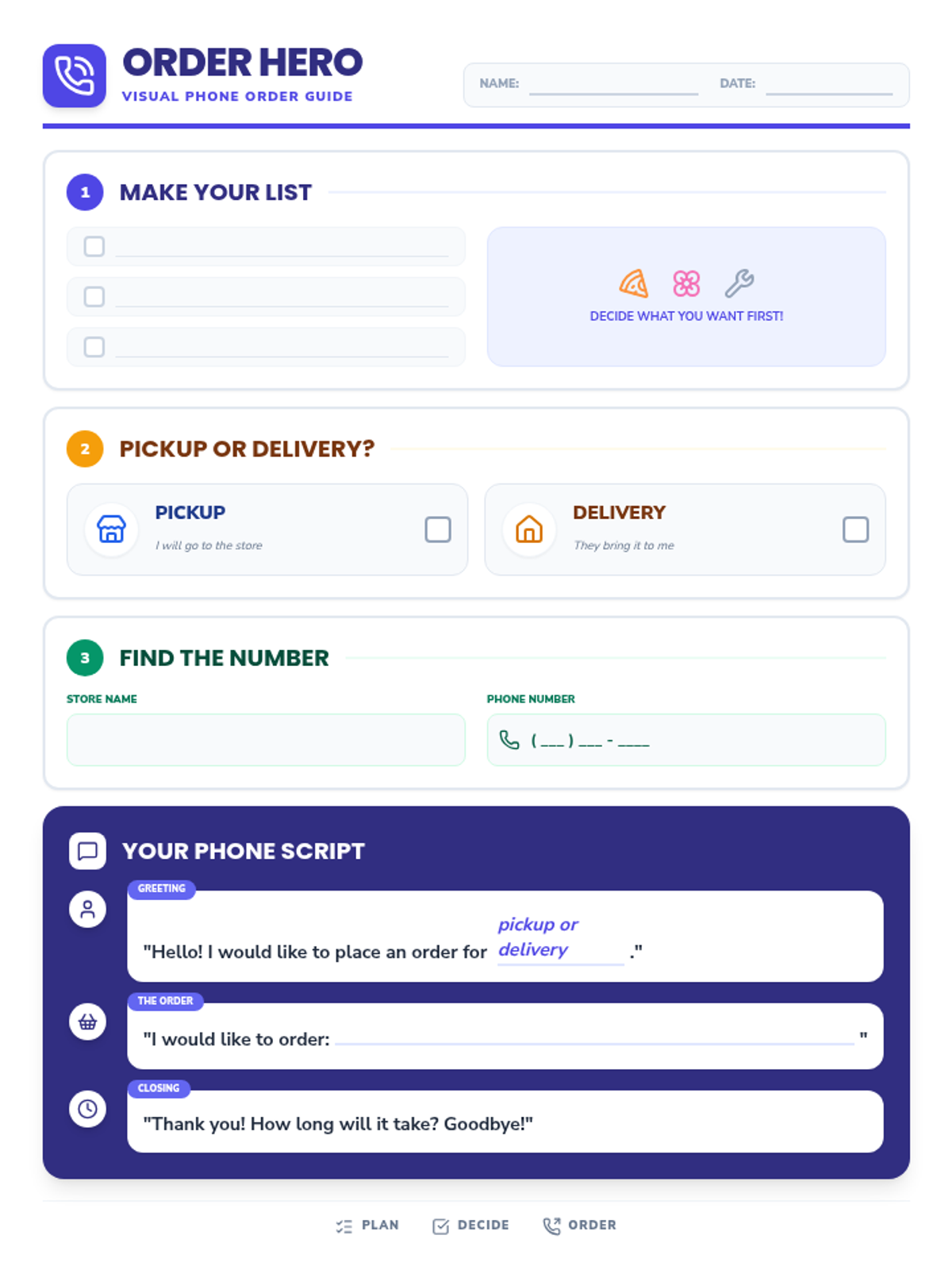
A modified worksheet that balances the structured steps of the original with the high-contrast visual cues of the call cards. Features color-coded sections for items, delivery/pickup choices, and a script with large writing areas.
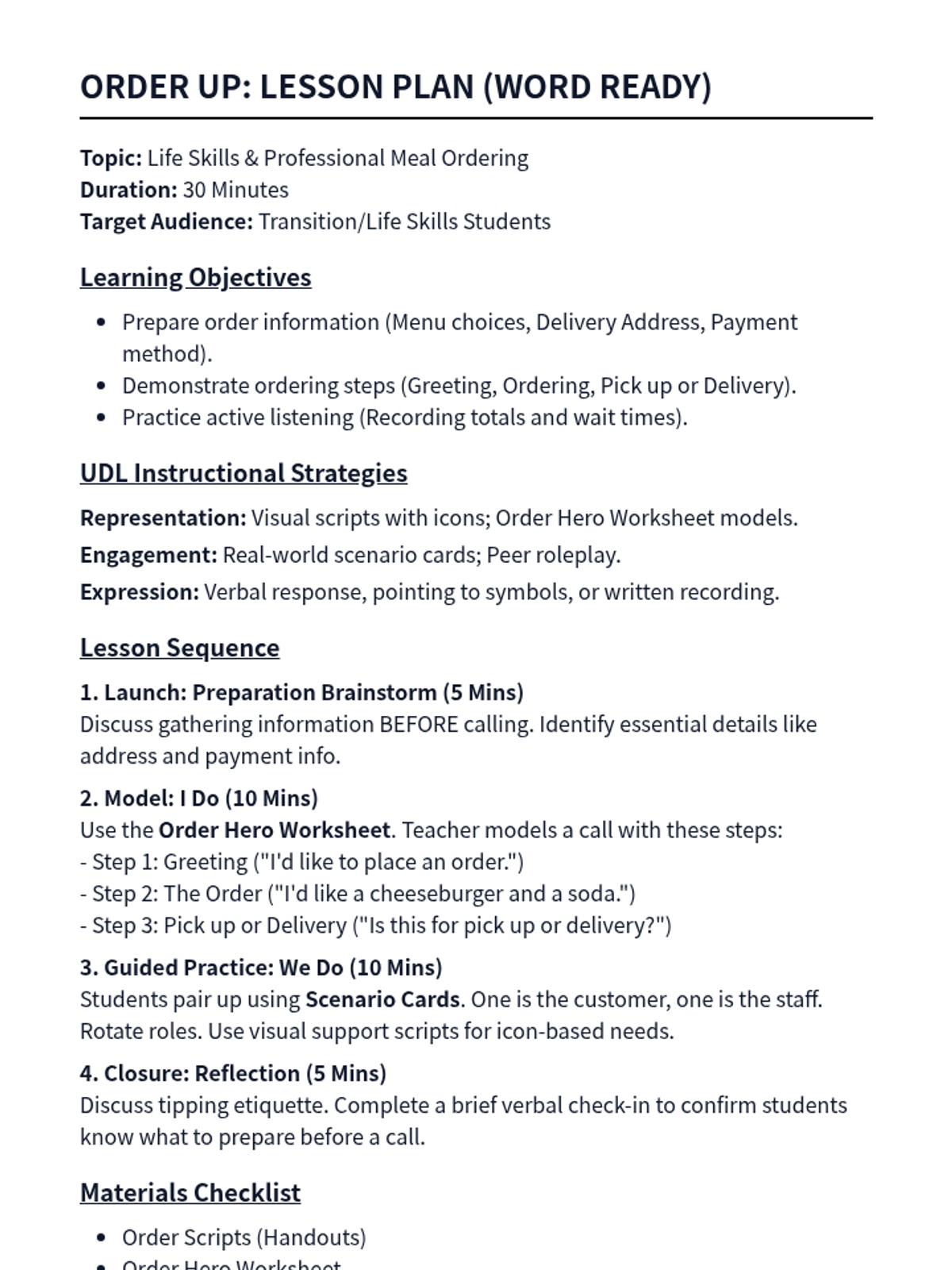
A simplified, plain-text version of the 'Order Up' lesson plan, designed for easy copying and pasting into a Word document or other text editor. Features a clean hierarchy without complex layout elements. Updated to include 'Various Menus' in materials.
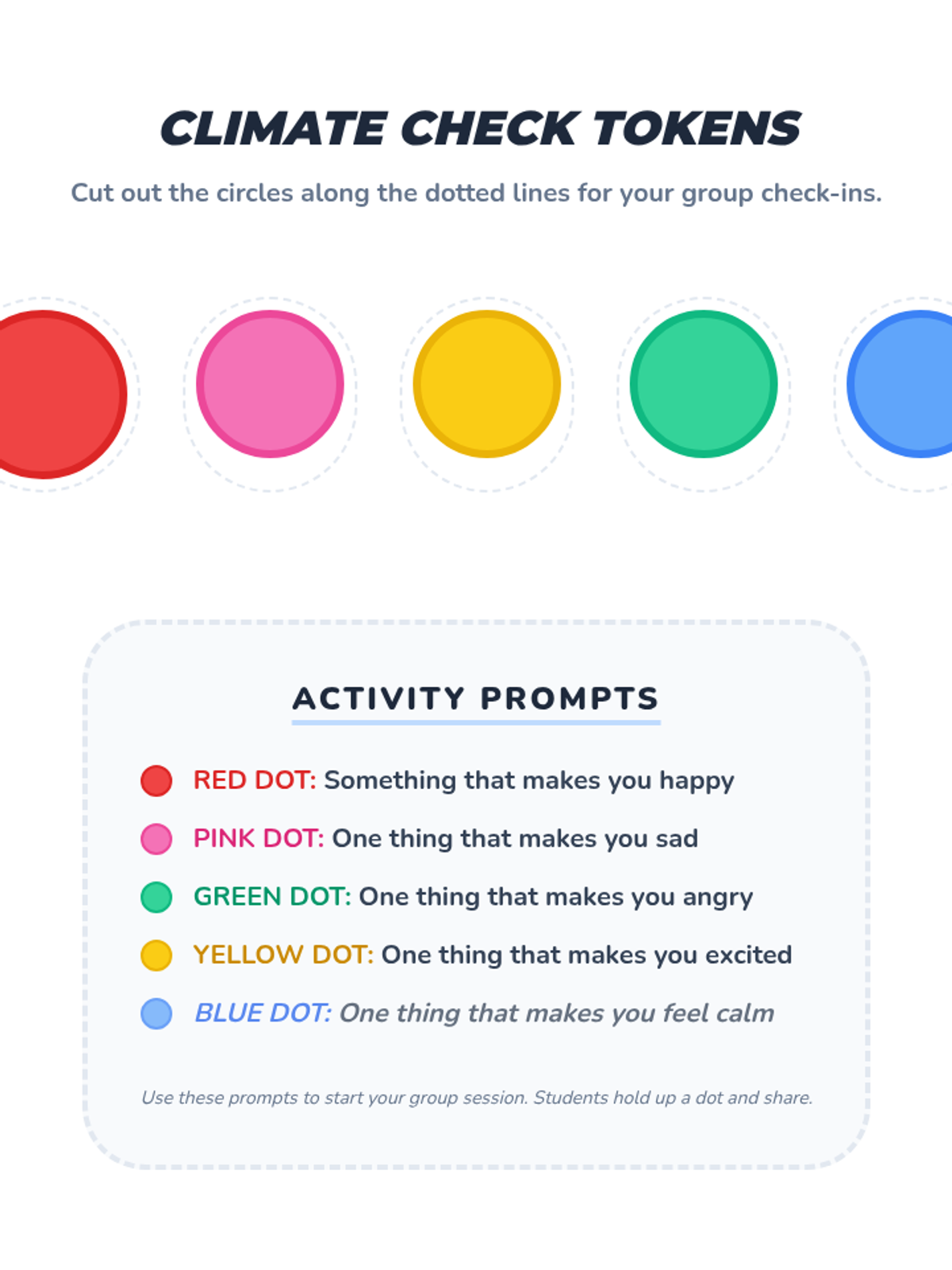
A printable sheet featuring five large, plain colored tokens (red, pink, yellow, green, and blue) with specific activity prompts in the footer. The red dot prompt focuses on happiness, while the pink dot prompt focuses on sadness for group discussion.
An instructional slide deck designed to teach banking vocabulary, payment methods, and transaction analysis, featuring high-contrast visuals and practice examples.
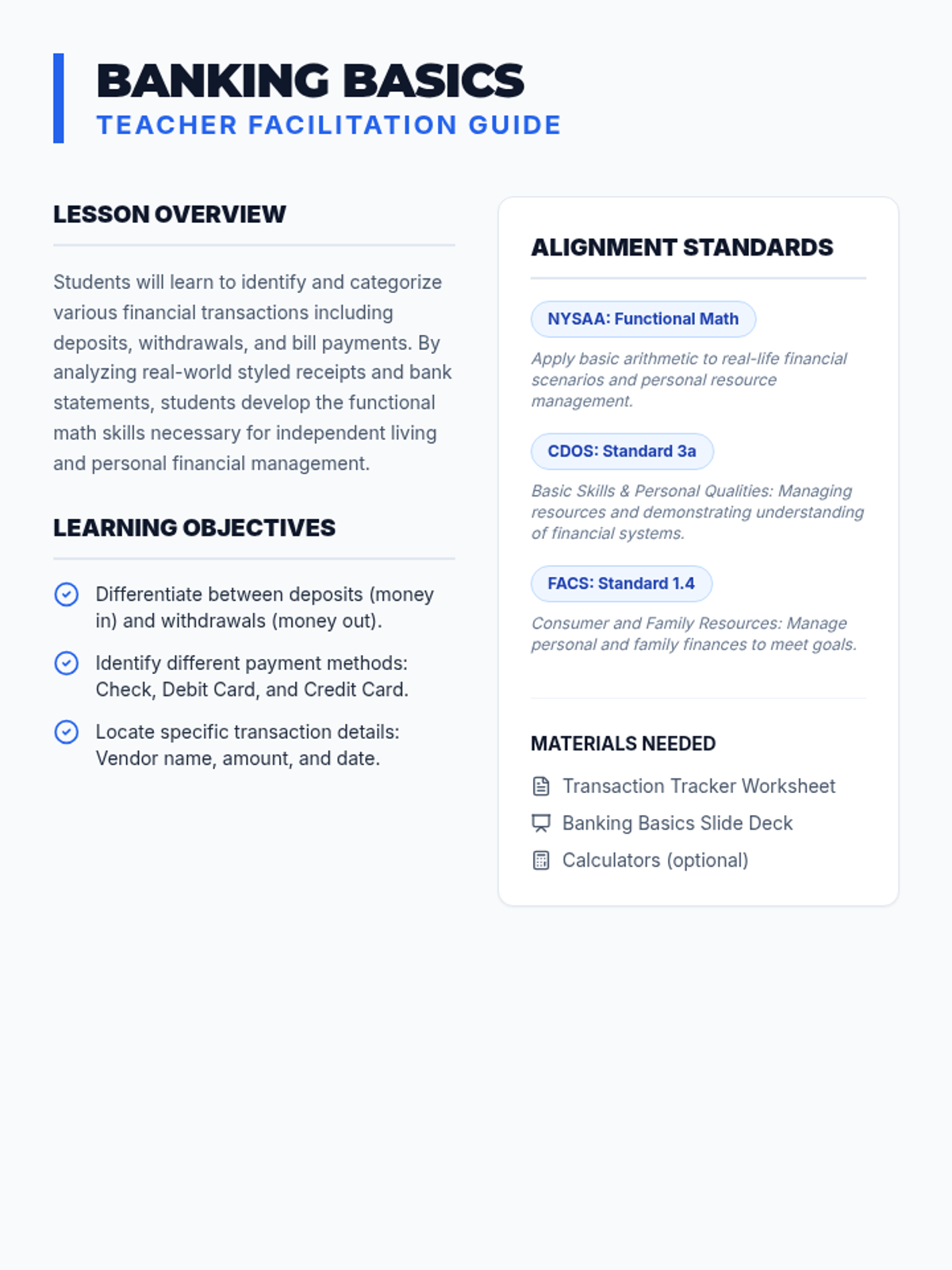
A comprehensive teacher facilitation guide for the Banking Basics lesson, updated with NYSAA Science standards for data analysis and a consistent daily routine.
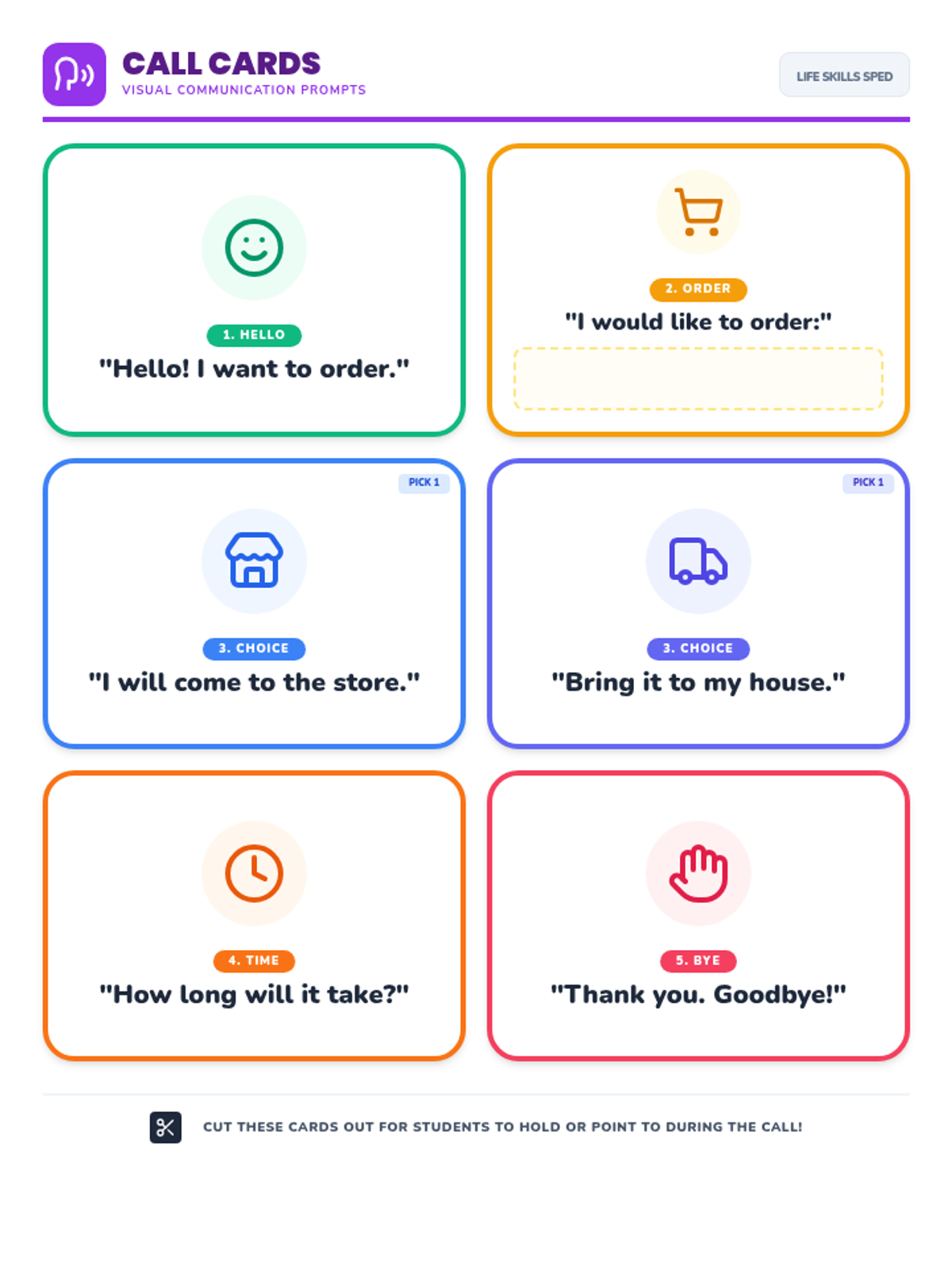
A set of color-coded visual communication cards with high-contrast icons and clear text to help special education students navigate the steps of a phone order. Features a fill-in-the-blank area for the order item.
A compact, highly visual worksheet designed with large icons, pictorial choices, and speech-bubble scripts on a single page to guide students through the steps of placing a phone order. Now with an expanded phone number writing area.
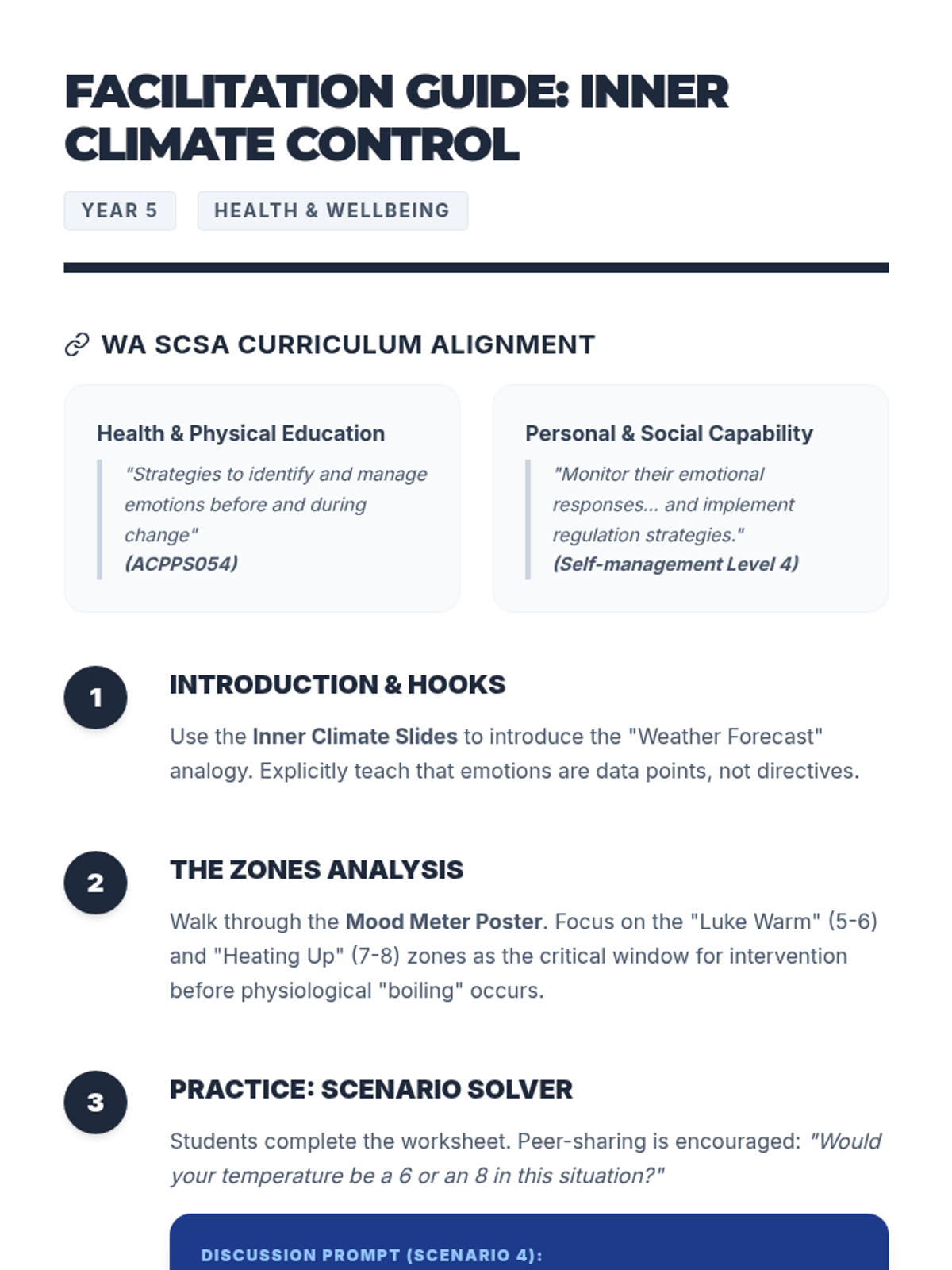
A teacher resource providing instructional steps, curriculum alignment to SCSA, and an overview of the evidence-based psychological techniques used in the lesson. Includes discussion prompts and pedagogical tips for emotional regulation instruction.
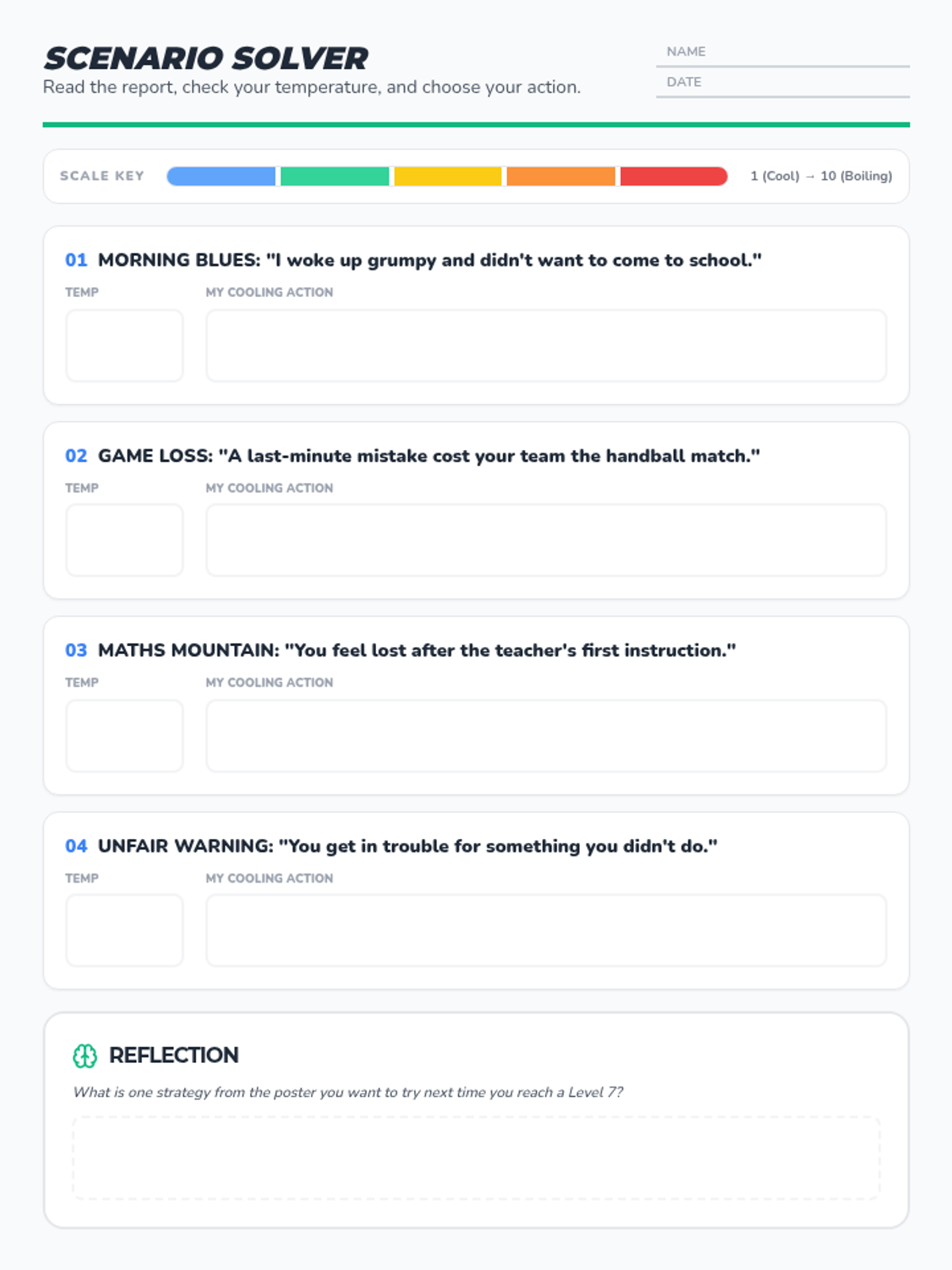
A worksheet featuring relatable Year 5 scenarios designed to prompt students to identify their emotional temperature and select appropriate coping strategies. Includes scenarios like losing a game, academic frustration, and social misunderstandings.
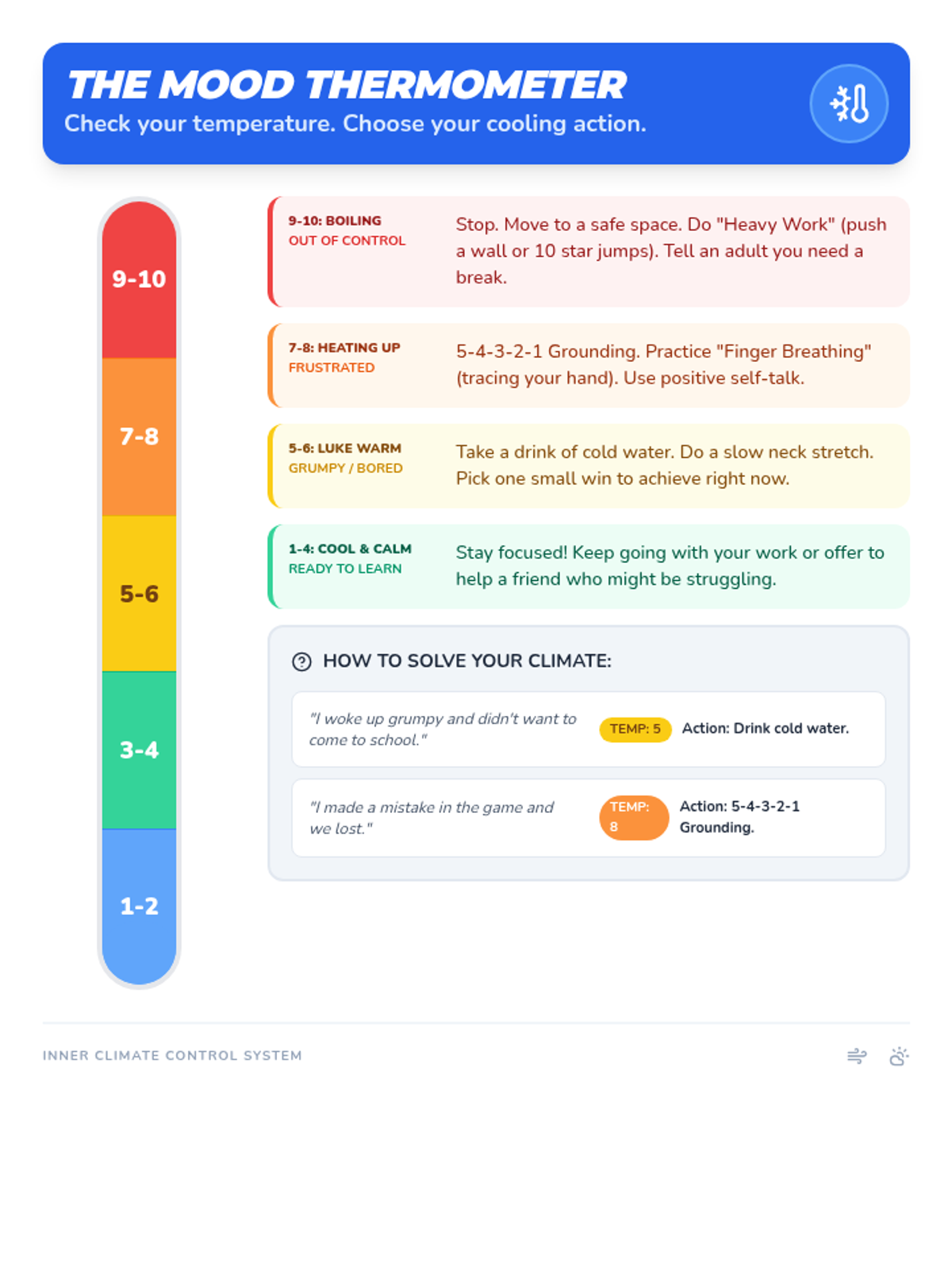
A vibrant, thermometer-style poster that visualizes emotional intensity from 1-10. It categorizes emotions into 'heat zones' and provides evidence-based coping strategies for each level, including grounding techniques, breathing exercises, and self-regulation prompts.