A visual guide for high school students to decode non-verbal social cues like eye contact, posture, and proximity. It uses a "signal decoder" theme to make social observation feel analytical and manageable.
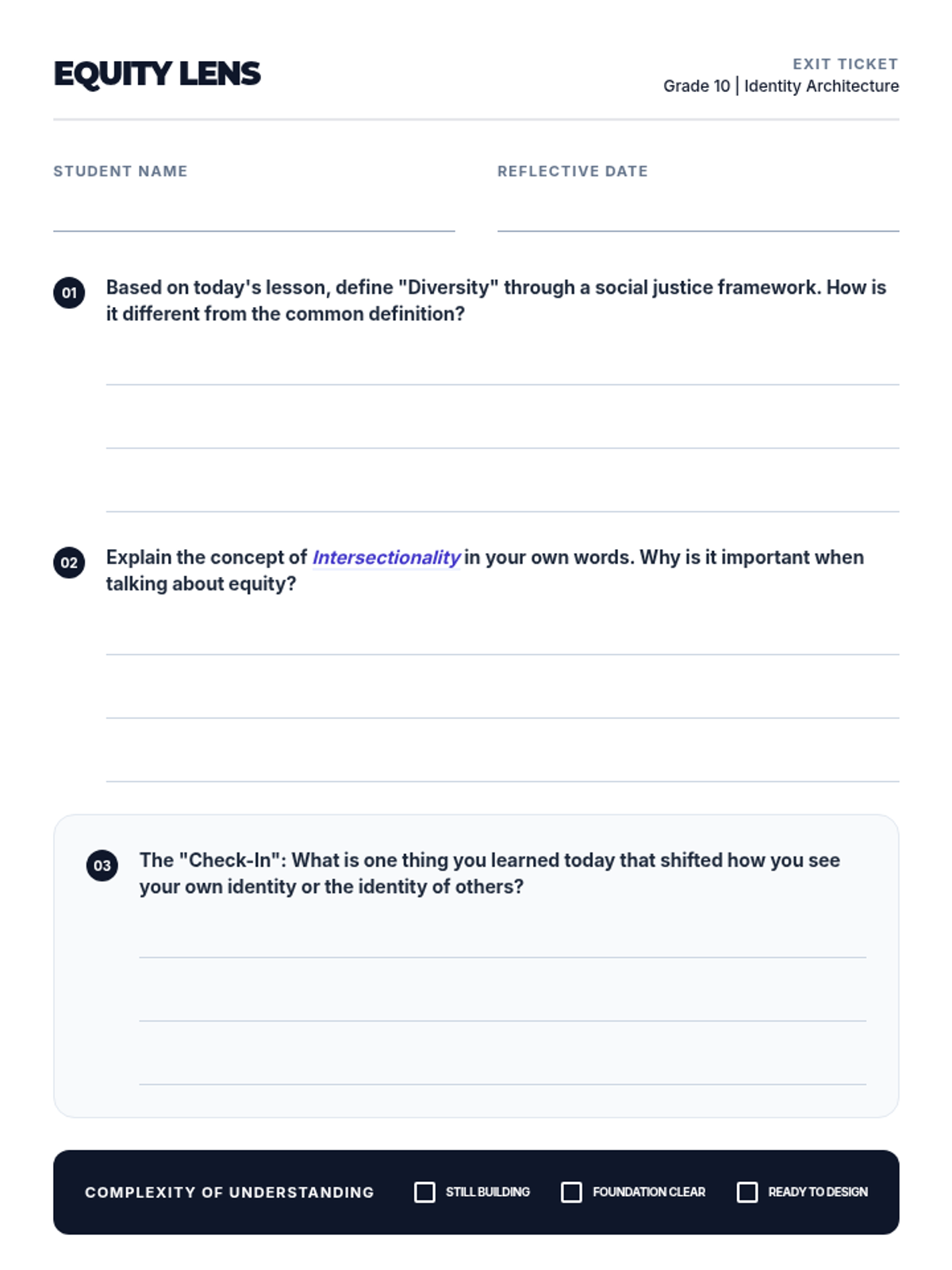
A brief assessment for students to reflect on the core concepts of the lesson, specifically systemic diversity, intersectionality, and personal shifts in perspective.
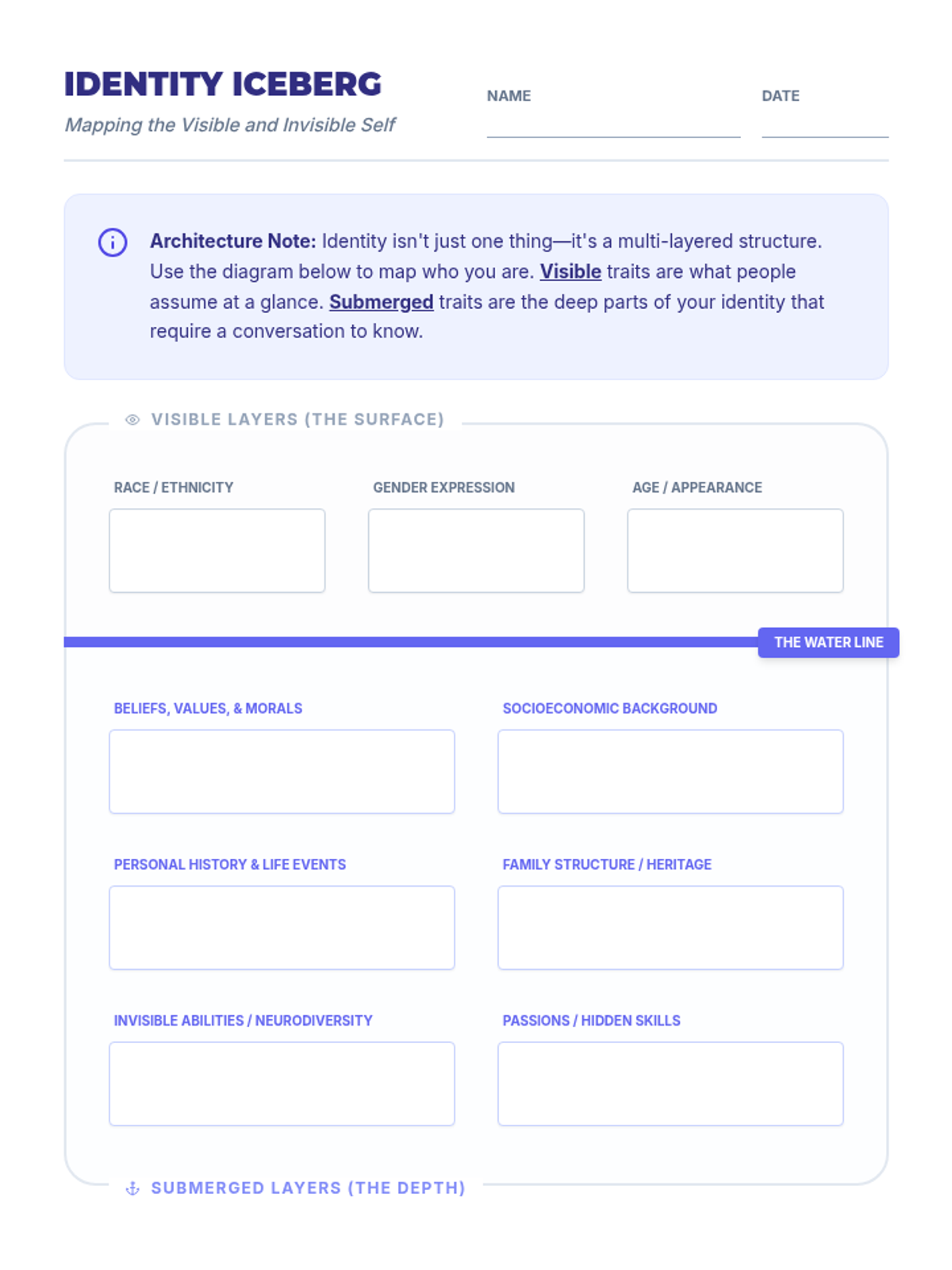
A student worksheet for mapping personal identity traits using an 'iceberg' model, with reflection questions focused on positionality, power, and intersectionality.
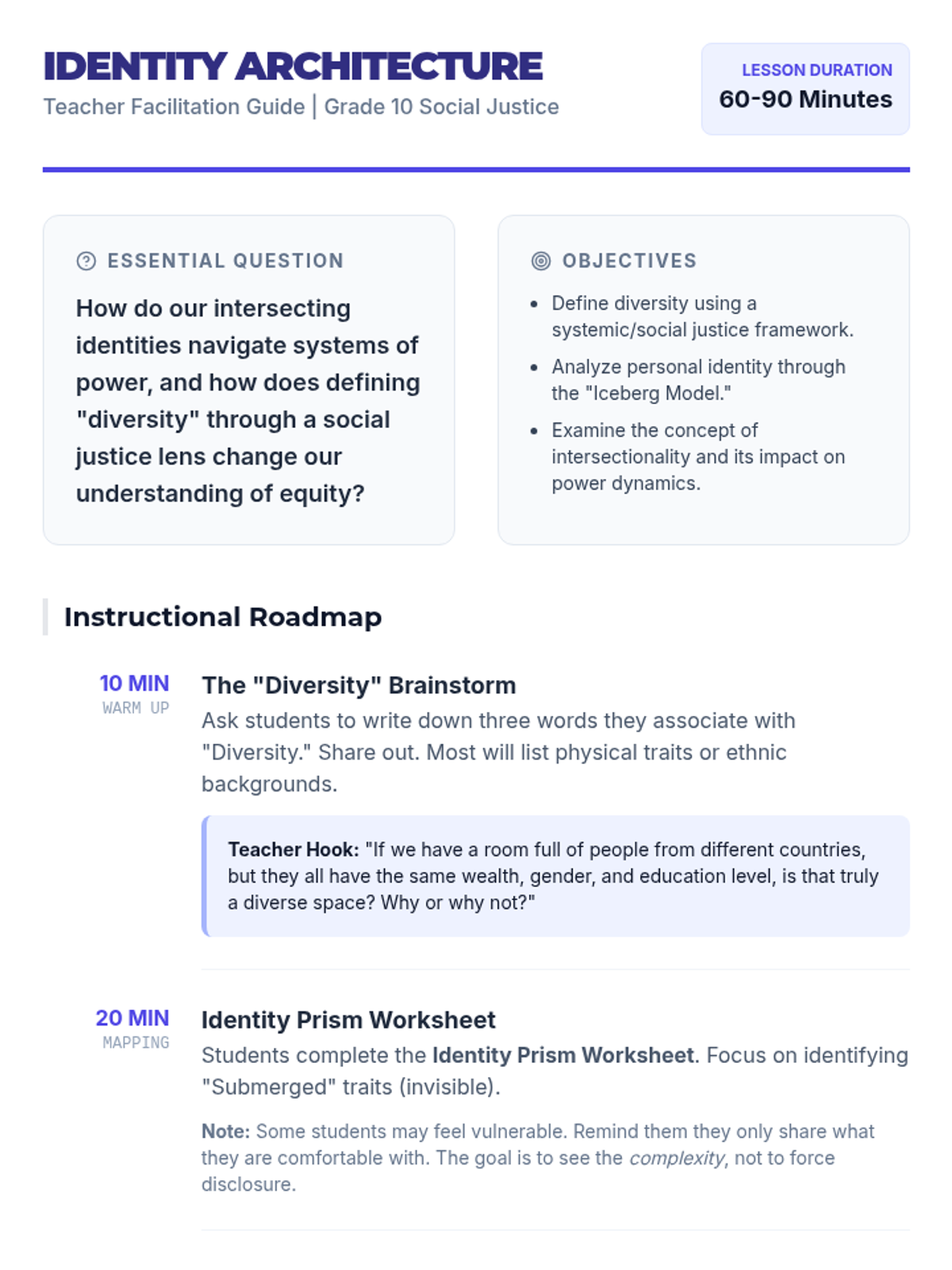
A comprehensive teacher facilitation guide for the Identity Architecture lesson, including pacing, essential questions, discussion prompts, and key vocabulary definitions using a social justice framework.
Visual presentation slides that guide students through defining diversity using a social justice framework, covering intersectionality, the iceberg model, and power dynamics.
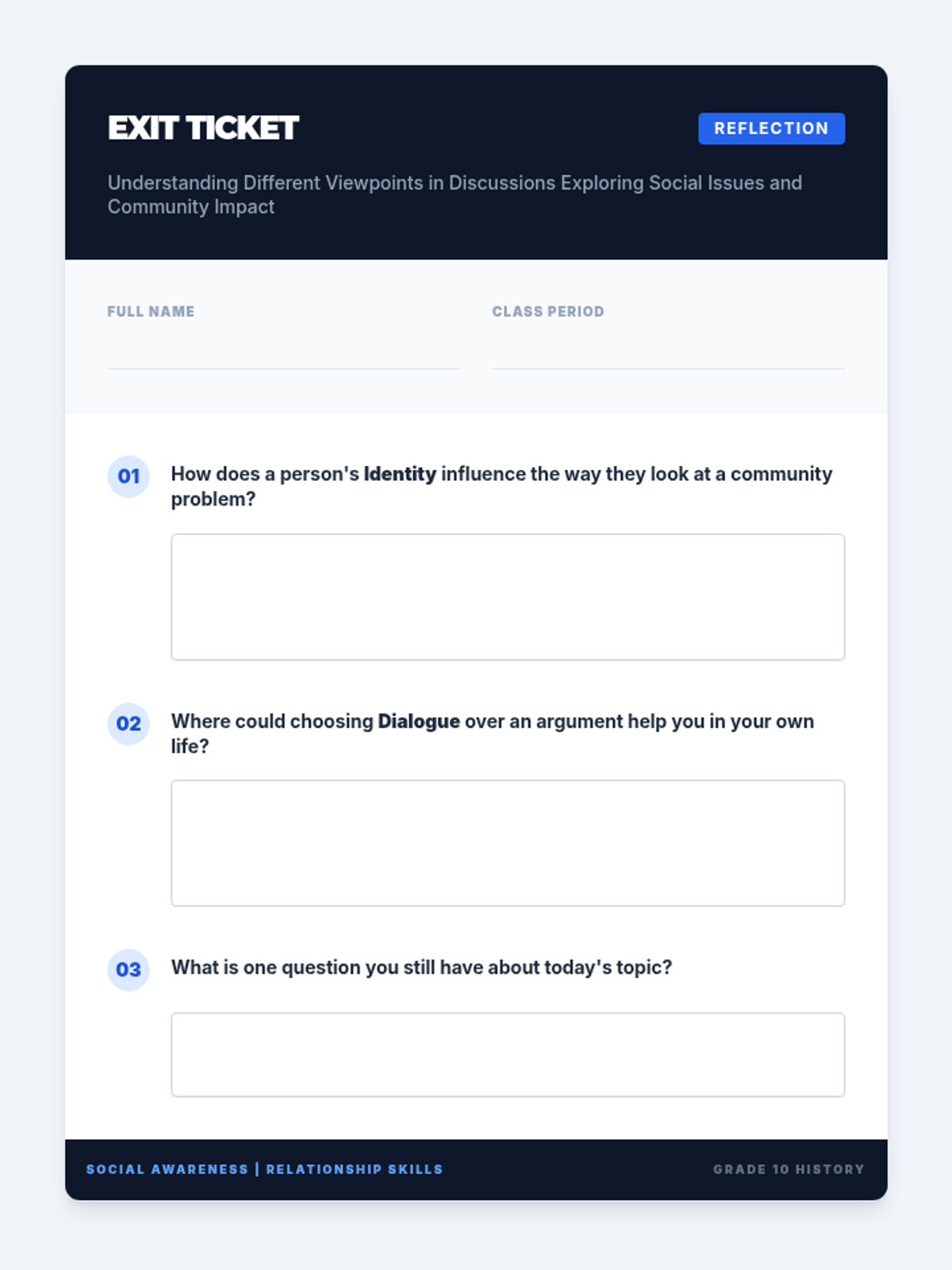
A self-reflective exit ticket for students to evaluate their understanding of community viewpoints and the application of dialogue in real-life social issues.
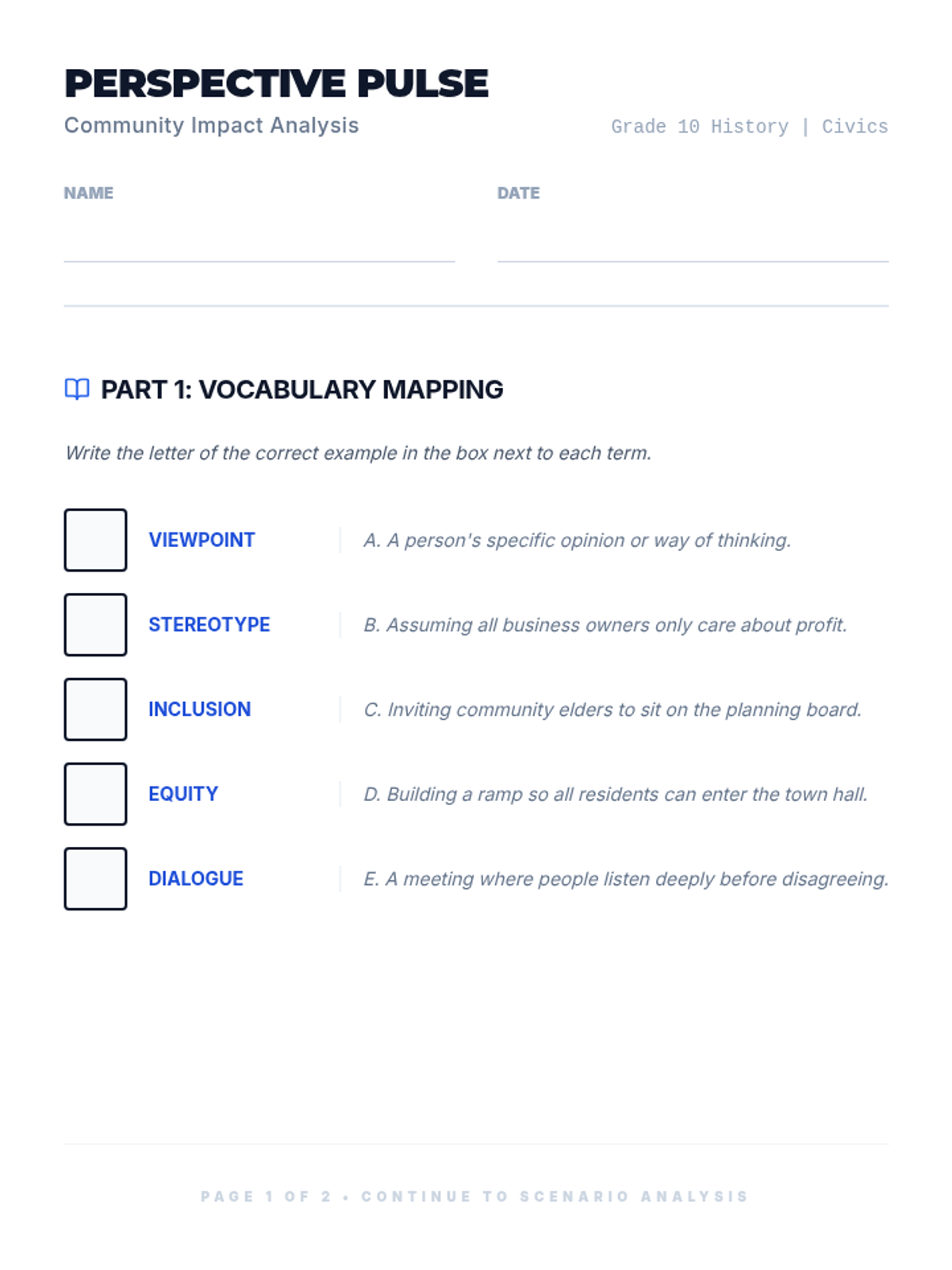
A student worksheet designed to analyze community social issues through multiple viewpoints, incorporating vocabulary application and scenario-based reflection.
A visual presentation for a Grade 10 lesson on community viewpoints, including objective, key vocabulary, dialogue standards, and a case study challenge.
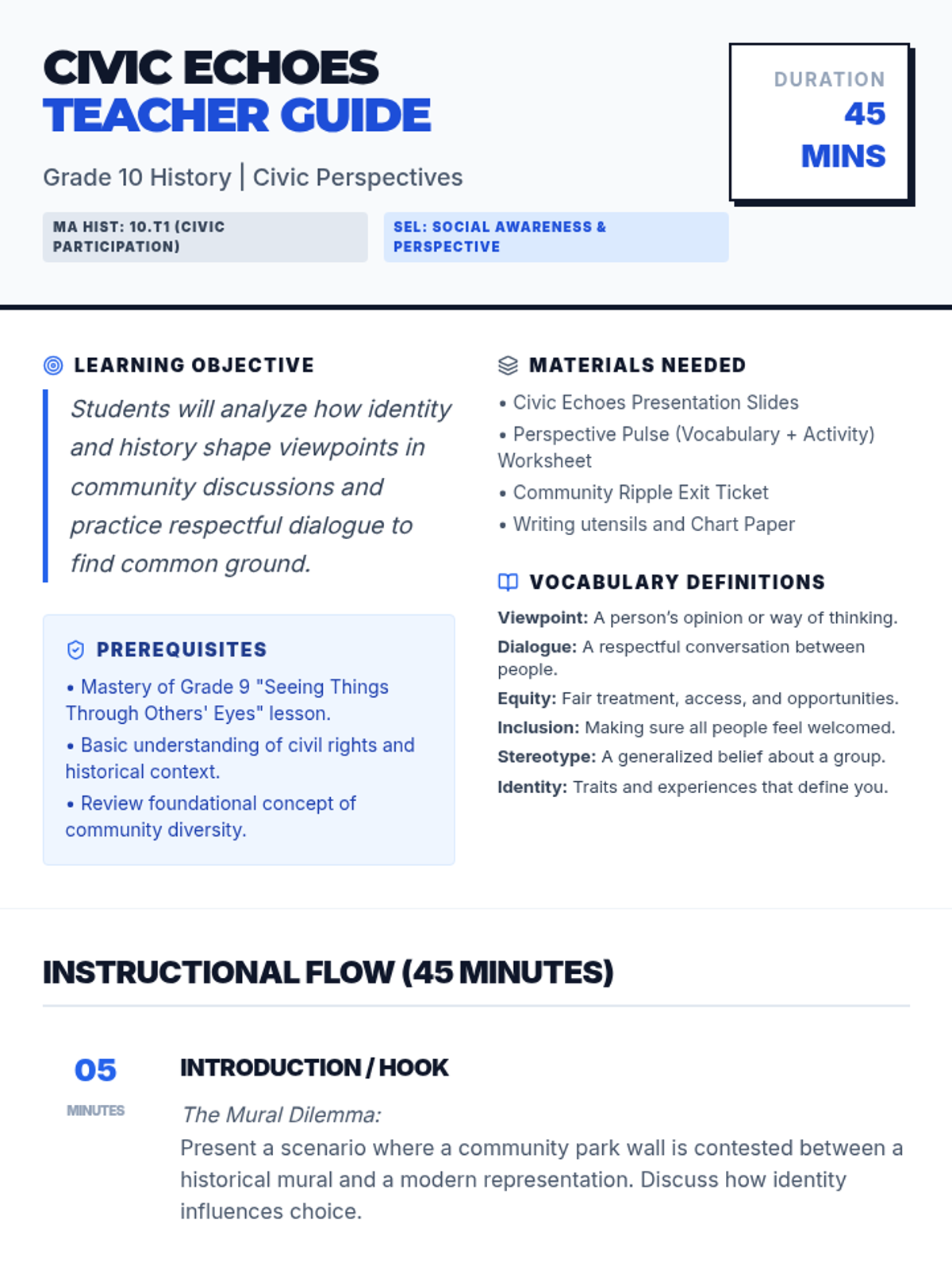
A detailed teacher guide for a Grade 10 History lesson on community viewpoints, featuring a 45-minute instructional flow, discussion questions, and vocabulary definitions.
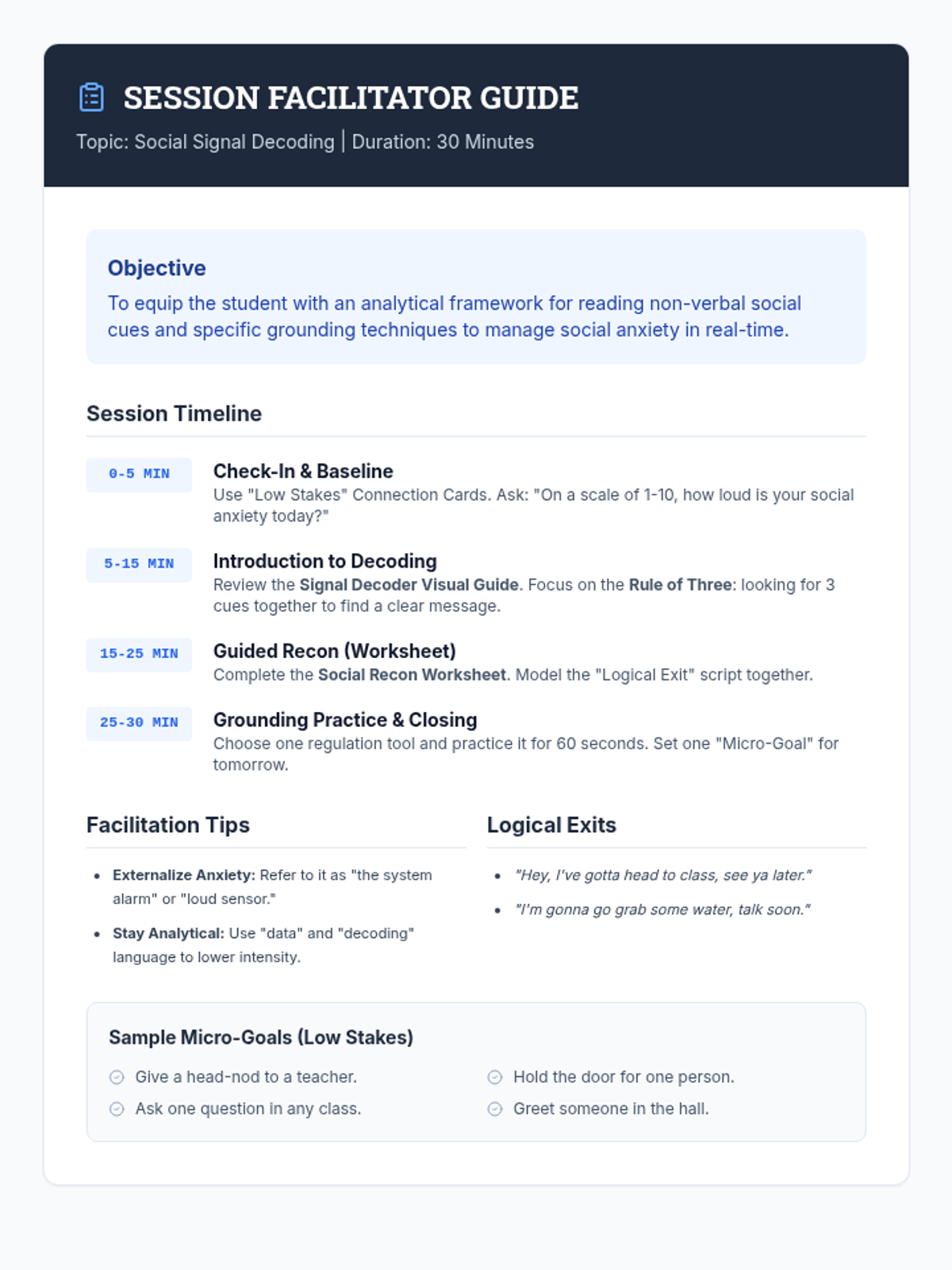
A facilitator guide for a 30-minute counseling session, providing a timed structure, check-in prompts, and strategies for coaching a student through non-verbal decoding and anxiety regulation.
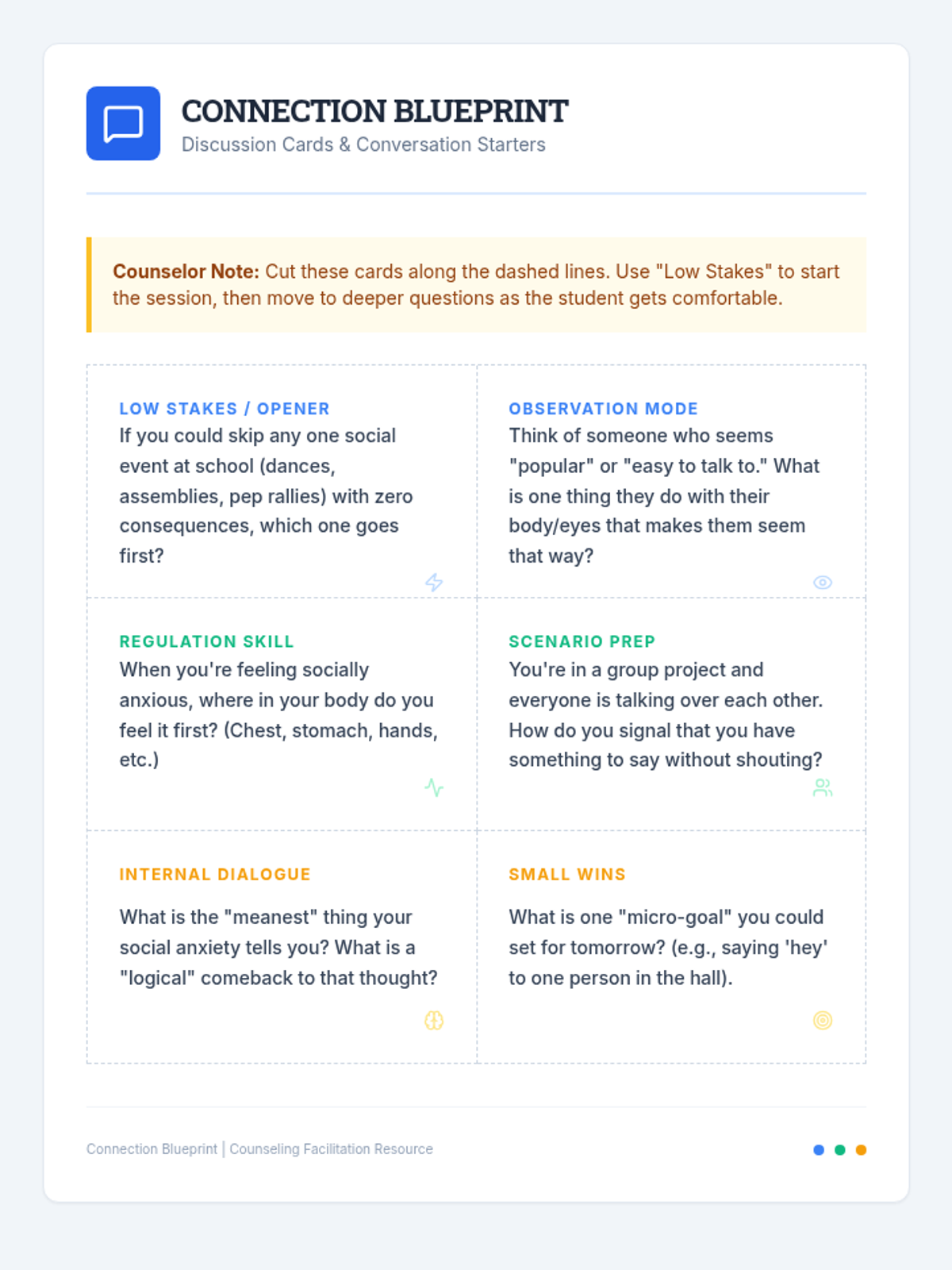
A set of conversation cards for a counselor to use with a 9th grade student, ranging from low-stakes icebreakers to deeper reflections on social anxiety and non-verbal communication.