A 15-question client-facing presentation that challenges clients to choose the most appropriate state-shifting coping skills for various realistic social and professional settings.
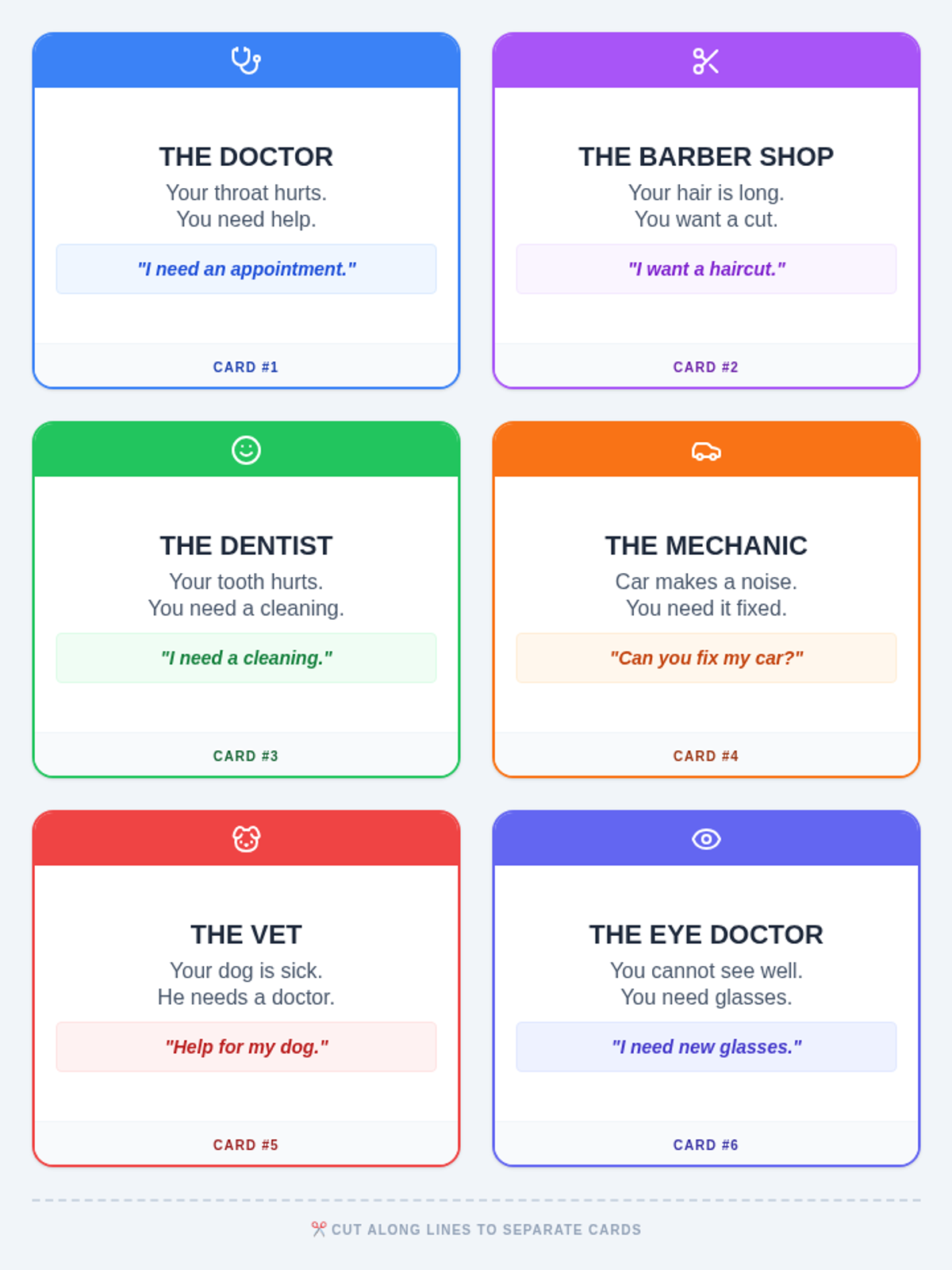
A set of 6 roleplay scenario cards focused exclusively on doctor's office visits, designed for practicing phone scheduling and self-advocacy.
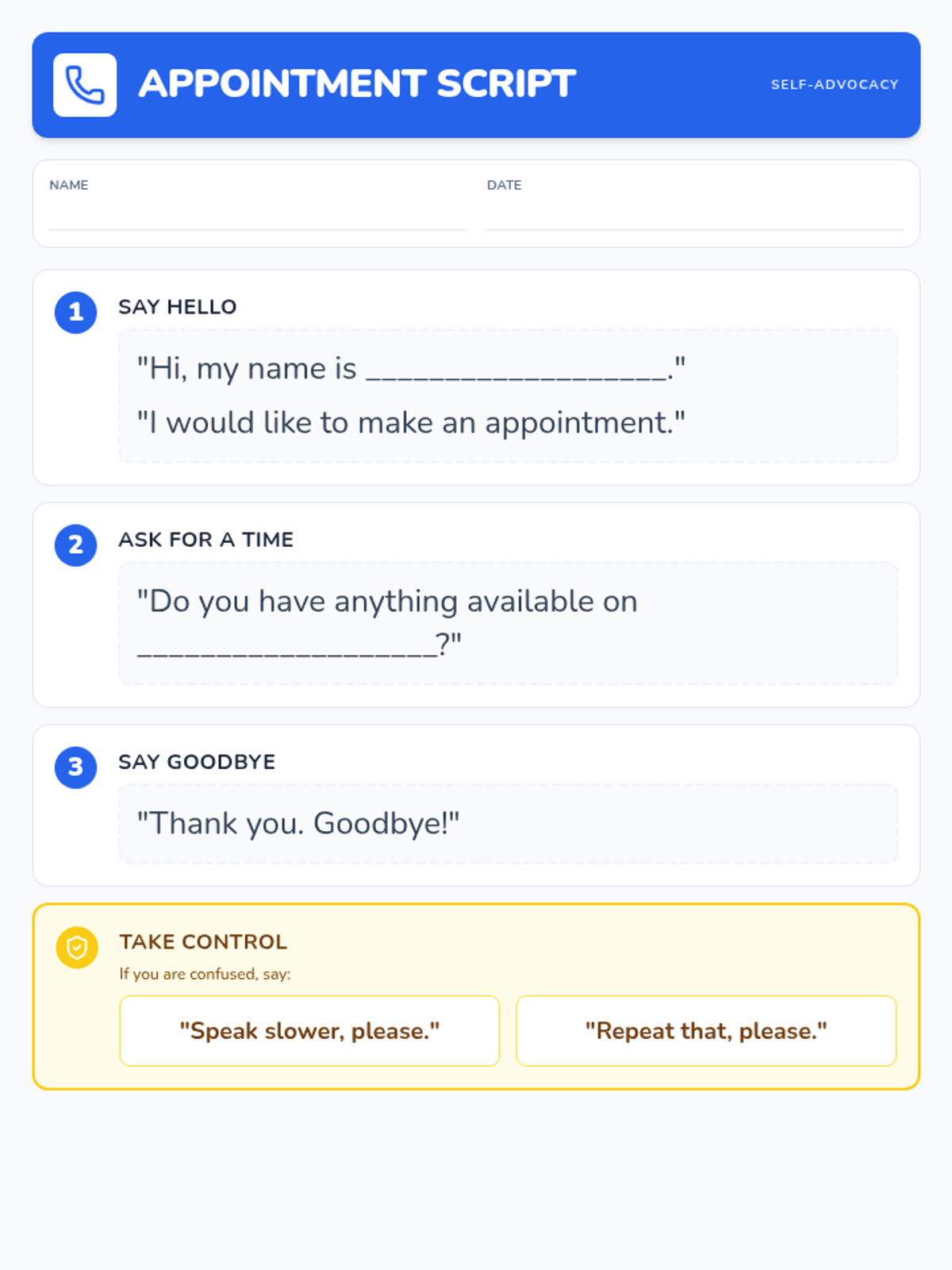
A simplified, one-page visual phone script for students to use when specifically practicing scheduling doctor appointments, featuring large text and clear self-advocacy phrases.
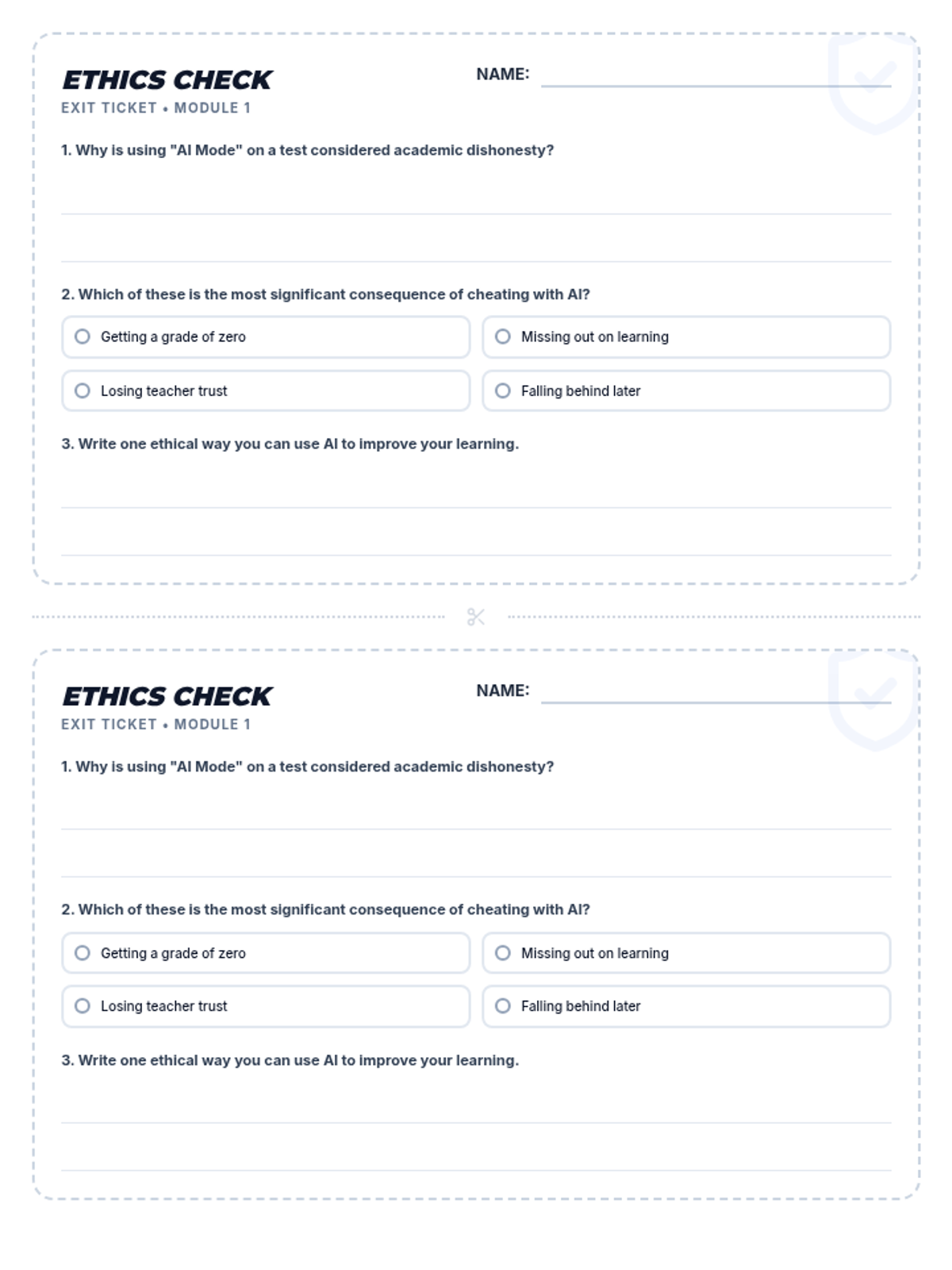
A double-sided exit ticket for assessing student understanding of academic integrity and the ethical boundaries of AI use after the lesson.
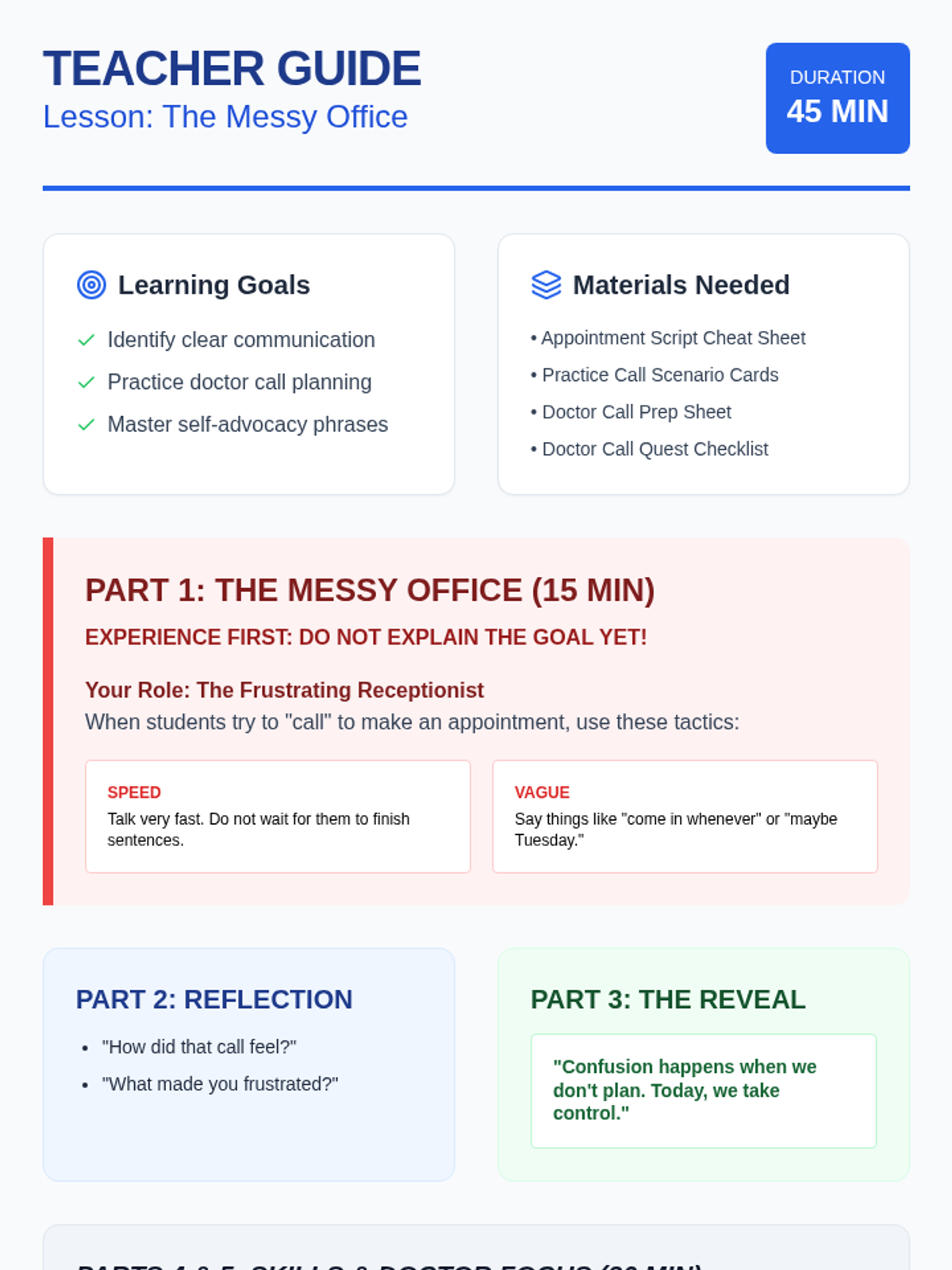
A teacher-facing guide for the "Messy Office" lesson, specifically focused on doctor's office appointments, outlining the "Experience First" methodology.
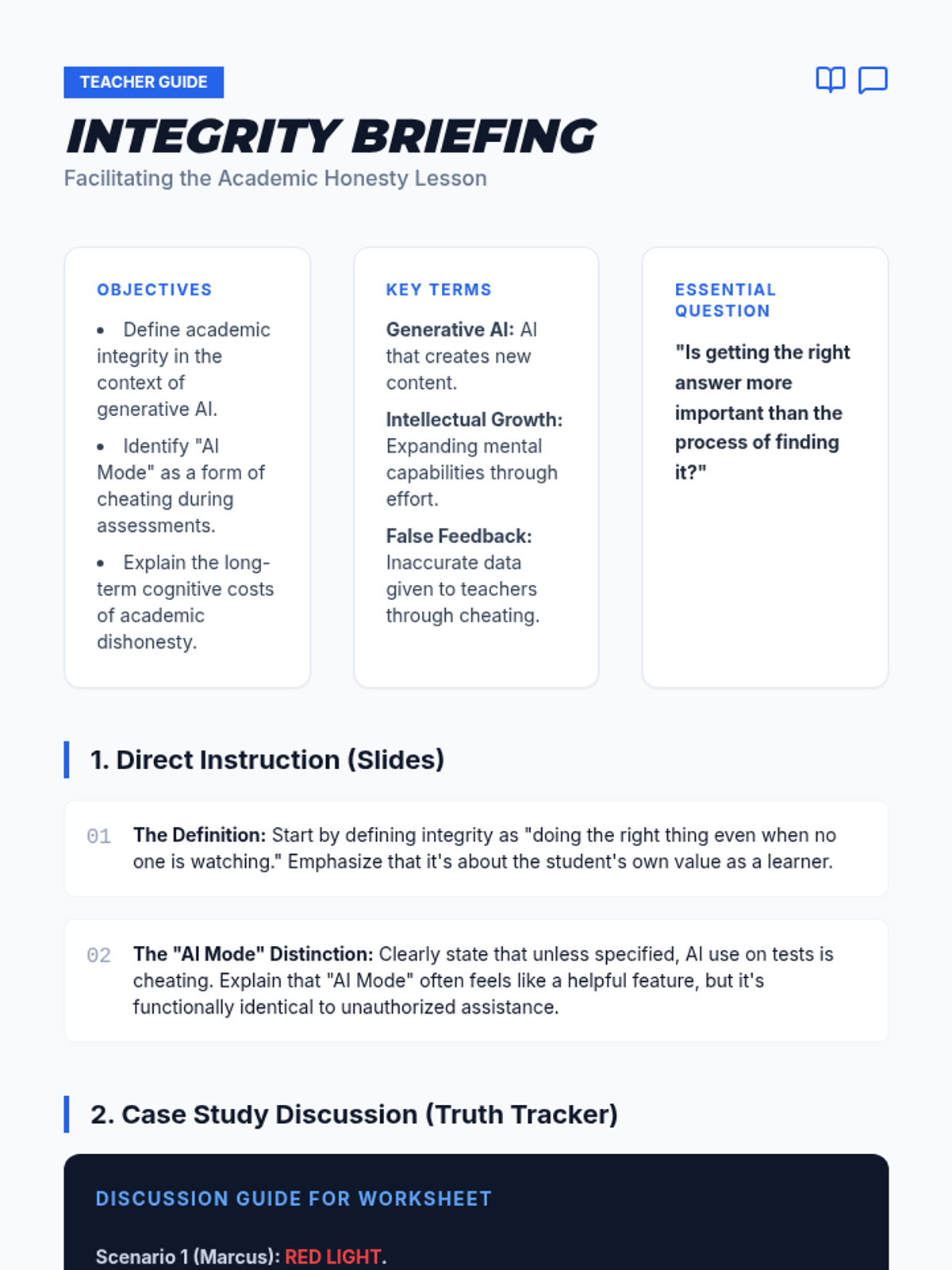
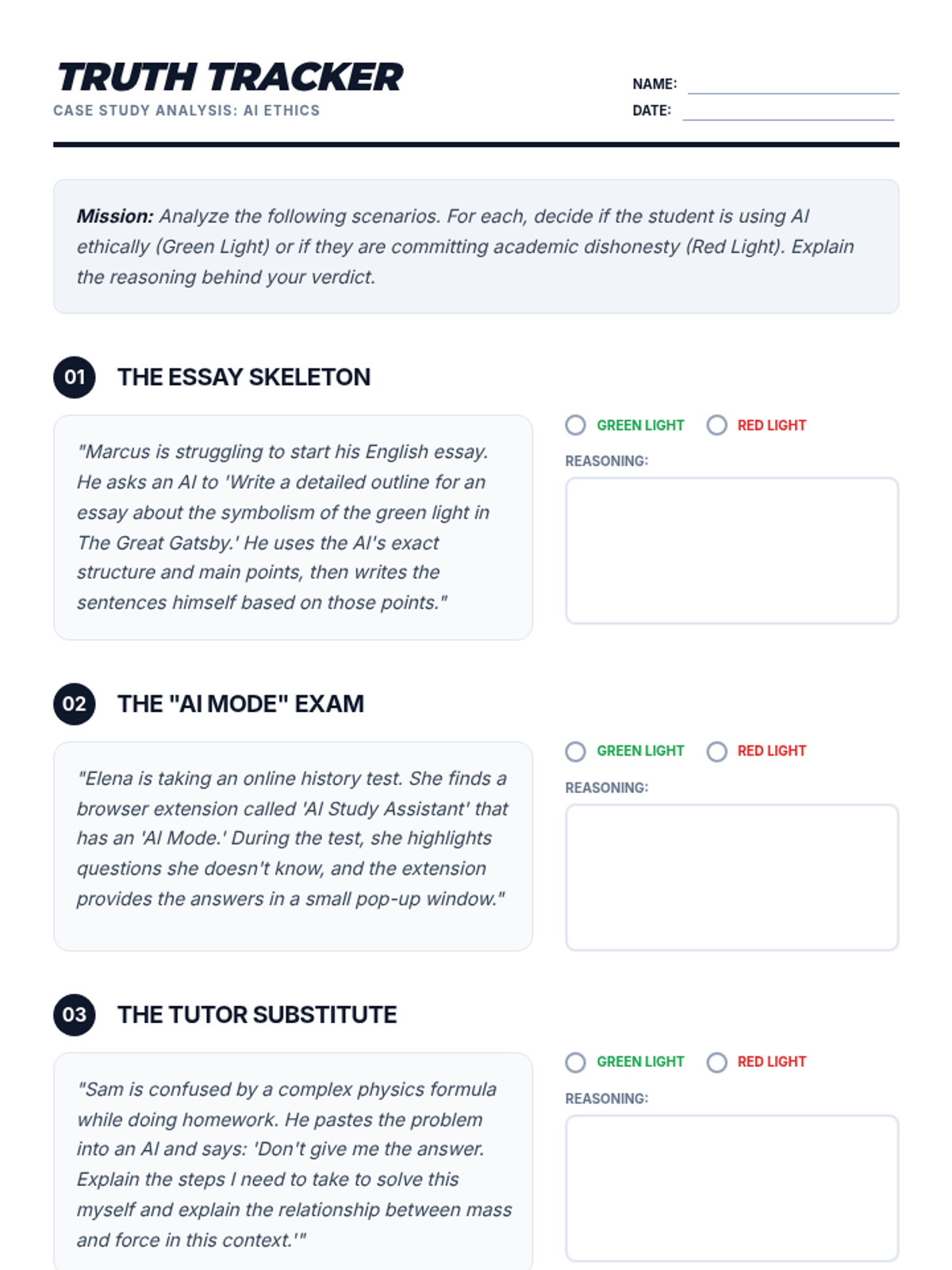
A teacher guide providing facilitation tips, discussion prompts, and an answer key for the Truth Tracker case studies, with strategies for addressing common student justifications for AI misuse.
A worksheet featuring case studies where students evaluate scenarios involving AI use in school, determining whether the actions constitute academic honesty or cheating.
A presentation about academic honesty and the ethical use of AI, specifically addressing why using AI during assessments is considered cheating and the negative impact it has on student learning.
A comprehensive 90-minute investigative slide deck featuring six case studies—three "traps" (good workers with bad habits) and three "bad apples" (genuinely problematic candidates). Includes "Interview Intel" slides specifically designed for adults with IDD.
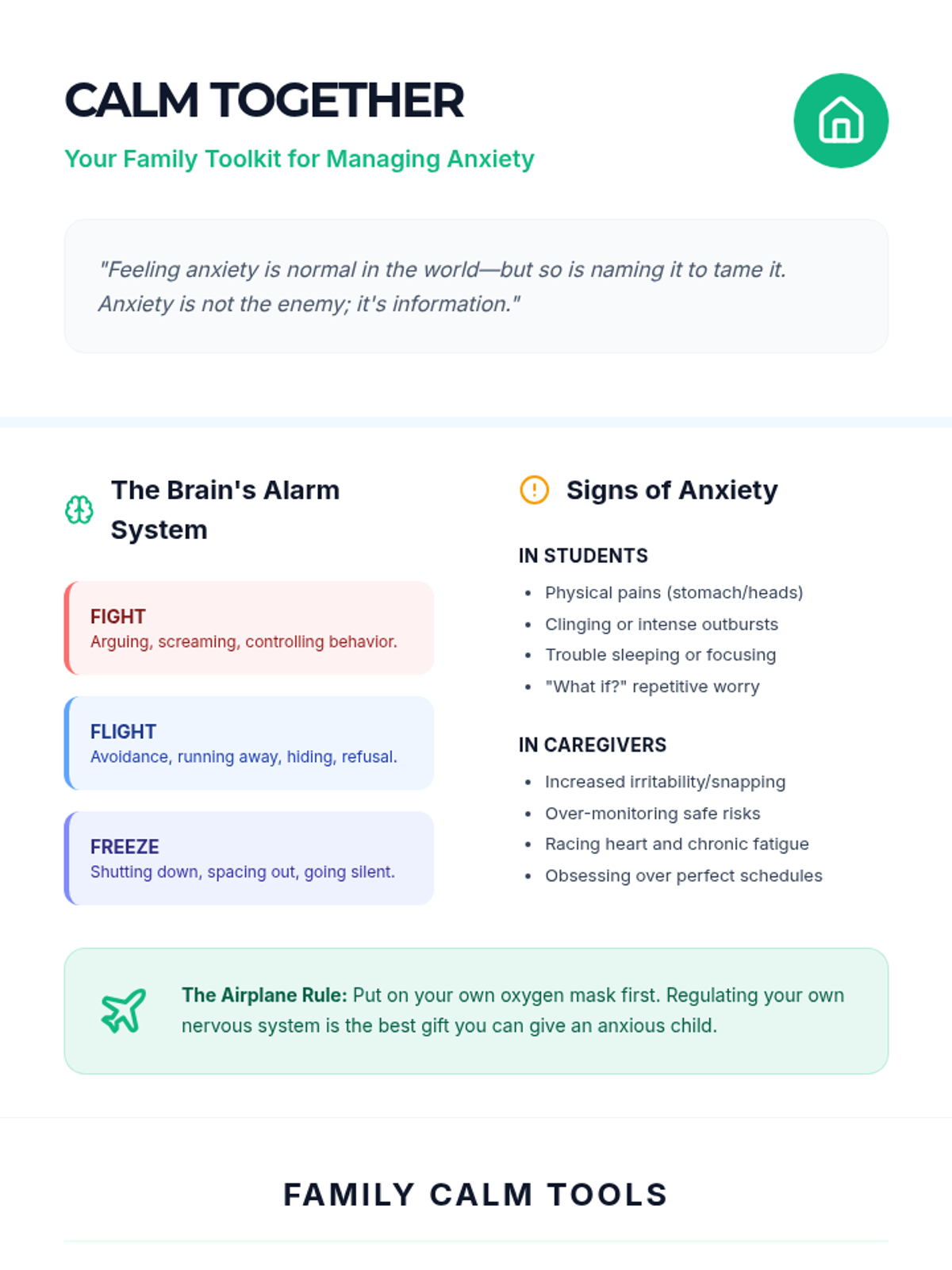
A printable reference sheet for families and caregivers that summarizes the science of anxiety and provides quick-access instructions for the six "Home Calm Tools" covered in the workshop.
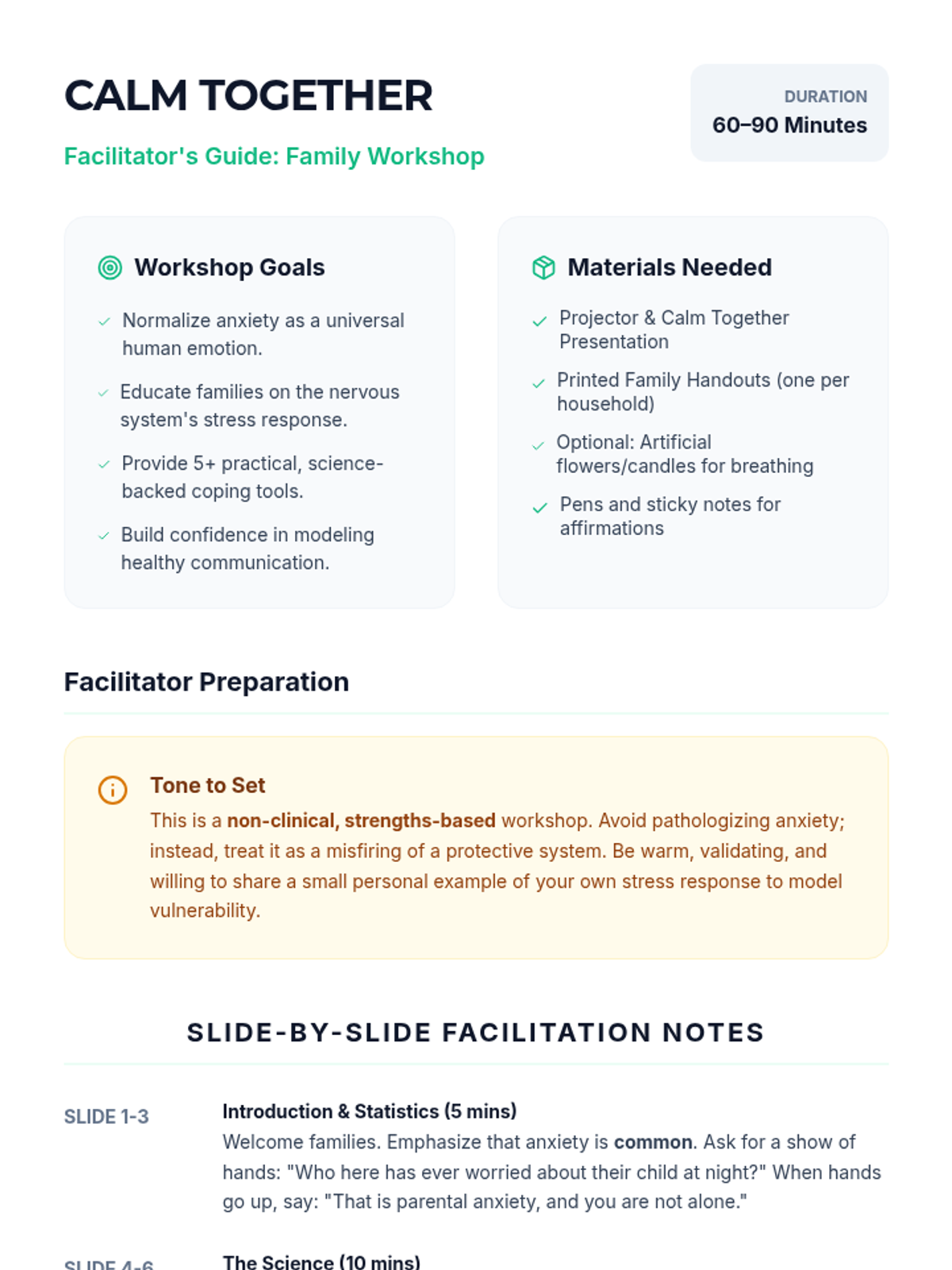
A comprehensive facilitation guide for educators or clinicians delivering the Calm Together workshop, including slide-by-slide scripts, instructional goals, and activity instructions.
A 20-slide visual presentation for families and caregivers about understanding the science of anxiety, identifying symptoms in themselves and their children, and implementing practical coping strategies like breathing, movement, and affirmations.