Answer key for the Session 3 Messaging Quick Quiz.
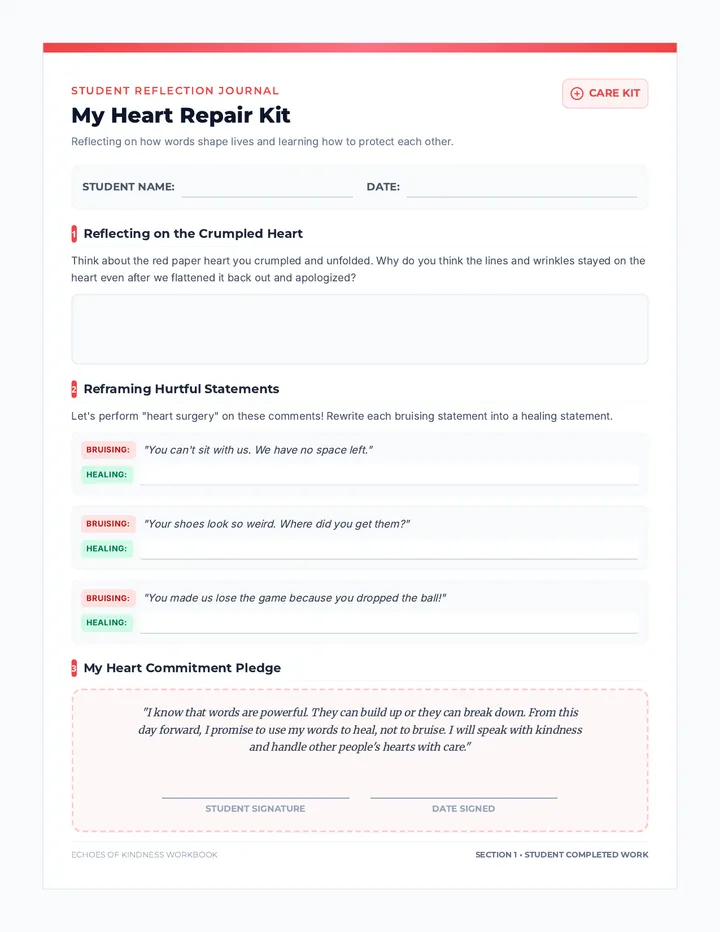
An engaging 1-page student worksheet designed for self-reflection, reframing unkind words into kind words, and committing to the Heart Care Pledge.
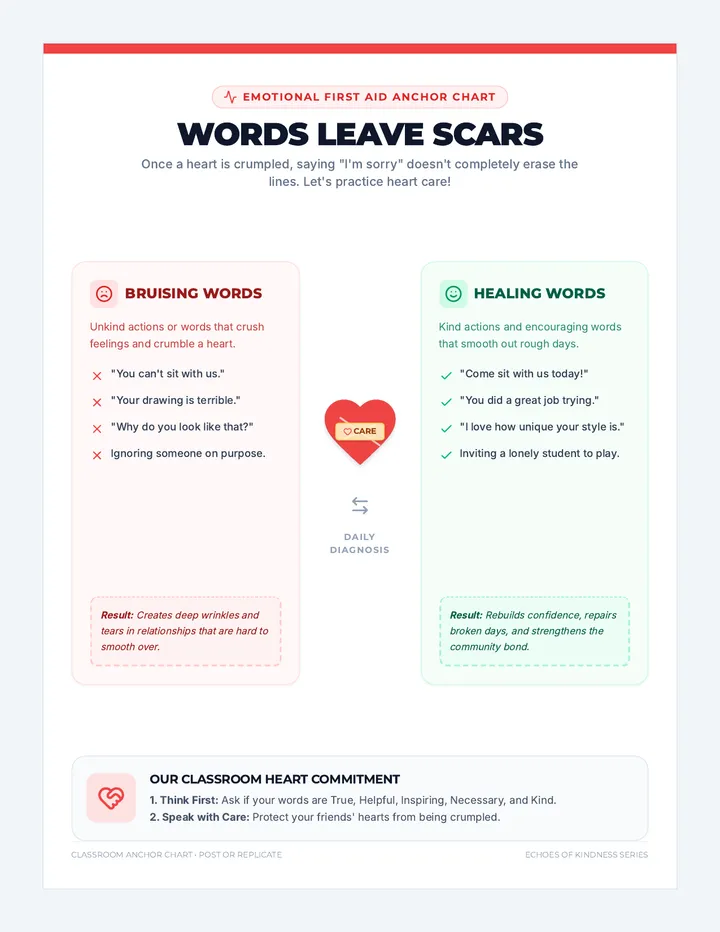
A visually striking anchor chart poster displaying the diagnostic contrast between 'Bruising Words' and 'Healing Words', complete with guidelines for treating others with care.
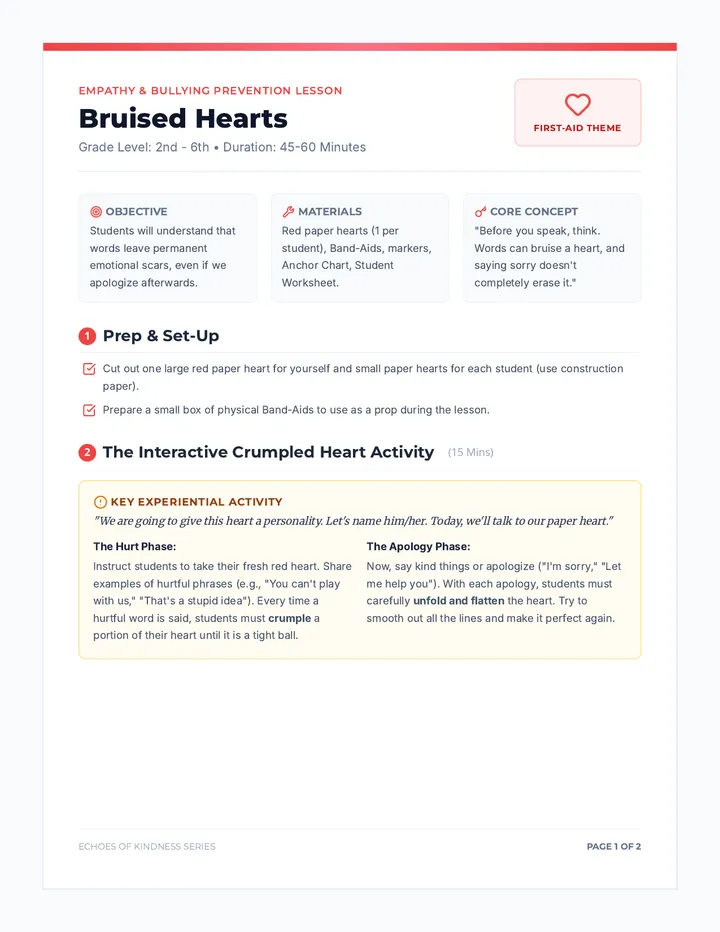
A structured 2-page lesson plan for teachers detailing the 'Bruised Heart' activity, discussion questions, and step-by-step guidance on teaching the lasting impact of unkind words.
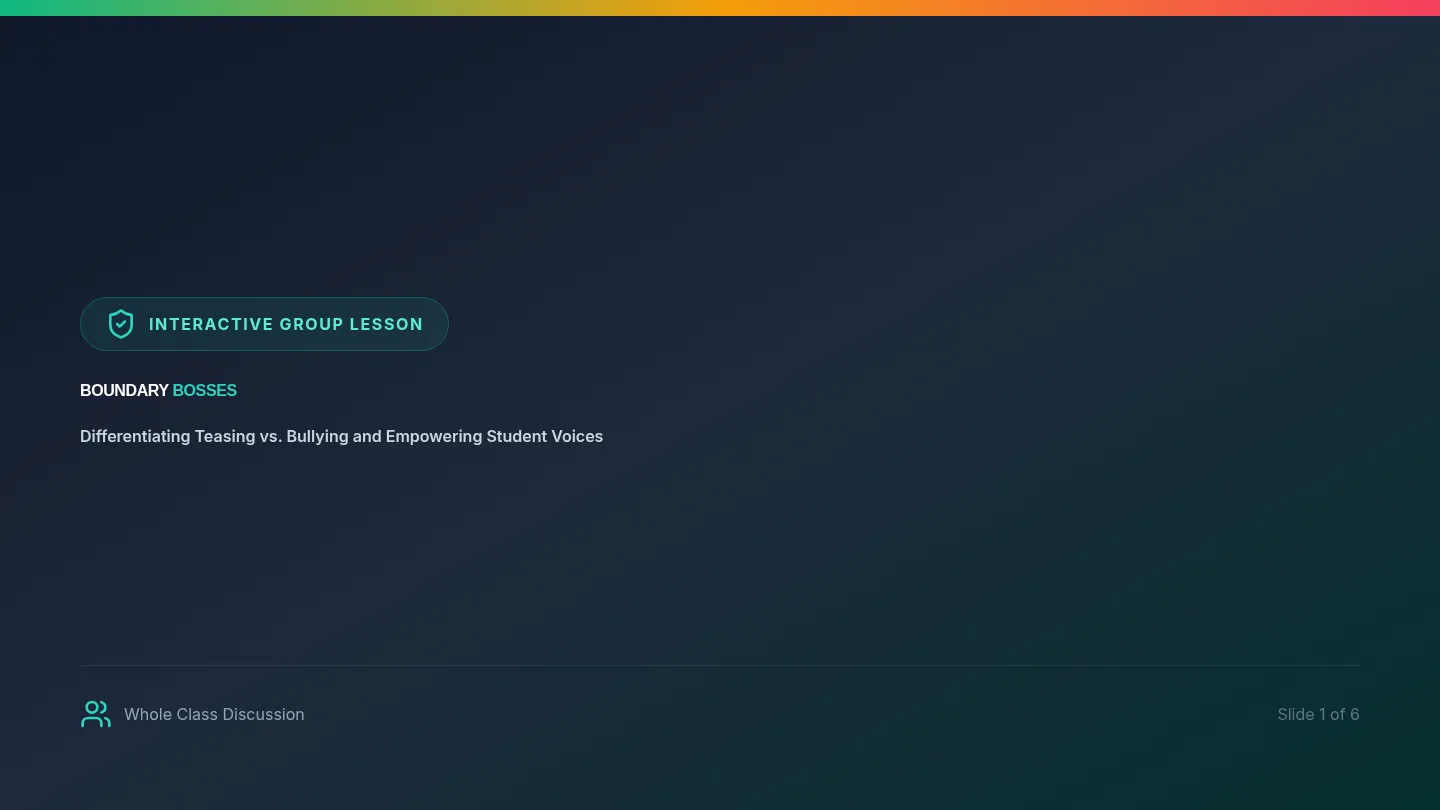
An interactive whole-class slide deck to teach definitions, walk through scenarios, and practice self-advocacy scripts as a group.
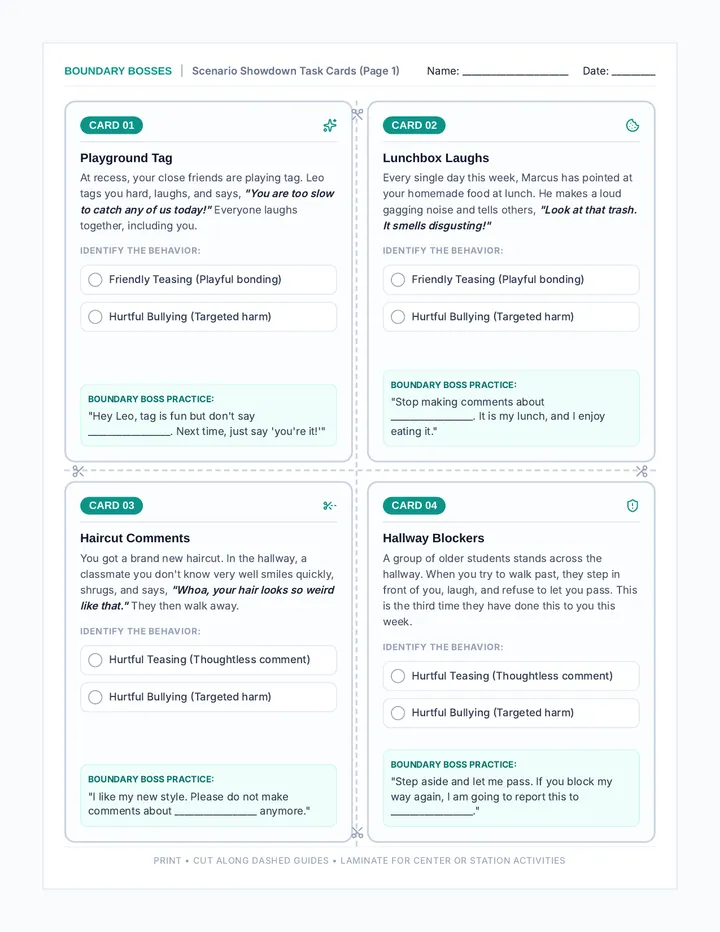
A printable set of 8 comprehensive task cards containing real-world school scenarios with two-choice paths, physical visual supports, and custom sentence starters for practicing self-advocacy.
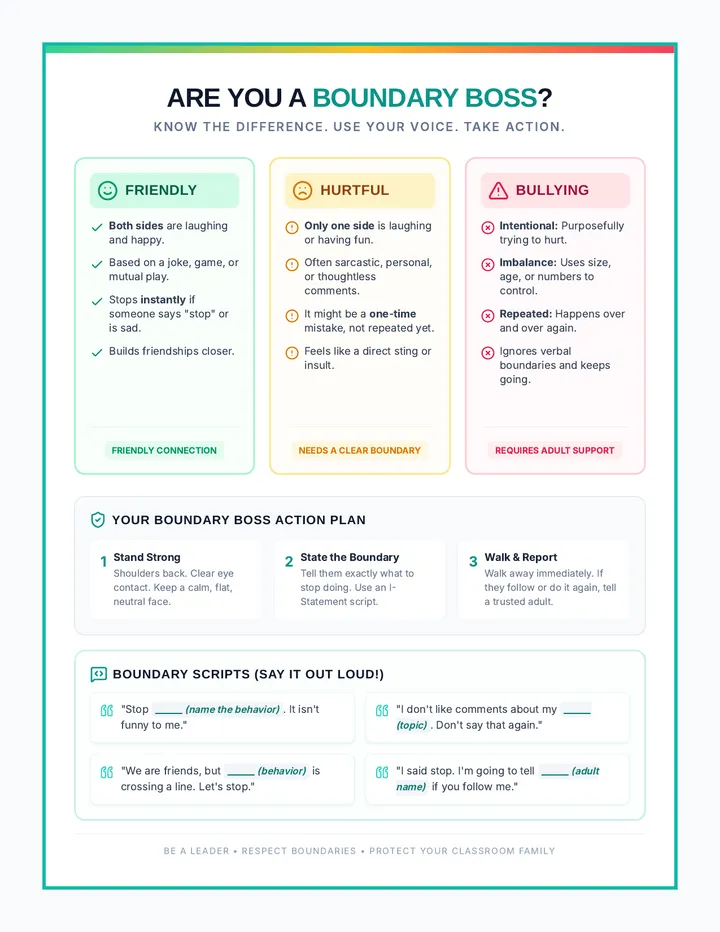
A bright visual classroom poster/anchor chart comparing friendly teasing, hurtful teasing, and bullying, with actionable steps and verbal scripts.
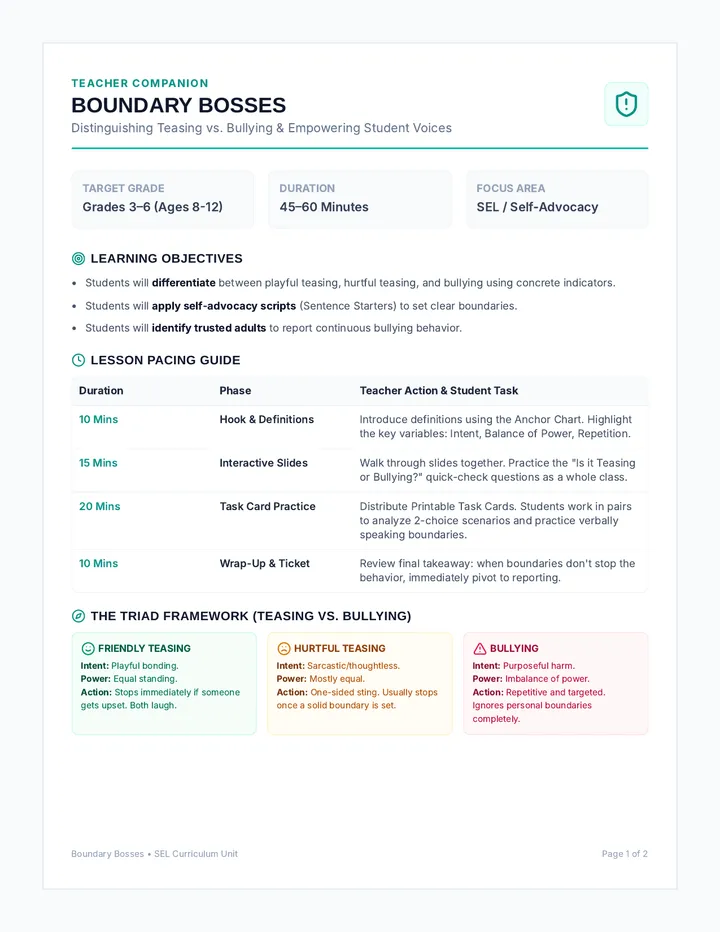
A comprehensive teacher facilitation guide containing lesson plans, pacing recommendations, common student misconceptions, discussion prompts, and an answer key for the task card scenarios.
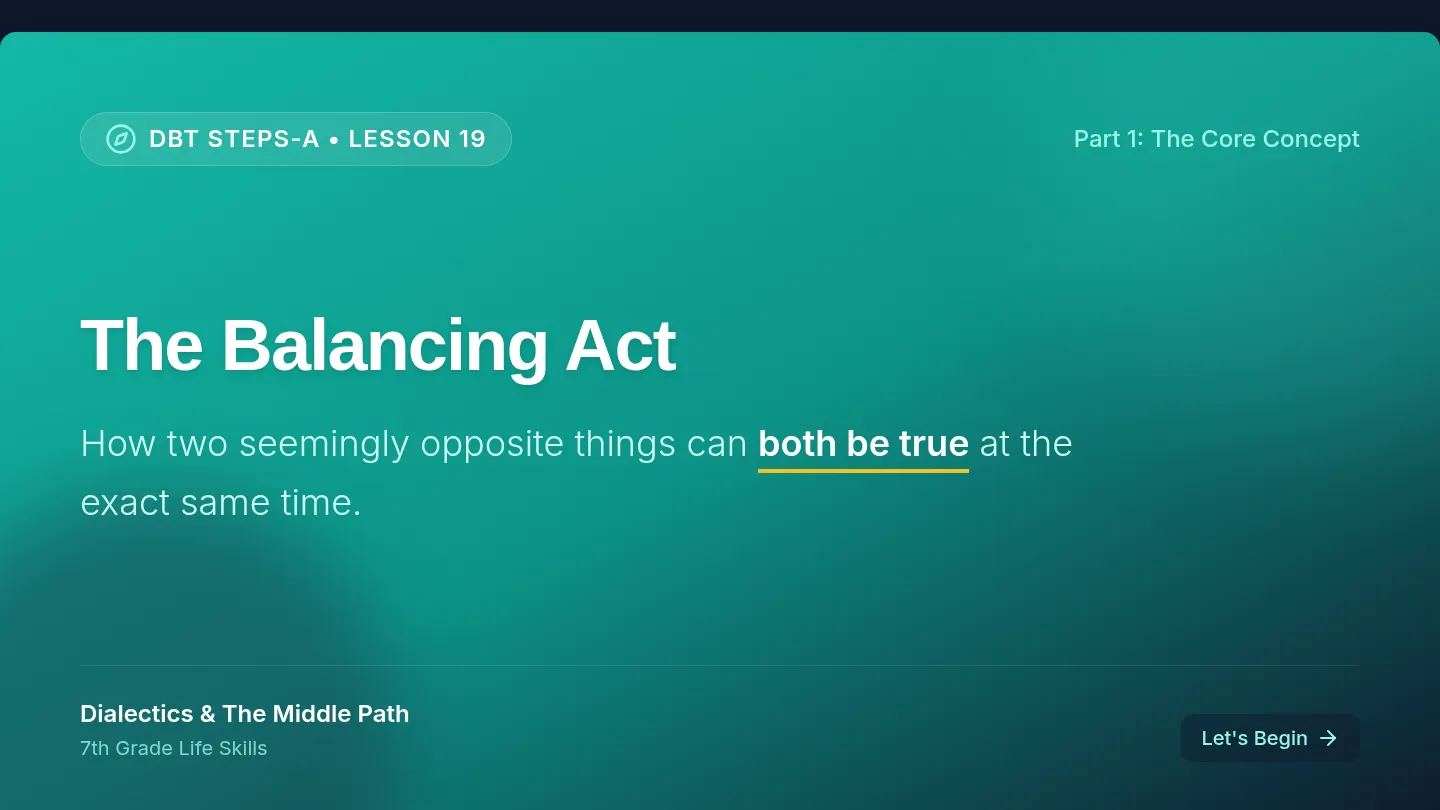
Interactive-feeling but print-ready lesson slides introducing Dialectics to 7th graders. The slides cover a relatable warm-up, the core concept of two opposite truths, a visual seesaw metaphor, real-world school and friendship scenarios, an exit ticket prompt, and a wrap-up.
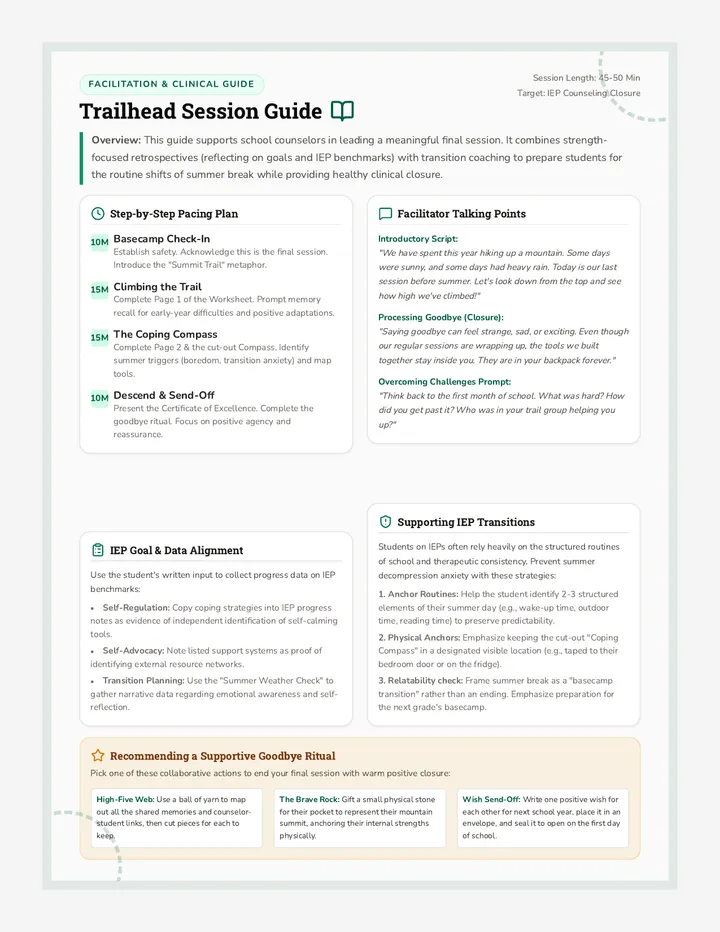
A comprehensive, structured 1-page facilitation and closure guide for school counselors. Features a step-by-step session pacing plan, clinical prompts for discussing transitions/goodbyes, and strategies to support IEP students with change.
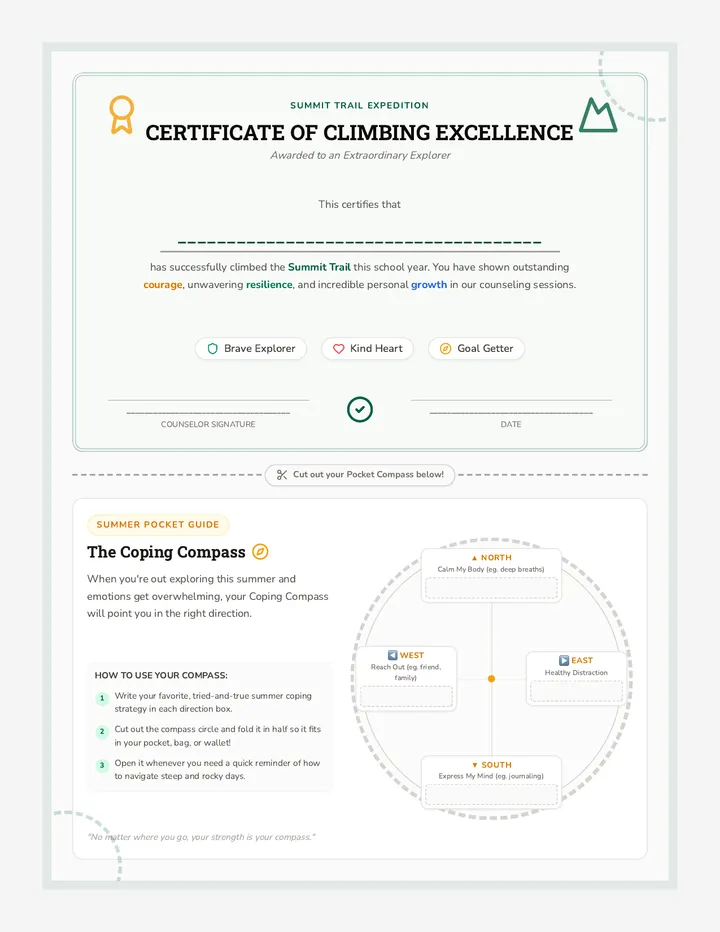
A printable 1-page takeaway resource. The top half is a rustic "Summit Certificate of Excellence" celebrating the student's growth and resilience. The bottom half is a cut-out "Pocket Coping Compass" that students can carry home to guide their summer wellness.
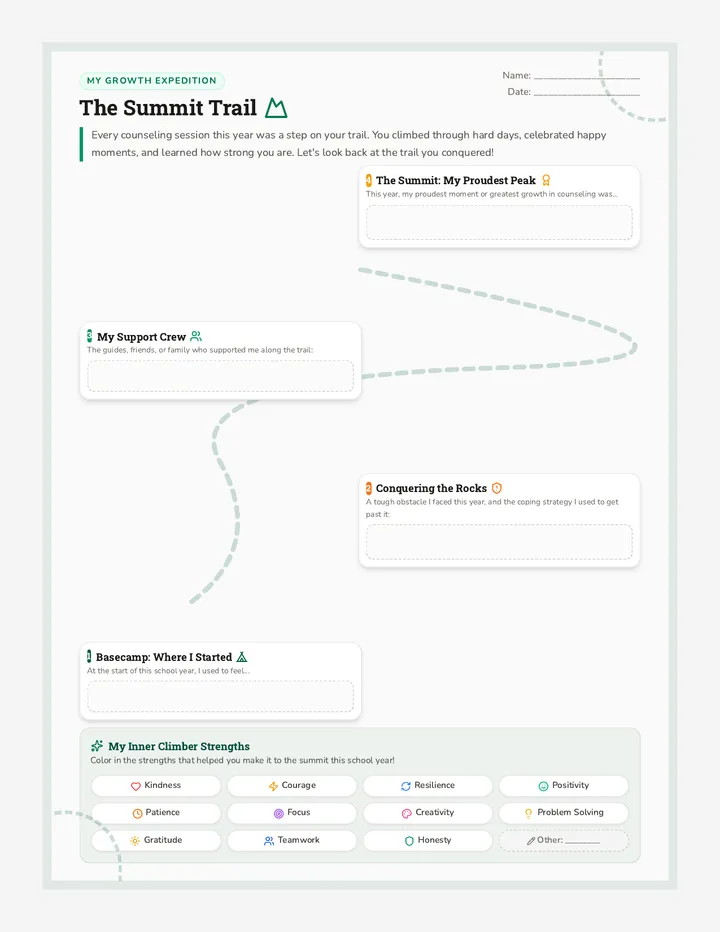
An interactive mountain-themed student workbook (2 pages). Page 1 guides students through a reflective climb of their progress, supports, and proudest moments this year. Page 2 helps students identify summer transition feelings, pack a custom list of summer coping tools, and set visual goals for next year.
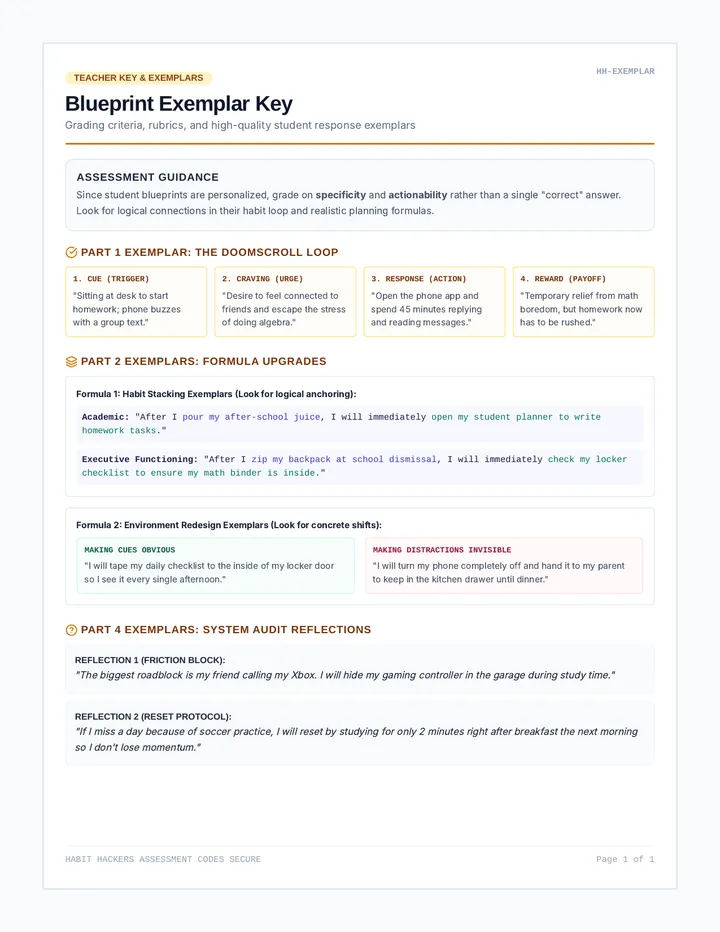
A teacher-facing exemplar key and grading guide for the student Habit Blueprint worksheet. It contains concrete examples of high-quality student responses for habit stacking, environment design, and habit loop deconstruction.
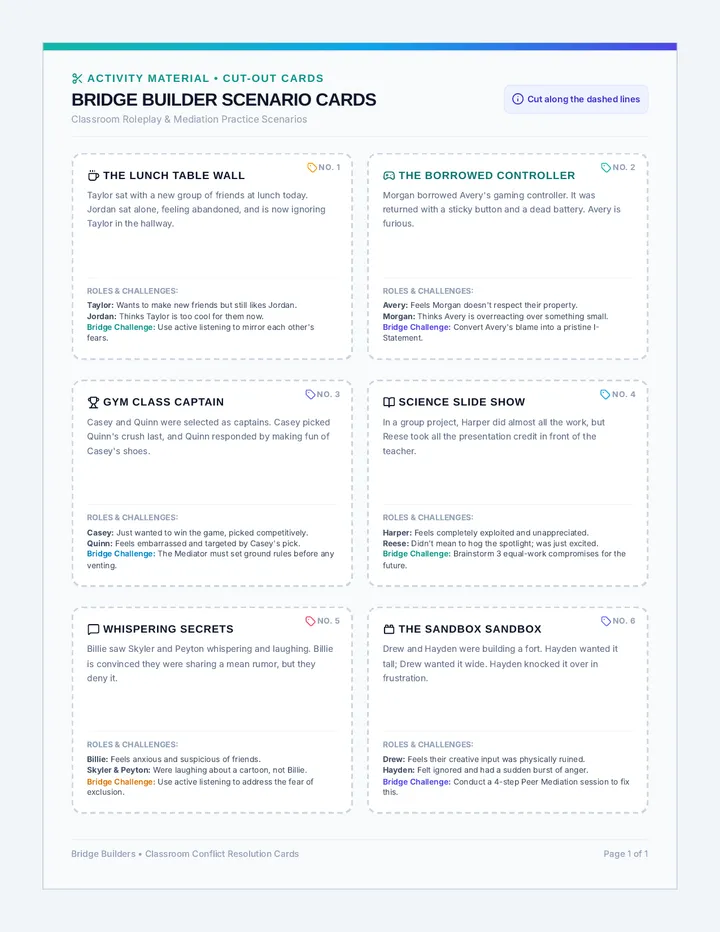
A set of 6 printable roleplay scenario cards for hands-on conflict resolution practice. Each card features a realistic friendship dispute, designated roles, and a specific skill challenge for students to solve using active listening and mediation.
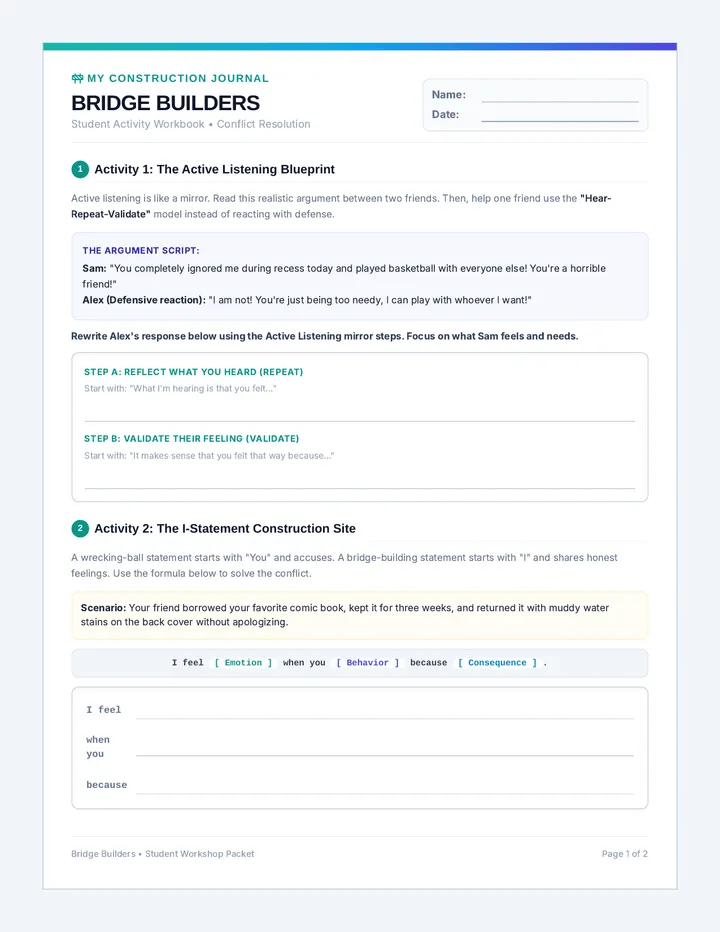
A print-ready 2-page Student Activity Packet for the Bridge Builders workshop. Features an active listening analysis, guided I-statement scaffolding, a peer mediation path map, and a formal signable Bridge Builder Pledge.
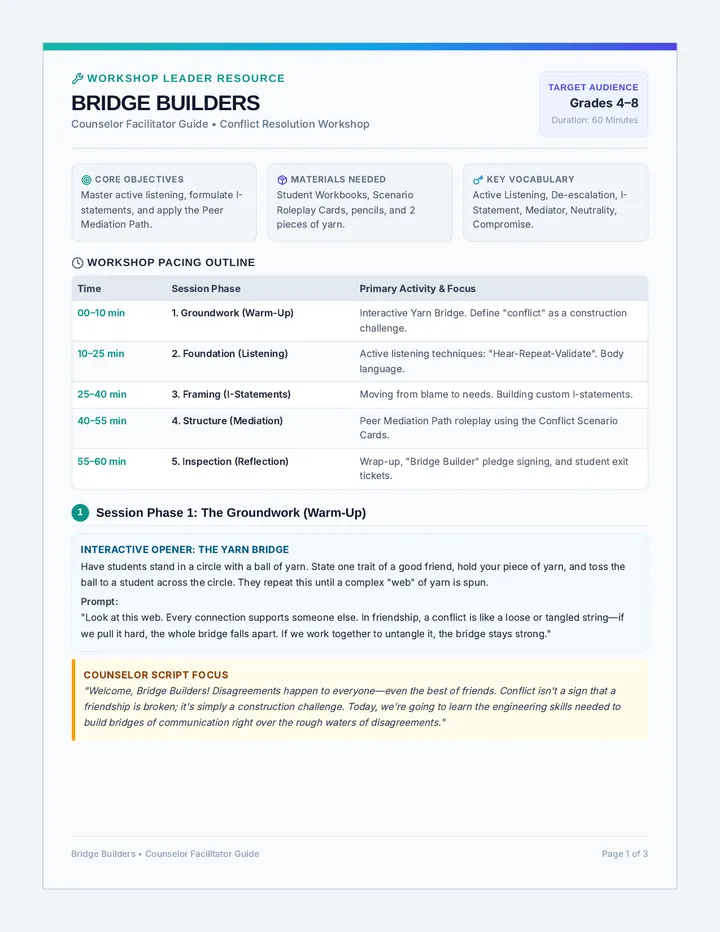
A comprehensive 3-page Counselor Facilitator Guide for the Bridge Builders conflict resolution workshop. Contains a detailed workshop schedule, scripted session instructions, active listening prompts, and a structured peer mediation framework.
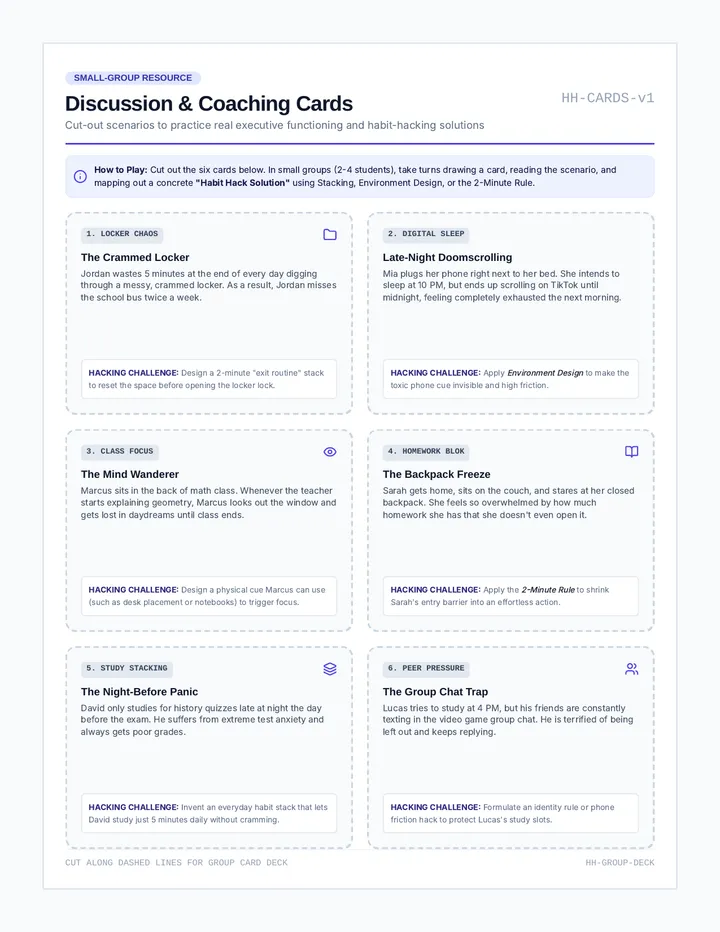
Printable small-group coaching cards featuring six real-world scenario prompts. Perfect for counseling groups, advisory classes, or peer-led executive functioning workshops.
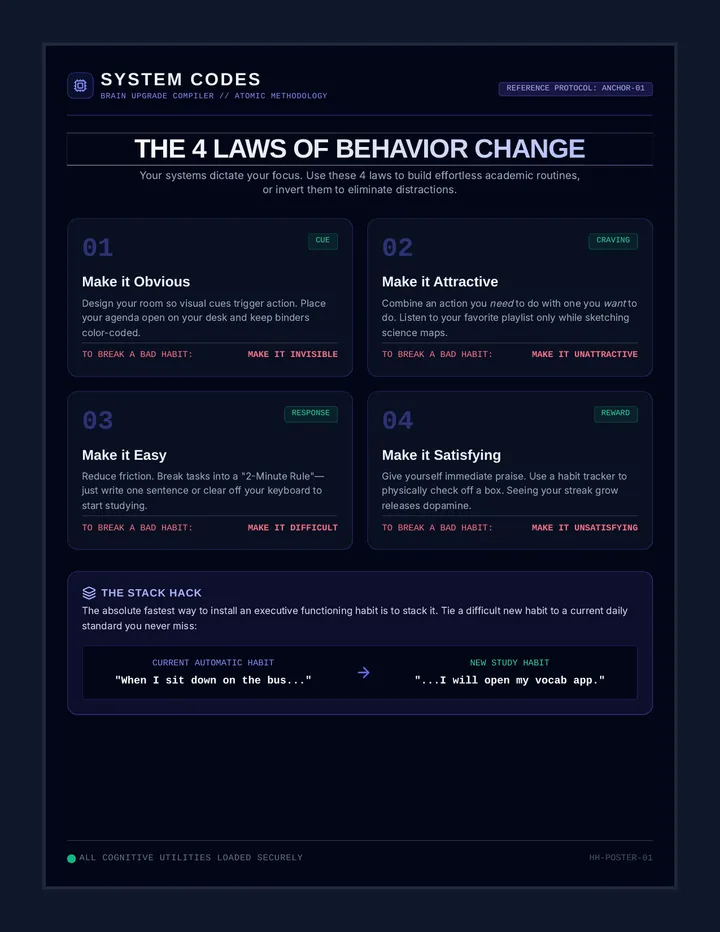
A single-page high-impact visual anchor chart / reference sheet outlining James Clear's 4 Laws of Behavior Change adapted for middle schoolers to build positive study systems and break counterproductive habits.
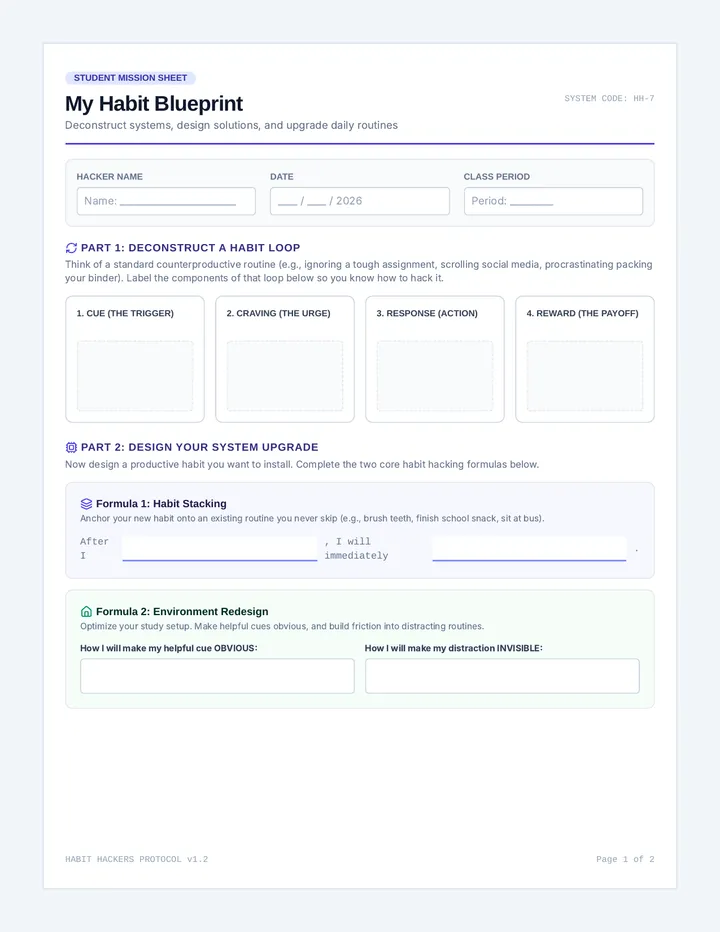
Interactive student-facing worksheet featuring a 7-day habit tracking grid, a Habit Stack builder, and a physical/digital environment design mapping tool to optimize studying and planning routines.
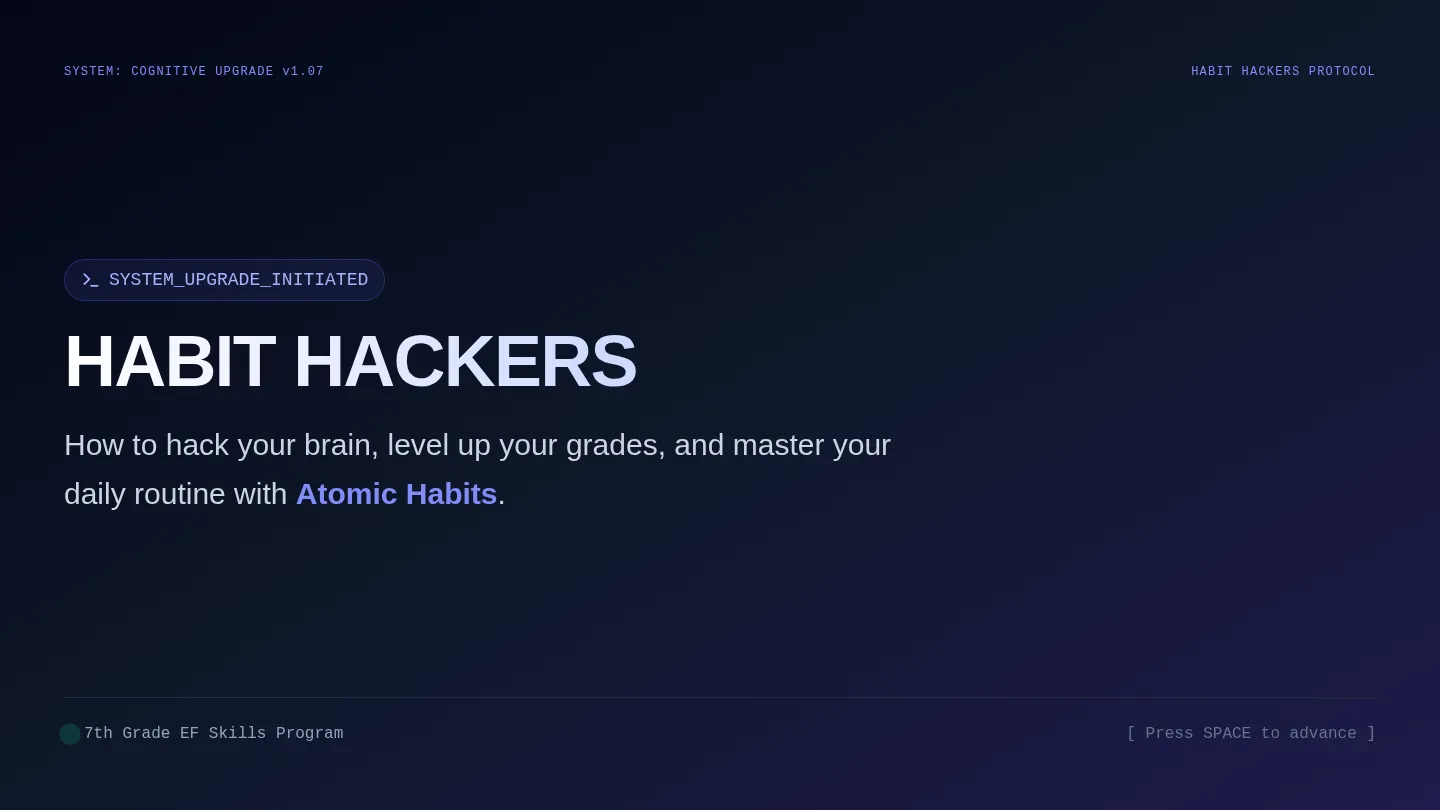
A 6-slide visual presentation to introduce the concepts of 1% improvement, the 4 components of the Habit Loop, and specific executive functioning tricks like environment redesign and habit stacking.
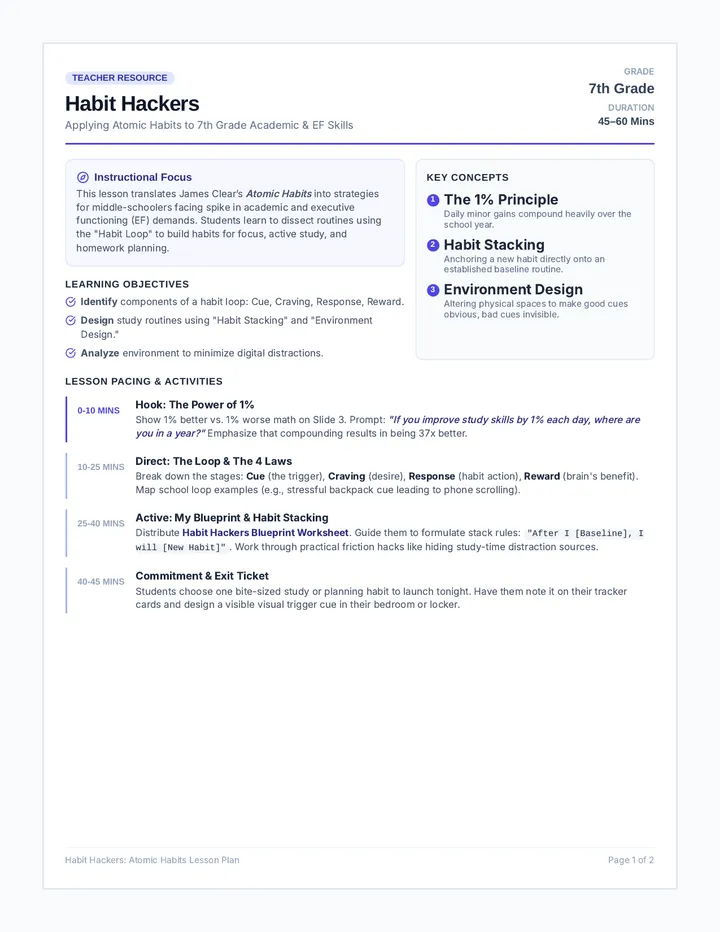
A comprehensive 2-page teacher-facing lesson plan and facilitation guide. It includes step-by-step pacing, instructional scripts, implementation tips, and small-group counseling discussion outlines based on the habit loop.