A quick reflection for the end of Session 1 to check for understanding and initial growth mindset shifts.
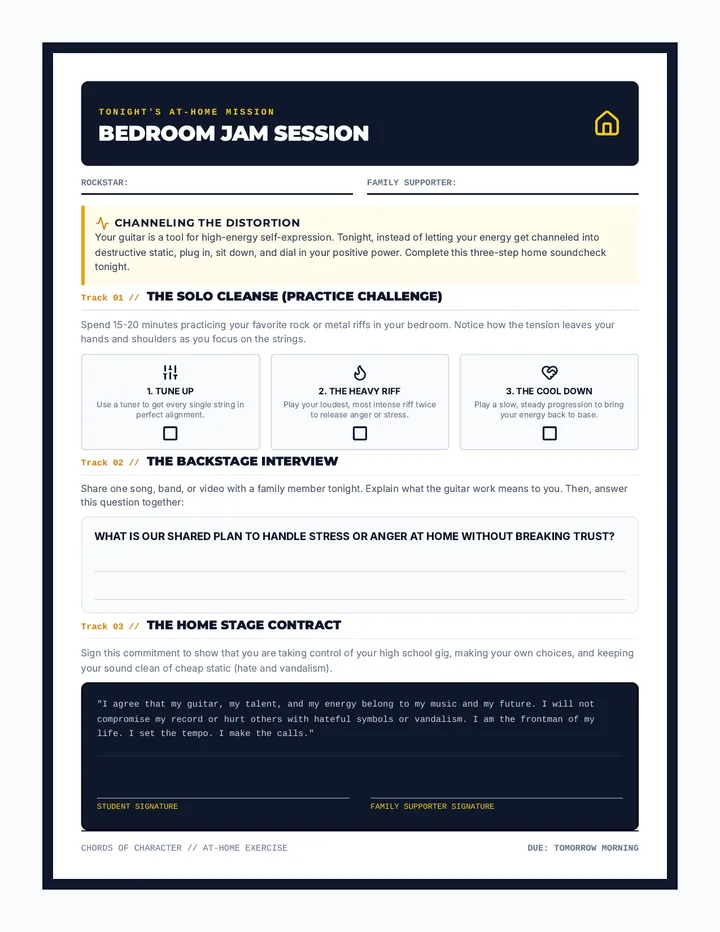
A 1-page at-home guitar practice and family reflection sheet for tonight. Features a physical playing checklist as a positive outlet, a prompt to share a favorite song, and a collaborative student-family commitment pact.
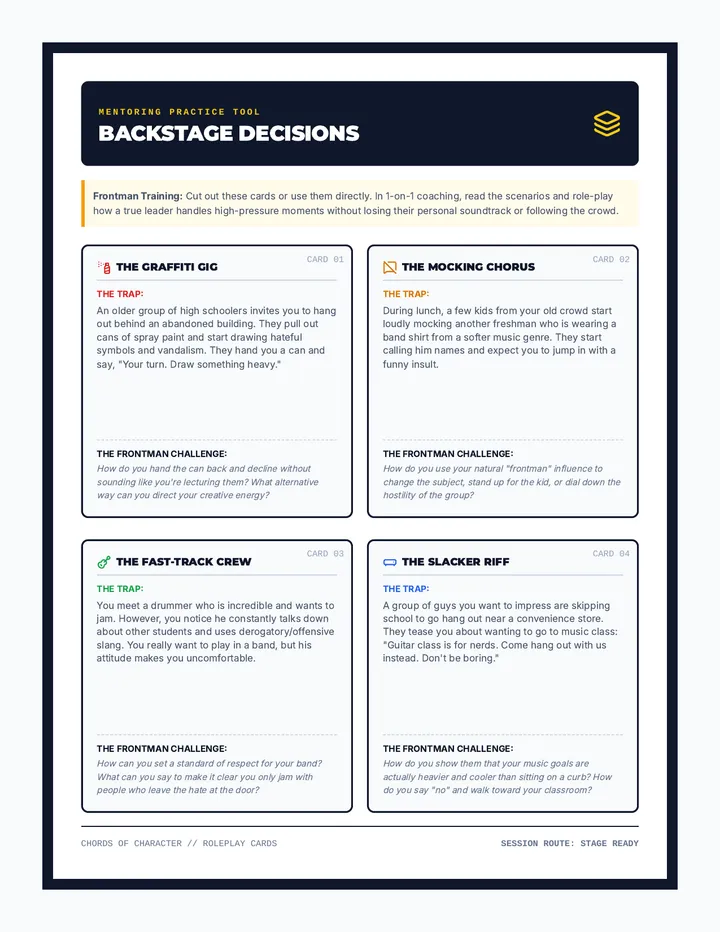
A 1-page printable activity featuring 4 role-play cards. Provides realistic social scenarios for standing up to peer pressure, resisting vandalism/hate speech, and practicing frontman leadership when transitioning to high school.
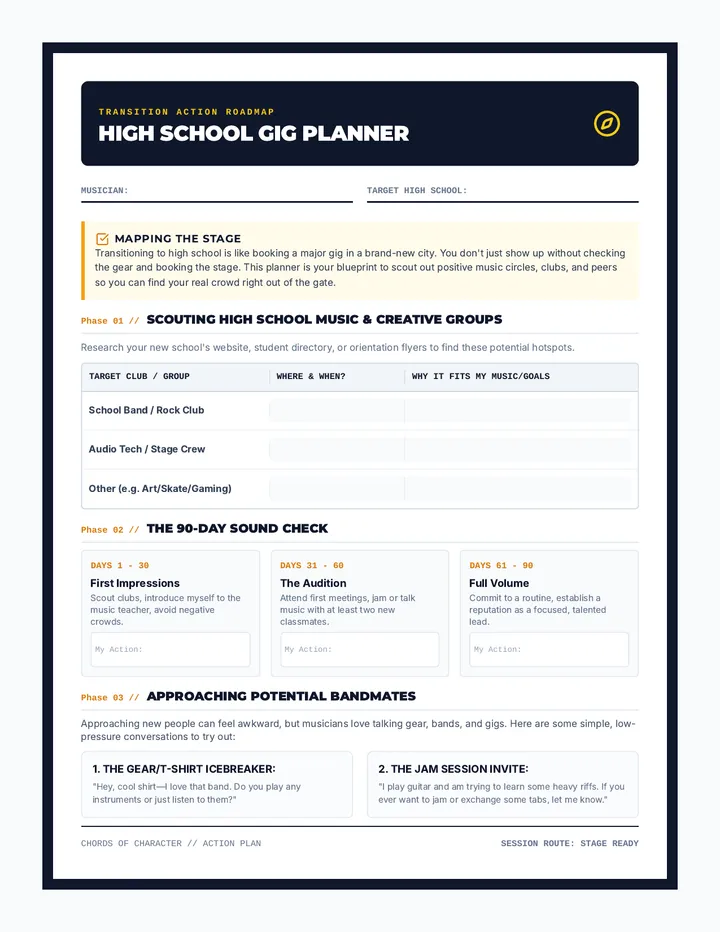
A 1-page Independent Action Plan and transition roadmap for the student. Helps him research high school music clubs, track prospective bandmates, set goals for his first 90 days, and establish a constructive routine.
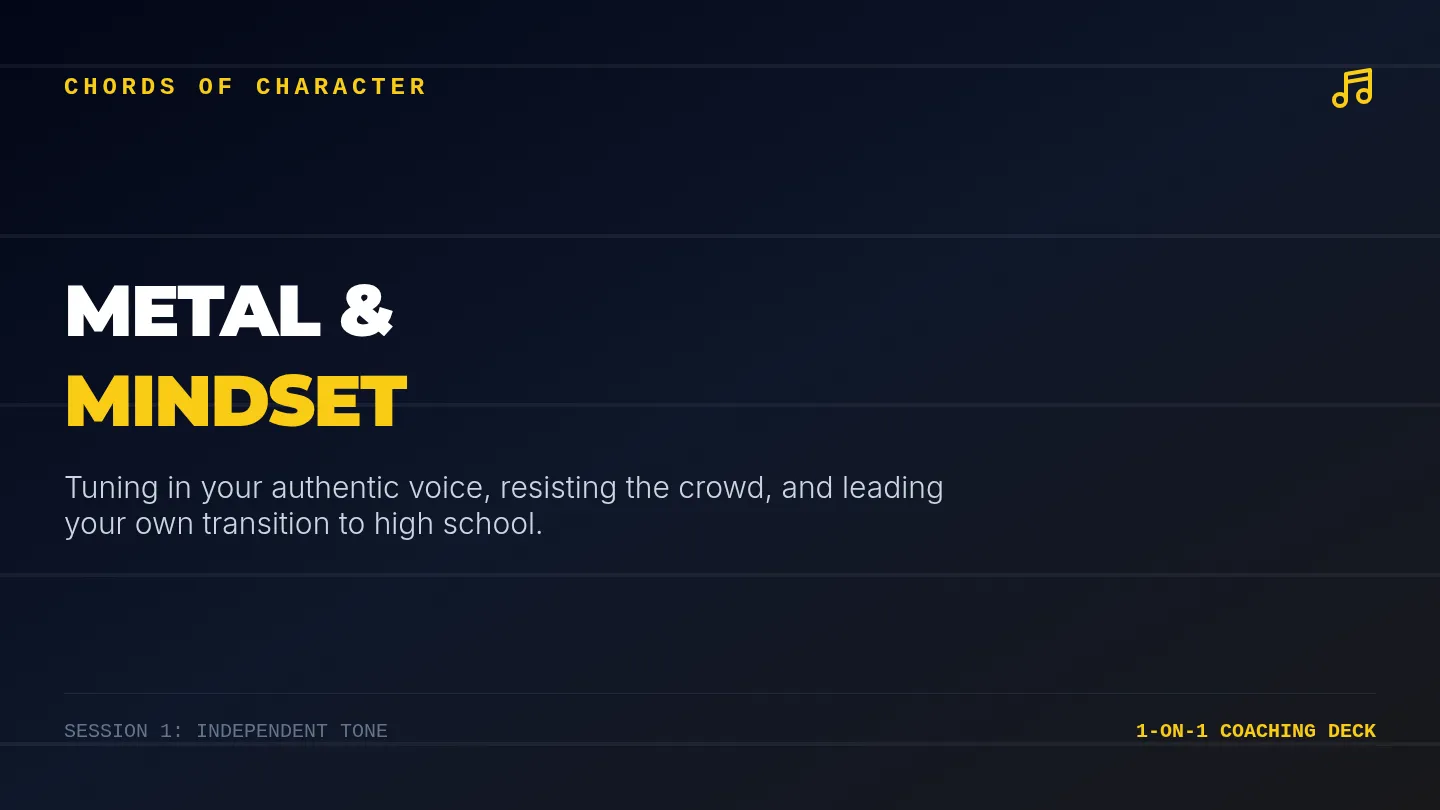
A 5-slide interactive presentation designed for 1-on-1 coaching. Uses a heavy metal/rock theme to explore the true history of the subculture, address peer pressure (feedback vs. rift), stand up against hate, and map out a positive transition to high school.
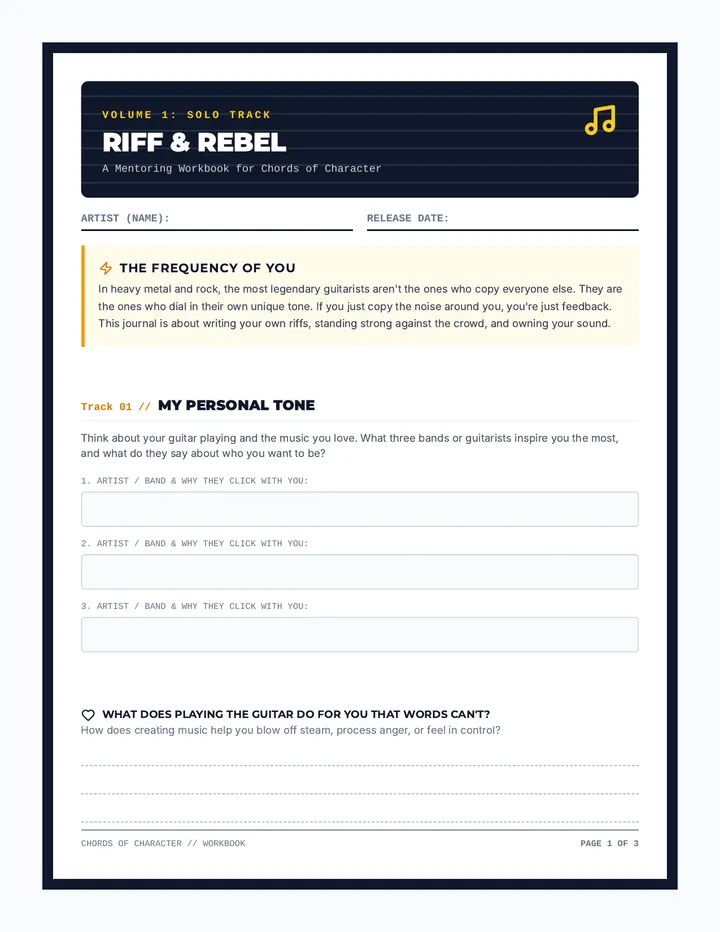
A 3-page Guided Reflection Journal for 1-on-1 mentoring. Connects the student's passion for heavy metal and guitar with themes of identity, true rebellion (standing against hate and groupthink), and creating a positive personal soundtrack.
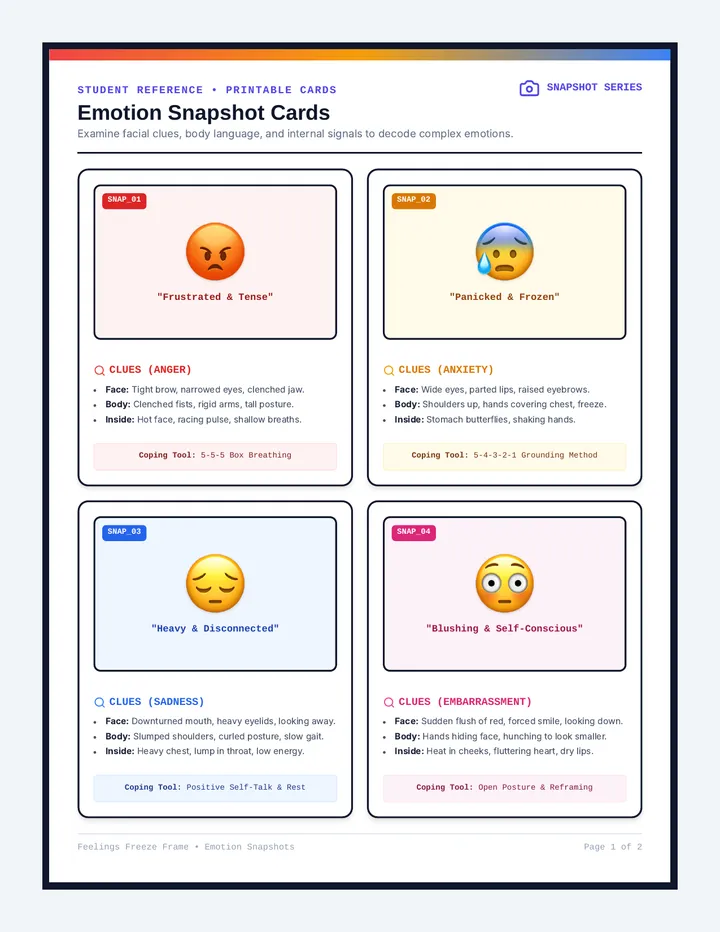
A 2-page student reference tool. Page 1 contains 4 styled 'Polaroid' snapshot cards describing facial/body clues and internal somatic signals. Page 2 provides 2 more snapshots and a quick self-guided matching activity.
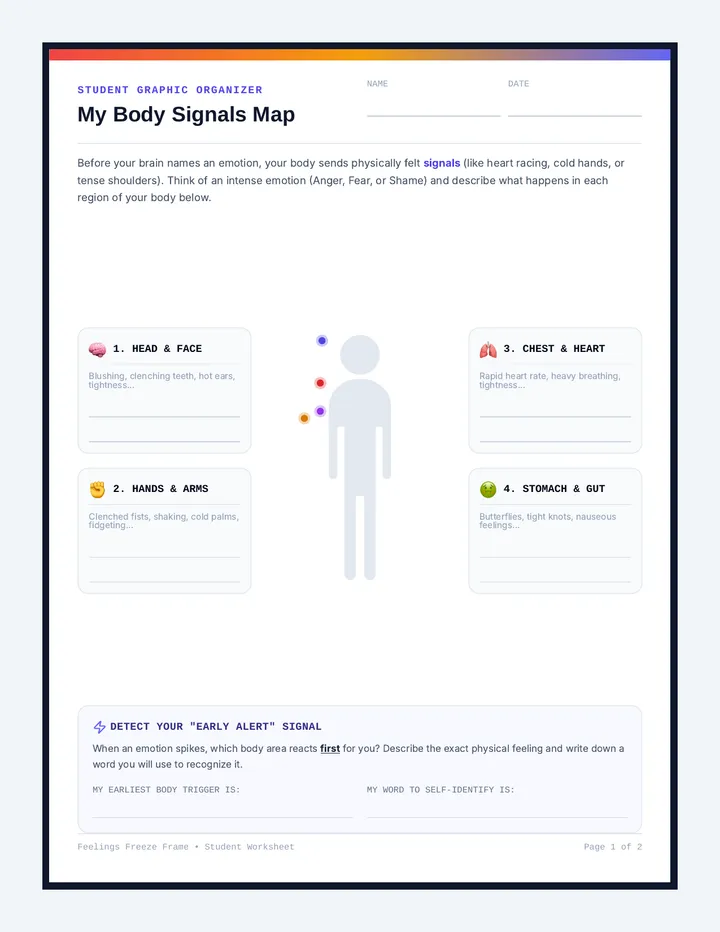
A 2-page student worksheet. Page 1 features a physical 'Body Signals Map' graphic organizer to label physical feelings. Page 2 provides scenario coping match-ups and self-regulation reflections.
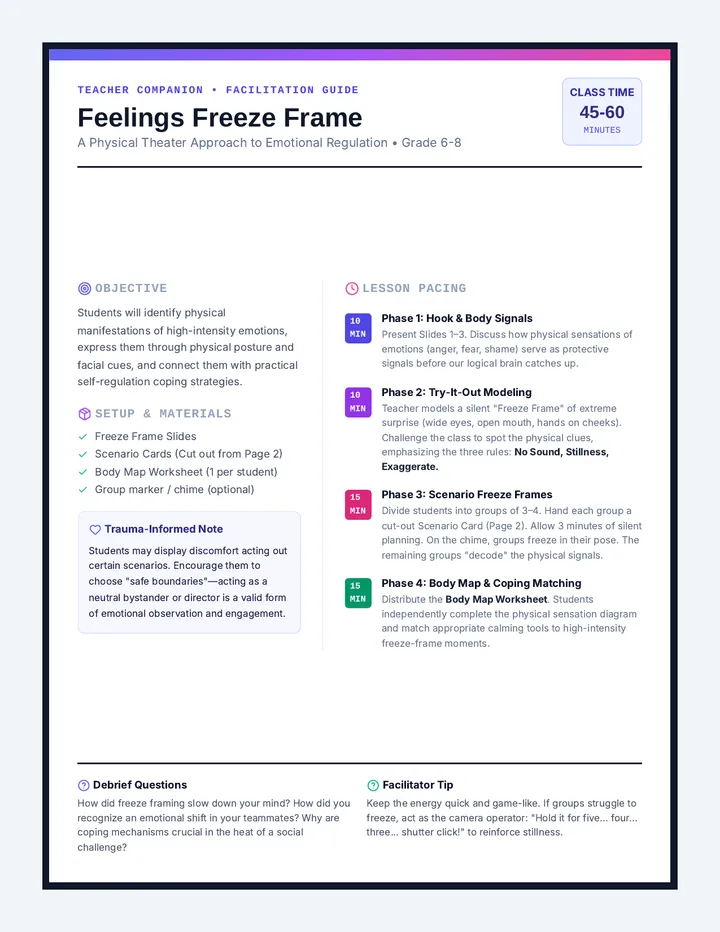
A 2-page print-and-cut facilitator's guide. Page 1 contains step-by-step pacing, pedagogy, and tips. Page 2 provides 6 pre-formatted scenario cards to cut out and distribute to student groups.
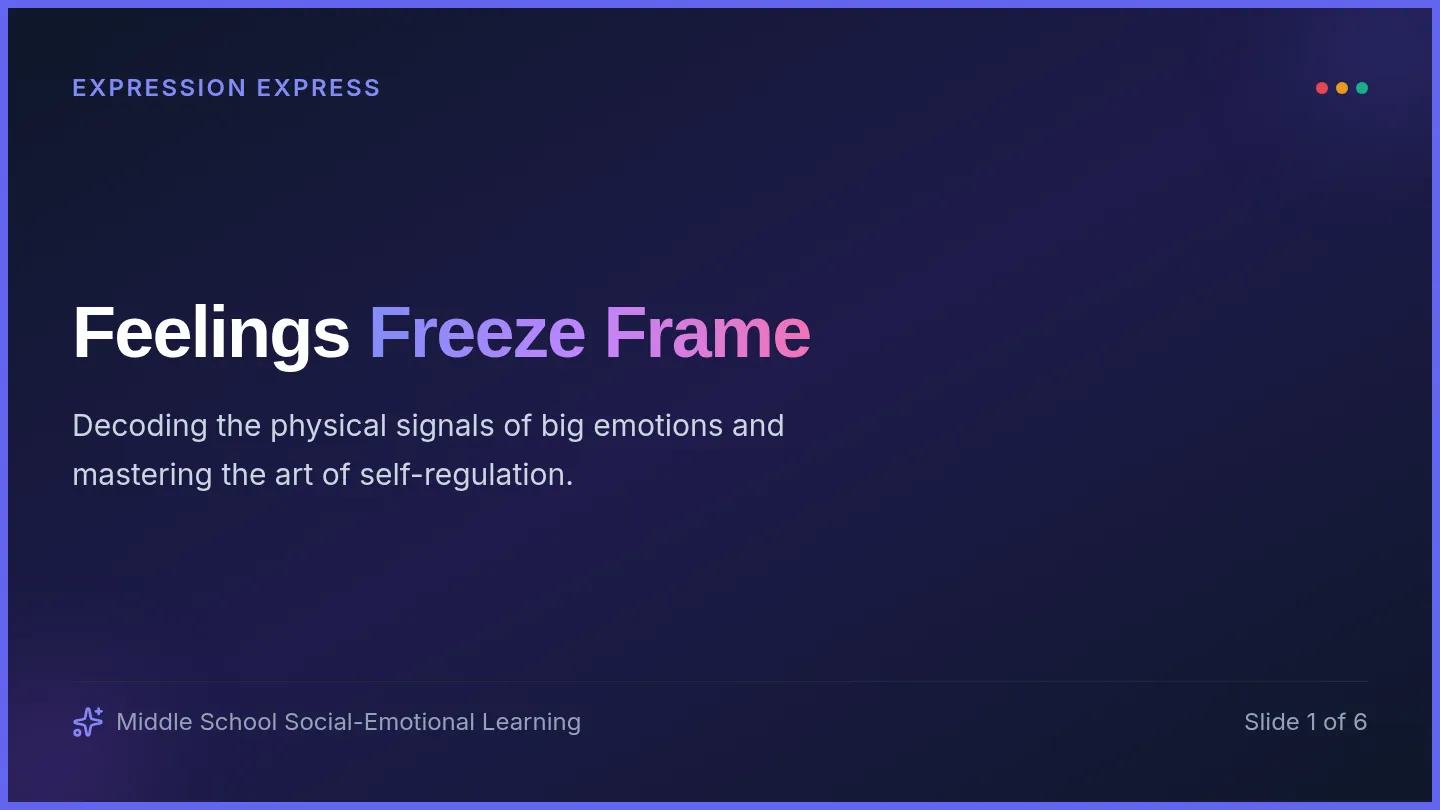
Interactive, highly visual classroom slide deck to introduce emotional expressions, body signals, and freeze-frame activities. Includes real-world scenarios and coping strategy matching.
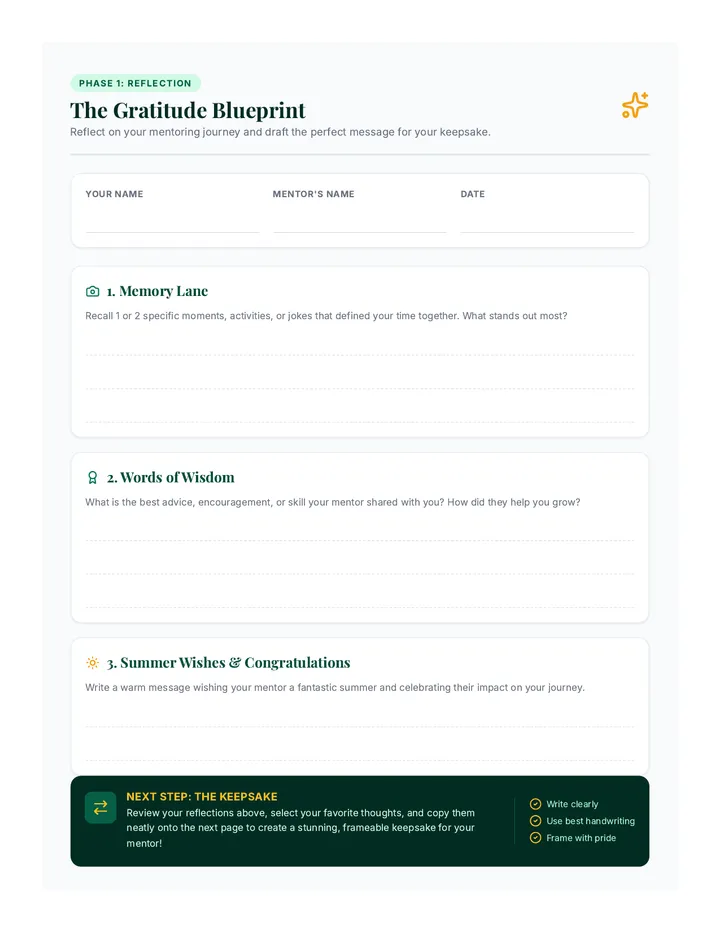
A printable 2-page resource. Page 1 is a structured reflection worksheet for mentees to brainstorm key memories and draft messages. Page 2 is a beautiful, certificate-style keepsake with a classic border and writing lines designed to be framed as a mentor gift.
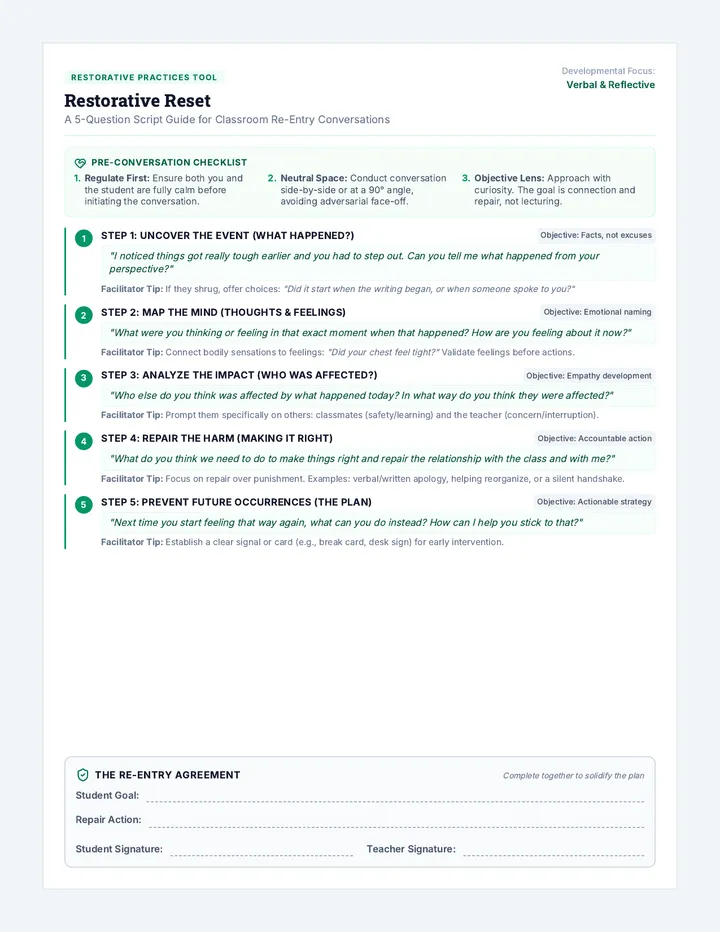
A single-page, high-utility facilitator script guide based on the 5 Restorative Questions, designed to help teachers guide students through repair and classroom re-entry.
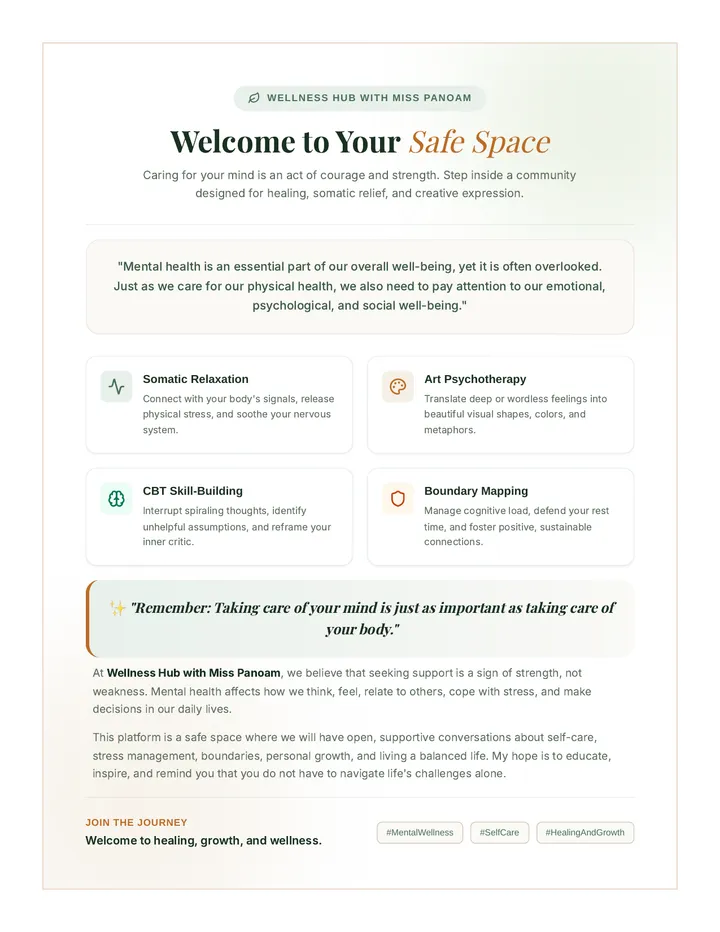
A beautifully formatted, welcoming announcement page/flyer for Miss Panoam's Wellness Hub. It features botanical motifs, key therapeutic pillars (somatic relaxation, CBT, art therapy), and an inspiring mental wellness message.
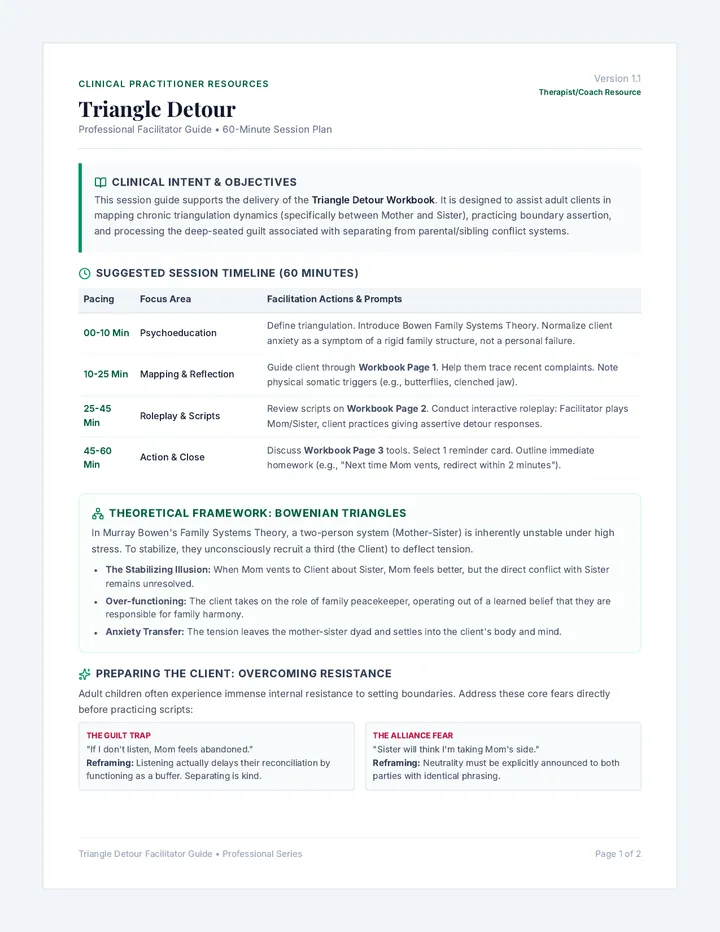
A 2-page professional facilitator guide for therapists, counselors, or coaches leading clients through the Triangle Detour workbook. Contains session structure, clinical context based on Family Systems Theory, roleplay facilitation tips, and strategies for managing family resistance.
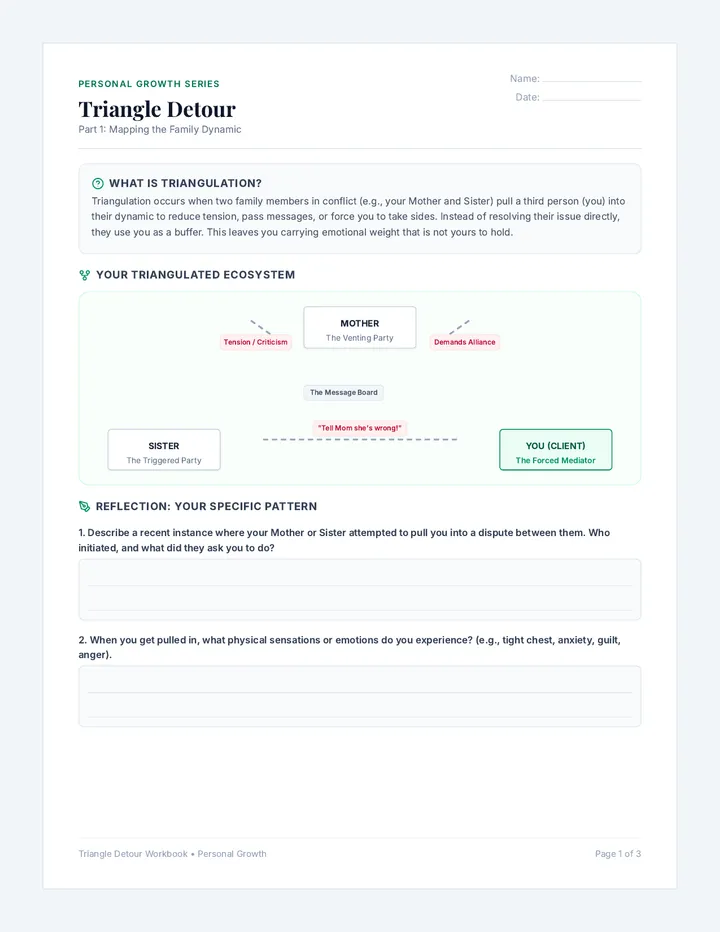
A 3-page interactive client workbook for adult children caught in family triangulation dynamics between their mother and sister. Includes a relationship mapping exercise, boundary scripts, real-world scenario analysis, a boundary log, and cut-out pocket-sized boundary reminders.
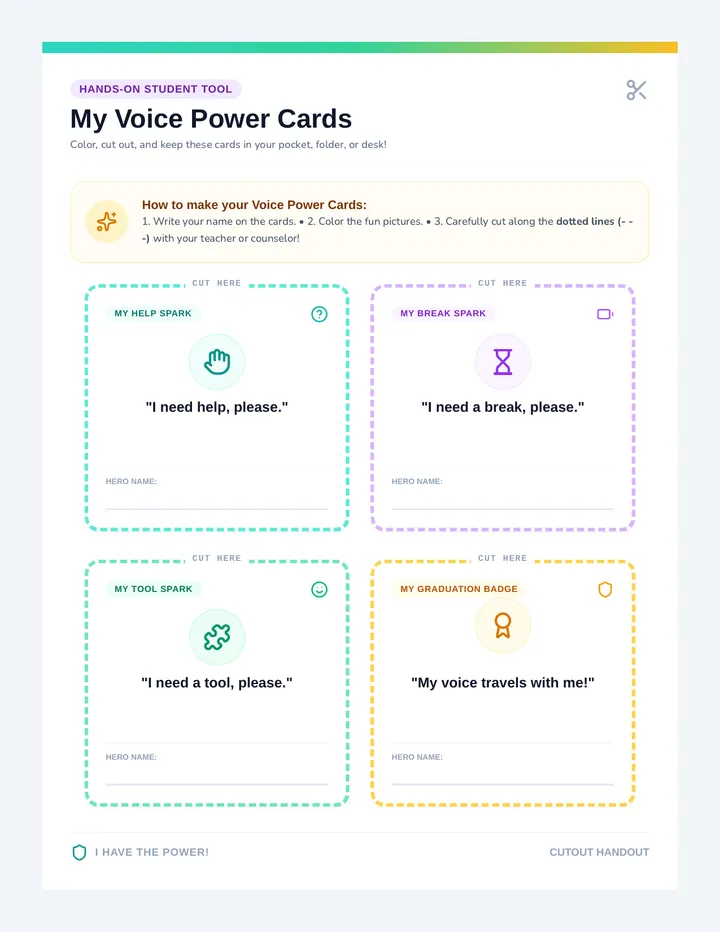
A student handout containing four printable, cut-out "Voice Power Pocket Cards." Students color, write their names, and cut out these visual reminder cards to carry in their pockets or tape to their desks to support self-advocacy in the general education classroom.
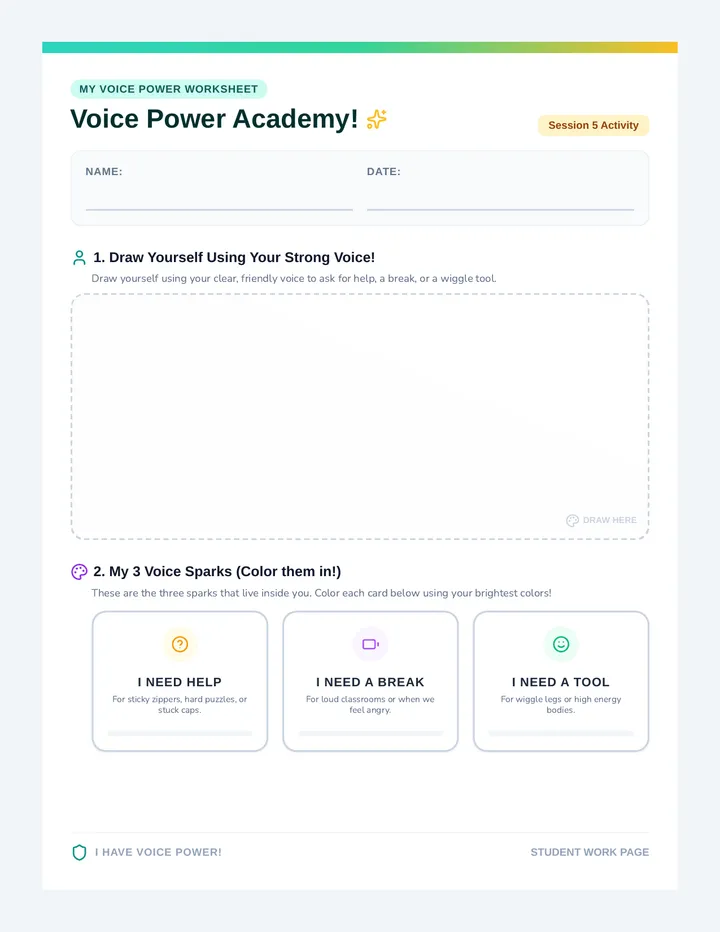
A student-facing printable practice worksheet for kindergarteners. Features name and date fields, a white creative drawing space to illustrate using their "Strong Voice", and a match-by-coloring activity for help, breaks, and sensory tools.
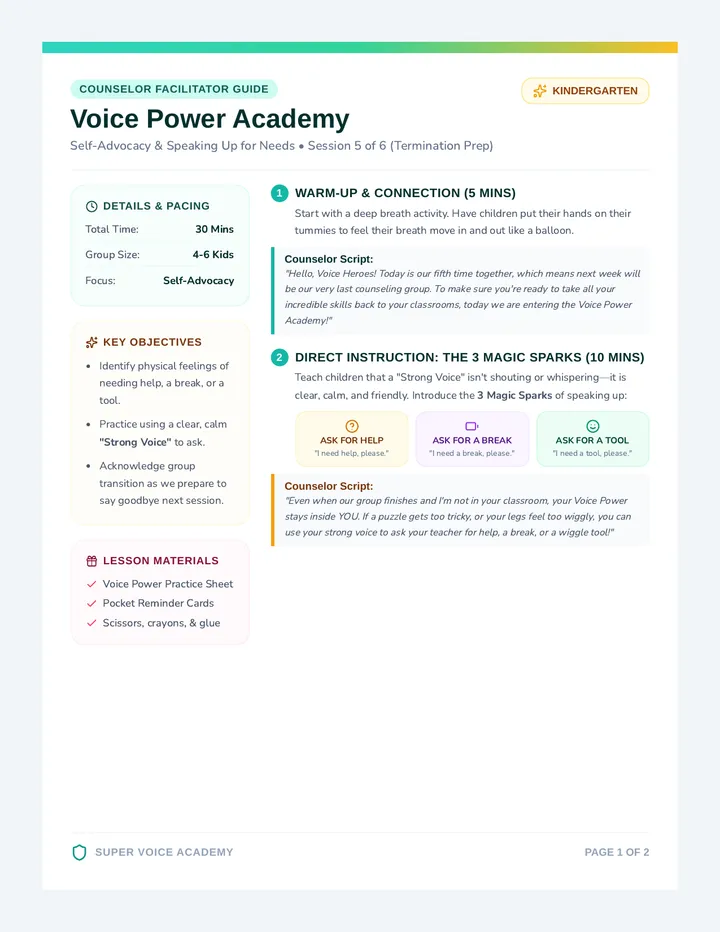
A comprehensive teacher lesson plan and facilitator script for a kindergarten counseling session on self-advocacy. Features step-by-step guidance on teaching students to ask for help, breaks, or sensory tools, with specific phrasing for preparing for the group's transition/termination.
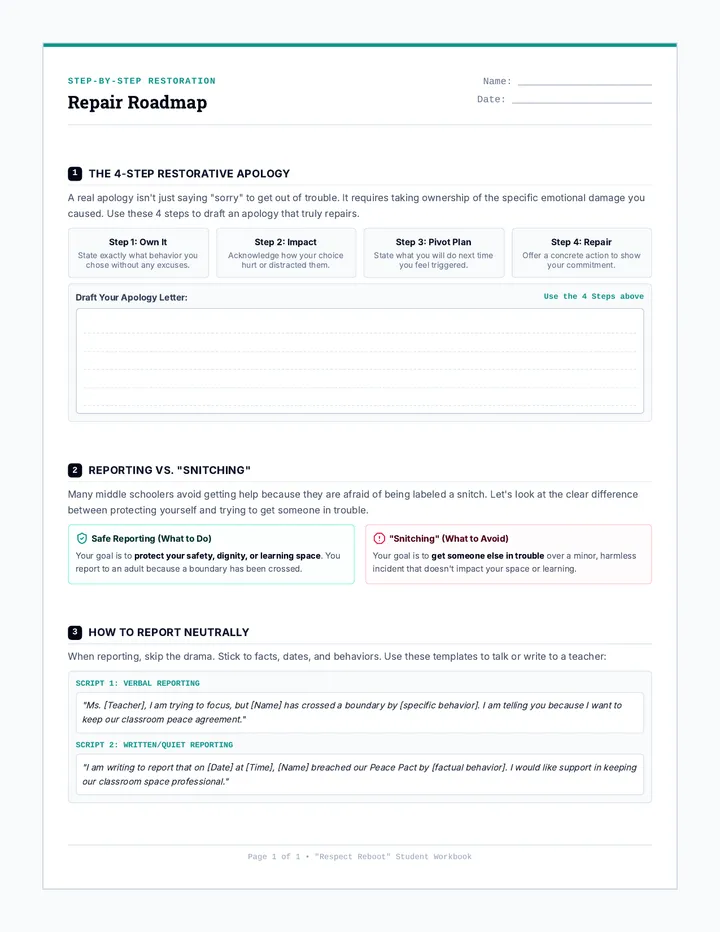
A student guide and writing prompt detailing the four steps of a restorative apology and providing practical reporting templates for middle schoolers.