An answer key and teacher facilitation guide for the "Search Mastery Challenge" worksheet, providing sample search queries and expected findings.
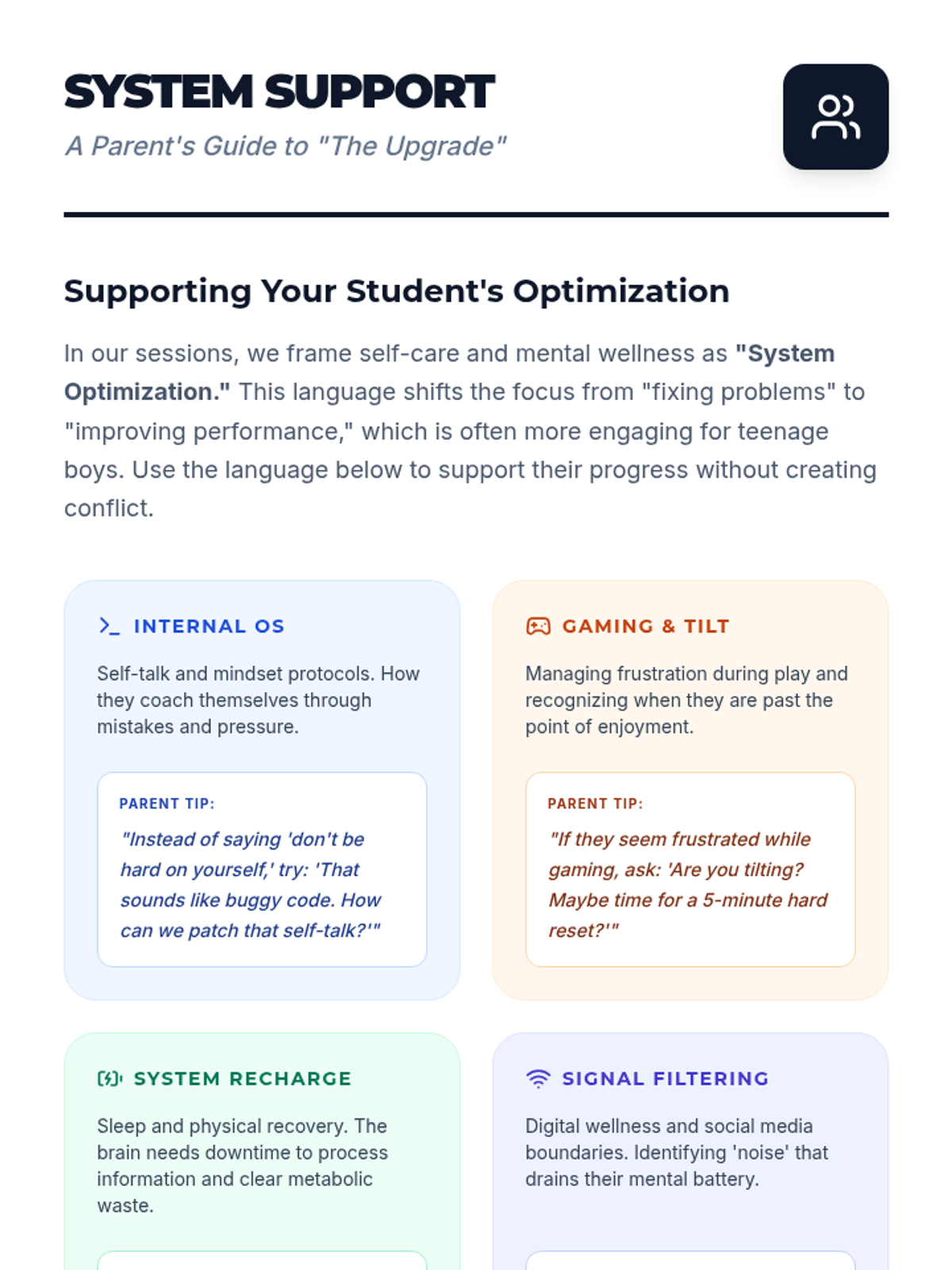
A parent-facing handout that explains the 'System Optimization' metaphor used in the lesson. It provides practical tips for parents to support their son's self-care using the same tech-inspired language to reduce conflict and increase engagement.
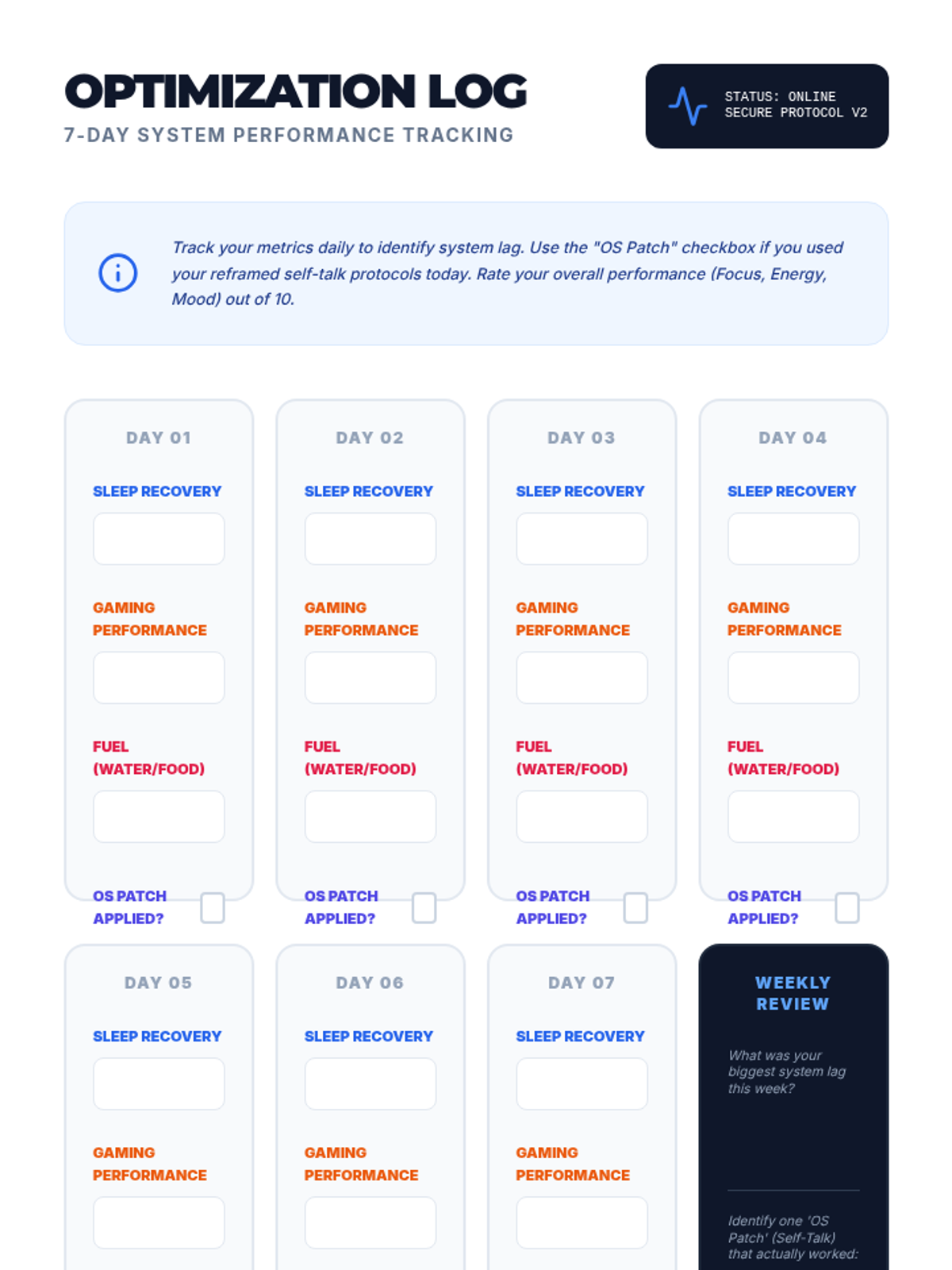
A high-tech student tracking sheet for monitoring sleep, gaming time, nutrition, and self-talk updates over a 7-day period. Designed to look like a system performance dashboard. It features large handwriting areas and clear, readable text.
A sleek, tech-inspired student workbook that guides teenage boys through reframing their self-talk as an 'Internal OS' and auditing their digital wellness and sleep habits. Features specialized work areas for system optimization protocols and now includes a video game performance audit and tilt management page.
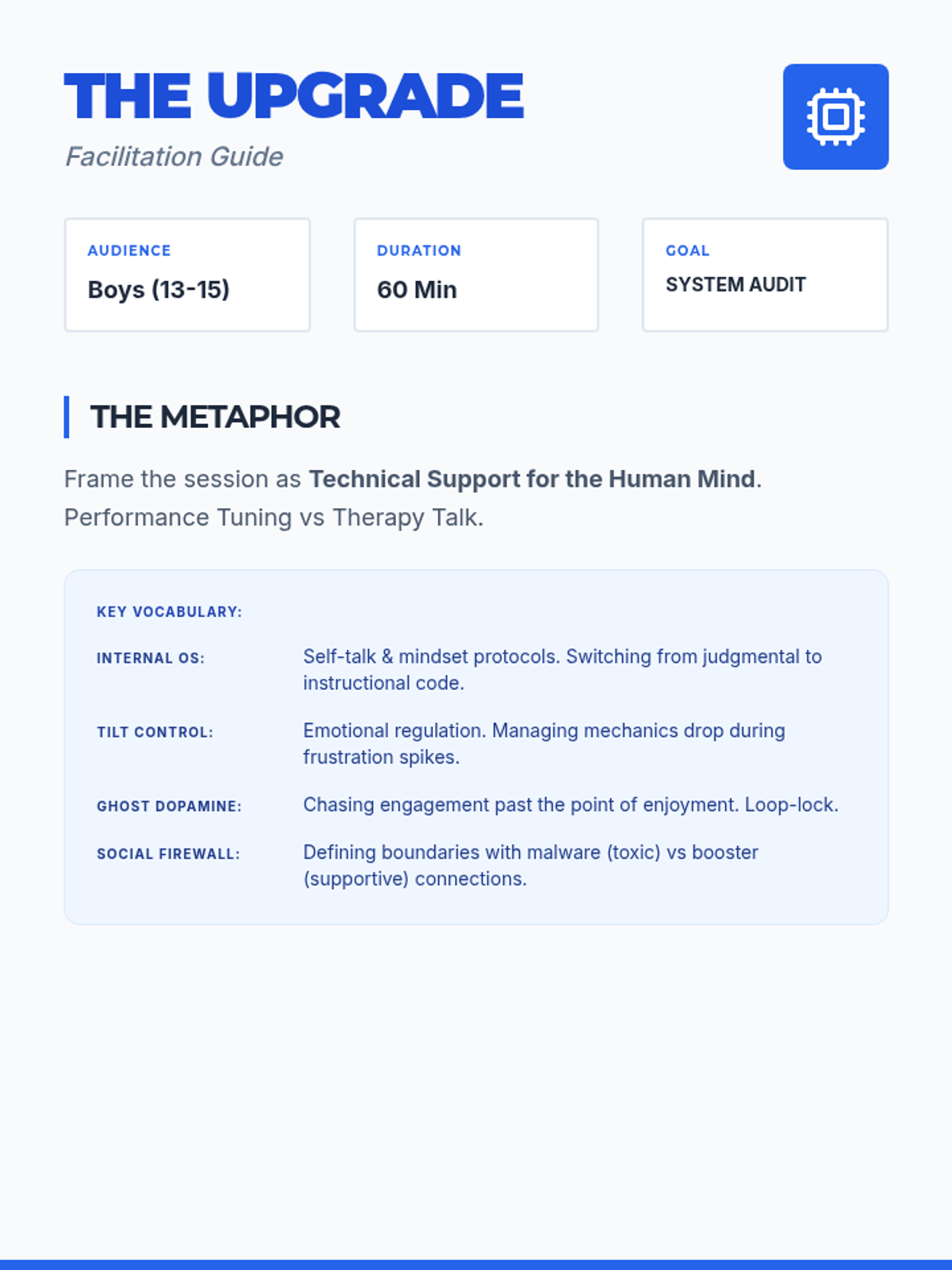
A professional facilitation guide for counselors that frames self-care and positive self-talk through a 'system optimization' metaphor designed to engage 14-year-old boys. It includes discussion prompts, key vocabulary, and psychological reframing strategies.
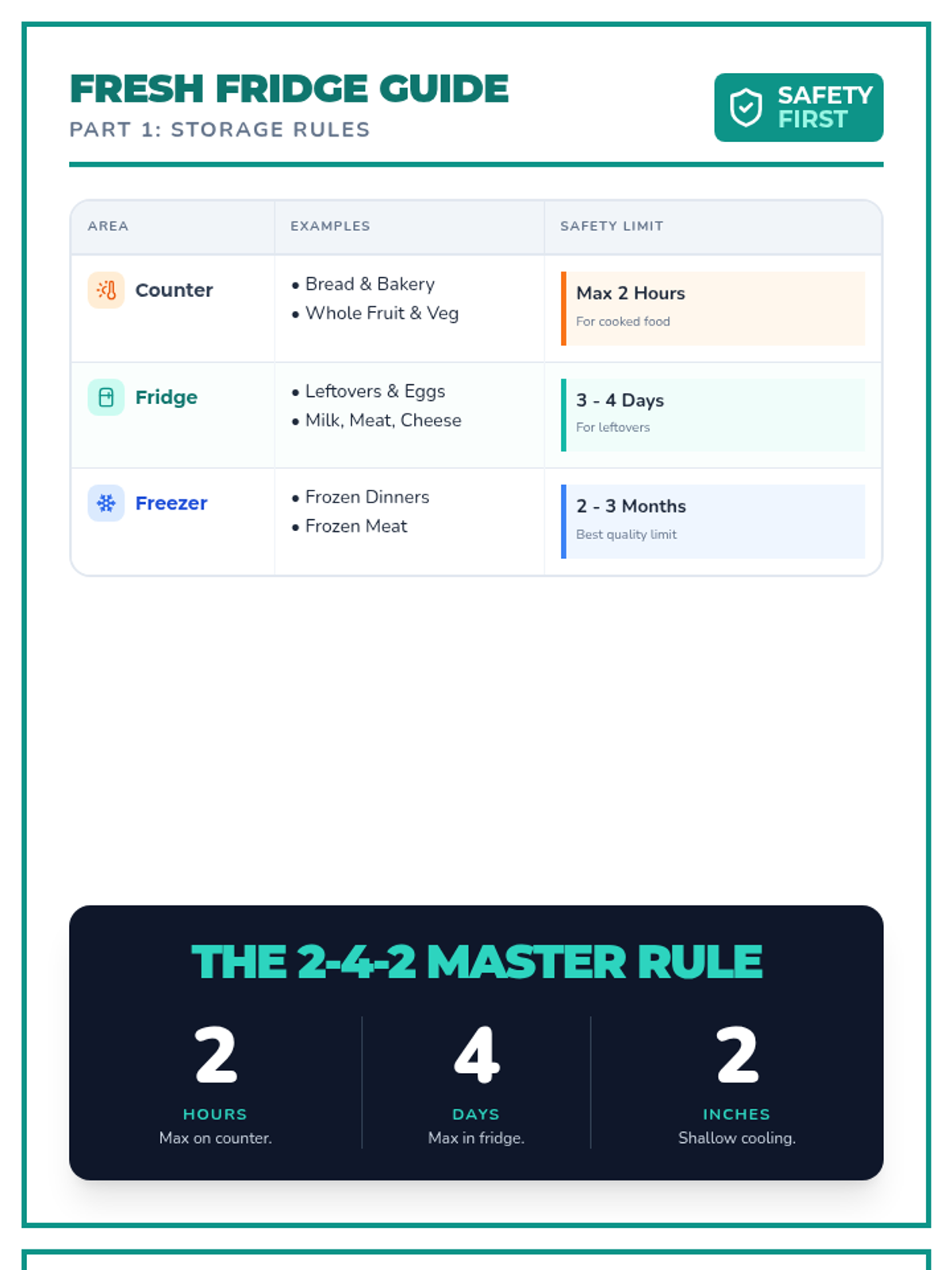
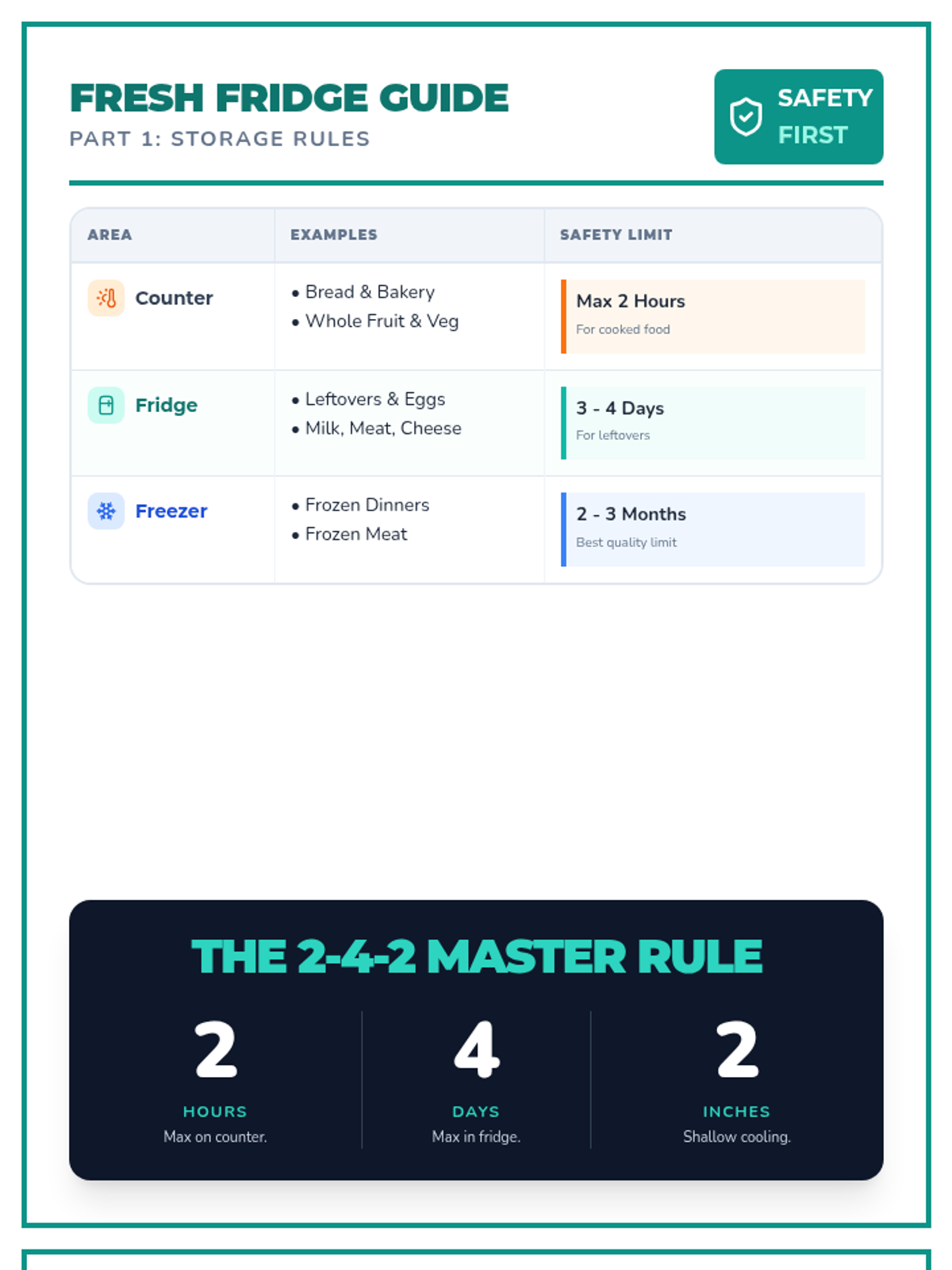
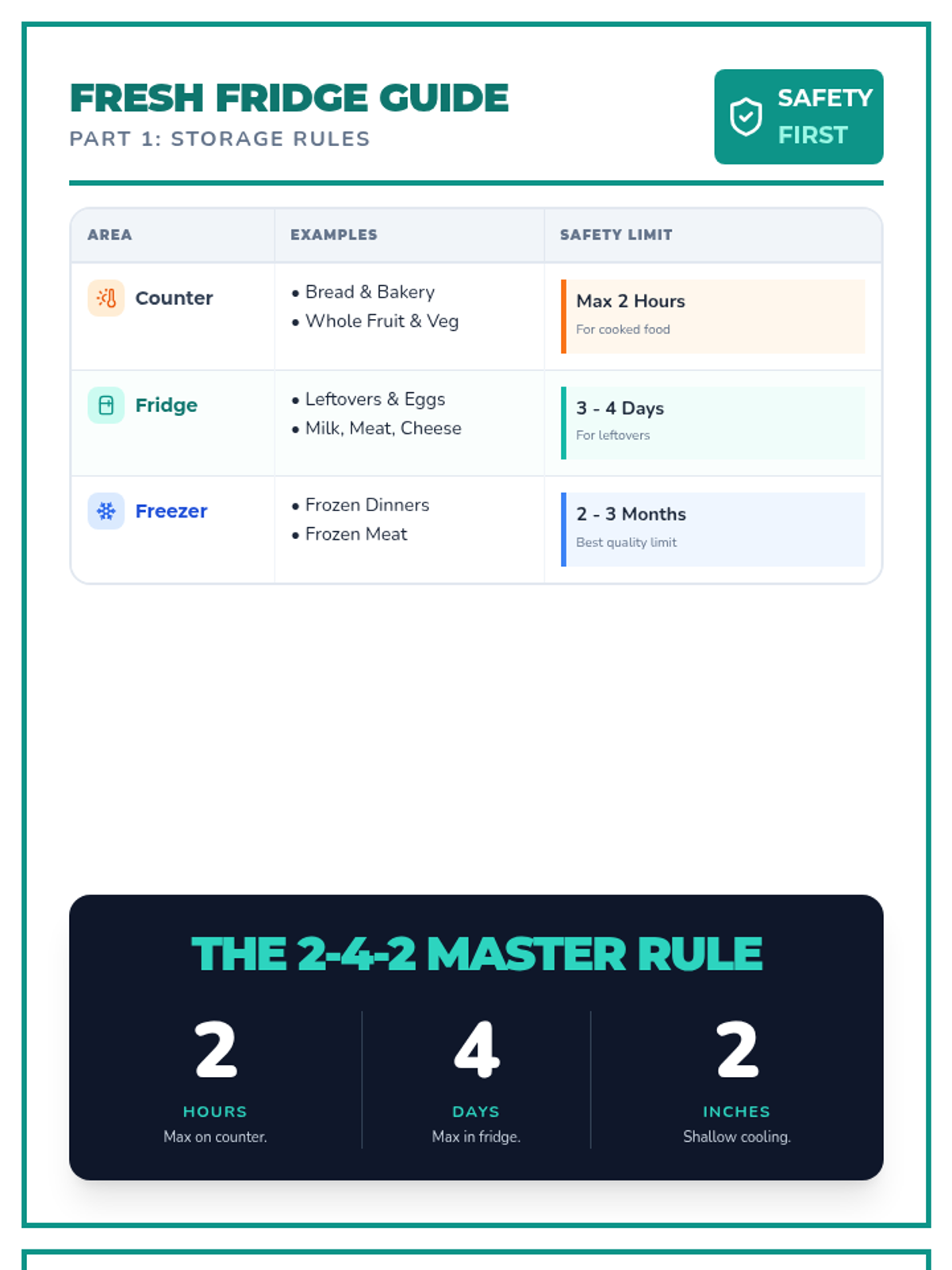
A reorganized visual guide for food storage and safety, featuring a clear tabular storage chart, the '2-4-2' rule, discard criteria, and a labeling tutorial with significantly increased font sizes for maximum readability.
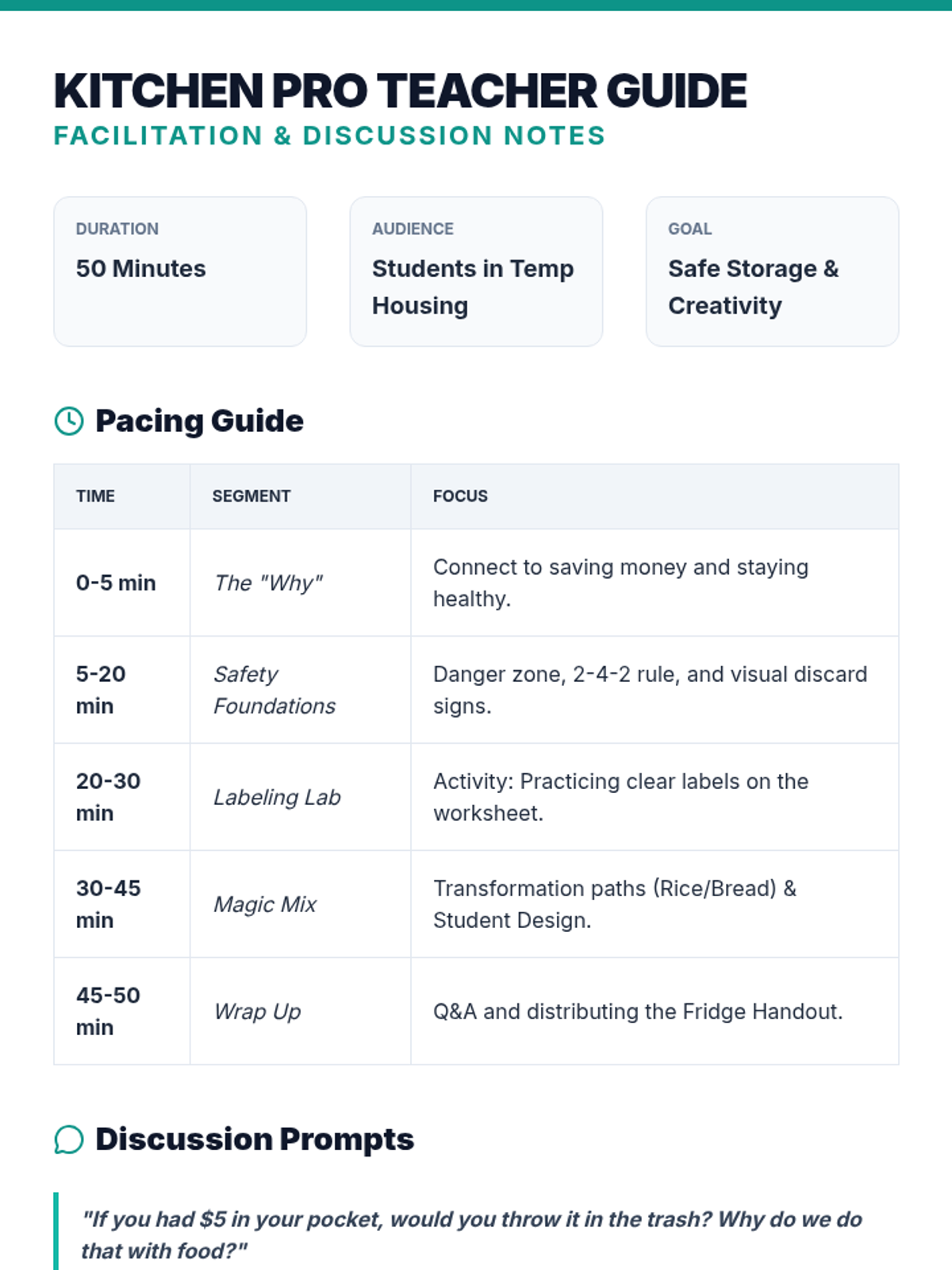
A comprehensive teacher's guide for the Kitchen Hacks lesson, including a 50-minute pacing guide, discussion prompts, and strategies for neurodiverse learners and students in temporary housing.
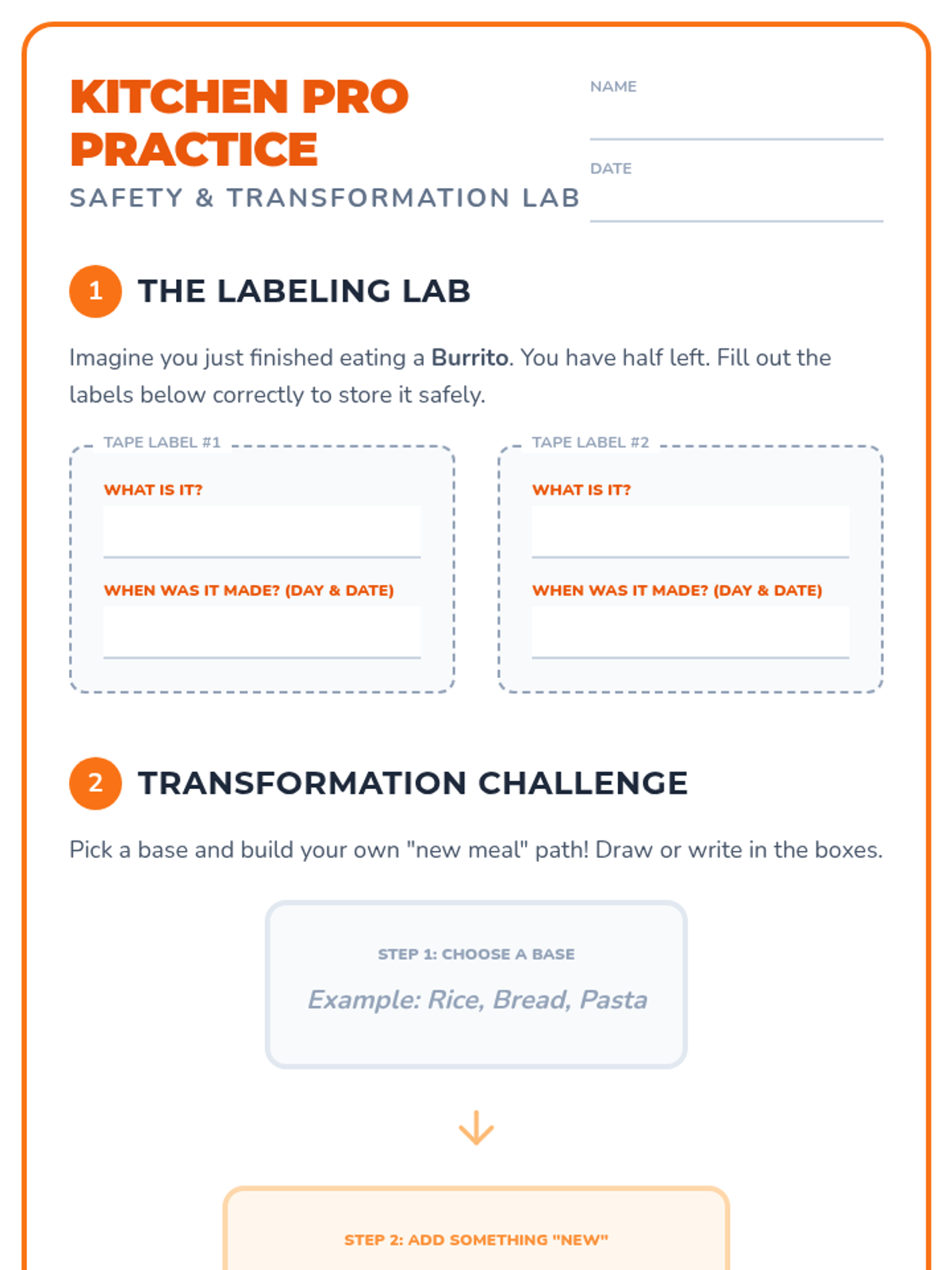
A student practice sheet for applying kitchen safety skills, including labeling exercises and a transformation flowchart activity.
A visually-driven slide deck for a 50-minute session on kitchen safety and food transformation, featuring the 2-4-2 rule and leftover flowcharts.
A reorganized visual guide for food storage and safety, featuring a clear tabular storage chart, the '2-4-2' rule, discard criteria, and a labeling tutorial with increased font sizes for readability.
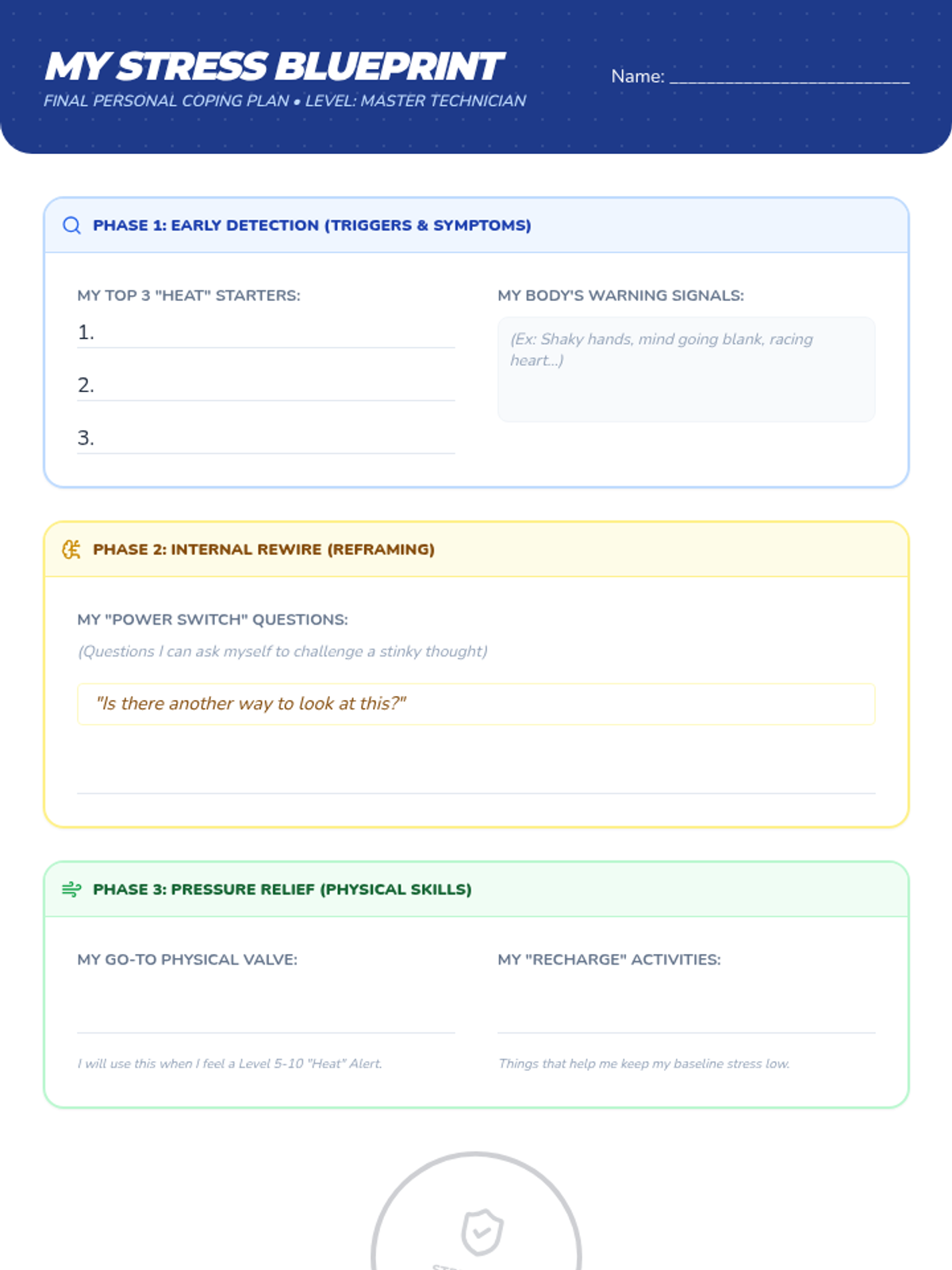
The final personal coping plan document for students, allowing them to synthesize their learning from all four sessions into a single "blueprint" for future use.
Slide presentation for Session 4, reviewing the unit's core concepts (Detection, Reframing, Regulation) and guiding students through the creation of their personal coping blueprints.
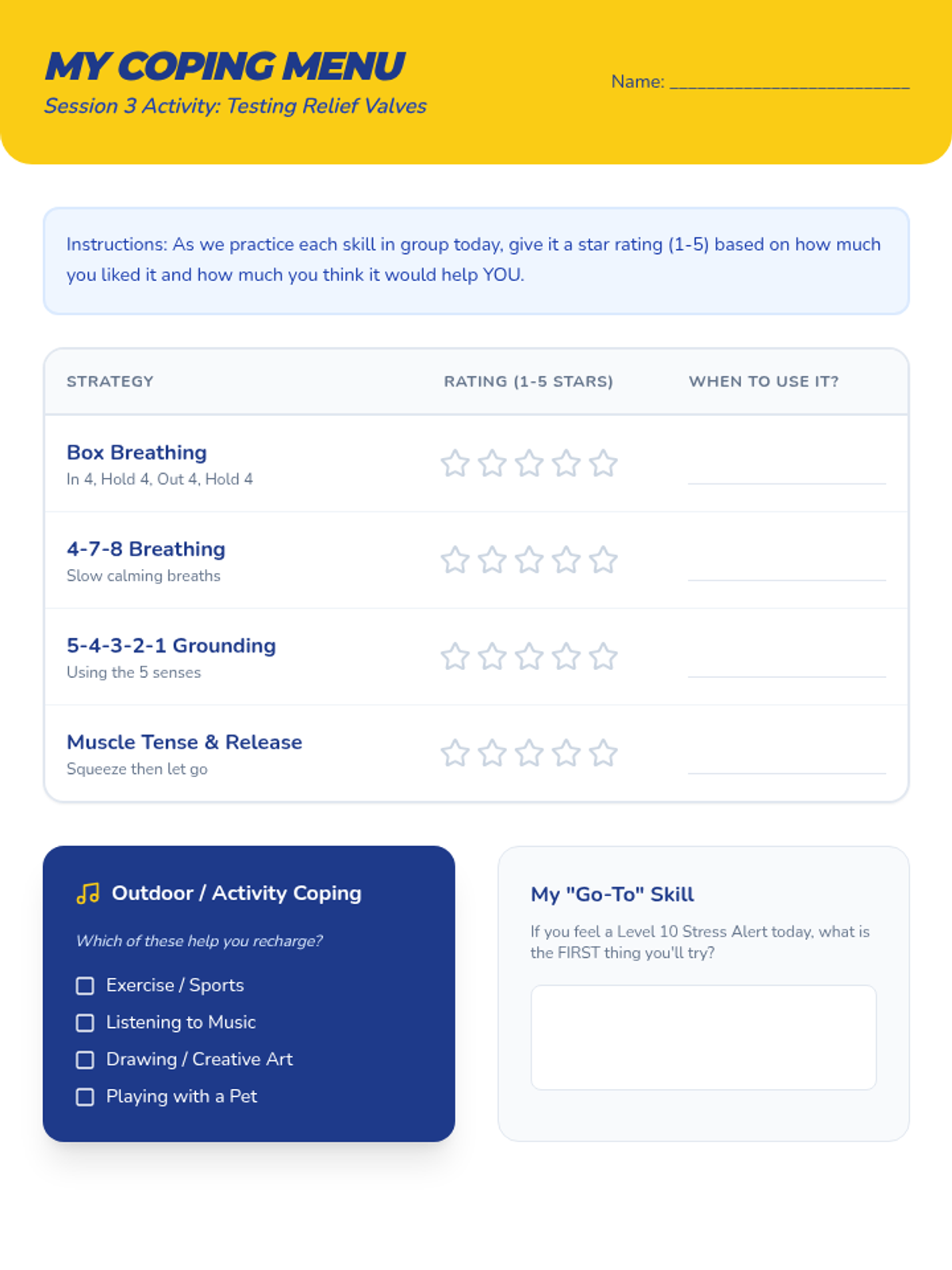
Coping strategy menu for students to trial and rate different physical and grounding techniques (e.g., box breathing, grounding) to identify what works best for them.
Slide presentation for Session 3, introducing physical coping mechanisms like controlled breathing, the 5-4-3-2-1 grounding technique, and explaining the physiological benefits of these strategies.
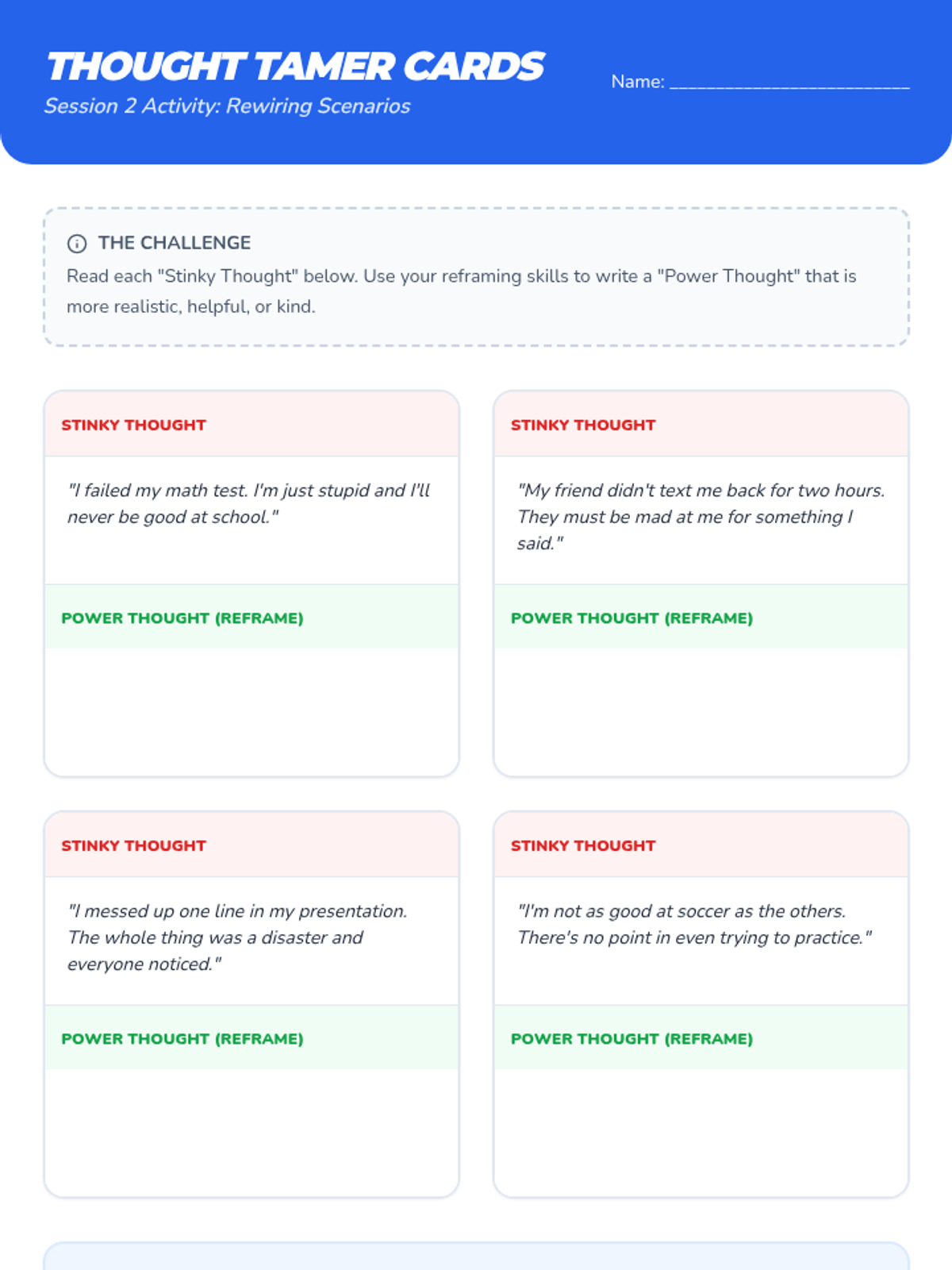
Student worksheet featuring common middle school stressors as "Stinky Thoughts" scenarios. Students practice cognitive reframing by writing realistic and positive "Power Thoughts" for each situation.
Slide presentation for Session 2, focusing on the connection between thoughts, feelings, and behaviors, and teaching students how to identify and reframe cognitive distortions.
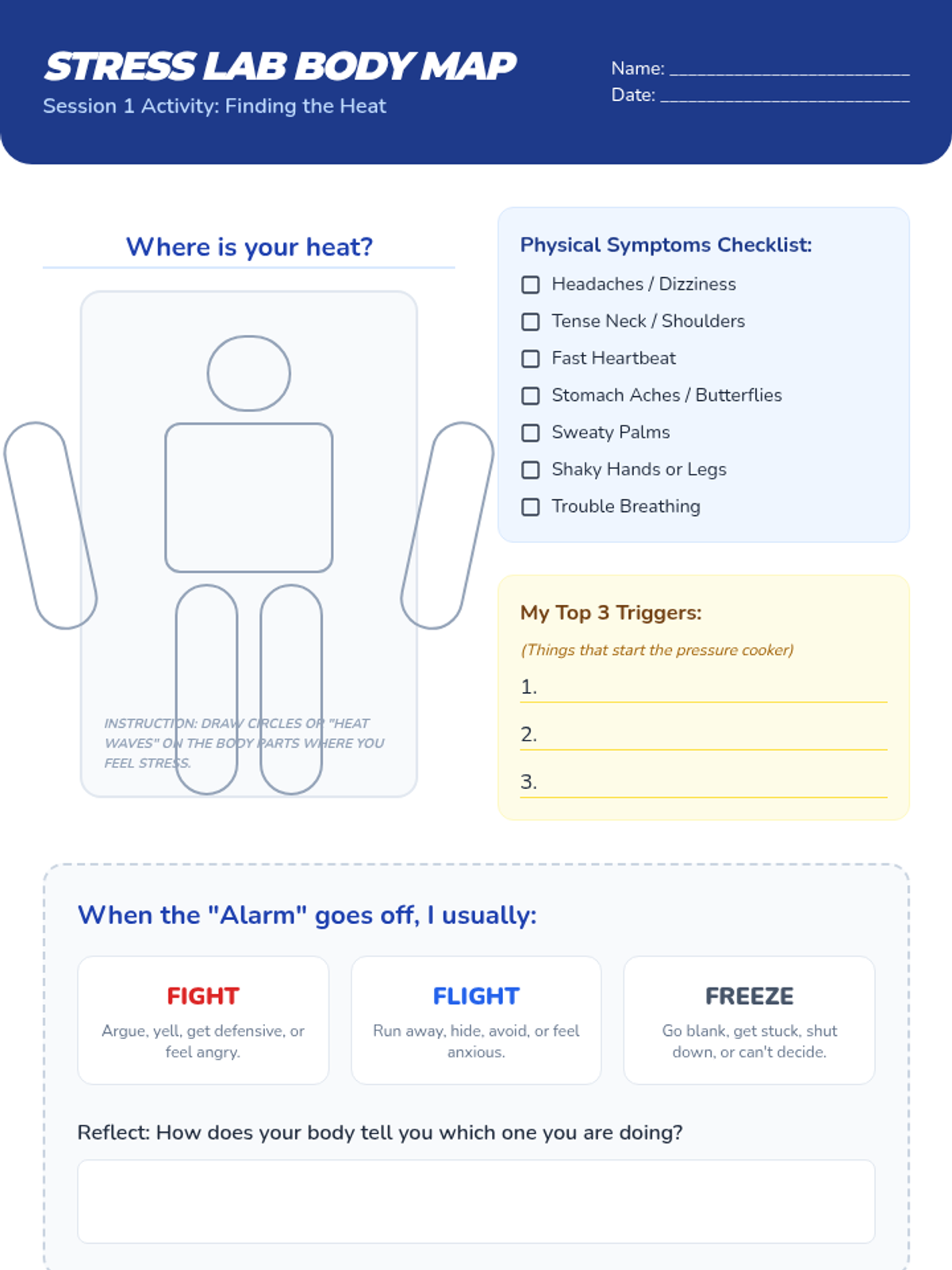
Student activity sheet for Session 1. Students identify their physical stress symptoms on a body map and list their primary personal triggers.
Slide presentation for Session 1, introducing the concept of stress using the pressure cooker analogy and explaining the body's fight/flight/freeze response.
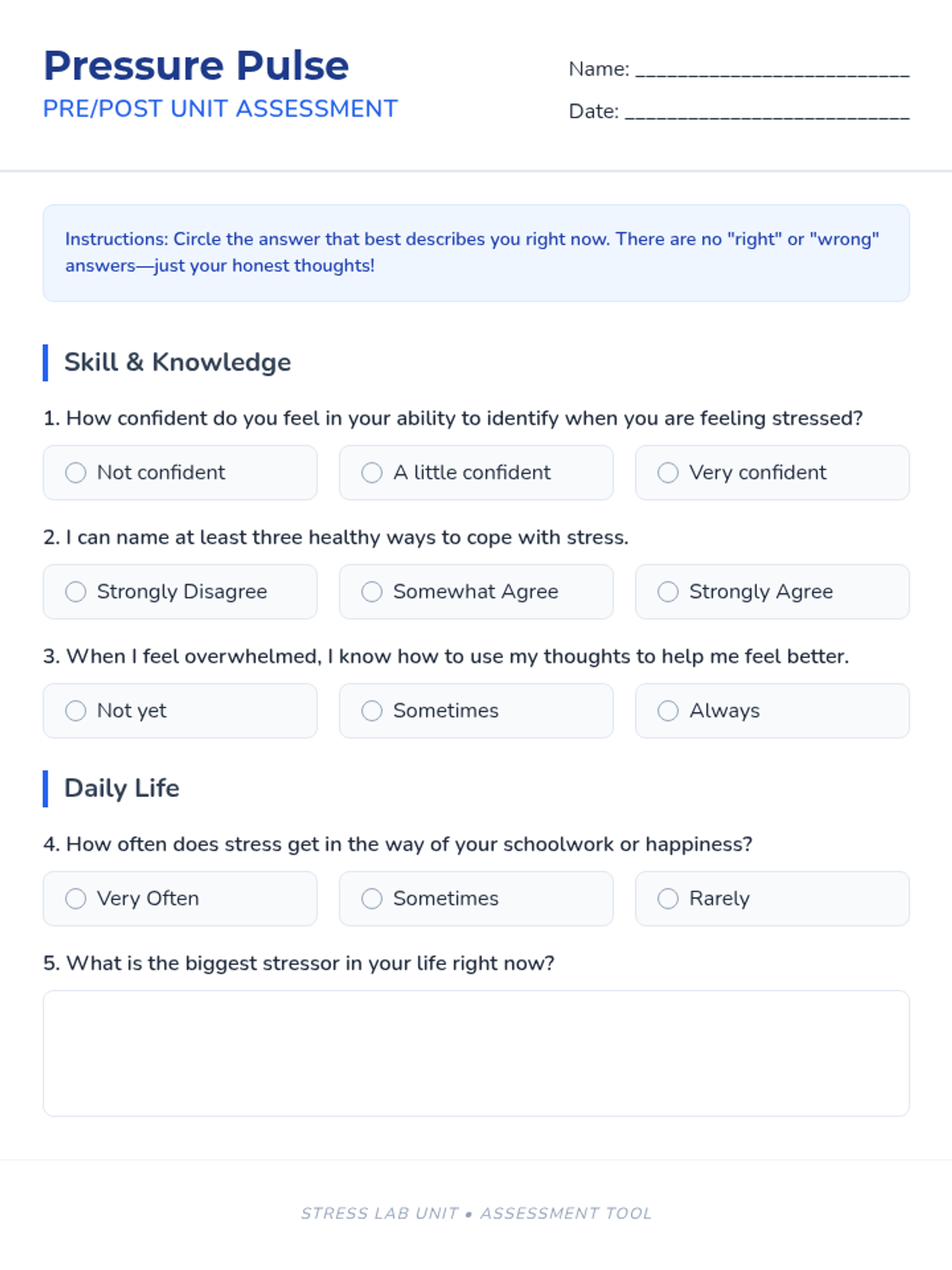
Unit pre- and post-assessment to measure student growth in identifying stressors and coping strategies.
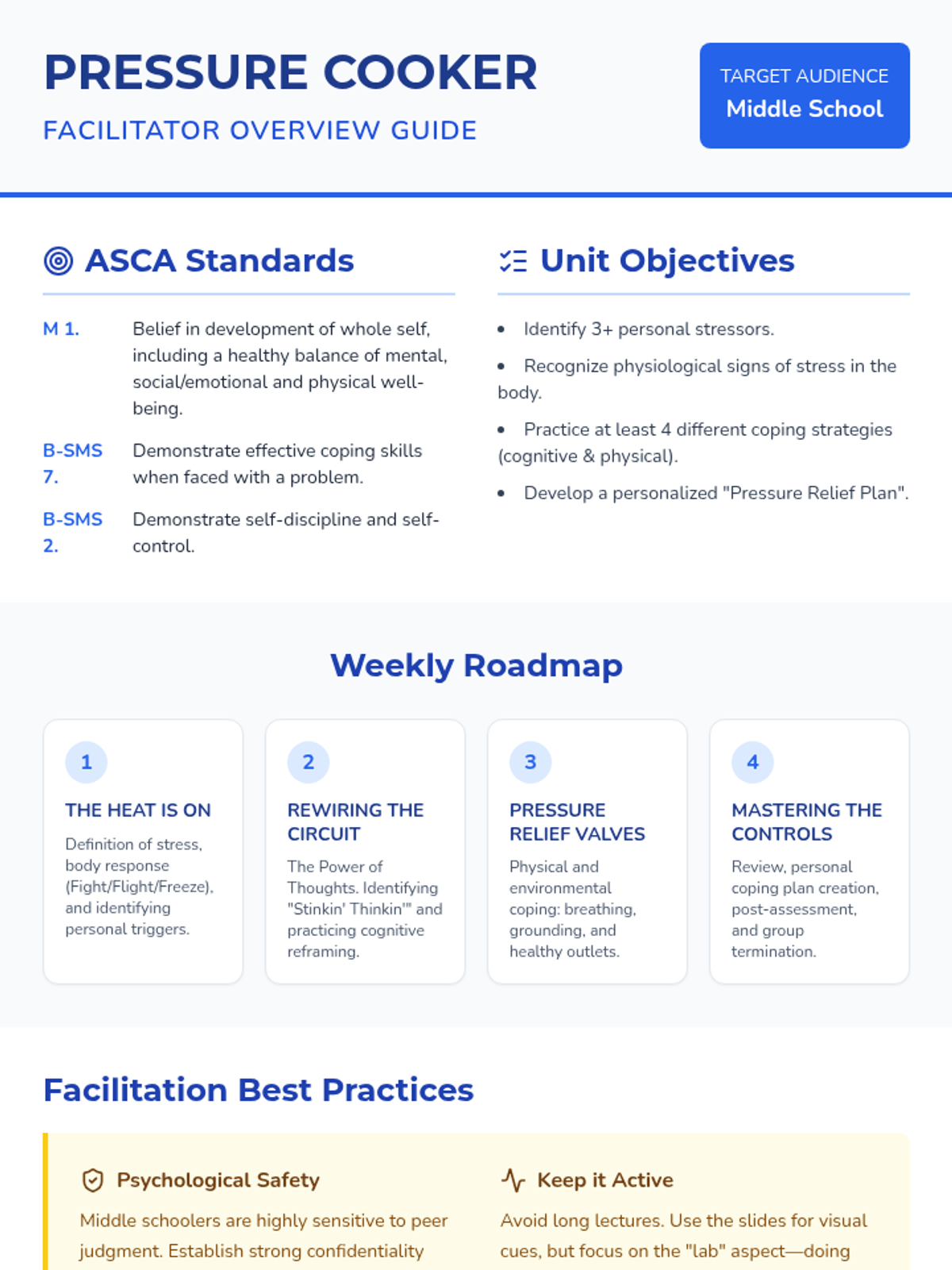
Facilitator guide for the 4-week unit, including ASCA alignment, objectives, and weekly plans.
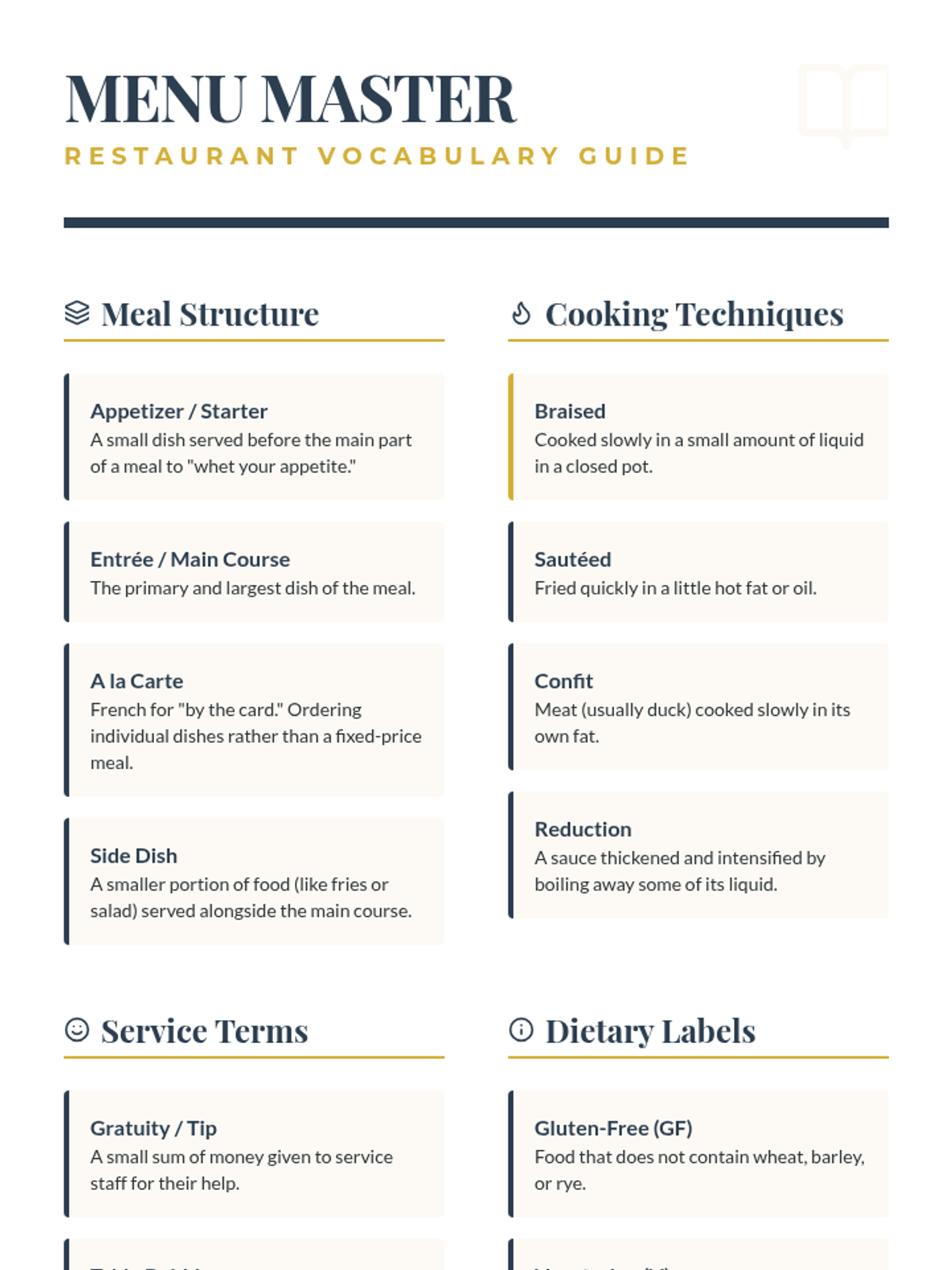
A vocabulary reference sheet for students to understand common restaurant terms, cooking styles, and dietary labels found on menus.
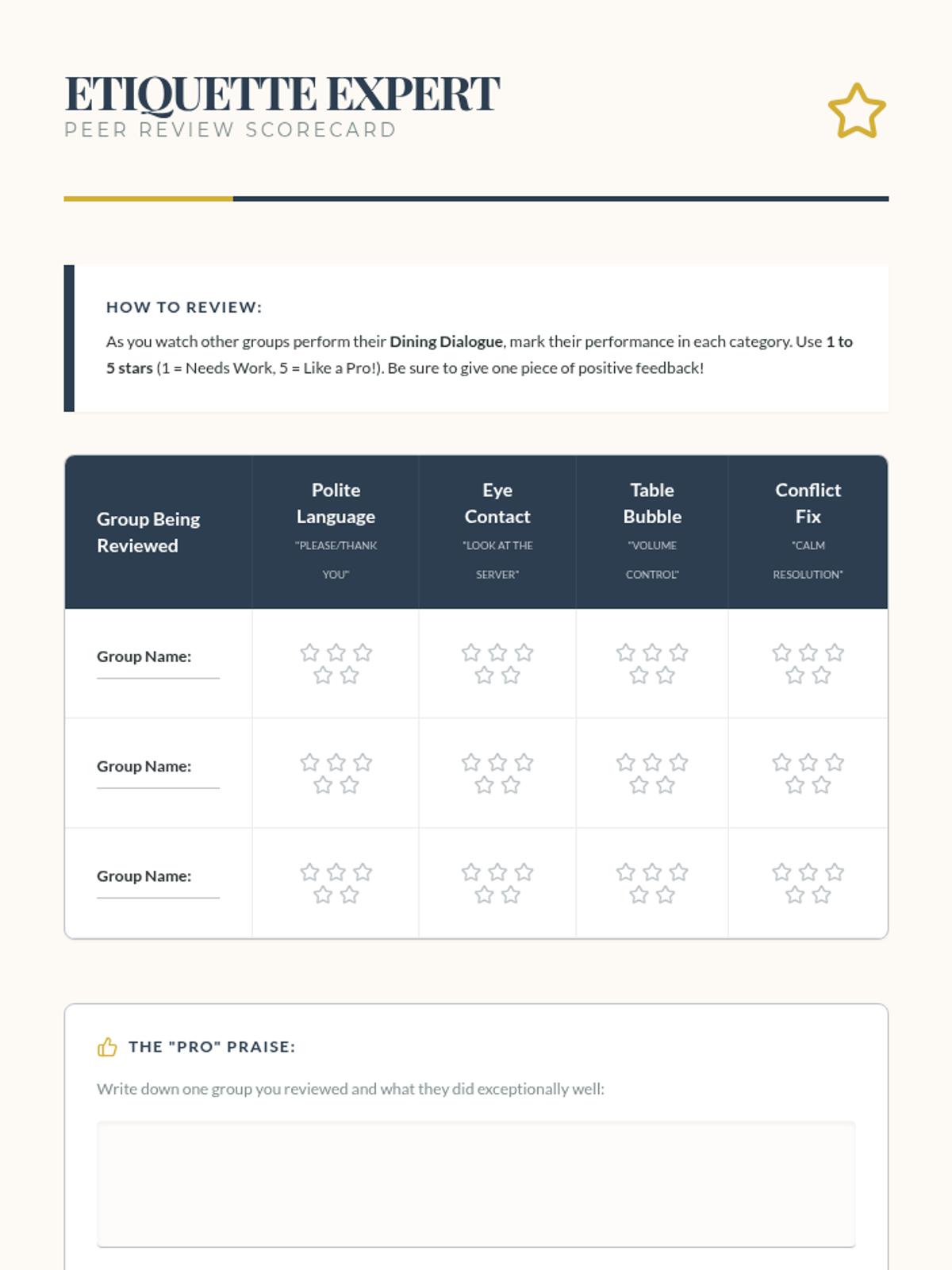
A peer review evaluation sheet for students to score each other's etiquette skills during the roleplay portion of the lesson.
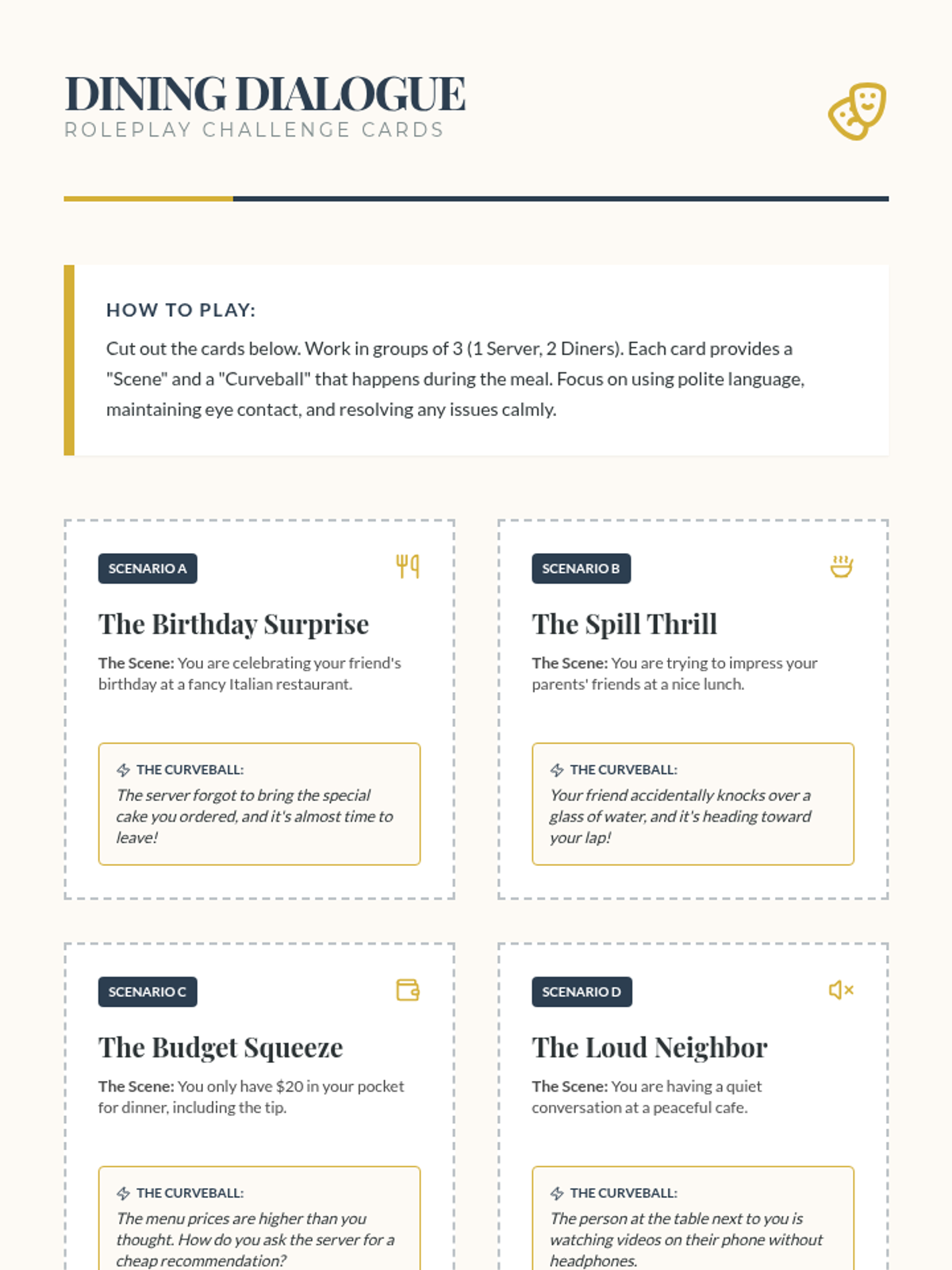
A set of four roleplay challenge cards for students to practice ordering, manners, and conflict resolution in various restaurant scenarios.
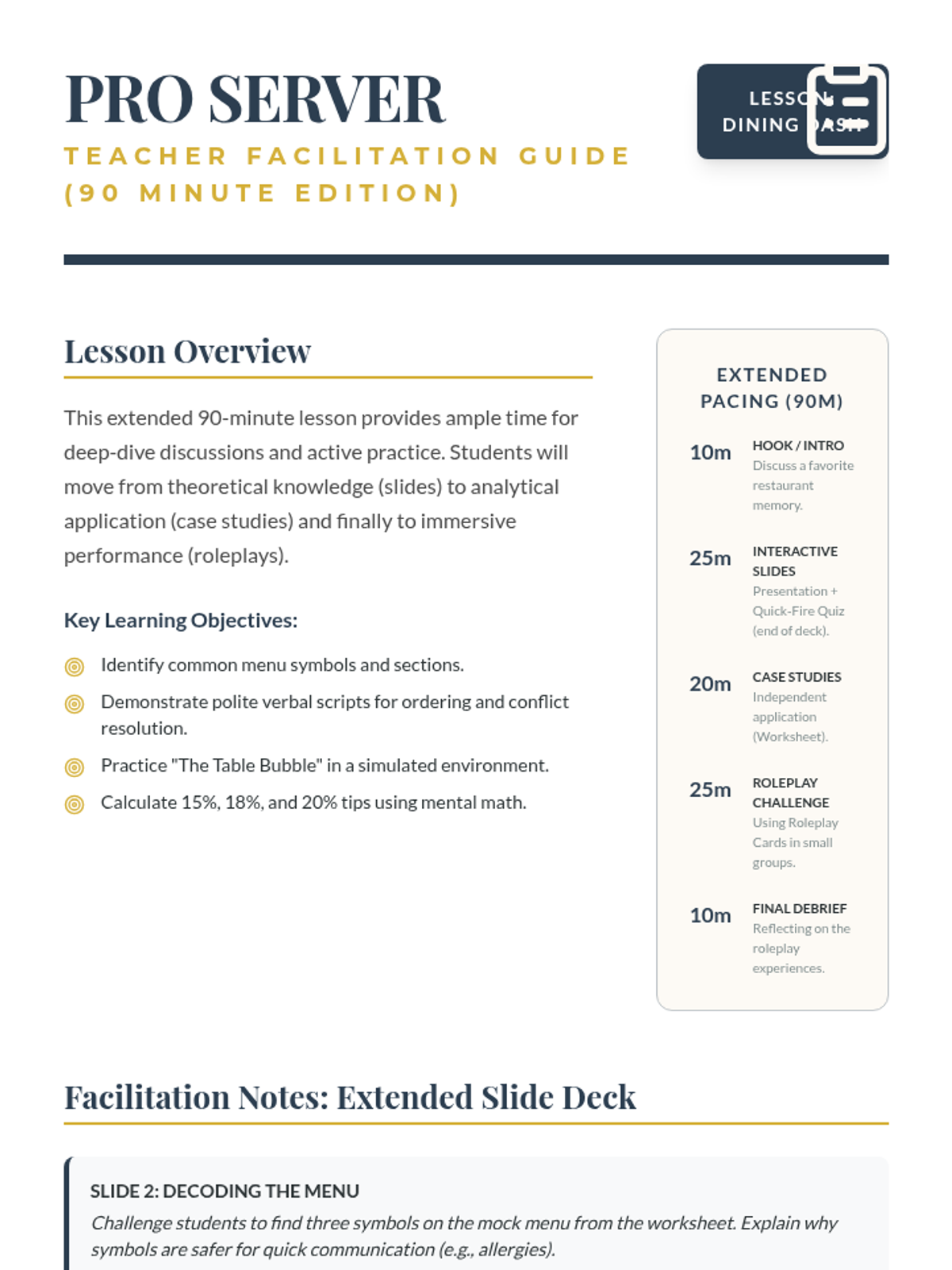
A teacher guide featuring lesson objectives, pacing suggestions, slide-by-slide discussion prompts, and a detailed answer key for the case studies.
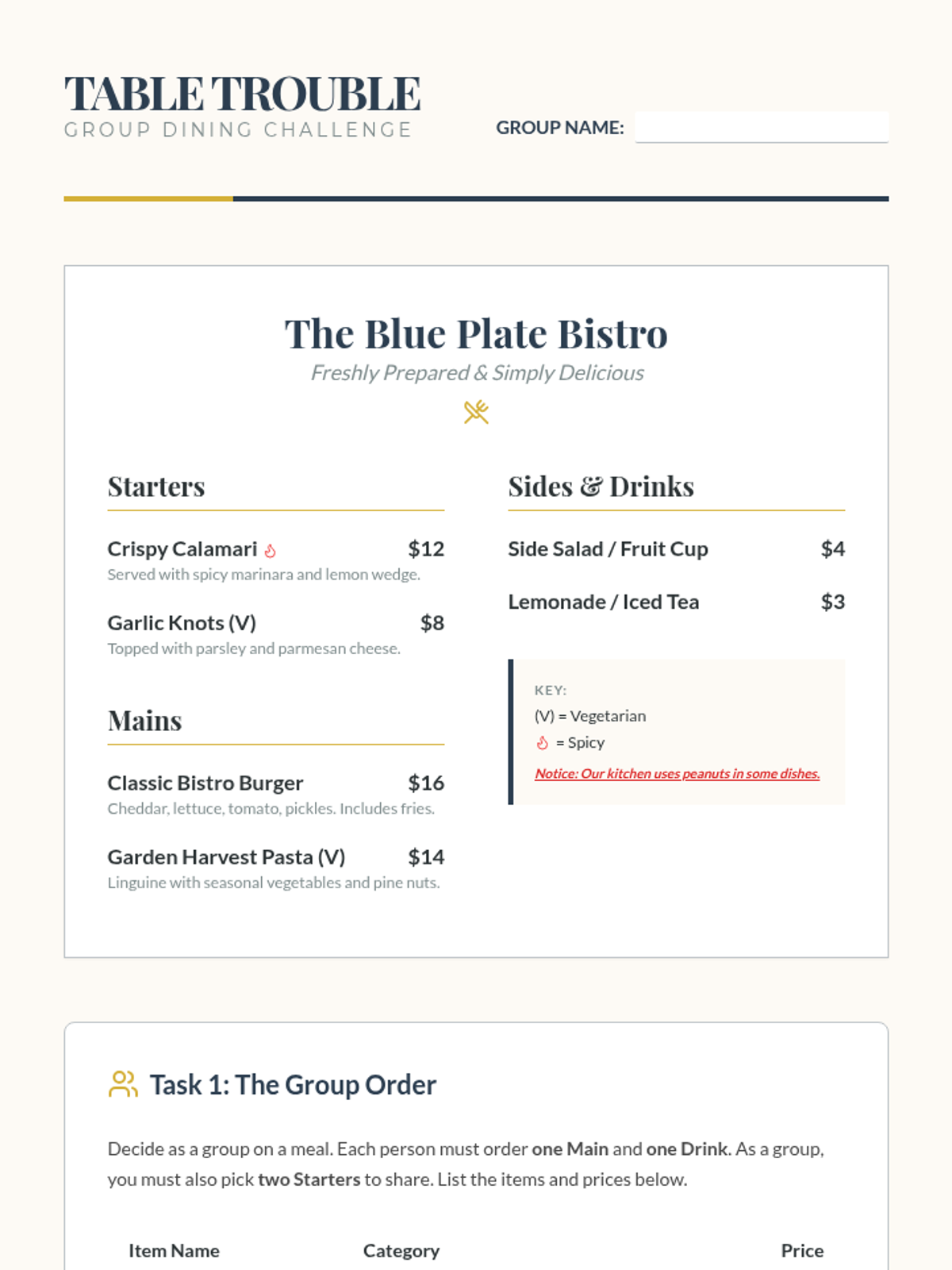
A group-focused student worksheet featuring a mock menu, a collective ordering challenge, group bill calculations, and collaborative restaurant scenarios.
A visual slide deck teaching restaurant etiquette, including menu reading, ordering scripts, table manners, volume control, tipping, and conflict resolution. Separates quiz questions and answers for better engagement.
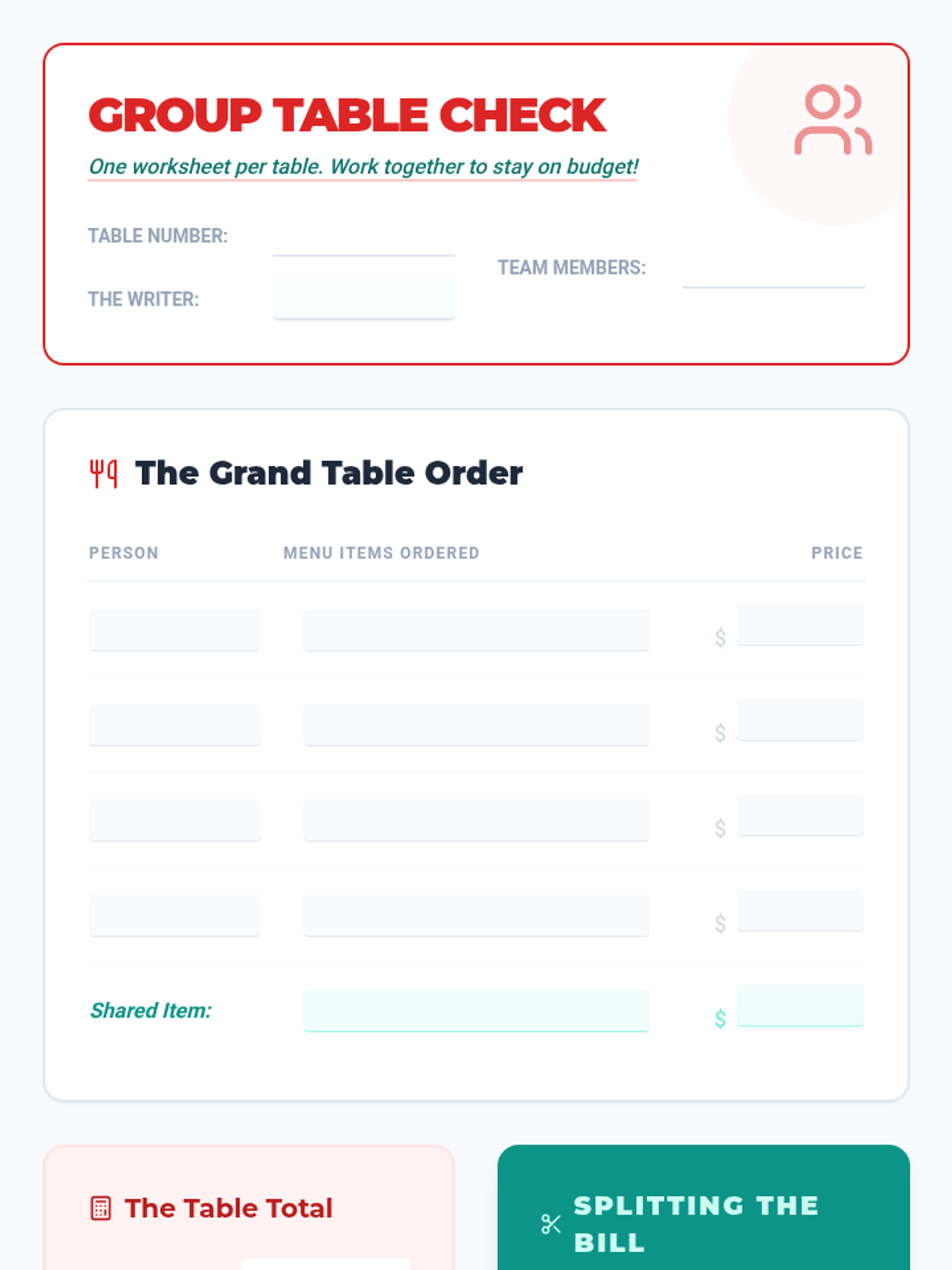
A comprehensive group worksheet that combines combined food order tracking, table total calculations (including tax and tip), group math challenges, and social etiquette reflections into a single multi-page document.
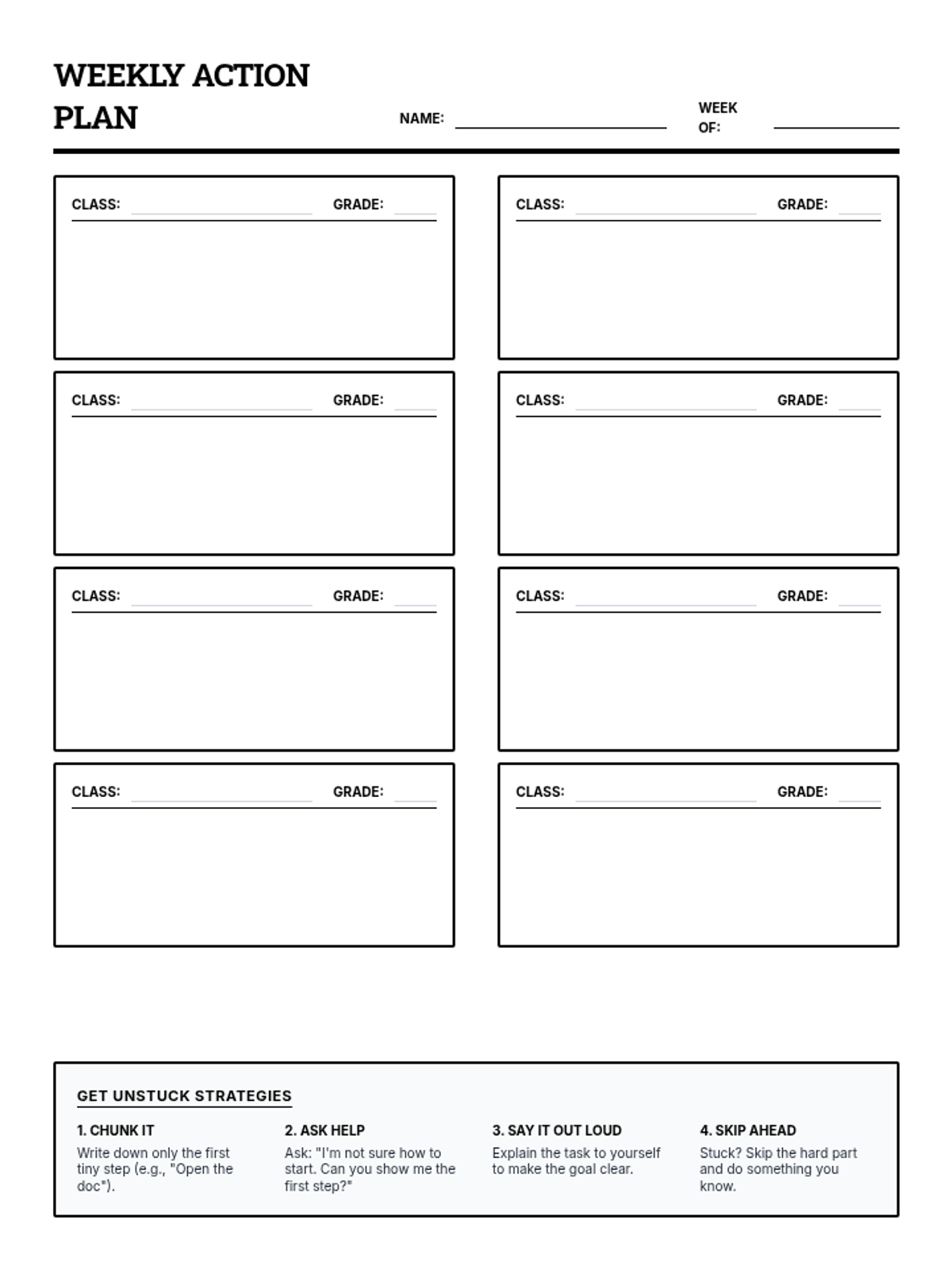
A highly efficient, single-page Weekly Action Plan designed for students with executive functioning needs. It features 8 streamlined class boxes with space for subjects and grades, plus a concise footer with 'Get Unstuck' strategies, all formatted to fit within a single printable page.
Instructional slide deck for the Budget Bites lesson, covering the 90-minute agenda, hidden costs (tax and tip), and restaurant social etiquette.
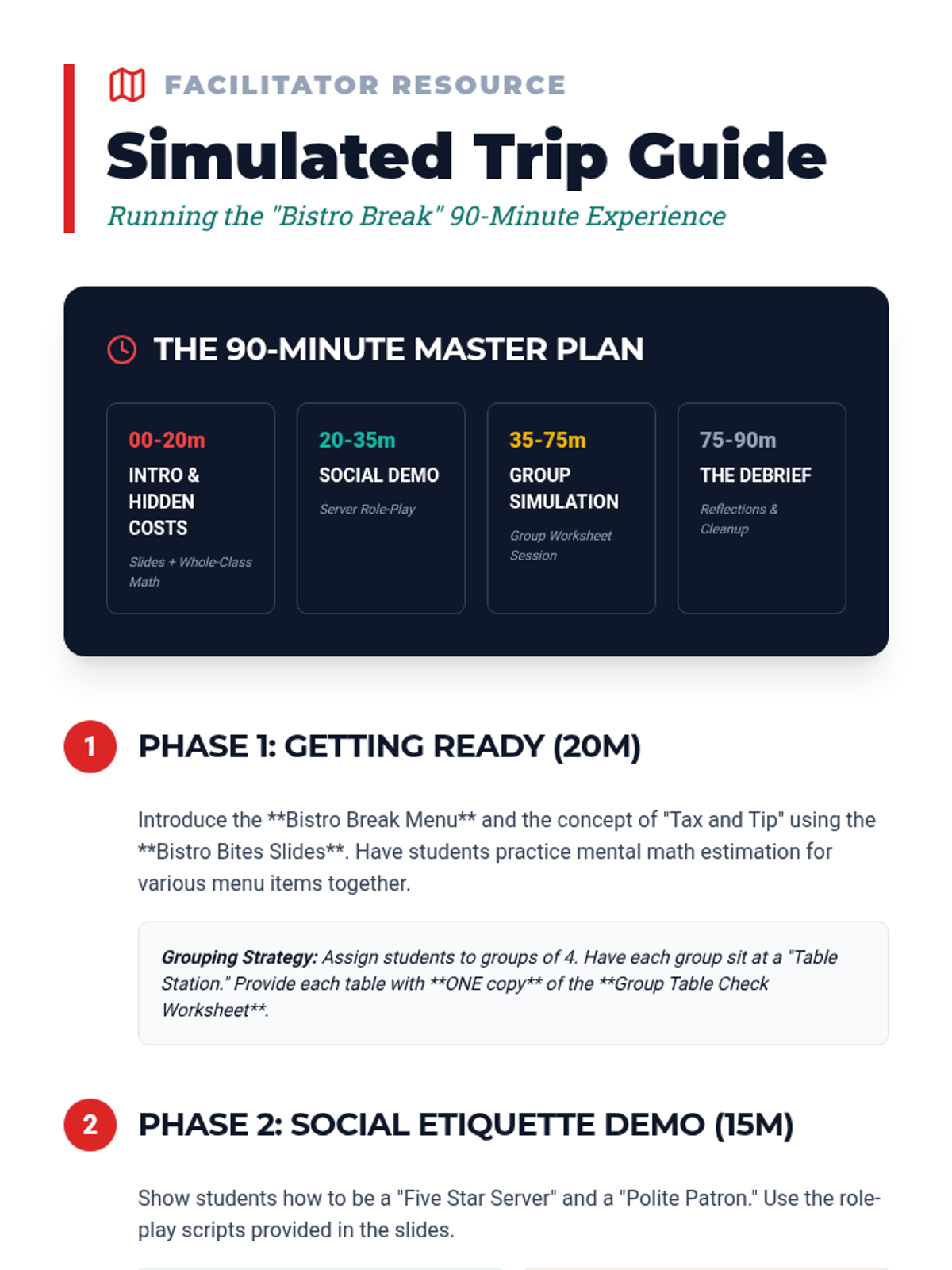
A facilitator's guide for conducting a simulated restaurant field trip in the classroom, including role-play scripts and setup instructions.
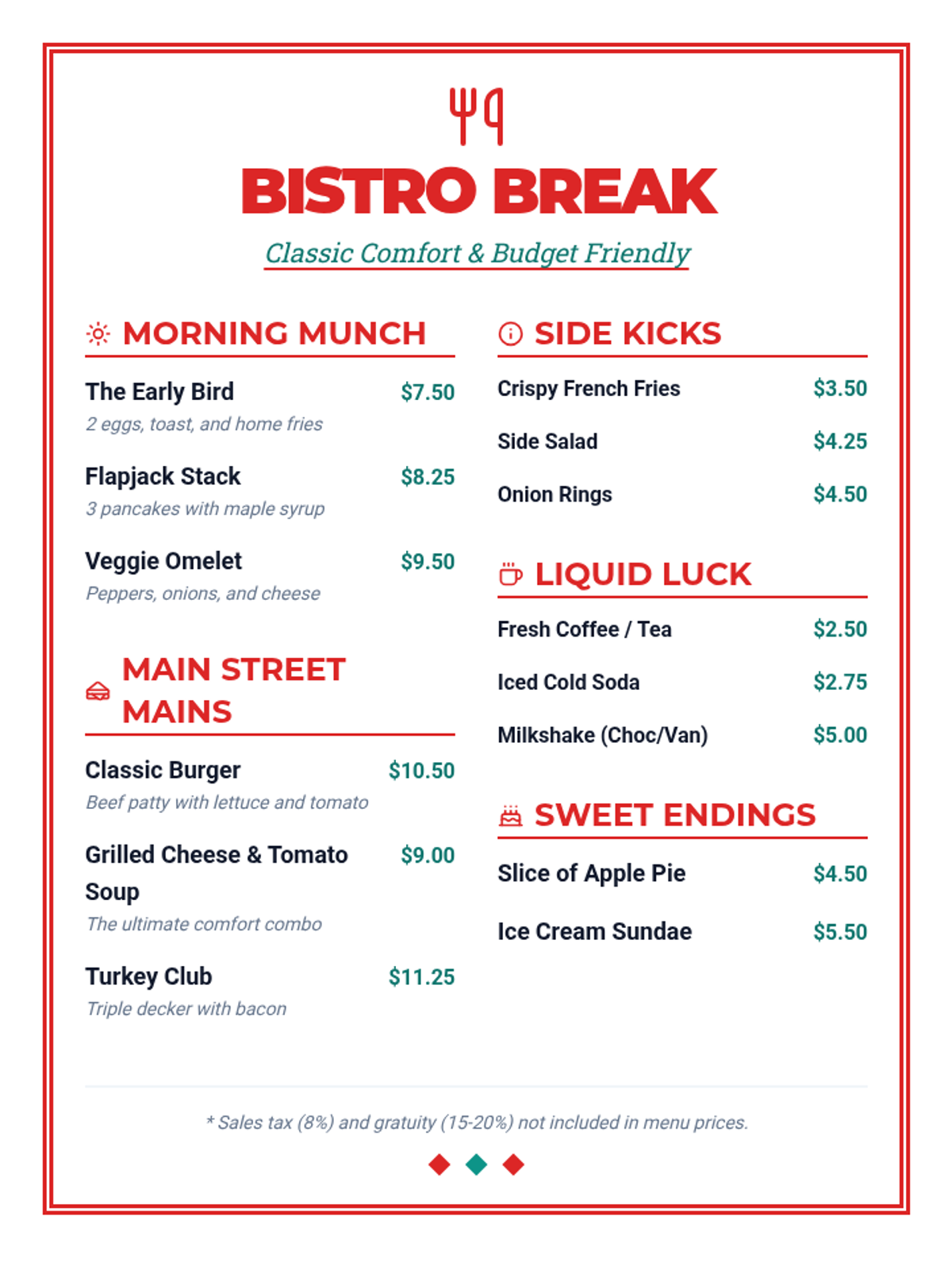
A retro-style bistro menu featuring breakfast, main courses, sides, drinks, and desserts with clear pricing for use in budget and math exercises.
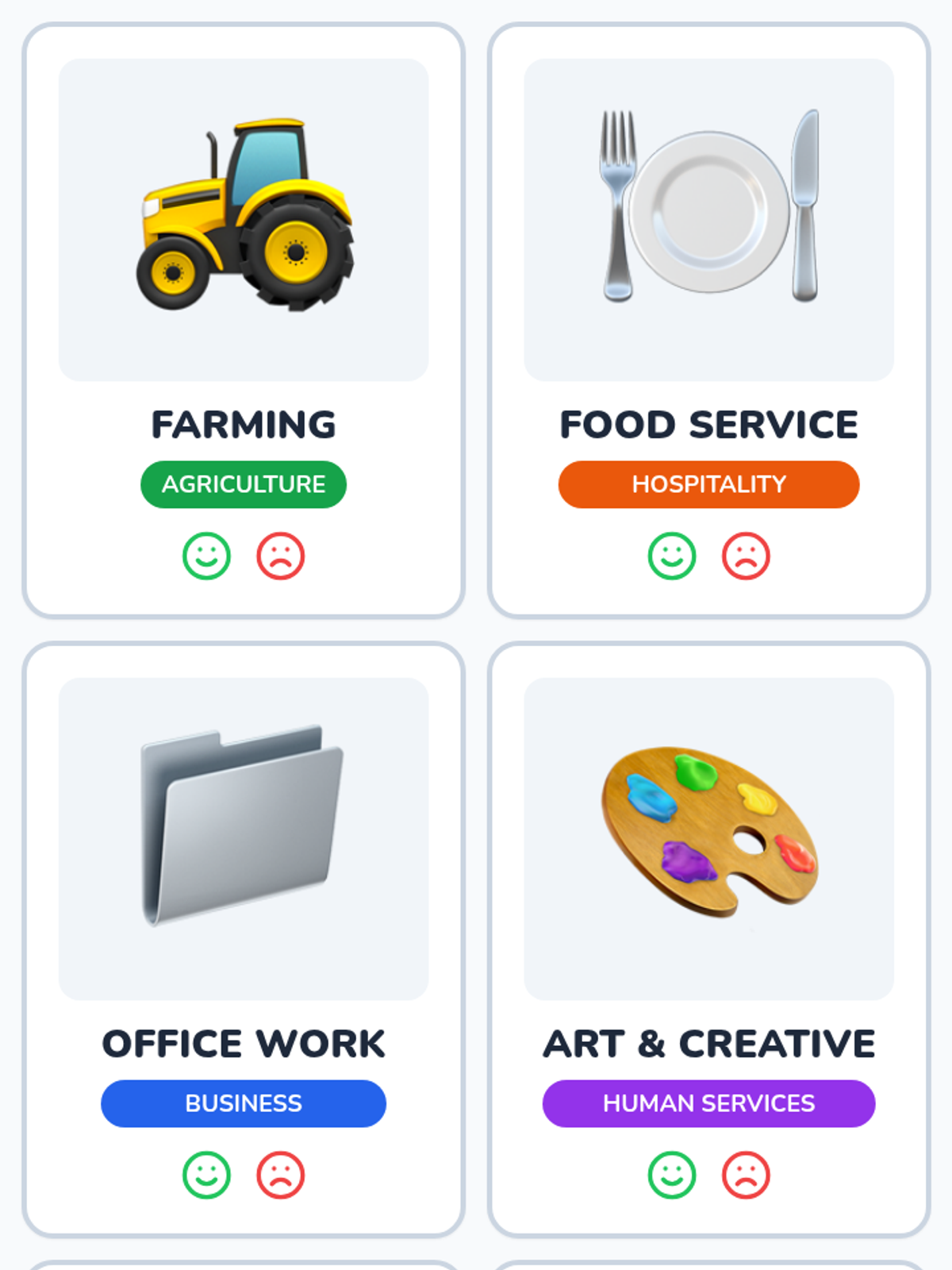
Printable 4-per-page job choice cards with visual cues and career cluster labels, designed for sorting activities and physical preference selection.
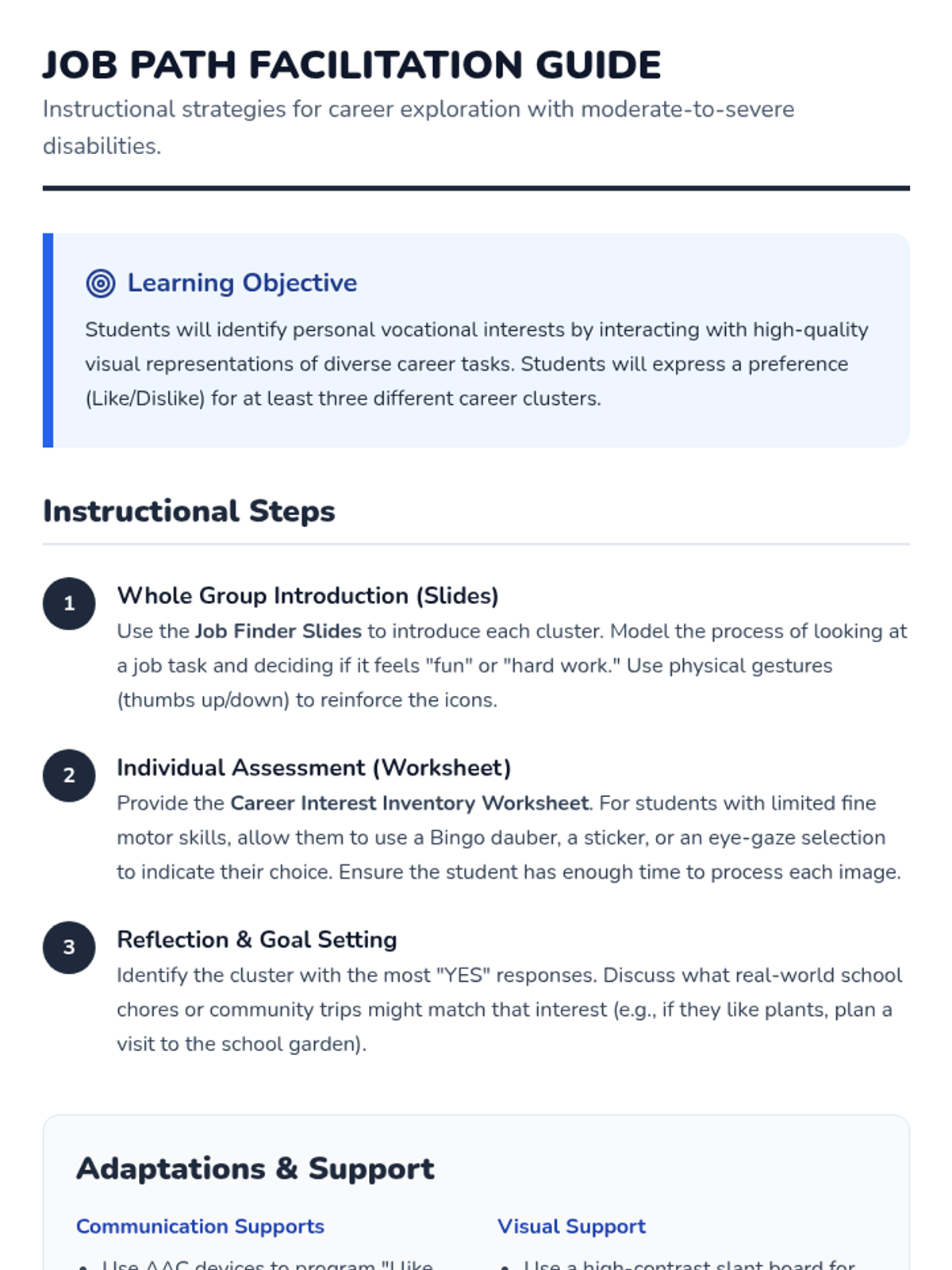
A teacher-facing facilitation guide providing instructional strategies, differentiation tips, and data collection prompts for the Job Path Explorer lesson.
A large-scale visual presentation featuring career clusters and tasks with simple 'Like' and 'Don't Like' prompts, updated to include Construction and Arts clusters for students with moderate to severe disabilities.
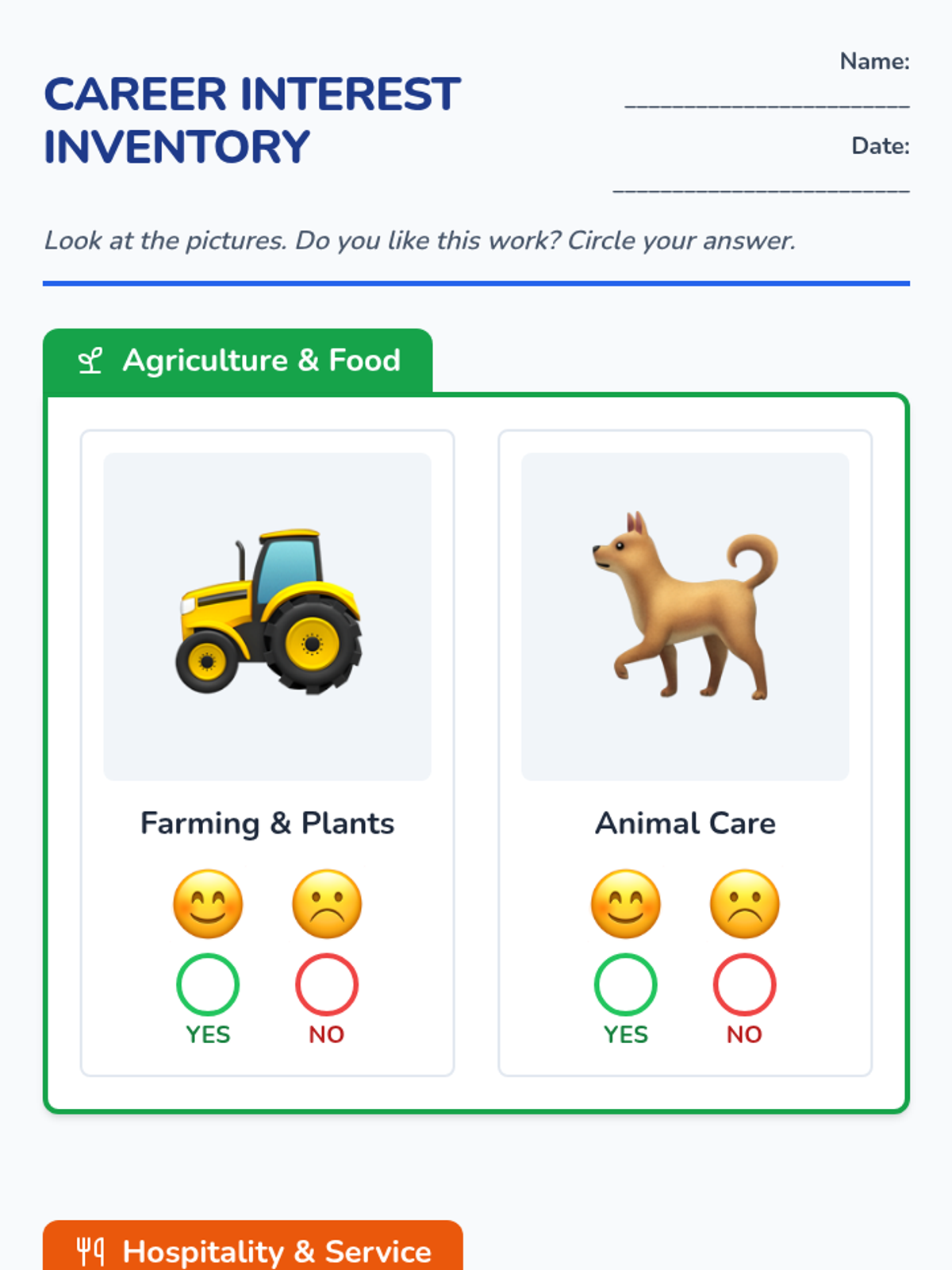
An expanded picture-based career interest inventory for students with moderate to severe disabilities, featuring 5 core career clusters with clear visual options for preferences.
A revised 10-slide presentation using simple, concrete language to teach students about three zones of control: In My Control, May be in My Control, and Out of My Control. All violent or aggressive metaphors have been removed.
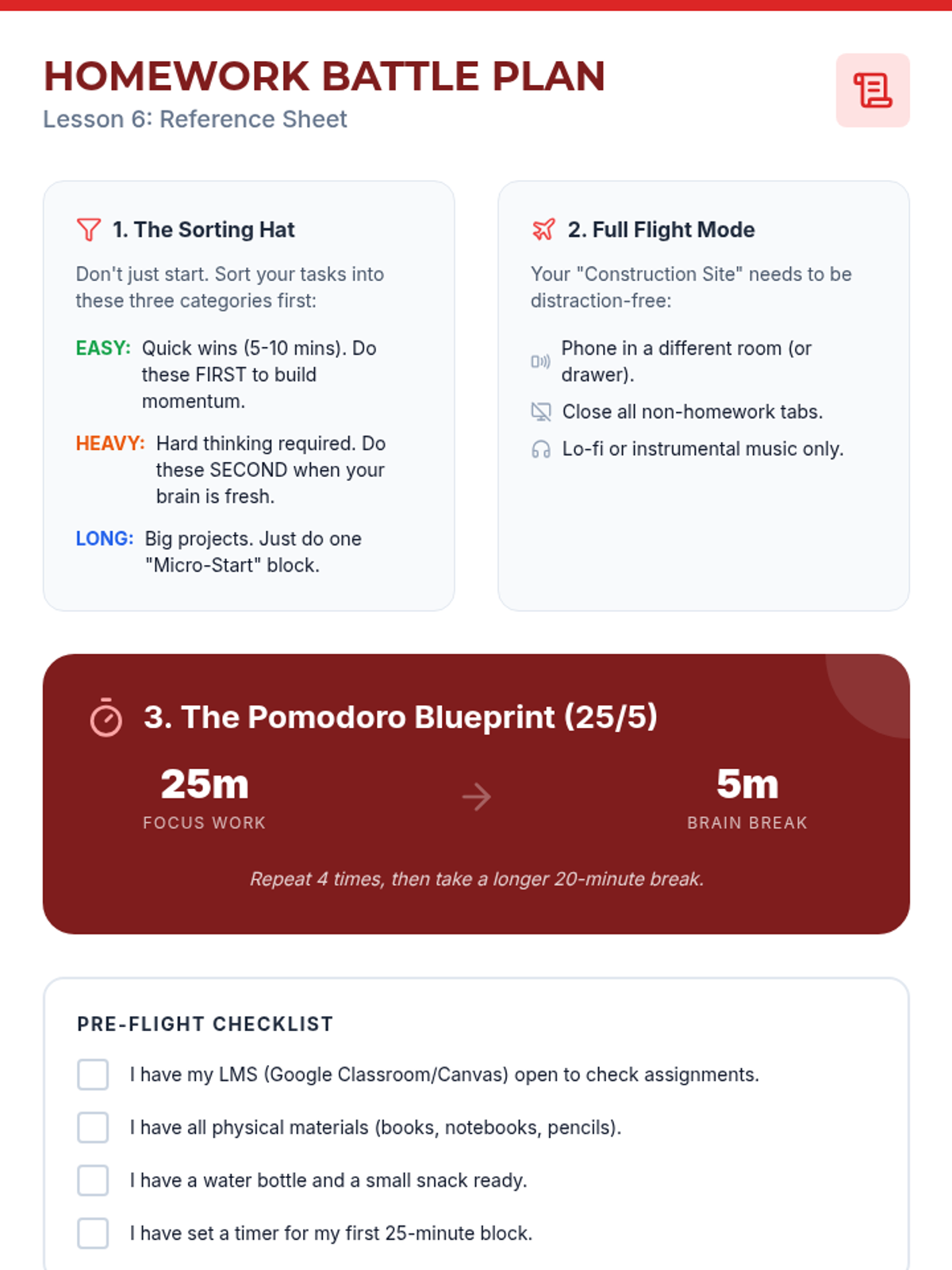
A comprehensive homework strategy guide featuring task sorting, distraction management, the Pomodoro method, and a pre-study checklist.
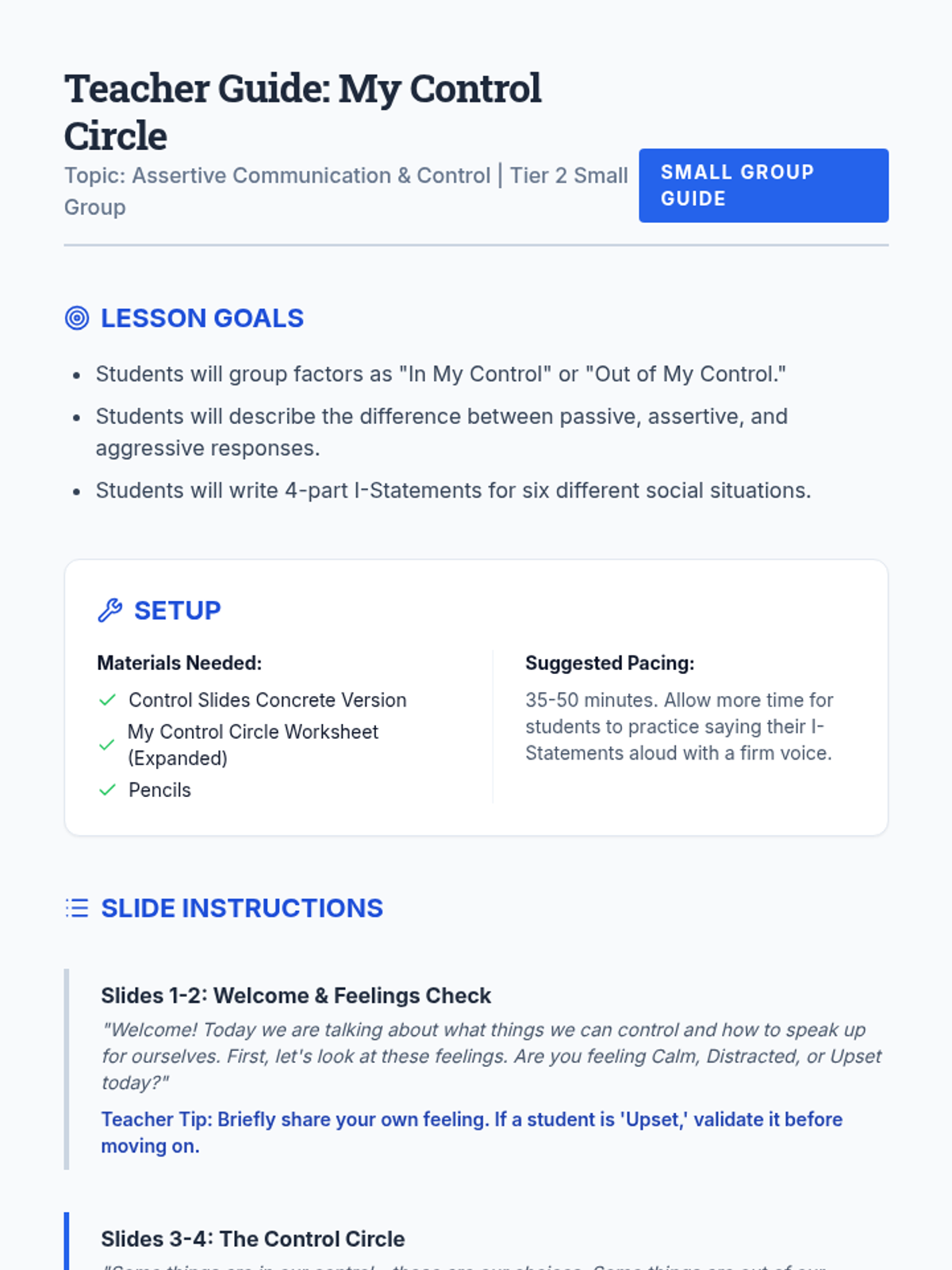
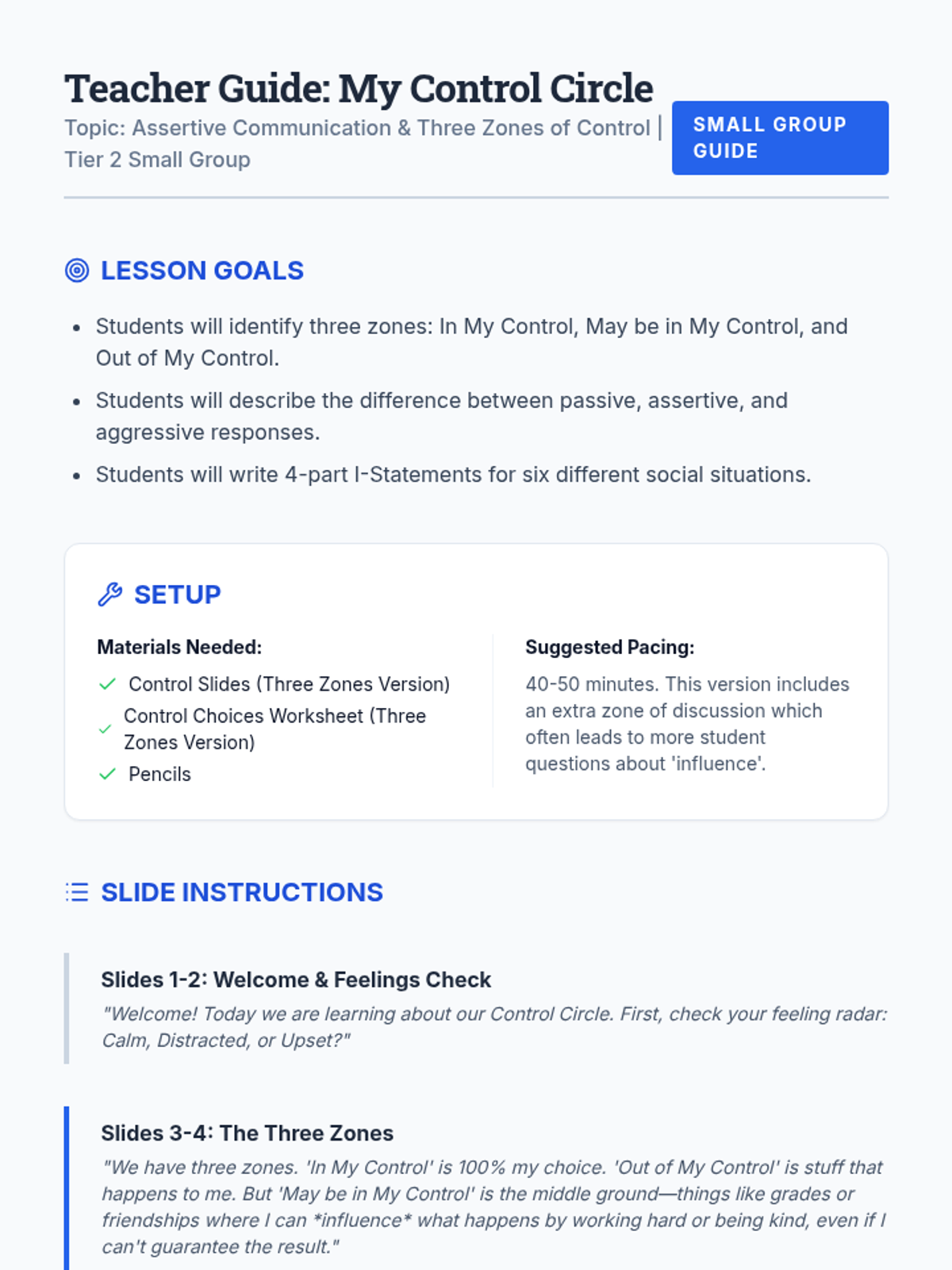
A revised teacher guide matching the three-zone model (In Control, May be in Control, Out of Control) and updated for the 6 practice scenarios.
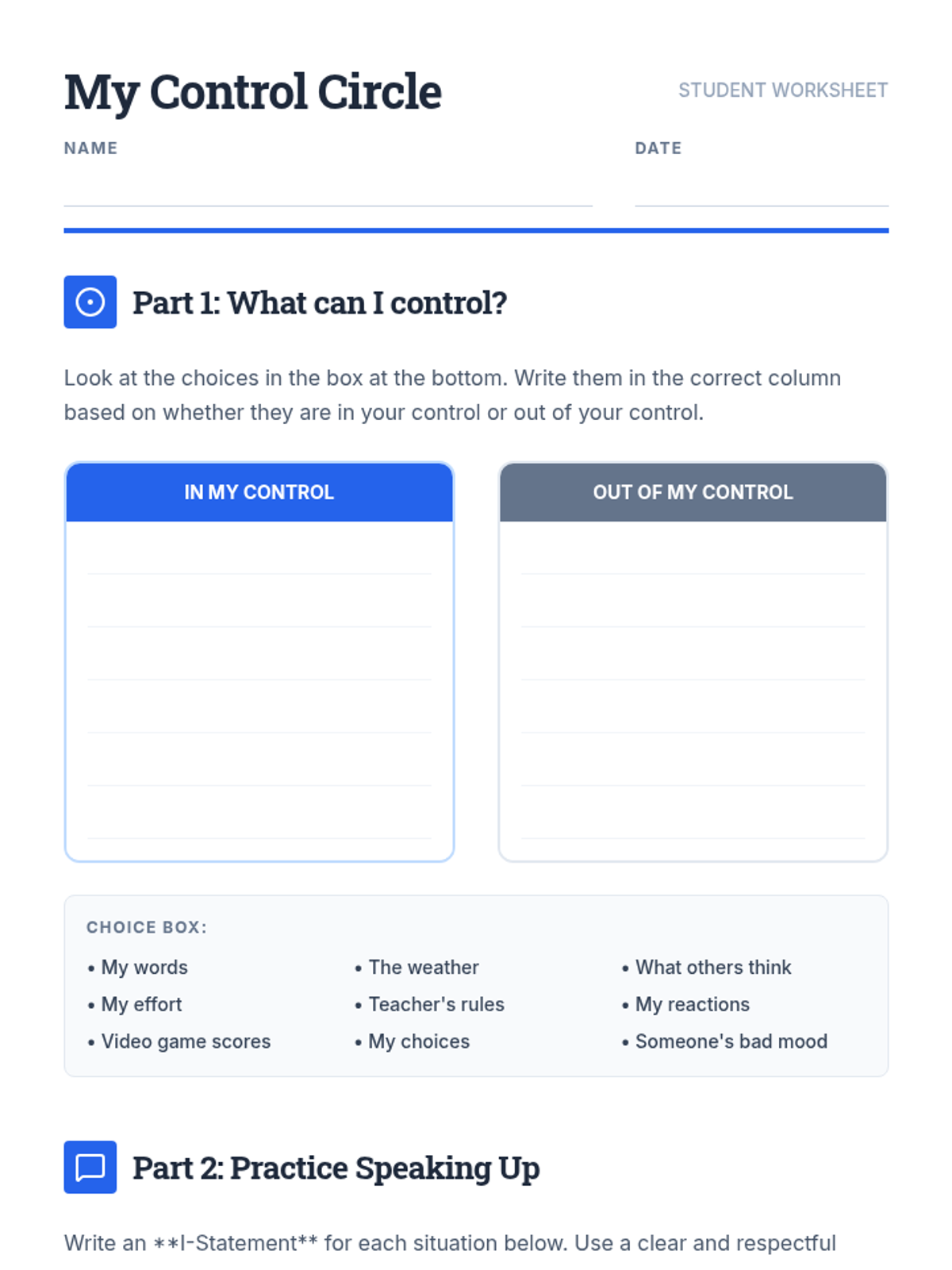
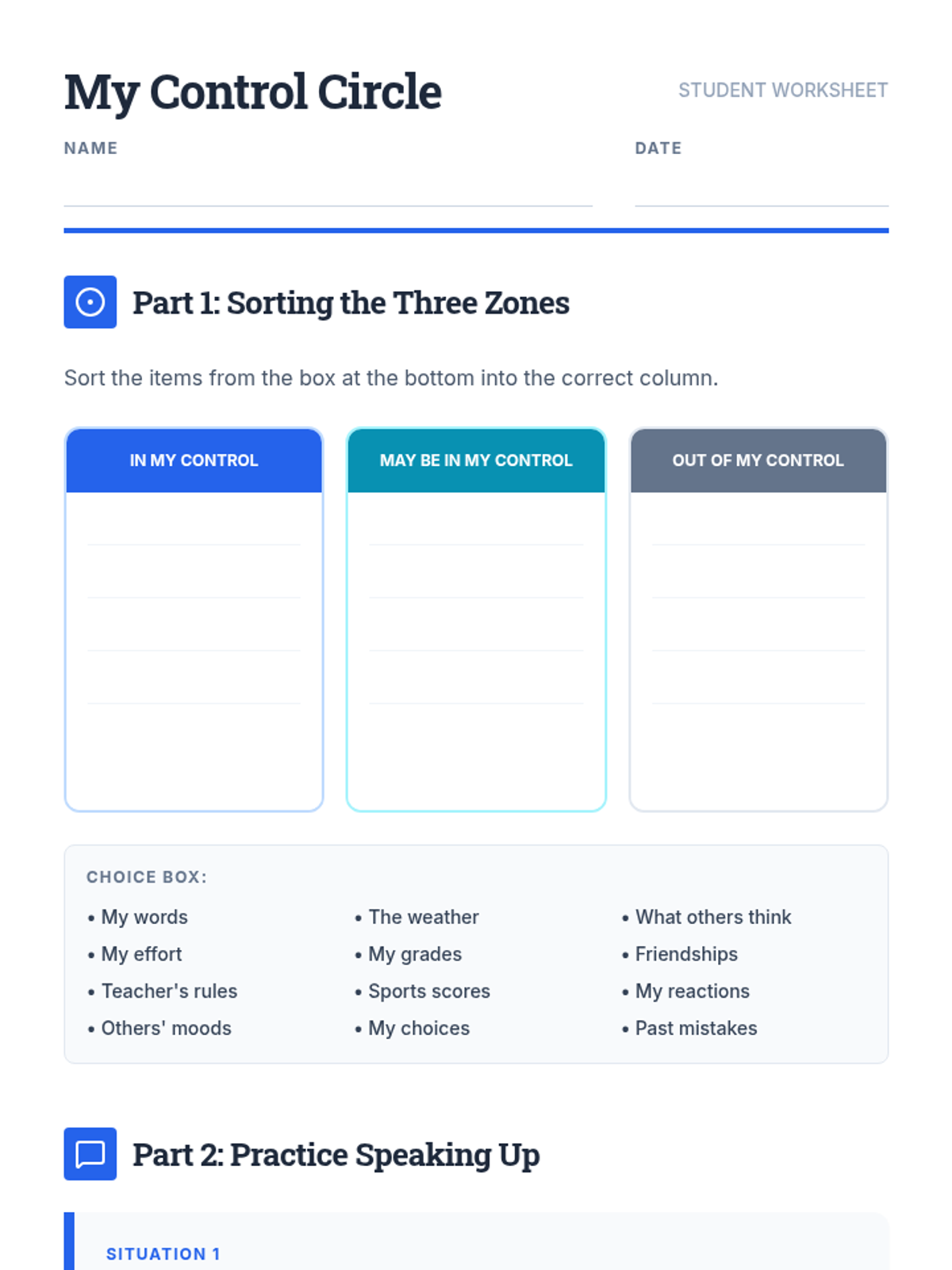
A concrete worksheet for 6th graders to practice identifying things in their control, what may be in their control, and writing assertive I-statements.
A revised 10-slide presentation using simple, concrete language to teach students about three zones of control: In My Control, May be in My Control, and Out of My Control.
A revised teacher guide matching the concrete, analogy-free version of the control and assertiveness lesson, updated to include 6 practice situations.
An expanded worksheet for 6th graders with 6 practice situations for identifying control and writing assertive I-statements without analogies.