A set of five realistic conflict scenarios for high school students to role-play, designed to practice active listening, empathy, and negotiation in academic, personal, and digital contexts.
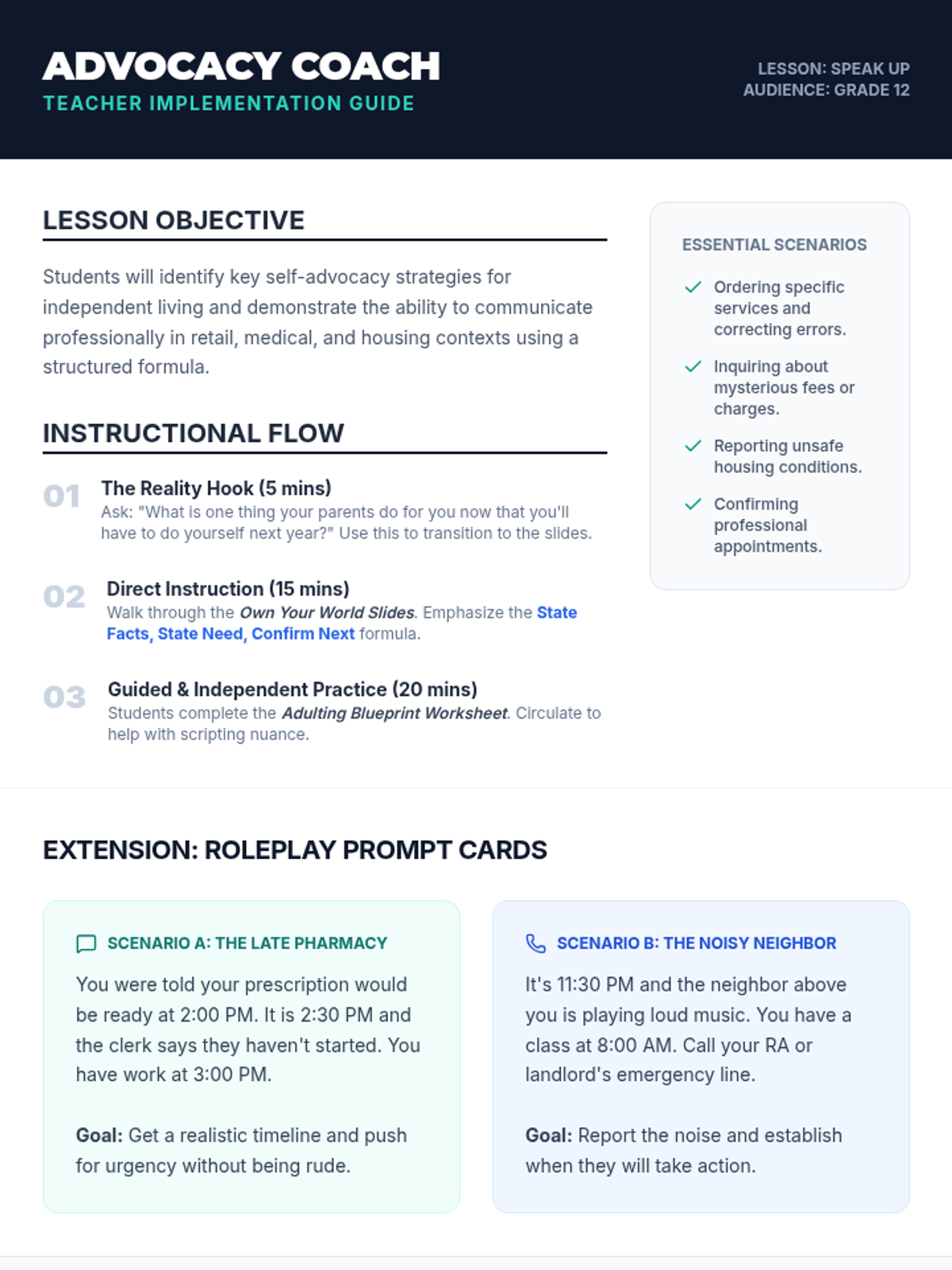
A teacher-facing implementation guide for a self-advocacy lesson, featuring instructional flow, roleplay scenarios, and differentiation strategies for 12th-grade students.
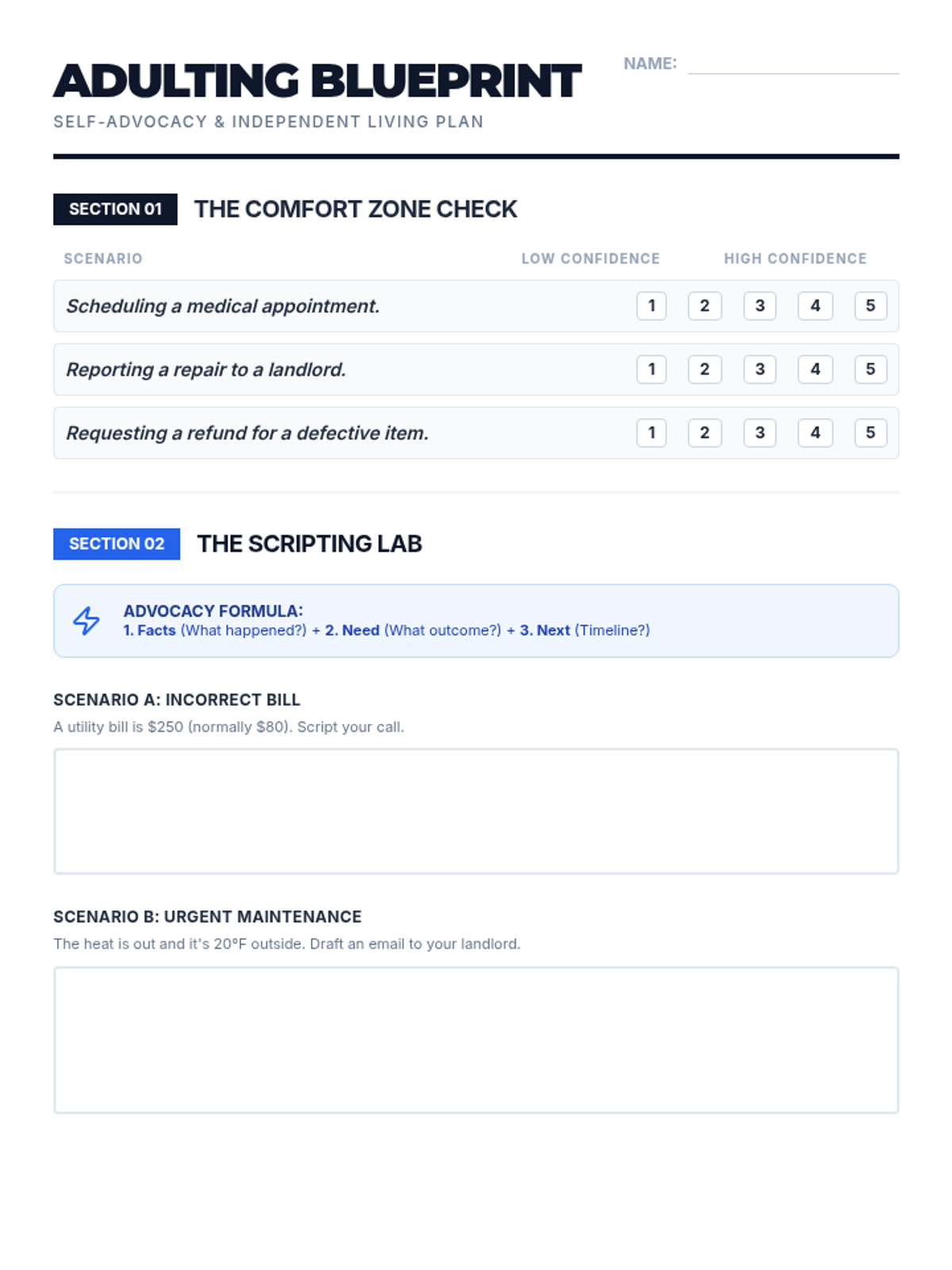
A personalized planning worksheet for 12th-grade students to assess their current self-advocacy comfort levels, practice professional scripting for independent living scenarios, and create a 30-day action plan. Tightened to exactly 2 pages with forced page breaks.
A comprehensive slide deck for 12th-grade students teaching self-advocacy skills for independent living scenarios like retail interactions, medical appointments, and landlord communications.
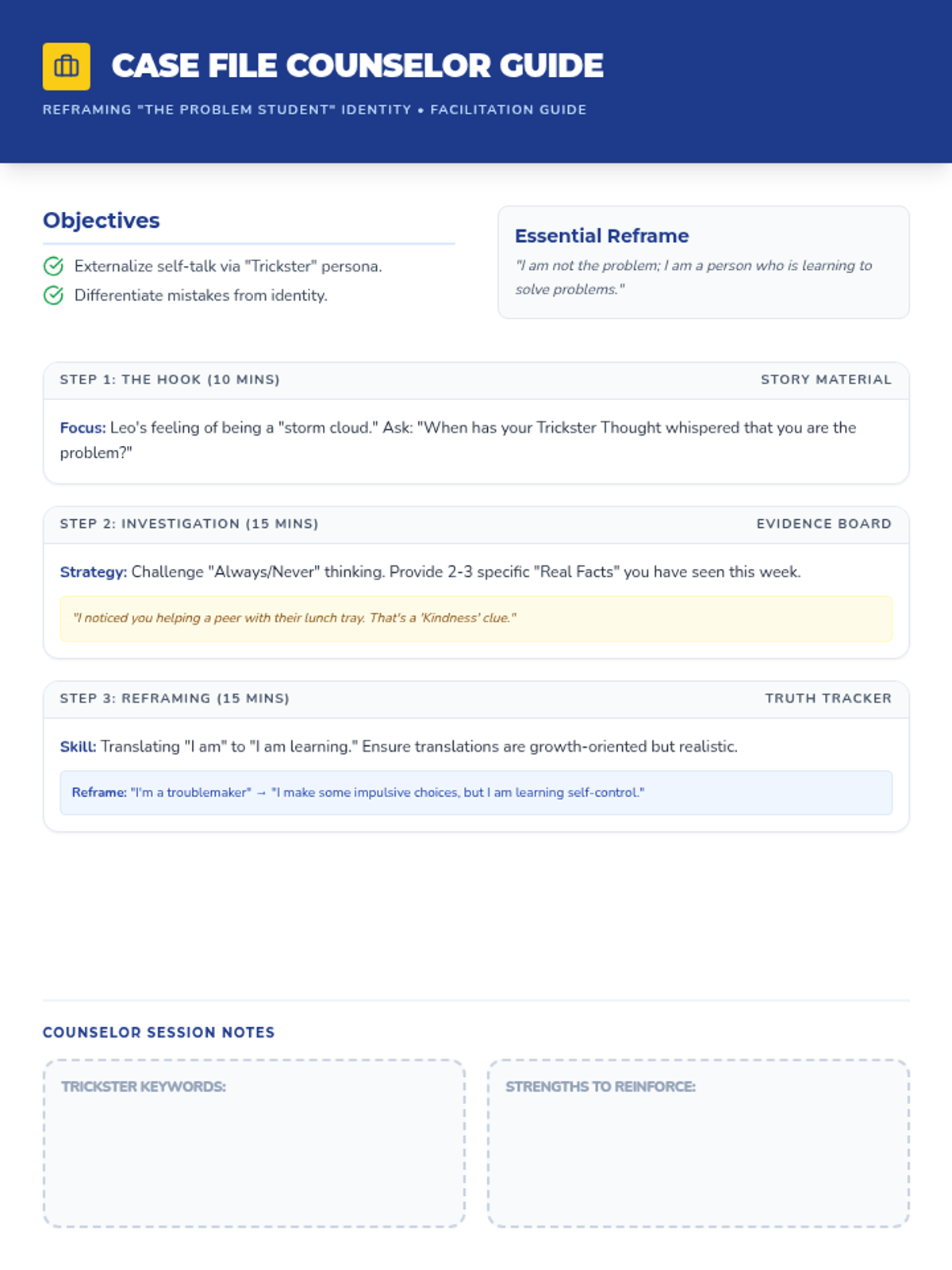
A counselor-facing facilitation guide for a 1:1 session. Includes pacing, key discussion prompts, and strategies for helping students separate their identity from their behavioral challenges.
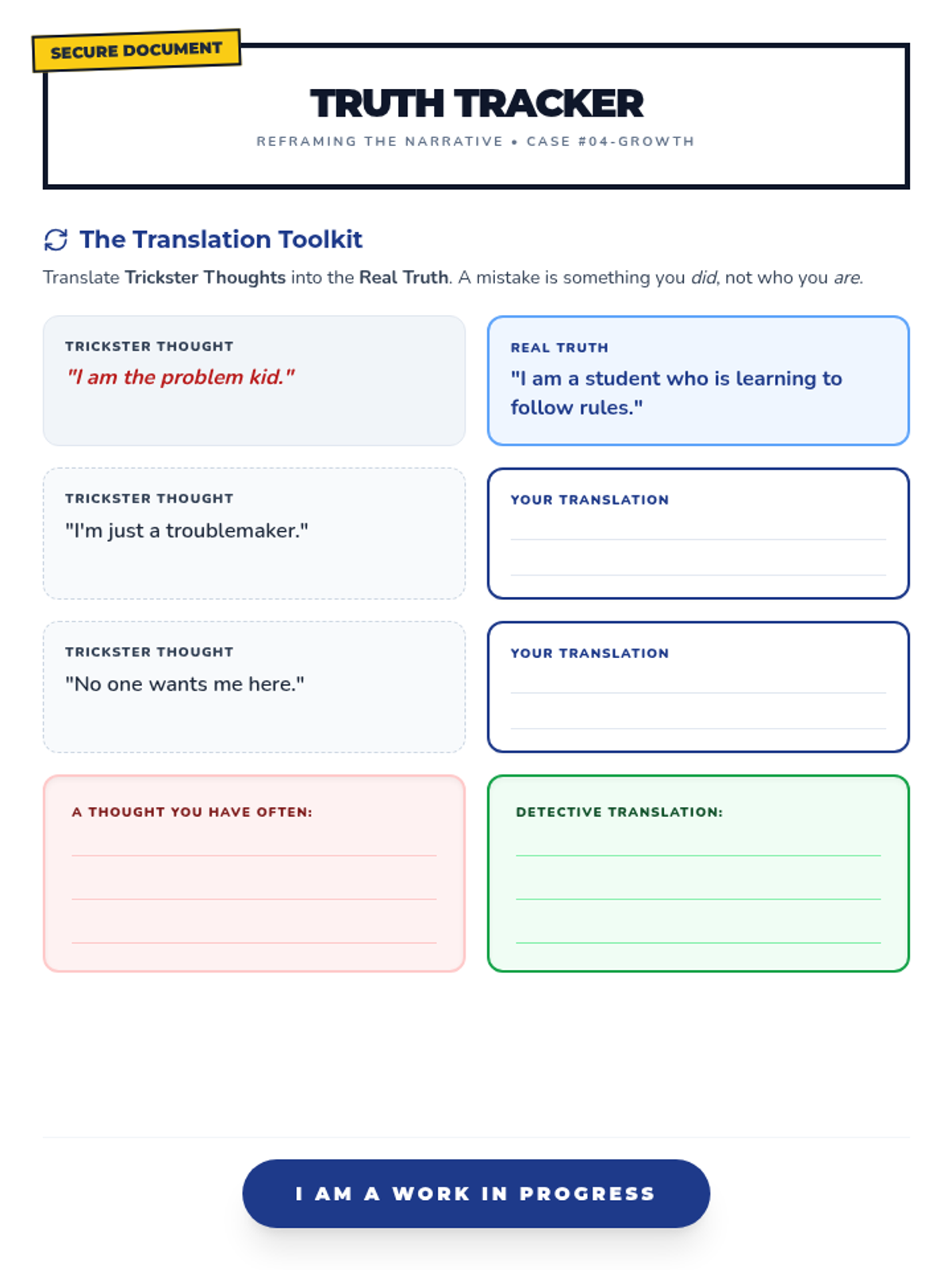
A reframing worksheet that guides students through the process of 'translating' negative, identity-based thoughts into growth-oriented, factual statements. Features a 'Detective Toolkit' visual theme.
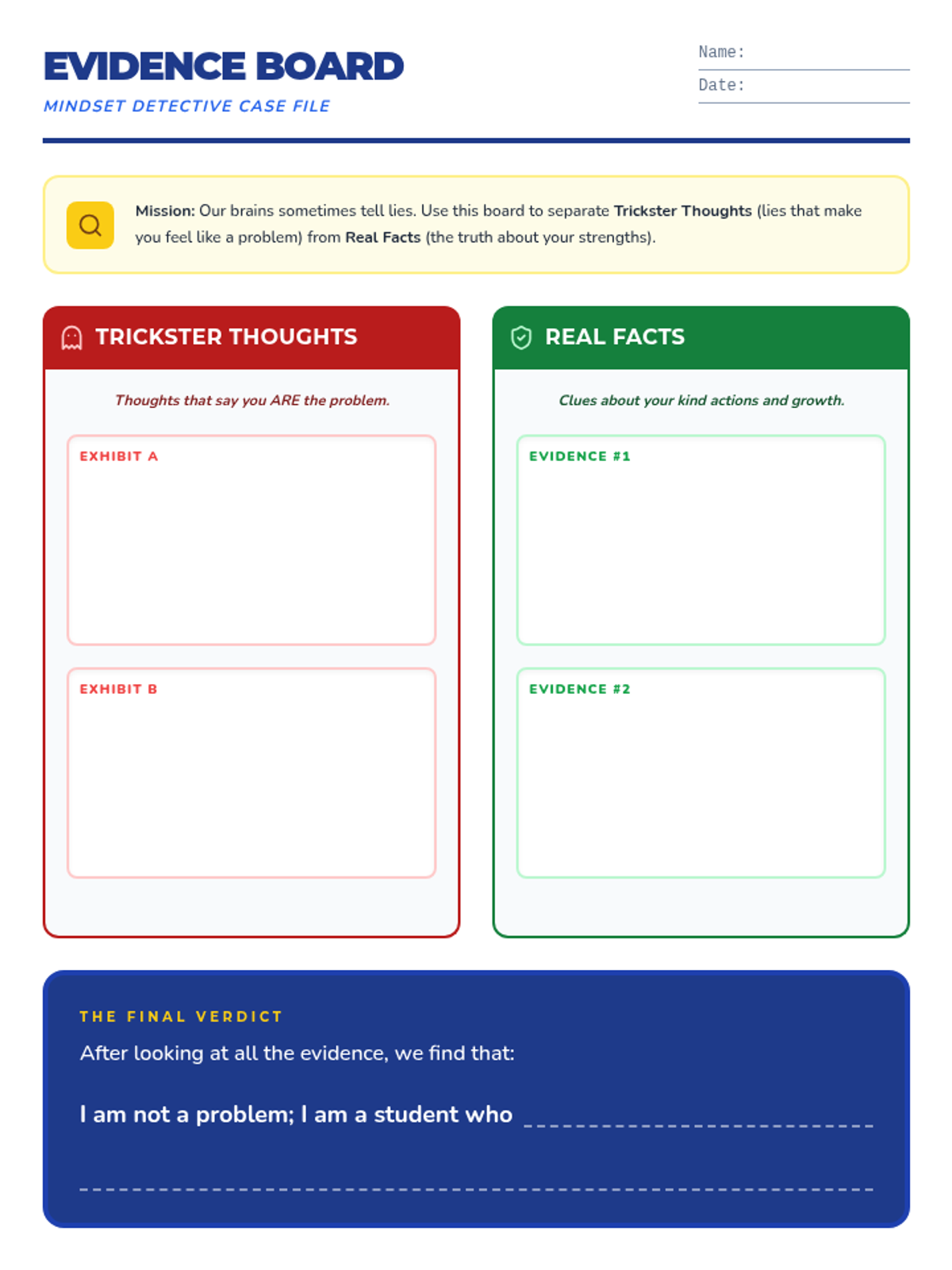
An interactive evidence board worksheet for students to categorize their negative self-talk as 'Trickster Thoughts' and counter them with 'Real Facts' about their strengths and positive behaviors.
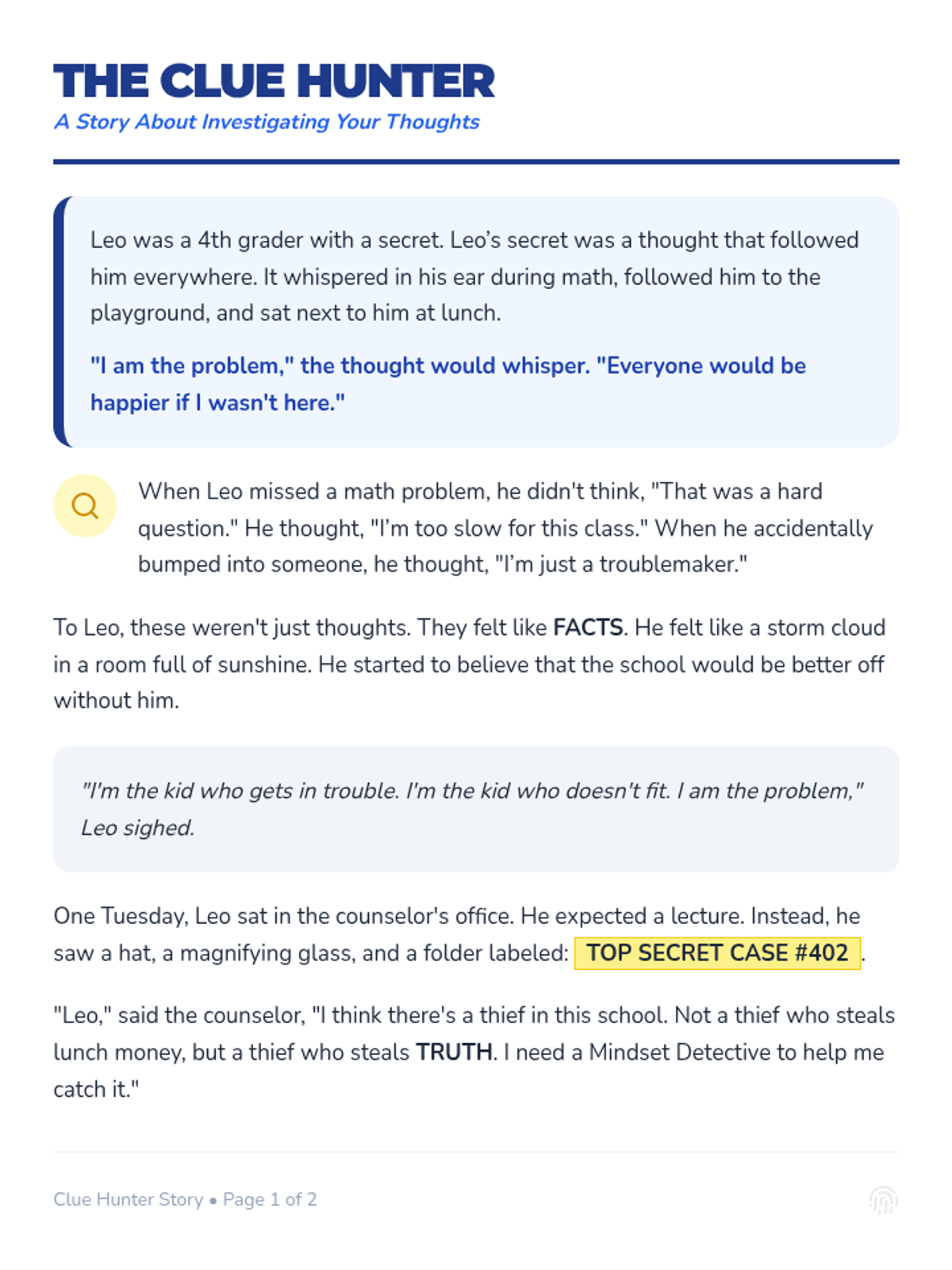
A two-page social story about a student named Leo who learns to differentiate between 'Trickster Thoughts' (identity-based negative self-talk) and 'Detective Facts' (situational reality and personal strengths). Includes discussion questions for 1:1 sessions.
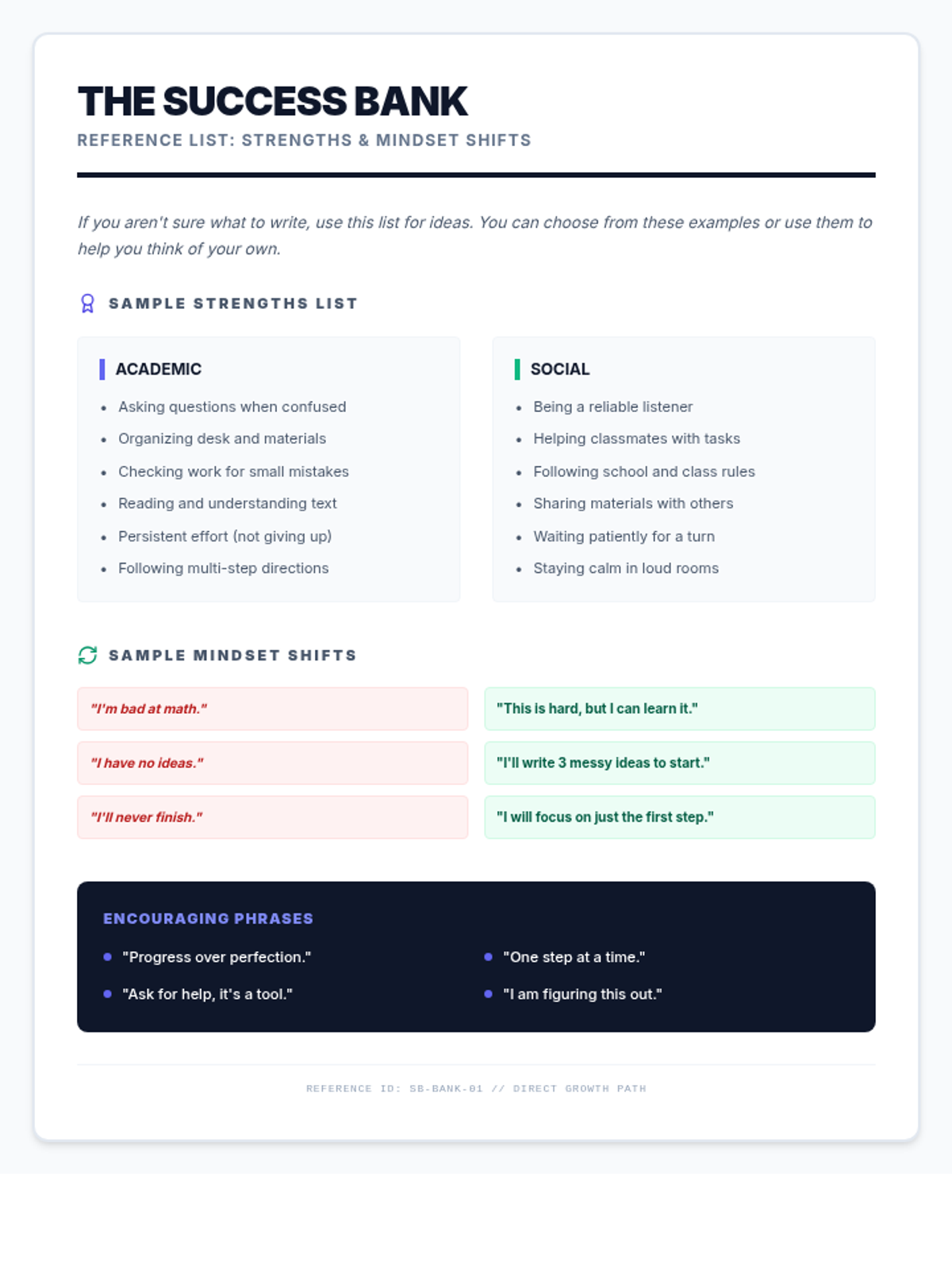
A reference sheet for the student containing concrete examples of academic and social strengths, growth mindset shifts, and encouraging phrases. Designed to support students who struggle to generate their own responses. Revised for single-page layout.
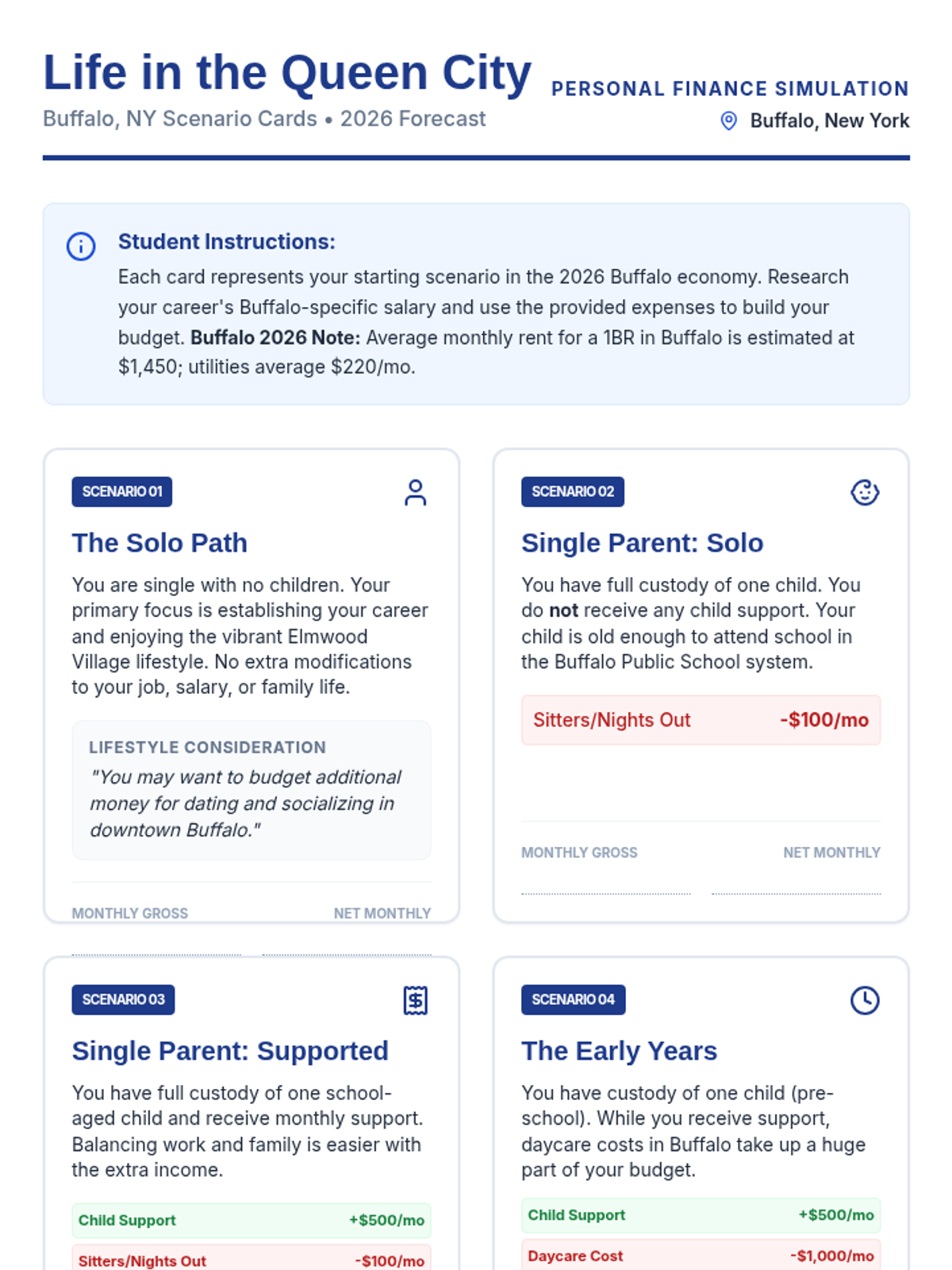
A comprehensive set of 22 printable family scenario cards for a personal finance simulation set in Buffalo, NY in 2026. Each card includes specific life circumstances and financial modifications (daycare, child support, etc.). Designed for quick printing and clean cutting without student work areas on the cards.
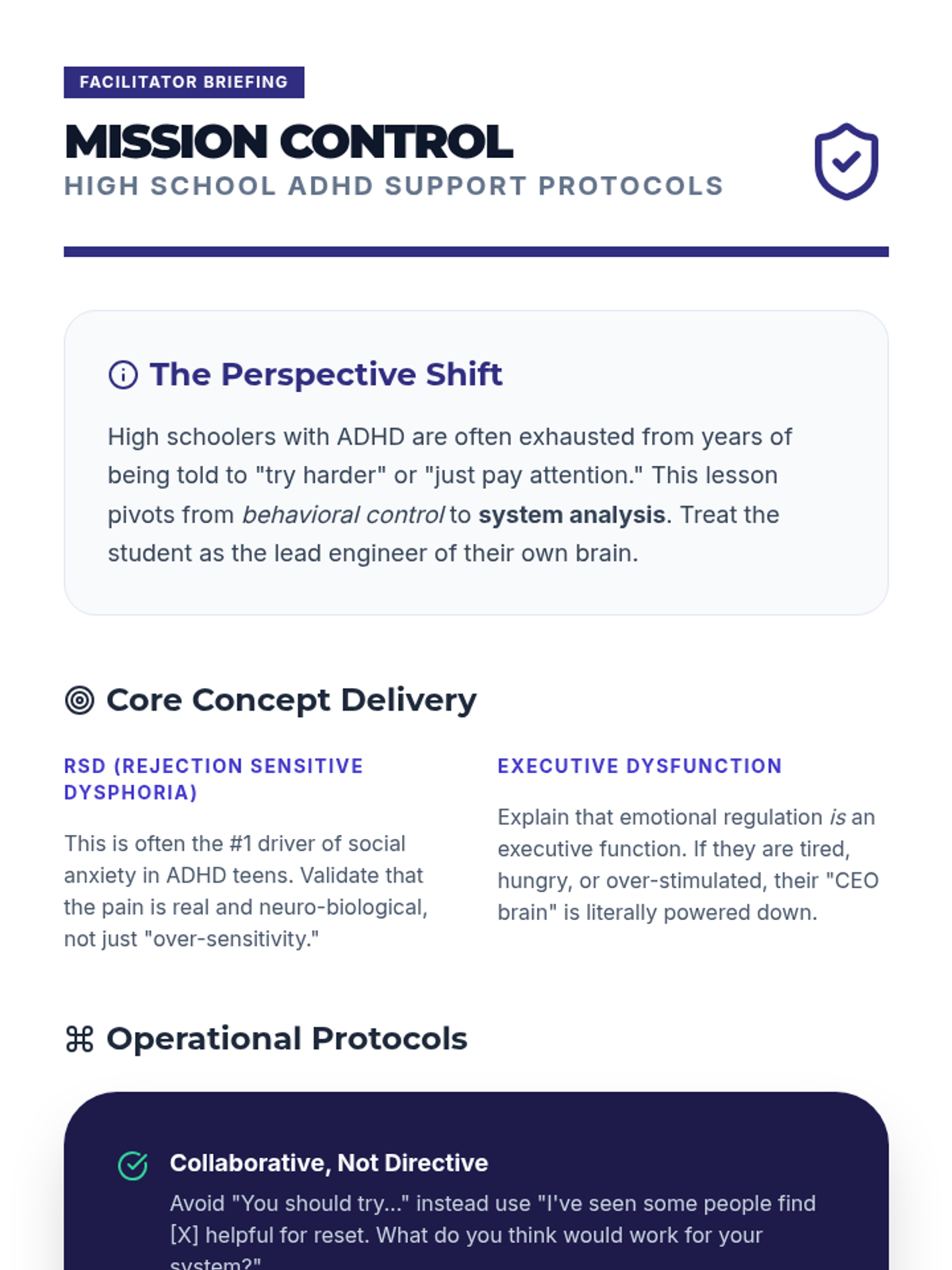
A facilitator's guide for supporting high schoolers with ADHD, focusing on autonomy, validation, and advanced cognitive strategies like RSD management and executive function audits.
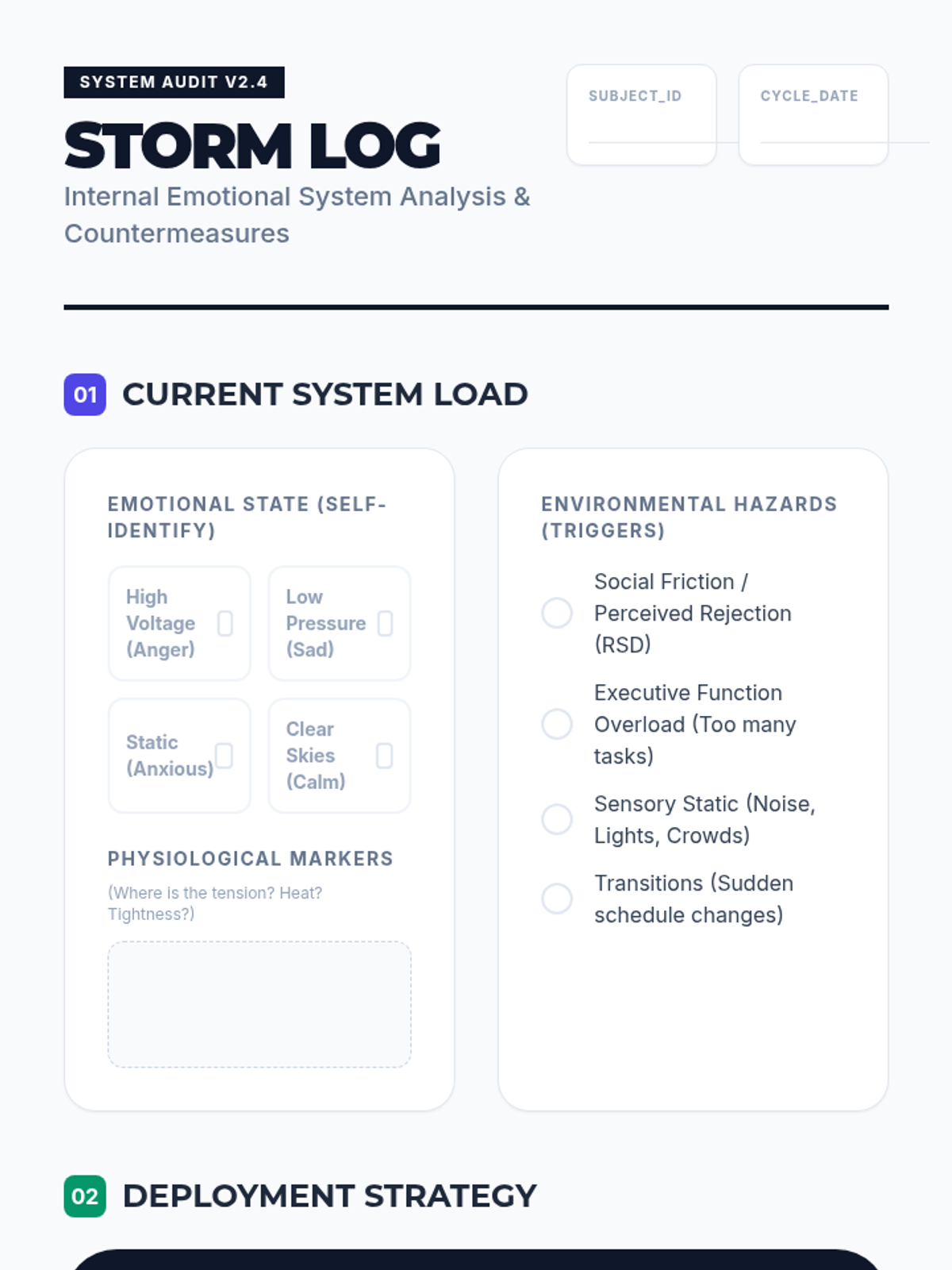
A data-driven self-audit for high schoolers to track their emotional triggers and systemic responses using a professional, high-tech diagnostic theme.
A professional-grade briefing for high schoolers on the mechanics of the ADHD brain and emotional regulation, featuring neuroscience-based explanations and advanced coping strategies.
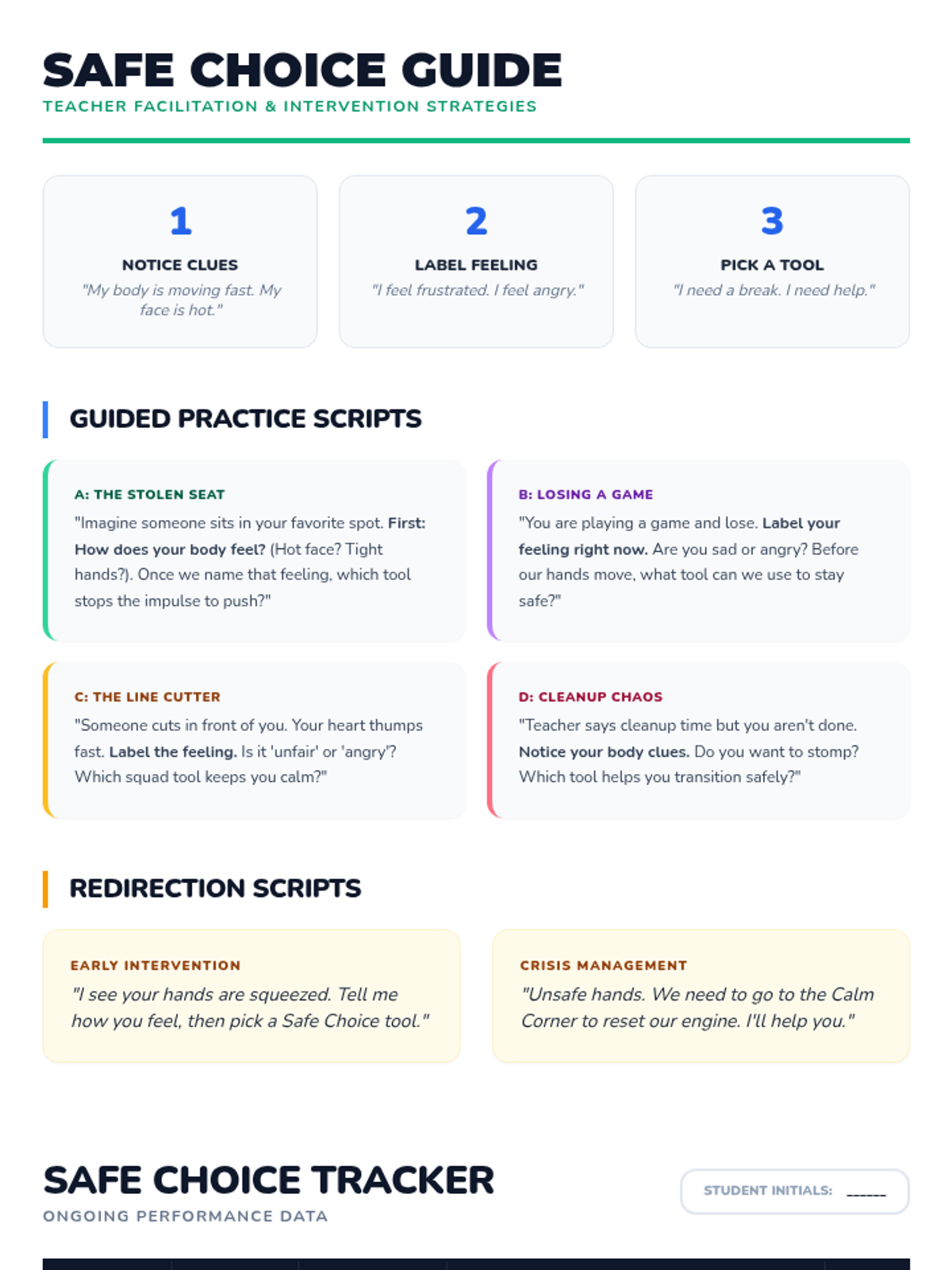
A teacher-facing guide providing intervention strategies, scripts for redirection, and implementation tips to support a student's impulse control and safety. Updated with additional guided practice scripts for varied classroom scenarios.
A presentation introducing the concept of impulsivity as 'Super Speed' and teaching three specific coping strategies (Calm Corner, Asking for Help, and Box Breathing) using clear visuals and student-friendly language. Updated to include more interactive scenarios for classroom practice.
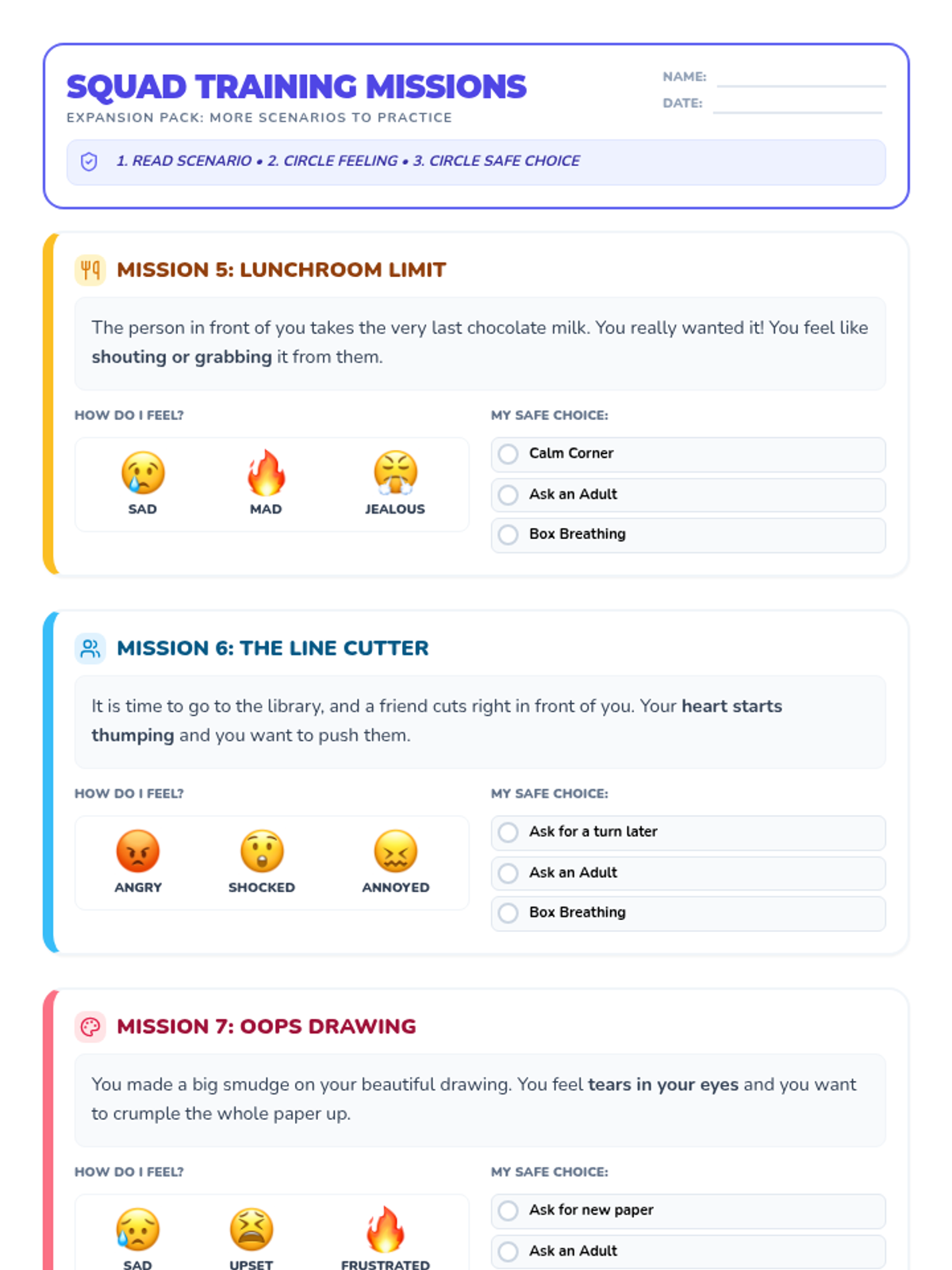
A two-page expansion worksheet for the Safe Choice Squad lesson, featuring four additional scenarios (missions 5-8) focused on lunchroom conflicts, line cutting, mistakes, and cleaning up transitions. Students practice labeling their internal physical sensations and selecting appropriate coping tools.
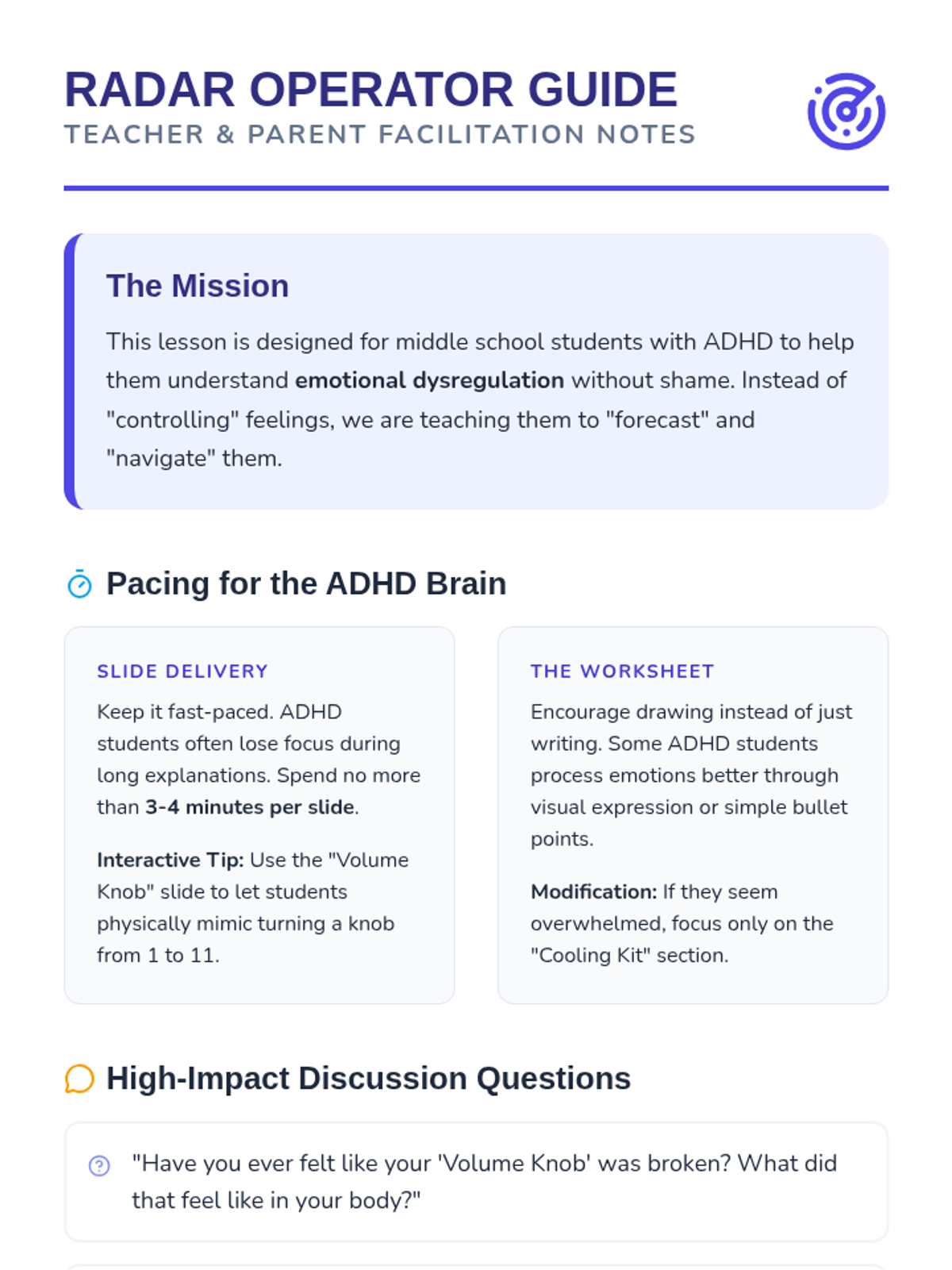
A guide for educators and parents to facilitate the "Brain Storms" lesson, featuring pacing tips, discussion prompts, and strategies for validating ADHD-driven emotions.
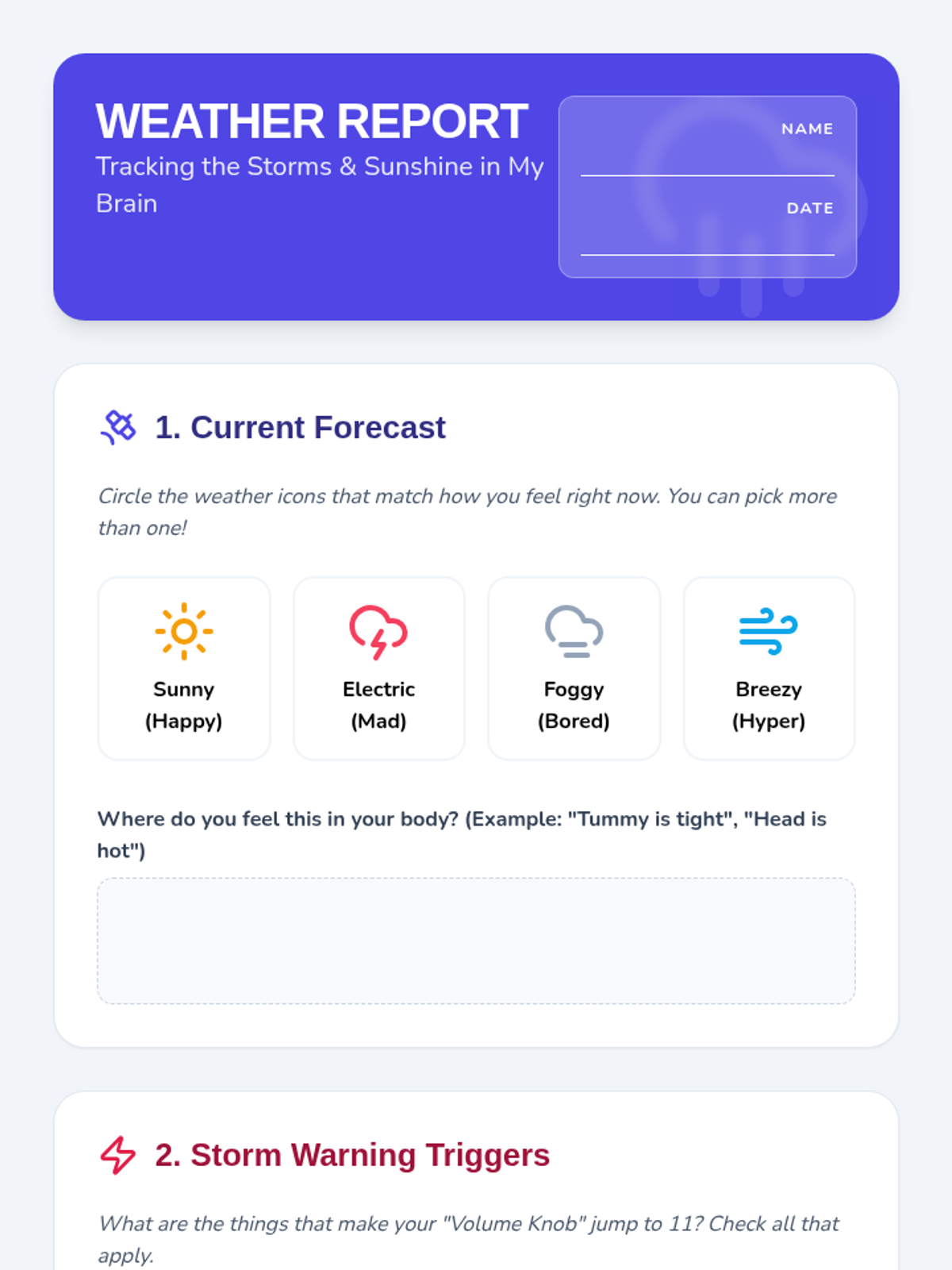
A self-reflection worksheet for students with ADHD to identify their personal emotional triggers, physical warning signs, and favorite regulation strategies using a weather-tracking theme.
An engaging slide deck using a weather metaphor to help middle schoolers with ADHD understand emotional dysregulation, brain function, and coping strategies.
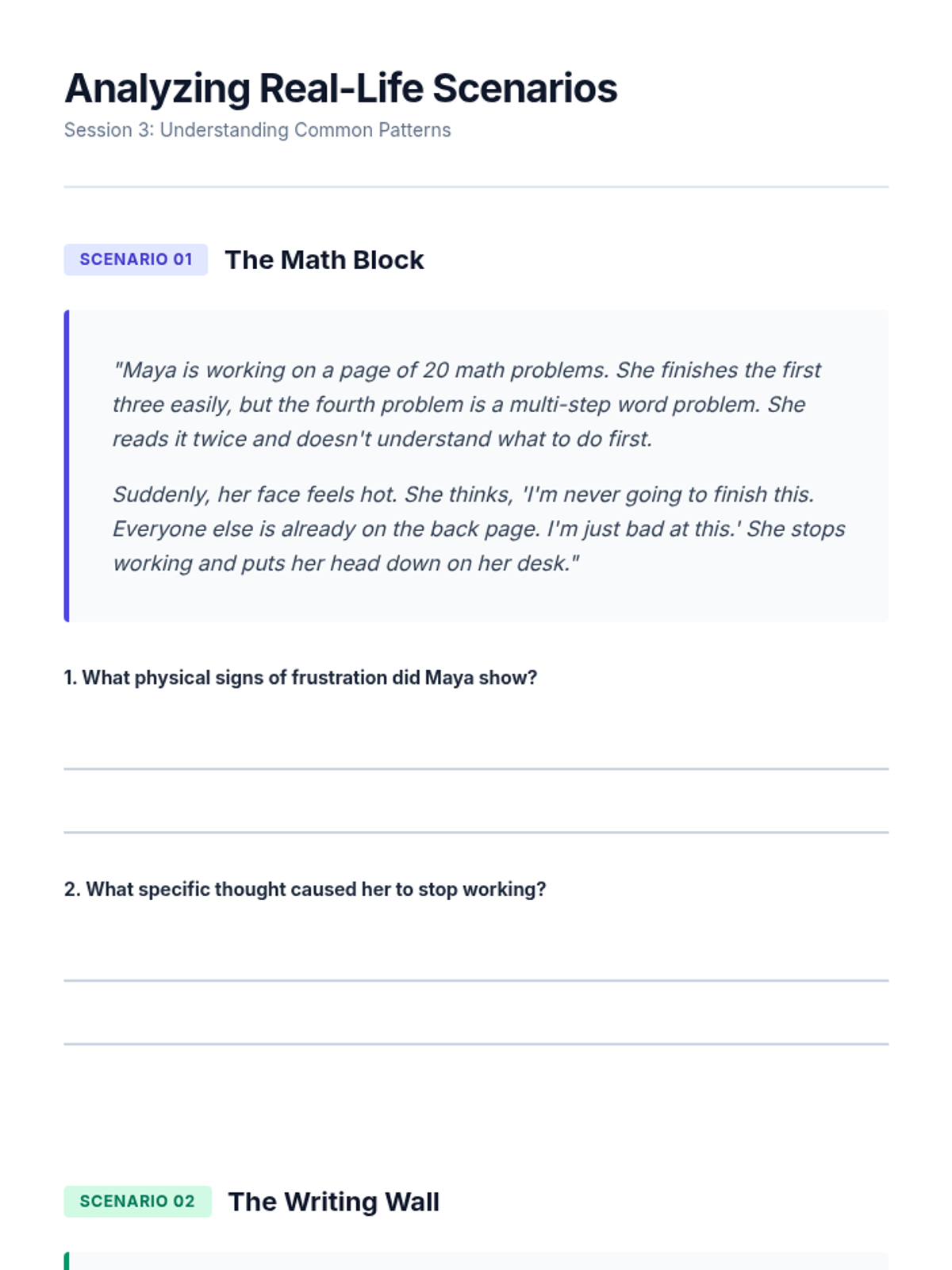
A collection of straightforward social stories (scenarios) for Session 3. Features realistic math and writing challenges. Revised for better writing space, darker lines, and corrected page breaks.
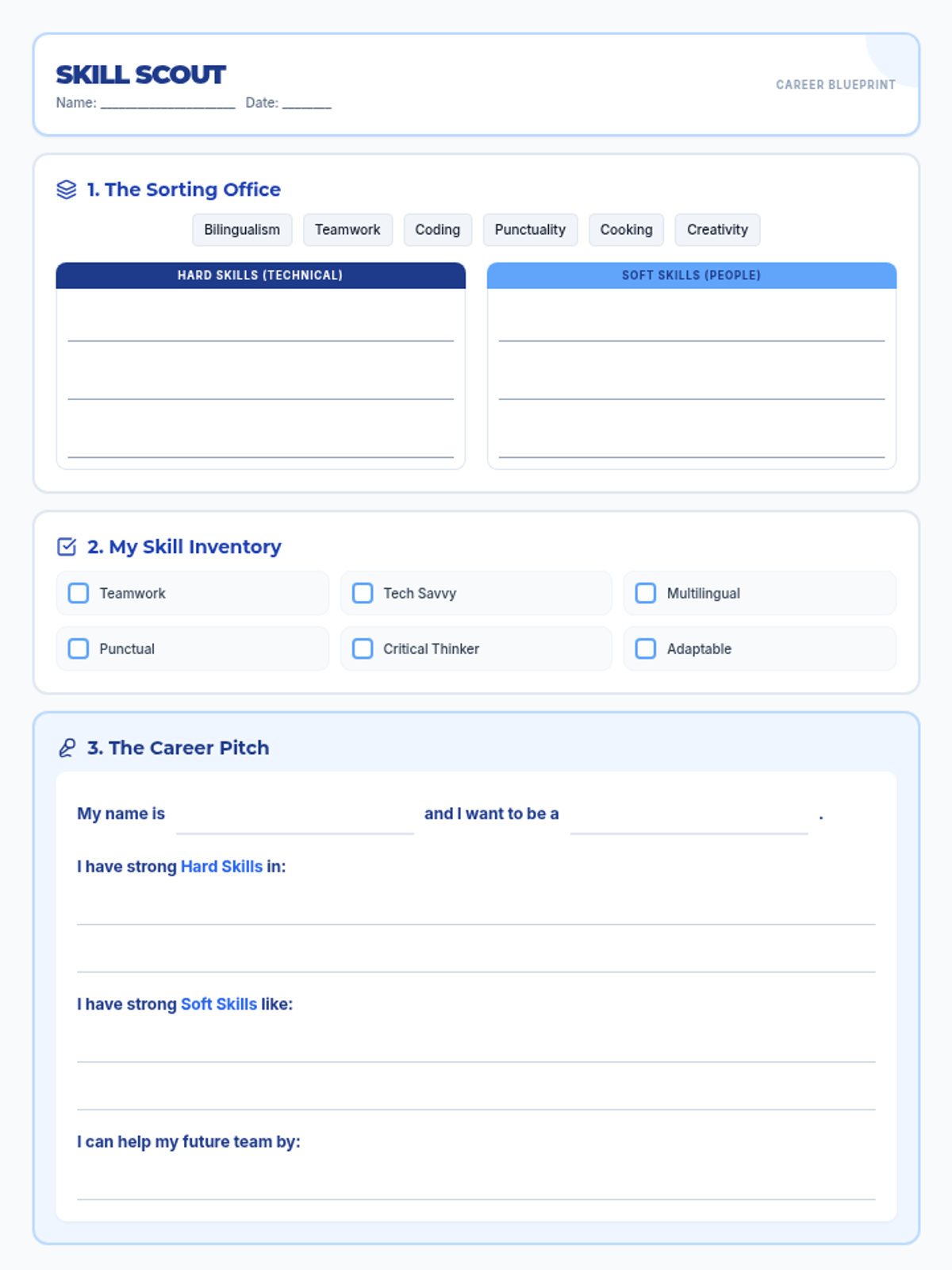
A student worksheet designed for 11th grade MLLs to categorize and self-assess their employability skills, featuring scaffolded writing frames for a professional "pitch."
A visually engaging 5-slide presentation designed for 11th grade MLLs to define and distinguish between hard and soft employability skills with minimal text and high visual support.
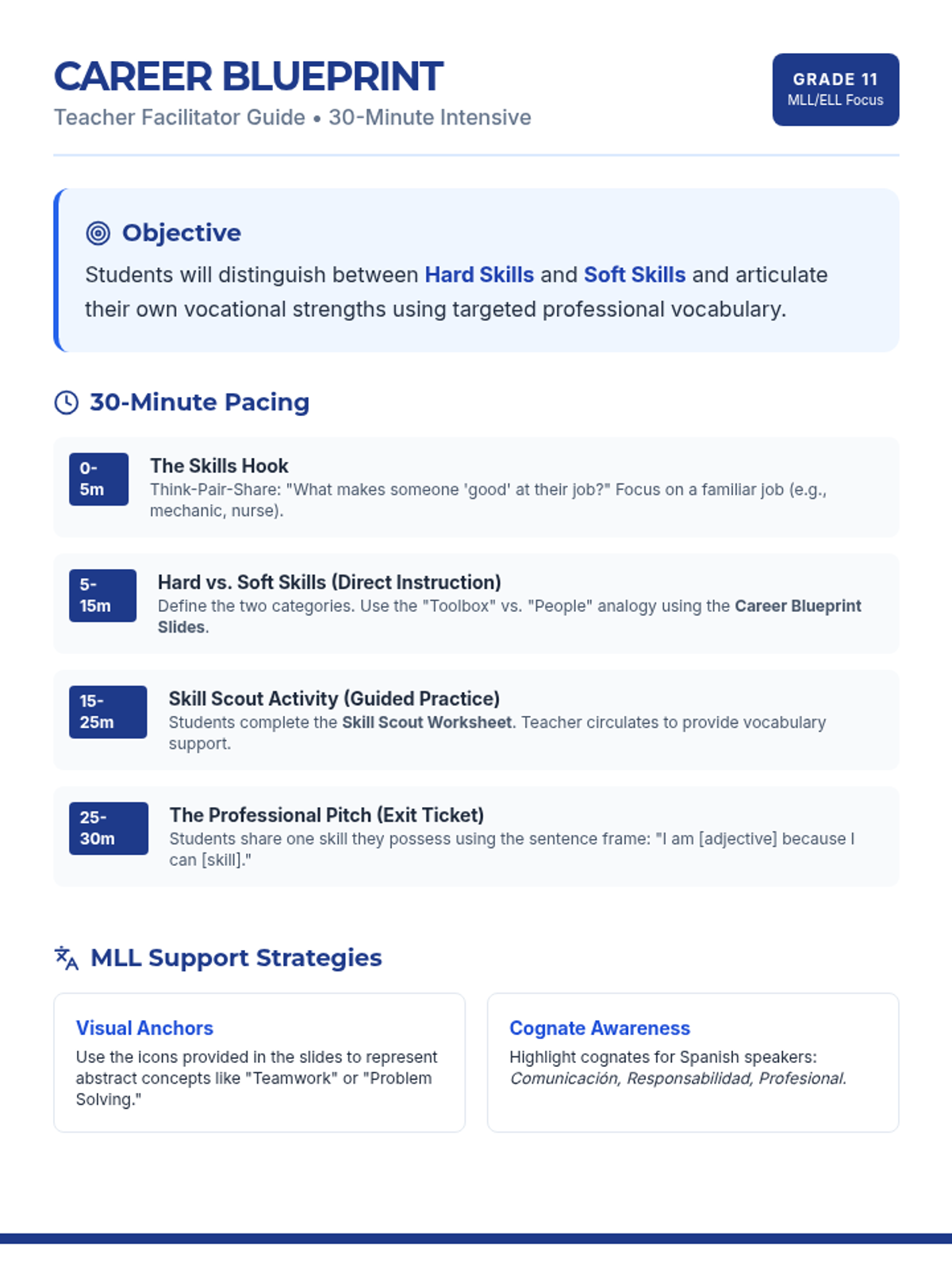
A comprehensive facilitator guide for teachers, featuring a 30-minute pacing plan, MLL-specific scaffolding strategies, and professional vocabulary banks for an employability skills lesson.
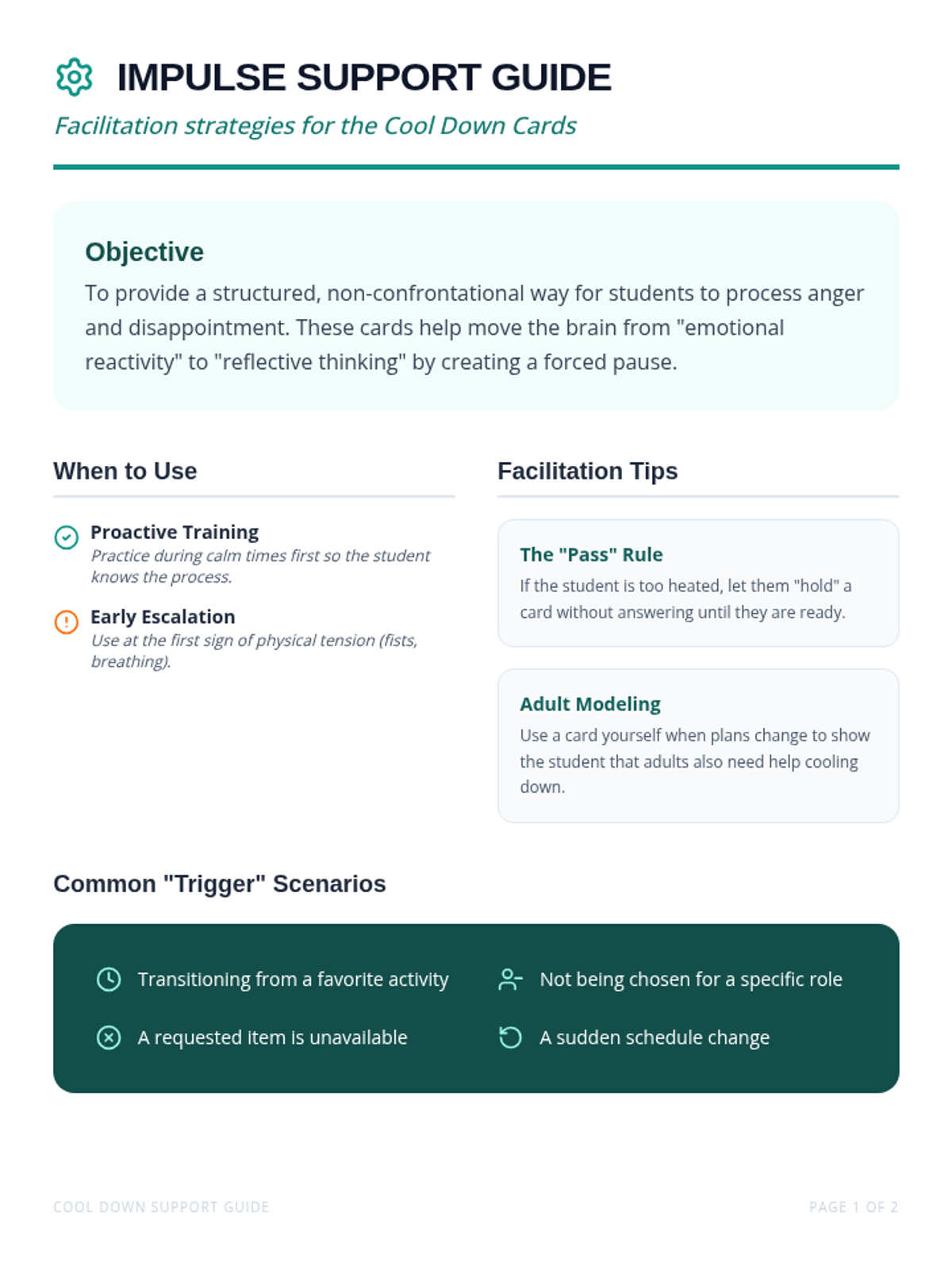
A teacher-facing guide providing strategies, scripts, and implementation tips for using the Cool Down Cards effectively with students who struggle with impulse control.
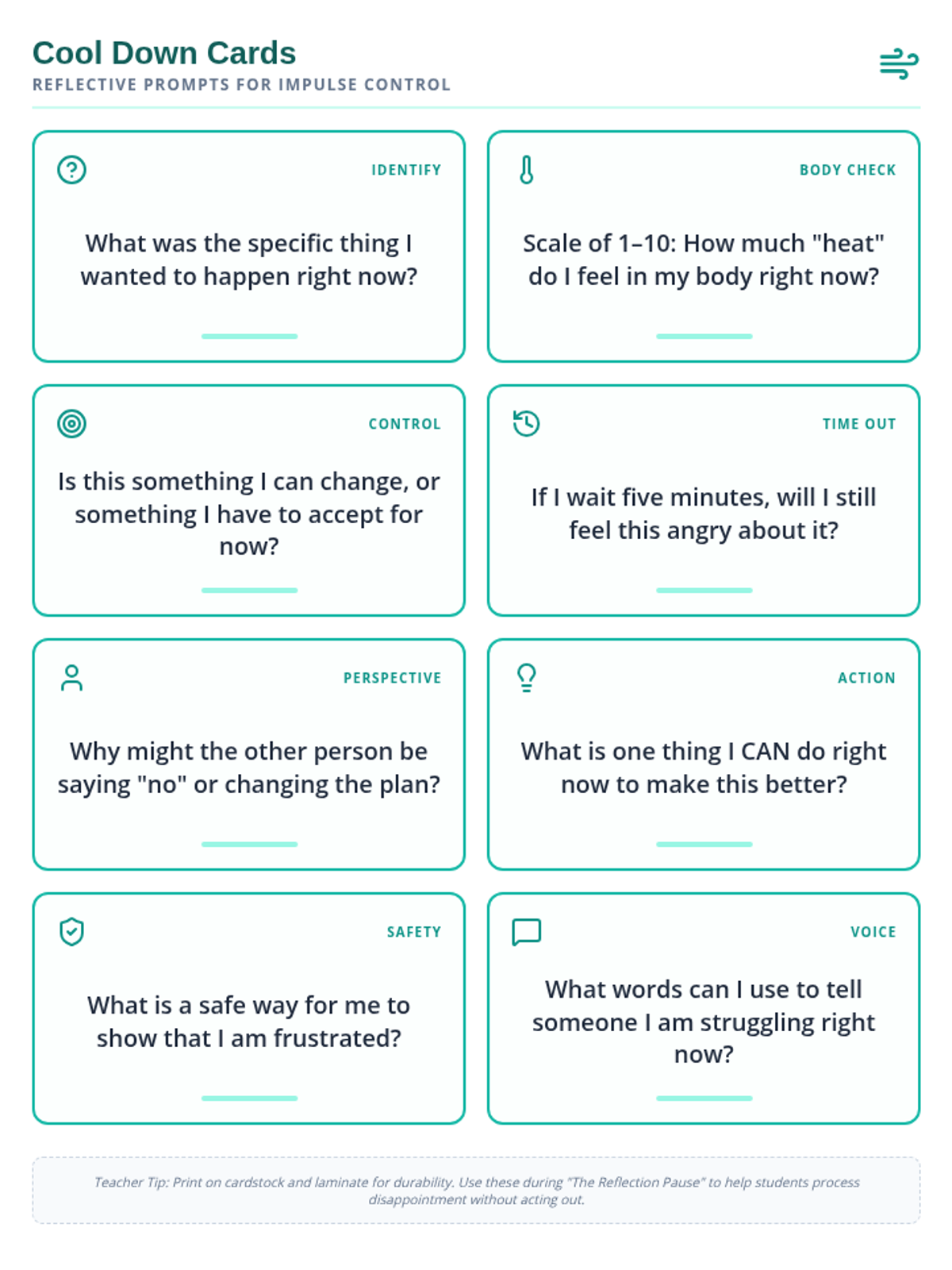
A set of 8 printable reflective conversation cards with prompts designed to help students pause and think when they don't get their way.
A visual slide deck designed to introduce the concept of impulse control and emotional awareness when faced with disappointment or frustration.
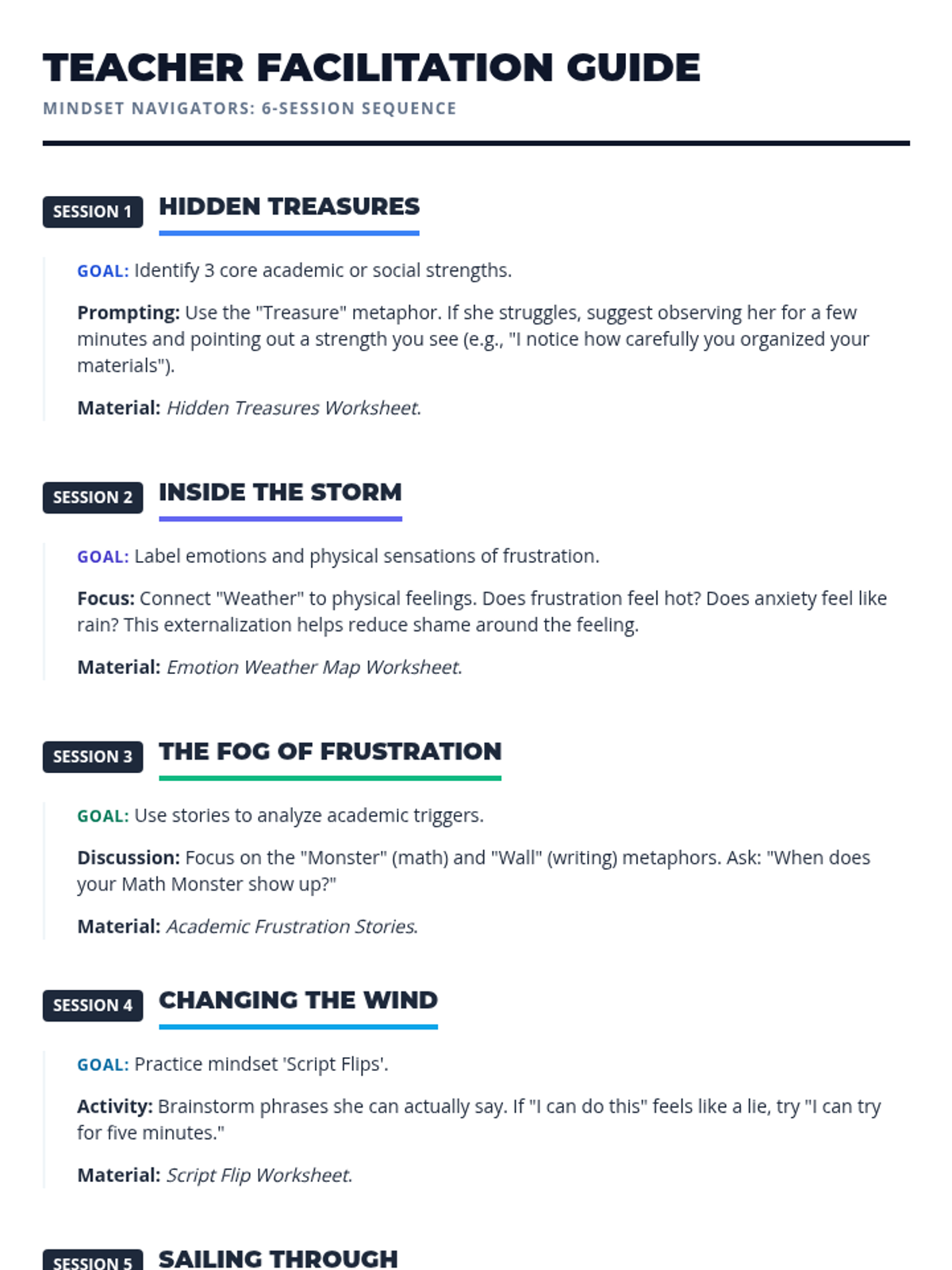
A direct, metaphor-free teacher guide for the 6-session growth sequence. Provides session goals, coaching prompts, and material references for individual student meetings. Revised to include the Success Bank for students who struggle to generate ideas.
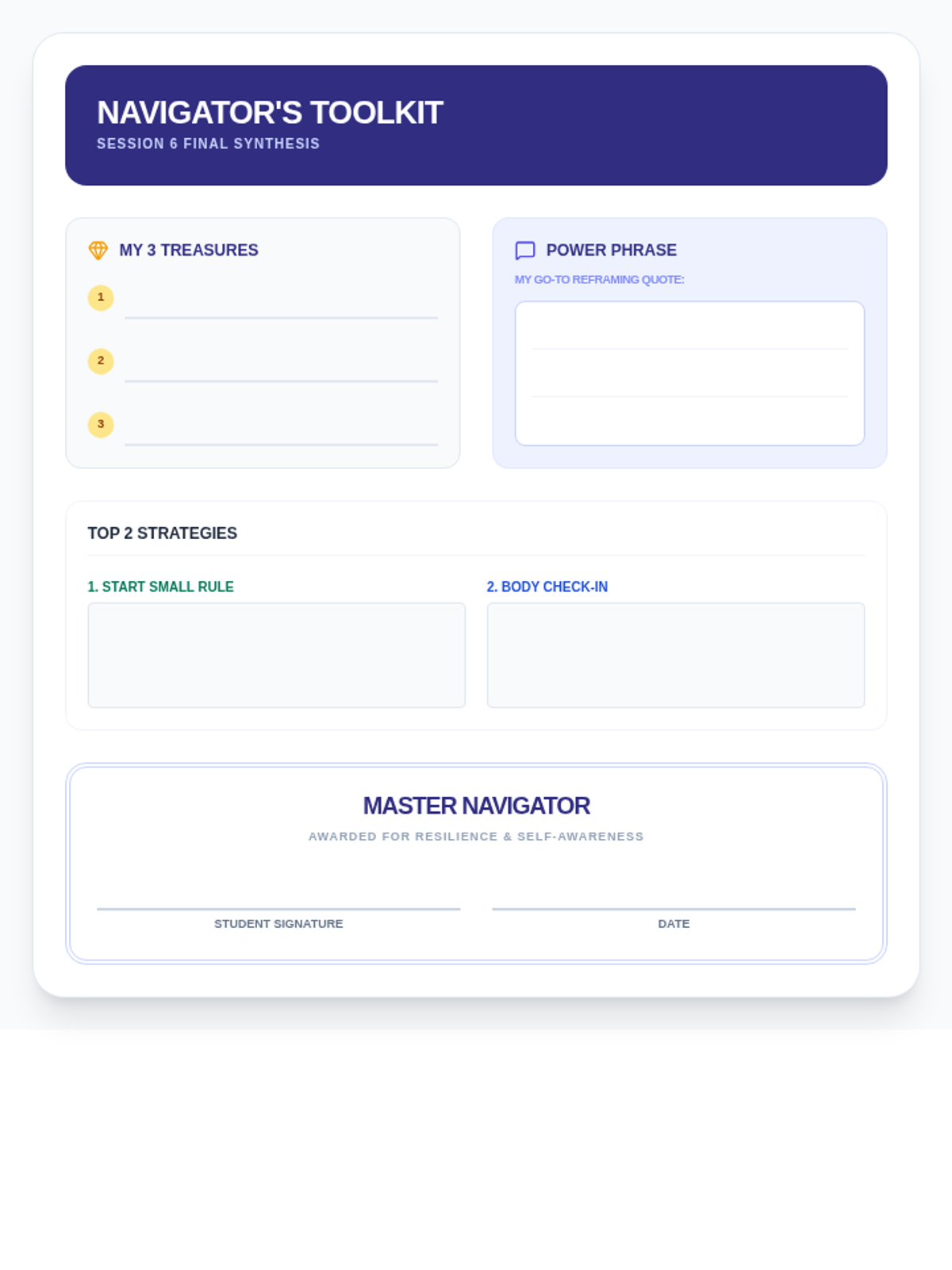
The final synthesis document for Session 6. Revised for one-page layout and increased writing space. Designed as a straightforward classroom reference sheet.
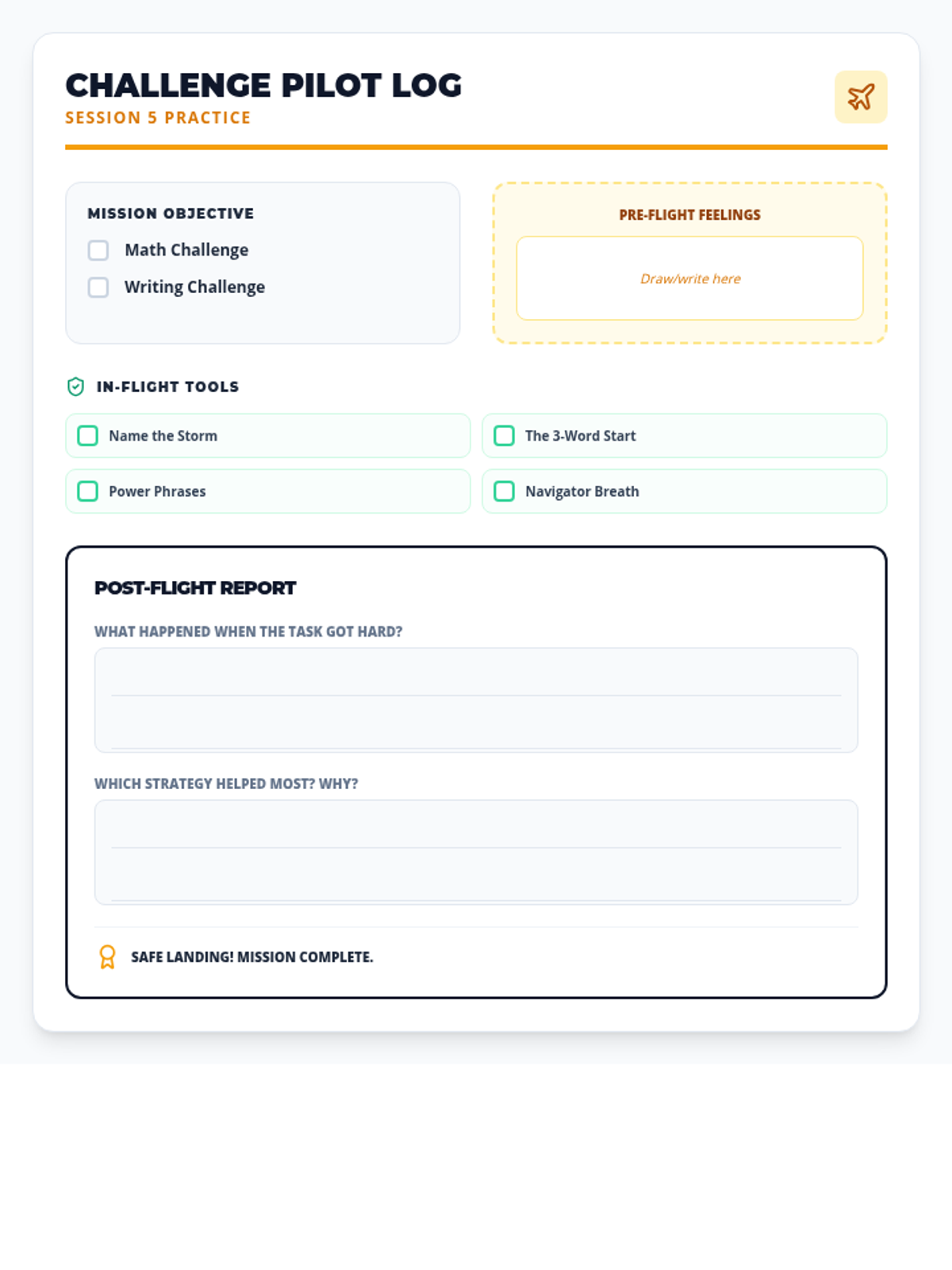
A straightforward log for Session 5 to be used during a live academic task. Revised to remove placeholder text and fit on one page.
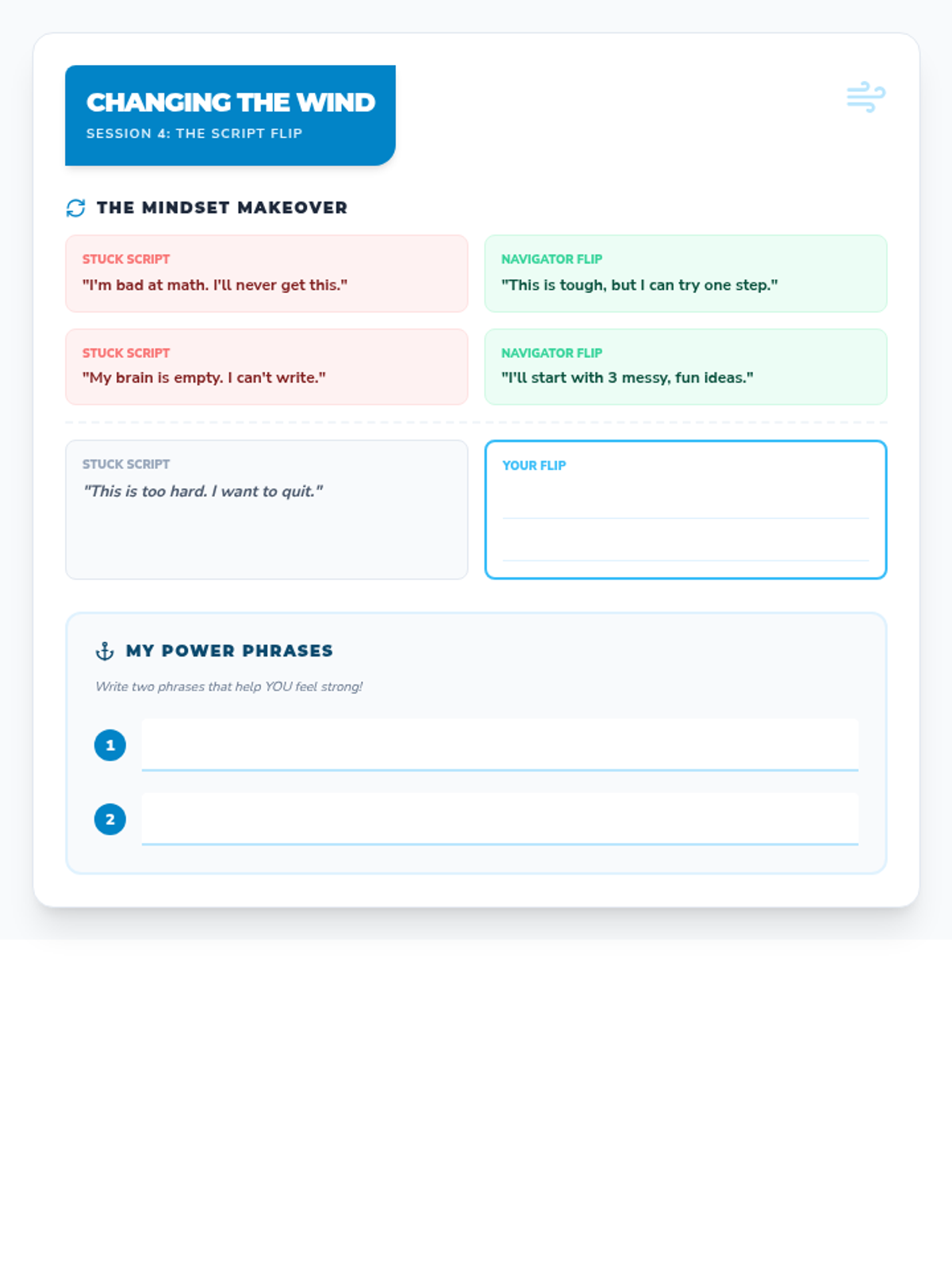
A straightforward, practical worksheet for Session 4. Focuses on switching from negative 'barrier' thoughts to helpful 'shifts' for math and writing. Revised to fix page breaks and improve contrast.
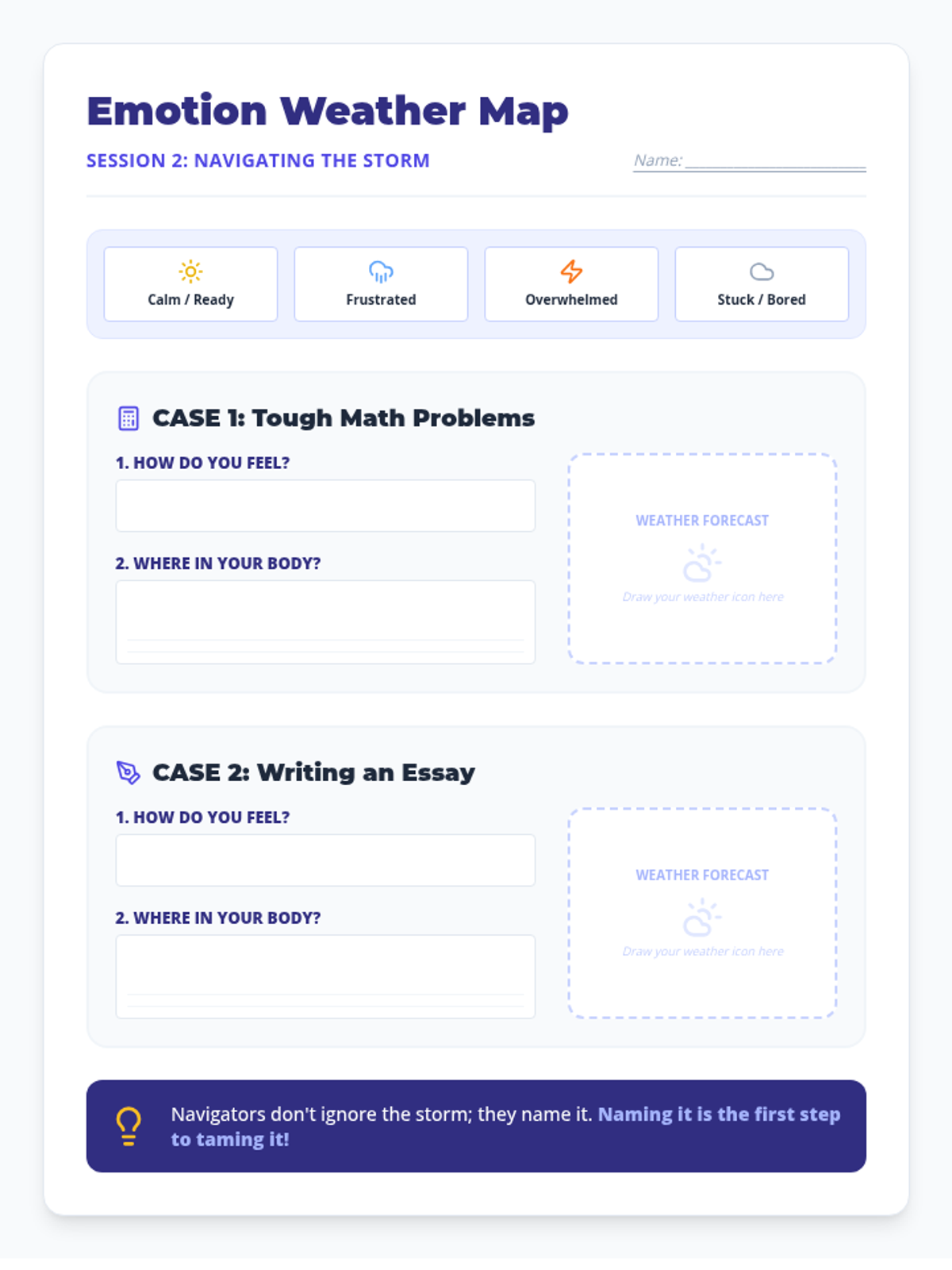
A straightforward worksheet for Session 2 to help students recognize and label emotions and physical sensations related to math and writing tasks. Revised for one-page layout and increased writing space.
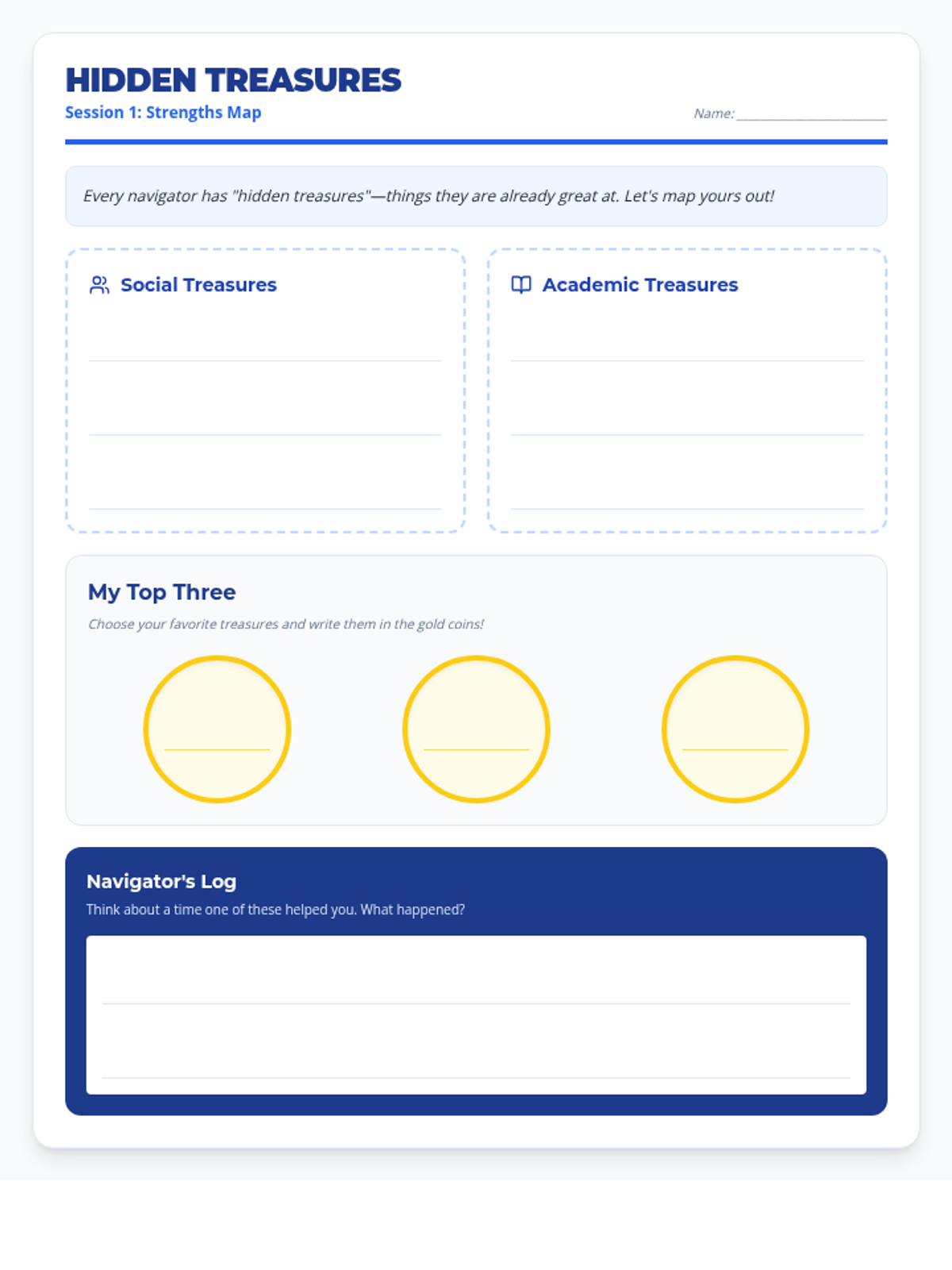
A straightforward, metaphor-free worksheet for Session 1. Students identify their top three academic and social strengths through a guided profile format. Revised for improved line contrast and more brainstorming space.
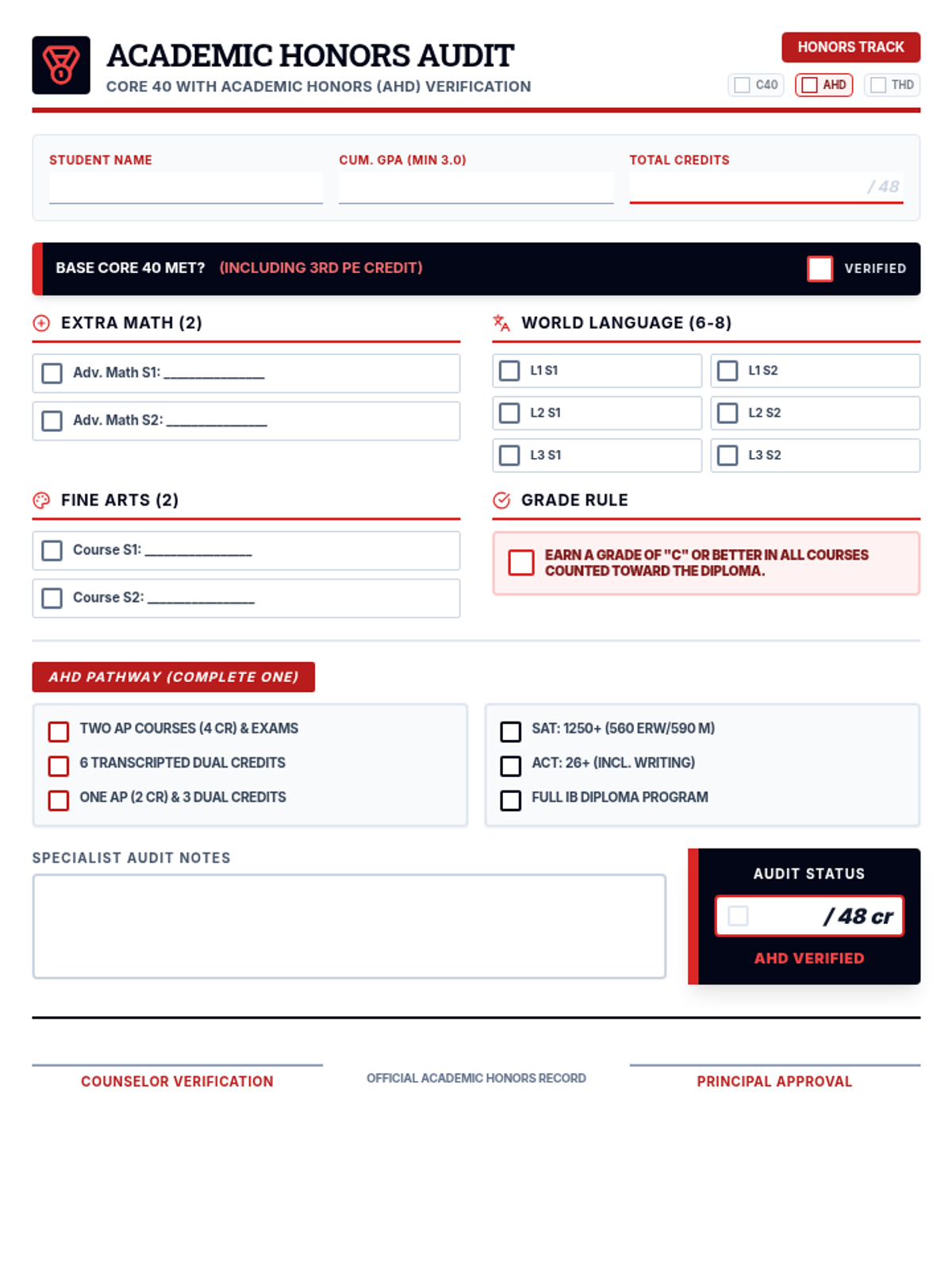
Updated Academic Honors audit sheet with explicit 48-credit verification areas in both student info and the final audit status box.
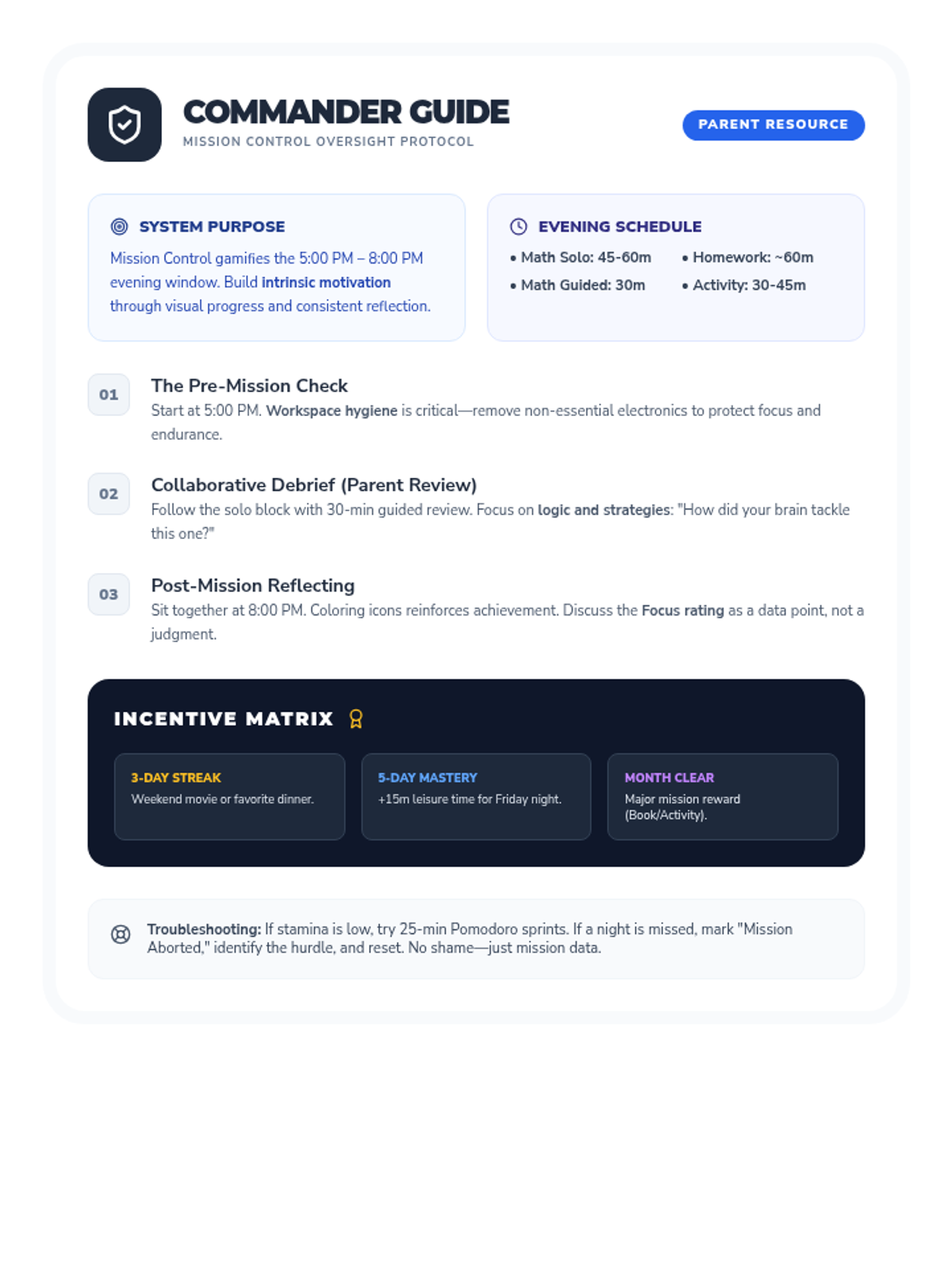
A facilitating guide for parents and teachers to implement the Mission Command daily log, featuring goal-setting strategies, review techniques, and incentive suggestions.
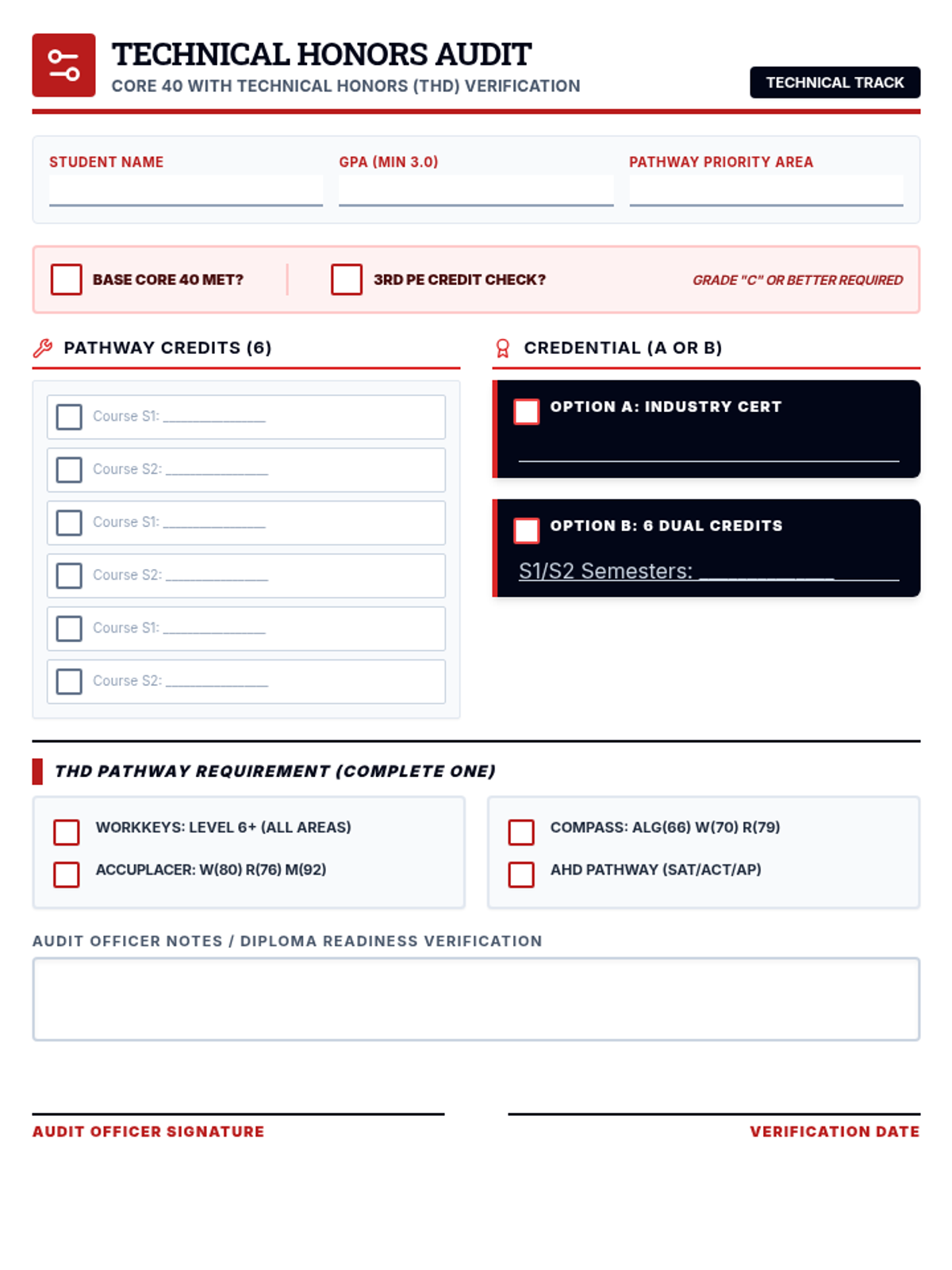
Updated Technical Honors audit sheet with a dedicated credit verification box (48 credits) and pathway tracking.
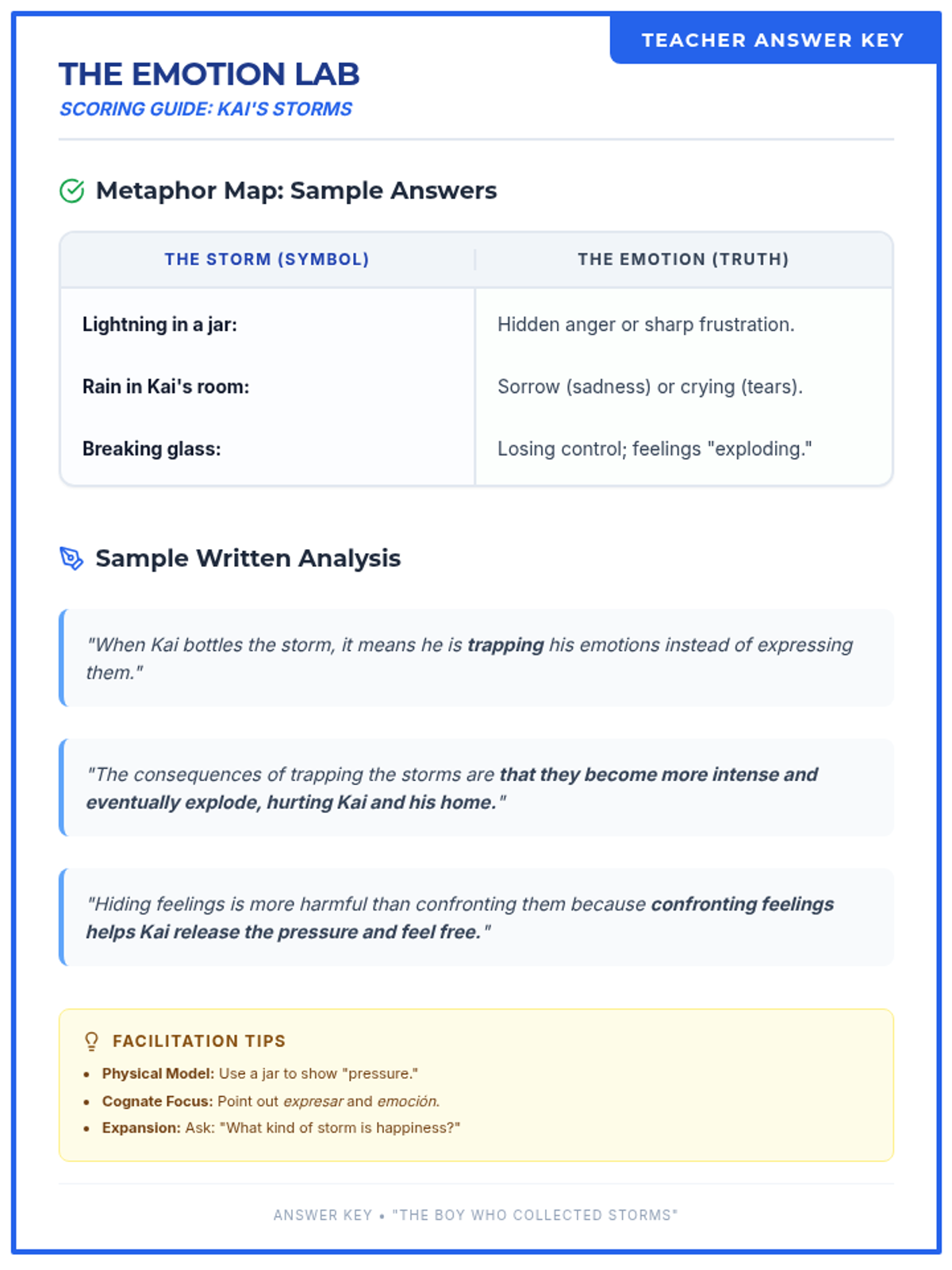
A teacher answer key for 'The Boy Who Collected Storms'. Provides sample metaphor connections, completed analysis frames, and specific instructional tips for working with ELL students on abstract concepts. Polished layout.
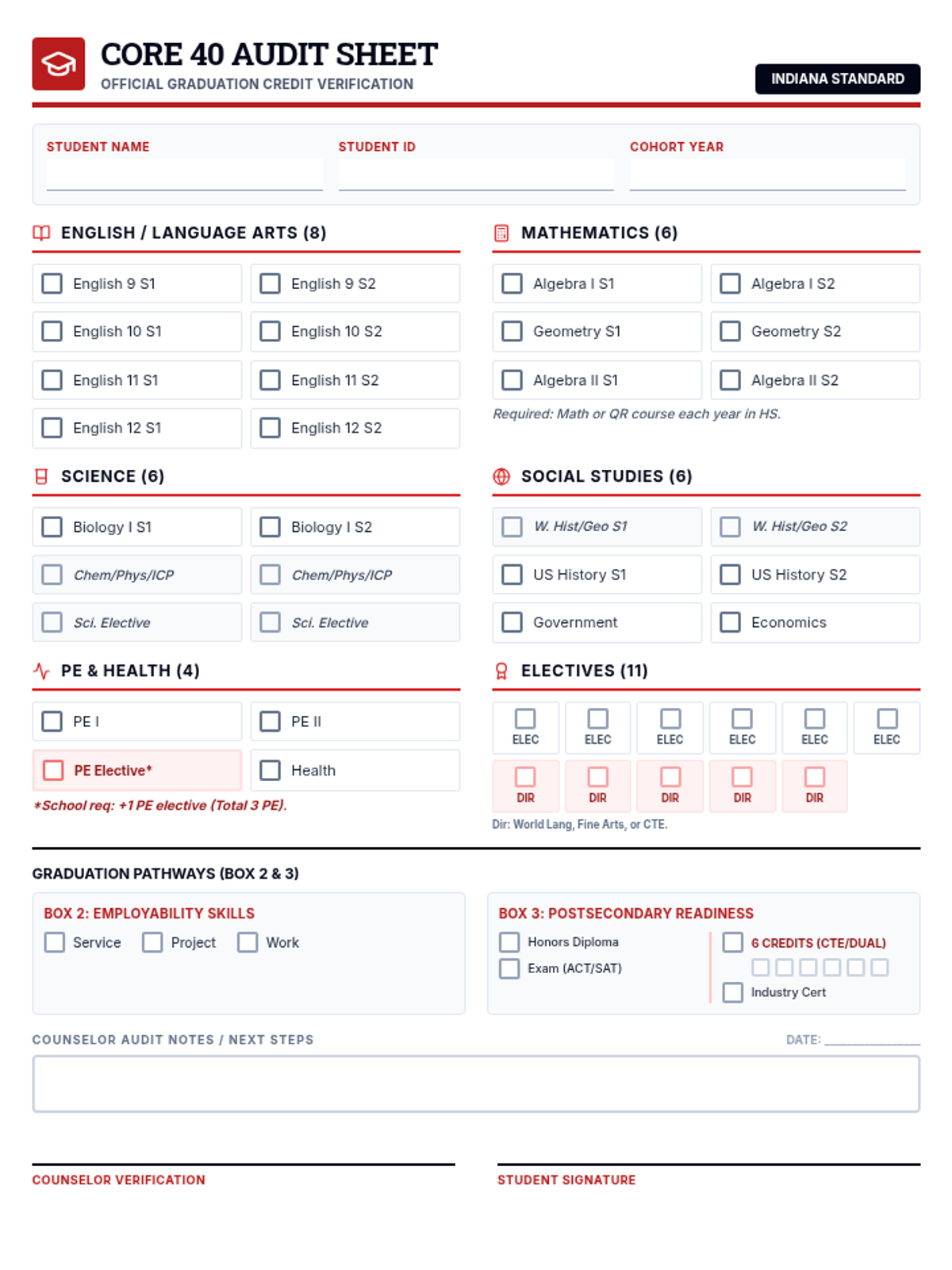
Updated Core 40 audit sheet with a dedicated total credit verification box (41 credits) and optimized layout.
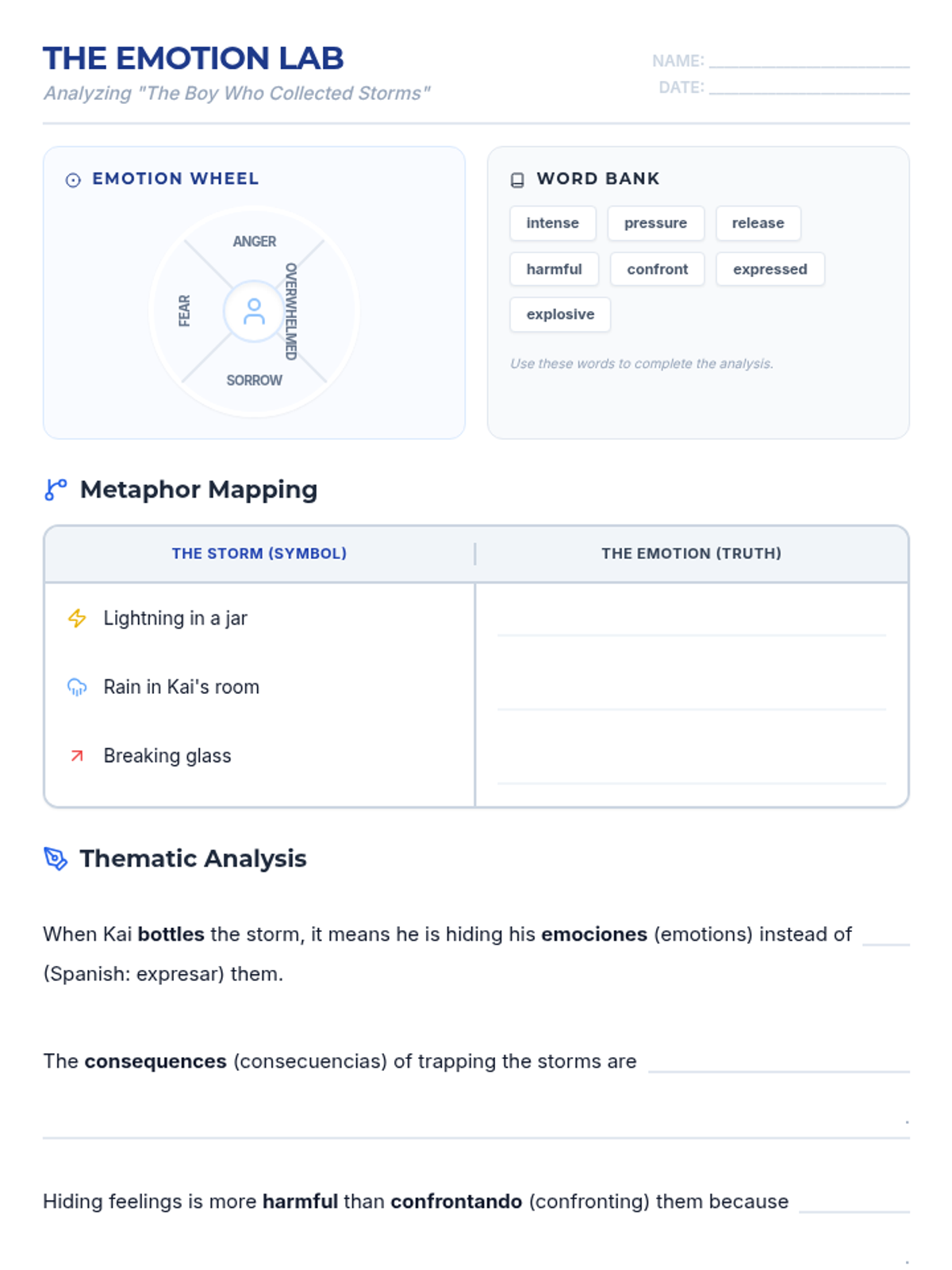
An analysis worksheet for 'The Boy Who Collected Storms'. Includes an emotion wheel, an expanded word bank, a metaphor mapping table, and sentence frames with cognate support for WIDA Level 4 ELLs. Corrected page layout.
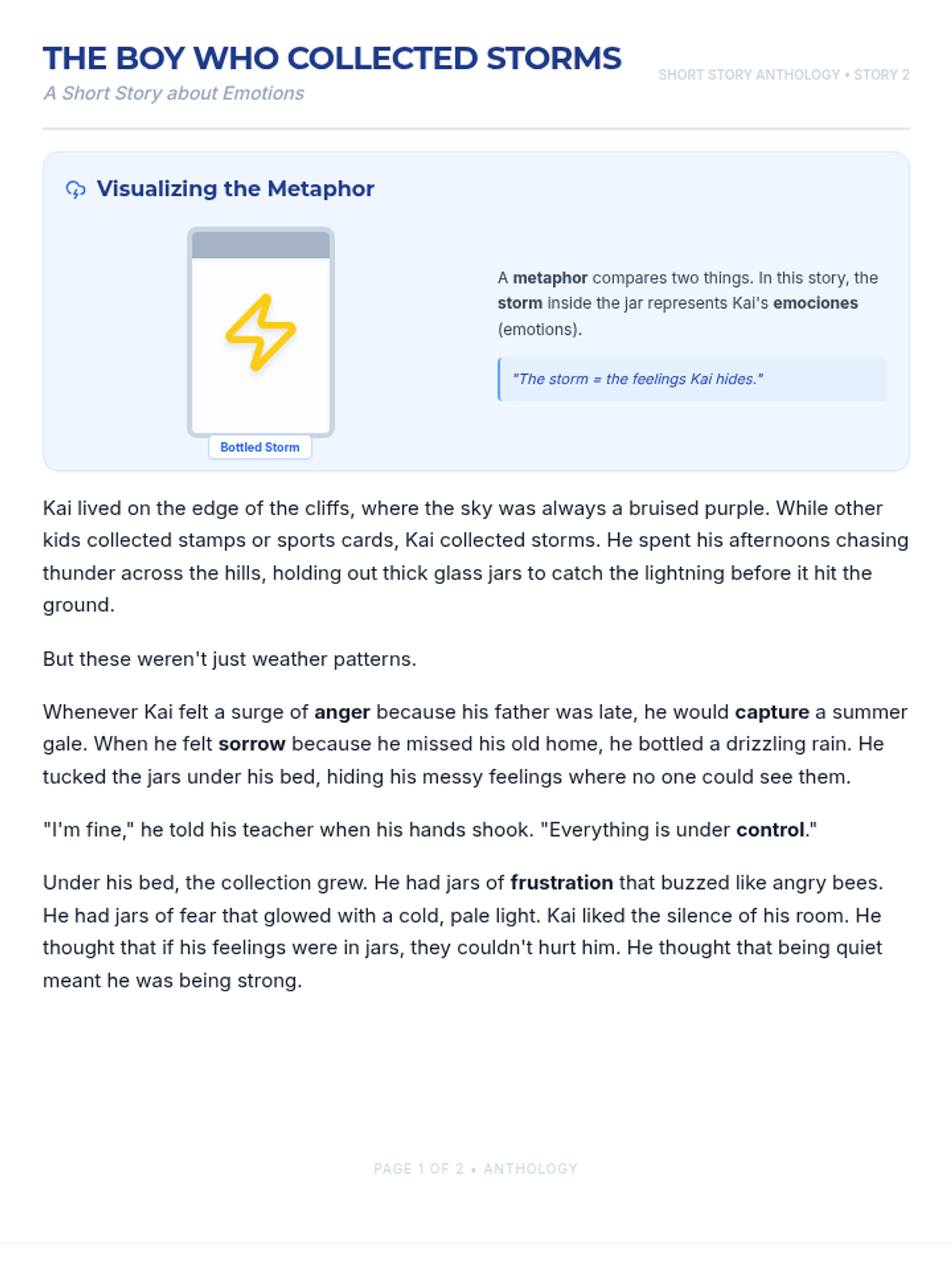
A Hi-Lo short story for WIDA Level 4 ELLs about a boy who traps storms in jars as a metaphor for bottling up emotions. Includes visual supports for metaphors and a bilingual glossary. Corrected glossary cognates and visuals.
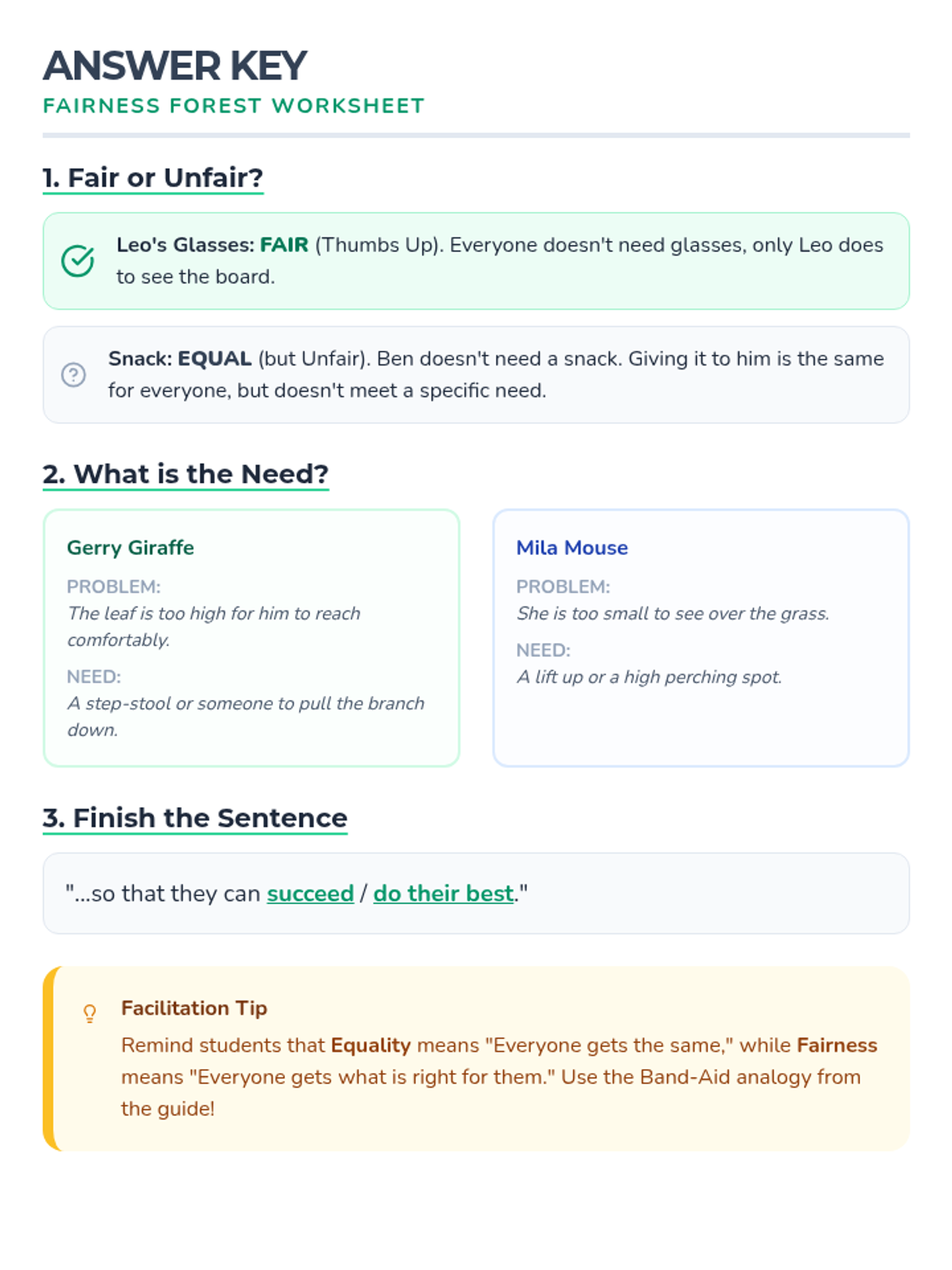
Teacher evaluation key for Grades 3-4 Fairness Forest materials. Provides sophisticated explanations for equality vs. equity dilemmas and introduces the concept of Justice as the ultimate goal of fair systems. Spacing optimized for a single-page layout.