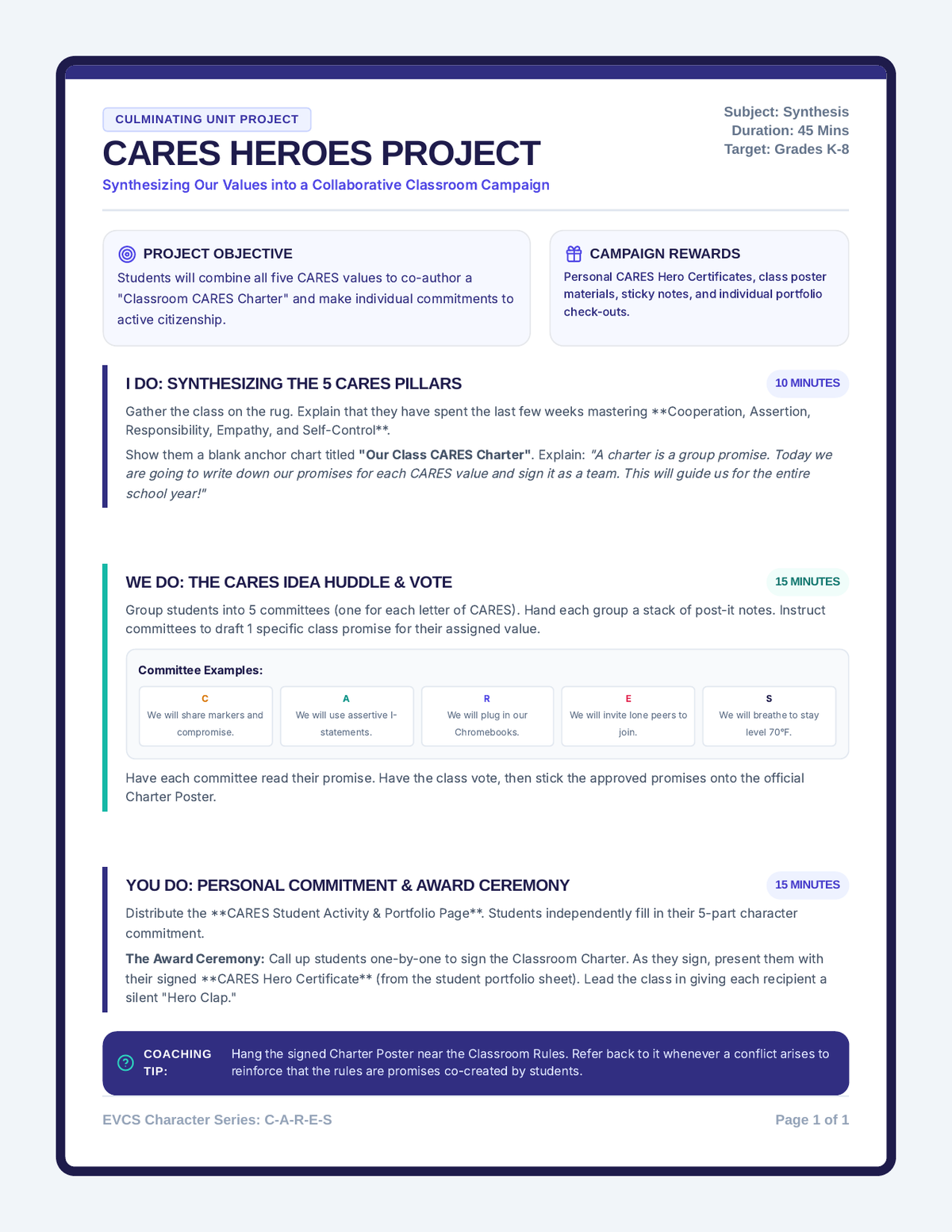
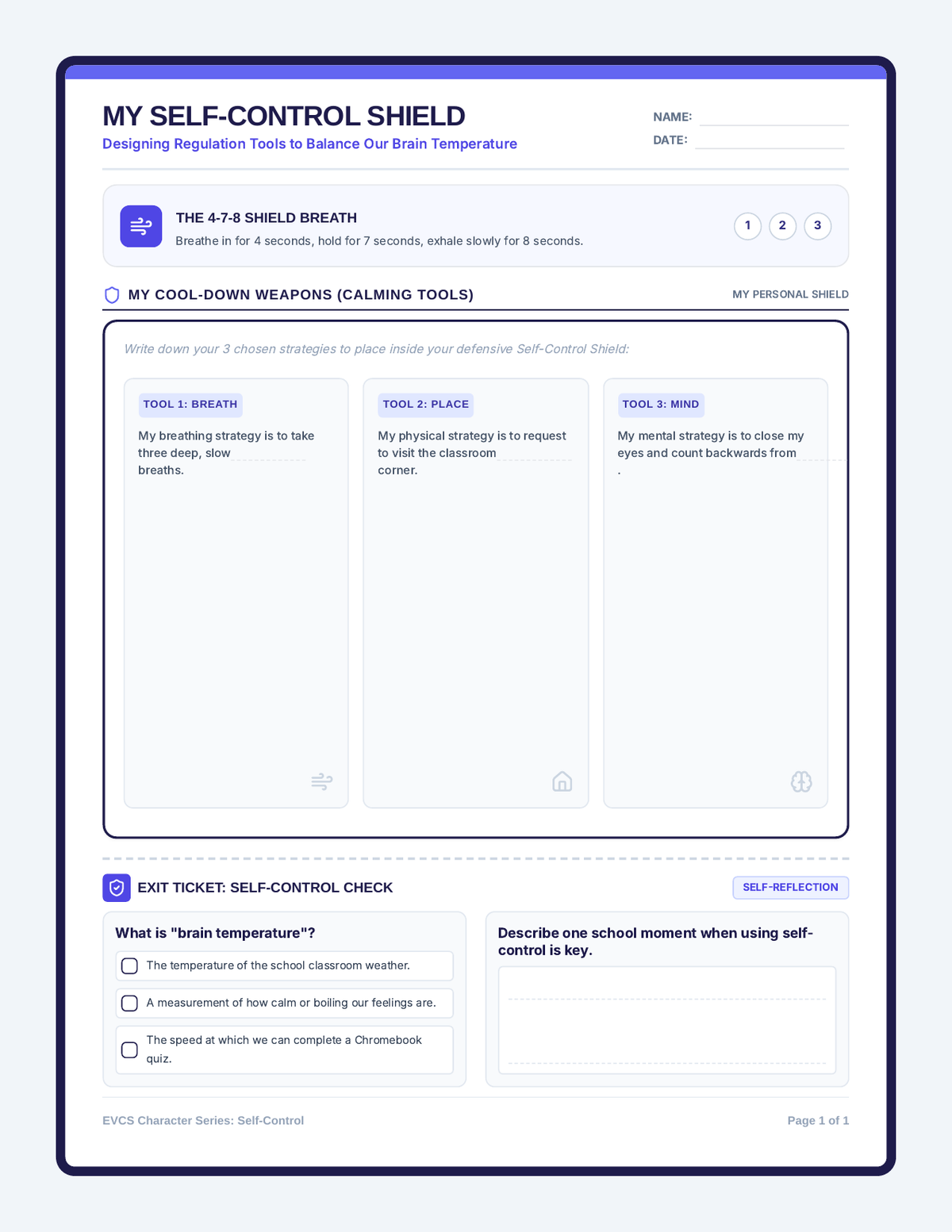
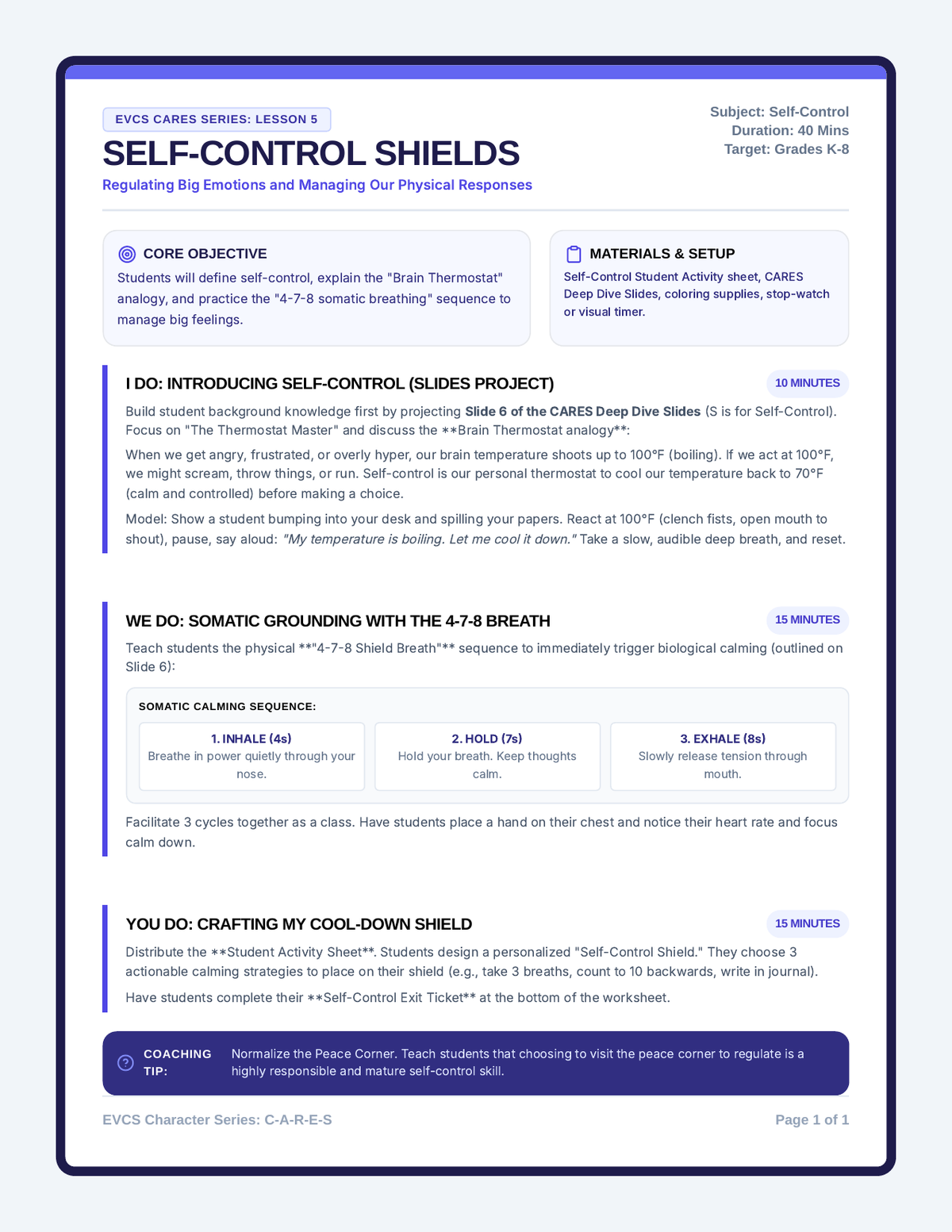
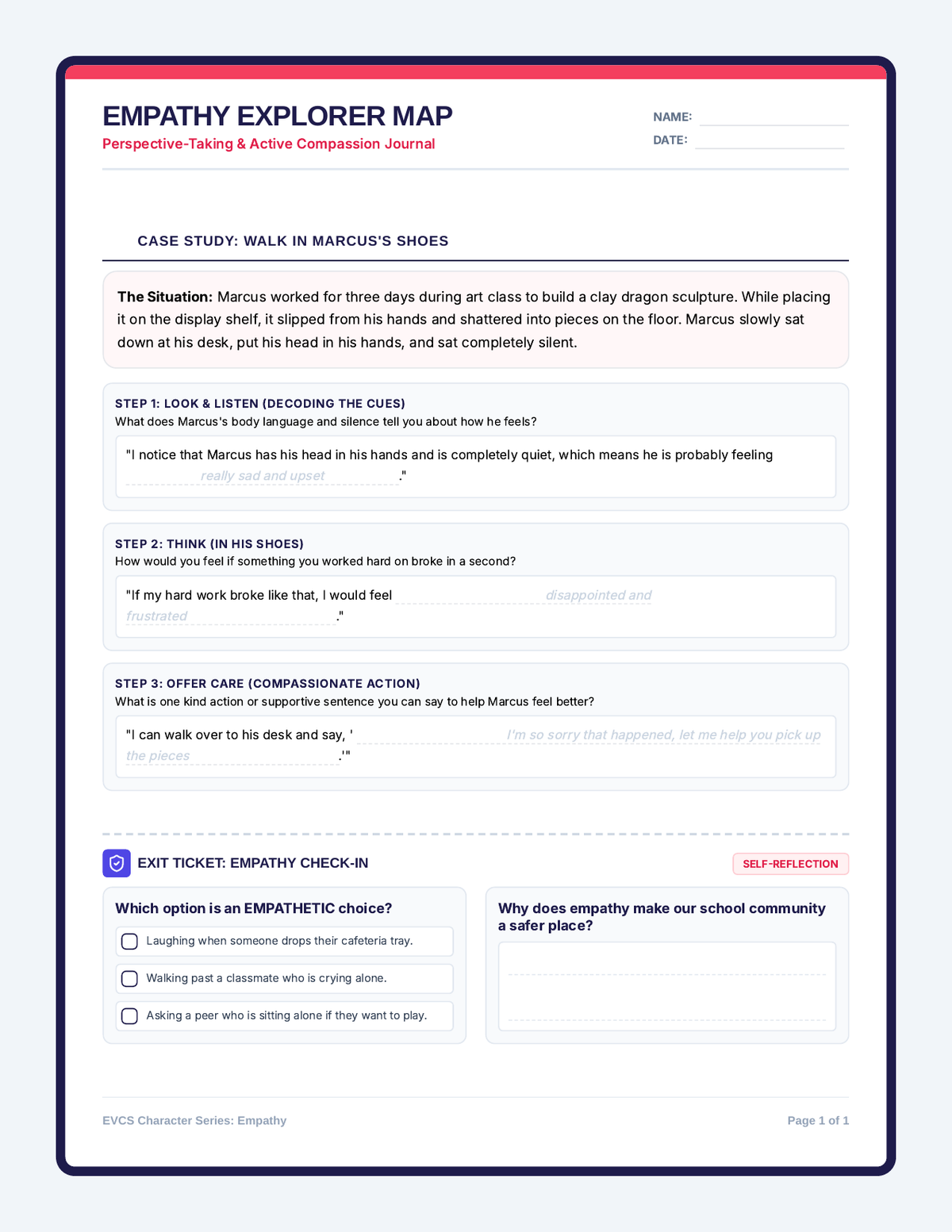
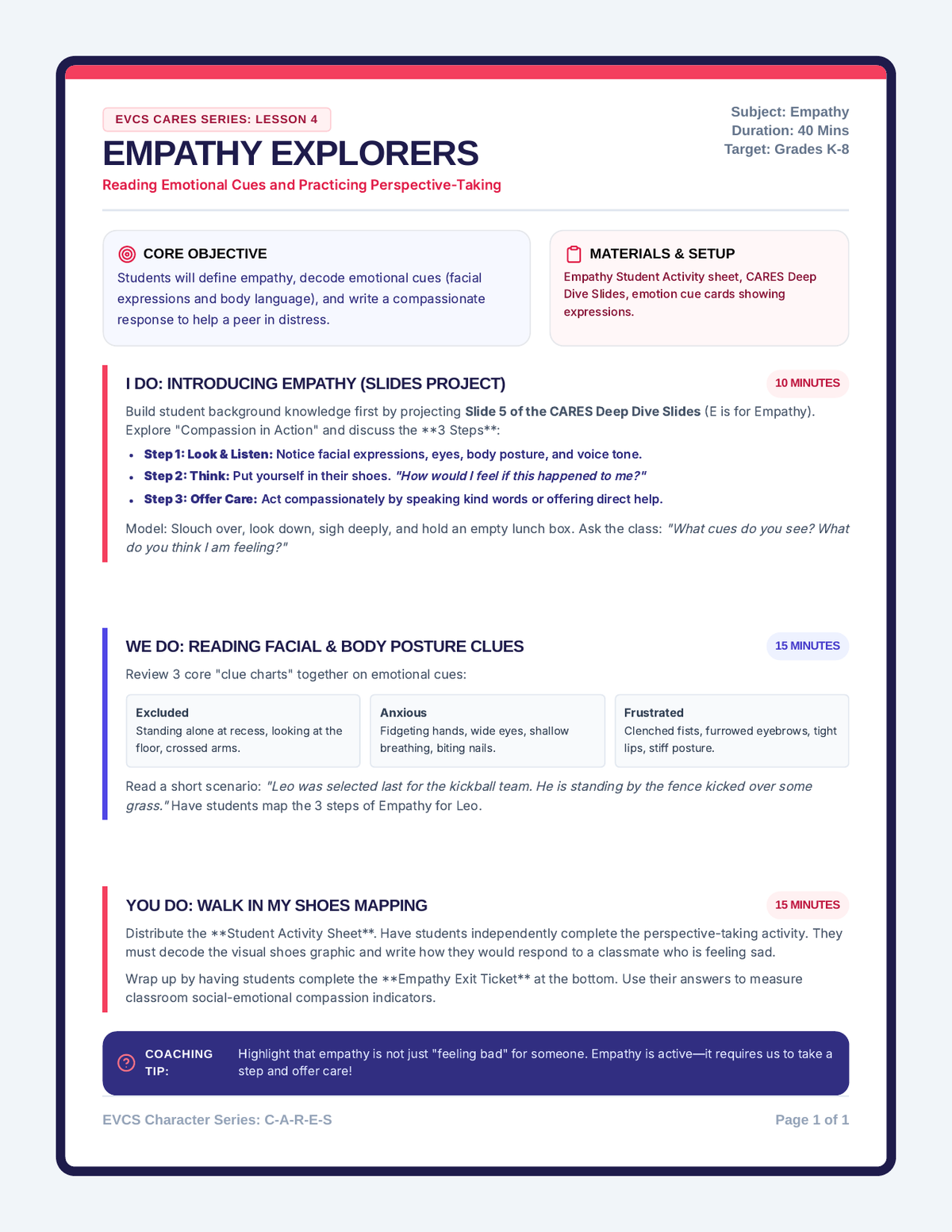
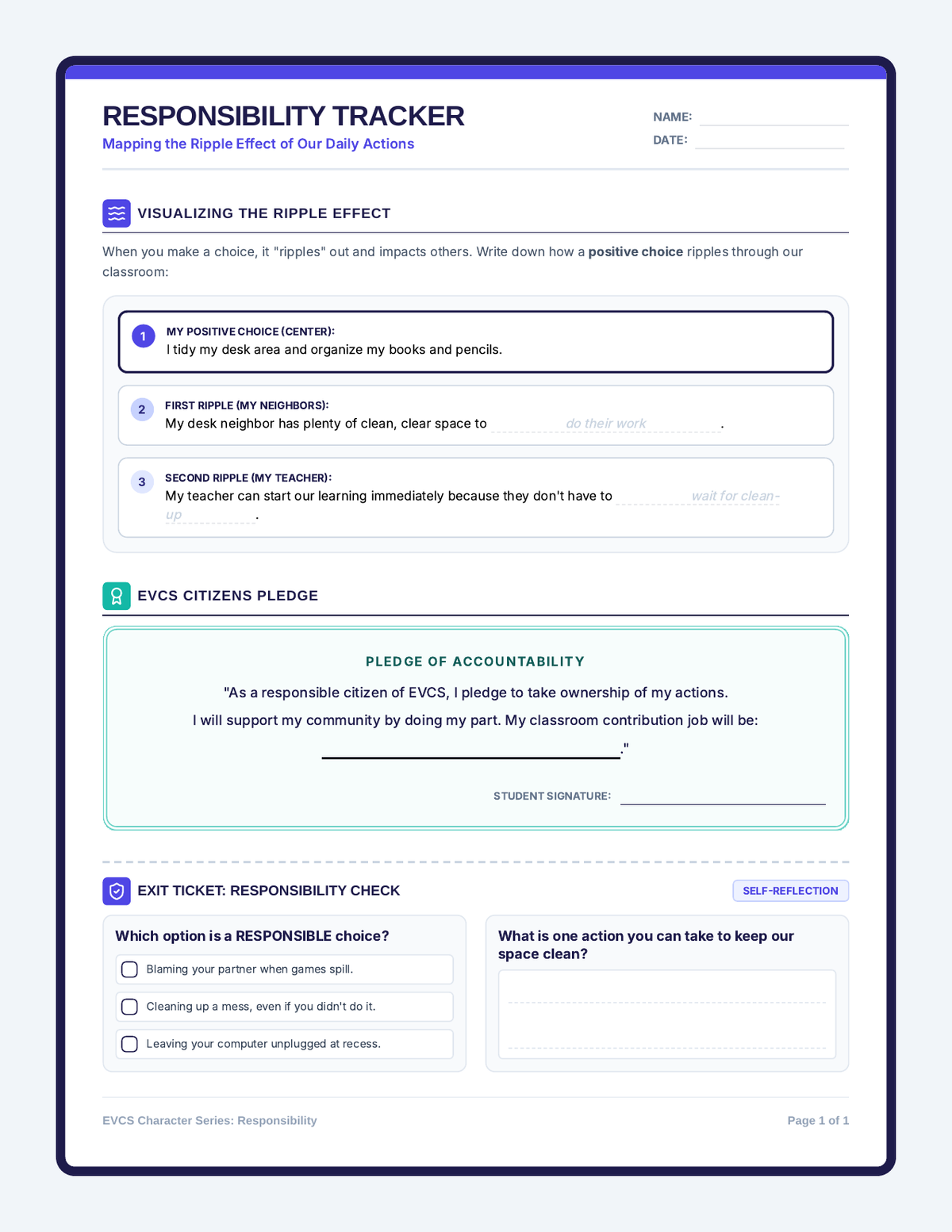
A comprehensive teacher guide for Lesson 5, including the 'Okay, Next!' game, respectful response modeling, and graduation ceremony tips.
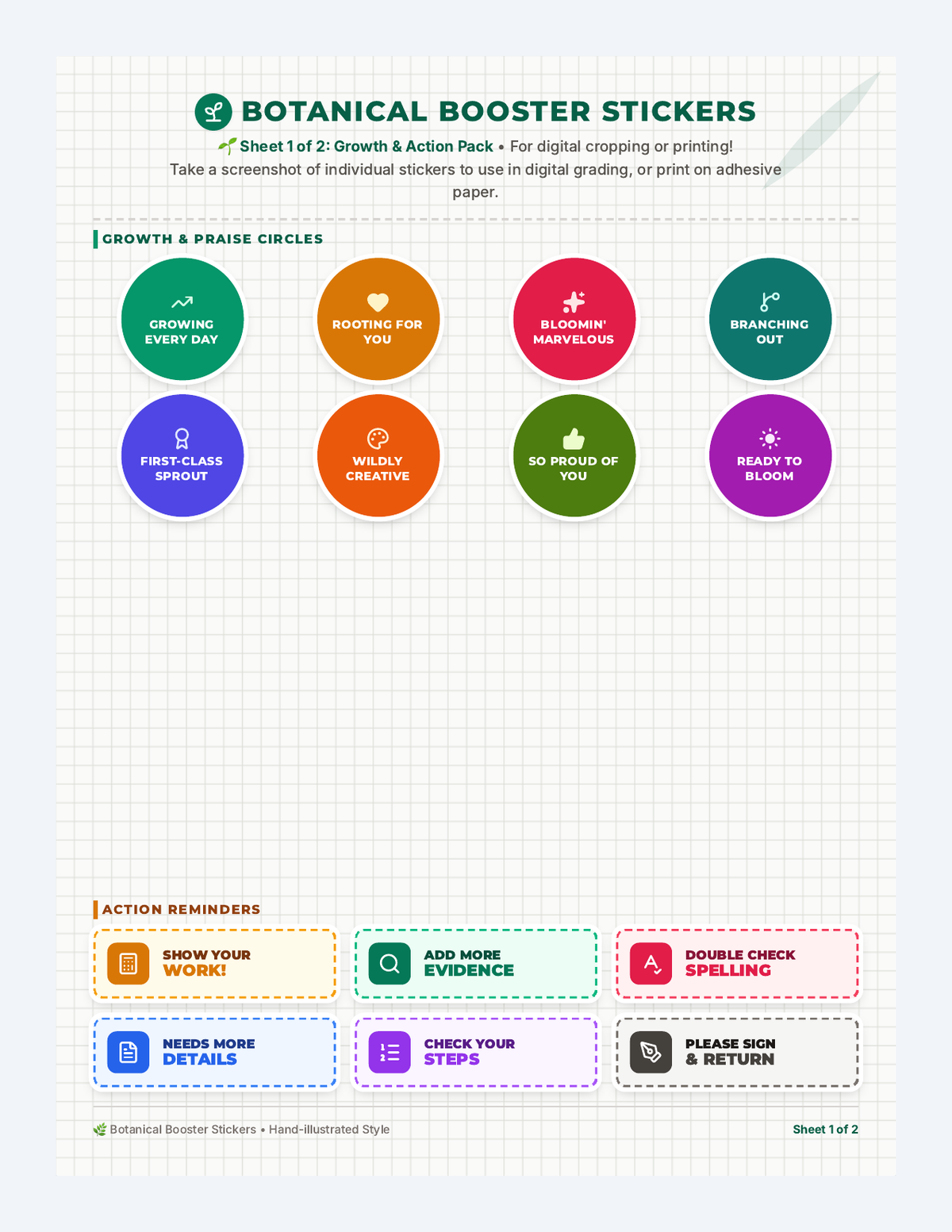
A teacher's guide revised for better page breaks and clear instructional strategies for ADHD students.
A cut-and-paste sorting activity revised to fit on a single page, with neutral-colored cut-outs to prevent color-matching "cheating" and clearer glue areas.
A set of four grid-based mazes where students follow the correct path from an emotion to a matching calming strategy. Revised to fit one page, increase contrast, and remove answer spoilers.
A matching worksheet where students connect specific body signals (like hot face or shaky hands) to the corresponding emotion. Revised for better page layout and neutral choice styling to avoid telegraphing answers.
A detective-themed presentation to help second-grade students learn to identify body signals and calming strategies. Includes visual case studies for anger and worry to engage students with ADHD or attention difficulties.
Simple, bold icons representing conflict resolution steps (Listen, Speak, Share, Wait) with one-word labels for coloring.
A detailed coloring page featuring three "quests" or calm-down techniques, each paired with a descriptive sentence and a scene for students to color.
A four-panel social story for students to color, illustrating the sequence of feeling an impulse, stopping, and thinking before reacting.
An interactive coloring activity where students identify and color positive vs. less effective words in common school conflicts.
A student-facing worksheet for practicing self-advocacy scripts and reflecting on impulsive behaviors. It includes guided scenarios and creative spaces for students to develop their own 'Power Words'.
A set of visual anchor charts and desk reference cards featuring the 'Brain Remote' concept. It provides clear, actionable steps for students to manage impulsivity and use self-advocacy language.
A vibrant, interactive slide deck designed for touchscreen displays. It uses the 'Brain Remote' metaphor to teach impulsivity control, conflict resolution, and self-advocacy through engaging visuals and prompts.