A visual guide for students mapping the formal reporting process, highlighting the differences between internal (HR) and external (EEOC) reporting paths, and emphasizing the importance of factual documentation.
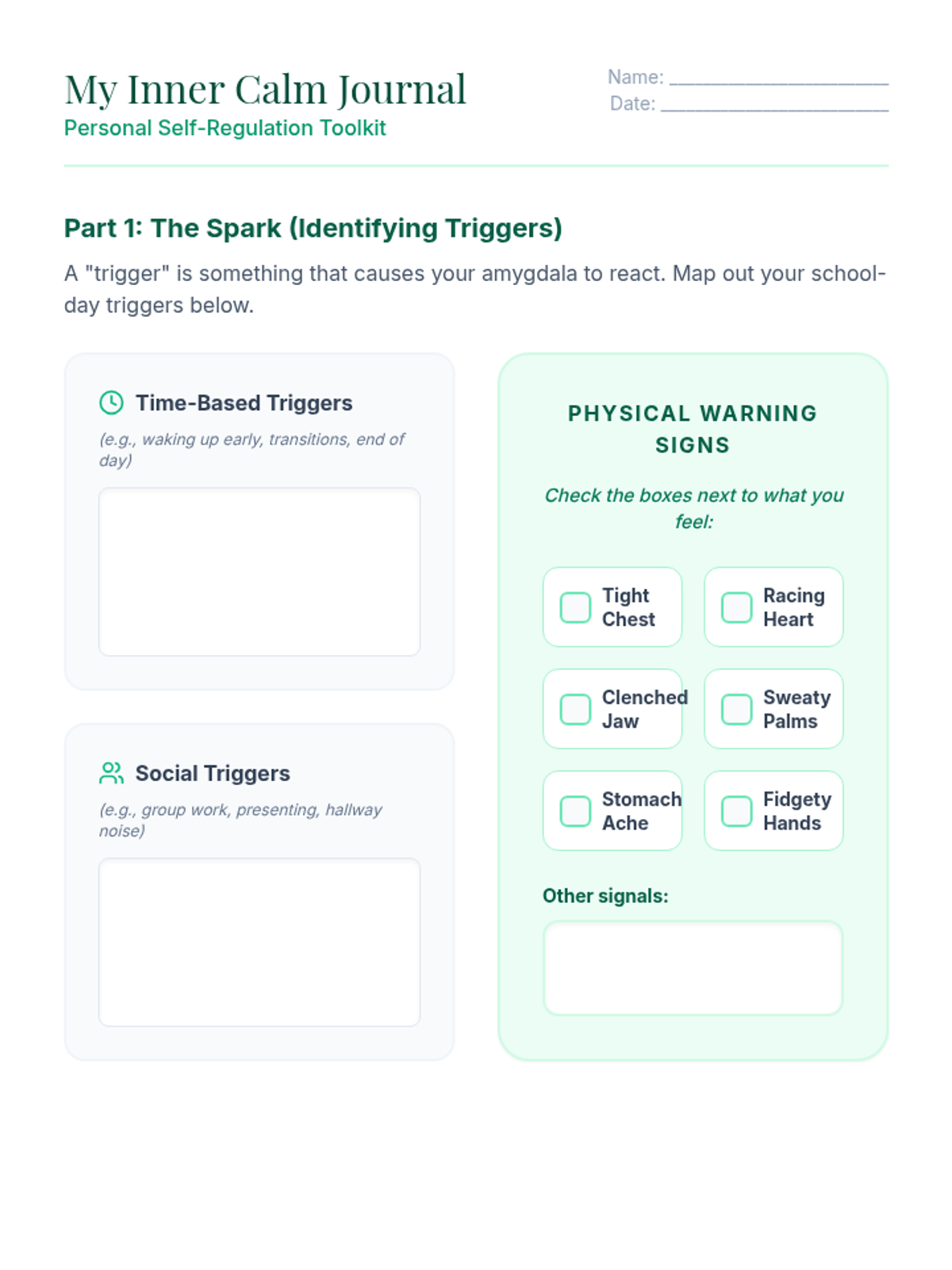
A student journal for identifying personal triggers, reflecting on mindfulness station activities, and documenting a personalized self-regulation toolkit.
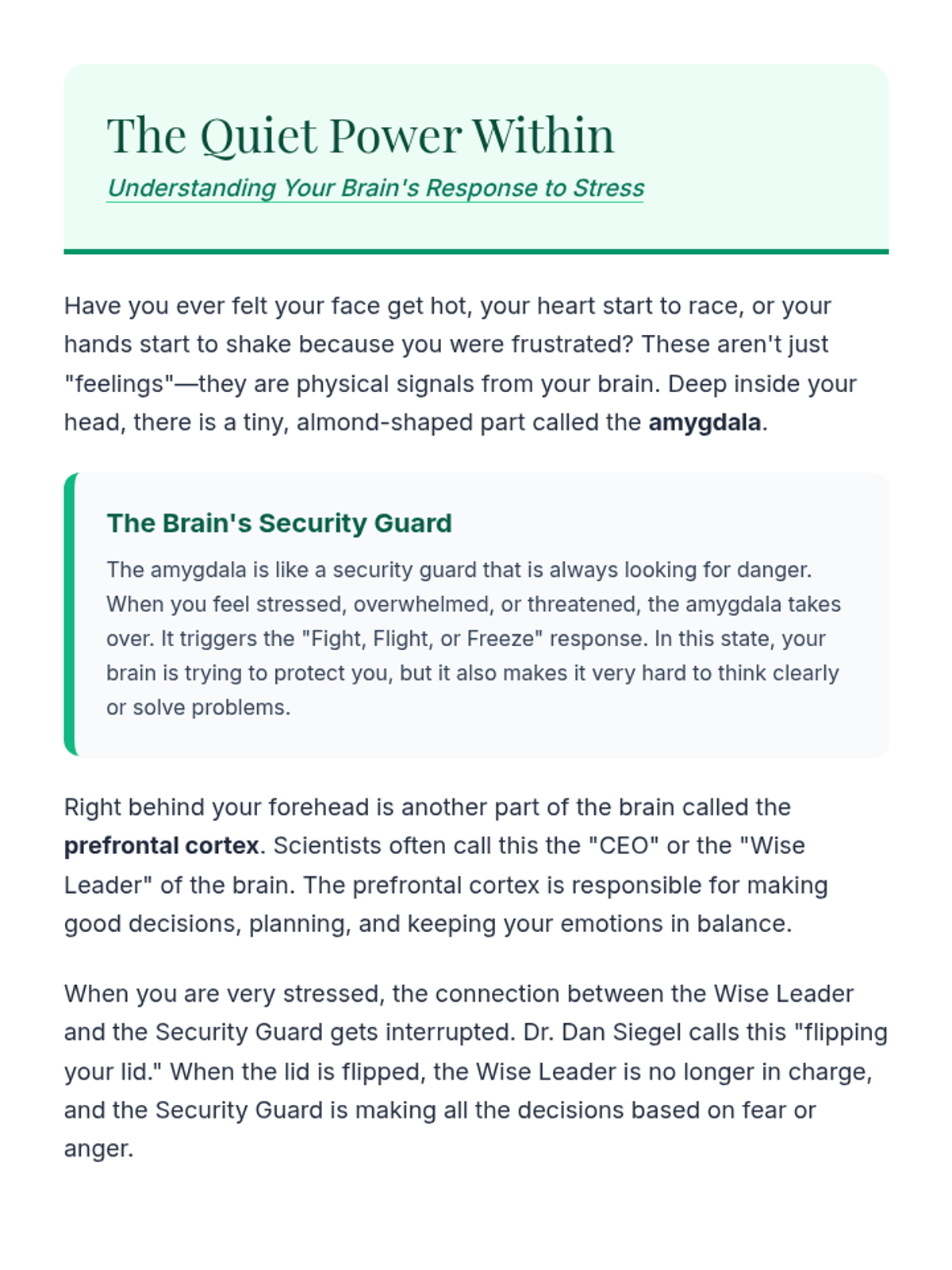
An informative reading passage about the neuroscience of self-regulation, focusing on the roles of the amygdala and prefrontal cortex.
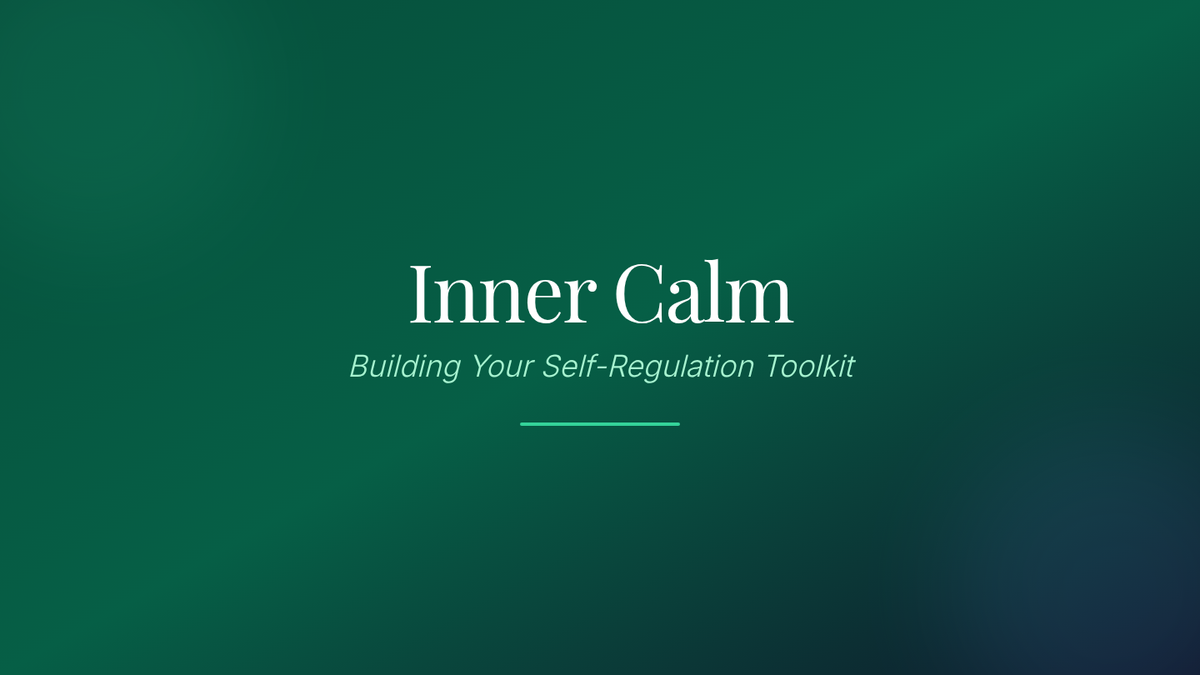
A visual slide deck covering the science of self-regulation, breathing techniques, grounding exercises, and a cool-down choice board.
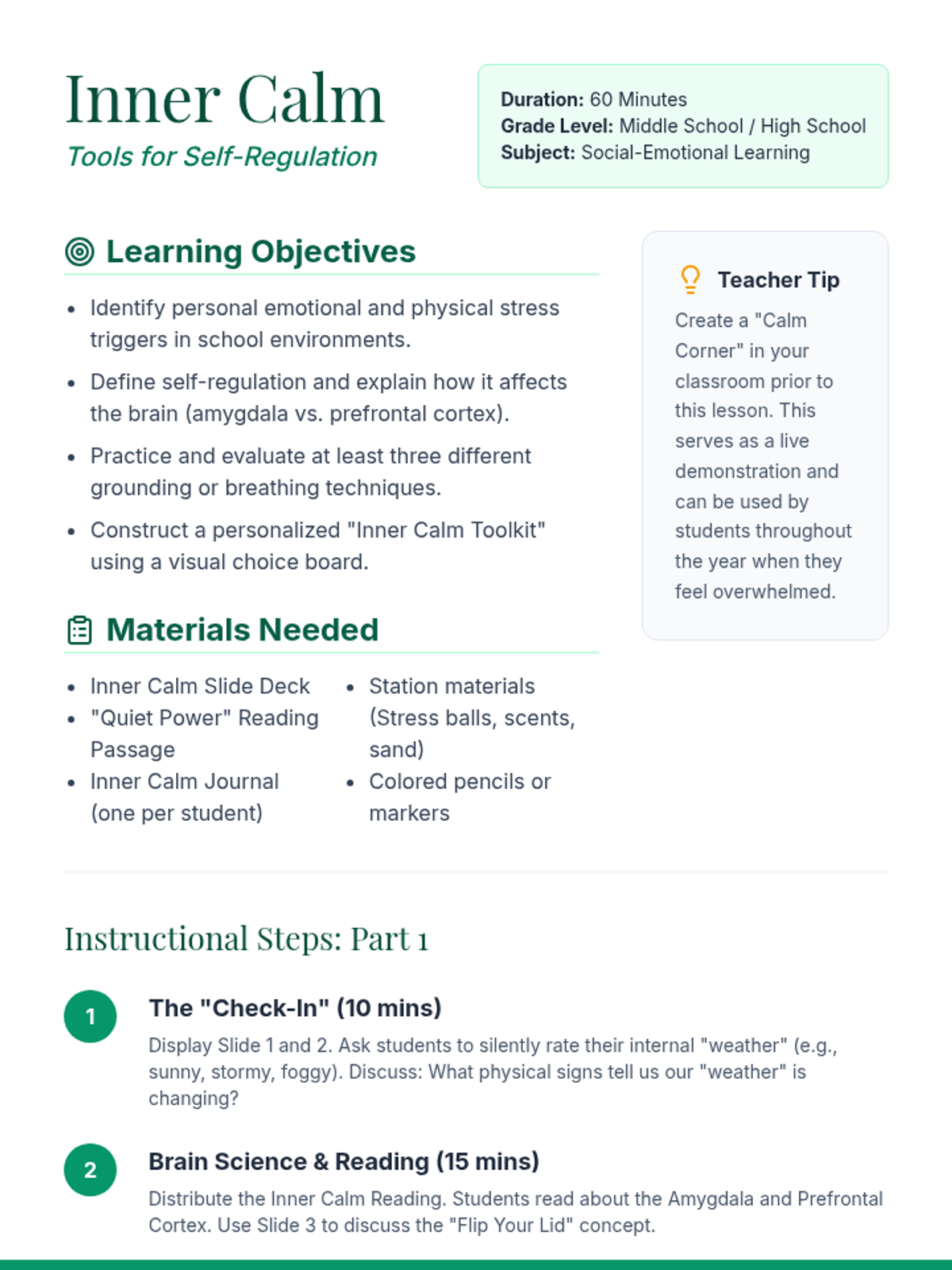
A detailed lesson plan for teaching self-regulation, including instructional steps, station activities, and differentiation strategies.
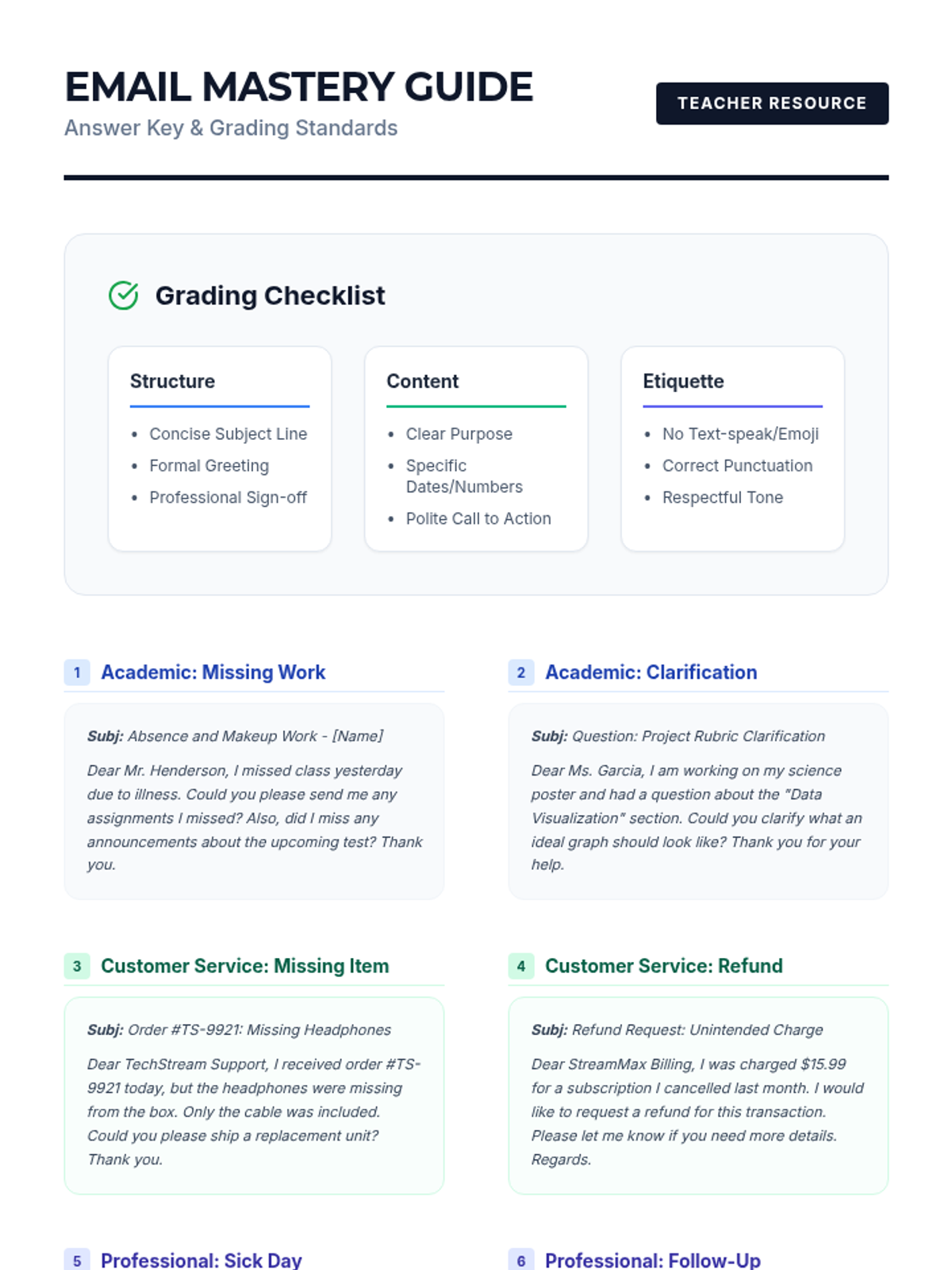
A teacher guide containing grading criteria, common pitfalls, and sample email responses for various student scenarios to assist in evaluation and modeling.
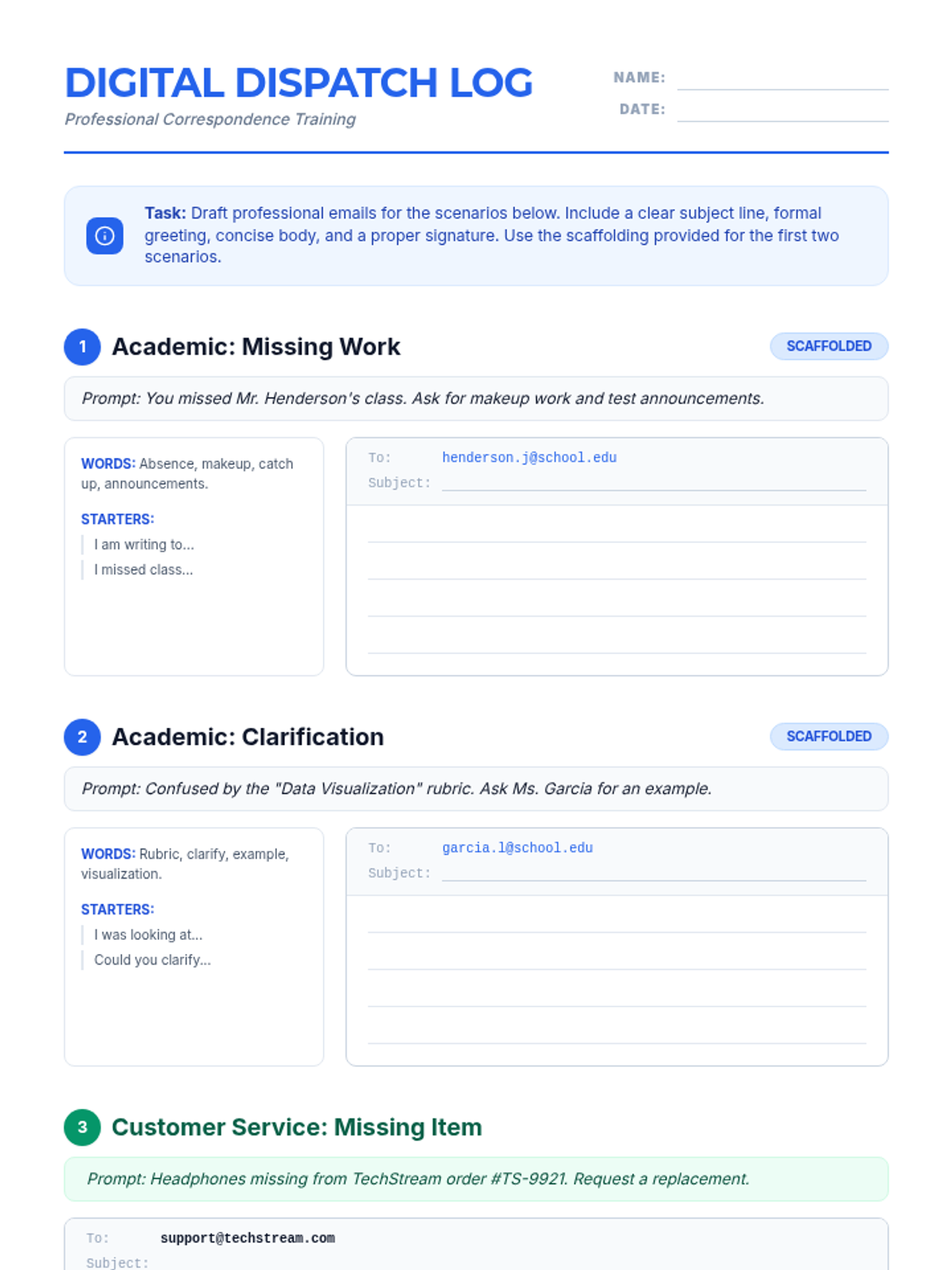
A multi-page worksheet providing structured email templates for 8 different real-world scenarios. Includes scaffolding like word banks and sentence starters for the first two academic scenarios.
A 9-slide presentation covering the structure of formal emails and 8 diverse scenarios for student practice, including academic, customer service, and professional situations. Includes word banks and sentence starters for initial slides.
A 20-slide presentation designed for high school counselors to lead Junior students through the college application journey, featuring YouScience discovery, Scoir search filters, and application timelines.
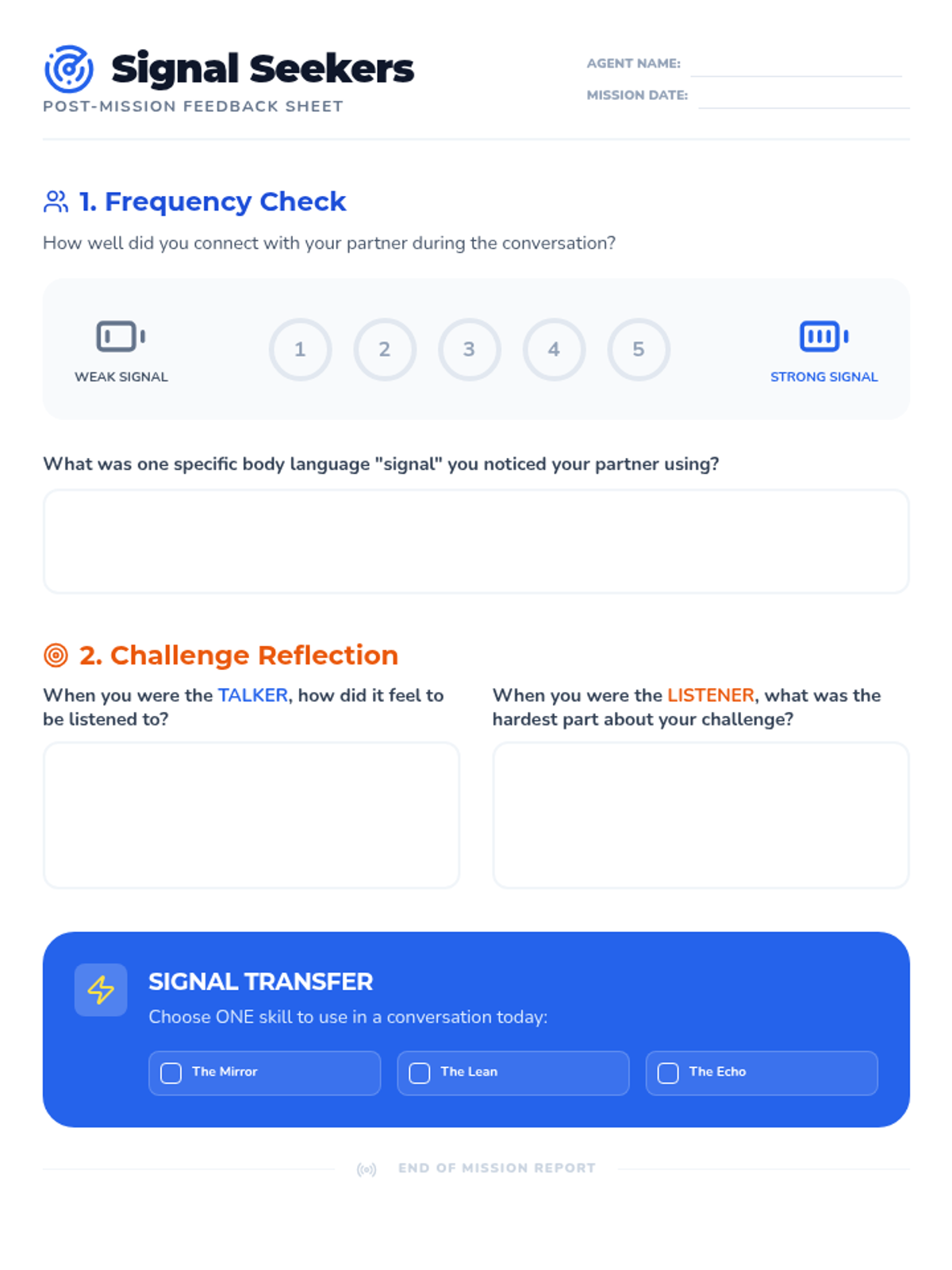
A student reflection worksheet for the Signal Seekers game. Consolidated onto a single page with corrected rating scale styling and improved readability.
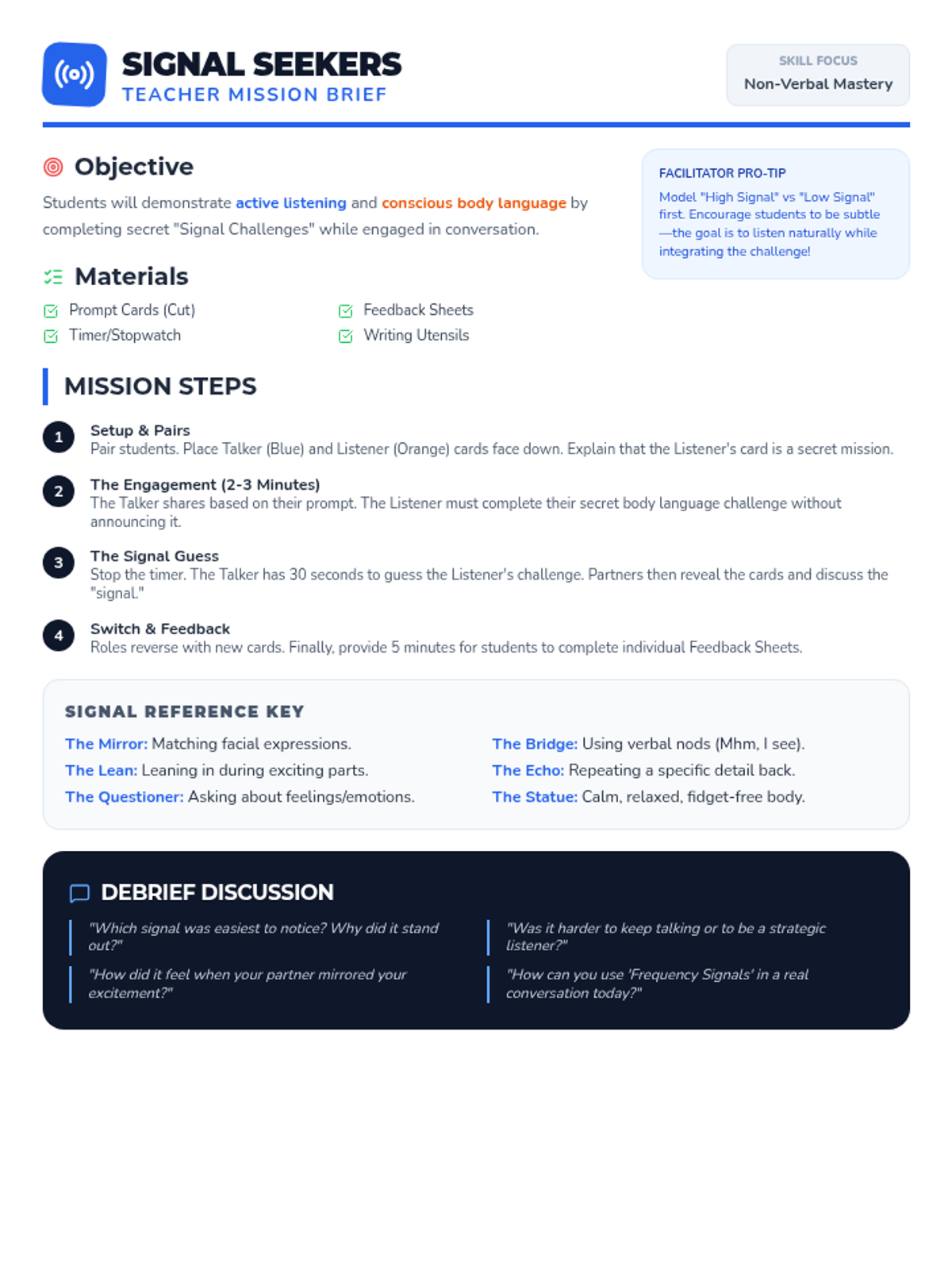
A consolidated one-page facilitator guide for the Signal Seekers game. Includes objectives, procedure, a reference key for the body language signals, and discussion prompts. Updated with improved layout to ensure single-page printing.
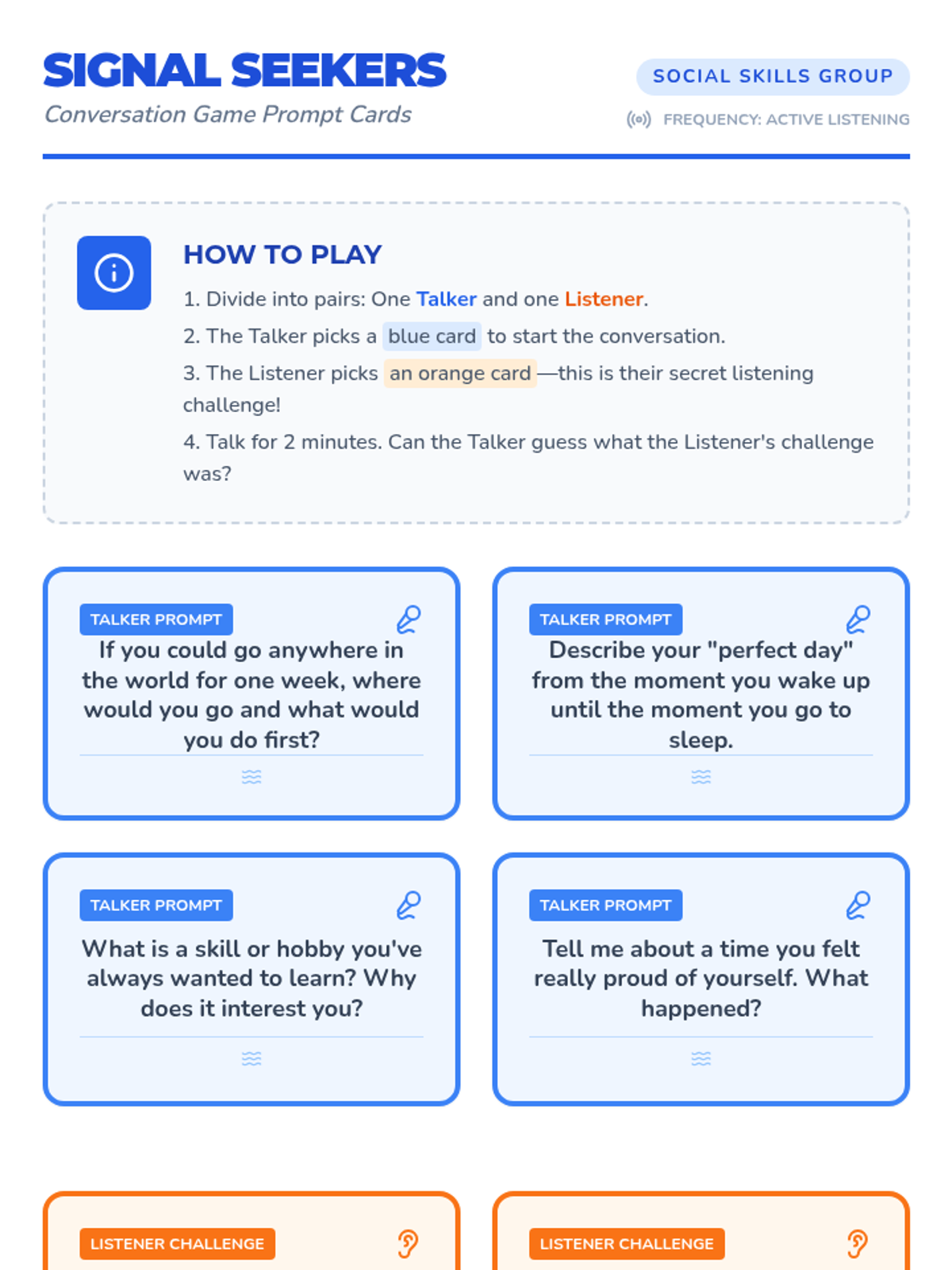
A collection of printable prompt cards for the Signal Seekers game. Includes 4 Talker prompts and 6 Listener challenges that focus on body language and active listening. Updated with corrected grammar and improved print layout.
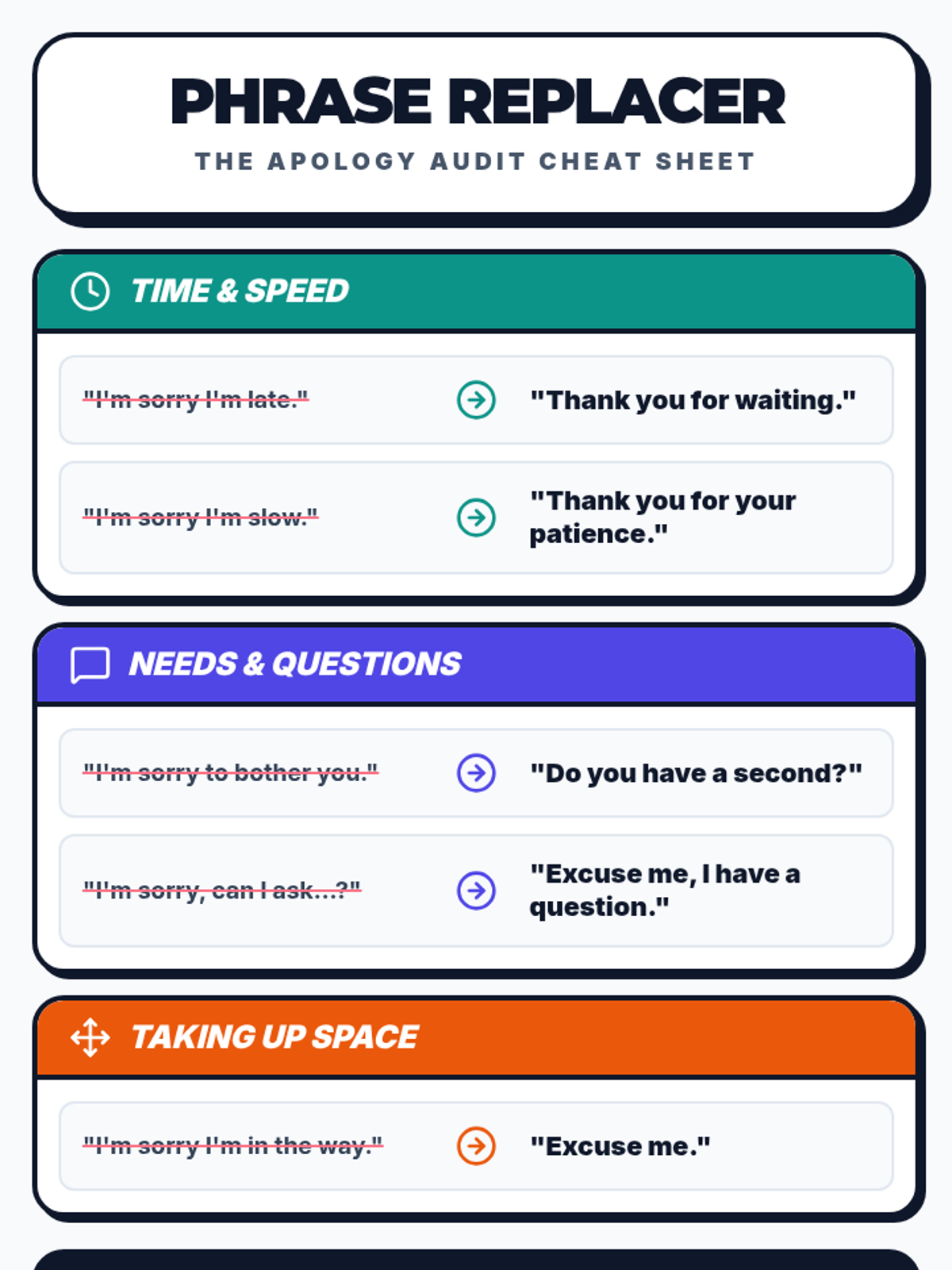
A one-page visual reference guide listing common over-apologies and their more effective replacements, designed for quick desk-side or binder use.
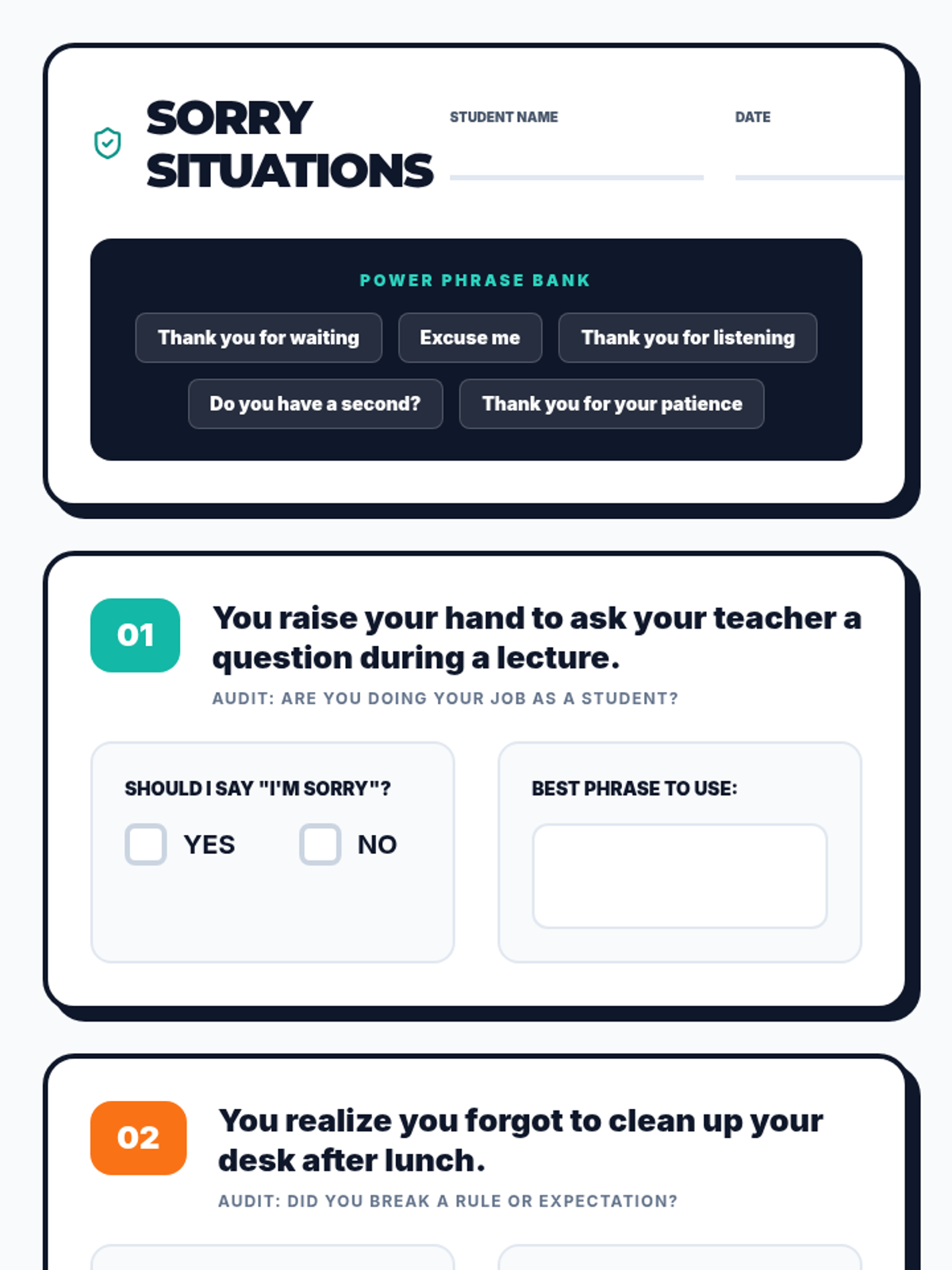
A practice worksheet where students audit various social situations to decide if an apology is necessary and practice replacing it with appropriate "power phrases."
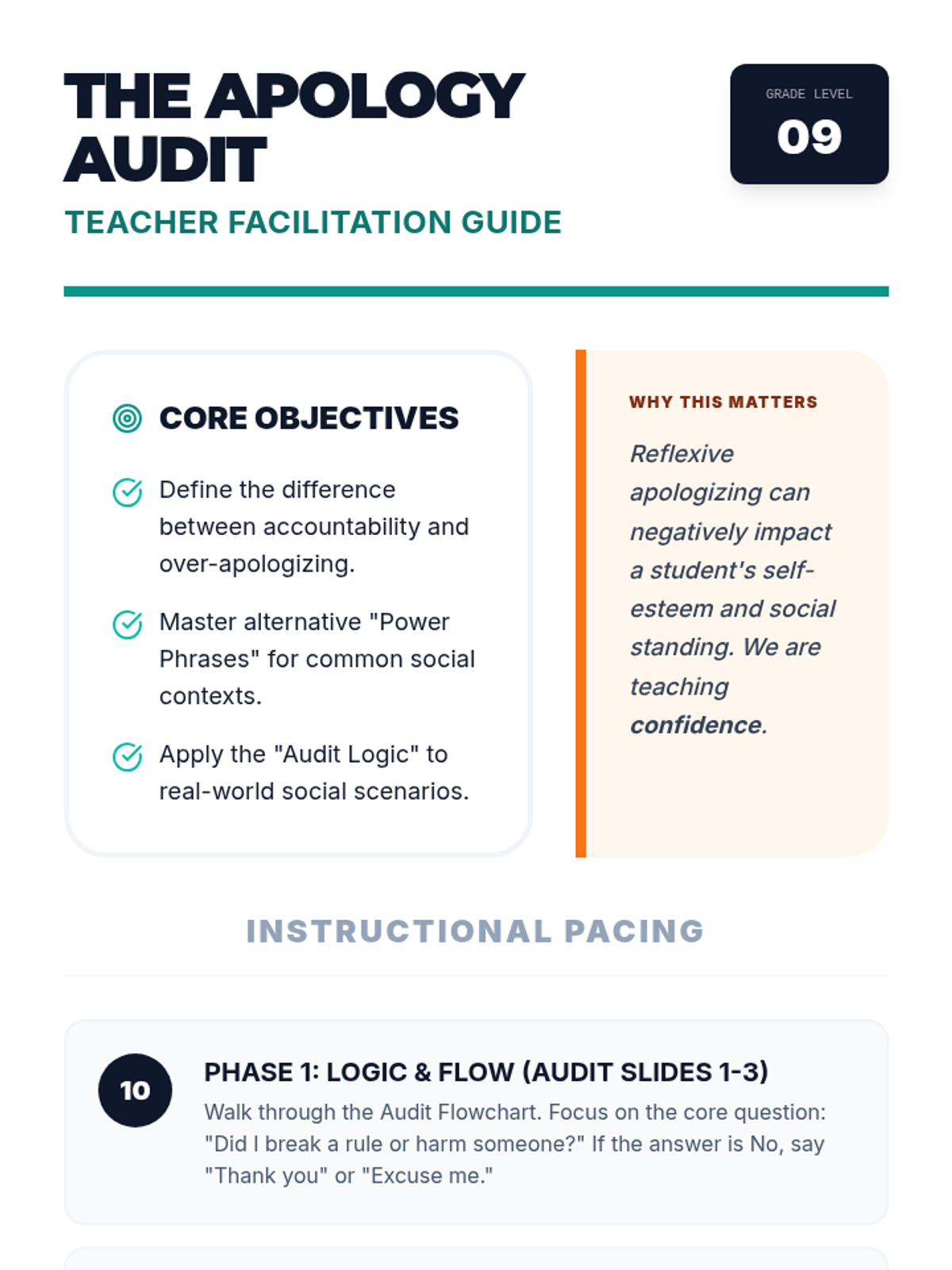
A comprehensive facilitator guide for teachers, providing pedagogical context on over-apologizing in autism, delivery instructions, and troubleshooting tips.