A warm-up activity for Session 4, where students identify scenarios where someone might be uncomfortable.
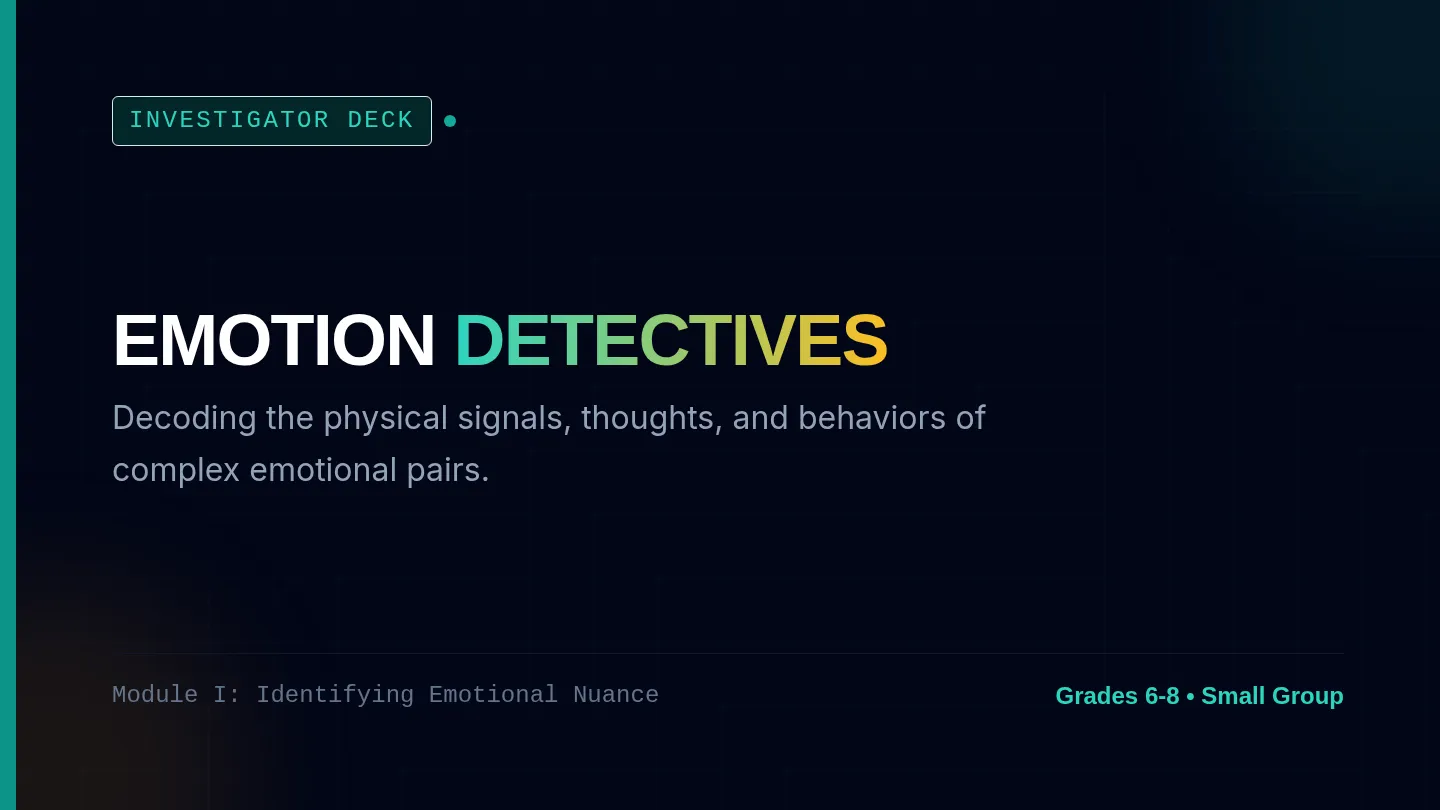
A 6-slide presentation deck designed for 16:9 projection to guide daily small group lessons. Features large, high-visibility typography (minimum 24px), dark clinical blueprint themes, and visual anchors to explain emotional mapping, guilt vs. shame, and cognitive reappraisal.
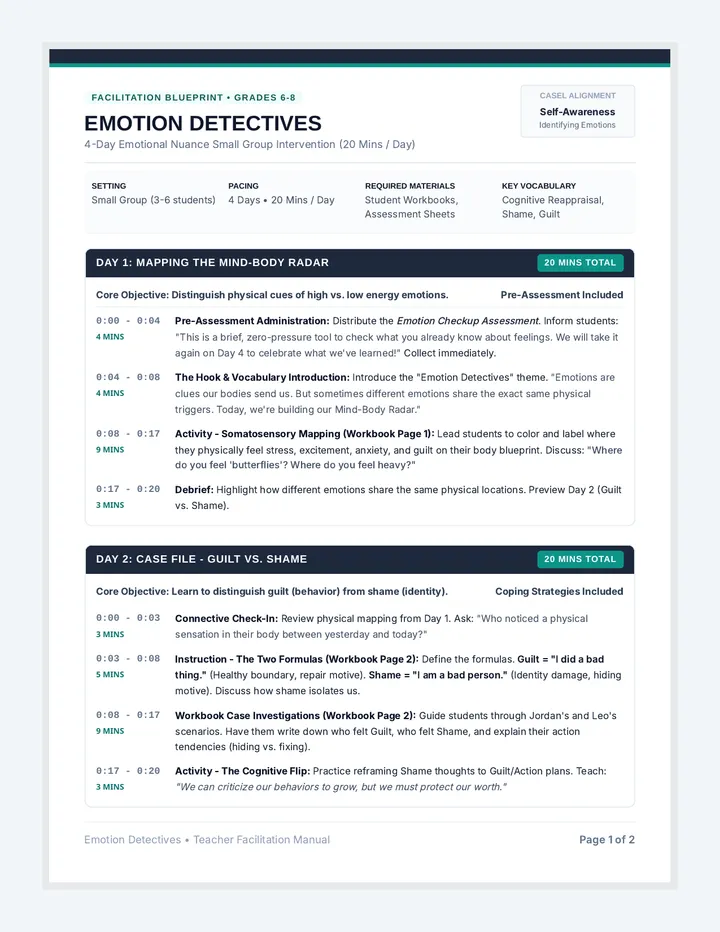
A professional 2-page teacher facilitation and curriculum guide outlining the 4-day, 20-minute daily small group intervention. Includes detailed step-by-step scripts, exact timestamps, CASEL framework alignment, common misconceptions, and facilitation techniques.
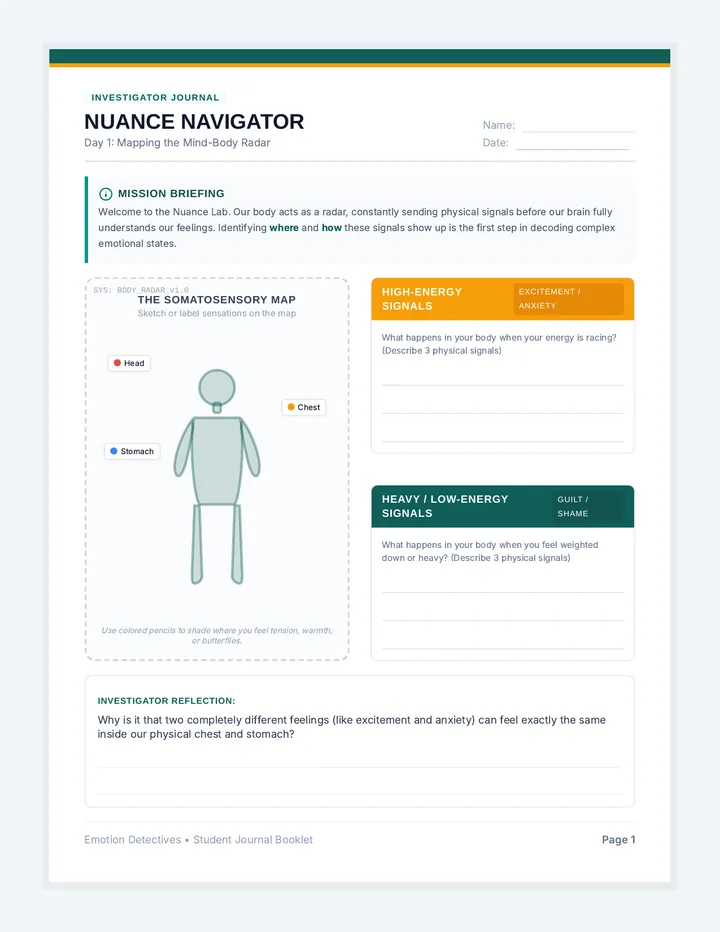
A 4-page student work booklet containing interactive physical mapping activities, cognitive reappraisal templates, guilt vs. shame scenario case files, and synthesis reflection sheets.
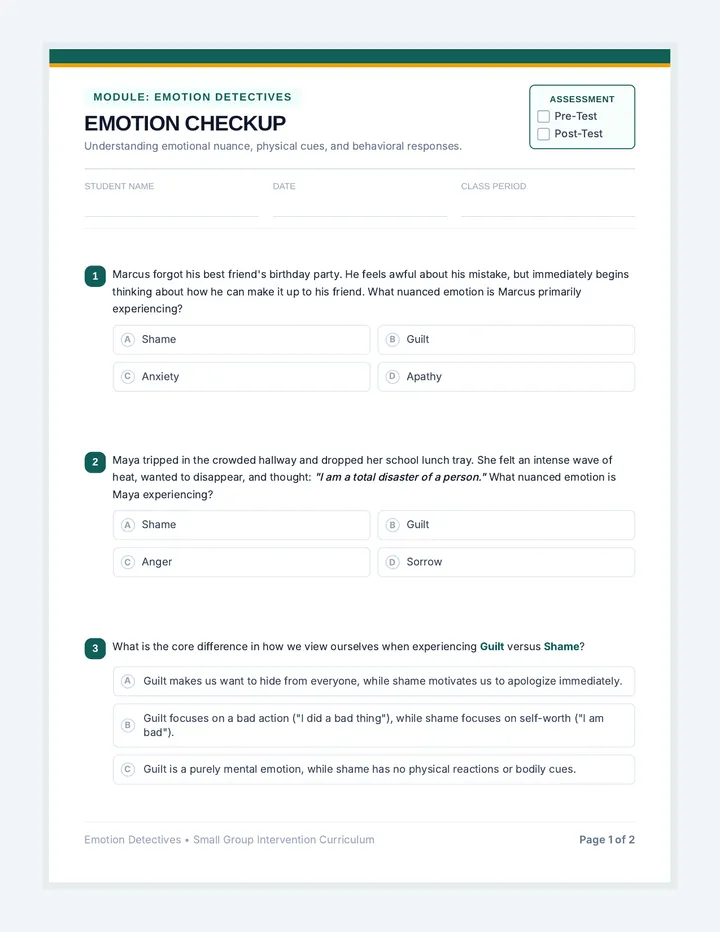
An identical pre- and post-test assessment for middle school students to evaluate their understanding of guilt vs. shame and excitement vs. anxiety before and after the 4-day intervention. Includes scenario-based multiple-choice and short-answer questions.
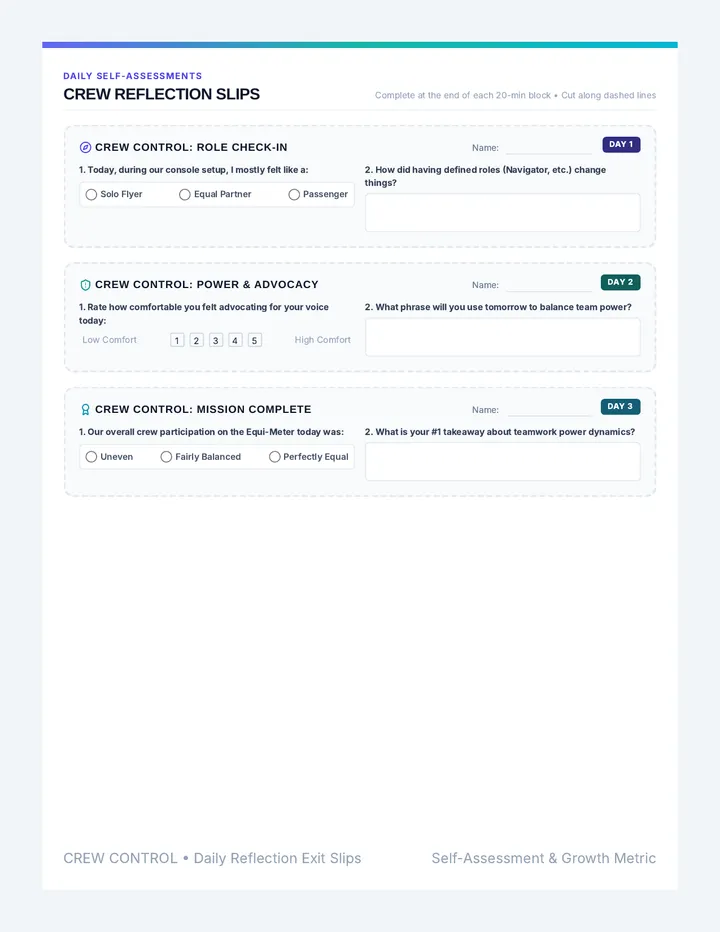
A printable 1-page document with 3 cut-out daily reflection exit tickets corresponding to Day 1, Day 2, and Day 3 of the Crew Control curriculum. Features short reflection boxes and visual balance meters for student self-assessment.
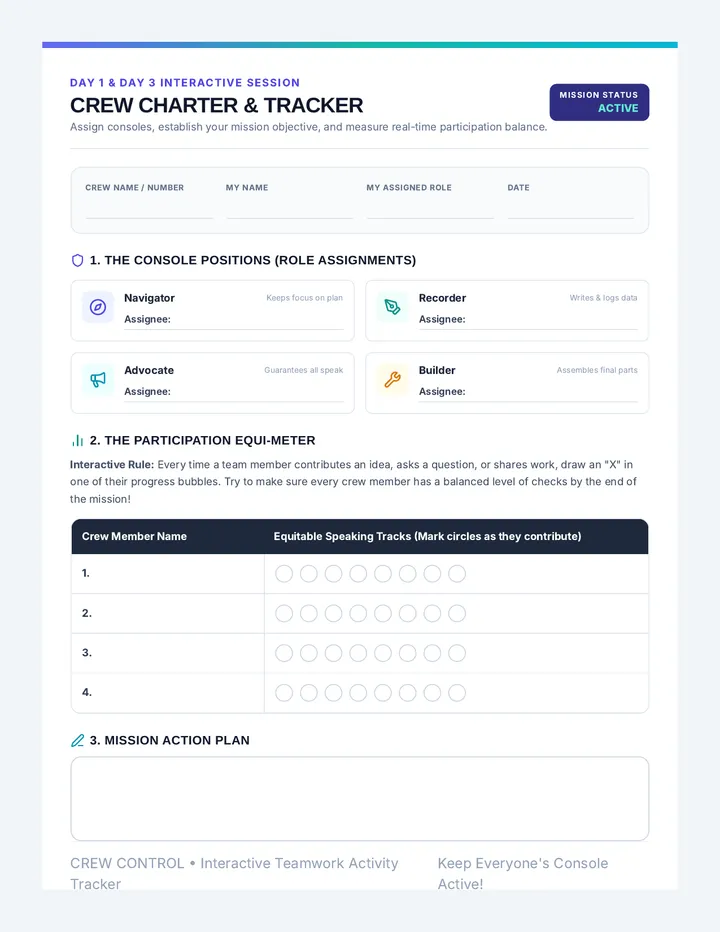
An interactive team tracking sheet where student groups assign specialized crew roles (Navigator, Recorder, Advocate, Builder) and log voice participation metrics in real-time.
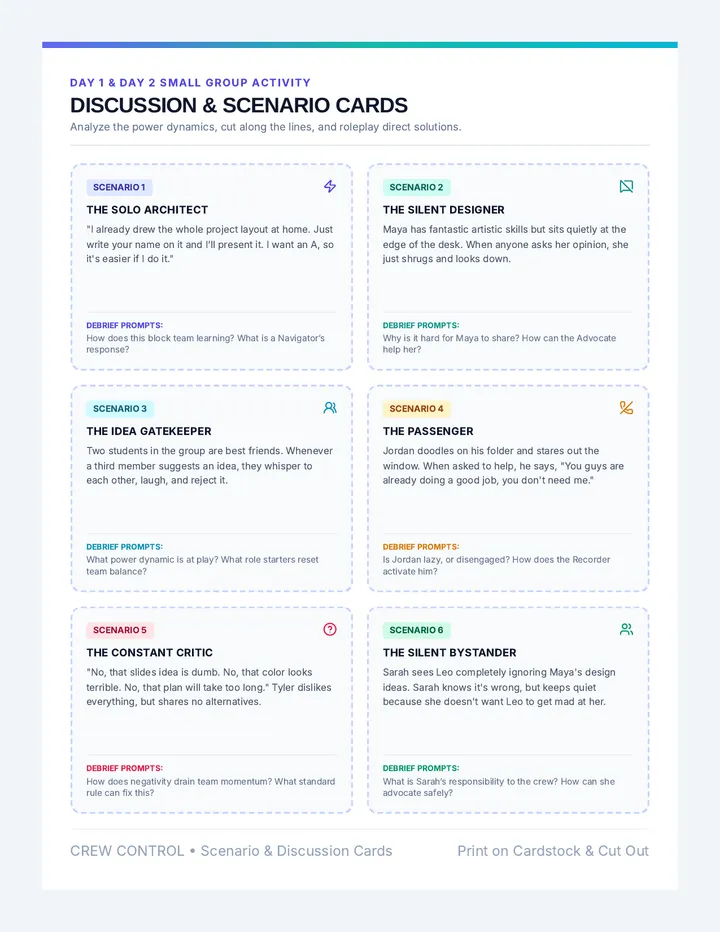
A printable 1-page activity sheet featuring 6 scenario discussion cards with realistic middle school group dilemmas (e.g., dominant leaders, passive bystanders, cliquey gatekeepers) and guiding prompts for small group roleplay.
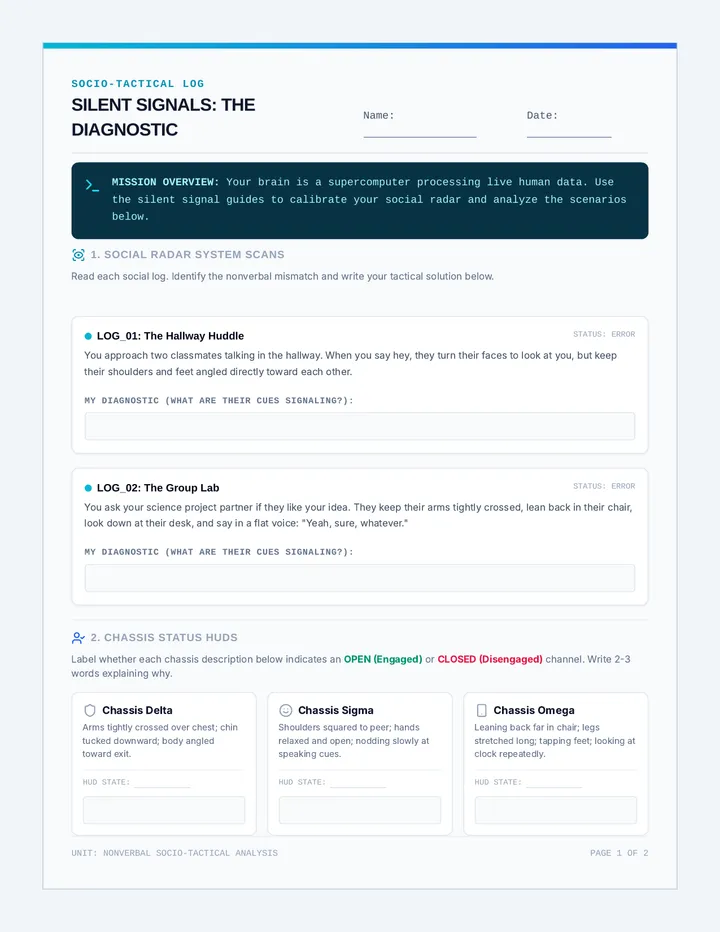
A high-interest, 2-page social skills worksheet containing interactive diagnostic exercises, vocal tone slider calibration, and reflective action-planning fields tailored for eighth-grade boys.
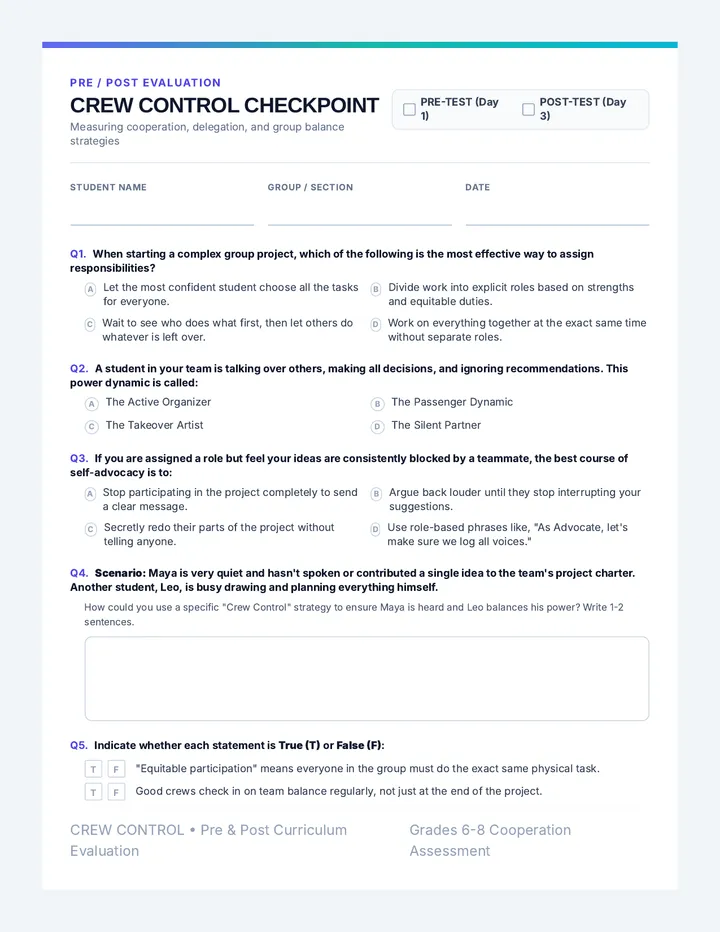
An identical pre- and post-test designed for assessment on Day 1 (Pre) and Day 3 (Post). Features 5 scenario-based questions to measure student growth in role division, self-advocacy, and handling power imbalances.
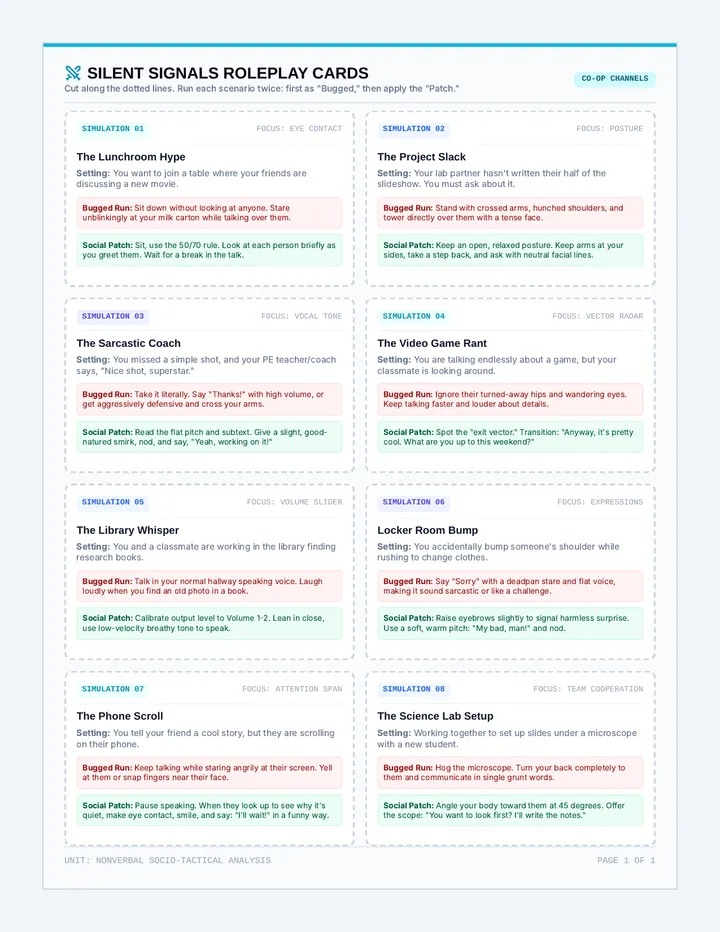
Eight high-interest, printable role-play scenario cards depicting realistic middle school situations (lunchroom, group project, hallway) with explicit "Bugged Cues" to act out and "Social Patches" to apply.
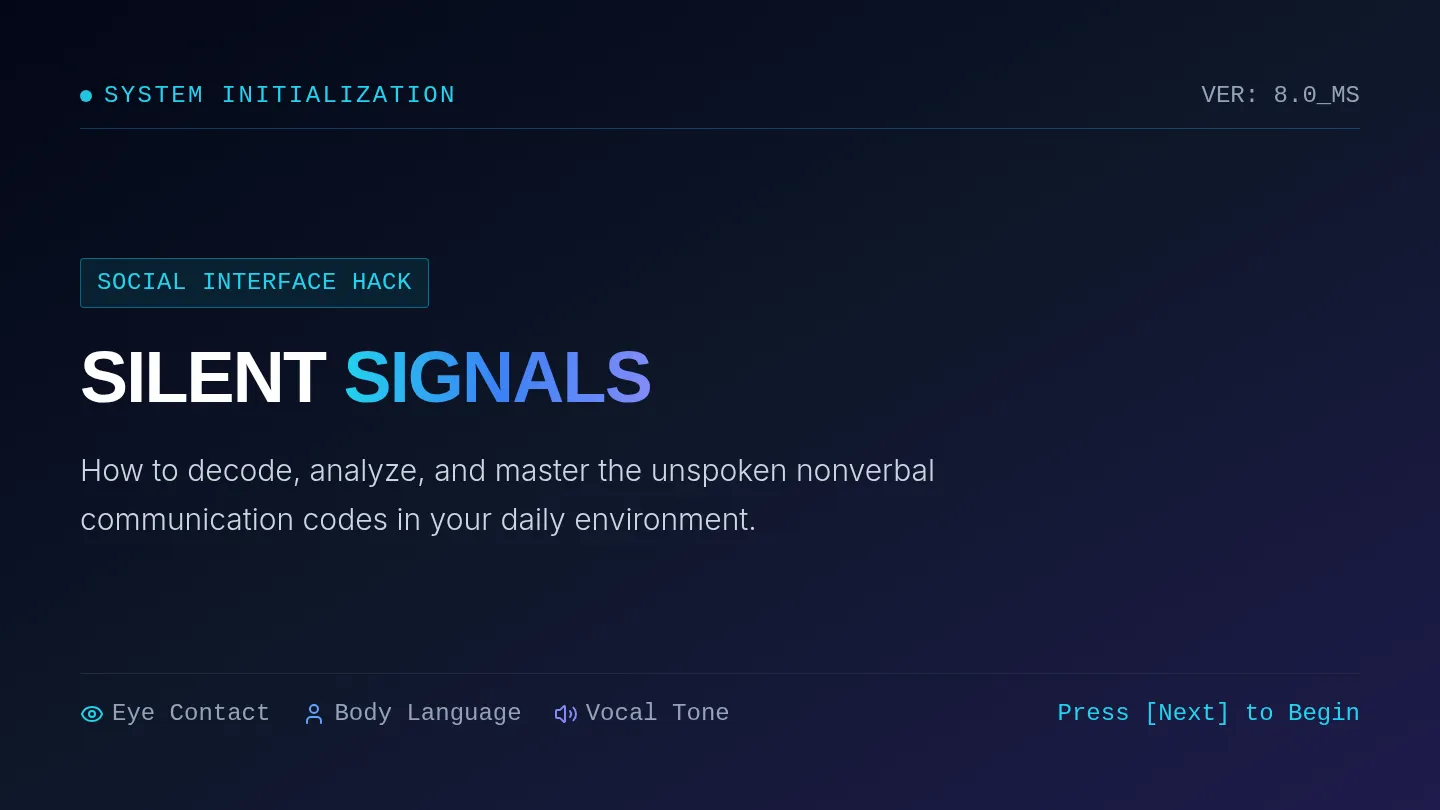
An engaging, high-tech presentation formatted as widescreen slides to introduce eighth-grade boys to eye contact, body language, and vocal tone cues. Uses gaming, UI, and coding metaphors.
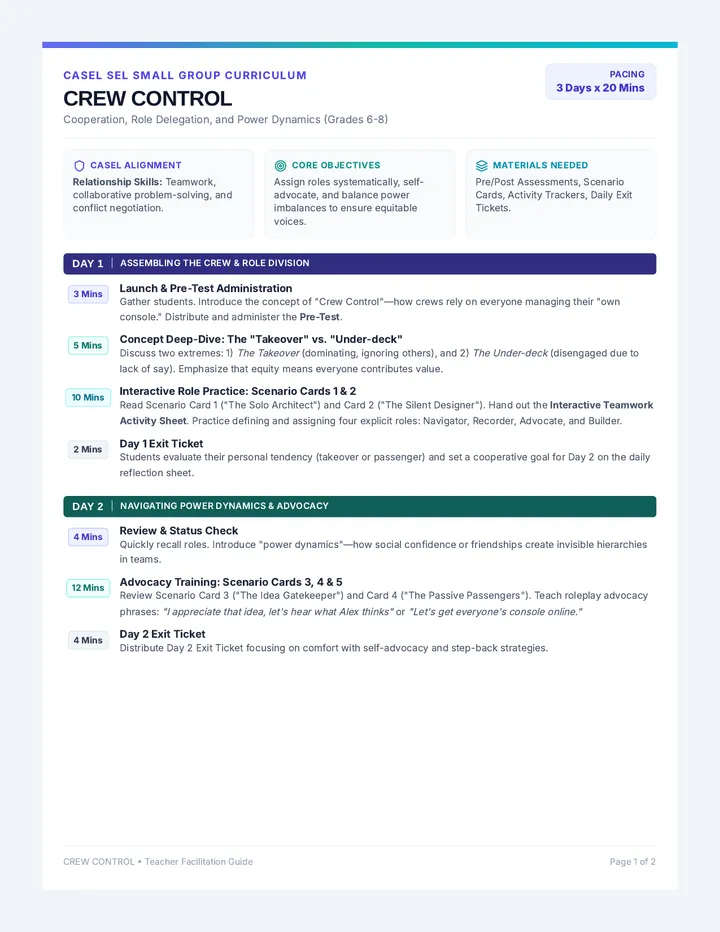
A comprehensive 2-page small group facilitation guide for teachers, breaking down the 3-day curriculum (20 minutes per day) with minute-by-minute timestamps, lesson plans, CASEL alignments, and intervention strategies for navigating group power dynamics.
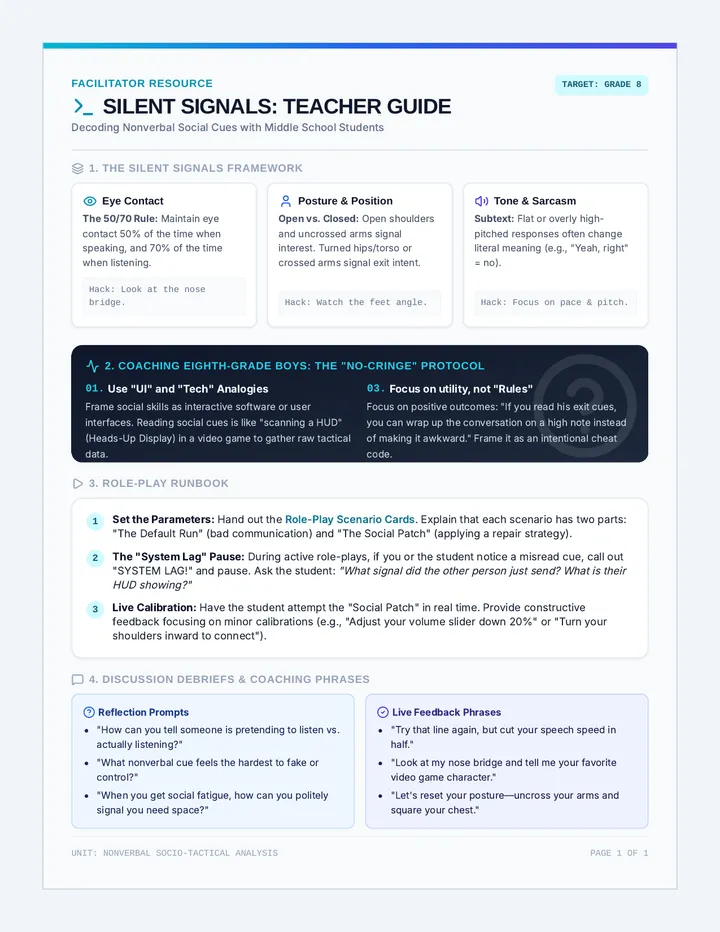
A professional, 1-page teacher facilitation guide containing practical strategies, coaching scripts, and actionable advice specifically tailored for teaching nonverbal cues to middle school boys.
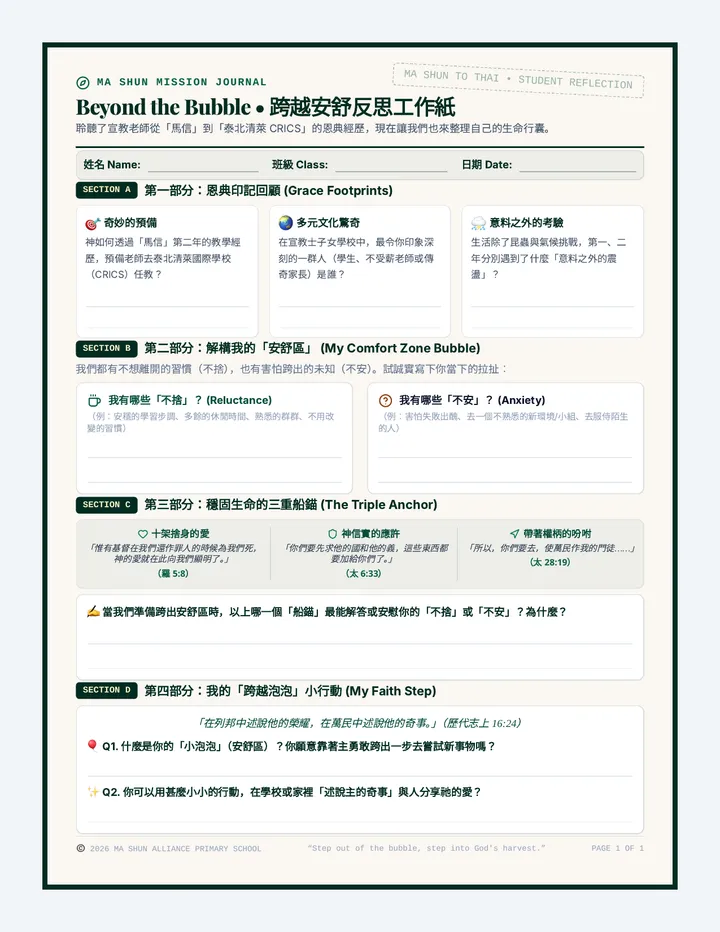
A companion student worksheet designed to help students reflect on their comfort zones, assess their fears and attachments, study scripture passages, and plan their step of faith.
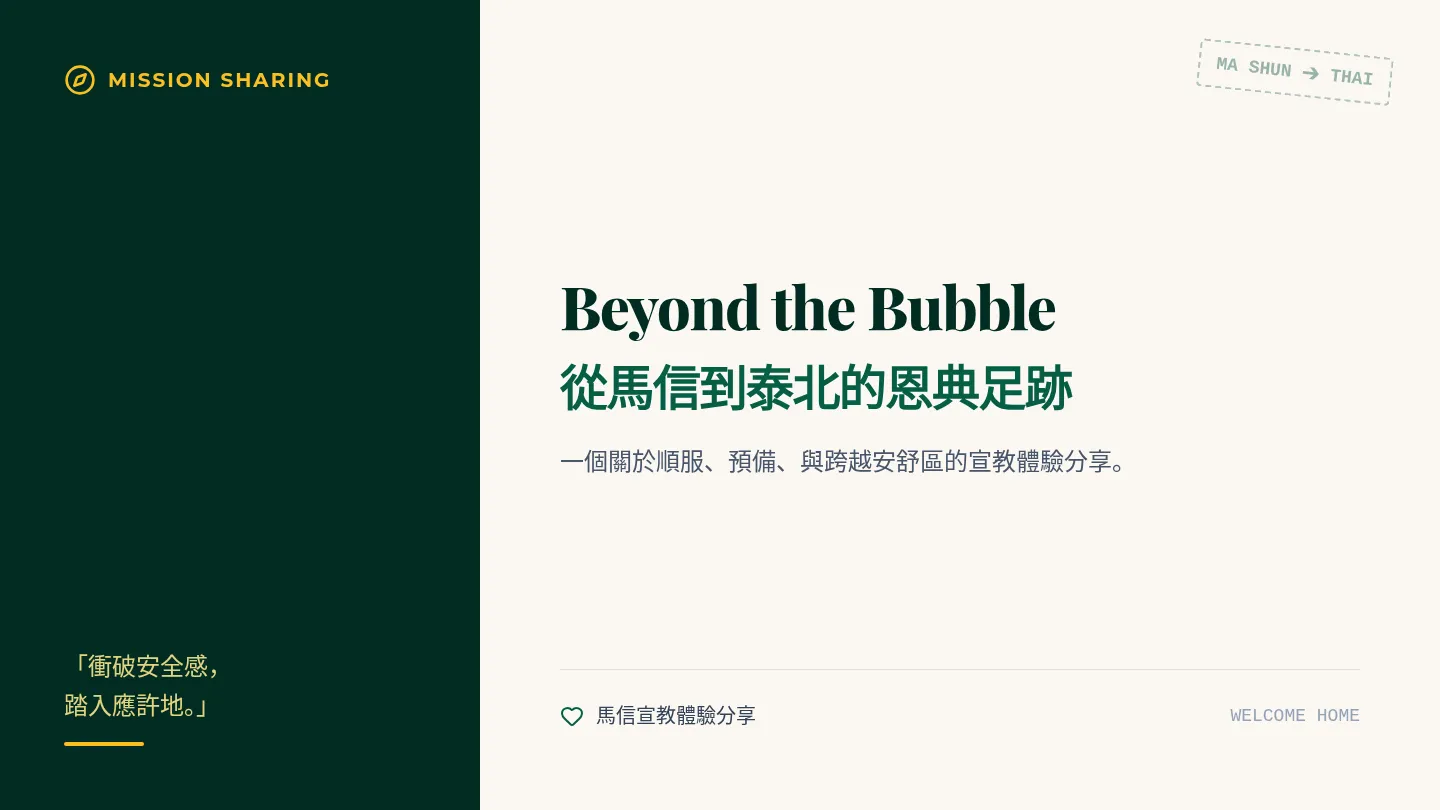
A personalized, engaging 8-slide presentation telling the missionary's chronological journey from teaching at Ma Shun to serving at CRICS in Northern Thailand.
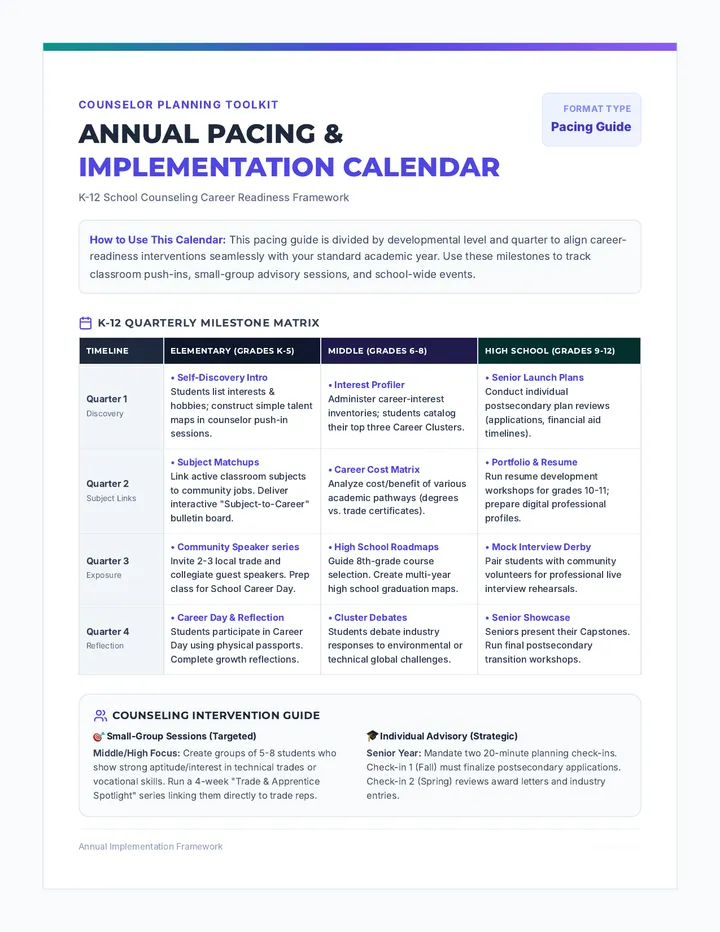
Counselor Planning Toolkit containing a K-12 annual pacing calendar, school-wide Career Day implementation action plan, and a printable Career Day Student Passport.
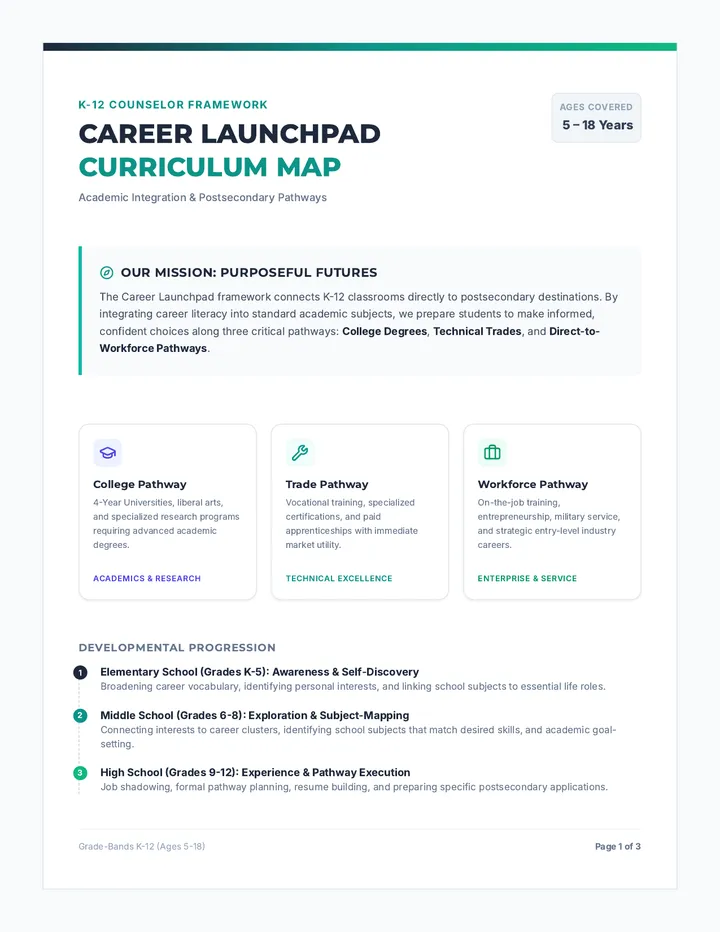
A comprehensive K-12 career exploration curriculum map linking school subjects to college, trade school, and workforce pathways. Spans elementary, middle, and high school grade bands with specific learning targets, activities, and developmental milestones.
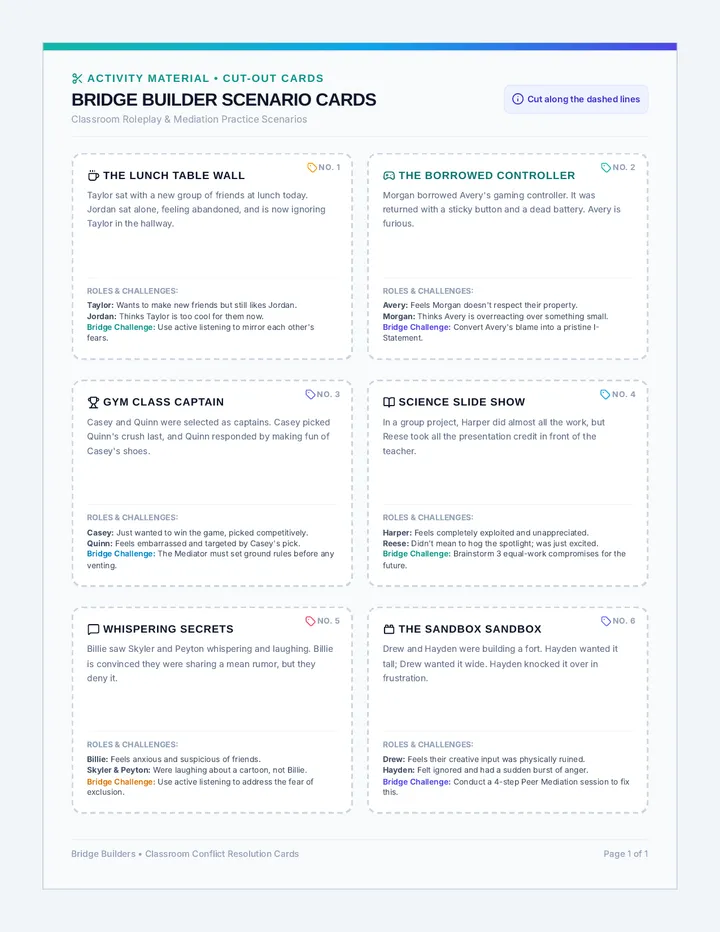
A set of 6 printable roleplay scenario cards for hands-on conflict resolution practice. Each card features a realistic friendship dispute, designated roles, and a specific skill challenge for students to solve using active listening and mediation.
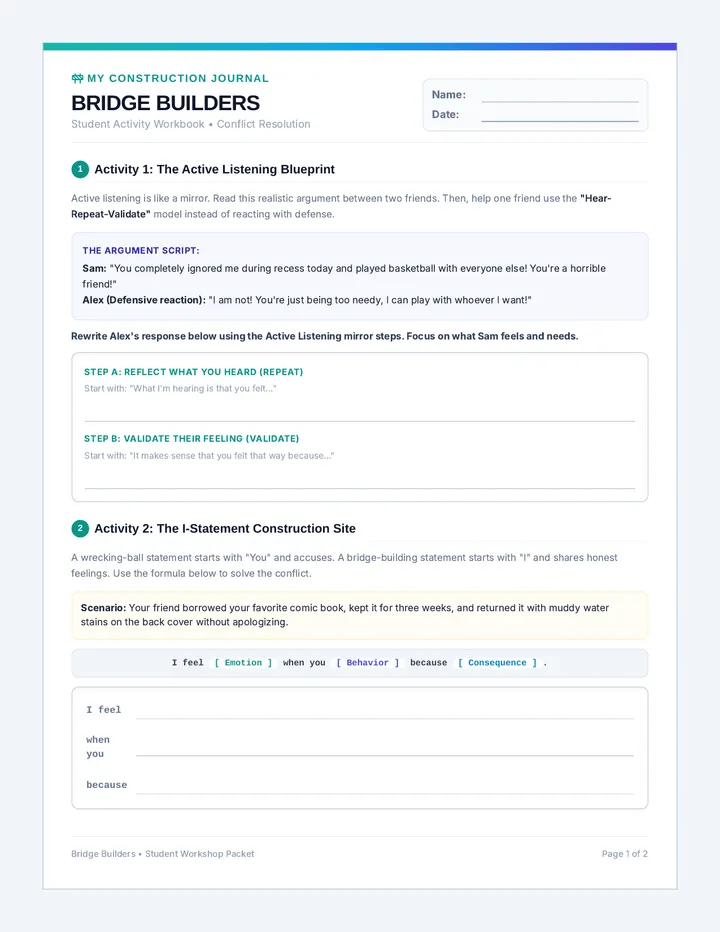
A print-ready 2-page Student Activity Packet for the Bridge Builders workshop. Features an active listening analysis, guided I-statement scaffolding, a peer mediation path map, and a formal signable Bridge Builder Pledge.