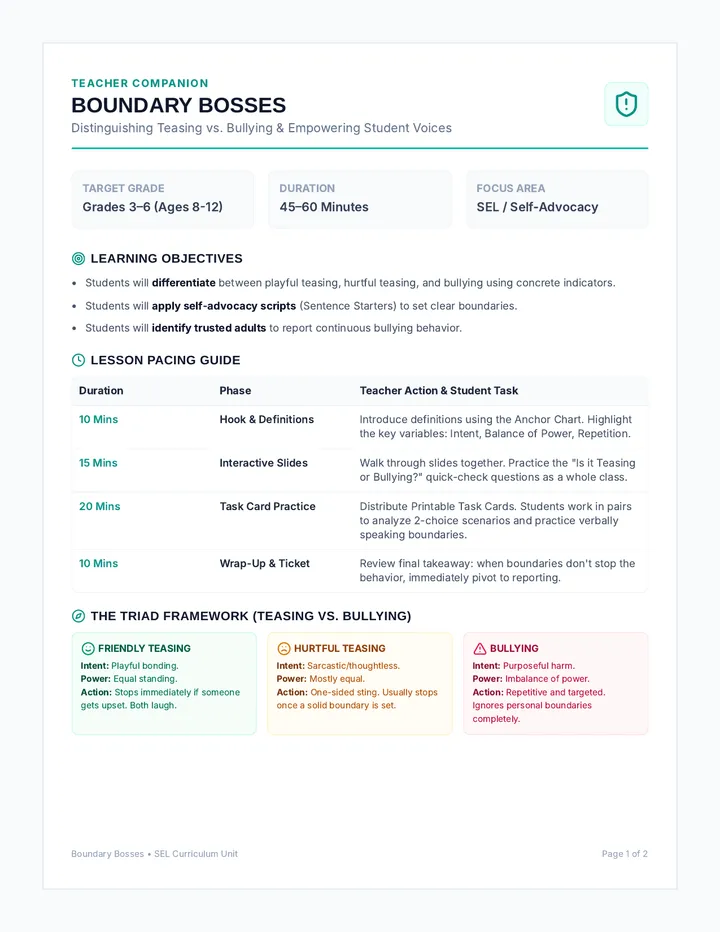
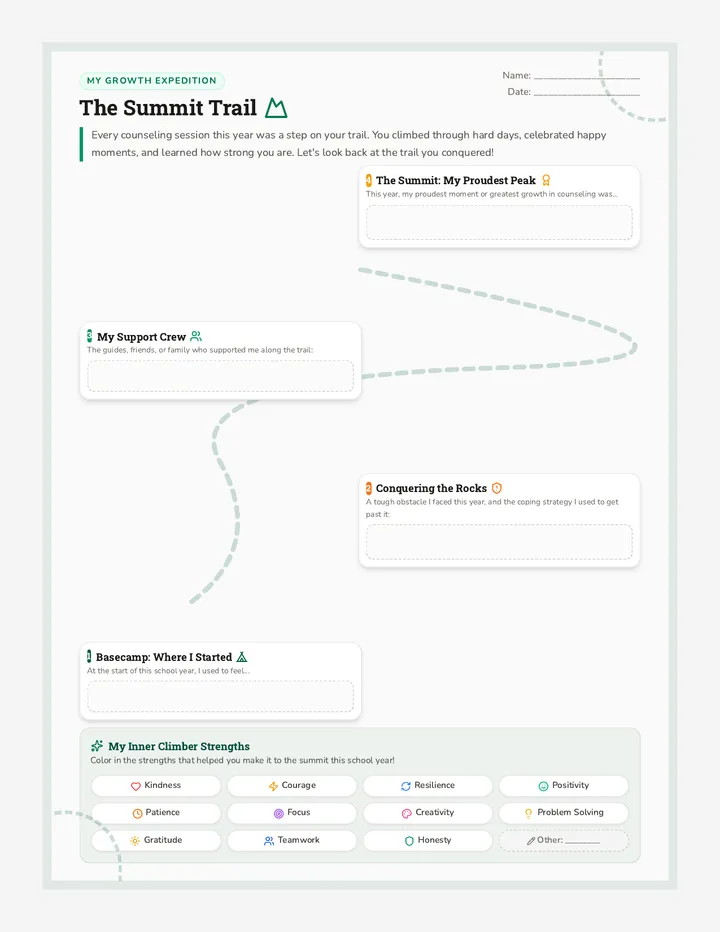
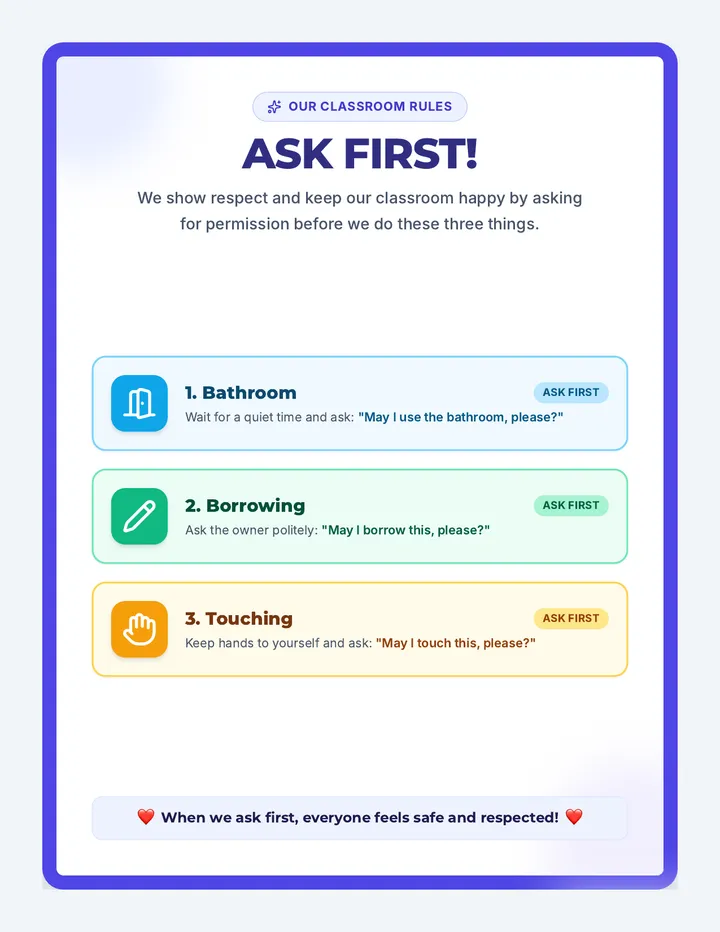
A teacher's guide for the Conversation Quest lesson, including learning objectives, a pacing guide, modeling instructions, and tips for special education implementation.
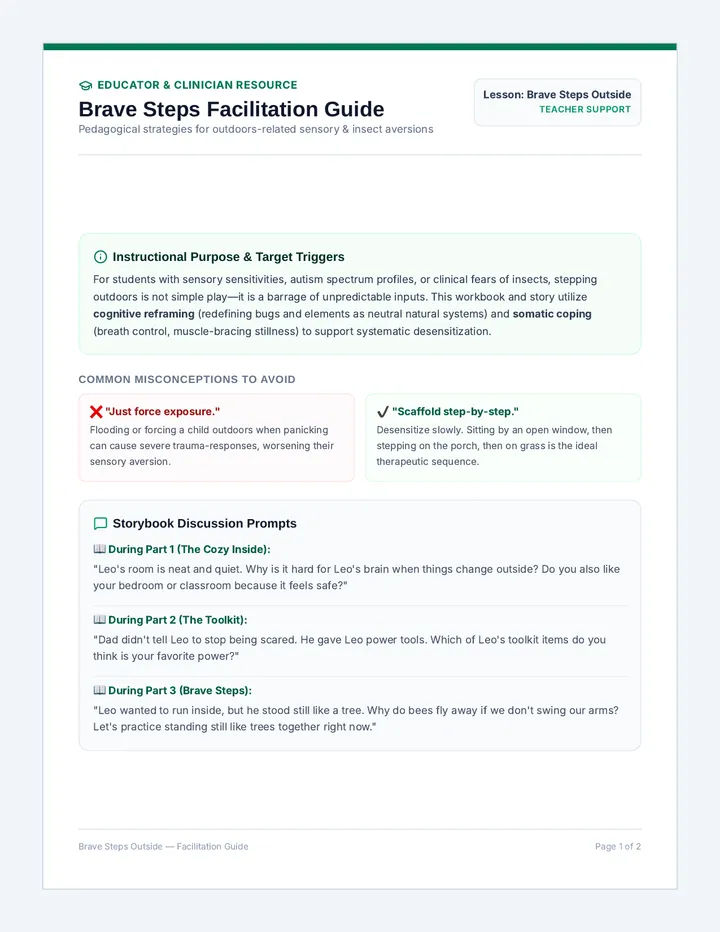
A single display slide featuring a 6-step checklist of the performance lab procedures, including a reminders for classroom conduct and group participation. Fixed layout to prevent overlap.
Instructions for the Mystery Performance Lab, guiding students through solo reading, role assignment with tie-breakers, plot analysis, fluency practice, and final presentation.
A comprehensive 2-page follow-up worksheet for students to complete after performing or watching mystery plays. Focuses on fluency self-reflection, high-rigor character analysis, comprehension of plot devices like red herrings, and social-emotional debriefing. Optimized for print with writing lines instead of boxes. Updated terminology to "Character Change".
Six lengthened mystery/problem-solving plays featuring 4-5 characters each. Each play includes increased plot complexity, red herrings, and higher rigor dialogue focused on social-emotional conflicts. Includes a reusable analysis log template. Themes are strictly school-based with no space or weapon-related content. Every script and the analysis log are formatted to fit on a single page. Optimized with writing lines and no heavy boxes.
A student worksheet for analyzing the plot structure of a play, including sections for setting, characters, beginning, middle, end, problem, and solution. Optimized with writing lines and no heavy boxes. fits on one page.
A short model play script titled "The Missing Lunchbox" used to demonstrate play structure, characters, and dialogue. Features a friendship-based problem and solution. Dinosaur theme used for the lunchbox.
Instructional slides teaching the components of a play script (dialogue, stage directions), plot elements (beginning, middle, end, problem, solution), and fluency skills.
Visual presentation for the 'Time Travelers' mentoring session. It connects history with personal growth, encouraging students to identify their 'inner archive' of strengths and build a resilient mindset for the future.
A mentor guide and 'Hero Shield' worksheet for a mentoring session on resilience and personal growth. Students reflect on their 'inner heroes' (strengths) and build a visual shield of support to prepare for future challenges.
Instructional slides for the 'Bridge Builders' mentoring session. It uses the metaphor of bridges and walls to teach students about healthy communication, empathy, and how to repair relationships through 'planks' of dialogue.
A mentor guide and activity card set focused on social skills and conflict resolution. Using the metaphor of 'Bridge Builders,' students explore how to repair misunderstandings and strengthen community connections.
Visual presentation for the 'Soul Cartography' mentoring session. It introduces the concept of emotional mapping through geographical metaphors like mountains, woods, and safe havens to engage students in self-reflection.
A mentor guide and student worksheet for a 30-minute mentoring session focused on identifying and mapping emotions through the lens of geography. Includes a structured session flow and a creative 'Inner World' mapping activity.
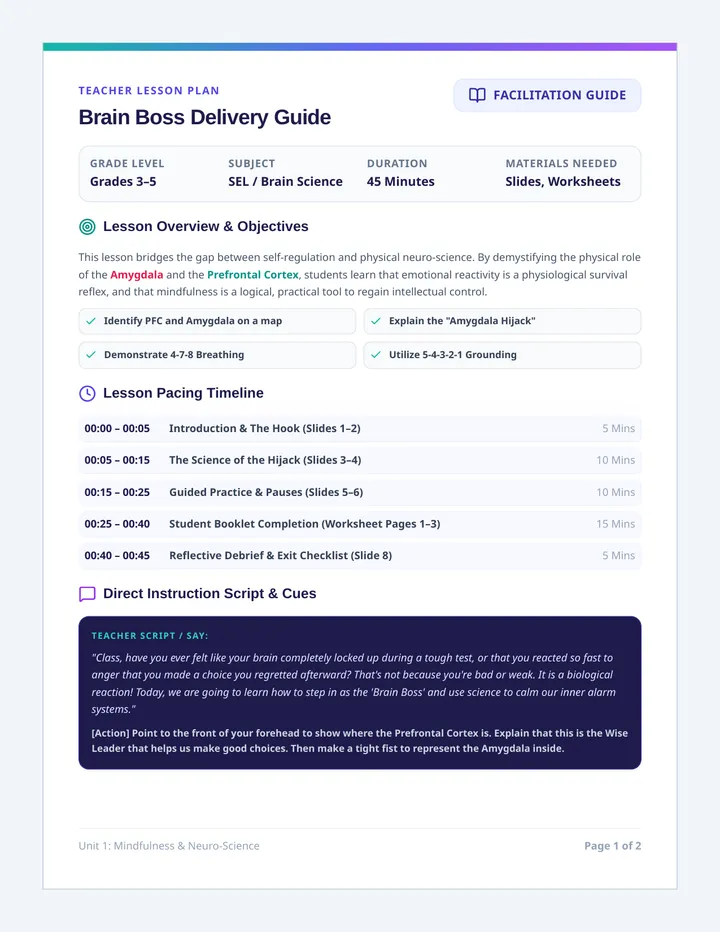
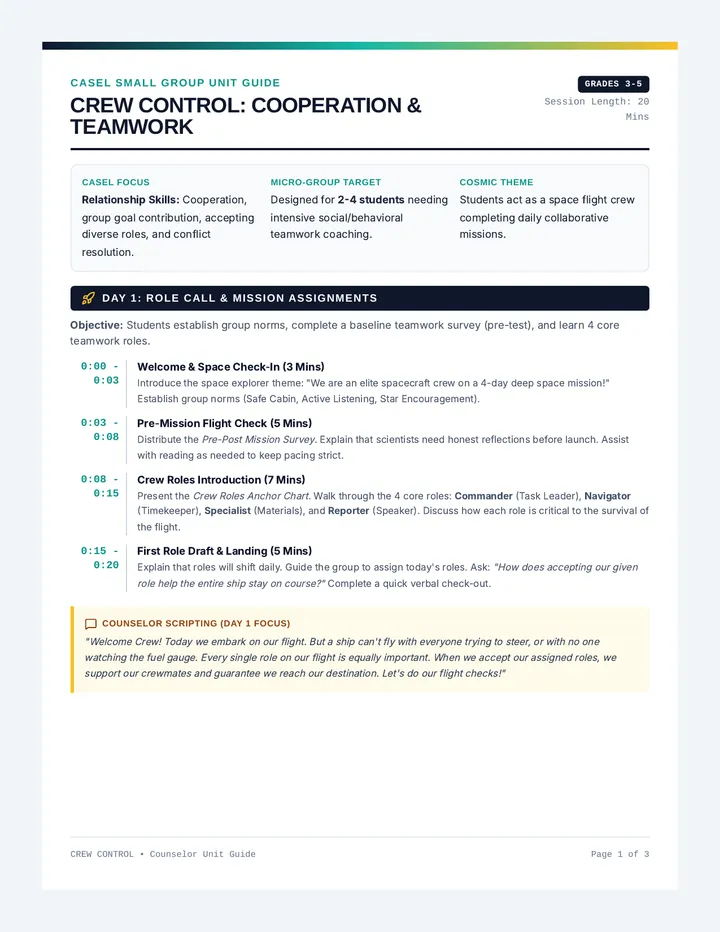
A teacher facilitation guide for implementing executive function checklists, providing strategies like the "Micro-Step" and "5-Minute Dash" for middle school students.
A weekly accountability log for tracking daily consistency in organization and task initiation skills, featuring reflection prompts and a scoring system.
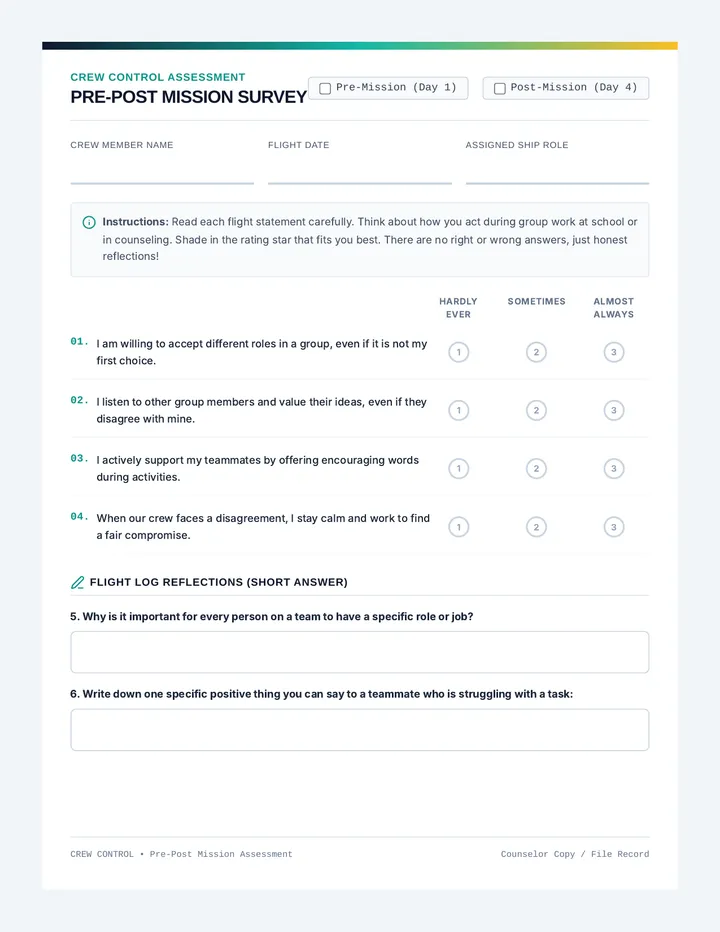
A structured checklist designed for middle schoolers to manage organization and task initiation, featuring a "Mission Control" theme for engagement and a signature area for accountability.
A vibrant, high-contrast visual aid poster featuring the three breath work techniques (Square, Belly, and Bee) with simple icons and instructions for classroom display.
A student worksheet for self-reflection before and after breath work, featuring an emoji mood check, a technique preference selector, and a creative drawing space.
An engaging presentation for 4th graders featuring emoji check-ins, explanations of why we breathe, and visual guides for Square Breathing, Belly Breathing, and Bee Breath.
A comprehensive teacher resource providing lesson objectives, a timed session flow, scripting for techniques, and discussion prompts for a 4th-grade breath work session.
A student worksheet for identifying personal anger triggers and physical symptoms, with a guided section for practicing "I-Statements" to resolve friendship conflicts.
A visually engaging slide deck designed for a 6th-grade counseling lesson on managing anger in friendships. It includes clear visuals for triggers, physical signs, and actionable communication tools.