A comprehensive lesson plan for middle school students focusing on project management skills using the Project Pathfinder strategy. Includes instructional steps, timing, and preparation guidance.
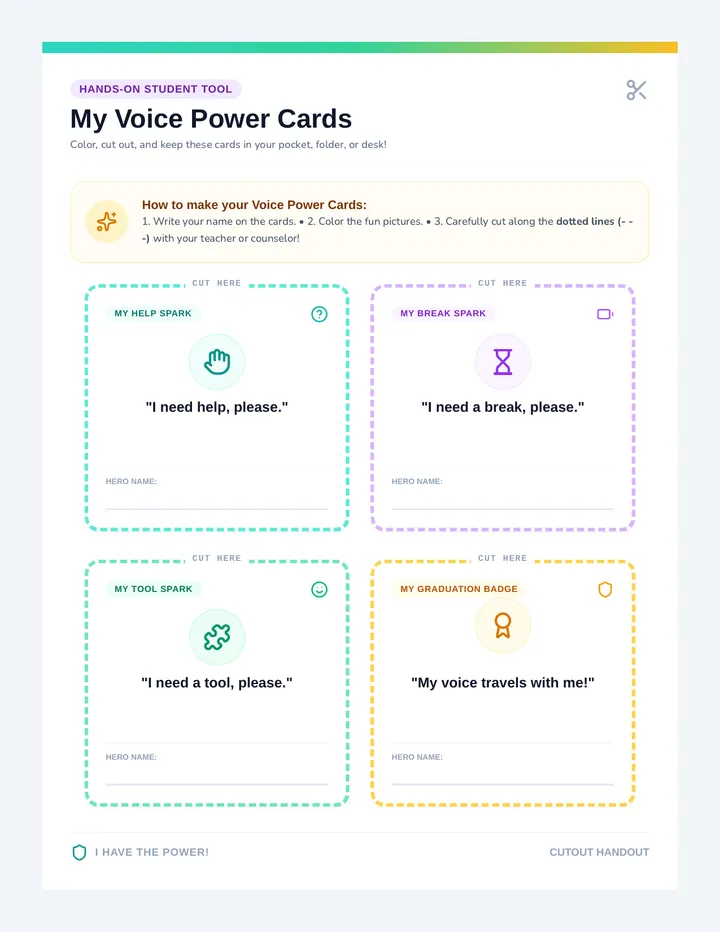
A facilitator's guide featuring three impactful opening questions for the Parenting Journey presentation, along with tips for engaging parents and creating a supportive atmosphere.
A professional feedback form for parents to evaluate the Parenting Journey presentation, including rating scales and reflection questions.
A professional and welcoming presentation slide for Burlington Public Schools' Parenting Journey program, highlighting key benefits for parents at all stages.
A final celebratory slide deck for Week 8. Updated to fix tracking issues and quotation mark placement.
A final synthesis worksheet where students create a personalized 'Maintenance Plan'. Updated with enlarged writing areas, personalized tool lines, and better layout balance.
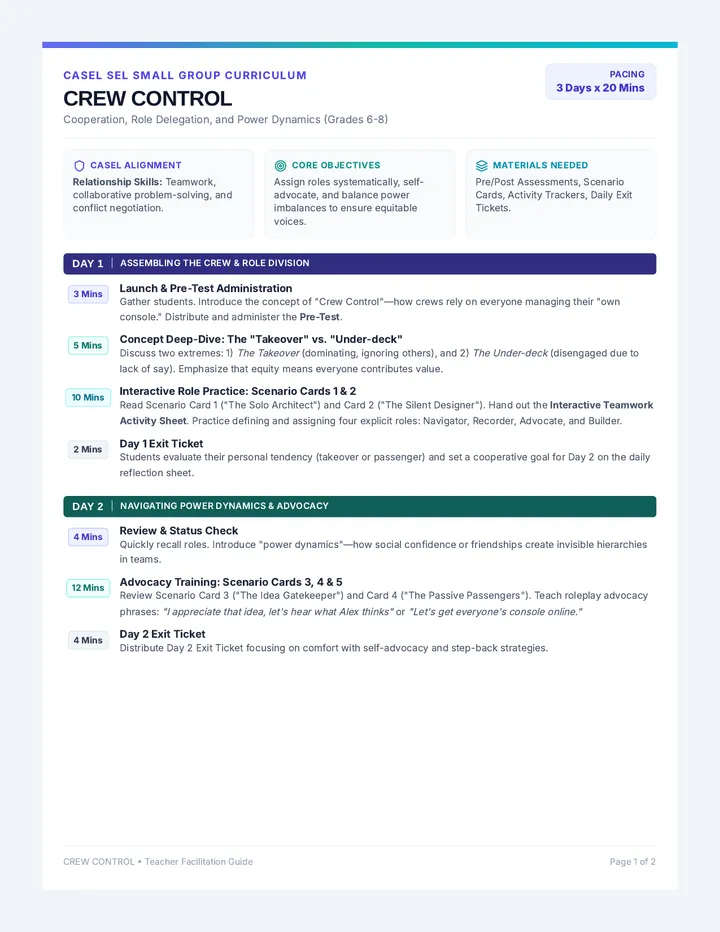
A facilitator guide for the final week of the program, guiding students through a comprehensive review and the creation of their own long-term anxiety management plans.
A presentation for Week 7 that explores social anxiety. Updated to improve text contrast, fix tracking issues, and provide clearer visual hierarchy.
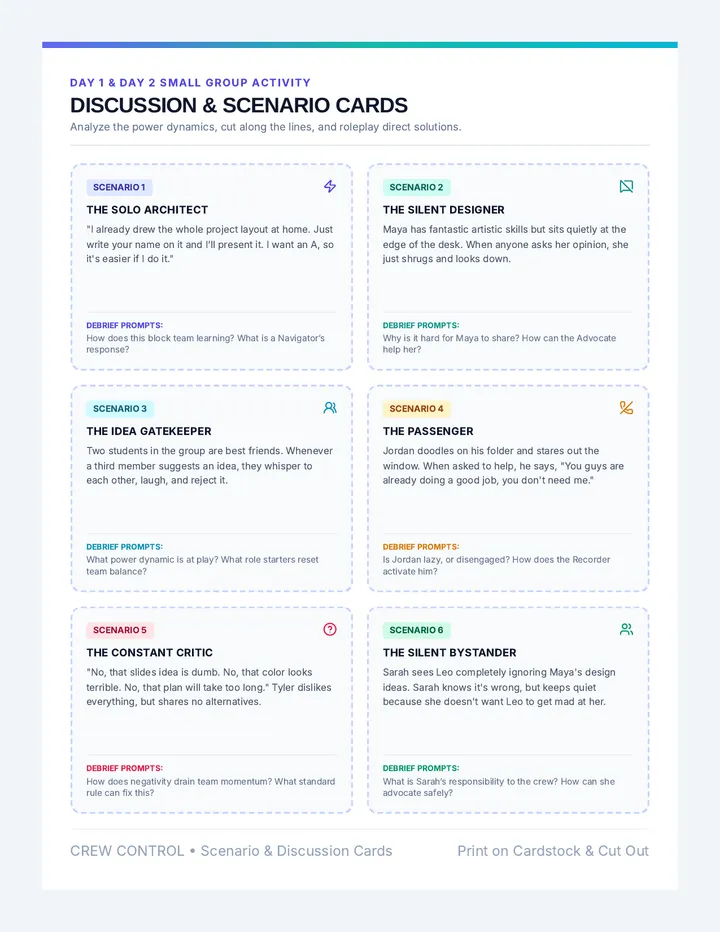
A set of social scenario cards for small group work. Updated to fix page-break issues, add plan response areas, and improve the protocol layout.
A facilitator guide for Week 7, focusing on social anxiety, the 'spotlight effect' myth, and applying coping tools to peer-to-peer interactions.
A slide deck for Week 6, introducing cognitive distortions as 'glitches' and providing a framework for students to 'debug' their own anxious thoughts.
A cognitive reframing worksheet that uses a debugging metaphor. Updated to fix table page-break issues and add baselines for student handwriting.
A facilitator guide for Week 6, focusing on identifying and challenging cognitive distortions (glitches) through a computer programming metaphor.
A visual guide for Week 5, demonstrating Square Breathing and Progressive Muscle Relaxation techniques through simple, clear visuals.
A combination tool-guide and practice log for student master-tracking of physical relaxation techniques. Updated with a light background for student work and added PMR description.
A facilitator guide for Week 5, teaching students physical strategies like Square Breathing and Progressive Muscle Relaxation. Updated to resolve page-break issues.
A slide deck for Week 4 that explains the purpose of grounding. Updated to include quantity labels on the technique slide and improve text contrast.
A high-contrast reference card for the 5-4-3-2-1 grounding technique. Updated to consolidate to a single page and improve text contrast.
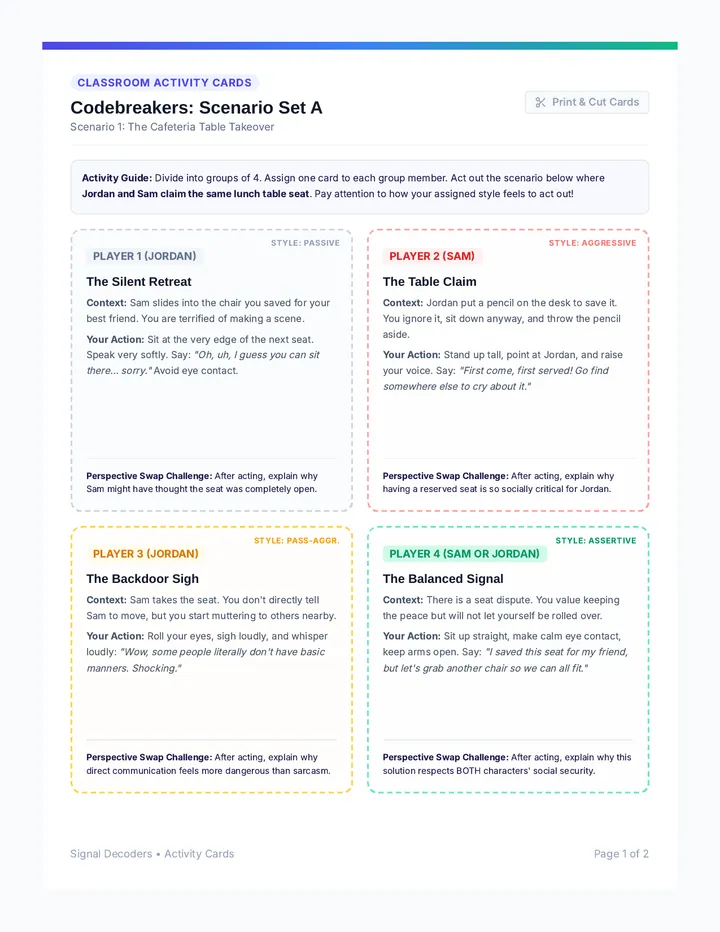
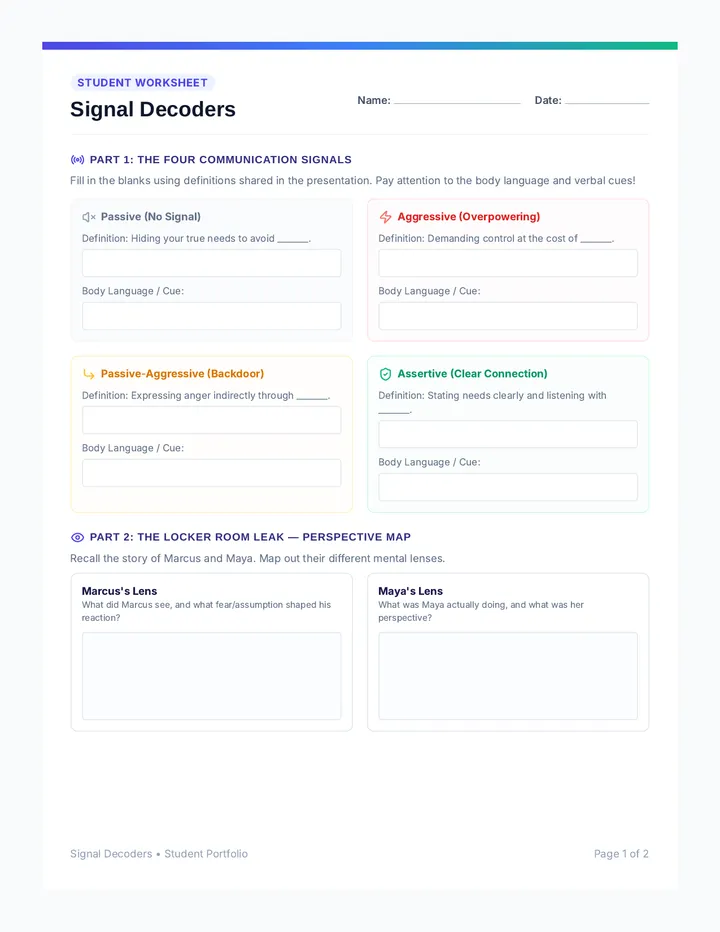
A detailed facilitator guide for Week 4, introducing grounding techniques as the first set of tools in the Mind Mechanics toolbox.
A presentation for Week 3 that defines anxiety triggers. Updated to fix tracking/kerning issues and improve text contrast.
A worksheet designed for students to audit their personal anxiety triggers across academic, social, and environmental domains, helping them build predictive awareness.
A detailed facilitator guide for Week 3 of the Mind Mechanics program, focusing on identifying individual anxiety triggers across academic, social, and environmental categories.
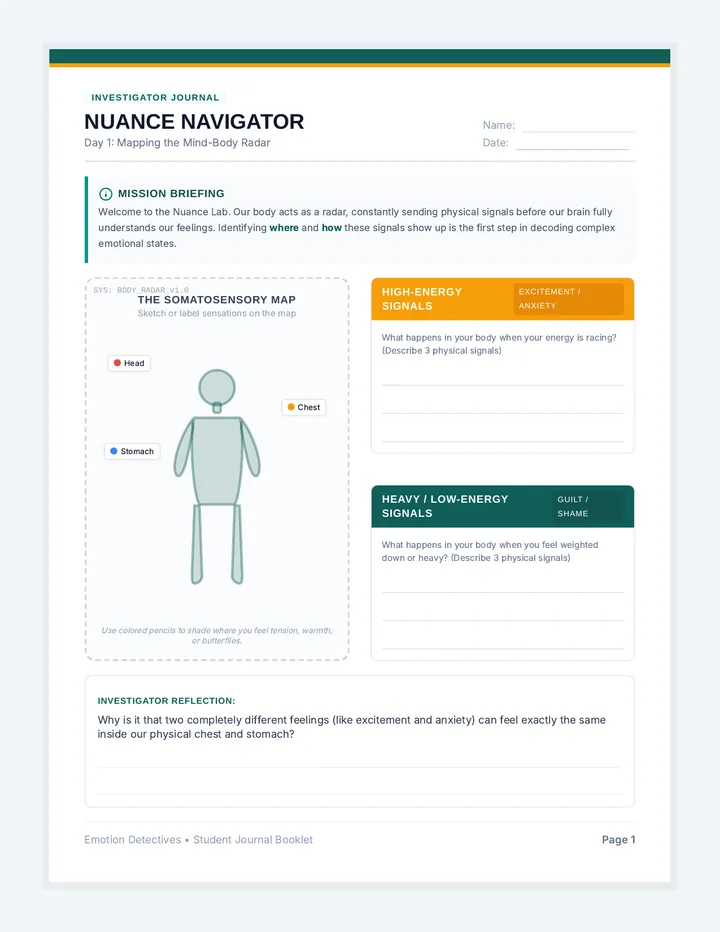
A visual presentation for Week 2, illustrating how physical sensations act as diagnostic 'sensors' for the brain's internal state. Updated with a concluding interactive slide and tool definitions.
An interactive body mapping activity where students identify and color-code their physical responses to anxiety. Updated with improved text contrast and unified page layout.
A detailed facilitator guide for Week 2 of the Mind Mechanics program, focusing on the physical manifestations of anxiety and how to identify 'body sensors'. Updated to fix page break issues.
An introductory worksheet for students to process the concept of the brain's alarm system, identify a recent anxious moment, and practice distinguishing between myths and facts about anxiety. Updated for better page flow and student response areas.
A visually engaging introductory slide deck for Week 1, using the Mind Mechanics theme to explain the concept of the brain's alarm system and normalize anxiety.
A comprehensive facilitator guide for the first week of the Mind Mechanics program, including a detailed instructional script, lesson objectives, and activity descriptions. Updated to ensure better page-break handling and readability.
A comprehensive facilitator's guide for the session, providing step-by-step instructions, discussion prompts, and strategies for handling student anxiety regarding self-disclosure.
A post-activity reflection sheet designed for student self-assessment. It helps students identify their strengths and growth areas in self-advocacy and includes a section for drafting a personal "Elevator Pitch" for professors.
A clear, three-role guide for students to use during advocacy role-play. It includes specific goals for the Advocate, the Authority, and the Observer, along with a fill-in-the-blank script for extra support.
A collection of four realistic scenarios ranging from easy to difficult, focusing on college and workplace self-advocacy. Each scenario includes a "twist" to make the role-play more challenging and authentic.
A professional and engaging 9-slide presentation designed for high school seniors. It covers the transition to college advocacy, provides a three-step script for communicating needs, and sets up real-world role-play scenarios.
A summary guide for facilitators explaining the Pathfinder archetypes and how they correspond to social-emotional traits and executive skills.
Consolidated facilitator scripts for Discovery Level (3-4) Lessons 1-6, providing detailed prompts for investigation and collaborative problem solving.
Consolidated student workbook for Discovery Level (3-4), featuring all 6 core lessons with investigation tools, perspective-taking, and ripple projects.
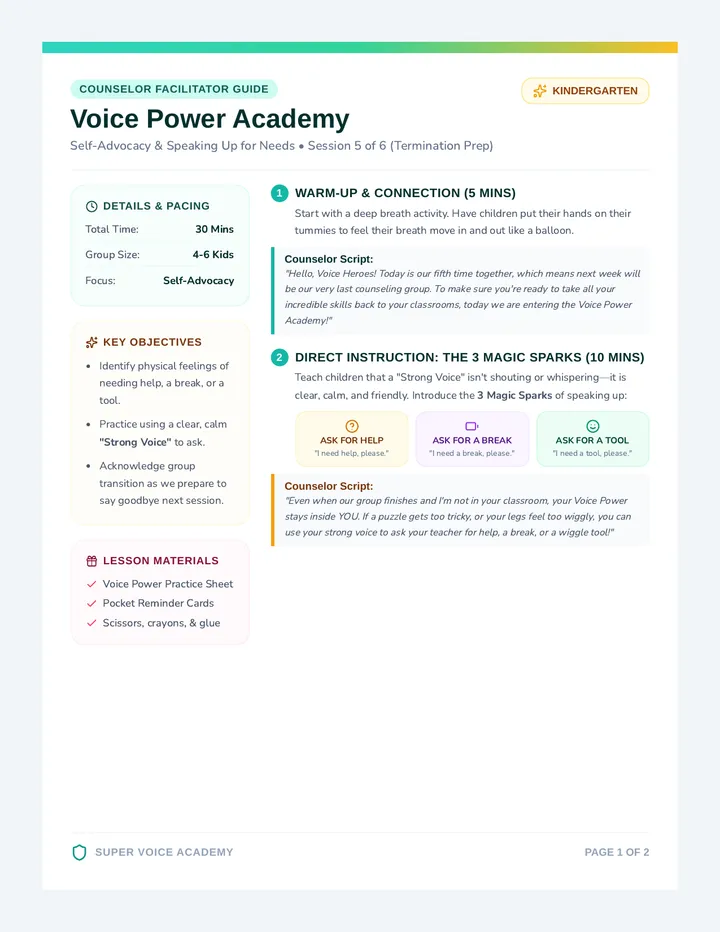
Consolidated facilitator scripts for Ground Level (K-2) Lessons 1-6, featuring simplified "SAY" prompts for young Pathfinders.
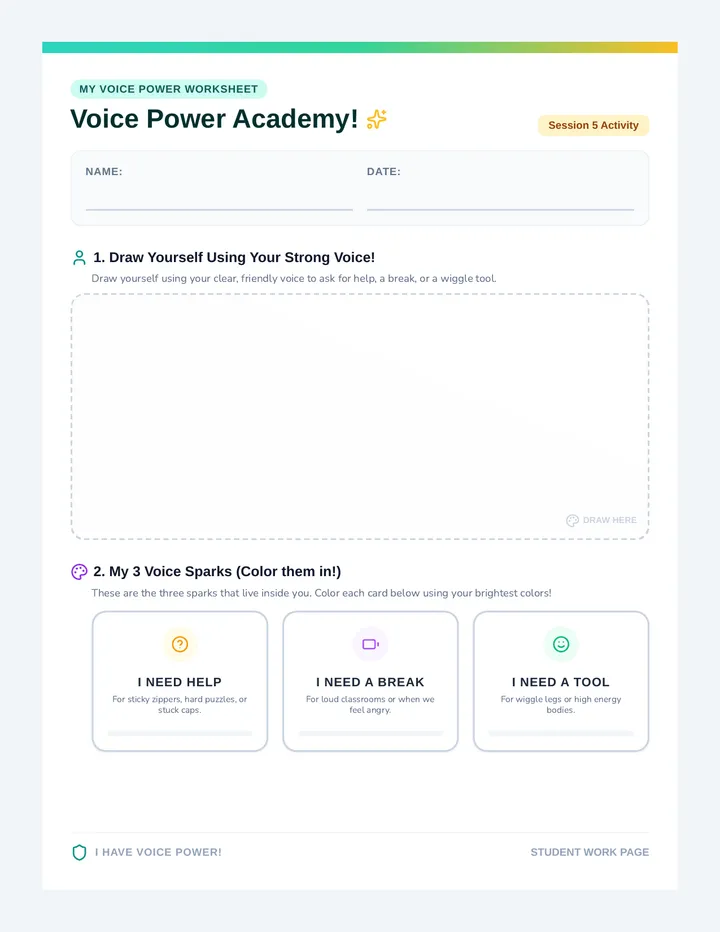
Consolidated student workbook for Ground Level (K-2), featuring all 6 core lessons with simplified language, visual clues, and drawing areas.
Open role play cards for Discovery Level Lesson 6: Unity, challenge scenarios for independent idea-linking practice for grades 3-4.