An updated facilitator guide for the Social Puzzle Solvers lesson, now including specific strategies for 4th-5th grade students and guidance on using scenario cards to address complex social dynamics.
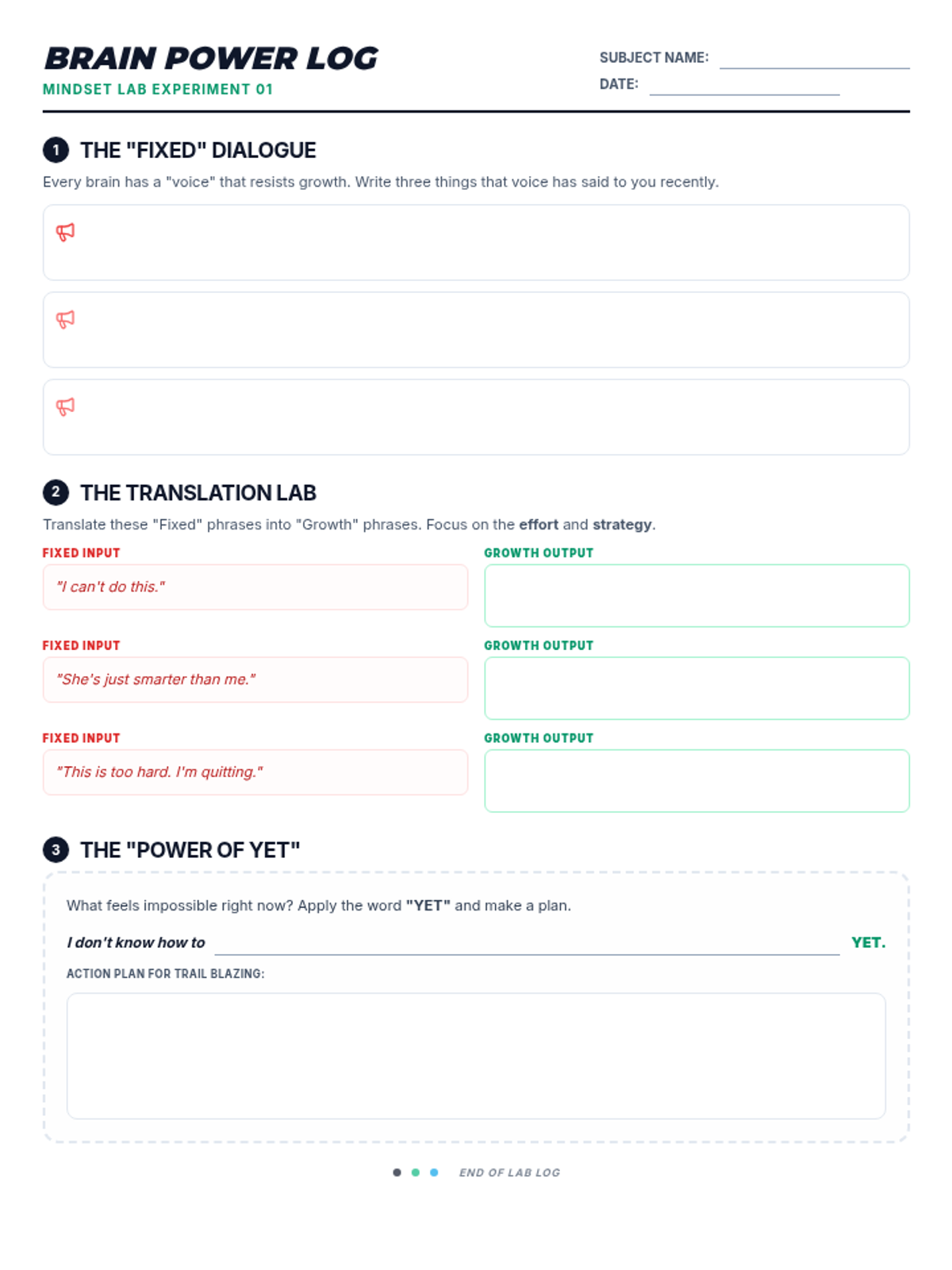
A practical student-facing worksheet to help identify fixed mindset thoughts and practice 'translating' them into growth mindset statements. Revised to fit all content on a single page with expanded work areas and improved contrast.
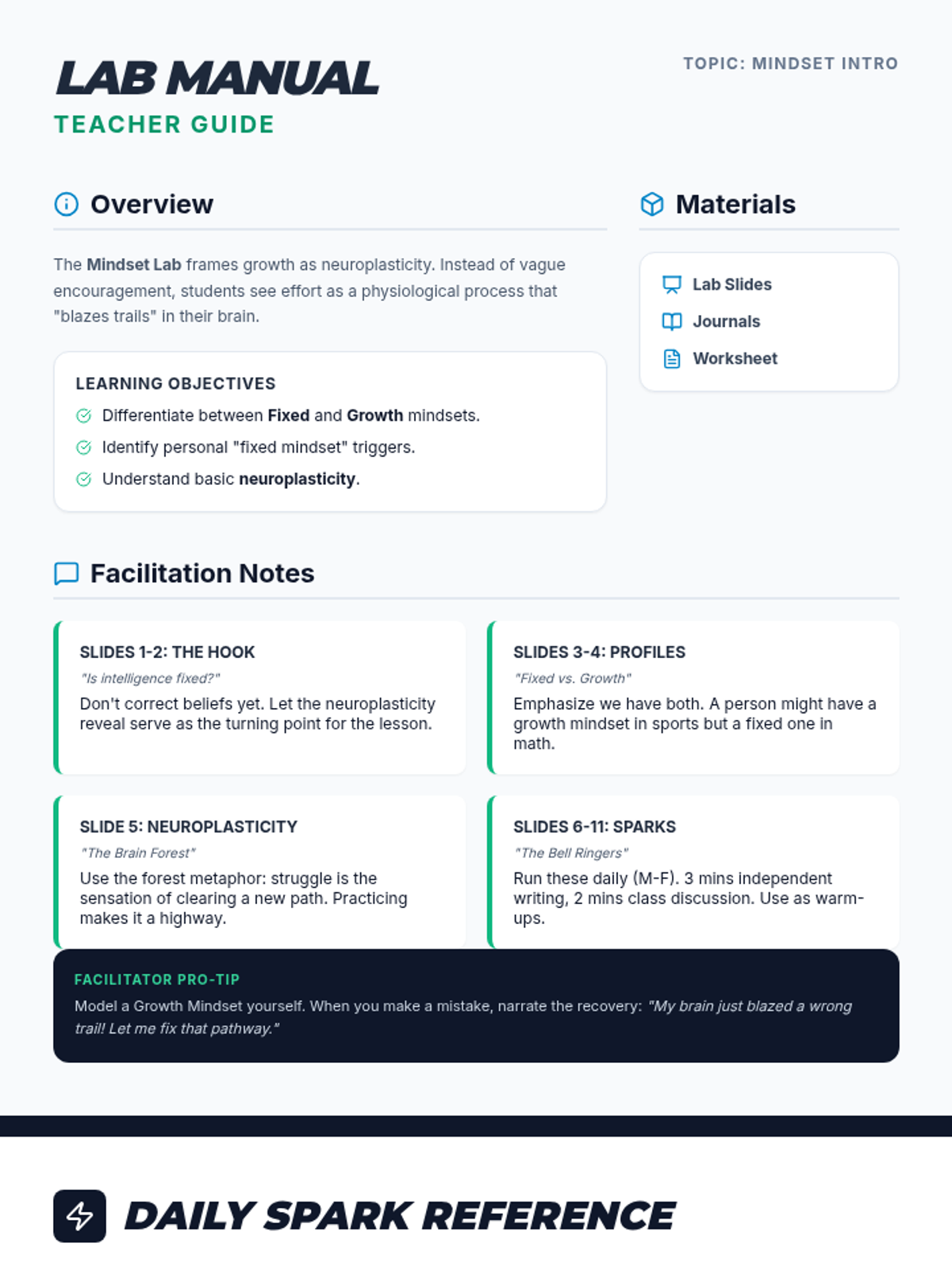
A detailed facilitation guide for teachers to lead the Mindset Lab lesson, revised with optimized page breaks, better text contrast, and a cleaner professional layout. Content consolidated to 2 pages.
A high-energy introductory slide deck for teaching Growth vs. Fixed mindsets, featuring scientific metaphors and five days of bell-ringer discussion prompts. Revised for better contrast and spacing.
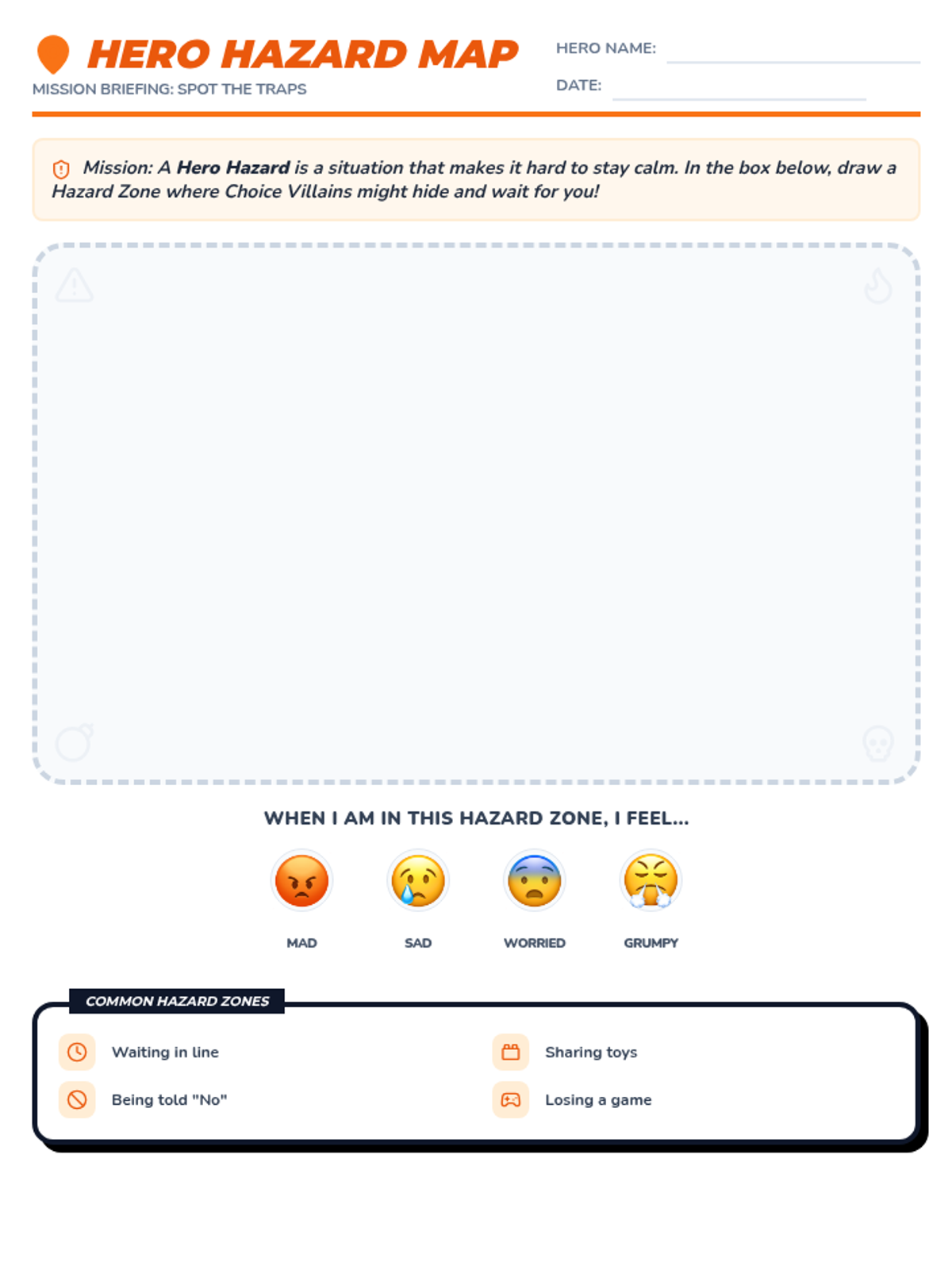
A student-facing worksheet designed to help kids identify and draw situational triggers ("Hero Hazards") where they might experience big feelings and encounter Choice Villains. Improved layout to fit on one page with clear emotion labels.
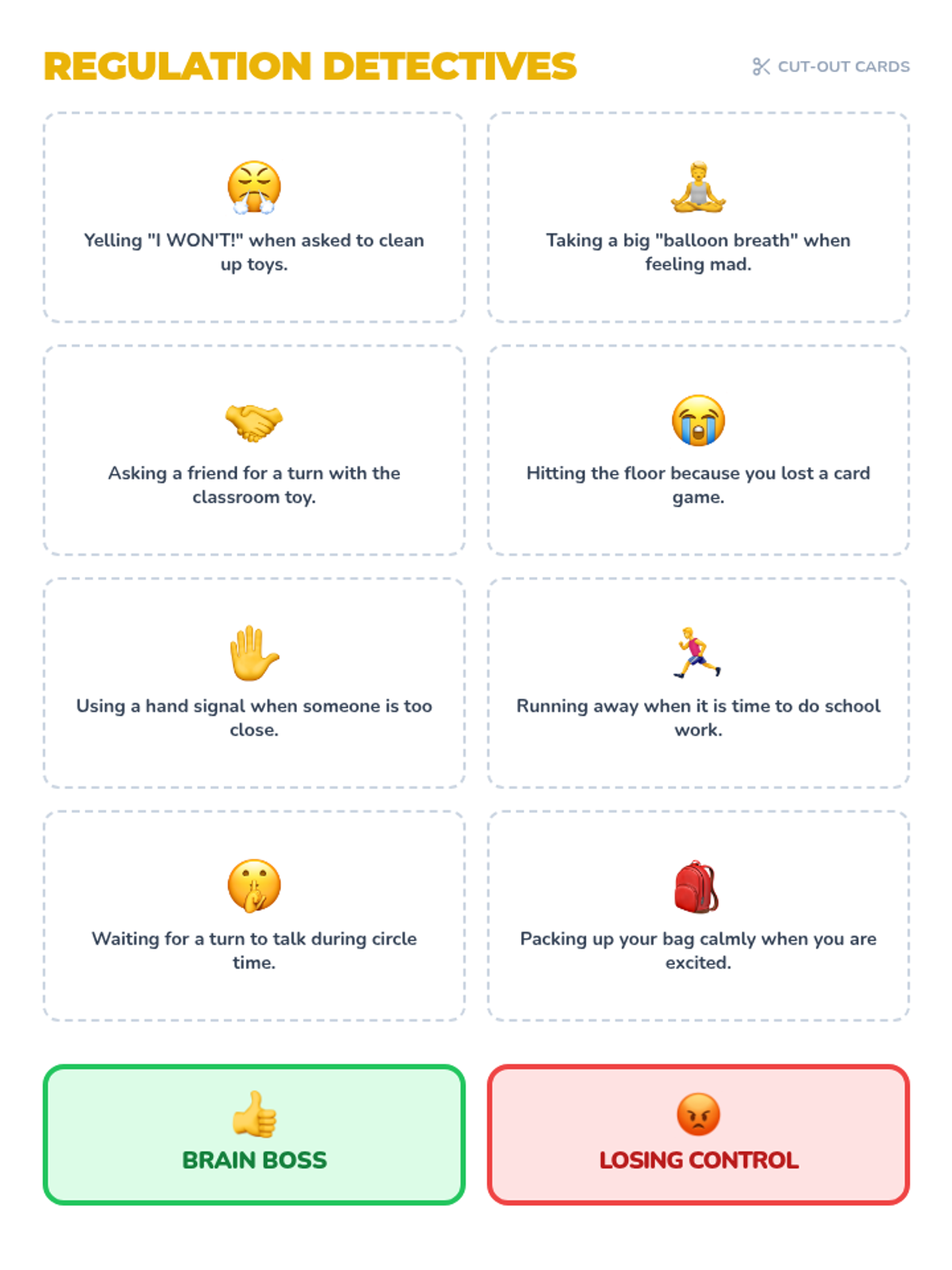
An expanded set of 20 scenario cards and a printable Stop and Think sign activity for students to identify and practice self-regulation skills.
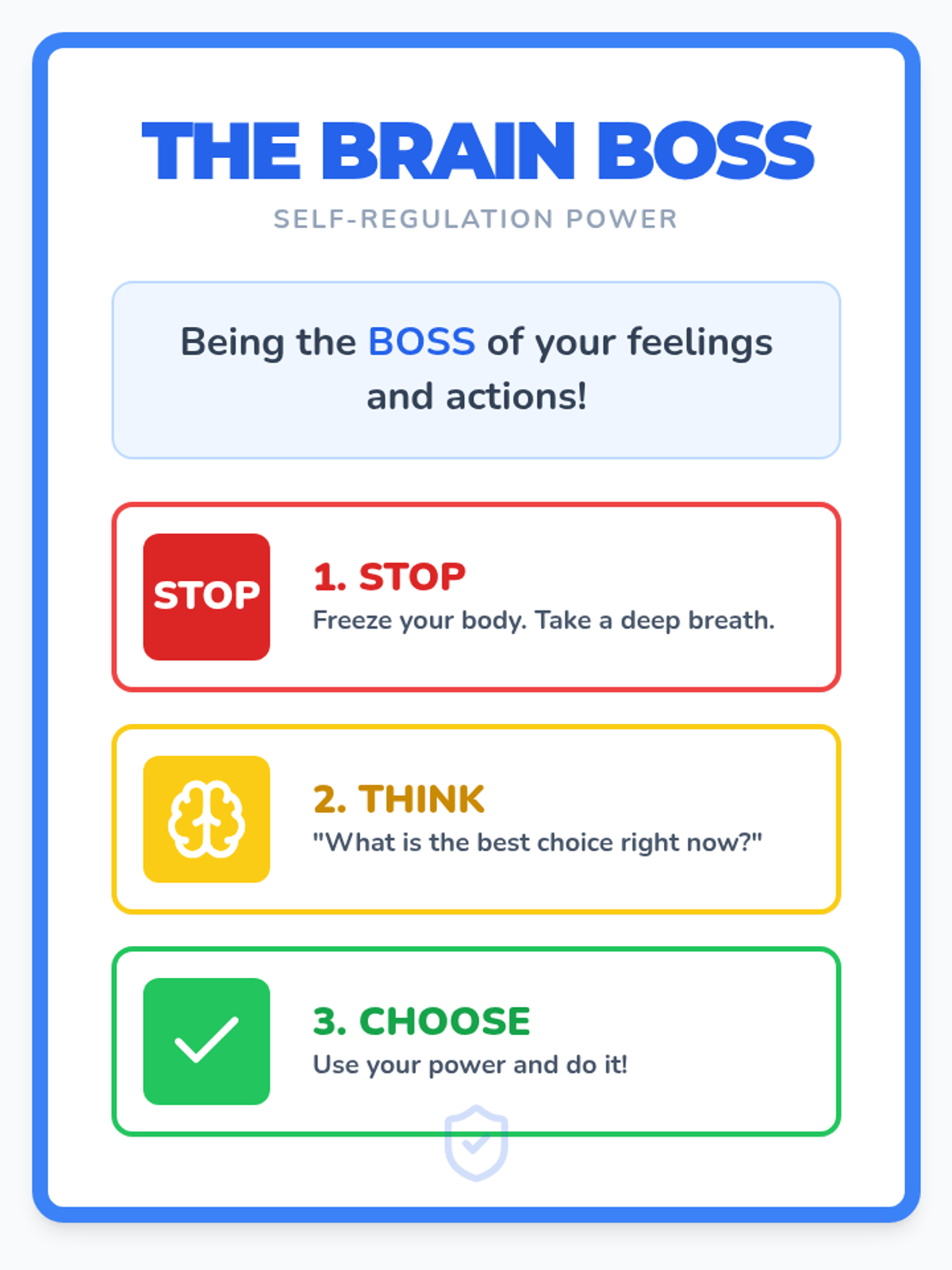
Visual anchor charts for the classroom that define self-regulation as the 'Brain Boss' and provide clear, visual steps for the 'Stop and Think' strategy.
An engaging slide presentation introducing self-regulation as being the 'Brain Boss', featuring interactive scenario analysis and the 'Stop and Think' technique.
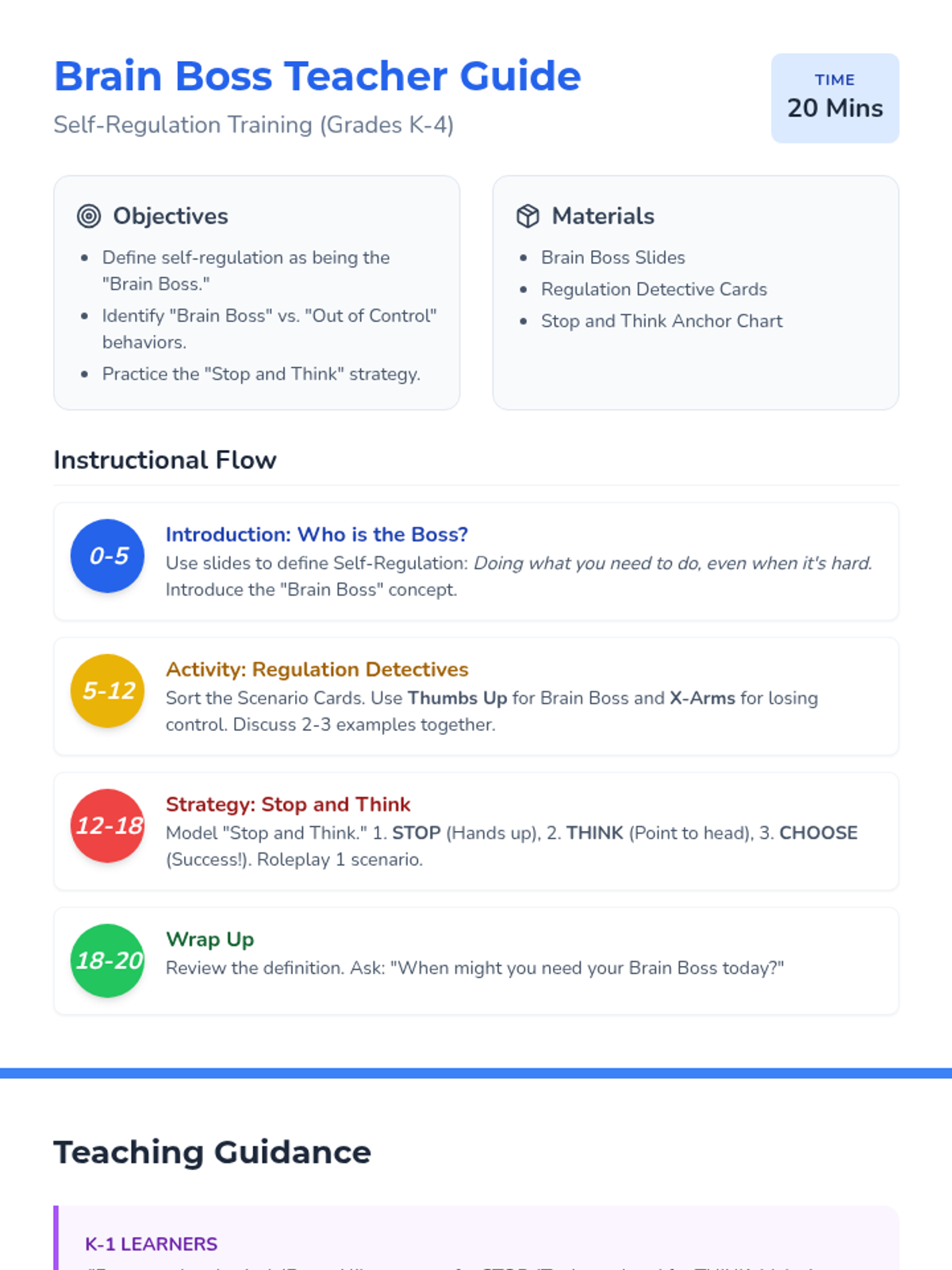
A comprehensive 20-minute lesson plan for teaching self-regulation to K-4 students, featuring the 'Brain Boss' concept and a 'Stop and Think' strategy.
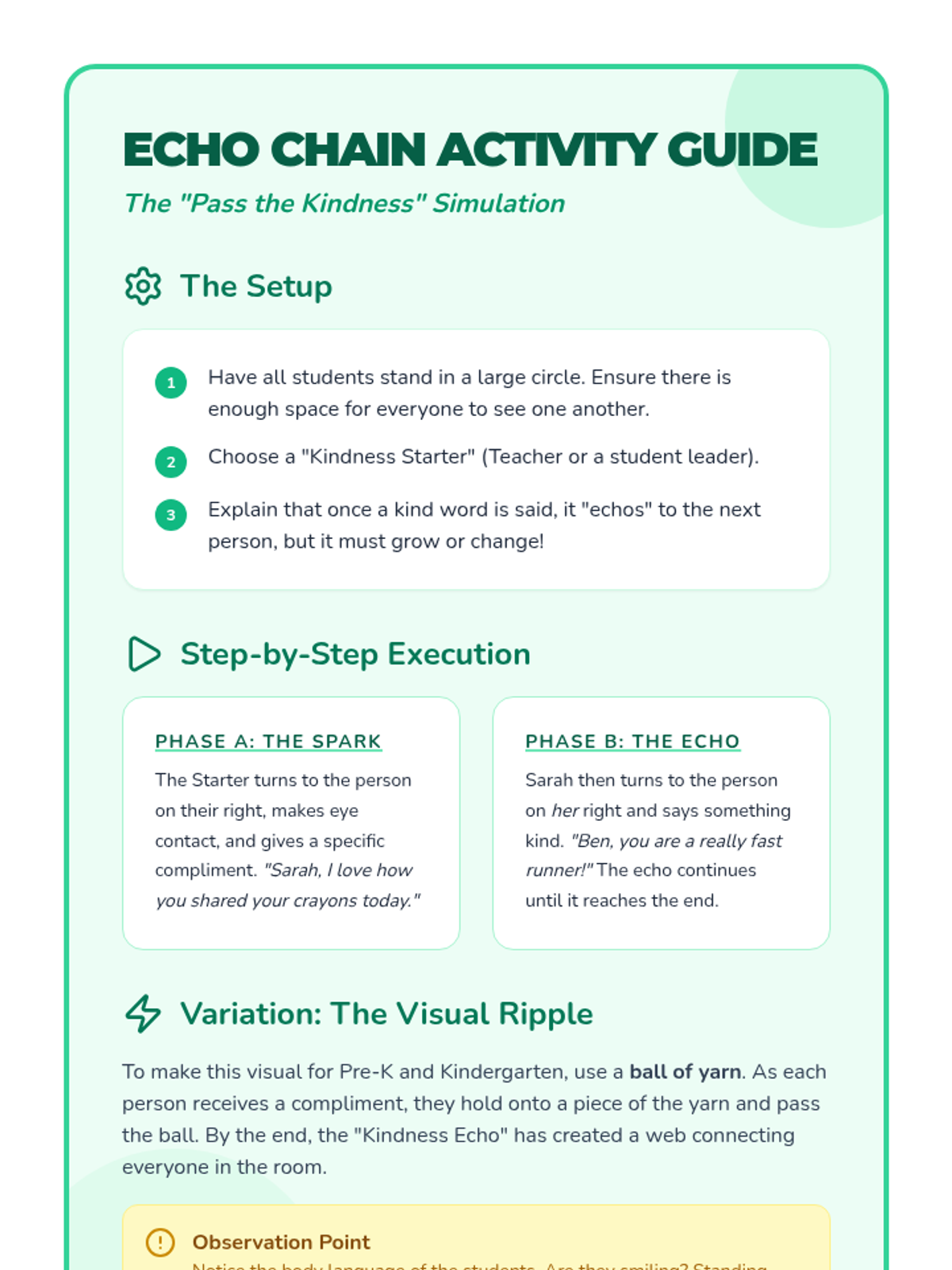
A teacher-facing guide for the 'Pass the Kindness' simulation activity, including a yarn-based variation to help younger students visualize social connections.
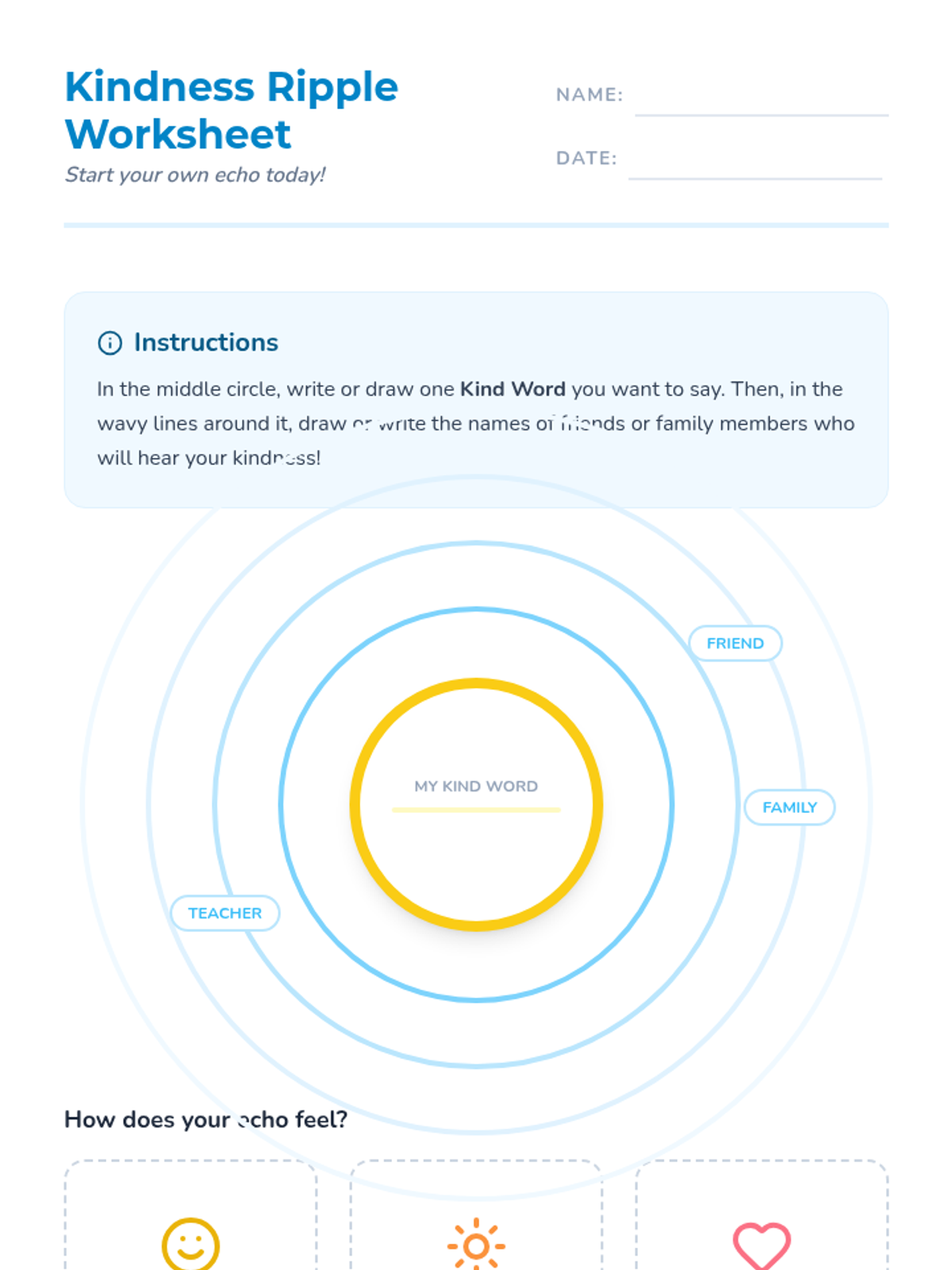
A student worksheet featuring a ripple design where children can write a kind word in the center and map out who it will reach. Includes reflection areas for different feelings.
Colorful and engaging slides for younger students to learn about the 'Kindness Echo', using metaphors like bouncing sound and water ripples.