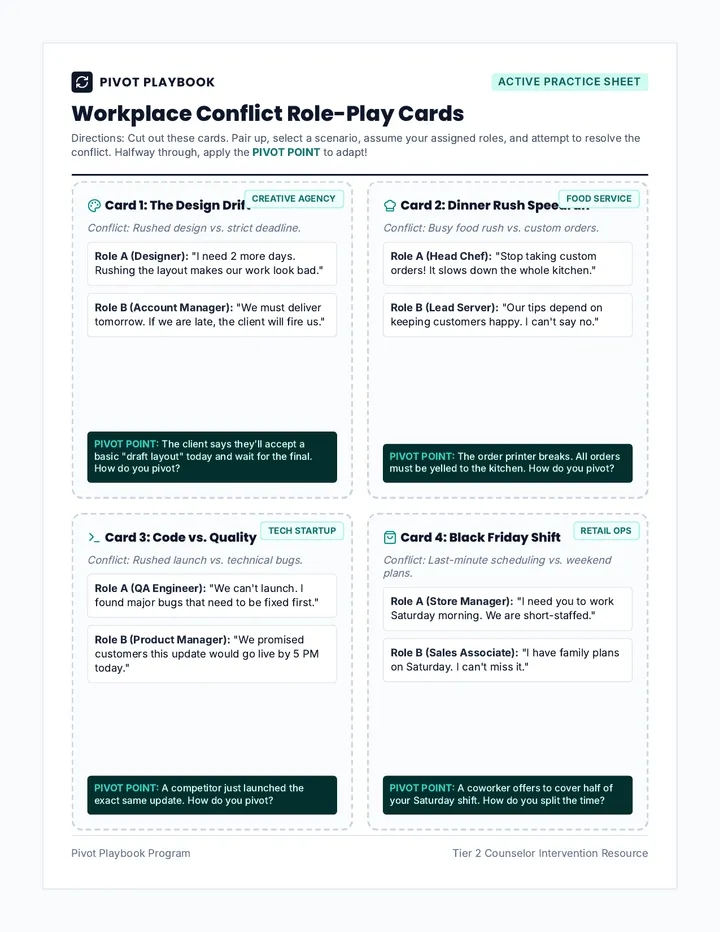
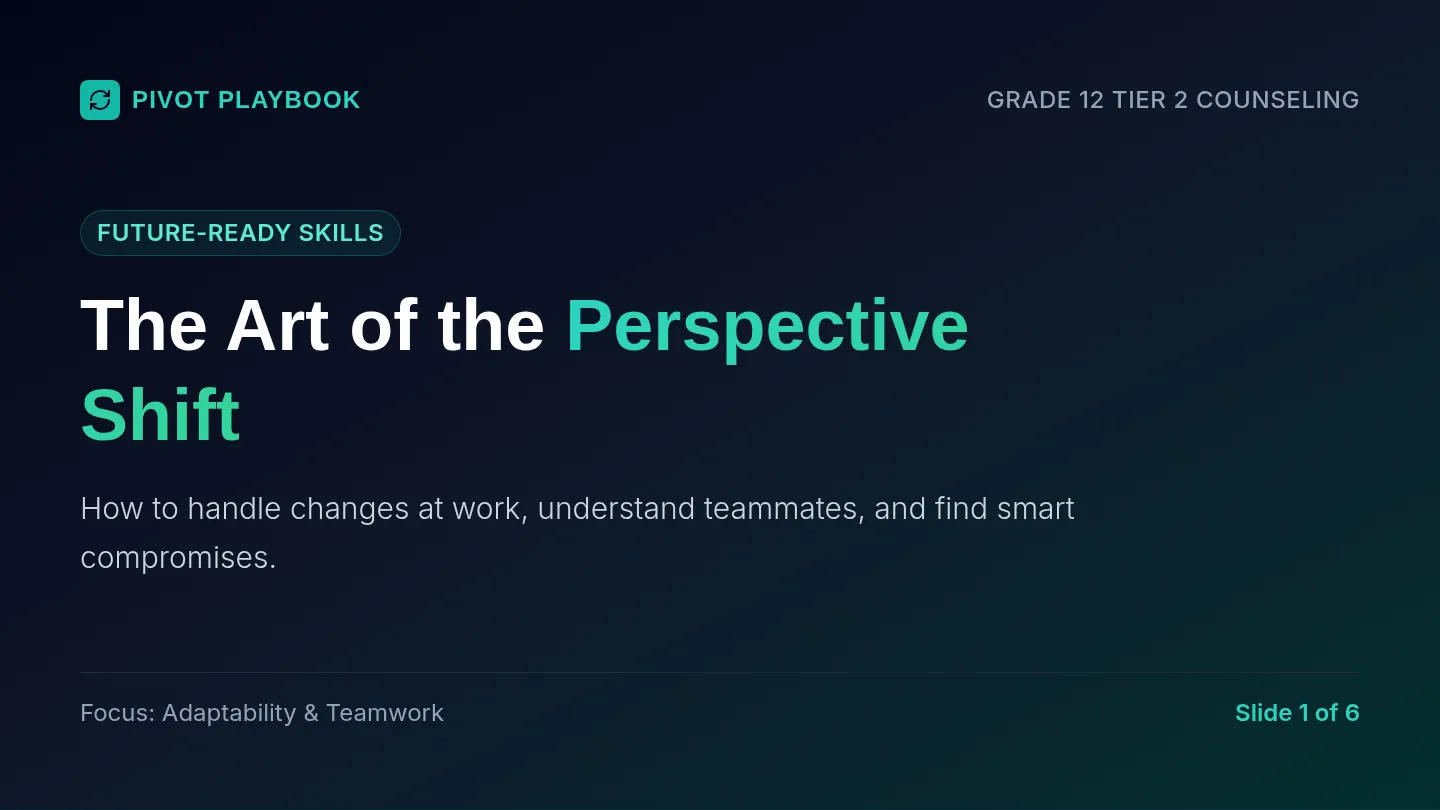
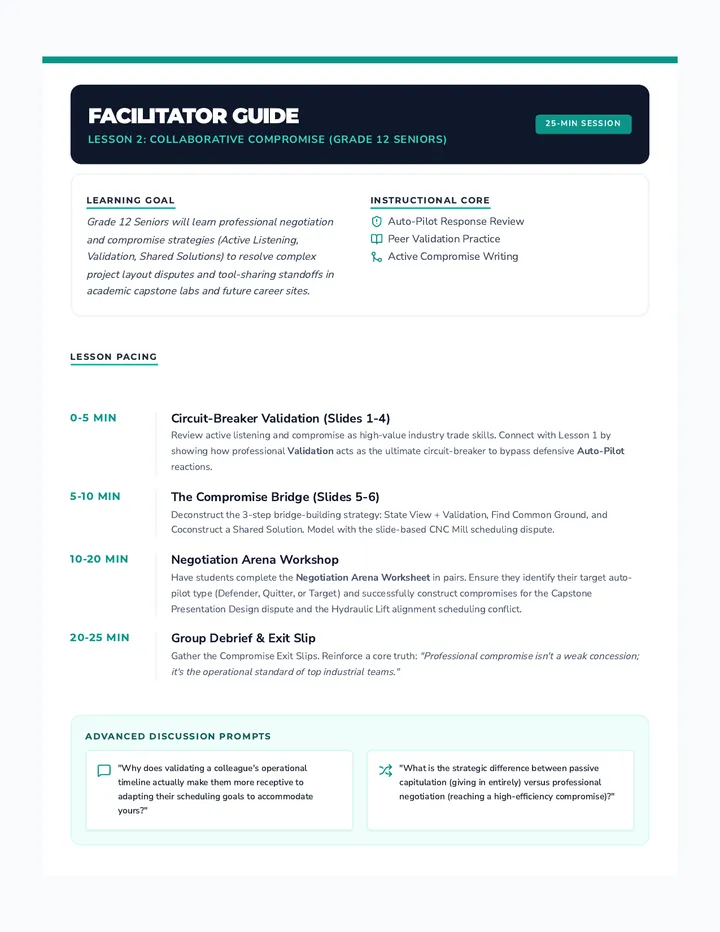
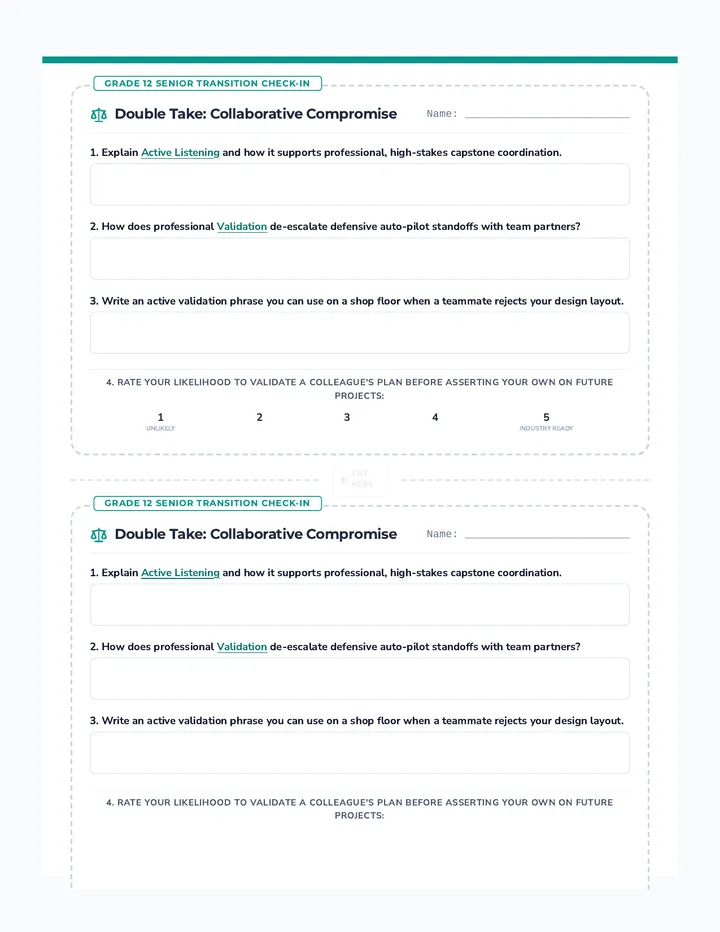
Printable wallet cards for students with crisis hotline numbers and helpful scripts for seeking mental health support.

Facilitation guide and answer key for the Truth Detectives worksheet, including learning objectives, quiz answers, and tips for supporting vulnerable populations.
A teacher's guide providing instructional strategies, pacing suggestions, and discussion prompts for facilitating the behavioral sequencing lesson.
A generic template for students to map their own personal behavior sequences and plan specific intervention strategies for the future.
Comprehensive student worksheet featuring a SIFT method checklist, a viral housing scam case study, and a scenario-based 'Is it Real?' quiz.
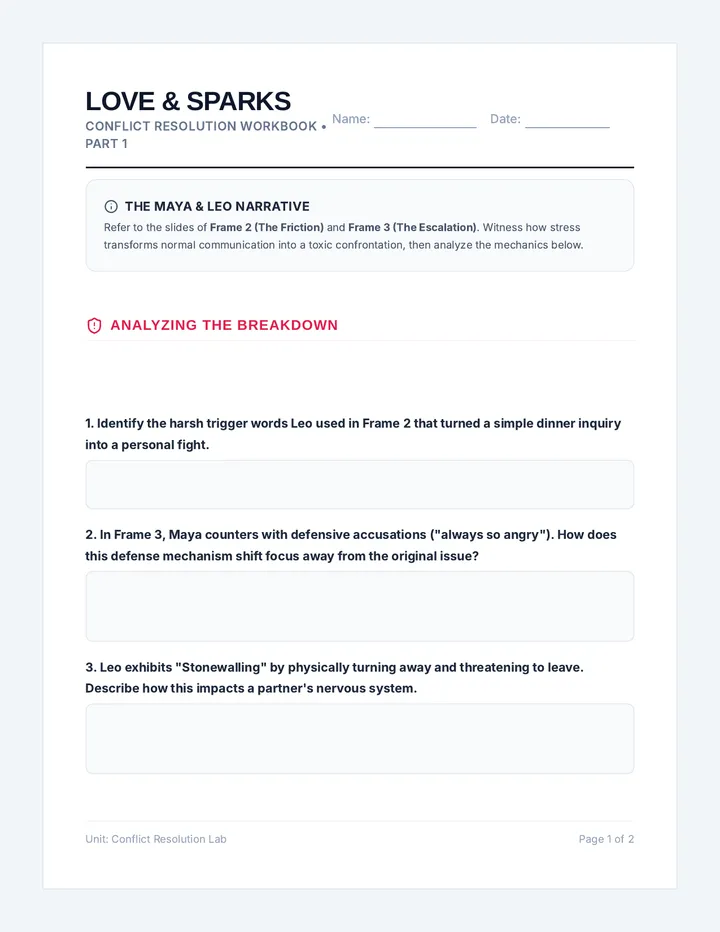
A graphic organizer featuring three school-based scenarios where students must map the behavior sequence and suggest interventions to change the outcome.
A step-by-step worksheet guiding students through behavioral sequencing, mapping the triggers (before), actions (during), and impact (after), and identifying points of intervention.
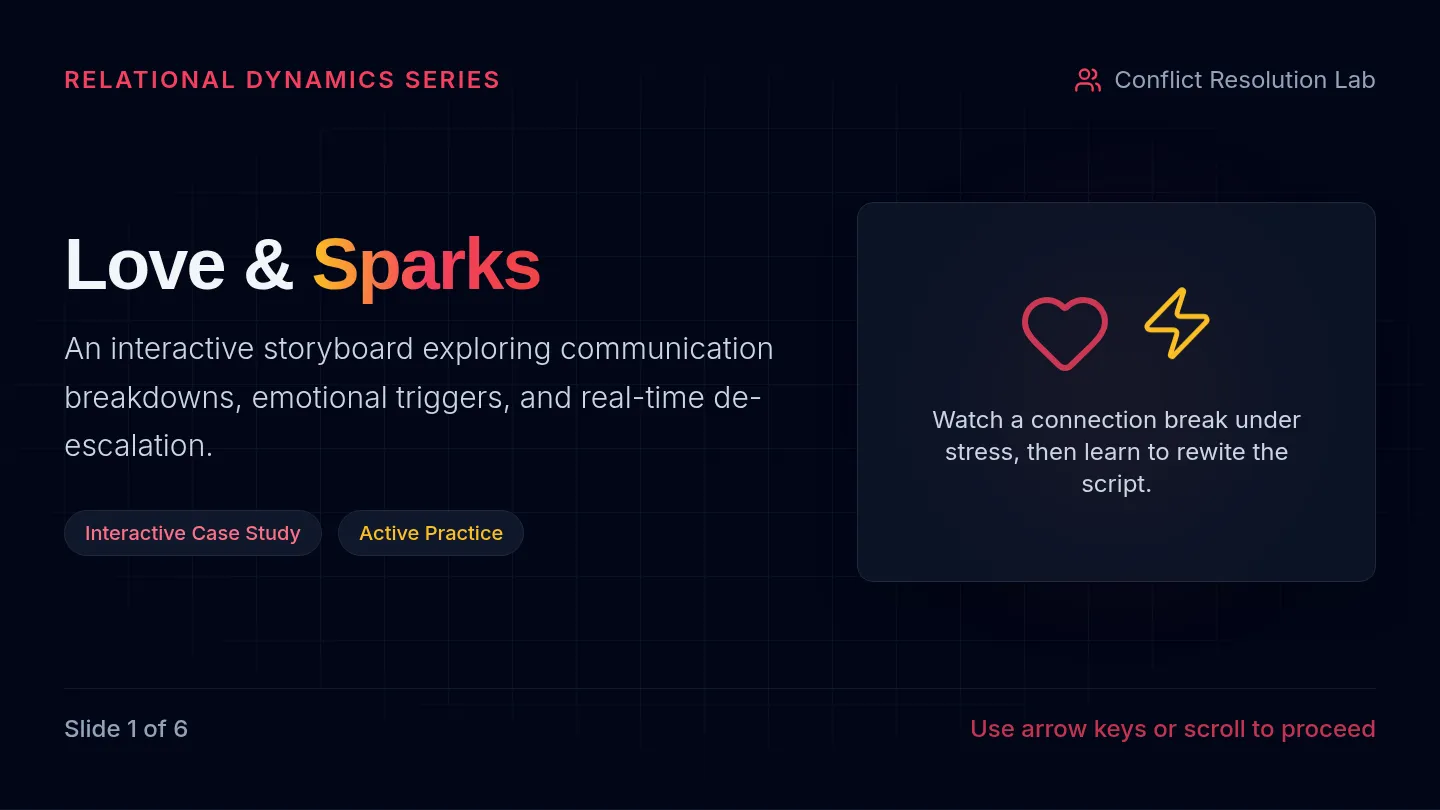
An introductory presentation for the "Action Replay" lesson, visually defining behavioral sequencing (before, during, after) and the concept of interrupting the loop.
Visual presentation for teaching students how to recognize fake news, introducing the SIFT method and identifying clickbait.
A high-interest, low-level (Hi-Lo) reading passage about a student's first day on the job. Includes reading comprehension questions and functional workplace math problems.
A daily self-regulation tool for students to identify their emotional state ("Inner Weather") and select appropriate regulation strategies from a "Toolkit." Designed with high-interest visual metaphors.
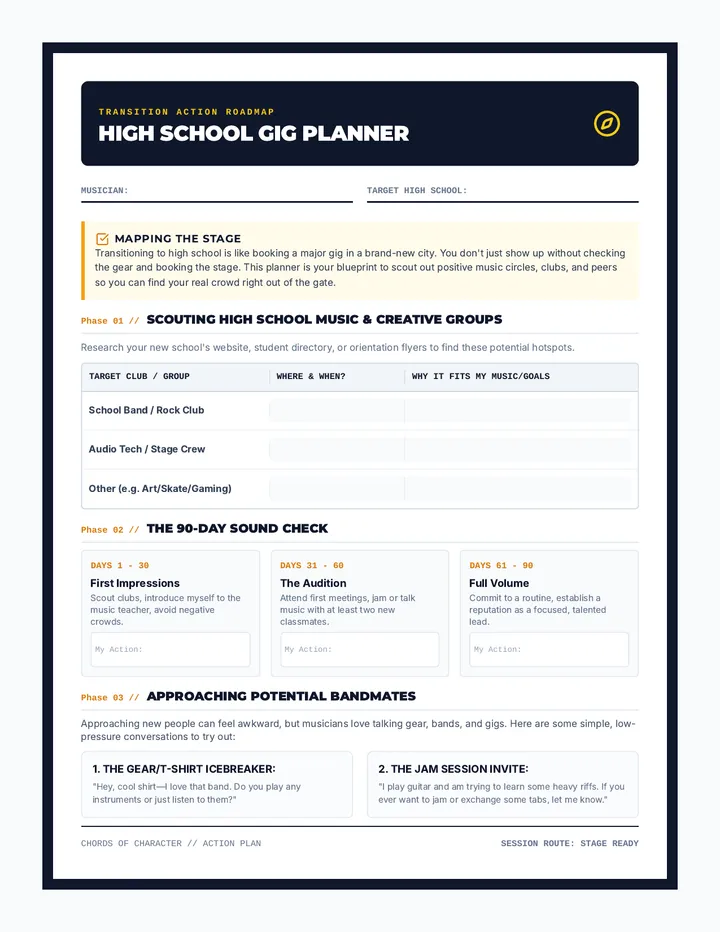
A transition planning checklist for high school students focusing on vocational readiness and independent living skills. It provides actionable items for career preparation and self-advocacy.
A functional math worksheet focusing on budgeting for grocery shopping. Students calculate the total cost of ingredients for a taco recipe and determine if it fits within a set budget.
Colorado-specific instructional slides. Features Colorado PEAK, Health First Colorado (Medicaid), and 2-1-1 Colorado for emergency housing and support.
Colorado-specific facilitator guide and answer key. Updated with Colorado PEAK details, Health First Colorado (Medicaid) terminology, and Colorado scenario solutions.
Colorado-specific application tracking worksheet and document checklist. Updated to include Colorado PEAK, Health First Colorado (Medicaid), and Colorado-specific scenario details.
A quick 'Vibe Check' exit ticket for data collection. Students identify their top three values, define motivation, rate their current alignment on a 1-5 scale, and identify one area for personal growth. designed for printing two-per-page.
A student reflection worksheet called 'Inner Compass' designed to help 9th graders identify their core values, map their motivations to specific goals, and reflect on the alignment between their actions and beliefs. Includes visual cues for ELL support.
A high-energy, visually engaging slide deck for 9th-grade students on personal values and motivation. Includes vocabulary slides and interactive "Values Face-off" debate slides with scaffolded discussion stems. Labels for ELL support have been removed for a cleaner look.
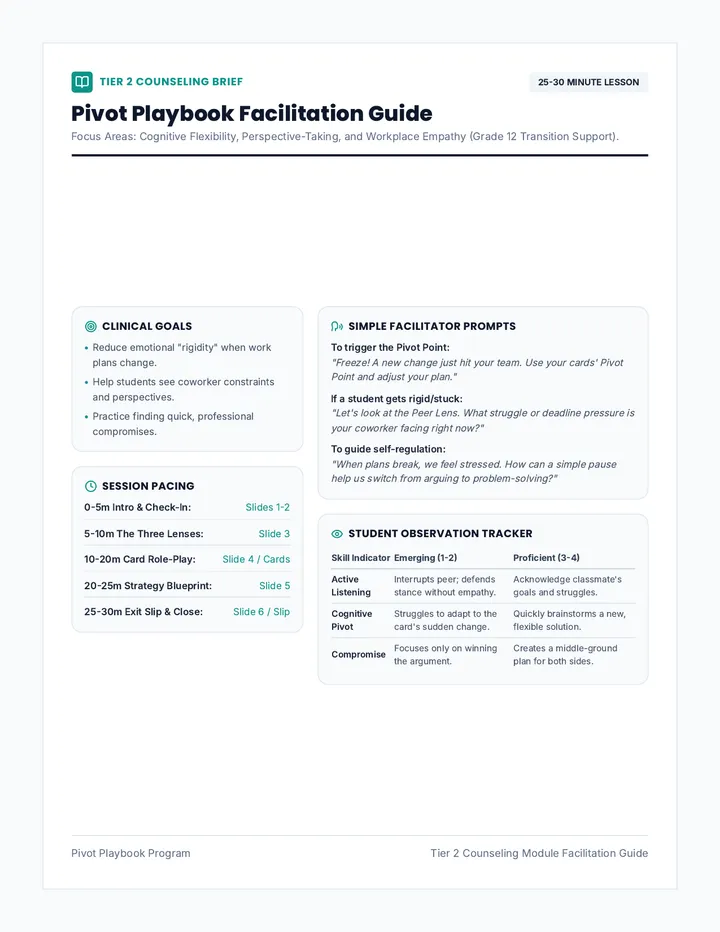
A detailed facilitation guide for teachers leading the Values and Vibes lesson. It includes lesson objectives, a pacing guide, support strategies, and prompts for the "Values Face-off" debate activity. Explicit ELL terminology has been removed.
A discussion guide for teachers to lead the closing debrief of the Perspective Pivot lesson, featuring key questions, response starters, and an exit ticket routine.
A student worksheet that guides them through the "Perspective Pivot" process of identifying, challenging, and reframing their own test-related cognitive distortions.
A set of activity cards featuring relatable student scenarios involving cognitive distortions, designed for a group activity where students identify and reframe negative thoughts.
A visual slide deck introducing the concepts of cognitive distortions (All-or-Nothing, Catastrophizing, Labeling) and teaching the "Pivot" technique (Identify, Challenge, Reframe) for test stress.
A detailed teacher-facing lesson plan for "The Perspective Pivot" intervention, covering learning objectives, materials, and a step-by-step instructional procedure for teaching cognitive reframing.
The final wrap-up slide for the Credit Compass lesson. standalone PDF version.
A slide categorizing debt into 'Bridge' and 'High-Cost' types. standalone PDF version.
A second video placeholder slide for the Credit Compass lesson. standalone PDF version.
A slide explaining the impact of minimum payments and interest. standalone PDF version.
A slide showing the components of a credit score. standalone PDF version.
A video placeholder slide for the Credit Compass lesson. standalone PDF version.
An introductory slide defining credit. standalone PDF version.
The hook/discussion prompt slide for the Credit Compass lesson. standalone PDF version.
The title slide for the Credit Compass lesson. standalone PDF version.