A reflective digital exit ticket for students to assess their understanding of perspective and bias after the lesson.
A presentation deck introducing the concepts of financial responsibility, systematic decision-making, and setting time-based financial goals. Revised to introduce the unit's mission statement, PACED model, and integrate article analysis.
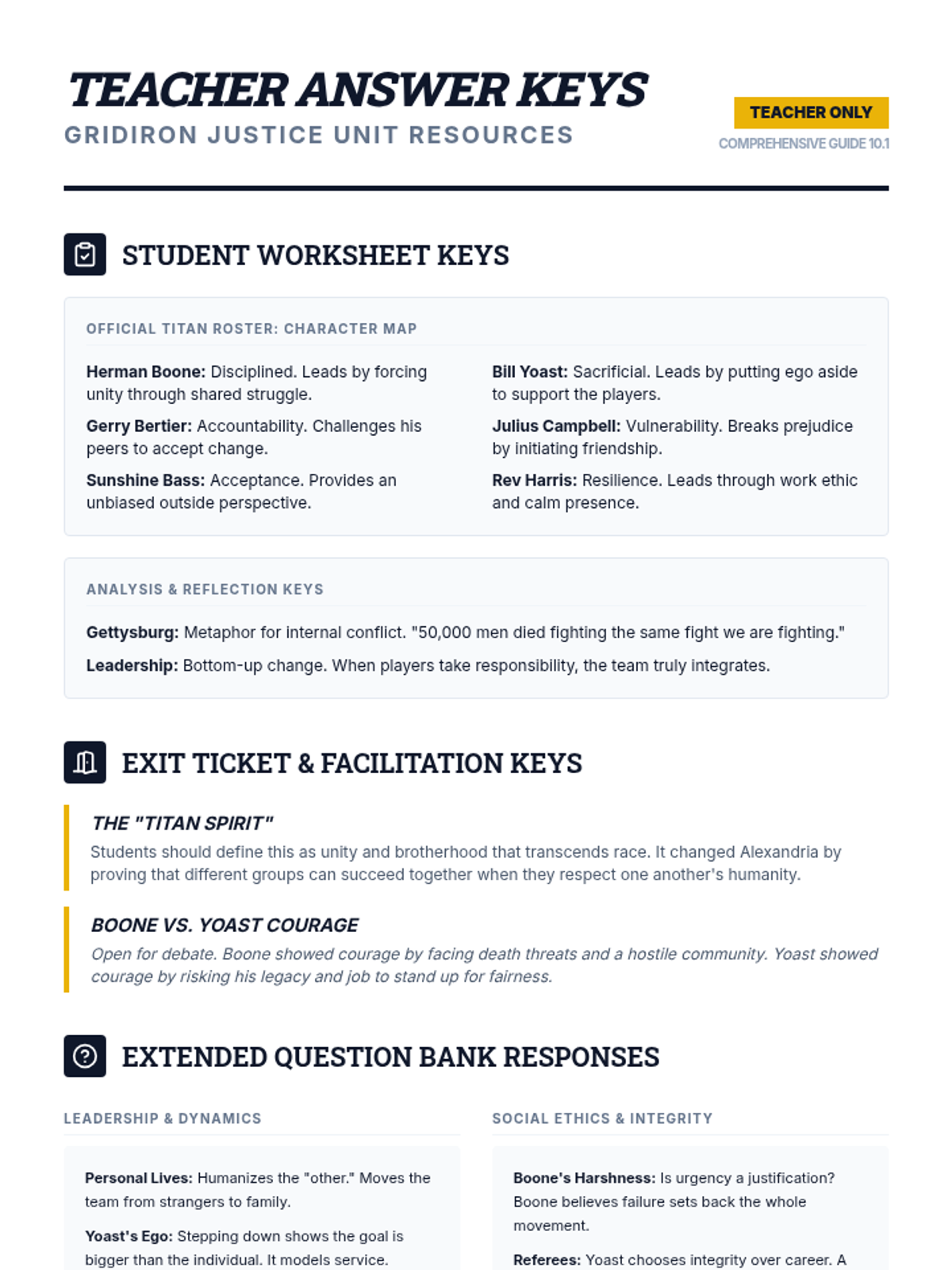
A comprehensive teacher answer key for the 'Official Titan Roster' worksheet, 'Pre-Game Context' handout, and the extended discussion question bank, featuring sample responses and facilitation guidance.
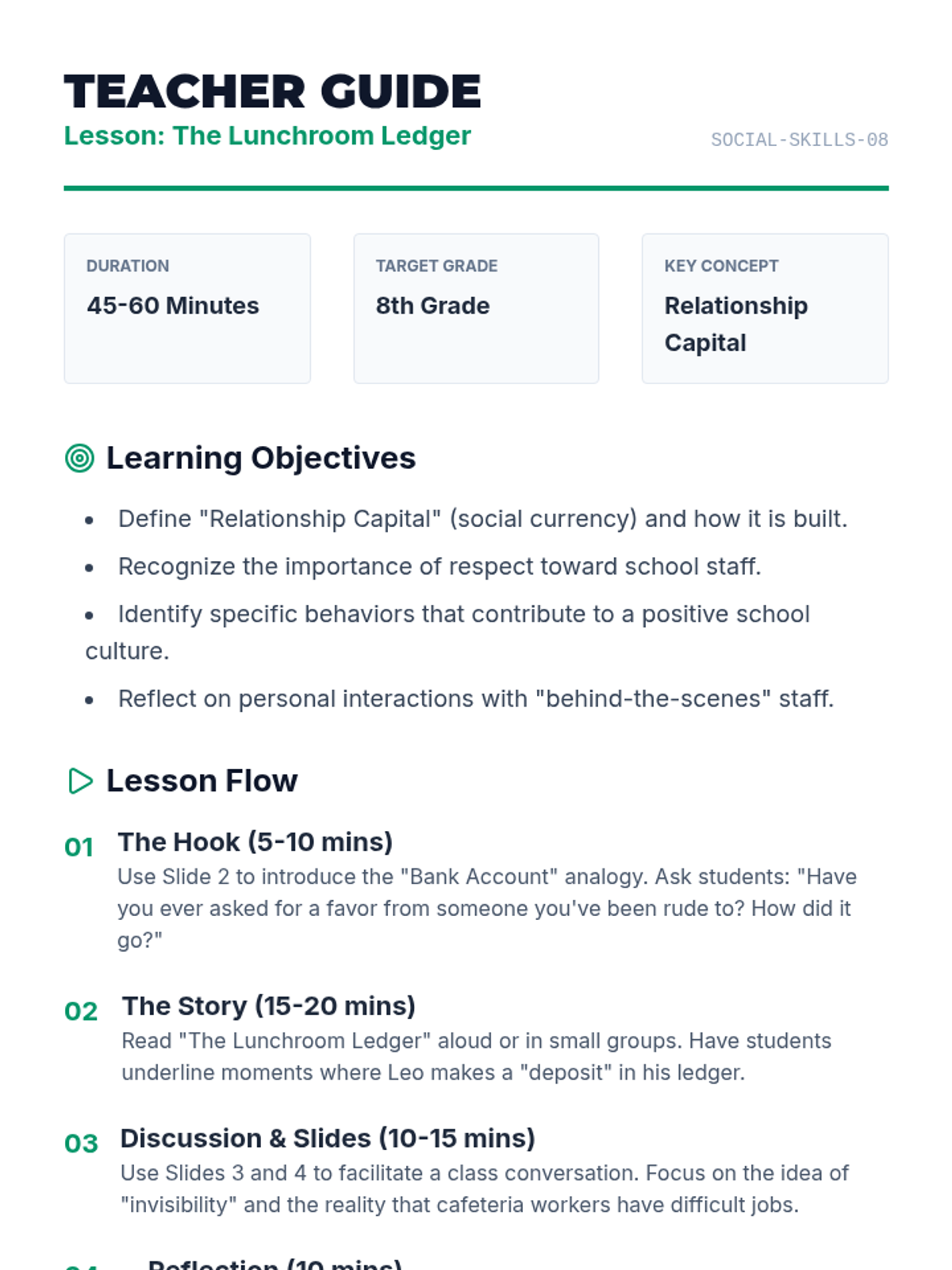
A comprehensive teacher's guide for the 'Lunchroom Ledger' lesson, including learning objectives, a structured lesson flow, and discussion prompts to facilitate social-emotional learning.
A presentation to accompany the 'Lunchroom Ledger' story, introducing the concept of relationship capital, deposits vs. withdrawals, and the impact of respect on social interactions.
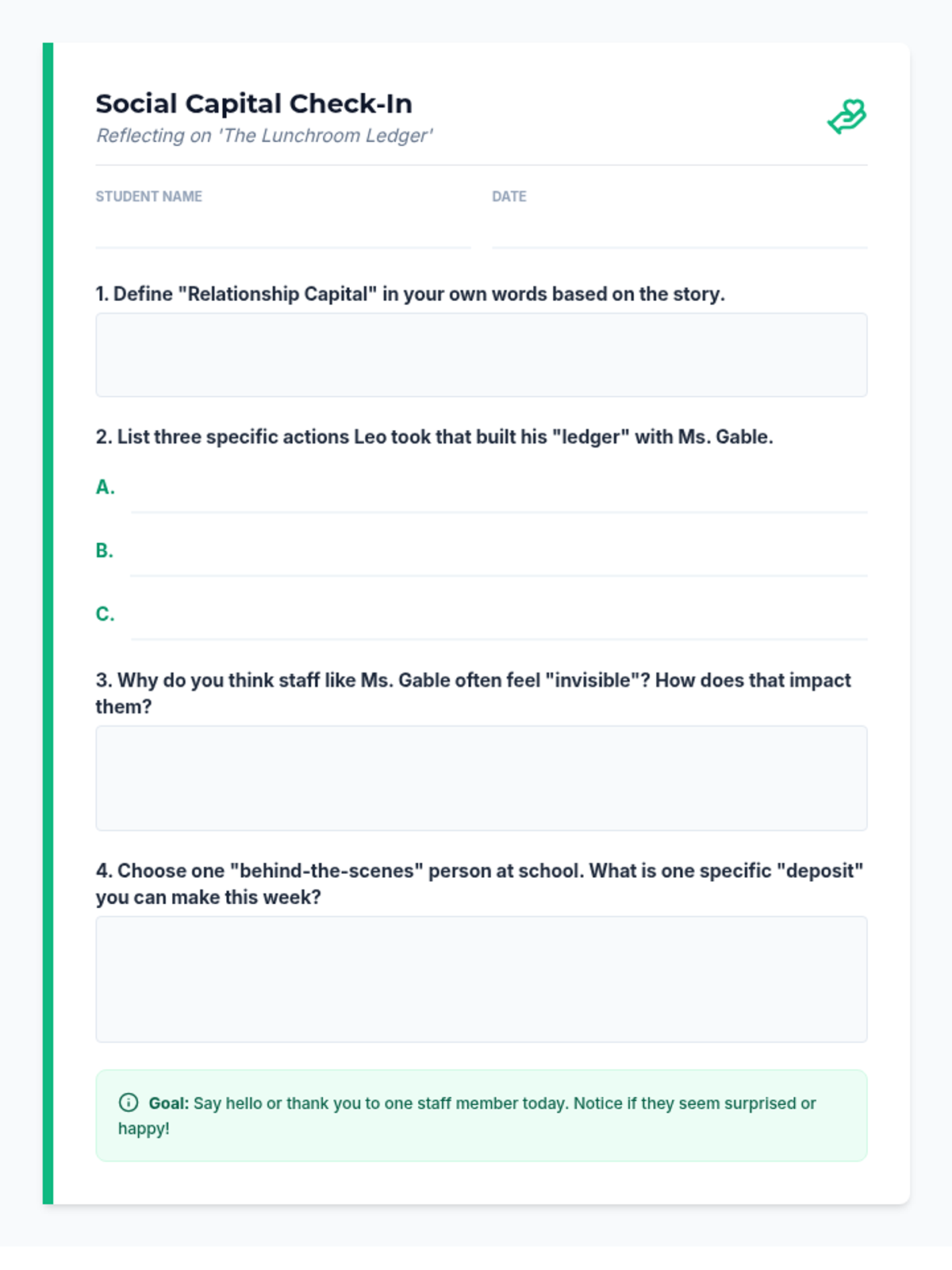
A reflection worksheet designed to help 8th-grade students analyze the concept of relationship capital. Revised for 1-page fit and improved writing space.
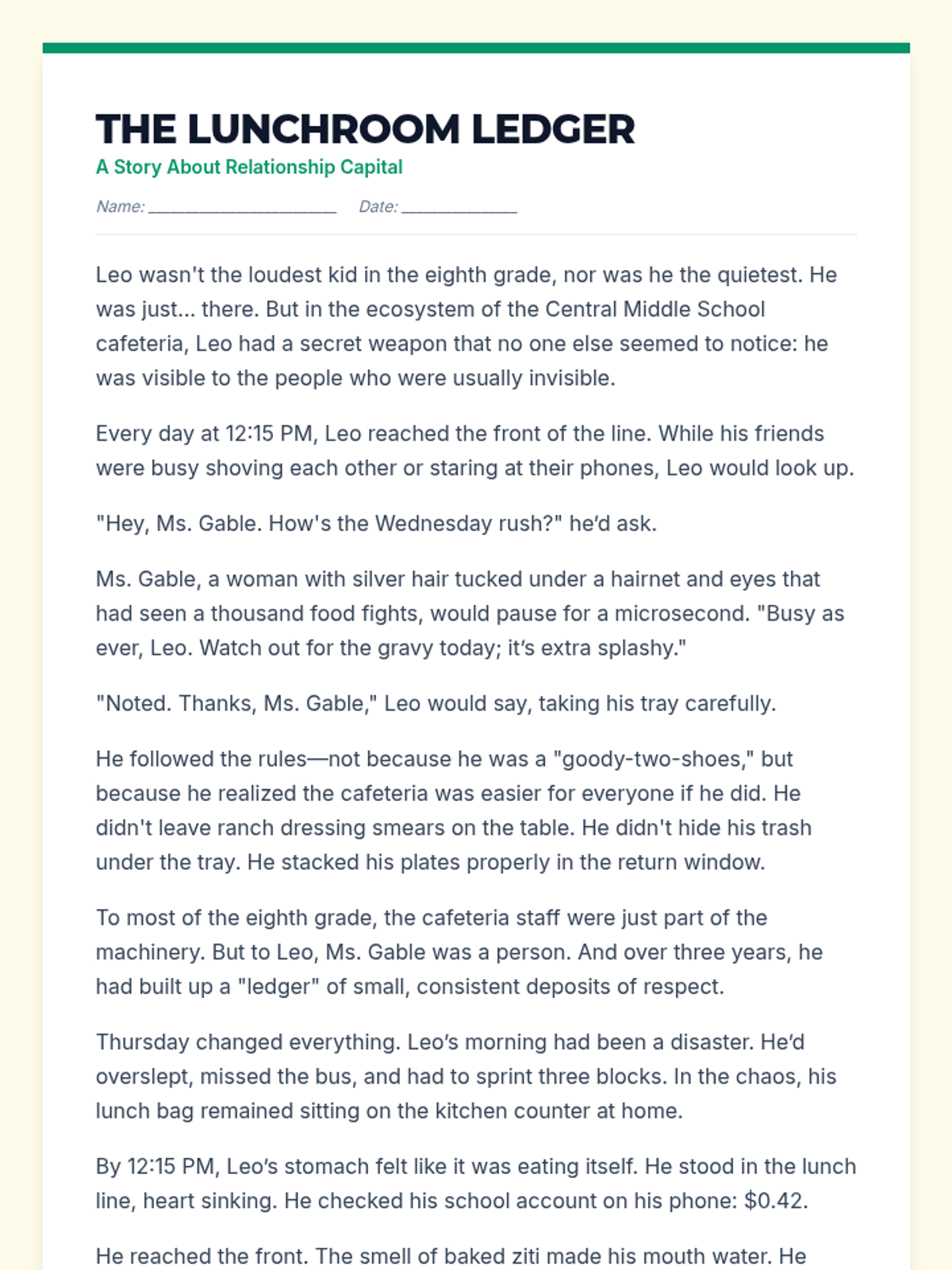
A story for 8th-grade students about Leo, a student who builds 'social currency' through small acts of kindness and rule-following in the cafeteria, which pays off when he forgets his lunch. Revised for better page flow and added reflection questions with student work areas.
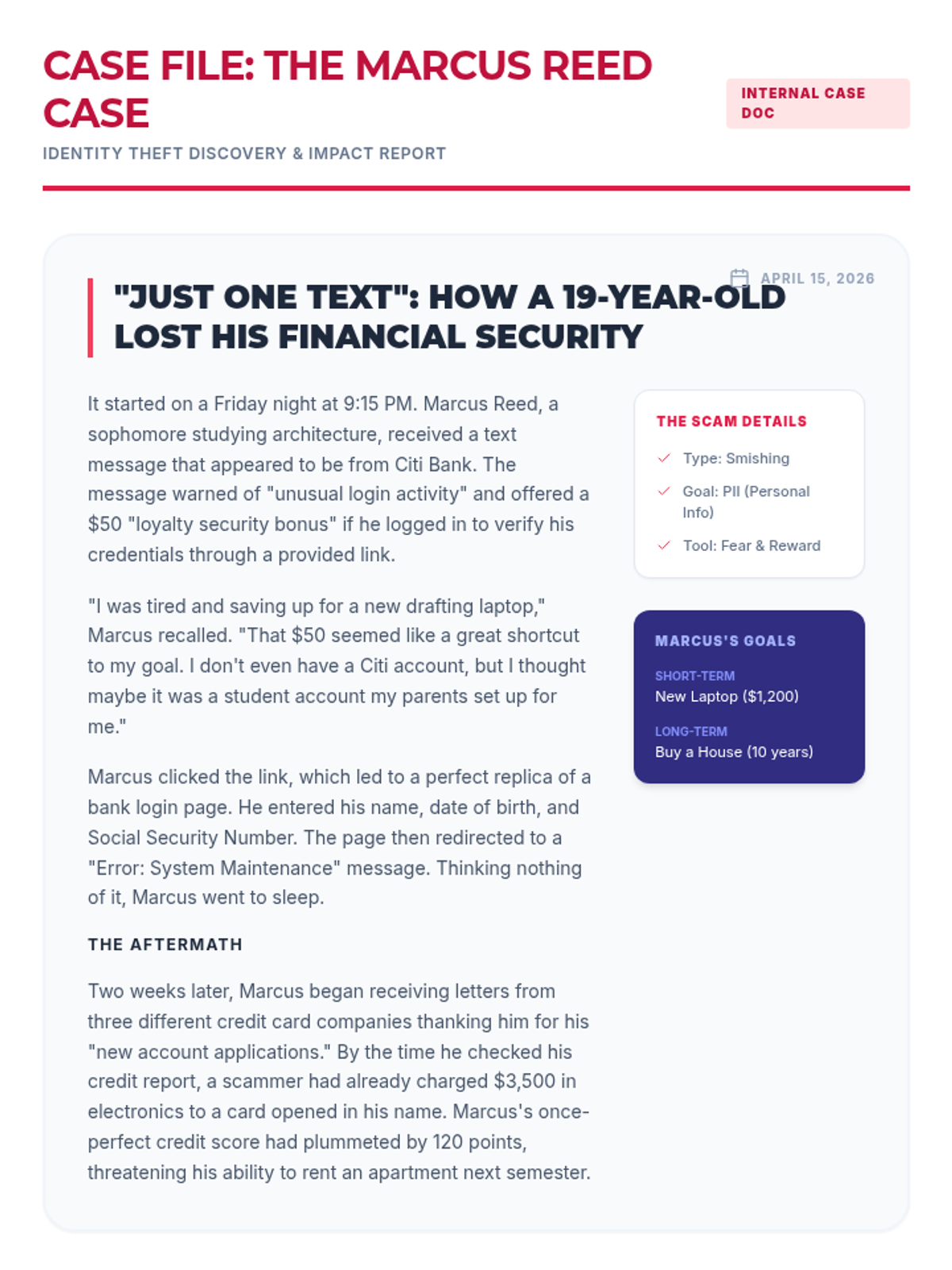
A detailed case file article about the Marcus Reed identity theft scenario. This serves as the reading material for the Day 4 lab and provides context for the unit test case study.
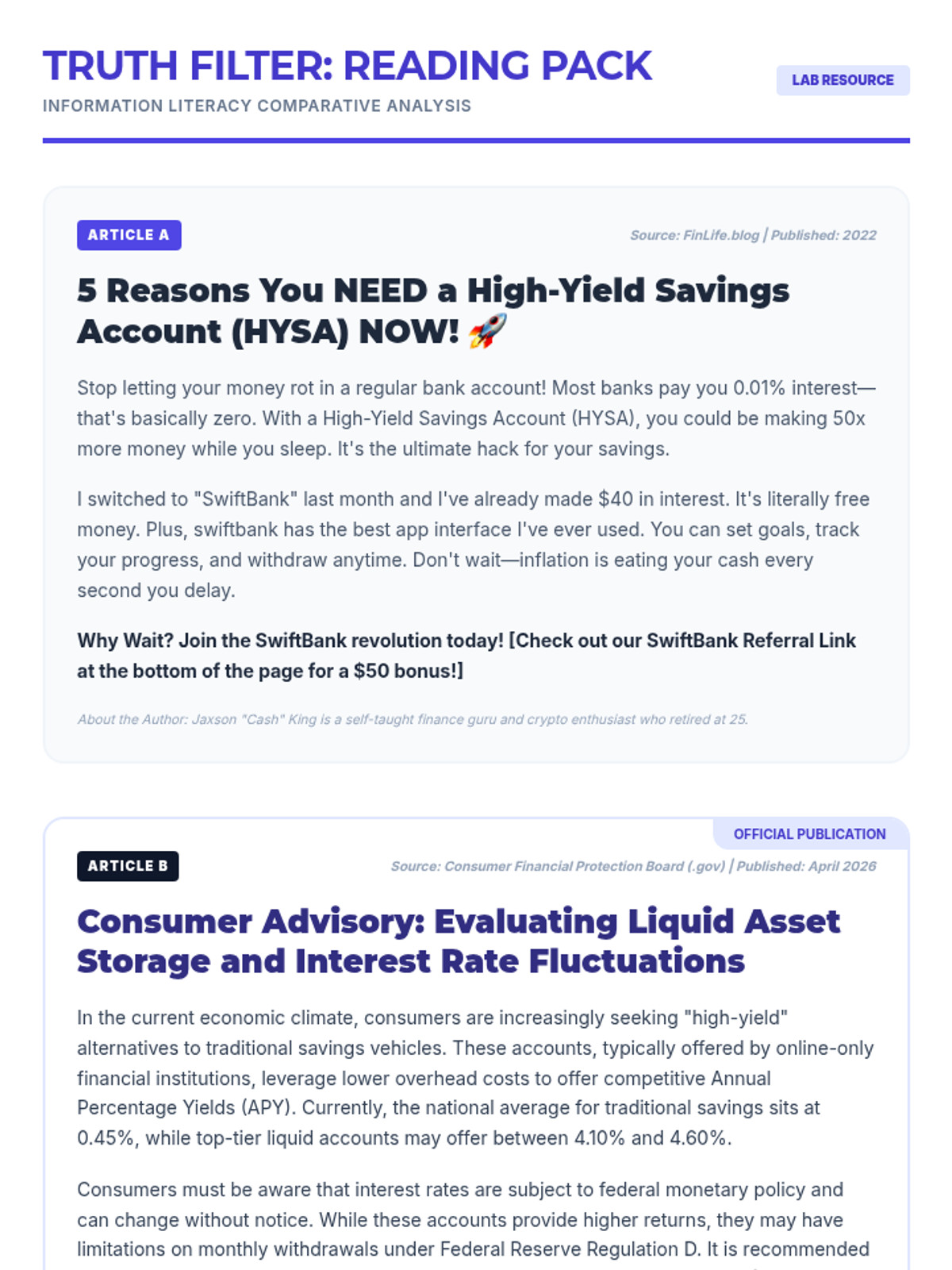
A pair of contrasting articles about High-Yield Savings Accounts designed for the Day 2 'Source Showdown' lab. Includes one biased blog post and one objective government advisory for OARC analysis.
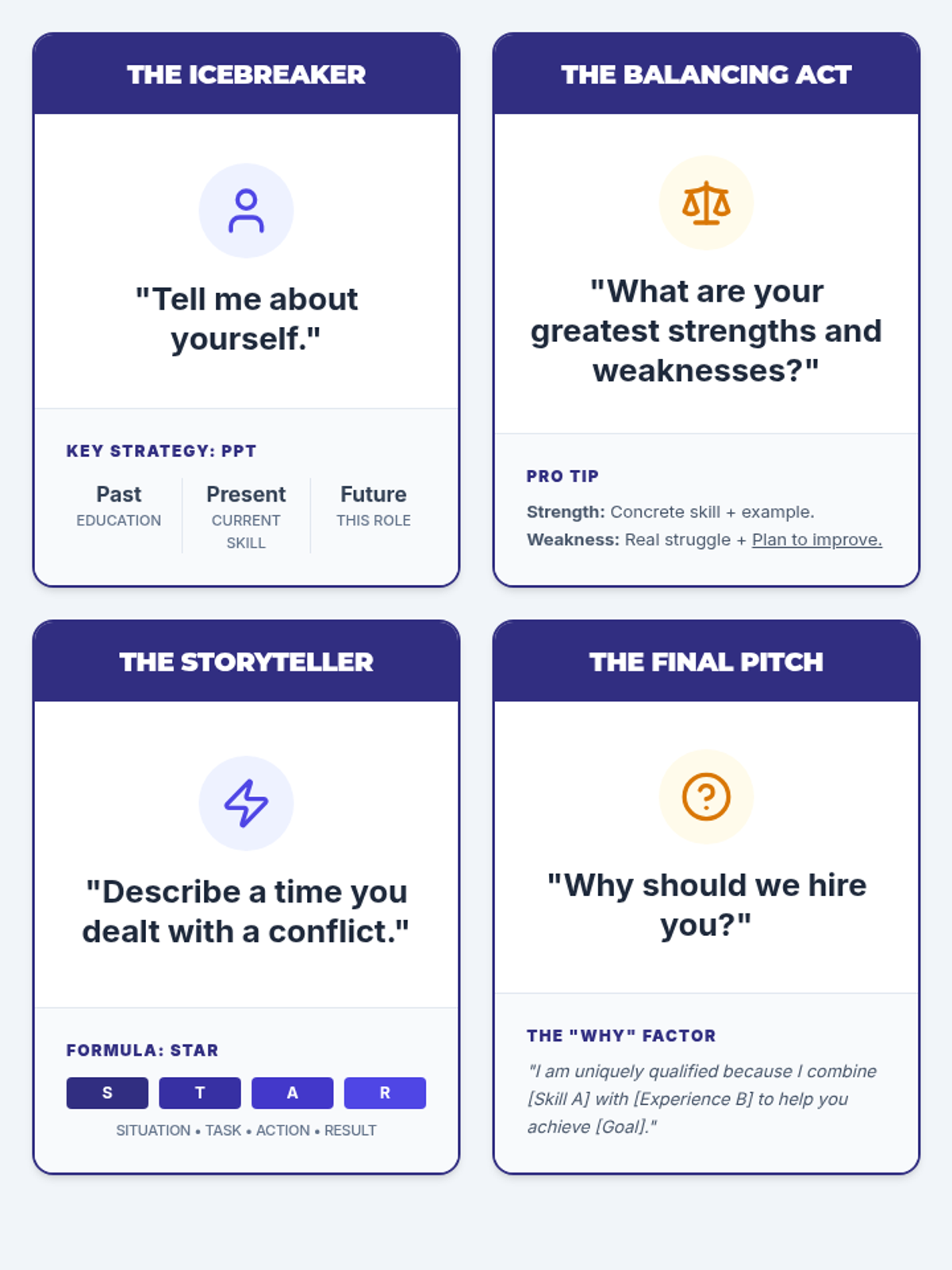
Four visual interview prompt flashcards featuring common questions and strategic frameworks like PPT (Past, Present, Future) and STAR to help students memorize key response strategies.
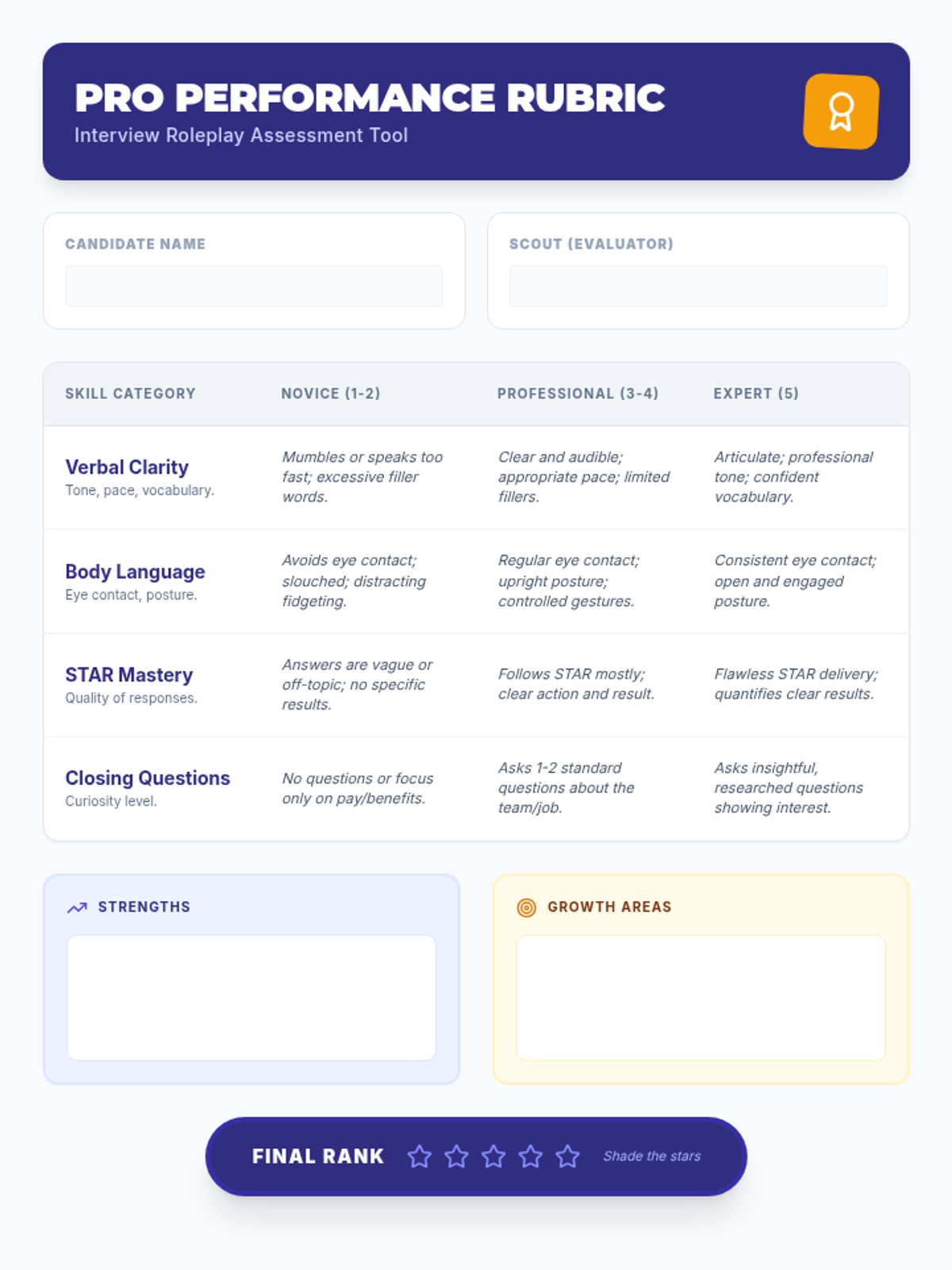
A comprehensive rubric for evaluating mock interview performances, assessing verbal clarity, body language, STAR method application, and the quality of closing questions.
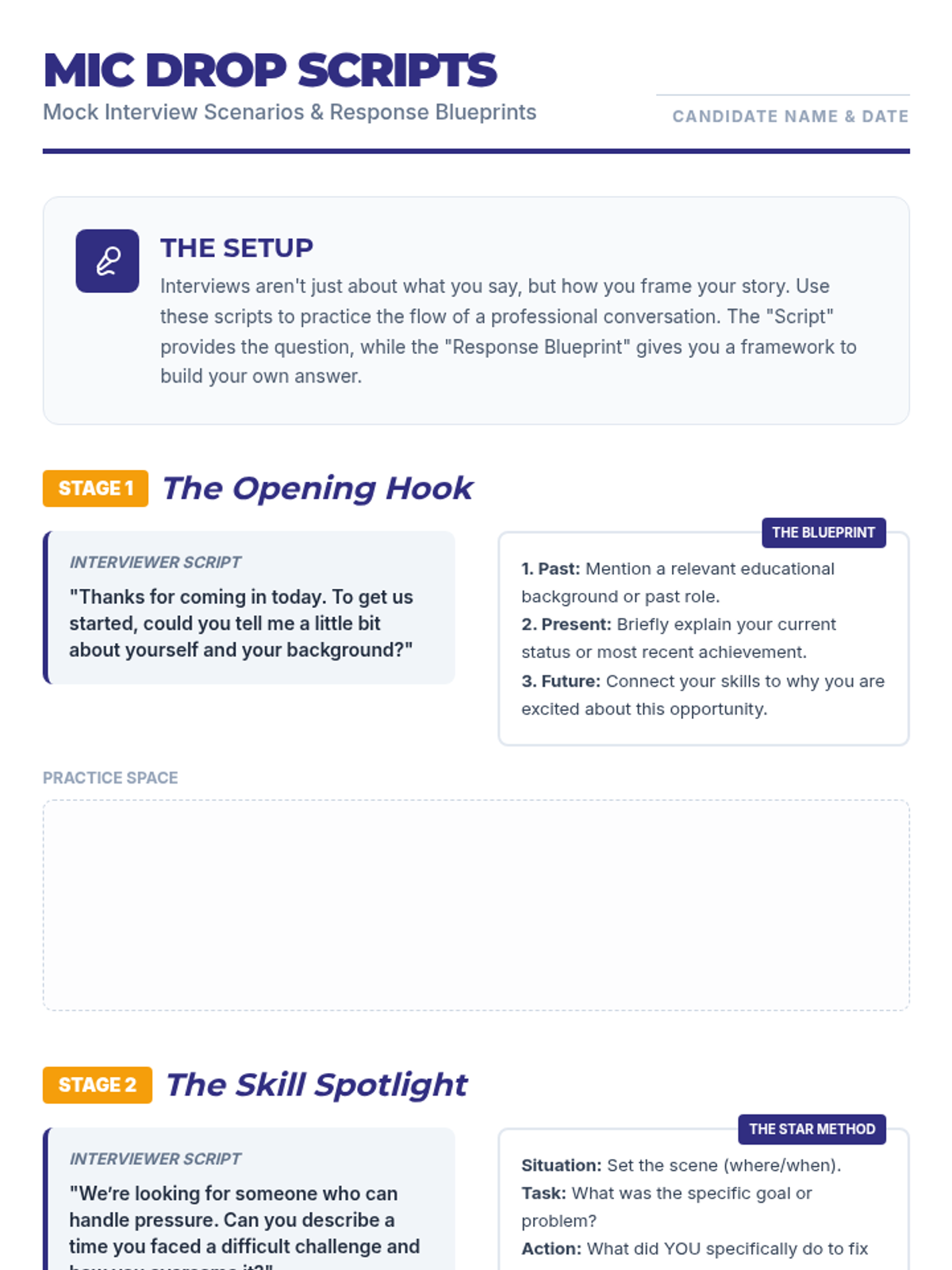
A student-facing mock interview worksheet containing three common interview scenarios with scripts for the interviewer and structured 'blueprints' for the student's responses, including the STAR method.
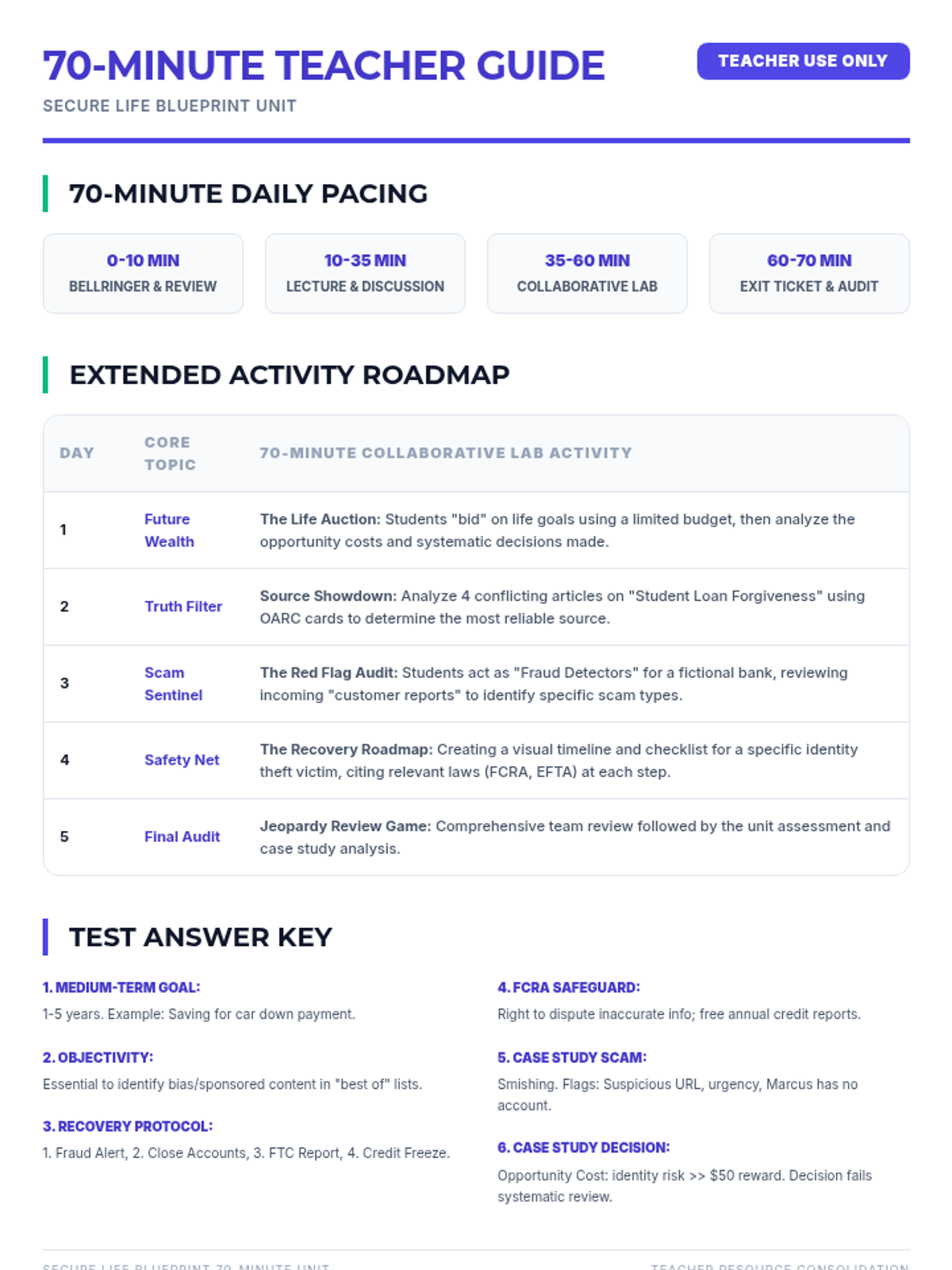
A teacher-facing resource providing the answer key for the unit test, unit objectives, and instructional tips for delivering the Secure Life Blueprint unit. Revised with the overarching unit goal and 70-minute daily pacing guide.
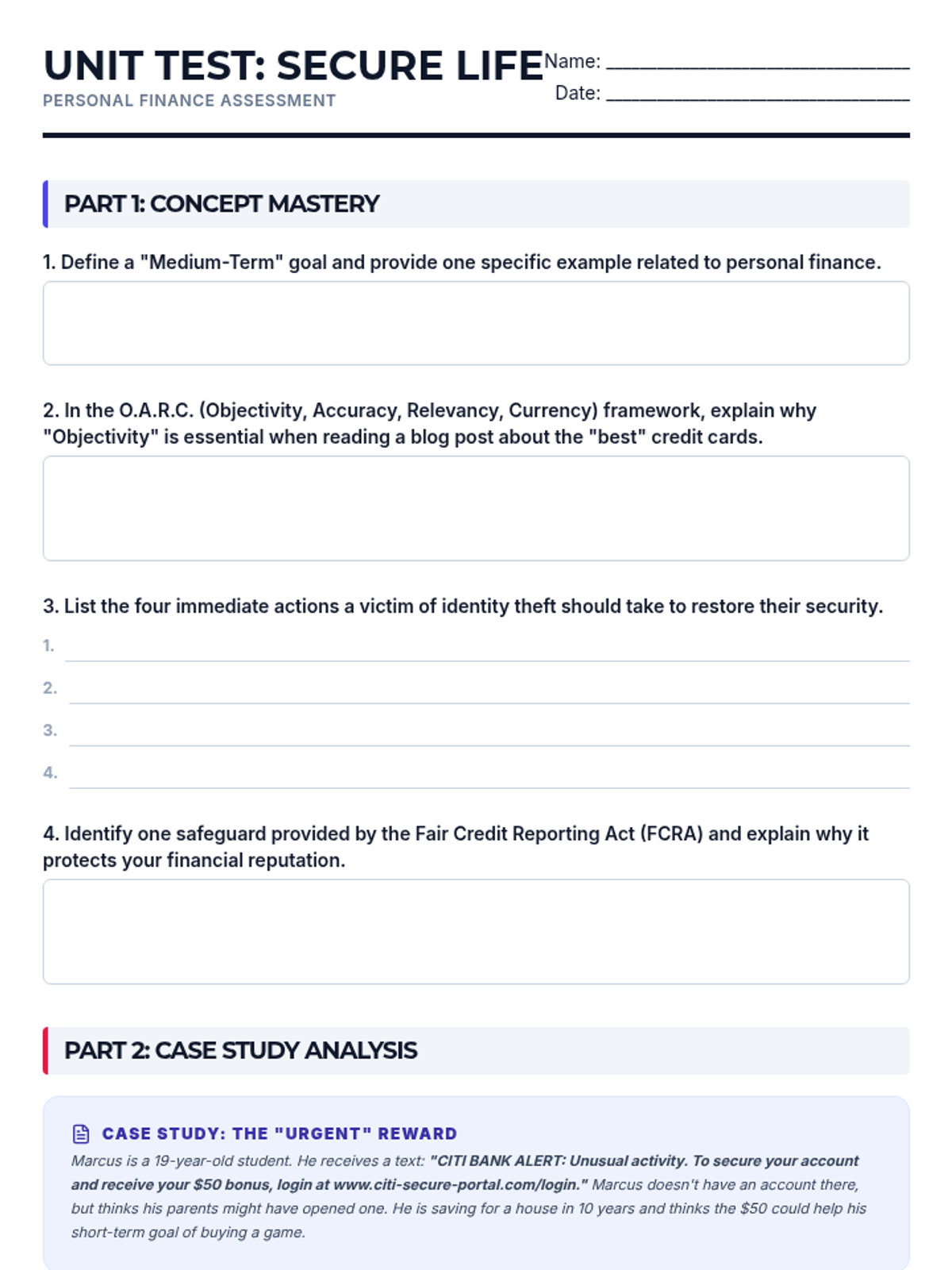
A unit test featuring short answer questions on core concepts and a detailed case study analysis involving fraud detection, decision-making, and consumer laws. Revised with better spacing and defined acronyms. Tightened to avoid empty pages.
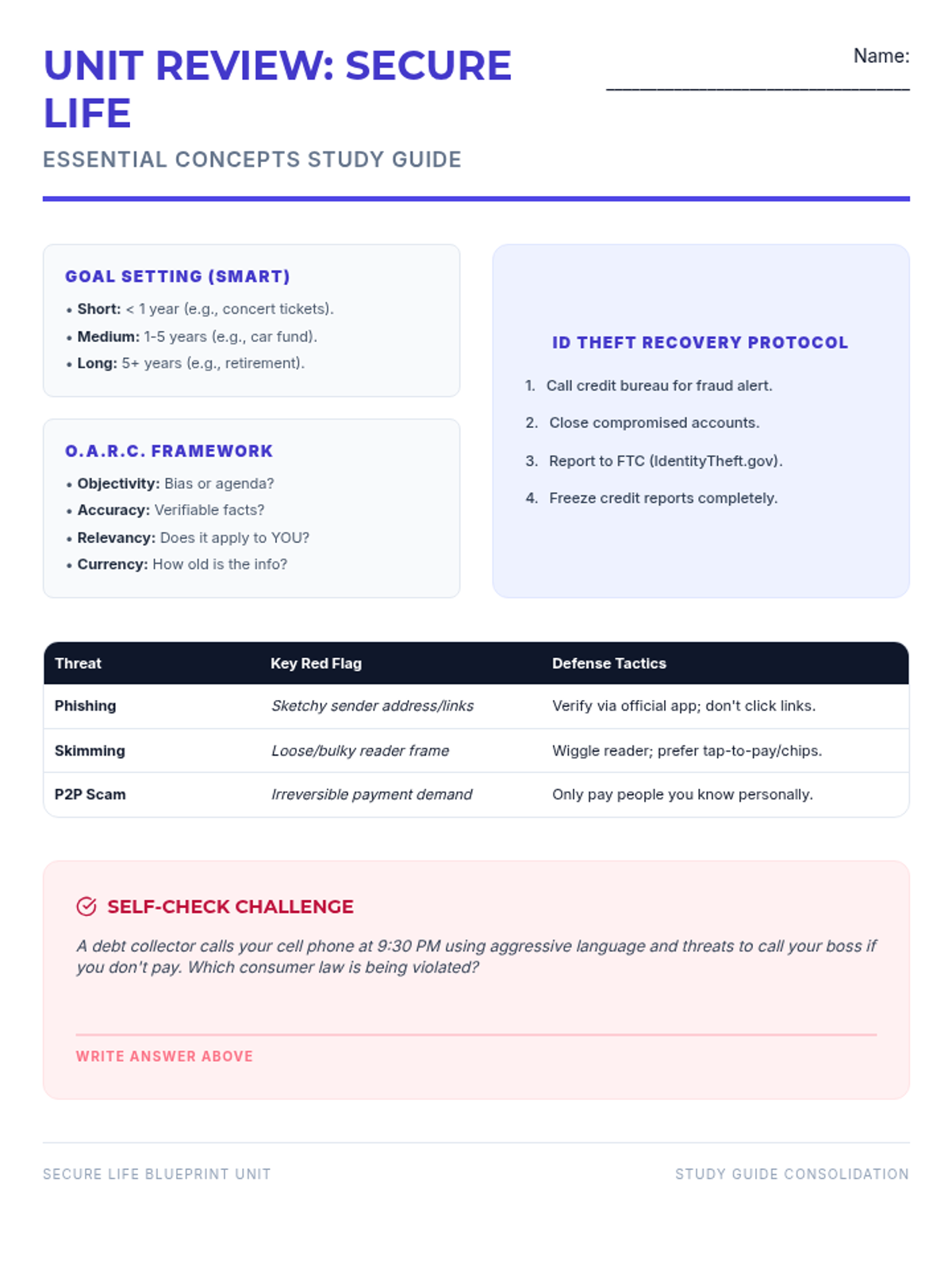
A concise unit review study guide summarizing SMART goals, systematic decision-making, the OARC information filter, fraud types, and identity theft recovery steps. Revised to fit on one page with increased response area.
A slide deck outlining consumer protection laws and the specific protocol for responding to identity theft. Revised with information on agencies and EFTA. Grammar corrected and contrast improved. Expanded for 70-minute sessions.
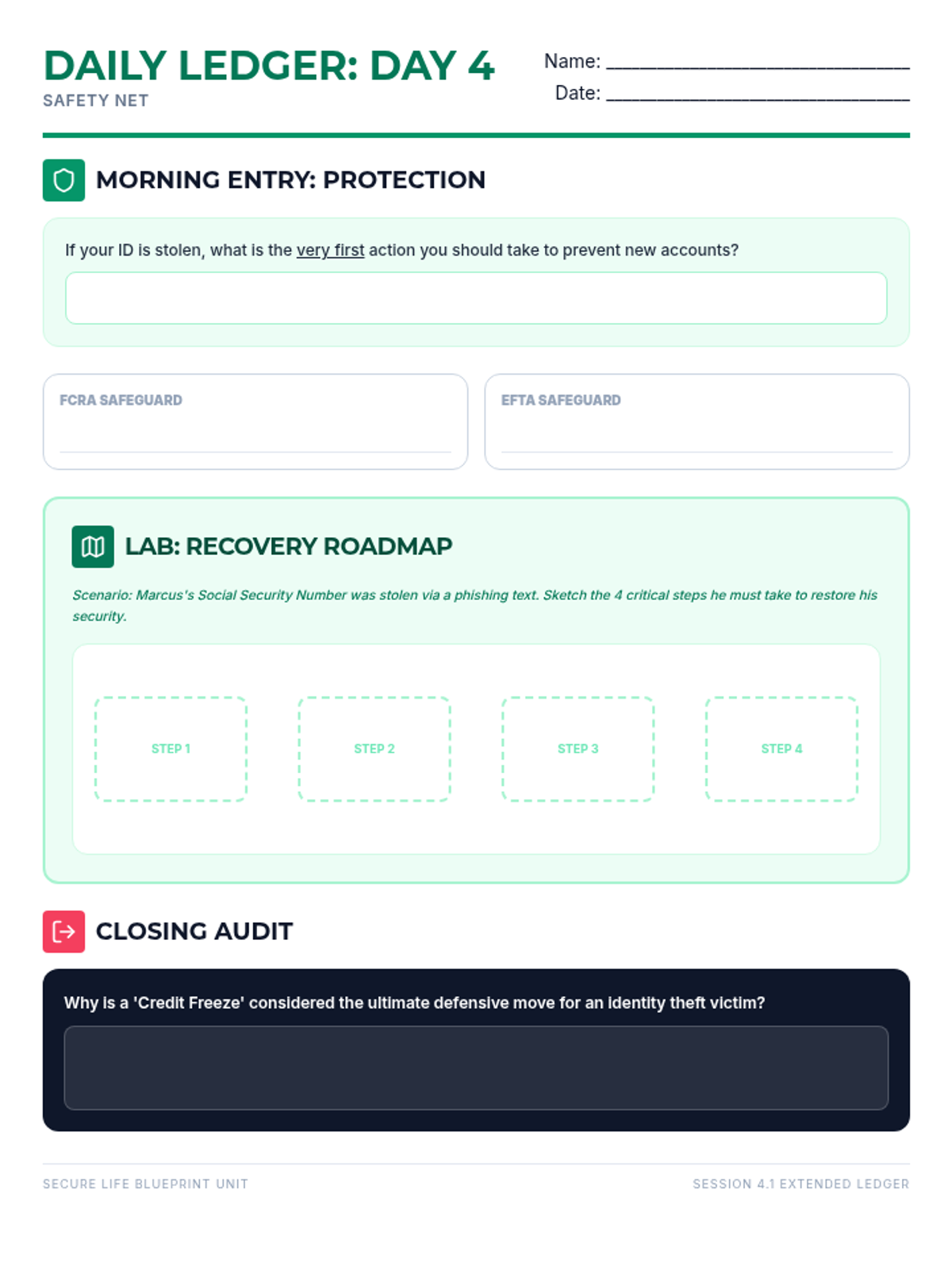
A student handout for Day 4 covering consumer protection laws and the specific steps to recover from identity theft. Revised with better alignment and increased response heights. Tightened to fit on one page.
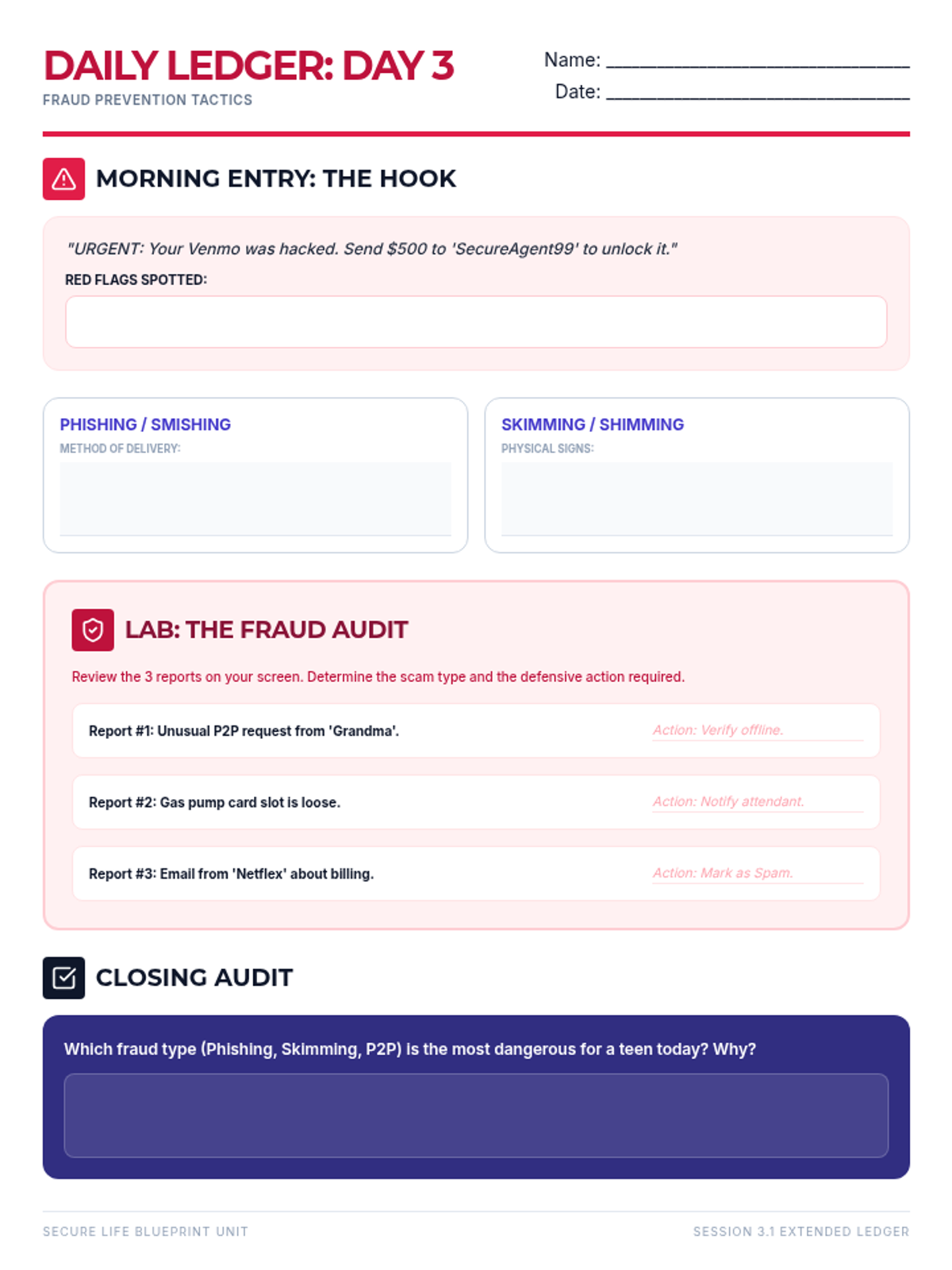
A visual presentation on consumer fraud types including phishing, skimming, and peer-to-peer payment scams. Revised with psychological "hooks", detailed skimming info, and Fraud Audit lab instructions for 70-minute sessions.
A student handout for Day 3 focusing on identifying and preventing consumer fraud. Revised with a 70-minute lab activity where students audit various fraud reports. Tightened layout to fit on one page.
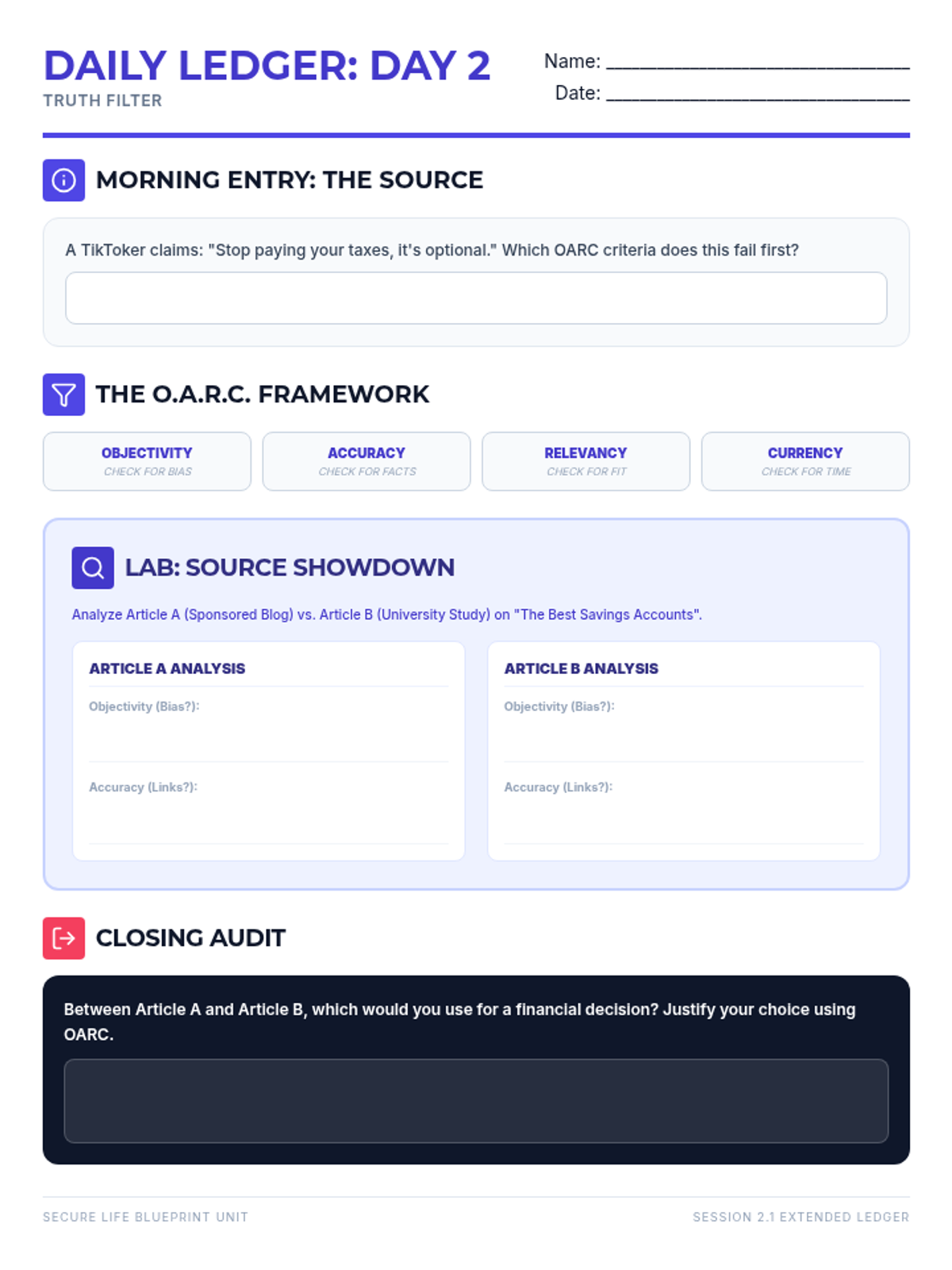
A slide deck teaching the OARC (Objectivity, Accuracy, Relevancy, Currency) framework for evaluating financial information. Revised with breathing room, detailed criteria slides, and Source Showdown lab instructions.
A daily handout for Day 2 featuring the OARC framework and an extended 'Source Showdown' lab activity where students compare financial information sources. Revised for 70-minute classes.
A presentation deck introducing the concepts of financial responsibility, systematic decision-making, and setting time-based financial goals. Revised to introduce the unit's mission statement and the PACED model.
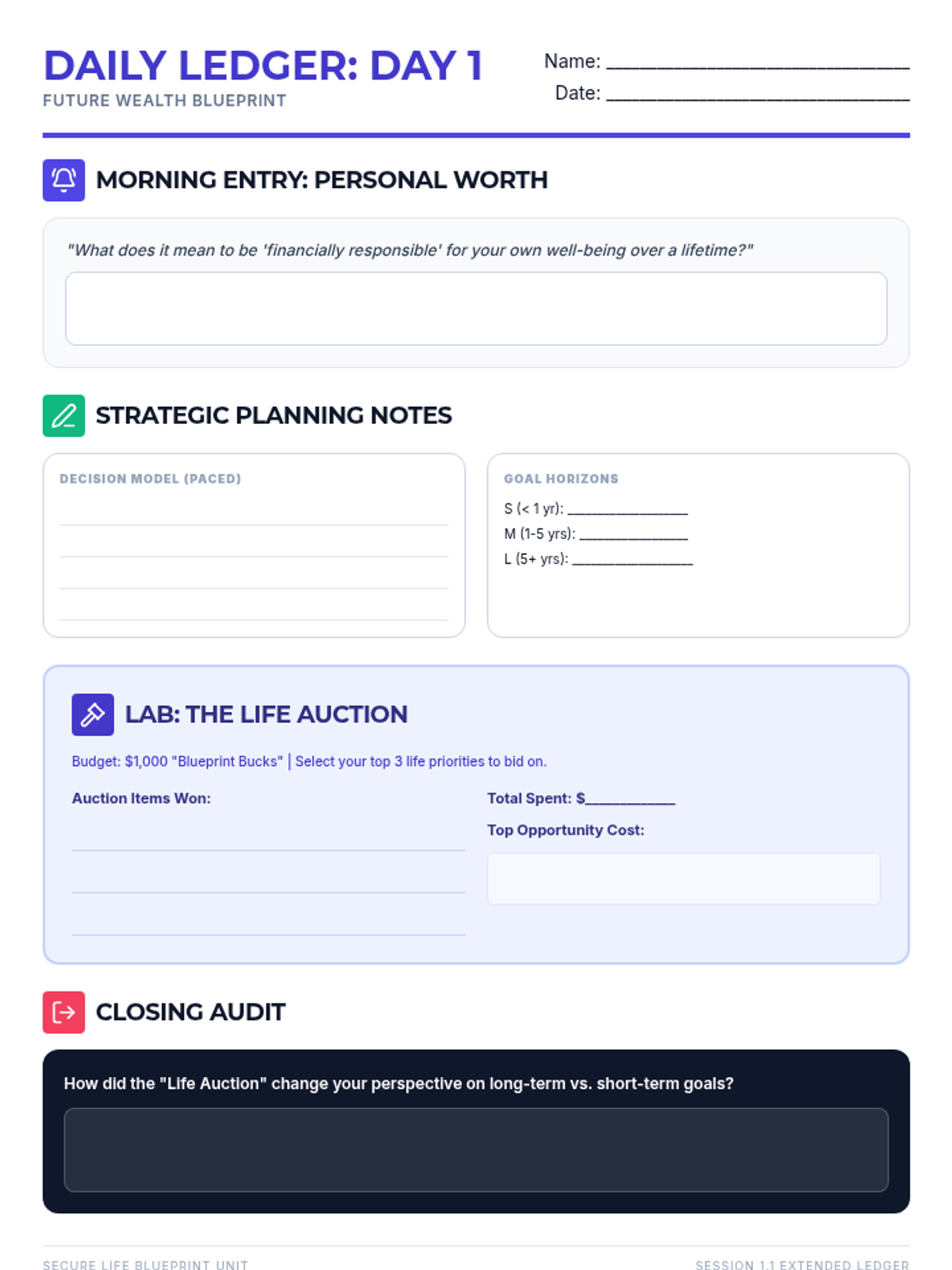
A daily handout for the first lesson featuring a bellringer activity about financial responsibility, space for notes on systematic decision-making and goals, and a new 'Life Auction' lab activity for extended class periods.
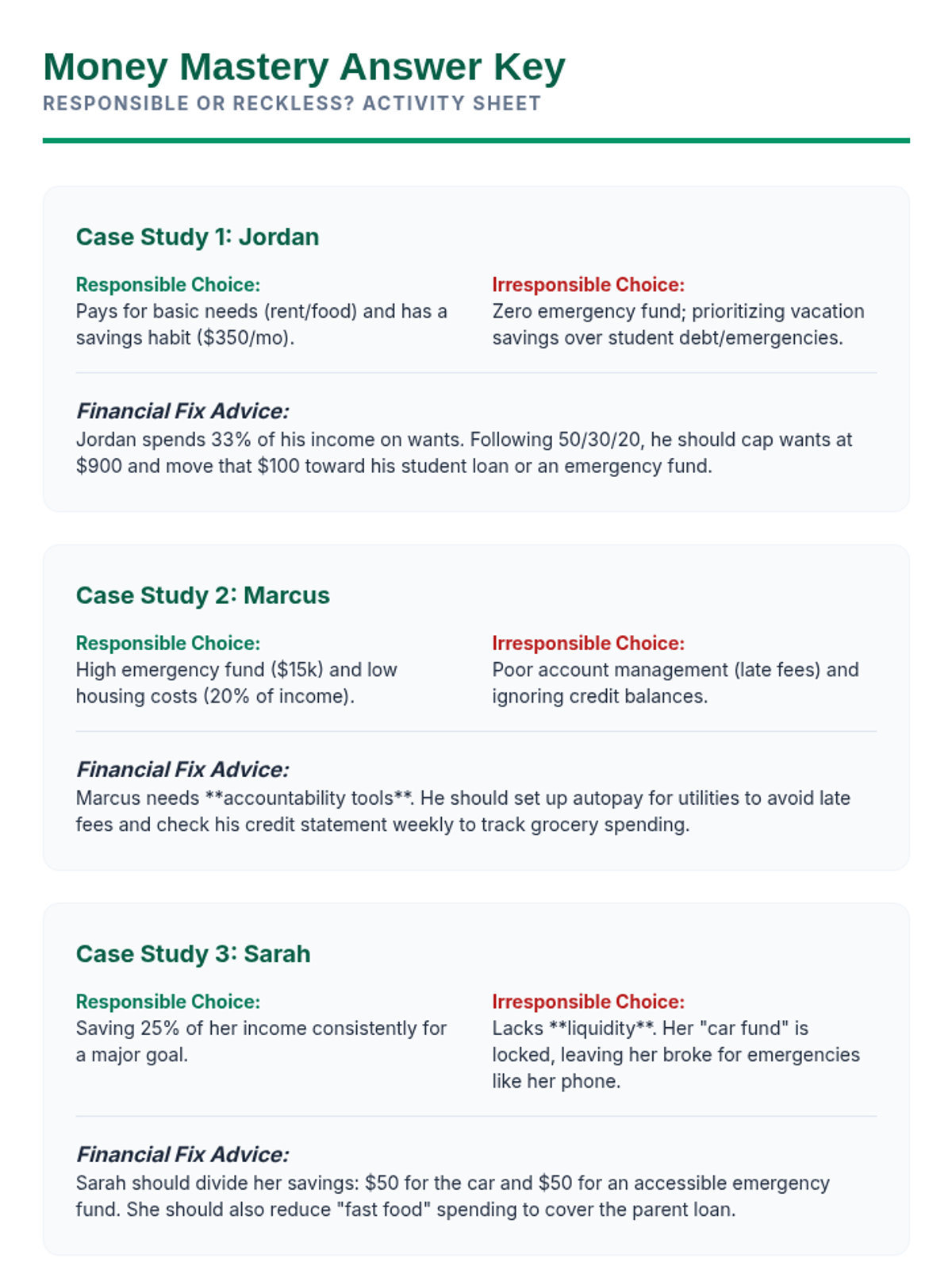
Answer key and scoring rubric for the Responsible or Reckless practice worksheet. Optimized to fit on a single page.
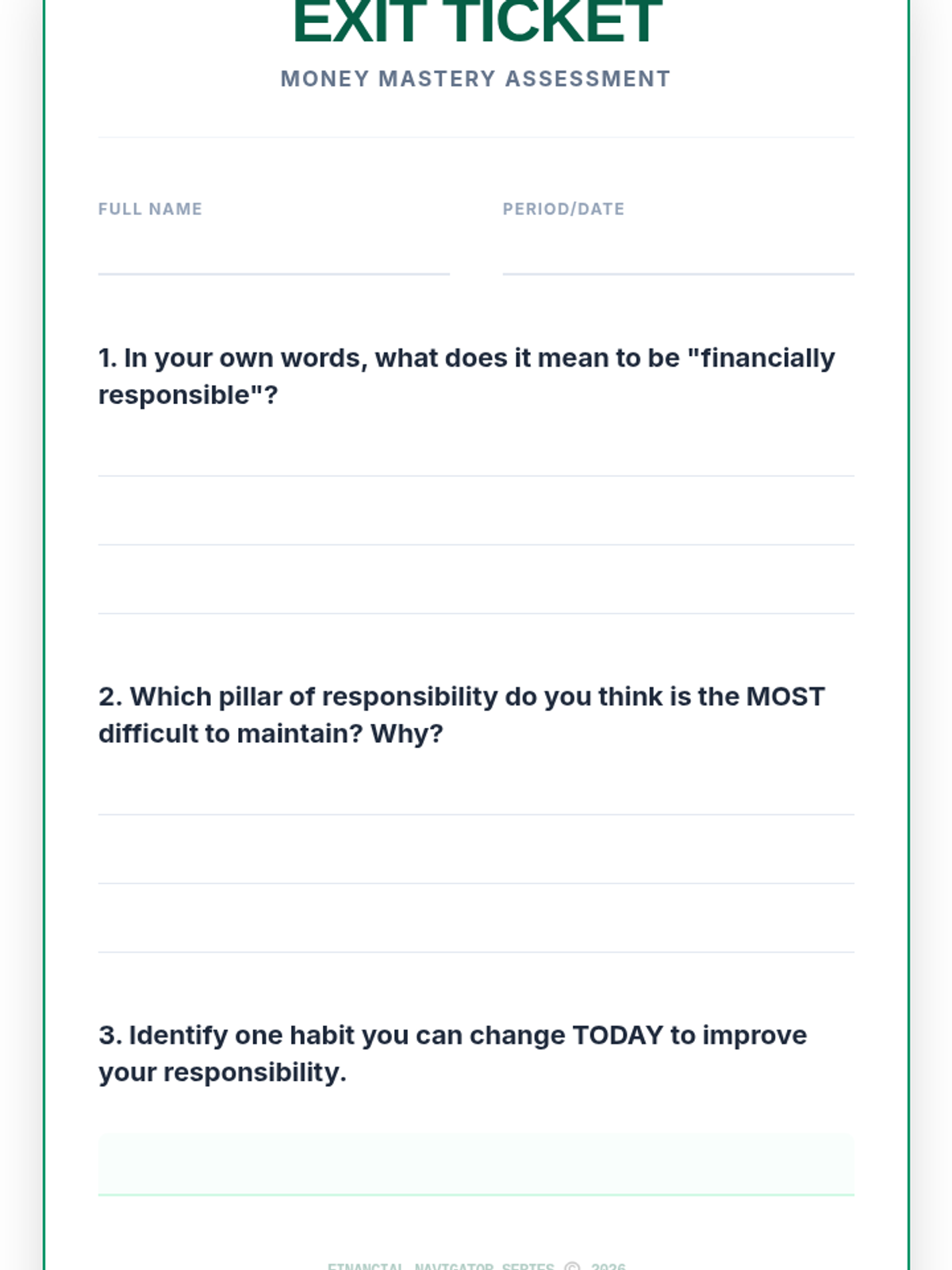
Quick assessment for the end of the lesson to evaluate student understanding of financial responsibility and personal habit reflection. Optimized for single-page printing.
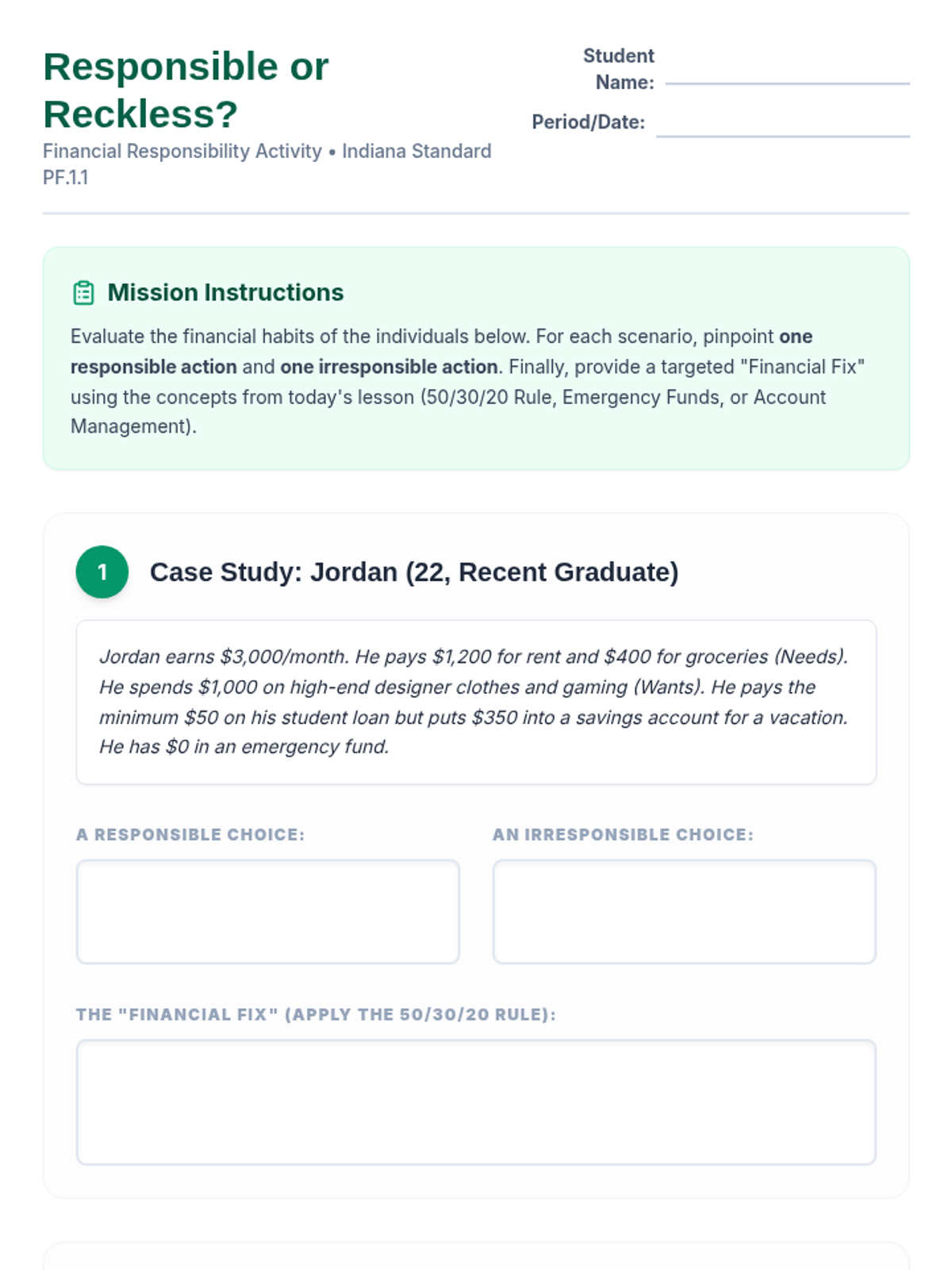
Student worksheet featuring scenario-based analysis of financial choices to practice identifying and correcting financial irresponsibility. Revised for better page flow and writing space.
Instructional slide deck for the Money Mastery lesson, covering definitions of financial responsibility, the 50/30/20 rule, and emergency funds. Now includes scenario summaries.
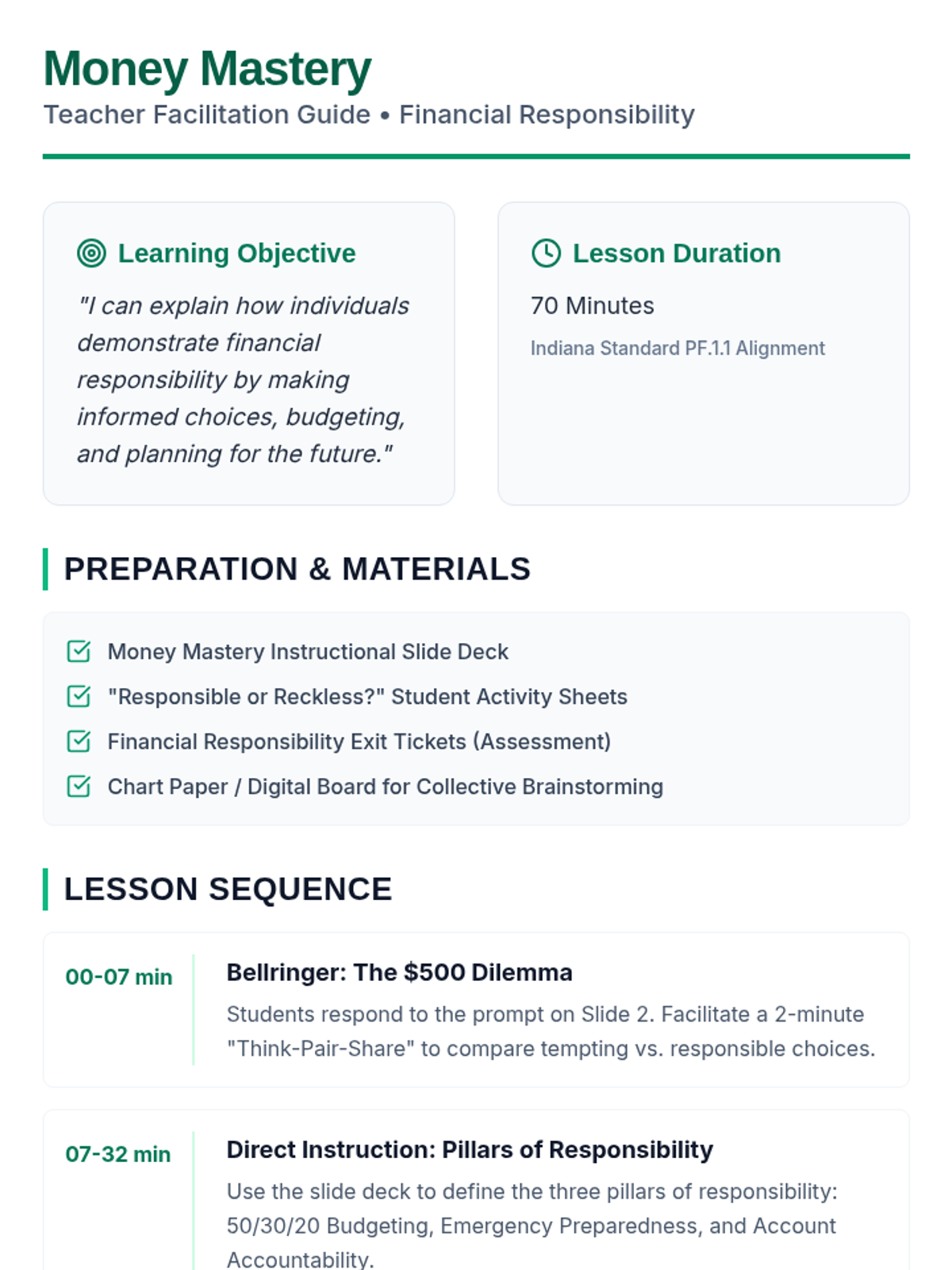
Teacher facilitation guide for a 70-minute lesson on financial responsibility, including lesson timeline, learning objectives, and differentiation strategies.
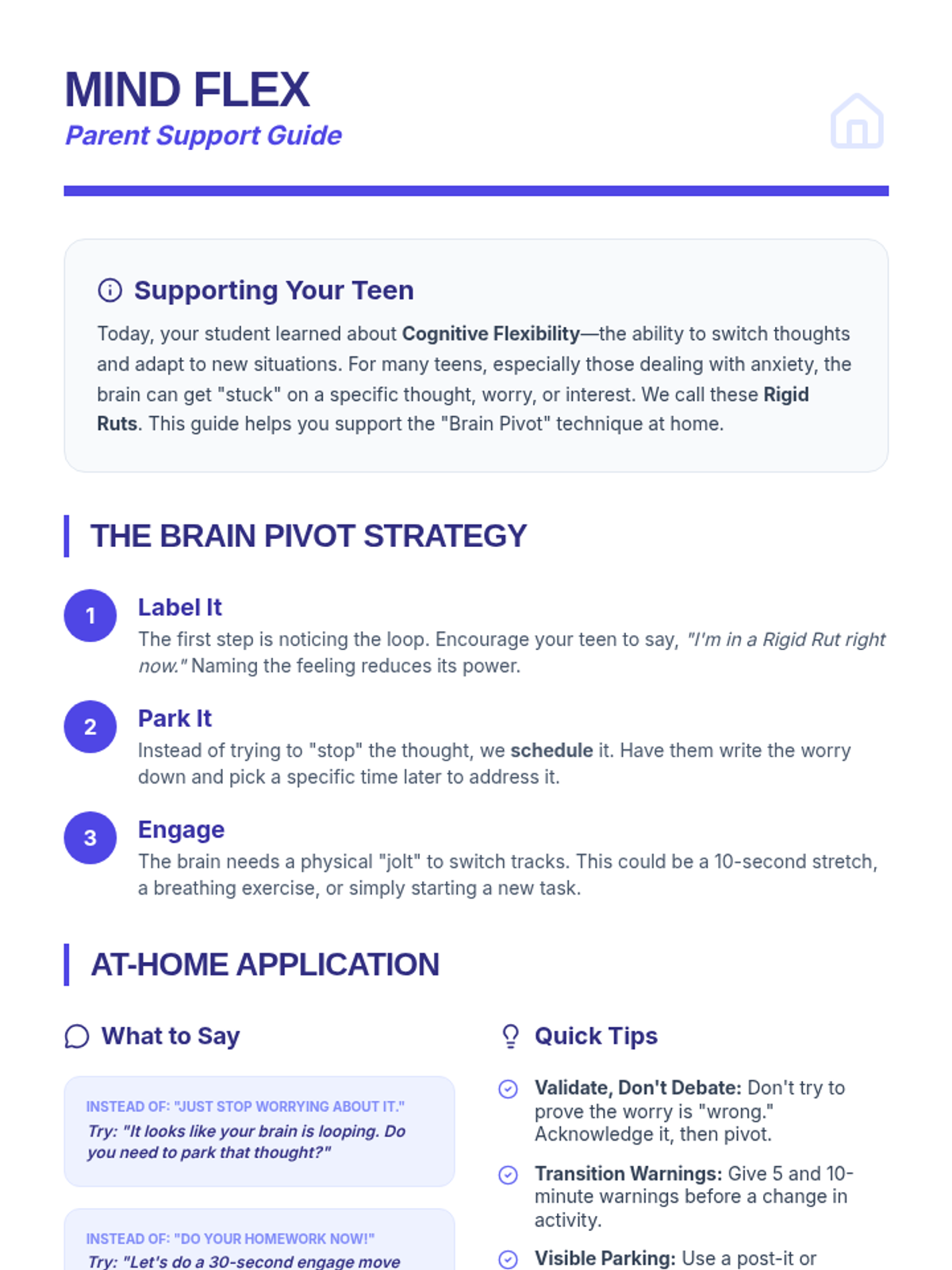
A supportive guide for parents to understand and reinforce the 'Brain Pivot' technique at home. Includes language prompts, transition tips, and advice on validating their teen's experience without increasing anxiety.
A supportive slide deck focusing on growth mindset in the context of restorative justice. It explores mistakes as learning data, the difference between fixed and growth mindsets, and the power of 'yet' during the re-entry process.