A comprehensive rubric for evaluating mock interview performances, assessing verbal clarity, body language, STAR method application, and the quality of closing questions.
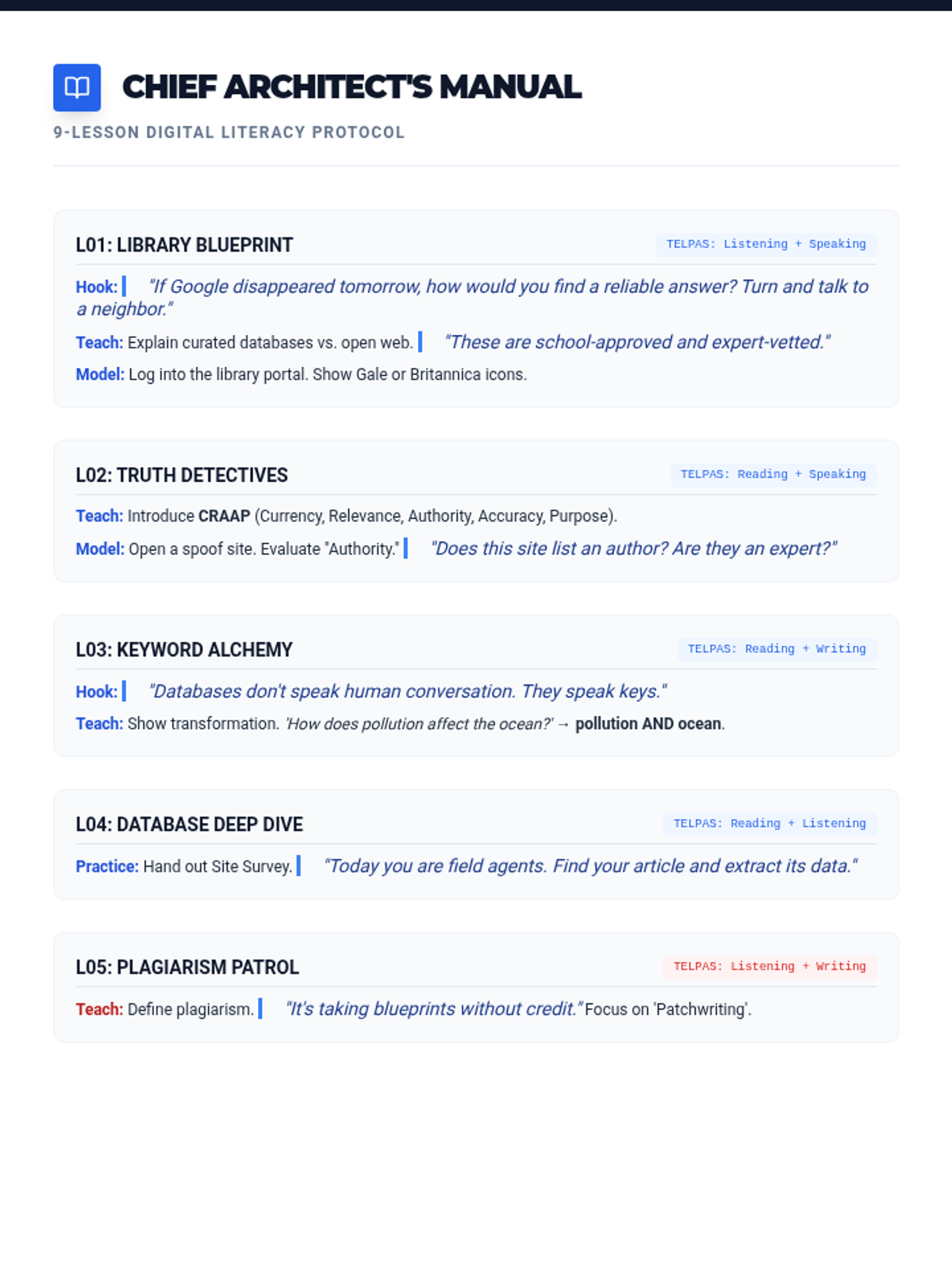
A comprehensive teacher guide titled 'Chief Architect' Manual' containing instructional scripts, TELPAS alignments, and answer keys for all 9 digital literacy lessons. Revised to include detailed scripts and consolidated to 2 pages.
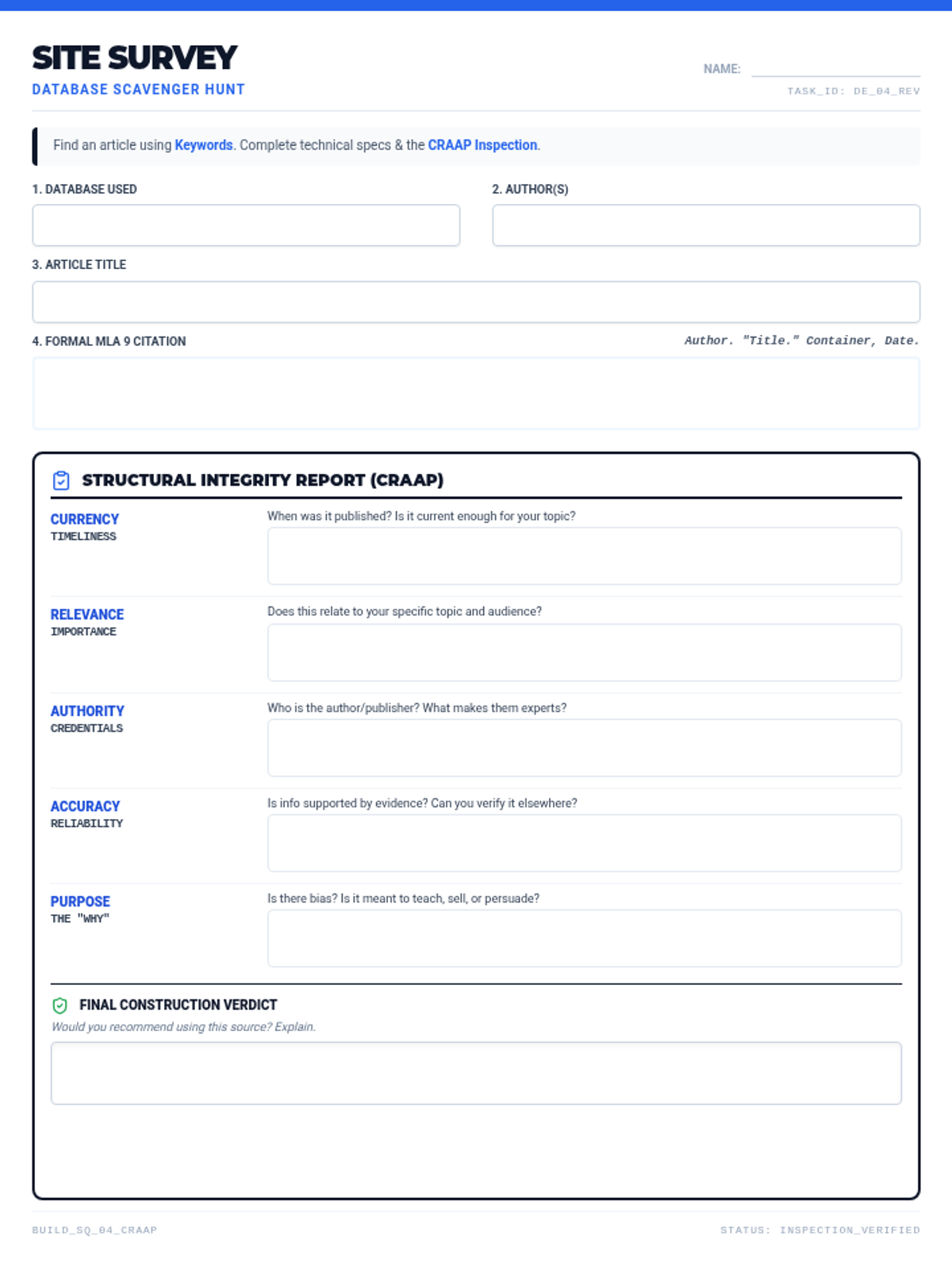
A hands-on student activity worksheet for Lesson 4 (Database Scavenger Hunt). Revised to fit on a single page, including MLA citation practice and improved styling. Fixed layout break and increased work area sizes.
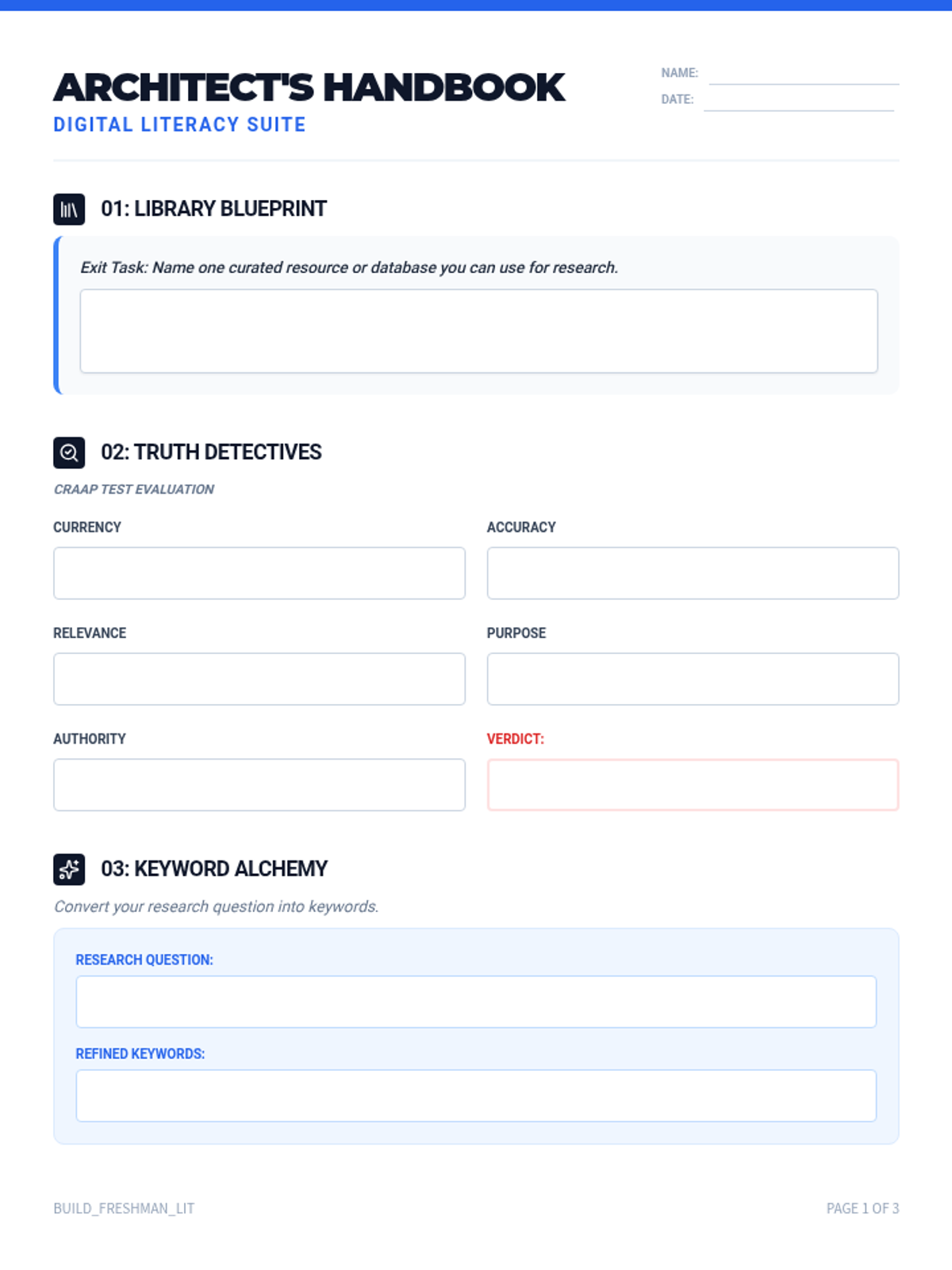
A 3-page student workbook titled 'Architect's Handbook' containing all worksheets, exit tickets, and activities for a 9-lesson digital literacy sequence. Includes Lesson 4, improved work areas, and fixed pagination. Revised for better page breaks and larger work areas.
A 10-slide presentation for 9th-grade digital literacy lessons with an architectural blueprint theme, including high-contrast visuals and clear instructional points for each lesson. Revised to fix layout and contrast issues.
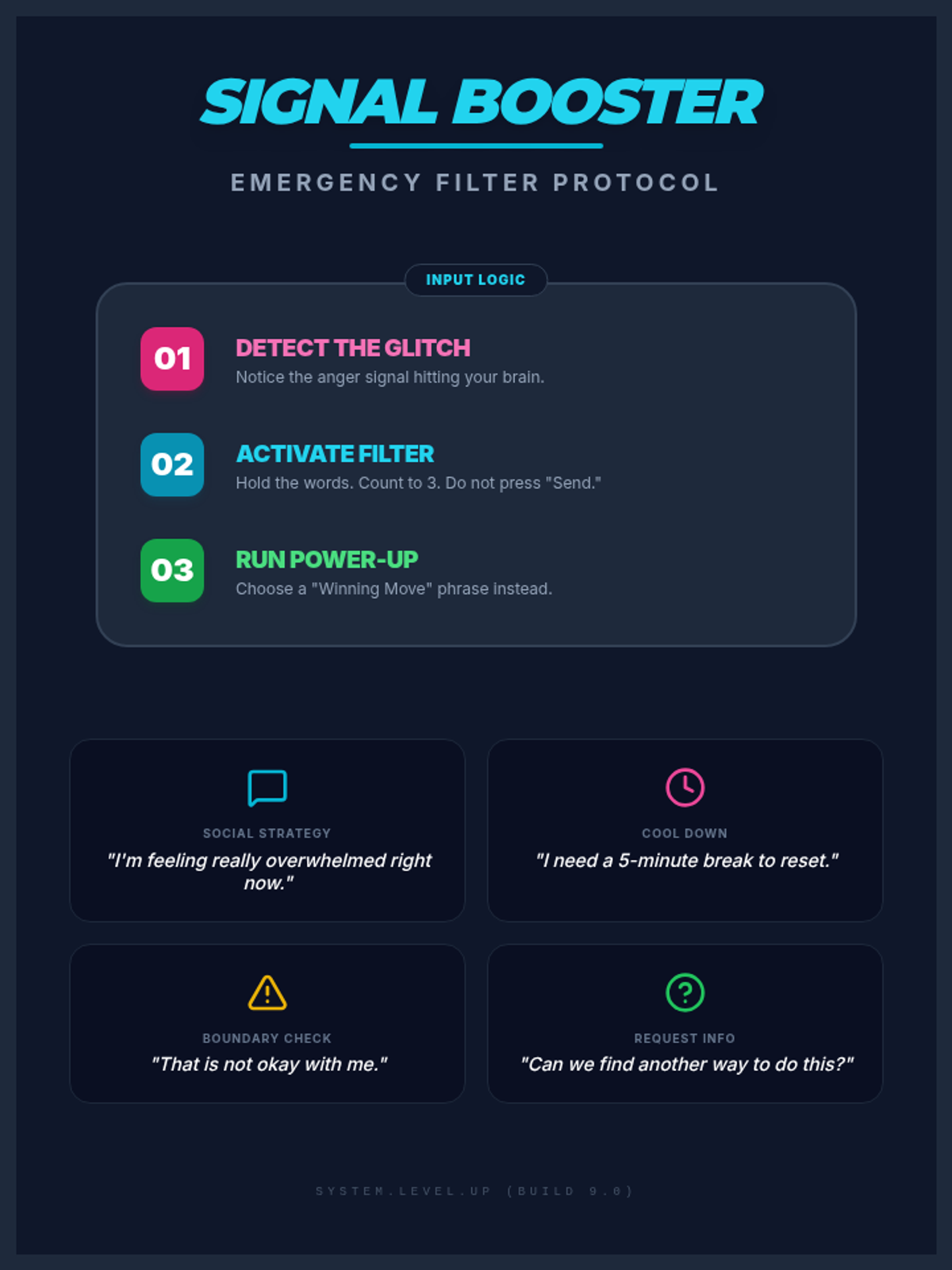
A high-contrast reference poster summarizing the 'Signal Filter' steps and providing quick-access 'Power-Up' phrases for the student to use when frustrated. Revised for improved layout and visibility.
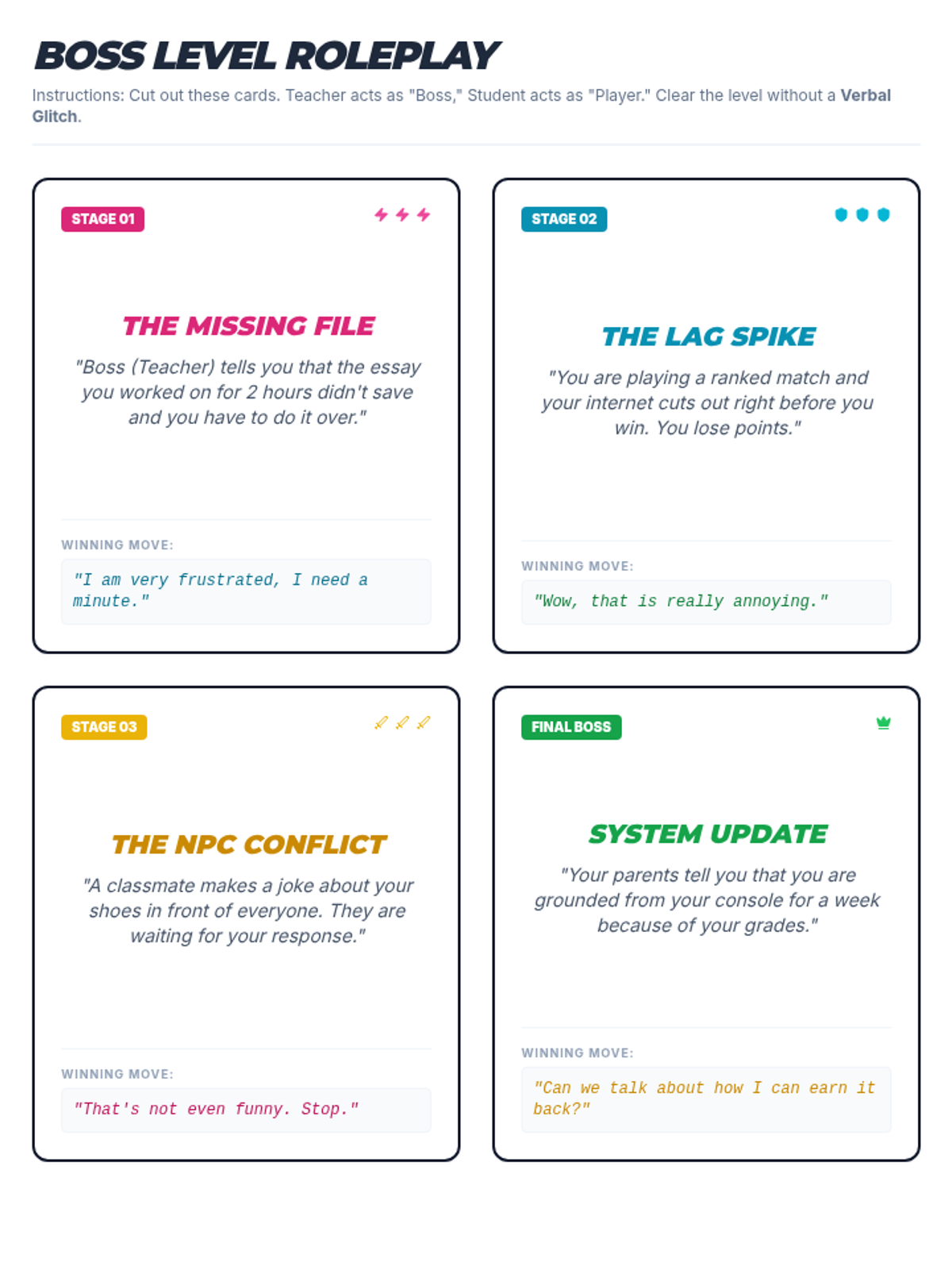
A set of four scenario cards for role-playing social challenges. Each card provides a frustrating 'Boss Level' situation and a suggested 'Winning Move' replacement phrase to avoid cursing. Revised for ink-friendly printing and one-page layout.
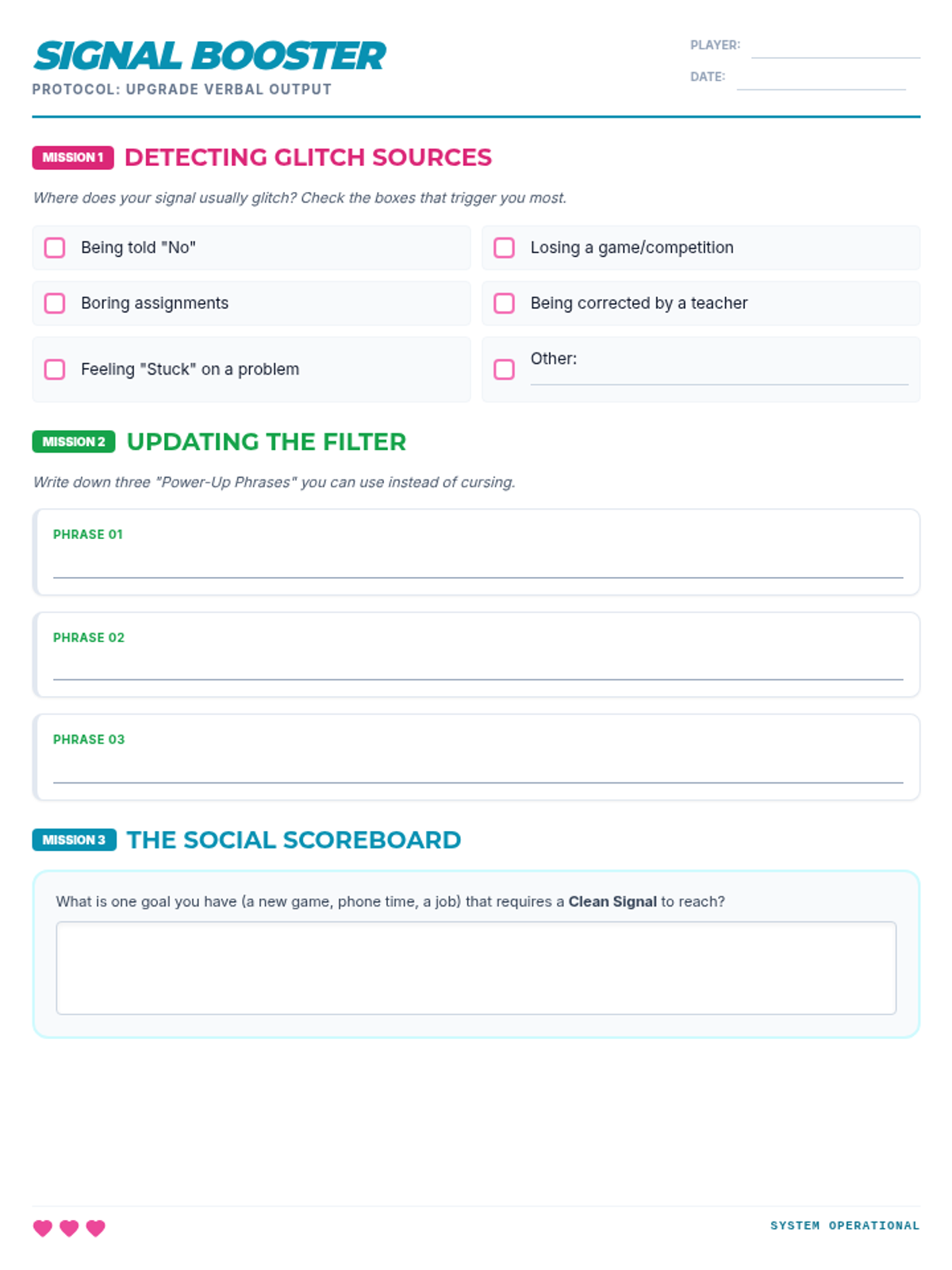
A visually stimulating worksheet for students to identify their emotional triggers and brainstorm personalized 'Power-Up' replacement phrases to avoid cursing. Revised for ink-friendly printing and one-page layout.
Engaging visual presentation that introduces the concept of a 'social filter' using retro video game metaphors. Explains the consequences of cursing as 'social lag' and introduces 'Power-Up' replacement phrases. Revised for content completeness and polish.
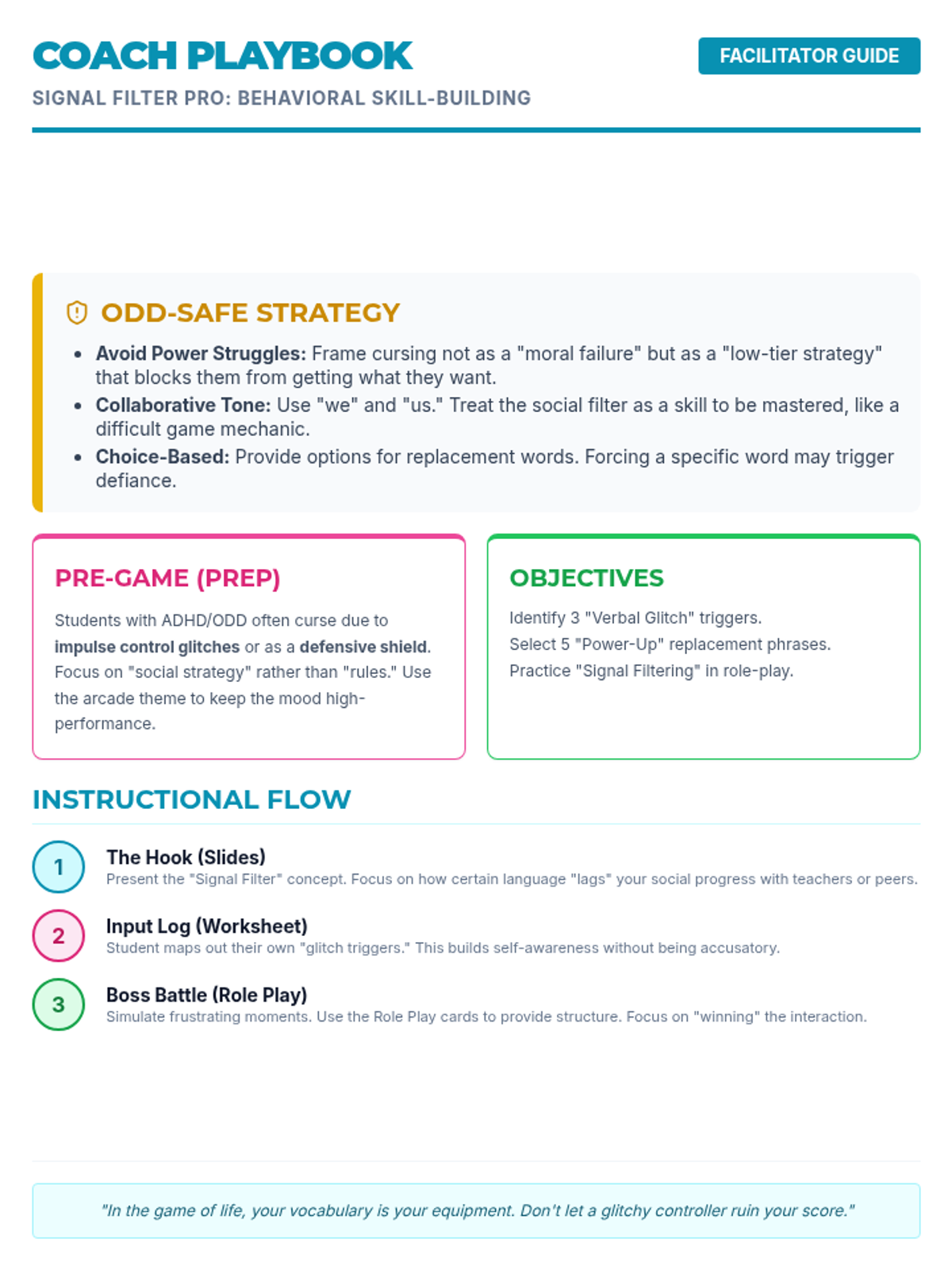
A teacher's guide for the Signal Filter Pro lesson, providing specific strategies for engaging students with ODD and ADHD. Includes instructional flow and behavior management tips. Revised for one-page layout and print-friendliness.
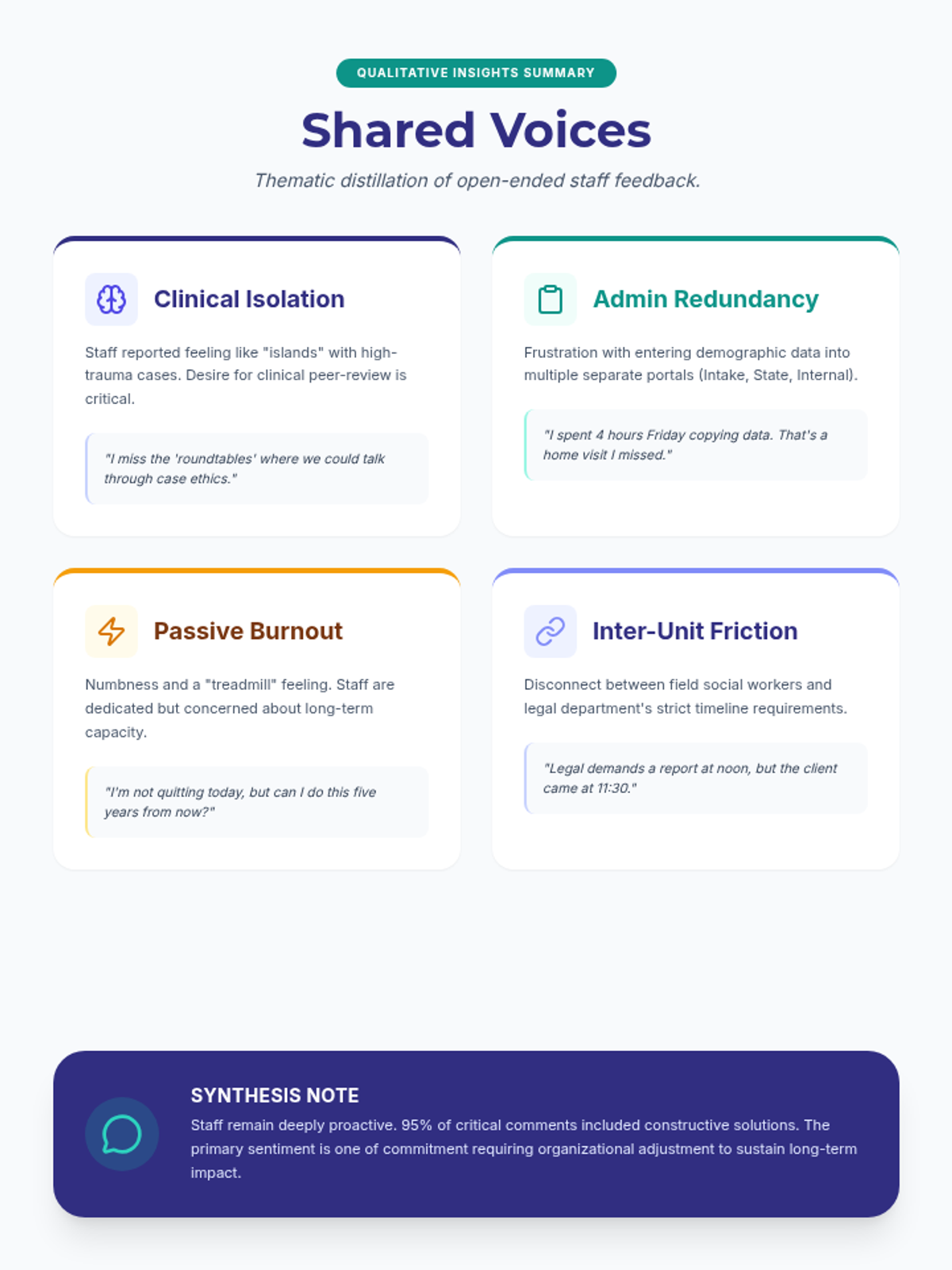
A quick-reference sheet highlighting the four major qualitative themes identified in the staff feedback, complete with direct quotes and context.
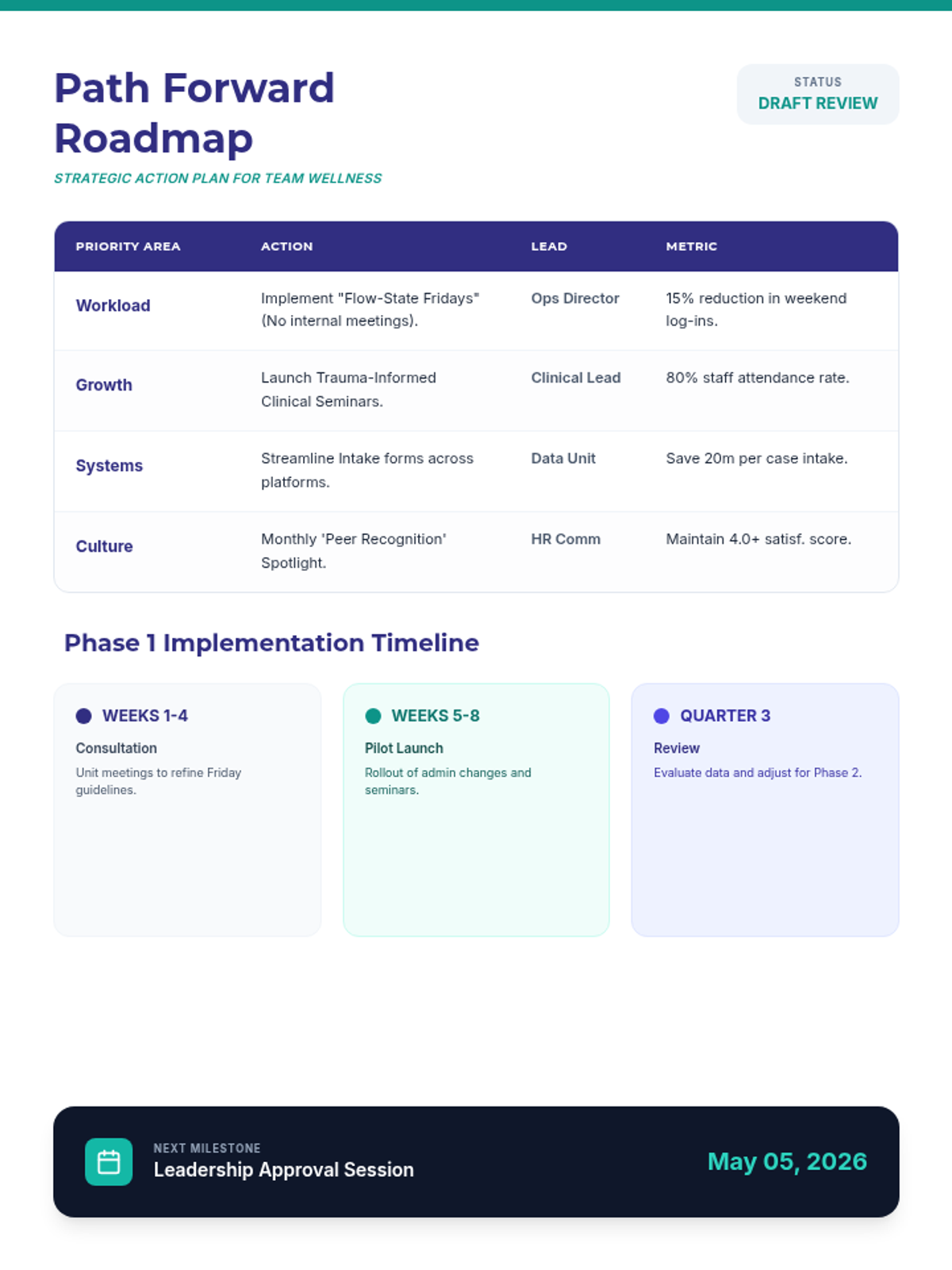
A structured action plan document detailing the specific strategies, leads, and success metrics derived from the team feedback.
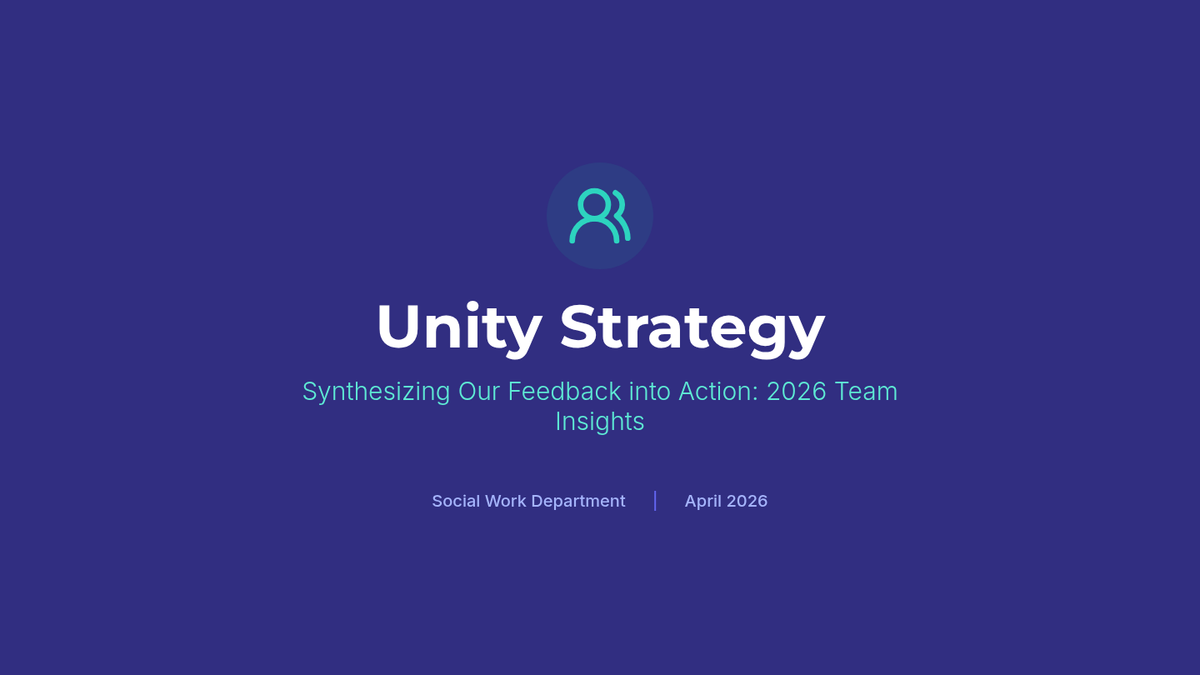
A visual presentation slide deck summarizing the key findings and strategic direction of the social work team survey.
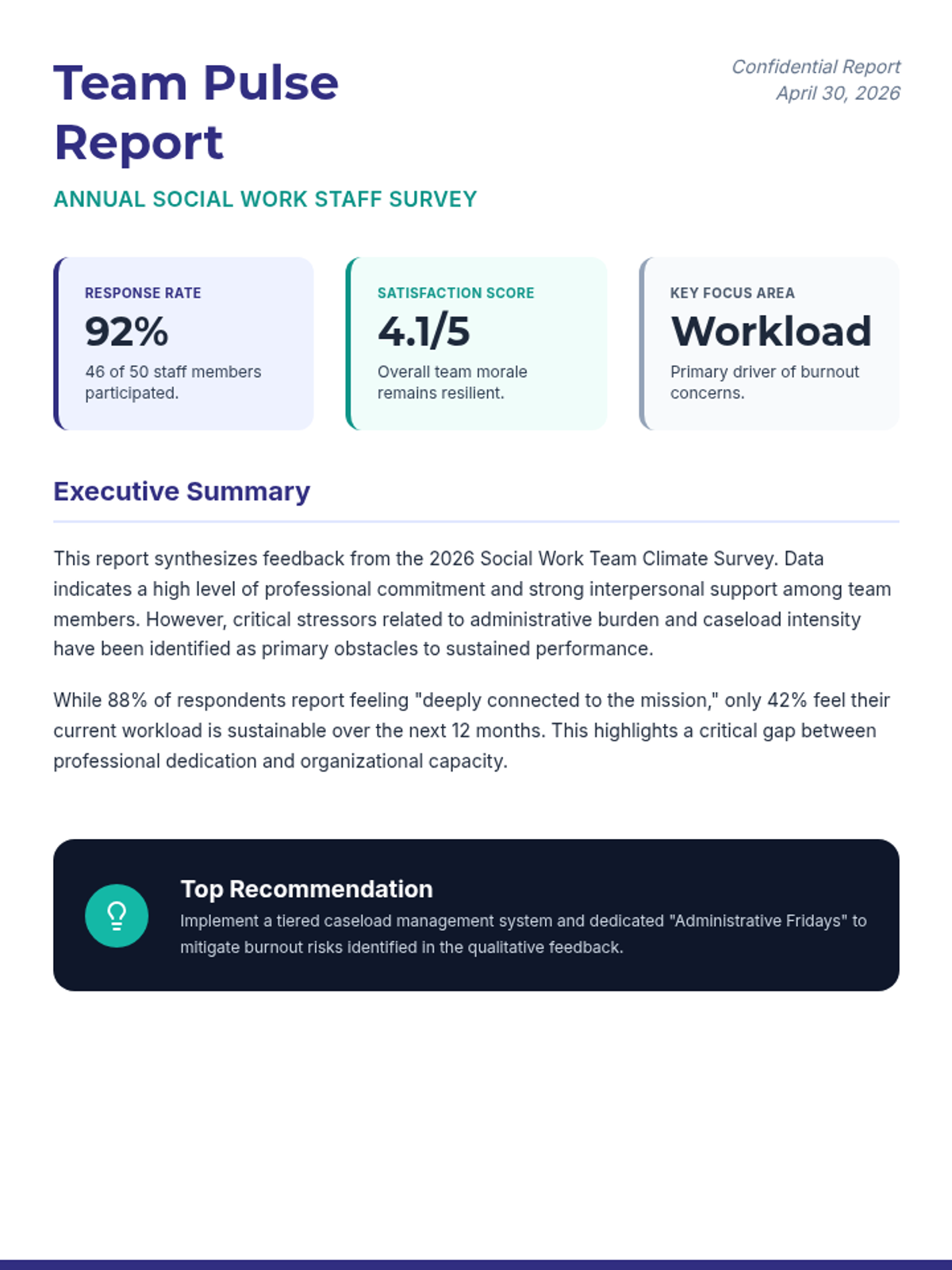
A detailed summary report of the social work team survey findings, featuring quantitative metrics, executive summaries, and key growth areas.
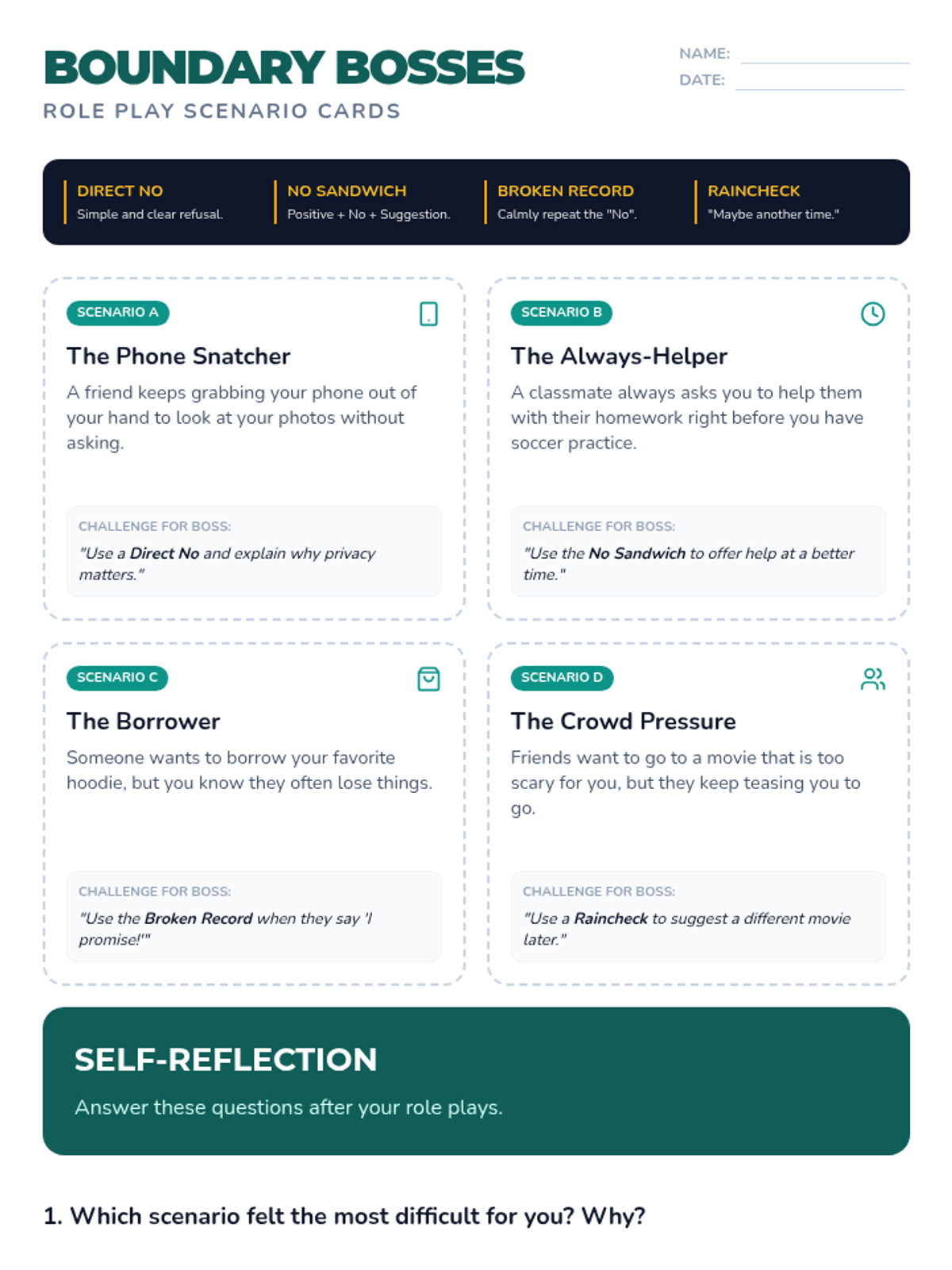
Printable role-play cards featuring four realistic scenarios for practicing personal boundary setting, along with a student reflection section.
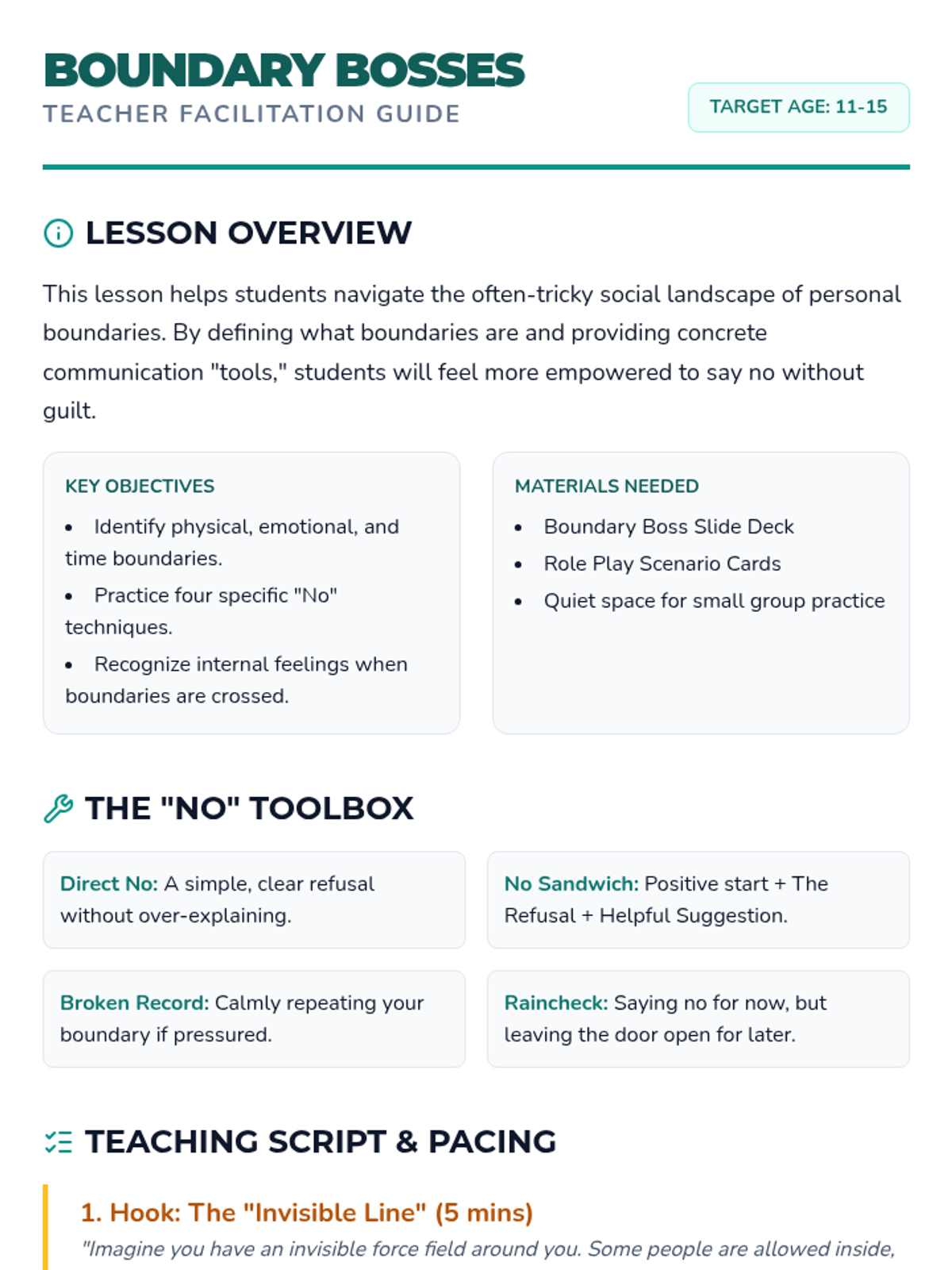
A comprehensive teacher guide for facilitating the Boundary Bosses lesson, including teaching scripts, discussion prompts, and role-play management tips.
A visual presentation for teaching students about personal boundaries, including definitions, types of boundaries, and practical techniques for saying no confidently.
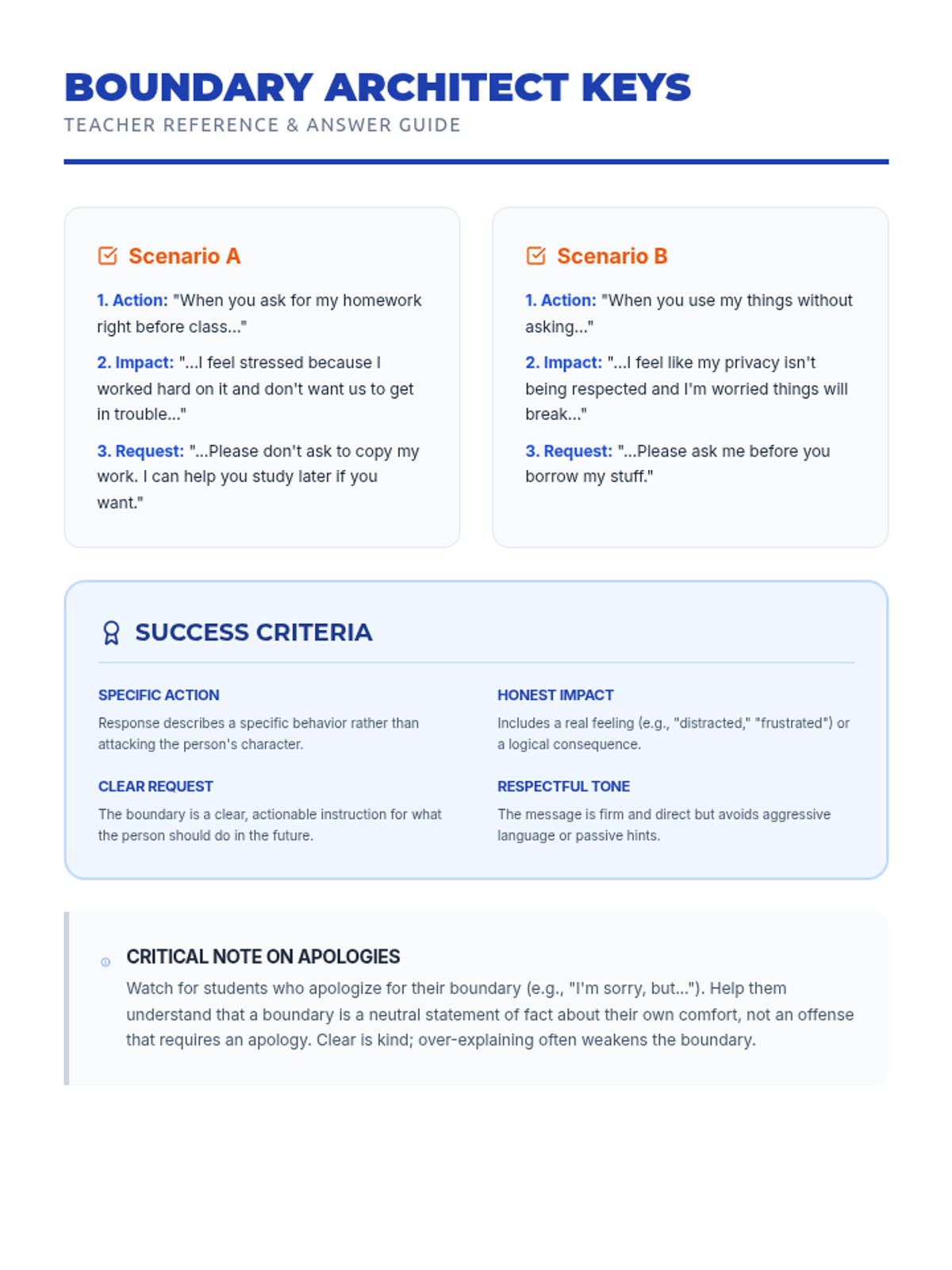
An answer key and assessment guide for teachers to evaluate student responses on the Boundary Builder Worksheet. It provides exemplar scripts for common scenarios and a rubric for success criteria focused on specificity, impact, and clarity of boundary requests.
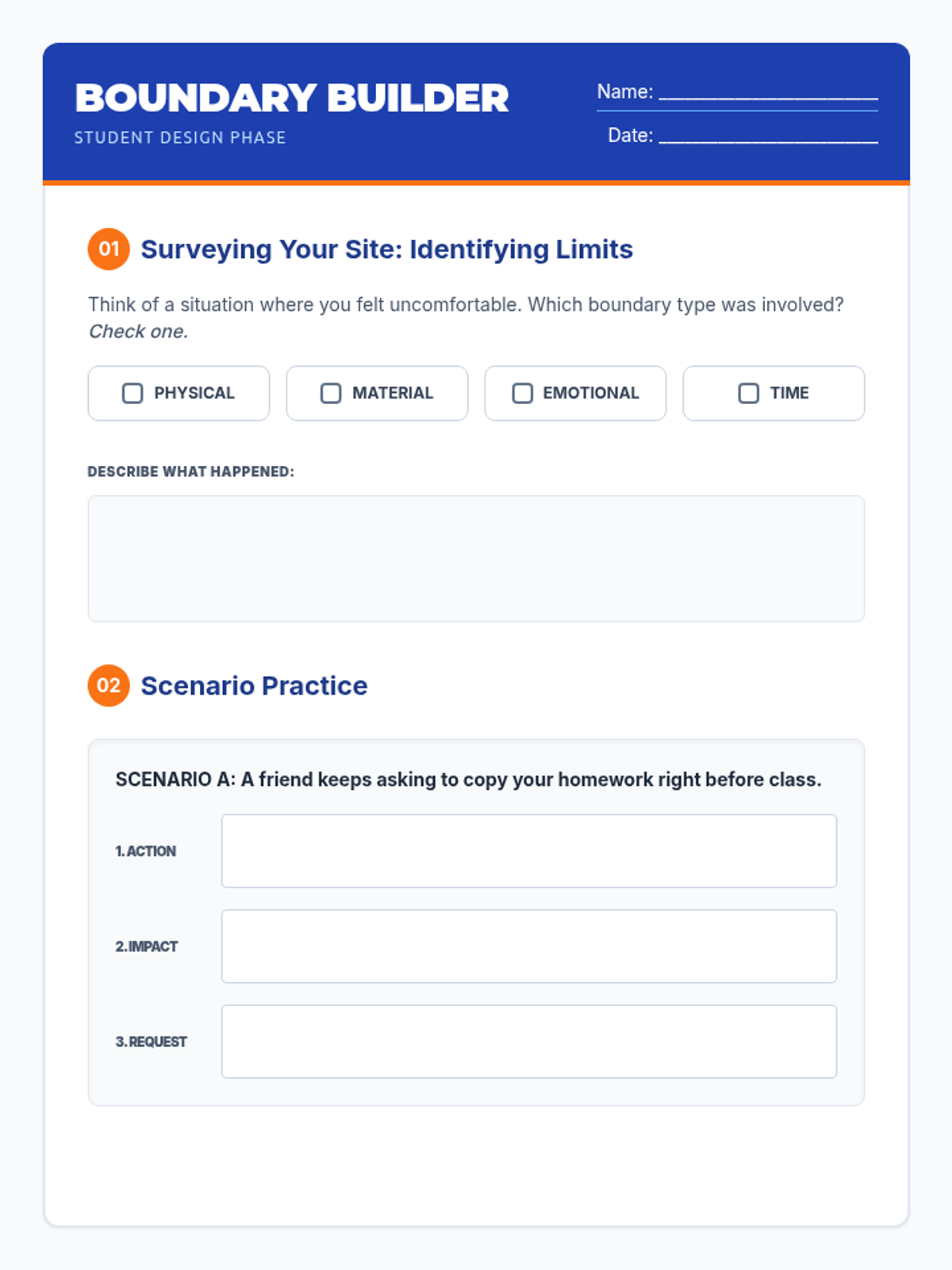
A student-facing worksheet designed as a 'blueprint' for practicing boundary setting. It includes a survey for identifying personal limits, a step-by-step communication script formula with scenarios, and a section for students to draft their own boundary statement.
A visually engaging presentation using a dark mode blueprint aesthetic to teach students about boundaries. It covers the definition of boundaries, different types (physical, material, emotional, time), and a 3-step communication formula for setting clear limits.
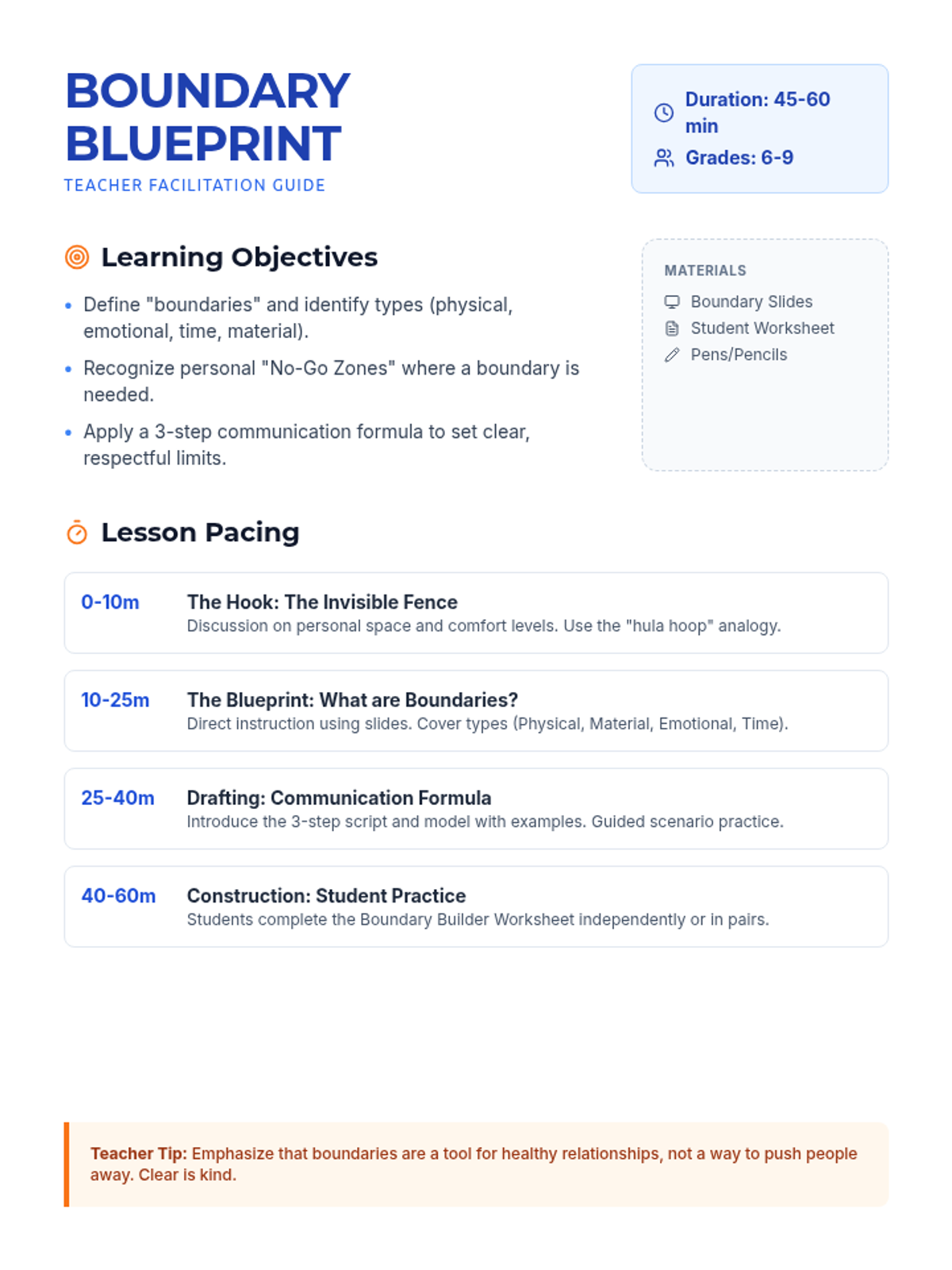
A detailed teacher facilitation guide for the Boundary Blueprint lesson, including learning objectives, a pacing guide, instructional scripts, and discussion prompts. It uses an architectural blueprint theme to teach students how to define and communicate personal limits.
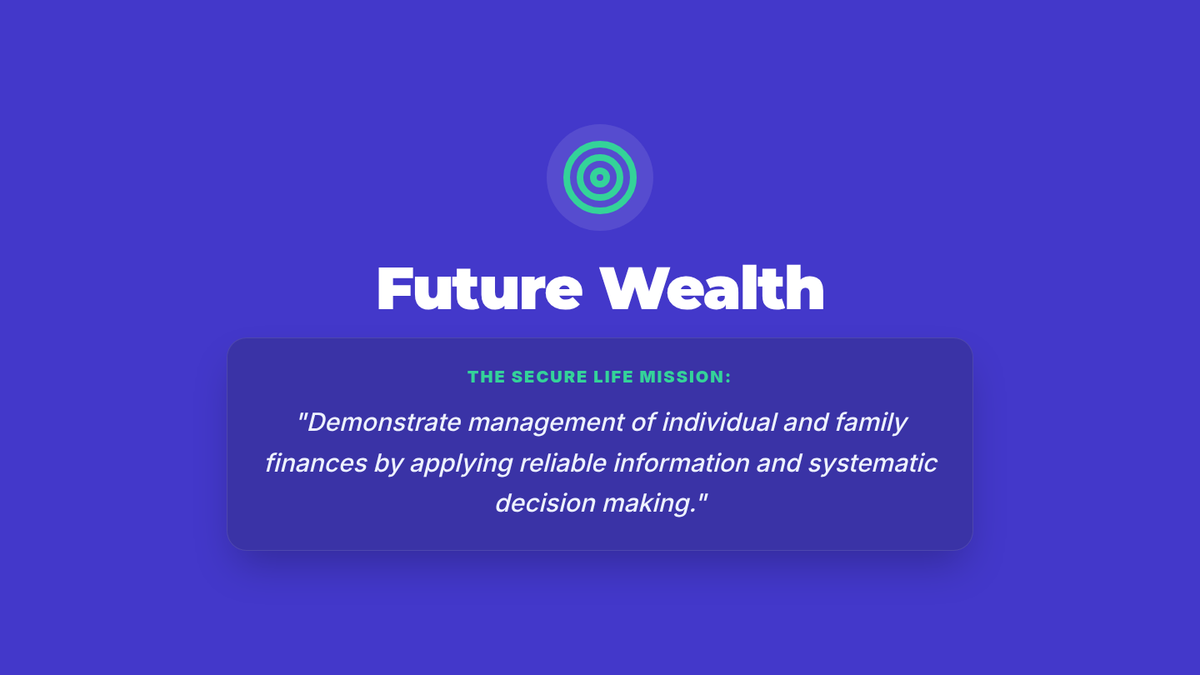
A presentation deck introducing the concepts of financial responsibility, systematic decision-making, and setting time-based financial goals. Revised to introduce the unit's mission statement, PACED model, and integrate article analysis.
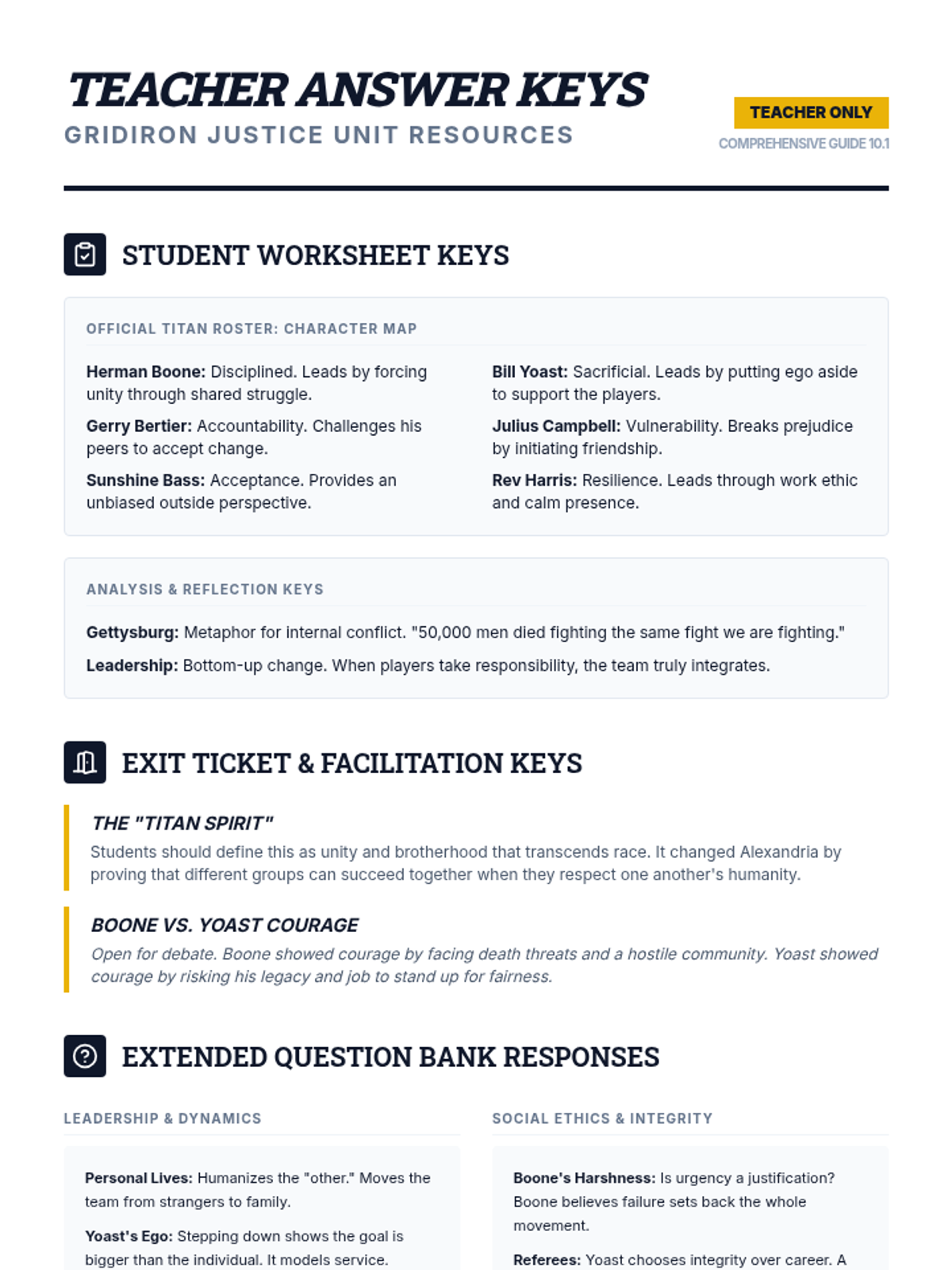
A comprehensive teacher answer key for the 'Official Titan Roster' worksheet, 'Pre-Game Context' handout, and the extended discussion question bank, featuring sample responses and facilitation guidance.
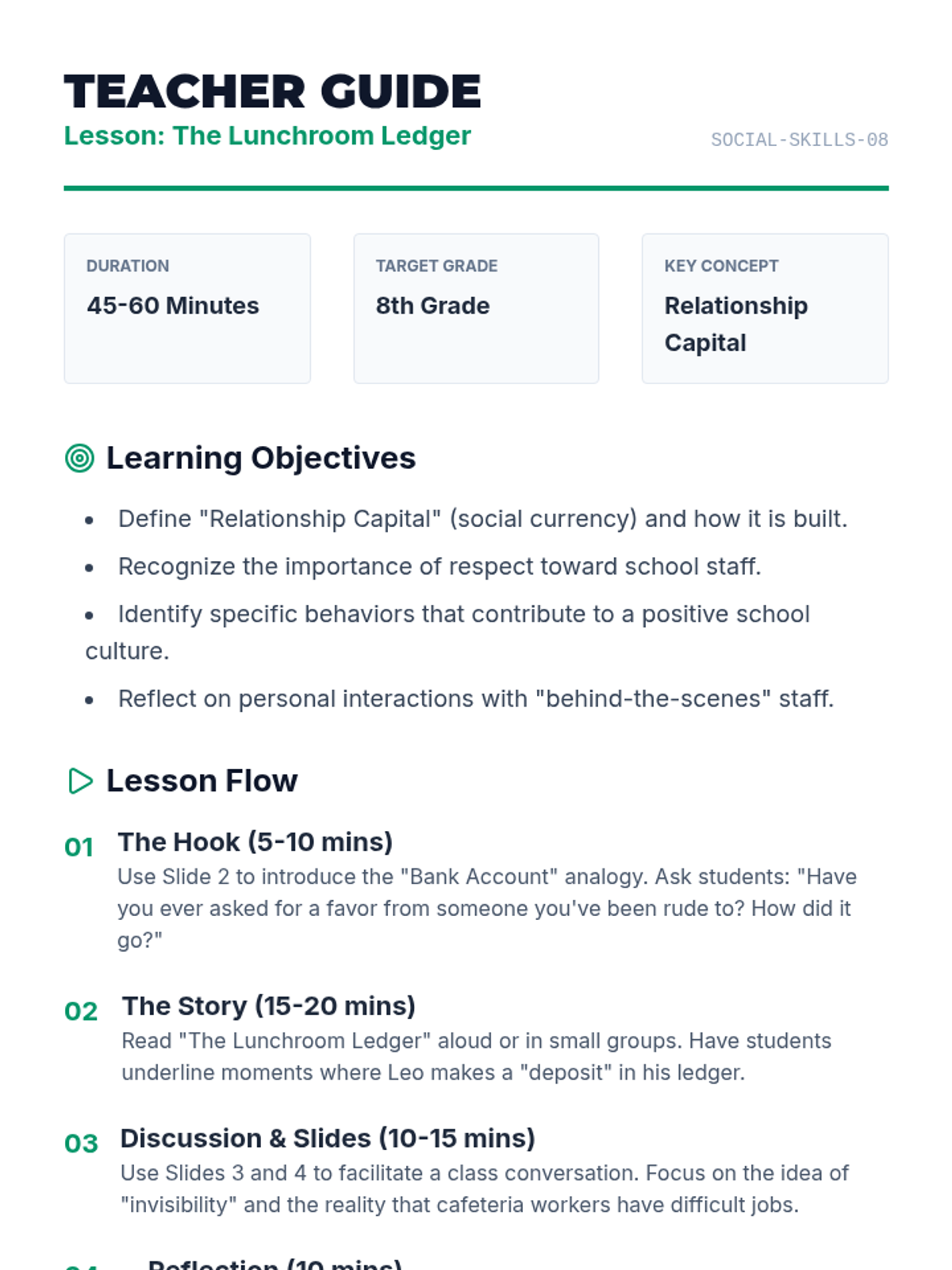
A comprehensive teacher's guide for the 'Lunchroom Ledger' lesson, including learning objectives, a structured lesson flow, and discussion prompts to facilitate social-emotional learning.
A presentation to accompany the 'Lunchroom Ledger' story, introducing the concept of relationship capital, deposits vs. withdrawals, and the impact of respect on social interactions.
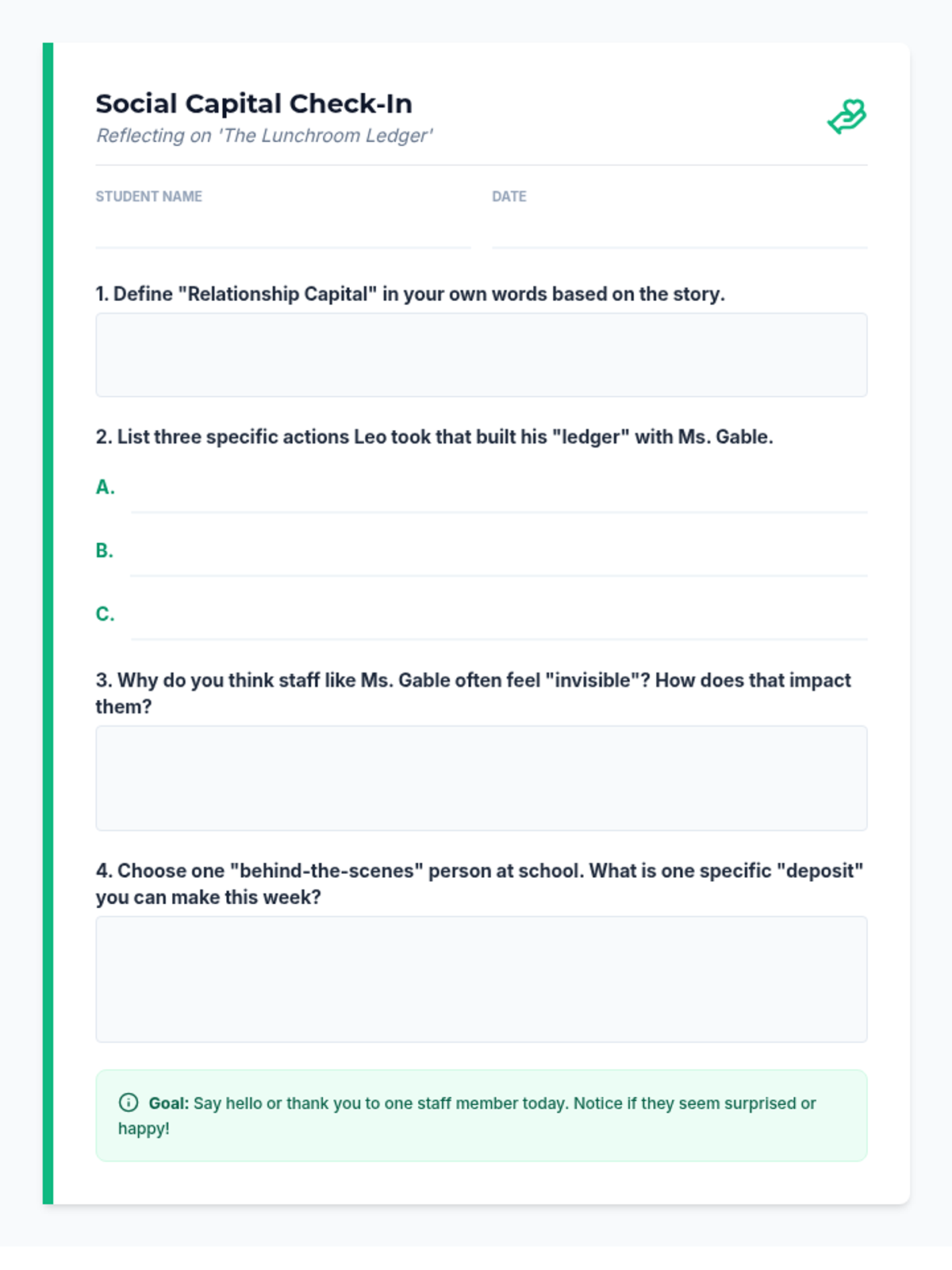
A reflection worksheet designed to help 8th-grade students analyze the concept of relationship capital. Revised for 1-page fit and improved writing space.
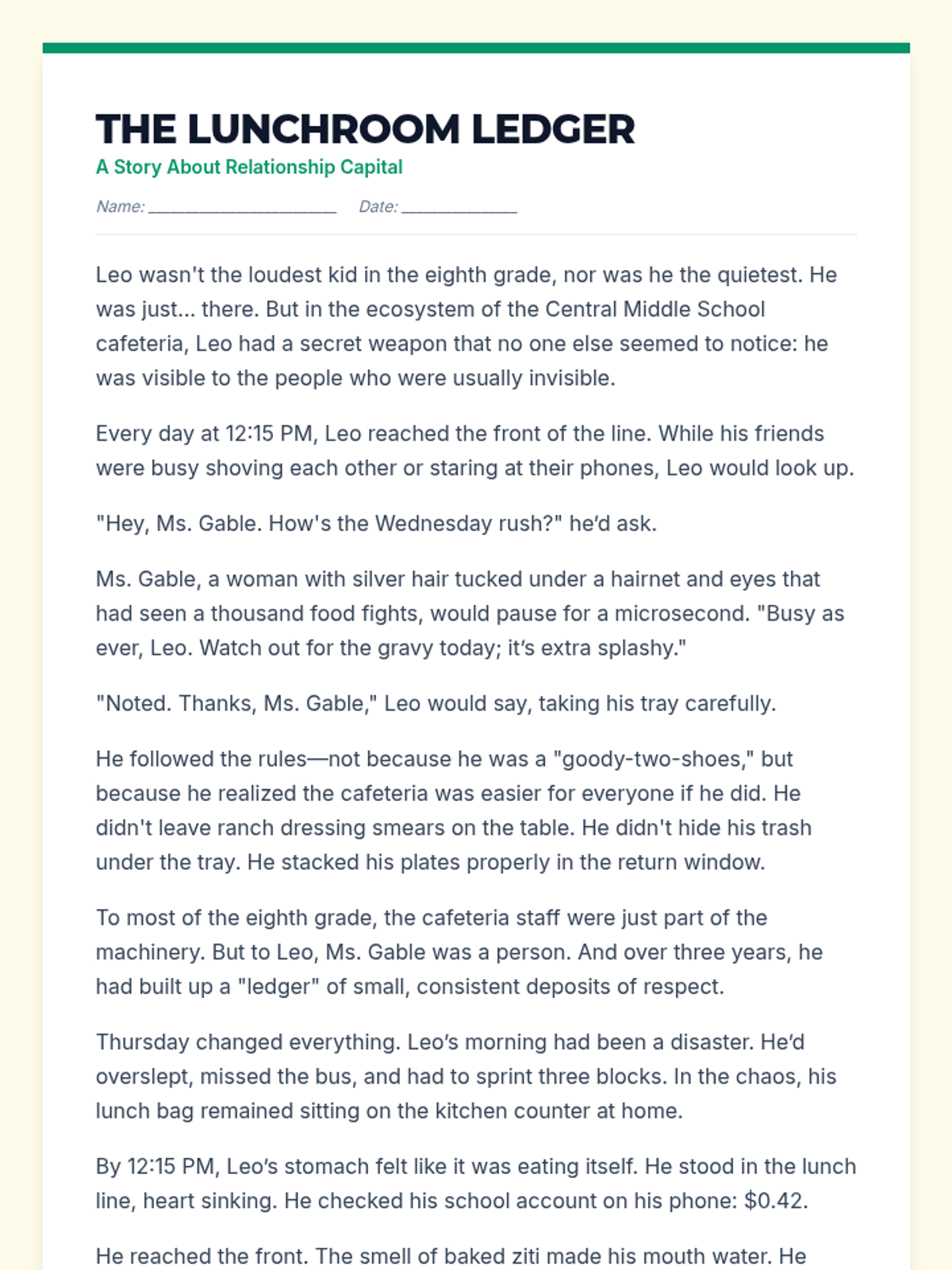
A story for 8th-grade students about Leo, a student who builds 'social currency' through small acts of kindness and rule-following in the cafeteria, which pays off when he forgets his lunch. Revised for better page flow and added reflection questions with student work areas.
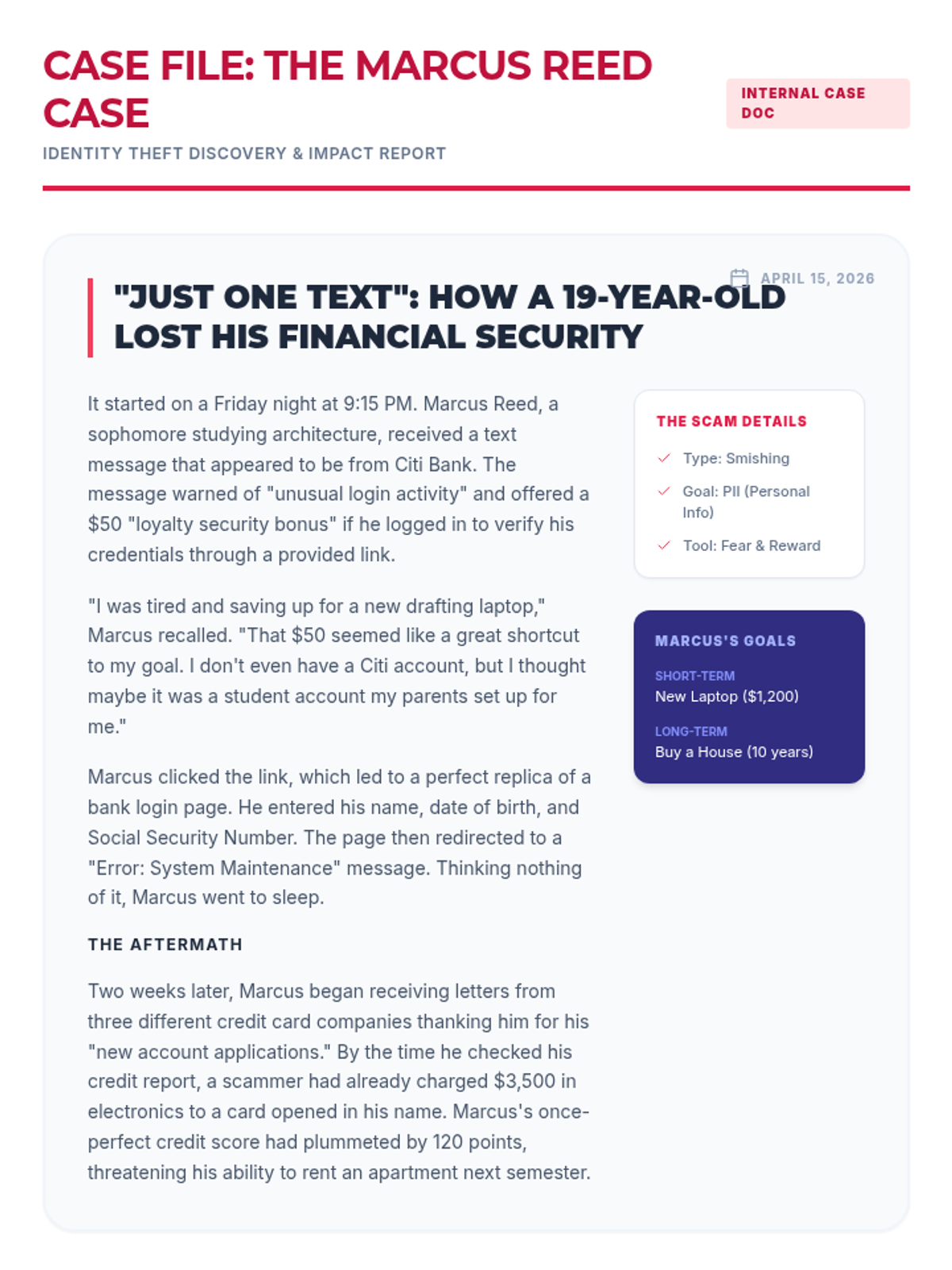
A detailed case file article about the Marcus Reed identity theft scenario. This serves as the reading material for the Day 4 lab and provides context for the unit test case study.
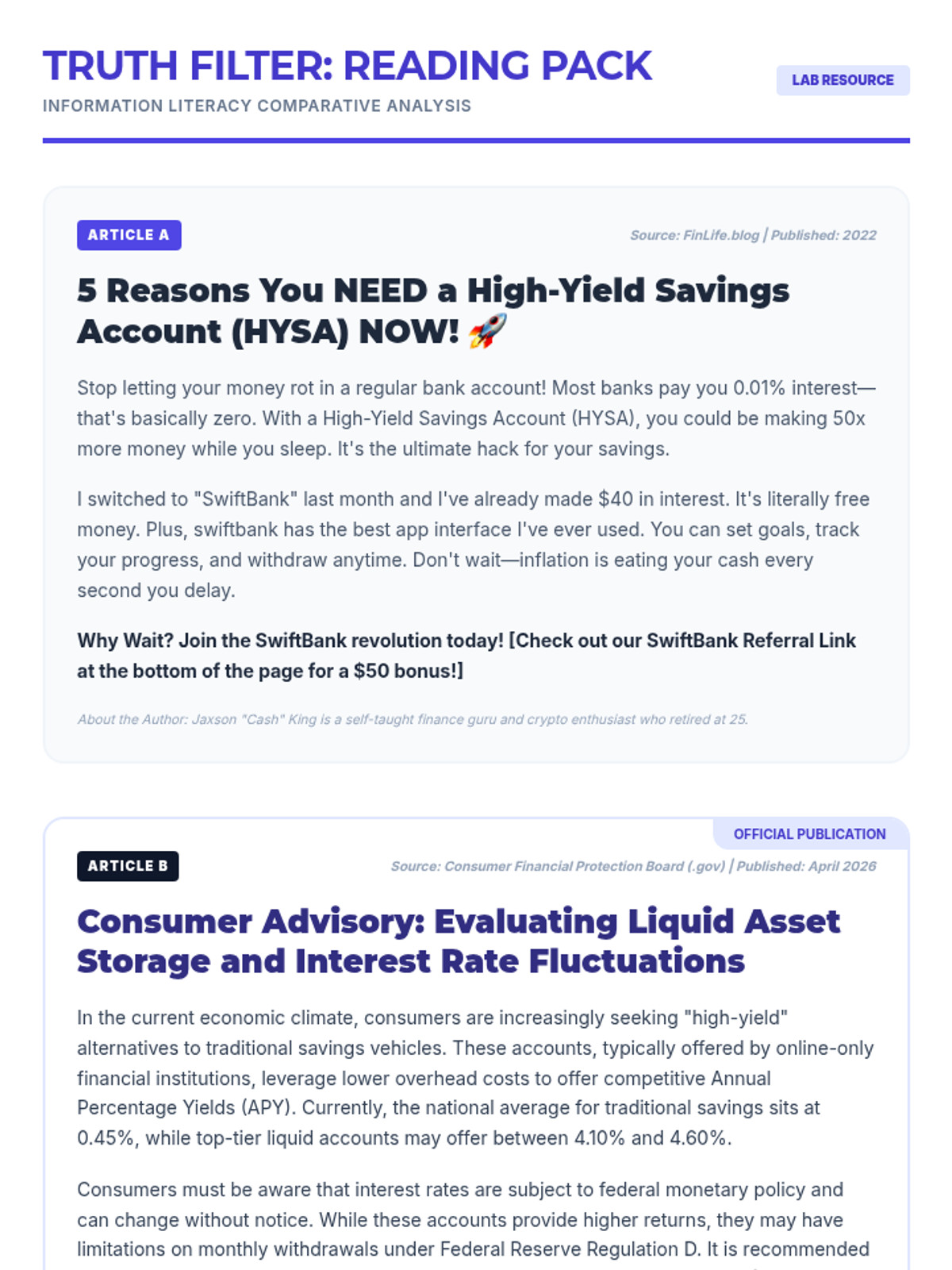
A pair of contrasting articles about High-Yield Savings Accounts designed for the Day 2 'Source Showdown' lab. Includes one biased blog post and one objective government advisory for OARC analysis.
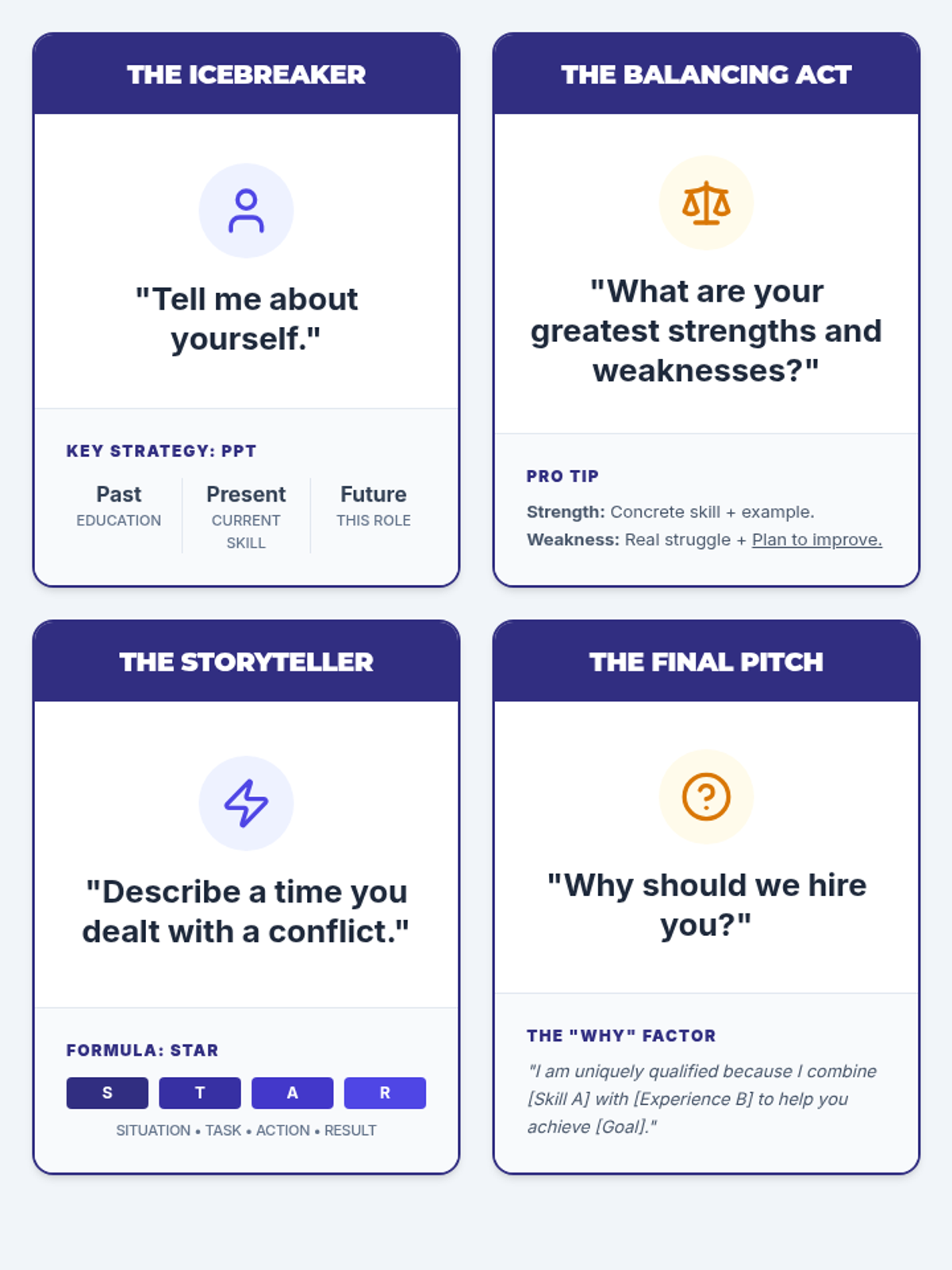
Four visual interview prompt flashcards featuring common questions and strategic frameworks like PPT (Past, Present, Future) and STAR to help students memorize key response strategies.
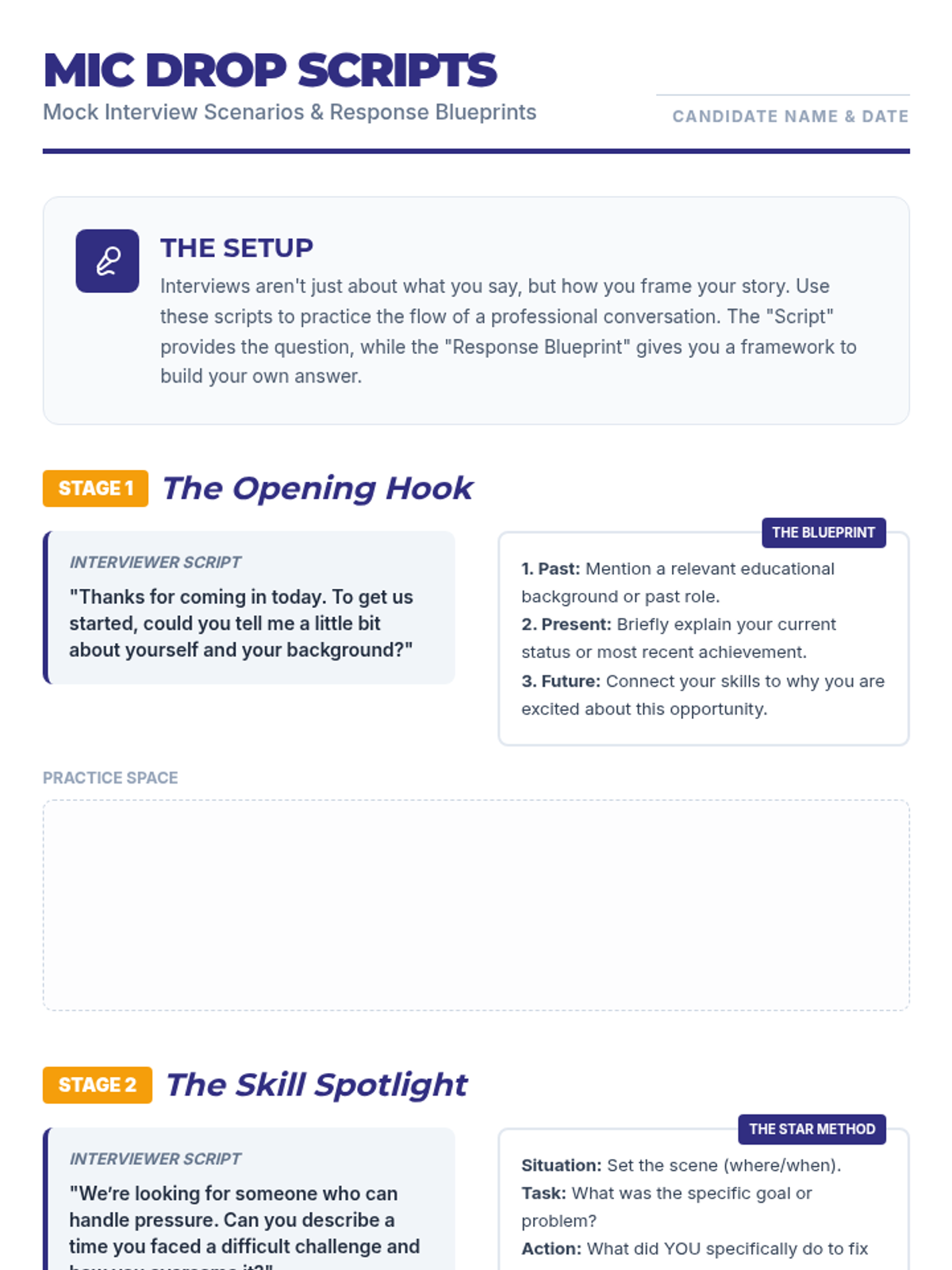
A student-facing mock interview worksheet containing three common interview scenarios with scripts for the interviewer and structured 'blueprints' for the student's responses, including the STAR method.