A weekly mood tracking sheet with emoji-based ratings and space for daily notes and weekly reflections.
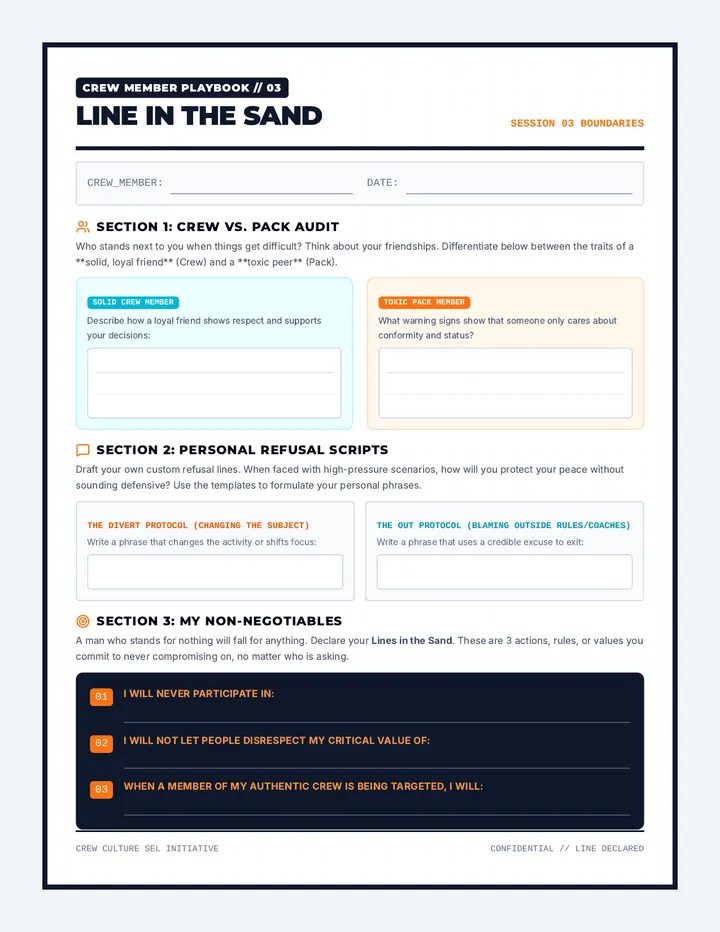
A highly engaging 1-page student playbook for Lesson 3: Line in the Sand. Helps students audit friendships, draft personalized peer-pressure refusal scripts, and declare their non-negotiable boundaries.
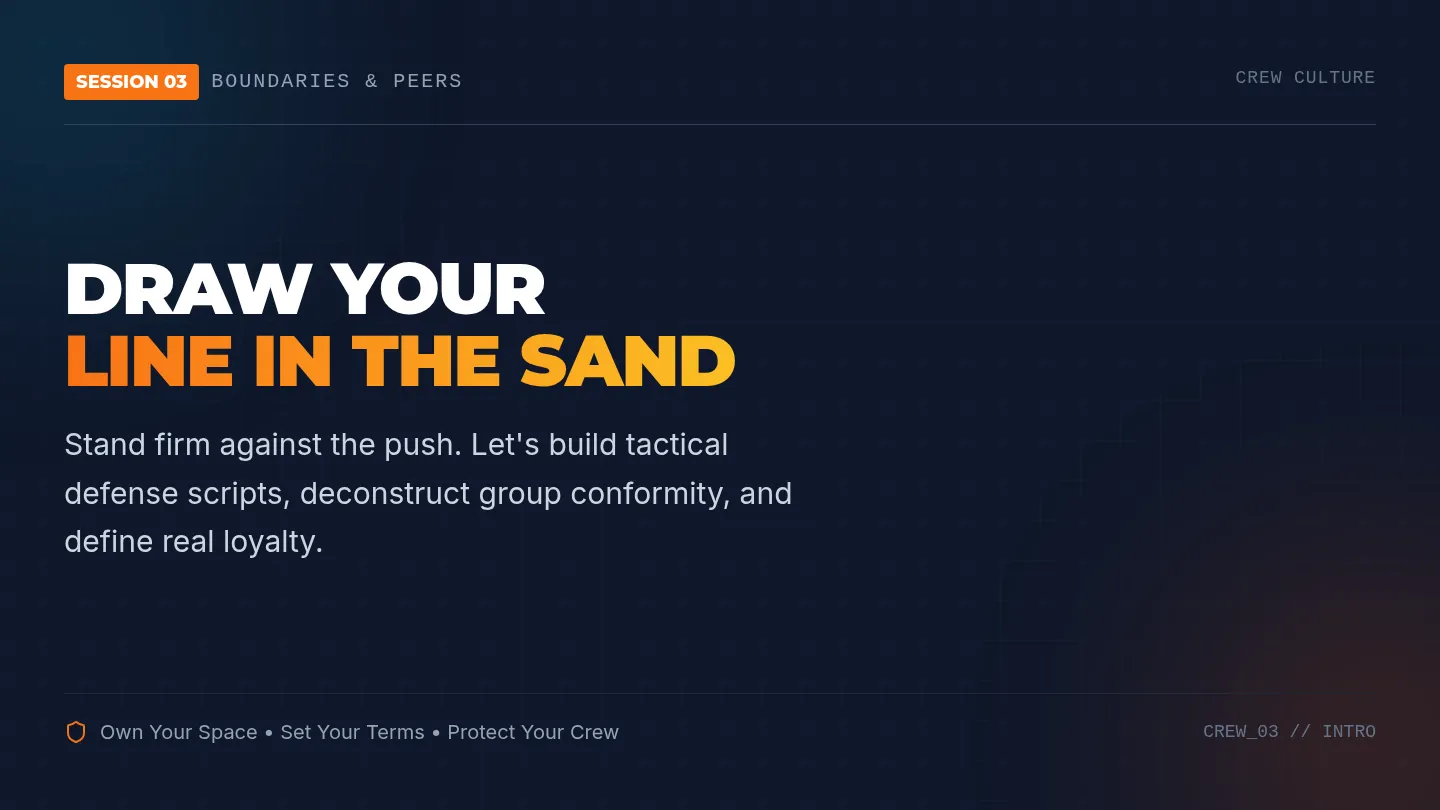
An interactive 6-slide presentation to guide Lesson 3: Line in the Sand. Covers establishing peer boundaries, identifying toxic friendship traits, and practicing refusal scripts.
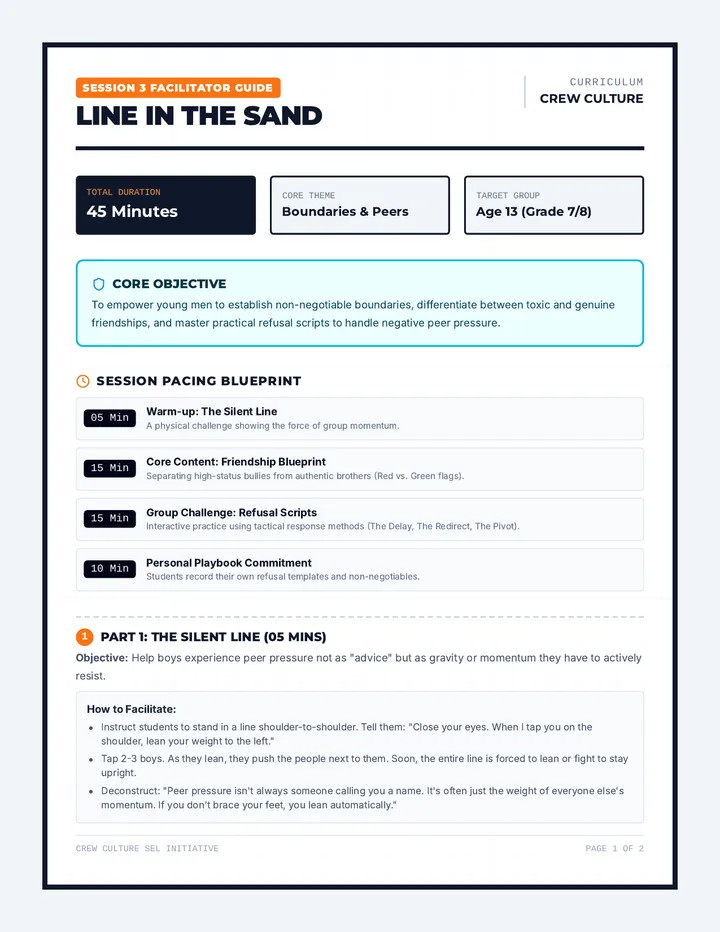
A comprehensive 2-page facilitator guide for Lesson 3: Line in the Sand. Covers establishing peer boundaries, identifying toxic friendship traits, and practicing refusal scripts.
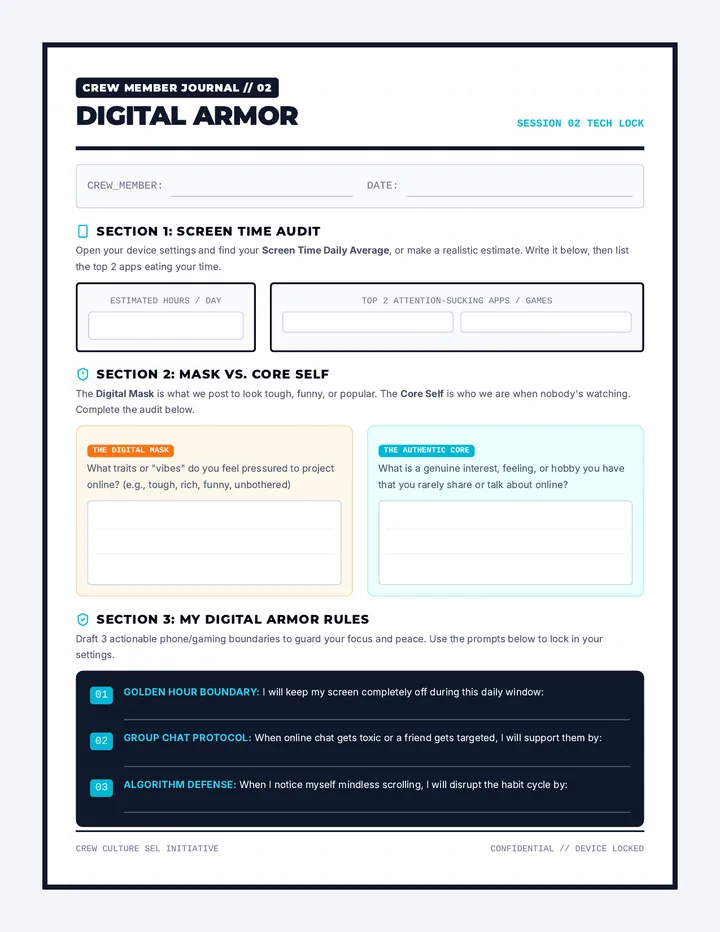
A highly engaging 1-page student journal for Lesson 2: Digital Armor. Helps students audit screen time, contrast their digital mask with their true self, and lock in daily device boundaries.
An interactive 6-slide presentation to guide Lesson 2: Digital Armor. Covers daily screen averages, the digital mask vs true identity, group chat dynamics, and lock-in habits.
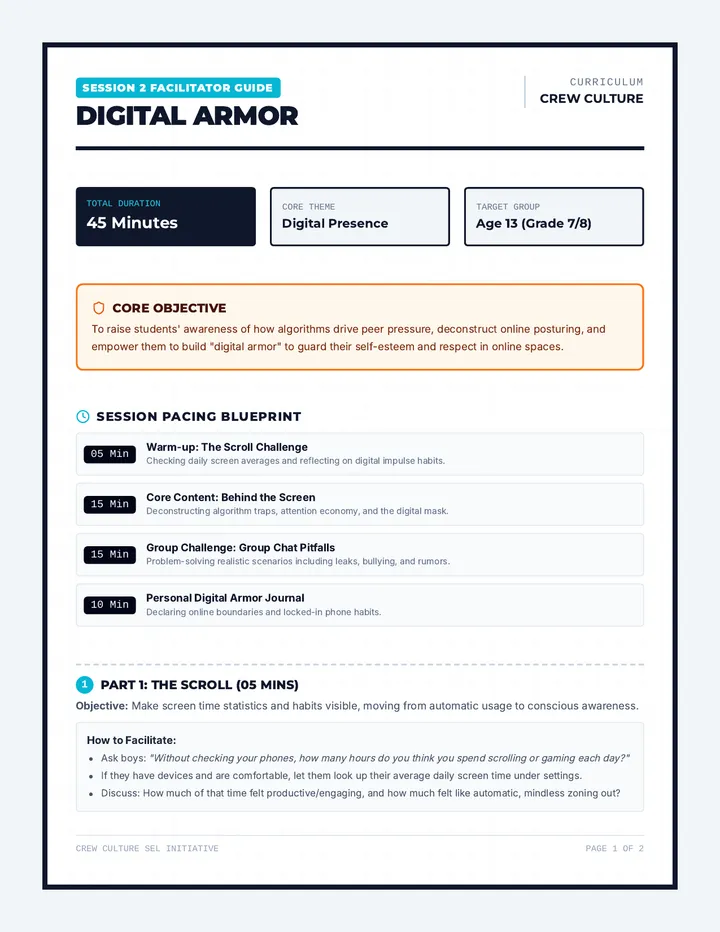
A comprehensive 2-page facilitator guide for Lesson 2: Digital Armor. Covers managing social media validation, group chat dynamics, digital footprint awareness, and phone boundary-setting.
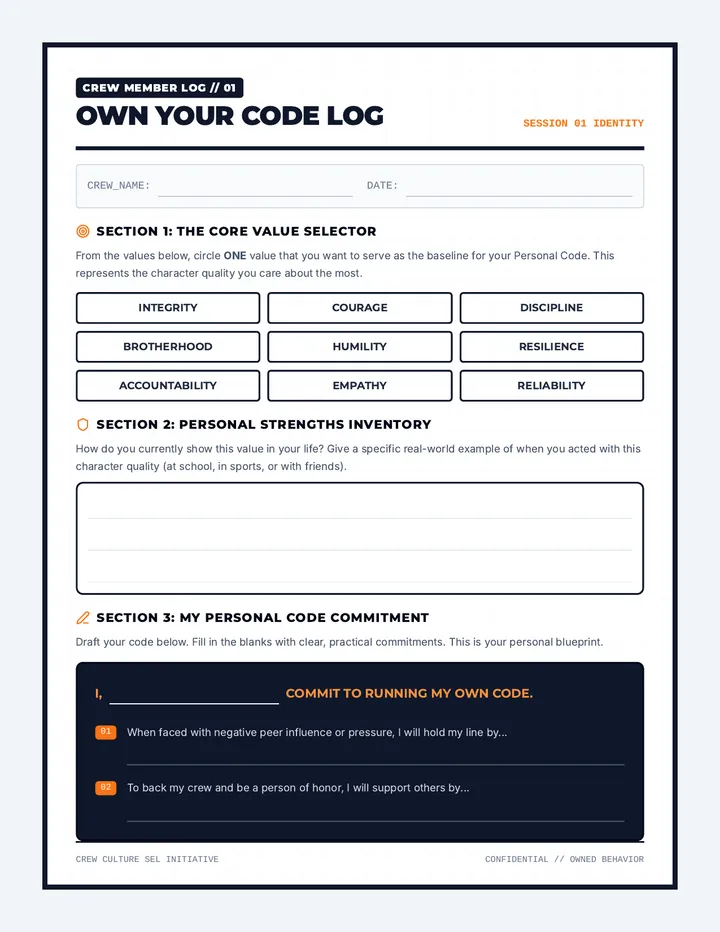
A highly engaging, themed 1-page personal reflection log for students to declare their core values, inventory personal strengths, and draft their personal commitment statement.
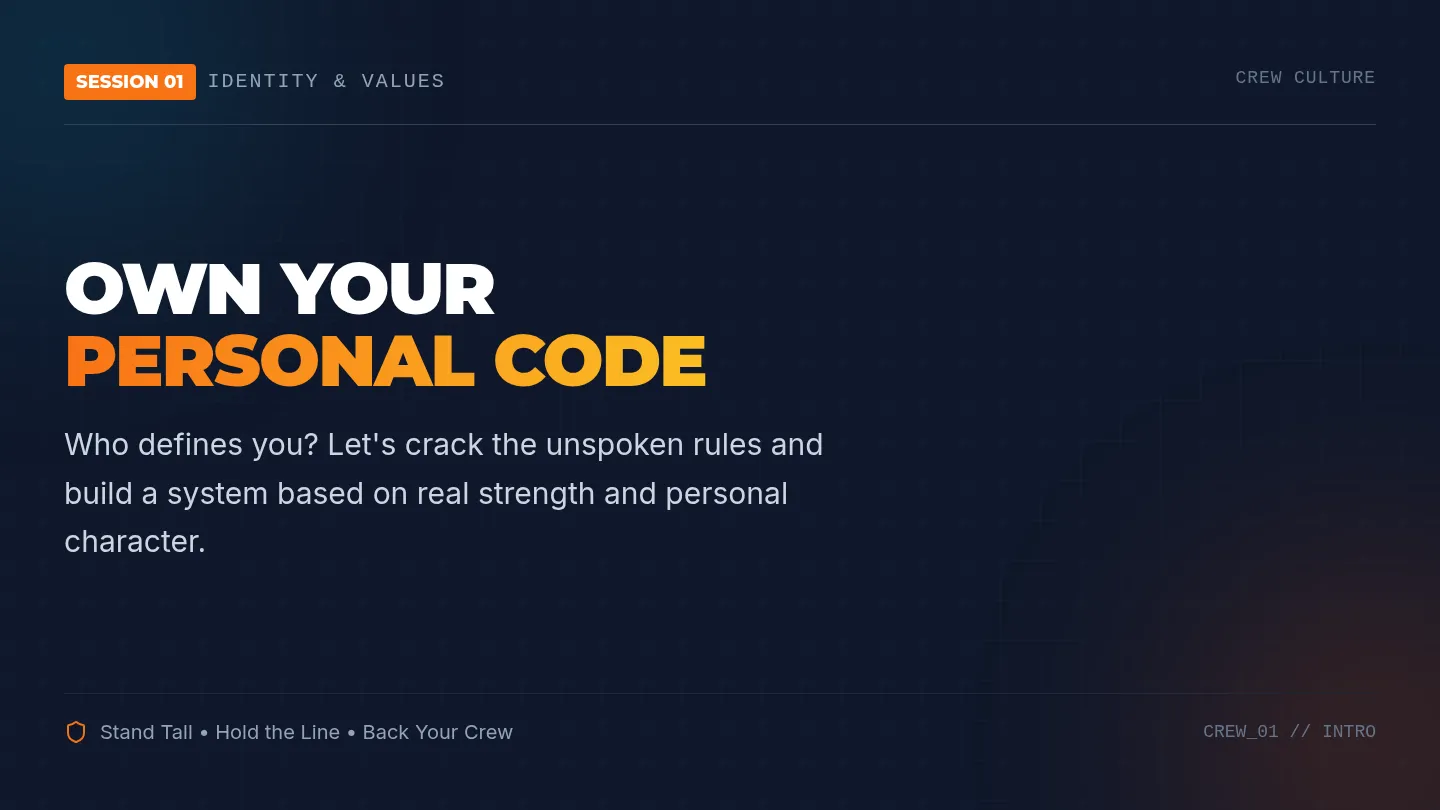
An interactive 6-slide presentation to guide the first group session, featuring bold discussion prompts, deconstructing social expectations, and setting up the core values activity.
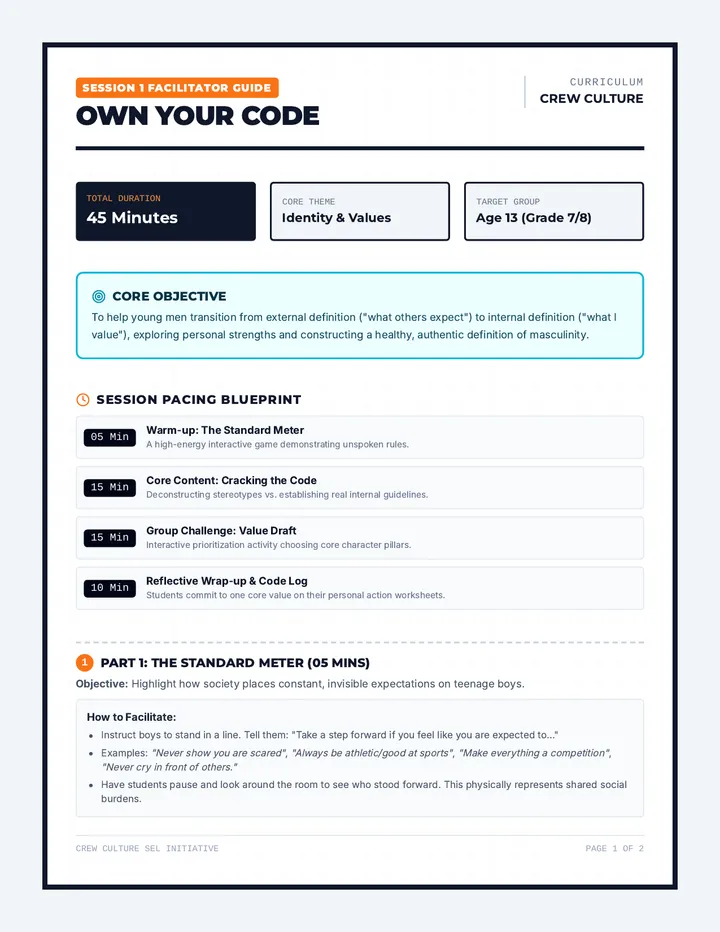
A comprehensive 2-page facilitator guide for Lesson 1: Own Your Code. Includes group guidelines, pacing, step-by-step instructions, discussion prompts, and debrief questions.
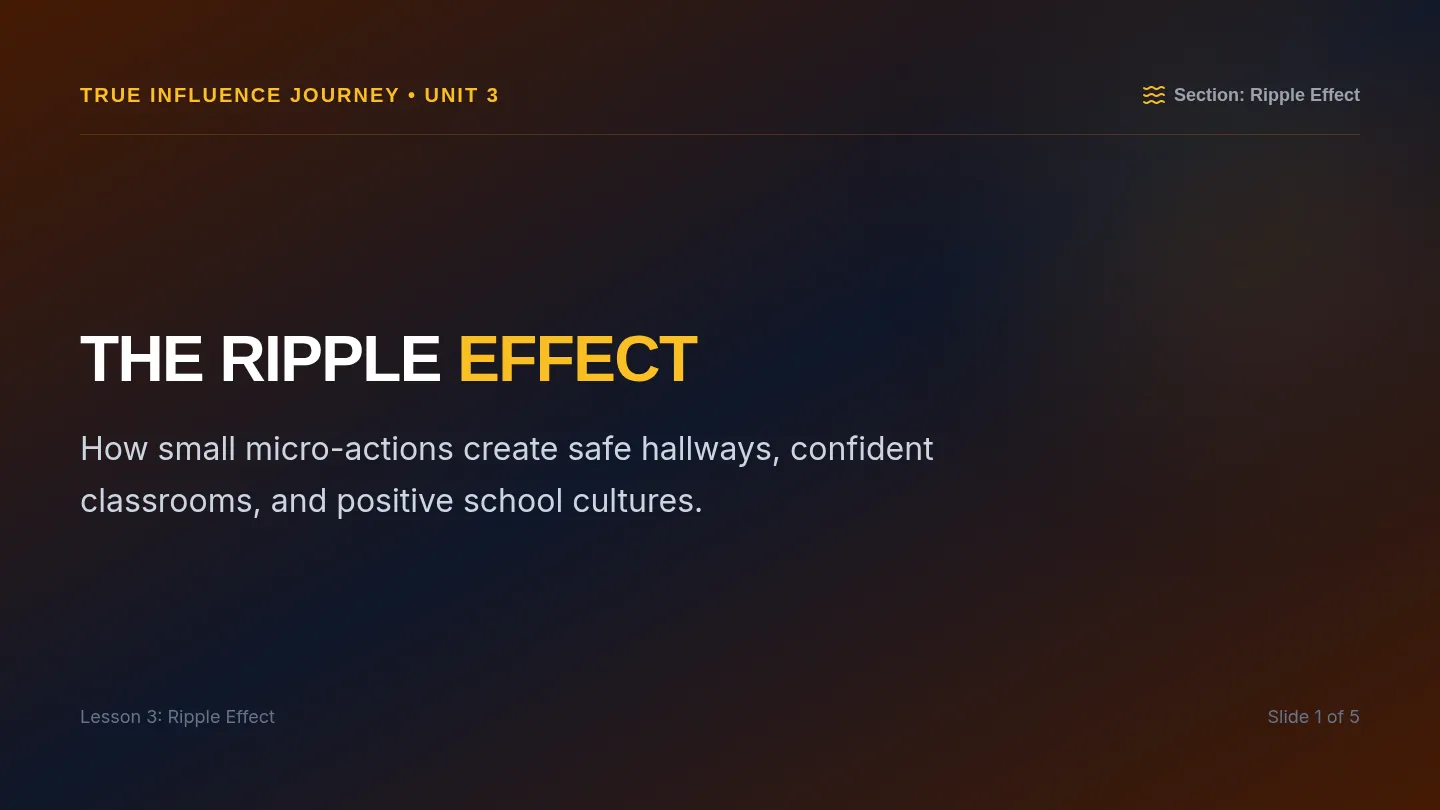
A 5-slide presentation matching the Ripple Effect lesson. It introduces students to the physics of school culture, walks through Maya's hallway story, and details the 5 leadership tracker actions.
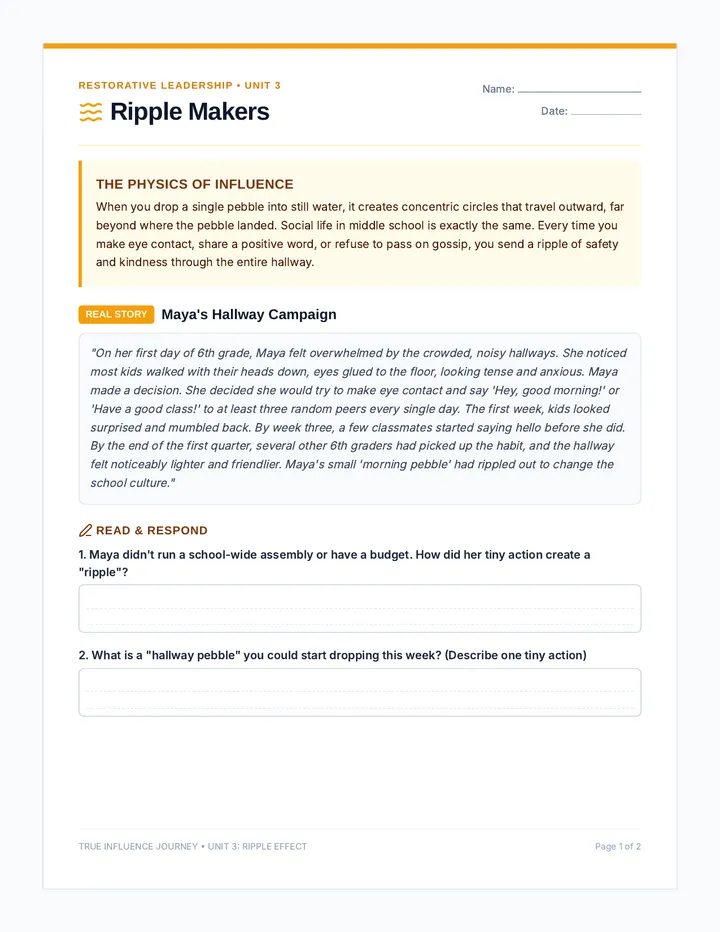
A 2-page print-ready student-centered Read & Respond workbook detailing the physics of the ripple effect in school culture, featuring biographical vignettes of youth advocates and daily leadership tracking sheets.
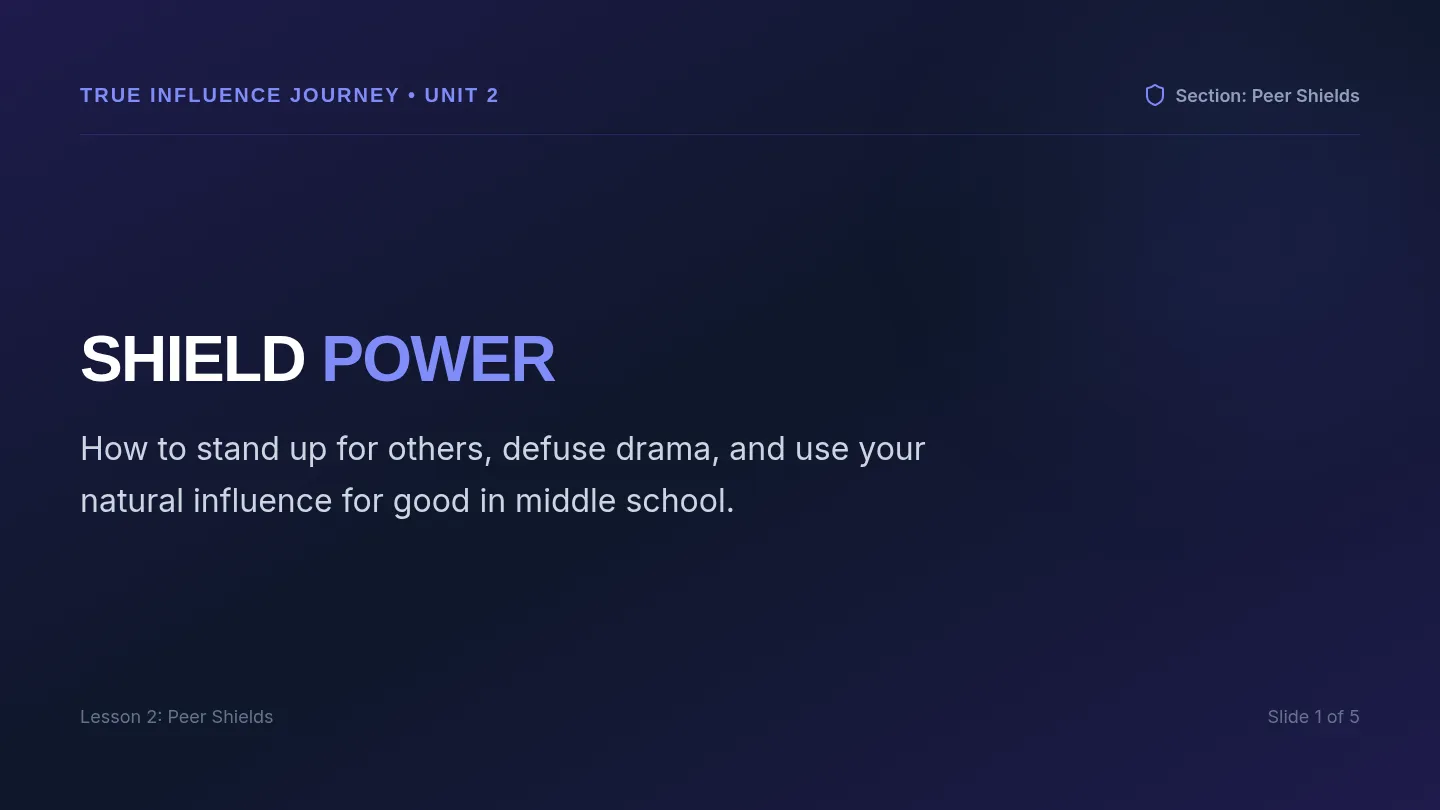
A 5-slide presentation matching the Peer Shields lesson. It helps teachers guide a classroom debate on instigators vs. bystanders vs. shields, analyzing real-life lunchroom and digital chat situations.
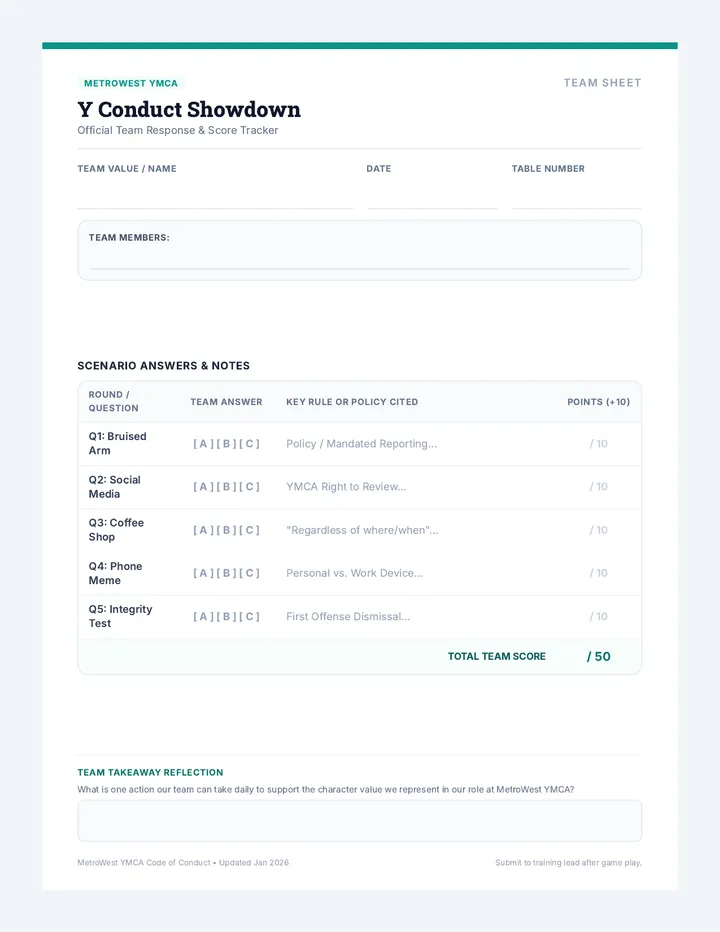
A printable team response sheet for the Y Conduct Showdown game. Allows teams (Caring, Honesty, Respect, Responsibility) to record their members, track scores, draft scenario answers, and note down key takeaways.
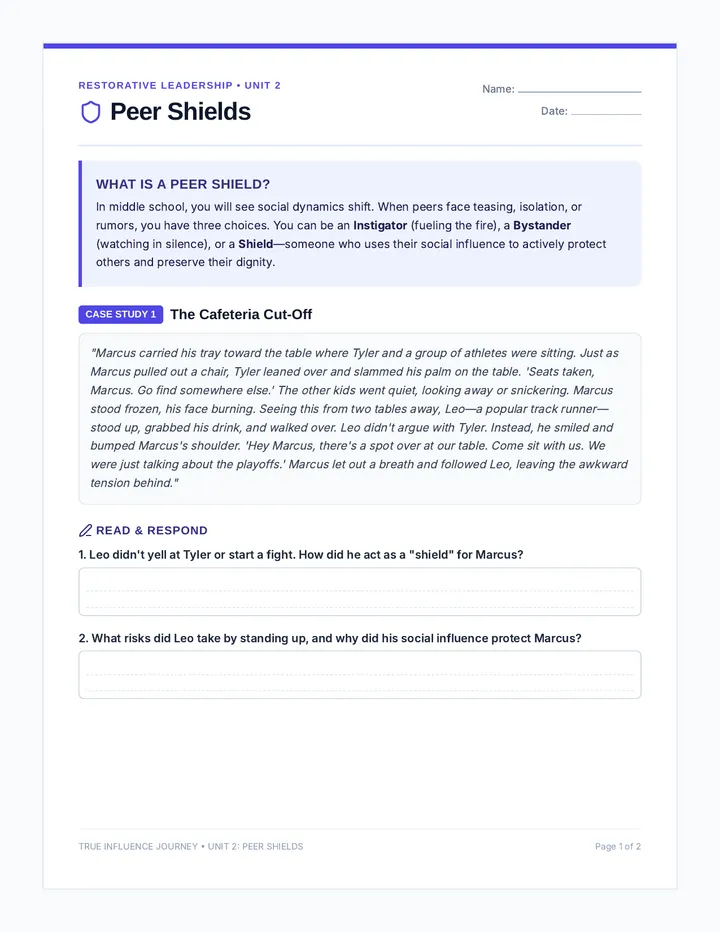
A 2-page print-ready student-centered Read & Respond workbook. Features real-world middle school scenarios (gossip, lunch exclusion) where students analyze how to step in as active shields to protect their peers.
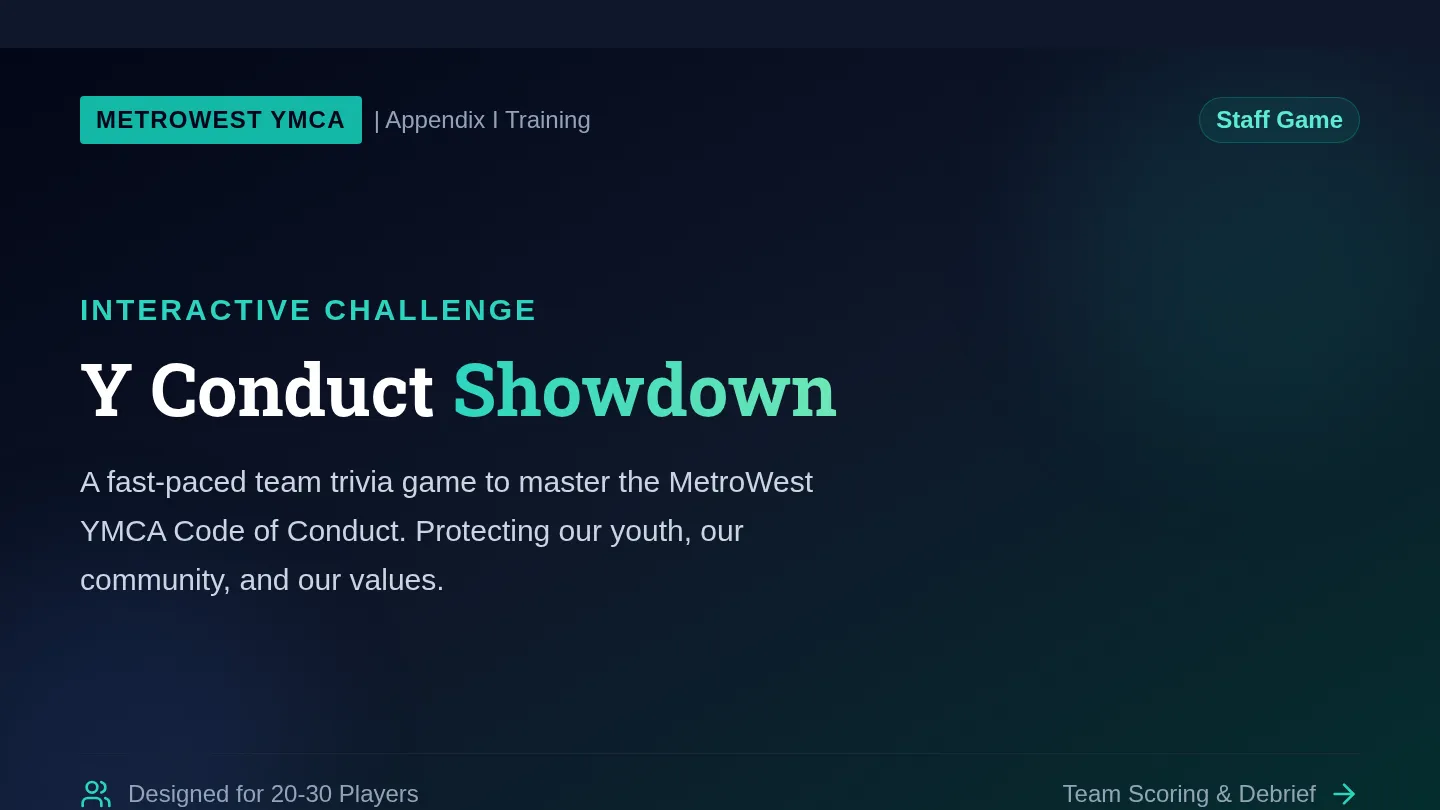
An interactive, competitive trivia slide deck designed to train 20-30 staff members and volunteers on the MetroWest YMCA Code of Conduct. Features scenario-based questions, team structures, and clear answer explanations.
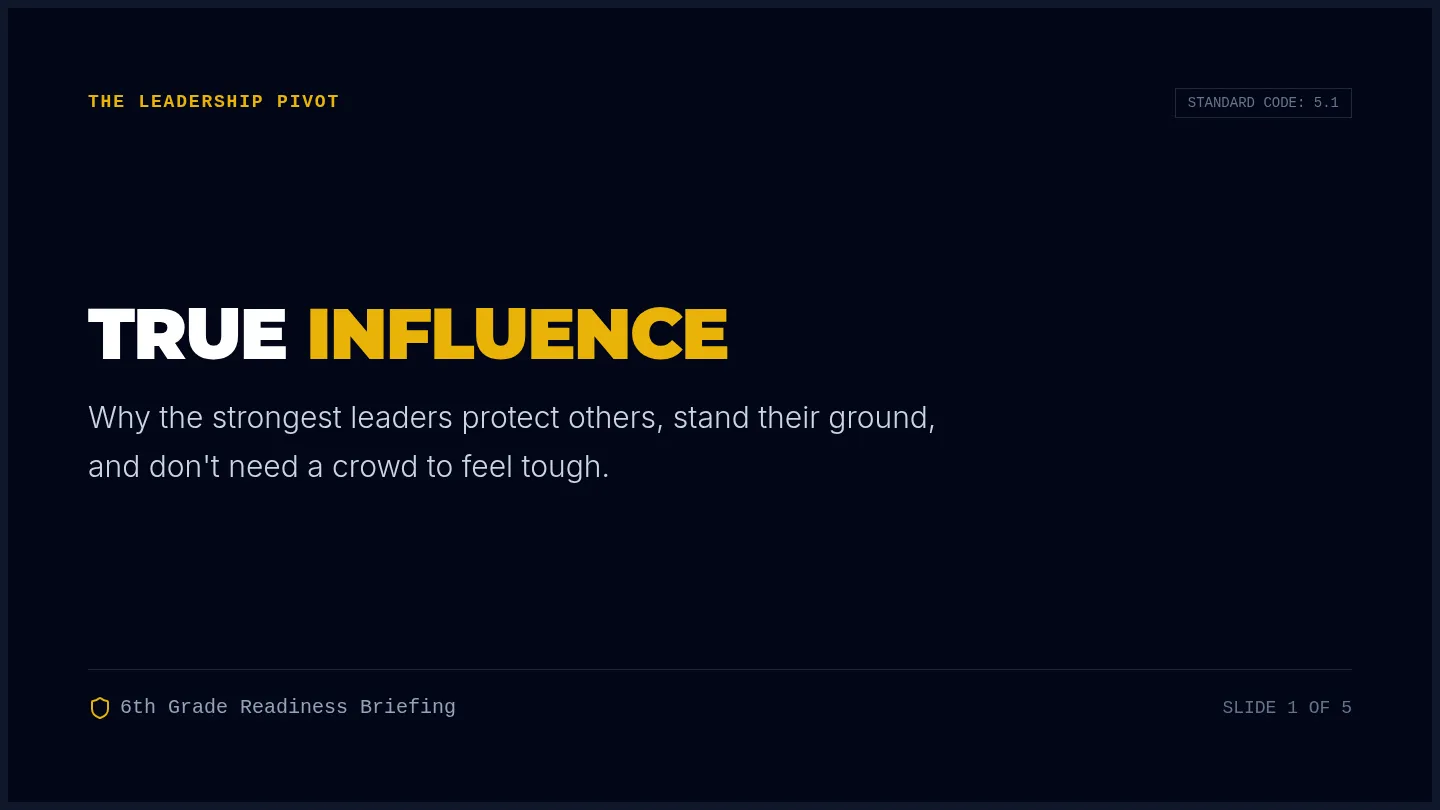
A 5-slide presentation designed for the initial mentoring or classroom session to introduce the concept of positive leadership, comparing instigators to captains, and practicing restorative responses to 6th-grade scenarios.
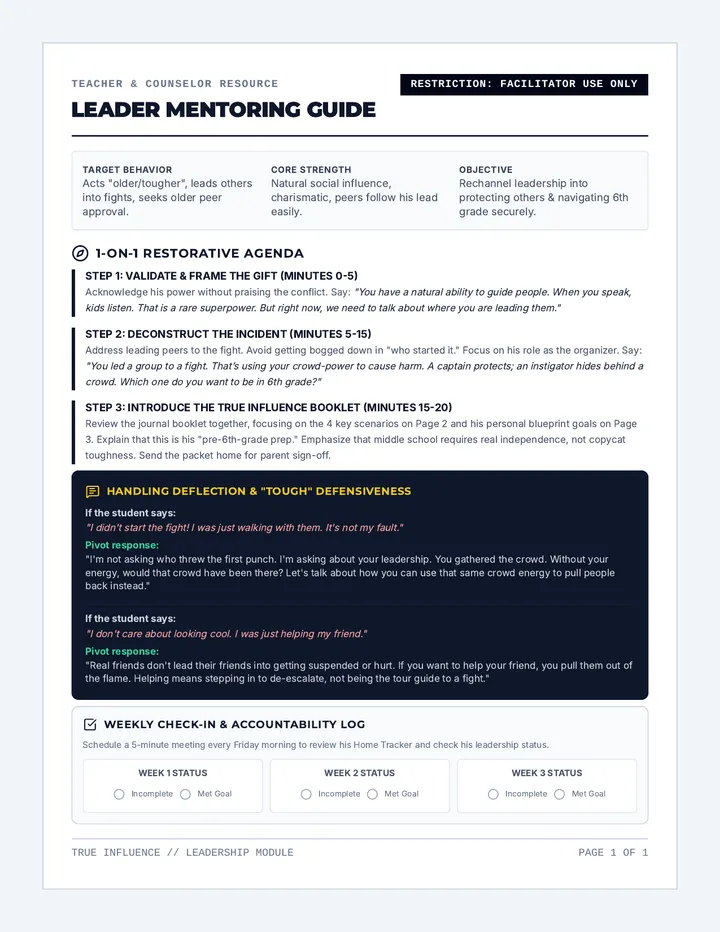
A 1-page teacher-facing mentoring guide outlining restorative meeting agendas, direct questioning strategies, and scripts to handle defensiveness for a student transitioning to middle school.
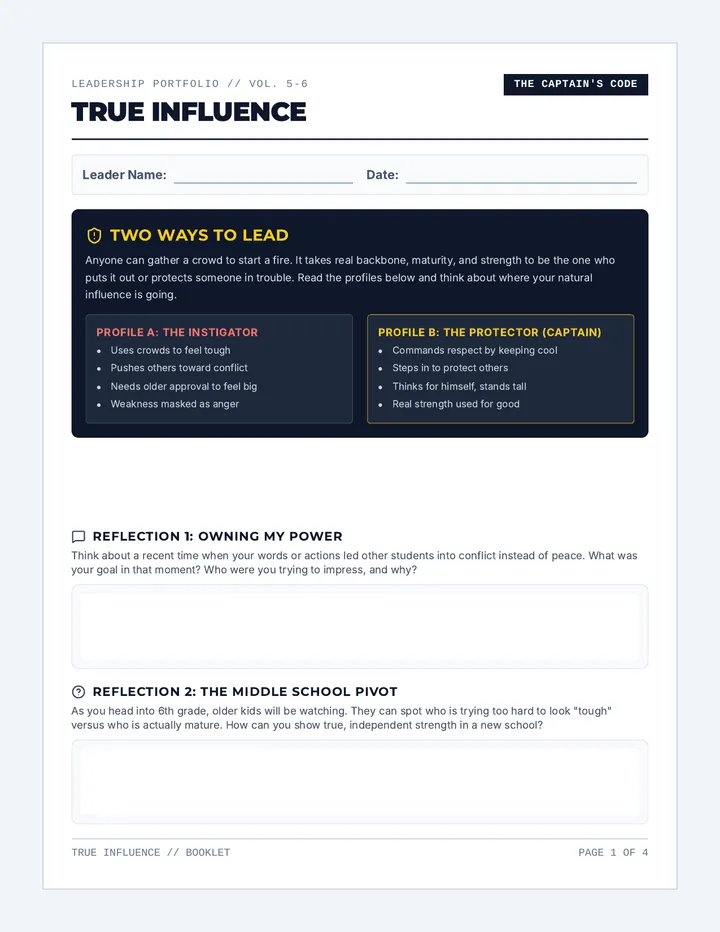
A 4-page interactive reflection booklet and home connection guide designed to help a student transition from negative influence to positive peer advocacy. Features restorative self-reflection, a 4-part middle school scenario guide, a personal blueprint and boundaries page, parent discussion prompts, and a positive leadership tracker.