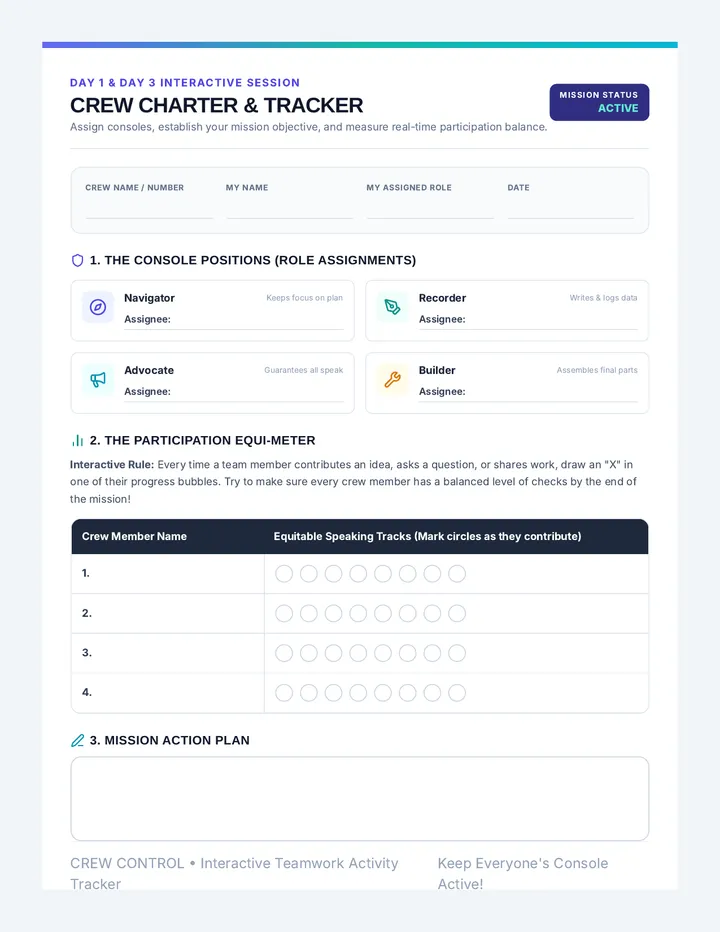
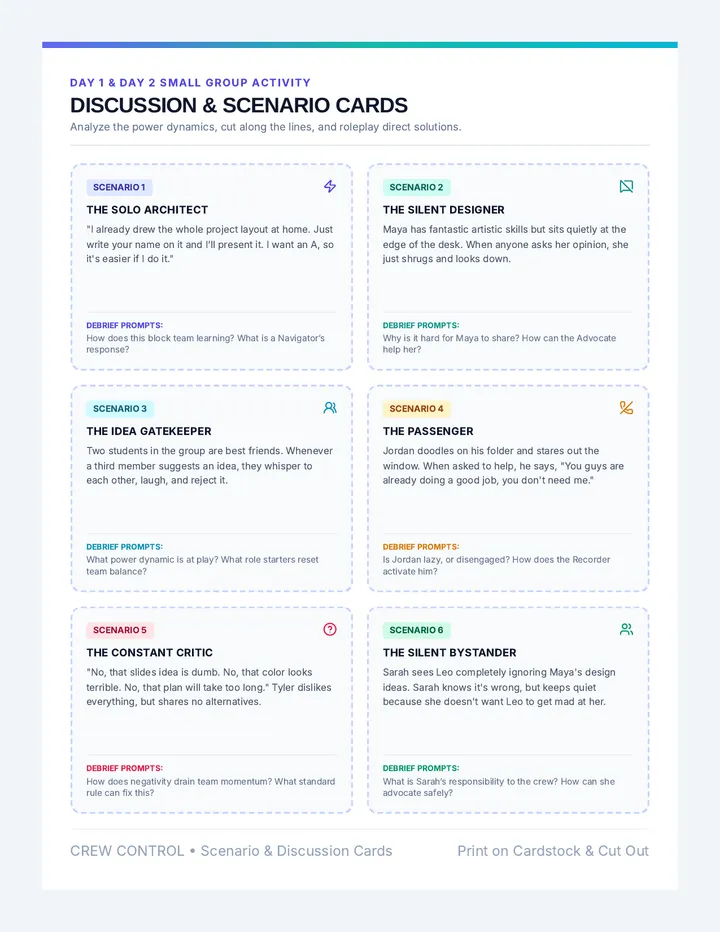
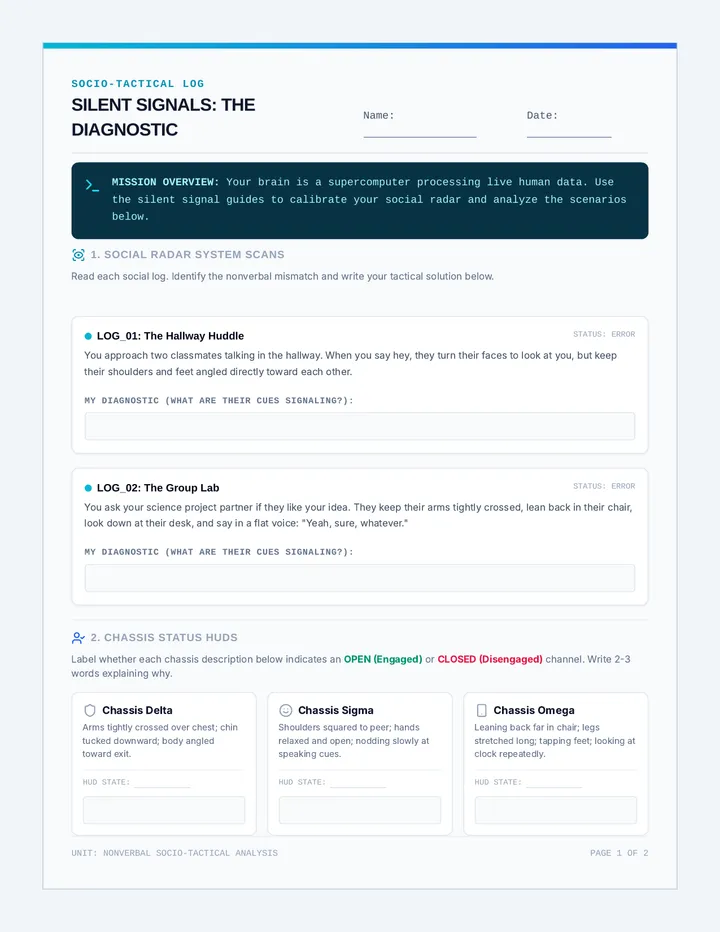
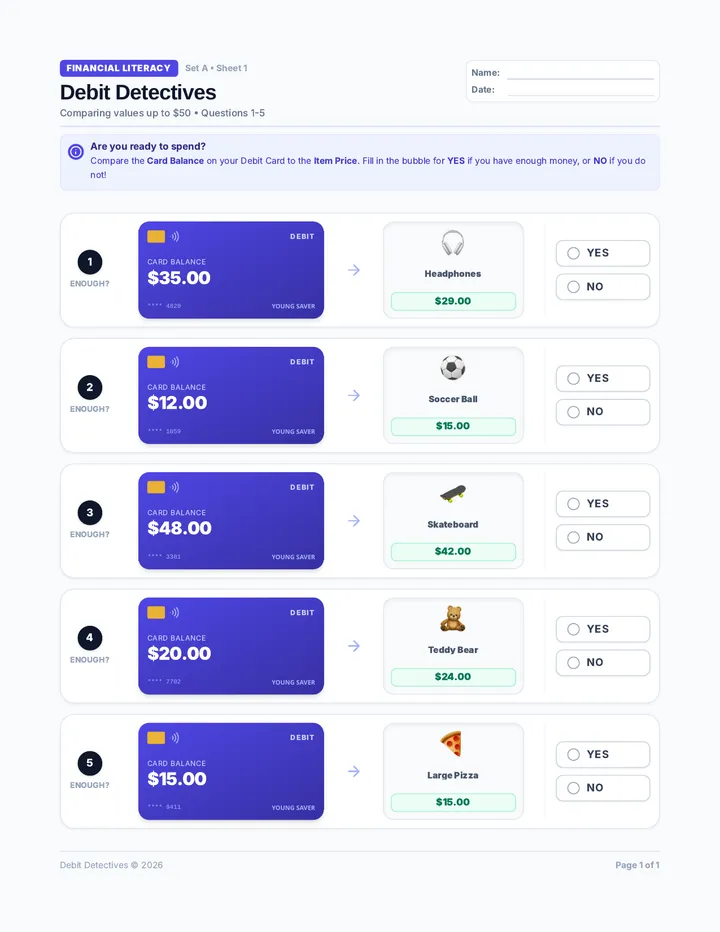
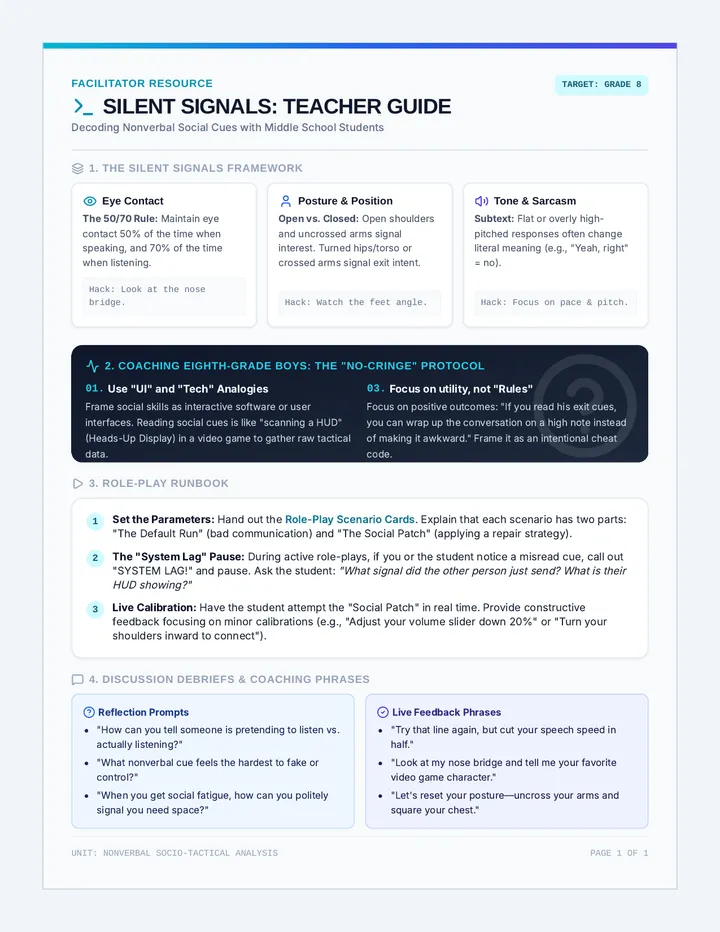
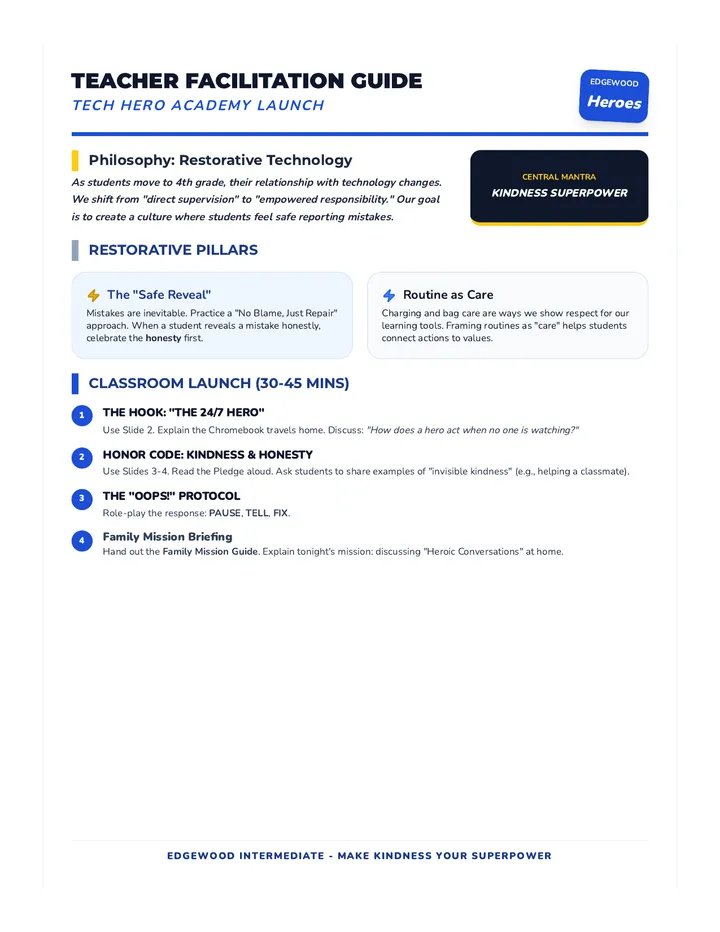
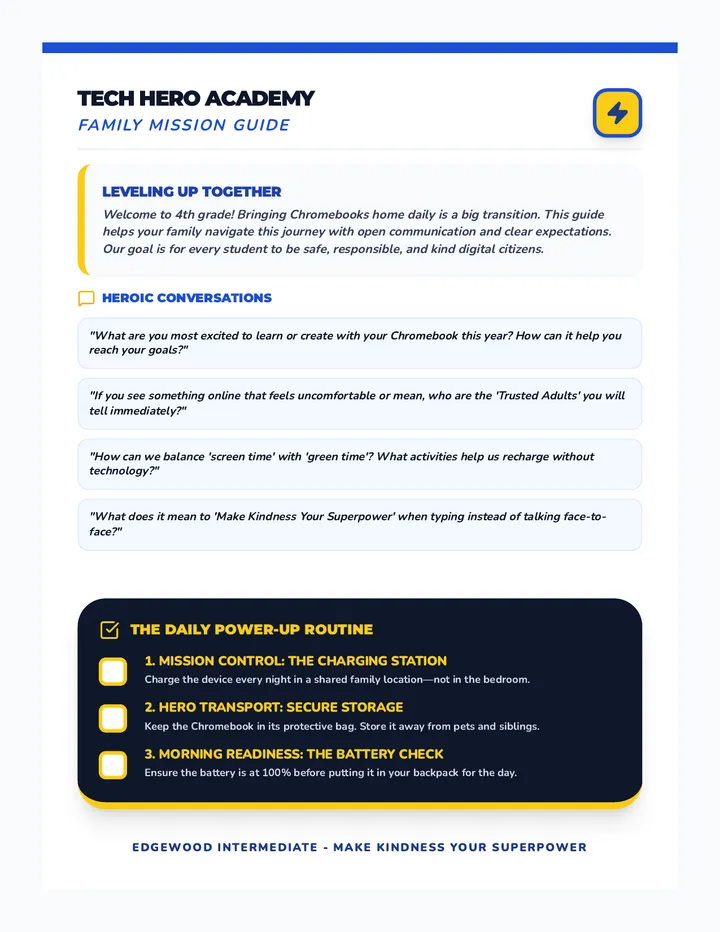
A detailed mission dossier for teachers, including lesson flow, materials list, and instructional strategies for teaching the 4Cs and Computational Thinking.
A two-page student activity booklet featuring a Circle of Control diagram, a 5th-grade memory page, a goal-setting chart for middle school, and a reflective letter to their future self.
Visual slide deck for the Flight Path lesson, introducing Locus of Control, the Circle of Control concept, and transition reflection.
A concise teacher's guide for a 25-minute lesson on Locus of Control and transition reflection, featuring a high-speed pacing guide and discussion prompts.
A comprehensive teacher/counselor guide for the TK 'Foundations of Calm' lesson. Includes pacing, scripts for delivery, and strategies for physicalizing the concepts of stress and calm.
A foundational worksheet for TK students to identify emotions through coloring and express their calm place through drawing. Features a visual reminder of 'Turtle Breathing'.
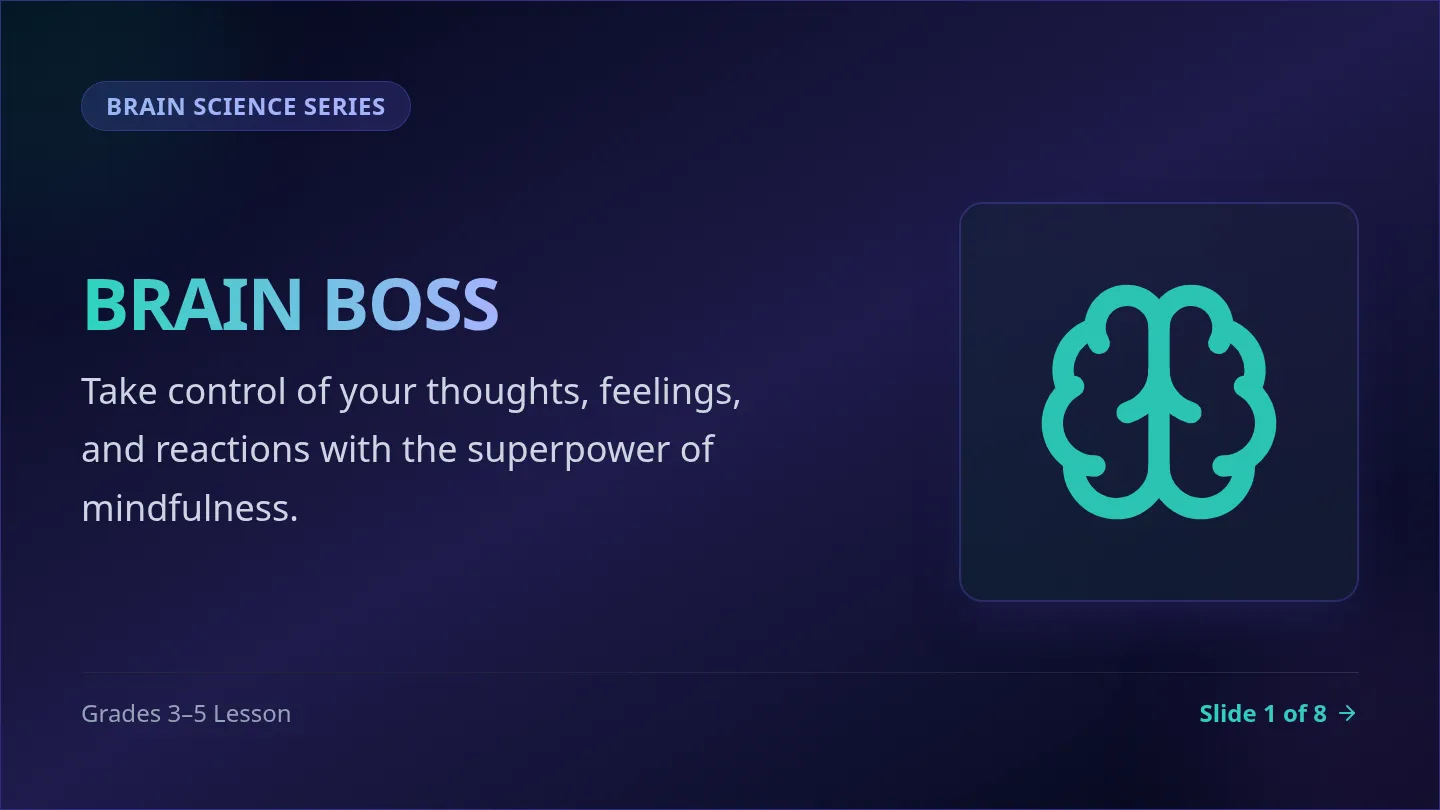
A foundational 7-slide presentation for TK students focusing on the difference between 'wiggly' (stressed) and 'still' (calm) bodies. Introduces Turtle Breathing and the Butterfly Hug as essential tools.
A graduation portfolio and reflection sheet for the final week of the Remote Control Lab. Students identify their strengths, challenges, and set a future goal for applying their self-control skills.
Week 6 slides for "System Update". Reviews all four major strategies (Pause, Rewind, Volume, Forward) and celebrates the students' progress in the Remote Control Lab.
A "Choice Paths Map" worksheet for Lesson 5. Students practice "Fast Forward" thinking by mapping out the potential consequences of an impulsive action versus a controlled action for a specific scenario.
Week 5 slides for "Future Vision". Teaches students the "Fast Forward" technique to predict consequences and visualize the different outcomes of their choices.
A "My Volume Dial" worksheet for Lesson 4. Students identify examples of small, medium, and big problems and use a dial graphic to reflect on matching their reaction intensity.
Week 4 slides for "Setting Levels". Introduces the "Volume Dial" metaphor for emotional regulation, teaching students to match the intensity of their reactions to the size of the problem.
A "Bug Troubleshooting" graphic organizer for Lesson 3. Students use a 3-step rewind process to analyze a real or hypothetical social frustration and brainstorm calm solutions.
Week 3 slides focusing on "Social Glitches" and the "Rewind" strategy. Helps students analyze social frustrations and practice perspective-taking before reacting.
A student worksheet with four scenario cards for practicing the "Pause" button. Each scenario requires the student to identify a specific physical pause strategy and a thoughtful question to ask themselves.
Week 2 slides focusing on the "Pause" button. Teaches students the 5-second gap technique and physical stopping strategies to manage immediate impulses.
A student-facing activity sheet for Week 1 of the Remote Control Lab. Helps students identify their personal impulses and social "glitches" while introducing the metaphor of the control panel buttons.
Week 1 introductory slide deck for the Remote Control Lab. Introduces the metaphor of self-control as an internal remote control and explains the concept of impulses and social "glitches" to 4th-grade students.
A data tracking tool for facilitators to monitor student progress in self-control skills over the 6-week program. Includes sections for baseline assessment, weekly skill mastery, and observation notes.
A comprehensive facilitator guide for the 6-week Remote Control Lab small group. It provides weekly core concepts, objectives, and facilitation tips for 4th-grade social-emotional learning.
An example-filled version of the Kindness Ripple worksheet for teachers to use as a modeling tool during the lesson.
A student worksheet where 4th graders plan a kind act and visualize its ripple effect on the receiver, witnesses, and the wider school community.
A vibrant slide presentation for 4th graders that explains the 'Ripple Effect' of kindness, the 3-Way Win benefit system, and a call to action.
A teacher's instructional guide for a 15-minute lesson on kindness, featuring a timed pacing guide, key discussion questions, and pedagogical tips.
A comprehensive teacher's guide for the 4-lesson curriculum, providing lesson objectives, discussion prompts, and activity instructions.
A pre- and post-test designed to measure student growth in identifying friendship traits, using communication tools, and applying conflict resolution strategies.
A worksheet focusing on the 4 parts of a meaningful apology and an art activity for reconciliation.