A guide for parents or teachers to support a student using the Mind Mechanic workbook. It explains the CBT philosophy, defines key terms like "Thinking Traps" and "Behavioral Activation," and provides validation-focused conversation starters.
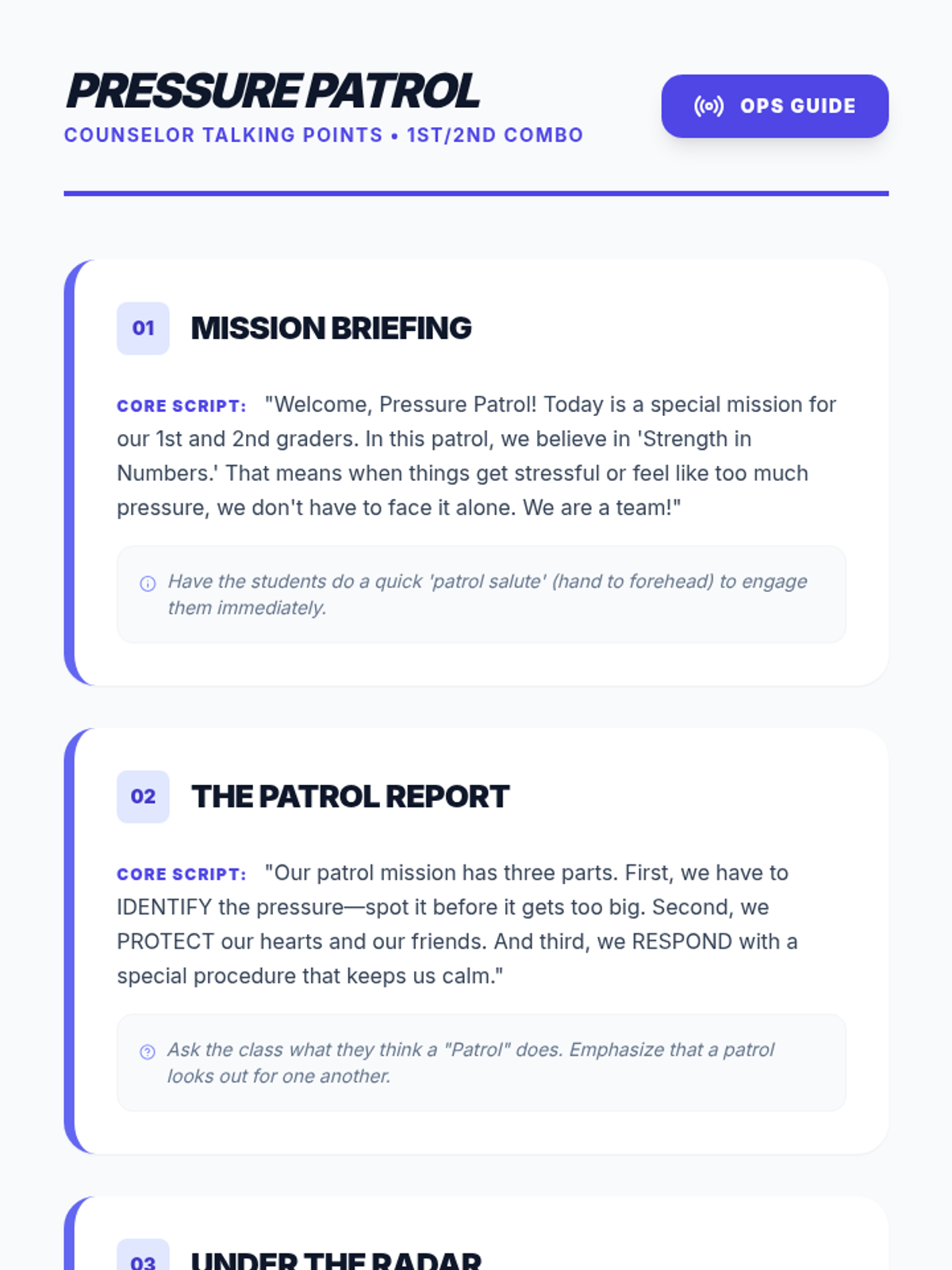
A detailed slide-by-slide facilitation guide for the 1st/2nd grade combo lesson 'Pressure Patrol'. Provides specific counselor scripts, interactive activity prompts, and pedagogical tips for each slide.
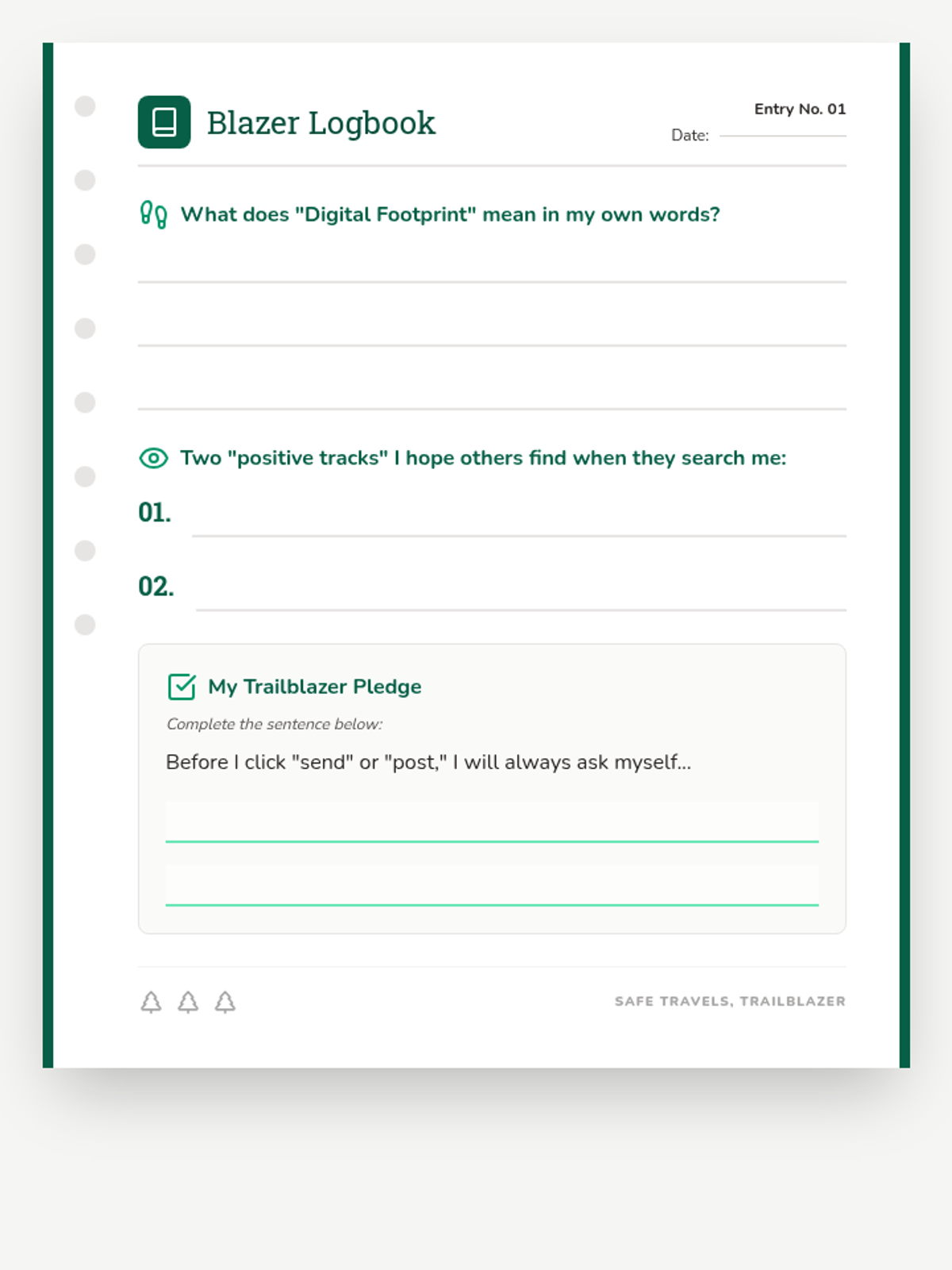
A reflection journal sheet for students to define their digital footprint and make a personal pledge to maintain a positive online trail.
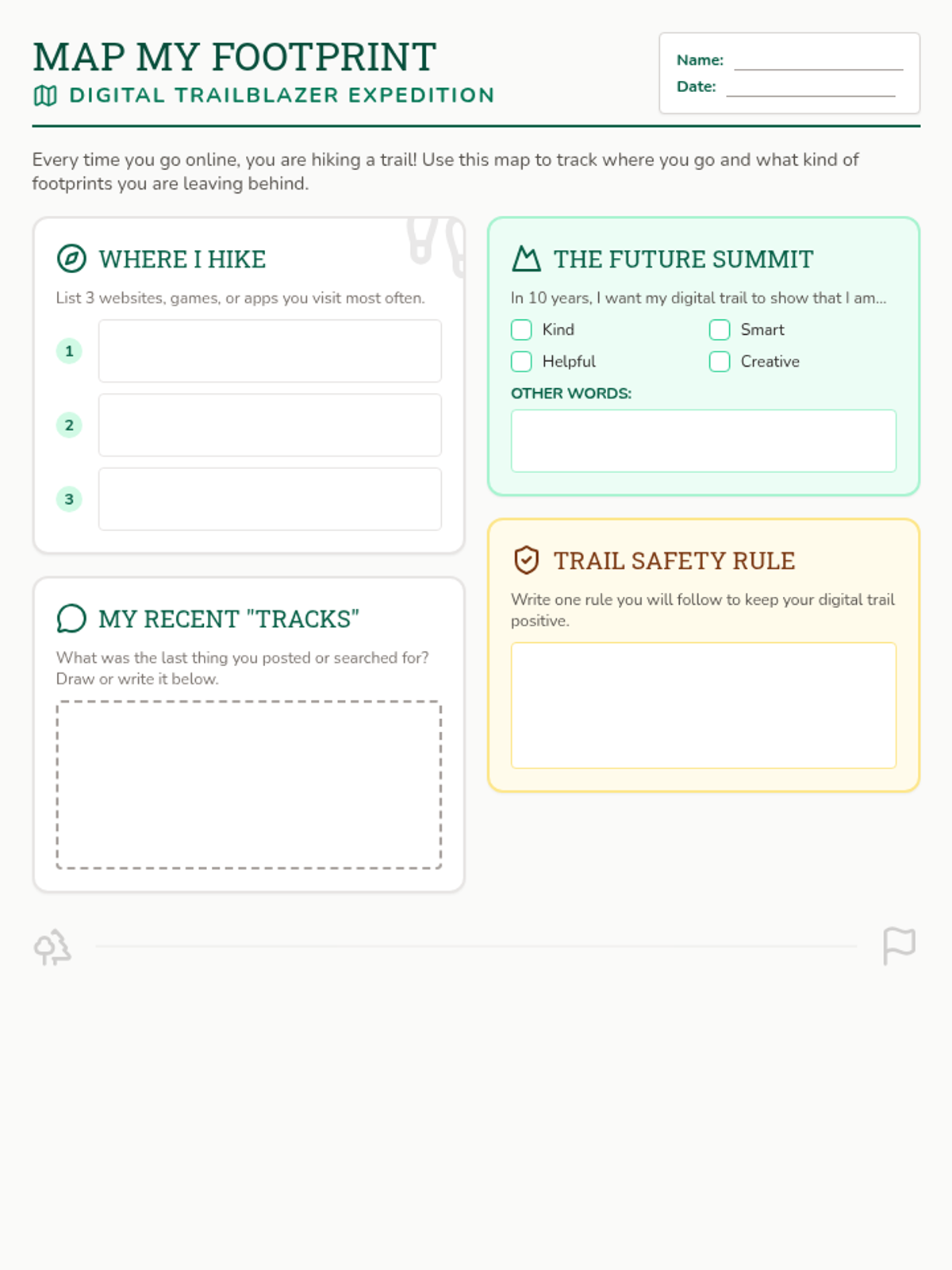
A student project sheet where children map their online activities, identify their "digital tracks," and set goals for a positive future online presence.
A dynamic 6-slide presentation for grades 3-5 that uses wilderness motifs to teach digital footprint concepts, permanence, and future impact.
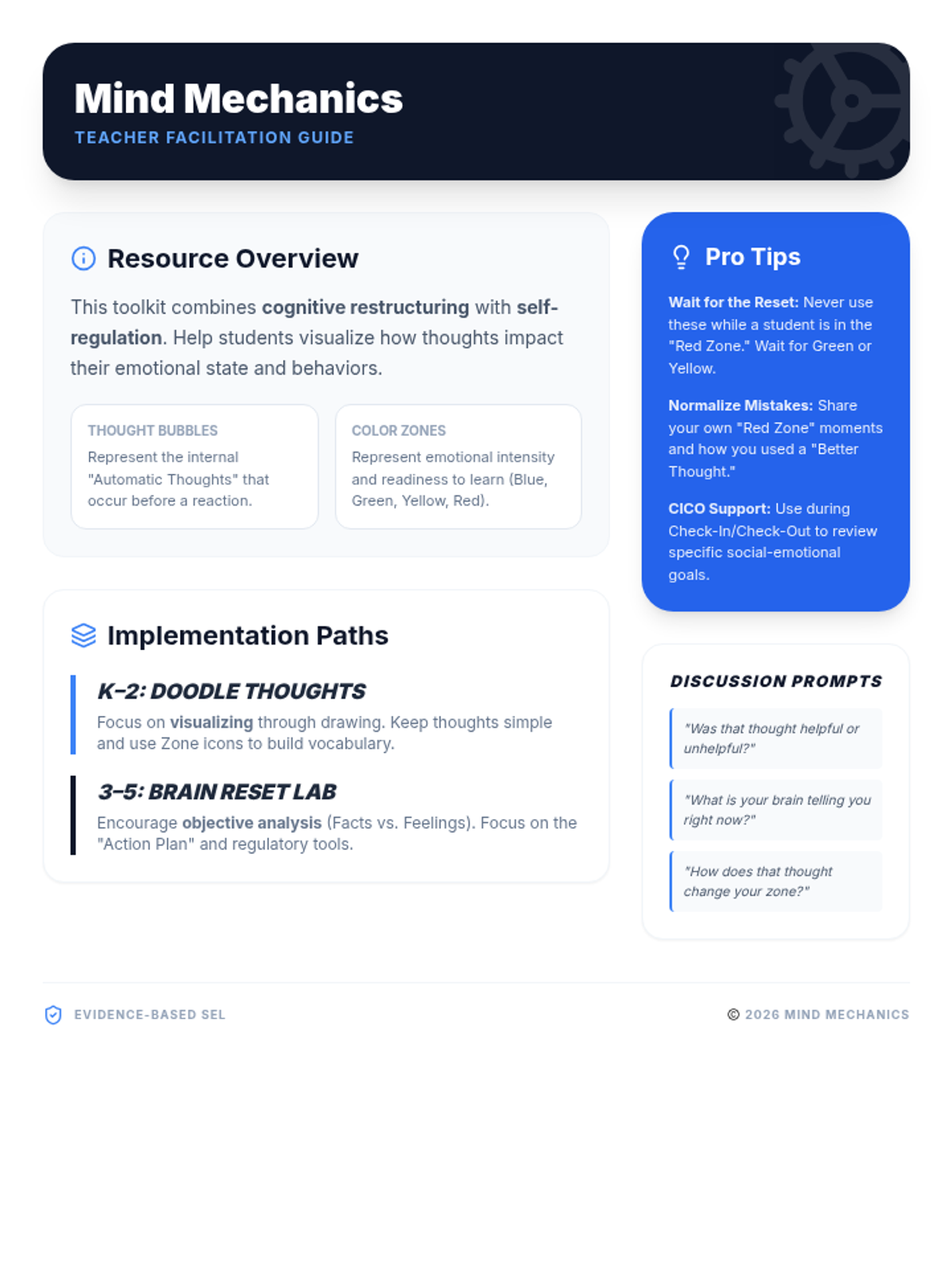
A teacher resource providing an overview of cognitive restructuring, implementation strategies for different grade levels, and practical tips for using the Mind Mechanics worksheets. Revised for one-page layout and better spacing.
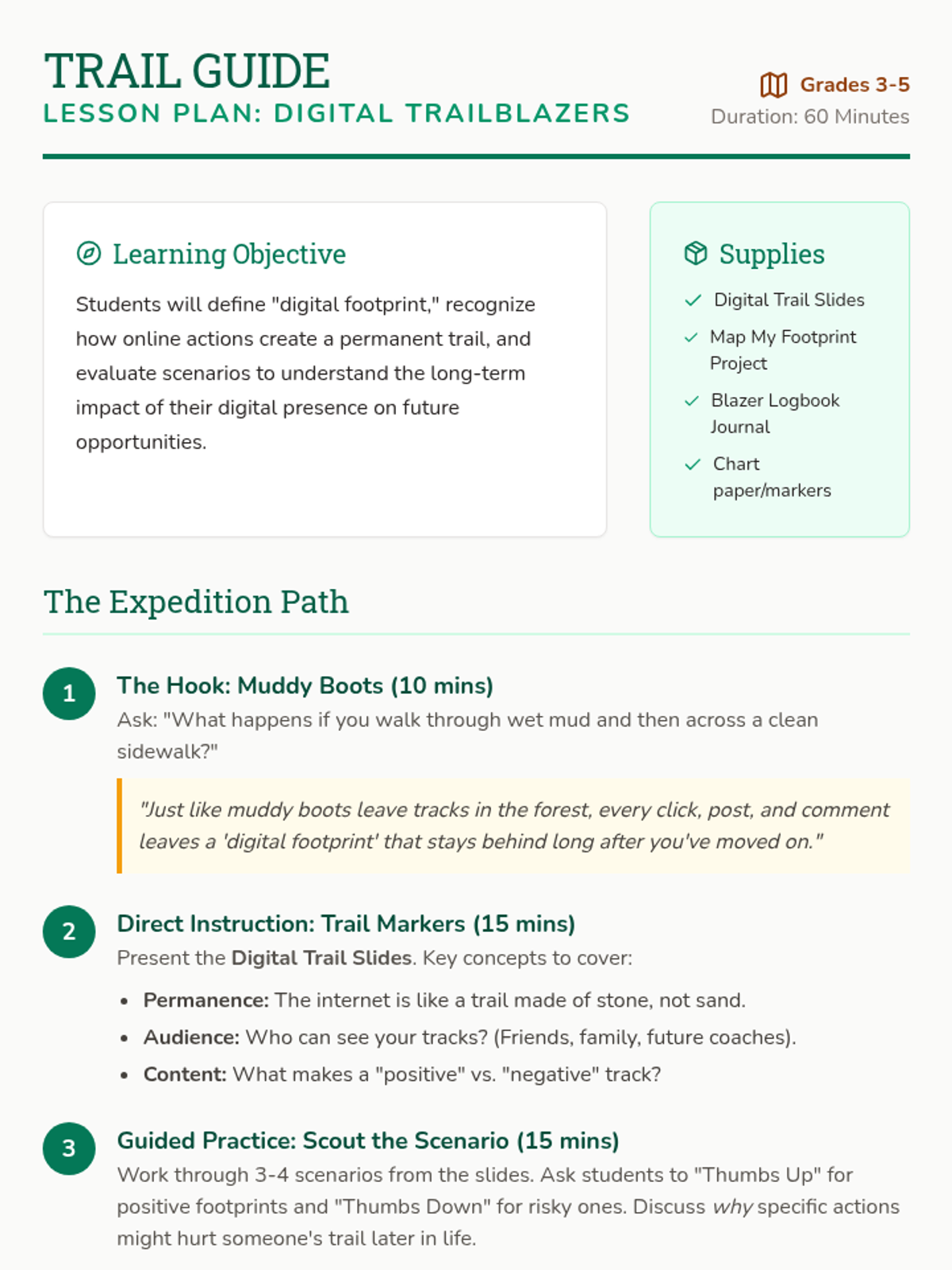
A comprehensive teacher's guide for the Digital Trailblazers lesson, featuring a wilderness-themed instructional path, learning objectives, and delivery tips for grades 3-5.
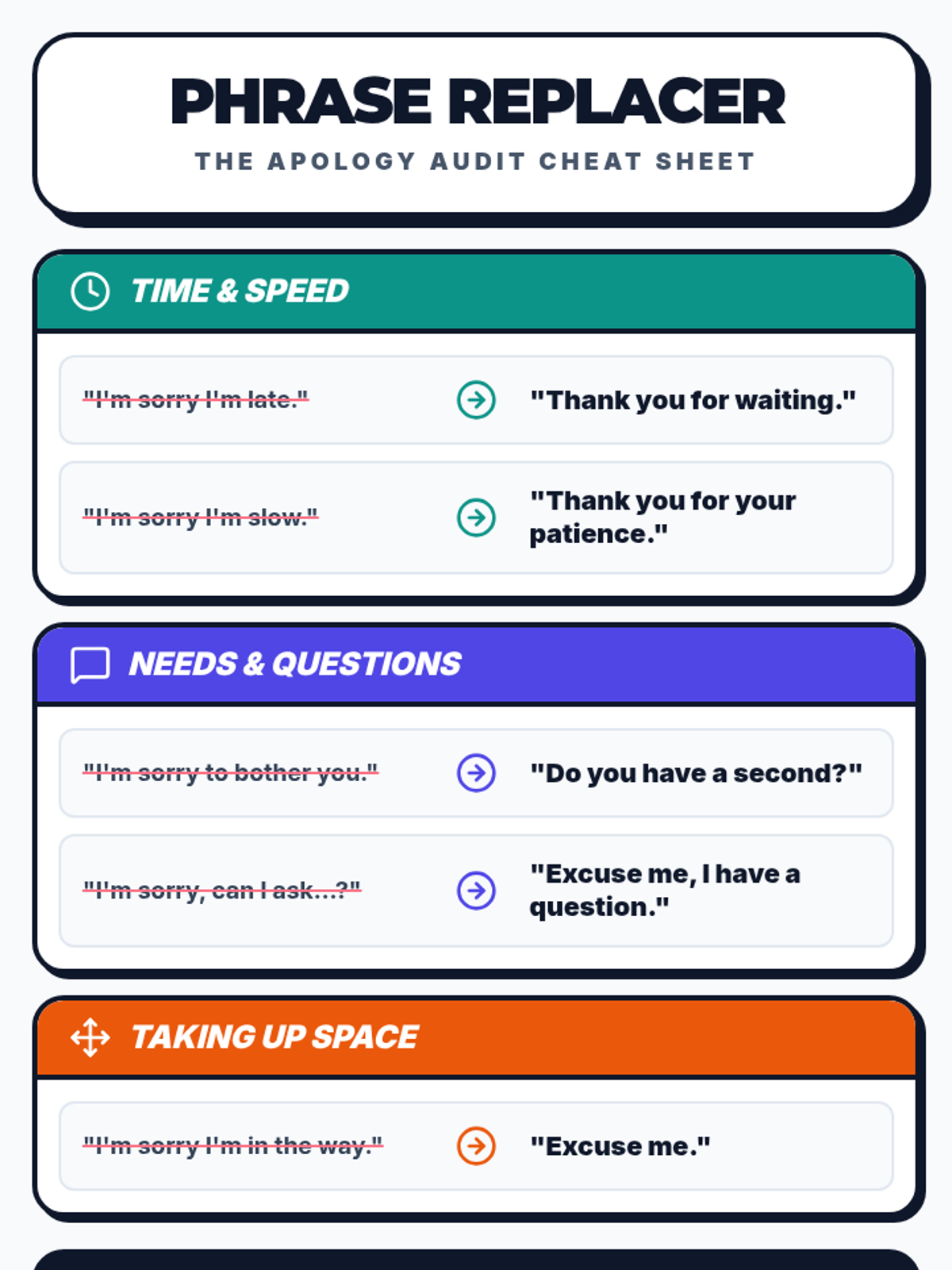
A one-page visual reference guide listing common over-apologies and their more effective replacements, designed for quick desk-side or binder use.
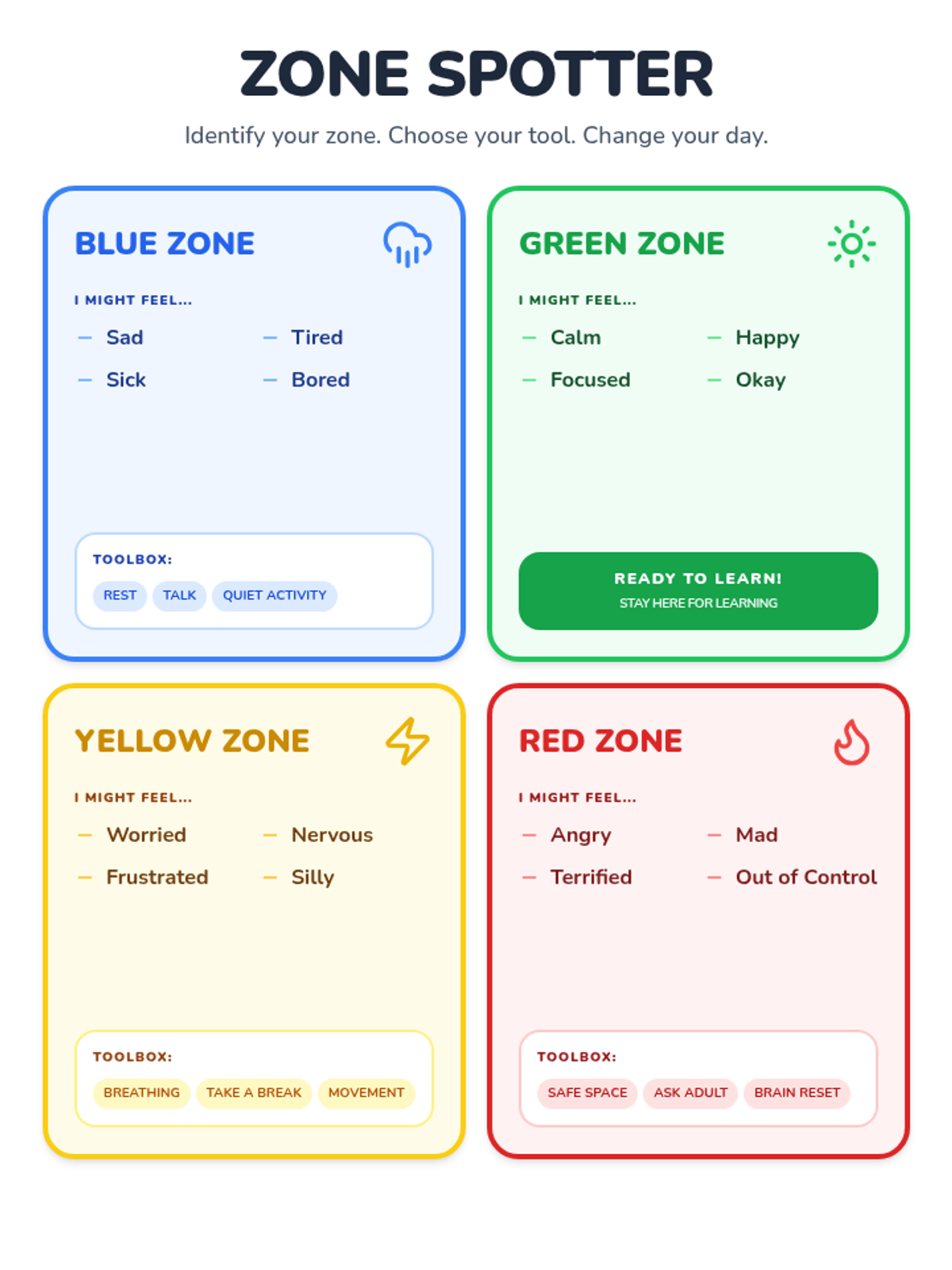
A clear, color-coded reference sheet for identifying emotions across the four zones (Blue, Green, Yellow, Red) and suggested tools for regulation. Revised for better contrast and one-page layout.
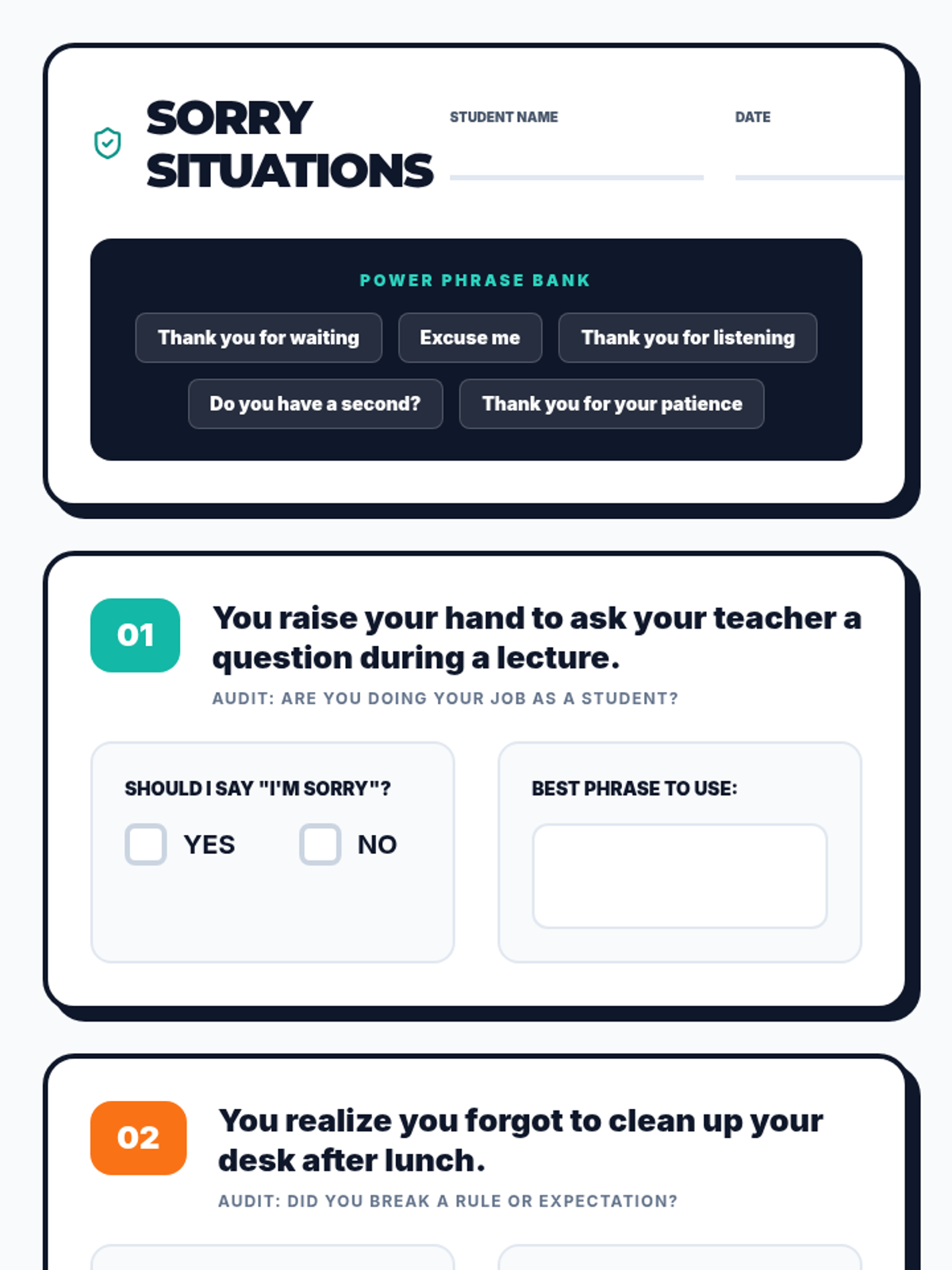
A practice worksheet where students audit various social situations to decide if an apology is necessary and practice replacing it with appropriate "power phrases."
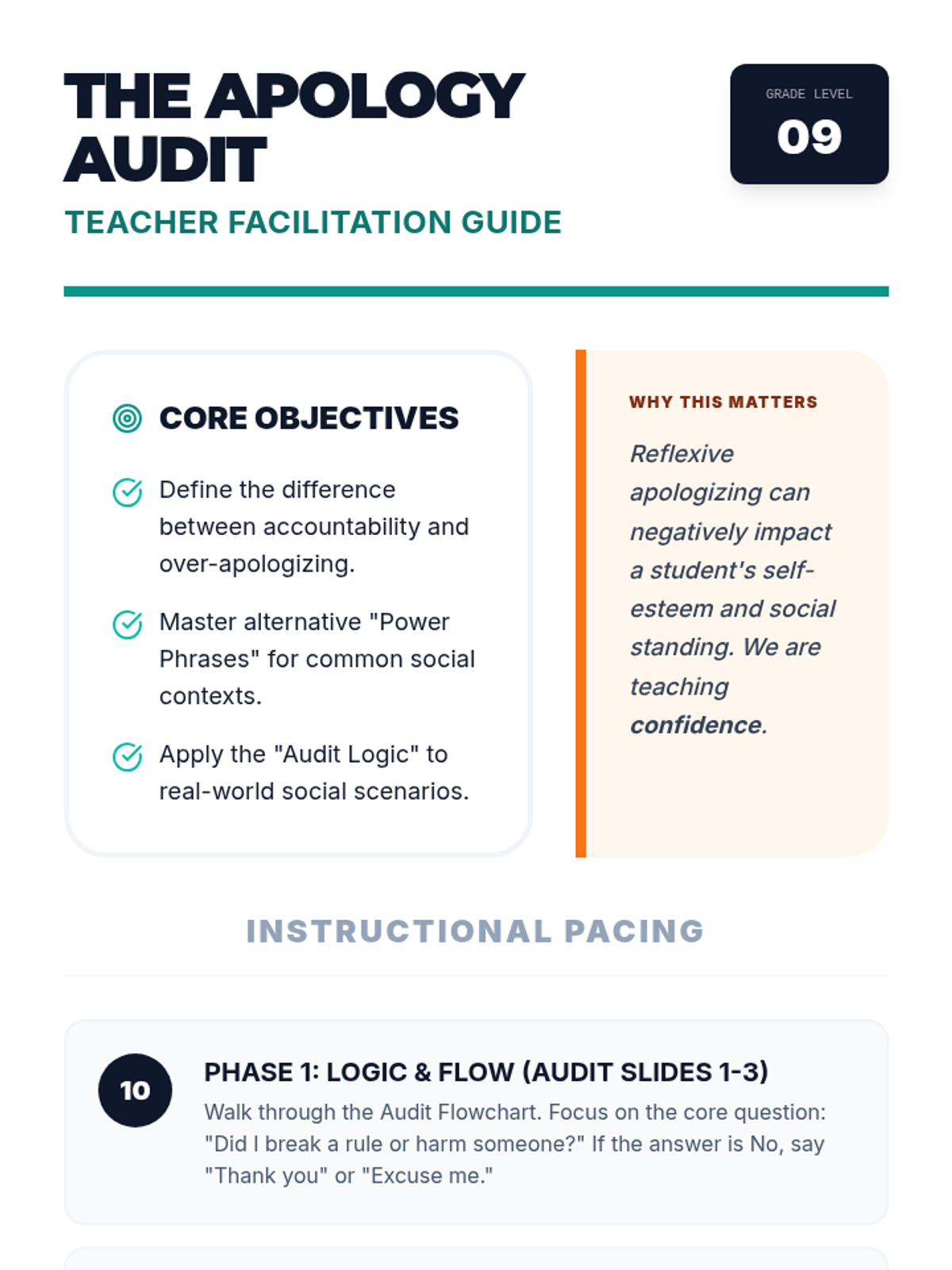
A comprehensive facilitator guide for teachers, providing pedagogical context on over-apologizing in autism, delivery instructions, and troubleshooting tips.
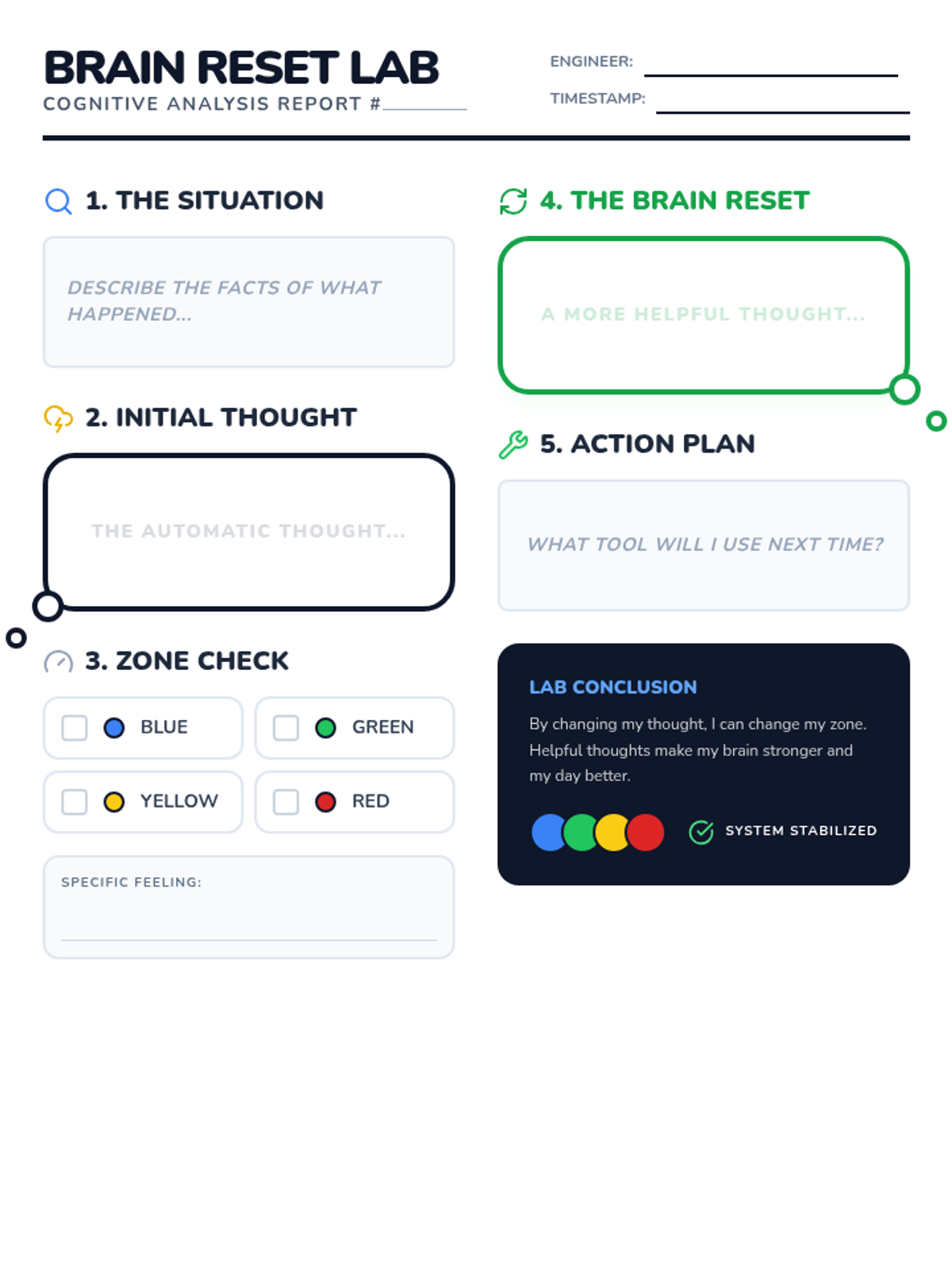
A more advanced cognitive restructuring worksheet for grades 3-5, styled as a 'Lab Report' to encourage objective analysis of triggers, automatic thoughts, and helpful replacement thoughts. Revised for better readability and spacing.
A visually structured slide deck that explains the logic behind apologies, featuring the "Apology Audit" flowchart and "Thank You" power moves for 9th-grade students.