A visual slide deck introducing the core components of Cognitive Behavioral Therapy (CBT). It covers the CBT triangle (thoughts, feelings, behaviors), common cognitive distortions, and practical reframing techniques.
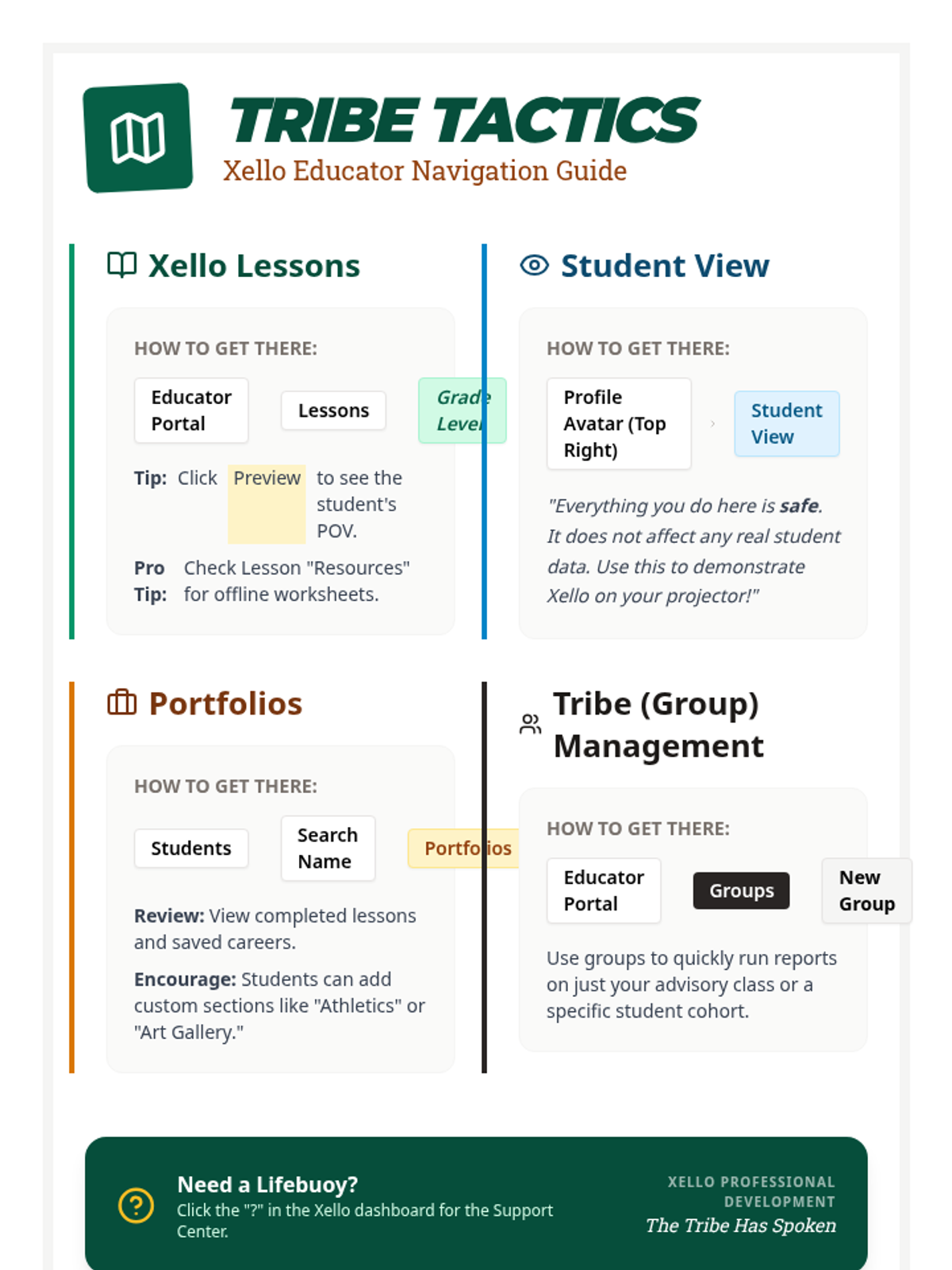
A visually engaging navigation 'cheat sheet' for teachers, outlining clear paths and expert tips for accessing Xello Lessons, Portfolios, Student View, and Groups.
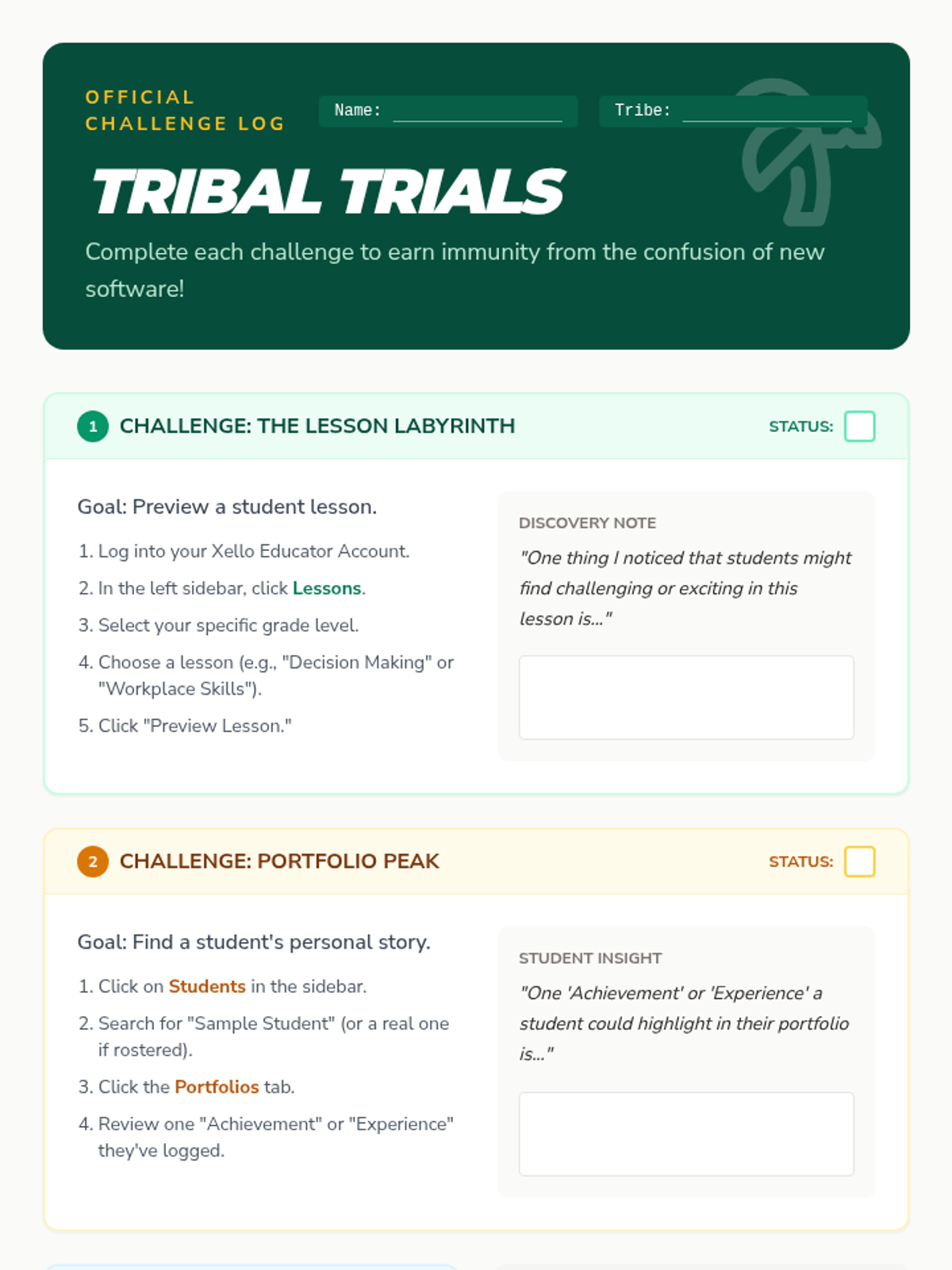
A student-facing (teacher-as-student) worksheet that guides participants through four 'Immunity Challenges' on the Xello platform, with specific tasks and reflection areas for each core feature.
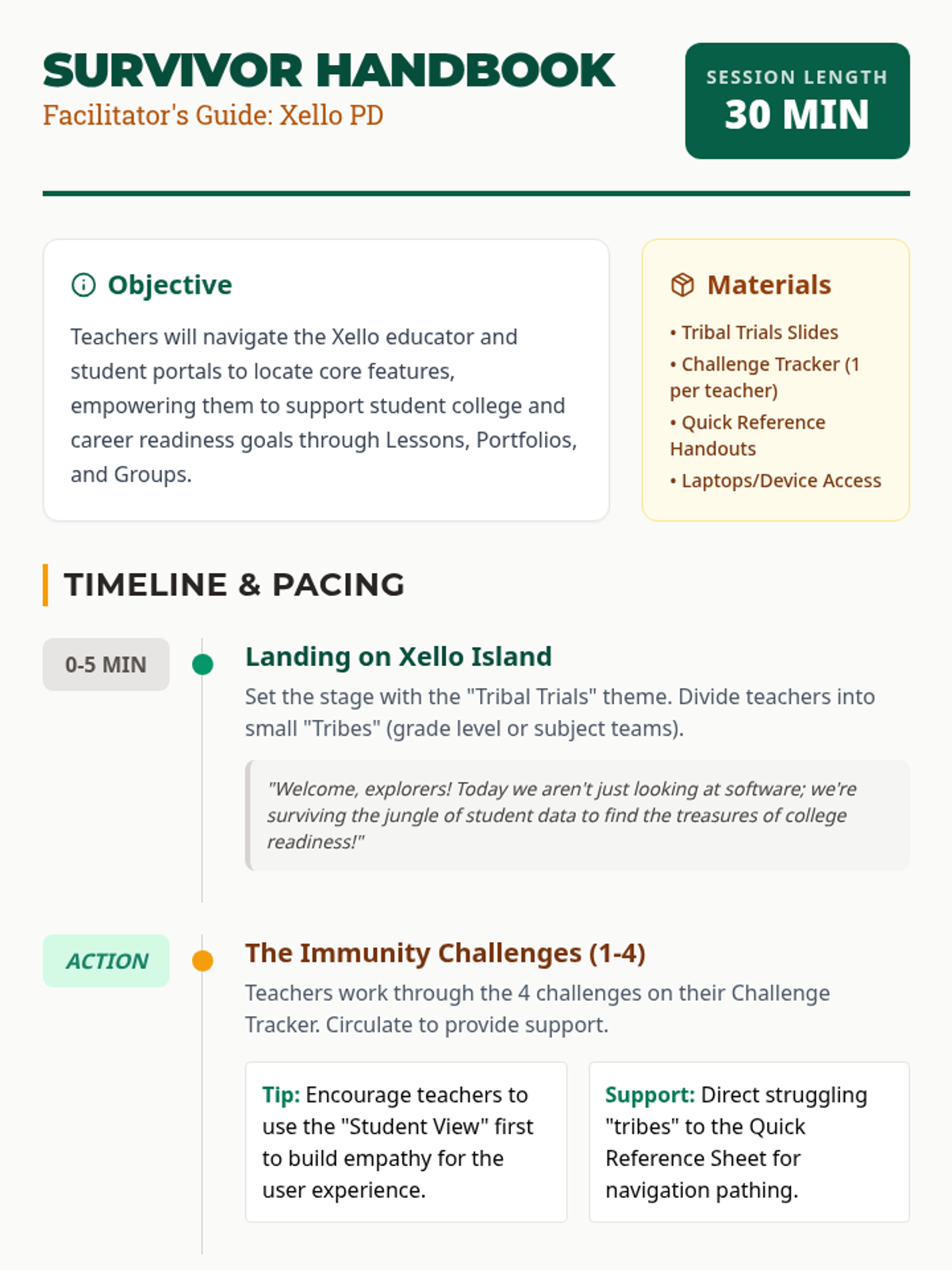
A comprehensive facilitator guide for the trainer, providing a 30-minute timeline, scripting prompts, and differentiation strategies to ensure a smooth Xello professional development session.
A high-energy, 5-slide presentation designed to guide teachers through a 30-minute 'Survivor' themed training session on the Xello platform, featuring gamified challenges for Lessons, Portfolios, Student View, and Groups.
A visual slide deck for the Pomodoro reflection session, redesigned in a high-impact monochrome style for maximum clarity and printer-friendliness.
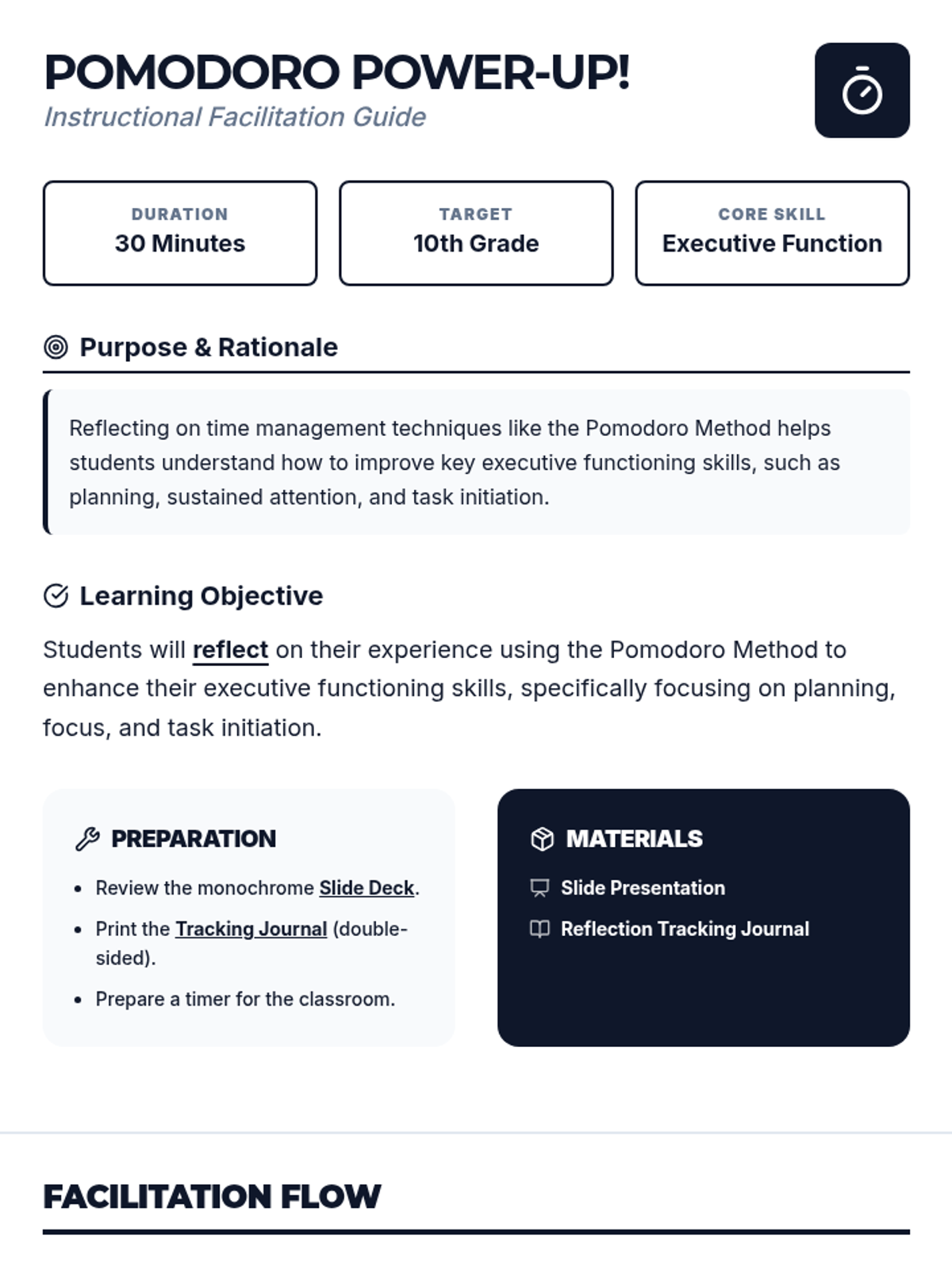
A teacher facilitation guide for the Pomodoro reflection session, redesigned in a high-contrast black and white format for easy printing.
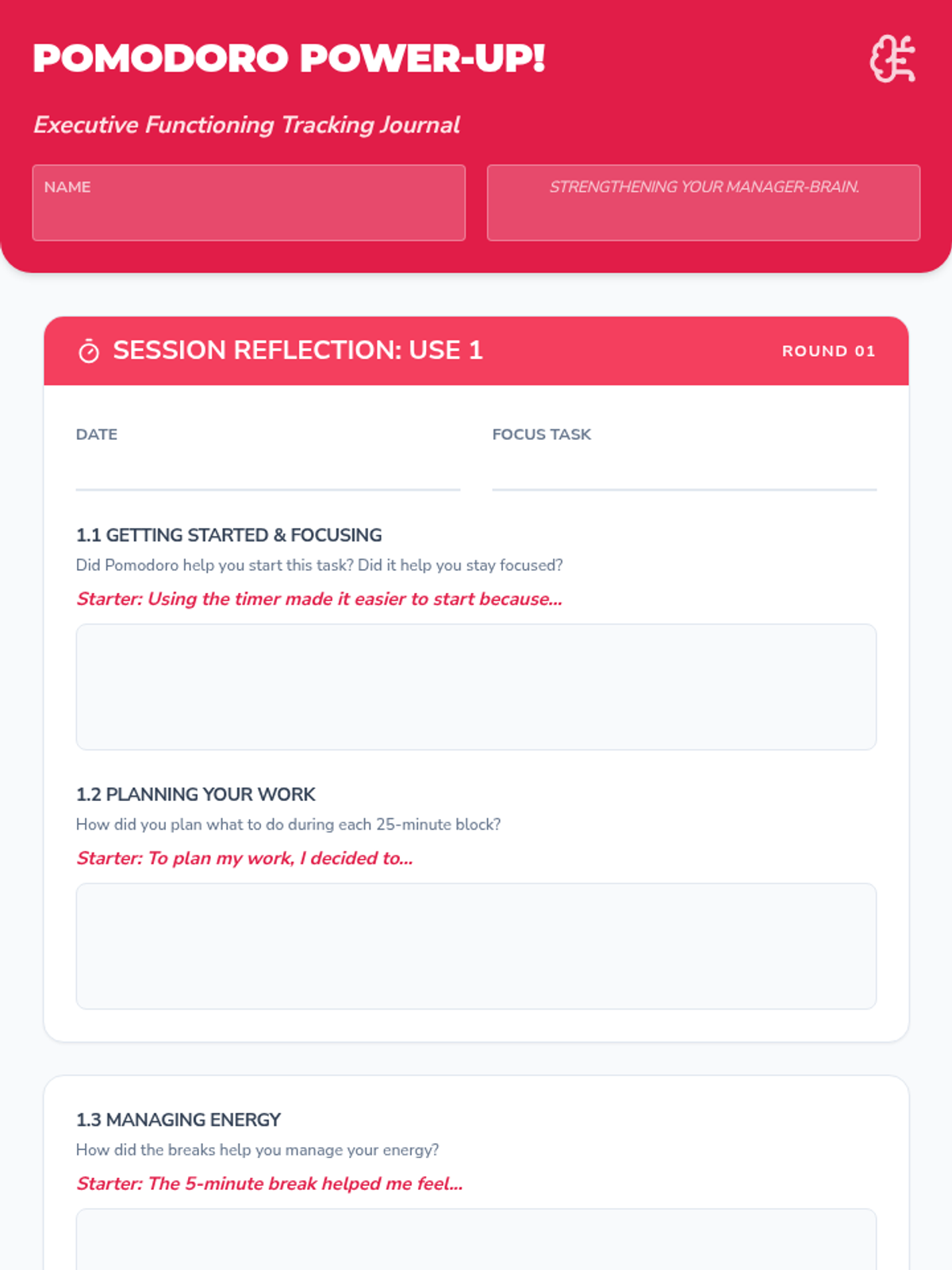
A ultra-clean version of the tracking journal template designed for a perfect copy-paste experience into Google Docs. It uses a purely linear layout, standard fonts, and simple separators to ensure text hierarchy and editable lines remain intact.
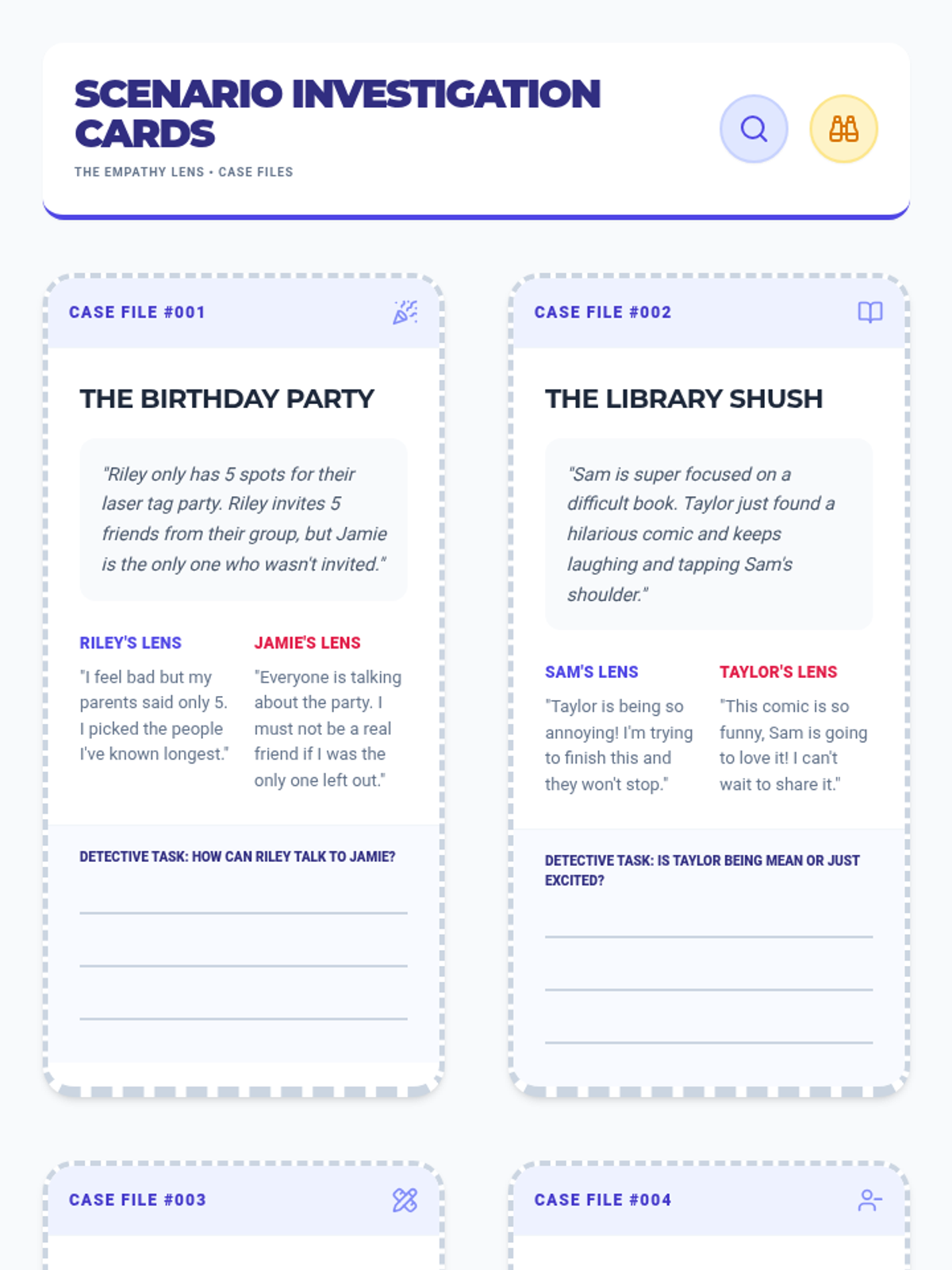
A set of 4 Case File investigation cards for 4th-grade perspective-taking practice. Each card presents a common school scenario, the conflicting thoughts of two characters, and a 'Detective Task' prompt to encourage empathy and problem-solving.
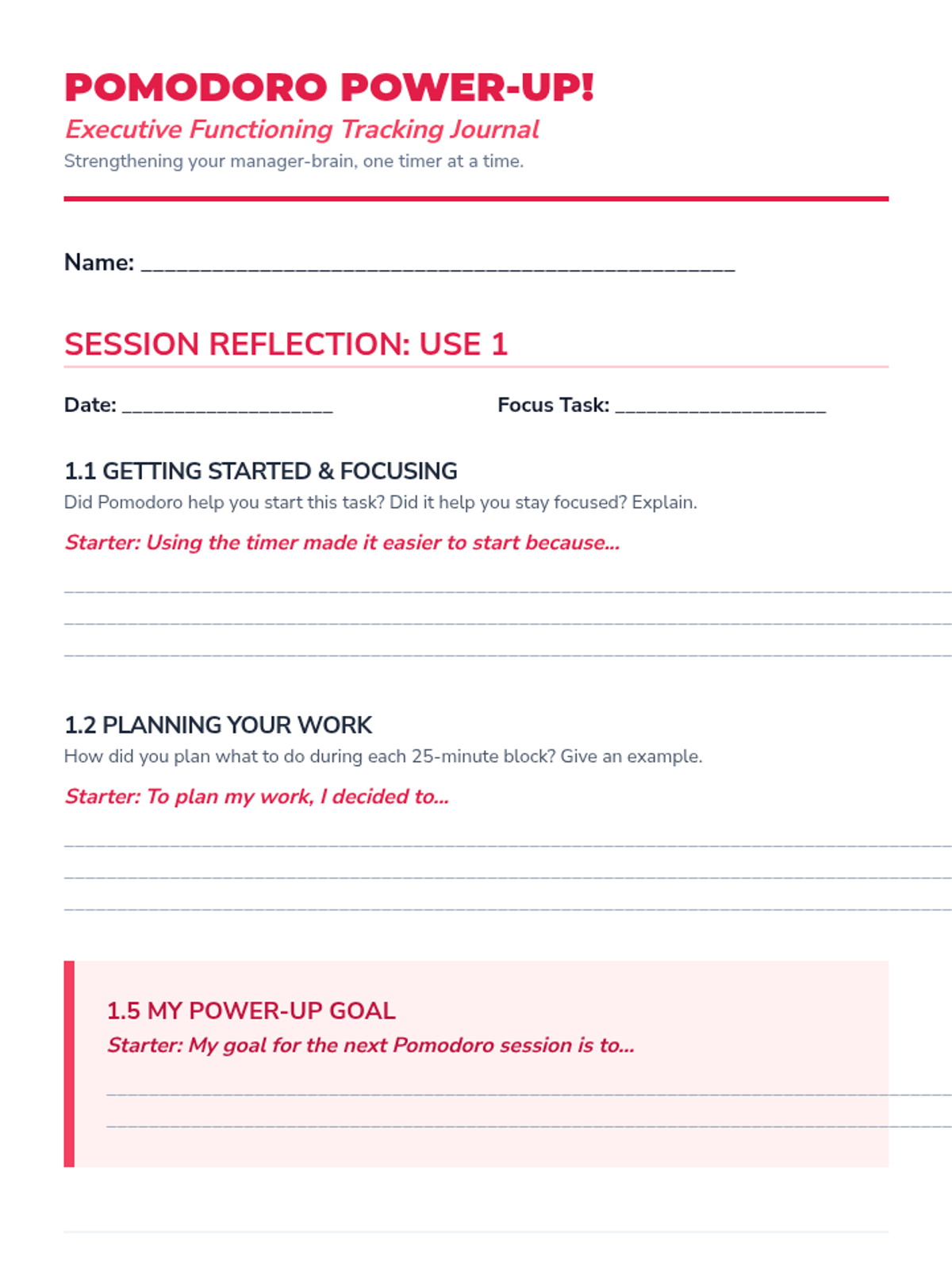
A high-impact monochrome tracking journal for Pomodoro reflection, featuring bold borders, clear sentence starters, and structured areas for growth analysis. Optimized for high-contrast printing with one session per page to ensure logical flow.
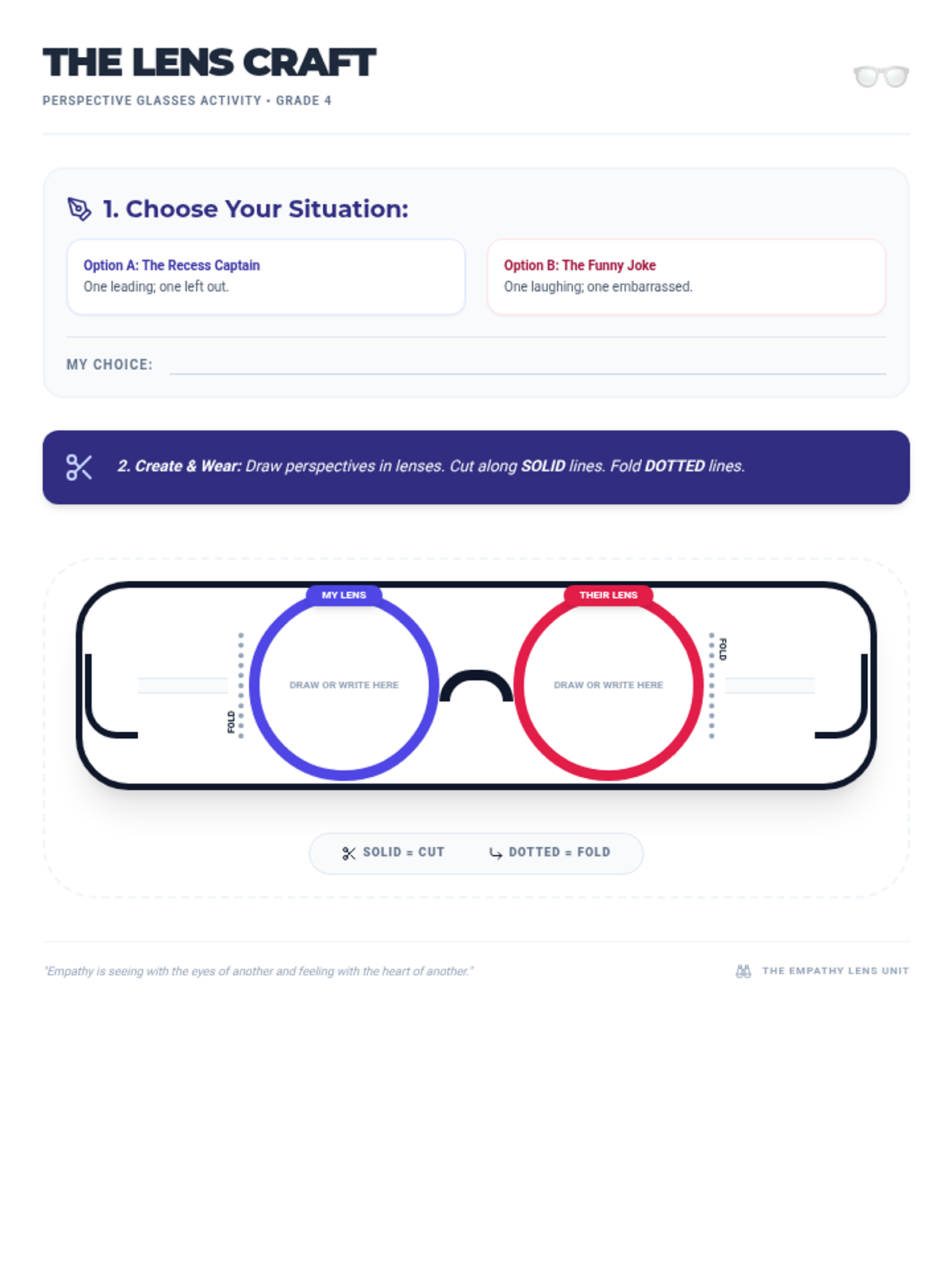
A creative hands-on activity for 4th graders where they construct 'Perspective Glasses'. The template allows students to illustrate 'My Lens' versus 'Their Lens' for a chosen social situation, physically modeling the act of switching perspectives. Includes a second page for written reflection.
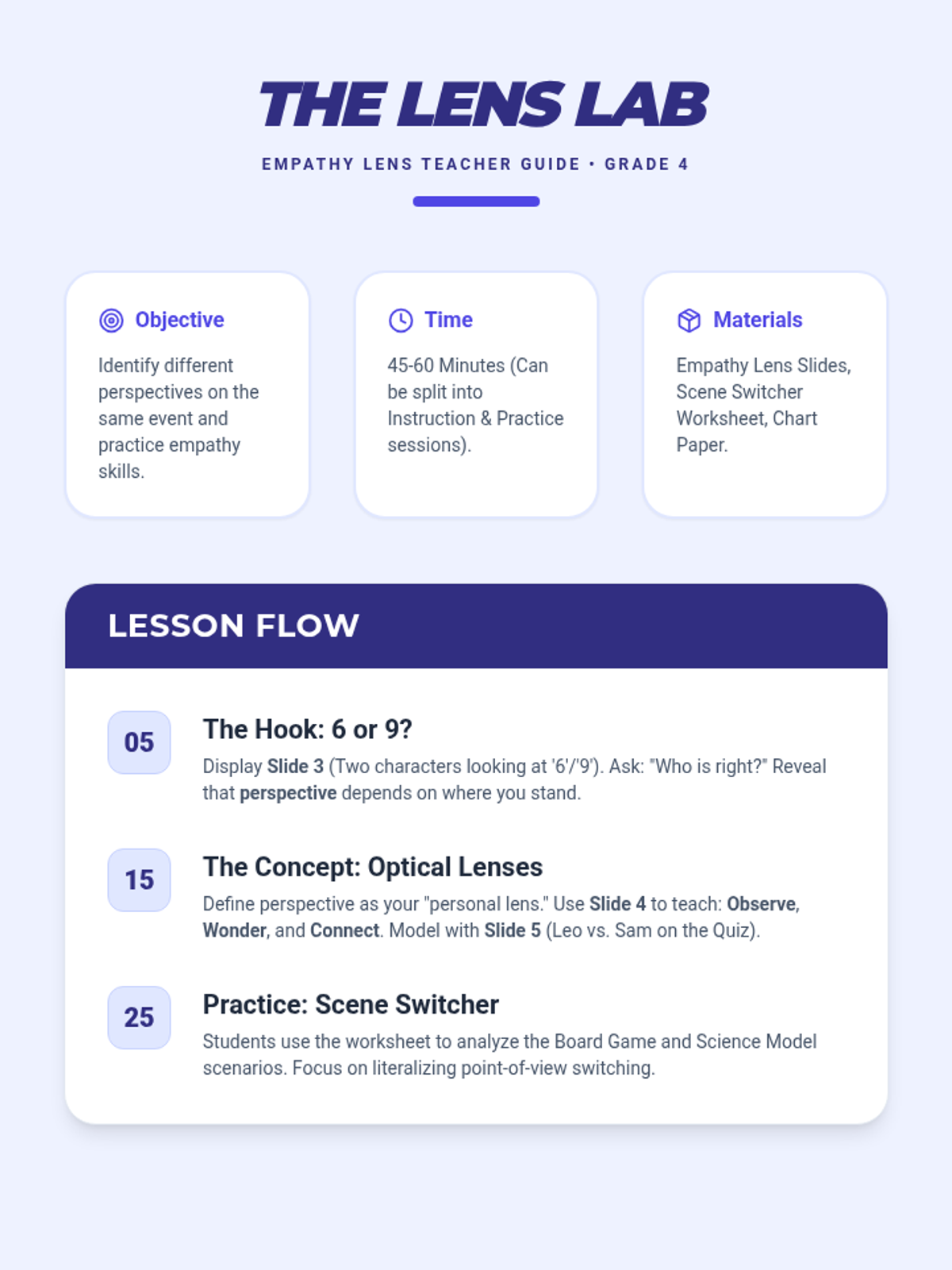
A teacher facilitation guide for 'The Empathy Lens' lesson. Includes lesson pacing, a structured flow from the 'hook' to debrief, specific discussion prompts to deepen student understanding of perspective-taking, and success criteria for assessment.
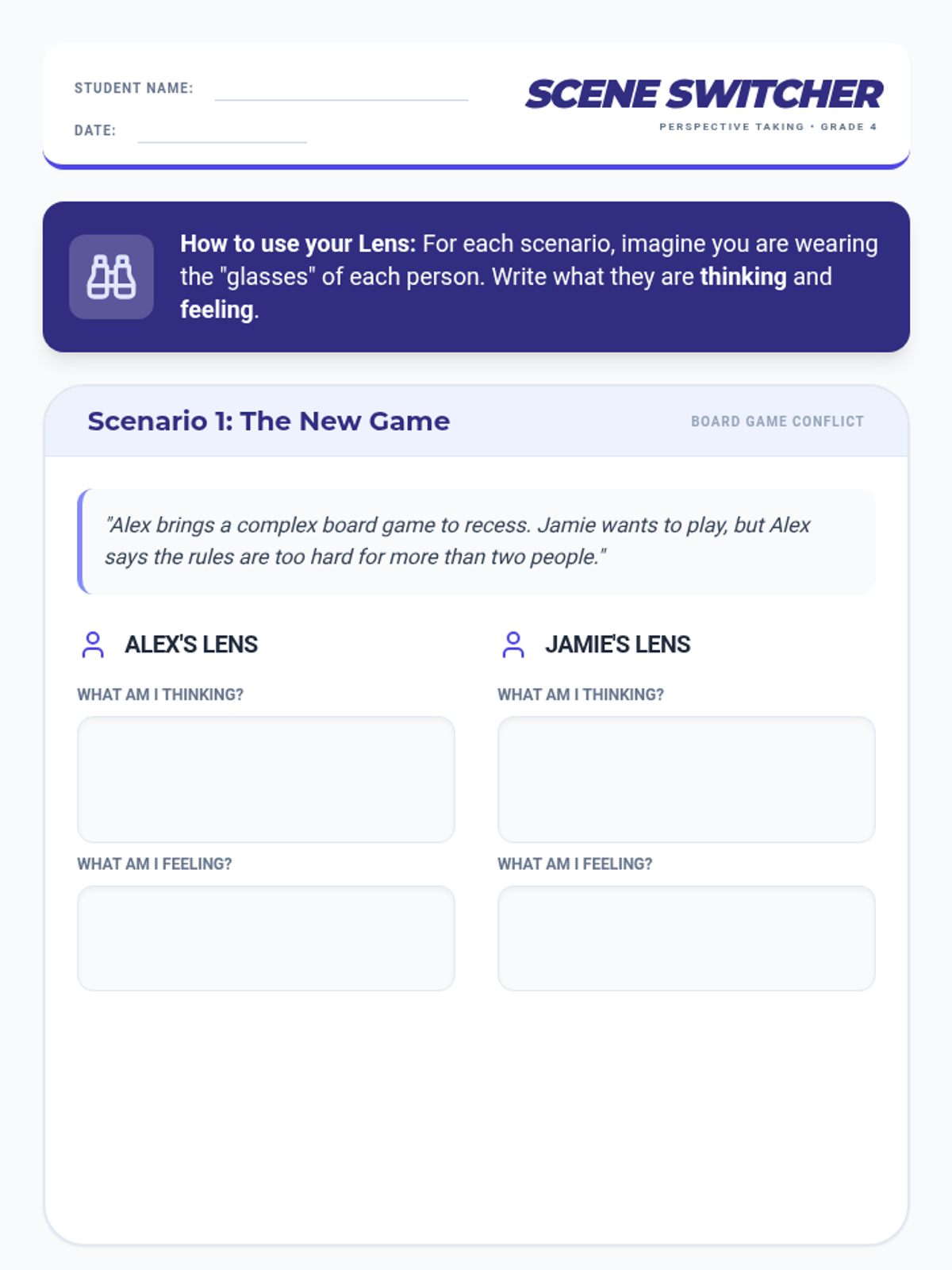
A 4th-grade perspective-taking worksheet called 'Scene Switcher'. Students analyze two contrasting scenarios (a board game conflict and a messy desk misunderstanding) and write from the point of view of each participant, identifying their likely thoughts and feelings to develop empathy.
A perspective-taking slide deck for 4th graders featuring the 'Empathy Lens' metaphor. It introduces the concept of perspective through visual puzzles, defines empathy-building steps (Observe, Wonder, Connect), and uses contrasting scenarios to demonstrate that people can feel differently about the same event.
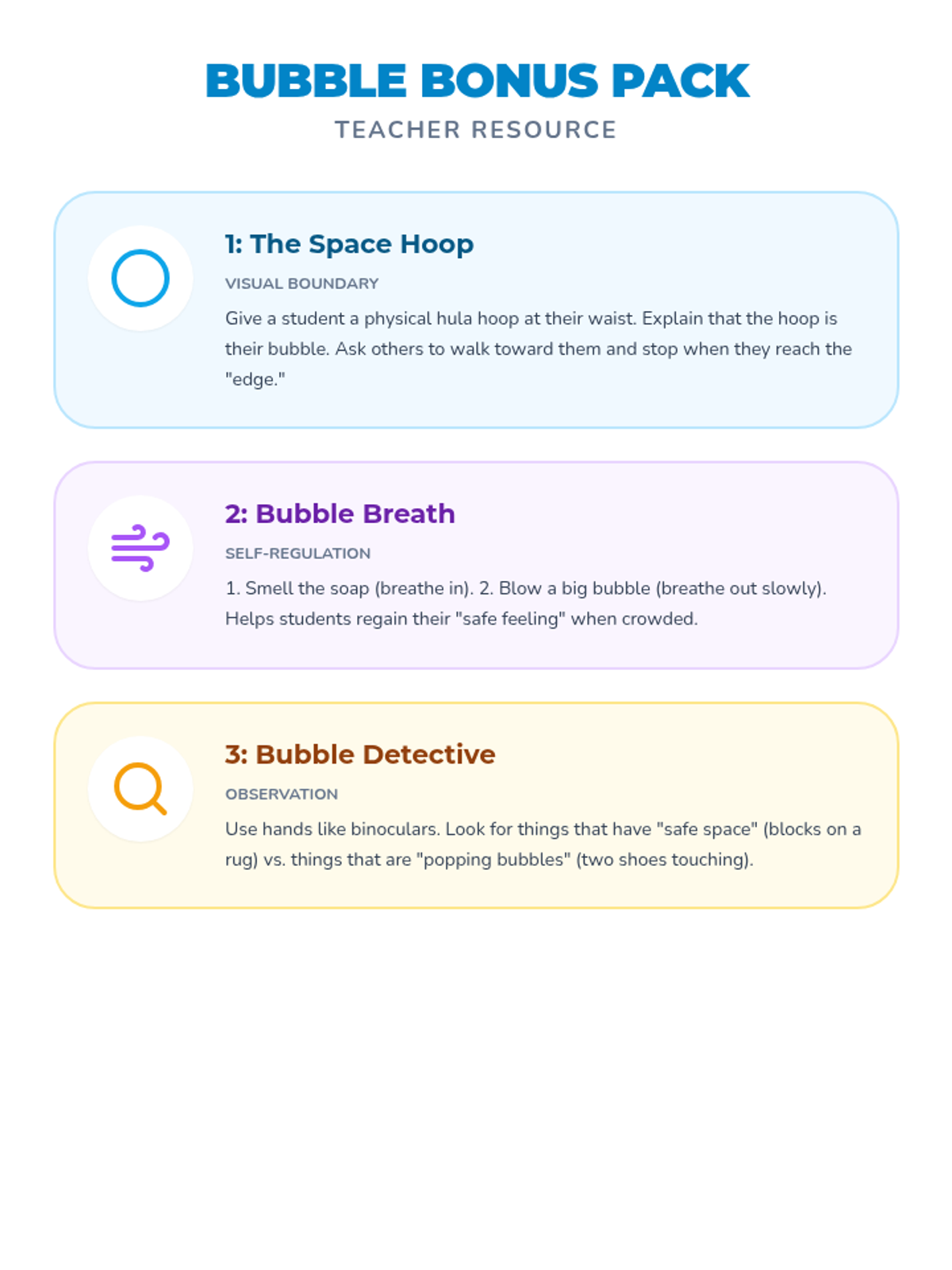
A teacher resource pack featuring three additional activities (Space Hoop, Bubble Breath, and Bubble Detective) and a hands-on 'Bubble Wand' craft to reinforce personal space concepts in TK students. Page layout fixed for printing.
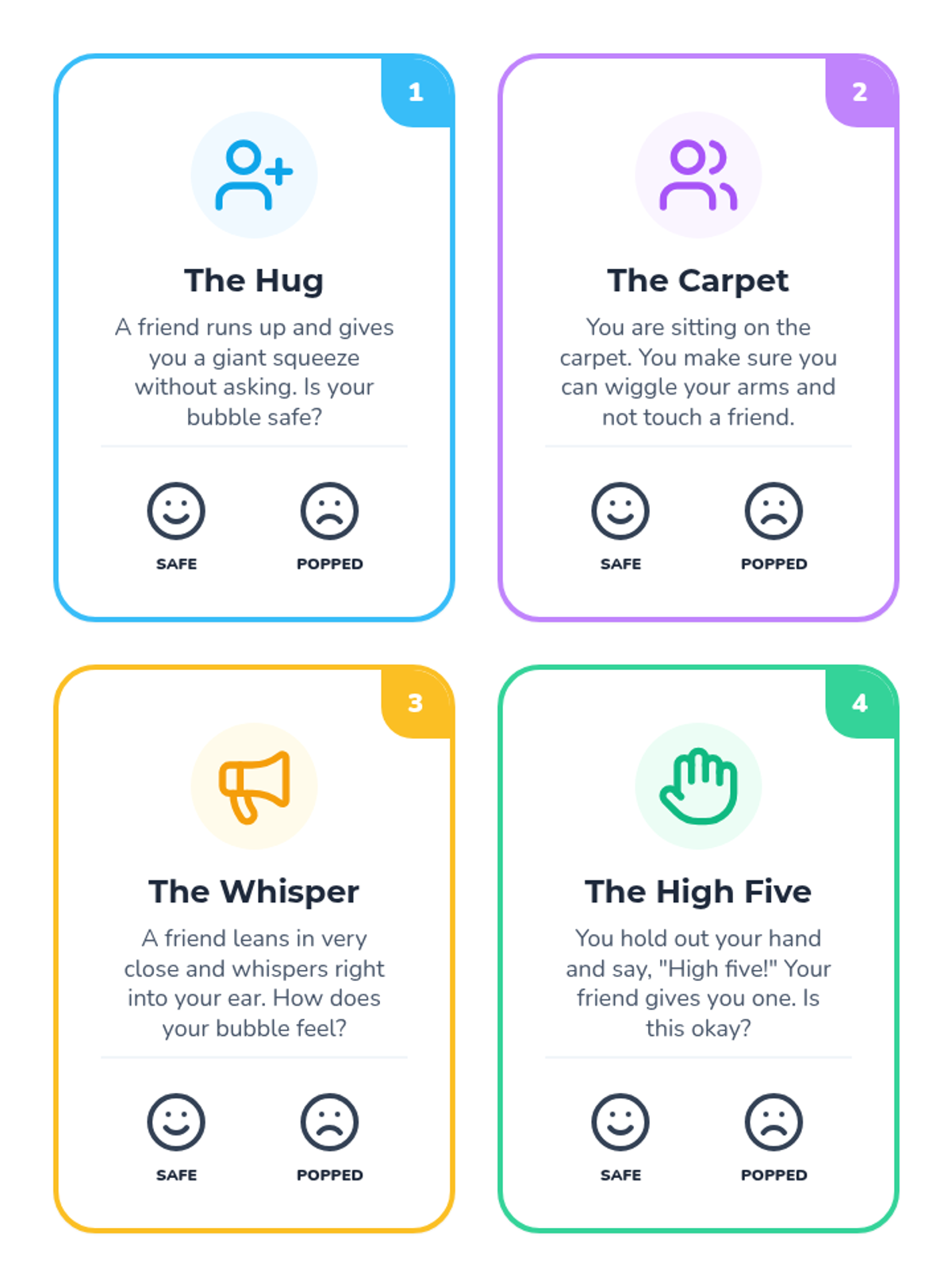
A set of 8 colorful scenario cards for TK students to discuss personal space. Each card features a common social situation (like hugging, waiting in line, or playing with toys) to help students identify 'safe' and 'popped' bubbles. Card 7 updated to a more literal "hair" interaction. Card layout fixed for printing.
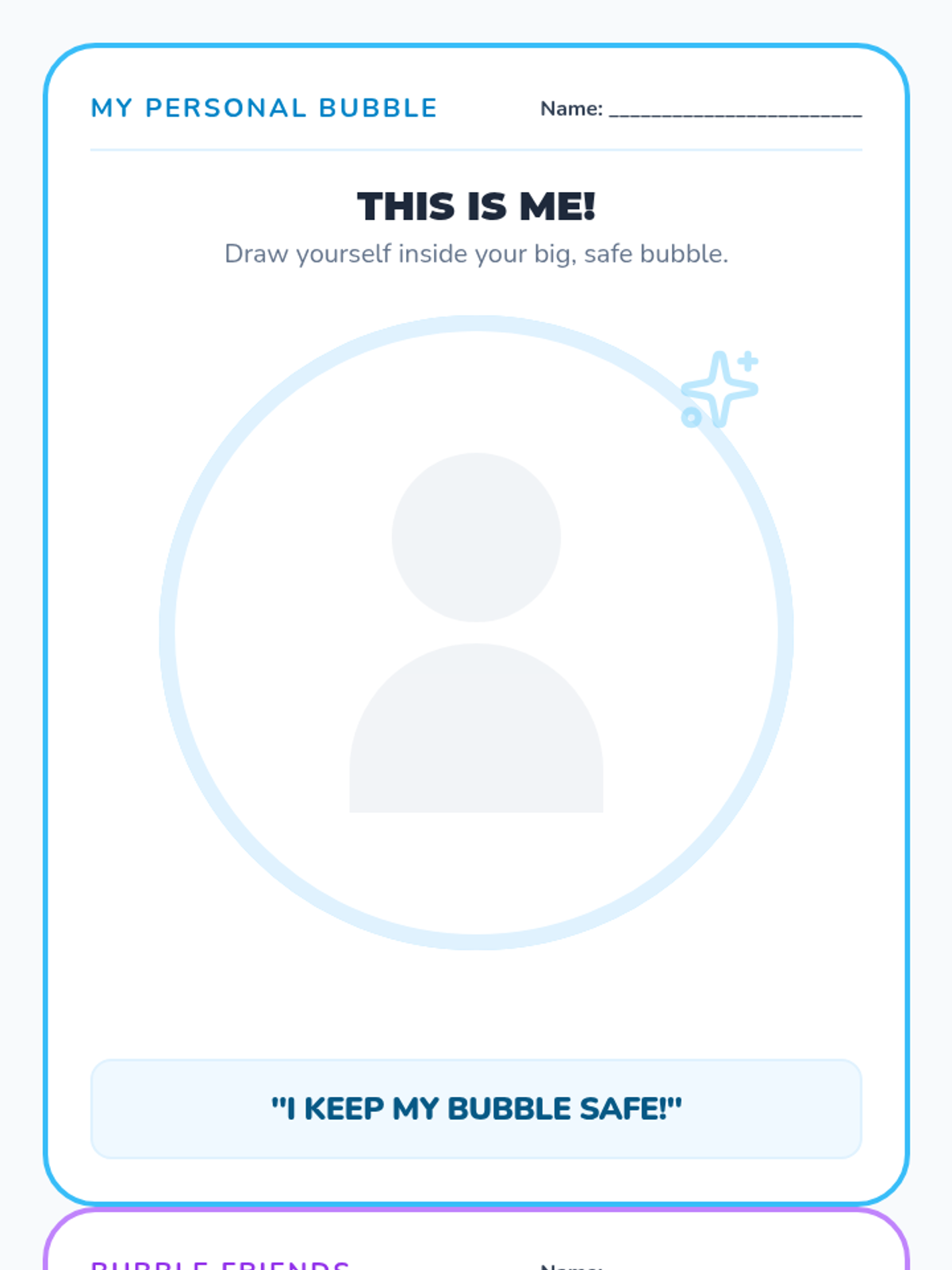
A set of two coloring pages for TK students to reinforce the 'Personal Bubble' concept. Page 1 allows students to draw themselves in their own bubble, while Page 2 encourages them to color a scene showing healthy distance between friends.
A set of interactive slides for TK students to visualize the concept of personal space. Features large, friendly icons and simple explanations about the 'Invisible Bubble' and how to respect boundaries.