A visual presentation for kindergarten students explaining good and bad manners on the playground, in the classroom, and at the lunch table. Includes examples and discussion points.
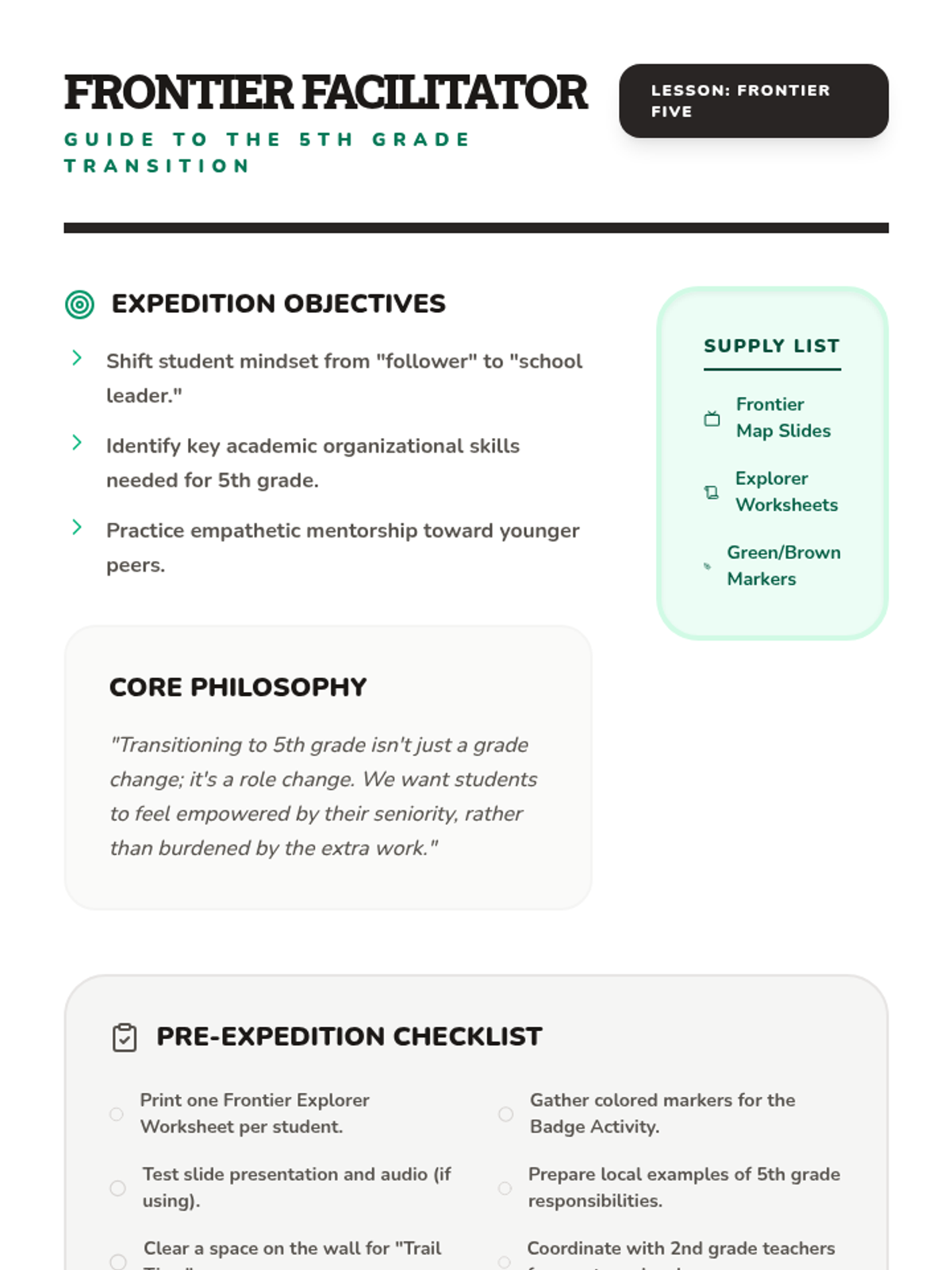
A comprehensive teacher facilitation guide for the 'Fifth Grade Frontier' transition lesson. Includes structured pacing, discussion prompts focused on leadership and ownership, and advice for framing 5th grade as a prestigious role.
A bold and thematic slide deck for 4th graders transitioning to 5th grade. Uses an 'Explorer' theme to introduce the concept of student leadership, increased independence, and the 'Trailblazer Code' of conduct for the school's oldest students.
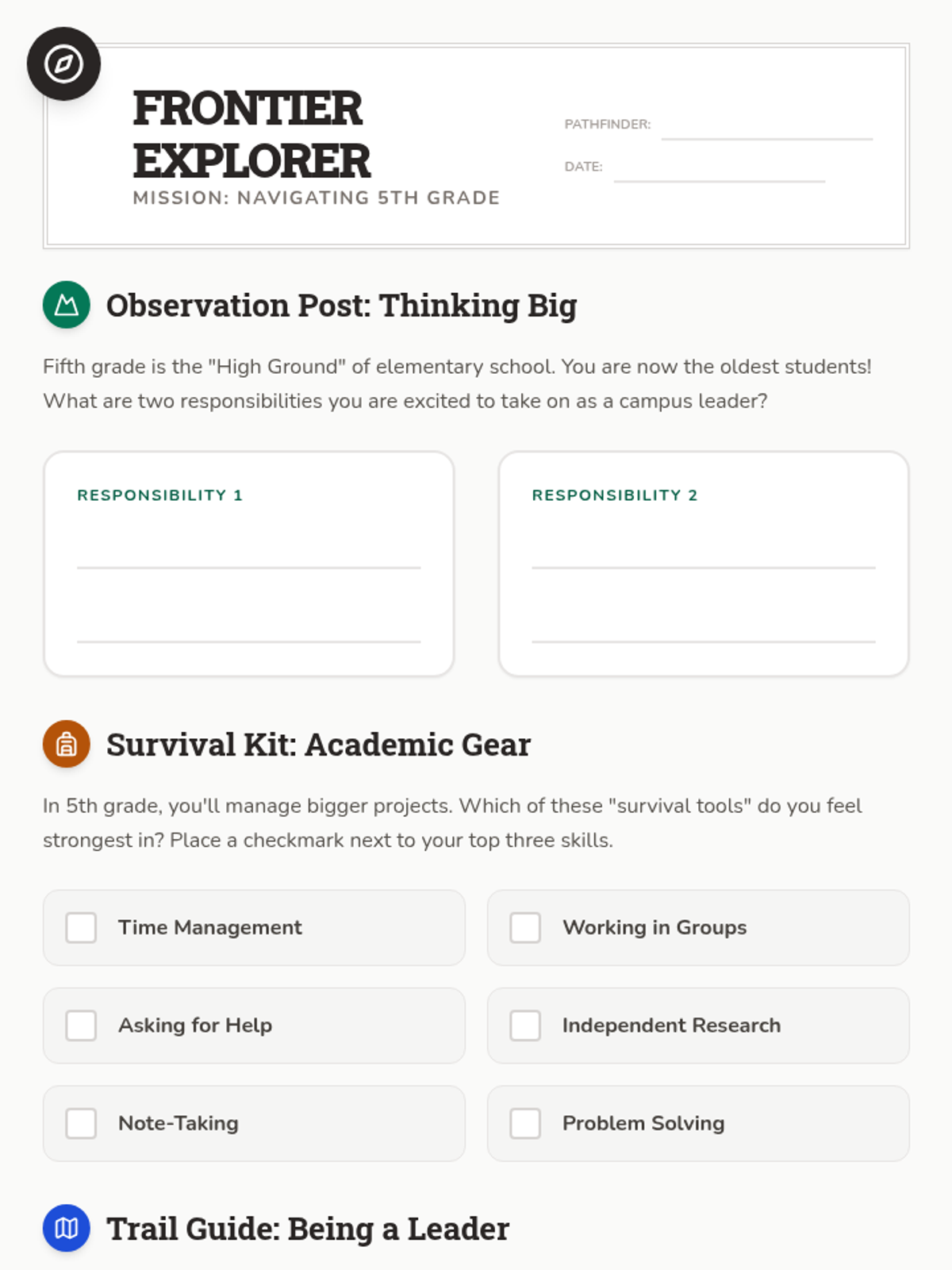
A visually engaging worksheet for 4th graders transitioning to 5th grade. It focuses on the shift to being student leaders, identifying academic strengths, and practicing mentorship towards younger students using an 'Explorer' theme.
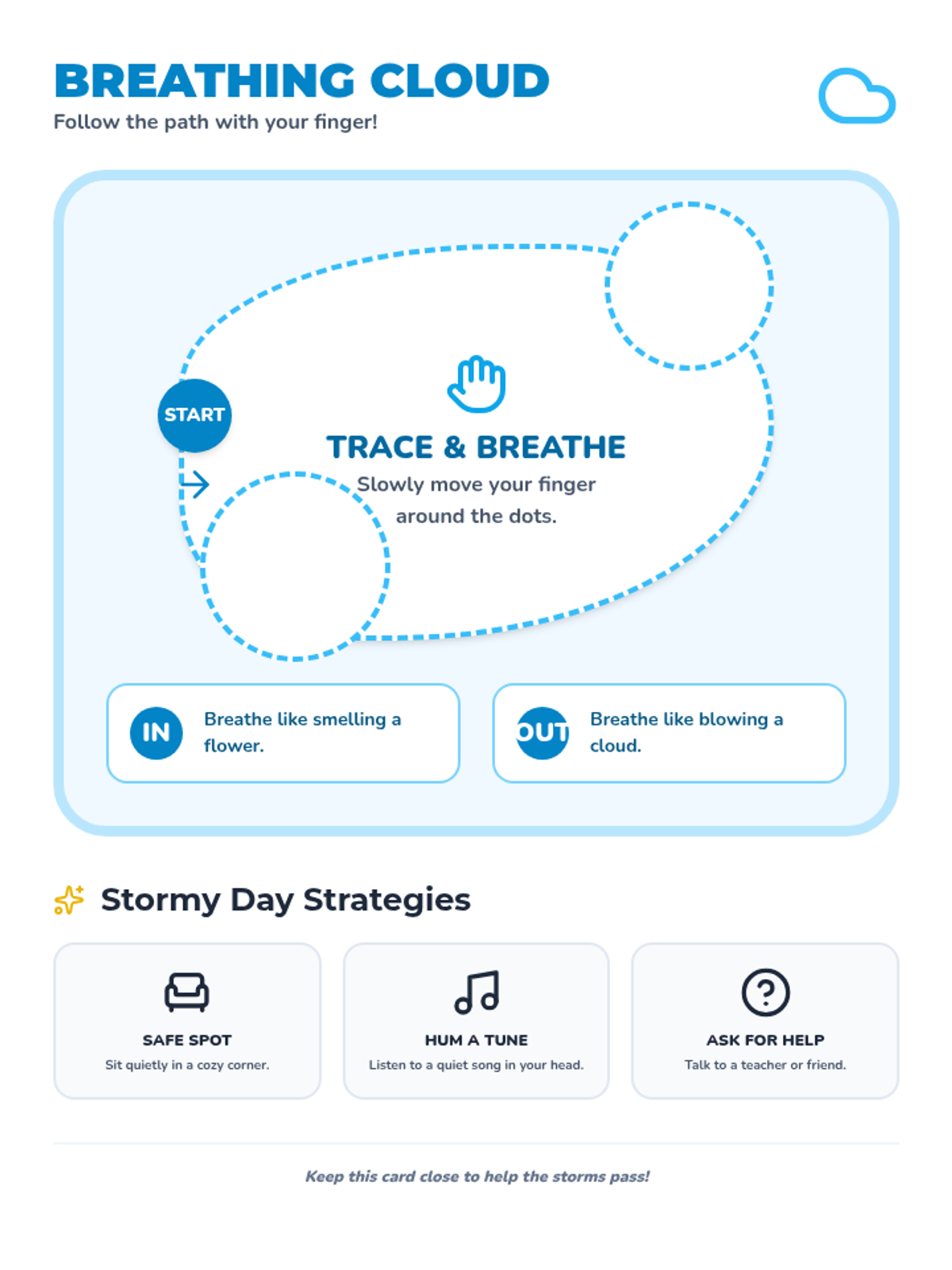
A visual self-regulation tool for kindergarteners featuring a large 'Breathing Cloud' for finger-tracing and a set of simple strategies for managing 'stormy' emotions.
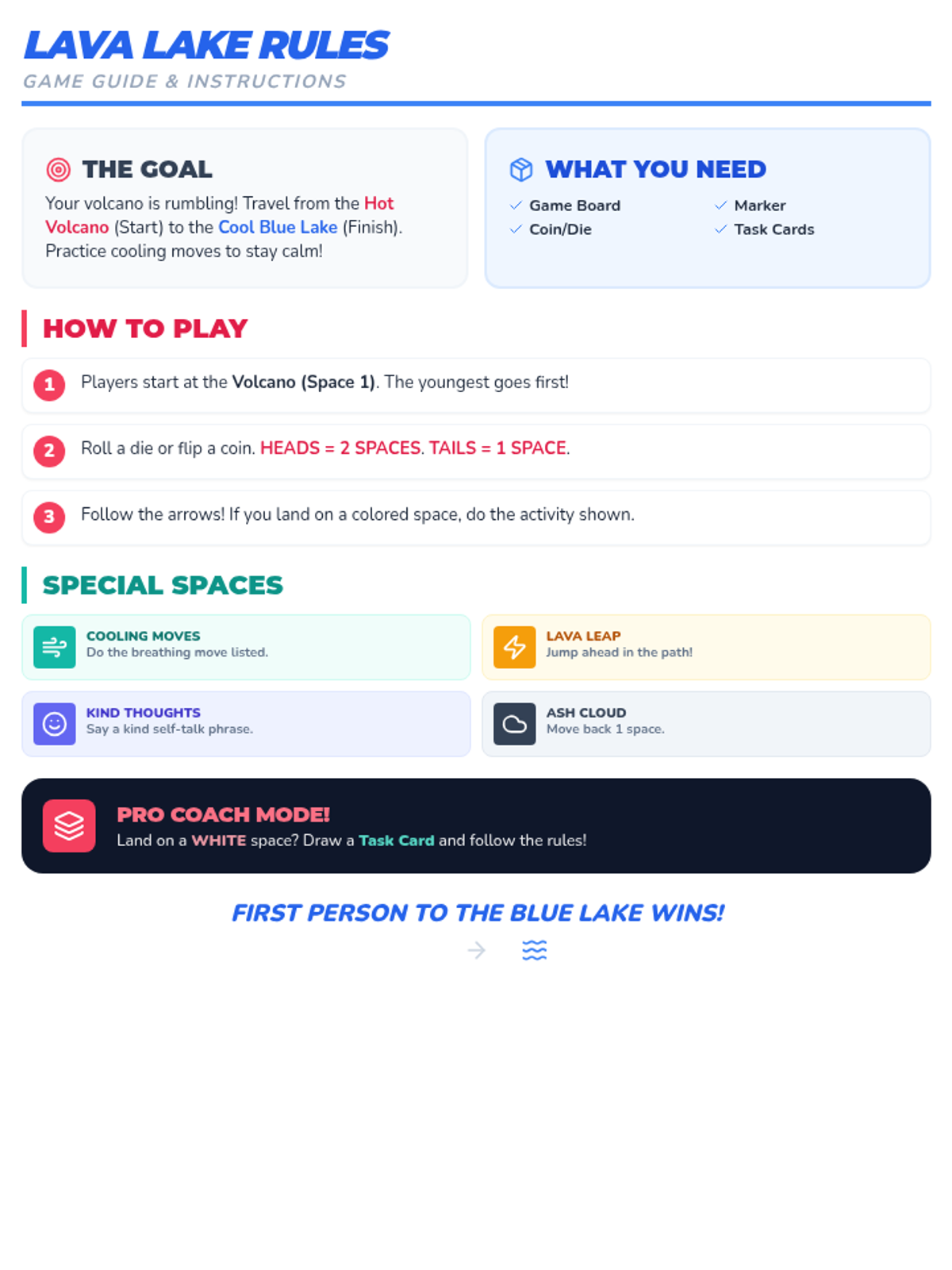
A one-page rules sheet for the 'Lava to Lake' board game, including setup instructions, gameplay steps, and special space descriptions. Revised for better formatting and single-page fit.
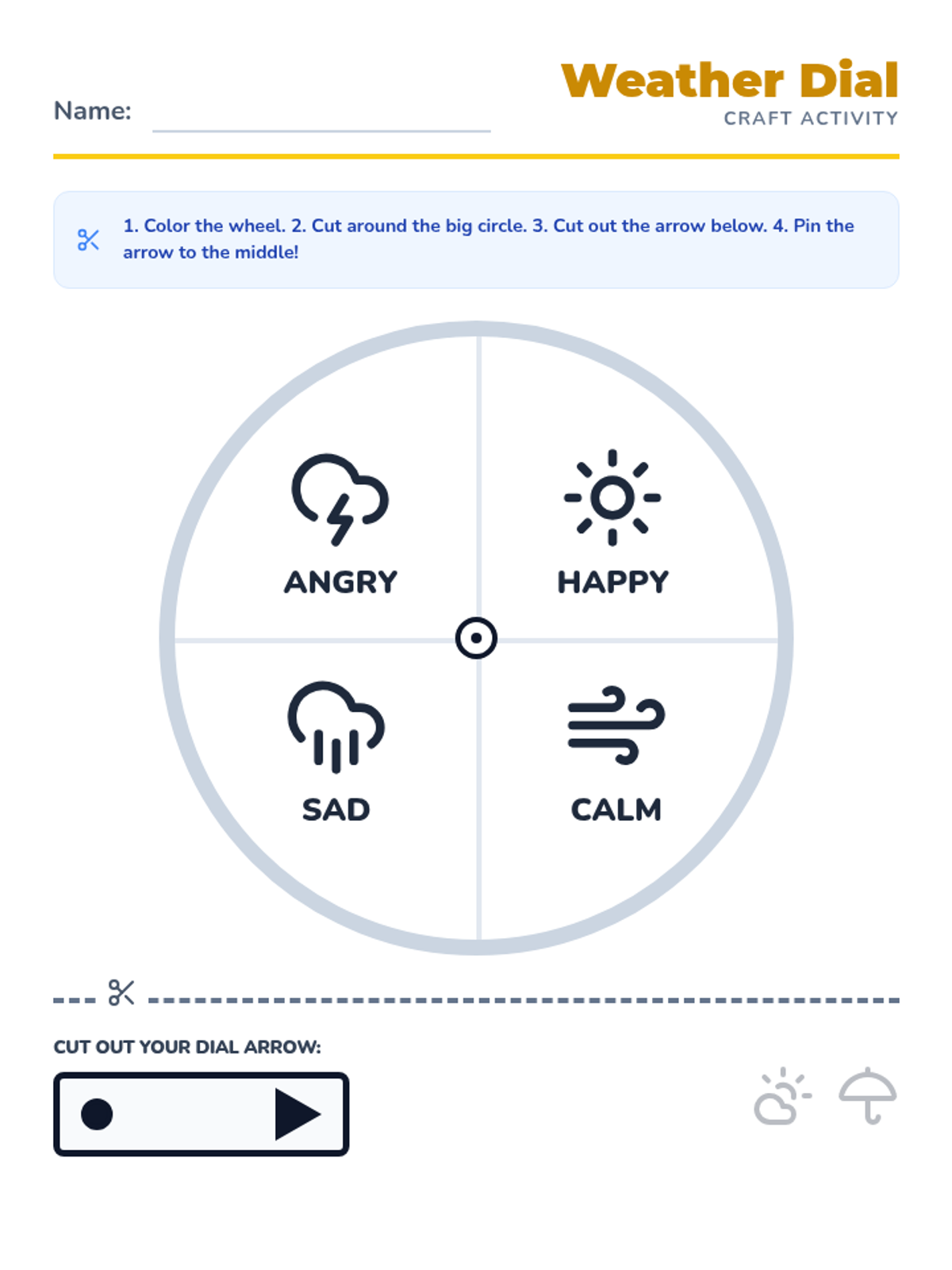
A hands-on activity sheet for students to create their own 'Weather Dial' (feelings wheel). Includes quadrants for happy, sad, angry, and calm feelings, along with a cut-out arrow for assembly.
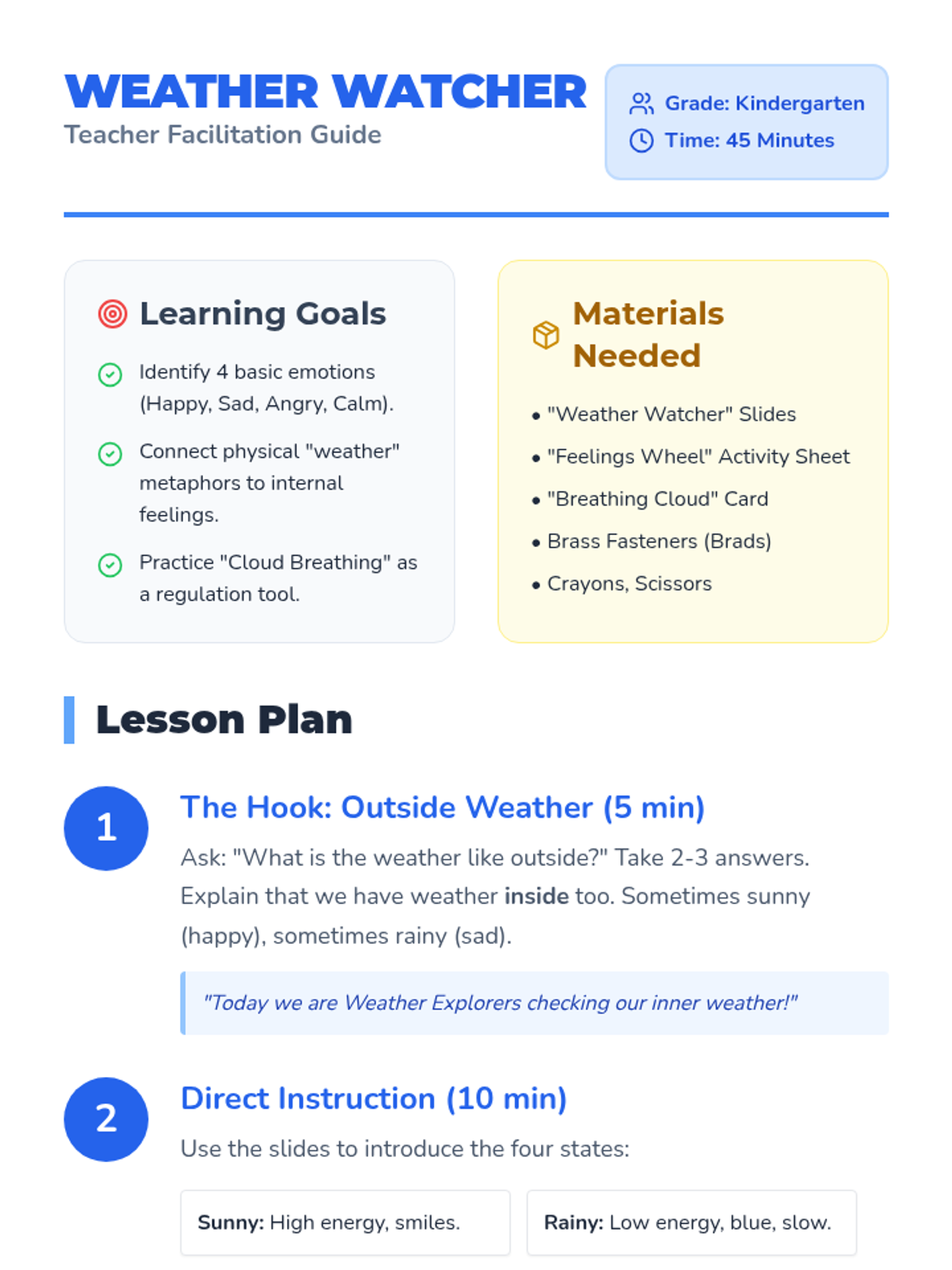
A comprehensive instructional guide for teachers to lead the 'Inner Weather' lesson, including objectives, material lists, step-by-step facilitation instructions, and classroom management tips for kindergarten.
A vibrant, kid-friendly slide deck introducing the 'Inner Weather' metaphor for emotions, featuring visual cues for happy, sad, angry, and calm feelings, and simple regulation techniques.
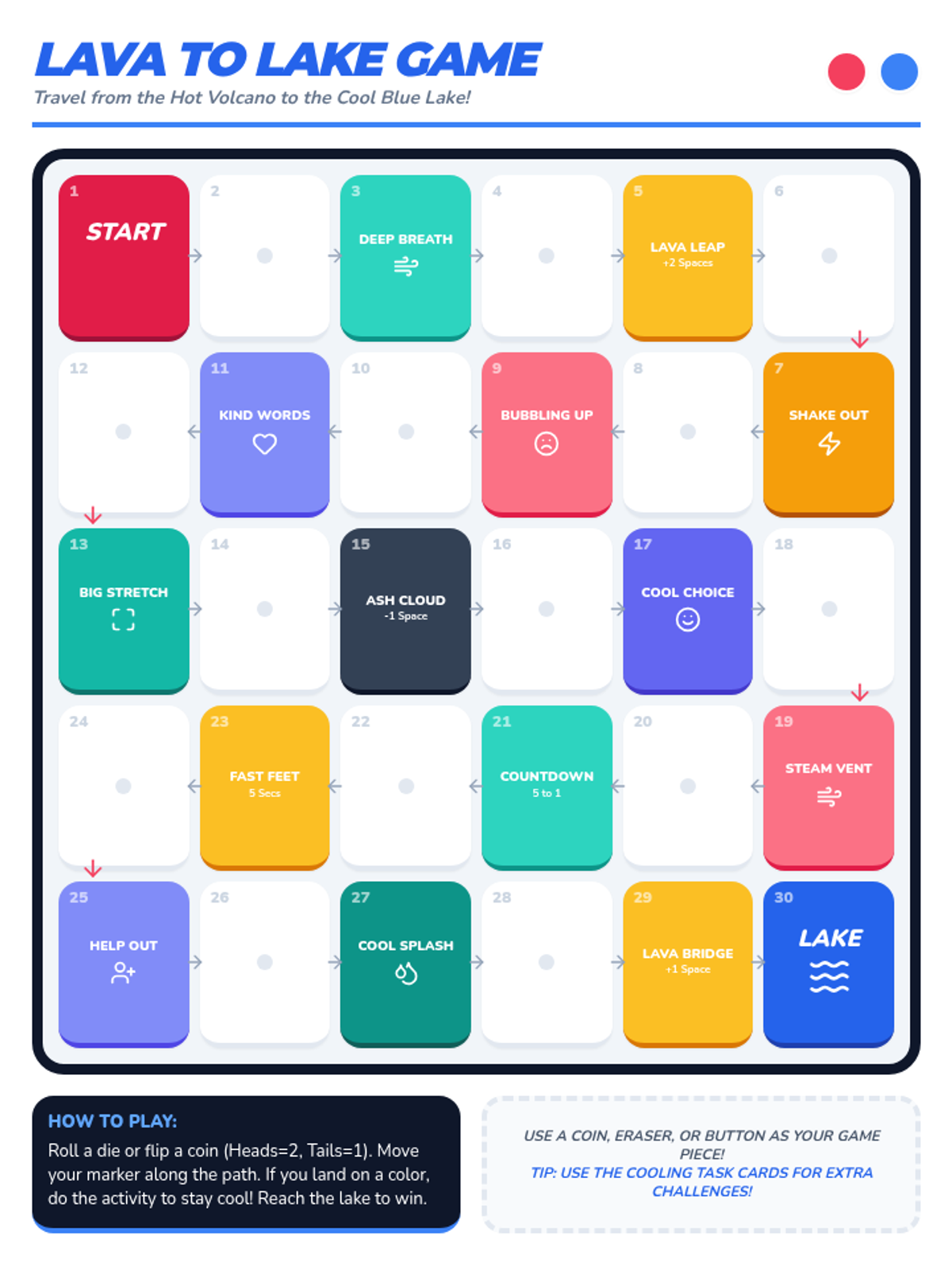
A 30-space board game themed around the volcano metaphor where students practice cooling strategies as they move from the 'Hot Volcano' to the 'Cool Blue Lake'. Revised for better fit and directional arrows.
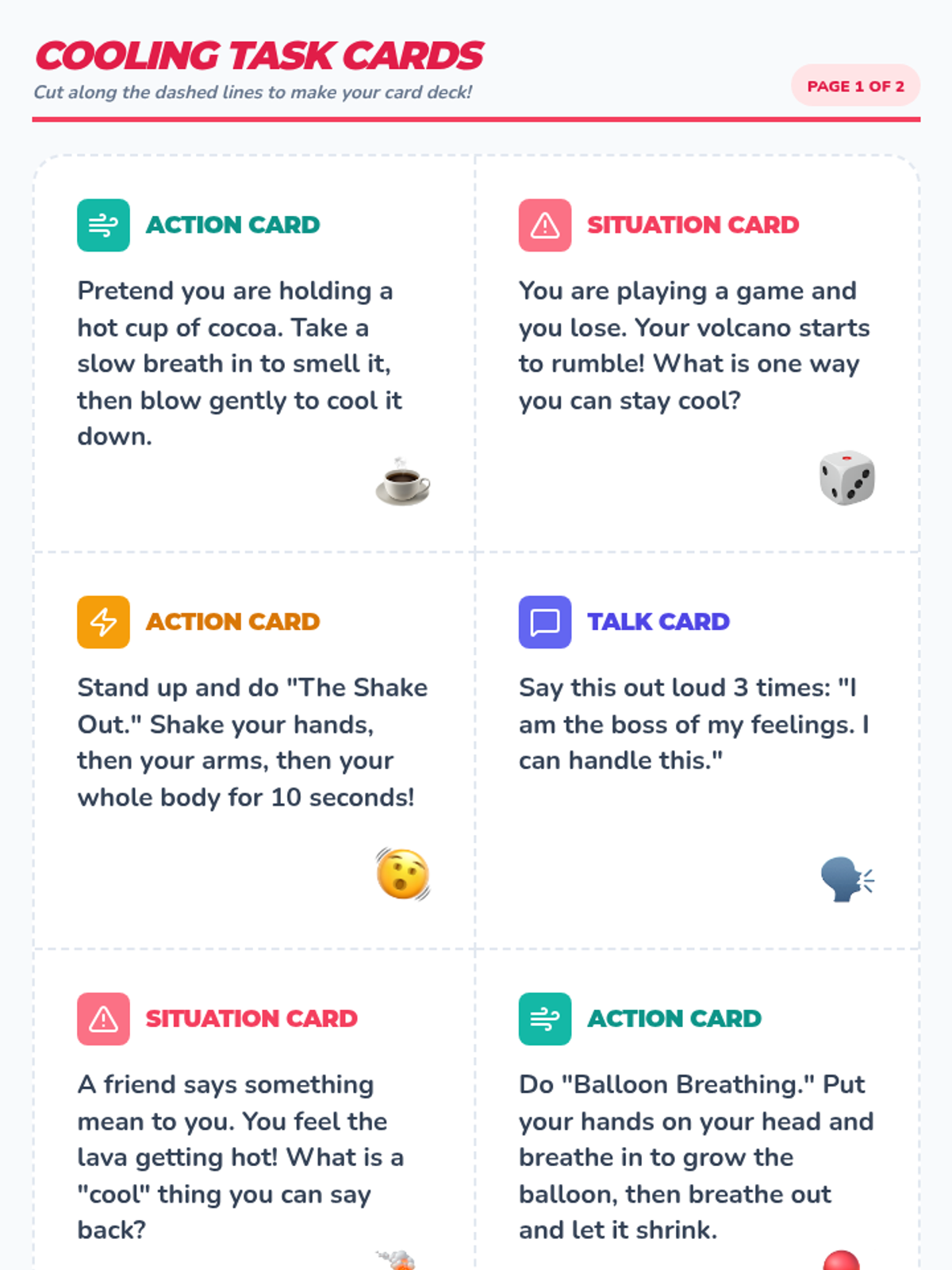
A set of 12 task cards featuring various scenarios and physical cooling activities to help students practice anger management strategies. Includes situation cards, action cards, and self-talk prompts. Revised for clarity.
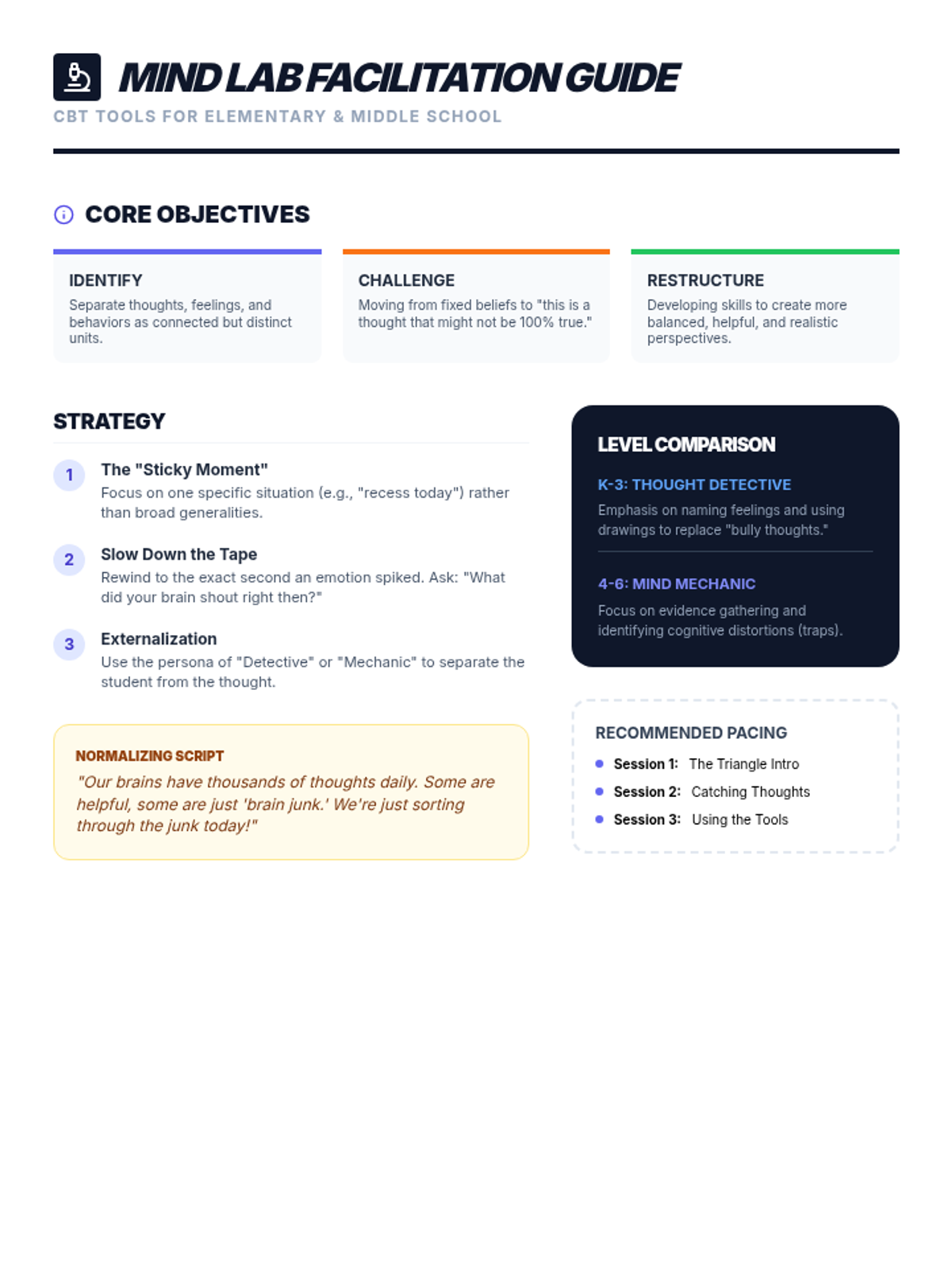
A teacher's guide for implementing CBT processing tools with students, including core objectives, usage tips, and developmental differentiation strategies.
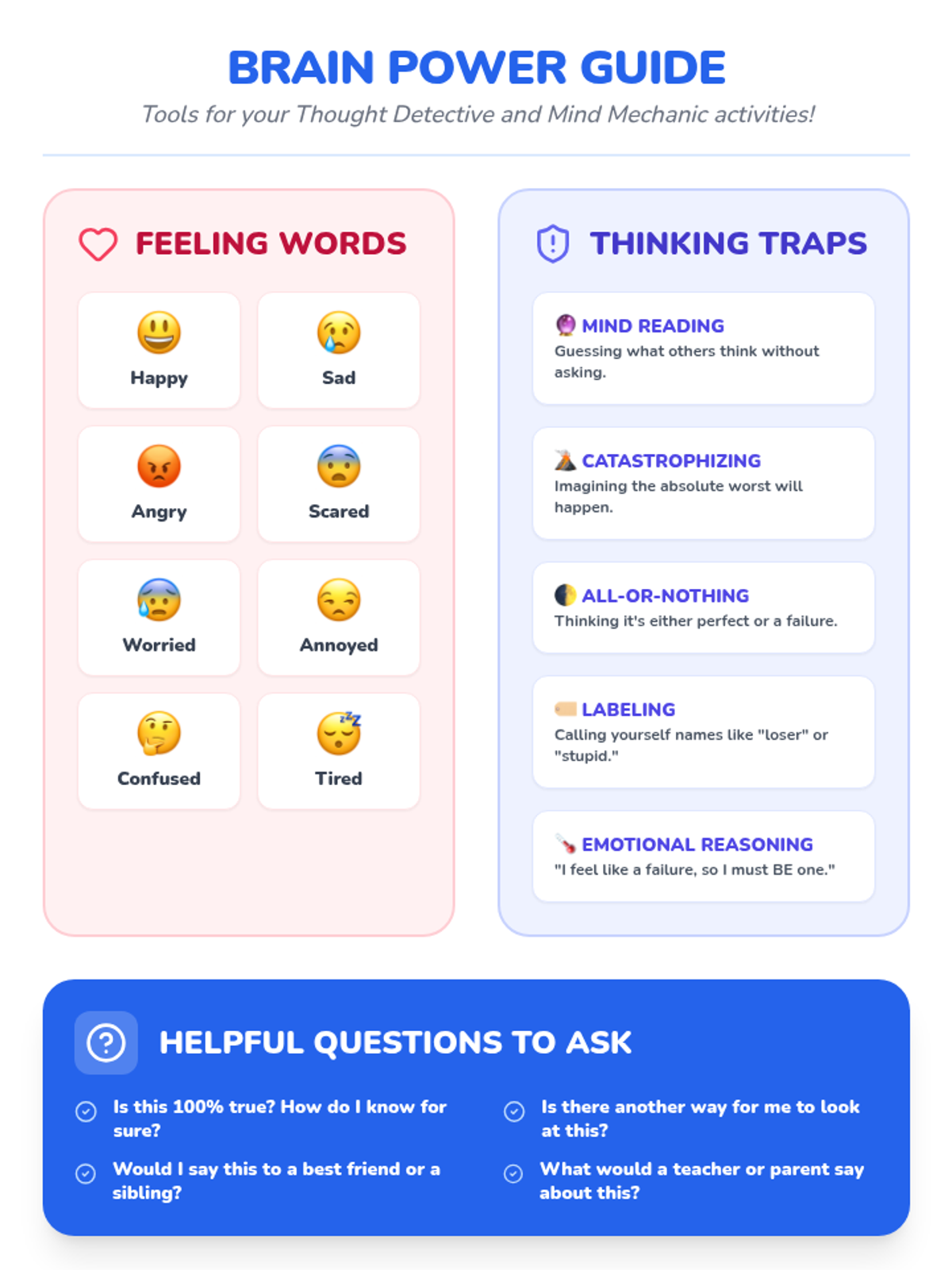
A student-facing reference guide with feelings vocabulary and 'Thinking Trap' definitions to support CBT processing activities.
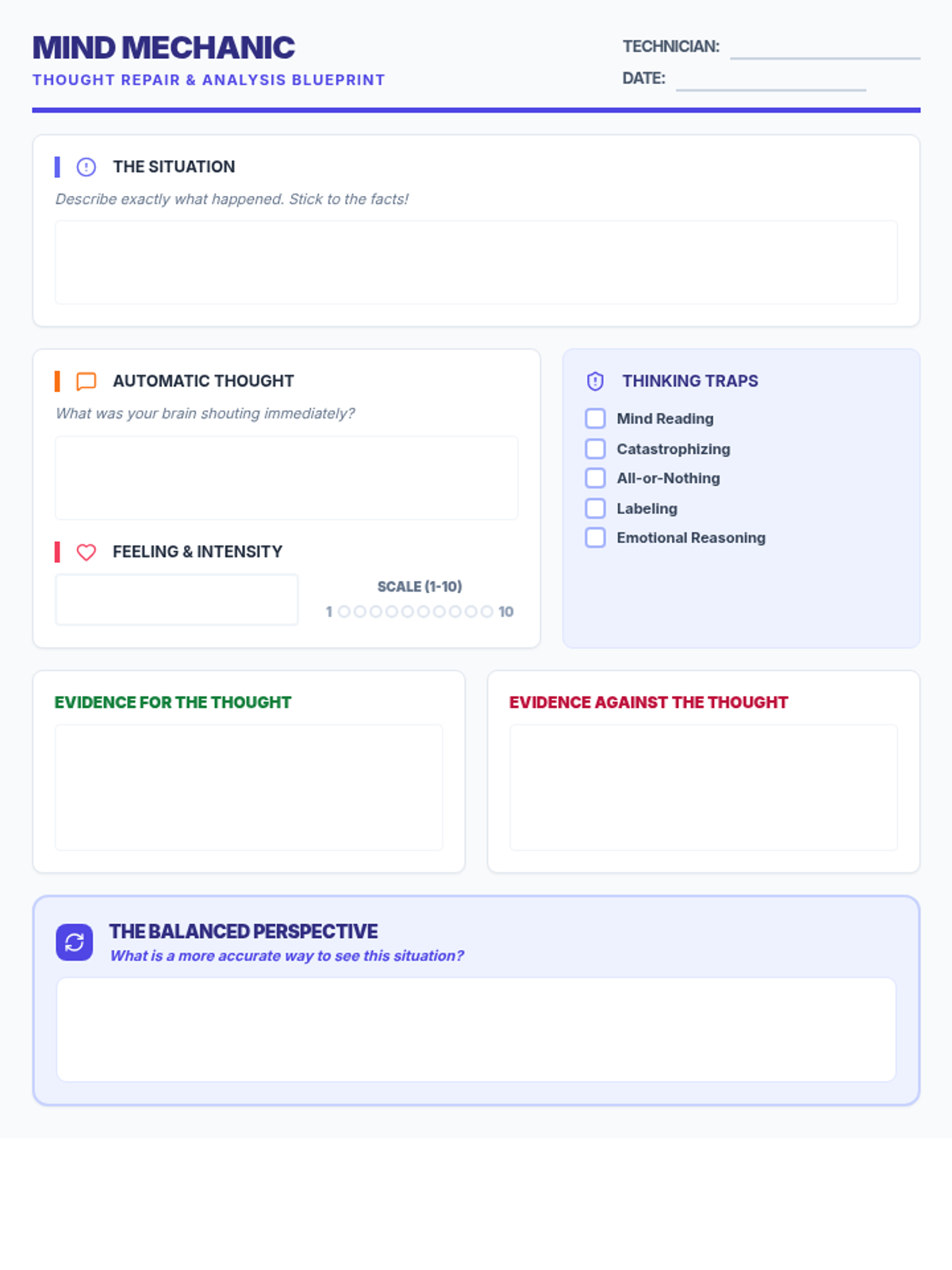
A detailed CBT processing sheet for students in grades 4-6, featuring 'Thinking Trap' identification, evidence gathering sections, and a balanced perspective area.
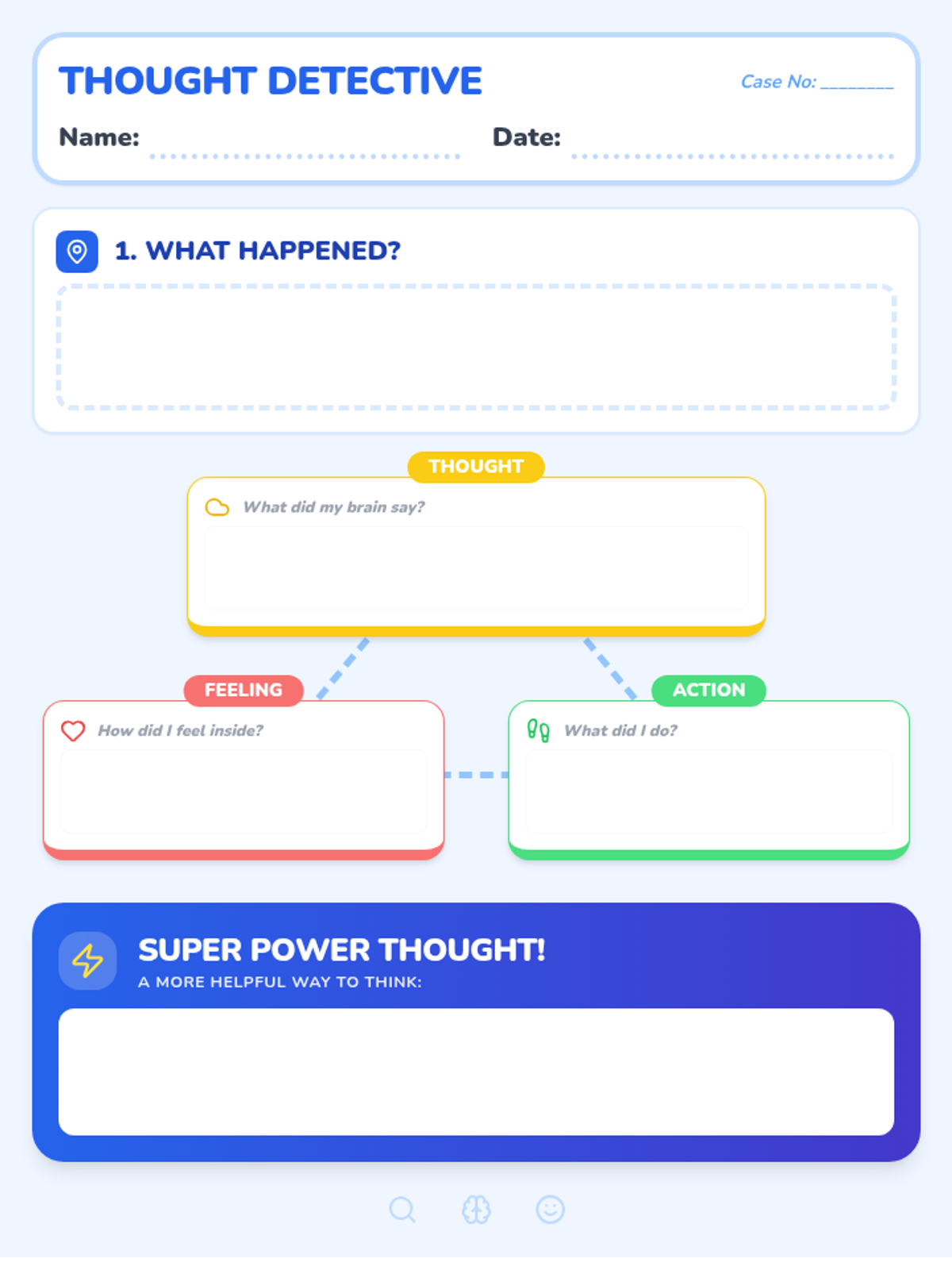
A visual CBT processing worksheet for K-3 students using a 'Thought Detective' theme to help them connect thoughts, feelings, and actions with simple icons and large work areas.
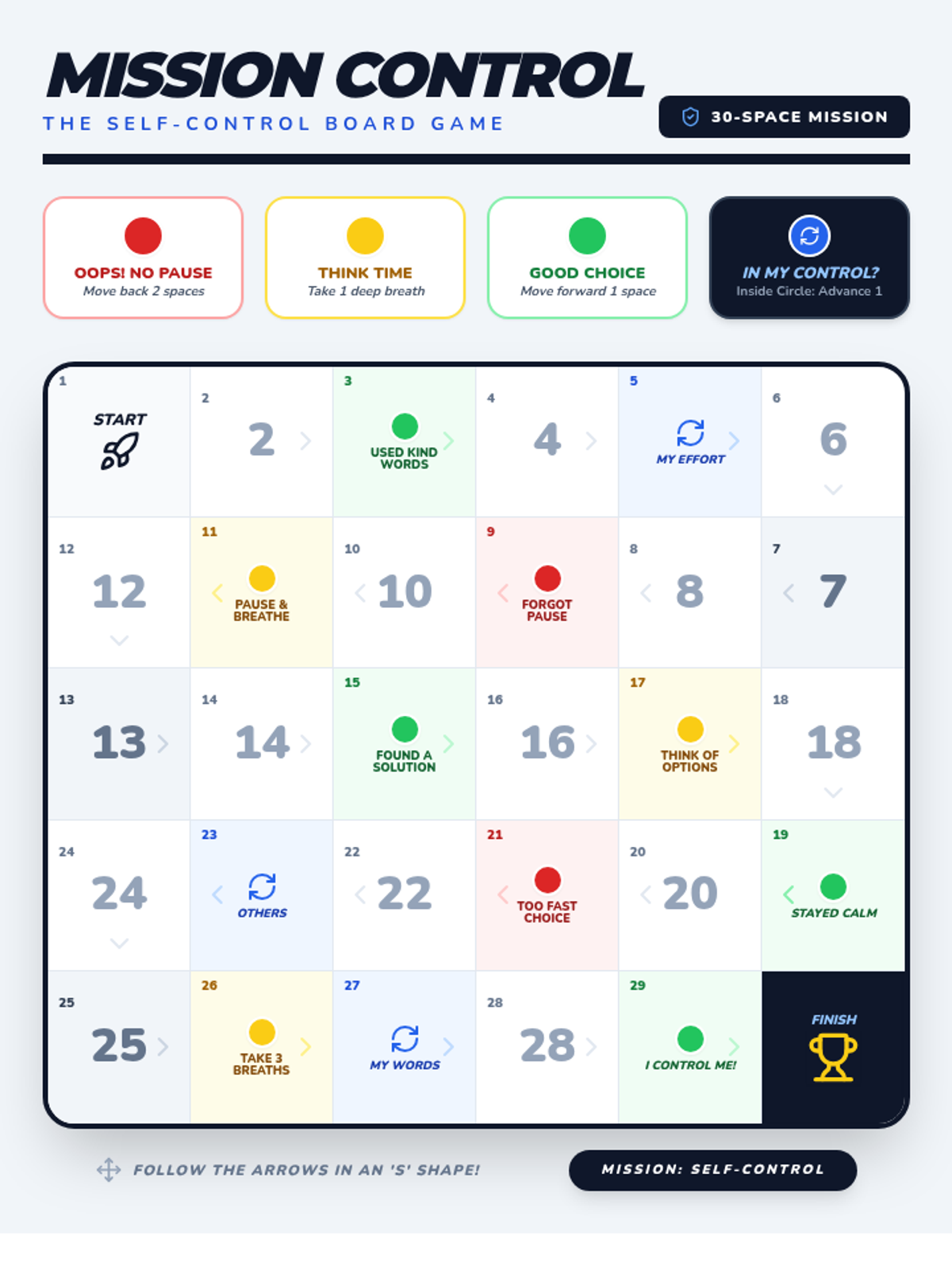
A 30-space printable board game for practicing self-control concepts. Includes Stoplight prompts and Circle of Control challenges to help students internalize lesson objectives through play.
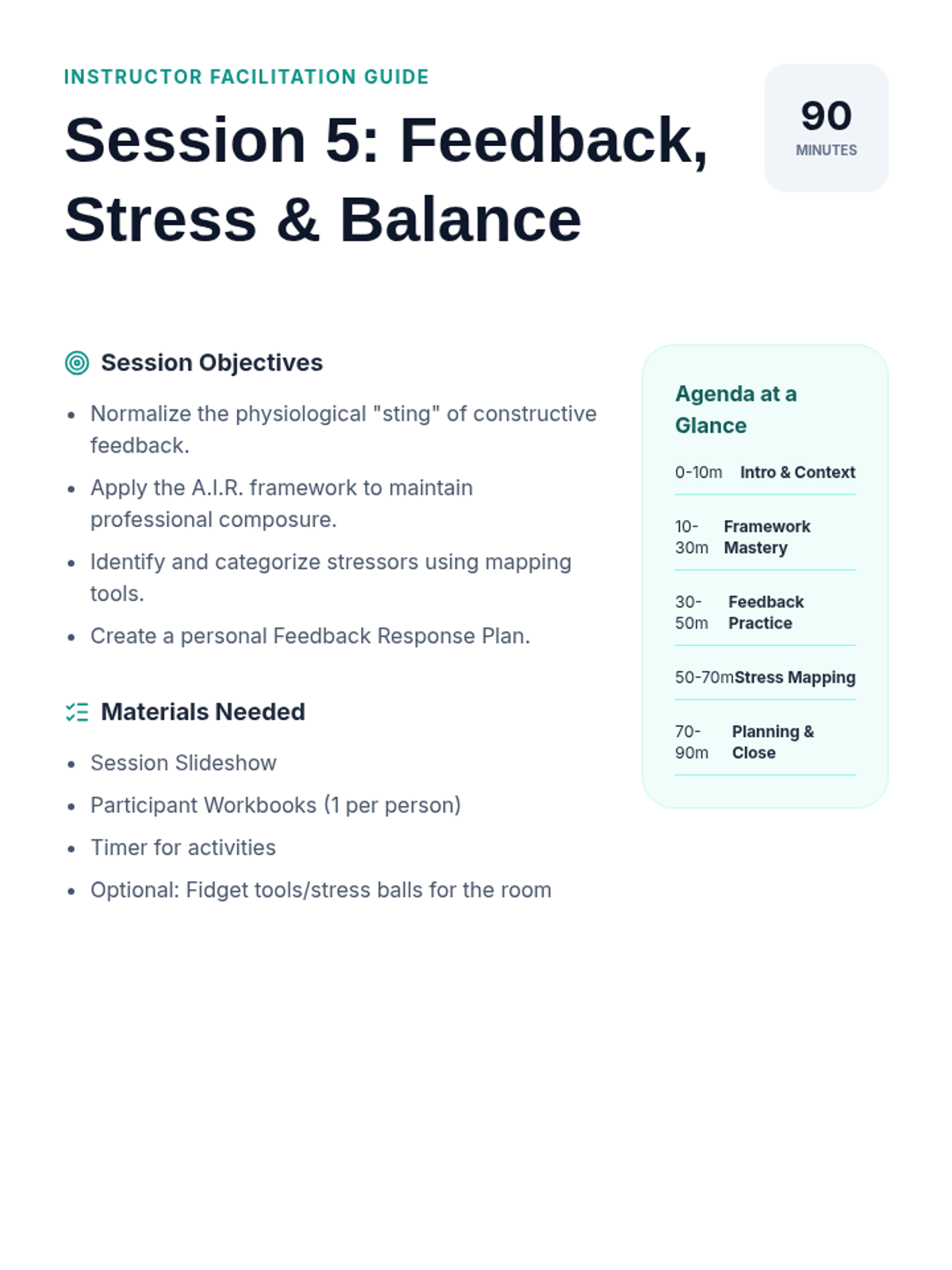
A 10-page facilitation guide featuring accessible scripts, simple time markers, and easy-to-follow instructions for guiding adults through the workshop.
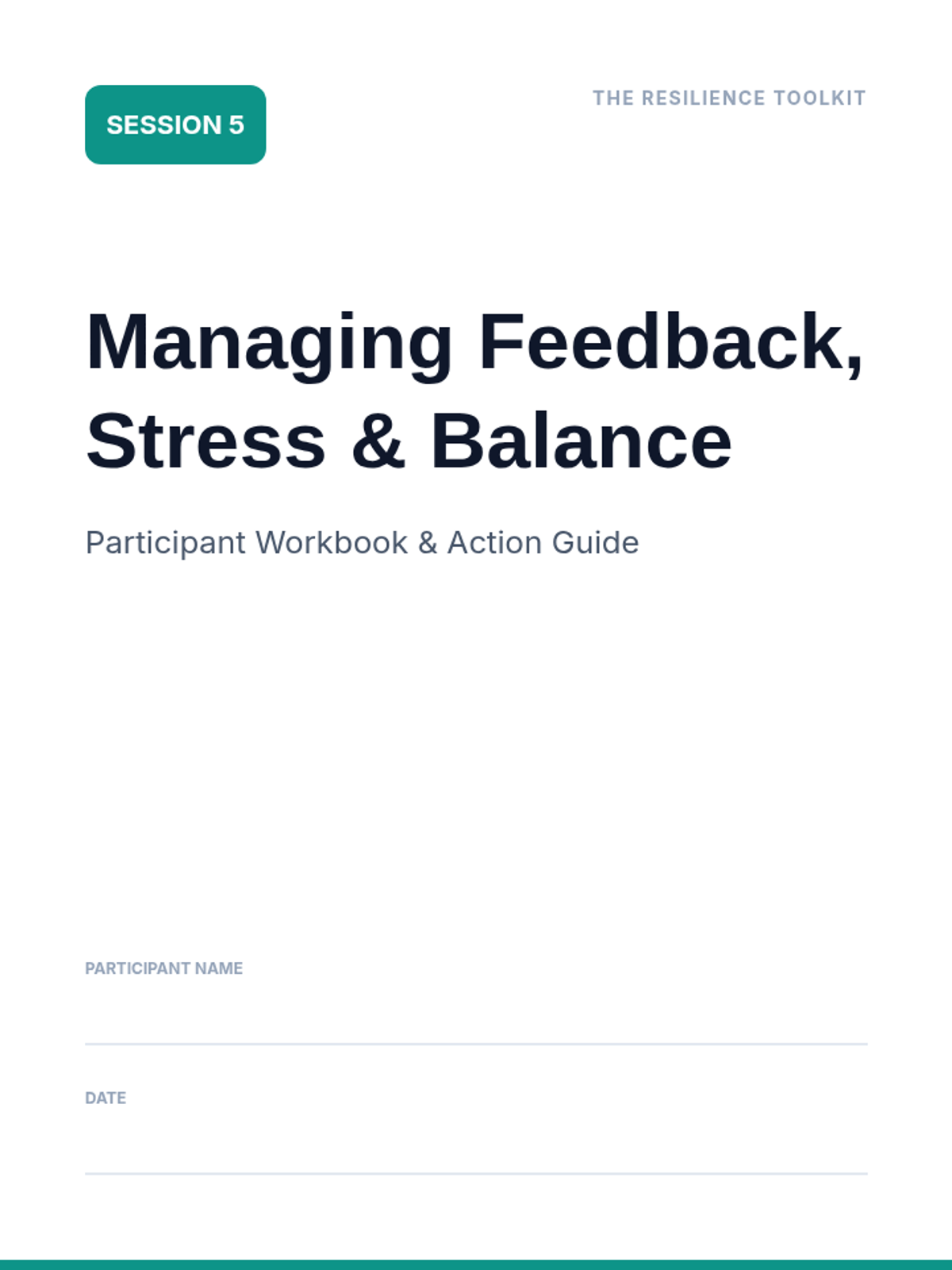
An 8-page participant workbook featuring "Safe Zone" tracking, thought-trap exercises, practice guides, and a personal balance plan using clear, accessible language.
A 13-slide visual presentation for Session 5, focusing on staying calm during feedback, identifying thought traps, and managing everyday stress using simple, accessible language.
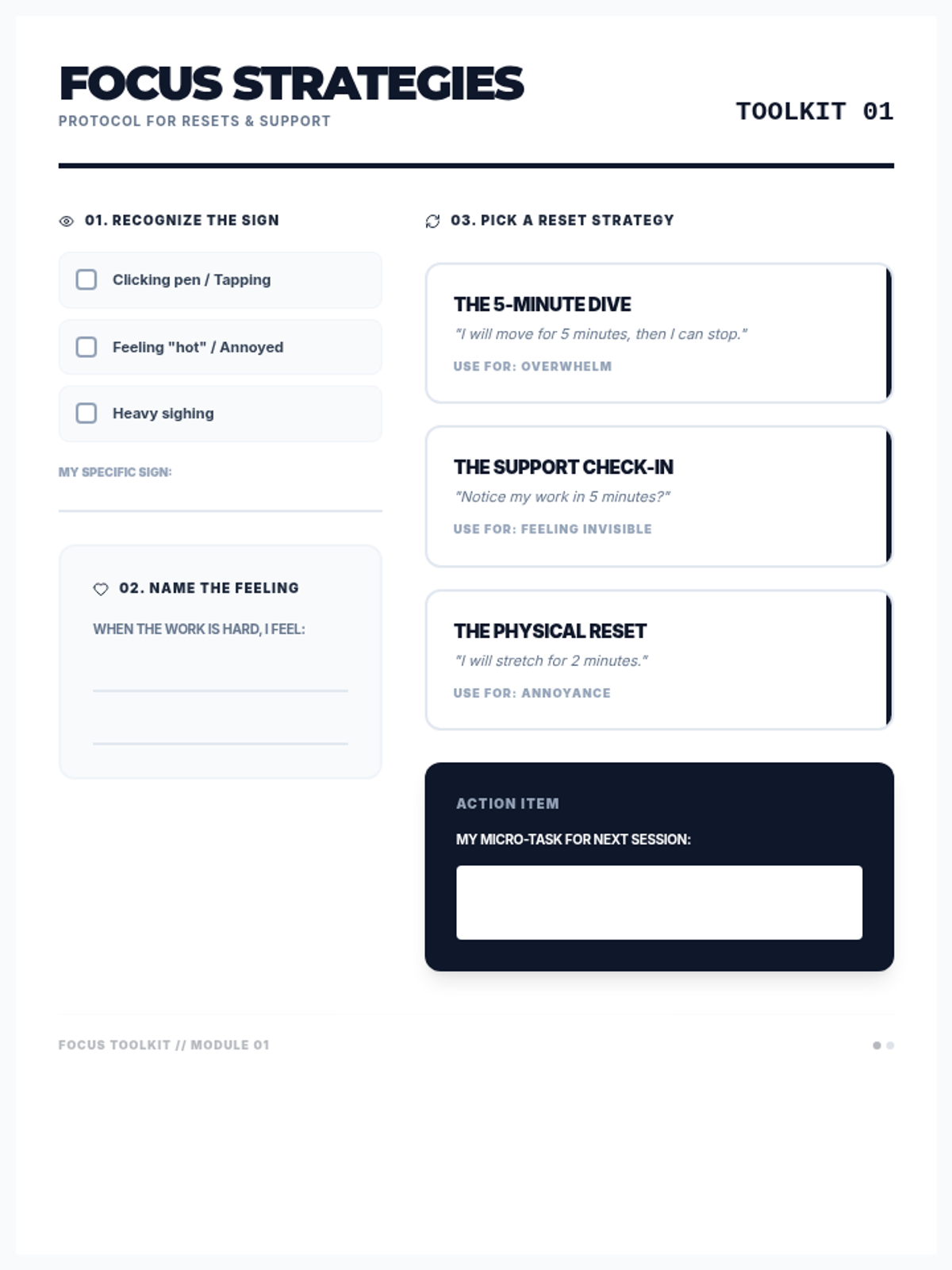
A grounded, non-cheesy reference handout for students. It includes a checklist for warning signs, a direct section for naming internal feelings, and three simple reset strategies. Corrected page break and work area contrast.
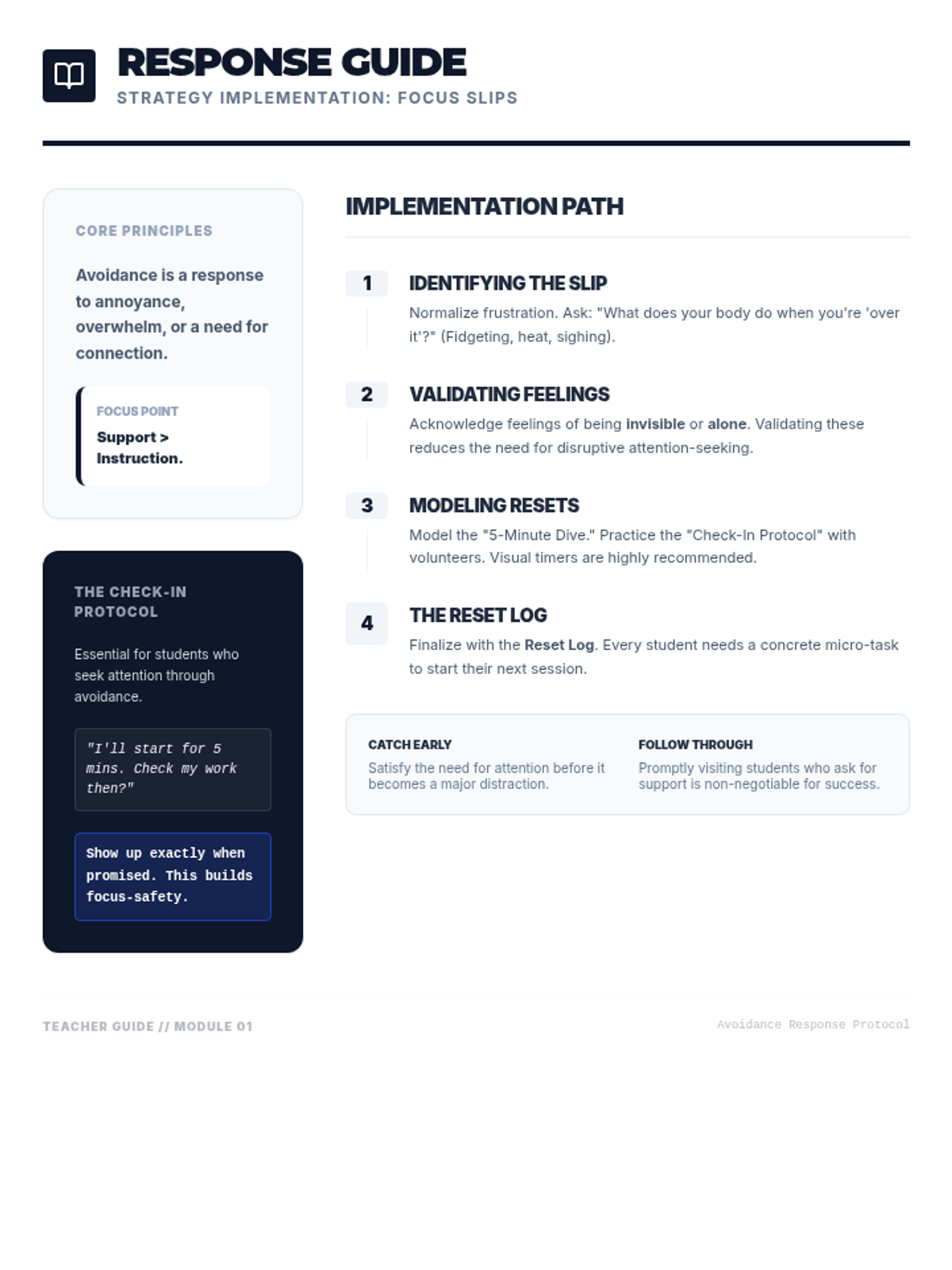
A professional facilitation guide for teachers on handling work avoidance. It emphasizes the 'Support Check-In' protocol and provides a clear instructional path for the lesson. Condenced to a single page. Corrected page break failure.
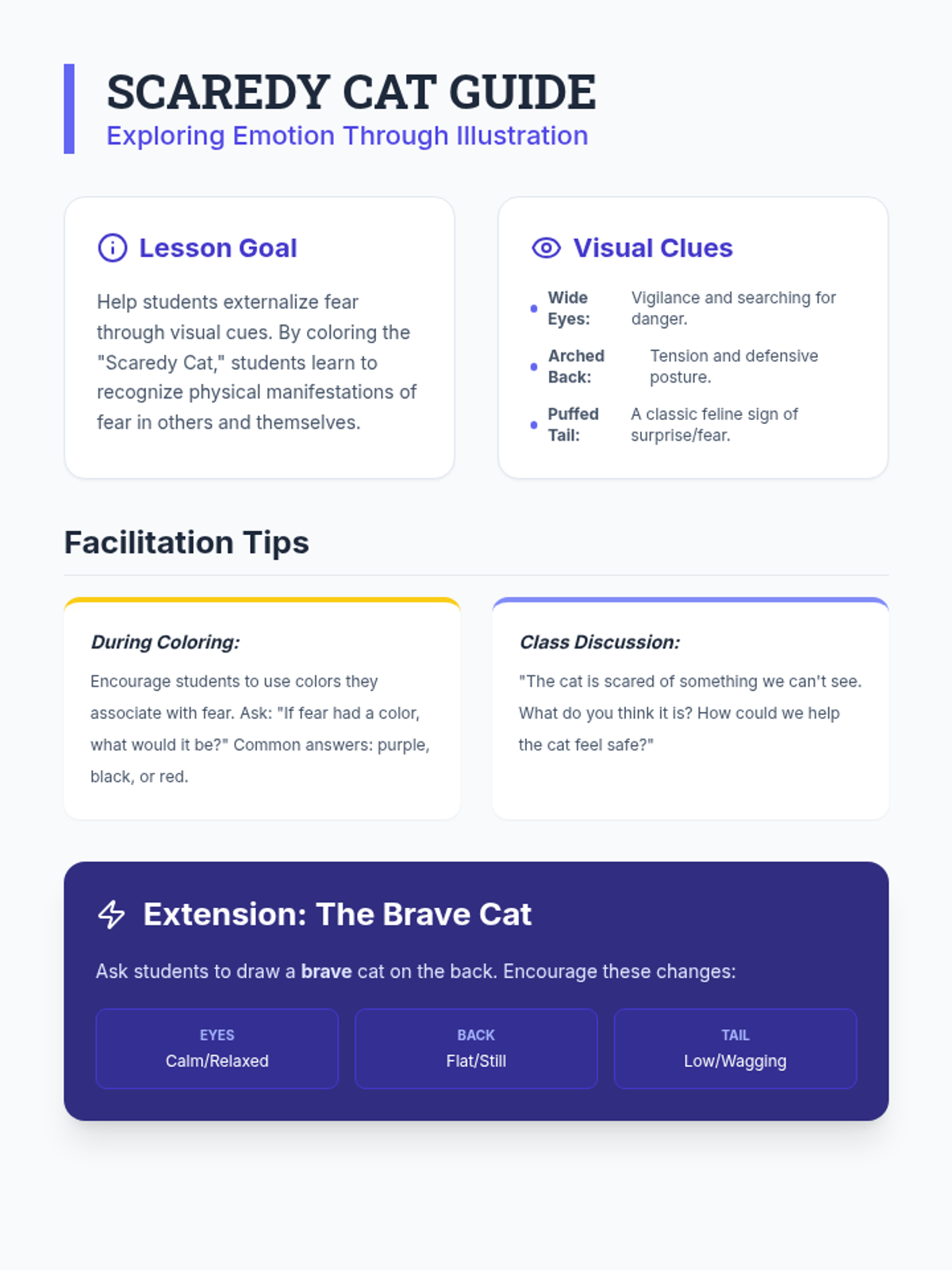
A facilitation guide for teachers using the line-art coloring page to help students identify and discuss the physical signs of fear. Revised for single-page layout.
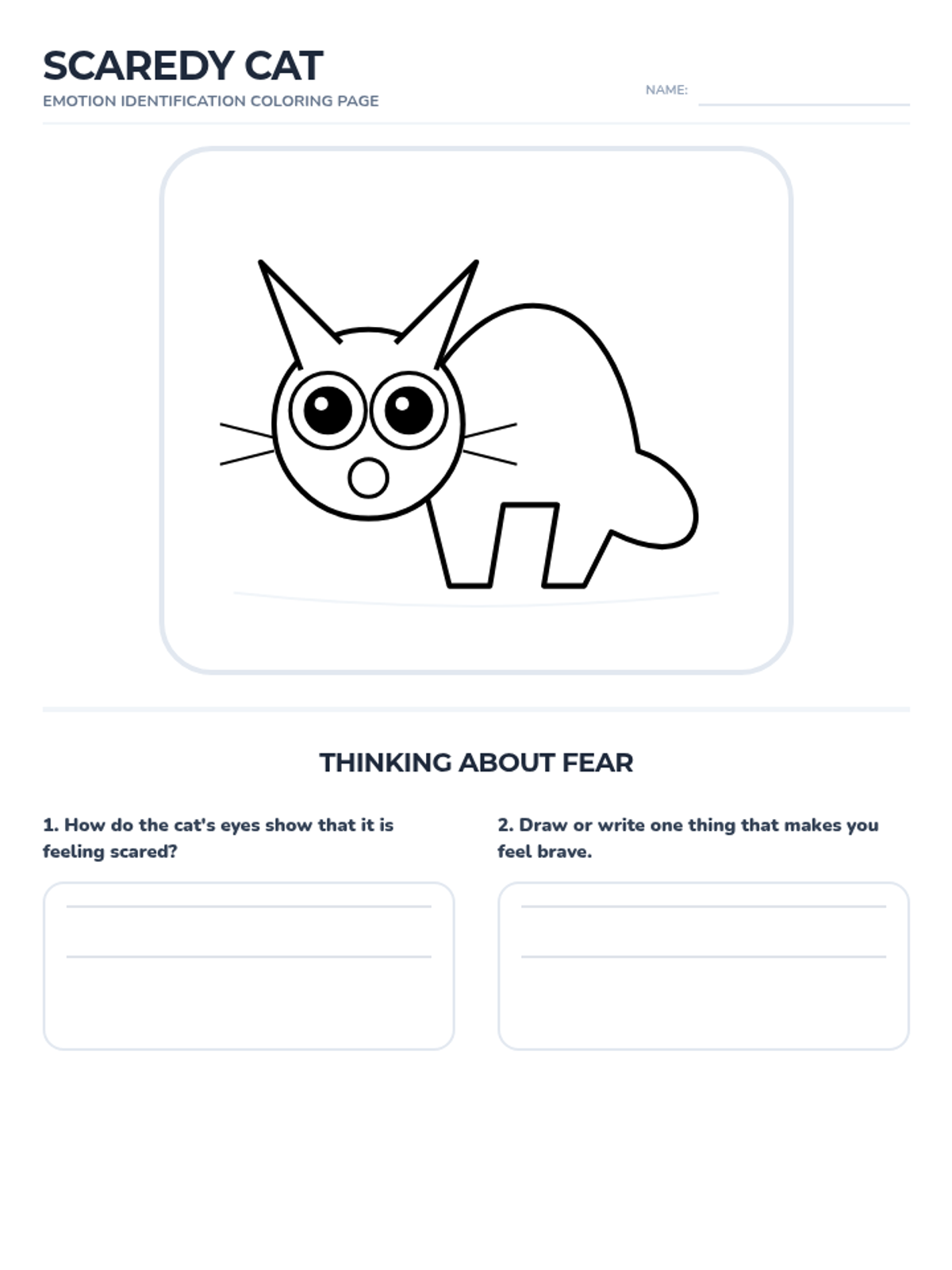
A standard coloring page featuring a 'Scaredy Cat' illustration with expressive features like big eyes and an arched back, designed for emotional identification. Revised for a professional, connected line-art style and expanded reflection areas.
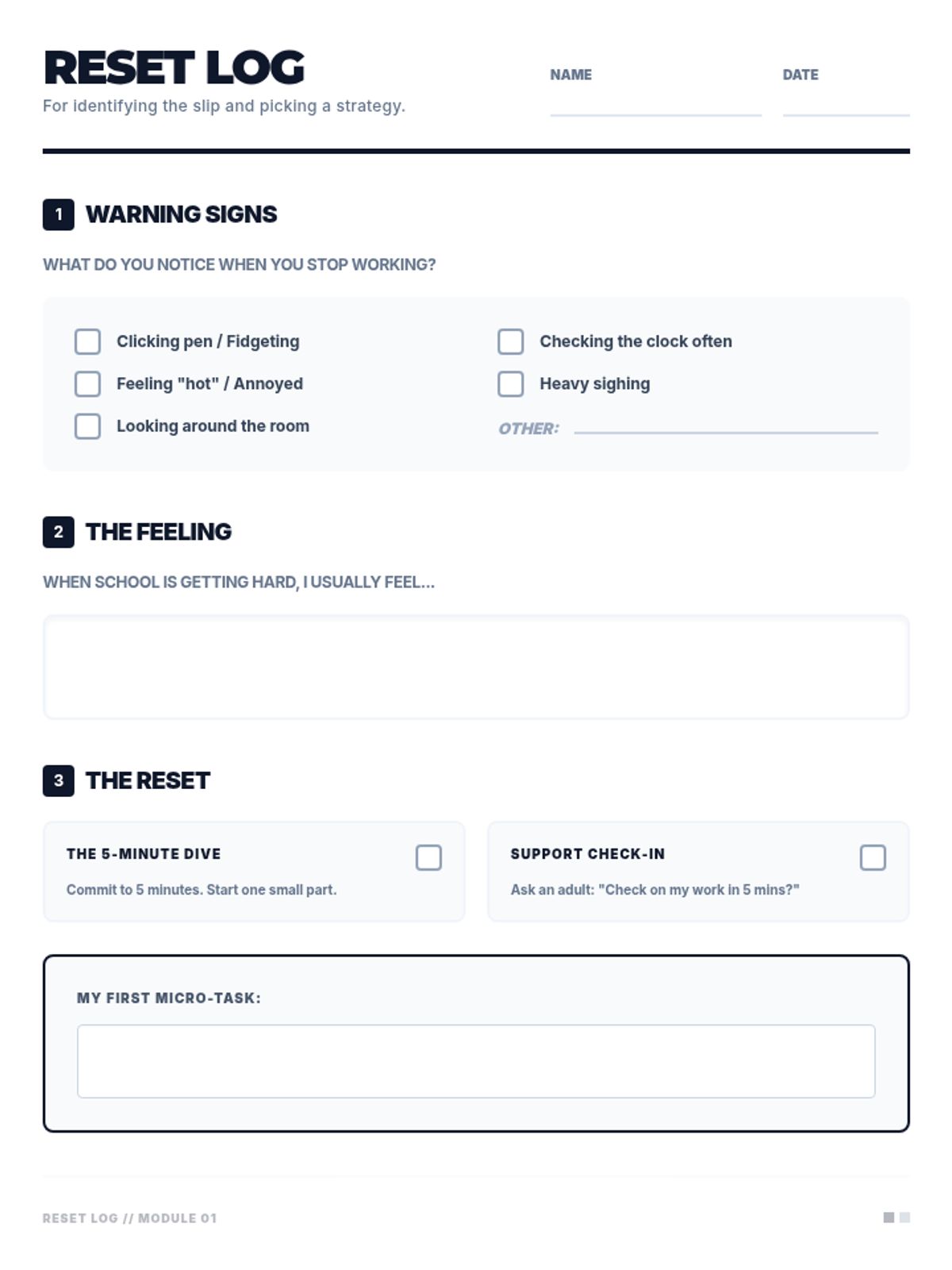
A clean, minimalist exit ticket for students to log their avoidance warning signs and select a reset strategy. Corrected page break and work area contrast. Increased work area visibility for student completion.
A direct, no-frills instructional slide deck that identifies the 'slip' into work avoidance. It focuses on authentic physical and emotional warning signs and provides two concrete strategies for resetting focus. Corrected spacing and contrast.
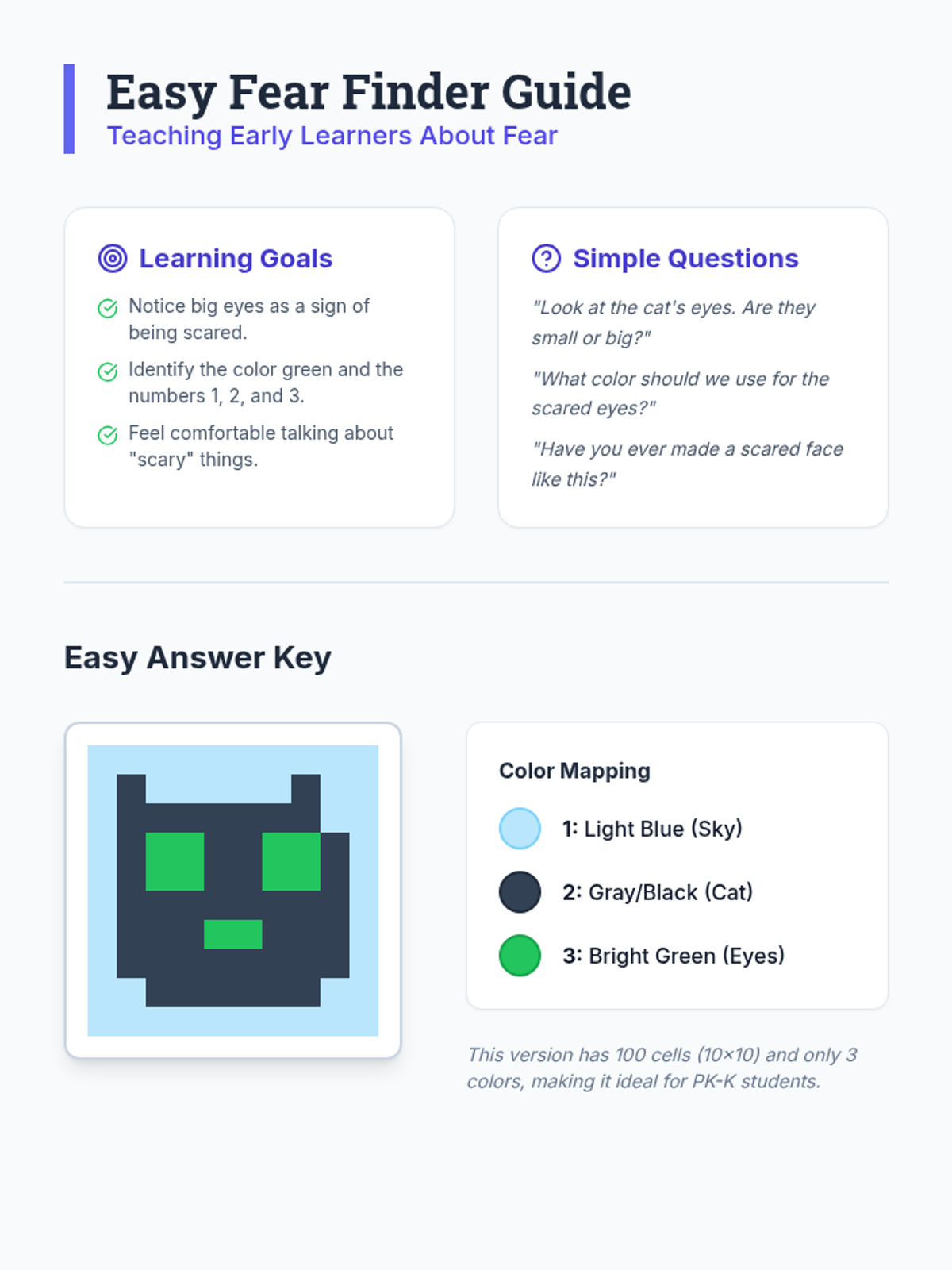
A teacher guide for the simplified 'Easy Scaredy Cat' activity, focusing on basic color/number recognition and introductory emotional awareness for early learners.
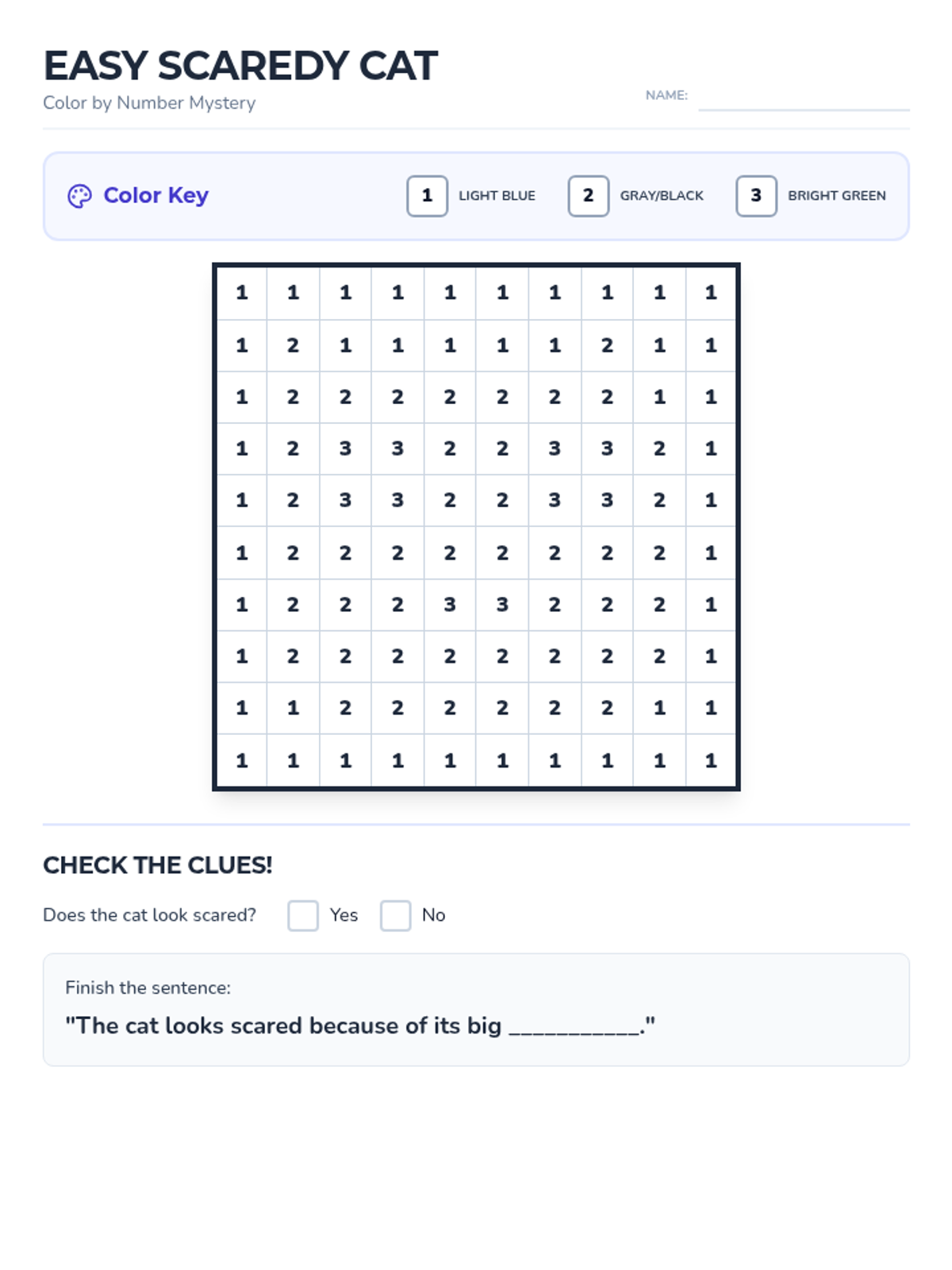
A simplified 10x10 color by number worksheet for early learners. Features a basic cat face with big, scared eyes and a reduced color palette to ensure success and build confidence. Revised for layout stability and high contrast.
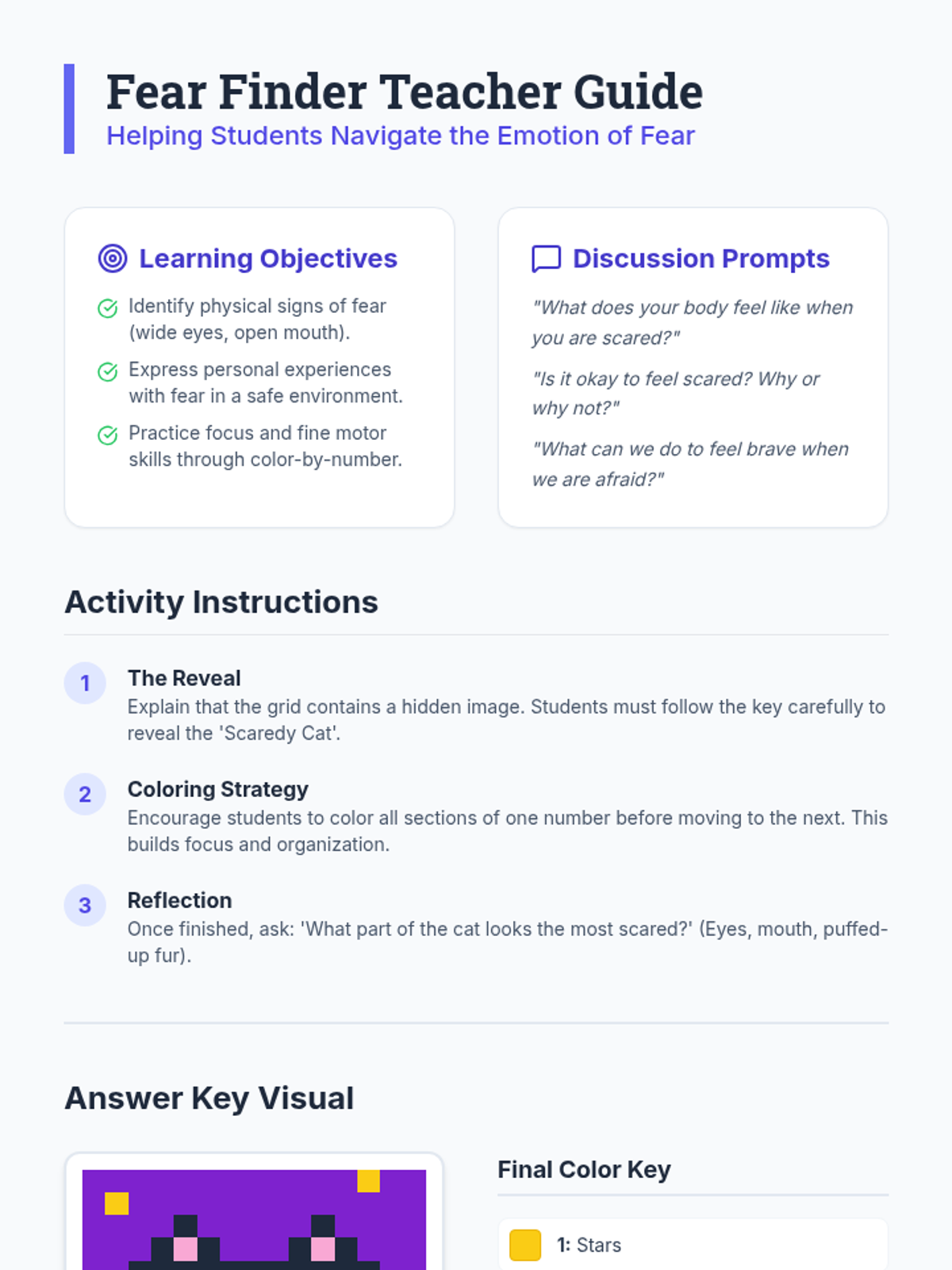
A comprehensive guide for teachers to facilitate a lesson on the emotion of fear, including learning objectives, discussion prompts, and a visual answer key. Revised for layout stability and complete content.
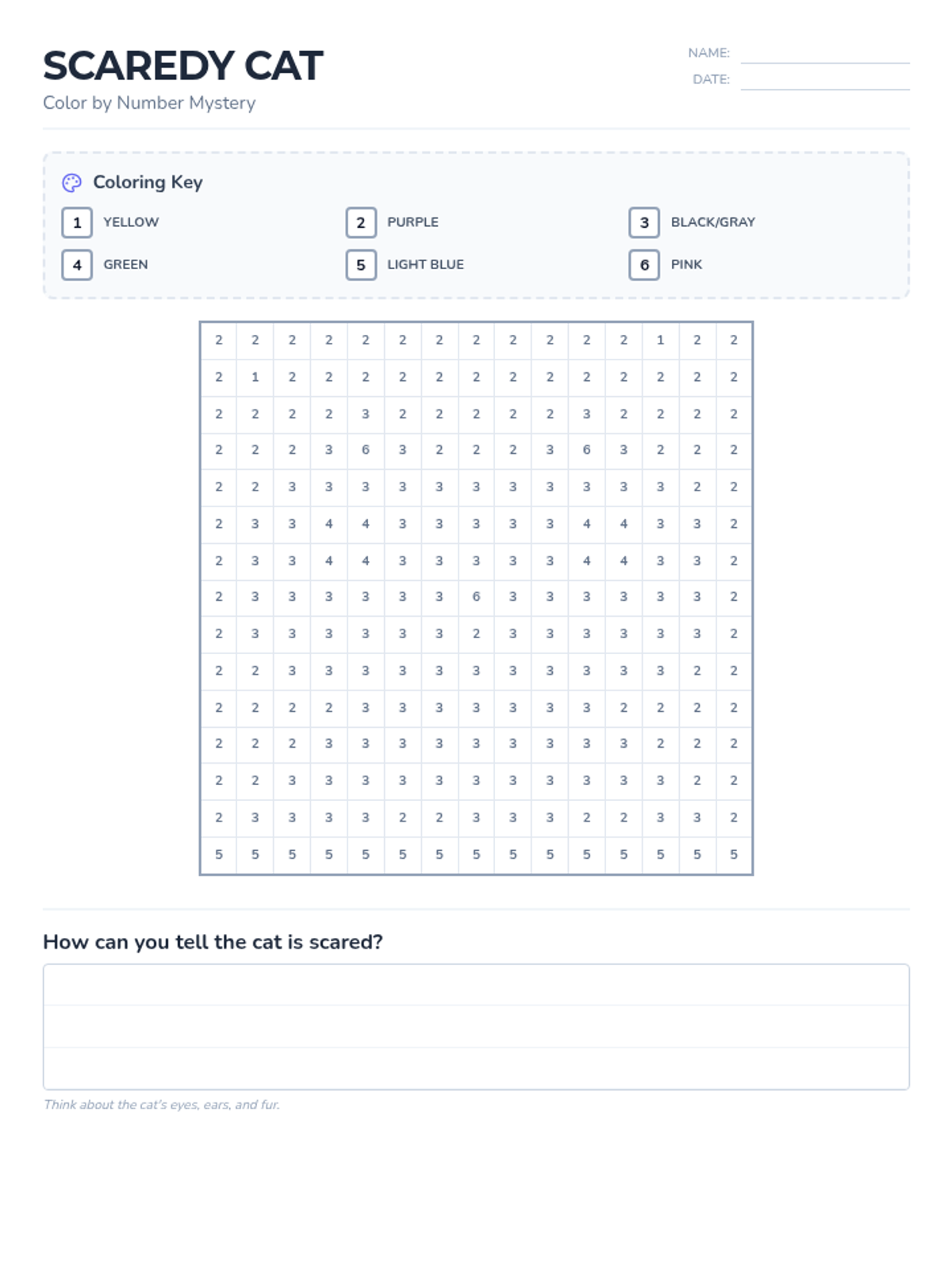
A pixel-art style color by number worksheet featuring a 'Scaredy Cat' to help students identify visual cues of the emotion scared. Re-engineered with stable table layouts and tightened spacing to ensure a single-page print.
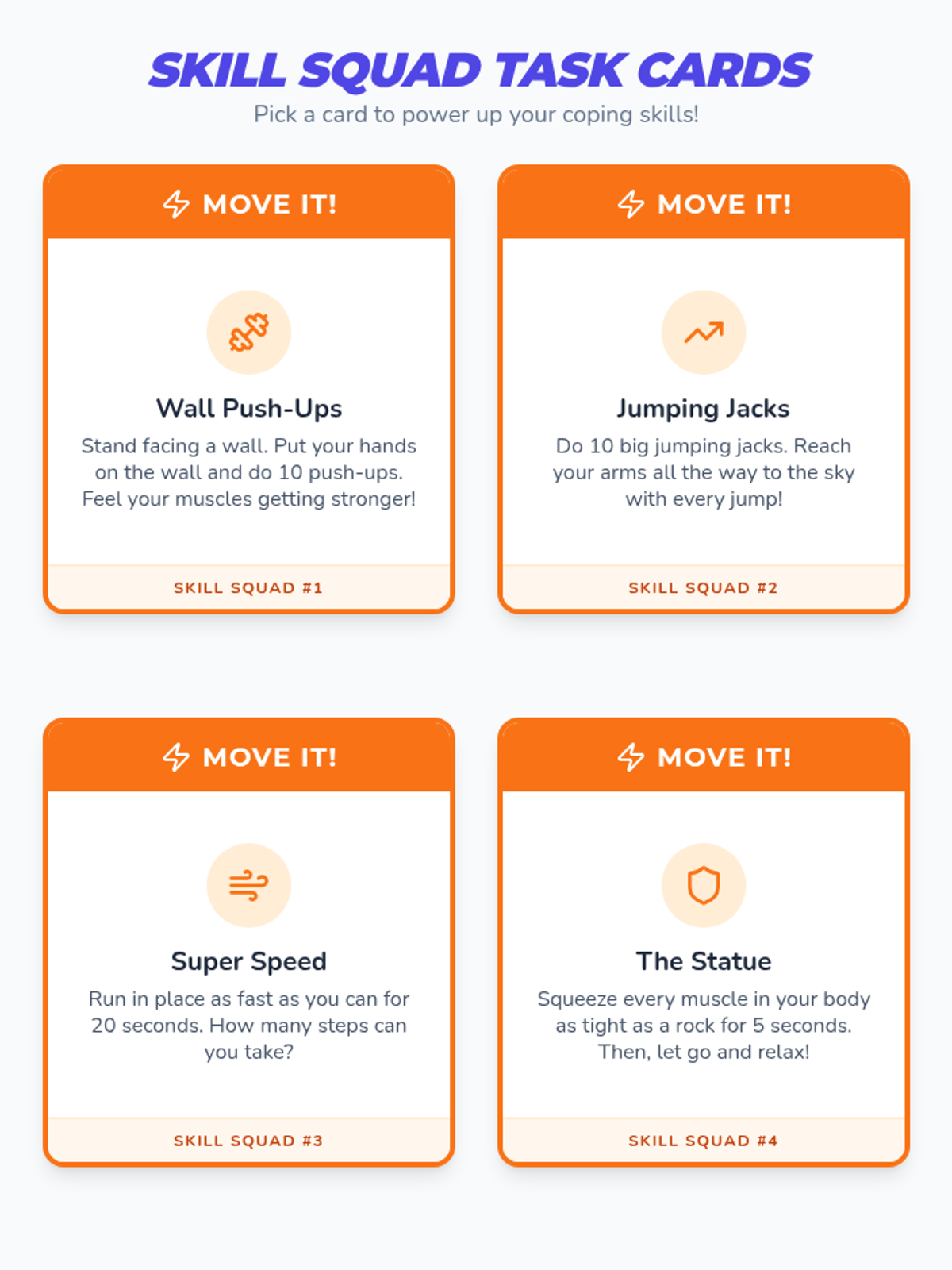
A set of 20 vibrant, printable task cards divided into four categories: Move It, Chill It, Think It, and Feel It. Each card features a specific coping skill activity designed for K-4 students.
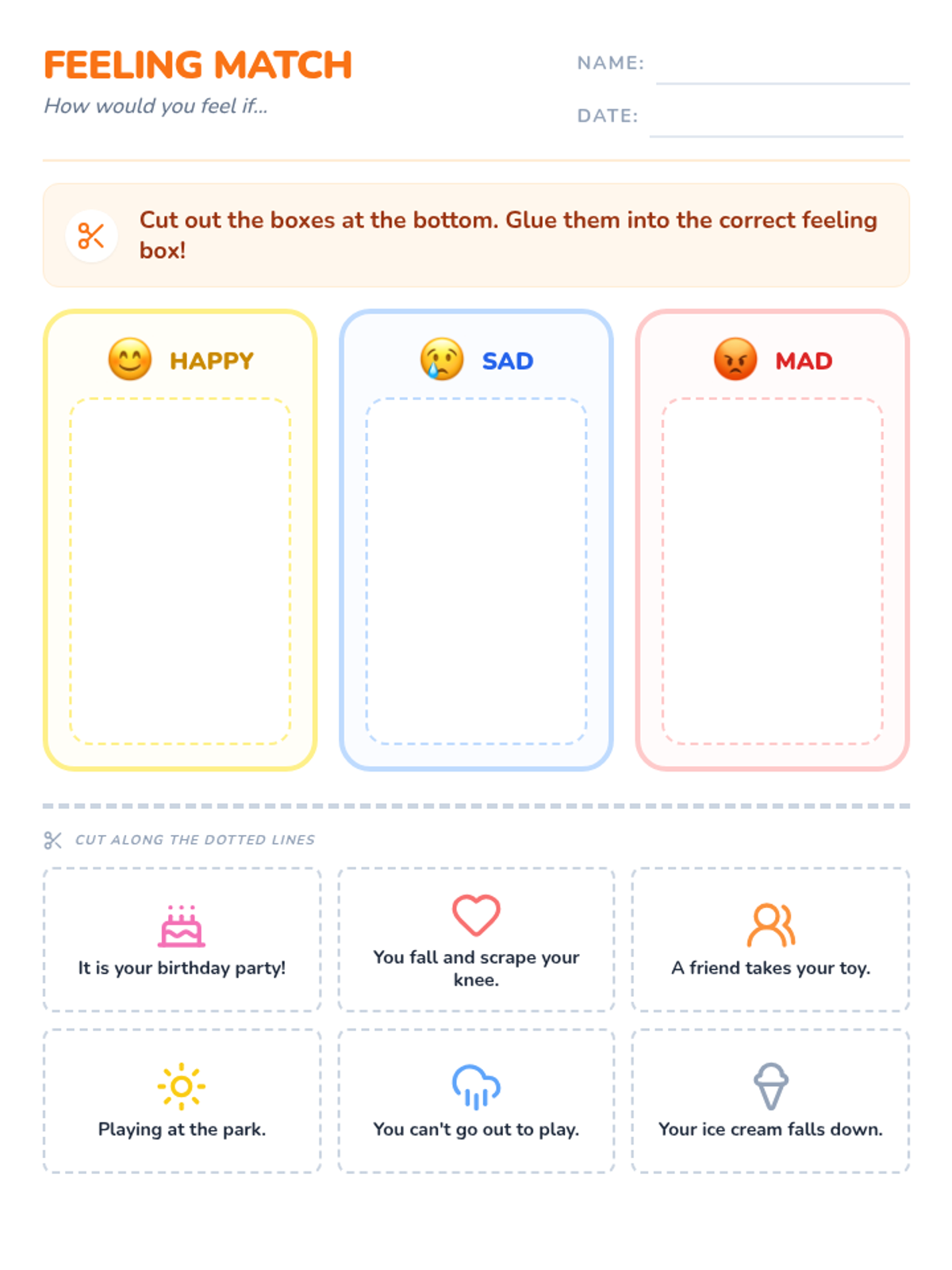
A cut-and-paste sorting worksheet where students match situations to the corresponding feeling.
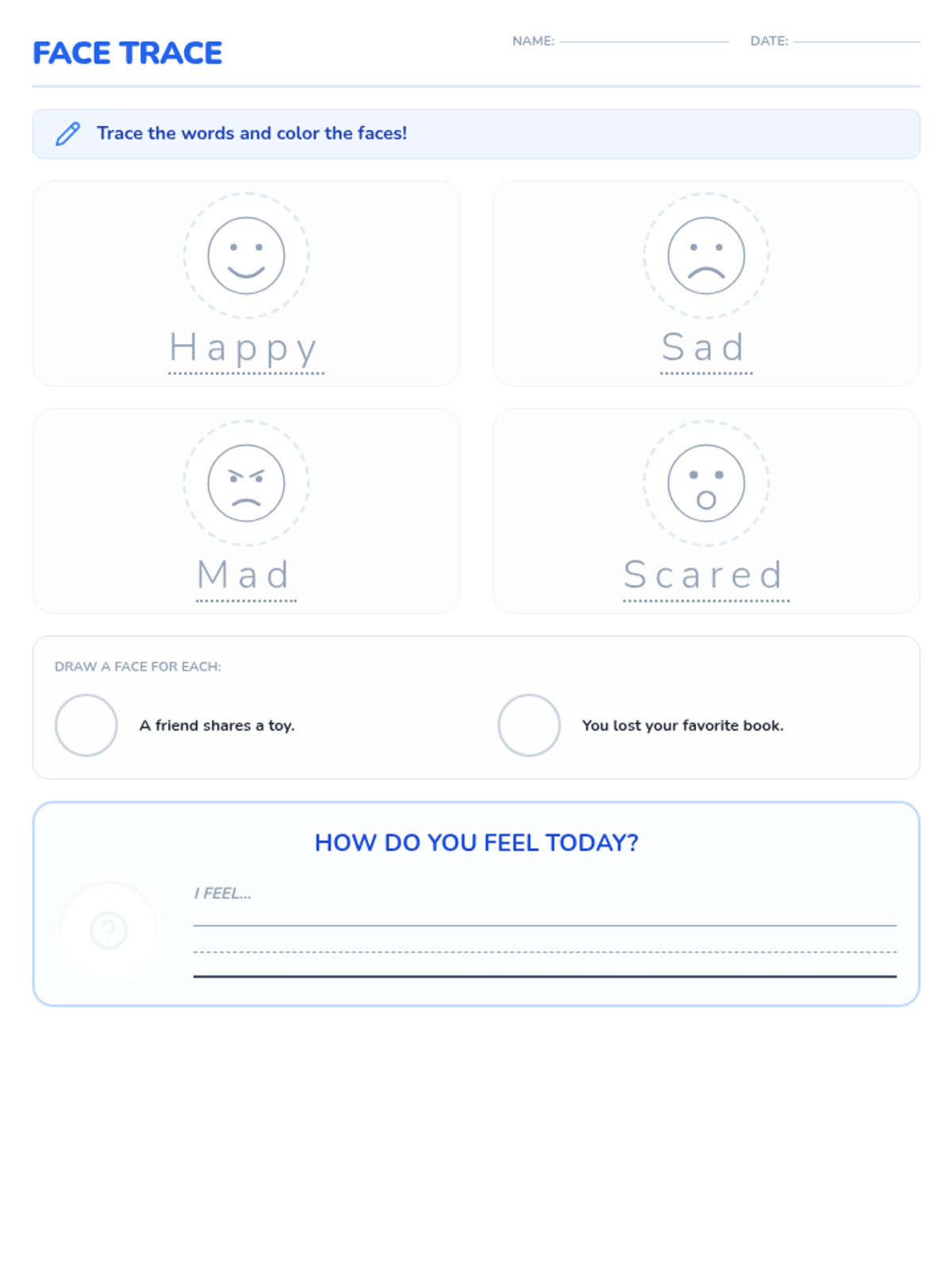
A tracing and coloring activity where students identify basic emotions and trace their names.
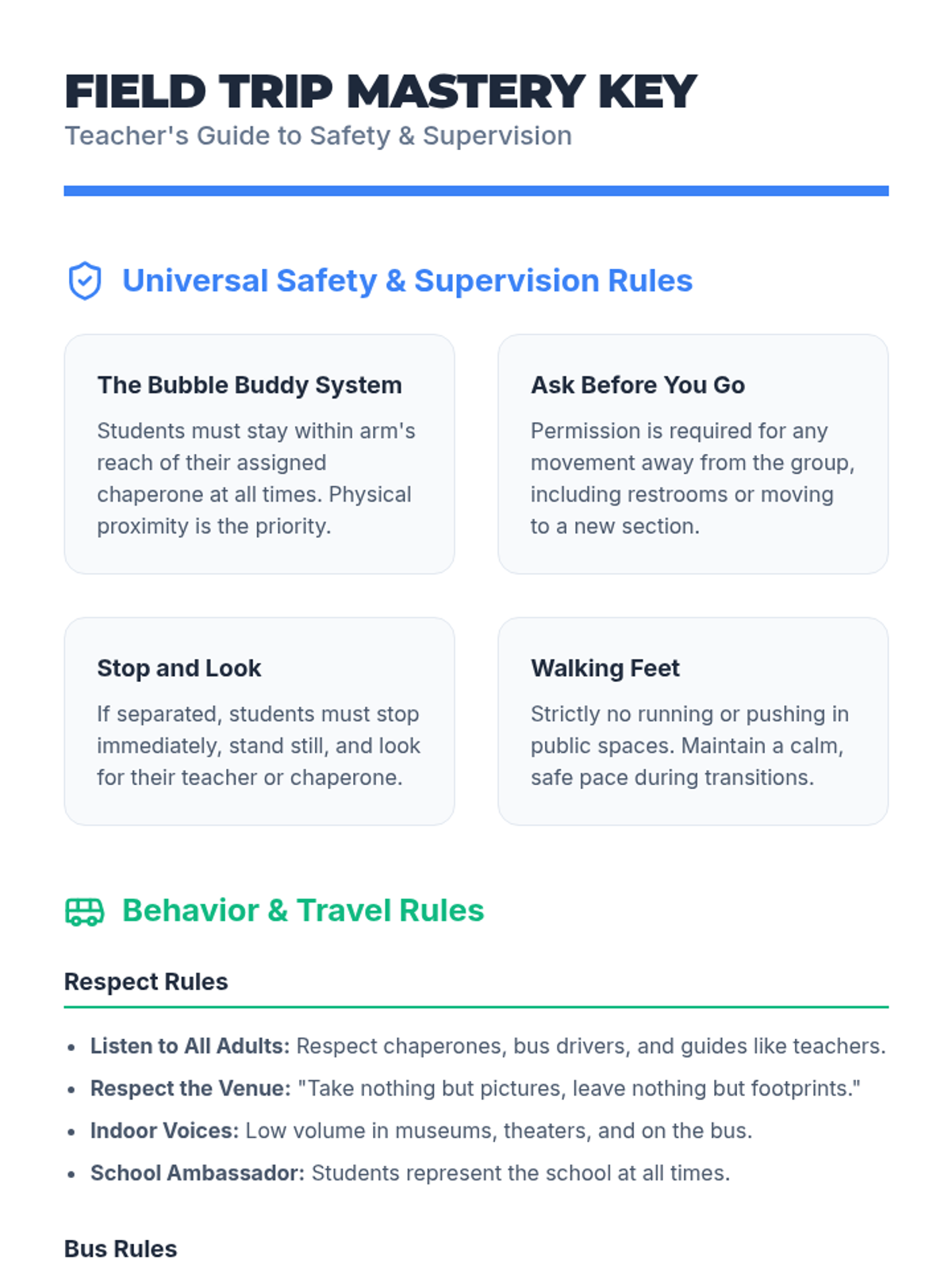
A teacher-facing guide outlining key safety protocols, discussion prompts, and briefing scripts for field trips.
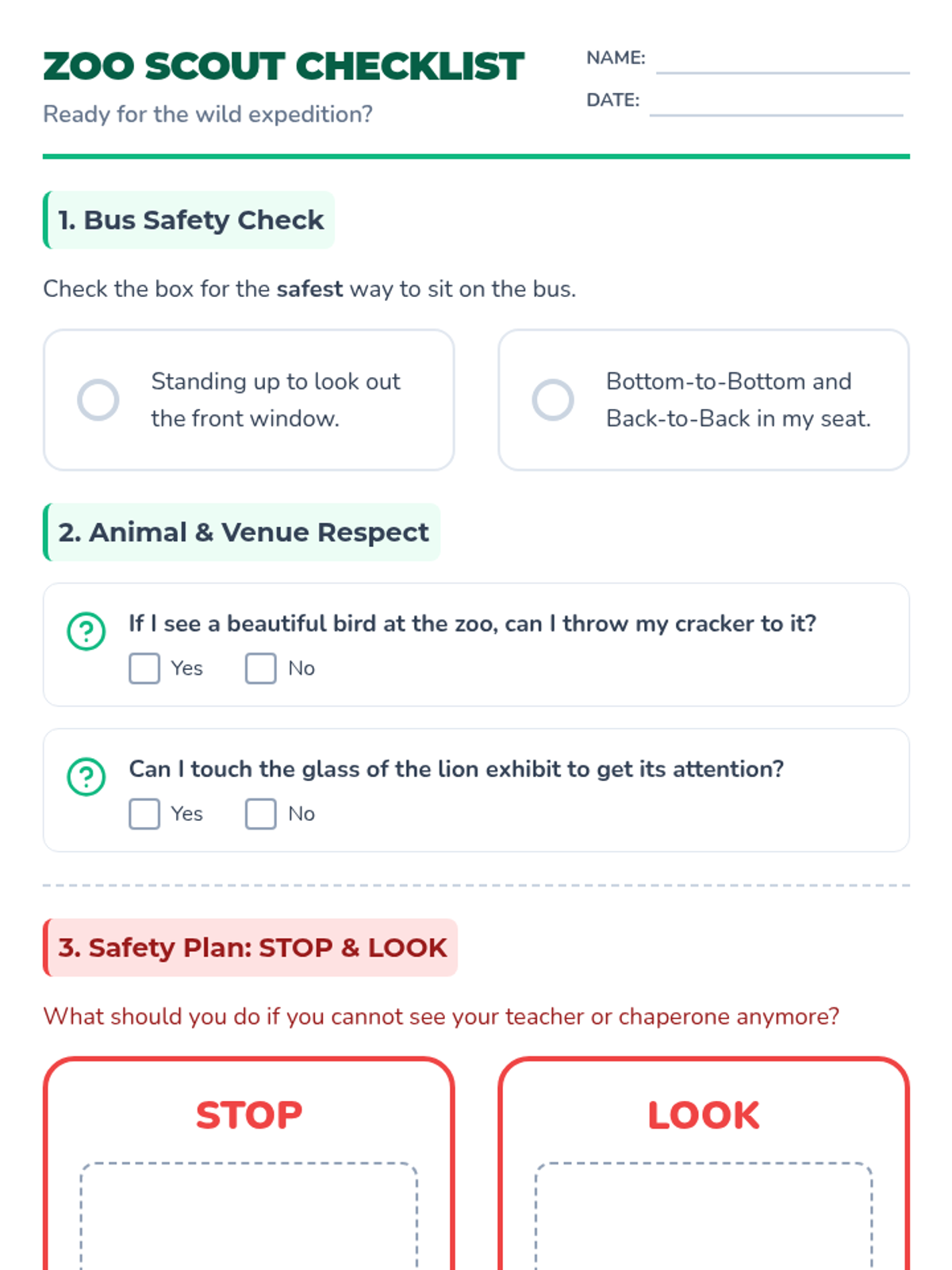
A student worksheet focused on zoo-specific expectations, including bus safety, animal respect, and the 'Stop and Look' safety procedure.