A lesson for kindergarten students to identify and distinguish between good and bad manners in various social settings like the playground, classroom, and lunchroom.
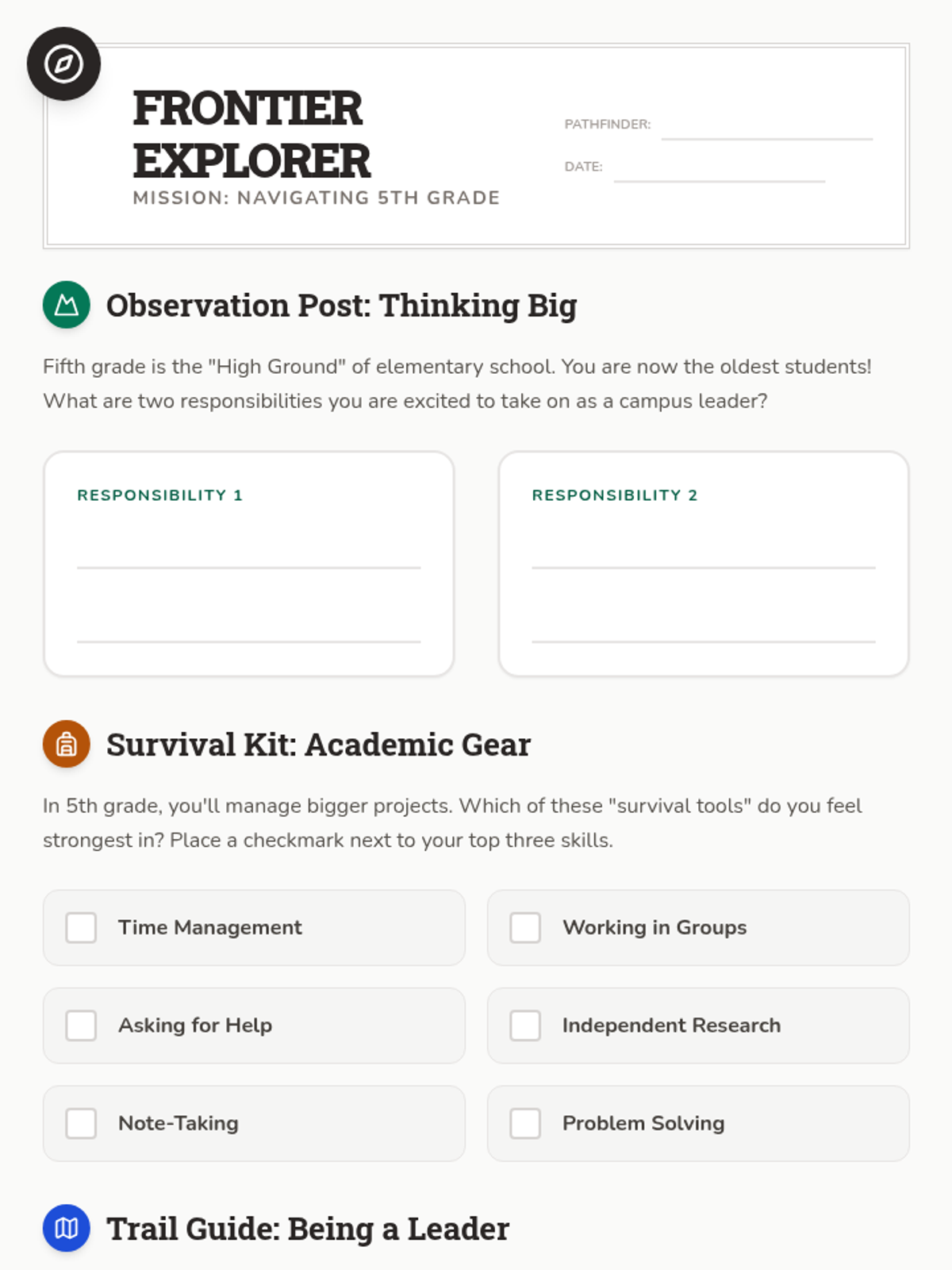
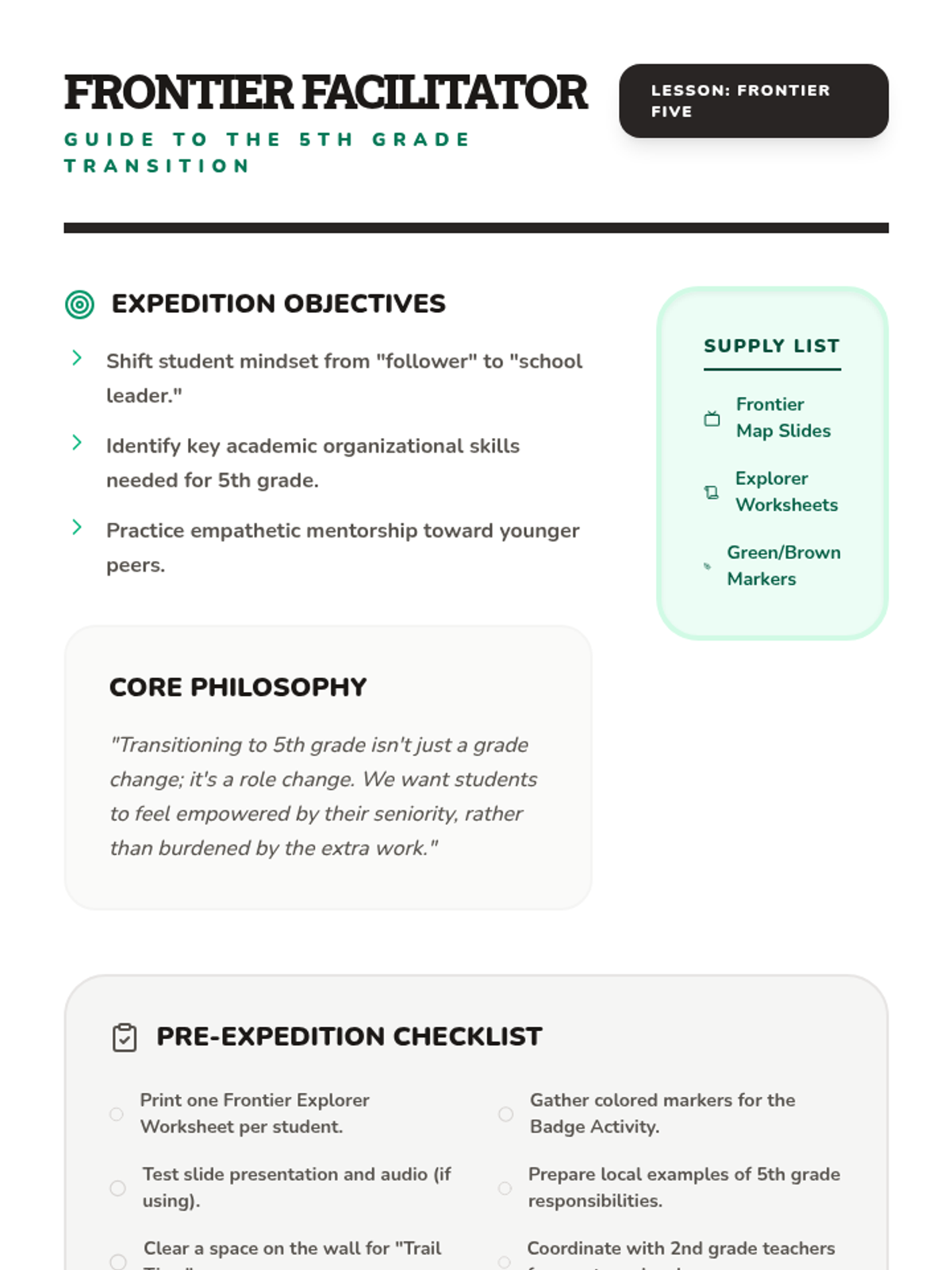
A transition lesson for 4th graders moving into 5th grade, focusing on the shift to being 'the big kids' on campus, increased academic independence, and leadership roles.
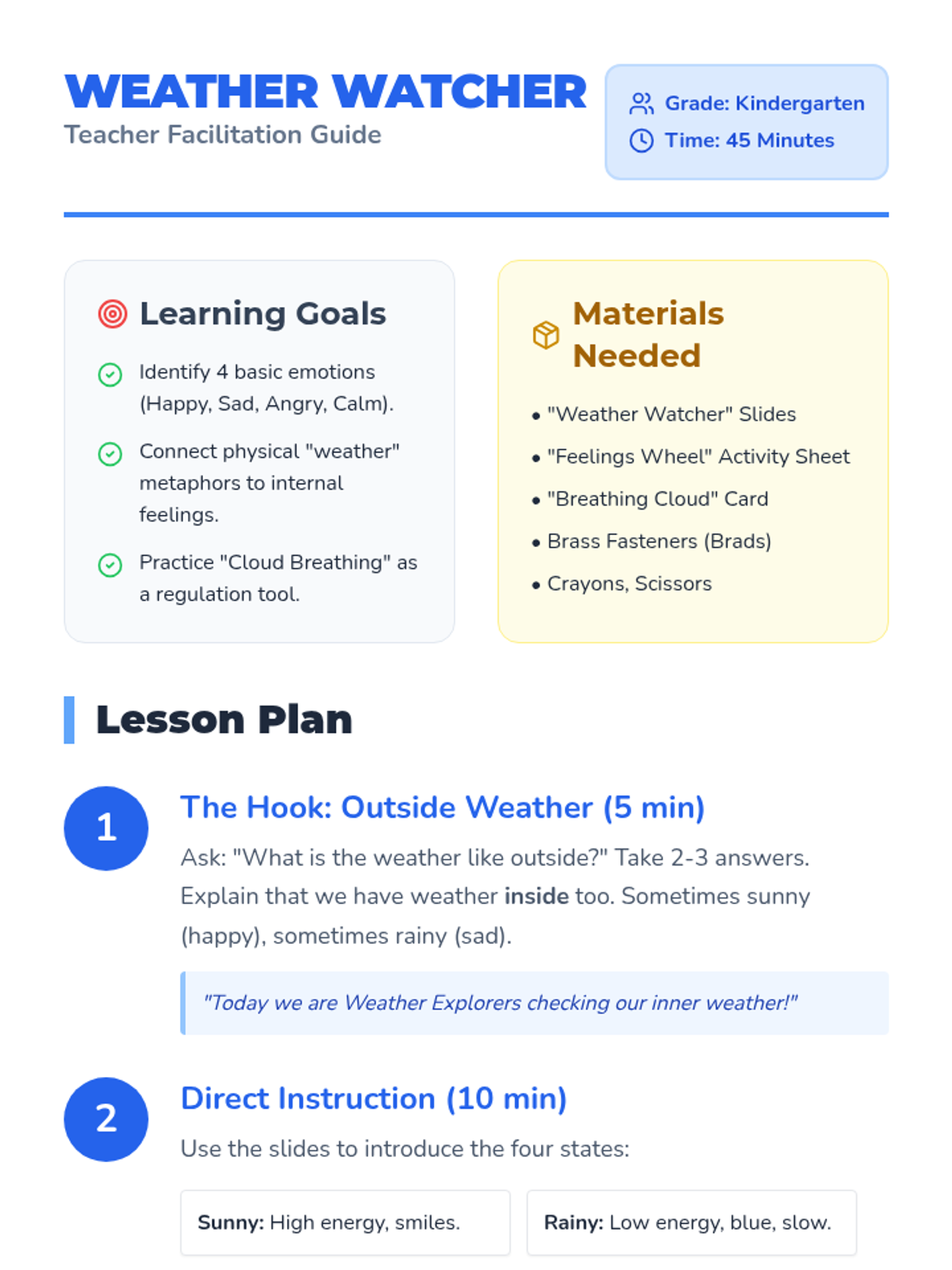
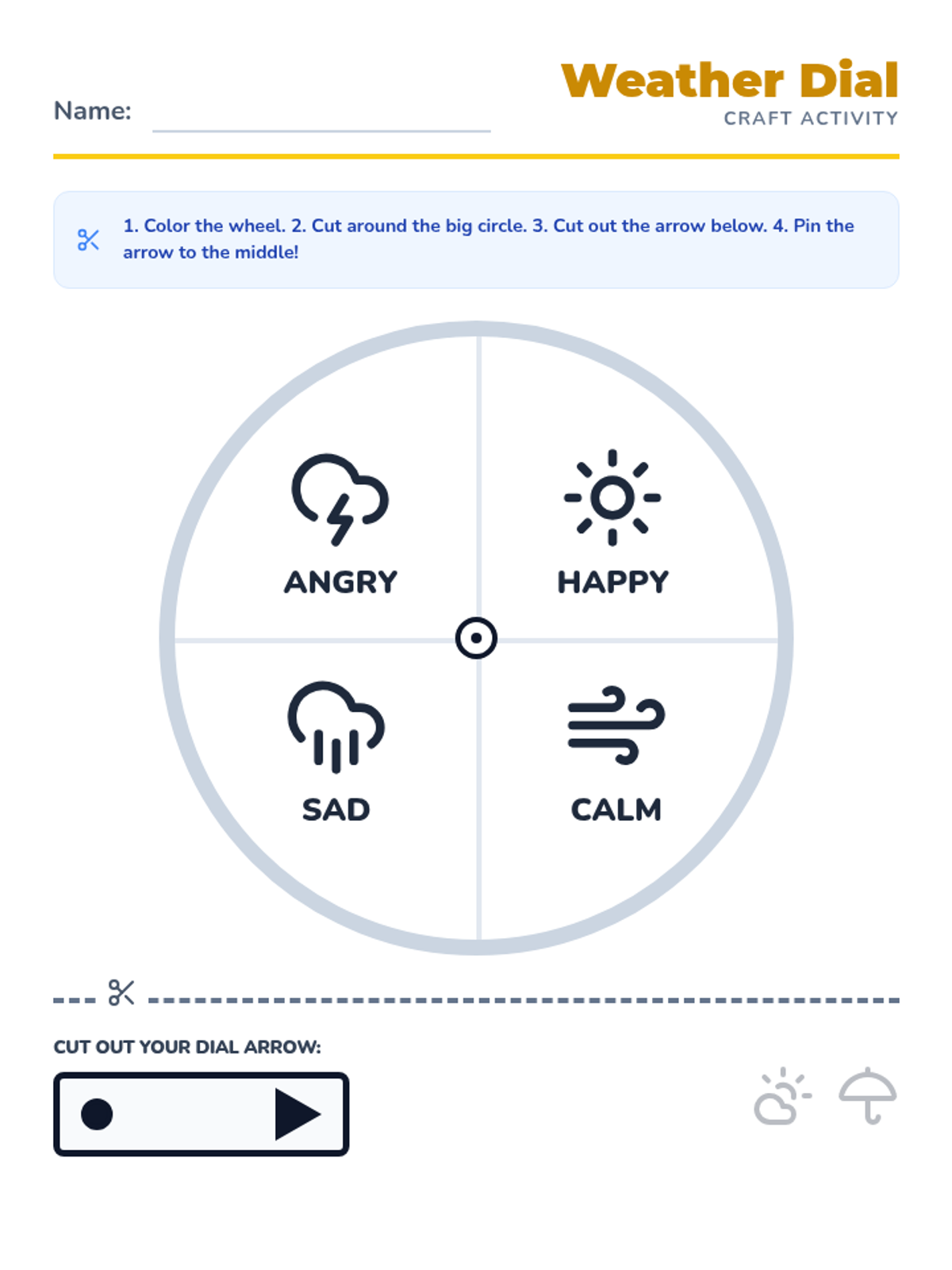
A social-emotional learning lesson for kindergarteners that uses the metaphor of 'inner weather' to help students identify, understand, and regulate their emotions through hands-on activities.
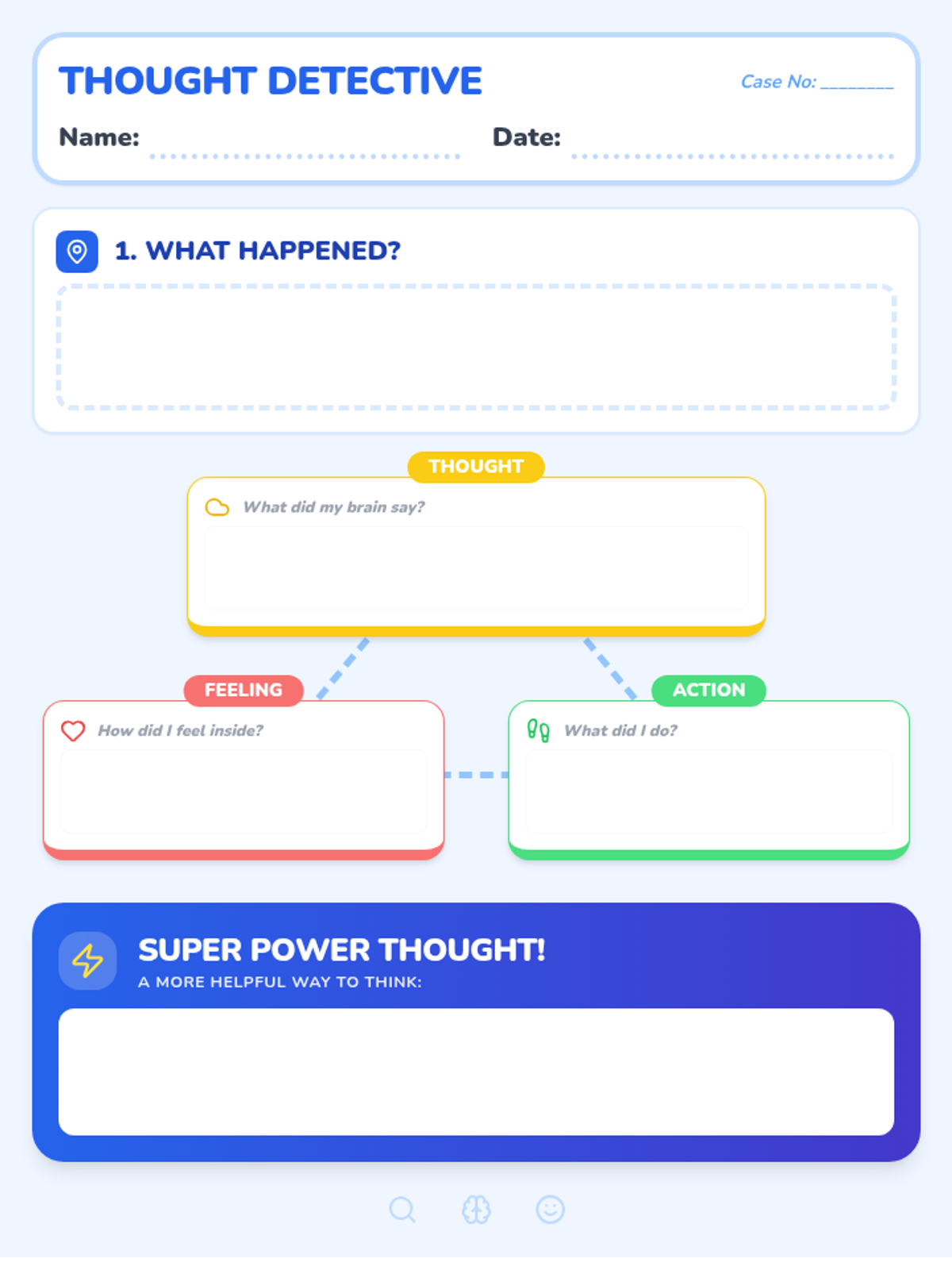
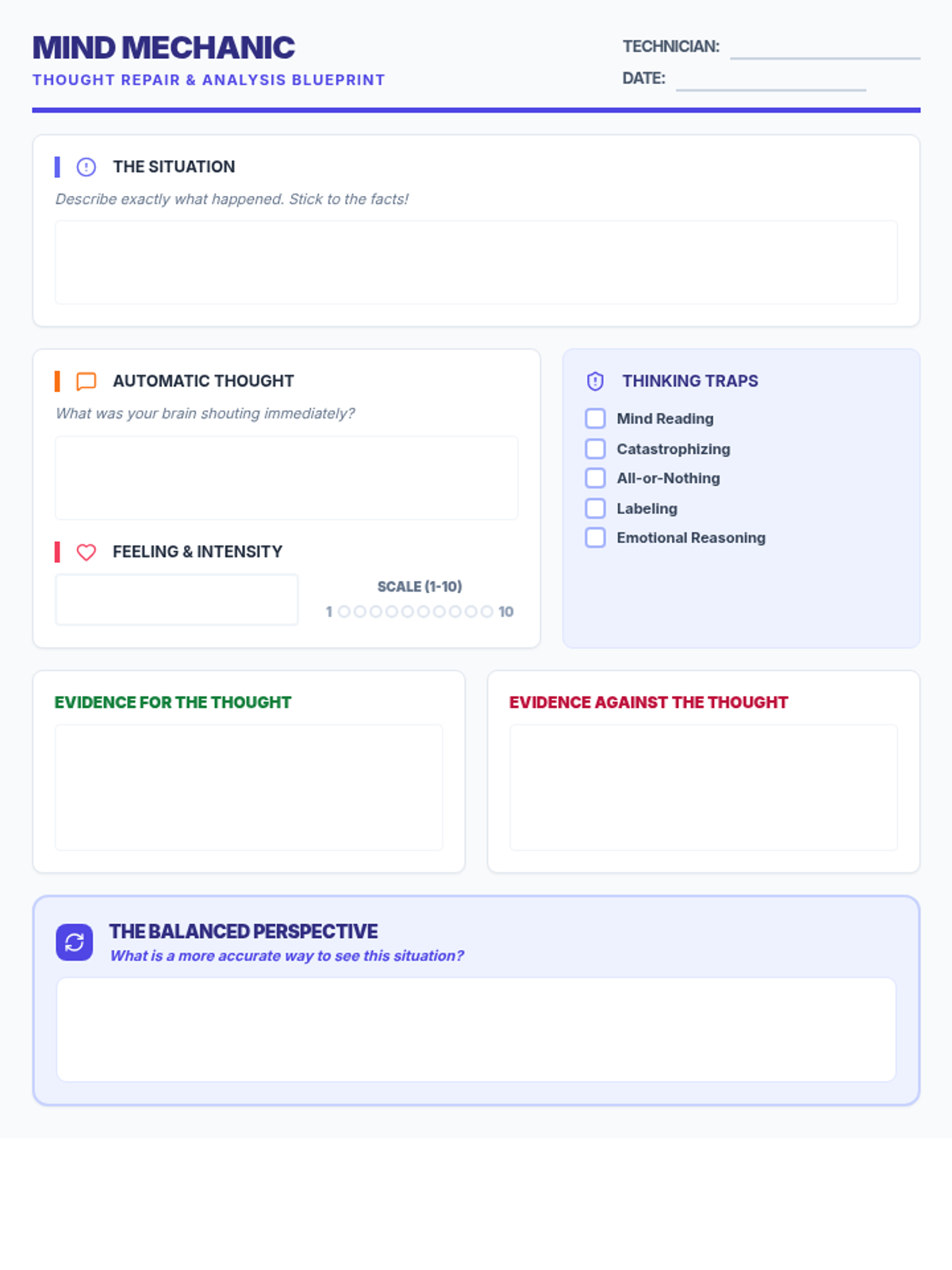
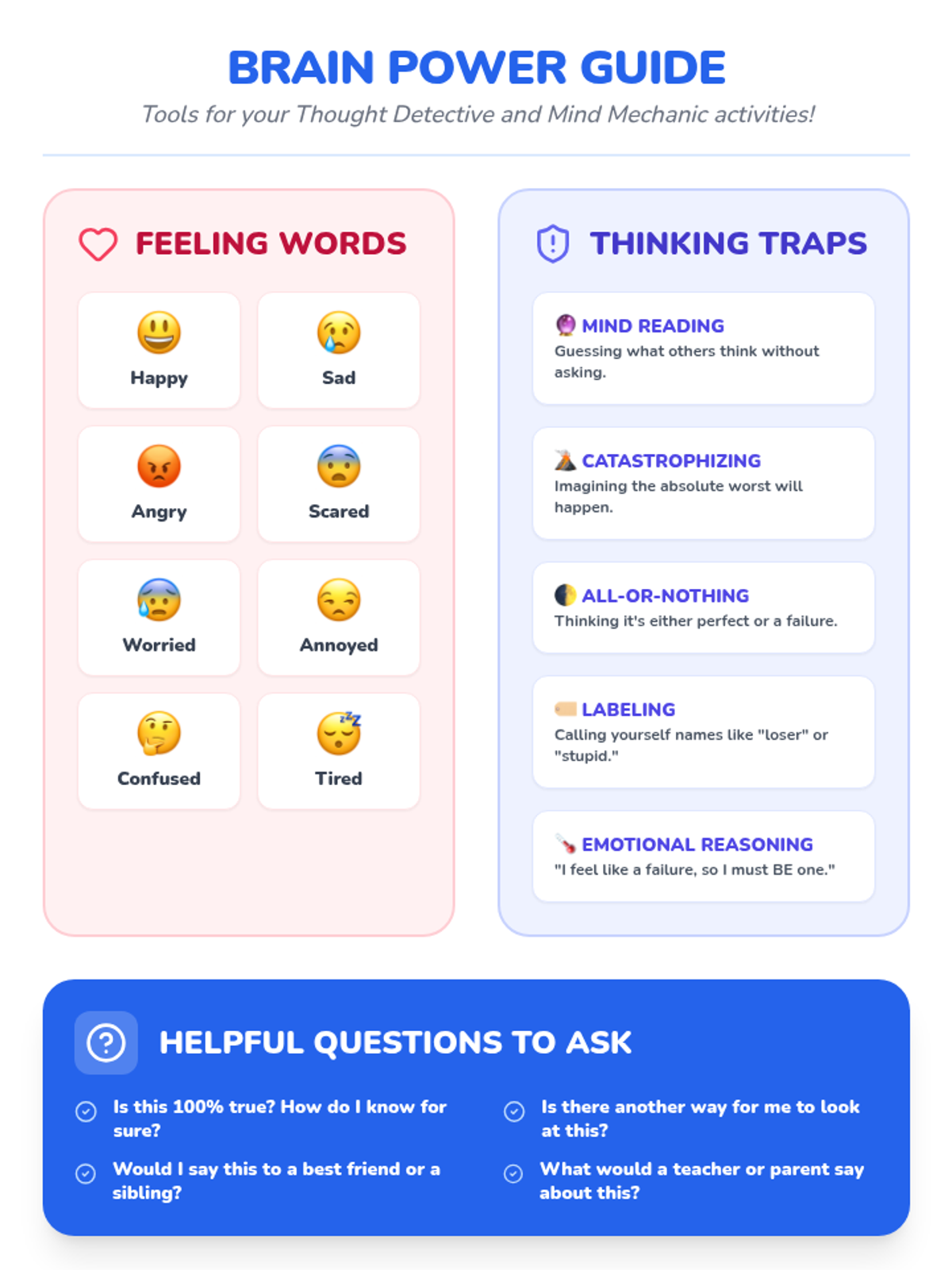
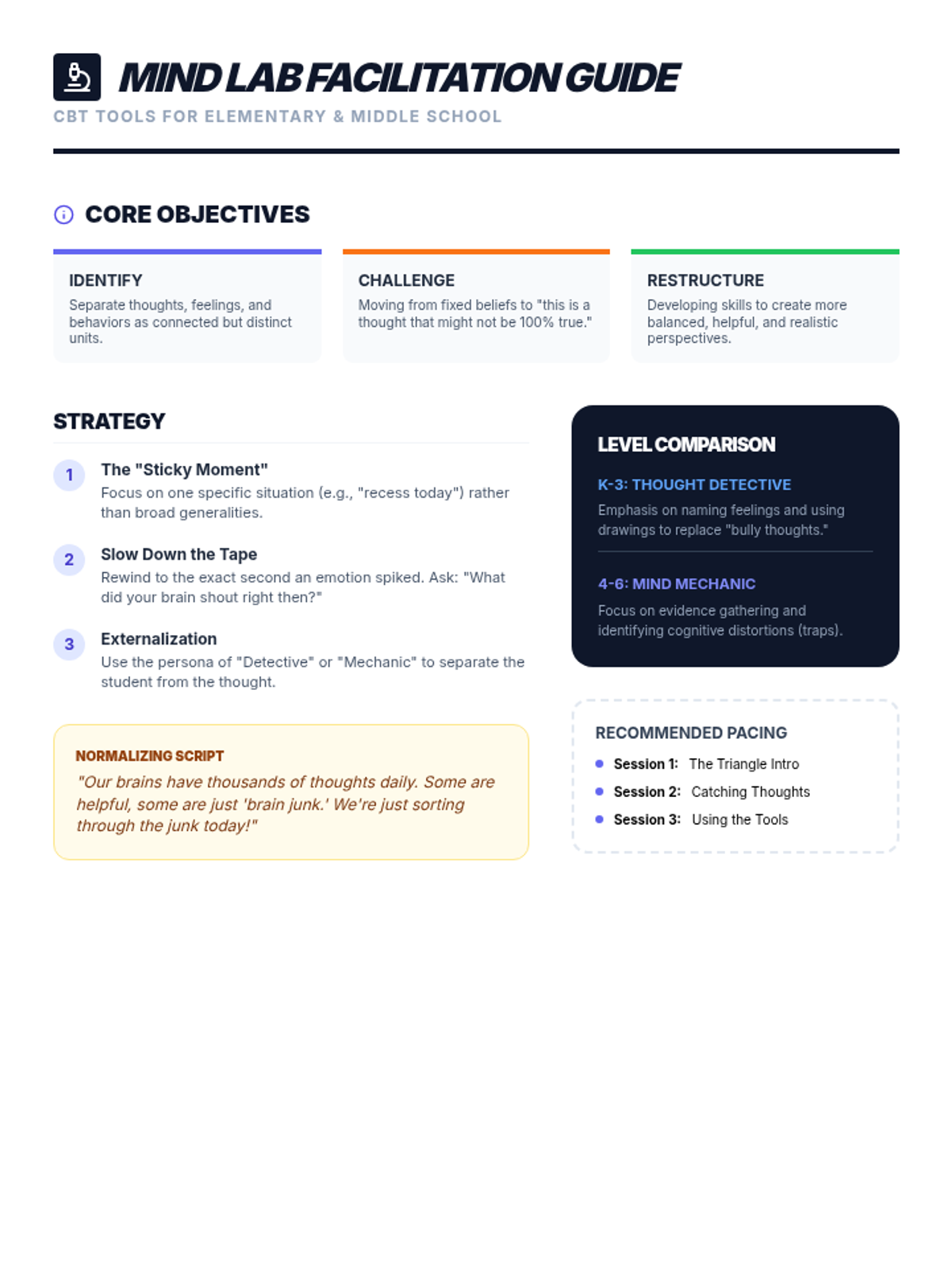
A collection of visual CBT processing tools designed to help students identify the connection between thoughts, feelings, and behaviors. This lesson includes developmentally appropriate worksheets for K-3 and 4-6 students, along with a reference guide and teacher instructions.
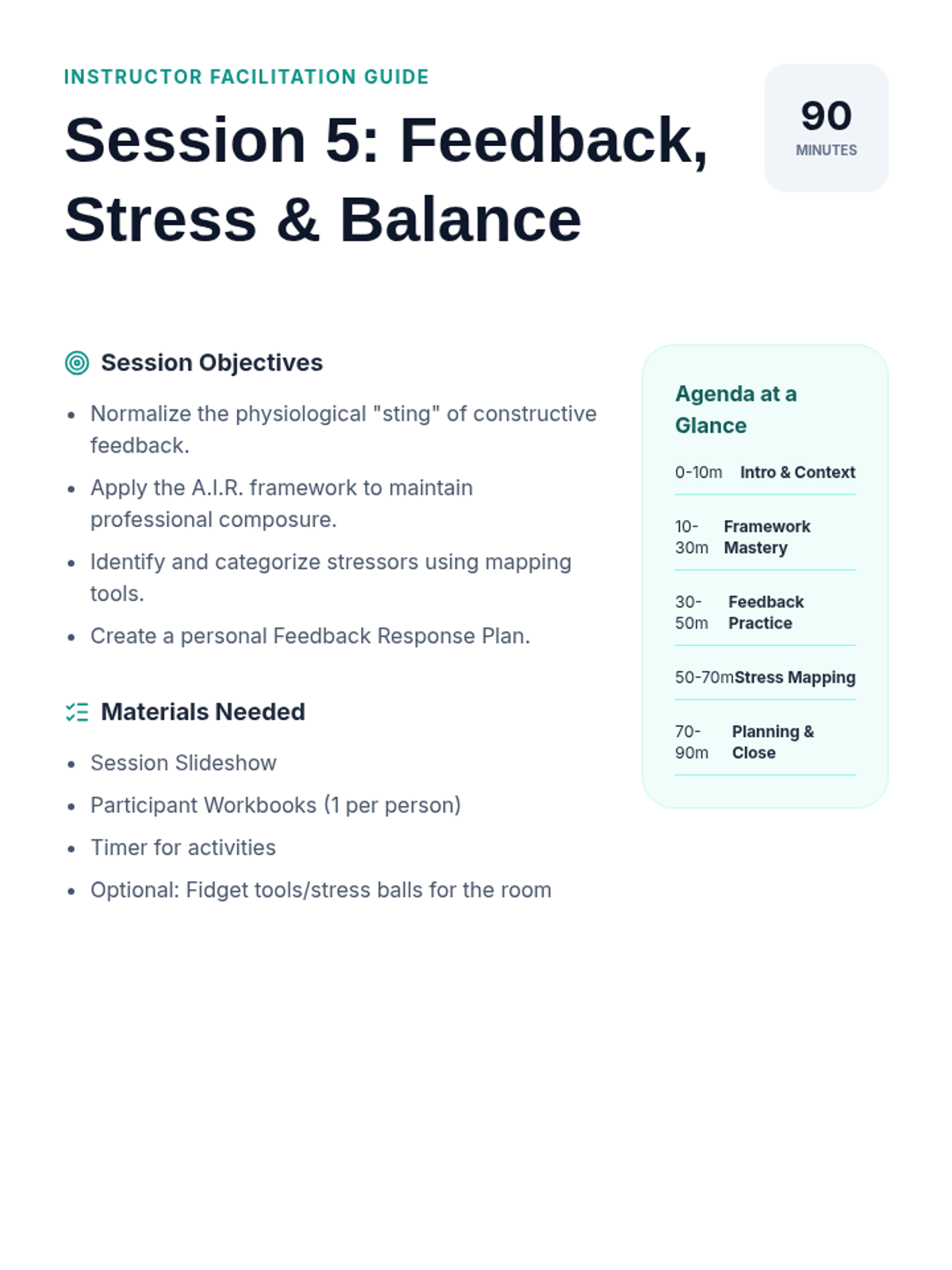
A 90-minute workshop on navigating feedback anxiety, responding with composure, and managing everyday stress through practical tools and frameworks.
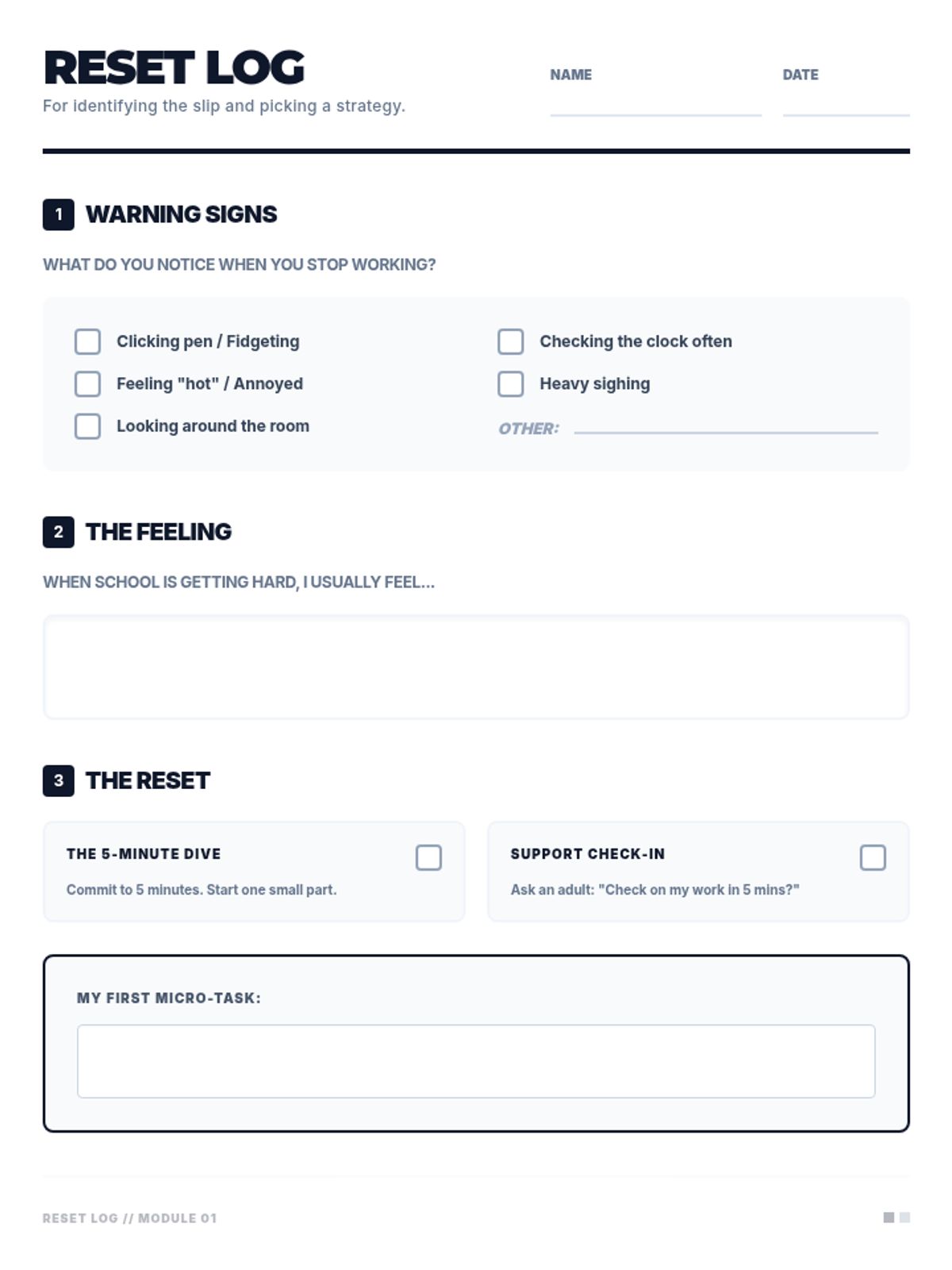
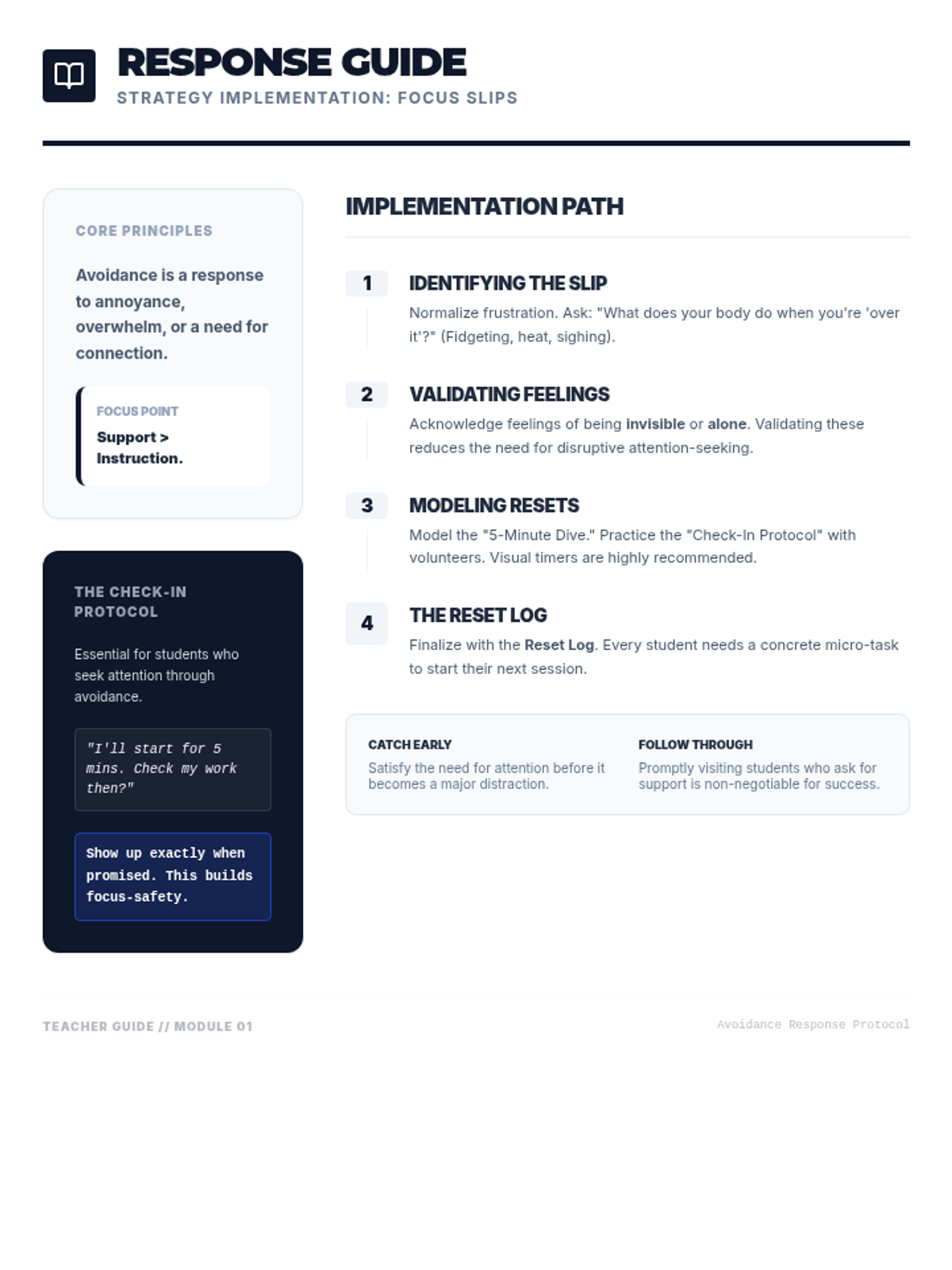
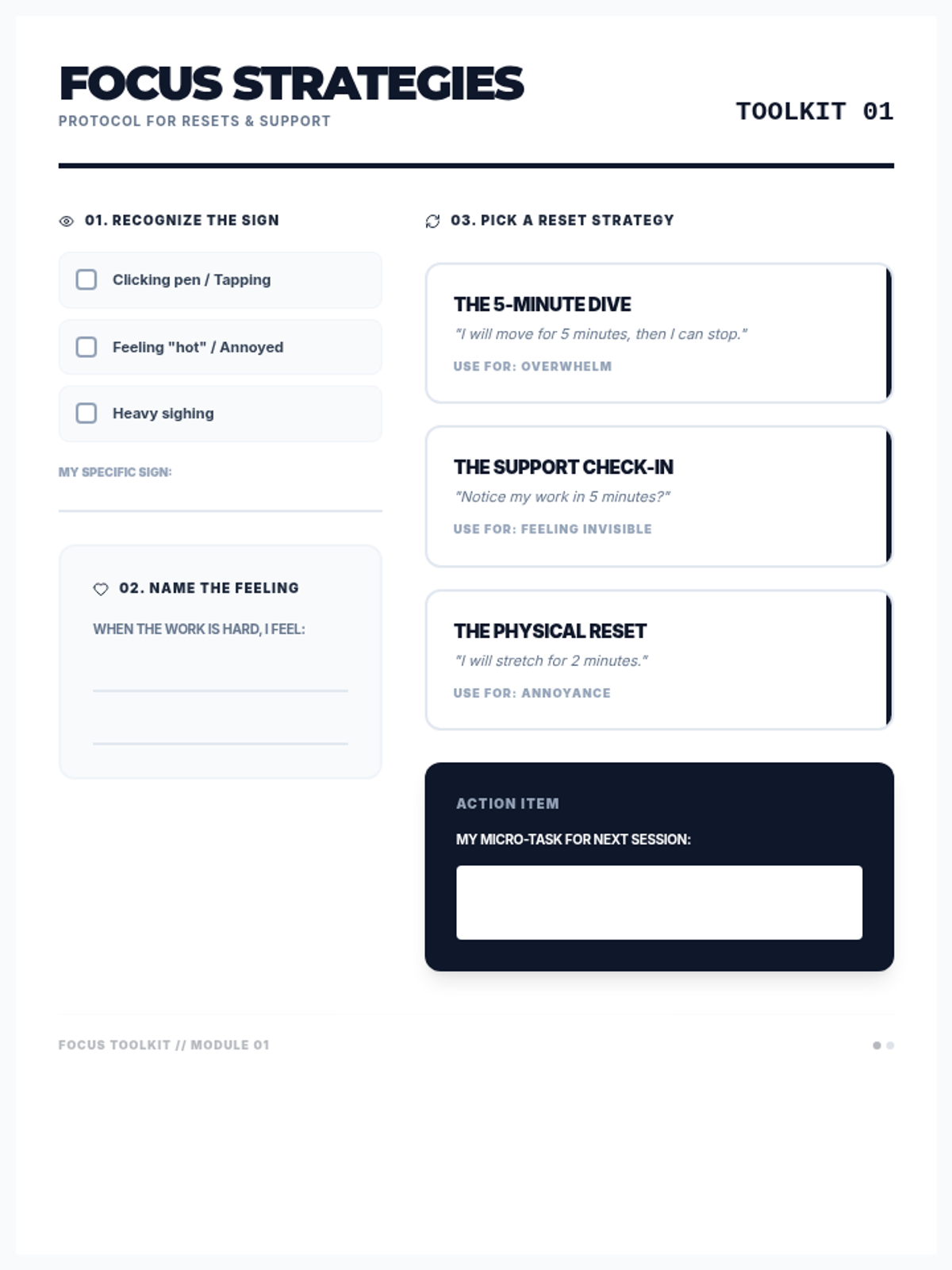
This lesson identifies the common signs of losing focus and provides clear, non-cheesy strategies for students to reset their work momentum and ask for support when needed.
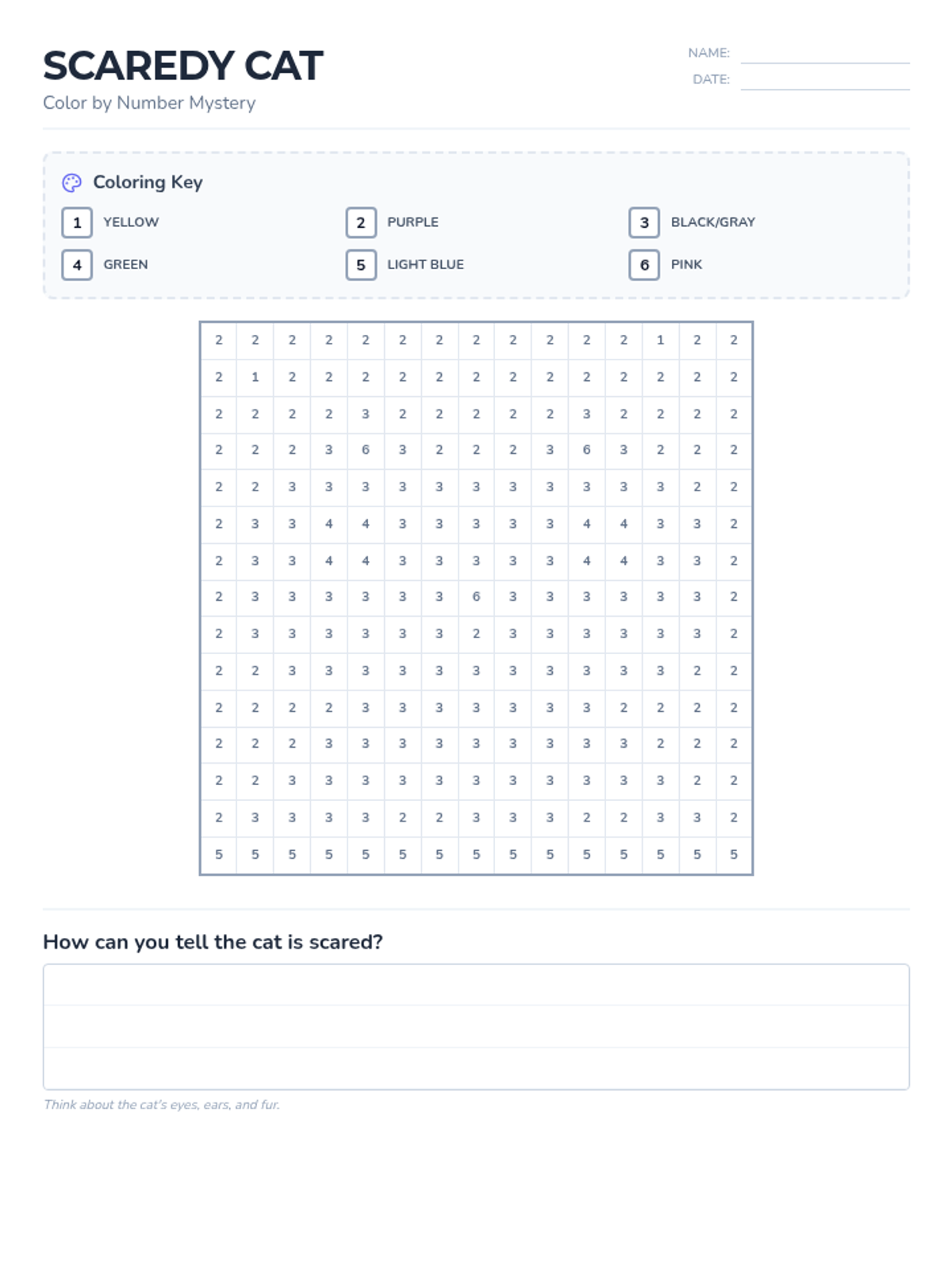
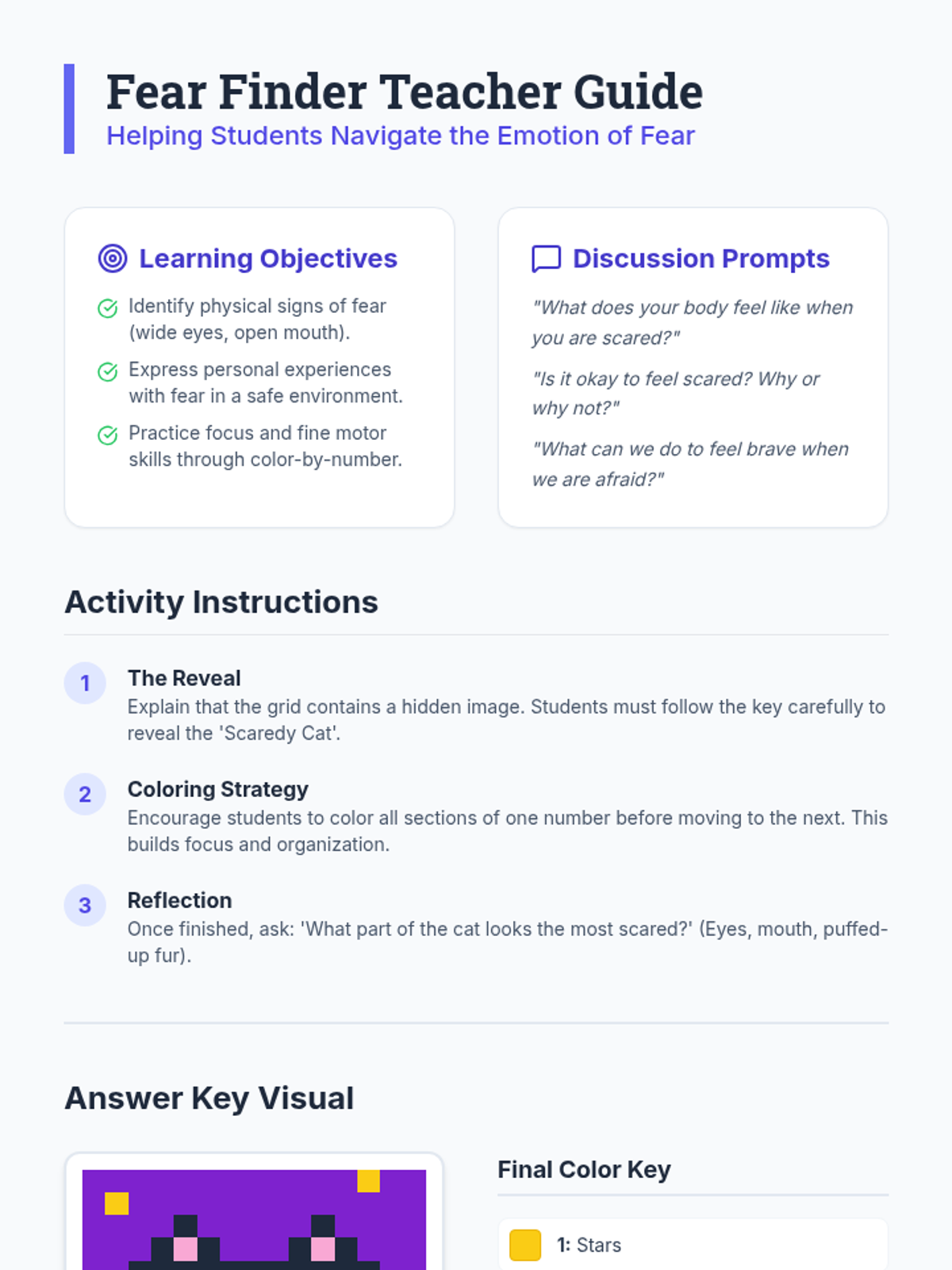
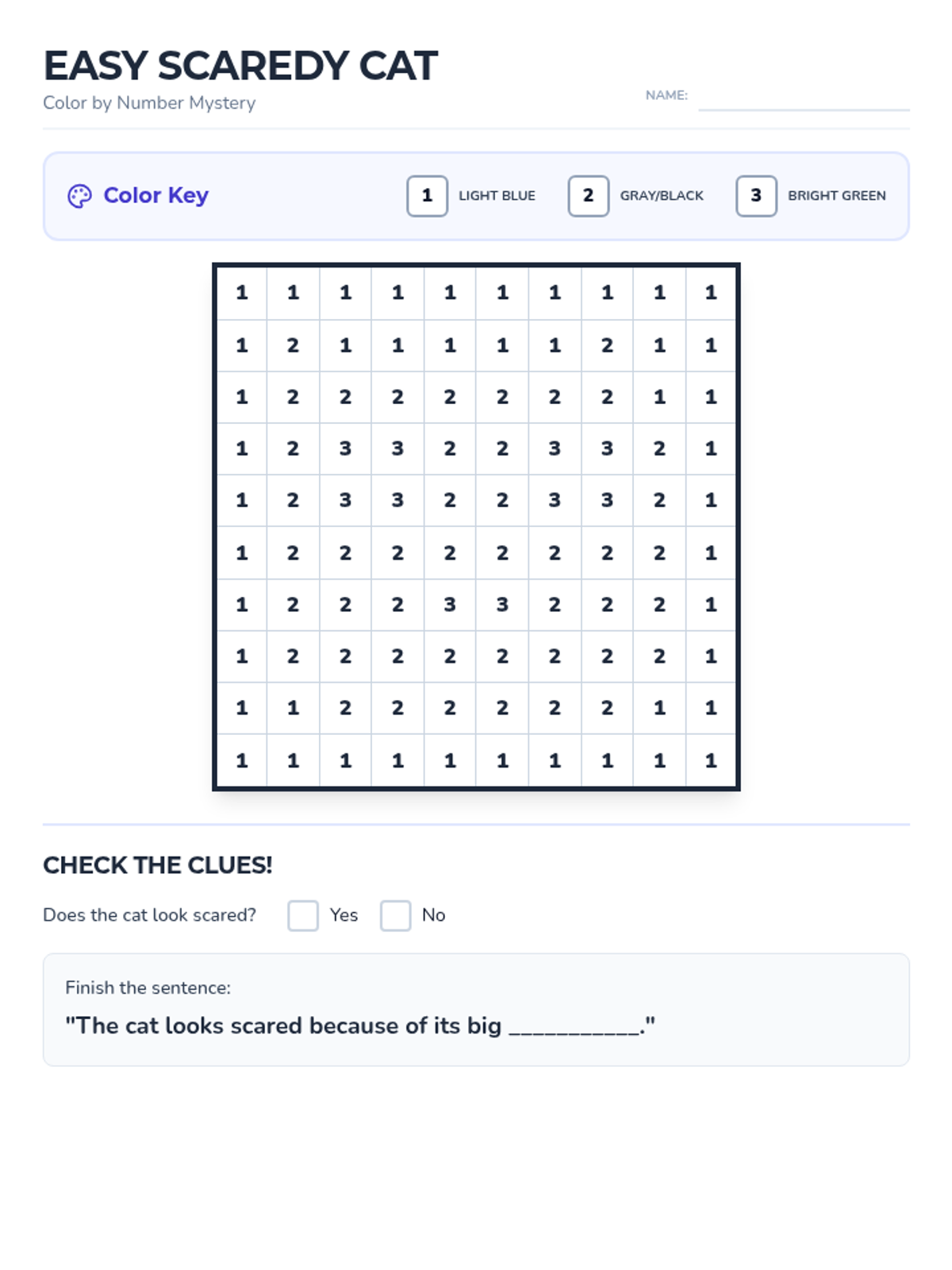
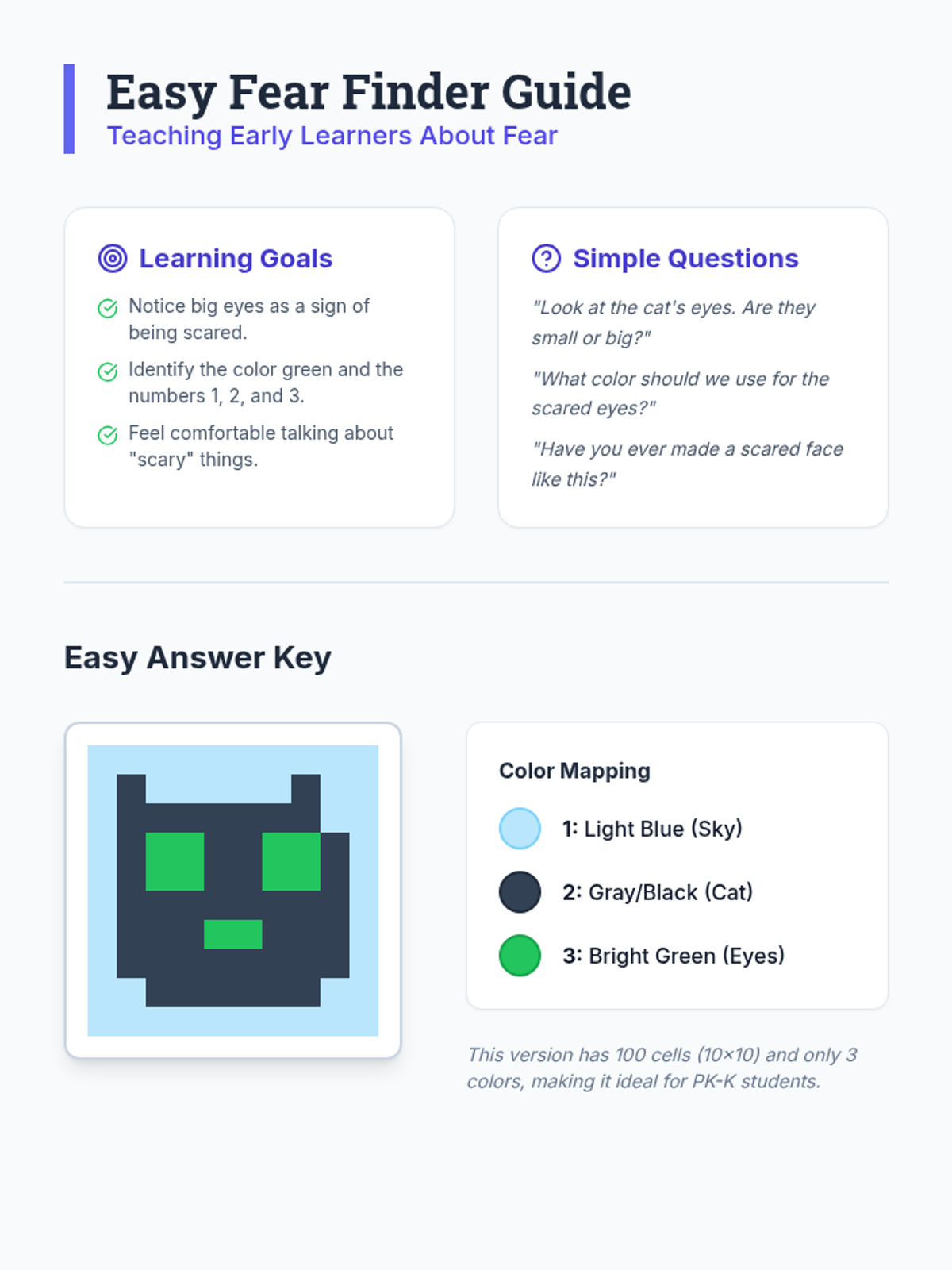
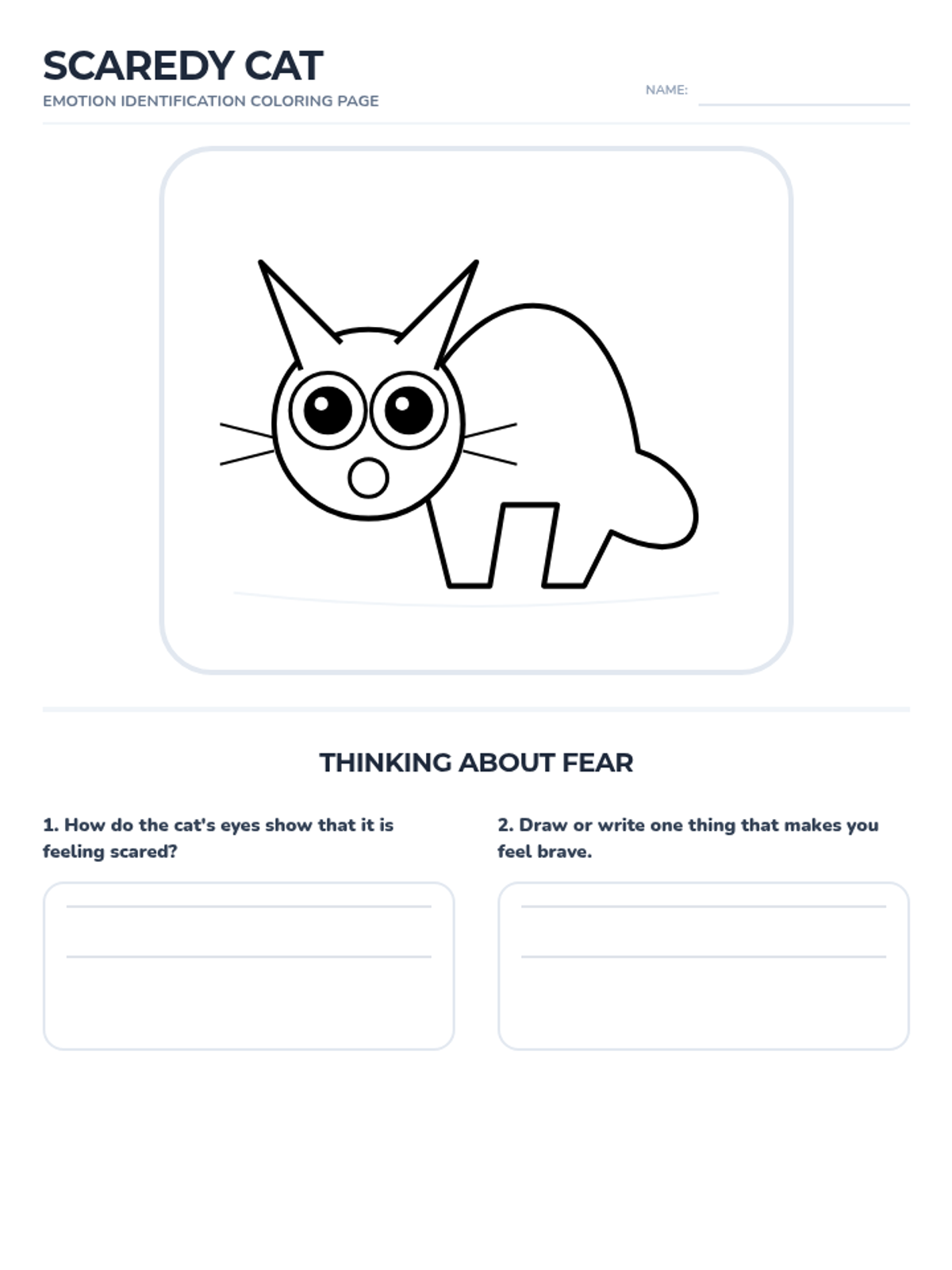
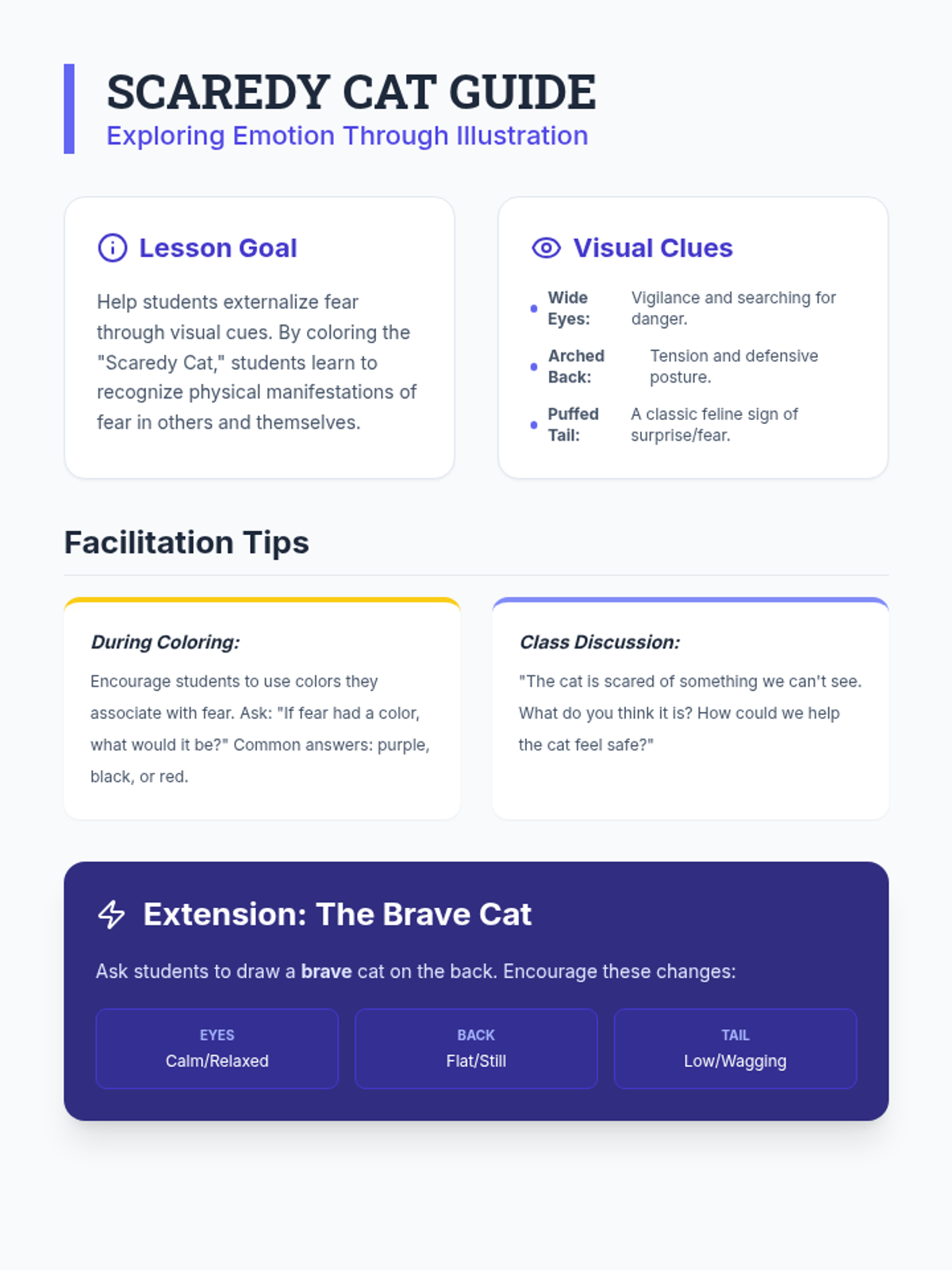
A gentle introduction to identifying and expressing the emotion of fear through creative activity and discussion.
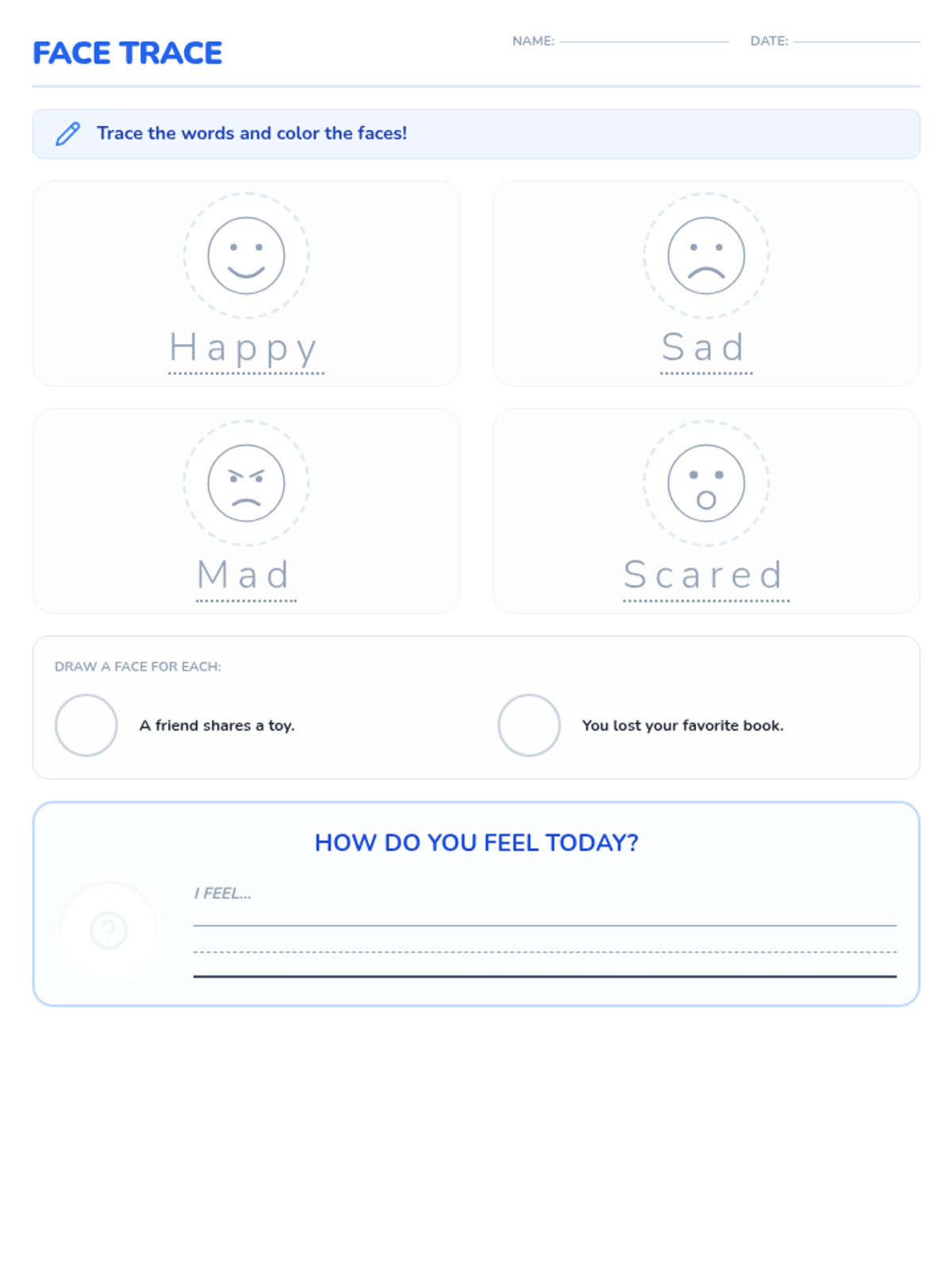
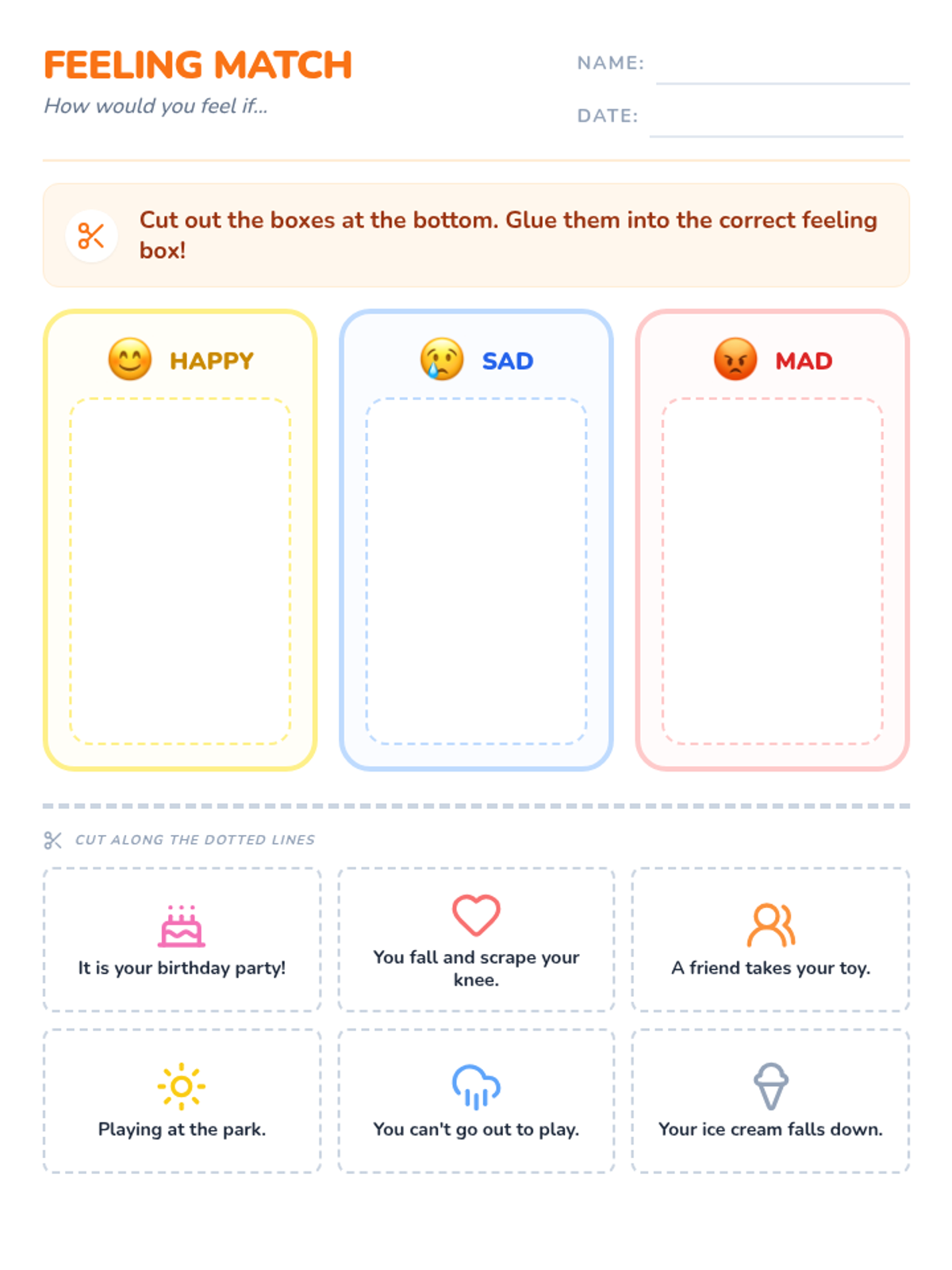
A lesson helping kindergarteners identify emotions through facial expressions and real-life situations.
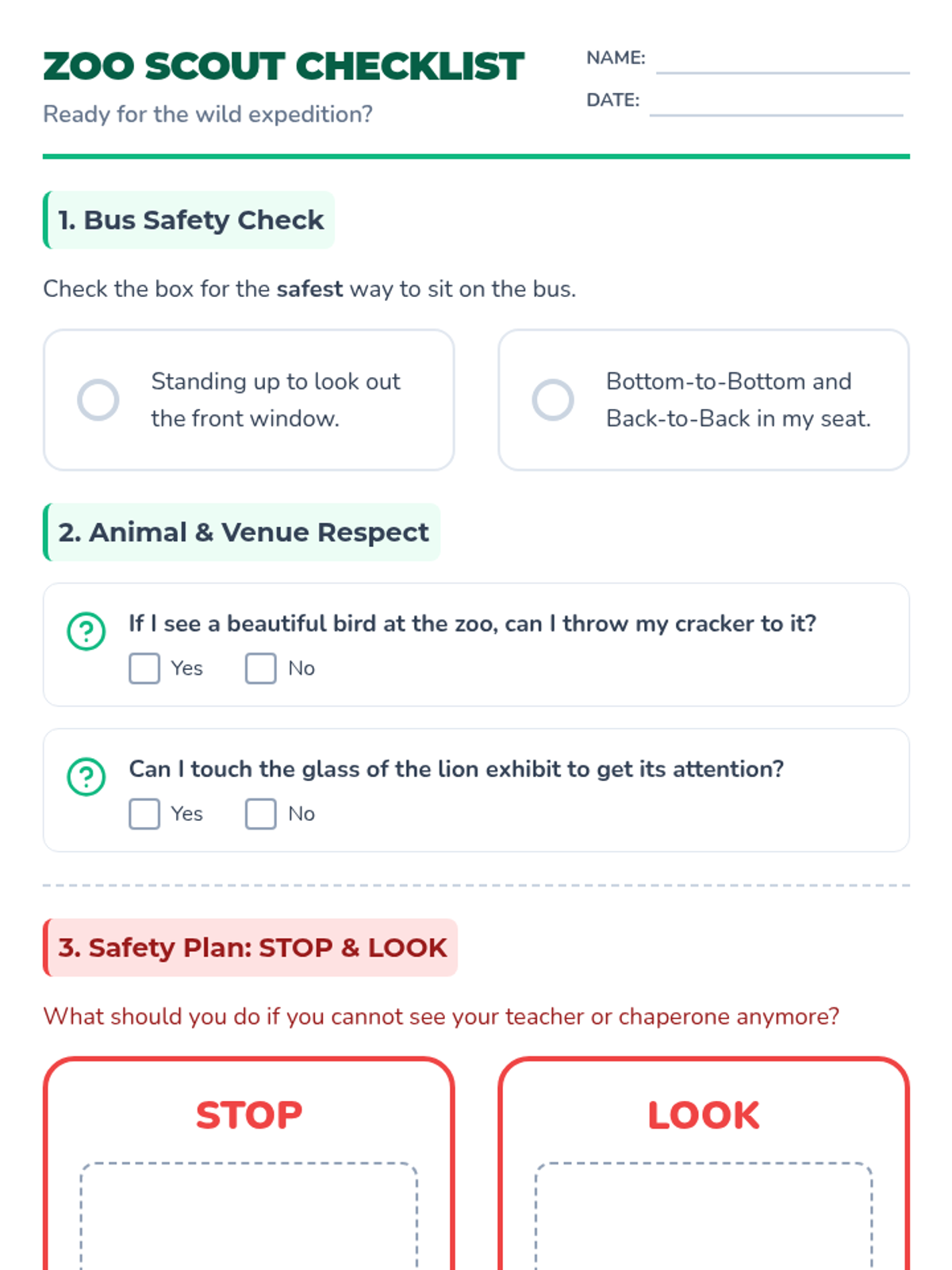
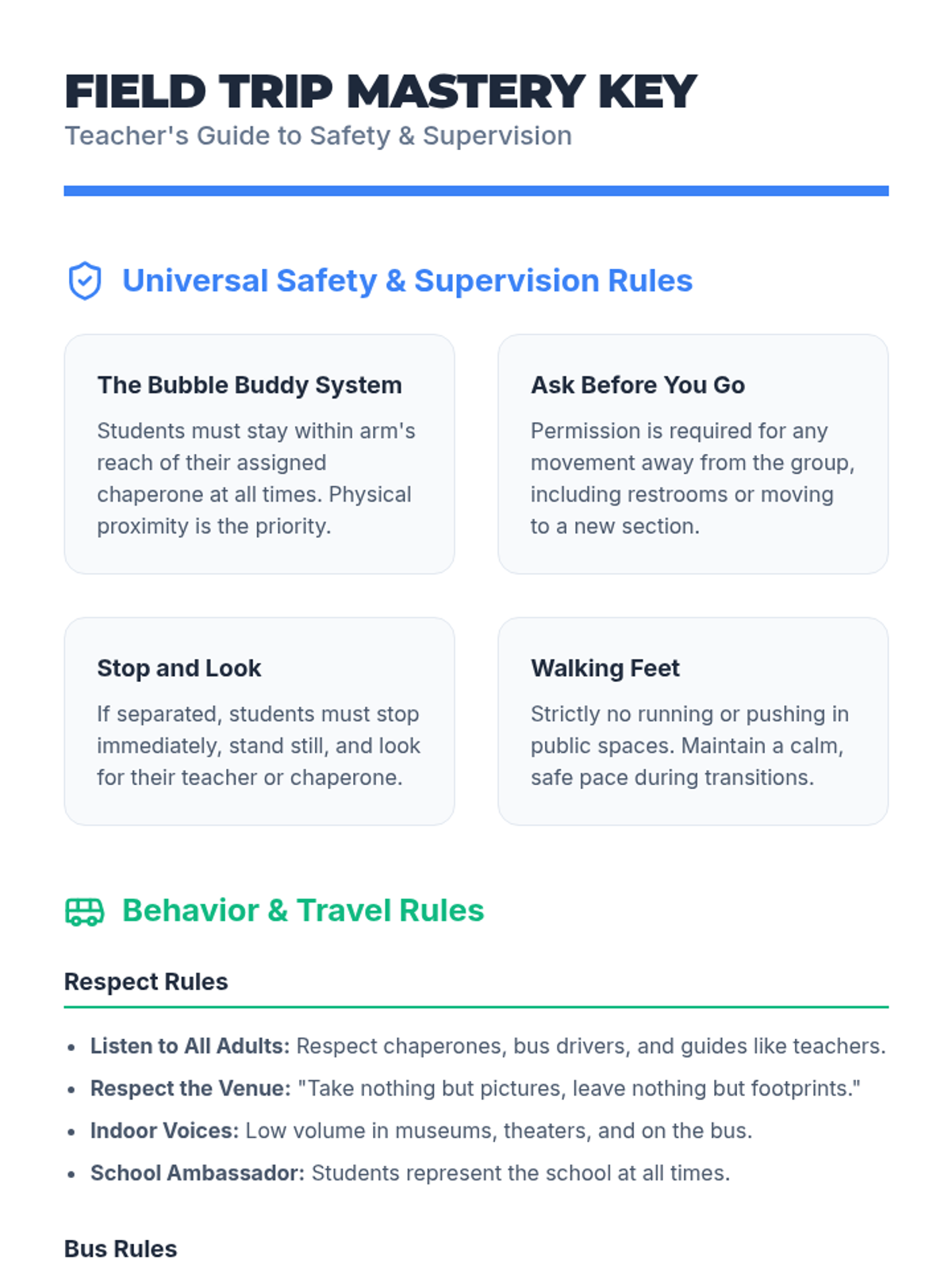
Students explore the expectations for a bus-based field trip to the zoo, covering bus safety, venue respect, and the 'Stop and Look' rule for separation through Sam's zoo adventure.
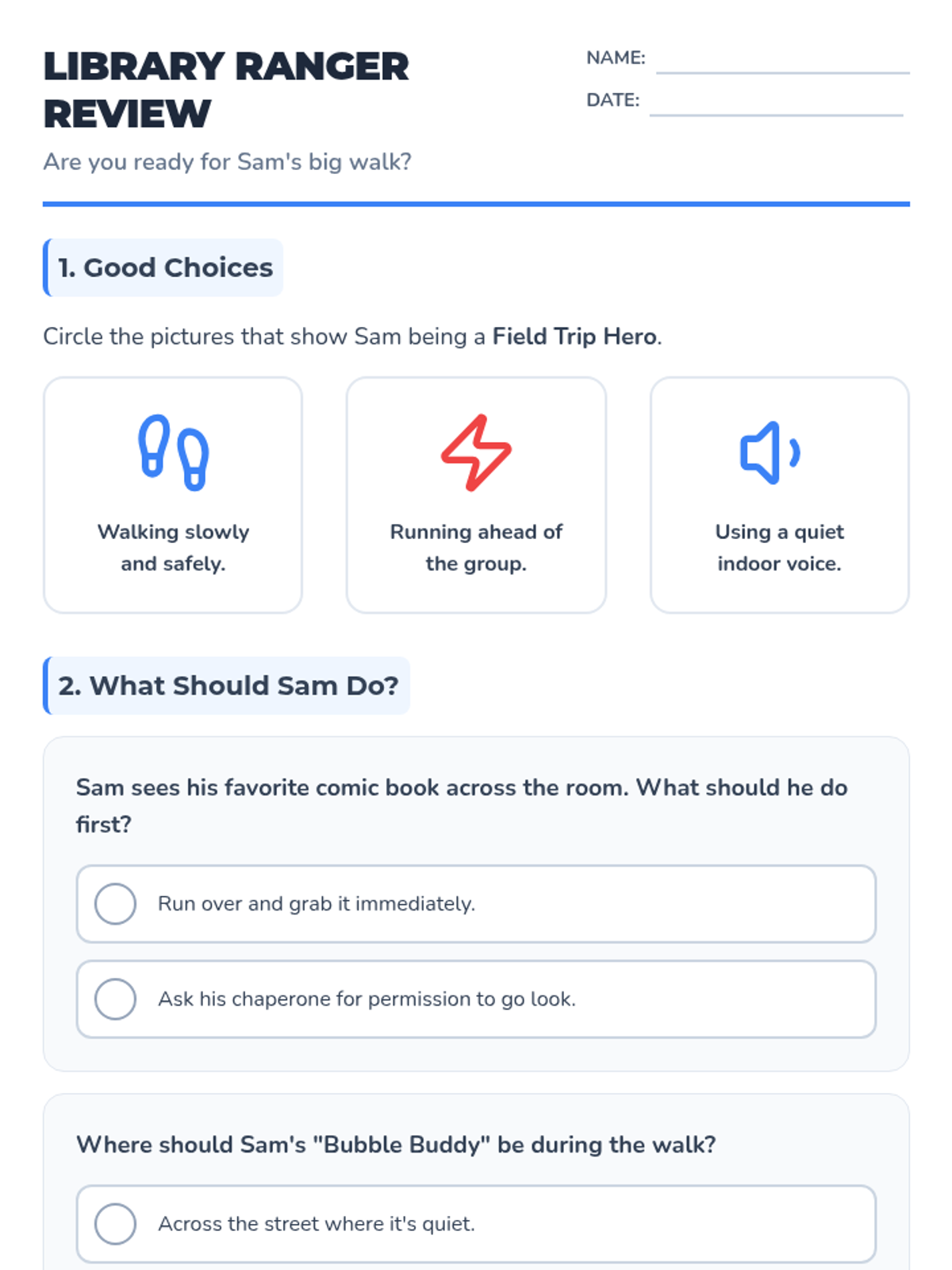
Students learn the specific expectations for a walking field trip, including the 'Bubble Buddy' system, walking feet, and indoor voices, as they follow Sam's journey to the local library.
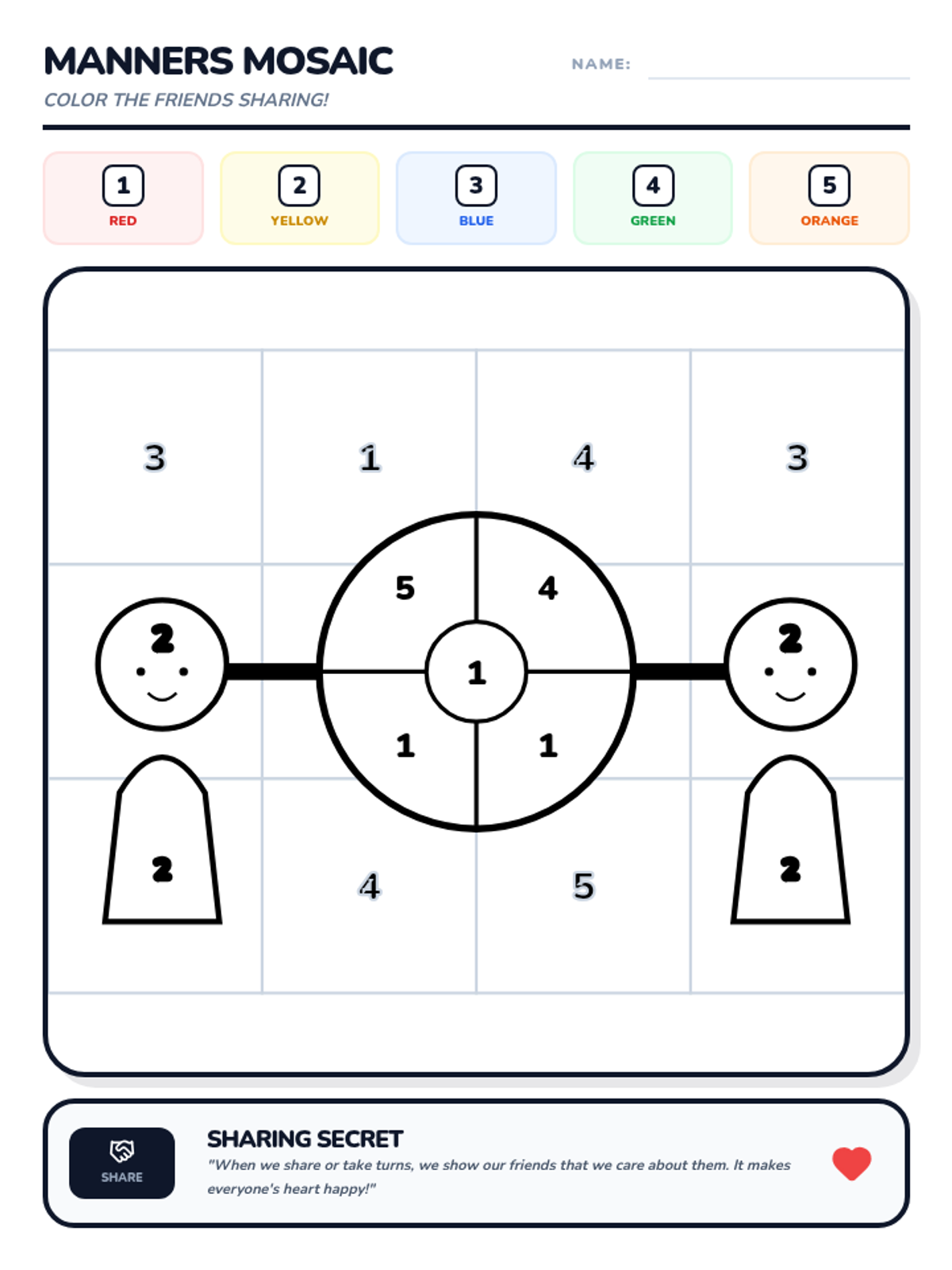
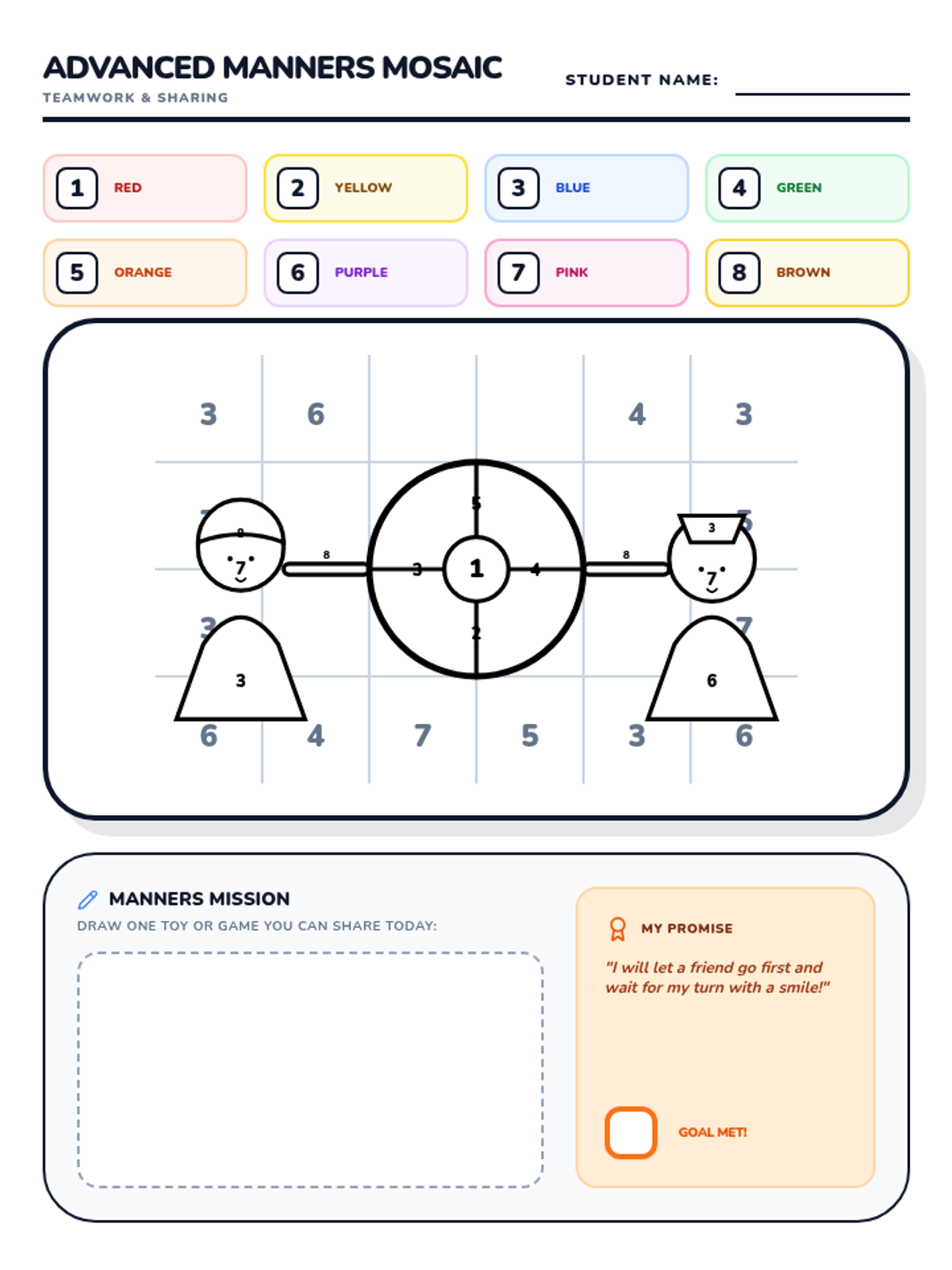
A creative lesson focused on the social-emotional skills of sharing and taking turns through artistic expression.
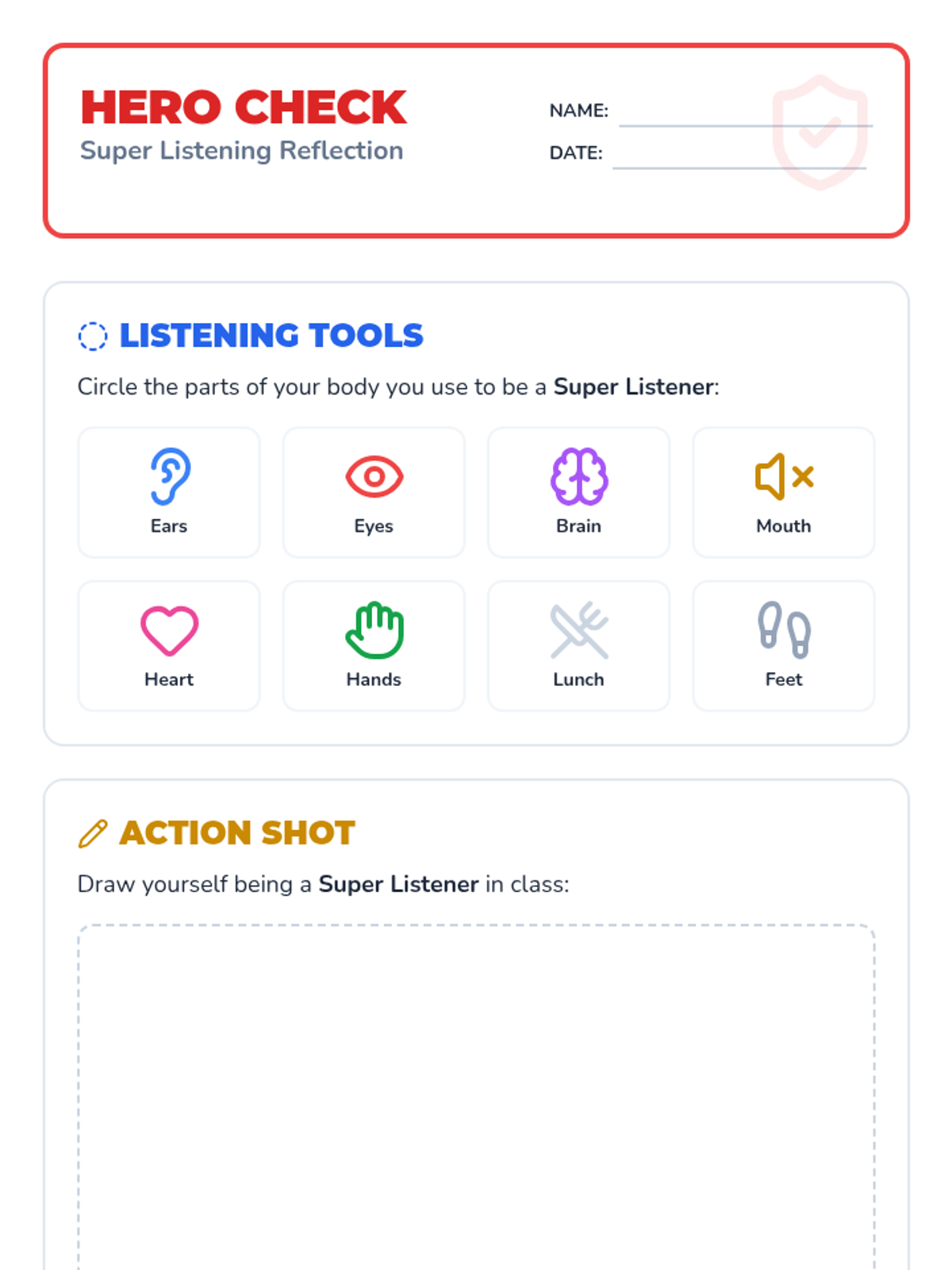
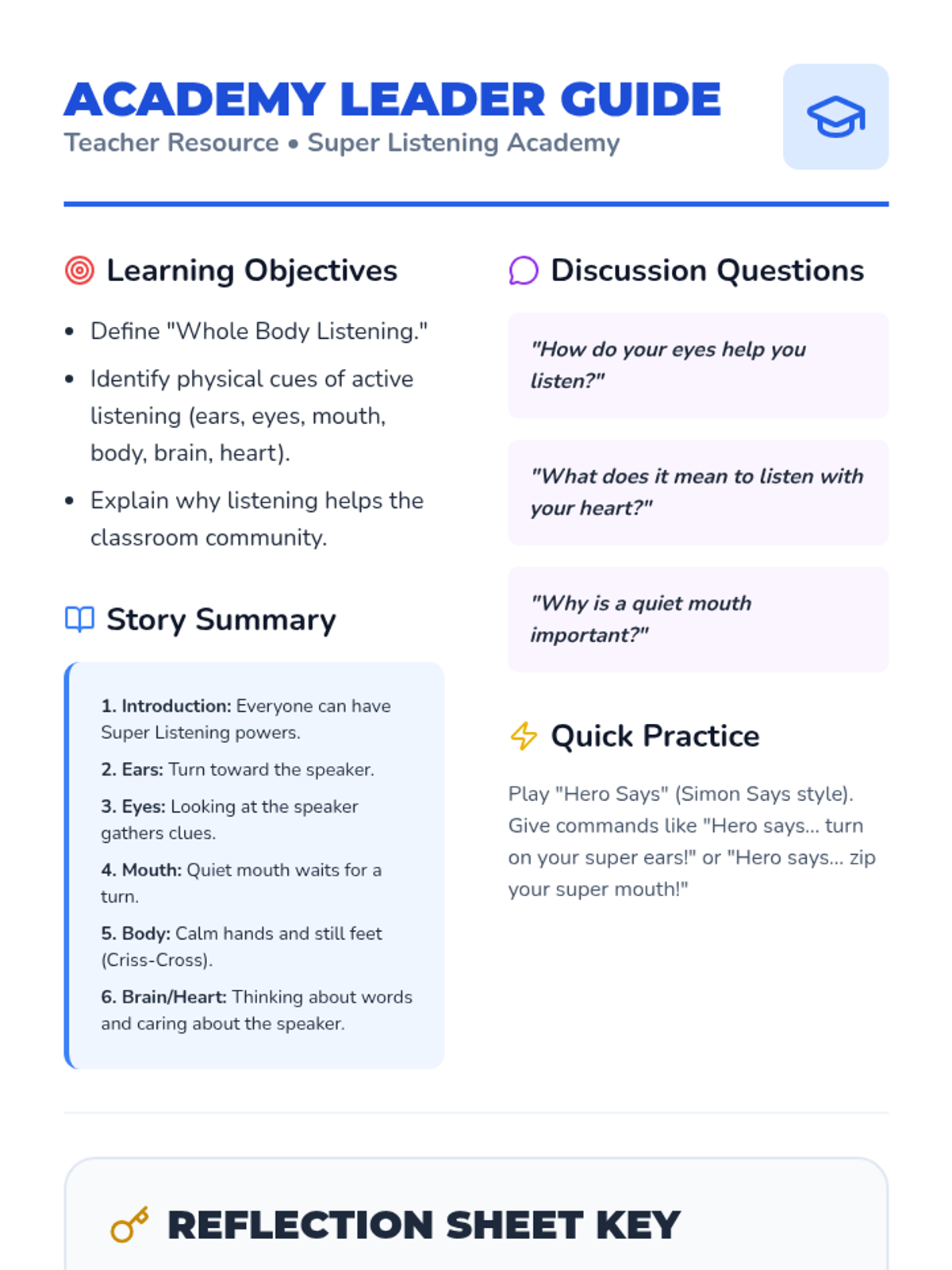
A foundational lesson for K-1 students on 'Whole Body Listening' using a superhero theme to make active listening engaging and memorable.
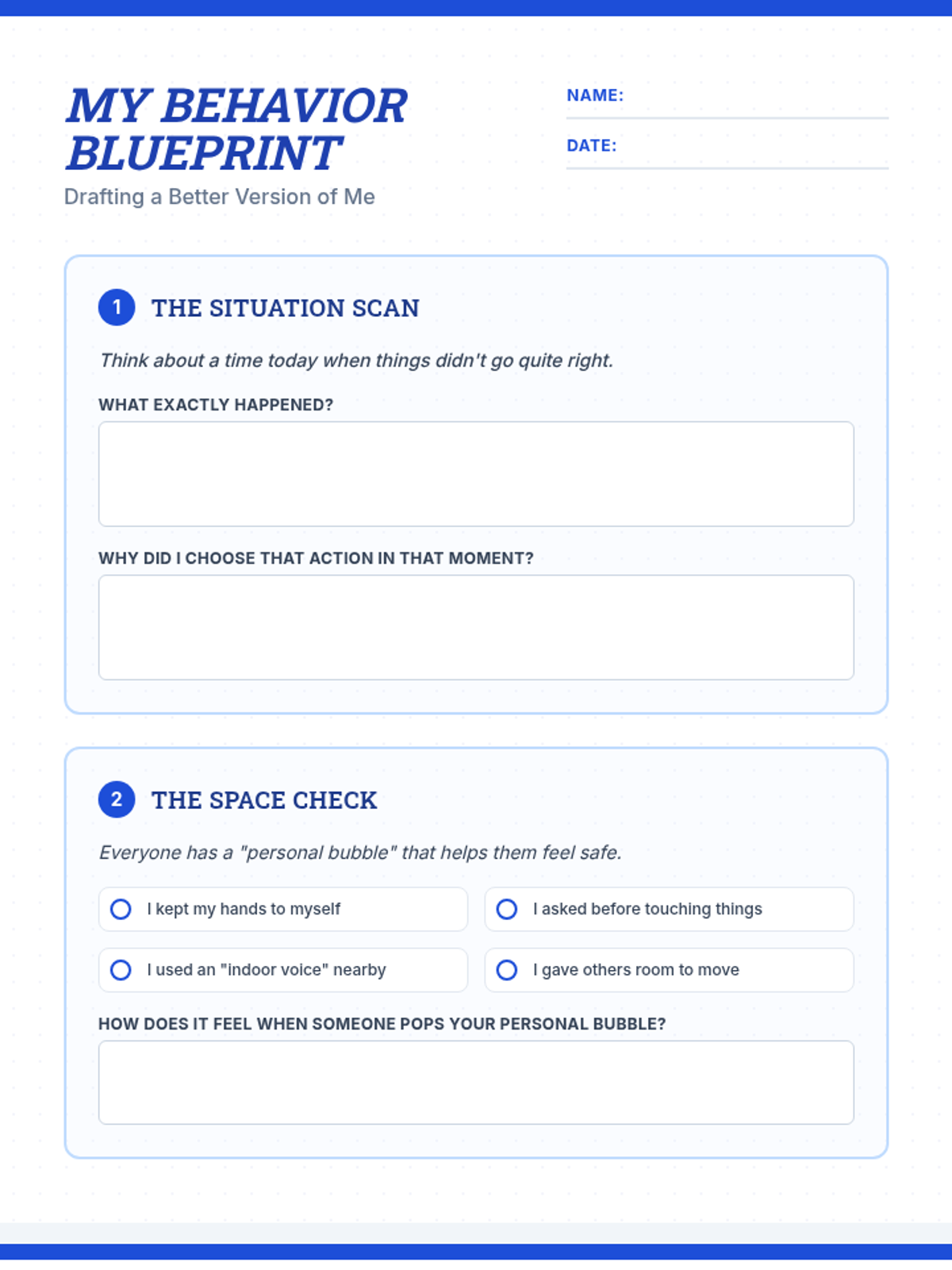
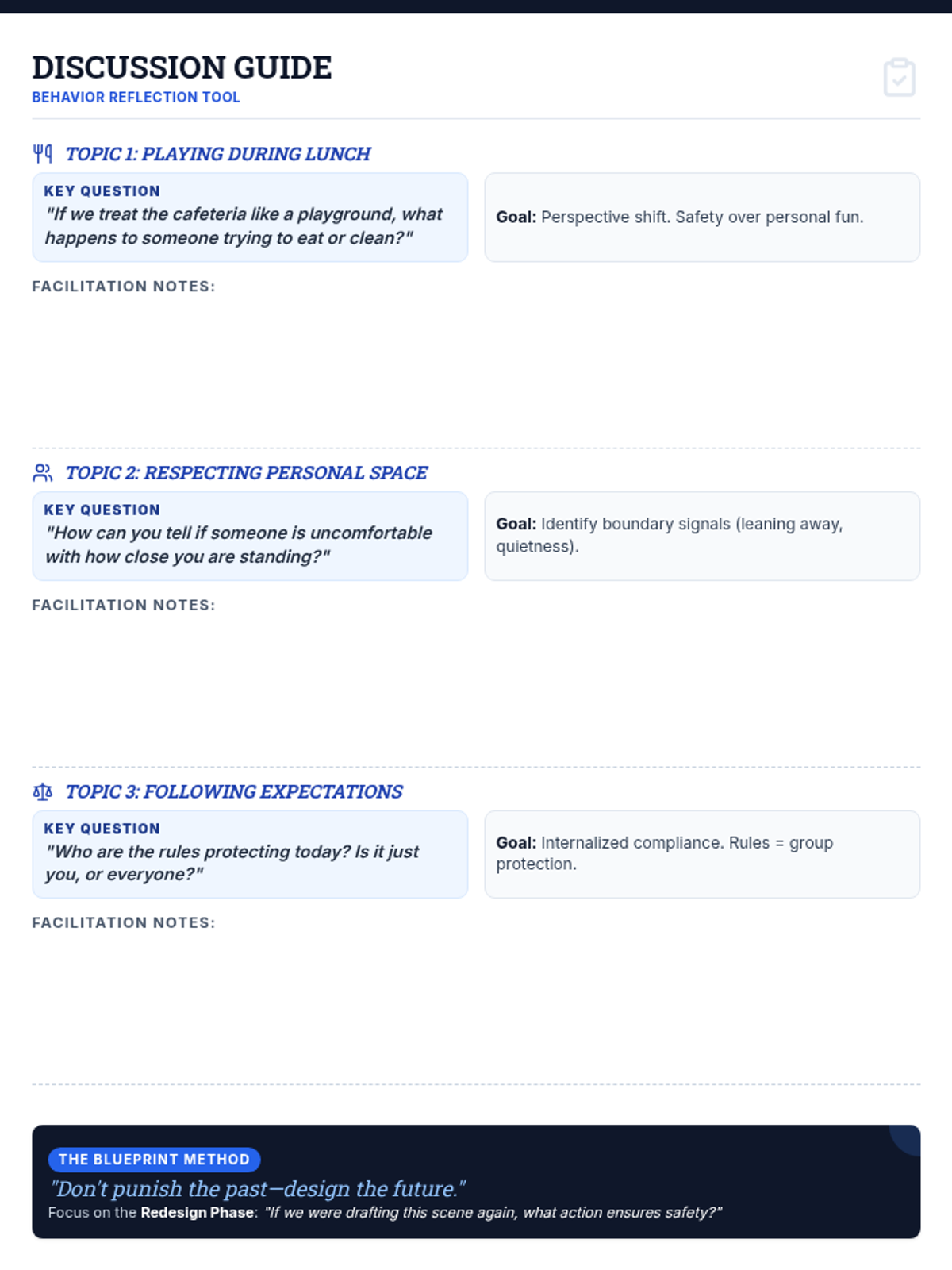
A reflection-focused lesson designed to help students analyze their behavior, understand personal space, and commit to positive choices during lunch and throughout the school day.
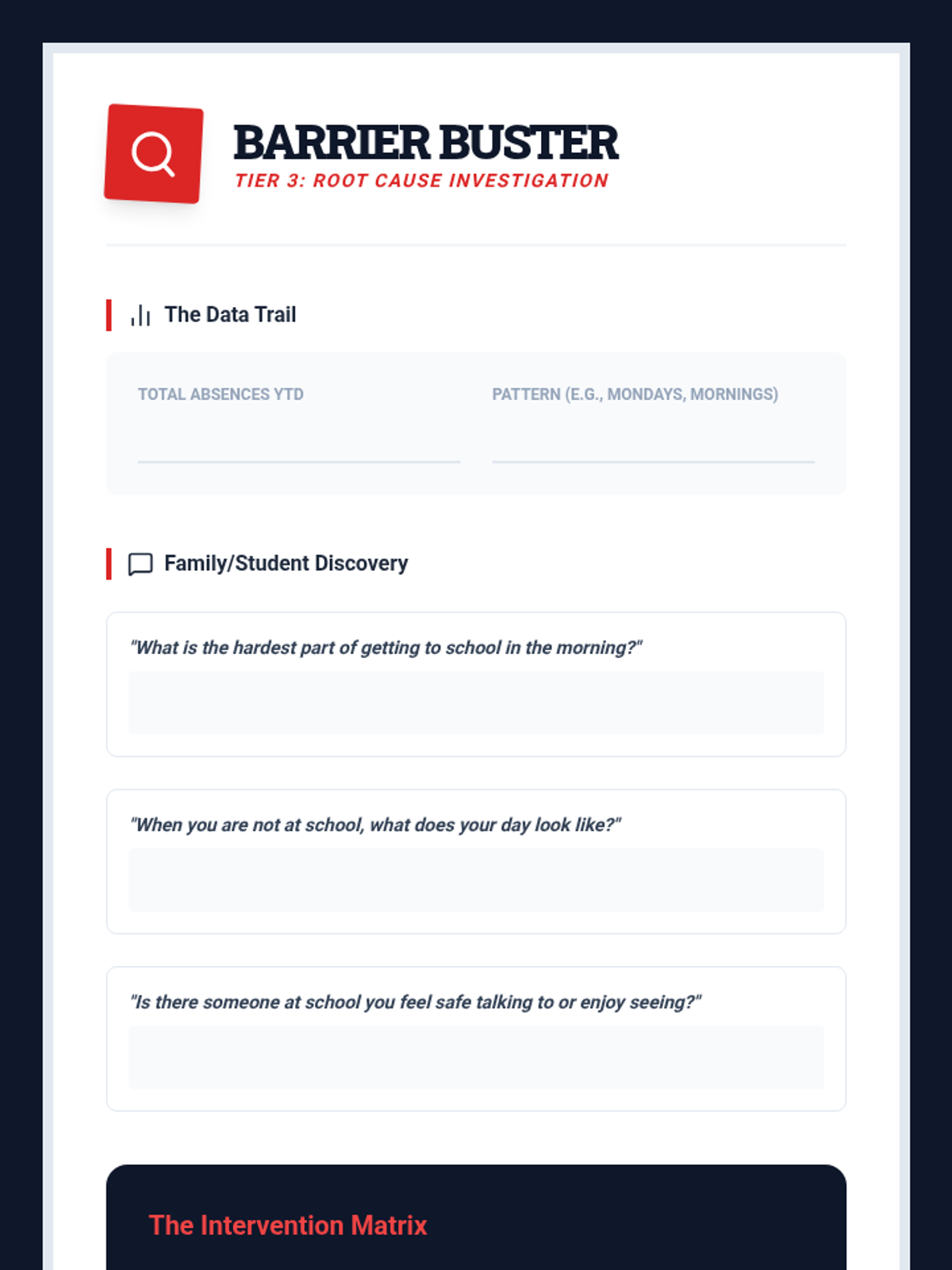
High-intensity support for chronically absent students (missing 10%+). Focuses on root-cause analysis, family casework, and removing systemic barriers through community collaboration.
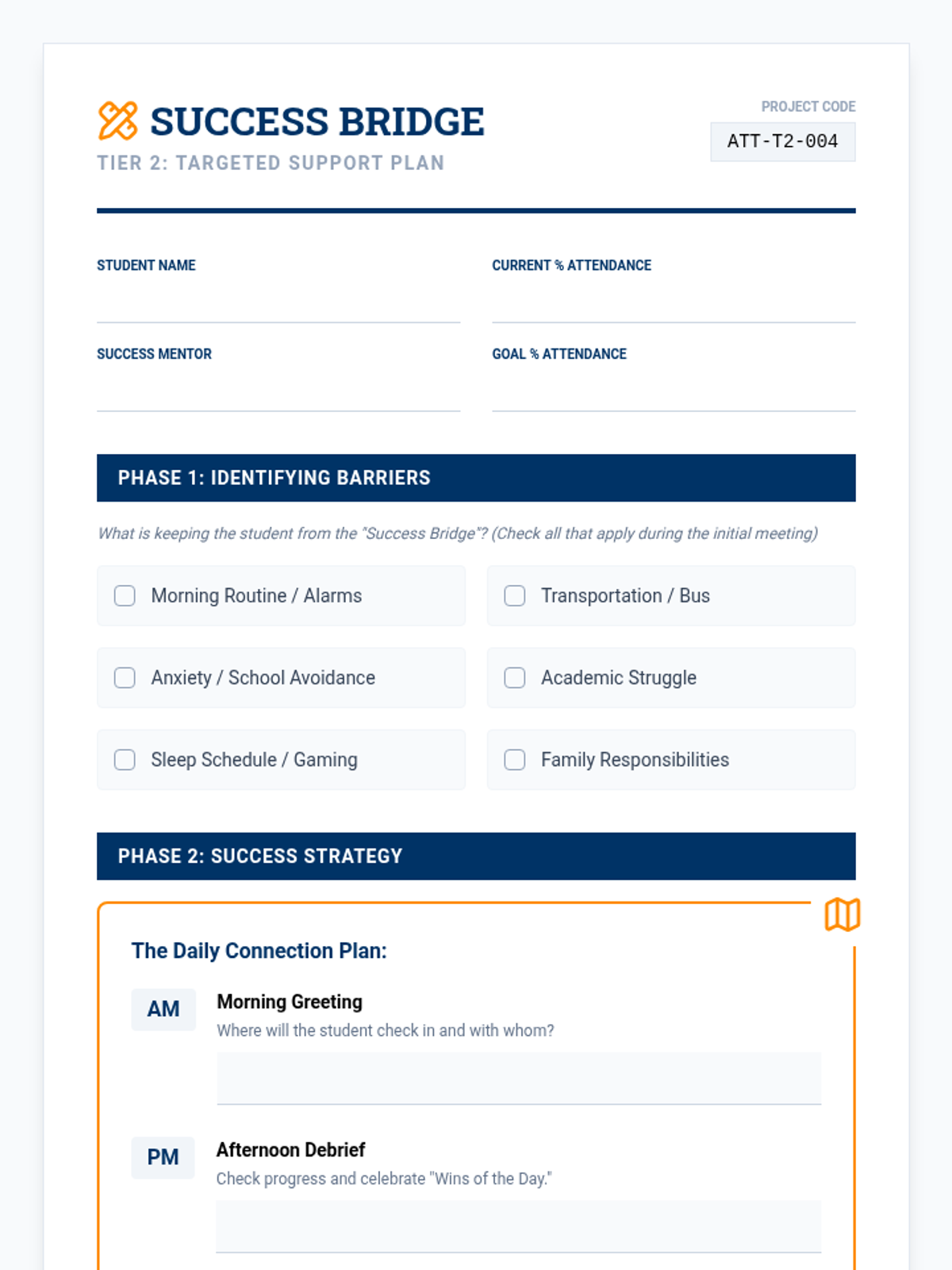
Identifying students at risk (missing 5-9% of school) and implementing early-warning interventions like Check-In/Check-Out and personalized success mapping.
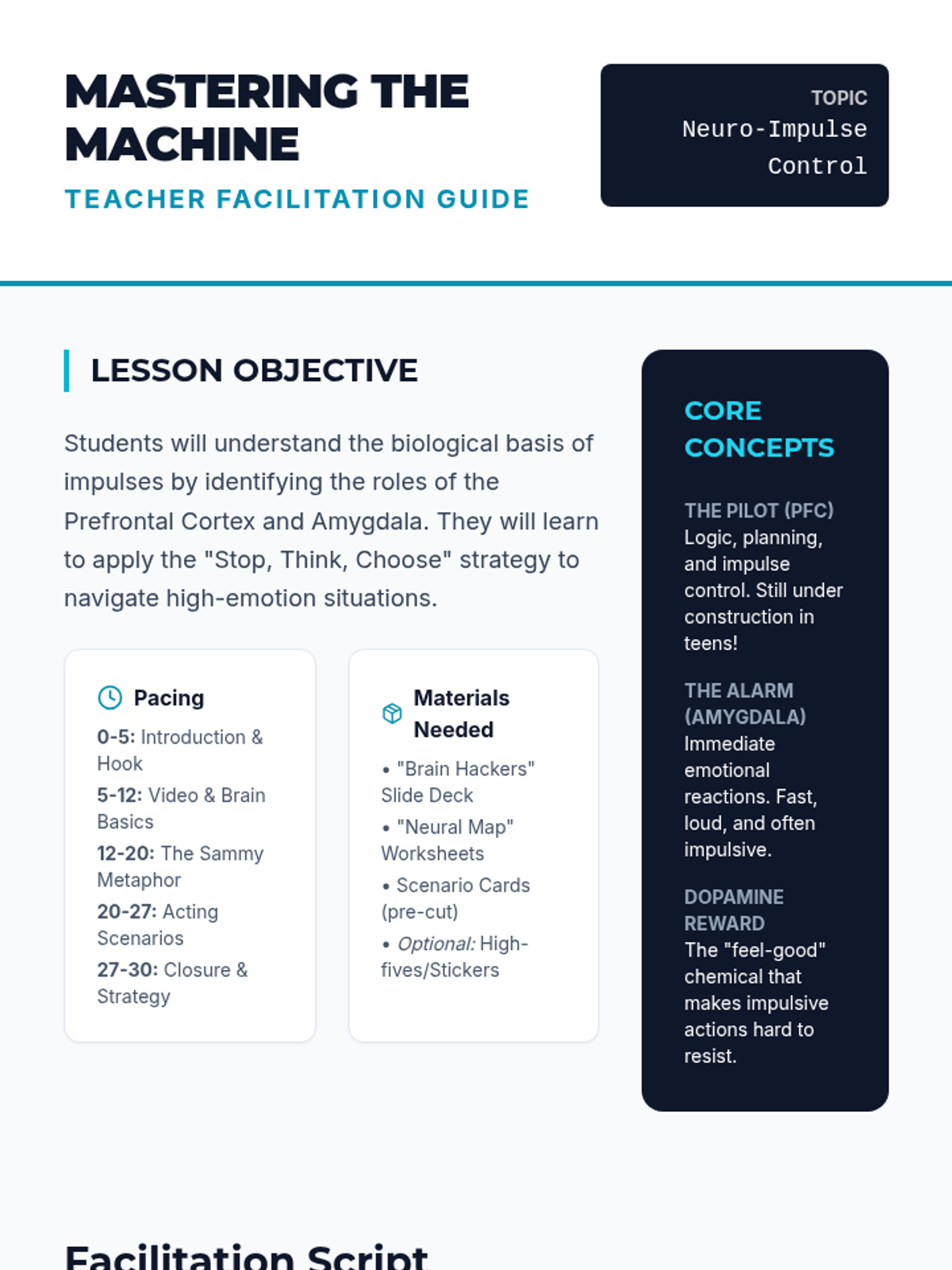
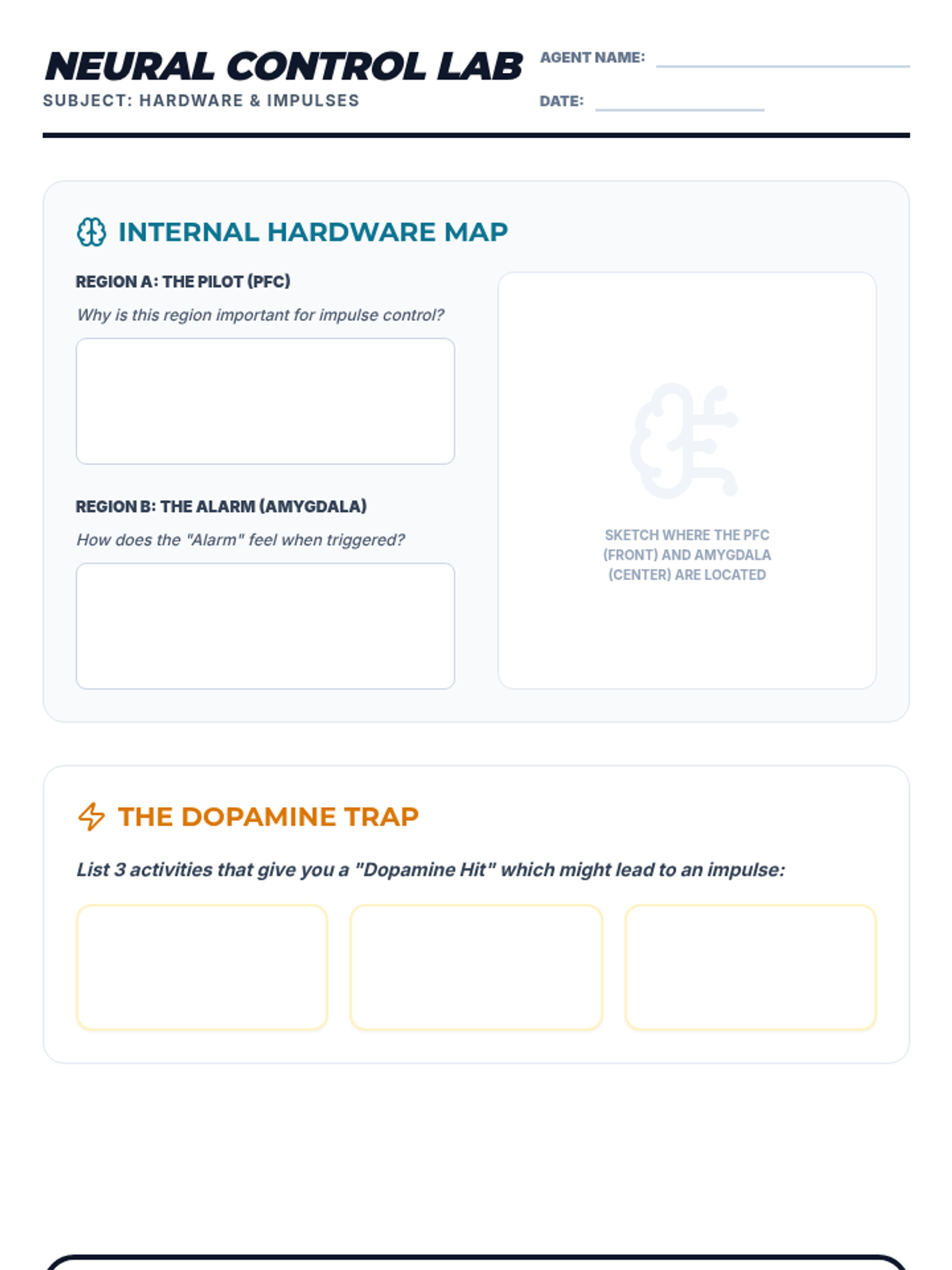
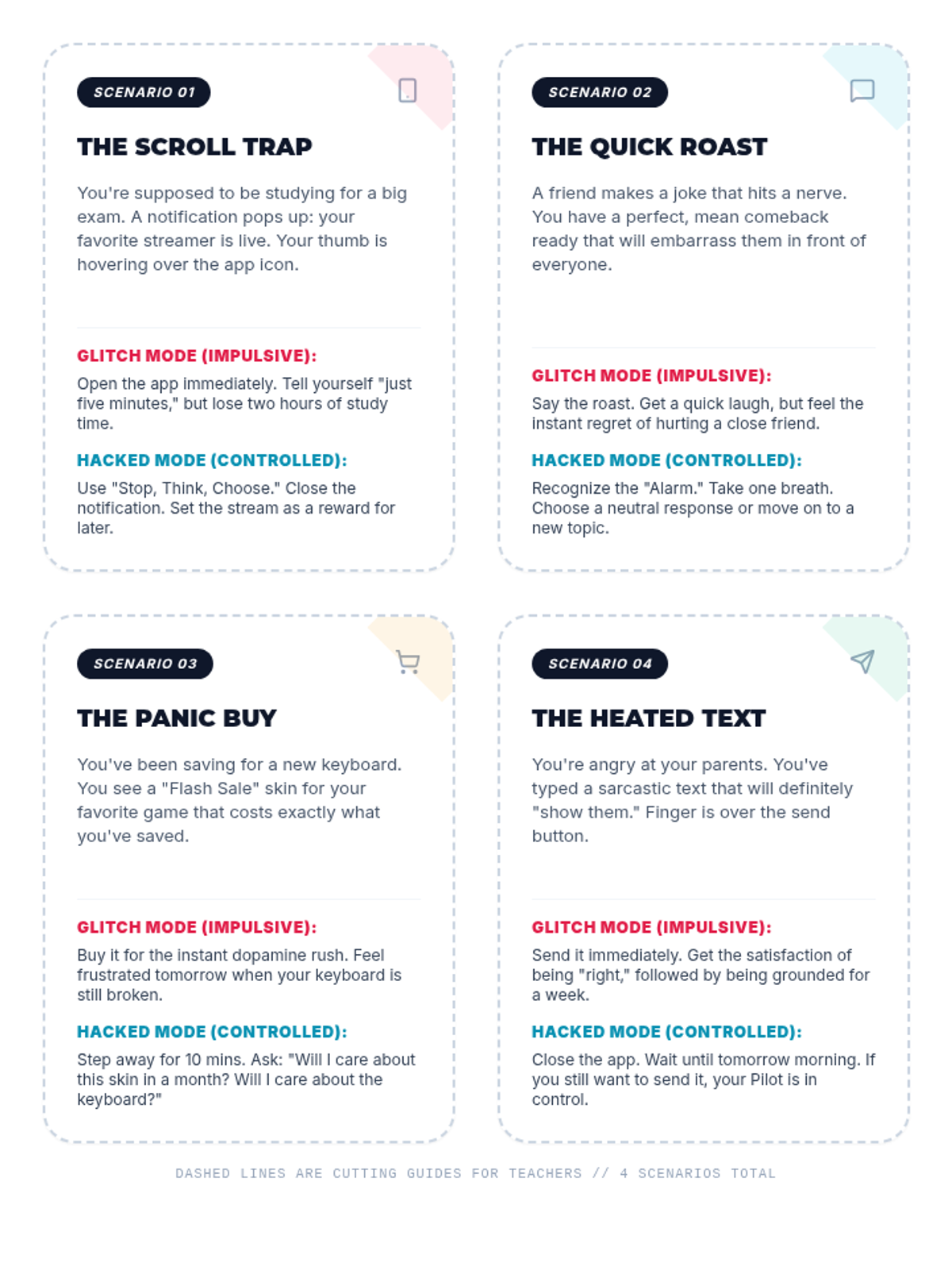
An introductory lesson on the neuroscience of impulse control, teaching teens about the PFC, Amygdala, and Dopamine reward systems through interactive acting and case studies.
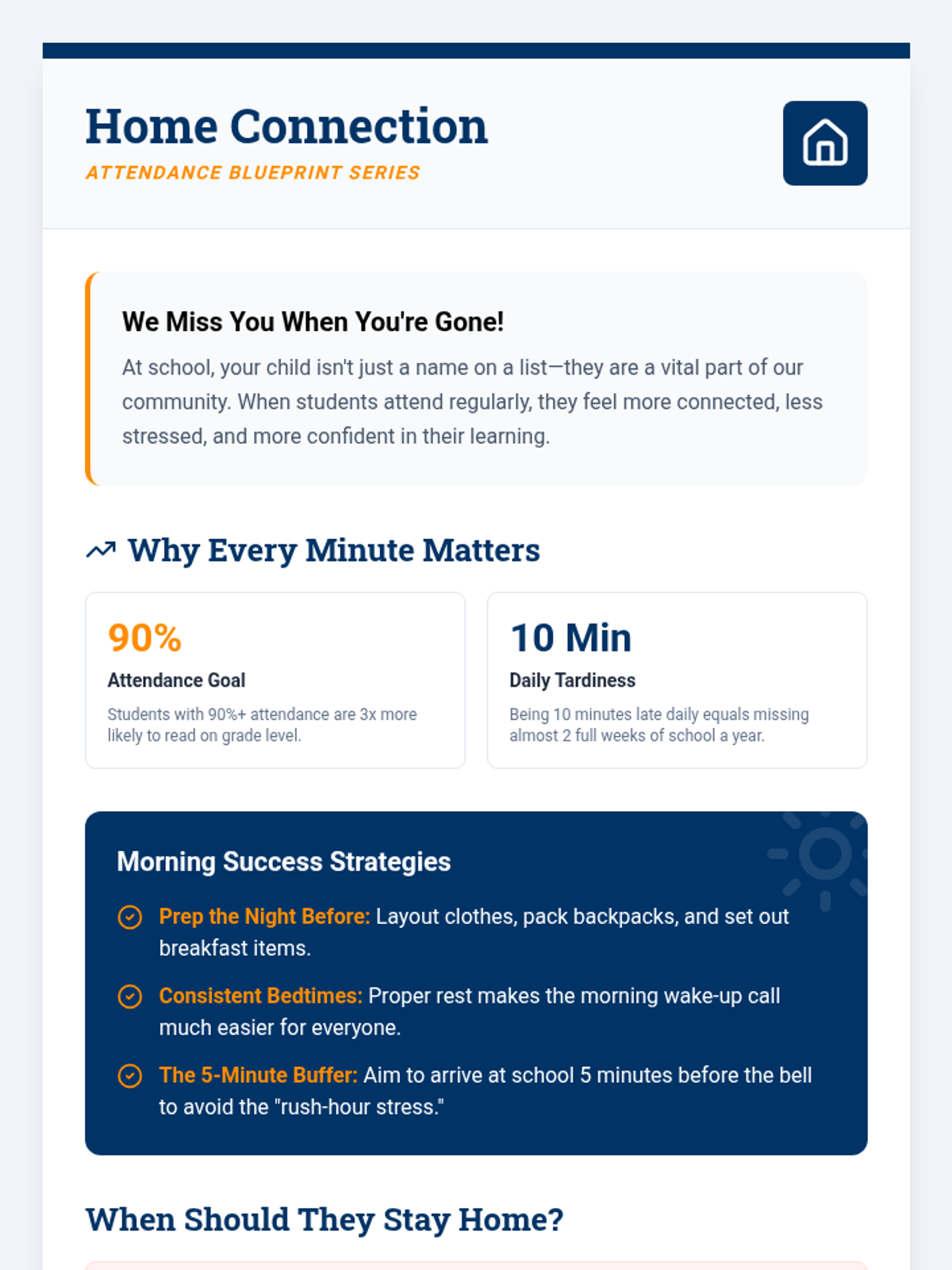
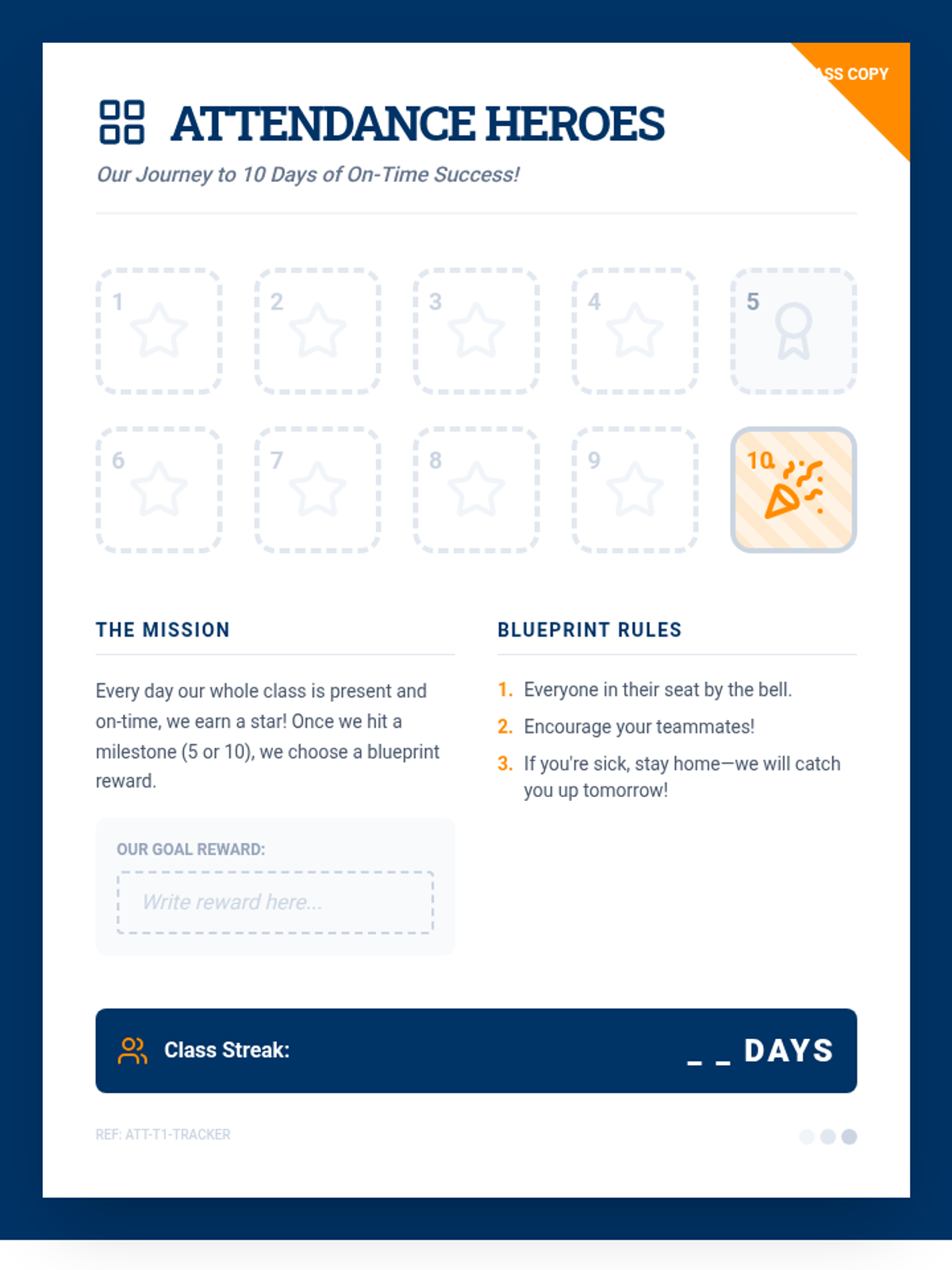
Establishing universal attendance expectations, building a culture of belonging, and communicating the "Every Minute Matters" philosophy to students and families.
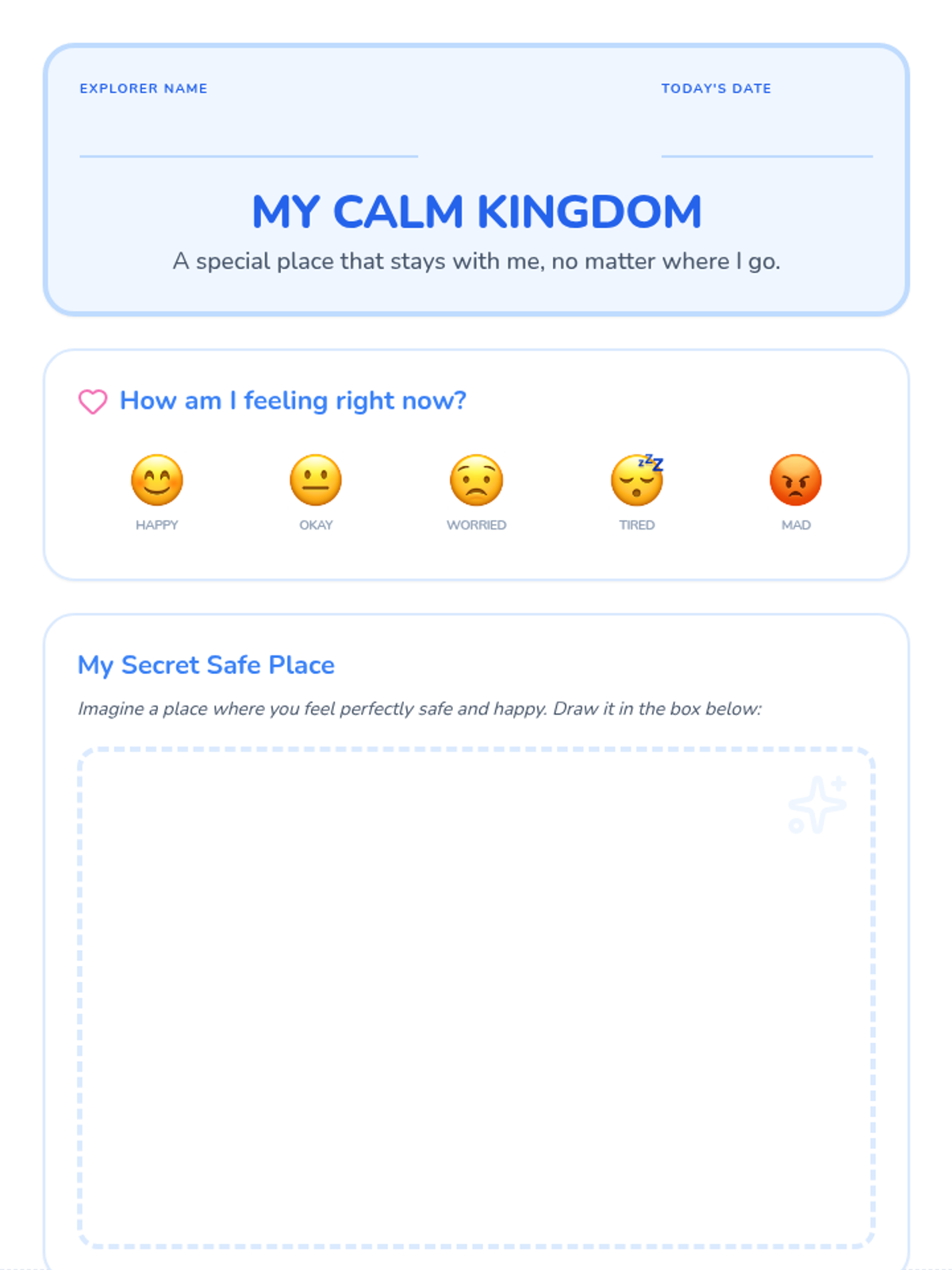
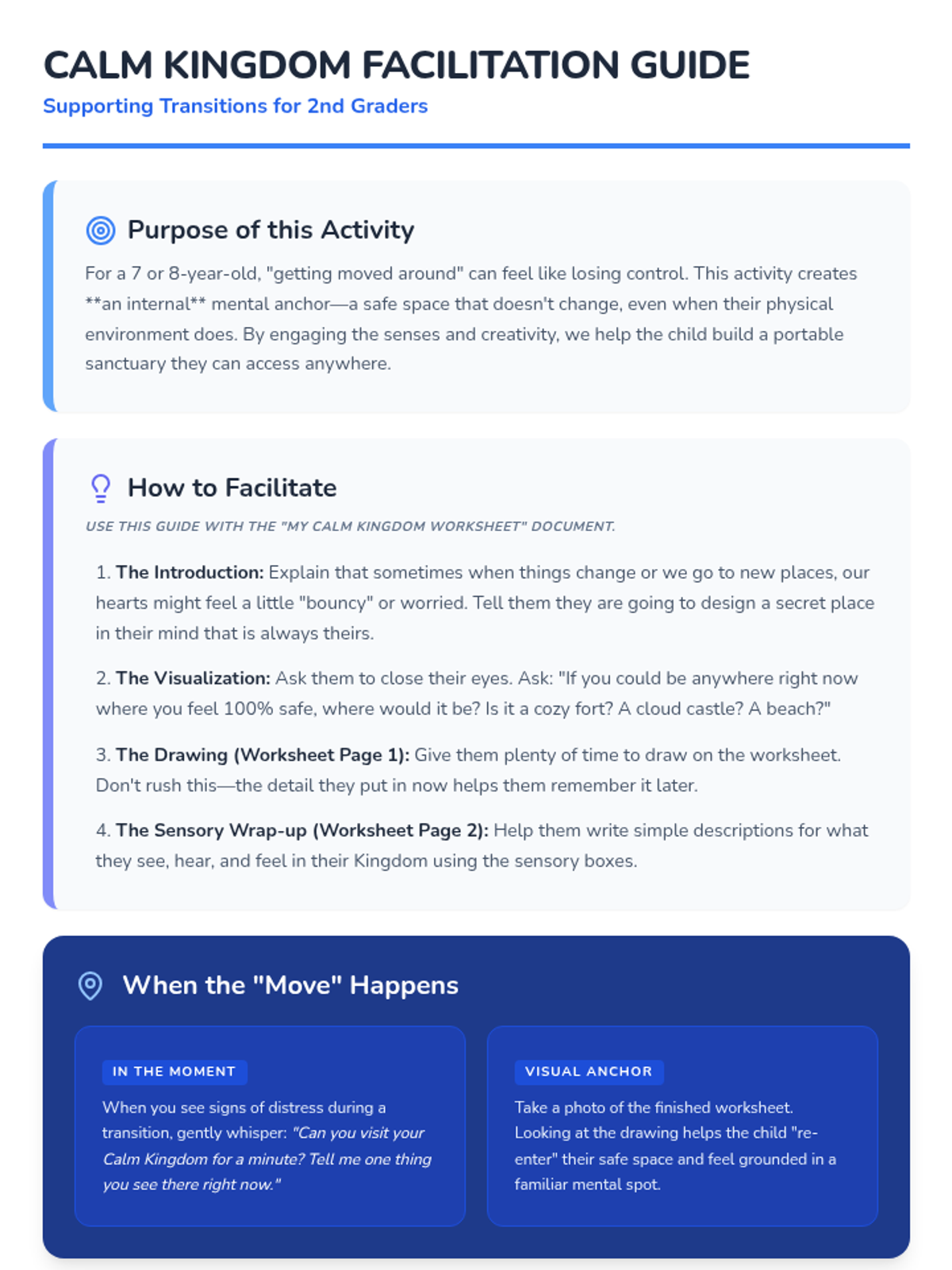
A gentle lesson designed to help 2nd graders develop a mental 'safe space' visualization to manage stress during transitions or changes in their environment.
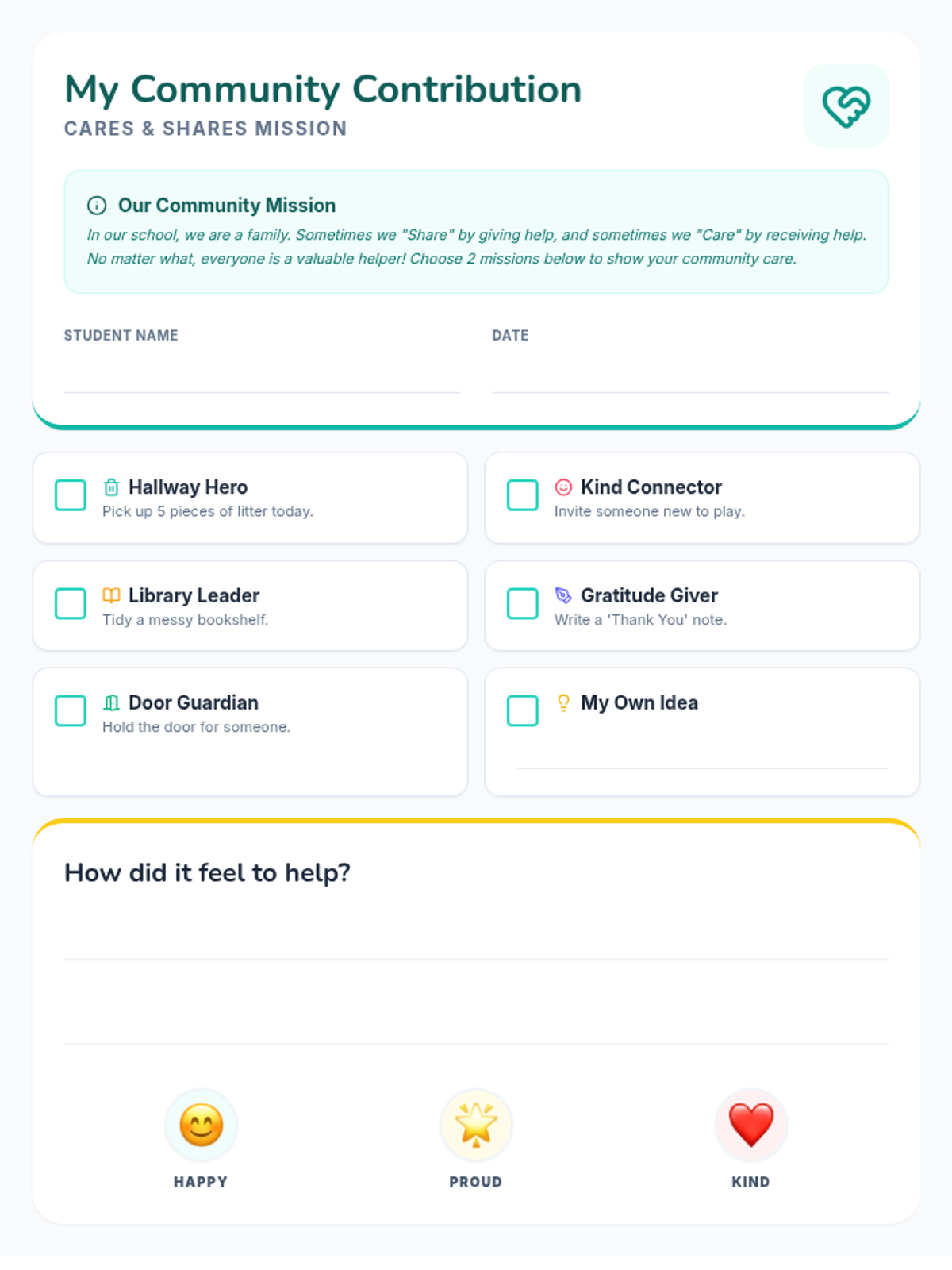
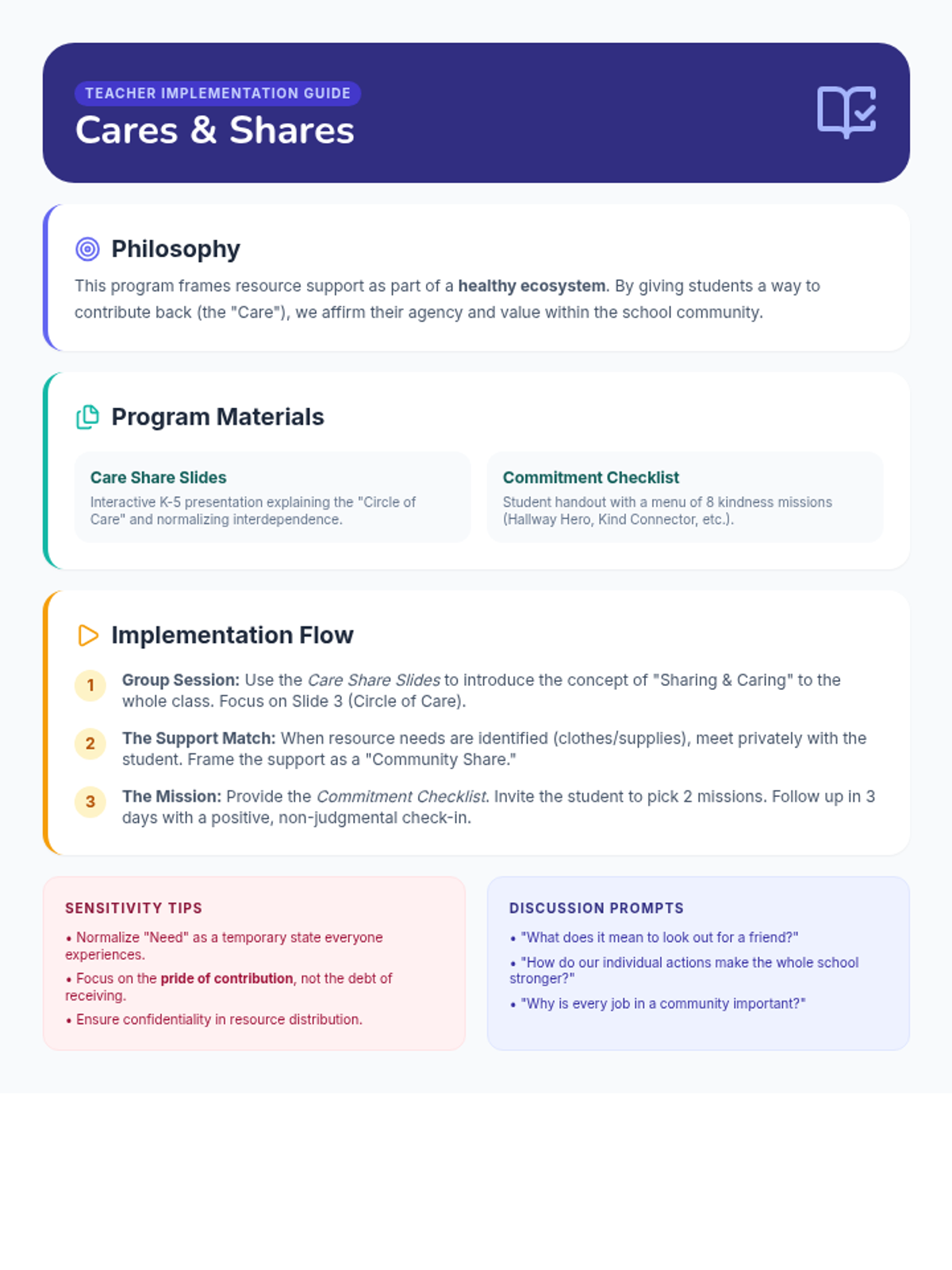
A social-emotional lesson for grades K-5 focused on the "Urbie Cares & Shares" program. Students learn that being part of a community means both receiving support when needed and contributing back to keep the community strong.
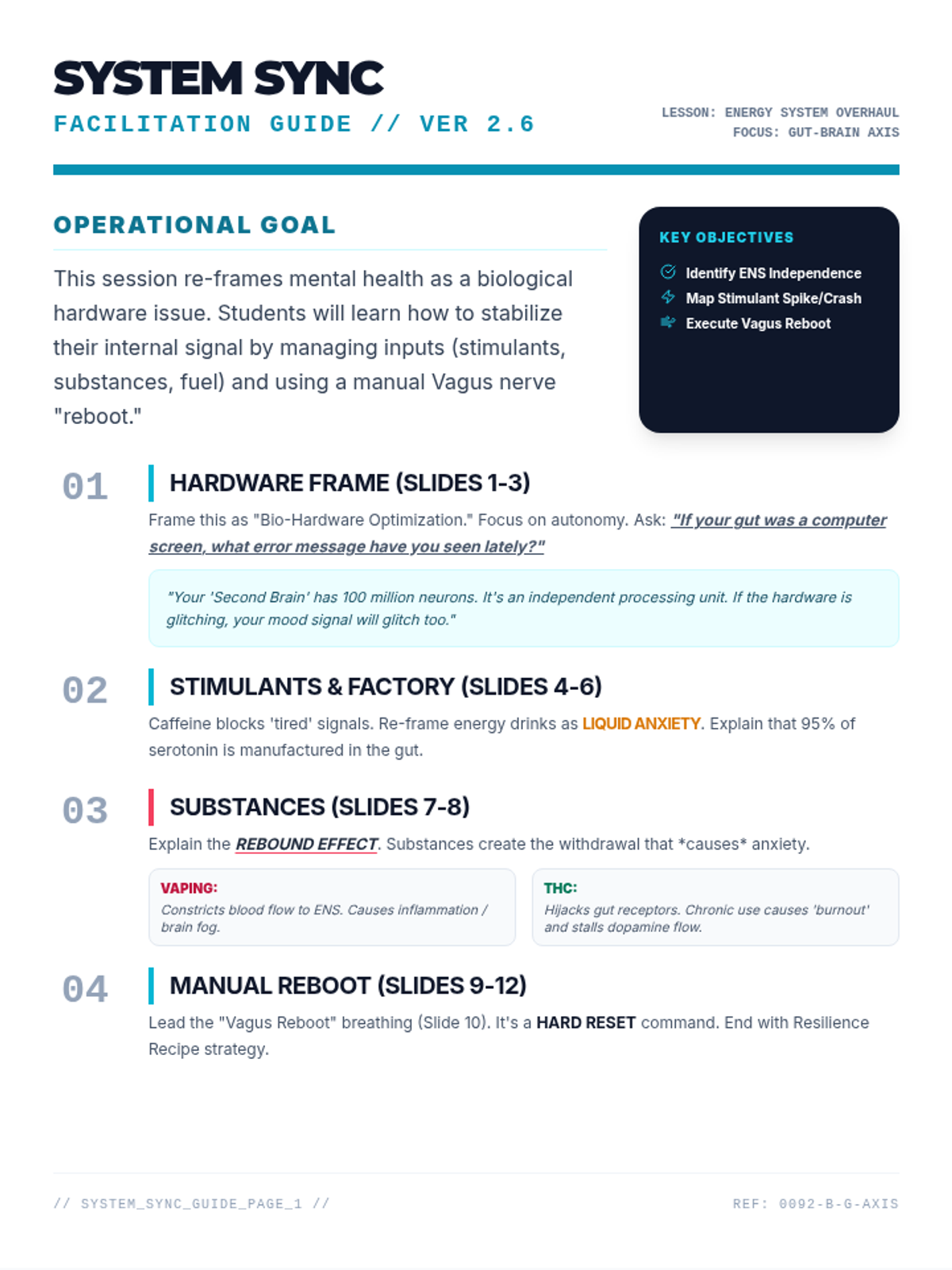
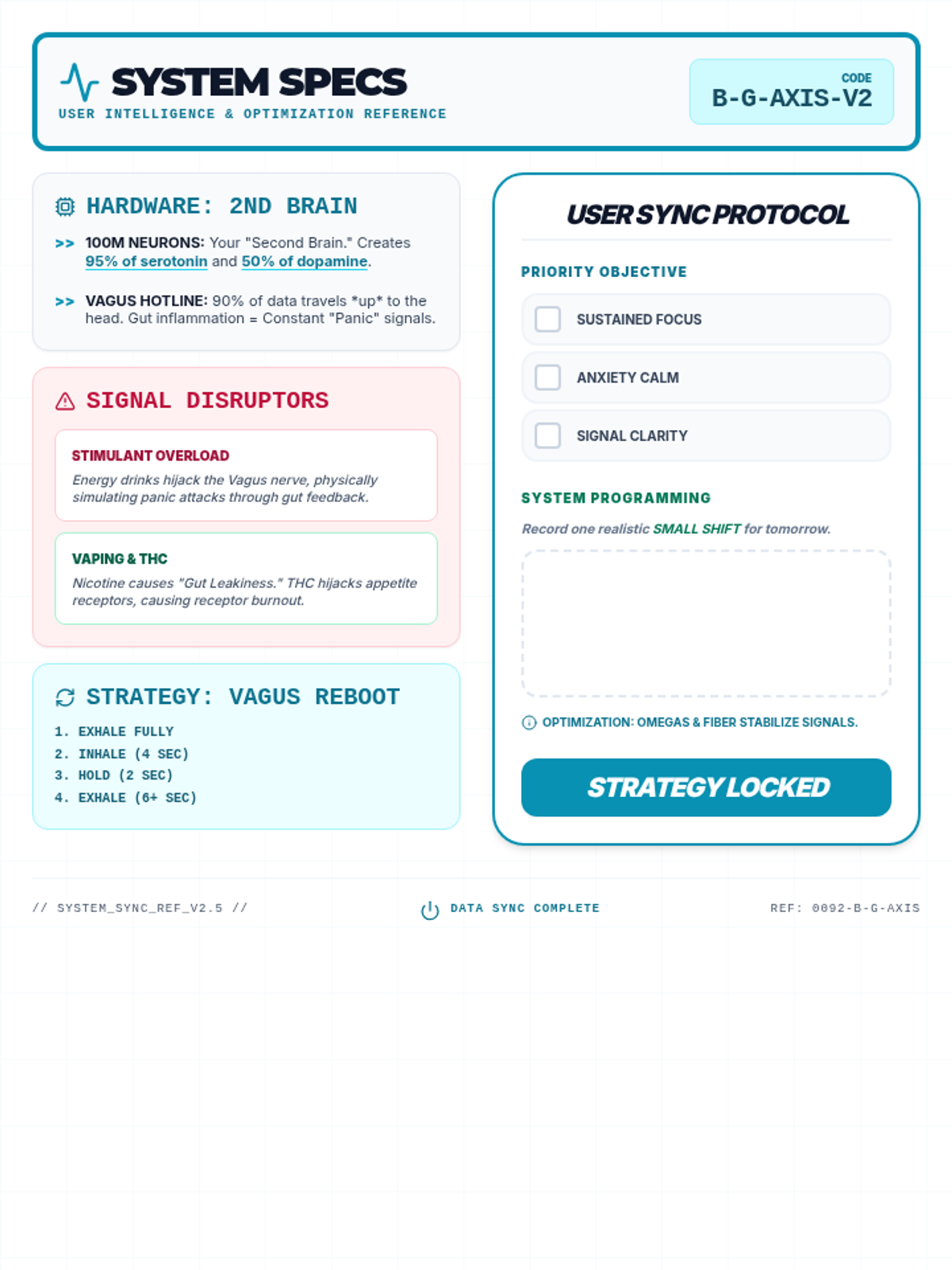
A comprehensive lesson exploring the bi-directional relationship between gut health and mental well-being, specifically tailored for high schoolers in therapeutic settings. The lesson covers the enteric nervous system, the impact of nutrition, hydration, and substances on mood, energy, and cognitive function.
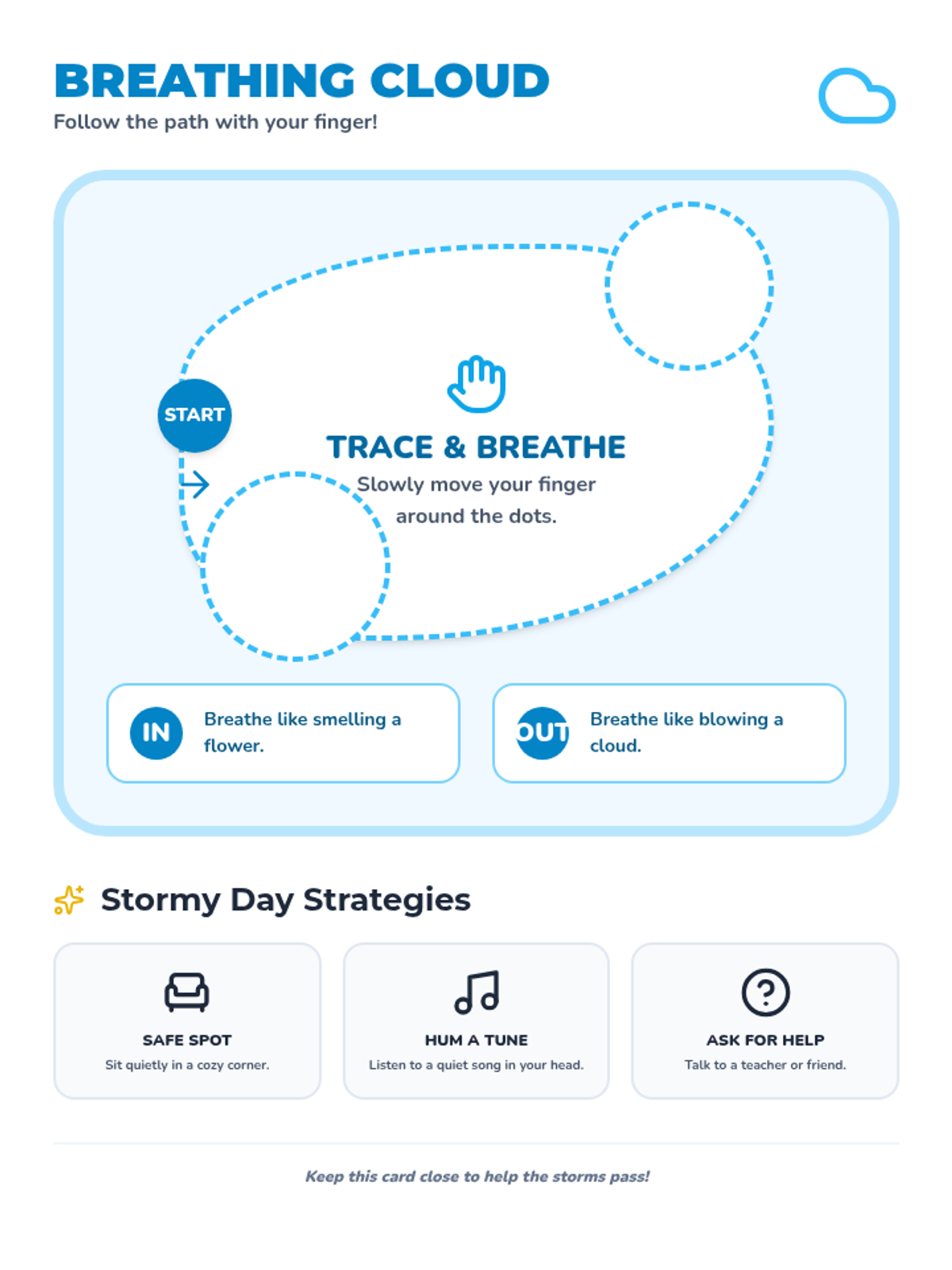
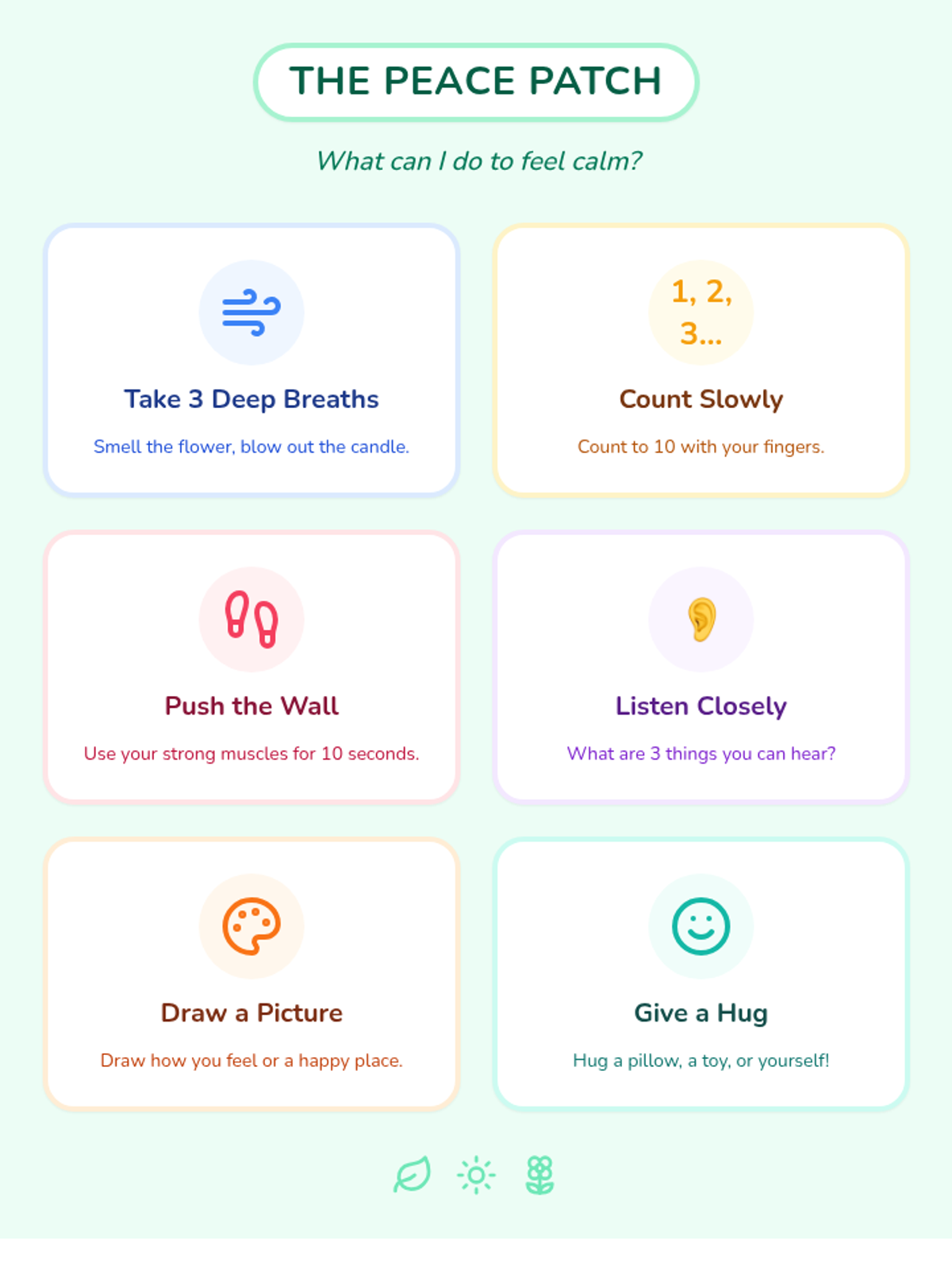
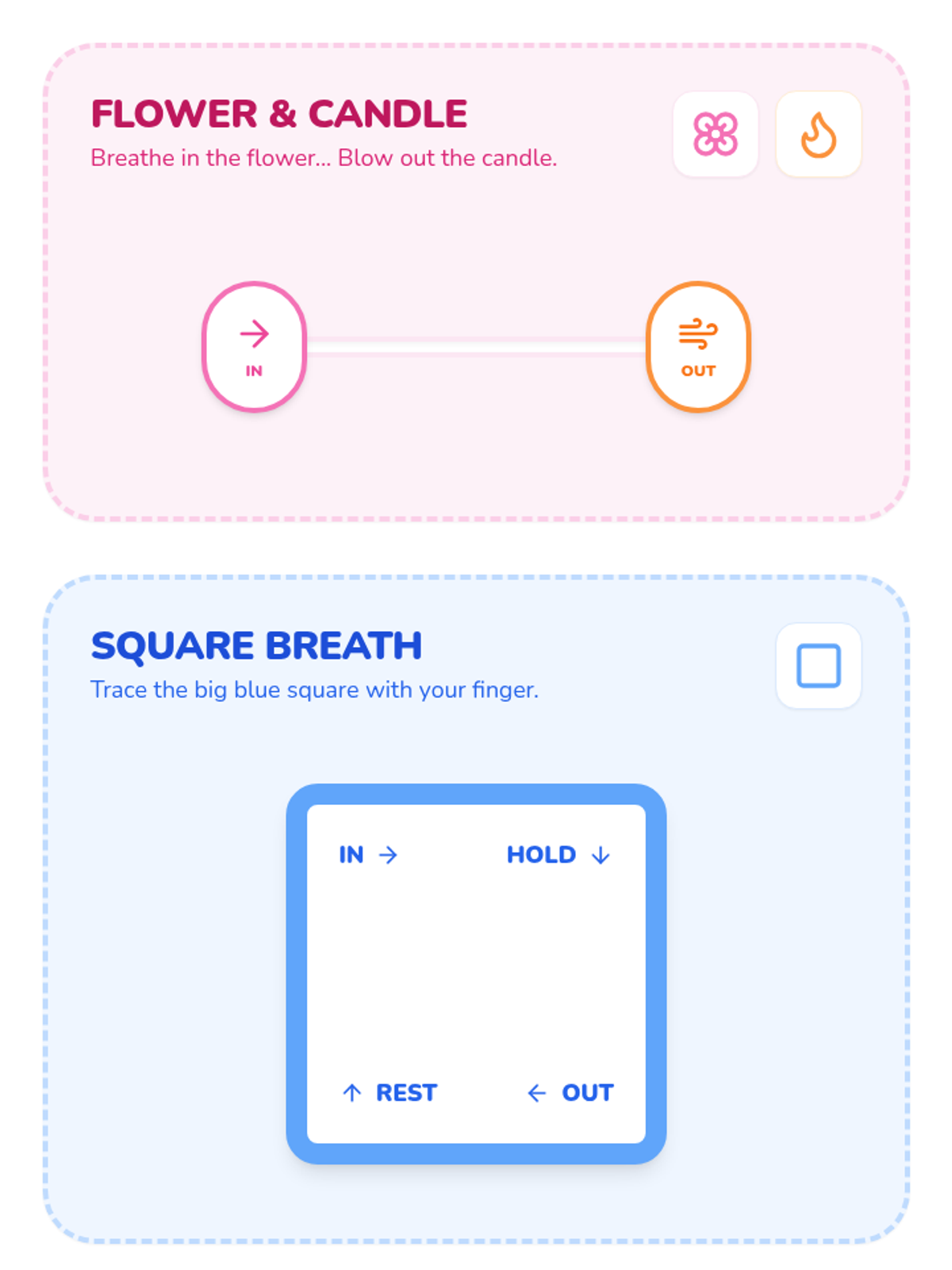
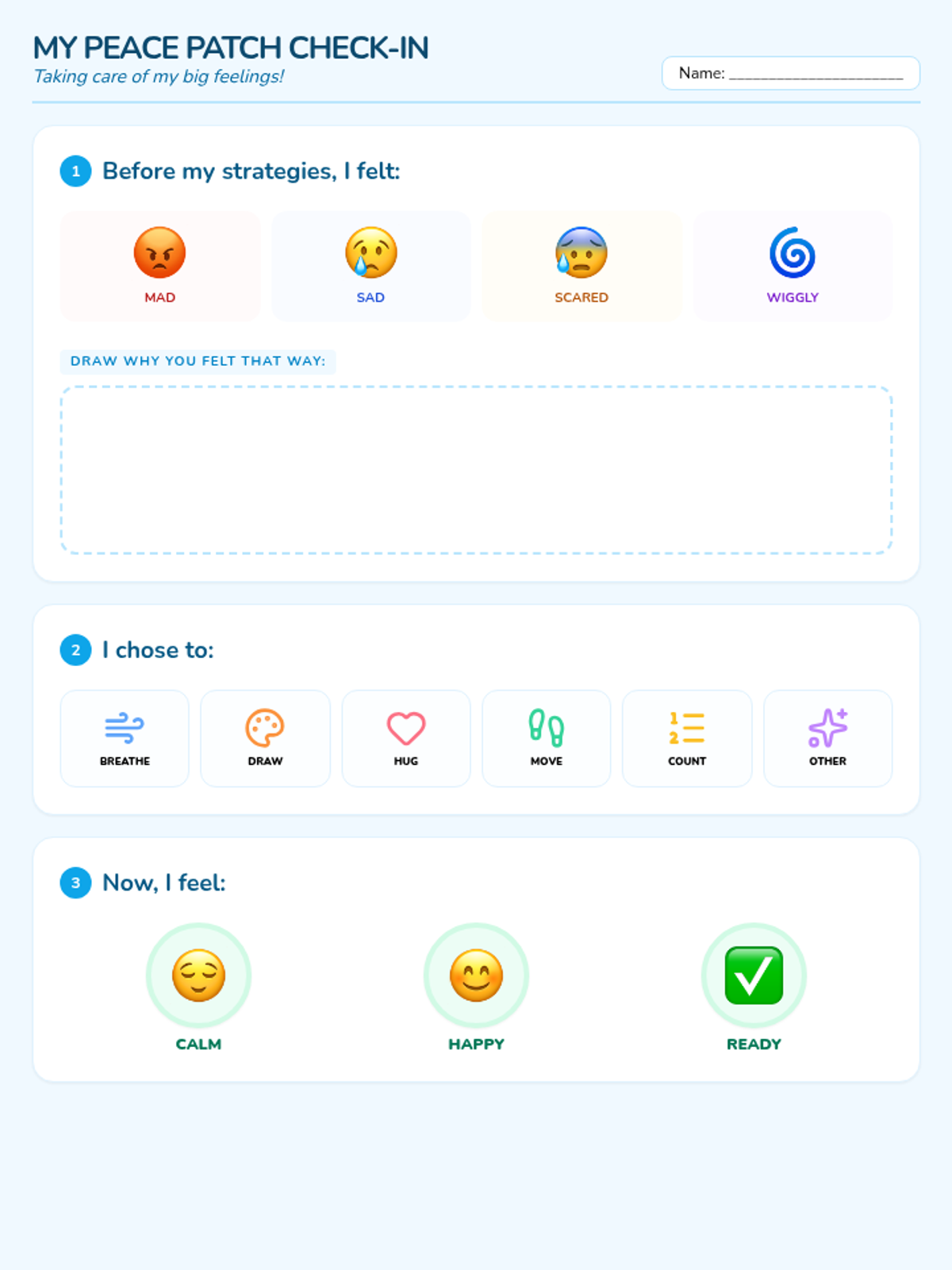
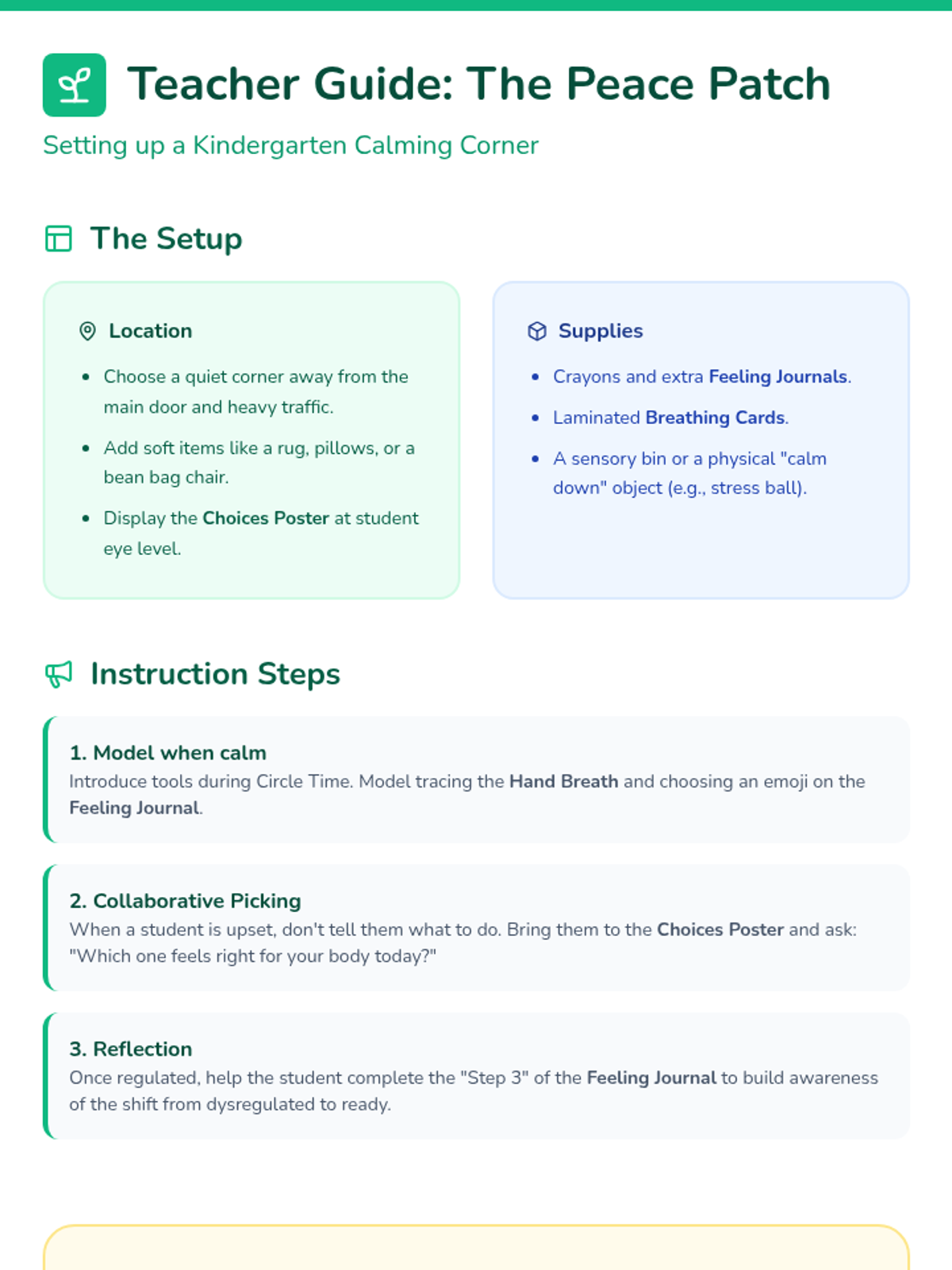
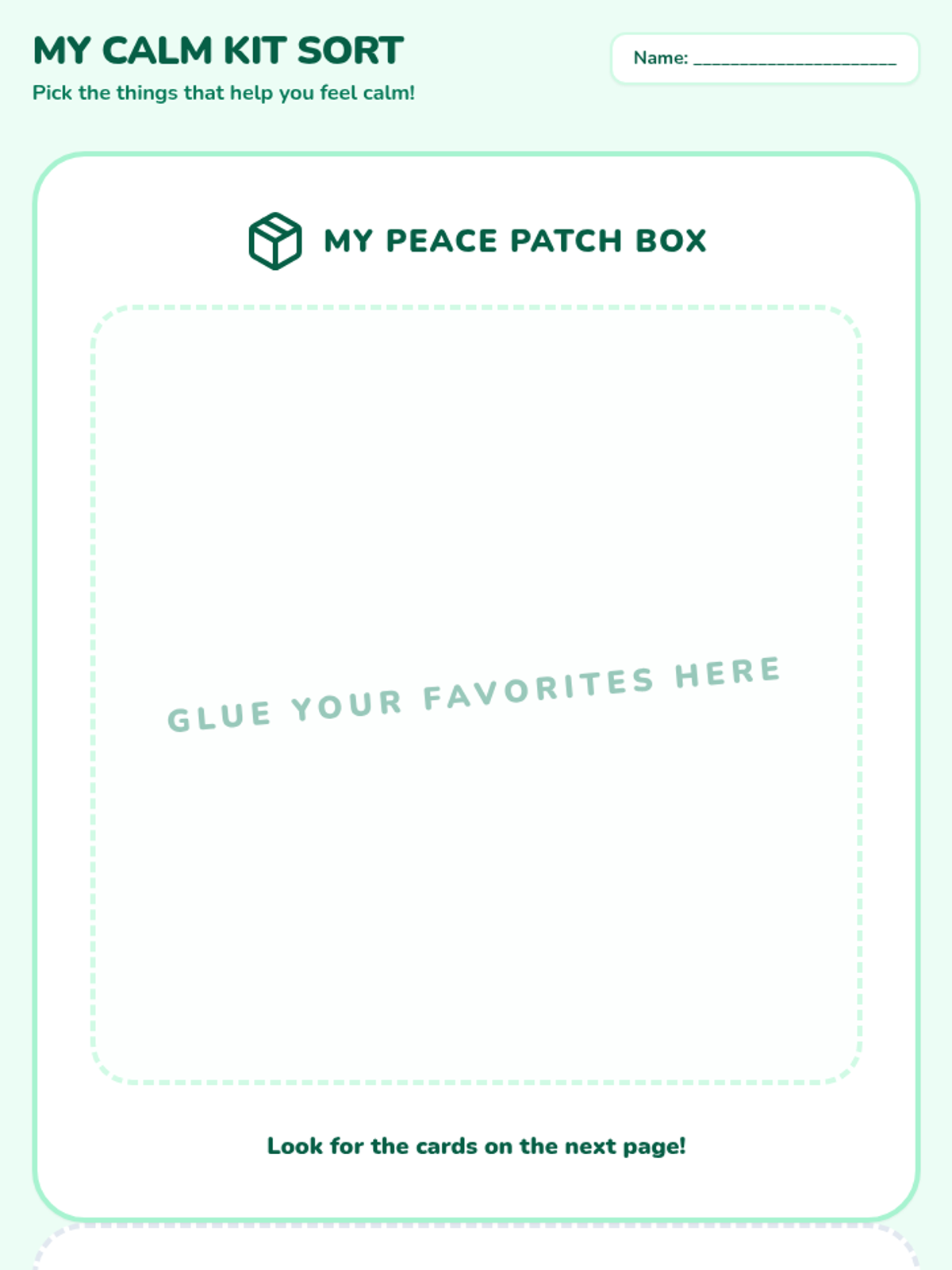
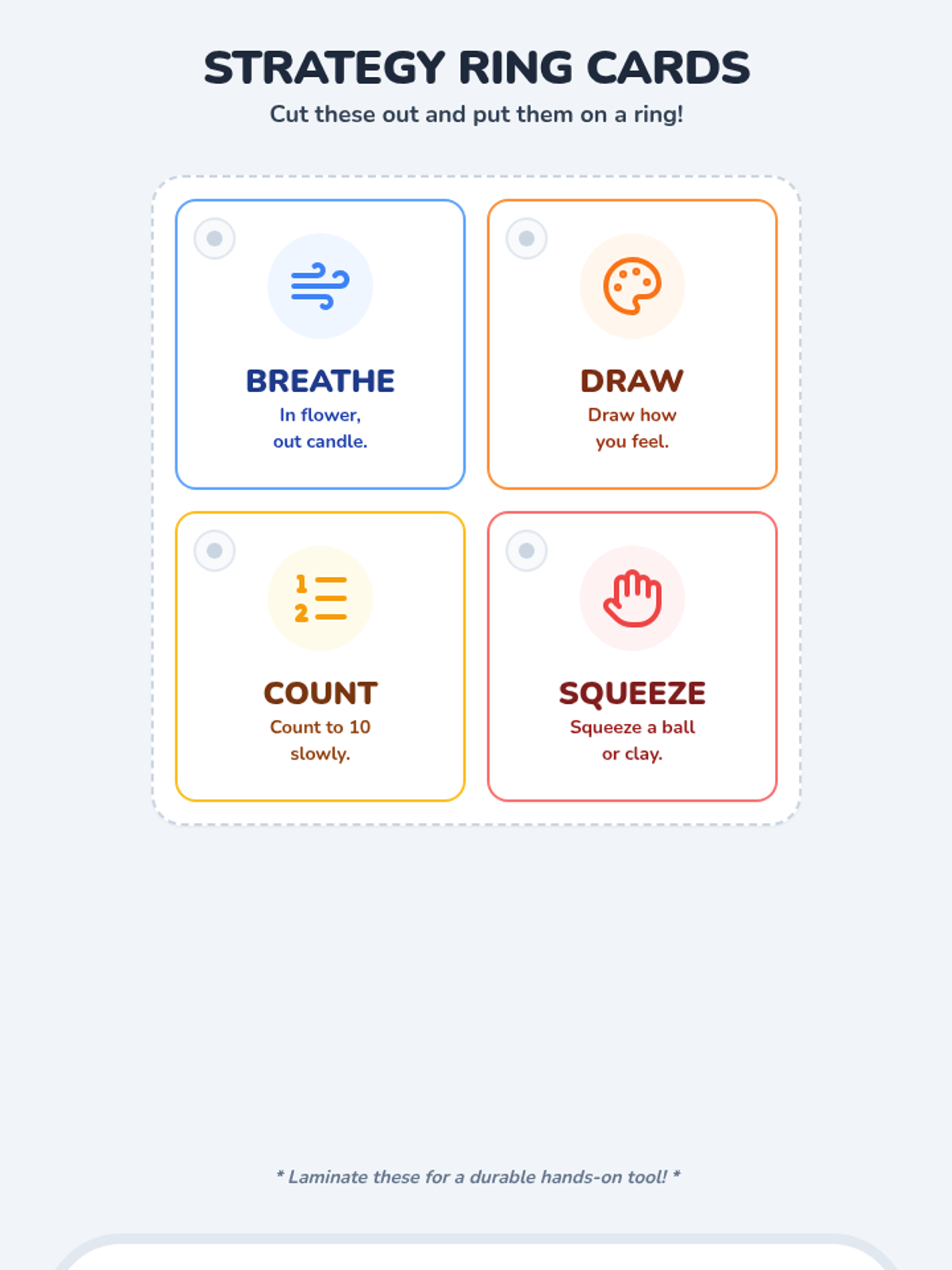
A collection of visual tools and activities designed for kindergarteners to independently manage big emotions using simple, effective calming strategies.
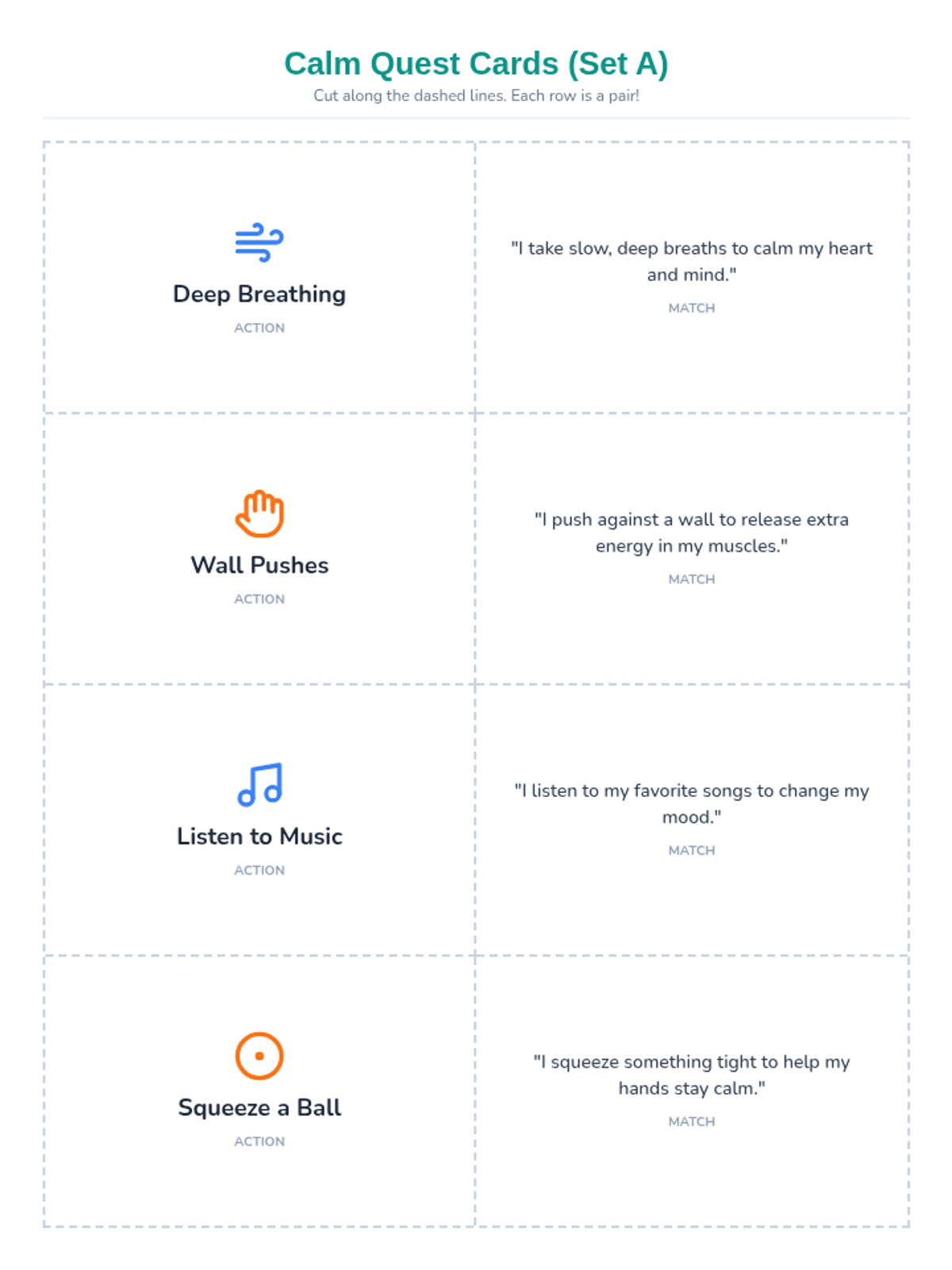
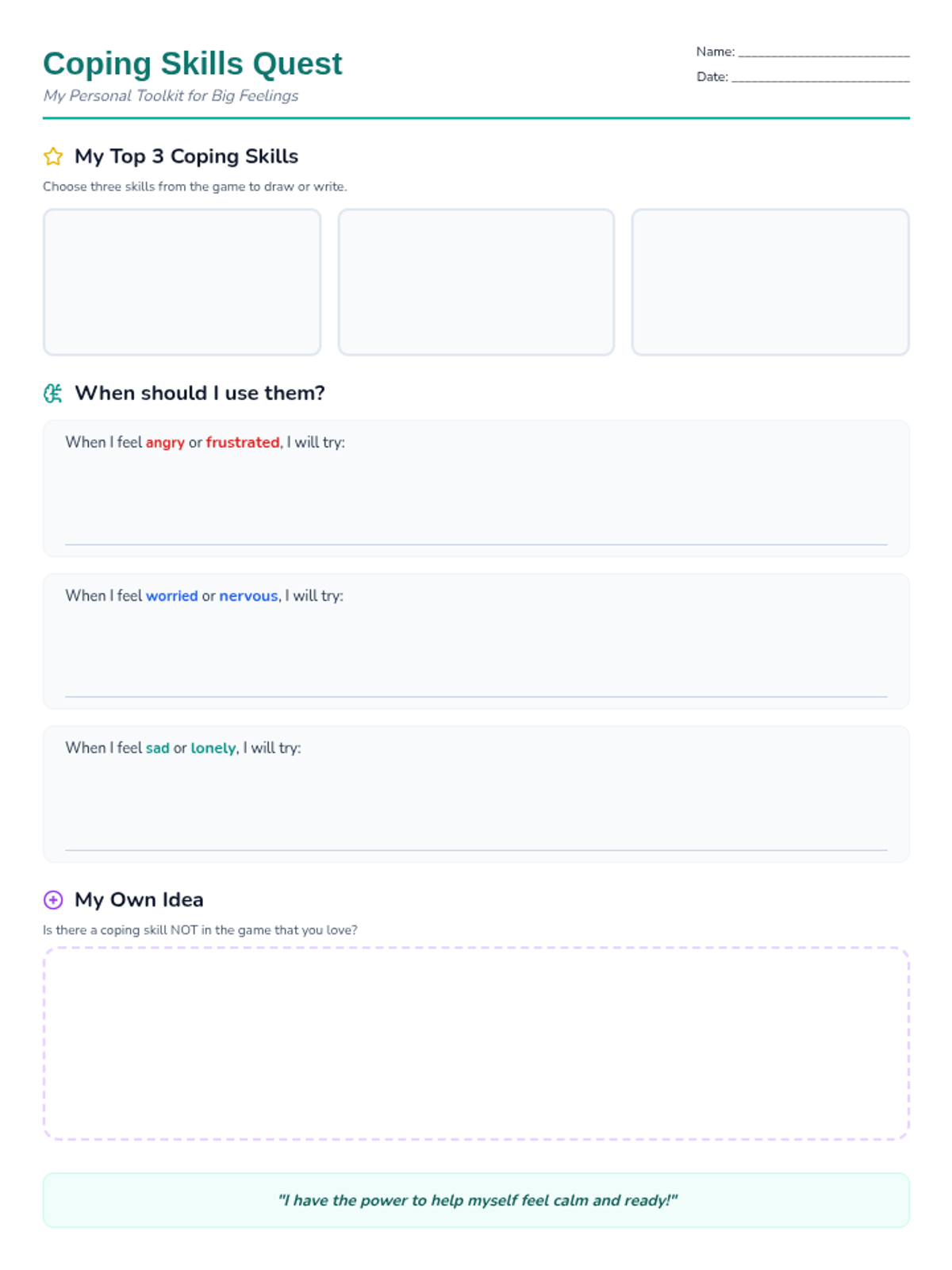
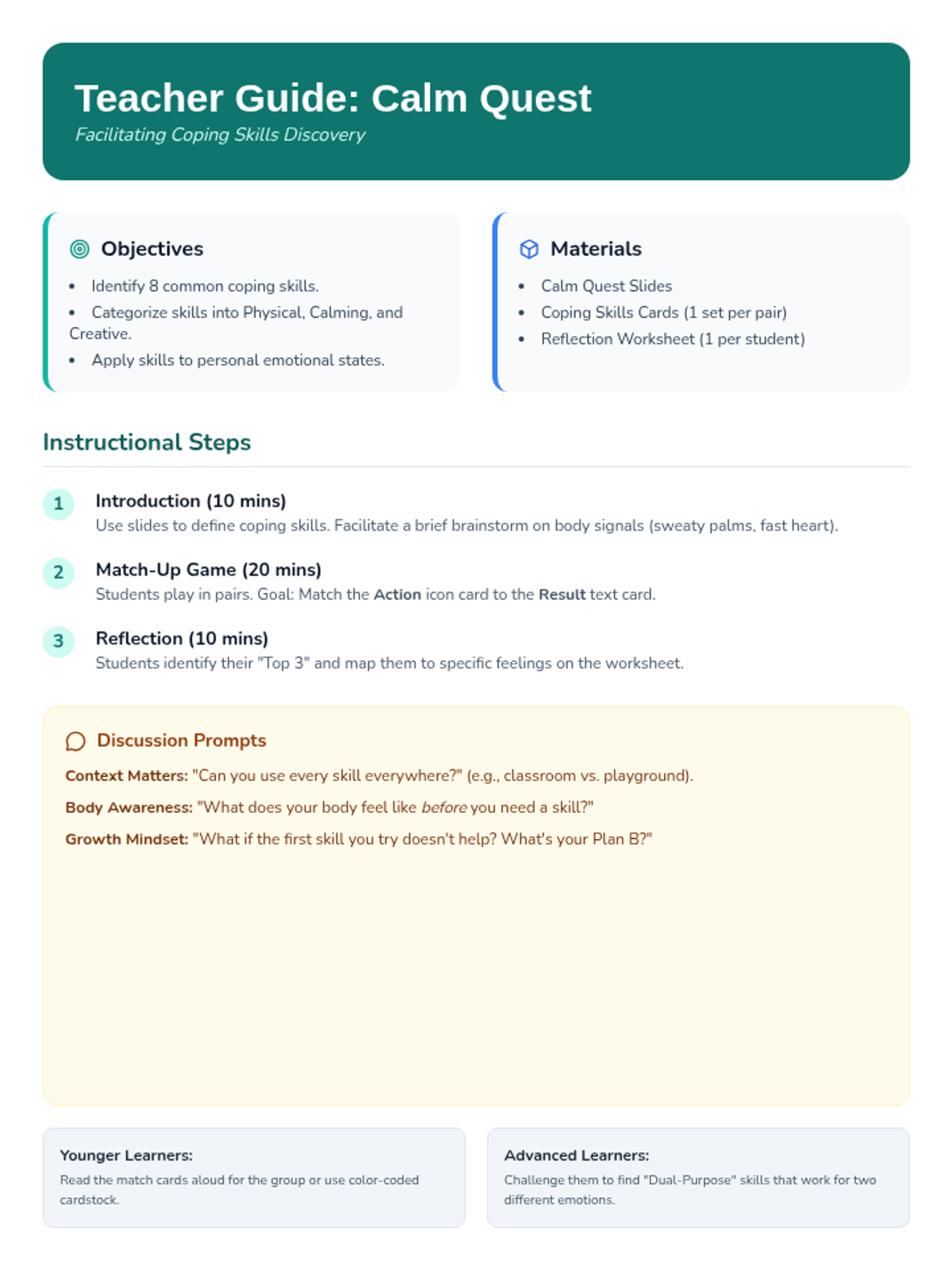
A social-emotional learning lesson designed to help students identify, categorize, and practice various coping skills through an engaging matching game. Students will learn how different strategies help regulate emotions and create their own personal 'Calm Quest' toolkit.
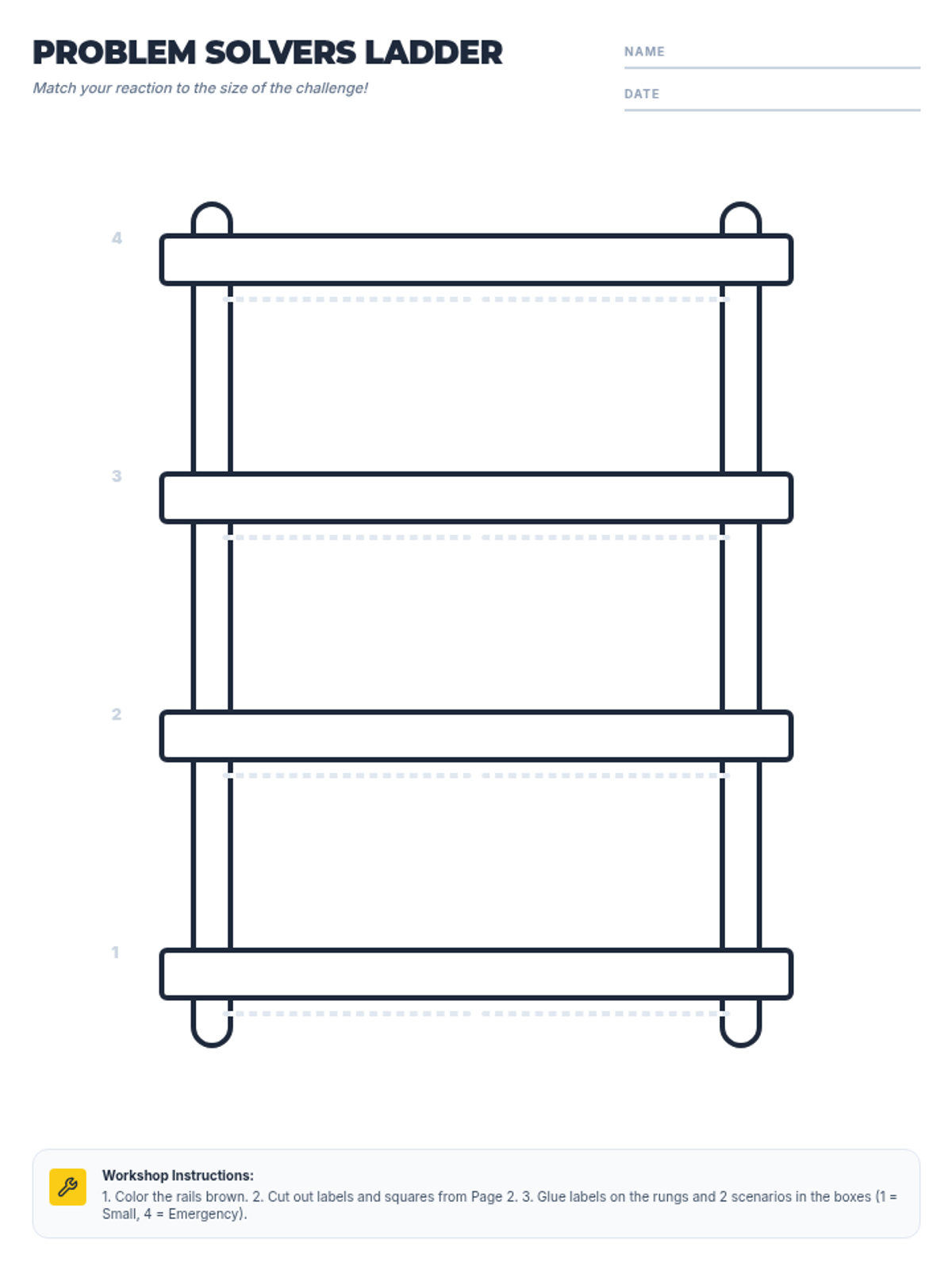
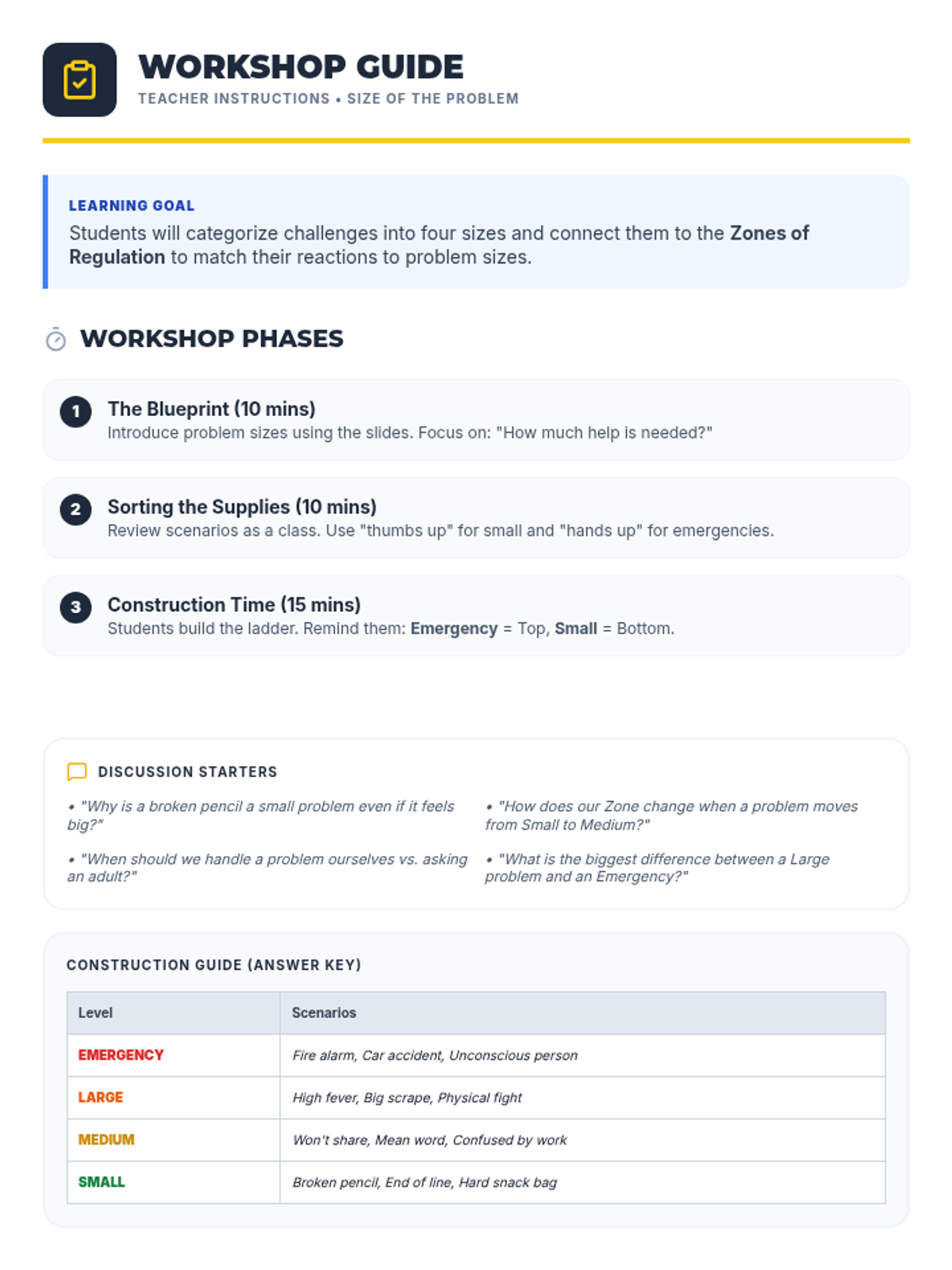
A hands-on lesson teaching students to categorize life's challenges using a ladder metaphor, integrated with Zones of Regulation concepts to help them match their reaction to the problem size.
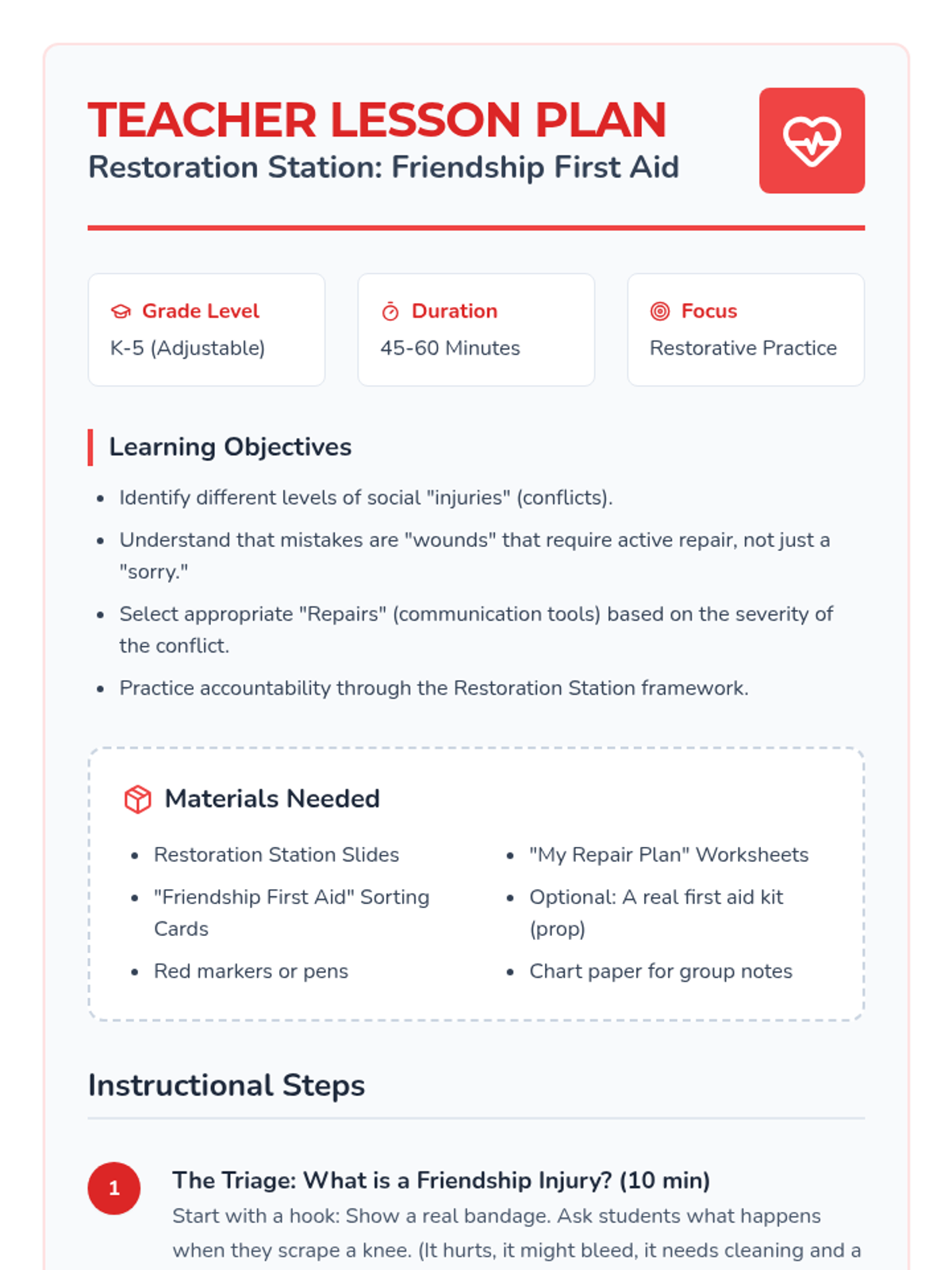
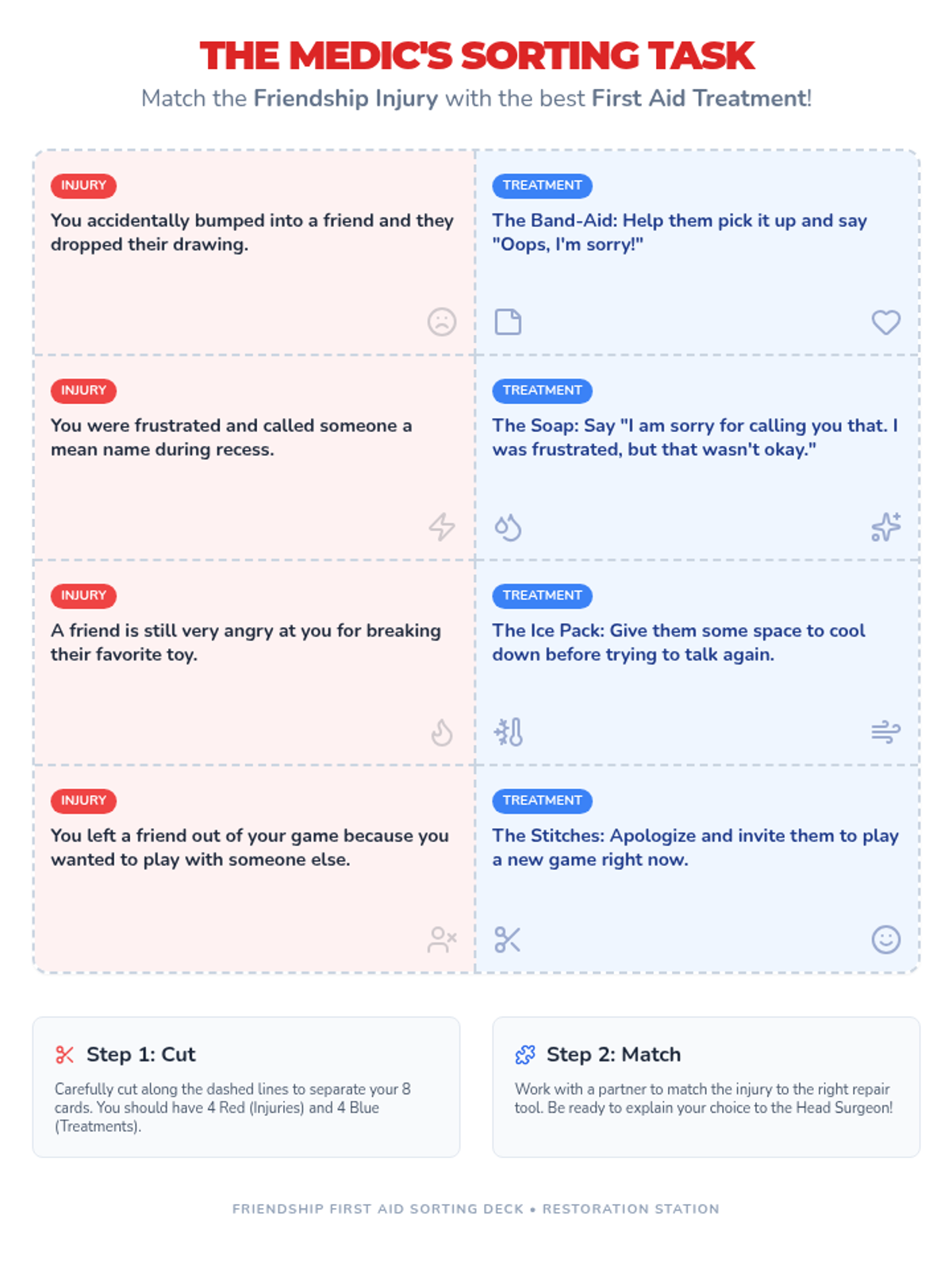
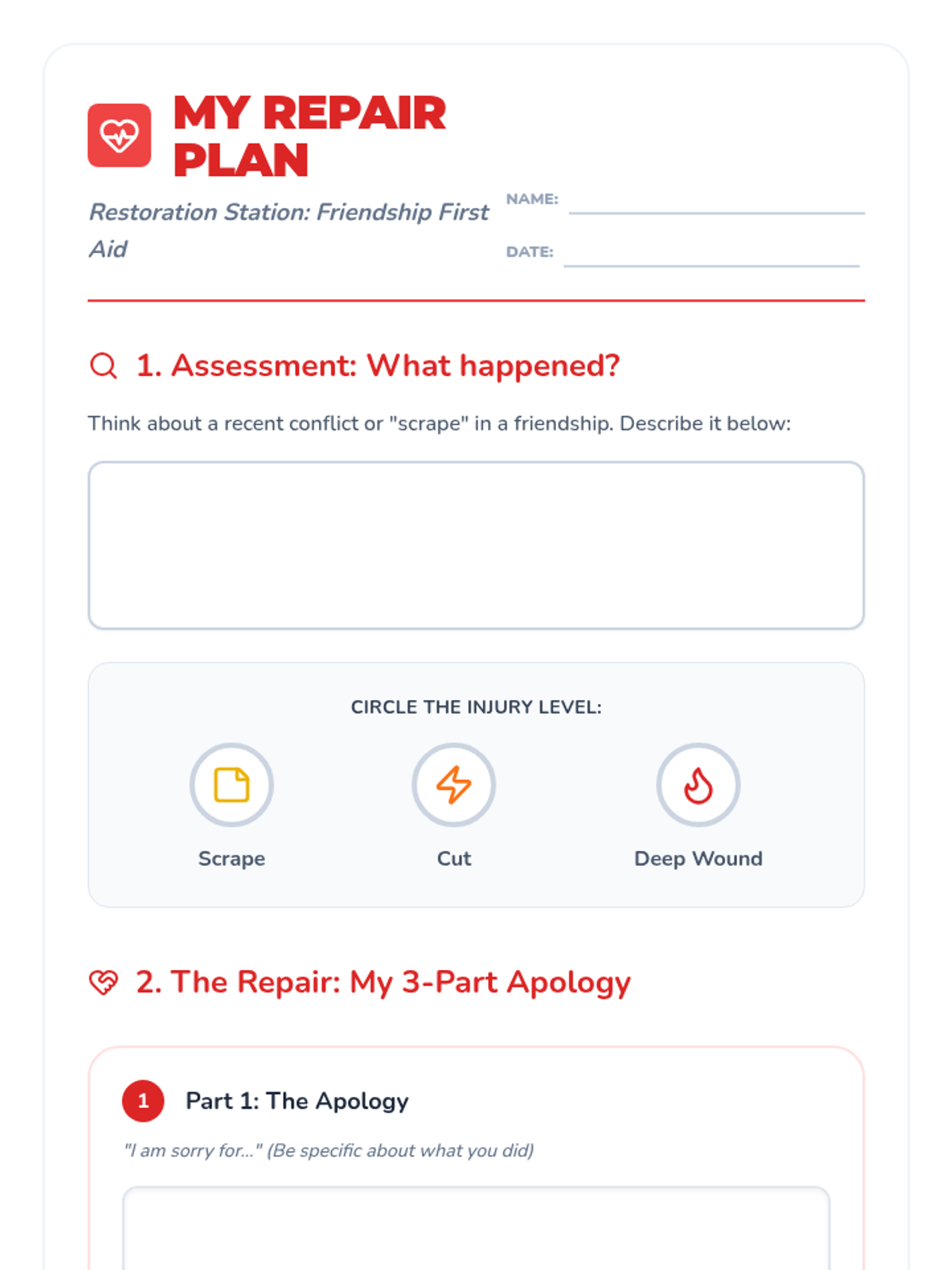
A restorative practice lesson for K-5 students using a first-aid metaphor to teach accountability and relationship repair after social conflicts. Students learn to assess friendship 'injuries' and apply the right communication 'treatments' to heal them.
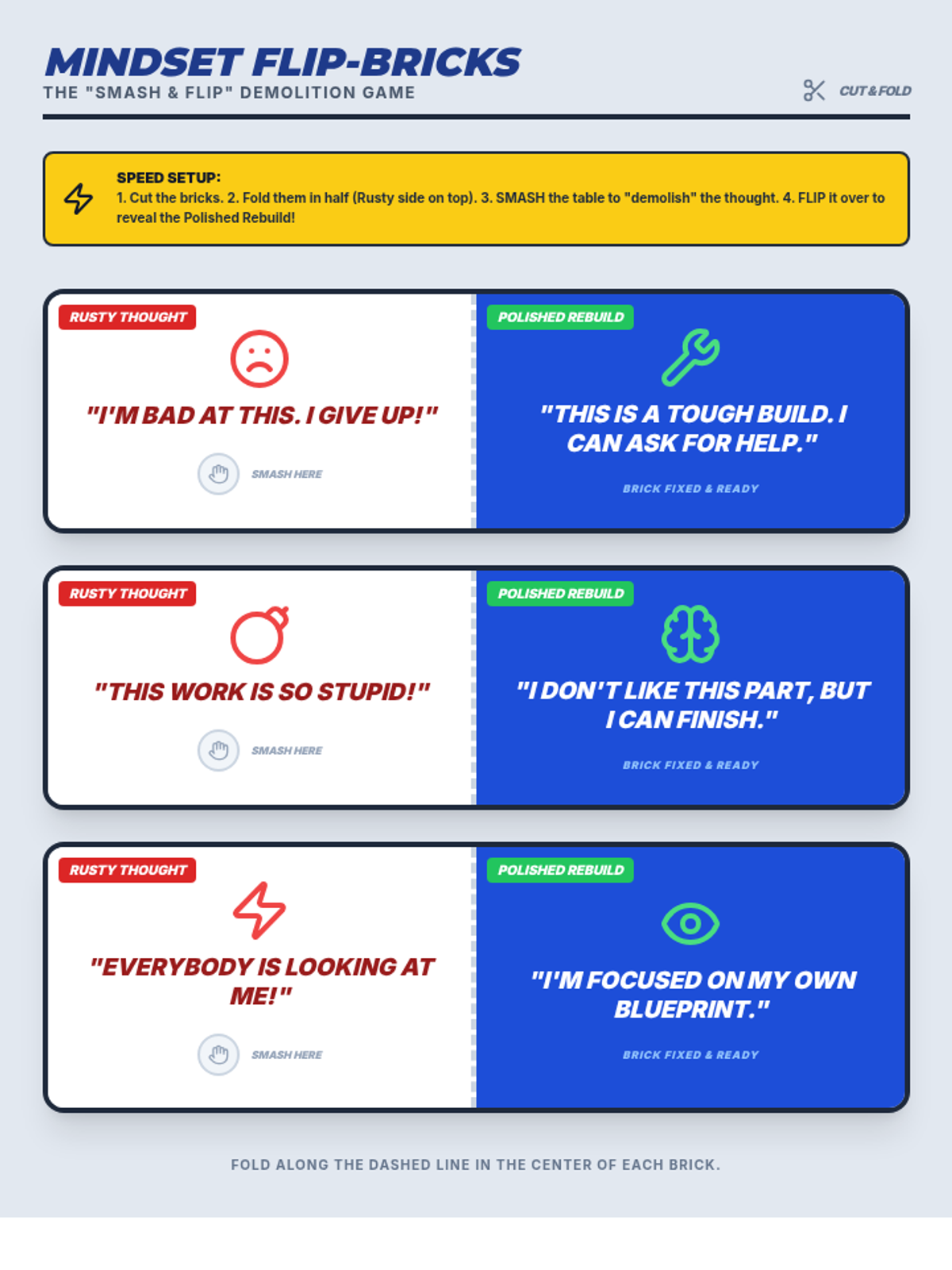
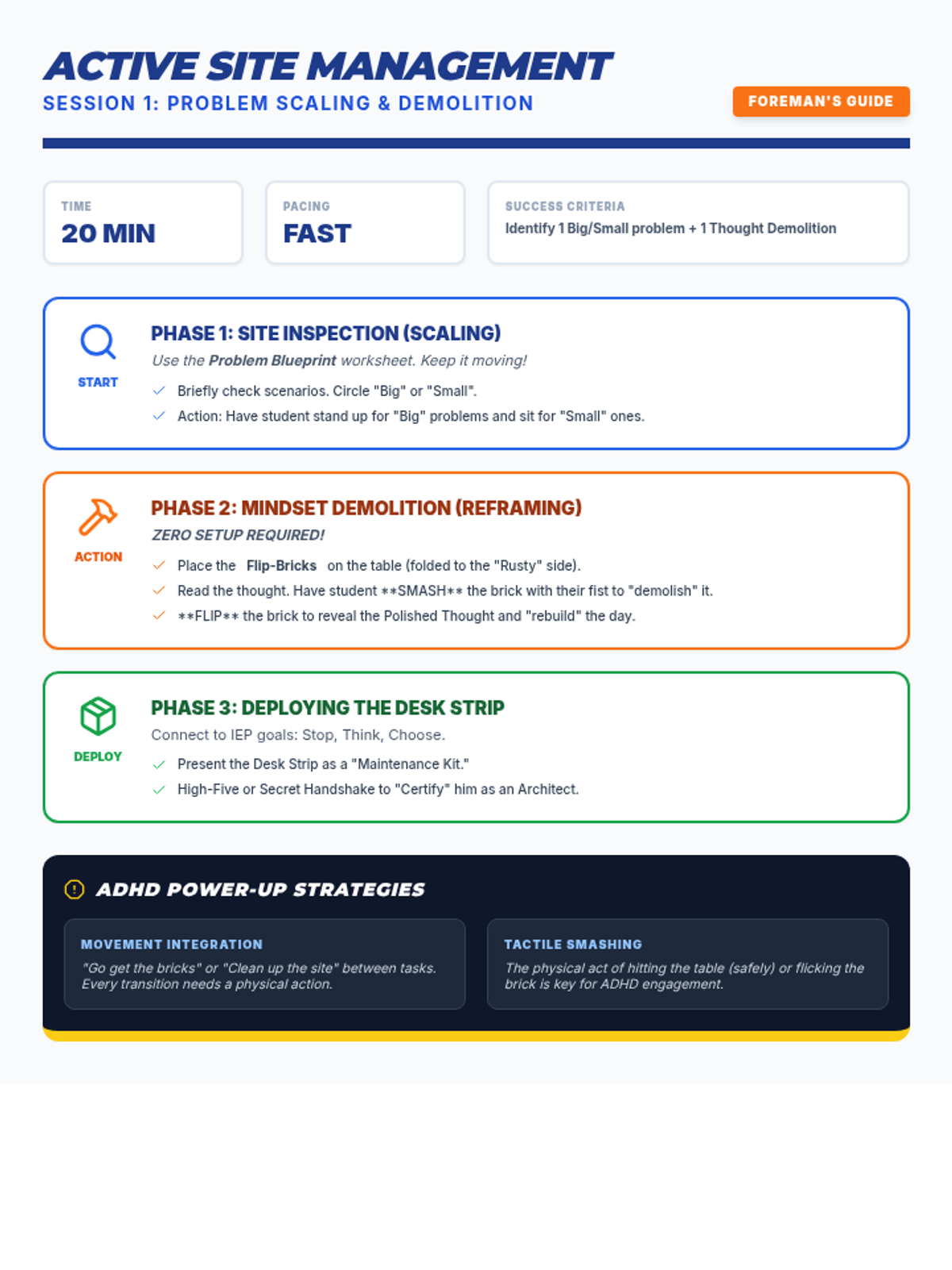
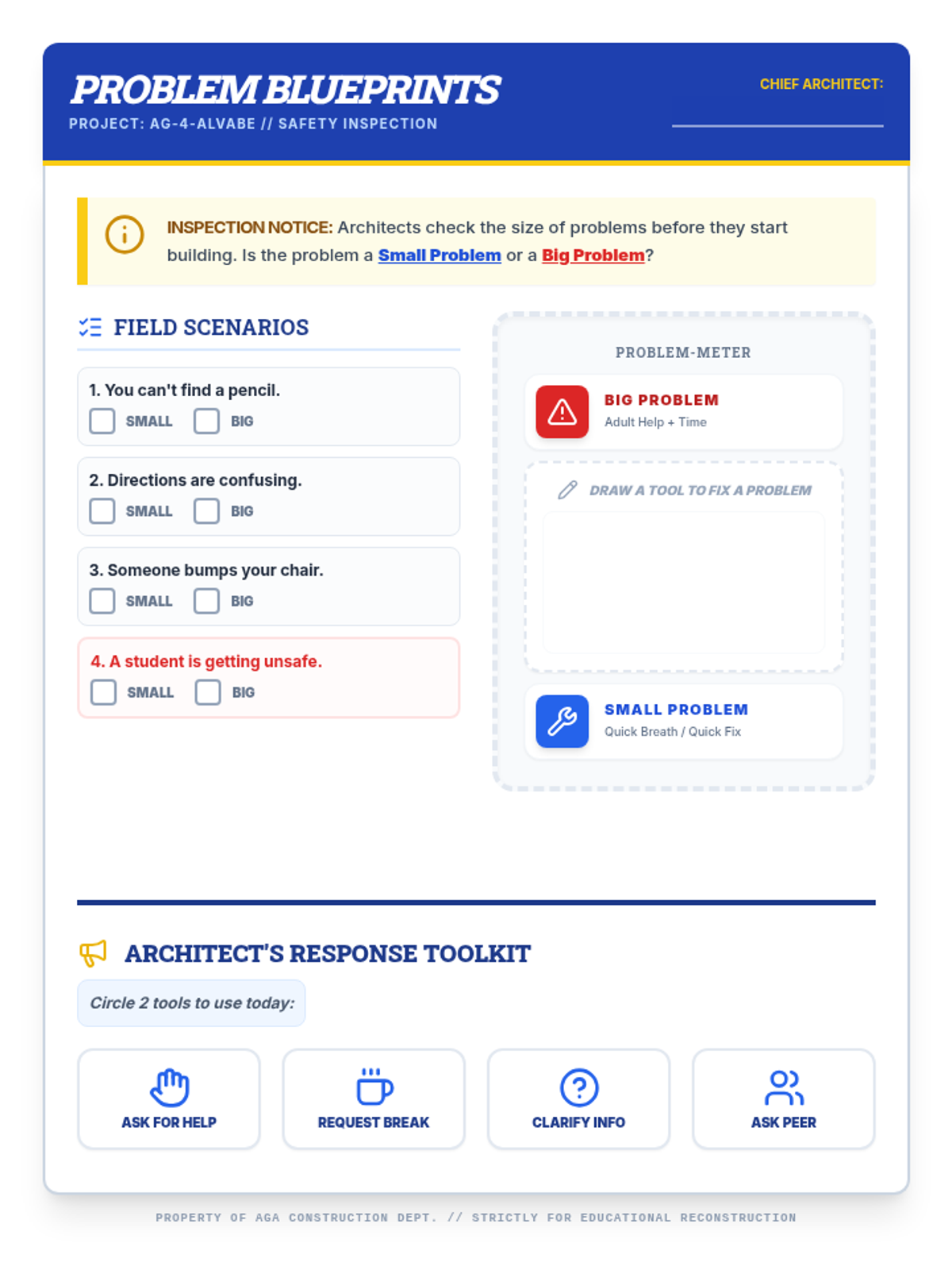
A 20-minute hands-on session focusing on differentiating between big and small school problems and reframing unkind thoughts through a construction-themed lens.