A short warm-up activity for Kindergarten students to observe and identify unique traits in their peers.
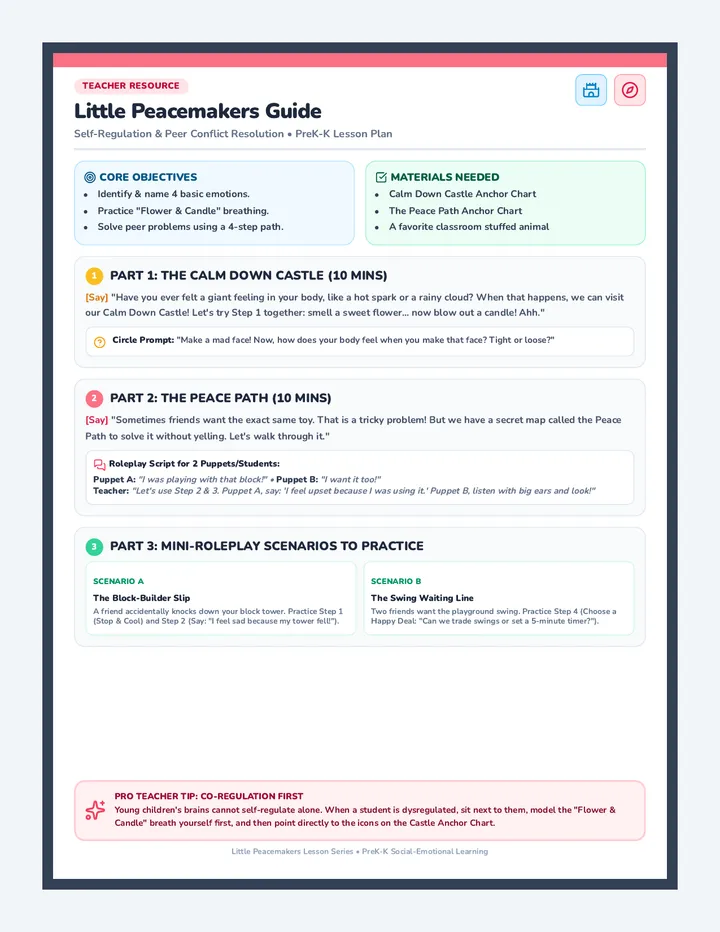
A comprehensive, single-page teacher facilitation guide for the 'Little Peacemakers' lesson. It includes circle time scripts, roleplay scenarios for PreK-K classrooms, and practical tips on how to introduce the 'Calm Down Castle' and 'Peace Path' anchor charts.
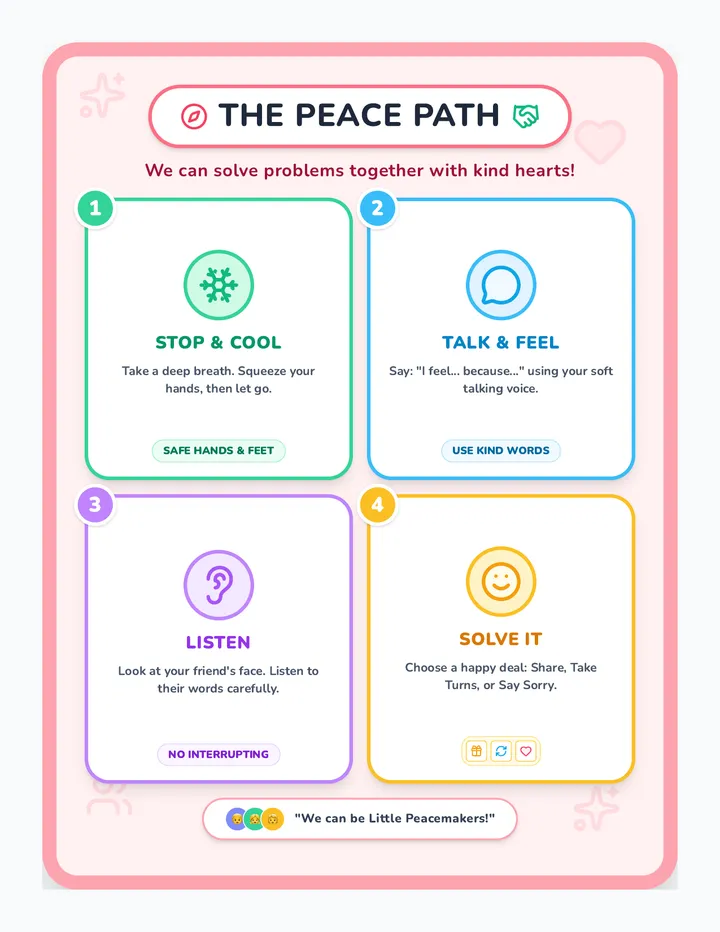
A highly visual, single-page conflict resolution anchor chart titled 'The Peace Path' for PreK-K classrooms. It features 4 simple, sequential steps to solve peer conflict peacefully: Stop & Cool, Talk & Feel, Listen, and Solve It, styled with friendly visual icons and colored blocks.
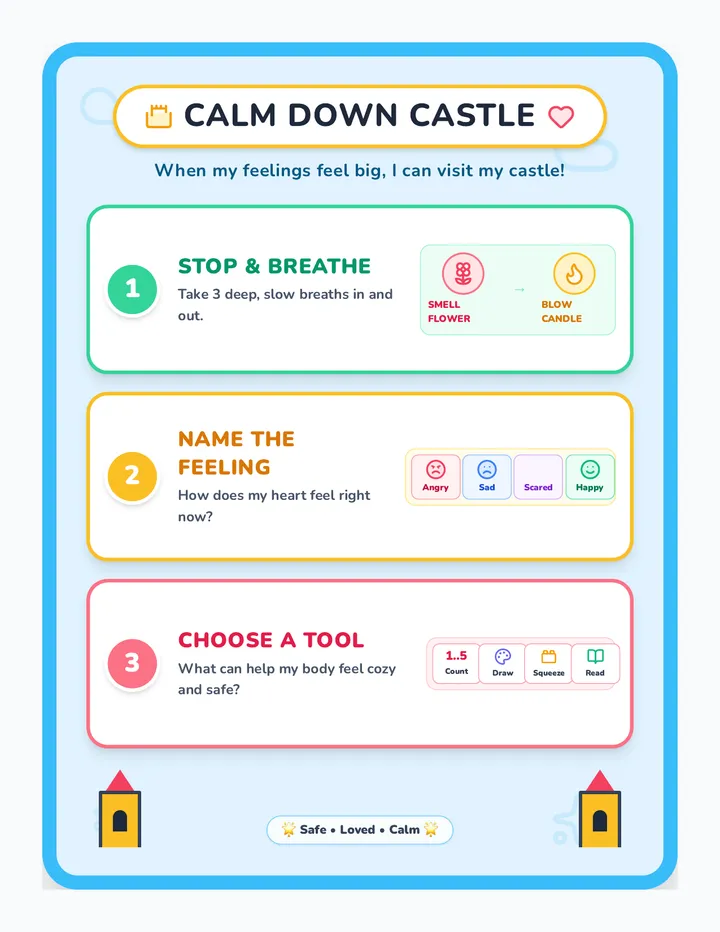
A highly visual, color-coded, single-page self-regulation anchor chart titled 'Calm Down Castle' for PreK-K classrooms. It features 3 simple visual steps: Stop & Breathe, Name the Feeling, and Choose a Calm Tool, decorated with friendly, engaging icons and bold text.
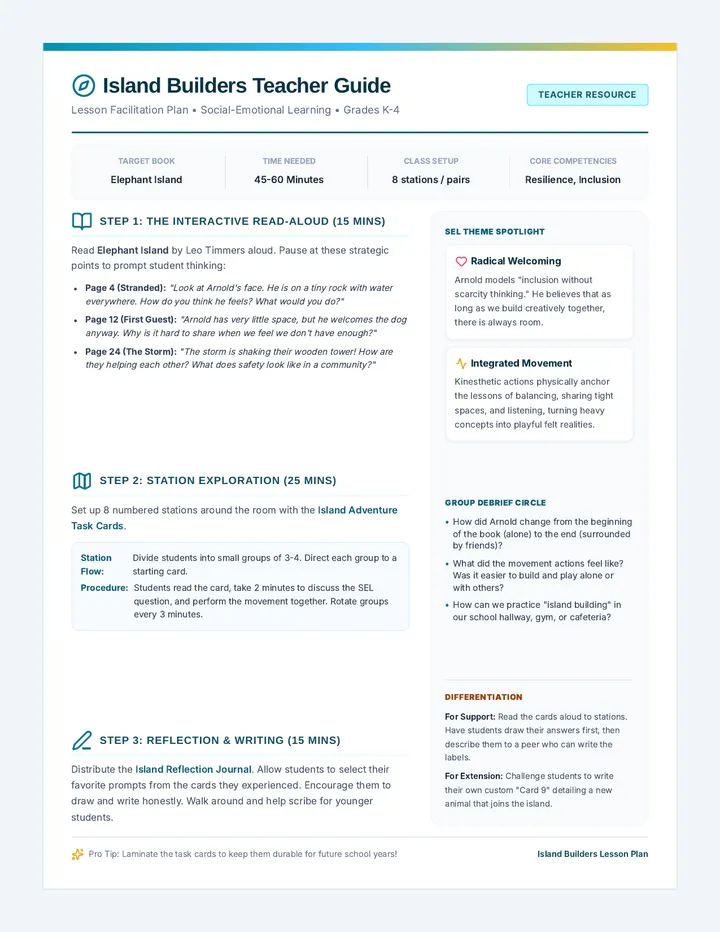
A comprehensive teacher facilitation guide providing step-by-step instructions for prepping, executing, and debriefing the Elephant Island SEL task card stations, complete with guided read-aloud questions and differentiation strategies.
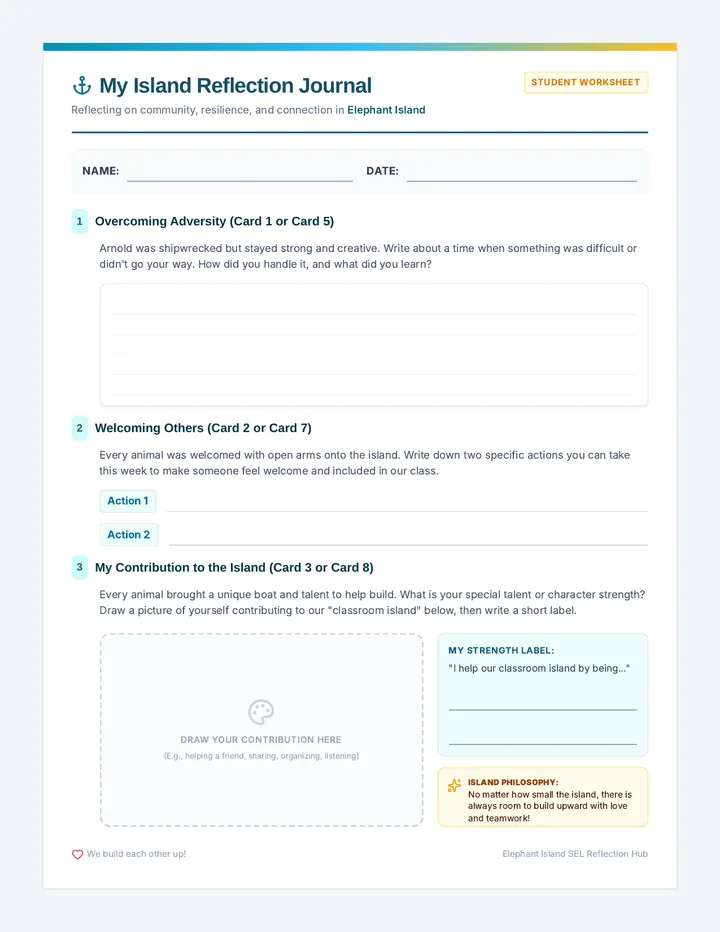
A student reflection worksheet that accompanies the Island Adventure Task Cards. Students can write and draw their responses to the SEL prompts, focusing on inclusion, overcoming challenges, and their personal contributions to the classroom community.
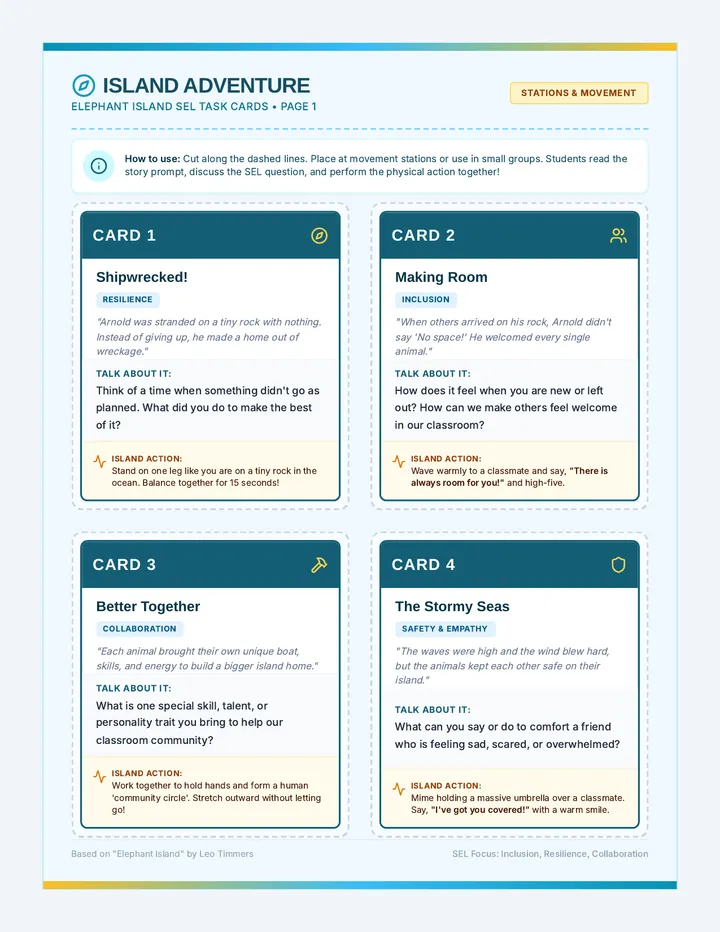
Printable task cards for classroom stations or small groups based on 'Elephant Island'. Includes 8 beautifully designed SEL cards focusing on resilience, community, inclusion, and collaboration, complete with physical movement prompts.
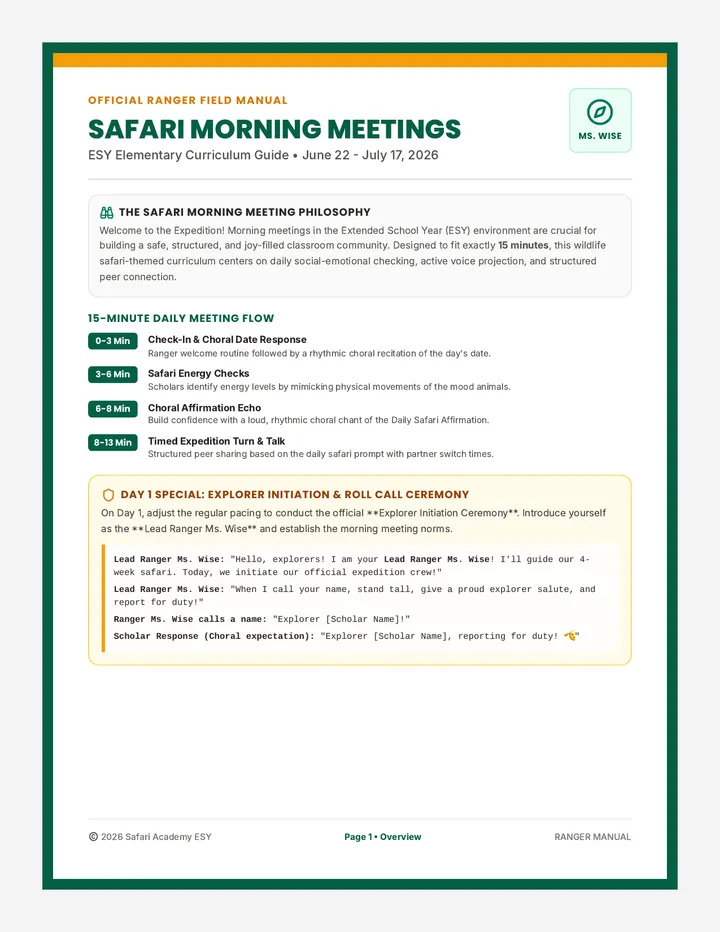
A comprehensive 3-page teacher facilitation guide for the 4-week safari morning meetings. It features a detailed 15-minute pacing breakdown, explicit verbal scripts for choral responses (date and daily affirmations), active physical cues for daily mood checks, and structured guidelines for a timed turn-and-talk sharing session. Featuring Lead Ranger Ms. Wise.
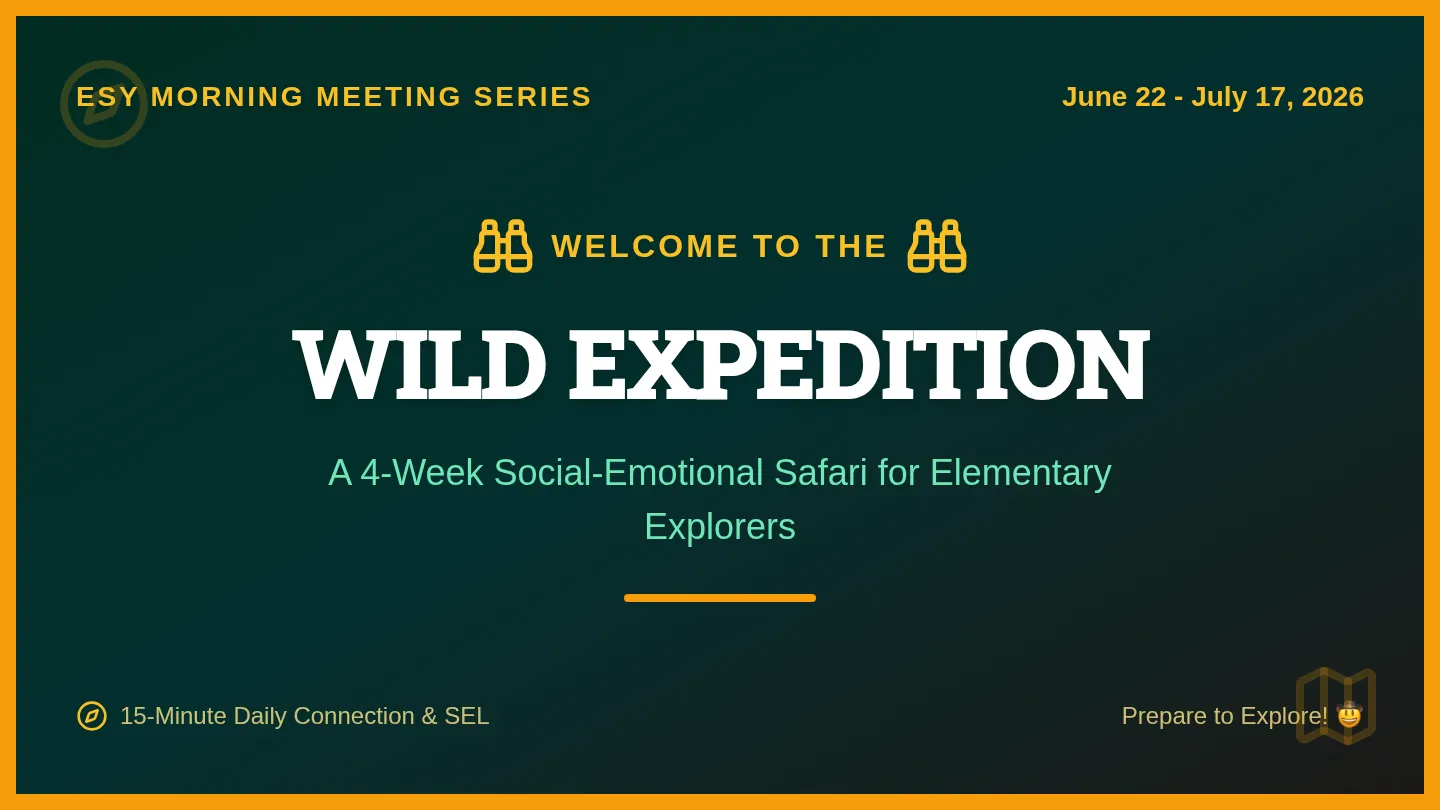
A complete 4-week, 20-day morning meeting slide deck for an elementary ESY program, safari-themed. It contains cover slides for each week (Savannah, Jungle, Desert, and Ocean safaris) and highly structured daily slides with calendar checks, mood indicators, affirmations, and interactive peer-sharing prompts. Now includes a special Day 1 Explorer Initiation Ceremony slide featuring Lead Ranger Ms. Wise.
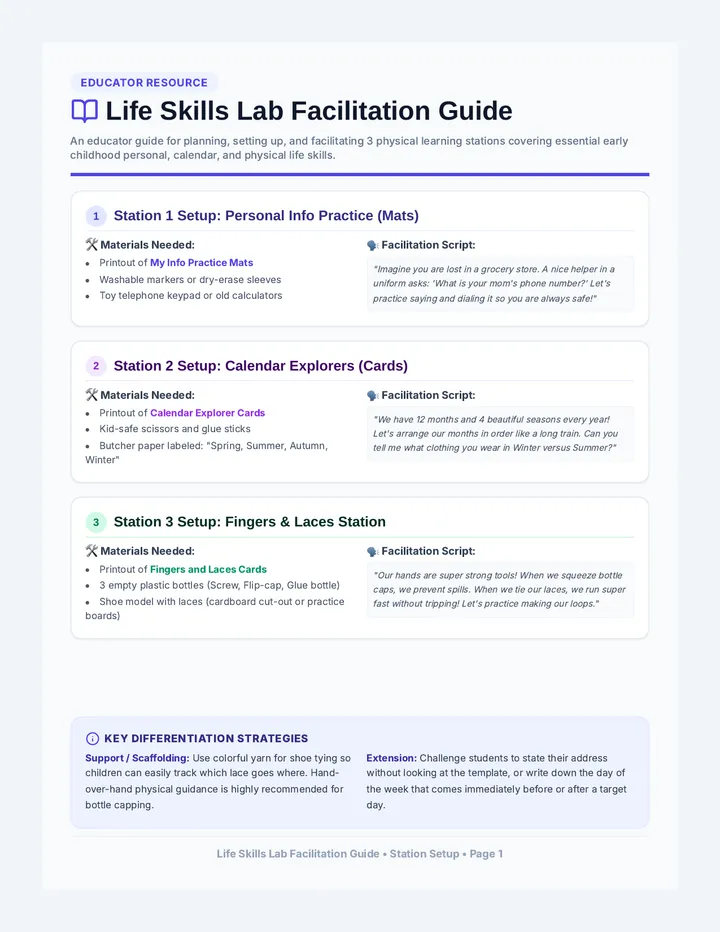
A practical step-by-step implementation guide for teachers, featuring classroom station setup instructions, child-friendly dialogue scripts, and a ready-to-use skill assessment checklist.
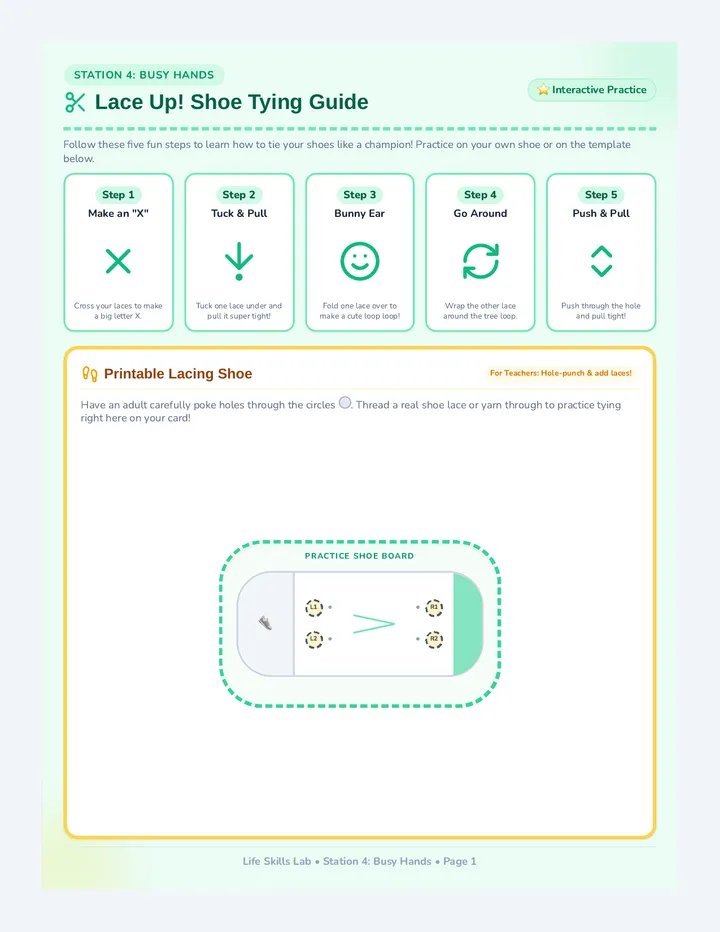
Hands-on task cards and practice guides for the shoe-tying and bottle-opening stations, featuring step-by-step visual sequences.
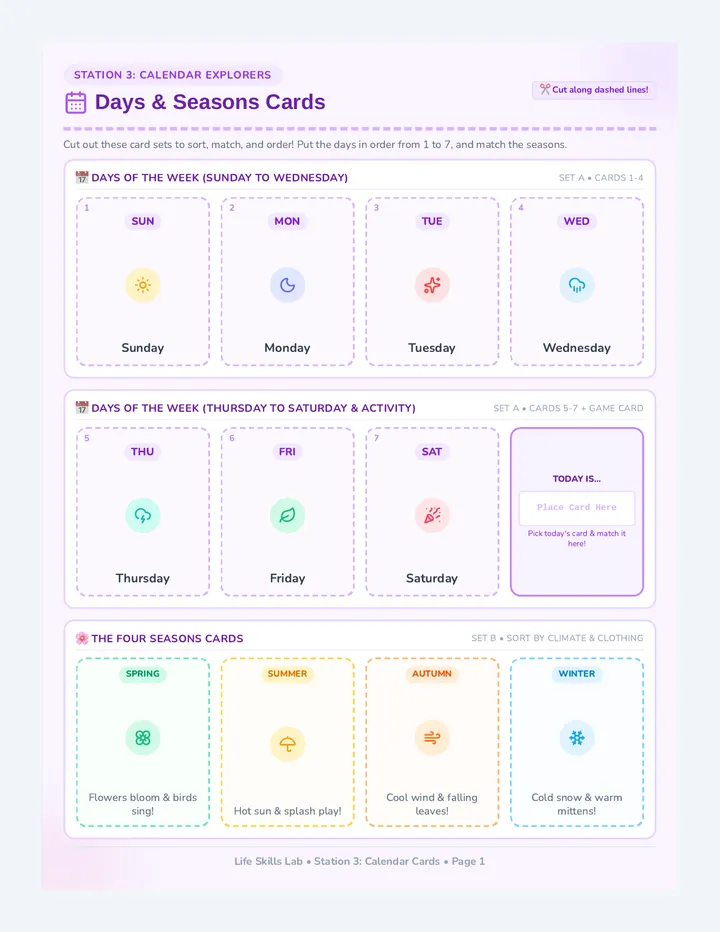
A printable set of days, months, and seasons cards that young students can cut out, color, sort, and sequence to build strong calendar awareness.
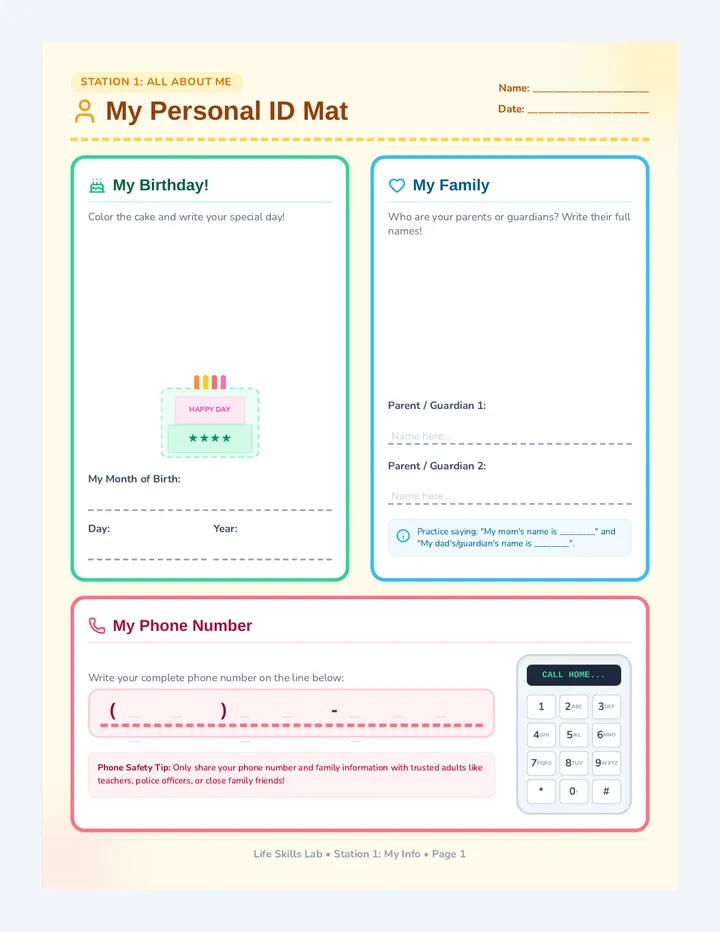
Playful personal information practice mats where young students can write and practice their parents' names, phone numbers, addresses, and birthdays on clear, structured templates.
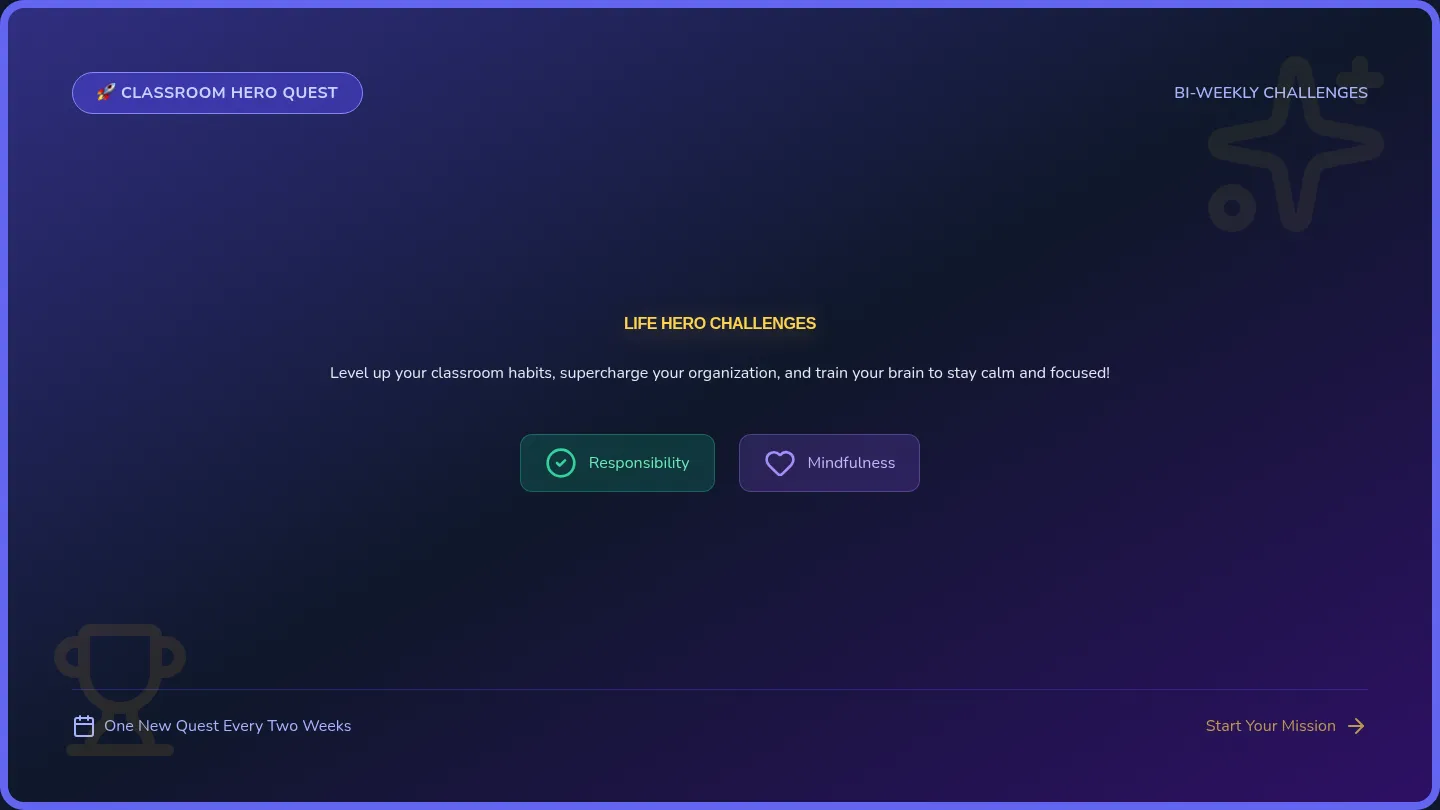
A gamified, interactive-style slide deck presentation designed for elementary classrooms, displaying 6 bi-weekly life lesson challenges covering responsibility, organization, self-regulation, and mindfulness.
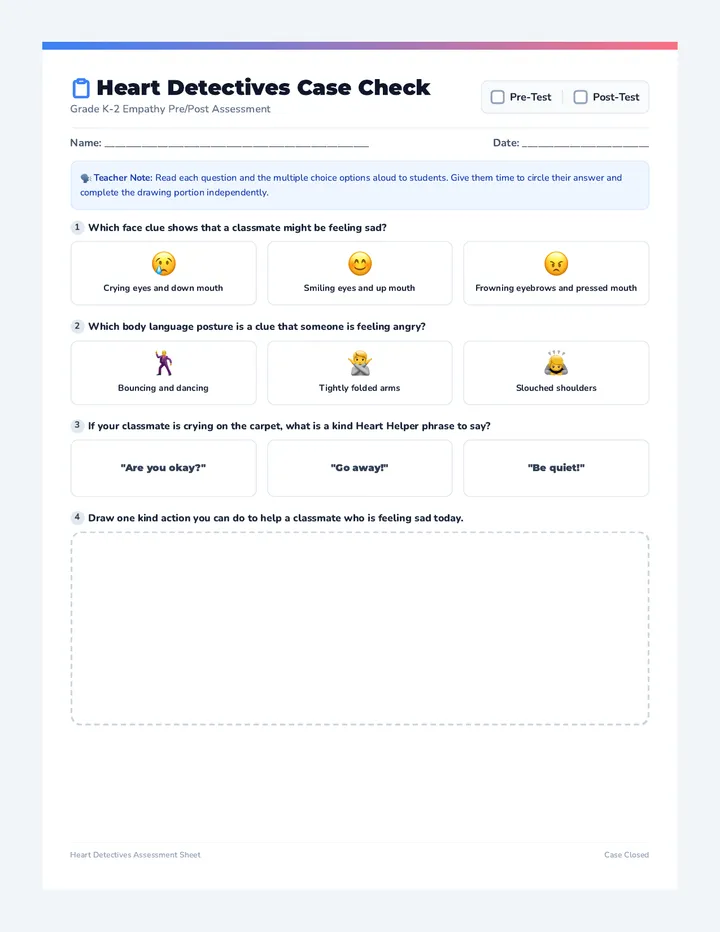
A printable, identical pre/post test worksheet for K-2 students. Features child-friendly, multi-choice questions with identical styling for options, a custom drawing box for expressing kind actions, and a top checkbox to designate whether the sheet is used as a pre-test or post-test.
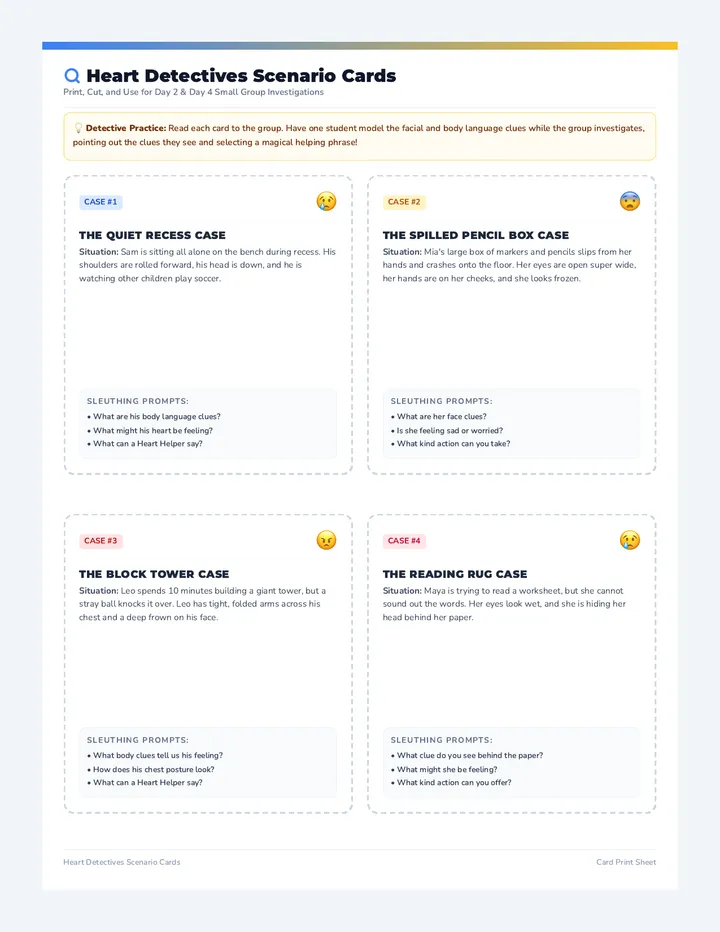
A printable set of 4 visual scenario cards for Day 2 and Day 4 small group discussions. Each card depicts a relatable school-based situation with facial and body language cues, guiding students to spot clues and offer help.
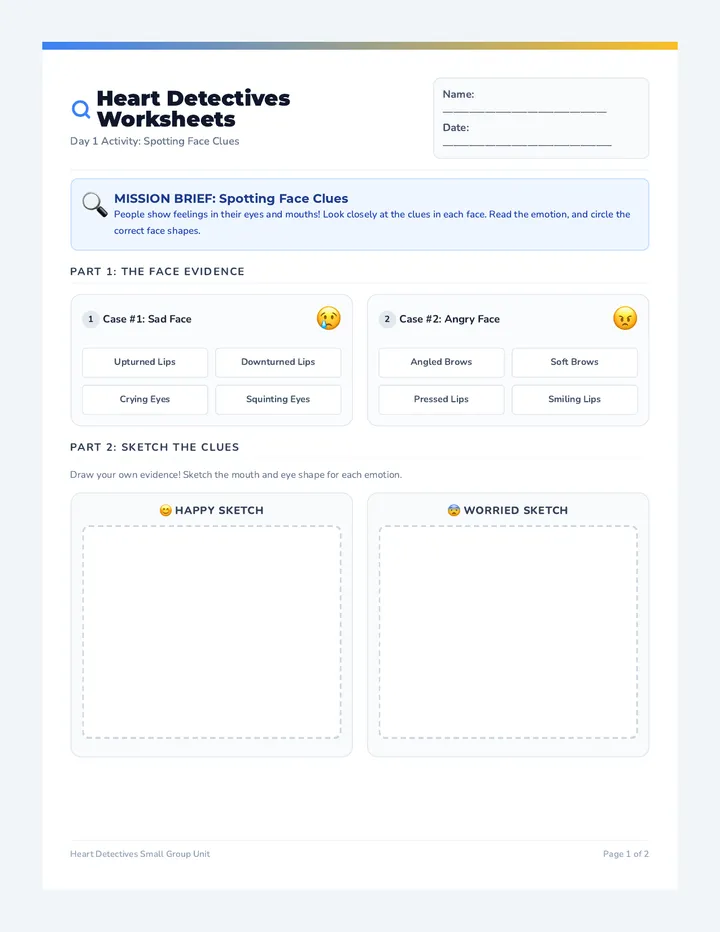
Printed activity sheets for the 4-day curriculum. Day 1 focuses on drawing and identifying facial clues (eyes and mouths), while Day 3 focuses on sketching kind actions and checking off physical helper choices.
A structured presentation to guide the daily 20-minute small group empathy lessons for grades K-2. Features big visual cues, face/body decoder graphics, and bold helper phrases that make empathy concrete and accessible.