A short, visually-rich story titled 'Little Puffs' about Ember the Dragon. It illustrates the physical signs of anger and teaches the 'Dragon Breath' cooling strategy through a narrative suitable for kindergarteners.
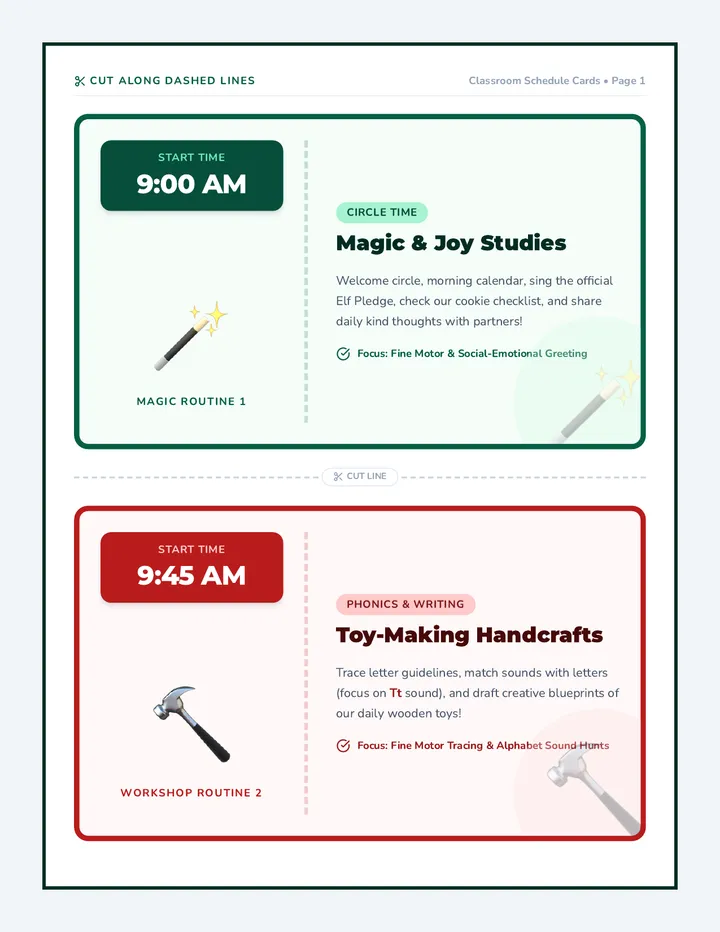
Printable mini-cards (6 per page) that students can keep at their desks or in their pockets as a quick visual reference for the Pause-Think-Act strategy. Includes cut lines for easy preparation.
A visual guide for the "Act" step, listing specific "Green Light Moves" and a checklist for students to ensure their actions are helpful and productive.
A focused anchor chart for the "Think" step, providing students with a set of self-reflection questions and a framework for evaluating different response options.
A detailed anchor chart focusing on the "Pause" step, teaching students how to recognize physical emotional cues and providing specific strategies for self-calming.
A vibrant, high-contrast overview poster that introduces the three-step Pause-Think-Act strategy with clear icons and actionable questions for elementary students.
A printable Kindergarten activity sheet where students draw what they love about their current grade and what they are looking forward to in the next, inspired by 'The Koala Who Could'.
A visually engaging slide deck for a Kindergarten Lunch Bunch lesson based on 'The Koala Who Could'. Helps students normalize feelings about change and transitions.
A comprehensive facilitation guide for school counselors to lead a Kindergarten Lunch Bunch based on the book 'The Koala Who Could'. Includes discussion prompts and step-by-step instructions.
A simple, visually engaging worksheet for kindergarten students to practice identifying the 'Stop, Talk, Listen' steps and choosing peaceful words for resolving conflicts.
A 6-page social story for kindergarteners that introduces the 'Stop, Talk, Listen' technique for resolving friendship conflicts through simple language and supportive visuals.
A comprehensive teacher's guide for a one-on-one kindergarten social skills session, featuring a structured lesson plan, discussion prompts, and behavioral support strategies.
A small exit ticket for students to reflect on the importance of kind words and how using them makes them feel.