A visual presentation for instruction, featuring the SMART acronym, an example goal, and instructions for the interactive activity.
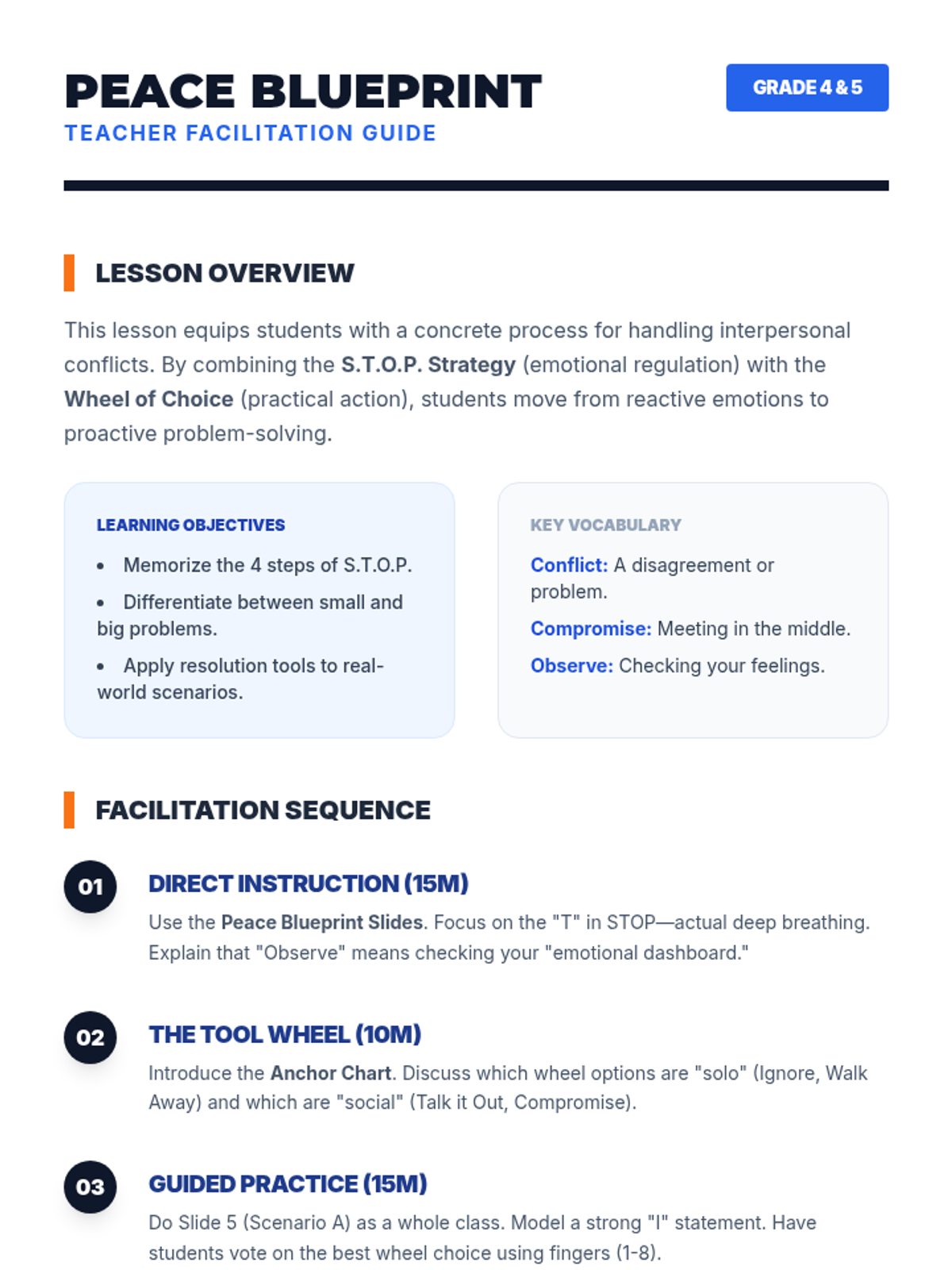
A facilitator's guide for teachers to deliver the Peace Blueprint conflict resolution lesson, including timing and discussion prompts.
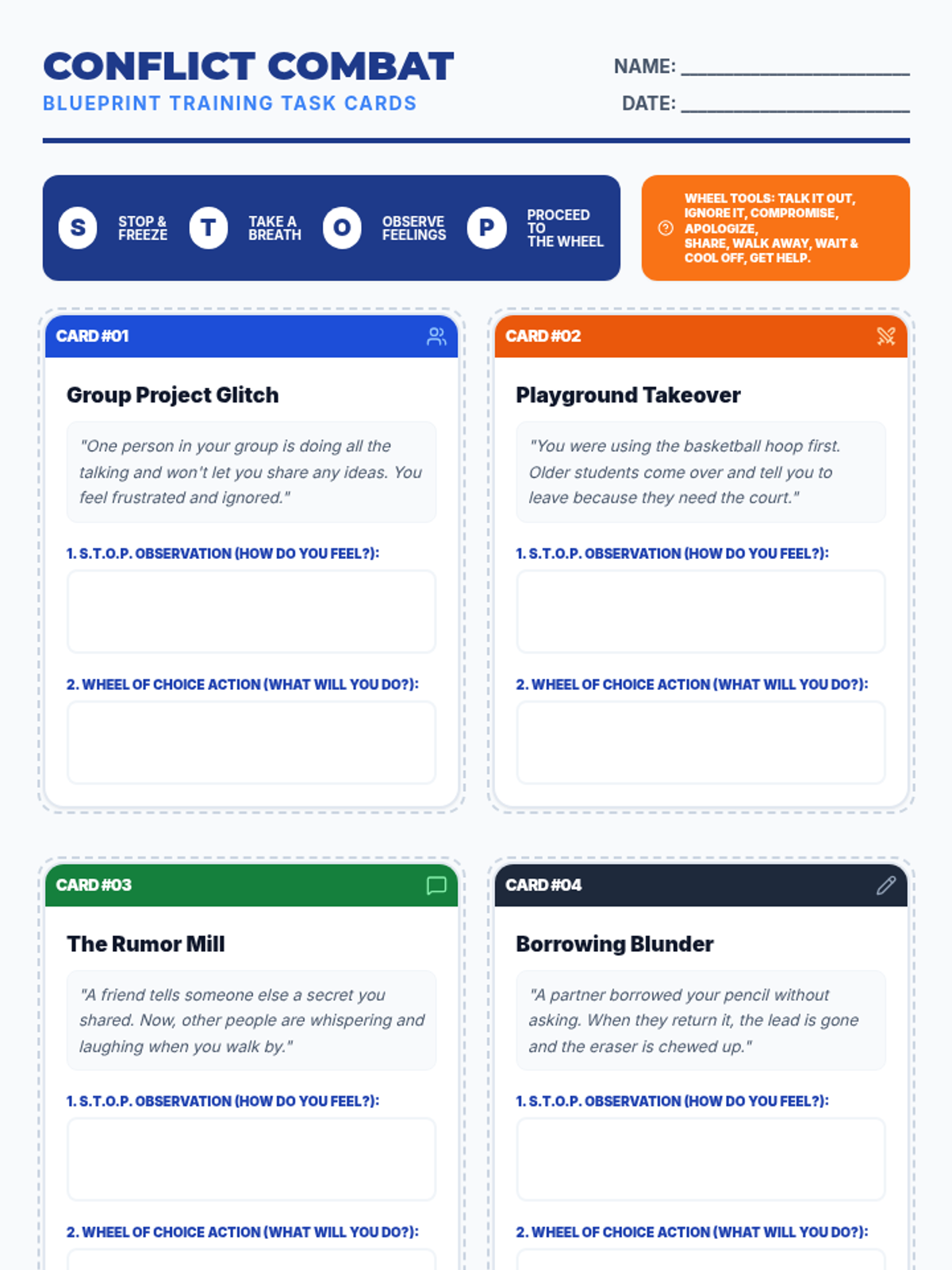
A set of conflict scenario task cards designed for 4th and 5th graders to practice applying the S.T.O.P. strategy and Wheel of Choice.
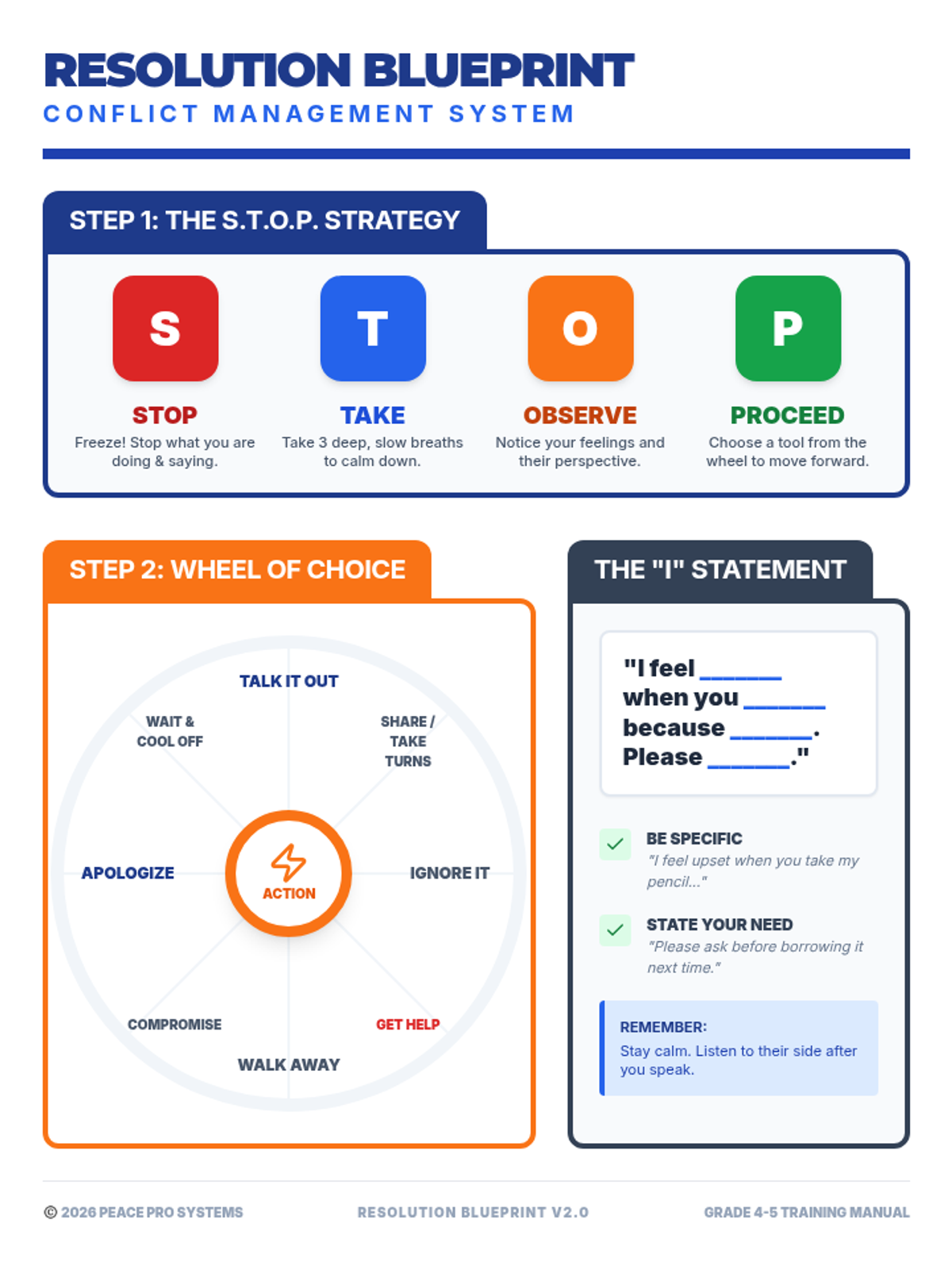
A visual anchor chart summarizing the S.T.O.P. strategy and the Wheel of Choice for classroom display.
An instructional presentation introducing the S.T.O.P. strategy and the Wheel of Choice framework for resolving conflicts.
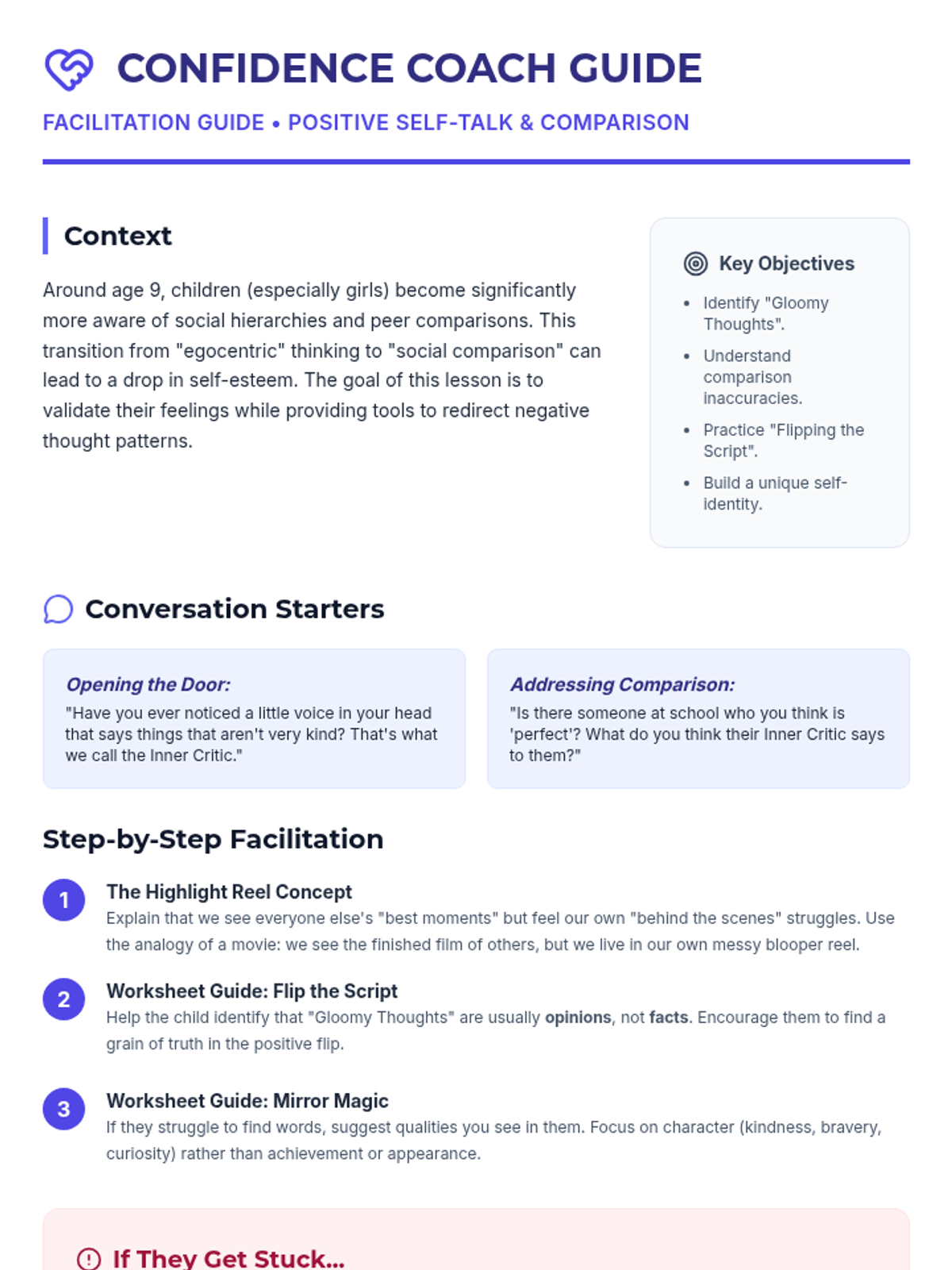
A teacher-facing guide providing facilitation tips, conversation starters, and psychological context for using the 'Inner Glow' materials with young girls.
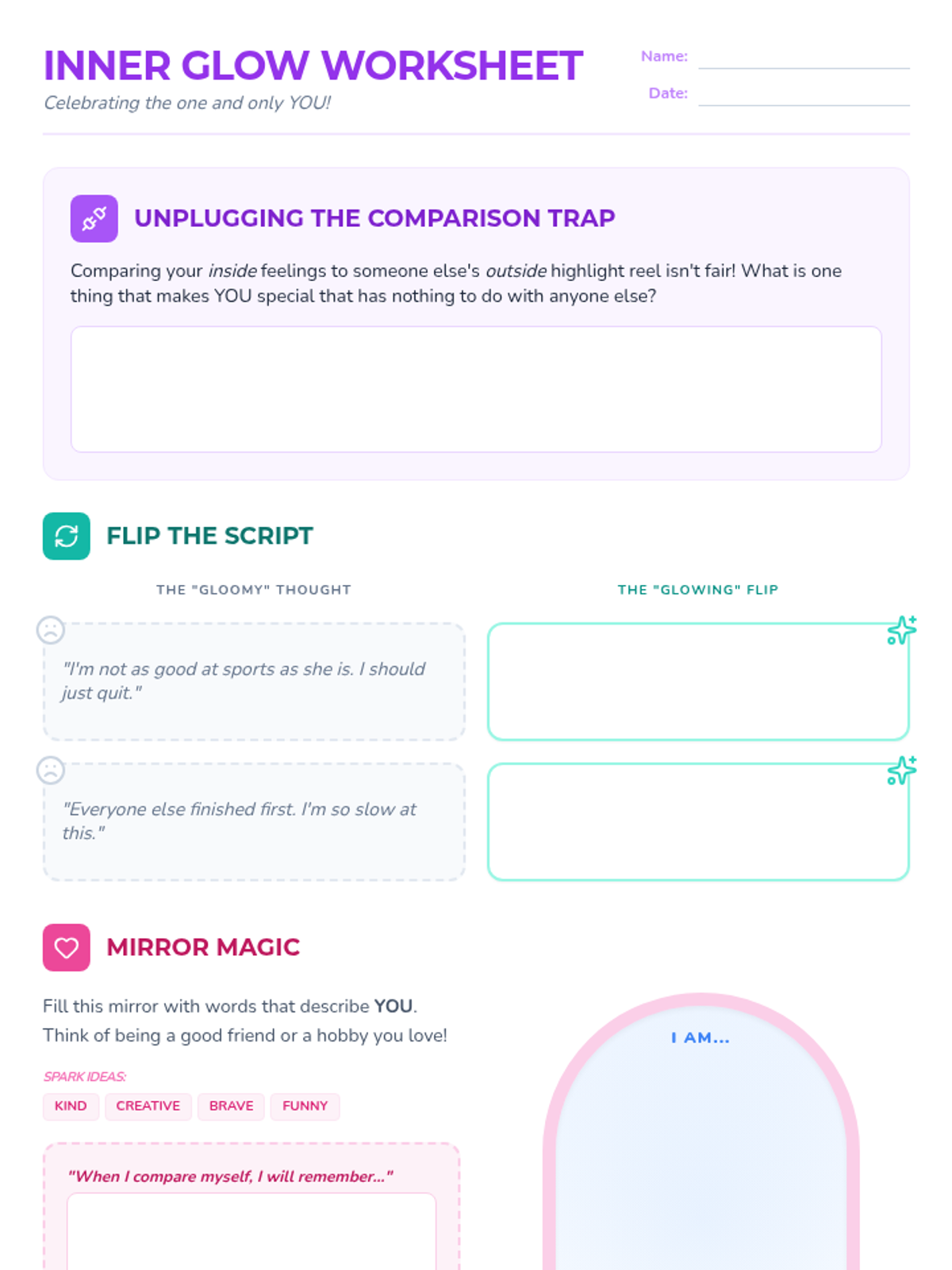
An engaging and supportive worksheet for young girls designed to challenge the 'comparison trap' and replace negative self-talk with positive affirmations. Includes a 'Flip the Script' activity and a creative 'Mirror Magic' self-reflection space.
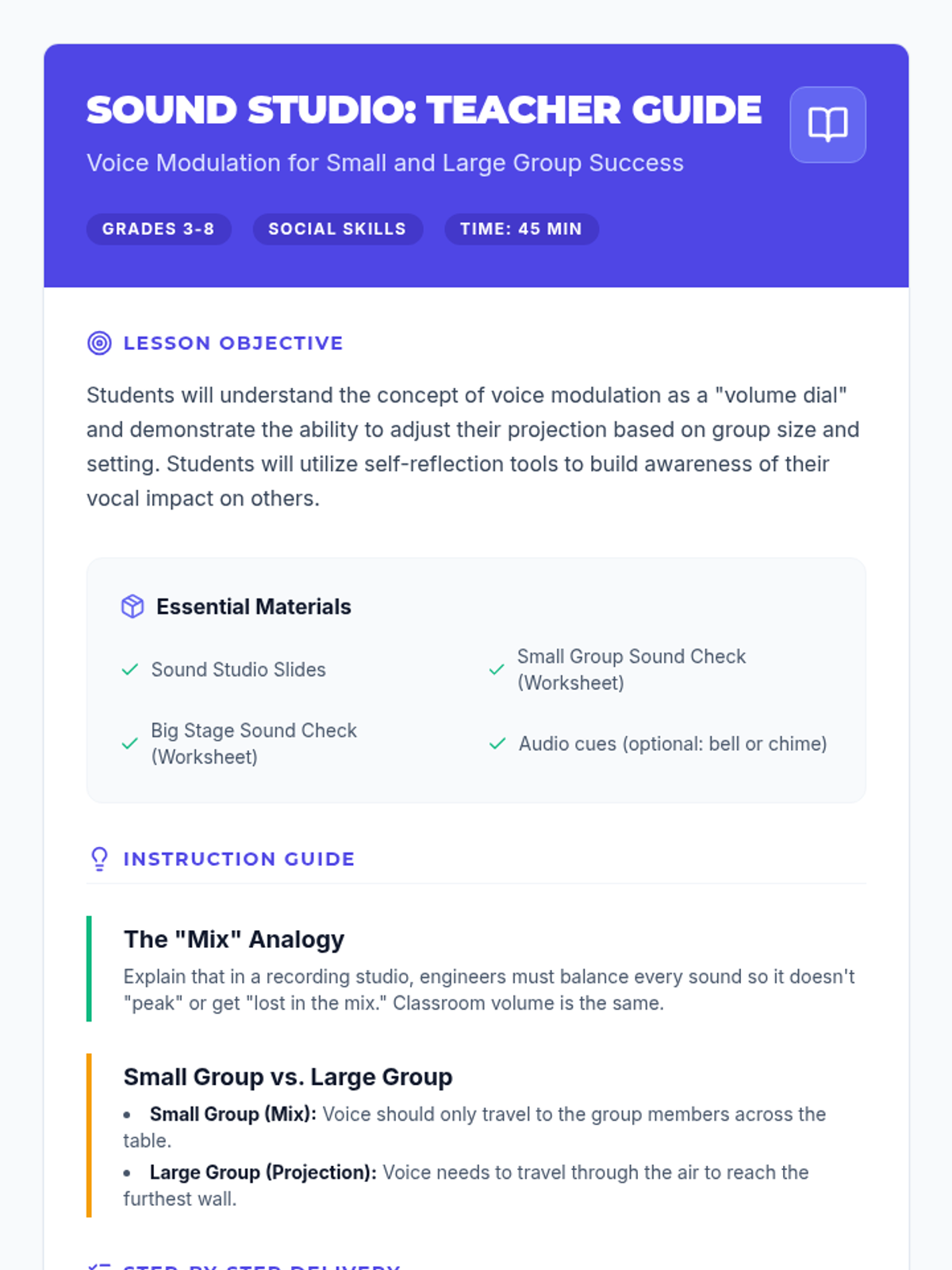
A comprehensive teacher's guide for the 'Sound Studio' lesson, providing instructional strategies, activity steps, and differentiation tips for teaching voice modulation.
A highly visual slide deck teaching the 'Sound Studio' analogy for voice modulation, featuring a volume dial and specific techniques for small and large group communication.
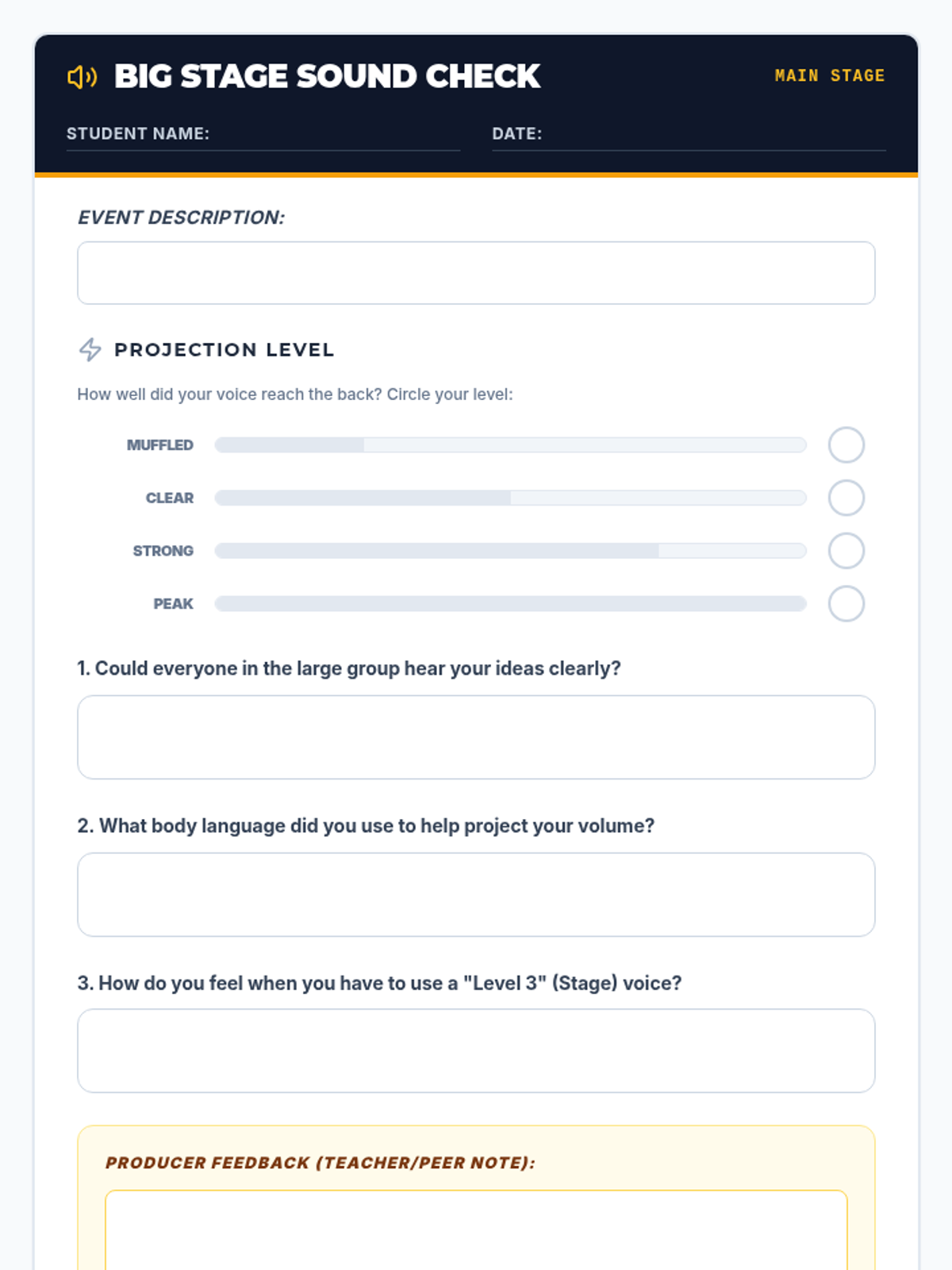
A self-reflection worksheet focused on large group communication and volume projection, styled with a 'main stage' sound engineering theme.
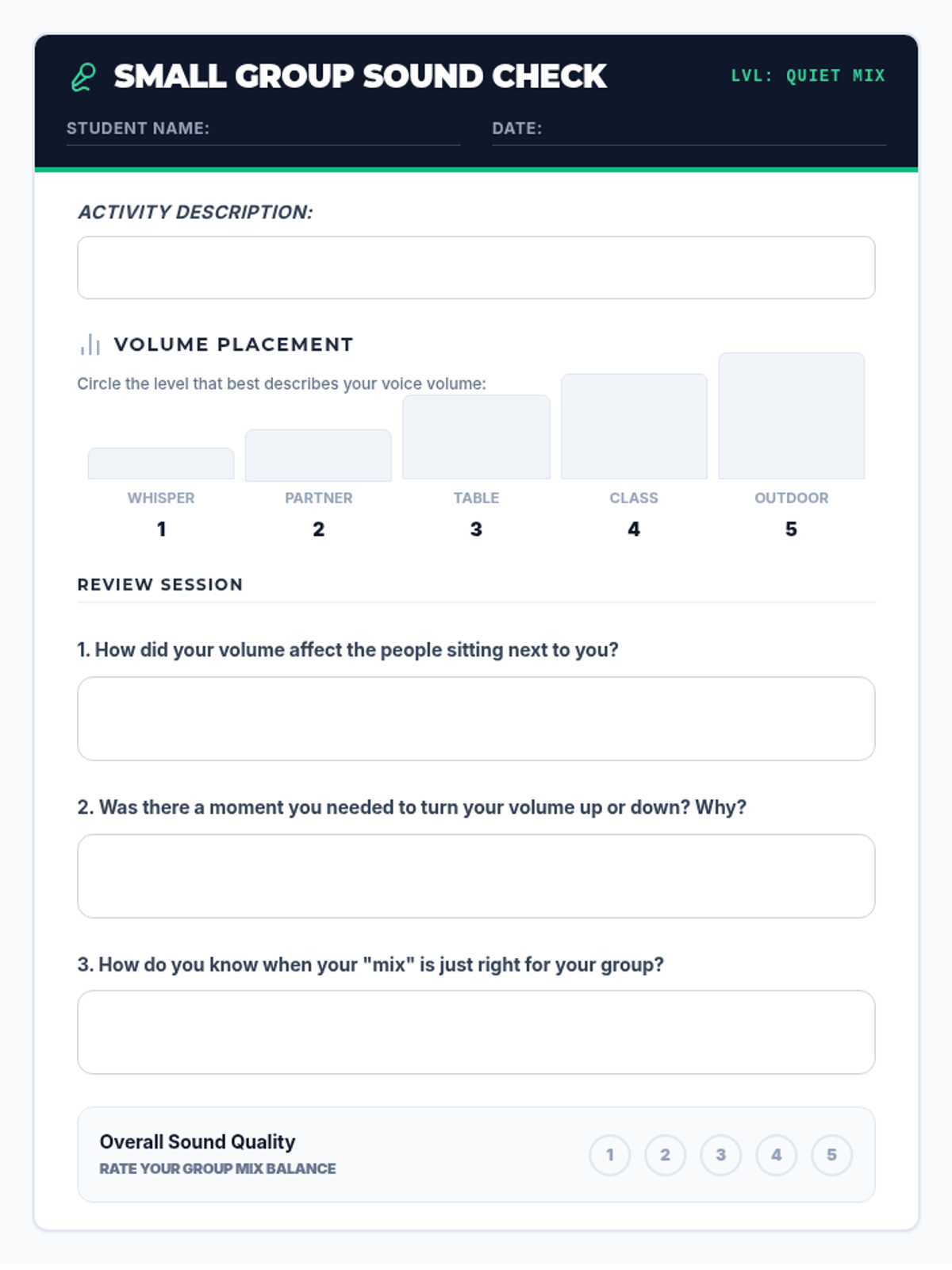
A self-reflection worksheet for students to evaluate their voice volume during small group activities, using a 'sound engineer' theme with a visual volume meter.
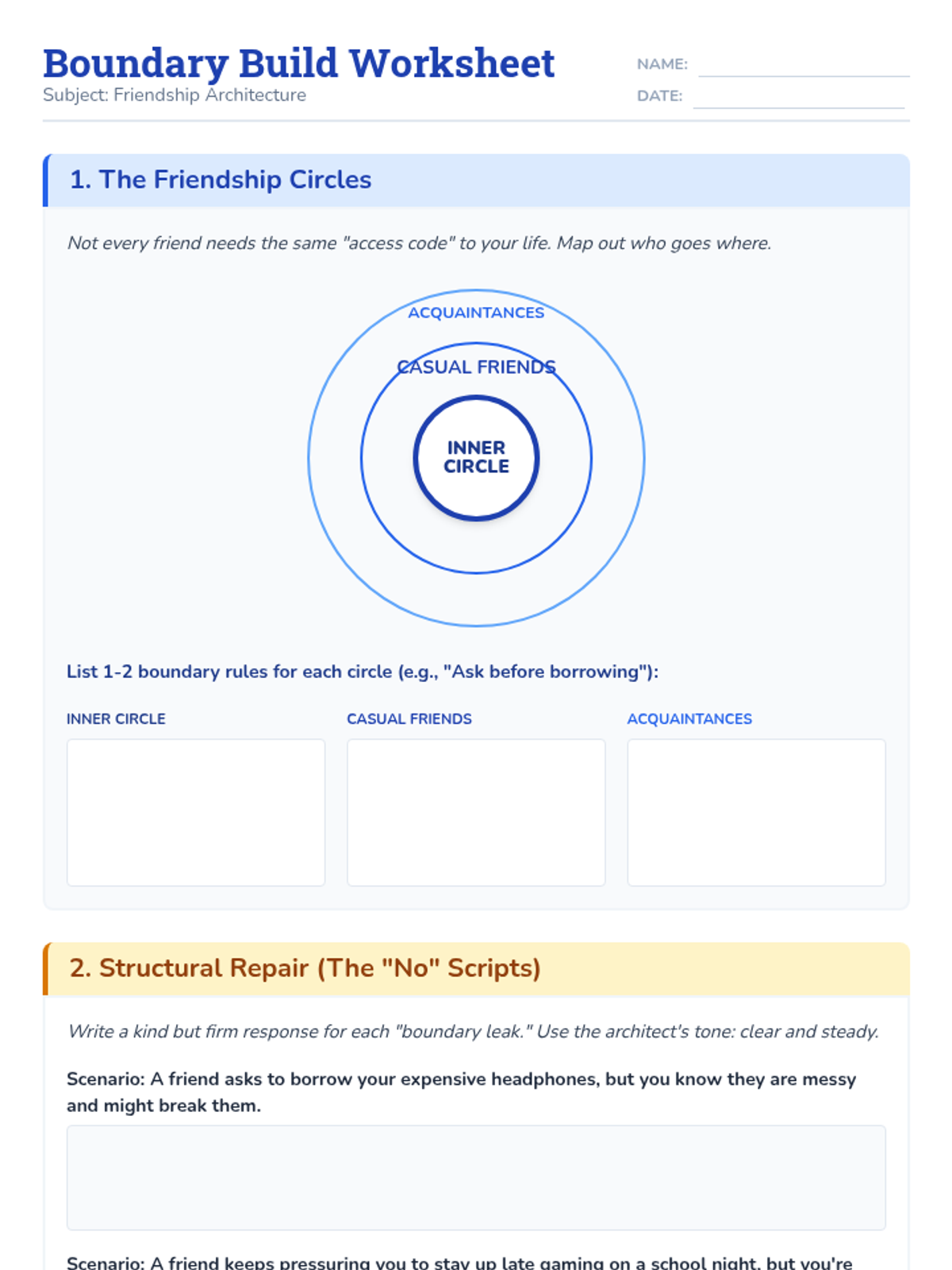
A student worksheet designed to help students map their friendship circles and practice writing "boundary scripts" for common social scenarios.
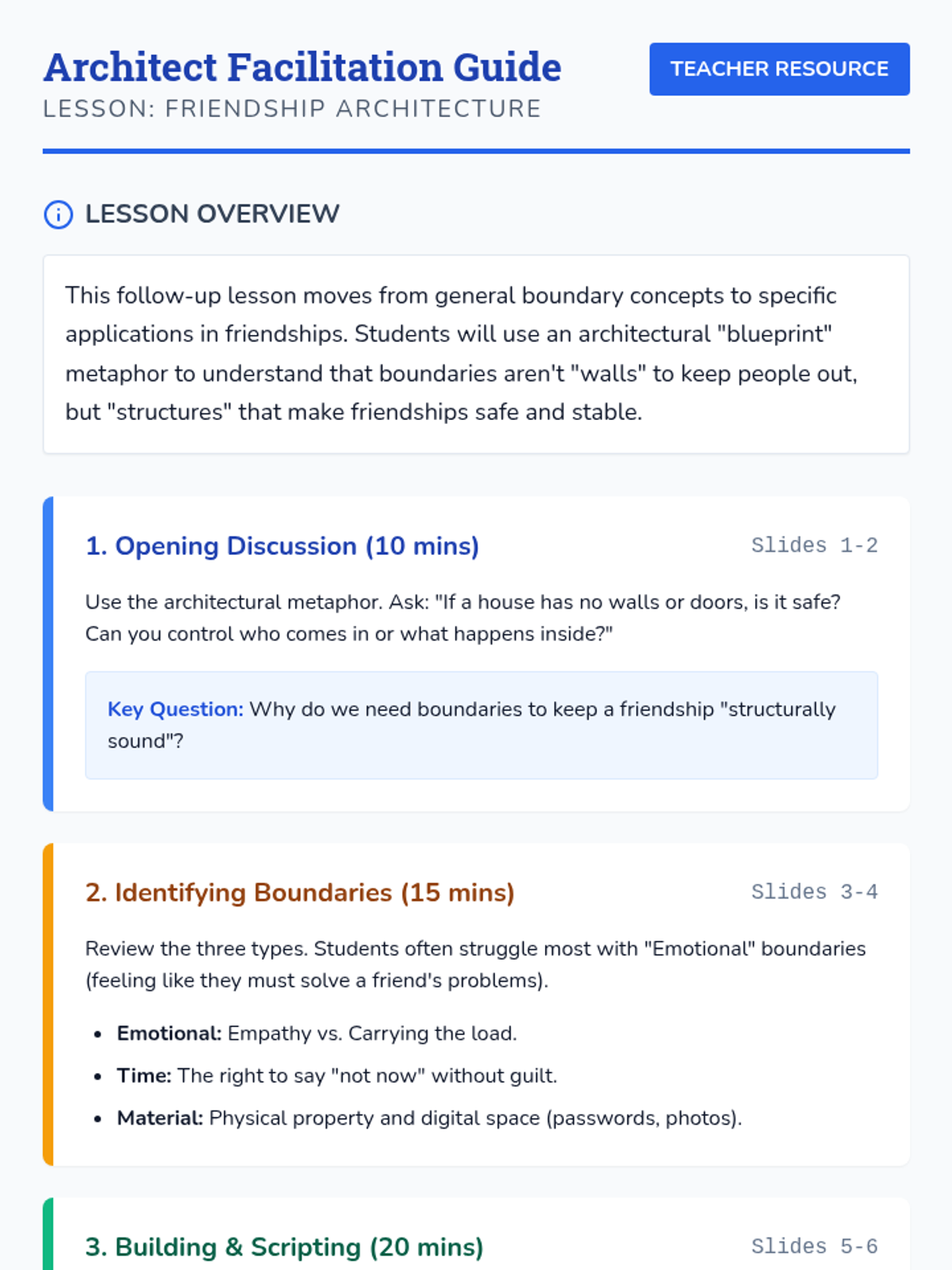
A teacher facilitation guide for the Friendship Architecture lesson, providing pacing, discussion prompts, and strategies for handling common student concerns about boundaries.
A 6-slide presentation focused on friendship boundaries using an architectural blueprint theme. It covers boundary types, red flags, and practice scenarios.
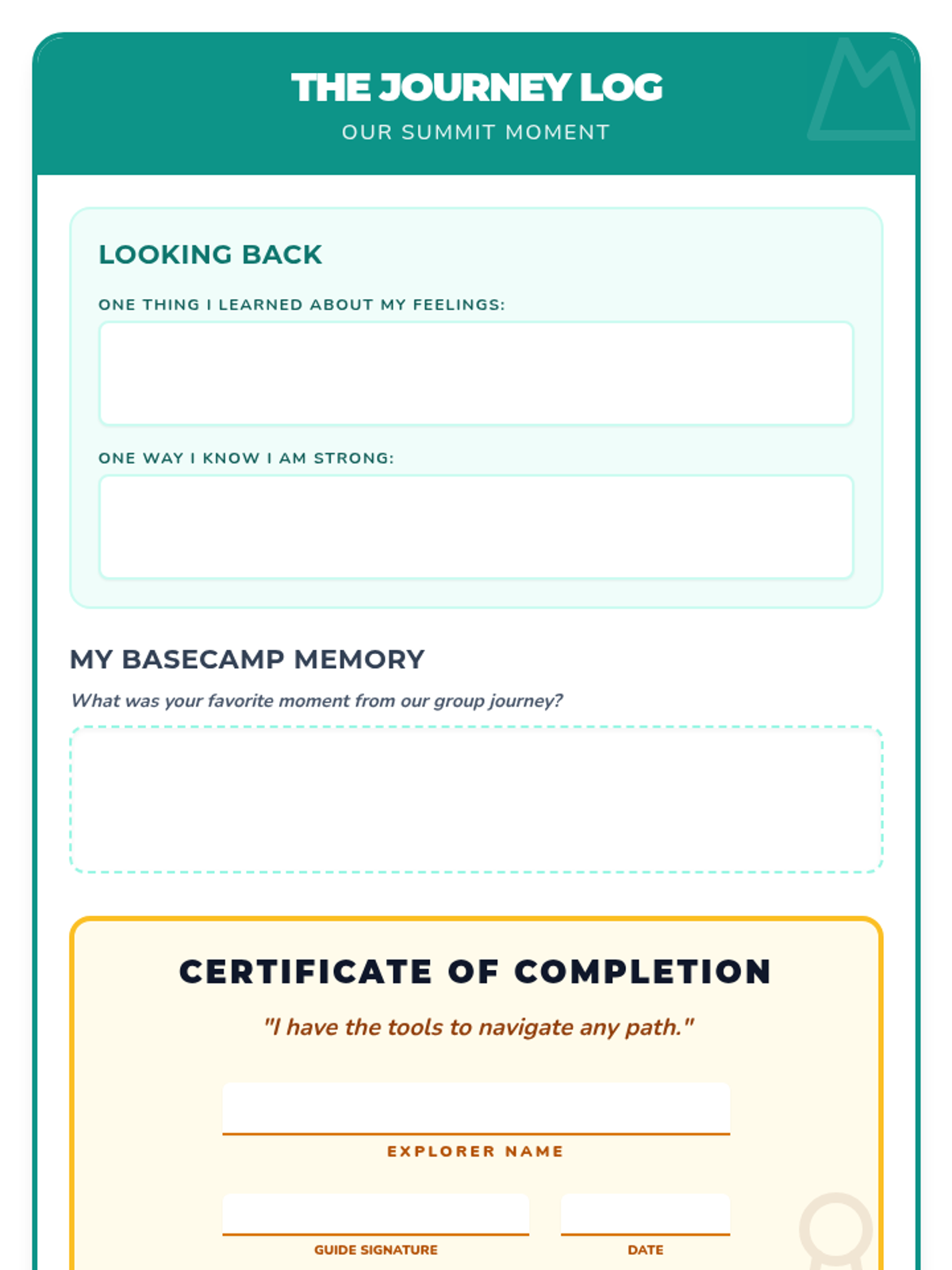
A final reflection and celebration worksheet for the last session of the Basecamp journey, including a section for students to review their growth and a "Certificate of Completion."
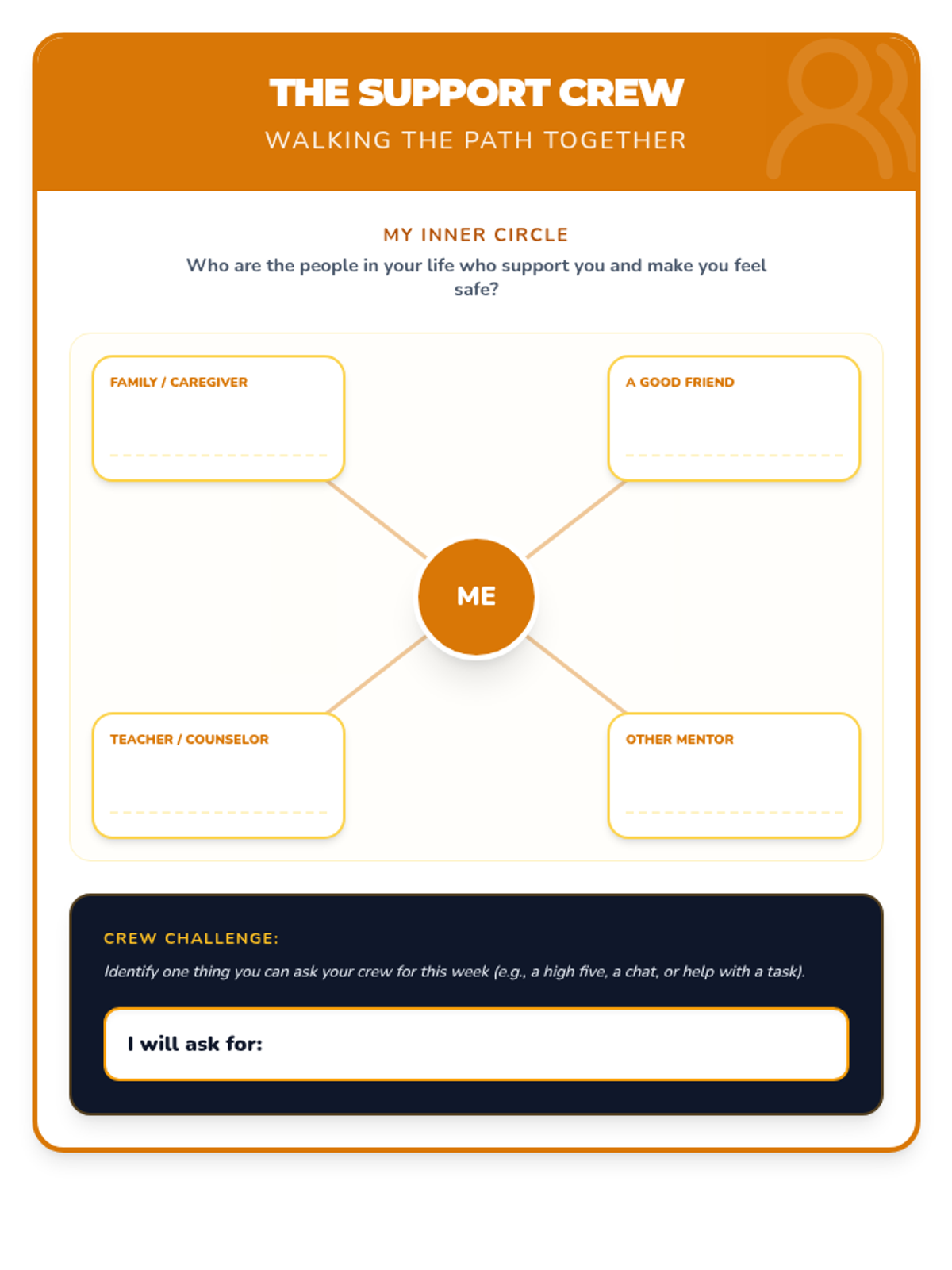
A support network mapping activity for Week 7 of the Basecamp journey, helping students visualize and identify the supportive adults and peers in their lives.
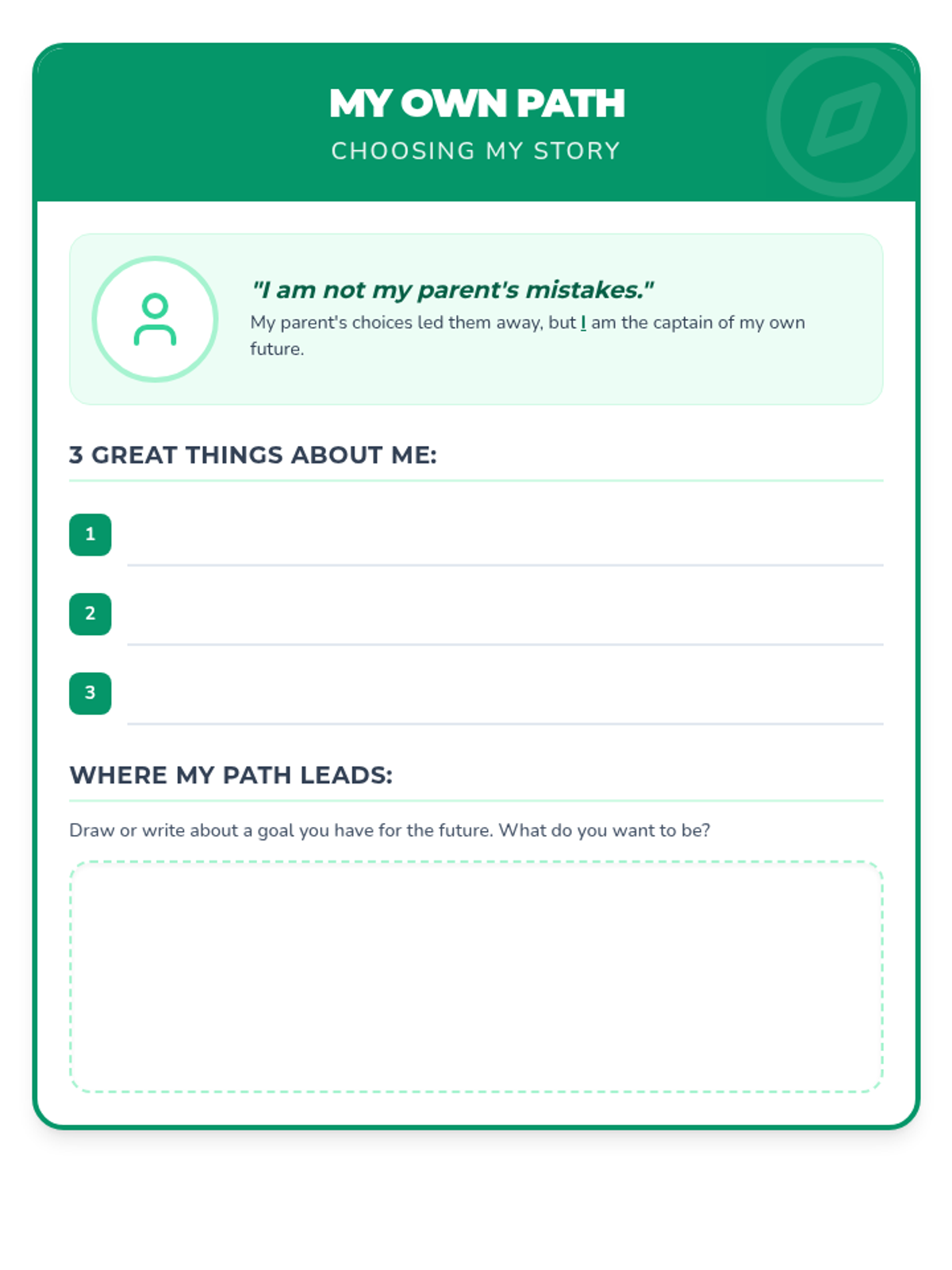
An identity-focused worksheet for Week 6 of the Basecamp journey, encouraging students to separate their identity from their parent's actions and focus on their own strengths and future goals.
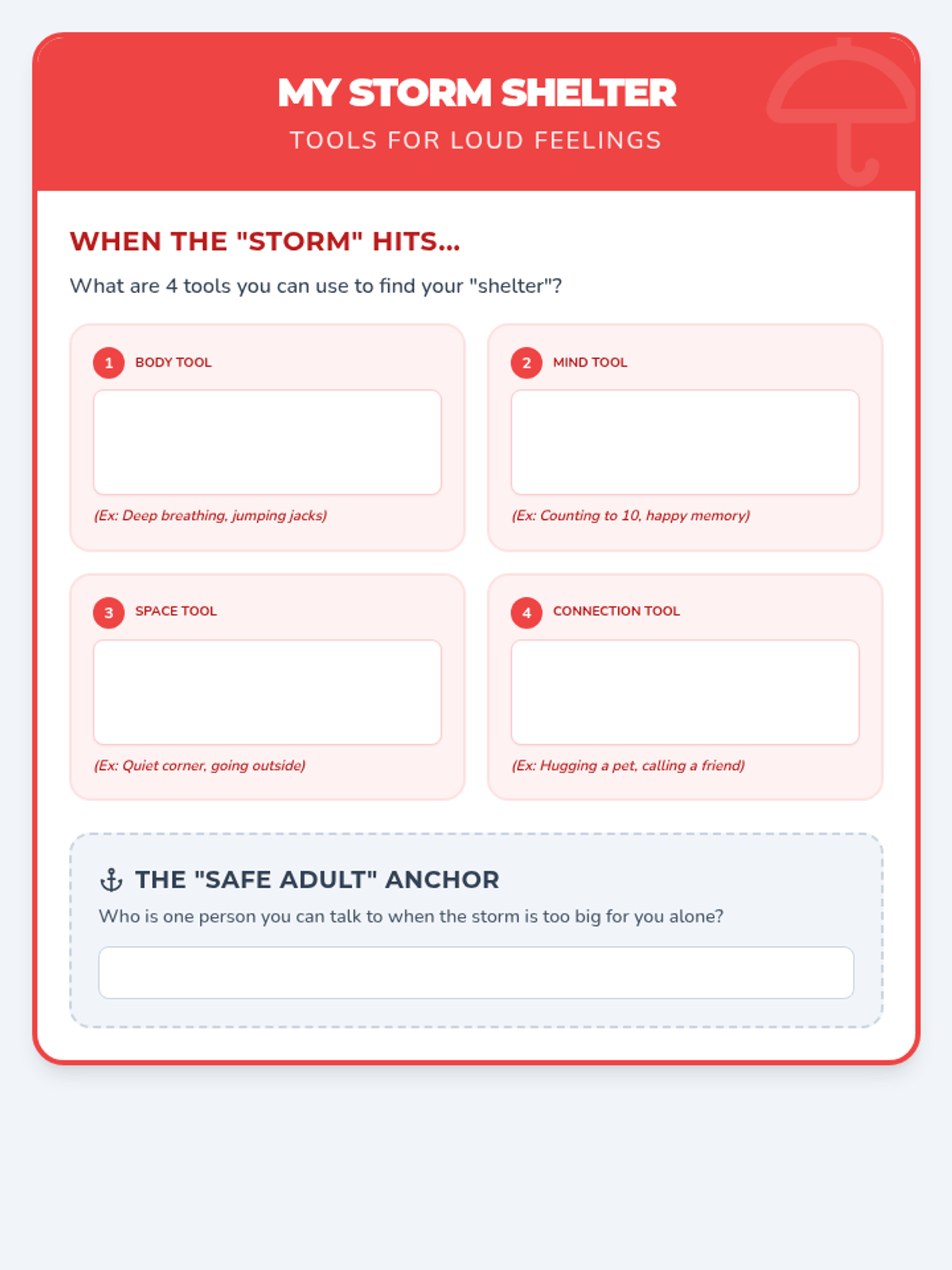
A coping skills activity for Week 5, helping students create a "Storm Shelter" map of strategies to use when they experience intense or overwhelming emotions.
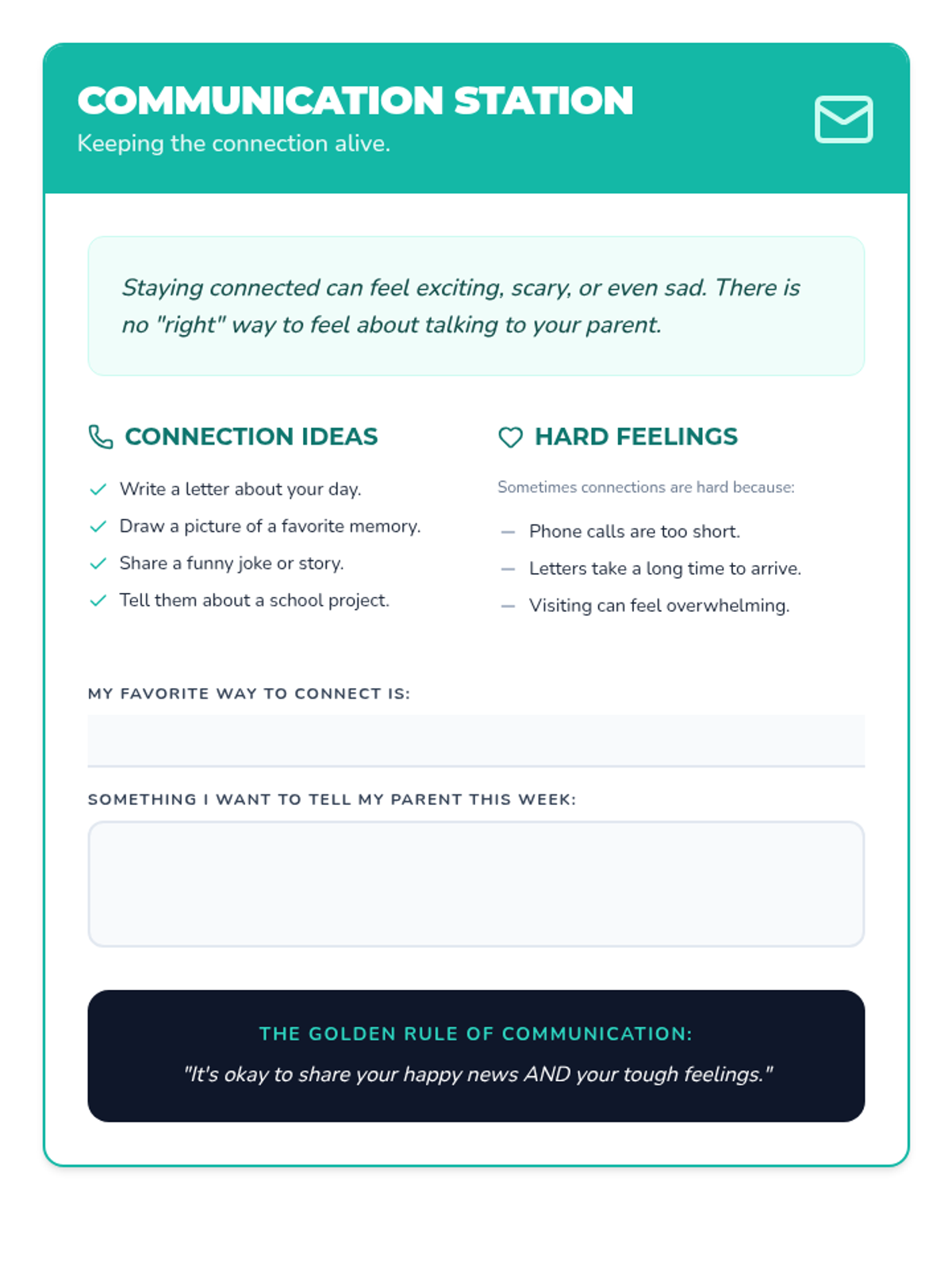
A resource for Week 4 of the Basecamp journey, providing students with ideas for staying connected with their incarcerated parents and a space to reflect on their communication preferences.
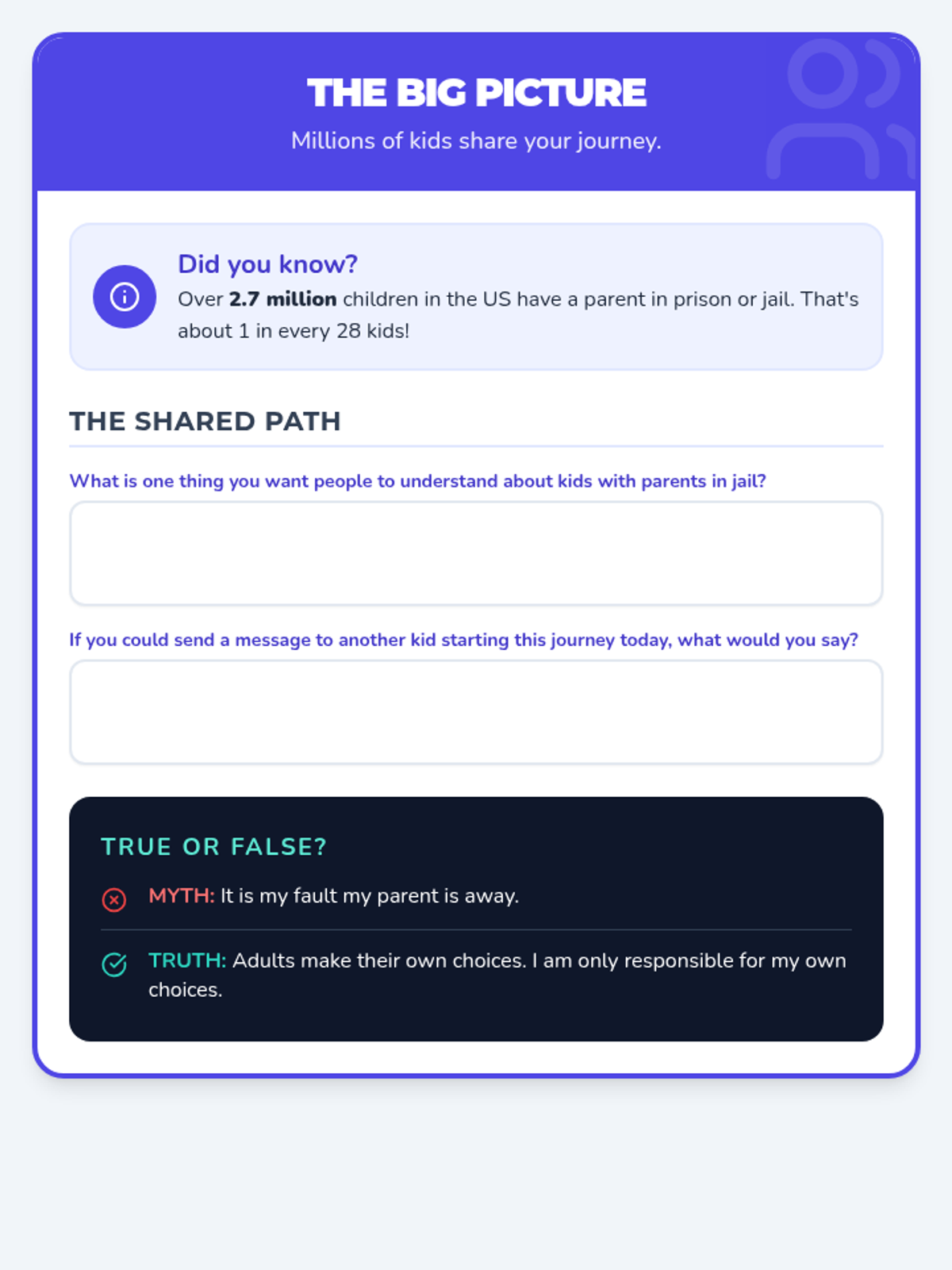
A worksheet for Week 3 of the Basecamp journey focusing on normalization through statistics and debunking common myths related to parental incarceration.
Slides for Week 2 of the Basecamp support group, focusing on identifying emotions using a weather metaphor and the concept of "Name It to Tame It."
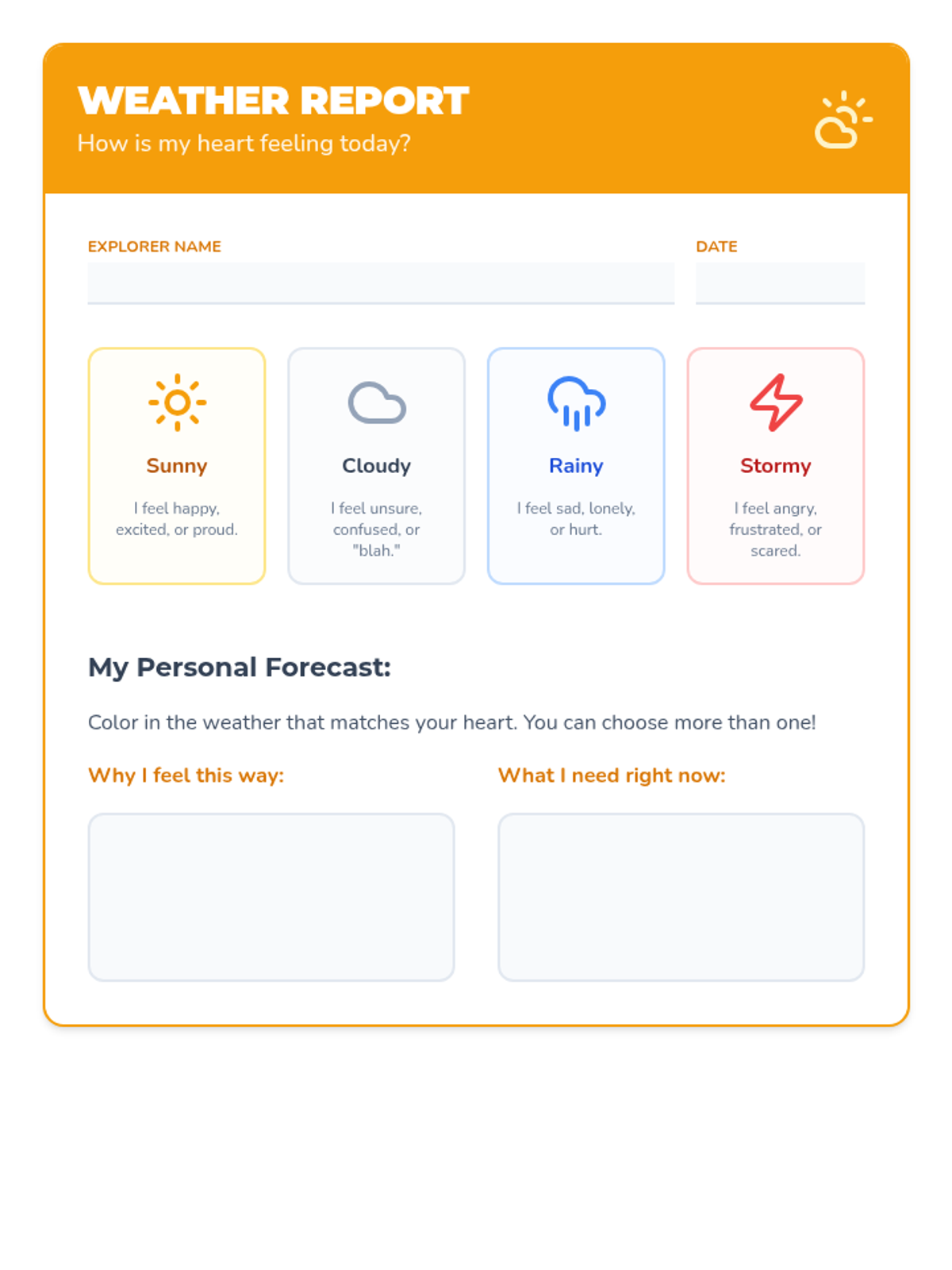
A "Weather Report" emotion chart for students to identify and express their current feelings using a weather metaphor (Sunny, Cloudy, Rainy, Stormy).
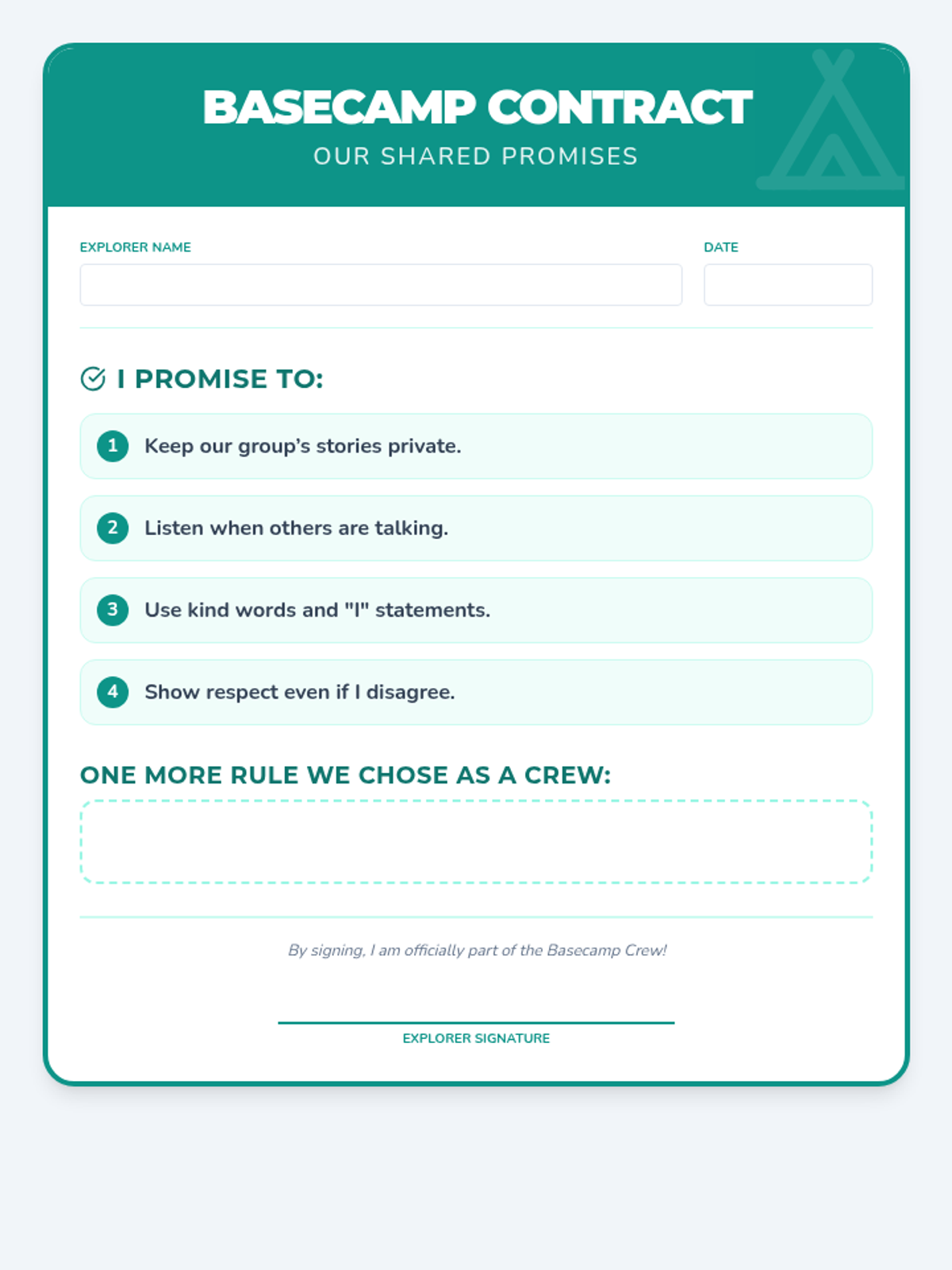
A student contract for the Basecamp support group, outlining shared agreements on confidentiality, respect, and listening, with space for a custom group rule and a signature.
Introduction slides for the first week of the Basecamp Journey support group, introducing the group's purpose, a welcome icebreaker, and the concept of confidentiality.
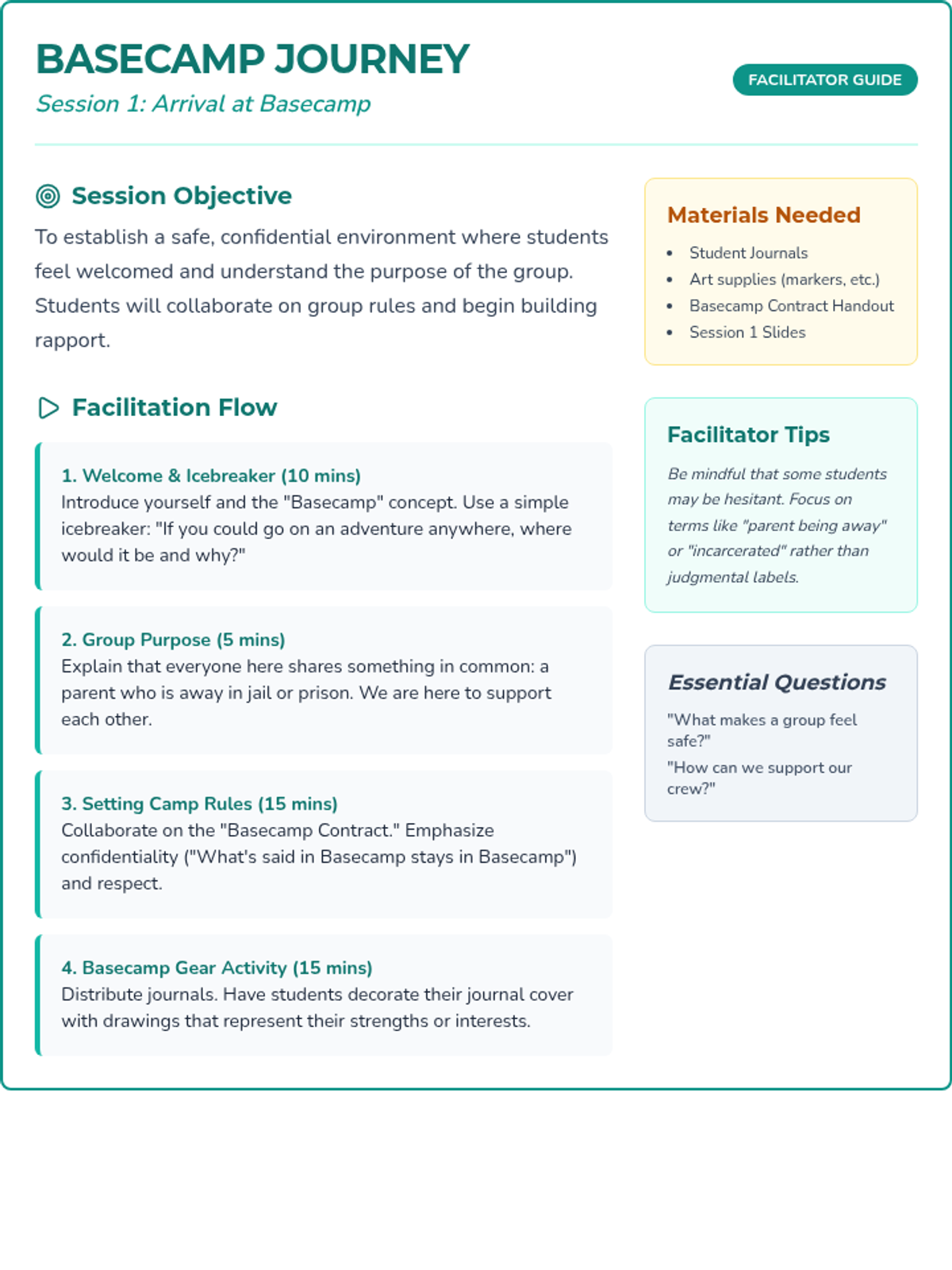
A facilitator guide for the first session of the Basecamp Journey support group, providing objectives, a timed facilitation flow, and tips for establishing group safety.
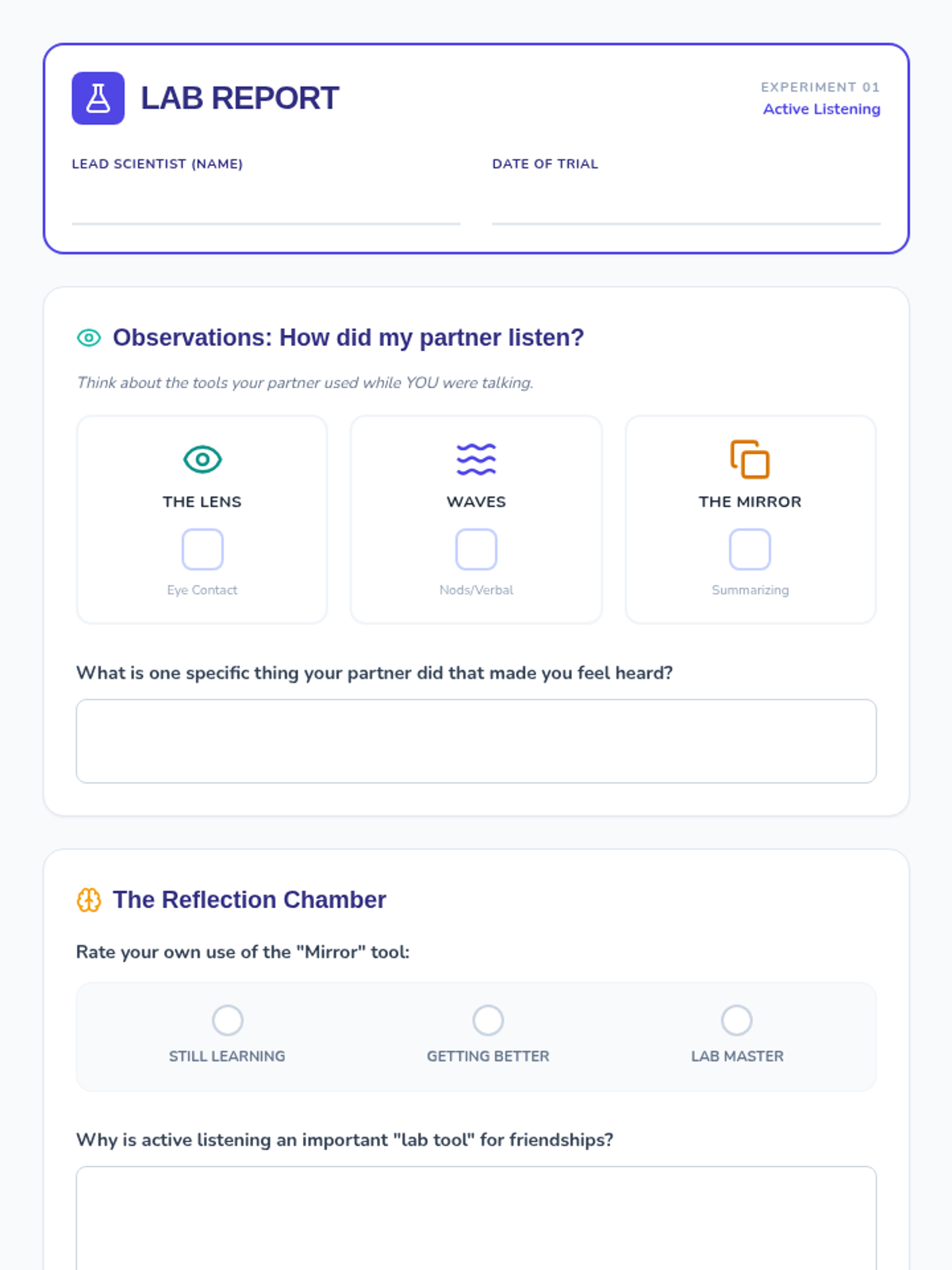
A student-facing 'Lab Report' worksheet for practicing active listening, featuring observation checklists and reflection prompts to reinforce social skills.
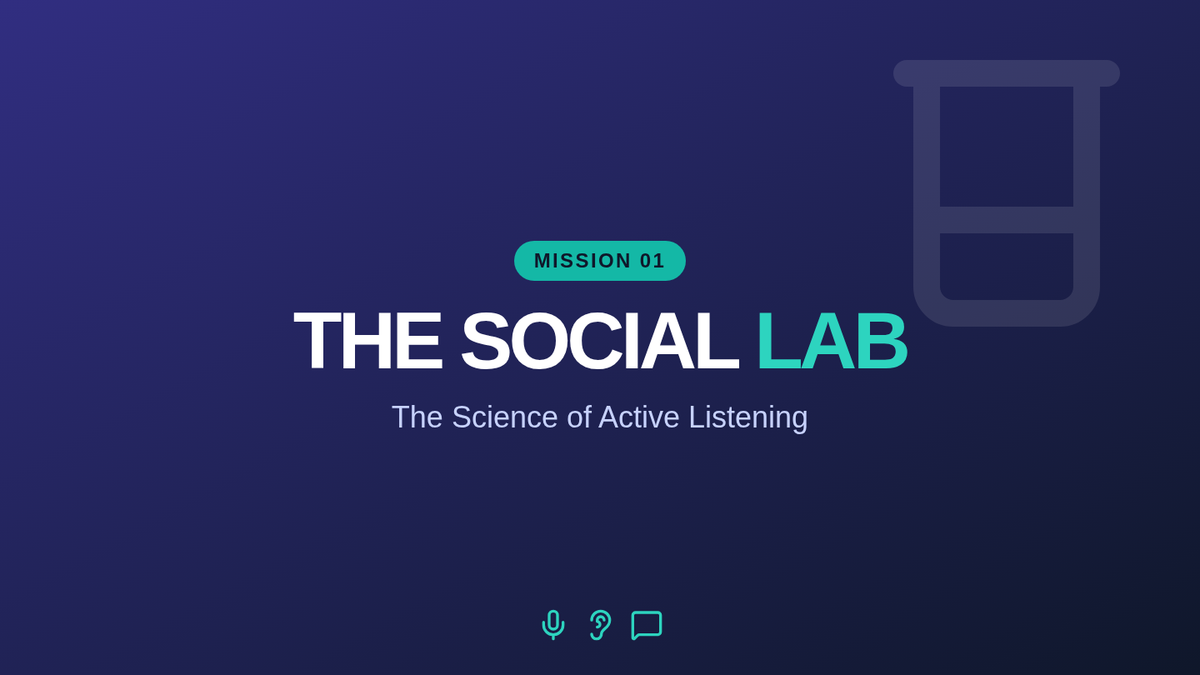
Visual slide deck for 'The Social Lab' lesson, introducing the concept of active listening through the metaphor of lab tools like 'The Lens' and 'The Mirror'.
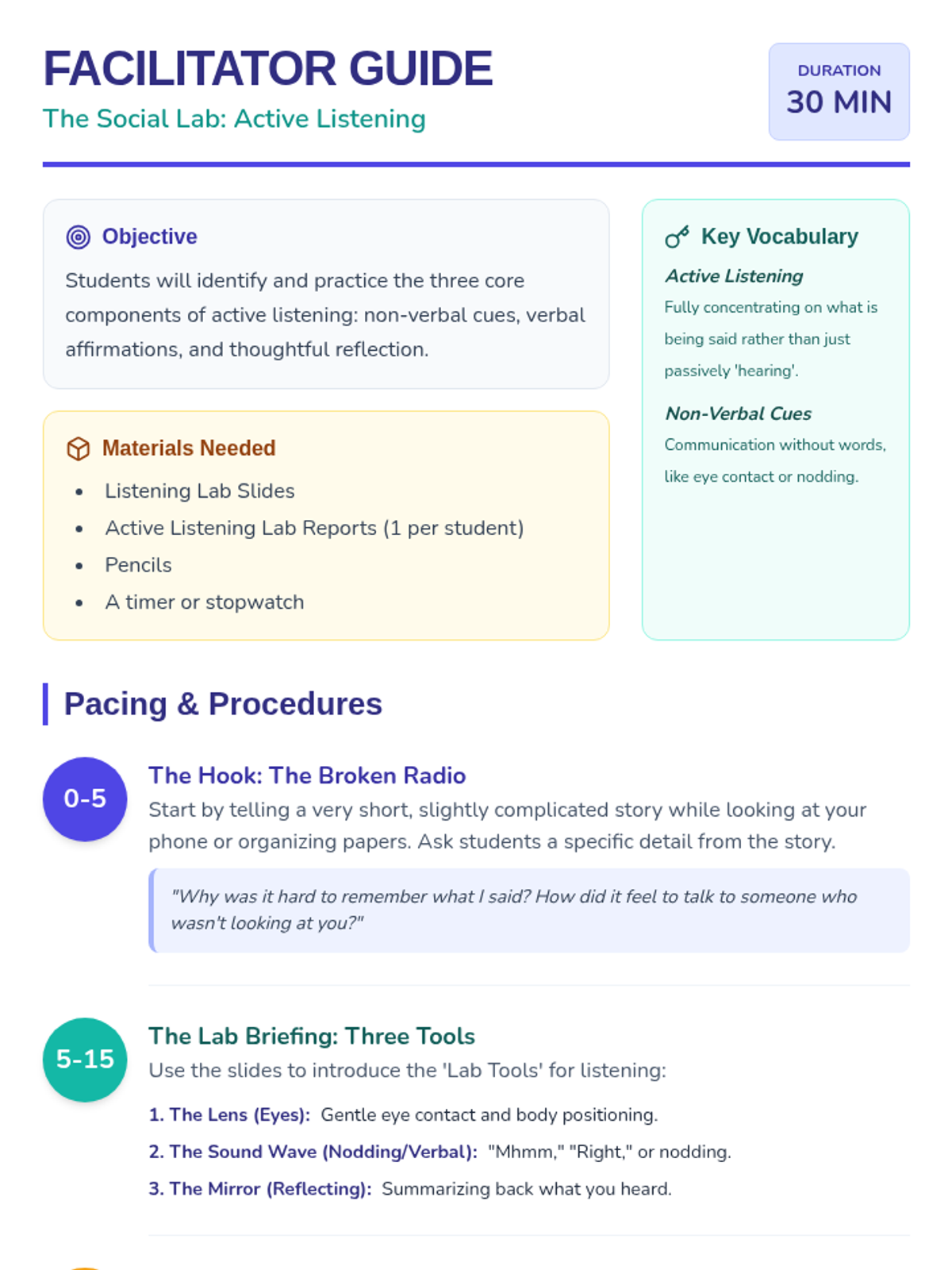
A structured 30-minute teacher's guide for the 'Social Lab' lesson, featuring a clear pacing schedule, discussion prompts, and activity instructions for teaching active listening.
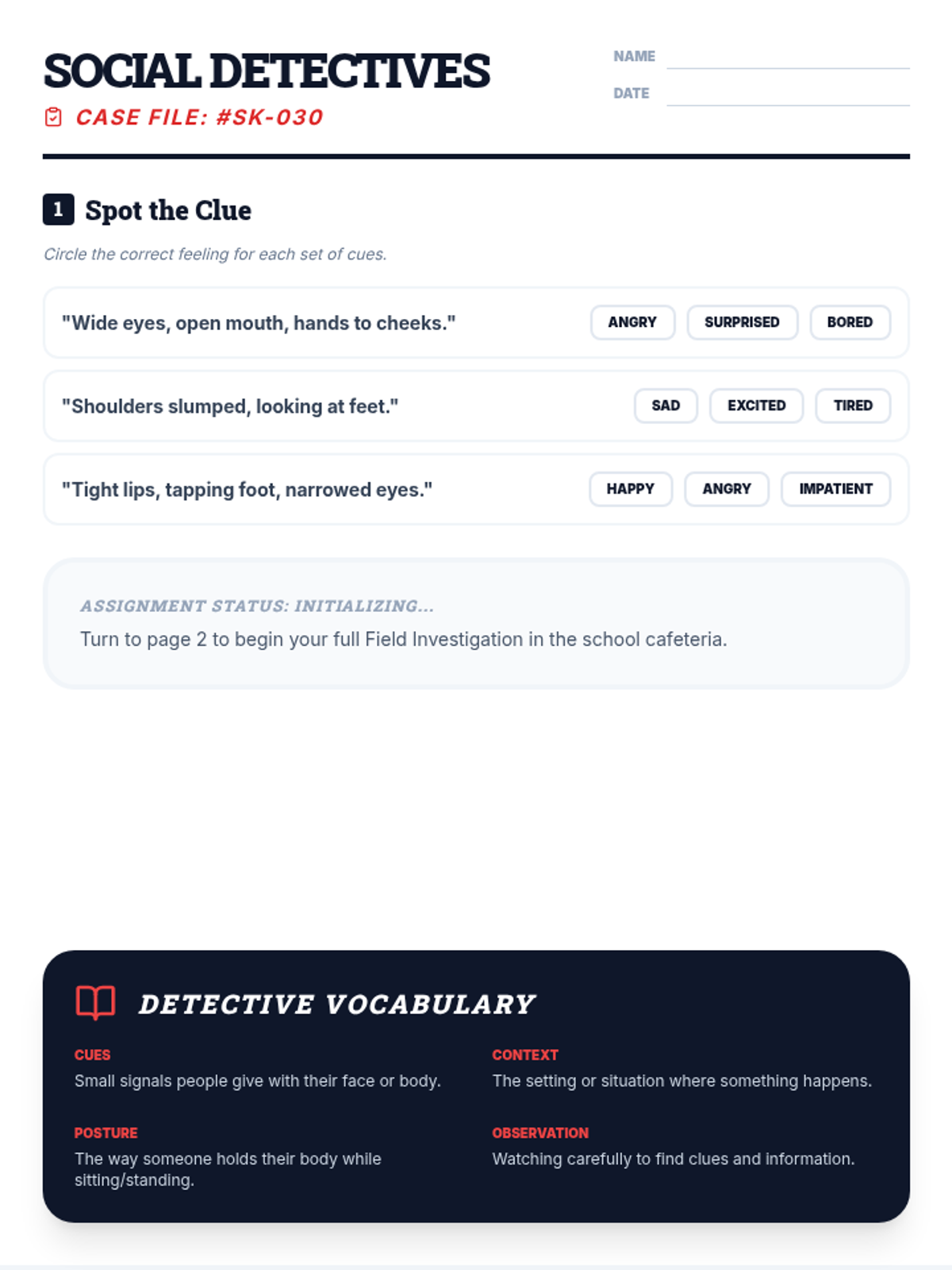
A student activity sheet for the 'Social Detectives' lesson, featuring matching exercises, a scenario analysis, and a creative drawing task to demonstrate understanding of social cues.
A visual presentation for the 'Social Detectives' lesson, covering the definition of social cues, a breakdown of facial and body language signals, and a practice case study.
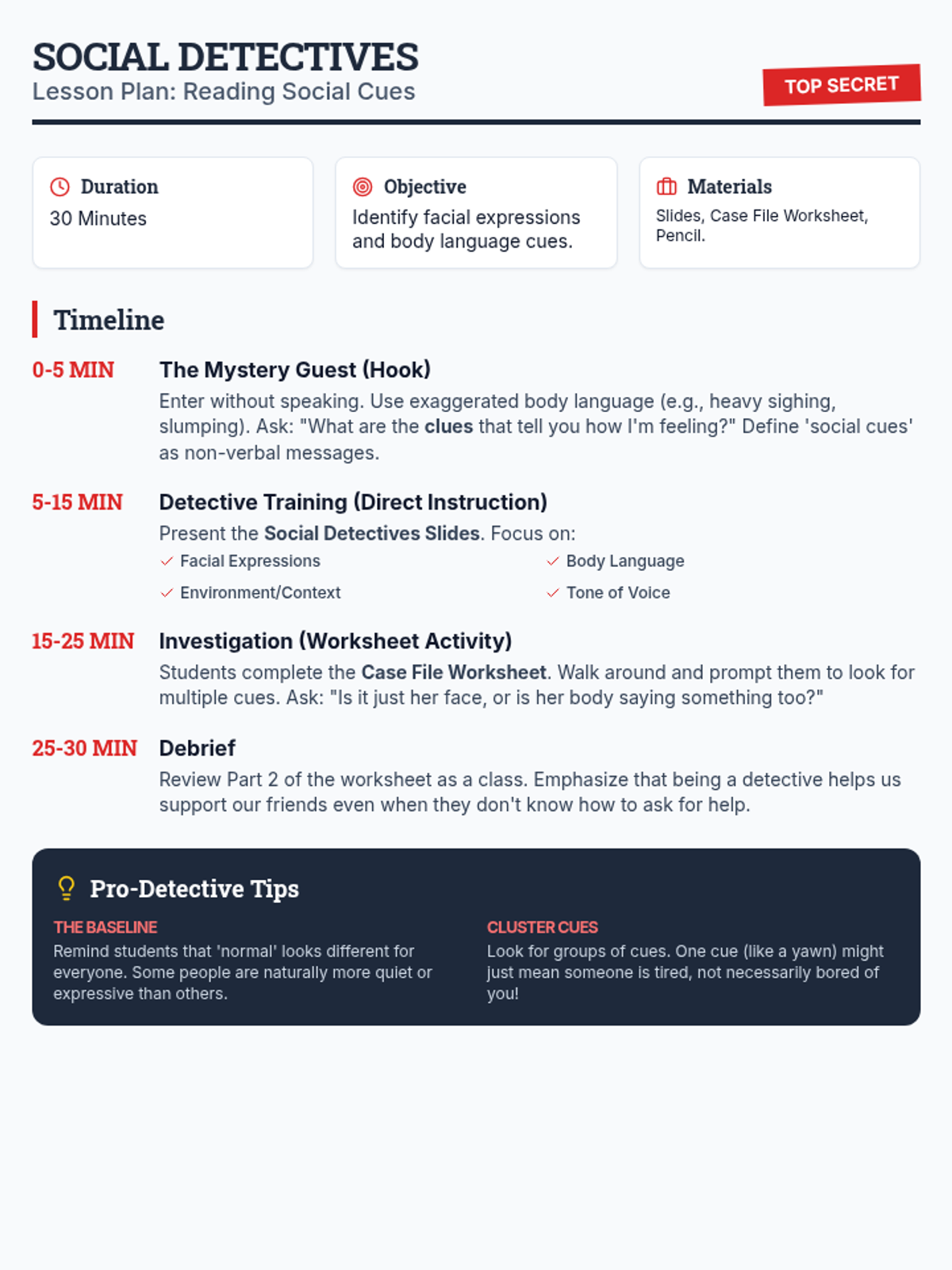
A 30-minute instructional guide for teachers to lead the 'Social Detectives' lesson, including timing, activity prompts, and pedagogical tips.
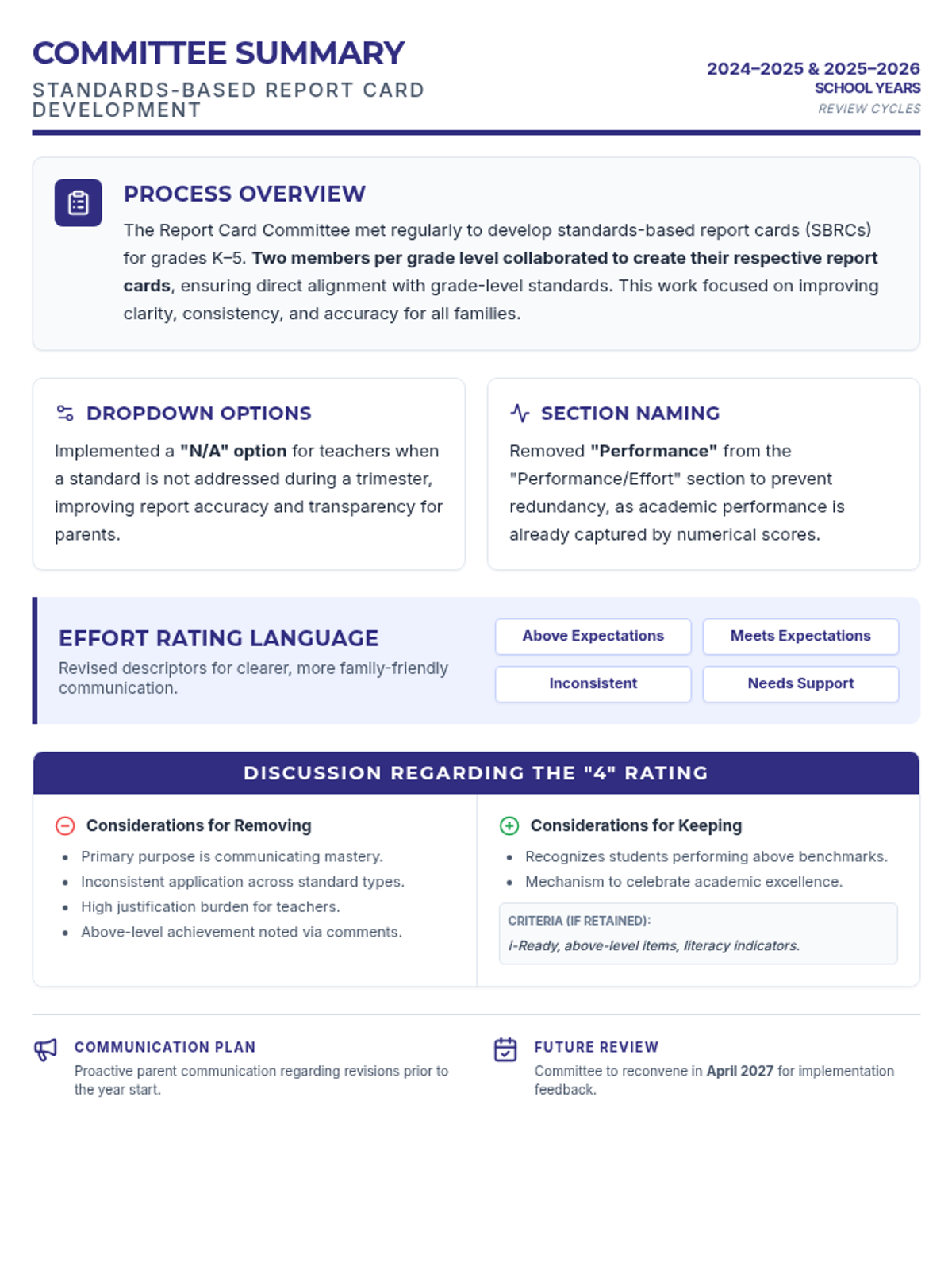
A one-page summary handout for a school committee detailing the work of the Report Card Committee, with the header updated to specify the 2024-2025 and 2025-2026 school years.
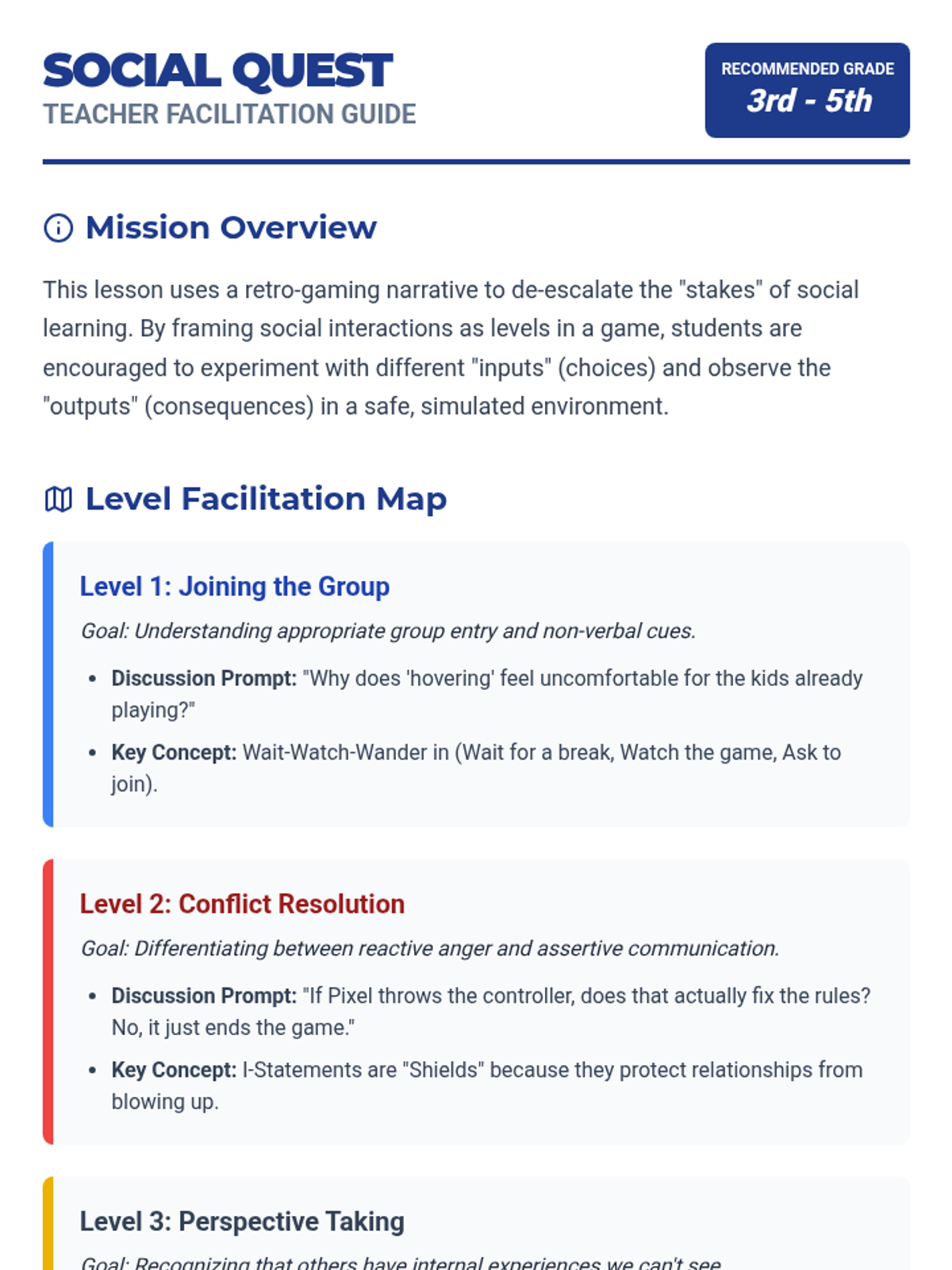
A facilitator's guide for the Social Quest lesson. It provides pedagogical rationale, discussion prompts for each simulation level, a key for the 'Size of the Problem' boss battle, and a suggested pacing guide for the lesson.
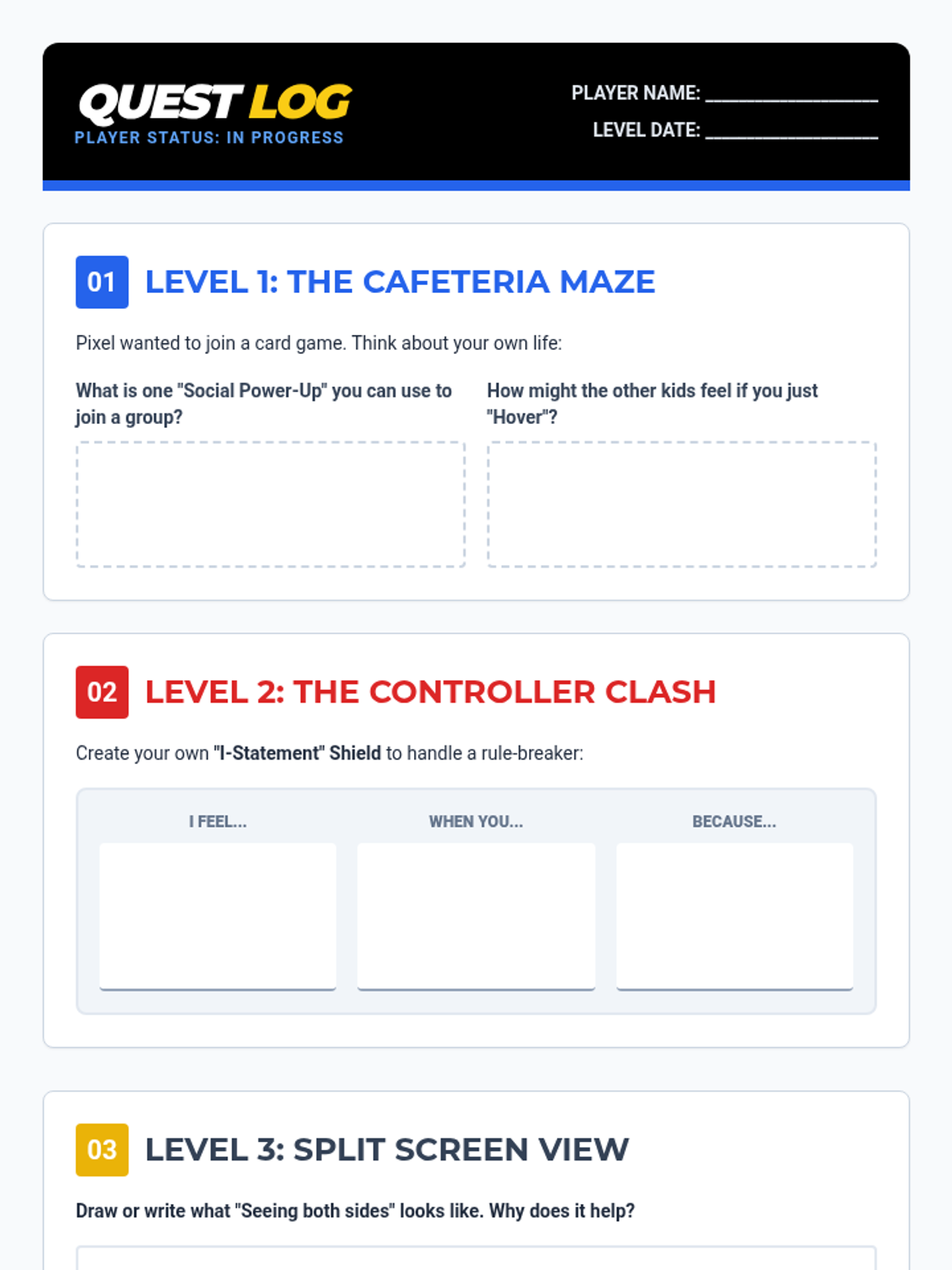
A student response document that accompanies the Social Quest Slides. It includes sections for reflection on group entry strategies, practicing 'I-Statements,' analyzing perspectives, and categorizing problem sizes.
A retro arcade-themed presentation designed for group discussion and social skill development. It features character-based scenarios (Pixel) covering group entry, conflict resolution, perspective taking, and the 'size of the problem' using a 'choose your own adventure' simulation format.
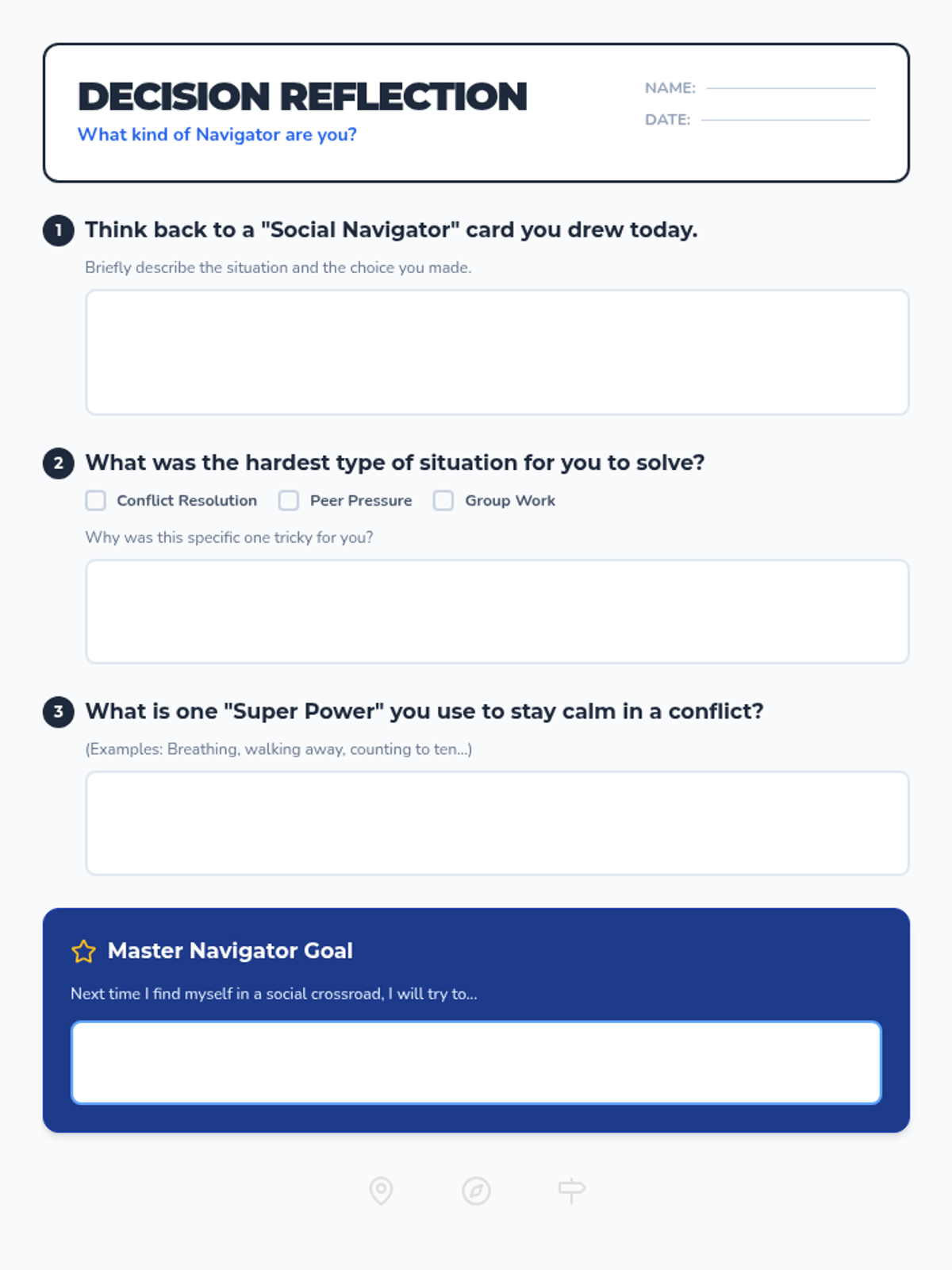
A student reflection sheet to be completed after playing the Decision Drive game, helping students process their social decision-making strategies.
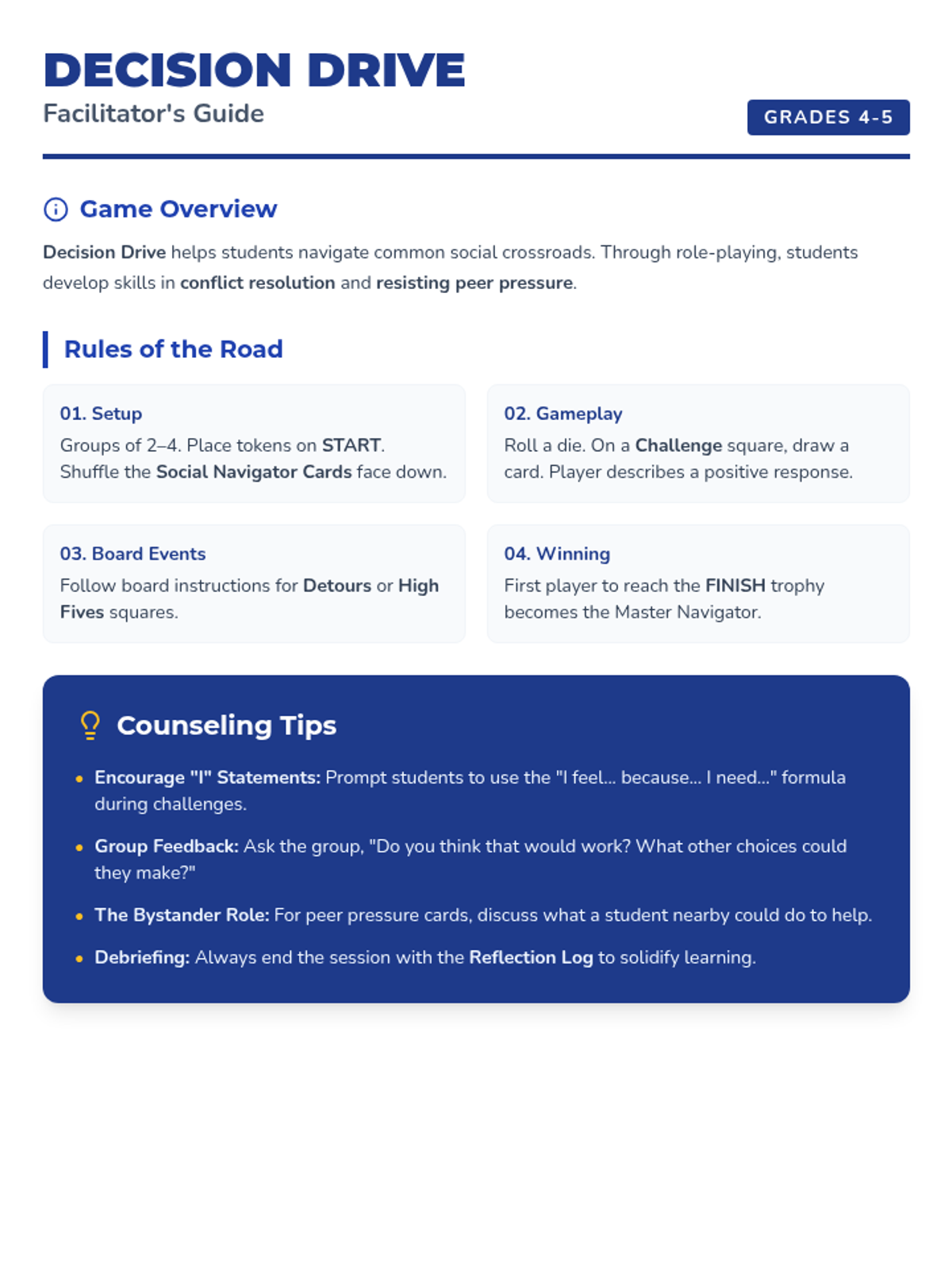
A facilitator guide for teachers or counselors, providing rules, setup instructions, and counseling tips for the Decision Drive game.
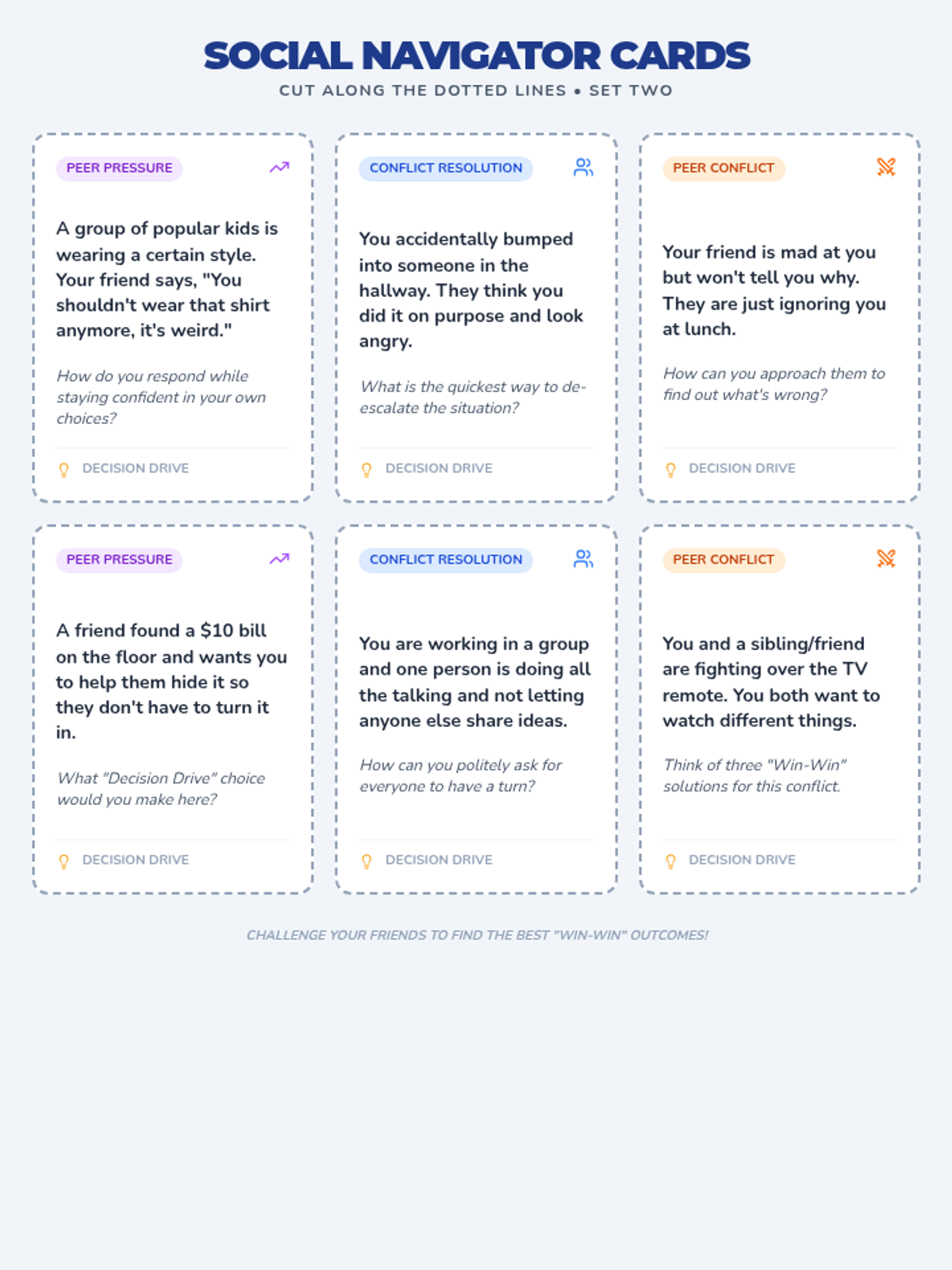
A second set of printable scenario cards for the Decision Drive game, providing additional social challenges for students to navigate.
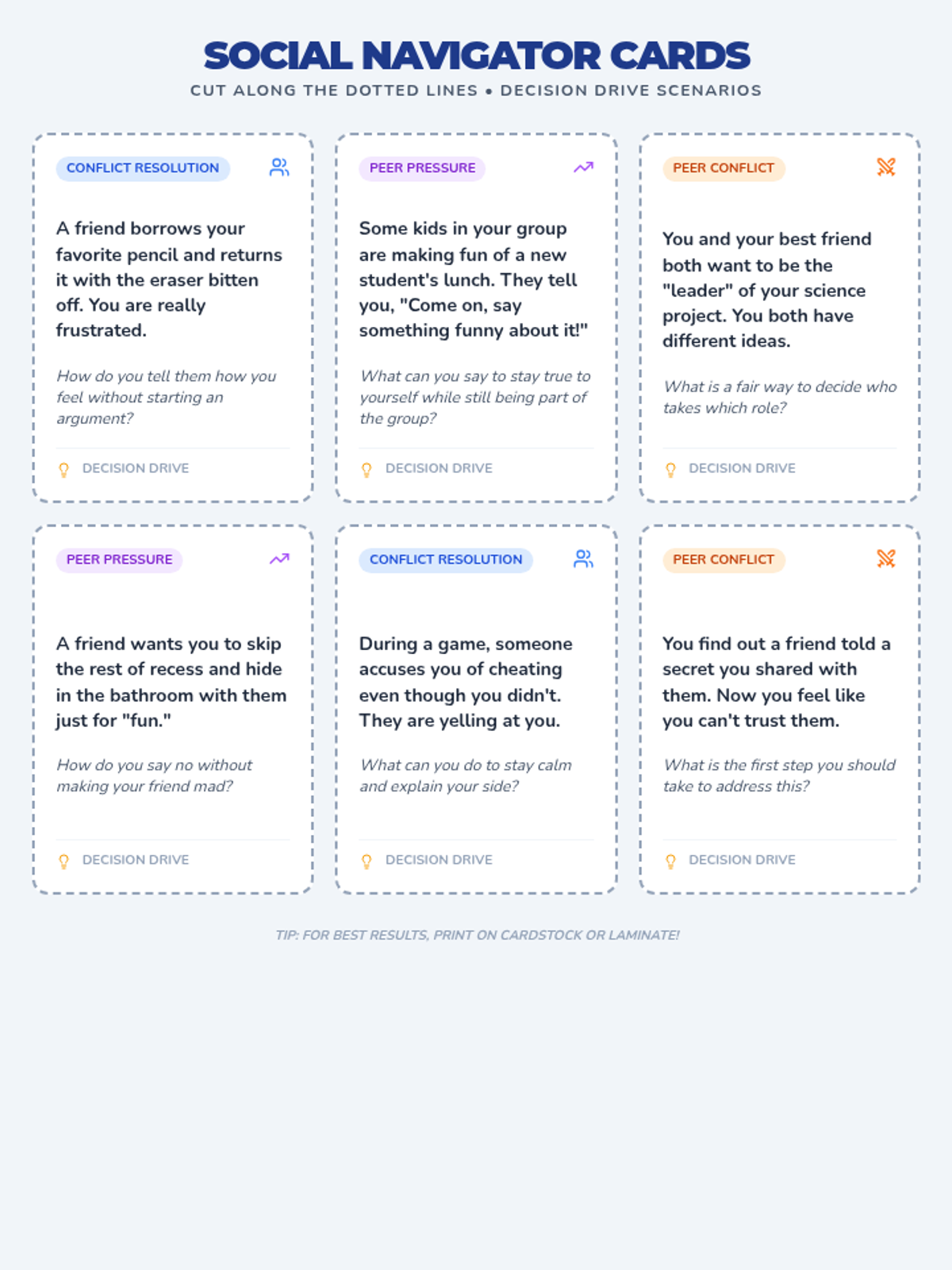
A set of printable scenario cards for the Decision Drive game, focusing on conflict resolution, peer pressure, and peer conflicts.
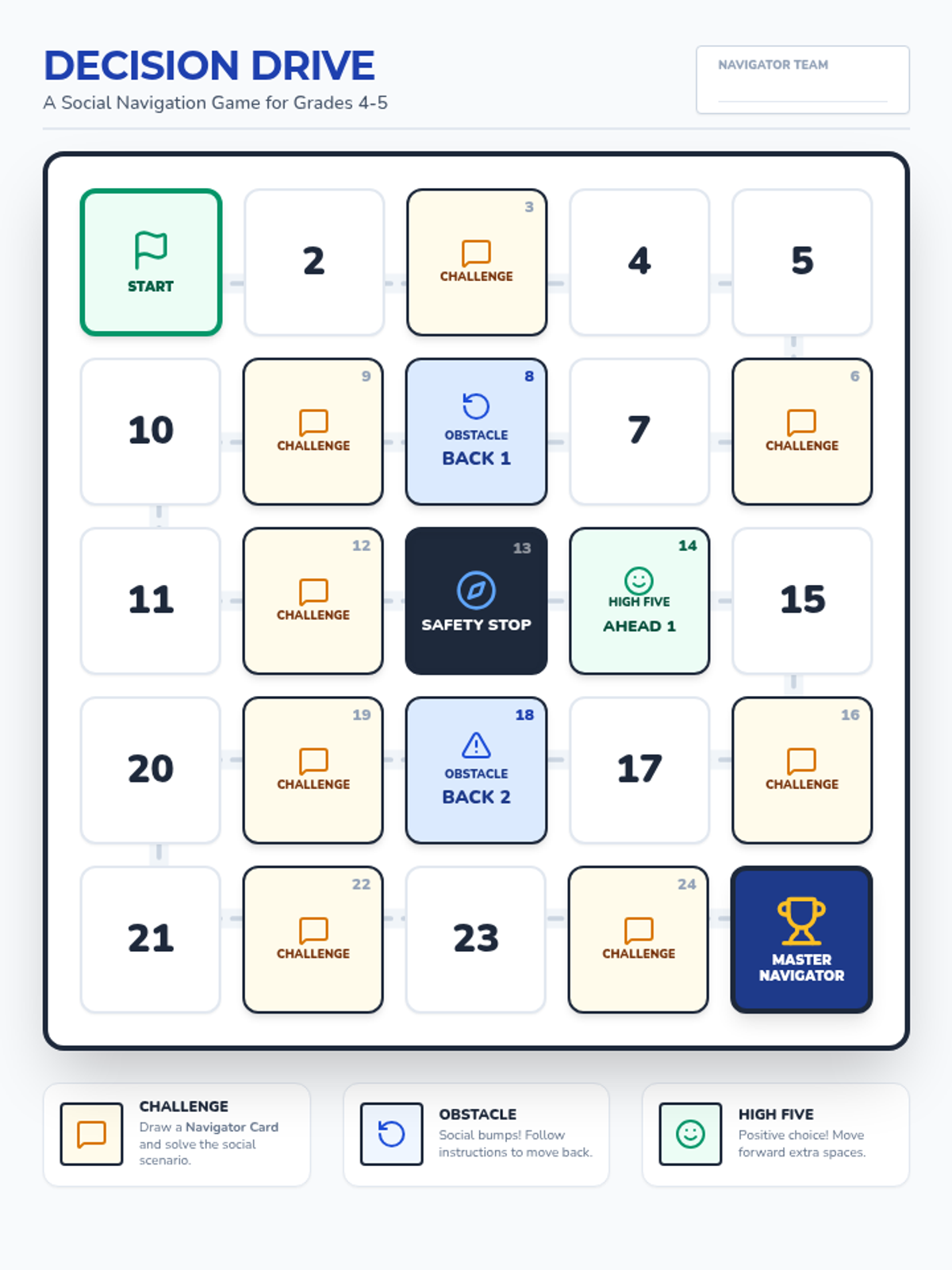
A path-style game board for the Decision Drive game, featuring various squares for social challenges, detours, and rewards.
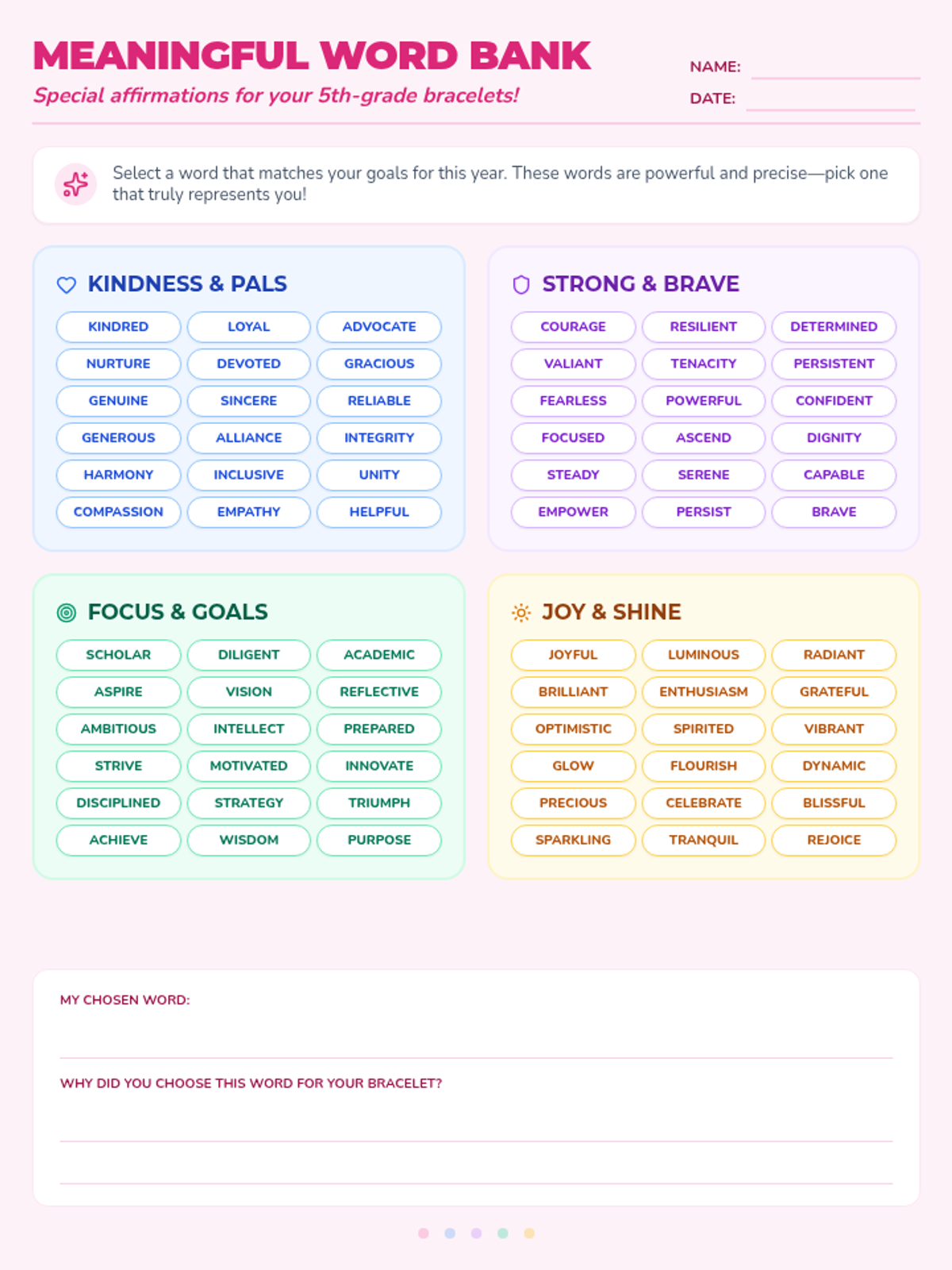
A sophisticated yet accessible one-page reference sheet for 5th-grade students providing 72 categorized affirmations for friendship bracelet making.
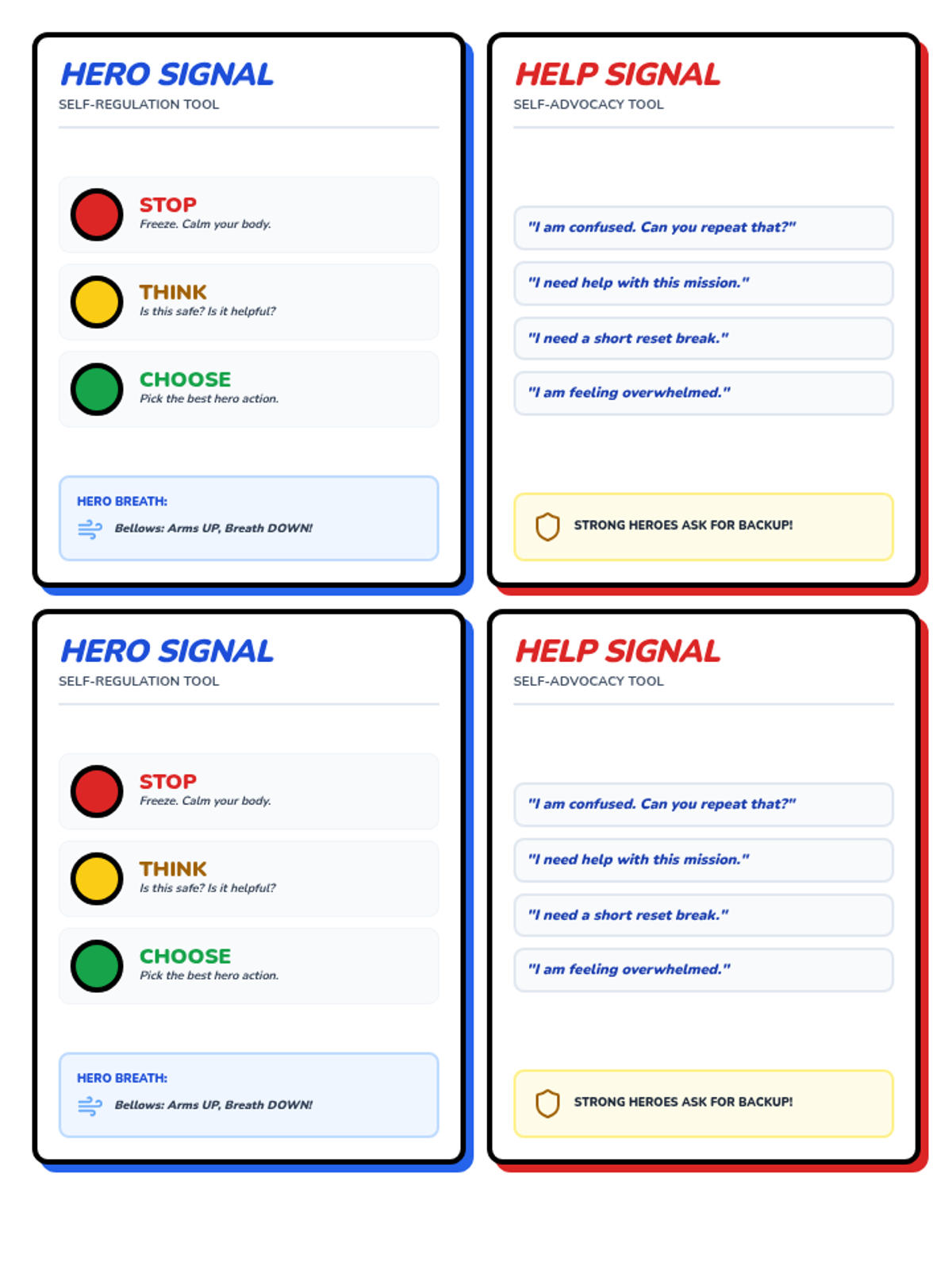
Printable reference cards designed to be taped to student desks. One card covers the Stop-Think-Choose signal and breathing, while the other provides scripts for self-advocacy and asking for help.
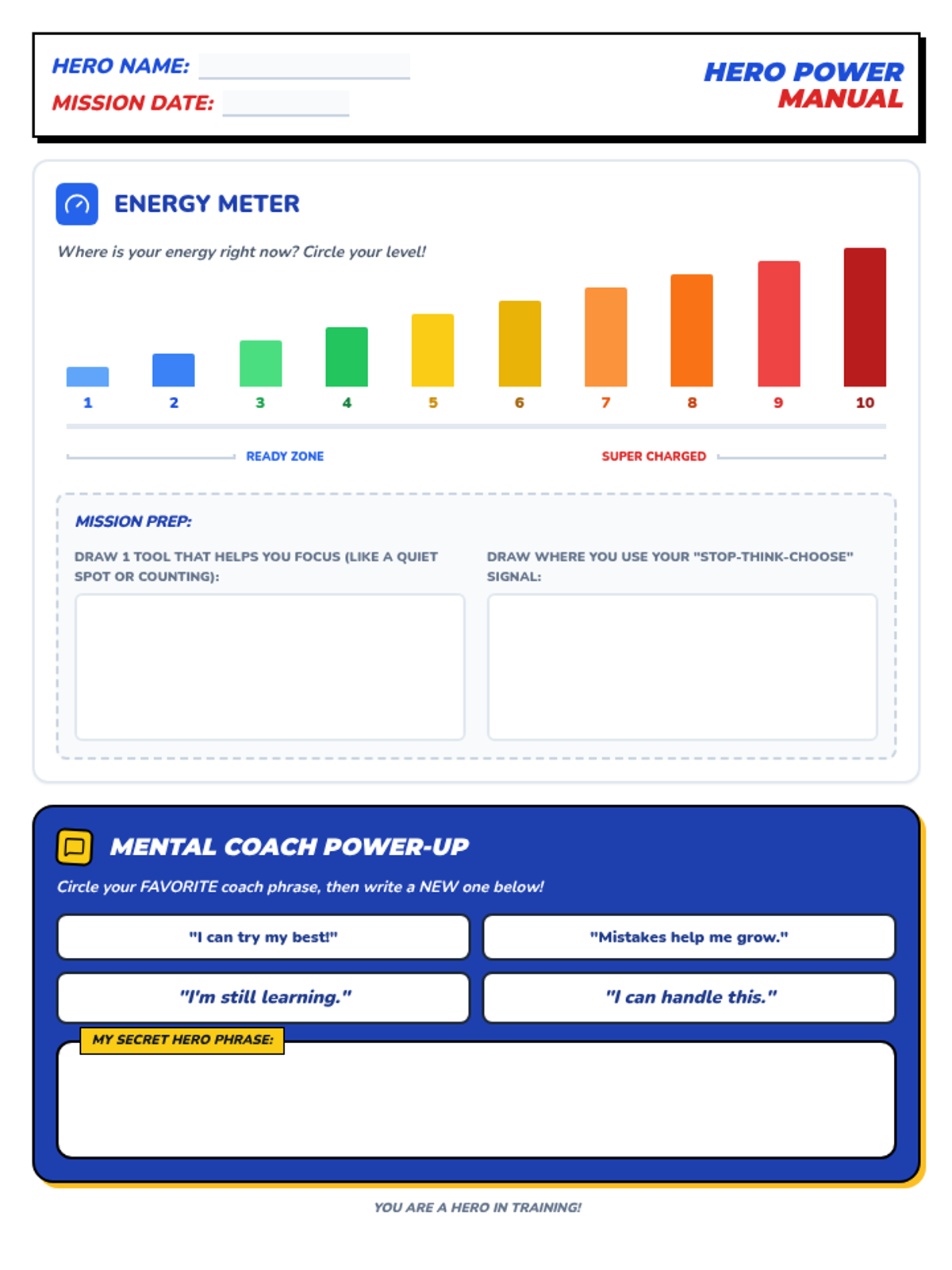
A student-facing activity sheet that reinforces self-regulation through an Energy Meter and positive self-talk. It allows students to visualize their 'Ready Zone' and identify where to apply the Stop-Think-Choose method.
A visually engaging comic-book themed presentation for the 'Inner Hero Academy' lesson. It covers breathing techniques, the 'Stop-Think-Choose' signal, positive self-talk, and self-advocacy scripts using bold colors and large text.
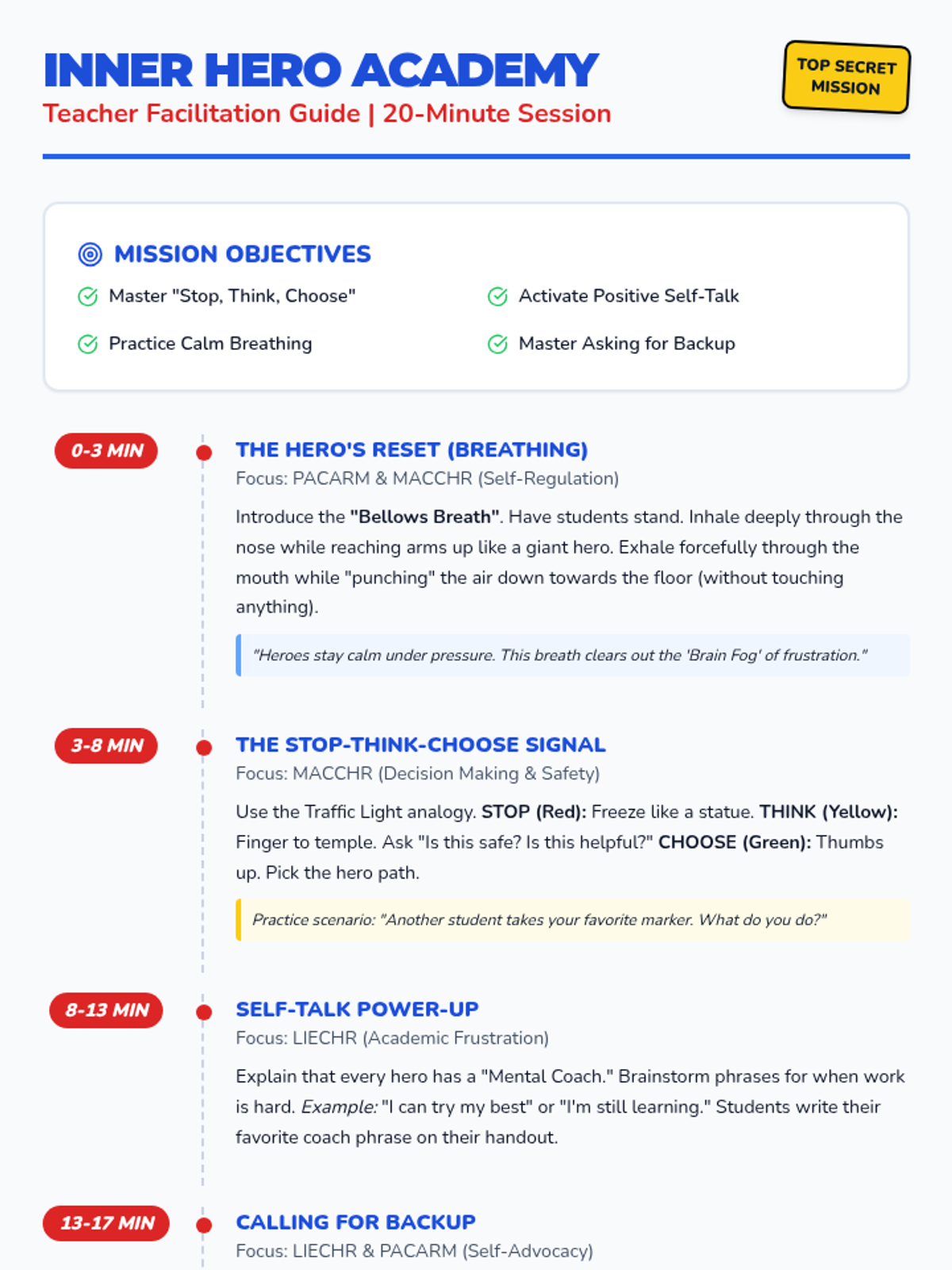
A detailed teacher facilitation guide for a 20-minute small group lesson focusing on self-regulation and advocacy skills. It includes a minute-by-minute timeline and specific focus points for each student's goals.
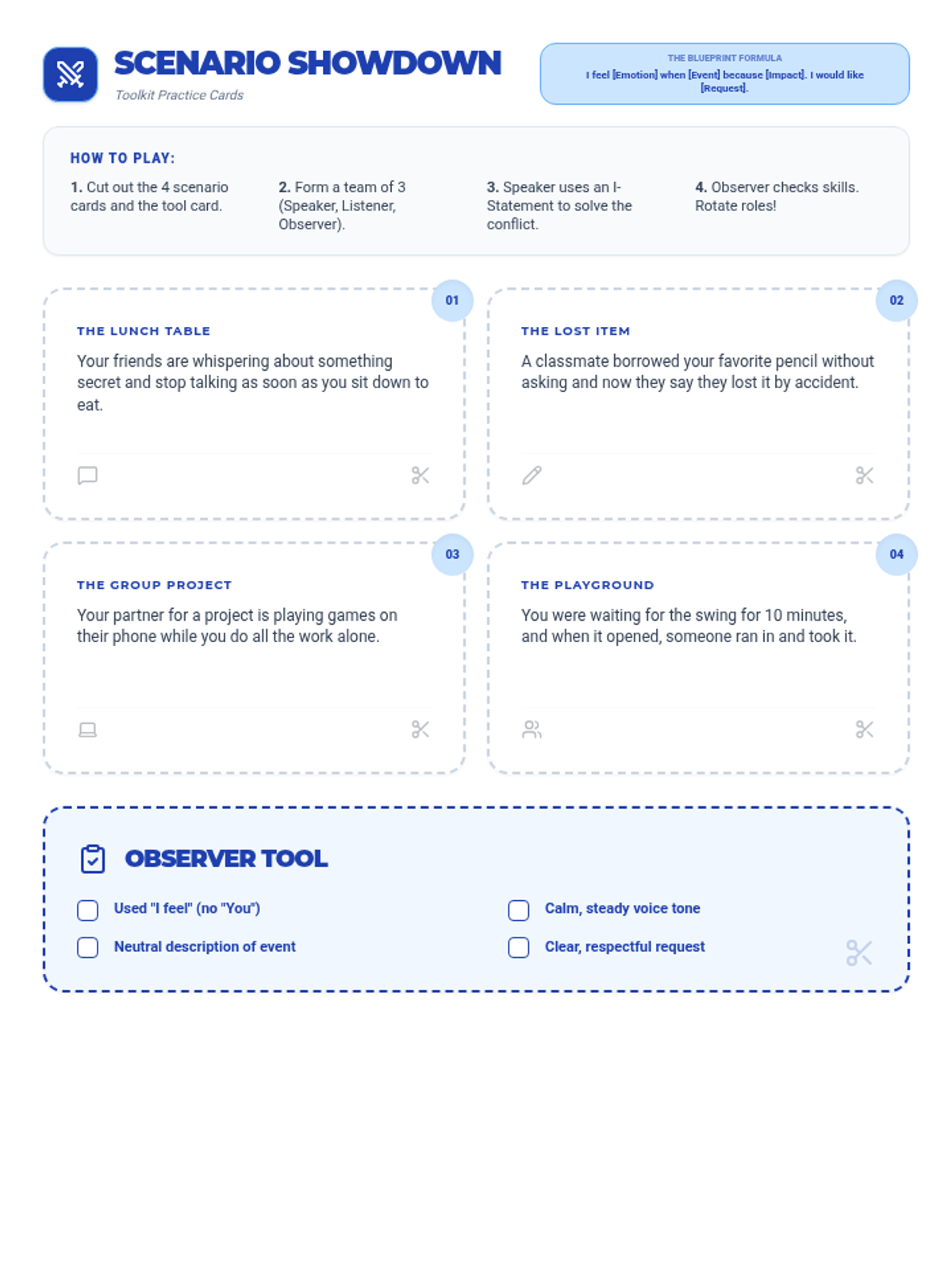
A set of printable role-playing cards featuring realistic school-based conflict scenarios. Each card provides a prompt for students to practice their I-statement skills, complemented by an observer checklist to ensure quality feedback during peer practice.
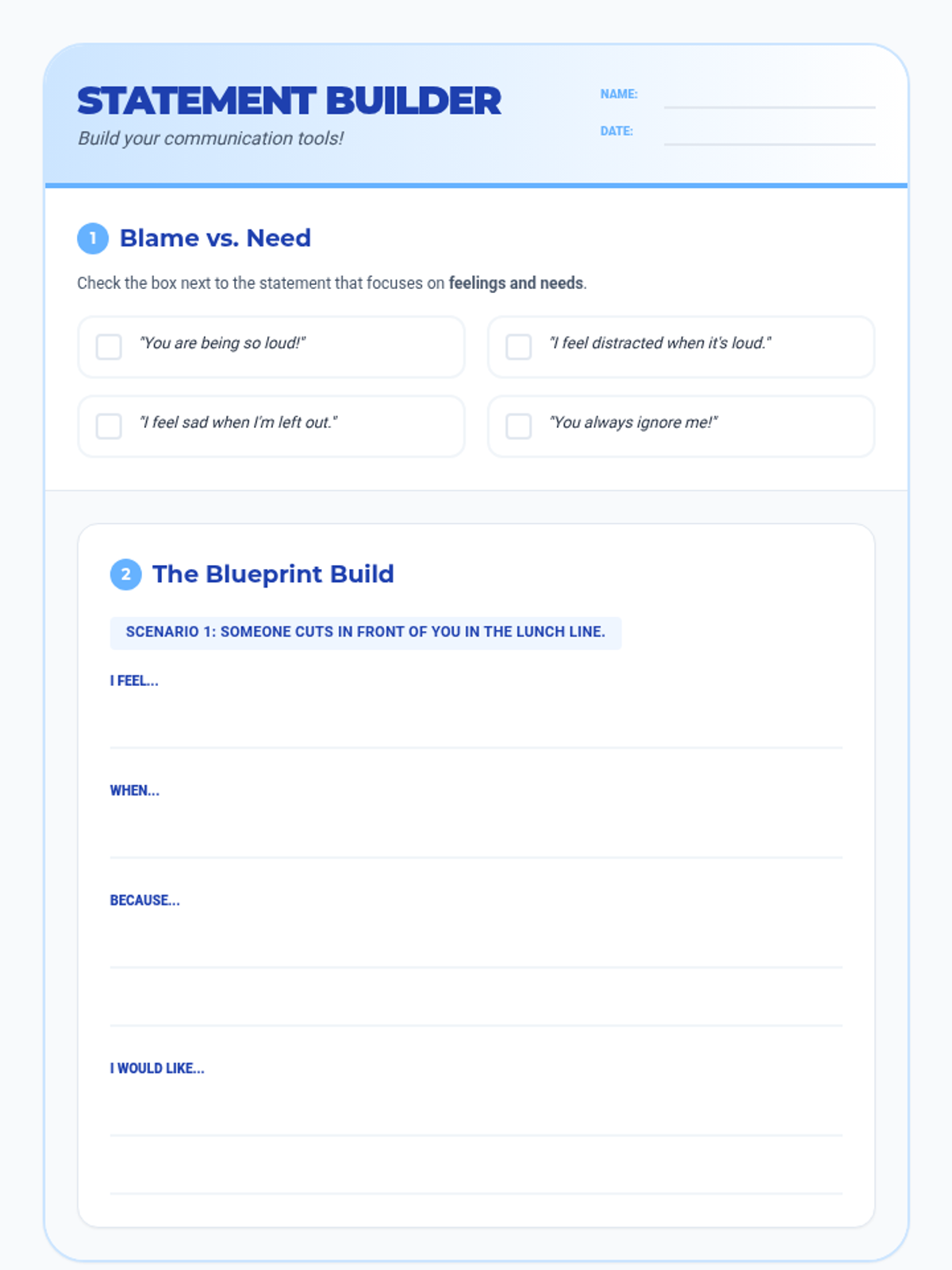
A worksheet designed for students to practice constructing I-statements. It includes identification tasks to distinguish between blame and self-advocacy, structured writing spaces for the 4-part formula, and a creative drawing area for emotional awareness.
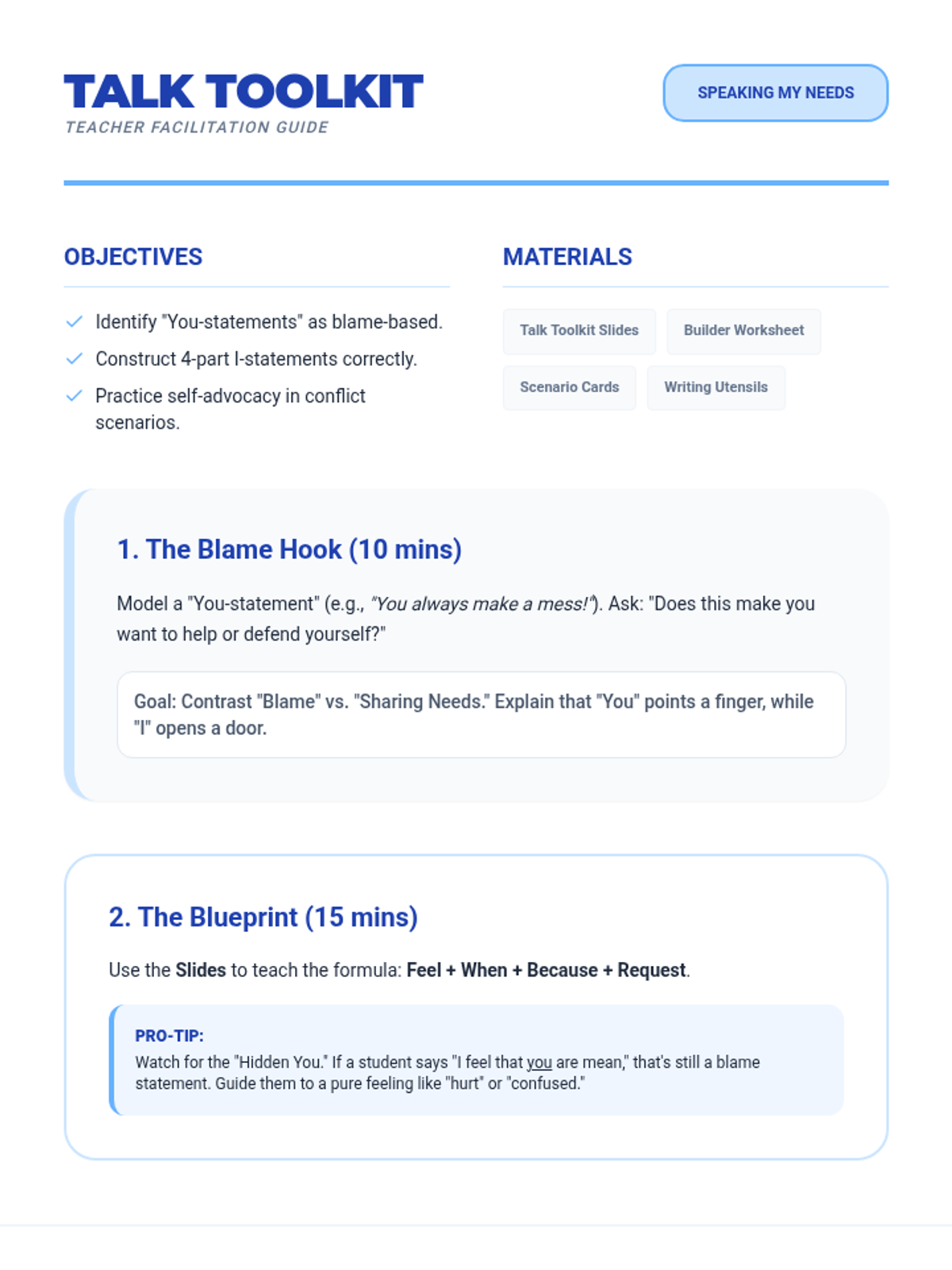
A comprehensive teacher's guide for the "Speaking My Needs" lesson. It provides a structured timeline, detailed facilitation instructions for each activity, discussion prompts, and differentiation strategies for various learner needs.
This slide deck introduces the concept of I-Statements using a "Talk Toolkit" theme. It covers the difference between blame-based communication and self-advocacy, provides a clear 4-part formula, and includes guided practice scenarios for students.
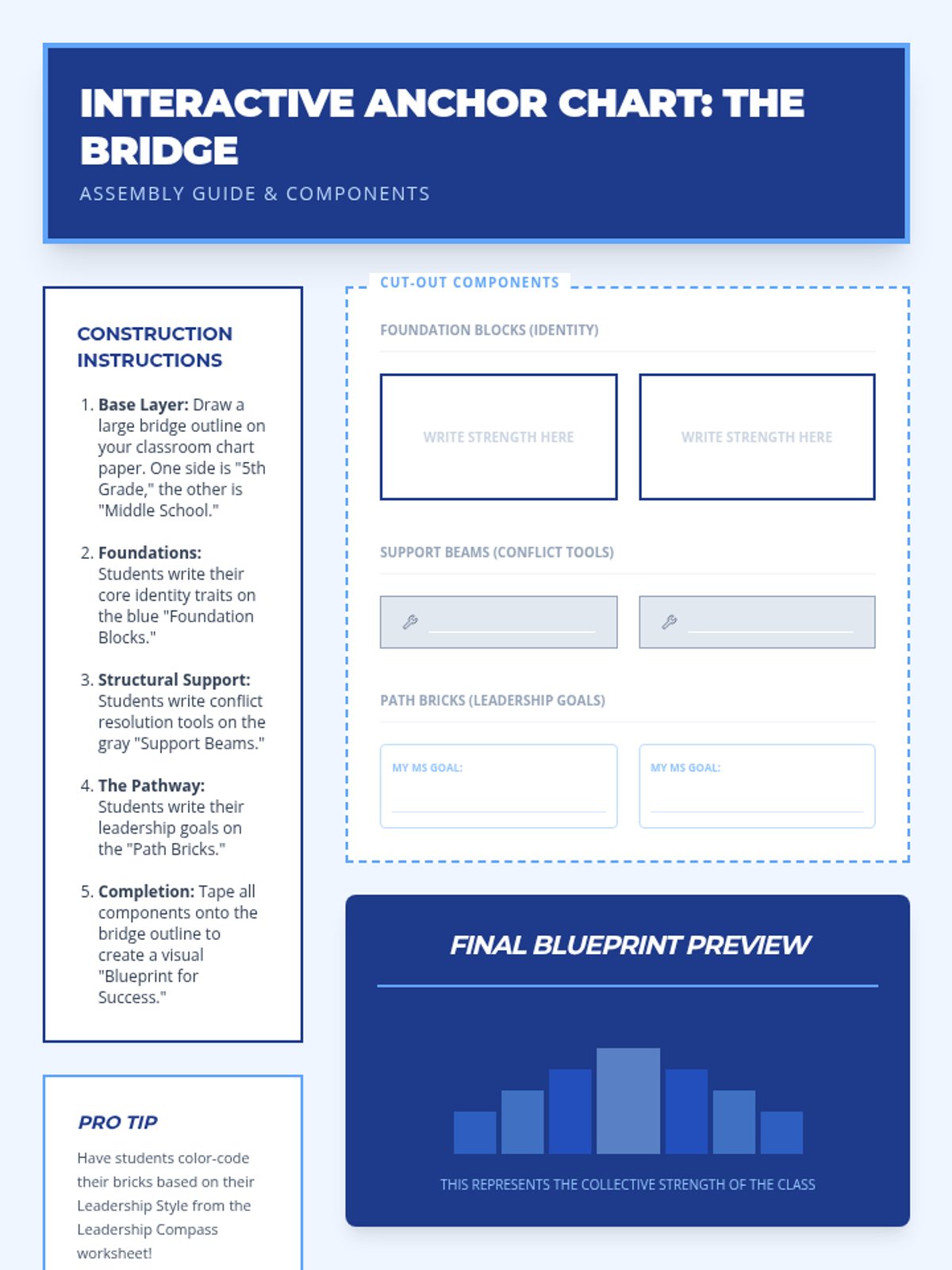
An interactive anchor chart guide and component sheet for a 5th-grade transition lesson. Revised for single-page layout, more student components, and better visual contrast.
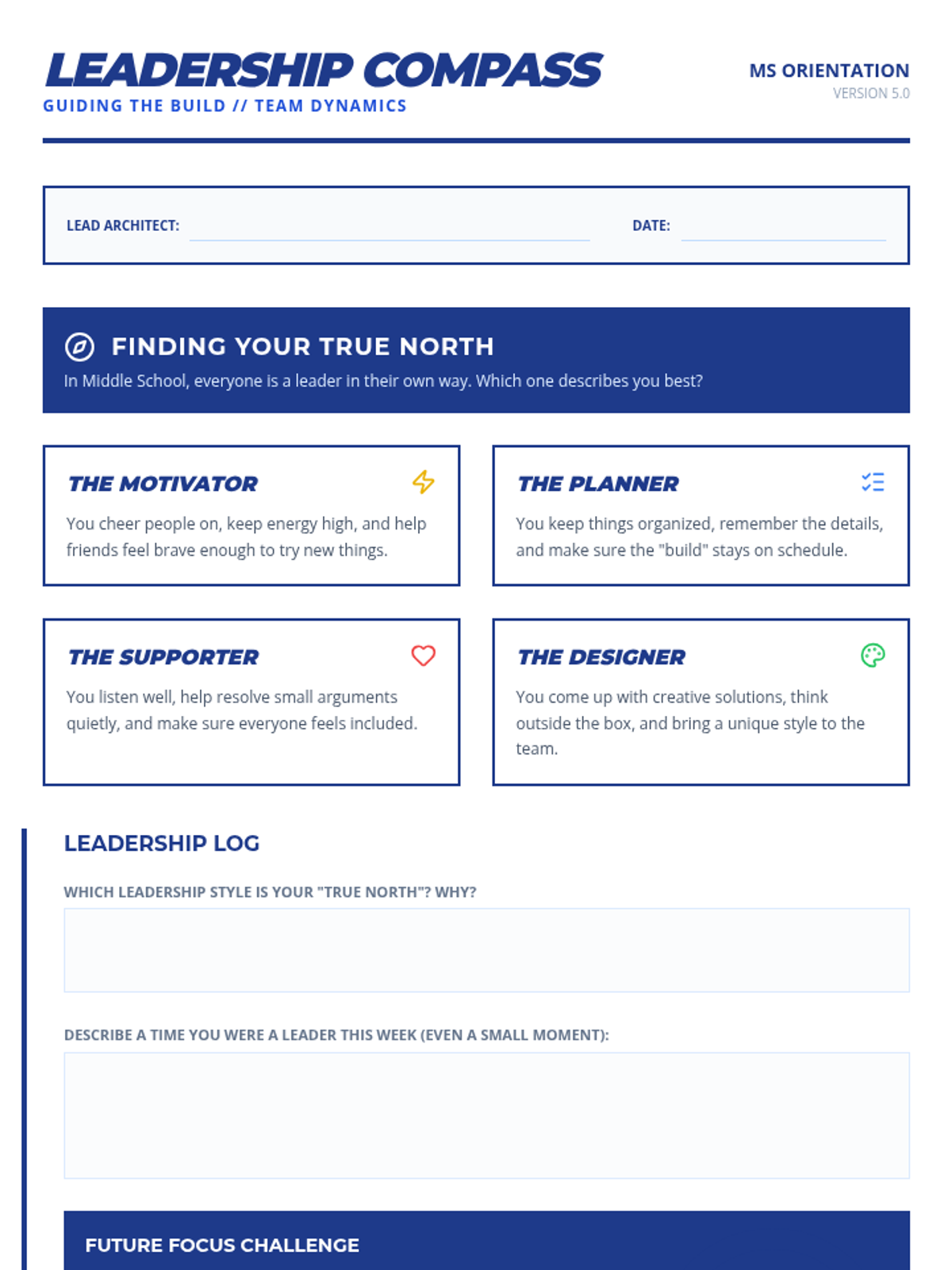
A leadership skills worksheet for 5th graders transitioning to middle school. Revised for better layout, handwriting contrast in the challenge box, and proper page fit.